Monthly Archives: November 2024

Cascades Conservation Area Thunder Bay

November 23, 2024

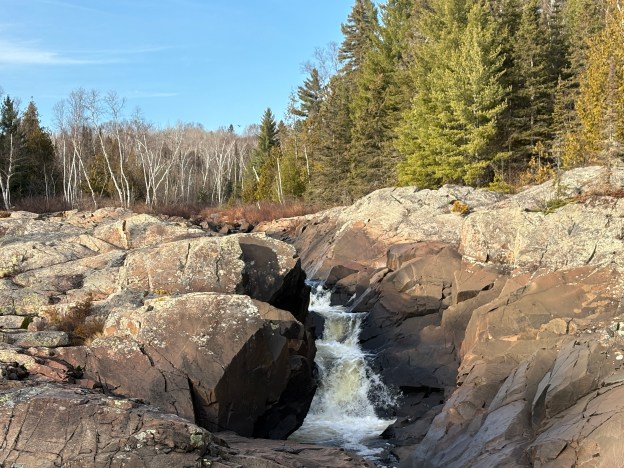
Cascades Conservation Area in Thunder Bay features the Current River and includes a one kilometre section of cascades as the river makes its way toward Lake Superior. I’m very fortunate that I get to travel around Ontario for work and that I have a client in Thunder Bay that I see every four months. They routinely provide me with options of things to see while I’m waiting for my flight home. Some of their earlier suggestions can be found in the links at the end of this article. This trip I was rewarded with a visit to Cascades Conservation Area. The conservation area is 162 hectares or 400 acres and has over 5 kilometres of trails to carry you through the popular and birch forest.
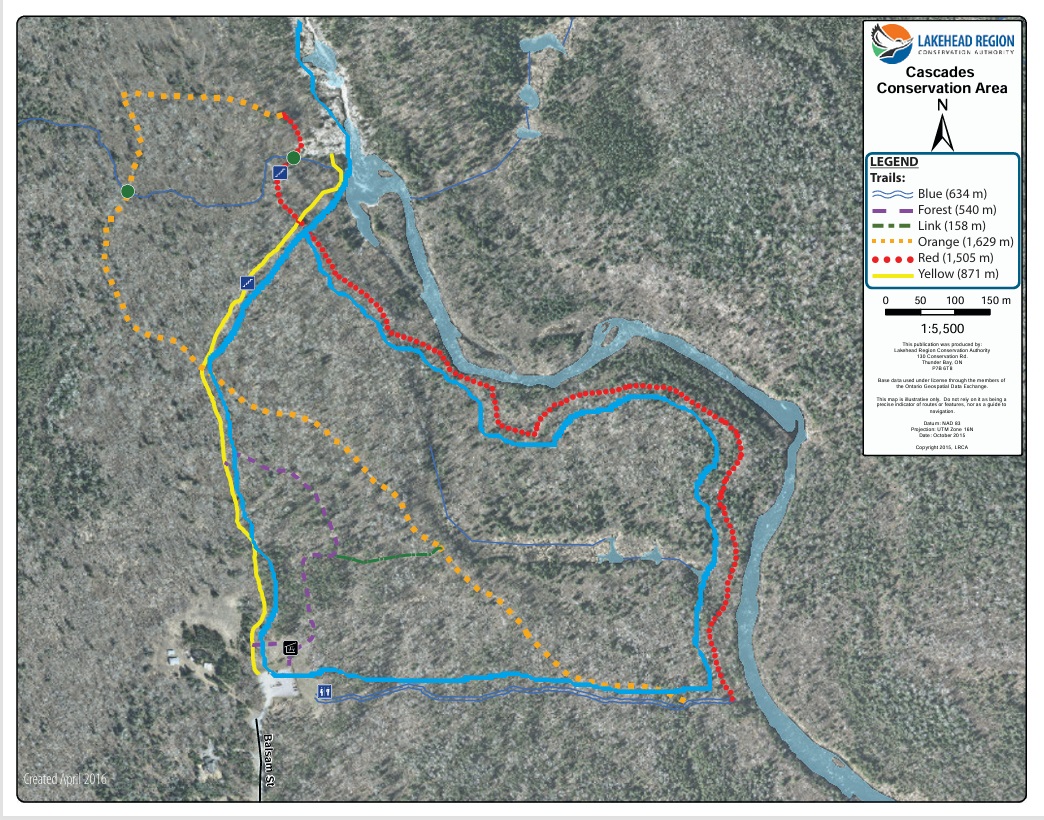
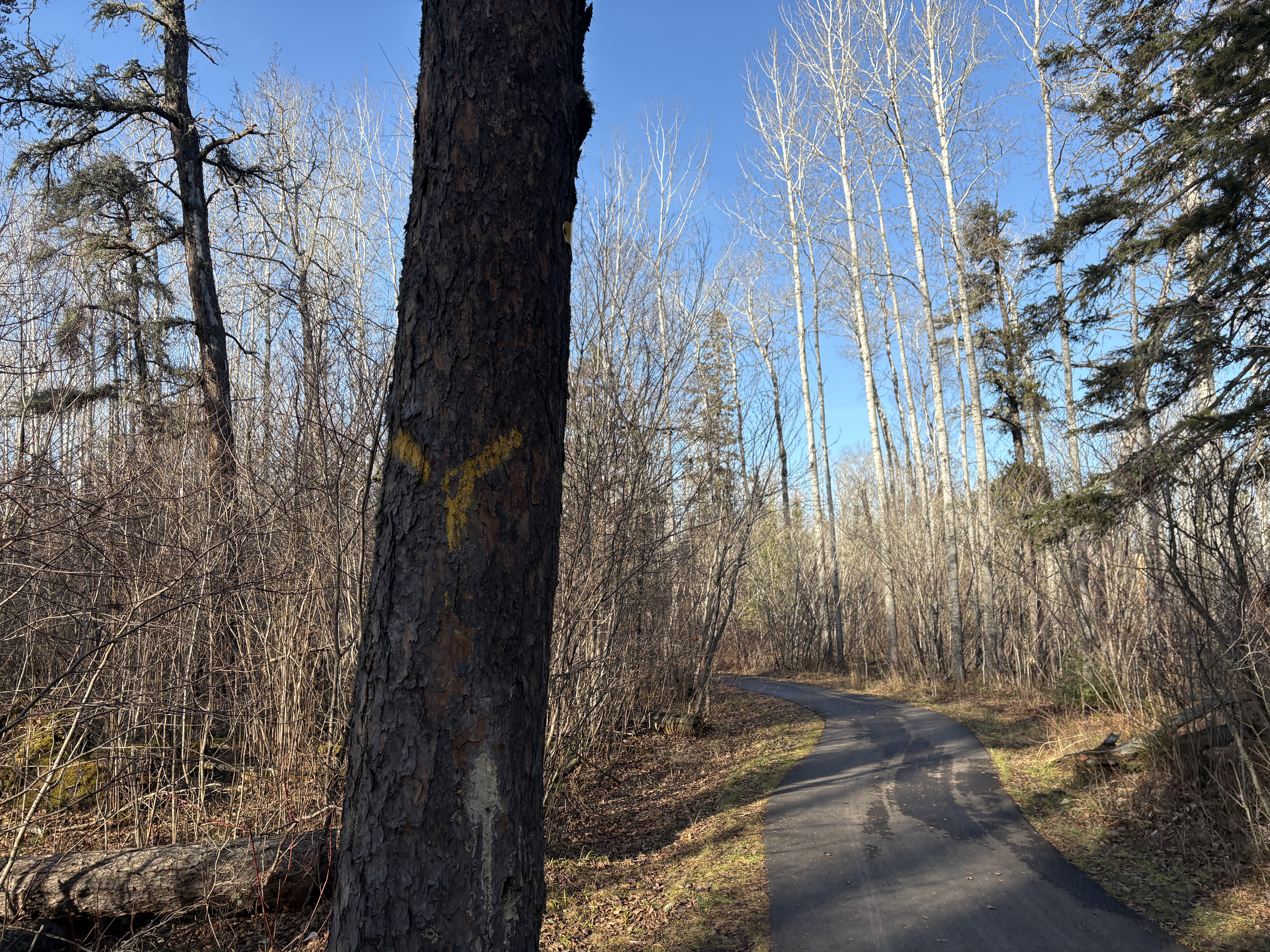
The trails are nice and wide and colour coded so that you can know which trail you are on. The markings are very creative, using a yellow “Y” to designate the yellow trail. One short trail was paved in 2002 to allow a fully accessible experience for those who need it. Unfortunately, this doesn’t go all the way to the river. Parts of the trail system are more challenging with some climbing and some uneven footing. Be careful on those days when the ground is wet because they can be slippery and the trails are not maintained in the winter.
The Current River takes its name from the original French name Riviere Aux Courants which was given to it by the early explorers. It is one of the main rivers that empty into Lake Superior in Thunder Bay.
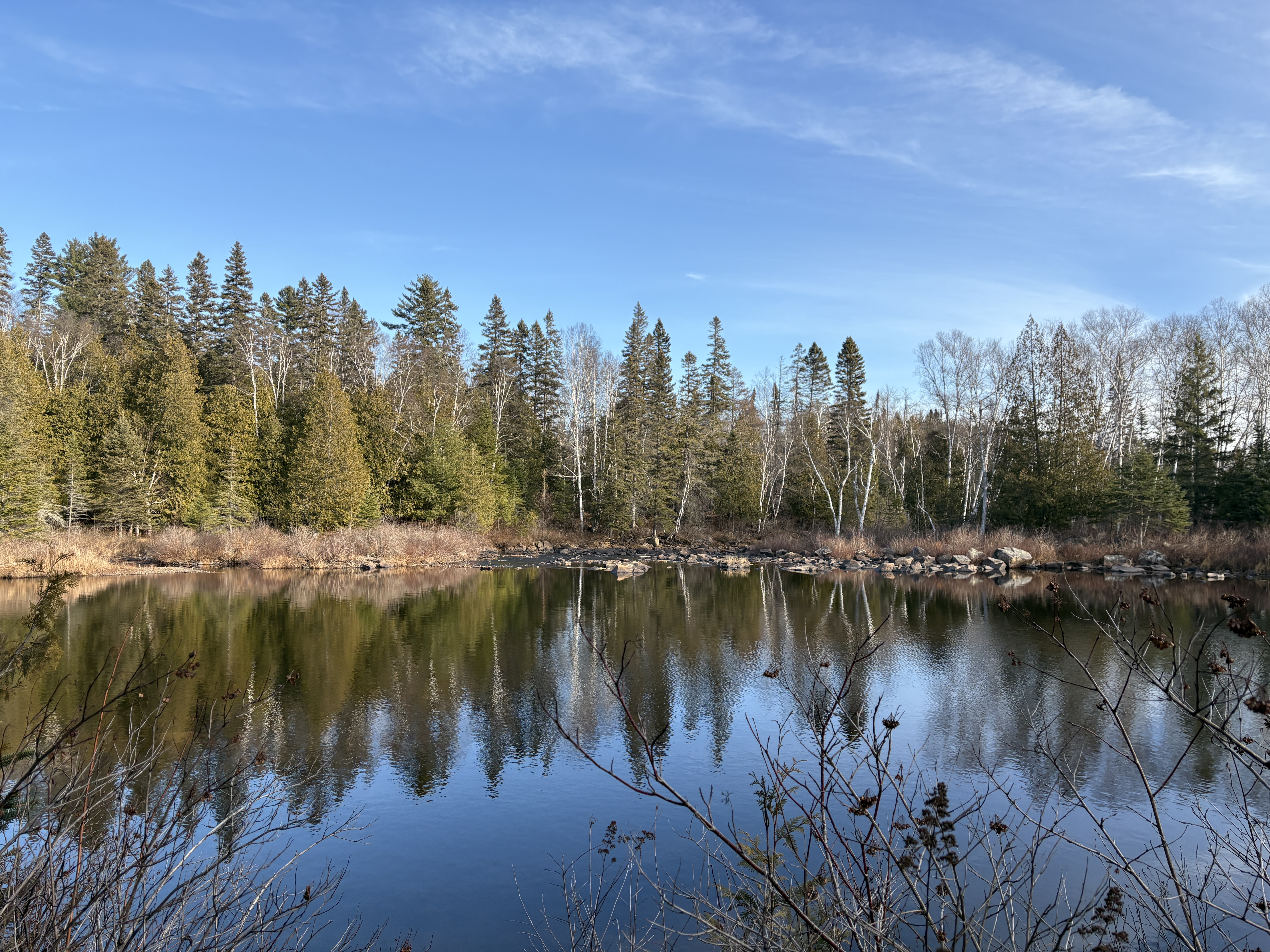
The yellow trail will bring you to the river via the most direct route. The rocks in this area are full of iron and have a rusty red colour to them.
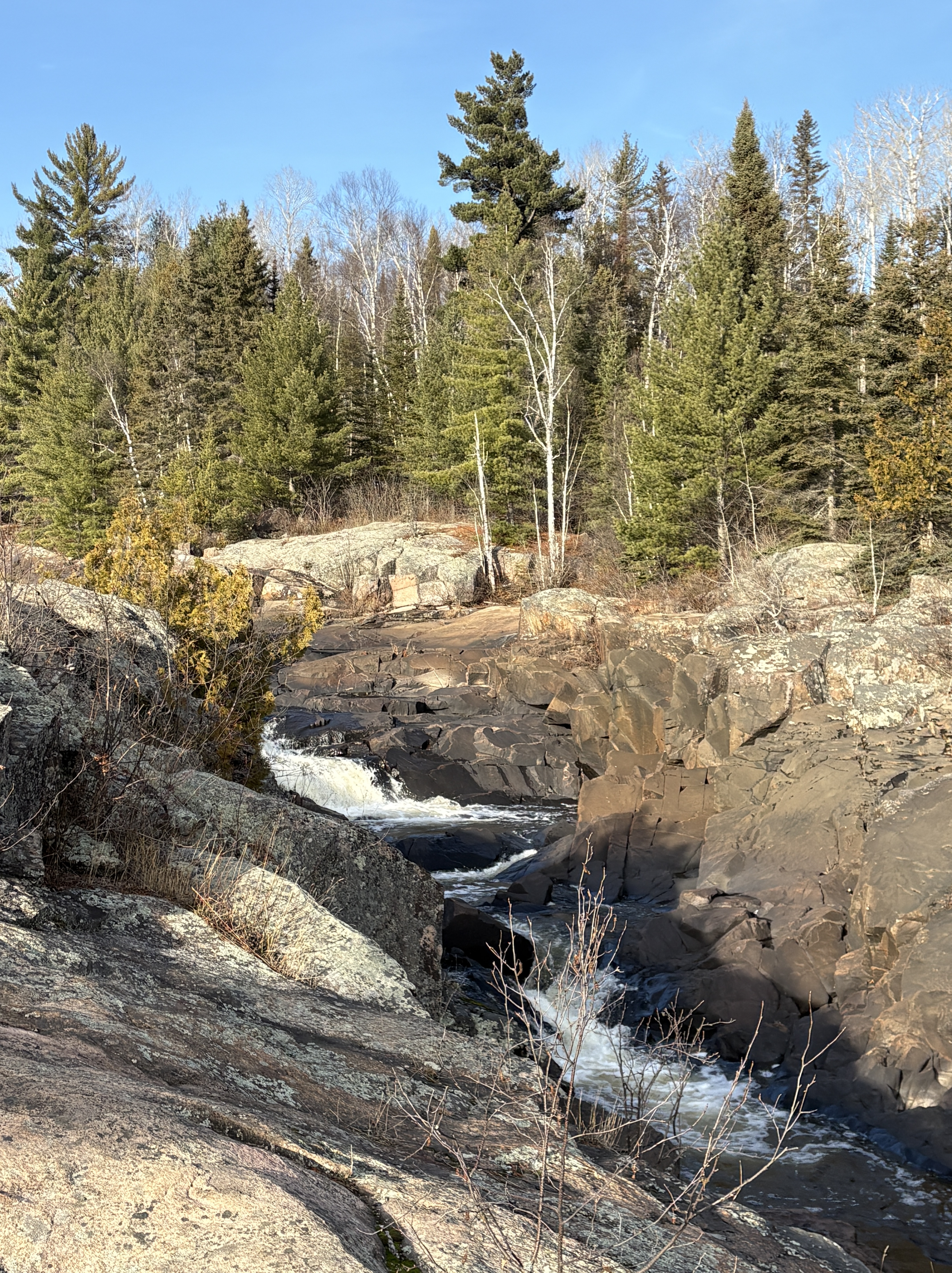
As you make your way over the exposed bedrock you will come to an area of pink granite. The second set of rapids flows through an area of dark coloured rocks that have been formed from volcanic activity. Further north, the upper half of the cascades flows though rocks that are said to be 2.5 billion years old and made of compacted sand, silt and mud.
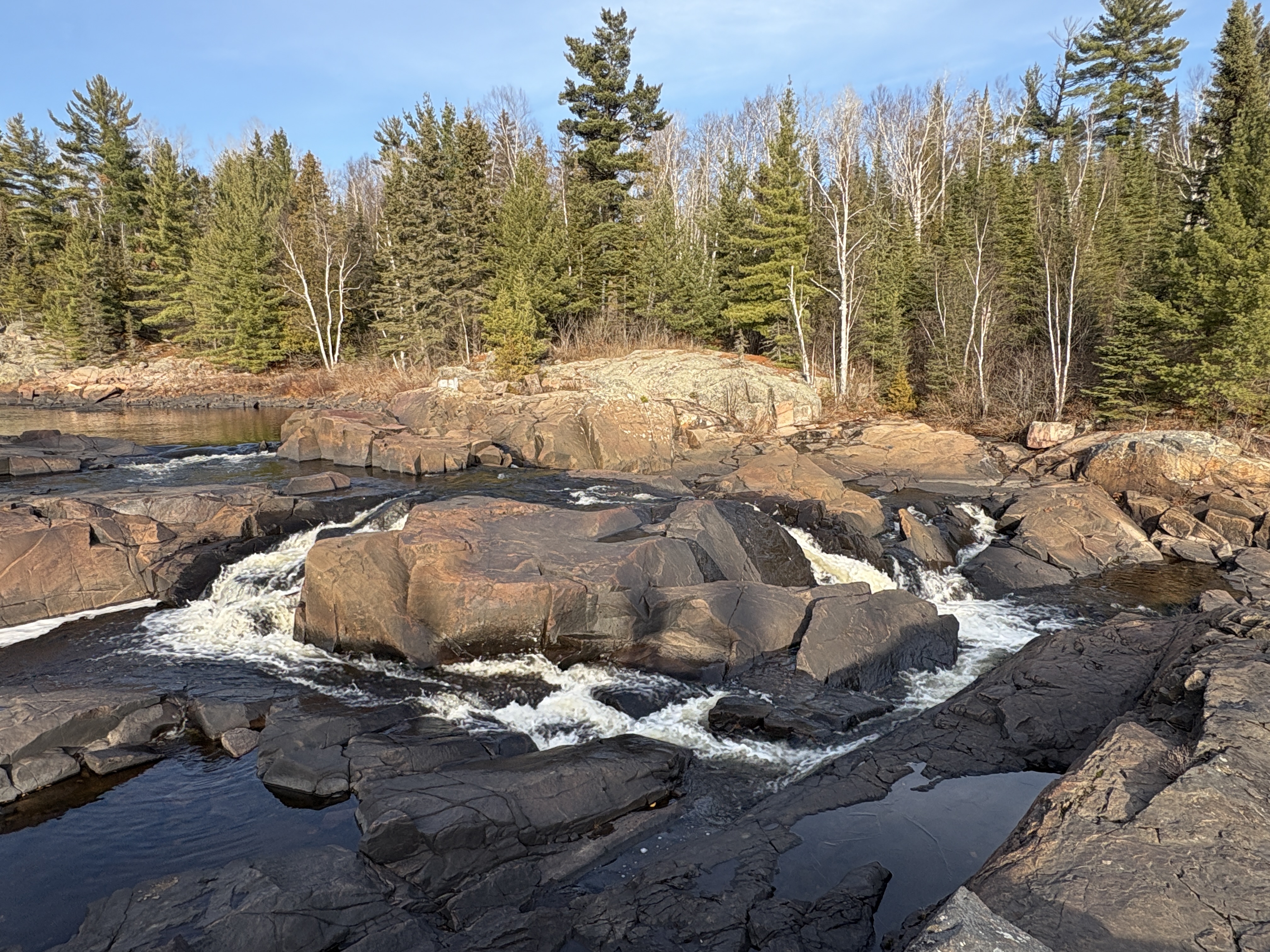
The cascades run for a kilometre along the river and you can follow them heading upstream by walking along the bedrock on the sides of the river.

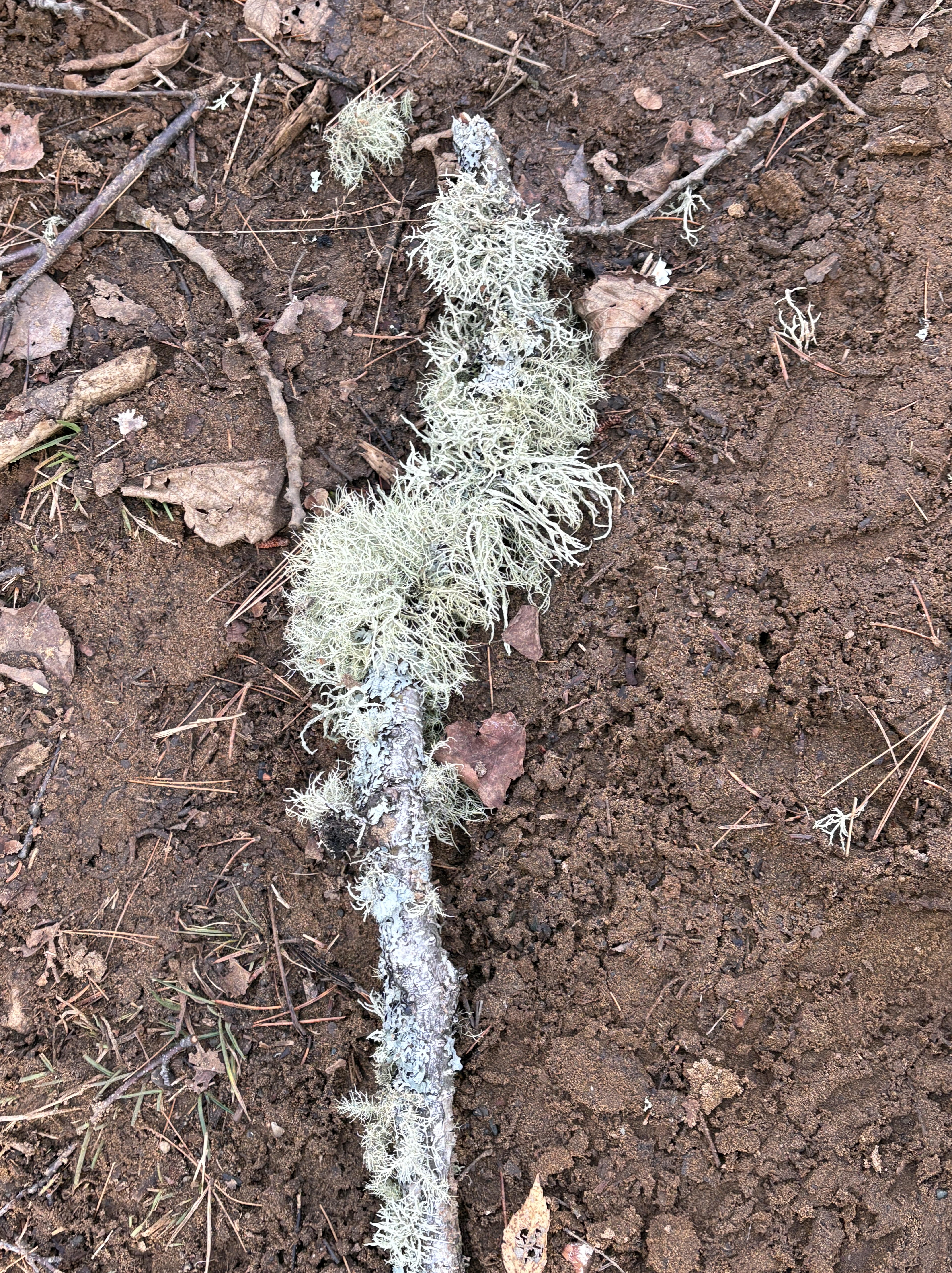
Healthy forests will have a great variety of fungus and mushrooms. Even this late in the season I found at least 6 varieties that were actively growing. I imagine that the summer and early fall months there must be many varieties that come and go in the forest. The forest floor is also said to be covered with flowers in the spring and trilliums grow in large clusters. The hairy looking fungus shown below was growing in several places on fallen sticks.
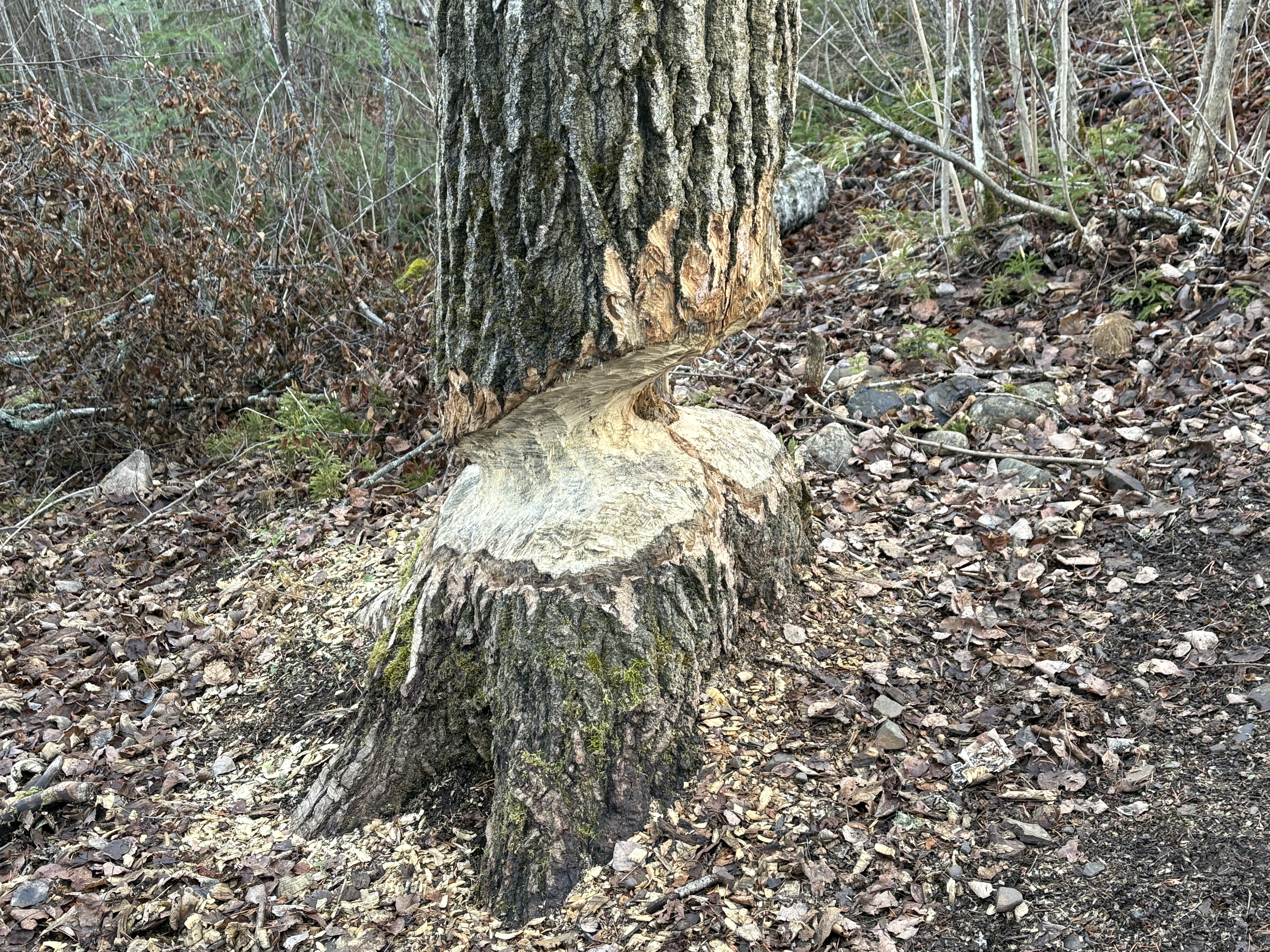
There is evidence that beaver live in the river and feed in the forest along the shore. They have nearly finished chewing through this large tree along the side of the trail.
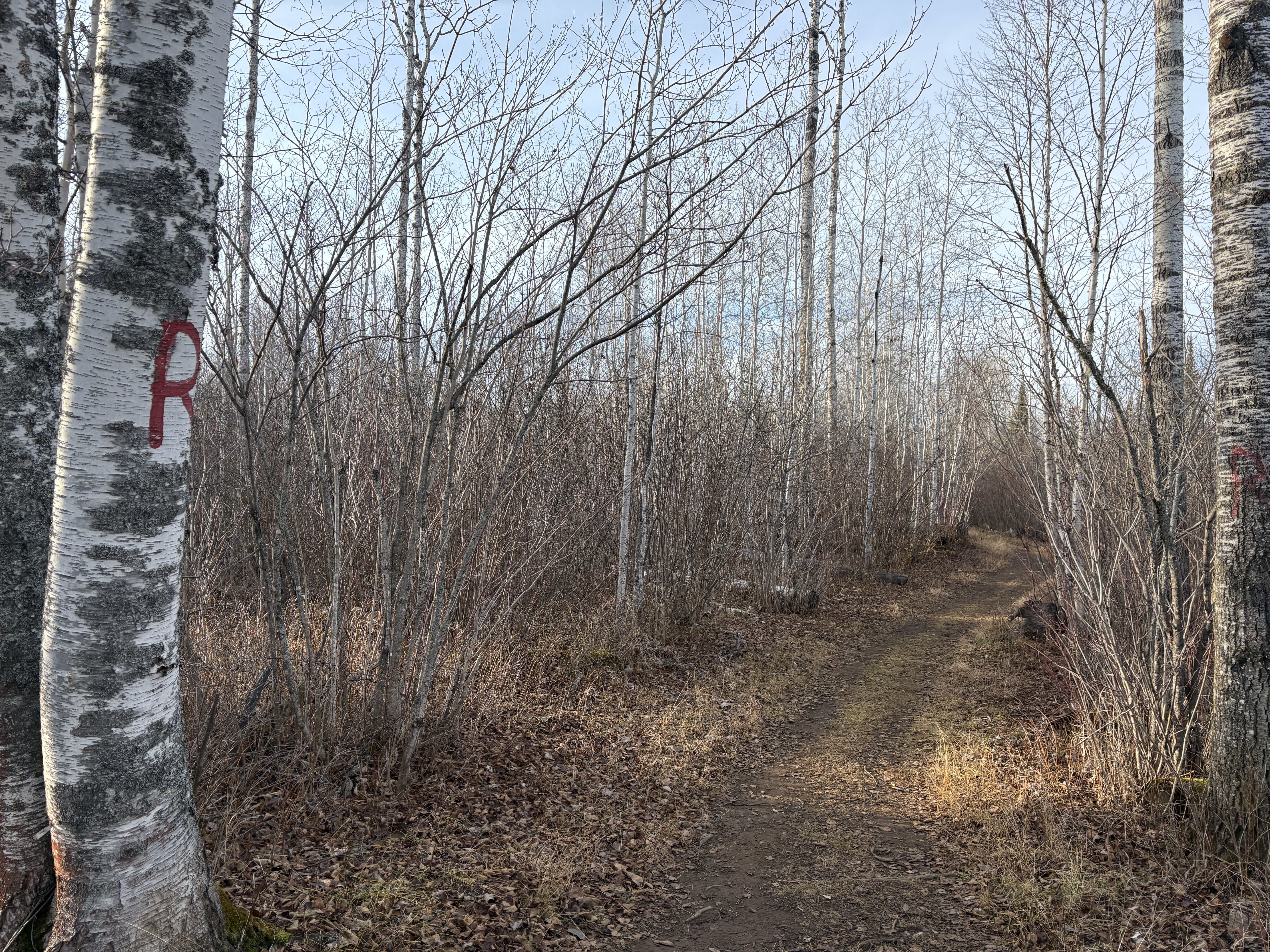
Just as the yellow trail is marked with a yellow “Y” on the trees, the red trail is marked with a red “R” on the trees. I covered almost 4 kilometres of trails in the park and walked for over an hour in the fall sunshine. This entire area was under a kilometre thick layer of ice around 10,000 years ago during the last ice age. This has left large deposits of sand and gravel in the park.
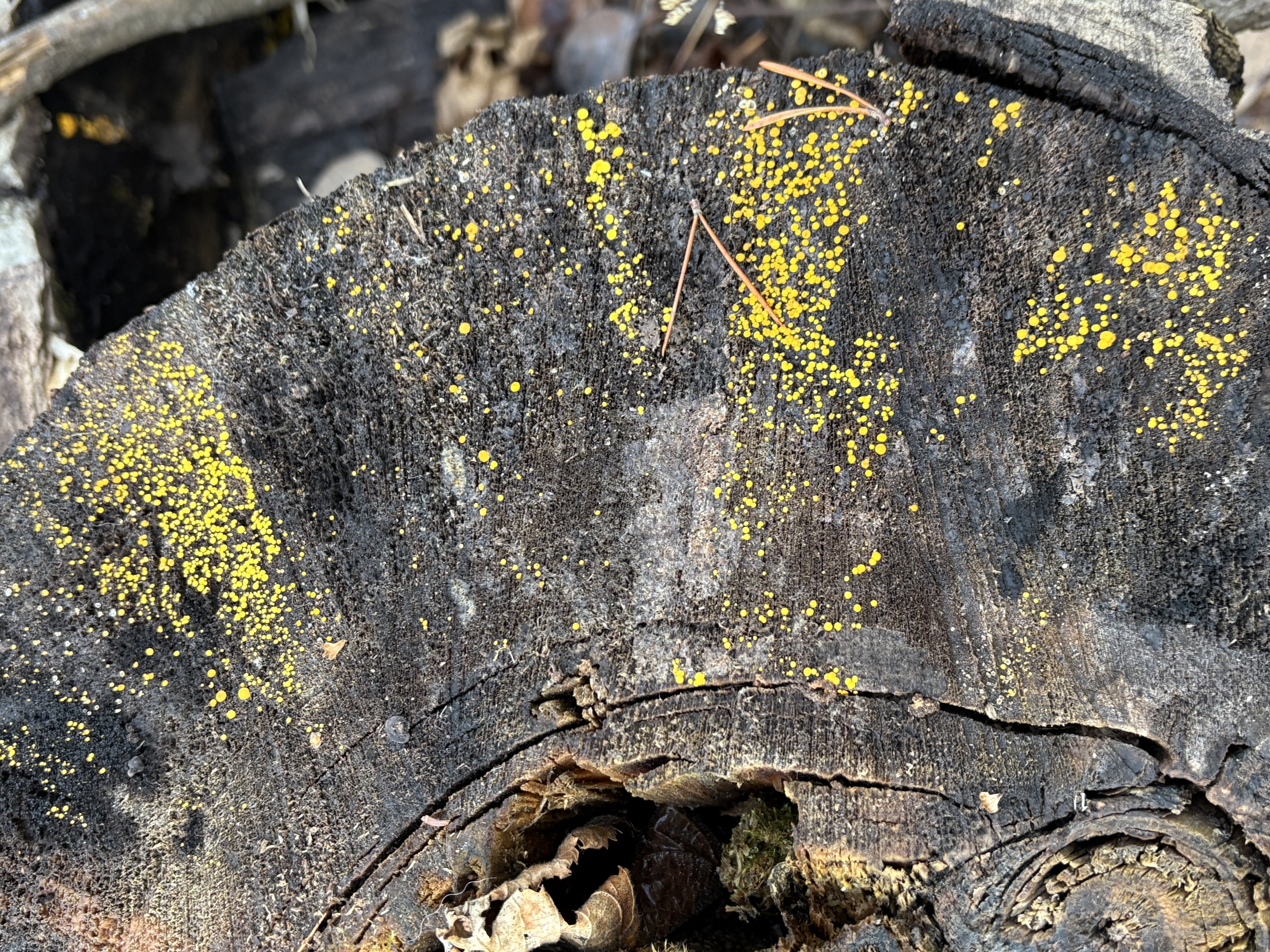
Bisporella Citrina is an inedible mushroom that grows as little yellow dots on rotting wood in several places in the forest around the conservation area.
Parking is $5.00 but the conservation authority gets no federal or provincial funding so the money is used for maintenance within the park system.

Related stories from around Thunder Bay: Kakabeca Falls, Fort William Historical Park, Forest of Cars

Google Maps Link: Cascades Conservation Area

Like us at http://www.facebook.com/hikingthegta

Follow us at http://www.hikingthegta.com
Vivian – Ghost Towns Of The GTA

November 16, 2024

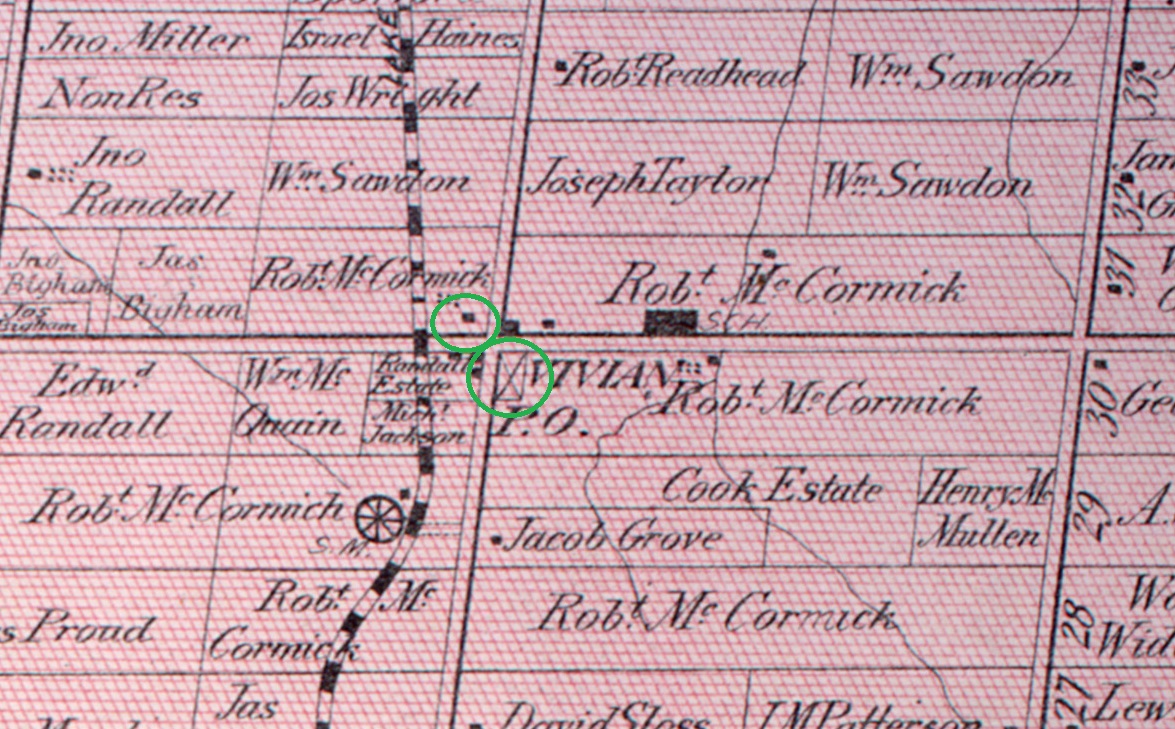
The area around Stouffville was covered with a mature white pine forest when the Europeans began to arrive in the 1800s. The indigenous peoples used the forest for hunting and gathering but the white people saw a source of timber and soon began to cut the forest down to feed into their sawmills. The hamlet of Vivian is shown in this 1877 county atlas map. Robert McCormick owned several tracts of land as well as the sawmill which can be seen on the south end of the community.

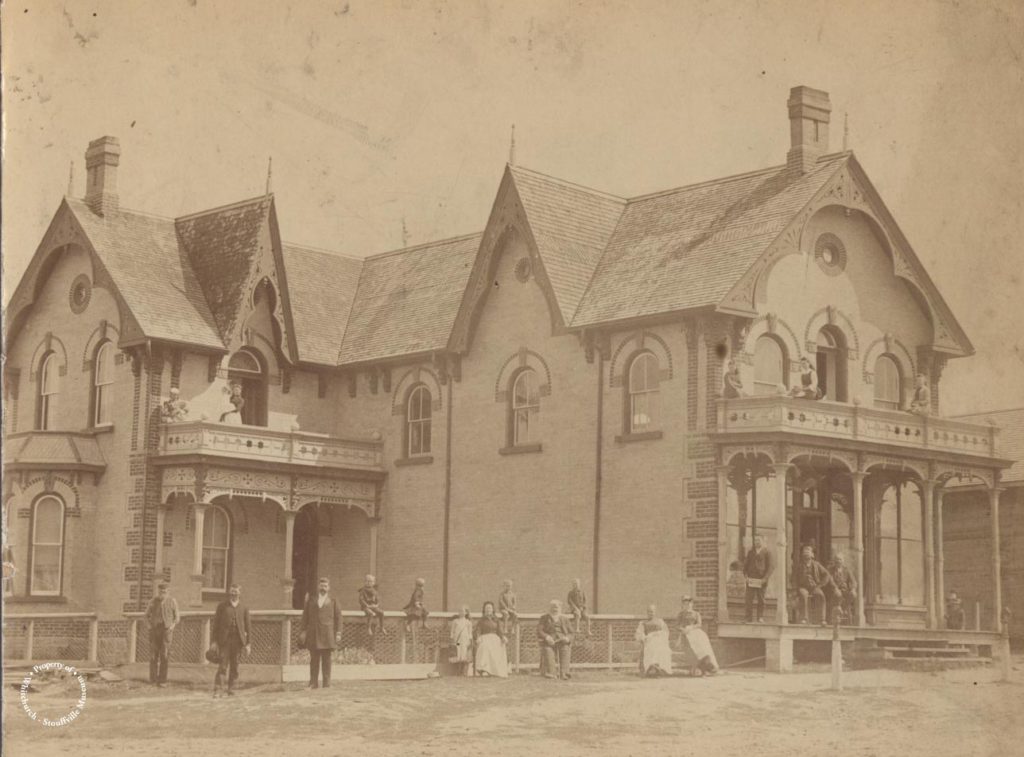
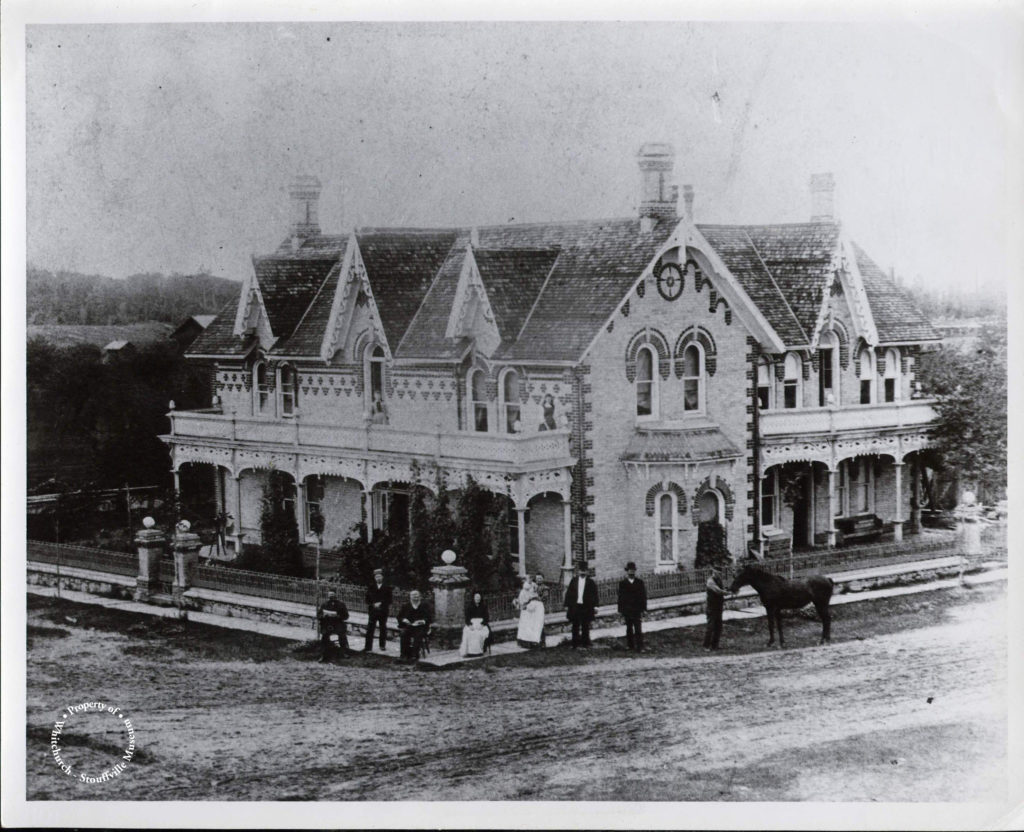
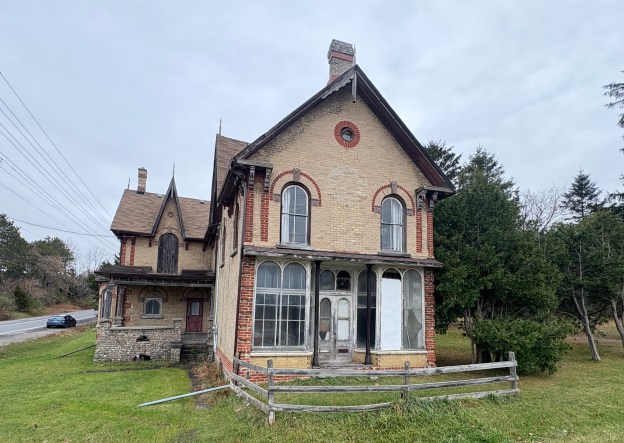
George Sexsmith was one of the early settlers in the area and he operated a general store and an inn. The town was originally known as Sexmith’s Corners after him. The community centred around the lumber industry and its fortunes rose and fell with the supply of white pine. When Robert McCormick and his family arrived in 1866 they made a significant impact on the community. They owned the sawmill which also supplied materials to their shingles factory. They opened a blacksmith shop and operated a maple sugar bush. The south east corner of modern highway 48 and Vivian Road became the site of their general store and post office. The post office opened in 1866, the year that Robert arrived. The archive photo below shows the McCormick general store around 1900.

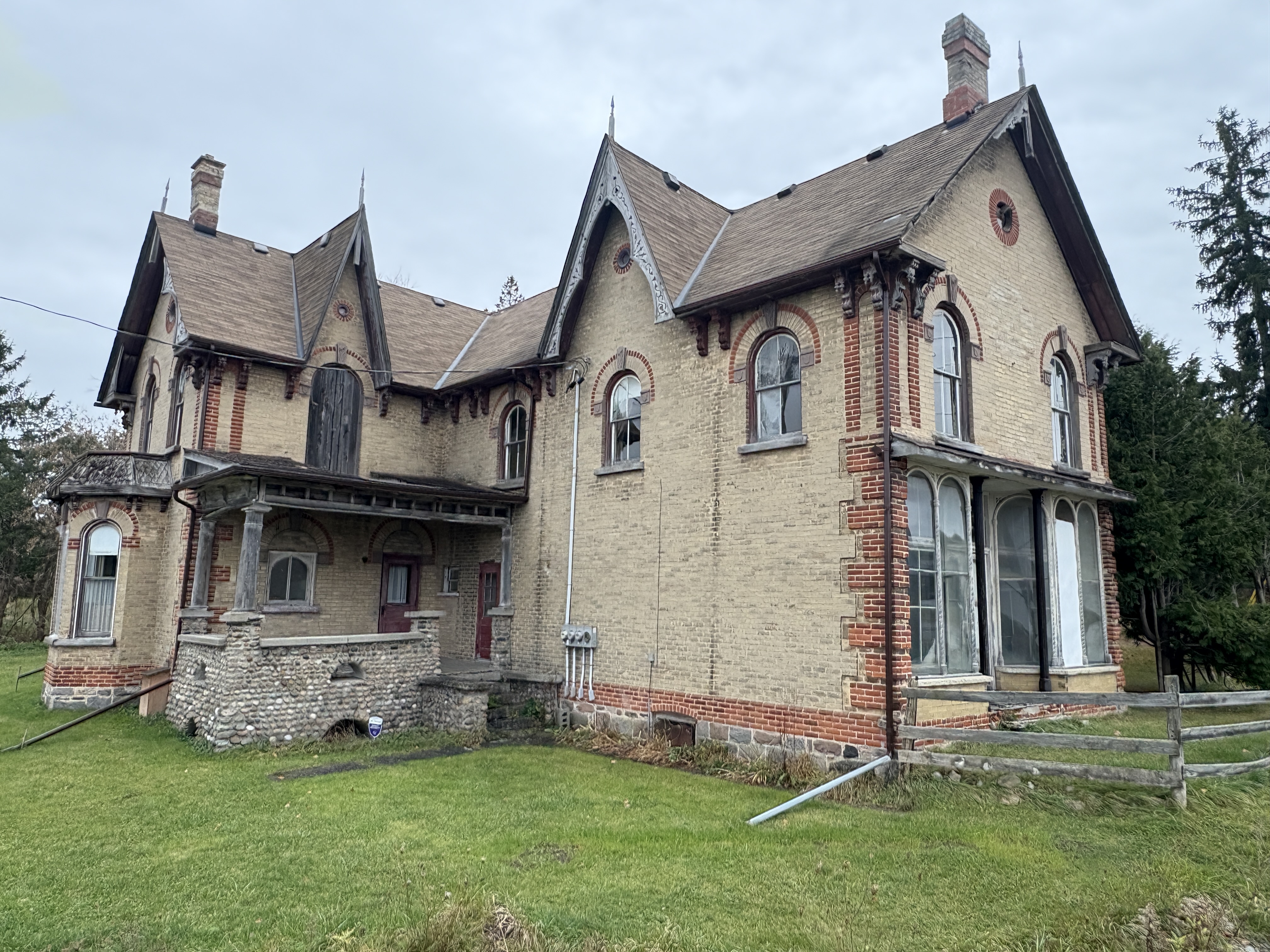
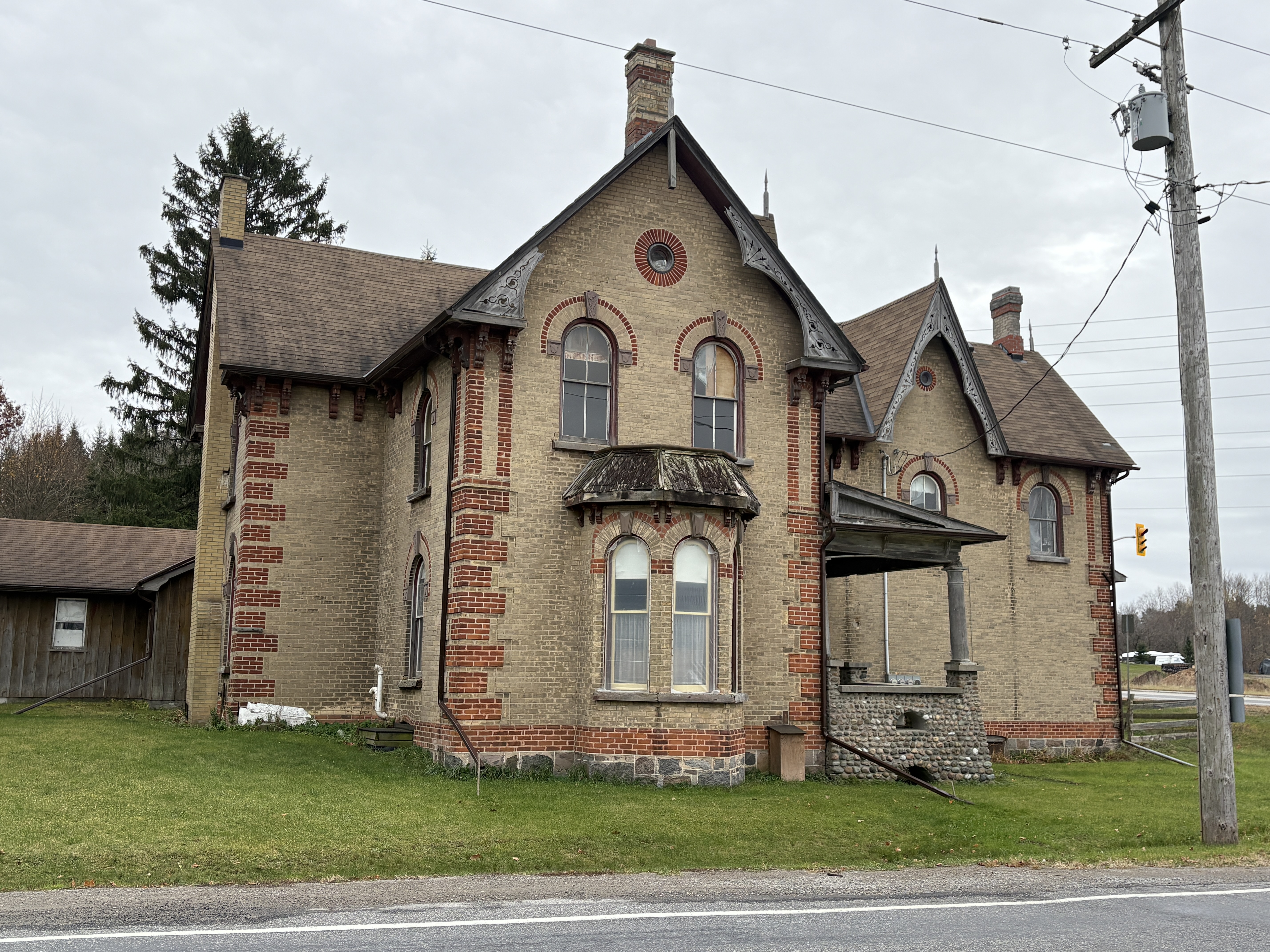
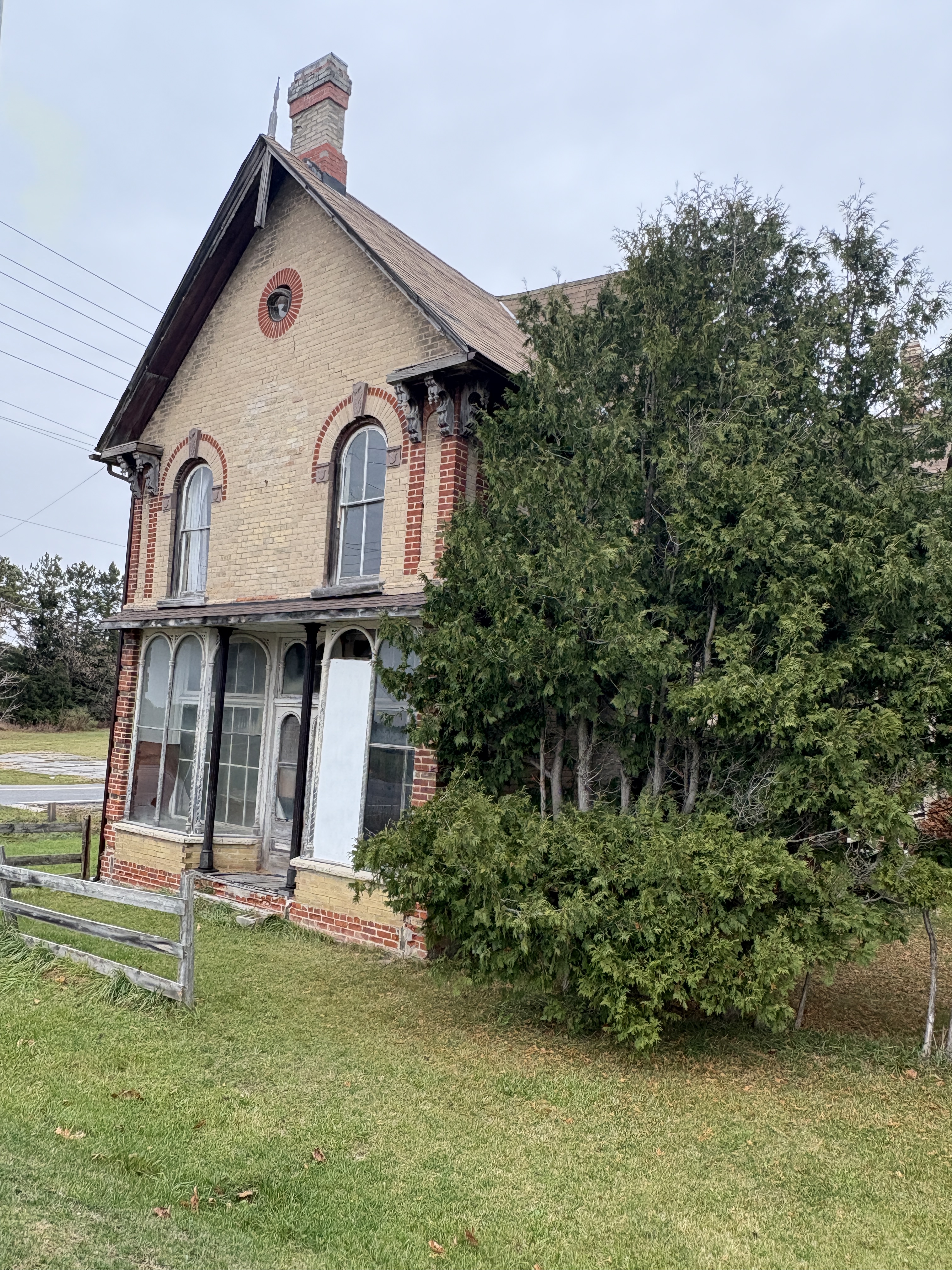
The store has lost some of its former glory with the removal of the front porch and partial removal of the one over the family entrance on the side. Some of the bargeboard, or gingerbread, has also fallen off. It is interesting to note that there were four hydro meters on the side of the building which indicates that there were probably four separate apartments in the building at one point in the past. I also notice that the centre door above the storefront has been bricked in at some point which is unfortunate as it eliminates a bit of the charm of the building.

The town took the name Vivian when the post office opened in 1866. By 1900 the local forests were depleted and the lumber industry collapsed. The people started to move away and the population declined until by 1924 the post office was closed. The site of the school, which is seen on the county atlas, is now occupied by the Vivian Outdoor Resource Centre.

The building was for sale recently, reportedly for $1.2 million. This would have included 3 acres of land. With the encroachment of the city and the growth of Ballantrae to the south, it is only a matter of time before this area starts to see a spurt of growth. Hopefully, this building will be restored and turned into some form of commercial venture again. It would be a shame to lose it forever.

The McCormick house used to stand on the north west corner of the intersection but has since been demolished after a fire in 1971. This house was designed to compliment the store and used similar architecture. The two buildings with their similar brickwork and gables gave the community a distinct character which has been partially lost due to the removal of the hotel which had become quite run down. The store is in a state of disrepair but has not reached the point of neglect that would require it to be demolished as well.

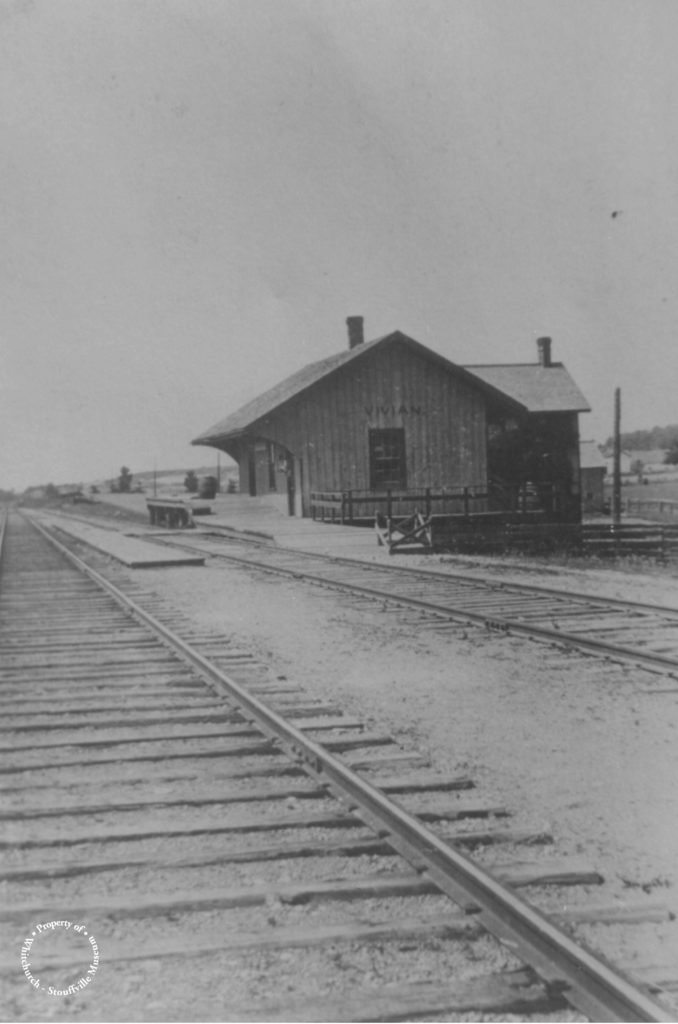
The Lake Simcoe Junction Railway was chartered on March 29, 1873. The line was completed in 1877 and ran for 42 kilometres from Stouffville to Sutton. It ran parallel to modern Highway 48 through the community of Vivian. Much of the passenger traffic was taken away by the Toronto and York Radial Railway in 1908. By 1979 the line was completely abandoned and the rails were lifted in 1981. The remains of the rail bed can still be found in the trees near the intersection. The archive photo below shows the Vivian railway station and the two lines of rails that passed through the community.

The community of Vivian doesn’t resemble the early hamlet as most of the original buildings are gone. However, the McCormick store remains on the corner as a testament to the past when the hamlet was a thriving community.

Related stories: Toronto & York Radial Railway

Google Maps Link: Vivian

Like us at http://www.facebook.com/hikingthegta

Follow us at http://www.hikingthegta.com
Abandoned Transformer House Eight Years Later

November 9, 2024

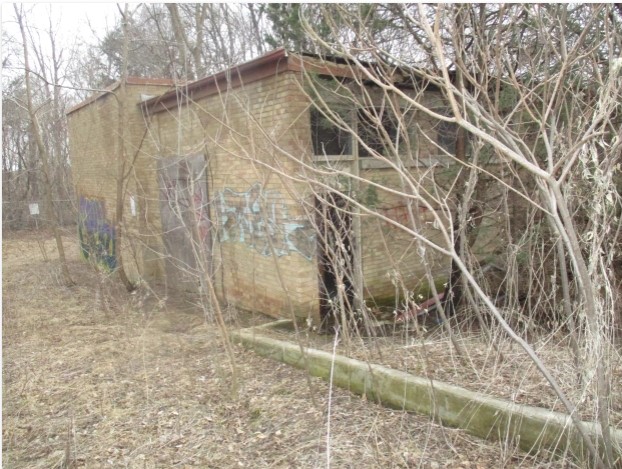
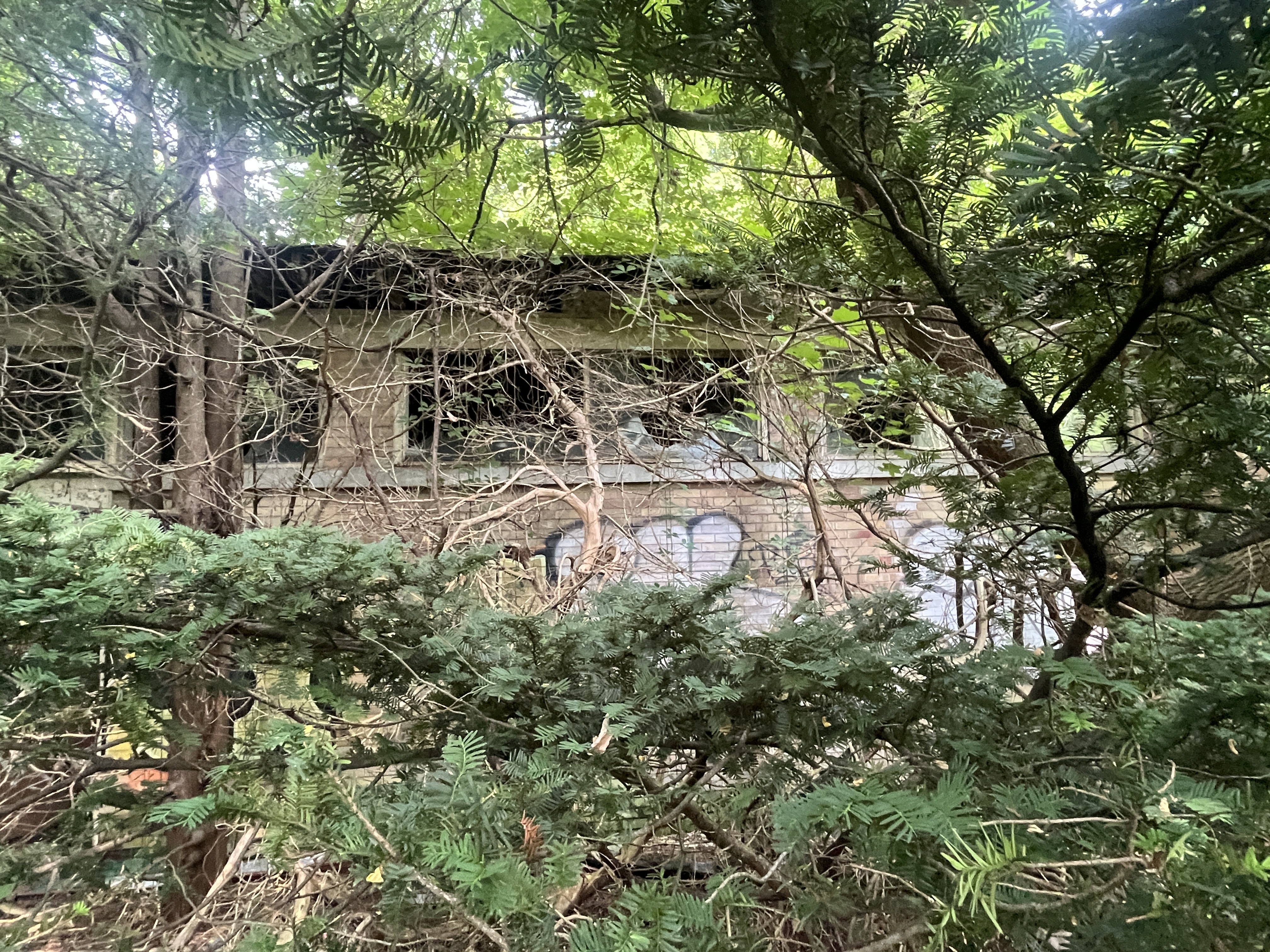
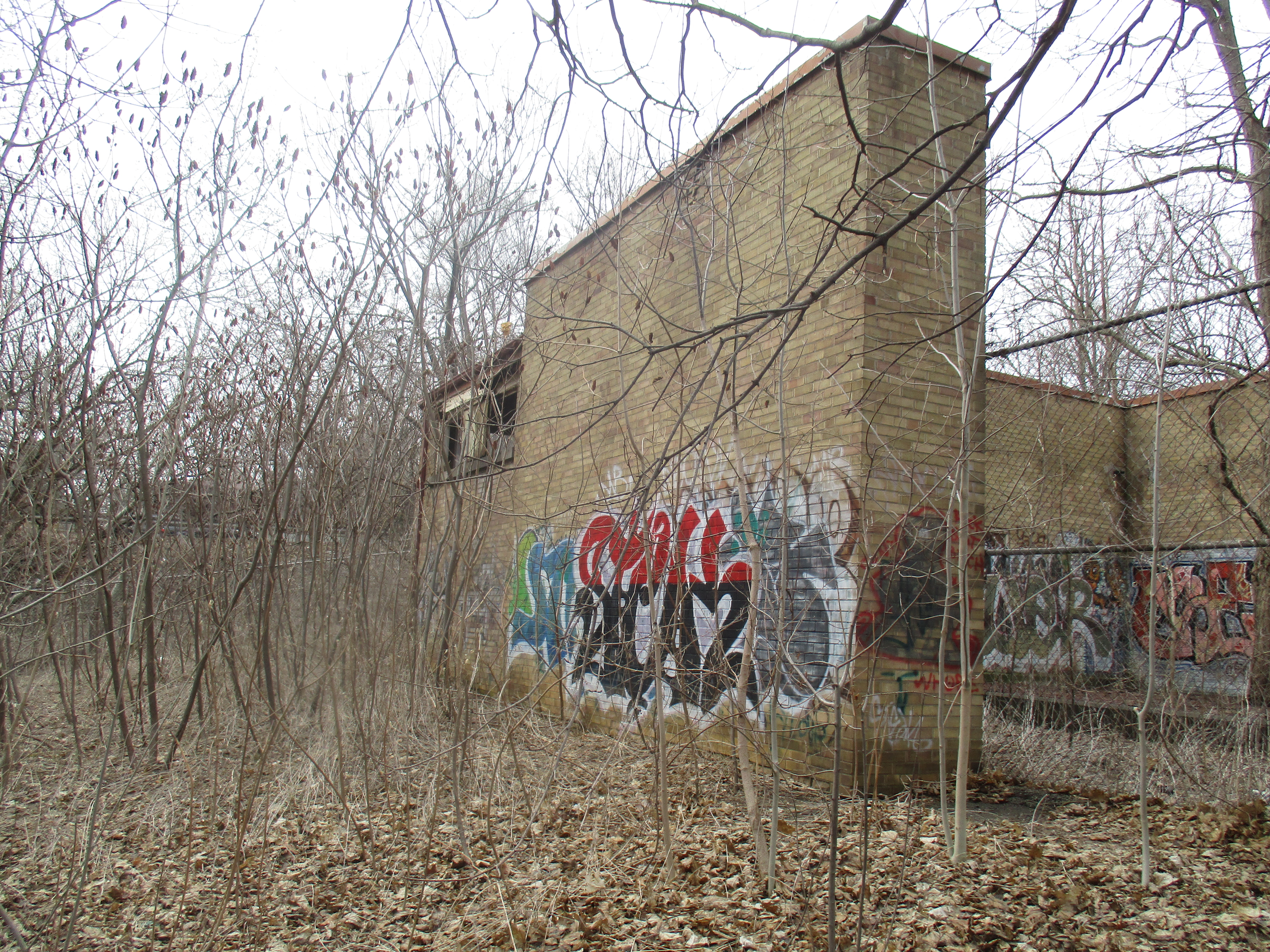
When I visited the Bayview Transformer House in 2016 it had been abandoned for several years. I won’t go back into the history of the property as this is detailed in the link above. I stopped by to see what has happened in the eight years since then. The main transformation has been the growth of the trees and sumacs that surround the building. The graffiti has greatly increased and now covers most of the walls. I noticed that there was fresh blue paint on the grass beside the wall which indicates that some of the painting had been done very recently. The image below shows the building from the street elevation as it appeared in 2016.

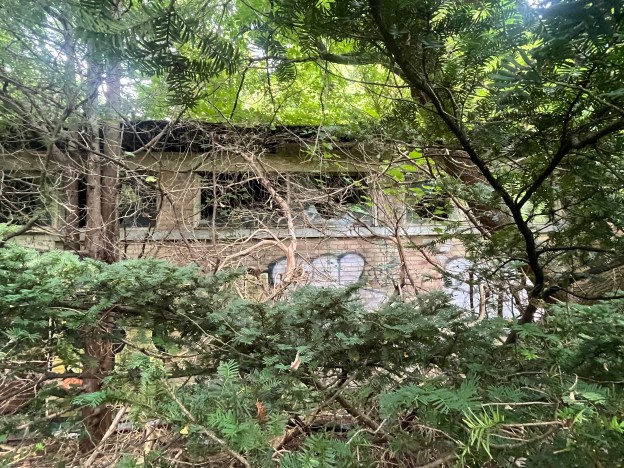
The building used to be quite visible from the road but the vegetation in front has really filled in. During the summer months it is fully hidden from the road which is only a few metres away. This is the image taken in 2024 of the front of the building.

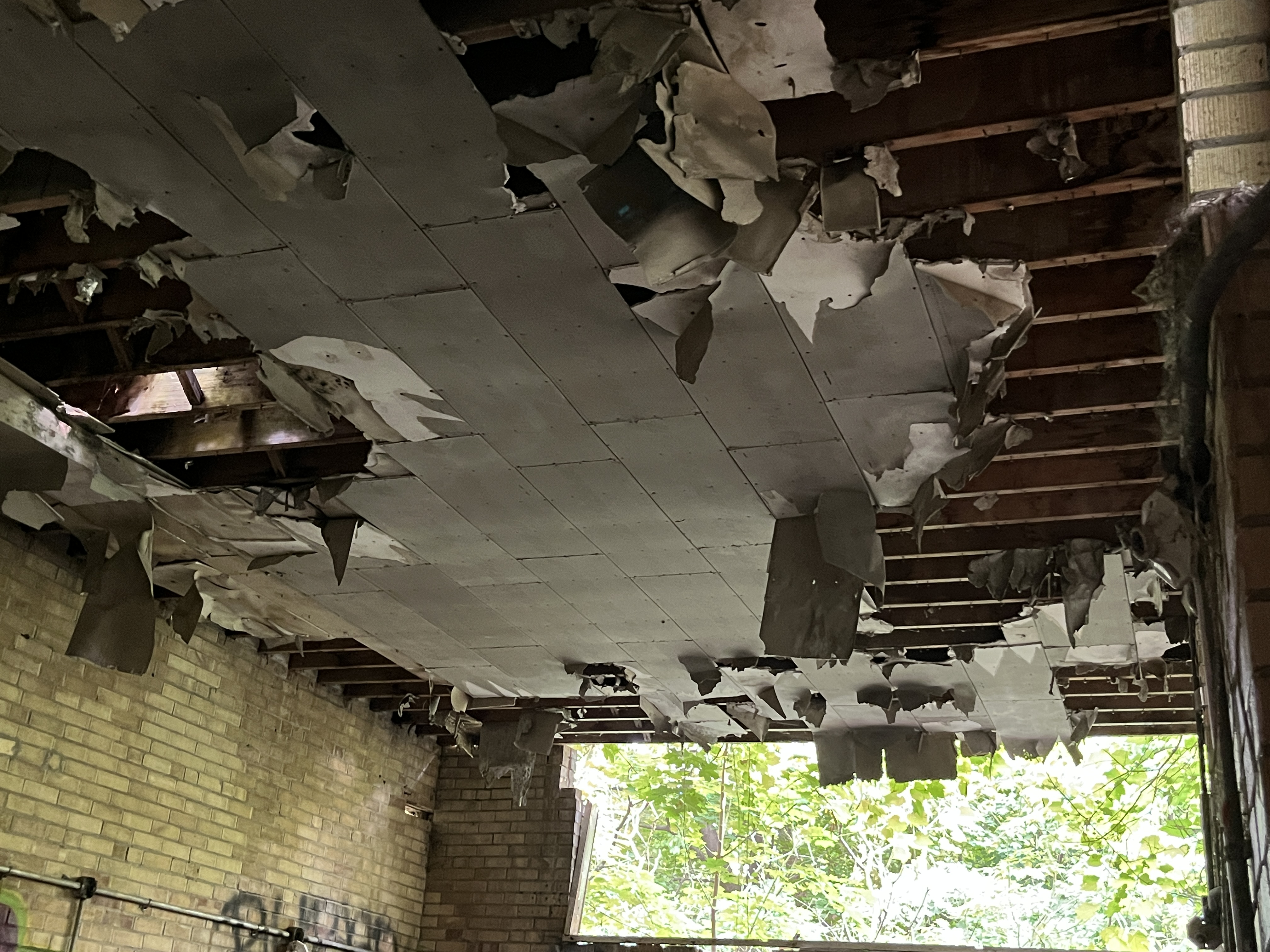
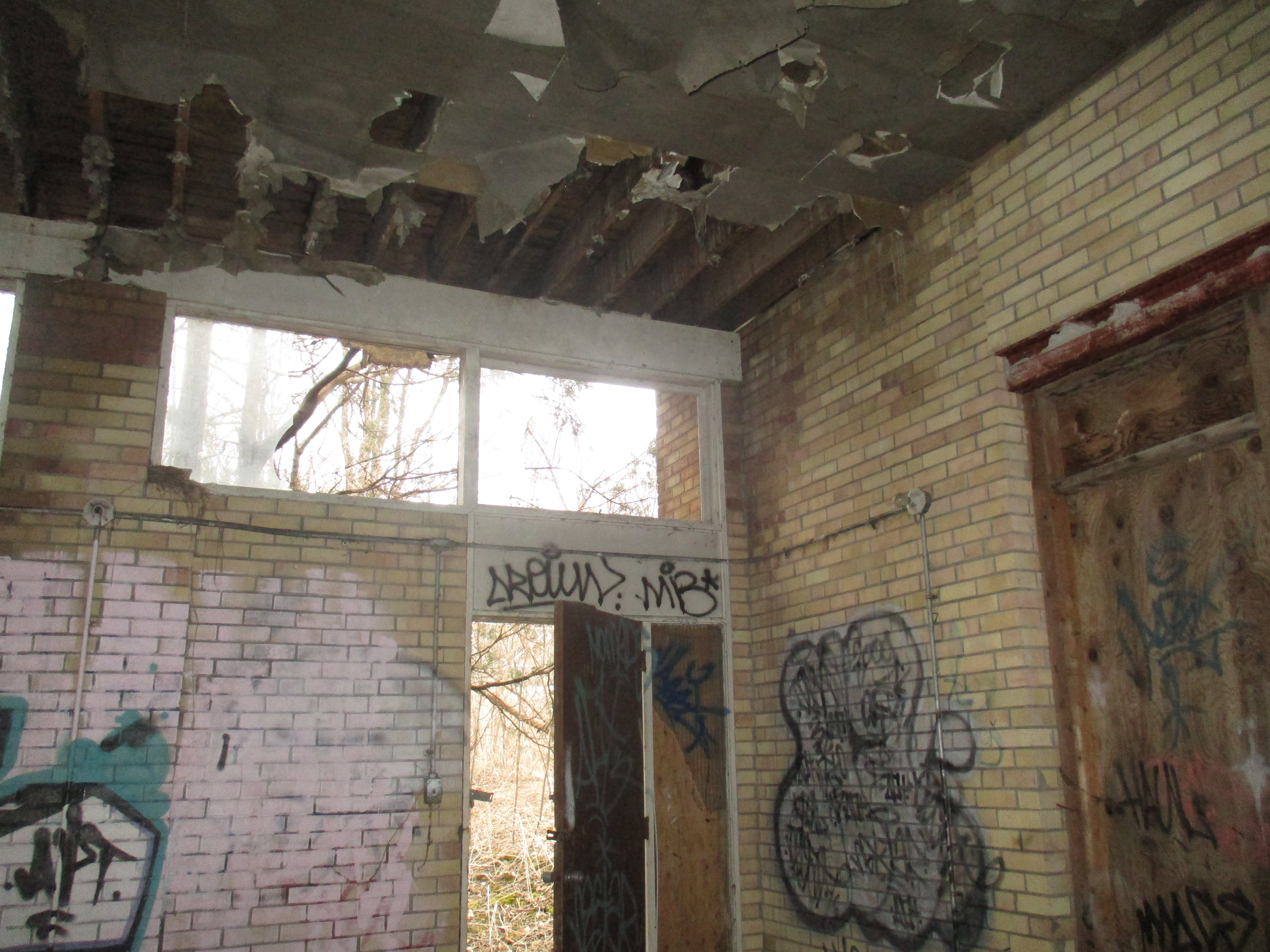
Inside the main room most of the ceiling tiles have come down. There’s a couple of places where the roof has weathered to the point that the open sky can be seen. Now that all the windows are broken and the roof has been compromised the decay will be accelerated. The room at the front of the transformer house will likely lose its roof in the next few years.

There was much less roof and tile damage in the 2016 picture when only a small amount of tile had come down.

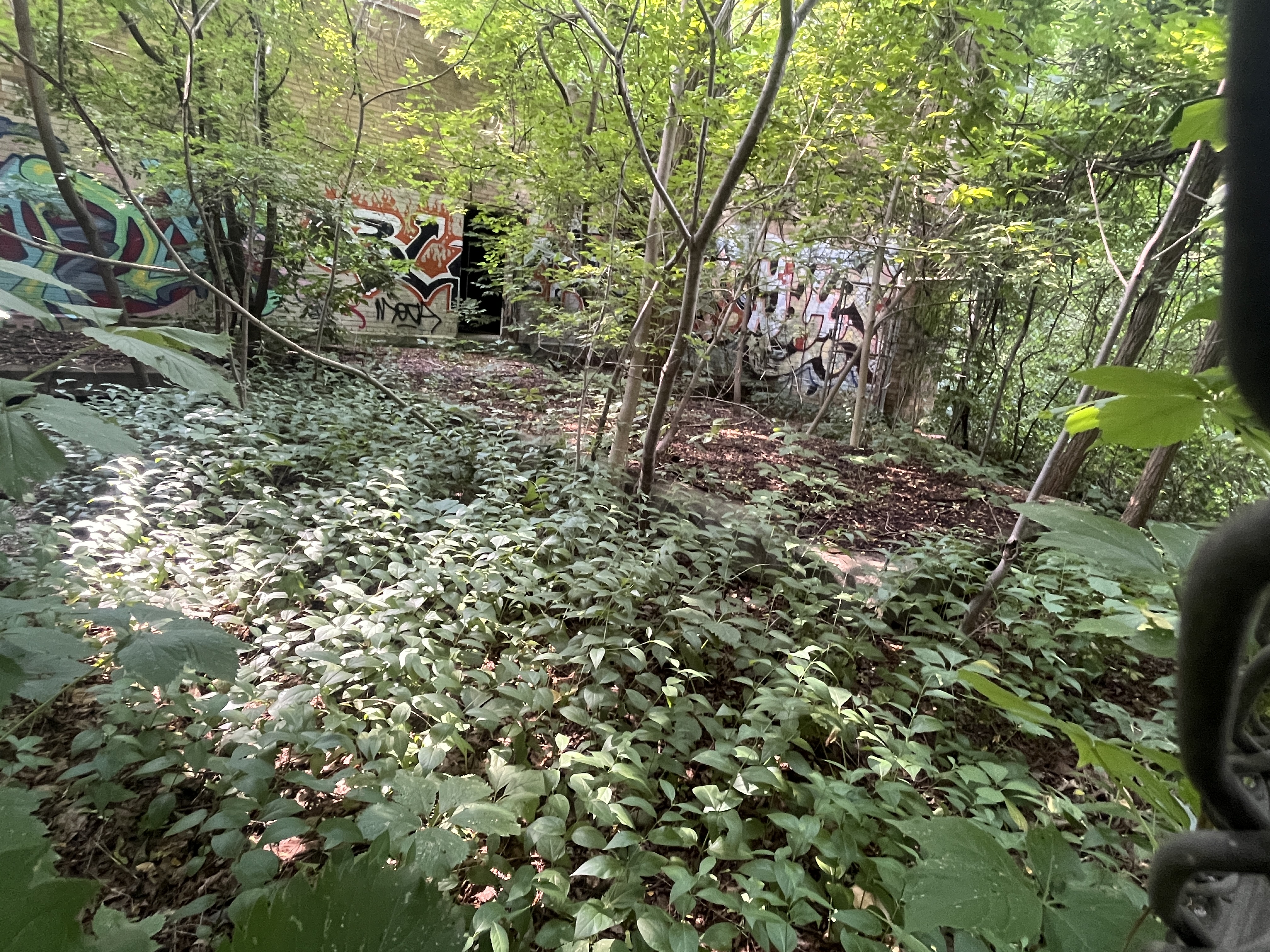
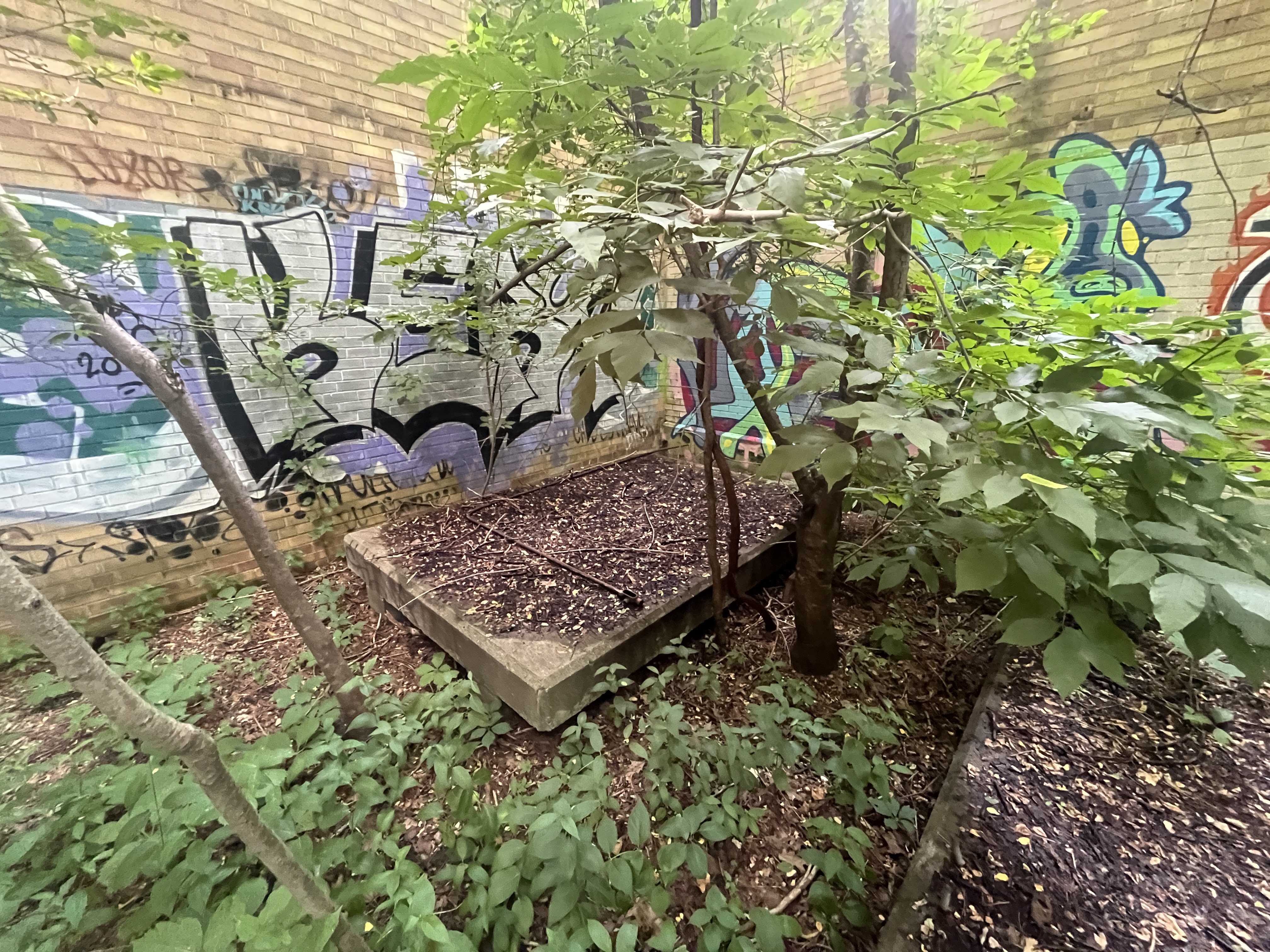
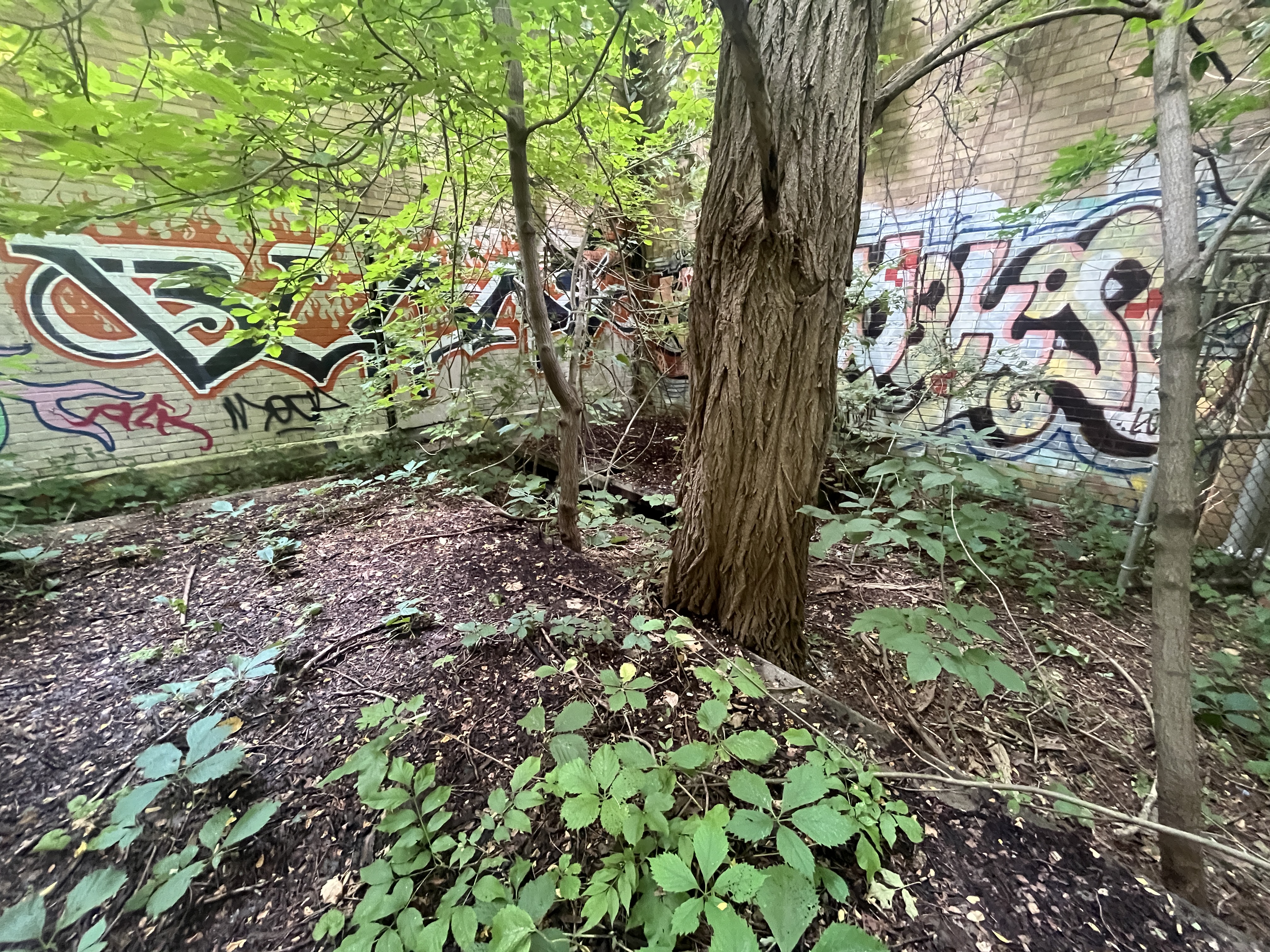
The back yard of the building has become more overgrown and first generation trees have sprouted up in many places.

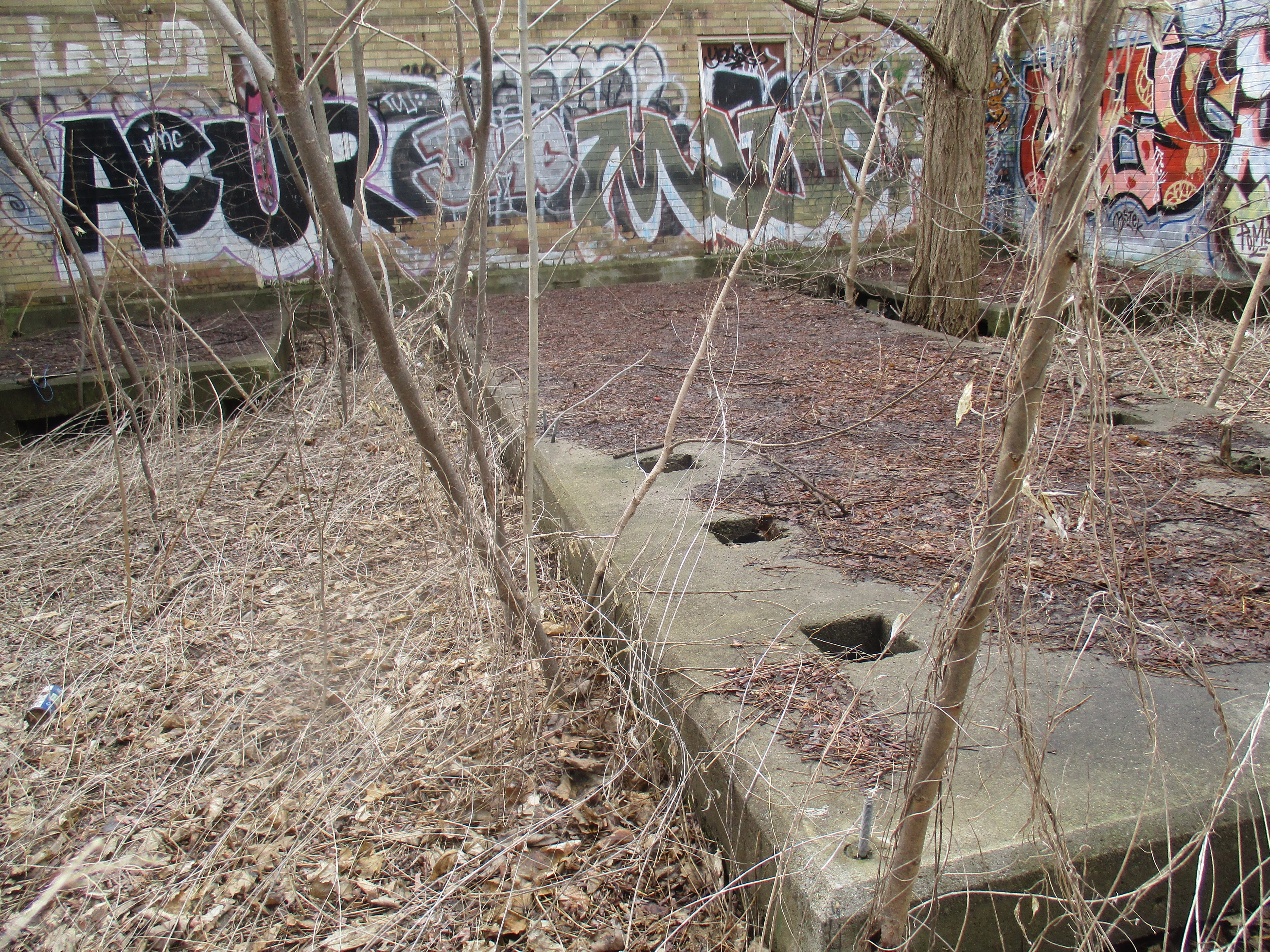
The trees around the old transformer mounting pads have become quite well established.

In the 2016 picture the trees are mostly small and with one exception appeared to be quite new.

The side of the building had some graffiti on it in 2016 but it is now almost completely covered. The walls will likely last for quite some time on the back of the building as they are solidly built. If left to nature, they will most likely outlast the front section of the building.

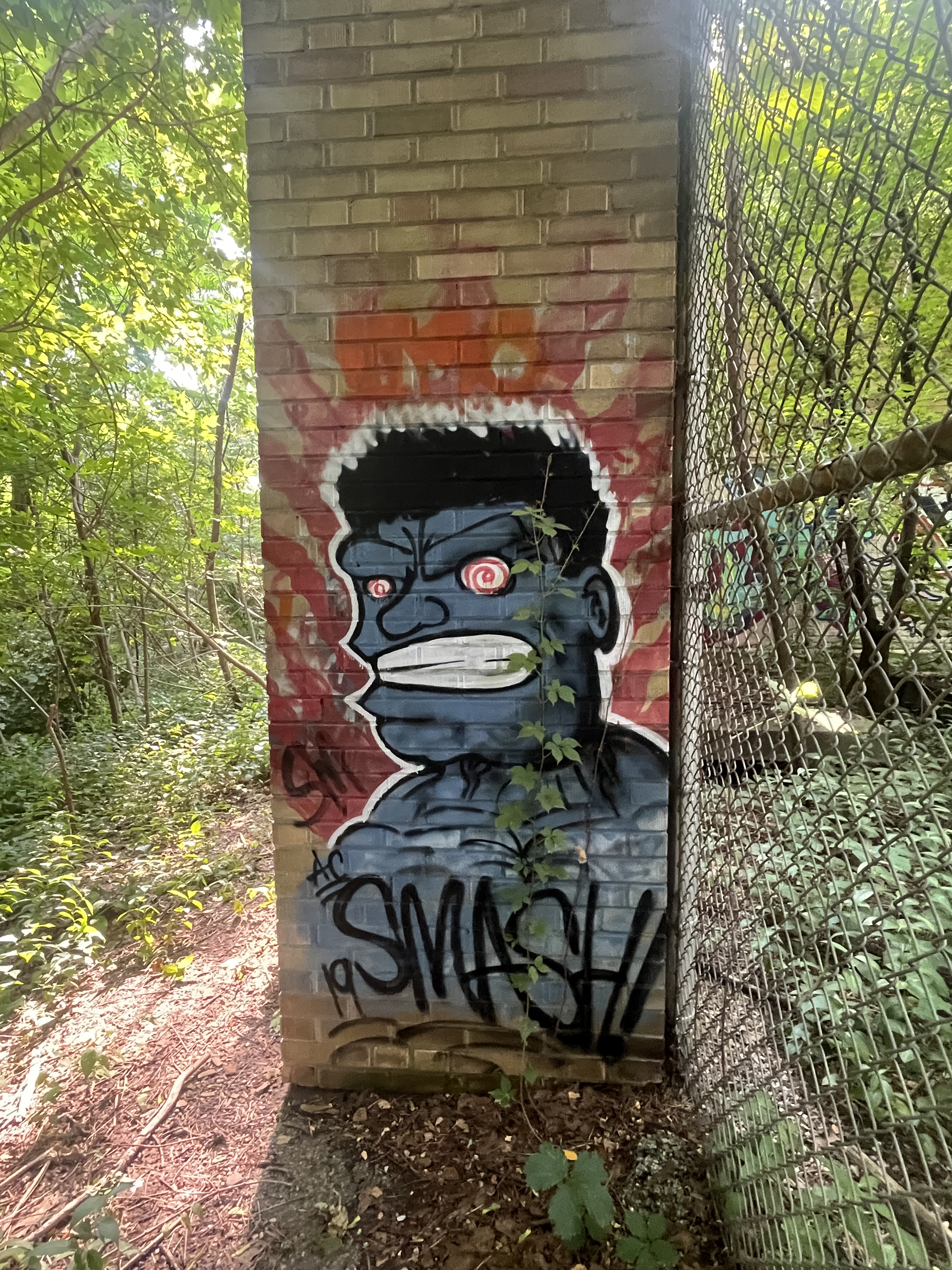
Recent artistic works have adorned almost all of the walls. The fence has been compromised and repaired several times in the past few years.

Eventually all the trees on the property will reach maturity and the building will be surrounded by the forest. The transformer house is located on a corner of a park and nature is thinking about re-establishing itself.

I will continue to keep an eye on this building as the years go on to see how quickly the roof will fall in, provided that the site doesn’t get demolished.

Related Stories: Bayview Transformer House

Google maps link: Sunnybrook Hospital

Like us at http://www.facebook.com/hikingthegta

Follow us at http://www.hikingthegta.com