Monthly Archives: May 2025

David Dunlap Observatory

May 31, 2025

Richmond Hill is home to a hidden gem and National Historic Site in the David Dunlop Observatory. When the David Dunlop Observatory was opened in 1935 it was located on an isolated farm outside Richmond Hill. The location was Lot 42 in the first concession east of Yonge Street. Lot 42 had been granted to Robert Marsh who passed it on to Alexander Marsh in 1852.
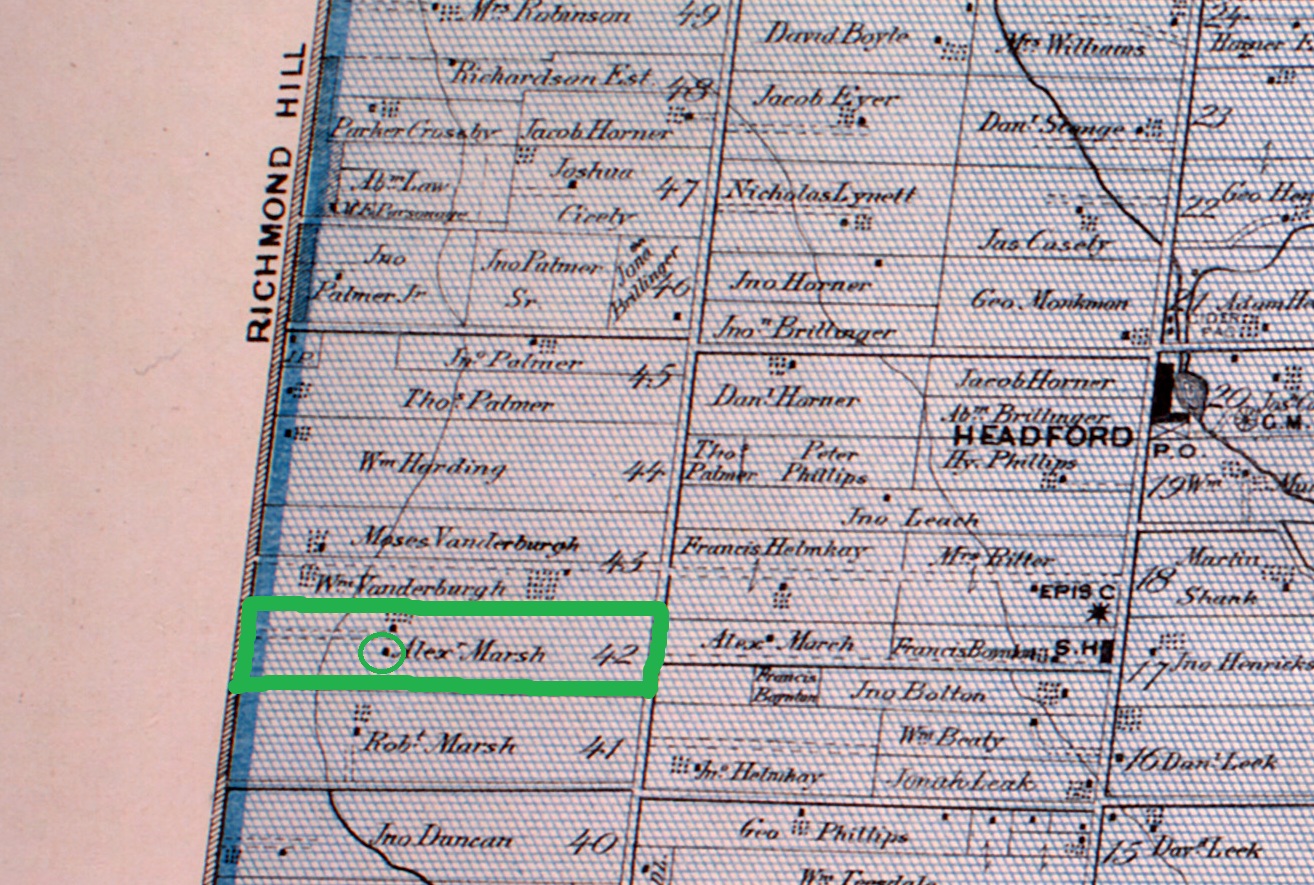
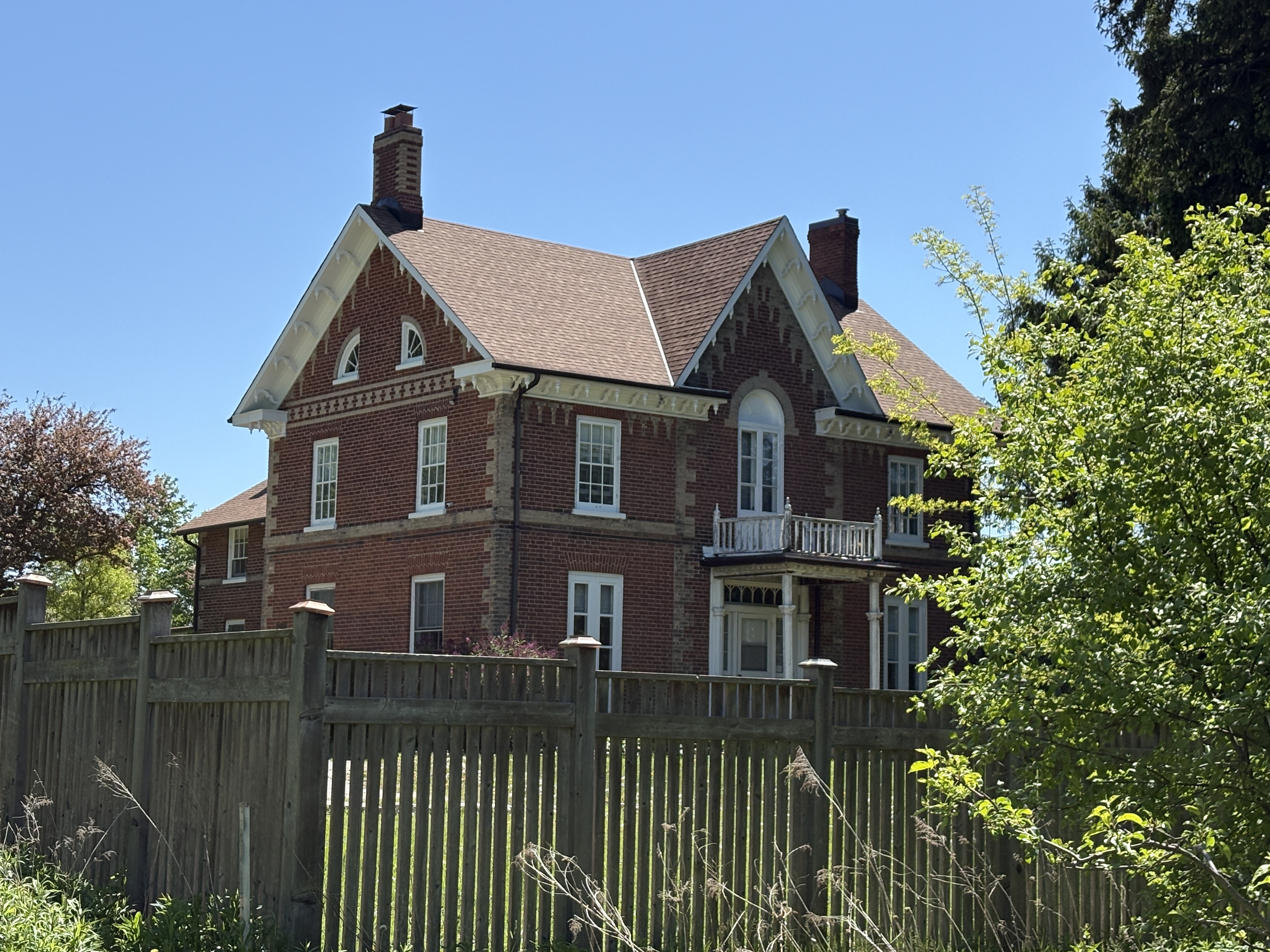
Alexander decided to replace his father’s home with a new one built in 1864. The home became known as “Elms Lea” and was beautifully designed with three symmetrical bays. The dichromate brickwork gives the home it’s elegant styling. The home has a “T” plan with the kitchen in the tail. When the farm was taken over for the observatory, this house became the home of C. A. Chant and later the directors of the David Dunlop Observatory lived here. It is now a private residence and is guarded by “No Trespassing” signs.
The University of Toronto had a telescope located downtown but by the early 20th century it had become almost useless due to light pollution. It was decided to move it out of the city and after rejecting a couple of potential sites a potential home was located on a high point of land about 20 kilometers north of Toronto. C. A. Chant had been working with David Dunlop on the idea of a new location for a larger telescope. After David died, his wife Jessie Donalda Dunlop purchased the Marsh farm and donated it in his name to the University of Toronto for their telescope. The Administration Building was designed in the Beaux-Arts Classicism style. The front facade has a symmetrical design with a second story balcony. The three domes each had a telescope but only one remains in this building.
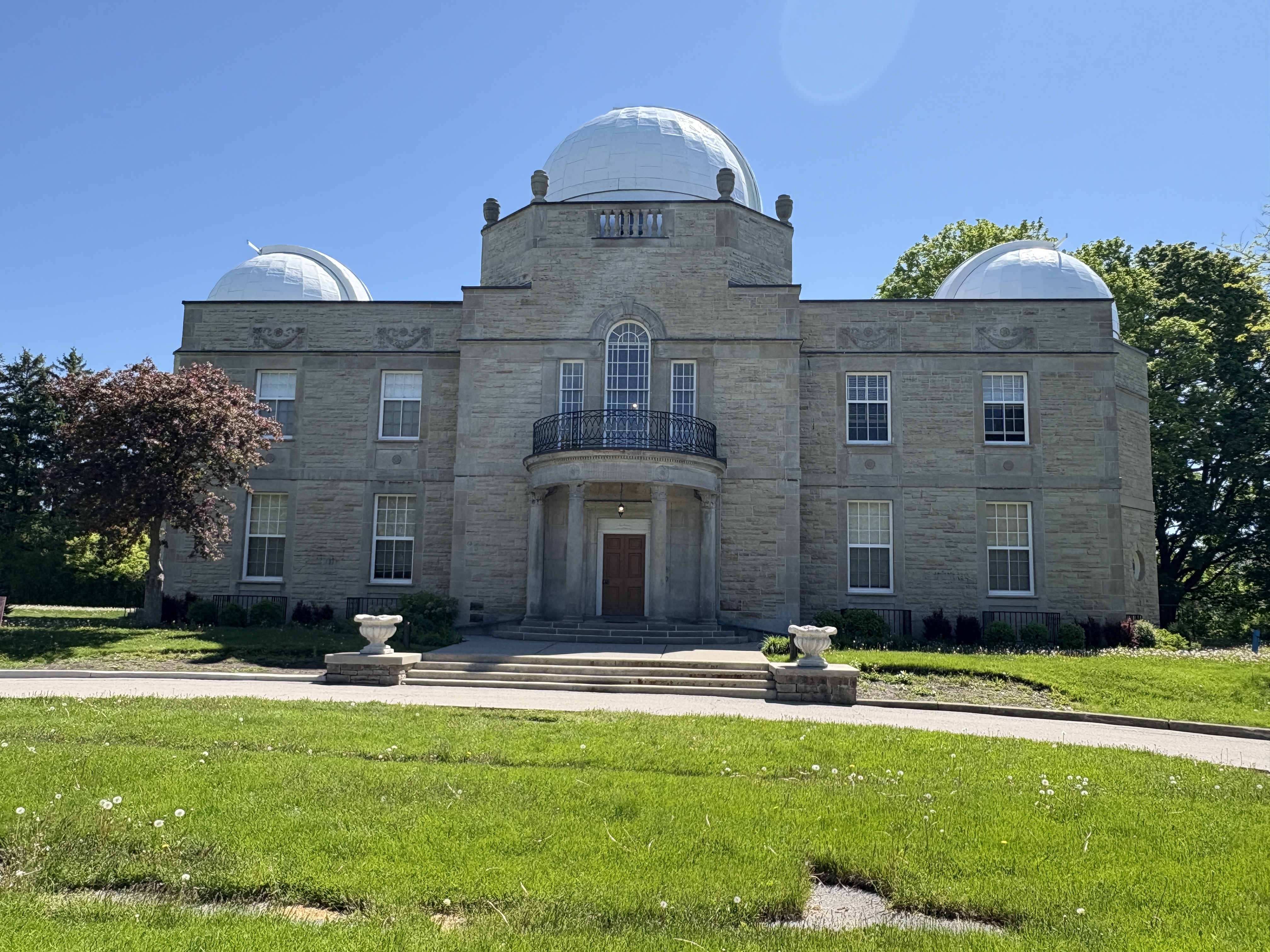
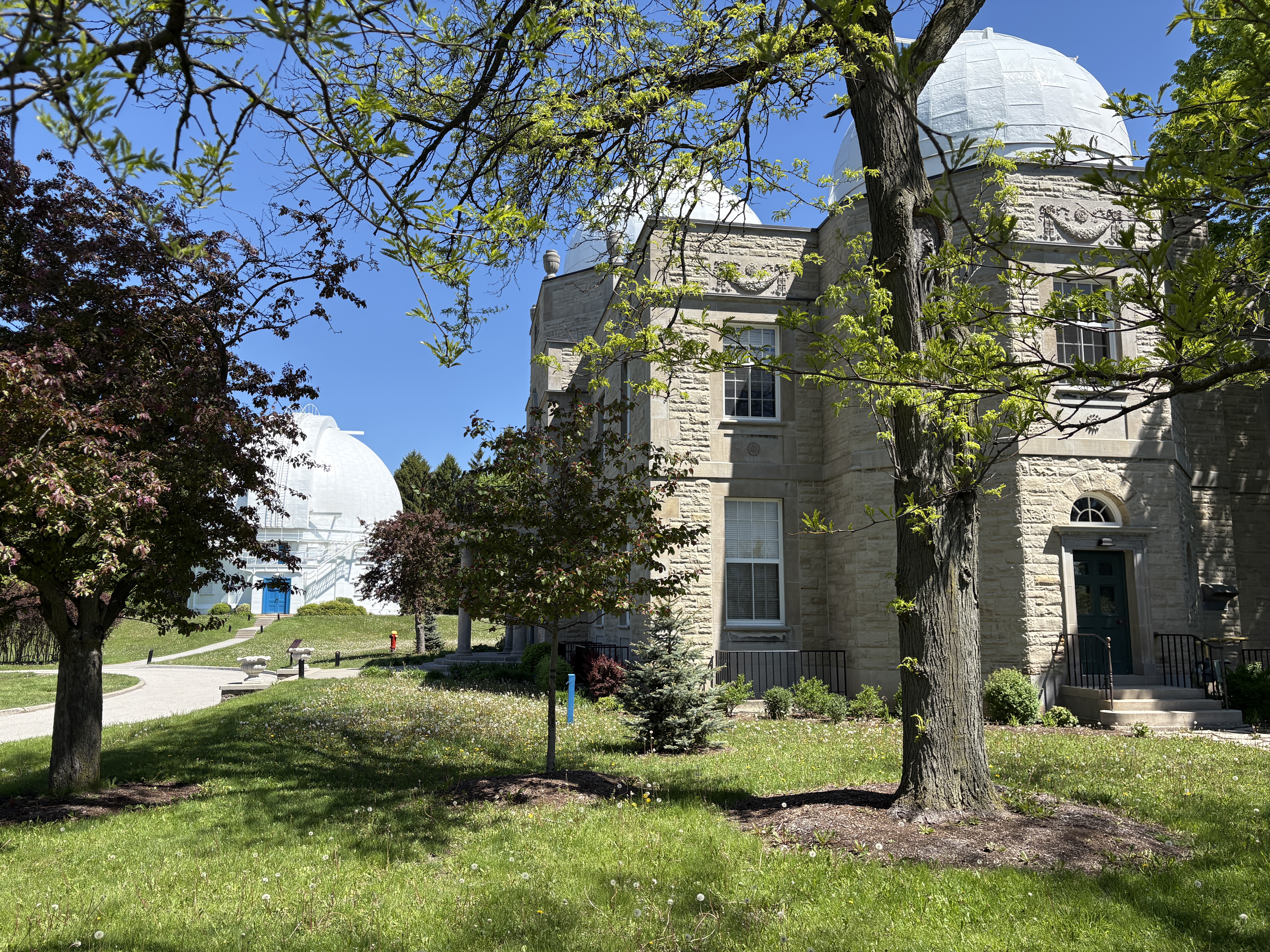
The administration building and the observatory were built at right angles to each other and in line with the points of the compass.
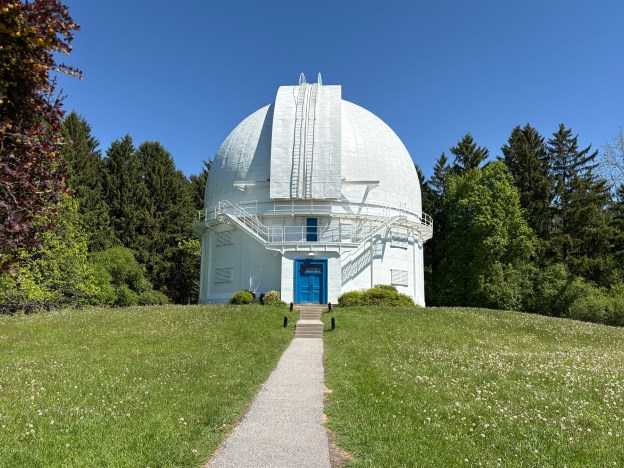
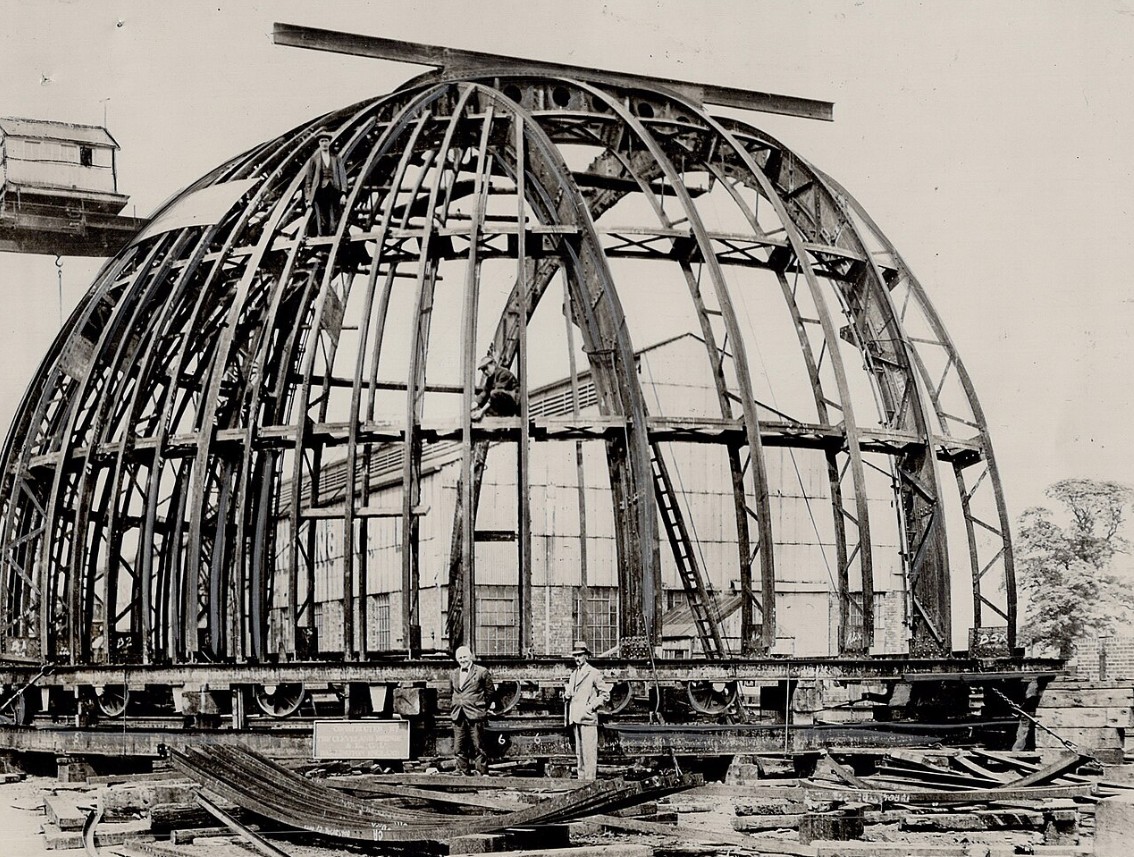
In 1933 earthworks were built on top of the knoll giving the observatory an even higher elevation compared to the surrounding tablelands. That same year a concrete core was poured to support the 5,000 pound mirror. The observatory was designed in England and preassembled there at Newcastle Upon Tyne. It was then taken apart and shipped to Toronto to be assembled on site. The image below is from Wikipedia and shows the assembly in England prior to shipping to the installation site.
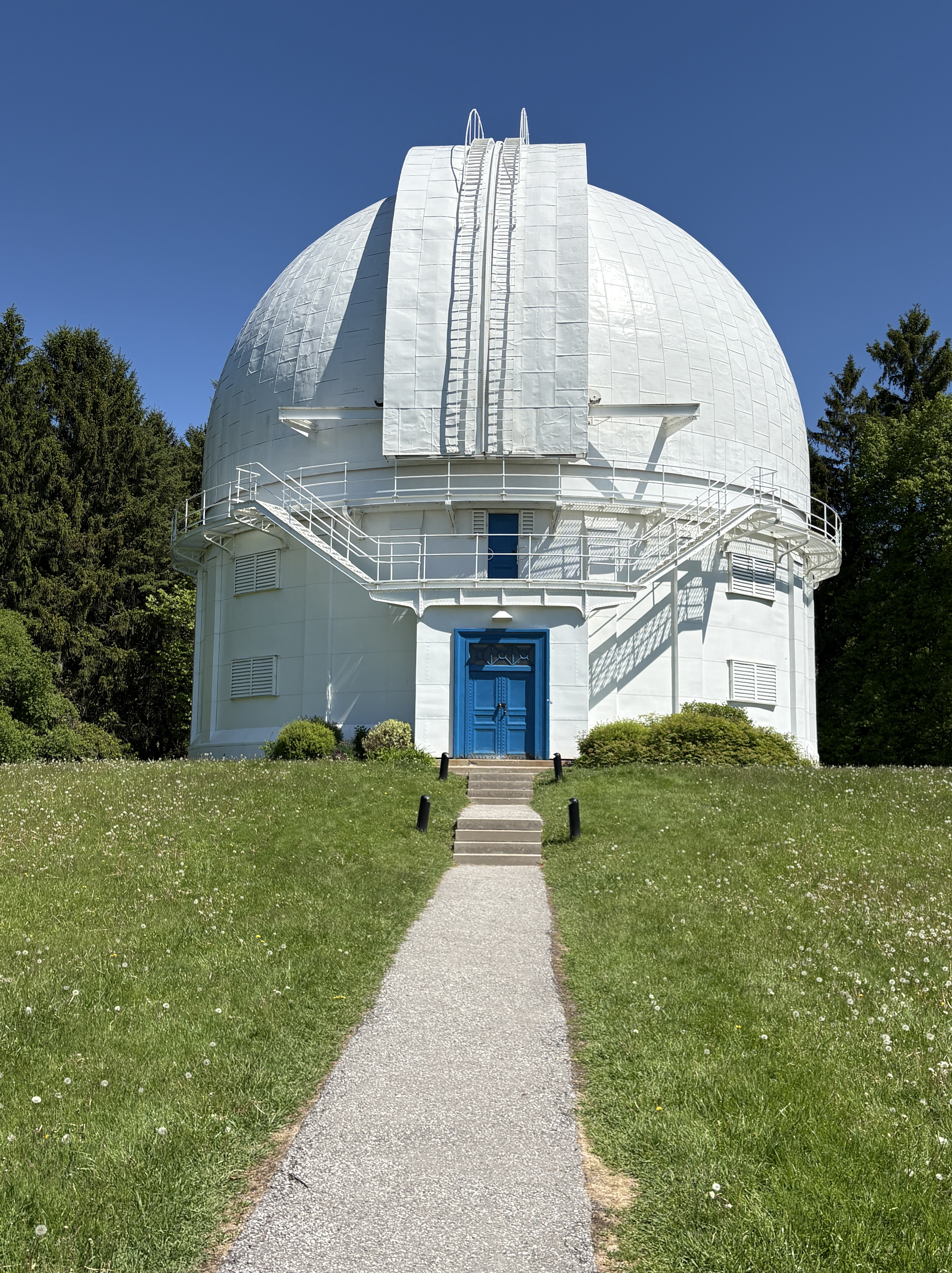
The observatory building is 61 feet in diameter and has a rotating copper dome with a set of retractable shutters. The grand opening was May 31, 1935 and was attended by Prime Minister William Lyon Mackenzie King. The 74 inch reflecting telescope was the largest in the British Commonwealth and second largest in the world at the time of opening. It made it possible for the University of Toronto to be the first Canadian school to offer a graduate degree in astronomy. In 1972 C. T. Bolton used the telescope to confirm the existence of black holes for the first time by showing that Cygnus X-1 is a black hole. Canadian rock band Rush would bring the presence of this particular black hole to the attention of their fans with the masterpiece “Cygnus X-1”. This extended story was told in two parts in 1977 and 1978 and is considered by some fans to be one of the crowning achievements of their career.
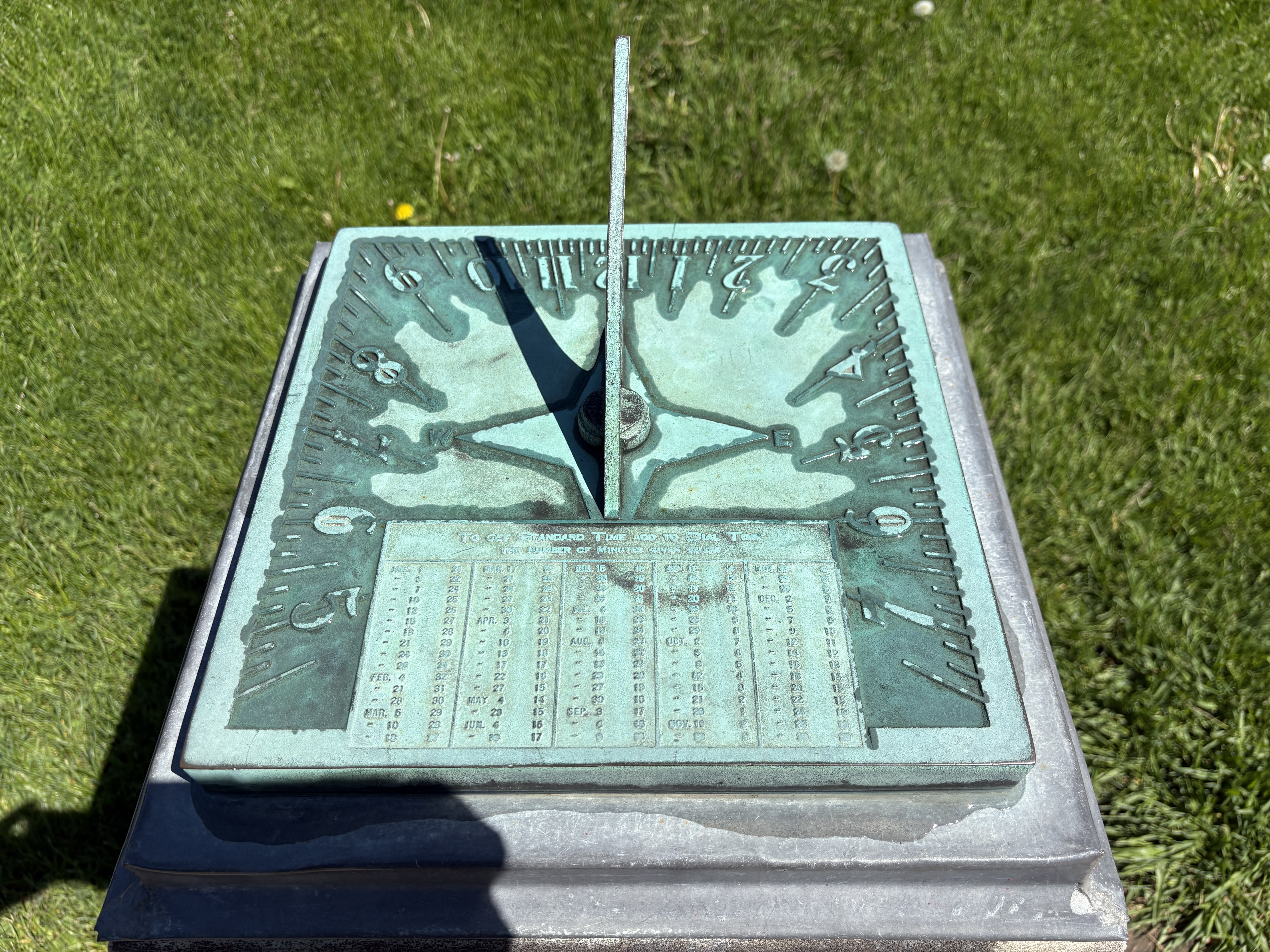
In 1959 there were changes made to the approach of the buildings to add an elliptical driveway and a sundial. In the 1960s a new entrance was made from Hillsview Drive. This laneway was designed in such a way that the headlights of approaching cars wouldn’t disturb the telescope.
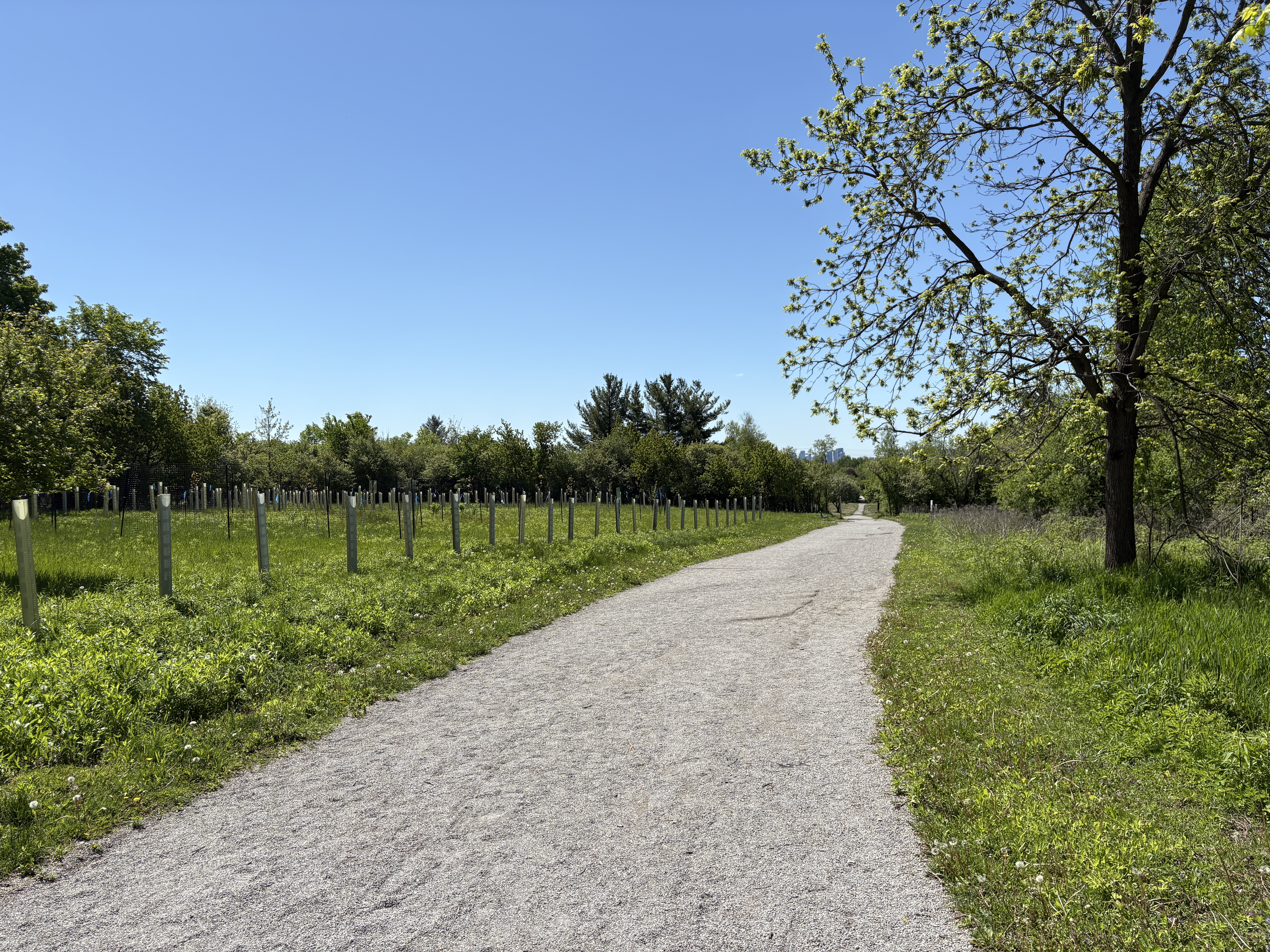
There are nine trails that take you around the property with some of them having a granular surface while one is paved with asphalt. All of the trails are listed as beginner level and are accessible.

The combined trails are almost 4 kilometers long with mostly open sky but a few shaded areas with trees. As I had arrived during the middle of the day on a Monday there were very few people here and the trails were all mine.
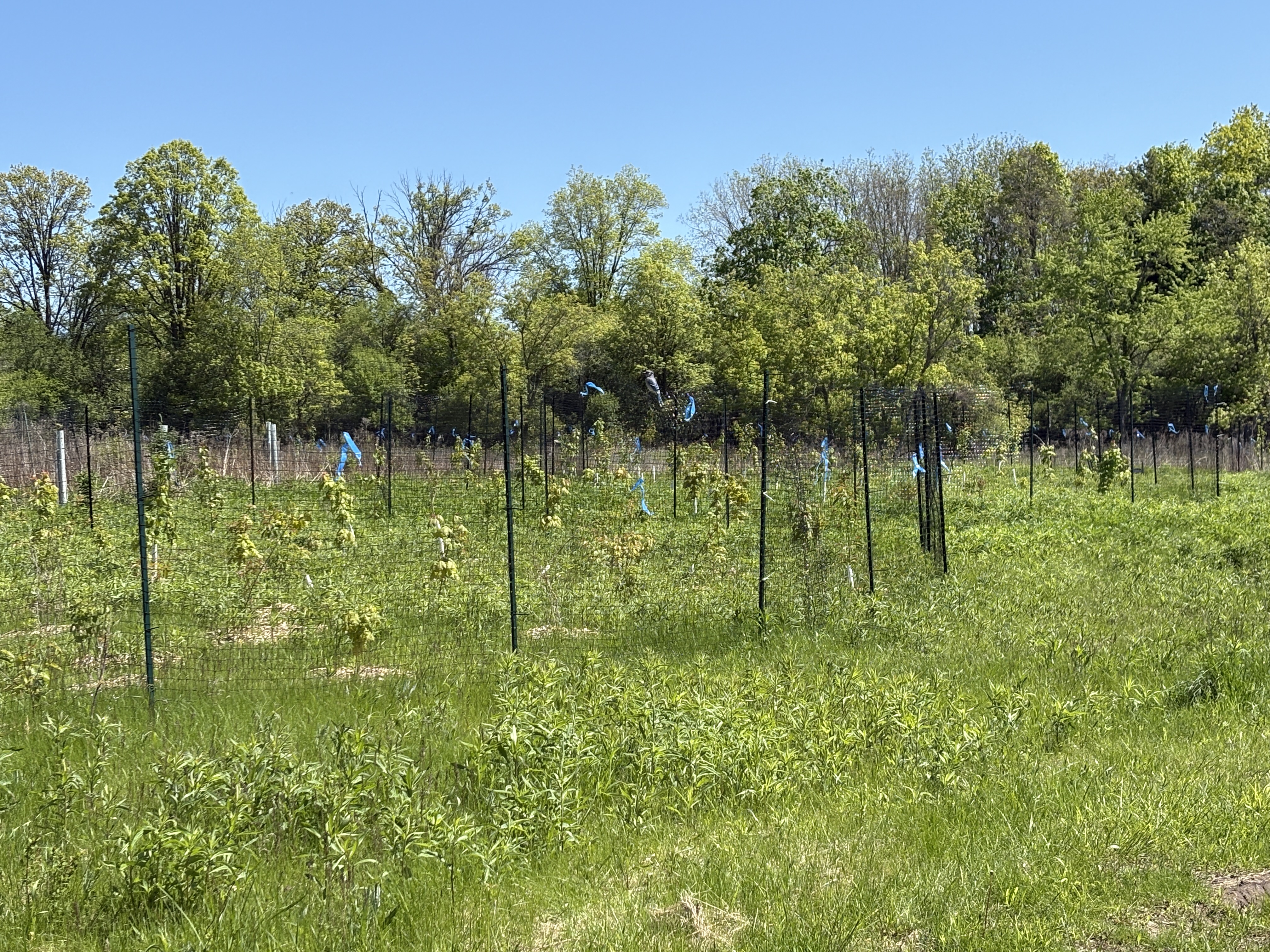
The University of Toronto has had several tree planting programs to introduce native and non native trees. There is a significant number of trees on the property that weren’t here when it was a farm. New plantings are still being added and are surrounded by a fence to keep the deer from getting to them. The sides of the trails are dotted with deer tracks so it looks like there may be quite a few living here.
The David Dunlop Observatory has many programs throughout the year to teach people about astronomy and the grounds look like a natural place within the city to watch for meteor showers. Best of all parking is free, if somewhat limited.

Google Maps Link: David Dunlap Observatory

Like us at http://www.facebook.com

Follow us at http://www.hikingthegta.com
Bethesda – Ghost Towns Of The GTA

May 24, 2025

Whitchurch Township was established in 1792 and European settlers began to arrive in 1794. The area that became known as Bethesda was first settled by Mennonites from Pennsylvania when Christian Steckley arrived in 1795. Christian took up lot 6 in concession 5 and several of his relatives took adjoining lots. Their names still cover that section on the 1877 county atlas seen below. Also circled in green are the school, general store with post office, Primitive Methodist Church and the home of Joseph Shaffer (misspelt as Sheffer on the map).

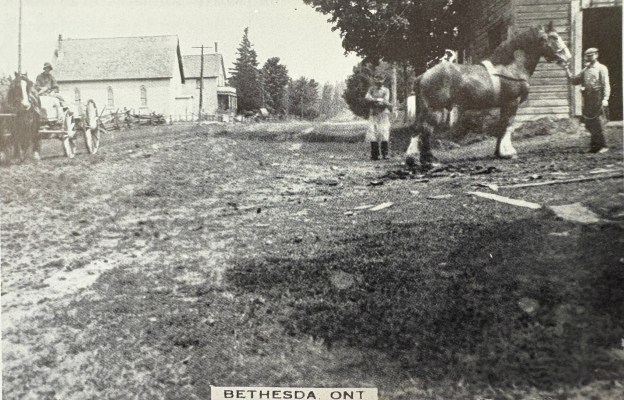
Our cover photo comes from the Whitchurch Township History Book Committee and shows the church and general store as well as the blacksmith shop of William Hunt. The town was at its peak around 1875 and most of the early buildings still remain. The image below shows the church and general store as they appear in 2025.

As early as 1855 a Primitive Methodist Church was built in Bethesda by a local carpenter named John Atkinson. A Sunday school started operations in 1858 and by 1871 the church was in need of updating as the community had grown around it. This included the front porch that used to grace the front of the building.

The church was given a brick veneer and continued to serve the community until it was closed in 1969. The front porch was removed and the building was deconsecrated as a church. It now serves as a private residence. The outline of the front porch can still be seen in the bricks on the front of the building.

The first store in town had been on the south west corner of the intersection. This was replaced in 1874 with a new store on the town lot beside the church. The store also included the post office which opened that year. The post office was closed in 1924 when rural delivery was introduced. The store has since been closed and now is used as a private residence.

Bethesda was home to Whitchurch-Stouffville School Section 12. The original frame structure was built on lot 6 on the north east corner of the intersection. In 1872 a new brick school house was erected on lot 7, just to the north. This school was destroyed by fire in 1892. Isaac Pike was the teacher for 43 years beginning in 1874 and when the school building was lost, he taught class in his barn until the new building was ready to be occupied.

The school was closed in 1965 and consecrated as the Bethesda Emanuel Church which it served as until 1992. It is now in use as a Greek Orthodox Church. The black cat on the front steps of the church was quite welcoming as we stopped for this picture. However, the parsonage shares the driveway with the church and the gentleman in the house was much less happy to see us.

The Joseph Shaffer house has stood on the south east corner since 1884. The county atlas above shows the earlier house located on what is now Shaffer Lane. The original drive sheds still stand on this laneway.

There are still a few of the original homes from the Victorian community. This one on Bethesda Sideroad is typical of the small homes built in Ontario in the 1860s and 1870s. This is known as Ontario vernacular, these are a story and a half and typically have a four room layout on the ground floor with a central hallway. Bedrooms are located on the second floor.

Another early home stands behind the church and may have served as the manse at one time.

Bethesda never had a large number of buildings but many of the early ones have survived, with the exception of the blacksmith shop.

Google Maps Link: Bethesda

Like us at http://www.facebook.com/hikingthegta

Follow us at http://www.hikingthegta.com

Sharon Museum and Gardens

Saturday, May 3, 2025

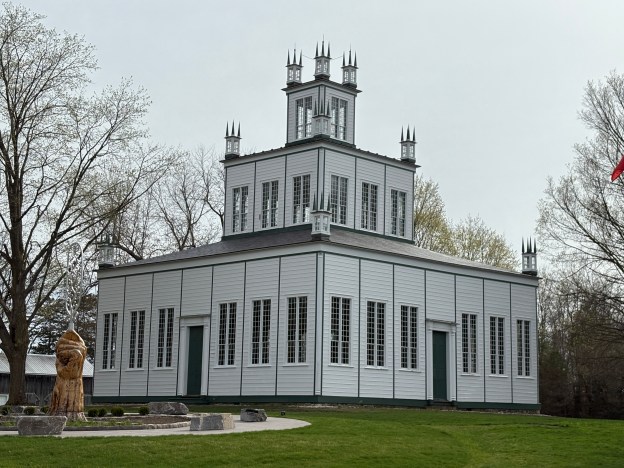
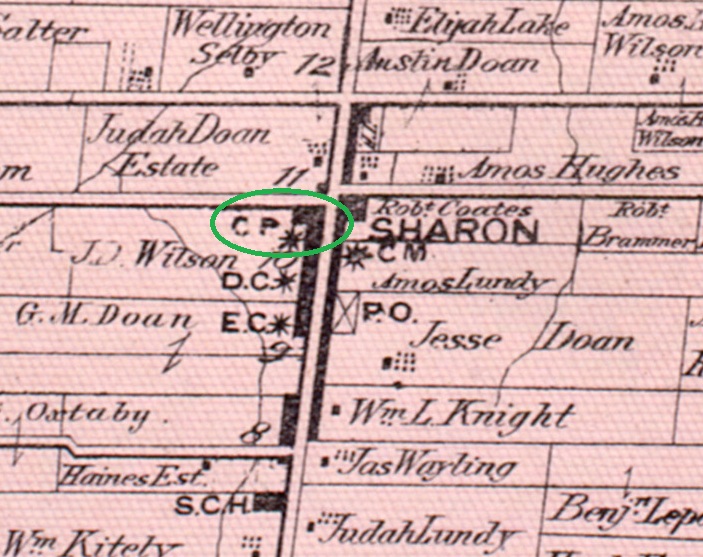
The community of Sharon holds one of Canada’s National Historic Sites. The Sharon Temple was built under the direction of David Willson. David had been born to Presbyterians in New York in 1778 and converted to being a Quaker when he married Phebe Titus, a member of The Society of Friends. He emigrated with his family to Upper Canada in 1801 and joined the Yonge Street Meeting of The Society of Friends. After serving there for seven years he had a theological disagreement with the group when he rejected some of the mysticism while embracing music and personal education. As a result, he was expelled from the Society. So, in 1812 he founded The Children Of Peace who were also known as Davidites near his home in Sharon. David was an avid proponent of Responsible Government and worked to get William Lyon Mackenzie elected in his riding on the Reform Platform. Members of the Children of Peace participated in the armed Rebellion of 1837 with Mackenzie. Willson later helped both Robert Baldwin and Louis-Hippolyte Lafontaine get elected in his riding. They met in 1844 in the Second Meeting House of the Children of Peace in a move that led directly to the formation of Responsible Government for Upper and Lower Canada. The 1877 county atlas image below shows the community of Sharon with “CP” representing the Children of Peace and circled in green.

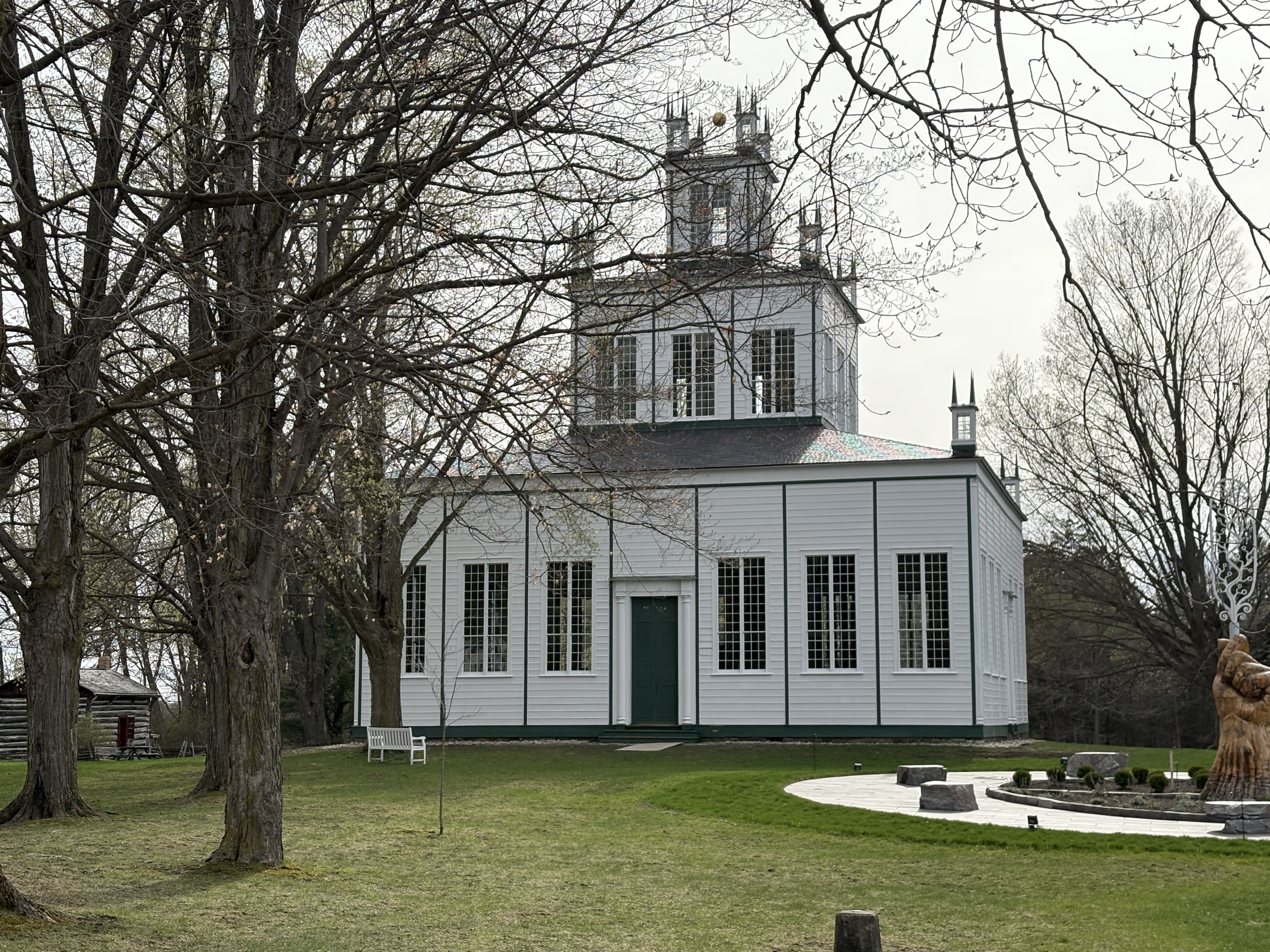
The Children of Peace left quite a legacy including building several structures on the property. The centre piece is the Temple which was built between 1825 and 1832 and designed to represent Solomon’s Temple and the description of the New Jerusalem from the Bible. David Wilson died in 1866 and the importance of the Children of Peace declined in the following years. By 1886 the final service was held in the temple and it was closed. The York Pioneer & Historical Society rescued the building from demolition in 1917 and had it restored as a museum the following year. It was listed as a National Historic Site in 1991. The Children of Peace developed a co-operative economy that led to Upper Canada’s first credit union in 1832. They also had the first farmer’s co-operative for marketing wheat and lending money to member farmers in need. The Children of Peace also started the first homeless shelter in the province and had the first civilian band in Canada.

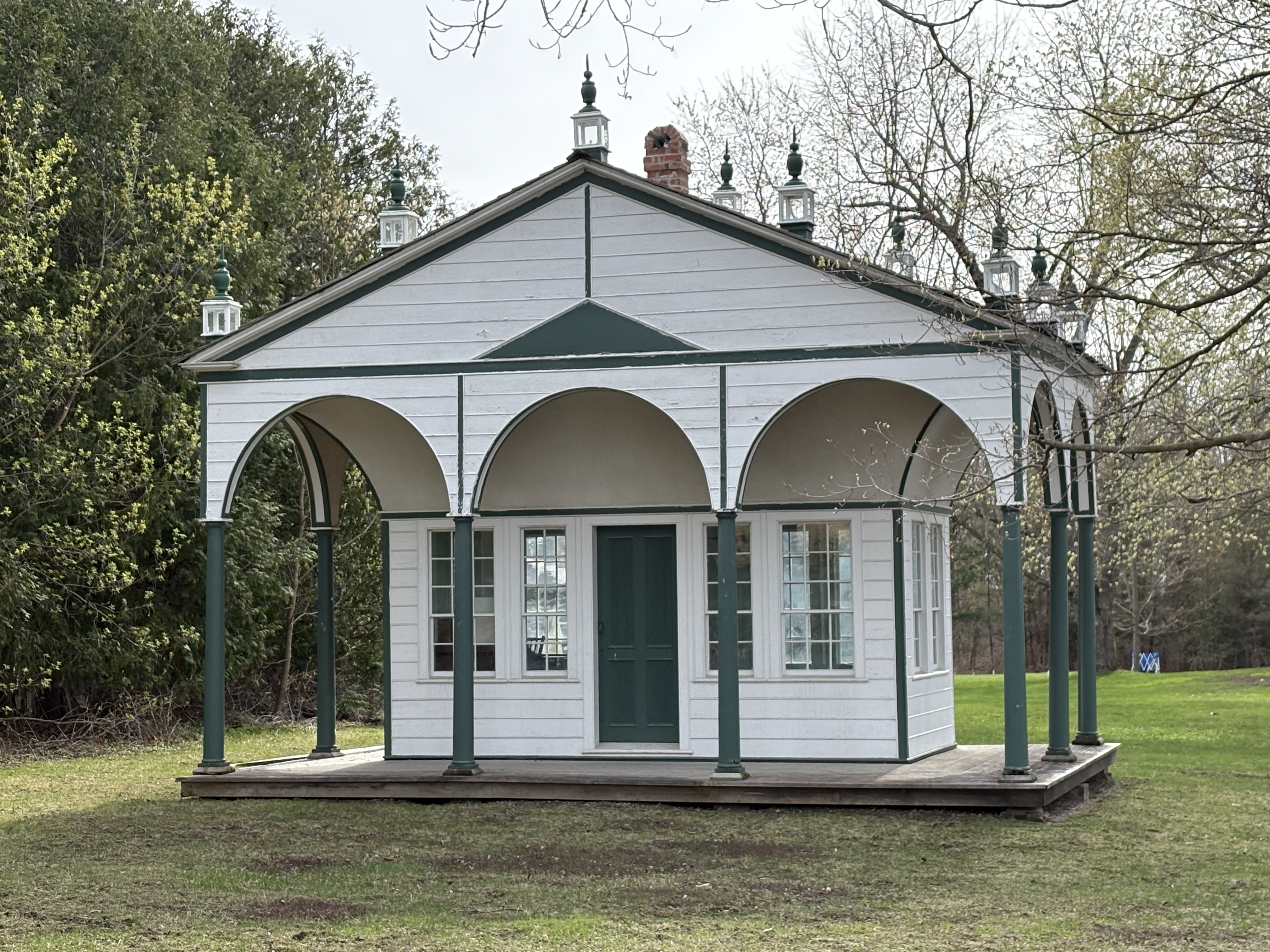
David Willson had a separate building constructed to serve as his study. It is very similar in design to the temple and was completed in 1829. It was built so that Willson would have a place to work on his writing. Inside is a desk and chair and an 1820s style wood stove that was used for heating the space on cold winter nights. David wrote many theological volumes as well as books of hymns for the church.

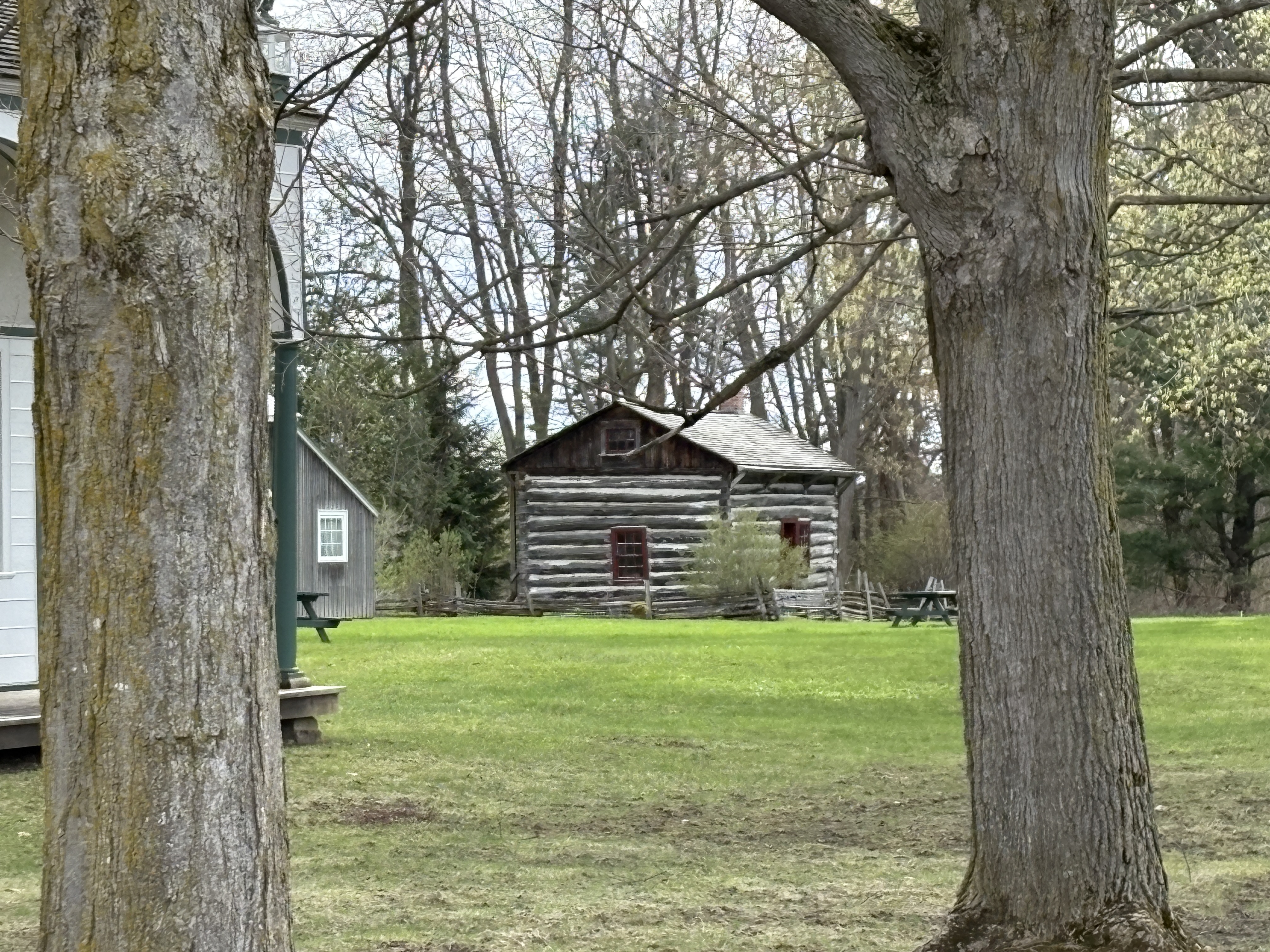
There is a log house on the property which was moved from the farm of Jesse Doan. It was the original homestead on the farm and was built out of logs gained from clearing the land. The red paint used to colour the door frame and window frames was made from mixing buttermilk with a red powder. Jesse was related to Ebenezer Doan who was the master builder of Sharon Temple. The cabin was purchased by the North York Women’s Institute and moved to the temple grounds on May 9, 1957 where it was restored. It is currently part of the museum exhibit and houses some of the artifacts that used to be stored in the temple.

There is much more to be seen inside and on the grounds of the temple but it is closed until the end of May. When it is closed you are not allowed to explore the grounds which contain the 9 historical buildings that make up the collection. Aside from those pictured here there is a cookhouse. the Doan House where the master builder lived, an outhouse, drive shed, lean-to and a granary.

Related stories: William Lyon Mackenzie,

Google Maps Link: Sharon Temple

Like us at http://www.facebook.com/hikingthegta

Follow us at http://www.hikingthegta.com