September 30, 2023
Prehistoric World is four hours east of Toronto so it’s not the kind of place you visit on a day trip. However, I get to travel around Ontario for work and it allows me the opportunity to visit some places between appointments. I had some time off when staying in Morrisburg and so I decided to make a visit to this secret prehistoric world which is a well kept secret on its own. There is no formal advertising and the website was taken down in 2015. A sign on the side of Highway 2 about 9 kilometers east of Morrisburg is the only indication of its existence.
Prehistoric World came from the imaginations of two brothers who wanted to have a place to display their art. Together, Paul and Serge Dupuis decided to turn an 150 acre property into the back yard of their childhood dreams. So far they have transformed 28 acres with over 50 life size recreations of dinosaurs and other prehistoric animals. When they opened in 1981 they had many less statues than they had hoped to have but they have been constantly adding to their display as the years go by.
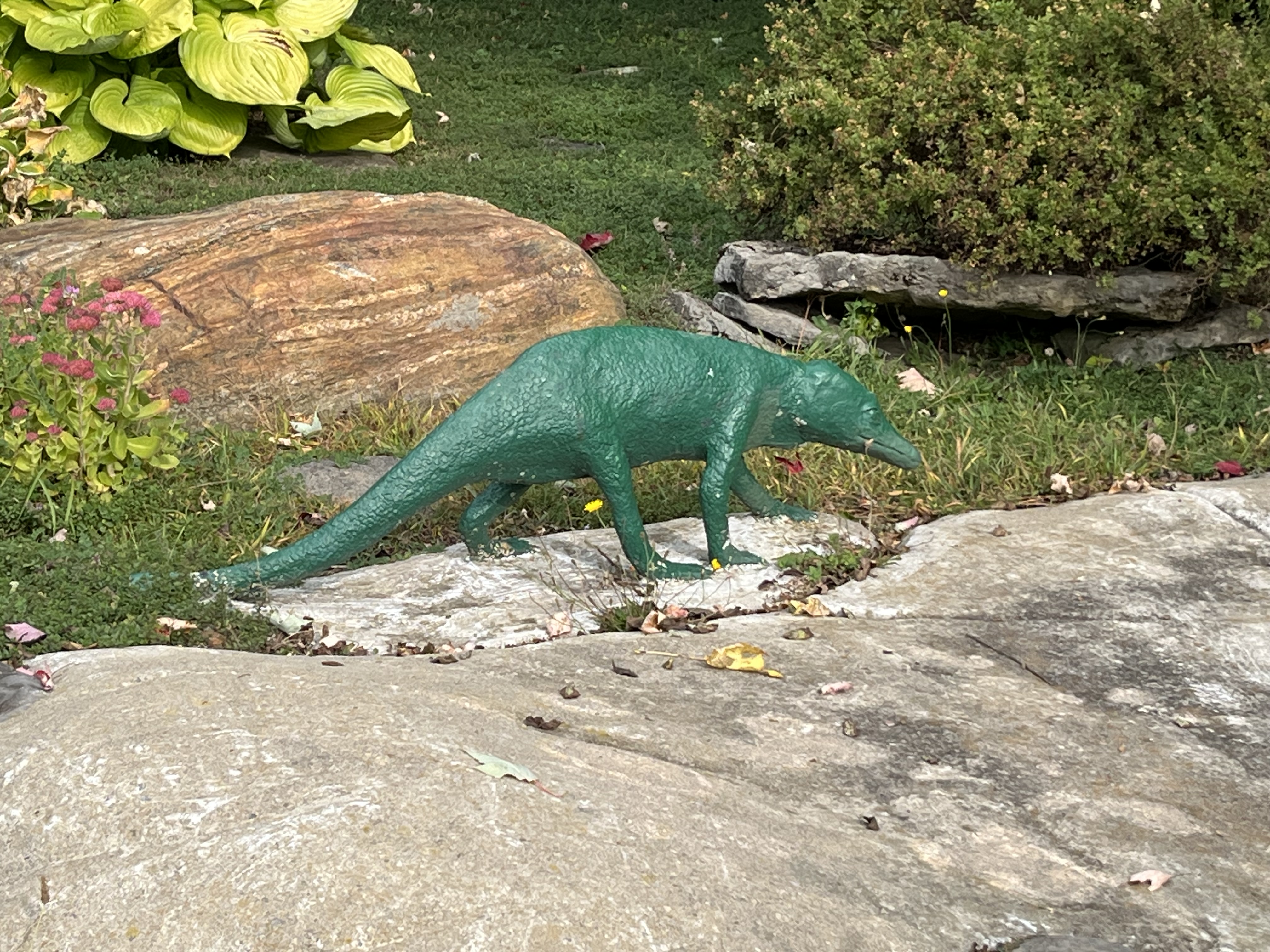
One of the earliest animals to be included in the park is Protosuchus. It lived about 200 million years ago and is said to be an ancestor of modern crocodiles. It was likely a good swimmer and a good runner and has sharp teeth that indicate that it was a meat eater.
New statues are worked on over the winter with the steel understructure being welded up in their workshop. In the spring they move the frame to its location along the trail and then cover it with concrete. Once the concrete has set, it is painted and a bilingual sign is installed to describe the animal that is being depicted.
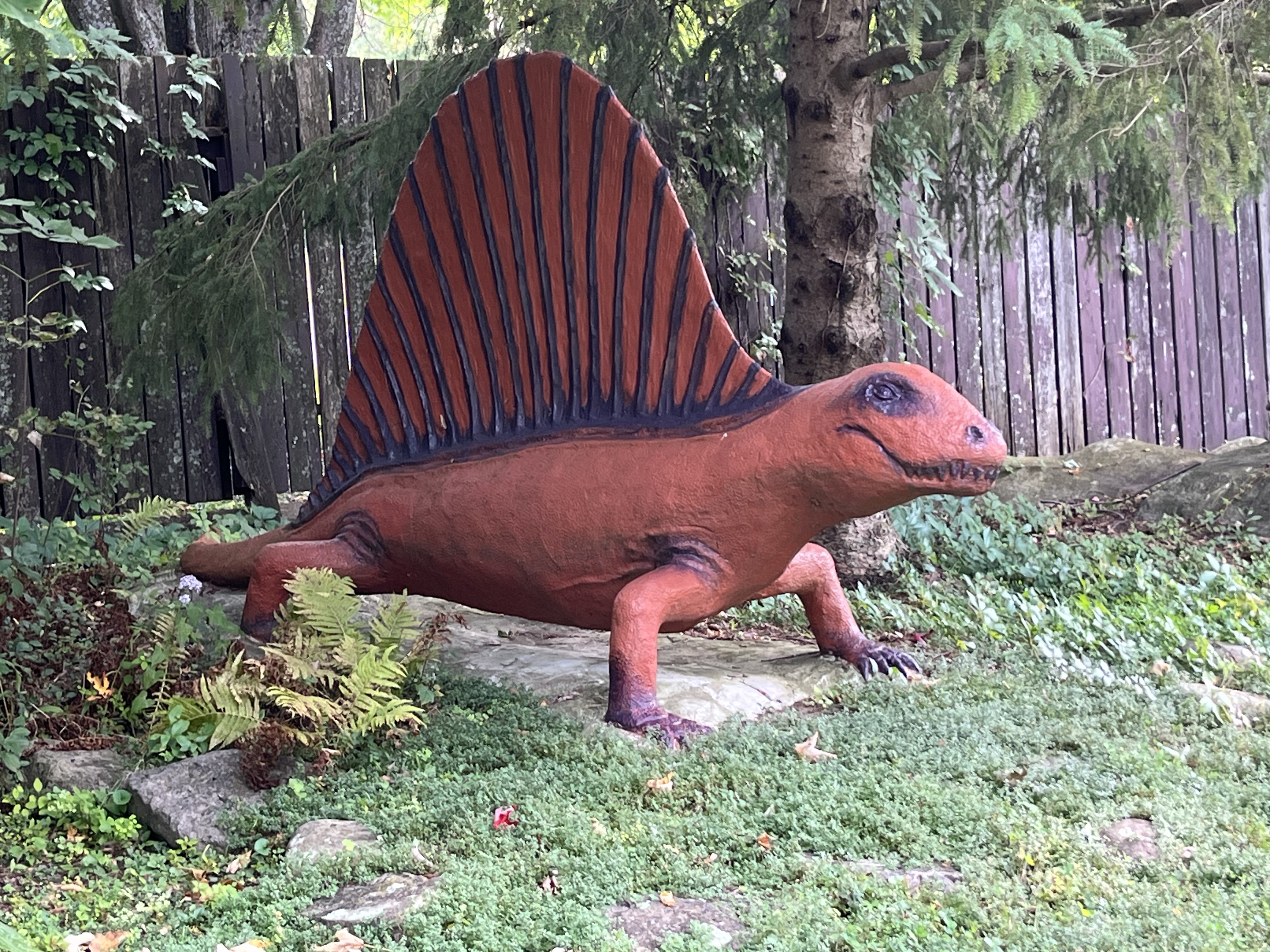
Dimetrodon lived about 300 million years ago and was the largest carnivore of its time. It has a large dorsal fan which was used to regulate its body temperature. It could absorb heat and also be used to radiate excessive heat.
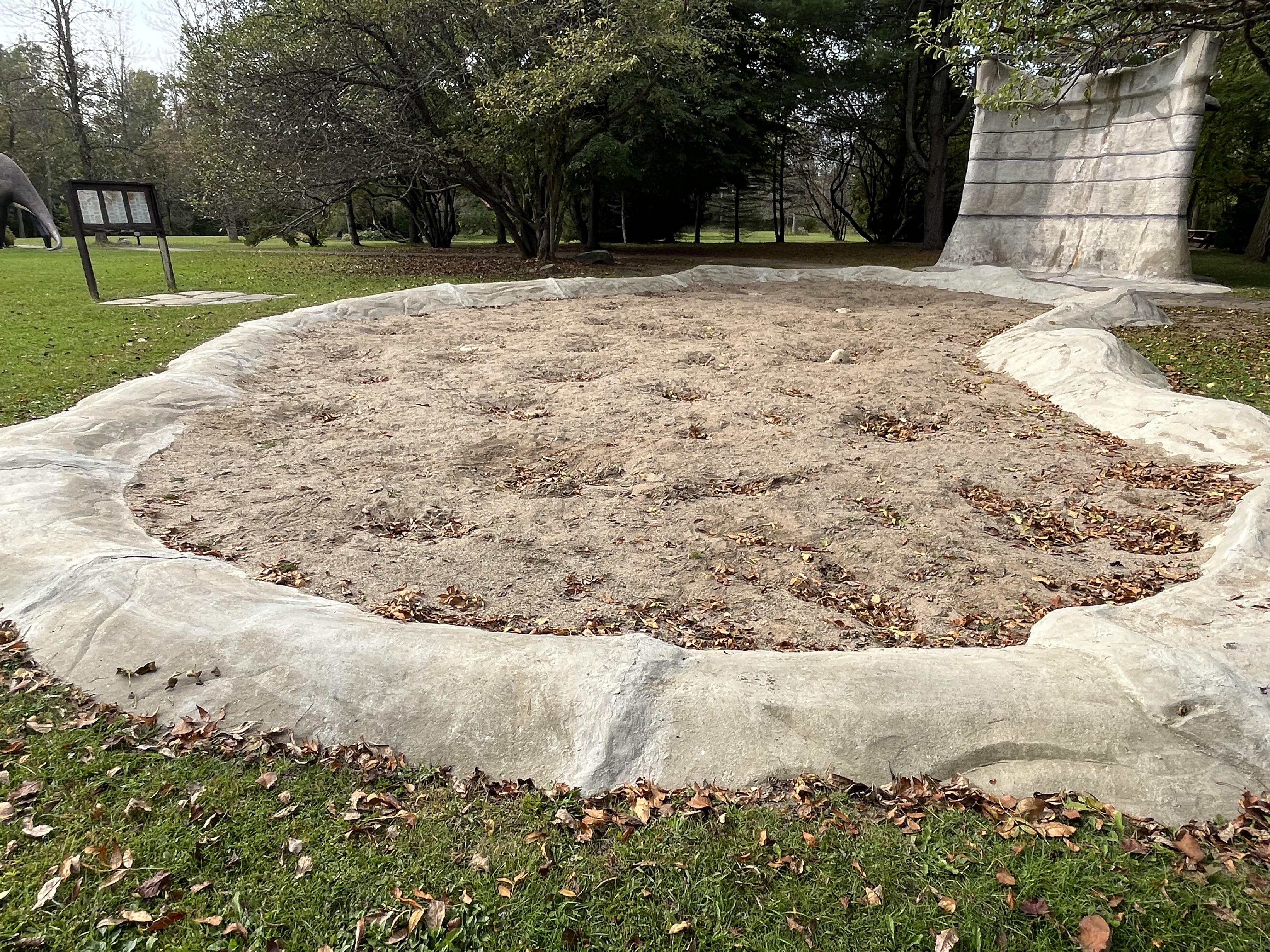
The displays start just outside the back door with the earliest lifeforms. As you make your way along the path the animals generally become larger as you follow the timeline. There is even a Fossil Pit for the budding archaeologist to play in. Hidden under the sand are 21 “fossils” that can be discovered. The only rule is that you can’t use any tools because the castings under the sand could get damaged. So, you are left to uncover them with just your hands. A few small pieces can be seen sticking up through the sand here and there.
The Ice Storm in January 1998 caused considerable damage and several sculptures were completely destroyed when trees fell on them. Paul estimates that they could likely have had about 70 statues by now if they hadn’t lost so many which were never replaced. The time spent on scaffolding doing repairs to the remaining statues prevented them from installing any new displays for quite some time.
Shunosaurus was one of the earliest sauropods and had a relatively short neck compared to later animals in this family. It was discovered in China and is the only member of this family to have a bone club on the end of its tail for defensive purposes.
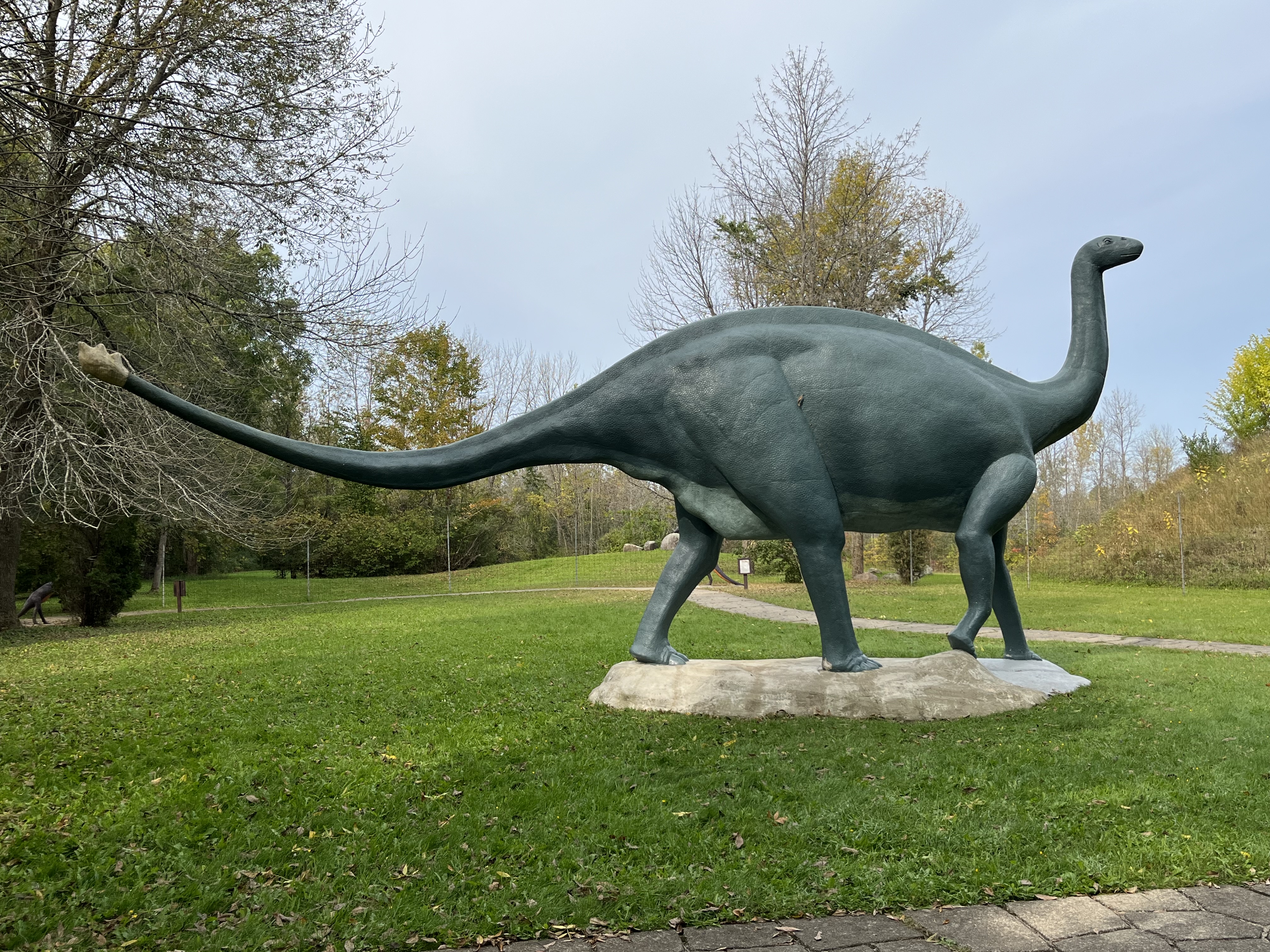
There are several new sculptures in various stages of completion in the workshop and so new ones will continue to be added in the future. All of the work has been completed by Paul and Serge with no outside help. There is a long-term desire to have the park turned over to an artist collective that would carry on the work when the two brothers are no longer able to do so themselves.
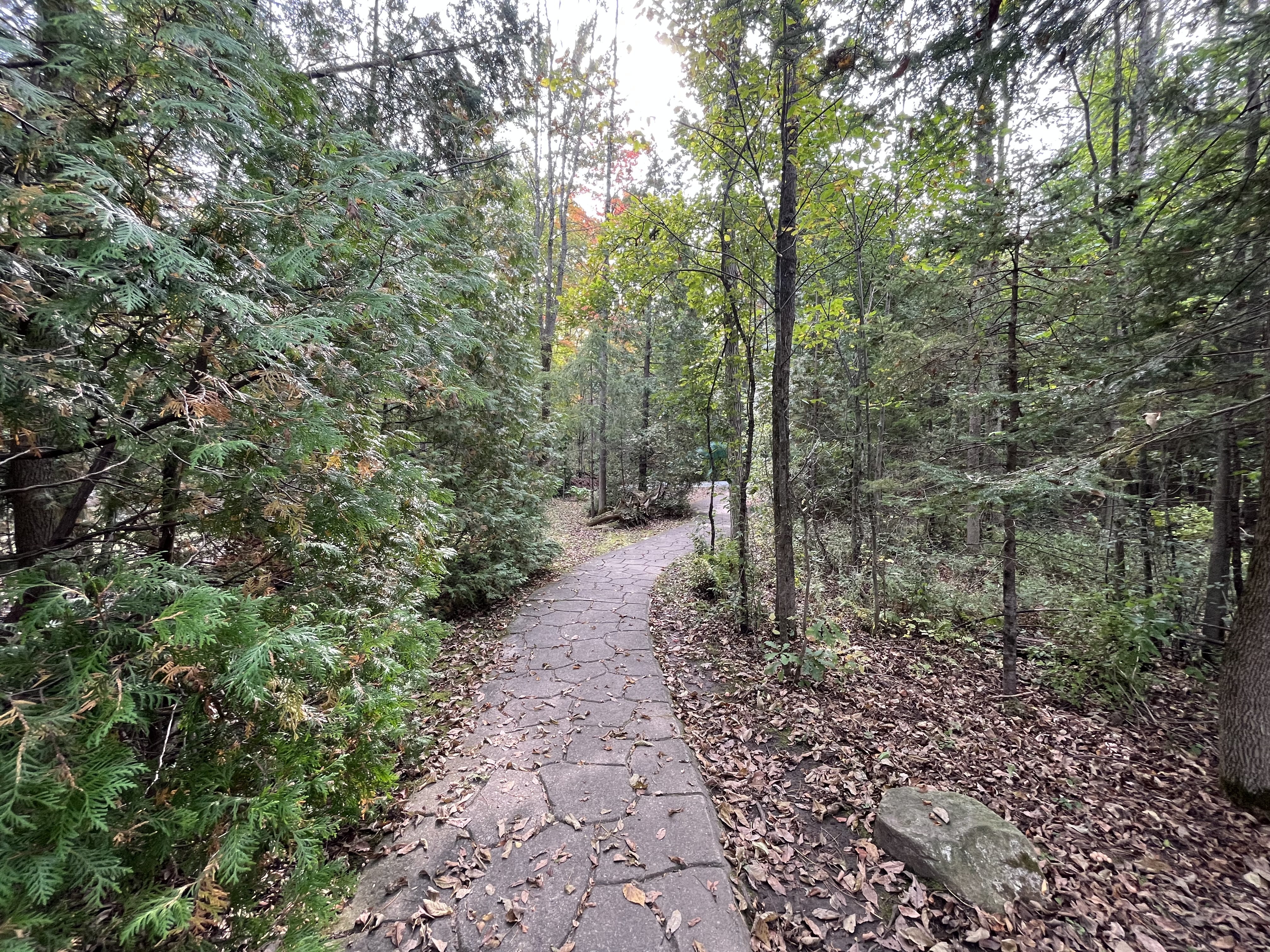
The path through the site is about one kilometer long and is made of poured concrete. This has been carefully scored by hand with a trowel to create the impression of cut stones laid into a pattern. The pathway leads from the back of the house, through the yard and into the woods where it makes a loop and comes back.
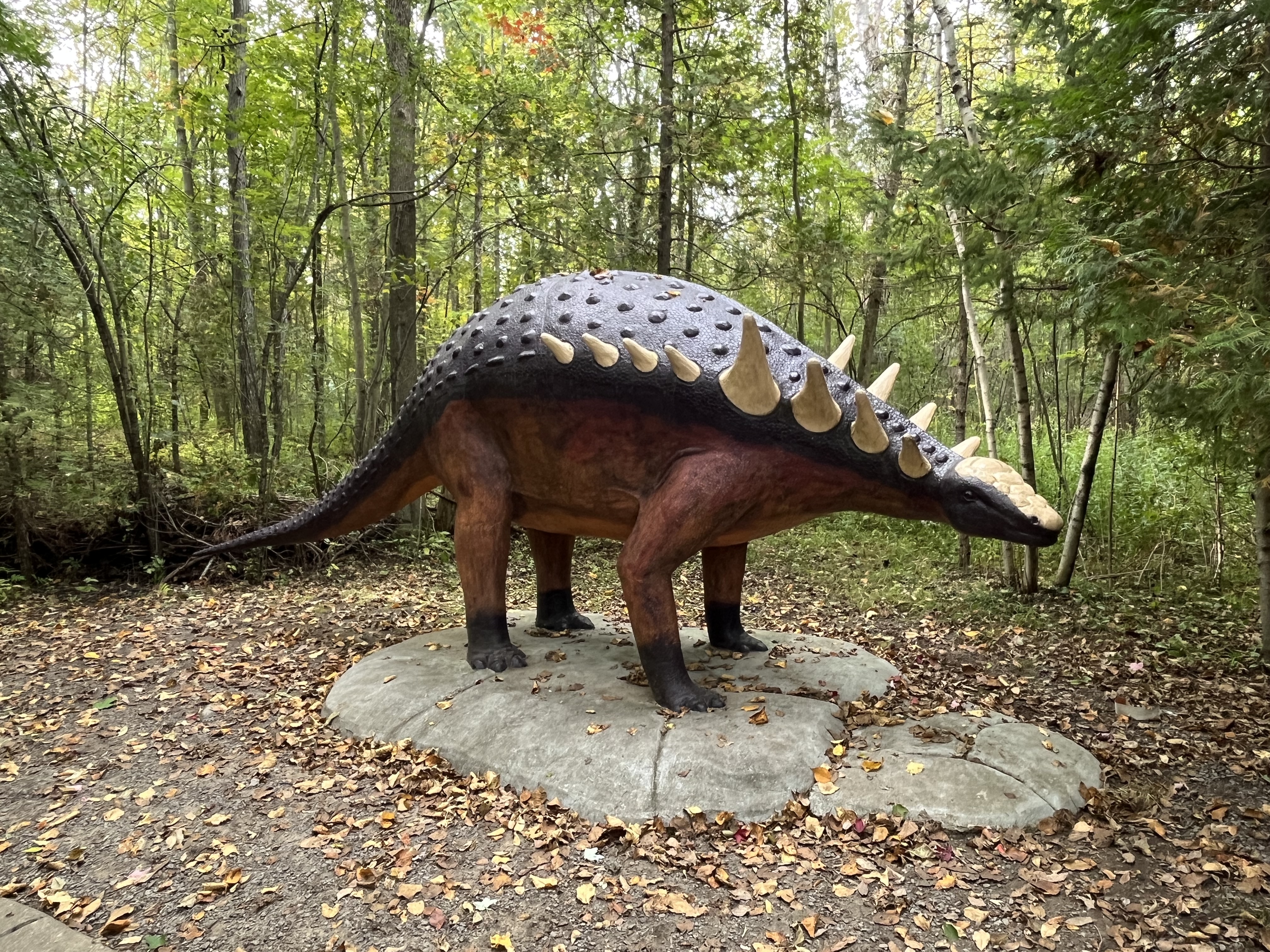
Nodosaurus was named for all the small nodes that cover the plates that protect its back. It was discovered in Wyoming and Kansas.
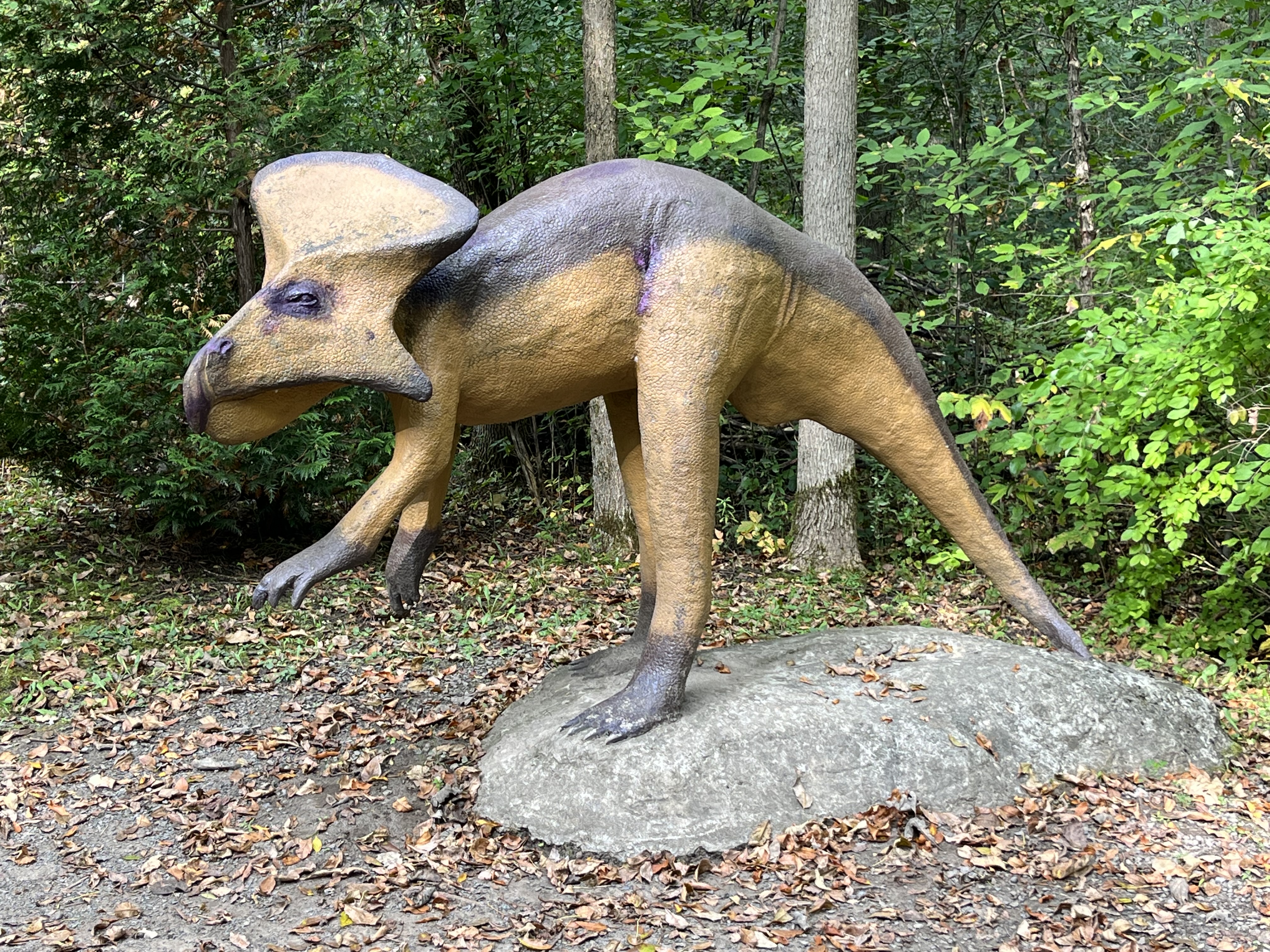
Protoceratops was one of the first “horned” dinosaurs and lived about 80 million years ago. It had a large neck shield but no actual horns and is the most famous dinosaur from the Mongolia area. It was often found with nests of eggs including partially hatched specimens.
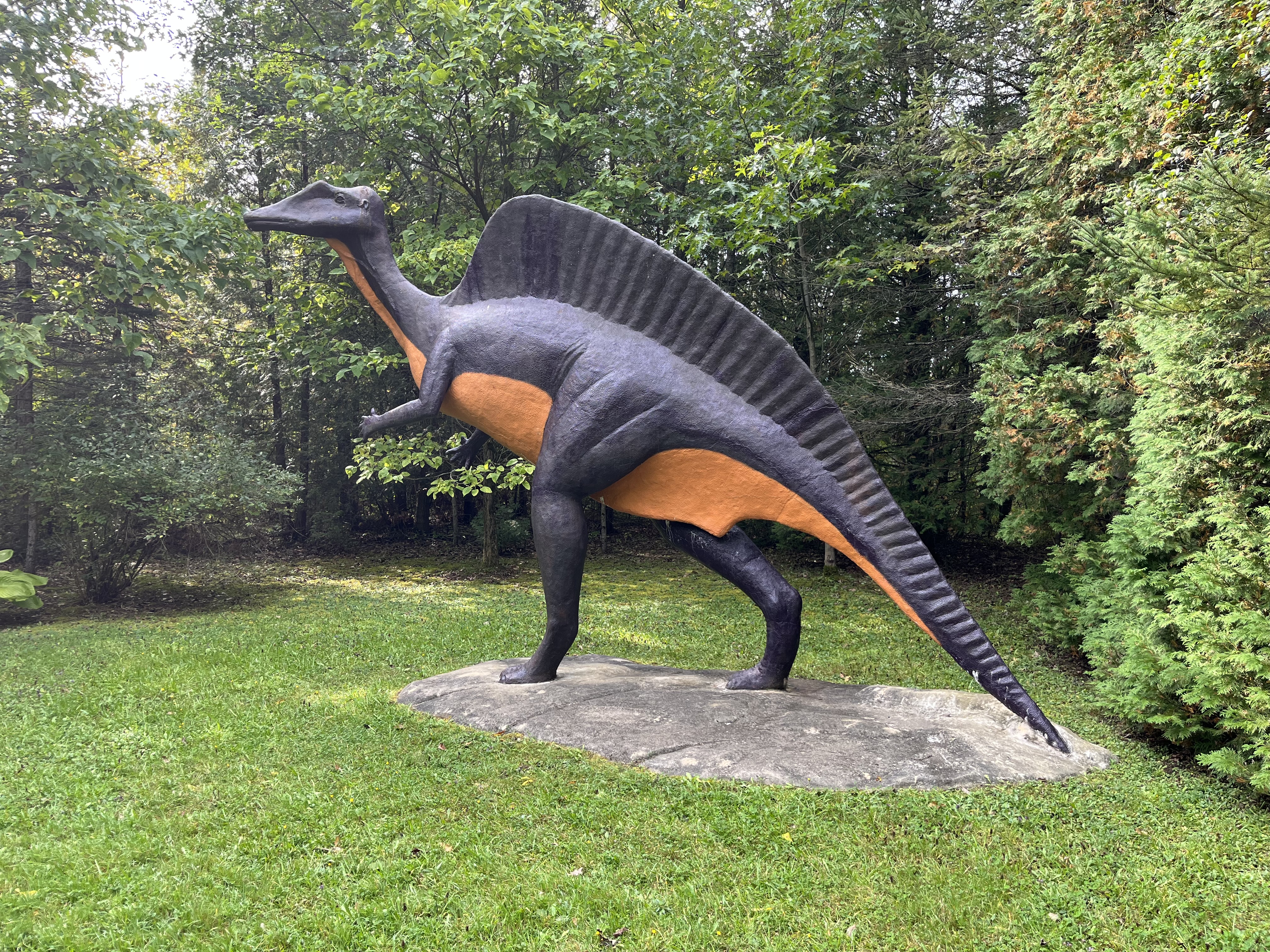
Ouranosaurus was first discovered in 1965 in Niger, West Africa. It lived about 110 million years ago and was distinctive for the large sail on its back. This set of extended spines was covered with skin and many blood vessels that allowed the animal to exchange heat and control its body temperature.
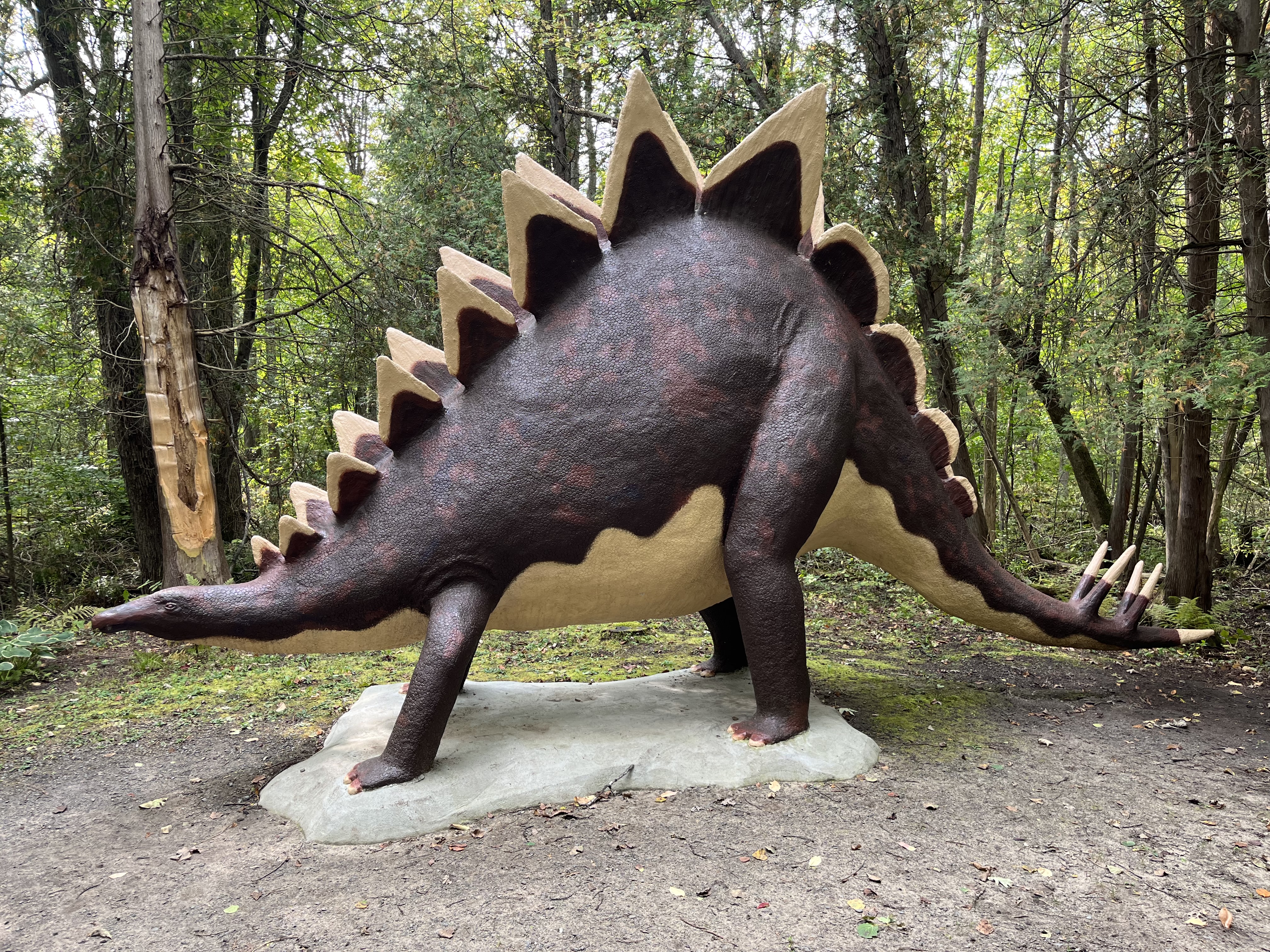
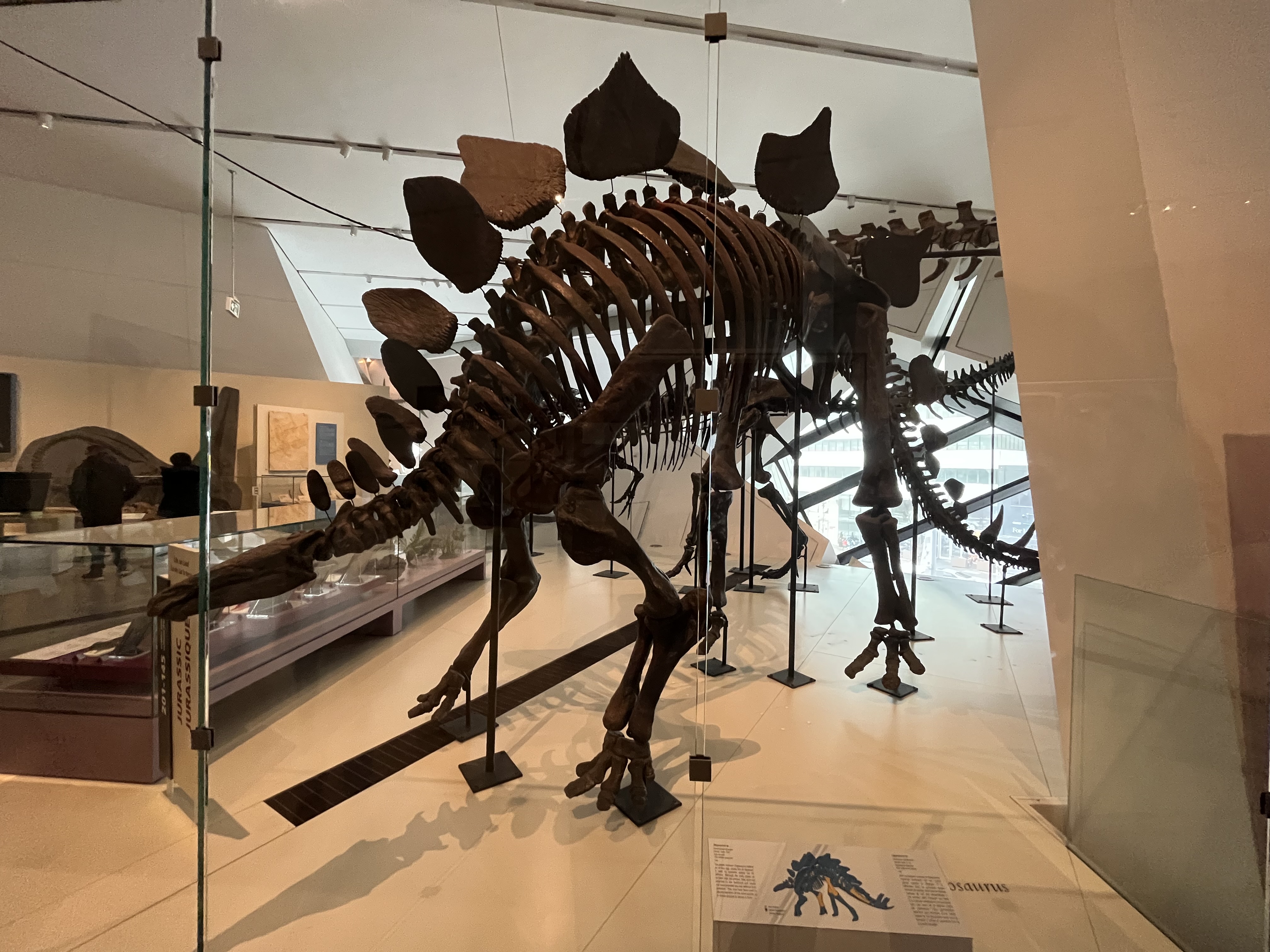
Stegosaurus lived in North America about 150 million years ago and is one of the dinosaurs that I was most impressed with as a child because of its body armor. The double row of plates on the back were used for temperature control while the spikes on the tail were a defensive weapon. This animal had a very small brain which was about the size of a walnut.
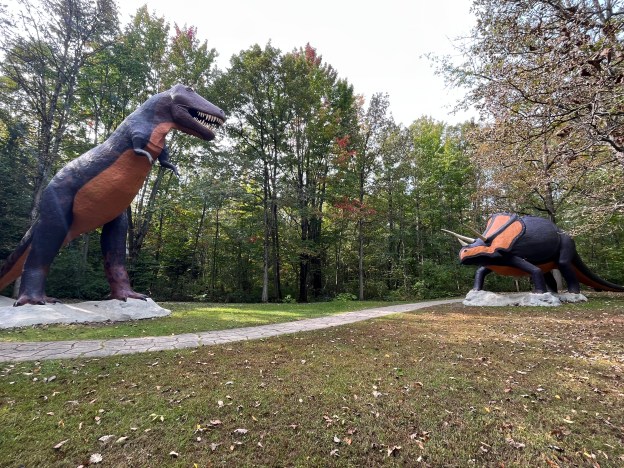
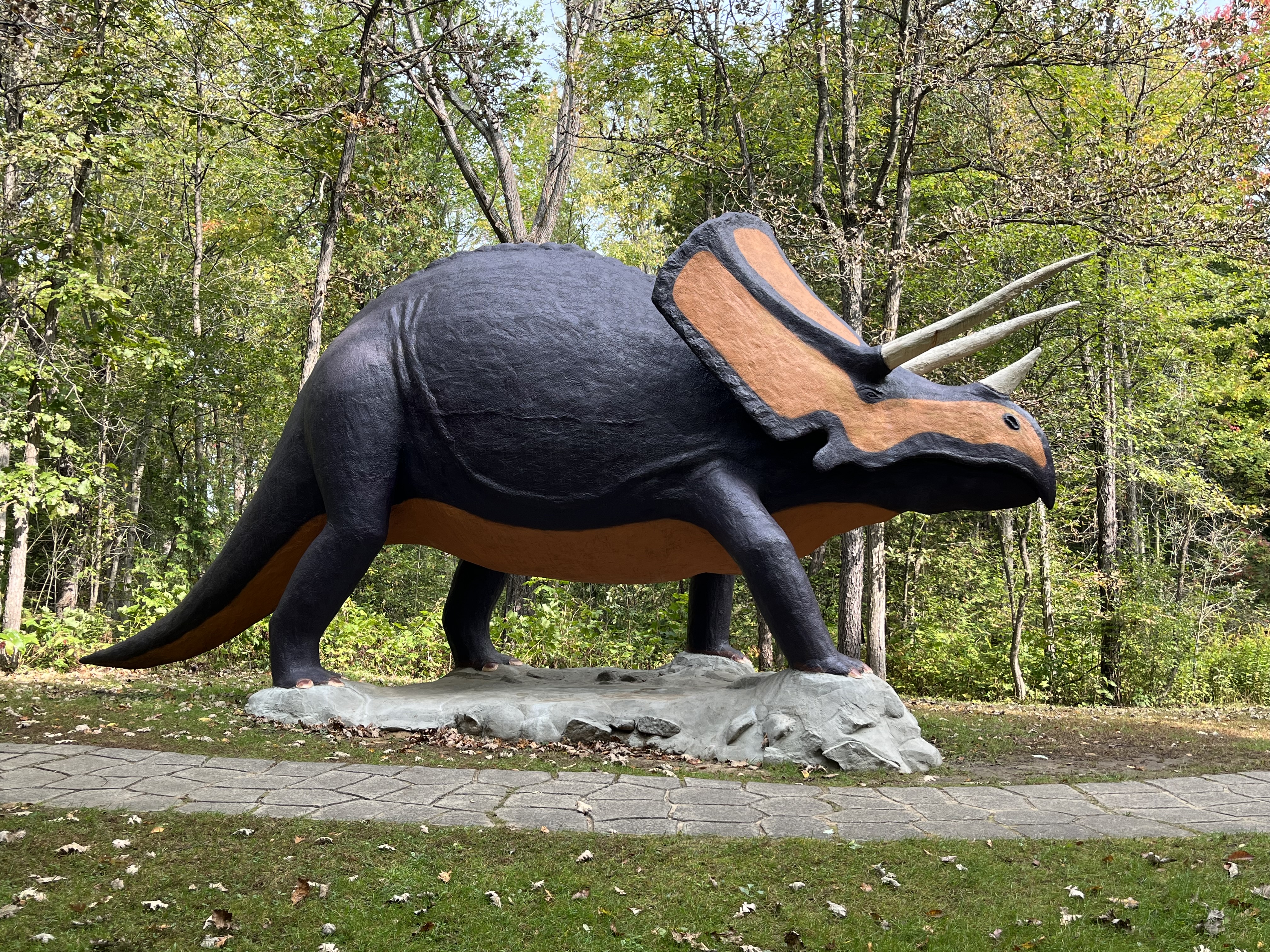
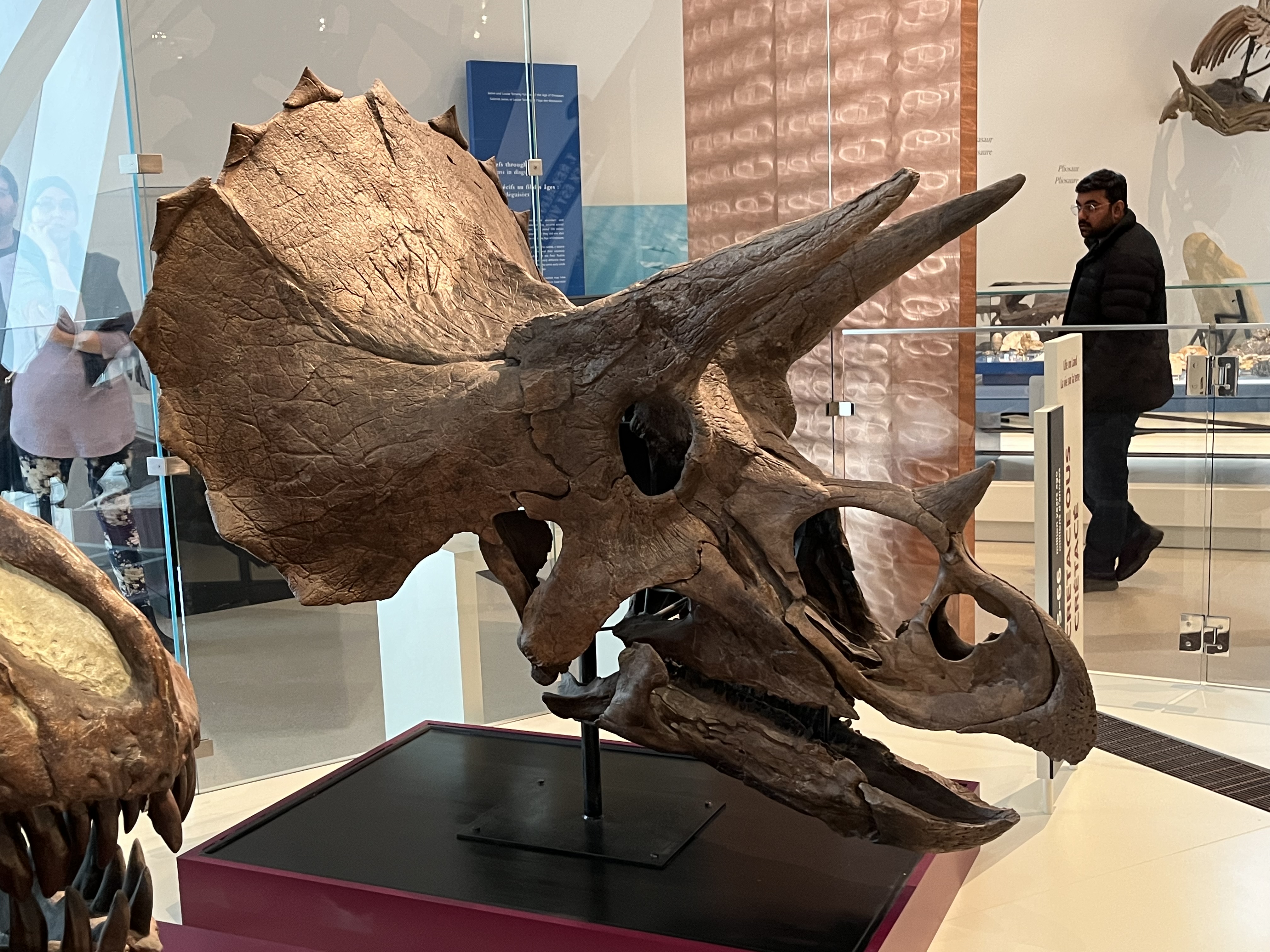
Triceratops had three horns on its face and a large bony shield to cover its neck. It lived in North America about 70 million years ago. It was the largest of the ceratopian, or horned, dinosaurs and if challenged it would likely have lowered its head and charged into the belly of its opponent. The horns would have provided a major defensive weapon.
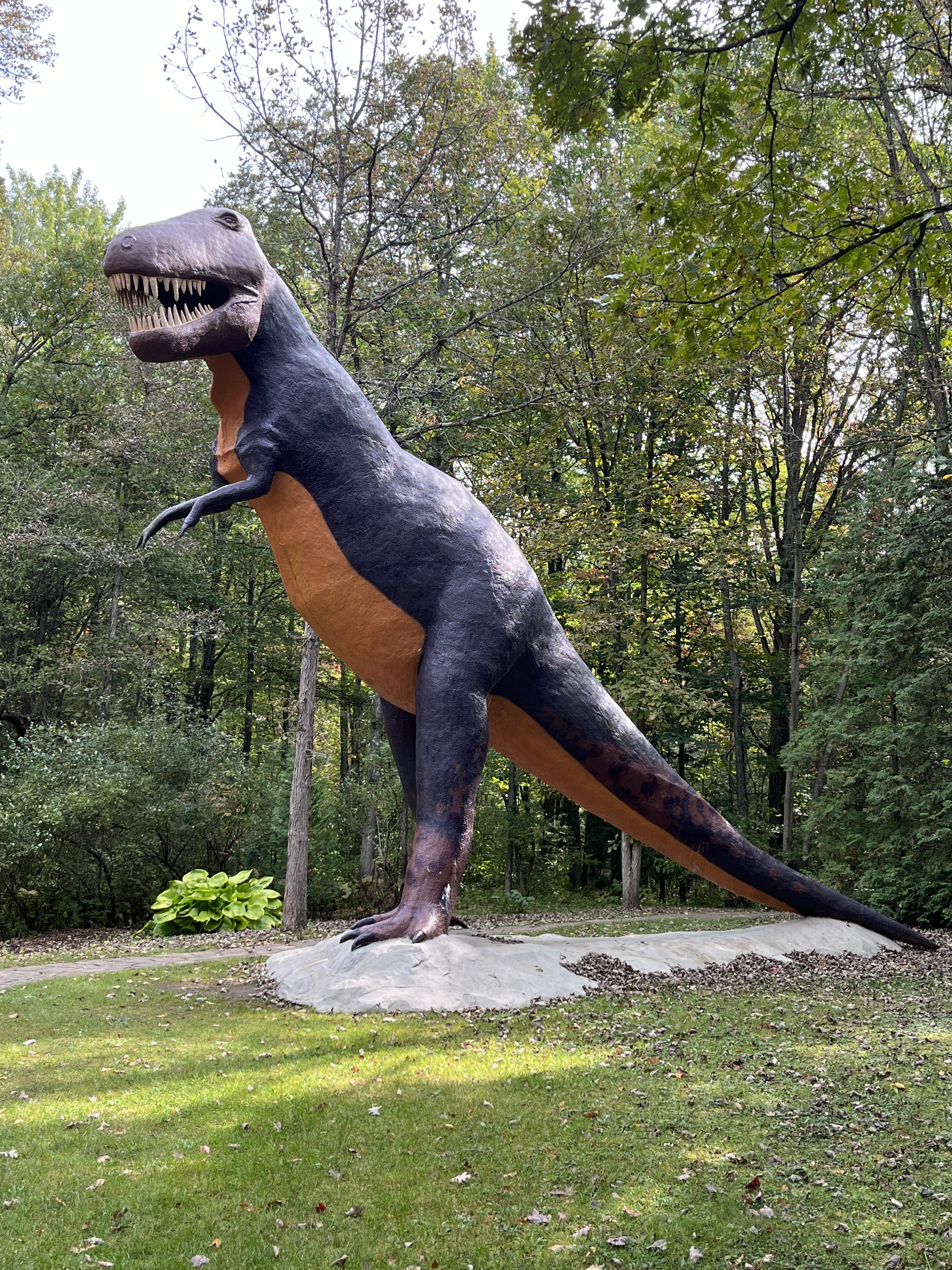
Tyrannosaurus Rex was the largest of the carnivorous dinosaurs and could reach 8 tons in weight. It lived 65 million years ago and although Hollywood loves to show it as a top predator, it may have been more of a scavenger because smaller animals could have likely outrun it.
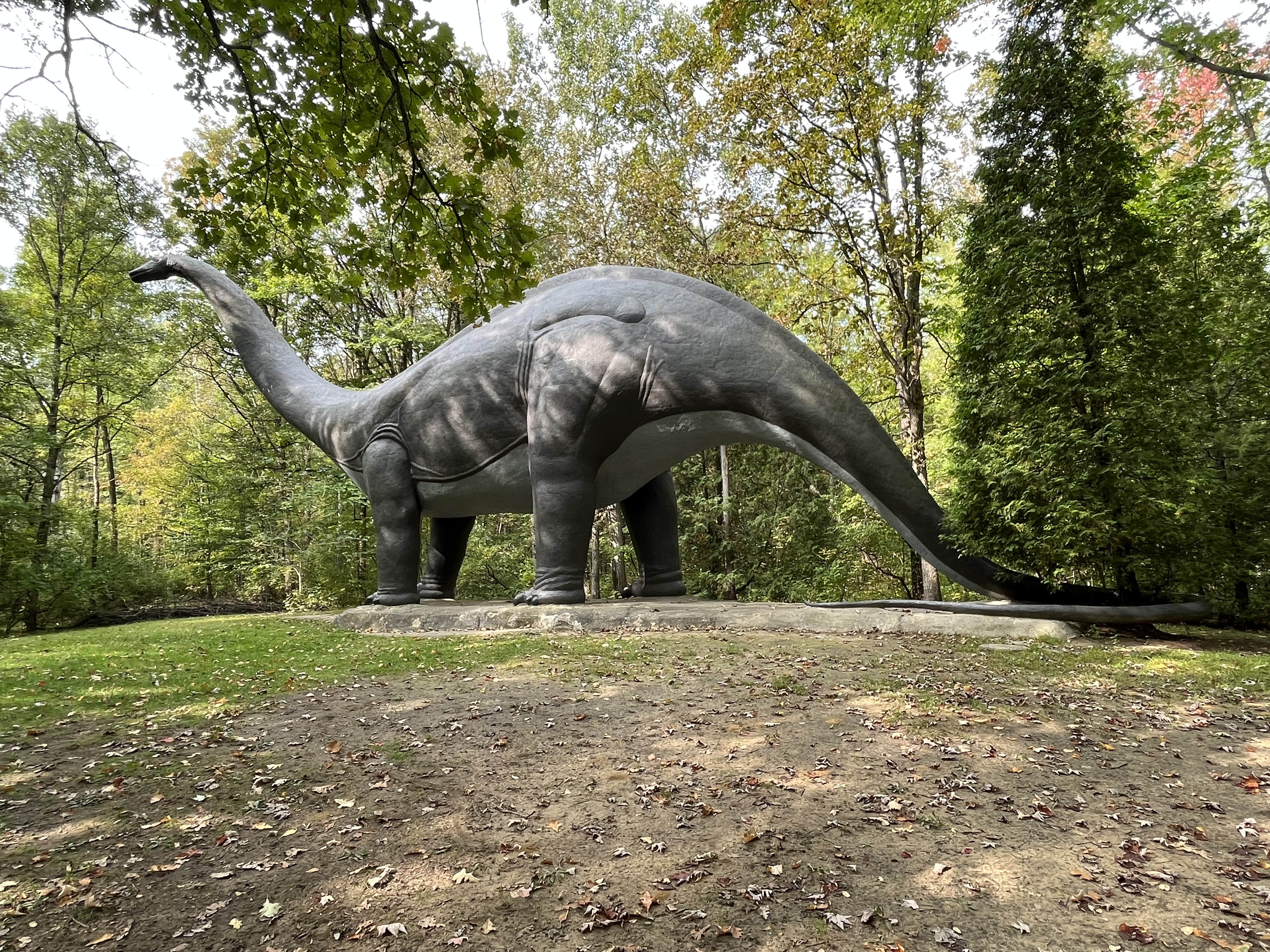
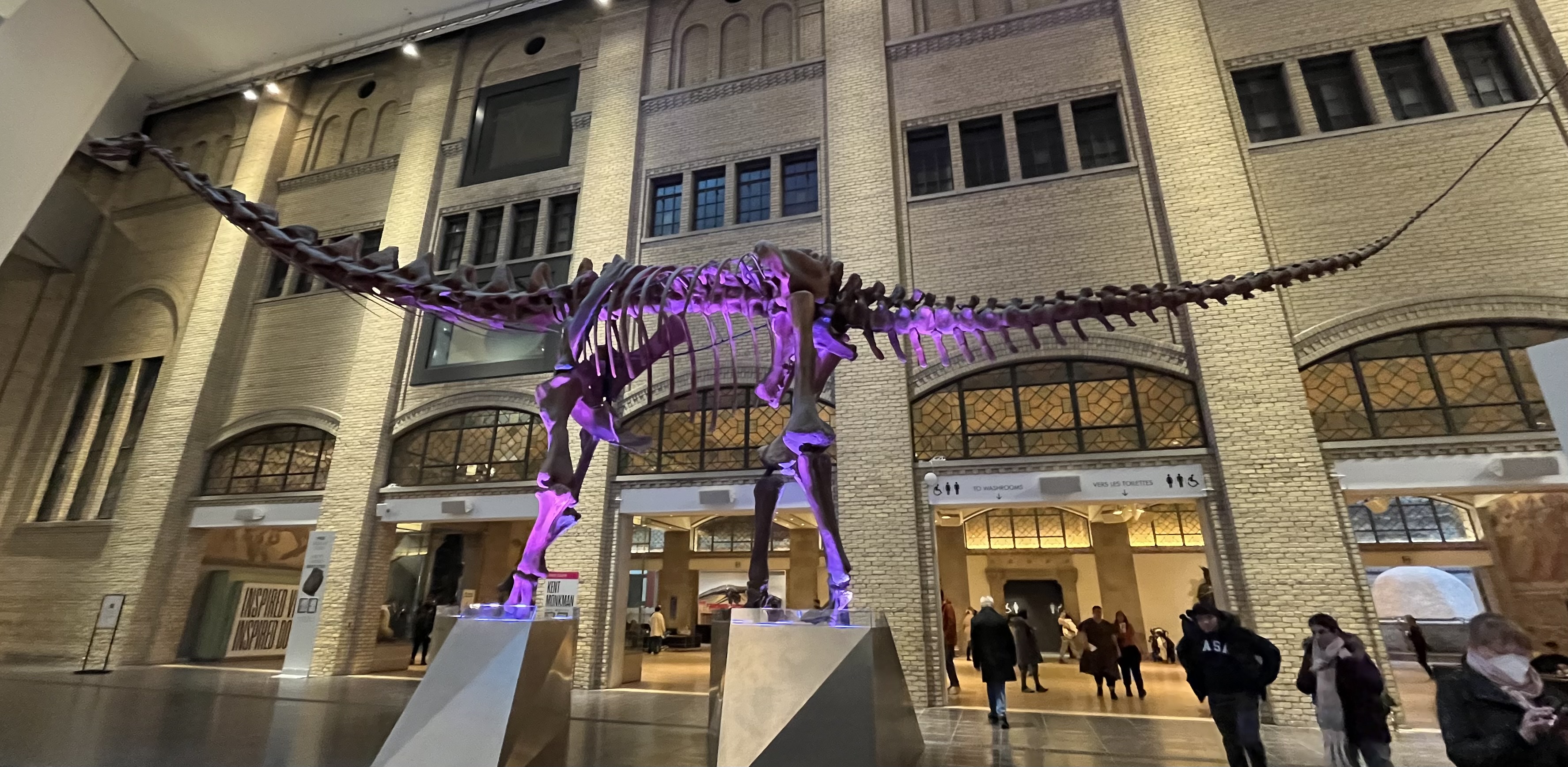
Brontosaurus is the biggest statue in the park, being one of the largest land animals to ever walk the Earth. From the nose to the tip of the tail it could be over 70 feet in length. Since the workshop isn’t big enough to accommodate the steel structure for this animal it was created in 14 pieces and assembled on site.
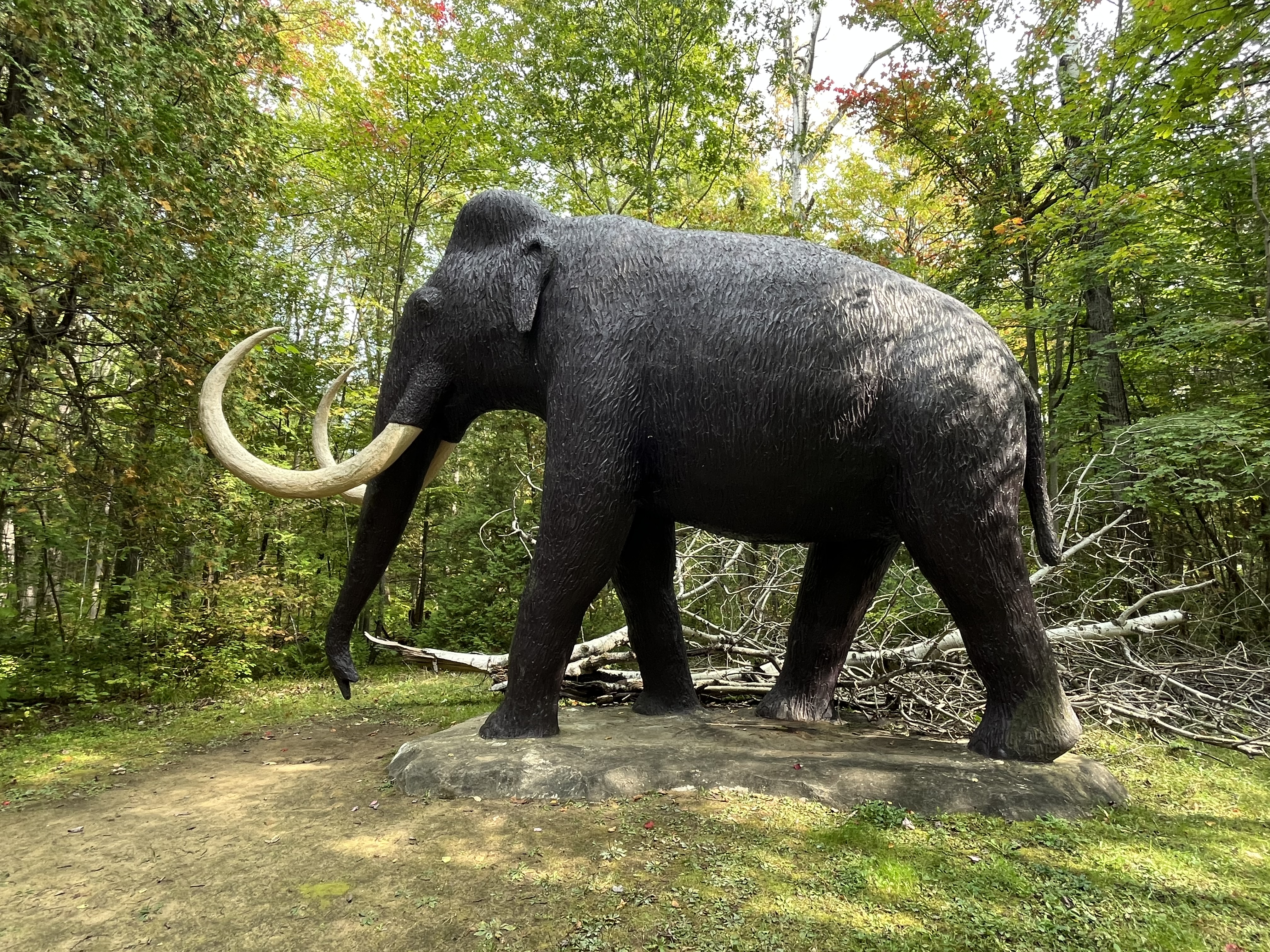
Wooly Mammoth stood 14 feet tall at the shoulder and are ancestors of the Elephant. They get their name from the thick coat of hair that covered their hides and they lived between 1 million years ago and about 10,000 years ago. Examples of this pachyderm have been found all over the Northern Hemisphere as well as entire animals being found frozen in the permafrost of Siberia and Alaska.
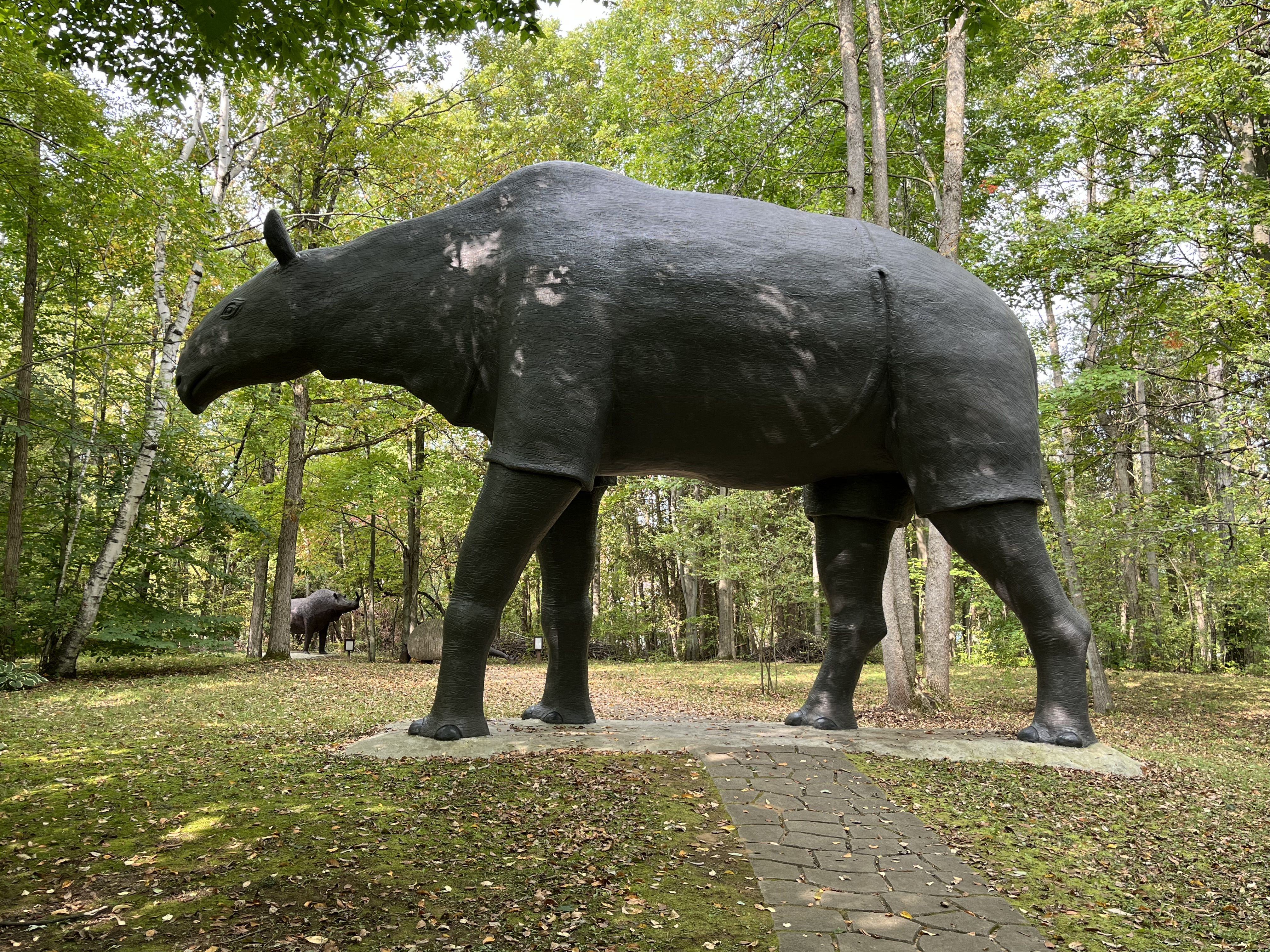
The largest mammal ever discovered was Baluchitherium which stood 18 feet tall at the shoulders. It weighed almost thirty tons and lived about 20 million years ago. It is said to have been an ancestor to the Rhinoceros. This statue is tall enough that the path leads right under its belly.
Prehistoric World will take a little over an hour to walk through if you stop to read each of the information plaques. The entry fee is only $10.00 for adults and $6.00 for children making it one of the affordable places to visit.
Related Stories: Scarborough’s Steel Dinosaurs, The Royal Ontario Museum – Dinosaurs
Google Maps Link: Prehistoric World
Like us at http://www.facebook.com/hikingthegta
Follow us at http://www.hikingthegta.com
Also, look for us on Instagram




 Hiking the GTA