Tag Archives: Milne Dam

Swan Lake – Markham

September 7, 2024

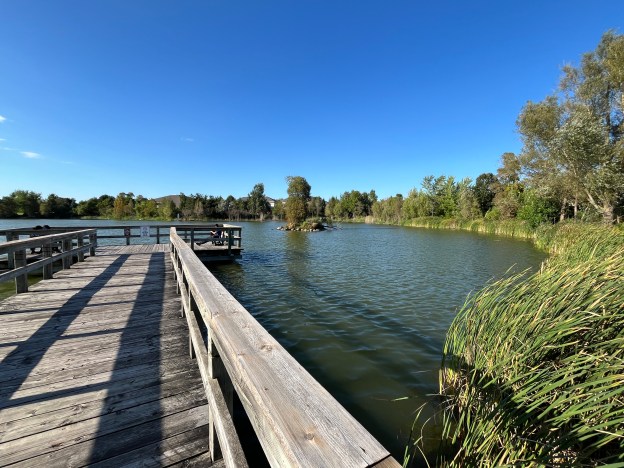
Swan Lake Park in Markham is a nice place to visit for a walk and to enjoy some time with nature. It is the second largest water body in Markham and is man made like the other two large lakes. Swan Lake can trace its history back to the 1850s when the site was found to be a large gravel deposit dating back to the last ice age about 12,000 years ago. Markham was founded around 1825 when a dam was built on the Rouge River to provide water for a mill that was located in the area of Milne Dam. Around 1840 another dam was built which created Toogood Pond near Unionville. We had previously written about these two ponds and so it was time to visit Swan Lake.

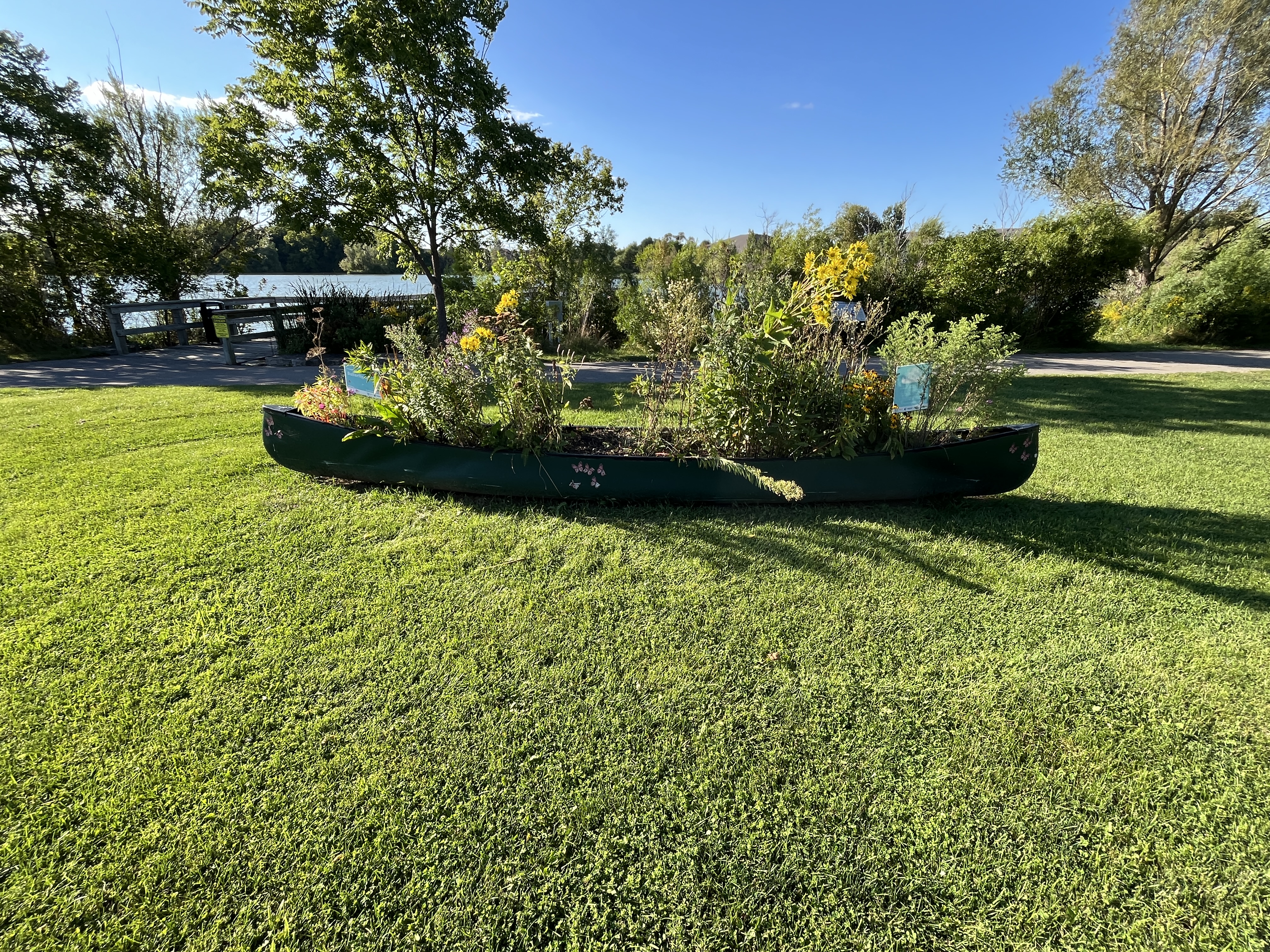
When you enter the park off of Swan Lake Boulevard the first thing you will see is a canoe full of plants. These canoe gardens have been showing up throughout Ontario and are used to create a space to plant shrubs and flowers that attract bees and other pollinators to the area. The first canoe garden was set up in 2013 near Fort York on the old waterway for Garrison Creek. Since then, dozens of them have been placed throughout Toronto, Markham and Richmond Hill. The idea is to improve habitat for pollinators as their populations have declined by over 45% since the 1980s.
Swan Lake was used as a gravel pit from the 1850s until the 1970s with the largest amount of gravel being removed in the 1960s and 1970s. Gravel is needed for construction purposes and as Markham and surrounding area were developed for houses and roads, a good local source was needed. It isn’t economically viable to truck gravel for long distances so it is usually extracted near where it will be used. When the gravel pit was closed it was allowed to fill up with water to become Swan Lake.
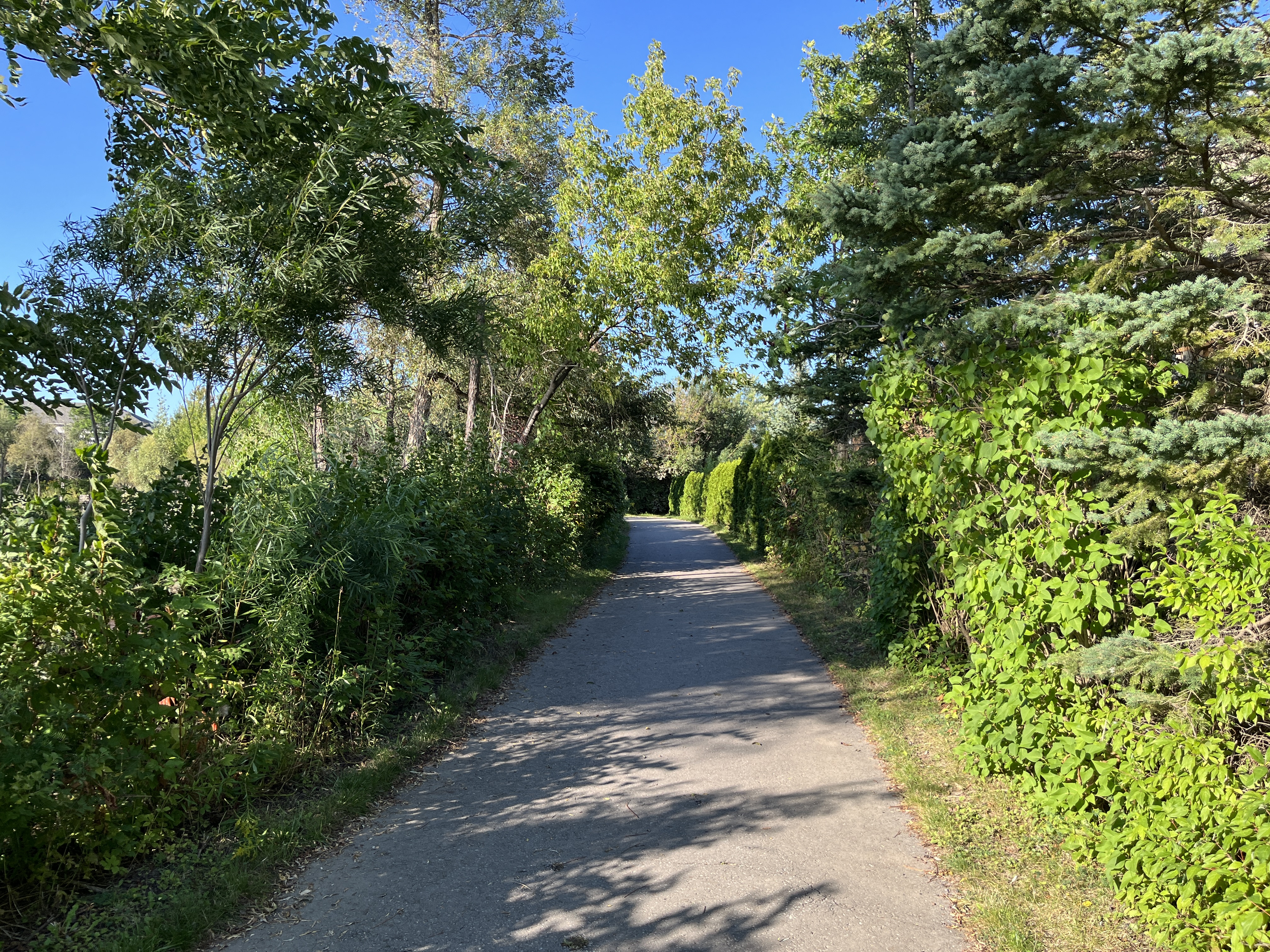
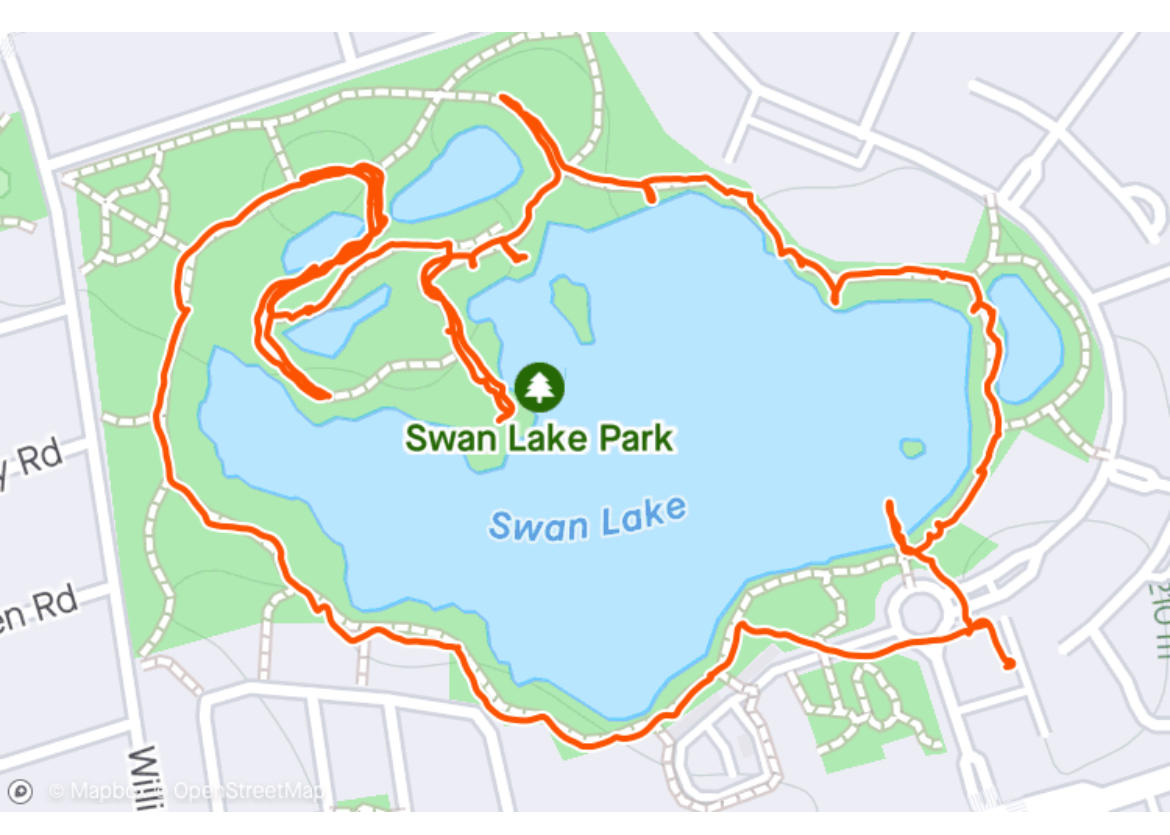
Swan Lake Park is 45 hectares (111 acres) and has many foot trails to be explored. There is a main trail that goes all the way around the lake and many secondary trails, especially through the wooded areas.
Although housing has been built up to the edges of the park and often encroaches on the ability to take natural looking photographs, there’s still plenty of places to get some great pictures.
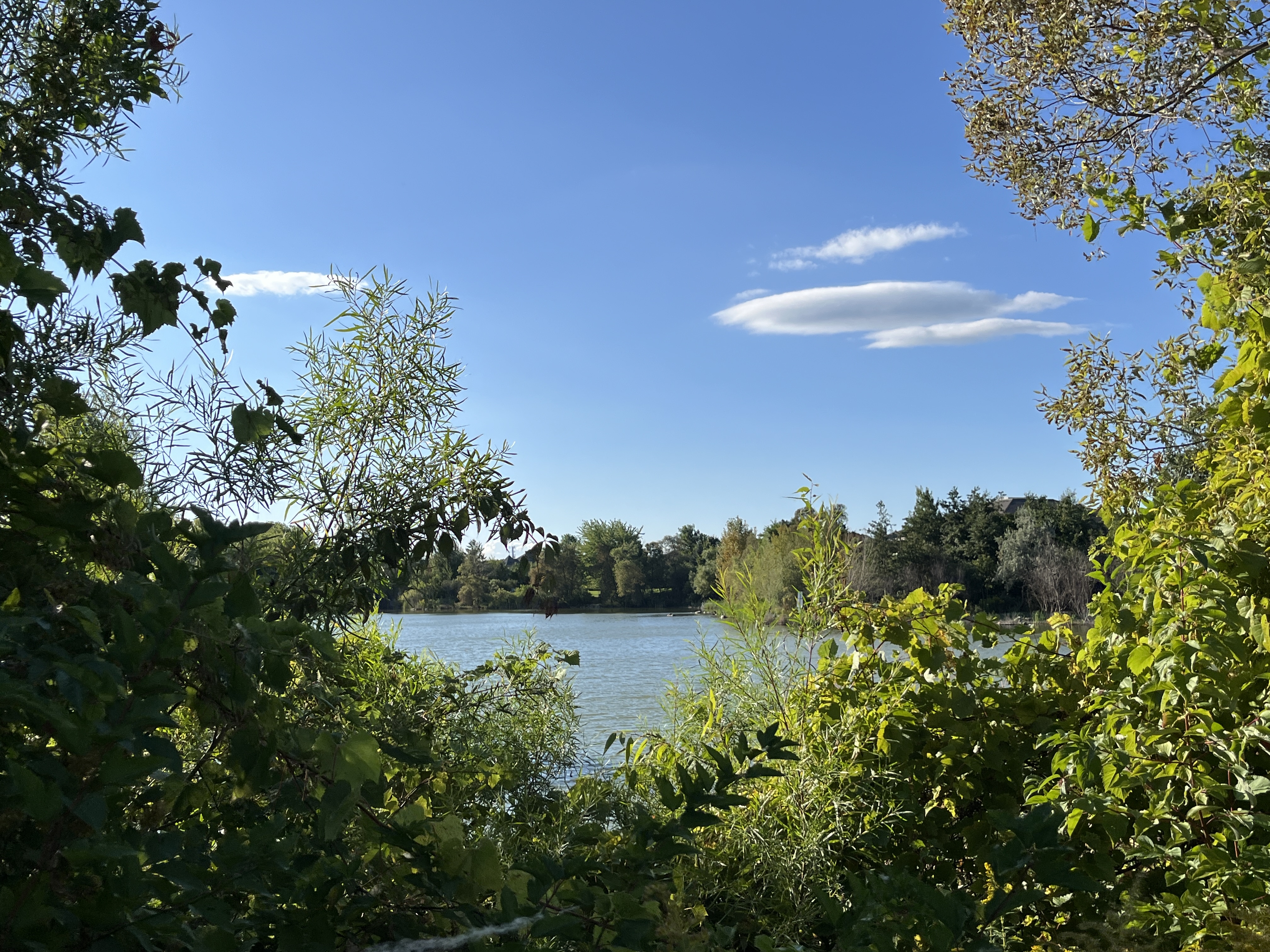
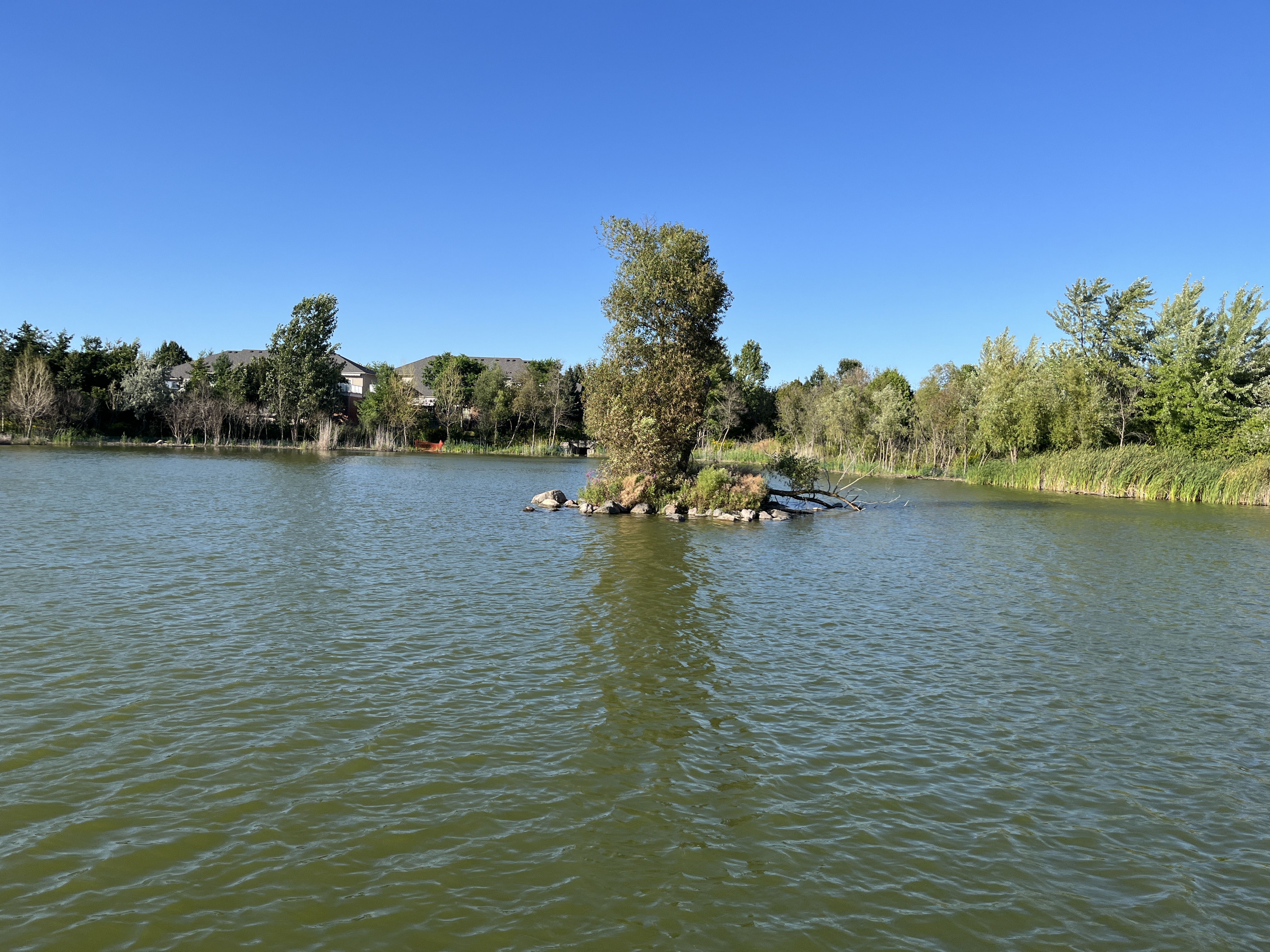
The lake itself is 5.4 hectares (over 13 acres) and is somewhat smaller than the 21 hectare (52 acres) lake in Milne Dam Conservation Area. It is larger than the 3.5 hectare (8.6 acre) Toogood Pond.

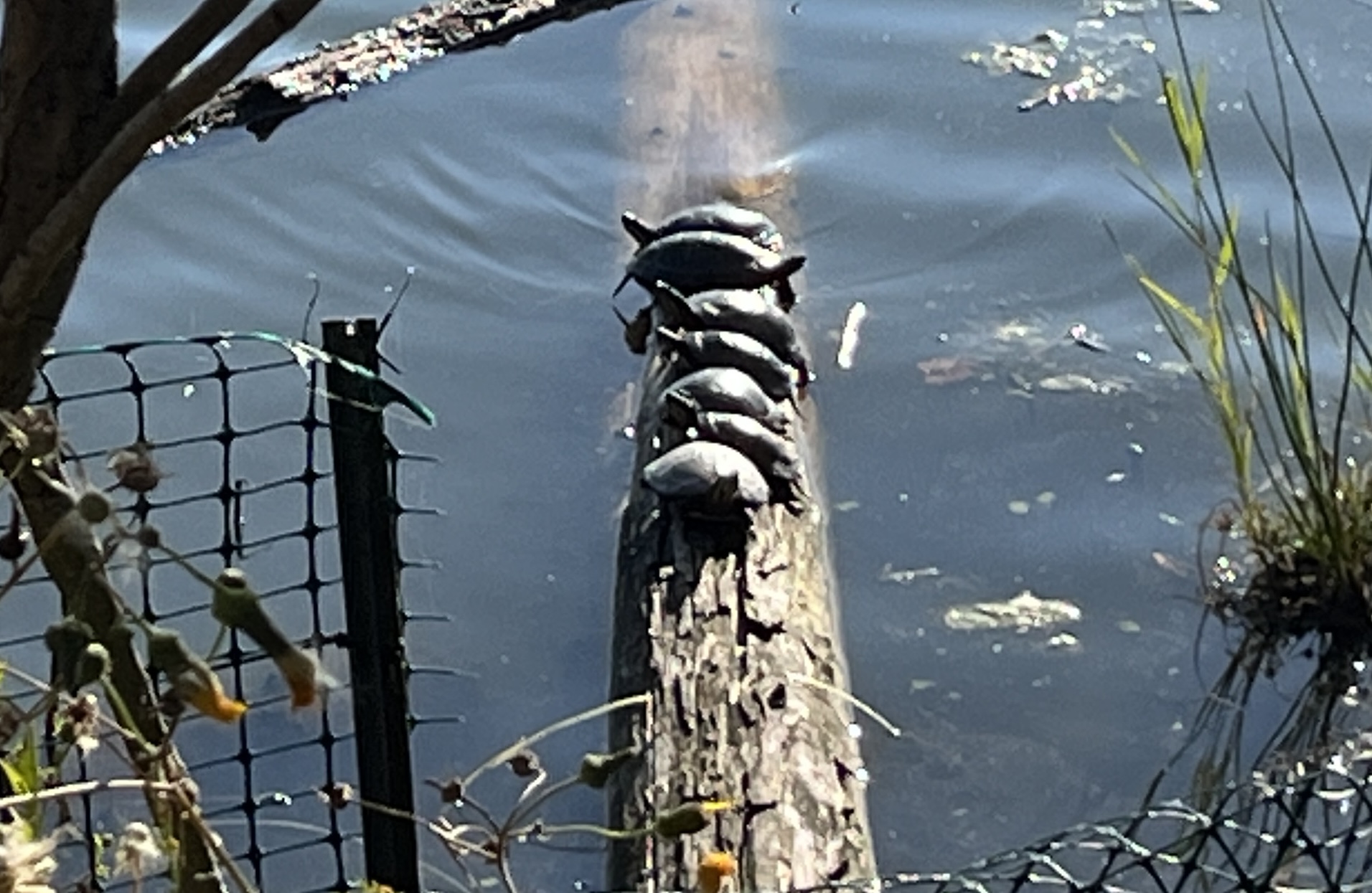
The lake supports many turtles of which the Painted Turtles and Snapping Turtles are natural while the Red-eared Sliders are invasive. Red-eared Sliders are sold as pets and subsequently dumped into the lake by irresponsible owners.
The lake is a natural part of the local aquifer and it is estimated that 35% of all the water that enters the lake goes into sustaining local groundwater levels. Based on this, Swan Lake is considered to be a significant groundwater recharge area.
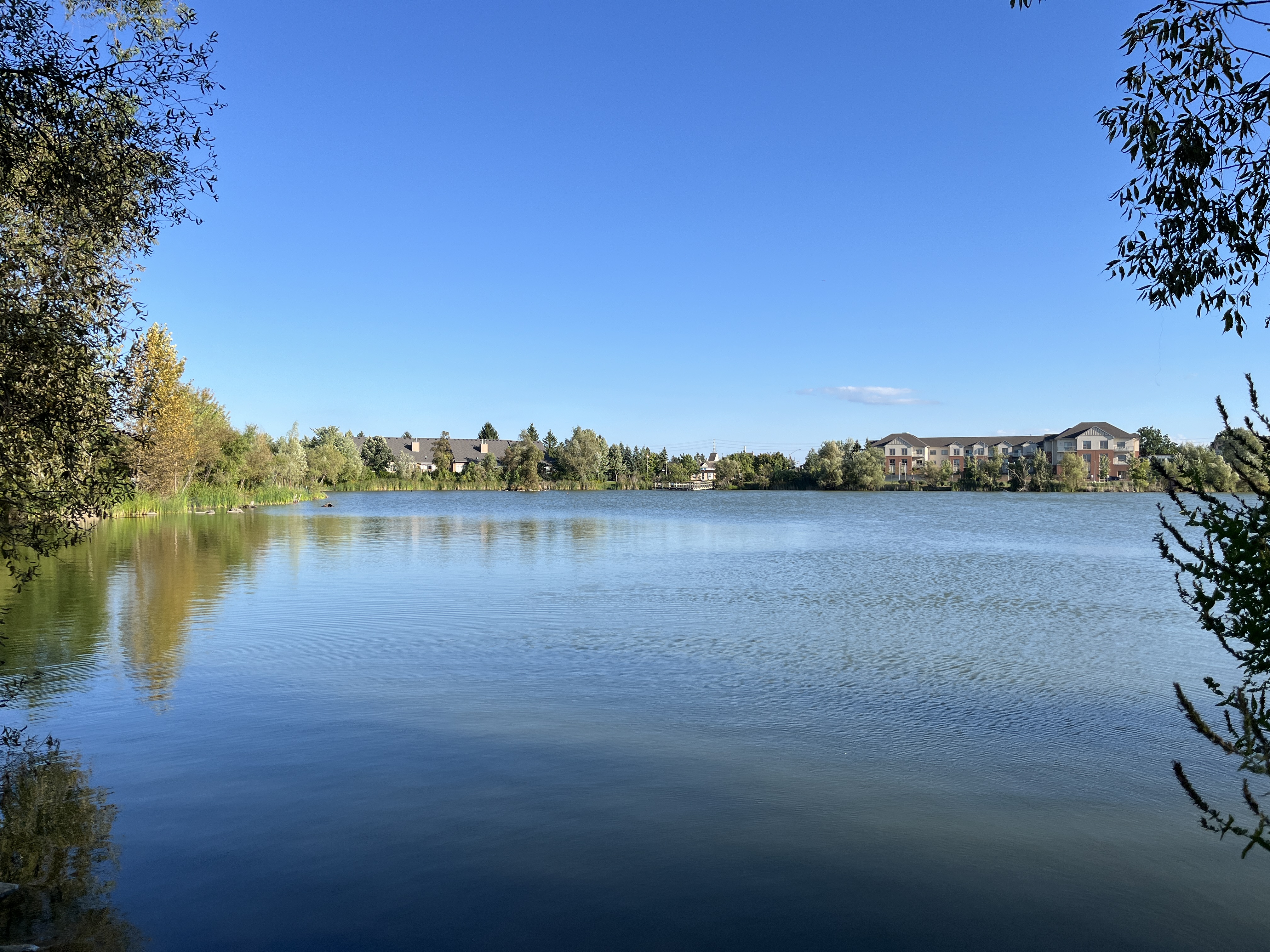
Swan Lake has been prone to large amounts algae which is related to excess phosphorus in the water. Canada Geese are one of the primary sources of nitrogen and phosphorus in the lake. The many enhancements in the past few years are an effort to manage the geese populations. These include changes to the shorelines to make them less attractive to geese as nesting areas. Lake bottom sediments also contribute to the high levels of phosphorus in the lake. In 2013 an application of Phoslok was done and the water improved but only for a couple of years. There is an ongoing program to monitor and treat the lake to prevent excess blooms of algae which can be toxic to pets and humans.
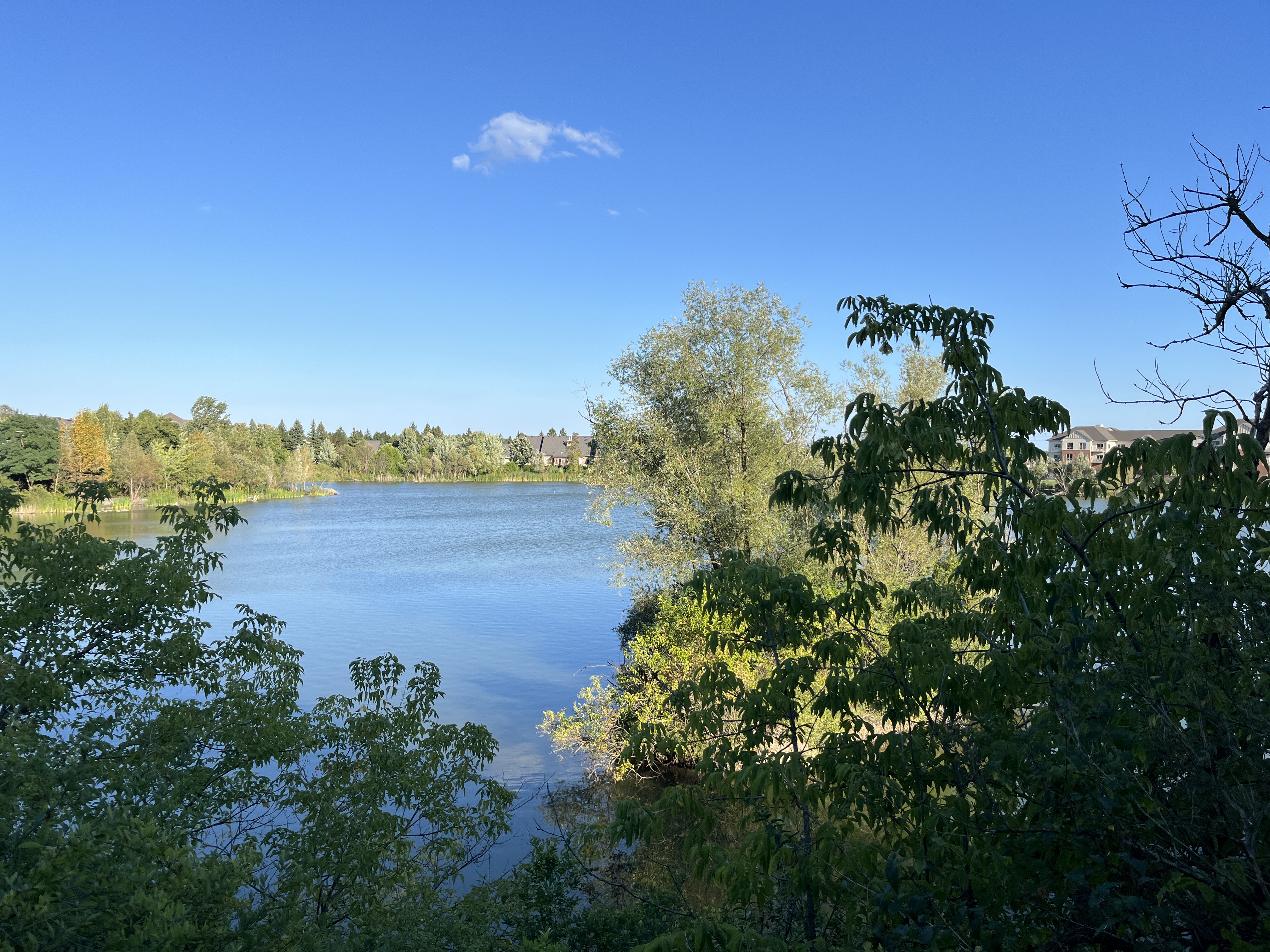
The north end of the park is forested and has a small hill that looks out over the lake. This is where you are most likely to see some of the 12 species of mammals that have been observed in the park. These include coyote, red fox, racoons, squirrels and chipmunks. Mink and muskrats have been found around the edge of the lake. 155 species of birds have been spotted in the park, many of them migratory. This makes the park a great place for bird watchers.

The Friends Of Swan Lake Park have made a request to the City of Markham to add the park to the Markham Natural Heritage Network. As an ecologically sensitive area it qualifies even though it isn’t part of the Rouge River watershed. Whether you’re looking to enjoy some time in nature, get some exercise or just take the dog for a walk, Swan Lake is a great place to visit.
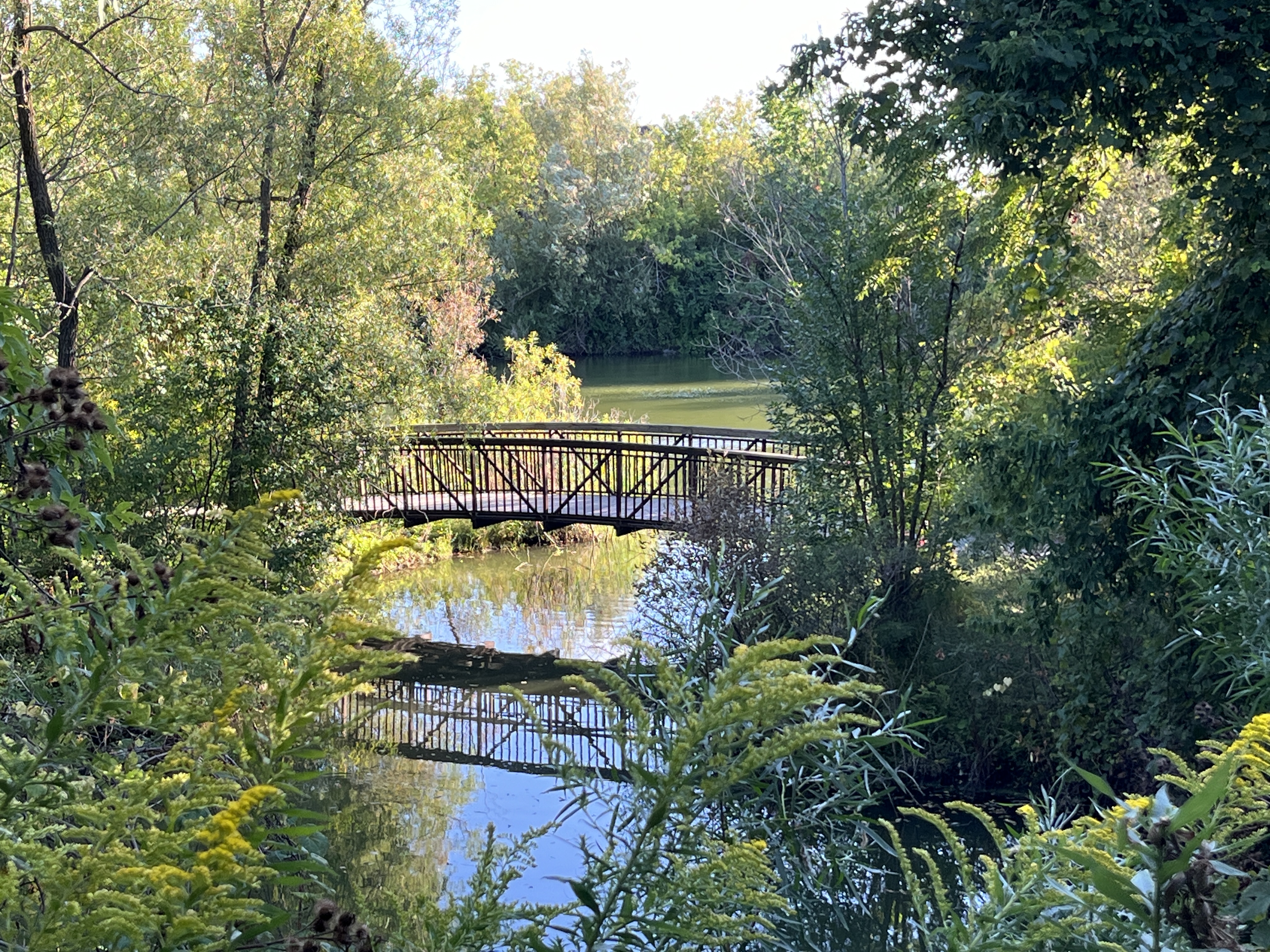
We are definitely planning to return to Swan Lake in a few weeks when the trees are changing colours as it has many species of trees and is likely to be very colourful. Our walk can be seen on the map below.
Related stories: Milne Dam Conservation Area, Toogood Pond

Google Maps link: Swan Lake

Like us at http://www.facebook.com/hikingthegta

Follow us at http://www.hikingthegta.com
Milne Dam Conservation Area

Sunday July 12, 2015

It was 25 degrees and partly cloudy.  Having hiked small portions of the Rouge River in the past I decided it was time to feature some part of it in a blog.  I drove to the founding place for the town of Markham to investigate the Milne Dam.  I parked just off of Highway 7 near Milne Lane, a lane way that once led to the Milne property and dam.

William Berczy was born in 1744 and came to Upper Canada with Lieutenant Governor John Graves Simcoe and basically co-founded York (Toronto).  With a group of German settlers he cleared part of the town site for York as well as building a powder magazine for the Queens Rangers to help protect the town.  His men then cleared Yonge Street from Eglinton to Elgin Mills, a span of 15 miles.  With 64 families Berczy then settled in Markham Township in an area which came to be known as German Mills.  The settlement didn’t thrive but Berczy did and his son Charles became Toronto’s first postmaster.

Alexander and Peter Milne built a dam and a mill on The Rouge River in the 1820’s.  The business prospered and soon there was a woolen mill, fueling mill, ashery and general store. Soon a community named Markham was growing along Markham road to the north of the mills.  The Milnes were also responsible for building mills in the area of Edwards Gardens and in Milne Hollow.  In 1911 Archie Milne, grandson of Peter, built the first concrete arc dam in Canada.  It was washed out in a flood in 1929 but replaced right away.  When it was washed out in the flood of Hurricane Hazel in 1954 it wasn’t replaced.  The Toronto Region conservation Authority bought the property in the 1950’s when they began to acquire the lands in the city’s floodplains.  They replaced the dam in 1973 as part of a master flood control plan and created Milne Dam Conservation Area.

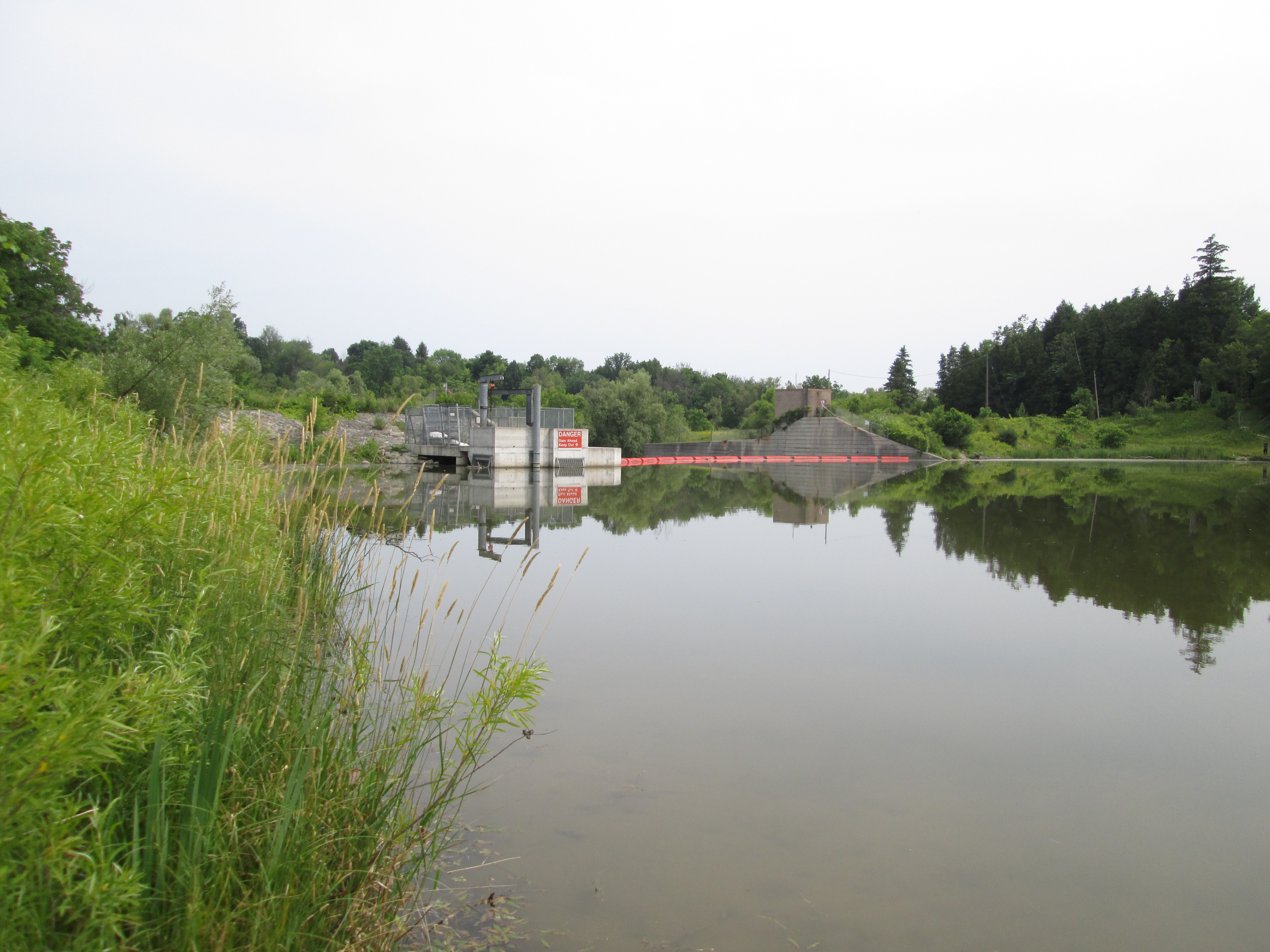
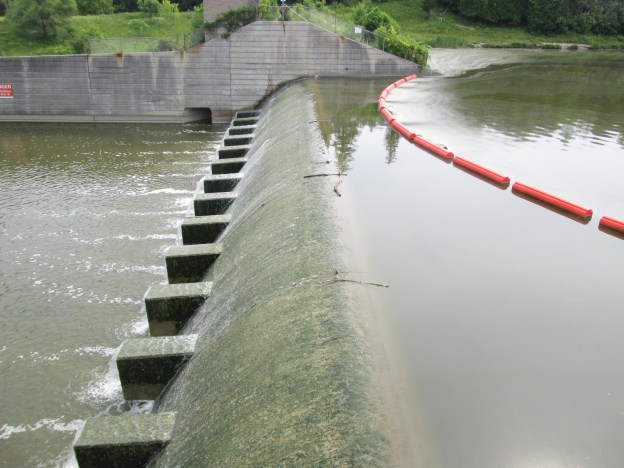
The cover photo shows the side view of the dam where the water falls over the rim and onto the diversion weir at the bottom.  From there it flows to another small dam before being released through a spillway into the open river again.  The picture below is from down stream looking back up at the ten foot dam.  The Milne Fishway can be seen at water level on the right.

IMG_6532

The photo below shows the view up into the fish ladder.  The Milne fishway was constructed in 2001 and opened in 2005 at a cost of over $1 million.  Prior to that, the dam had presented a migration obstacle for fish but now another 45 km of the Rouge River was opened to migration. Records show that Rainbow Trout, Brown Trout, Smallmouth Bass and 10 other species have used the ladder to reach upstream.  During periods of migration, such as spring time, a cage is placed on the top end of the fishway.  This allows the removal of undesirable species such as sea lampreys.  Sea lampreys attach themselves to fish with a suction cup-like mouth and feed on them until they die. The Milne dam is the final barrier to lampreys to keep them out of the upper Rouge River.

IMG_6540

The Toronto region has been subject to flooding from the earliest days of it’s founding.  The first written records of floods start in 1797.  The first major destruction was caused by 5 inches of rain that fell in 24 hours in 1878 and washed out mills, bridges and dams.  Other floods happened over the next 66 years until 1954 when Hurricane Hazel hit.  With a death toll of 81 people it was time to get serious about flood control.  15 dams and flood control ponds were planned of which only three were built so far.  Claireville dam in 1964, G. Ross Lord dam in 1973 and Milne Dam in 1973.  The view below is from above the dam looking out across the smooth surface of the Milne Reservior behind the dam.  The orange floats collect debris and prevent it from going over the dam.

IMG_6545

These mushrooms look like Fly Agaric which is a psychoactive drug capable of producing hallucinations.  It actually more closely resembles Amanita Crenulata, of the same family, which is highly poisonous. The ring around the stipe tends to be a single fuzzy ring rather than several concentric rings. These mushrooms are the type that are typically shown, although most often red, in pictures featuring elves and fairies.  In a strange twist, children’s books are filled with pictures of poisonous or hallucinogenic mushrooms.

IMG_6591

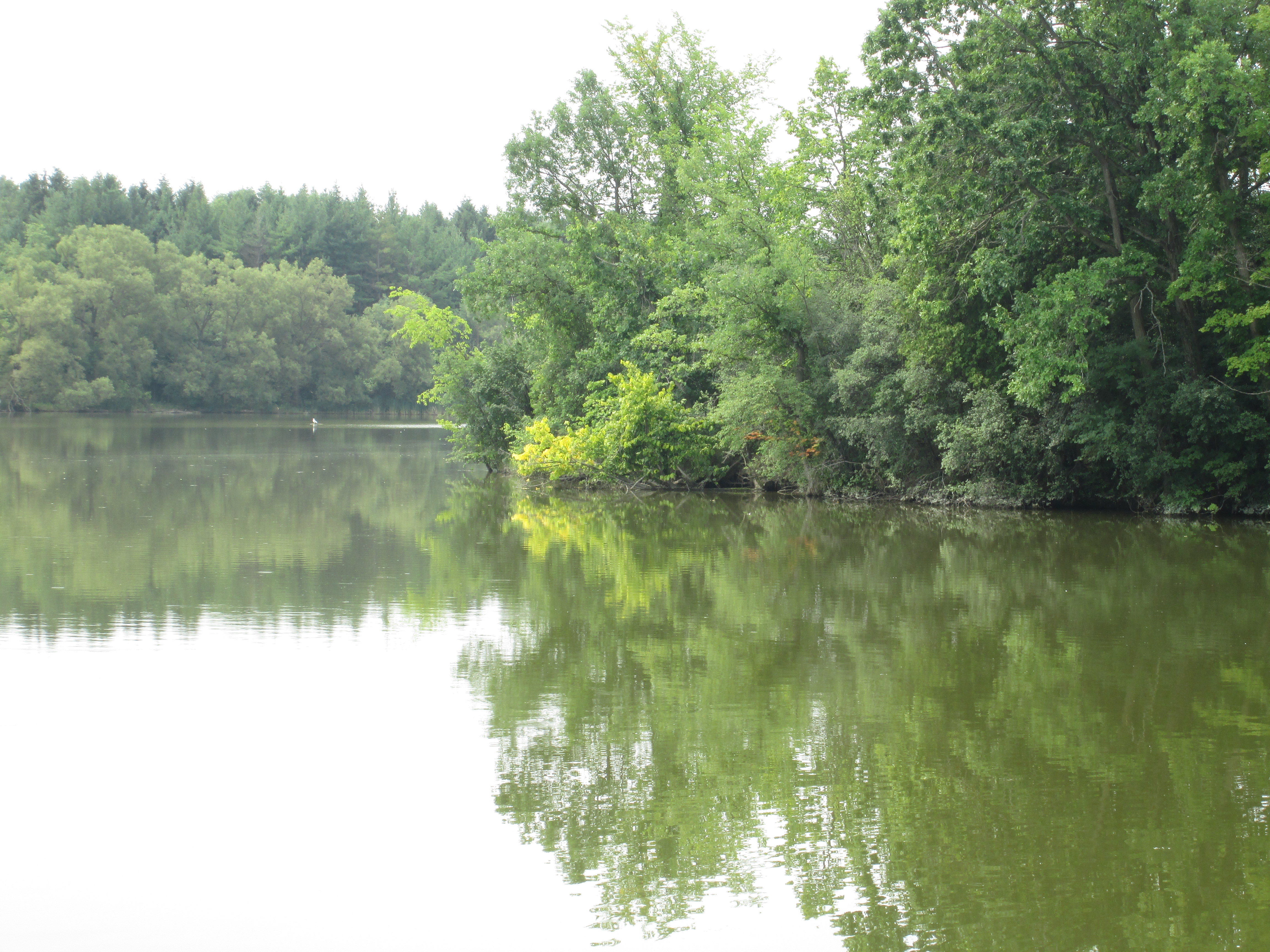
There are some real quiet places along the side of the reservoir where you can sit and watch the fish jump in the air.  As I sat on a log, and roasted in the heat, the yellow tree branch hanging over the water reminded me to enjoy summer while its here because its over far too soon.

IMG_6557

With lots of wetlands and woodlands the park is home to a wide variety of wildlife.  It’s excellent for migratory birds and I caught a great blue heron in flight along the far shore in the picture below.

IMG_6573

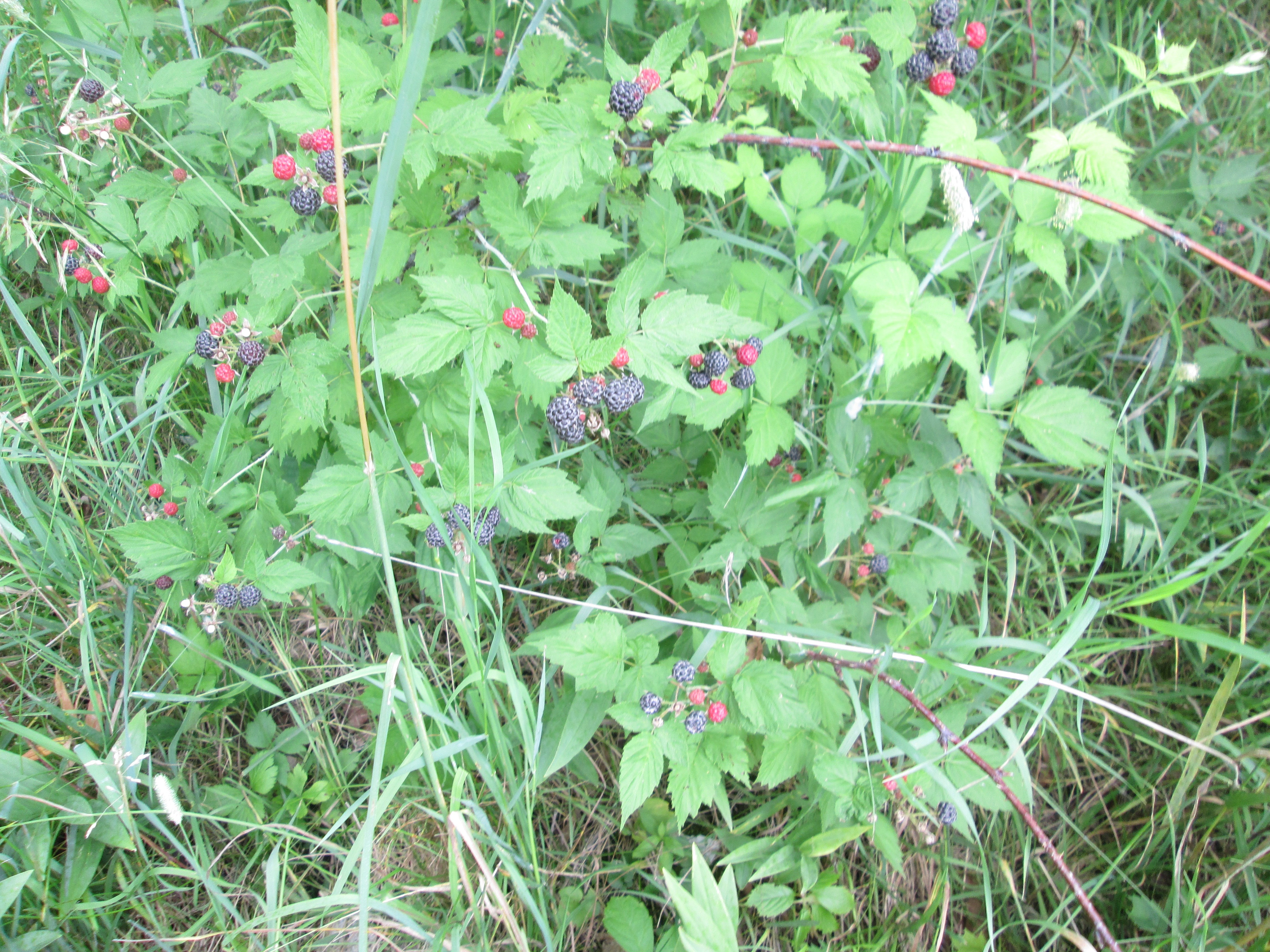
The black raspberry has a distinct taste from it’s red cousin but they were juicy and plentiful. Not to mention how good they taste when put on top of rich french vanilla ice cream.

IMG_6565

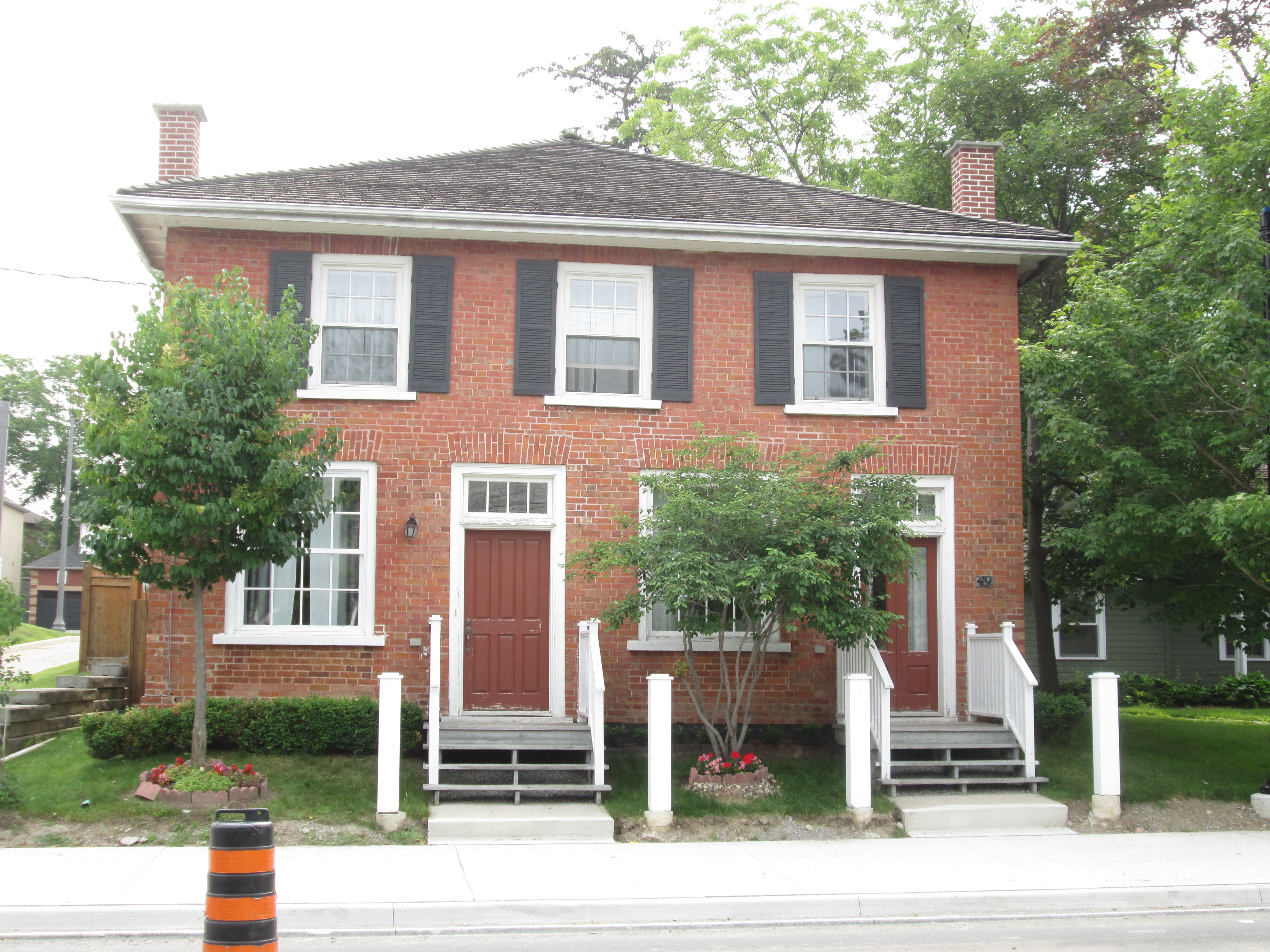
Where the Rouge River crosses under Markham road stands one of the early businesses in Markham.  Archibald Barker bought this piece of property in 1844 and took out a mortgage in 1852 which likely indicates the date the house was built. The building was constructed to house a store on the south half and the Barker residence on the north half.  Aside from running the store, Barker was a notary public and ran the Rouge Mills.  This building stood near the mill complex and may have provided a place for workers to purchase supplies.

IMG_6525

Markham has plenty of history waiting to be investigated in future posts but the Milne Dam Conservation Area is a great place to visit and as I only hiked around one corner of the 305 acre park I’m certain to be back.

Visit us at http://www.facebook.com/hikingthegta