August 3, 2024
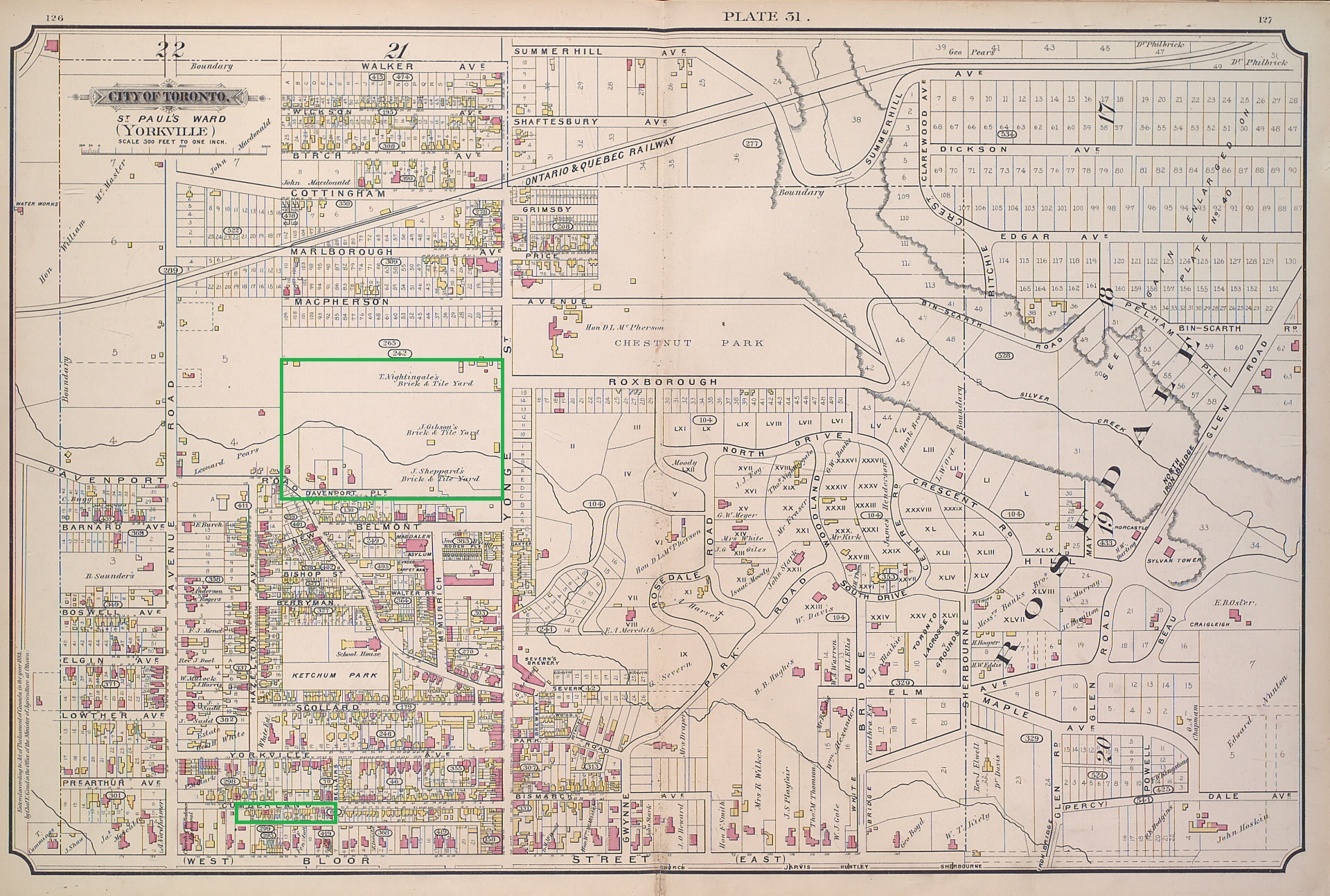
Yorkville has gone through many changes since its founding in 1830. The population reached 1,000 in 1853 which qualified it to be incorporated as a village. When it refused to buy water from Toronto it developed the Yorkville Water Works which we described in detail in the linked post. In 1883 it was annexed to Toronto and became known as St. Paul’s Ward. In the 1960s it was the centre of the Canadian Hippie movement and became a cultural home for budding artists including Joni Mitchell, Gordon Lightfoot and Neil Young. Today it is home to one of Toronto’s most prestigious shopping areas. The map below is from the 1884 Goads Fire Insurance maps. It shows the village of Yorkville at the time of annexation. The brickyards are set within the larger green square in the middle of the map while the area that would become the Village of Yorkville Park is located in the smaller green rectangle near the bottom.
Cumberland Avenue used to be lined with of a series of Victorian Homes that stood there until the building of the Bloor Subway Line in the 1950s. They were demolished and after the subway construction was finished the area was turned into a parking lot. It remained a surface parking lot for around 40 years until 1991 when ongoing pressure from the residents and Business Improvement Association resulted in the city agreeing to turn it into an urban park. But not the standard city park with a few trees and a couple of benches, This was to be a unique park which has become an oasis for local people as well as a tourist attraction for visitors. Joni Mitchell wrote her hit song Big Yellow Taxi in 1970 which was an environmental statement and included the line “They paved paradise and put up a parking lot.” It’s a bit ironic that the area in which she got her start decided to remove a parking lot and put up a bit of paradise.
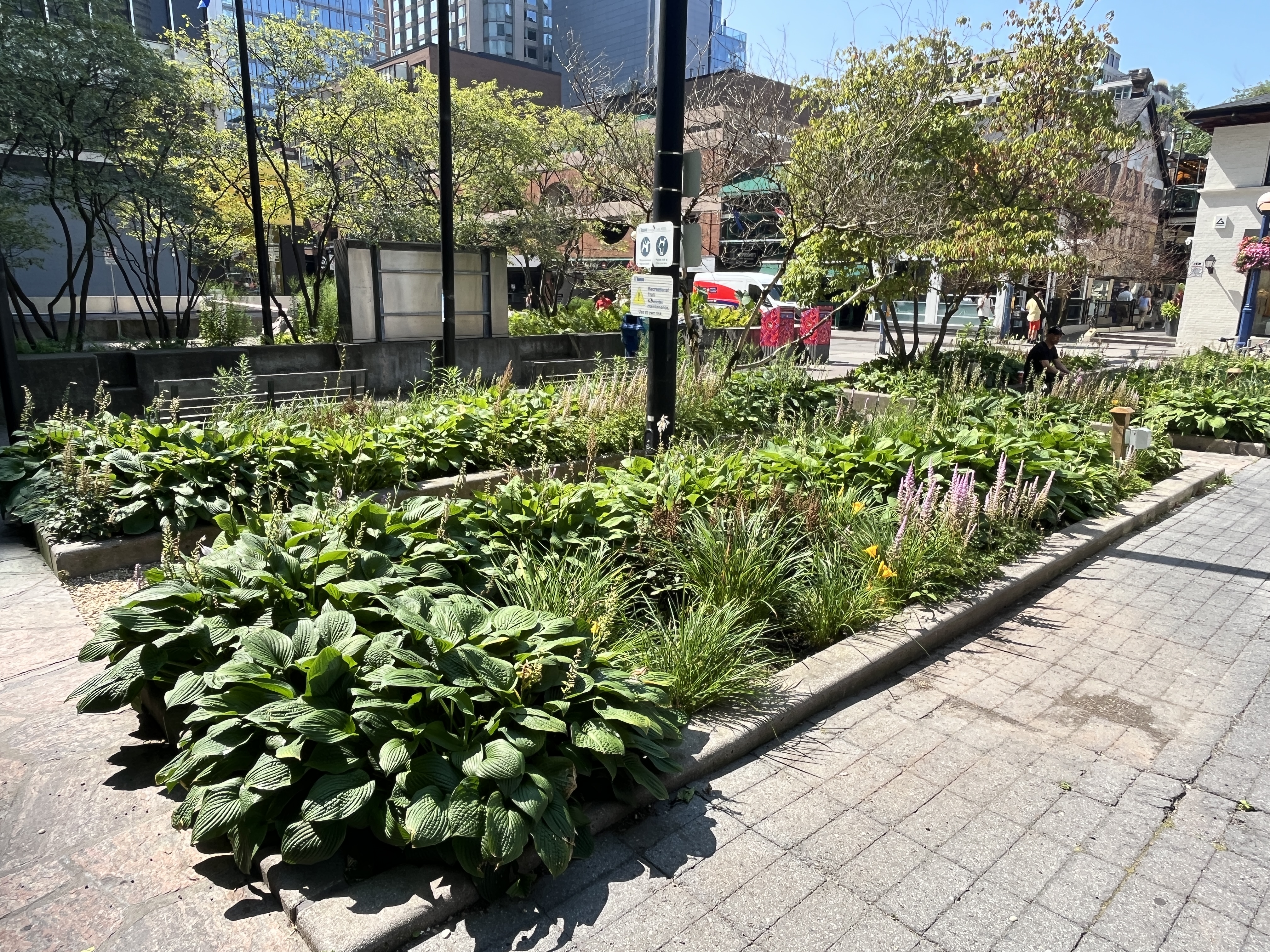
The park is laid out in sections that are sized by the original property lots that used to stand here. There is a separate garden for each section of the park that reflects a different Canadian ecosystem.
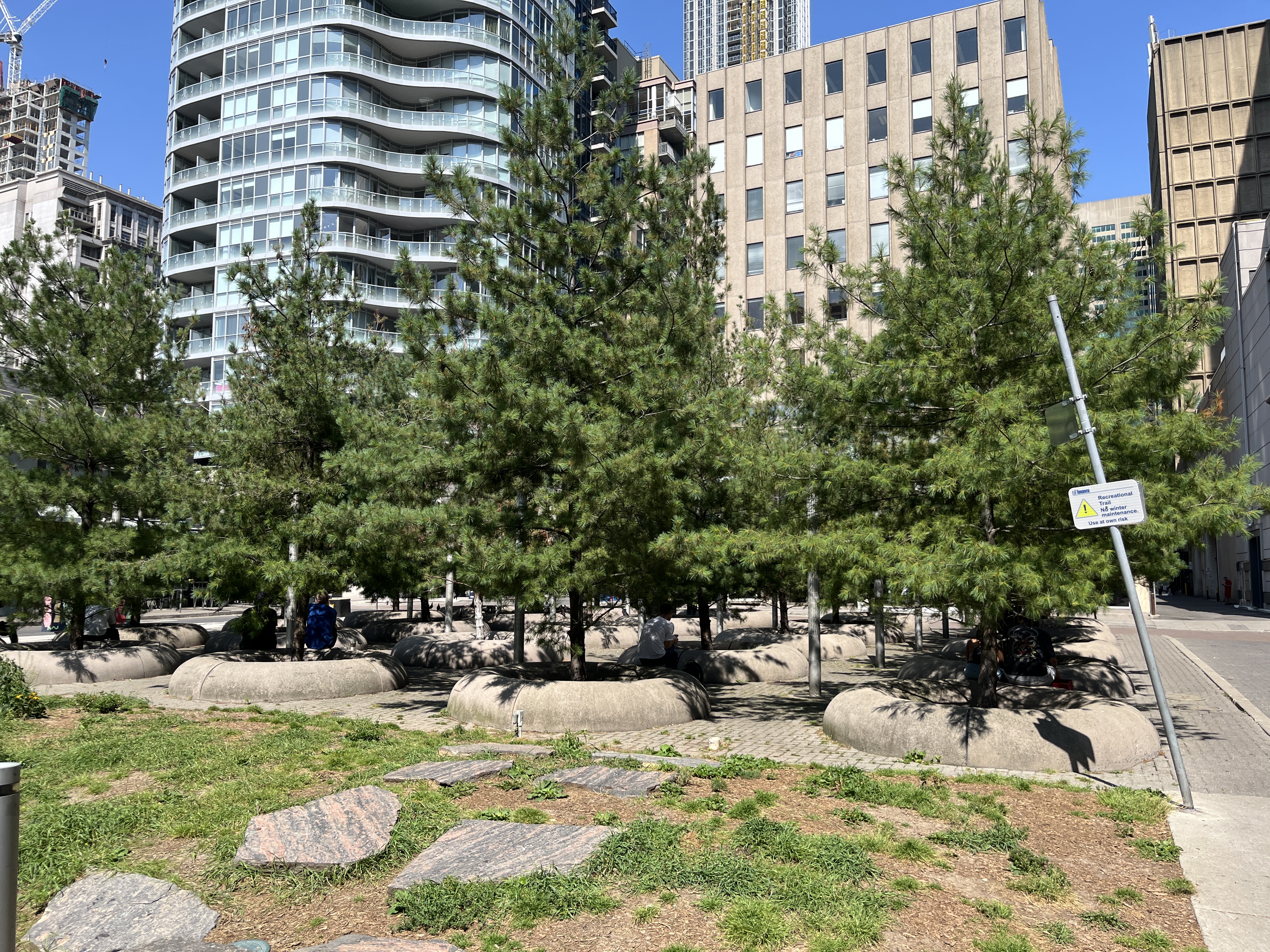
Starting at the east end of the park beside Bellair Street you have a Pine Grove. These pine trees represent one of the many ecosystems that can be found within Canada. The trees are each surrounded with a concrete structure shaped like an inner tube of a tire. These are intended to be used as seating.
The Victorian homes that once stood on this property were adorned with a wide variety of gardens as was the fashion at the time.
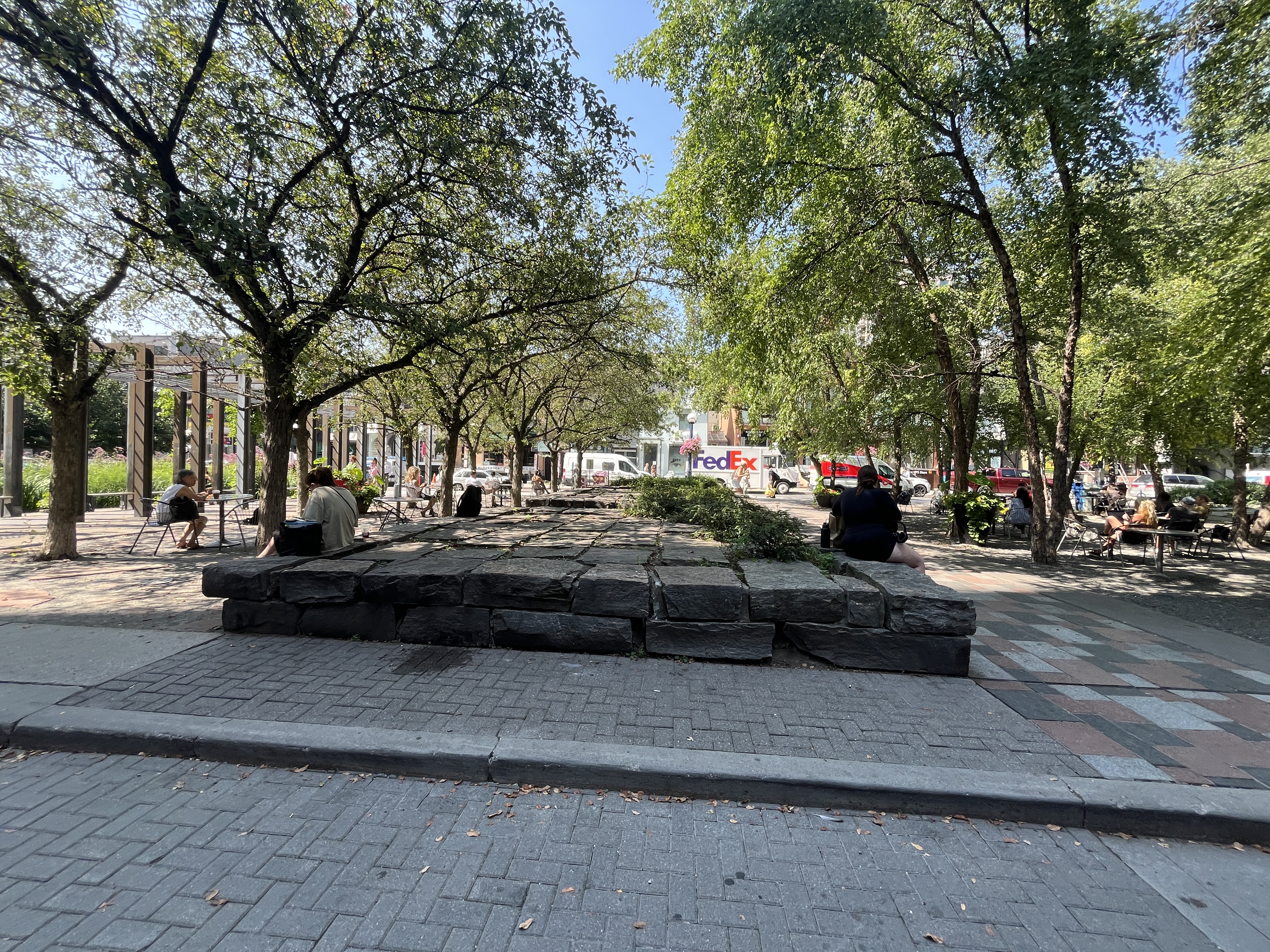
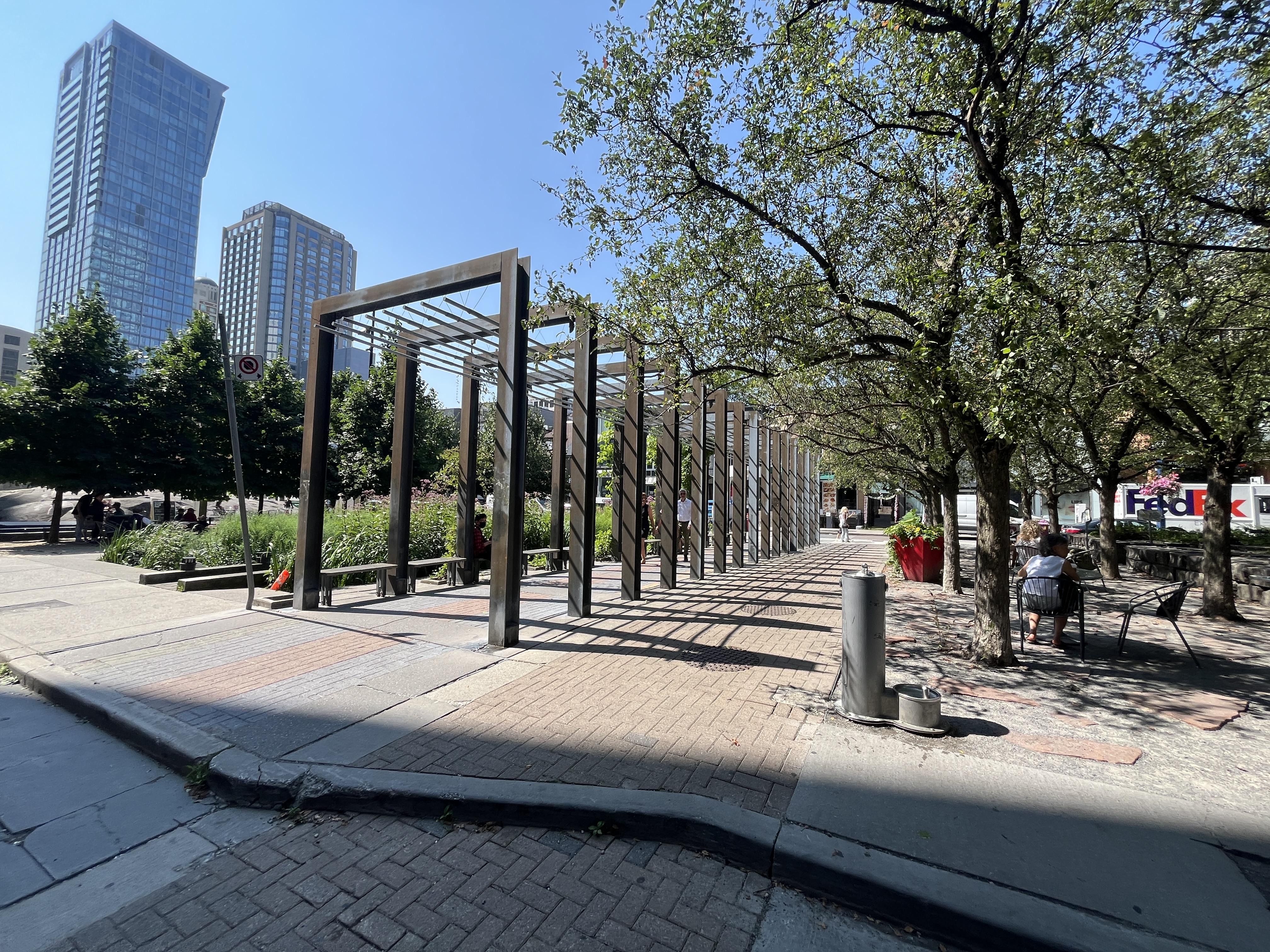
The twelve gardens or zones in the park are 1) Pine Grove, 2) Prairie Wildflower Garden, 3) Birch Grove, 4) Fragrant Herb Rock Garden, 5) Crabapple Orchard, 6) Festival Walk, 7) Ontario Marsh, 8) Aider Grove, 9) Canadian Shield Clearing, 10) Herbaceous Border Garden, 11) Heritage Walk and 12) Amelanchier Grove.
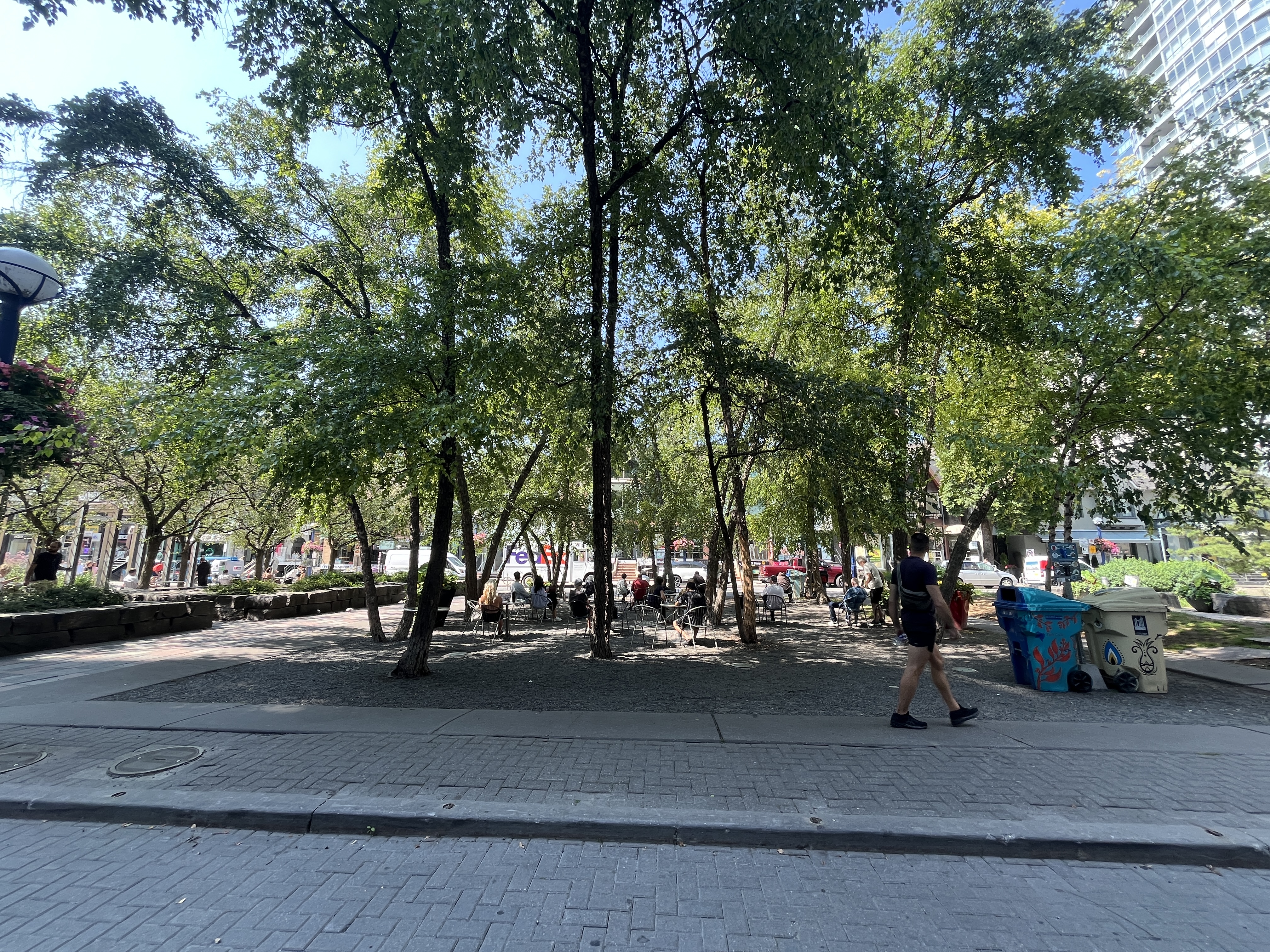
The park is a great place to enjoy a cool drink or chat with friends. There is plenty of places to sit and lots of shade on a hot day. The little shops and boutiques of Yorkville are all close by as are the major retailers on The Mink Mile an upscale shopping district in Yorkville.
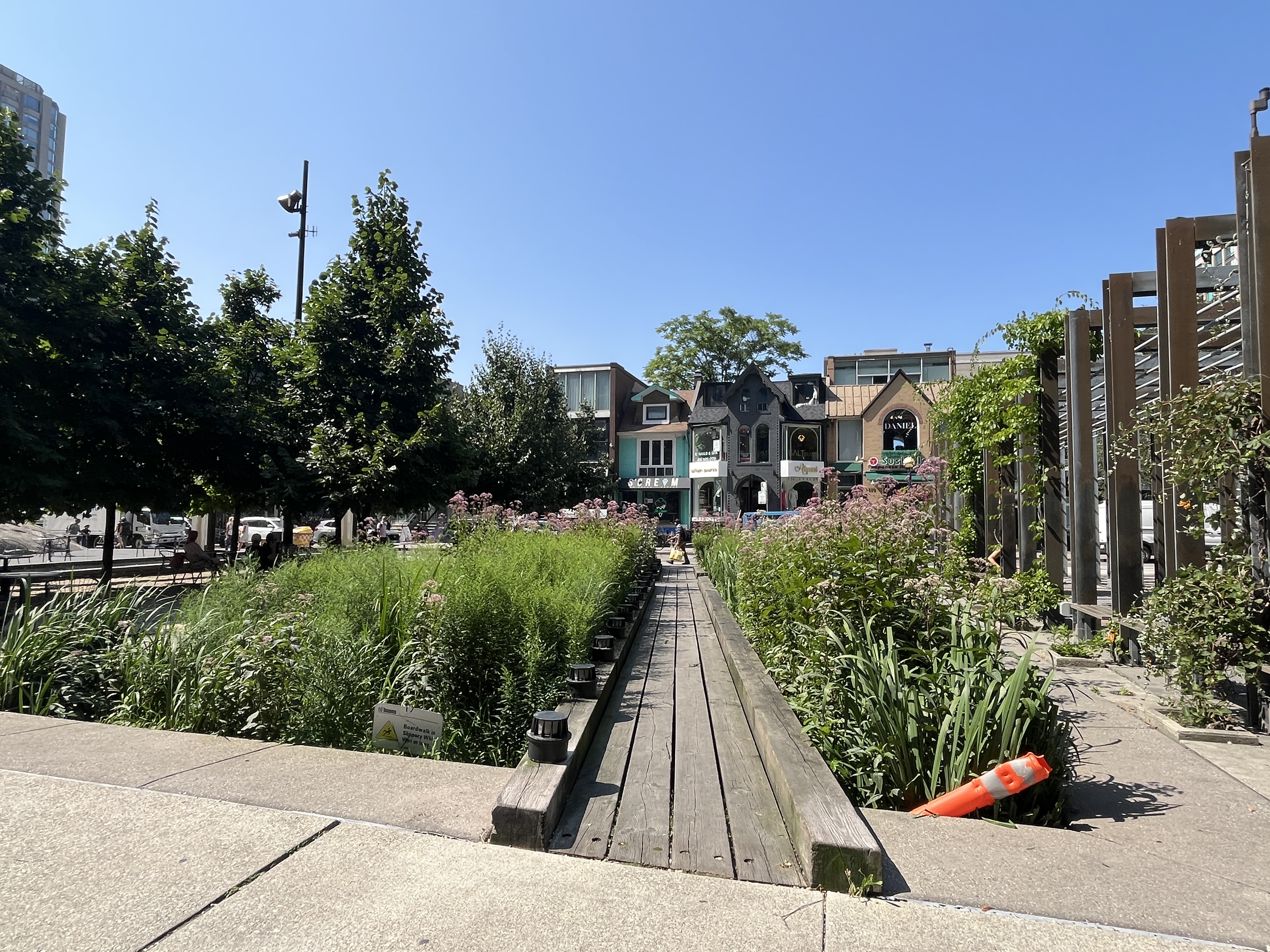
The Marshy Wetlands are traversed by a set of boardwalks in a crisscross pattern similar to what we find on many hiking trails.
The stainless steel water curtain sprays a mist on the local plants and turns into an icicle display in the winter.
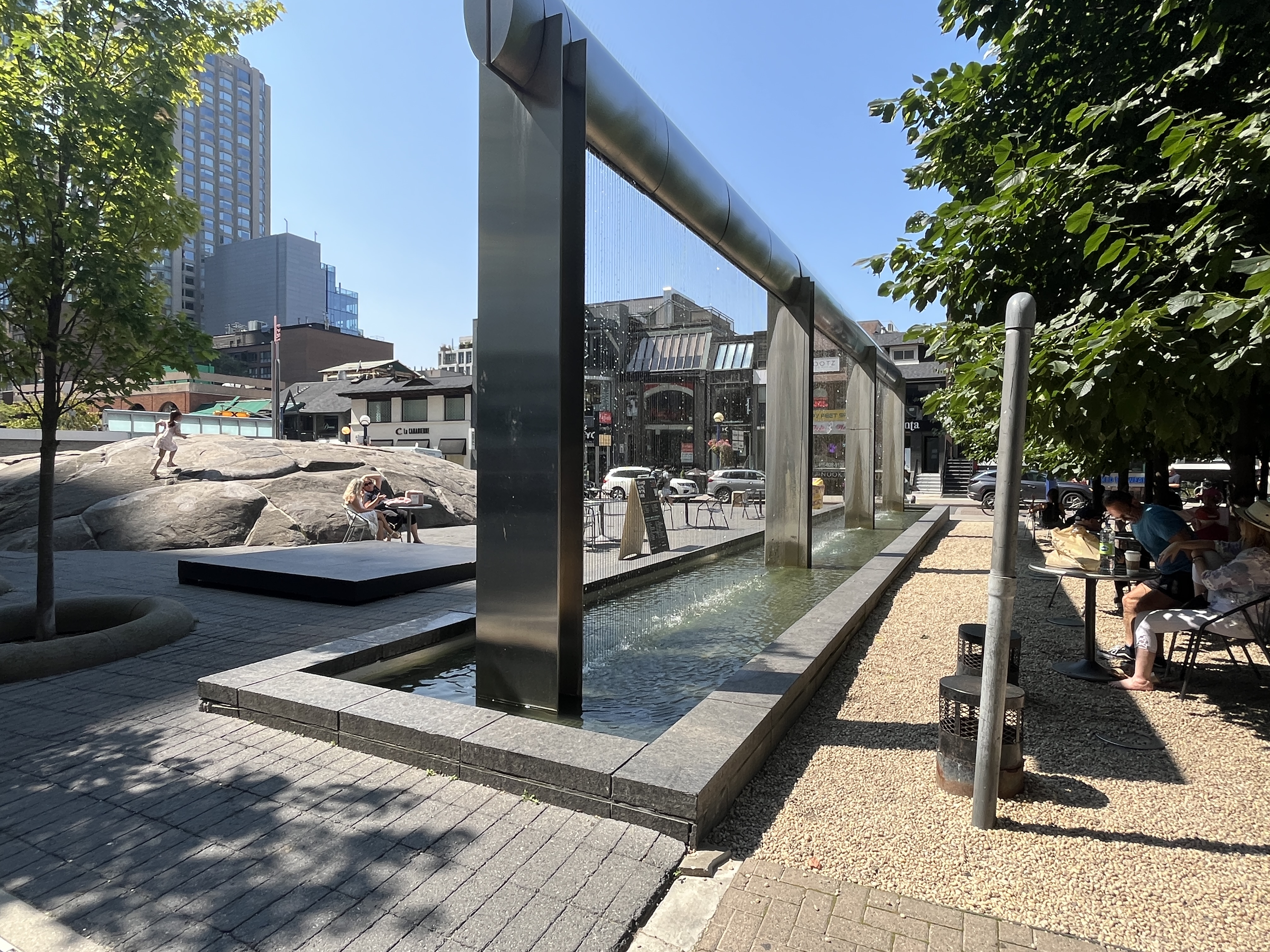
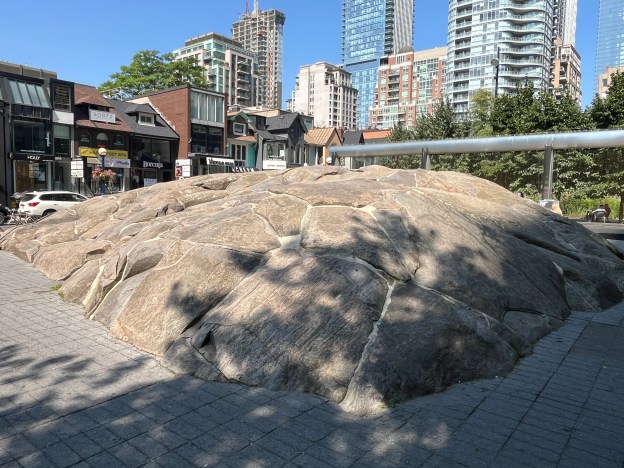
Perhaps the most striking feature of the park is the Canadian Shield display. This 650 ton piece of rock was brought from the north in pieces on 20 flatbed trucks. It was reassembled in place and has become a focus of the park.
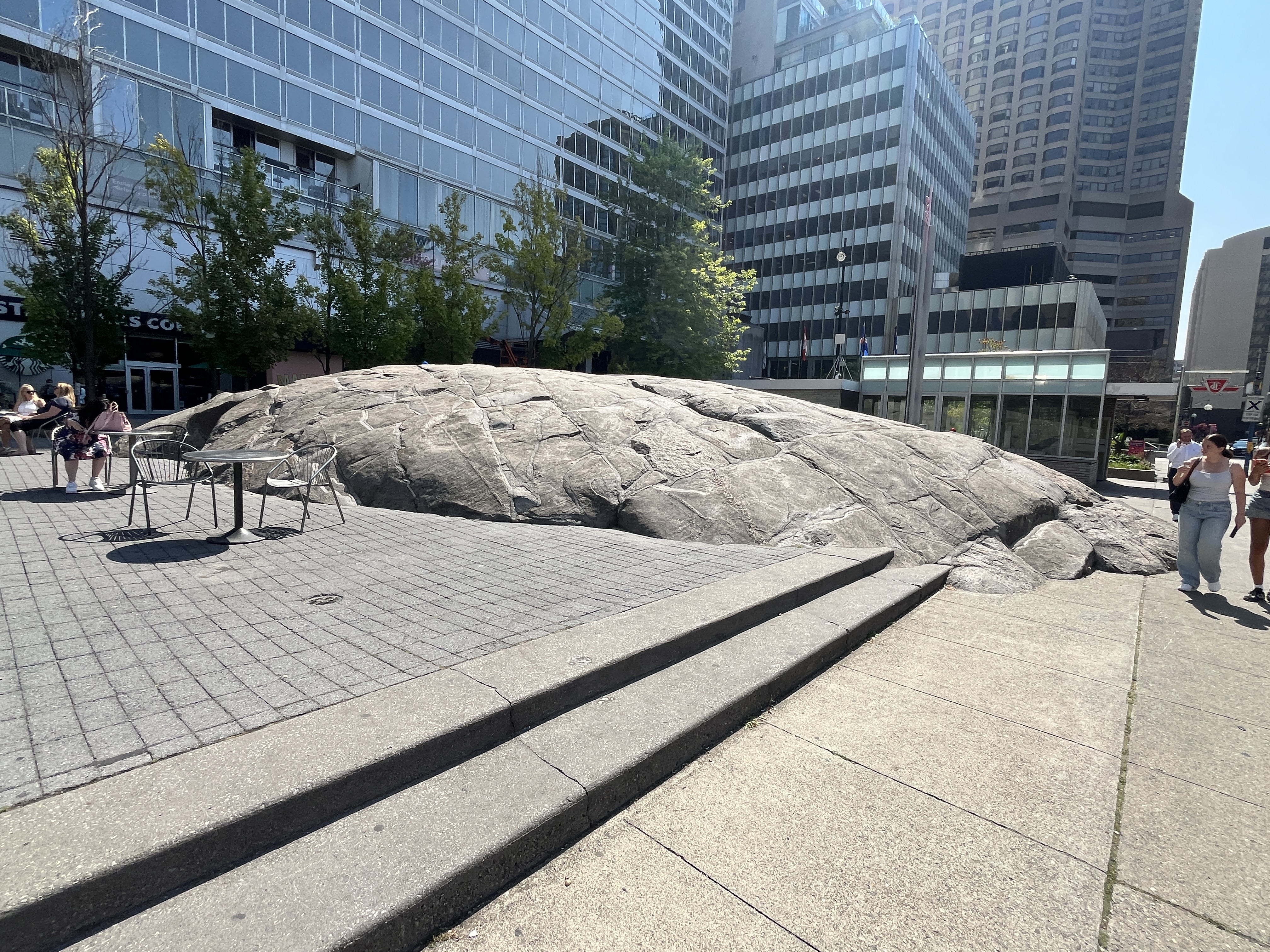
The park covers roughly one acre but has so much variety that it easily is one of the most interesting park designs in the city.
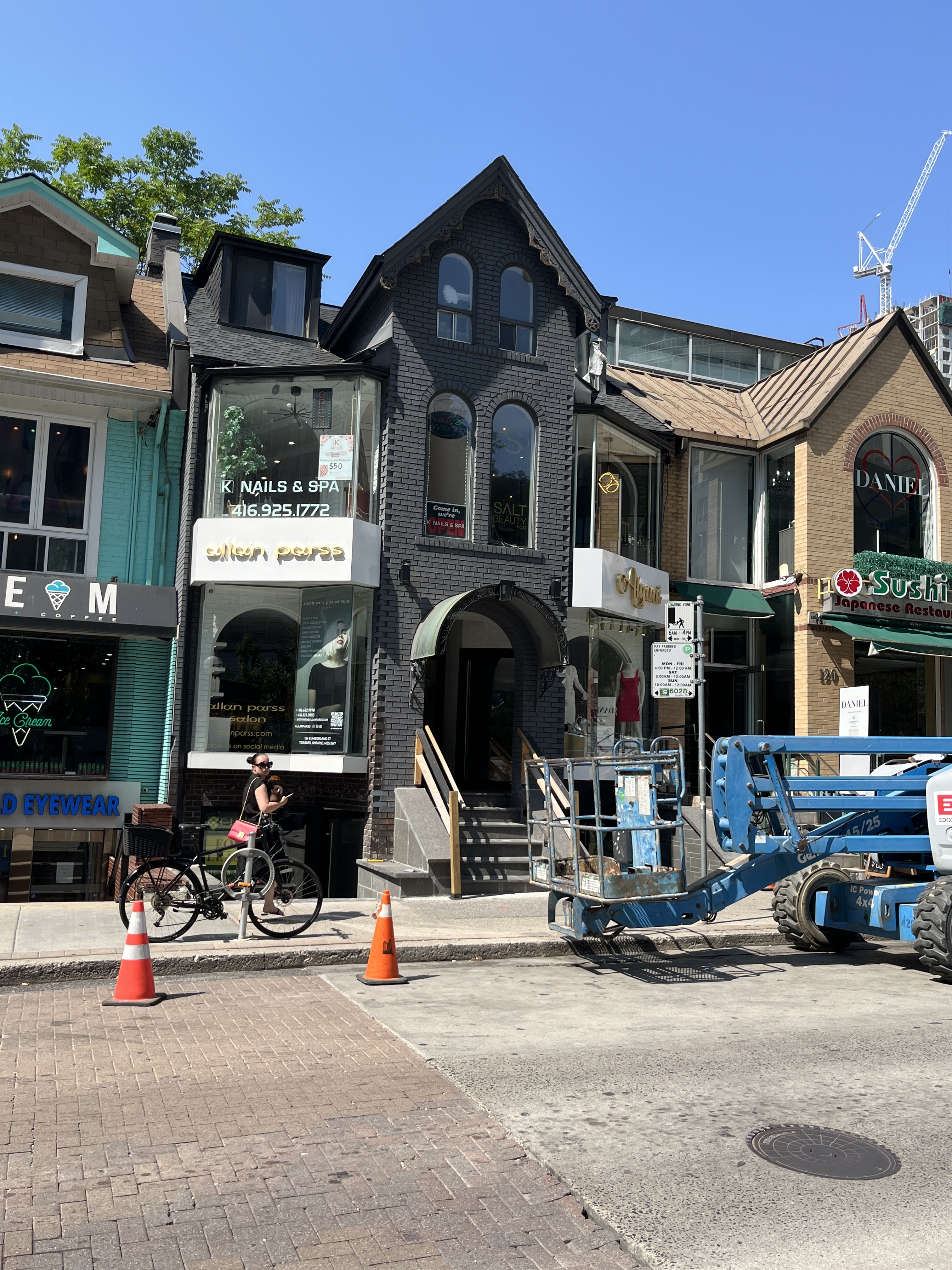
Although the Victorian homes on the south side of Cumberland Street were demolished the north side was left intact. Many of these buildings have been replaced over the years but a few original structures remain. The building at 122-124 Cumberland Street is an example of the type of homes that once stood where the park is now located. Until recently it had its original brick colour but has been painted black. In my opinion this isn’t an improvement.
The Village of Yorkville Park is an interesting place to visit if you find yourself in the area of Bloor and Bay Streets.
Related Posts: Yorkville Water Works, Ramsden Park – Yorkville Brickworks
Google Maps Link : Village of Yorkville Park
Like us at http://www.facebook.com/hikingthegta
Follow us at http://www.hikingthegta.com
Also, look for us on Instagram
 Hiking the GTA