Monthly Archives: August 2023

Sudbury Regional Hospital

August 26, 2023

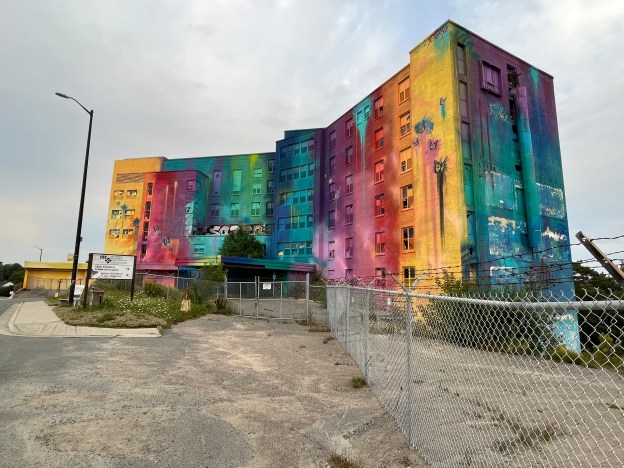
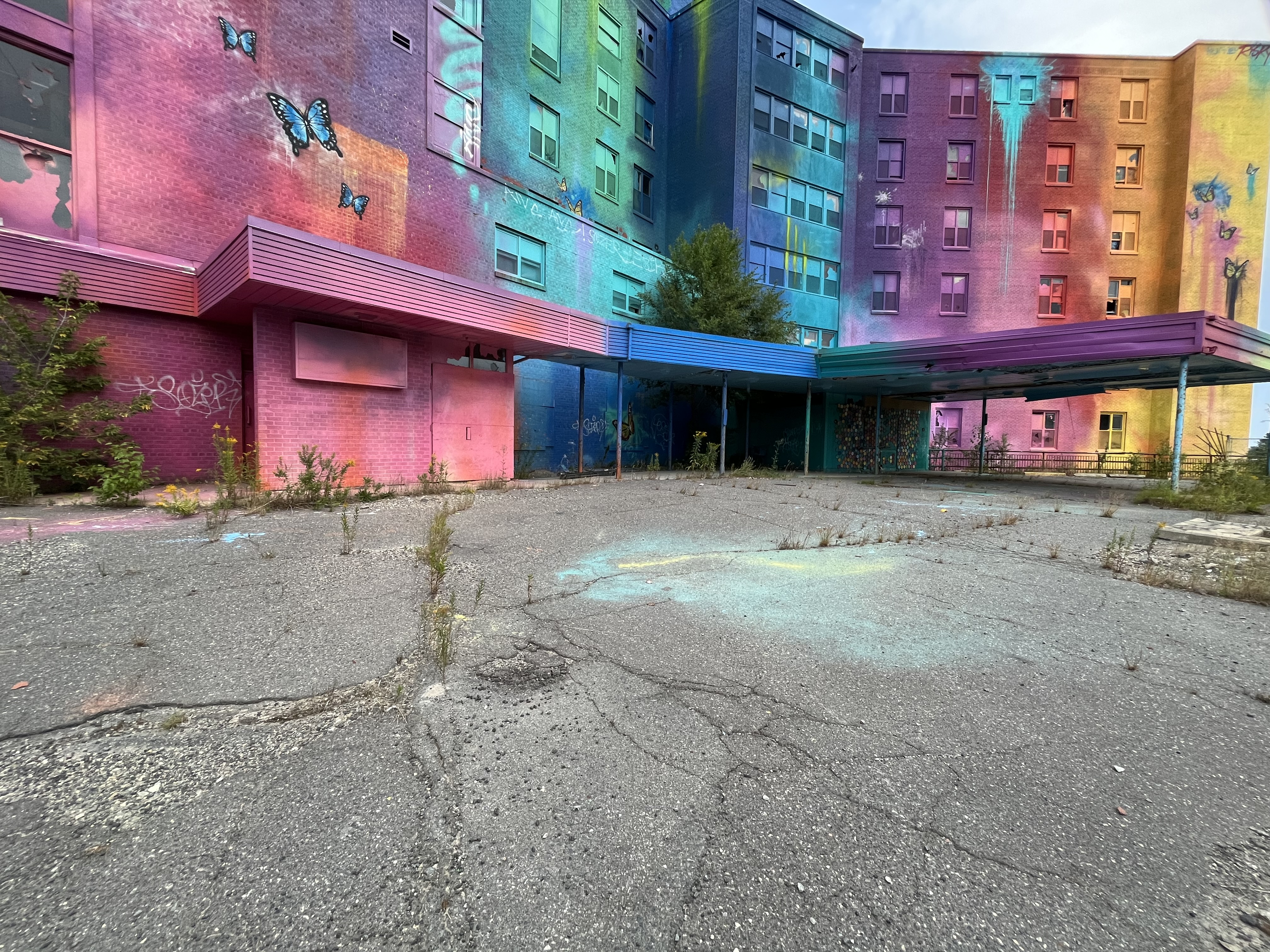
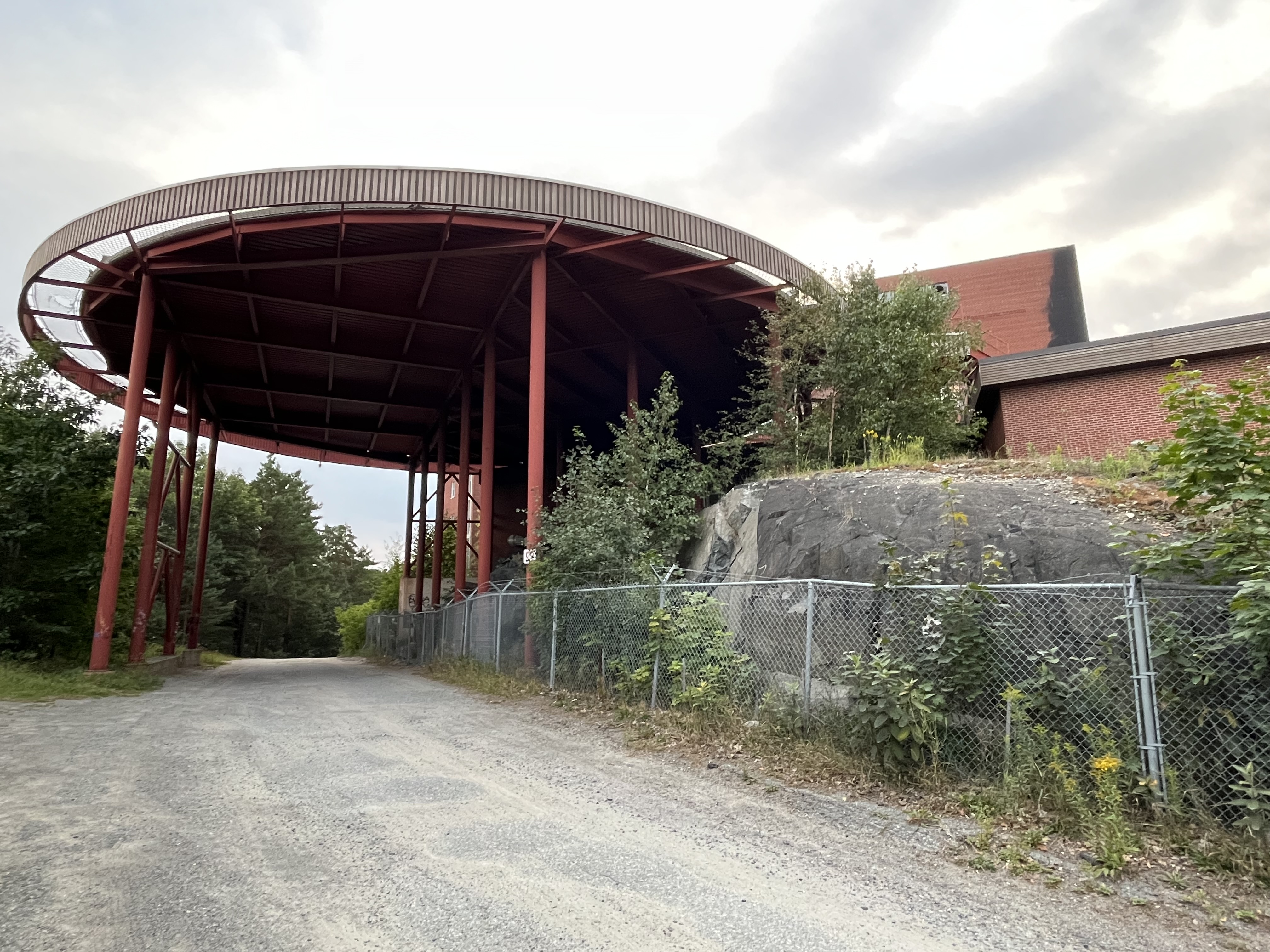
St. Joseph’s Health Centre in Sudbury has gone through many changes and will likely be demolished soon. The history goes back to 1944 when the sisters of St. Joseph at Sault St. Marie took on the project of building a new hospital in Sudbury. A group of doctors had contacted them and requested help in creating a facility in Sudbury. The government was not into financing hospitals at that time so the sisters mortgaged their homes to finance the construction. They started by purchasing a seven acre site on Paris Street. It took until 1950 to complete at a cost of $3.1 million dollars. The image below shows the entrance to the former hospital.
When it opened it had 200 beds but within 4 years another treatment wing was opened that added an additional 100 beds to the hospital. By 1960 there were 326 beds in the building which had originally been planned to serve 190 beds.
Eventually there were three hospitals in the Greater Sudbury Area and the General Hospital, as it came to be known, began to specialize in trauma care and surgeries. By 1980 a CAT scanner was added to go along with the Nuclear Medicine, Intensive Care, Neurosurgery and poison control departments. At this time the hospital had 375 beds.
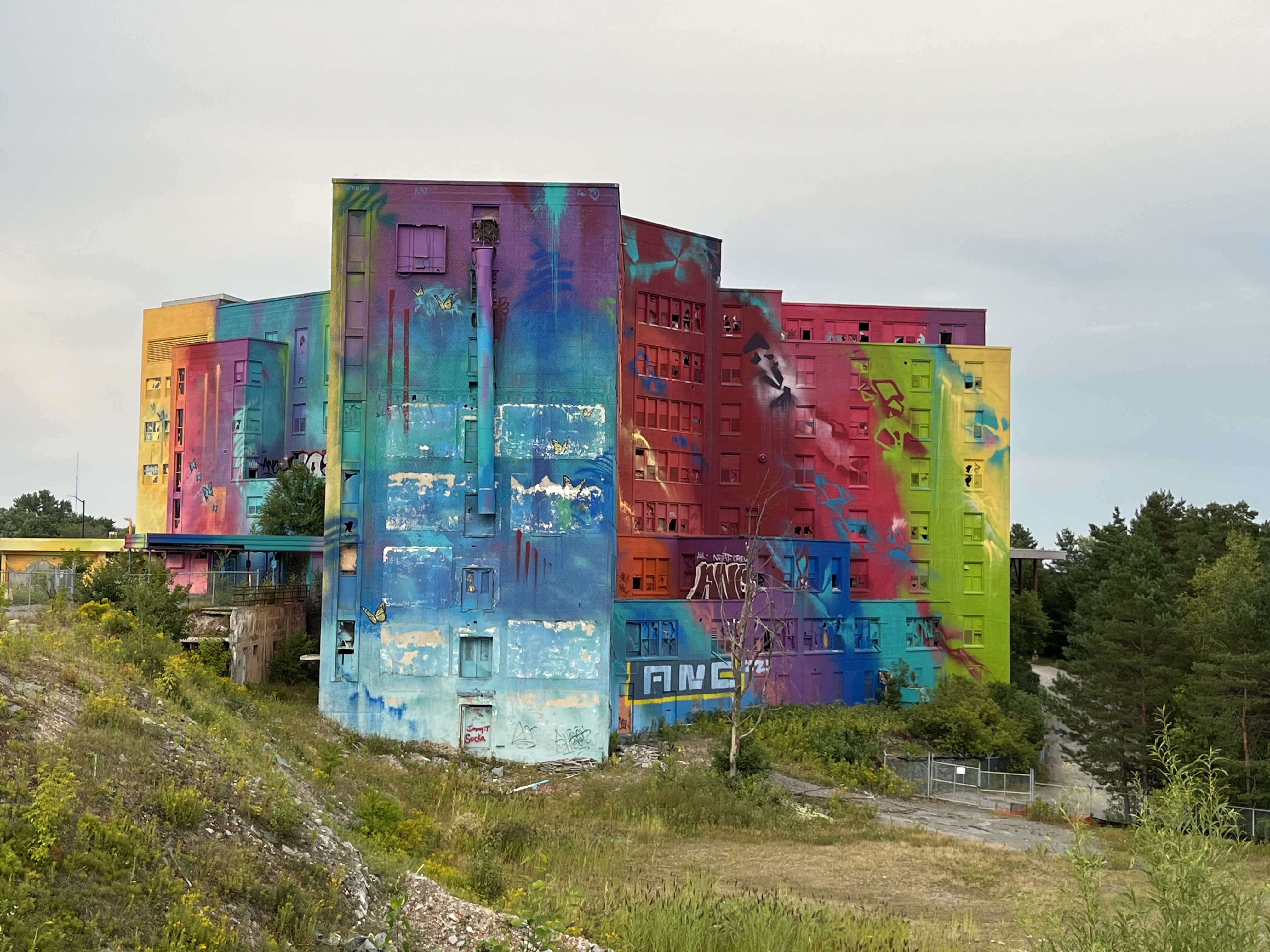
The hospital took on a greater role in trauma care in the region and consequently, on October 16, 1986 the new helicopter pad was opened. This allowed the hospital to receive air transported patients from great distances. All three Sudbury hospitals were amalgamated in 1997 under a provincial restructuring plan. Construction soon began on Health Sciences North and St. Joseph’s was closed on March 29, 2010.
A study was completed to see if the building could be repurposed as a long term care facility but it wasn’t fiscally practical. Developers bought the site with the initial idea of making an apartment out of the old structure. Eventually this idea was abandoned and the building continued to sit untouched until 2019. That summer muralist RISK was commissioned to paint a mural on the outside of the structure as part of the annual urban art and music festival known as the Up Here Festival. The festival aims to beautify the city by installing murals and other public art as well as providing a music festival. When it was completed the 80,000 square foot mural became the largest mural in Canada.
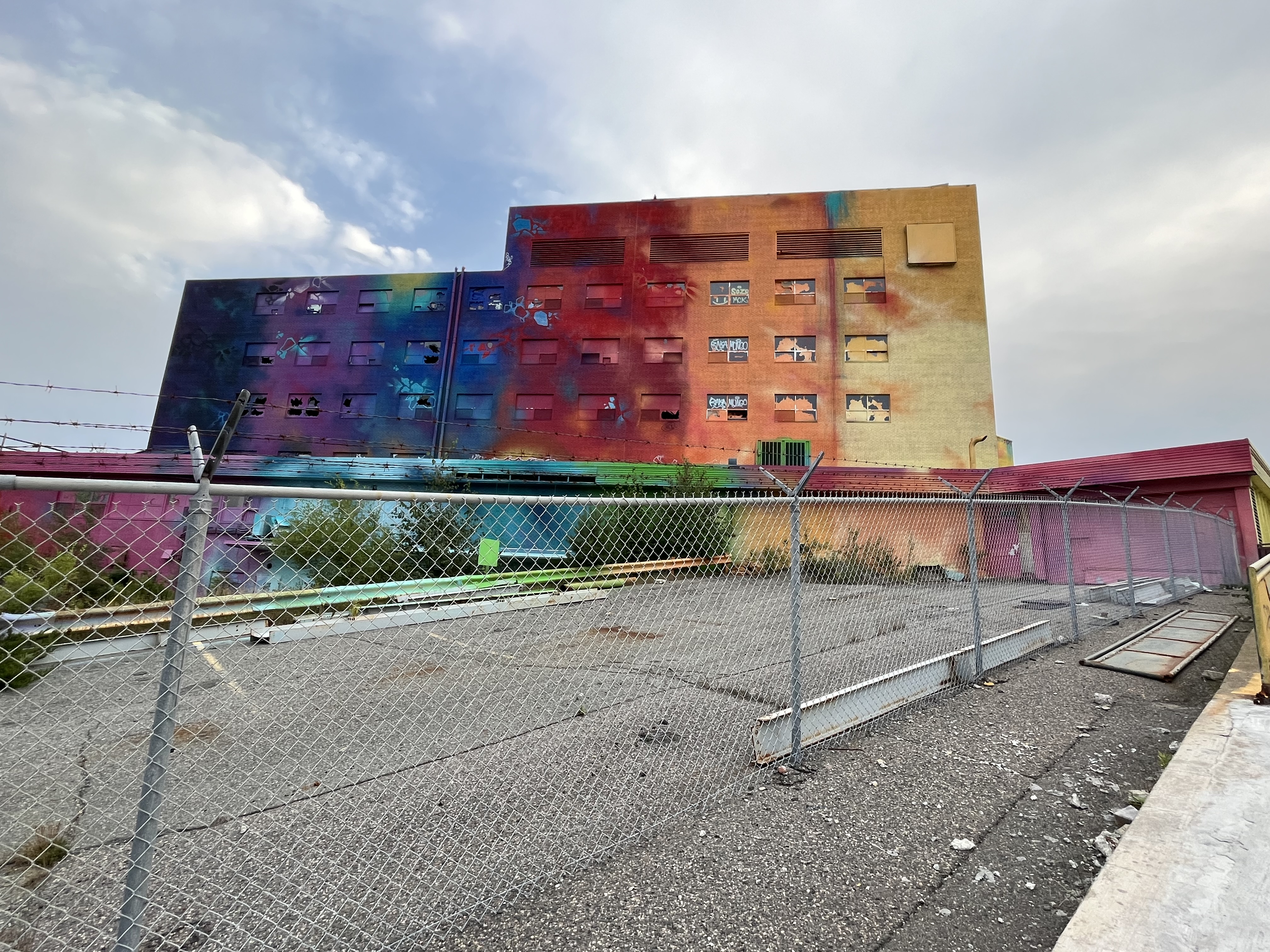
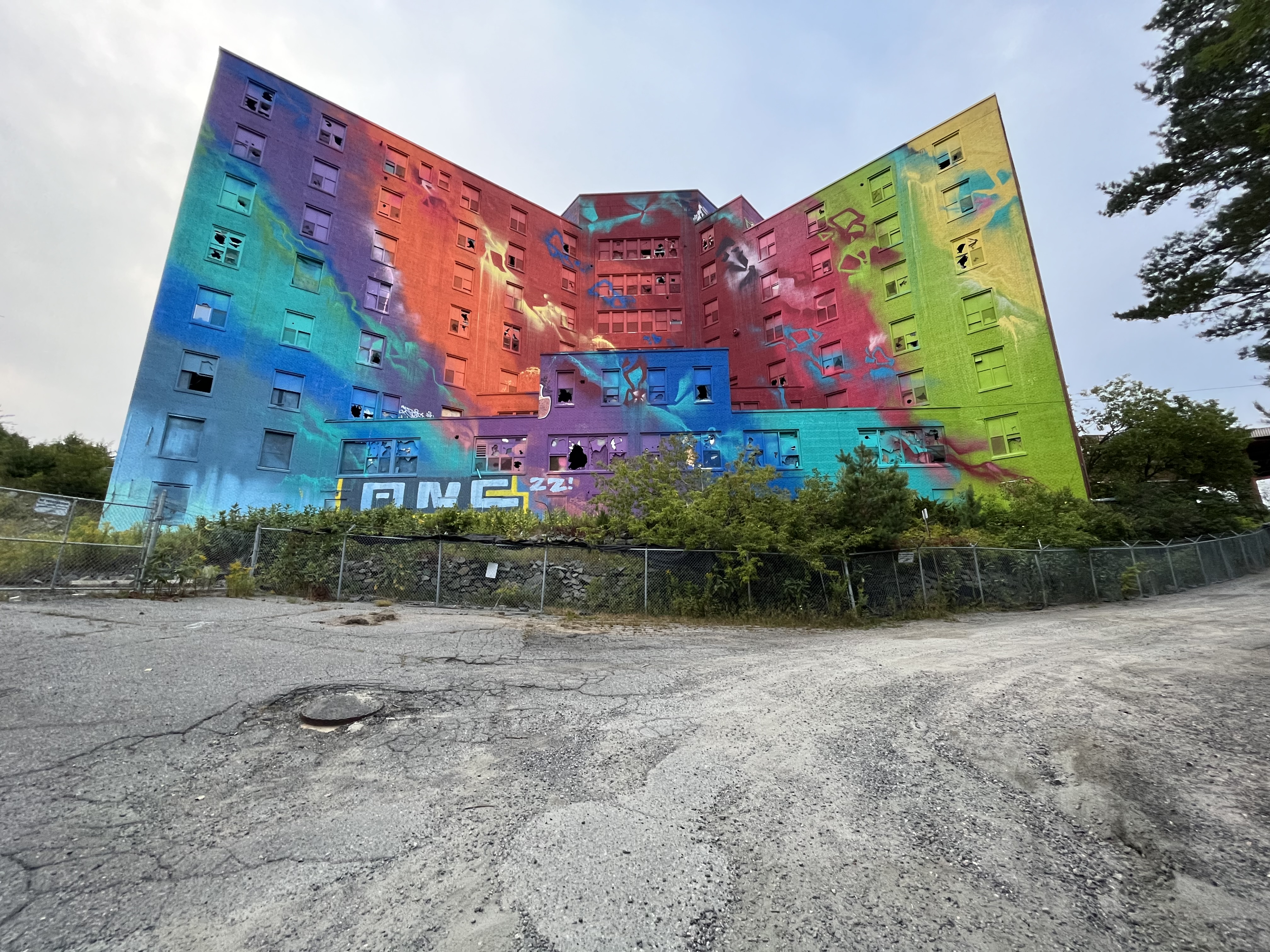
The hospital was built backing into some rocky landforms and because it was out of sight of the road, the back side wasn’t painted with the mural. The image below shows how many of the windows have been broken by vandals.
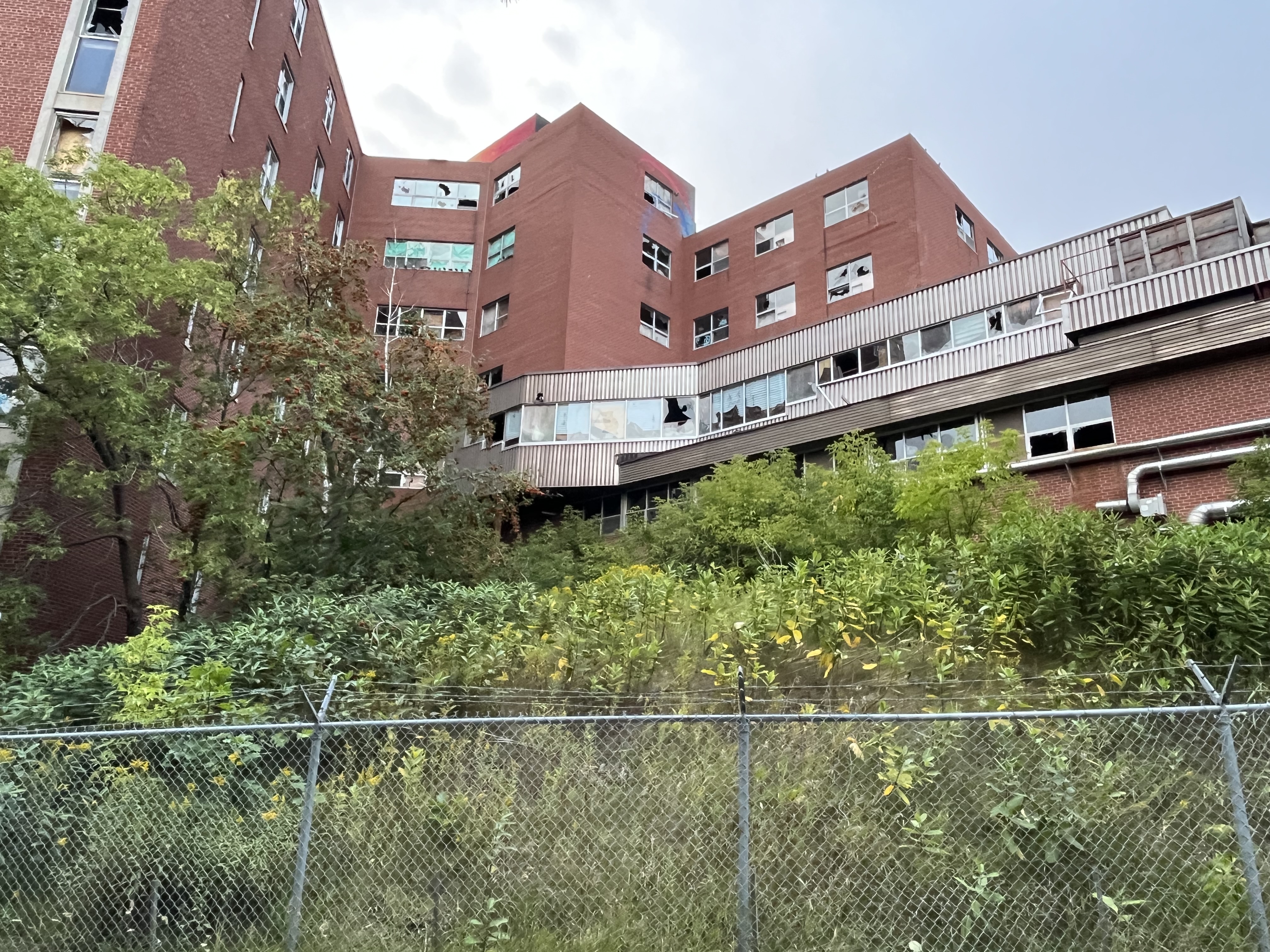
On August 8, 2023 the developers put forward a new plan that includes the demolition of the existing hospital structure and the construction of three buildings. A 20 story condominium, a 16 story rental tower and a 12 story retirement residence. I am in Sudbury for work four times a year and will keep an eye on what happens to the site.

Google Maps Link: Sudbury Regional Hospital

Like us at http://www.facebook.com/hikingthegta

Follow us at http://www.hikingthegta.com

Also, look for us on Instagram
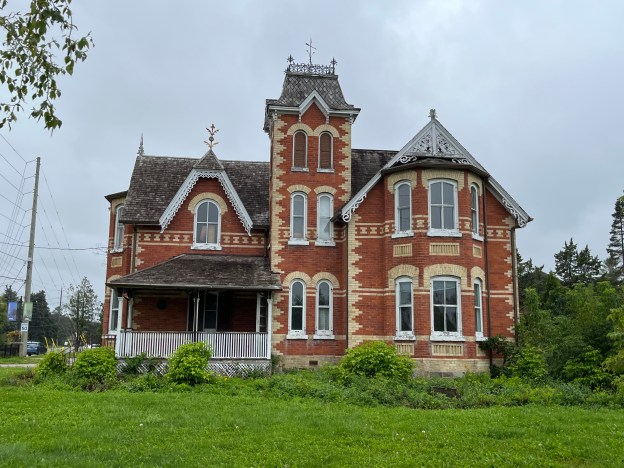
Hambly House – Nobleton

August 19, 2023

Nobleton was founded in 1812 and existed as a crossroads community for several decades before expanding with a series of side streets. Taverns and hotels were built as well as a couple of general stores and a post office. Joseph Nobel was a tavern owner and it is his name that was given to the community. The former blacksmith shop from Nobleton has been moved to Black Creek Pioneer Village. The image below is taken from the 1877 County Atlas and shows the modest size of the community at that time. The green arrow points to the location of the Hambly House.

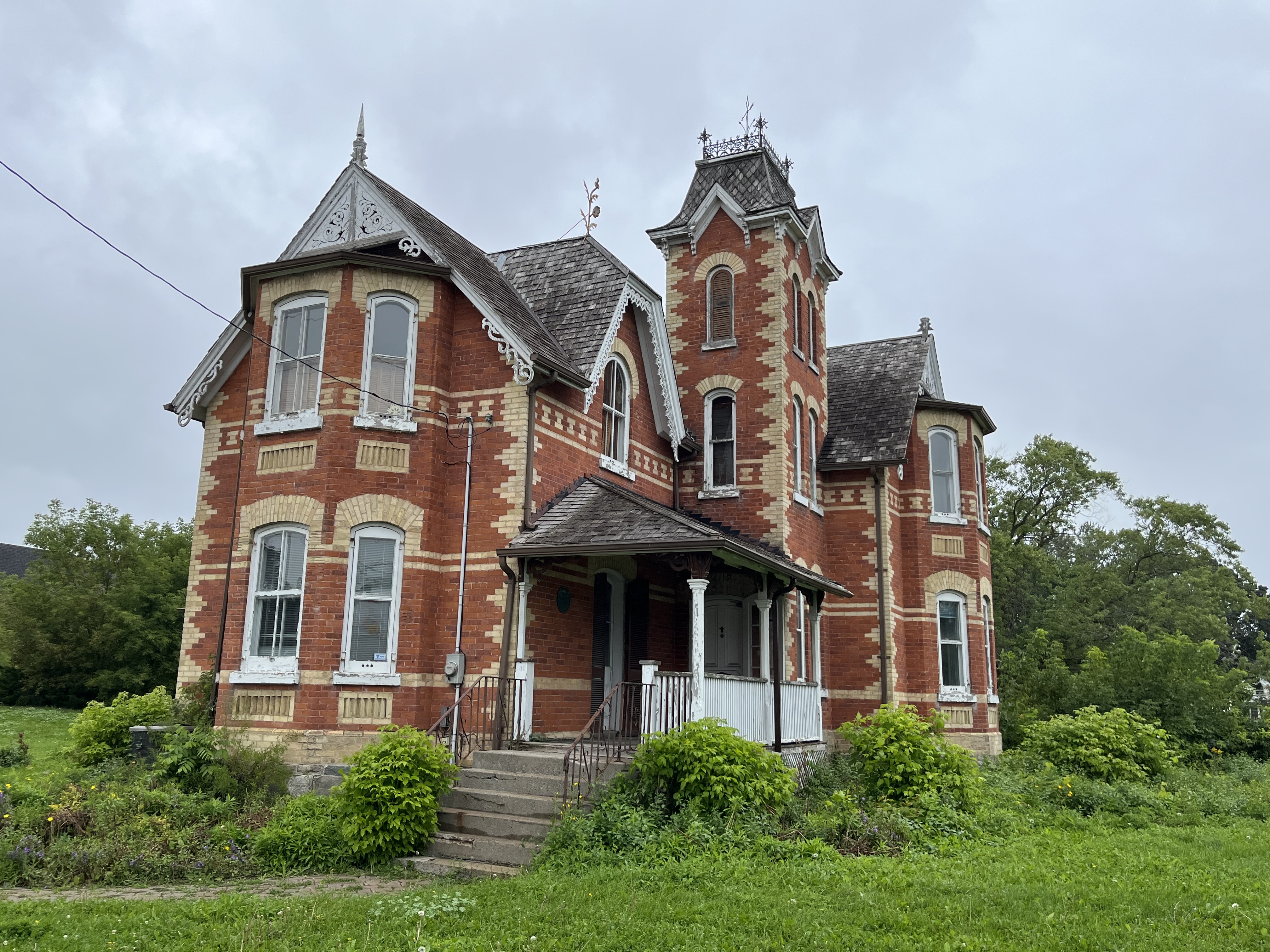
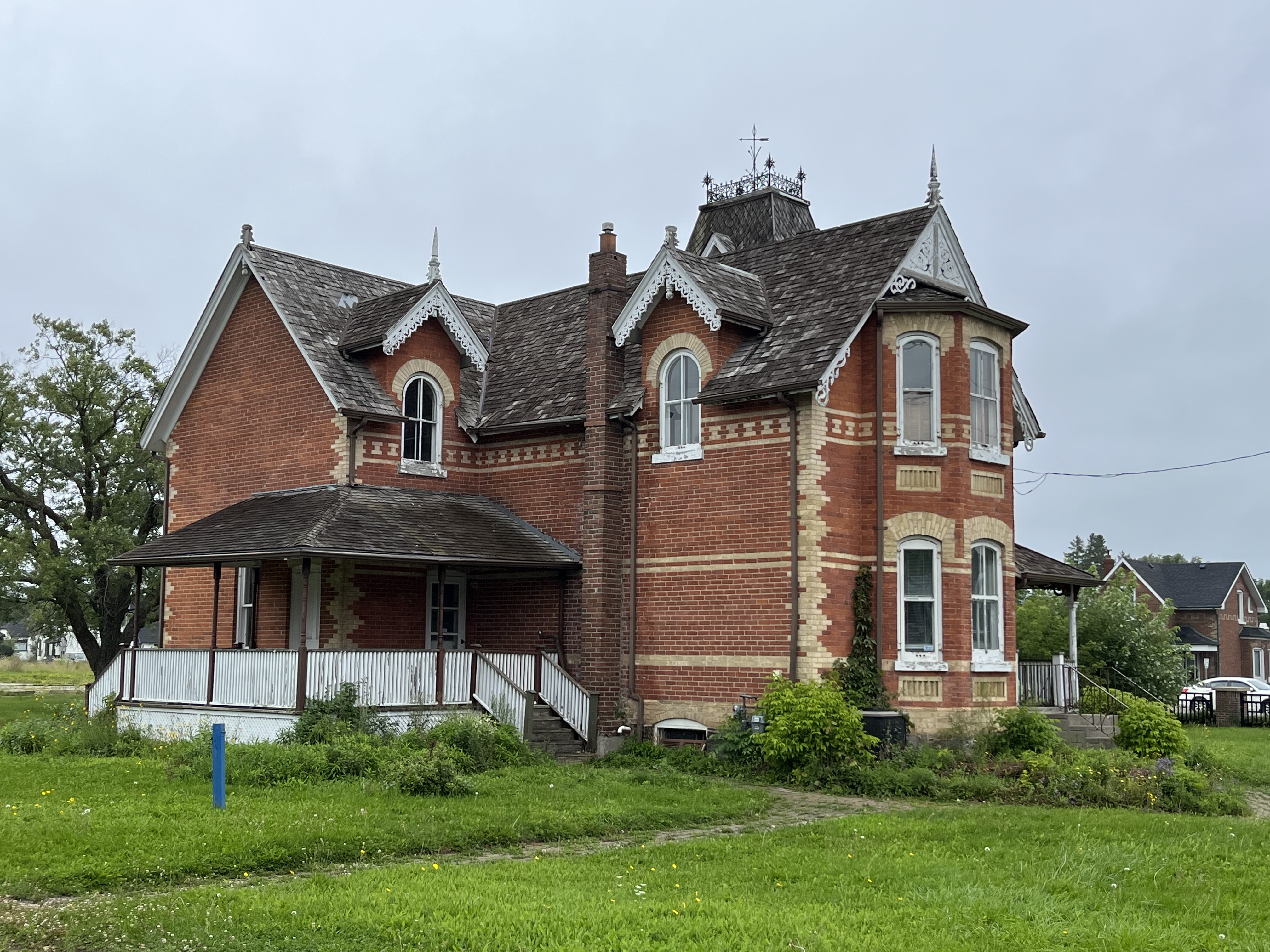
At the north west corner of the intersection of modern King Road And Highway 27 stands the Hambly House. A log cabin had stood on this corner until it was destroyed by a fire. William Hambly had come from the United States as a United Empire Loyalist. His son, Charles operated one of the two general stores in Nobleton and was also the Post Master. Starting in 1851 the mail used to come to Nobleton three times a week via the Gore and Vaughan Plank Road. Hambly had two sons, Elwood and George who both worked in their fathers store. When Charles replaced the log cabin in 1885 he did it in the grand style of the Victorian architecture of the era.

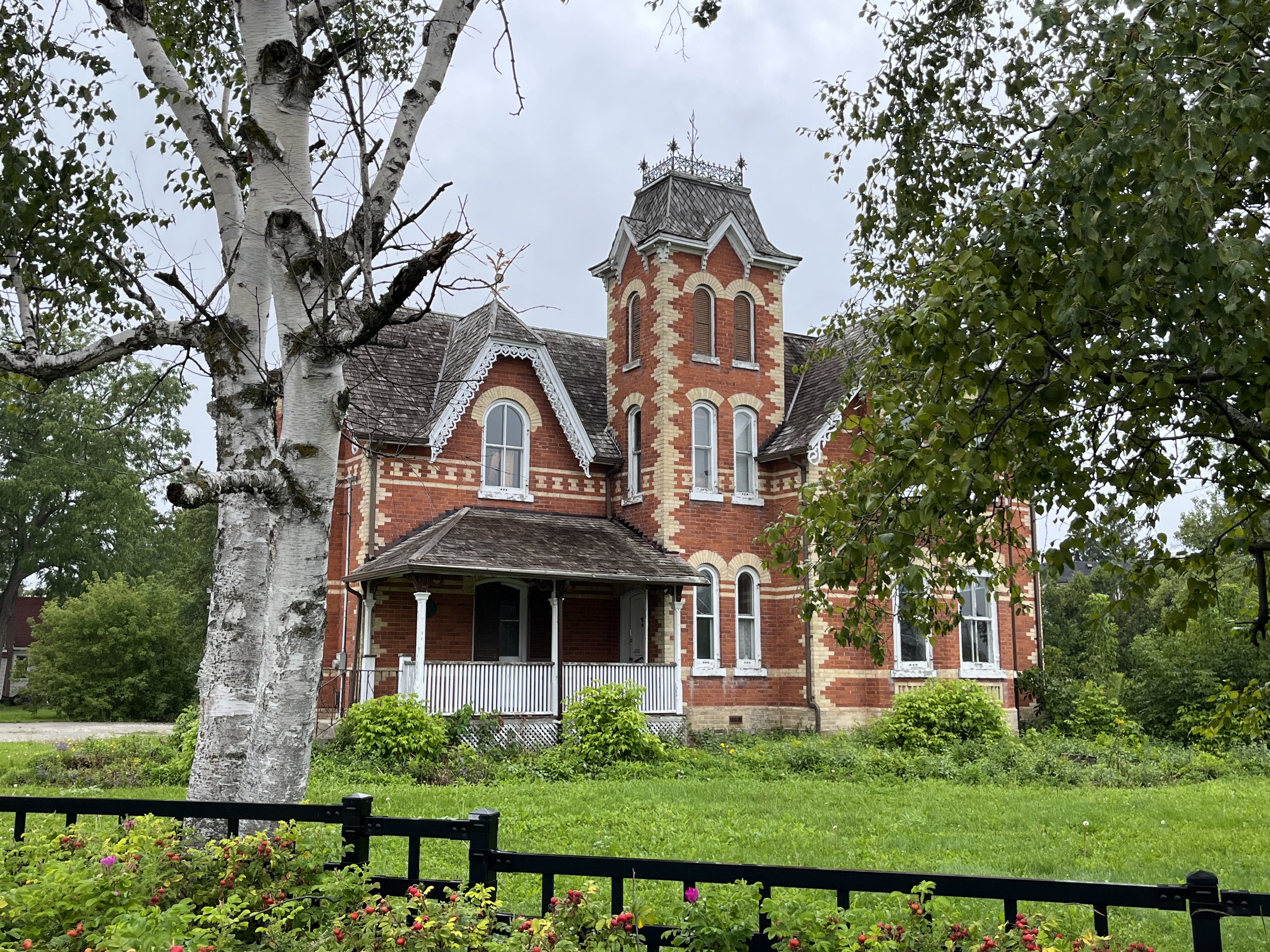
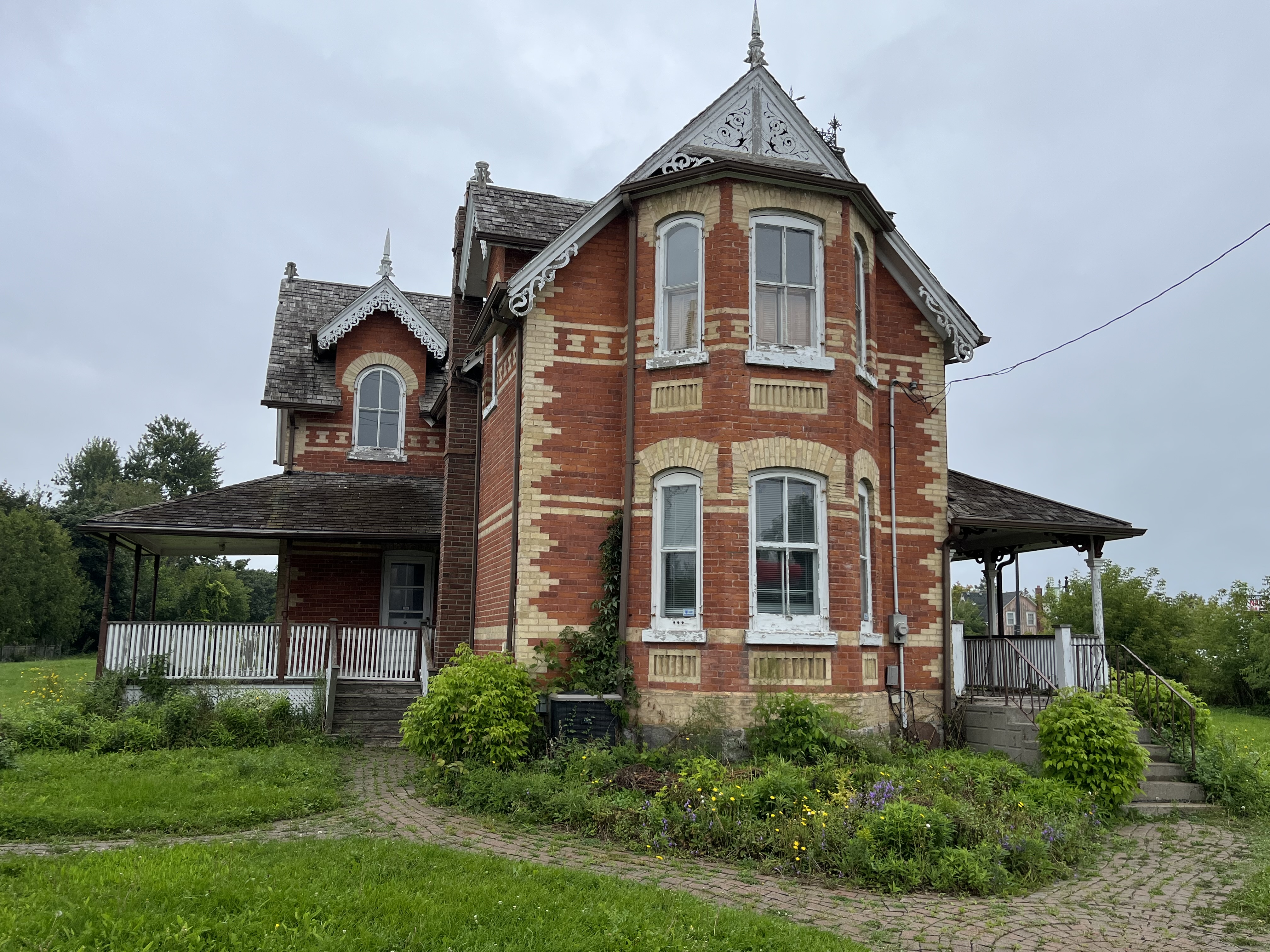
Bargeboards, or gingerbread, adorn the various gables found around the house and the red brick is accented with buff coloured ones through most of the home. Yellow brick forms the quoins found on the corners and also double banding along the second floor which is adorned with a series of the letter “X”.

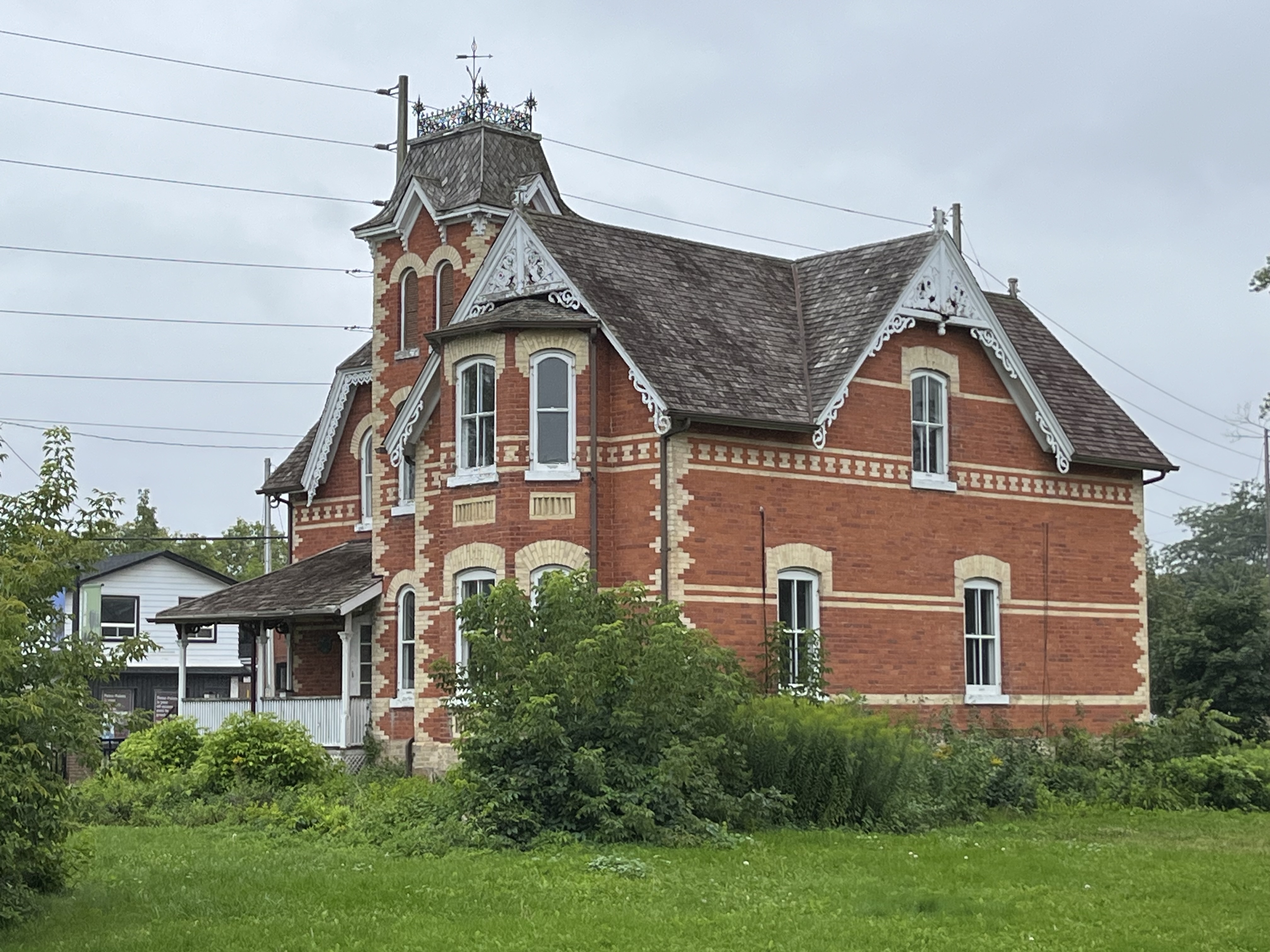
The house features a three story tower with a mansard roof, typical of the Italianate style of construction. The tower has iron cresting and a weather vane on top.

The south elevation and the north both feature two story bay windows which are adorned with segmental arches above and rectangles below. Pointed wooden finials rise from the tips of the gables.

The west elevation of the house does not have complete banding on the one section. There is a chimney on the back which was a later addition and is made of a darker colour of bricks.

The Hambly House is currently empty and the adjacent property is under a development proposal. While the house is protected under the heritage registry number of 82-144 it is planned to be turned into office space as part of the proposal. As usual, it remains to be seen what the final outcome of the Hambly House will be.

Related stories: Gore And Vaughan Plank Road

Google Maps link: Hambly House

Like us at http://www.facebook.com/hikingthegta

Follow us at http://www.hikingthegta.com

Also, look for us on Instagram

Crawford Lake The Anthropocene Epoch

August 12, 2023

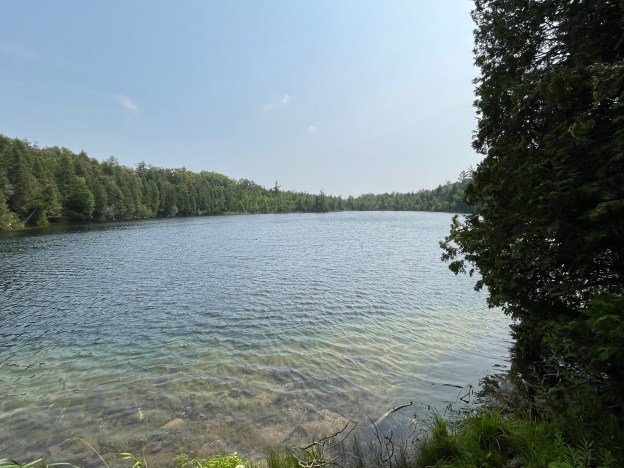
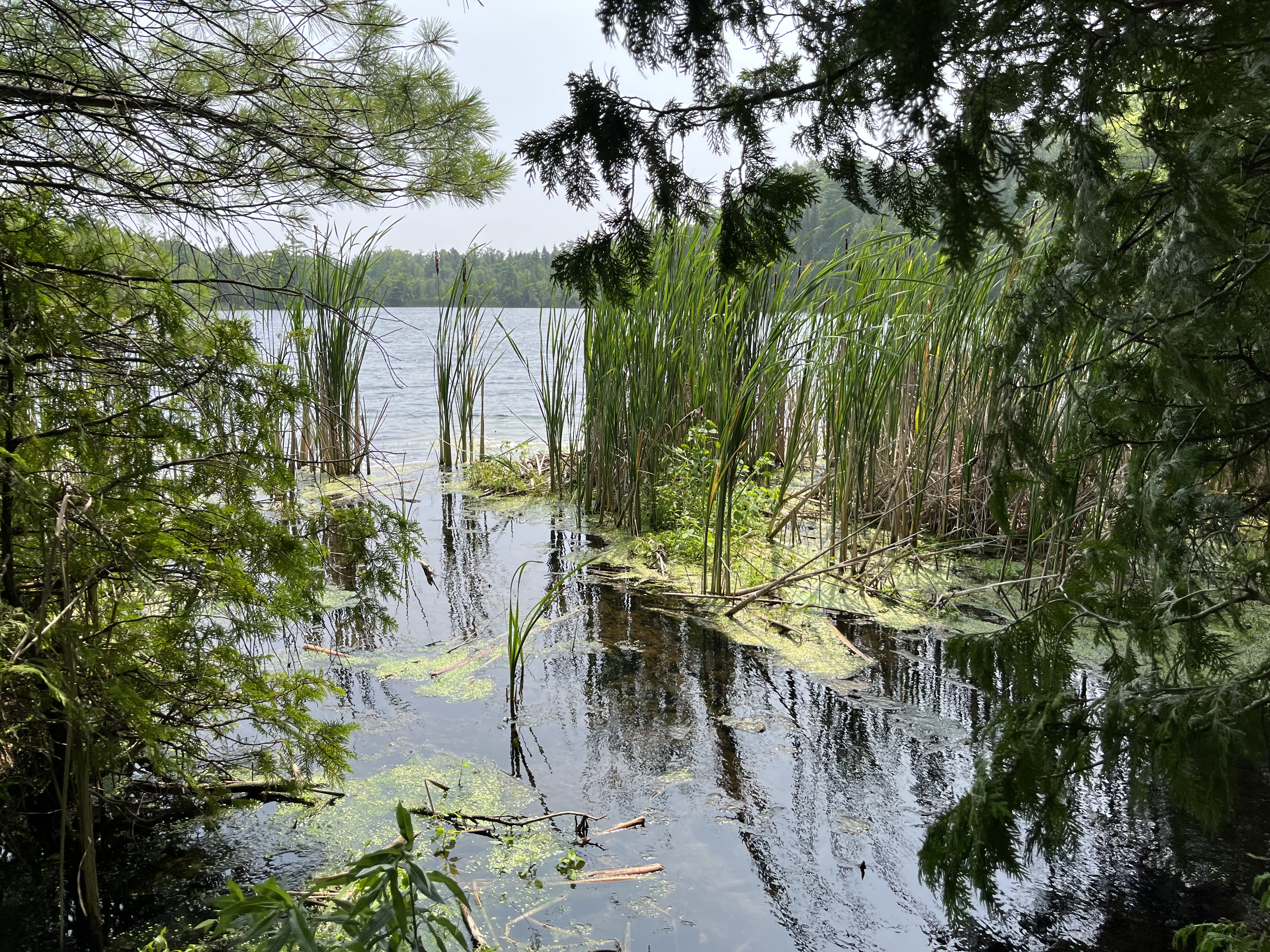
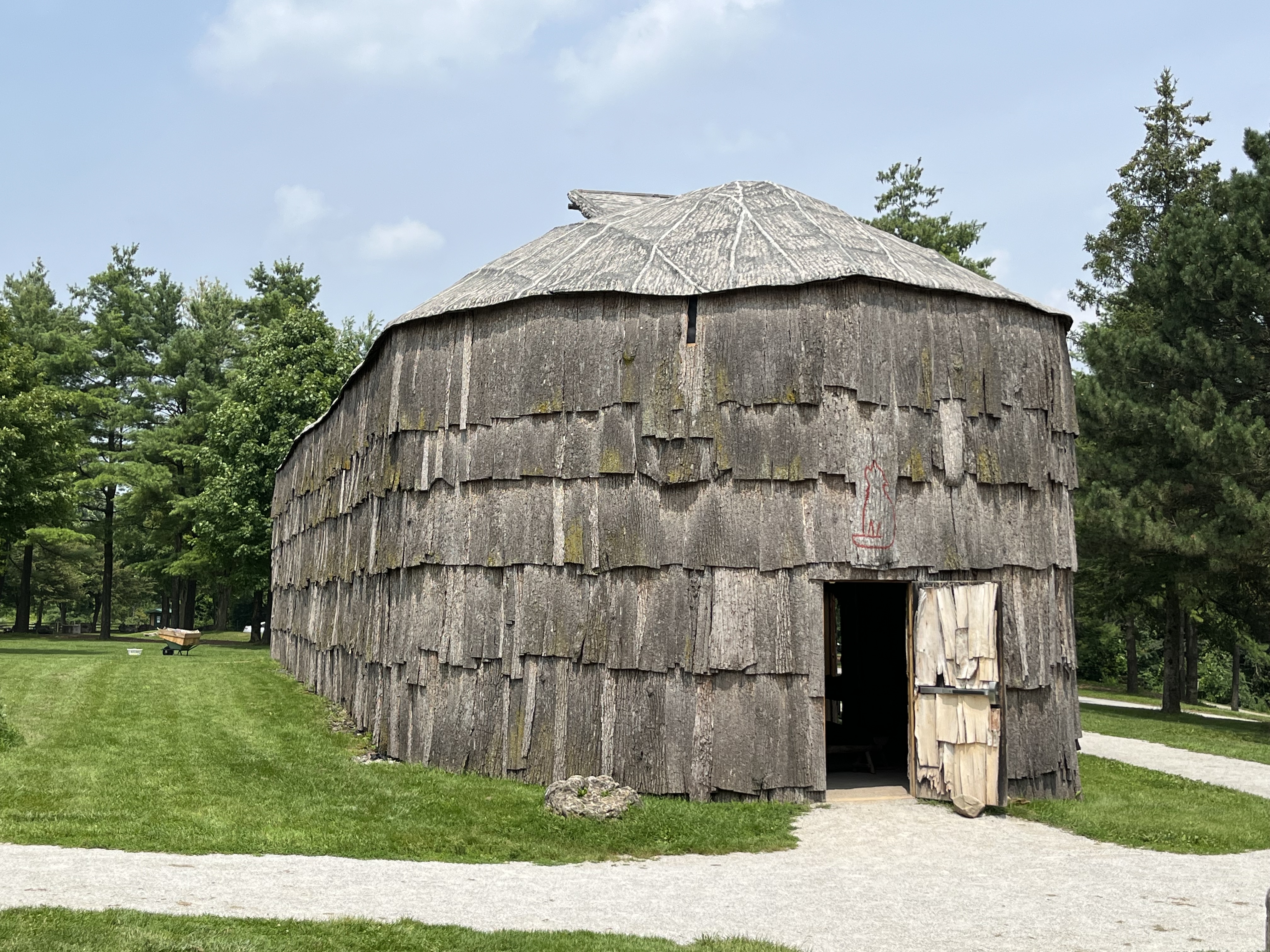
Crawford Lake near Milton has long been the site of an educational conservation area where people can go to relax, exercise and learn about the indigenous past of the area. We have previously covered the story of the longhouses in the park and will only briefly touch on the subject in this post. For the full article, please see our story The Longhouse People of Crawford Lake.

The lake is back in the news the past few months for another reason. The same conditions that allowed the researchers to identify the civilization that once existed beside the lake are now being used for another purpose. Since the sediments at the bottom of the lake don’t get disturbed due to the depth of the lake compared to its surface area, individual years can be identified by dark and light bands in the core samples. Scientists are now contemplating creating a new epoch on the geological time scale to identify the start of a time when humanity has begun to effect the natural world. Beginning in the 1950s a layer of plutonium from nuclear weapons testing, microplastics and ash from burning fossil fuels has started to be observed. After nearly 12,000 years of the Holocene epoch, which began at the end of the last ice age, they are thinking of creating a new epoch known as the Anthropocene epoch. This epoch is named after humanity. One site is chosen somewhere in the world to identify the start of each of the previous epochs and now Crawford Lake is being chosen to mark the start of this new one. These marker sites are known as the Golden Spike and other locations around the world will be measured against the time scale found at Crawford Lake.

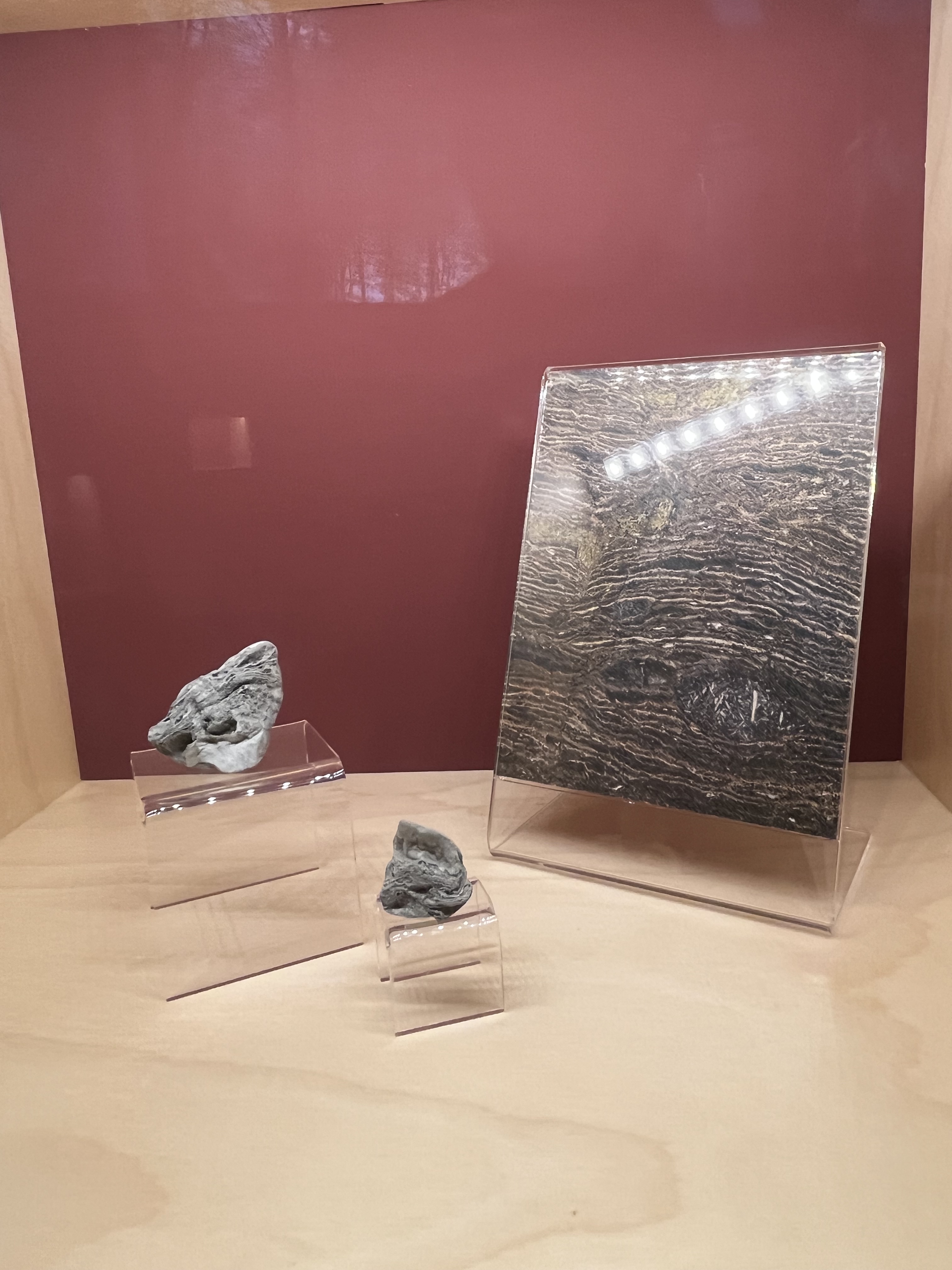
In the early 2000s scientists started using the term Anthropocene to identify the period when humanity started to alter the planet on a global scale. It lacked a global geological definition until 2009 when a committee started to look for an indicator site. Out of 12 possible locations they have chosen Crawford Lake to be the Global Boundary Stratotype Section and Point for the potential new epoch. Each summer the lakes PH and warm temperature cause crystals to develop that fall to the lake bed and lay undisturbed. These form layers that can be counted fairly precisely like rings on a tree. The image below shows a magnification of a section of one of the core samples taken from the bottom of the lake.

Not all scientists agree that the Anthropocene started in the 1950s or that it should even be an epoch at all. While the creation of a new epoch is still up for debate, there’s no doubt about the earlier presence of a human culture beside Crawford Lake. The many pieces of pottery and arrow heads that have been found at the site make for an interesting visit lo the conservation area.

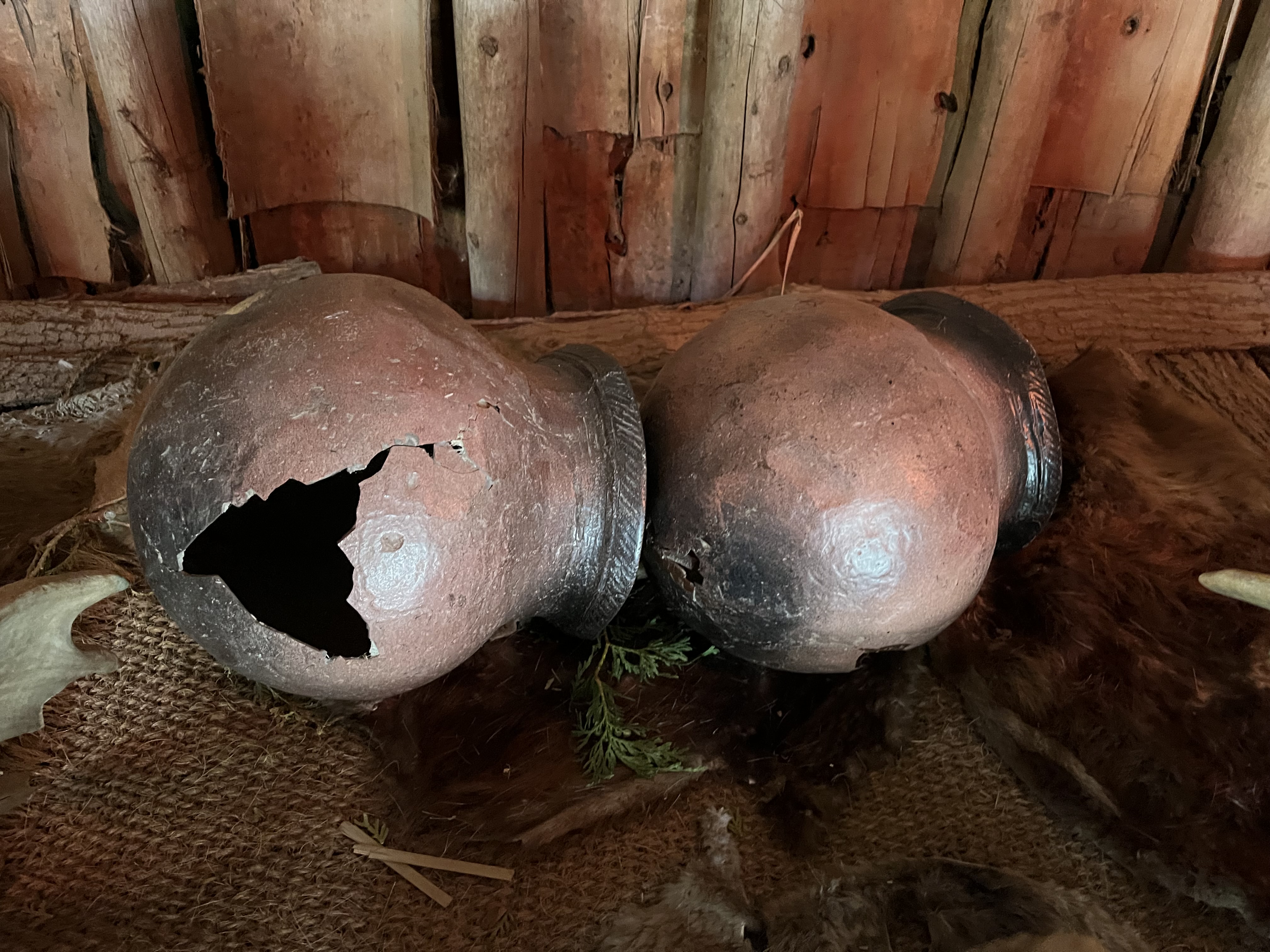
Four longhouses have been recreated in a small village to illustrate life at Crawford Lake in the time period just before the Europeans arrived and changed everything forever. Out of over 10,000 artifacts that have been discovered on the site a wide variety are on display in the village. The meromictic nature of Crawford Lake was instrumental in the discovery of this village because of the corn pollen that was found in soil samples taken from the bottom of the lake. Since the bottom of the lake is undisturbed, it was possible to determine when people were living near it and growing corn for food crops. This story is further developed in our previous post.

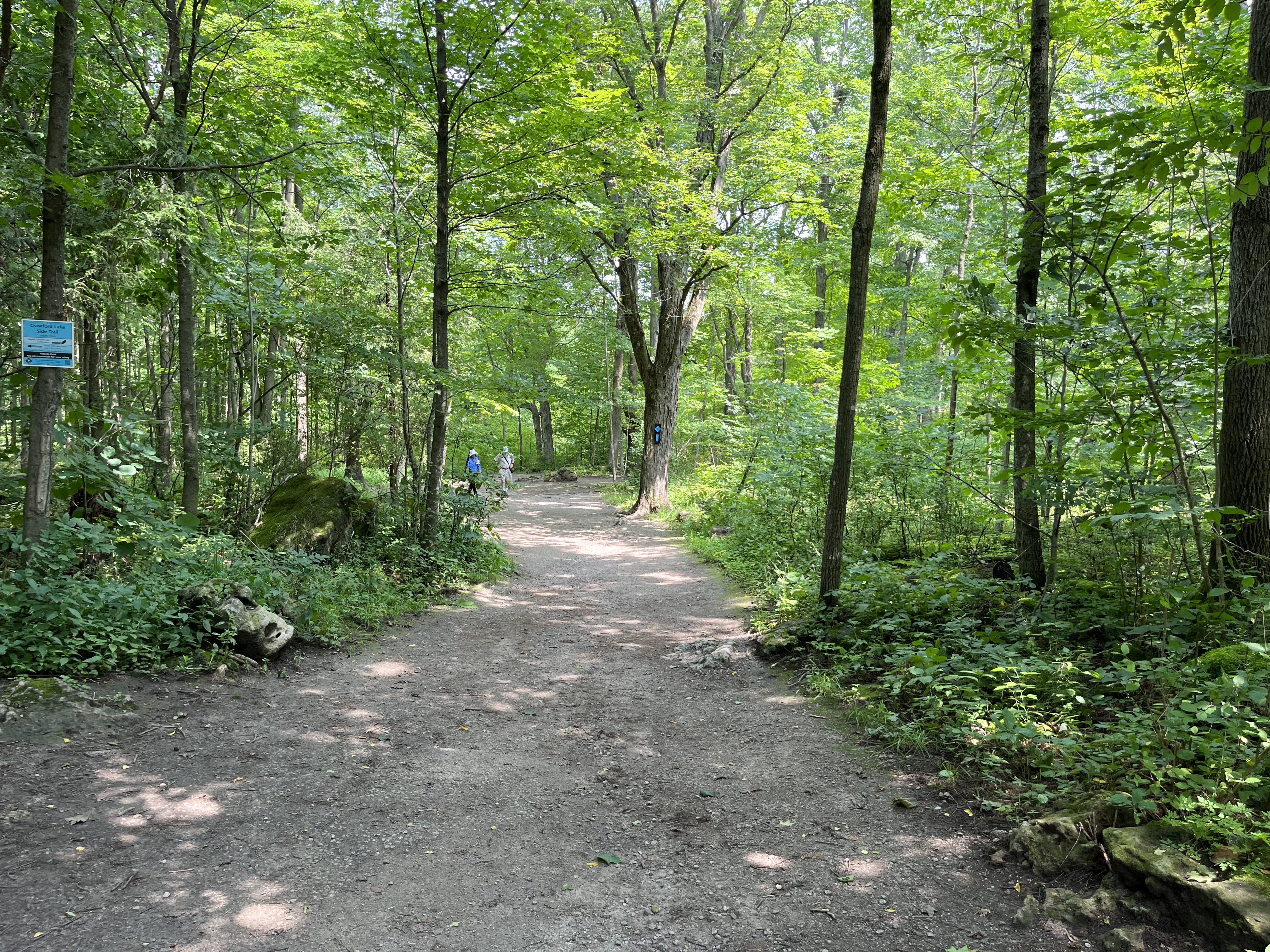
The trail system at Crawford Lake is connected to the Bruce Trail by the Crawford Lake Side Trail. The 232 acres in the conservation area are full of trails and we previously explored several of them in our post Crawford Lake Trails.

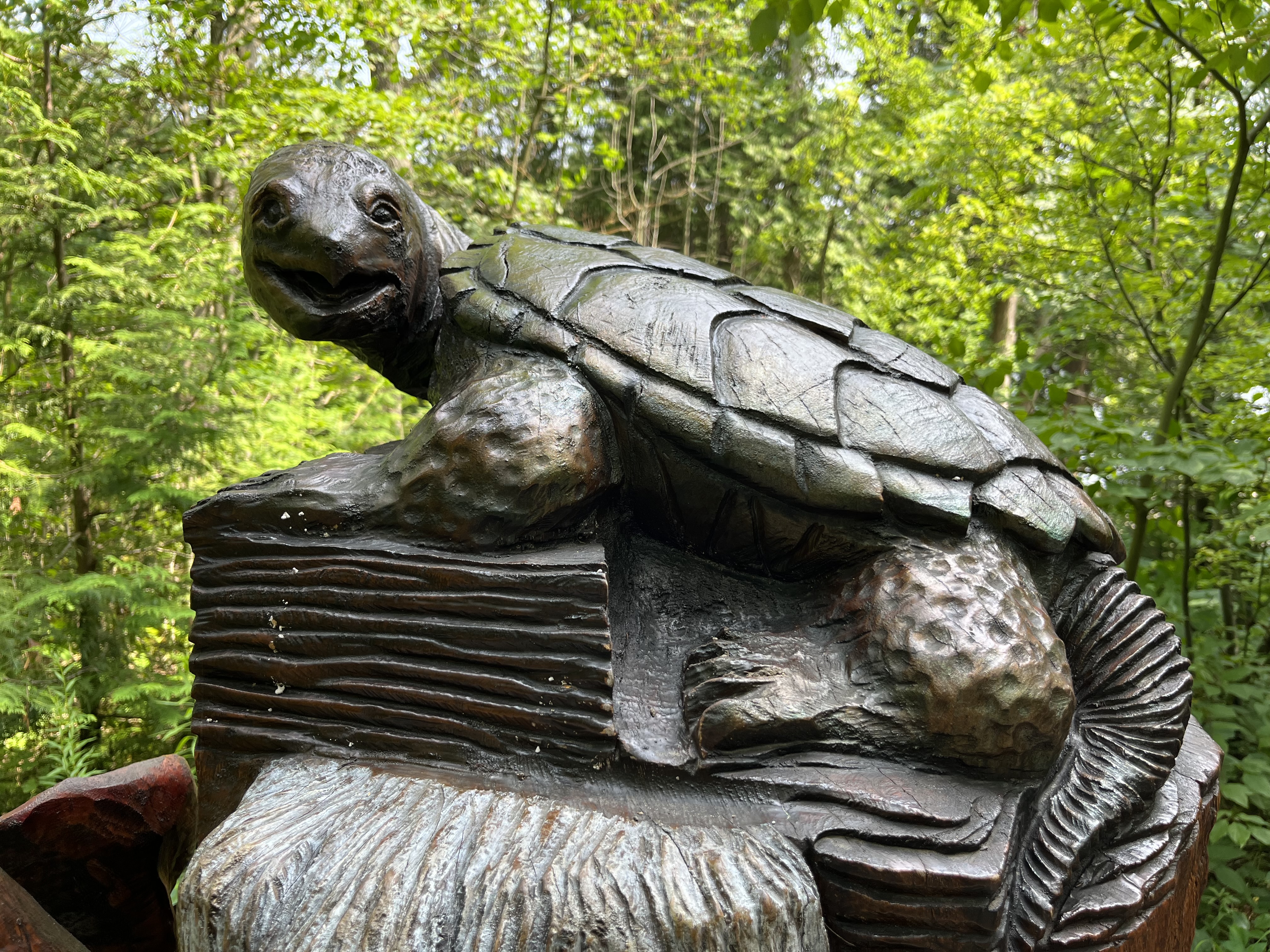
There are various large wooden carvings along the trail that leads from the longhouses to the lake. These depict various species that are at risk in Ontario. There are seven carvings along the Hide and Seek trail that illustrate some of the over 200 species that are at risk in the province.

The trail around Crawford Lake is just under 1.5 kilometres and is suitable for everyone as it is modest in difficulty. As we were making our way around we paused to let a family pass us that were taking a loved one for a walk in his wheelchair.

Crawford Lake is an ideal place for a visit and carries a small entry fee but is a fun outing in any season.

Related stories: The Longhouse People Of Crawford Lake, Crawford Lake Trails,

Google Maps Link: Crawford Lake

Like us at http://www.facebook.com/hikingthegta

Follow us at http://www.hikingthegta.com

Also, look for us on Instagram