August 24, 2024
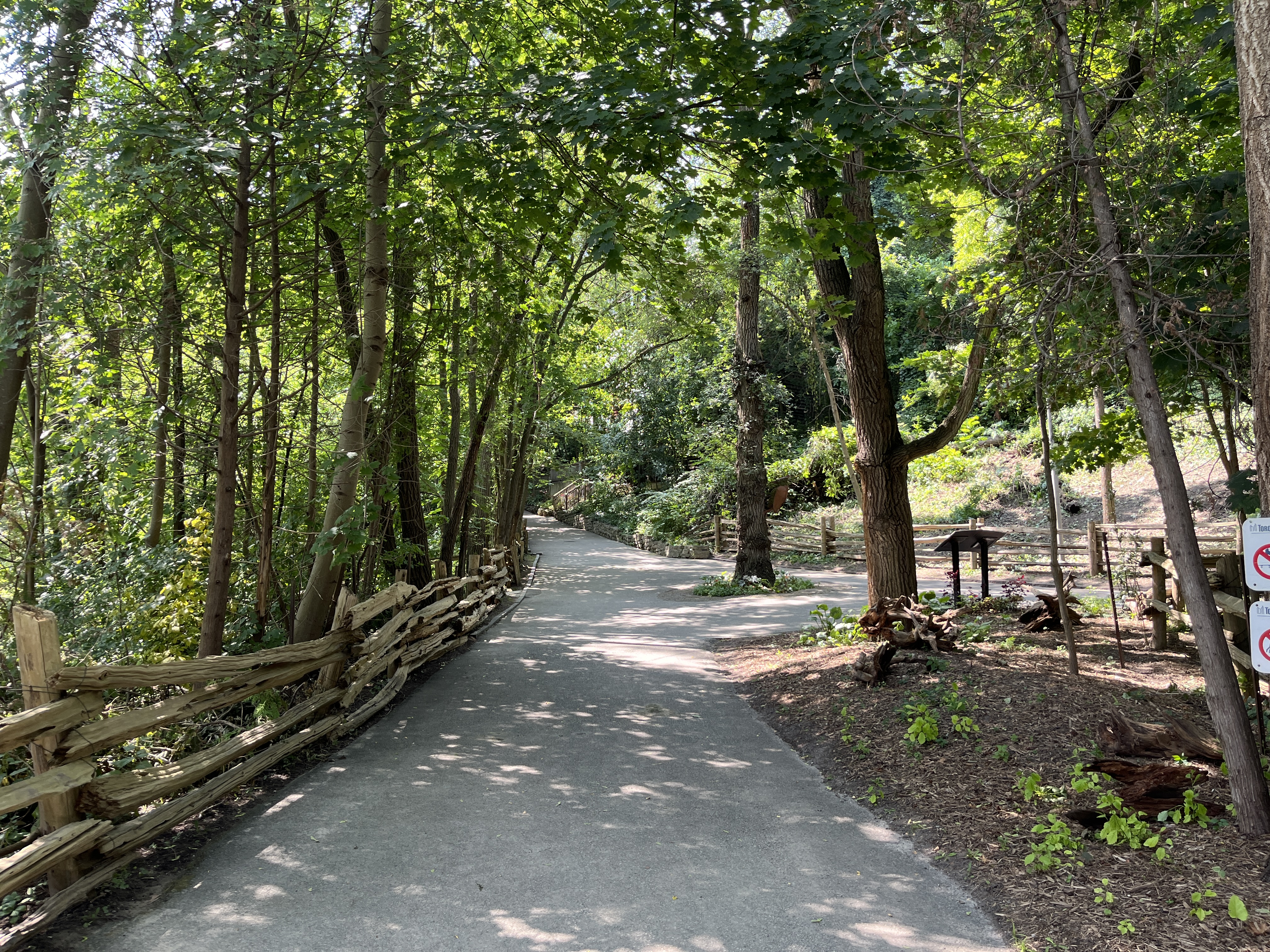
This summer marks the 50th anniversary of the opening of the Toronto Zoo in Scarborough on August 15, 1974. We’ve previously posted about the zoo at the link above. Before that, there was Riverdale Zoo. That facility transformed itself into Riverdale Farm after the new zoo was opened. Our previous story on Riverdale Farm was photographed on Family Day 2016 and featured a lot of snow. I recently had the chance to walk through there on a summer day and the pictures are much more cheerful than the previous ones. Therefore, I felt it might be good to publish a new set of pictures. We won’t be retelling the story as it can be found in our previous post. This will be more of a photo album than a historical post. Riverdale Farm can be entered for free from Riverdale Park off of Winchester Street and also from the bottom of Riverdale Park East. The image below shows the trail into the farm from Riverdale Park East.
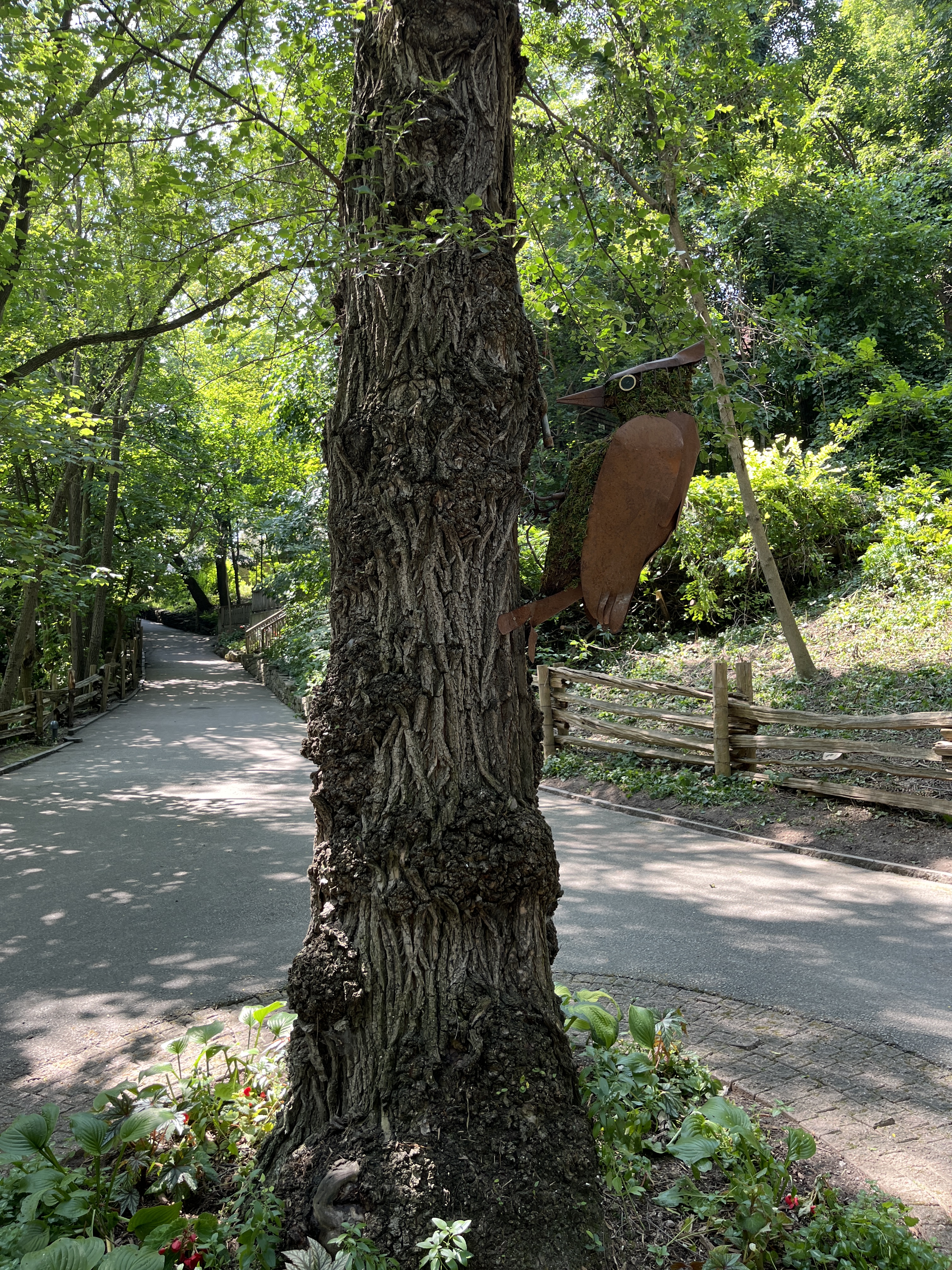
One of the first things you will notice as you enter the farm from the bottom end is this large steel woodpecker that seems to be endlessly trying to get a meal out of this tree.
When I was here eight years ago you could still walk to the Island House. There are several old sections of the Don River that are in the farm that have been cut off from the main flow of the river. This happened when the city decided to straighten the river in the 1880s and left some oxbows stranded on the Riverdale Zoo property. The building on the little island was known as the Monkey House (later the Island House) and is one of only three original buildings that remain from the days of the zoo. The stone arch bridge that accesses the island has been determined to be unsafe and is now closed. This is likely permanent as there is little need to refurbish it since the Island House isn’t in use anymore.

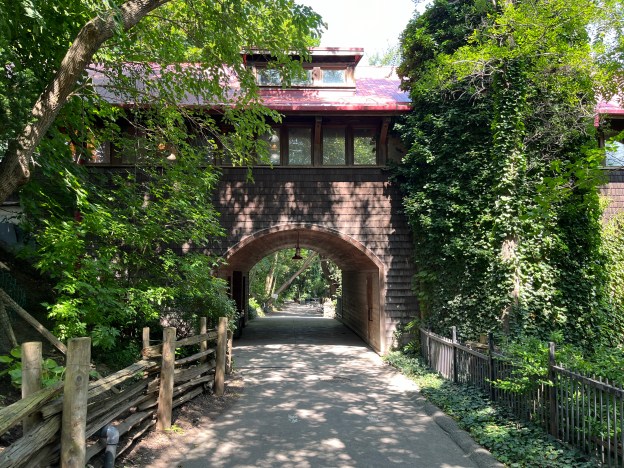
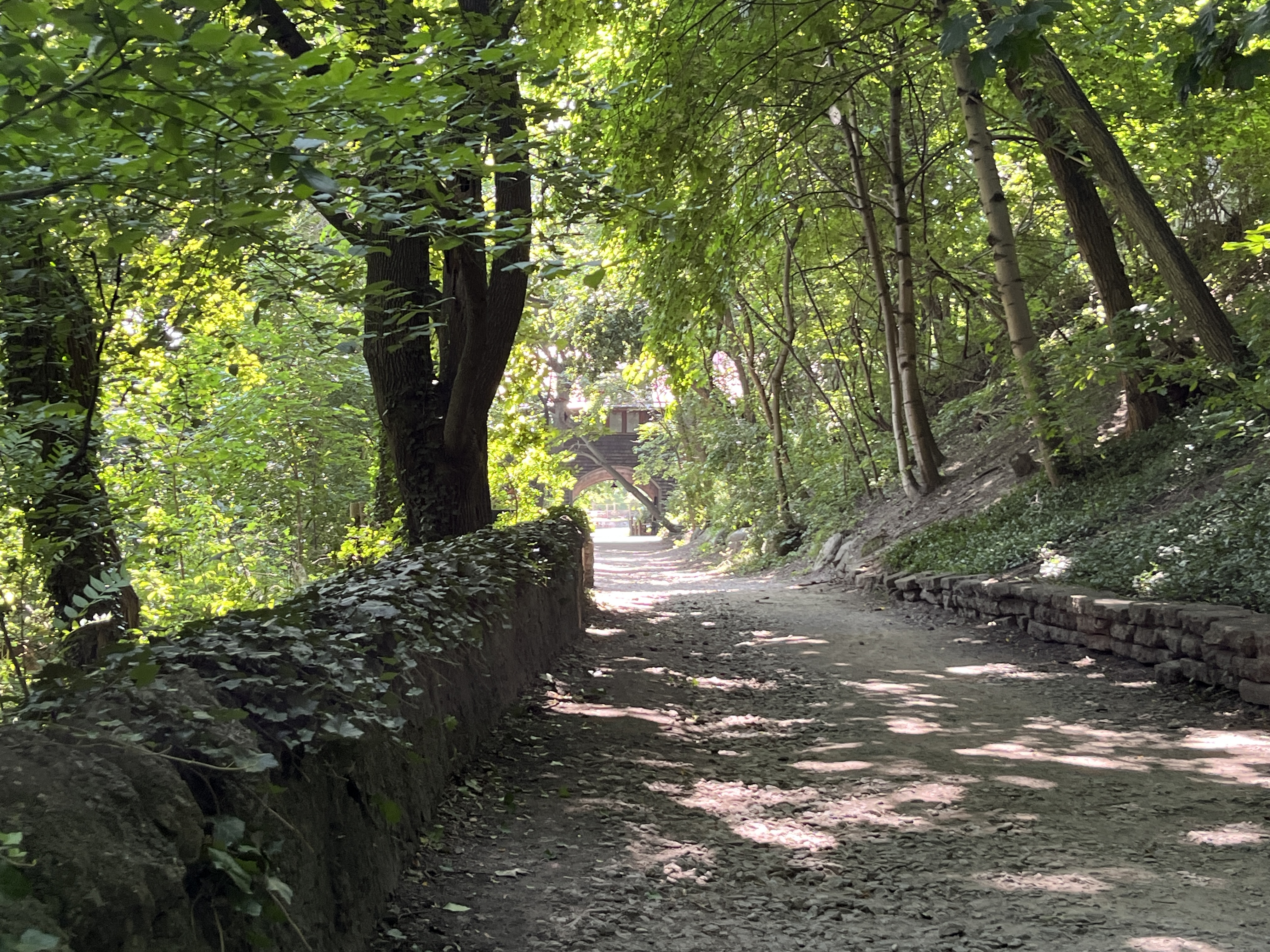
From the Island House you can follow the path back up the hill toward the main part of the farm. The archway under the Meeting House can be seen in the distance and more clearly in the cover photo to this post. This building was opened in 1993 and is used for visitor activities all year and includes a set of public washrooms.
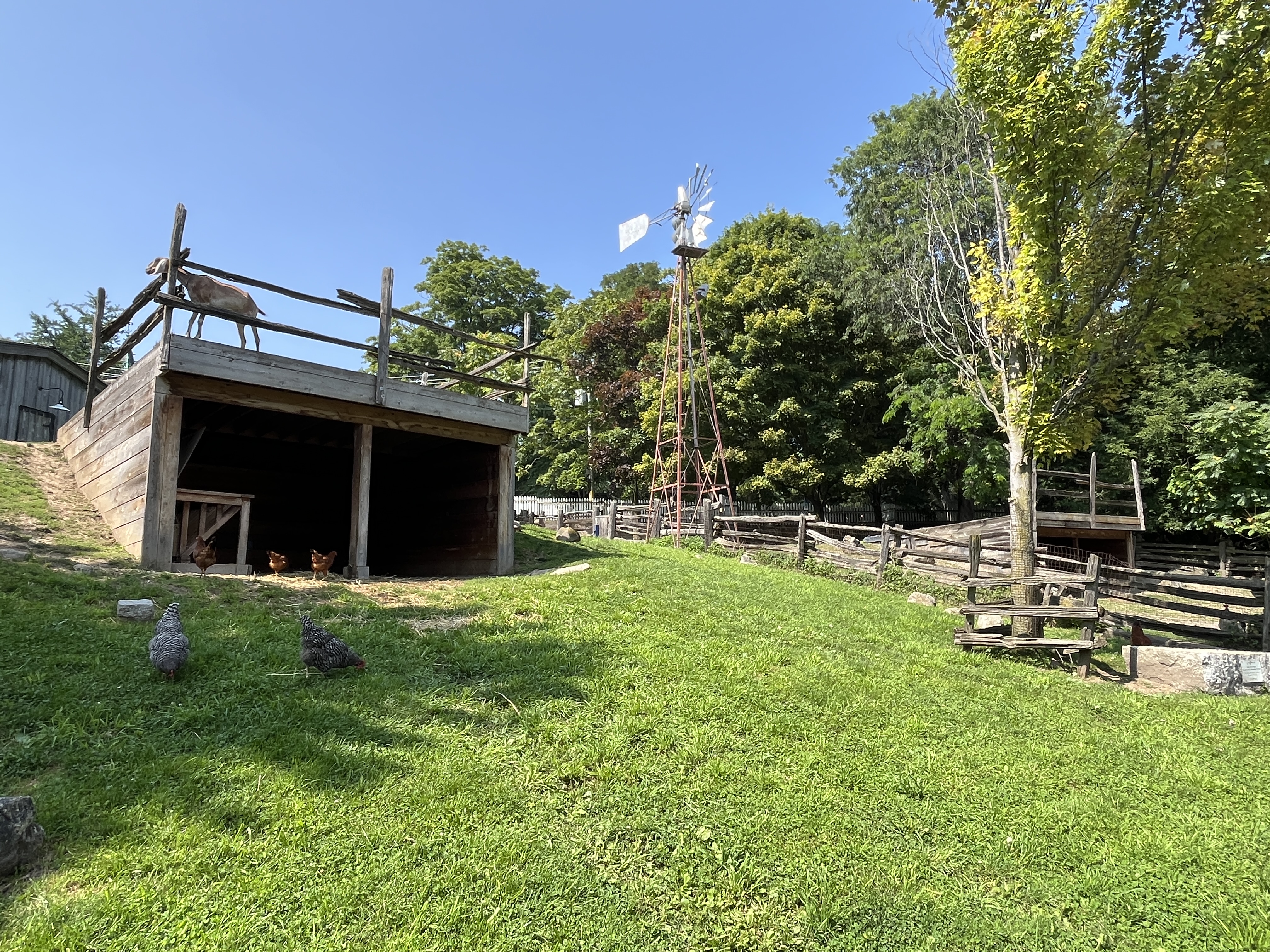
Riverdale Farm is a working farm located in the heart of the city. This allows people the ability to see farm animals without having to drive for an hour to reach one of the tourist farms in the country. I use the term tourist farms to describe places like Chudleighs or Downeys because they charge an admission so that urban dwellers can experience what life on a farm is like. Unlike these farms, Riverdale Farm is free to visit. However, it isn’t a petting zoo and you can’t feed or really interact with the animals. The goat in the picture above is standing on top of the shelter and keeping an eye on the people who are visiting.
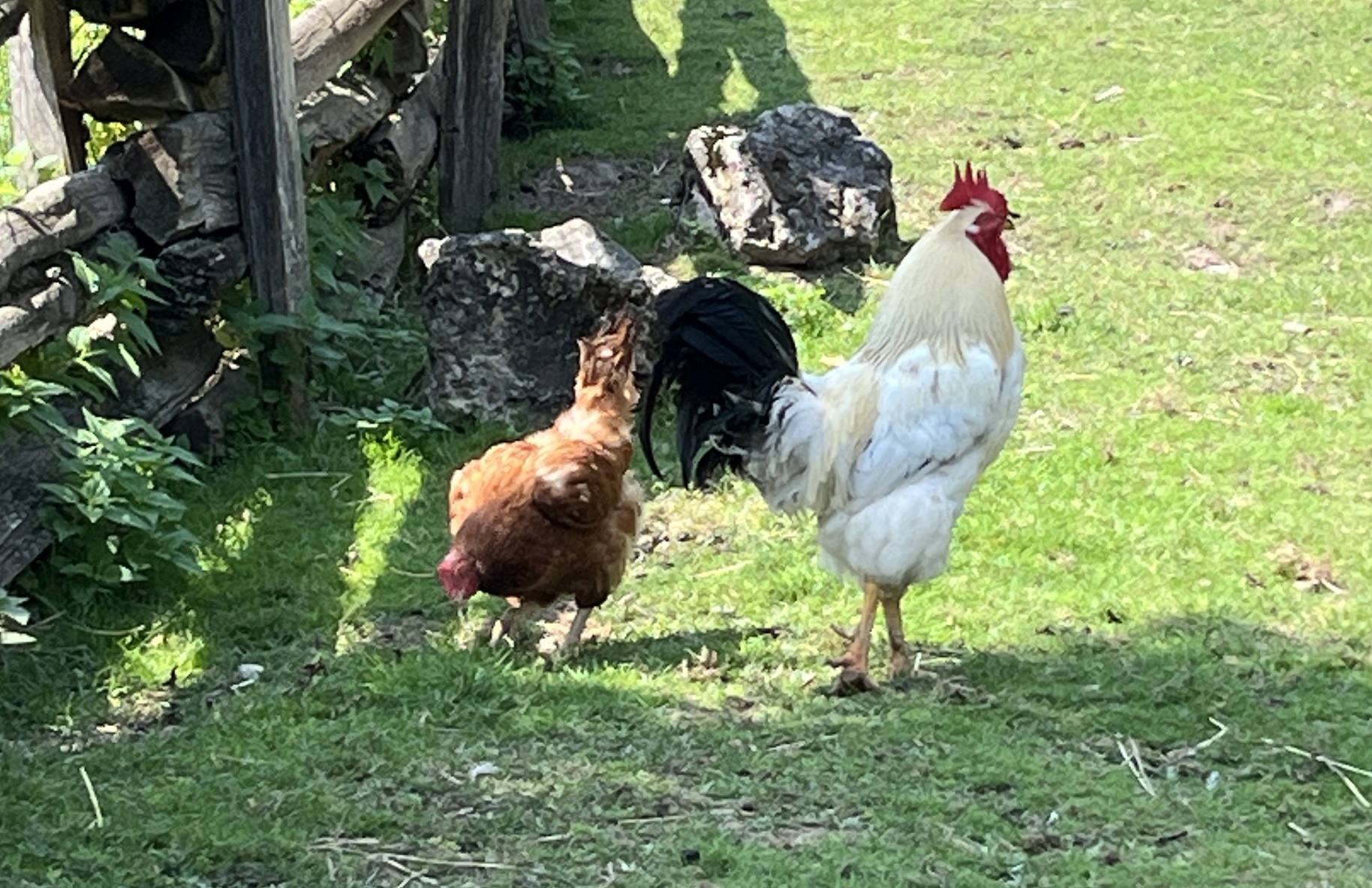
This rooster was crowing in the middle of the afternoon but perhaps it was just a show for the hen that seemed to be following him around. I guess this chicken is in love.
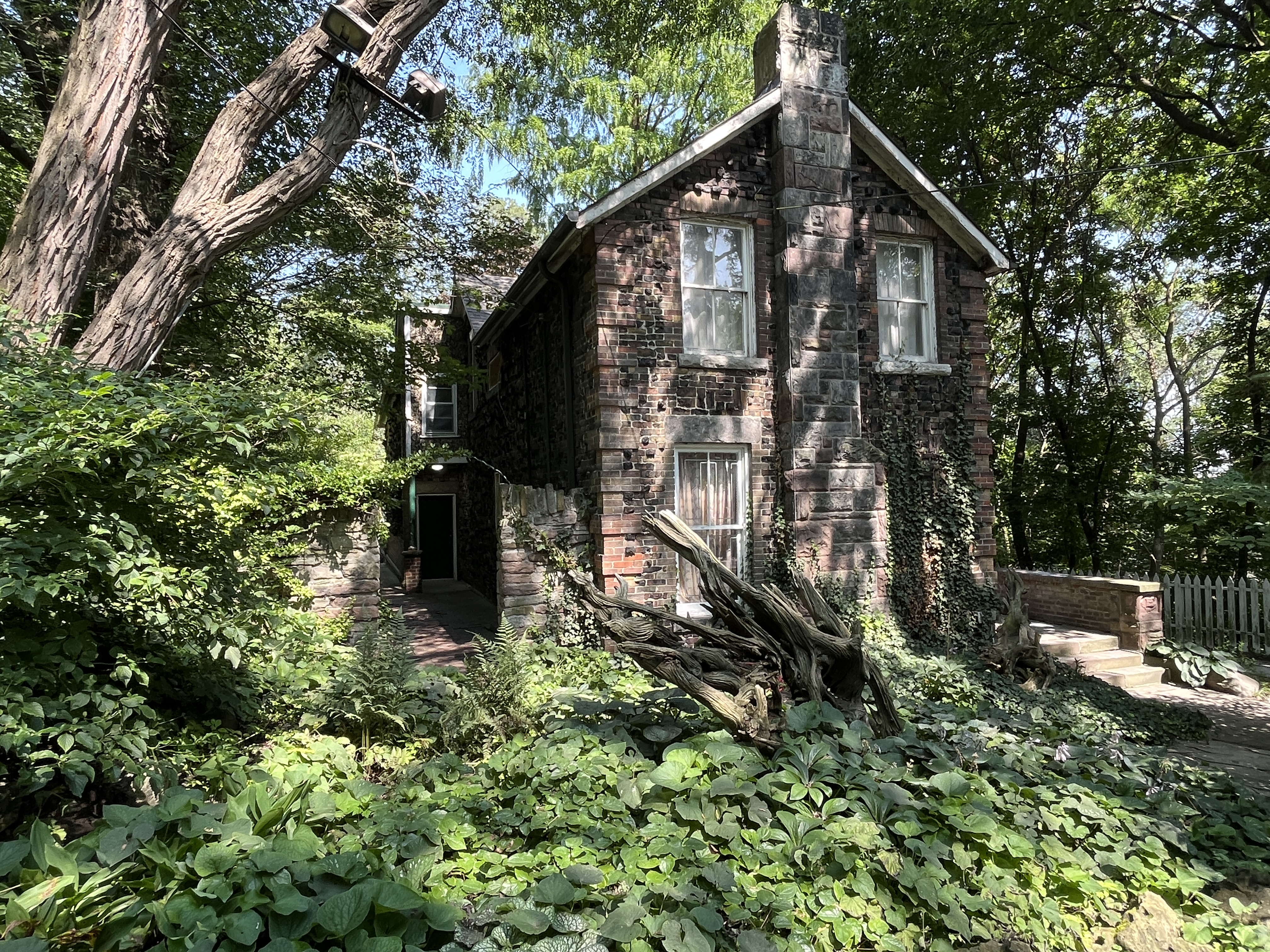
The zoo keepers residence was built in 1902 by inmates from The Don Jail across the river in what is now East Riverdale Park. The house served the zoo in several capacities including an animal hospital. It was also used as a temporary morgue for The Necropolis across the street. Along with the Monkey House and The Donneybrook, it is one of only three remaining structures from the zoo.
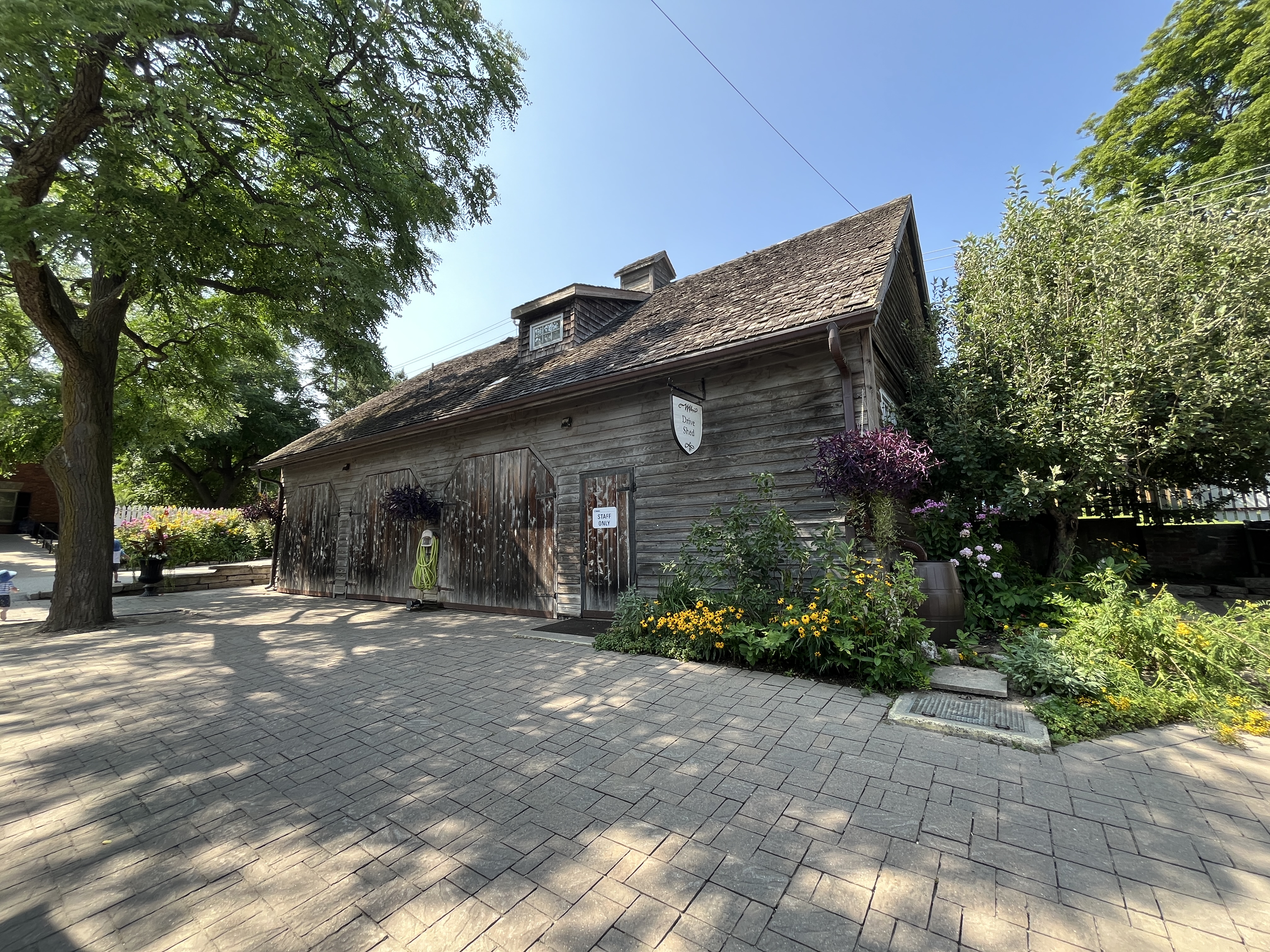
There are two barns on the farm, the smaller of which is home to the pigs and poultry. The larger barn is known as the Francey Barn. It was originally built in 1858 on a farm in Markham Township. It is a style of barn that is known as a Pennsylvania Bank Barn. This is because it was built into the side of an embankment or hill. This allowed access to the upper floor from one side and the lower level from the other. Animals were kept in the lower level while hay and straw were kept in the upper level.
The Francey barn was donated to the City of Toronto in 1977 and moved to Riverdale Farm. I was taken apart and moved in pieces and then reassembled on the farm. When you look at the main beams in the barn you can see the rough cut of them which shows they were cut by hand and not in a saw mill. This was common on early farms where the trees cut to clear the farm provided the materials for houses and barns. When you look carefully you will see that some of the beams have little cut out sections that indicate they were originally positioned differently before the barn was disassembled.

Beside the cow paddock is the Donnybrook ruins. This was originally a two story building that can be seen in this photo from the Toronto Archives.
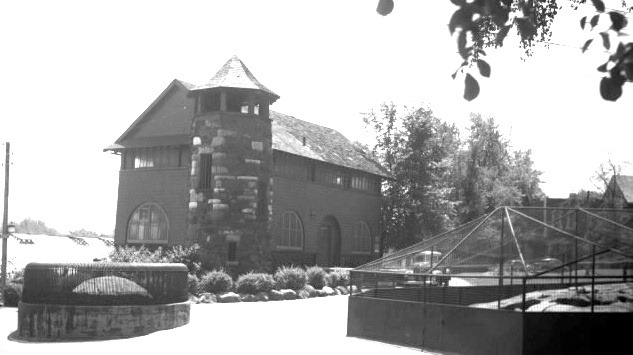
The tower and ground floor are all that remain and the tower has been overgrown to the point where you can no longer see the stone details that are hiding behind the vines.

Riverdale Farm is a great place to visit any time of the year and has over 3 kilometres of trails to be explored. It also connects to the larger network of trails along the Don River. Parking is free (if you can find a spot on a street nearby) but you can also get there easily by TTC.
Related stories: Riverdale Farm, Toronto Zoo, The Don Jail, The Necropolis
Google Maps link: Riverdale Farm
Like us at: http://www.facebook.com/hikingthegta
Follow us at: http://www.hikingthegta.com
Also, look for us on Instagram
 Hiking the GTA
THANK YOU for the memories this place brings me. I am old enough to remember visiting the original Riverdale Zoo around 1972 or around then. I remember that they had a huge enclosure for the Hippopotamus and I remember looking at the Monkeys in the Monkey House. The rest of it is a blur to me and I remember the first time I visited the Toronto Zoo, I was not happy and preferred the old Riverdale Zoo. I think Hubby and I might pay a visit here this coming week
Thank you for keeping the memories of “Old Toronto” alive through these posts. The fact that Toronto has preserved a portion of this working farm is commendable.