February 1, 2025
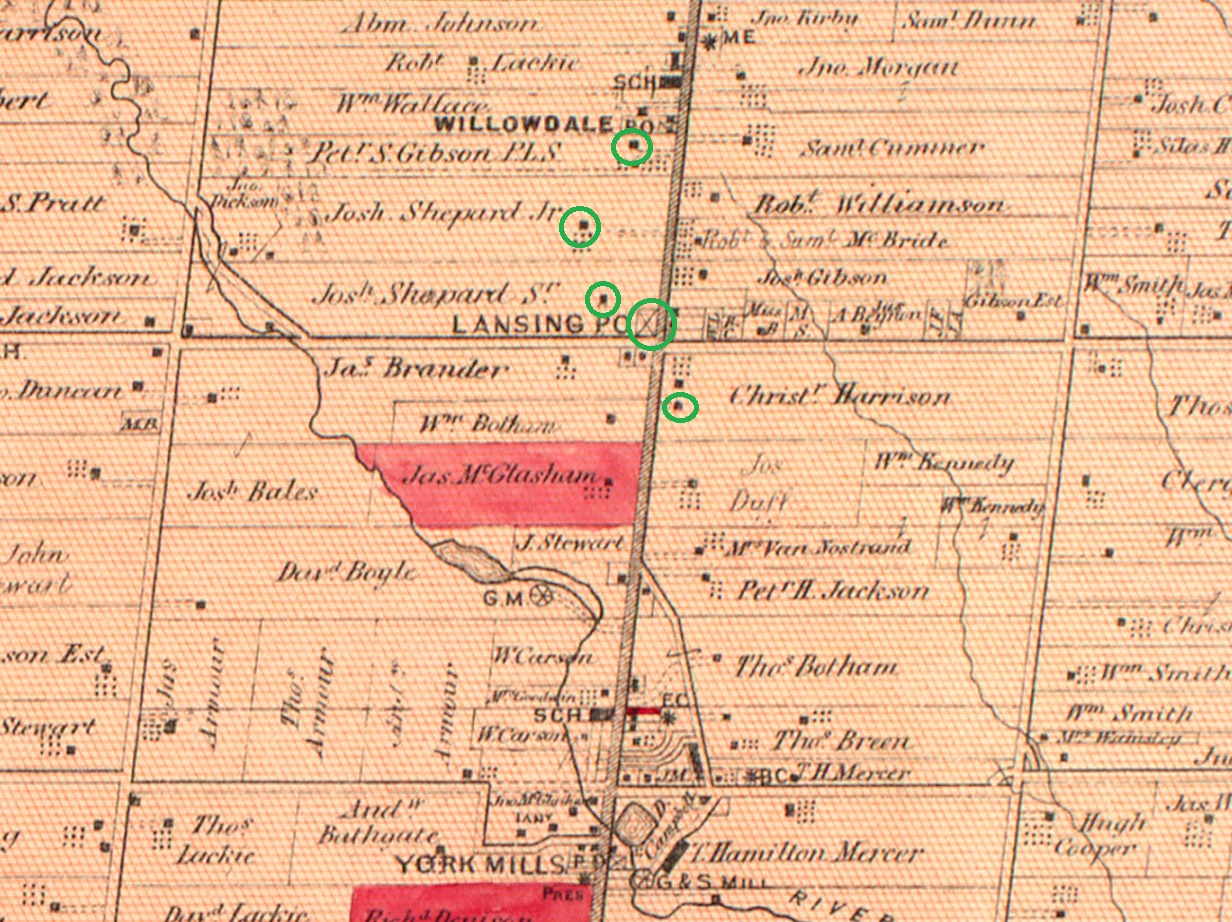
The community of Lansing was located at the intersection of Yonge Street and Sheppard Avenue. Thomas Sheppard (with two Ps), the namesake for the road, built The Golden Lion Hotel which became a favourite meeting place for those plotting the Rebellion of 1837. The hotel was demolished in 1928 but the golden lion statue that used to stand out front was saved and is now on display at the North York Central Library. The community of Lansing included a store that later became a post office and can be seen on the northwest corner on the map. The Shepard family (with one P) owned the store initially and appear on the map below, but it isn’t after them that the road gets its name. The name Lansing was chosen when the post office arrived in 1866. Lansing was never much more than a small cross-roads hamlet on Yonge Street, the first one north of York Mills. The map below is from the 1877 County Atlas and shows York Mills, Lansing and Willowdale stretching north on Yonge Street.
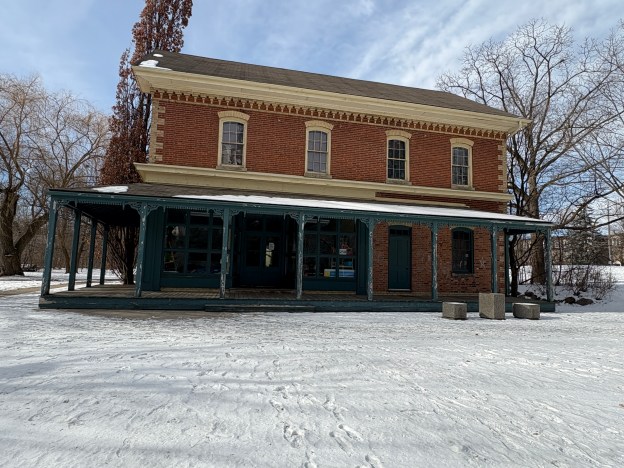
Elihu Pease House was built in 1834 and is the oldest surviving residential building from Lansing and one of the oldest in North York. Pease moved to Upper Canada in 1810 at the age of thirty and married Catherine Cummer, a member of one of the prominent families in the area. Elihu operated a tannery on the southeast corner of Yonge and Sheppard and was also a school inspector, teacher and a pathmaster for Yonge Street. The house was moved in 1921 and again in 2004. It now serves office functions and can be found at 20 Harrison Garden Blvd.

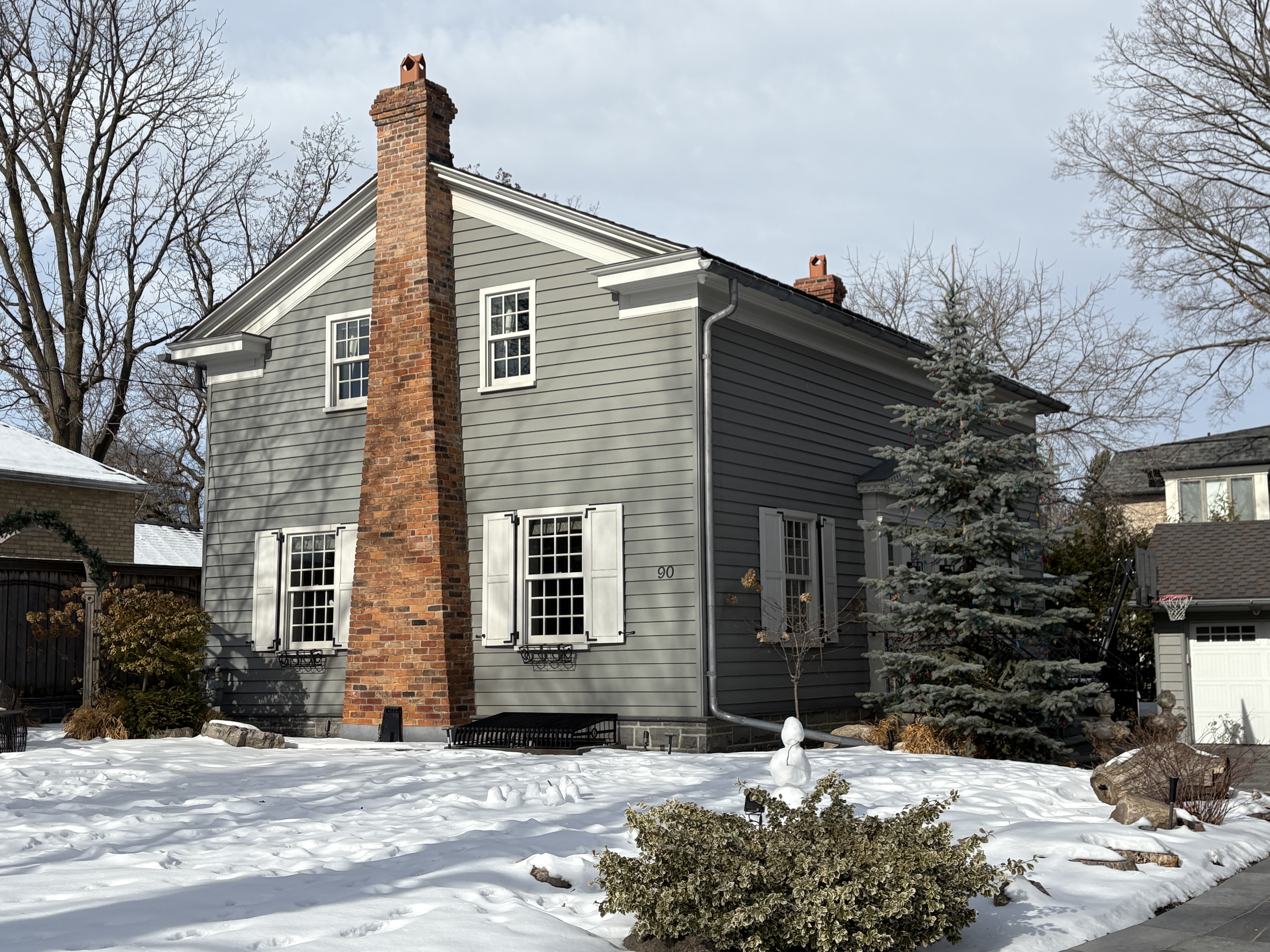
The Joseph Shepard House is a year younger as it was built in 1835. The house is set back from Yonge Street and because the area was subdivided around 1940 it has streets and houses between it and Yonge Street. It is facing Yonge Street while its neighbours face south onto Burndale Avenue where it is now numbered 90. Joseph and his wife Catherine were strong supporters of political reform. Joseph died just before William Lyon Mackenzie led his rebellion but it is certain that he would have participated if he had lived. The house was used to shelter rebels after the failed rebellion and it is said that the rafters have burn marks on them. This hints that there may have been an attempt to burn the house in retaliation. It is one of the few remaining buildings that has a direct link to the Rebellion of 1837.
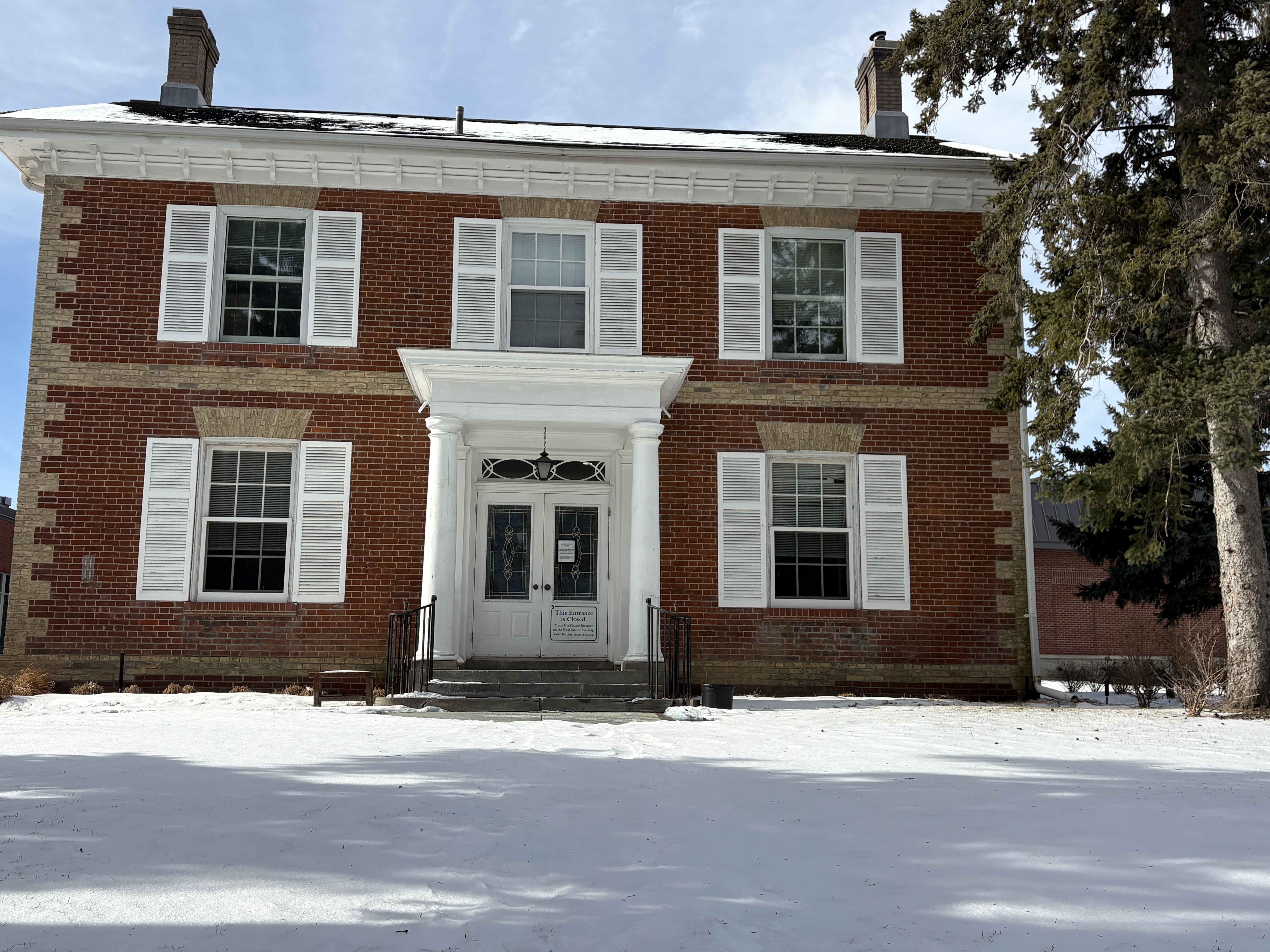
The property of Joseph Shepard was granted to him on May 9, 1805 and stayed in the family until it was sold to the trustees of the Toronto General Burying Grounds in 1916. This organization already operated The Necropolis and Mount Pleasant Cemetery and opened York Cemetery on this site in 1948. The house that now serves as the office was built for Michael Shepard in 1850. Michael had participated in the rebellion and had gone to the US until he was pardoned. It is said that William Lyon Mackenzie hid on this property as part of his get away route.
Gibson House was built in 1851 and has a direct link to the Rebellion but as a replacement house for David Gibson. David had emigrated to upper Canada from Scotland and in 1825 he became a land surveyor. He also supported William Lyon Mackenzie and was one of his chief lieutenants during the rebellion. When the rebellion failed he fled to the United States and his house was burned and land forfeited. After he was pardoned in 1848 he returned to Lansing and had this house built.
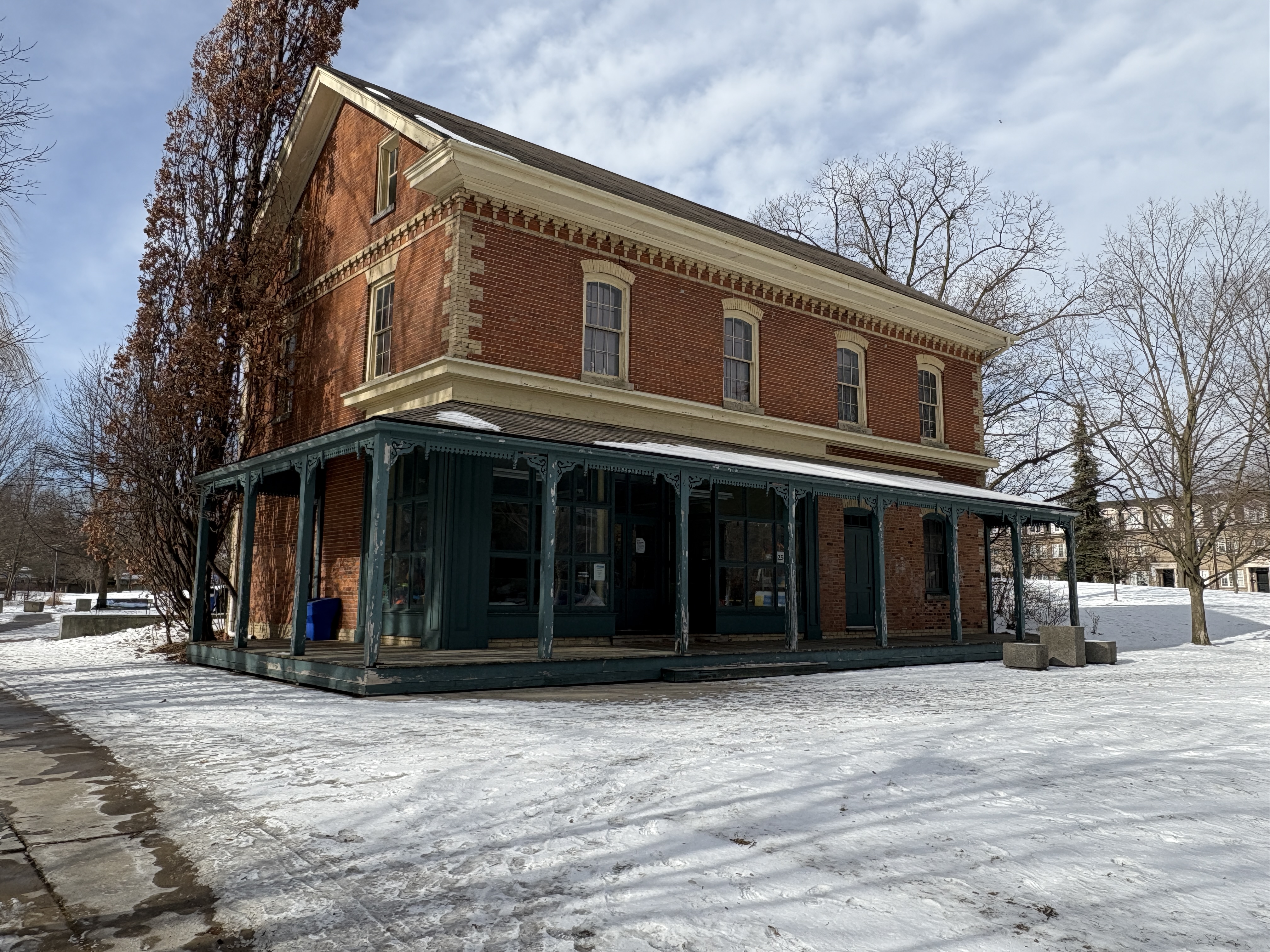
One of the last prominent remnants of Lansing on Young Street was the Dempsey Hardware Store that some may remember on the Northwest Corner of Yonge and Sheppard. The building was constructed in 1860 for Joseph Shepard II. Joseph and his family lived on the upper two floors and operated a business on the ground floor. They sold hardware, food and farm implements. The business was sold to Benjamin Brown in 1888 and he ran it until 1921. At that time, George and William Dempsey bought the building and turned it into Dempsey Brothers Hardware store. It closed in 1989 and the building was moved to 250 Beecroft St. in 1996. When the Metropolitan Street Railway (Toronto & York Radial Railway) arrived in 1897, the store became a stop on the route and passengers would wait under the porch for the streetcar. There are five buildings from 1860 or older that remain in Lansing even though there are relatively few buildings shown on the 1877 map.
With all of it’s links to William Lyon Mackenzie, the small community of Lansing seems to have had quite the rebellious nature.
Related Stories: Rebel Rebel – William Lyon Mackenzie, Necropolis, Mount Pleasant Cemetery, Toronto & York Radial Railway
Google Maps Link: Lansing
Like us at http://www.facebook.com/hikingthegta
Follow us at www. hikingthegta.com
 Hiking the GTA