October 18, 2025
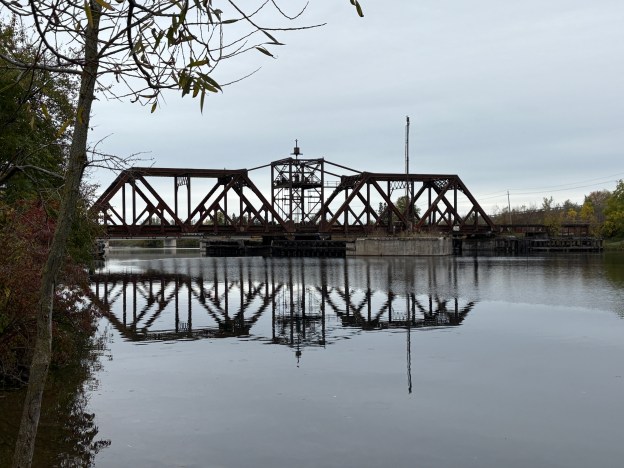
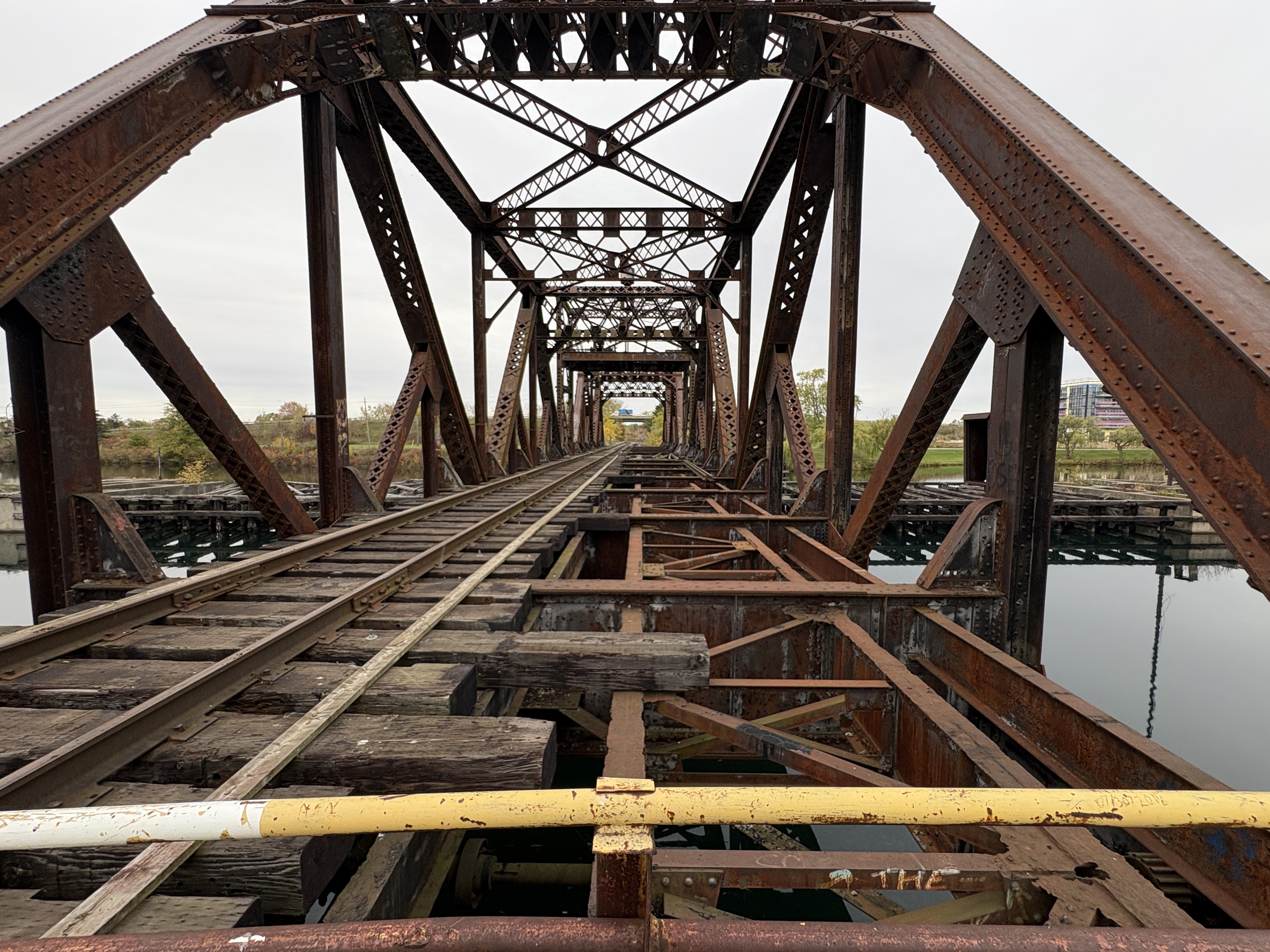
I recently visited Welland to see a new client and while passing through town I noticed an abandoned swing bridge. Naturally, this provided an opportunity to get some pictures and learn a little about the local history. The bridge is known as Bridge 15 on the Welland Canal and was built in 1910 to replace an earlier wooden bridge at this location. The bridge style is a Baltimore Truss Swing Bridge. A Baltimore Truss bridge is reinforced by an additional brace in the lower section of the truss. This is intended to prevent buckling in the beams and to reduce deflection. This style of bridge was primarily used for railway construction but is not very common with few remaining examples.
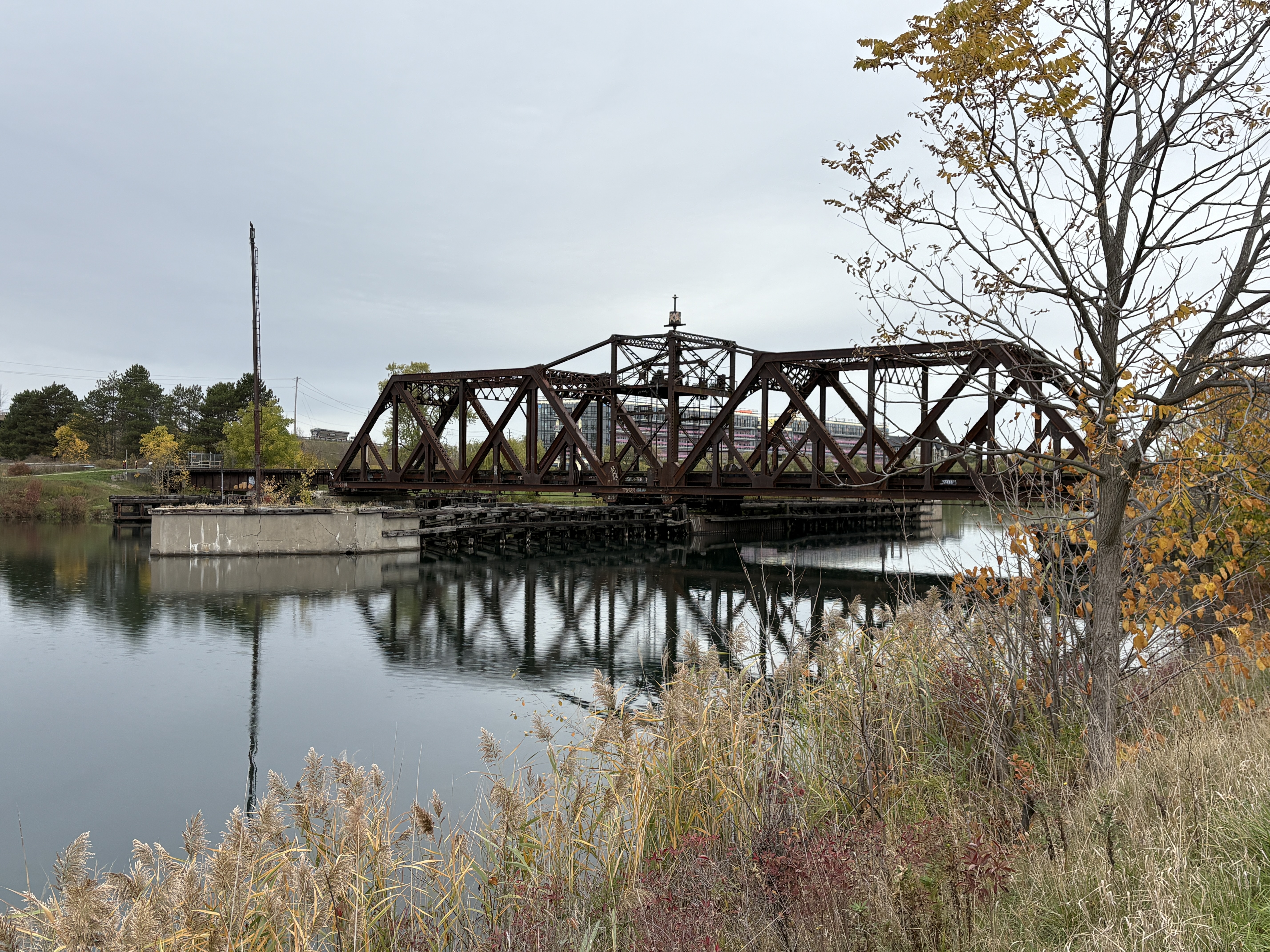
The bridge was built to carry the Canada Southern Railway (CASO) across the Welland River. The railway was founded in 1868 and went insolvent following the financial crisis of 1873. It was taken over by railway magnate Cornelius Vanderbilt who claimed it for the price of guaranteeing the bonds that had been issued against it. As ships became bigger the various bridges through town became an obstacle and a newer, straighter canal was envisioned that would move the canal away from this part of the river. The Welland Canal Relocation Project moved the rail line to the Town Line Tunnel to the east of the river.
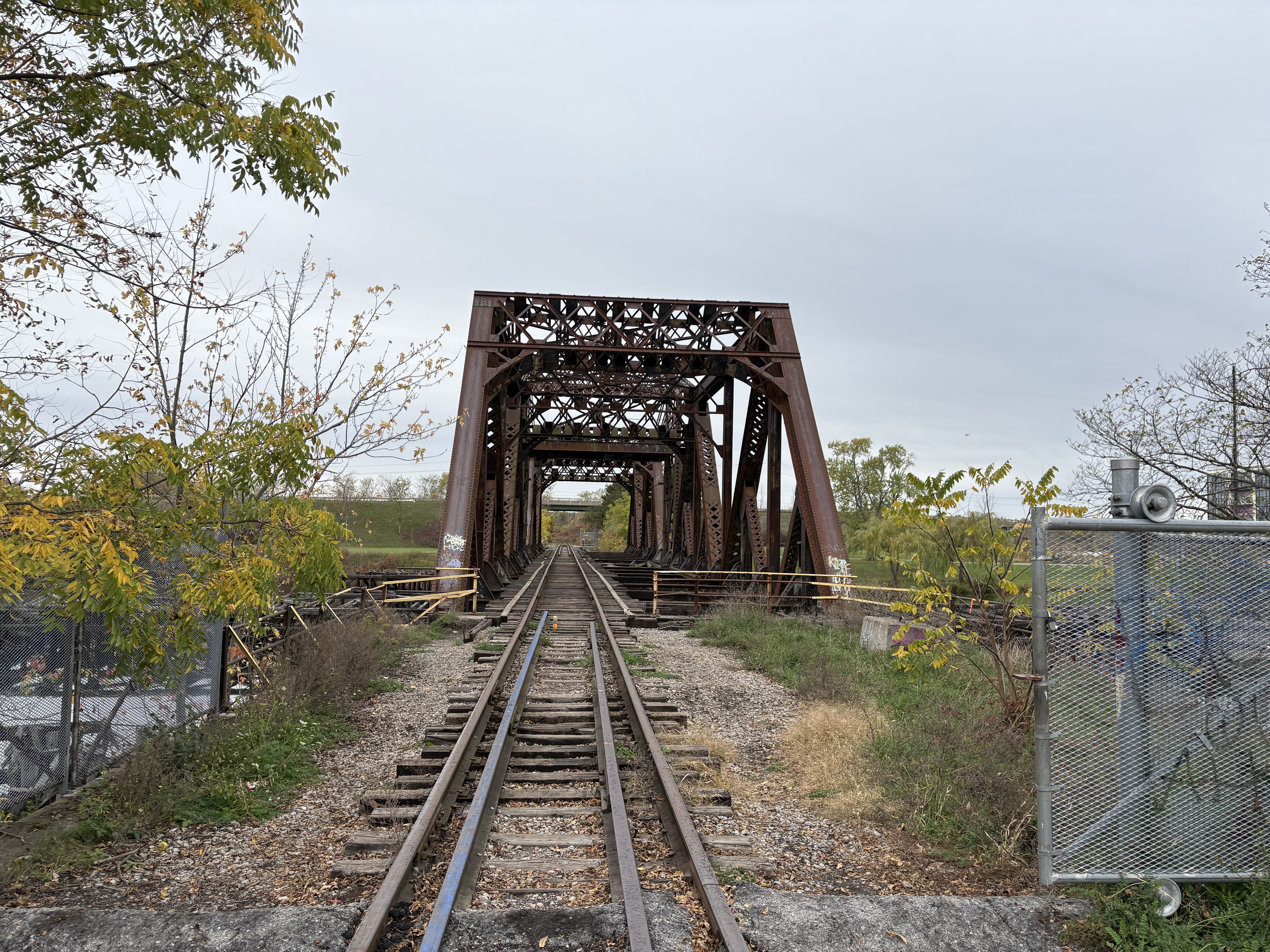
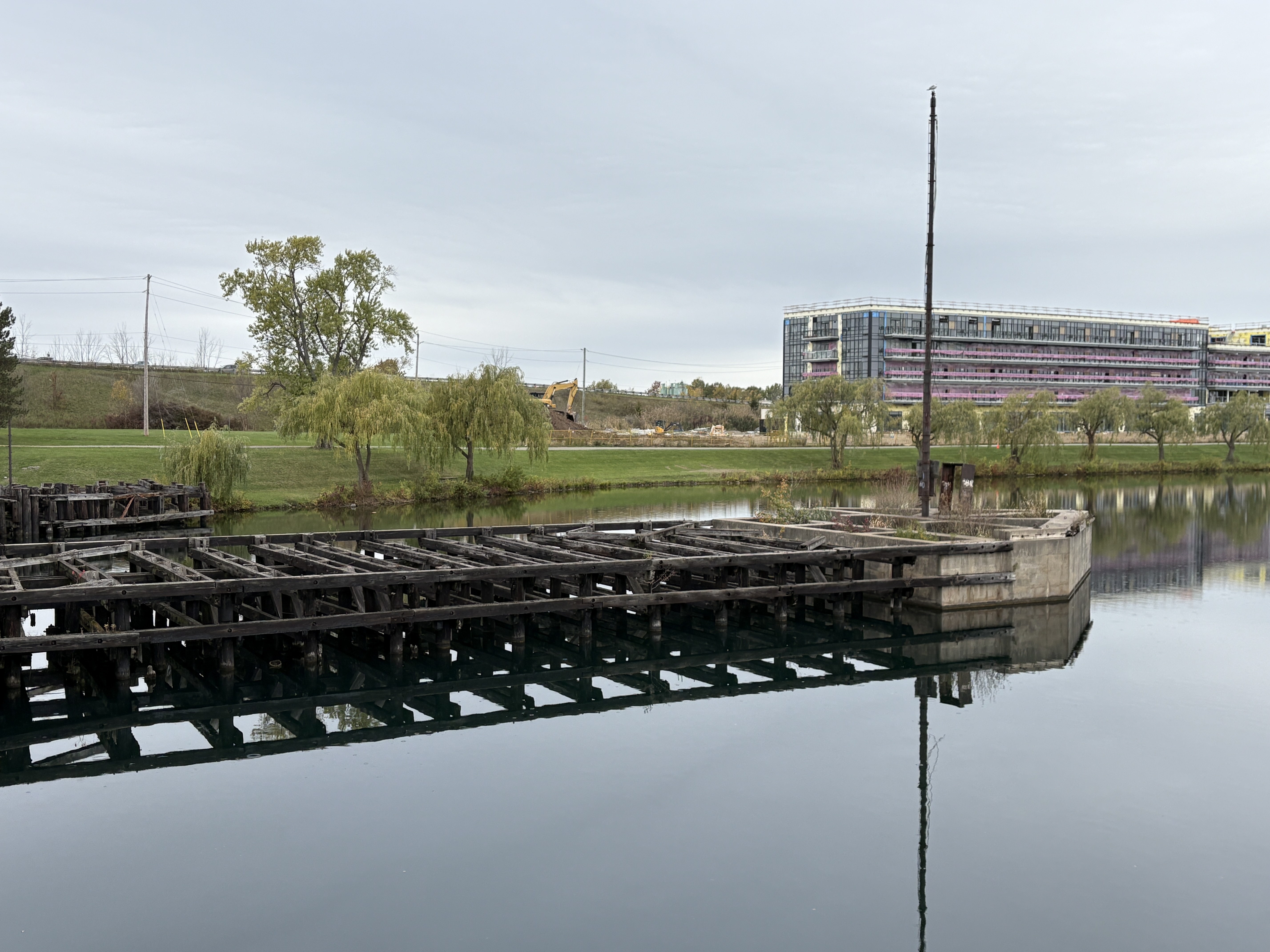
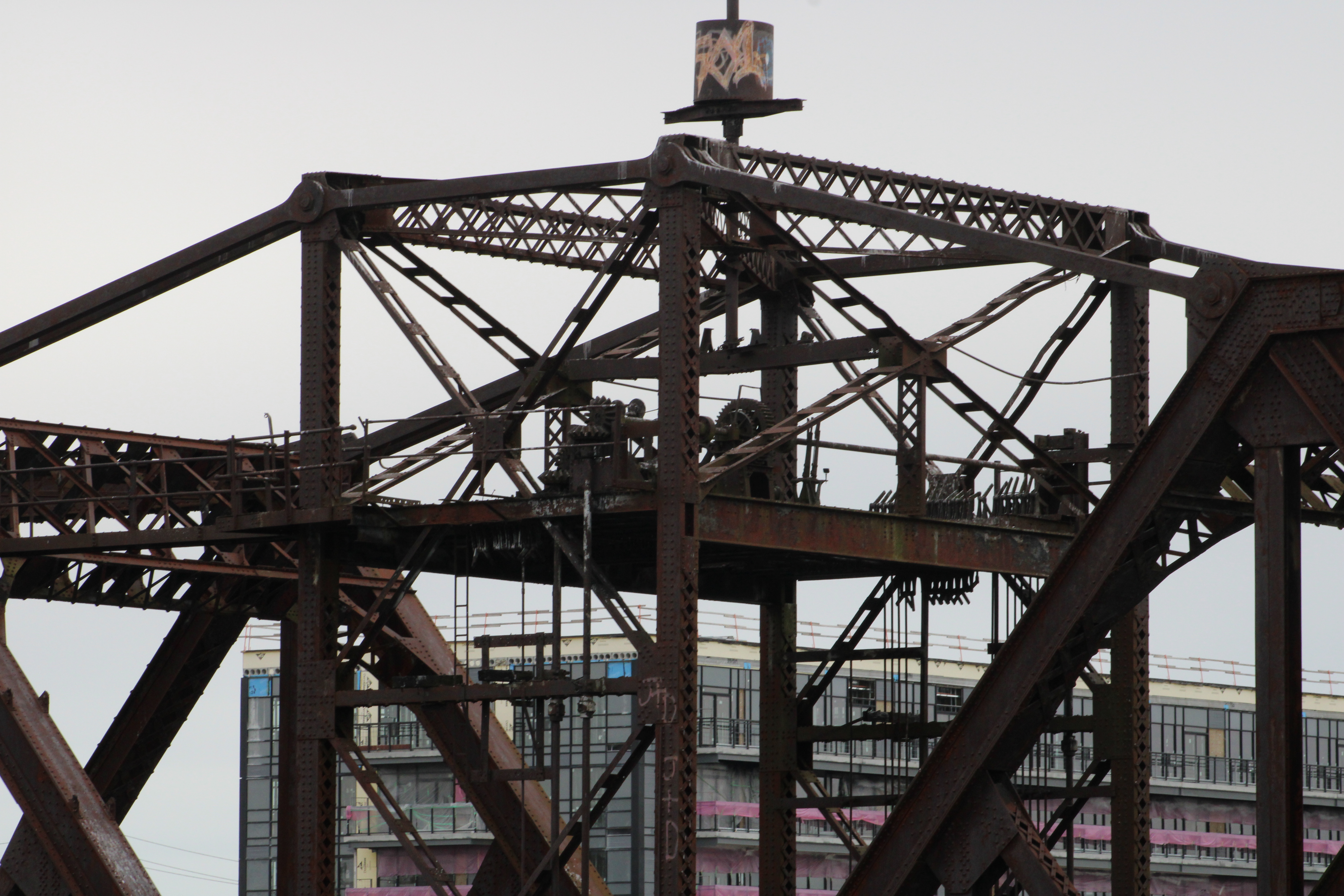
When the bridge was built, the Third Welland Canal was in operation and navigation was only possible on the east side of the bridge. Electrical power was brought by cable from the west shore to the centre of the bridge. When the Fourth Welland Canal opened in 1932 navigation was possible on both sides of the bridge. This meant that the overhead power cable was no longer feasible. An underwater power cable was run from the shore to the tower on the northern concrete fender. (These fenders protected the bridge from collisions with ships when the bridge was in its open position.) A power cable was run between the tower on the northern fender and the one on the southern fender, pictured below.
Visible in this picture is the structure at the top of the bridge where electricity was supplied to operate the controls and swing the structure.
Originally there were two tracks crossing the bridge but one was removed after the main line was relocated in 1973. The other side remained in use until the late 1980s.
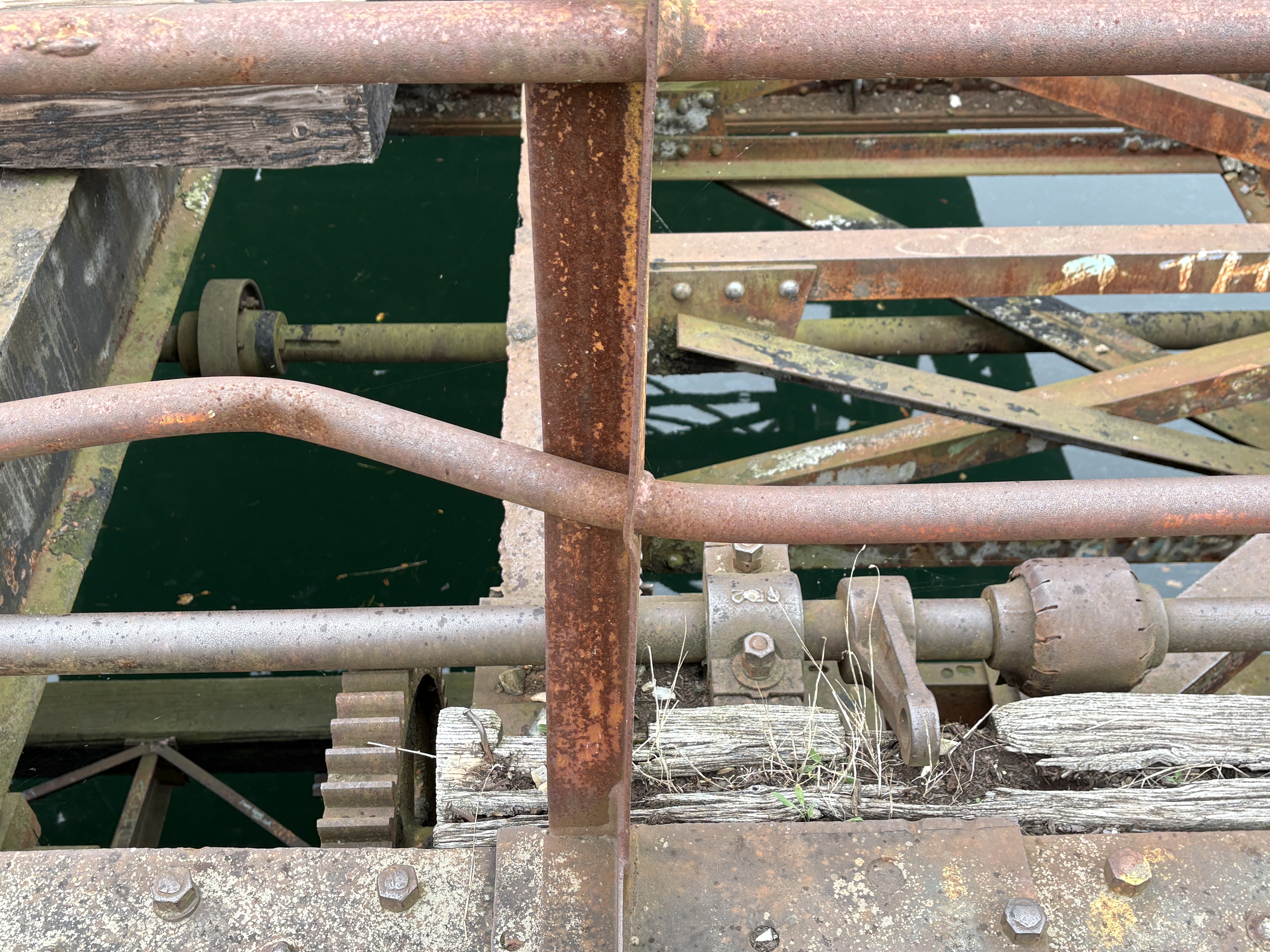
The bridge is now marked with no trespassing signs and the danger is quite real as there’s plenty of ways to get injured on this rusty old relic. Where the rails are missing the gears and turning mechanisms can be clearly seen.
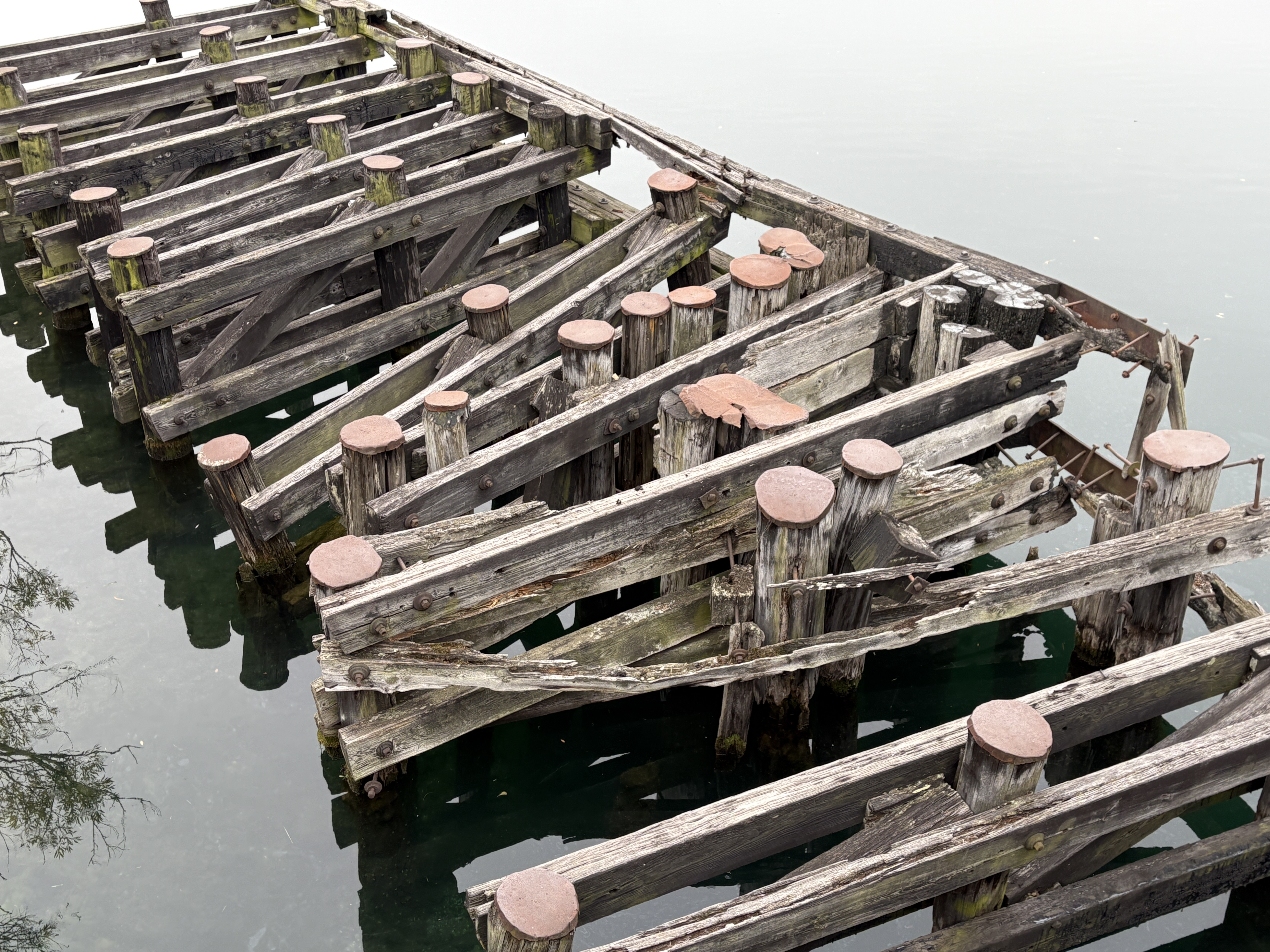
Piers were sunk into the river bed on either bank of the river to protect the bridge abutments from impacts with wayward ships. These are rotting and slowly falling back into the water.
After 115 years the bridge is now a relic to a time gone by when the trains rolled over the bridge and ships passed by on either side when it was open. The railway line is gone and ships now pass a couple of kilometres east of the river in a new channel.
Related Stories: The First Three Welland Canals
Google Maps Link: Welland Canal Bridge 15
Like us at http://www.facebook.com/hikingthegta
Follow us at http://www.hikingthegta.com
 Hiking the GTA
As a child in the 1950s and 60s I spent my summers near Lock # 1, 2, 3. Great photos and historic details. Thank you.