Category Archives: Historic Site

Kimbark House

December 21, 2024

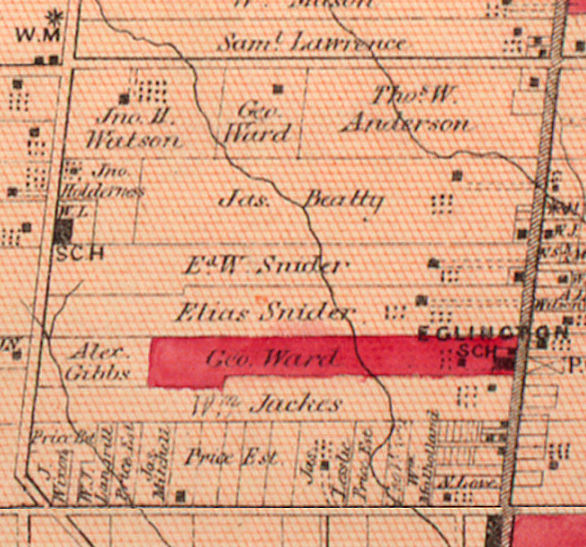
In 1900 the area around Avenue Road and Lawrence Avenue was still farms and country estates. The community of Eglinton had not expanded much west of Yonge Street and Lawrence Avenue was still a country road. The 1877 County Atlas image below shows the 1000 acres that was bordered by Eglinton avenue on the bottom, Yonge Street on the east, Lawrence Avenue on the north and Bathurst Street on the west. Avenue Road runs north to south through the middle of this block but has not been constructed at the time of the atlas.
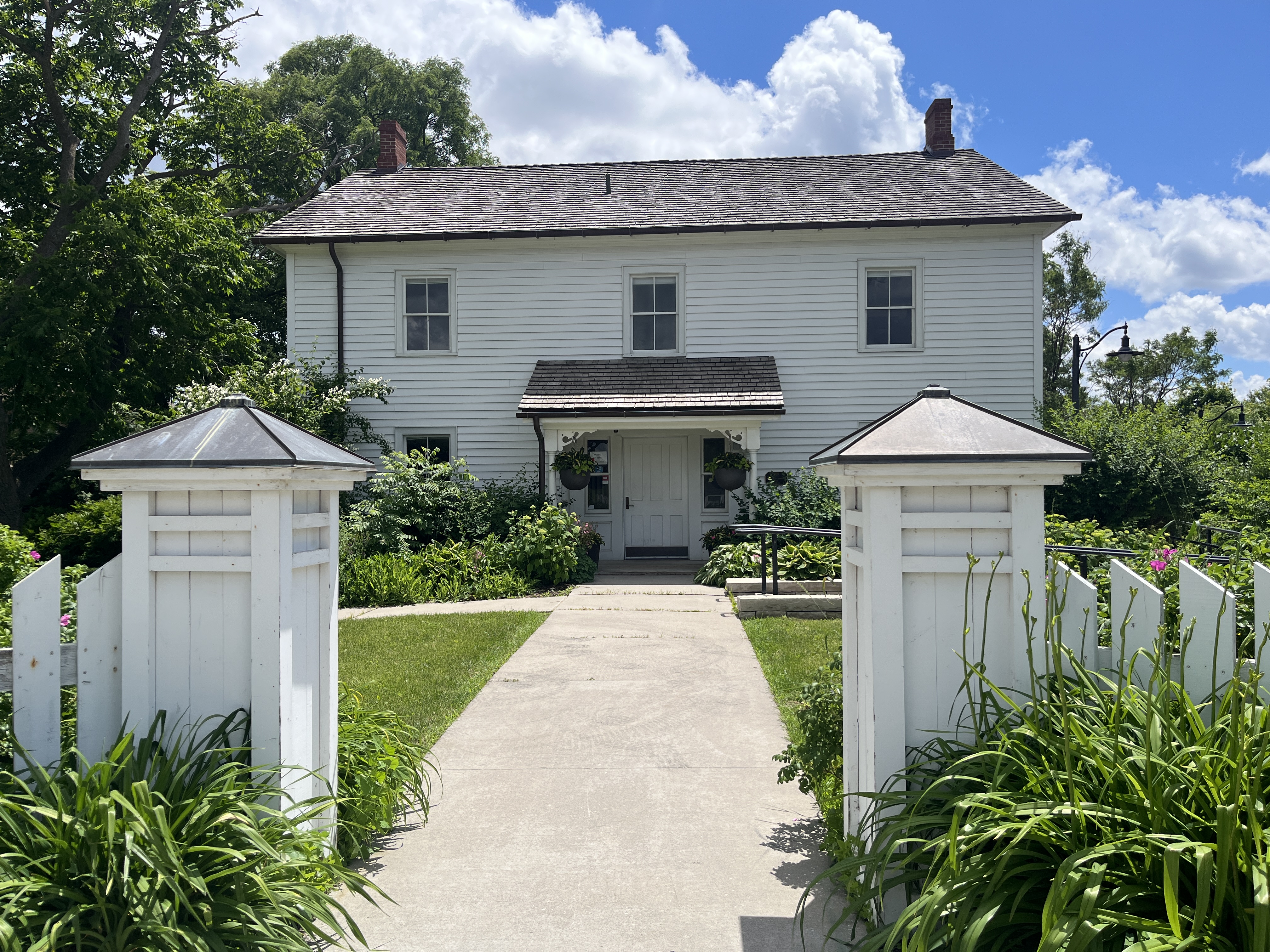
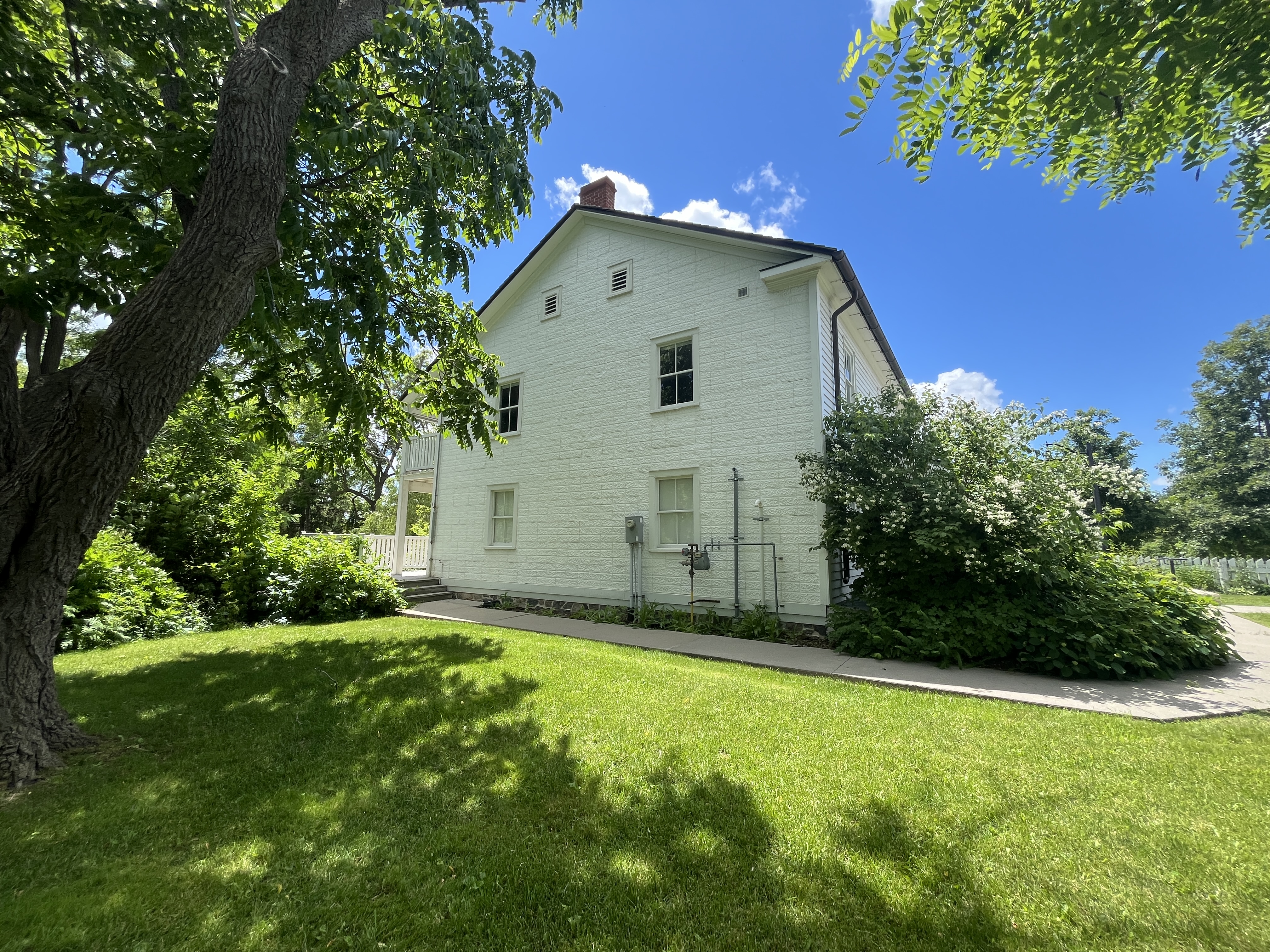
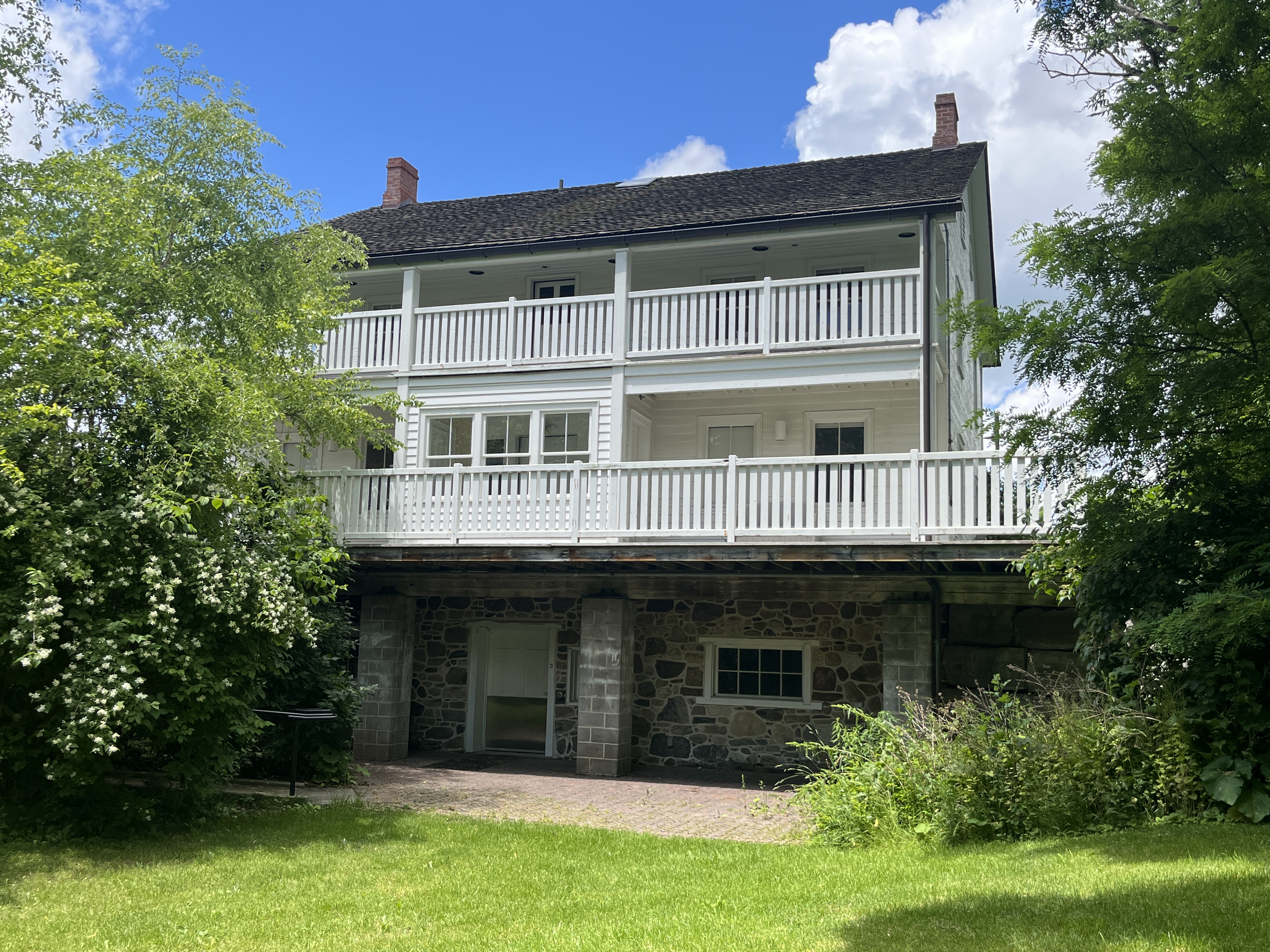
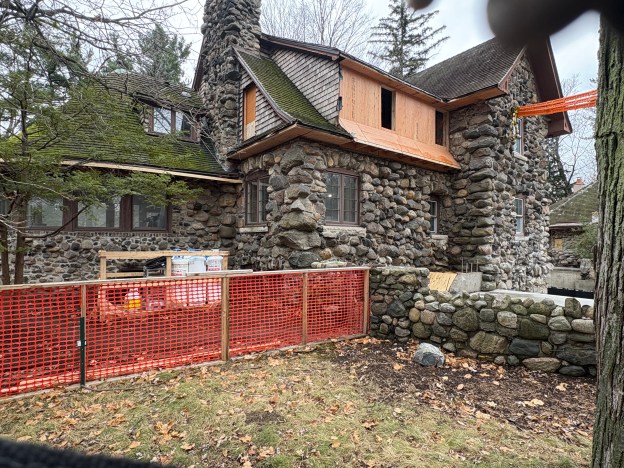
Historic records suggest that the house was built for Ernest Jury and constructed around 1909-1910. At that time the land was farm fields and there was the usual assortment of rocks and boulders available from years of clearing the ground for agriculture. Every year the frost pushes rocks toward the top of the field. The soil is plowed to prepare it for planting. The plow cuts a deep furrow through the soil and turns it over. This helps to kill the weeds. aerates the soil and distributes nutrients through the soil. This also turns the rocks over onto the top of the soil. These rocks are then picked up and stacked along fence lines and in piles. These provided a good source of building materials for stone houses.
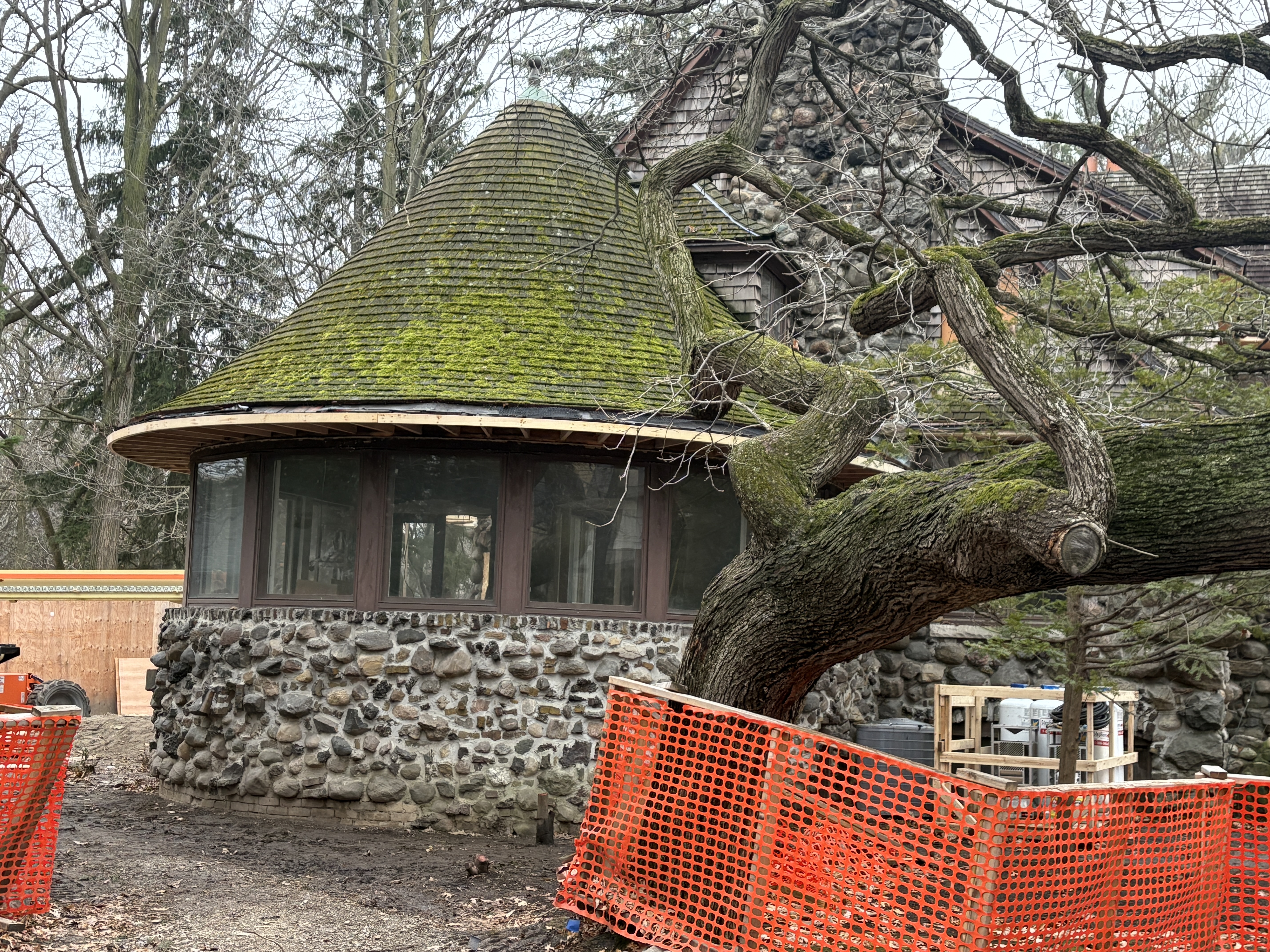
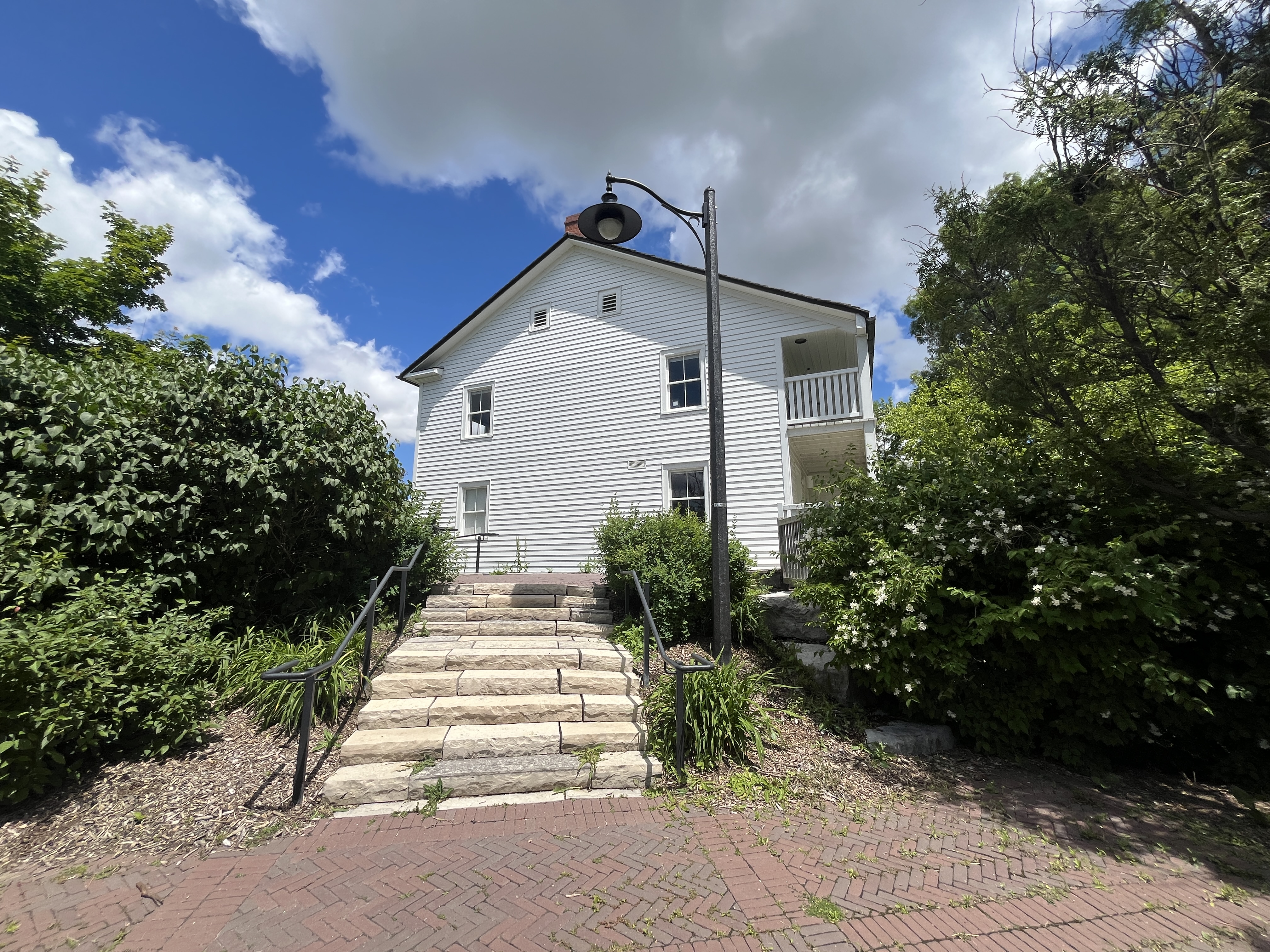
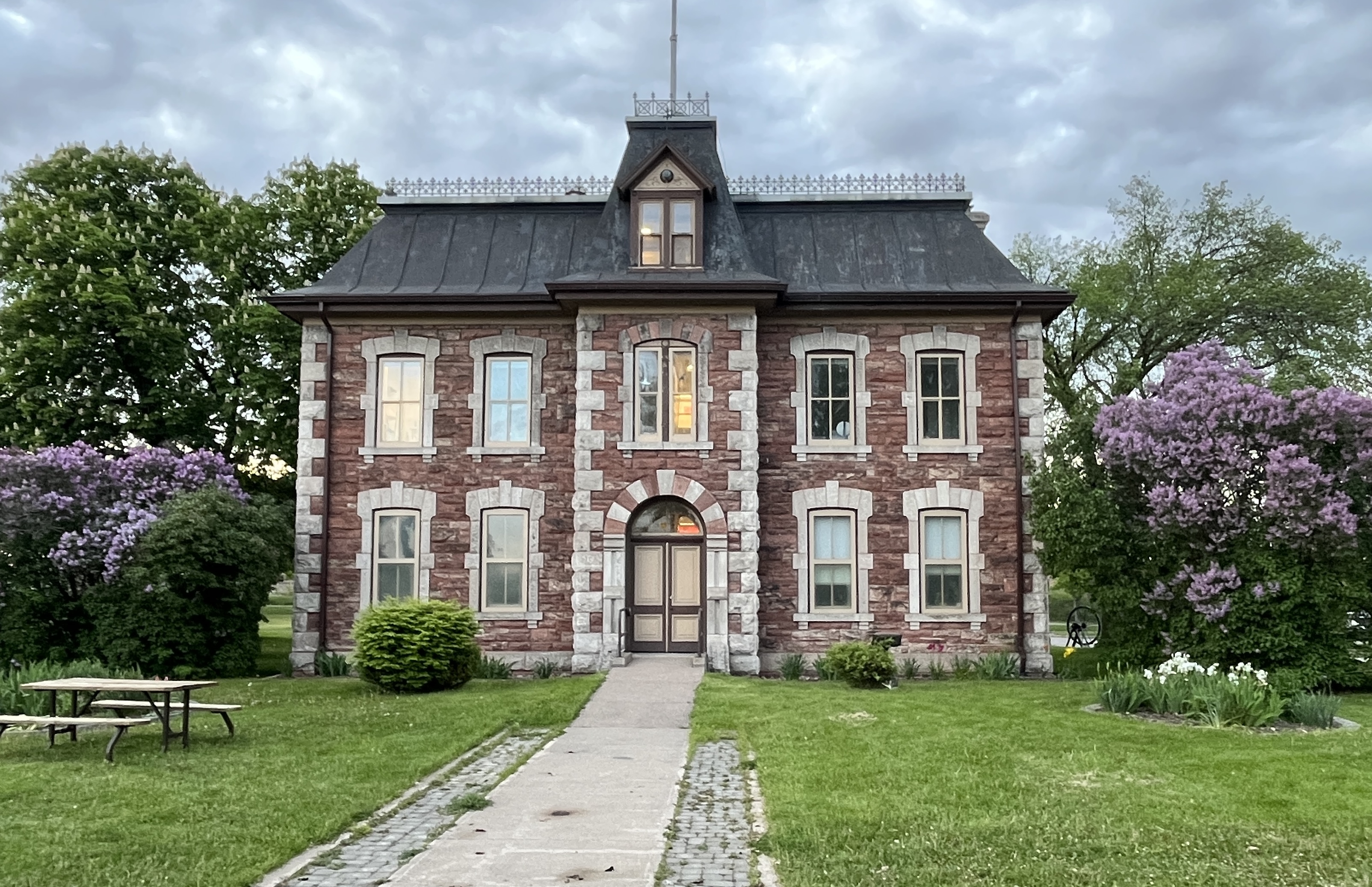
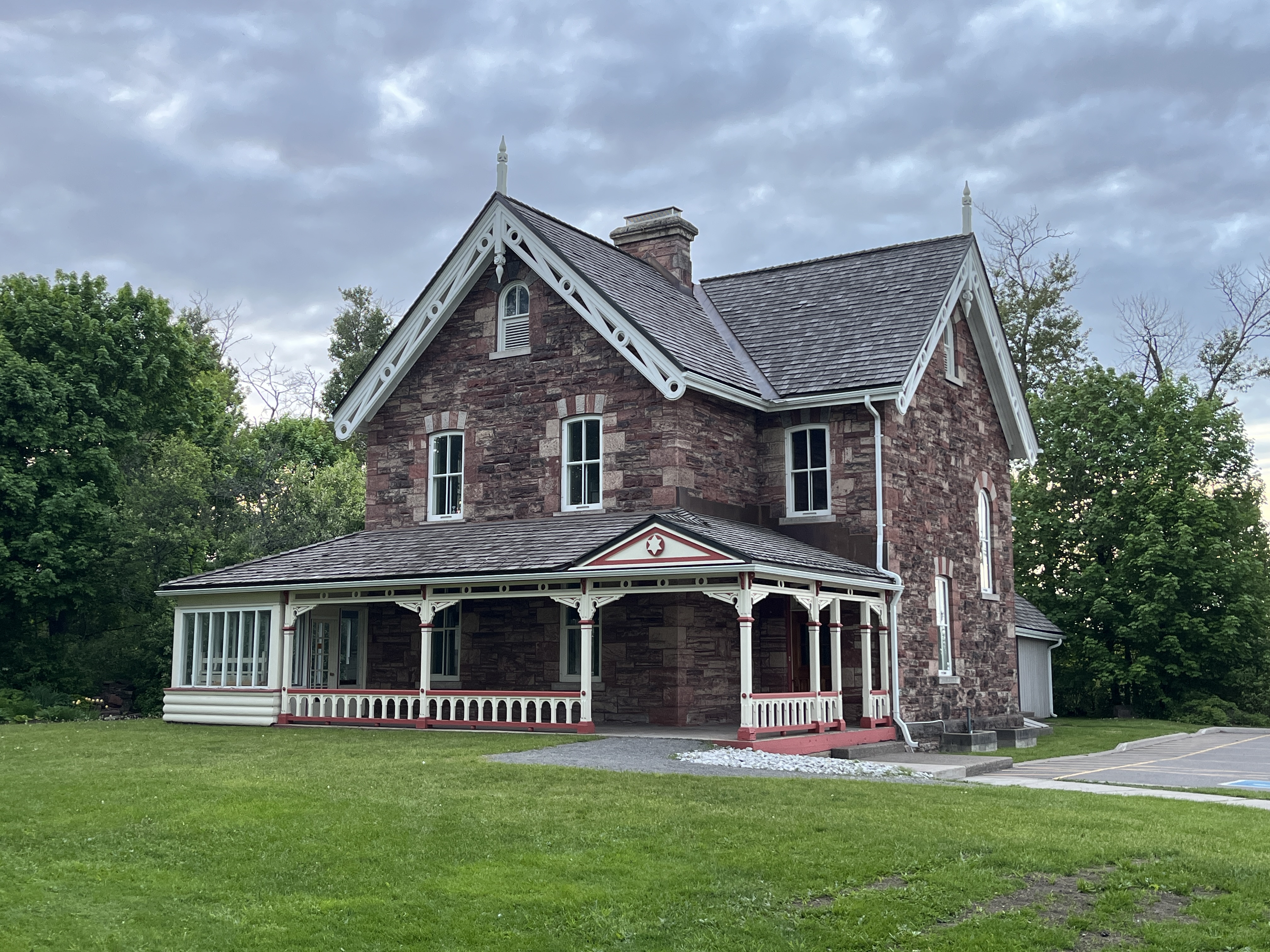
Originally bult for Jury, the home was later owned by Kimbark after whom Kimbark Boulevard is named. The home has become known as the Kimbark House. The house features a round sitting room with windows that look out over the gardens and lawns. The original property was a one acre ravine lot and the front of the home faced away from Kimbark Street. It was a later addition when the surrounding land was divided up for housing.
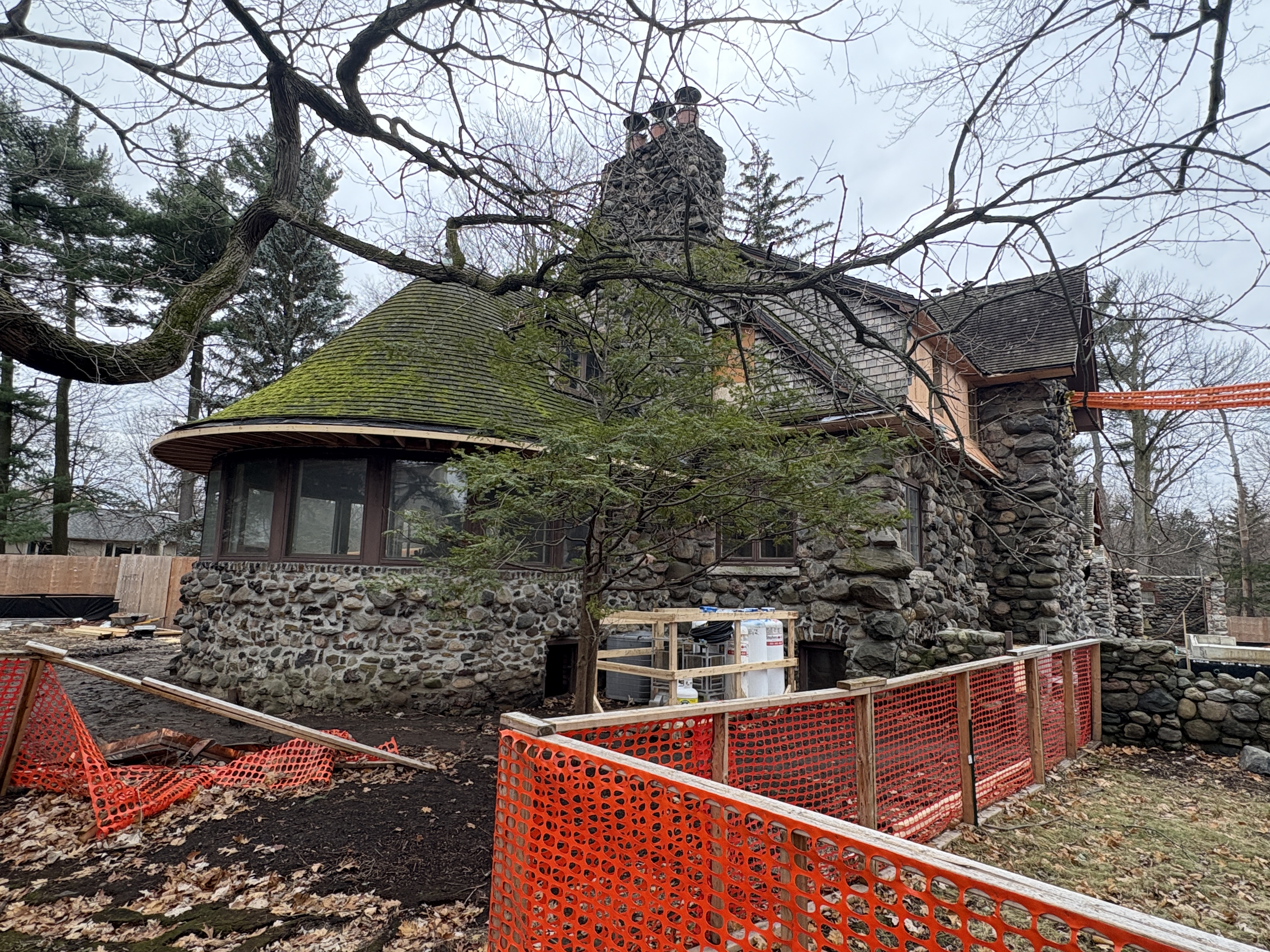
There are 4 bedrooms and 7 bathrooms in the house along with several fireplaces.
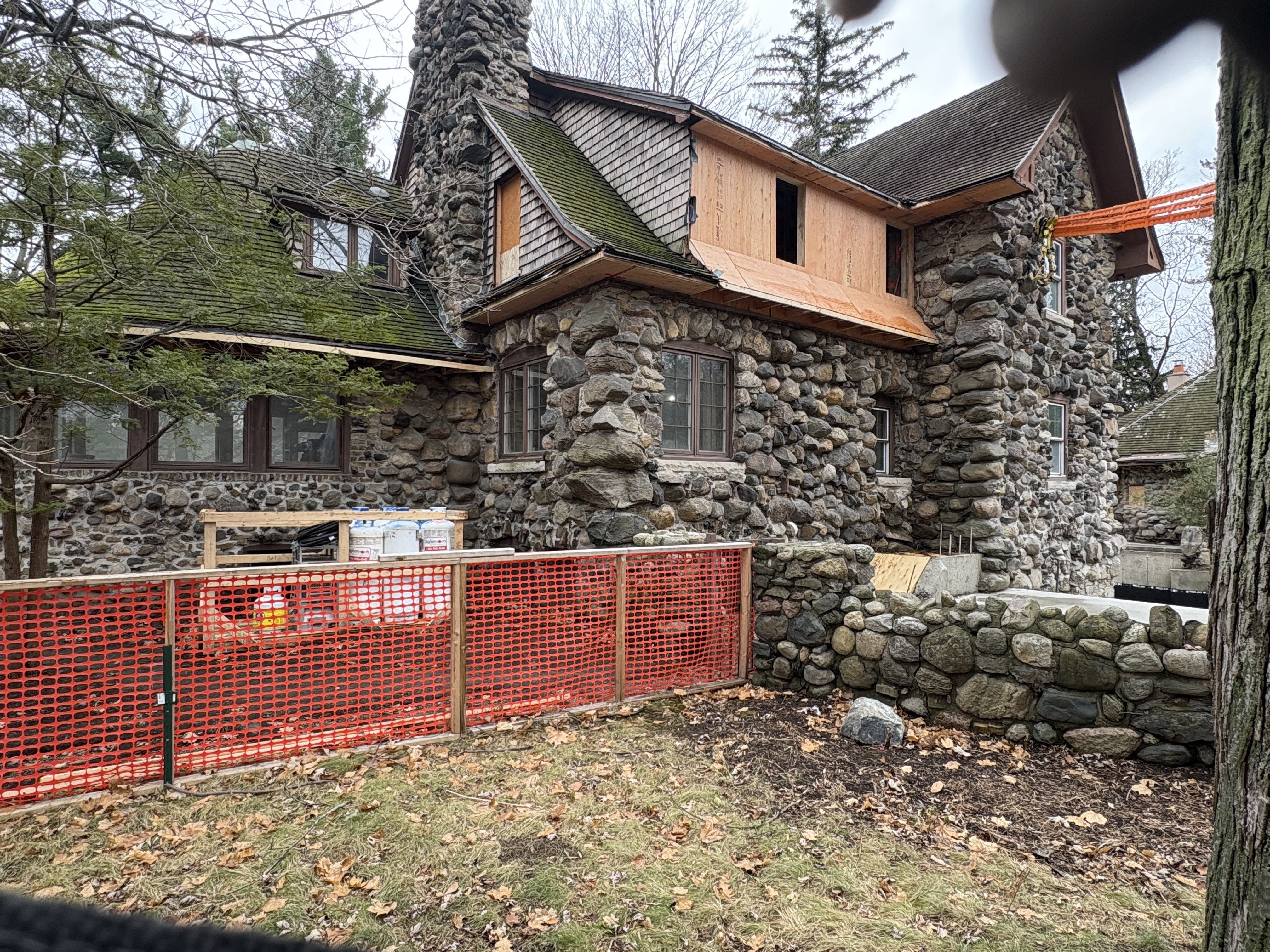
The house was given an historic designation in 1979 because it is one of only a few houses in the city of Toronto that are made of uncut stones. The house was then sold to the lawyer Edward Greenspan in 1984. Greenspan was one of the most known names amongst criminal defense lawyers in the Canada at the time. He worked on several high profile cases and wrote legal textbooks. He had a radio and later a tv series on CBC called Scales of Justice. He was also a strong advocate against the death penalty in Canada. Edward died of a heart attack on Christmas Eve 2014 at the age of 70. I see a little irony that a defense lawyer should live in a house built for a man named Jury.
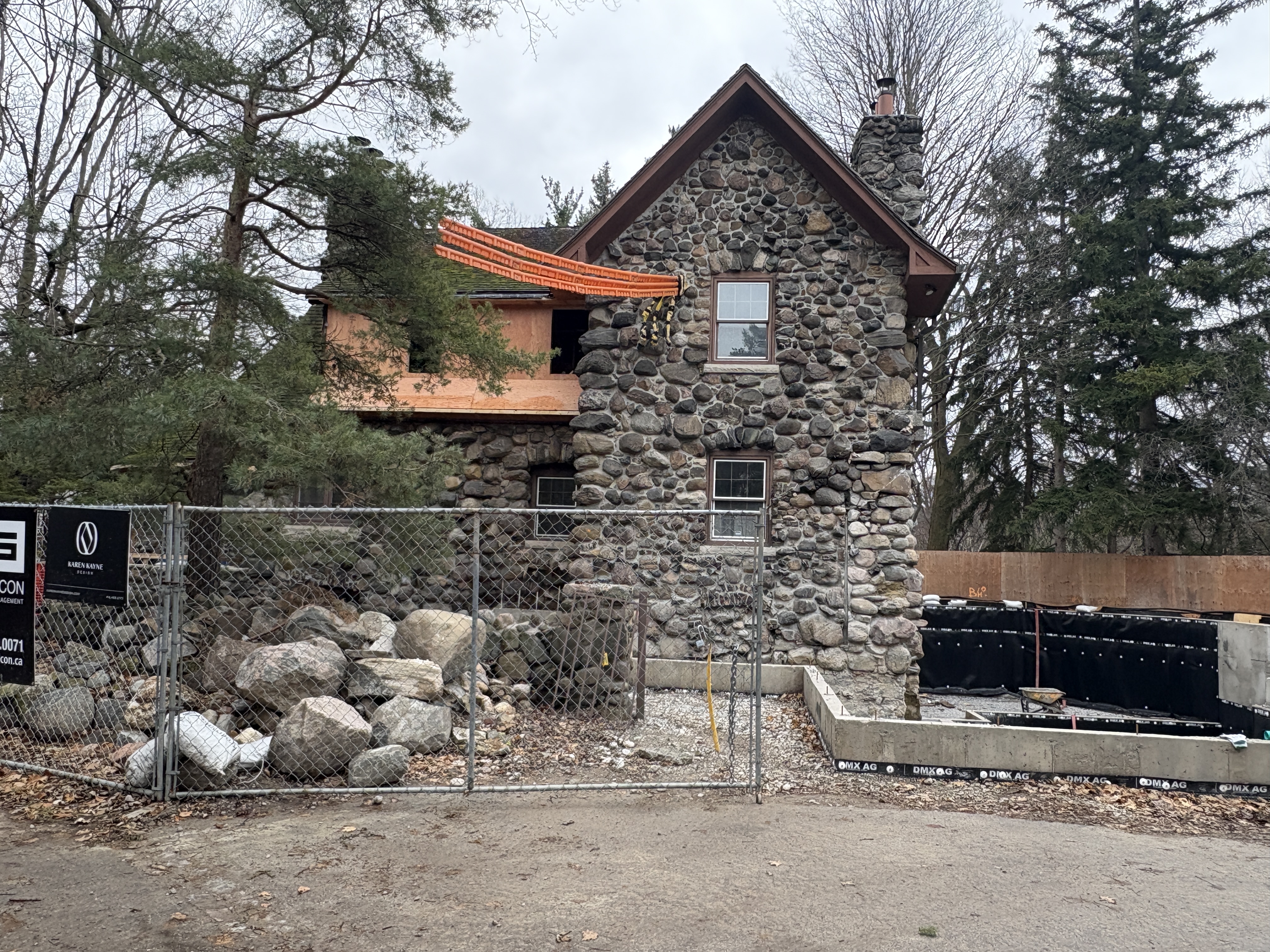
The house went onto the market recently and sold for below the asking price, realizing a mere $7.8 million dollars. There have been several renovations over the years and it looks like one of the most obvious ones, the garage facing Kimbark Boulevard has recently been removed. From the real estate photos it clearly wasn’t harmonious with the stone house that it was added onto. The house and the original drive shed have been retained as they are protected by the historic designation.
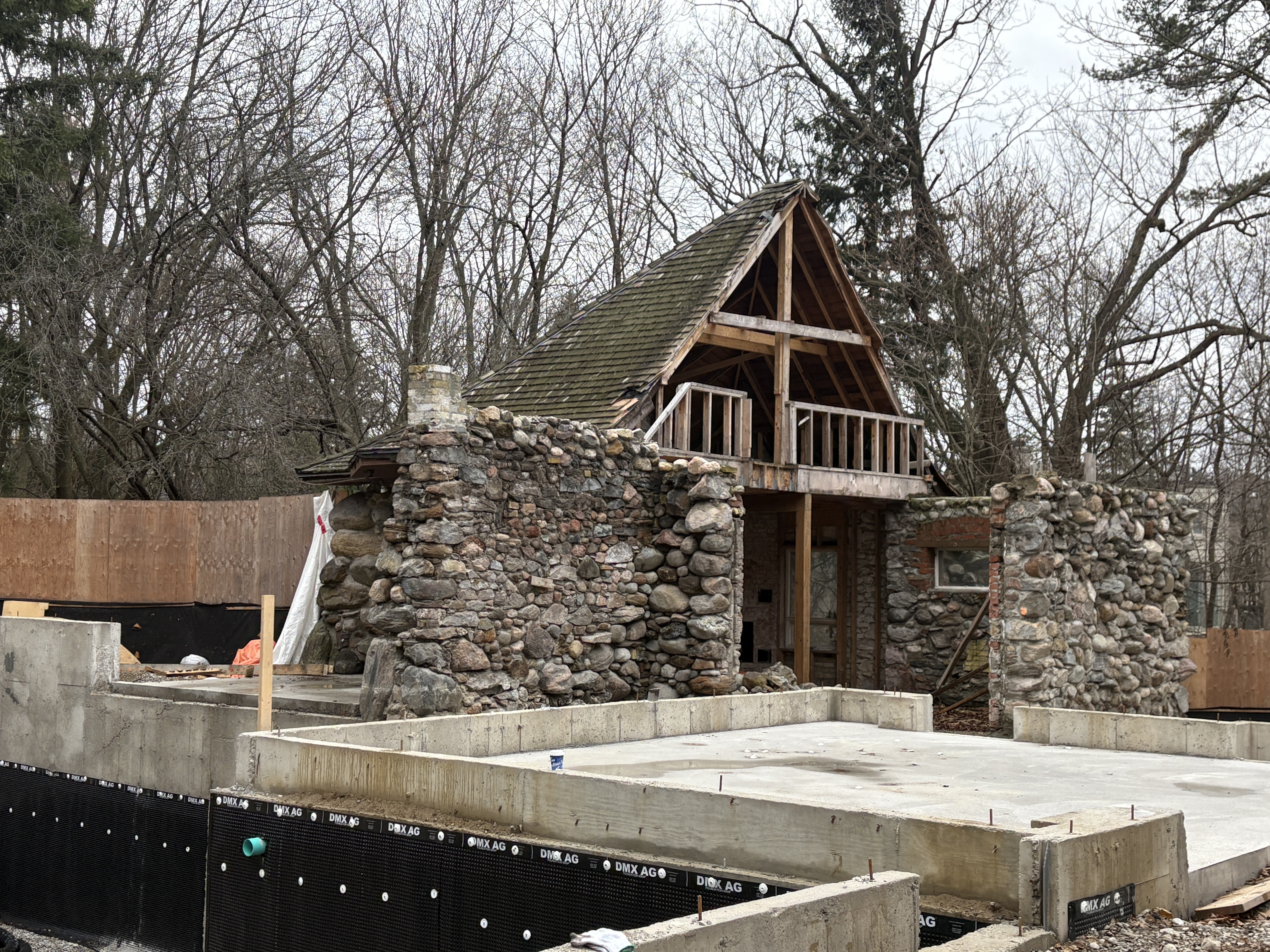
It will be interesting to return to the home in a year and see what has been done with the renovations and how they fit in, or don’t, with the older stone home.

Google Maps link: Kimbark House

Like us at http://www.facebook.com/hikingthegta

Follow us at http://www.hikingthegta.com
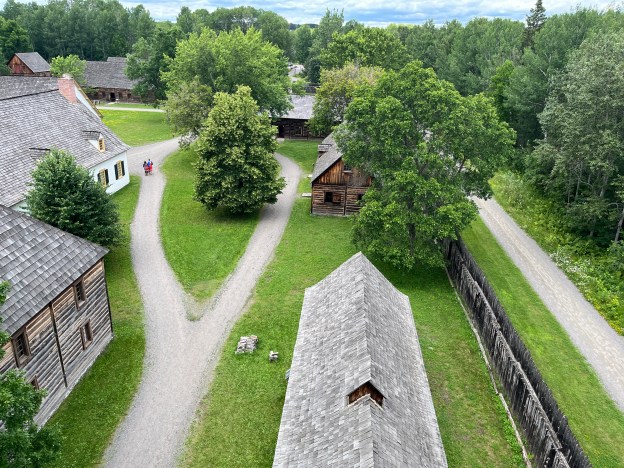
Fort William Historical Park

August 10, 2024

The fur trade was using the Kaministiquia River as early as 1681 when the French were trading with the Ojibwe. The river became an important trade route that lasted until the 1820s. In 1776 a group of fur traders from Montreal decided to join together to reduce competition among themselves and in 1779 they formed the North West Company (NWC). They entered into direct competition with the Hudson Bay Company for the North American fur trade with the indigenous peoples. In 1803 they build a trading fort at the mouth of the Kaministiquia River. The fort was named Fort William in 1807 after the Chief Superintendent of the North West Company who was named William McGillivroy.

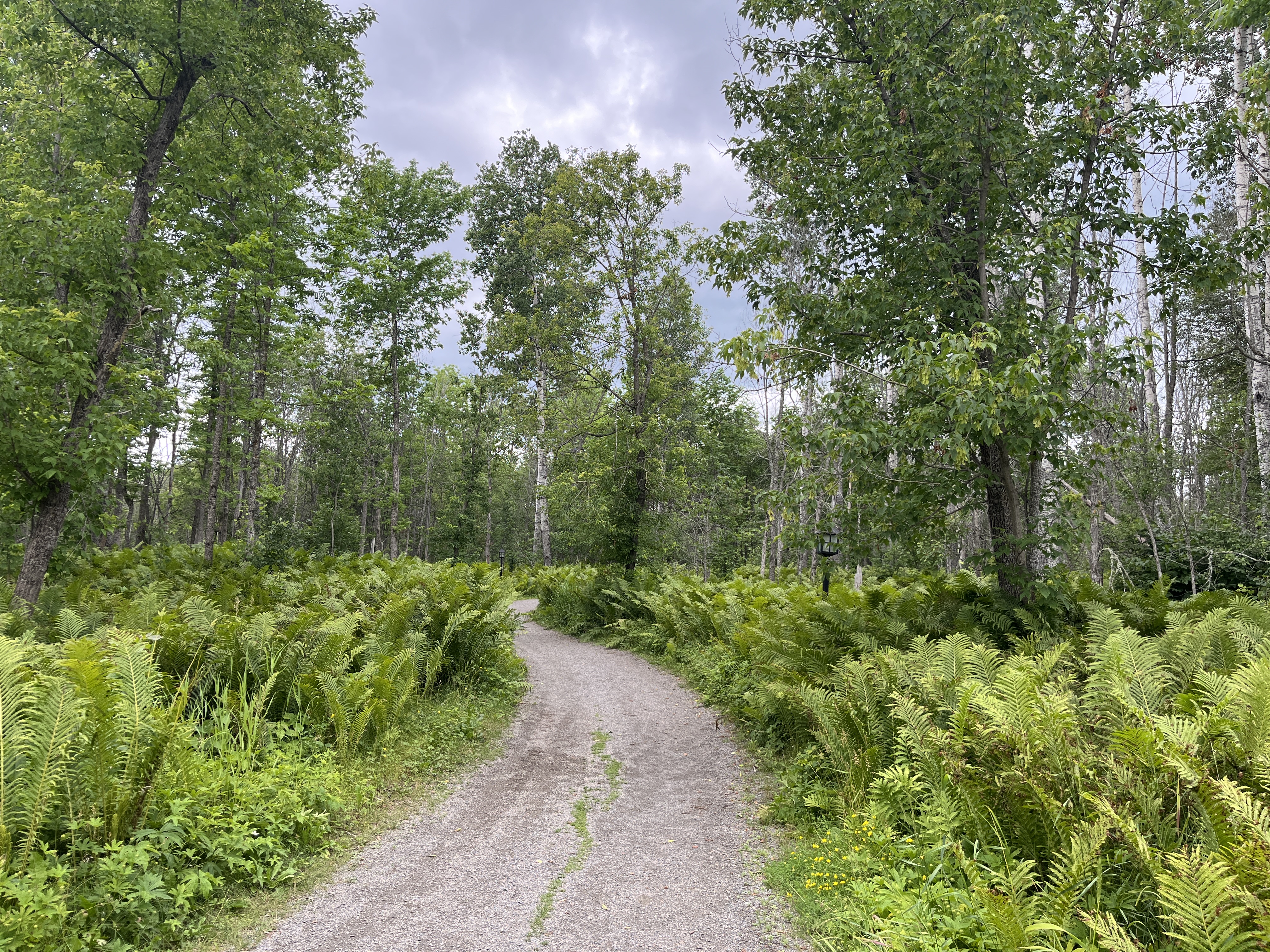
I had the opportunity to visit the recreated fort while on a business trip to Thunder Bay. The image below shows the trail from the visitor centre to the Fort William Historical Park which is about an 8 minute walk.

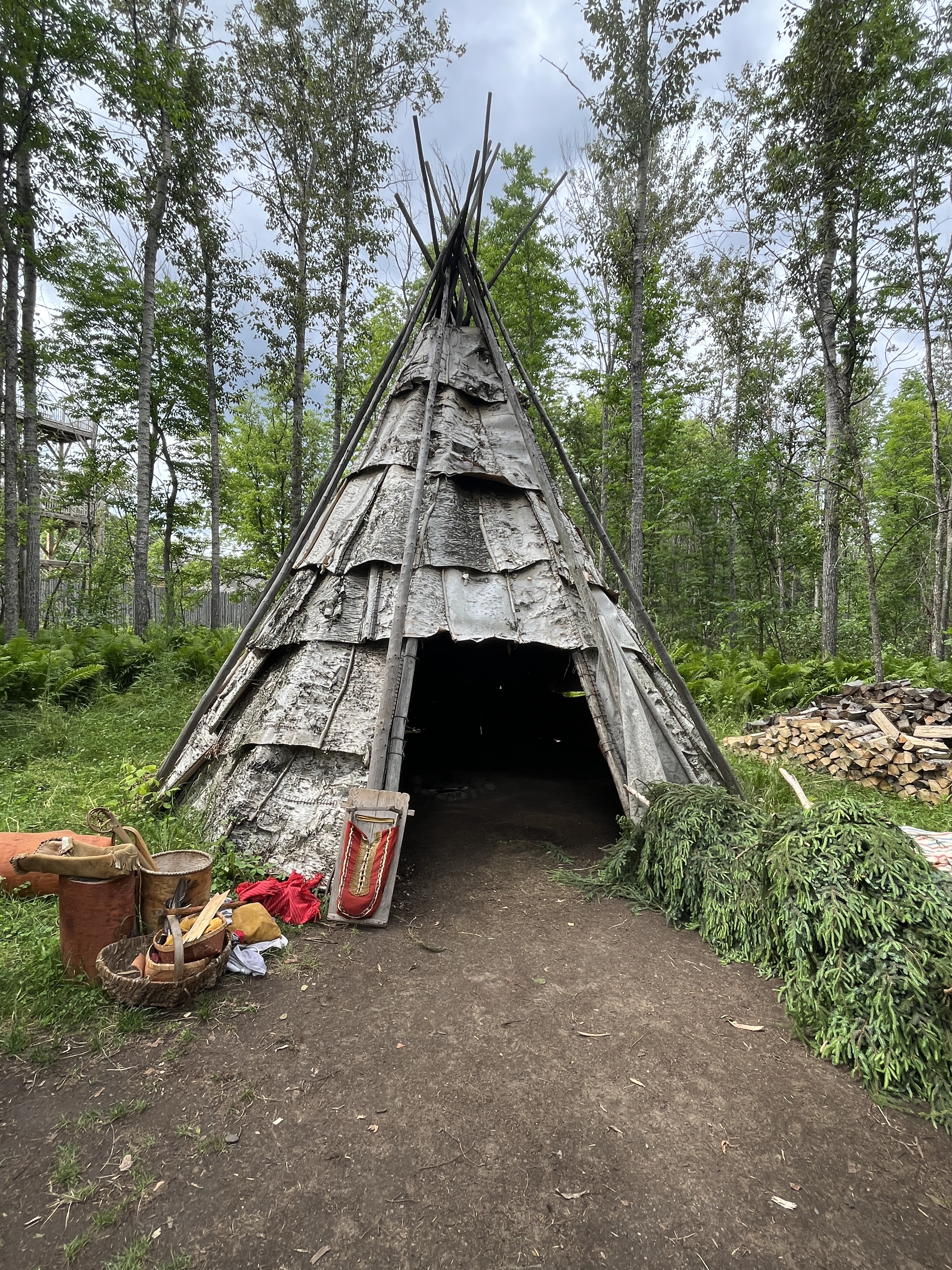
The fort became a major transshipment point for the furs that the indigenous people collected and traded with the NWC. There was an annual rendezvous that occurred at the fort in the end of July and start of August. Furs were brought from the interior and traded at the fort. They would be shipped to Montreal and then off to Europe. The NWC needed a central meeting place because there wasn’t enough time for the furs to be taken all the way to Montreal and then make the trip back before the rivers would freeze for the winter. When you visit Fort William Historical Park you will find a small Indigenous camp outside the fort.

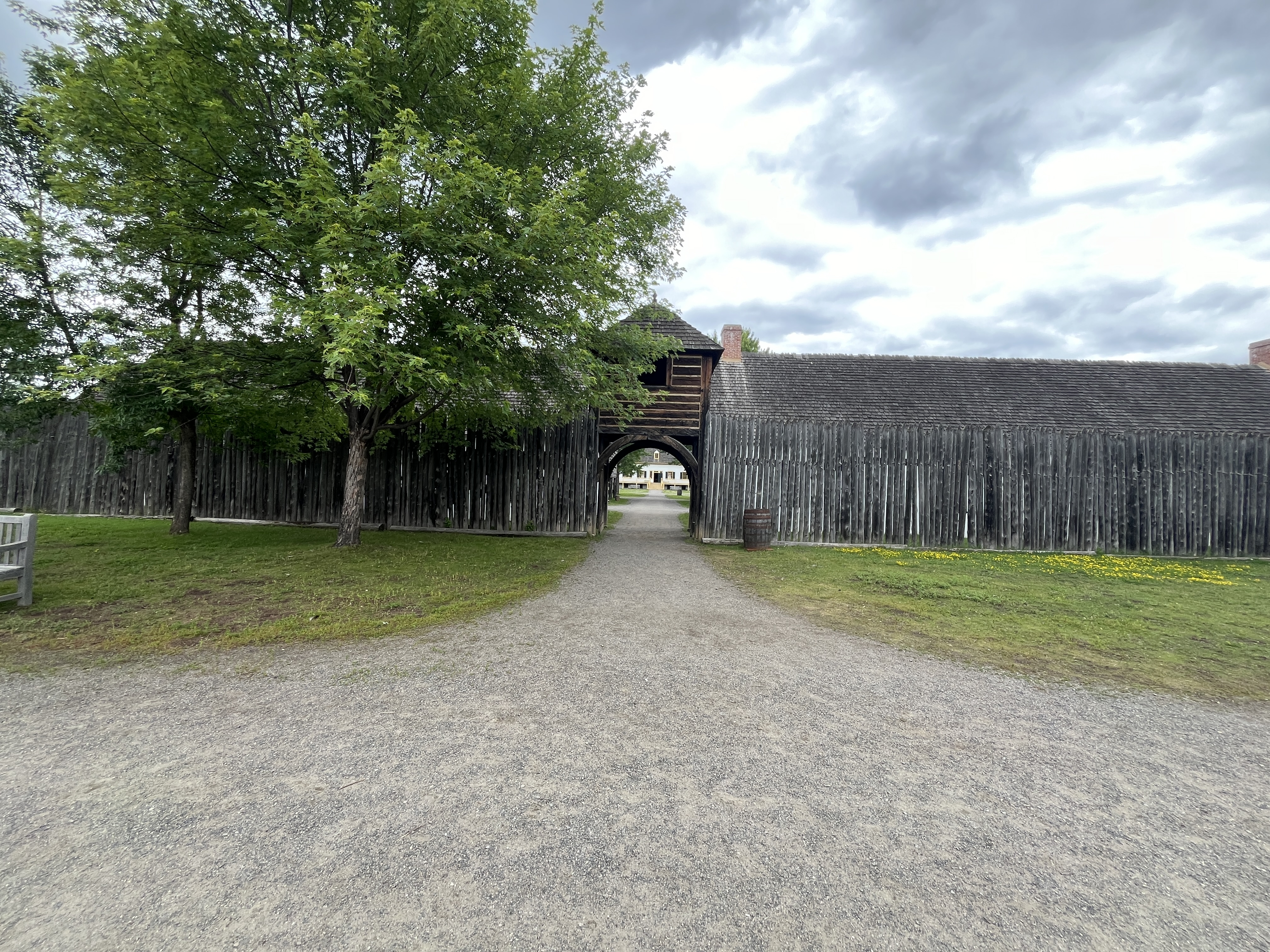
The NWC had good relationships with the indigenous peoples and although they chose to camp outside of the fort, there were plenty of opportunities to interact with the traders. The relationships were friendly and many inter-racial marriages took place. The image below shows the entrance to the fort from the river.

An incident on June 19, 1816 near modern day Winnipeg became known as the Seven Oaks Incident. This stemmed from a proclamation of the Hudson Bay Company in January 1814 that prohibited the export of pemmican from the colony for the next year. Pemmican was the main food of the fur traders as it could be transported easily. This proclamation was seen as an attempt to control the fur trade. Tensions rose and by 1816 they were at the breaking point. When things came to a head on June 19th a gun battle occurred that left 21 dead on the side of the Hudson Bay Company and 1 on the North West Company side.

The result was the occupation of Fort William by Lord Selkirk of the Hudson Bay Company for about 10 months between 1816-1817. By 1821 the North West Company was in financial troubles and the two companies agreed to a merger under the name of the Hudson Bay Company.

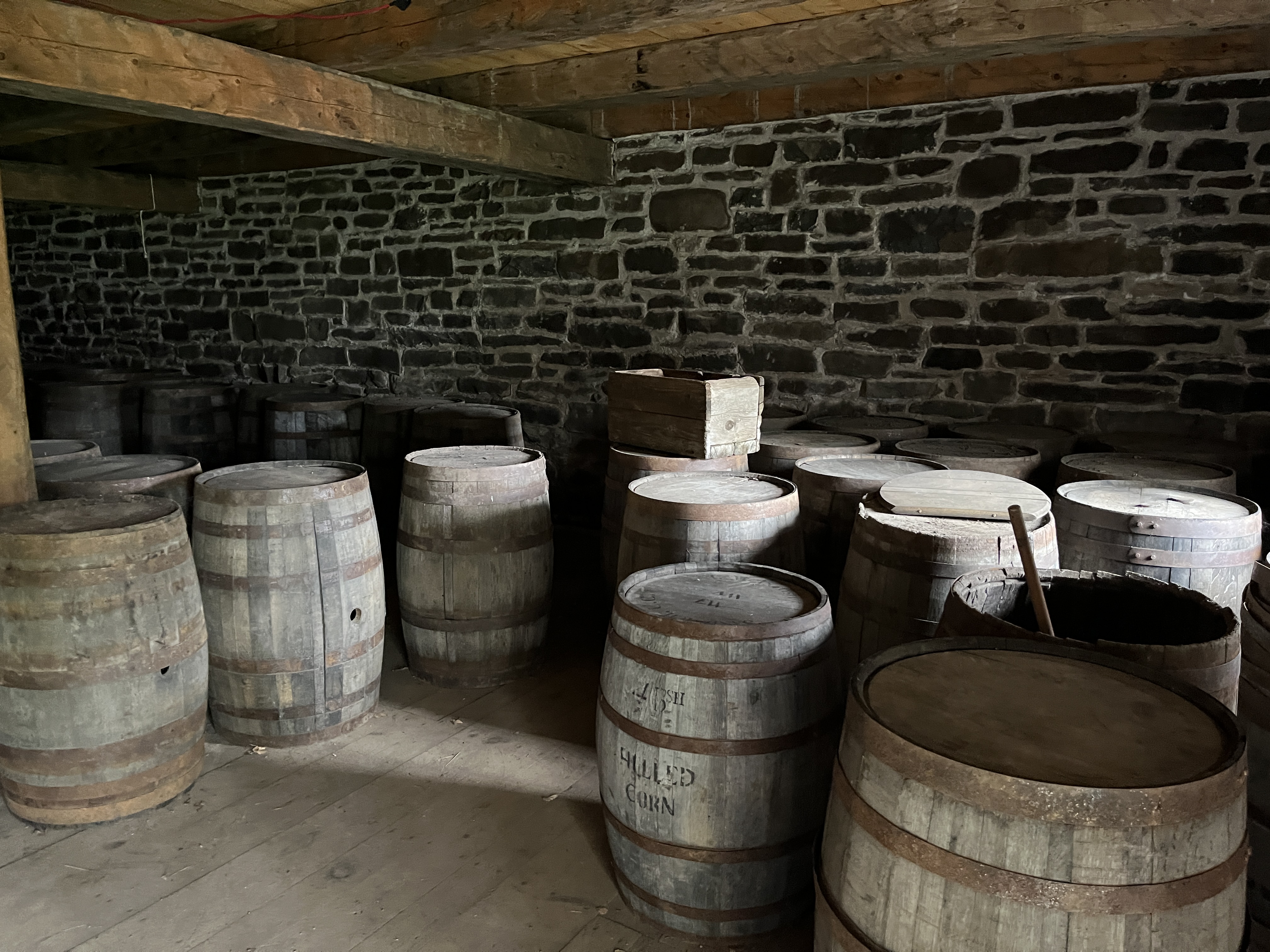
The fur trade then took on the routes of the Hudson Bay company and Fort William lost its significance. By 1883 it was closed. The image below shows the inside of the fur storage building complete with its 60 pound bundles of furs awaiting shipment to Montreal.

The site of the original fort was ideal for the Canadian Pacific Railway and its grain shipping facilities because it was accessible to the lake. The buildings of the fort were slowly demolished and replaced with railway facilities.

The last building standing was the Stone Stores building which was demolished in 1902. The image below shows the recreated building at the Fort William Historical Park.

In 1971 it was decided that the fort would be reconstructed as an historical and educational site. A location 14 kilometres upstream was chosen and the fort was meticulously rebuilt to match the original as close as possible.

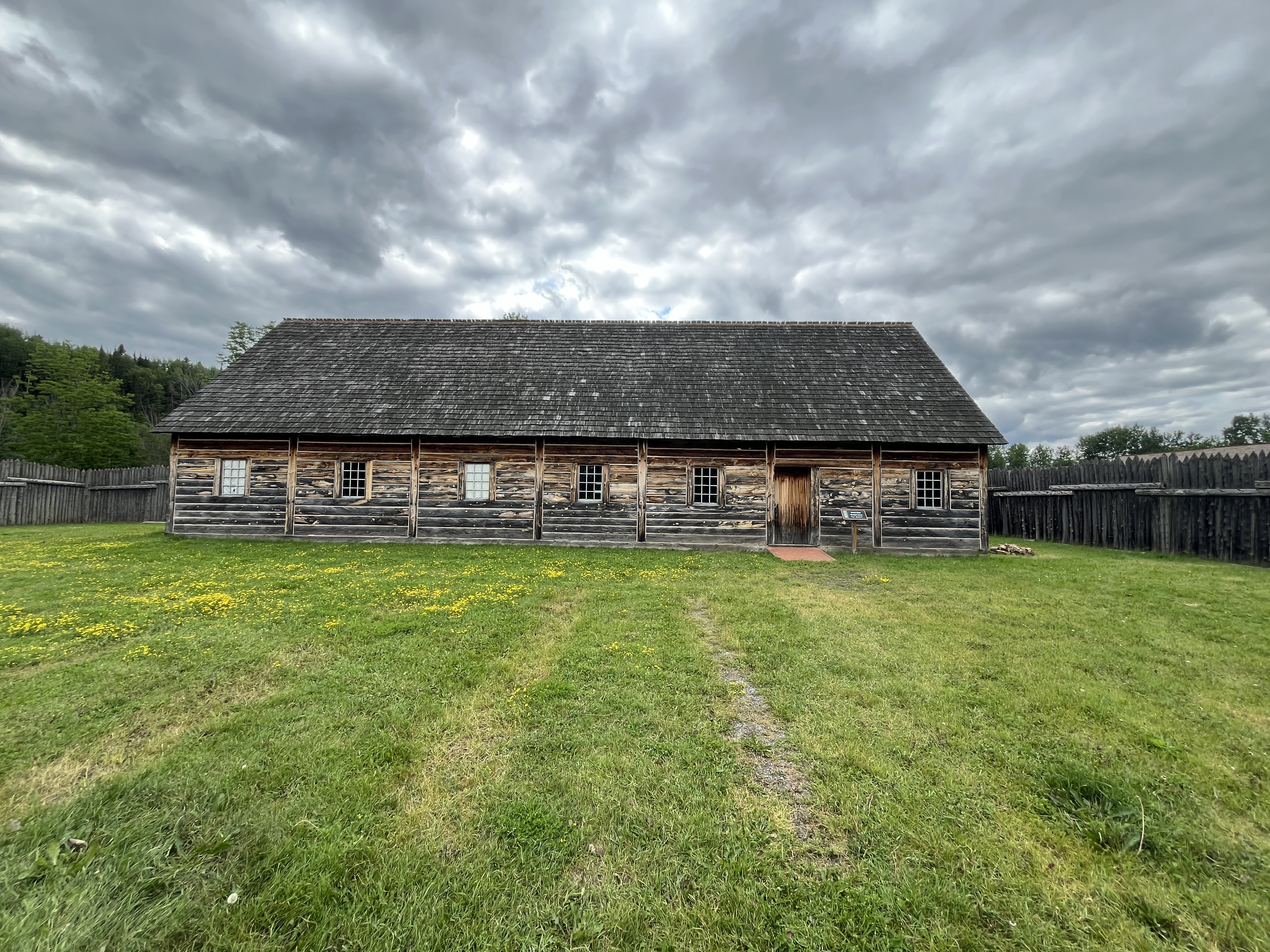
When Lord Selkirk occupied the fort in 1816 he made detailed notes about every aspect of the fort, down to the size and number of windows and floorboards in each building. He measured out the number of steps between each building and what was stored in each one. His notes have survived and the details allowed for a very accurate representation of the original fort. The Naval Shed below is an example of the reconstruction.

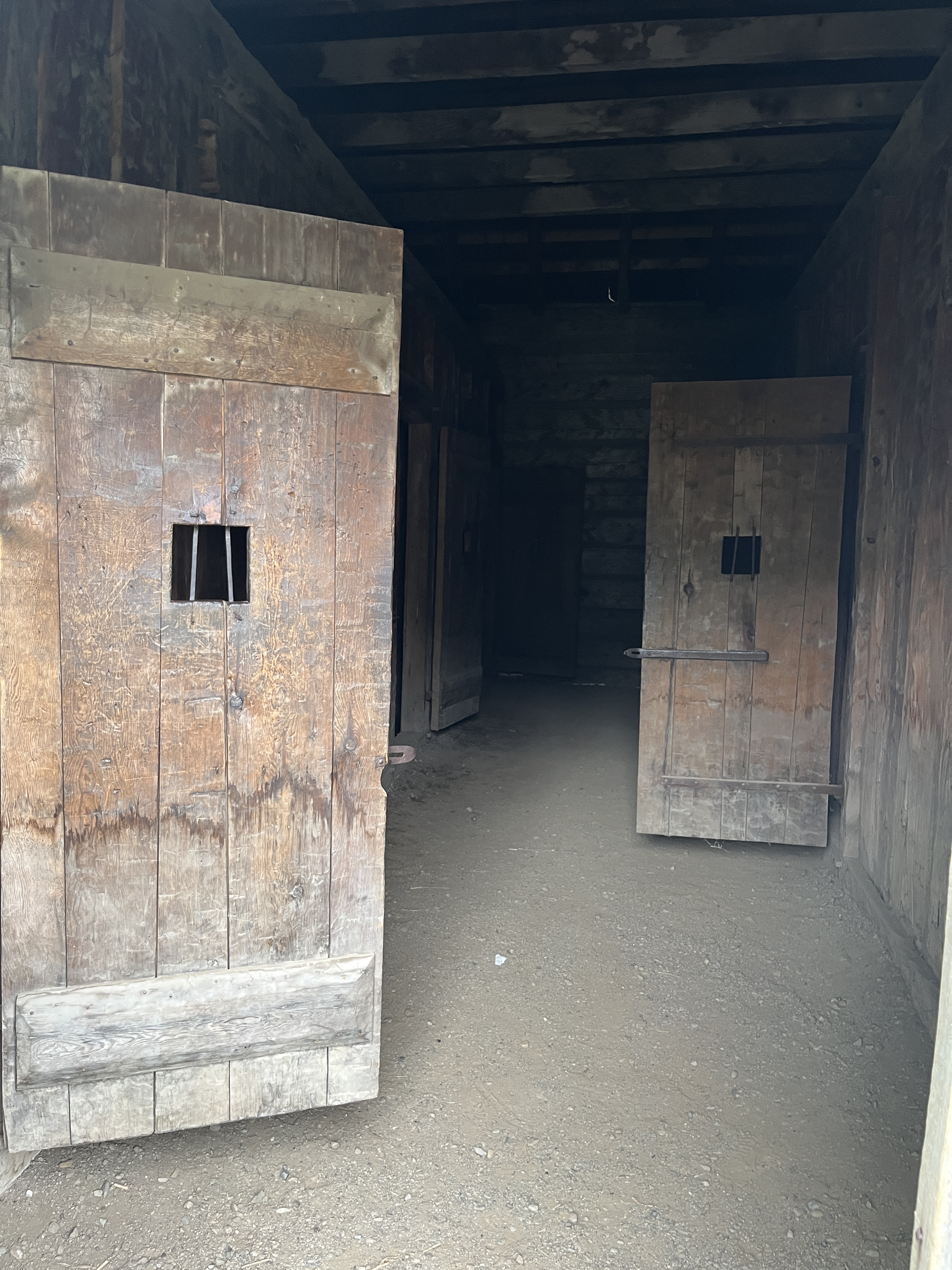
The original goal (pronounced jail) is a dark and forbidding place with no windows where one could be put for causing the smallest disturbance.

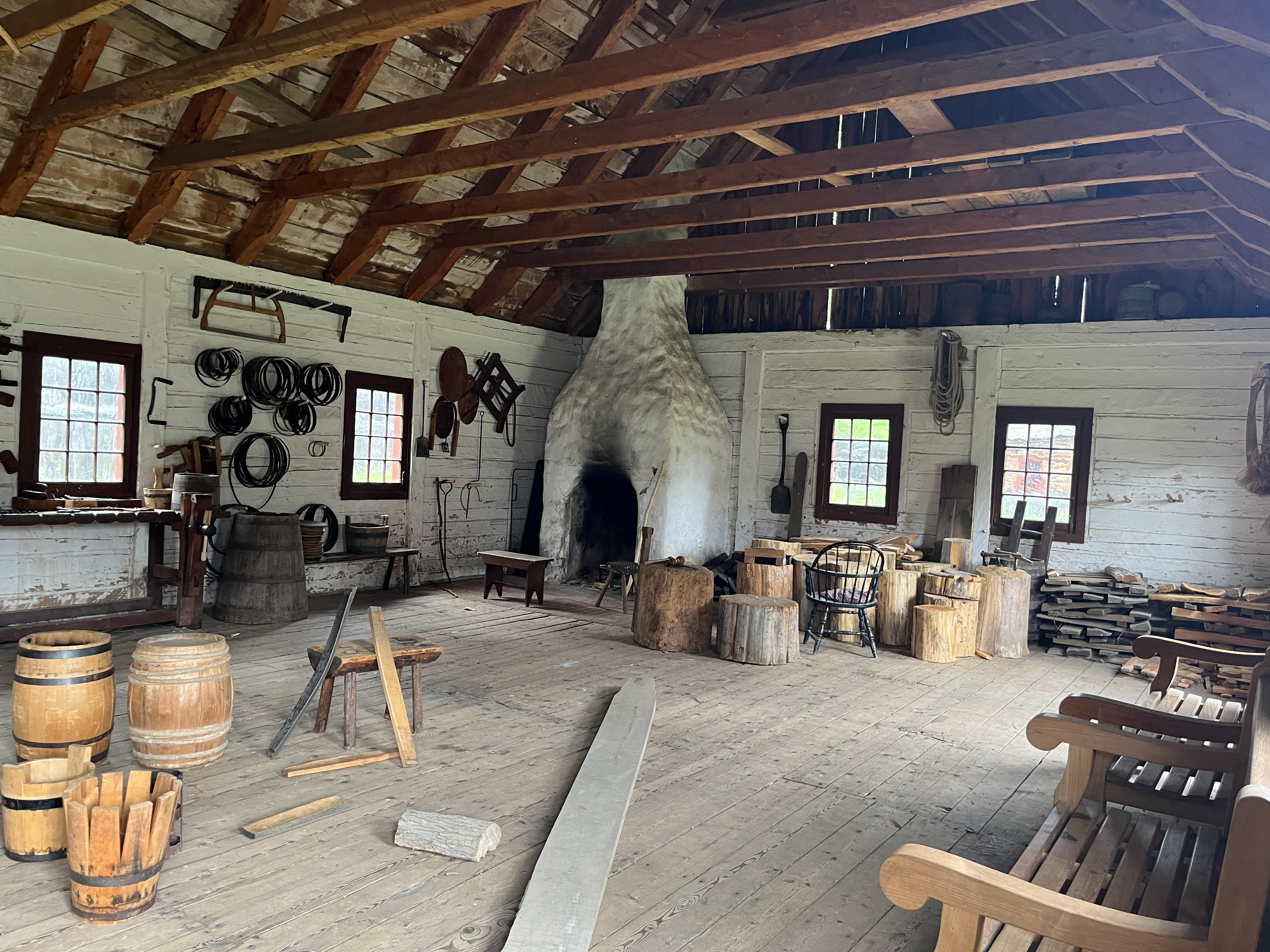
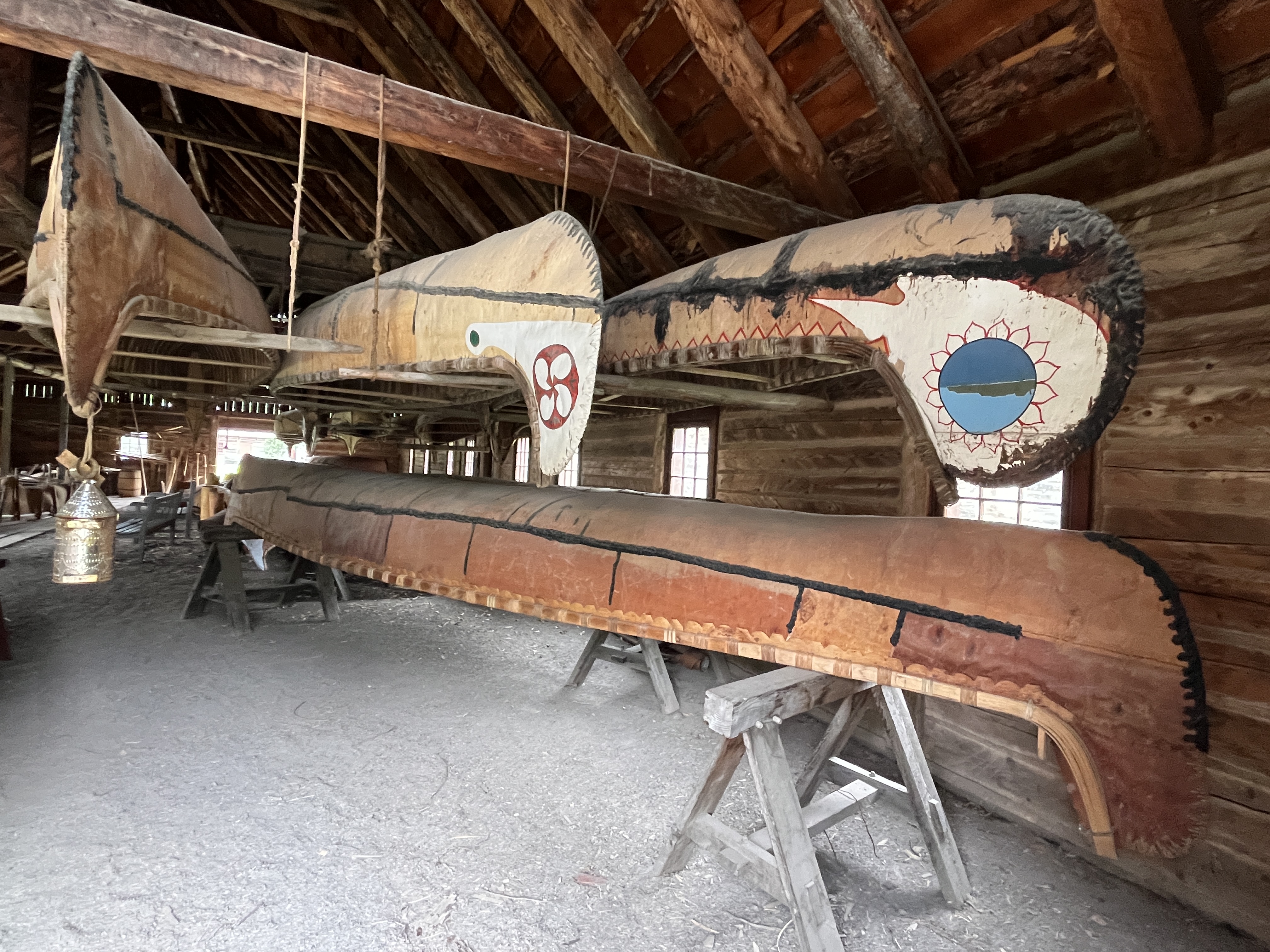
The reconstruction includes storage buildings, accommodations, a hospital building and a couple of canoe buildings as seen earlier in this post. The image below is of the inside of the trades building where the people who maintained everything lived.

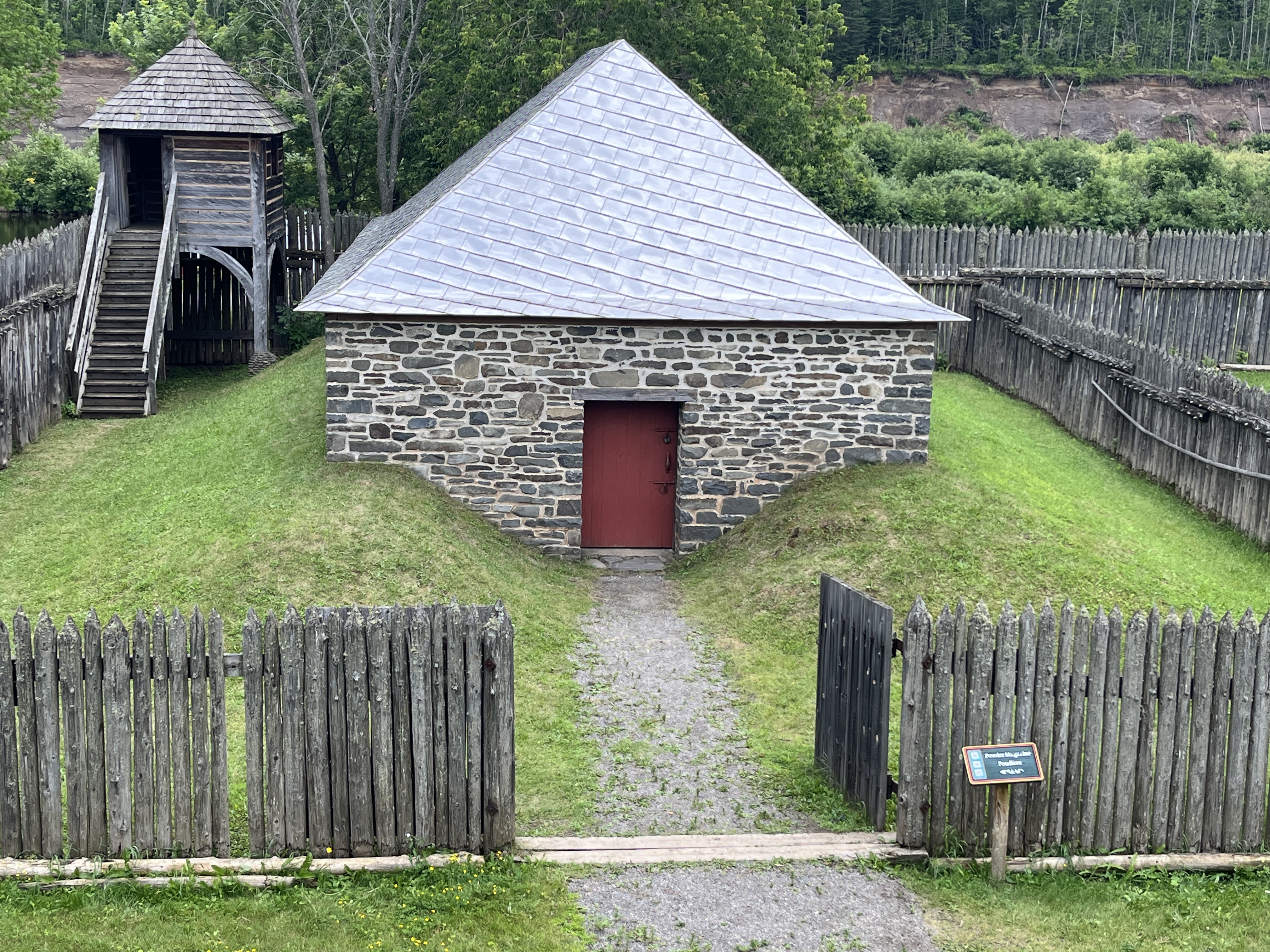
The powder storage building is one of the few stone buildings in the compound. The fort was a bustle of activity during the six weeks of Rendezvous each year but then went back to accommodating a handful of people for the remainder of the year.

Fort William Historical Park used to showcase life in 1816 when the fort was under the control of the Hudson Bay Company but has recently reverted to 1815 when it was independent. There is an entry fee but you can spend many hours here and learn a lot about the fur trade and relations with the indigenous people who made it all work. The staff role play and do an incredible job of pretending that it is 1815.

Google Maps Link: Fort William Historical Park

Like us at http://www.facebook.com/hikingthegta

Follow us at http://www.hikingthegta.com
Also, look for us on Instagram

Village of Yorkville Park

August 3, 2024

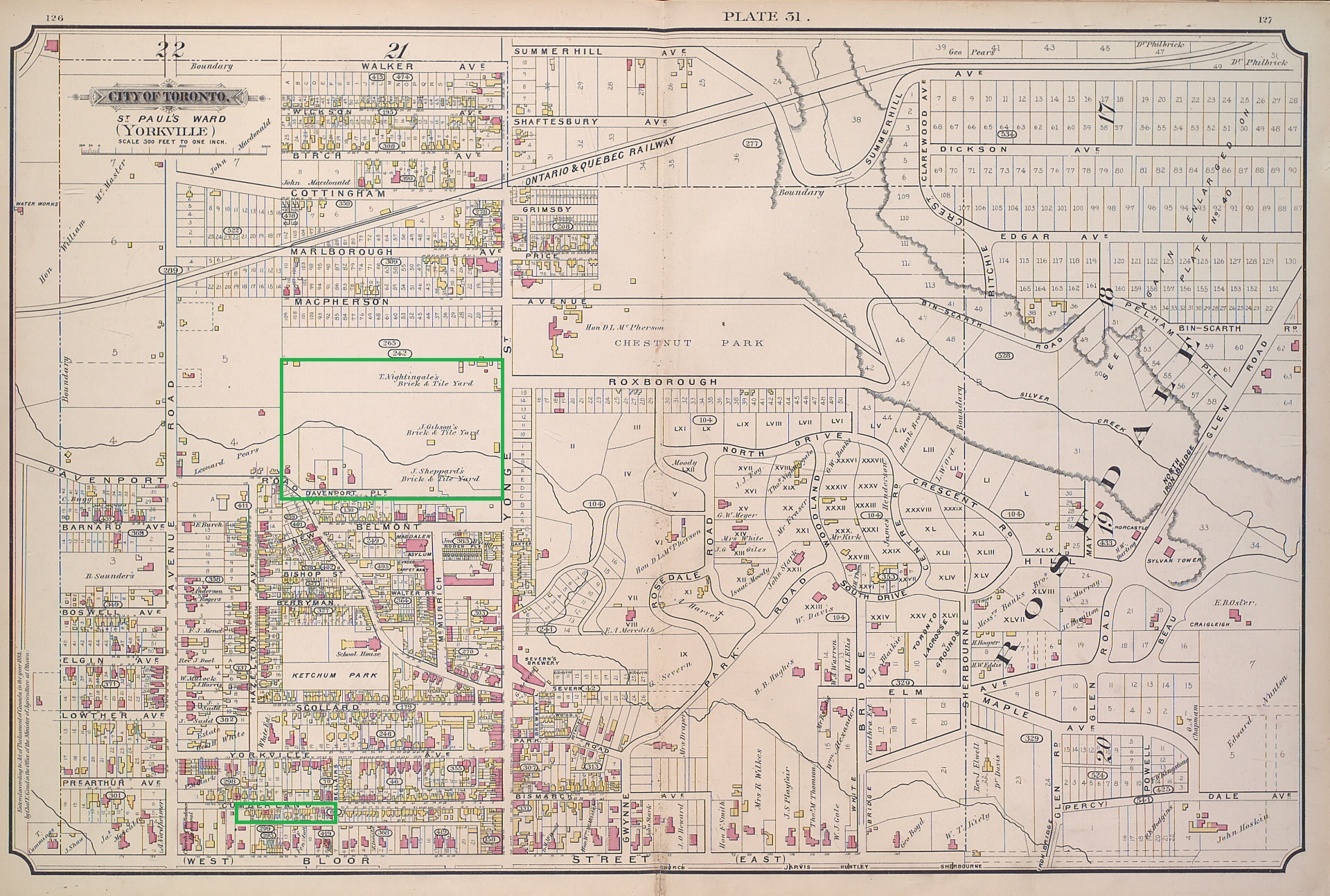
Yorkville has gone through many changes since its founding in 1830. The population reached 1,000 in 1853 which qualified it to be incorporated as a village. When it refused to buy water from Toronto it developed the Yorkville Water Works which we described in detail in the linked post. In 1883 it was annexed to Toronto and became known as St. Paul’s Ward. In the 1960s it was the centre of the Canadian Hippie movement and became a cultural home for budding artists including Joni Mitchell, Gordon Lightfoot and Neil Young. Today it is home to one of Toronto’s most prestigious shopping areas. The map below is from the 1884 Goads Fire Insurance maps. It shows the village of Yorkville at the time of annexation. The brickyards are set within the larger green square in the middle of the map while the area that would become the Village of Yorkville Park is located in the smaller green rectangle near the bottom.

Cumberland Avenue used to be lined with of a series of Victorian Homes that stood there until the building of the Bloor Subway Line in the 1950s. They were demolished and after the subway construction was finished the area was turned into a parking lot. It remained a surface parking lot for around 40 years until 1991 when ongoing pressure from the residents and Business Improvement Association resulted in the city agreeing to turn it into an urban park. But not the standard city park with a few trees and a couple of benches, This was to be a unique park which has become an oasis for local people as well as a tourist attraction for visitors. Joni Mitchell wrote her hit song Big Yellow Taxi in 1970 which was an environmental statement and included the line “They paved paradise and put up a parking lot.” It’s a bit ironic that the area in which she got her start decided to remove a parking lot and put up a bit of paradise.

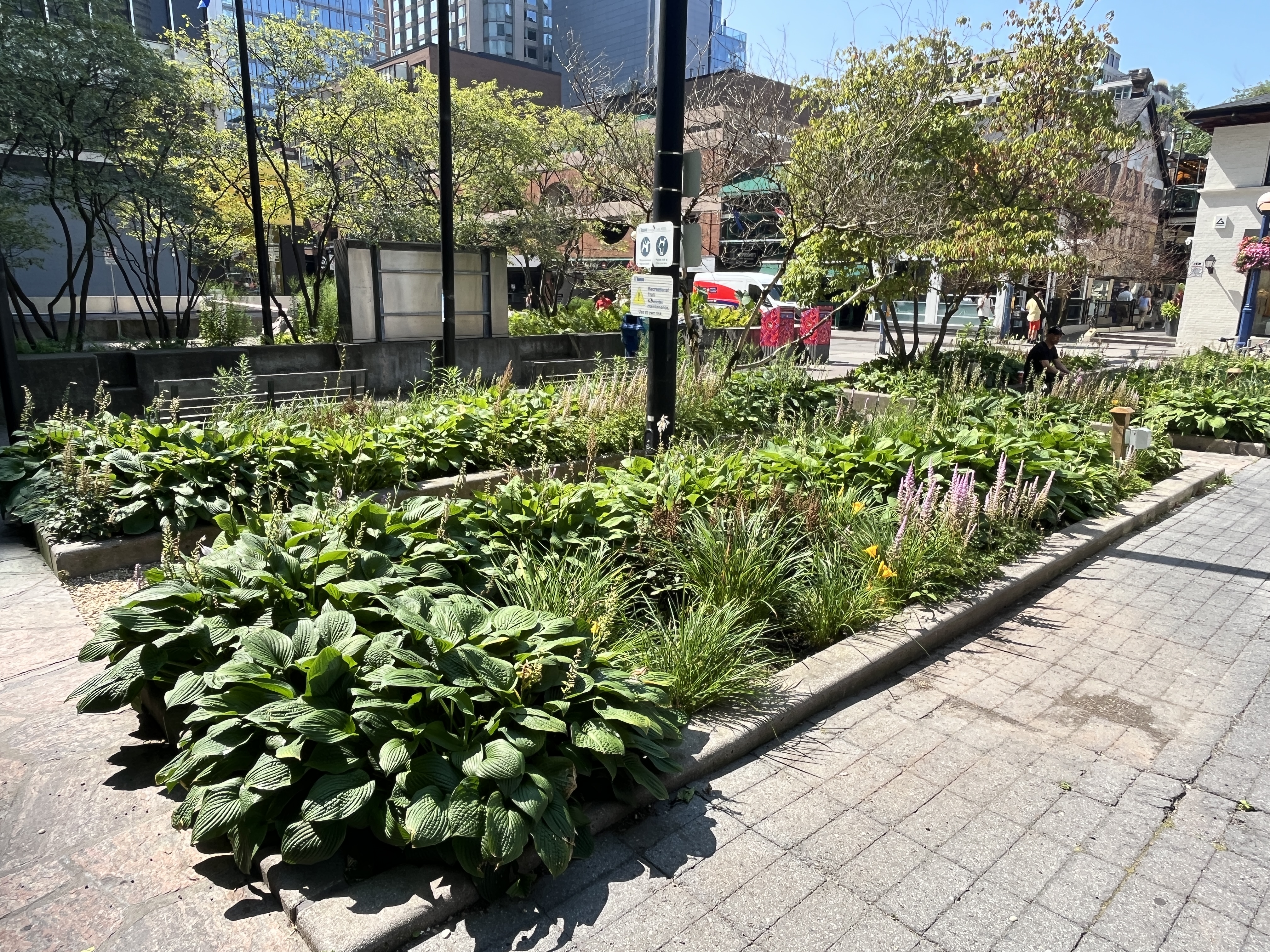
The park is laid out in sections that are sized by the original property lots that used to stand here. There is a separate garden for each section of the park that reflects a different Canadian ecosystem.

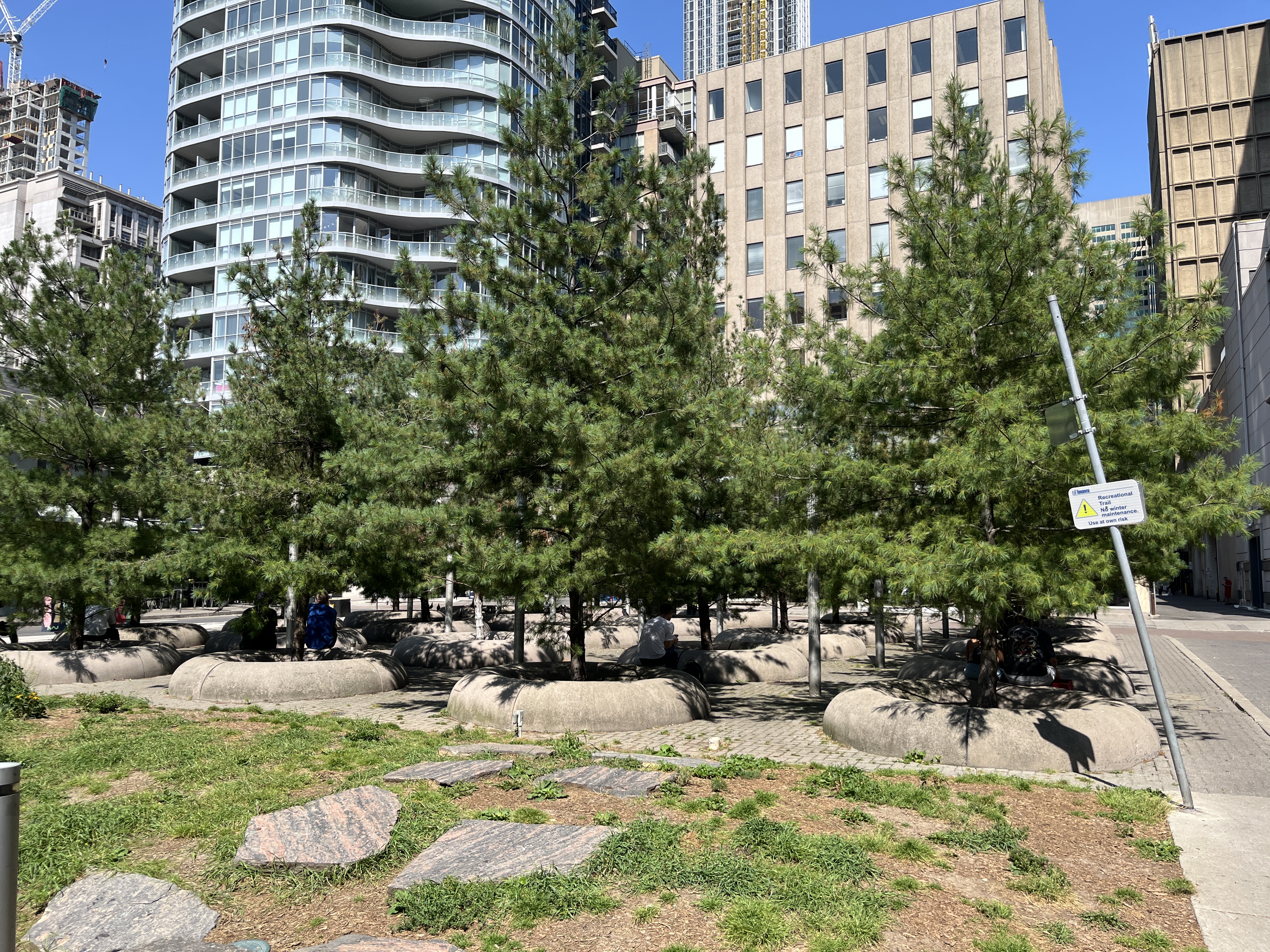
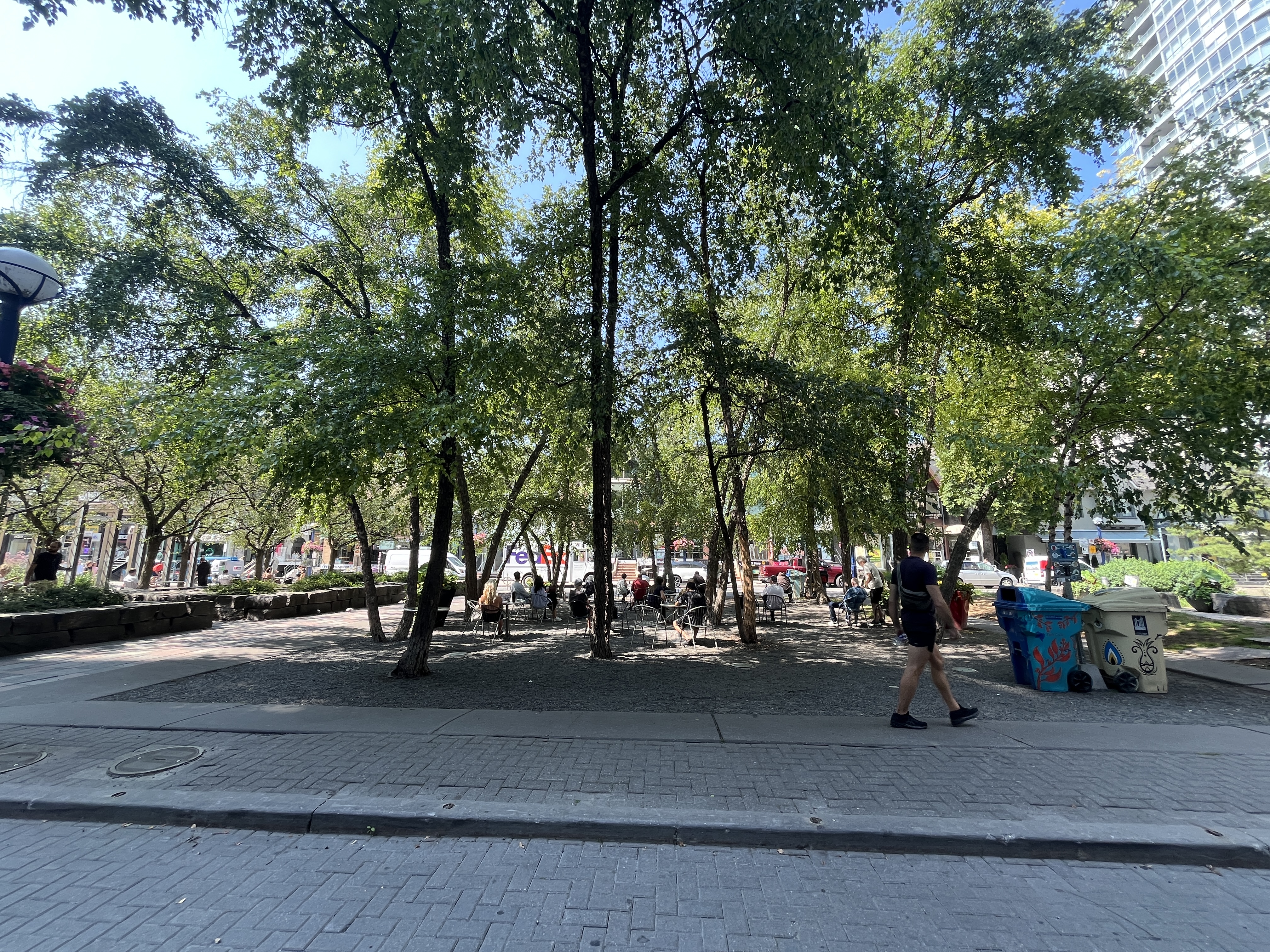
Starting at the east end of the park beside Bellair Street you have a Pine Grove. These pine trees represent one of the many ecosystems that can be found within Canada. The trees are each surrounded with a concrete structure shaped like an inner tube of a tire. These are intended to be used as seating.

The Victorian homes that once stood on this property were adorned with a wide variety of gardens as was the fashion at the time.

The twelve gardens or zones in the park are 1) Pine Grove, 2) Prairie Wildflower Garden, 3) Birch Grove, 4) Fragrant Herb Rock Garden, 5) Crabapple Orchard, 6) Festival Walk, 7) Ontario Marsh, 8) Aider Grove, 9) Canadian Shield Clearing, 10) Herbaceous Border Garden, 11) Heritage Walk and 12) Amelanchier Grove.

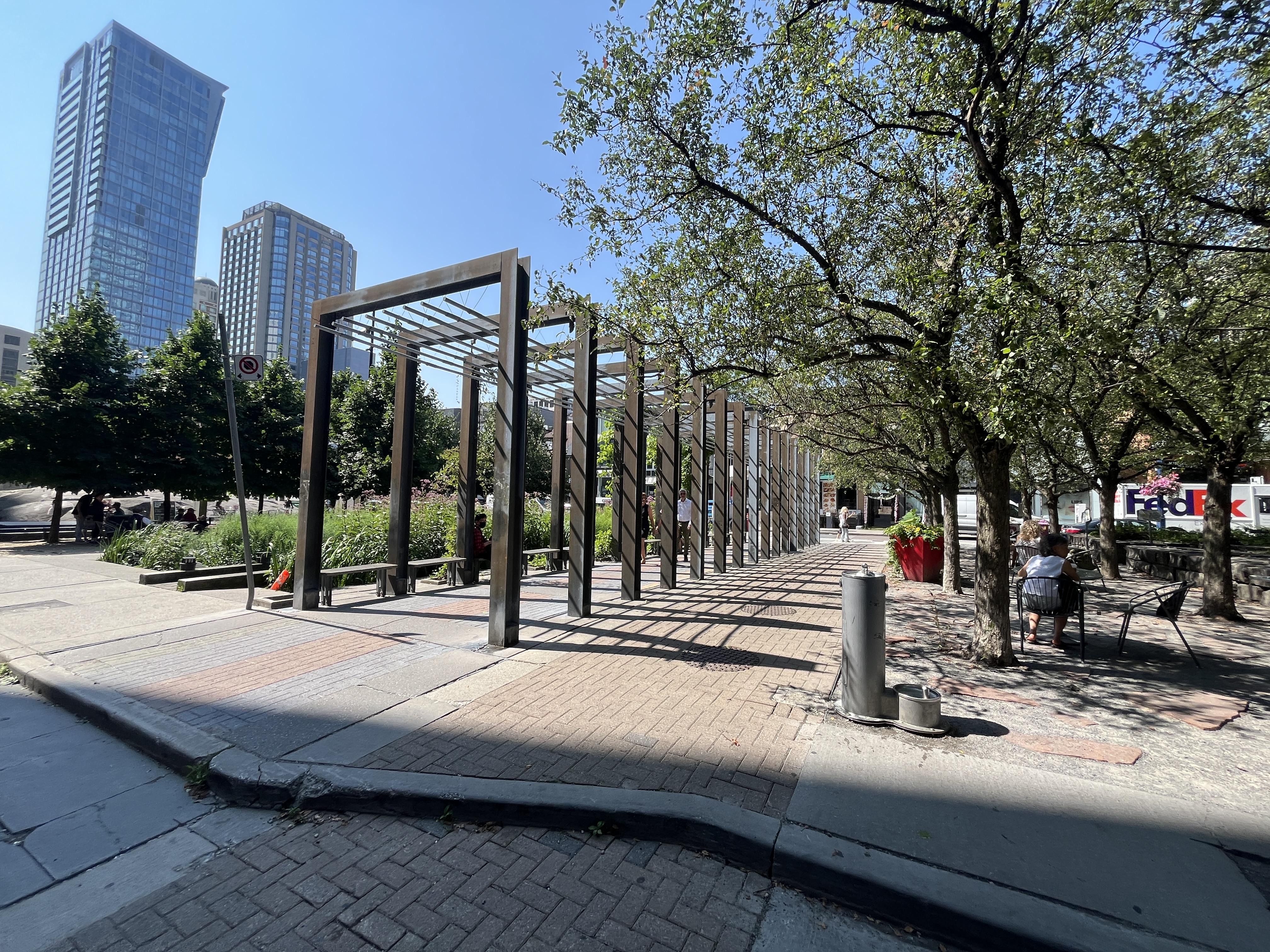
The park is a great place to enjoy a cool drink or chat with friends. There is plenty of places to sit and lots of shade on a hot day. The little shops and boutiques of Yorkville are all close by as are the major retailers on The Mink Mile an upscale shopping district in Yorkville.

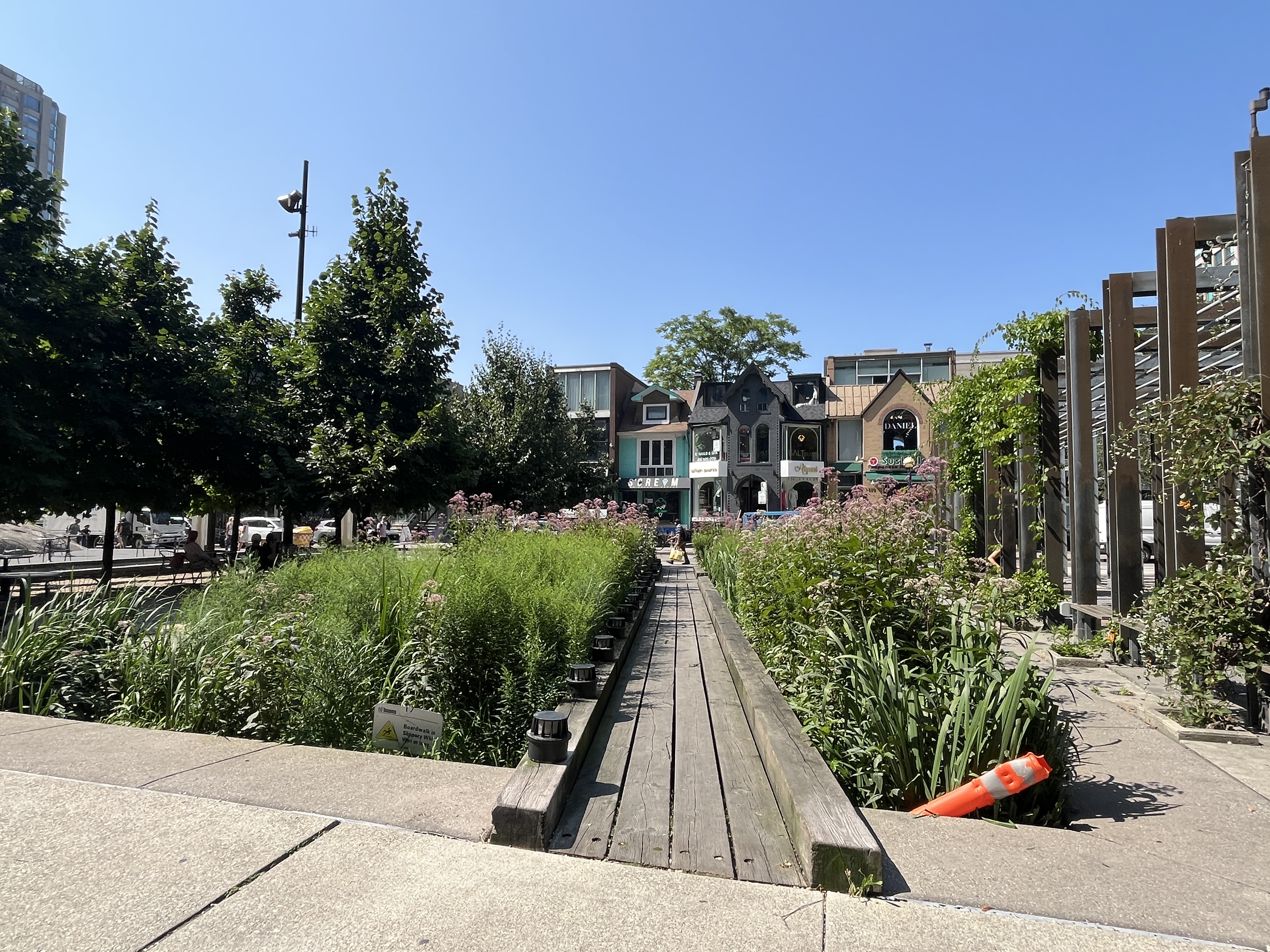
The Marshy Wetlands are traversed by a set of boardwalks in a crisscross pattern similar to what we find on many hiking trails.

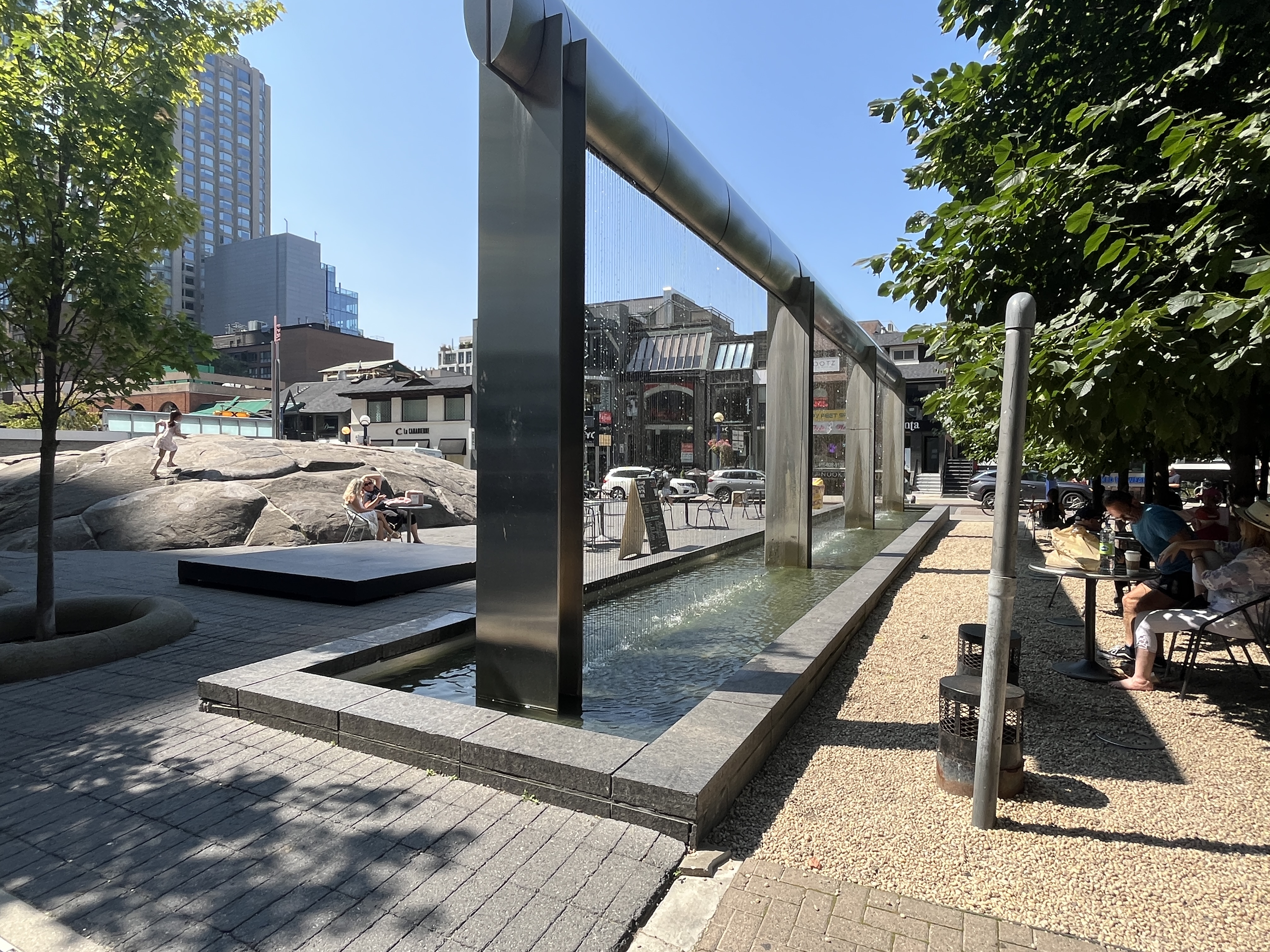
The stainless steel water curtain sprays a mist on the local plants and turns into an icicle display in the winter.

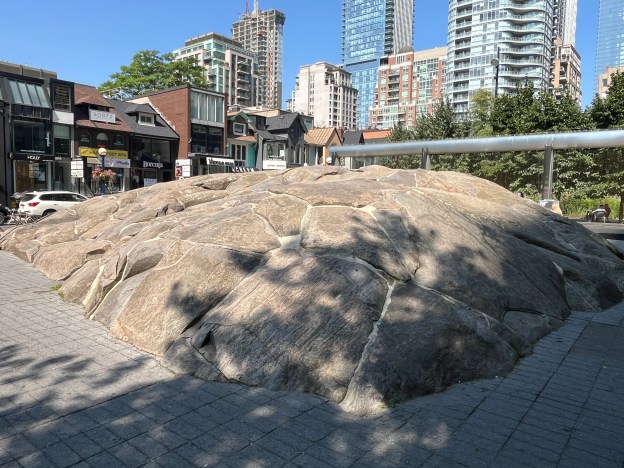
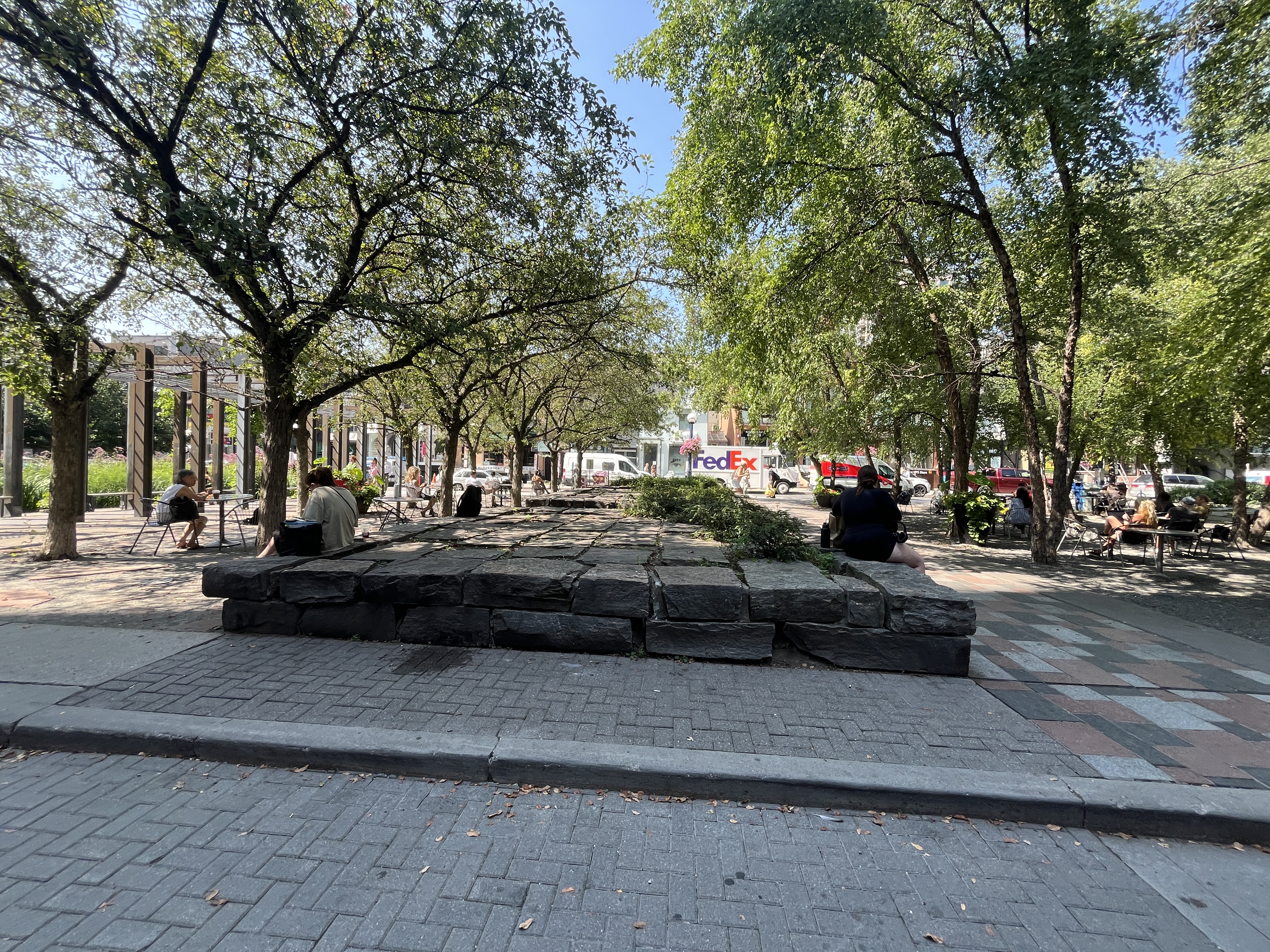
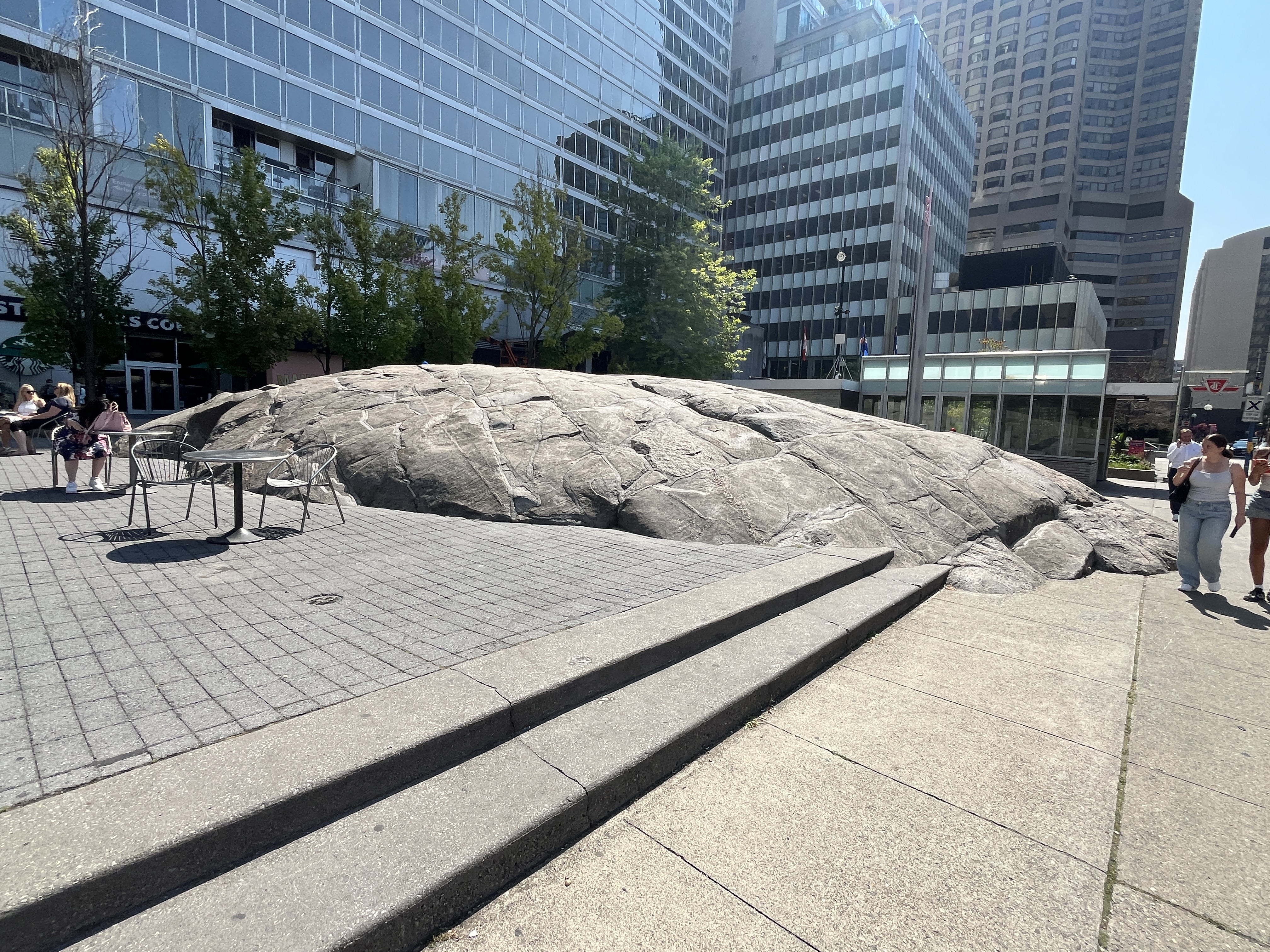
Perhaps the most striking feature of the park is the Canadian Shield display. This 650 ton piece of rock was brought from the north in pieces on 20 flatbed trucks. It was reassembled in place and has become a focus of the park.

The park covers roughly one acre but has so much variety that it easily is one of the most interesting park designs in the city.

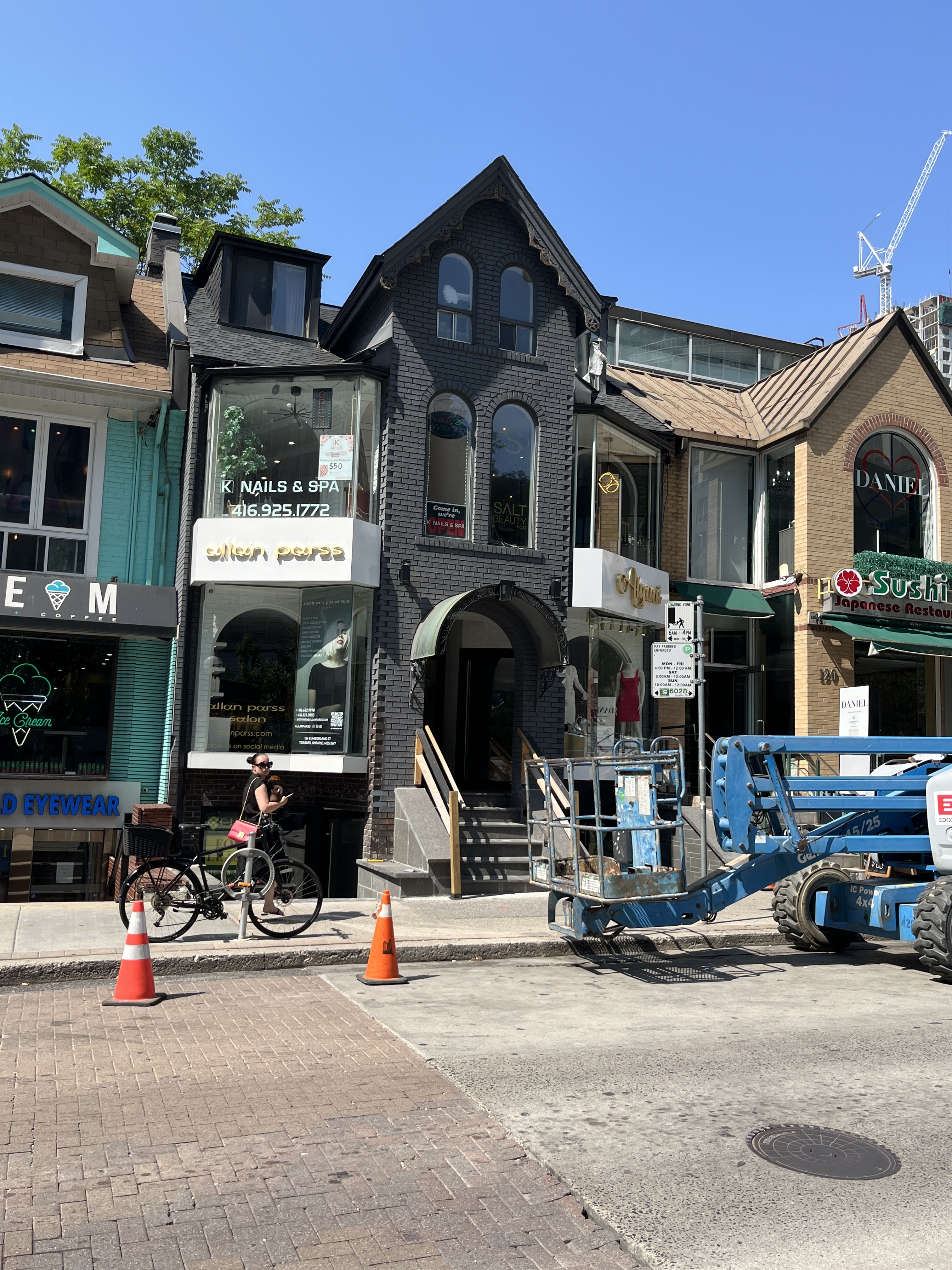
Although the Victorian homes on the south side of Cumberland Street were demolished the north side was left intact. Many of these buildings have been replaced over the years but a few original structures remain. The building at 122-124 Cumberland Street is an example of the type of homes that once stood where the park is now located. Until recently it had its original brick colour but has been painted black. In my opinion this isn’t an improvement.

The Village of Yorkville Park is an interesting place to visit if you find yourself in the area of Bloor and Bay Streets.

Related Posts: Yorkville Water Works, Ramsden Park – Yorkville Brickworks

Google Maps Link : Village of Yorkville Park

Like us at http://www.facebook.com/hikingthegta

Follow us at http://www.hikingthegta.com
Also, look for us on Instagram

Lime Kiln and Chipmunk Trail

July 27, 2024

On a recent business trip to Ottawa I had a few hours of off time so I Googled to see what the top trails in the area were. One of them caught my attention because of the name. So, I decided to go investigate the Lime Kiln and Chipmunk Trail. This is just one of the trails that are part of the Greenbelt Trail Network.

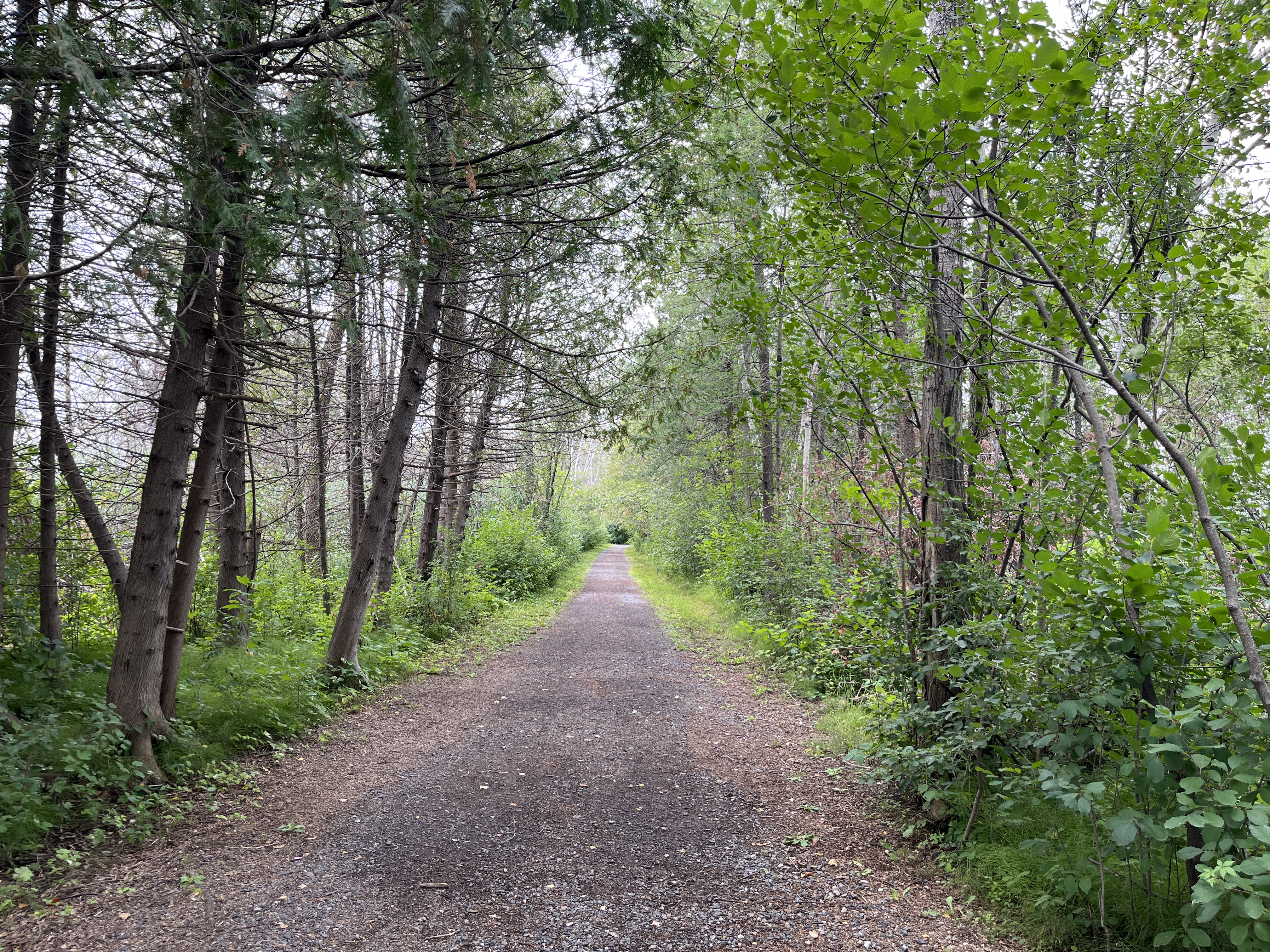
There is a wide trail that leads away from the parking lot and this set of trails would be considered easy to moderate in difficulty. There is little change in elevation and no rough ground to be covered.

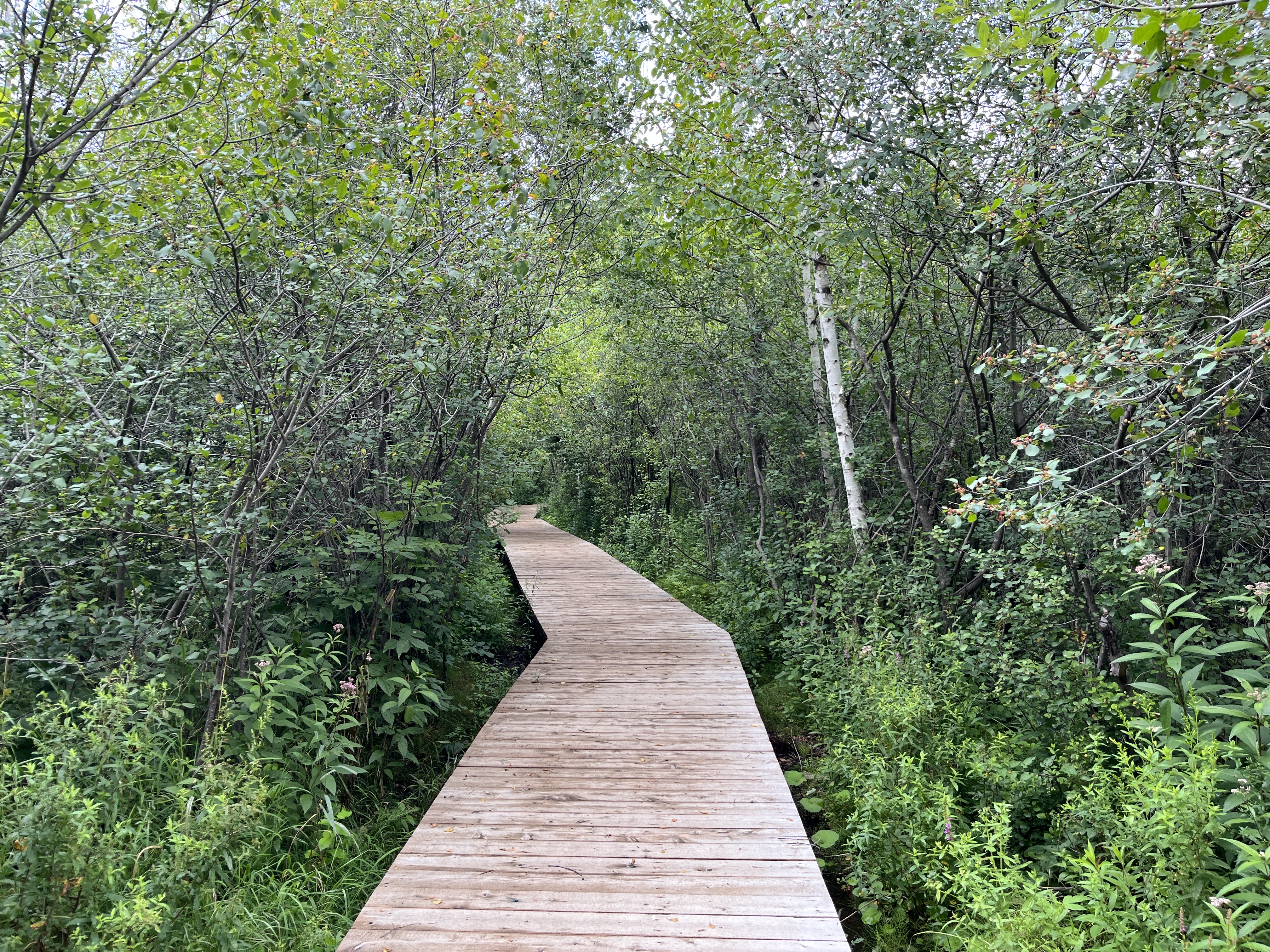
There are a few swampy sections that have been made accessible through the addition of some boardwalks.

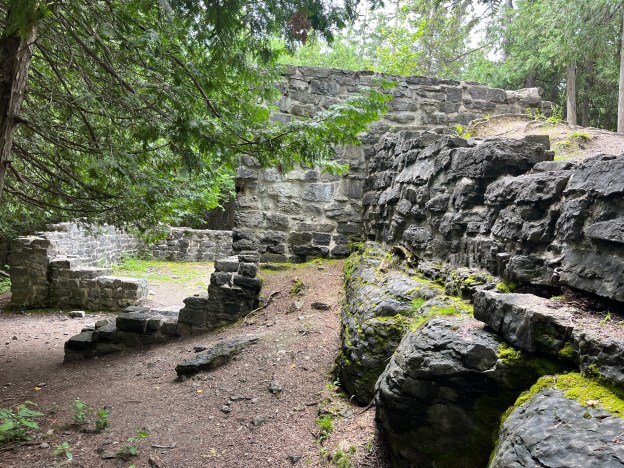
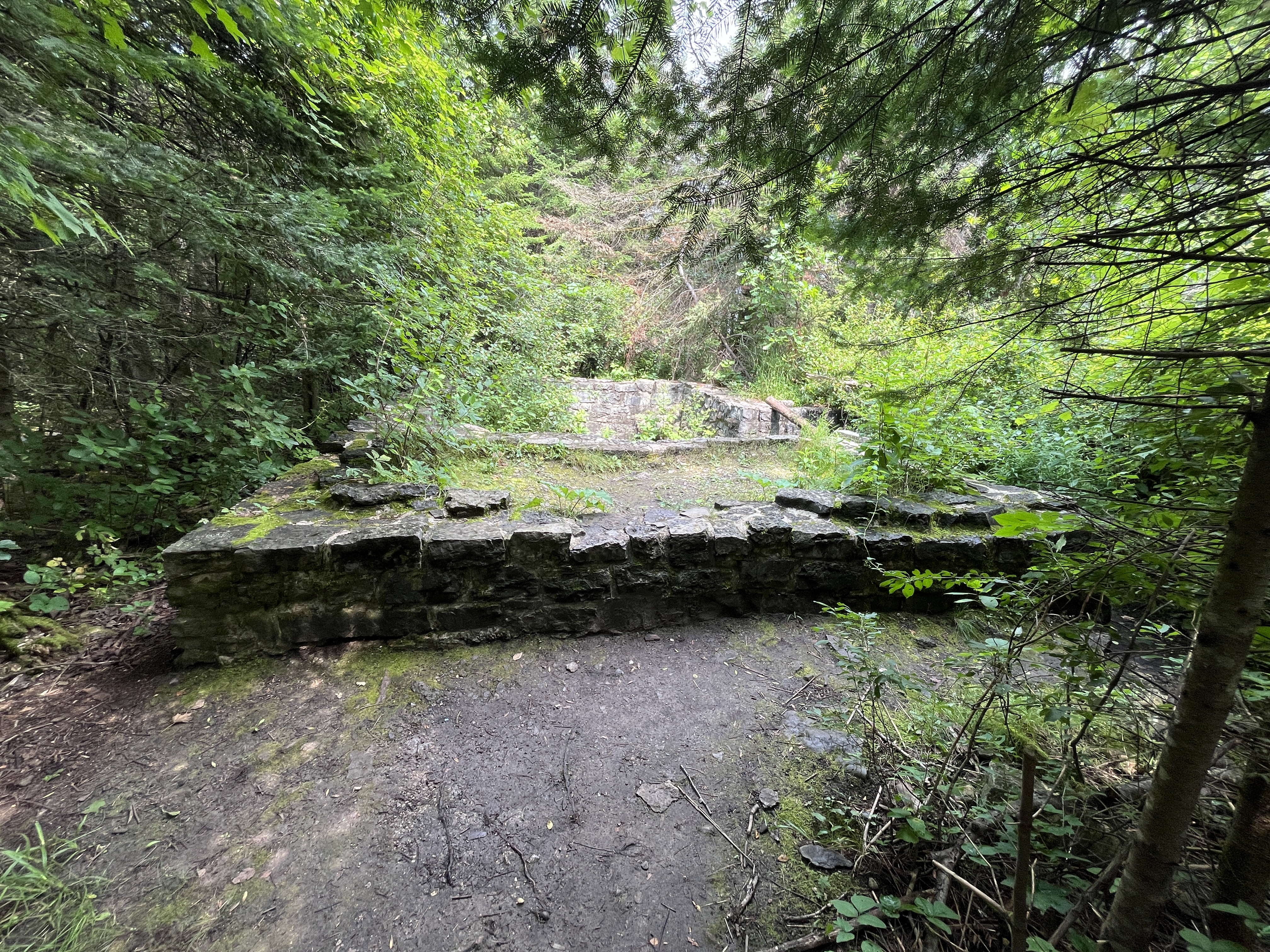
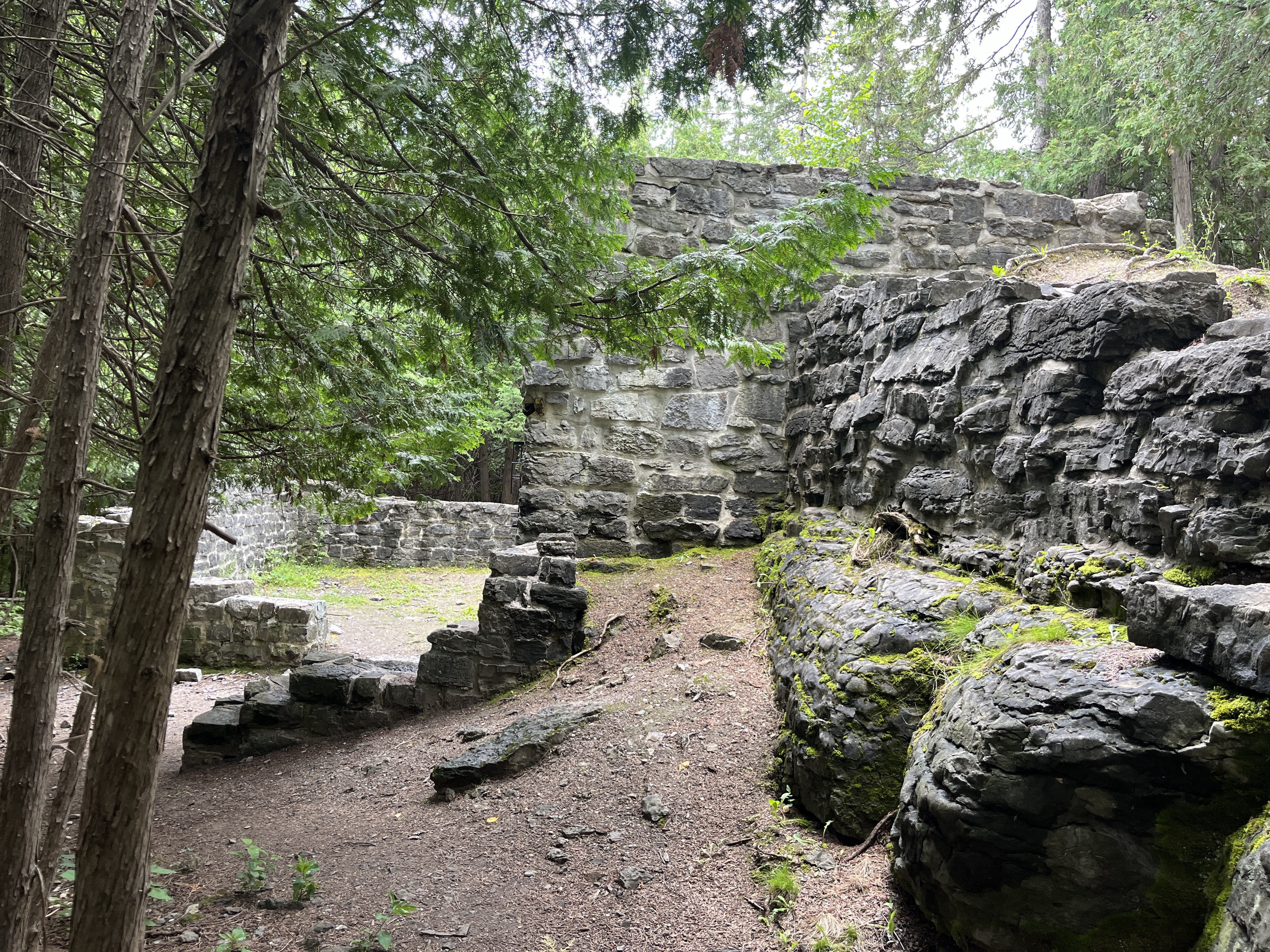
After a short hike you will come to the ruins of the Flood Lime Kiln. The former industrial site was comprised of several buildings. There were five buildings that surrounded the circular kiln. There was also a separate building where the finished lime was stored before being taken to market. An additional building was the powder magazine where the black powder was stored that was used to blast the limestone that would be made into the lime. The first set of foundations that you will see are those of the powder magazine.

Francis Flood built this lime kiln in the late 1800s and operated it until around 1906. The lime was used to make mortar to chink log houses as well as to make whitewash, plaster and many other household products. By the early 1900s larger industrial kilns were being run and Portland cement began to replace lime as a building material. Most of these small kiln operators went out of business. The Flood kiln was abandoned and left to deteriorate.

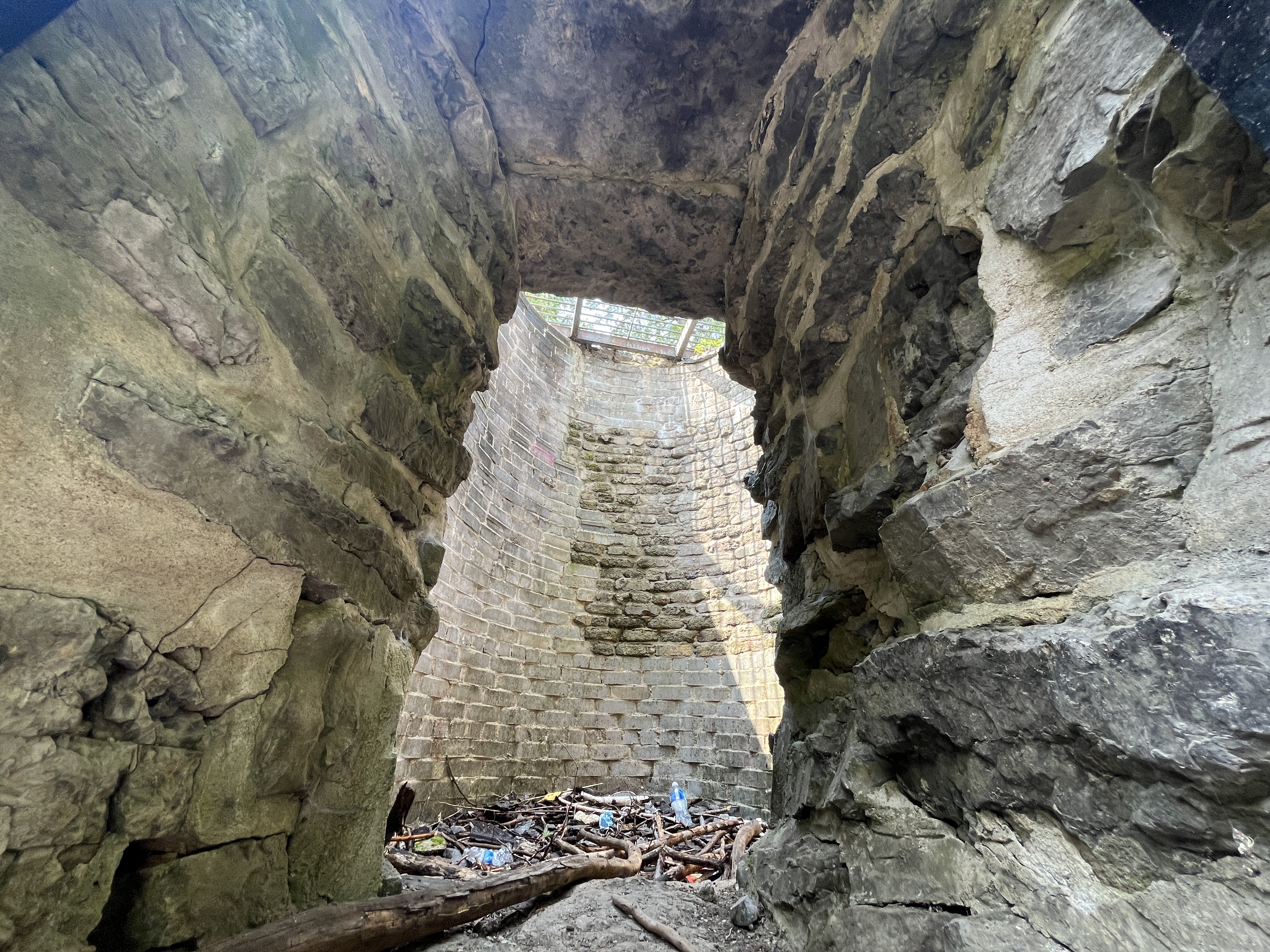
The Flood Kiln was known as a pot kiln or a set kiln. Limestone and wood were loaded into the kiln and left to burn for several days. The lime and ash were then removed through this opening and stored to be taken to market. The Flood kiln was rediscovered in the 1970s and eventually restored to prevent further deterioration in 1999. Today it has several information boards around the site to educate those who come to explore.

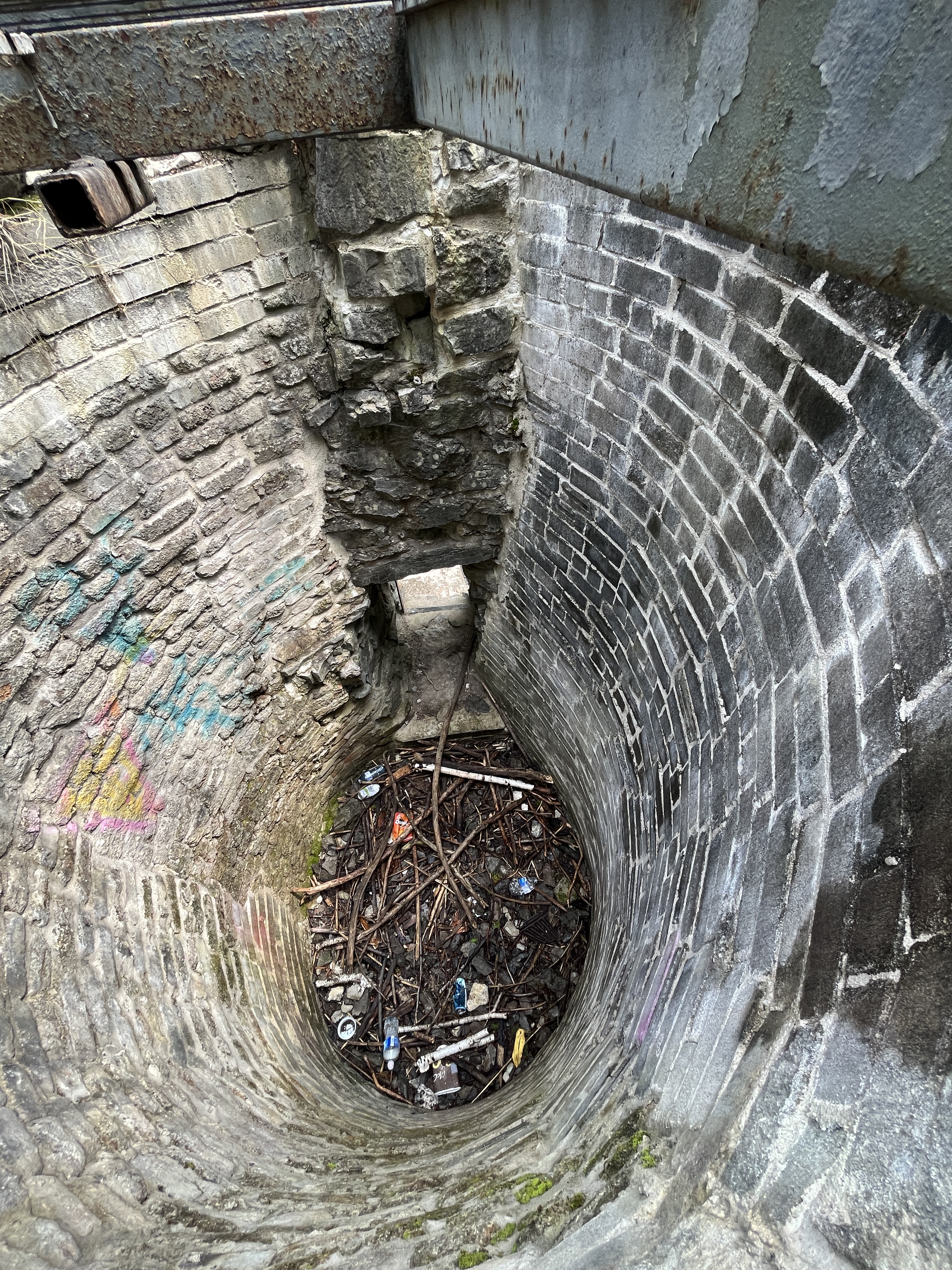
The view from the top of the kiln looking down inside.

The trail continues past the kiln and leads to an area that is largely devoid of trees. This is the result of a forest fire that spread through the area on July 12, 2012. Forest fires in the greenbelt are dealt with quickly because of the homes and schools that are adjacent to the area. Ottawa Fire Services sent 55 fire fighters, 15 vehicles and several helicopters to try to get the fire under control. It took two weeks to get it extinguished and one of the tools that they used was known as a firebreak. This is a wide stretch cut through the forest that the fire can’t cross because it has no fuel. This limits the spread of the fire. Portions of this firebreak have been converted into the trail system that people enjoy today.

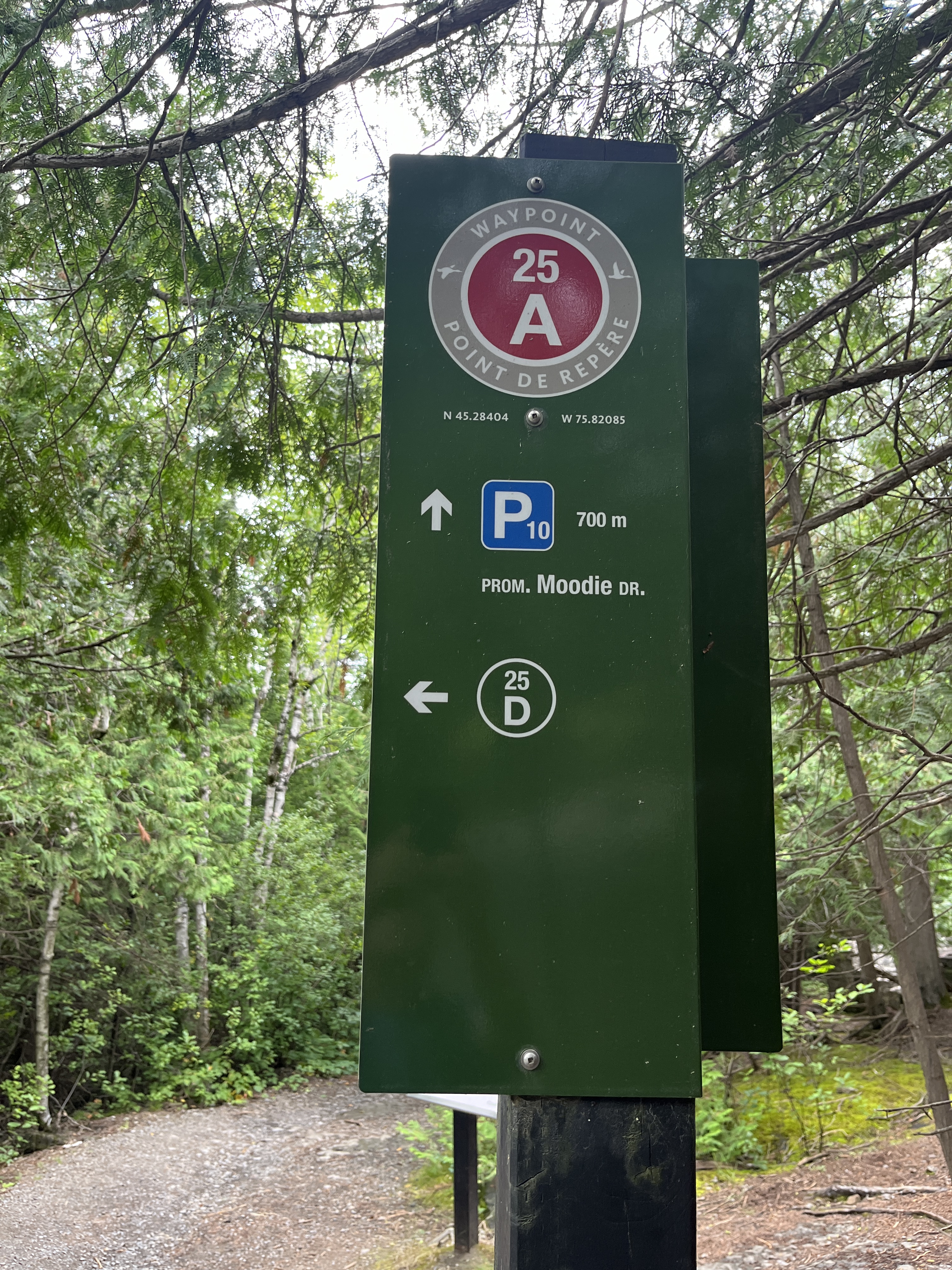
This trail system is very well marked with coloured blazes on the trees along the way. There’s also a series of waypoints that are marked with metal signs pointing out the various trail options. There’s also a map on each post. The waypoint below is at the kiln site.

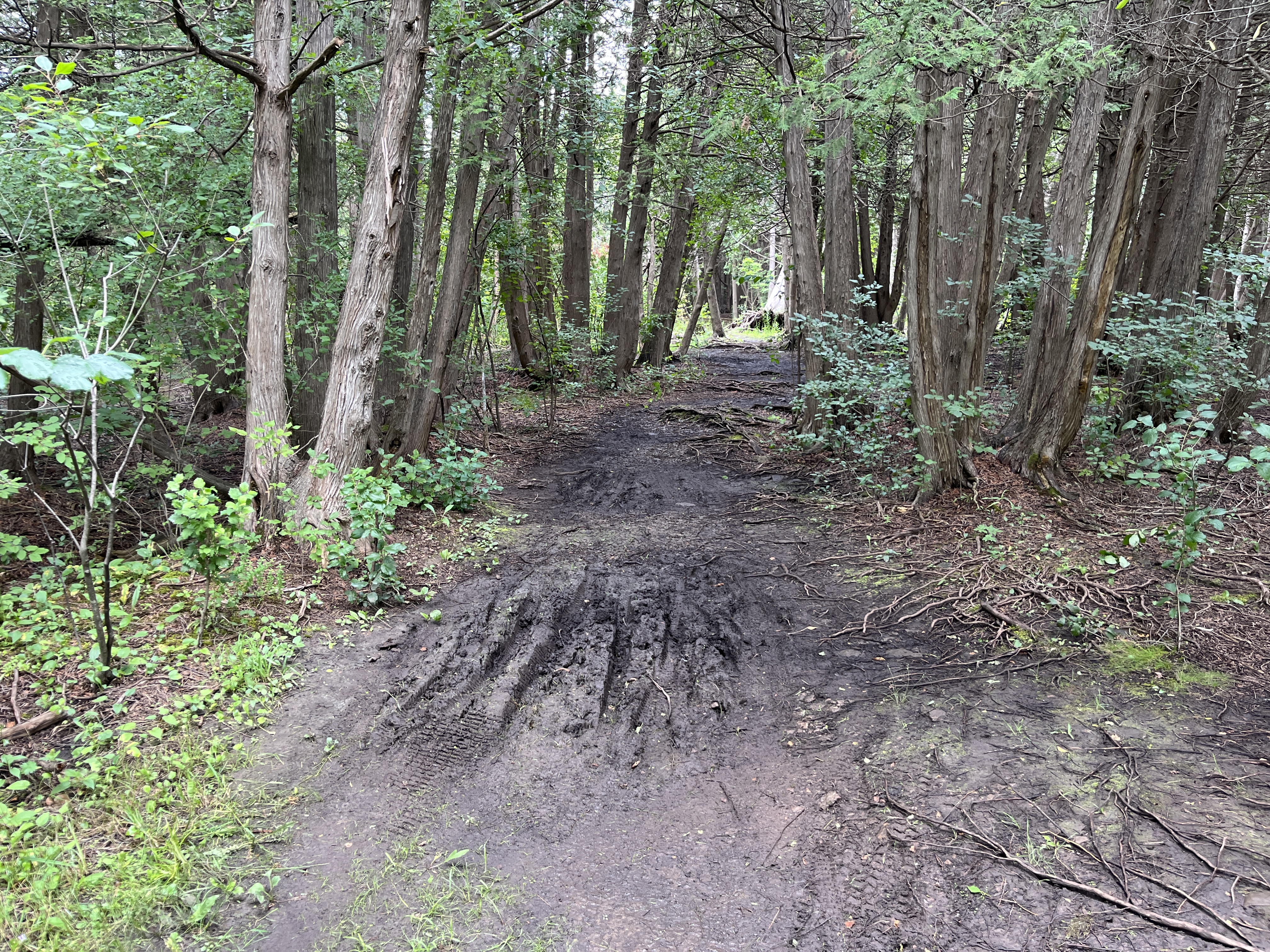
I saw a couple of chipmunks and several birds but not a lot of other wildlife, unless you consider deer flies and mosquitoes to be wildlife. In which case there was more than enough. On reading the reviews for the trail two comments kept coming up. “There’s a lot of bugs and the trail is very muddy”. I didn’t find the bugs to be too bad and never had to stop to apply bug spray. The trails are quite well maintained and there isn’t any mud on the main trails in spite of the heavy rain the night before. If you find muddy trails it’s a sign that you are no longer on a main trail. The secondary trails are sometimes muddy but also not marked with trail markers or waypoints.

This trail has a small but free parking lot at the trailhead. There are plenty of little parking lots at each access point to the extensive trail system around Ottawa.

Related stories featuring kilns: Limehouse, Balls Falls, Kelso’s Kilns, Devils Pulpit.

Google Maps Link: Lime Kiln Trail

Like us at http://www.facebook.com/hikingthegta

Follow us at http://www.hikingthegta.com
Provincial Lunatic Asylum

June 25, 2023

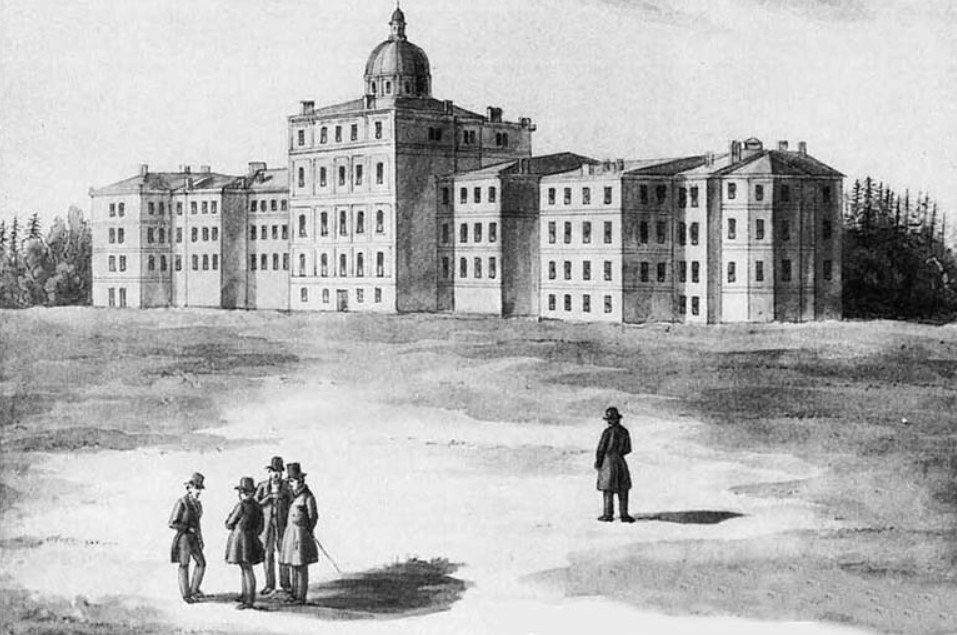
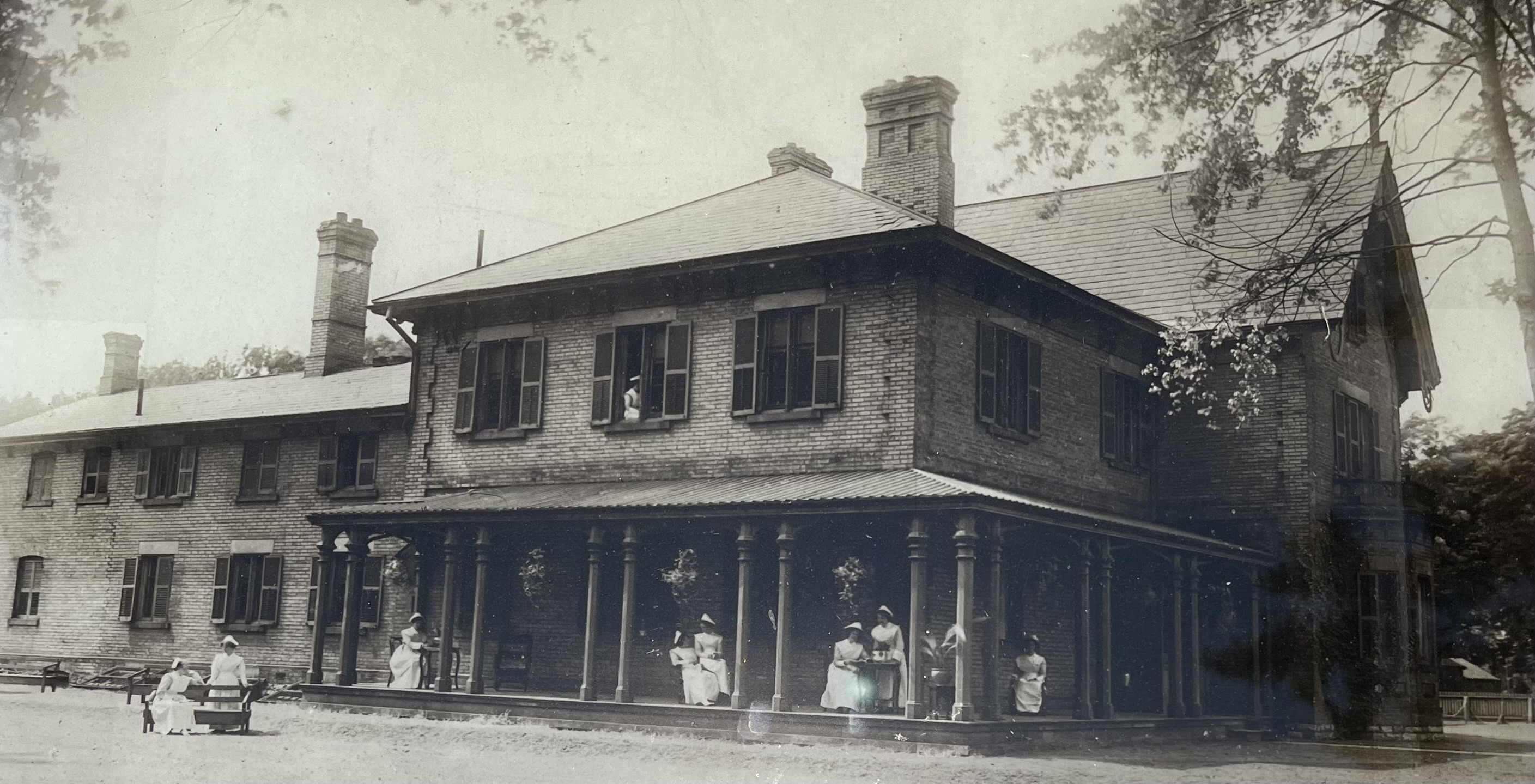
In Upper Canada slavery was officially abolished in 1793 but some forms of slavery continued for many decades after that. One example is the unpaid, forced labour that was used at the Provincial Lunatic Asylum. In the early years of Upper Canada people who had mental health problems were either locked up in their homes if they were considered to be “quiet lunatics” or if they were “furious lunatics”, put in jail. In 1830 a group of magistrates started calling for a more humane form of treatment. Due to political squabbling nothing was done until 1845. A site was chosen well outside the city limits at what would later be given the address 999 Queen Street West. The image below is a sketch showing the asylum building in 1848.

John George Howard was the first professional architect in Toronto and designed several prominent buildings in the 19th century. One example is the British Bank of North America which was built at Yonge and Wellington Streets. More can be found on this bank in our post Toronto’s Early Banks. He also built Colborne Lodge and later donated it and the surrounding lands to the city to be used as High Park. He would be called upon to design the Provincial Lunatic Asylum which eventually opened on January 26, 1850.

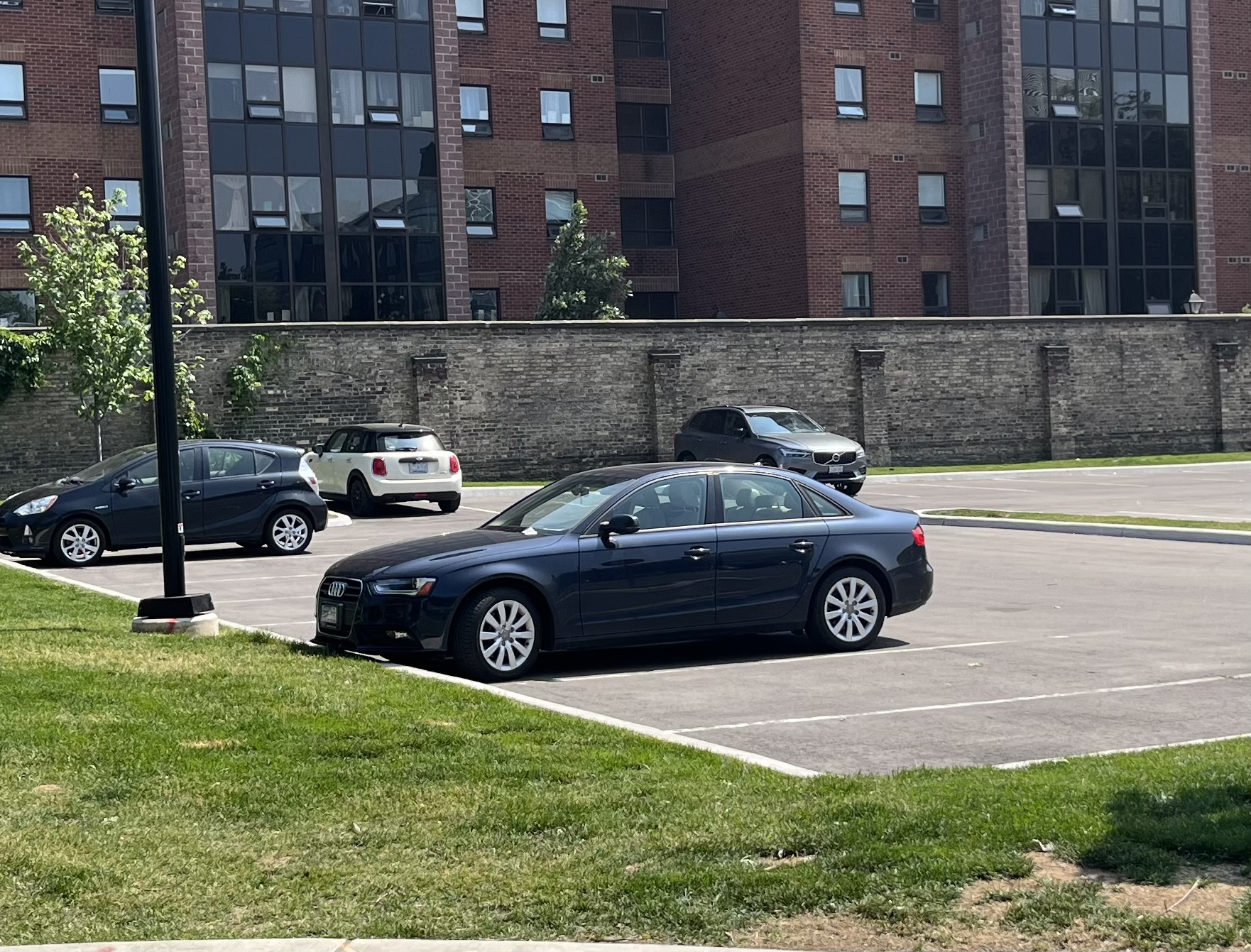
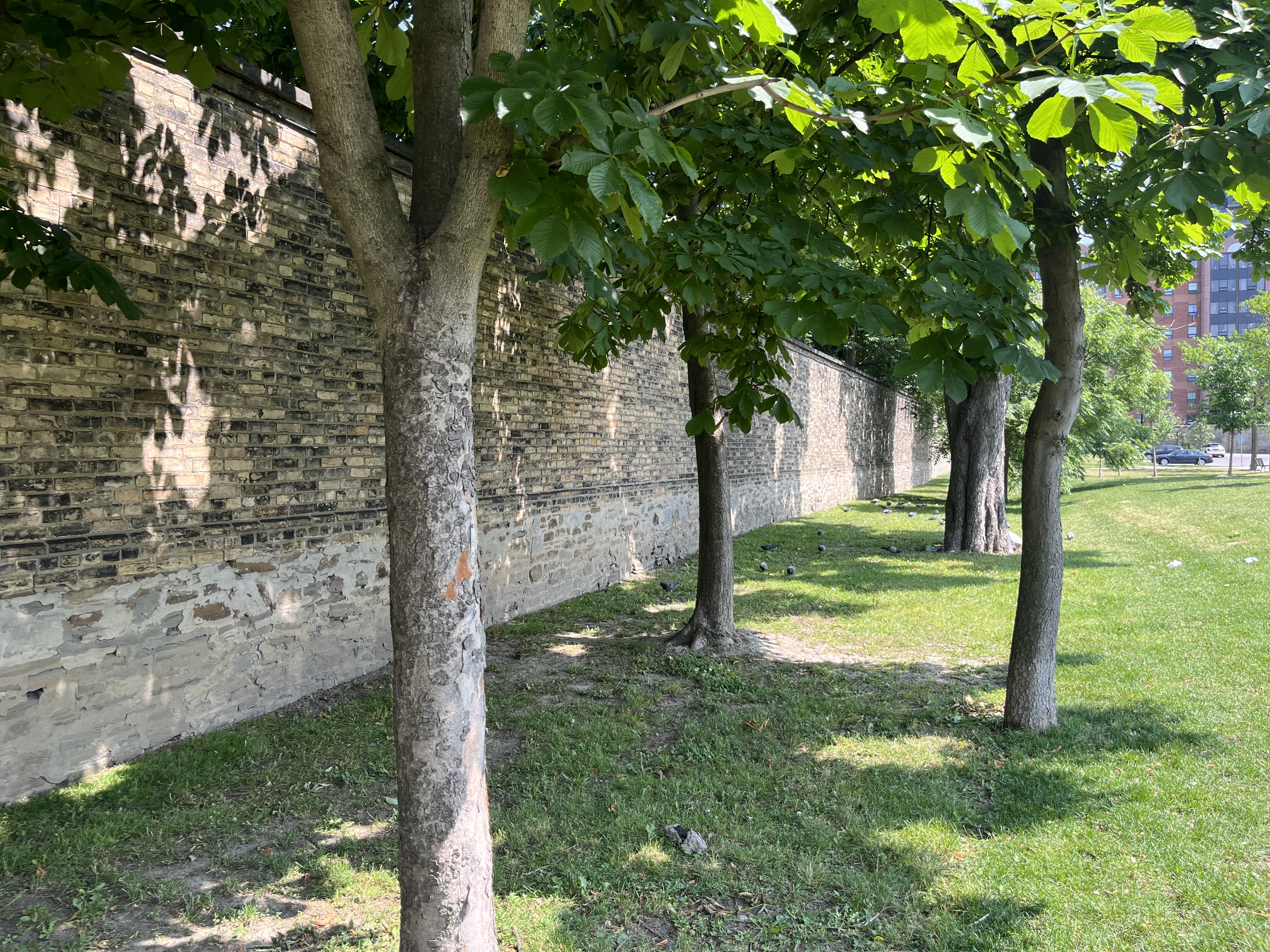
The following year the Provincial Government decided that they should close off the asylum to the rest of the city and a process of building a wall to surround the property was initiated. The wall would eventually encompass 50 acres and reach 2,230 feet long. The 16 foot high structure was built using patients from the asylum who worked for free as part of their “therapy”. The image below shows the southern section of the wall relative to the height of cars in the parking lot.

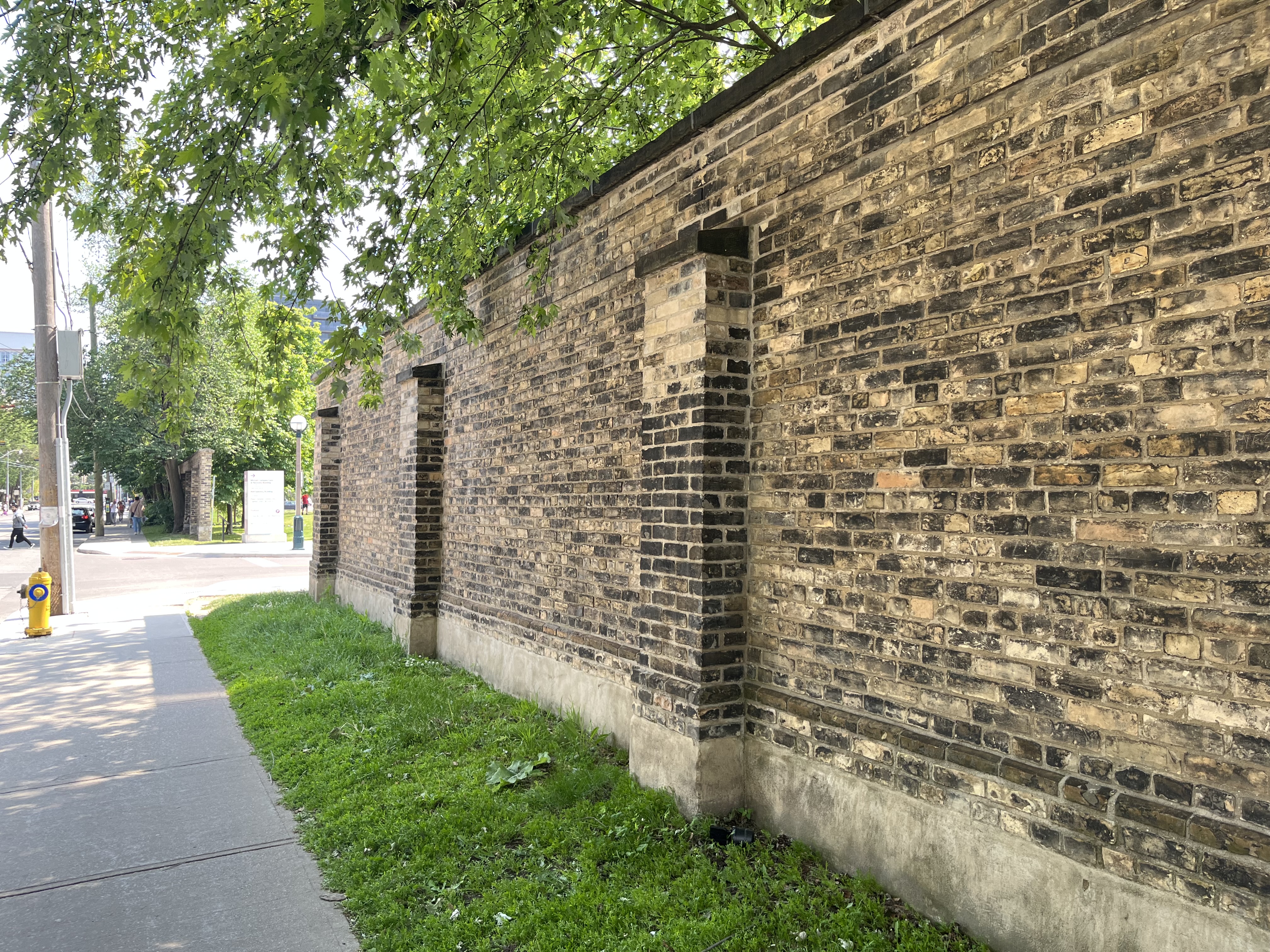
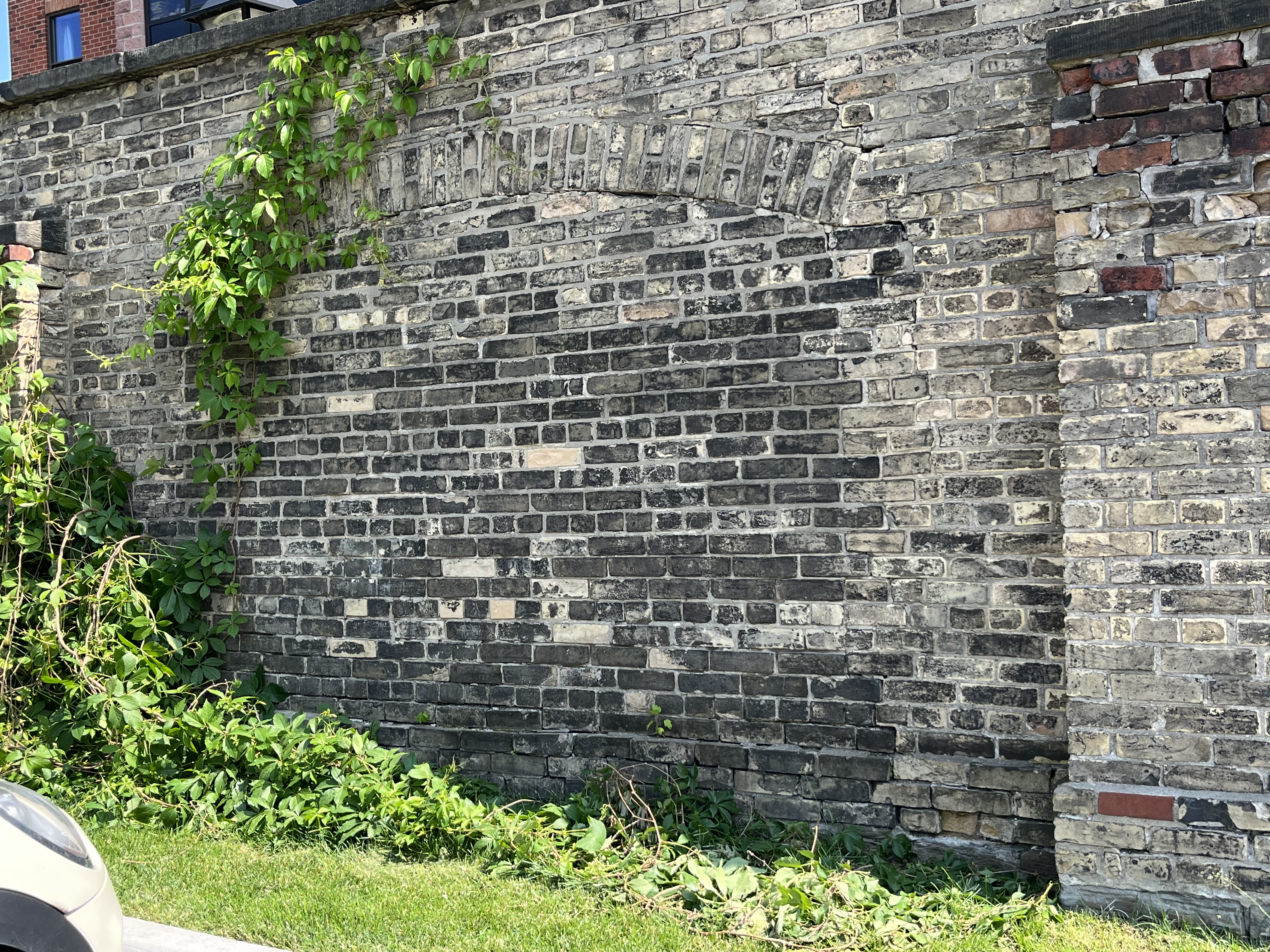
The original wall had a steel fence on top of it but in 1860 this was replaced with a stone cap. When the government sold 23 acres of the property for development, the east and west walls were taken down and moved in to enclose the remaining 27 acres. The bricks in the wall have been etched with people’s names, dates and various comments that record life within the walls. Over 260 inscriptions have been identified on these walls. The picture below shows a section of the southern wall that once had a gateway in it. The gate has been bricked in but the arched brick work still shows the size of the opening.

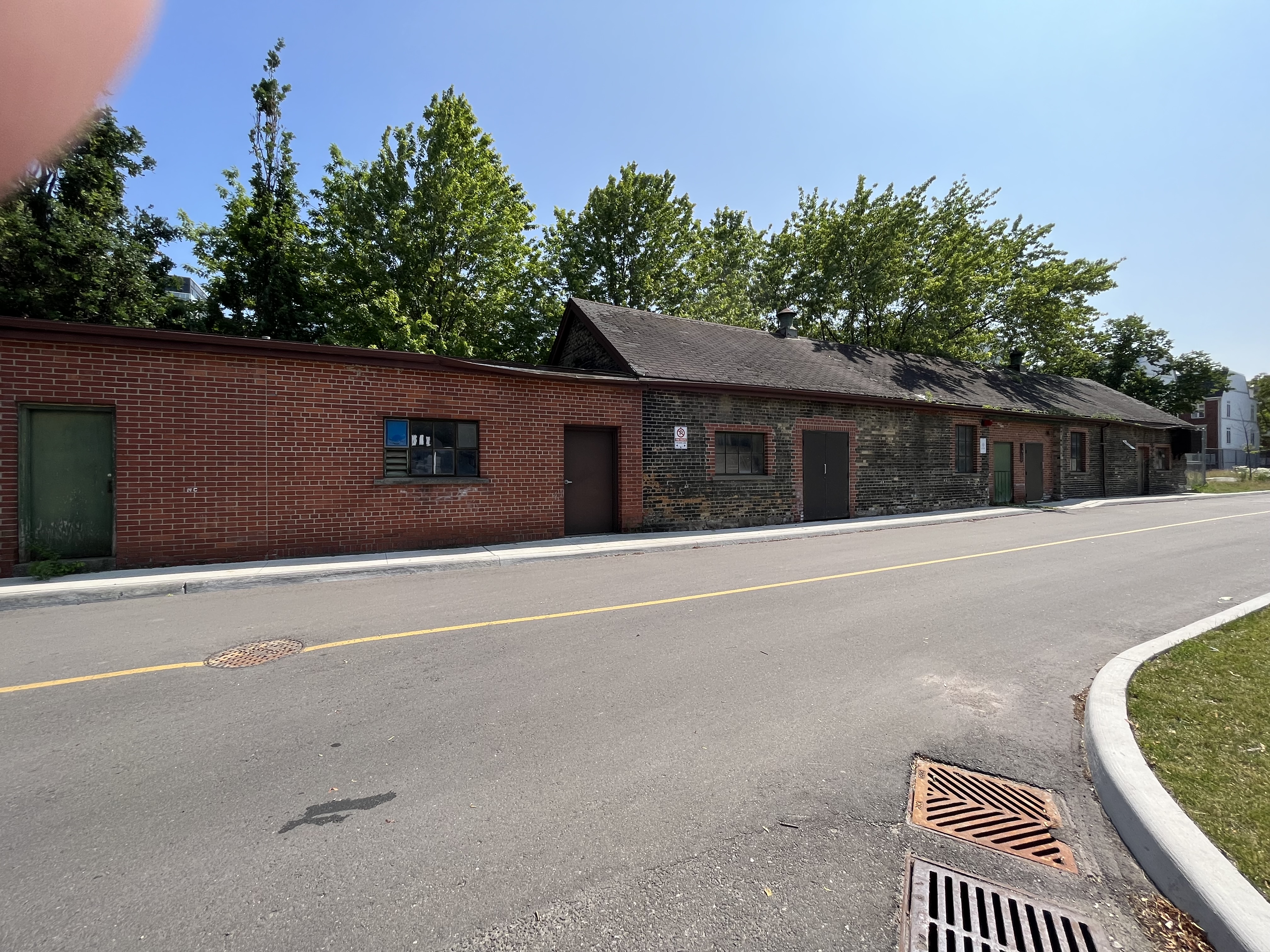
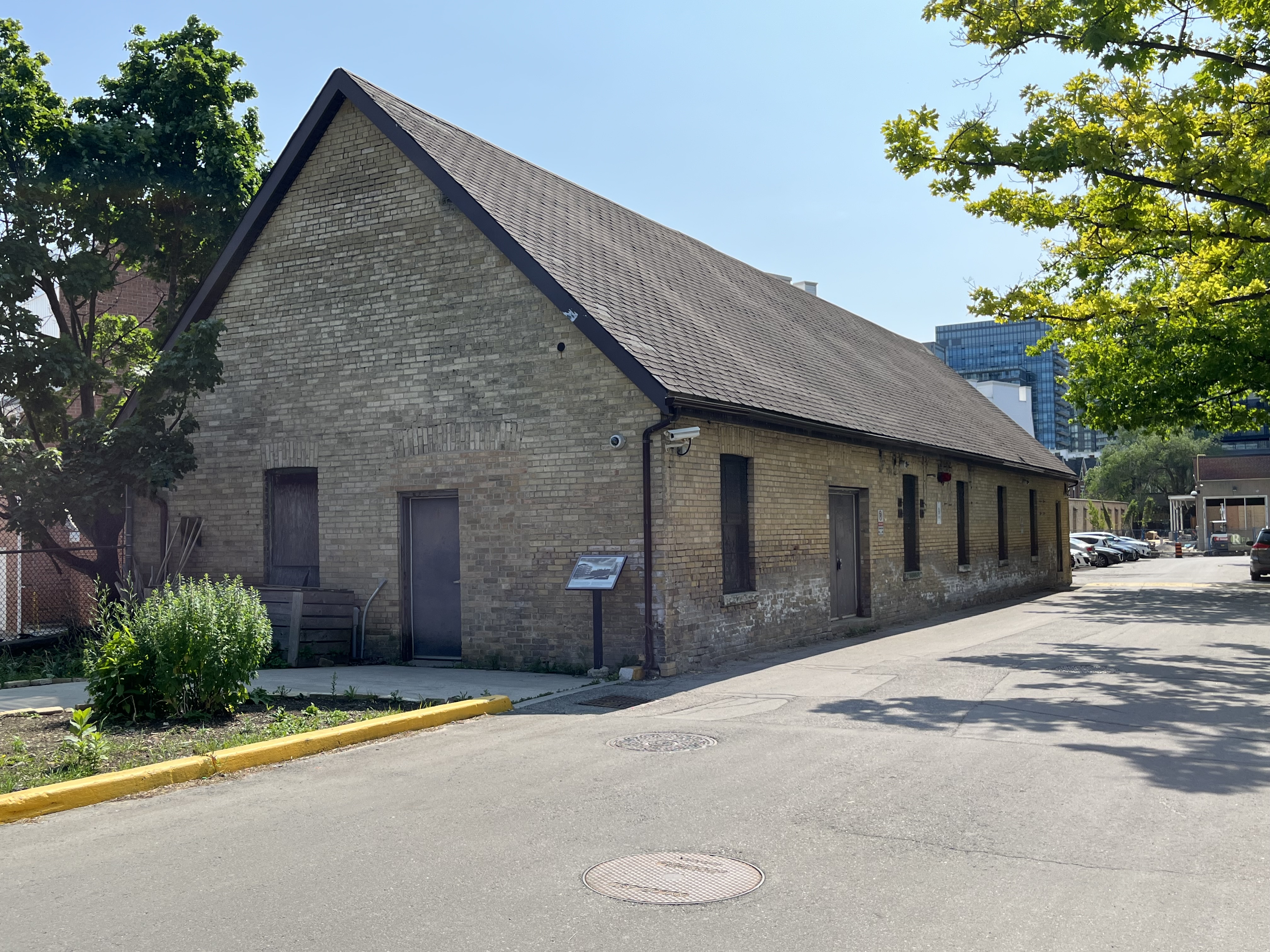
Most of the original buildings on the site have been demolished. Only two remain and they, like the wall, are now protected under an historic designation. The carpentry workshop building was operated by hospital employees who worked along side patients. These patients provided free labour which was used to help keep the costs of running the asylum down. Patients also worked in a sewing room making and repairing clothing. They worked in the kitchens and performed many other tasks involved in keeping the place running.

Like the carpentry building, the combined tin shop and mattress shop was built by male patients in 1898. One patient, identified as Jim P., worked in the tin shop from 1898 until he passed away in 1941. This meant that he provided 43 years of unpaid labour for the asylum. Men and women were housed in separate parts of the compound because it was feared that they would form relationships and give birth to children who would also have mental issues.

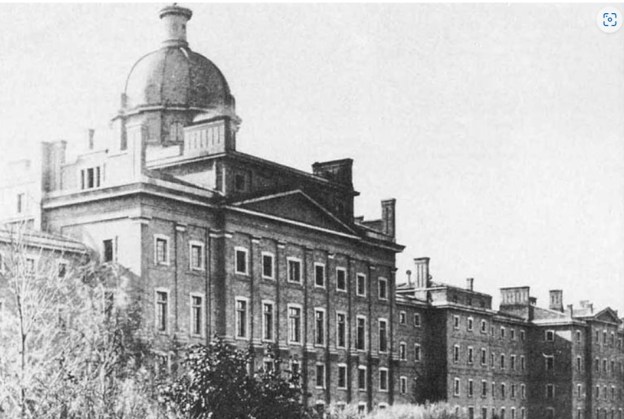
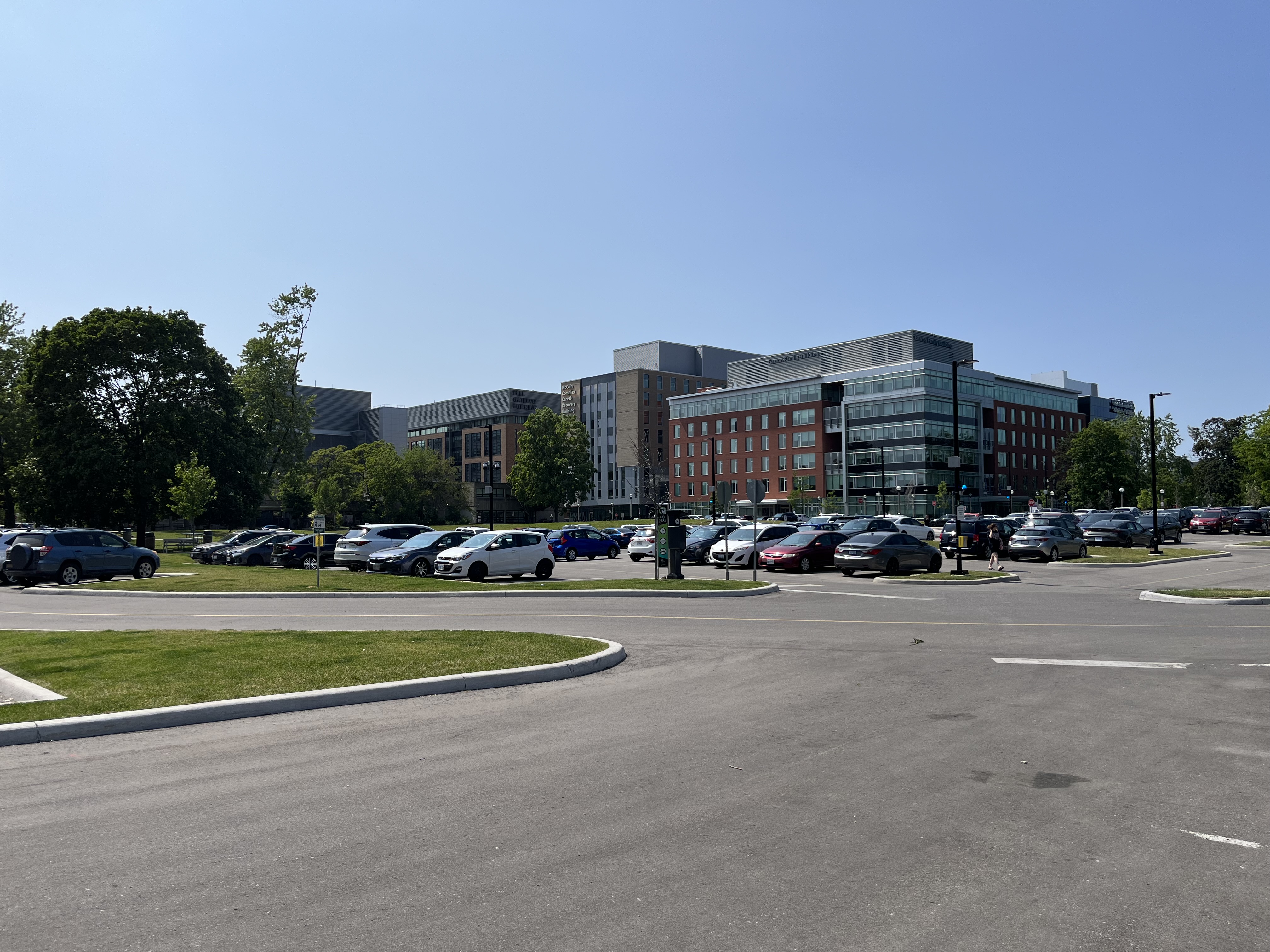
Over the years the name of the facility changed many times which reflects the attitudes of society toward the conditions of the patients. When it was opened it was known as the Provincial Lunatic Asylum. In 1871 the name lunatic was removed and it became the Asylum For The Insane. The name was changed to the Hospital For The Insane in 1907 and again to The Ontario Hospital in 1919. It became Queen Street Mental Health Centre in 1966. During the 20th century new buildings were added and in 1976 the original cluster of buildings were demolished. Then, in 1979 the street address was changed to 1001 Queen Street West to disassociate it from the negative connotations that 999 Queen Street had developed. Finally the hospital seen in the image below was given the name CAMH, or Centre for Addiction and Mental Health in 1998.

Meanwhile, a sister facility was opened in Mimico which was originally known as the Mimico Branch Asylum. Constructed with labour from the patients at 999 Queen Street it was opened in 1890. We have covered it in detail in a separate post that can be found at the link above. There were several other buildings on the site and these can be seen in a series of information plaques which are placed around the walls. The image below is of the superintendent’s house where women patients worked on laundry, cooking and other household chores.

People were locked up inside the walls of the asylum for many reasons, only a few of which would be considered actual mental disorders in today’s society. You could be admitted for suffering from grief, reading too much, fasting, slander and unemployment. Sunstroke, defective diets and masturbation could also land you in here, perhaps for the rest of your life.

The remaining walls are now preserved as a testimony to our past and the attitudes that society had with regards to those who suffered from mental disorders.

Related stories: Toronto’s Early Banks, Colborne Lodge, Mimico Branch Asylum

Google Maps Link: 999 Queen Street West

Like us at http://www.facebook.com/hikingthegta

Follow us at http://www.hikingthegta.com
Also, look for us on Instagram

Mississauga’s First Gas Station

June 22. 2024

The original town of Cooksville is basically history and exists in name only. It has been absorbed and overrun by the city of Mississauga. It started when Daniel Harris arrived in 1807 and the community was originally named Harrisville. It was a stagecoach stop on the Dundas highway which had been carved out of the forest based on a 1798 road survey. A store was located on the south east corner of the modern intersection of Dundas Street and Hurontario street as early as 1809. The town grew around the intersection and had a hotel as well as a blacksmith shop and a few dozen residents.

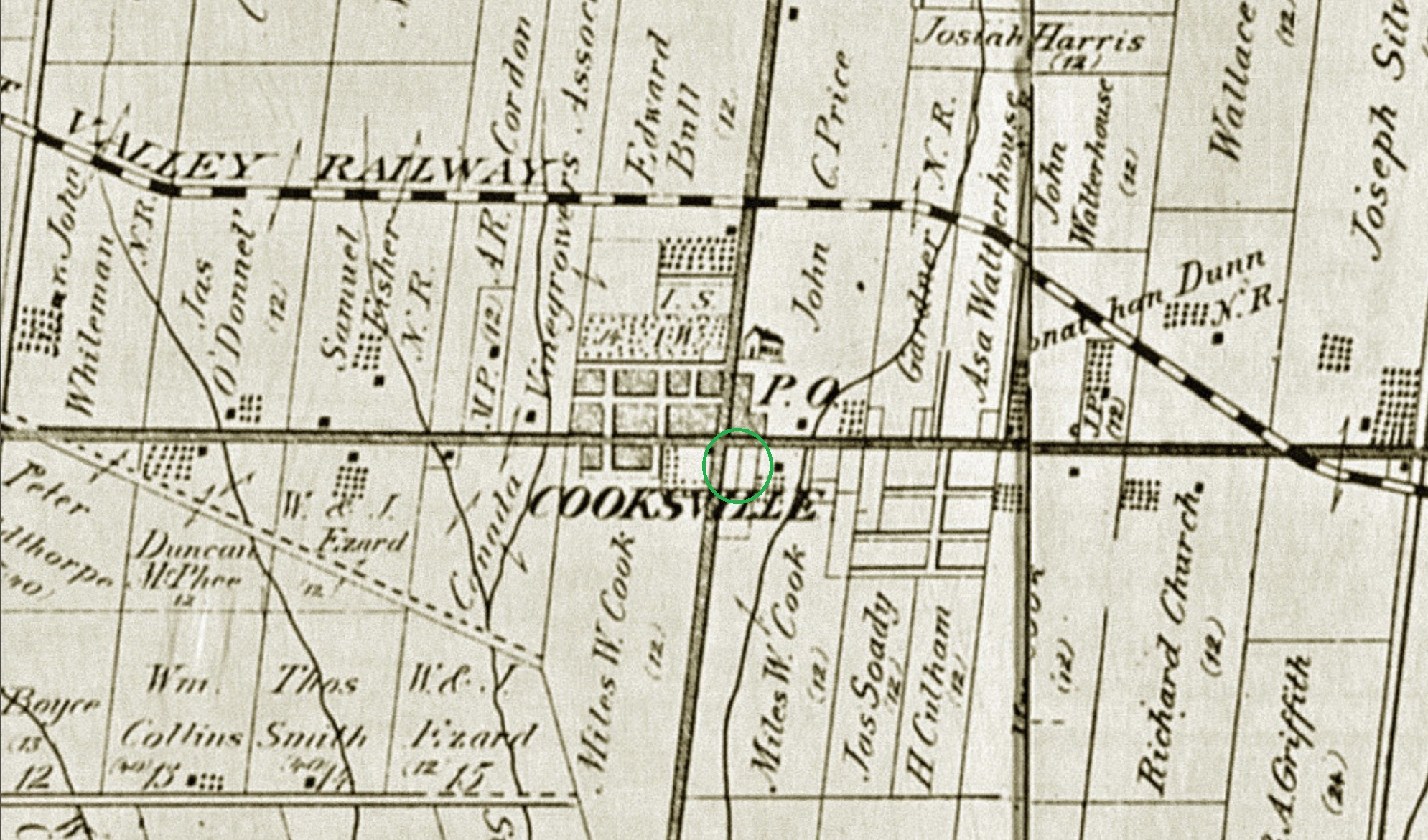
The map below was taken from the County Atlas of 1877 and shows how small Cooksville was at the time. The site of the store is shown circled in green on the south east corner of the main intersection in town.

The name of the town was changed to Cooksville in 1836 after prominent resident and landowner Jacob Cook. On May 26, 1852 a fire broke out in Belcher’s Blacksmith Shop. By the time it was finished, 35 houses and businesses, 16 barns and 4 stables had been destroyed. Including the original store on the corner.

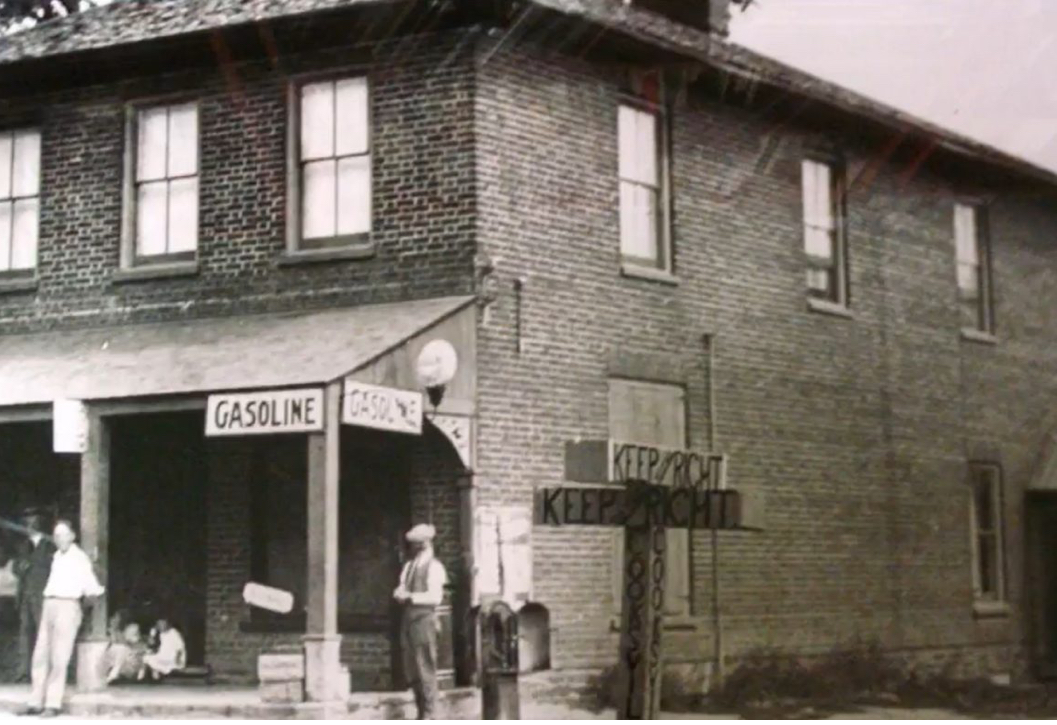
The archive photo below was taken from InSauga News and shows the store as it appeared during its days as a gas station. The sign on the post reads “Keep Right” and “Cooks”.

The store was rebuilt of red brick and has survived as a business building ever since making it one of the oldest commercial buildings in Mississauga. Jacob Cook ran the store, and several other enterprises, until he passed away in 1873. His son, Miles Washington Cook, rented the store to George and John McClelland who operated it. After George married Jacob Cooks great niece Anna Langdon he bought the store and the couple lived in the apartment above it. In 1910 they sold it to Alfred Scott and it became Scott’s Grocery. It was Scott who had a gas pump installed in 1911 to service the growing need for petroleum for the automobile industry. This was the first gas pump in the area that has become Mississauga. This was just three years after the Model T was invented by Henry Ford.

The store was sold to William Copeland in 1912 and renamed Copeland’s General Store and he operated this business until 1922 when he sold the gas station to the British American Oil Company. The store was moved 80 feet to the east by sliding rails under it and pulling it with horses and the grocery business was continued in the new location. When William died in 1948 the business was taken over by his son Charles who ran it along with his sisters.

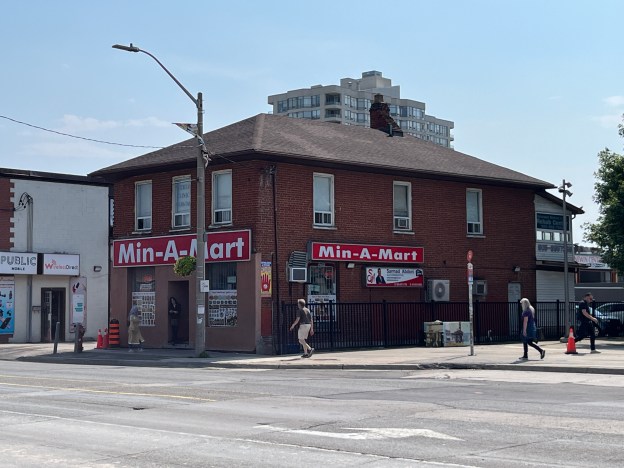
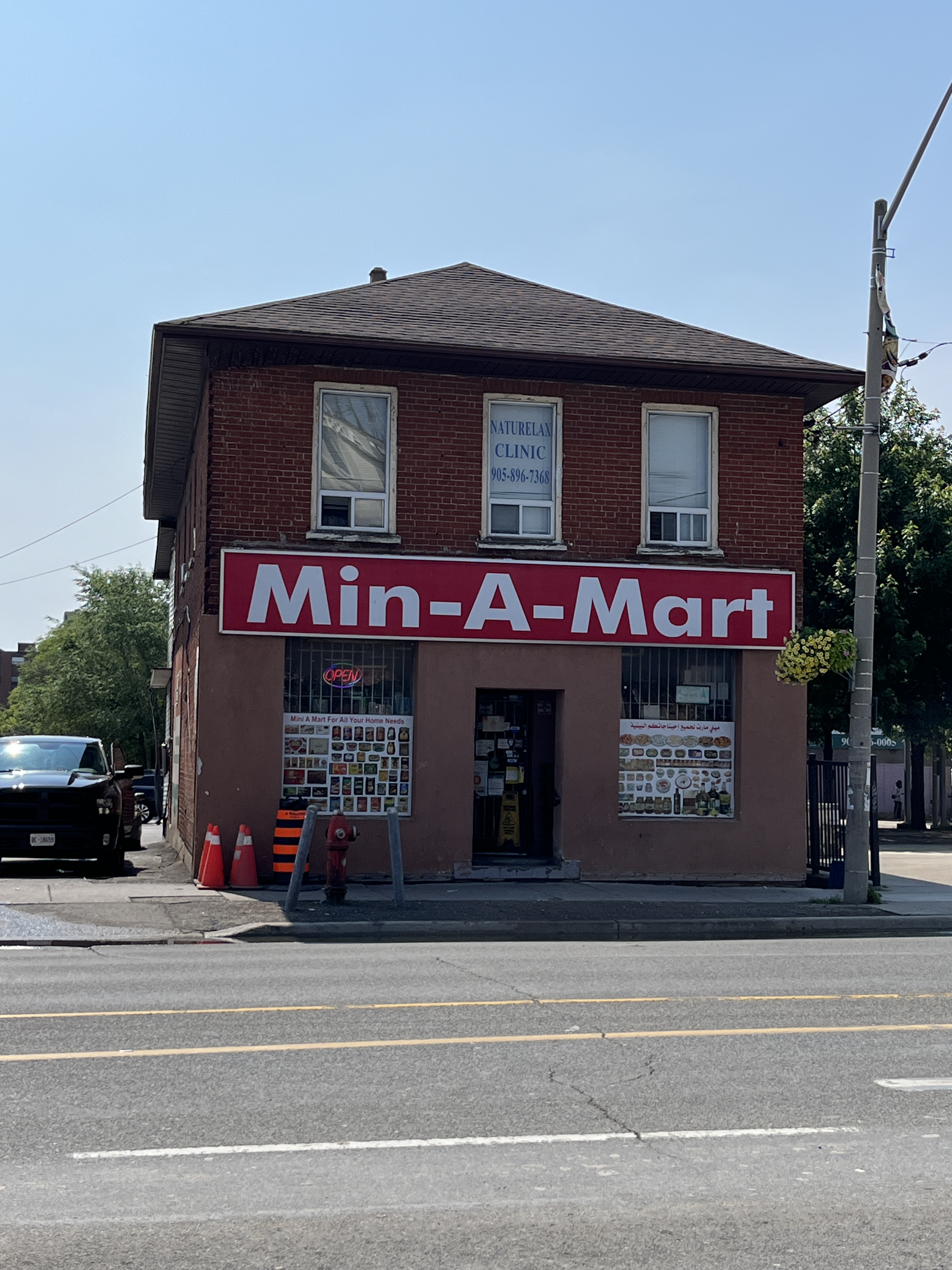
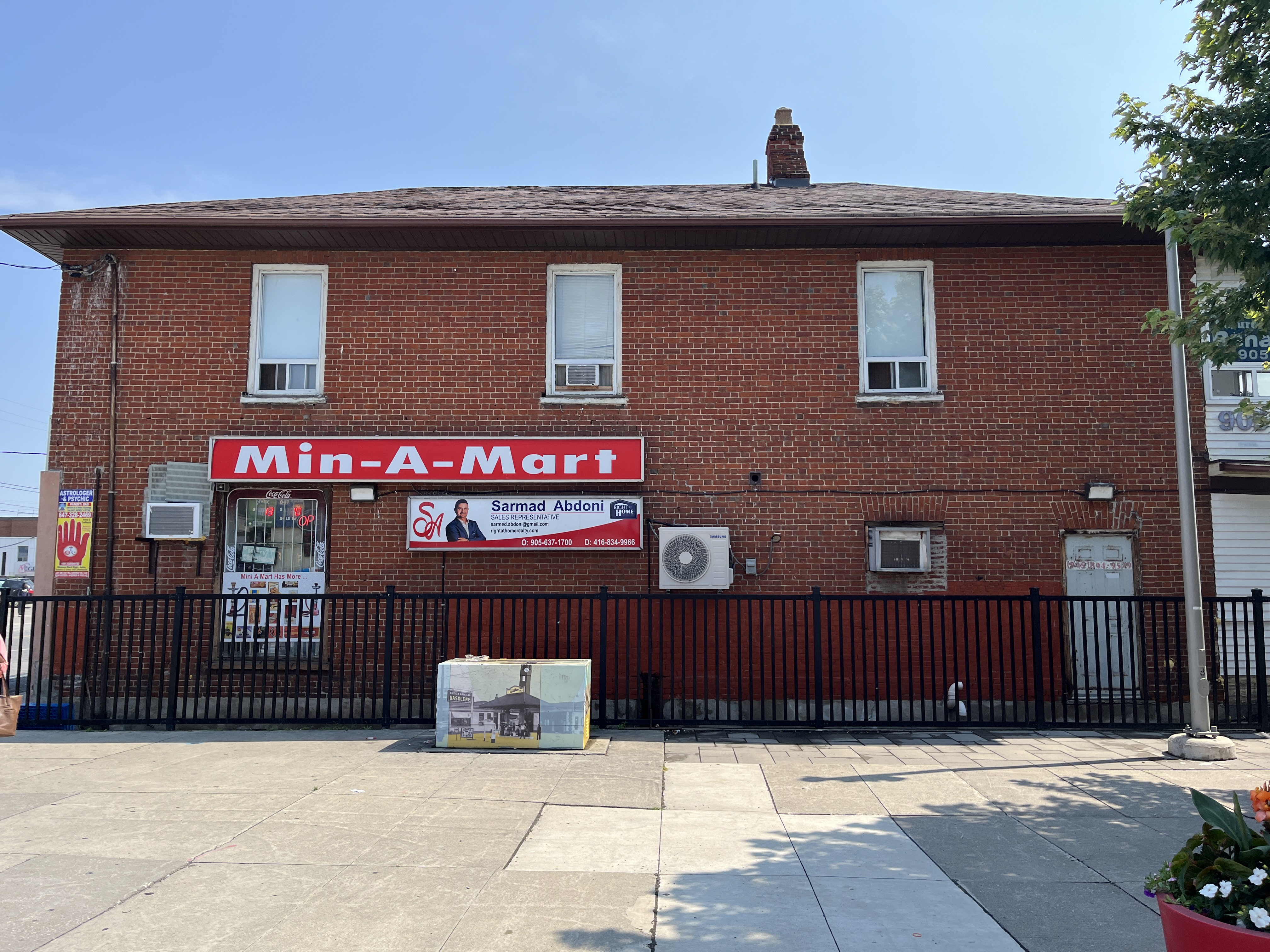
The oldest building in Cooksville continues its existence in use as a variety store which is appropriate considering the variety of commercial uses it has had over the years.

Related Stories: Toronto’s Model T Factory

Google Maps Link: Cooksville

Like us at http://www.facebook.com/hikingthegta

Follow us at http://www.hikingthegta.com
Also, look for us on Instagram

Eyer Homestead

June 15, 2024

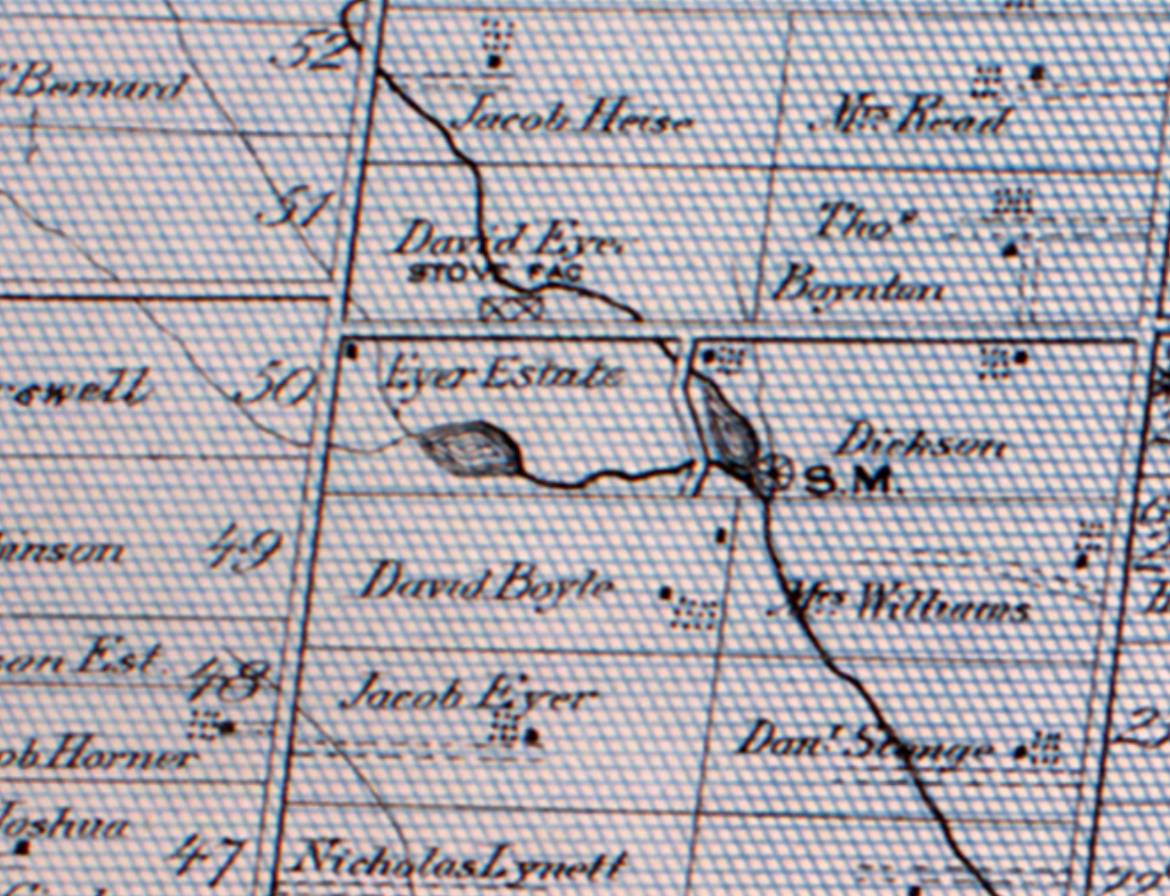
John Eyer moved from Pennsylvania to Richmond Hill in 1803 and bought a parcel of land that had two branches of the headwaters of the Rouge River flowing through it. It had the ideal location for a sawmill and so his son David Eyer opened one in 1825. He added a foundry and a farm implement factory in 1868. Tragedy struck in 1881 when a fire destroyed the foundry and the agricultural implements factory. The image below is from the 1878 County Atlas and shows the Eyer Estate as well as David Eyer’s property. A stove factory is shown on David’s property while the sawmill is located at the bottom of the mill pond on the estate.

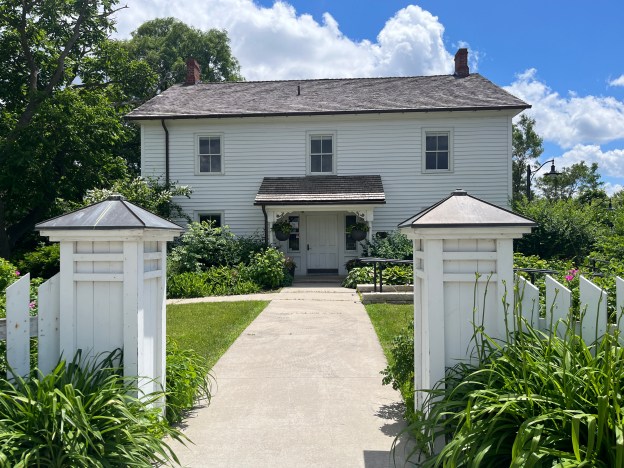
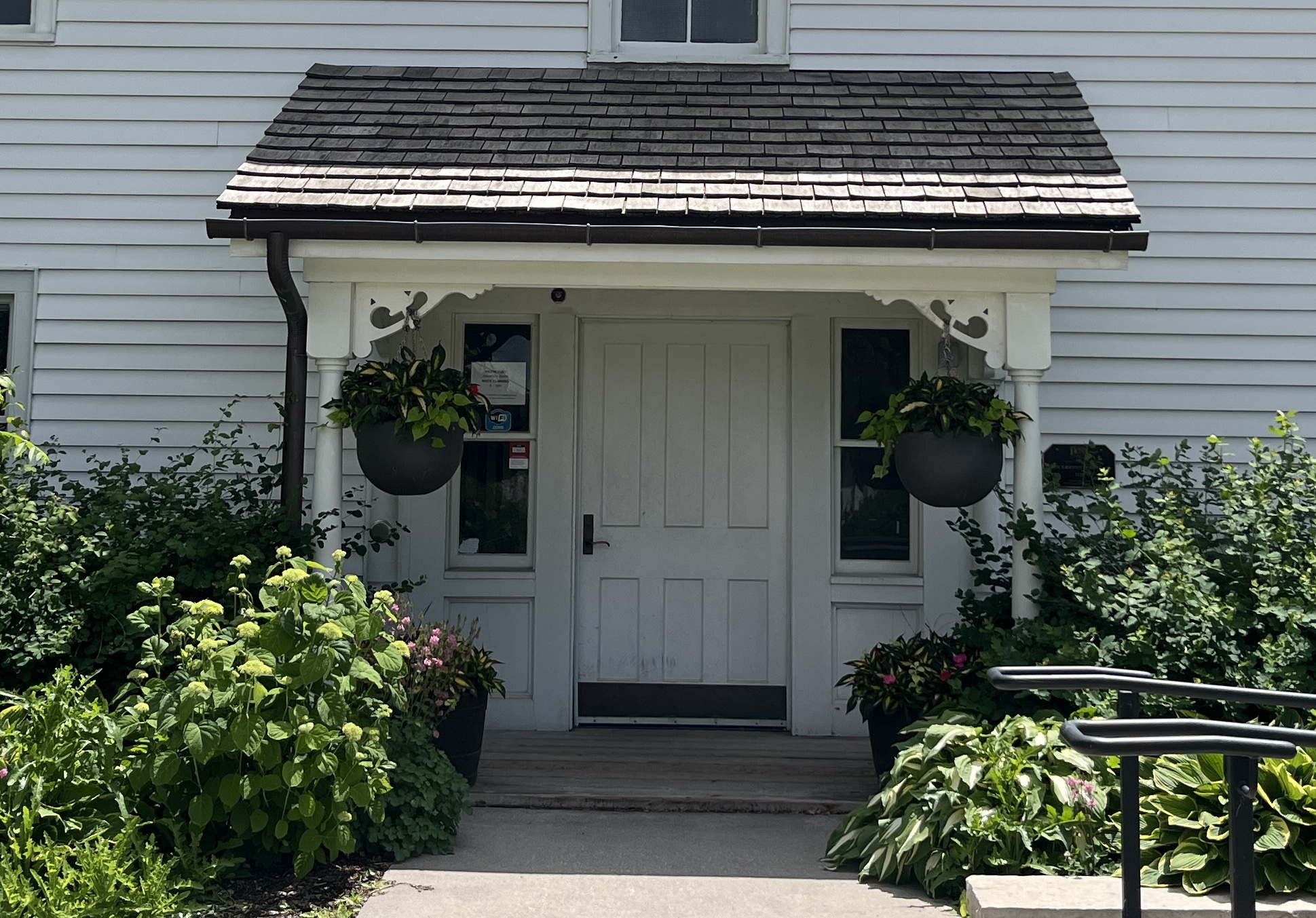
The house was built in 1828 according to the date carved in beam in the attic. The records indicate that David built the house for his parents. There is a large front door with six panels and side lights.

There are two kitchens in the basement which suggests that David and his family lived here along with his parents. The Mennonite tradition would have the two families living together in one house in separate quarters. There is no house shown David’s property on the map above.

The exterior of the house is designed in the Georgian style. This was likely borrowed from the English neighbours they had in Pennsylvania. The fireplaces have an angular design which would have been borrowed from the Swedish settlers in Pennsylvania.

The rear elevation of the house shows two levels of verandas as well as the walkout from the basement.

The Eyer family lived in the house until 1907 when it was sold to the Wideman family. Three generations of Widemans lived in the home until 1965. All the other buildings that used to exist on the property have been lost but the house remains. It is the oldest example of a Mennonite home in Richmond Hill.

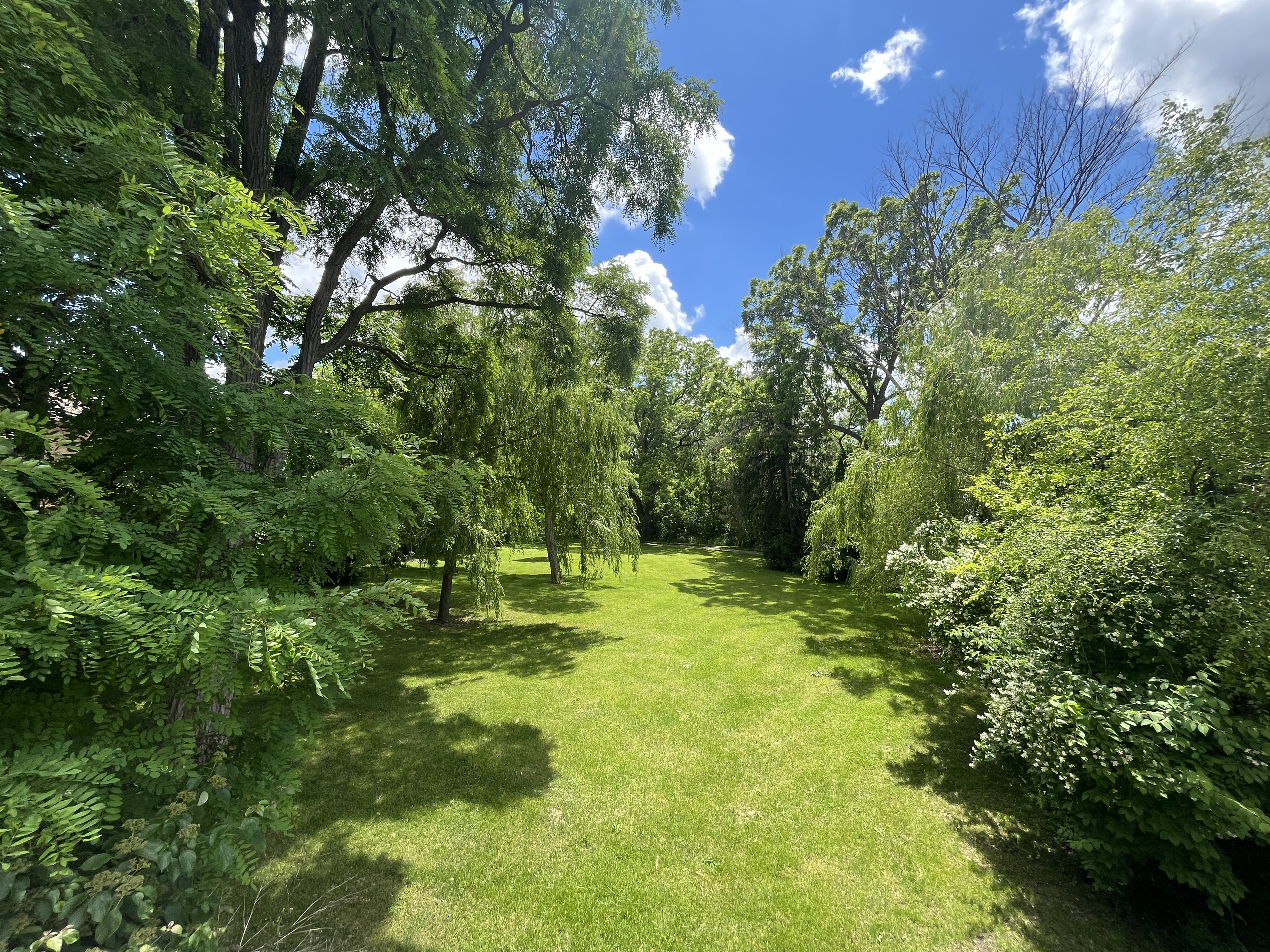
The back yard has been turned into a 1.75 acre park. It is nicely landscaped with mature trees.

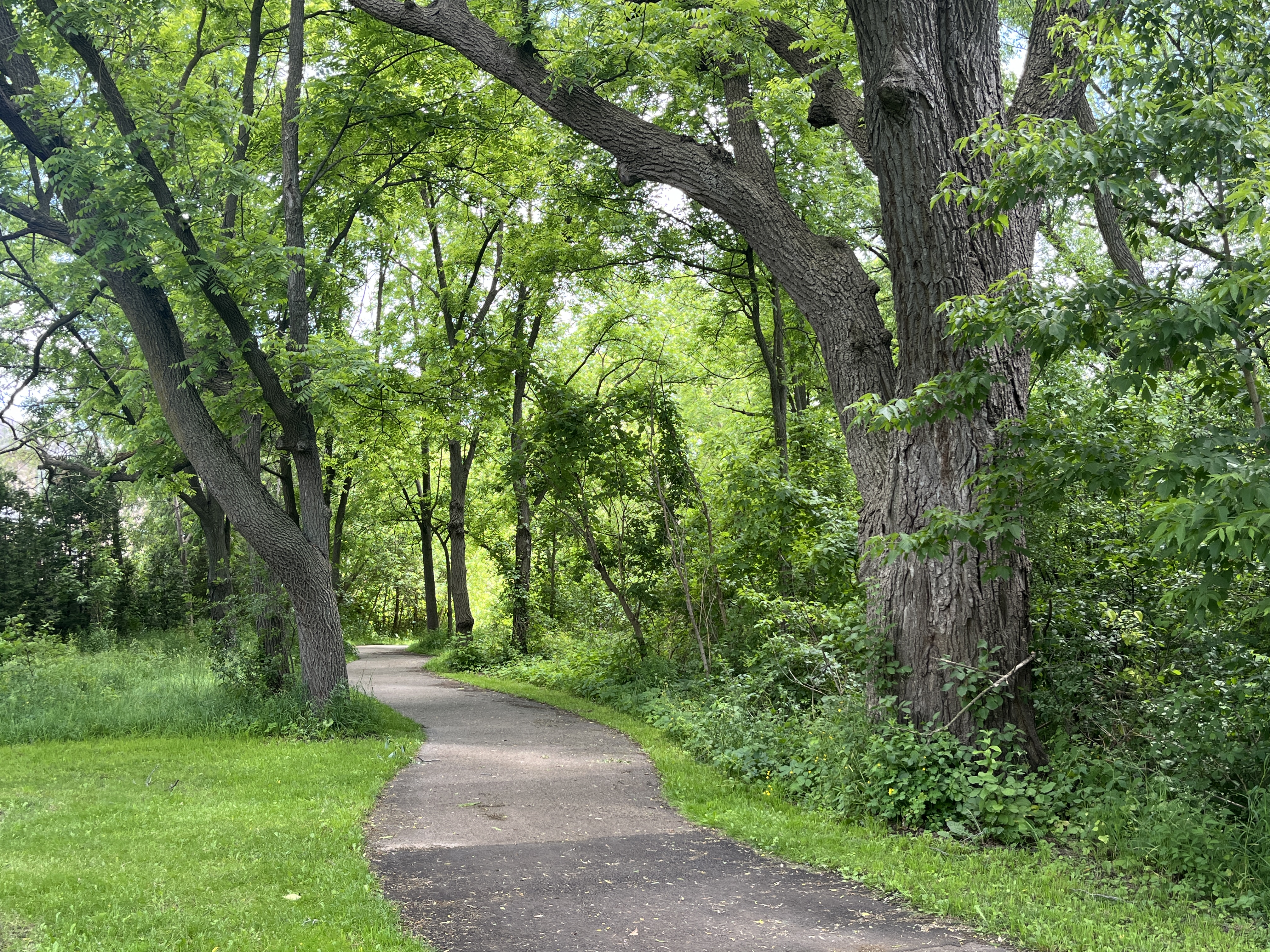
A series of paved trails makes its way along the side of the river.

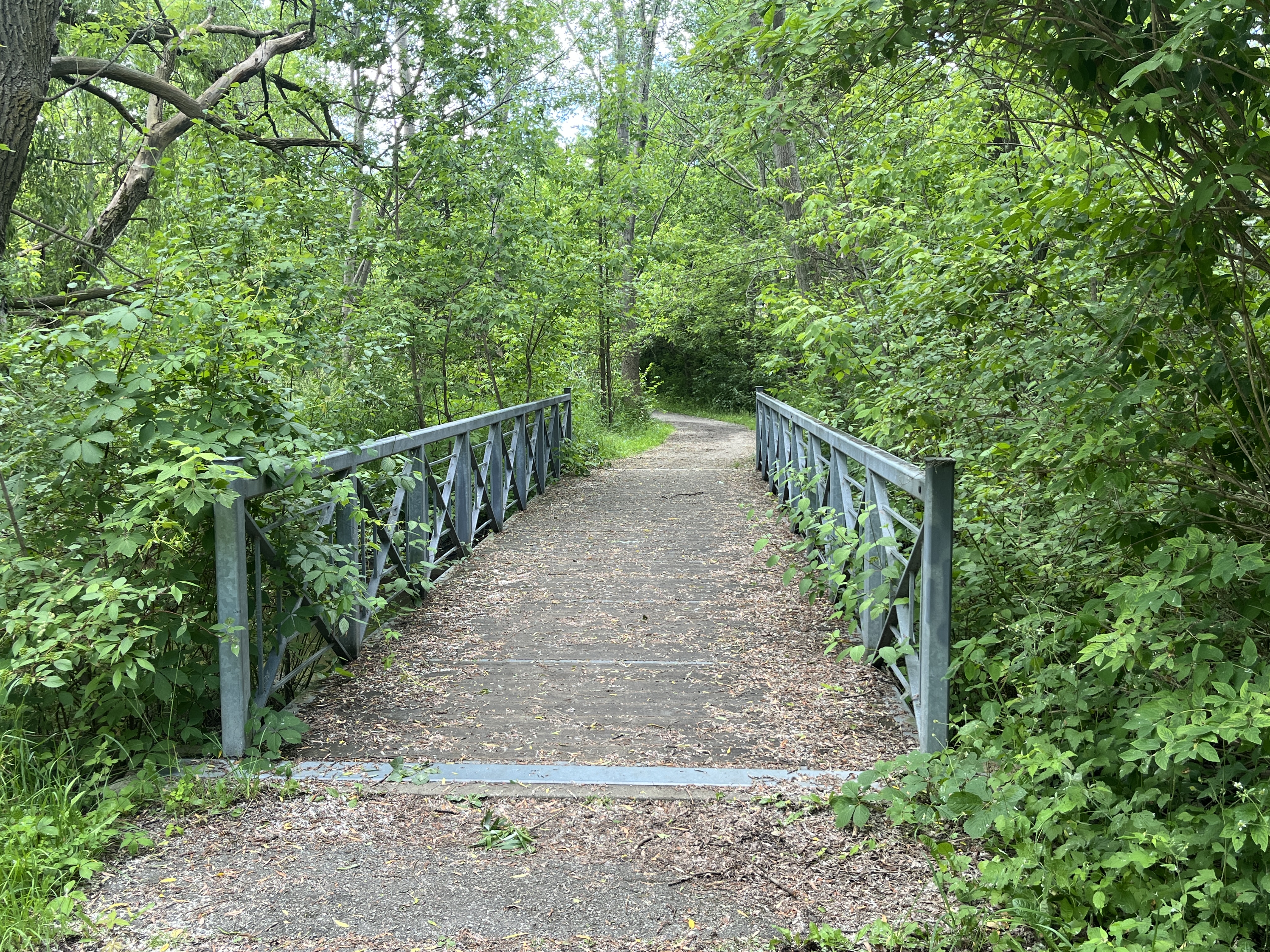
A footbridge lets you cross over the river but only leads to a subdivision.

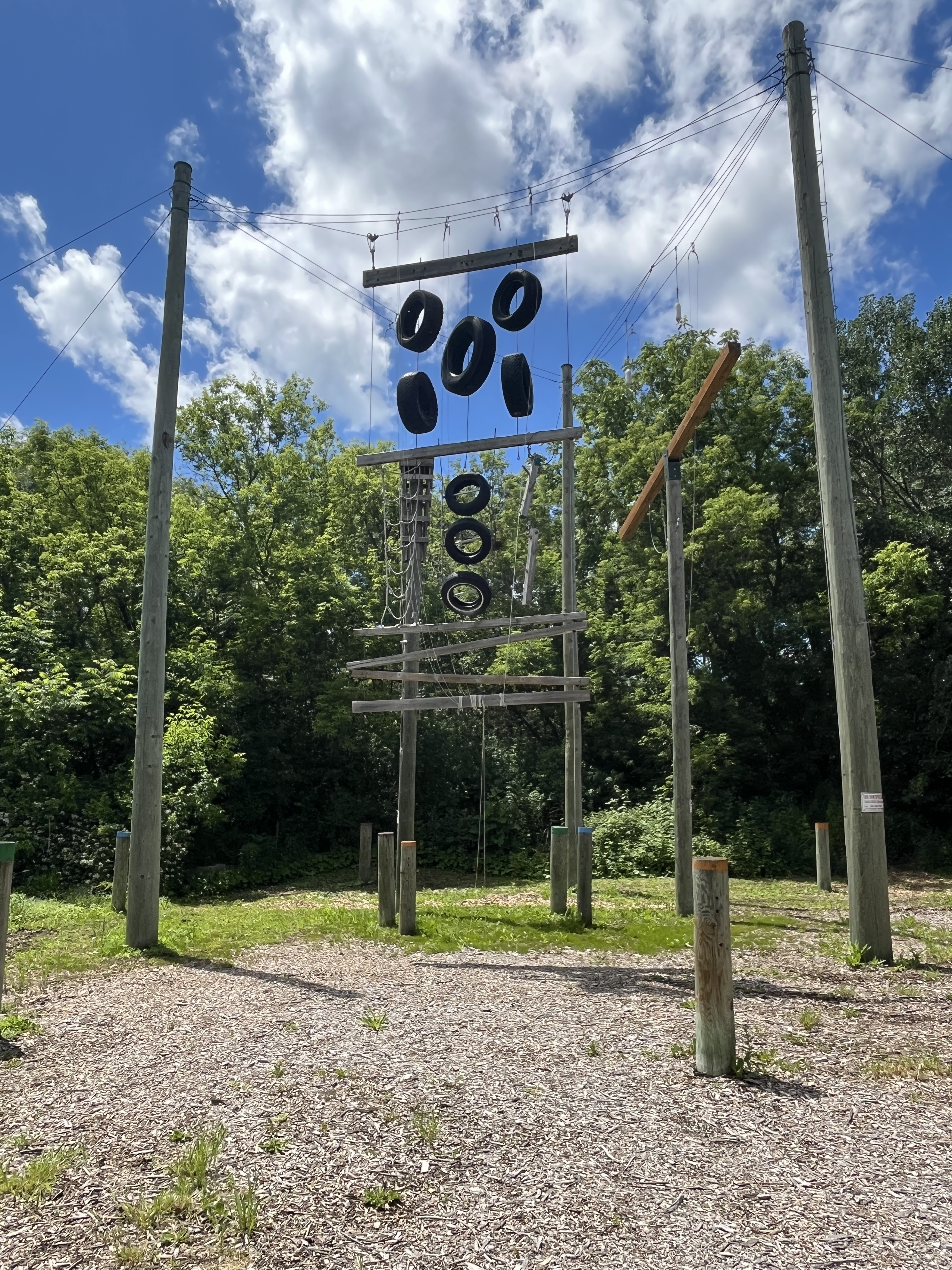
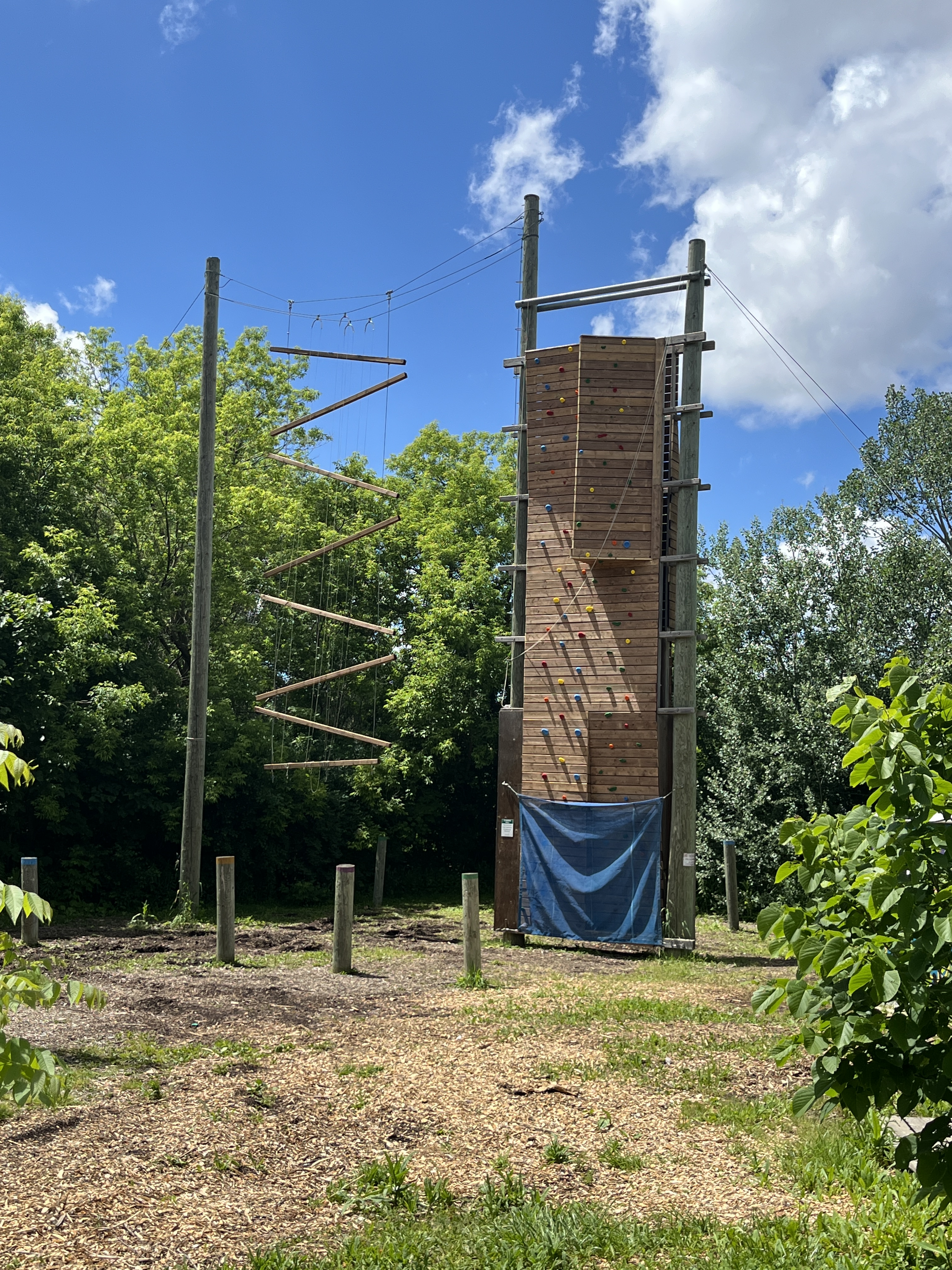
One of the features is the Eyers Homestead Ropes Challenge Course. Access is limited to people who sign up through Richmond Hill’s Community Services Department. People participate in groups and the program is ideal for team building activities. There are five high rope elements and a number of low ones as well.

There’s also a climbing wall. Trained staff lead the groups through a series of challenges based on the goals set by the group. Naturally, there’s a waiver that has to be signed before you can begin.

There wasn’t time to explore the trail going south but there’s always another day to check them out.

Google Maps Link: Eyer Homestead

Like us at http://www.facebook.com/hikingthegta

Follow us at http://www.hikingthegta.com

Also, look for us on Instagram

Sault Ste Marie Canal

Saturday, June 1, 2024

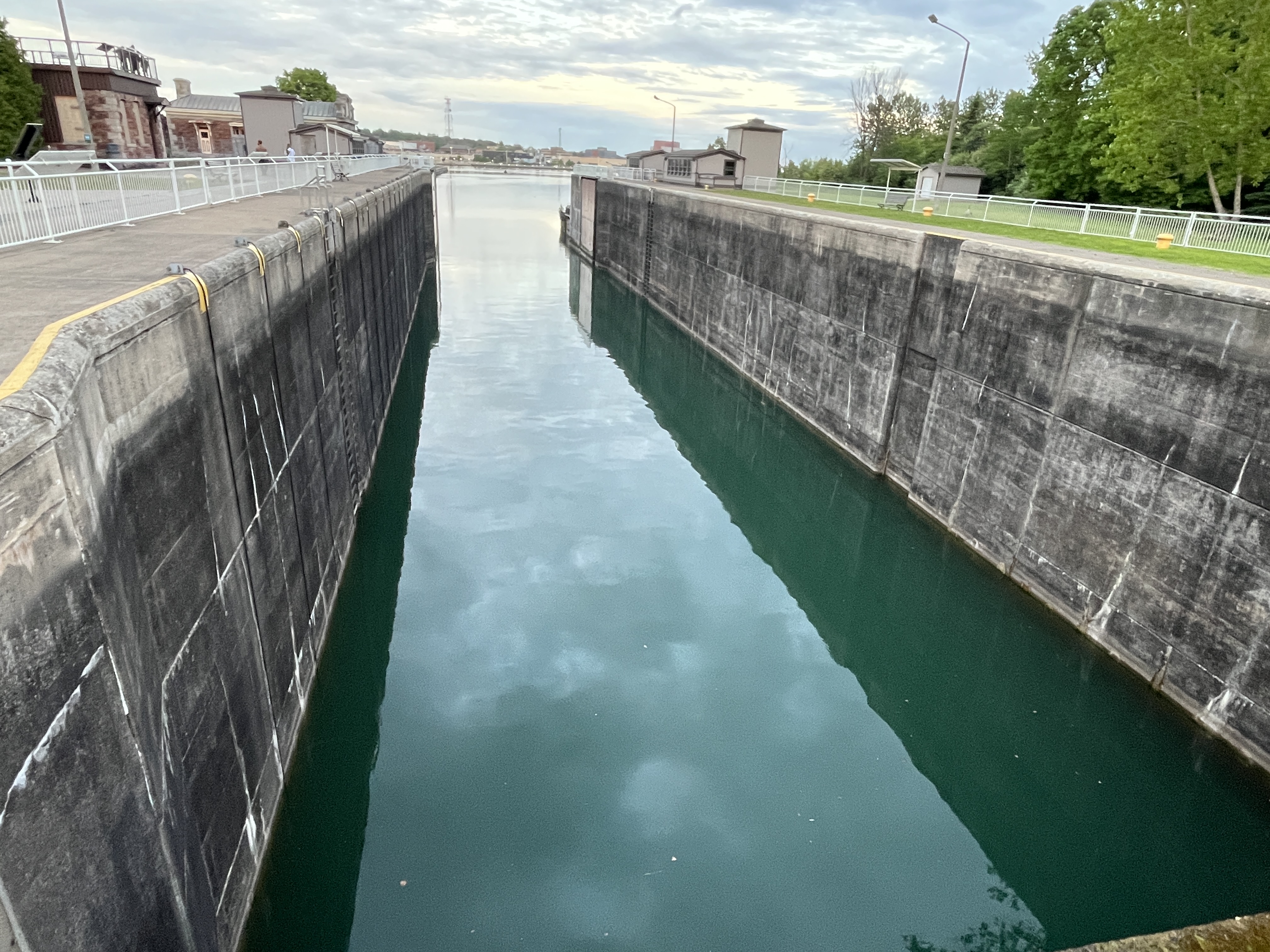
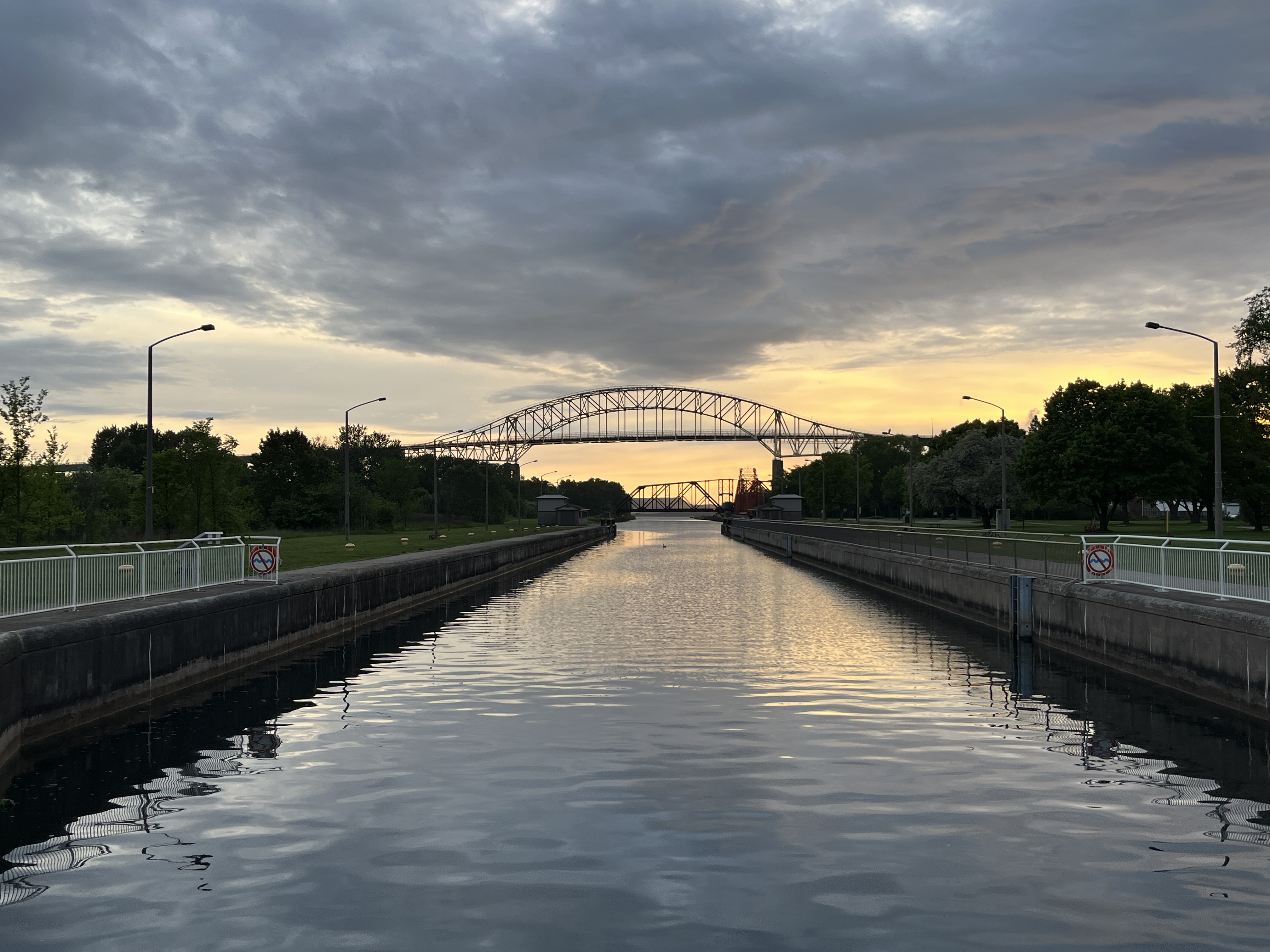
Another business trip took me back to Sault Ste Marie and since I had some time in the evening I decided to visit a Canadian National Heritage site. The Sault Ste Marie Canal. The city is located on the St. Mary River where water flows from Lake Superior to Lake Huron. The St. Marys Rapids were the site of the most significant change in elevation between the two Great Lakes. These rapids made an impediment for the fur trade and the first lock was built here in 1798 by the North West Fur company. This lock was destroyed by the Americans during the War of 1812 in an effort to disrupt the British control of the Great Lakes. A replacement lock was opened in 1895 and included the first electric operating system that was run by power created on site in a powerhouse. The image below shows the lower end of the single lock on the canal.

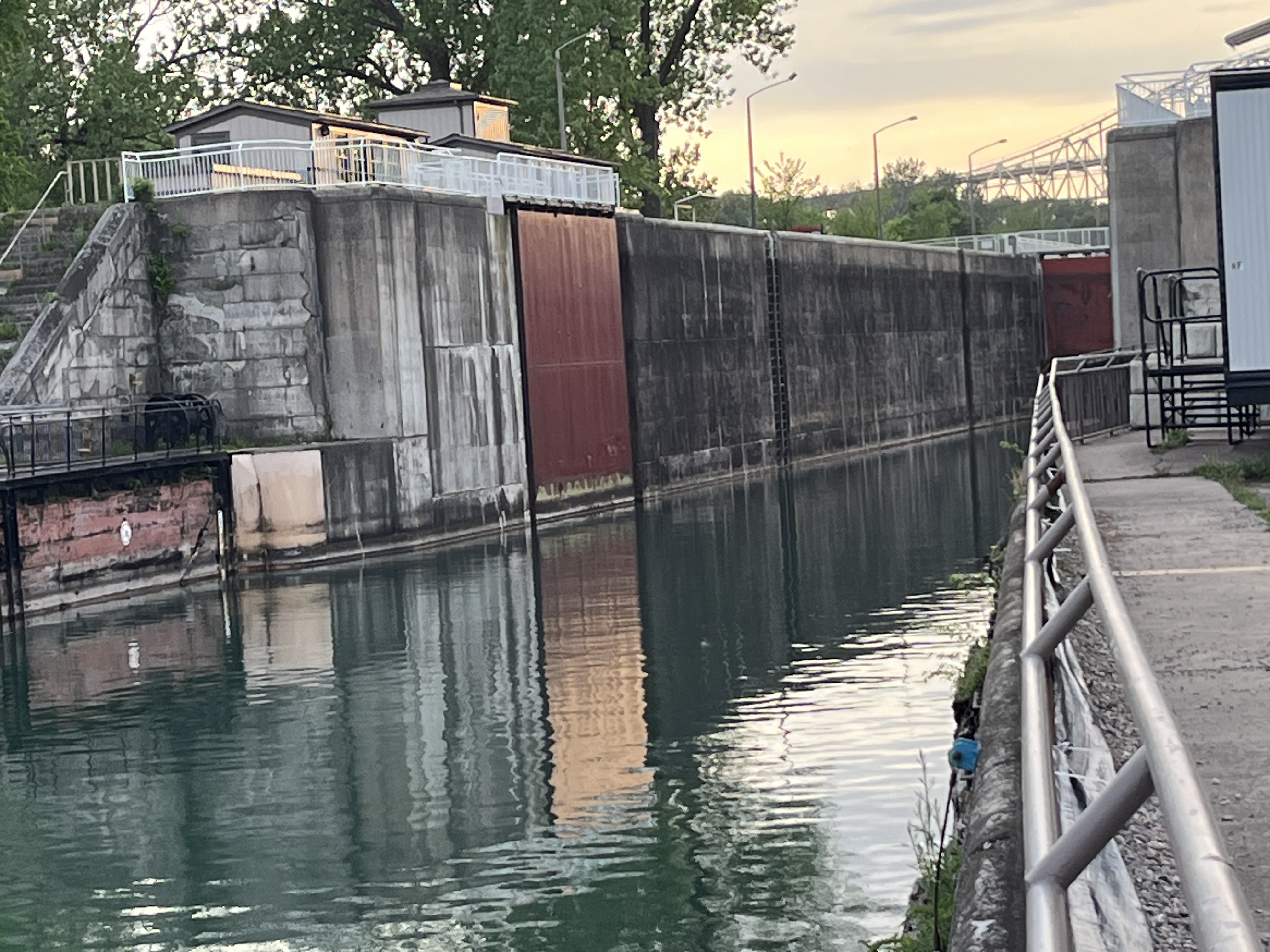
Lake Superior is about 23 feet in elevation higher than Lake Huron. The St. Mary’s River that connects the two lakes accommodates the elevation change through a series of rapids. The St. Mary’s Rapids were the site of a portage for centuries before Etienne Brule arrived there in 1621 as the first European to arrive at what would become Sault Ste. Marie. The St. Mary’s Falls Ship Canal Company started operating the first modern style lock in 1855. The image below shows the lock which is 253 feet long (77m), 51 feet wide (15.4m) and 44 feet deep (13.5m). It is normally at the water level of Lake Huron.

The other side of the gates shows the water level of Lake Superior.

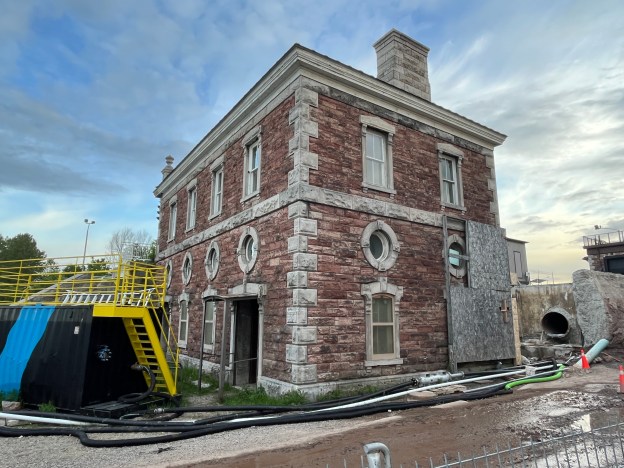
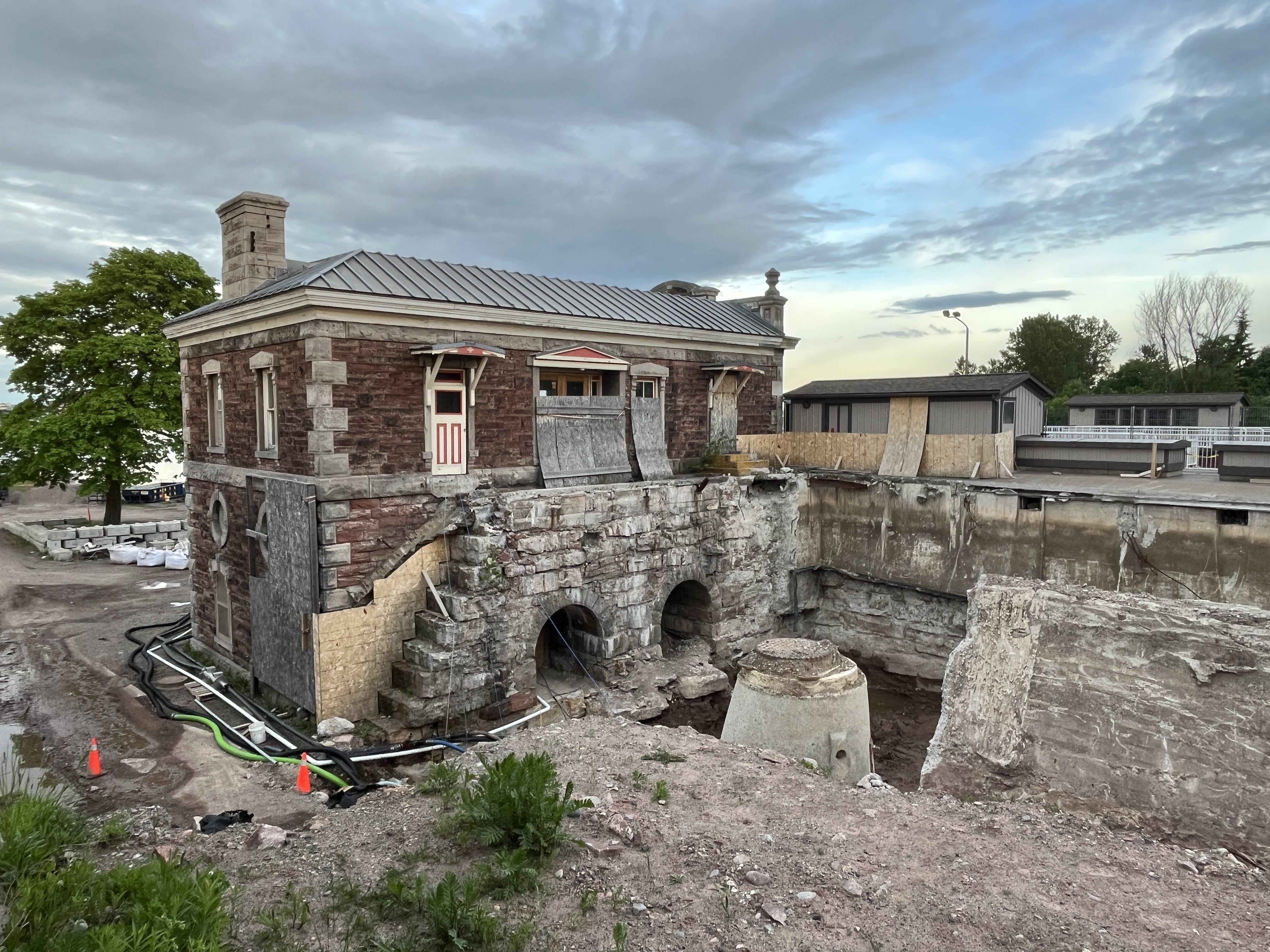
A powerhouse was constructed to supply power for the canal and to light the area. The building is currently under restoration and will be open to the public when completed. The original design from 1893 called for hydraulic power to operate the canal. A decision was made to convert it to electrical power making it the first electrically powered canal in the world.

The power mill was operated using water from the canal. A 1,000 foot intake pipe was run from the top end of the canal to the back of the powerhouse. The excavations for repair show the size of the pipe that supplied the water to the powerhouse.

The water was gravity fed to the powerhouse and split into two smaller penstocks before entering the back of the building. There were two water turbines on the first floor and the force of the water entering them caused them to spin. A series of belts and pulleys turned the generators on the second floor where electricity was generated.

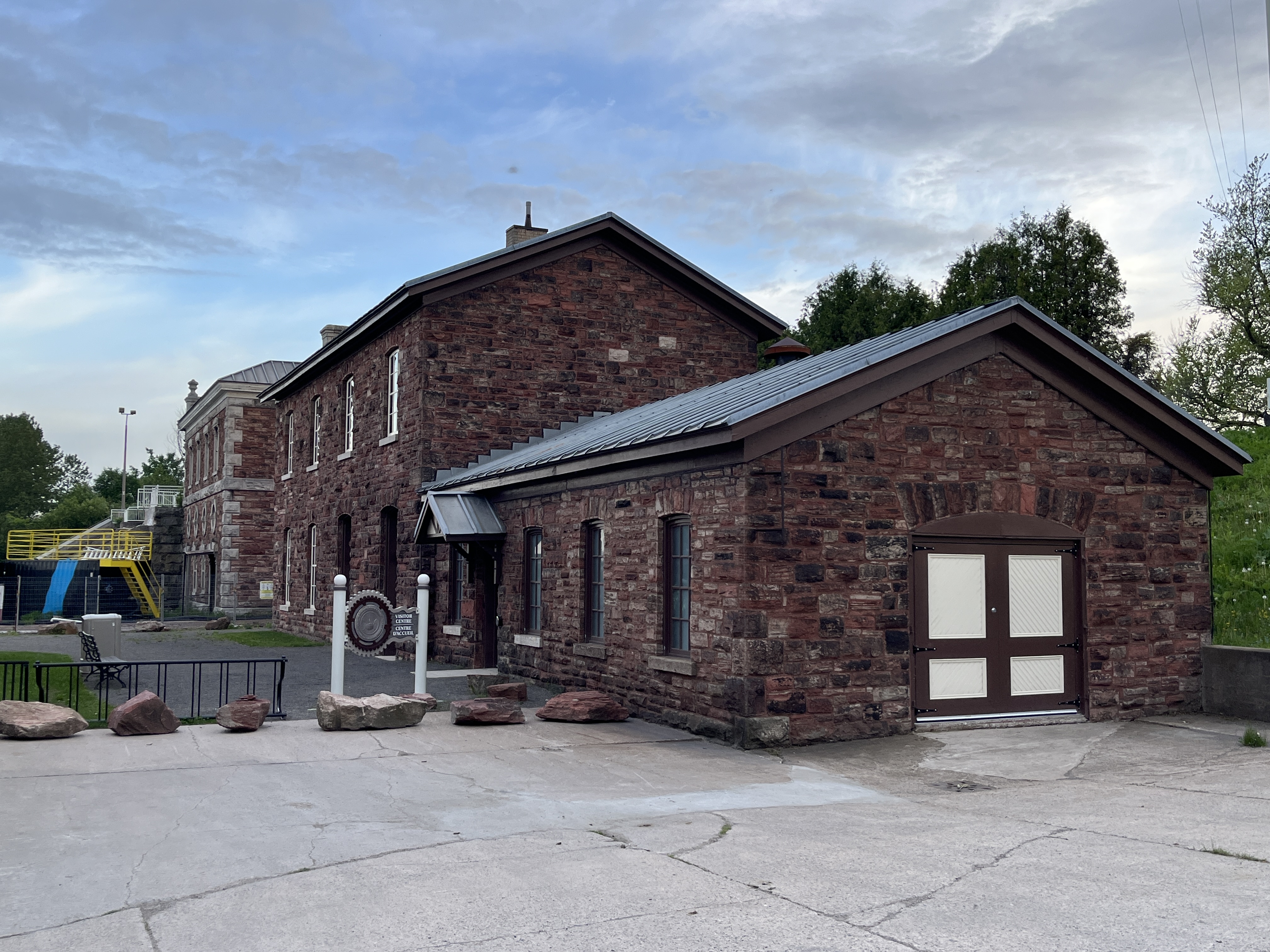
Another building was added in 1896 to act as the Stores building and Blacksmith Shop. The main building was used to store everything that was needed for the operation and maintenance of the canal. The single story portion on the end served as a blacksmith shop where metal parts were forged or repaired. The building was in terrible shape by 2010 and the foundation was collapsing. A major restoration has been completed and it now serves as the visitor centre.

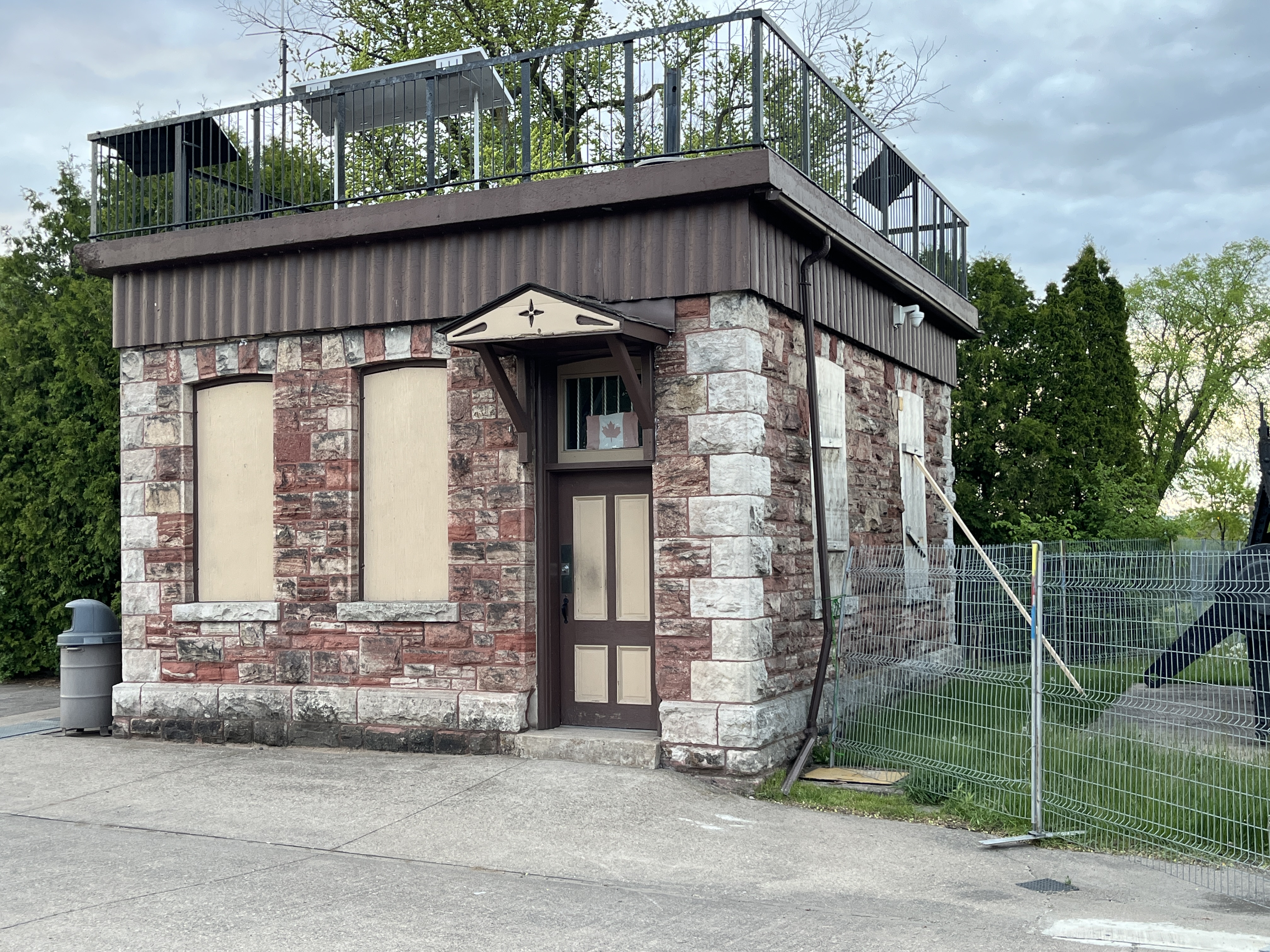
There’s a small building which was used for shelter for the canalmen. An observation platform has been constructed on the top of the building from which you can see the whole canal area.

One of the most beautiful buildings in the area is the Administration Building. This Second Empire structure boasts a mansard roof and plenty of decorative stone work.

The Superintendent’s home is still located just a few feet from the canal and boasts Late-Victorian architecture.

The canal has the last remaining Emergency Swing Dam which is designed to prevent disaster in case of a failure of the canal retention system. On June 9, 1909 it was put into use when the gates were rammed from the top, allowing a torrent of water to enter the lock as two ships were preparing to transition the lock. The swing dam was put into action and the flow of water slowed down so that the auxiliary gates could be closed. It took 12 days to reopen the canal. In 1987 there was a lock wall failure and the canal was closed. When it reopened in 1998 it was made available to recreational craft who are the users of the canal up until now.

There are many interpretive signs to aid your exploration and a guided tour is also available, making this an interesting historical site to visit.

Related Stories: Burlington Canal, The First Three Welland Canals, Newmarket Ghost Canal, Peterborough Lift Lock

Google Maps Link: Sault Ste Marie Canal

Like us at http://www.facebook/com/hikingthegta

Follow us at http://www.hikingthegta.com
Also, look for us on Instagram

Maple Leaf Gardens

April 20, 2024

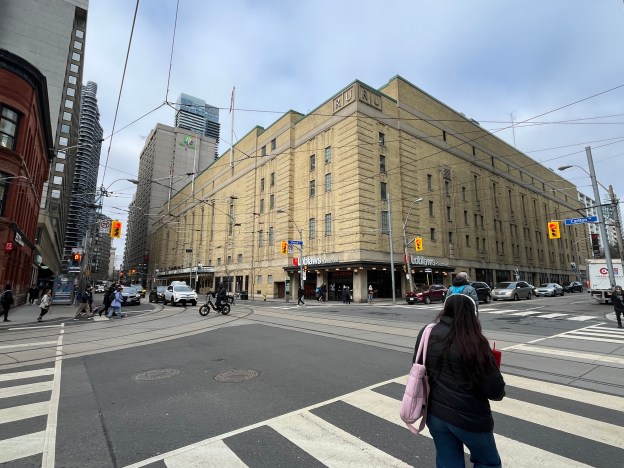
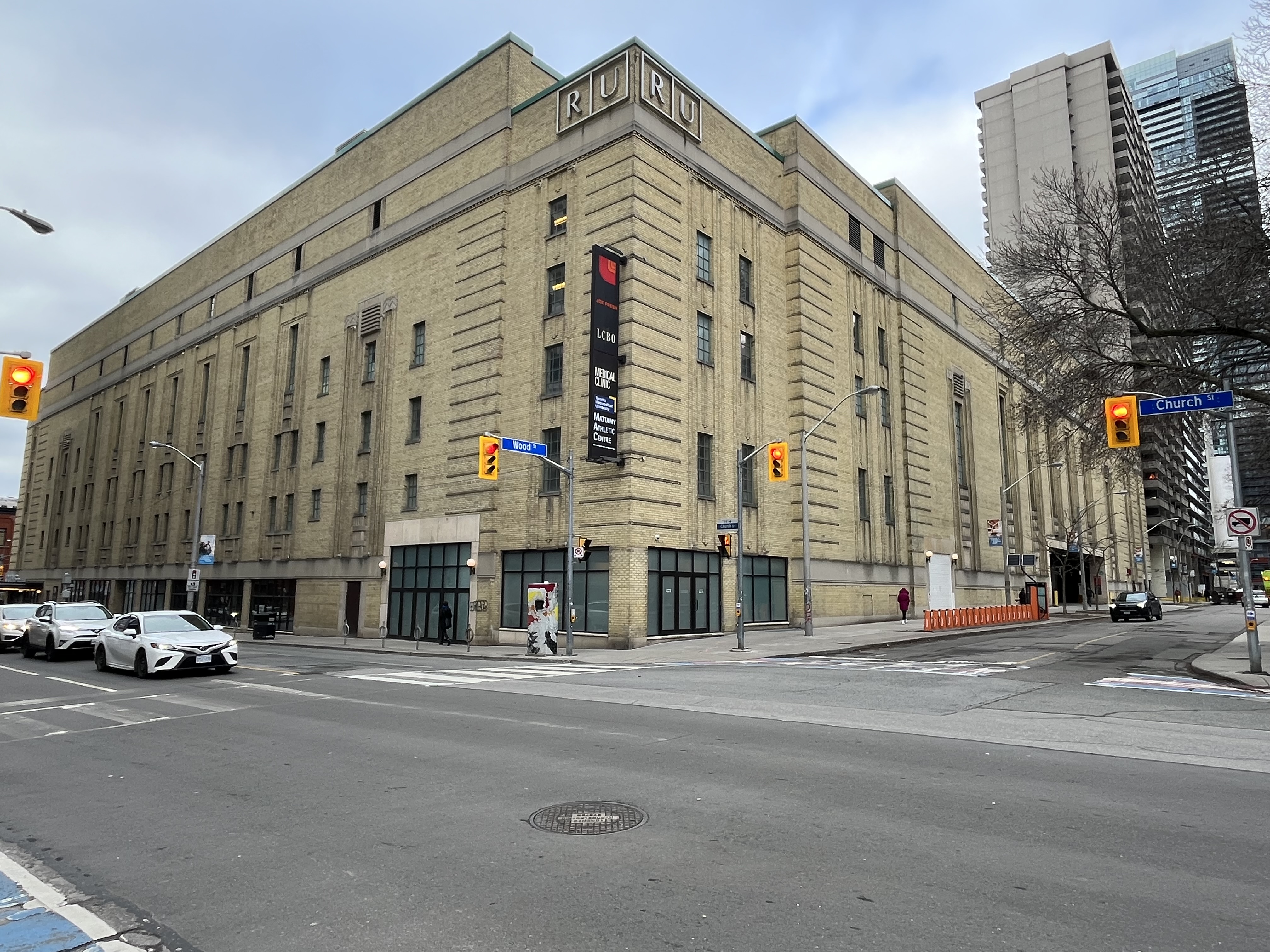
Maple Leaf Gardens was home to The Toronto Maple Leafs from 1931 until 1999 during which time they won the Stanley Cup 11 times. Unfortunately none of these was in the last 32 seasons they played there. Previously, The Leafs had been playing in Arena Gardens on Mutual Street which had been built in 1912. When the capacity of 7,500 people was deemed to be too small by the teams managing director Con Smythe he went looking for a site to build a more impressive arena for the team. He eventually settled on the corner of Church and Carlton Streets which he bought from The T. Eaton Company for $350,000. The map below shows the site as it existed in the 1893 Goads Fire insurance Map.

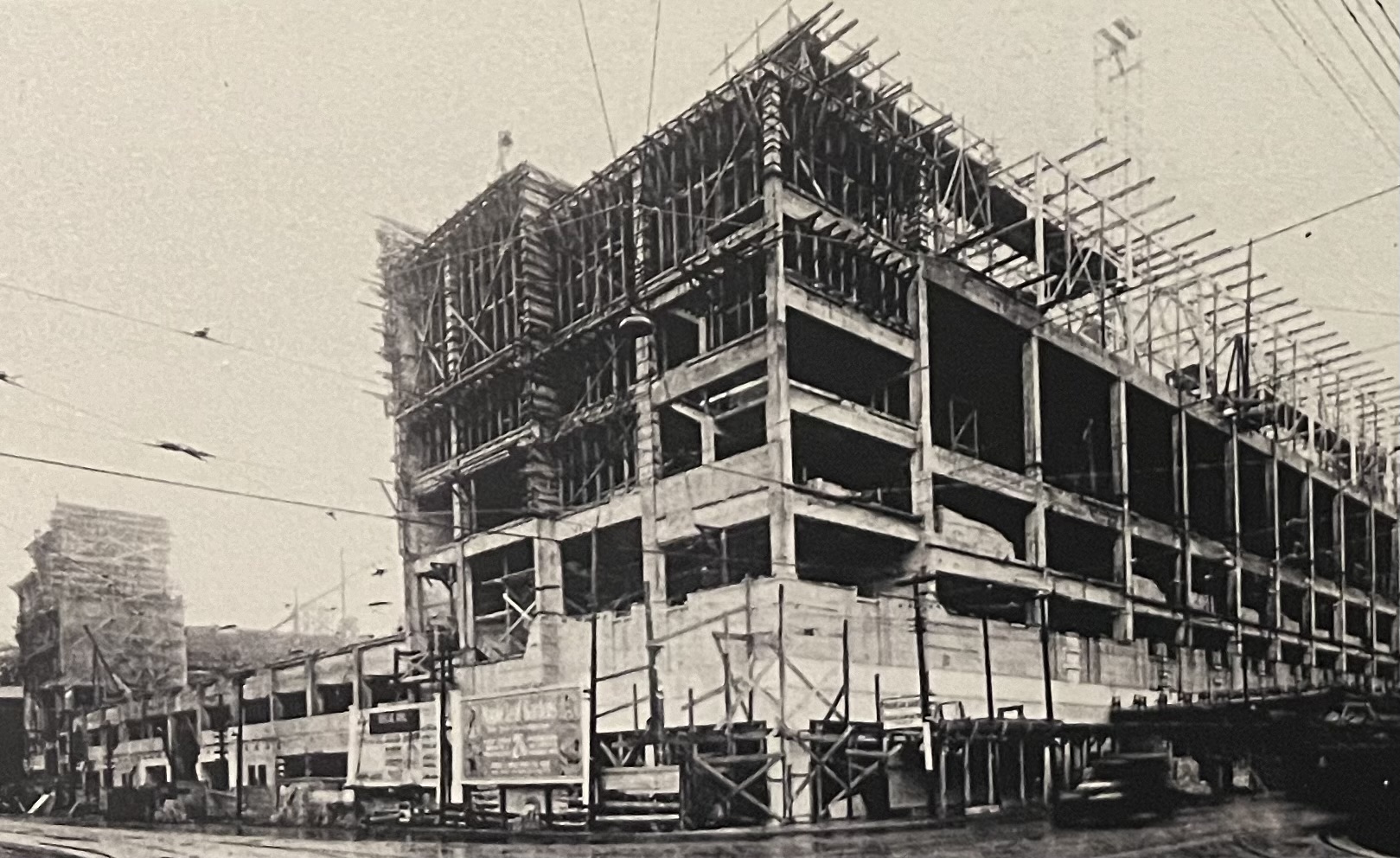
This picture was taken from the historic display board that is inside the front entrance to the facility as it stands today. It shows the building early in the construction phase.

A 12,473 seat facility was designed by the architectural firm of Ross and Macdonald. The construction contract was awarded to Port Credit company Thomson Brothers Construction. They had been the lowest of ten bidders coming in at $990,000 with an additional $100,000 for steel work. Construction began on June 1, 1931 and was completed in just 5 months and 2 weeks. Where are these people when we need a crosstown subway line built? The final cost was $1.5 million, or $25.9 million in 2021 dollars. The image below shows the building under construction and was taken from the Wikipedia article about the building.

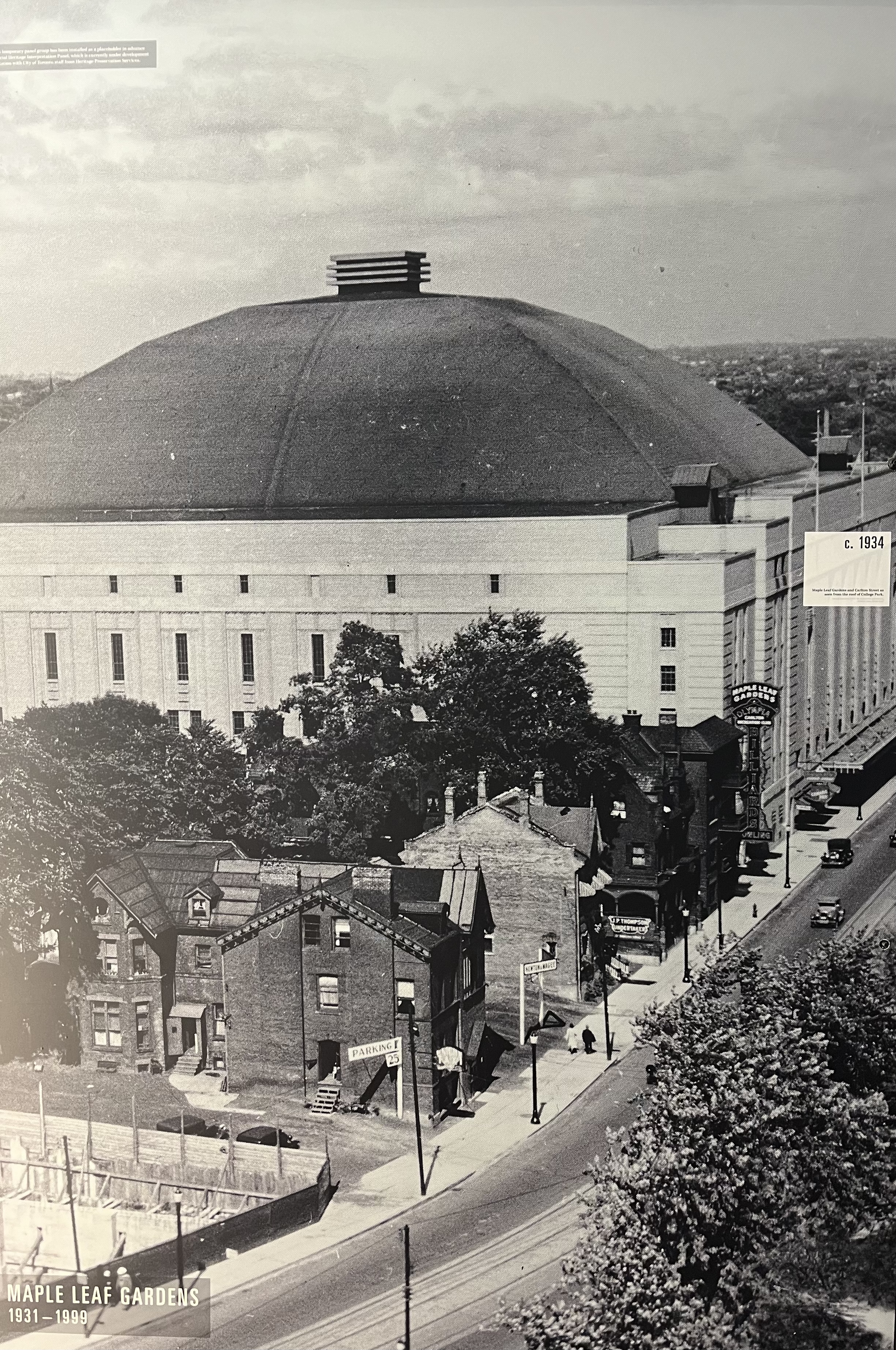
The archive photo below shows the building in 1934 and was taken from the same display board inside the front entrance to the modern building. It shows the older homes that still remained beside the arena. These would have been on the map shown above.

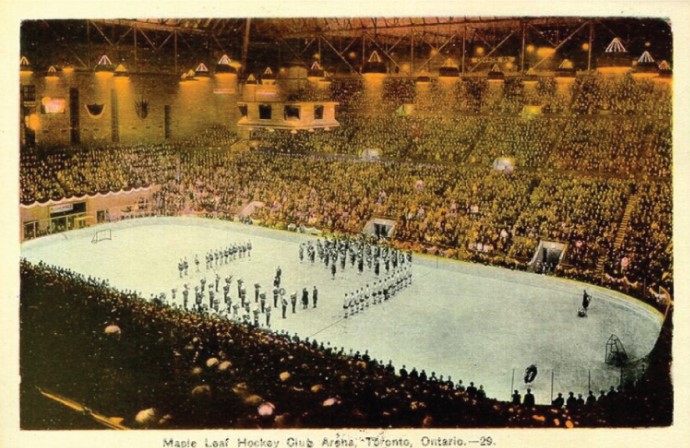
The first game in Maple Leaf Gardens was played on November 12, 1931 with the Toronto Maple Leafs hosting the Chicago Blackhawks. This postcard shows the inside of the stadium on that night. Unfortunately the Leafs lost that first game 2-1 to the Blackhawks. The image below shows the opening ceremonies for the building and was taken from the Wikipedia article.

Over the years Maple Leaf Gardens played host to many events including the Ice Capades and a ton of Rock Concerts. Elvis Presley played there on April 2, 1957 and The Beatles on Sept. 7, 1964. Almost every major act played here on their way across North America. I saw my first Rush concert here in November 1982 on their “Signals” tour. It was so good that I saw them again Sept. 1984, March 1986, March 1988, May 1990, Dec. 1991, and May 1994. Rush recorded a concert video of the 1984 “Grace Under Pressure” tour in which I can be seen briefly in a crowd view during the song “The Spirit Of Radio.” These were probably the best seats I had for any concert at The Gardens. I went to at least 25 other concerts here over the years including more than one by each of Jethro Tull and Triumph. Oasis became the last concert to be held at the arena on April 29, 2000.

I also went to several games in the 1999 and 2000 Toronto Rock seasons and watched them win the National Lacrosse Championship both of those seasons. The 2000 Toronto Rock Championship game became the final professional event to be held at Maple Leaf Gardens. The Toronto Maple Leafs played their final game in The Gardens on Feb. 13, 1999 before moving to Air Canada Centre. They lost 6-2 to the Chicago Blackhawks putting loosing bookends on their 67 year run.

After the final events in Maple Leaf Gardens, the facility sat empty for almost a decade as the owners refused to sell it to anyone who might use it in competition with Air Canada Centre. The Gardens was purchased in 2004 by Loblaws for $12 million dollars under an agreement that it wouldn’t be used for sports or entertainment. In 2009 Loblaws partnered with Toronto Metropolitan University (formerly Ryerson University) to create a Loblaws grocery store and an athletic facility for the university.

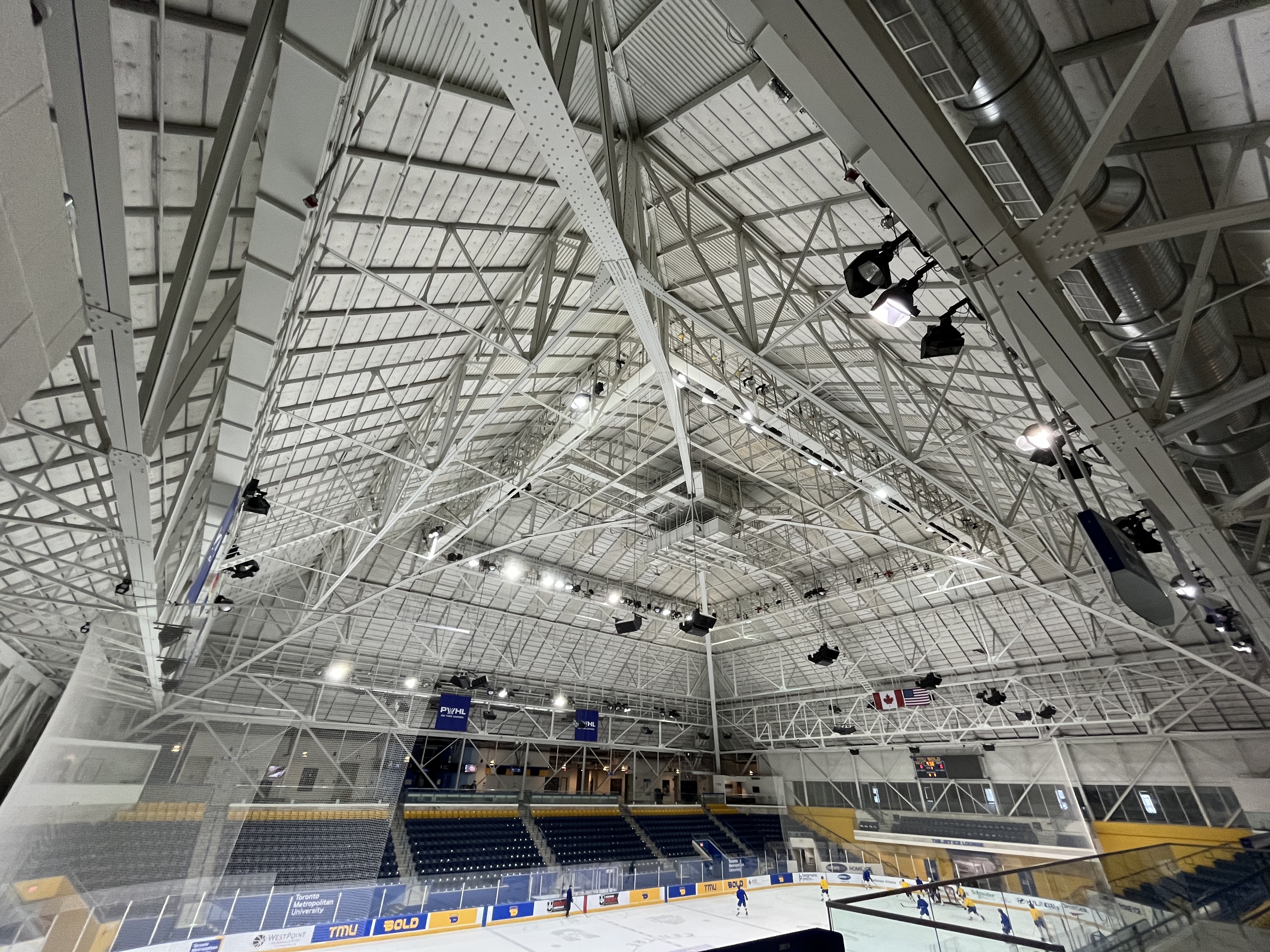
The interior of the old stadium was gutted and new floors were laid for the grocery store and LCBO that went on the ground floor. A red dot was placed on the floor to indicate the original centre ice from the hockey arena. This store opened on November 30th 2011. A second floor was added and an NHL size rink was put in on the third floor along with a fitness centre. Seating for the new rink consists of 2,796 seats from the original arena. The Mattamy Athletic Centre at The Gardens opened September 9, 2012. The image below shows the rafters where the scoreboard for the NHL games used to hang above centre ice. Tons of speakers and lighting equipment were also suspended here for the various concerts that were held over the last five decades of the 20th century.

Maple Leaf Gardens stands as a monument to Toronto sports and entertainment and lives on as a Loblaws, fitness centre and university ice rink. I have a lot of fond memories of events at The Gardens but unfortunately, being in my early 60s means that I am too young to have witnessed a Stanley Cup victory there.

Perhaps this year will be the year that the Maple Leafs have a successful Stanley Cup run!

Google Maps link: Maple Leaf Gardens

Like us at http://www.facebook.com/hikingthegta

Follow us at http://www.hikingthegta.com
Also, look for us on Instagram

Shanty Bay Go Karts

March 16, 2024

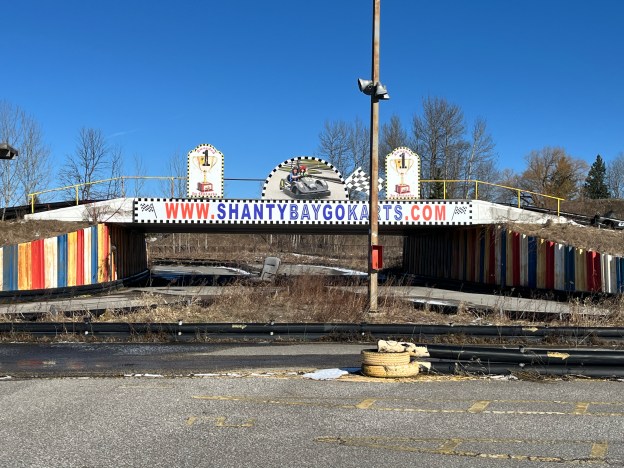
For years we used to stop at the entertainment facility just north of Barrie on highway 11 as we made our way back home from Gravenhurst. Usually we would grab a coffee or a snack from McDonalds but this section of the highway used to be known for cheaper gasoline. Therefore, if we had seen cheaper gas on the route north we might stop on the way back home to fill up. The image below shows the site from the air and indicated the location of the Go-Kart Track, the Kids Track, The Coffee Time, McDonalds and the Shell gas station. Other blogs online suggest that the business was closed as a result of Covid restrictions. However, when you look at the historic images on Google Earth there haven’t been cars in the parking lot or on the track since 2016. Reliable information seems to be hard to come by online.

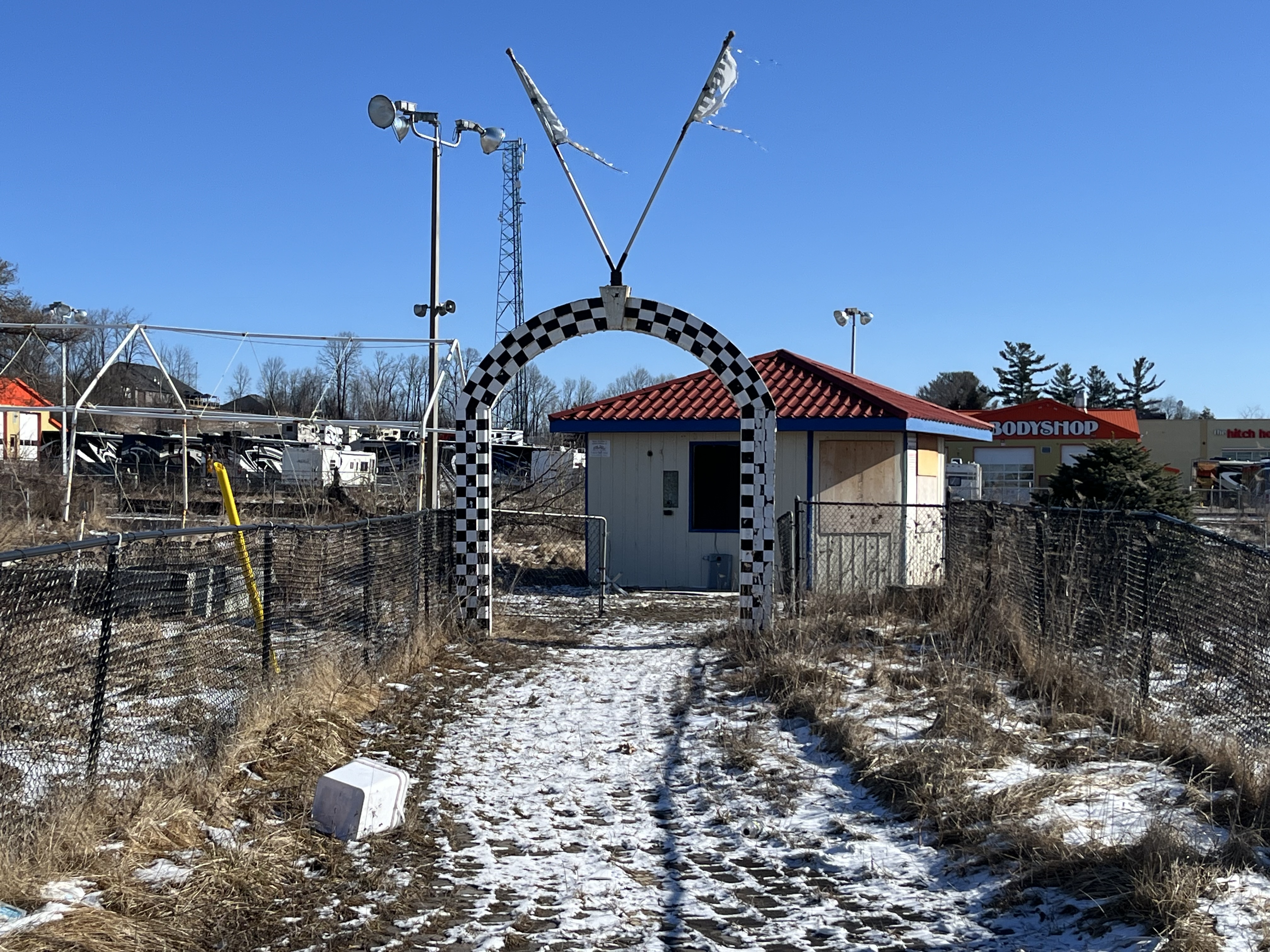
The entrance stands empty and the ticket booth has been boarded up for years now. You used to have to but tickets for individual laps and hand them to the attendant between each round on the track.

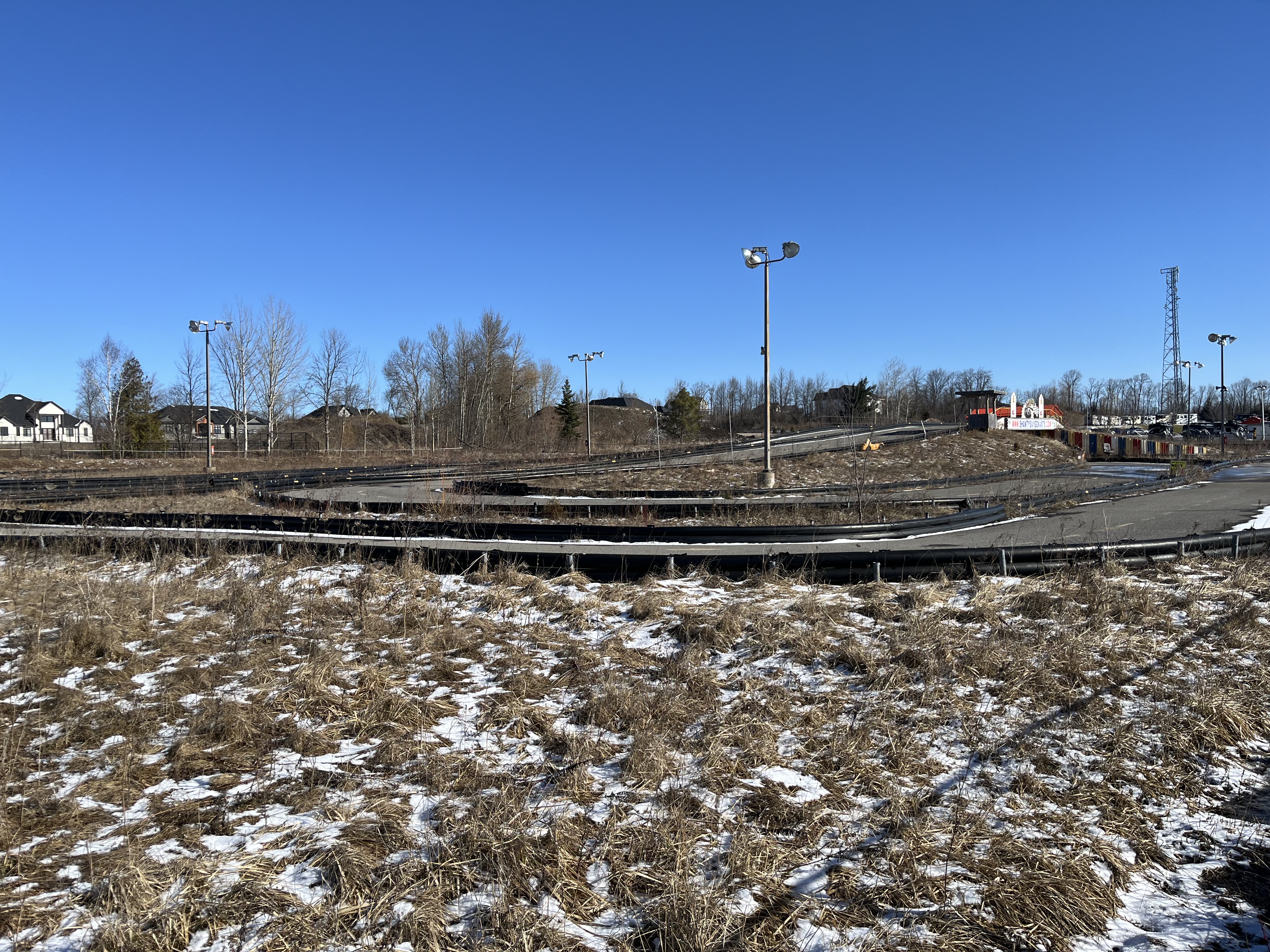
The one-kilometre long track loops around itself and speeds of kilometres per hour were advertised. A loop could be done in as little as a minute and a half and cost $5.00. Five laps could be had for $20.00. To ride the adult track you had to be at least 11 years old and 52 inches tall. There were 30 carts, some single seaters and some double. There was also a small mini track with a single cart for those too young to go on the adult track.

The rules are still posted near the gate. They also give the conditions that riders from 8-11 years old must meet. They had to be at least 48″ tall. The kids track is 1/4 kilometre long and has a maximum speed of 16 kilometers per hour. Children between 3 and 8 years old could ride for free as a passenger in a two seater adult kart. Children under three cannot ride on the tracks.

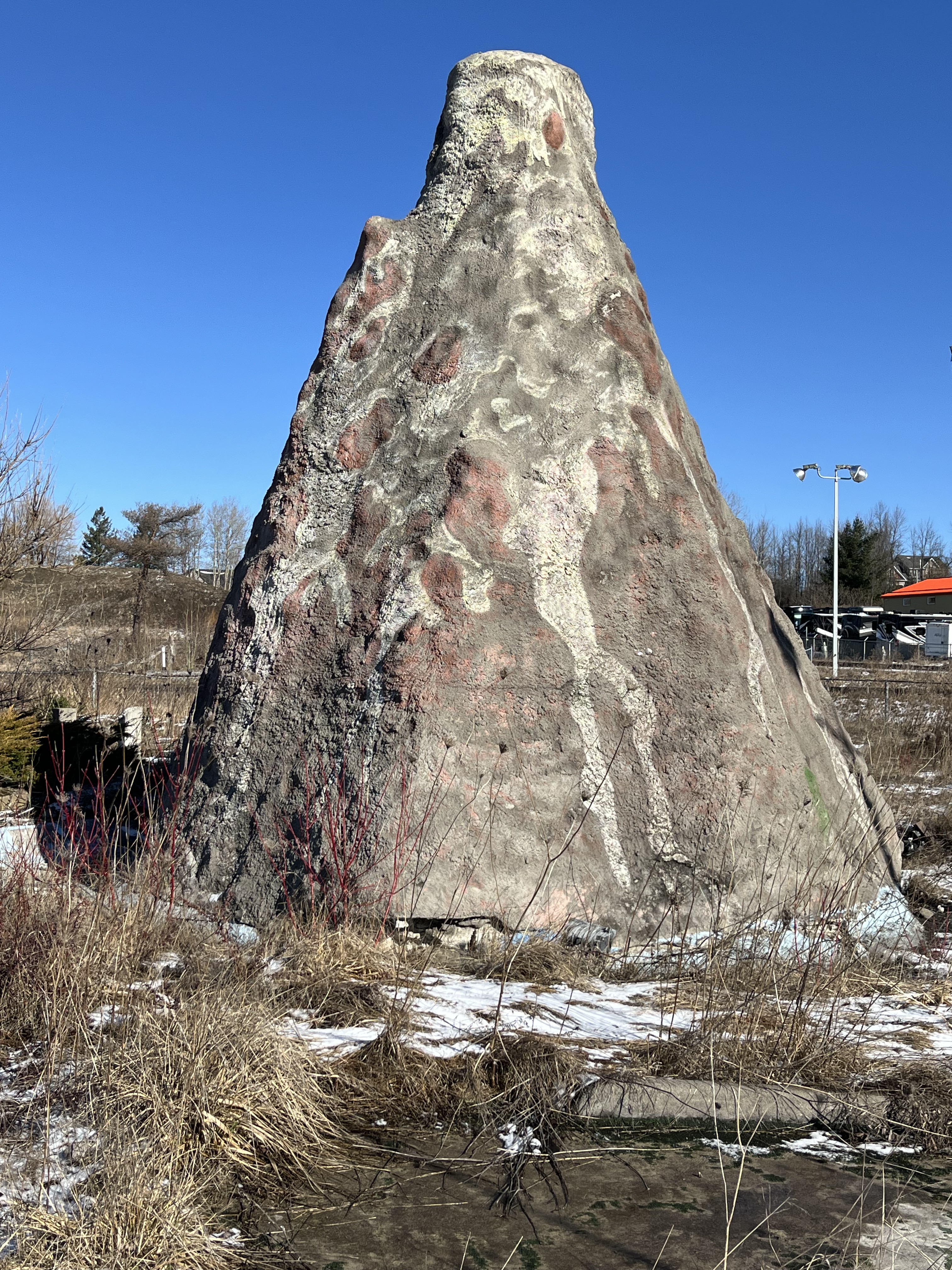
The most prominent feature on the mini golf course is the volcano. The mini golf is getting badly over-run and the carpet on the greens is falling apart.

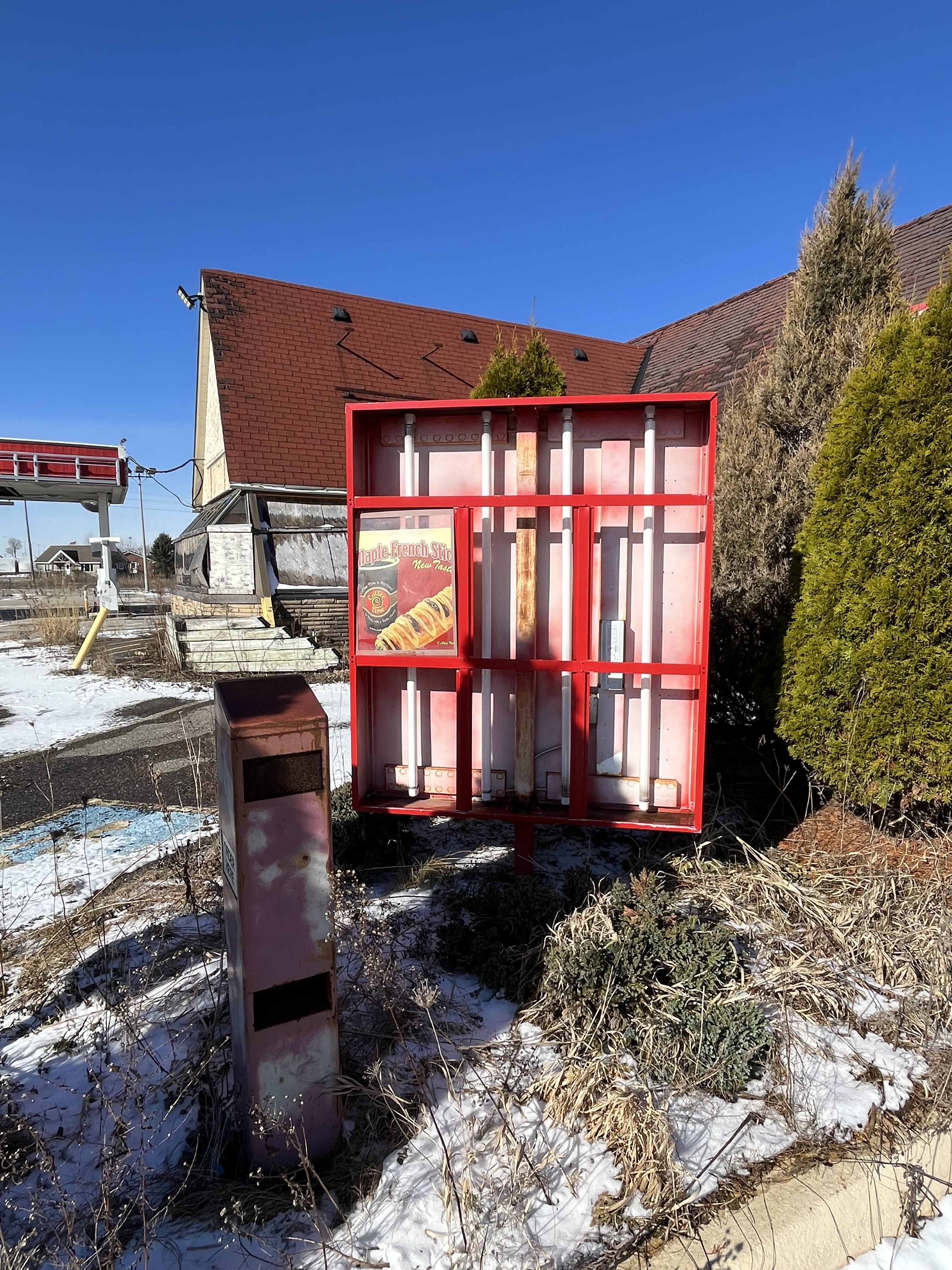
A Coffee Time drive through used to operate on the north end of the building.

The menu sign is broken away except for one panel announcing a new treat called Maple French Sticks.

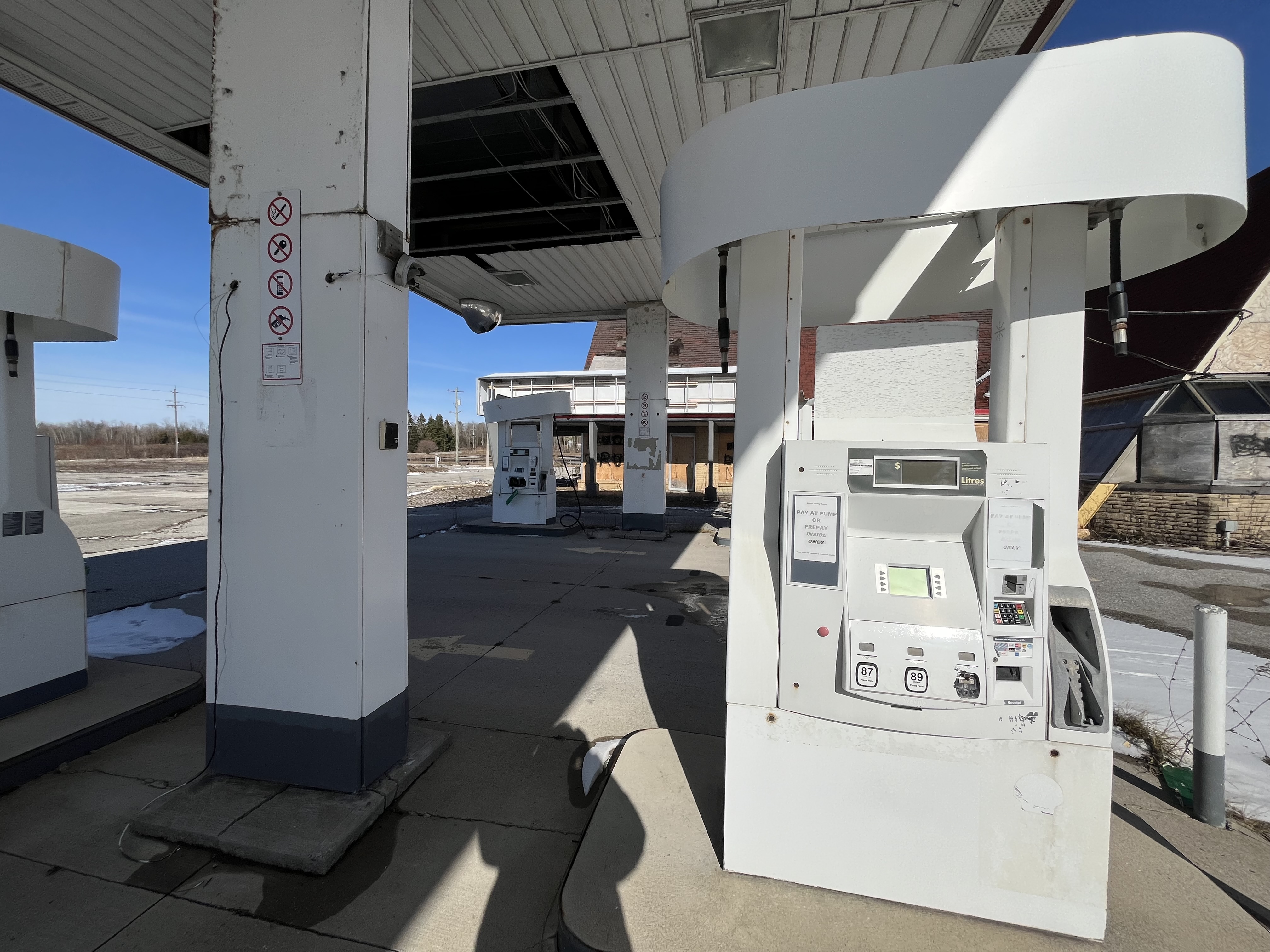
A Shell gas station used to operate at the front of the building.

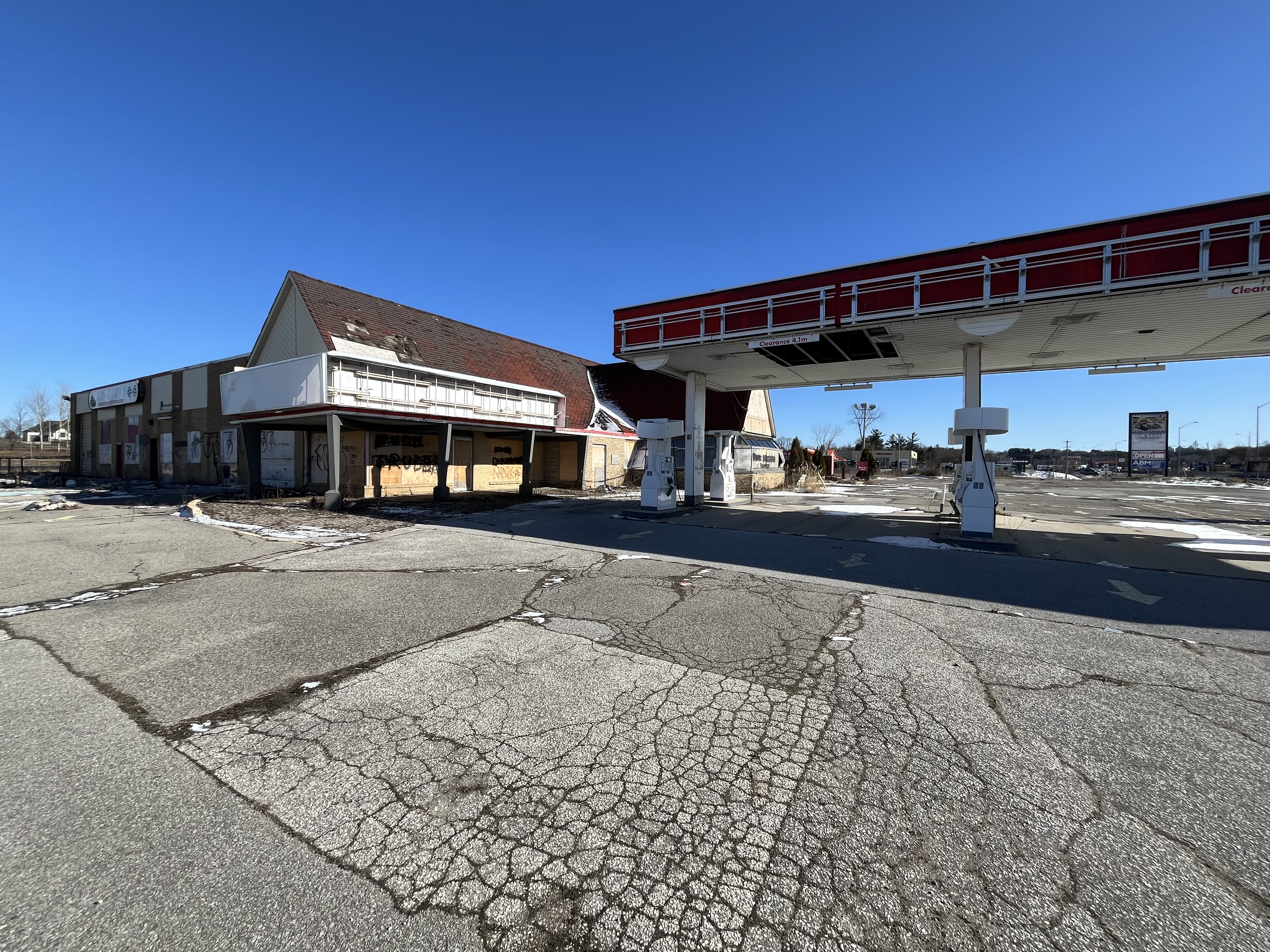
There was also a McDonalds restaurant on the south end of the building for those who wanted a meal either during their stay or just a snack while stopping for gas.

It’s too bad that this facility isn’t operating anymore because over the years thousands of people enjoyed a spin around the track.

Related Stories: North Halton Kart Club

Google Maps Link: Shanty Bay Go Carts

Like us at http://www.facebook.com/hikingthegta

Follow us at http://www.hikingthgta.com
Also, look for us on Instagram