
December 02, 2023
Starting in the 1920’s the wealthy of Toronto were building mansions in the area of Bayview Avenue and Lawrence Avenue. This was a rural setting at the time which featured the Don River for fishing and large lots with plenty of places to ride their horses. We’ve covered a number of these in past issues of our blog and they can be found in the links at the end of this post.
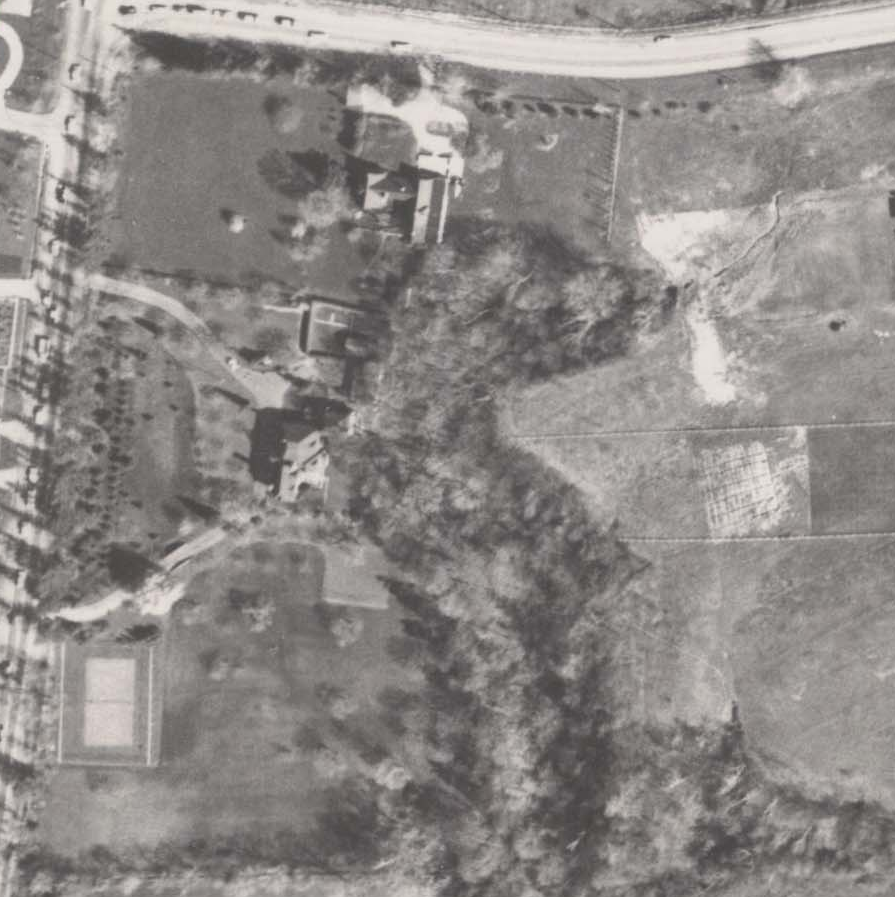
Today we’re looking at Stonedene which sat on Bayview just south of Post Road. It dates to the end of the 1920’s, reportedly built in 1929. The image below from the Toronto Archives aerial photograph collection shows the property as it was in 1957. Post road runs along the top of the picture and Bayview Avenue along the left hand side. The mansion can be seen near the middle of the image, set at the apex of a curved driveway.
Living up to its name of Stonedene, even the gates are made of stone and the fence that once separated it from the road was supported on several stone pillars. The main entrance has the name Stonedene carved into it and the stone pillars still line Bayview Avenue.

The home was built in 1929 according to city records and was originally constructed for Captain Harry Lynne Plummer and his wife Joyce. Plummer served in the First World War as a member of the 4th Canadian Mounted Rifles and as a Captain in the Canadian Railway Troops.

By 1949 it had been sold to General Albert Bruce Matthews and his wife Victoria. Matthews served in the Second World War as a member of the 1st Canadian Infantry Division. He was promoted several times during the war and as General Officer Commanding the 2nd Canadian Infantry Division he took part in the liberation of northern parts of the Netherlands. After the war he became chairman of Massey Ferguson and was President of the Liberal Party of Canada during the 1950s and 1960s.

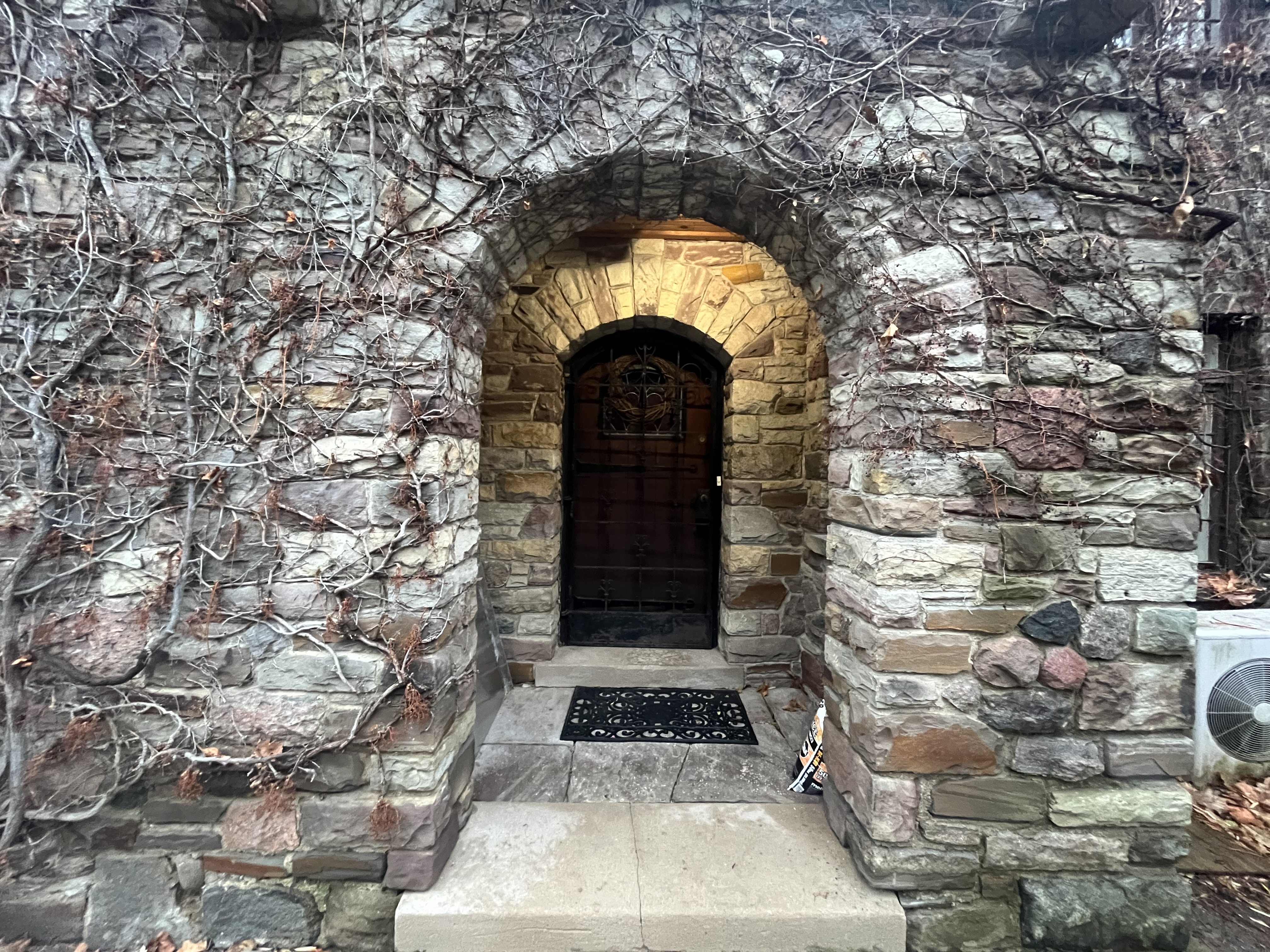
The home was sold in 1976 to the Ontario Mission of the Deaf and converted into administration offices. It has a front door that reminds me of the entrance to a castle.
A structure sits on the front lawn that looks like a stone chair or throne.

The back of the chair has a date stone which reads 1925 which is in conflict with the official date of the mansion.

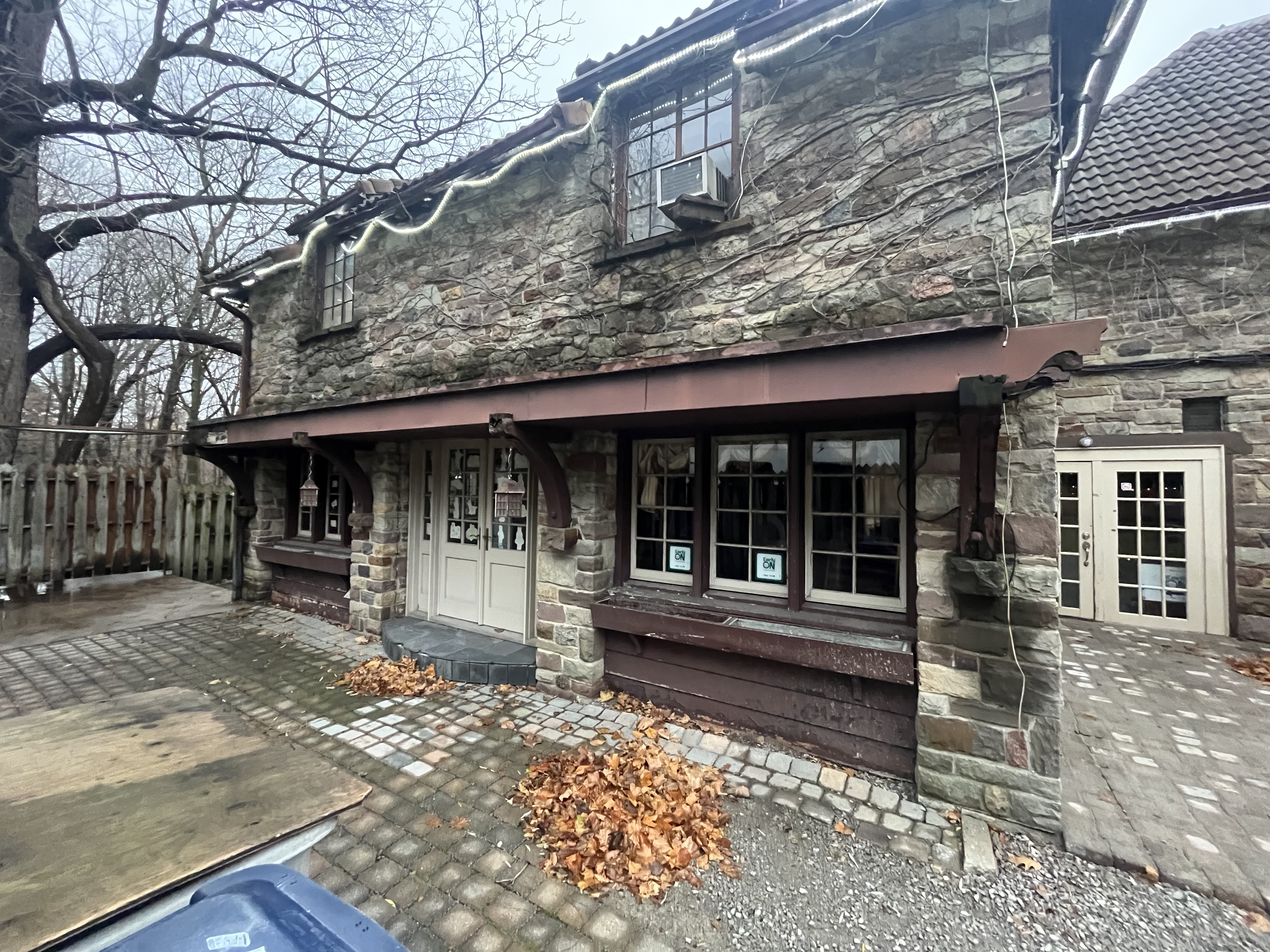
Everything about the home is grand including the side entrance which has an ornate double door with sidelights.
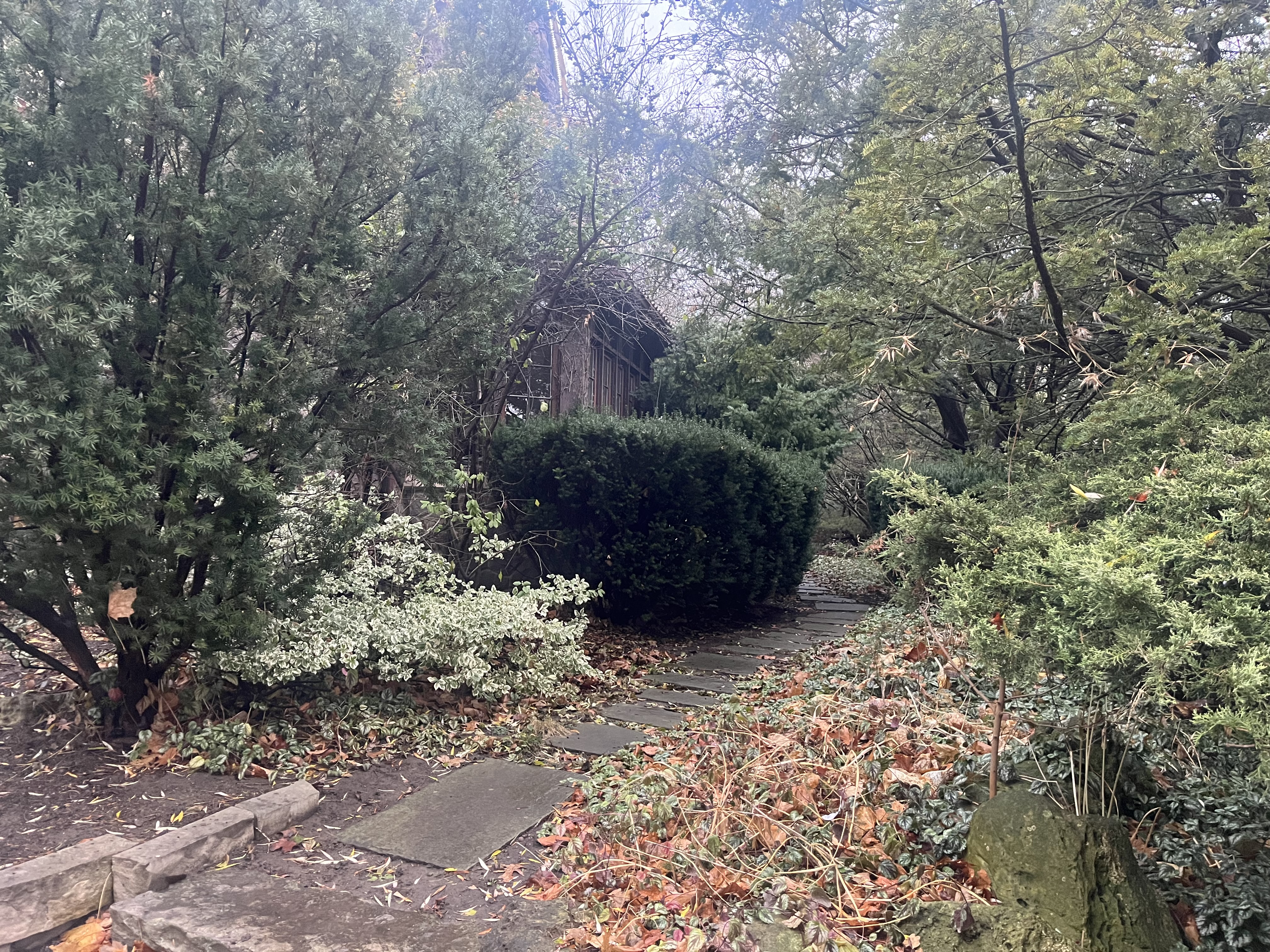
The gardens around the south side of the house have become a little overgrown but add to the character of the mansion.
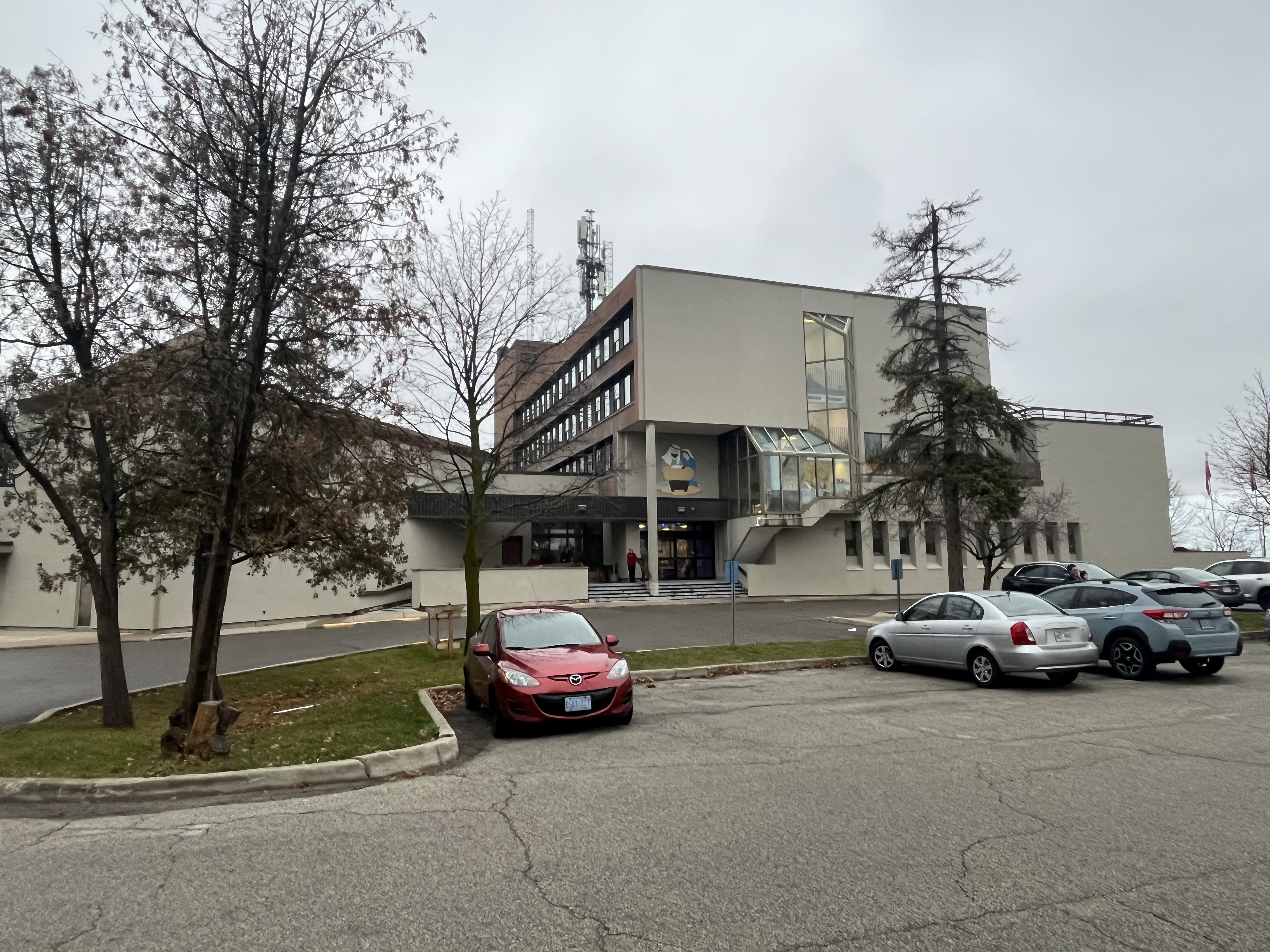
Ontario Premier William Davis laid the date stone for the Bob Rumball Community Centre for the Deaf on April 5, 1979. This multi purpose building is used to provide services for all ages of the hearing impaired. There are youth services as well as seniors programs and sign language courses. It was conceived by Bob Rumball who played football for the Toronto Argonauts and Ottawa Roughriders. He got financial support from Conn Smythe and Harold Ballard of the Toronto Maple Leafs.
The historic photograph at the top shows all the freshly planted trees on the front lawn which today provide a forest that hides the house from the road. The mansion was given a restoration in 1996 when the administration offices were moved upstairs. The lower floor is now an event centre and can be booked for weddings.

Stonedene is a great example of the wealthy estates that were built in the area in the late 1920s by Toronto’s millionaires. Many of these still exist and can be viewed in the links below.
Related stories: Windfields Estate, Frank P Wood Estate, York Lodge, Bayview Estates
Google Maps Link: Stonedene
Like us at http://www.facebook.com/hikingthegta
Follow us at http://www.hikingthegta.com
Also, look for us on Instagram
 Hiking the GTA
Gorgeous but it is actually Bob Rumball 🙂
Thanks Leslie.
My Pleasure 🙂
Hi it’s actually Stonedene…not Stonedean
Thank you Sheila. It’s been corrected!
You’re welcome!