Tag Archives: Acton

Fairy Lake – Acton

July 1, 2023

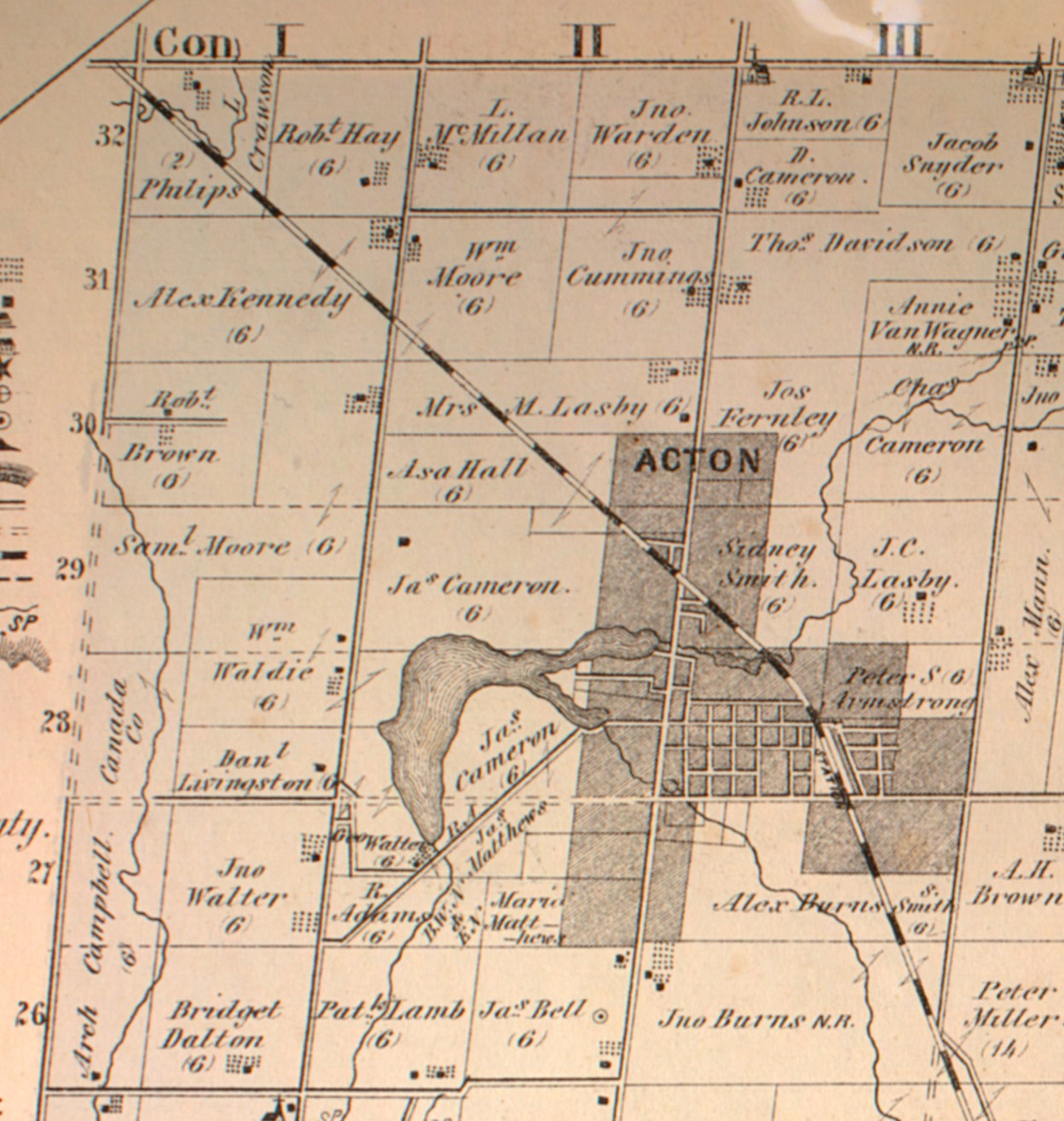
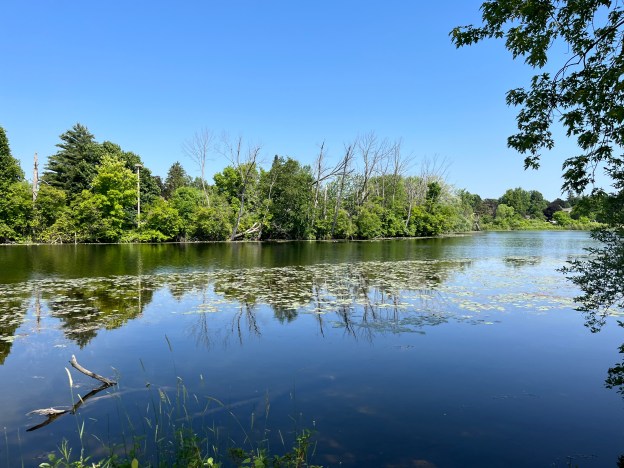
Acton was founded in 1825 by two brothers named Adams who had been Methodist preachers but decided to settle into the farming life. Today, the community is known for The Olde Hide House which was made famous with the slogan “It’s worth the drive to Acton”. Acton is also lucky to have Fairy Lake as a scenic park in the centre of town. The lake is found at the headwaters of Black Creek and was created in 1830. That was the year the Adams brothers built a dam on Black Creek and flooded an area that was previously a wetlands. The dam was created to retain enough water to allow them to power a grist and flour mill in town. The image below is taken from the 1877 County Atlas and shows the lake relative to the small community that existed at the time.
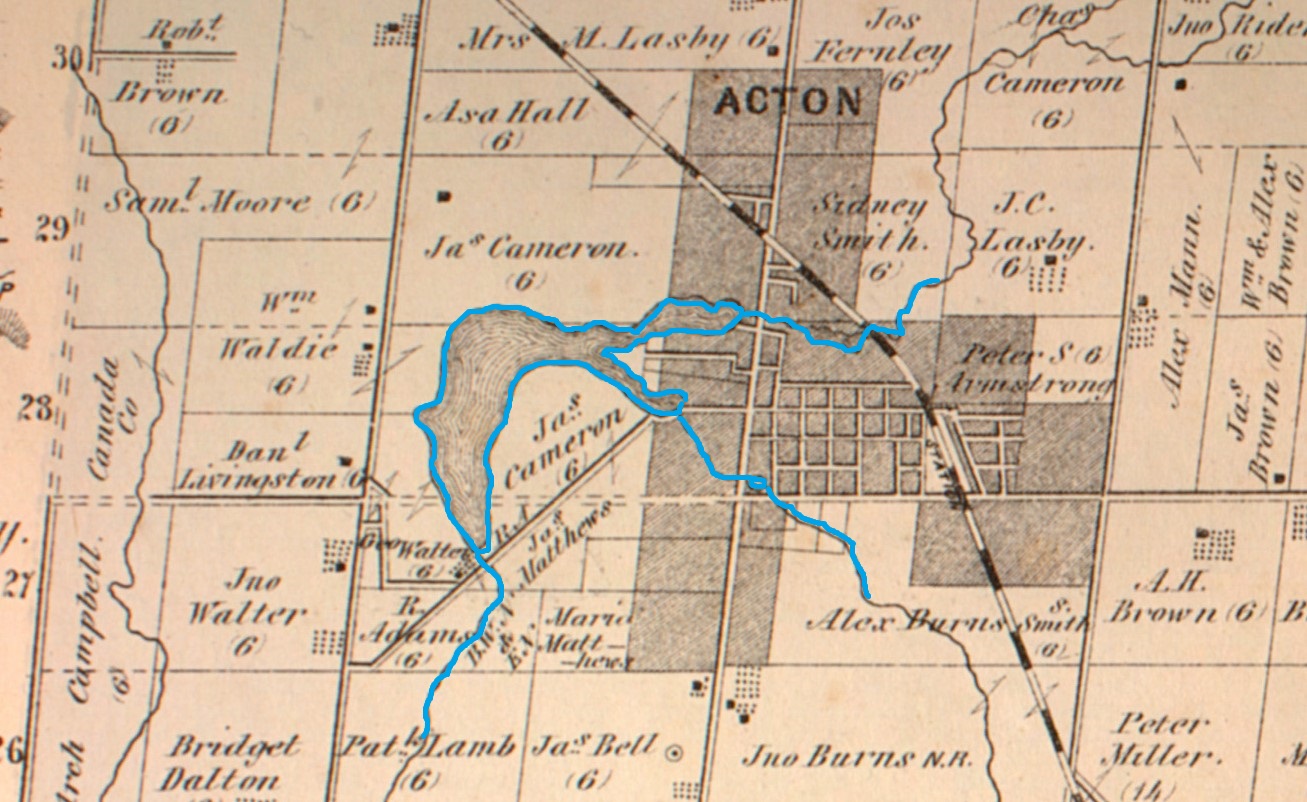
The flooded area was only known as the mill pond until 1872 when it was given the name Fairy Lake. Then, in 1886 the town purchased land from Rufus Adams to allow the creation of Prospect Park.

There is an extensive playground with lots of swings and other attractions for children to play on. There’s even a small zip line for the enjoyment of the little ones.

There is a 1.6 km loop trail in the park that takes about 30 minutes to complete. The trail makes its way along the shore of the lake and has several places which are good for fishing or bird watching.

There is also a small beach but unfortunately the sand is covered with lots of Canada Goose poop. This has turned a quiet little spot for the children to wade in the water into a rather unsanitary place.

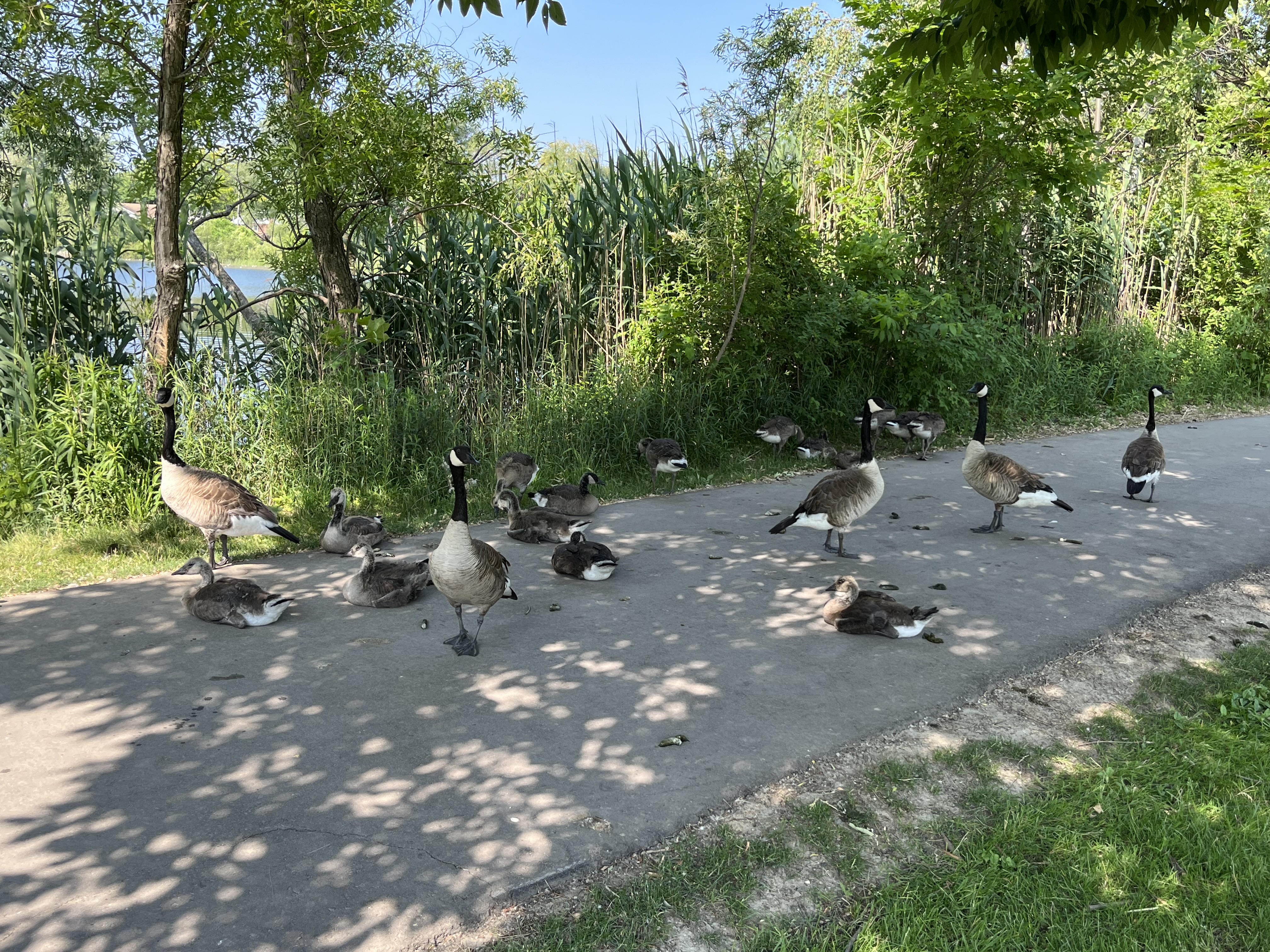
The geese are busy raising a brood of goslings and they have occupied several sections of the trail where they deter pedestrians by hissing at them and making a mess of the walkway. Each goose is capable of leaving up to two pounds of poop behind every day. They mostly do this while grazing or walking on land and are less likely to drop something while flying or swimming.
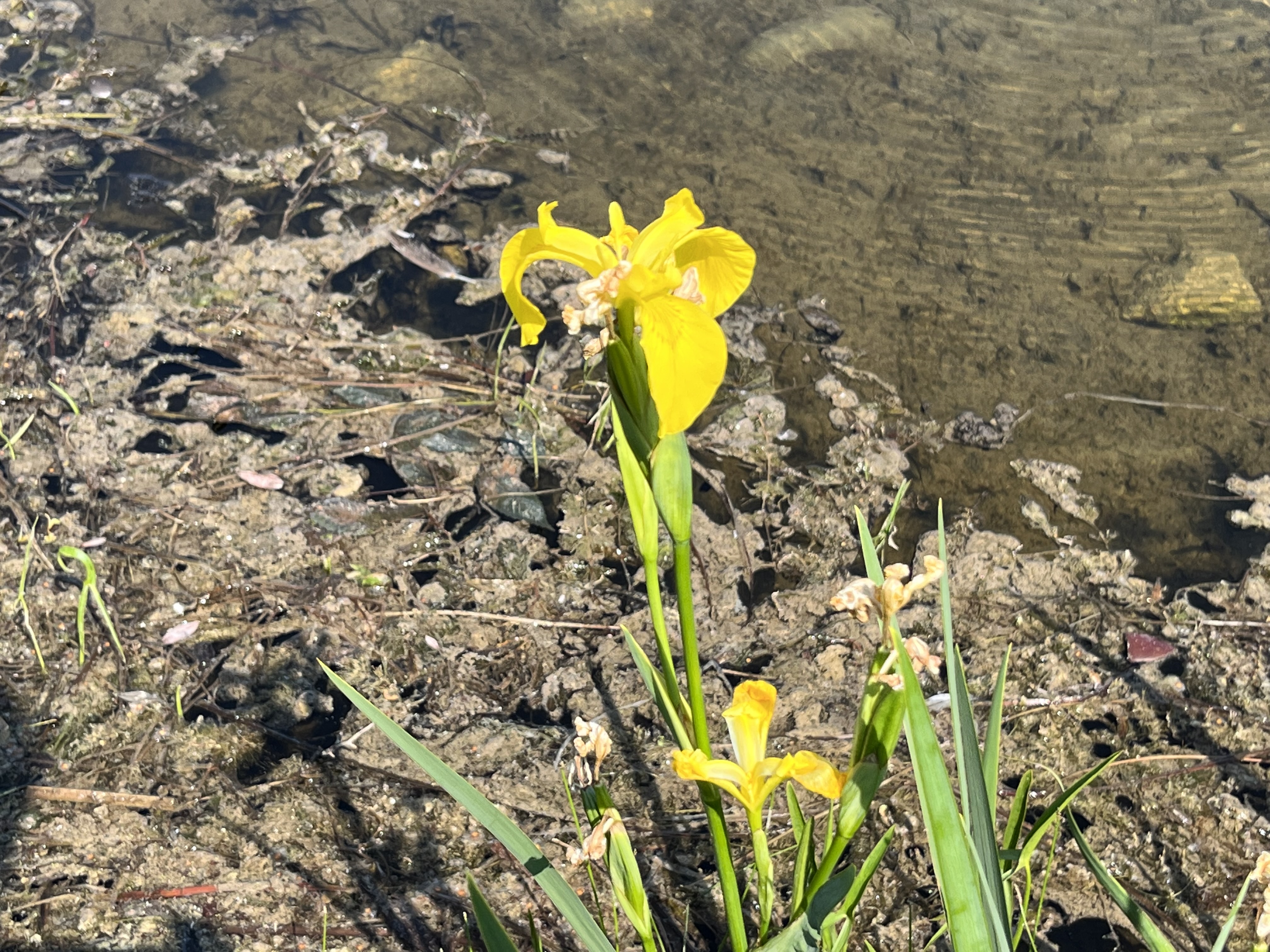
Yellow Iris are growing in the edge of the lake. This aquatic plant is not native to North America but was brought over from Europe in the late 1800s as an ornamental plant. It is sometimes planted in wetlands because it is known to absorb heavy metals and can be helpful in restoring the local environment. However, it forms dense mats that can displace wildlife and change wetlands into drier areas. It is poisonous to both humans and animals and its sap can sometimes cause severe dermatitis.
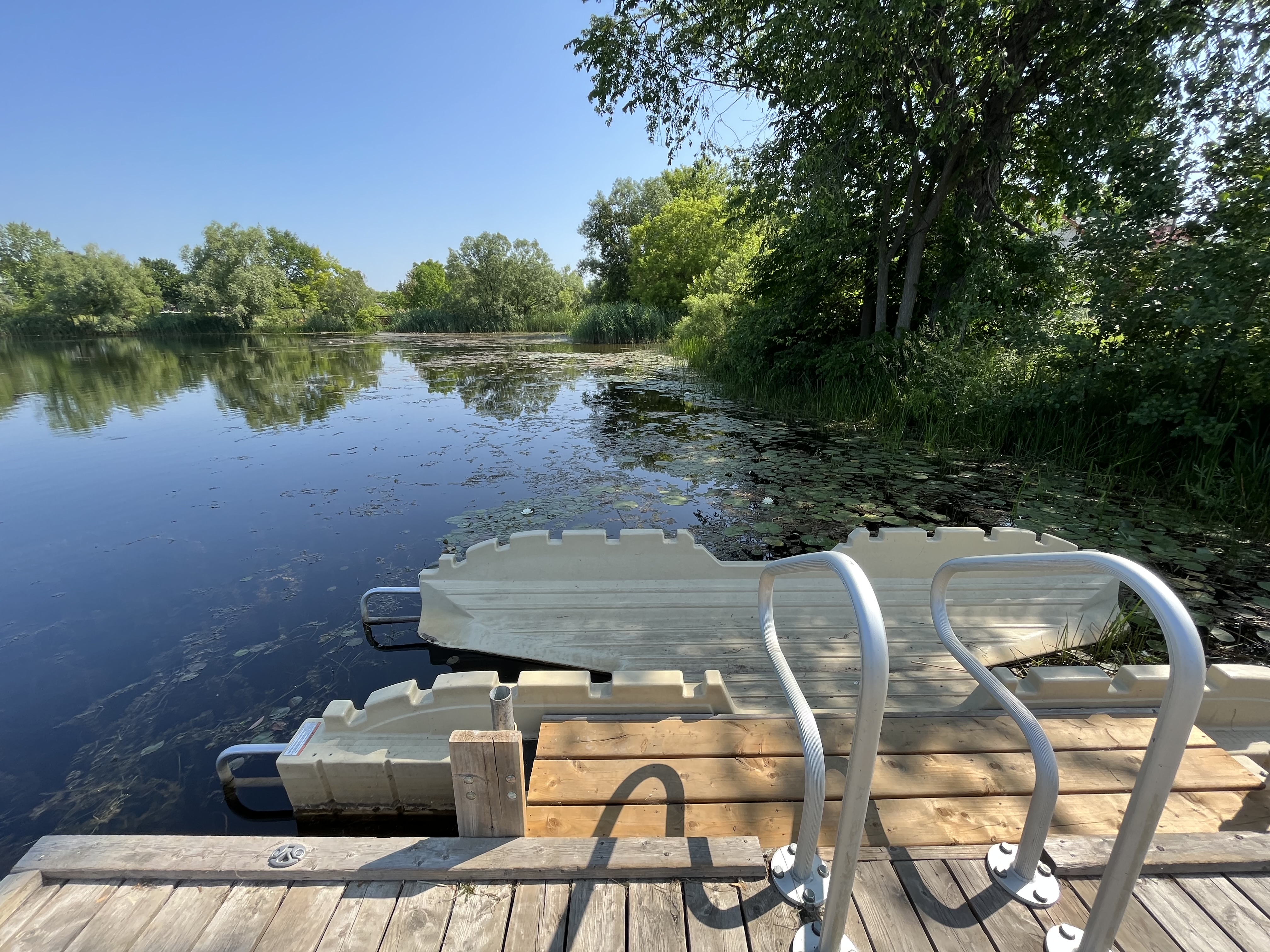
One of the features of the park is a kayak launching system. This allows paddlers to get in and out of their kayak with relative stability.
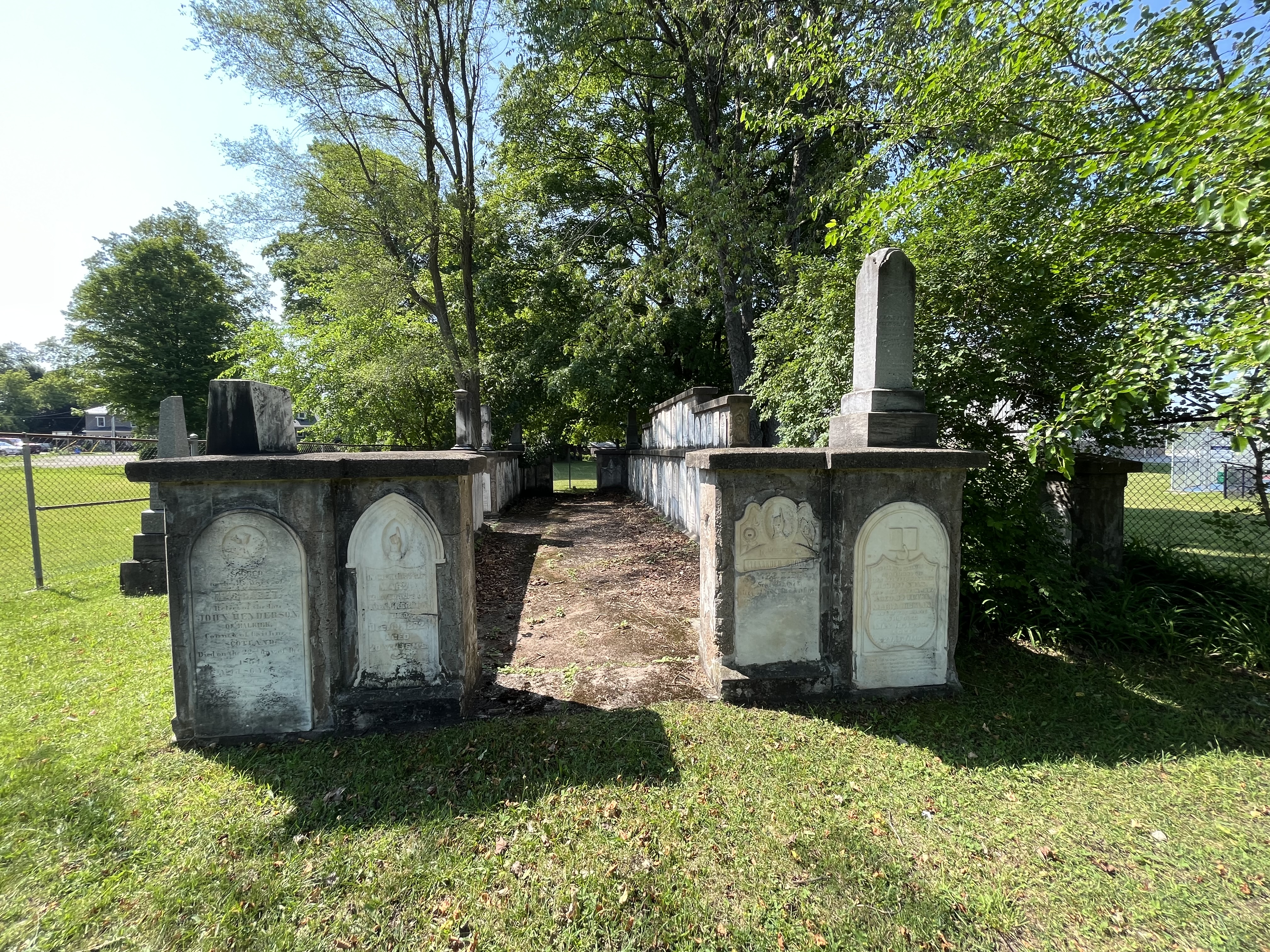
An old cemetery stands vigil in the corner of the park. This is the old Knox cemetery which is also known as Acton Pioneer Cemetery. In 1843 the Adams family sold land for the purpose of building a Scottish Kirk, or church, on. In 1848 a small lot behind the church was purchased to be used as a cemetery. Several members of the Adams clan had already been buried there making it an ideal spot. By 1886 the cemetery was deemed to be too small and a new cemetery was opened a few blocks away. Several of the interments from Knox Cemetery were moved to the new one and in 1933 the remaining head stones in the old pioneer cemetery were gathered into a cairn. A fence has been erected around the cairn but there is a gate so that people can go inside to look closer at the markers.
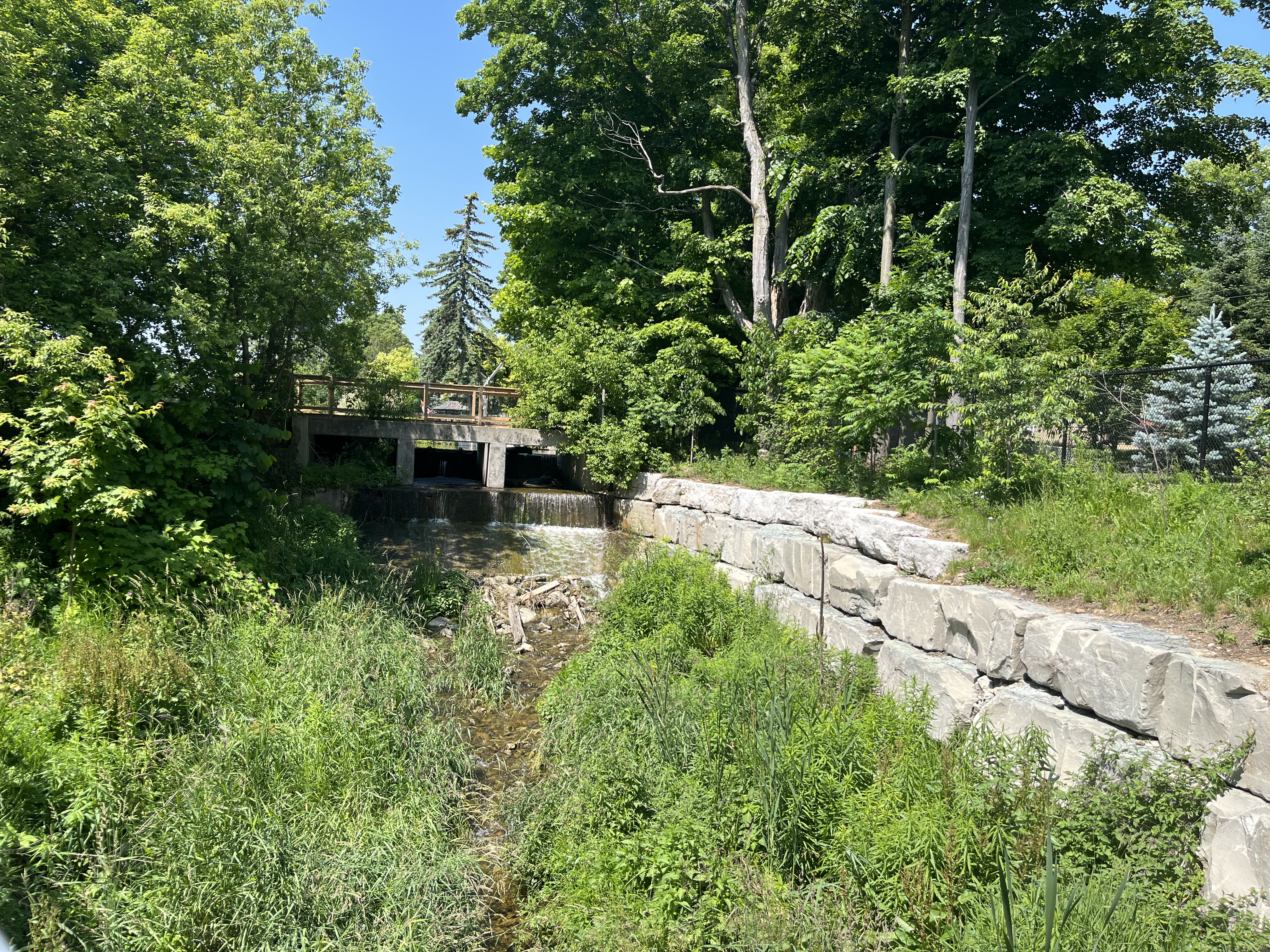
The original 1830 dam was repaired many times and eventually replaced with the present concrete one. This is now owned and maintained by the town so that the lake level can be controlled using the two sluice gates.
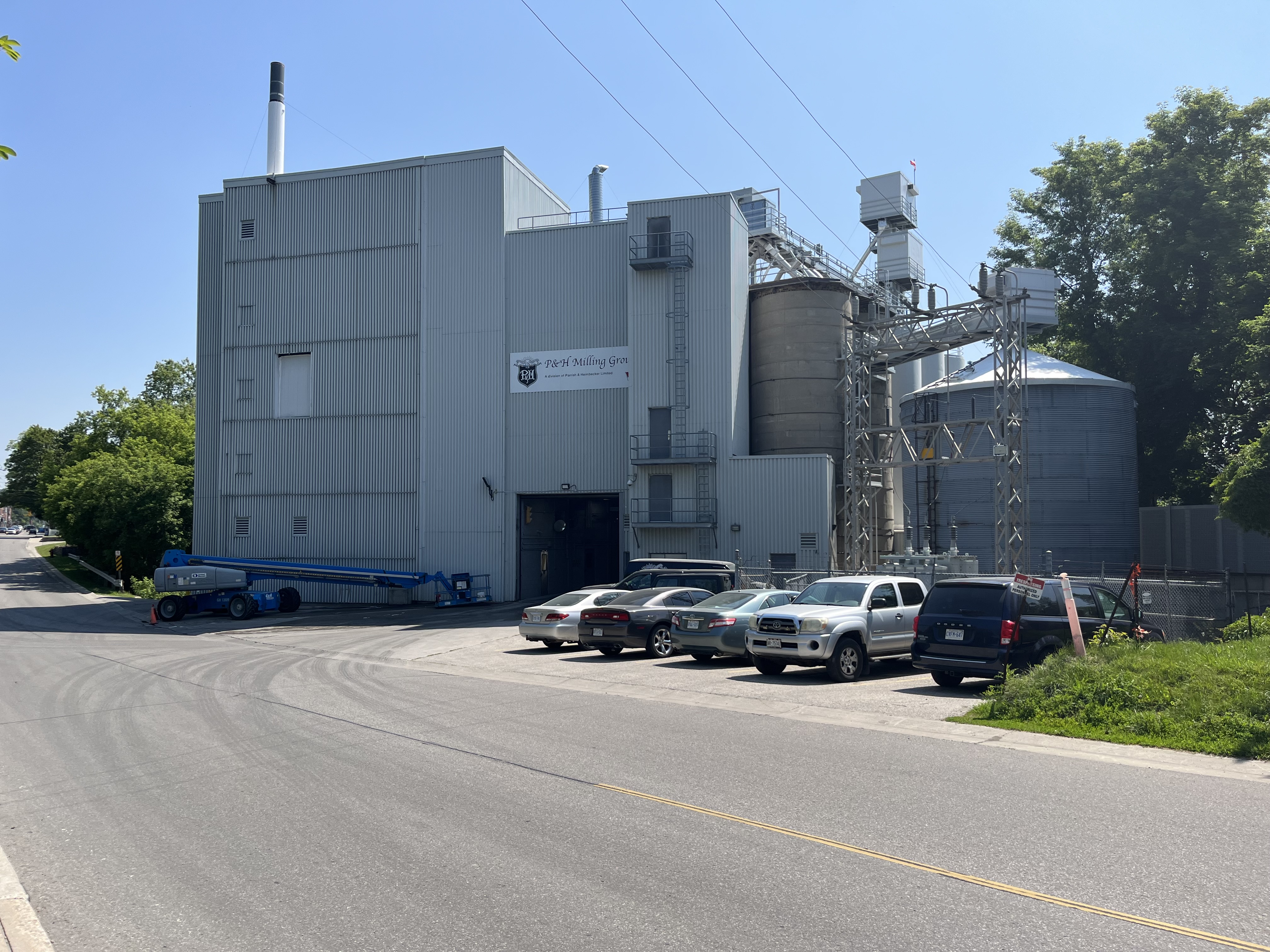
The flour mill in Acton is still in the same location as the original grist and flour mill that was built by Rev. Ezra Adams in 1835. The mill no longer runs on water power taken from Fairy Lake but it has been in business for nearly 200 years.
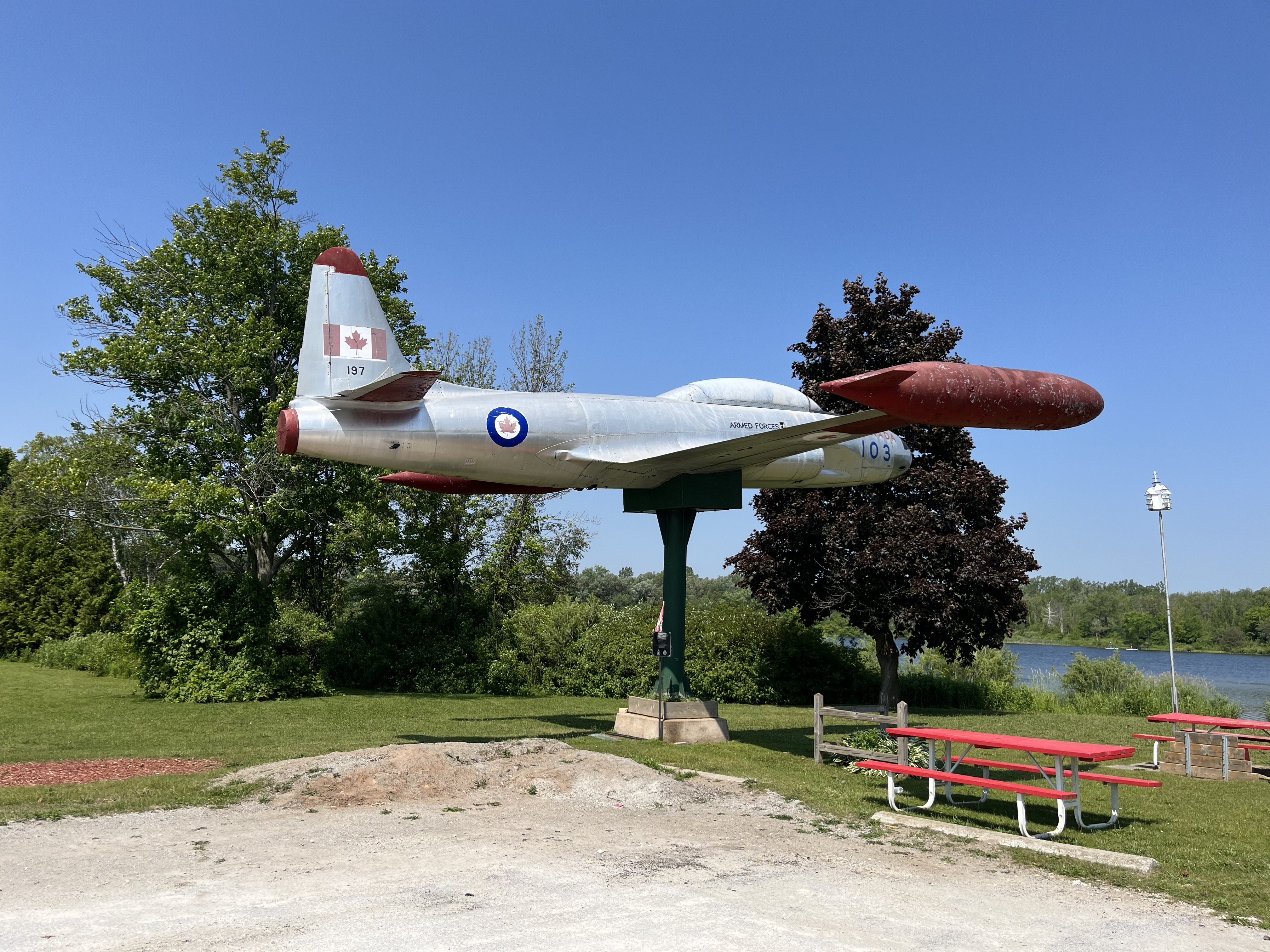
In 1974 a new legion number 197 was opened on the side of Fairy Lake. From Prospect Park you can see a war plane through the trees. This is located at the legion, the third such building in town. The plane is a Silver Star CT33 MK3 Jet Aircraft which was used in training flights and could reach speeds of 920 km/hr. It entered service in December 1952 and was retired in November 1972. It was placed at the legion in November of 1975.
Fairy Lake has been serving the local community for nearly two centuries and makes an excellent place for a picnic or a walk if you are in town. It is also a place you can take the kids for a fishing experience.

Google Maps Link: Fairy Lake

Like us at http://www.facebook.com/hikingthegta

Follow us at http://www.hikingthegta.com

Also, look for us on Instagram
Guelph Radial Trail – Acton Section

Dec. 19, 2015

Revised Jan. 6, 2016

The Toronto Suburban Railway (TSR) ran between Guelph and Toronto providing commuter service until it was shut down and abandoned on August 15, 1931.  Since that time the line has been dismantled and much of the right of way has been re-purposed, some of it as a hiking trail.  We decided to visit a small section of the Guelph Radial Trail near Acton.  We parked on the edge of town near where Mill Road has been closed off at the bottom end of Fairy Lake.

Mass transit in Toronto got started in 1849 when cabinet maker Burt Williams designed and built 4 horse drawn stage coaches which he operated from St. Lawrence Market to The Red Lion Inn in Yorkville.  On Sept. 11, 1861 the Toronto Street Railway began with a similar route and made some expansions over a 30 year franchise it held with the city.  In 1891 a new 30 year franchise was granted to the Toronto Street Railway under William Mackenzie and James Ross who agreed to eliminate horse drawn buses as part of their deal with the city.  Over the next 30 years the city annexed large areas and was unable to force the Toronto Street Railway to service them under their contract.  When the contract expired in 1921 the city created the Toronto Transportation Commission (TTC) to operate mass transit.

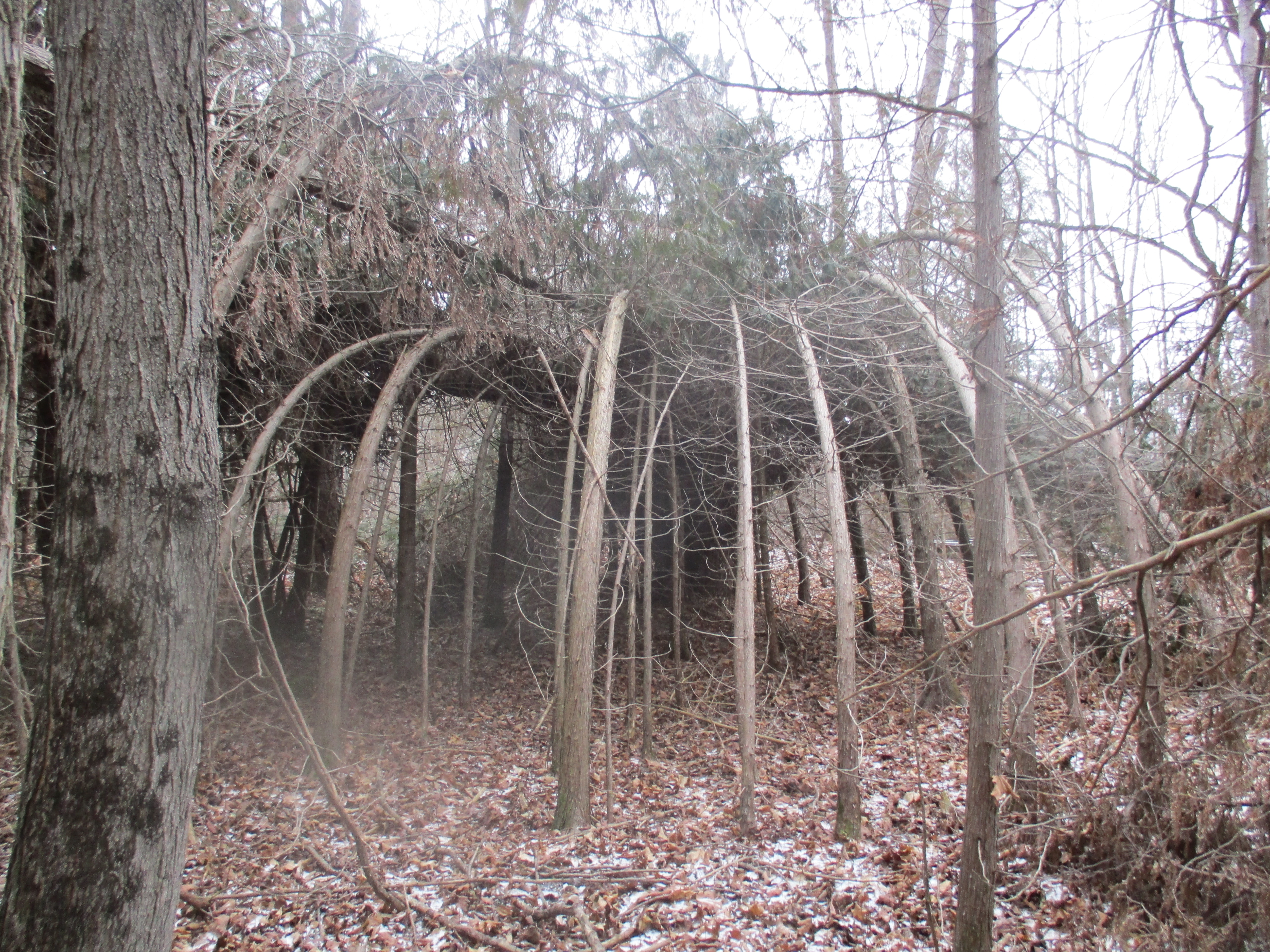
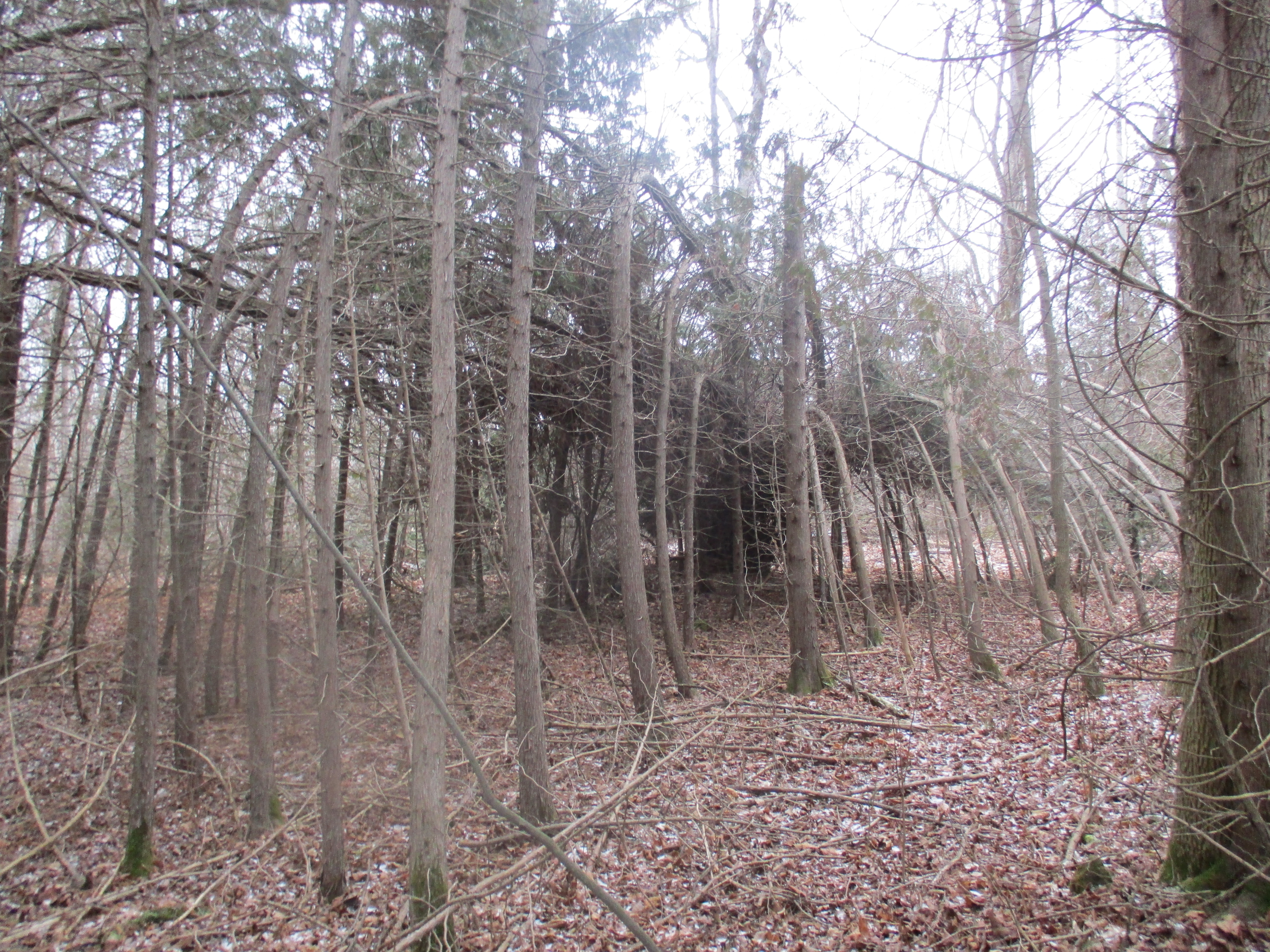
The first trail to the left takes you to the Guelph Radial Trail but first passes through a wooded area where we noticed an odd patch of trees.  There are bent trees throughout the woods but we found one spot where they all appear to have been taken from a large oval and tucked into a knot the middle.

IMG_1948

I had originally thought this looked like a circular cluster that had been produced by a spinning wind event but could find nothing on record.  A local resident confirmed that the ice storm of Dec. 22, 2013 had, in fact, caused the cedars to bend over to the ground where they stayed until the spring.  Some recovered but many didn’t leaving this reminder of just how powerful the weather can be.  This individual and his son, like countless others, helped clear the trails in the aftermath of the storm.  The long side of the oval is seen in the picture below.

IMG_1936

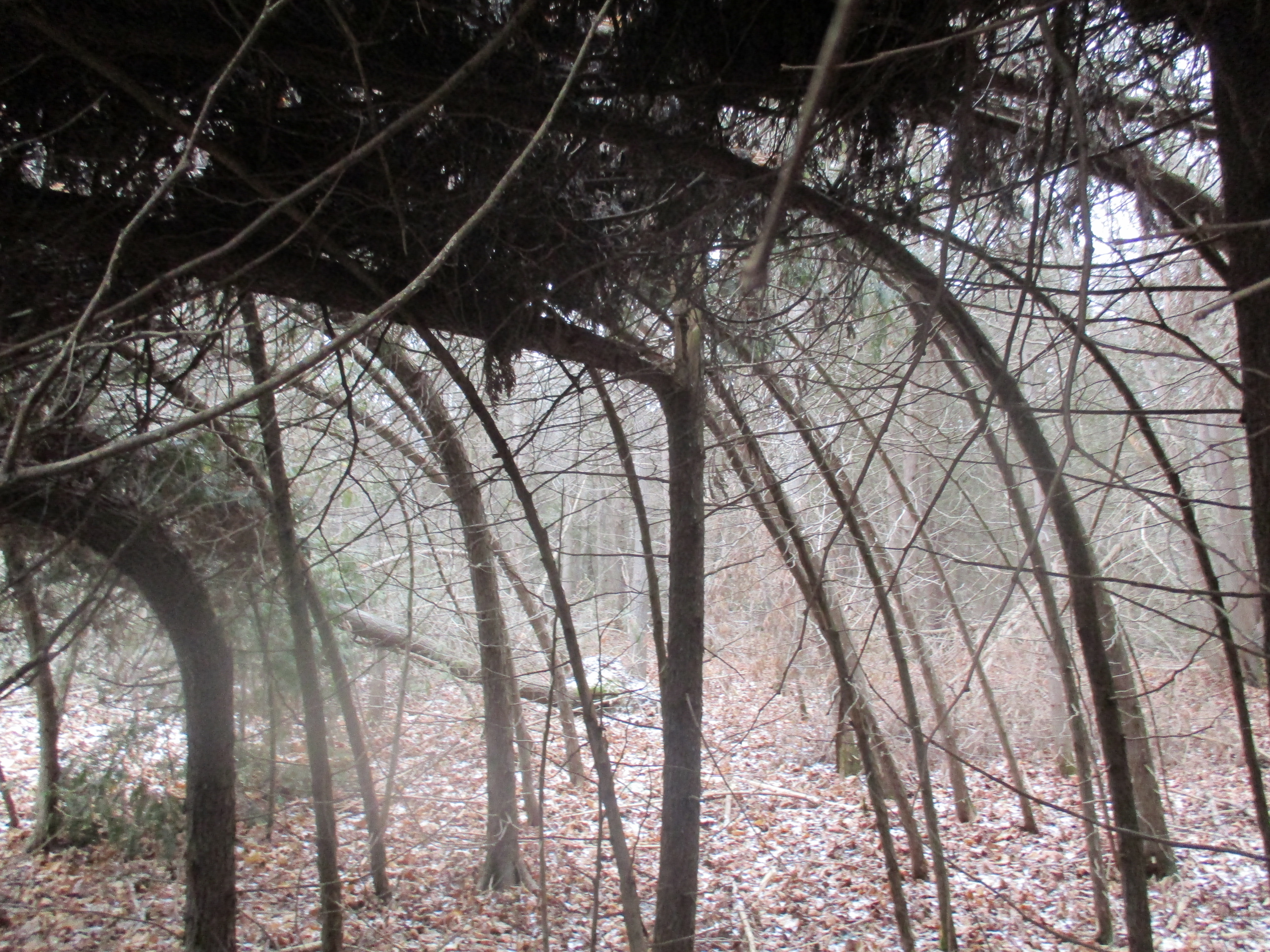
From the inside the bent trees it’s possible to see a few that have cracked but most of them appear to have been folded over without breaking.

IMG_1945

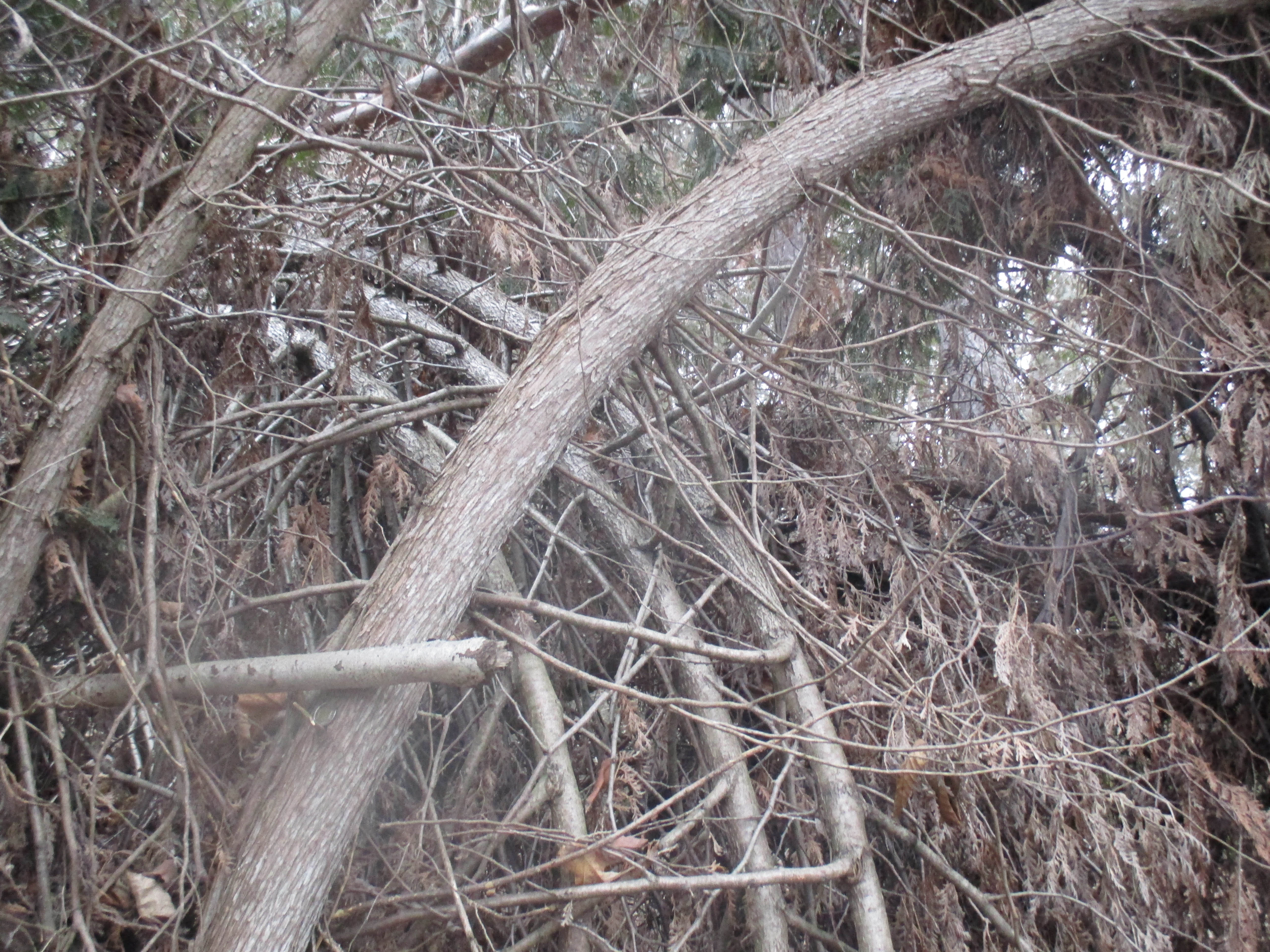
Just below the horizontal branch on the largest tree in the picture below is a “toonie” which shows that trees up to 4″ in diameter have been bent over.

IMG_1957

The 1877 county atlas shows Acton as having grown to the east of Fairy Lake along regional road 25 (2nd line) .  A grist mill stood at the outlet on the smaller of the two arms of the lake. Mill Street ran from the mill to Dublin Line (1st line).  We began our hike near the point where Mill Street touches the lower end of the lake.

Acton

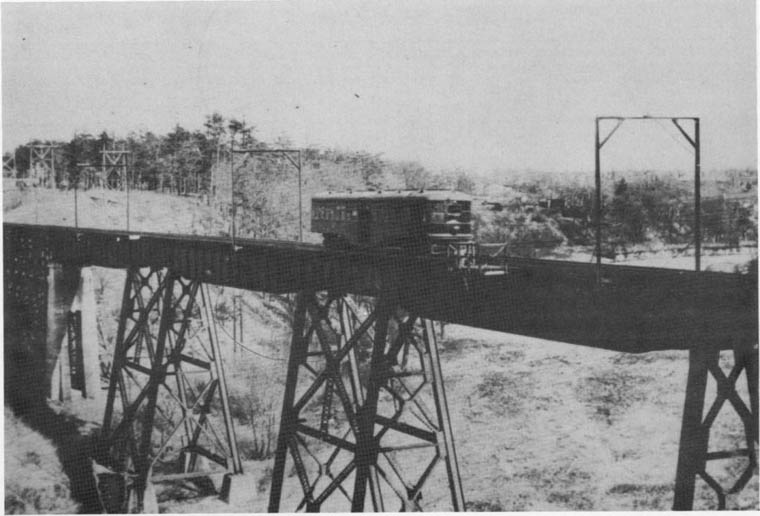
William Mackenzie, along with his partner Donald Mann, decided to expand their Toronto Street Railway service by adding radial lines to other communities.  In 1911 they surveyed the route for the Guelph Line which would run from Lambton yards for 49 miles to Guelph. Construction began in July 1912 and most of the track was installed in 1914.  The Great War slowed construction as did the building of a 711 foot bridge to cross the Humber  River.  One of the cars for the railway is seen crossing the Humber River trestle in the archive photo below.

humber-bridge_radial-car

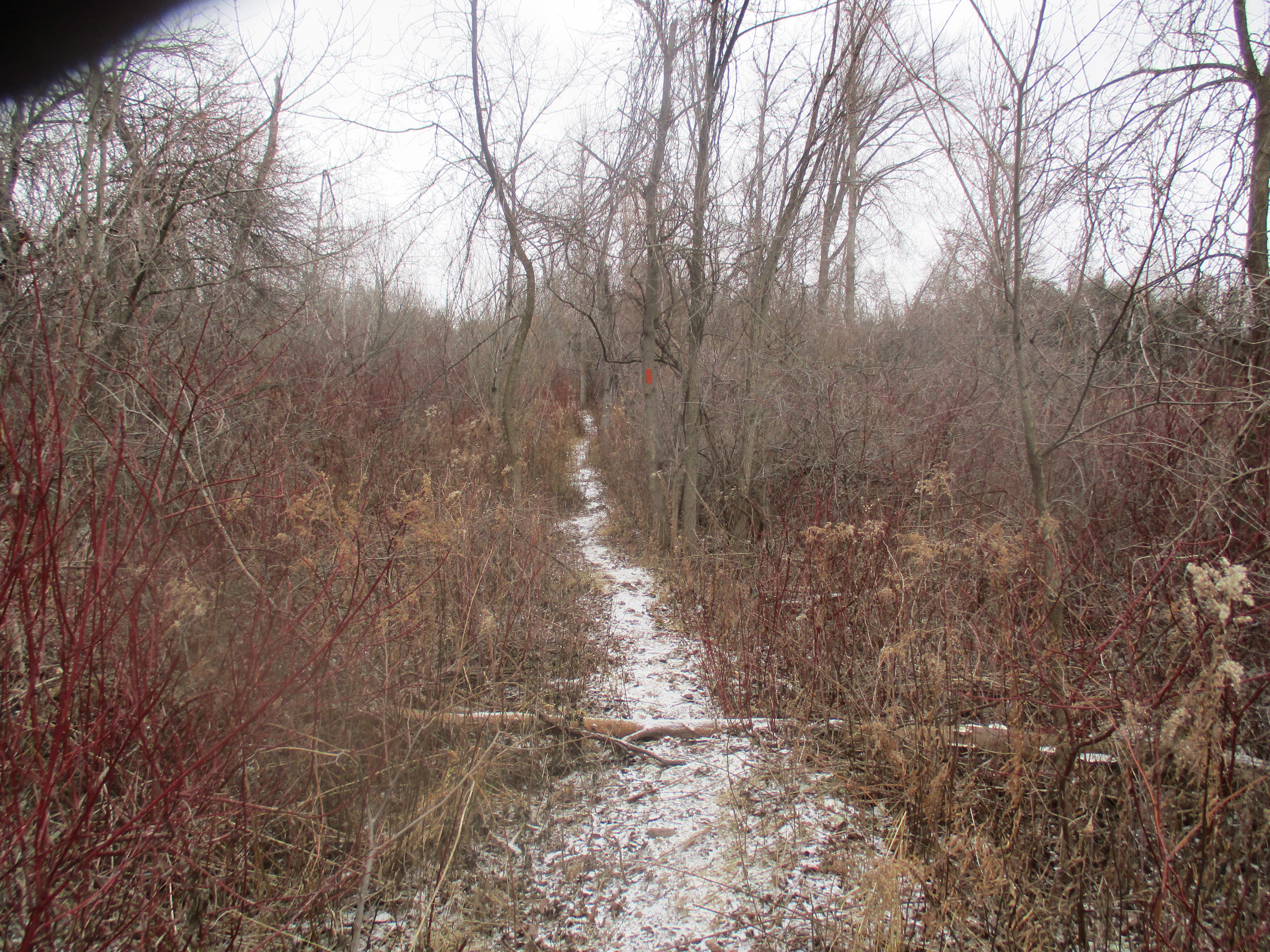
Mackenzie and Mann took steps to keep the costs down and this resulted in many curves to avoid purchasing expensive prime land for construction.  This caused the rail line to have to run slowly and this was partially responsible for it’s low ridership, especially in later years.  The line ran on private land, in some cases adjacent to highway 7, as it made it’s way toward Guelph. Personal automobiles led to the demise of the line and by 1929 it was operating at a loss.  In 1931 the daily ridership was down to just 300 passengers and service was suspended on Aug. 15.  The line was abandoned and the rails removed and re-used overseas during WW2. Today the Guelph Radial Trail covers part of the line from Limehouse into Guelph and has painted the trees with an orange blaze to mark the trail

IMG_1975

We visited remnants of the TSR in several places this summer and presented photographs in the following stories.  The crumbling remains of the bridge across Silverthorne’s grist mill tail race in Meadowvale and the rotting pilings in the mill pond at Eldorado Park are just two examples.  Today commuters sit on highway 7 and dream about a rail service on a private right of way that could run from Guelph to Toronto.  Perhaps the TSR was just 100 years ahead of its time.

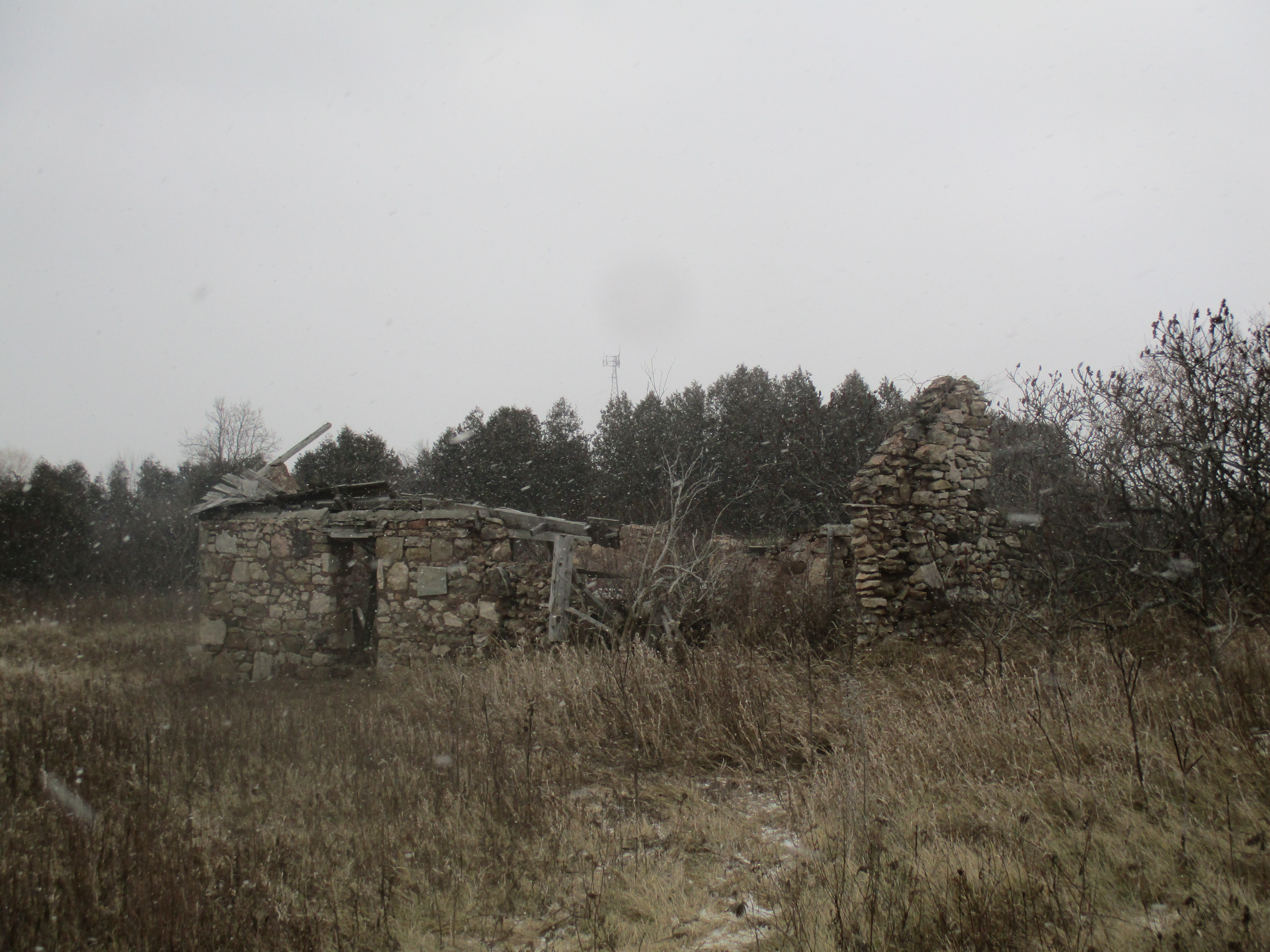
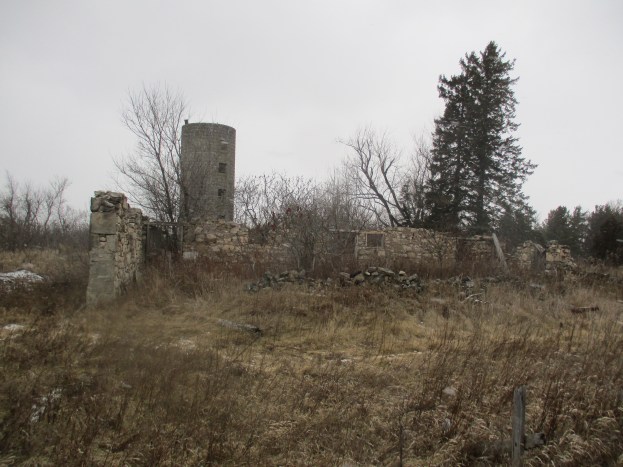
The lot on the corner of today’s regional road 25 and 25 side road was owned by James Bell in 1877 when the atlas above was drawn.  He was born in 1841 to Samuel and Ann Bell who had built the stone barn and house on the property.  The remains of the barn are featured in the cover shot along with the unique silo.  This silo is unlike most that remain in rural Ontario which are made of poured concrete.  This one has been constructed of preformed concrete blocks that were made to look like cut stone.  The Bell’s would have obtained livestock feed at the mill in Acton until the farm became more prosperous.  Later a silo was added to store feed that was grown and milled on the farm.  The block construction of the silo dates it to around the turn of the last century.  The barn has collapsed in on itself and the old beams can be seen in the bottom. Hand made nails give an indication of the age of construction.  James and Agnes Bell were married on Oct. 26, 1877 and the stone house and barn were abandoned after a new brick house was built closer to the front of the property.

IMG_1990

The old stone house stands near the barn and it too is slowly falling over.  The rear wall looks like it has about one more good wind storm left in it before it becomes a pile of rubble on the ground. When the Bells cleared the land they found an abundance of field stones which had to be removed to make the land suitable for farming.  These stones provided building materials for the barn and house as well as the fence lines to separate their fields.

IMG_1982

We arrived at regional road 25 and walked back through Acton to the car.  We noted an old steel pipe carrying water from Fairy Lake right past the mill and through the heart of town. There’s obviously lots more here for another time.

Like us at http://www.facebook.com/hikingthegta