Tag Archives: Heron

Riverwood – Armstrong Wild Bird Trek

January 16, 2022

The Riverwood Conservancy is located on 150 acres of an original 200 acre land grant that was part of the territory of the Mississaugas of the Credit First Nation. We’ve covered the history of this property in detail in previous stories about Riverwood and a full set of links will be provided at the end of this post. There’s lots of free parking on site although sometimes it can be busy on the weekends.

I always have to stop and admire this century old home that was built with stone carried up from the river below. An old set of stairs still leads from the back yard down to the trails below but it has been blocked off by a fence at the top. From the back yard you can also see the remains of the first man-made swimming pool in the present city of Mississauga and admire the old stone cistern.

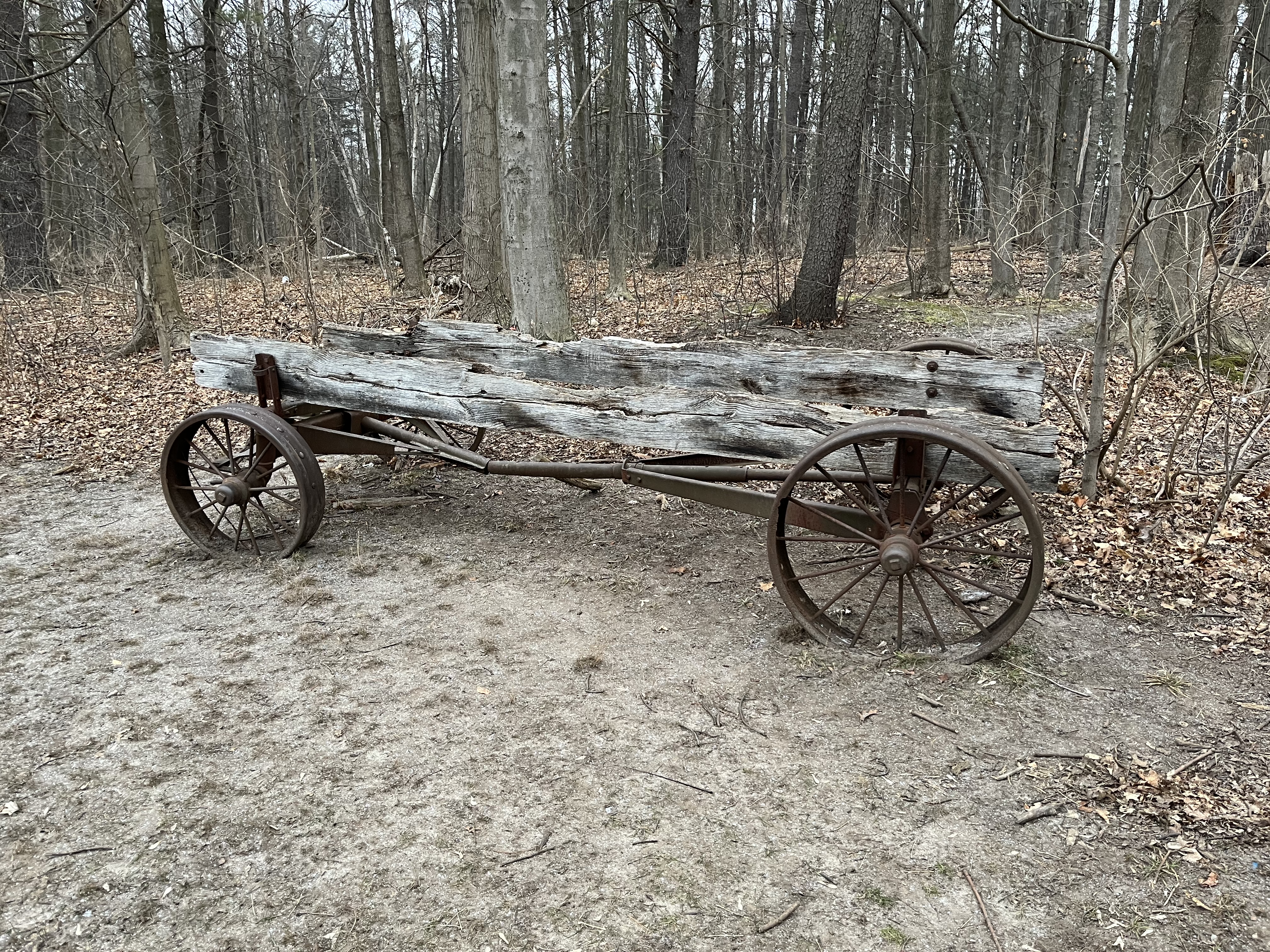
The surrounding land was used for farming purposes and there’s still several old agricultural items strewn around the property. All of them are in an ongoing state of deterioration. This wagon has seen considerable rot since we published a picture in our 2014 post of Riverwood.
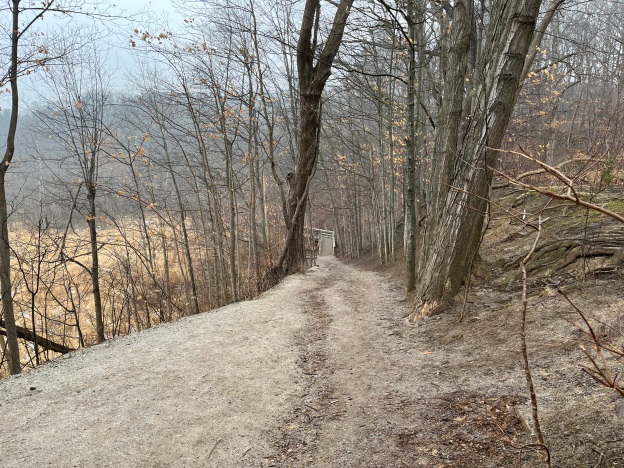
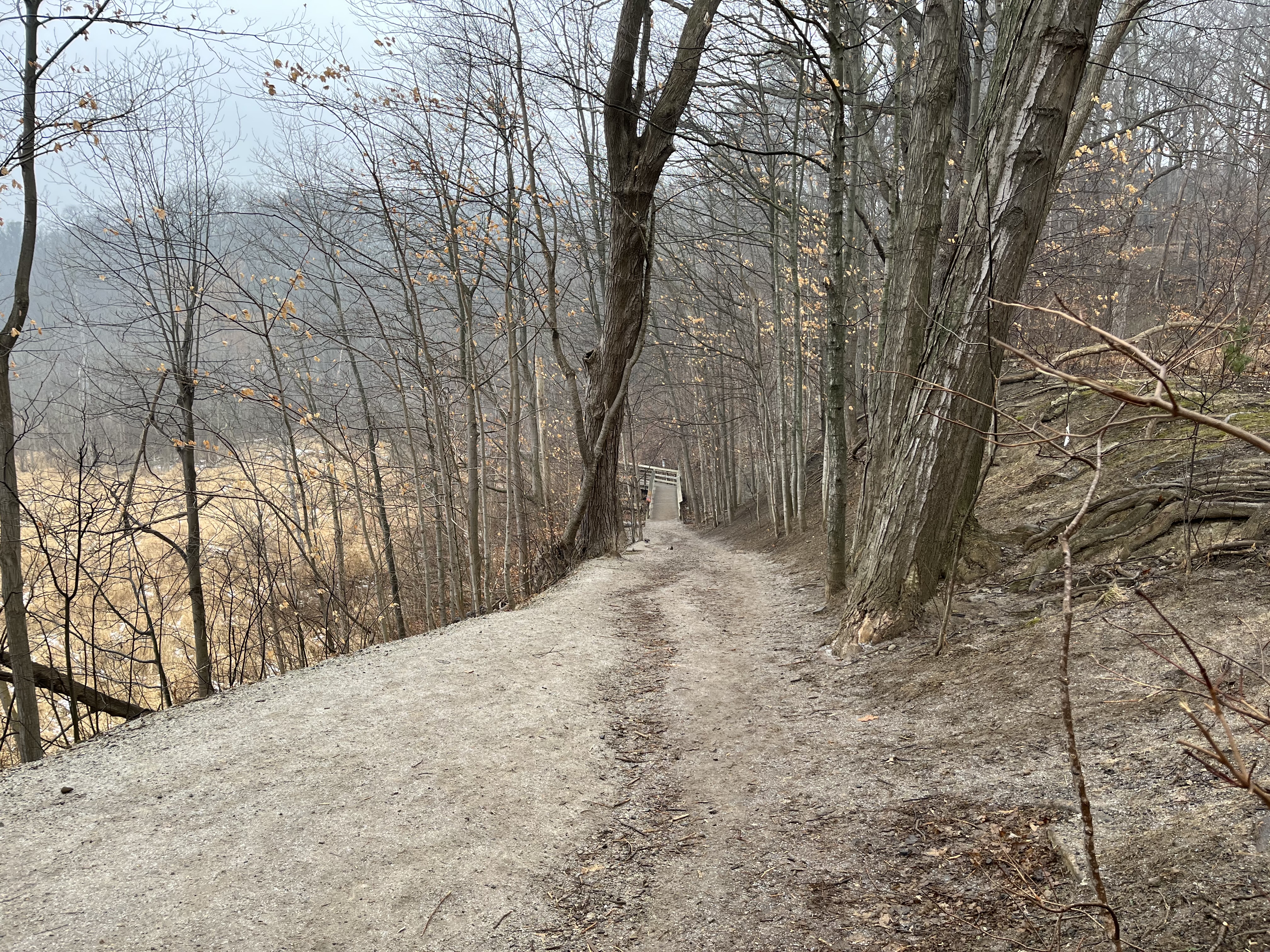
The Riverwood Conservancy has been in an ongoing state of development with new gardens and features being added over the years. One of the newest attractions is the Armstrong Wild Bird Trek. It was founded in 2017 and features a number of bird feeders along the Red Trail. Armstrong Milling in Hagersville provides birdseed that is placed in the feeders by volunteers. In the fall and winter, this attracts a lot of birds and subsequently a lot of bird watchers. The trail follows the edge of the valley and uses boardwalks to pass over wetlands and streams.
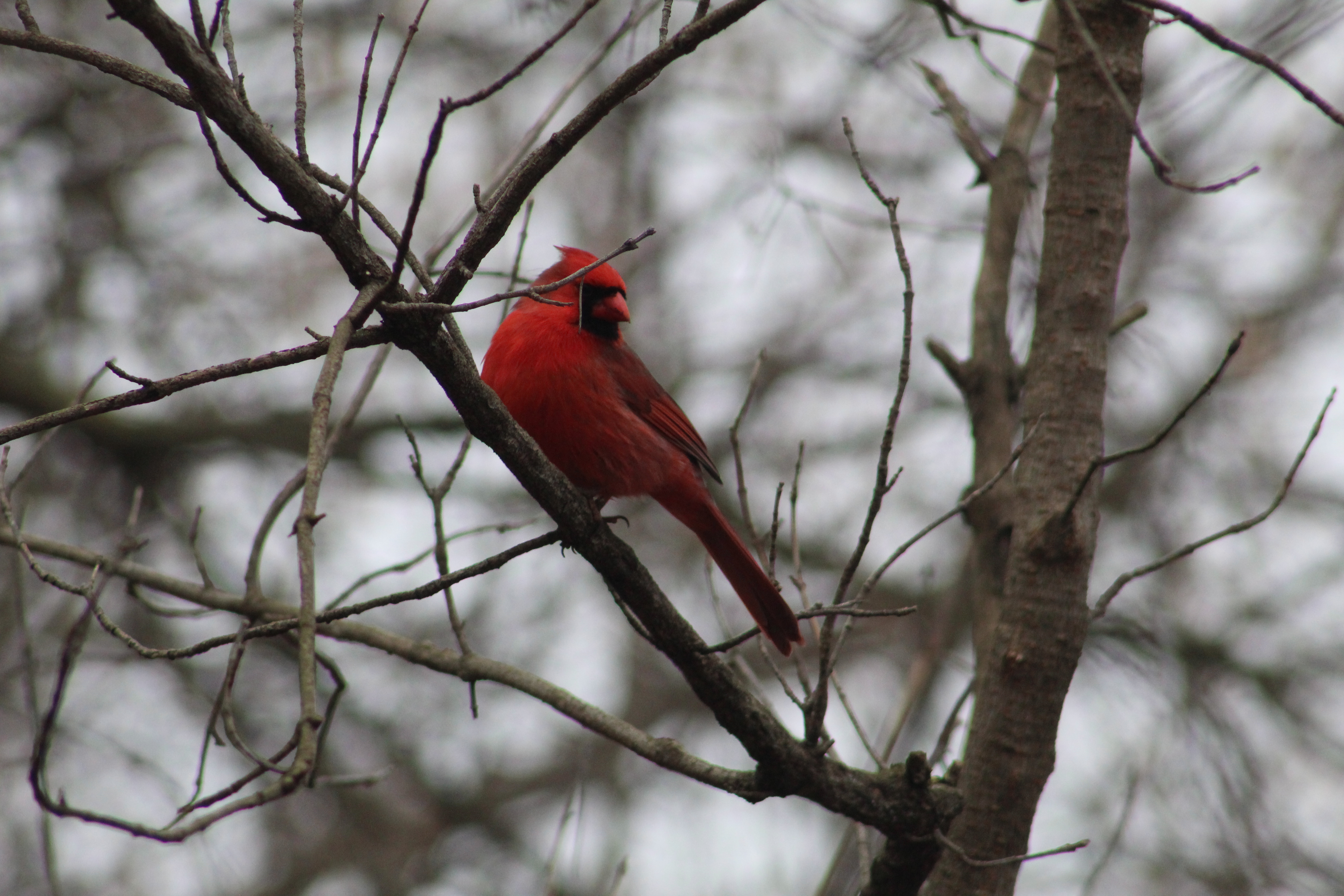
Most of the bird feeding stations have a sign identifying various species that can be found in the local habitat. The Conservancy claims 180 species of nesting and migratory birds can be seen in the park. There are fewer species in the winter but the ones that stay are more dependant on the feeders and become quite used to humans. This isn’t necessarily a good thing but at least they are getting nutritious food. For this reason, it is recommended that people not bring anything to feed the birds. Feeding them bread and domestic bird food is actually harmful to them. This male Cardinal was one of several that was waiting for a turn at the feeders.
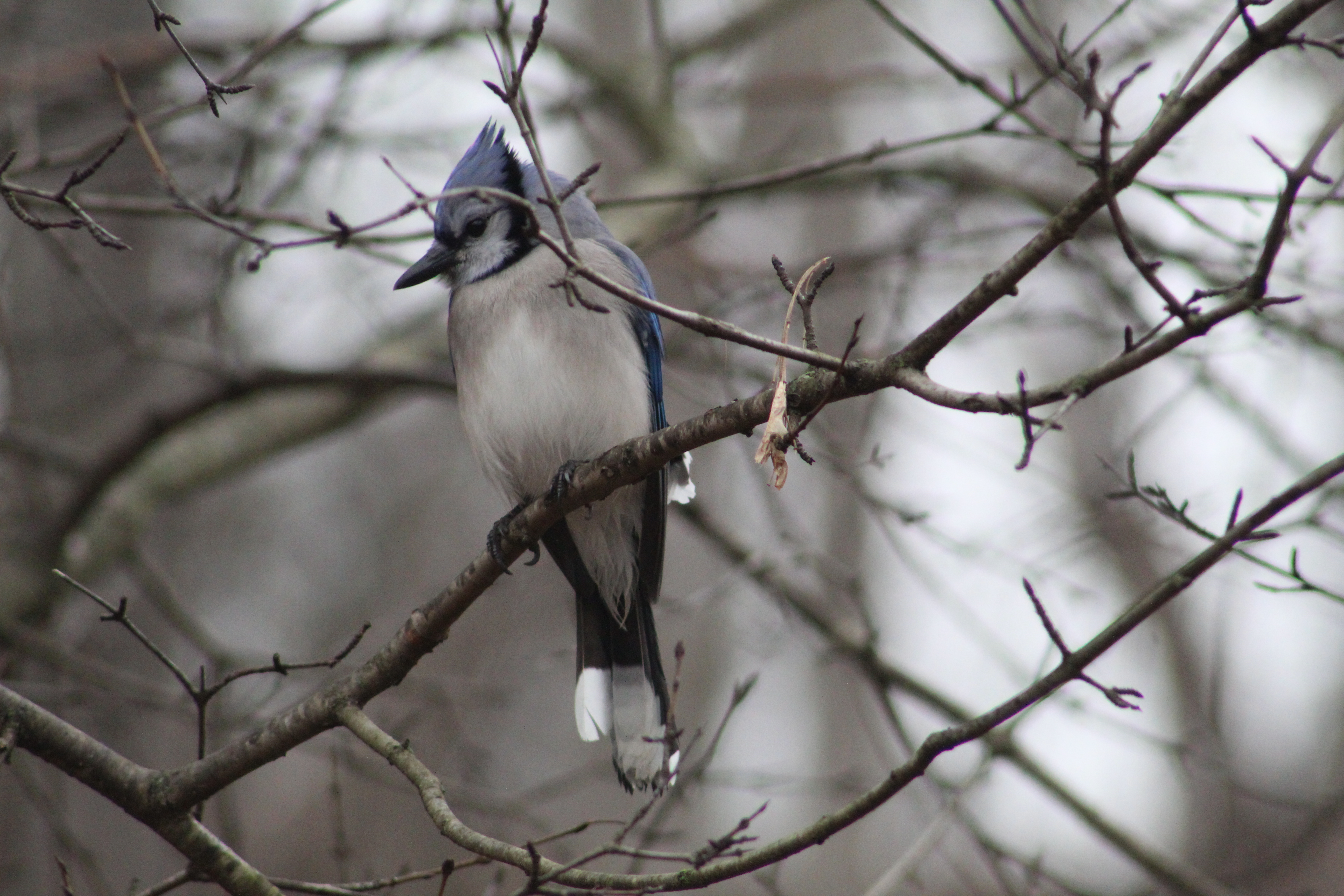
The Blue Jay is one of the largest song birds in Canada and there are four sub-species of which ours is known as the Northern Blue Jay. They tend to mate for life and can become aggressive if people approach their nest, especially in breeding season. Blue Jays can immitate the call of various hawks. A technique which they use to test and see if there are any in the area. They can become prey to hawks when alone but in groups will attack a hawk and drive it away.
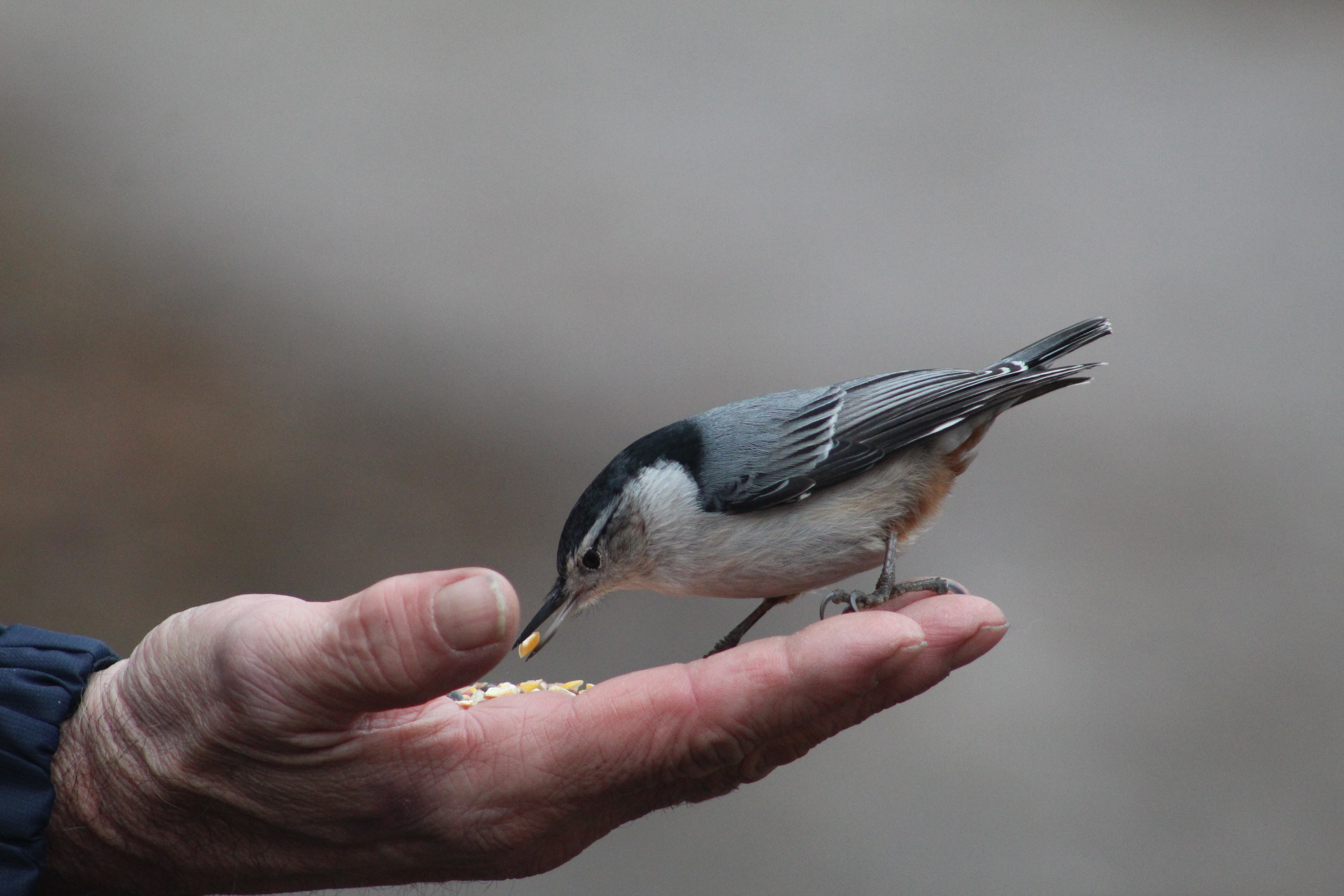
This male White-breasted Nuthatch can be distinguished from his female counterpart by the black cap on his head. The female has a cap which is a lighter shade of gray. If you take a few seeds from one of the feeders and hold them in the palm of your open hand it’s quite likely that a bird will come and land on you to feed.
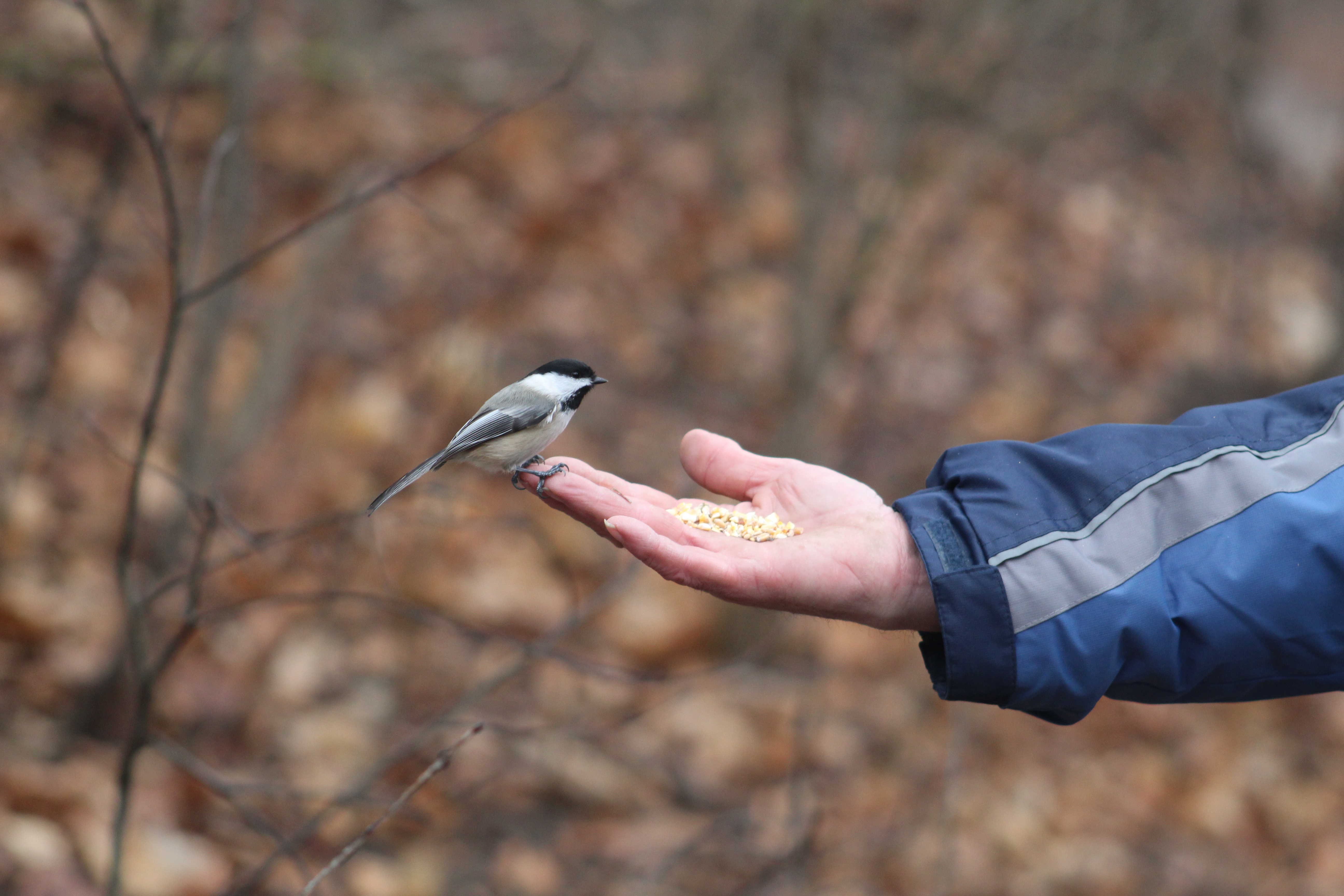
Black-capped Chickadees are cute little birds that appear very friendly because they have very little fear of humans. It’s pretty easy to get one to sit on your hand if you have a few seeds in your palm.
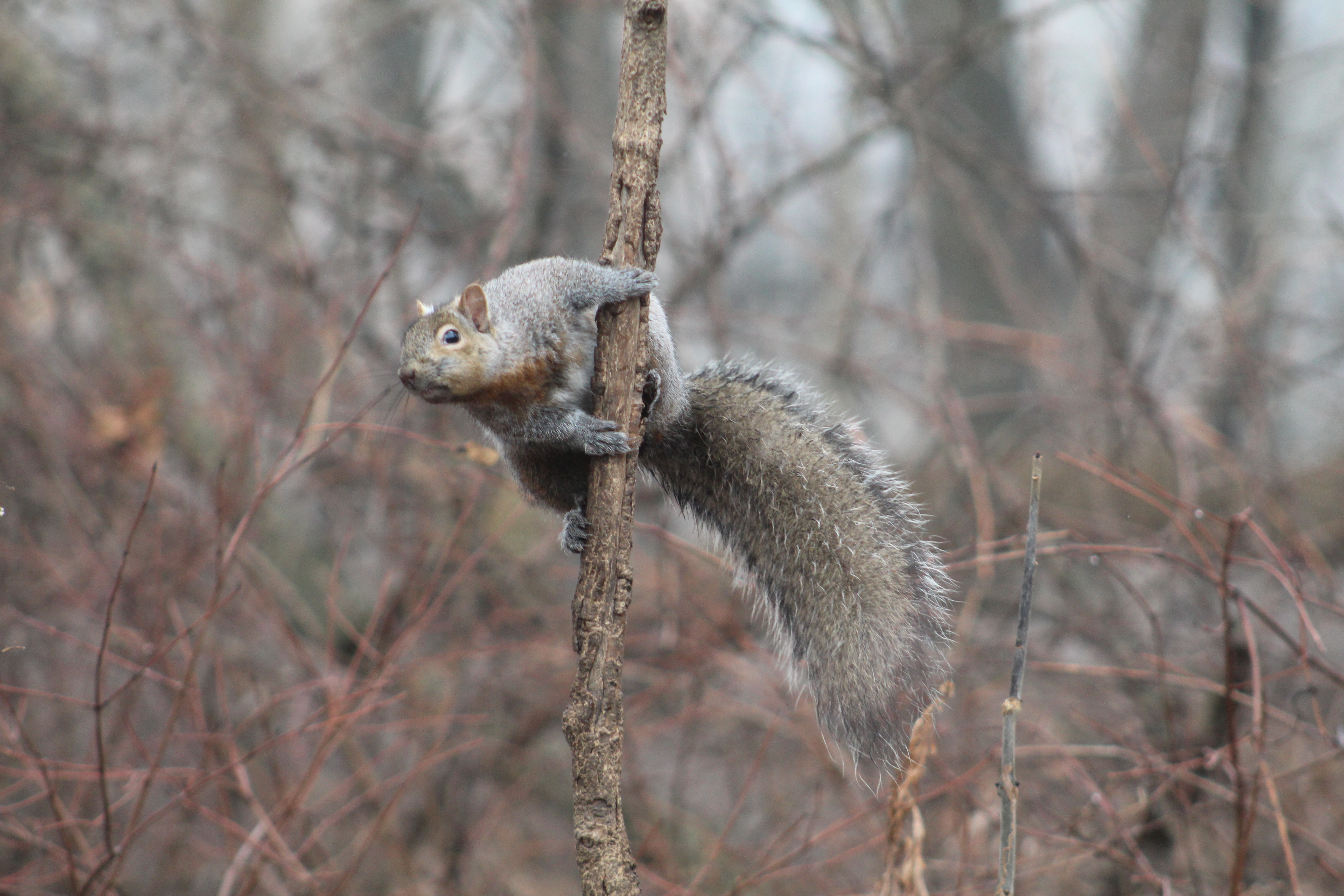
There’s an abundance of squirrels due to the free food but in most cases, they can’t get into the feeders. They hang around below them and eat the seeds that are thrown out by the birds. Where branches hang close enough to the feeder they will climb and jump into it. This is bad news because they are quite greedy, literally stuffing their faces.
This little female Downy Woodpecker is happy to come and get a few seeds. These tiny woodpeckers are able to feed in places that the larger Hairy Woodpeckers and other species can’t get to. This includes eating insects from plant stems and pecking holes in goldenrod galls to get the larvae inside. These woodeckers can often be seen in mixed species flocks among the tall grasses with the other birds because there’s protection in numbers.

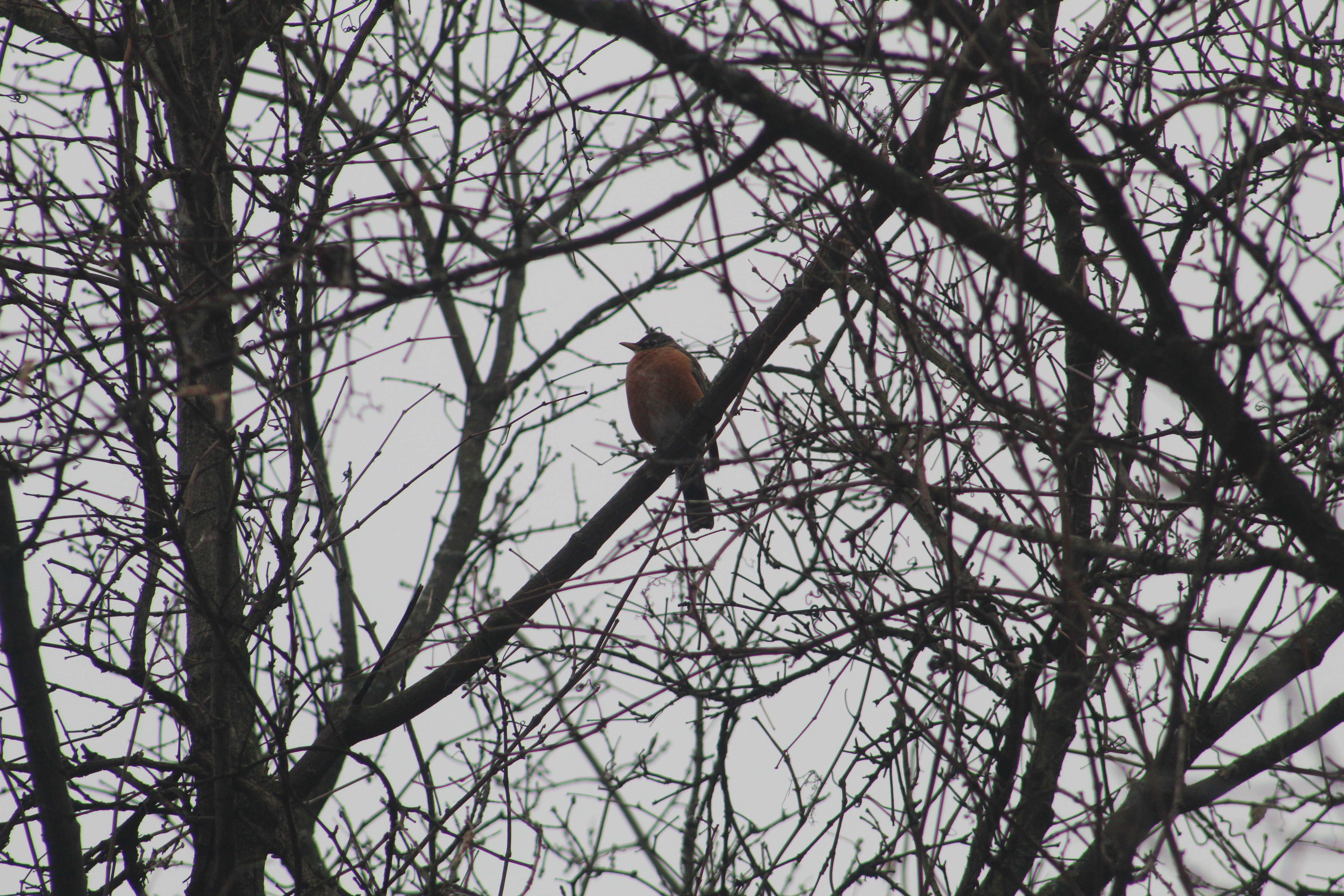
American Robins fly south to keep ahead of the frost line so that they can get adequate food. Those that stay behind switch their diet to berries and seeds and we saw several that were hanging around the trail. They tend to look fat in the winter but it is just the way that they fluff up their feathers.
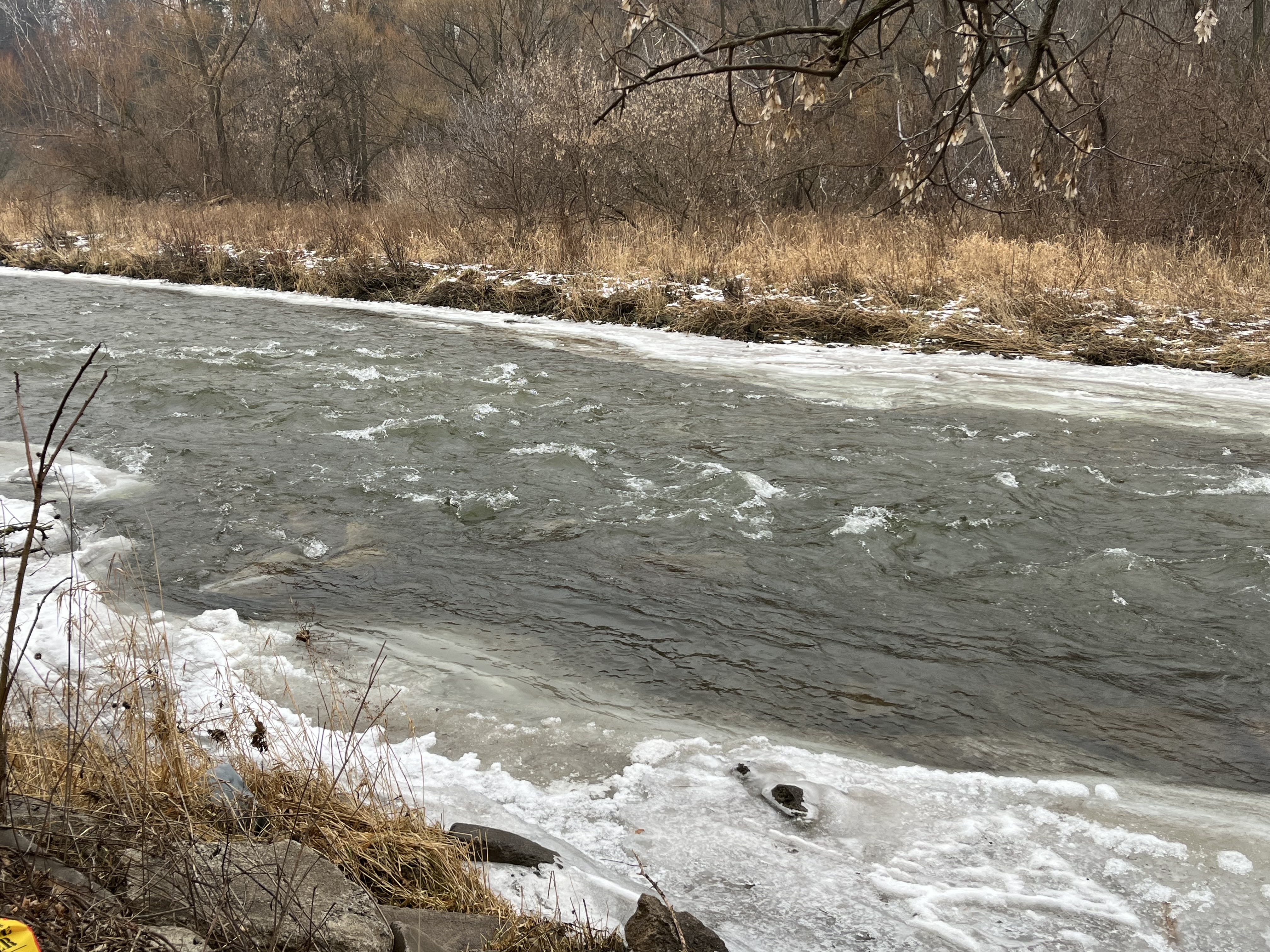
You have several options for a route back to the parking lot including retracing your steps along the Red Trail. The Culham Trail passes through Riverwood and can be used to create a return loop. We chose to take the smaller “fisherman’s trail” along the side of the Credit River. This will allow you to see some of the water birds that don’t use the feeders. On this day there were lots of Mallard Ducks and a pair of Mergansers and at times you could see a Kingfisher. We also caught a quick glimpse of a coyote trying to sneak past us unseen and were able to watch three White-tailed Deer browsing on the other side of the river.
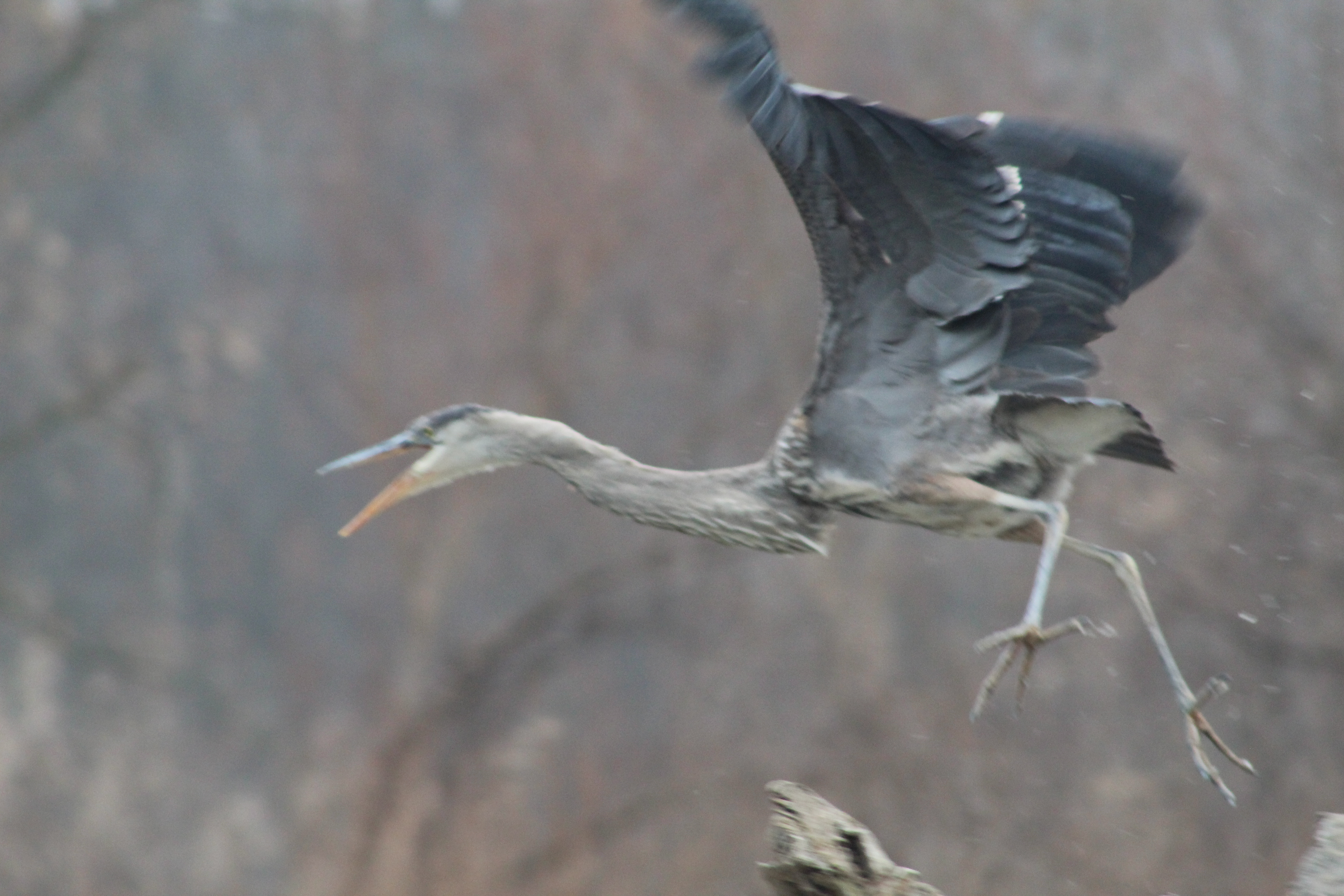
Although there appears to be an increased number of Great Blue Herons that stay for the winter, I was a little surprised to step around a fallen tree and see one. Almost as surprised as it was to see me and my camera. With a loud honk, it was gone.
We’ve been through Riverwood many times over the years and there’s always something interesting to see. No doubt we’ll be back.

Related blogs: The Culham Trail, Riverwood – Bird Property, Riverwood Estate, Riverwood – Zaichuk Property

Google Maps link: Riverwood Conservancy

Like us at http://www.facebook.com/hikingthegta

Follow us at http://www.hikingthegta.com

Also, look for us on Instagram
Marita Payne Pond

Sunday, September 19, 2021

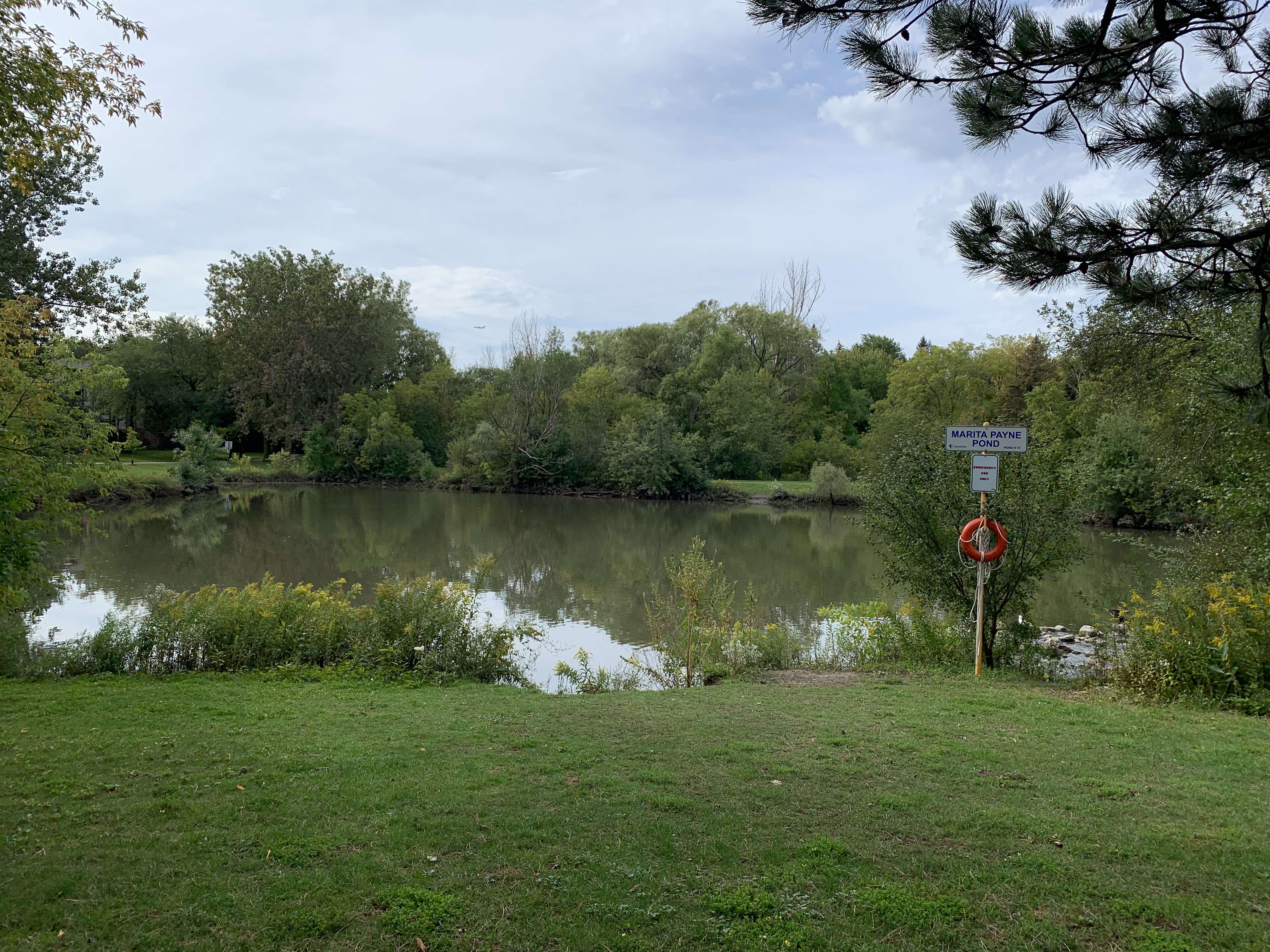
Marita Payne Pond is in a small residential park that follows the Don River through the Dufferin Road and Steeles Avenue area. The pond, and the park it is located in are named after Marita Payne who is a Vaughan resident. She is remembered for winning two silver medals in the 1984 Summer Olympics in Los Angeles. She is also currently a co-holder of the Canadian record for the 400-metre dash.

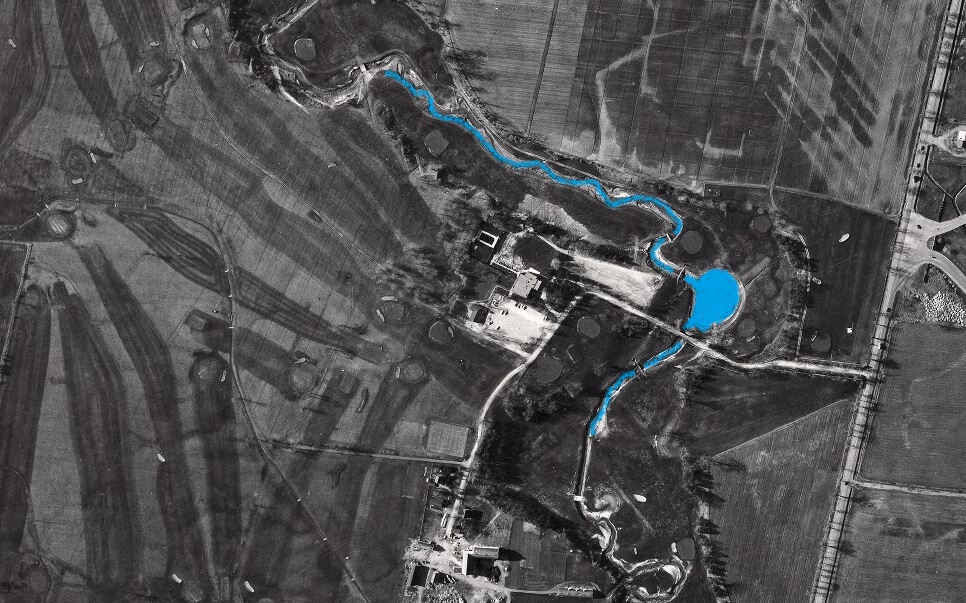
The park was developed on the grounds of the former Glen Shields Golf Course (1952-1979) where it ran along both sides of the Don River. The 1967 aerial photo below is from the Toronto Archives and shows the river and an earlier pond where Marita Payne Pond is today. The fairways and greens from the old golf course can still be seen in the picture. The table lands were developed for housing while the ravine areas were turned into Glen Shields Park and Marita Payne Park.

The pond serves as a flood control feature by holding heavy rainfall until it can be slowly released into the Don River. The pond is fairly small but has a surprising amount of wildlife.

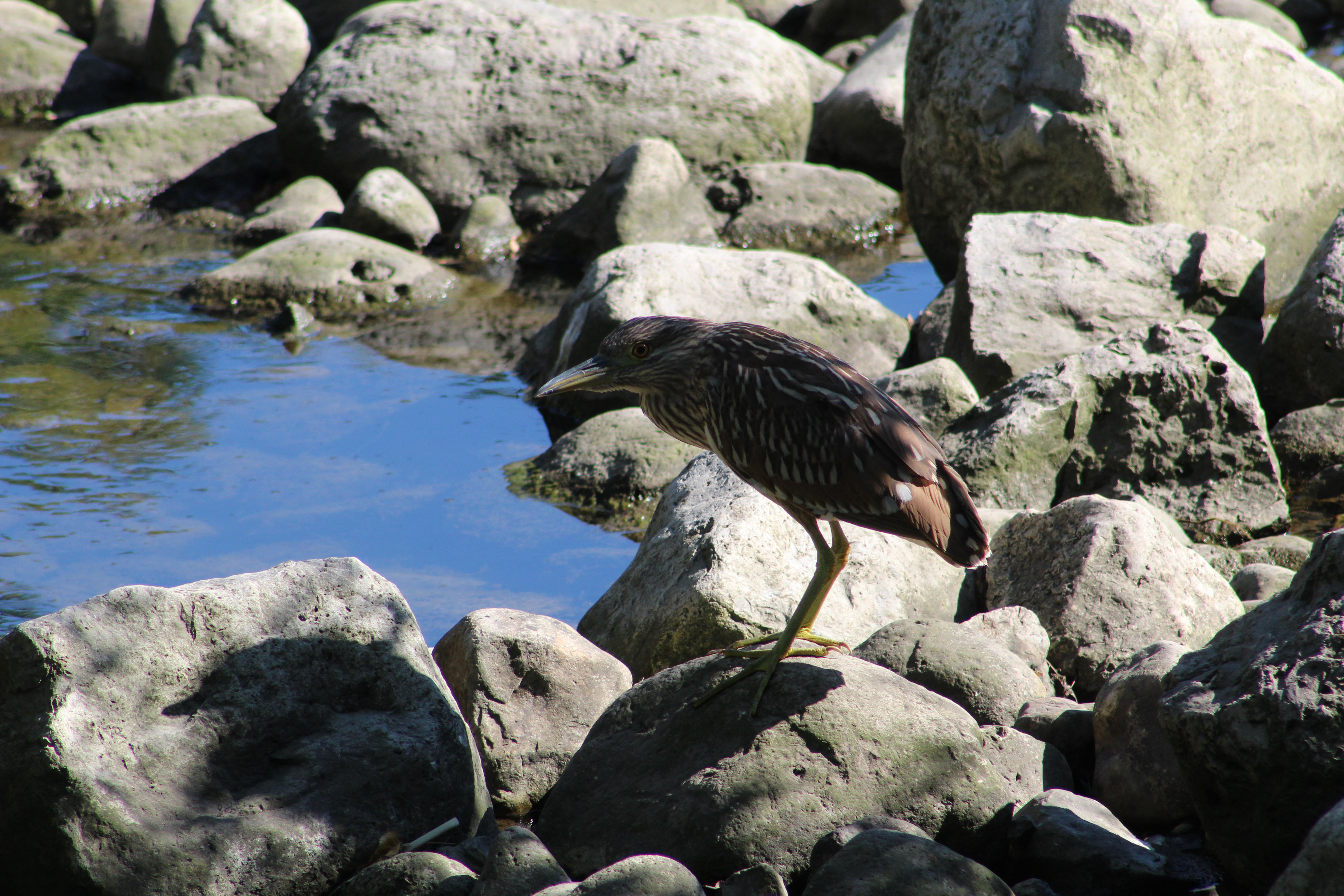
Although the pond has been home to a Great Blue Heron for the past several summers it was a pleasant surprise to see a juvenile Black-crowned Night Heron standing on the rocks at the storm water outfall into the pond. Juveniles have a brown colour with lighter streaks and a pale yellow beak. As they mature the belly turns a pale white and they develop a black crown and back. As their name suggests, they are nocturnal and do most of their feeding in the evenings. During the day they can be hard to spot because they sleep in trees or dense foliage. The average Black-crowned Night Heron can expect to live for about 20 years.

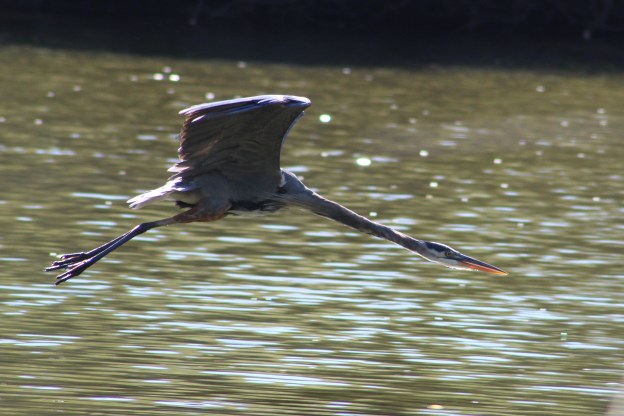
Great Blue Herons, on the other hand tend to live for around 17 years. With their wingspan of nearly two meters they are able to reach speeds of 55 kilometers per hour in flight. It’s common for them to nest in large colonies and then fly for up to an hour each day to reach their feeding places. There has been a Great Blue Heron at Marita Payne Pond for several years in a row and it’s likely the same one each year. Birds that have been banded for tracking purposes are known to migrate to the same place each winter and return to the same nesting grounds each spring. For some reason many of these birds moved farther north this spring and we seem to have a lot more of them in the GTA. The Great Blue Heron in the cover photo is a second one, the first time I have ever seen two at this little pond. It is flying with its neck stretched out straight unlike the normal retracted “S” curve we usually see when they’re in flight.

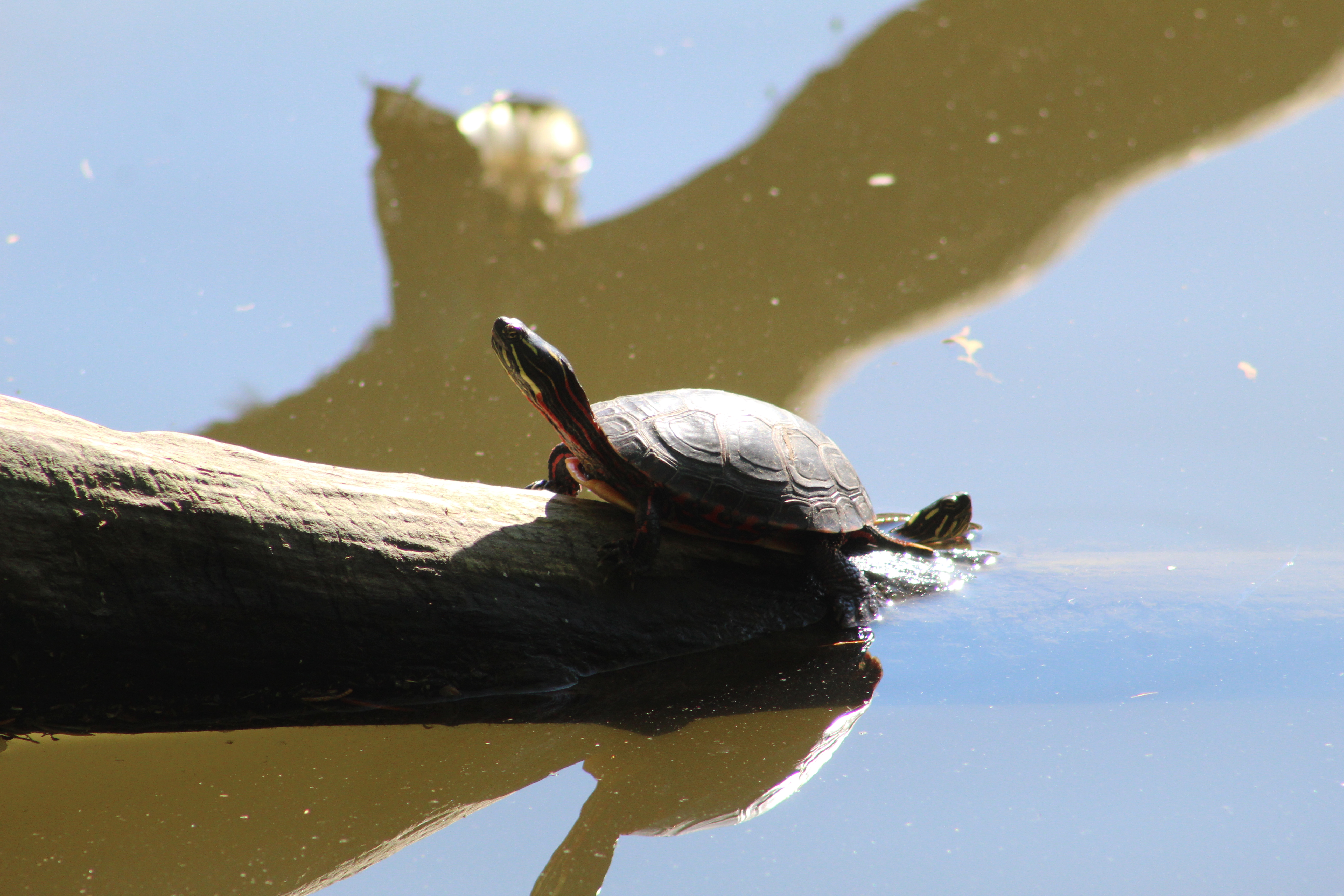
Painted Turtles usually live between 20 and 30 years but some have been known to survive for 50 years. When you see the feet of Painted Turtles you may notice that some of them have long nails while others have relatively short ones. The long-nailed ones are the males and they use them to stroke the female turtle on the head to indicate interest in mating. If she is tickled correctly she will dive to the bottom of the water and wait for him to come and mate. When I took the picture below I thought there was just one turtle in it but a second one decided to photobomb my picture. That was nice of it.

Call Ducks are domesticated and sometimes kept for pets. They were developed in the mid-19th century as hunting ducks. They were specifically bred to be smaller than average ducks so that they could lure other ducks into funnel traps and then escape through the small exit. They also have a distinct call that carries well and can lure wild ducks from great distances. With the advent of duck whistles and the decline in popularity of hunting, Call Ducks became relatively rare. In the mid-20th century they made a come-back as show ducks and as livestock on hobby farms where they are raised for eggs and food. The pair of Call Ducks at Marita Payne Pond were quite attached to each other and when they decided to sleep they snuggled up and dozed off.

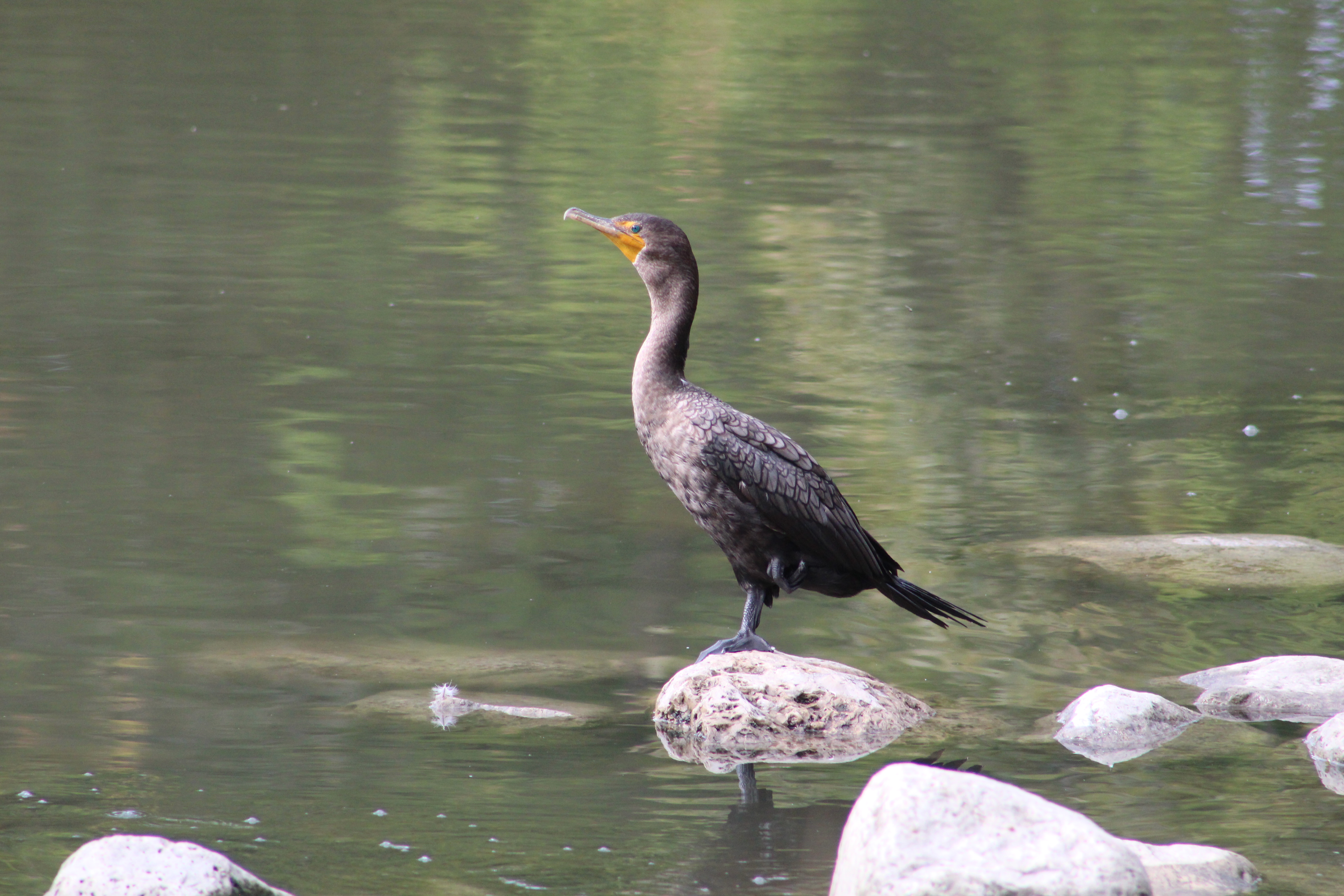
I was surprised to see a Cormorant at Marita Payne Pond for the first time in nearly 20 years of visiting here. An adult Cormorant will eat about a pound of fish per day which is nearly 10,000 pounds in their 23 year lifetime. The pond is said to have Bass, Carp, Sunfish, Catfish and Black Crappie but I wonder if it isn’t being over-fished by the large predatory water birds.

Pleated Inkcap Mushrooms grow in short grass or on wood chips and can be found in the mornings, especially the day after a rain storm. These little mushrooms are also known as Little Japanese Umbrella and the caps are between 1 and 2 centimeters and stand atop a 6 centimeter stem which is only 4-5 millimeters in diameter.

These mushrooms are very frail and thin. The radial grooves that extend from the centre to the edge of the cap match the gills on the underside. They reach maturity around noon and after releasing their spores they bein to fade away. Twenty-four hours later there will be hardly a trace of their coming and going.

The Eastern Grey Squirrel comes in both grey and black colours. Both can be born in the same litter but some confuse them for two different species. The black ones are more common in the northern range of their habitats while they don’t exist at all in the southern United States. Some populations are also known to have a black body with a red tail and a few groups of albino squirrels have also been reported.

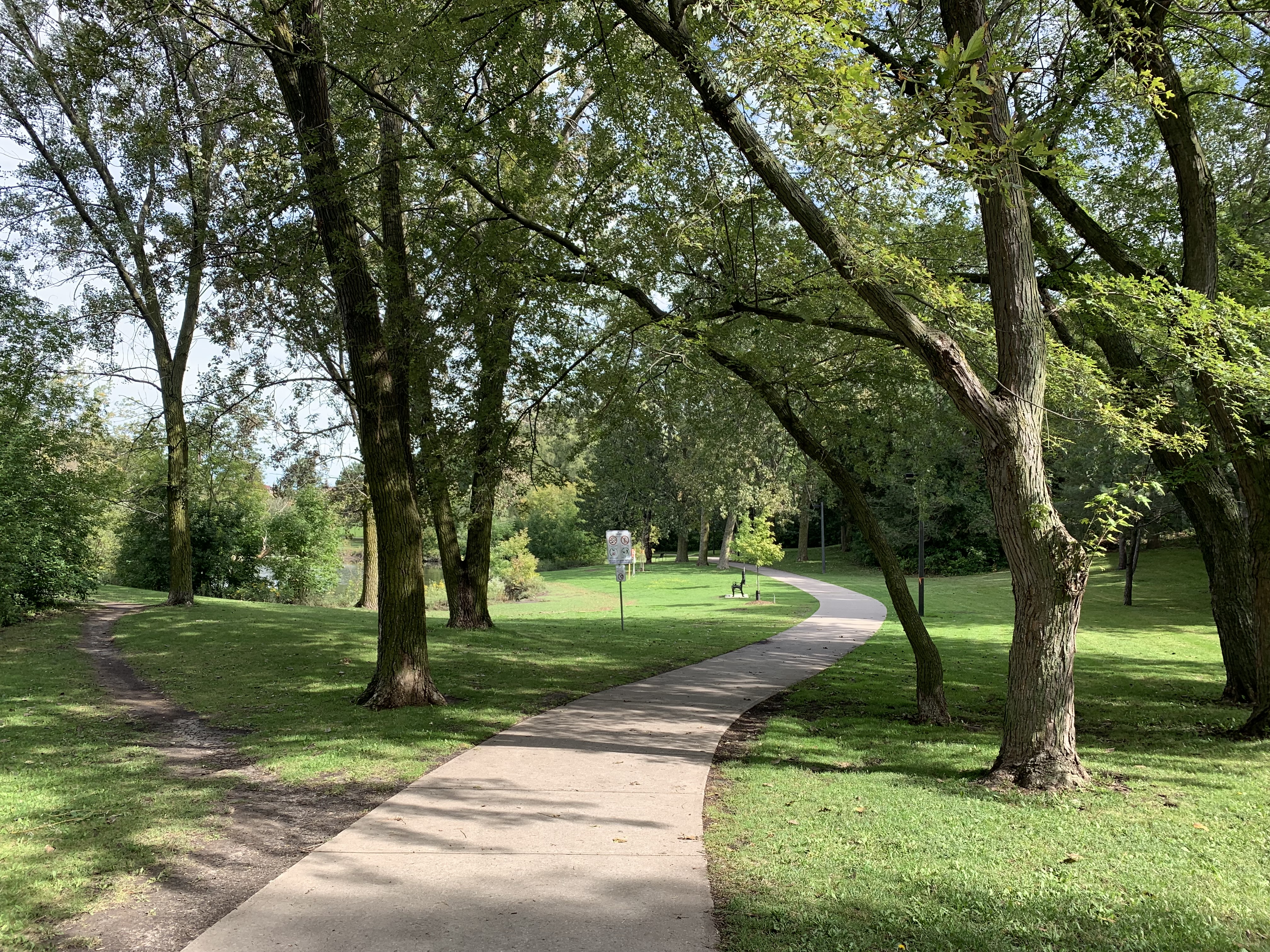
The trail through Marita Payne Park is part of the Bartley-Smith Greenway, a 15-kilometer trail that follows the West Don River. As you follow it north-west you pass under the Glen Shields Avenue bridge and the trail changes to fine gravel from pavement. The park also become a little less maintained between here and and where it passes under the bridge for Highway 407.

I was wondering if the second Heron at Marita Payne was possible the one that is usually at the old dam just past the 407 bridge. As it turns out, this bird is in its normal spot at the base of the abutment from the dam. There’s no shortage of Herons this year in any of our parks.

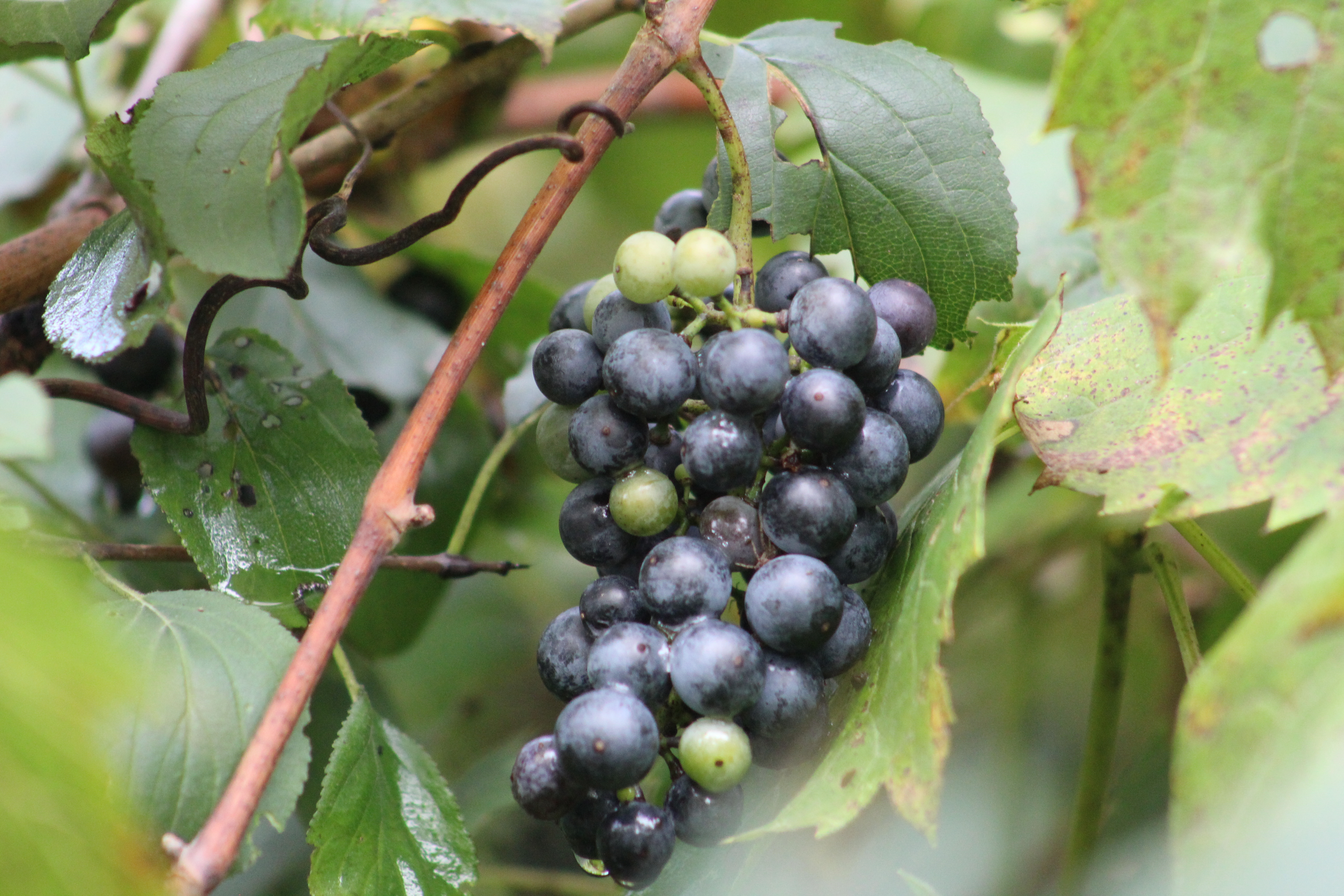
River Grapes or wild grapes are growing in abundance along the side of the river. From the looks of the fruit, it’s going to be a good year for a large crop. Cultivated grapes have been developed from wild grapes by choosing plants that are the hardiest and cross breeding them.

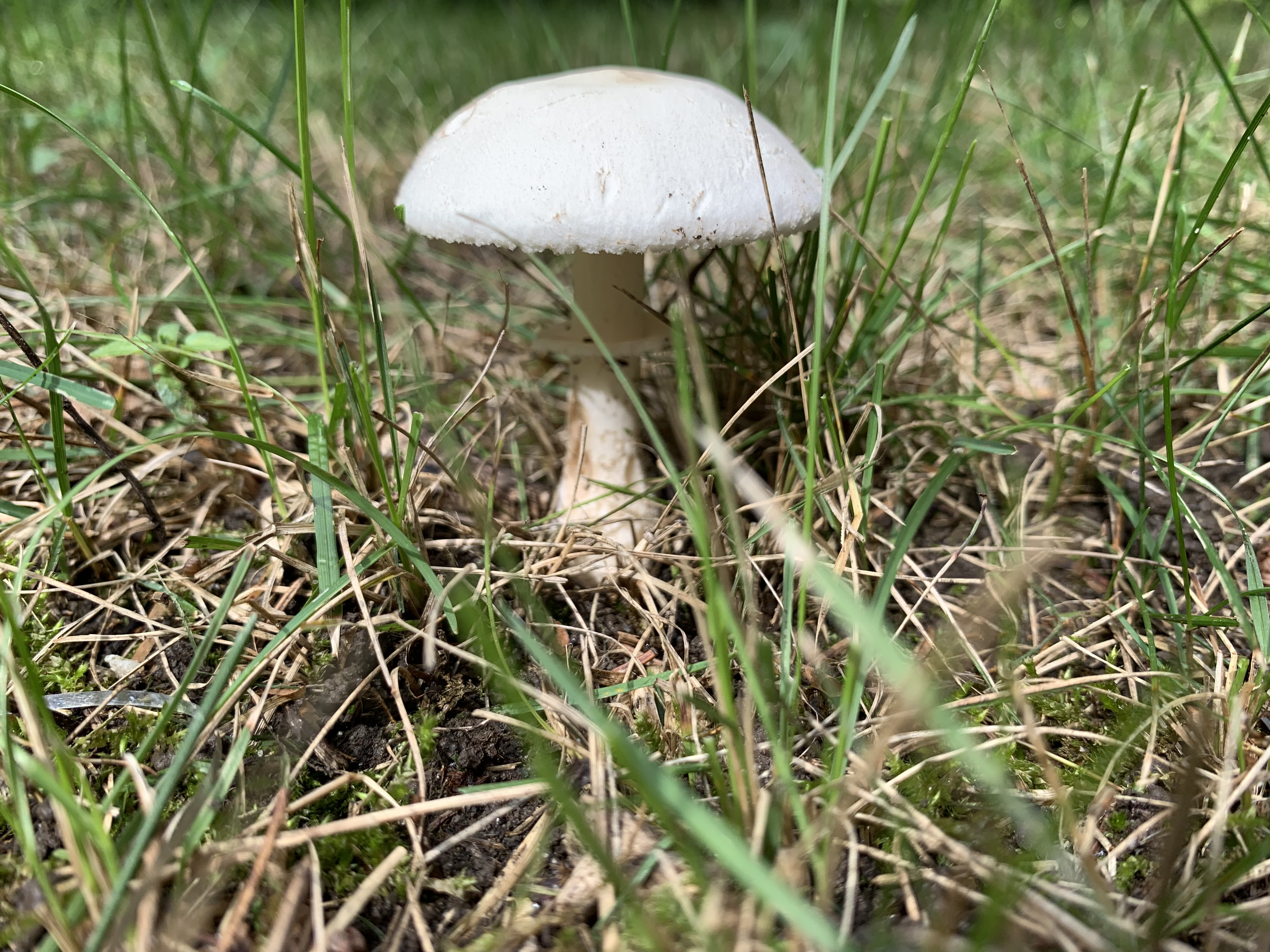
Destroying Angel is one of the poisonous mushrooms that grow in the region. They are often found growing solo and can be identified by their bright white colour and the large veil below the cap. A distinguishing feature is the sac-like cup at the bottom of the stem.

Highway 407 was originally proposed in 1959 but the first section wasn’t opened until 1997. When construction was completed through the Concord area it was decided to re-align Highway 7 where it crossed the West Don River. A small portion of the old highway was closed and the bridge was removed. There is still a small section of the old road allowance that can be found just before the present Highway 7 bridge.

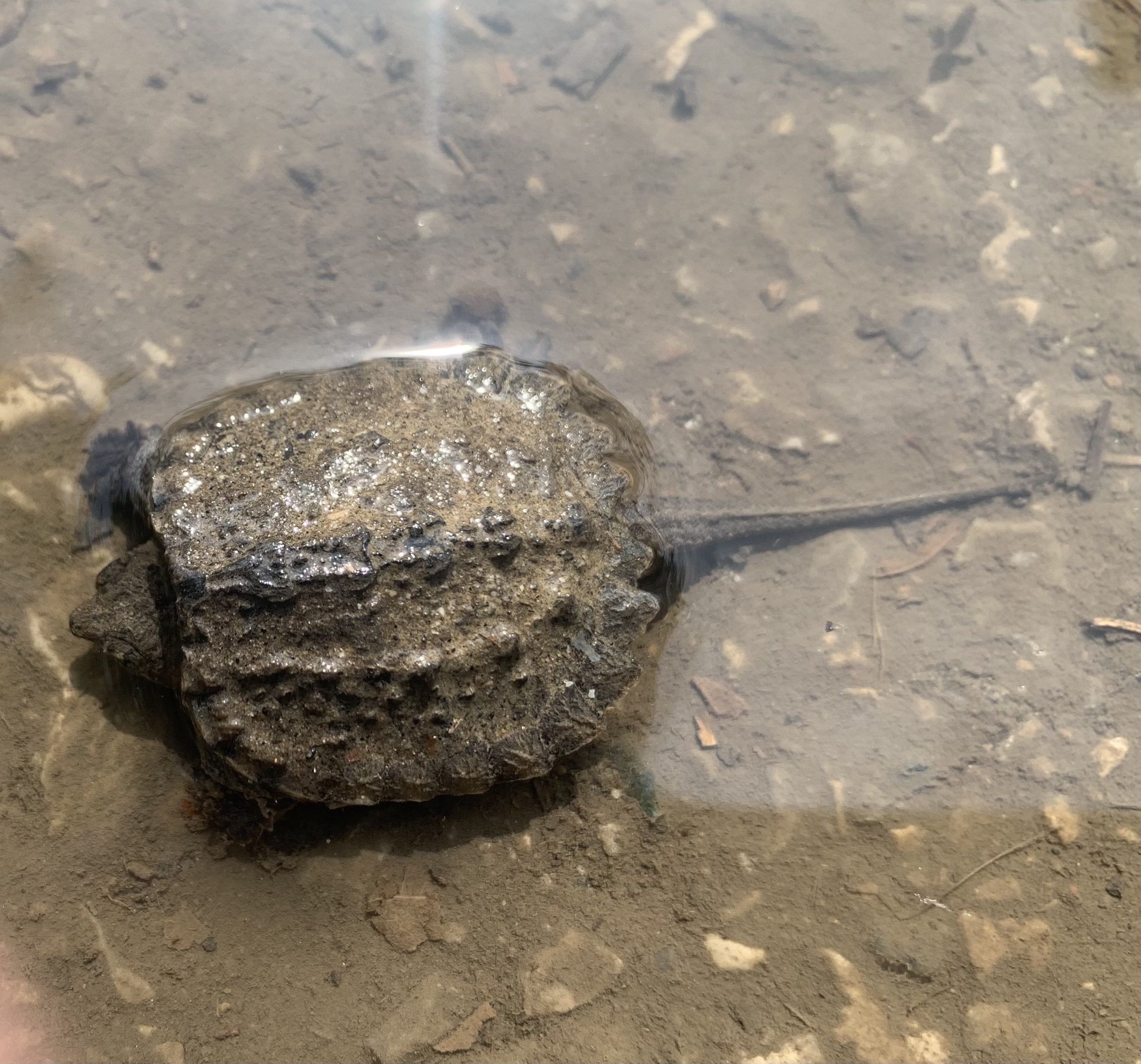
We often look for loop trails so that we can experience more terrain without having to go back over sections we already explored. Trails along the rivers in the GTA tend to be “out and back” as the parks are normally only as wide as the floodplain of the waterway they surround. It’s amazing how often we see something on the way back that was missed on the outward part of the journey. This time it was a baby Snapping Turtle that was lying in a puddle on the edge of the path. It looked a lot like a leaf in the water and could have easily been stepped on or crushed by a bike tire. Snapping Turtles can live up to 45 years in the wild and this one will have a better chance after I moved him up onto the grass between the path and the river.

Returning to the pond, it’s possible to follow the trail to the corner Of Glen Shields Avenue and Dufferin Street where it cuts through the Ghost Town of Fisherville before ending at the entrance to G. Ross Lord Park.

Marita Payne Pond has a direct connection to the Don River and fish have an easy way into the pond. Perhaps this is why such a small pond can support four large fishing birds.

Relayed blogs: Fisherville – Ghost Towns of the GTA, G. Ross Lord Park

Google Maps Link: Marita Payne Pond

Like us at http://www.facebook.com/hikingthegta

Follow us at http://www.hikingthegta.com

Also look for us on Instagram