Monthly Archives: January 2024

Erindale – Ghost Towns of the GTA

January 27, 2024

Erindale isn’t a ghost town in the traditional sense because it is now part of the larger city of Mississauga. However the older homes that remain scattered through the area provide a ghost of the town that once was. Over the years we have written eight other blogs which focus on various aspects of the local history of Erindale and links to all of these can be found at the end of this post.

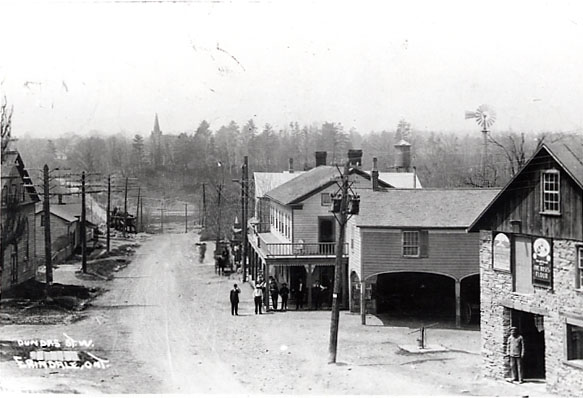
Erindale began in 1825 and was originally known as Toronto. It went through several name changes being known as Credit, then Springfield and finally Springfield-on-the-Credit. In 1900 it took the name of Erindale after a local estate owned by Reverend James Magrath. The town was a major stop on the journey along Dundas Street between Hamilton and York (Toronto). It started to decline after 1855 when the railway bypassed it but saw a revival in 1879 when the Credit Valley Railway built a station nearby. A fire in 1919 destroyed much of the town but several buildings were rebuilt.

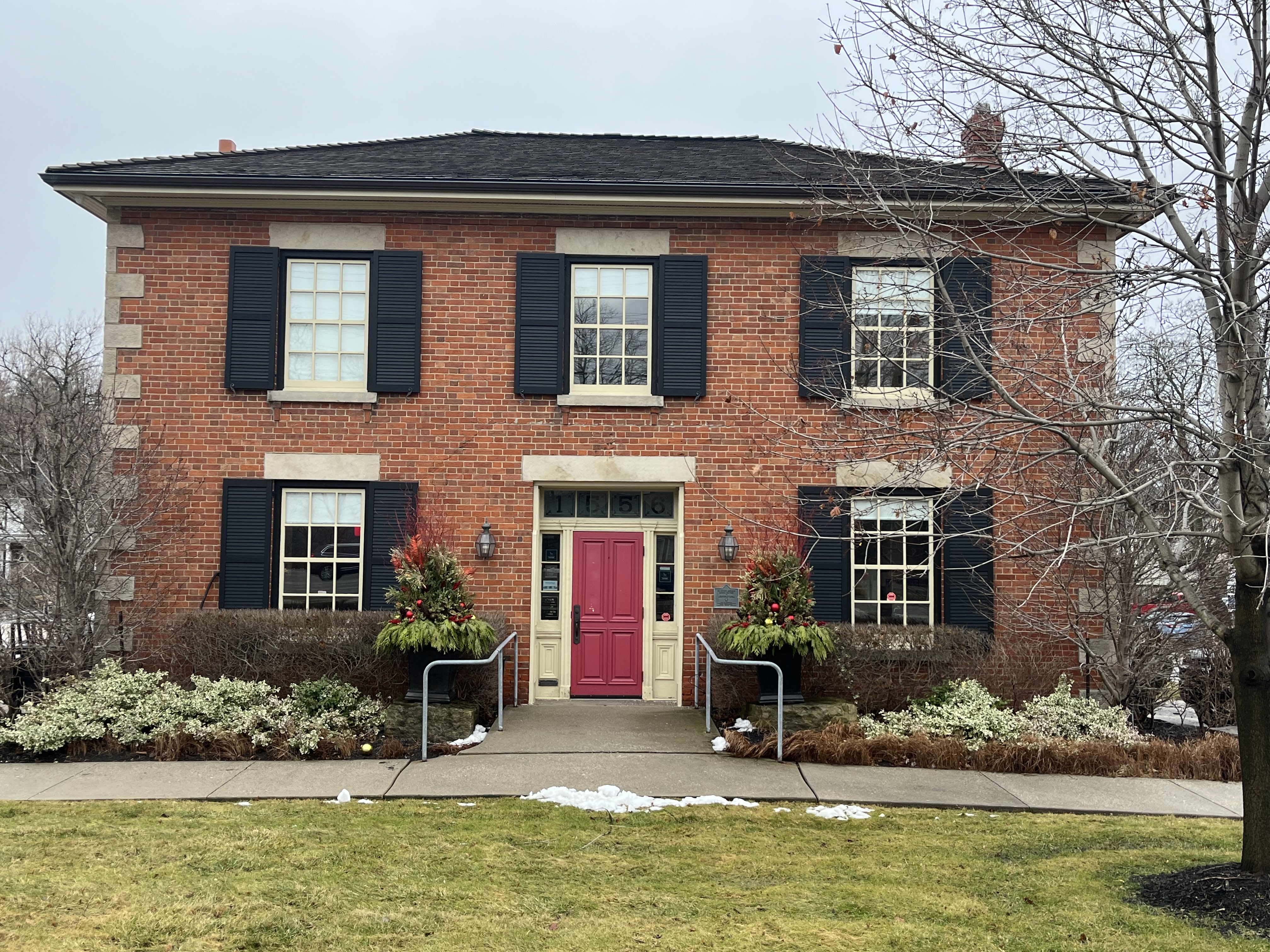
The Grange was built sometime around 1828 for Sir John Beverly Robinson who was the first Chief Justice of Upper Canada.  He was also considered to be the leader of the Family Compact which controlled the government leading to The rebellion of 1837.  The regency styled house with it’s ornate windows was indicative of the status of it’s owner.  Robinson only owned the house until 1833 when it began a rapid change of ownership until around 1910 having seen up to ten owners during this time. Then the Adamson family took up residence here and they stayed until 1973. Sometime during the Adamson years the outside of the home was given an exterior layer, or veneer, of brick from the local Cooksville Brickyards.  The building was given to the city of Mississauga by the land developers and used by the Boy Scouts until 2004.  It has now had it’s bricks removed and been fully restored to it’s original splendor.  The Heritage Resource Centre of Heritage Mississauga is now the occupant of this home.
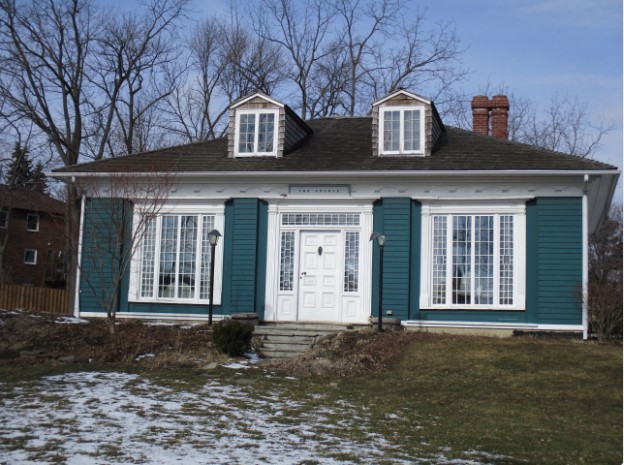
It is generally believed that the house below is the oldest surviving building in the main area of the village. It was likely built between 1835 and 1845 by a local miller named Ira Van Valkenburgh. It may also have been built by the local carpenter named John Blair. Tradition has it that a store was once located in the house.
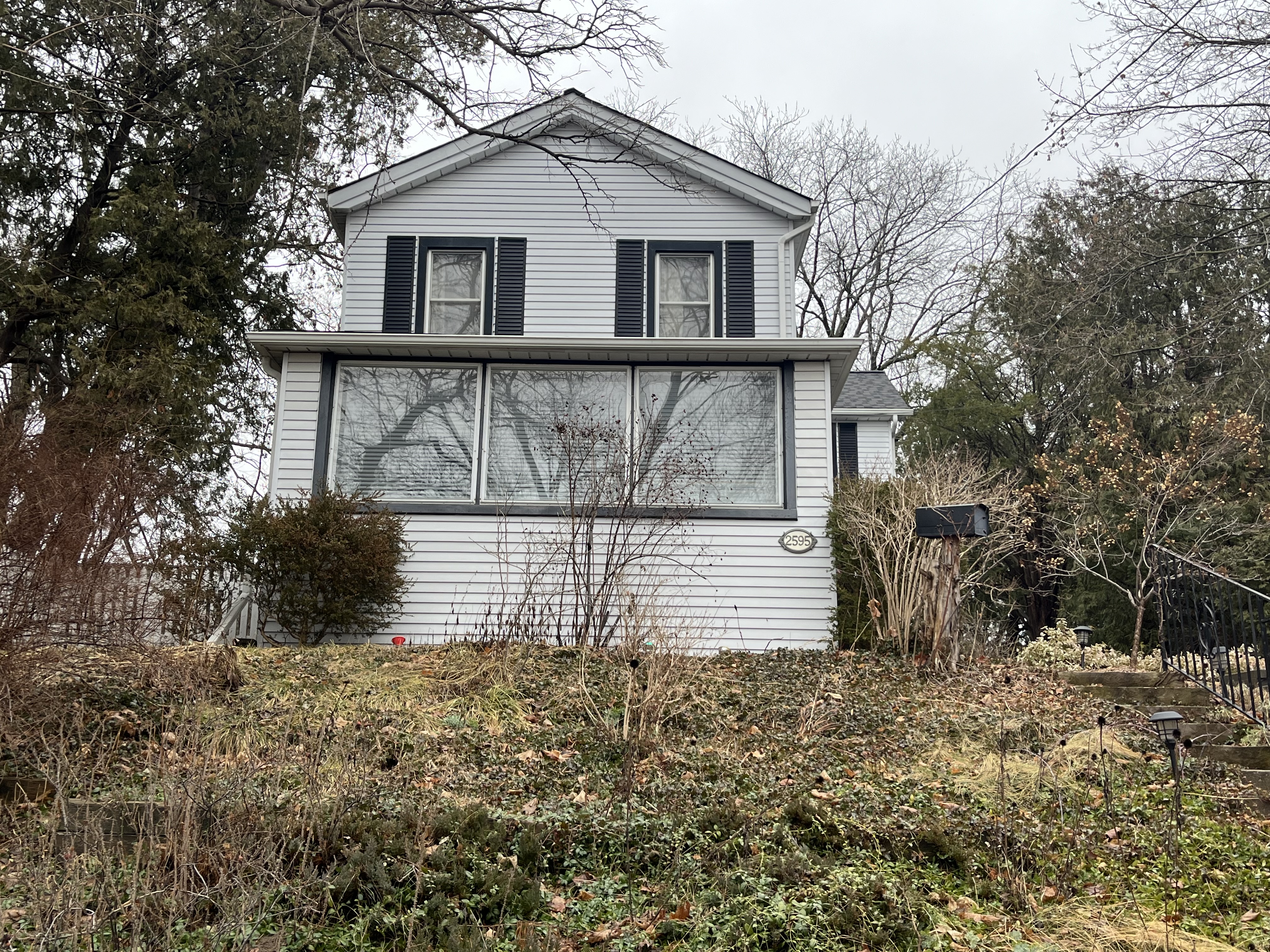
The Anglican Rectory was built in 1861 on the site of a former inn that had burned down. The Georgian Style manse was sold in 1960 and converted to commercial uses.
The Royal Exchange Hotel was built sometime between 1819 and 1822, although some sources say 1828, and was once known as the Halfway House. The hotel may have been 100 years old in May of 1919 when it was destroyed by the village fire and never replaced.

In 1877 the Methodist congregation commissioned a new church building as they had been meeting in the room above the Royal Exchange Hotel. The adherents felt that they should no longer meet above a building where alcohol was being sold. Somewhere around 1921 the church lost its spire and in 1925 it became the United Church. When a new building was consecrated in 1964 the building was sold to a Presbyterian congregation. This is ironic as the Presbyterians had rejected a merger with the Congregationalists and the Methodists that saw the creation of the United Church. Local residents each donated $100 and the spire was replaced in 2010.

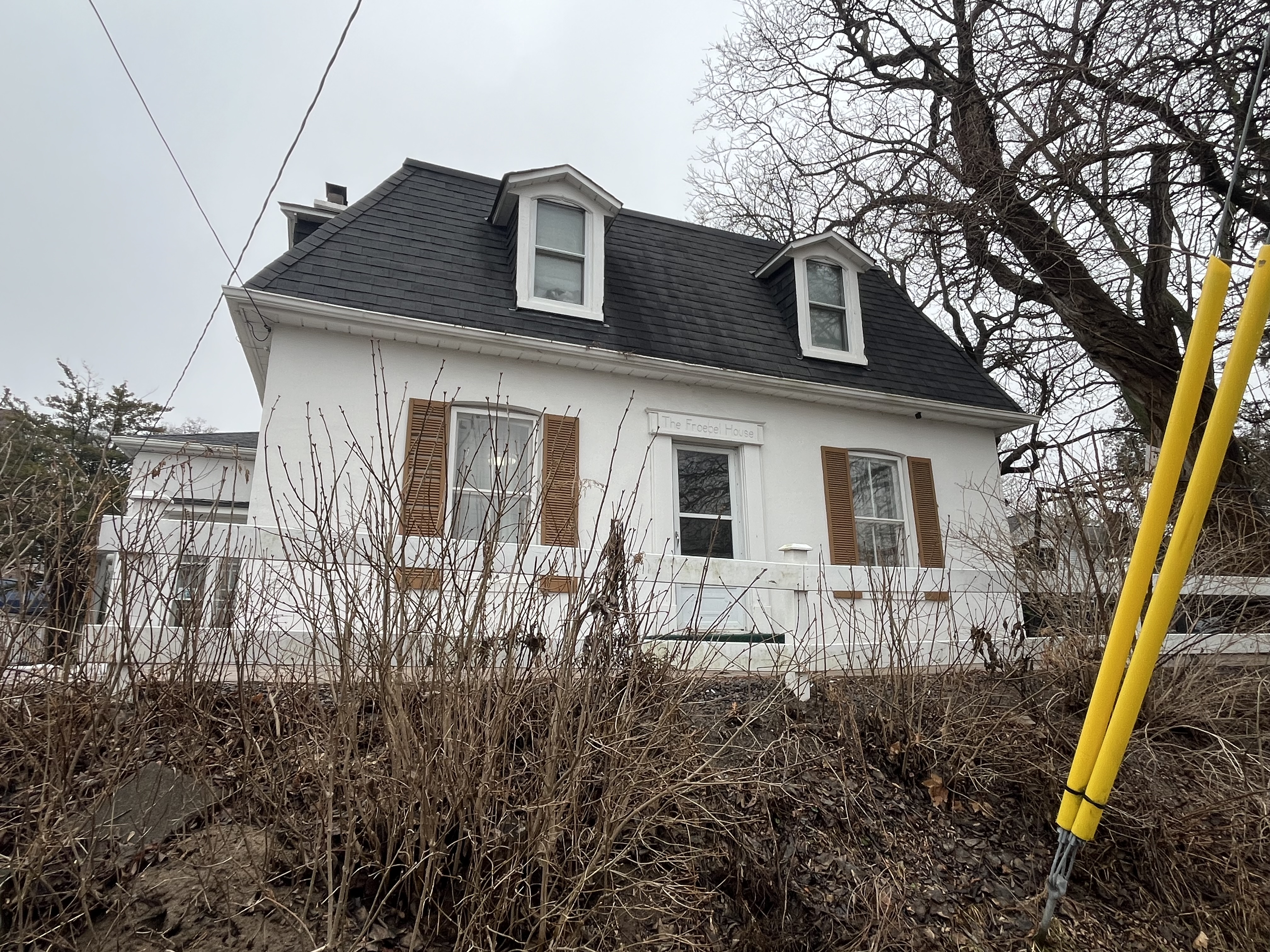
Emmerson Taylor was the owner of the Royal Exchange Hotel and also owned a saw mill, knitting mill and a fanning mill. This last structure produced furniture and grandfather clocks. He donated the land for the Methodist Church and had this house built around 1875 to 1878. The transom over the front door identifies the home as the Froebel House.
St. Peter’s Church history begins as a home church in 1825 in the home of Colonel Peter Adamson. Construction of a white frame church began in 1826 and it was consecrated in 1828. This building lasted until 1887 when it was torn down and replaced with the present stone church. The church tower was added in 1910. A basement was hewn out under the church in 1934 to be used for the church school.

Erindale Park has a long history and at one time was known as Erindale Lake. In 1902 Erindale Light and Power Company was formed to construct an hydro electric generating plant on the Credit River at Erindale.  This large scale engineering project ran into several delays during construction and didn’t begin producing power until 1910.  A dam was constructed across the valley flooding it and creating the 125 acre Lake Erindale.  A power generating plant was built on the south end of town at the bottom of Proudfoot Street.  A tunnel was constructed to connect the two.  The power plant operated from 1910 until 1923 supplying power to Erindale and New Toronto. It was closed when Ontario Hydro began to supply the area with power from Niagara Falls.  In 1941 the lake was drained and the dam was blown up.  Between 1961 and 1965 the former lake bottom was used as a sanitary landfill.  It has since been covered over with clean soil and Erindale Park has been created.

Erindale was served by School Section #4 and has had several buildings over the years. The bell from the 1872 school has been preserved and is now housed in the 1922 replacement building. This beautiful structure was built in the Colonial Revival and Neo-Classical style of architecture. It became the Springbank Community Centre in 1957 and is now part of the University of Toronto Mississauga.

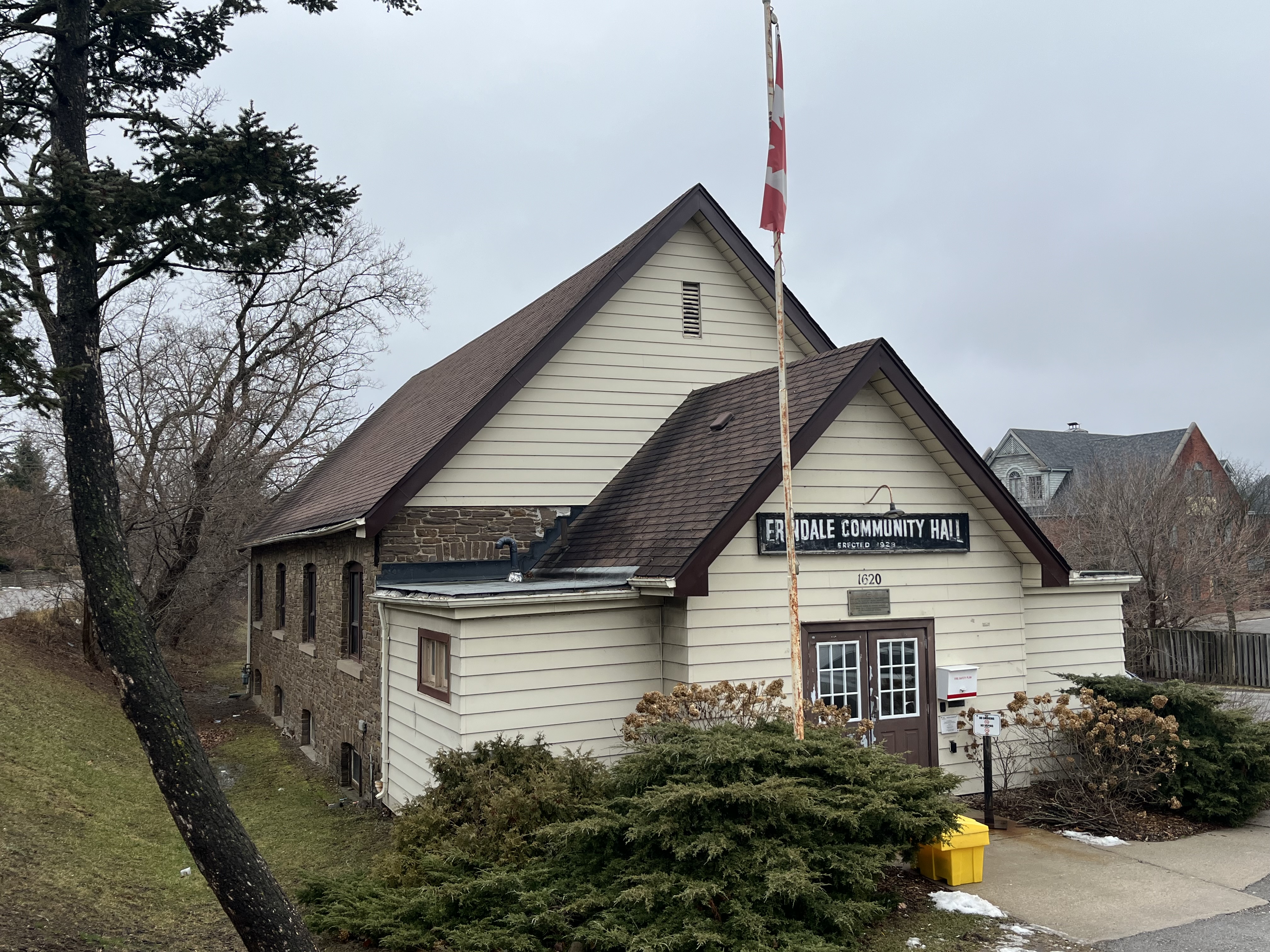
In 1919 a fire destroyed several of the older buildings on the core of the town including the Parish Hall, Post Office and the Royal Exchange Hotel. A new community Hall was constructed and has operated under a board of directors for almost 100 years. It can still be rented for private functions.
The historical community of Erindale can still be experienced via a walking tour. Heritage Mississauga has provided the details for one and a brochure can be accessed at this link: Erindale Tour. There’s a considerable amount of history in this area and you can read more in the various stories listed below.

Related stories: Winding Lane Bird Sanctuary, J. H. Pinchin Apple And Turkey Farms, Erindale Hydro Electric Dam, Erindale Powerhouse,UTM Nature Trail, Ghastly Tales Of Sawmill Valley Creek, Erindale Orchards, Credit River At Erindale

Google Maps Link: Erindale

Like us at http://www.facebook.com/hikingthegta

Follow us at http://www.hikingthegta.com

Also, look for us on Instagram
Cornwall Jail

January 13, 2024

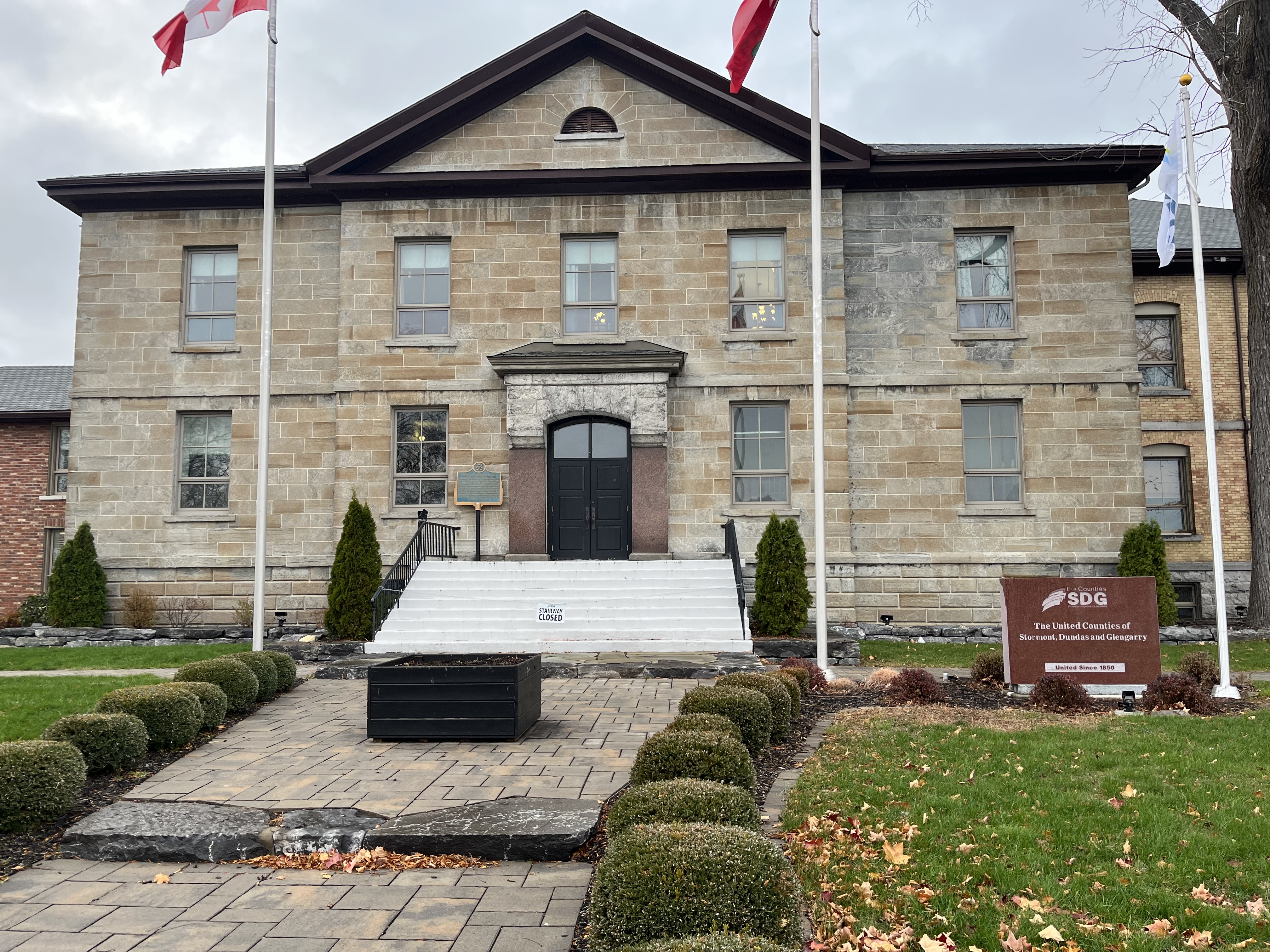
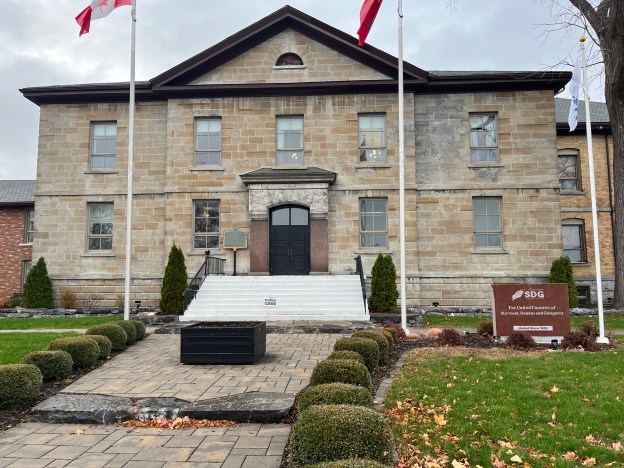
The old jail in Cornwall is one of the oldest surviving public buildings in the province. I had the opportunity to visit it on the same business trip that resulted in our past two stories Prescott Waterfront and Lost Villages of the St Lawrence River. This completes a trilogy of Eastern Ontario posts. 

Indigenous People had lived along the St. Lawrence River for thousands of years before the arrival of Europeans. The first formally documented settlement of Europeans in the area occurred in 1784 when United Empire Loyalist moved north from Johnstown, New York following the end of the American Revolution. They founded New Johnstown which was later renamed Cornwall. The Eastern District known as Lunenburgh was established in 1788 and six years later an Act of the Legislature of Upper Canada authorized the erection of a court-house and gaol at Cornwall. That legislature was located in Newark (Niagara-On-The-Lake) beginning in 1792. A two-storey frame structure was built in 1802 and served until 1826 when it was destroyed by a fire.

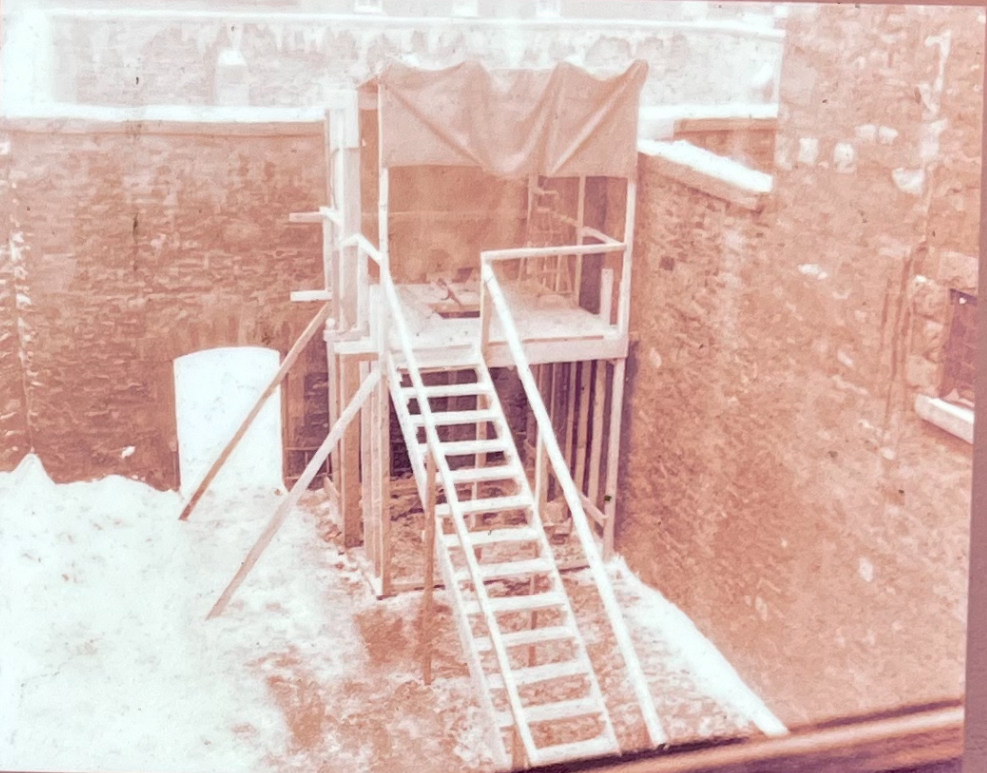
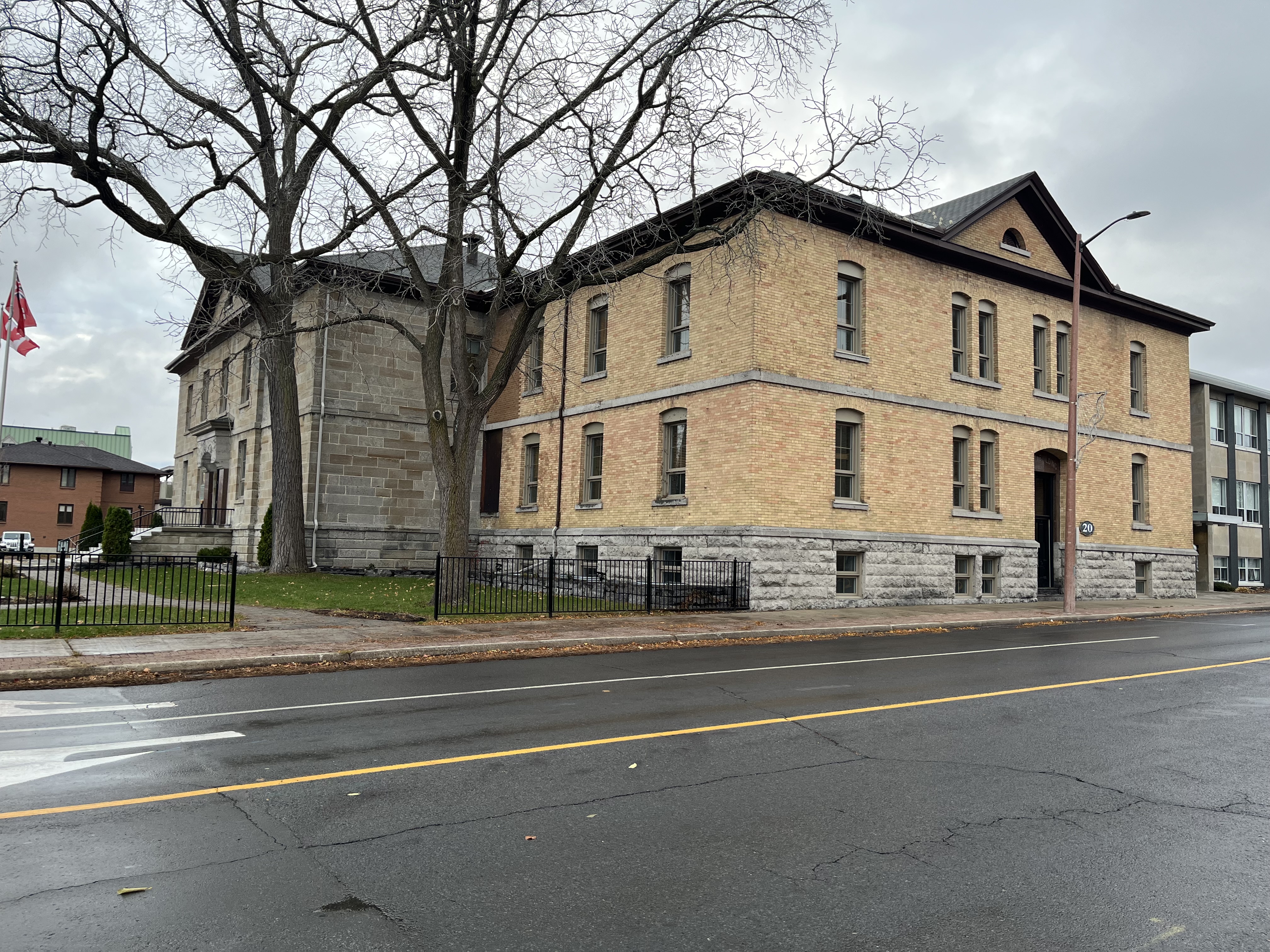
It was replaced in 1833 with the central block of the structure that still stands on the site. The United Counties of Stormont, Dundas and Glengarry were established in 1850 and the building served as the court-house and gaol (jail). The jail opened in 1833 and just two years later the first escape was made. Four prisoners got out and were never found. The jail was expanded in 1869 by adding two new cell blocks. They were nicknamed “Windowless” and “Hell’s Angels Wing”. Clark Brown was incarcerated there for murdering his father and sister in their home in Winchester and he was executed at the jail in 1879. Other executions at the jail were James Slavin in 1892, John Vergryniuk in 1919, Thomas Collison in 1925 and in 1954 Peter Balcombe. Also in 1954 Henry Seguin was to be executed but committed suicide first.

The jail was modernized in 1971 with security cameras, showers, toilets and electronic locks. In 1985 a general population cell block and a female section was added. A final escape was made in 1995 but the convict was caught in less than an hour as he went to visit his dying grandfather. The jail was decommissioned in 2002 and the inmates transferred to Ottawa.

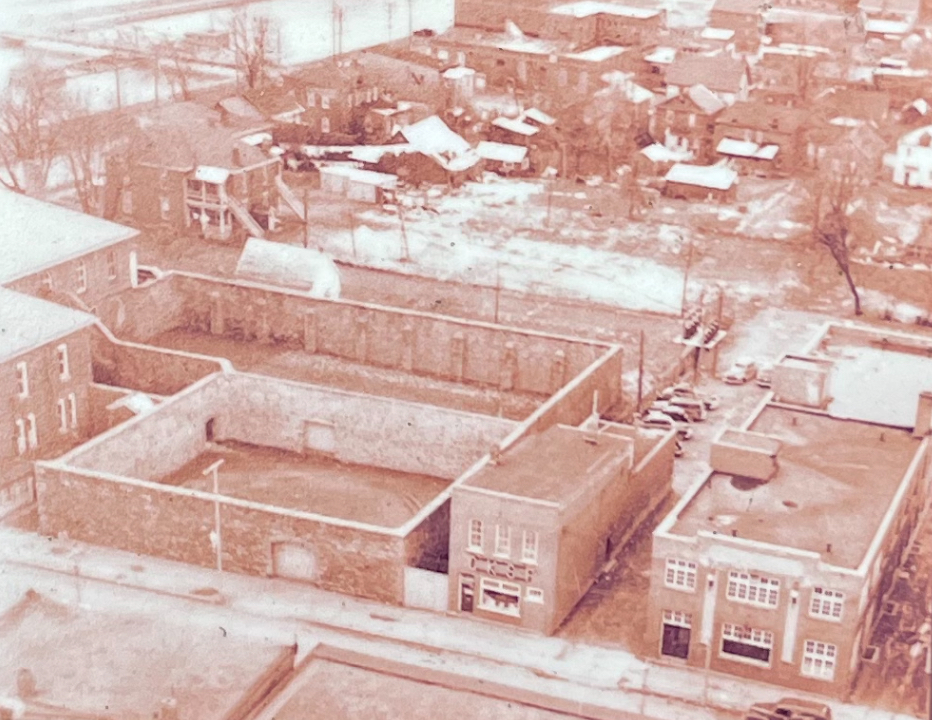
The aerial view below was taken from the information board at the jail and shows the outdoor exercise yards.

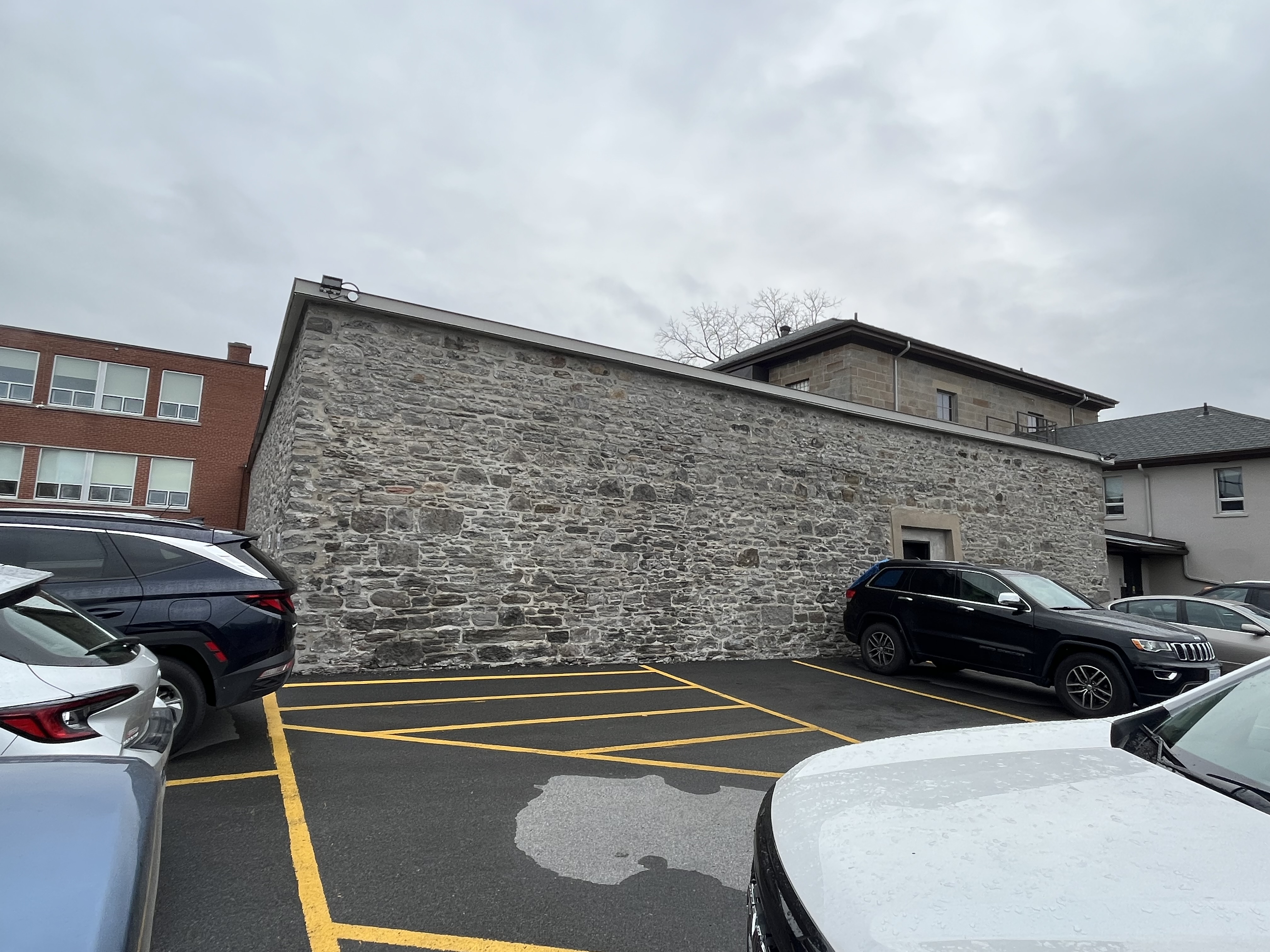
Like many jails, the Cornwall jail had its share of deaths over the decades. People died from suicide, illness, torture and violence as well as the five executions by hanging. There are still many unclaimed bodies which are buried beneath the former exercise yard. They were also buried under what is now the parking lot. During the 1985 expansion of the jail, several bodies were dug up including those of Henry Seguin and Peter Balcombe. It is estimated that there is around 100 bodies buried on the site. This has led to many claims of paranormal activity in the old building and many “ghost hunters” have come to seek evidence.

Tours of the jail are conducted during the summer months, usually between May and August. Check their website at www.historicsdgjail.com for more details and see for yourself if you feel any spirits during your visit.

Related Stories: Prescott Waterfront, Lost Villages of the St Lawrence River

Google Maps link: Cornwall Jail

Like us at http://www.facebook.com/hikingthegta

Follow us at http://www.hikingthegta.com

Also, look for us on Instagram
Lost Villages of the St. Lawrence River

January 6, 2024

In July of 1958 nine villages and an inhabited island along the Canadian shoreline of the St. Lawrence River were flooded during the construction of the St. Lawrence Seaway and the Moses-Saunders Power Dam. 1,200 acres of reserves belonging to the Mohawks and Akwesane as well as 15,000 acres of traditional hunting grounds were also flooded. The indigenous peoples were not consulted or compensated and only in the last couple of decades has any attempt been made to correct this travesty. 6,500 residents of 6 villages and 3 hamlets were forced off their lands and given market value for their holdings. Unfortunately, the market values were already depressed due to the impending flooding. The lost villages were Aultsville, Dickinson’s Landing, Farran’s Point, Maple Grove, Mille Roches, Moulinette, Santa Cruz, Sheeks Island, Wales and Woodlands. Some of these can be seen in the map below taken from Wikipedia which shows the area prior to the flooding. We have often written about the ghost towns and lost villages of the GTA but this post focusses on some lost villages in Eastern Ontario that I visited on a business trip in September.

58,000 acres were flooded beginning on July 1, 1958 when 27 tonnes of explosives were used to destroy the cofferdam that was used during the construction of the power dam near Cornwall. The image below shows the same area as the one above as it exists following the flooding.

The story of the flooding has its origins as far back as 1871 when the Treaty of Washington made the St. Lawrence River the dividing line between Canada and the USA and allowed for shared use of the river for shipping purposes. In 1895 the Deep Waters Commission was established to explore additional navigation opportunities including the St. Lawrence Seaway. Political issues prevented progress from being made and by 1951 the Canadian Government decided to proceed alone on the construction of the seaway. This got the USA out of their deadlock and in 1952 the Seaway Project was approved by both countries. Construction began on August 19, 1954 resulting in the flooding in 1958. When the lost villages were evacuated the buildings were demolished and some of the bricks and stones were salvaged to be used in the planned memorial. Grave markers were taken up to be relocated in a memorial wall that was built near the site of Upper Canada Village and some of the buildings were moved there.

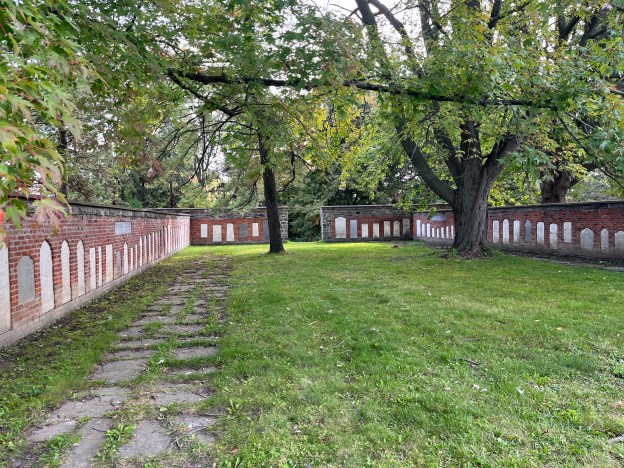
The Pioneer Memorial is laid out by community with a stone marker indicating each of the towns represented. This image shows the wall for Aultsville and Farran Point.

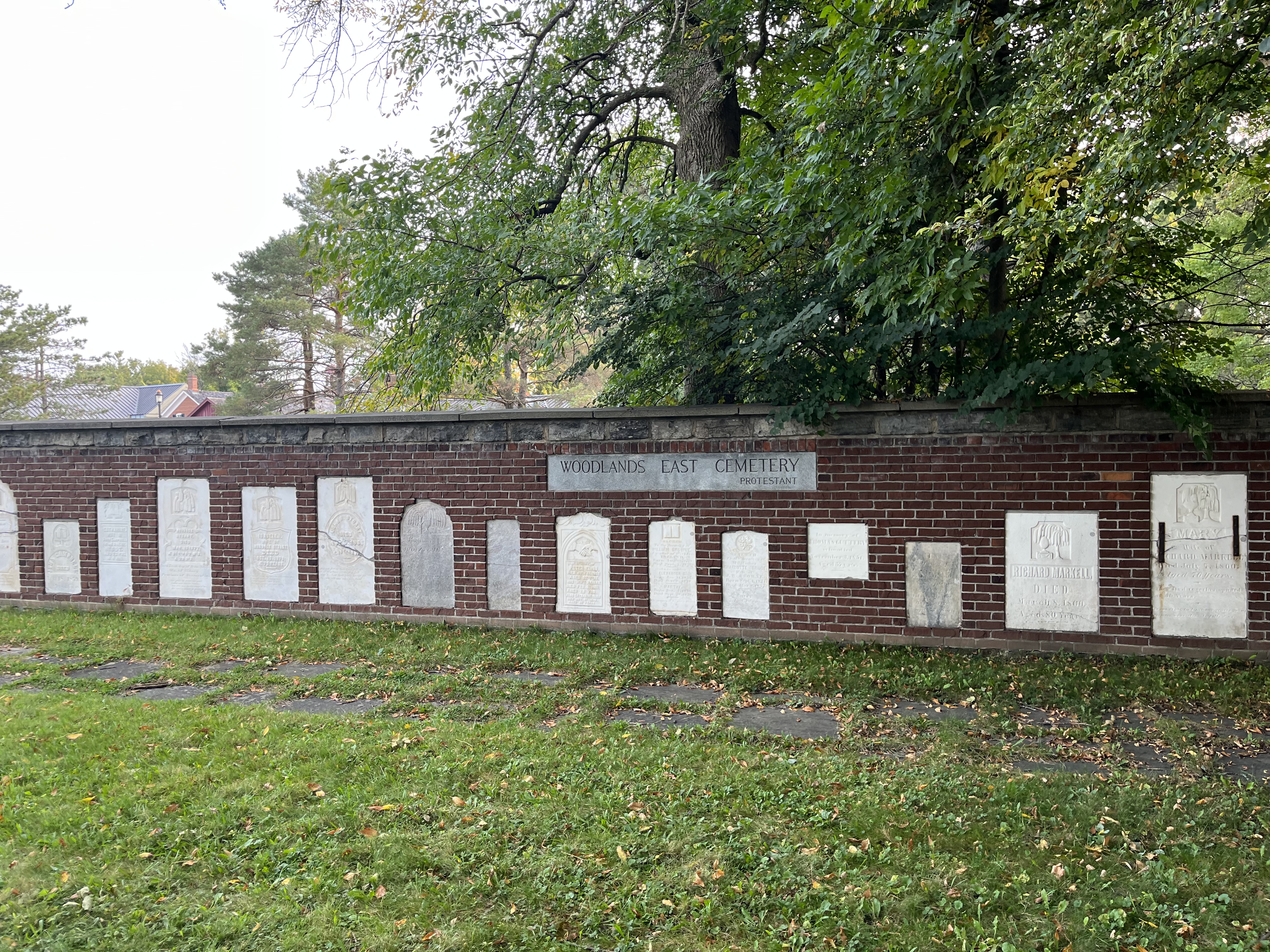
Woodlands East Protestant Cemetery is represented in the wall pictured below.

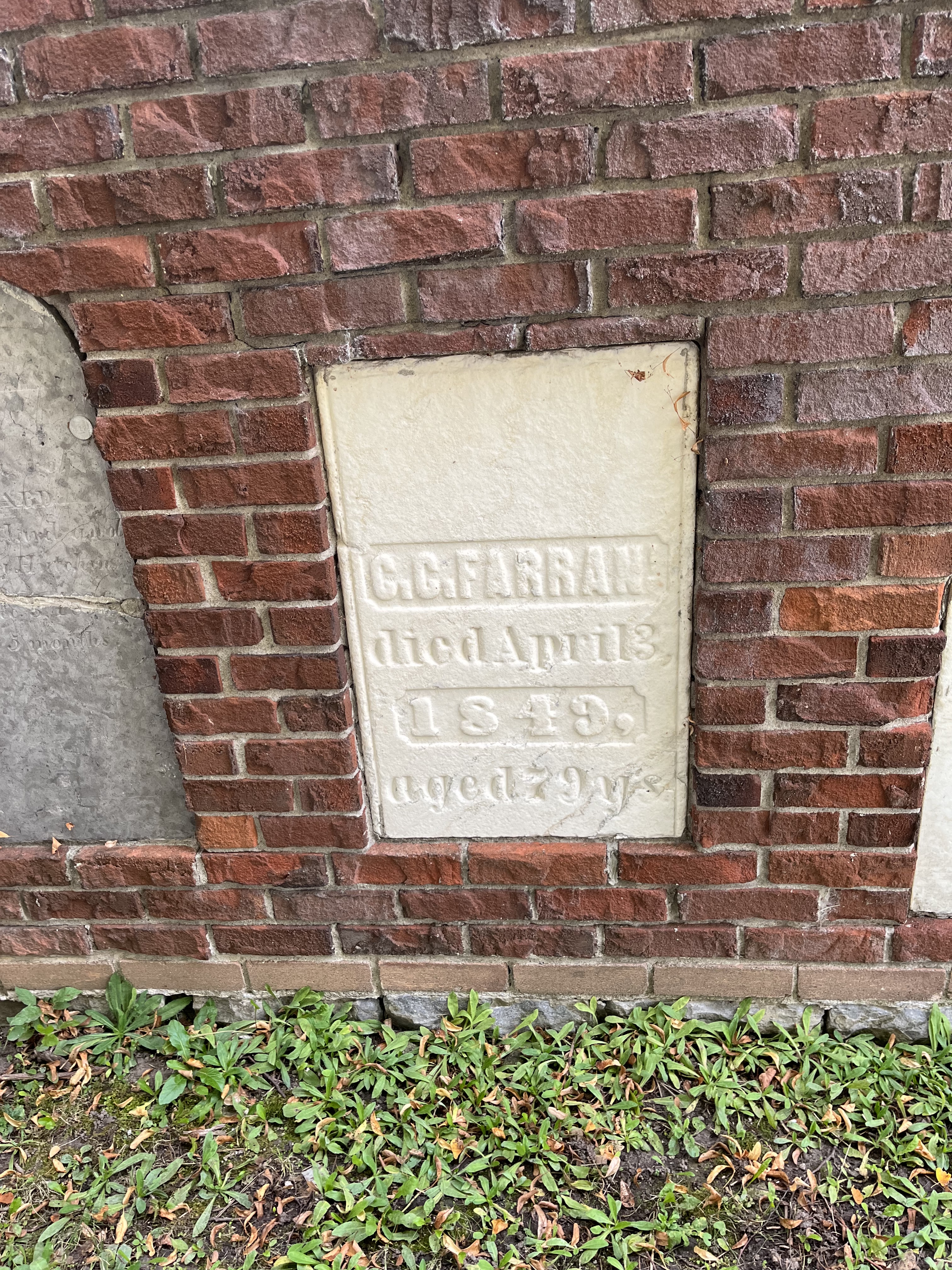
Not all of the people buried in the various flooded cemeteries have been represented in the memorial gardens because some stones graves were marked with wooden memorials or stones that were badly broken or deteriorated. One example of a salvaged memorial is seen in the picture below showing the marker for G. C Farran who died on April 3, 1849. They had been born in 1770. Their remains now lie below the St. Lawrence River in one of the flooded towns.

The plaque below is located near the site of the memorial gardens and tells of the building of the walls and gardens. It mentions eight villages but there are nine villages plus the residents of Sheeks Island that are covered in the online histories of the area.

Crysler’s Farm was the site of a battle in the War of 1812. The battle took place on November 11, 1813 and the American forces were defeated but not without losses on both sides. The actual site of the battlefield is now submerged under the St. Lawrence River but it has been memorialized on a new site near Upper Canada Village. We’ve previously written about this battle in our post The Battle of Crysler’s Farm. The image below was taken from the 1877 County Atlas and shows the original battle ground.

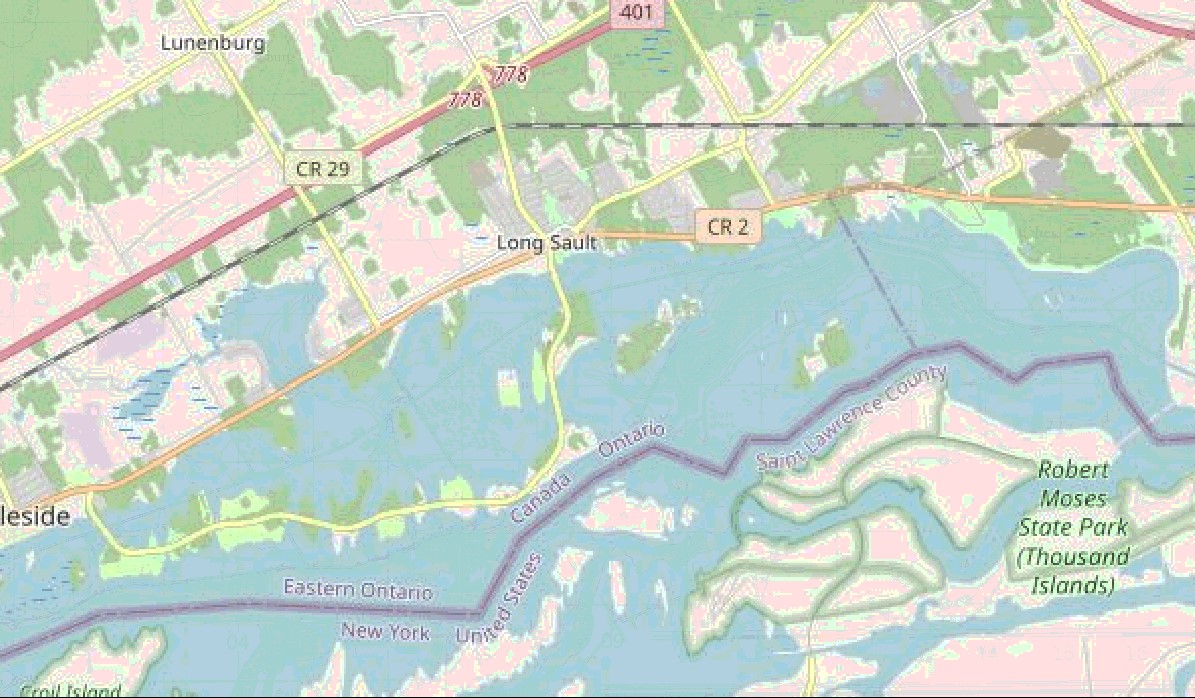
The Long Sault Parkway is a 10.1 kilometre drive that connects several islands that were created during the flooding. Along the route homage is paid to many of these lost villages and the drive is said to be very scenic. It’s on our bucket list for a future visit to the area.

Related Stories: The Battle of Crysler’s Farm

Google Maps link: Pioneer Memorial

Like us at http://www.facebook.com/hikingthegta

Follow us at http://www.hikingthegta.com

Also, look for us on Instagram