Category Archives: Uncategorized

Credit Valley Railway Station – Streetsville

January 4, 2025

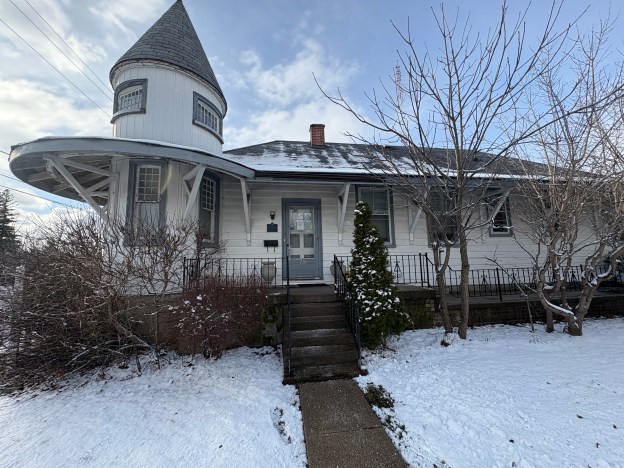
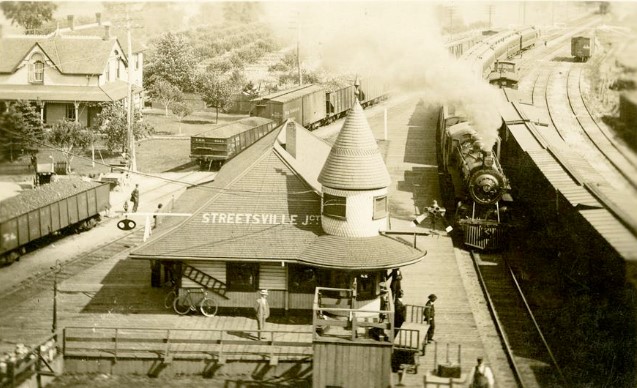
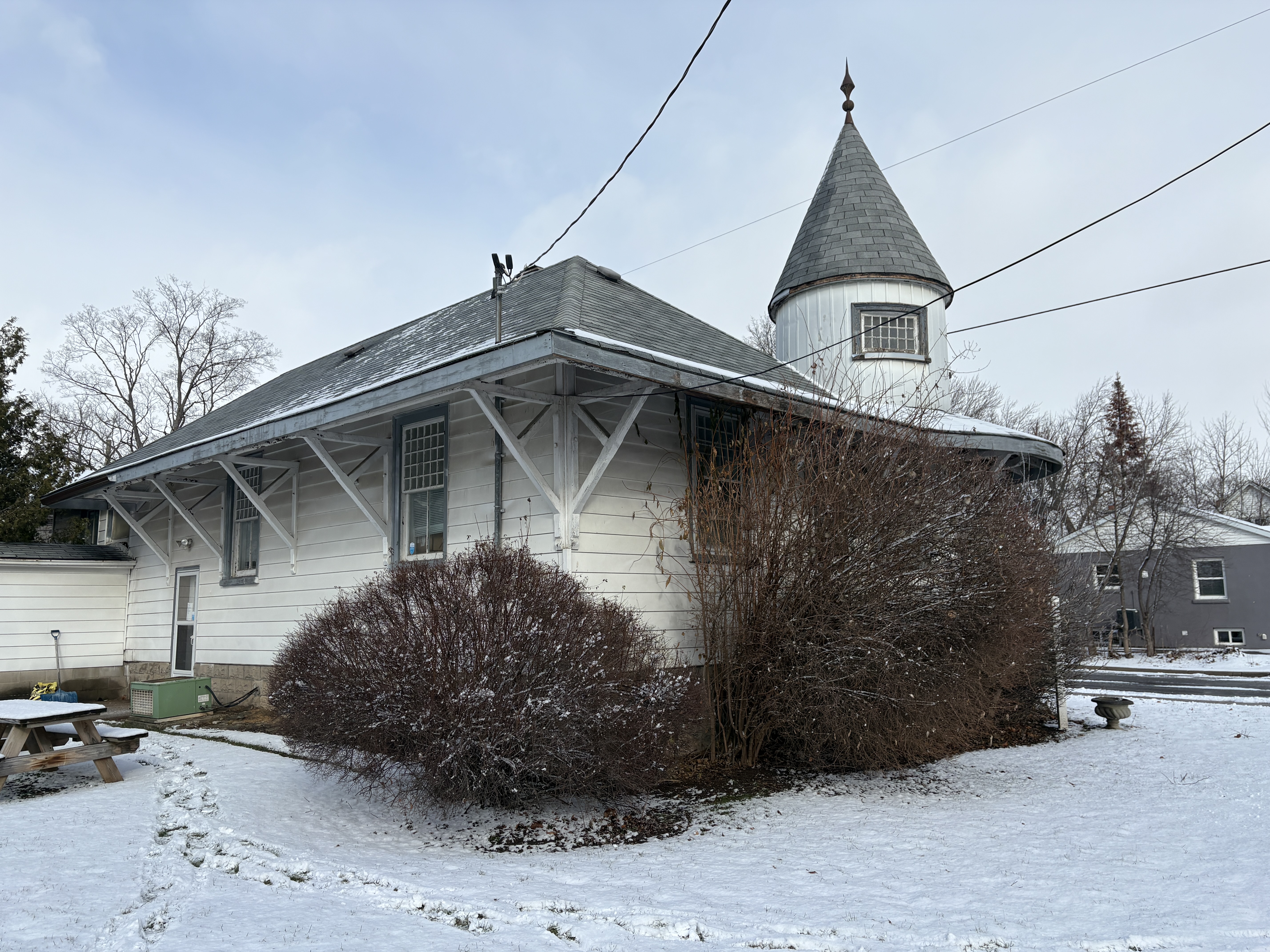
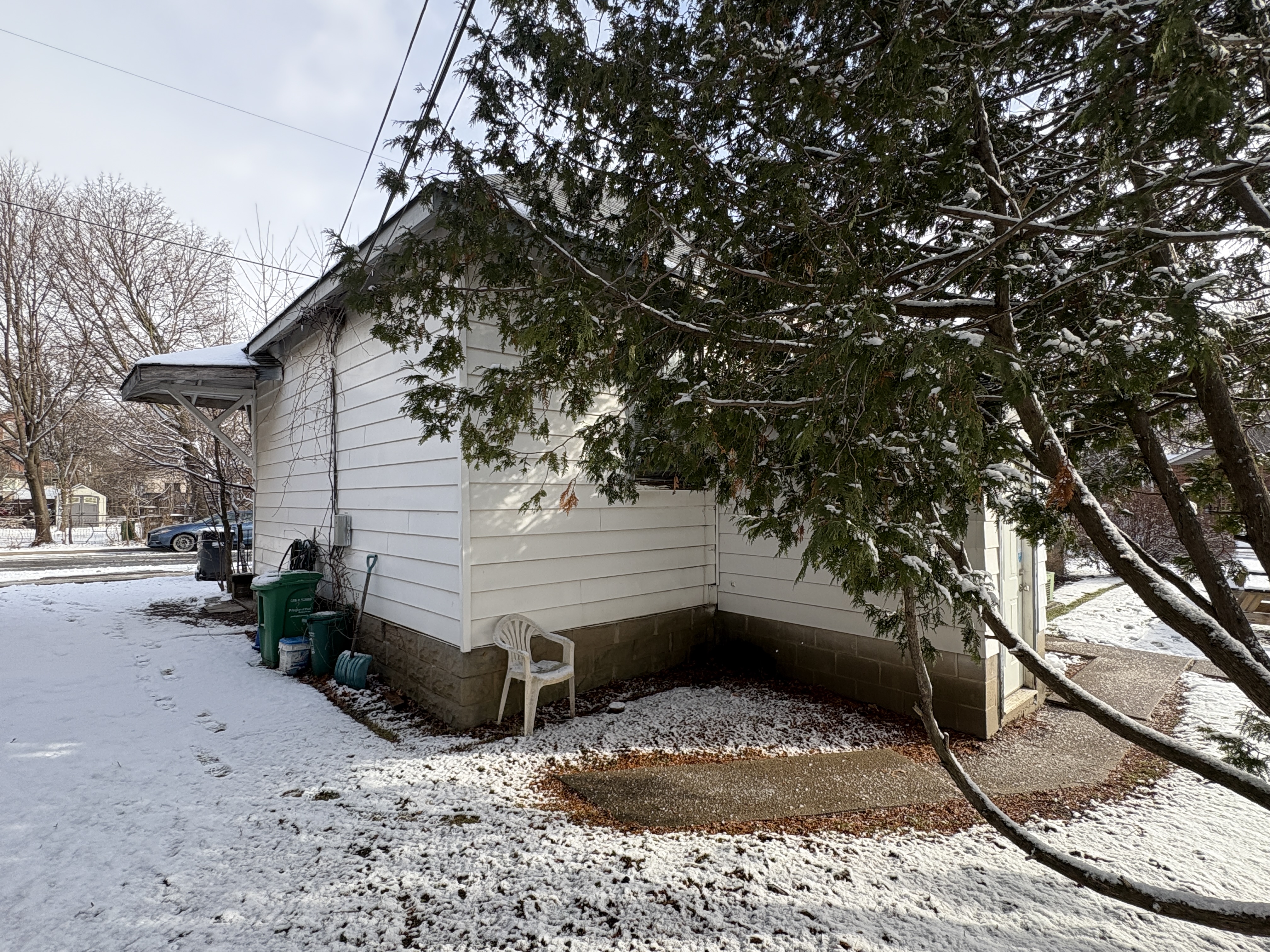
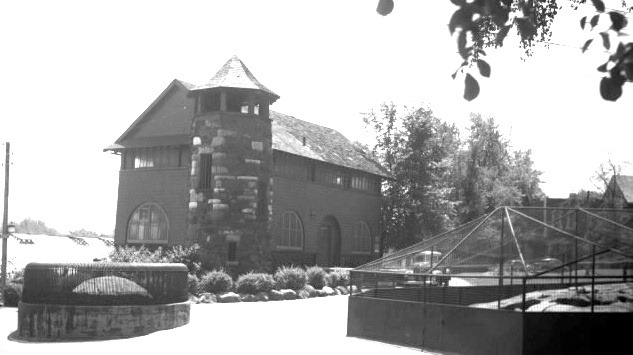
The city of Mississauga is made up of several historic communities and many of these had their own train stations in the 19th century as the railway lines were expanding across Canada. Heritage Mississauga lists five stations on the Credit Valley Railway (CVR). Summerville Station which was built in 1878 and has apparently been in storage since 1978. Cooksville Station was built in 1878 and destroyed by fire in 1883. Meadowvale Station was built in 1878 and demolished in 1976. Erindale Station was built in 1879 and demolished in the 1950s. Streetsville Junction Station was built in 1879 and replaced in 1914 with a new station. The station was then moved to its present location. The historic image below shows Streetsville Junction as it appeared in 1913, prior to being decommissioned and moved to its current location the following year. The “front” of the station was built facing the line to St. Thomas as this was correctly assessed as the busier of the two lines. The line to Orangeville approached the station from the rear.

George Laidlaw was instrumental in the construction of several railways in Ontario including the Toronto & Nipissing which passed through Goodwood. He was also behind the Toronto, Grey & Bruce which saw the Horseshoe Curve Rail Disaster in 1917. The CVR was incorporated Feb. 15, 1871 to build from Toronto to Orangeville with a stop in Streetsville. In 1872 an amendment was made to the charter to allow a line through Cataract to Elora and an 1873 amendment allowed construction to St. Thomas.

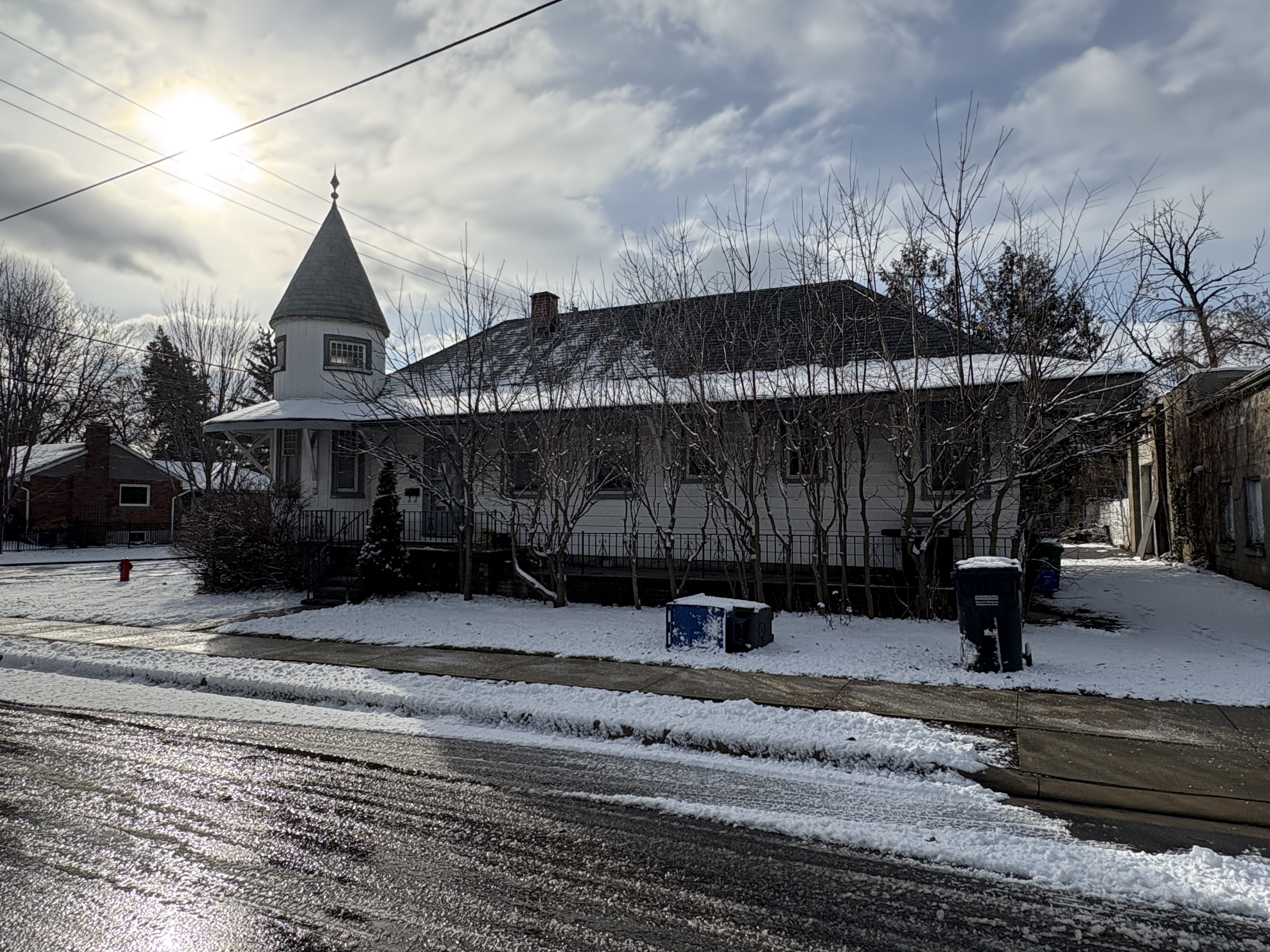
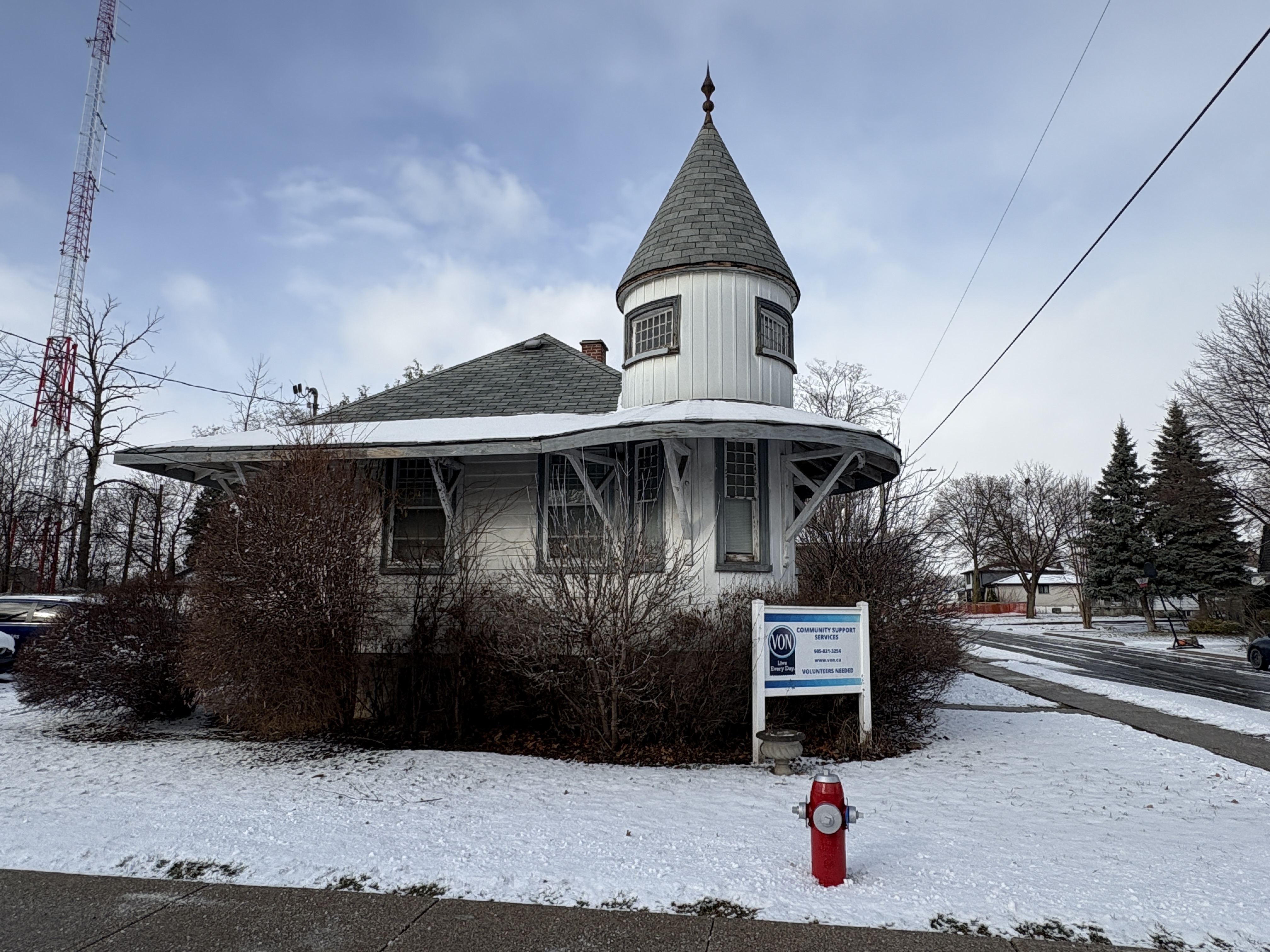
The station in Streetsville was built about 1.5 kilometres north of the main part of town at the point where the CVR split with one set of tracks going to Orangeville and the other going to St. Thomas. The rectangular building features a two storey turret on the south-east corner. The tower was decorative as well as practical as it allowed view down both sets of tracks to see what traffic was on the line at Streestville Junction. The tower still shows its board and batten construction although the rest of the building has been clad over in aluminum siding.

Survey work on the line began in 1873 and grading followed the next year. Track laying began in 1876 and the first train arrived in Streetsville on September 1, 1879. This is also the month that the 1,146 foot long trestle at the Forks of the Credit was completed. The line was finished in 1881 but it was already in talks with the Great Western Railway because of financial troubles. On November 30, 1883 the CVR and the London Junction Railway were amalgamated into the Ontario & Quebec Railway. This was then absorbed into the Canadian Pacific Railway (CPR) on January 4, 1884.

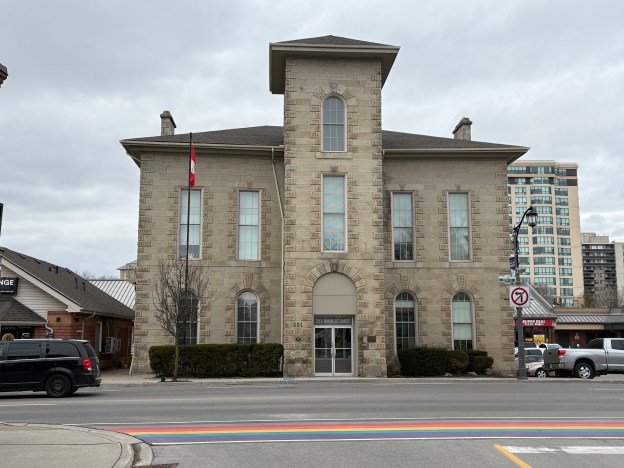
Due to the fact that the CVR station was built outside of Streetsville it wasn’t convenient for the residents to use. A small passenger shelter was built at the end of Old Station road to accommodate them. As passenger service increased it was decided to build a new Streetsville Station which opened in 1914 about halfway between the two existing stations. At that time the old junction station was set to be demolished. Ephraim Evans bought it and had it moved to its present location on Ontario Street. He converted it into a residence and today it serves as the Community Support Services building for the VON.

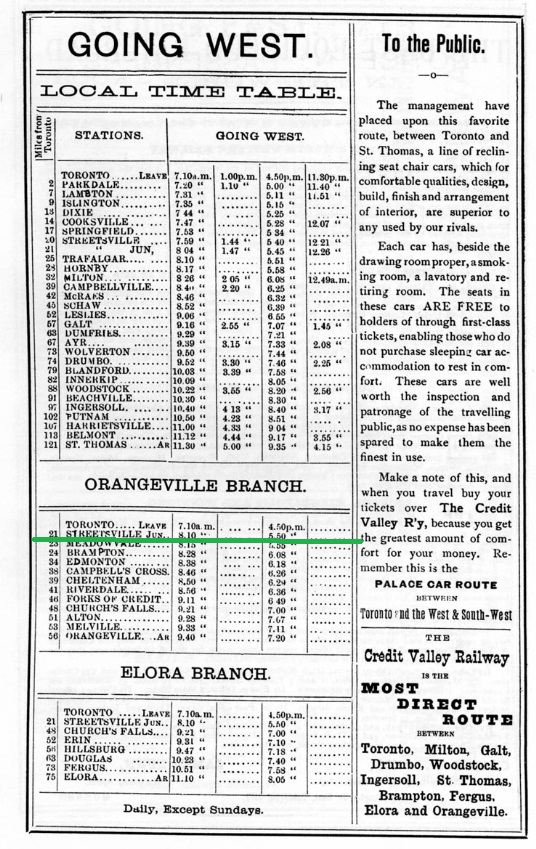
This 1883 timetable was taken from Old Time Trains on www.trainweb.org and further reading can be found there. Streetsville Junction was on the Orangeville Branch and is underlined in green.

It’s nice to see this historic train station preserved as an example of 19th century railway station construction.

Related Stories: Goodwood, Horseshoe Curve Rail Disaster, Forks of the Credit

Google Maps Link: Credit Valley Railway Station

Like us at http://www.facebook.com/hikingthegta

Follow us at http://www.hikingthegta.com
Kimbark House

December 21, 2024

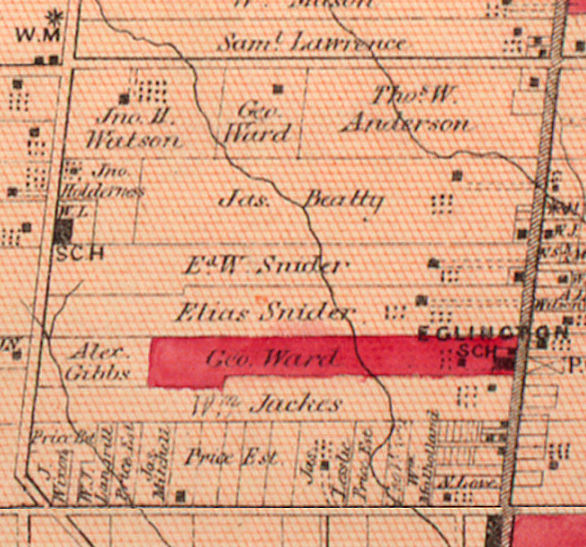
In 1900 the area around Avenue Road and Lawrence Avenue was still farms and country estates. The community of Eglinton had not expanded much west of Yonge Street and Lawrence Avenue was still a country road. The 1877 County Atlas image below shows the 1000 acres that was bordered by Eglinton avenue on the bottom, Yonge Street on the east, Lawrence Avenue on the north and Bathurst Street on the west. Avenue Road runs north to south through the middle of this block but has not been constructed at the time of the atlas.

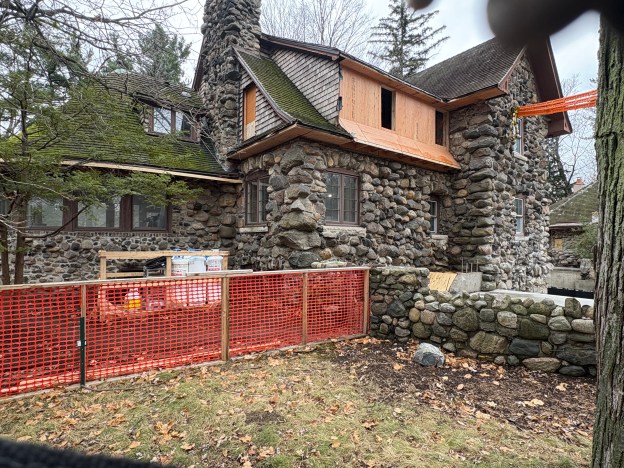
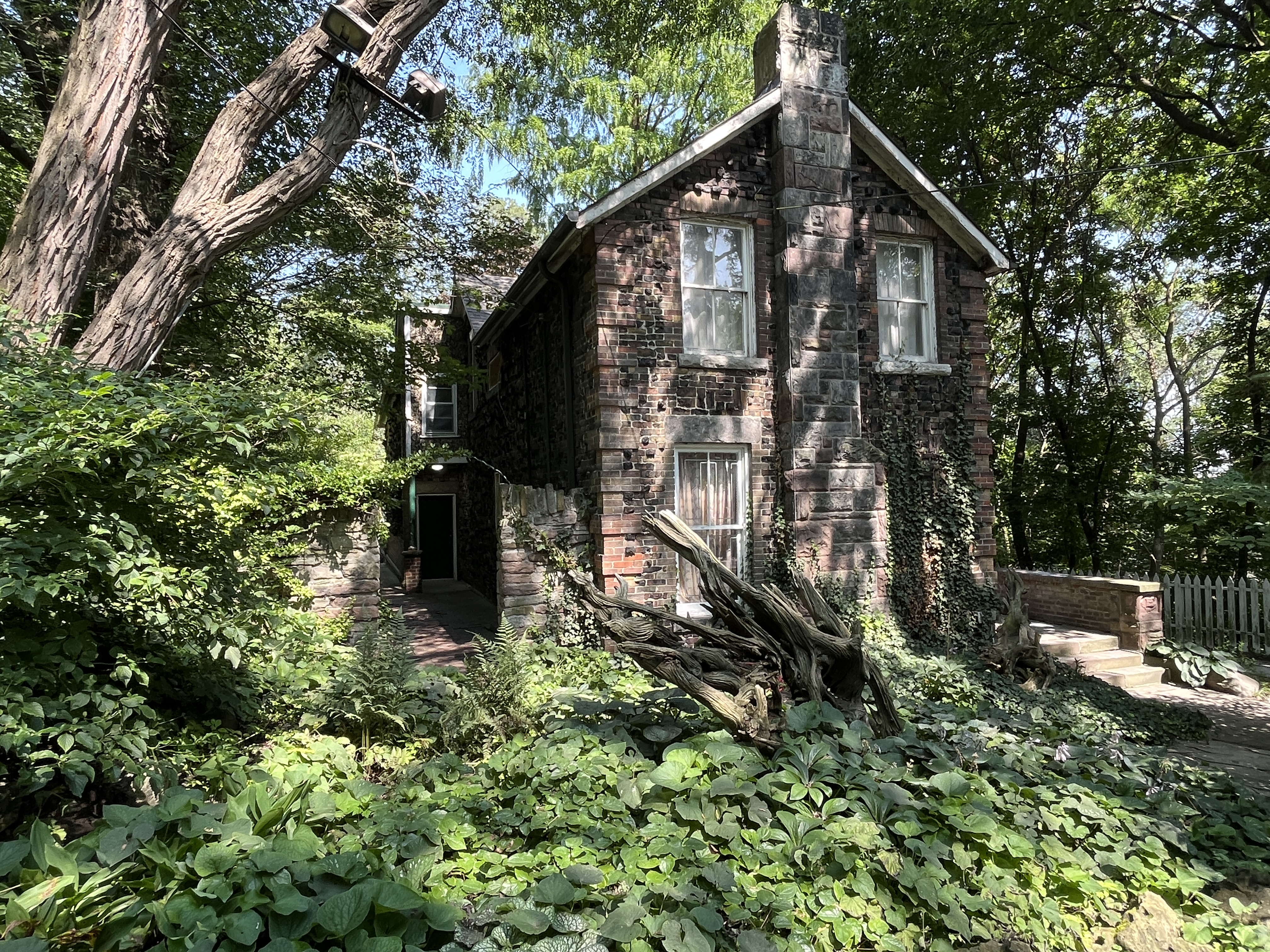
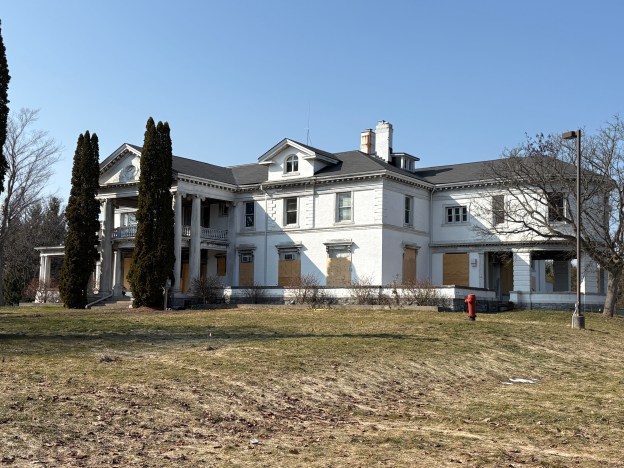
Historic records suggest that the house was built for Ernest Jury and constructed around 1909-1910. At that time the land was farm fields and there was the usual assortment of rocks and boulders available from years of clearing the ground for agriculture. Every year the frost pushes rocks toward the top of the field. The soil is plowed to prepare it for planting. The plow cuts a deep furrow through the soil and turns it over. This helps to kill the weeds. aerates the soil and distributes nutrients through the soil. This also turns the rocks over onto the top of the soil. These rocks are then picked up and stacked along fence lines and in piles. These provided a good source of building materials for stone houses.

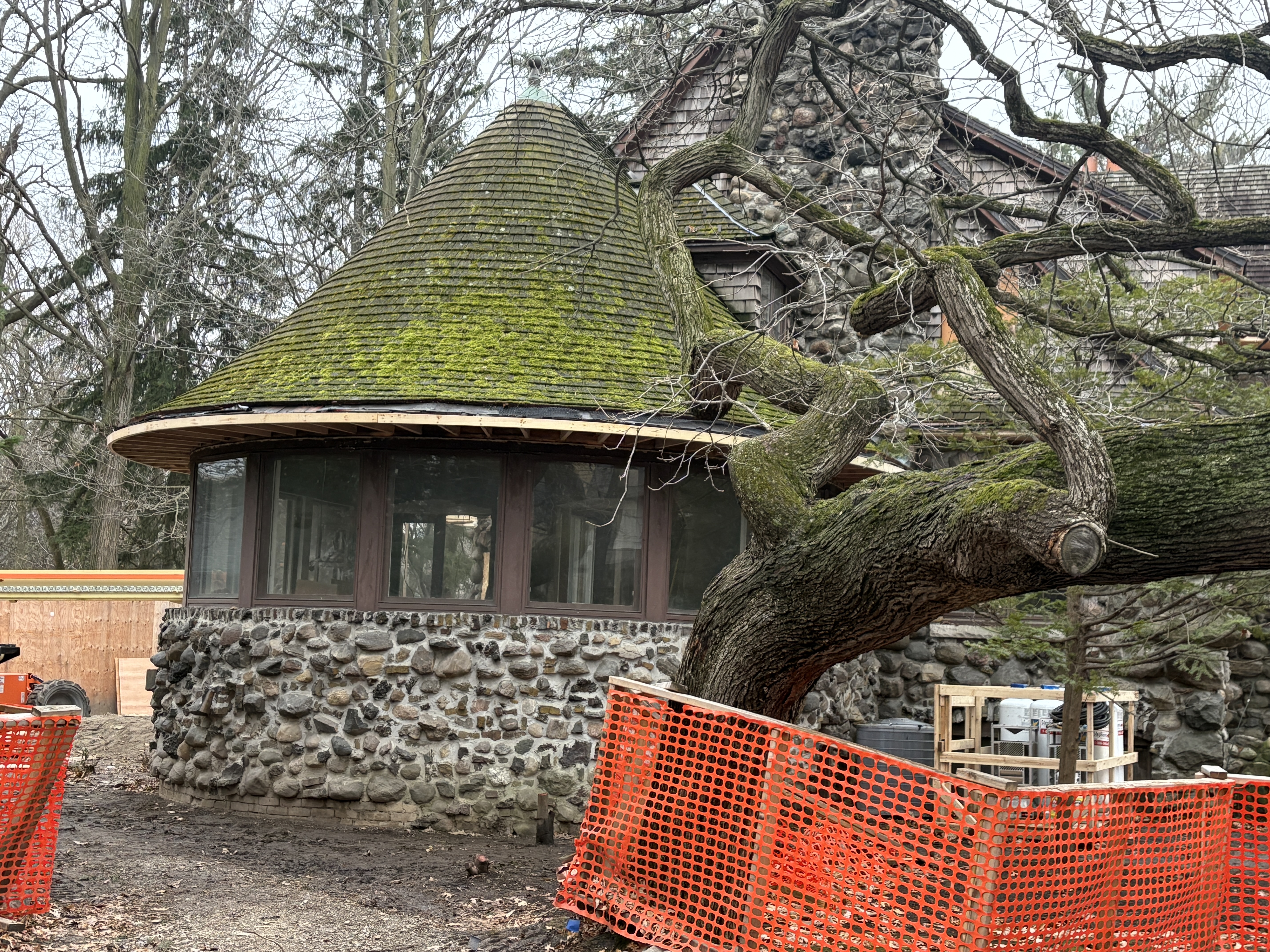
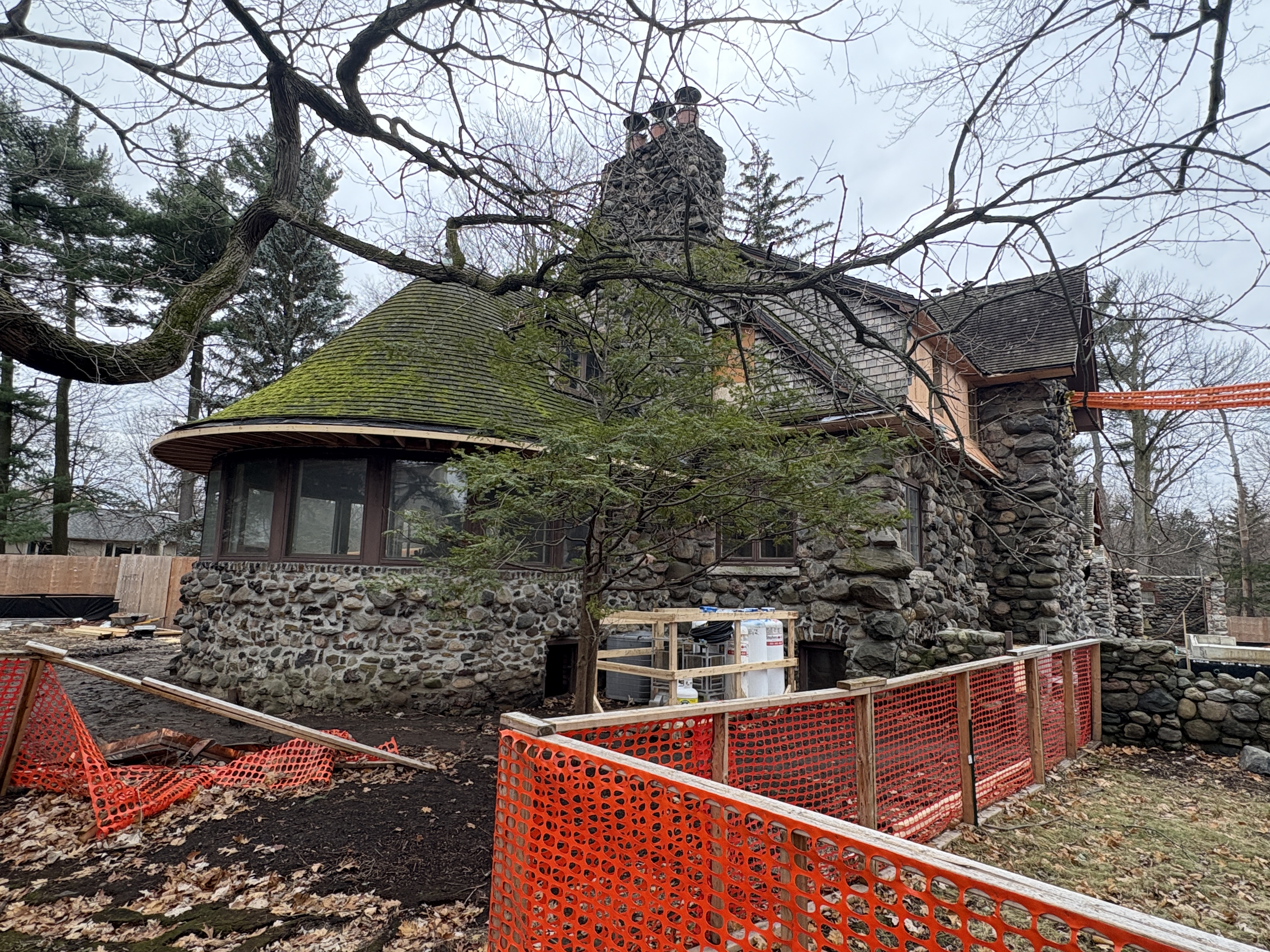
Originally bult for Jury, the home was later owned by Kimbark after whom Kimbark Boulevard is named. The home has become known as the Kimbark House. The house features a round sitting room with windows that look out over the gardens and lawns. The original property was a one acre ravine lot and the front of the home faced away from Kimbark Street. It was a later addition when the surrounding land was divided up for housing.

There are 4 bedrooms and 7 bathrooms in the house along with several fireplaces.

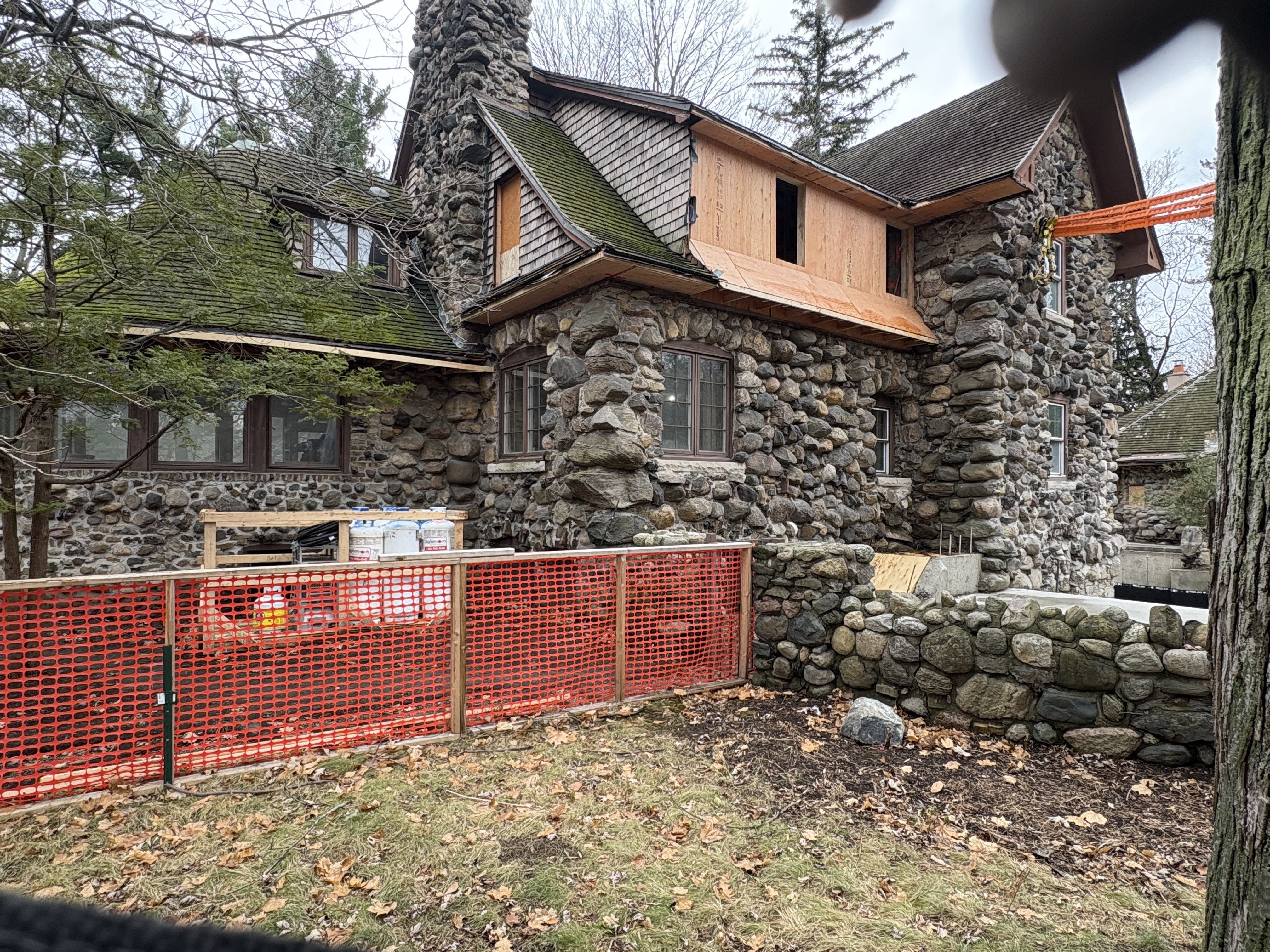
The house was given an historic designation in 1979 because it is one of only a few houses in the city of Toronto that are made of uncut stones. The house was then sold to the lawyer Edward Greenspan in 1984. Greenspan was one of the most known names amongst criminal defense lawyers in the Canada at the time. He worked on several high profile cases and wrote legal textbooks. He had a radio and later a tv series on CBC called Scales of Justice. He was also a strong advocate against the death penalty in Canada. Edward died of a heart attack on Christmas Eve 2014 at the age of 70. I see a little irony that a defense lawyer should live in a house built for a man named Jury.

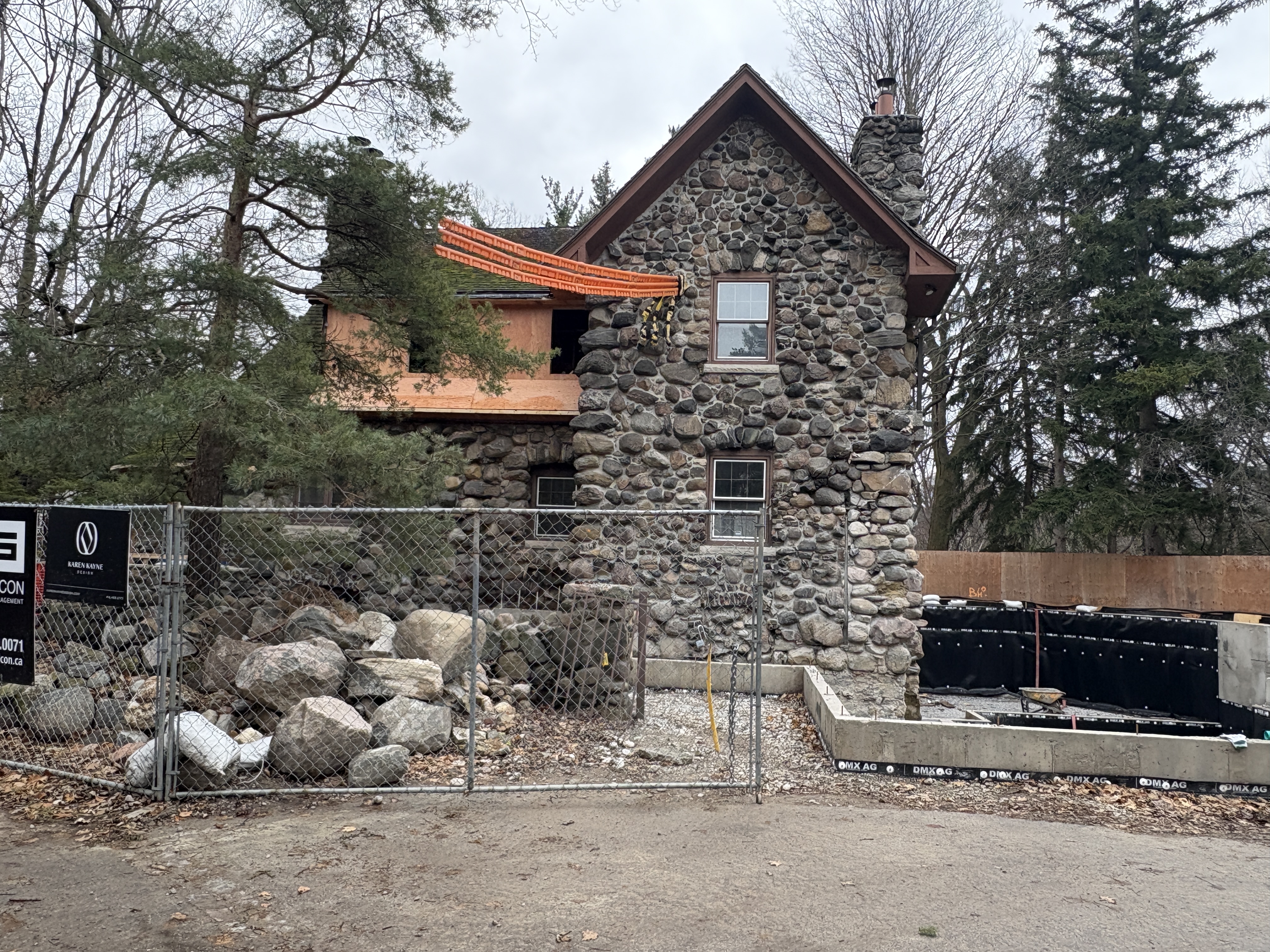
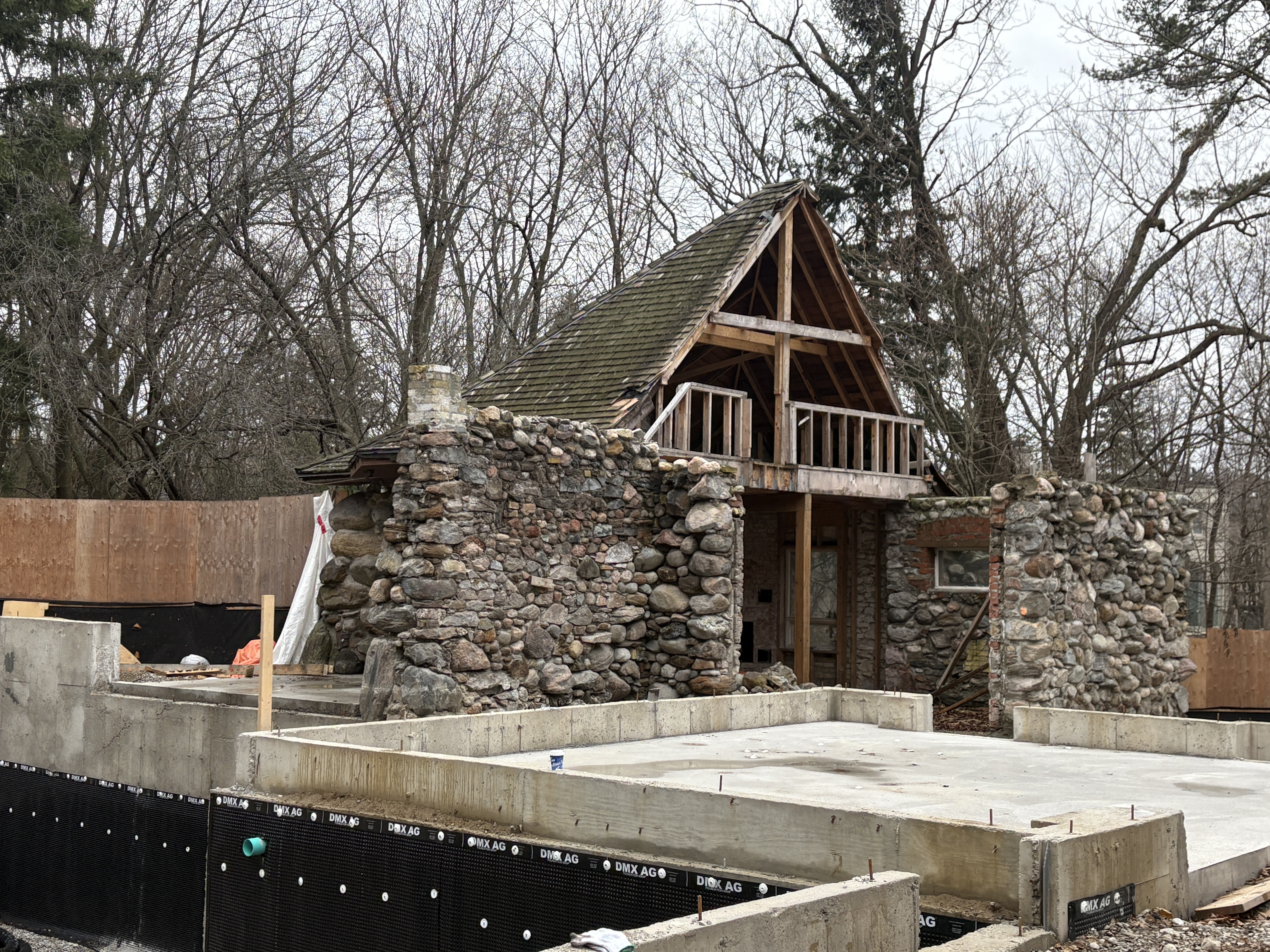
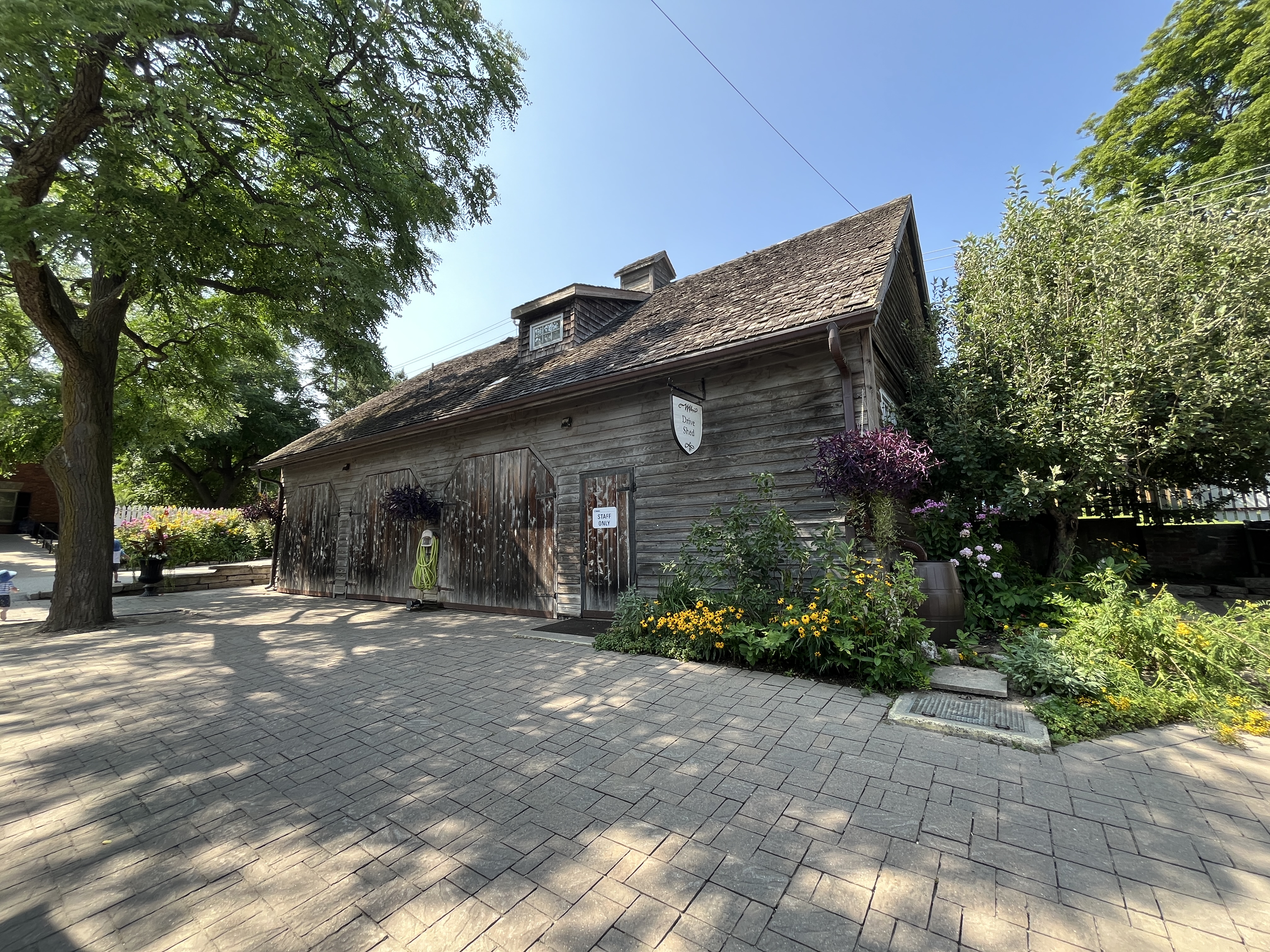
The house went onto the market recently and sold for below the asking price, realizing a mere $7.8 million dollars. There have been several renovations over the years and it looks like one of the most obvious ones, the garage facing Kimbark Boulevard has recently been removed. From the real estate photos it clearly wasn’t harmonious with the stone house that it was added onto. The house and the original drive shed have been retained as they are protected by the historic designation.

It will be interesting to return to the home in a year and see what has been done with the renovations and how they fit in, or don’t, with the older stone home.

Google Maps link: Kimbark House

Like us at http://www.facebook.com/hikingthegta

Follow us at http://www.hikingthegta.com
Vivian – Ghost Towns Of The GTA

November 16, 2024

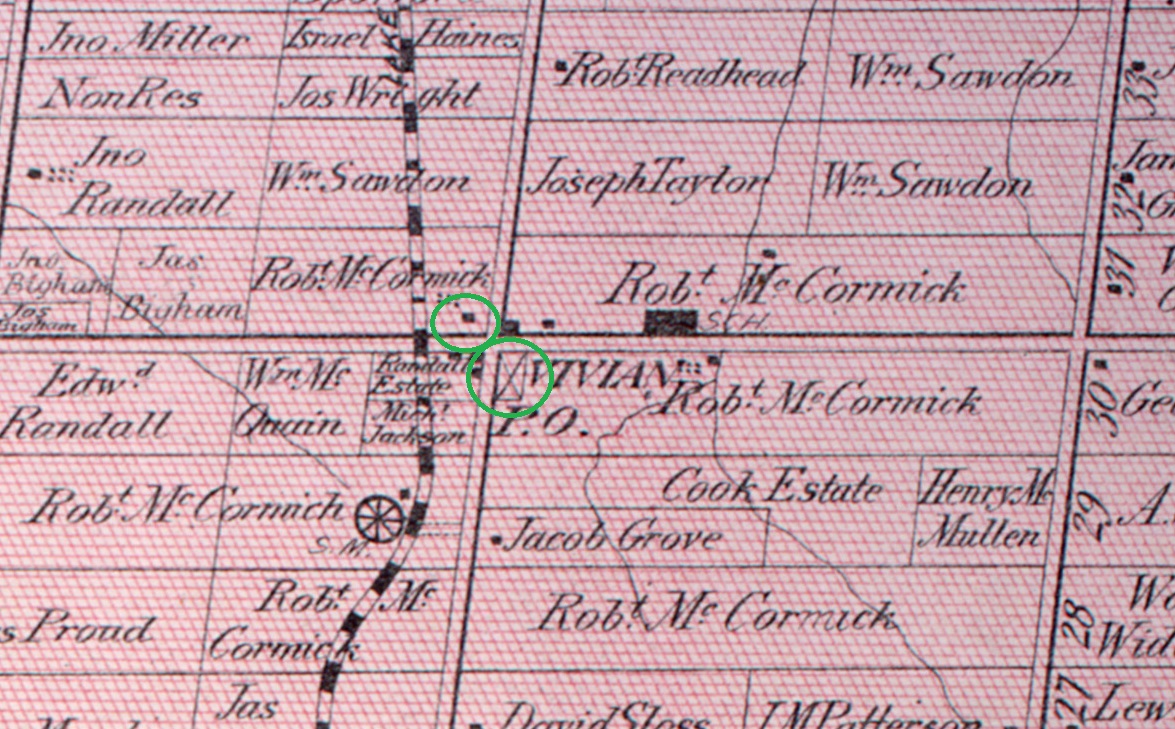
The area around Stouffville was covered with a mature white pine forest when the Europeans began to arrive in the 1800s. The indigenous peoples used the forest for hunting and gathering but the white people saw a source of timber and soon began to cut the forest down to feed into their sawmills. The hamlet of Vivian is shown in this 1877 county atlas map. Robert McCormick owned several tracts of land as well as the sawmill which can be seen on the south end of the community.

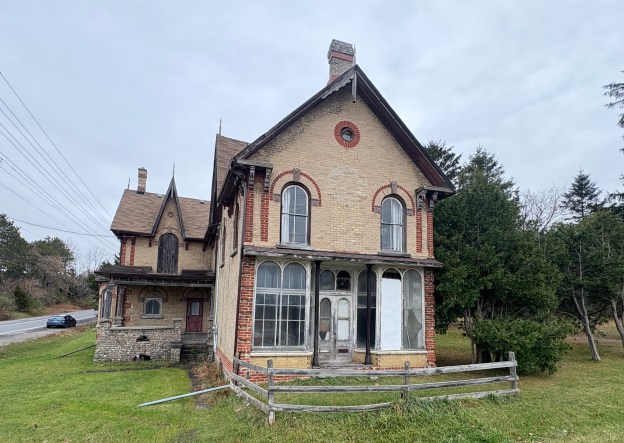
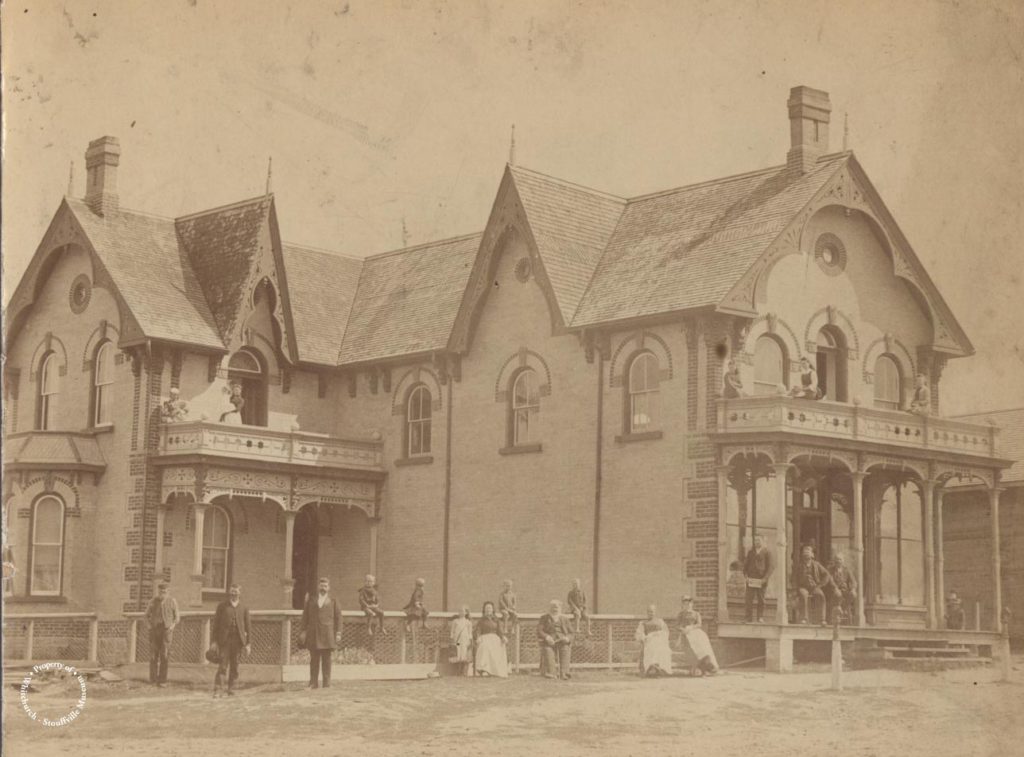
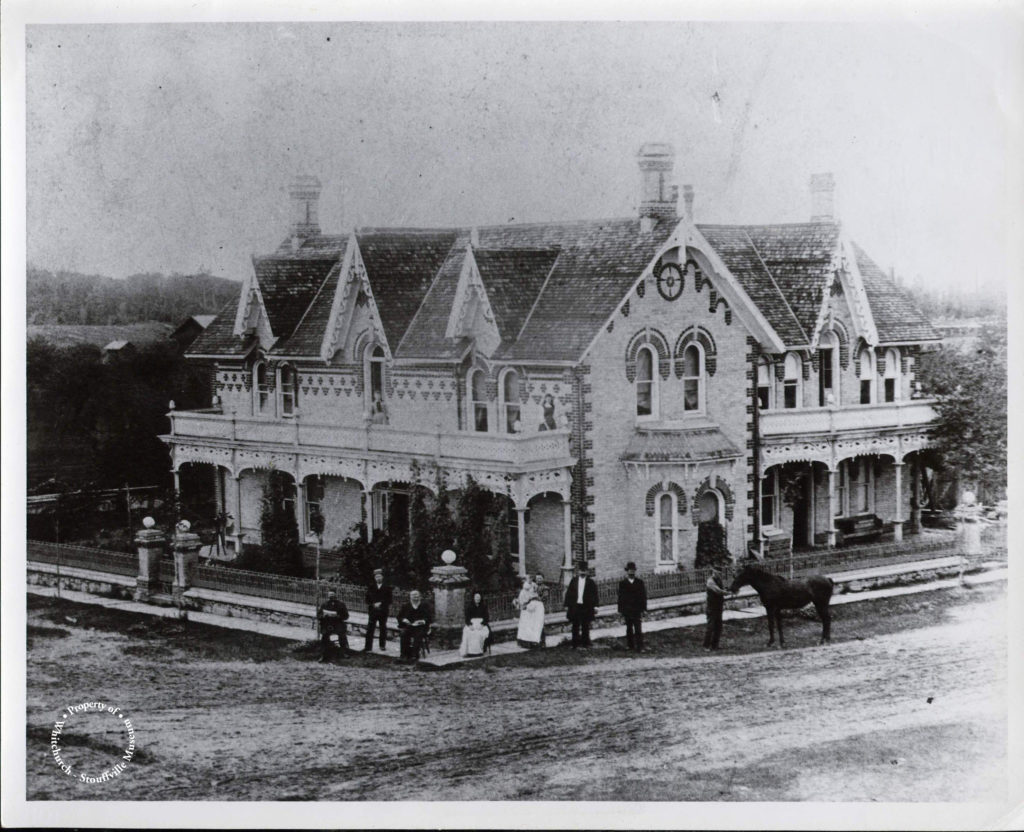
George Sexsmith was one of the early settlers in the area and he operated a general store and an inn. The town was originally known as Sexmith’s Corners after him. The community centred around the lumber industry and its fortunes rose and fell with the supply of white pine. When Robert McCormick and his family arrived in 1866 they made a significant impact on the community. They owned the sawmill which also supplied materials to their shingles factory. They opened a blacksmith shop and operated a maple sugar bush. The south east corner of modern highway 48 and Vivian Road became the site of their general store and post office. The post office opened in 1866, the year that Robert arrived. The archive photo below shows the McCormick general store around 1900.

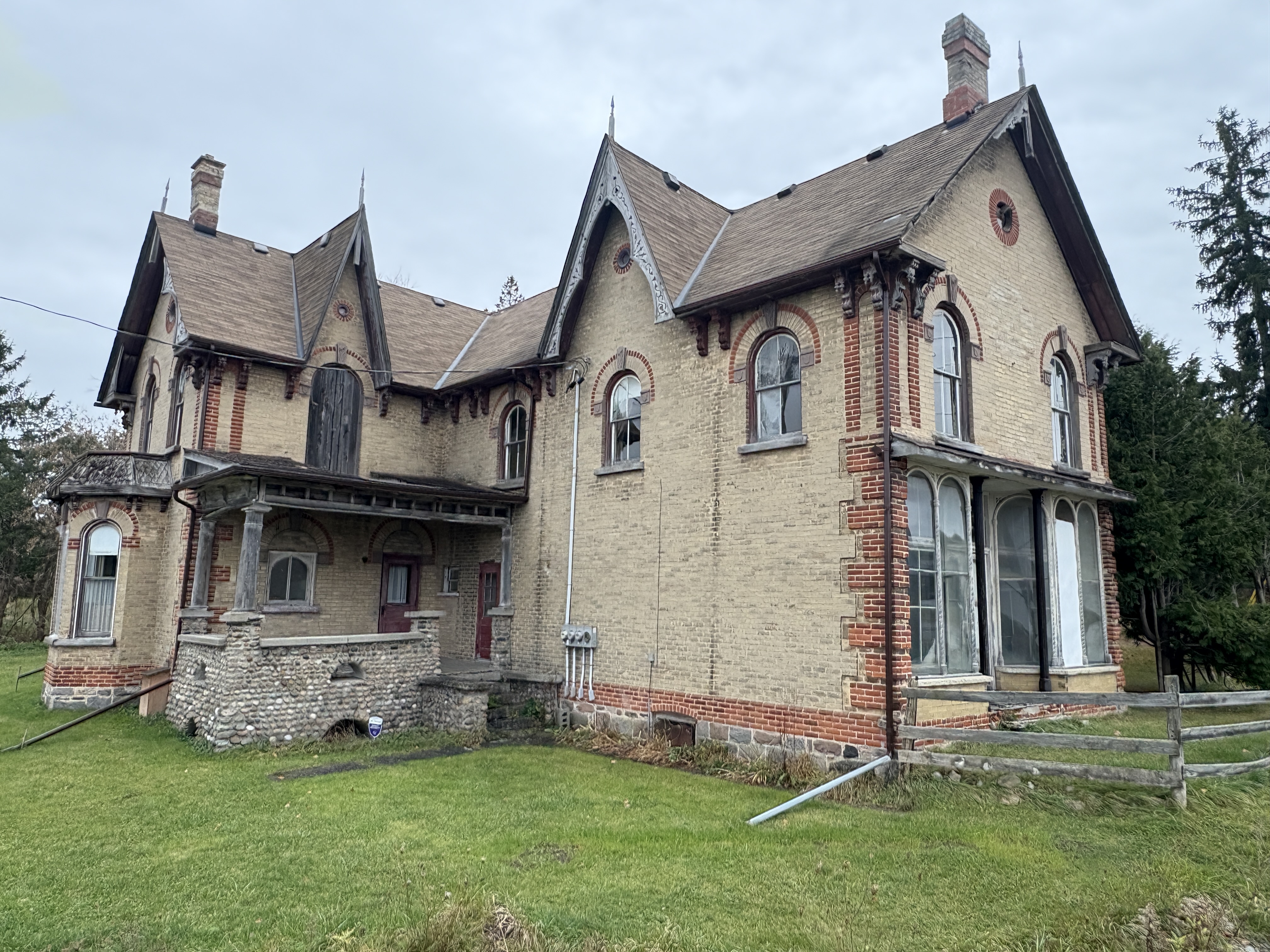
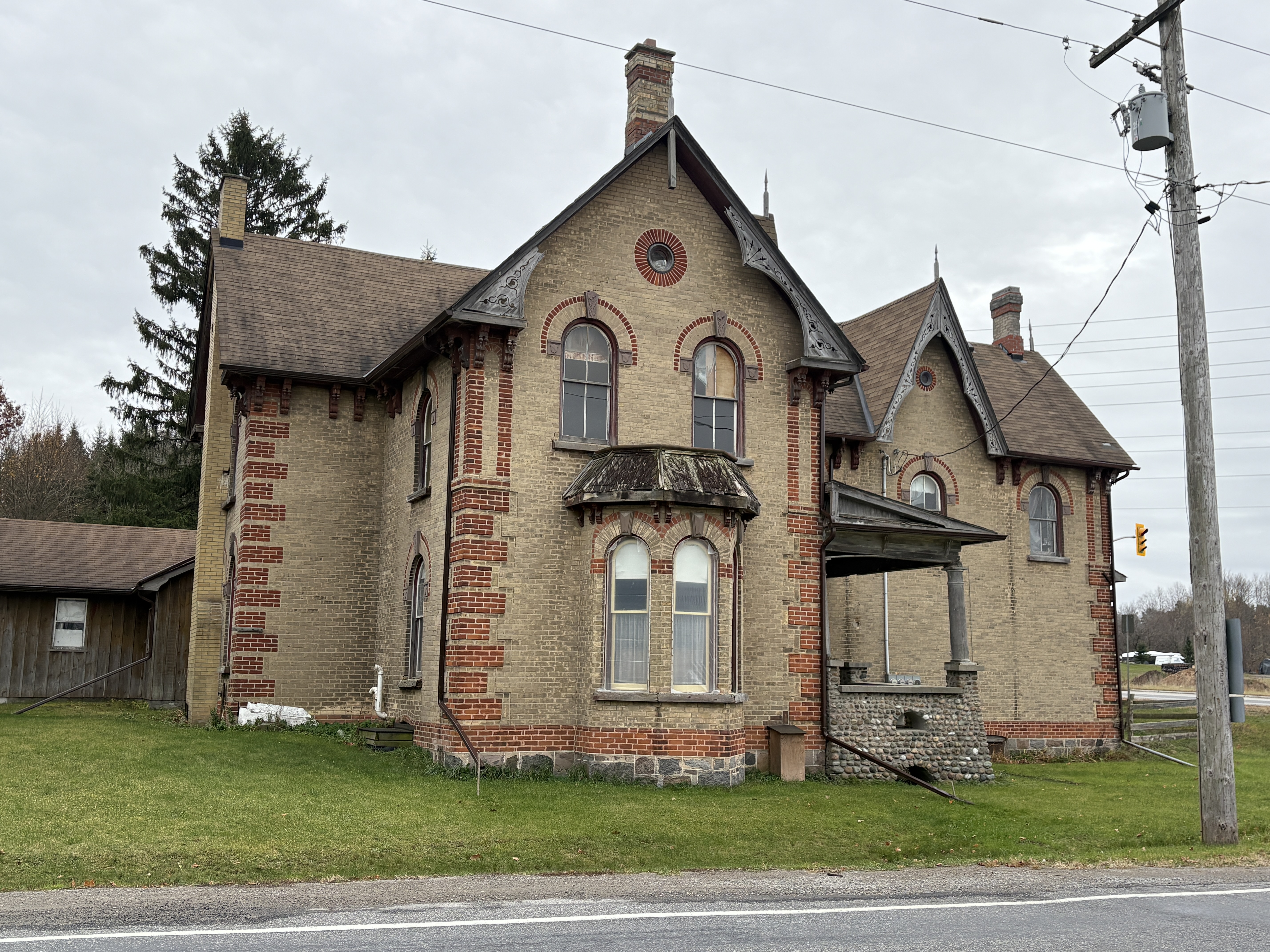
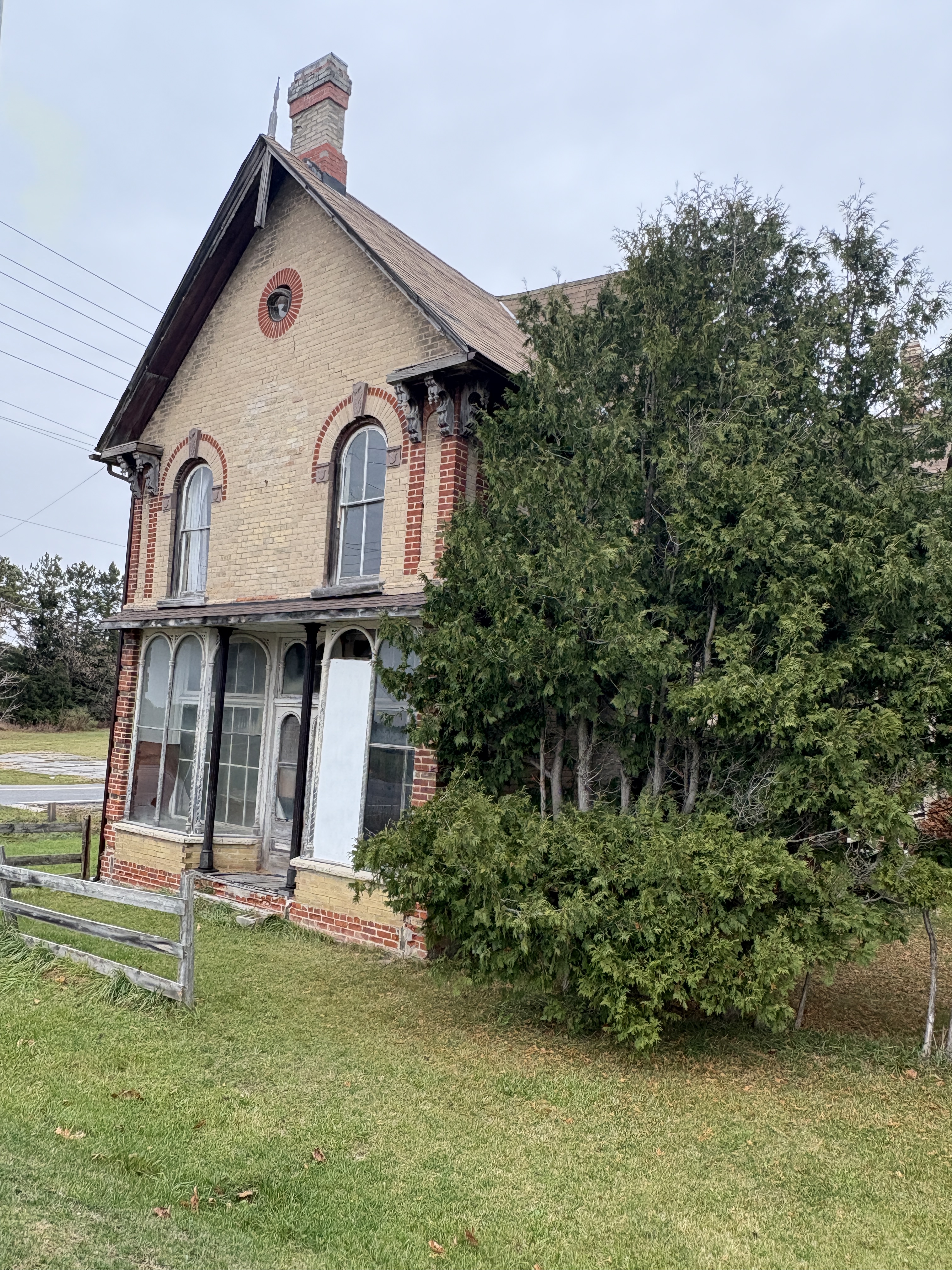
The store has lost some of its former glory with the removal of the front porch and partial removal of the one over the family entrance on the side. Some of the bargeboard, or gingerbread, has also fallen off. It is interesting to note that there were four hydro meters on the side of the building which indicates that there were probably four separate apartments in the building at one point in the past. I also notice that the centre door above the storefront has been bricked in at some point which is unfortunate as it eliminates a bit of the charm of the building.

The town took the name Vivian when the post office opened in 1866. By 1900 the local forests were depleted and the lumber industry collapsed. The people started to move away and the population declined until by 1924 the post office was closed. The site of the school, which is seen on the county atlas, is now occupied by the Vivian Outdoor Resource Centre.

The building was for sale recently, reportedly for $1.2 million. This would have included 3 acres of land. With the encroachment of the city and the growth of Ballantrae to the south, it is only a matter of time before this area starts to see a spurt of growth. Hopefully, this building will be restored and turned into some form of commercial venture again. It would be a shame to lose it forever.

The McCormick house used to stand on the north west corner of the intersection but has since been demolished after a fire in 1971. This house was designed to compliment the store and used similar architecture. The two buildings with their similar brickwork and gables gave the community a distinct character which has been partially lost due to the removal of the hotel which had become quite run down. The store is in a state of disrepair but has not reached the point of neglect that would require it to be demolished as well.

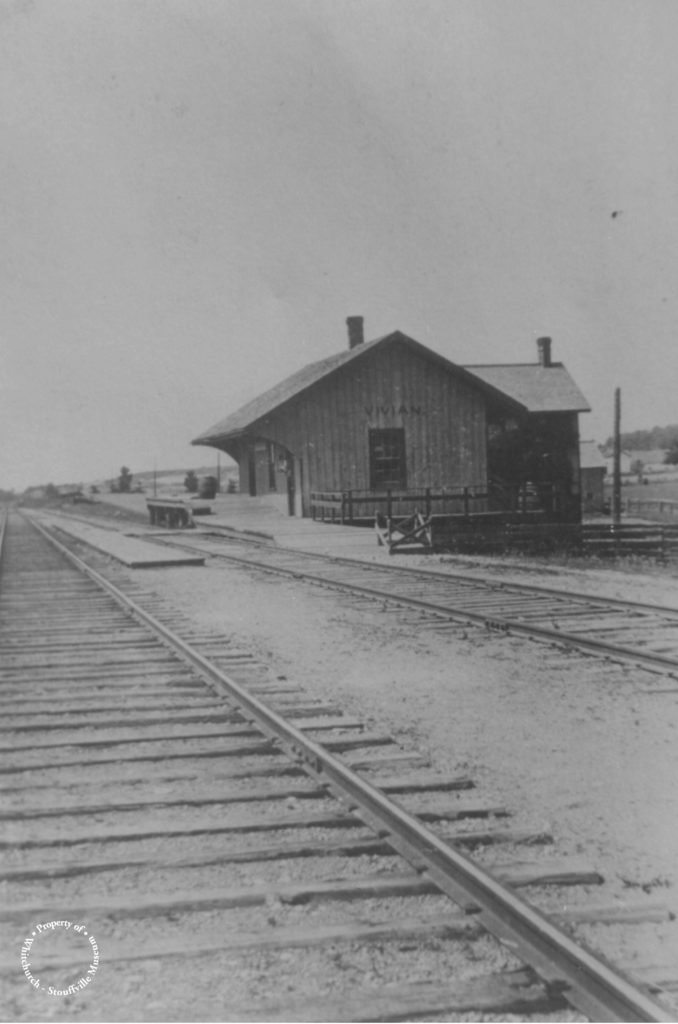
The Lake Simcoe Junction Railway was chartered on March 29, 1873. The line was completed in 1877 and ran for 42 kilometres from Stouffville to Sutton. It ran parallel to modern Highway 48 through the community of Vivian. Much of the passenger traffic was taken away by the Toronto and York Radial Railway in 1908. By 1979 the line was completely abandoned and the rails were lifted in 1981. The remains of the rail bed can still be found in the trees near the intersection. The archive photo below shows the Vivian railway station and the two lines of rails that passed through the community.

The community of Vivian doesn’t resemble the early hamlet as most of the original buildings are gone. However, the McCormick store remains on the corner as a testament to the past when the hamlet was a thriving community.

Related stories: Toronto & York Radial Railway

Google Maps Link: Vivian

Like us at http://www.facebook.com/hikingthegta

Follow us at http://www.hikingthegta.com
Abandoned Transformer House Eight Years Later

November 9, 2024

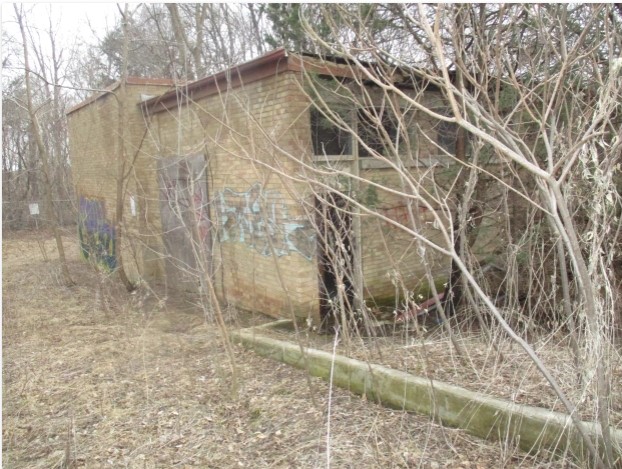
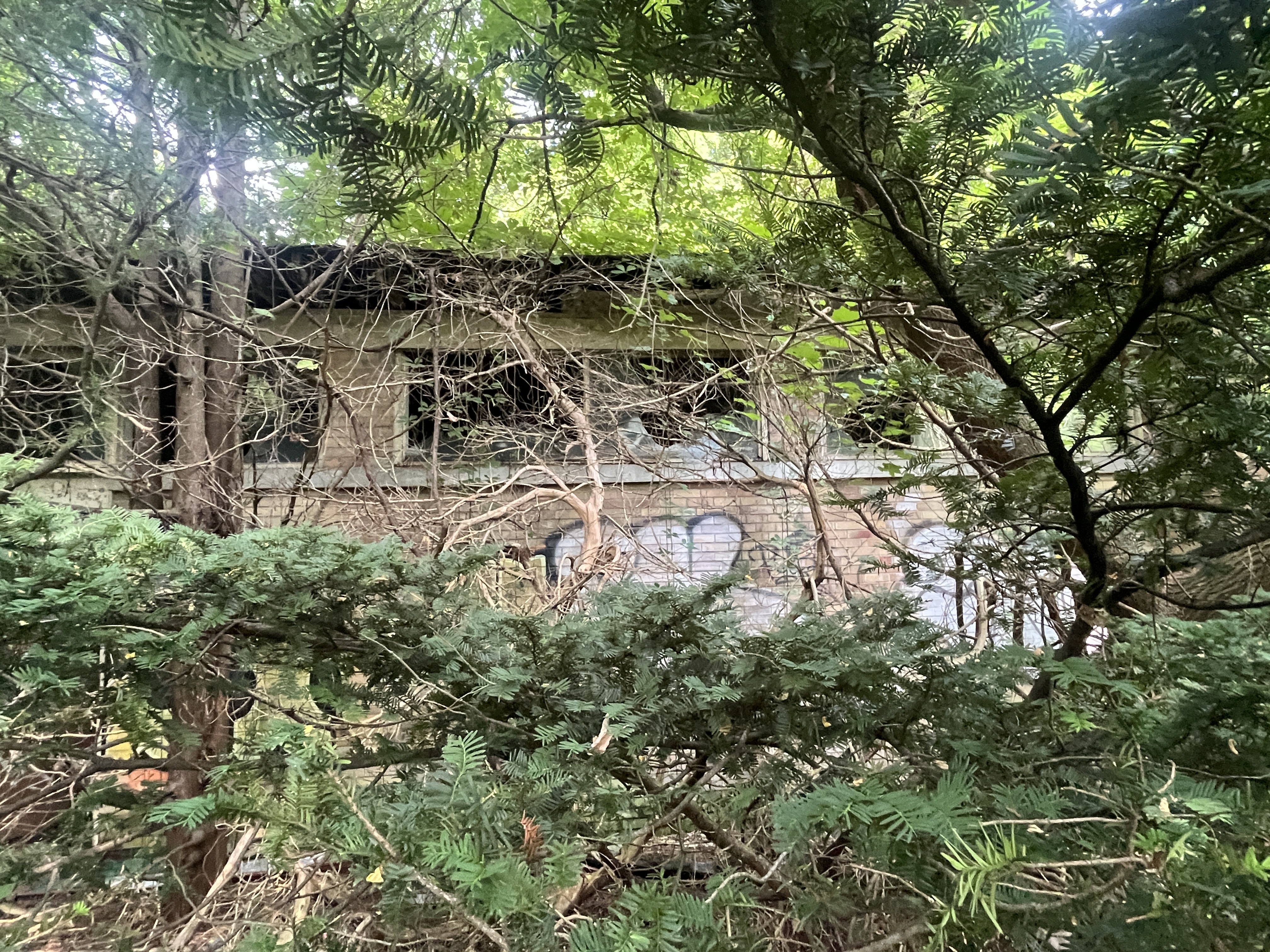
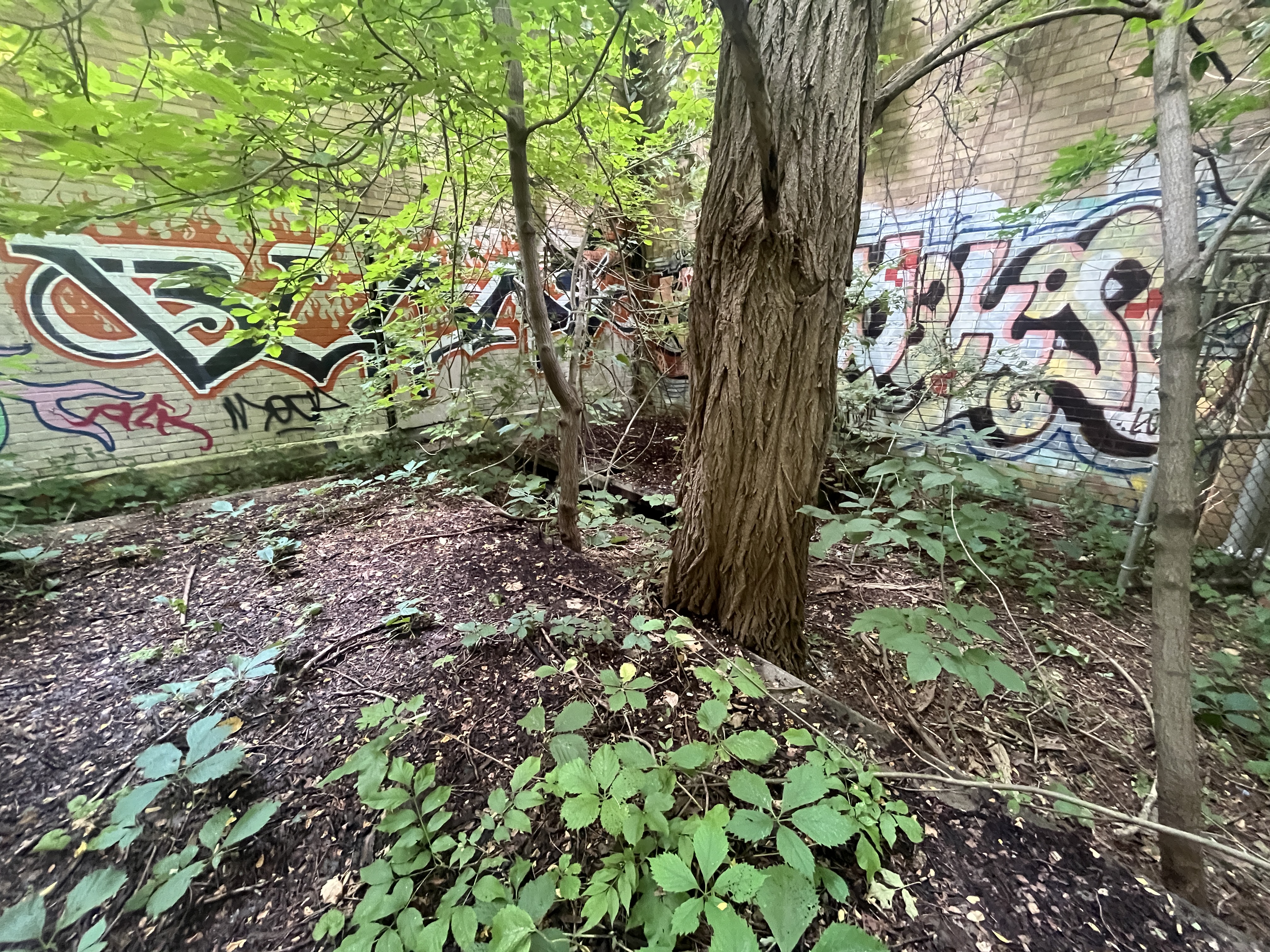
When I visited the Bayview Transformer House in 2016 it had been abandoned for several years. I won’t go back into the history of the property as this is detailed in the link above. I stopped by to see what has happened in the eight years since then. The main transformation has been the growth of the trees and sumacs that surround the building. The graffiti has greatly increased and now covers most of the walls. I noticed that there was fresh blue paint on the grass beside the wall which indicates that some of the painting had been done very recently. The image below shows the building from the street elevation as it appeared in 2016.

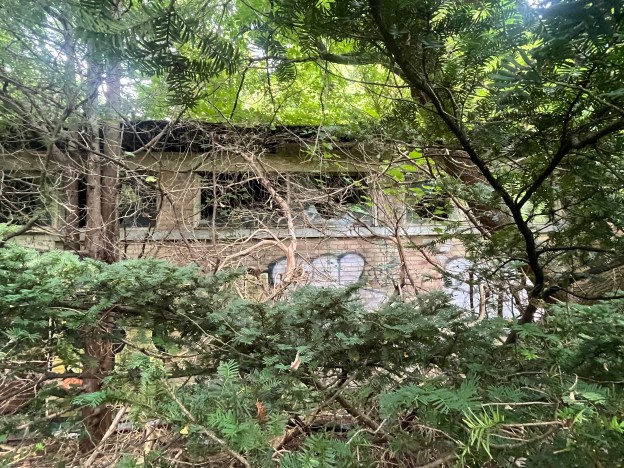
The building used to be quite visible from the road but the vegetation in front has really filled in. During the summer months it is fully hidden from the road which is only a few metres away. This is the image taken in 2024 of the front of the building.

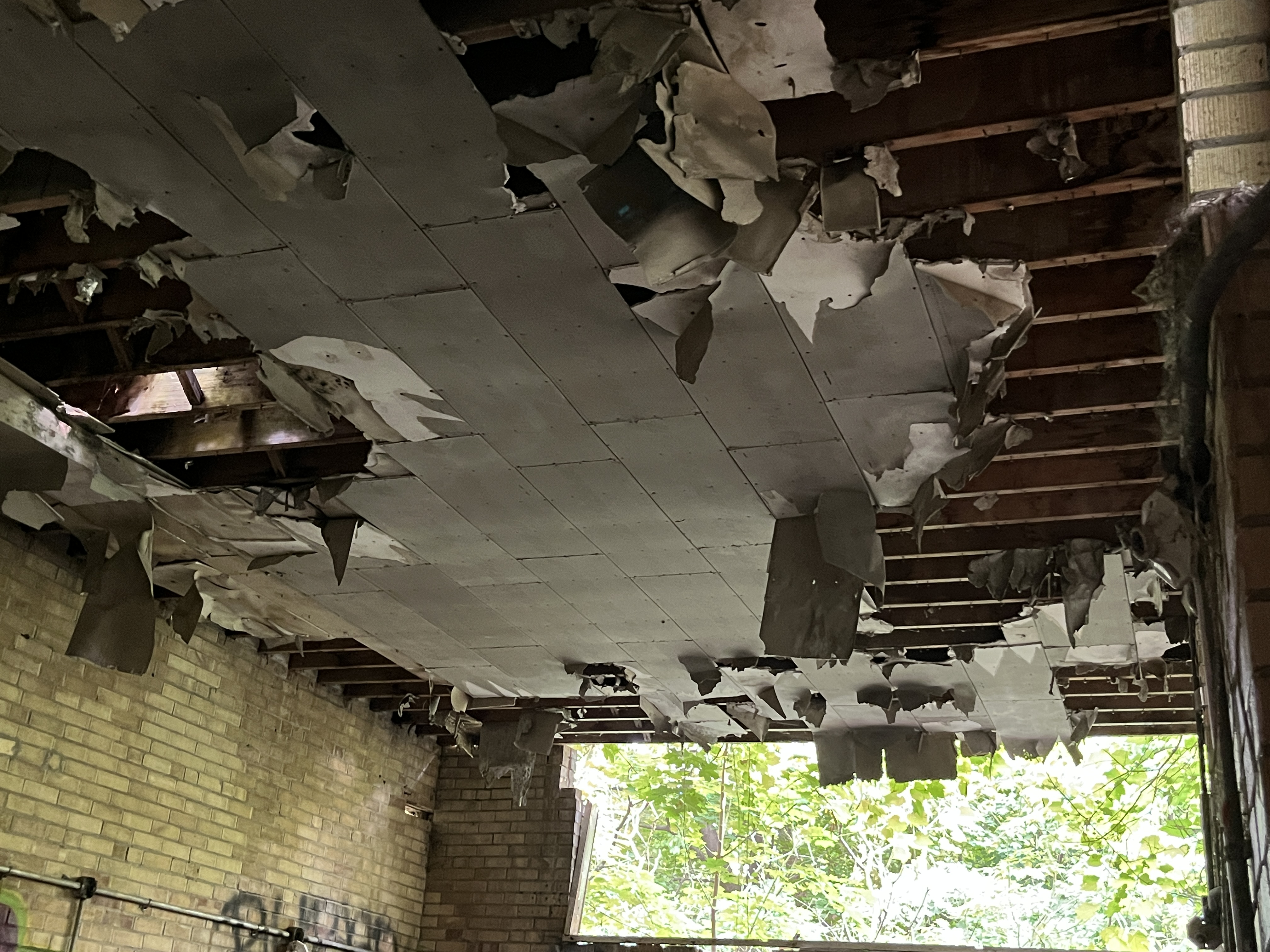
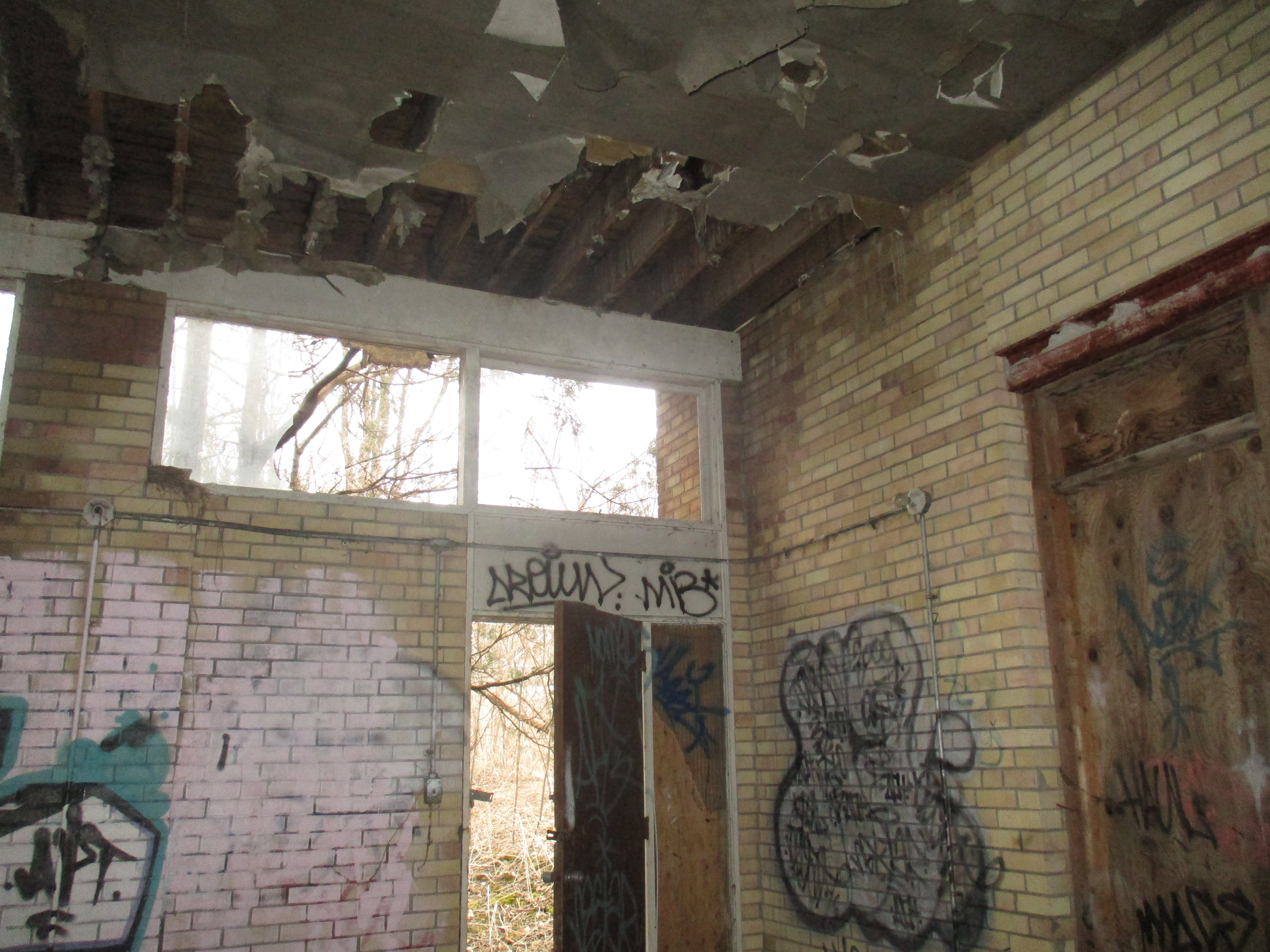
Inside the main room most of the ceiling tiles have come down. There’s a couple of places where the roof has weathered to the point that the open sky can be seen. Now that all the windows are broken and the roof has been compromised the decay will be accelerated. The room at the front of the transformer house will likely lose its roof in the next few years.

There was much less roof and tile damage in the 2016 picture when only a small amount of tile had come down.

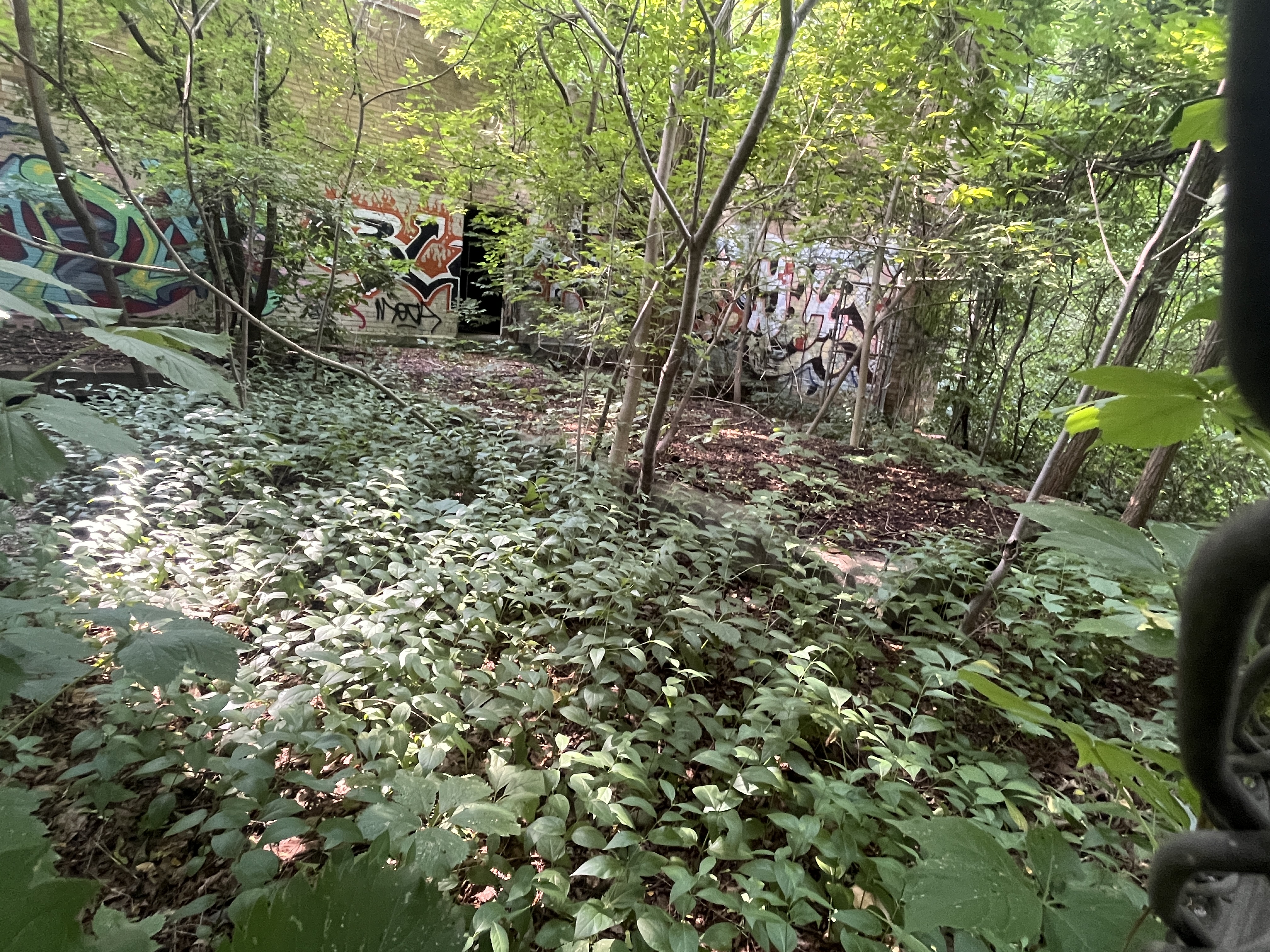
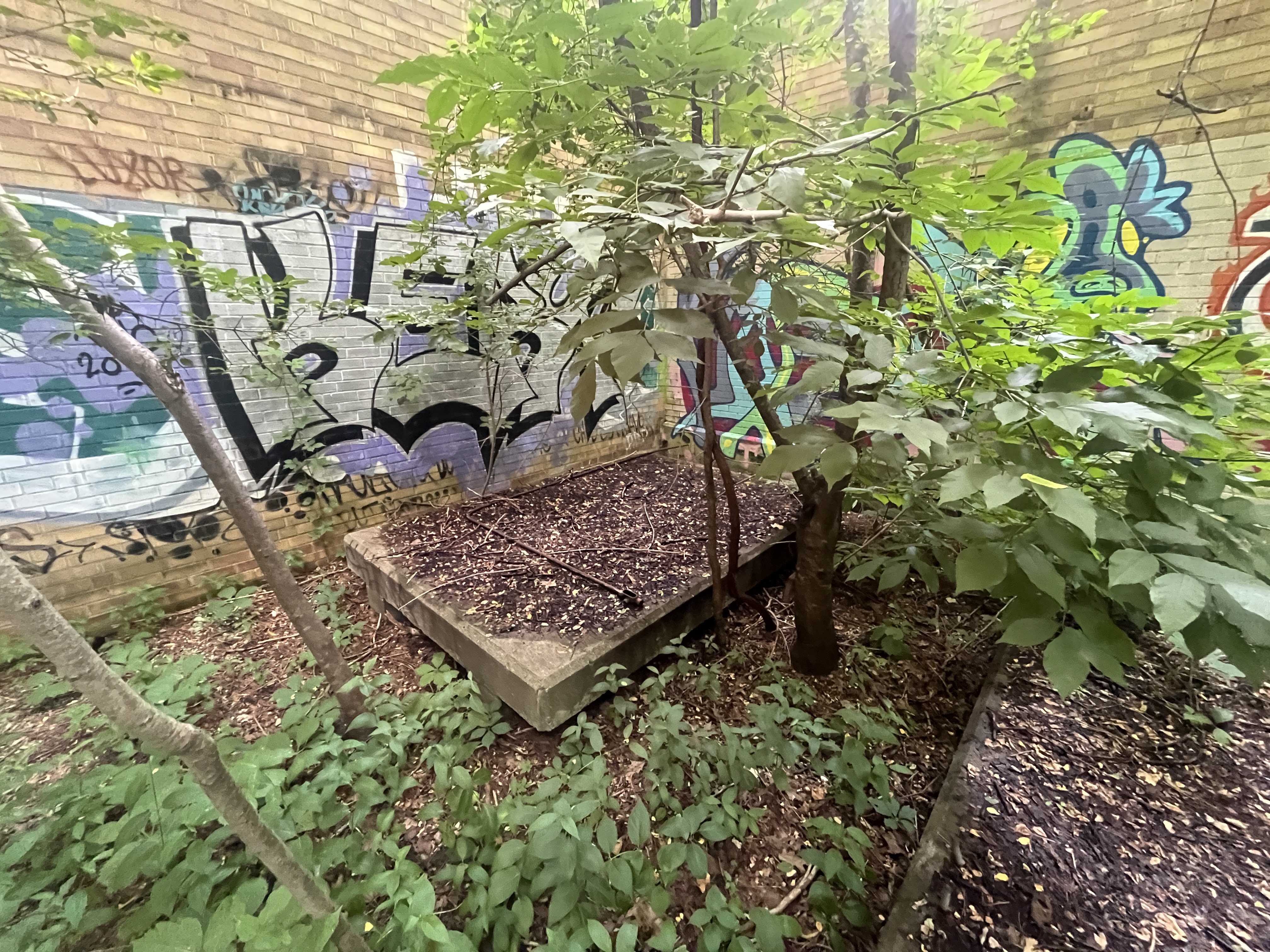
The back yard of the building has become more overgrown and first generation trees have sprouted up in many places.

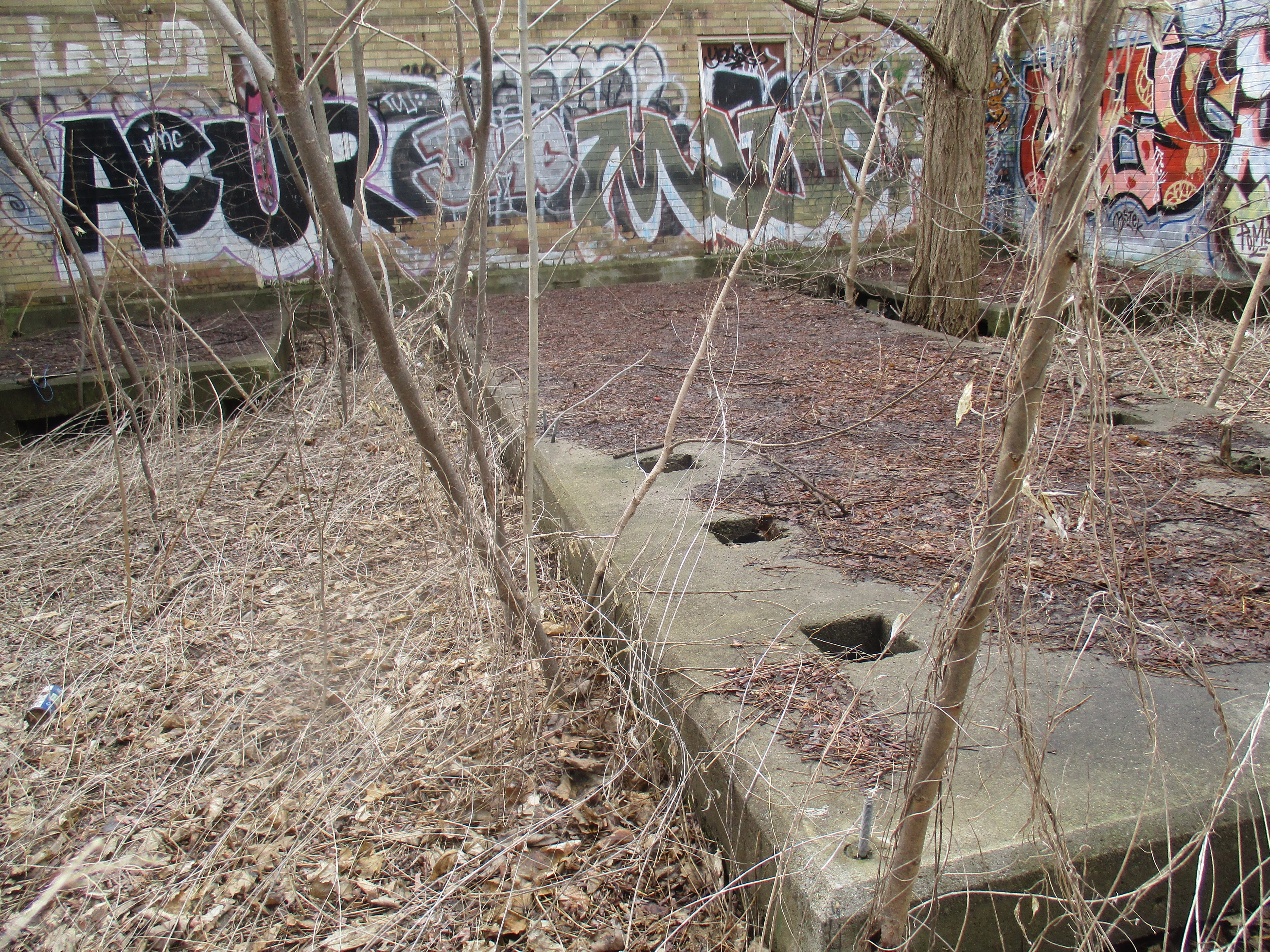
The trees around the old transformer mounting pads have become quite well established.

In the 2016 picture the trees are mostly small and with one exception appeared to be quite new.

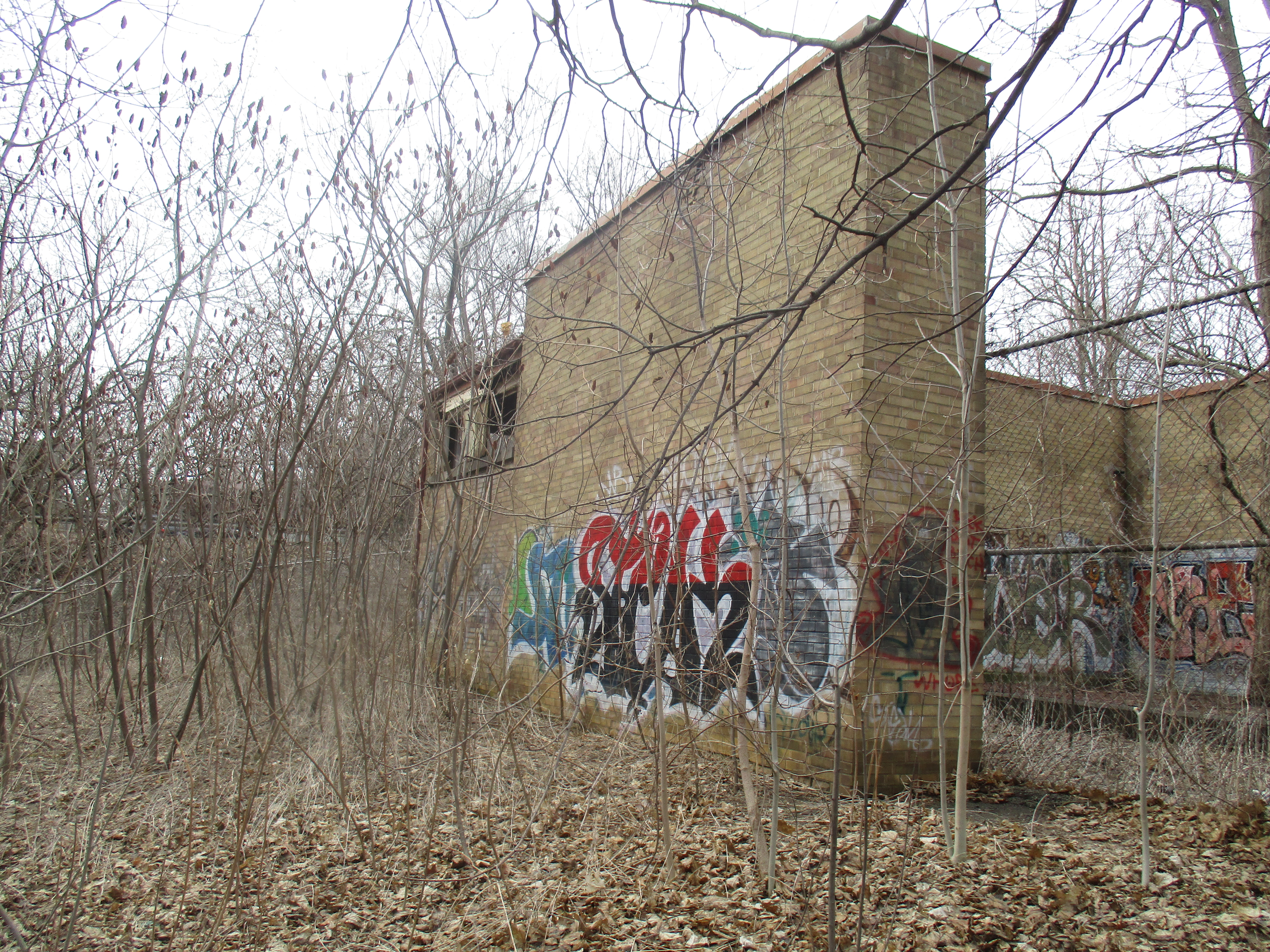
The side of the building had some graffiti on it in 2016 but it is now almost completely covered. The walls will likely last for quite some time on the back of the building as they are solidly built. If left to nature, they will most likely outlast the front section of the building.

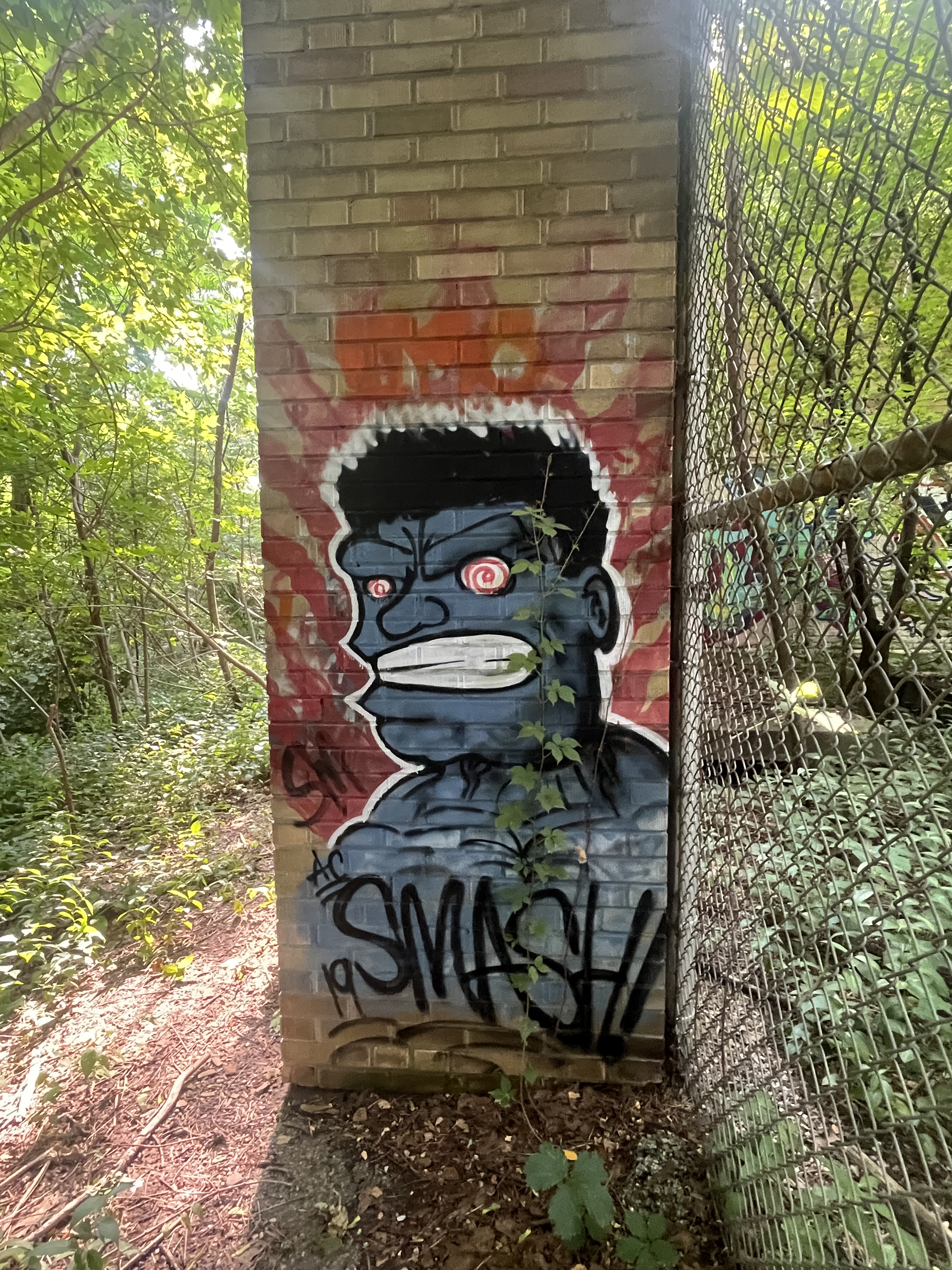
Recent artistic works have adorned almost all of the walls. The fence has been compromised and repaired several times in the past few years.

Eventually all the trees on the property will reach maturity and the building will be surrounded by the forest. The transformer house is located on a corner of a park and nature is thinking about re-establishing itself.

I will continue to keep an eye on this building as the years go on to see how quickly the roof will fall in, provided that the site doesn’t get demolished.

Related Stories: Bayview Transformer House

Google maps link: Sunnybrook Hospital

Like us at http://www.facebook.com/hikingthegta

Follow us at http://www.hikingthegta.com
The Blair Sheave Tower

September 28, 2024

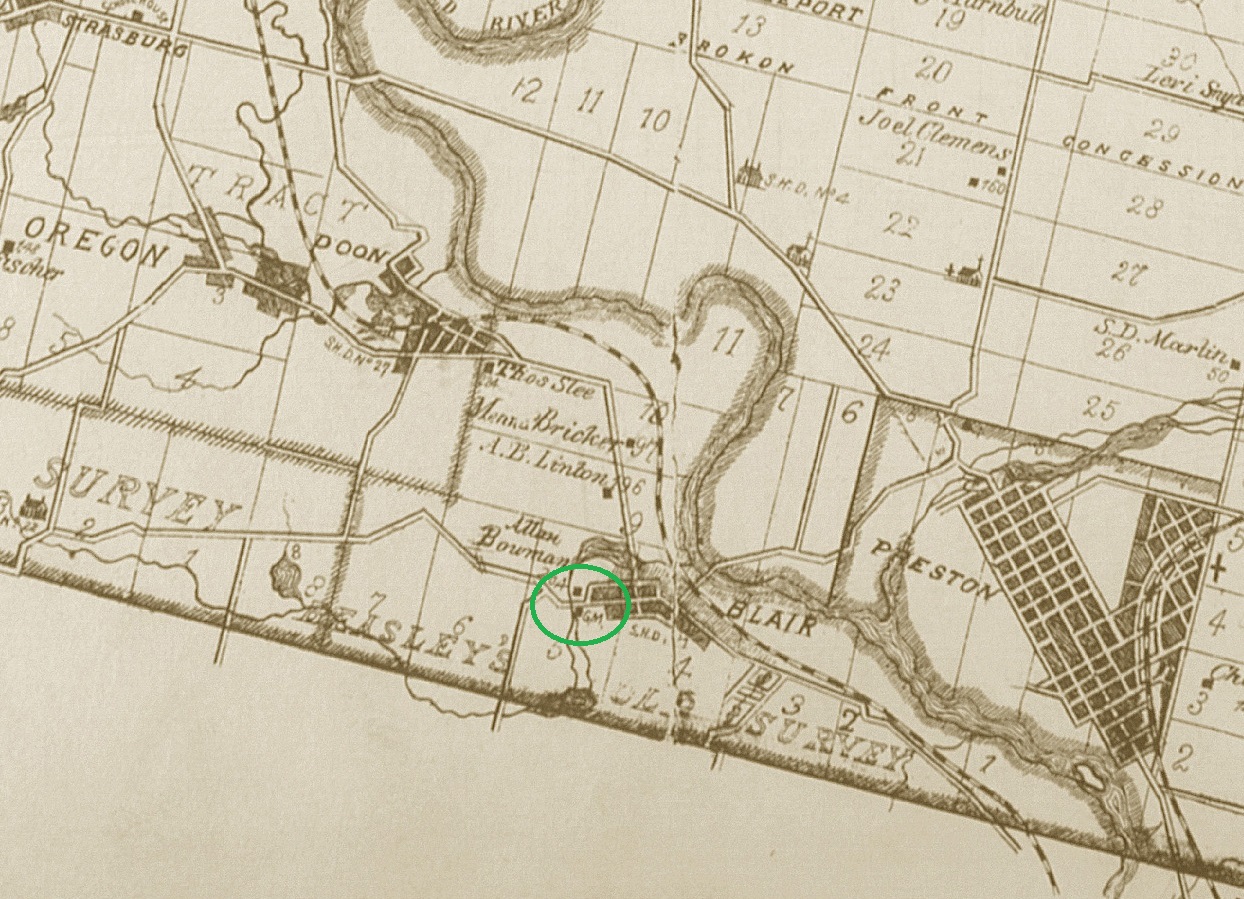
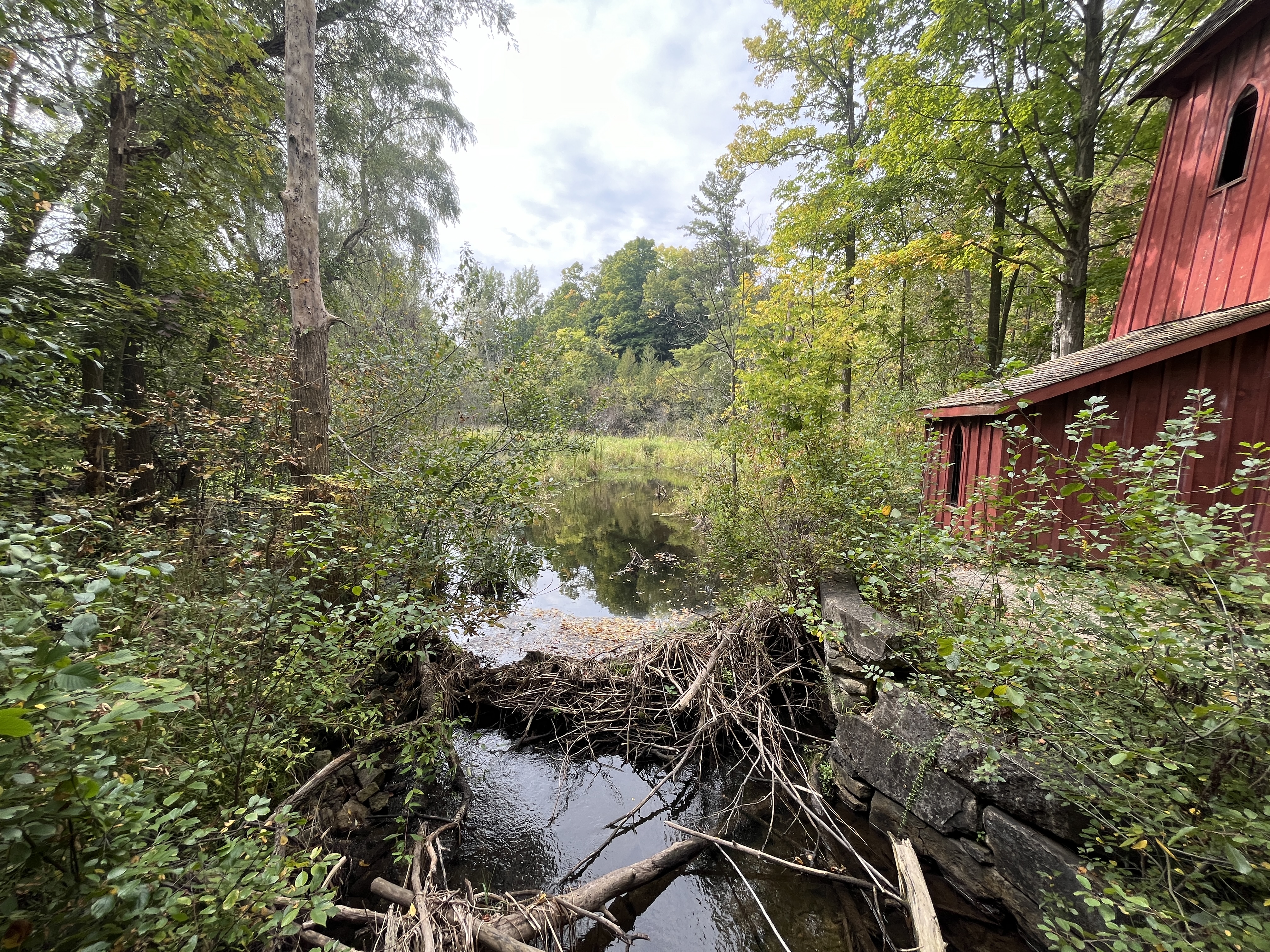
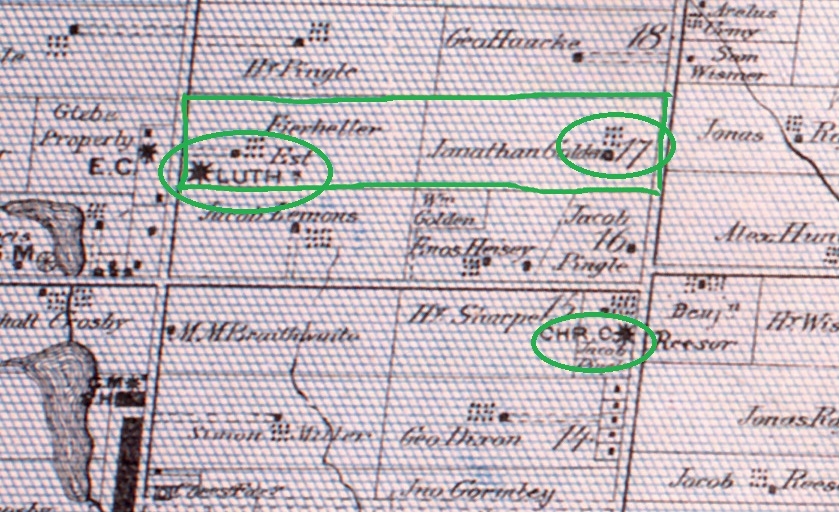
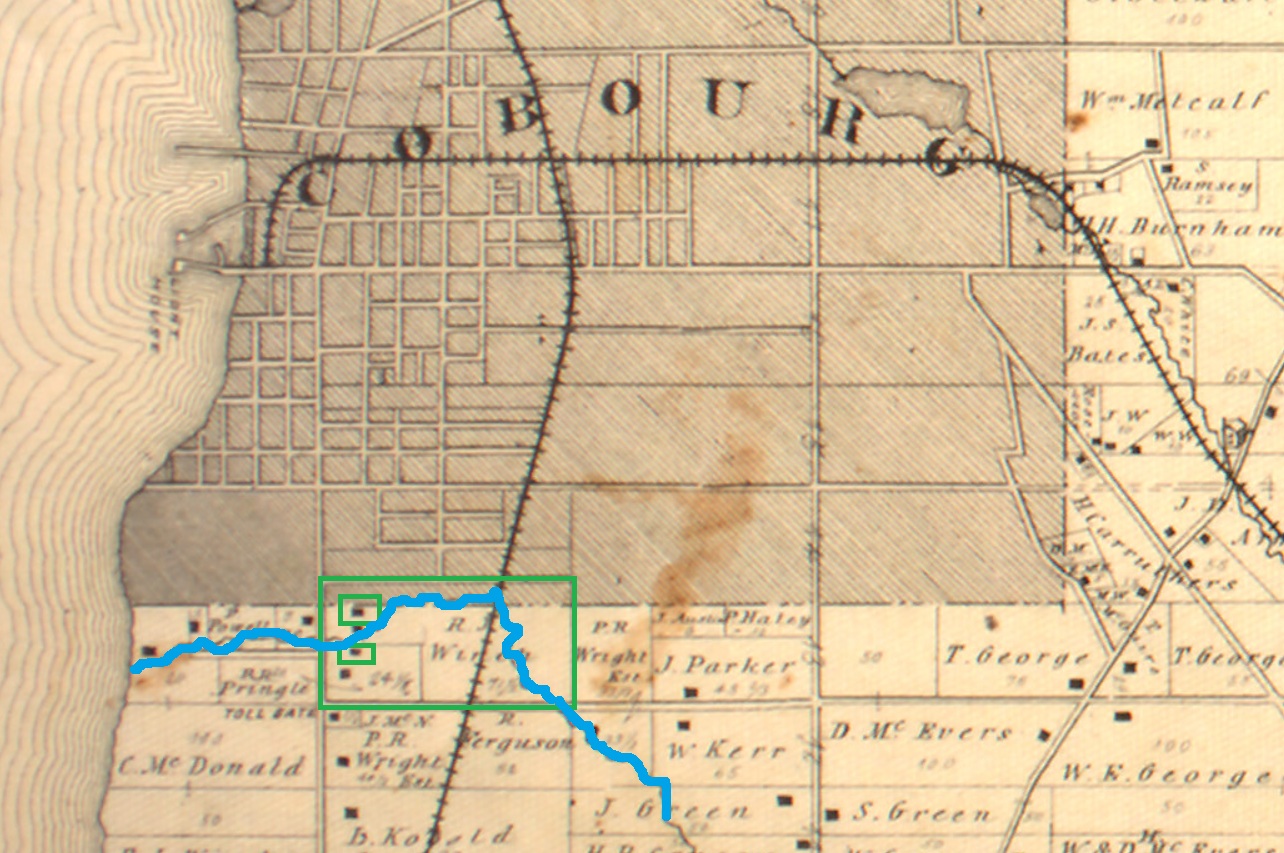
The first European in the area of Blair was a German Mennonite that took up a homestead in 1800 and owned most of the land that would later become the community. In 1817 Joseph Bowman bought the property and in 1830 he built a dam on Bowman (now Blair) creek to power a saw mill he had built. His son Samuel W. Bowman added a four-story grist mill near the saw mill. The map below from the 1877 County Atlas shows the location of the grist mill circled in green and just on the edge of the hamlet of Blair. This community had expanded to about 140 people by 1855 and boasted a school built in 1802 as well as a general store and a hotel. The post office was opened in 1858. In 1973 Blair, Preston, Helspler and Galt amalgamated to form Cambridge.

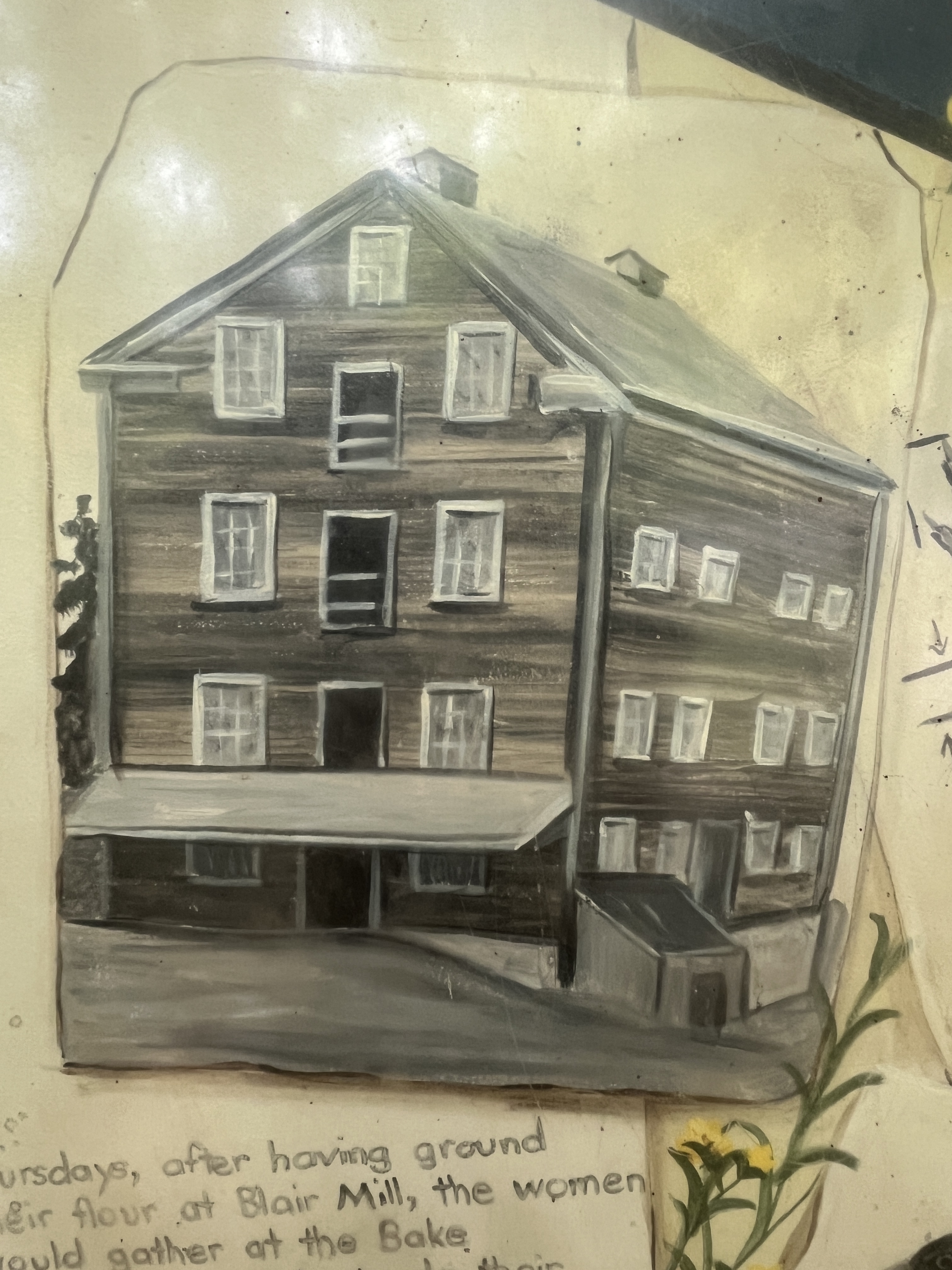
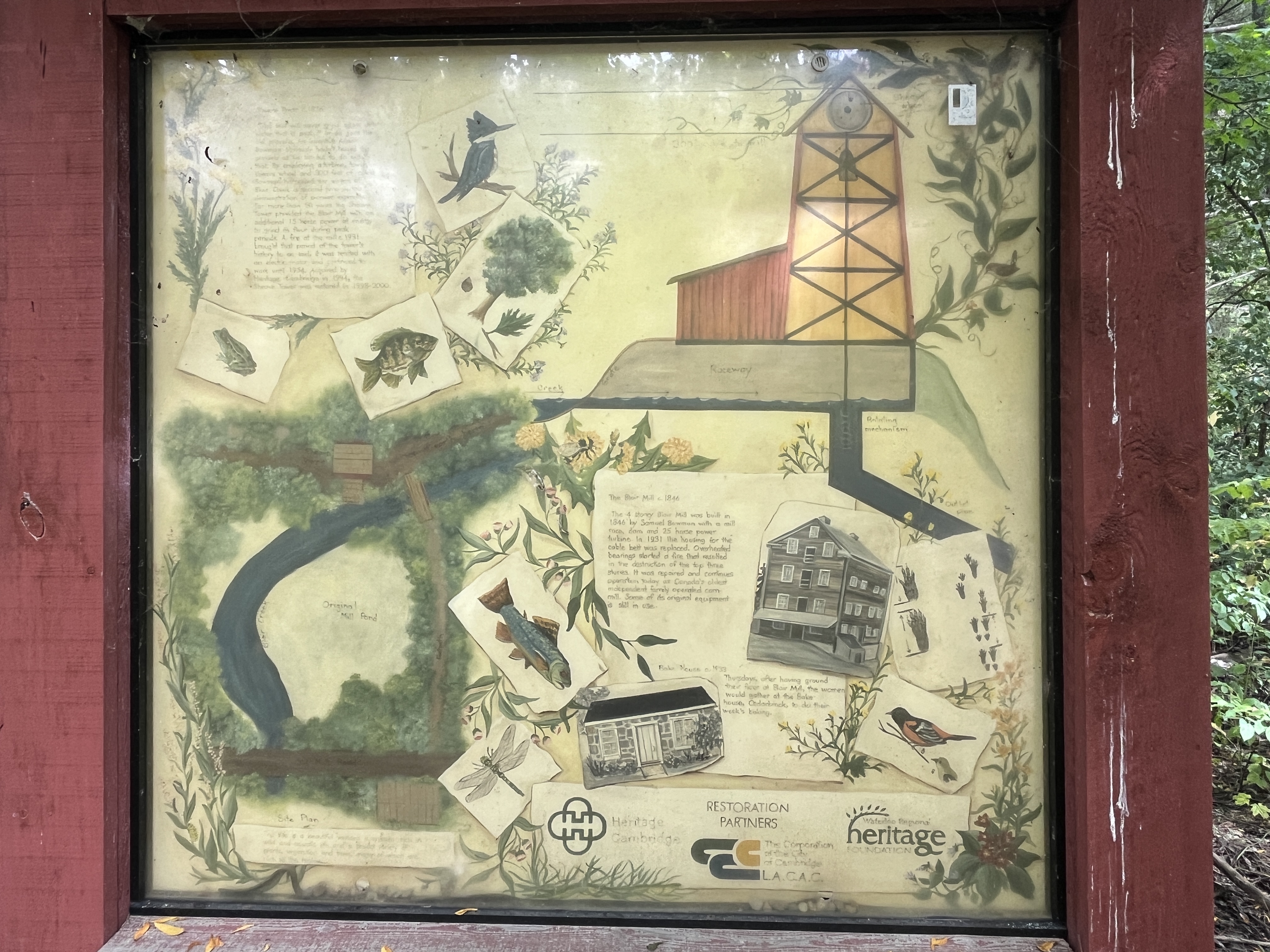
There is an interpretive sign at the site which shows the original four-story grist mill which was known as Carlisle Mill. In 1851 this mill was able to produce 7,000 barrels of flour per year. The mill was sold to Peter Sherk in 1866.

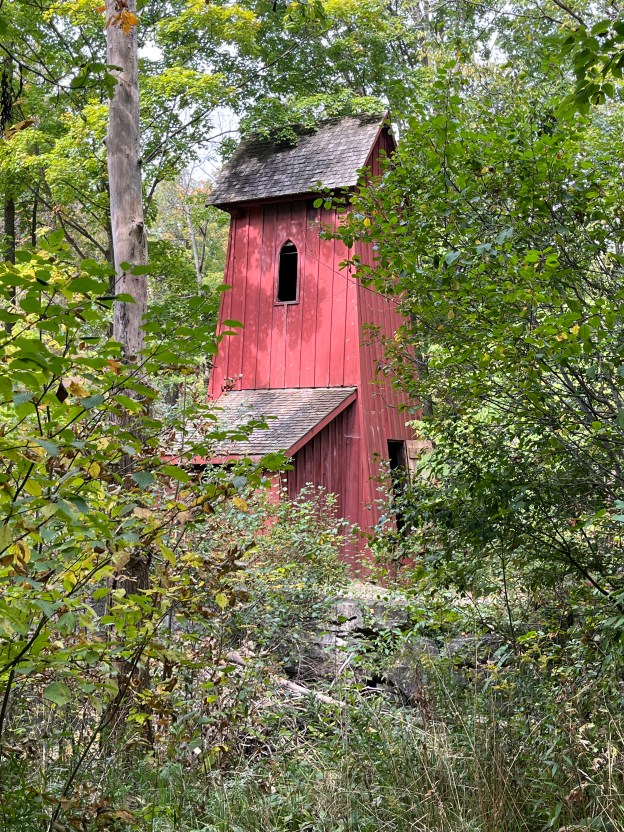
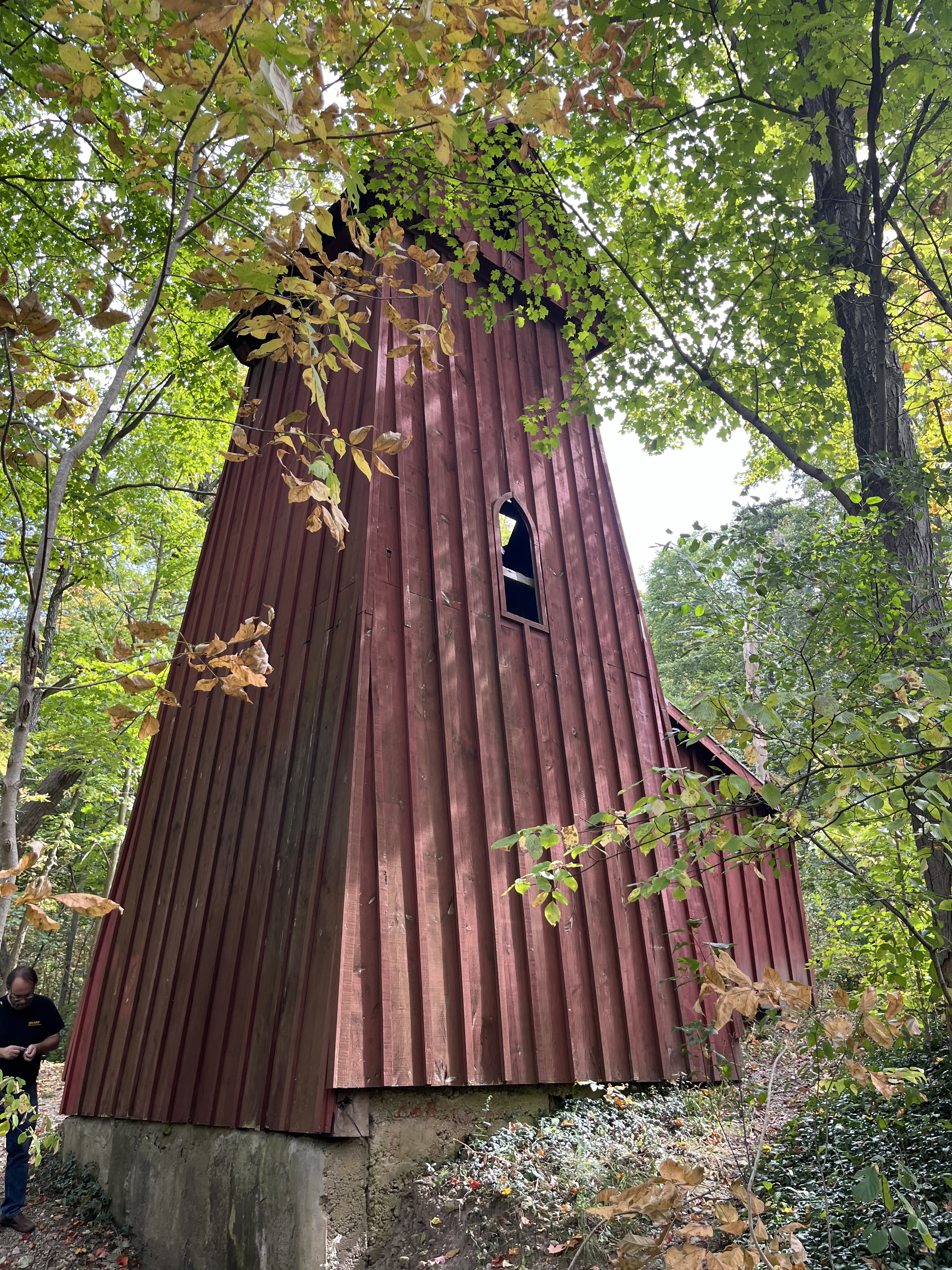
The mill was able to generate 25 horsepower from waterpower on it’s water wheel. It was decided in 1876 to supplement the power with an additional 15 horsepower that would be generated downstream. Samuel’s son, Allan, built a 31 foot (9 metre) wooden tower about 240 feet (70 metres) away on the other side of Old Mill Road. This allowed them to tap into the power of the creek twice.

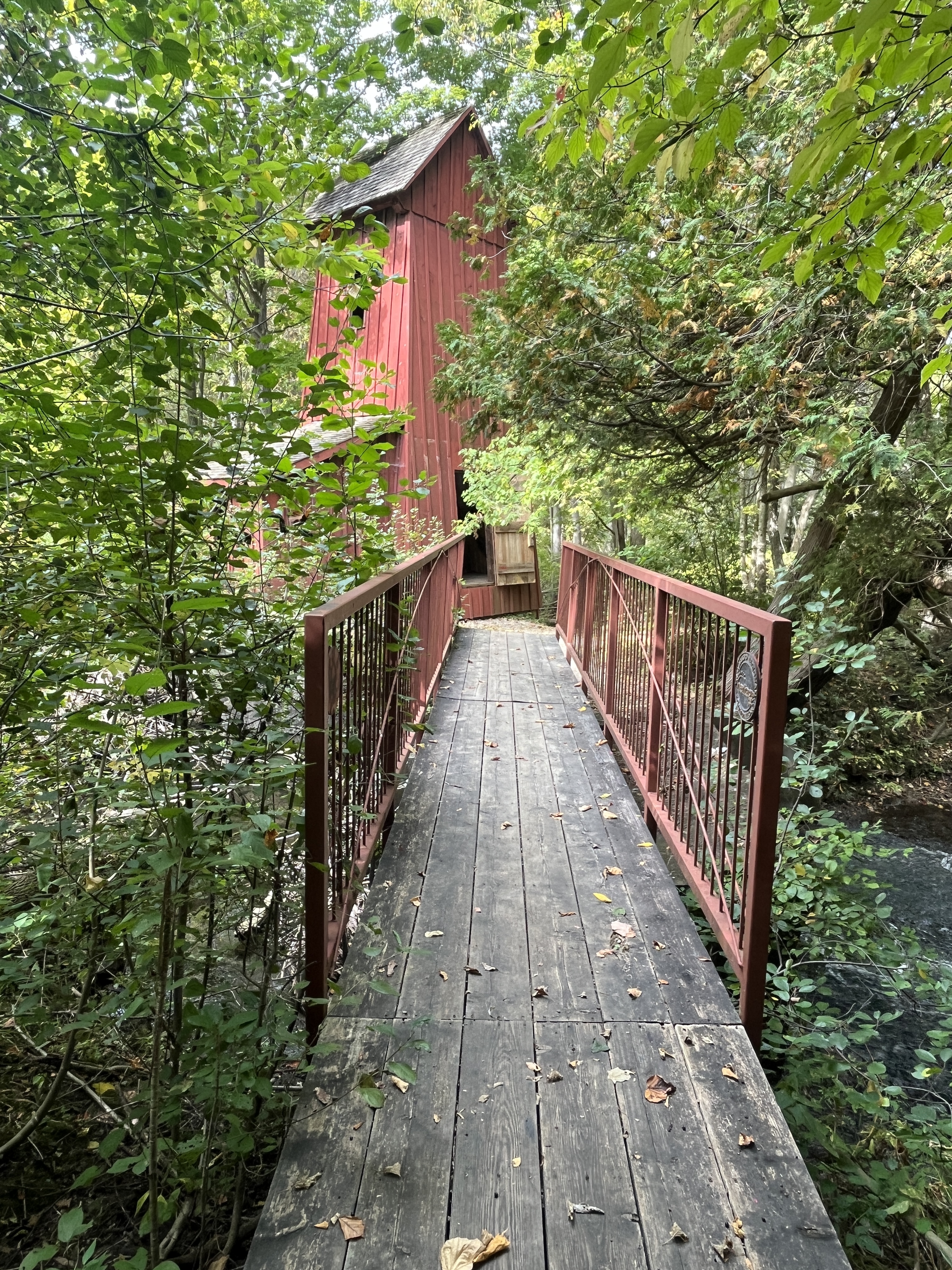
Known as a sheave tower it had a pulley and cable mechanism that connected it to the grist mill and transferred the power across the road.

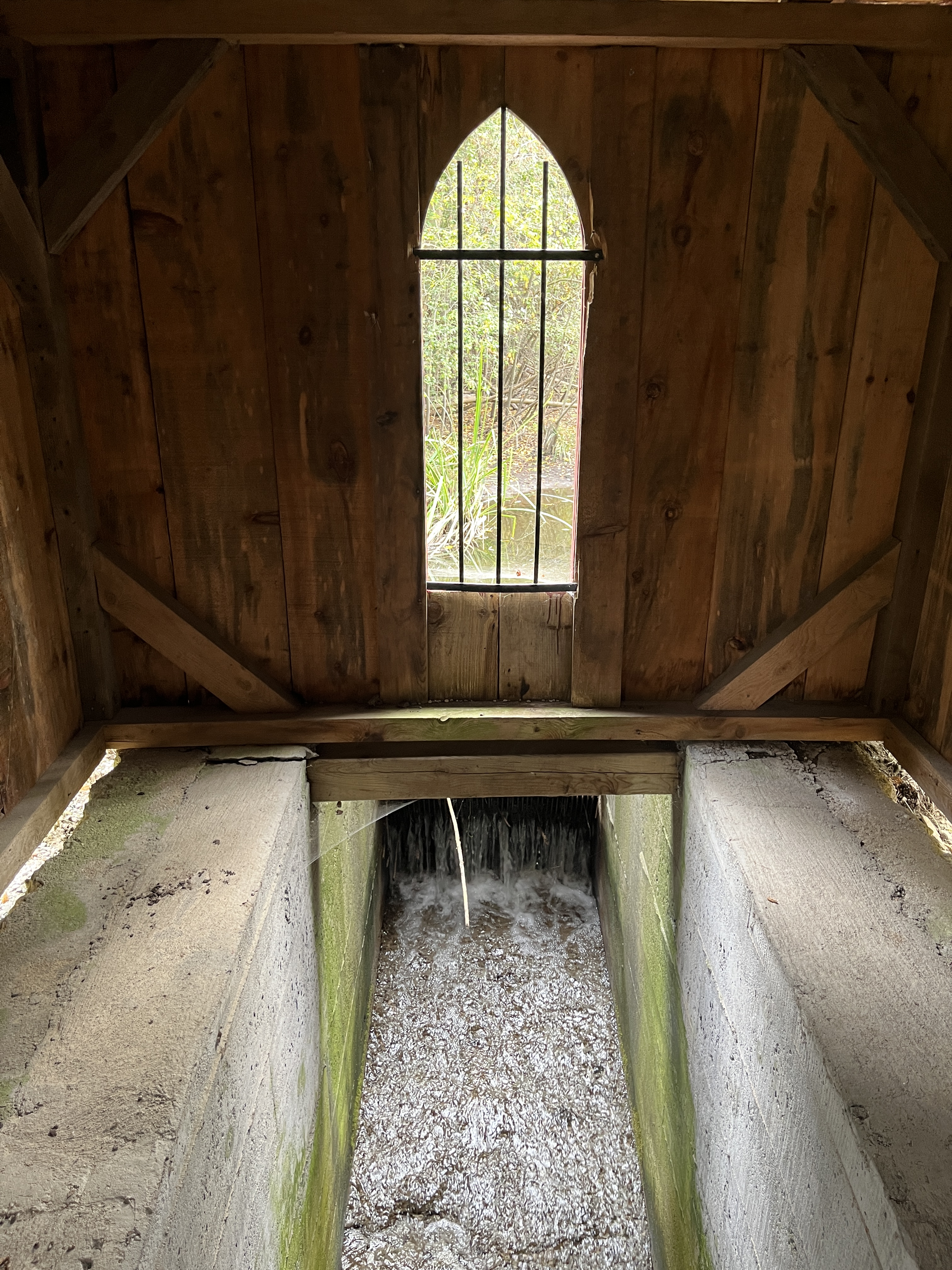
Water was diverted from the creek to the turbine that was set in the sluice at the entrance to the sheave tower.

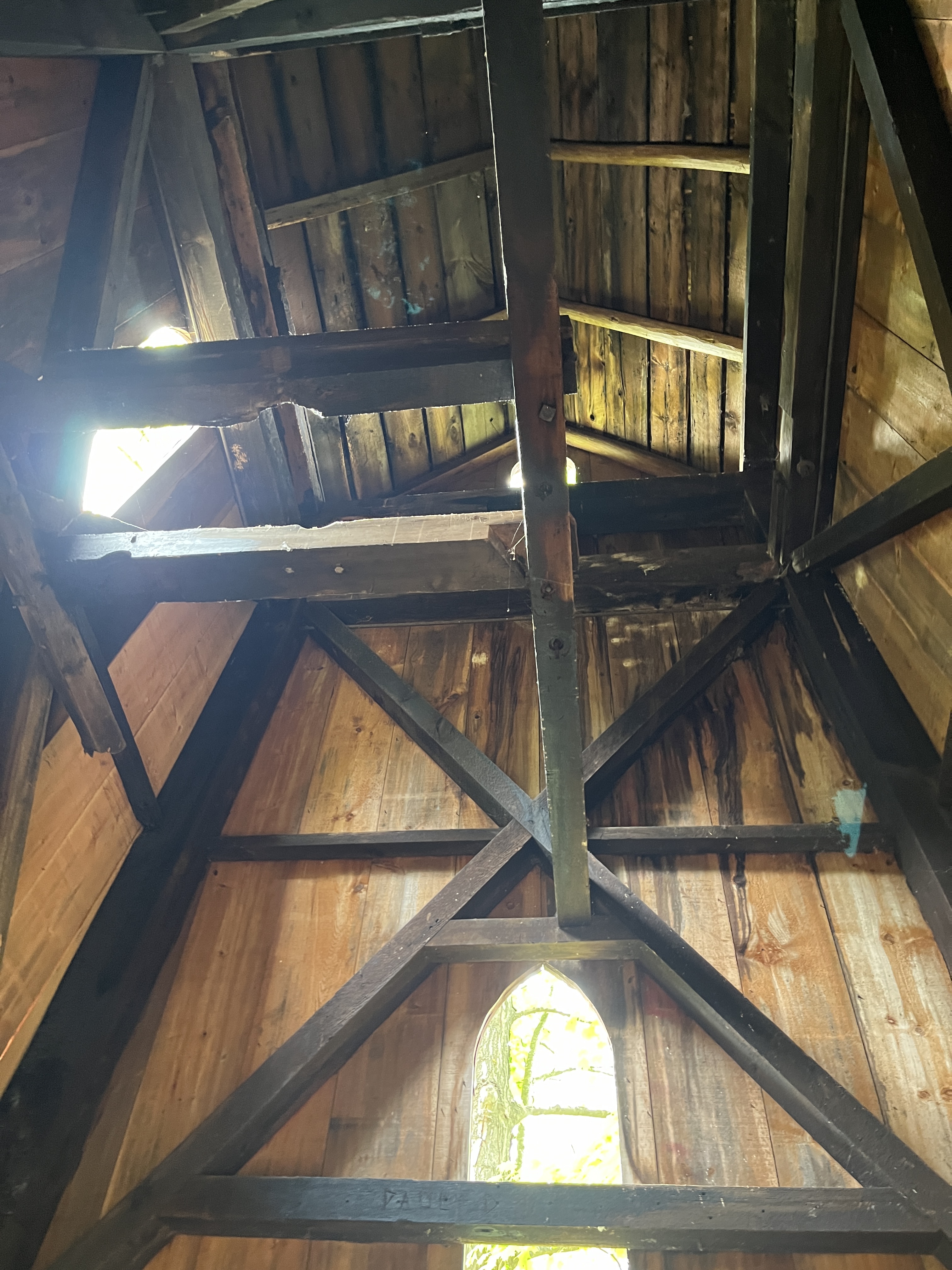
It turned a gear on a shaft that was connected to the sheave, which is a grooved wheel. This sheave turned and moved the pulley which bore a cable that ran across the road to the mill. This transferred the water power from the turbine to the grinding stones in the grist mill. There are grooves worn on the beams at the top of the tower although none of the original machinery remains inside the sheave tower.

Blair Creek has a smaller water flow now than it did in earlier times before the water table was effected by the cutting of the local forests. After the days of water power were finished in 1954 the sheave tower was abandoned and fell into a state of disrepair. In 1998-1999 the tower was restored and is now a provincially designated heritage structure.

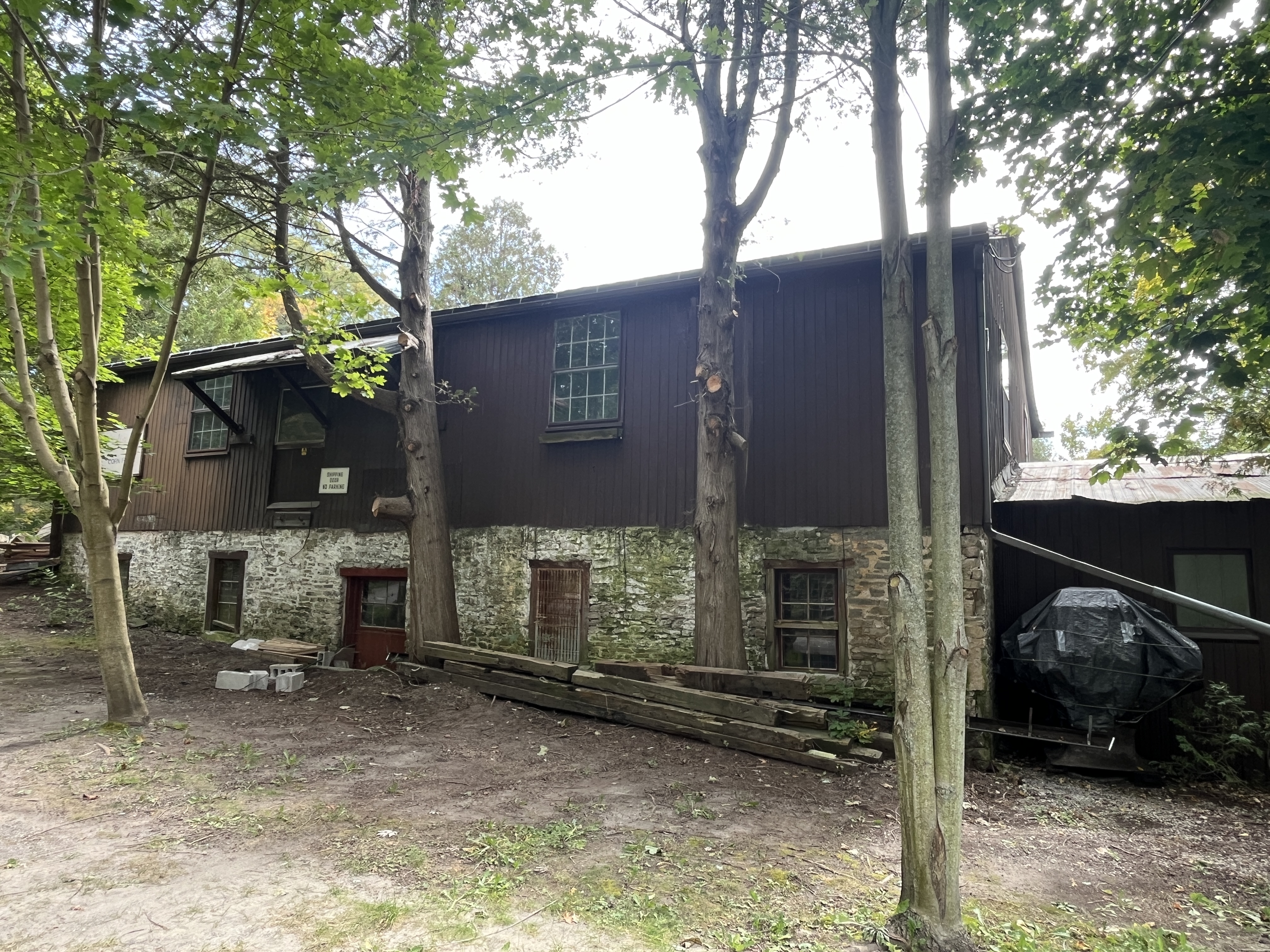
In 1888 Jacob Hilborn bought the mill and his son John took over in 1902. He ran the mill until 1925. The grist mill mechanisms overheated in 1928 and a fire started that destroyed the original mill. A new one-story mill was built on the old foundations and it operated for many decades. The mill was still in operation in 2000 and was declared to be the oldest independently operating corn mill in Ontario. Sadly, it only lasted another three years before it was shut down.

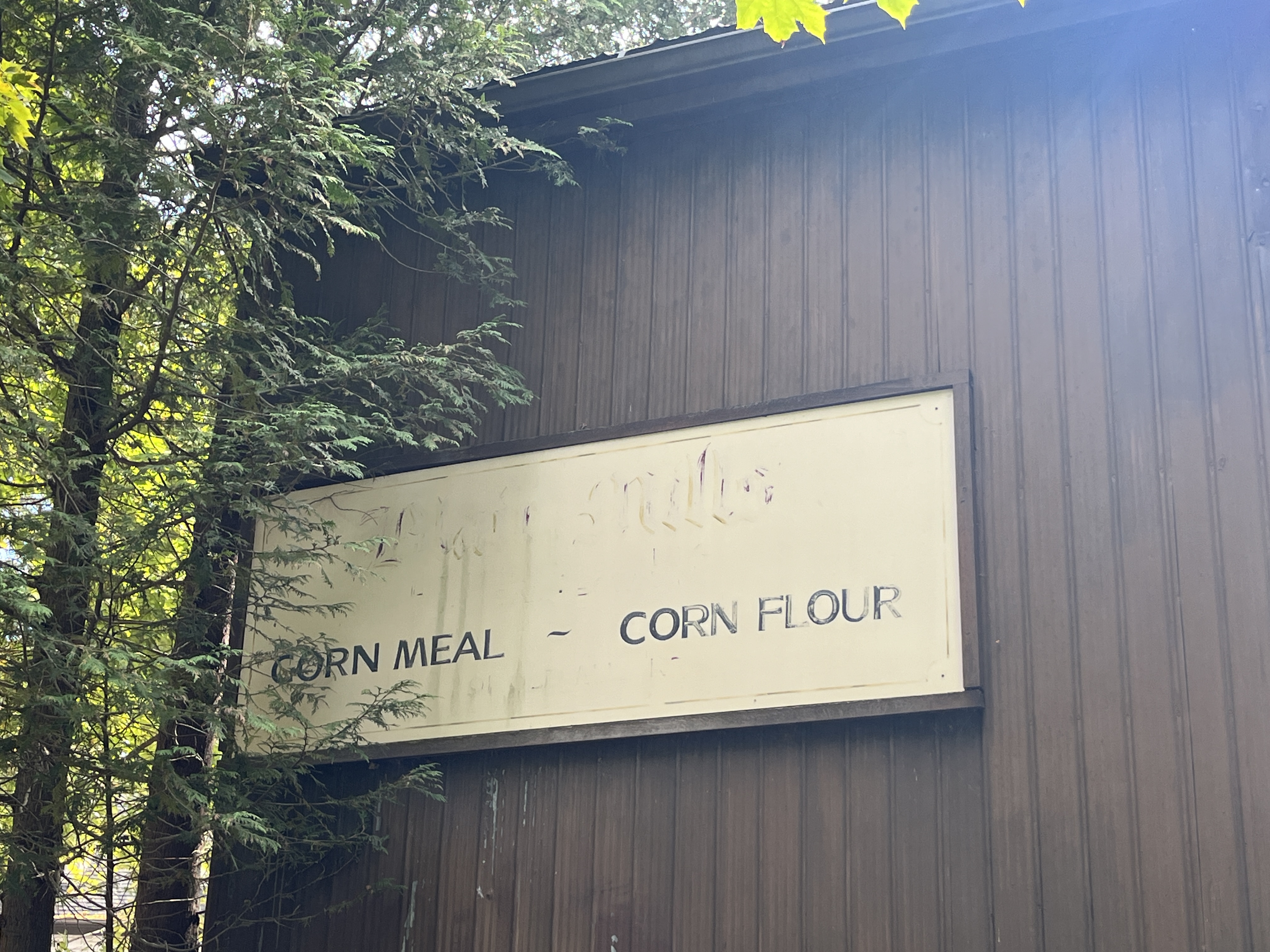
A old sign on the side of the mill still announces its purpose as a corn mill but there is no longer any corn being ground here.

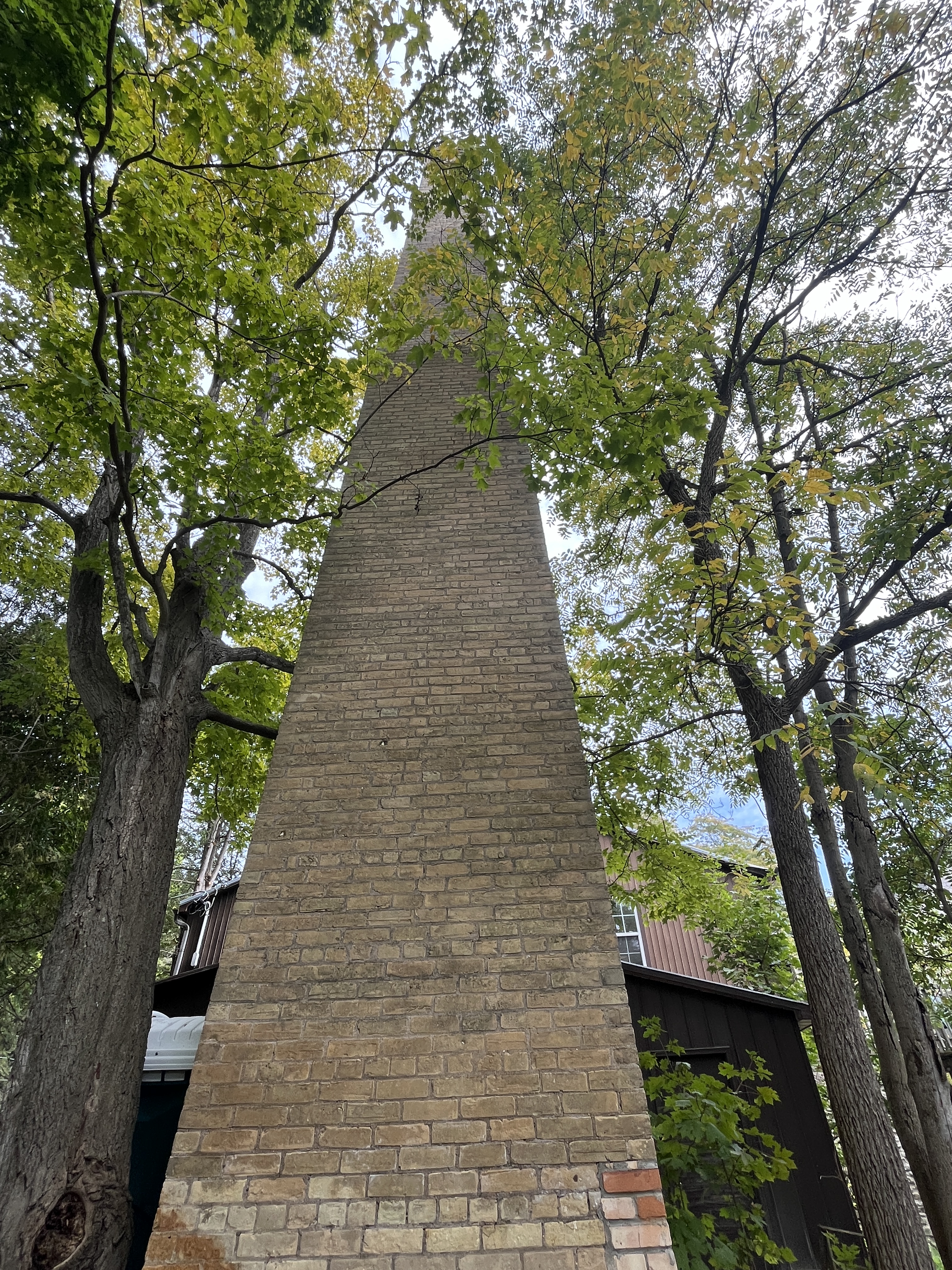
A few feet behind the new mill stands the original brick chimney which shows the height of the earlier mill.

There is an information board on the side of Blair creek which provides some basic information about the sheave tower. It is said to be the last remaining sheave tower in Ontario.

If you go to Blair to see the Sheave Tower, it’s worth a drive through town to see the historic buildings that still survive untouched as Cambridge expands around the old town. On the edge of town stands an old mansion that has been renovated into an inn.

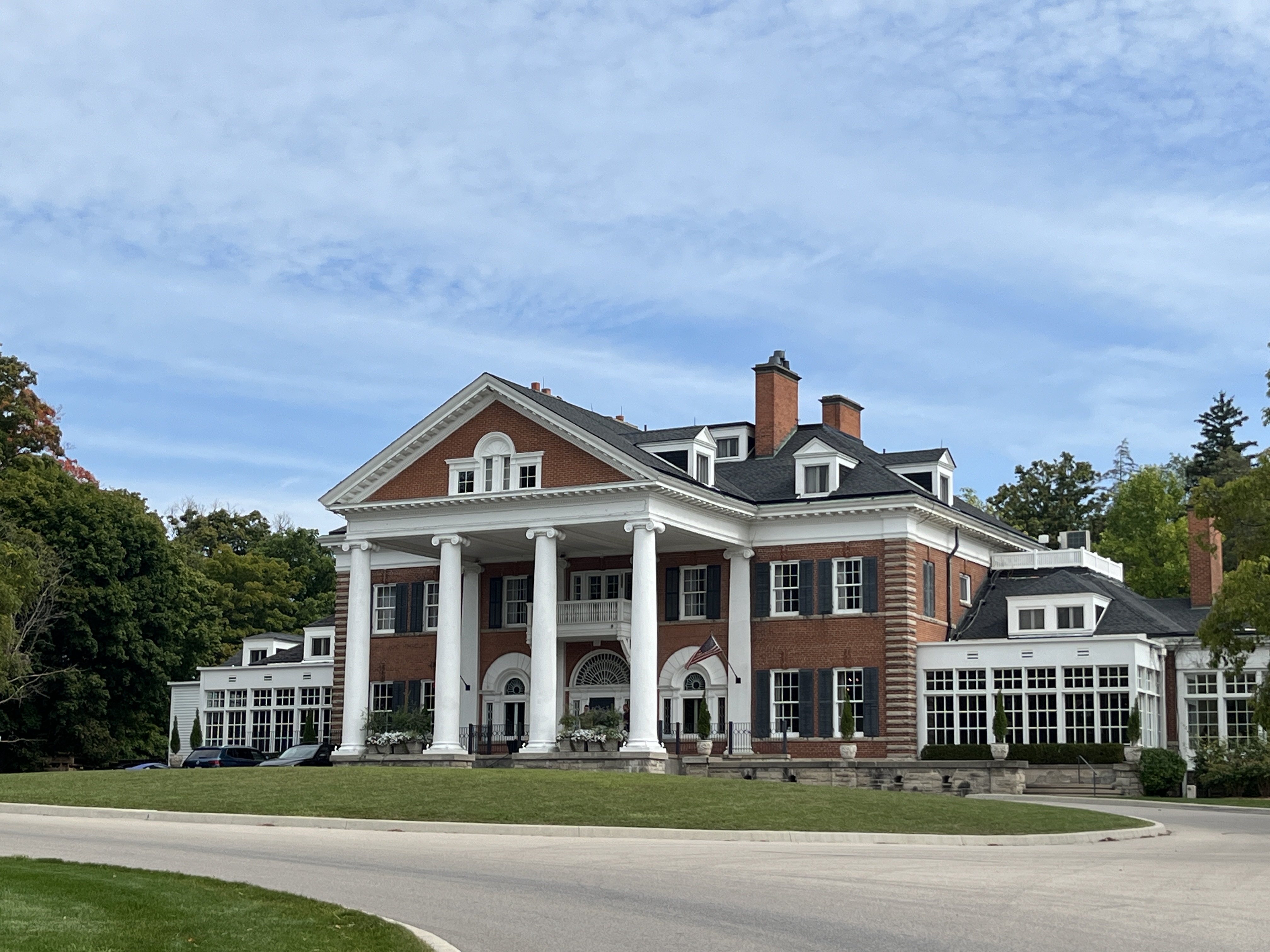
The story begins in 1858 when Matthew Wilks, of New York, decided to buy a summer property in Upper Canada. He bought up 1000 acres and built Cruikston Park. His youngest son Eugene Langdon Wilks bought the 29 acres in the north west portion of the estate. He added another 76 acres and set about building Langdon Hall as his 32 room, 25,000 square foot mansion. Construction was completed in 1902 and after Eugene passed away in 1934 the mansion served two more generations of the Wilks family. In 1987 it was bought to be turned into the existing hotel and spa property.

There is a lot of history preserved in Blair and perhaps one day we will revisit it and look at some of the historic buildings.

Google Maps Link: Blair Sheave Tower

Like us at http://www.facebook.com/hikingthegta

Follow us at http://www.hikingthegta.com
Quantztown – Ghost Towns of the GTA

September 21, 2024

In November 1794 William von Moll Berczy arrived in Markham with the first group of settlers to locate in the township. He was an architect, road builder and painter. Berczy and his fellow settlers had originally emigrated from Germany to New York but came to Upper Canada in 1794. They had a tough time in 1795 and 1796 when illness and famine reduced their numbers significantly. Those that survived helped establish the development of Markham Township. Berczy himself would move to Montreal in 1805 and earn a living as a painter. The 1877 county atlas image below is marked in green to show the sites that are discussed in this post. The area north of Milliken and East of Unionville was known as Quantztown after the settler Melchoir Quantz. Today there is little left of the hamlet of Quantztown except a couple of houses and two cemeteries.

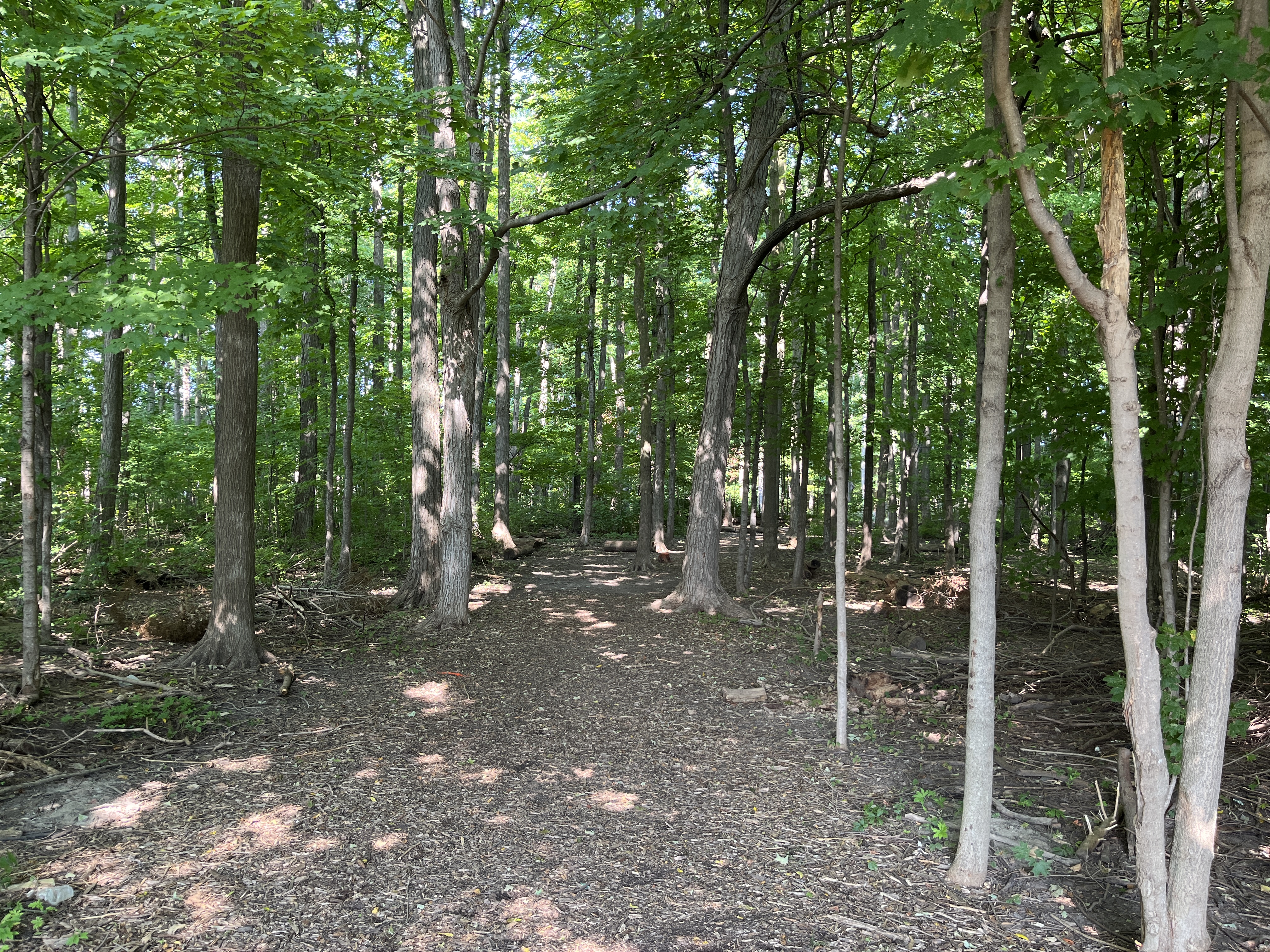
Manhattan Woods is a small forest that is located just beside the old Quantztown Cemetery. It has a single trail that leads through the woods from one side to the other and acts as a shortcut from the subdivision behind to McCowan Road.

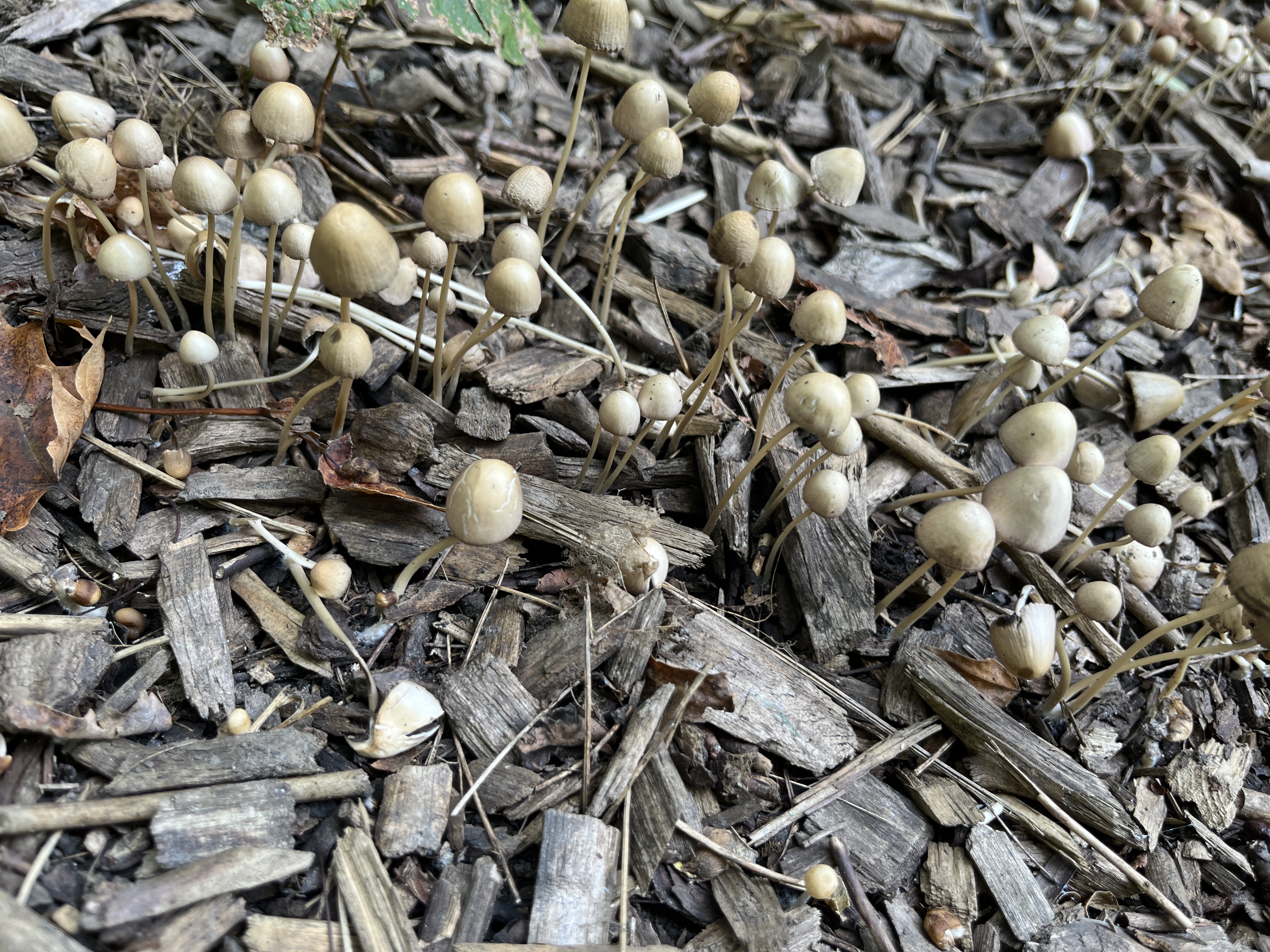
Mushrooms are growing by the thousands on the forest floor. These button mushrooms will last a couple of days and then wilt and disappear.

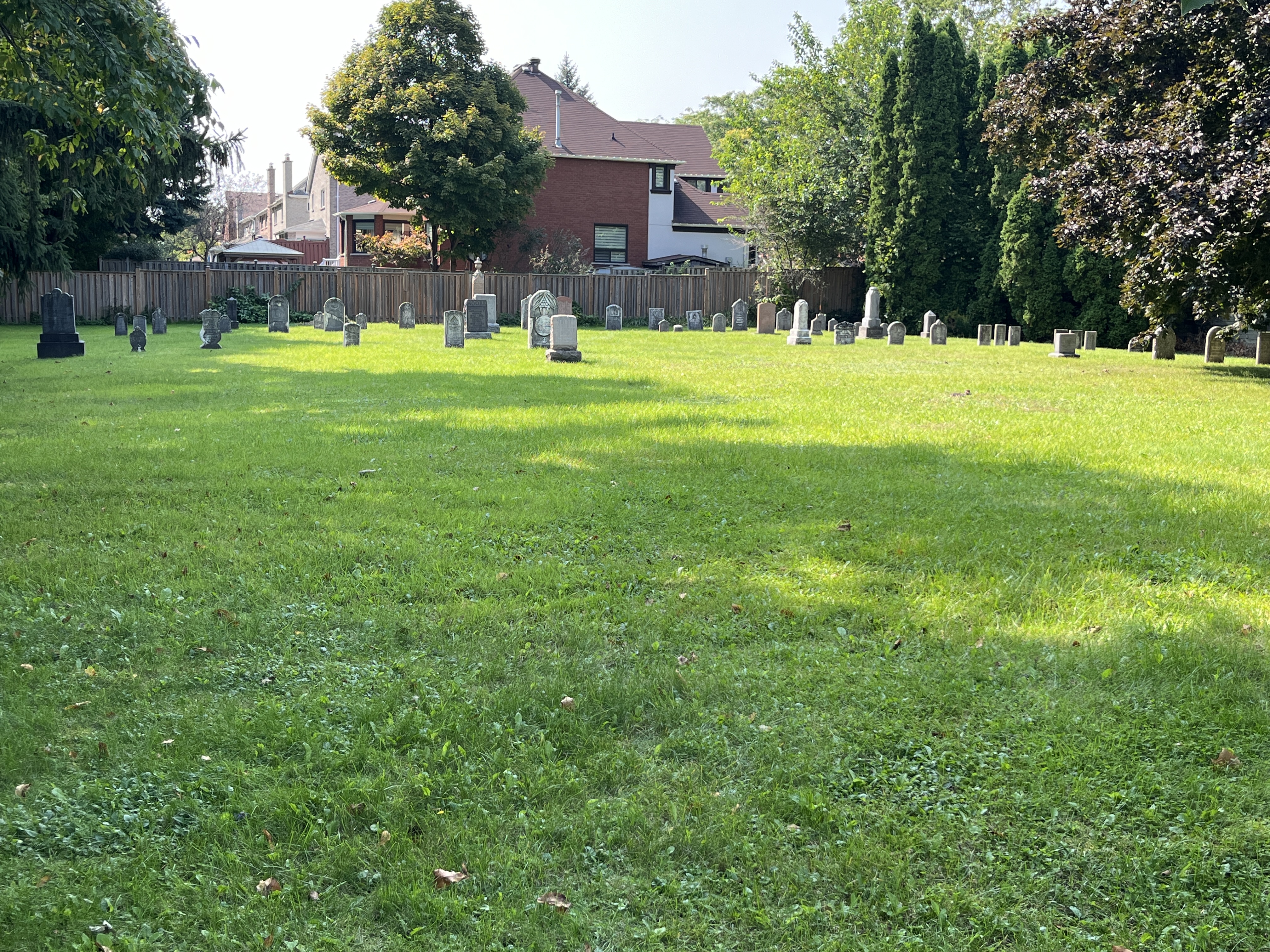
The Quantztown Cemetery is built on land donated by the son of Melchoir Quantz and has its earliest marker dated 1844. A Bible Christian Church was built on the edge of the cemetery but it is long gone. The cemetery saw its last interment in 1946.

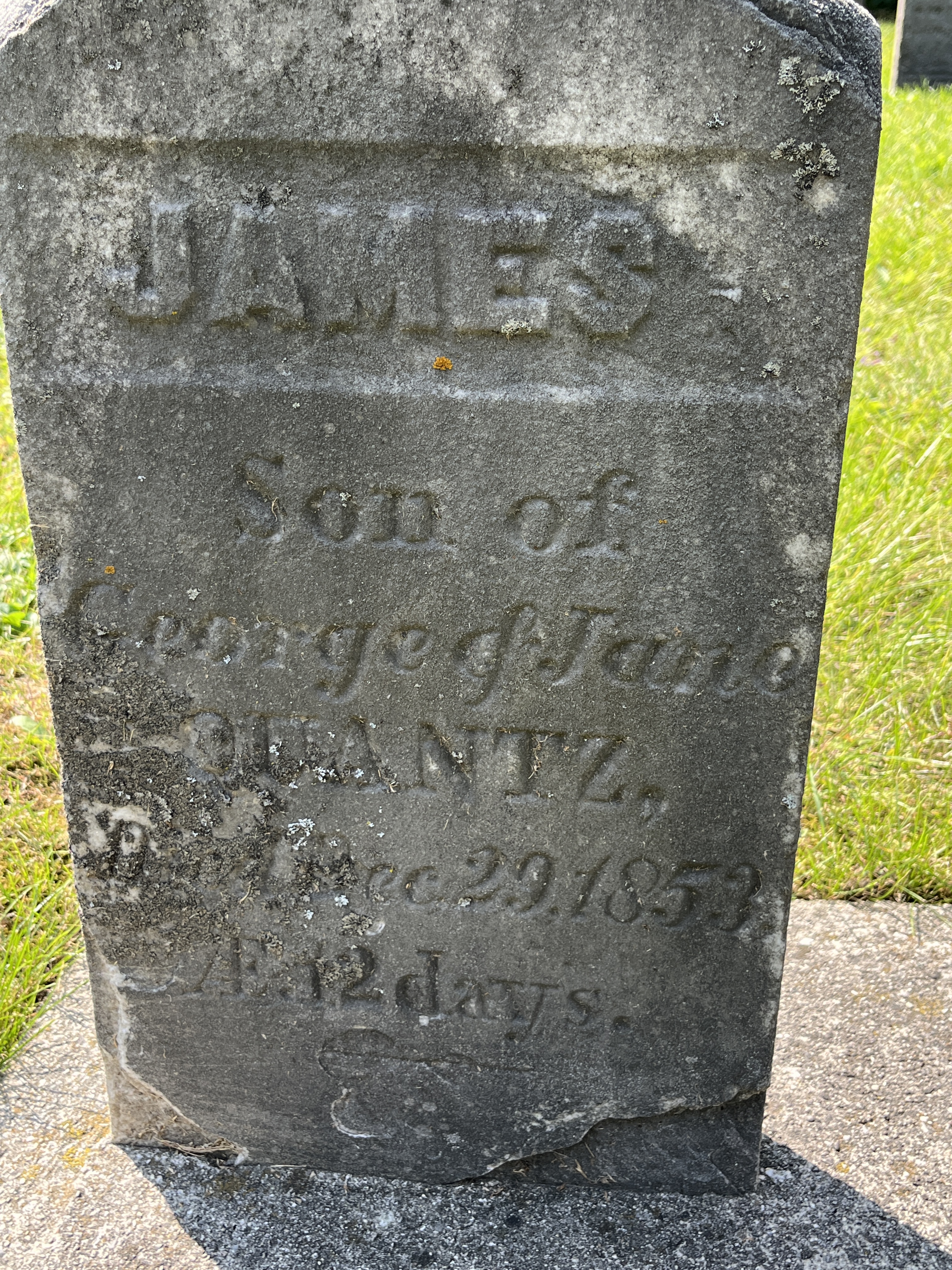
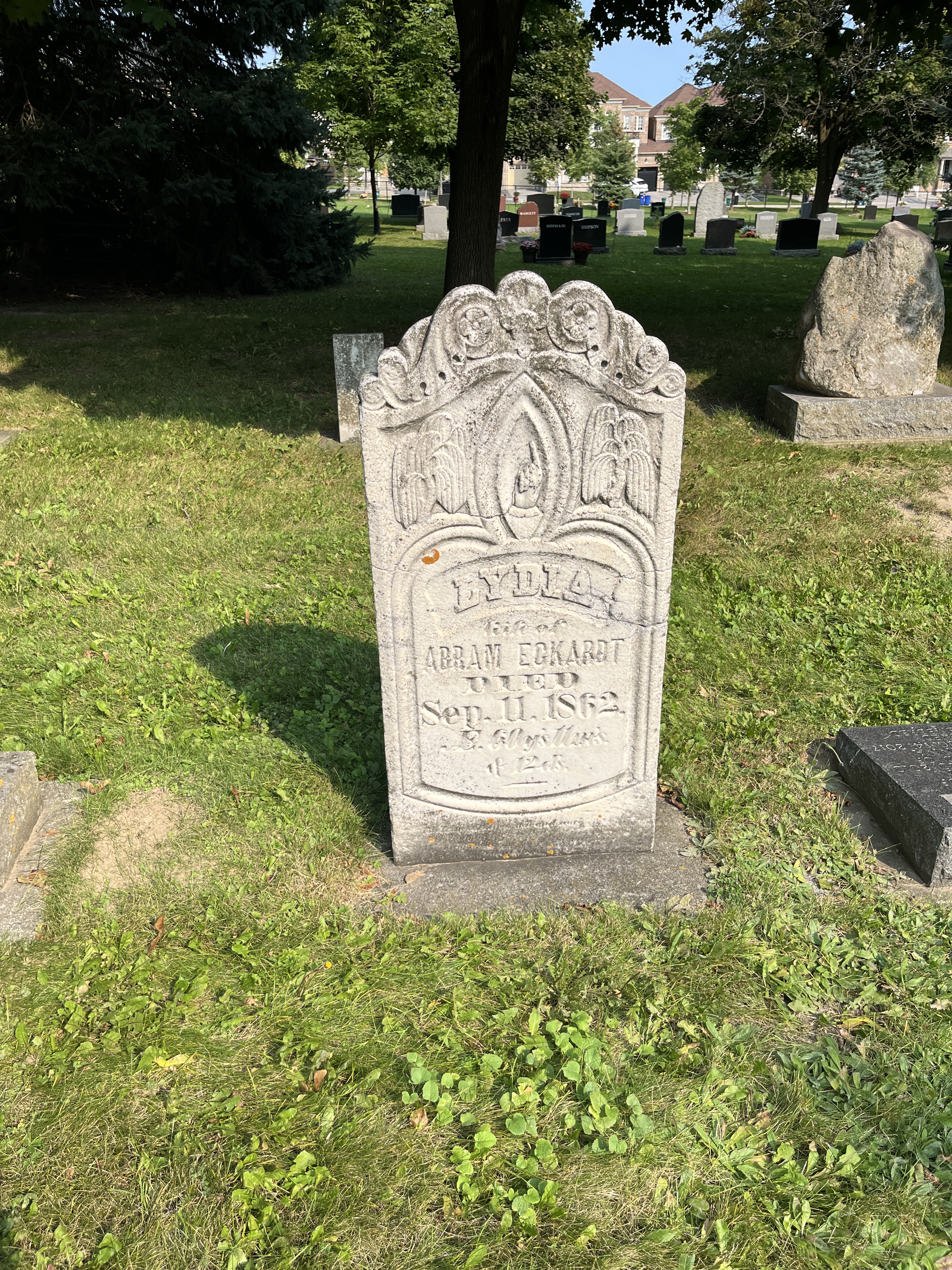
Several members of the Quantz family are laid to rest in the cemetery. James Quantz was just 12 days old when he passed away on December 29, 1853. This was in an era when infant mortality was very high, and sadly many didn’t live to see their first birthday.

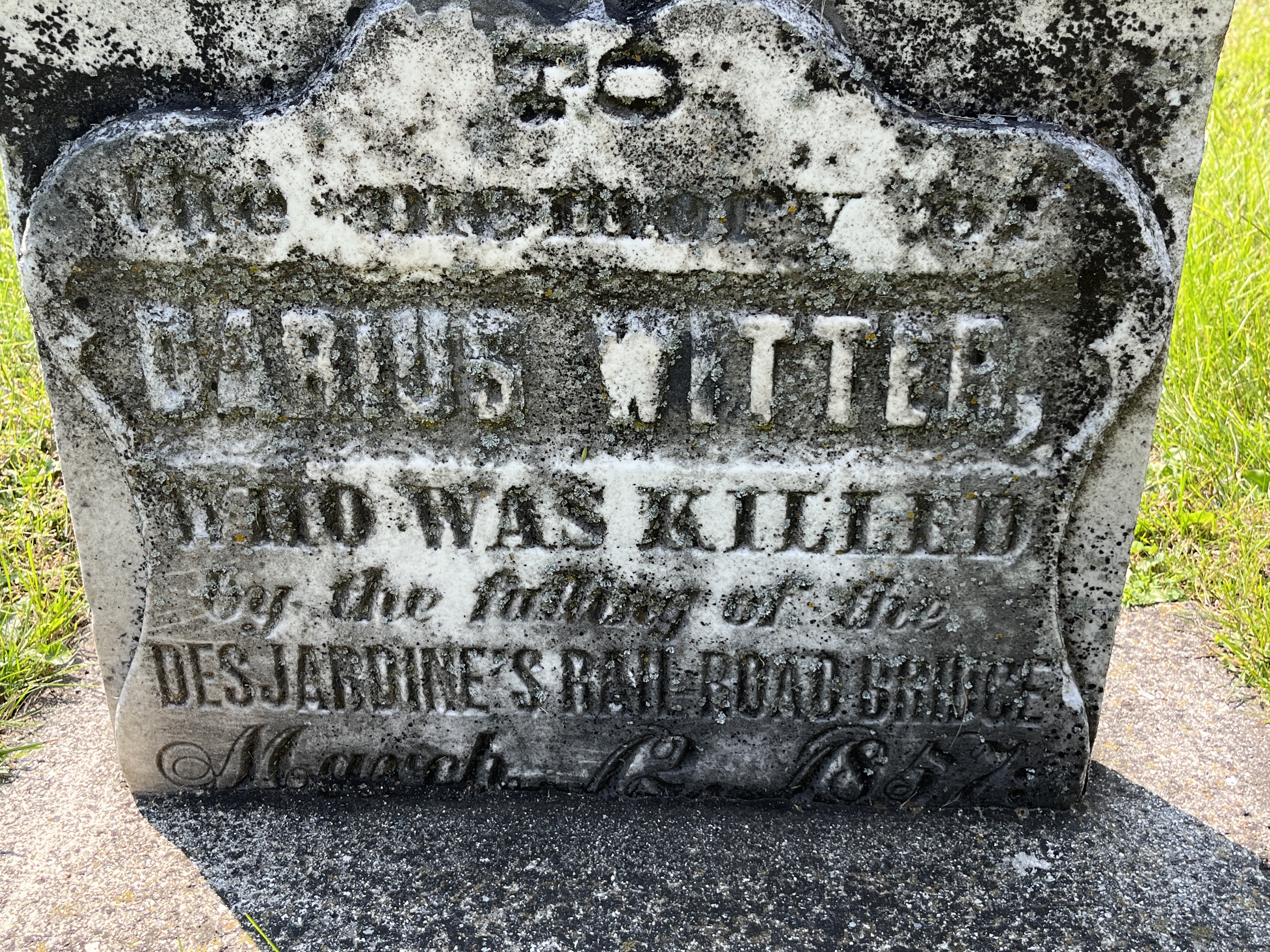
On March 12, 1857 the Great Western Railway train was going from Toronto to Hamilton. As it passed over the swing bridge across the Desjardins Canal the bridge collapsed and dumped the train into the frigid waters below. Of the 90 passengers on the train 59 were killed. Darius Witter was one of the unlucky ones and he passed away at just 30 years of age. He is buried in the Quantztown Cemetery. This railway disaster stands as one of the worst railway accidents in Canadian history.

Lydia Wismer died in January 1856 just a few days short of her 87th birthday. Her husband David, died in August of that year having reached the age of 87. Their son, David Jr., was a deacon in the church that used to meet beside the cemetery.

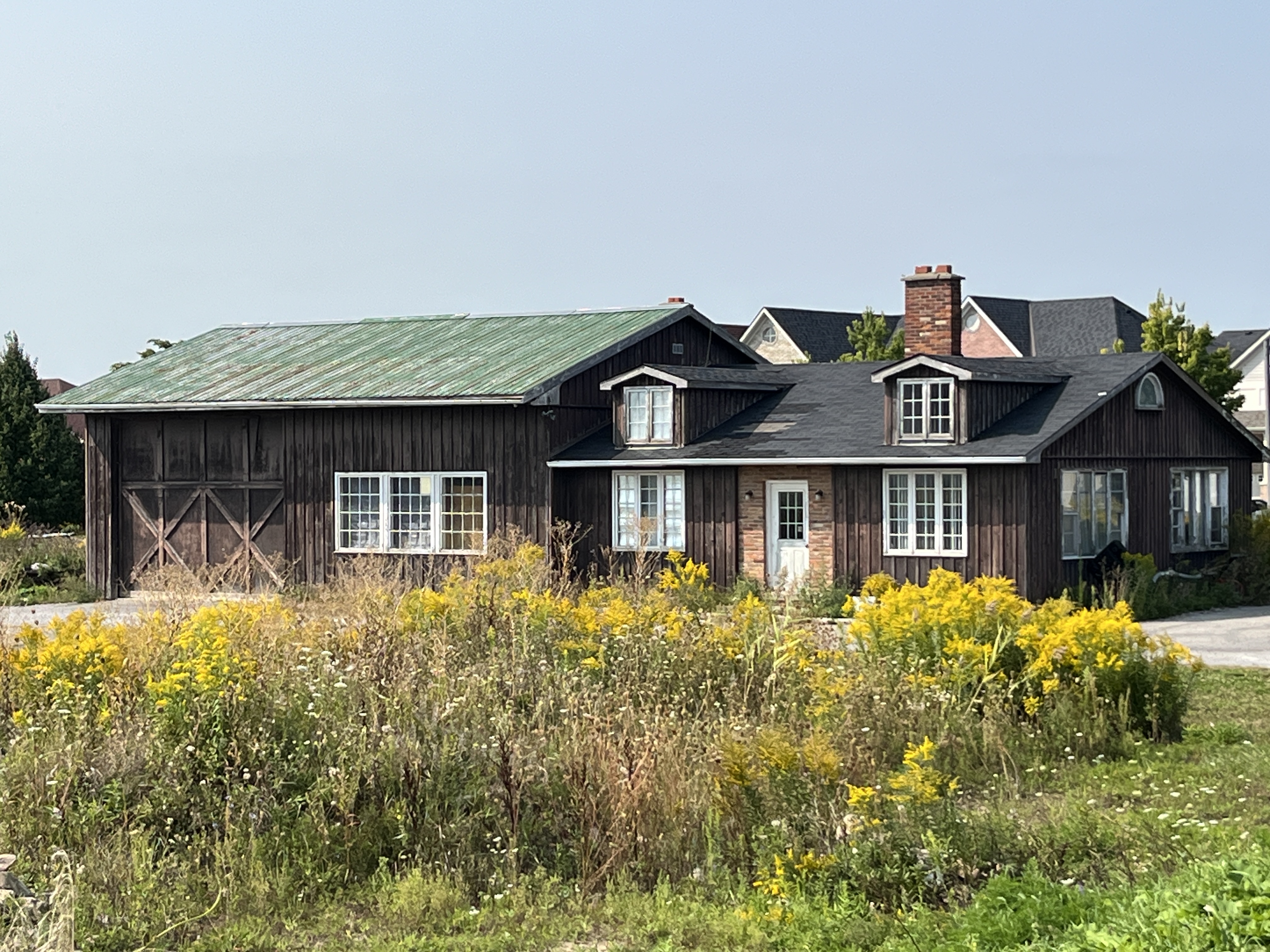
Lot 17, Concession 6 was originally granted to Frederick Ulrich Emelius Westphalen. He was a Berczy settler who received the deed in 1803. He sold the lot to John Butts in 1818 and he owned it until 1868. Butts had served in the War of 1812 and in 1837 was counted among the rebels following William Lyon Mackenzie. He had a one story frame house on the property in the 1851 census. Johnathan Gowland bought the farm in 1872 and in 1877 built the house that still stands on the property. The house is a typical one and a half story farmhouse with a centre gable like many Ontario homes of this era. The window under the gable is known as an ogee-headed window, and was found on only a handful of Markham Township homes. The farm was bought in 1930 by James and Elizabeth Penny who sold it to Michael and Veronica Larkin in 1965. The house was moved forward on the lot in 2015 to allow the development of the rest of the property for houses.

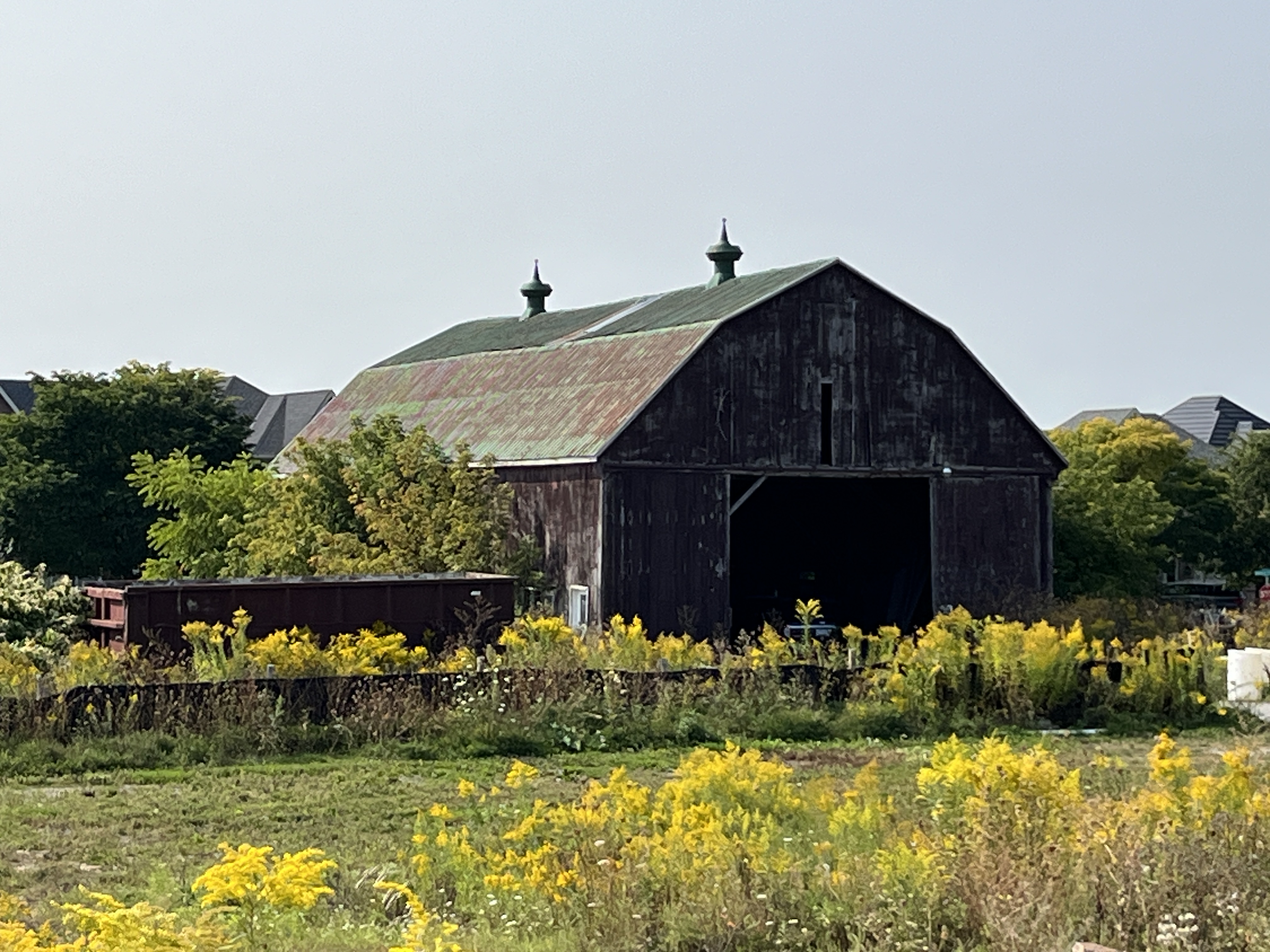
The barn still stands behind the house and is the only one remaining in the area.

A drive shed is also located just behind the house.

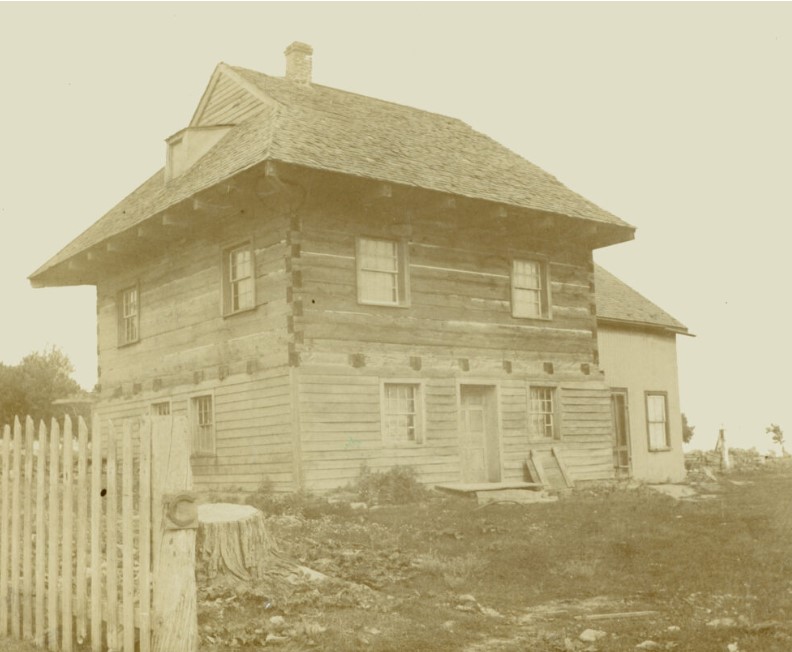
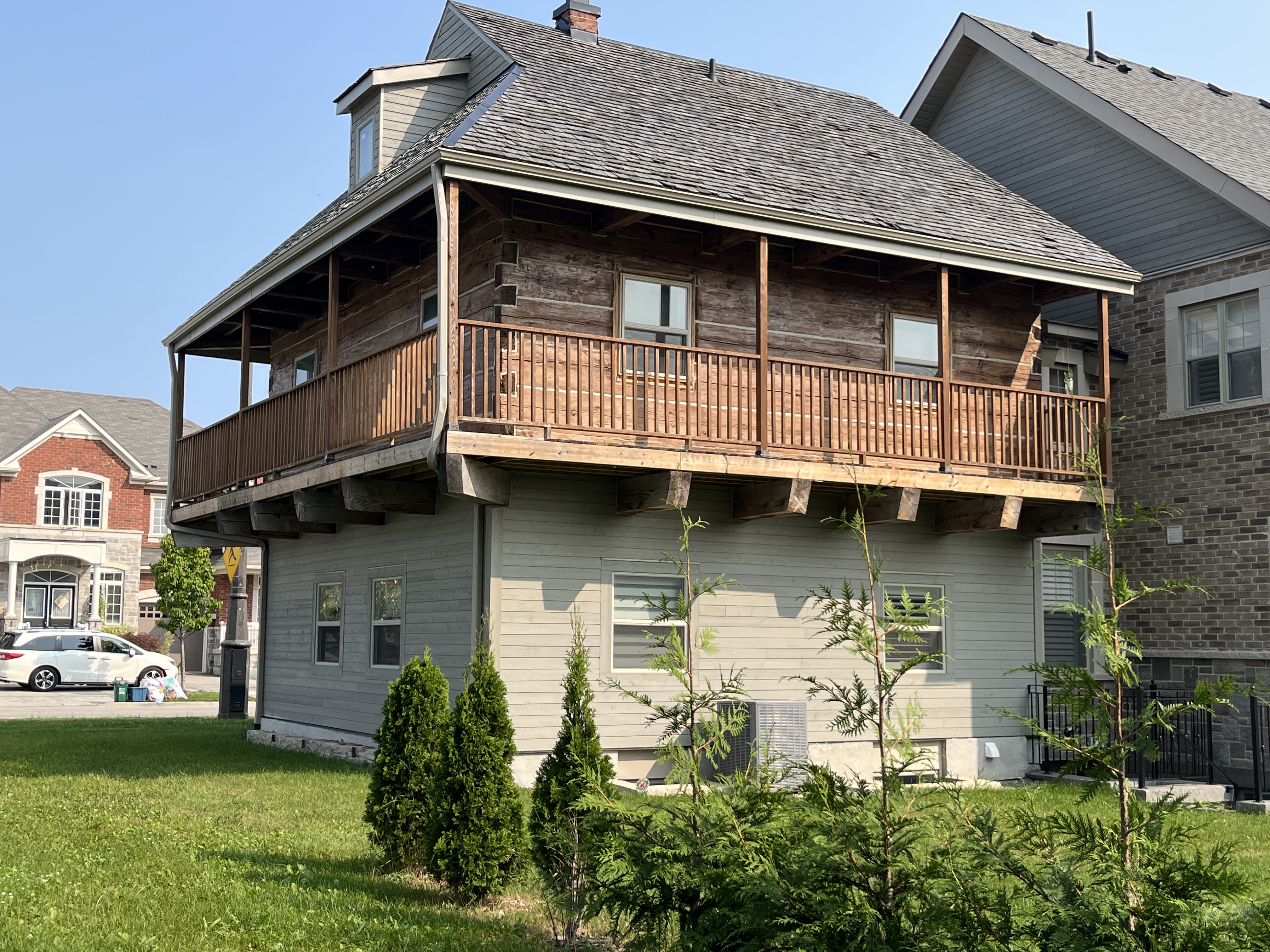
Philip Ekhardt came to the United States in 1792 and later moved to Upper Canada. He was one of the Berczy Settlers who moved to the Markham area in 1794. They were the first group of settlers to arrive in the area and although their settlement wasn’t a long term success they left their mark. Philip built his log home around 1803 and it appears to have originally been a two story home which was later modified to be a one story home in the 20th century. This archive photo shows the home in its original format.

Philip donated land for a Lutheran Church and cemetery but prior to the construction of a log church building in 1820, services were held in his home. This house has been restored and is now part of a modern home on the original site. It is the oldest surviving building in Markham Township.

The Bethesda Church and cemetery were located adjacent to the house and there are several Eckardt family members buried here. There is another Eckardt Cemetery on Markham Road near the present site of the 407 highway, but that’s another story for another day.

Quantztown has all but disappeared and is only represented by two cemeteries and a couple of houses tucked away amongst the urban sprawl of Markham.

Related stories: Unionville, Milliken, William Lyon Mackenzie

Google Maps Link: Quantztown

Like us at http://www.facebook.com/hikingthegta

Follow us at http://www.hikingthegta.com
Swan Lake – Markham

September 7, 2024

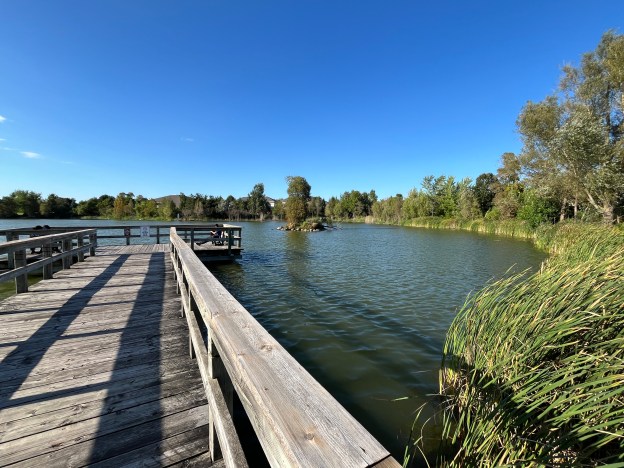
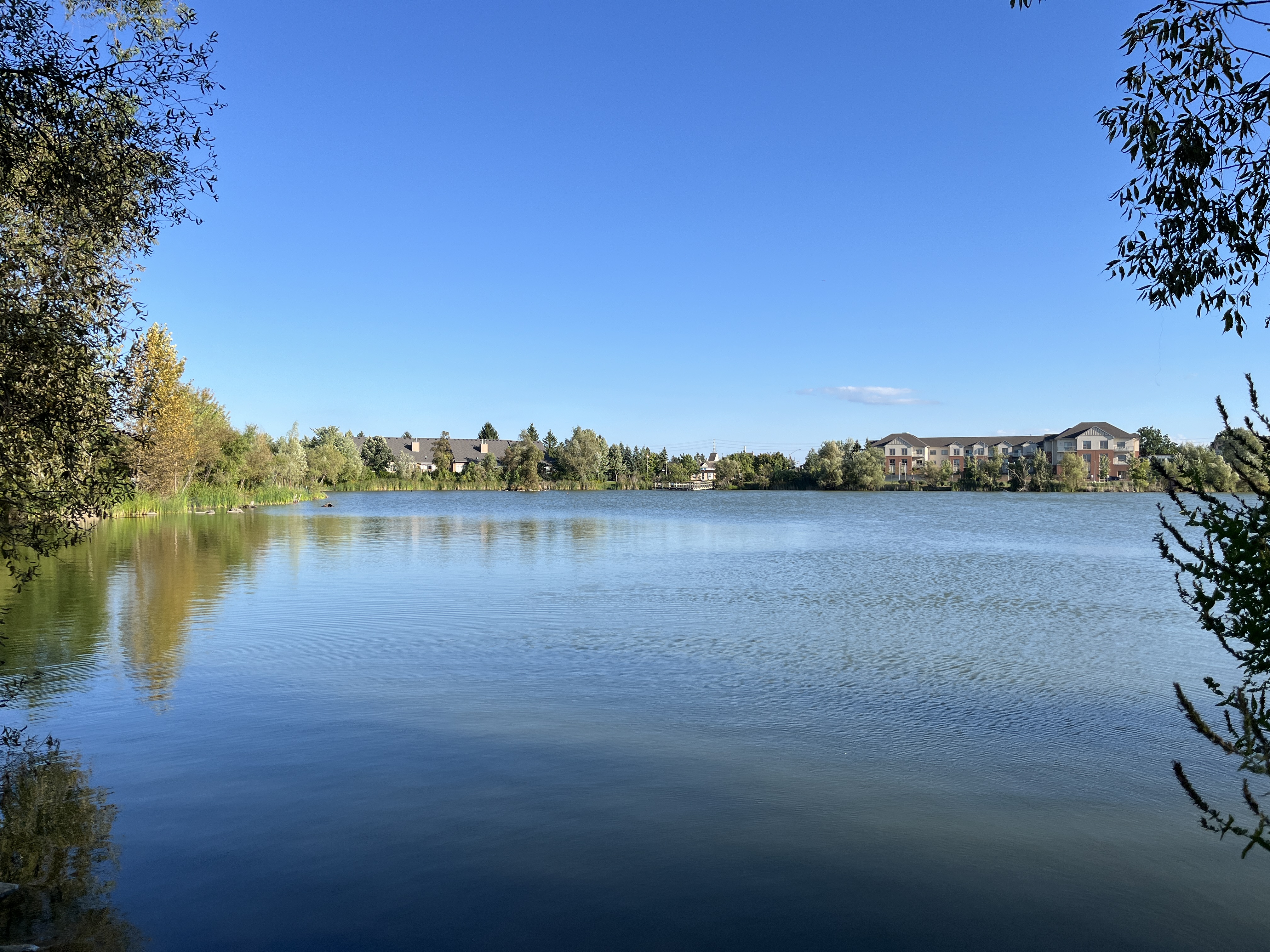
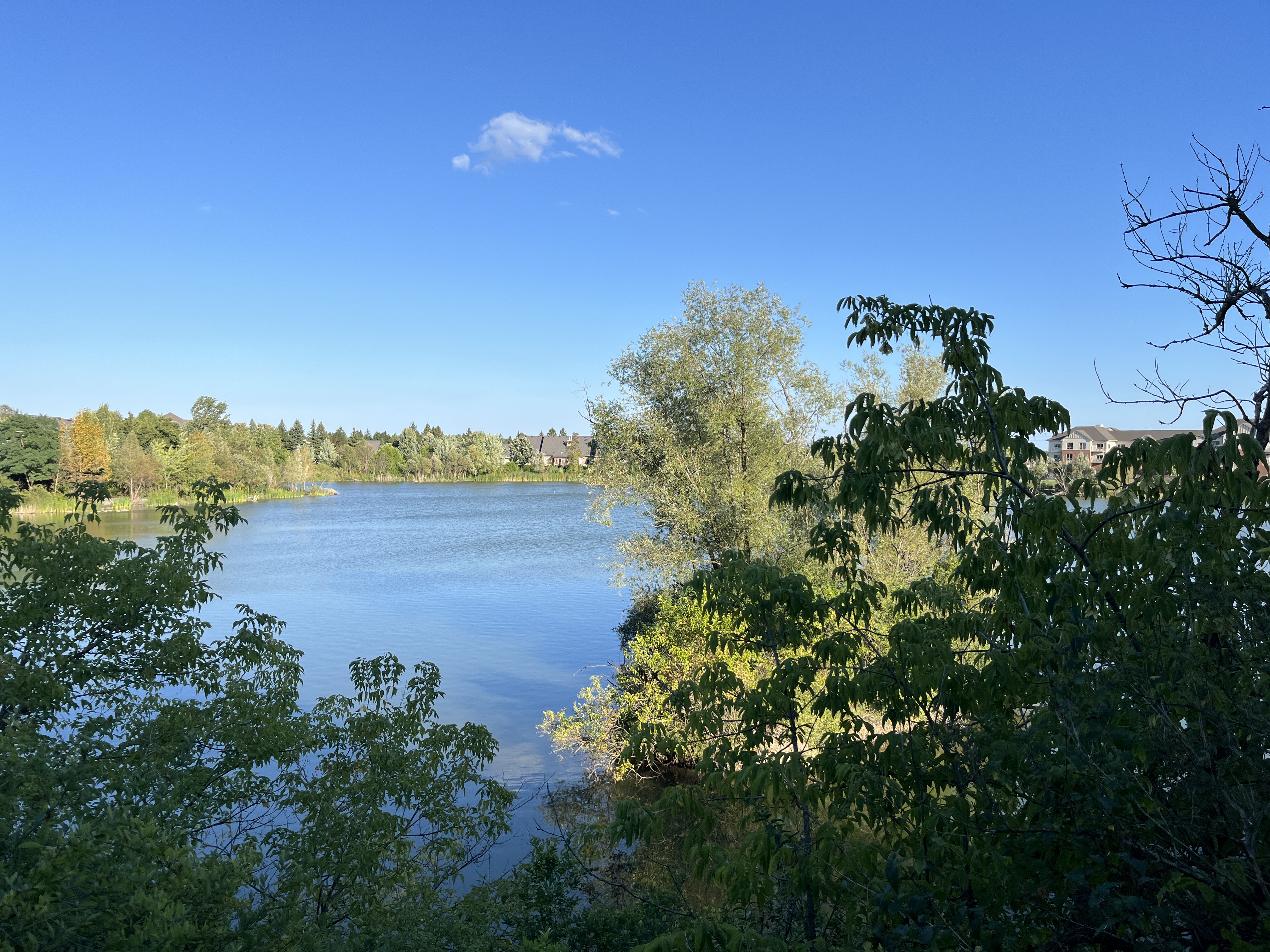
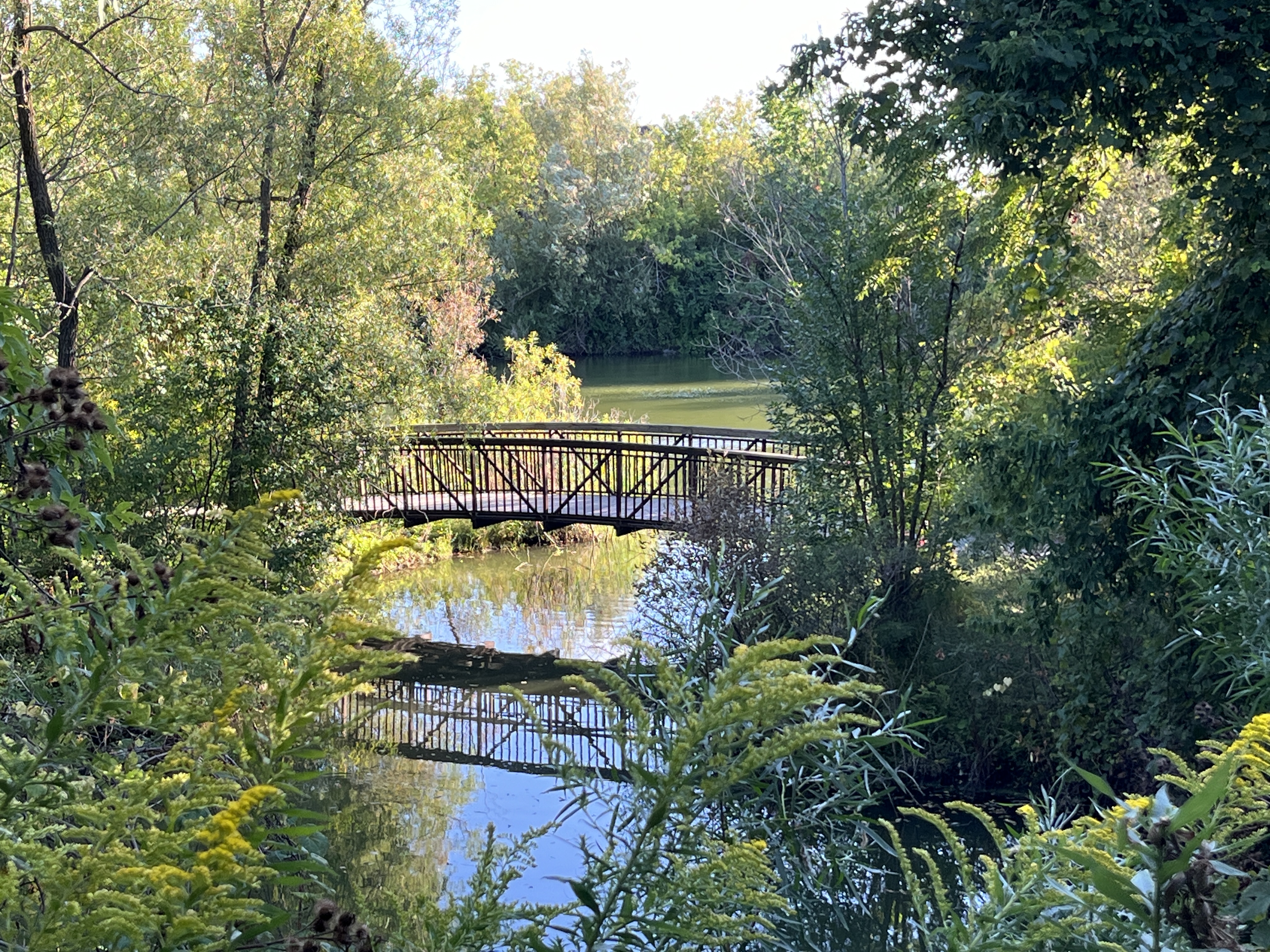
Swan Lake Park in Markham is a nice place to visit for a walk and to enjoy some time with nature. It is the second largest water body in Markham and is man made like the other two large lakes. Swan Lake can trace its history back to the 1850s when the site was found to be a large gravel deposit dating back to the last ice age about 12,000 years ago. Markham was founded around 1825 when a dam was built on the Rouge River to provide water for a mill that was located in the area of Milne Dam. Around 1840 another dam was built which created Toogood Pond near Unionville. We had previously written about these two ponds and so it was time to visit Swan Lake.

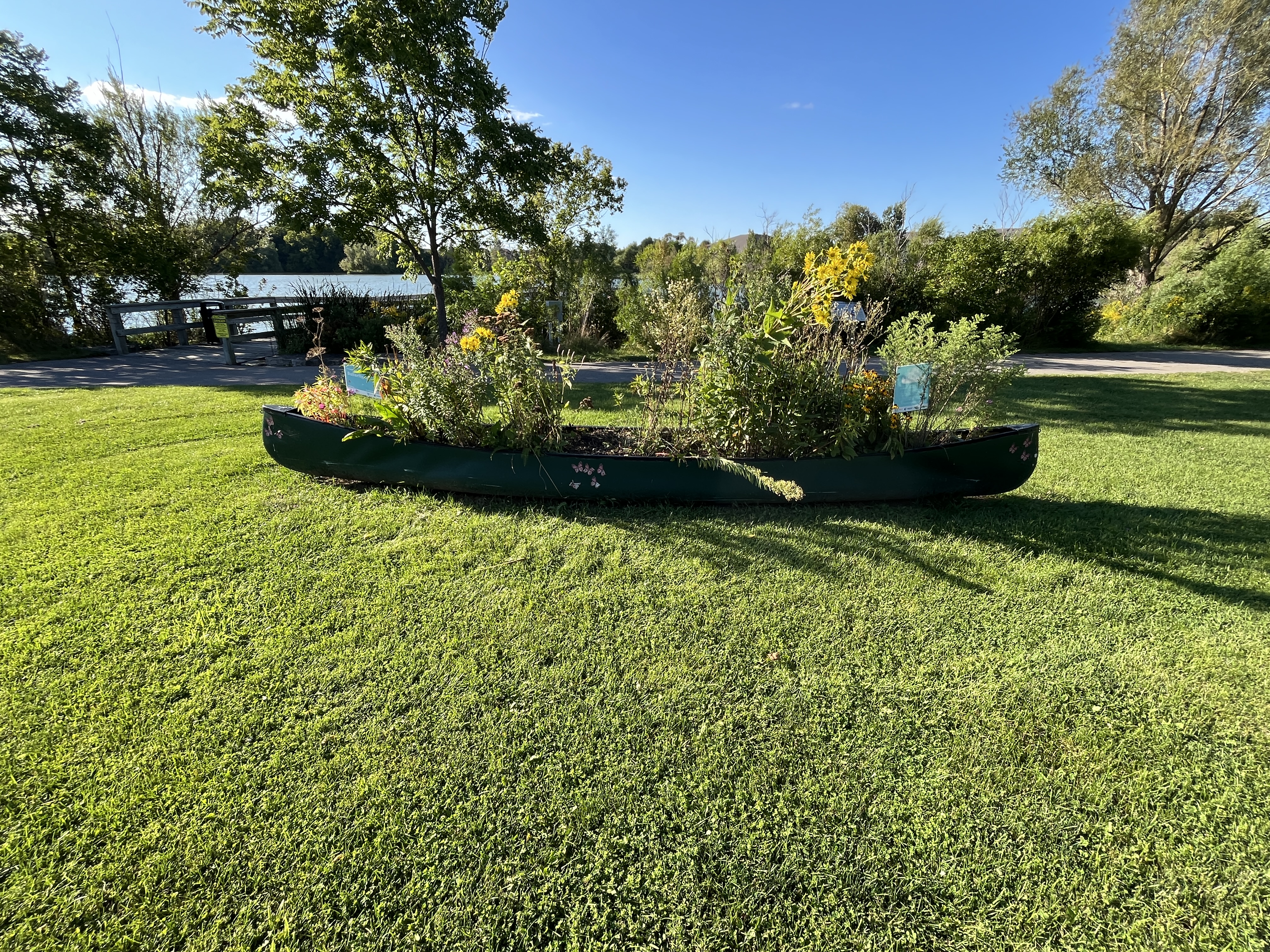
When you enter the park off of Swan Lake Boulevard the first thing you will see is a canoe full of plants. These canoe gardens have been showing up throughout Ontario and are used to create a space to plant shrubs and flowers that attract bees and other pollinators to the area. The first canoe garden was set up in 2013 near Fort York on the old waterway for Garrison Creek. Since then, dozens of them have been placed throughout Toronto, Markham and Richmond Hill. The idea is to improve habitat for pollinators as their populations have declined by over 45% since the 1980s.

Swan Lake was used as a gravel pit from the 1850s until the 1970s with the largest amount of gravel being removed in the 1960s and 1970s. Gravel is needed for construction purposes and as Markham and surrounding area were developed for houses and roads, a good local source was needed. It isn’t economically viable to truck gravel for long distances so it is usually extracted near where it will be used. When the gravel pit was closed it was allowed to fill up with water to become Swan Lake.

Swan Lake Park is 45 hectares (111 acres) and has many foot trails to be explored. There is a main trail that goes all the way around the lake and many secondary trails, especially through the wooded areas.

Although housing has been built up to the edges of the park and often encroaches on the ability to take natural looking photographs, there’s still plenty of places to get some great pictures.

The lake itself is 5.4 hectares (over 13 acres) and is somewhat smaller than the 21 hectare (52 acres) lake in Milne Dam Conservation Area. It is larger than the 3.5 hectare (8.6 acre) Toogood Pond.

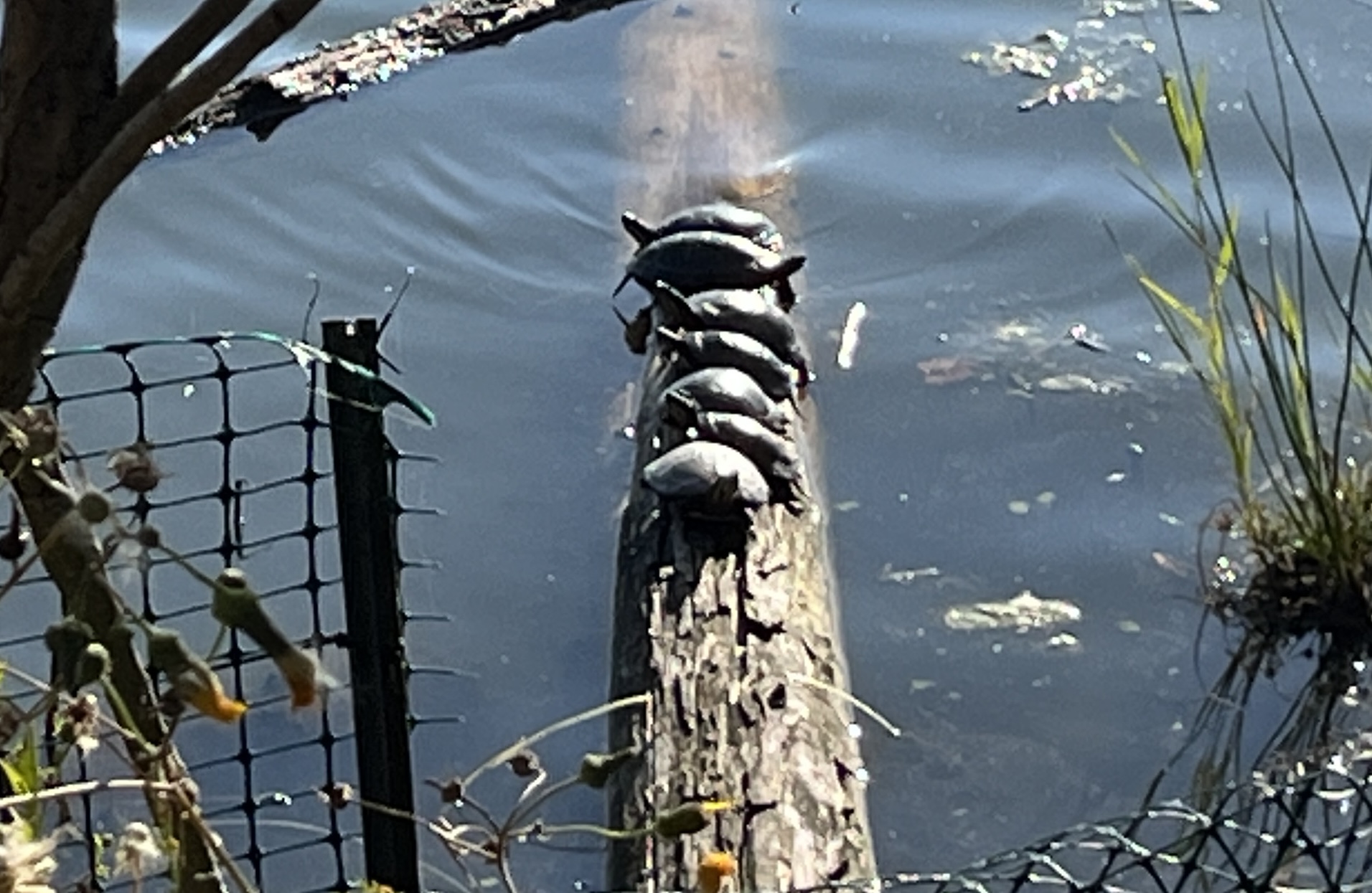
The lake supports many turtles of which the Painted Turtles and Snapping Turtles are natural while the Red-eared Sliders are invasive. Red-eared Sliders are sold as pets and subsequently dumped into the lake by irresponsible owners.

The lake is a natural part of the local aquifer and it is estimated that 35% of all the water that enters the lake goes into sustaining local groundwater levels. Based on this, Swan Lake is considered to be a significant groundwater recharge area.

Swan Lake has been prone to large amounts algae which is related to excess phosphorus in the water. Canada Geese are one of the primary sources of nitrogen and phosphorus in the lake. The many enhancements in the past few years are an effort to manage the geese populations. These include changes to the shorelines to make them less attractive to geese as nesting areas. Lake bottom sediments also contribute to the high levels of phosphorus in the lake. In 2013 an application of Phoslok was done and the water improved but only for a couple of years. There is an ongoing program to monitor and treat the lake to prevent excess blooms of algae which can be toxic to pets and humans.

The north end of the park is forested and has a small hill that looks out over the lake. This is where you are most likely to see some of the 12 species of mammals that have been observed in the park. These include coyote, red fox, racoons, squirrels and chipmunks. Mink and muskrats have been found around the edge of the lake. 155 species of birds have been spotted in the park, many of them migratory. This makes the park a great place for bird watchers.

The Friends Of Swan Lake Park have made a request to the City of Markham to add the park to the Markham Natural Heritage Network. As an ecologically sensitive area it qualifies even though it isn’t part of the Rouge River watershed. Whether you’re looking to enjoy some time in nature, get some exercise or just take the dog for a walk, Swan Lake is a great place to visit.

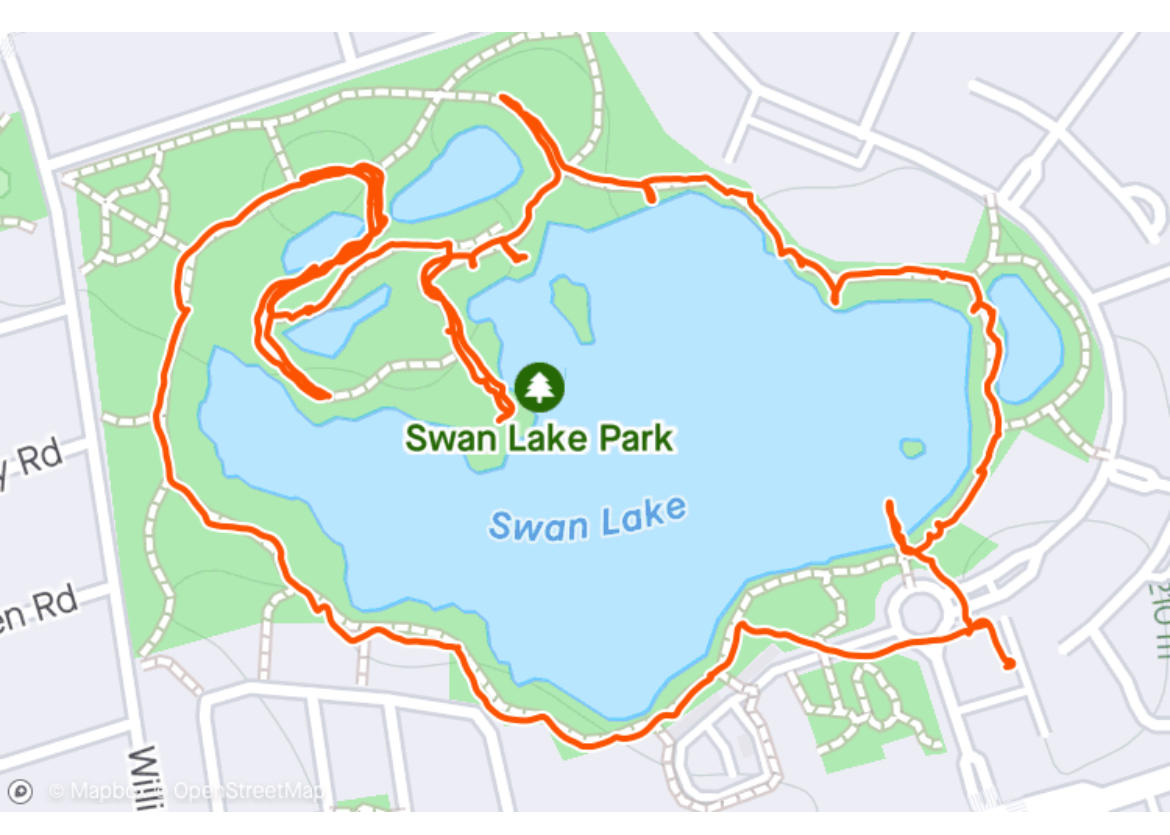
We are definitely planning to return to Swan Lake in a few weeks when the trees are changing colours as it has many species of trees and is likely to be very colourful. Our walk can be seen on the map below.

Related stories: Milne Dam Conservation Area, Toogood Pond

Google Maps link: Swan Lake

Like us at http://www.facebook.com/hikingthegta

Follow us at http://www.hikingthegta.com
Riverdale Farm Summer 2024

August 24, 2024

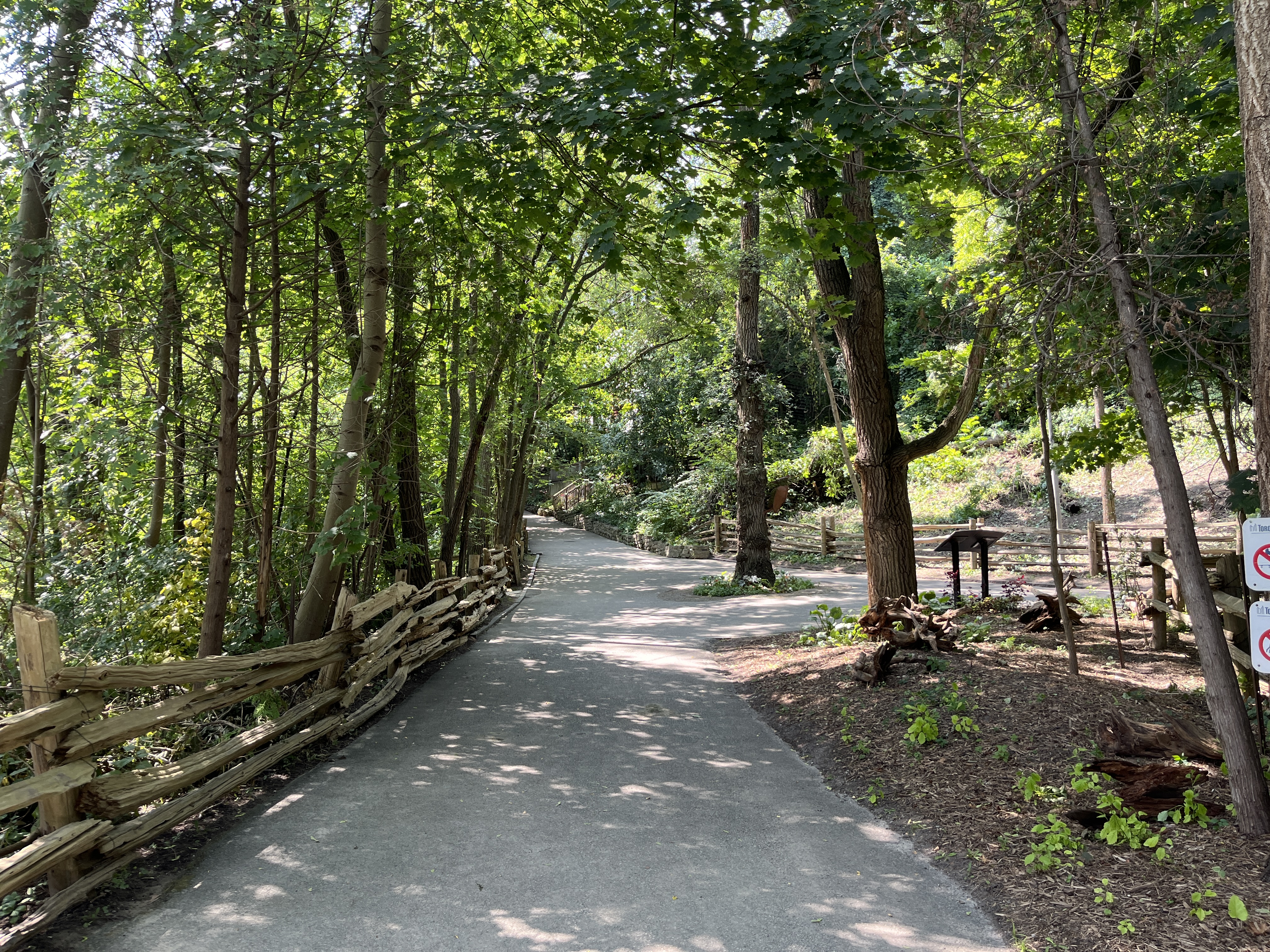
This summer marks the 50th anniversary of the opening of the Toronto Zoo in Scarborough on August 15, 1974. We’ve previously posted about the zoo at the link above. Before that, there was Riverdale Zoo. That facility transformed itself into Riverdale Farm after the new zoo was opened. Our previous story on Riverdale Farm was photographed on Family Day 2016 and featured a lot of snow. I recently had the chance to walk through there on a summer day and the pictures are much more cheerful than the previous ones. Therefore, I felt it might be good to publish a new set of pictures. We won’t be retelling the story as it can be found in our previous post. This will be more of a photo album than a historical post. Riverdale Farm can be entered for free from Riverdale Park off of Winchester Street and also from the bottom of Riverdale Park East. The image below shows the trail into the farm from Riverdale Park East.

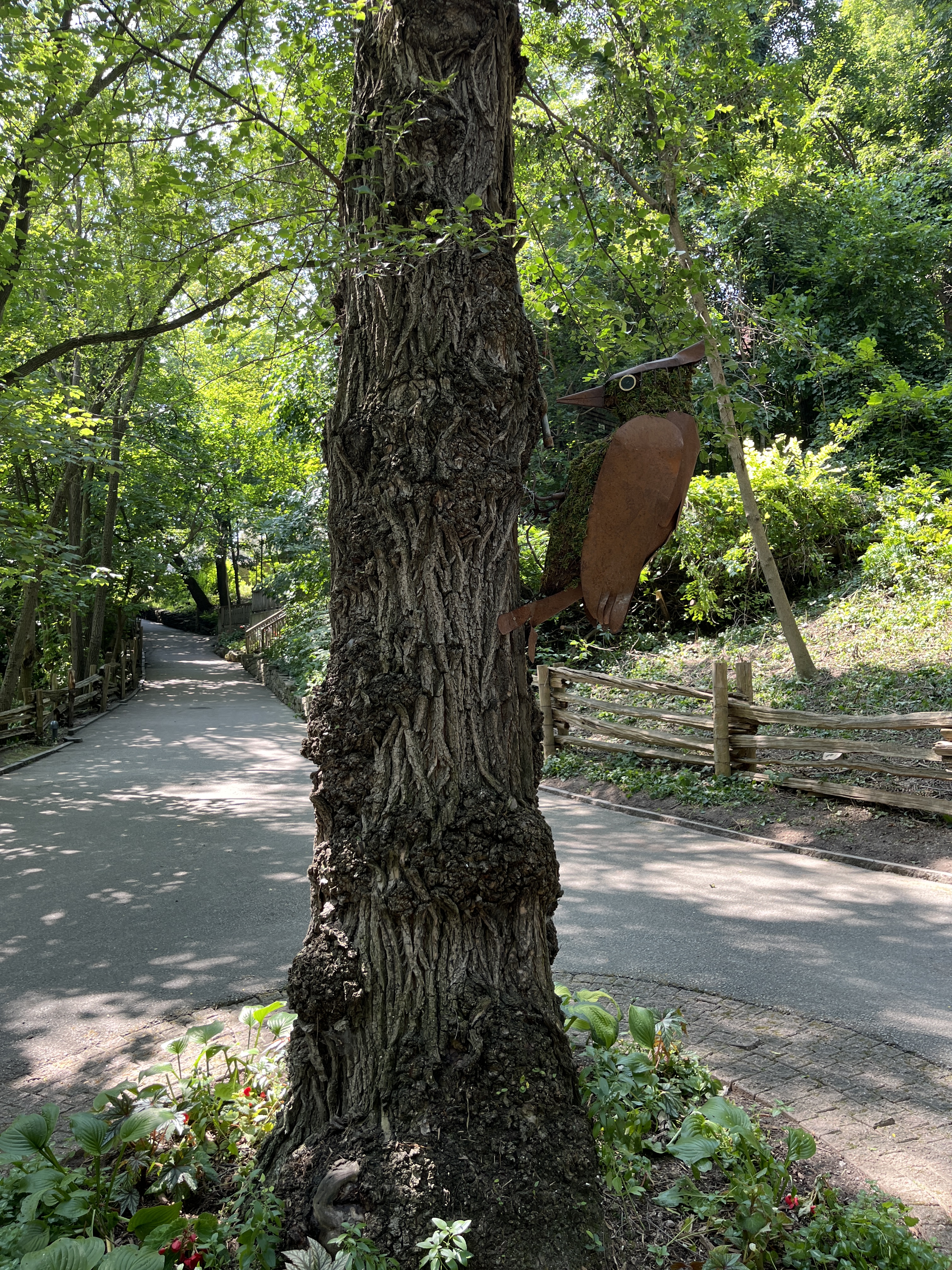
One of the first things you will notice as you enter the farm from the bottom end is this large steel woodpecker that seems to be endlessly trying to get a meal out of this tree.

When I was here eight years ago you could still walk to the Island House. There are several old sections of the Don River that are in the farm that have been cut off from the main flow of the river. This happened when the city decided to straighten the river in the 1880s and left some oxbows stranded on the Riverdale Zoo property. The building on the little island was known as the Monkey House (later the Island House) and is one of only three original buildings that remain from the days of the zoo. The stone arch bridge that accesses the island has been determined to be unsafe and is now closed. This is likely permanent as there is little need to refurbish it since the Island House isn’t in use anymore.

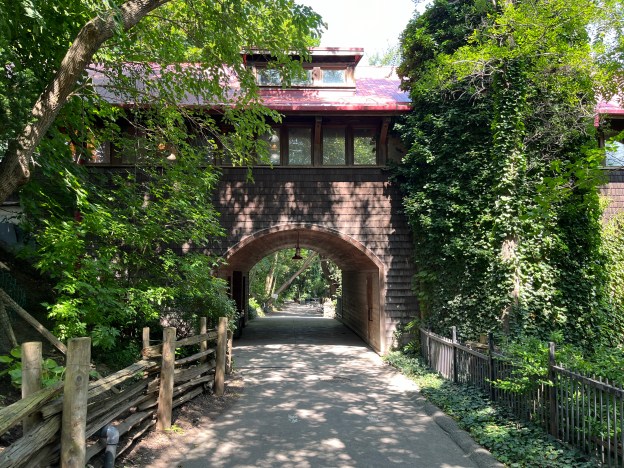
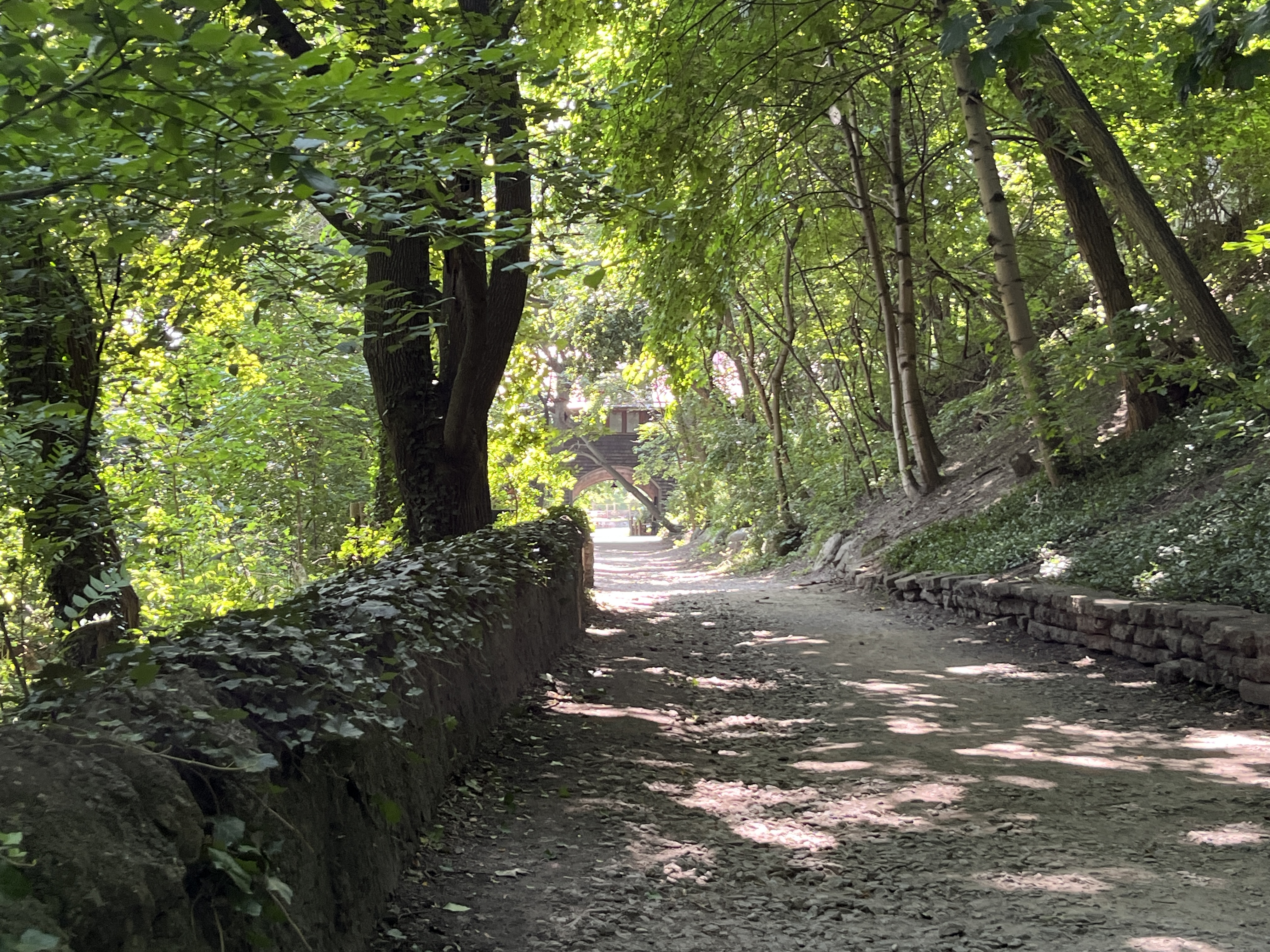
From the Island House you can follow the path back up the hill toward the main part of the farm. The archway under the Meeting House can be seen in the distance and more clearly in the cover photo to this post. This building was opened in 1993 and is used for visitor activities all year and includes a set of public washrooms.

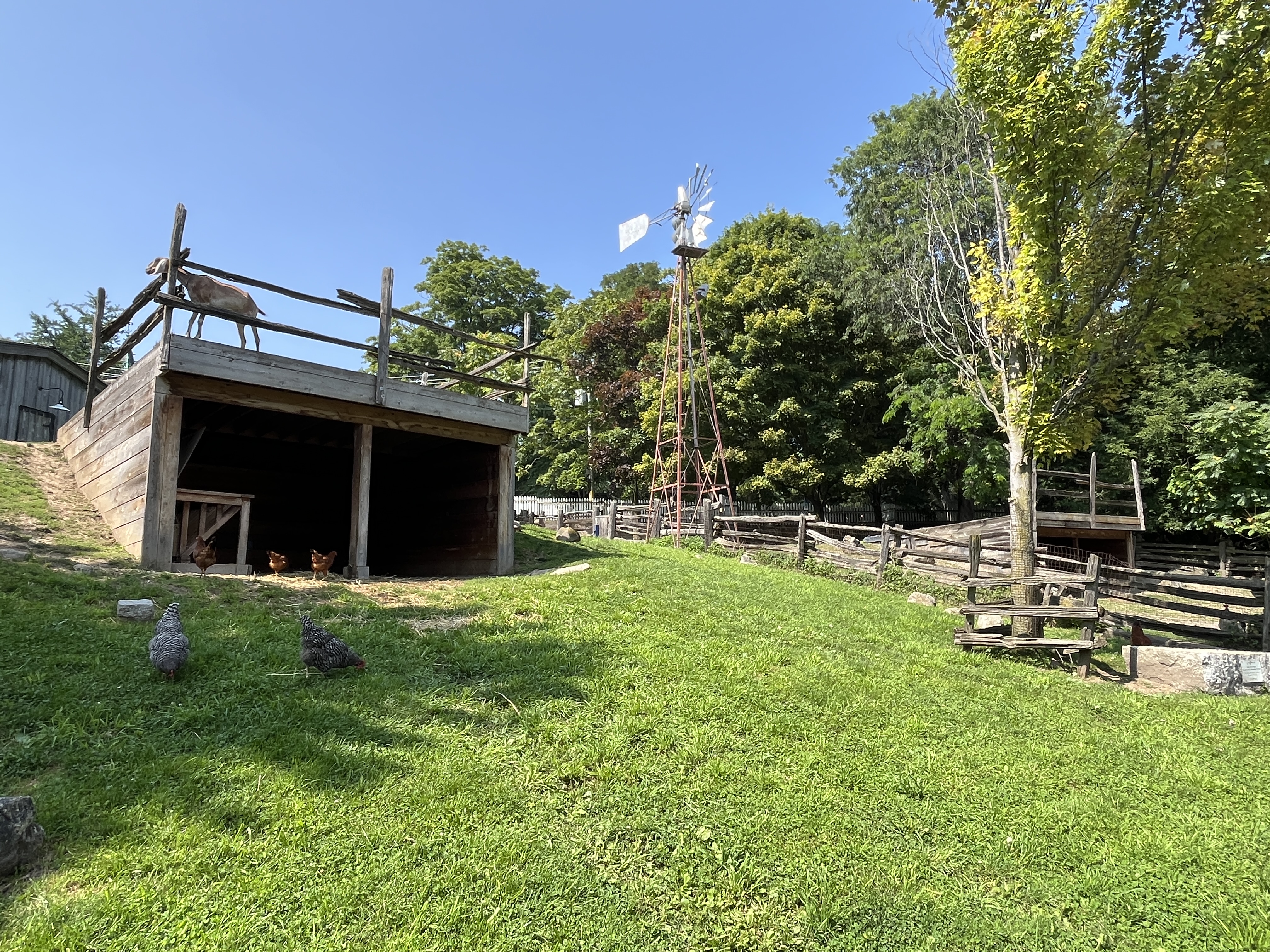
Riverdale Farm is a working farm located in the heart of the city. This allows people the ability to see farm animals without having to drive for an hour to reach one of the tourist farms in the country. I use the term tourist farms to describe places like Chudleighs or Downeys because they charge an admission so that urban dwellers can experience what life on a farm is like. Unlike these farms, Riverdale Farm is free to visit. However, it isn’t a petting zoo and you can’t feed or really interact with the animals. The goat in the picture above is standing on top of the shelter and keeping an eye on the people who are visiting.

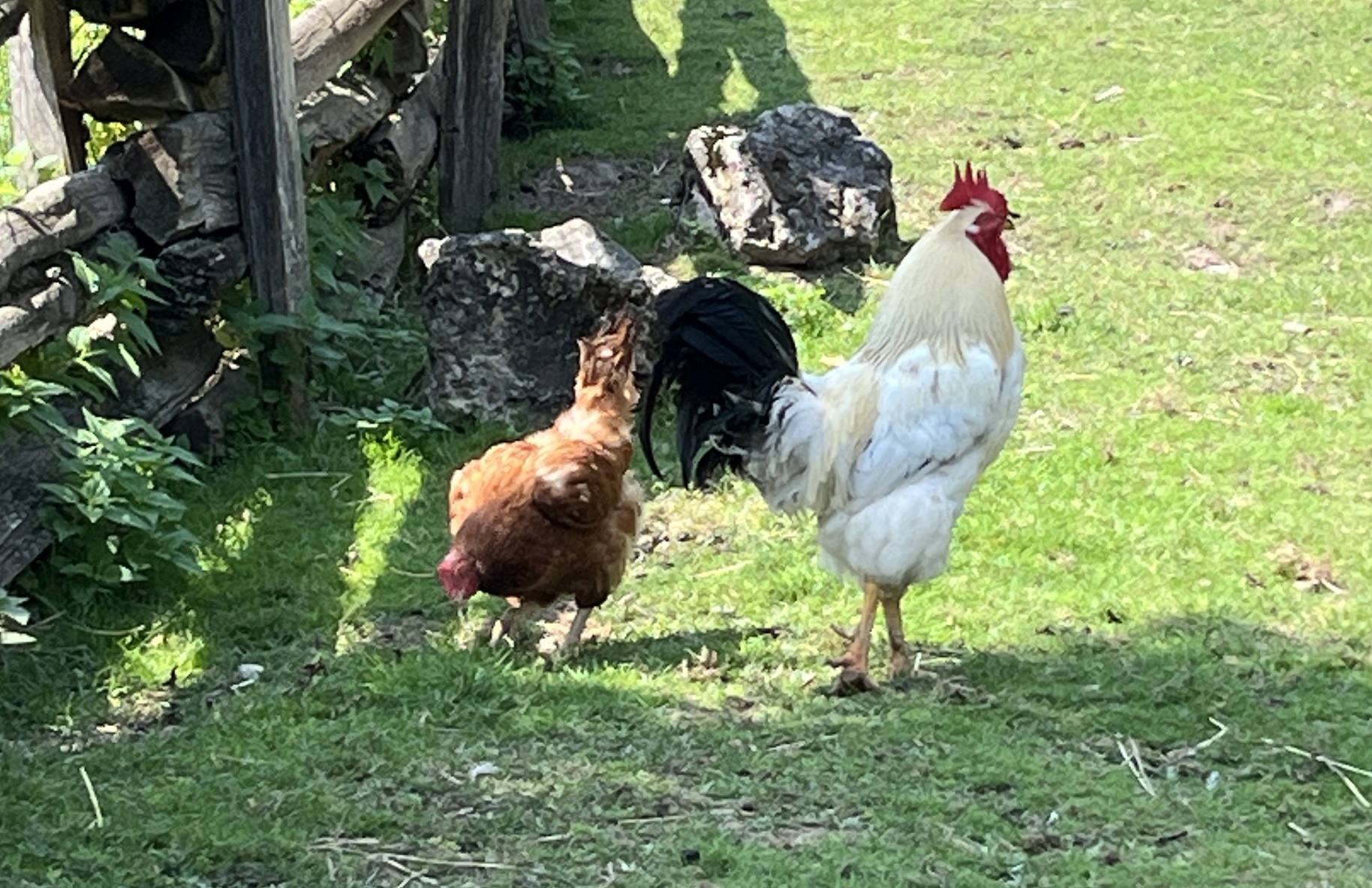
This rooster was crowing in the middle of the afternoon but perhaps it was just a show for the hen that seemed to be following him around. I guess this chicken is in love.

The zoo keepers residence was built in 1902 by inmates from The Don Jail across the river in what is now East Riverdale Park. The house served the zoo in several capacities including an animal hospital. It was also used as a temporary morgue for The Necropolis across the street. Along with the Monkey House and The Donneybrook, it is one of only three remaining structures from the zoo.

There are two barns on the farm, the smaller of which is home to the pigs and poultry. The larger barn is known as the Francey Barn. It was originally built in 1858 on a farm in Markham Township. It is a style of barn that is known as a Pennsylvania Bank Barn. This is because it was built into the side of an embankment or hill. This allowed access to the upper floor from one side and the lower level from the other. Animals were kept in the lower level while hay and straw were kept in the upper level.

The Francey barn was donated to the City of Toronto in 1977 and moved to Riverdale Farm. I was taken apart and moved in pieces and then reassembled on the farm. When you look at the main beams in the barn you can see the rough cut of them which shows they were cut by hand and not in a saw mill. This was common on early farms where the trees cut to clear the farm provided the materials for houses and barns. When you look carefully you will see that some of the beams have little cut out sections that indicate they were originally positioned differently before the barn was disassembled.

Beside the cow paddock is the Donnybrook ruins. This was originally a two story building that can be seen in this photo from the Toronto Archives.

The tower and ground floor are all that remain and the tower has been overgrown to the point where you can no longer see the stone details that are hiding behind the vines.

Riverdale Farm is a great place to visit any time of the year and has over 3 kilometres of trails to be explored. It also connects to the larger network of trails along the Don River. Parking is free (if you can find a spot on a street nearby) but you can also get there easily by TTC.

Related stories: Riverdale Farm, Toronto Zoo, The Don Jail, The Necropolis

Google Maps link: Riverdale Farm

Like us at: http://www.facebook.com/hikingthegta

Follow us at: http://www.hikingthegta.com

Also, look for us on Instagram

Fort William Historical Park

August 10, 2024

The fur trade was using the Kaministiquia River as early as 1681 when the French were trading with the Ojibwe. The river became an important trade route that lasted until the 1820s. In 1776 a group of fur traders from Montreal decided to join together to reduce competition among themselves and in 1779 they formed the North West Company (NWC). They entered into direct competition with the Hudson Bay Company for the North American fur trade with the indigenous peoples. In 1803 they build a trading fort at the mouth of the Kaministiquia River. The fort was named Fort William in 1807 after the Chief Superintendent of the North West Company who was named William McGillivroy.

I had the opportunity to visit the recreated fort while on a business trip to Thunder Bay. The image below shows the trail from the visitor centre to the Fort William Historical Park which is about an 8 minute walk.

The fort became a major transshipment point for the furs that the indigenous people collected and traded with the NWC. There was an annual rendezvous that occurred at the fort in the end of July and start of August. Furs were brought from the interior and traded at the fort. They would be shipped to Montreal and then off to Europe. The NWC needed a central meeting place because there wasn’t enough time for the furs to be taken all the way to Montreal and then make the trip back before the rivers would freeze for the winter. When you visit Fort William Historical Park you will find a small Indigenous camp outside the fort.

The NWC had good relationships with the indigenous peoples and although they chose to camp outside of the fort, there were plenty of opportunities to interact with the traders. The relationships were friendly and many inter-racial marriages took place. The image below shows the entrance to the fort from the river.

An incident on June 19, 1816 near modern day Winnipeg became known as the Seven Oaks Incident. This stemmed from a proclamation of the Hudson Bay Company in January 1814 that prohibited the export of pemmican from the colony for the next year. Pemmican was the main food of the fur traders as it could be transported easily. This proclamation was seen as an attempt to control the fur trade. Tensions rose and by 1816 they were at the breaking point. When things came to a head on June 19th a gun battle occurred that left 21 dead on the side of the Hudson Bay Company and 1 on the North West Company side.

The result was the occupation of Fort William by Lord Selkirk of the Hudson Bay Company for about 10 months between 1816-1817. By 1821 the North West Company was in financial troubles and the two companies agreed to a merger under the name of the Hudson Bay Company.

The fur trade then took on the routes of the Hudson Bay company and Fort William lost its significance. By 1883 it was closed. The image below shows the inside of the fur storage building complete with its 60 pound bundles of furs awaiting shipment to Montreal.

The site of the original fort was ideal for the Canadian Pacific Railway and its grain shipping facilities because it was accessible to the lake. The buildings of the fort were slowly demolished and replaced with railway facilities.

The last building standing was the Stone Stores building which was demolished in 1902. The image below shows the recreated building at the Fort William Historical Park.

In 1971 it was decided that the fort would be reconstructed as an historical and educational site. A location 14 kilometres upstream was chosen and the fort was meticulously rebuilt to match the original as close as possible.

When Lord Selkirk occupied the fort in 1816 he made detailed notes about every aspect of the fort, down to the size and number of windows and floorboards in each building. He measured out the number of steps between each building and what was stored in each one. His notes have survived and the details allowed for a very accurate representation of the original fort. The Naval Shed below is an example of the reconstruction.

The original goal (pronounced jail) is a dark and forbidding place with no windows where one could be put for causing the smallest disturbance.

The reconstruction includes storage buildings, accommodations, a hospital building and a couple of canoe buildings as seen earlier in this post. The image below is of the inside of the trades building where the people who maintained everything lived.

The powder storage building is one of the few stone buildings in the compound. The fort was a bustle of activity during the six weeks of Rendezvous each year but then went back to accommodating a handful of people for the remainder of the year.

Fort William Historical Park used to showcase life in 1816 when the fort was under the control of the Hudson Bay Company but has recently reverted to 1815 when it was independent. There is an entry fee but you can spend many hours here and learn a lot about the fur trade and relations with the indigenous people who made it all work. The staff role play and do an incredible job of pretending that it is 1815.

Google Maps Link: Fort William Historical Park

Like us at http://www.facebook.com/hikingthegta

Follow us at http://www.hikingthegta.com
Also, look for us on Instagram

Spirit Rock Conservation Area

July 13, 2024

Alexander McNeill was born in The Corran, County Antrim, Ireland on May 10, 1842. When he was 30 he married his second cousin Hester who was recently widowed. That same year of 1872 they emigrated to Canada and settled on his brother-in laws farm in Elderslie Township. Hester and Alexander lived there until 1881 when he bought a 300 acre property just north of Wiarton. Alexander was a member of the Liberal-Conservative party and was elected to the House of Commons for the riding of Bruce North in 1882. He held this seat through the next 4 elections but his victory in the 1900 election was overturned the following year and he was never re-elected. The map below is from the 1882 county atlas and shows the McNeill property just north of Wiarton on Colpoy’s Bay.

In 1882 McNeill commissioned a mansion for himself and Hester which was designed to have 17 rooms. It was the first estate mansion to be built in Bruce County. He called the 300 acre estate and the mansion The Corran after his birthplace in Ireland. It took several years to build and Hester died in 1890 before it was complete. Alexander was left with his 16 year-old son Malcom whom he willed the estate to when he passed away.

There were three acres of gardens which included over 500 rose bushes. Alexander couldn’t maintain it and serve as an Member of Parliament in Ottawa at the same time. So, he asked an old friend Alfred Lewis to move from England with his family and become the estate manager. The historical image below shows the estate in its prime. The front entrance and steps were crossed by many famous politicians and prominent citizens over the years.

The same front steps can be seen in the image below. Lavish parties were hosted in the gardens and amongst the roses and peonies. Over 500 fruit trees were also planted on the grounds. One such party was held on July 1, 1901 when guests enjoyed violin music in the gardens.

Alfred Lewis was killed in 1931 when he was hit by a car. This was the very first hit and run accident causing a fatality to occur in the Bruce Peninsula. Alexander McNeill died on April 18, 1932 and left the property to his son Malcom, who had never married. Malcom was too generous with his newfound fortune and soon it was disappearing on him. He eventually had to sell off 20 acres of the estate to pay back taxes. When Malcom passed away in 1956 he left the house to his longtime housekeeper Sally Simmons. By the time the estate debts were settled, there was little money left and Sally closed up most of the house and lived in the kitchen. She sold the house to a man from Willowdale in 1960. Since he didn’t live in the house it was easy for vandals to access because of its secluded location. By 1964 the house was in bad shape with all the windows broken and most of the interior stripped away. Grey Sauble Conservation bought the property in 1971 but the break-ins continued until 1976 when the house burned down in a final act of vandalism.

Alexander ran a successful cattle breeding farm which raised Durham Shorthorns from England. The cattle barn is gone but the stone foundations remain a short distance from the house.

The estate was built with a beautiful view of Colpoy’s Bay and there are over 5 kilometres of trails that wind through the park, which has become known as Spirit Rock Conservation Area. The Bruce Trail passes through the estate as well as the Spirit Rock Trail. There are several great places to look out over the bay including the Spirit Rock Lookout. Because I was visiting the park for a short time before I had to go to a nearby inspection I didn’t have time to get to the lookout. Instead I headed for the spiral staircase where I was rewarded with the view in the image below.

The Spiral Staircase makes 3 turns and used 30 steps to bring you down the first steep section of the escarpment.

You are left with a mildly challenging section of trail that leads down to the Lake Huron shore. Fortunately, there is a handrail here. The footing was slippery on the morning that I visited and I was glad for the handrail. The mosquitos were famished and I was bitten about 30 times in 30 minutes.

The trail continues along the lakeshore but a lack of time and excess of mosquitos led me to decide to go back to the car. I previously hiked through this section of the Bruce Trail on a short vacation to the Bruce Peninsula in the early 1990s and enjoyed it then.

Spirit Rock Conservation Area has a $10 per day parking fee but the trails and history are well worth exploring.

Google Maps Link: Spirit Rock Conservation Area

Like us at http://www.facebook.com/hikingthegta

Follow us at http://www.hikingthegta.com
Also, look for us on Instagram