Tag Archives: One Room School

Uxbridge Historical Centre

Saturday, March 9, 2024

The Uxbridge Historical Centre was founded in 1972 and was created around the Quaker Hill school house. It is home to ten buildings and a large number of artifacts that combine to tell the local history of the township and the town of Uxbridge.

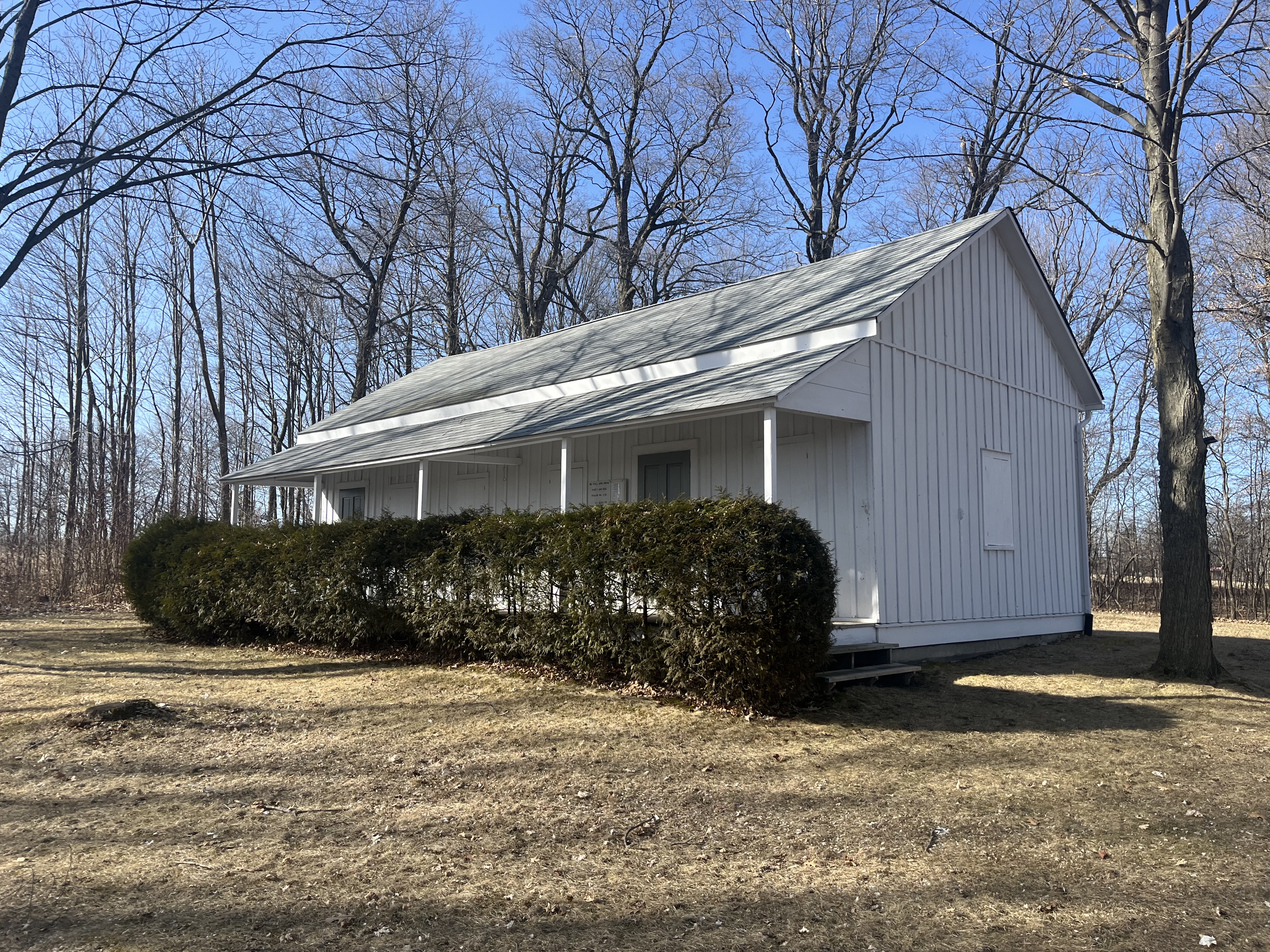
When Uxbridge township was opened up for settlement a lot of the early pioneers were Quakers. These members of The Society of Friends came from Pennsylvania along the newly created Yonge Street. Twelve families started to carve out a new life for themselves in 1804. Soon they started to make plans to build a Meeting House for themselves. In 1809 they built their first Meeting House out of logs and replaced it with a frame building in 1820. This was the only church in the township for nearly a generation. Meetings were held in this building until 1925 and it holds the distinction of being the oldest building in Uxbridge Township.
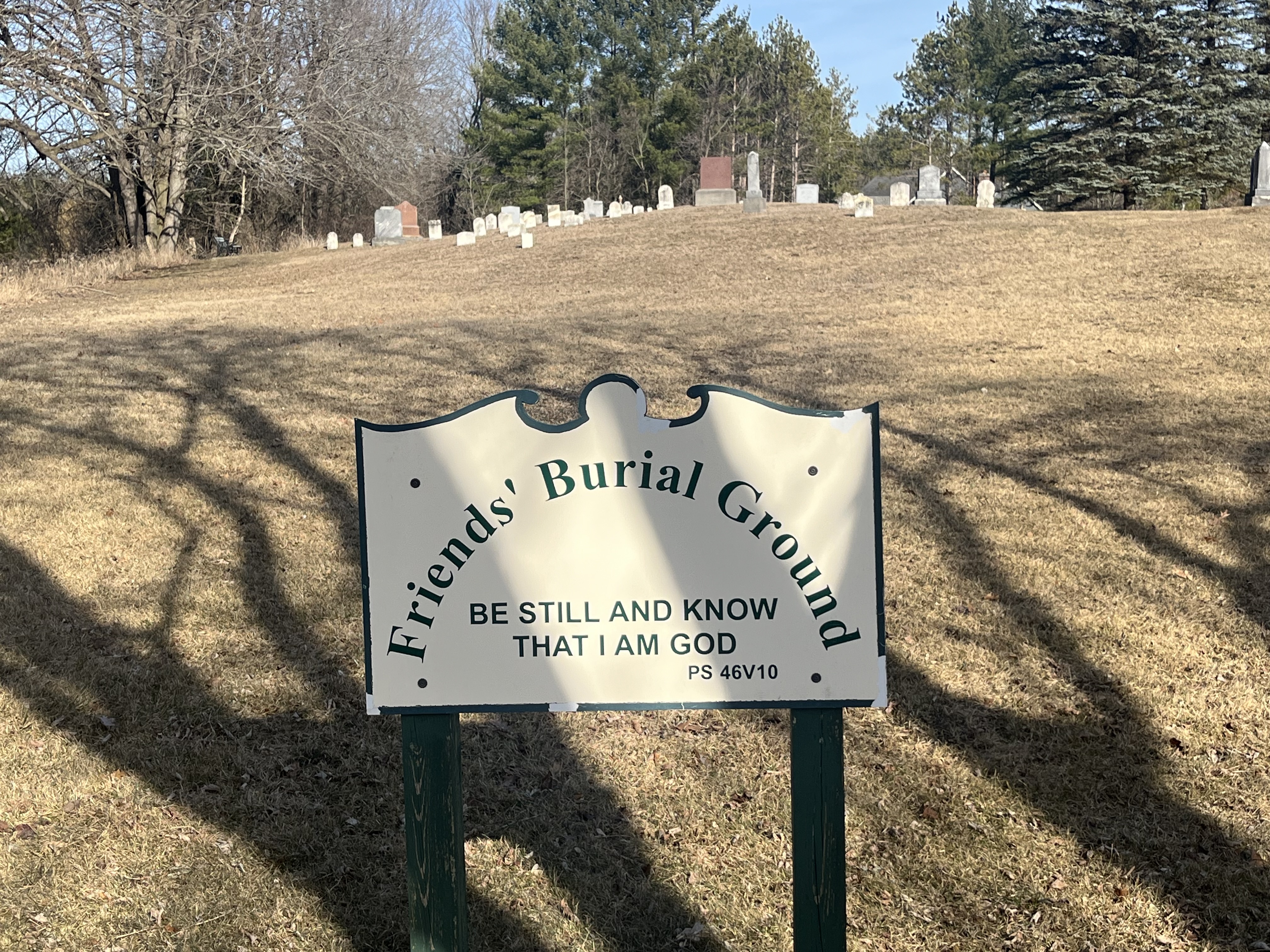
At the same time as they built the first Meeting House they acquired the plot across the road for a cemetery. This was the only cemetery in the area for a decade and has some early grave markers made from local granite.
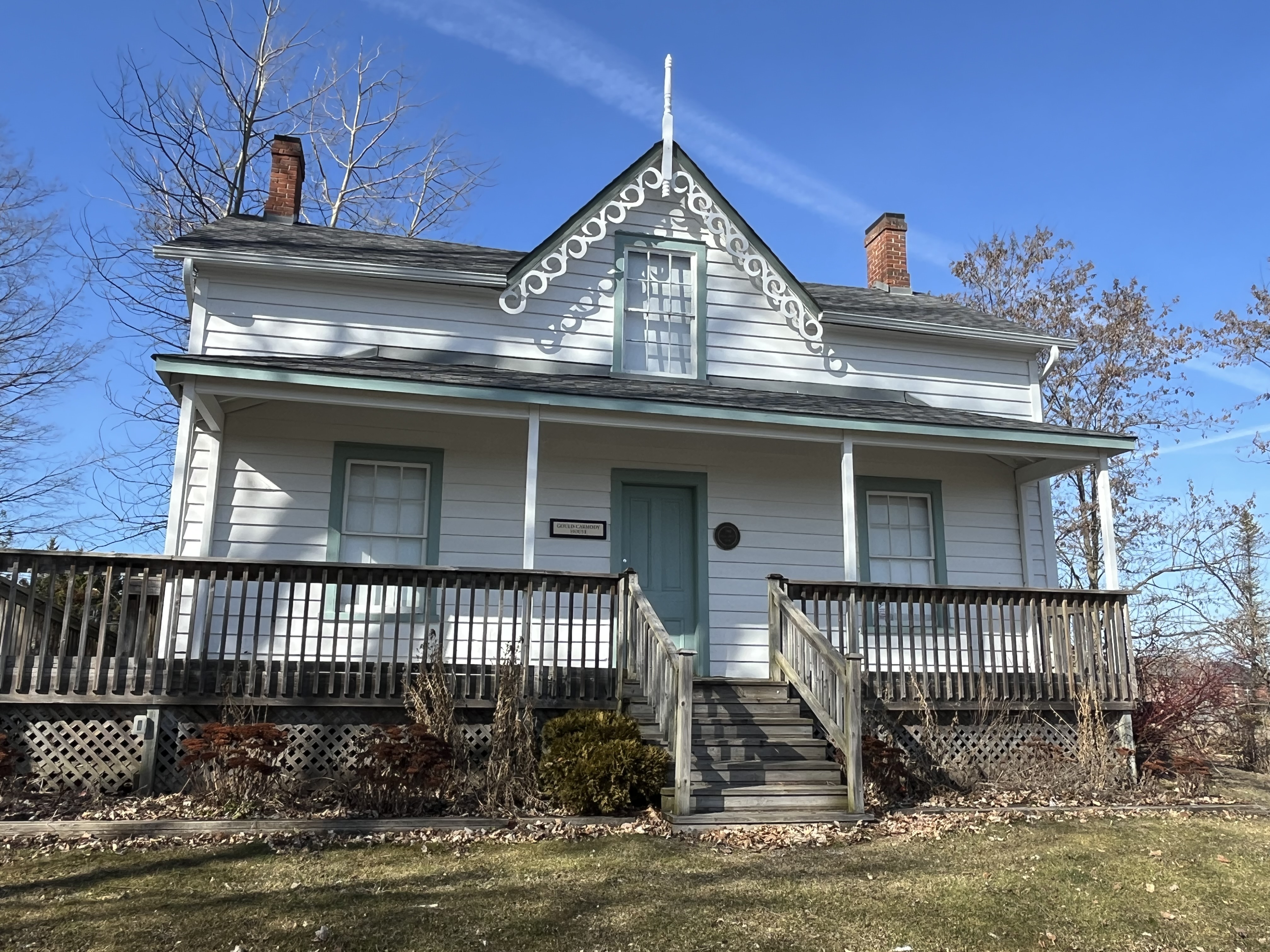
The home known as the Gould-Carmody house was built in the late 1850s in the area of town that currently is home to the arena. It was built by Joseph Gould who was the first local MPP. He was very influential in the development of the town of Uxbridge. His family sold the home to William Carmody in 1914 and it was moved to its present site in 1988. The decorative bargeboard, or gingerbread, along with the finial at the peak, give the home a distinctive appearance.
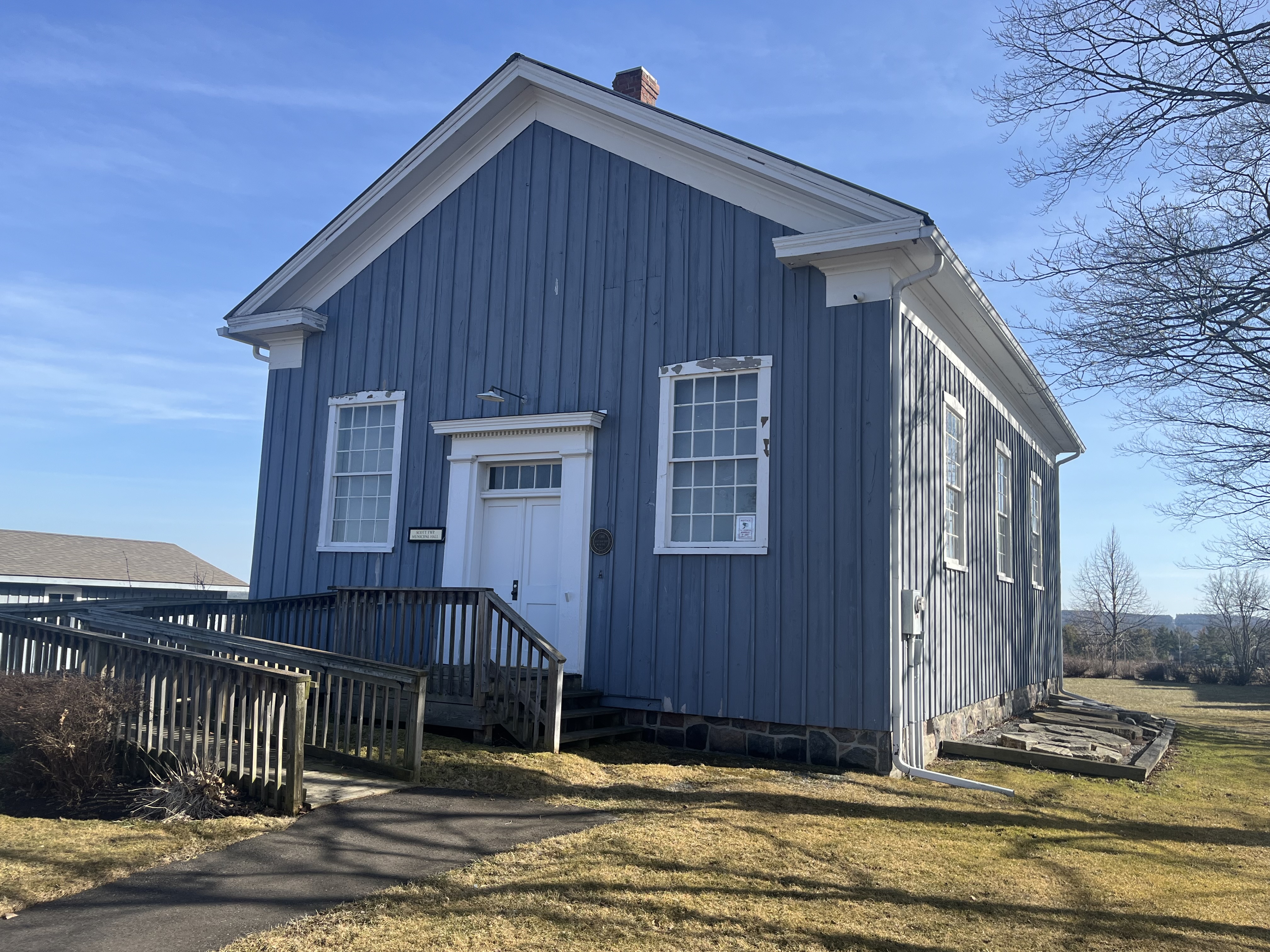
The Scott Township Municipal Hall was built in 1860 and served the town council until 1967. After this time, the wood frame building was moved to the farm of Ed and Dorothy Brown and used as a Country Heritage Museum. It was moved to the Uxbridge Historical Centre in 1993. The front entrance has windows on either side which contain 12 over 12 window sashes. The door itself is modest but has pilasters on either side and a lighted transom over the top.
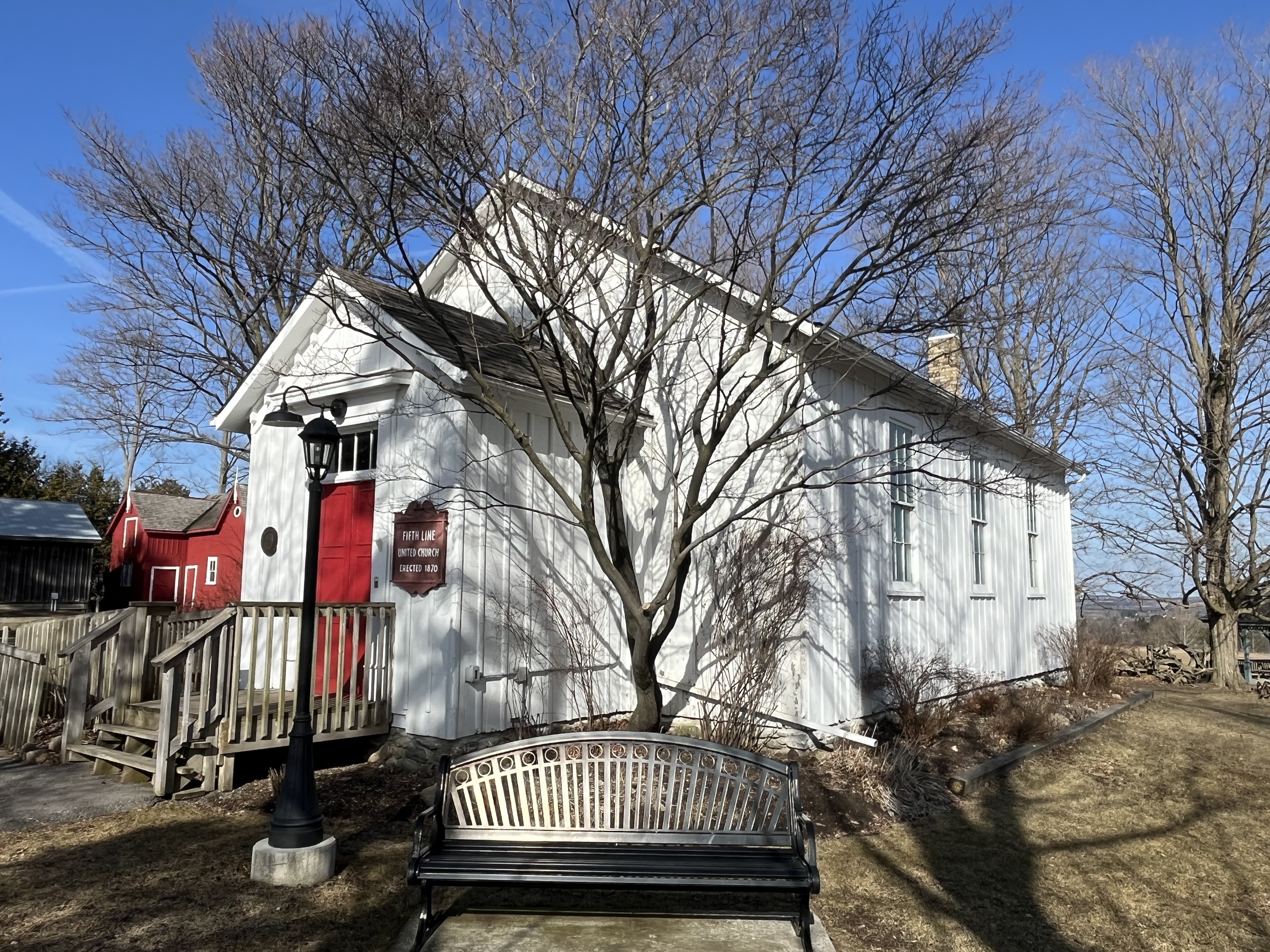
The United Church on site was moved from the west end of lot 16, where it stood closer to Goodwood. It was built in 1870 and dedicated on December 14th. Originally it was a Methodist Episcopal Church and was part of the Uxbridge circuit. It was known either as Forsythe’s or Russell’s Church. In the 1880s the Methodist churches recognized that they had several different types of congregations that basically held the same beliefs with minor variations. They were investing resources to compete with each other for congregants and missions funding and decided that it made sense to unify. The Primitive Methodists and the Episcopal Methodists joined together with the Wesleyan Methodists to become the Methodist Church in 1884. This building then went under the Goodwood circuit. In 1925 the Methodist, Congregationalists and some of the Presbyterian Churches joined together to create the United Church of Canada. After that, the church was known as Fifth Line United Church until it closed in 1966. It was moved to its present location in 1979.
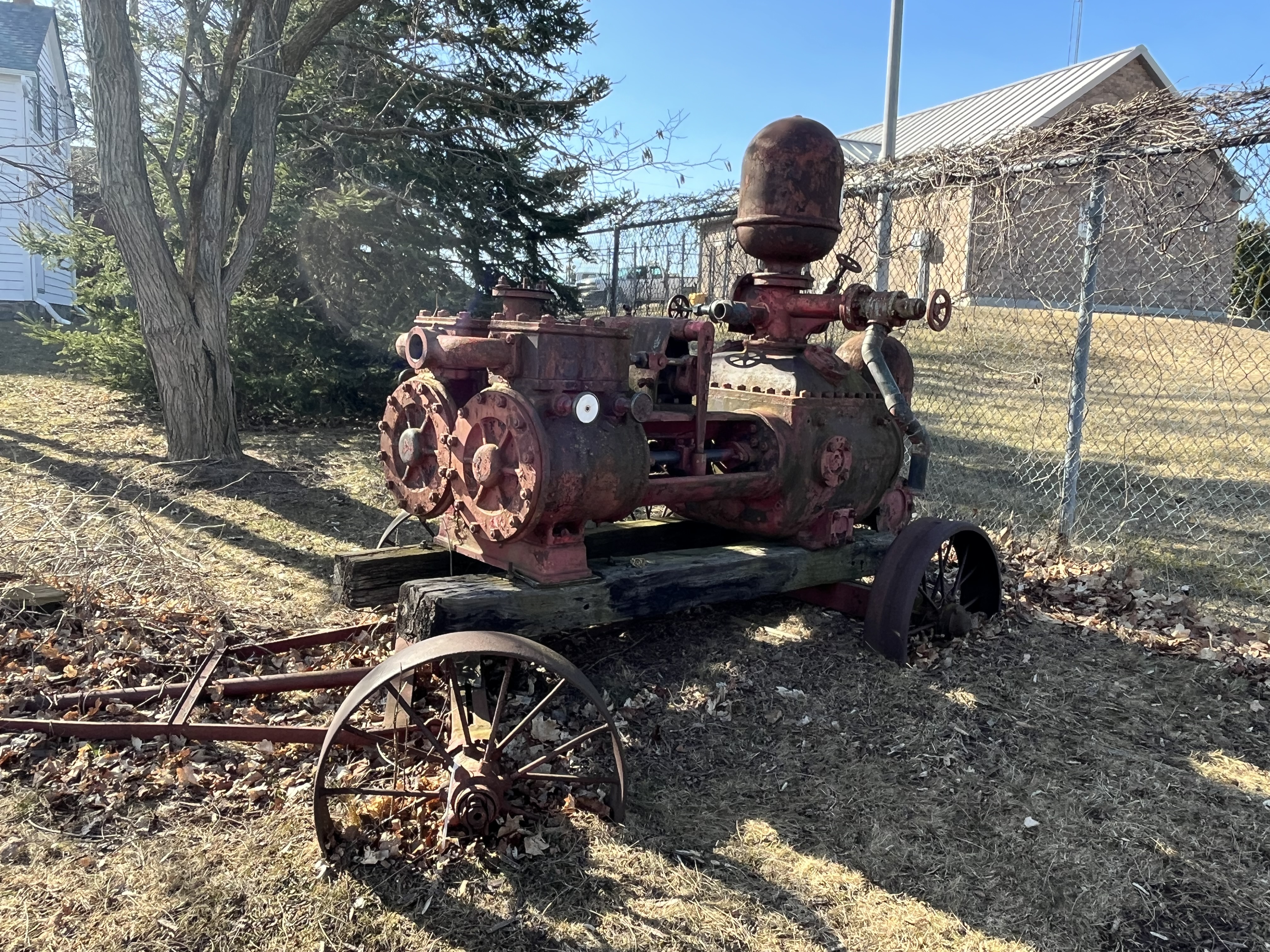
There are many historical pieces of farming equipment that are located on the property and in the various barns and sheds.
The Hilson Shed was built in the 1800s in Uxbridge and was used as a coach house or carriage shed. It was home to the Hilson family horses, carriage and tackle until they were replaced with a family car. It has been part of the Uxbridge Heritage Centre since 1973.
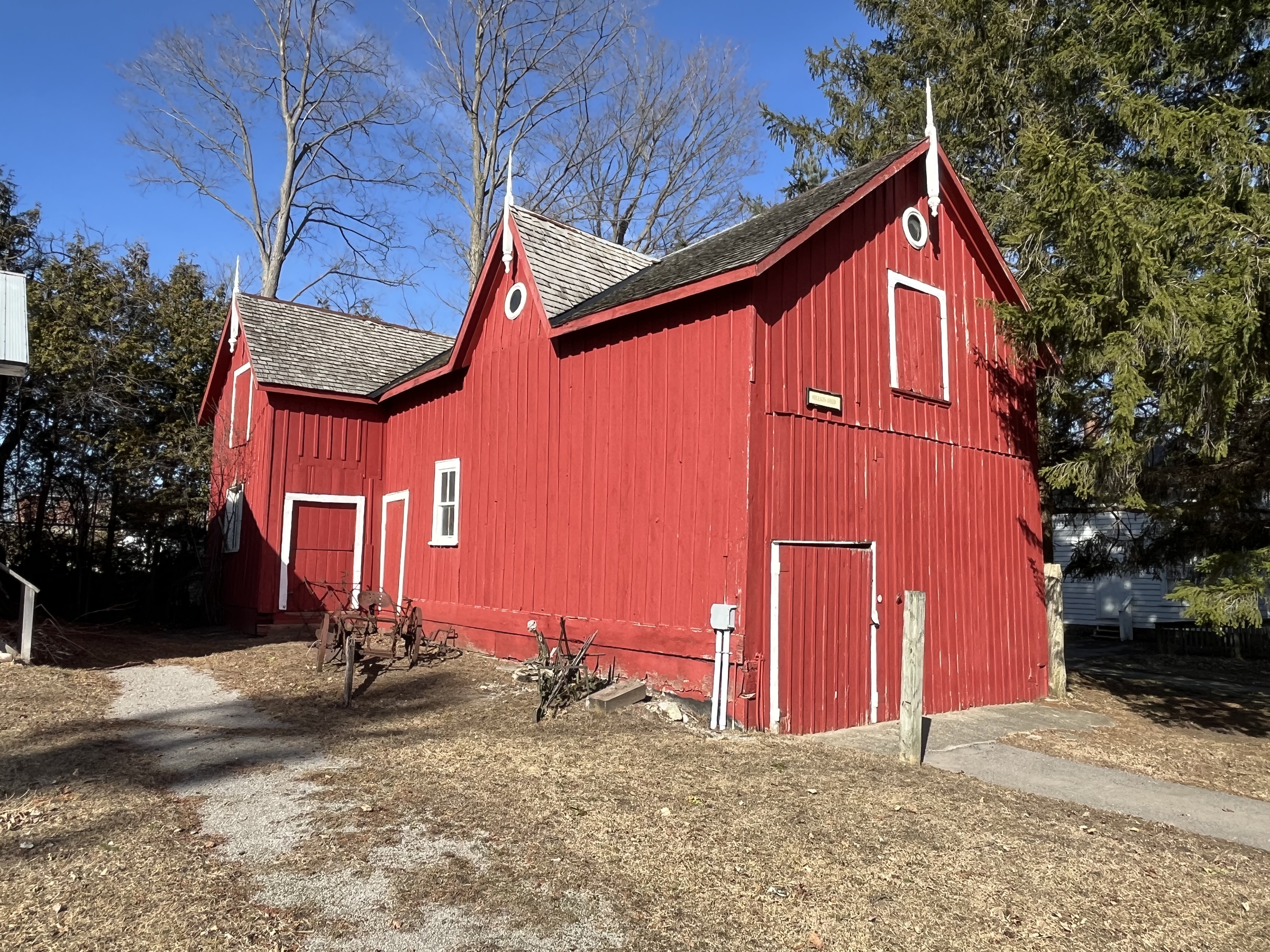
The Nesbitt family drive shed was located on their farm and used by several generations of the family. It has the distinction of having been on the farm that was used for filming seven seasons of Road To Avonlea. This show was based on books that were written by Lucy Maude Montgomery who also wrote Anne of Green Gables. It was disassembled in 1981 and reassembled on the grounds of the Heritage Centre. A sawmill that was located on the same farm was moved to Black Creek Pioneer Village.

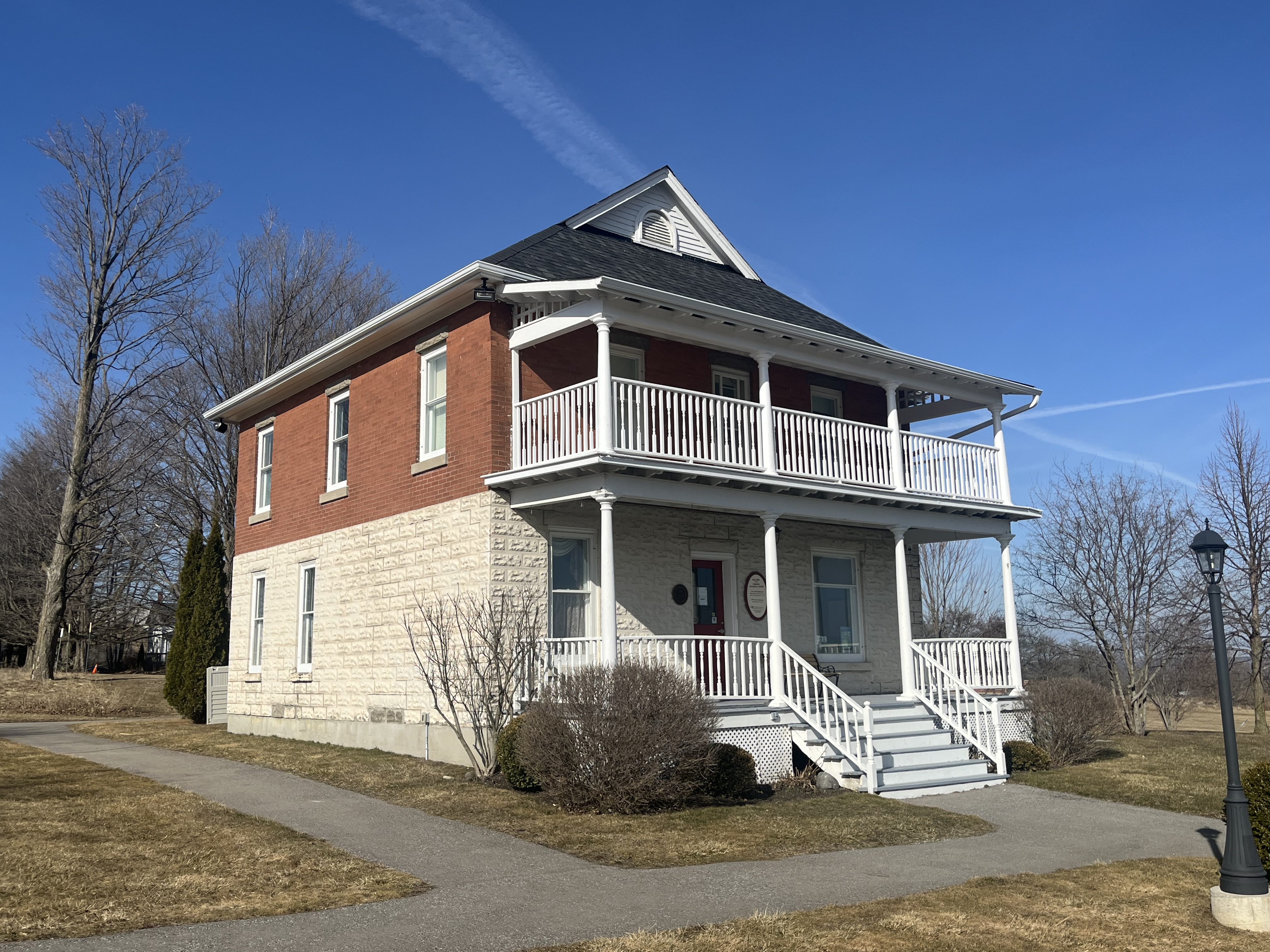
This Edwardian styled house was built in town in 1908 for George Stokes. George was a councilor, deputy reeve and later reeve. The house was later sold to George and Nellie Kydd. In 1963 Nellie became the first female mayor in Uxbridge. The house has a unique two story porch along the front and was moved to the Centre in 2002. It now houses the offices and gallery shop.
The Uxbridge Post Office Bell was donated to the town on its centennial anniversary by Bell Canada on Aug. 26, 1972. It was forged by Jim Taylor in England in 1912.

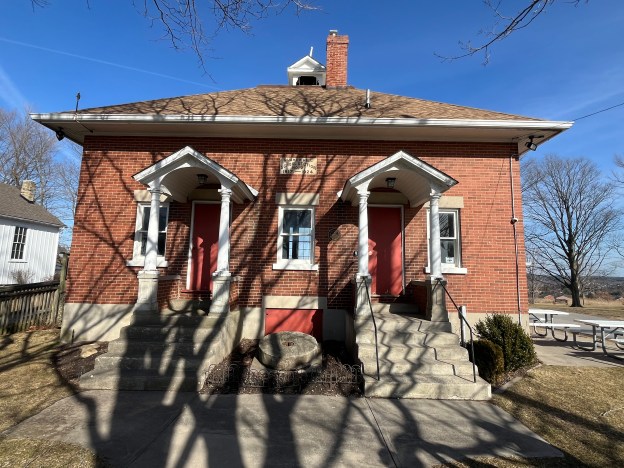
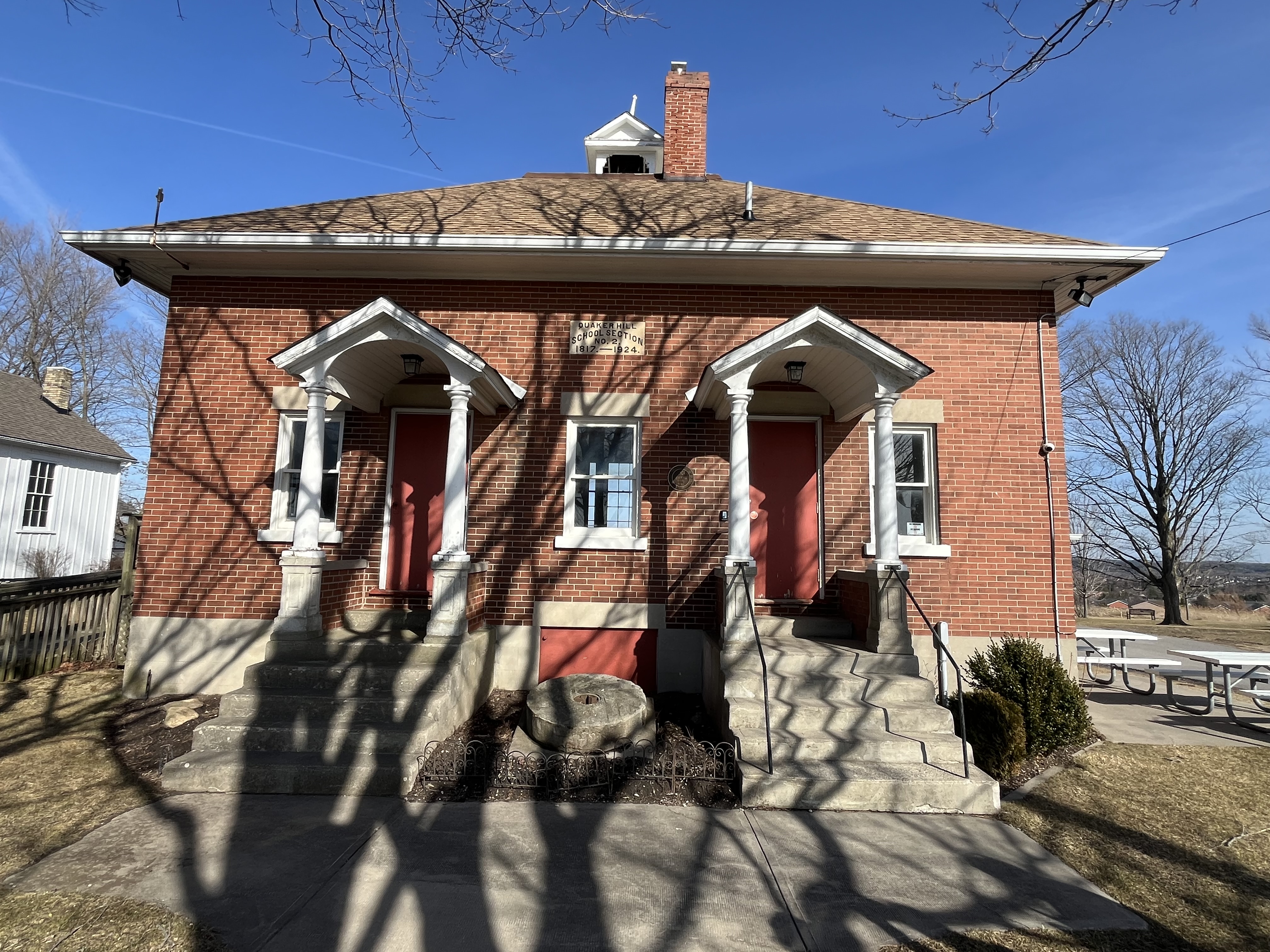
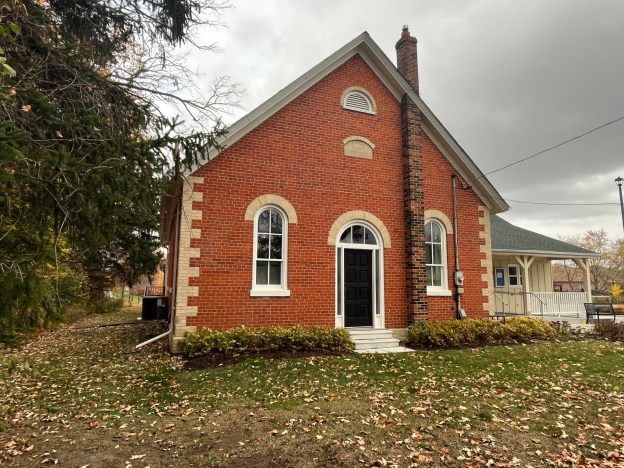
The school is the nucleus for the historical centre and is the third one to be built in Quaker Hill. The first school was built in 1817 by Quaker Ezekial James and was made out of logs. It was the first school in Uxbridge Township. It was located just a short distance south of the present school. It was replaced in the 1850s with a frame building that stood where the present driveway for the school is. The brick school was built in 1924 and served the community until 1969. The two doors were used to allow the boys and girls to have separate entrances so that the boys wouldn’t see the girls ankles when they were changing their shoes as this was considered improper.
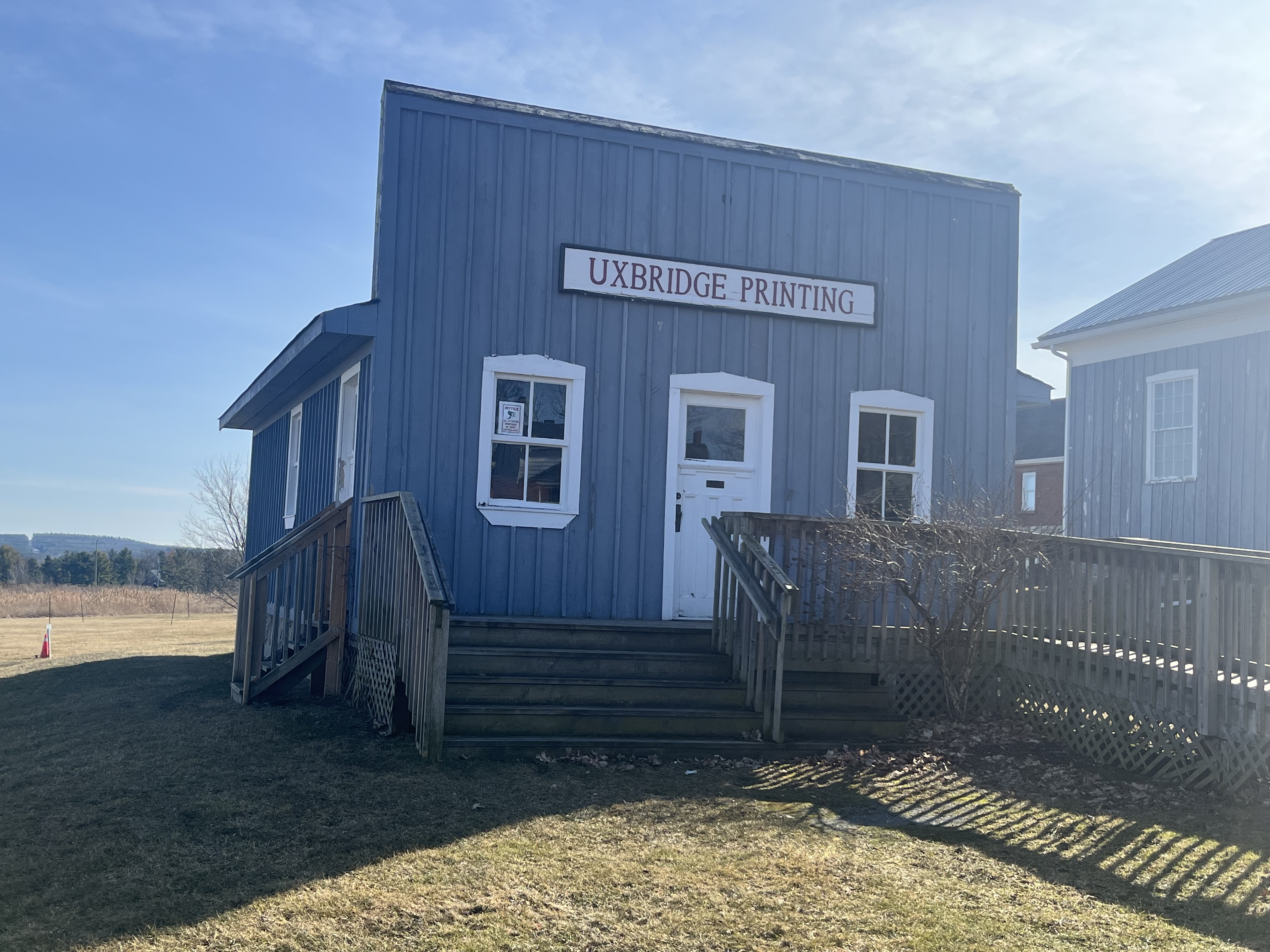
The print shop is not an historical building as it was built on site in 1994. It was erected to house the historical printing equipment from the Uxbridge Printing Company. The large square front is known as the Boomtown Style and was used to make small buildings look bigger. It also hid the front gable and allowed the merchant to have more space to advertise their business.
The buildings are open for tours in the summer months and some of them, like the school, can be rented for functions.

Related stories: Cober Dunkard Church, Black Creek Pioneer Village, Markham Museum, Georgina Pioneer Village, Thomson Memorial Park

Google Maps Link: Uxbridge Heritage Centre

Like us at http://www.facebook.com/hikingthegta

Follow us at http://www.hikingthegta.com

Also, look for us on Instagram.
Box Grove – Ghost Towns of the GTA

November 4, 2023

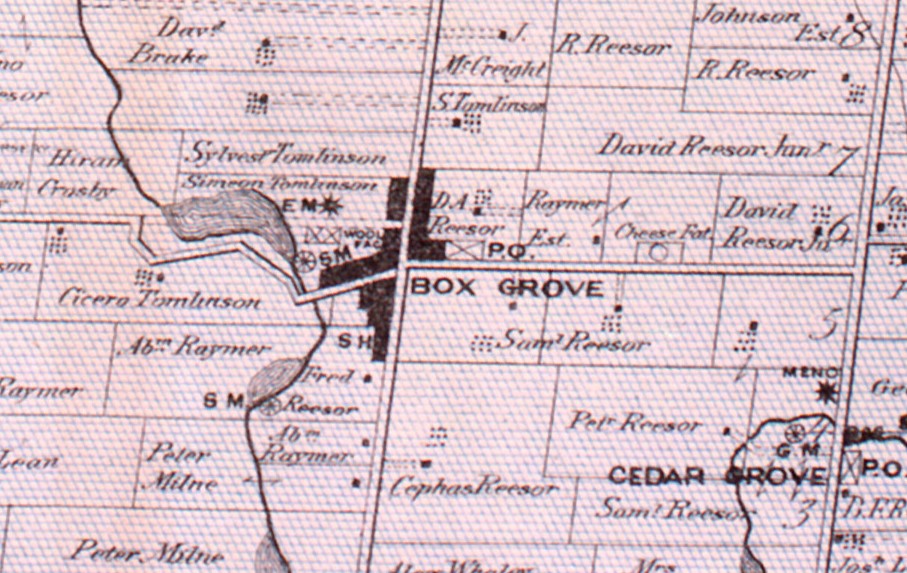
Families started to arrive in the area of present day 14th Avenue and 9th Line near Markham as early as 1815. The Tomlinson and Beebe families were among the first to move there and begin to develop farms and mills. In 1850 they put forth a plan to develop the community by selling lots for residential use. The lots were either 100 or 250 feet wide by 250 feet deep. This was intended to provide housing for the workers in the saw mill, woollen mill and shoddy mills. A shoddy mill reclaimed used fabrics to make paper or mattress stuffing materials. The community was known as Sparta or Sparty Wharf and was the last point on the Little Rouge River that could be easily navigated. The development soon let to the arrival of three hotels and taverns, a cheese factory, a blacksmith and two axe makers. The image below is taken from the 1877 County Atlas and shows the community in relation to nearby Cedar Grove.

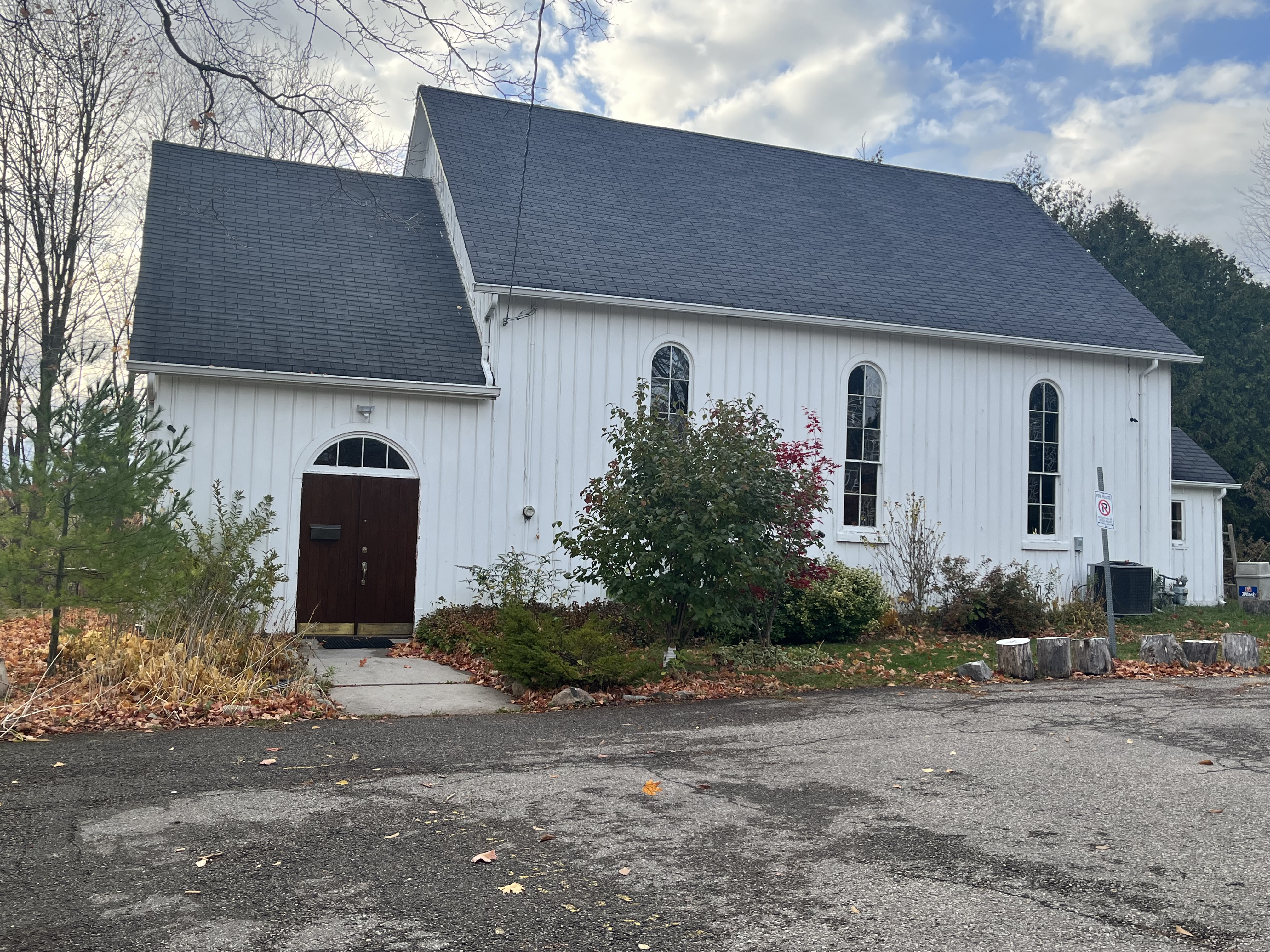
In 1850 The Episcopal Methodists had built a small church in the town and continued to worship there until 1877 when their new building became available. They continued as a Methodist Church until 1925 when they became the Box Grove United Church. In 2004 the church congregation voted to join the Zion United Church in nearby Cedar Grove. The building was vacated and then bought by the Full Gospel Assembly of God in 2006 who continue to meet there on Sundays.

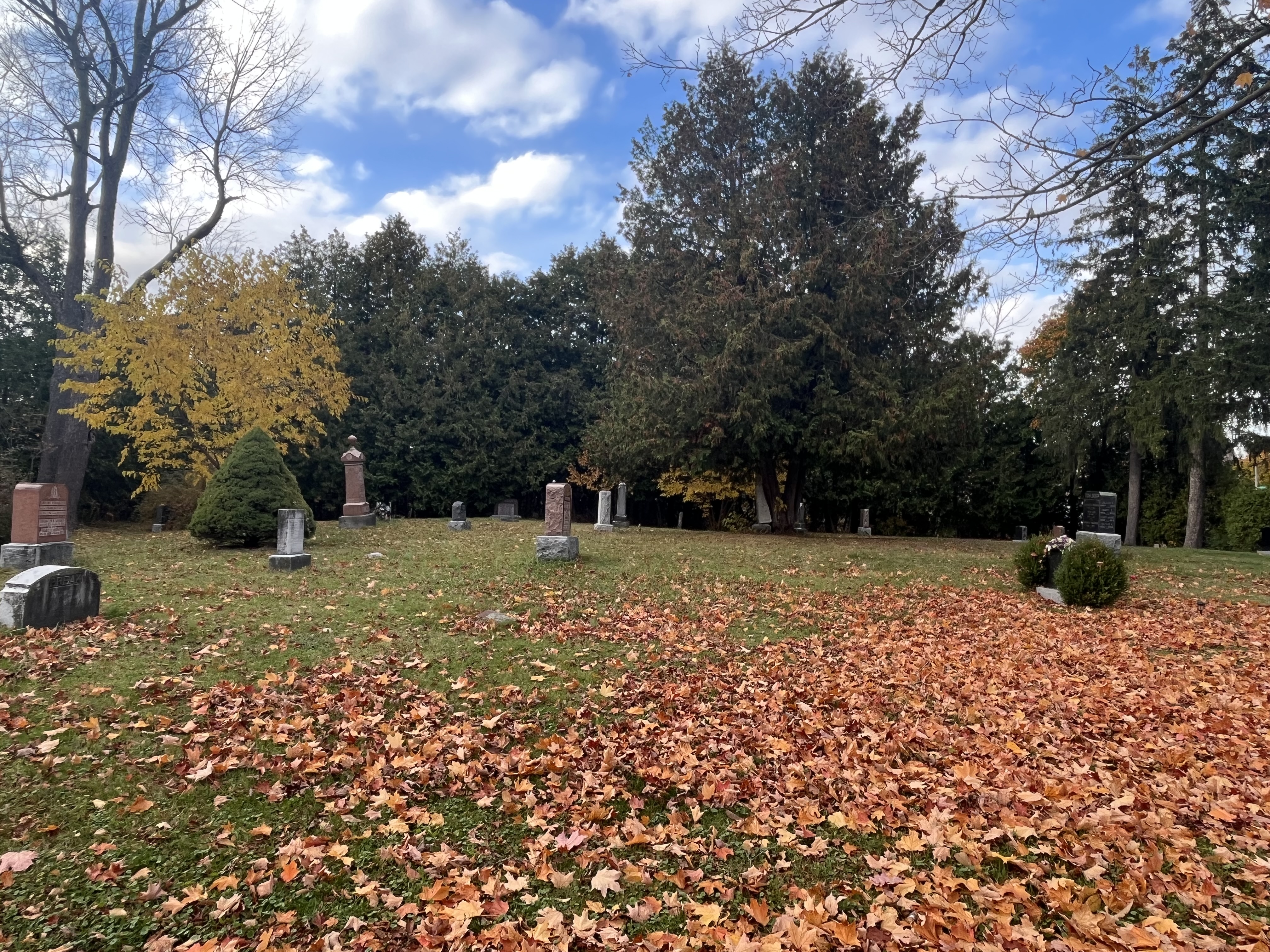
A half acre of land was set aside for the Methodist cemetery in 1850 and many of the town settlers are buried here.

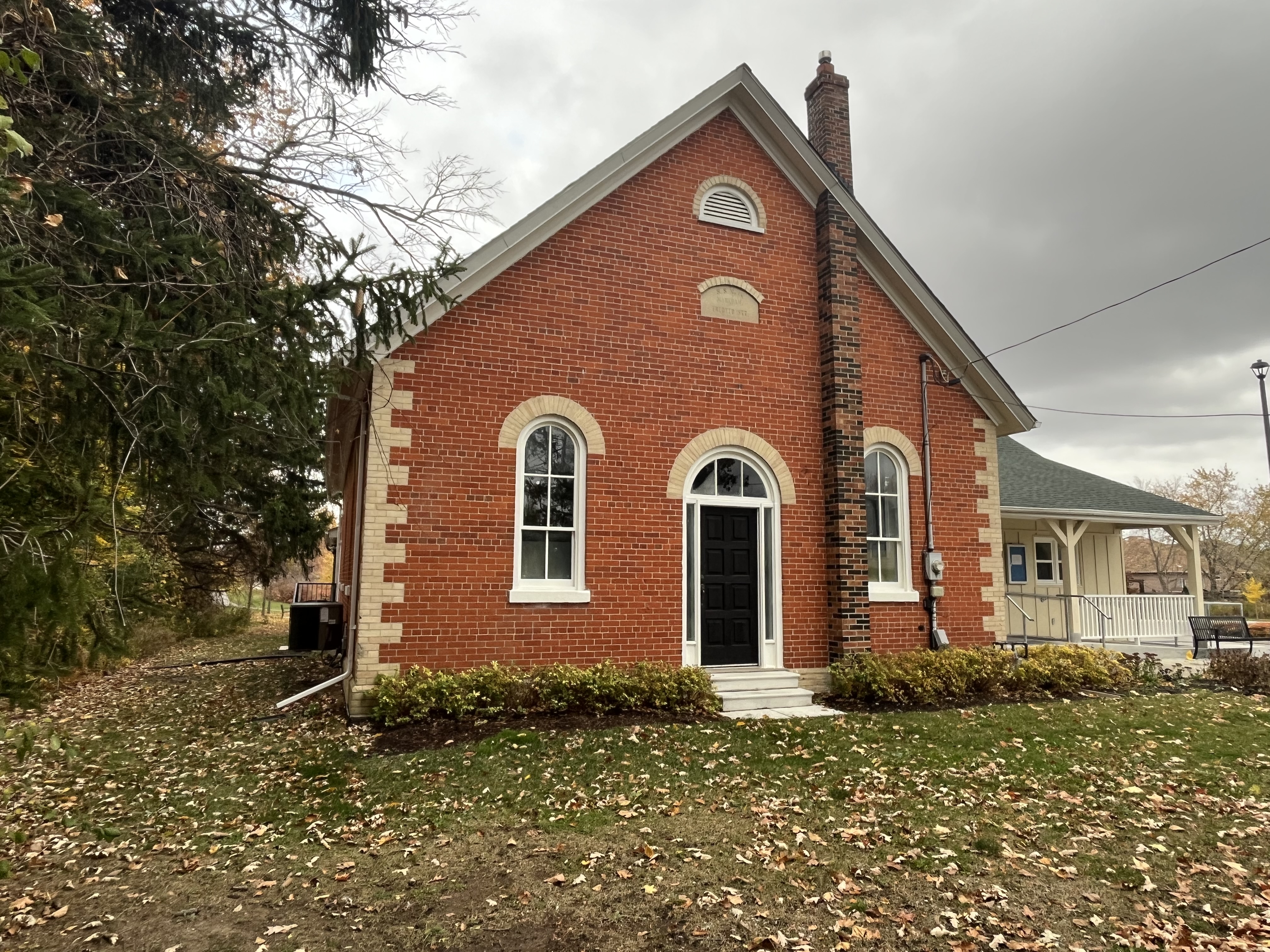
From the County Atlas above you can see that the school is shown across the street from the present structure. This small frame structure had become too small and needed to be updated. School Section #18 was replaced with this red brick structure in 1877, the same year the county atlas was produced. This new schoolhouse was used until the 1960s when new buildings were opened and most of the one room schools in Ontario were closed. Today the old school serves as a community hall and can be rented for various functions such as parties and wedding celebrations.

In 1867, the year of Confederation, they were awarded a post office and the town name was changed to Box Grove. The post office was in the general store which was located in the building seen below.

With three taverns and a population of 150 the town had a bit of a reputation for being rowdy. The Mennonite families on surrounding properties were not pleased and soon opened a Temperance Hall. All of the original industry disappeared and only the homes remained along with the school and church. There are still quite a few mid to late 19th century houses lining the streets around the original intersection. The one pictured below is a typical one and a half story worker cottage.

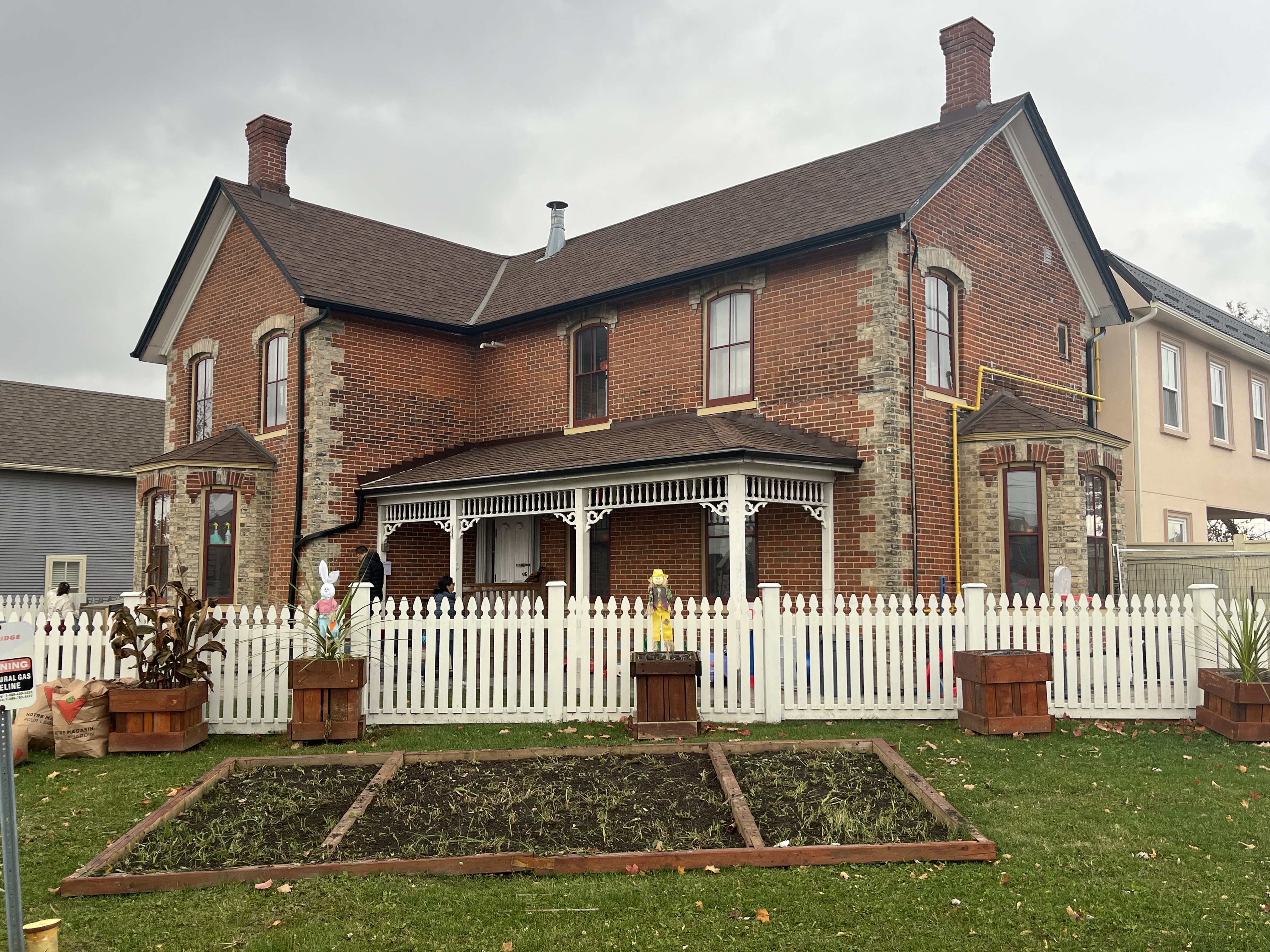
The house below was originally built in 1880 using a roughcast stucco surface applied to lathing. It has since been covered over with wooden siding. It was built on the Reesor Family farm on the east end of town and may have housed the person who operated their cheese factory. The house was modified at some point adding the western wing and making the home into an L shaped building. When the farms around Box Grove were redeveloped for housing the home was moved to make way for stormwater ponds.

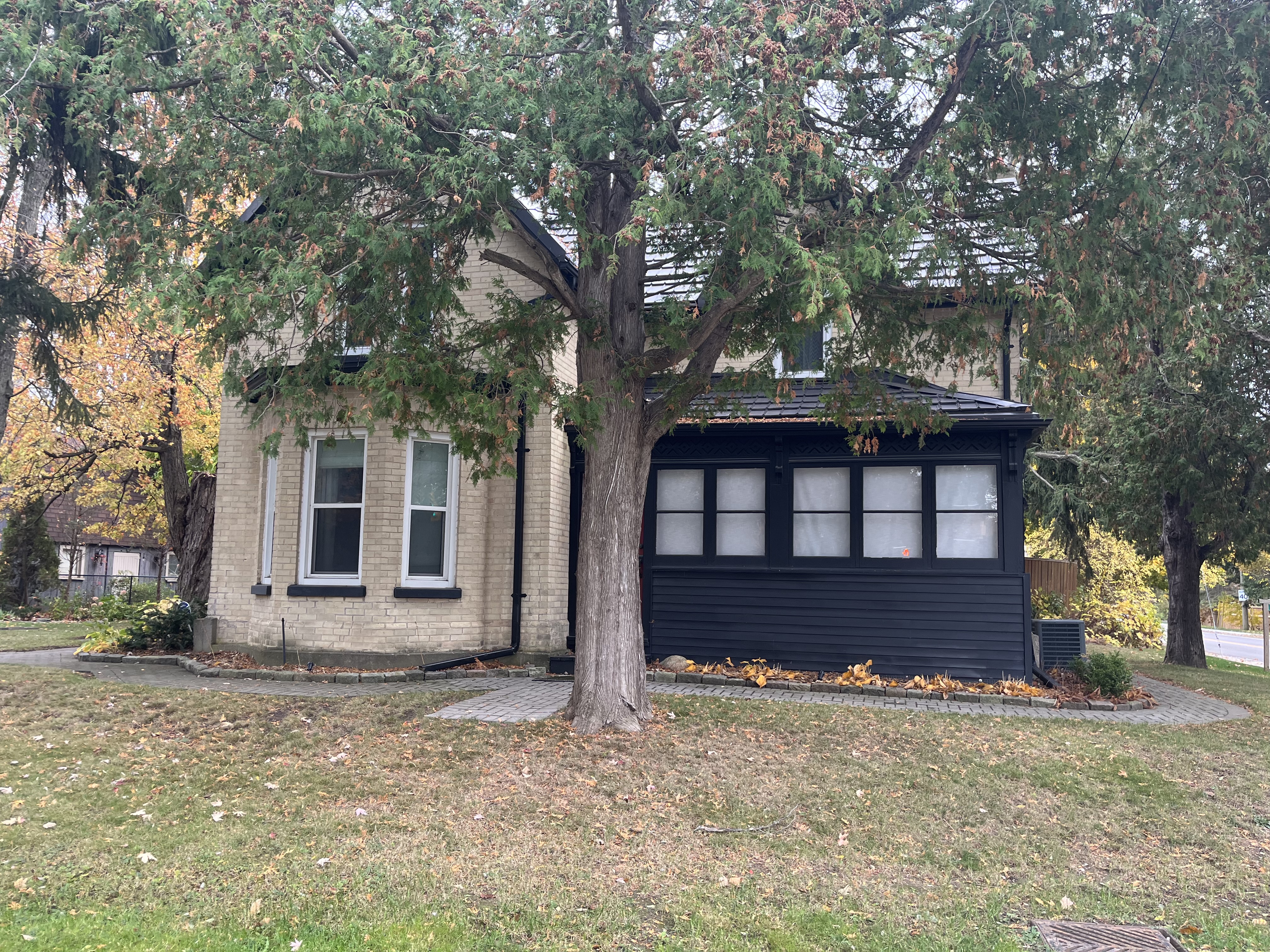
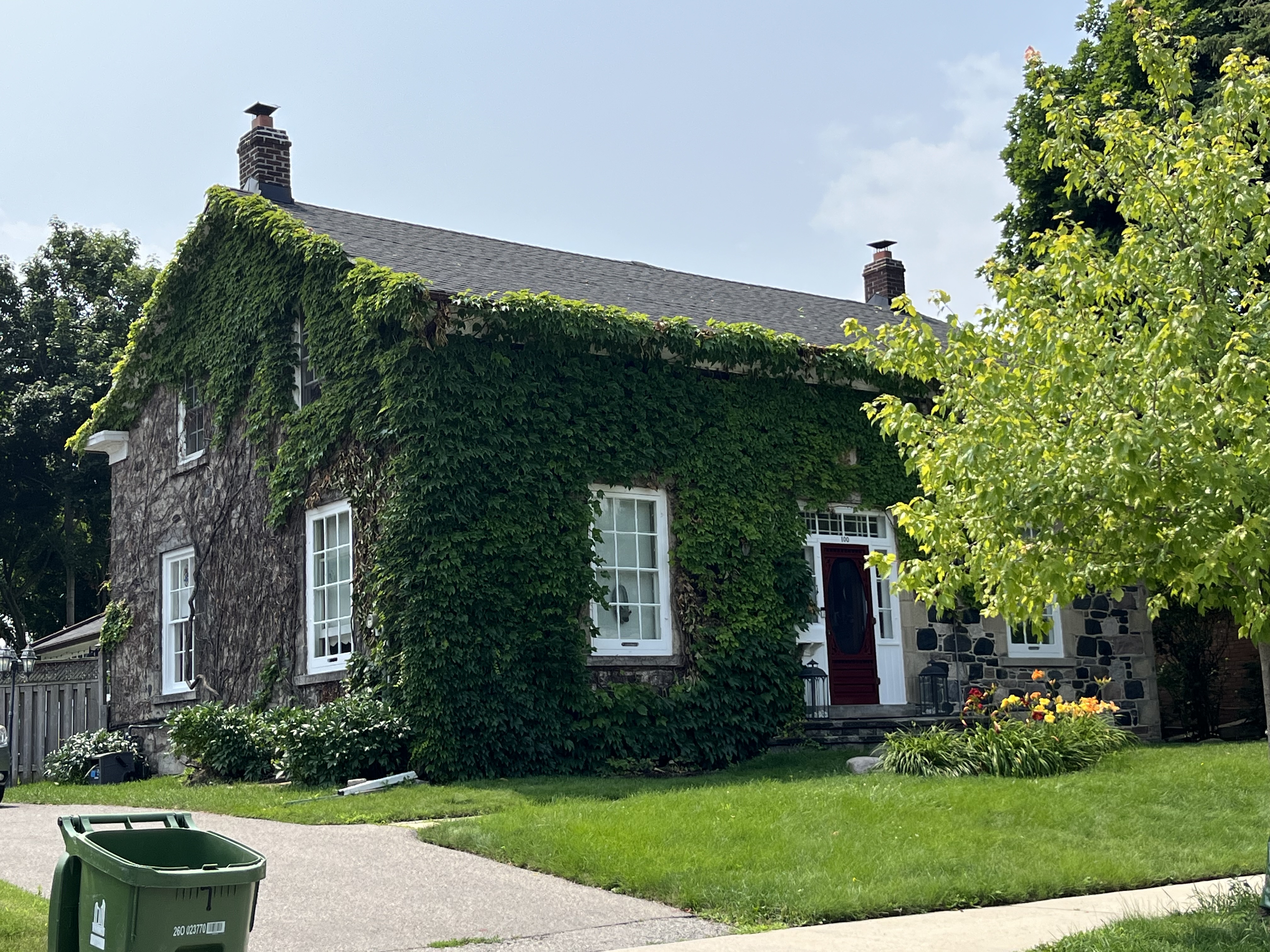
One of the few homes in Box Grove to still display its original brick veneer with buff coloured accents stands on the eastern edge of the original town.

In the past few decades the area has been developed with new housing but the older ones can be picked out as you walk or drive through the neighbourhood.

In 1950 Nelson Morgan Davis, one of the richest men in the country, created a golf course in Box Grove which he called the Box Grove Golf Course. It was private and he was the only member. It was eventually developed into a 27 hole course with 9 holes in the valley and a challenging 18 hole course on the tableland above. It is said that he built the course after being hit in the head by a golf ball while playing at Rosedale Golf Club. Arnold Palmer was invited to play a round of golf with Davis and he later said that the course was one of the hardest he had ever played. Davis sold the golf course to IBM in 1967 netting a cool $2 million for it. IBM kept the course for the entertainment of its employees who could play a round of golf for $5.00. In 1997 IBM sold the golf course to Minto Developments who built a residential subdivision on the upper course while the City of Markham now operates a nine hole course in the river valley called Markham Green.

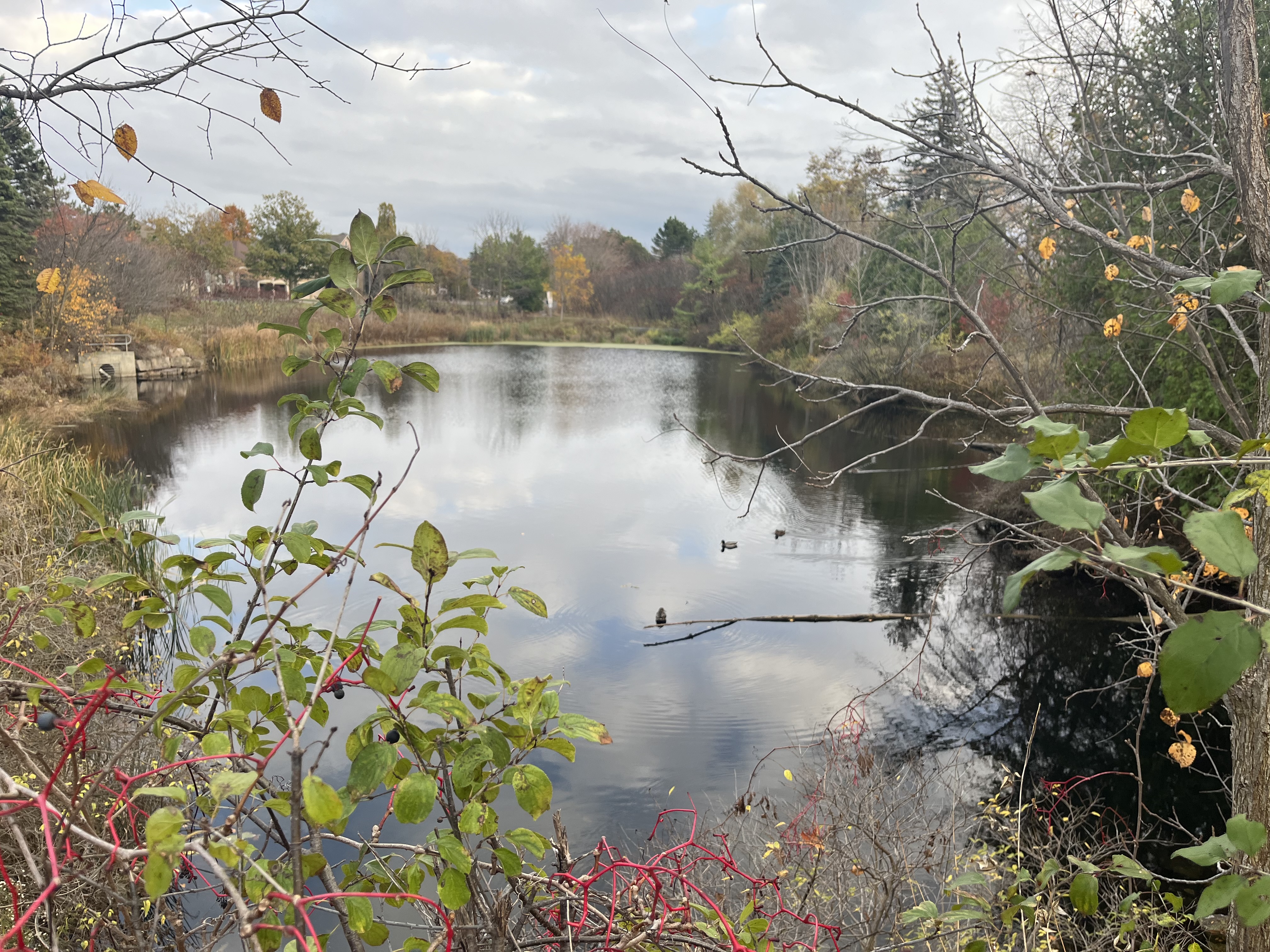
The Little Rouge River was dammed to create a mill pond to store water to power the mills that provided early industry in the community. The mills were all lost to flooding or to fires but the mill pond remains and is now the centre attraction for the Old Mill Pond Park which is just one of the parks in and around town. The town also features some hiking trails along the river.

Box Grove has been swallowed up by modern developments but there’s still quite a number of early residences hiding along 9th line and along 14th avenue.

Related Stories: Cedar Grove, The Reesor Family

Google Maps Link: Box Grove

Like us at http://www.facebook.com/hikingthegta

Follow us at http://www.hikingthegta.com

Also, look for us on Instagram

Malvern – Ghost Towns of the GTA

July 30, 2023

The former community of Malvern has disappeared under a massive railyard and multiple industrial buildings. There are still a few houses remaining that once stood on the outskirts of the town. Prior to 1850 the hamlet was known as Malcom’s Corners because John and Robert Malcom operated the Speed the Plough Inn and had a harness shop at the intersection of modern Sheppard Avenue and Markham Road. Senator David Reesor thought the community had the potential to become the capital of Scarborough Township and in 1857 he set out a plan to sell 50 foot by 150 foot lots for housing. He chose the name Malvern after a town in England where the water was said to cure the sick. Locals had told Reesor that the waters around Malvern would also cure the sick. He also planned for a grammar school, a fair grounds and a large community hall. The hall was built in 1860 and named Mammoth Hall. When it burned down in 1879 it was soon rebuilt. Unfortunately, an arson burned it down in 1988 and it was lost forever.

The map below is a section of the 1877 County Atlas and shows the location of the various properties that are pictured in this post. Three stone houses belonging to Weir, Stirling and Neilson and the school. Also circled is the Primitive Methodist Church that is pictured as an historical photograph.

For years there were two general stores that were operated by a series of men starting with Duncan Malcom. The village also had a blacksmith, a wagon shop, two hotels and a large woolen mill as well as a saw mill. One hotel was Thompsons Temperance Hotel and General Store and it contained the post office from 1865 until 1929 when the building was lost to a fire. The post office then moved to Cowans General Store in 1930 and remained there until 1956. The other hotel was the Standard Hotel where one could purchase an alcoholic drink that wasn’t available in the Temperance Hotel.

One of the prominent houses was the Neilson House which was built in 1856 and remains on Neilson Road today, serving as a community centre. It was partially destroyed by two fires in the 1970s but was restored and opened as the community centre in 1988. The cover photo shows this beautiful stone house from the front.

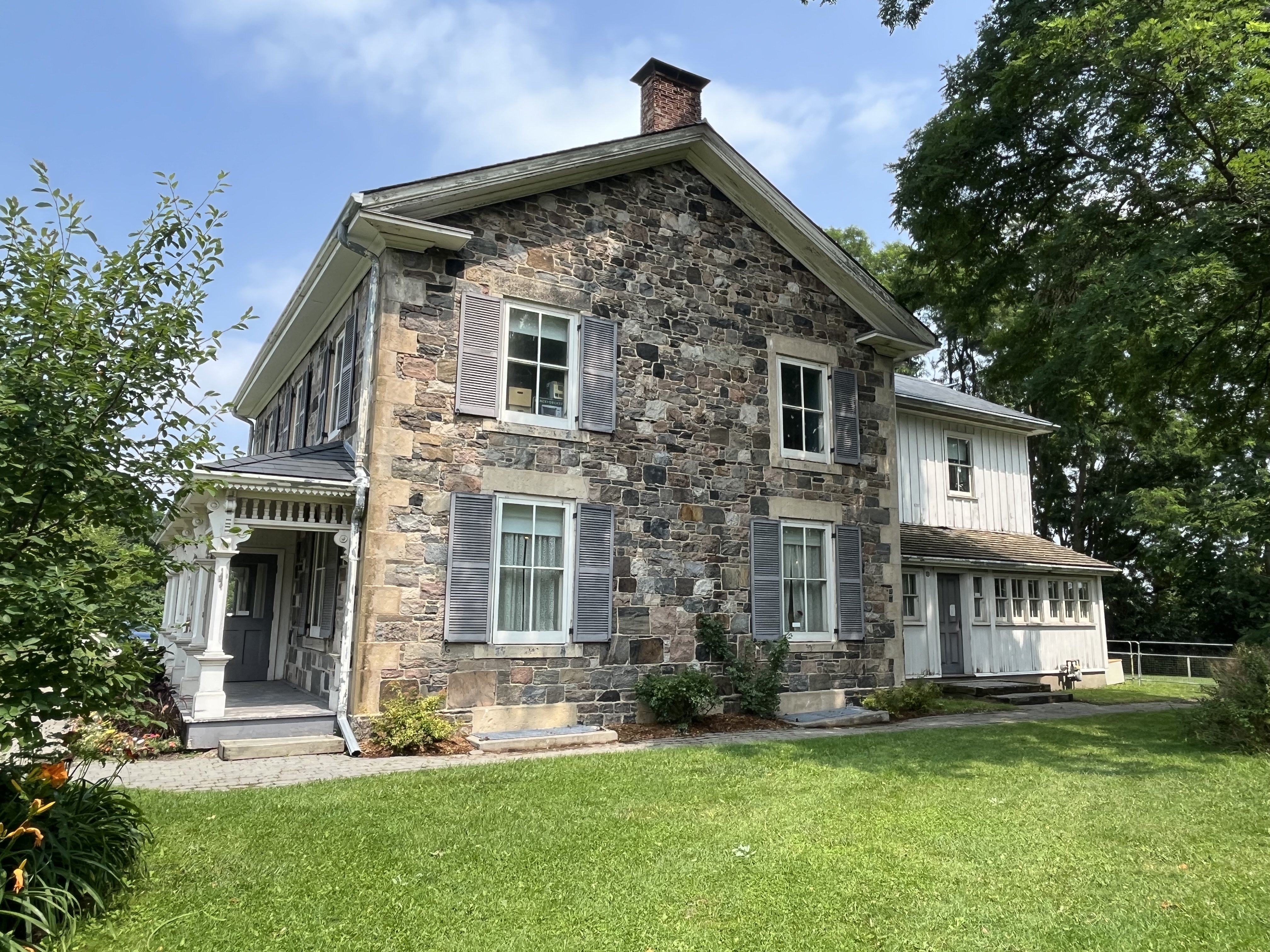
Malvern was a thriving farm community through the 1880s but when the railway bypassed it in favour of Agincourt that community prospered and Malvern went into decline. The Canadian Northern Railway built a station there in 1911 but it went bankrupt in 1917 and was taken over by the Canadian National Railway. Passenger traffic ceased in 1926 and the community stagnated until the 1950s when the Canadian Housing and Mortgage Company expropriated large tracts of land to build a housing development. One of the houses that was spared demolition was the James Stirling house which was built in 1860. This is another of the field stone houses that used to be found in the community.

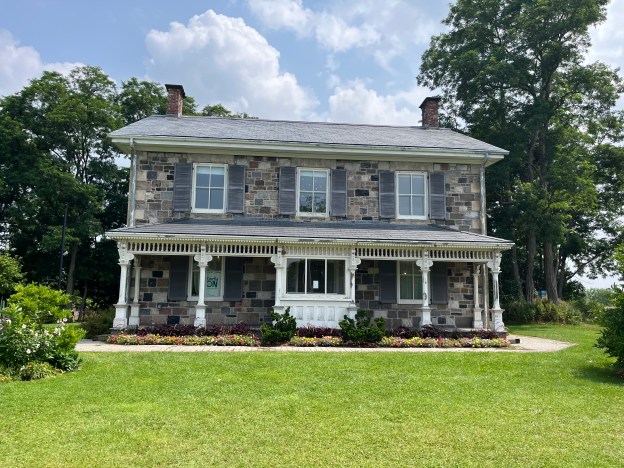
James Weir came to Scarborough in 1833 from Scotland and worked against the Mackenzie rebels in the 1837 Rebellion. He settled on this lot in 1840 and became a successful farmer, livestock importer and ploughman. Eventually he became one of the wealthiest landowners in Scarborough and erected this home made of fieldstone in 1861. The lintels above the windows and quoins on the corners are made of Kingston Limestone. The house used to stand in the middle of the property but in 1975 it was moved about 400 yards west to its present location.

The door on James Weir’s house is the most decorative part of the structure. It has side lights and windows in the transom above the door. It is also one of only a few historic houses that I have photographed that has a name plate and date stone, in this case just above the door. James Weir, 1861.

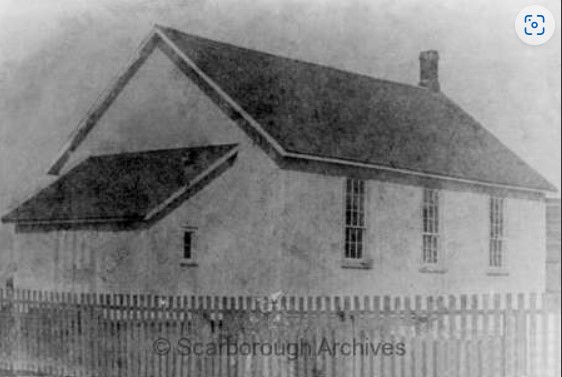
Malvern had a single church which was built in 1864 by the Primitive Methodist congregation. The building was demolished in the 1970s although some pieces of wainscotting and flooring were reused in the Scarborough Historical Museum. A small cemetery was located beside it and this still survives on the east side of Markham Road just north of Sheppard Avenue. The image below is from the Scarborough Historical Society website.

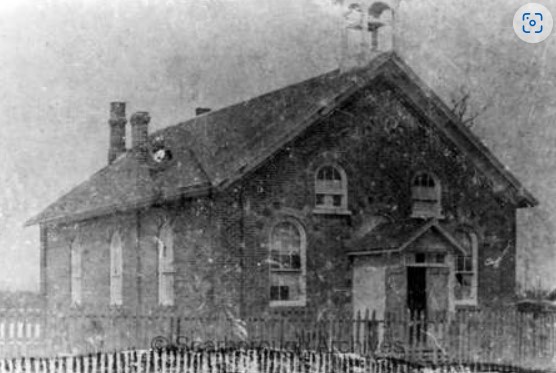
A log school house served the community from 1847 to 1851 when it was replaced with a small frame school which was built on the Stirling Farm. Alexander Muir got his start teaching in the log school house and his story can be found in our post on Burke Brook. The school was replaced again in 1872 by a one room brick school which still stands at the corner of Finch Avenue and Neilson Road.

The image below was taken from the Scarborough Historical Society and shows the school when it was surrounded by open farmland.

Whypers Boot and Harness Shop was relocated to Markham Museum where it is on display along with about 30 other historical buildings. Today the former community of Malvern is a thriving part of the uban sprawl of Scarborough and is commemorated in the names of streets, malls and the public library.

Related Stories: Markham Museum, Burke Brook, Agincourt

Google Maps link: Malvern

Like us at http://www.facebook.com/hikingthegta

Follow us at http://www.hikingthegta.com

Also, look for us on Instagram