Monthly Archives: April 2024

Our Favourite Hikes

April 27, 2024

We started our blog with our initial post on April 27, 2014, Since then we’ve done a few “greatest hits” type posts where we featured the stories that have had the most reads. To celebrate our tenth anniversary we’re looking at some of the hikes that were the most fun for us. The places that were the most enjoyable and had the most interesting artifacts or histories. With over 600 posts its hard to choose the most enjoyable ones but the fifteen listed below represent some of our most loved ones. These are presented in no particular order. Click on the title of the article in each box and it will take you to the story. Links to the locations will be at the end of each story.

Riverwood

This large park in Mississauga had so much history from the estate and farms that we ended up splitting it into three posts.

The Bell Fountain – Belfountain

The park in Belfountain was created as one man’s dream and has a man made waterfall, swing bridge and many other interesting artifacts to explore.

The Caledon Aerial Tramway – Cox Property

This exploration was based on looking for evidence of an aerial tramway that used to carry quarried rock across the ravine.

Kelso’s Kilns

While looking for two old lime kilns near Kelso we also found the remains of another kiln location.

UTM Nature Trail

This nature trail explores the old estate that now forms the campus for the University of Toronto Mississauga Campus and includes a man made pond and stone bridge.

Milton Mill Pond

There’s lots of interesting things to find as you loop around the old mill pond in Milton.

Scotsdale Farm

This park in Halton includes a Bruce Trail side trail as well as several other trails and historic buildings.

Elora Gorge

The scenic gorge in Elora is also home to the refurbished Elora Mill and makes for a great hike.

The Hole In The Wall

Near Limehouse the Bruce Trail passes through this karst formation and makes for an interesting and mildly challenging hike.

Limehouse

The history of the lime industry is on display in the conservation area in Limehouse.

Felker’s Falls

One of several waterfalls that we have explored in the Hamilton Area. They say that Hamilton has 100 waterfalls as all of the rainwater that falls on top of the escarpment makes its way to Lake Ontario.

The Devil’s Punch Bowl

Exploring the upper and lower Punch Bowl Falls makes for an interesting and challenging hike.

Albion Falls

This exploration was done when it was still possible to get to the bottom of the falls. It has now been closed to the public due to the large number of rescues that had to be made of people who got injured down there.

The Barber Dynamo – Georgetown

This is a challenging trail that leads to one of the truly unique places in the GTA where electricity was generated to run the Georgetown Paper Mills.

Abandoned Passmore Avenue

Passmore Avenue runs just south of Steeles Avenue through Scarborough and has several sections that have been closed to traffic.

There are many other places that we thoroughly enjoyed exploring but there’s no room to list them all. By going to our main page at http://www.hikingthegta.com you can use the search feature to look for specific topics such as waterfalls, the Bruce Trail or ghost towns. You can also look for places in a specific town or area near you. Enjoy, and thanks for this first decade of reading our posts.

Like us at http://www.facebook.com/hikingthegta

Follow us at http://www.hikingthegta.com

Also, look for us on Instagram
Mullet Creek’s Secret Waterfalls

Monday October 12, 2015

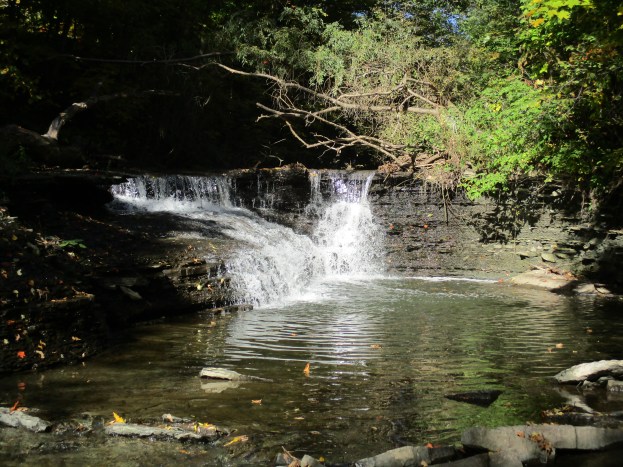
Mullet Creek contained a couple of surprise waterfalls and an old dam in the short section we hiked.  It originates in Meadowvale north of the 407  and empties into the Credit River on the University of Toronto Mississauga campus.  It was a gorgeous long weekend and Thanksgiving Monday was a beautiful day for a brief hike before getting the turkey in the oven.  We parked on O’Neil Court and entered the woods through the community walkway.

Reginald Watkins bought 150 acres of land in 1928 north of the now abandoned Erindale Power Dam.  He tore down one house on the property and enlarged the other which was named Lislehurst.  In 1965 The University of Toronto bought the property and founded Erindale College which is now called University of Toronto Mississauga.  The section of park backs onto the university campus and contains the remains of an old out building at the crest of the hill overlooking the ravine.  It appears that a series of trial excavation holes have been dug to investigate the ruins.

IMG_0664

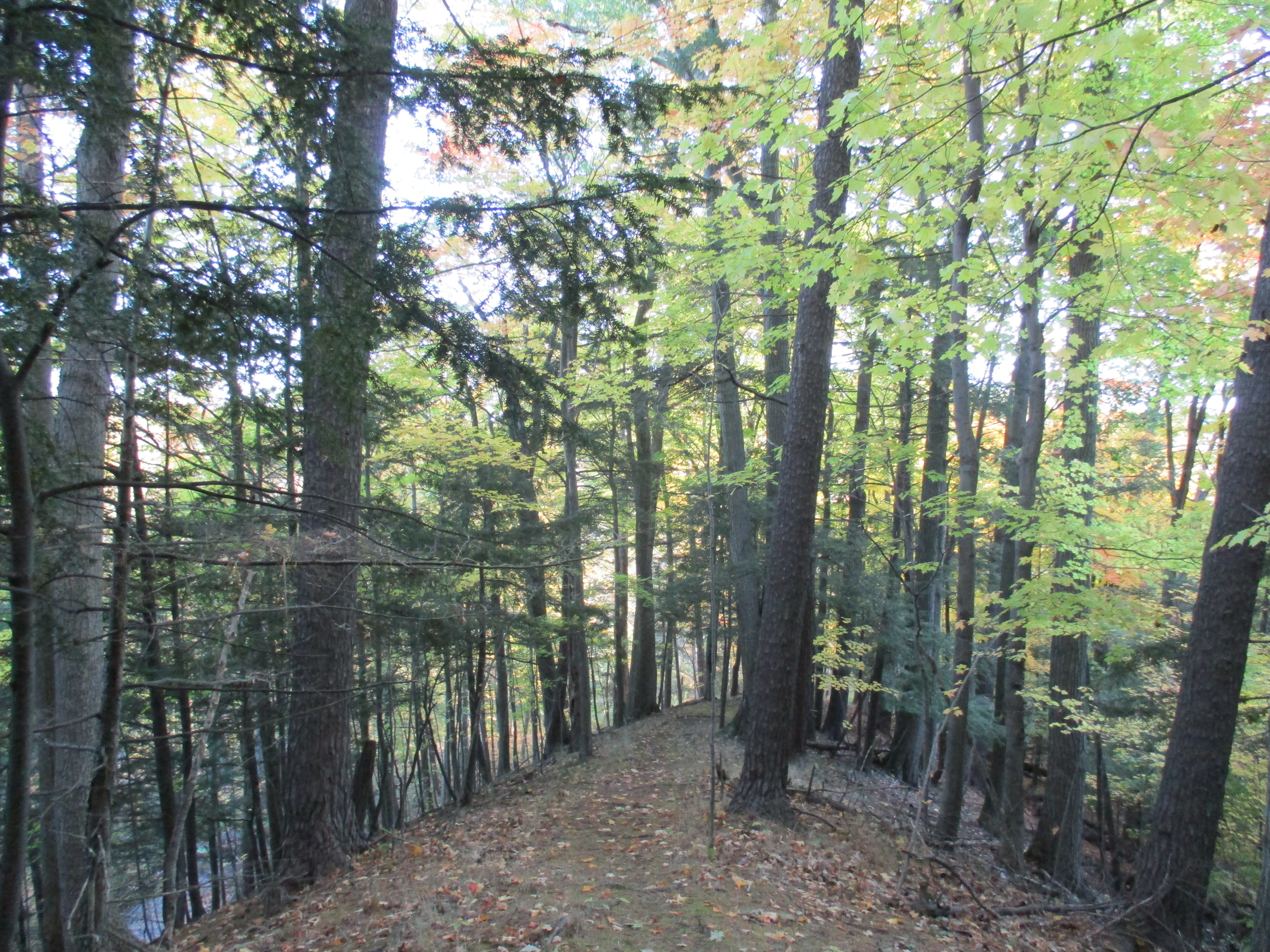
A long thin promontory of land provides access to the creek level.  We followed it down to where Mullet Creek winds it’s way through the ravine and on to the Credit River nearby. The creek splits into sections in the ravine and we crossed each in turn as we made our way north along the valley floor.

IMG_0667

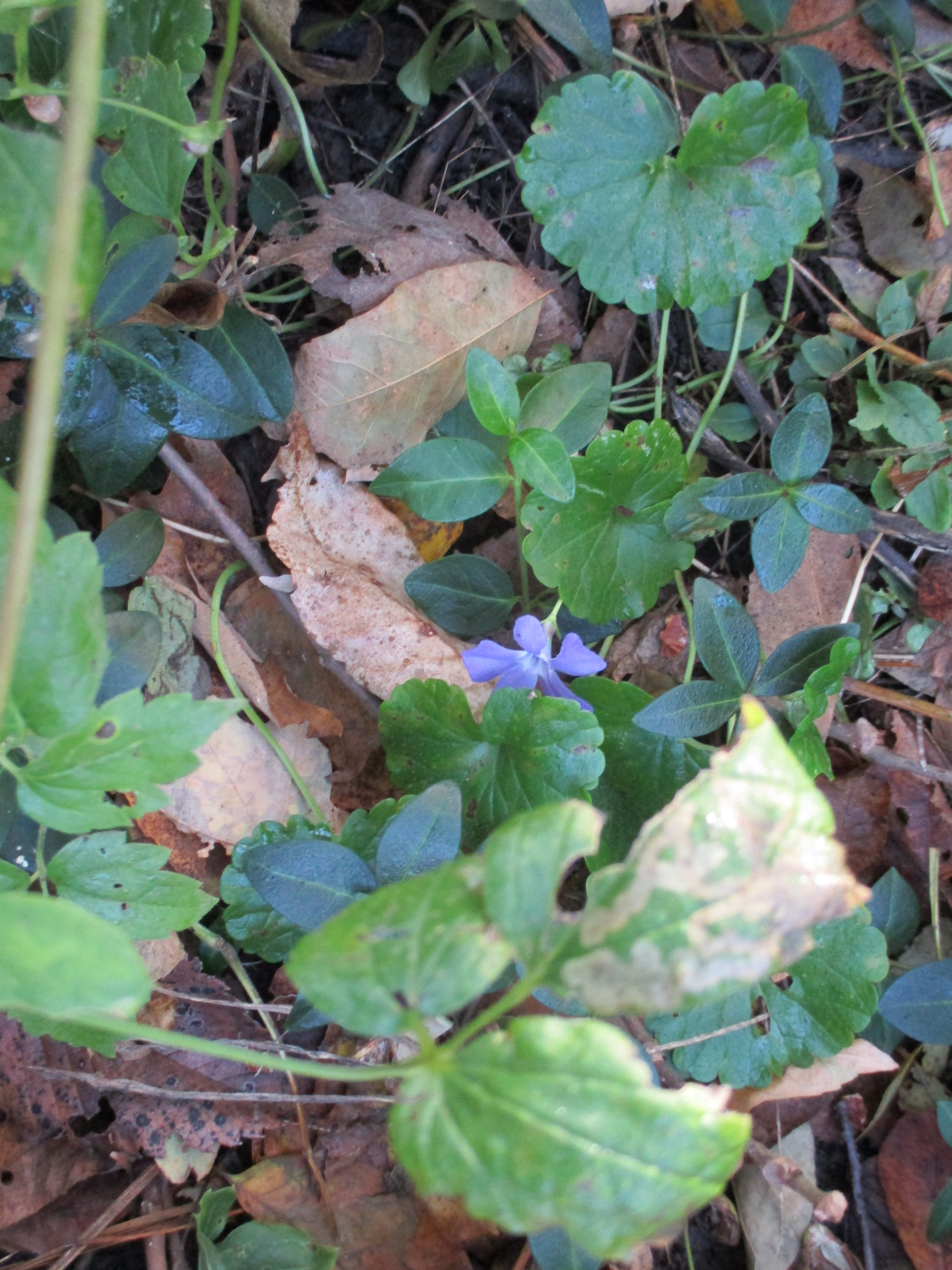
There are over 30 varieties of periwinkle.  As an invasive species they grow aggressively, often choking out native plant life.  They are frequently recommended for partially shaded areas or places where growing plants is difficult.  Care must be taken because they can escape and take hold in the wild.  One plant can spread to an area 8 feet across.  They normally bloom in late April to early May but we found a stray splash of periwinkle blue in the undergrowth.

IMG_0670

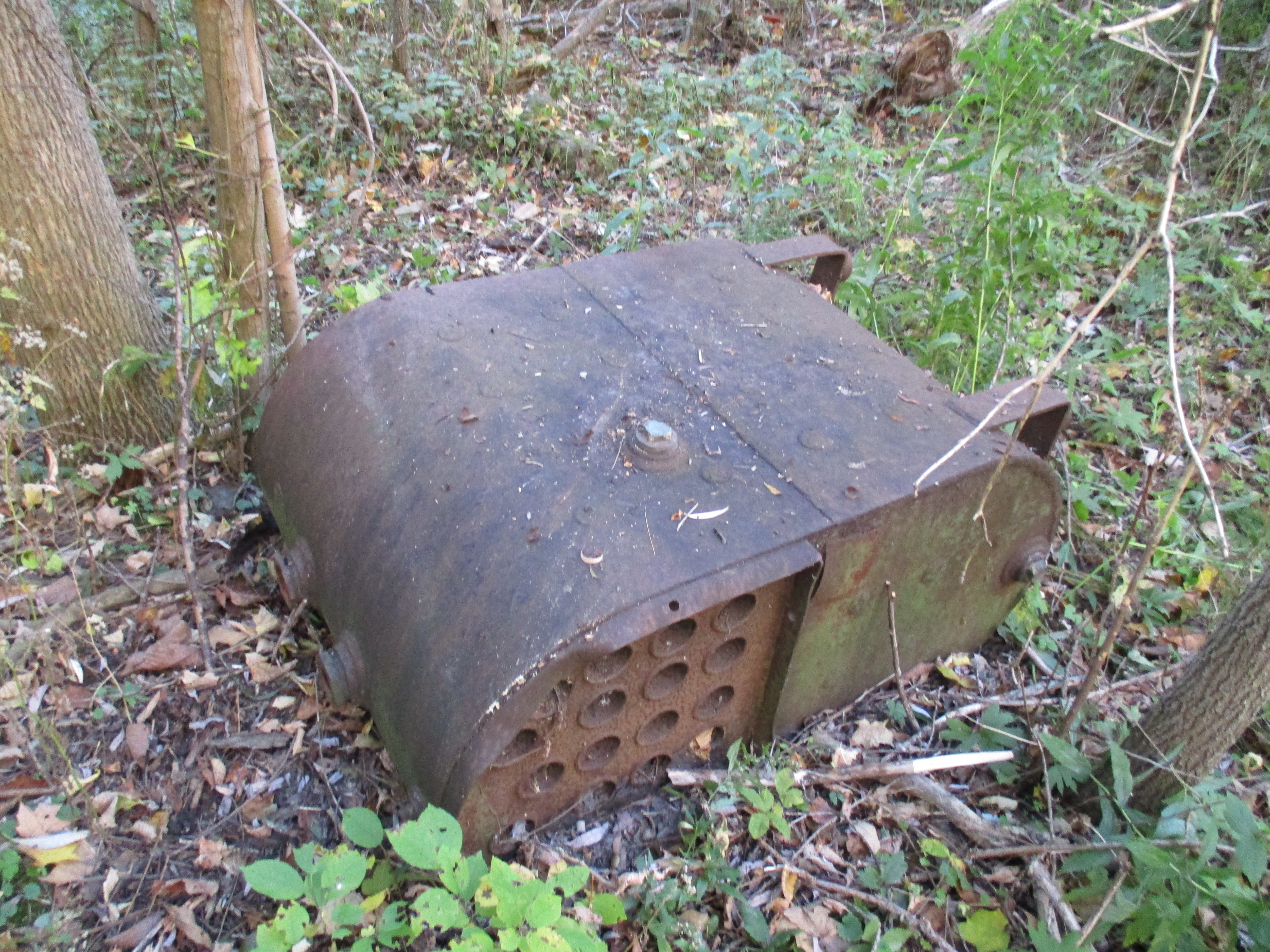
An old steam boiler lies rusting away at the side of Mullet Creek.  It would have originally stood on four metal feet on the bottom.  The lower half contained the fire box and was open on the opposite side to this picture.  The front flue sheet contains the holes that the flues passed through and is matched by a second flue sheet on the back.

IMG_0679

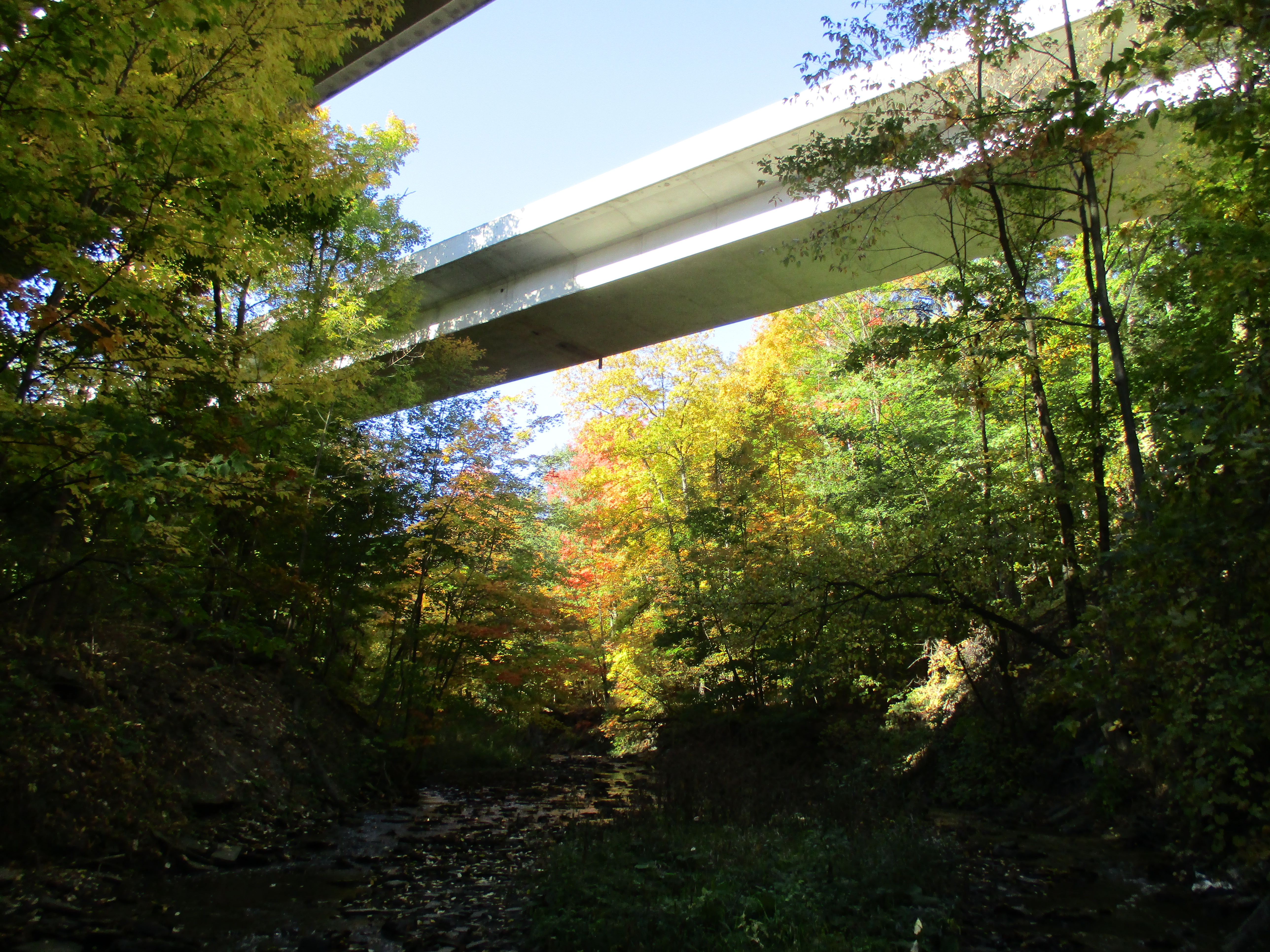
Mullet Creek is crossed by the double span of Burnhamthorpe Road.  A recent assessment was done for this bridge as well as sister bridges over the Credit River just east of here.  Original construction had created bridges where the sidewalks were too small to be properly functional. The study was completed to address several concerns.  At just .838 metres high, the guard rail on the river edge of the sidewalk was considered too low for safety.  The proposal was to increase this rail to 1.4 m.  There was also no rail between the sidewalk and road and so a second rail was proposed on the curb side.  The sidewalk was to be increased from 1.7 to 3 metres wide to allow cyclists and pedestrians to safely pass.  Look-out platforms were also created. This was accomplished by widening the road deck on the outside of the bridge.  The west bound span is seen from the creek level in the picture below.

IMG_0693

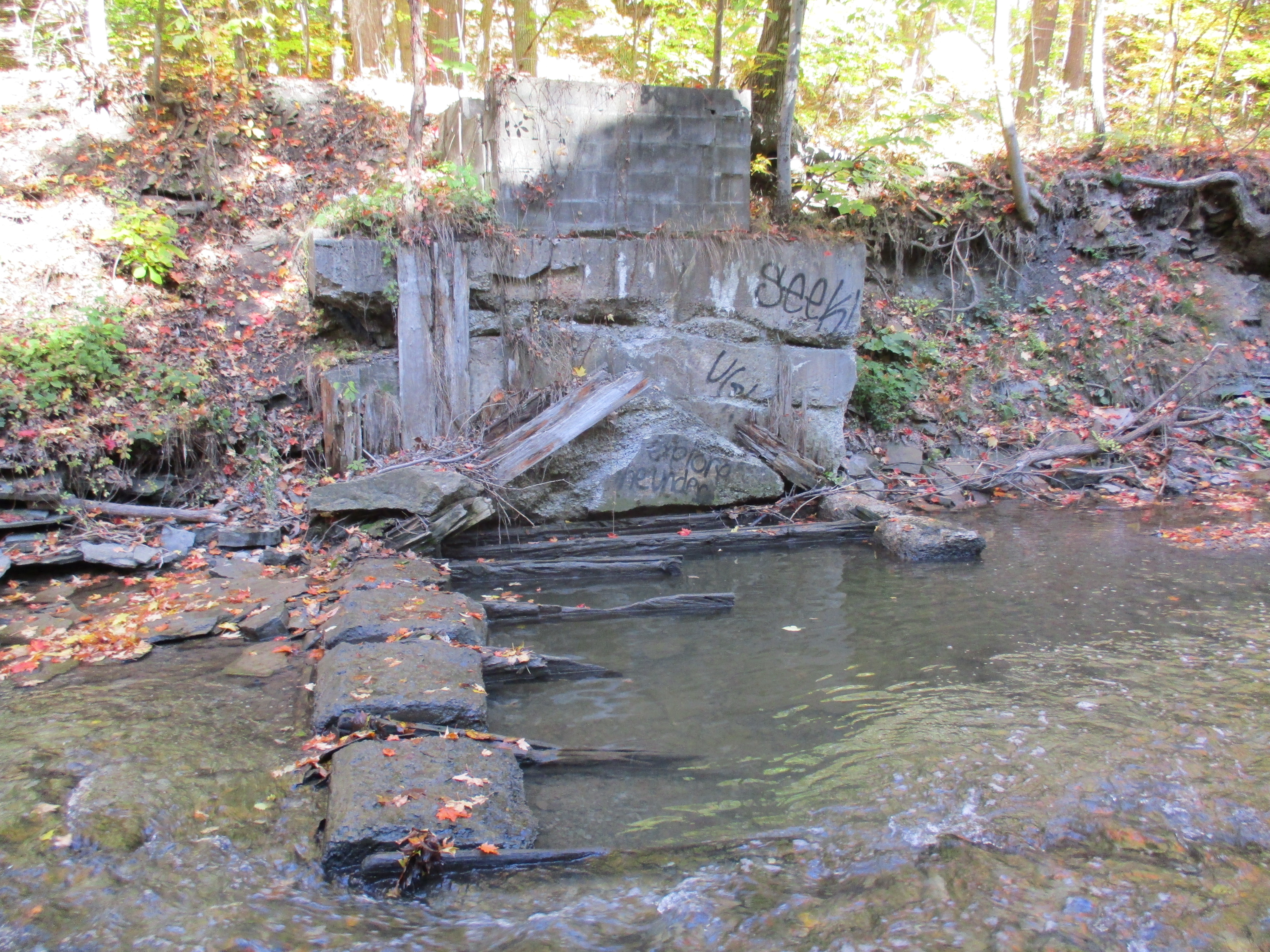
Just beyond the Burnhamthorpe bridge lie the remains of an old dam.  Original wooden sections remain submerged in the water behind later concrete forms while the pre-cast concrete blocks on the top were added later still.

IMG_0699

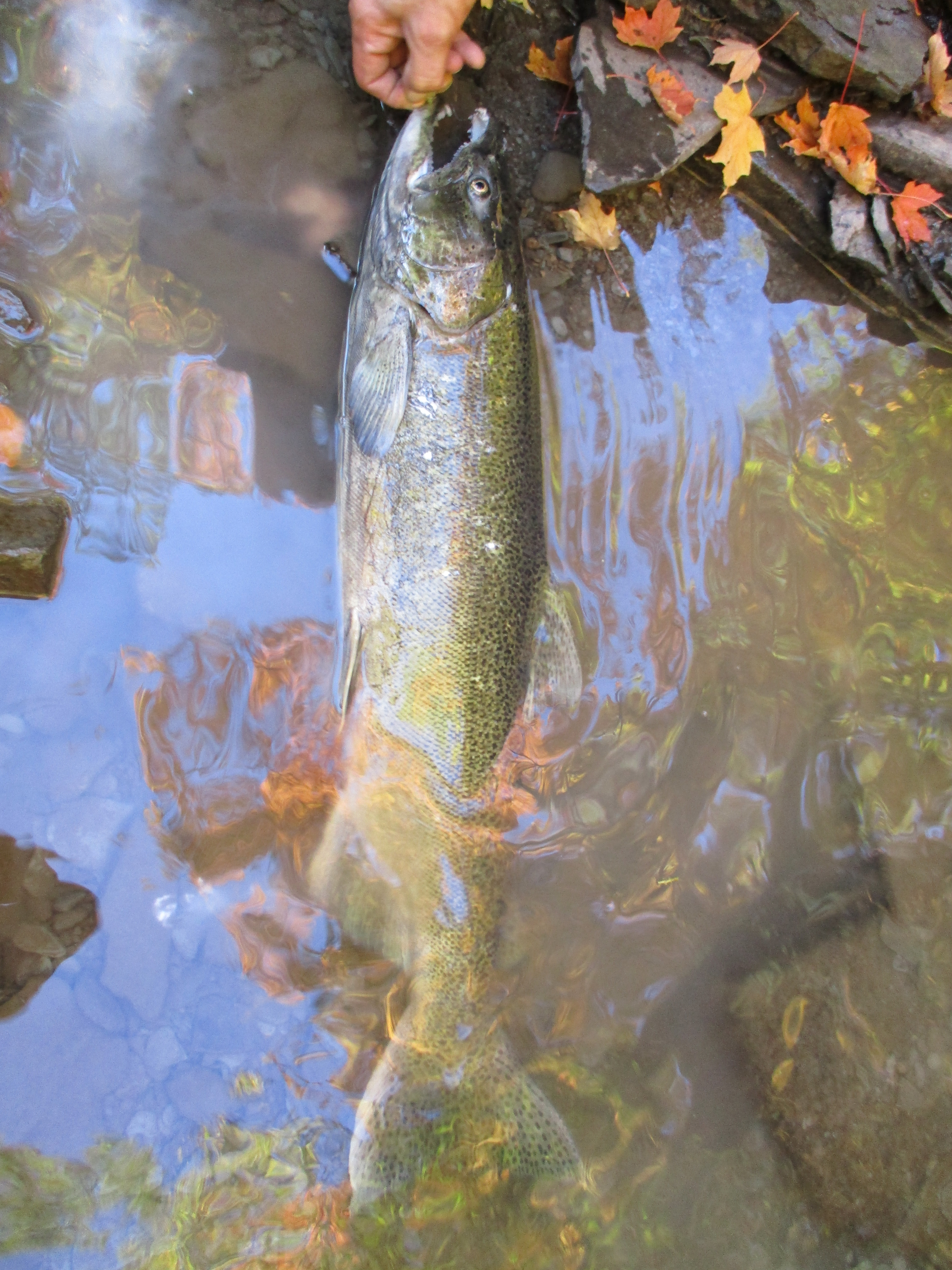
Prior to the arrival of Europeans, Atlantic Salmon were common in Lake Ontario and spawned in the Credit River every fall.  Due to pollution, dams, over-fishing and deforestation they were basically eliminated by the 1890’s.  In the 1960’s and 1970’s Chinook and Coho Salmon were introduced from the Pacific coast.  Chinook Solmon make their only spawning run when they are 4 years old and then die afterward.  This male Chinook has developed the characteristic hooked jaw called a kype and the darker colour of his one and only run upstream.  They can usually grow to lengths of 3 feet and weights of 25 pounds.  This specimen was caught by a young fellow named Jack who was fishing with his family.

IMG_0702

As you walk up Mullet Creek toward Mississauga Road you come to several shelves of shale where the water cascades over the edge.  The picture below was taken just one bend in the creek prior to the cover photo which has a larger drop.  These two little water falls make an oasis in the heart of the city.

IMG_0707

At one time a parkette stood at the corner of the creek and Mississauga Road.  The remains of the old parking area are starting to grow over but the old rail ties that outline the side and protect the trees in the middle will be around for many years to come.

IMG_0717

Mullet Creek extends from here to north of the 407 and must contain other interesting places. Time will tell.

Like us at http://www.facebook.com/hikingthegta

Maple Leaf Gardens

April 20, 2024

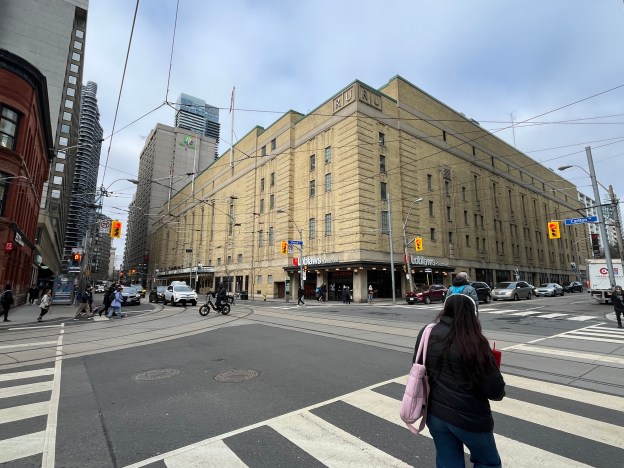
Maple Leaf Gardens was home to The Toronto Maple Leafs from 1931 until 1999 during which time they won the Stanley Cup 11 times. Unfortunately none of these was in the last 32 seasons they played there. Previously, The Leafs had been playing in Arena Gardens on Mutual Street which had been built in 1912. When the capacity of 7,500 people was deemed to be too small by the teams managing director Con Smythe he went looking for a site to build a more impressive arena for the team. He eventually settled on the corner of Church and Carlton Streets which he bought from The T. Eaton Company for $350,000. The map below shows the site as it existed in the 1893 Goads Fire insurance Map.

This picture was taken from the historic display board that is inside the front entrance to the facility as it stands today. It shows the building early in the construction phase.

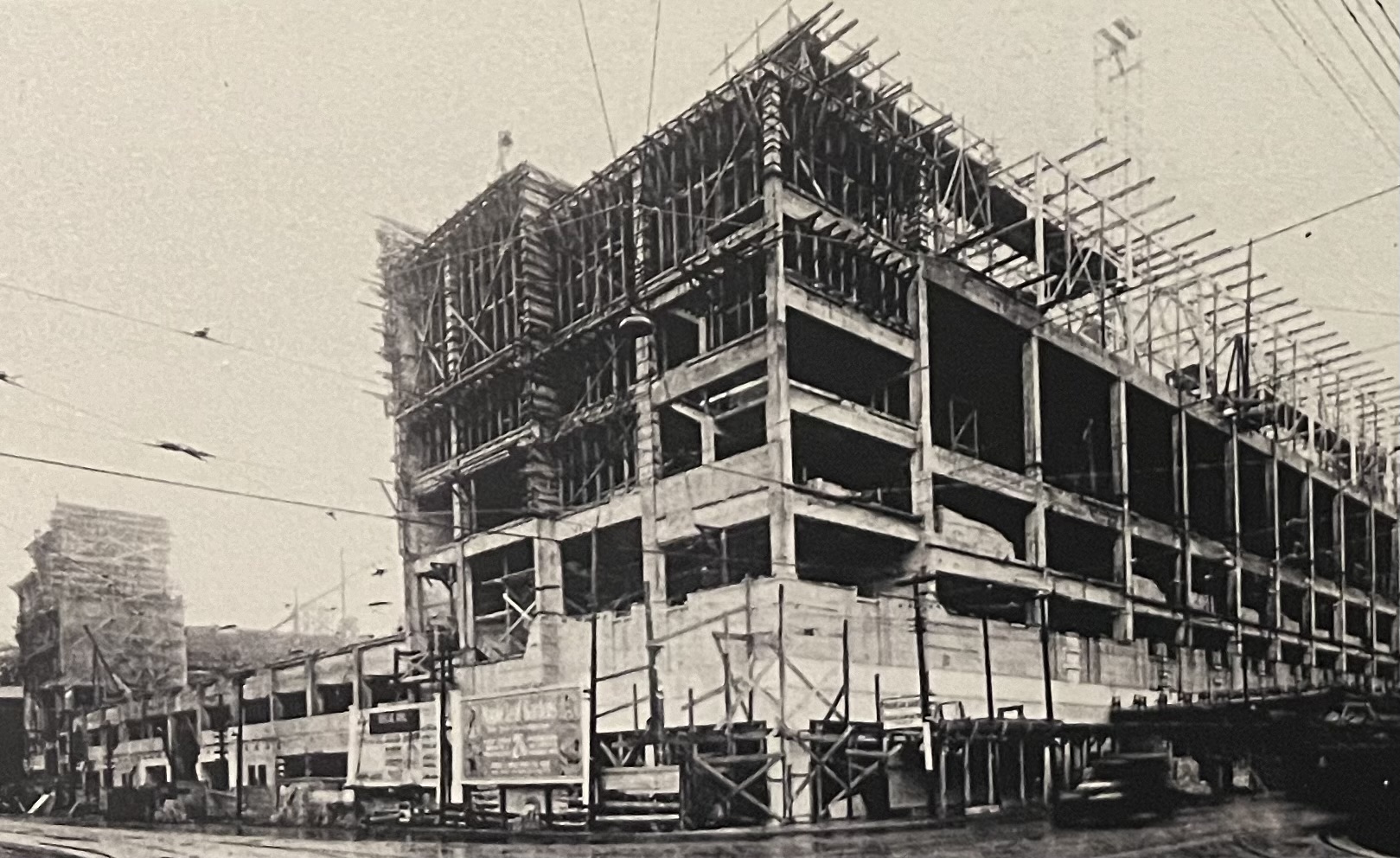
A 12,473 seat facility was designed by the architectural firm of Ross and Macdonald. The construction contract was awarded to Port Credit company Thomson Brothers Construction. They had been the lowest of ten bidders coming in at $990,000 with an additional $100,000 for steel work. Construction began on June 1, 1931 and was completed in just 5 months and 2 weeks. Where are these people when we need a crosstown subway line built? The final cost was $1.5 million, or $25.9 million in 2021 dollars. The image below shows the building under construction and was taken from the Wikipedia article about the building.

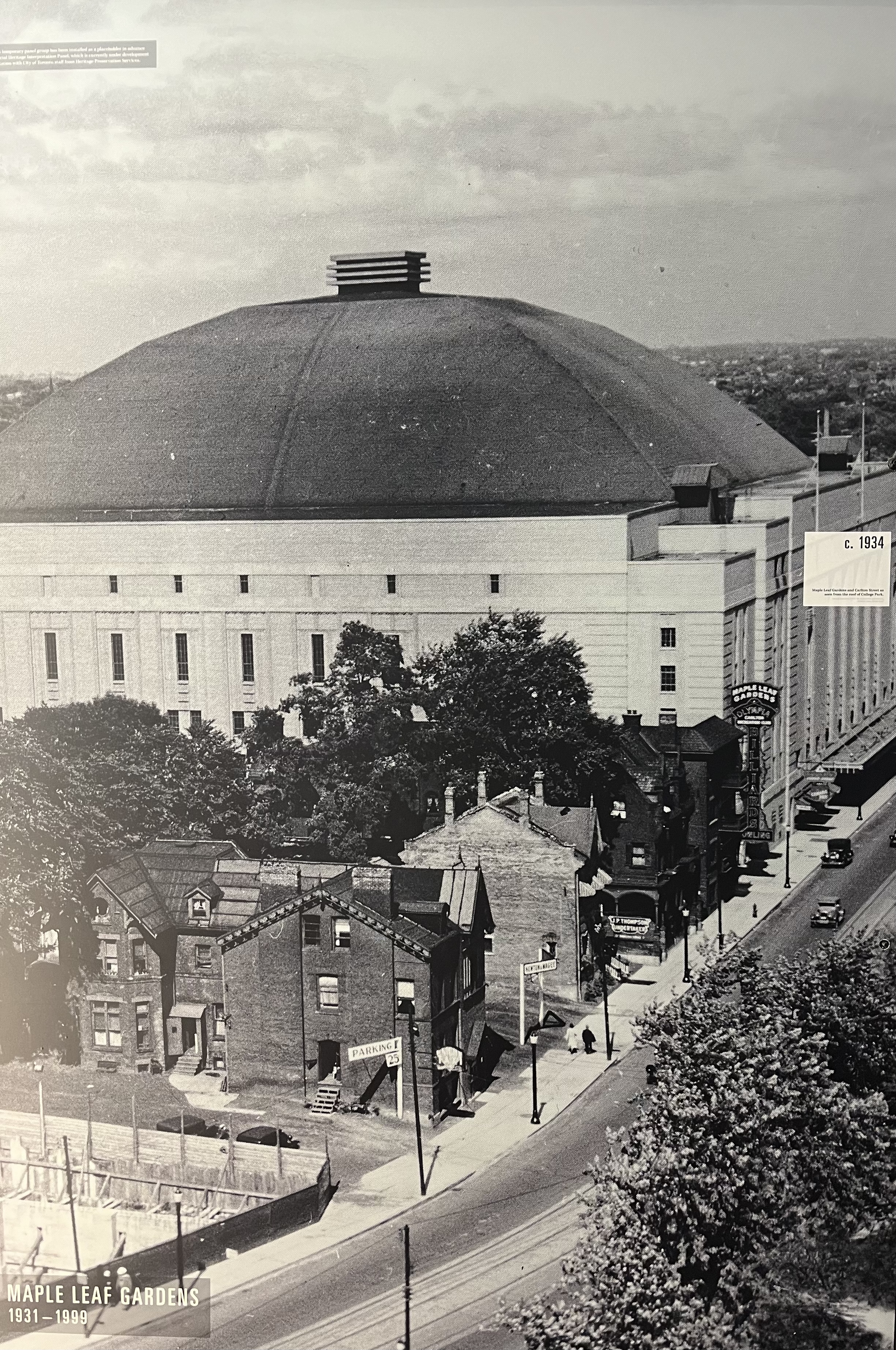
The archive photo below shows the building in 1934 and was taken from the same display board inside the front entrance to the modern building. It shows the older homes that still remained beside the arena. These would have been on the map shown above.

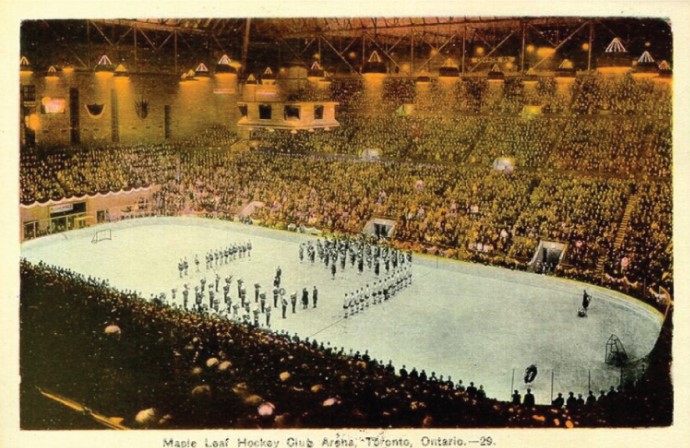
The first game in Maple Leaf Gardens was played on November 12, 1931 with the Toronto Maple Leafs hosting the Chicago Blackhawks. This postcard shows the inside of the stadium on that night. Unfortunately the Leafs lost that first game 2-1 to the Blackhawks. The image below shows the opening ceremonies for the building and was taken from the Wikipedia article.

Over the years Maple Leaf Gardens played host to many events including the Ice Capades and a ton of Rock Concerts. Elvis Presley played there on April 2, 1957 and The Beatles on Sept. 7, 1964. Almost every major act played here on their way across North America. I saw my first Rush concert here in November 1982 on their “Signals” tour. It was so good that I saw them again Sept. 1984, March 1986, March 1988, May 1990, Dec. 1991, and May 1994. Rush recorded a concert video of the 1984 “Grace Under Pressure” tour in which I can be seen briefly in a crowd view during the song “The Spirit Of Radio.” These were probably the best seats I had for any concert at The Gardens. I went to at least 25 other concerts here over the years including more than one by each of Jethro Tull and Triumph. Oasis became the last concert to be held at the arena on April 29, 2000.

I also went to several games in the 1999 and 2000 Toronto Rock seasons and watched them win the National Lacrosse Championship both of those seasons. The 2000 Toronto Rock Championship game became the final professional event to be held at Maple Leaf Gardens. The Toronto Maple Leafs played their final game in The Gardens on Feb. 13, 1999 before moving to Air Canada Centre. They lost 6-2 to the Chicago Blackhawks putting loosing bookends on their 67 year run.

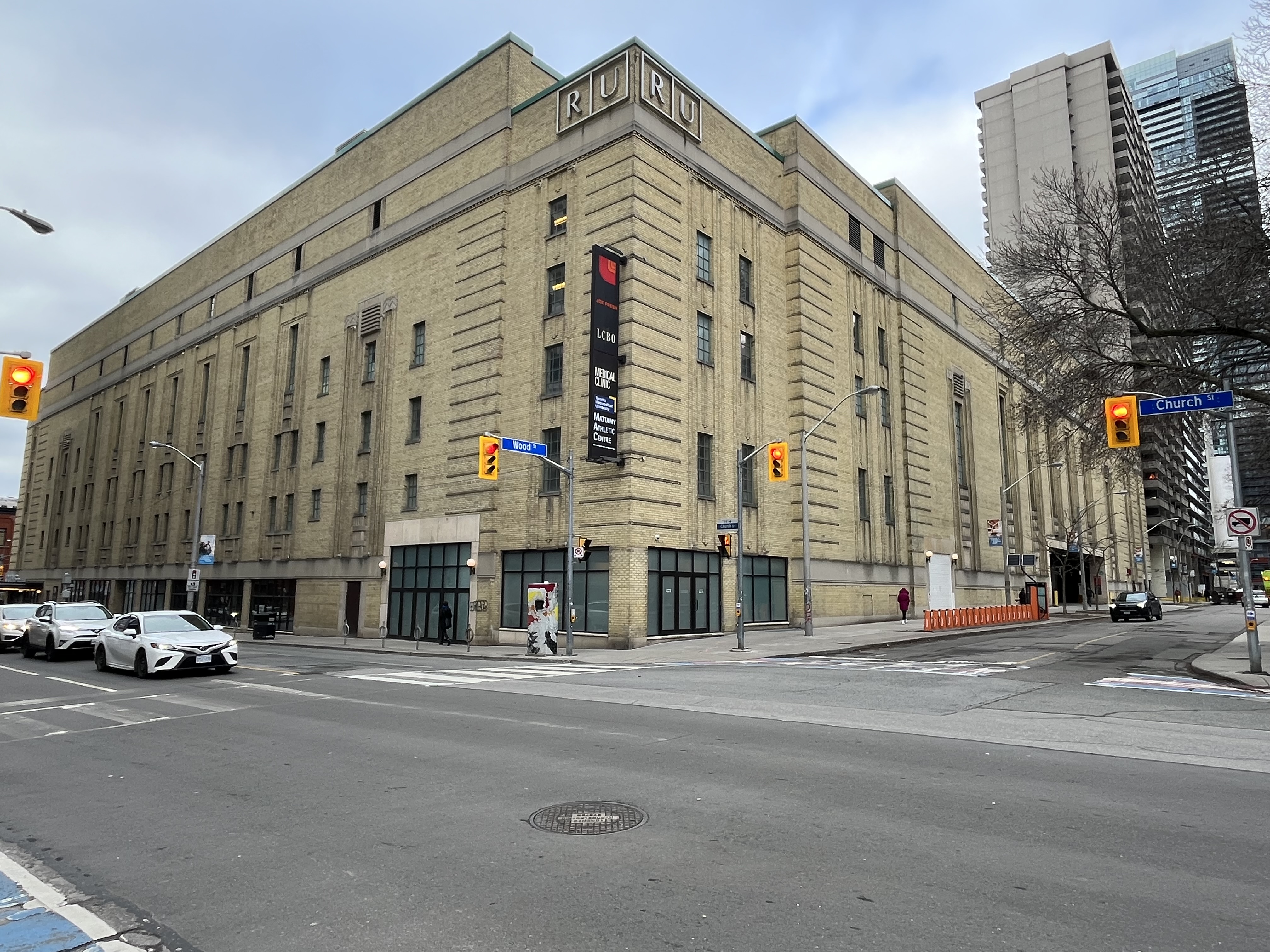
After the final events in Maple Leaf Gardens, the facility sat empty for almost a decade as the owners refused to sell it to anyone who might use it in competition with Air Canada Centre. The Gardens was purchased in 2004 by Loblaws for $12 million dollars under an agreement that it wouldn’t be used for sports or entertainment. In 2009 Loblaws partnered with Toronto Metropolitan University (formerly Ryerson University) to create a Loblaws grocery store and an athletic facility for the university.

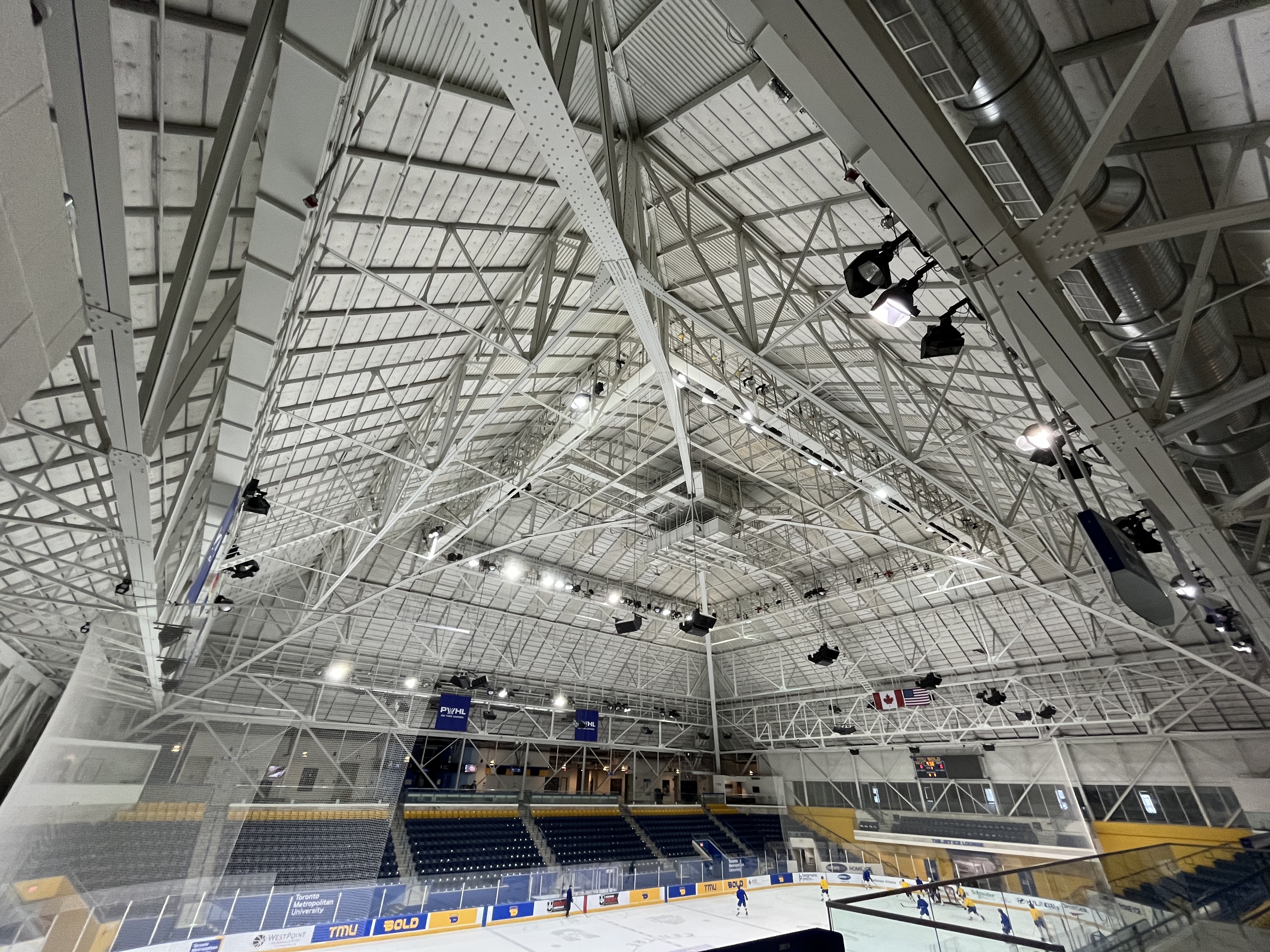
The interior of the old stadium was gutted and new floors were laid for the grocery store and LCBO that went on the ground floor. A red dot was placed on the floor to indicate the original centre ice from the hockey arena. This store opened on November 30th 2011. A second floor was added and an NHL size rink was put in on the third floor along with a fitness centre. Seating for the new rink consists of 2,796 seats from the original arena. The Mattamy Athletic Centre at The Gardens opened September 9, 2012. The image below shows the rafters where the scoreboard for the NHL games used to hang above centre ice. Tons of speakers and lighting equipment were also suspended here for the various concerts that were held over the last five decades of the 20th century.

Maple Leaf Gardens stands as a monument to Toronto sports and entertainment and lives on as a Loblaws, fitness centre and university ice rink. I have a lot of fond memories of events at The Gardens but unfortunately, being in my early 60s means that I am too young to have witnessed a Stanley Cup victory there.

Perhaps this year will be the year that the Maple Leafs have a successful Stanley Cup run!

Google Maps link: Maple Leaf Gardens

Like us at http://www.facebook.com/hikingthegta

Follow us at http://www.hikingthegta.com

Also, look for us on Instagram
Enoch Turner Schoolhouse

April 6, 2024

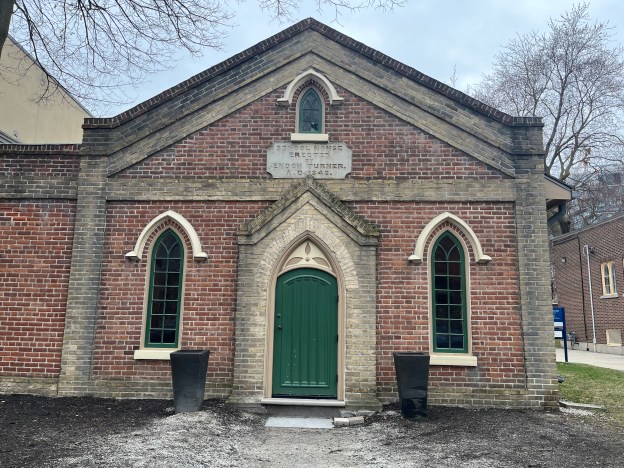
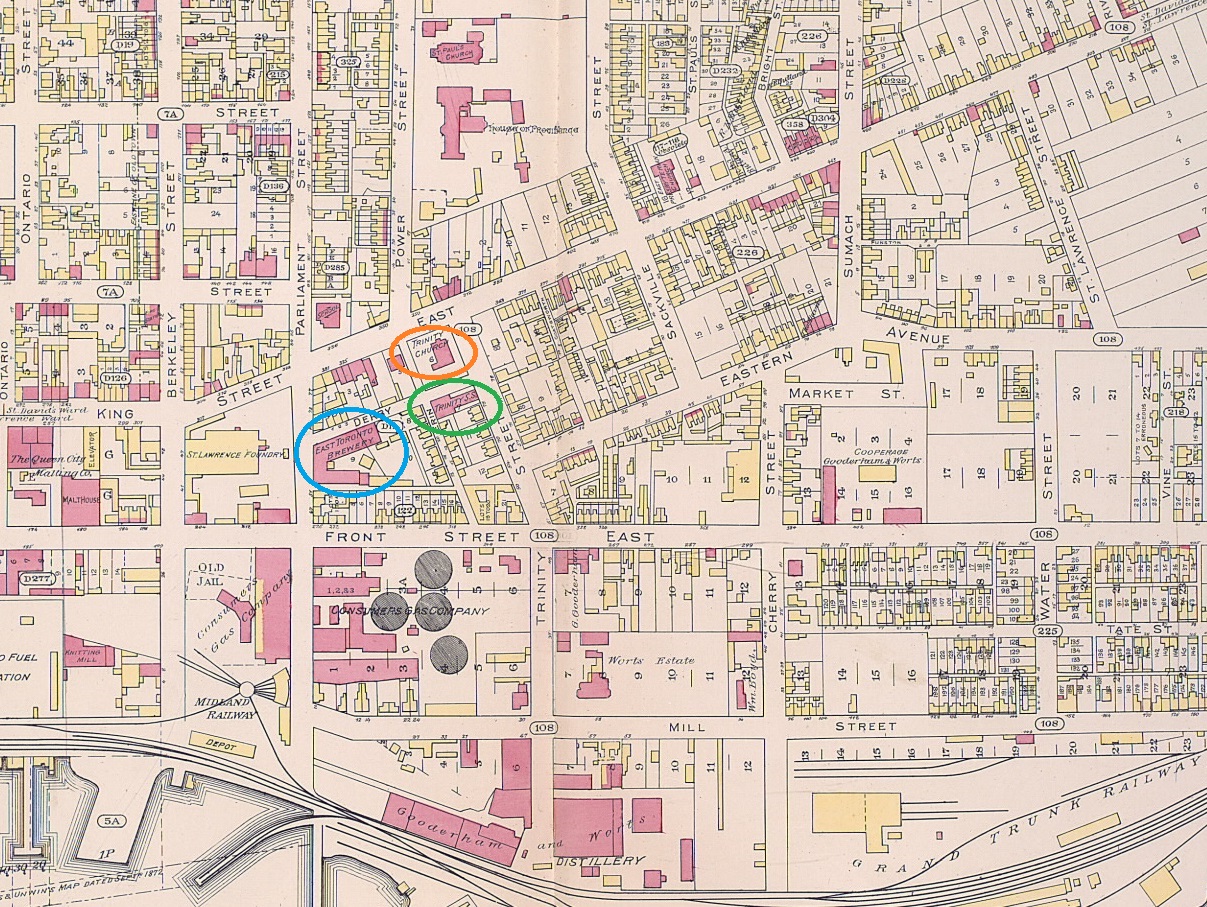
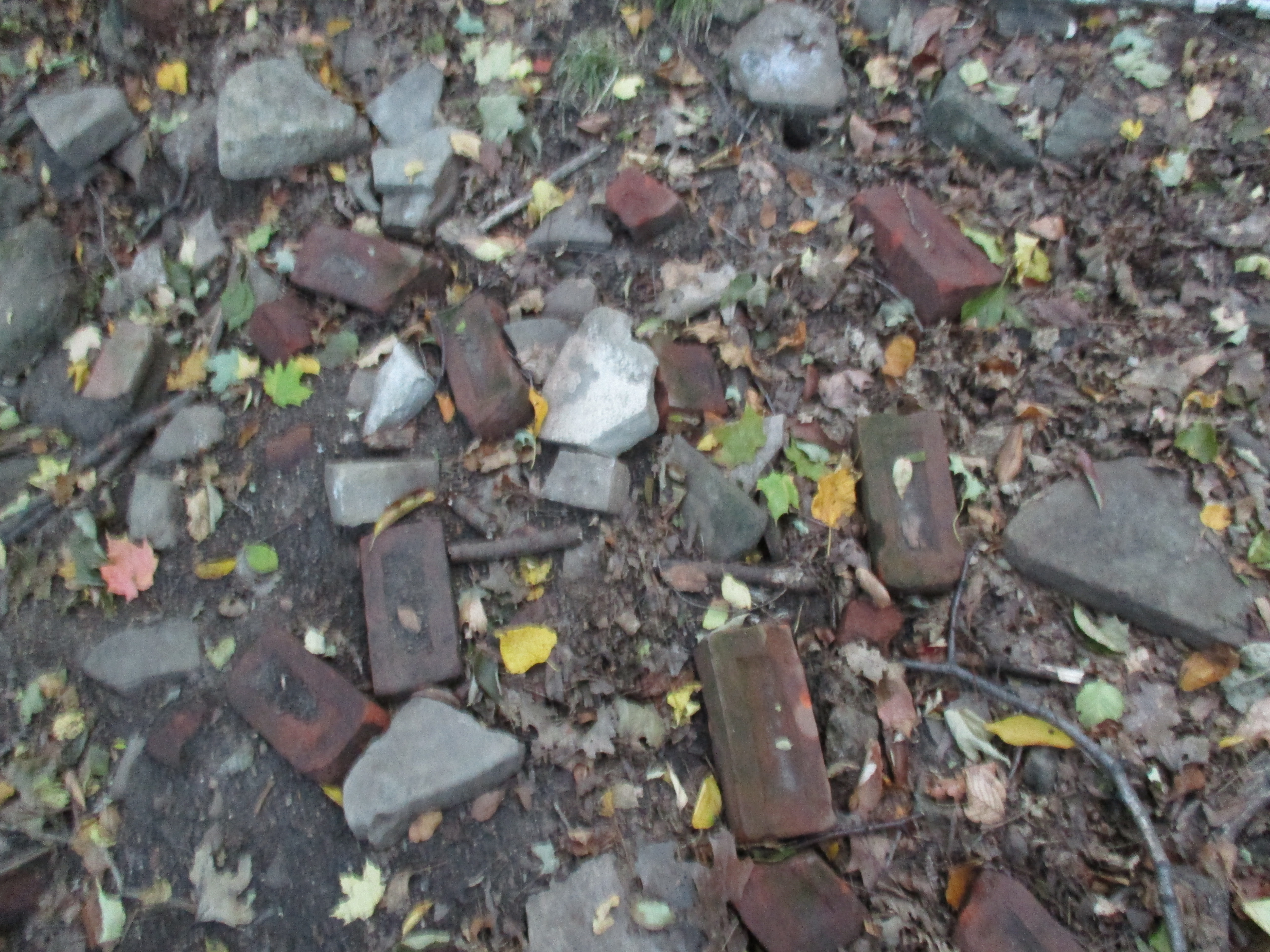
The oldest standing schoolhouse in Toronto was built in 1848 just five years after York changed its name to Toronto and became a city. The population of the city stood at about 25,000 and some of the poorest people lived in the St. Lawrence Ward which is seen in the map below. This image is taken from the 1884 Goads Fire Insurance Map of Toronto. Trinity School, as it was then known, is circled in green. Also featured in this story are the East Toronto Brewery (blue) and Little Trinity Church (orange).

Enoch Turner was born in Stafforshire, UK in 1792 and came to York early in the 19th century. He established a brewery in the area of Parliament and Front streets which is shown as the East Toronto Brewery in the map above. There were a lot of Irish immigrants in the area that came from County Cork in Ireland and this is the basis for the name Corktown as this neighbourhood became known. In 1846 Canada passed the “Act for the better establishment and maintenance of Common Schools in Upper Canada”. Toronto was unwilling to introduce a tax to support schools and so all schools that benefitted from public support were closed for a year following this. These were hard times for the poor in Toronto and Enoch Turner had a heart to educate the children in the area surrounding his brewery. He provided funding to build a school on land provided by Little Trinity Church.

It is thought that the school was designed in the Gothic Style at the same time as Little Trinity Church by local architect Henry Bowyer Lane. This architect also designed City Hall and St. Lawrence Market. When the school opened in 1849 there were 240 students and Enoch paid all expenses to operate it for 3 years. At the time it was known as Ward Street School. Thus it became the first free school in Toronto and spurred the development of a free school system in the province. When it was taken over by the Toronto Board of Education in 1851 it was renamed Trinity Street School.

The school only operated until 1859 when students were moved to the Palace Street School which we described in our post Canary Restaurant. The building was then turned over to Little Trinity Church who used it as a Sunday School and Parish Hall.

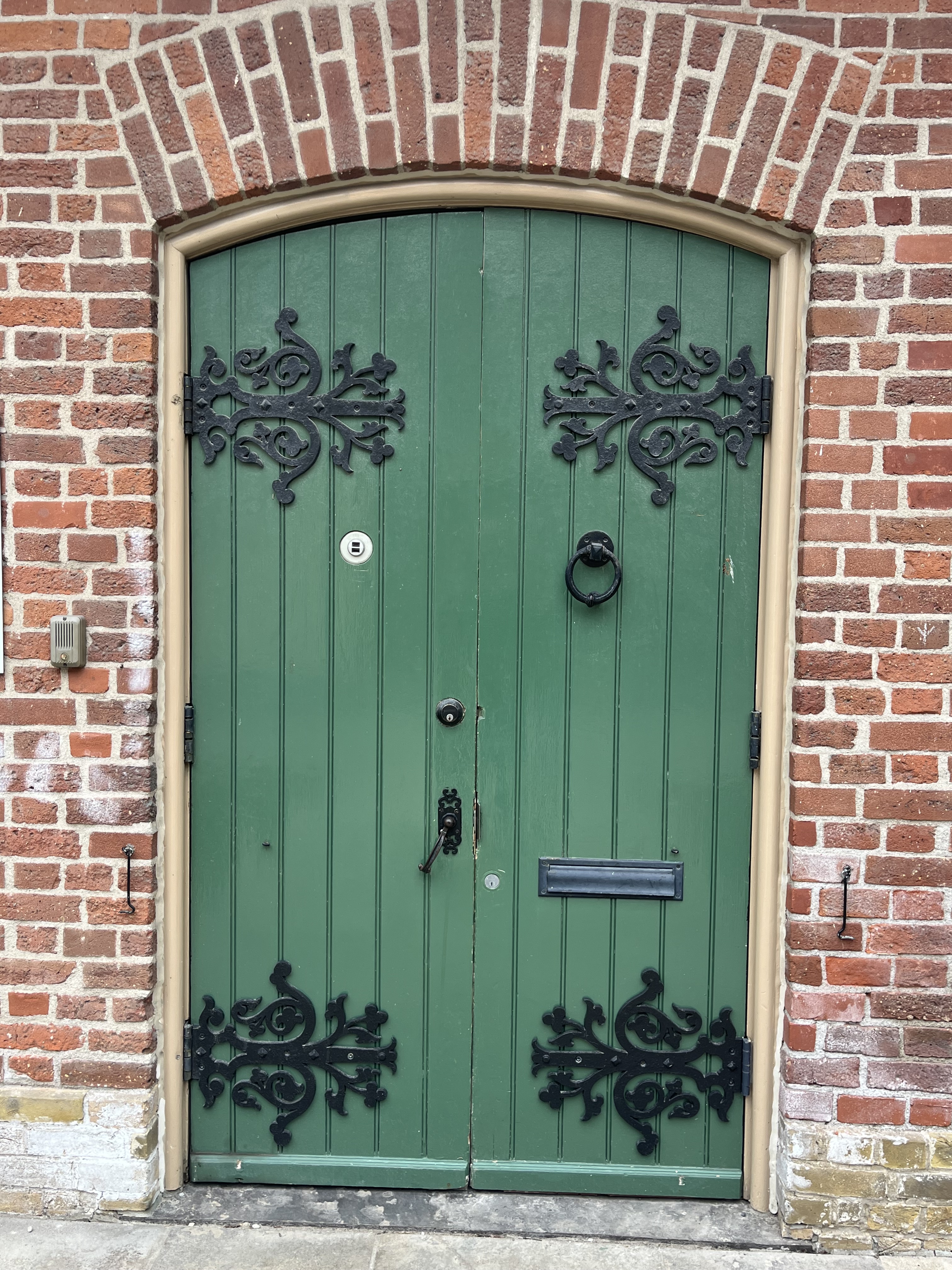
The side door features four highly ornate hinges, knocker and latch.

The addition on the west end of the building was completed in 1869. A second addition on the south side of the building was made in 1910. The building was used as a recruitment centre in 1899 for the Boer War. A soup kitchen was operated out of the structure during the Great Depression in the 1930s where meals were served to 1500 people each week. It was also used as a base for servicemen during both World Wars.

A fire broke out in Little Trinity Church in 1961 and the church was used as a meeting hall while repairs were made. Following this, the building fell into disrepair and was threatened with demolition.

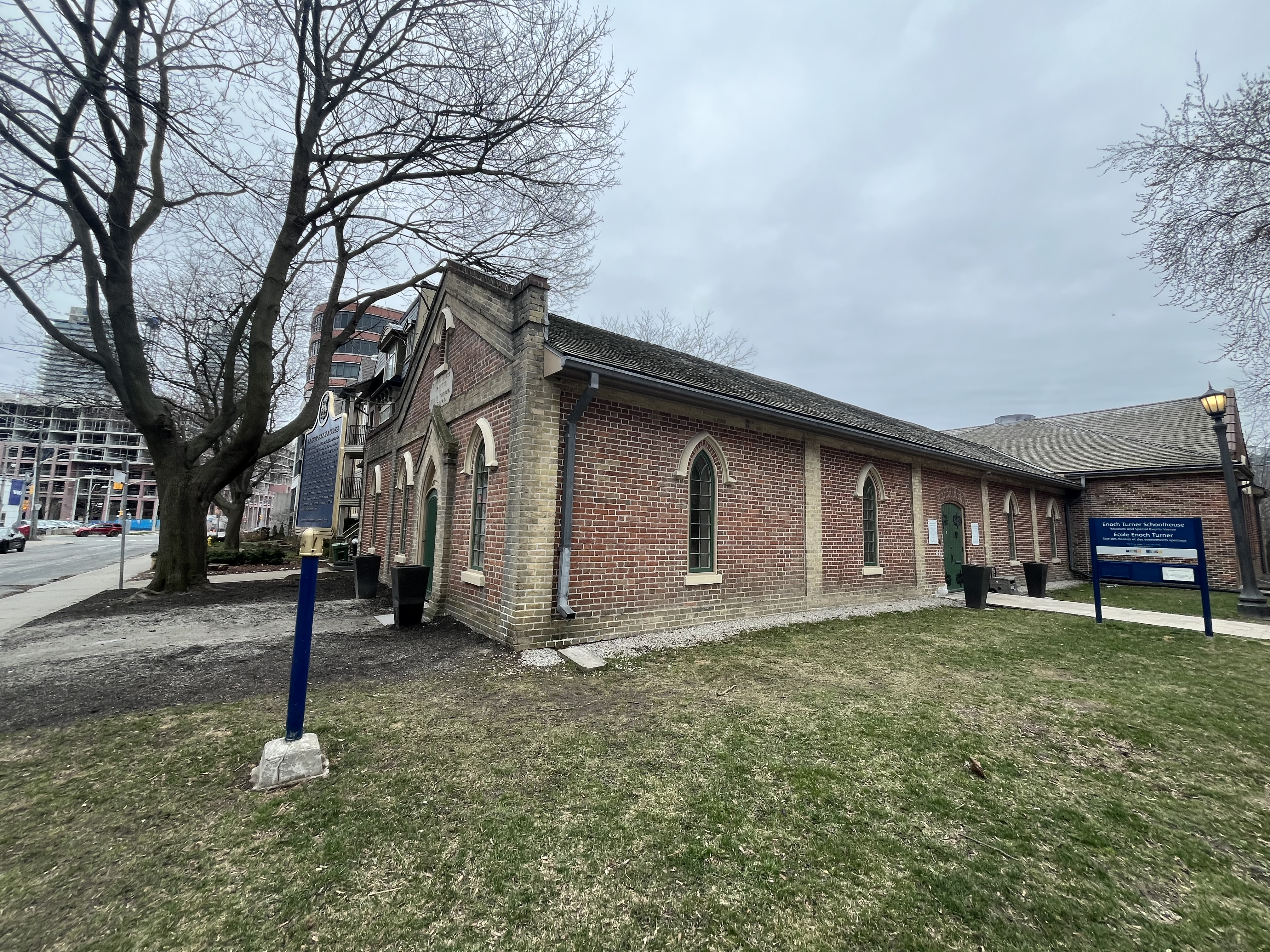
On October 8, 1970 the Enoch Turner Schoolhouse Foundation was established to try and save the building. Extensive renovations were completed and in 1972 it was opened as a museum. In 2008 the building was turned over to the Ontario Heritage Trust. Part of the Little Trinity Church can be seen to the left in the picture below. The story of that building can be found in our post Gooderham Architecture.

The building has stood for over 175 years and can be rented for weddings and private events. More importantly it stands as a testament to one man’s vision for free education for the poor children in his community.

Related stories: Gooderham Architecture, One Room Schools, Canary Restaurant

Google Maps Link: Enoch Turner Schoolhouse

Like us at http://www.facebook.com/hikingthegta

Follow us at http://www.hikingthegta.com

Also, look for us on Instagram