Category Archives: Historic Site

LaSalle Park

Sunday, January 22, 2023

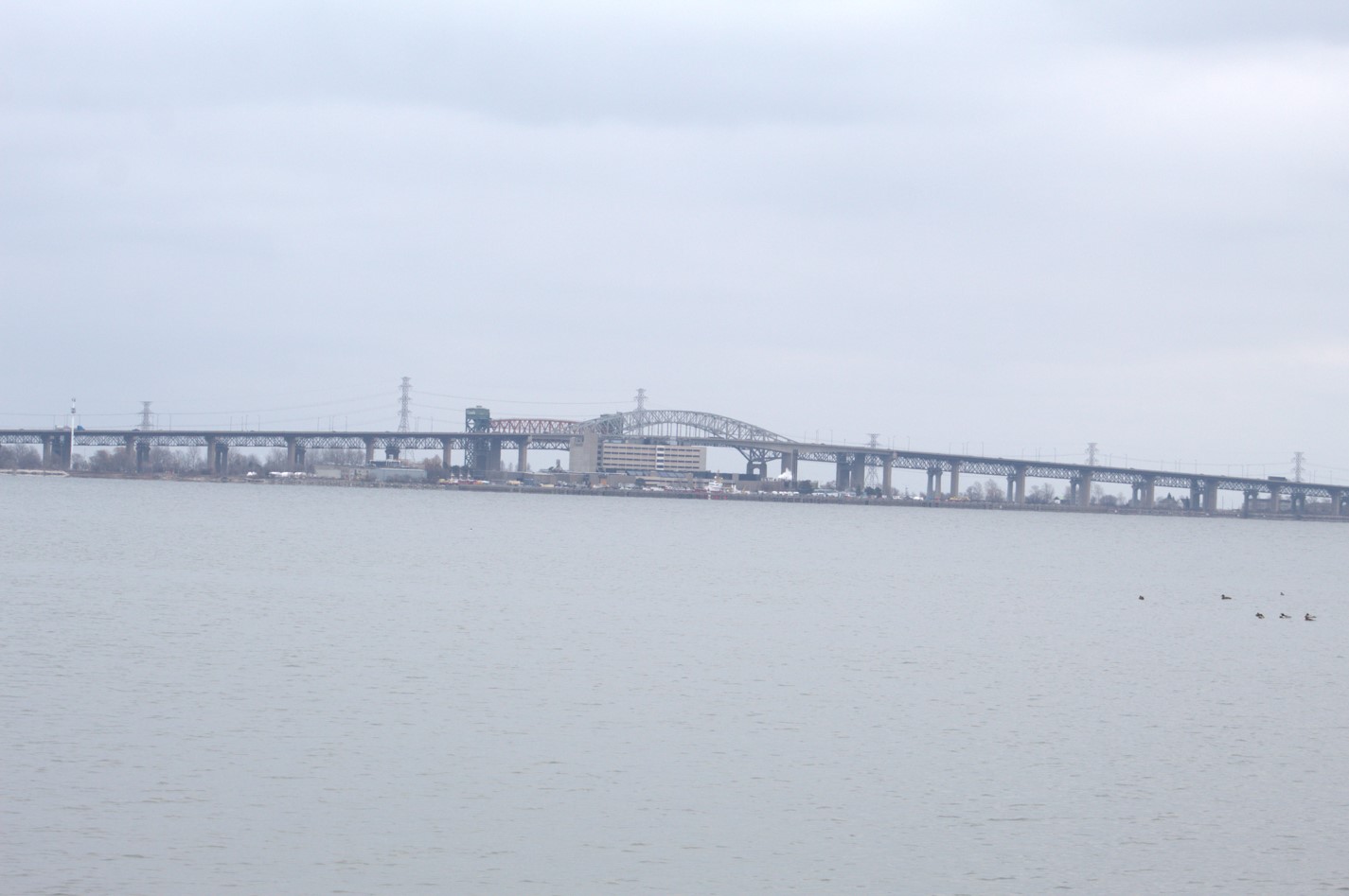
LaSalle Park is a 57 acre park on the north shore of Burlington Bay. It is owned by the City of Hamilton but has been developed and operated by the City of Burlington since the 1970s. It is located near where Sieur De La Salle, a French explorer, is thought to have landed in 1669. This would make him the first white person set foot on the shores of the bay. A lot has changed in the years since then. Dundurn Castle was built on the escarpment above the bay and the history of that property dates back to the War of 1812. The picture below shows the Burlington Skyway Bridge and the older lift bridge behind it. We previously covered these in our feature on the Burlington Canal.
Hamilton has long been the site of heavy industry including the manufacturing of steel. Stelco was founded in 1910 through the amalgamation of several smaller companies. These industries, and others, caused the Hamilton Harbour to become quite polluted. The situation was such that by the 1980s it had become an international concern. The International Joint commission identified Hamilton Harbour as one of 43 areas in the Great Lakes that required government and community action to resolve pollution problems. The Hamilton Harbour Remedial Action Plan was put into play to help create new habitat for fish and wildlife. Since then, there have been many projects implemented to help restore spawning grounds and other places that encourage the return of wildlife to the area.

The Hamilton Harbour Remedial Action Plan was developed with a list of 14 areas of use for the harbour that were impaired by the contaminants in the water. These include the loss of fish and wildlife habitat and the findings of tumours and reproductive problems with them. A specific action plan was developed for each of these areas and water quality was measured to determine the effectiveness and progress in each area. The waters off of the park are filled with a wide variety of ducks, geese and swans who choose to spend the winter in its sheltered waters.
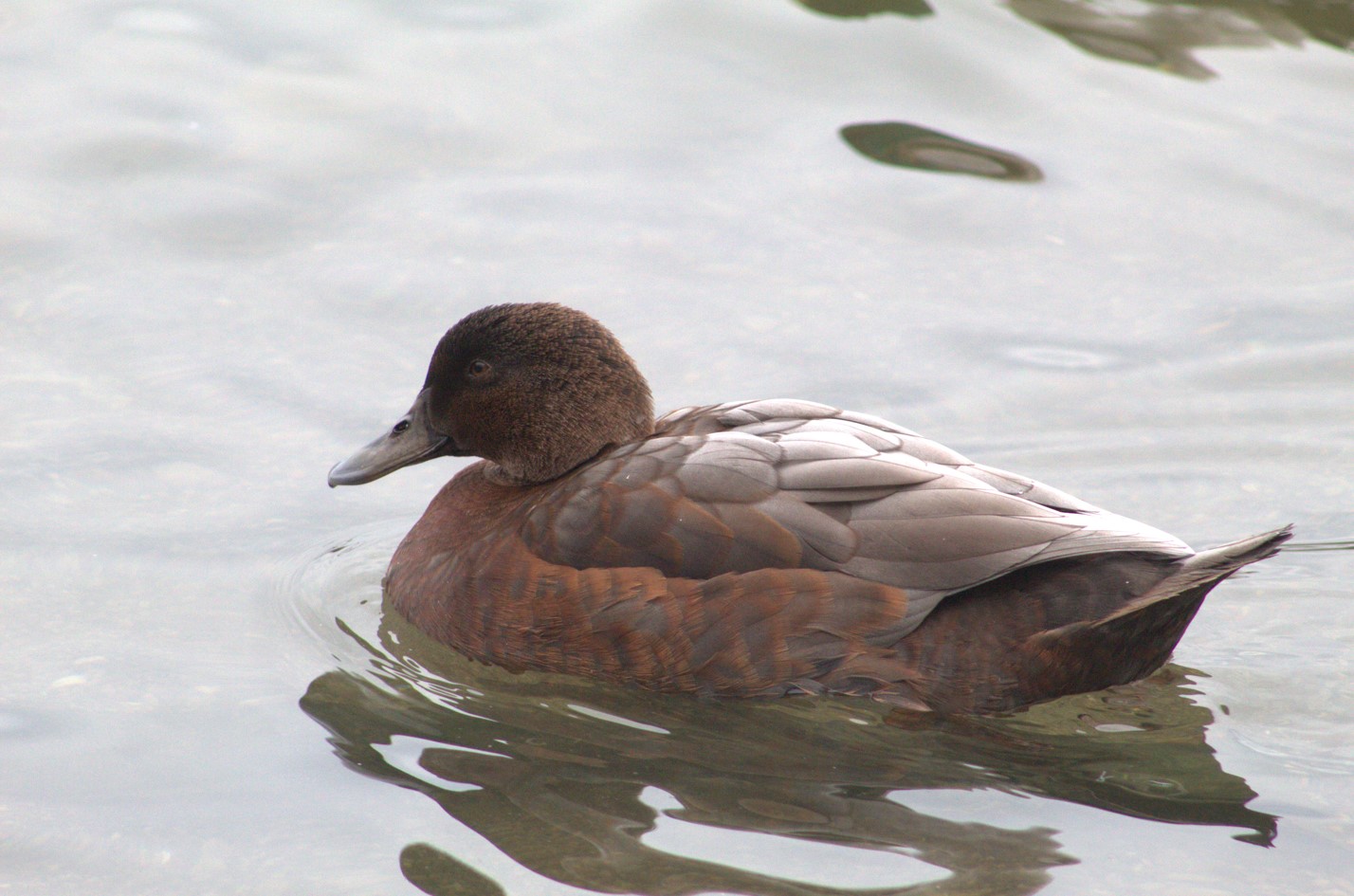
Among the species of ducks that were observed during our visit were Mallards, Goldeneyes, American Black Ducks and Buffleheads, like the one seen below.

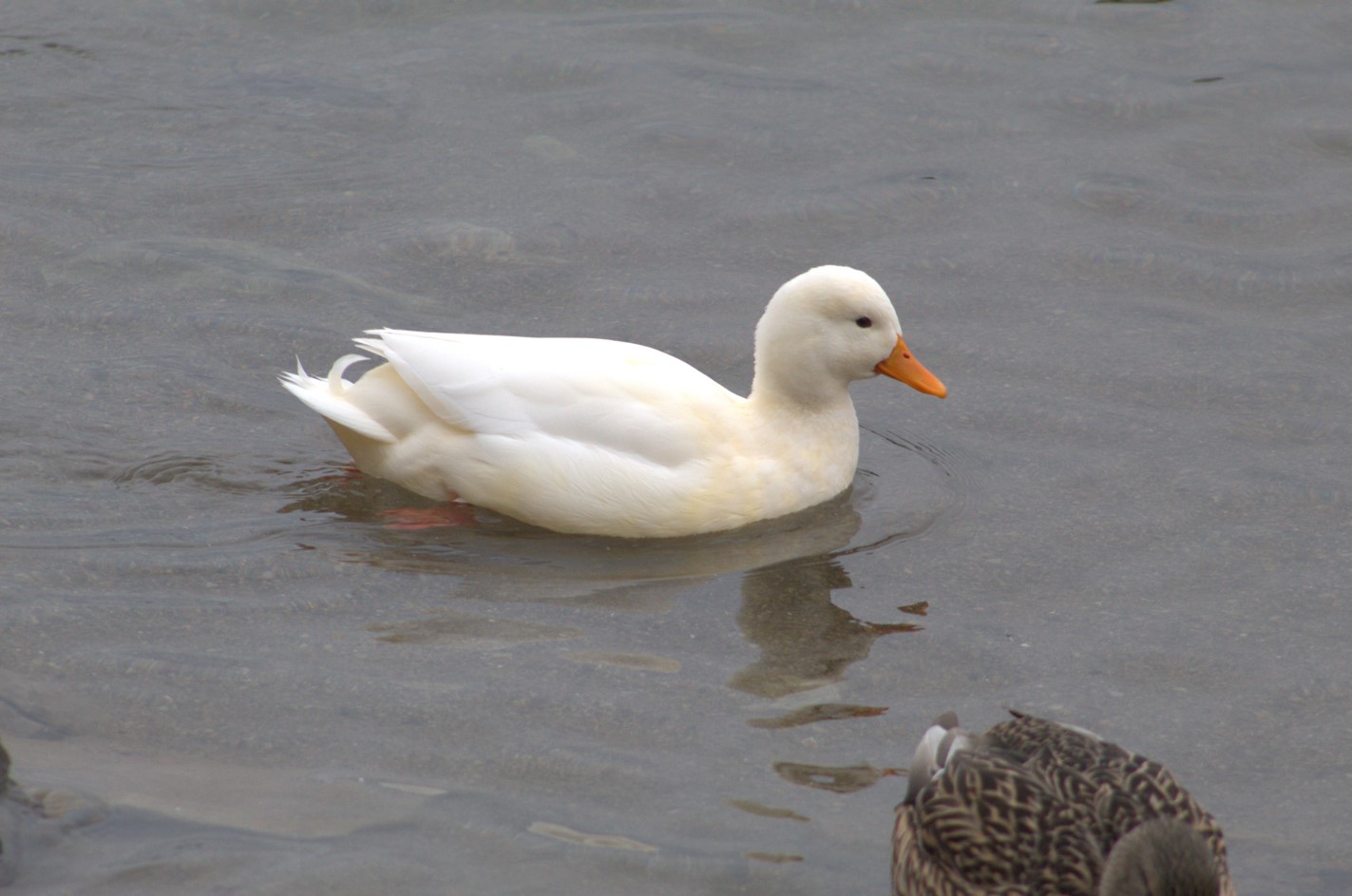
Pure white ducks are not native to Ontario and are usually farm escapees. This call duck stood out from the crowd because it was the only one in the park.
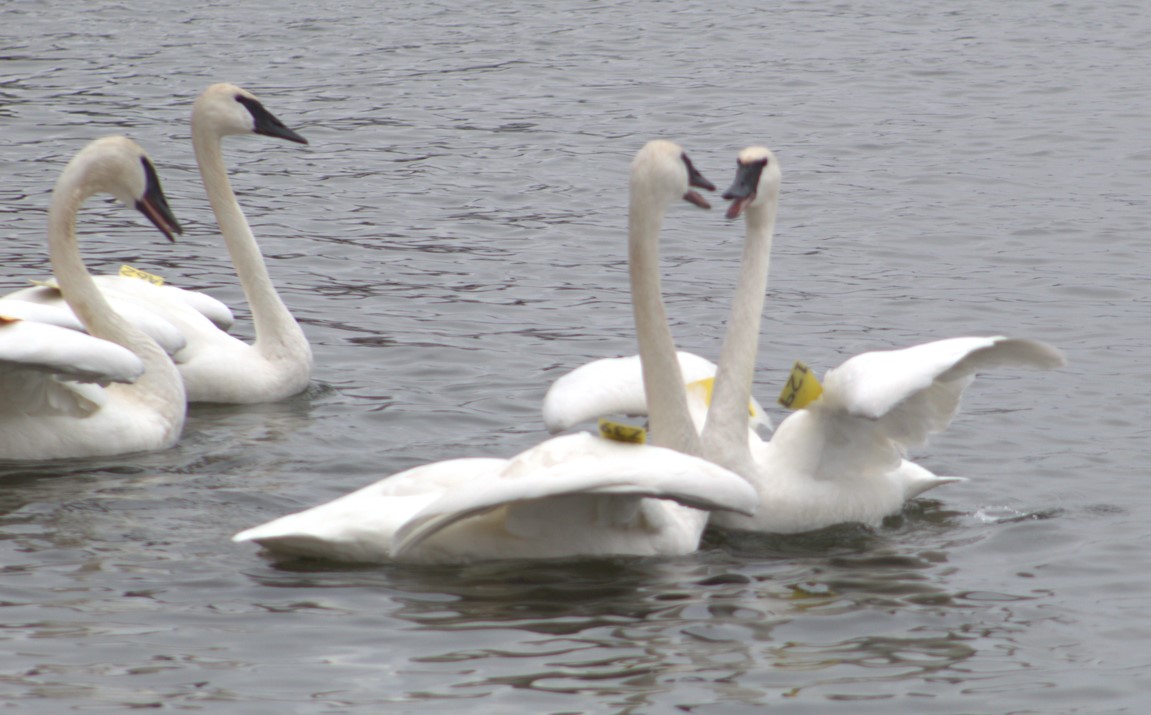
Trumpeter Swans were nearly extinct in Ontario but through the actions of the Trumpeter Swan Restoration Group Coalition the population has grown to over 1000. Many of these overwinter at LaSalle Park. The park provides ideal shelter from the cold northerly winds and has enough beach for them to rest on. It also has plenty of aquatic plants for them to feed on and the water is shallow enough for them to tip and feed. Swans don’t dive, so they need a certain depth of water to be able to reach their food. The swans are tagged with yellow tags on their wings for identification and tracking purposes.
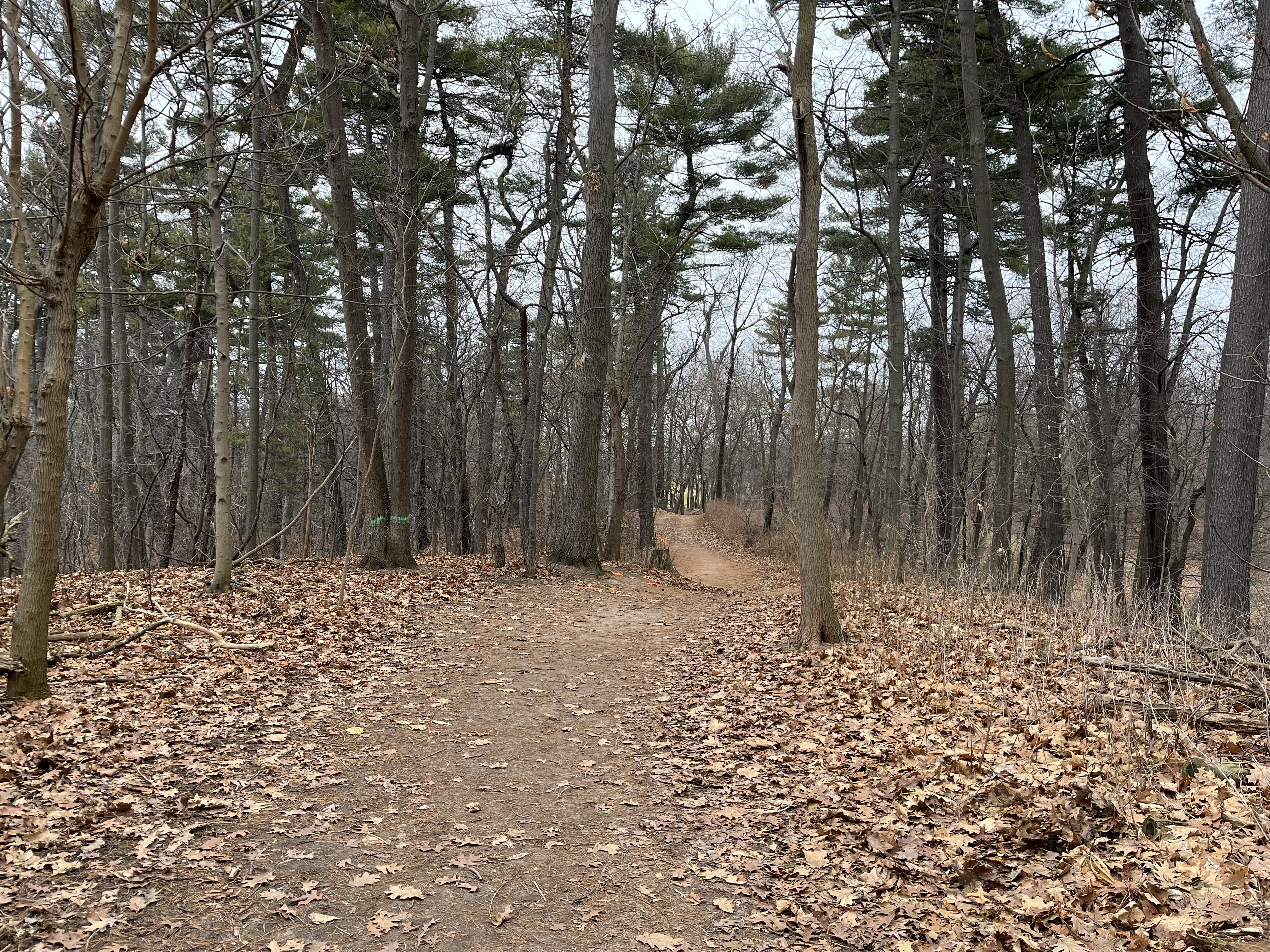
The Waterfront Trail runs through the park but there’s several other trails to be explored as well. There’s also a short trail that runs east from the marina, along the edge of the lake.
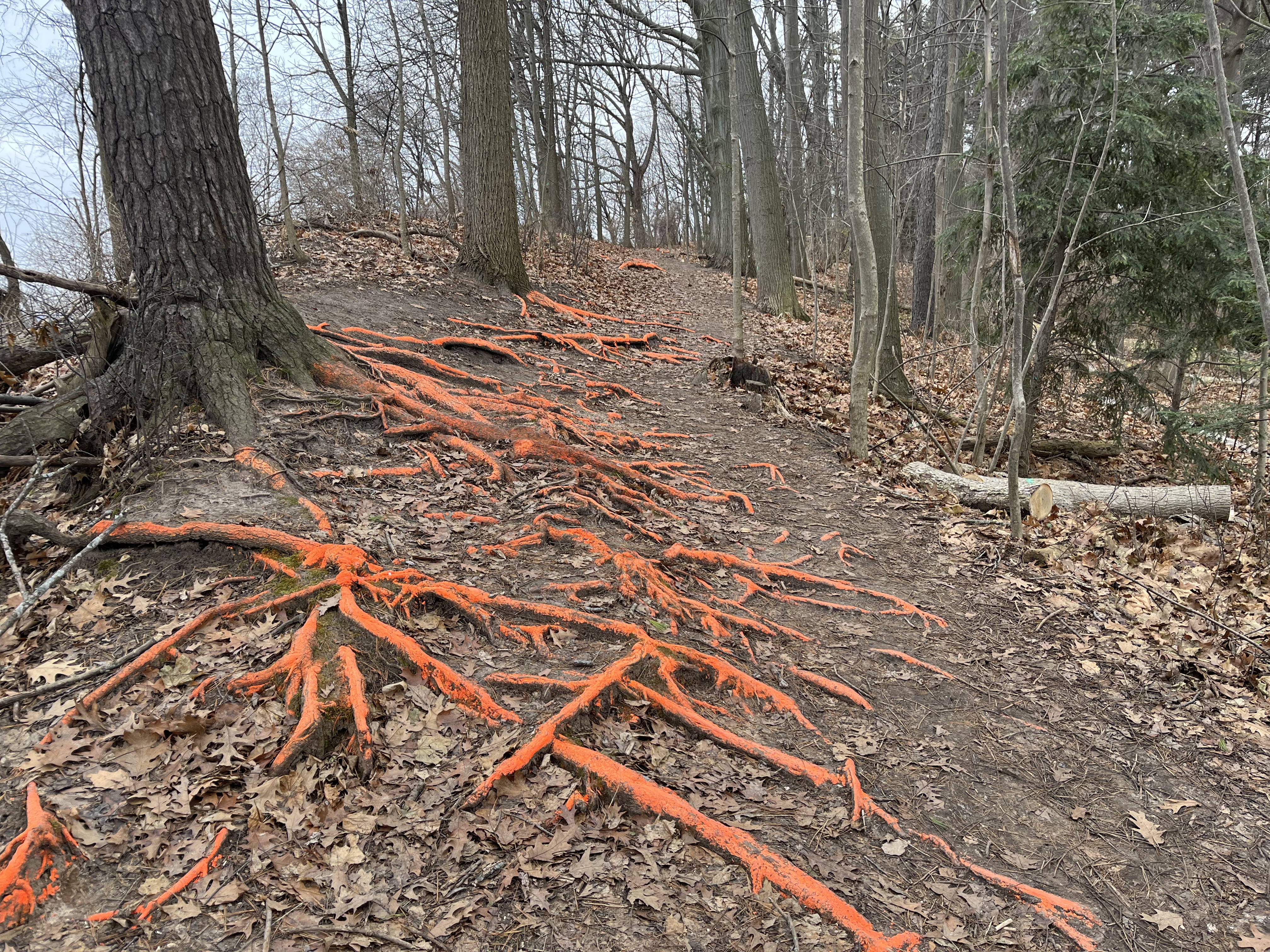
This is the only place that I have ever encountered roots that have been painted orange. This seems like a very strange idea in a park that is associated with lake and wetland restoration. The paint must not be very good for the environment and will eventually find its way into the lake.
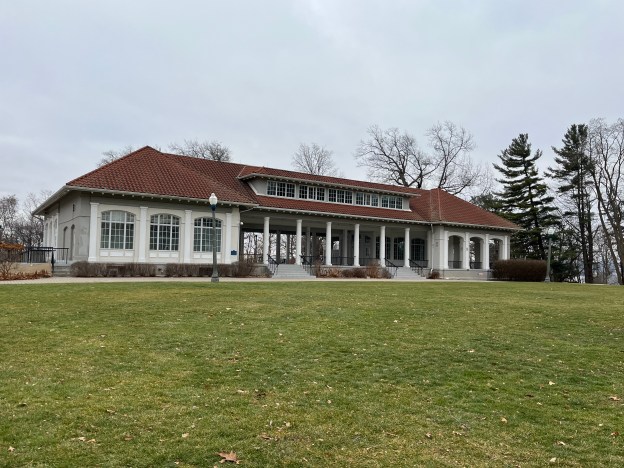
The LaSalle Park Pavilion was built in 1917 as a combination dance hall and picnic pavilion. It has an open veranda between two arcaded pavilions that have pilasters and is characteristic of the art deco period of architecture. The pavilion suffered damage in a fire in 1997 but was rebuilt to its original splendor.

LaSalle Park is a great place for bird watching, especially in the summer, with local clubs coming out to see how many species they can count.

Related stories: Dundurn Castle, Burlington Canal

Google Maps Link: LaSalle Park

Like us at http://www.facebook.com/hikingthegta

Follow us at http://www.hikingthegta.com

Also, look for us on Instagram
Bata Shoe Museum

Sunday, January 15, 2023

Everybody wears shoes but not too many people think much about them. The Bata Shoe Museum on Bloor Street West in Toronto presents 4,500 years worth of shoe history that can take you a step in a new direction. They have about 15,000 items in their collection and have a rotating display of about 1,000 shoes. The museum is based originally on the personal collection of Sonja Bata who spent her life in the shoe industry. She amassed a large collection that went on display in a dedicated building in 1979. The footwear is displayed in a four story building that has a permanent collection of historical footwear on the bottom floor while displays on the other three floors constantly change to provide a different experience every time you visit.

The oldest known shoe was found on a 5300 year old corpse known as the Otzi Man, or Ice Man. He was still wearing one of his shoes when the mummy was found in 1991 and the museum has an exact replica.

In ancient China, among the Han peoples, it was considered that the ideal size for women’s feet was 3 inches. To achieve this the feet were bound to limit their growth.

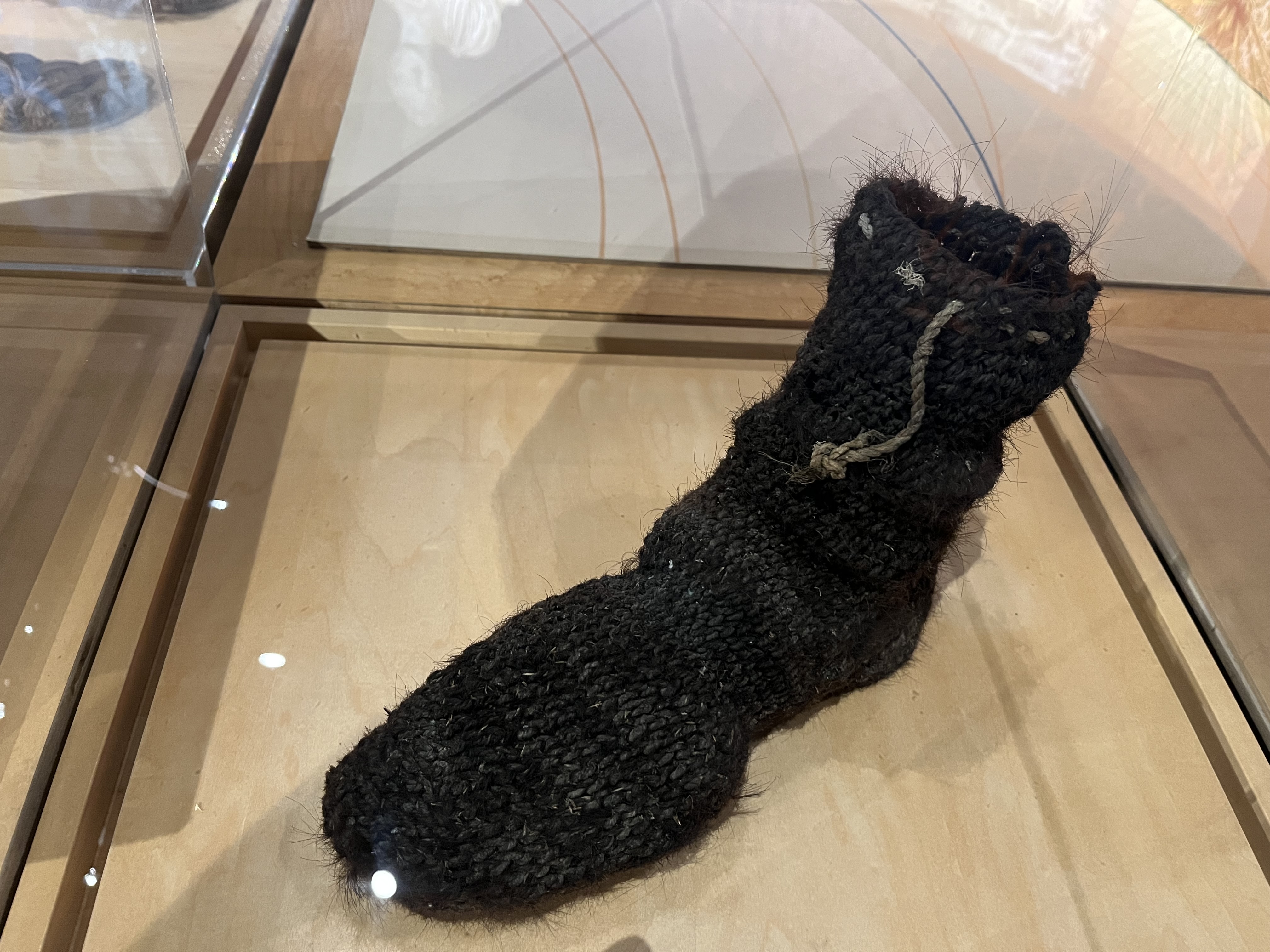
In the 13th century, socks were often made by combining human hair with vegetable fibre. This sock was made by the ancient Puebloan culture.

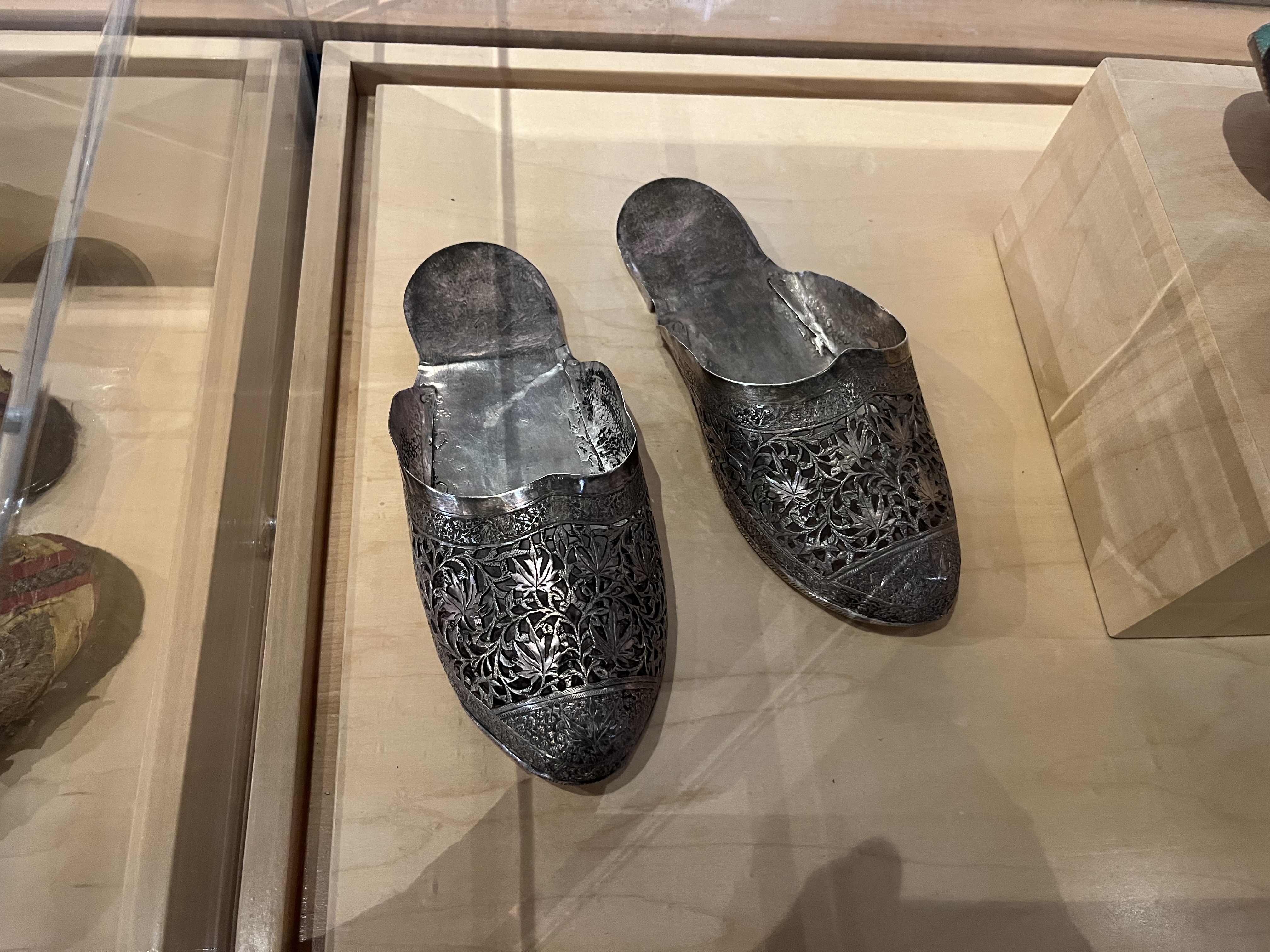
Brides in India were often given footwear that was crafted in silver. These shoes were known as mules and have filigree work that incorporates vines and leaves in a motif known as chinar. They were made in the 19th century.

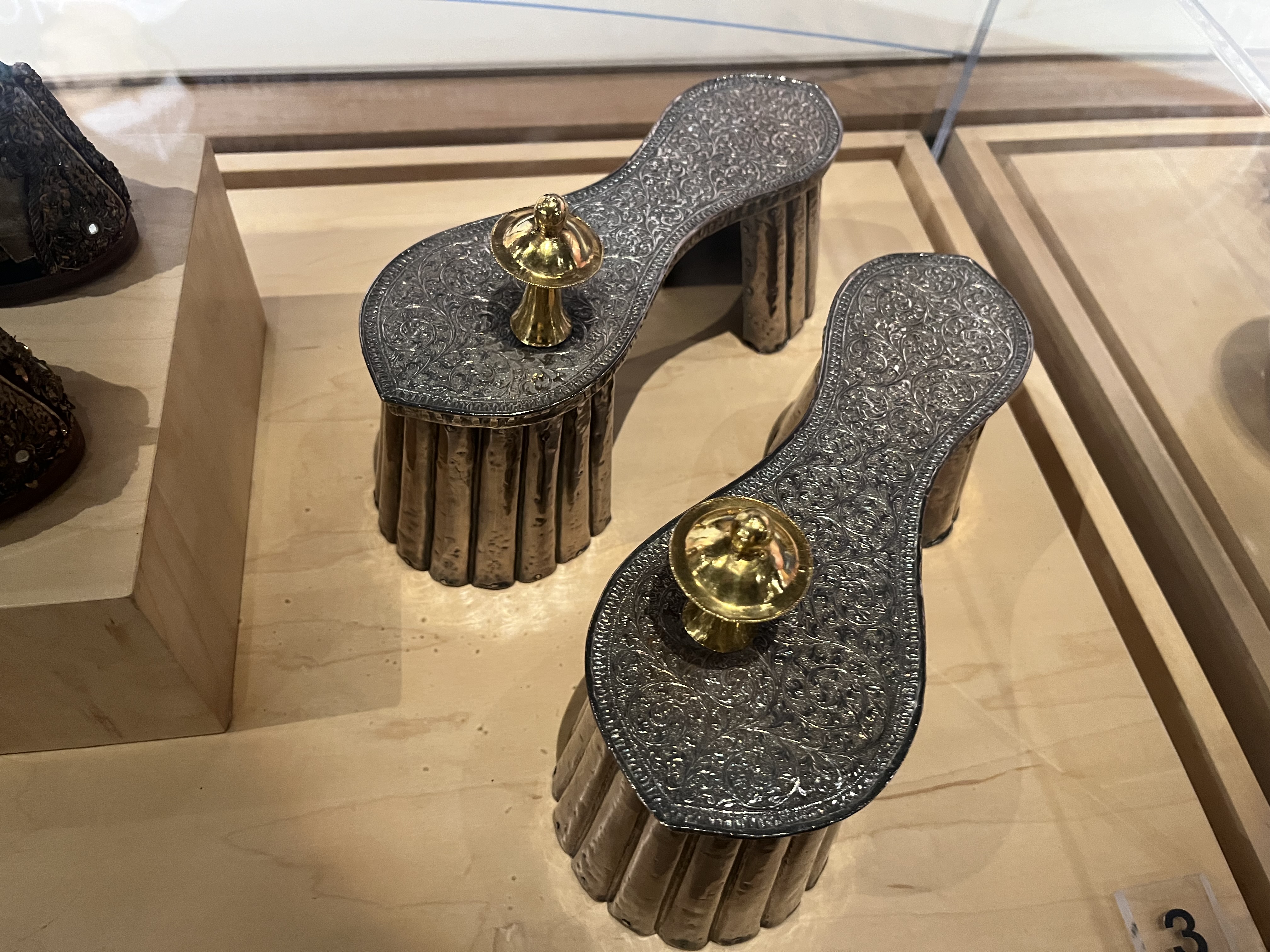
These paduka were unusually high and elegant and were likely worn for an important aristocratic function. The silver plating, gold toe-knobs and extreme height identify these women’s shoes as upper class and would have been worn in India in the 18th century.

These dancing shoes were made in India around 1840 and are known as mojari. The jade beads and brass bells would have created a beautiful tinkling sound as the wearer performed their dance.

Many cultures have a story similar to Cinderella and there are said to be thousands of variants around the world. The earliest version of the tale appears to have been told around the time of Christ. The shoe museum has a few pair of glass slippers that have been made over the centuries to commemorate the heroine.

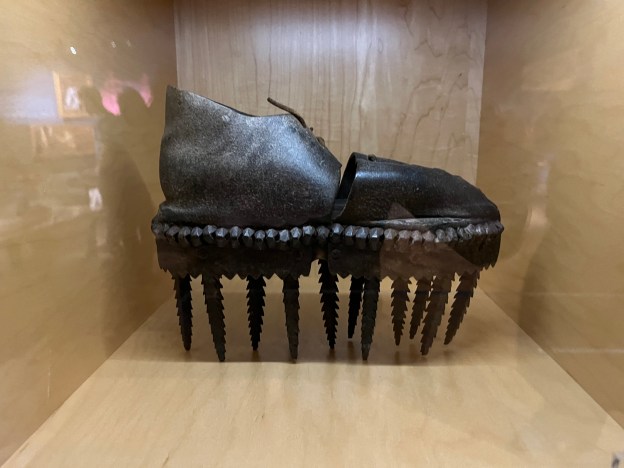
Some shoes had very specific uses like this pair. These clogs from France with the spikes on the bottom were used to crack the shells of Chestnuts.

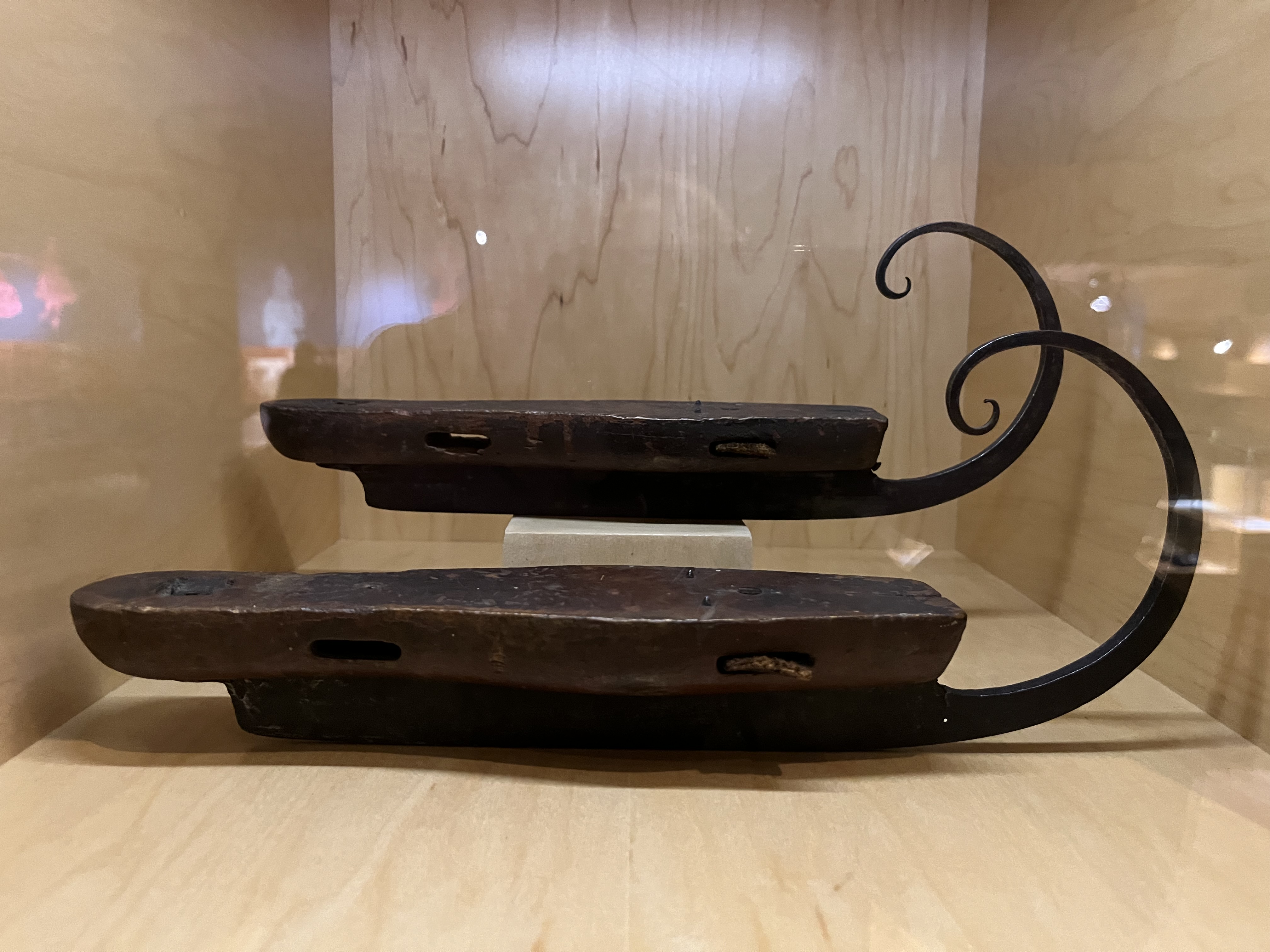
Skating became popular in Amsterdam during the Middle Ages as a means of navigating the frozen canals. Some of the earliest skates were made from the long shinbones of deer. The old Dutch word for skate is “schenkel” which means “leg bone”.

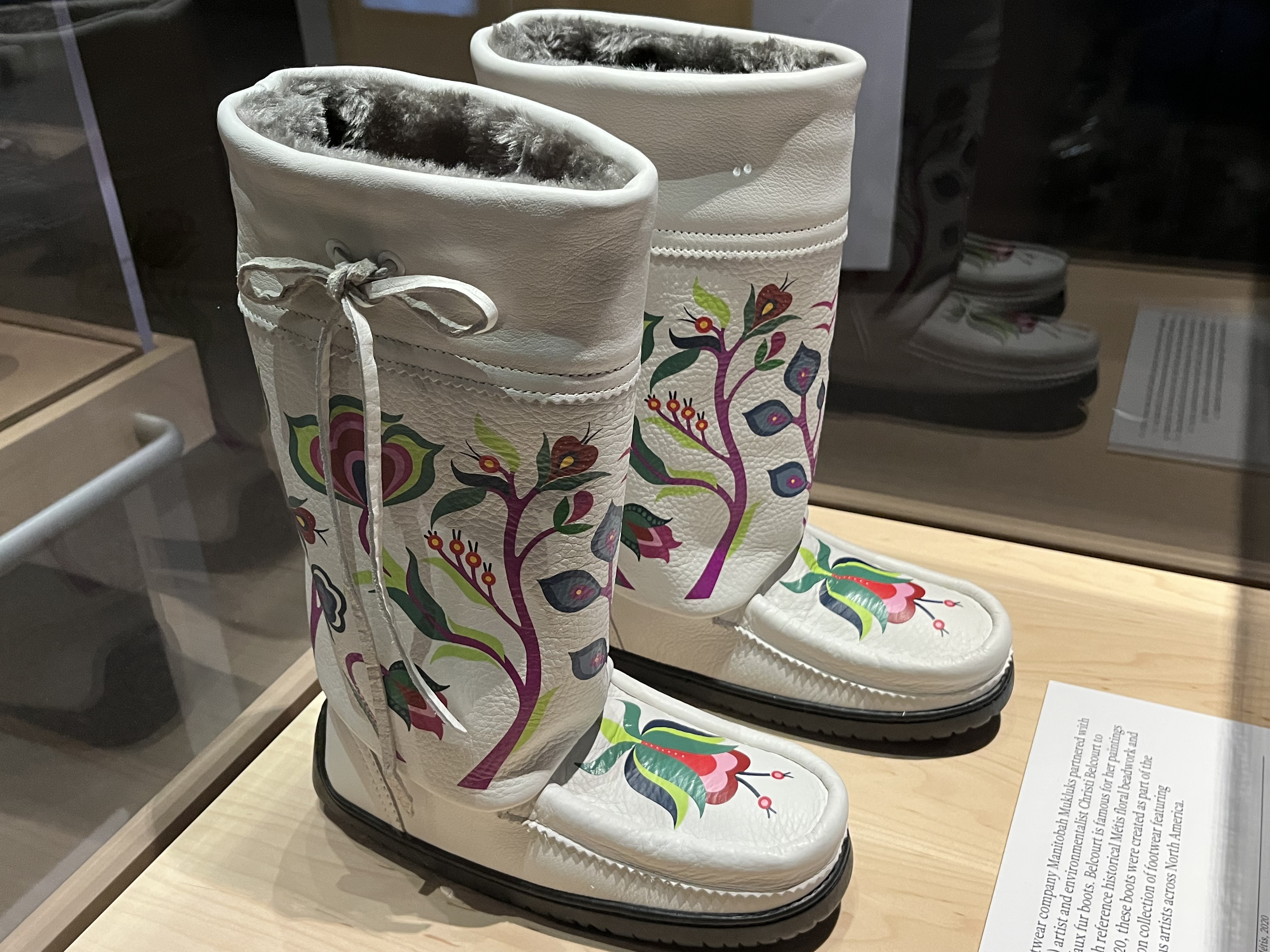
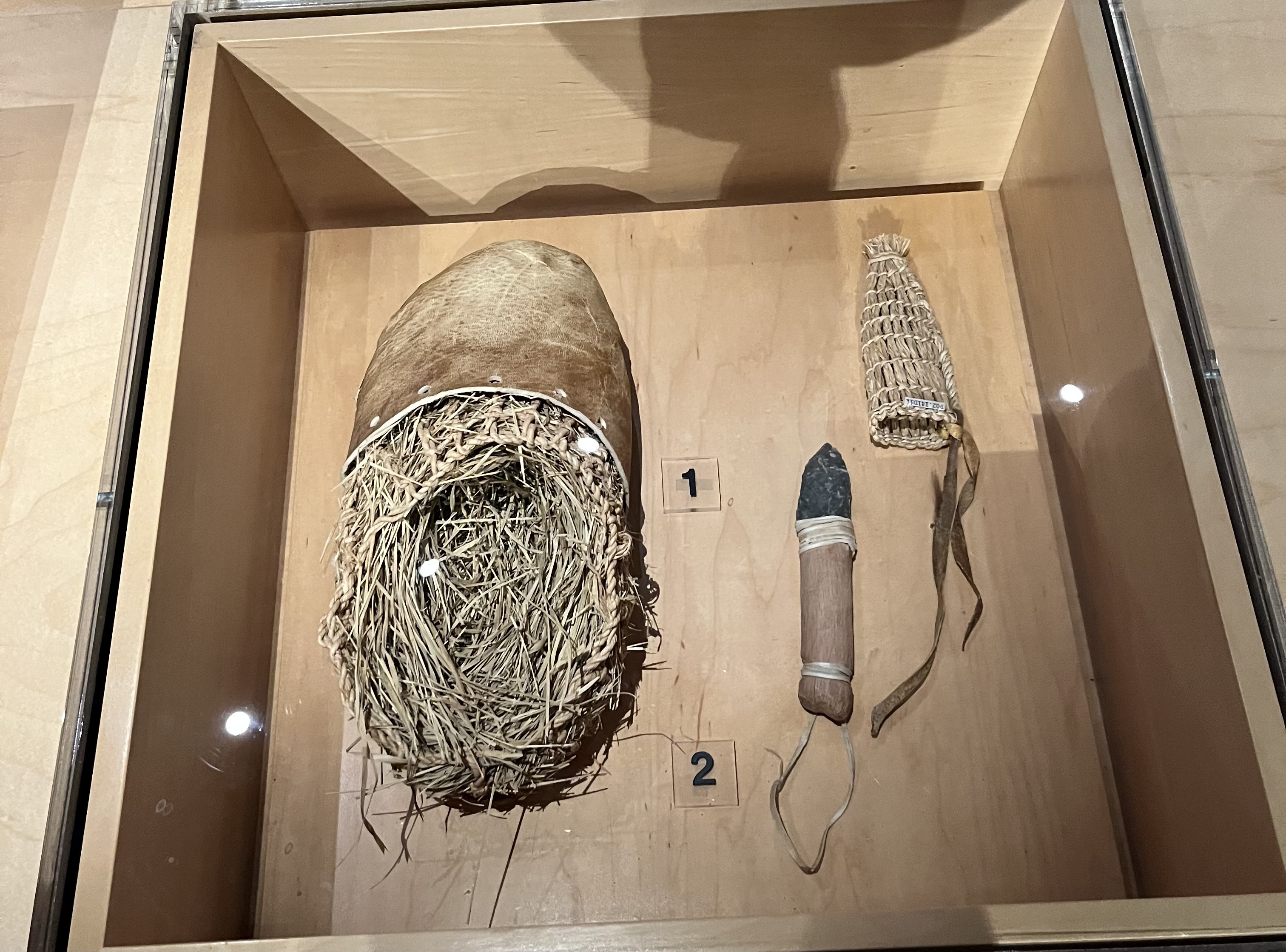
North American indigenous peoples had created a range of footwear to suit the various environments in which they lived. The museum represents their footwear with several pieces including this colourful recreation of boots with Metis artwork on them.

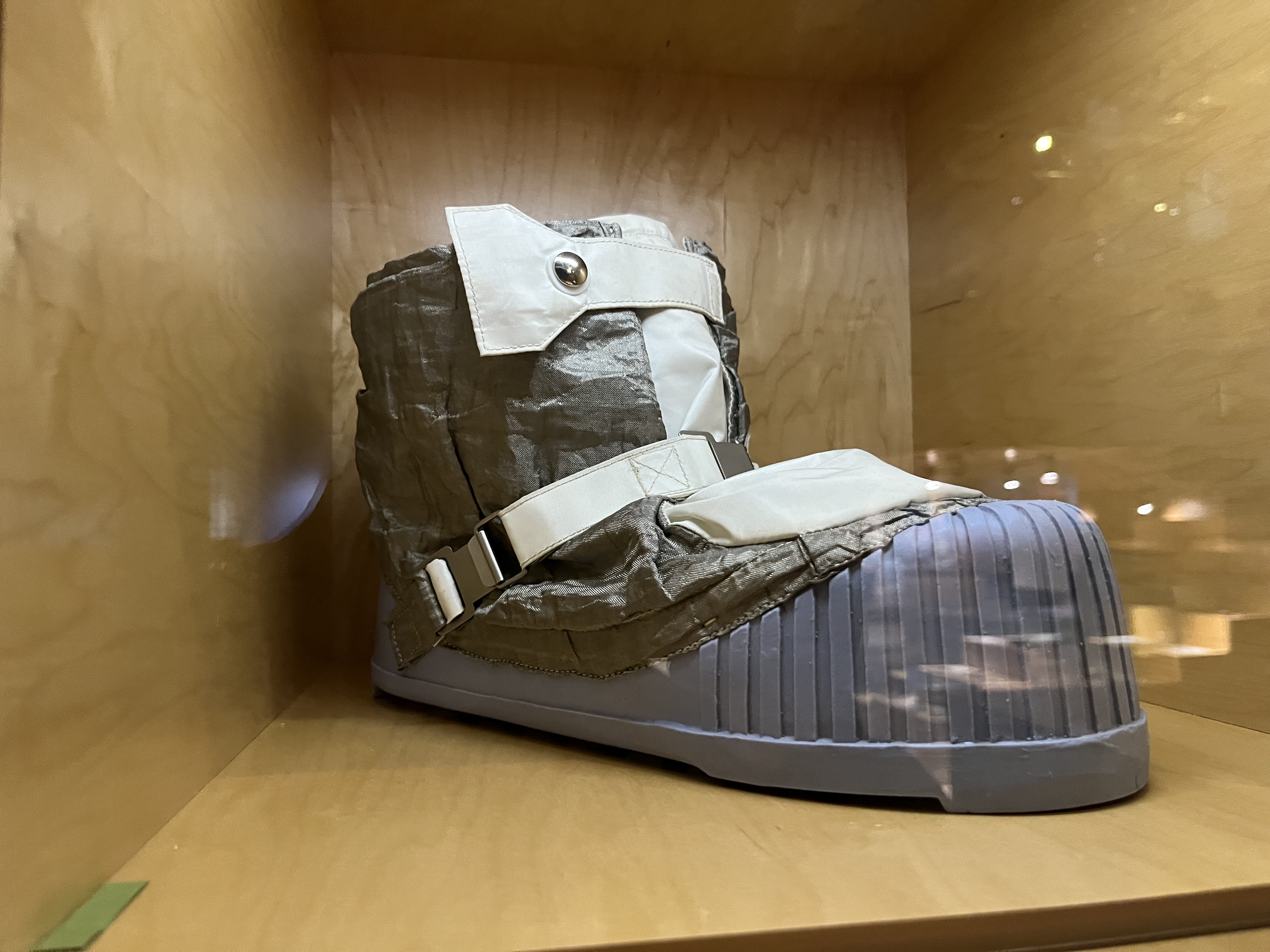
Space boots were made of layered, Teflon-coated materials to protect the wearer from UV rays and temperature fluctuations. This boot was made in 1970 for Jim Lovel as a spare for his Apollo space mission.

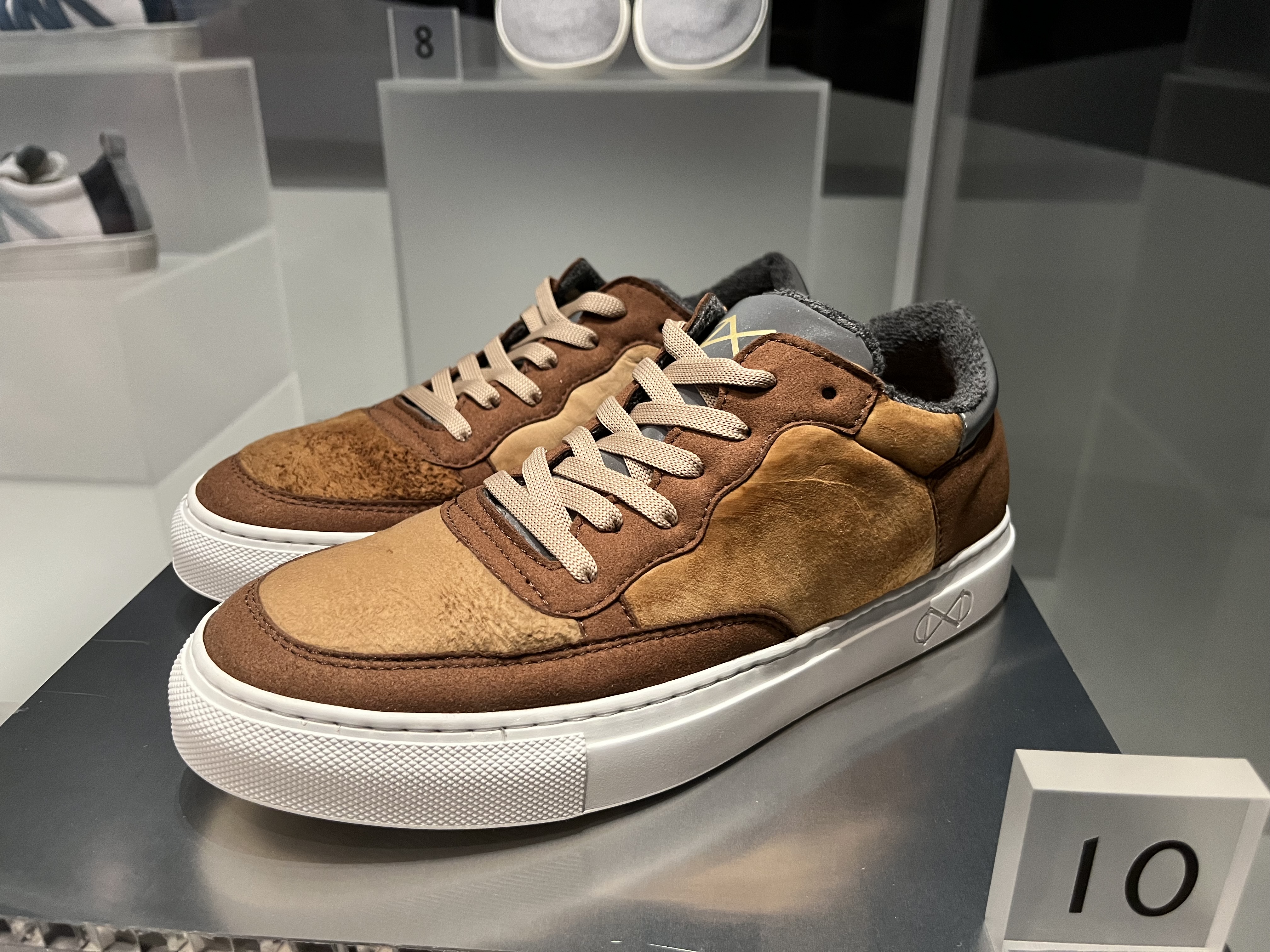
Mushroom leather is a modern invention that is created using the middle layer of the tinder sponge. This polypore mushroom grows on dead or weak birch and beech trees and can be used to make a material that is suitable for shoemaking. This allows the creation of shoes that look like leather but don’t contain any animal by-products.

Adult admission to the museum is only $14.00 and it makes a very interesting and educational place to spend an afternoon.

Google Maps Link: Bata Shoe Museum

Like us at http://www.facebook.com/hikingthegta

Follow us at http://www.hikingthegta.com

Also, look for us on Instagram
Castle Killbride

January 8, 2023

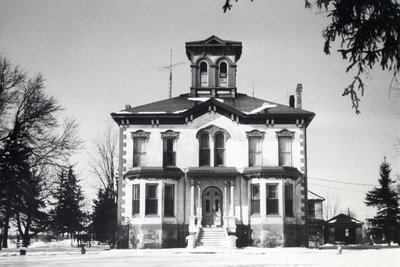
Castle Killbride in Baden was built in 1877 for James Livingston. James was born in 1838 in East Killbride, Scotland. After moving to Canada in 1856 with his brother John they took jobs in the flax industry. Eight years later they opened the J & J Livingston Linseed Oil Company and went into business for themselves. By 1867 they had moved the operation to Baden, where his wife Louise had been born, and opened the Baden Linseed Oil Mill.

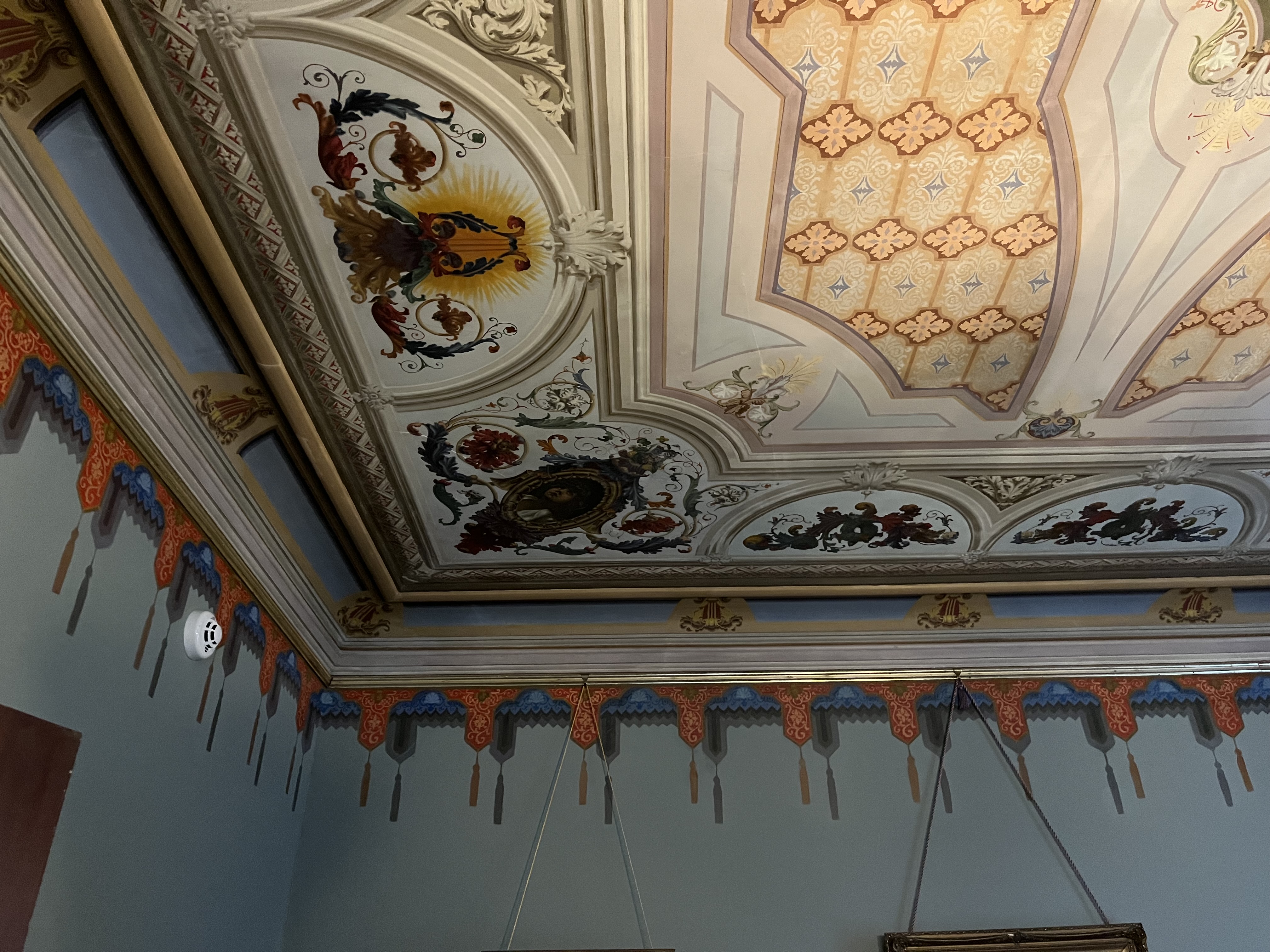
The ceilings and walls throughout the home are painted with a wide variety of intricate designs. One of the objectives was to showcase the various colours of paint that could be produced using the linseed oil that the family fortune was based on. In the library/home office the ceiling is painted using 38 different colours. The interior of the home was painted in 1878-1879 by Henry Scharstein. Throughout the home many of the paintings on the walls are done in a style known as “Trompe l’oeil” or “fool the eye”. The paintings of tassels along the walls in this room are a good example. They are flat but appear to stand off of the wall because of the shadows which are painted behind them. The shadows are designed to appear to emanate from the central light with the tassle in the middle having no shadow.

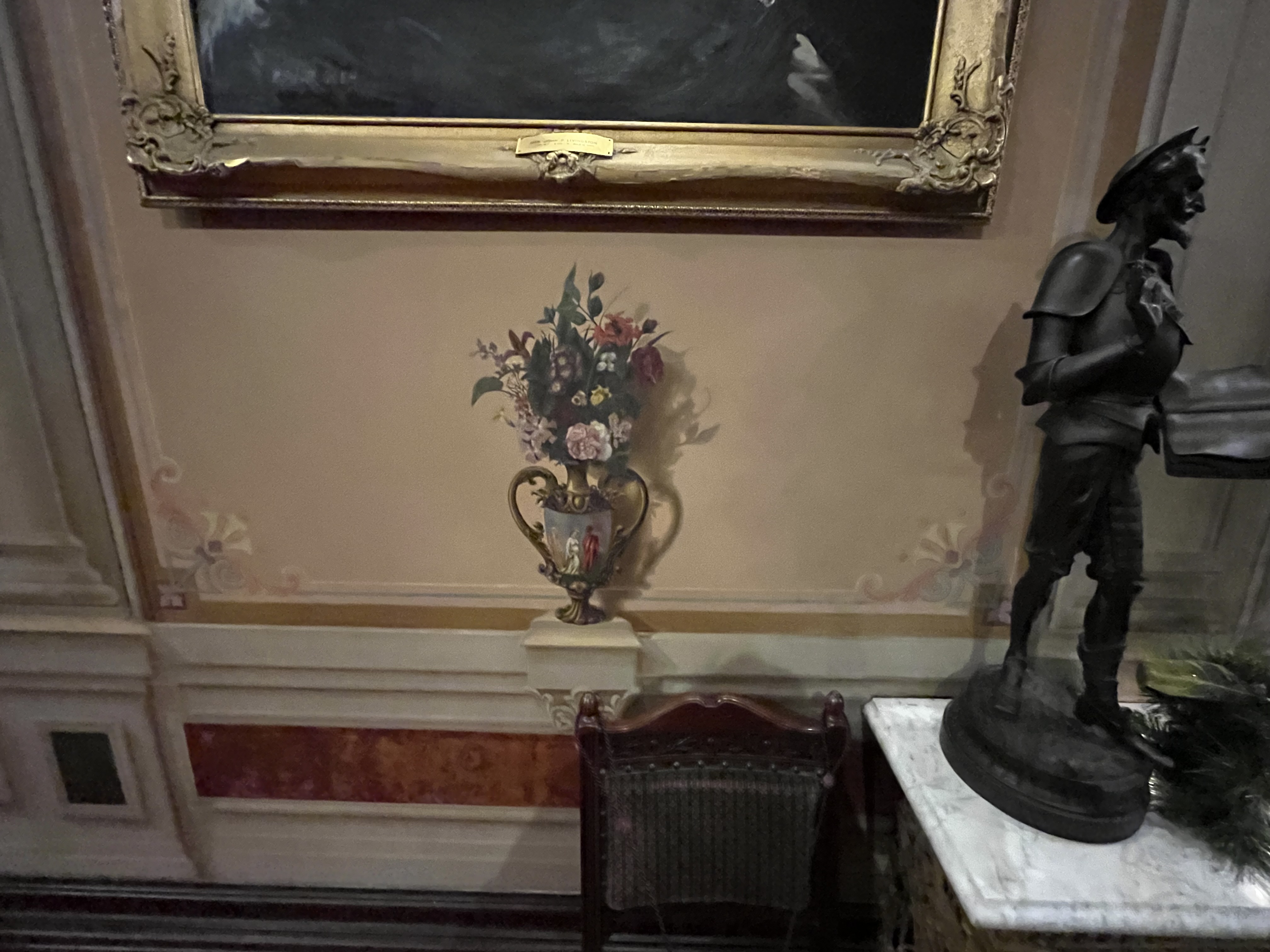
Another example of the “three dimensional” paintings in the castle can be found in this image of a vase. The shadows are added to make it look like a vase standing on a small shelf but both of them are part of a flat painting.

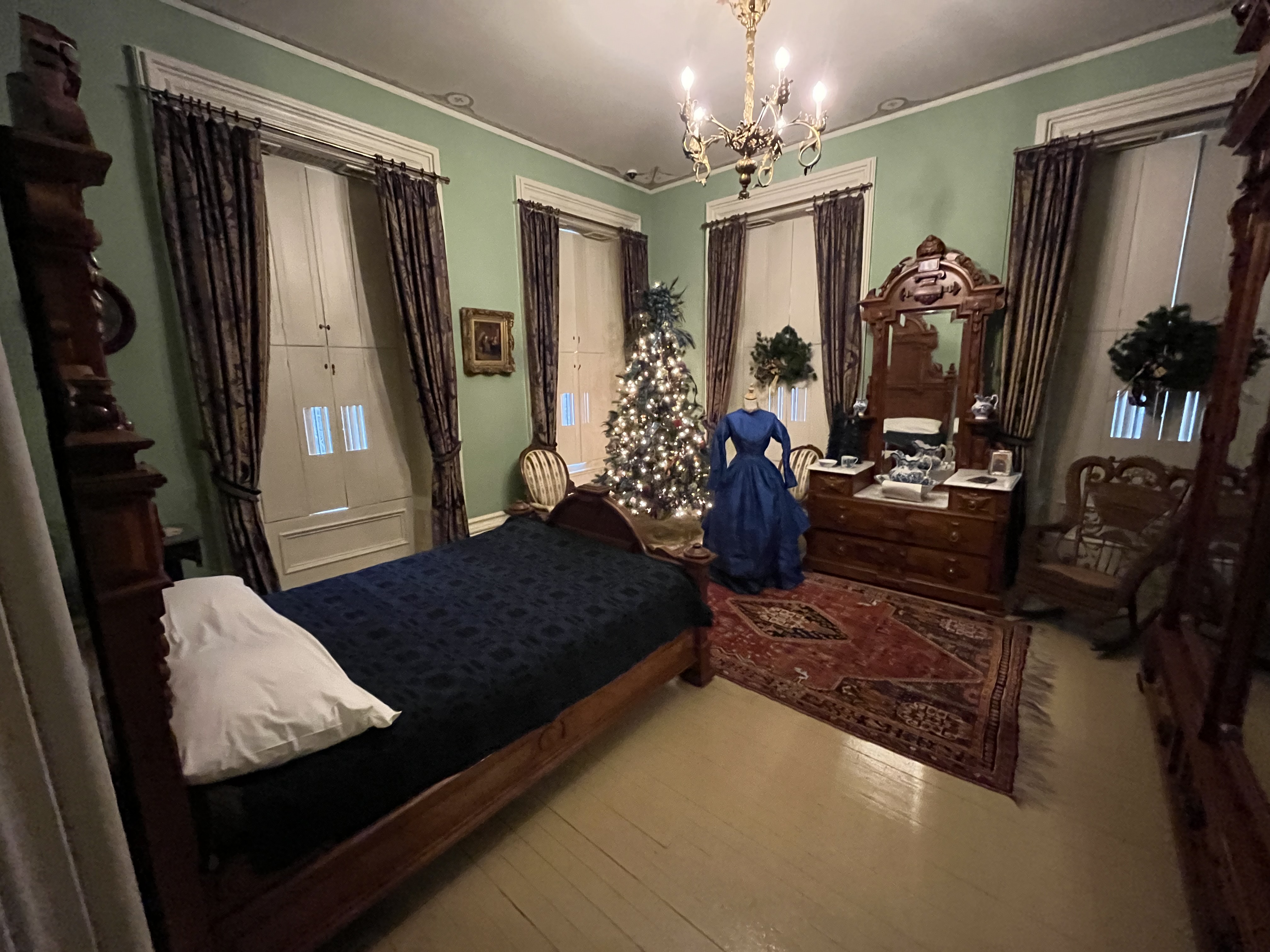
The house is decorated for Christmas with different trees set up in several rooms as well as Christmas Dinner staged in the main dining room. This Christmas tree has a small ornament on it that looks like a glass pickle. Legend suggests that the first child to find the glass pickle, which would be hidden on the tree, would get an extra present.

One of the unique features of the home is the window shutters which are on the inside instead being on the exterior of the home. This allowed to windows to be closed more easily to control the lighting and temperature. Three generations of the Livingston family lived in the home until 1988 when it was vacated.

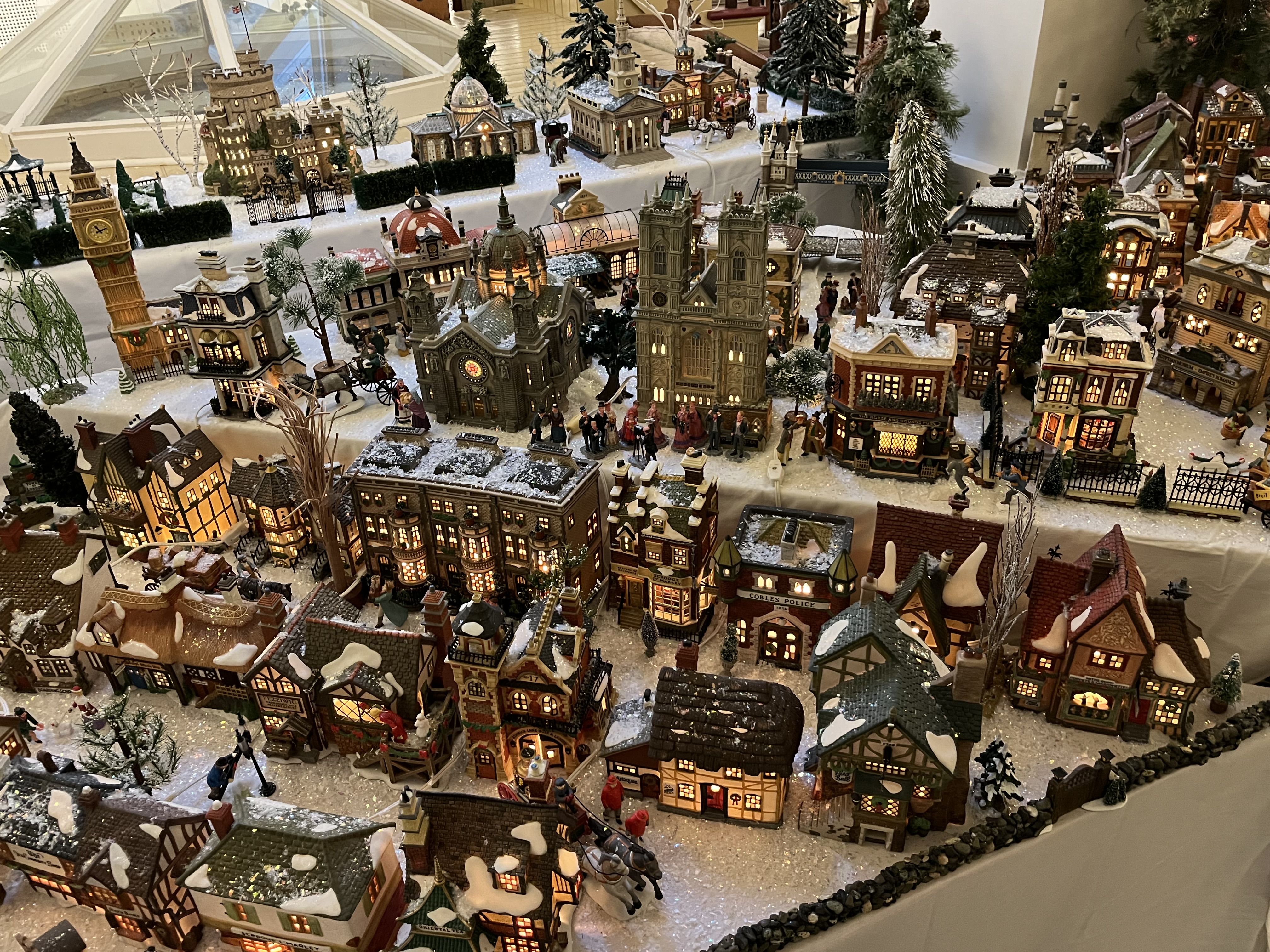
The attic space in the house was generally used for storage. Old furniture and household items that had gone out of fashion were stored up here. In 1988 when the house was sold, eleven truckloads of furniture were removed from the attic and taken to auction to be sold over a four day period. At this time, the attic is home to the seasonal display of a miniature village based mainly on the works of Charles Dickens. The village is put together by Dave Herner and takes over 30 hours to set up. There are 130 major pieces such as homes and churches as well as over 250 minor pieces like people and trees.

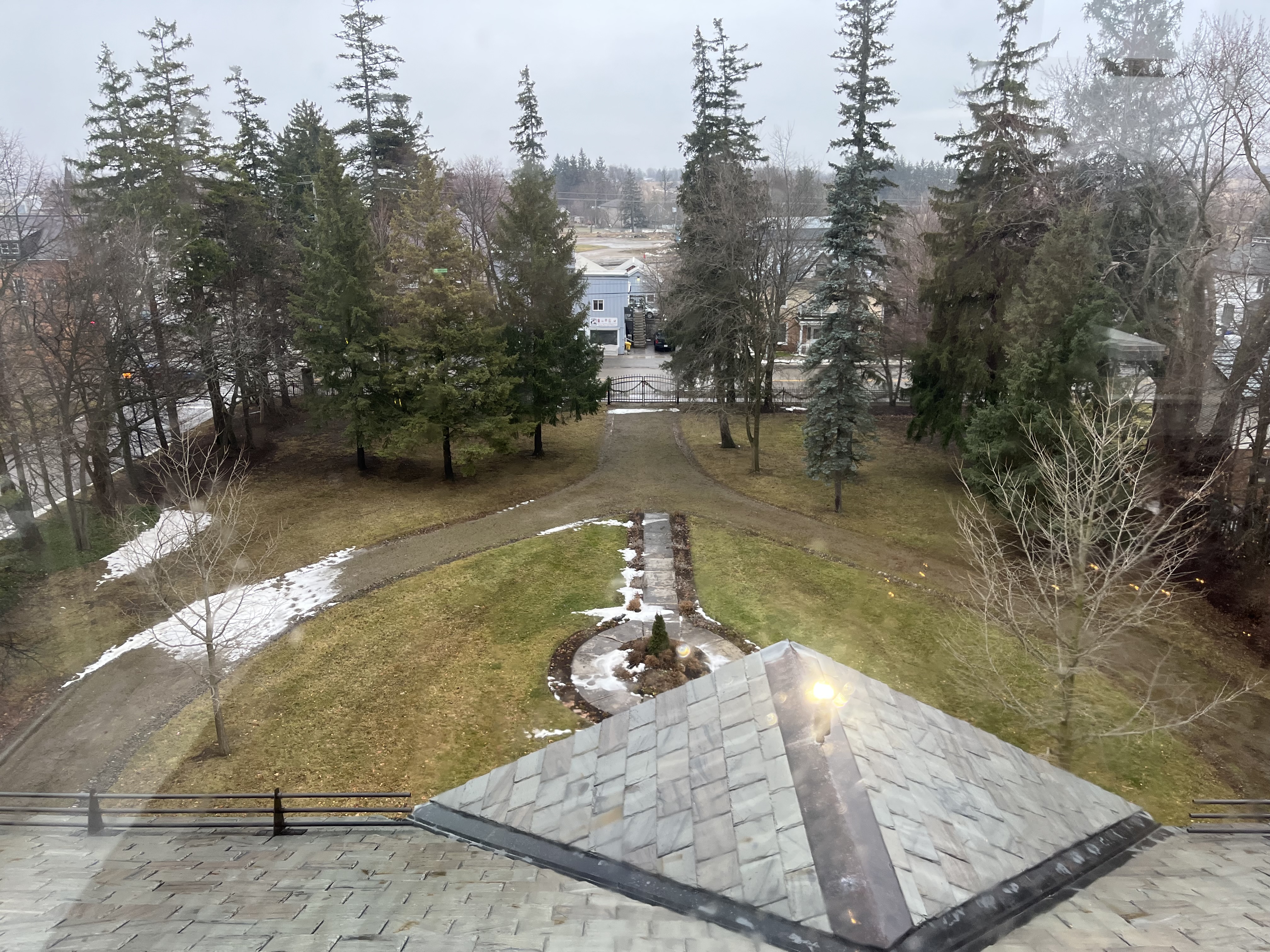
When you reach the top of the stairs into the Belvedere you get a nice 360 degree view of the property. In the early years the fields to the north contained the flax that was being grown for processing in the mills that were visible to the south of the home. The front walkway is shaped like a heart. This is a tribute to Livingston’s wife Louise with whom he would have twelve children.

The basement of the house has been converted into a toy museum. Toys are on display from various eras over the past 100 years. It’s possible to find something that you had as a child on display here.

In 1988 the three hundred acre property was sold to a development company who built homes on the former flax fields. The house, however, was left to rot and by 1993 was in a state of disrepair. The building was bought by Wilmot Township and a new wing was added at the back to be used as municipal offices. The home was restored by removing the paint on the outside to expose the original brick as well as replacing many of the wooden features on the exterior. Inside, the walls were stripped of several layers of wallpaper to reveal the earliest paint schemes. The wall and ceiling paintings were carefully cleaned to remove layers of soot that had built up from the four fireplaces. By 1995 the restoration had been completed and much of the original furnishings were either donated or bought back. The house has been opened as a museum and given a designation as a National Historical Monument.

The original privy was located where the new council chambers were built and so it was preserved and moved to the side of the house. Each side of the privy had two seats, one for an adult and one for a child. Unlike most outhouses it wasn’t built over a deep hole but had metal bins underneath which were emptied daily by the butlers or maids. Most outdoor washrooms were built of wood and could be moved when the pits were filled but the brick structure didn’t allow for this.

Most of the linseed oil mills still stand close to the mill pond which originally provided power to the operation. Flax seed was pressed to extract the oil which was then used as a pigment binder in the manufacture of paints or in soap. The building for a similar operation at the Canada Linseed Oil plant in Toronto is in the process of being repurposed to become a community hub in a new park.

One of the other prominent buildings in town is the Livingston Presbyterian Church. It was built in 1894 with funds donated by James Livingston while the stained glass windows were funded by other members of the Livingston family.

Castle Killbride has a small entrance fee and is well worth the visit if you are in the area. Other grand homes that we’ve visited that are known as castles include Casa Loma and Dundurn Castle.

Related stories: Canada Linseed Oil Mills,

Google Maps Link

Like us at http://www.facebook.com/hikingthegta.com

Follow us at http://www.hikingthegta.com

Also, look for us on Instagram

Toronto Skating Club

December, 18, 2022

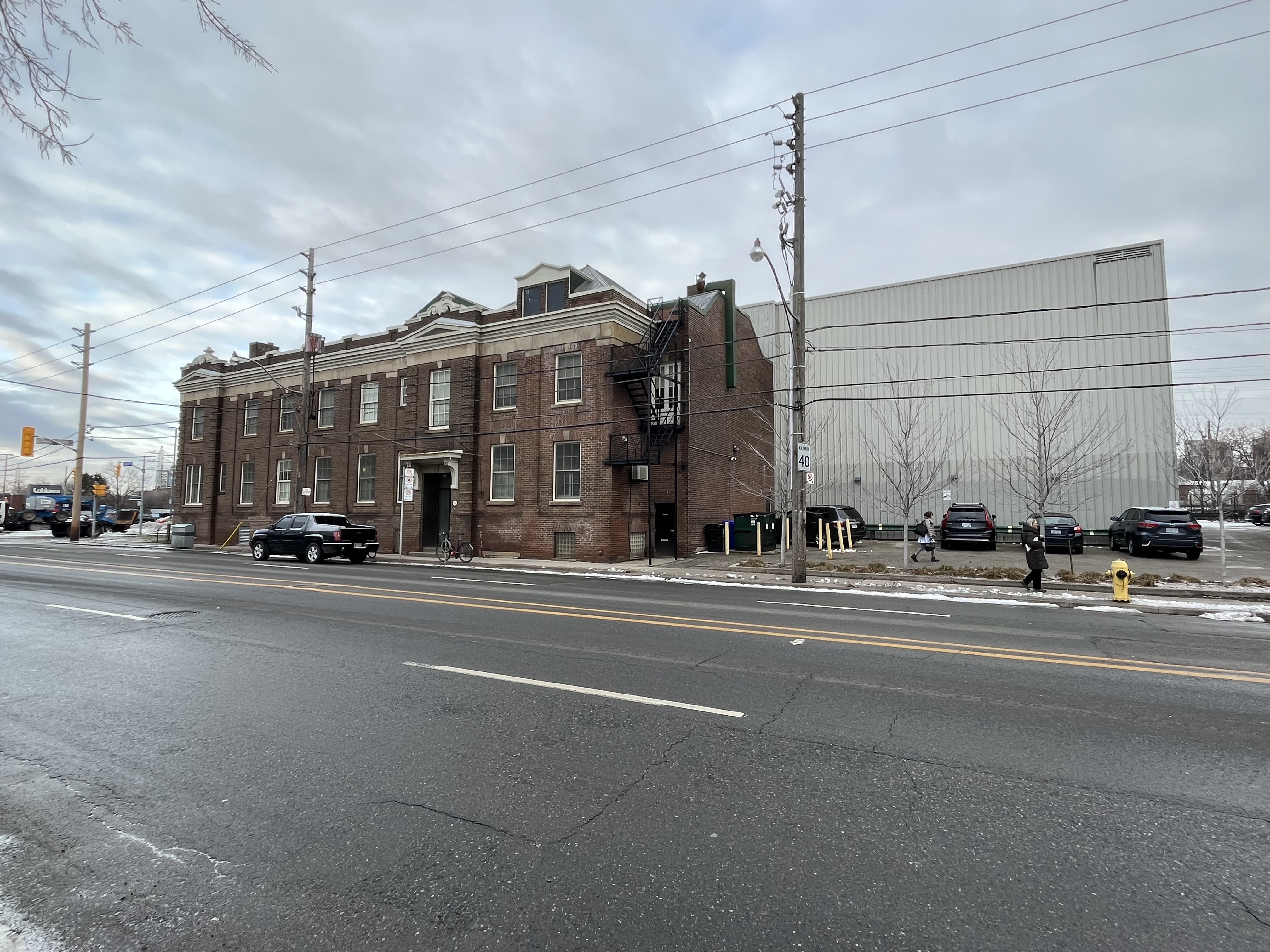
The Skating Club of Toronto was founded in 1895 and incorporated in the winter of 1913-1914. In the early years, they had exclusive rights to use the Victoria Arena on Huron Street on Monday evenings and Friday afternoons. In 1921 they built their own skating rink at 568 Dupont Street. The archive photo below from 11/05/1921 shows the building as it neared completion.

The club originally allowed only 300 active members and 200 associate members. The 27th annual report was issued on April 12th, 1921 and showed membership at 515 members. The New Rink and Club House project had been fully funded and over $20,000 more had been raised than what was estimated to be needed to construct the new building. At that time the plans for the arena were at the architectural firm of Langley and Howland.

Beginning in 1912 the Toronto Skating Club held an annual winter carnival which was always a great success and had assisted in raising the funds for the new skating rink. It was estimated that the 1921 carnival had been responsible for an additional $50,000 worth of subscriptions for the funding of the project.

In 1956 the Toronto Skating Club amalgamated with the Toronto Cricket Club and the following year the Toronto Curling Club was included in the merger. The cricket club had begun around 1832 while the curling club started up in 1836. The new organization was known as the Toronto Cricket, Skating and Curling Club.

In 1957 the rink was converted into a members only Tennis Club which is known as The Queens Club. The facility originally operated a single court on the old ice surface. Adjacent properties were acquired and a second court was added in 1967 as a Centennial project.

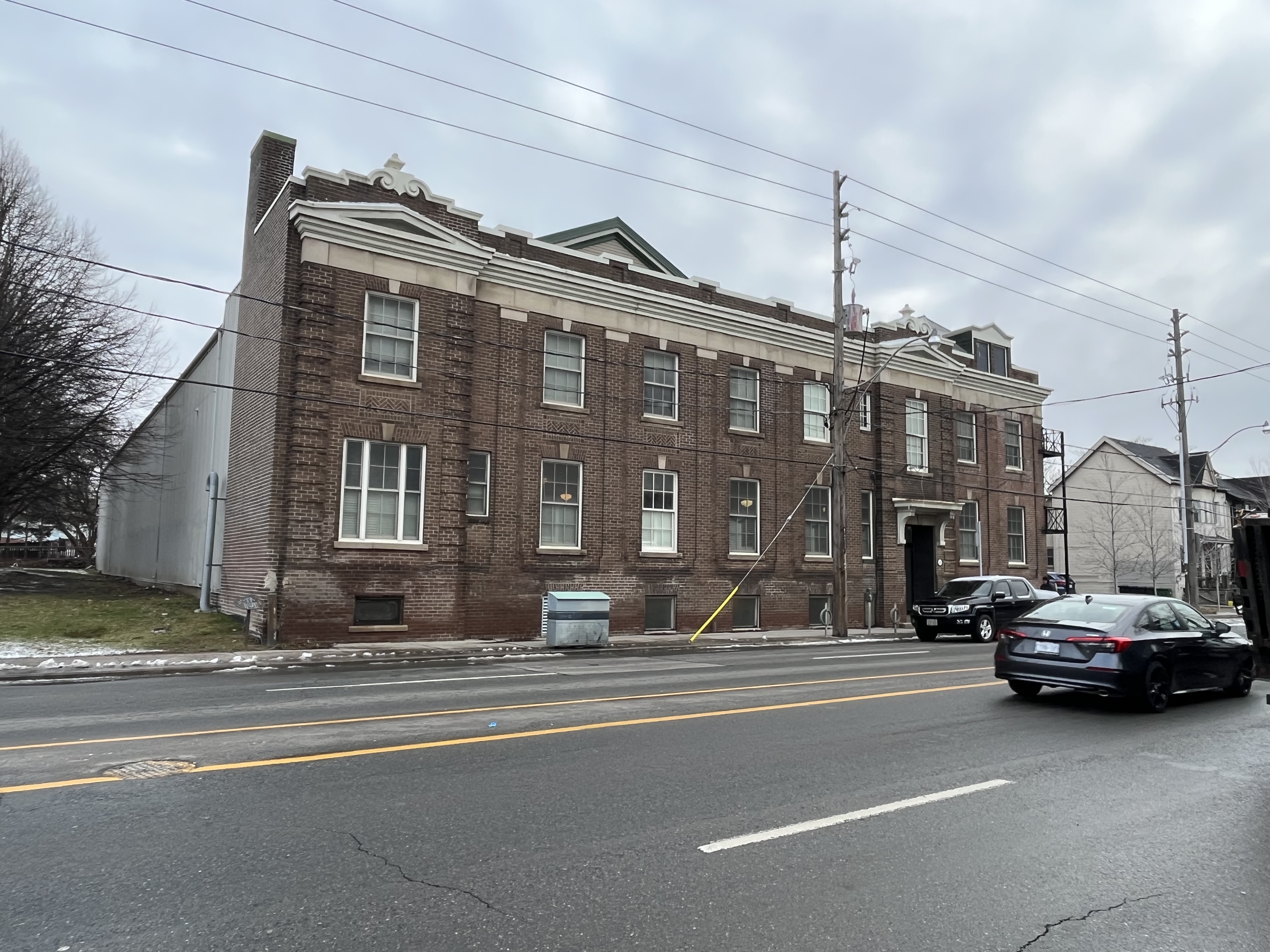
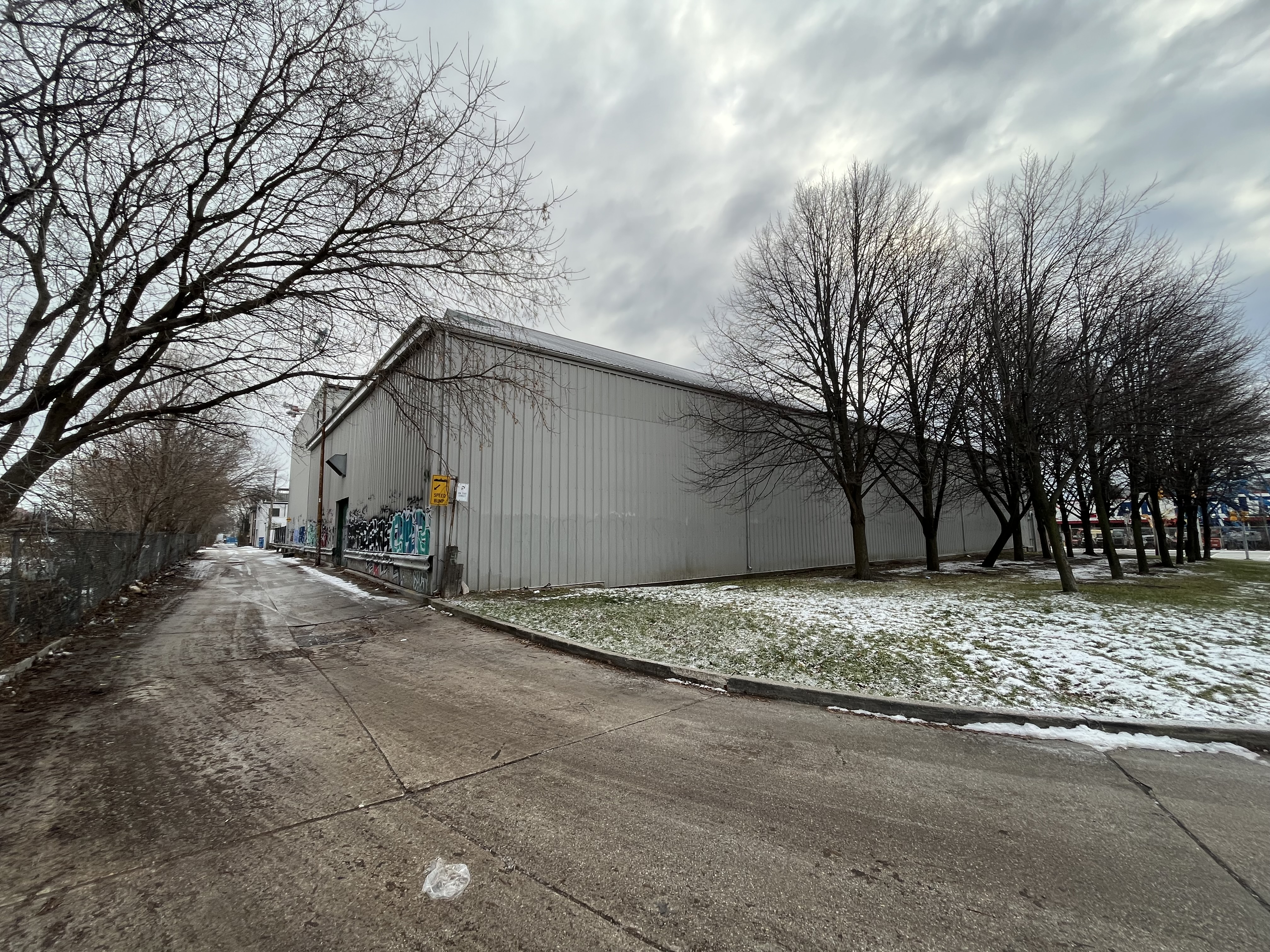
This unmarked property used to have an historic plaque on the front corner but it was stolen a couple of years ago. The century-old building does not have any historical designation and the surrounding properties have come under redevelopment proposals in recent years. It stands just two buildings east of the original Model T Factory in the city.

Related stories: Model T Factory

Like us at http://www.facebook.com/hikingthegta

Follow us at http://www.hikingthegta.com

Also, look for us on Instagram

The Lynde House

Sunday, November 27, 2022

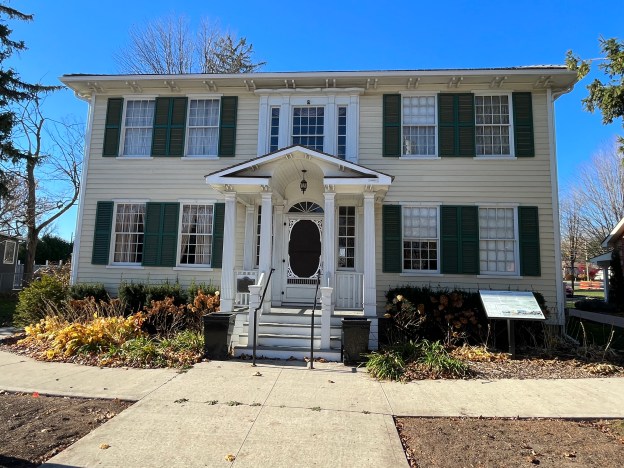
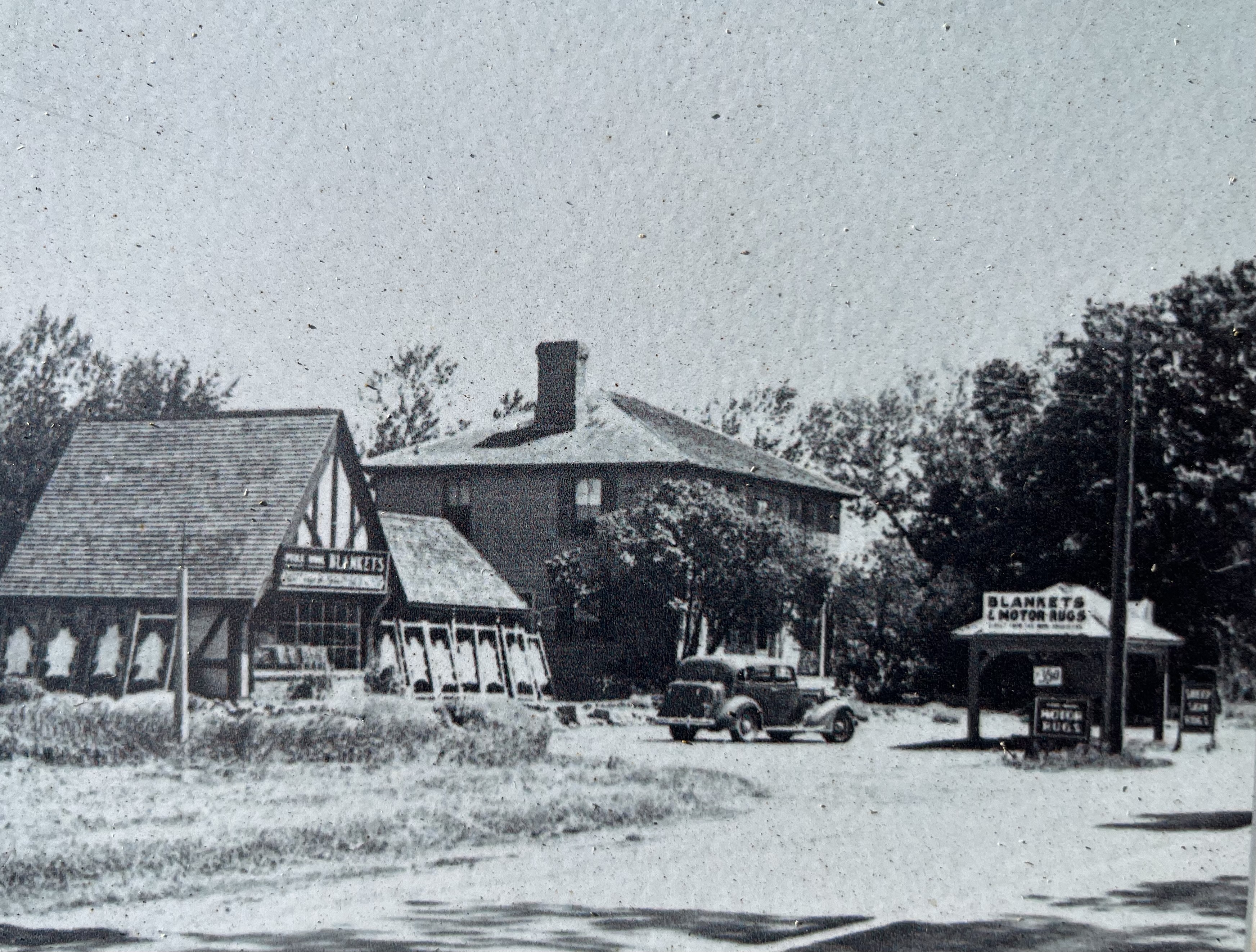
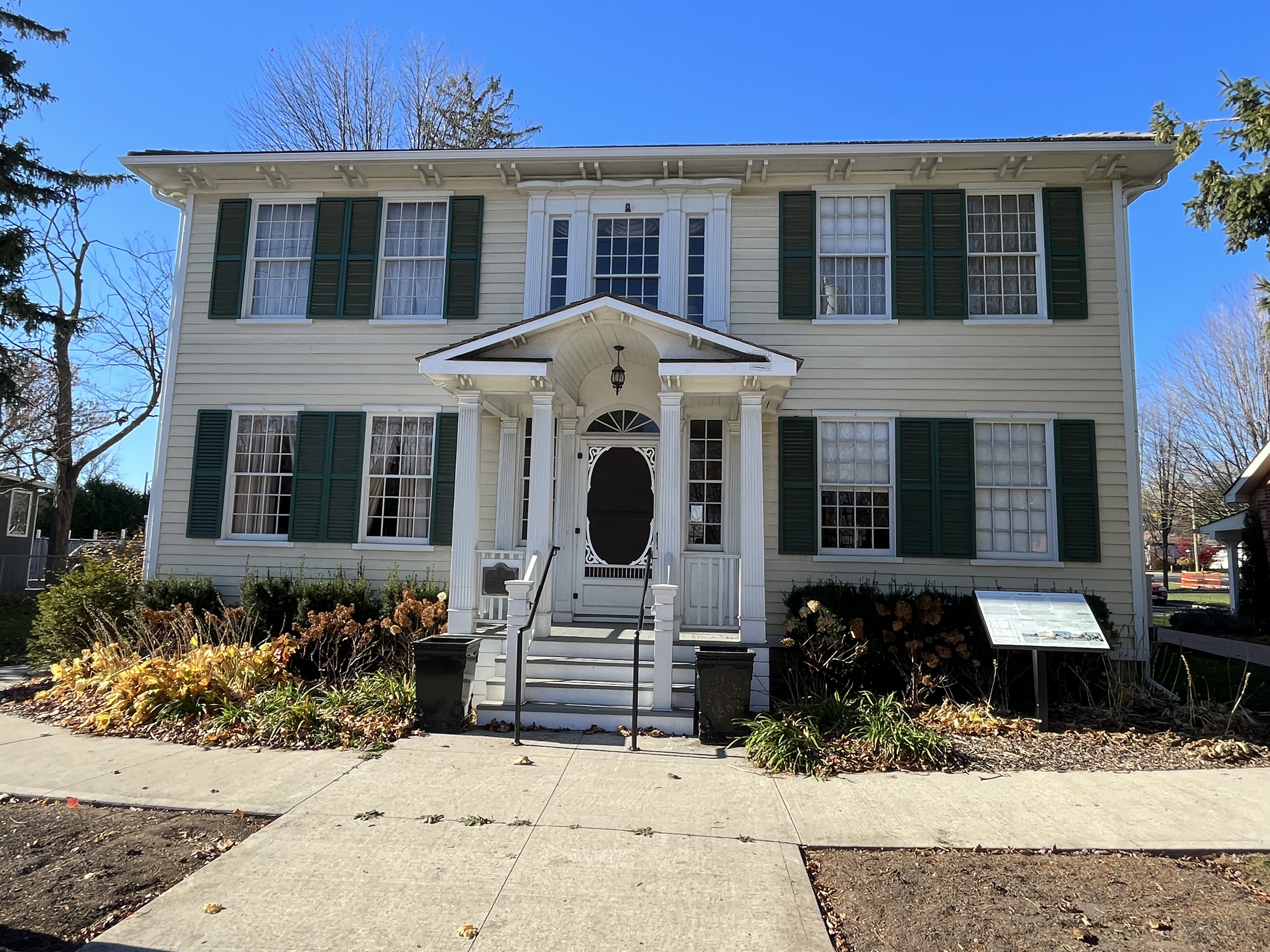
The Lynde House is recognized as Whitby’s oldest building and was built around 1812. Jabez and Clarissa Lynde were some of the earliest Europeans in the area. Jabez operated a hotel and tavern on their lot between 1811 and 1819. The Lynde Family opened their home to militia during the War of 1812 so that soldiers could get supplies on their way to the battlegrounds in Niagara. General Isaac Brock was a noted guest of the house during this time. The archive picture below shows the house in its original location on Dundas Street West in Whitby at the northwest corner of McQuay Boulevard. This picture was taken around 1938 and includes the gas station that used to be beside the house. The building is a rare surviving example of the Georgian Architectural style.

The house remained in the family until 1893 when it was owned by Elmina Lynde. She was the youngest daughter of Jabez, and she bequeathed it to All Saints Anglican Church in Whitby. The church sold the property and the house changed hands several times over the next 40 years. A holding company owned by Loblaws bought the house and property in 1939. The elaborate front entrance way is enhanced by the second story window above.

They subdivided the house and created three apartments inside. They removed the grand central staircase and replaced it with a different to access the upstairs apartment. They also covered the original wood siding with stucco.

In 1968 a fire broke out in the rear apartment in the area that was formerly the kitchen. The Whitby Historical Society had been formed in 1967 and they took an interest in saving the home because of its historical and architectural significance. Loblaws agreed to donate the house to the historical society in 1972 on the condition that it be moved within one year. They were unable to come up with the funds to move the house and instead operated it as a museum until 1986. This came to an end when a fire broke out on the second floor and damaged much of the roof. Loblaws then sold the property to a developer.

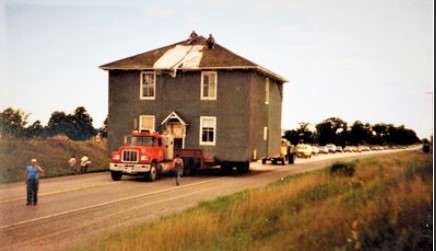
The Town of Whitby donated the house to Cullen Gardens and Miniature Village, and it was moved there in August 1986. The image below is from the Whitby historical Society and shows the house on its way to Cullen Gardens. I find it interesting that there appears to be two people sitting on the roof while it is in transit. It looks kind of dangerous and I wonder what they hoped to do to assist with the move. Perhaps it was to ensure that overhead wires were lifted out of the way so that they wouldn’t get caught as the building passed underneath.

Quadrangle Architects oversaw the restoration of the house to its 1856 status. This included removing the stucco, repairing the clapboard siding and installing a replica staircase to the second floor. The home was furnished with period appropriate furniture that was bought at auction. Lynde house once again opened as a museum in 1988 as part of Cullen Gardens. When Cullen Gardens closed in 2005 the house was sold back to the Town of Whitby. Town council approved moving the house to the corner of Brock Street and Burns Street where it is now operated as a museum by the Whitby Historical Society.

The archive picture below shows the Lynde House as it appeared in 1905. The family is remembered in the name given to Lynde Creek as well as Lynde Shores Conservation Area. Lyndebrook Golf Course also pays homage to the family name.

At this time the museum is open for tours by appointment only and I just happened to be in the area on work business and hadn’t made arrangements to go inside. Perhaps another time.

Google Maps Link: Lynde House

Like us at http://www.facebook.com/hikingthegta

Follow us at http://www.hikingthegta.com

Also, look for us on Instagram
Toronto’s Model T Factory

Sunday, November 13, 2022

The Model T was the first mass produced automobile, and it changed the way people lived and travelled. A steam powered vehicle had been created as early as 1672 but the first gas powered vehicle wasn’t tested until 1870 when a small motor was placed on a cart. Carl Benz created the first gas powered automobile in 1885 and produced several copies. Henry Ford started the Ford Motor Company in 1903 and assembled a few cars per day with a team of two or three men building a complete car. He soon perfected the concept of the assembly line where each man did a few small tasks as the line carried the automobile past their workstation. He sold a few hundred copies per year of several models during the first couple of years. In 1908 he invented the Model T which would go on to sell 15 million copies over the next twenty years. It was the first automobile to be mass produced on an assembly line and the best selling car of all time until it was surpassed in 1972 by the Volkswagon Beetle.

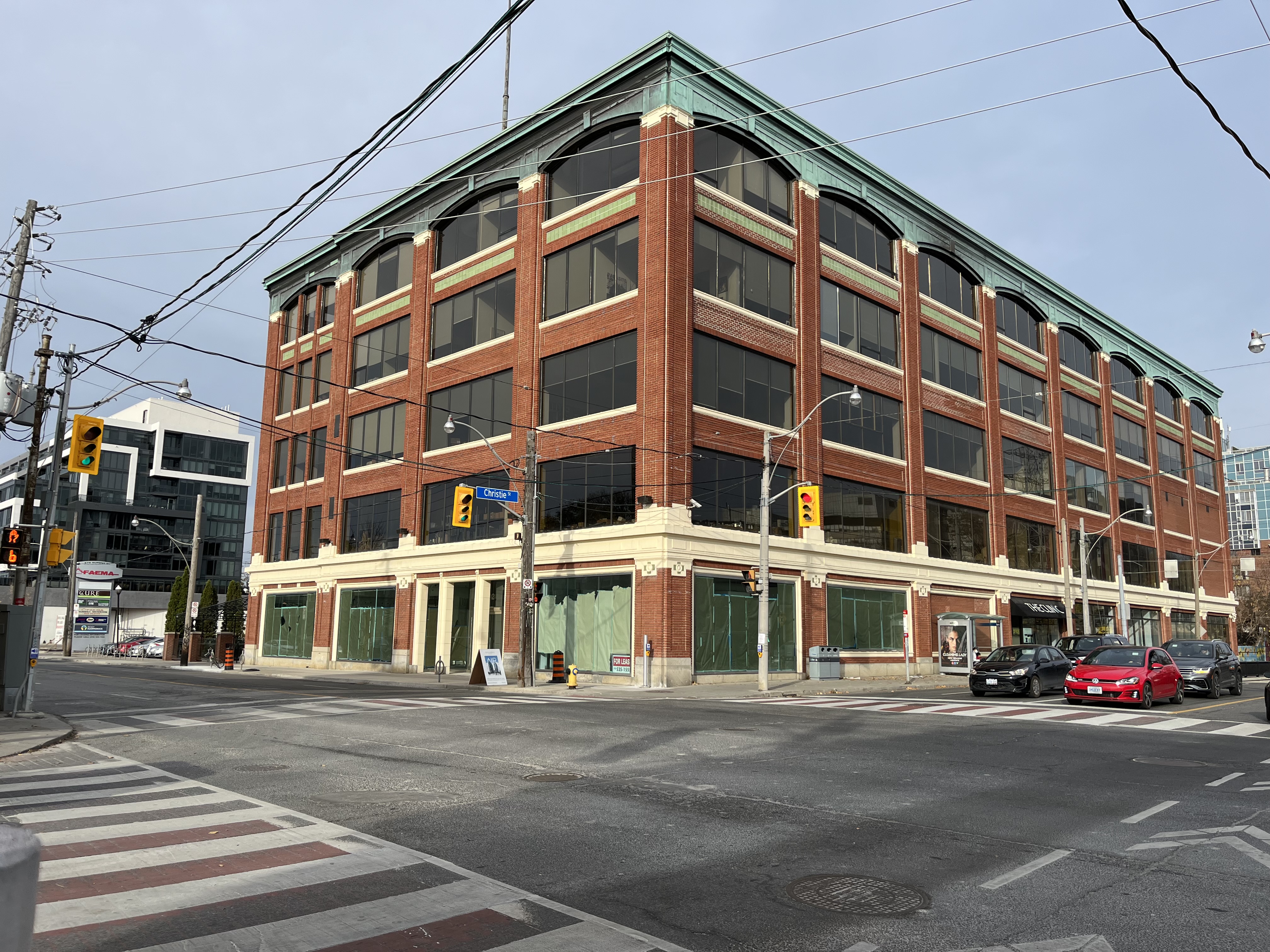
Soon his factory wasn’t able to get the manpower needed to keep up with demands and so sales to the international markets began to be assembled in other countries. Canada got four of the new Ford assembly plants. One each in Montreal, Winnipeg, Vancouver and Toronto. The assembly plant in Toronto was built at the corner of Dupont Street and Christie Street.

The five-story building was purpose-built with heavily re-enforced floors to support the weight of the automobiles that were being assembled inside. The ground floor was the showroom while the second one was for shipping and receiving. The third and fourth floor were used for assembly while the fifth one had the paint shop on it. At this time, Ford cars were only available in black. The roof had a small track that was used for testing the cars.

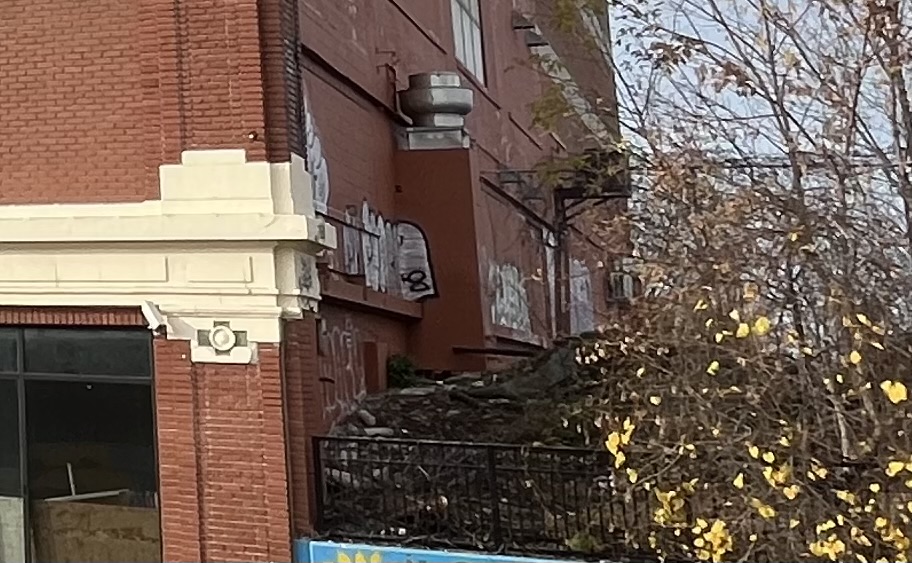
Loading docks were located on the second floor facing the CPR railway tracks. Parts were brought in by train and finished automobiles were then shipped back out on railway cars to be sent to various markets around the country and the British Empire. This facility also built the right-hand drive cars for India, Australia and New Zealand, among other British colonies. The close up in the image below shows the heavy concrete transfer pads (just below the graffiti) that formed the floor and were designed to carry the weight of the incoming and outgoing shipments.

Parts for the Model T were shipped to the facility as kits from contracted suppliers who were required to package the components in very specific sizes of crates. This was because the crating material was designed to be used in the construction of the floors of the automobiles. In 1924 the building was sold, and production was moved to a new facility on Danforth Avenue. This was done because the introduction of a new Model A Ford required more room for manufacturing. Several food companies occupied the building until 1948 when it was bought by Planters for packaging peanuts. Planters Peanuts stayed until 1987.

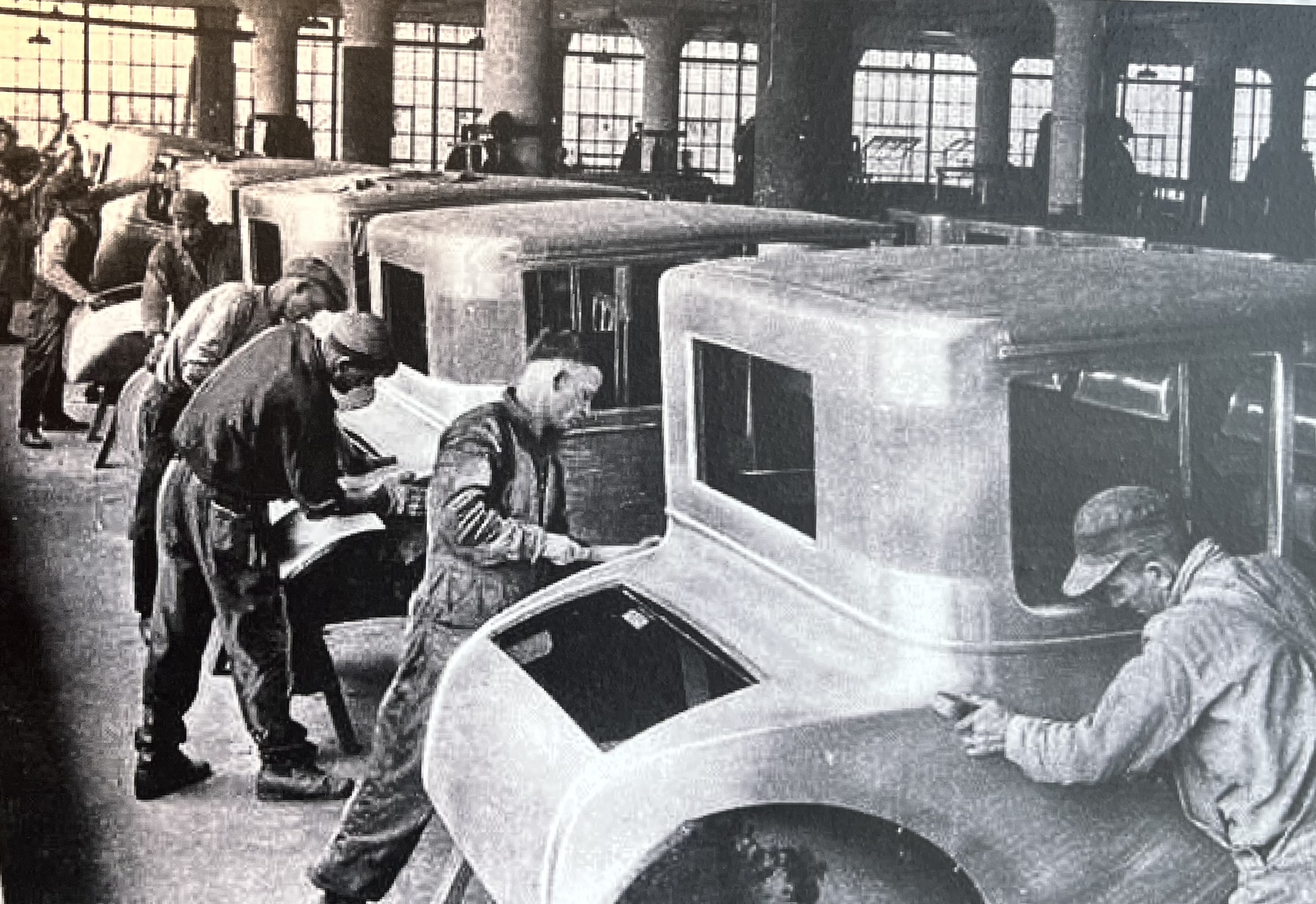
The archive photo below shows the assembly workers putting together a row of Model T automobiles.

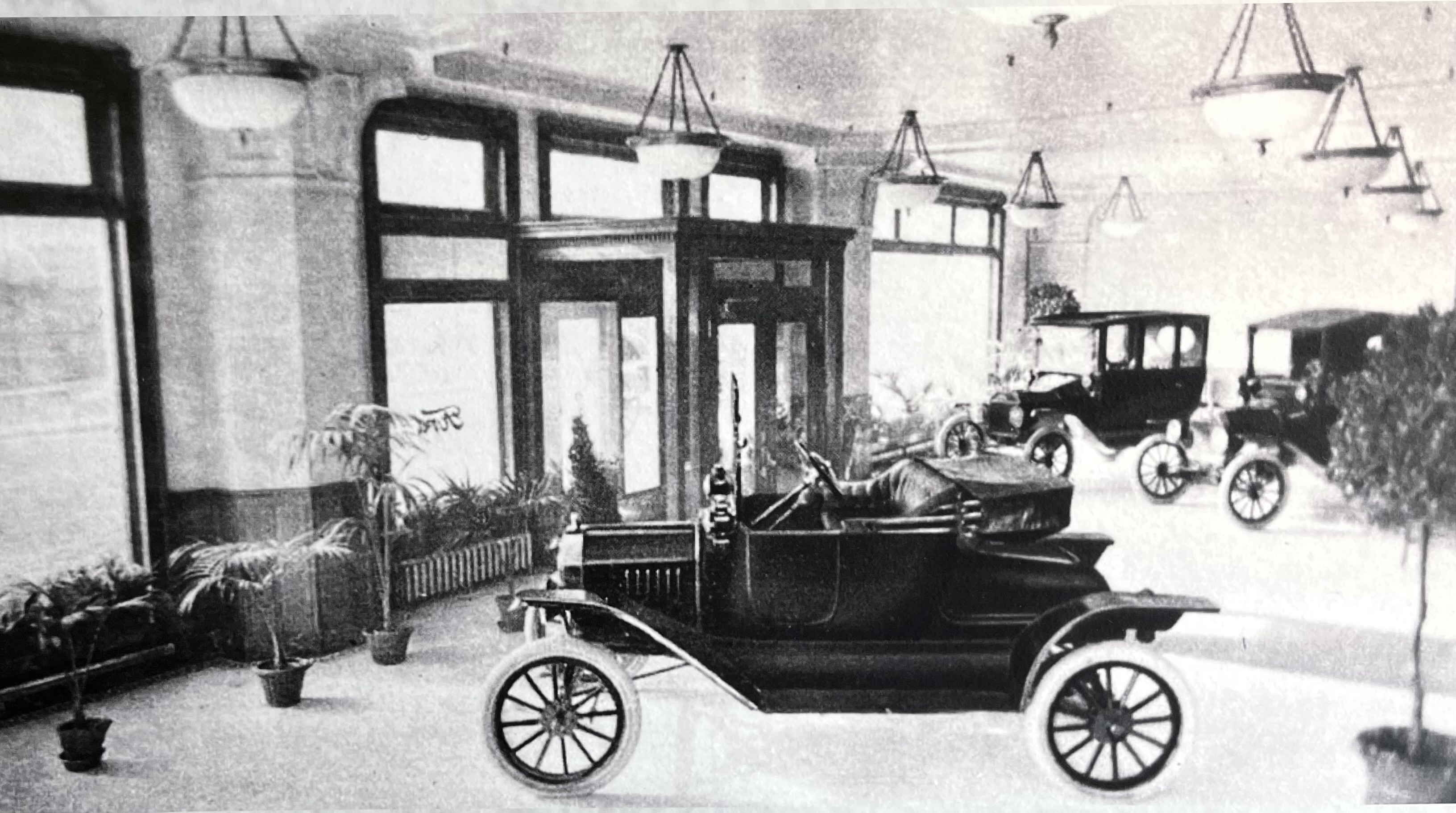
The first-floor showroom was designed to dazzle prospective buyers and entice them to purchase one of the automobiles. The car sold for $360 in 1927 when the factory closed, which is equivalent to $5,616 in today’s currency.

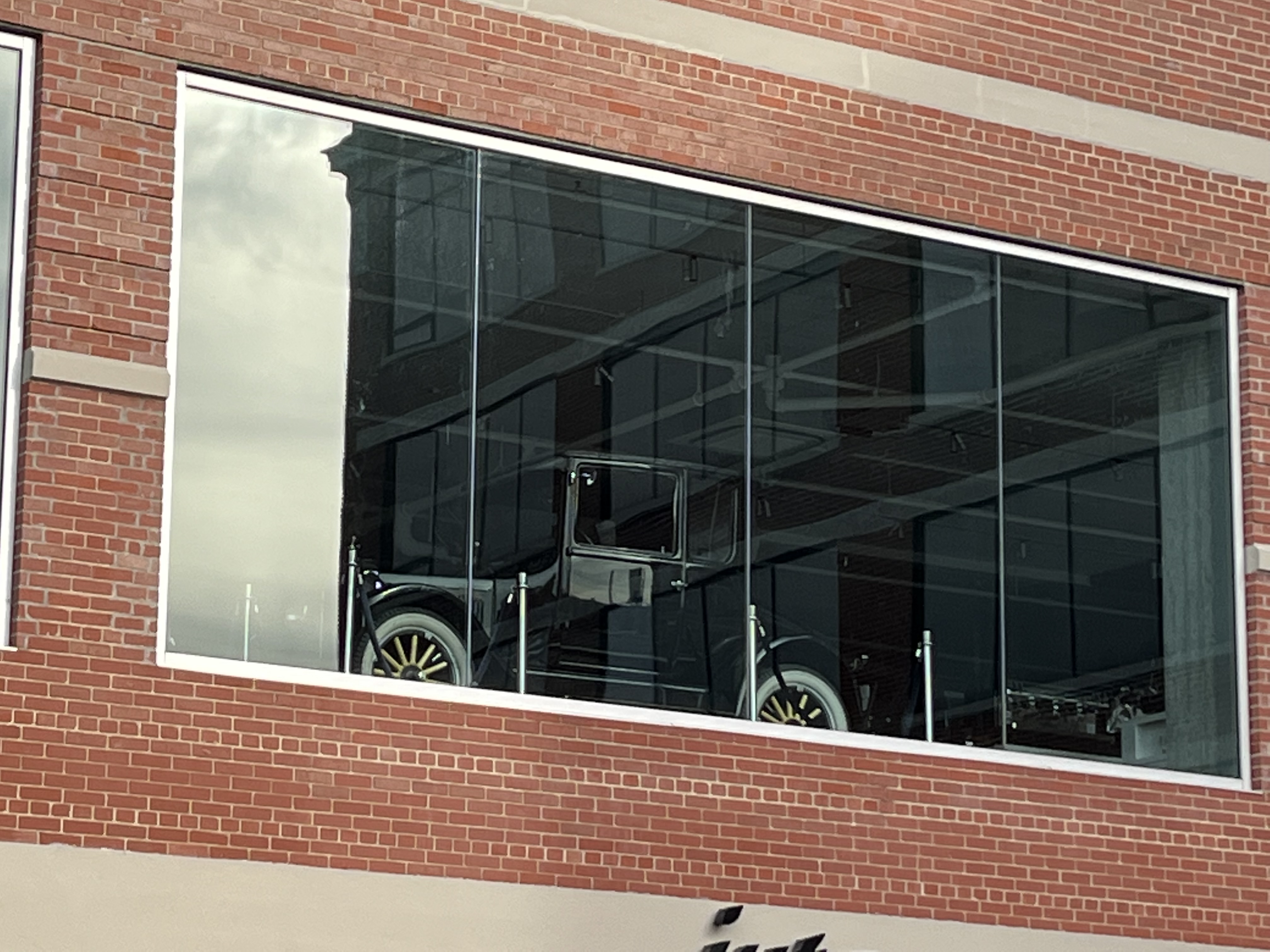
A Model T can be seen in the window on the second story of the building.

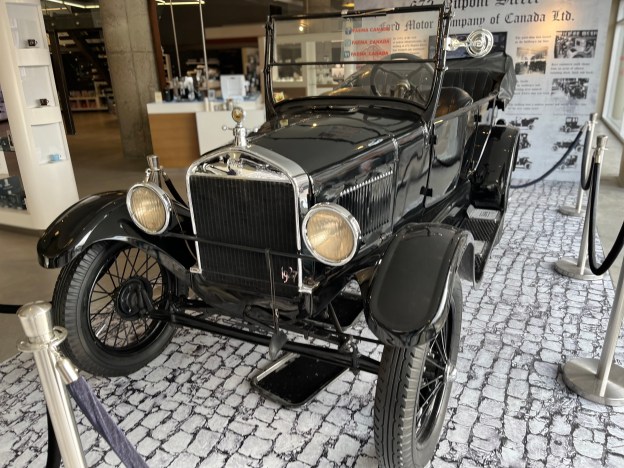
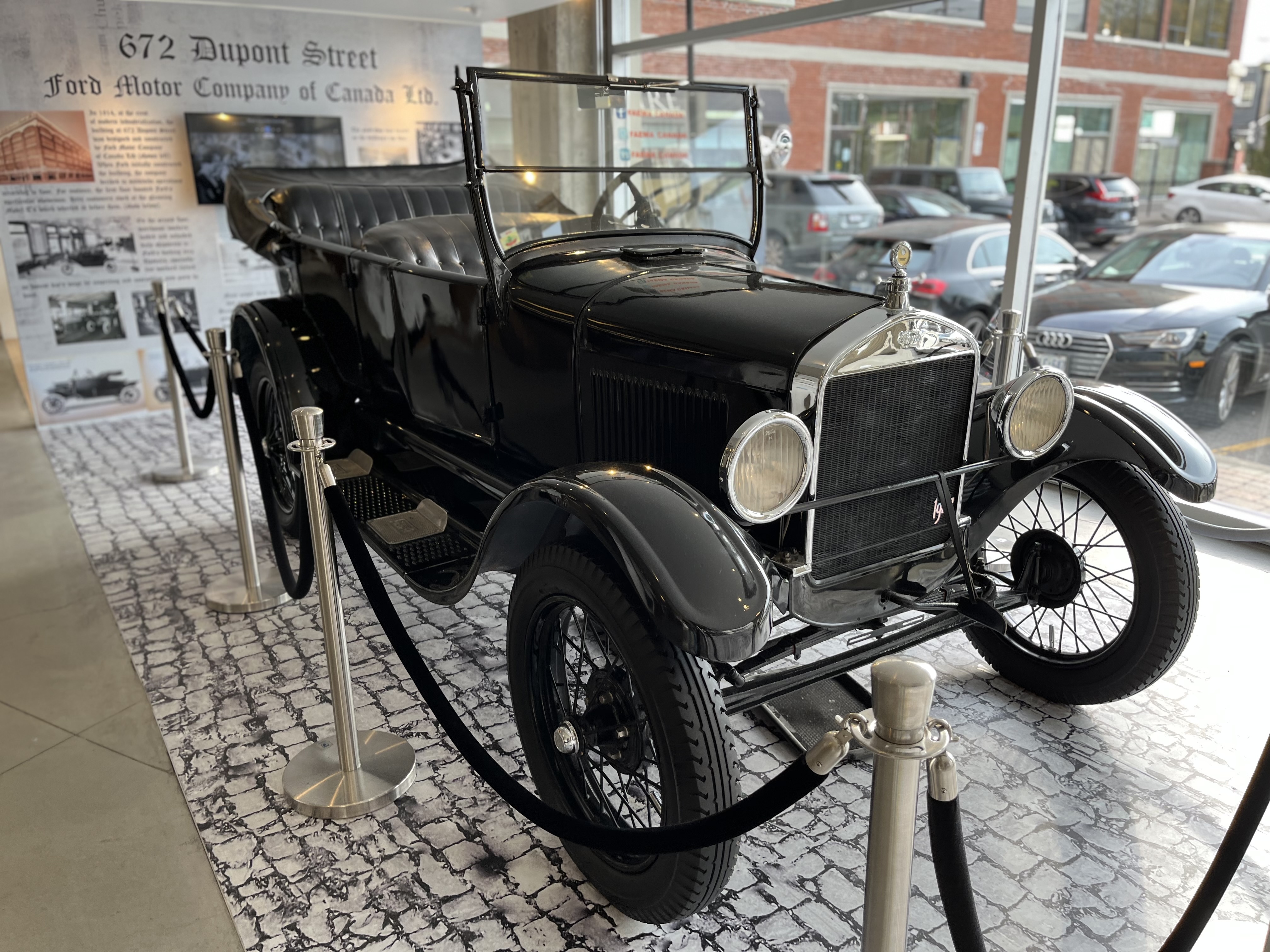
Faema Caffe now occupies much of the lower floor of the building and has a Model T on display as well as a sign board showing a brief history of the car and building. This one was a convertible while the one upstairs is a hard top.

The front view of the car shows its simplicity compared to the modern cars that can be seen outside in the parking lot. However, it also lacked a lot of the features and comforts of the modern automobiles, as well as the hefty price tag.

Toronto once had several automobile manufacturing plants but this at least has not been demolished. Not yet anyway.

Google Maps Link: Model T Factory

Like us at http://www.facebook.com/hikingthegta

Follow us at http://www.hikingthegta.com

Also, look for us on Instagram
Kensington Market

October 23, 2022

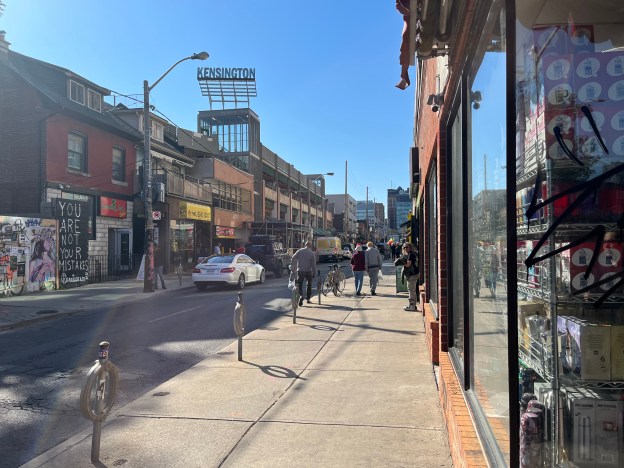
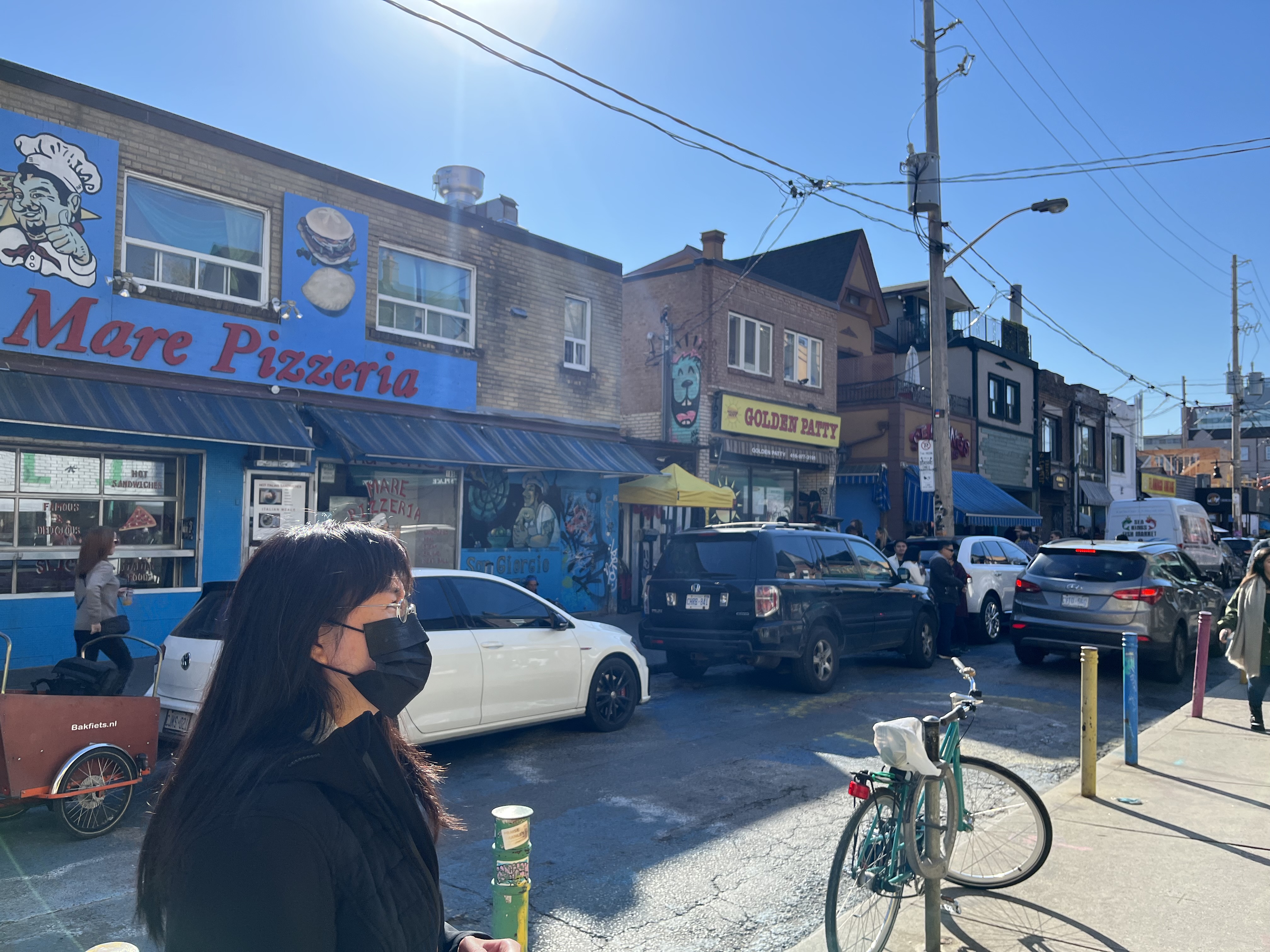
Saturday, October 22 was a beautiful day for late October and a perfect one to explore some of the small shops in the Kensington Market area of the city. George Taylor Dennison had served in the Canadian Militia in the War of 1812 and purchased an estate lot west of the town of York (Toronto). In the 1850s the former Dennison Family estate was divided into several narrow streets and over the next couple of decades was built up with small affordable homes. They were originally occupied by British workers but as this first group of residents prospered and moved out, they were replaced with a wave of Jewish immigrants. The small Victorian homes were converted into businesses by making shops out of the ground floor of the units and for several decades the area became known as the Jewish Market.

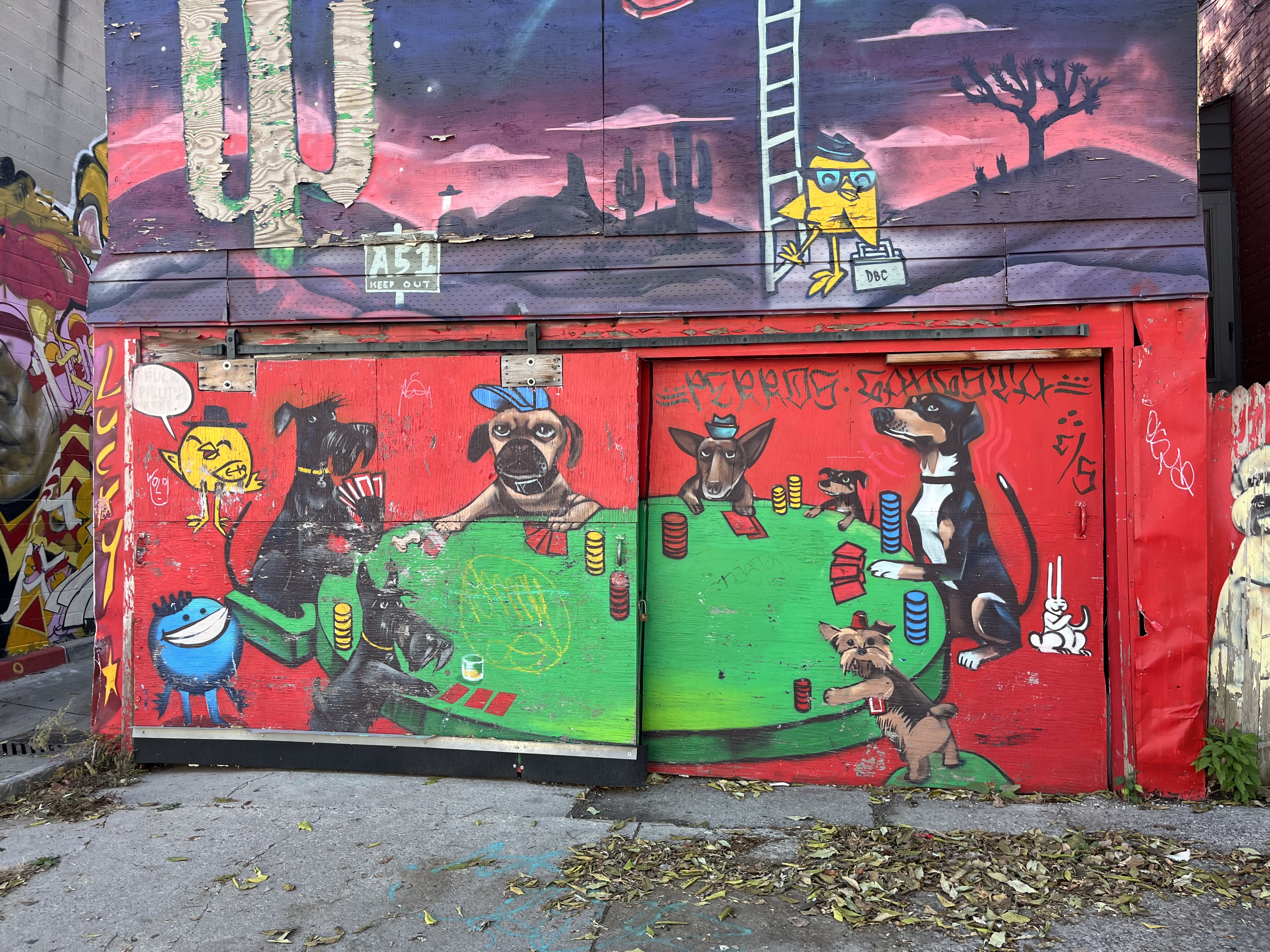
Following the Second World War, the area became home to new Canadians from Italy, Portugal, Eastern Europe, the Caribbean and Asia. They each brought some of their culture to the area as they integrated into the fabric of the neighbourhood. Today, the mix of foods and shops reflects the diversity of the people who have called these few streets home. While graffiti can be seen on many of the buildings, there’s also some pretty creative artwork on display.

The Kensington Market Garden Car has been a fixture in the area since 2006. Originally, supporters paid the parking meter to keep it there, but the city soon approved it as a tourist attraction and allowed it to stay, provided that it is insured and also removed every winter to allow for snow clearing. Some consider it to be the smallest park in the city.

The mid-Victorian row houses that formed the community can still be seen behind the store fronts

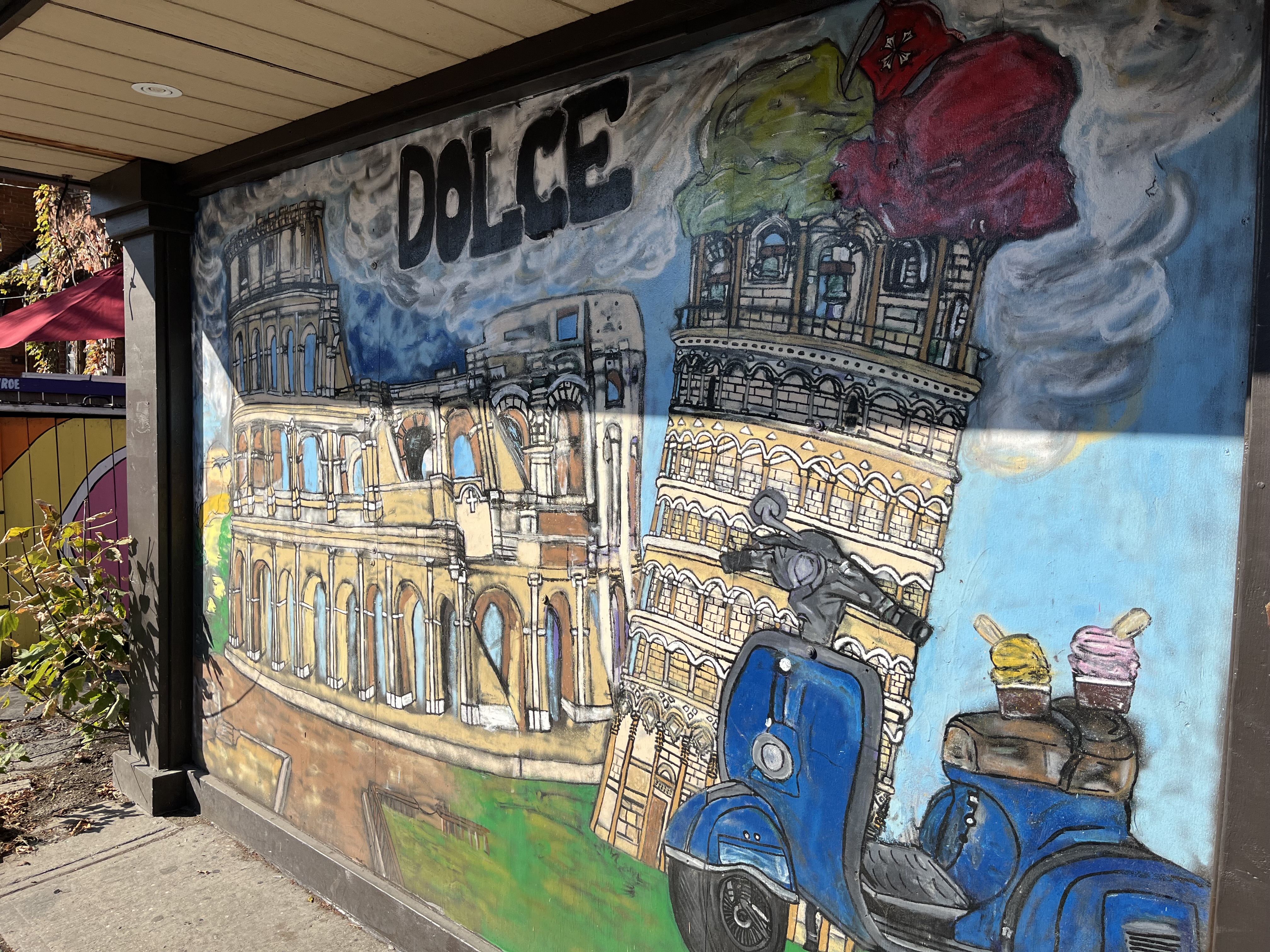
Dolce Gelato has used some colourful artwork to draw attention to their location in Kensington Market. This is one of three locations they operate in Toronto that serve authentic Italian Gelato.

There is a theory that Kensington Market is one of the most photographed areas in the city and it was designated as a National Historic Site in 2006. With Halloween just around the corner, there’s several buildings which are all decorated for the season.

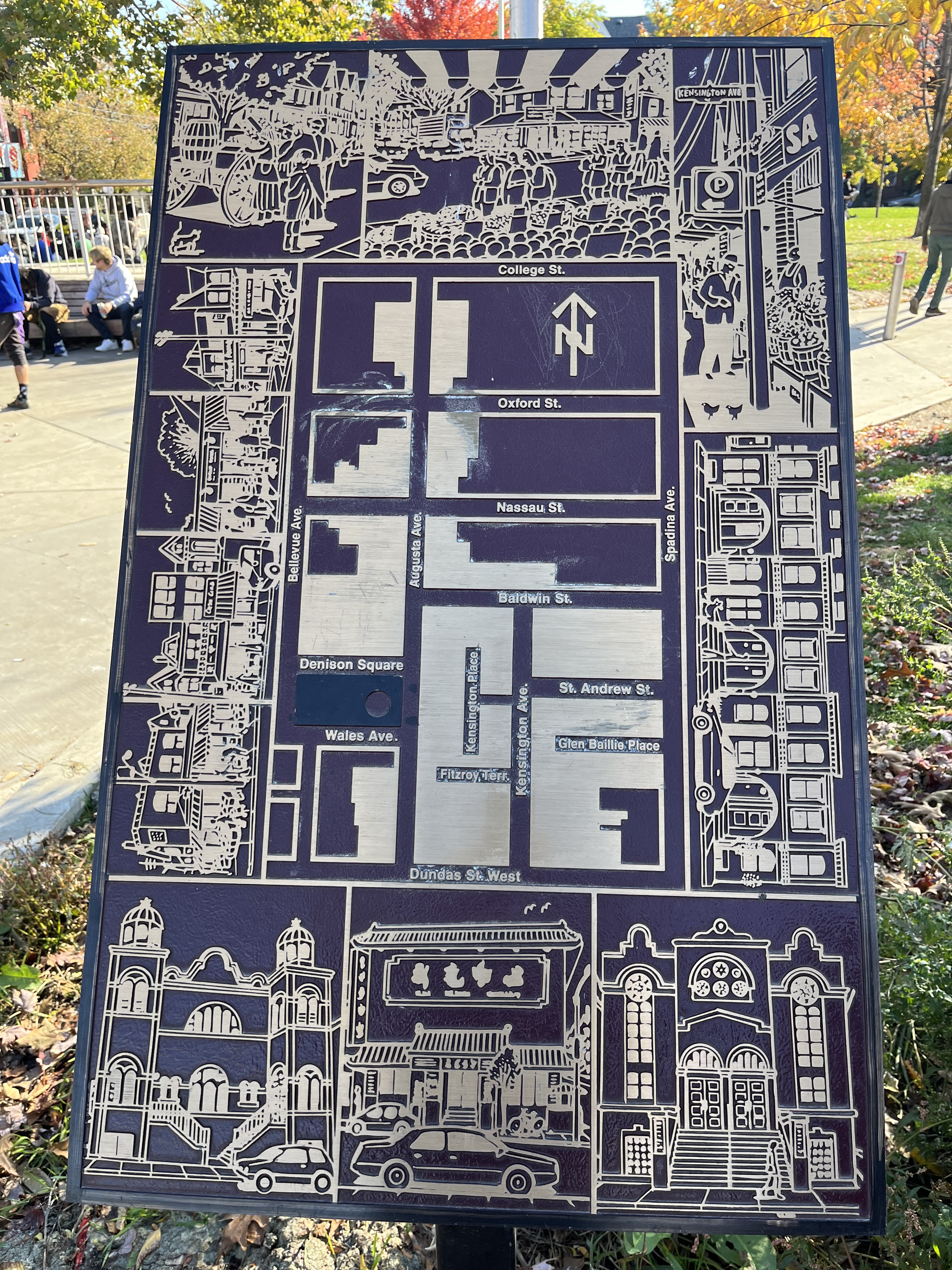
Bellevue Square Park has a couple of historical plaques and a map of the area. The park was formerly used by Dennison as a parade ground for his volunteer calvary group when the area was still his estate. His volunteer group participated in putting down the Rebellion of 1837. Today there’s a small but vibrant park on the site of the former parade grounds.

Narrow streets, lack of parking and the volume of pedestrians make this an area to avoid driving in. There’s plenty of parking under the Dragon City Mall at Spadina and Dundas which will leave you free to wander around and investigate the area.

There’s a lot of little stores and markets in the Kensington Market area and tons of places to eat a wide variety of foods. It’s also just a short walk away from Chinatown where there’s another whole variety of places to investigate or find something to eat.

Google Maps link: Kensington Market

Like us at http://www.facebook.com/hikingthegta

Follow us at http://www.hikingthegta.com

Also, look for us on Instagram
Peterborough Lift Lock

October 9, 2022

On a business trip to Peterborough in July I had a few minutes to stop and watch the operation of Lock 21 on the Trent-Severn Waterway. The waterway is 386 kilometres long and was first travelled by a European in 1615 when Jacques Cartier explored the region using long standing indigenous routes.

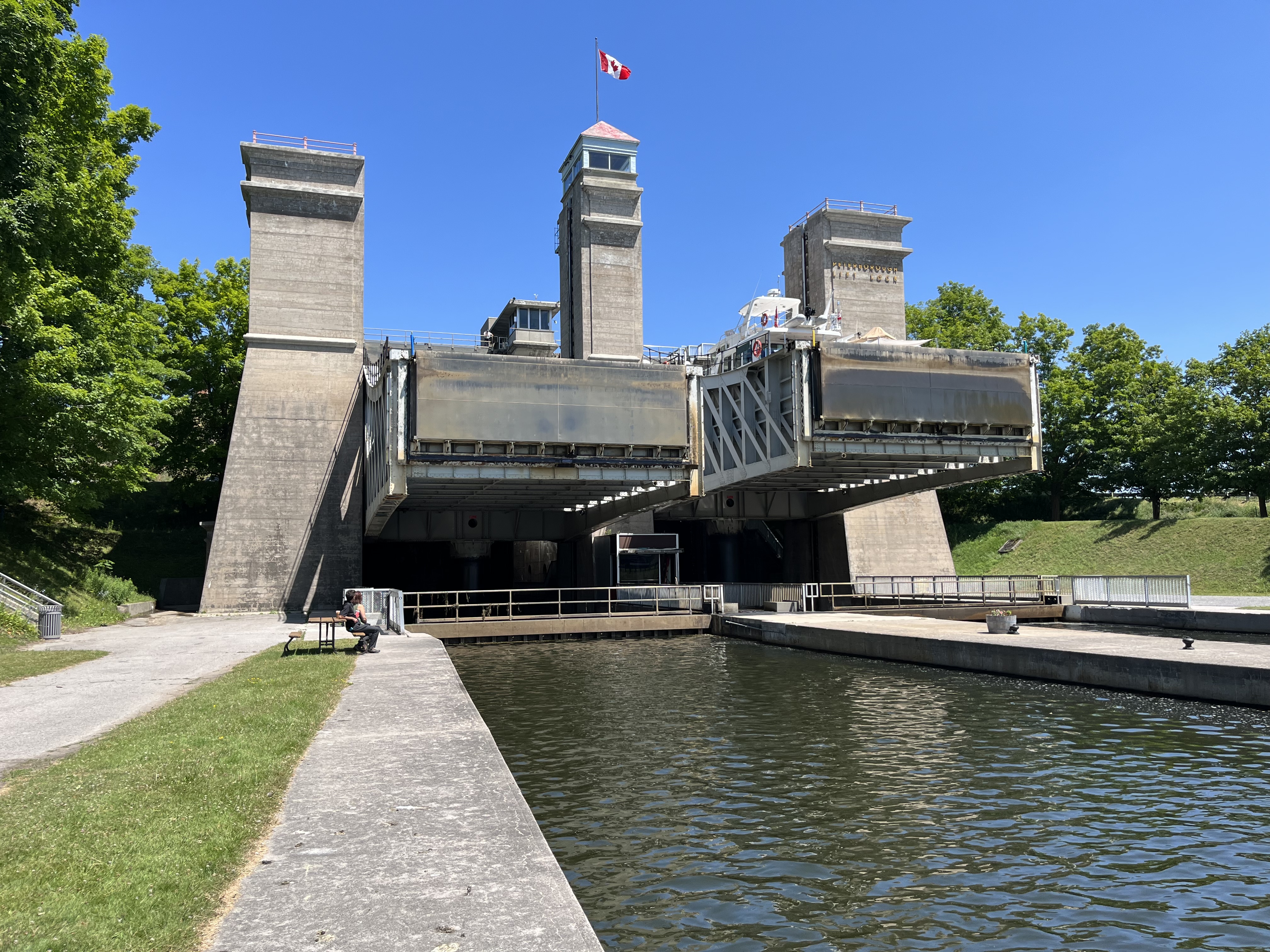
The canal was originally surveyed as a military route with the first lock being built in 1833 as part of a commercial venture. Three more locks were under construction in 1837 when the Rebellion broke out. It was determined that the canal would have too many locks to be used for rapid troop movements and so the three locks were completed, and progress was suspended. With the canal incomplete and no outlet to a major lake it was connected to other travel routes by toll roads, plank roads and eventually by railways. The image below shows the side view of the lift lock in Peterborough,

It was restarted in the late 1880s by the government of Sir John A. Macdonald, but little progress was made, and it was generally used as a political tool to get votes from the communities along the route. In the late 1890s it was undertaken with a new commitment, and it reached Peterborough and Lake Simcoe in 1904. The First World War slowed progress again and it didn’t reach Trenton until 1918 and Georgian Bay in 1920. By this time the ships had grown too big for the canal system and railways were carrying most of the commercial traffic. It became a pleasure route and eventually would be declared a National Historic Site of Canada and be used as a linear park. The image below shows the lift lock with the left hand side elevated and the right side being loaded for the next lift.

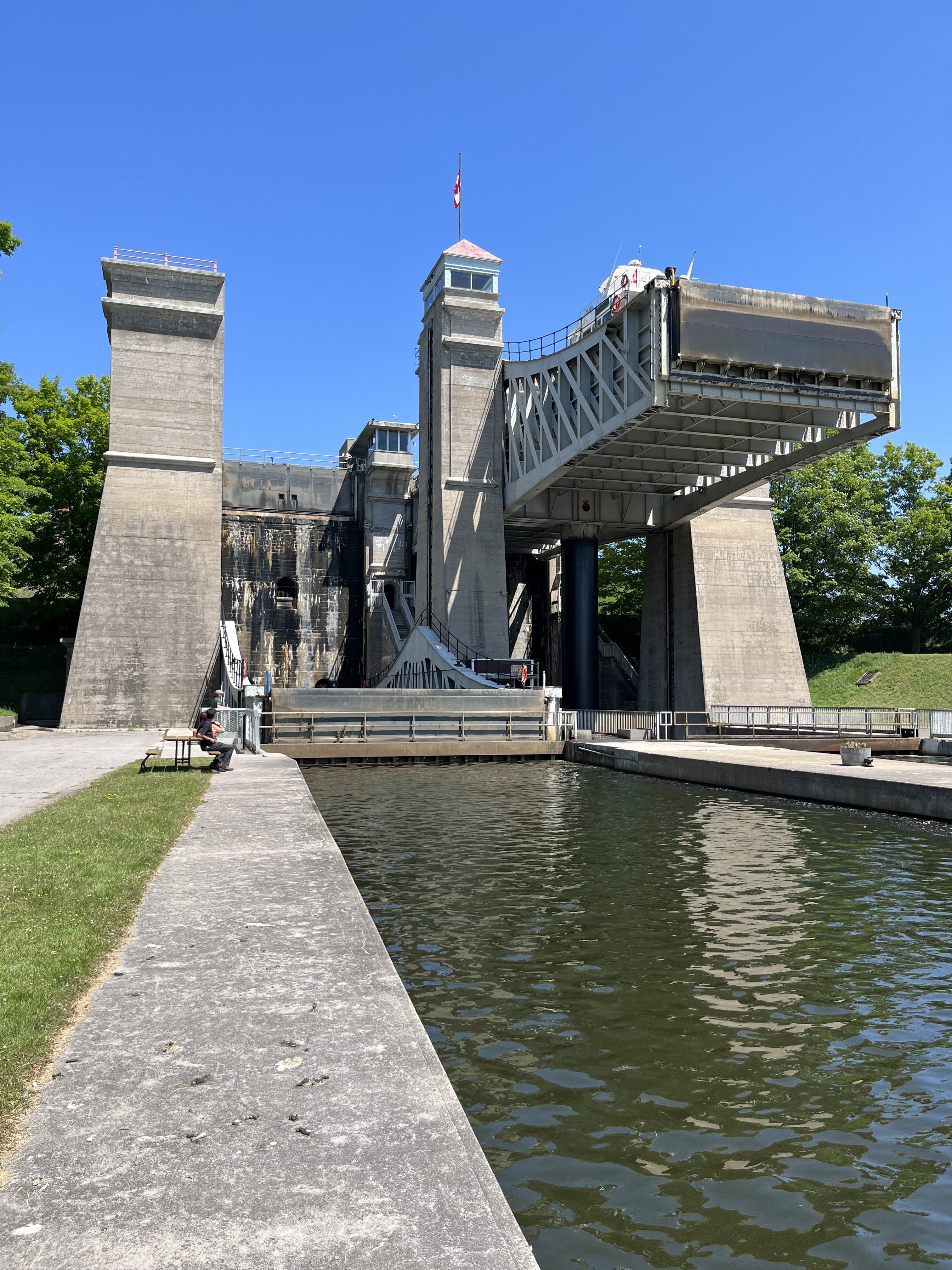
When it was completed in 1904 it was the highest hydraulic boat lift in the world and the largest concrete structure in the world. The vertical lift was 65 feet (20 metres) while most conventional locks had a lift of 7 feet (2.3 metres). The system consists of two identical caissons that sit at the level of the river at their lowest point. They each sit on a 7.5 metre diameter ram. In the picture below the lift is half completed and the two caissons can be seen beside each other.

When the lift reaches the top, it stops 12 inches below the water level in the upper reach. The gate is opened and water flows in to equalize with the level of the river in the upper reach. This causes the upper caisson to increase in weight so that it is 1844 short tons compared to the lower one which has 1700 tons of water in it. When the system is ready to reverse the valve between the two rams is opened and the extra weight in the upper caisson pushed the ram of the lower caisson up until the positions are reversed. The system requires no external power as the weight of the water is enough to operate the system.

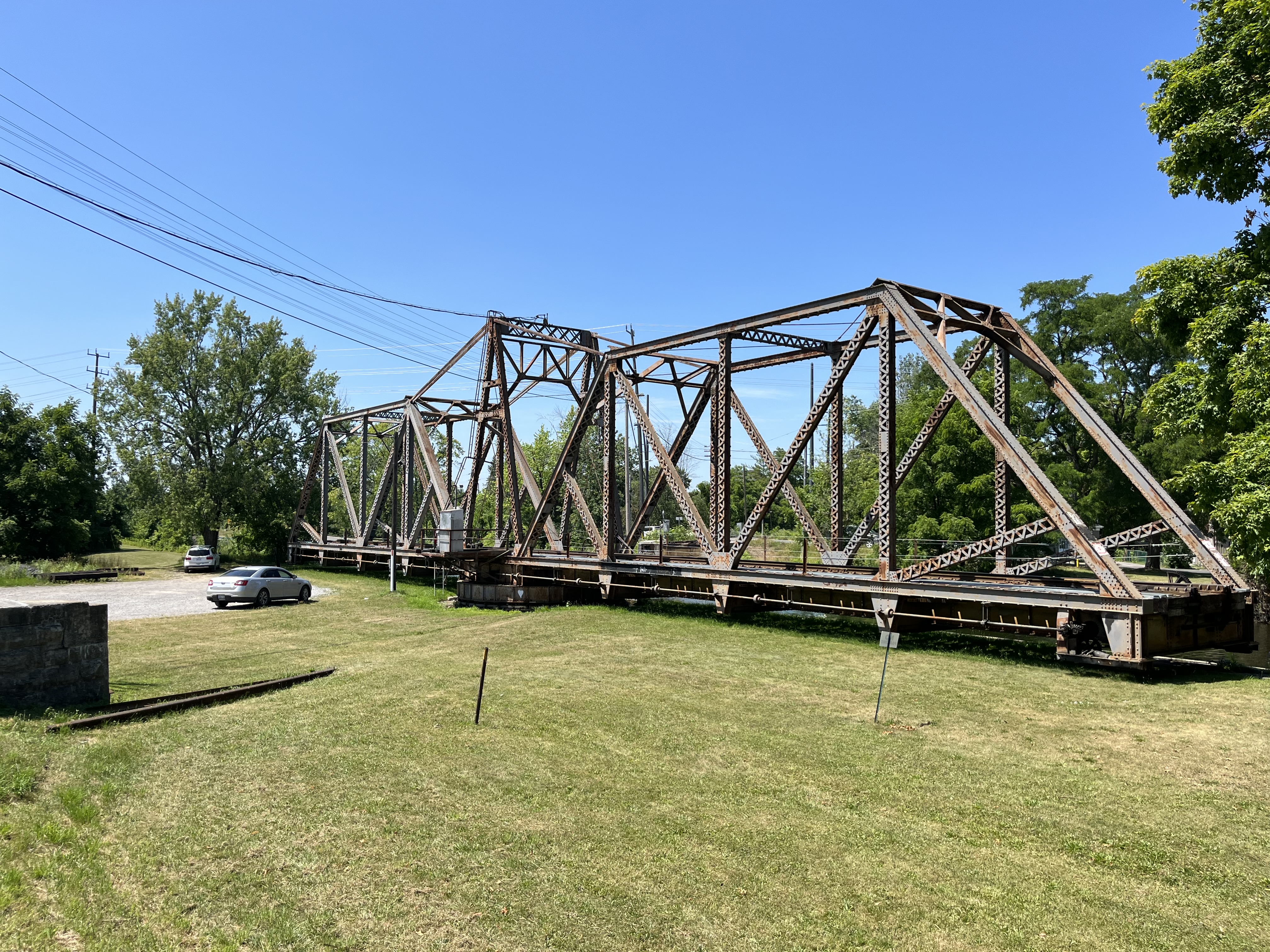
Just below the lock is a swing bridge that allows the Canadian Pacific Railway to cross the river. When not in use by the railway it is moved out of the way of boat traffic on the river.

The Peterborough Lift lock was declared a National Historical Site in 1979.

Related stories: Newmarket Ghost Canal, The First Three Welland Canals.

Google Maps Link: Peterborough Lift Lock

Like us at http://www.facebook.com/hikingthegta

Follow us at http://www.hikingthegta.com

Also, look for us on Instagram

National Air Force Museum

October 2, 2022

On a recent business trip to the Trenton Airforce Base, I stopped and took in the collection at the National Airforce Museum of Canada. All of these photos were taken from outside the fence as I didn’t have time to go in and review the collection properly before my next appointment. There are other aircraft located inside the storage building which tends to house many of the older planes. The museum opened on April 1, 1984, on the 60th anniversary of the establishment of the Royal Canadian Airforce.

P-140 Aurora – This long-range patrol aircraft was put into service in 1980 and remained active until 2017. It has a range of 7,400 kilometres and has been used for rescue missions as well to combat illegal immigration and drug trafficking. After being in storage for a year it was brought to the museum and re-assembled for display.

CC-115 Buffalo. This aircraft was built by De Havilland in Downsview and completed on August 27, 1967, after which it went into service as a transport plane. In 1975 it took on a dual role as a Search & Rescue craft until it was retired in September 2020 after over 50 years of service.

CC-144 Challenger. This aircraft was put into service in April 1983 in Ottawa to provide transportation for VIPs. It got a new assignment in 1995 when it went to Nova Scotia to serve as a training plane for pilots in electronic warfare. Five years later it was back in Ottawa flying VIPs around. It was in Florida in 2012 when it struck a large bird and was damaged requiring extensive repairs. In 2014 the Challenger fleet was reduced from 6 planes to just 4 and this one was retired. It found a new home in the museum in 2015.

CL-28 Mark II Argus. This is one of 20 Mark II aircraft purchased in 1958 and used for maritime patrol. It was stationed at Summerside P.E.I. in the 415 Maritime Patrol “Swordfish” Squadron. It flies at 463 kilometres per hour and was in service until 1982 performing patrols as part of anti-submarine warfare.

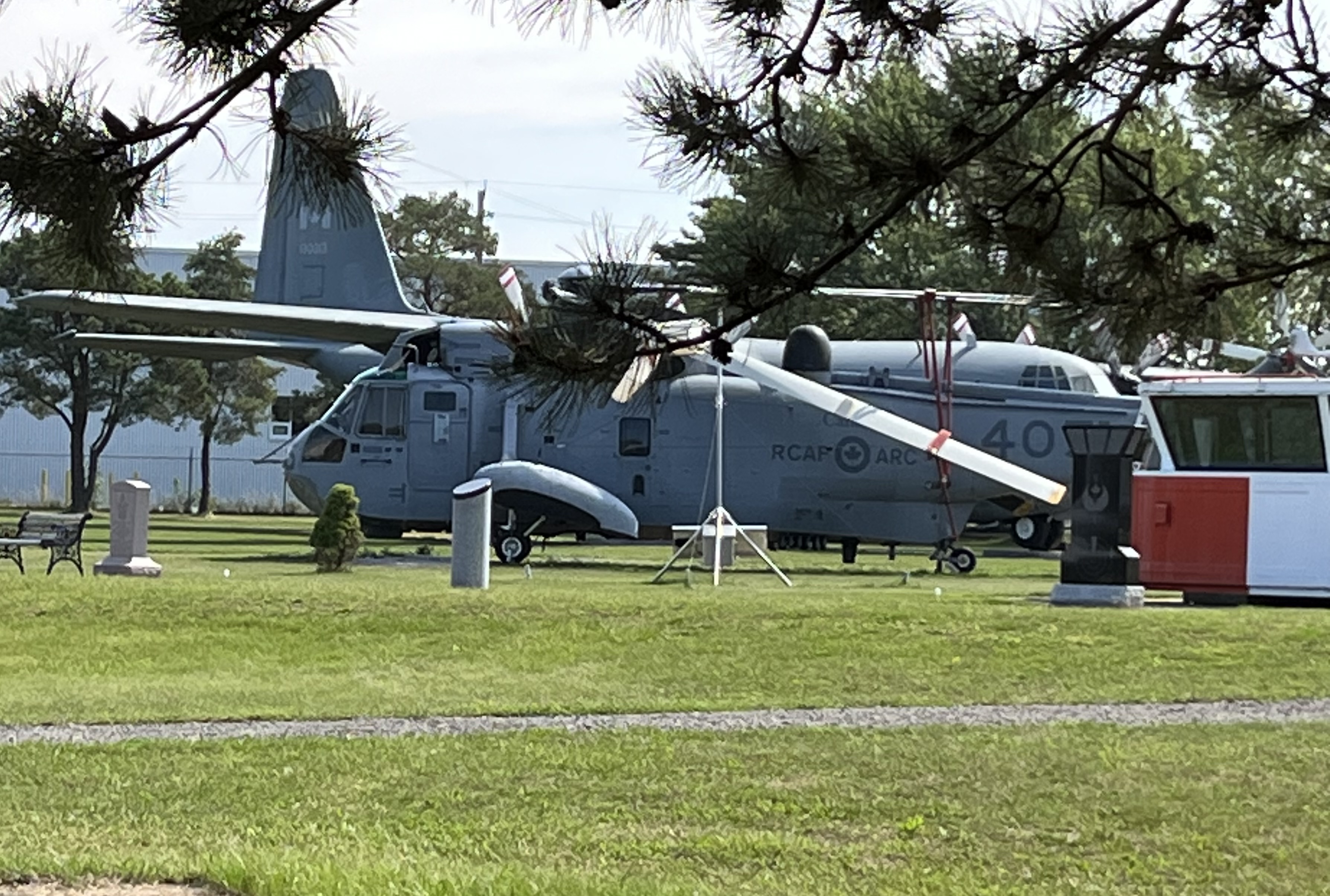
CH-124 Sea King went into service on May 14, 1964, performing surveillance and anti-submarine tasks. It has a compact design with rotors and tail that fold up allowing it to land on the smallest warships. It is also amphibious and can make landings in water. This one served in The Gulf War in 1991 as well as East Timor in 1999-2000. When it was retired in 2018 it had the most air-hours of any Sea King having racked up 17,775.3 hours.

The F86 Mark V Sabre is a fighter craft, and the model was purchased between 1948 and 1958. The one in the museum was in service until 1969 serving in Chatham, New Brunswick until it was placed in duty as an instructional airframe. This model of fighter can achieve speeds of 973 kilometres per hour.

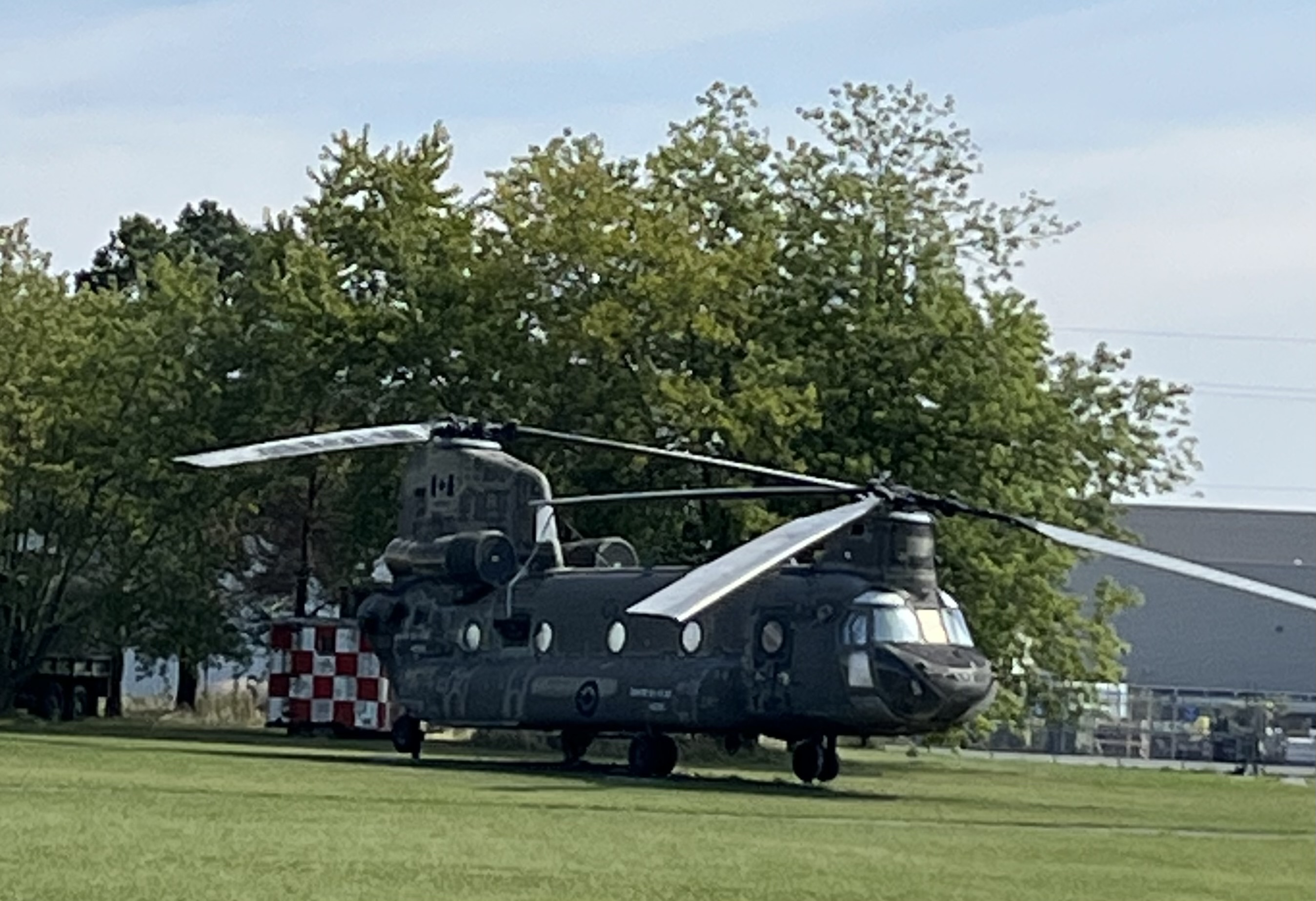
CH-147D Chinook was originally a USA army helicopter beginning in 1969. The Canadian Government bought it and five others in 2008 to deploy to Kandahar in Afghanistan. It has been part of the museum collection since 2016.

F-18 Hornet. This aircraft is capable of flying at Mach 1.8, 2,200 kilometres per hour at sea level. The one in the museum was put into service in 1982 as a training craft in Cold Lake, Alberta. All training on the Hornet was conducted at Cold Lake. This airplane was donated to the museum in 2009 as part of the celebrations marking the 100th anniversary of flight.

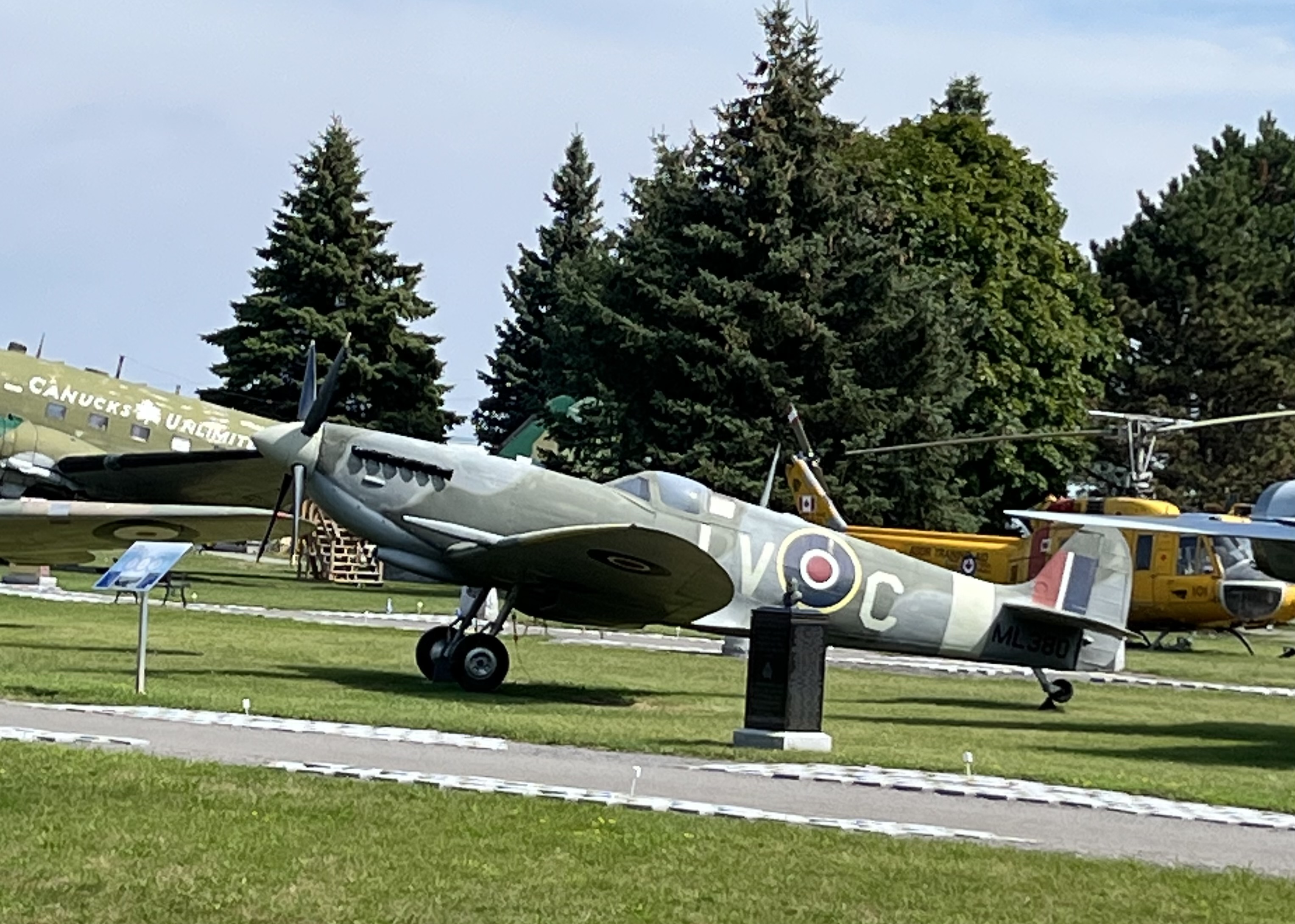
The Spitfire Mark IX was one of the primary fighter crafts of the allied forces in the Second World War. It was in service between 1940 and 1950 and could fly at speeds up to 586 kilometres per hour. This example was donated to the museum in 2001.

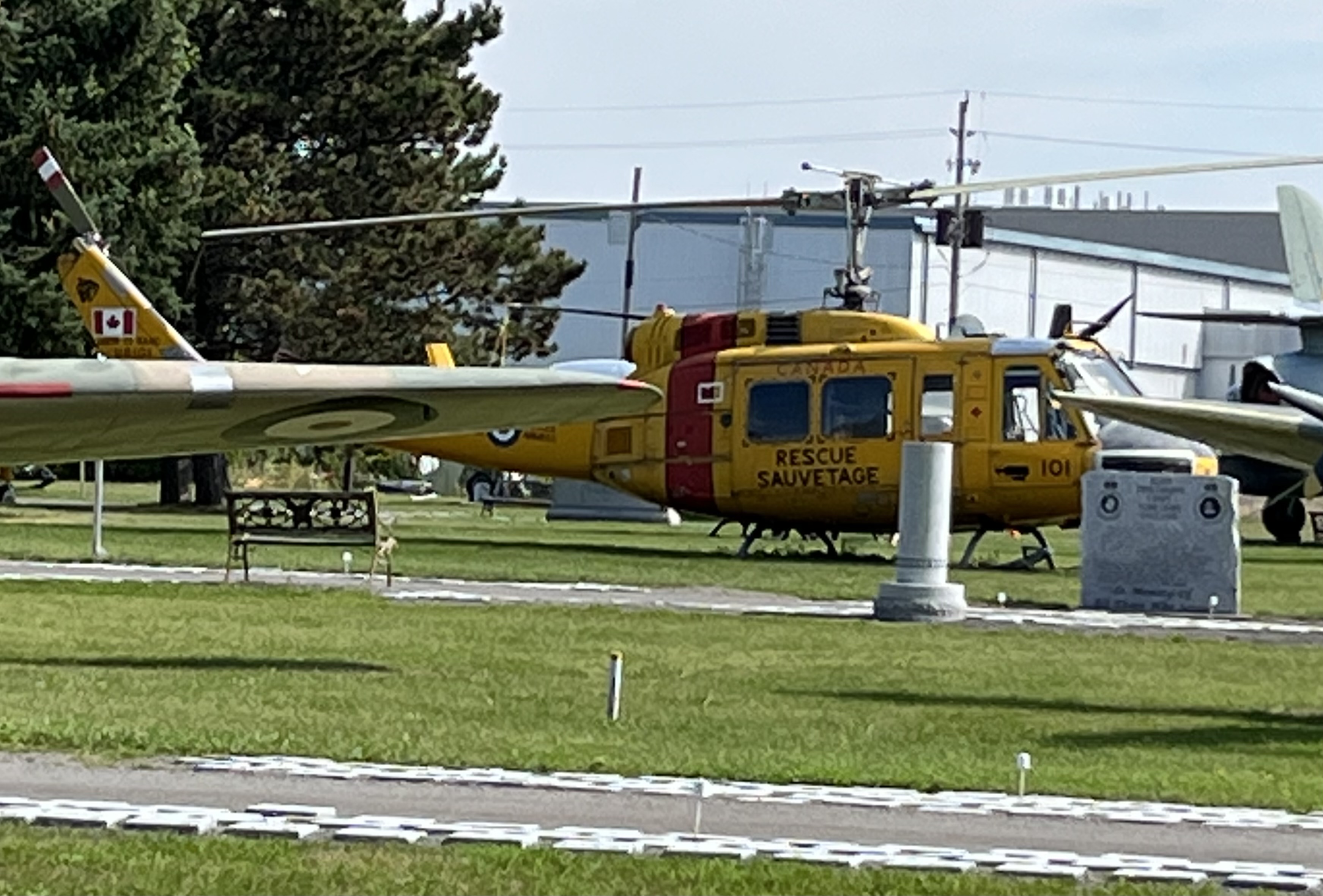
Ch-118 Iroquois was a combat support unit which performed search and rescue operations. It was in service between 1968 and 1995 when all Iroquois were retired from service. This machine was then used at CFB Borden and then CFB Trenton for aircraft battle damage repair training. It was placed in the museum in 2007.

Code named “Fishbed” by the Allies, this Russian fighter jet was never flown by the Canadian Military. It was officially known as a MiG-21 and was first put into service in 1959 and was able to fly at 2,230 kilometres per hour. The specimen in the museum was put into service in 1975 in East Germany. After German Unification in 1990 it was soon withdrawn from service and was donated to the Canadian Government in 1993. It has been in the museum collection since then.

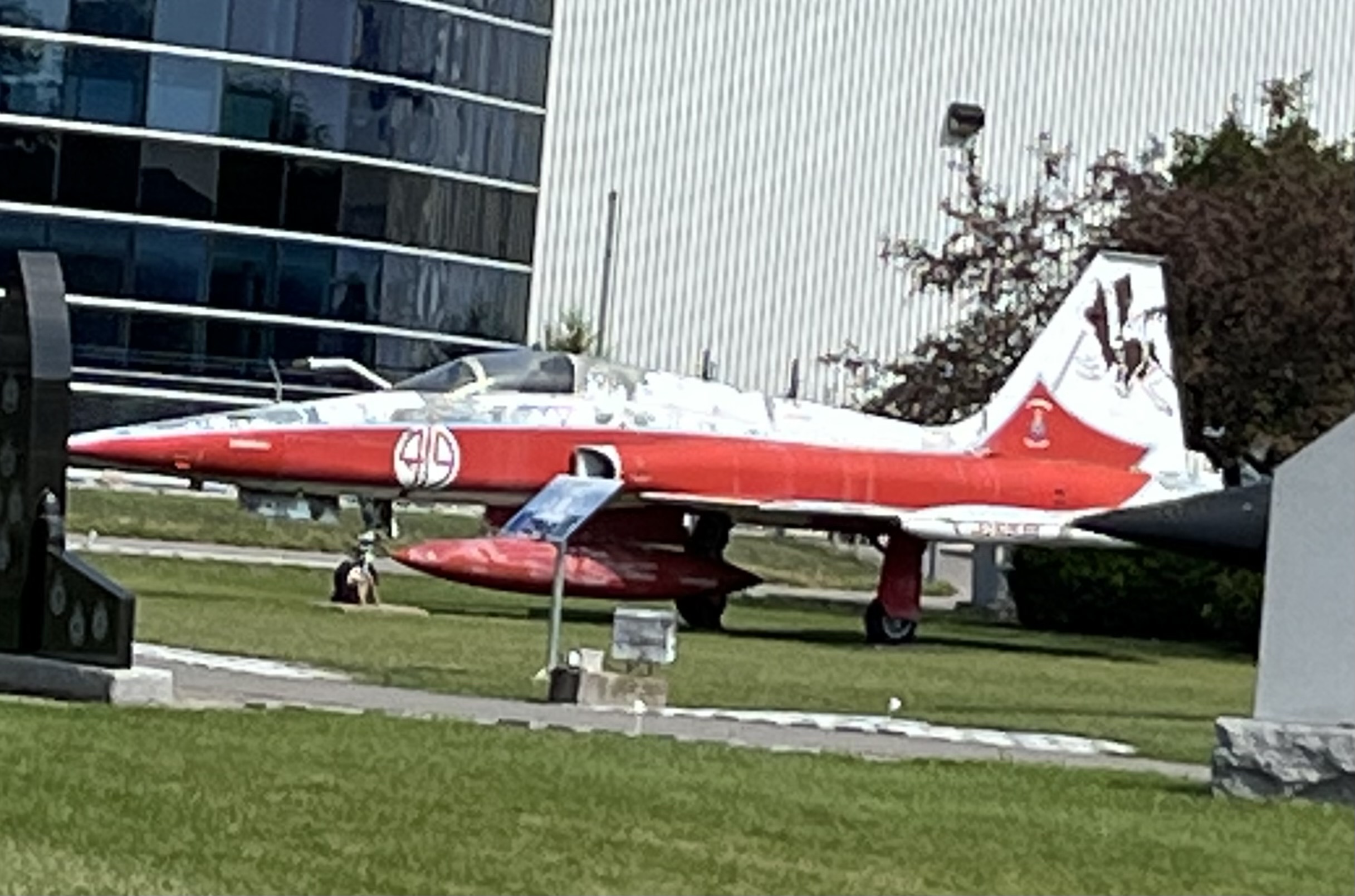
The CF-116A Freedom Fighter in the museum was in service from 1968 to 1995 and entered the museum in 1997. It was used at Cold Lake, Alberta as a tactical fighter and training aircraft. In 1976 it was transferred to the 419 Moose Squadron where it was painted red and white like the Canadian Flag.

This is just a sampling of the 37 aircraft in the museum, several of which are housed in the indoor facility. At some point I would love to spend the time to go through the museum properly and see the full exhibit including all the other memorabilia that is on display.

Related Stories: Downsview Airforce Base

Google Maps Link: National Airforce Museum of Canada

Like us at http://www.facebook.com/hikingthegta

Follow us at http://www.hikingthegta.com

Also, look for us on Instagram

Markham Museum
Sunday, September 18, 2022

Markham Museum is a 25-acre collection of historical buildings and artifacts that relate to the early history of Markham Township. There are close to 30 buildings which have been collected from various sites around the township over the past 50 years. Many of the buildings have had some restoration to preserve them. Seven of the buildings can be viewed from the inside as part of a guided tour that is free upon request with your paid admission. The museum is located at Markham Road and 16th Avenue. Just to the west of the museum is Markham Heritage Estates which is a subdivision made up of historic homes that have been moved from around the township to preserve them from demolition. These homes are lived in and can often be viewed inside during Open Doors events.

The oldest building in the museum was built in 1824 at McCowan and Stouffville Roads. Christian K Hoover and his wife Anna lived in this house followed by three more generations of the family. During the mid-1870s the house became a stopping point for Russian Mennonites as they emigrated west to Manitoba. In 1975 the house belonged to A.D. Reesor who donated it to the museum.

Inside the house is an open layout where kitchen, eating and sleeping areas are combined. The museum has decorated the home to look like the year 1860, at which time Christian’s son Abraham and his wife Fanny lived there with their three young children.

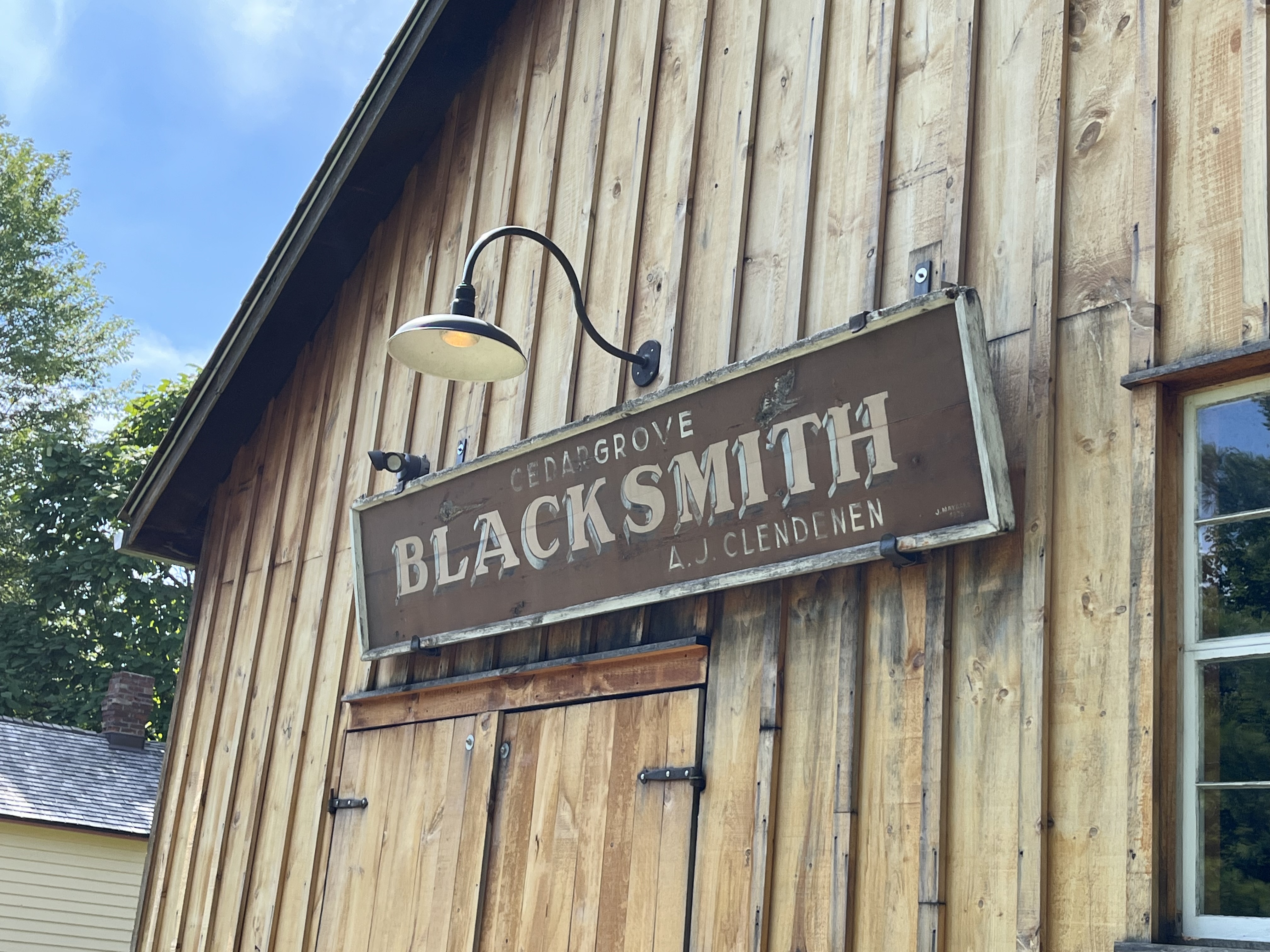
The blacksmith shop was built in 1862 by Henry Lapp in the village of Cedar Grove. Between 1866 and 1896 there were 9 different blacksmiths who worked in the Lapp blacksmith shop. Beginning in 1896 Arthur Clendenen took over and he bought the shop from Henry Lapp in 1905. He continued to work there until it closed in 1956. Cedar Grove plays a large part in the Markham Museum and the small community has been featured in several of our blogs in the past including Cedar Grove – Ghost towns of the GTA, Lapp’s Cider Mill, and Cedarena.

Inside, the blacksmith shop is set up to look like it did around 1910. Blacksmiths were important to early communities and there were usually one or more in each village. The blacksmith made horseshoes and installed them in addition to making and repairing all manner of tools. Everything from hammers to belt buckles was created in these little shops. The Cedar Grove blacksmith shop was moved to Markham Museum in 1977.

The Cider Mill at the museum was actually a shed on a property belonging to the Lapp Cider Mill in Cedar Grove. The shed was moved to the museum and outfitted with the inner workings of the Lapp Cider Mill which was built in 1872. The Lapp Cider Mill operated until 1955 producing apple cider, vinegar and apple butter. The cider mill at Markham Museum is operational and is in use every year during their annual Applefest, which this year takes place on September 24, 2022.

The church in the museum was moved from the 9th Line just north of Major Mackenzie Drive. It was built on an acre of land that was purchased from Joshua and Rachel Miller in 1847. The church was opened as Knox Baptist Church the following year and always had a small congregation. In the early years the church shared a minister with two other congregations and the pastor would only teach there every three weeks. By 1958 the congregation had shrunk to the point where the church was closed. In 1981 the church was disassembled and each of the 35,000 bricks were numbered and then reassembled on the museum site.

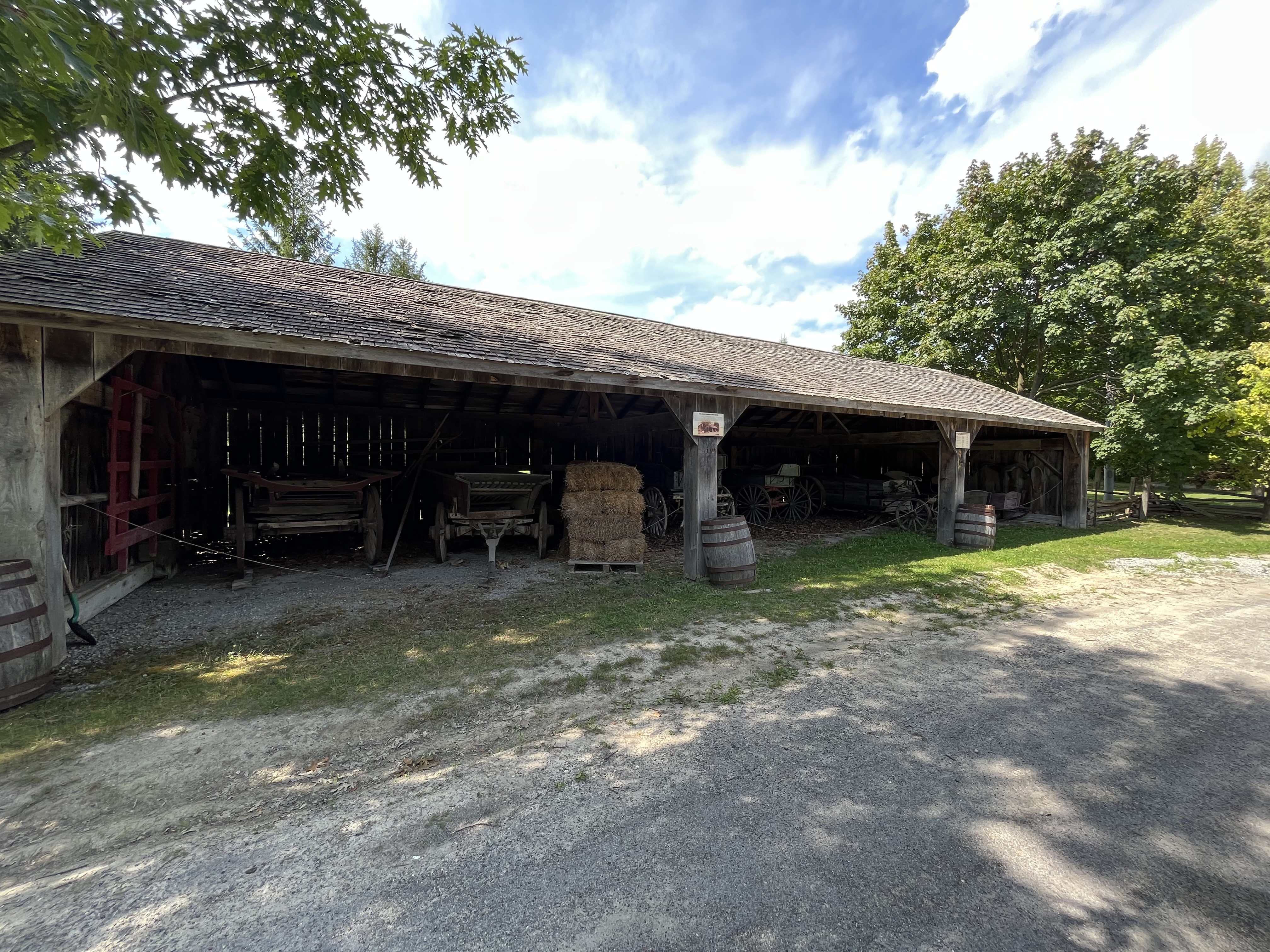
Most early churches had a drive shed where carriages and horses were kept while the church service was going on. There are very few of these left in their original locations and we have previously featured the one at the Cober Dunkard Church in Vaughan.

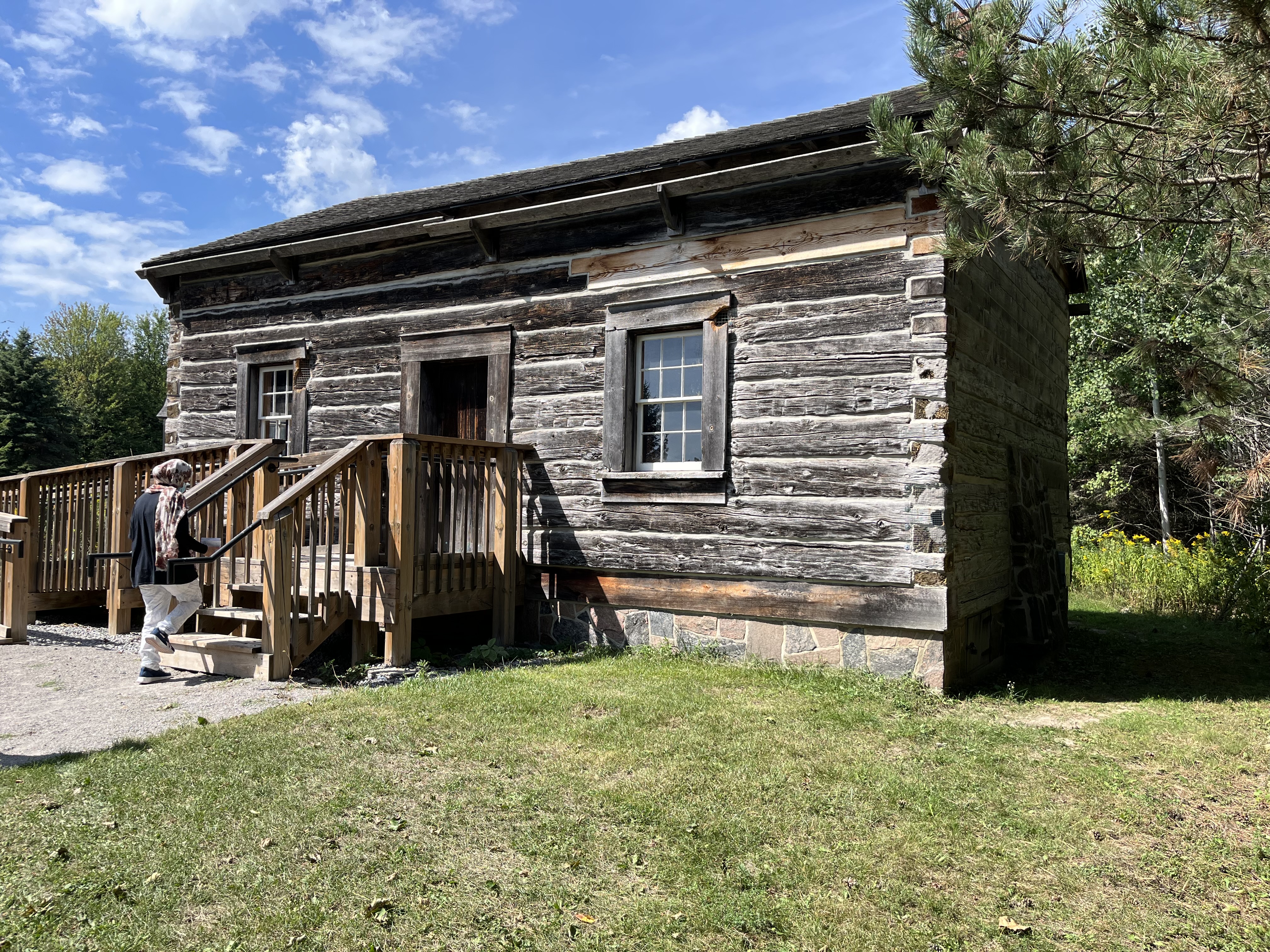
James and Euphemia Maxwell operated a grist mill on the Rouge River in the area that is now Rouge National Urban Park. They built a log cabin around 1850 and raised 6 children in it. When James died in 1894 the house and surrounding lands were sold but the cabin was used as a home until 1962 when the Little Family donated the cabin to the Markham Museum. It was moved to the museum site in 1970. The remains of the Maxwell Mill can still be seen along Twyn Rivers Road beside The Rouge River and were written about in the linked story.

Henry Wilson and Clementia May were husband and wife business partners in Markham in the 19th century. They opened a general store in Markham in 1862 and expanded into this building in 1875. Henry operated a variety store out of the first floor while Clementia ran a dress making business on the second floor. Dresses were usually custom designed and sewn in this era and her business was far more profitable than the store downstairs. In 1898 their son Edmund took over the business, but he closed it in 1913 and sold the building to Dr. John MacDonald. When the building was slated for demolition in 1985 it was moved to the museum.

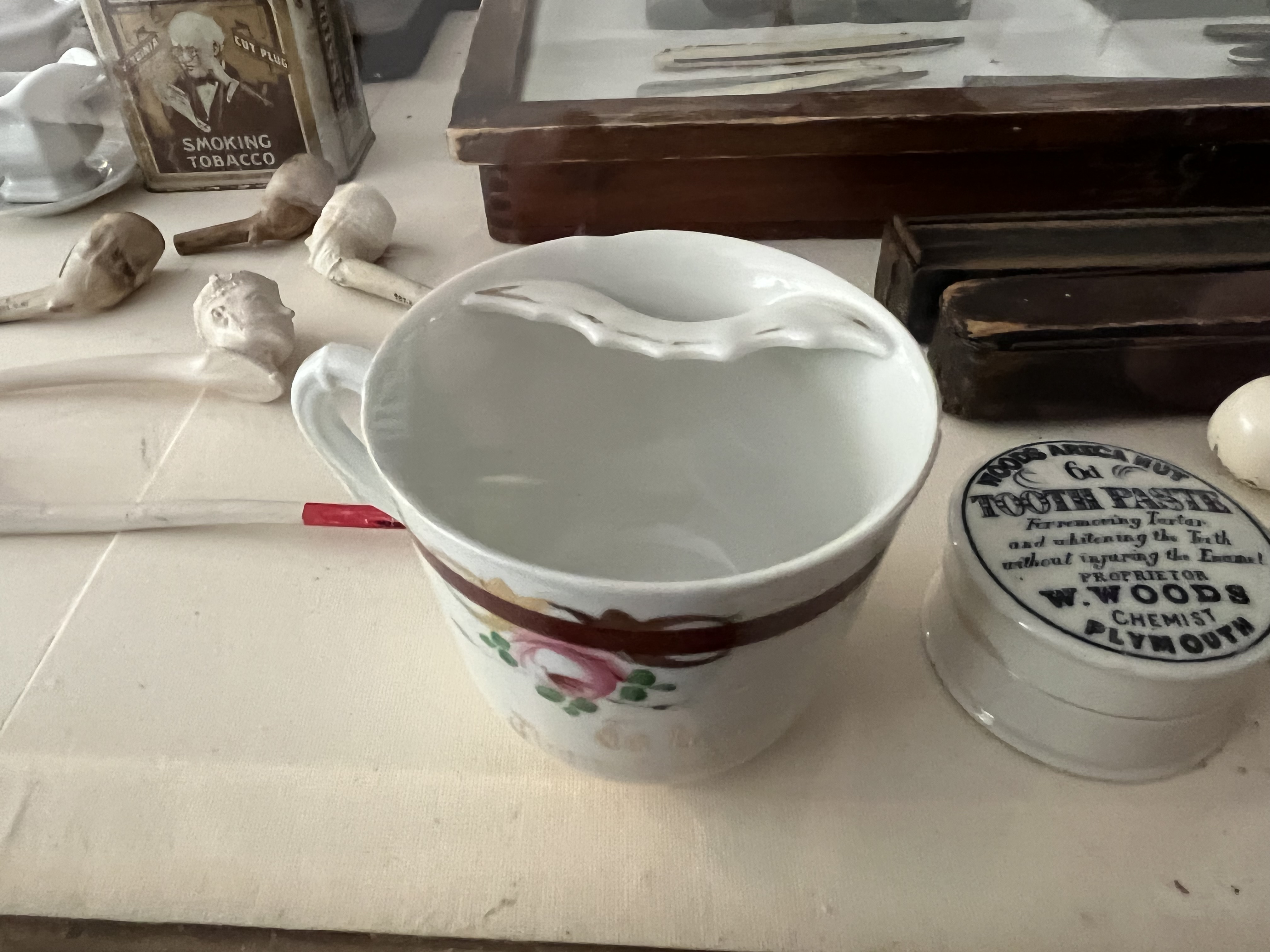
There is a collection of moustache mugs in the Variety Hall. These mugs were invented in the mid 1800s by Harvey Adams in England. In Victorian times, many men wore large moustaches which they waxed or dyed in order to make them more impressive. The moustache mug contains a small moustache shaped ledge with a little hole to allow the men to drink tea without getting it in their moustaches.

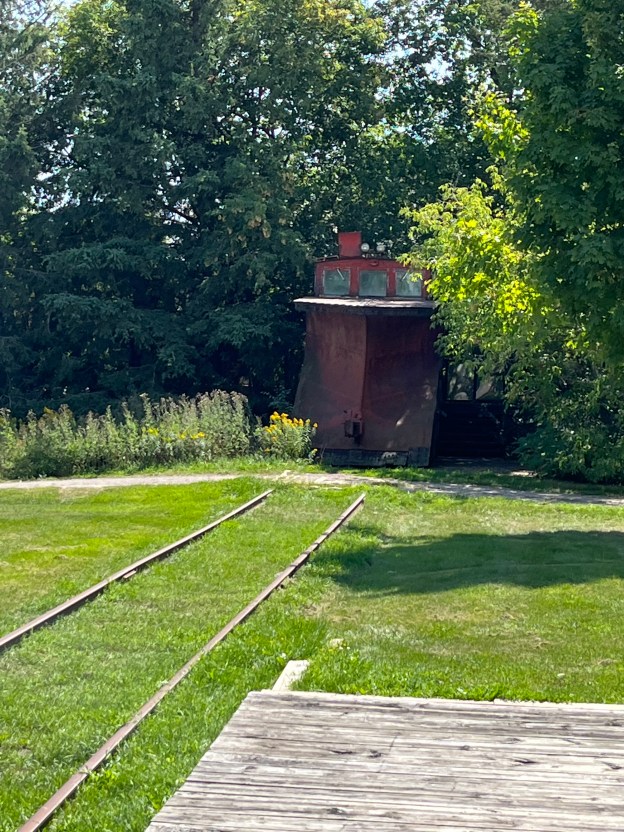
Markham Museum is home to the Locust Hill train station which was built in 1936 to replace an earlier station that had burned down the previous year. The first station in the community had been built in 1885 by the Ontario and Quebec Railway which had been completed through town in 1887. Train service through Locust Hill was discontinued in 1969 and the station was moved to the museum in 1983. One of the interesting artifacts in the museum collection is the Canadian Pacific snowplow number 400896. This classic wedge snowplow weighs 20 tons and was built in the Canadian Pacific Angus workshops in Montreal between 1920 and 1929. It cleared a 10-foot path and had blades in the front to clear between the rails. These blades would be raised at intersections to avoid damaging the equipment.

Markham Museum has a fairly small entry fee set at only $6.00 for adults but doesn’t allow you to enter all of the buildings like other heritage villages such as Black Creek Pioneer Village. This is likely due to the lack of staff which, unfortunately, are required to preserve the antique displays to keep them from getting broken or going missing.

Related stories: Markham Heritage Estates, Maxwell’s Mill, Cedar Grove – Ghost Towns of the GTA, Lapp’s Cider Mill, Cedarena, Cober Dunkard Church, Black Creek Pioneer Village.

Google Maps Link: Markham Museum

Like us at http://www.facebook.com/hikingthegta

Follow us at http://www.hikingthegta.com

Also, look for us on Instagram