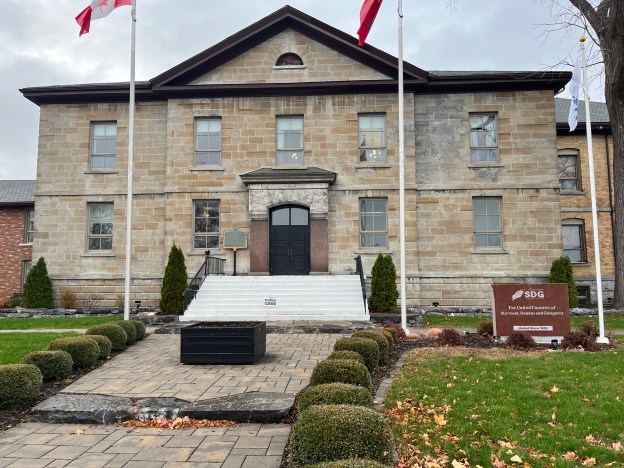
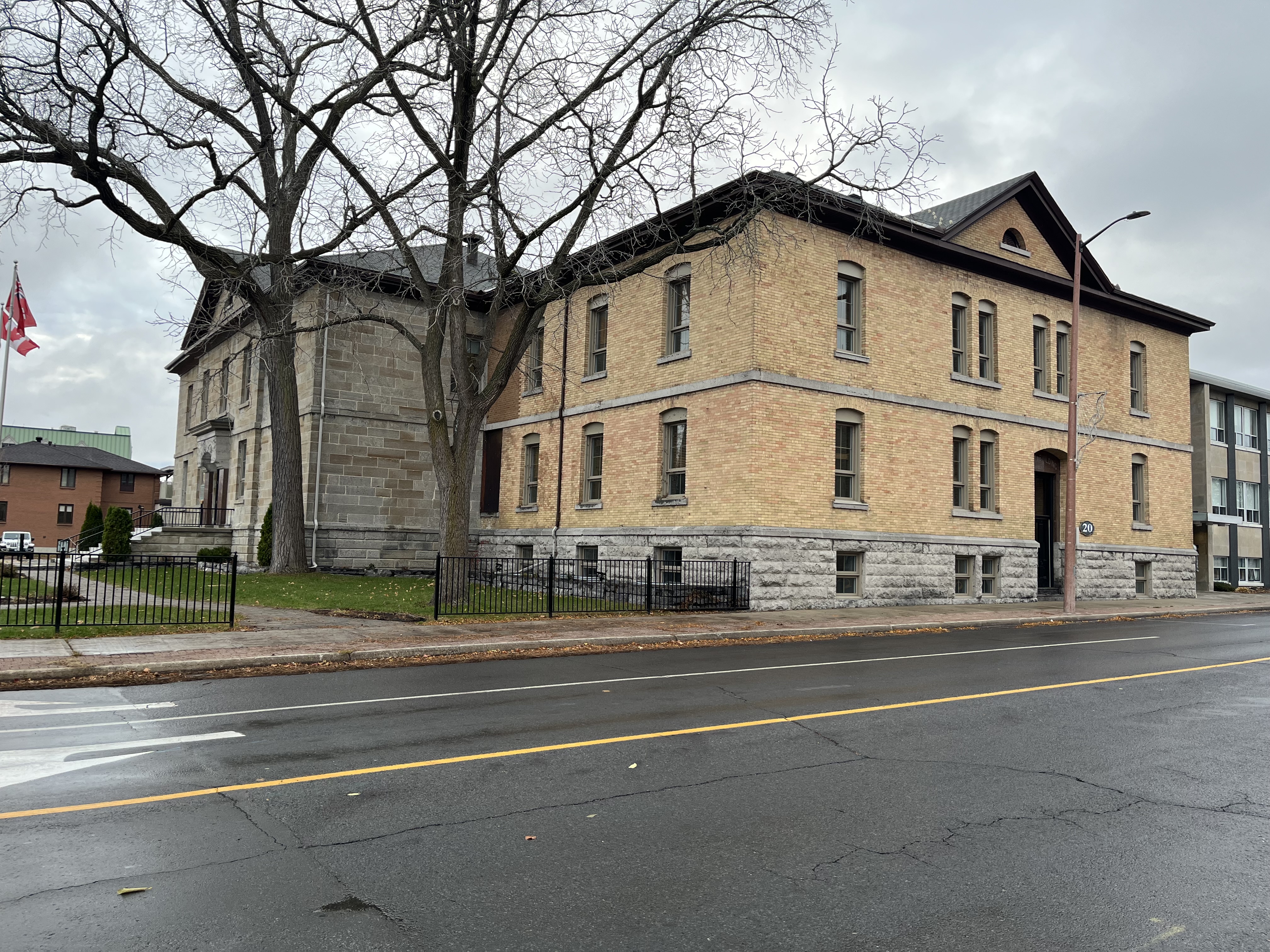
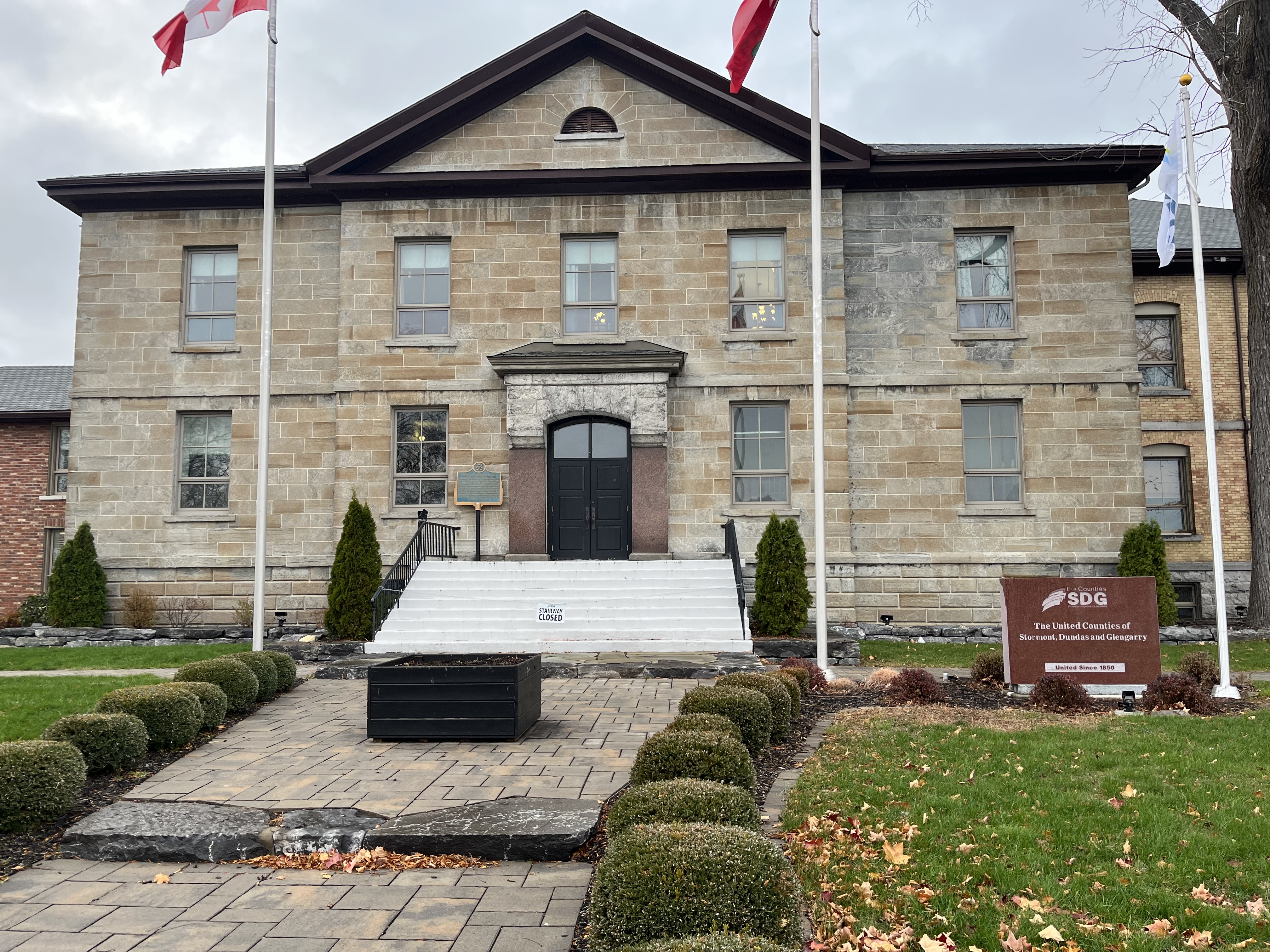
The old jail in Cornwall is one of the oldest surviving public buildings in the province. I had the opportunity to visit it on the same business trip that resulted in our past two stories Prescott Waterfront and Lost Villages of the St Lawrence River. This completes a trilogy of Eastern Ontario posts.
Indigenous People had lived along the St. Lawrence River for thousands of years before the arrival of Europeans. The first formally documented settlement of Europeans in the area occurred in 1784 when United Empire Loyalist moved north from Johnstown, New York following the end of the American Revolution. They founded New Johnstown which was later renamed Cornwall. The Eastern District known as Lunenburgh was established in 1788 and six years later an Act of the Legislature of Upper Canada authorized the erection of a court-house and gaol at Cornwall. That legislature was located in Newark (Niagara-On-The-Lake) beginning in 1792. A two-storey frame structure was built in 1802 and served until 1826 when it was destroyed by a fire.
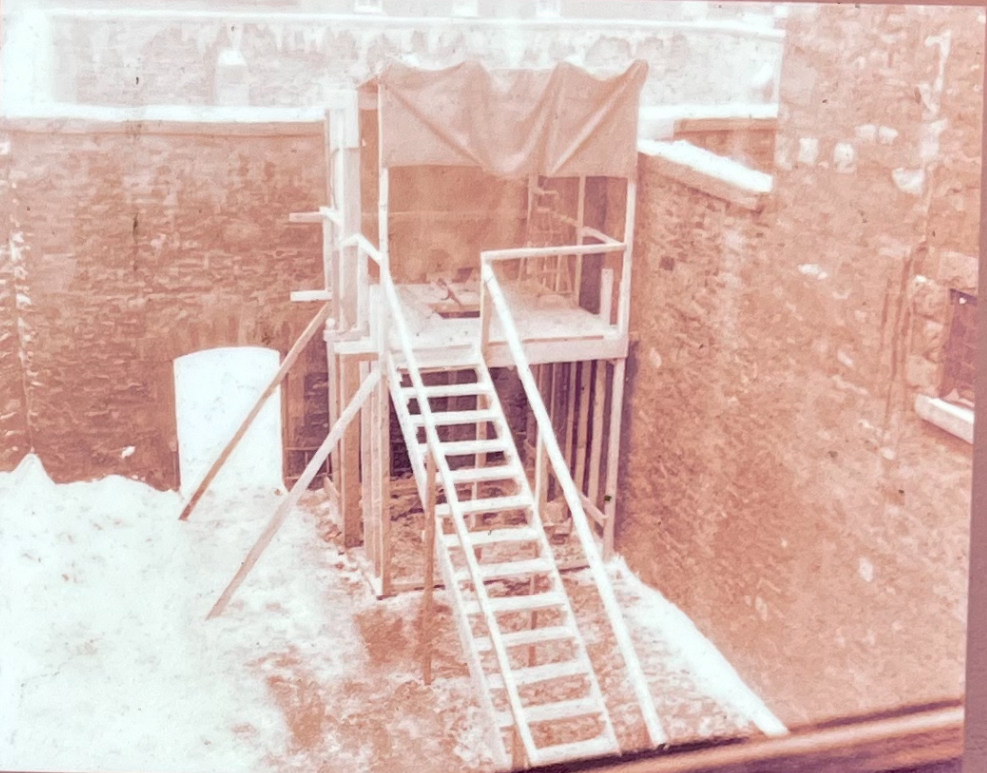
It was replaced in 1833 with the central block of the structure that still stands on the site. The United Counties of Stormont, Dundas and Glengarry were established in 1850 and the building served as the court-house and gaol (jail). The jail opened in 1833 and just two years later the first escape was made. Four prisoners got out and were never found. The jail was expanded in 1869 by adding two new cell blocks. They were nicknamed “Windowless” and “Hell’s Angels Wing”. Clark Brown was incarcerated there for murdering his father and sister in their home in Winchester and he was executed at the jail in 1879. Other executions at the jail were James Slavin in 1892, John Vergryniuk in 1919, Thomas Collison in 1925 and in 1954 Peter Balcombe. Also in 1954 Henry Seguin was to be executed but committed suicide first.
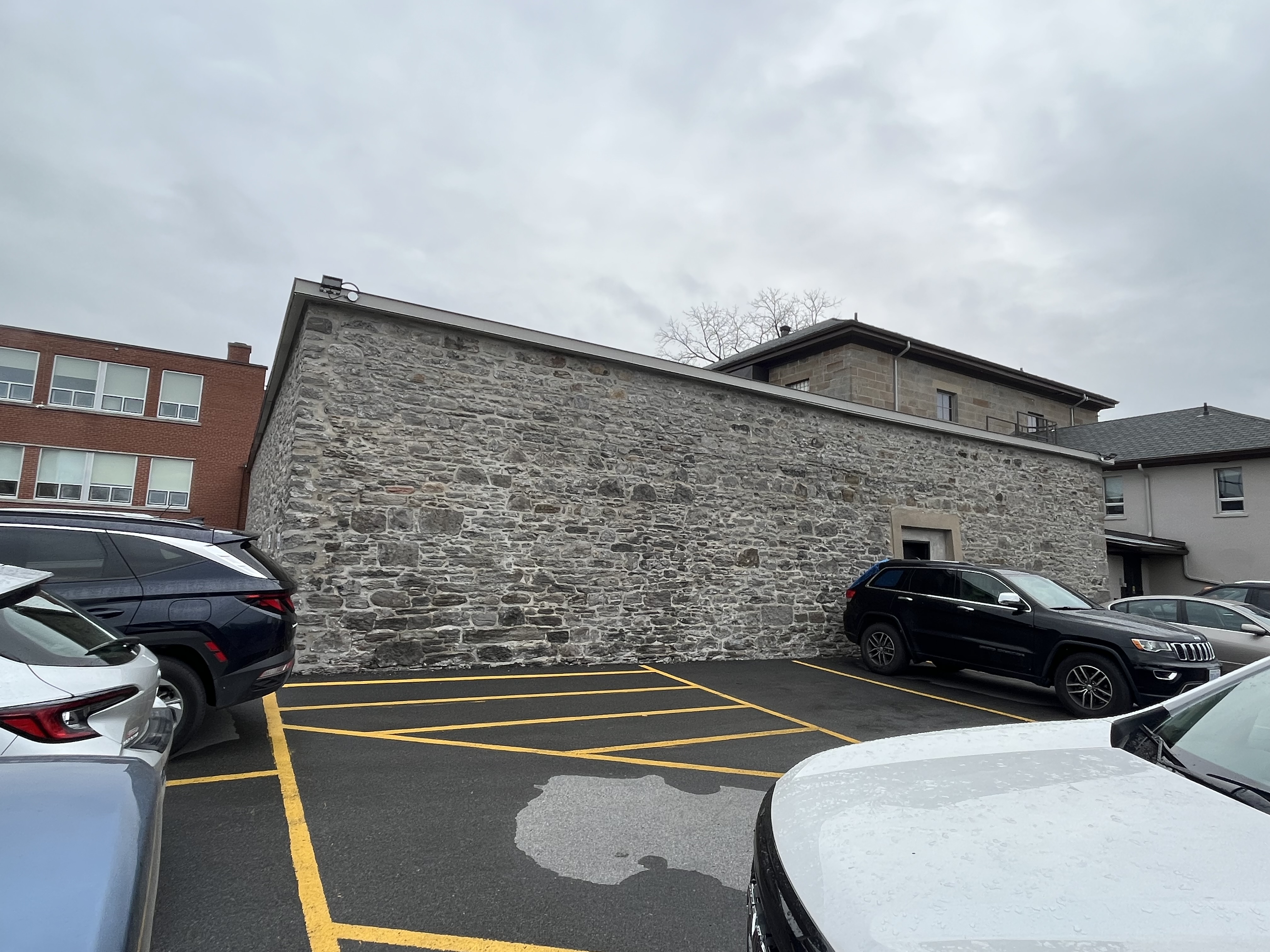
The jail was modernized in 1971 with security cameras, showers, toilets and electronic locks. In 1985 a general population cell block and a female section was added. A final escape was made in 1995 but the convict was caught in less than an hour as he went to visit his dying grandfather. The jail was decommissioned in 2002 and the inmates transferred to Ottawa.
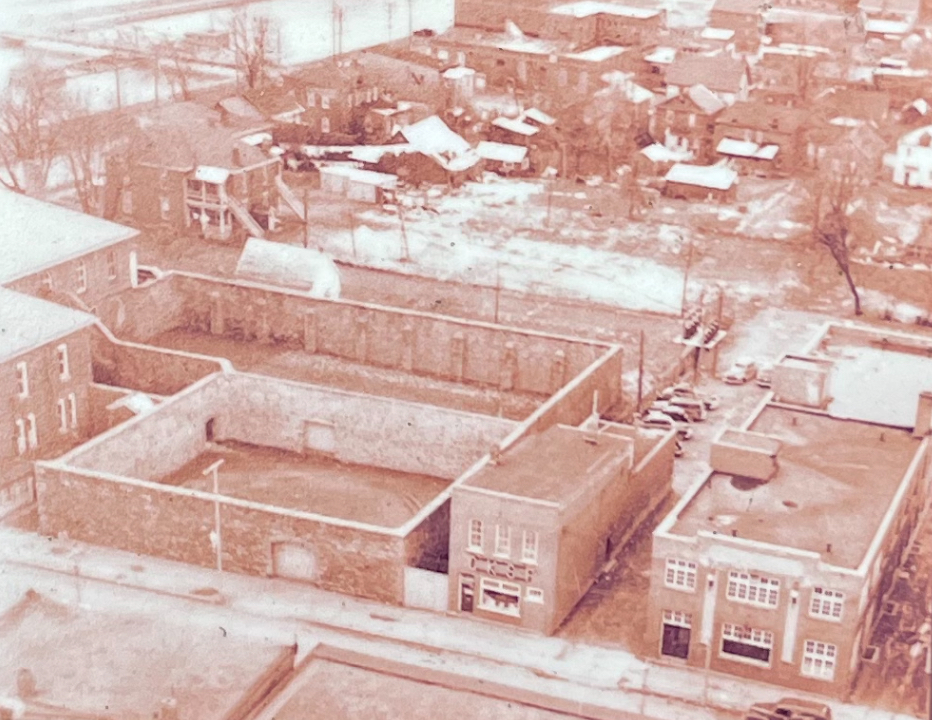
The aerial view below was taken from the information board at the jail and shows the outdoor exercise yards.
Like many jails, the Cornwall jail had its share of deaths over the decades. People died from suicide, illness, torture and violence as well as the five executions by hanging. There are still many unclaimed bodies which are buried beneath the former exercise yard. They were also buried under what is now the parking lot. During the 1985 expansion of the jail, several bodies were dug up including those of Henry Seguin and Peter Balcombe. It is estimated that there is around 100 bodies buried on the site. This has led to many claims of paranormal activity in the old building and many “ghost hunters” have come to seek evidence.
Tours of the jail are conducted during the summer months, usually between May and August. Check their website at www.historicsdgjail.com for more details and see for yourself if you feel any spirits during your visit.
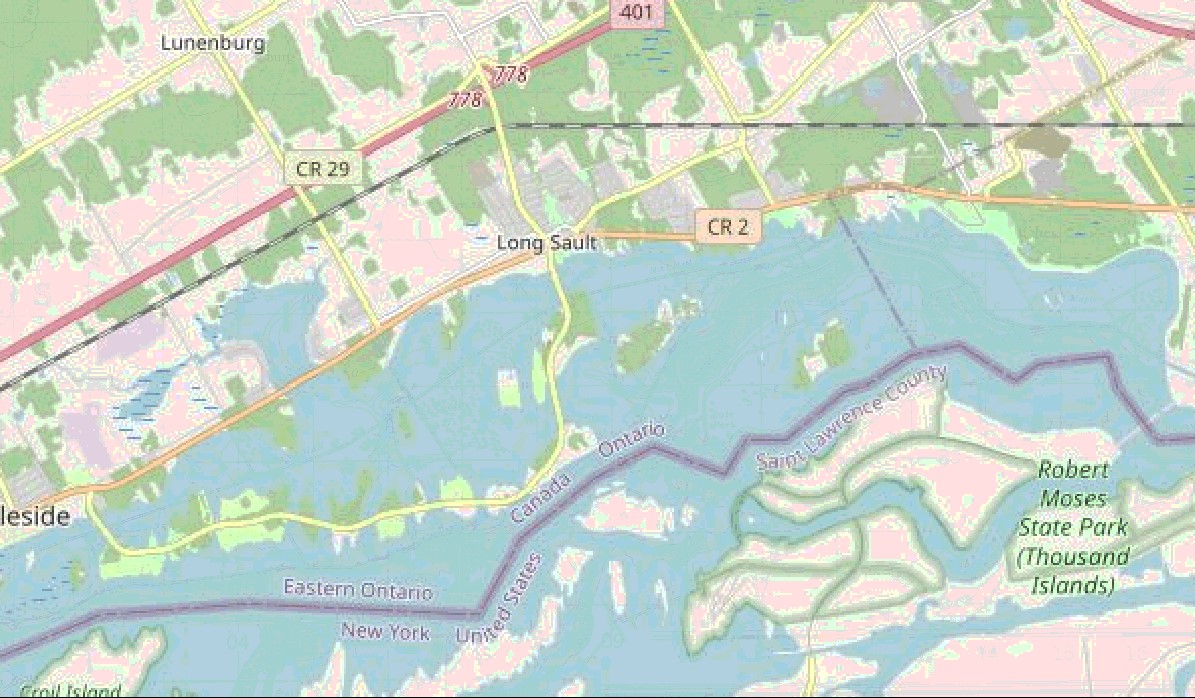
In July of 1958 nine villages and an inhabited island along the Canadian shoreline of the St. Lawrence River were flooded during the construction of the St. Lawrence Seaway and the Moses-Saunders Power Dam. 1,200 acres of reserves belonging to the Mohawks and Akwesane as well as 15,000 acres of traditional hunting grounds were also flooded. The indigenous peoples were not consulted or compensated and only in the last couple of decades has any attempt been made to correct this travesty. 6,500 residents of 6 villages and 3 hamlets were forced off their lands and given market value for their holdings. Unfortunately, the market values were already depressed due to the impending flooding. The lost villages were Aultsville, Dickinson’s Landing, Farran’s Point, Maple Grove, Mille Roches, Moulinette, Santa Cruz, Sheeks Island, Wales and Woodlands. Some of these can be seen in the map below taken from Wikipedia which shows the area prior to the flooding. We have often written about the ghost towns and lost villages of the GTA but this post focusses on some lost villages in Eastern Ontario that I visited on a business trip in September.
58,000 acres were flooded beginning on July 1, 1958 when 27 tonnes of explosives were used to destroy the cofferdam that was used during the construction of the power dam near Cornwall. The image below shows the same area as the one above as it exists following the flooding.
The story of the flooding has its origins as far back as 1871 when the Treaty of Washington made the St. Lawrence River the dividing line between Canada and the USA and allowed for shared use of the river for shipping purposes. In 1895 the Deep Waters Commission was established to explore additional navigation opportunities including the St. Lawrence Seaway. Political issues prevented progress from being made and by 1951 the Canadian Government decided to proceed alone on the construction of the seaway. This got the USA out of their deadlock and in 1952 the Seaway Project was approved by both countries. Construction began on August 19, 1954 resulting in the flooding in 1958. When the lost villages were evacuated the buildings were demolished and some of the bricks and stones were salvaged to be used in the planned memorial. Grave markers were taken up to be relocated in a memorial wall that was built near the site of Upper Canada Village and some of the buildings were moved there.
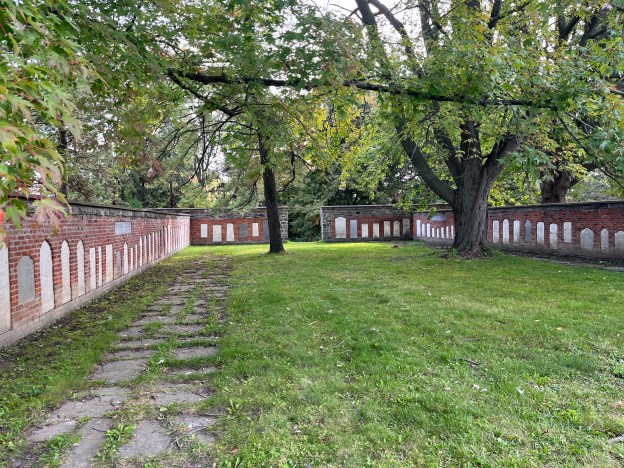
The Pioneer Memorial is laid out by community with a stone marker indicating each of the towns represented. This image shows the wall for Aultsville and Farran Point.
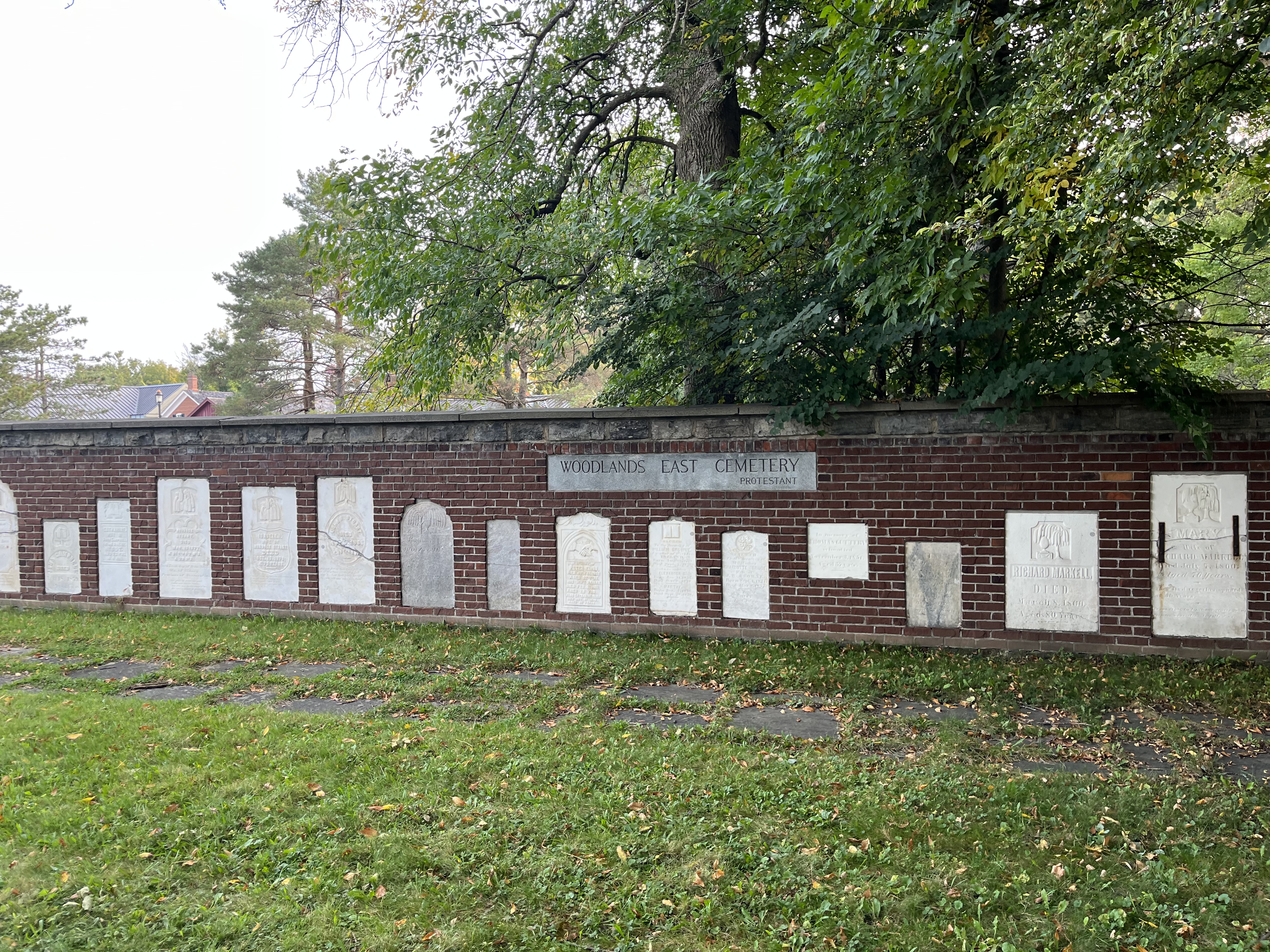
Woodlands East Protestant Cemetery is represented in the wall pictured below.
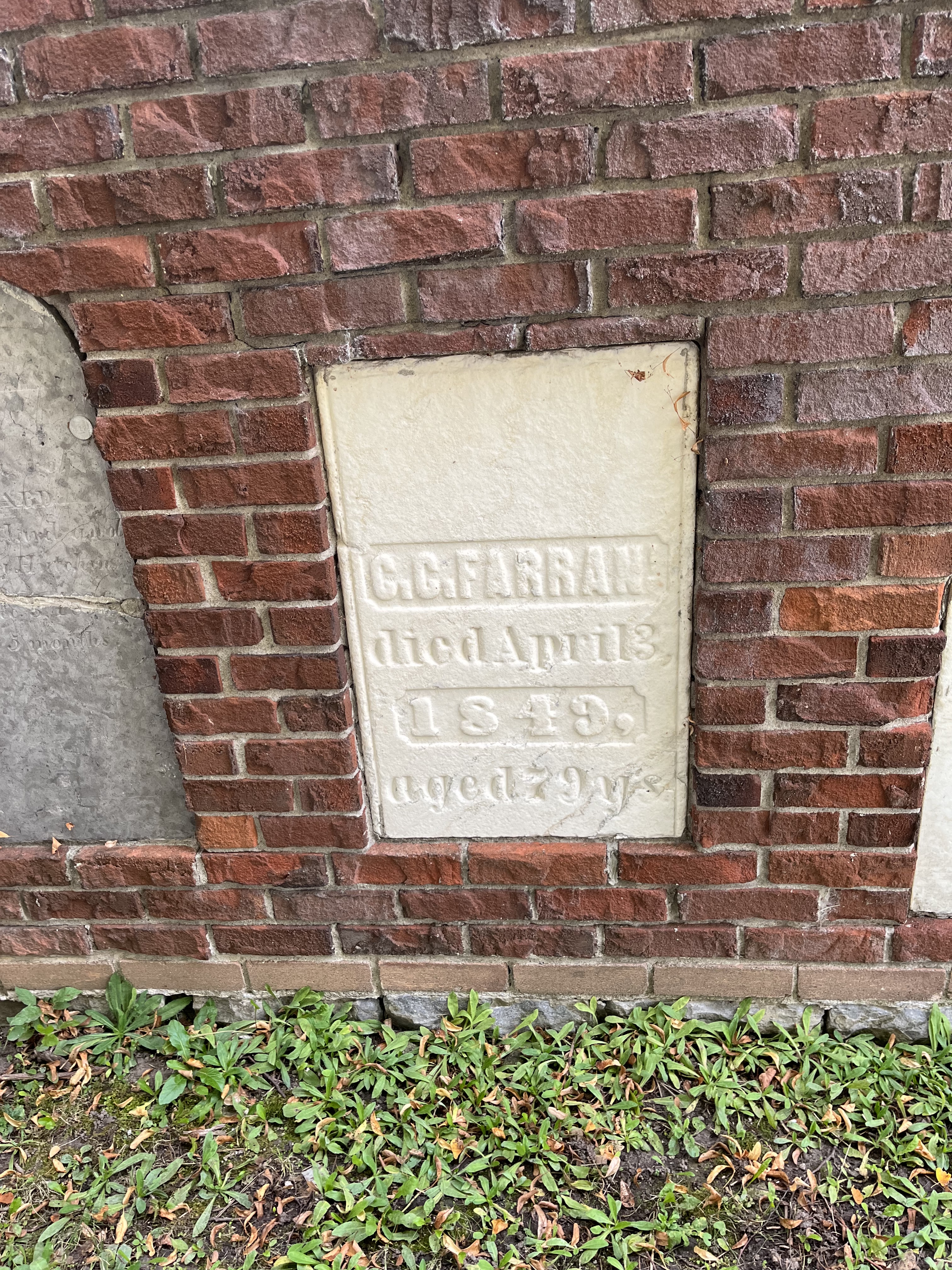
Not all of the people buried in the various flooded cemeteries have been represented in the memorial gardens because some stones graves were marked with wooden memorials or stones that were badly broken or deteriorated. One example of a salvaged memorial is seen in the picture below showing the marker for G. C Farran who died on April 3, 1849. They had been born in 1770. Their remains now lie below the St. Lawrence River in one of the flooded towns.
The plaque below is located near the site of the memorial gardens and tells of the building of the walls and gardens. It mentions eight villages but there are nine villages plus the residents of Sheeks Island that are covered in the online histories of the area.
Crysler’s Farm was the site of a battle in the War of 1812. The battle took place on November 11, 1813 and the American forces were defeated but not without losses on both sides. The actual site of the battlefield is now submerged under the St. Lawrence River but it has been memorialized on a new site near Upper Canada Village. We’ve previously written about this battle in our post The Battle of Crysler’s Farm. The image below was taken from the 1877 County Atlas and shows the original battle ground.
The Long Sault Parkway is a 10.1 kilometre drive that connects several islands that were created during the flooding. Along the route homage is paid to many of these lost villages and the drive is said to be very scenic. It’s on our bucket list for a future visit to the area.
A recent trip to Eastern Ontario gave me the opportunity to visit Prescott to find some lunch and take a break from driving for a hour or so. I used my time to wander along the Heritage River Trail and see some of the local history of the waterfront. Prescott was named after General Robert Prescott who was the Governor of Canada from 1796 to 1799. Col. Edward Jessup had received a large land grant for his loyalty and service during the American Revolutionary War and in 1810 laid out the streets for a new town on the side of the St. Lawrence River. Within a decade the town had grown to about 50 houses and had several businesses including stores and taverns.
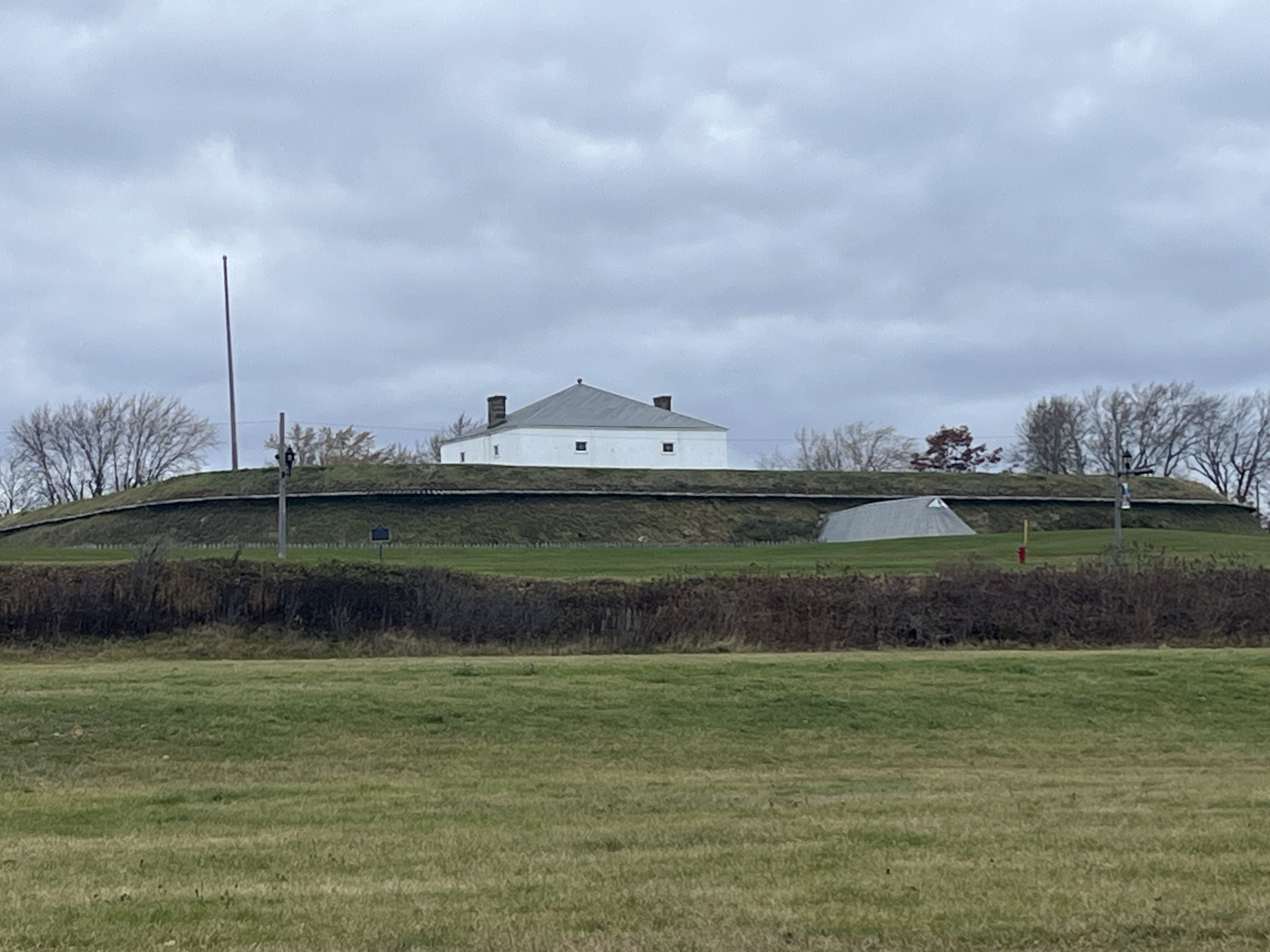
Just two years later the War of 1812 broke out and part of the town was reclaimed by the Government to build Fort Wellington. It was commissioned in 1813 to guard the Galop Rapids in the St. Lawrence. Following the war it was abandoned by the British but officially remained the property of the British Board of Ordinance. It was used by the Canadian Militia until 1923 when it was handed over to the Dominion Parks Commission, which was later renamed Parks Canada. It has been a National Historic Site since 1920. This fort will be an interesting place to explore on a future visit to the area.
The population of Prescott had grown to about 1700 by 1834 and it became the site of the Battle of the Windmill during the Rebellion of 1837.
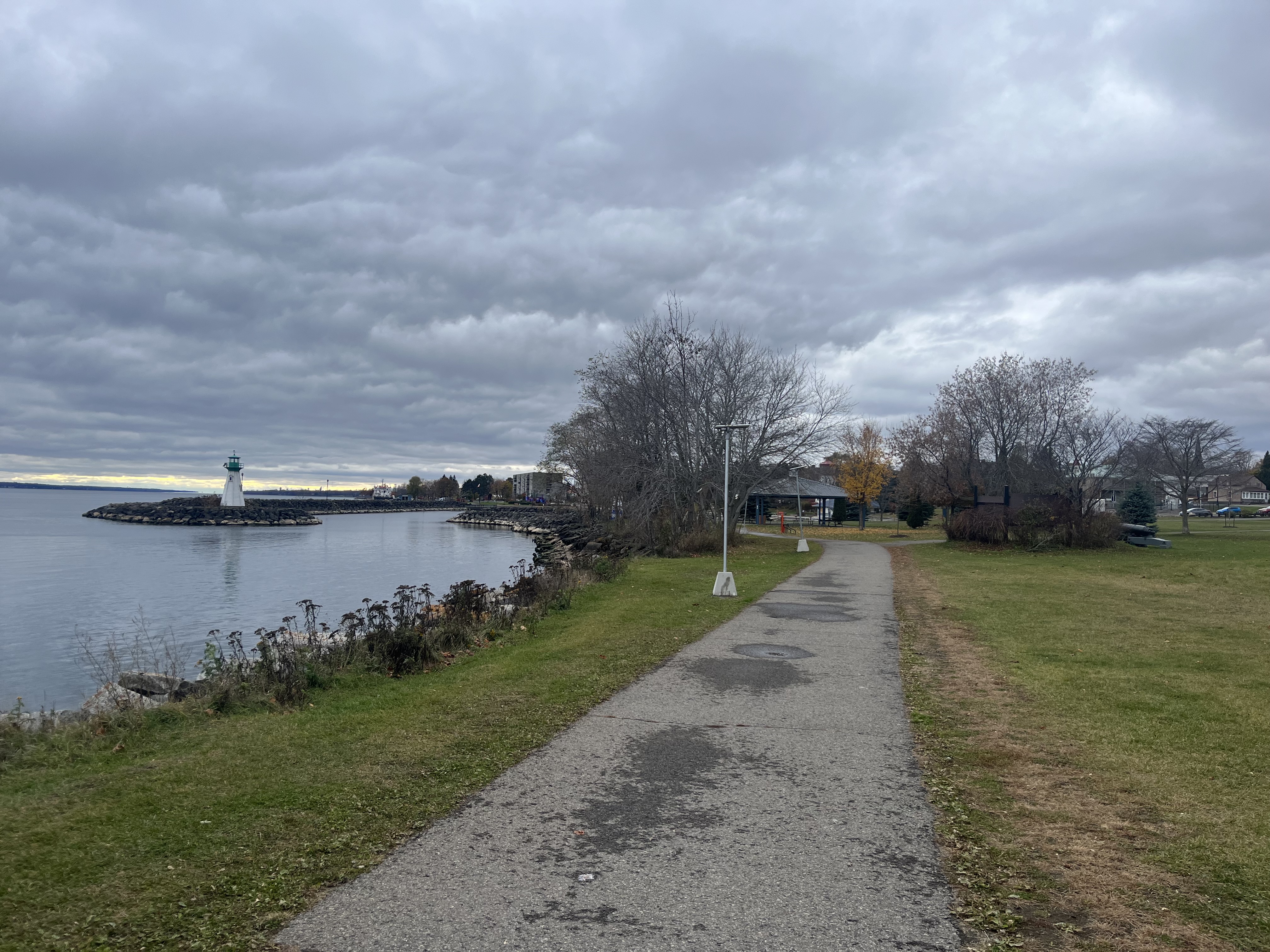
A railway was established from Prescott to Ottawa in 1854 and soon the waterfront was a hub of railway activity. A roundhouse, railway station and ferry terminal were added soon afterwards. The town became the centre of a major ferry link to the United States. The Canadian Pacific Railway continued operations at Prescott until the 1970s when things were shut down. The piers from the railway terminal are still located in the water and can be seen below and in the cover photo,
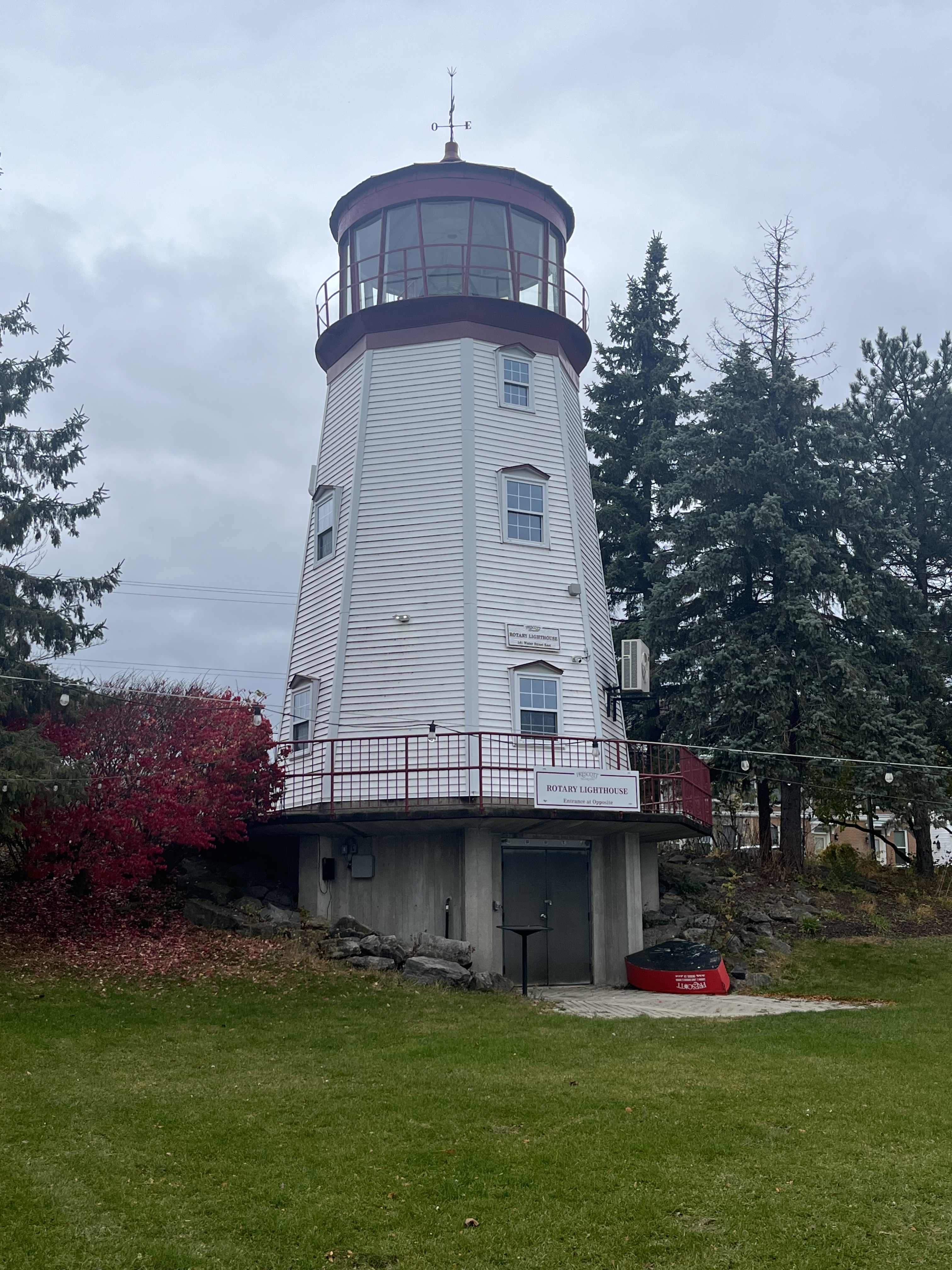
A building made of red bricks was built in 1900 by the Imperial Starch Company and it served as a lighthouse. Between 1903 and 1985 it was known as The Dominion Lighthouse Company. The building was used for the production of war materials during the Second World War and then occupied by the Coast Guard from 1962 until 1985. After the Coast Guard moved out, the building was demolished in 1986. The large lantern room housed a Fresnel Lens and the room and lens were saved from demolition. A Fresnel Lens is compact compared to a conventional lens and reduces the amount of materials used by having a series of concentric surfaces. The lens had been used to train lighthouse keepers and it was installed on top of a new tower that the Rotary Club built in 1989.
The Great Lakes Waterfront Trail runs along the St. Lawrence River as part of its 3600 kilometer span but the section through Prescott is also known as the Heritage River Trail due to all the history that is located along the route through town.
Prescott has many historic building as well as Fort Wellington and I look forward to checking out more of them during a future work trip to the area.
Grain elevators are used to store grain between when it is harvested and when it is sent to the point of use. They have been around in North America since 1842 when they were developed to store grain being transported via the Erie Canal. Some elevators are very large and communal in their function while some are also used for milling or personal applications on farms. In this post we share pictures we have taken of some of them in Ontario and Manitoba.
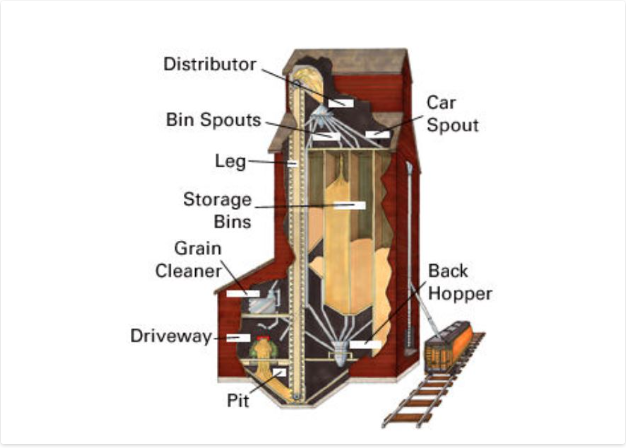
Elevators were made with a sturdy wooden crib built of 2 by 8 boards that then had 2 by 6 inch ones stacked up to form the walls and internal bins. The outside would be covered with a wooden veneer which was originally painted red if along a CPR line. Wheat can weigh up to 60 pounds per bushel which means that a 25,000 bushel elevator could have 1.5 million pounds (680,000 kgs) of weight in it. This puts a lot of lateral pressure on the walls. Eventually, elevators that would hold 60,000 bushels were constructed. All elevators, regardless of size, had three basic elements. The elevator, the driveway and the office/engine room. A truck or wagon of grain would be driven onto a scale and weighed and the grain sampled to see what quality it was. It would then be dumped through the floor into the pit where it would be taken up the leg and poured into the correct storage bin. The empty truck would then be weighed again and the amount of grain deposited would be calculated from the weight difference. When it was time to load a train the appropriate grain would be pumped into the back hopper and then down a spout into the waiting boxcar. The illustration below was taken from The Canadian Encyclopedia and shows the inner workings of a grain elevator.
The first grain elevator on the Canadian prairies was developed in Niverville, Manitoba in 1879 and was basically a grain silo. The more traditional shape started to appear in 1881 in the form of 25,000 bushel elevators. The CPR began to offer free land along their rail lines to allow the construction of standard size elevators. While on a recent business trip to Manitoba I was able to photograph the two grain elevators that appear next in this article.
The United Grain Growers had built a grain elevator in Elie, Manitoba in 1928 which has since been demolished. A larger grain elevator was built just west of town in 1986 with a capacity of 3,750 tons. In 1998 the Manitoba Pool and Alberta Pool merged creating Agricore. The elevator was then closed in 2002 but has since been bought by some local farmers who continue to use it. Unlike the majority of elevators, this one has no direct rail access.
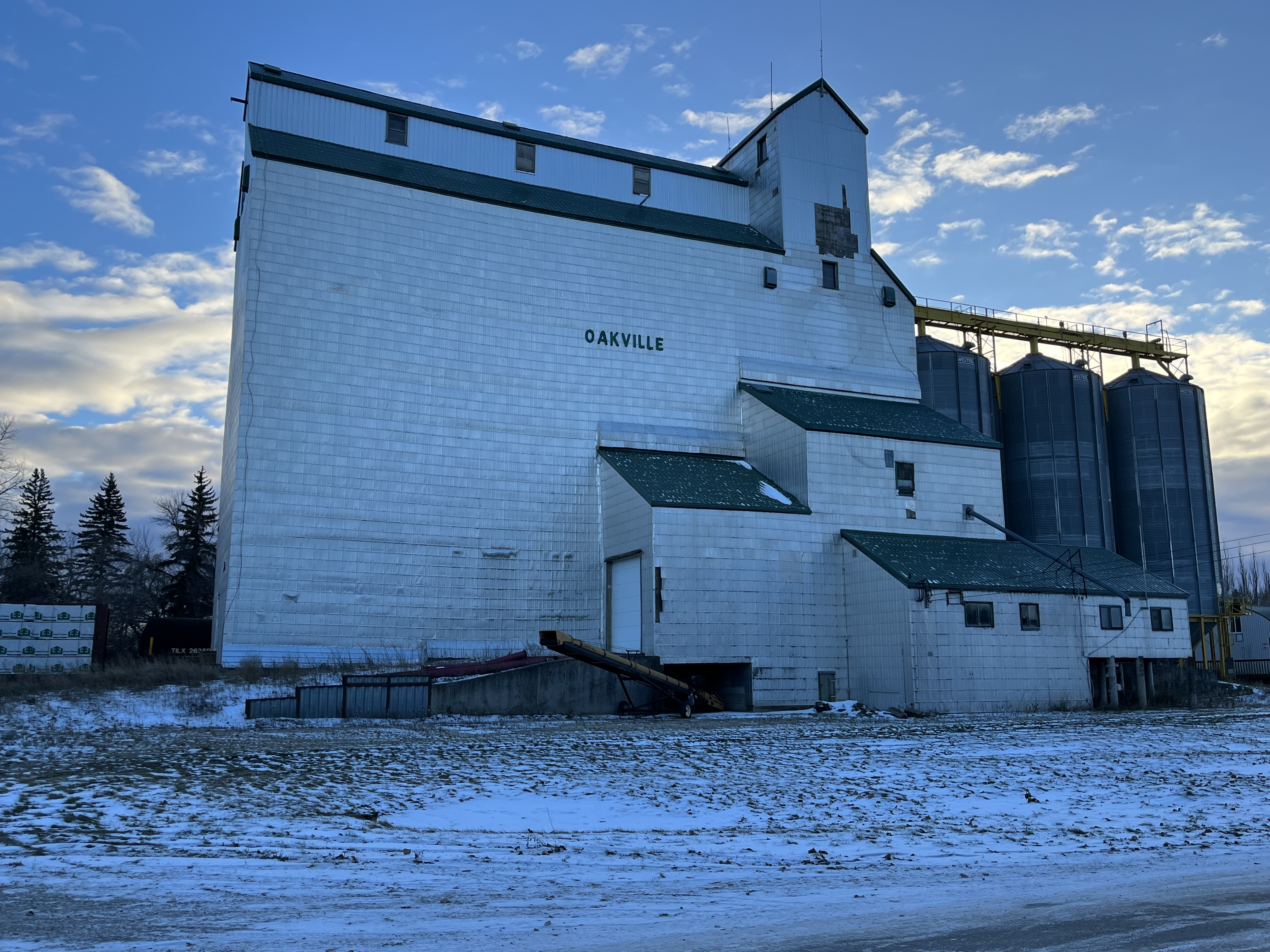
A little west of Elie is the town of Oakville, Manitoba. When their 1928 Pool B elevator burned down in December 1973 it was replaced with the present wooden structure. This building was completed between 1974 and 1975 and had a capacity of 162,000 bushels. It was expanded in 1990 by adding the three steel tanks on the west end that brought the capacity up to 204,000 bushels. When the merger happened in 1998 its days were numbered. It was closed in January 2001 as a temporary cost cutting measure by Agricore and permanently closed in November 2001. Like the elevator in Elie, it is now operated for private grain storage. It can be found at this map link.
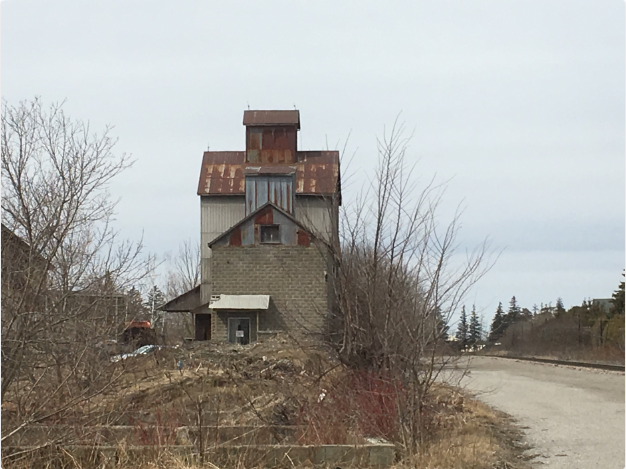
The CPR built a line through Pontypool, Ontario in the 1880s which opened up the Toronto market to local farmers. In 1894 a grain elevator was built and before long there were two elevators serving the community of about 600 residents. Both of these were gone by 1918 and a new one was constructed for the local farmers to store their barley, oats and wheat before shipping it to market. As transportation systems improved the elevator became less important and by the 1970s it was closed. It can be found at this map link.
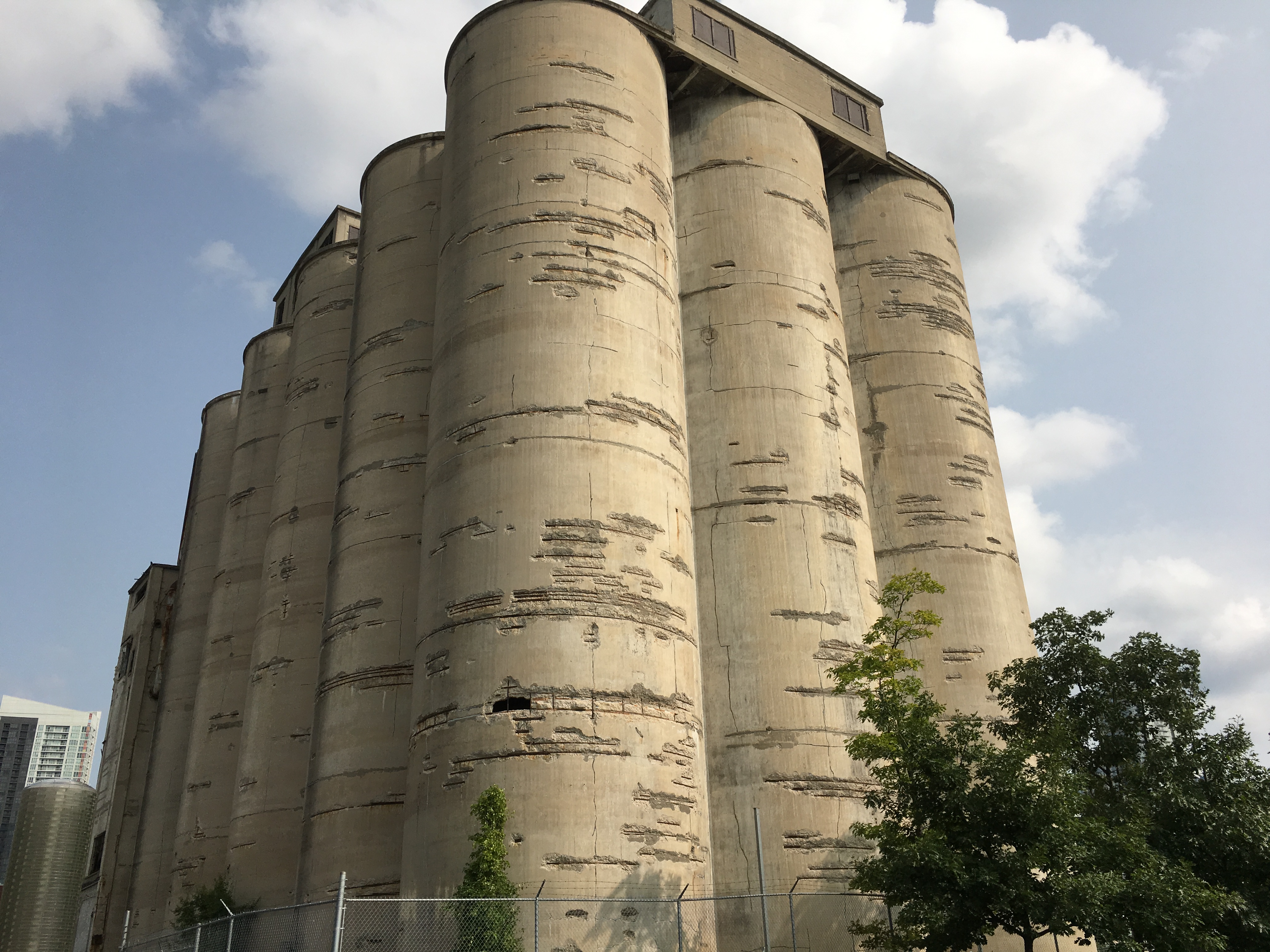
The Canada Malting Company located a set of concrete silos at the foot of Bathurst Street in 1928. Storage silos had disappeared from the city because they were made of wood and had a lifespan of about ten years due to the fact that they were severe fire hazards. The Canada Malting Company used concrete silos to store barley in before it was turned into malt. The original silos near the lake were 120 feet tall and more storage was added in 1944 in the form of 150-foot tall silos. These grain silos can be found at this map link.
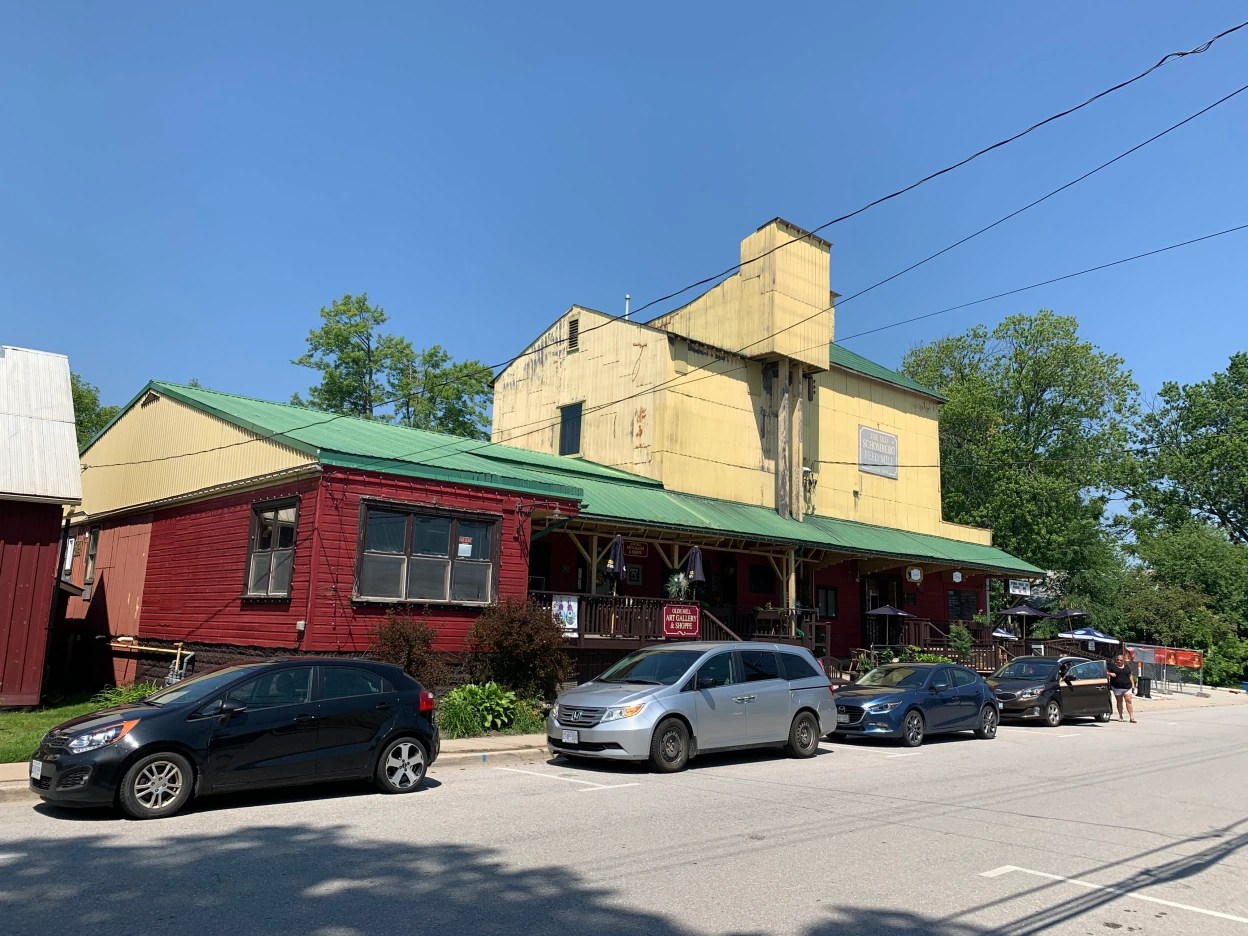
There are two grain elevators in the town of Schomberg, Ontario. In 1884 Anderson Tegart built the Schomberg Feed Mill on Main Street where it had direct access to the railway. It operated until 1927 before it shut down. Since that time it has housed a variety of businesses including The Scruffy Duck Restaurant which is still in business. This elevator can be found at this map link.
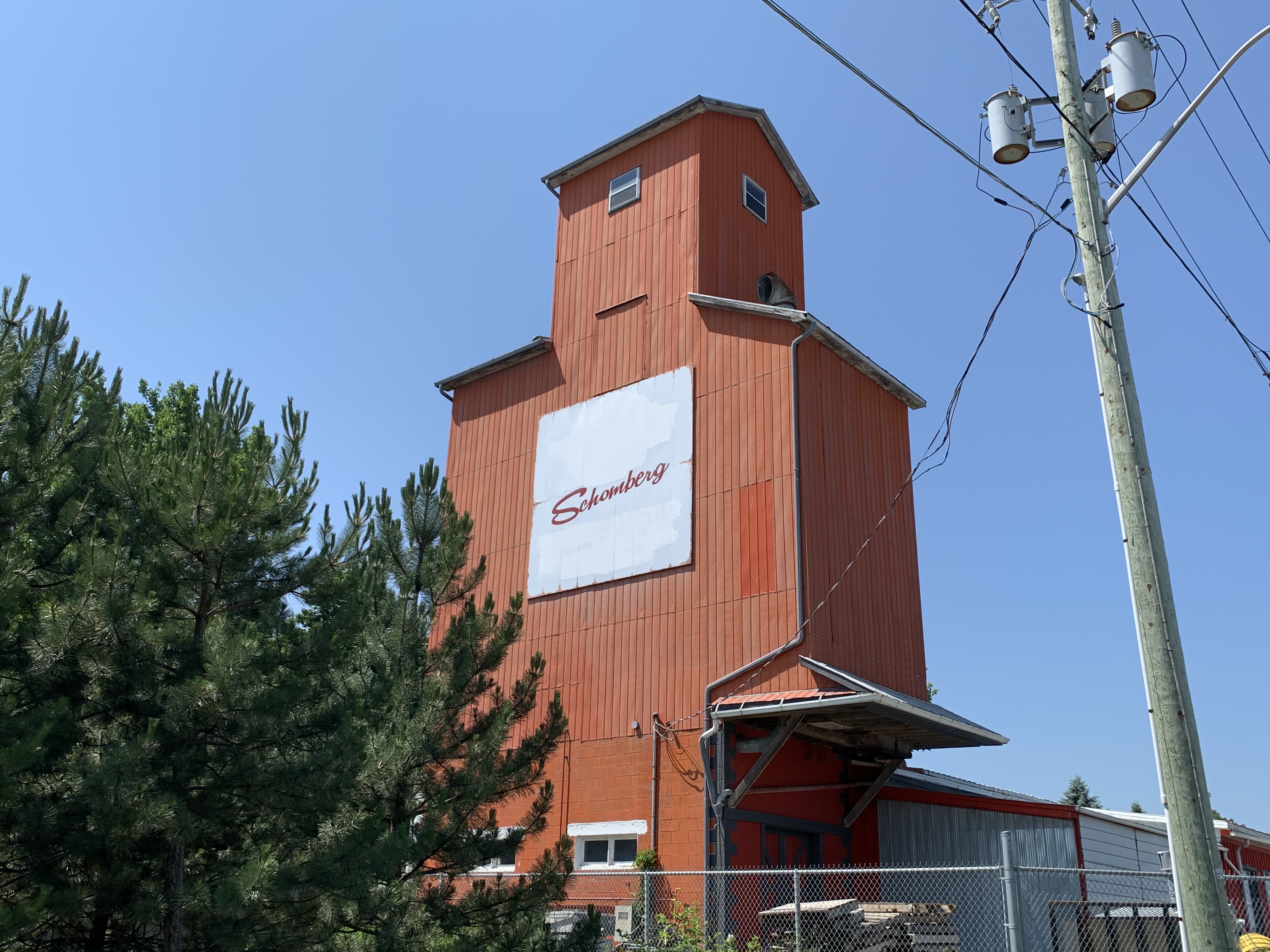
An orange grain elevator stands on the side of Highway 9 close to Highway 27 that used to have the Shur-Gain symbol on the side. Shur-Gain was introduced in 1937 as a brand name by Canada Packers. They provided feed for animals and livestock. Today there appears to be renovations going on at the old feed mill. This elevator can be found at the following map link.
I have driven through Consecon in Prince Edward Ontario several times on recent business trips and kept looking at the old grain elevator that stands beside the Millennium Trail on the old Price Edward County Railway. Yesterday I stopped to take pictures of the structure. The Consecon grist mill was built in 1808 and spurred development of the community. After several rebuilds it was purchased by Richard Baldwin in 1949. He built the grain storage building beside the tracks the same year. When rail service ended through town in 1985 the building was abandoned. It can be found at this map link.
Nashville, Ontario grew as a railway town centered on the railway station. Soon a saw mill and a grain elevator stood near the railway. Milling grain creates a lot of dust which becomes a fire hazard. Many grist mills and grain elevators were destroyed by fire and this was the fate of the original grain elevator in Nashville. The first elevator burned on July 15, 1919 while a second one was destroyed in 1927. A new grain elevator was built in Nashville in 1930 and still stands beside the tracks. We featured it in our post on Abandoned Kirby Road and it can be found at this map link.
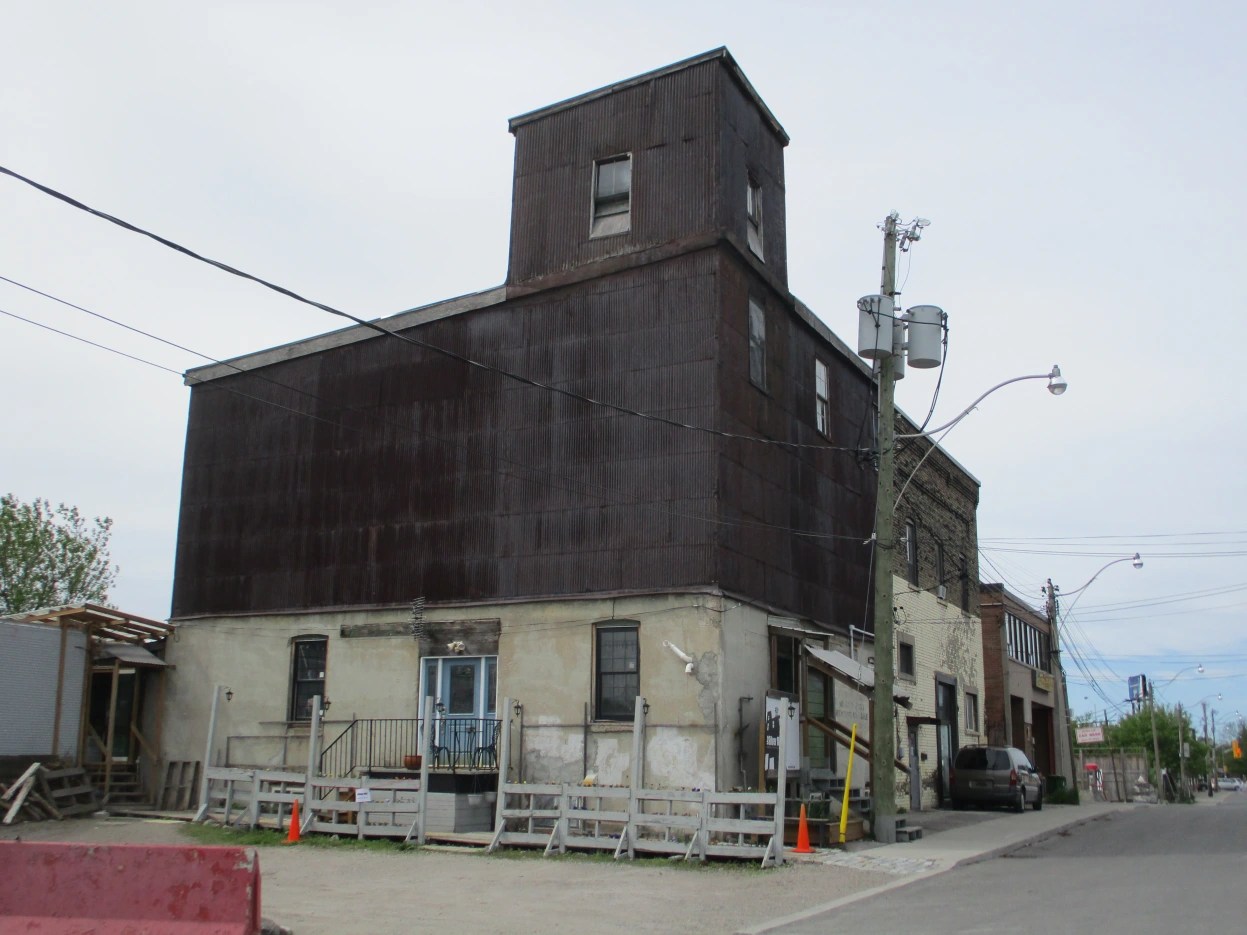
A grain elevator still exists within the city of Toronto on Dawes Road. When it comes to research on the internet it is easy to find conflicting information. Construction dates range to as early as the 1850s with 1890 also being a prominent date. The city’s land use maps suggest 1906. The land developers have to present a historic context in their proposals and they also claim it to be a 1906 wooden crib grain elevator and feed mill. The use of construction materials would suggest that the 1906 date is correct as the first-floor cement would not have come into popular use until after 1900. This elevator can be found at the following map link.
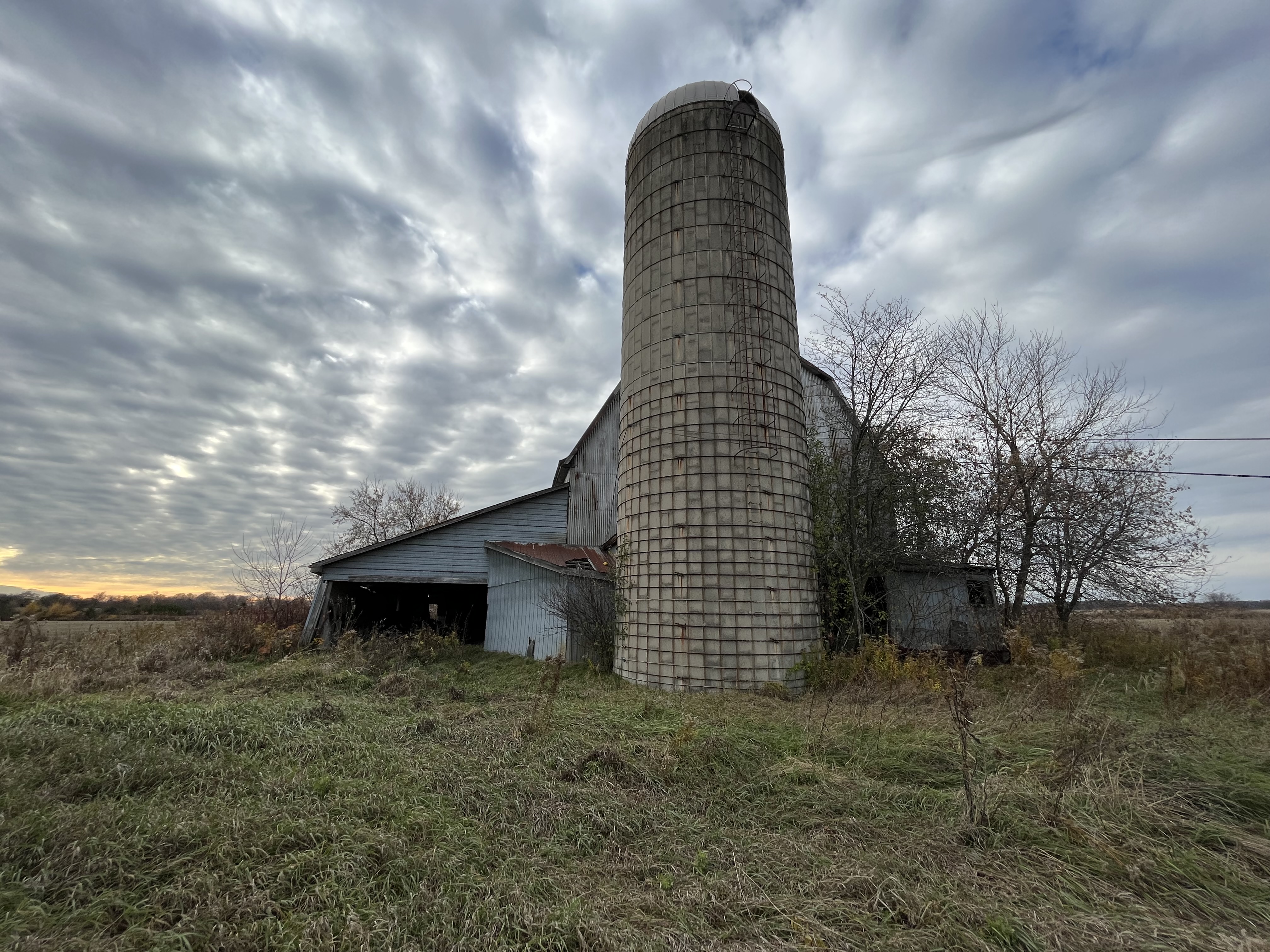
At one time almost every farm in Ontario had a silo beside the barn. Many of the barns have vanished but the concrete silos still dot the rural landscape. These were essentially private grain elevators that were used to store grain for feeding livestock.
Grain elevators come in many different shapes and sizes but they are slowing disappearing from the landscape.
Starting in the 1920’s the wealthy of Toronto were building mansions in the area of Bayview Avenue and Lawrence Avenue. This was a rural setting at the time which featured the Don River for fishing and large lots with plenty of places to ride their horses. We’ve covered a number of these in past issues of our blog and they can be found in the links at the end of this post.
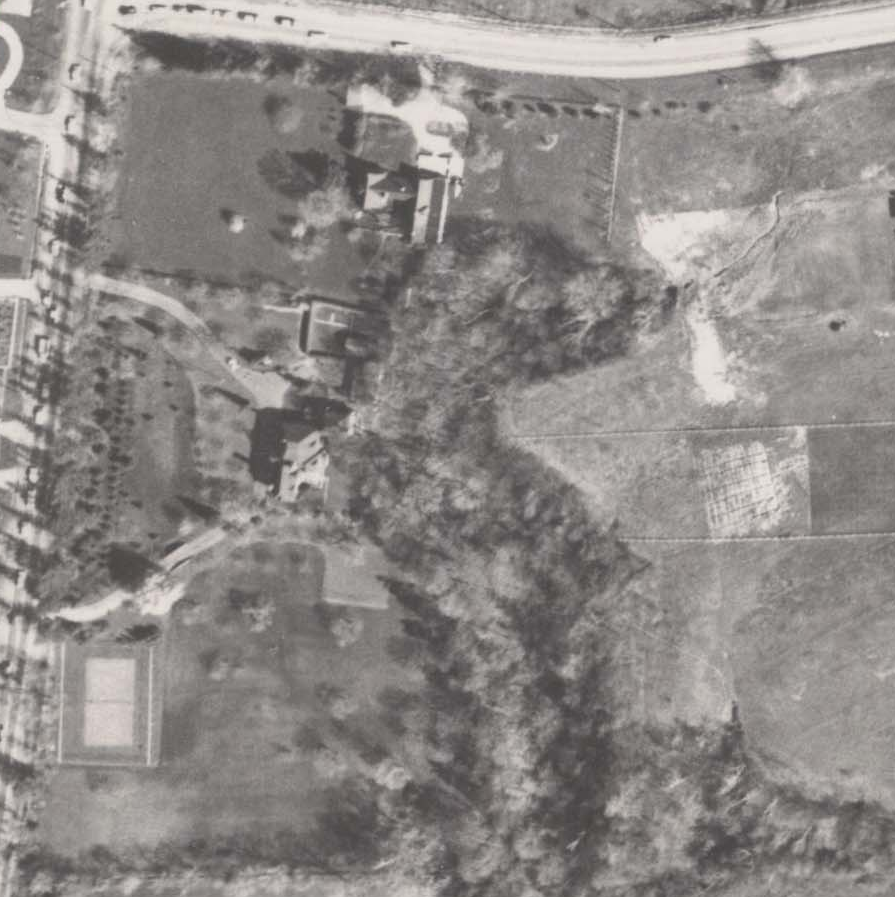
Today we’re looking at Stonedene which sat on Bayview just south of Post Road. It dates to the end of the 1920’s, reportedly built in 1929. The image below from the Toronto Archives aerial photograph collection shows the property as it was in 1957. Post road runs along the top of the picture and Bayview Avenue along the left hand side. The mansion can be seen near the middle of the image, set at the apex of a curved driveway.
Living up to its name of Stonedene, even the gates are made of stone and the fence that once separated it from the road was supported on several stone pillars. The main entrance has the name Stonedene carved into it and the stone pillars still line Bayview Avenue.
The home was built in 1929 according to city records and was originally constructed for Captain Harry Lynne Plummer and his wife Joyce. Plummer served in the First World War as a member of the 4th Canadian Mounted Rifles and as a Captain in the Canadian Railway Troops.
By 1949 it had been sold to General Albert Bruce Matthews and his wife Victoria. Matthews served in the Second World War as a member of the 1st Canadian Infantry Division. He was promoted several times during the war and as General Officer Commanding the 2nd Canadian Infantry Division he took part in the liberation of northern parts of the Netherlands. After the war he became chairman of Massey Ferguson and was President of the Liberal Party of Canada during the 1950s and 1960s.
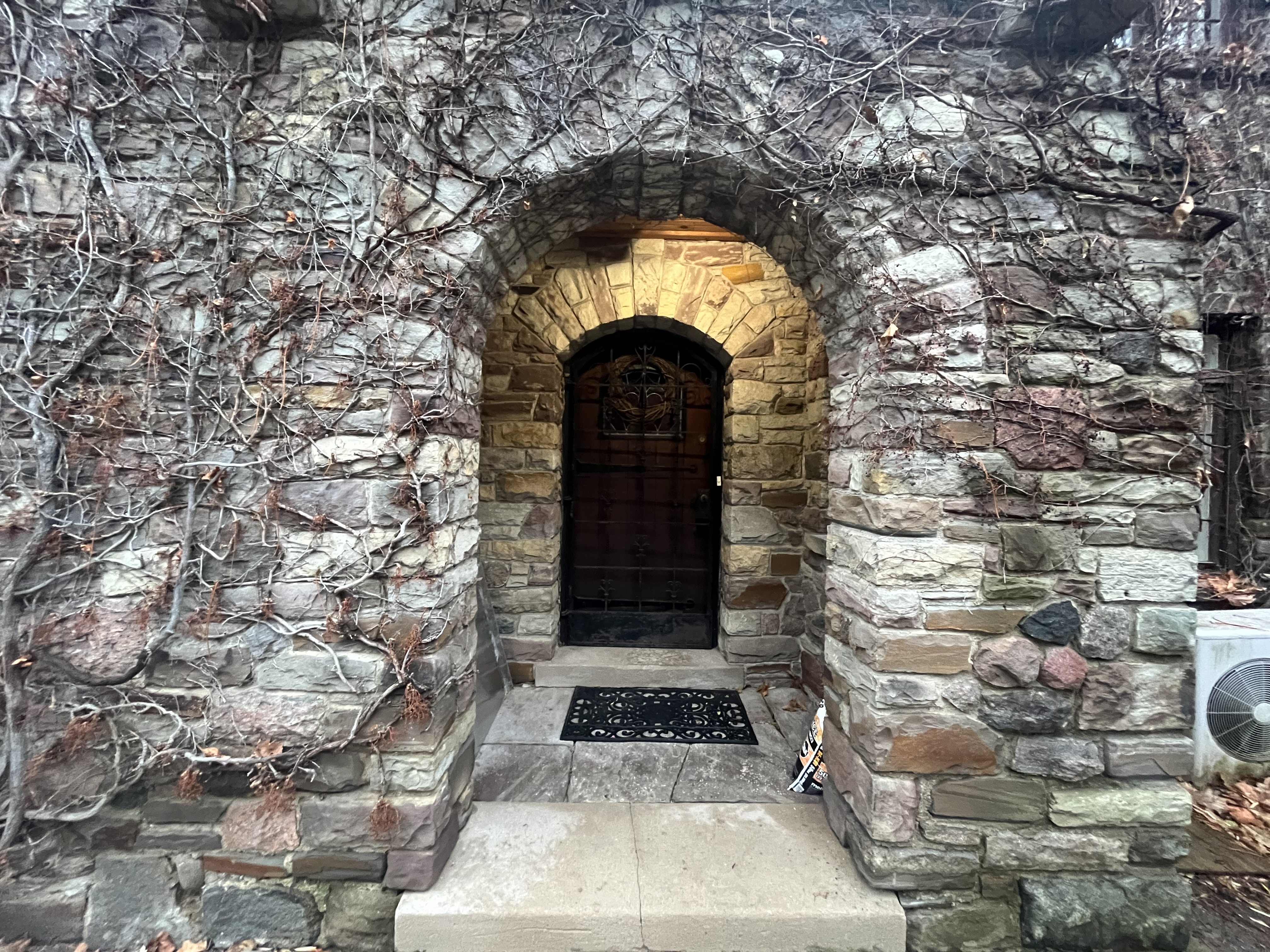
The home was sold in 1976 to the Ontario Mission of the Deaf and converted into administration offices. It has a front door that reminds me of the entrance to a castle.
A structure sits on the front lawn that looks like a stone chair or throne.
The back of the chair has a date stone which reads 1925 which is in conflict with the official date of the mansion.
Everything about the home is grand including the side entrance which has an ornate double door with sidelights.
The gardens around the south side of the house have become a little overgrown but add to the character of the mansion.
Ontario Premier William Davis laid the date stone for the Bob Rumball Community Centre for the Deaf on April 5, 1979. This multi purpose building is used to provide services for all ages of the hearing impaired. There are youth services as well as seniors programs and sign language courses. It was conceived by Bob Rumball who played football for the Toronto Argonauts and Ottawa Roughriders. He got financial support from Conn Smythe and Harold Ballard of the Toronto Maple Leafs.
The historic photograph at the top shows all the freshly planted trees on the front lawn which today provide a forest that hides the house from the road. The mansion was given a restoration in 1996 when the administration offices were moved upstairs. The lower floor is now an event centre and can be booked for weddings.
Stonedene is a great example of the wealthy estates that were built in the area in the late 1920s by Toronto’s millionaires. Many of these still exist and can be viewed in the links below.
One of the best things about my job is the travel because I can incorporate an element of pleasure and tourism into my working time. I get to go to places like Thunder Bay to do inspections and then experience things things that I otherwise would never get to see. I have the opportunity to share them through this blog so that you can experience them vicariously from the comfort of your homes. It may even inspire a few people to visit them if they are in the area at some time in the future.
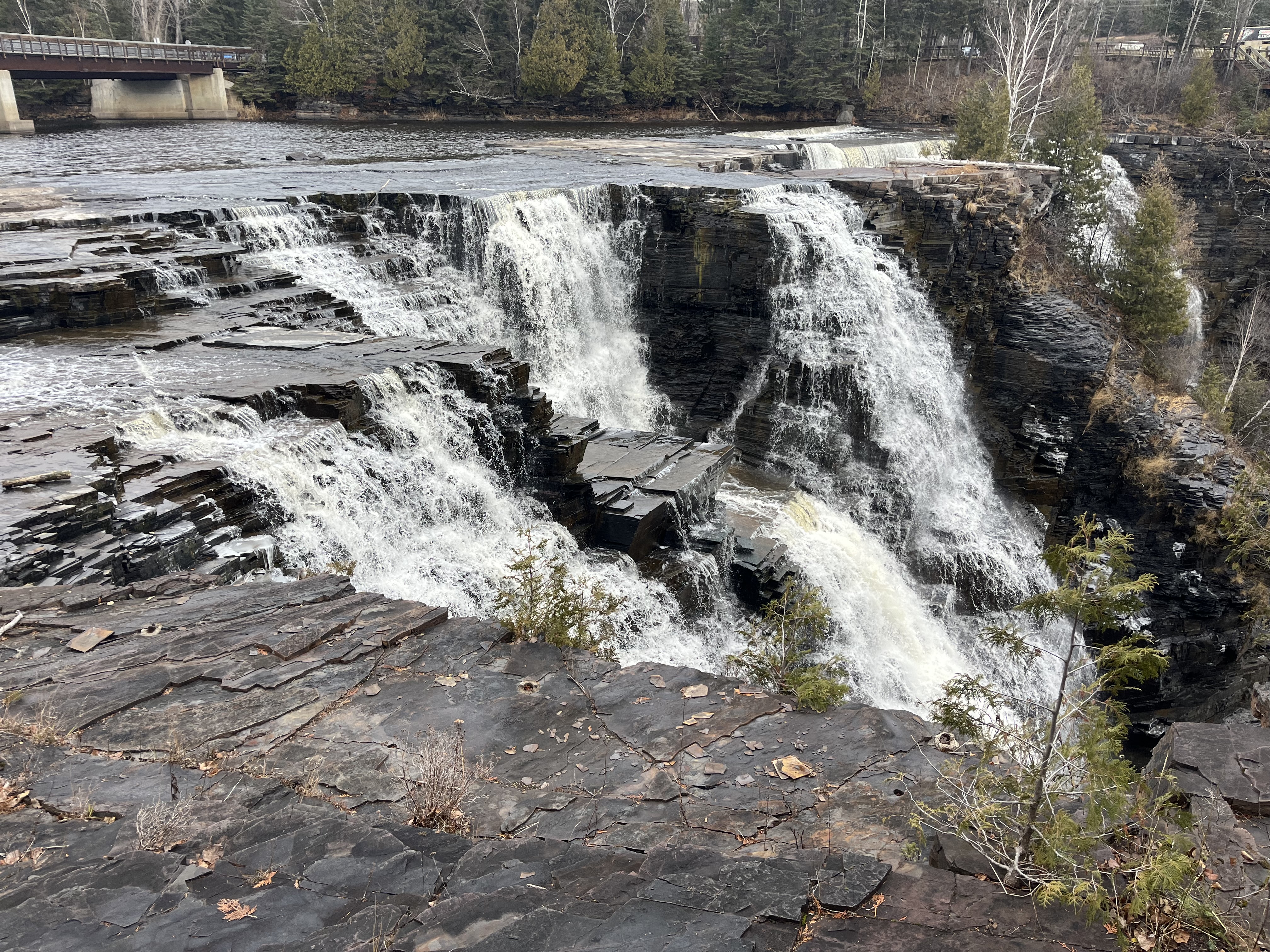
Kakabeka Falls is about 30 kilometers (19 miles) and less than a half hour outside of Thunder Bay just off of Highway 11 in Kakabeka Falls Provincial Park. It is located on the Kaministiquia River where the water plunges 40 metres (130 feet) into a gorge cut into the shale. The falls are continually eroding the shale and have been doing so since the end of the last ice age 12,000 years ago. This shale is very unstable and contains some of the oldest known fossils on the planet. Some of these are dated back to 1.6 billion years ago. The name is an Ojibwa one which means “waterfall over a cliff” and it has taken on the designation of Niagara Falls of the north.
There are two distinct steps in the falls and the water flow was pretty good during my visit. In the winter the falls can freeze over and there used to be a hotel on the edge of the gorge that would get coated in ice in the winter. When the 5 square kilometre provincial park was created in 1955 the hotel was removed. The river was a major route that was used to get access to the north west and a mountain portage existed to get around the falls. It connected Lake Superior with Lake of the Woods and was used for centuries by the Indigenous peoples and later by the fur traders.
There’s a footbridge that lets you cross the river and look out over the brim of the falls. Notice how small the river looks as it appears in the distance, deep in the valley.
The falls have an Indigenous tale attached to them. According to legend, an Ojibwa Chief found out about an imminent attack from a band of Sioux and decided to try and prevent it. He asked his daughter Green Mantle to help him protect his people and she devised a plan to do so. She is said to have infiltrated the Sioux camp and acted as if she was lost. She bargained to save her life by promising to lead the Sioux to her father’s camp. Instead she tricked them into going over the falls in their canoes. She allegedly died along with them and now her spirit can be seen in the in the mist of the falls. Another version of the story suggests that she jumped out of the canoe at the last minute and saved herself by swimming to shore.
There is a boardwalk that allows you to walk along the gorge on either side of the falls and has several viewing platforms. Access is not permitted inside of the boardwalk due to the unstable shale along the sides of the gorge and no one is allowed into the gorge at the bottom of the falls.
Aside from the falls there are 17.9 kilometres of hiking trails in Kakabeka Falls Provincial Park including Little Falls Trail. This trail leads to a separate waterfall which I didn’t have time to explore during this visit but which I will plan to explore on my June trip next year. There’s also two campgrounds which combine for 169 campsites of which 90 have electricity. Cross-country skiing is available for the winter months.
Day use of the park is $6.50 per car and is well worth it, especially if you use the guided hike and interpretive programs.
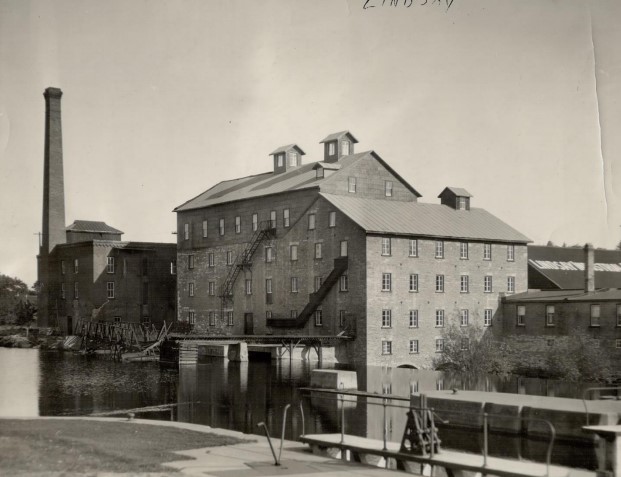
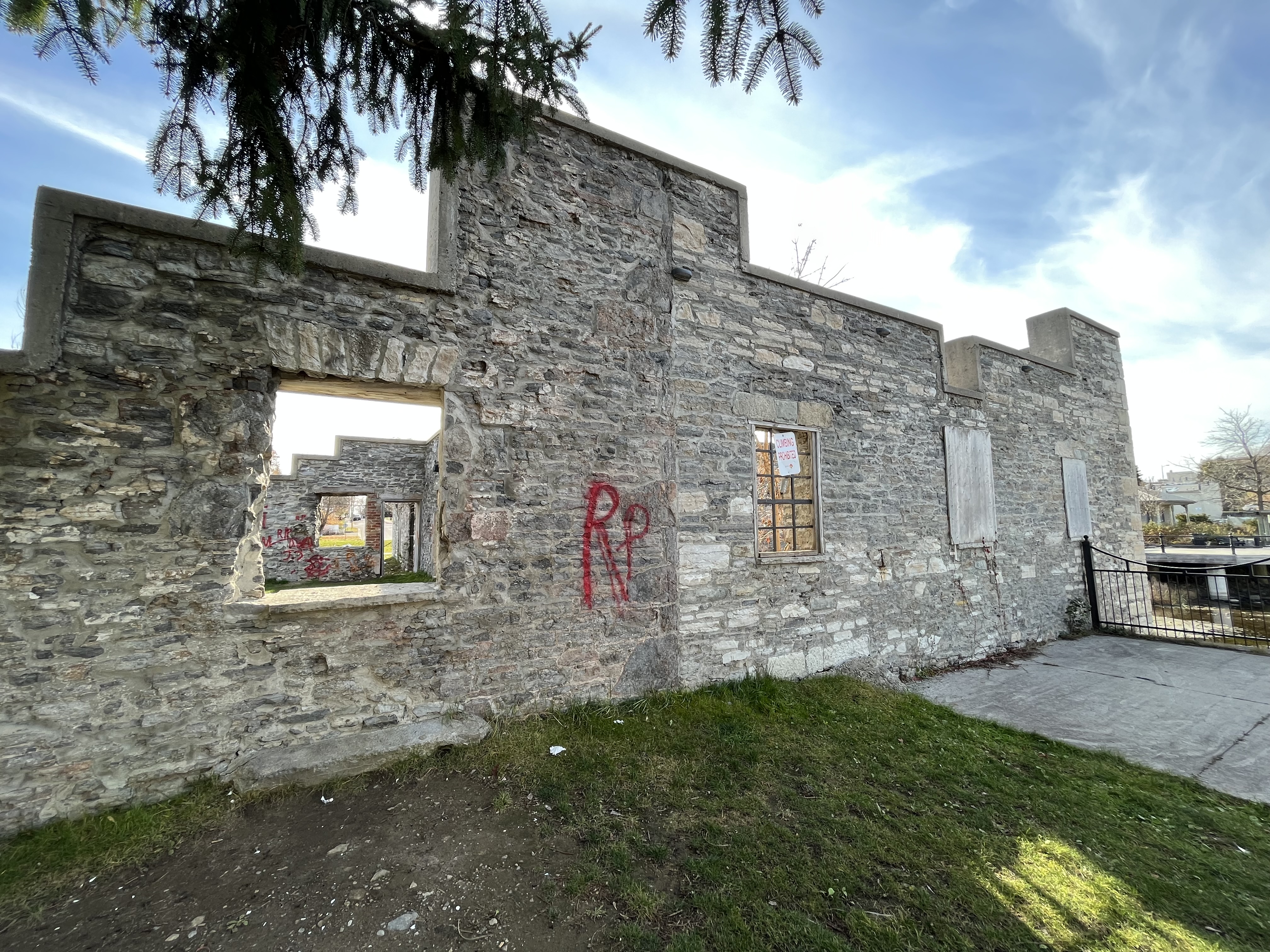
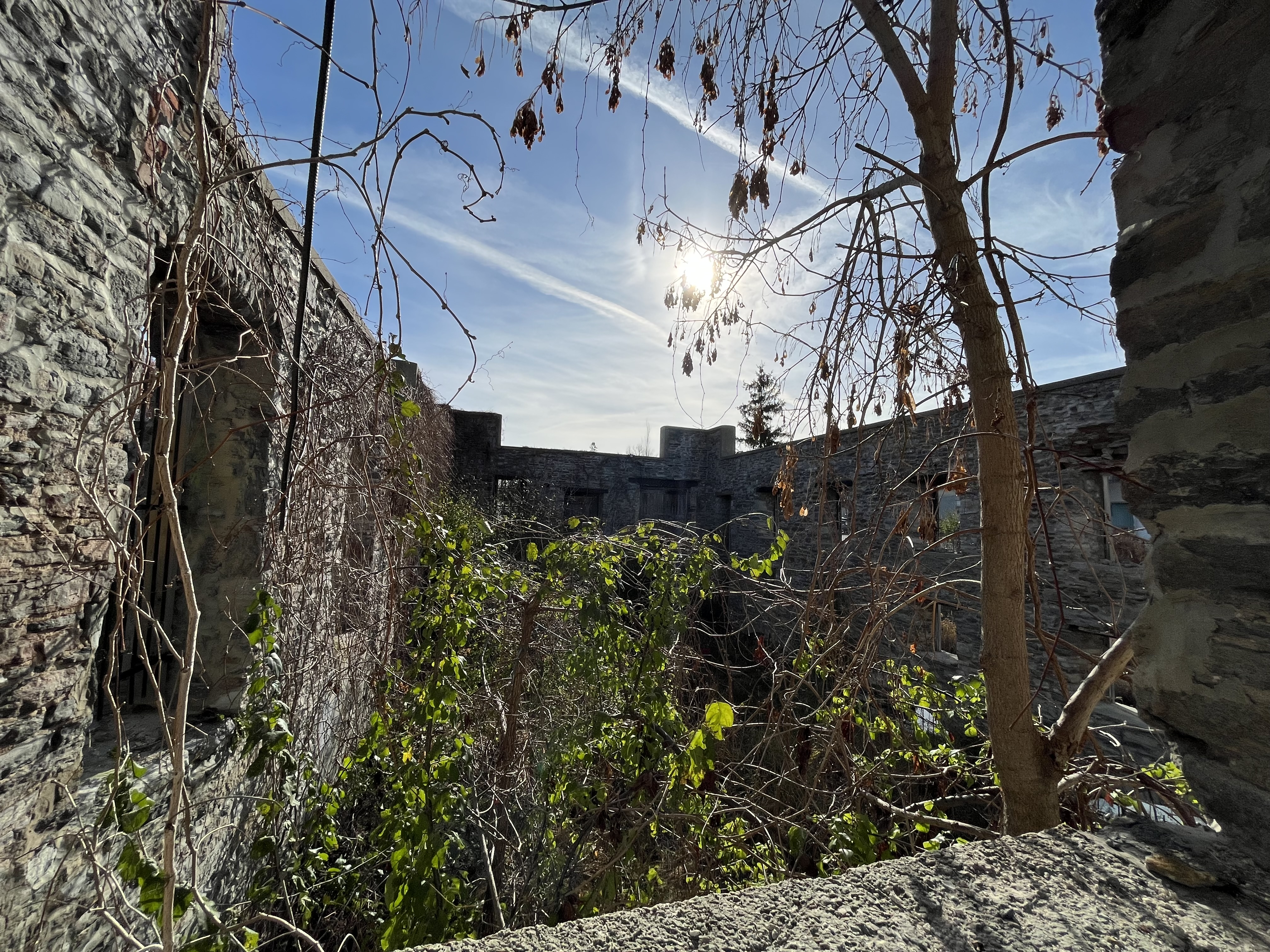
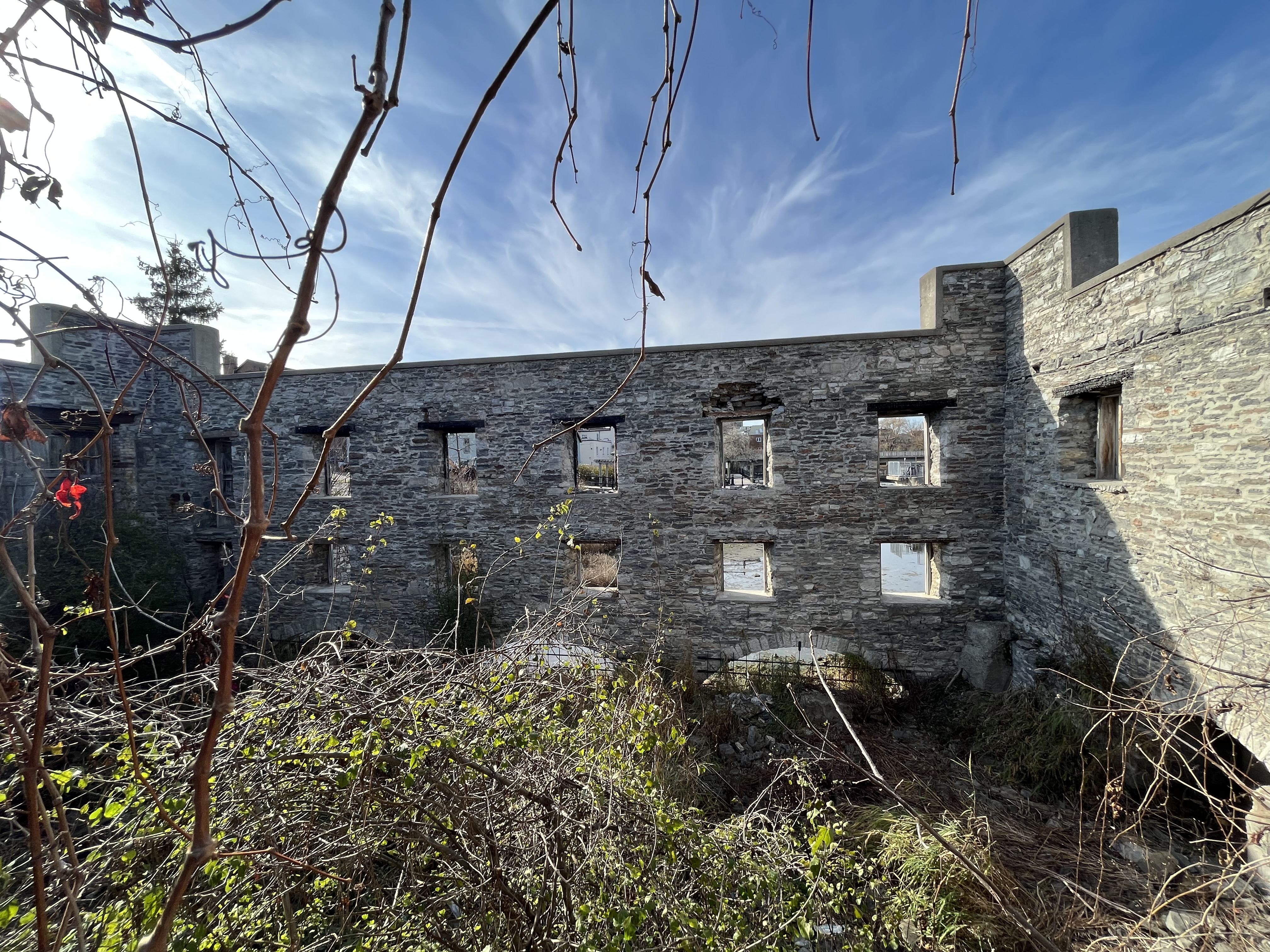
Lindsay has a lot of history and while there on a business trip I took a visit to the Old Mill Park to view the remains of the mill. This structure is nothing compared to what it used to be but it is still a prominent feature in downtown Lindsay and was highly instrumental in the development of the town. The original land grant for the site included Lots 20 and 21 in Concession 6 which had been set aside as a potential mill site during the surveying of Ops Township.
William Purdy had been operating a large mill in Vaughan which was destroyed in 1828 and he applied for the land grant at the future site of Lindsay. His plan was to start in 1829 and have the mill operational in 1831. When his dam was destroyed in flooding in the spring of 1831 he was set back a couple of years and the mill didn’t open until 1833. As the mill prospered, the community that grew up around the mill came to be known as Purdy’s Mills. Town lots were laid out in 1834 and other industries started to come to the area including blacksmiths, hotels and taverns and a carding mill. The mill dam backed up the water flow and created Lake Scugog which upset the property owners that got flooded out. It also created a lot of breeding ground for mosquitos and so after many useless protests to the government the locals took matters into their own hands in 1844 and destroyed the dam. The mill dam was rebuilt and starting in 1869 the mill was replaced with a stone structure on a new foundation. The image below from the Lindsay Archives shows the the mill around 1900 when it was at its peak of production.
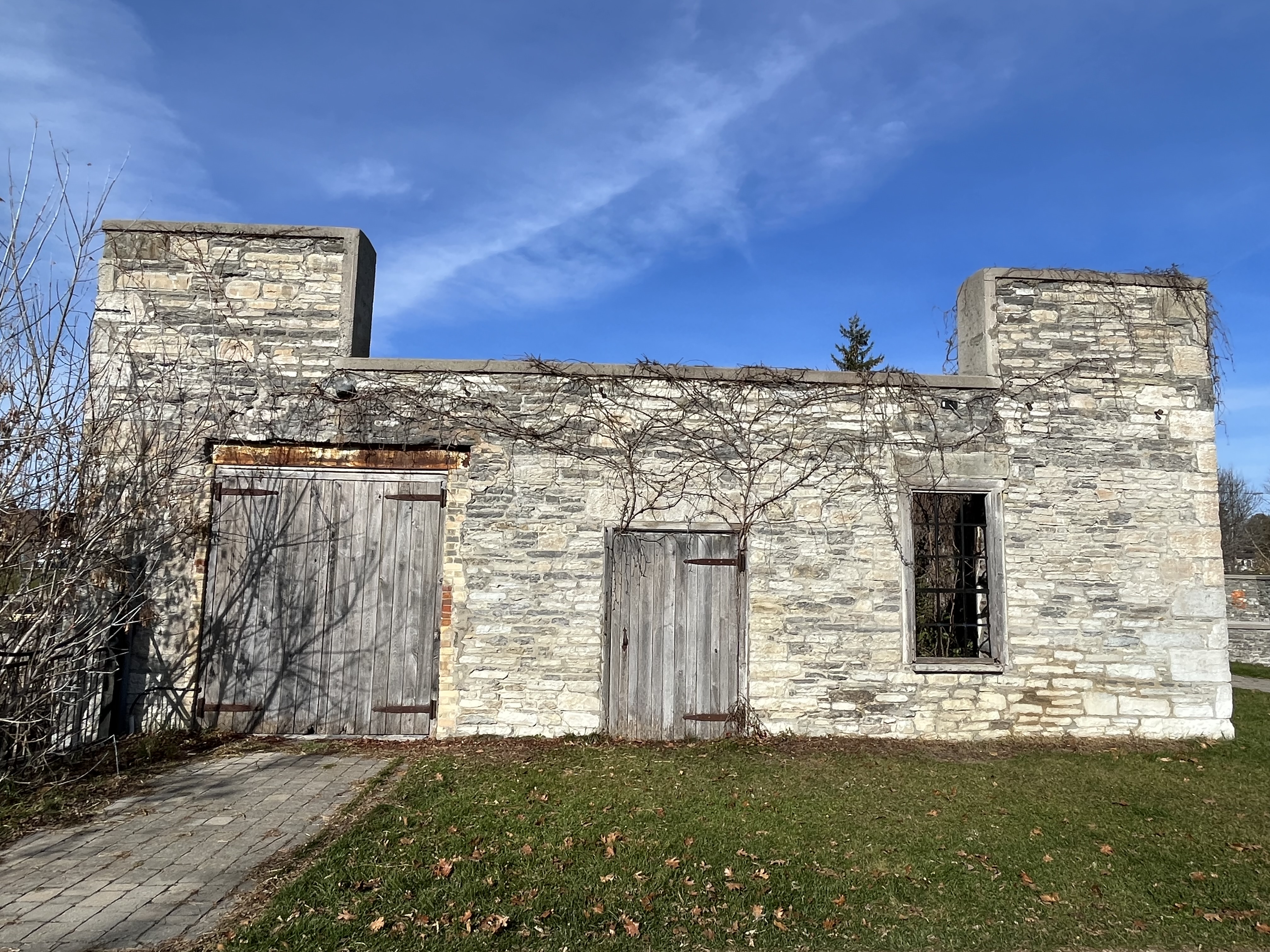
Kent Street was laid out in 1840 and it started to fill up with commercial and residential properties. In 1844 Purdy sold the mill to Hiram Bigelow who operated it until 1861 when it was destroyed in a large fire. The fire burned 91 of the wooden buildings in town and was a major setback for the mill. It wasn’t replaced until a new stone structure was built in 1869. This is the current building whose lower floor is all that remains in Old Mill Park. The image below shows the old wooden door which is interesting because the vines that now grow inside the building have found their way through the cracks to grow up the outside of the building.
The mill was run by William Needler and Thomas Sadler until it was sold to the Flavelle Family in 1884. Starting in 1899 it was rebranded as the Flavelle Milling Company.
The company went through several restructuring activities in the 1910s and Flavelle Milling Company was part of a merger of eight mills in the 1920s. The mill saw its peak production in 1904 but by the mid 1920s it was closed.
It reopened in 1927 as Lindsay Distillery but this only lasted until 1930.
In 1946 it was opened again, this time as Henderson’s Chick Hatchery. This venture lasted until 1971 when the building was vacant again.
There was a proposal to repurpose the structure as an accommodation facility of some type but when a $100,000 fire broke out in 1978 it was the end of the useful life of the building.
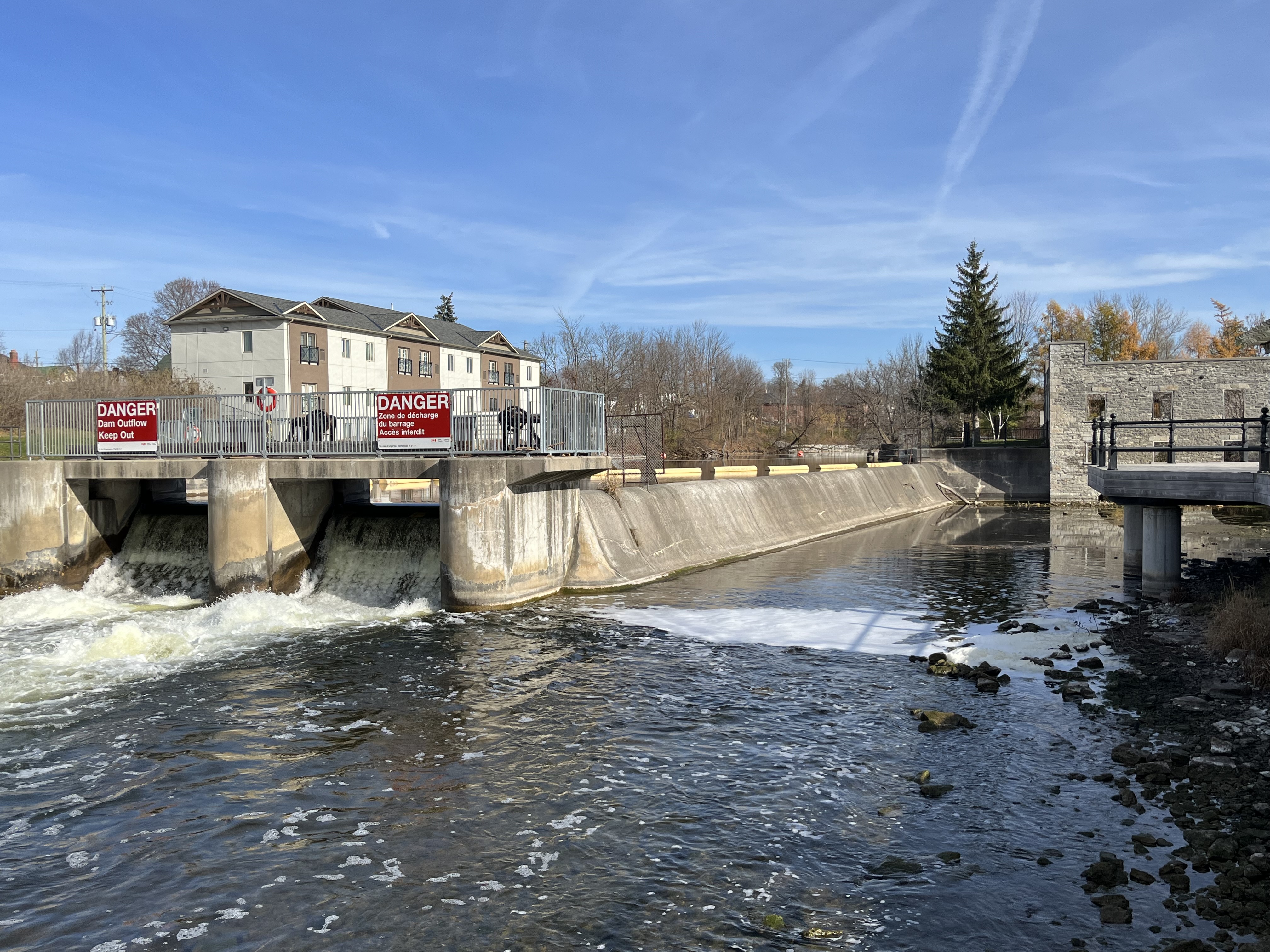
The mill dam is still in place and the remains of the building have been owned by the town since 1981.
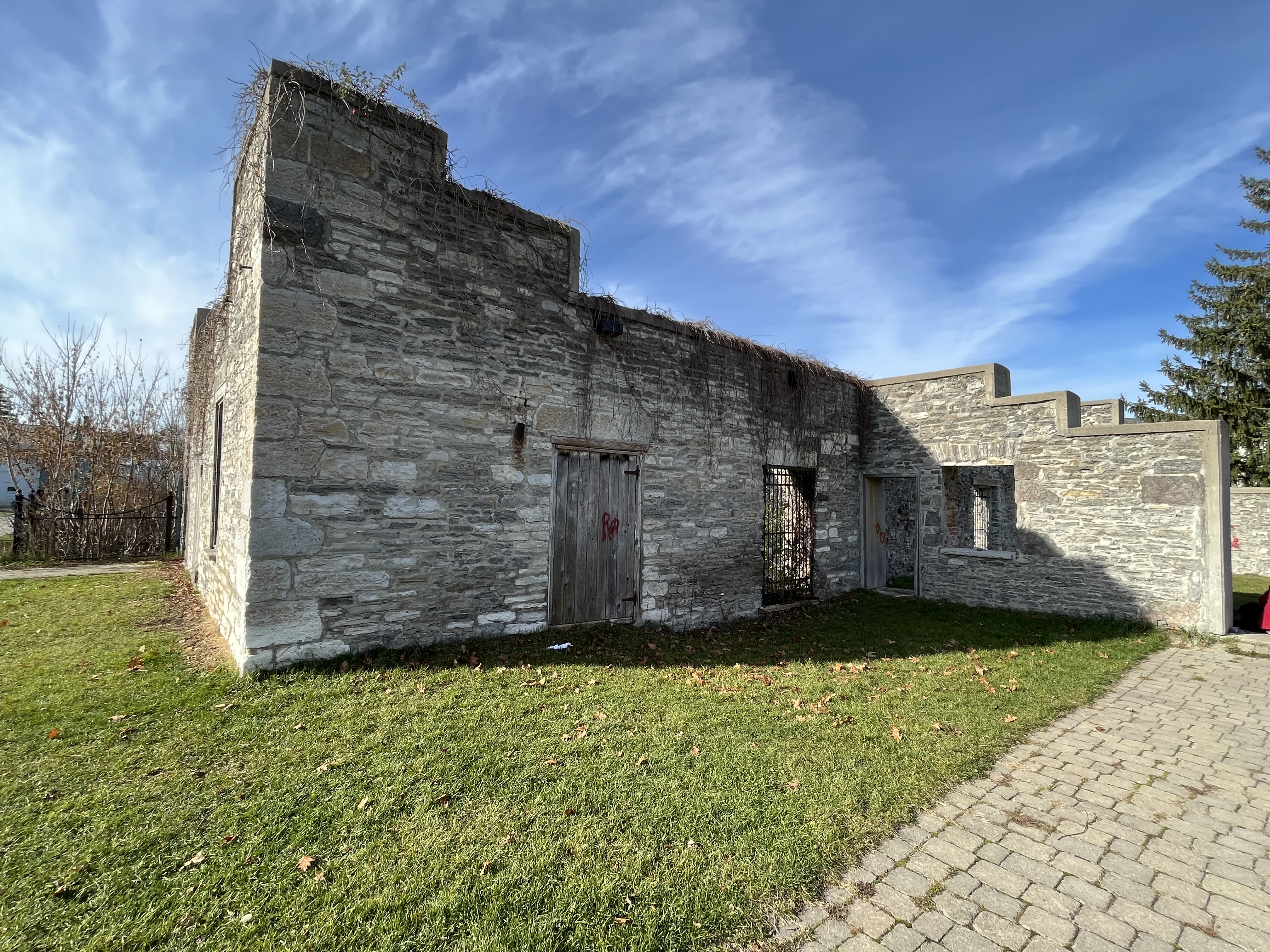
It was recommended that the building be demolished in 1986 but instead the town has paid to stabilize the remains by capping the walls with cement. There have been a series of proposals to save the structure and develop it into something of a historical nature including a museum.
The old mill is currently a popular place for wedding pictures and is the focal point of the park but it still waits to see what its ultimate destiny will be.
As the second year of the War of 1812 drew to a close the Americans wanted to try to capture Upper Canada by taking Montreal and cutting off supplies to all of the area west of it. US Secretary of War John Armstrong developed a plan to use two armies to converge and take the city. General Wade Hampton was marching from Lake Champlain with his forces and Major General James Wilkinson was ordered to set sail from Sackets Harbor to join him. Wilkinson left Sackets Harbor on October 17, 1813 to sail down the St. Lawrence River to join forces with Hampton. British gunboats under William Mulcaster harassed the American fleet and fired shots at them before heading to Kingston to sound the alarm. Wilkinson became ill and ended up delegating responsibility for the army to Brigadier-General John Parker Boyd.
On November 10th Boyd set up his headquarters at a local tavern and the British under Lieutenant Colonel Joseph Wanton Morrison were camped just a couple of kilometers away at John Crysler’s farm. Crysler was a wealthy loyalist and the leader of the Dundas Militia. The night was one of sleet and rain and many of the British troops slept outside with no protection from the weather.
On November 11, 1813 the British troops began an attack on the American position but it was unsuccessful and they were driven back. Subsequent American attempts to attack were repulsed as the infantry were overpowered by volleys from the well-trained and practiced muskets of the British 49th and 89th Regiments of Foot, which made up the bulk of Morrison’s army.
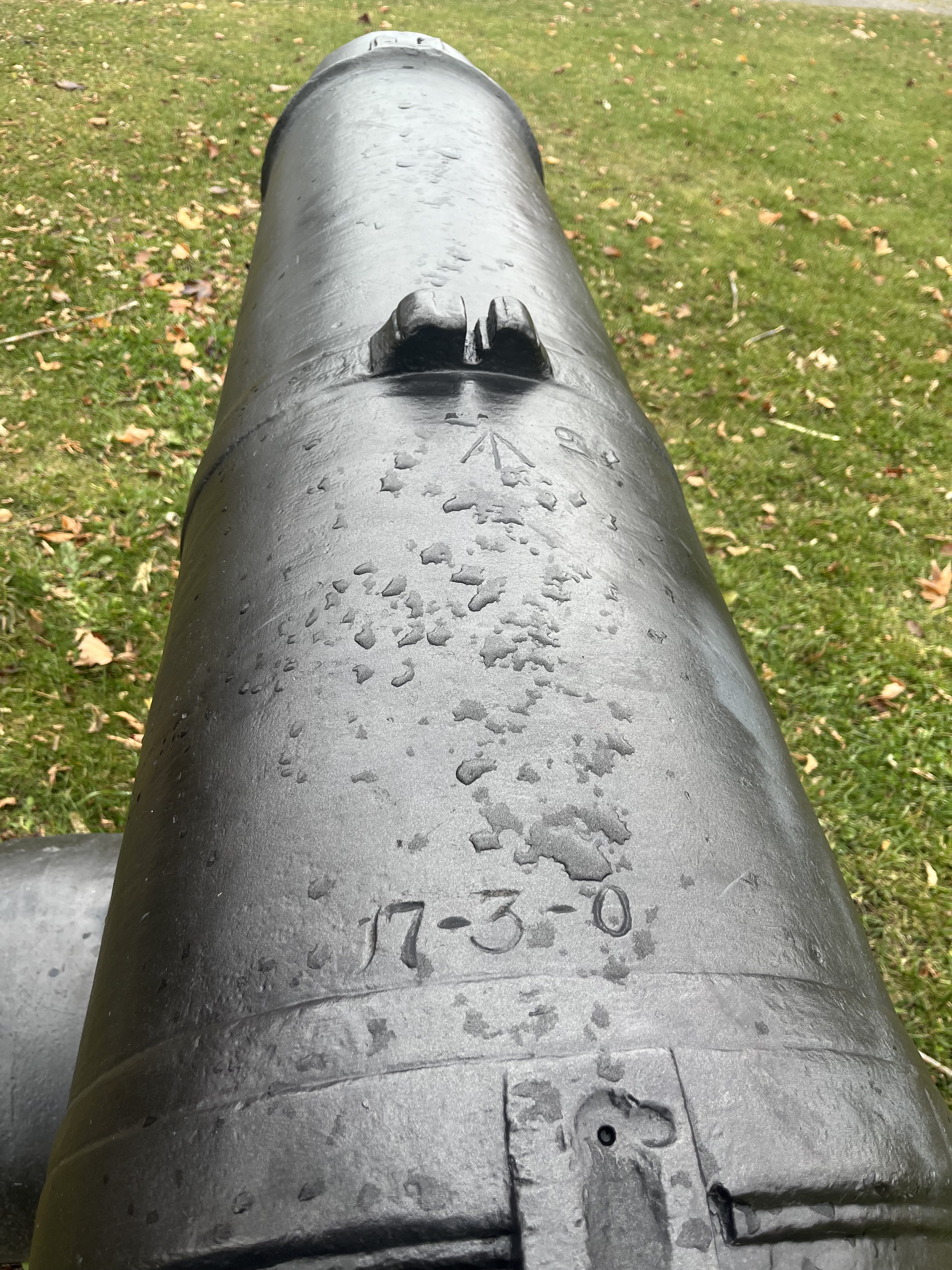
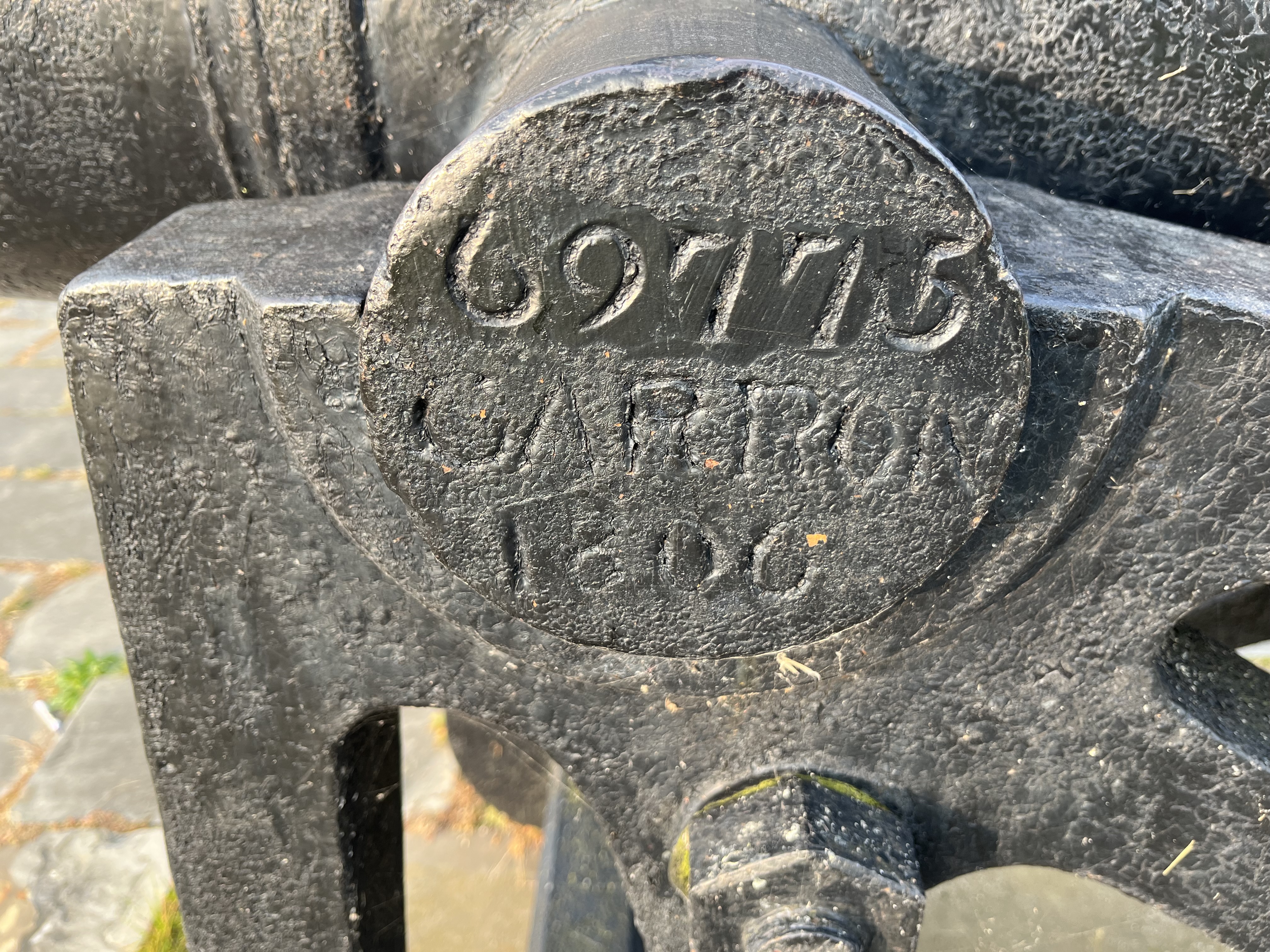
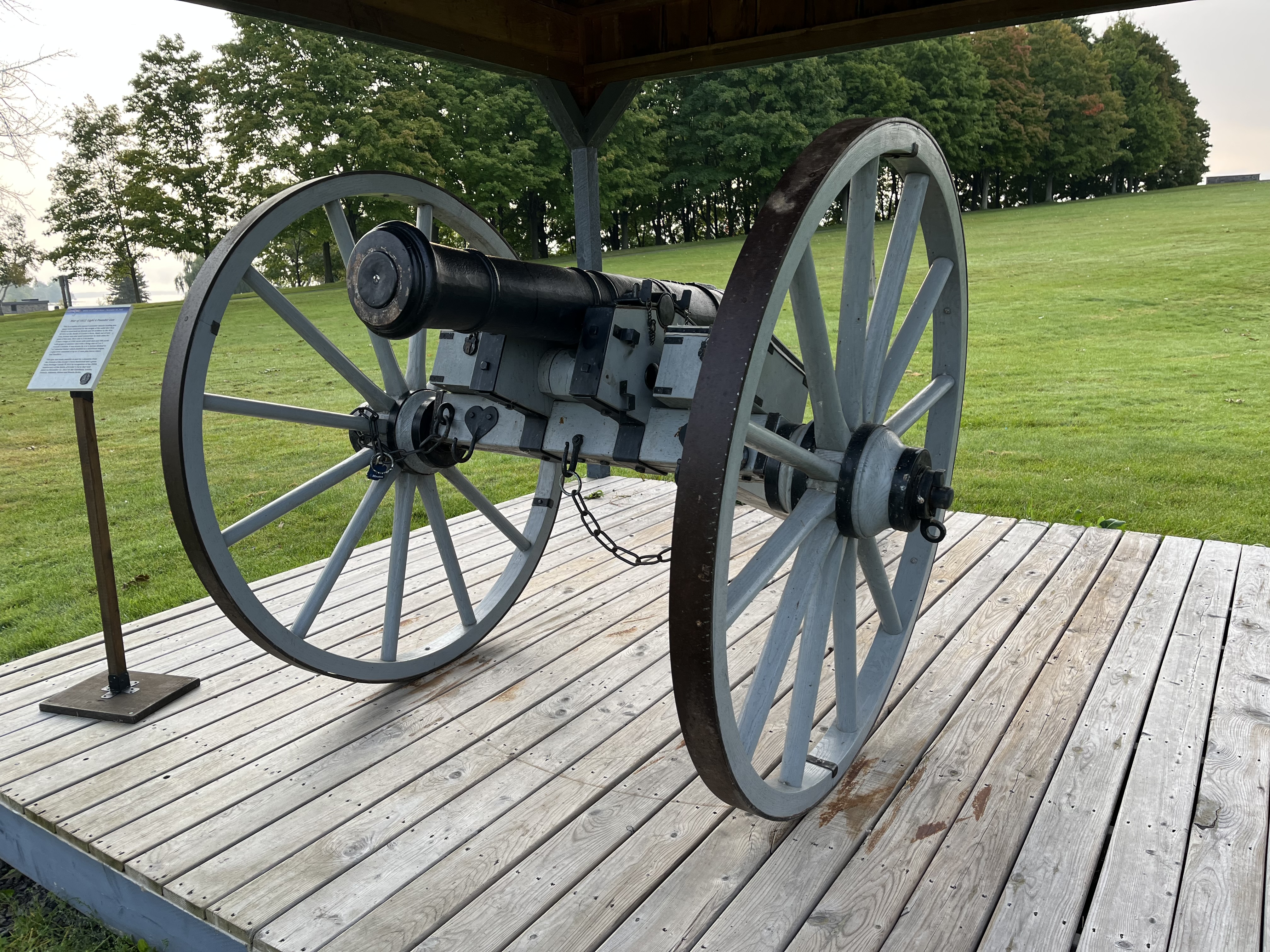
In order to attack the Americans were forced to cross two ravines and then navigate a field which was full of split rail fences. The canon in the image above has a date carved on the housing which reads 1800.
Boyd gave contradictory and inconsistent leadership which led to the confusion and lack of discipline among the American infantry. Most of the American soldiers ran out of ammunition and began to retreat before the calvary arrived as a back-up. Meanwhile the British maintained discipline and held their lines to deliver volley after volley of musket fire at the advancing American army. Boyd eventually called a retreat and the American troops fell back to French Mills for the winter. This was the last battle of the year in the war and the Americans had failed to make any serious advance in their efforts to capture British North America. The image below shows a replica 6 pounder muzzle loading gun similar to ones used by both sides during the battle. It could fire a six pound ball for 1200 yards.
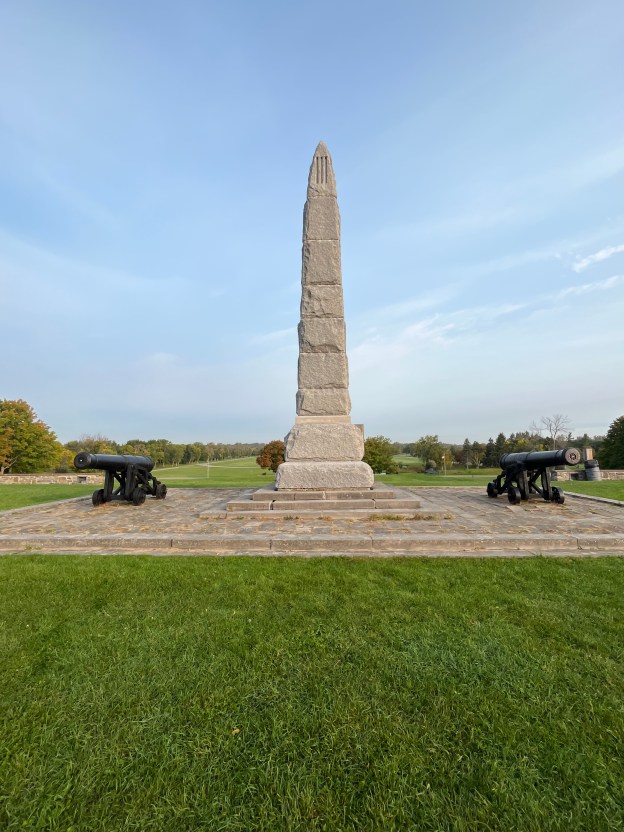
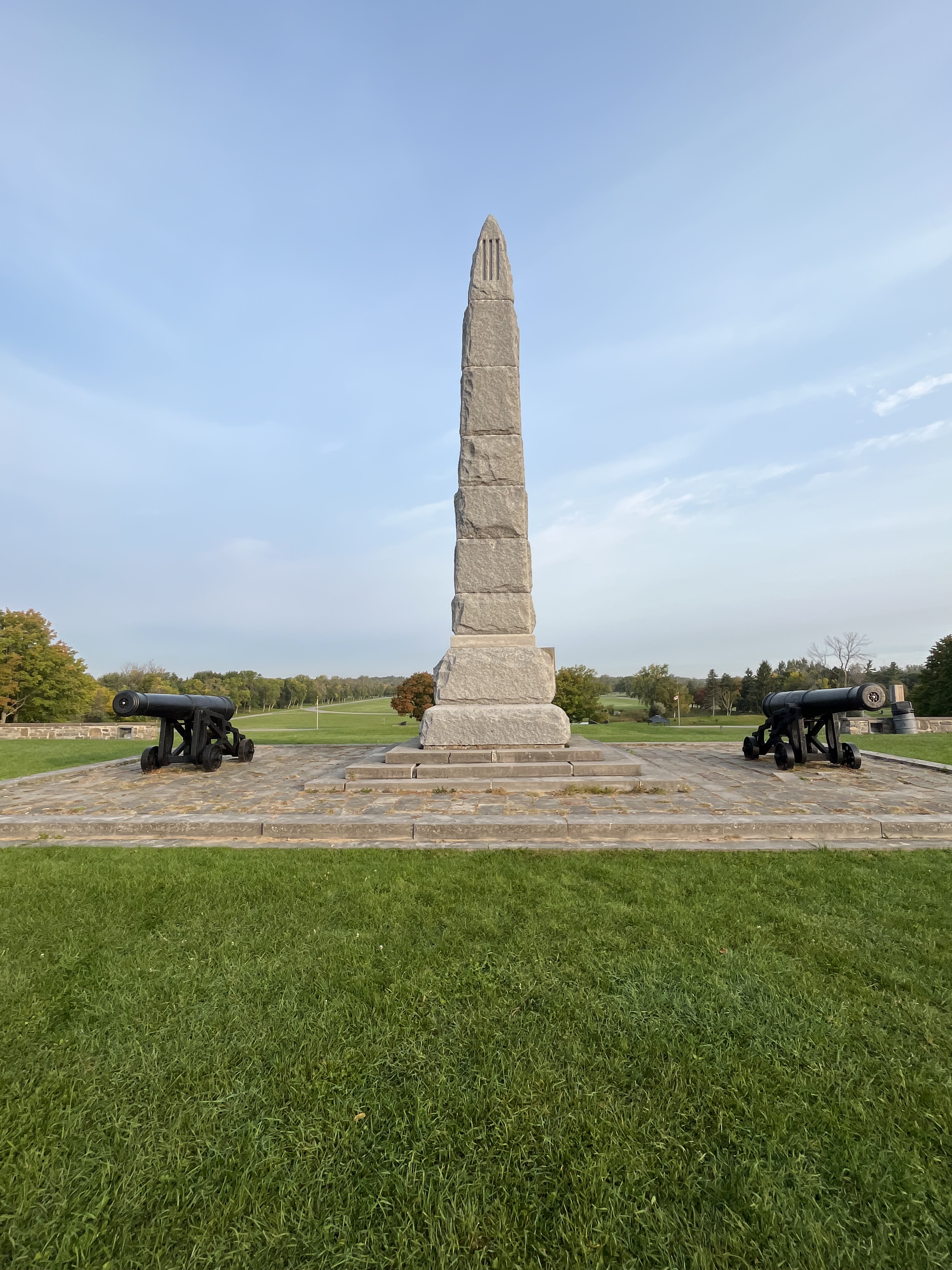
The British forces were much smaller but managed to kill 340 men and capture another 100 while losing a little under 200 soldiers of their own. A monument to the battle was erected on Crysler’s Farm in 1895 and a bronze plaque was added in 1923 to commemorate the battle.
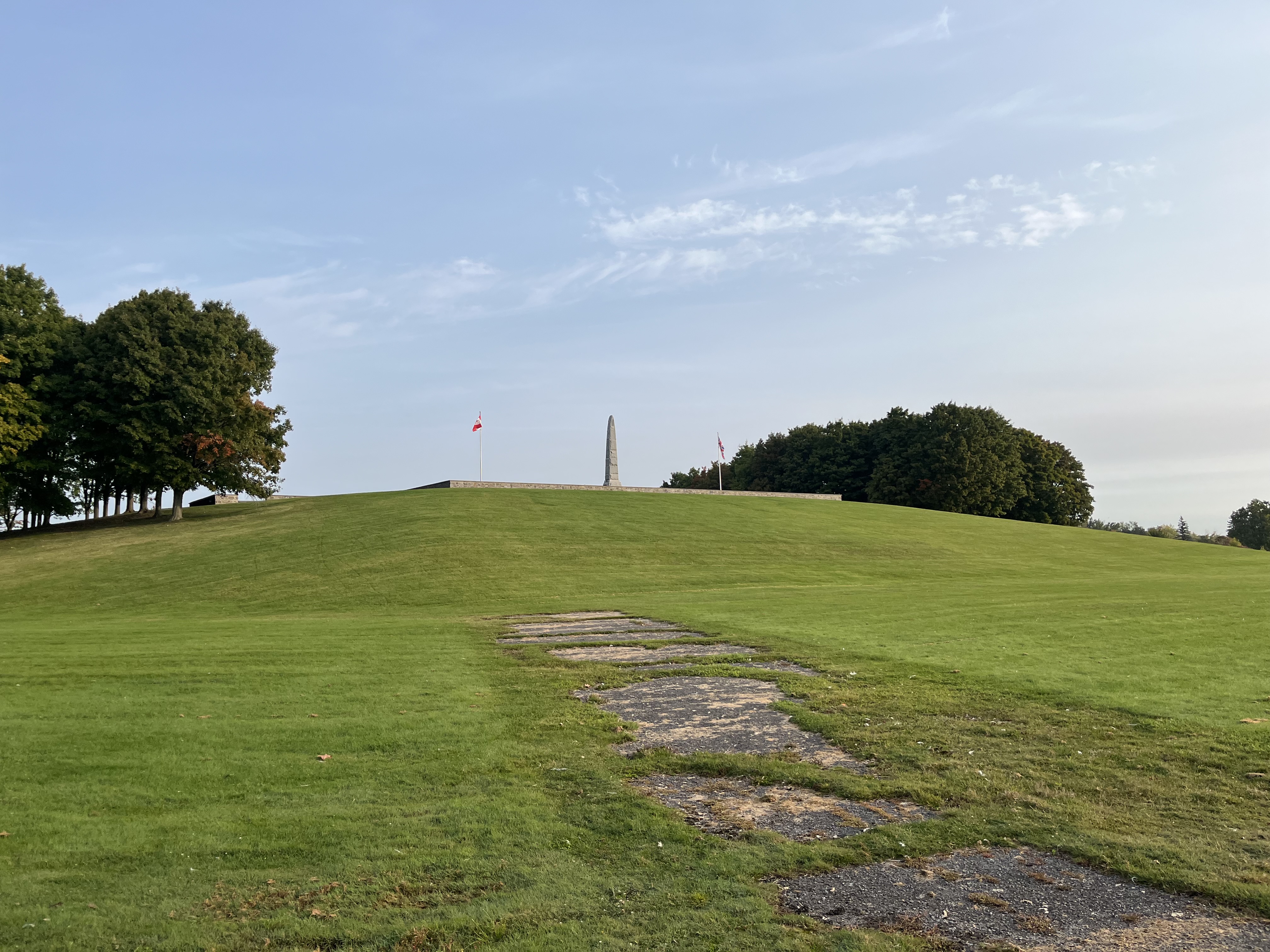
In 1958 Crysler’s Farm was flooded during construction of the St. Lawrence Seaway and the monument was moved. Soil from the site of the battle was dug up and used to build a mound on a plot of land near Upper Canada Village. The monument was placed on this new mound of soil and continues to look out over the former battle site, now under water.
In 1959 a small interpretive centre was built to describe the history of the battle and in 2012 a new visitor centre was built. Each year re-enactors come together to commemorate the battle.
Although Remembrance Day is usually considered as respect for those who fought in the First and Second World Wars, it is interesting that it also falls on the anniversary of this pivotal battle from the War of 1812.
This is the fifth installment in our War of 1812 series which may eventually extend to all the Canadian battle sites.
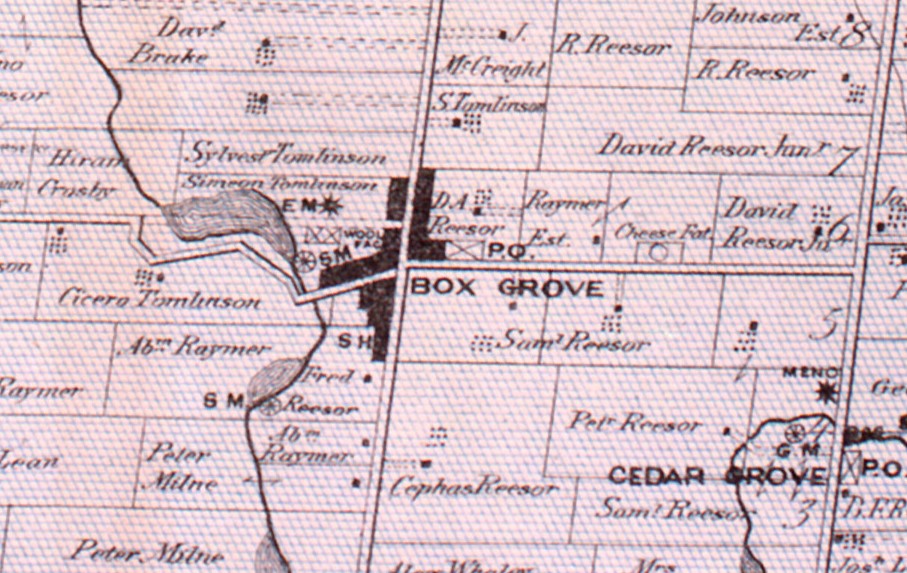
Families started to arrive in the area of present day 14th Avenue and 9th Line near Markham as early as 1815. The Tomlinson and Beebe families were among the first to move there and begin to develop farms and mills. In 1850 they put forth a plan to develop the community by selling lots for residential use. The lots were either 100 or 250 feet wide by 250 feet deep. This was intended to provide housing for the workers in the saw mill, woollen mill and shoddy mills. A shoddy mill reclaimed used fabrics to make paper or mattress stuffing materials. The community was known as Sparta or Sparty Wharf and was the last point on the Little Rouge River that could be easily navigated. The development soon let to the arrival of three hotels and taverns, a cheese factory, a blacksmith and two axe makers. The image below is taken from the 1877 County Atlas and shows the community in relation to nearby Cedar Grove.
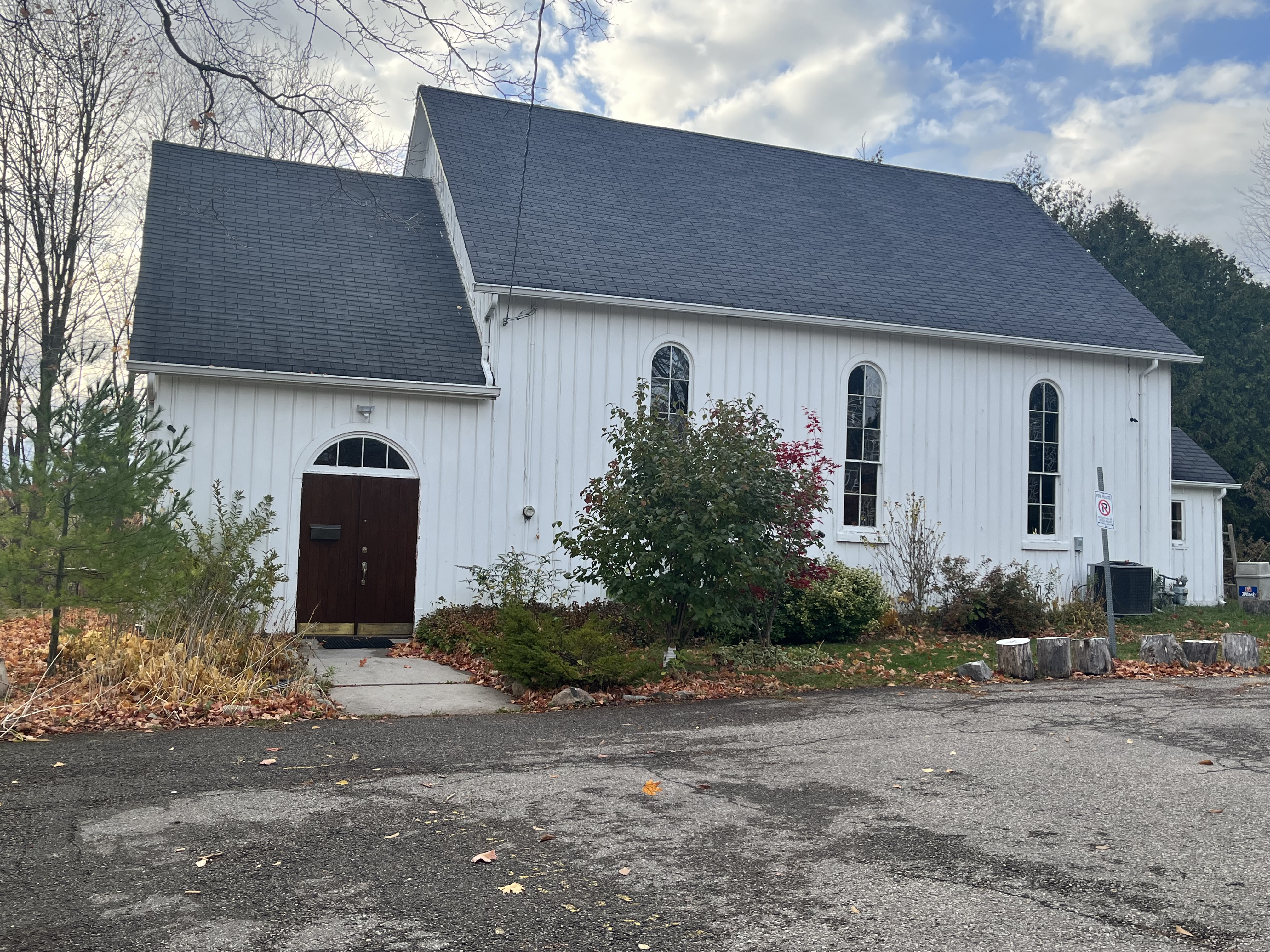
In 1850 The Episcopal Methodists had built a small church in the town and continued to worship there until 1877 when their new building became available. They continued as a Methodist Church until 1925 when they became the Box Grove United Church. In 2004 the church congregation voted to join the Zion United Church in nearby Cedar Grove. The building was vacated and then bought by the Full Gospel Assembly of God in 2006 who continue to meet there on Sundays.
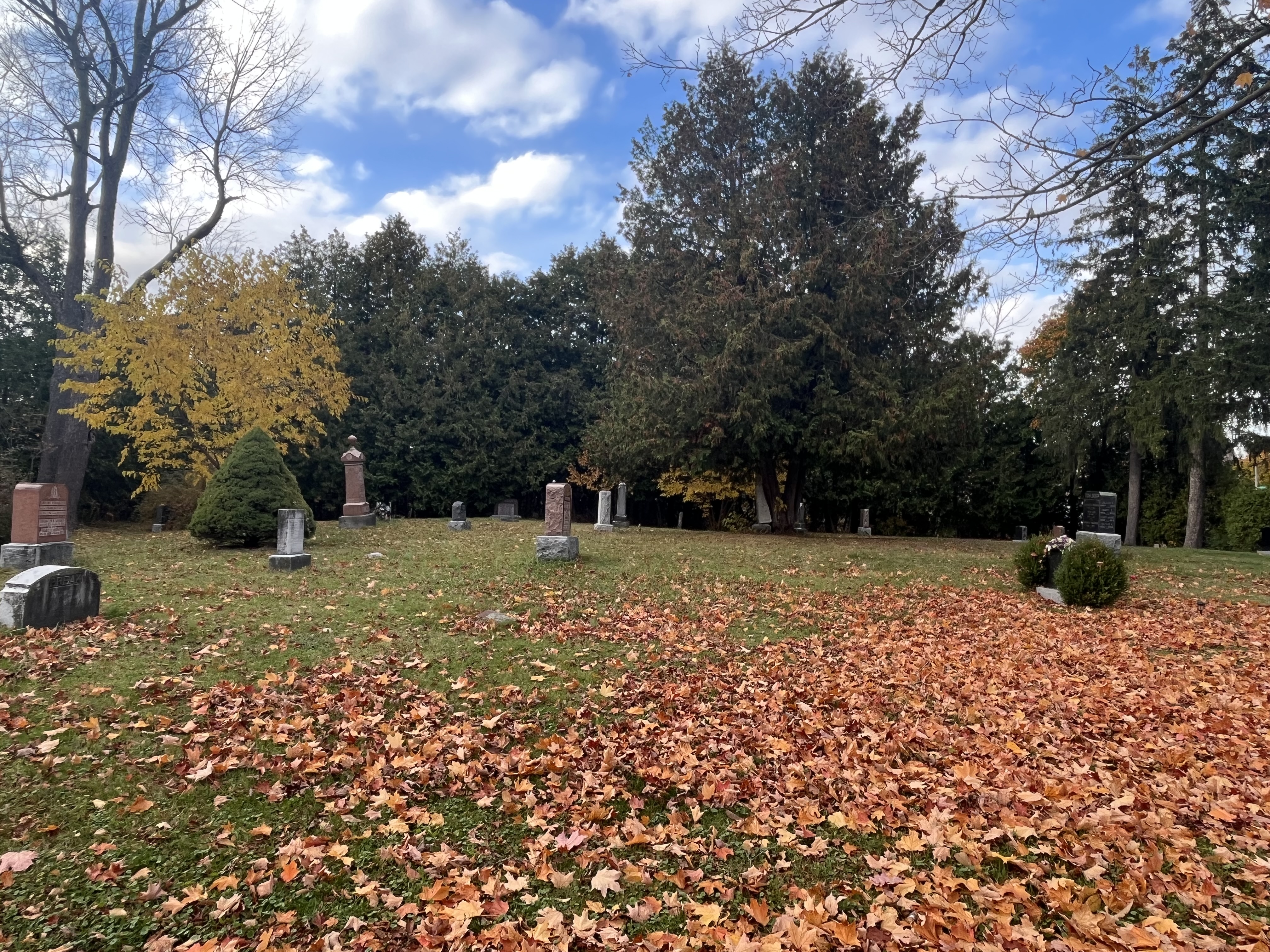
A half acre of land was set aside for the Methodist cemetery in 1850 and many of the town settlers are buried here.
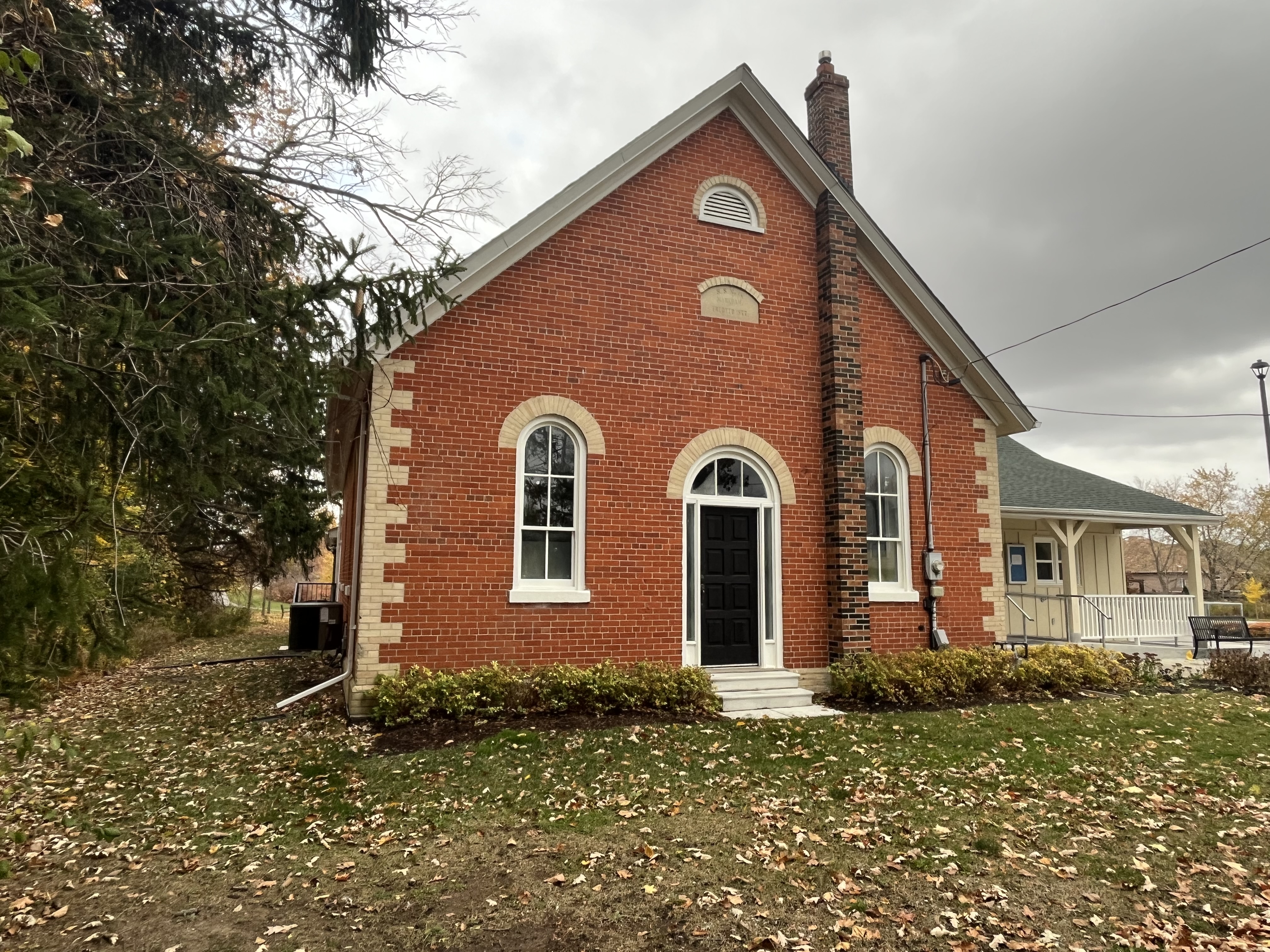
From the County Atlas above you can see that the school is shown across the street from the present structure. This small frame structure had become too small and needed to be updated. School Section #18 was replaced with this red brick structure in 1877, the same year the county atlas was produced. This new schoolhouse was used until the 1960s when new buildings were opened and most of the one room schools in Ontario were closed. Today the old school serves as a community hall and can be rented for various functions such as parties and wedding celebrations.
In 1867, the year of Confederation, they were awarded a post office and the town name was changed to Box Grove. The post office was in the general store which was located in the building seen below.
With three taverns and a population of 150 the town had a bit of a reputation for being rowdy. The Mennonite families on surrounding properties were not pleased and soon opened a Temperance Hall. All of the original industry disappeared and only the homes remained along with the school and church. There are still quite a few mid to late 19th century houses lining the streets around the original intersection. The one pictured below is a typical one and a half story worker cottage.
The house below was originally built in 1880 using a roughcast stucco surface applied to lathing. It has since been covered over with wooden siding. It was built on the Reesor Family farm on the east end of town and may have housed the person who operated their cheese factory. The house was modified at some point adding the western wing and making the home into an L shaped building. When the farms around Box Grove were redeveloped for housing the home was moved to make way for stormwater ponds.
One of the few homes in Box Grove to still display its original brick veneer with buff coloured accents stands on the eastern edge of the original town.
In the past few decades the area has been developed with new housing but the older ones can be picked out as you walk or drive through the neighbourhood.
In 1950 Nelson Morgan Davis, one of the richest men in the country, created a golf course in Box Grove which he called the Box Grove Golf Course. It was private and he was the only member. It was eventually developed into a 27 hole course with 9 holes in the valley and a challenging 18 hole course on the tableland above. It is said that he built the course after being hit in the head by a golf ball while playing at Rosedale Golf Club. Arnold Palmer was invited to play a round of golf with Davis and he later said that the course was one of the hardest he had ever played. Davis sold the golf course to IBM in 1967 netting a cool $2 million for it. IBM kept the course for the entertainment of its employees who could play a round of golf for $5.00. In 1997 IBM sold the golf course to Minto Developments who built a residential subdivision on the upper course while the City of Markham now operates a nine hole course in the river valley called Markham Green.
The Little Rouge River was dammed to create a mill pond to store water to power the mills that provided early industry in the community. The mills were all lost to flooding or to fires but the mill pond remains and is now the centre attraction for the Old Mill Pond Park which is just one of the parks in and around town. The town also features some hiking trails along the river.
Box Grove has been swallowed up by modern developments but there’s still quite a number of early residences hiding along 9th line and along 14th avenue.
As we approach our tenth anniversary we take the opportunity to step back and look at where we’ve been and where we’re headed.
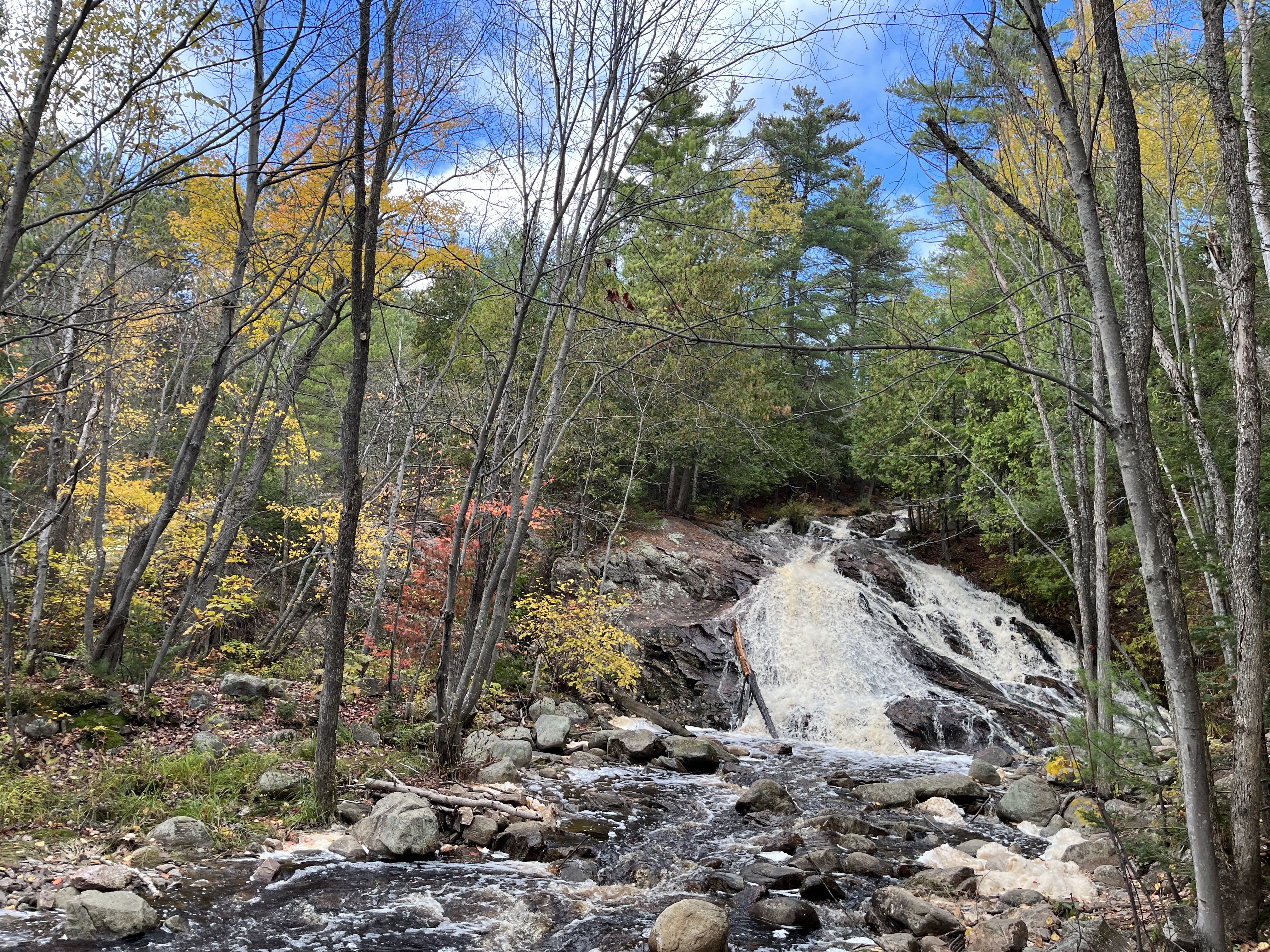
Ducheseney Falls in North Bay
When I started my blog nearly ten years ago I wrote about places to hike and things to see in and around the GTA. Primarily it was about hiking. Initially we covered all the ravines along the Credit River, The Humber River and The Don River. We also covered the Waterfront Trail and all the local parks and conservation areas. This took up most of the first three years of the blog.
Bald Eagle near Iron Bridge
Over the years it has turned into more of a local history blog because this is my passion. The past two years I have had a job that takes me all over Ontario and so I share my experiences.
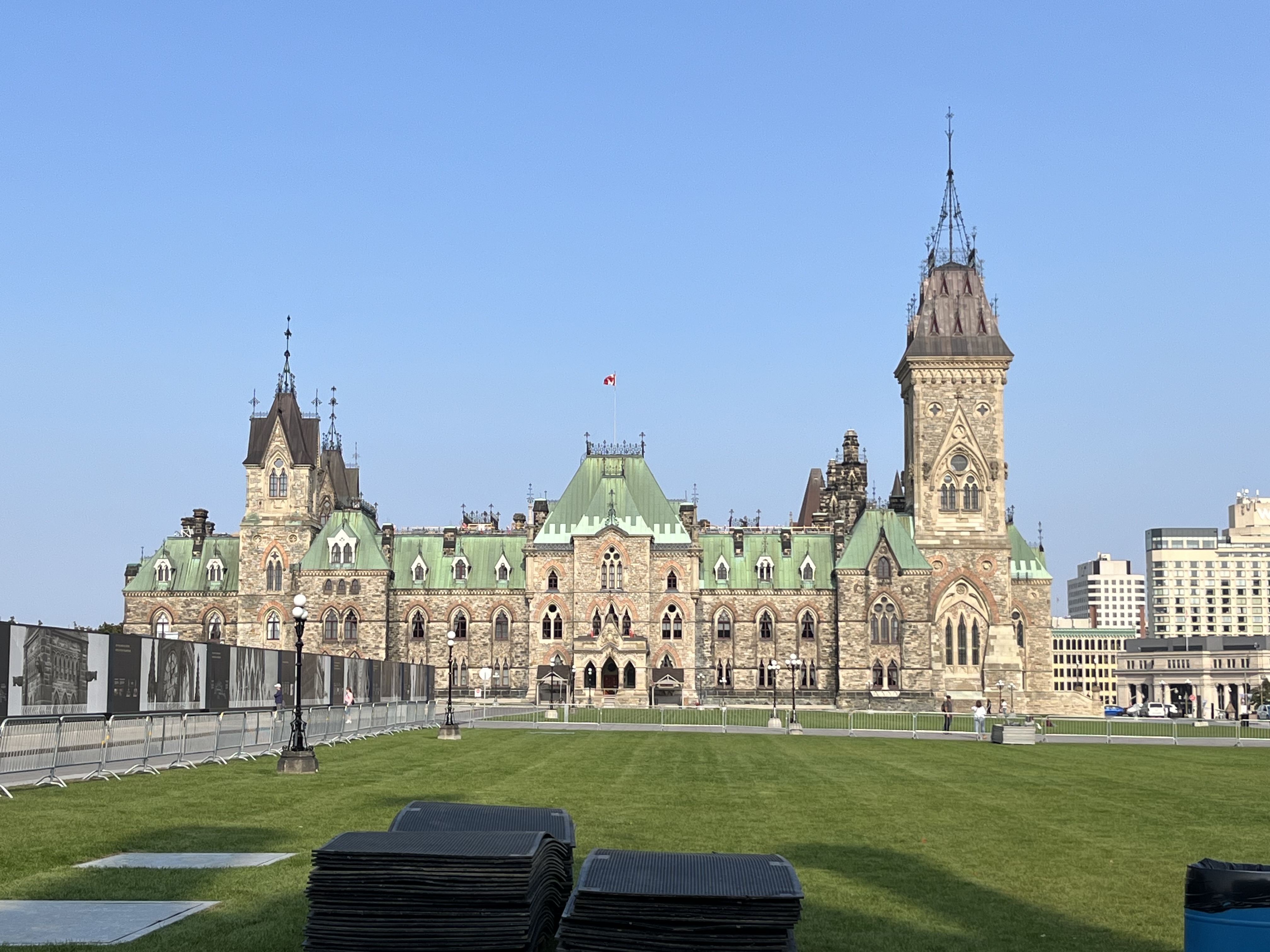
The East Block on Parliament Hill in Ottawa
If I was starting it over again I would probably choose another name. I could change it now, but going back and redoing the names and all the links in nearly 600 stories is an impossible task. So, I decided to leave it as Hiking the GTA and just keep sharing my photography and writing for those that care to come along for the journey. I hope you enjoy the stories or the photos even if they are sometimes outside of the GTA.
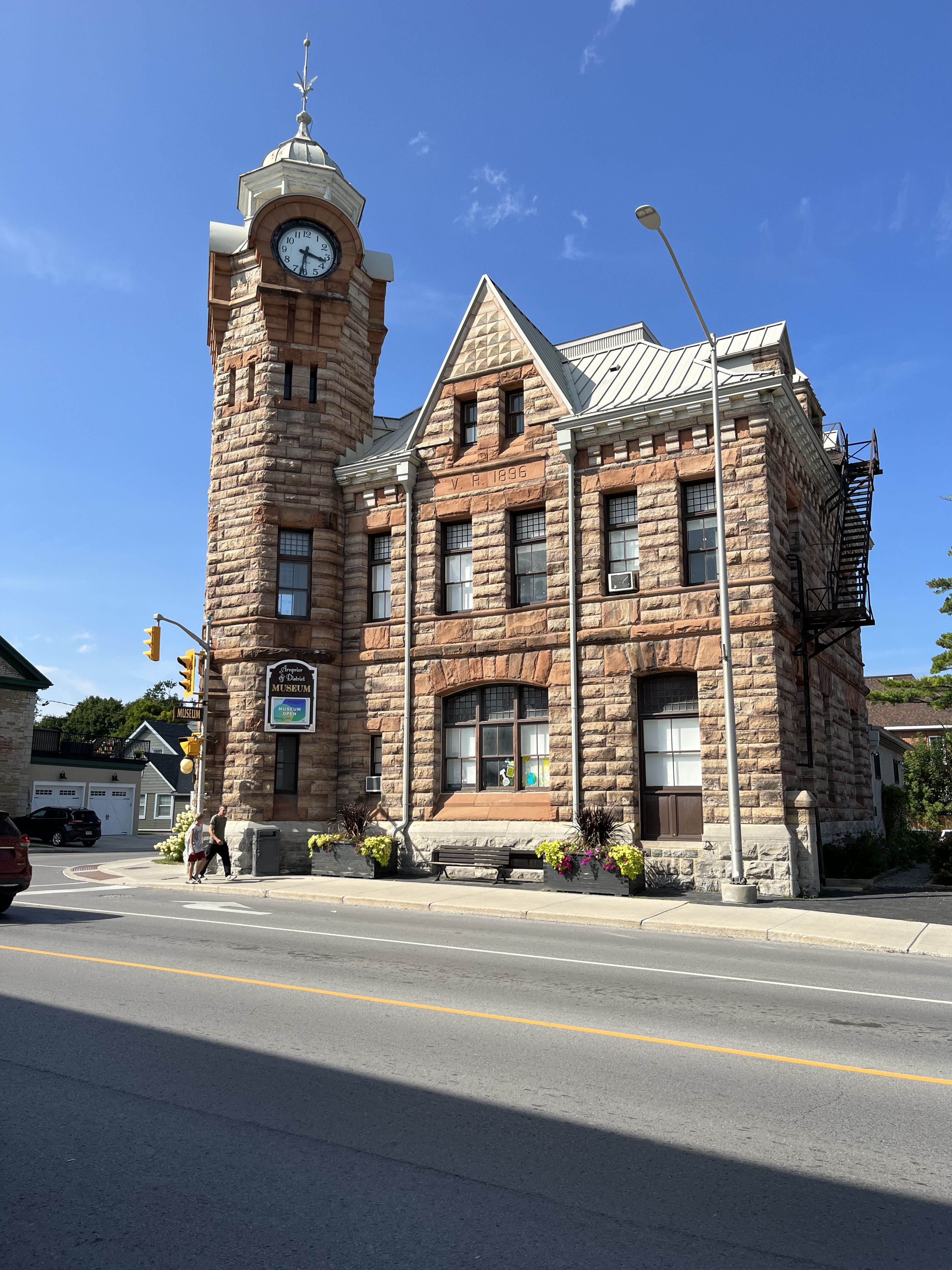
1896 Post Office in Arnprior, now a museum
Hiking the GTA by the numbers:
Our 600 posts averaged about 1,000 words each giving us a written content of about 600,000 words. A novel is about 100,000 words giving us the equivalent of six novels worth of text. Each post has an average of ten pictures which means that we’ve published about 6,000 photos. When added to the text it means that we’ve published about 12 books worth of material. We have over 42,000 followers of which about 15,000 reside in the GTA. So, about 60% of our readers are outside of the GTA and 13% are outside of Canada. WordPress lists 195 countries where our stories have been read which means that we’ve been read in almost every country in the world.
Thunder Bay
In the coming months and years we hope to be able to continue to bring you stories from around the GTA and beyond.





























 Hiking the GTA