Tag Archives: hurricane hazel

Brampton’s Early Civic Buildings

Saturday, April 12. 2025

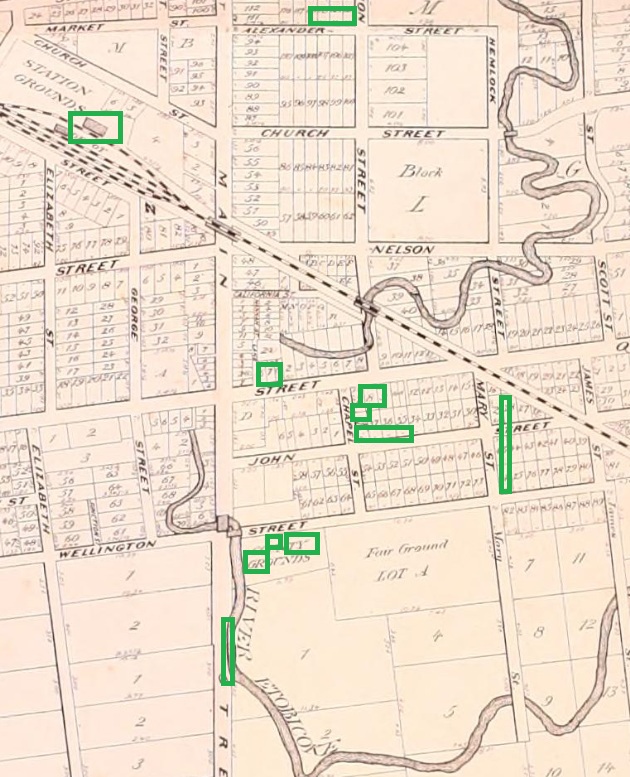
Peel County was surveyed in 1818 but the intersection of Sideroad 5 and Concession 1 in Chinguacousy Township (modern Queen and Main, aka The Four Corners) remained largely undeveloped until 1834. That was the year that John Elliot divided his land and started selling development lots for homes. The community was renamed Brampton after his home in Cumberland, England. By 1846 the population grew to about 150 and the community had 2 stores, 2 blacksmith shops, 2 tailors, a tannery, a tavern, and a cabinet maker. The community has done a remarkable job of preserving its civic buildings and that is the focus of this article. The image below shows the town in 1877 and is marked with the locations of the places that are detailed in this article.
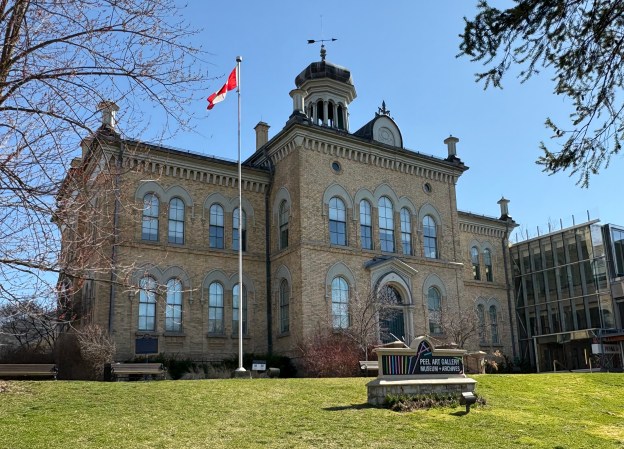
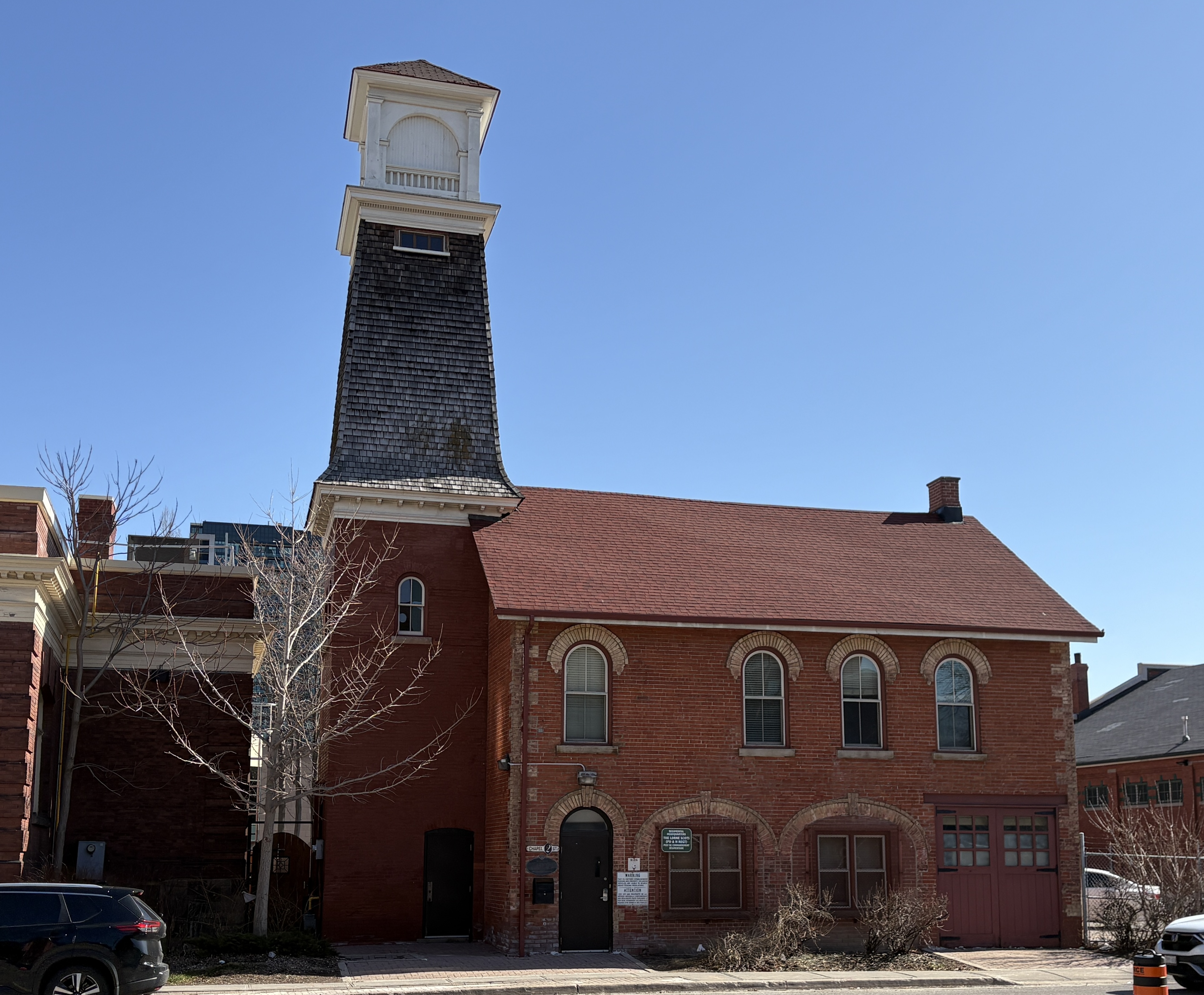
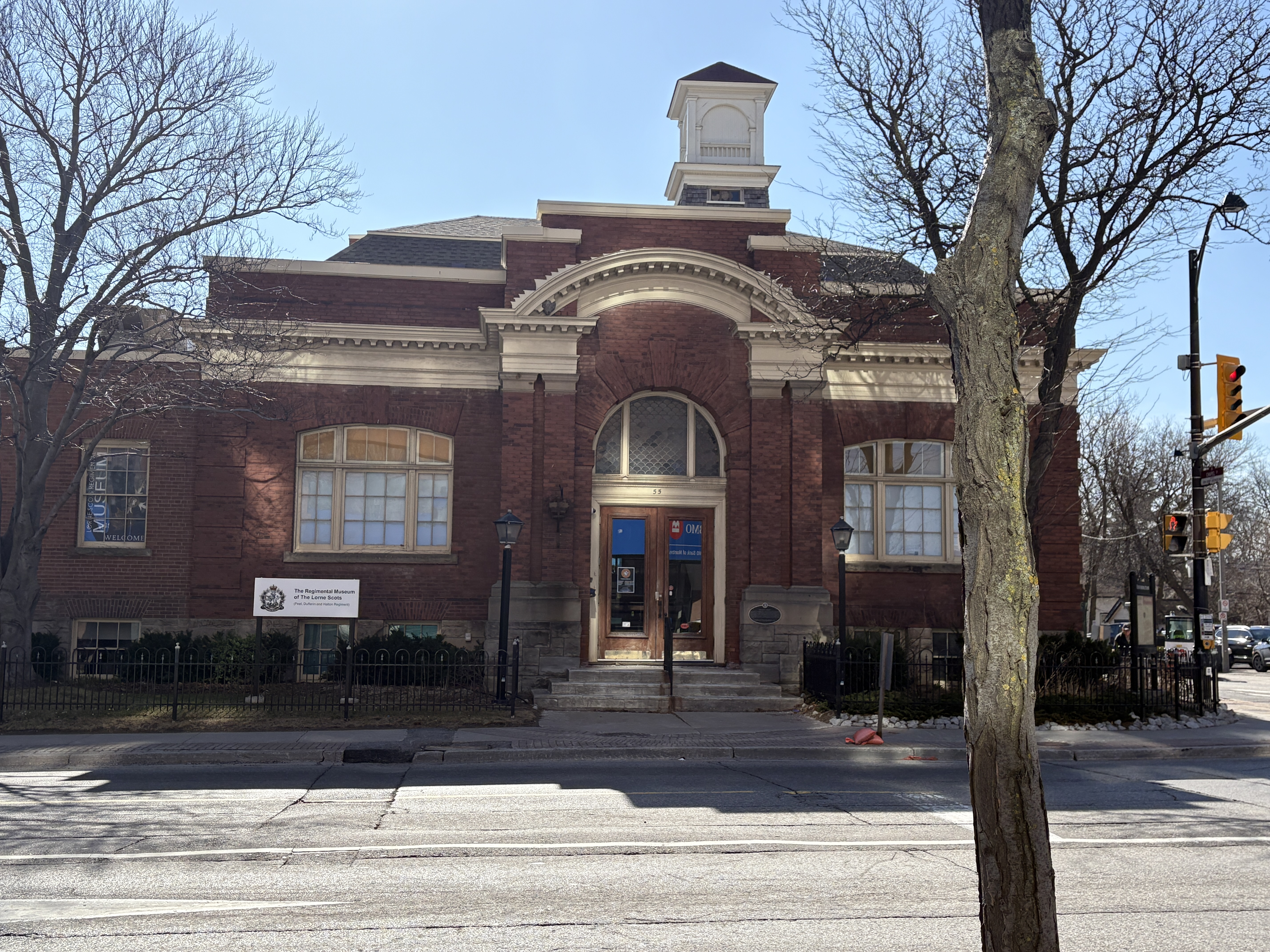
Originally built as the market and fire hall this building was constructed in 1854 as a single story structure. It originally had three arched doors on the ground level to allow access to the market. These were eventually closed and one of them was replaced with the double doors on the right hand side in the picture below. When a second floor was added, it became the council chambers which lasted from 1860 to 1911. The three windows on the second floor at the right hand side of the picture were for the council chamber. The tower was added in 1862 so the fire department could dry their hoses. The fire department used the building until the 1970s and now it is used as the regimental headquarters for the infantry regiment Lorne Scots.
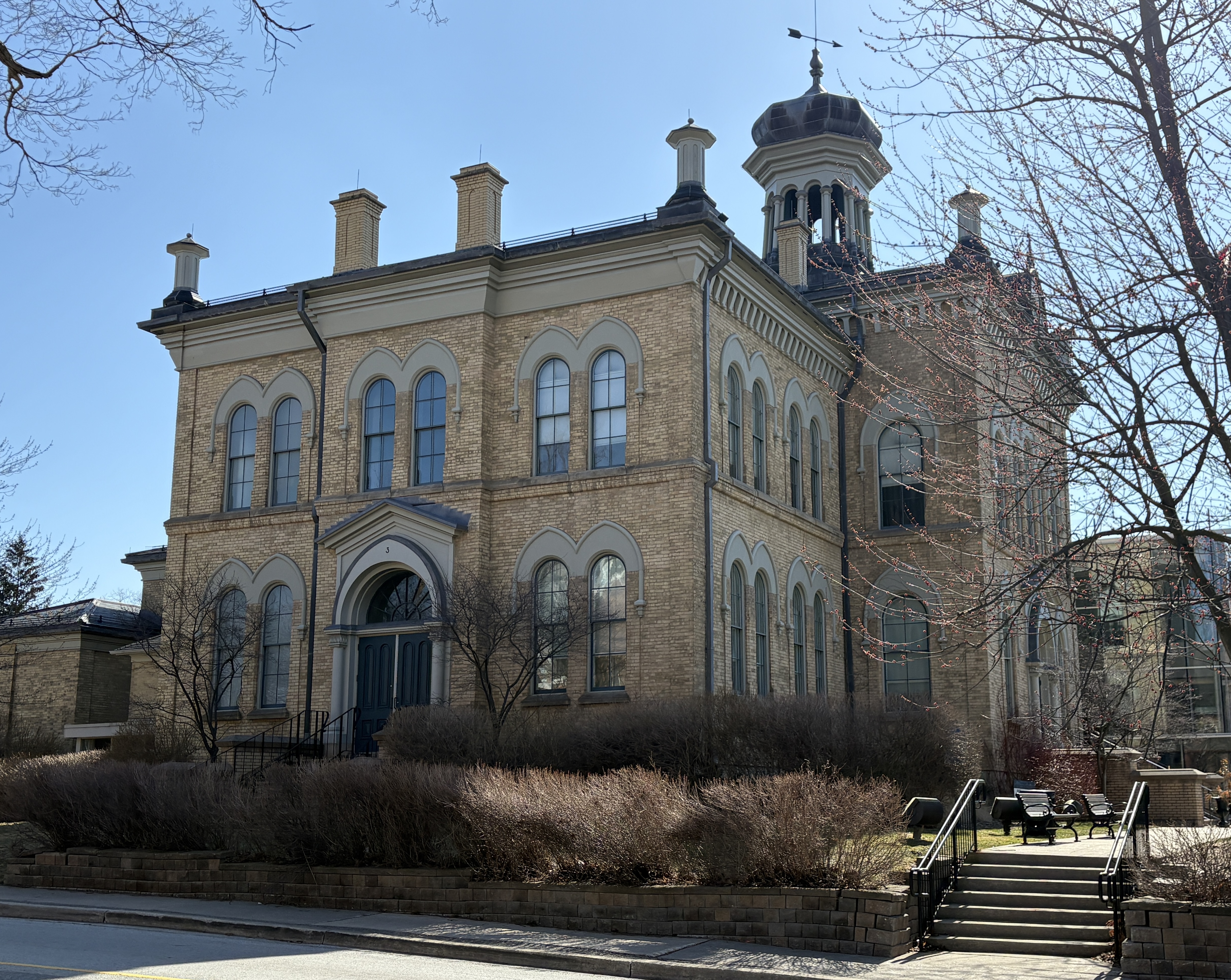
In 1867 Brampton was chosen as the County Seat for Peel County. This meant that a courthouse was built along with a jail. The stone for both of these buildings was quarried from the Etobicoke Creek on the south end of town. One of the defining features of the court house is the onion shaped dome on the top of the building.
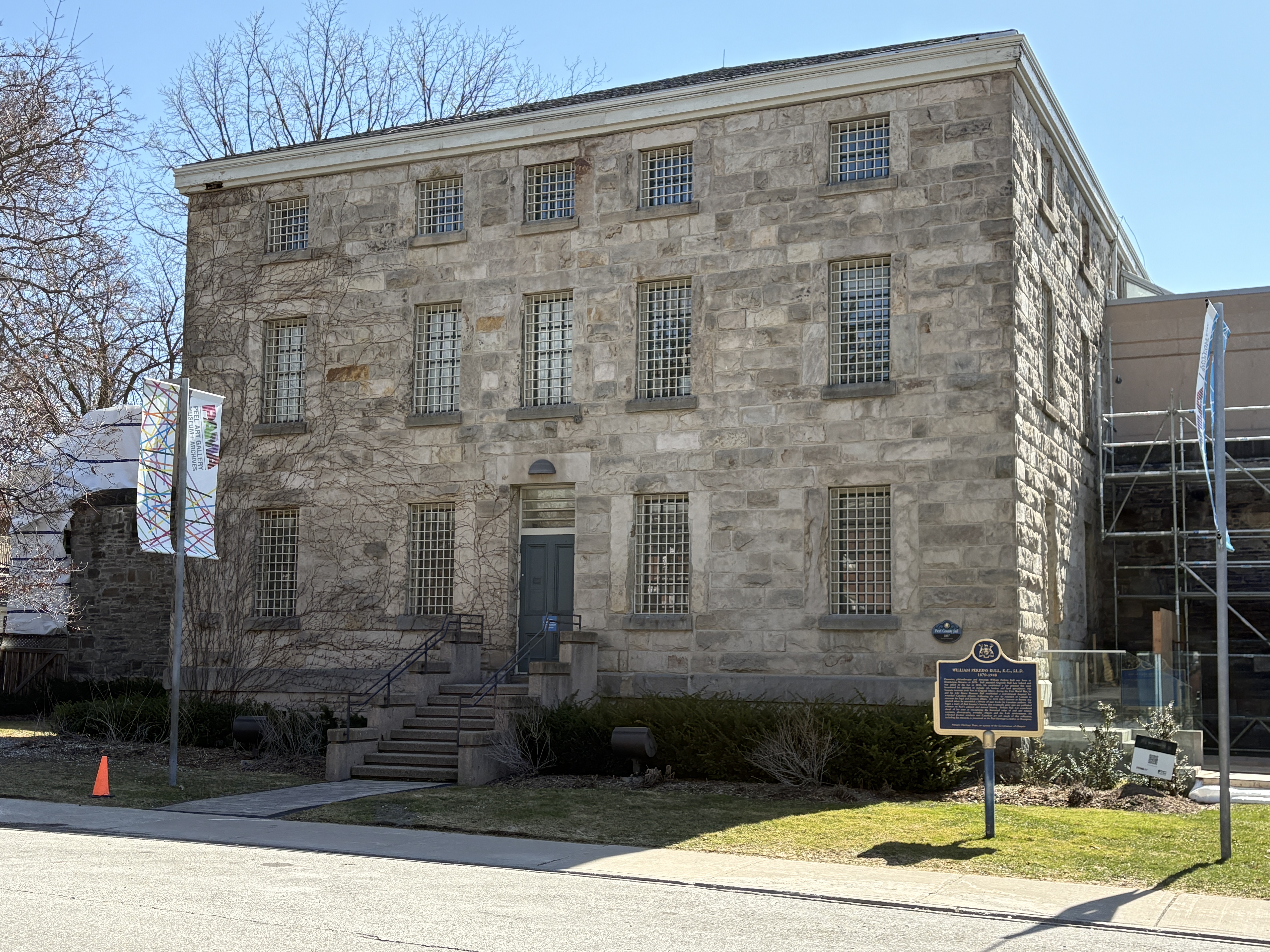
The Peel County Jail was also built in 1867 and was originally designed to hold 30 inmates. At times it was pressed into service for twice that many. Inside there are tiny 1 metre by 2 metre cells in which inmates would spend their nights. In the history of the jail, three people were hung for murder. These hangings took place in 1907, 1941 and 1946. Many people passed through this jail before it was closed in 1977. One of the most infamous was also one of the last ones. Huey Newton, who founded The Black Panthers, was held here in 1977 while awaiting extradition to the US on murder charges. For the inside view of a similar jail, see our article on the Owen Sound Jail.
The Dominion Building was erected in 1888 and officially opened in 1889. It served as the Post Office, City Planning Building and Police Headquarters. It was designed by Thomas Fuller who was the Government of Canada’s Chief Architect. Most of the building is clad in bricks but the Queen Street elevation is clad in Credit Valley sandstone that was quarried at the Forks of the Credit. The style is Romanesque Revival which Fuller also used on the original Centre Block of Parliament Buildings in Ottawa. The Dominion of Canada Coat Of Arms is carved above the windows on the third story while the clock tower was added a later date.

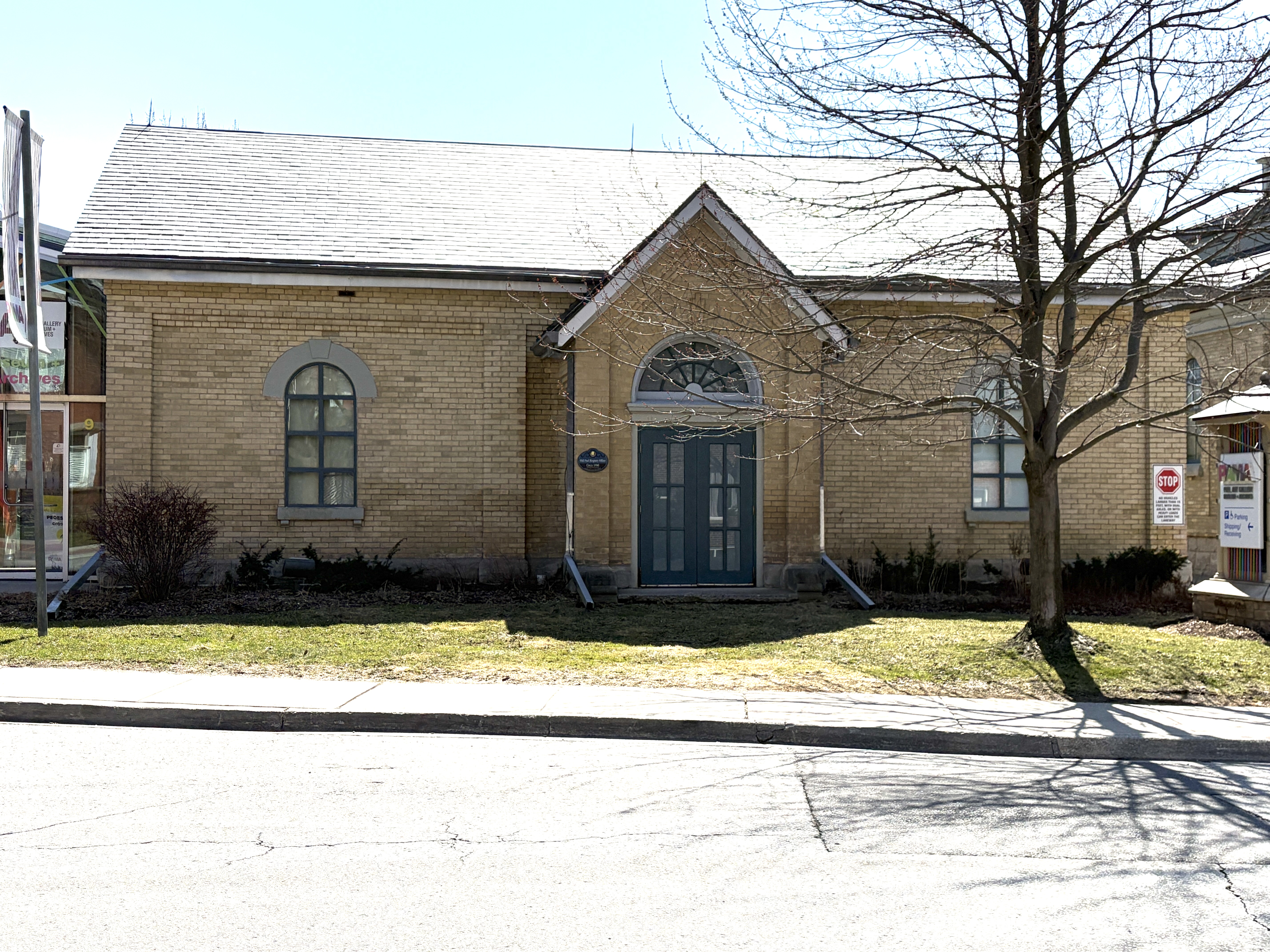
The County Registry Office was built in 1890 on the piece of land beside the jail. Also known as the Land Registry Office, this building was used to register land titles, transfer deeds between people and to store records. It was in use until 1959 as the registry office. In 1967 it was converted to Peel County Museum and Art Gallery.
Andrew Carnegie was a steel magnate who became one of the richest people ever in the United States. He lived in an era when wealthy people used their money for the betterment of society. A local example of this is the Massey Family who donated Massey Hall to the city of Toronto. Carnegie used his fortune to fund free public libraries. Between 1881 and 1917 he funded the construction of 156 libraries across Canada. The one in Brampton was funded by a $12,000 donation and the corner stone was laid in 1906. It was expanded in 1952 and has since been used by the Brampton Board of Trade and the Brampton Concert Band.
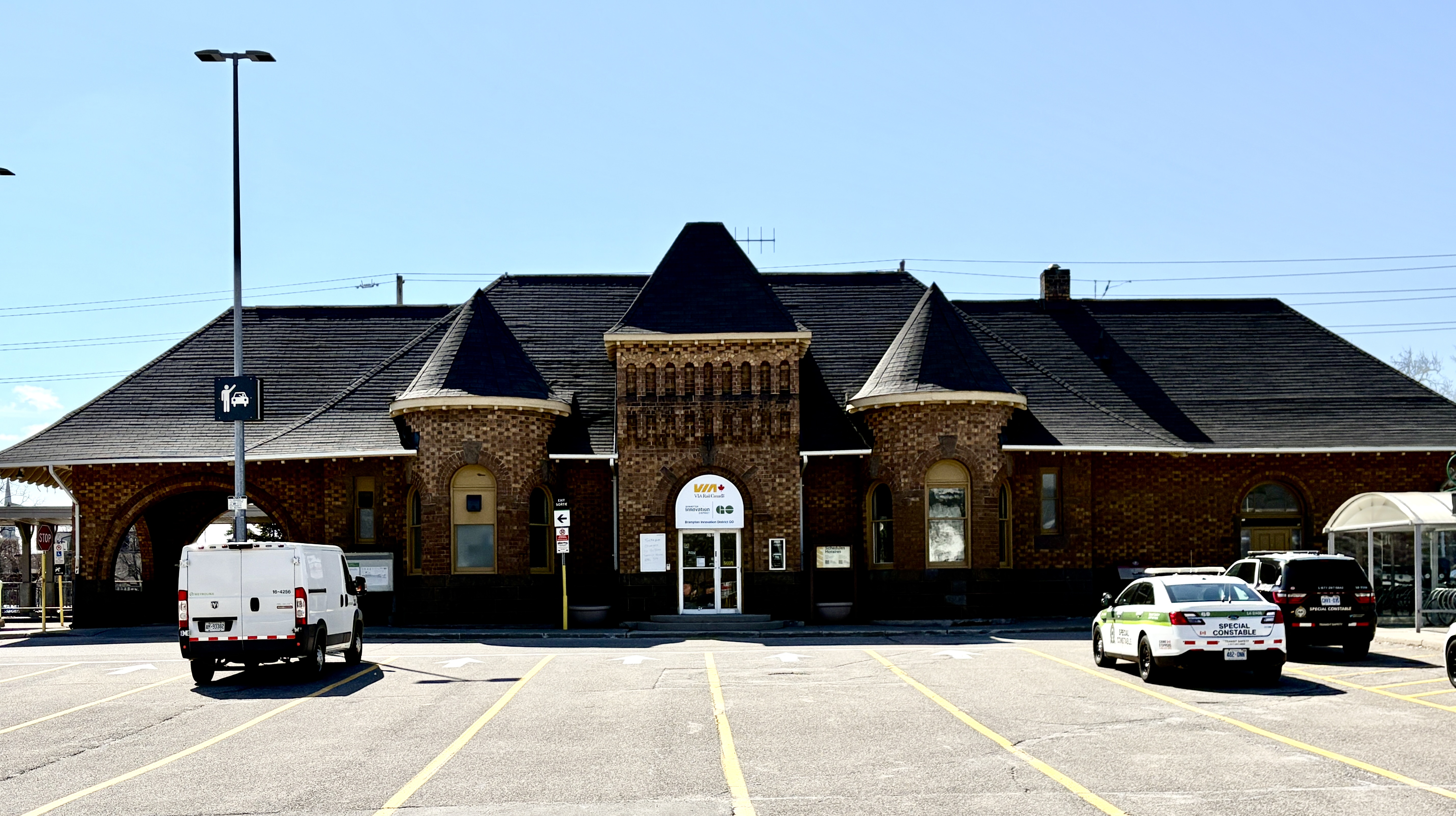
The Grand Trunk Railway arrived in town in 1856 and built a station near the downtown area. When the railway was booming at the turn of the century, it began to replace its earlier stations with new more impressive ones. The new station opened in 1907 with a combination of Romanesque Revival and Arts and Crafts styles to the architecture. Industry was attracted to the area around the station and many of these early industrial buildings still stand. The Hewetson Shoe Factory and Dominion Skate building being two examples.
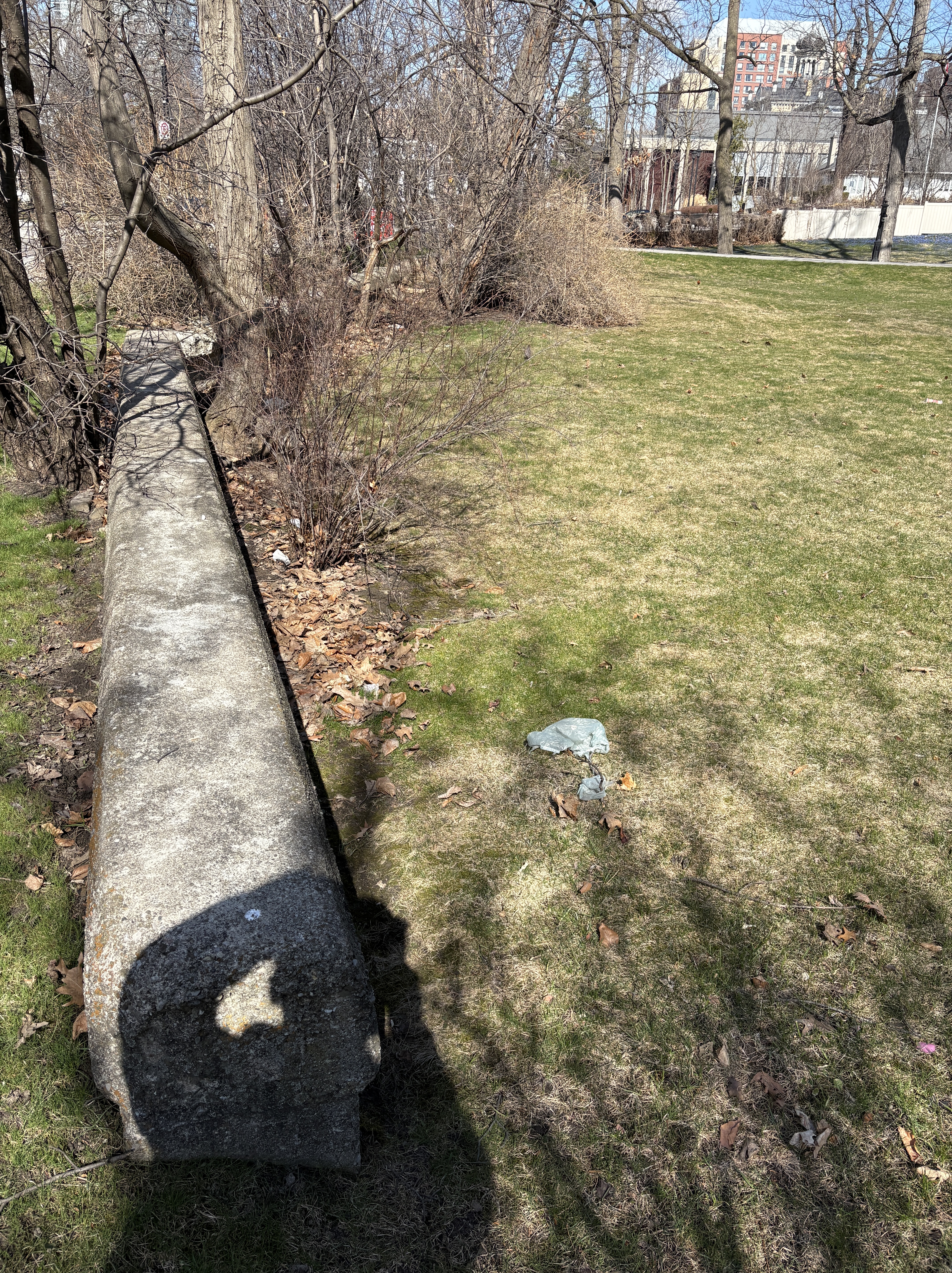
Etobicoke Creek flooded the downtown area almost every spring because it was a slow moving creek that couldn’t always contain all the flood waters from the spring melt. Part of the creek ran along side Main Street and a retaining wall was built in 1914. Part of this old wall can still be found in front of homes on Main Street. The old creek bed has been filled in and the bridges that allowed access to homes and businesses have been removed but there’s still traces of the old creek in downtown.
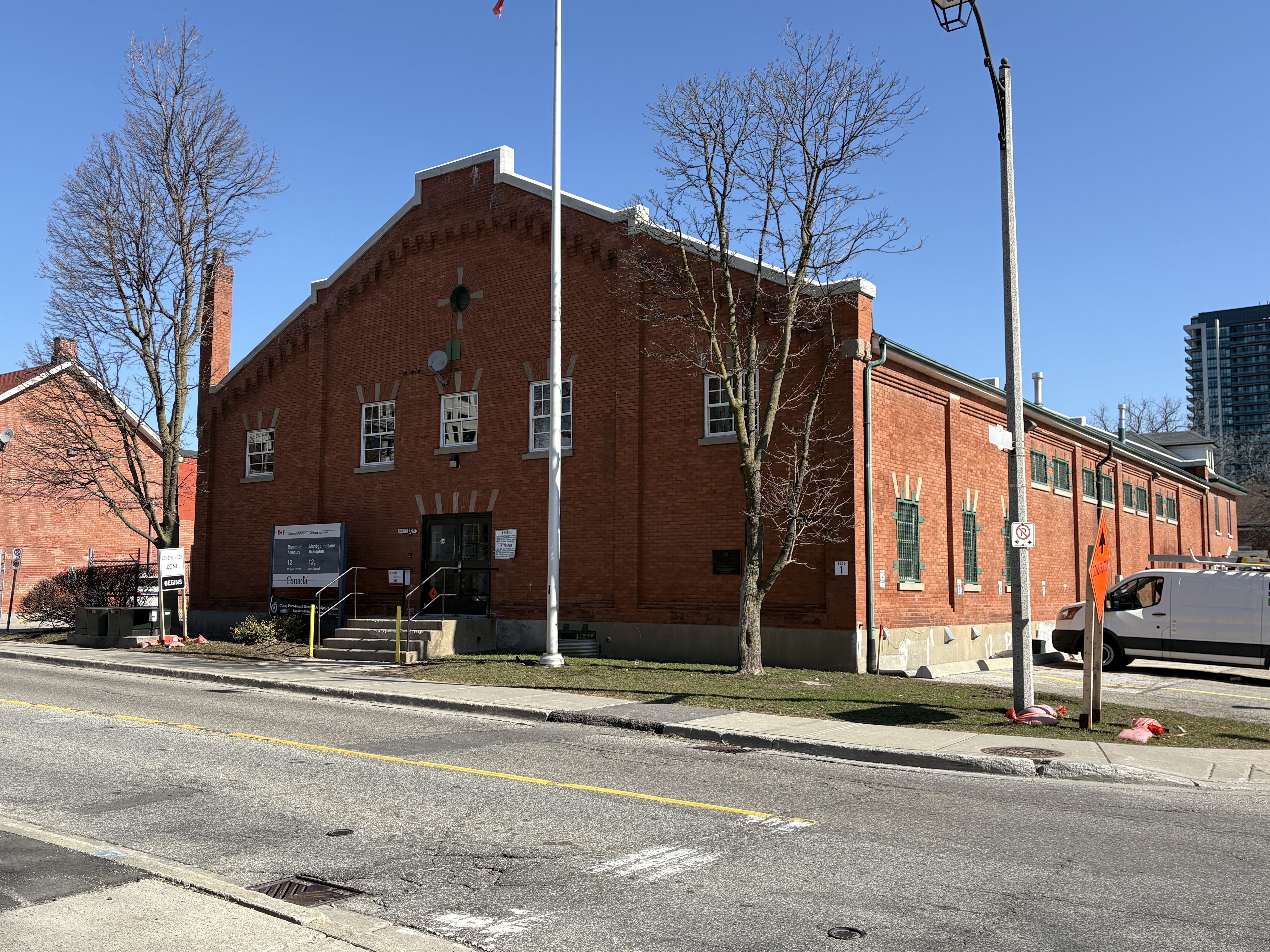
The Brampton Armoury was built in 1915 and was one of 56 armouries built across the country during the First World War. Between 1912 and 1914 these buildings were erected as drill halls and the one in Brampton was built on the “Type B Standard Plan”. The Lorne Scot Regiment has called the hall home since 1936.
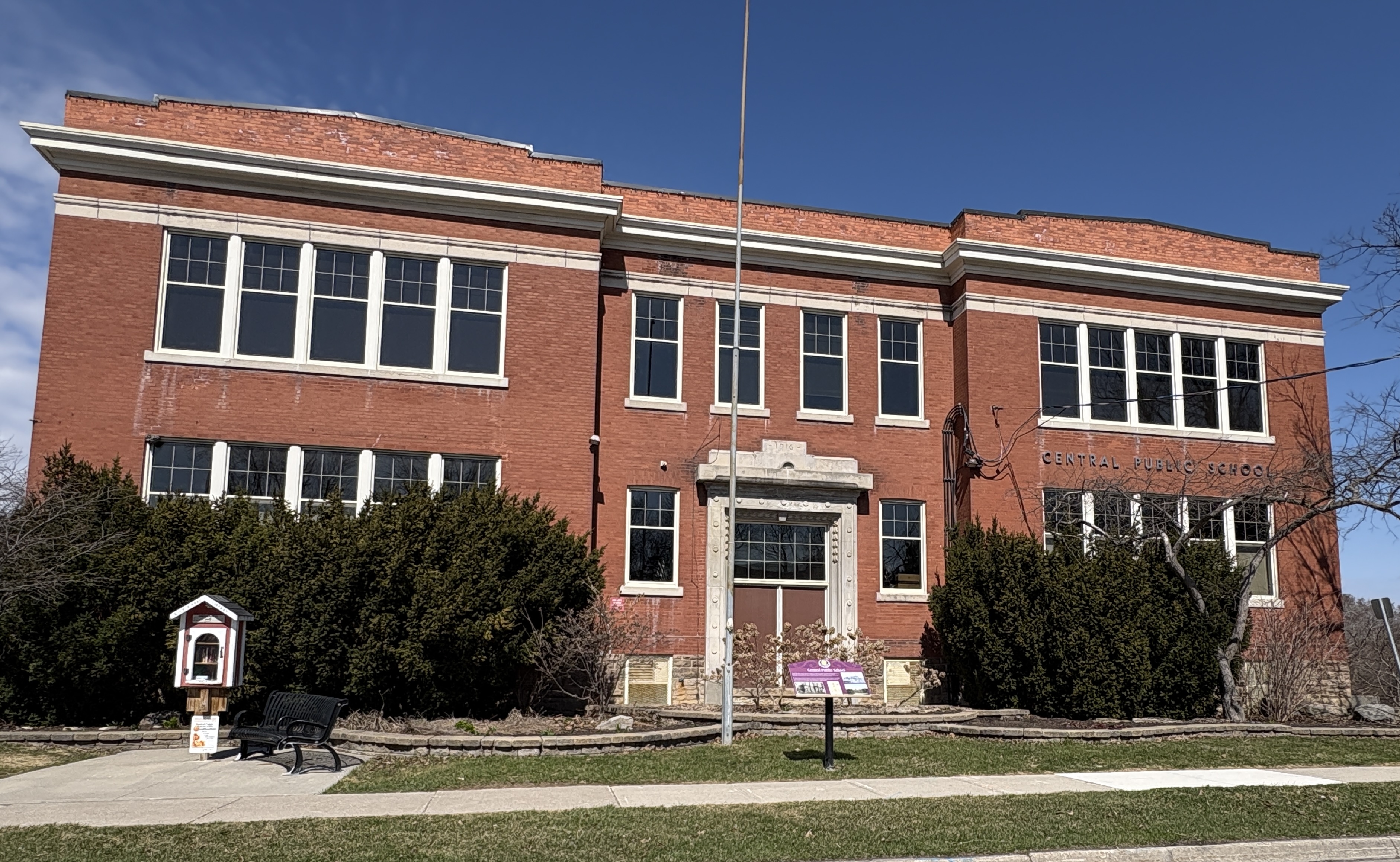
Central Public School is the oldest surviving school building in the downtown area. The site of the school had been the location of a previous school building that became overcrowded and needed to be updated. The new school opened in 1916 but was still under construction until 1920. The school operated until the end of the 1983 school year when it was closed and students enrolled in some of the newer schools in the area. The building was bought by the city and repurposed as a community centre.
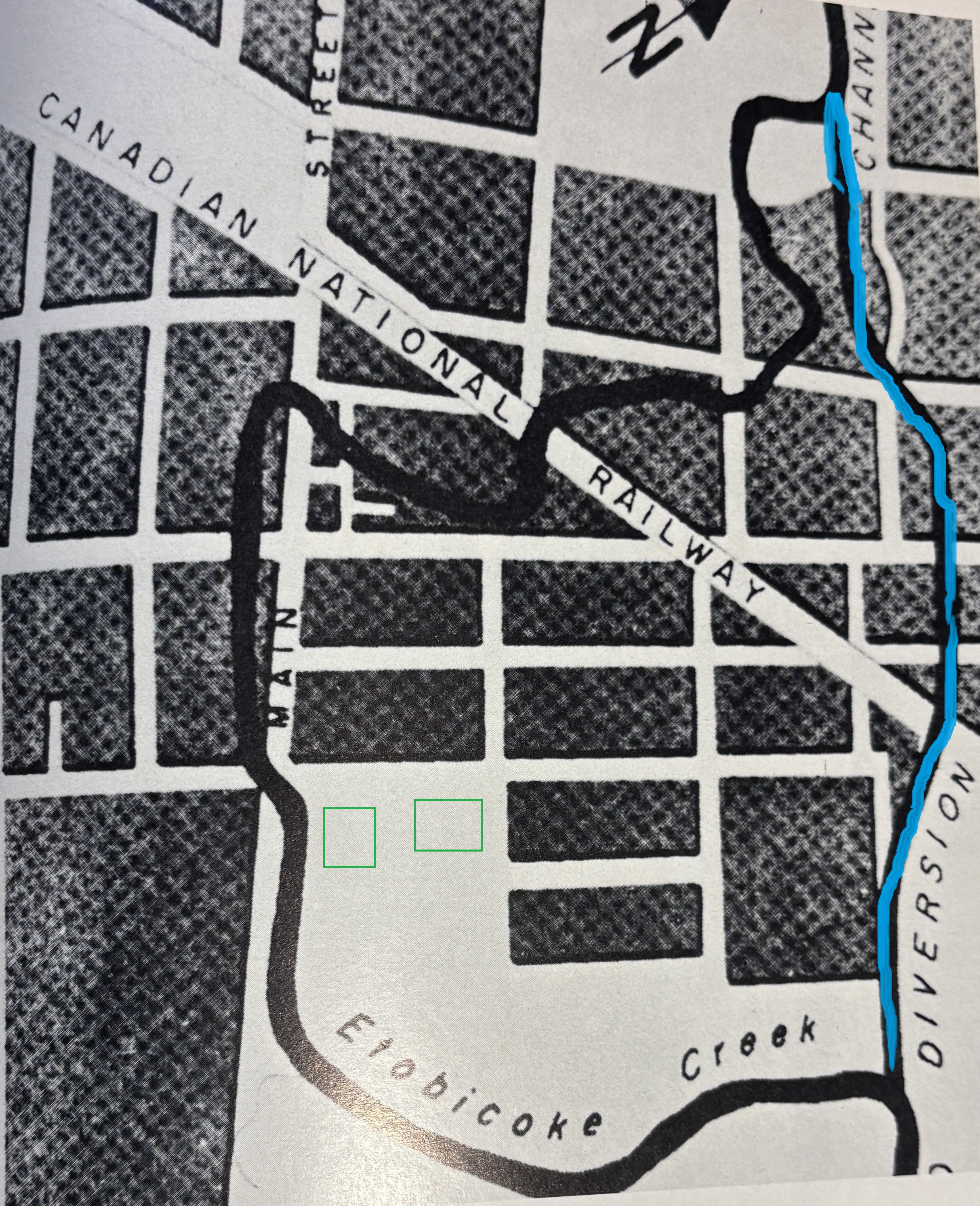
On March 16, 1948 the Etobicoke Creek overran its banks and flooded the downtown core in four feet of water. Floods had occurred in 1854, 1857 and 1873 but nothing was done. Flooding continued and occasionally people lost their lives. In the 1948 flood there was half a million dollars worth of damage and it was the deciding factor in building a diversion channel. Etobicoke Creek wound its way through downtown Brampton and the sharp curve just above Queen and Main Streets slowed the water down and caused the flooding to be worse. The course of the new channel is shown in blue on the map below, taken from Brampton An Illustrated History. The court house and jail at Main and Wellington are drawn in green as a reference.
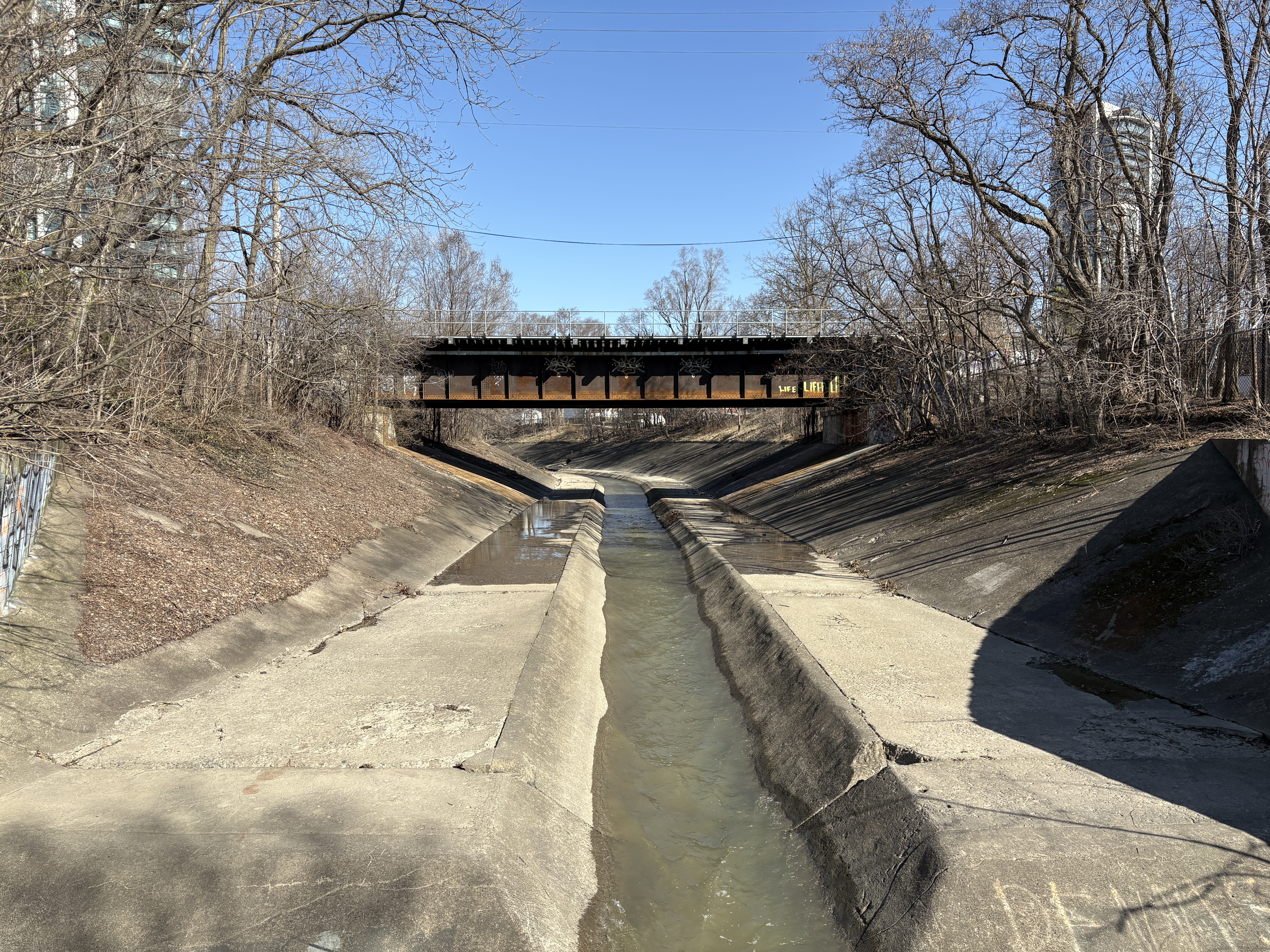
Starting in June 1950, the diversion channel was built at a cost of $250,000 and Ontario Premier Leslie Frost officially opened it on Nov. 10, 1952. Less than two years later, on Oct 15, 1954 the diversion channel would carry the waters of Hurricane Hazel away and spare the downtown from the destruction caused in other areas. The image below was taken at the end of Wellington Street. The straight lines allow the water to flow faster and although the channel was full to the top it was able to contain the swollen creek.
There is a considerable amount of other historic buildings in old Brampton but the amount of proposals for 40 or 50 story buildings suggests that this might not always be the case. If you’re interested in seeing it for yourself, Brampton has a great walking tour.

Related stories: Hurricane Hazel, Owen Sound Jail.

Google Maps Link: Downtown Brampton

Like us at http://www.facebook.com/hikingthegta

Follow us at http://www.hikingthegta.com
Hurricane Hazel – Raymore Drive

Sunday, April 5, 2020

With restrictions in place that are intended to prevent the spread of COVID-19, Hiking the GTA is looking into our collection of unpublished pictures to see what new stories we can bring you.  We hope to keep ourselves entertained, and perhaps you as well, while we wait for the parks and trails to be opened up for us again. 

These pictures were taken on September 19, 2019 with the idea of a possible post about the destruction caused by Hurricane Hazel in the area of Raymore Drive.  We had previously featured some information in our post Raymore Drive and so we won’t cover all that material again.  As we walked along the Humber River on a beautiful Saturday in September we stopped to watch the ducks and admire one that was a little different.  It may be just a variegated mallard as it doesn’t seem to match any duck in the National Geographic bird book.

img_1894

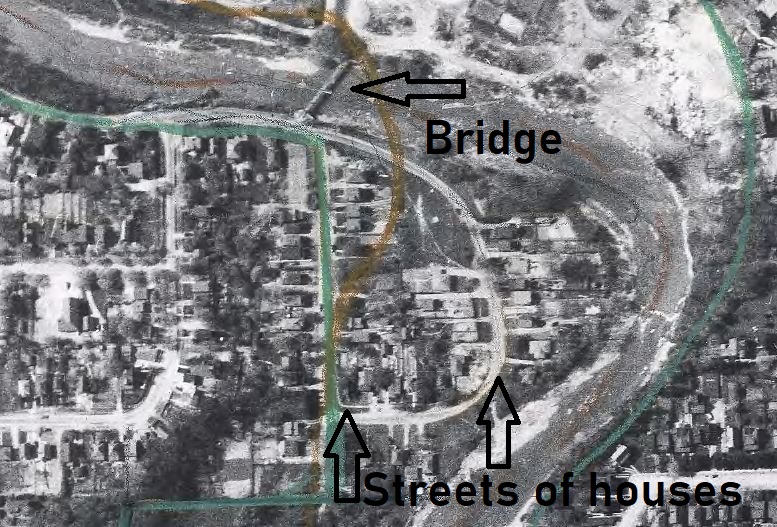
The picture below shows Raymore Drive in Etobicoke in 1953, about a year before Hurricane Hazel struck.  When the hurricane paused over the GTA on October 15, 1954 it dumped so much rain that the rivers all flooded their banks and 81 people were killed.  Notice the pedestrian bridge that crossed the Humber River and the two streets of houses that were tucked into the curve of the river.

Raymore 1953

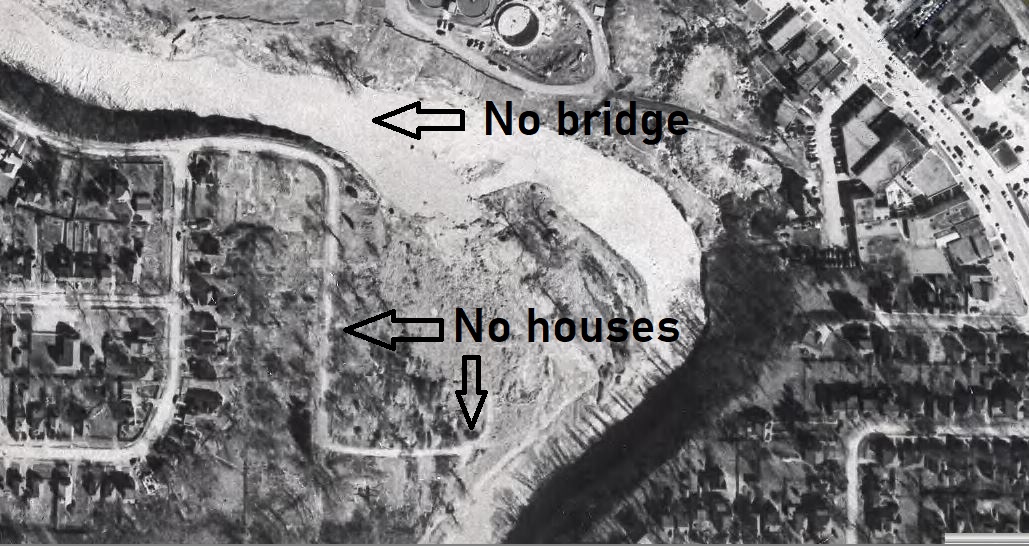
When the water levels rose on the river the bridge was swept off of the west abutment and began to deflect the flow of the river into the housing development.  With the full flow of the river rising by 20 feet there were 14 homes washed away and 35 people lost their lives in this small enclave.  In the 1956 picture the bridge is gone and so are the houses on the two streets closest to the river.

raymore 1956

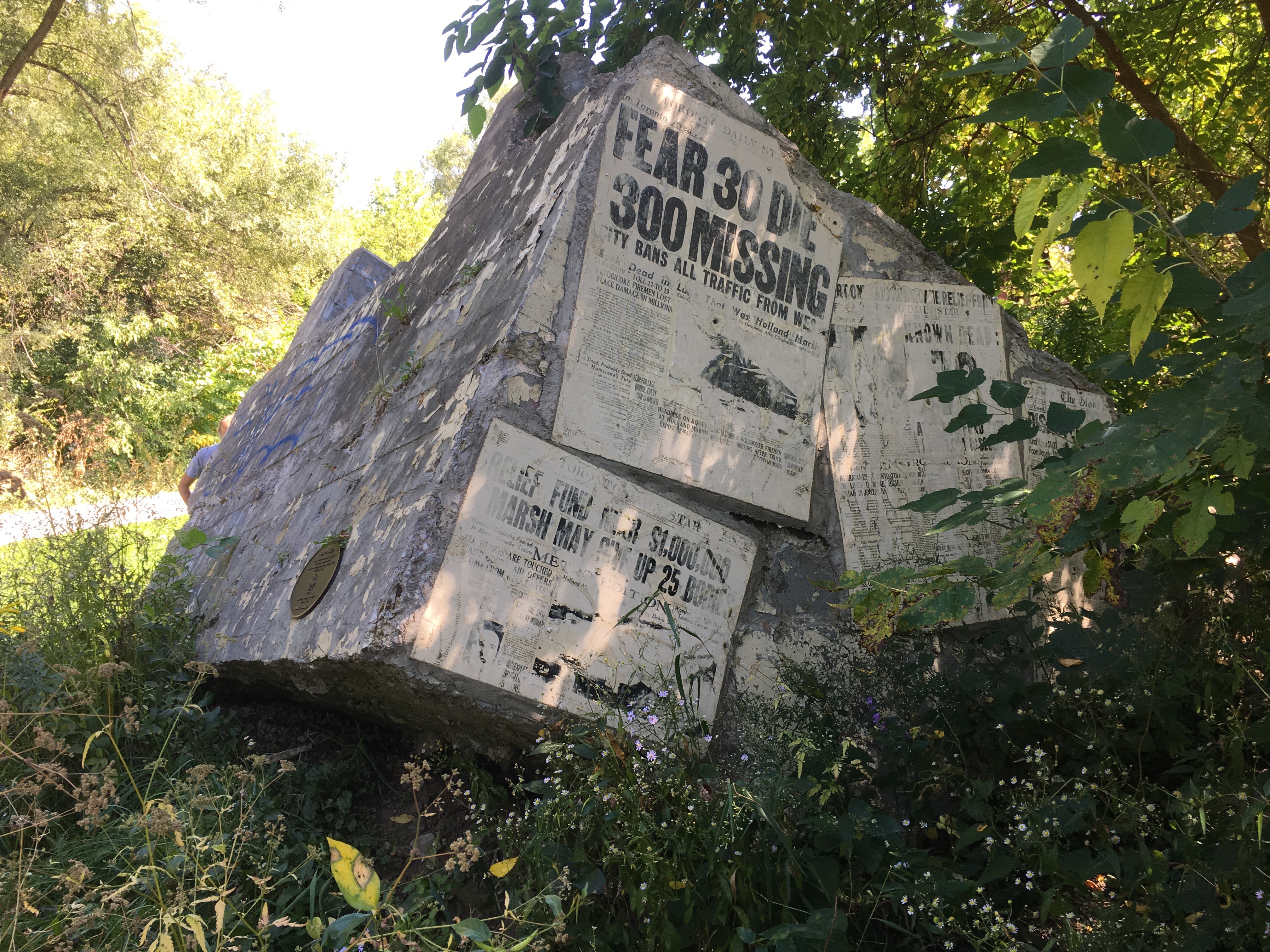
The east bank of the river still has the remains of the bridge abutment and, as a memorial, it has been plastered with replicas of the news papers that came out following the storm.

img_1895

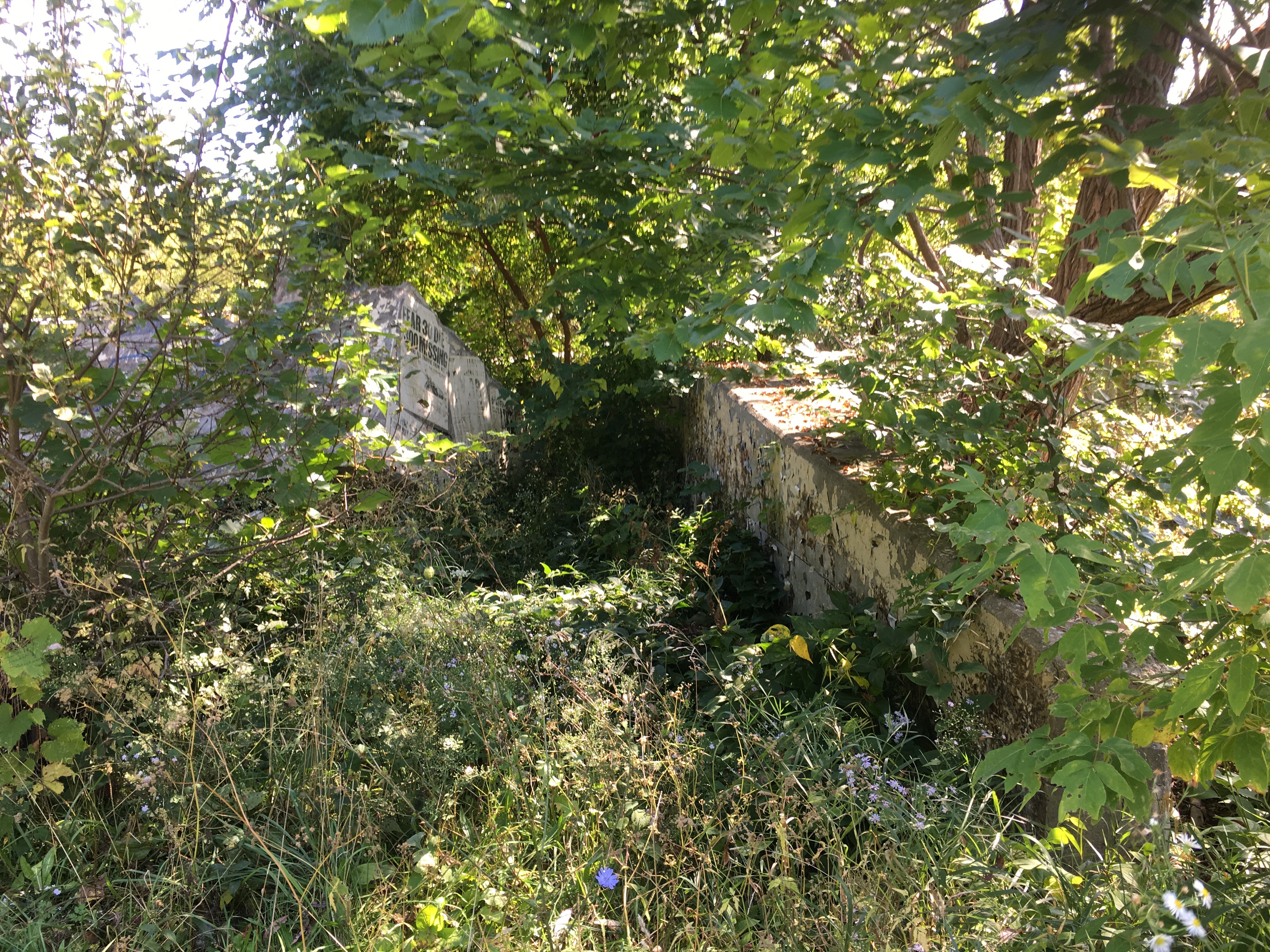
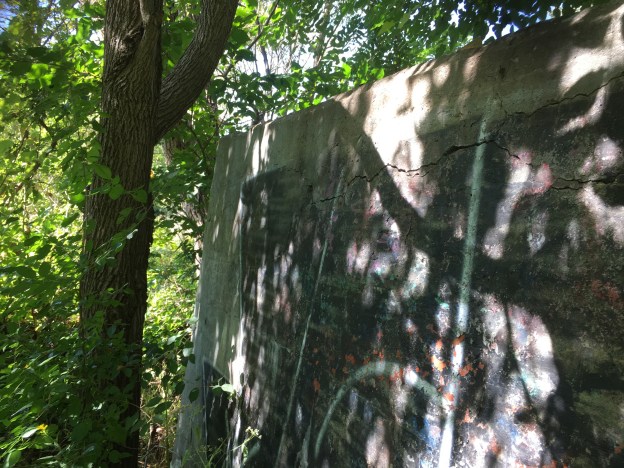
There is a set of concrete walls that surrounded the old bridge abutments.  Just for fun I walked through the grasses and shrubs that surrounded the old structure.  That was a big mistake because I ended up with hundreds of little seed pods stuck to my clothes that had to be picked off one-by-one.

The whole structure has been overgrown during the past 65 years and it is difficult to imagine exactly what it may have looked like when it was in use.

This willow tree will eventually push over this section of the wall as nature slowly reclaims its own space.

img_1899

Some parts of the old bridge foundations have been washed into the river where they now provide some shelter and habitat for the blacknose dace that live in the river.

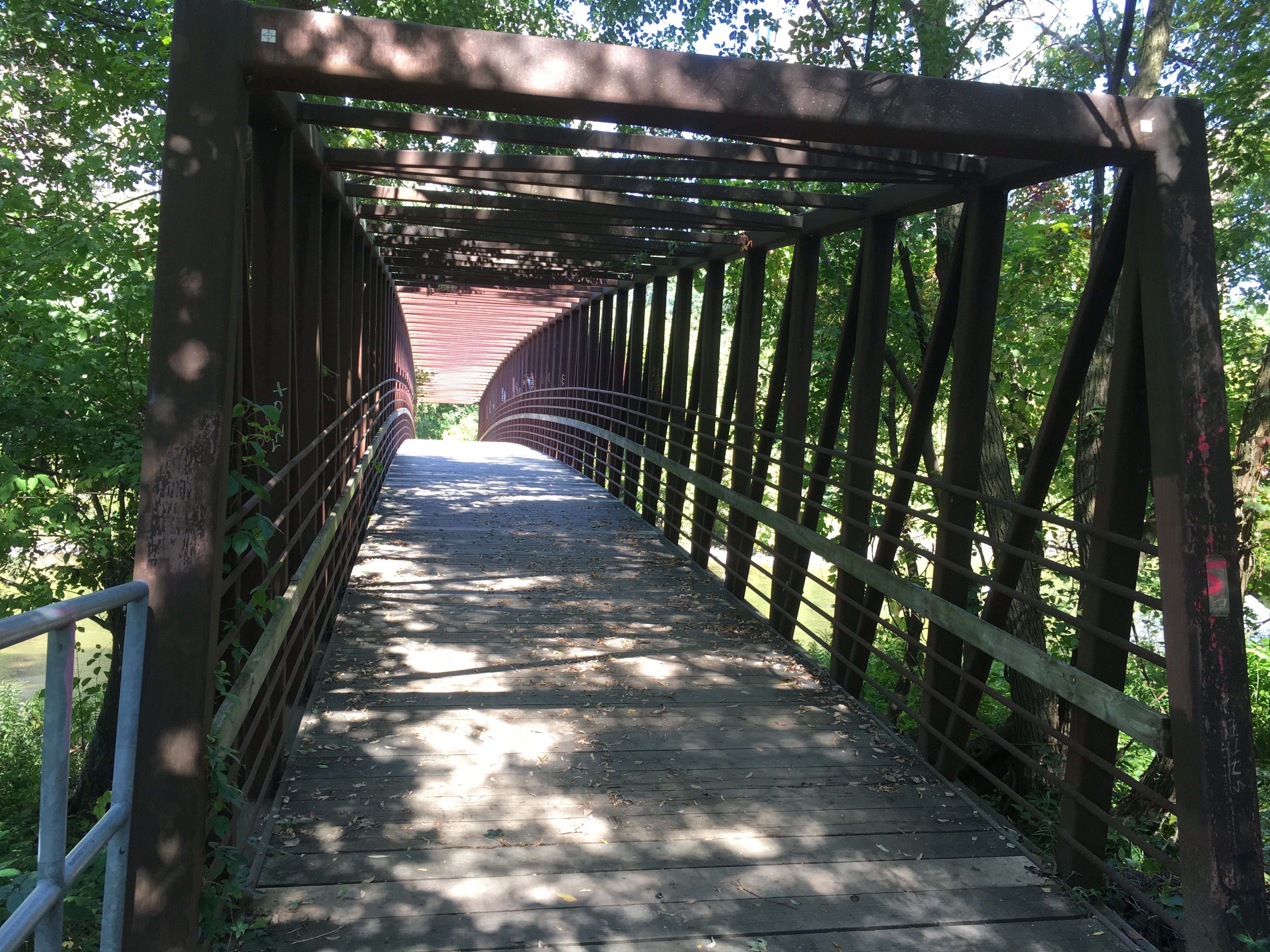
A new pedestrian bridge has been built across the river to link two sections of the Humber River Trail.

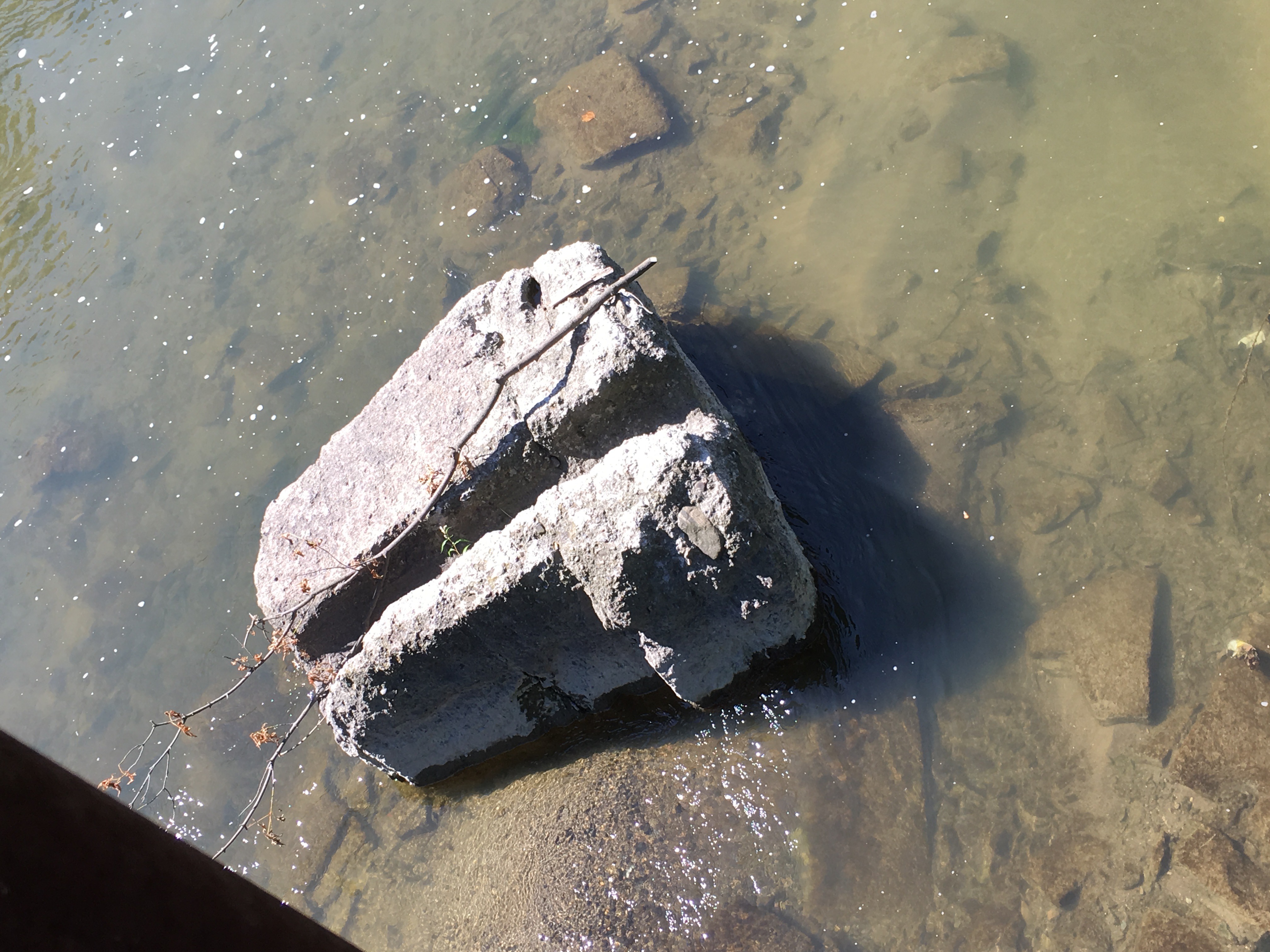
A large section of the west abutment can be seen in the river where pieces of wood and tree branches have been washed onto the top by high water and then left stranded there.

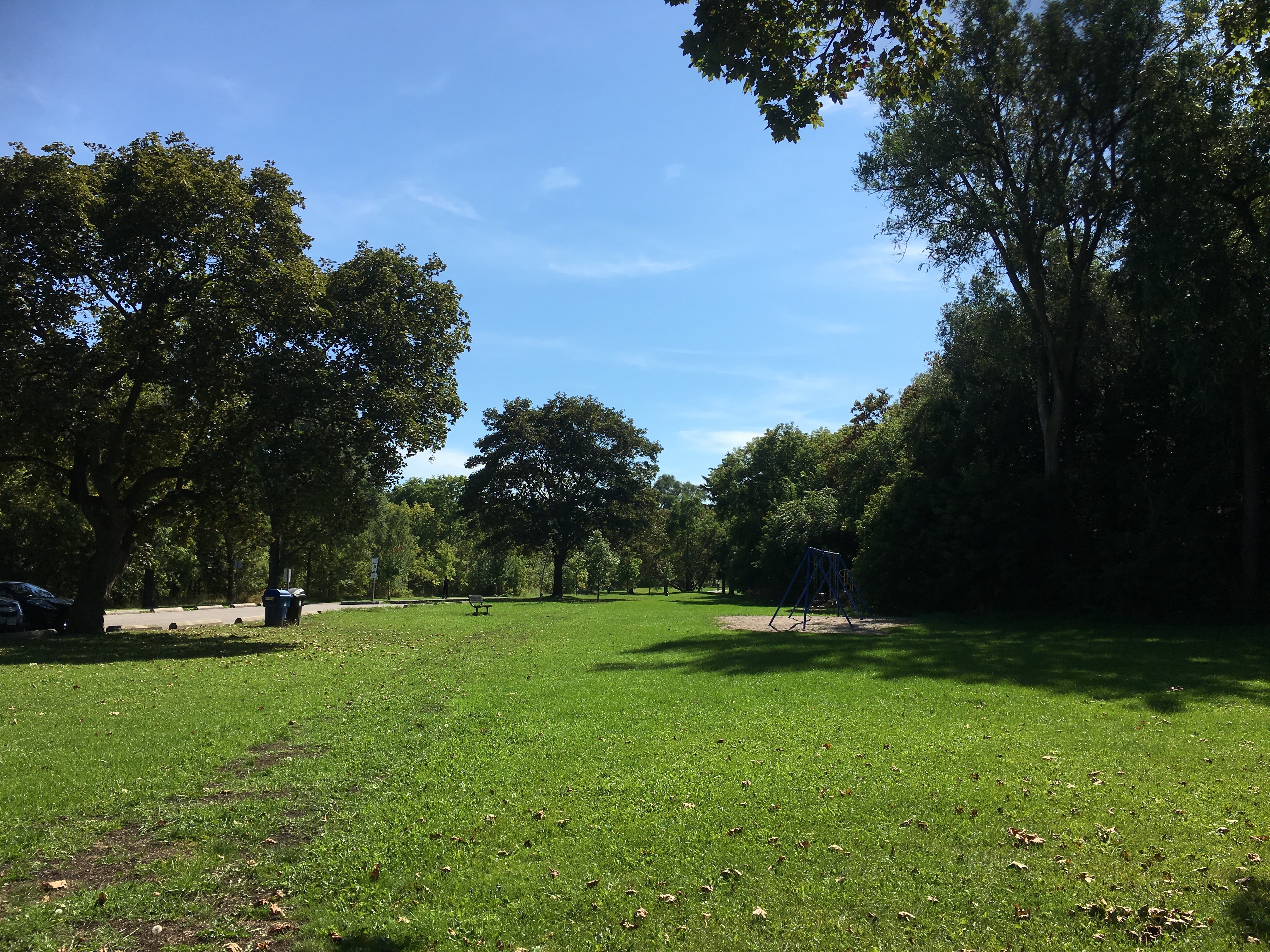
The former residential streets have been retained and are now in use as the main hiking trails through Raymore Park.  Many of the homes in the various flood plains around the city were washed away or damaged beyond repair.  In the aftermath of the hurricane it was decided that no homes would be allowed on the flood plains of any watercourse in the GTA.  Homes that survived Hazel were bought up by local conservation authorities and soon demolished.  This led to the creation of many of the ravine trails and parkland that we enjoy in the city today.

The Old Albion Road bridge across the Humber River was destroyed on the night of October 15, 1954 along with another 40 bridges in the GTA.  A short piece of the former road allowance and the old cut stone blocks of the east bank abutment mark one side of the old road alignment.  On the west bank of the river all traces of the former road have been removed.

img_2569

Over on The Rouge River the storm washed the Old Finch Avenue bridge away and shifted the abutment so that the new bridge appears to be on a new alignment.

img_88491

It’s tragic to think of the destruction that nature can cause but there have been several steps take to reduce the risk in the future.  Flood control dams were built on each of the three main rivers.  Milne Dam on the Rouge River, G. Ross Lord Dam on the Don River and Claireville Dam on the Humber River.

Google Maps Link: Raymore Drive

Like us at http://www.facebook.com/hikingthegta

Follow us at http://www.hikingthegta.com

Look for us on Instagram

The Cataract Electric Company

Saturday July 25, 2015

Another one of those days that are actually too hot for hiking being 29 degrees but feeling like 35.  Personally, I’d rather it be minus 29 than plus when it comes to hiking.  There’s always another layer that can be added in winter but unless you want to feed the local insect population, there’s only so far you can go in the summer.

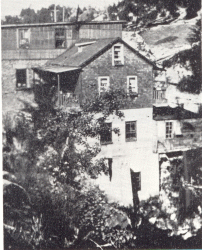
We found parking on the east side of the river, off of Charleston Sideroad. Parking is also available in the Forks of the Credit Provincial park.  We set off following a fishing trail that we thought would lead to the Cataract Falls and the remains of the Cataract Electric Company.   An archive photo of the five story building is shown below.

Cataract Powerhouse

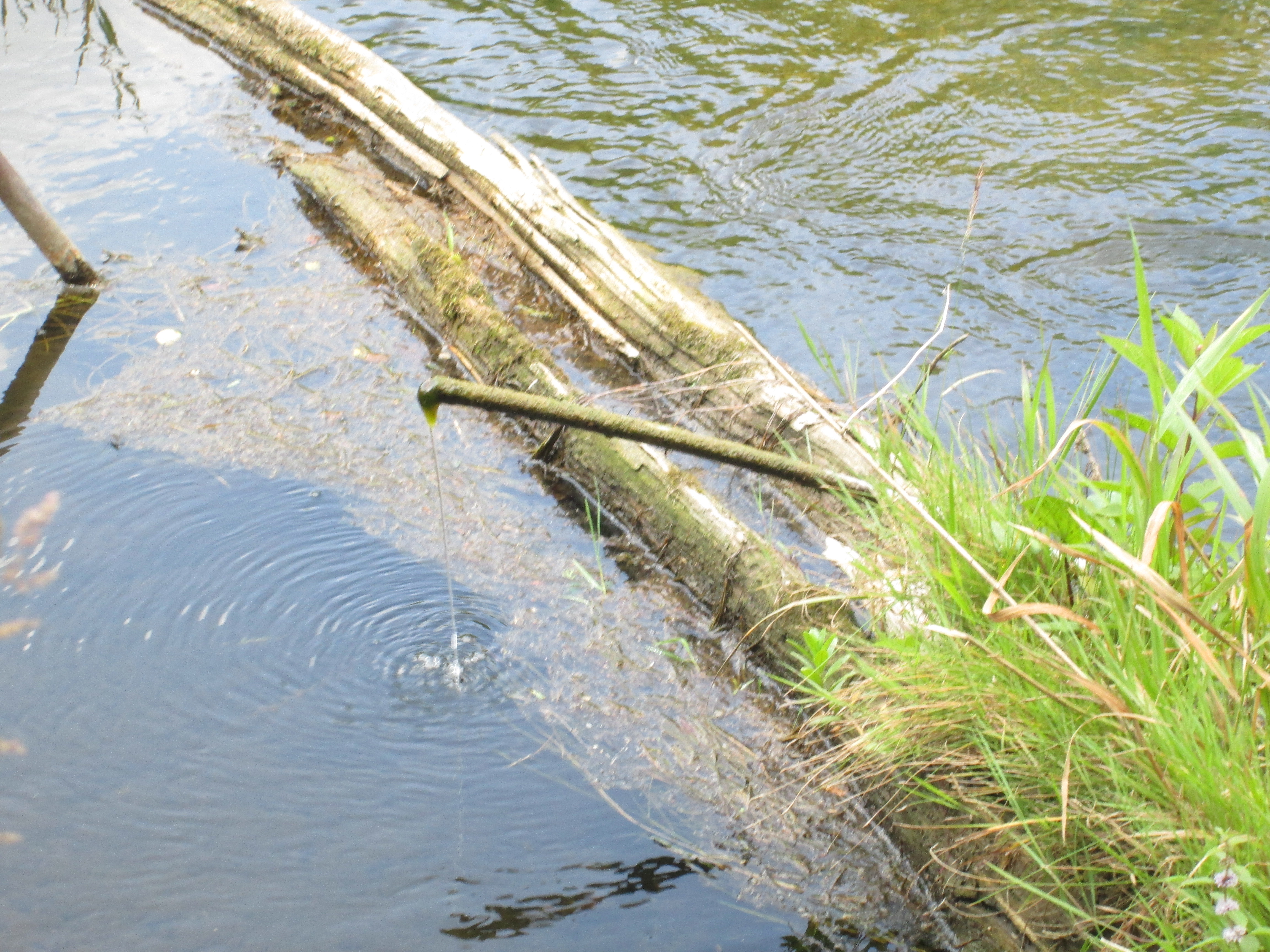
What it led to was a long hike through poisonous wild parsnip patches and through places where the trail was impassible without fishing footwear.  One of the more unusual things we have seen is a piece of plastic pipe that was running like a broken tap.  The word siphon comes from a Greek word meaning pipe or tube.  A siphon causes a liquid to be carried uphill, against gravity, in a continuous self sustaining flow.  This pipe is carrying water from the river bottom on one side of the log and siphoning it over the log and back into the river.  The mystery is this, how did it get started?

IMG_6754

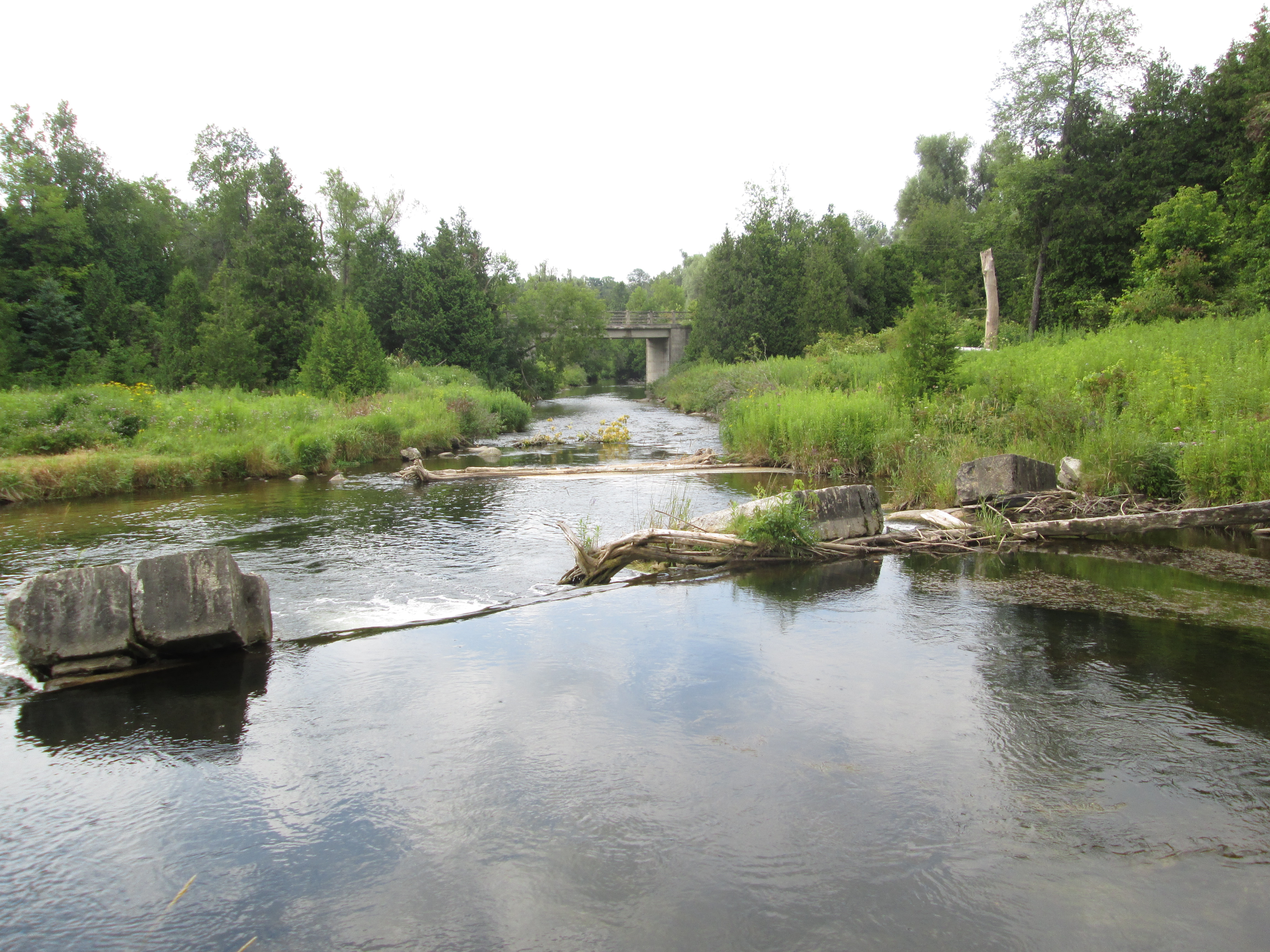
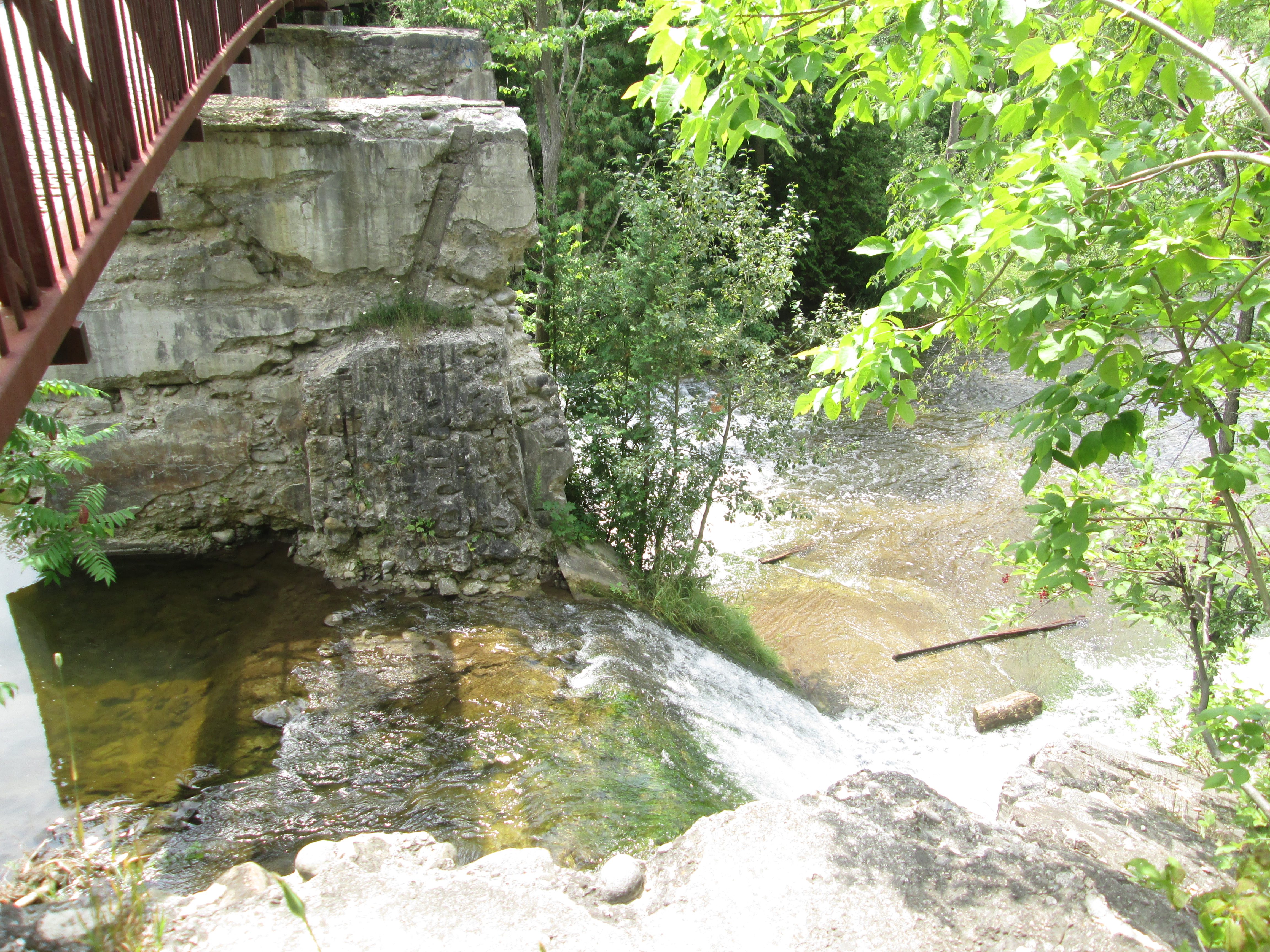
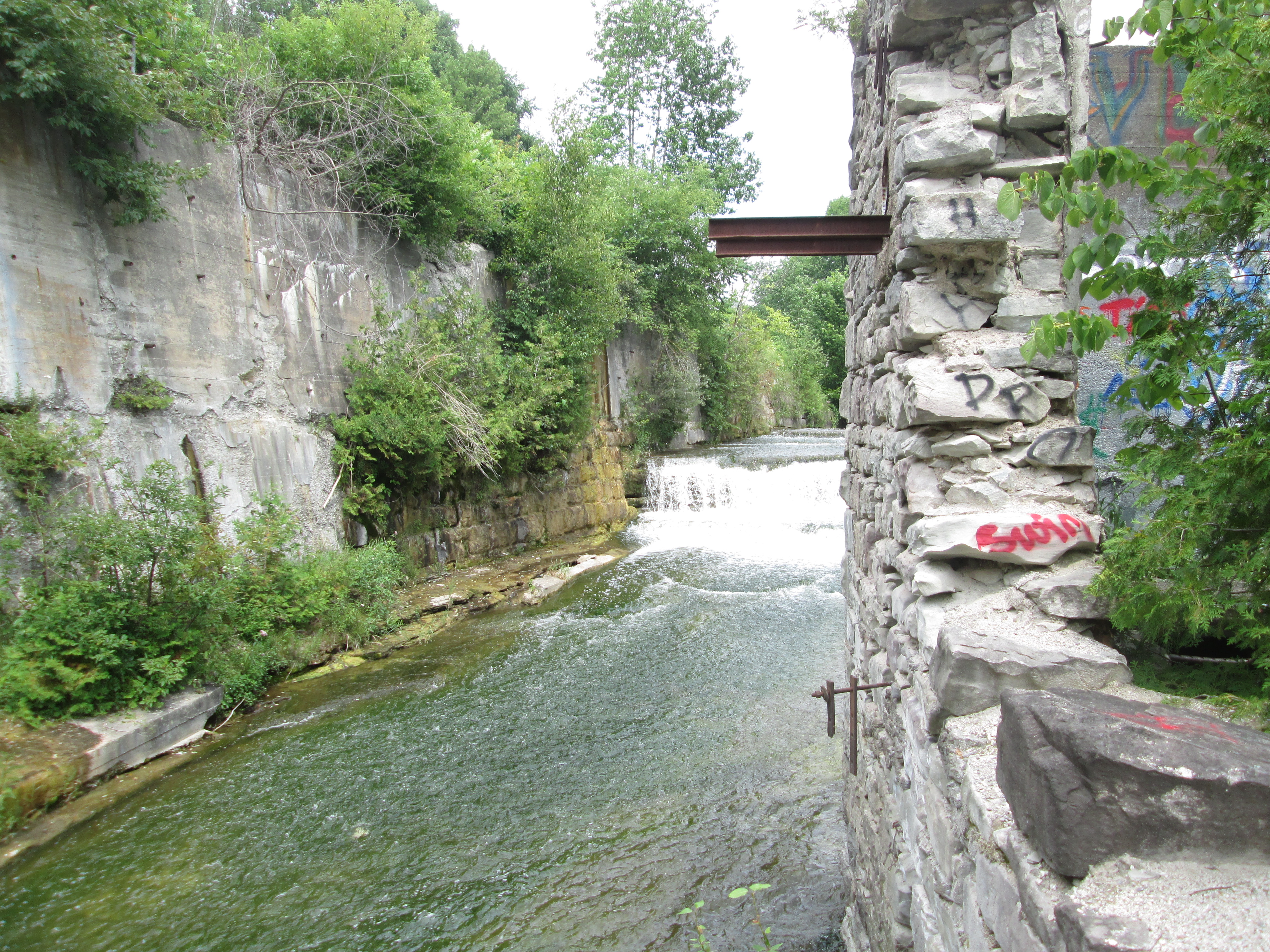
There are several places along the river where evidence of former dams still exist.  This picture shows one of these sites which is just upstream from the Quarry Dr. bridge, seen in the back ground.  Another concrete structure stands on the opposite river bank just down stream from the bridge.

IMG_6802

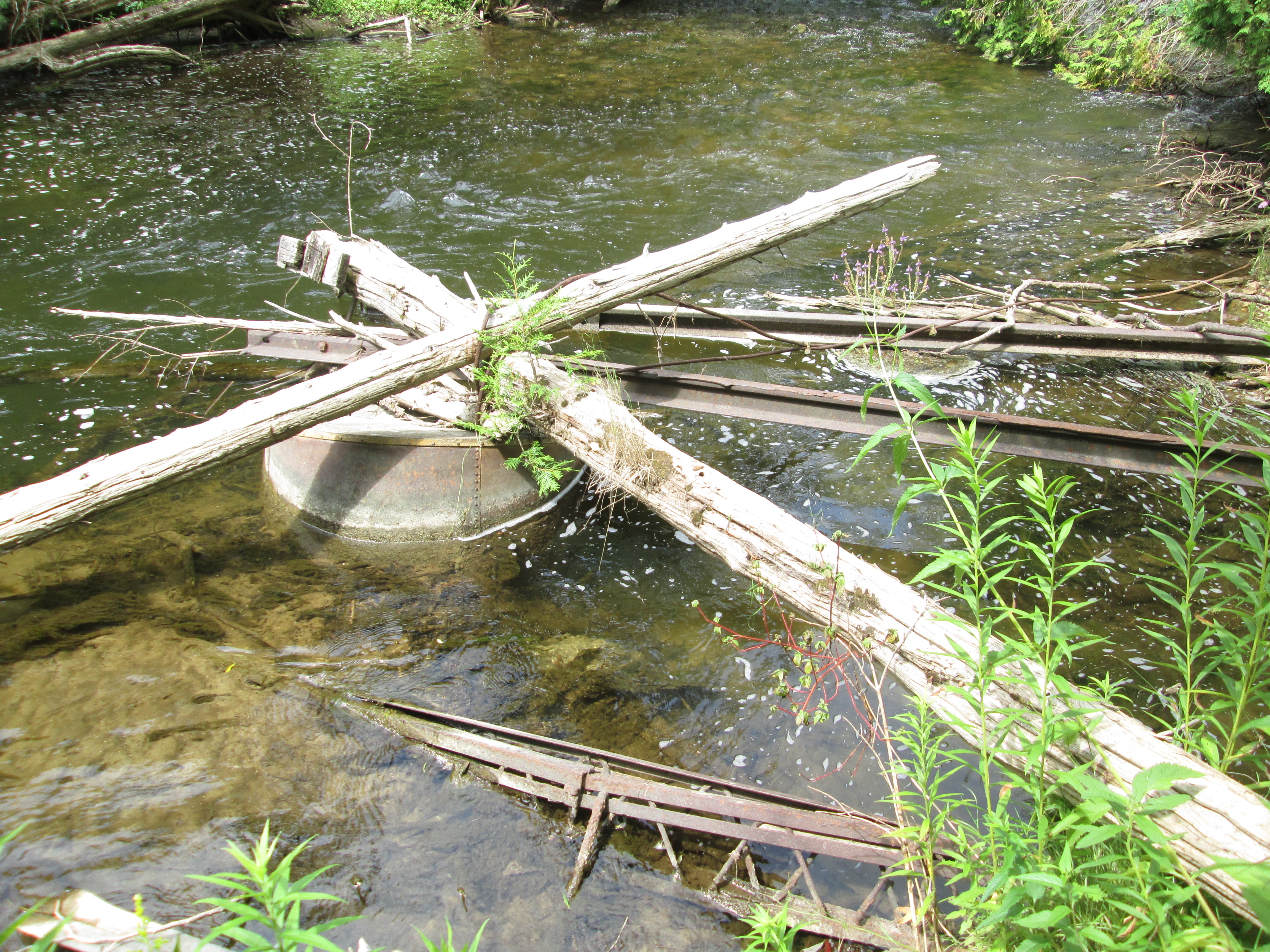
Evidence of former power transmission equipment now lays in the river a little farther along.

IMG_6842

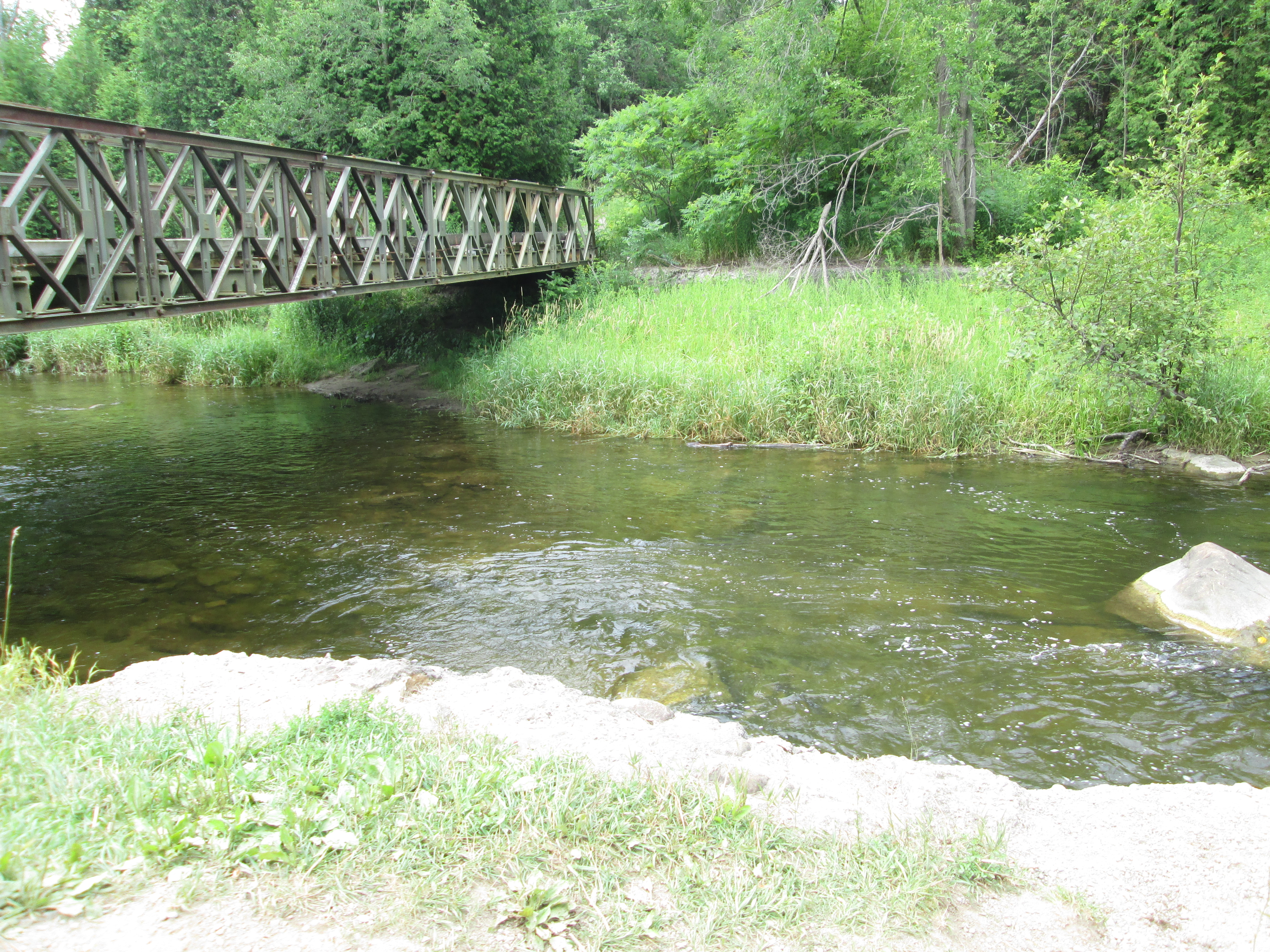
During World War two previous styles of temporary bridges were no longer suitable due to the weight of tanks.  Donald Bailey developed a system of pre-formed steel trusses that could be easily adapted to a wide variety of uses which was approved in 1940.  This bailey bridge was built in three days in 1999 by the Canadian 2nd Field Engineer Regiment.  Foundations for a former bridge appear on both sides of the river to the right in the picture below.

IMG_6860

In 1818 William Grant, from Scotland, acquired the land at the falls on the north branch of the Credit River near the present day village of Cataract.  The original plan for a salt mine didn’t pan out and eventually a saw mill was built.  A tiny settlement called Gleniffer was started but soon disappeared.  The land was bought in 1858 by Richard Church who started a milling empire at the falls consisting of saw, grist and woolen mills.  The village of Churches Falls was born and would later come to be known as Cataract while the mill pond was known as Cataract Lake. Church’s original dam was just above the falls but it was badly damaged in a flood in 1912.  After that the dam was built upstream where a pedestrian bridge now crosses on the 1912 sluice gates.  This dam was dynamited in 1953 by the Canadian Pacific Railway because they feared that a flood might damage the tracks that run along the western side of the river gorge.  Just a year later Hurricane Hazel destroyed dams and bridges throughout the GTA.  The Credit Valley Explorer scenic rail tour now runs along these tracks.

IMG_6864

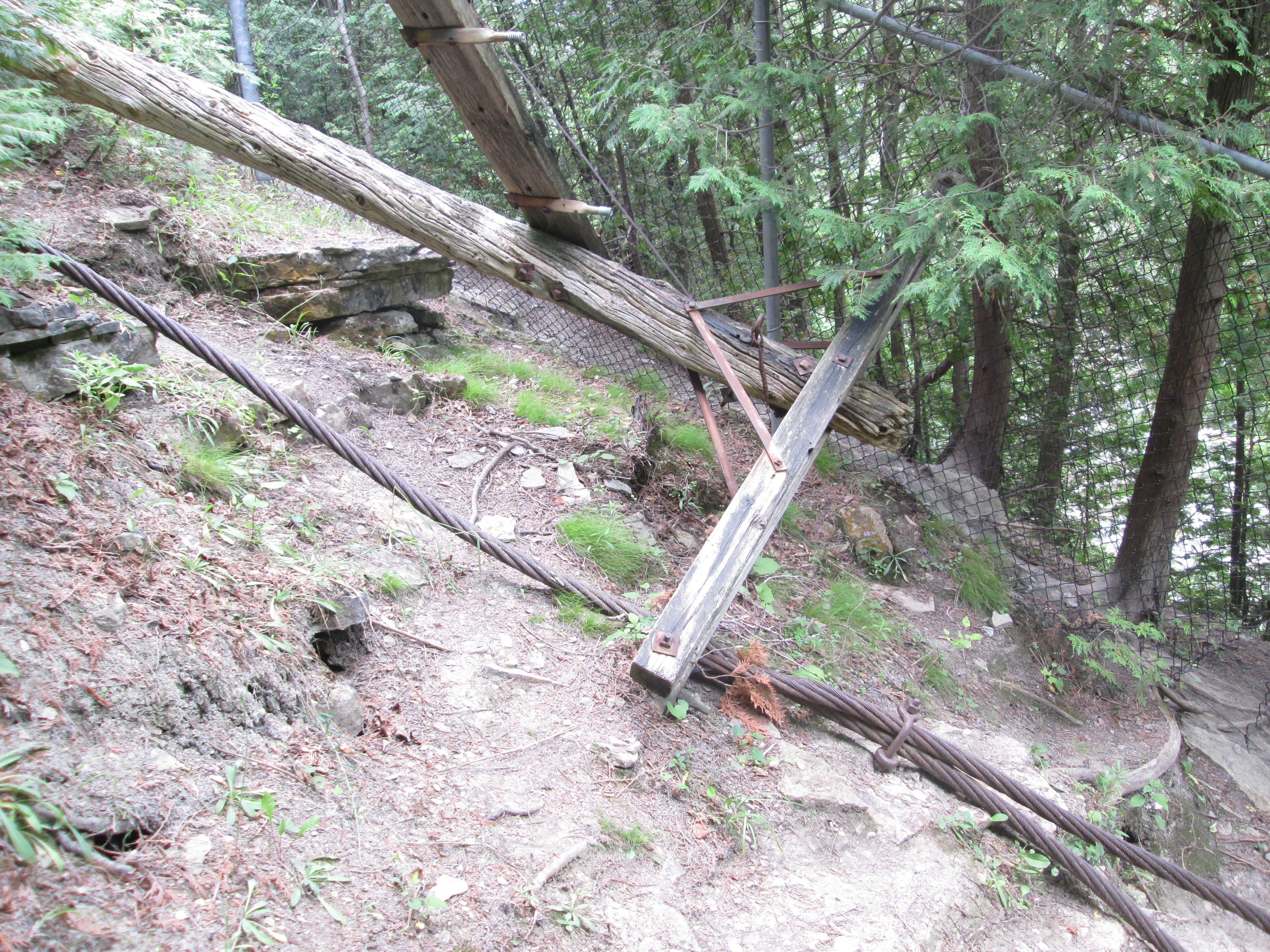
Church built his sawmill out of wood and it was destroyed in a fire in 1881.  The Wheeler brothers rebuilt it as a three story stone grist mill.  This mill didn’t last and was destroyed by fire in 1885.  John Deagle purchased the property in 1890 and built a 5 story grist mill on the same foundations.  He soon closed the grist mill and converted the structure to the production of electricity.  As you approach the remains of the building a large electrical pole is down on the ground.  The cross beam carried many glass insulators, all of which have been removed.  A cable over an inch thick lies on the ground here as well.

IMG_6901

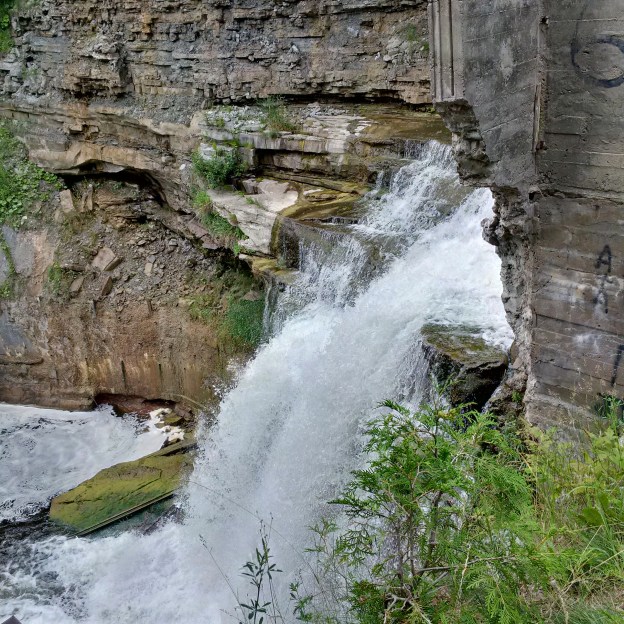
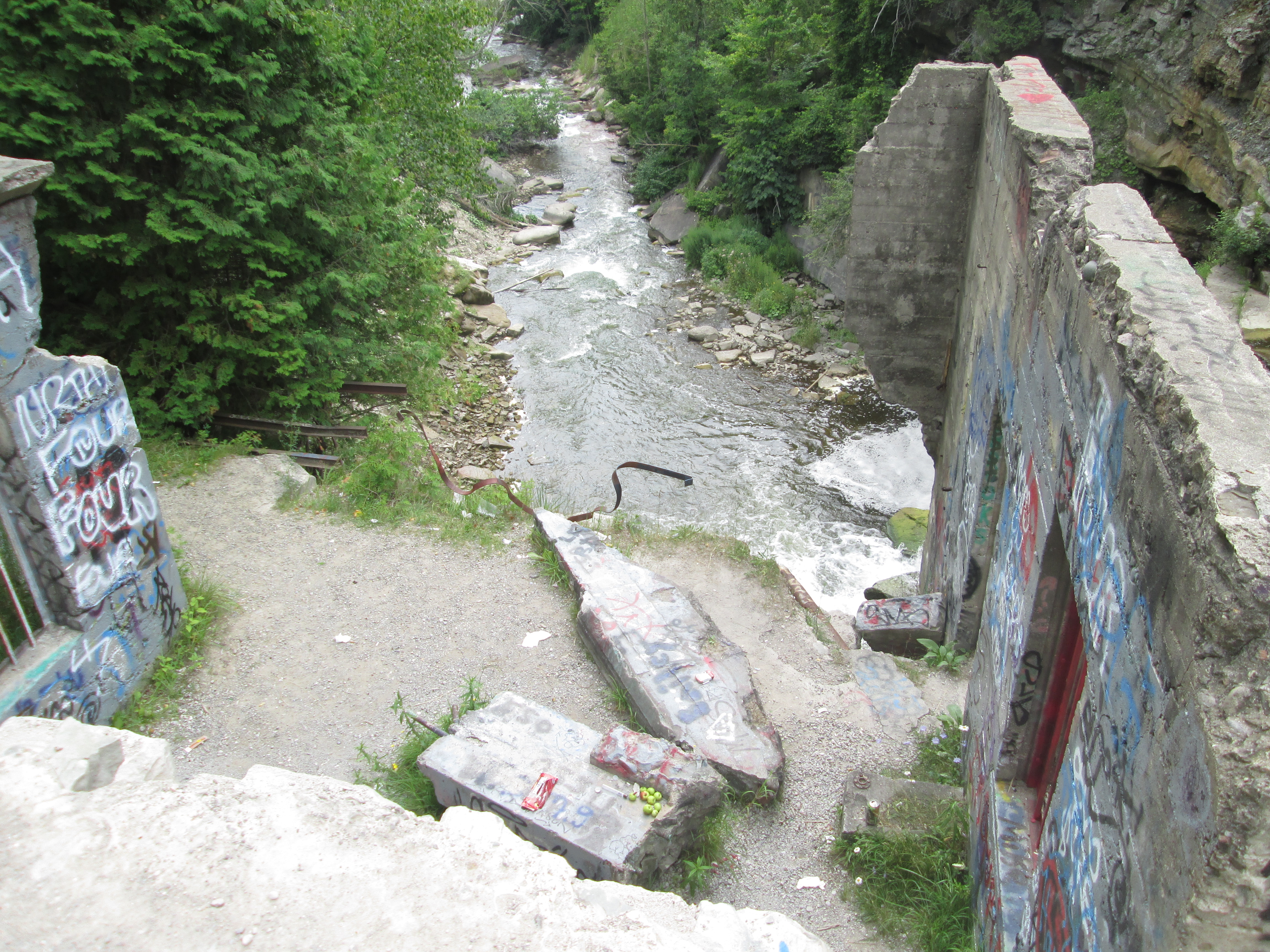
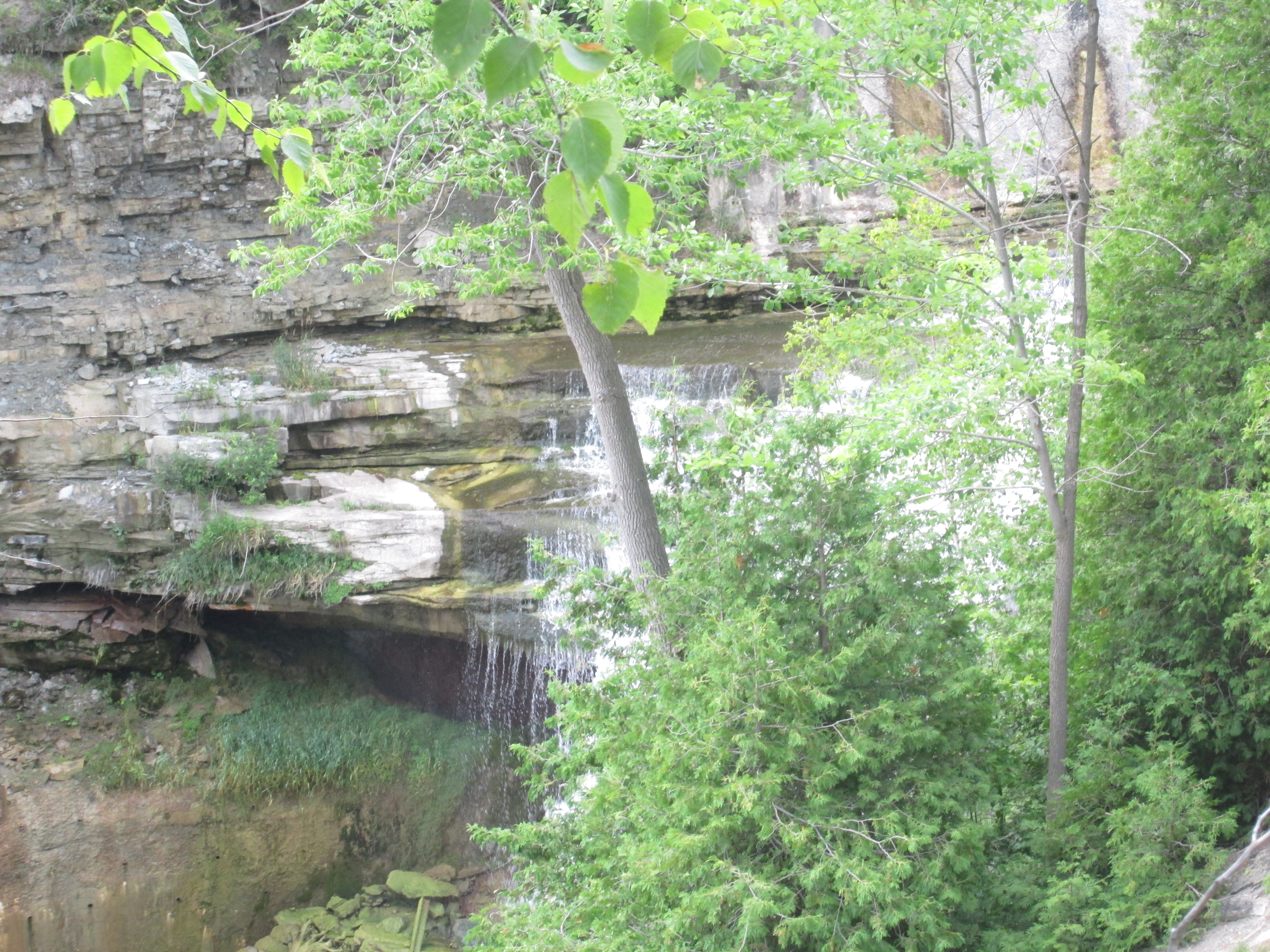
Deagle produced his first electrcity from the Cataract on Nov. 2, 1899 under the name of The Cataract Electric Company Limited to light three experimental street lamps in town.  Due to right-of-way negotiations he supplied electricity to the farm on lot 5, concession 5 in Caledon making it the first farm in Ontario to have electricity.  In 1904 he signed contracts to bring electricity to the villages of Erin and Alton and eventually carried it as far as Orangeville.  He also supplied the Cheltenham Brickyards.  The view below looks out of the end of the power plant, beyond the falls, to the river in the gorge below.  Cataract Falls drops 21 meters over the side of the escarpment here and can be seen in the cover photo as it cascades over the falls.

IMG_6887

After the flood of 1912 Deagle rebuilt his mill but sold the power plant just three years later. After several ownership changes it was under the control of the Caledon Electric Company by 1925.  Ontario Hydro purchased the property in 1944 but due to low water levels they shut the facility down in 1947.  The wall below has original Wheeler Brothers stonework in it while the poured concrete in the picture above is a later addition.  The water fall upstream is the site of the pre-1912 dam.  The riverbank has been reinforced twice to protect the CPR tracks above. The earlier work was done with cut stone and is at water level just below the dam.  Concrete was a 20th century addition.

IMG_6890

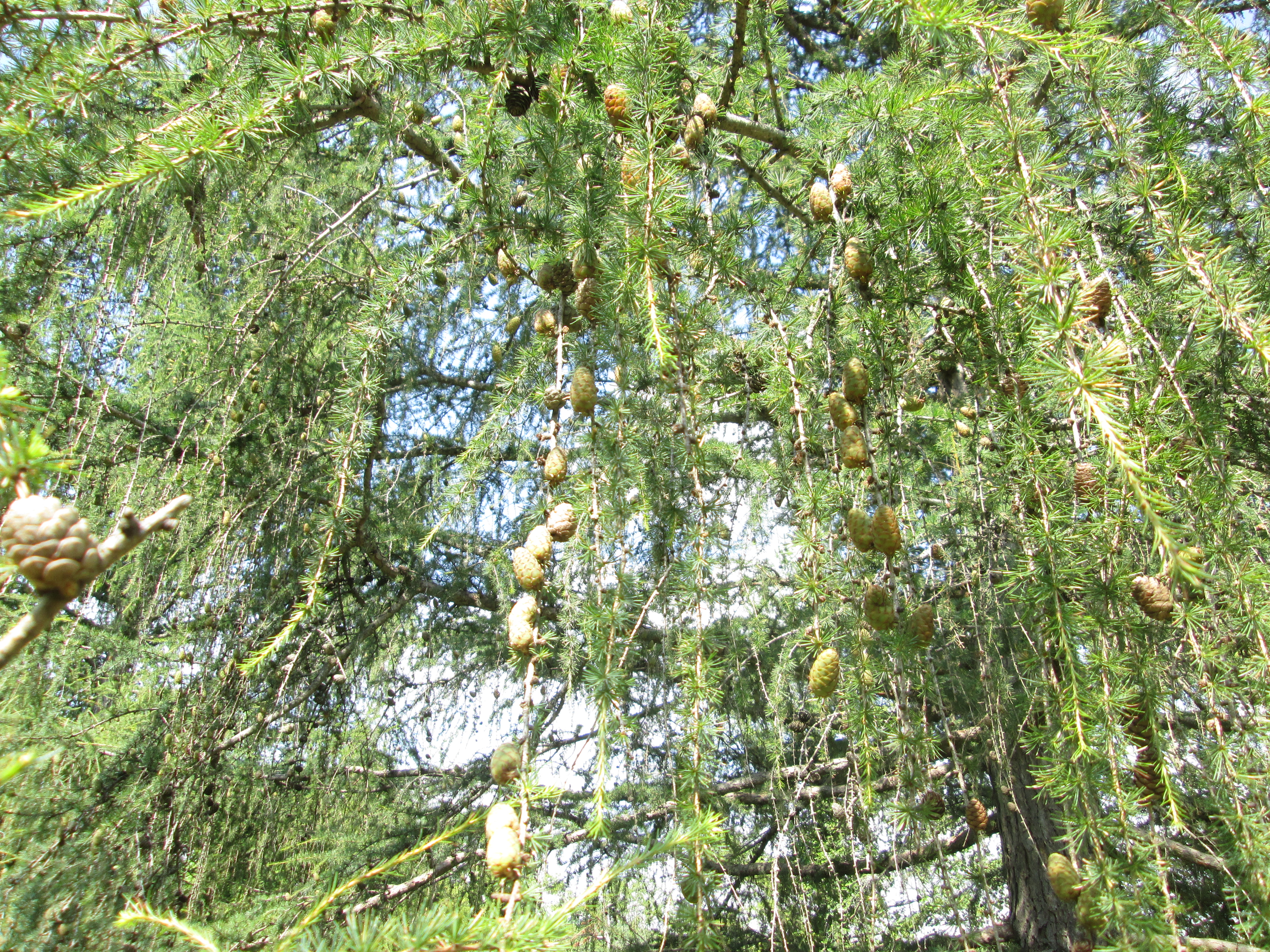
Eastern hemlock grows in selected spots in the park.  It is known as a high yield cone producer and this year appears to be a good year.

IMG_6749

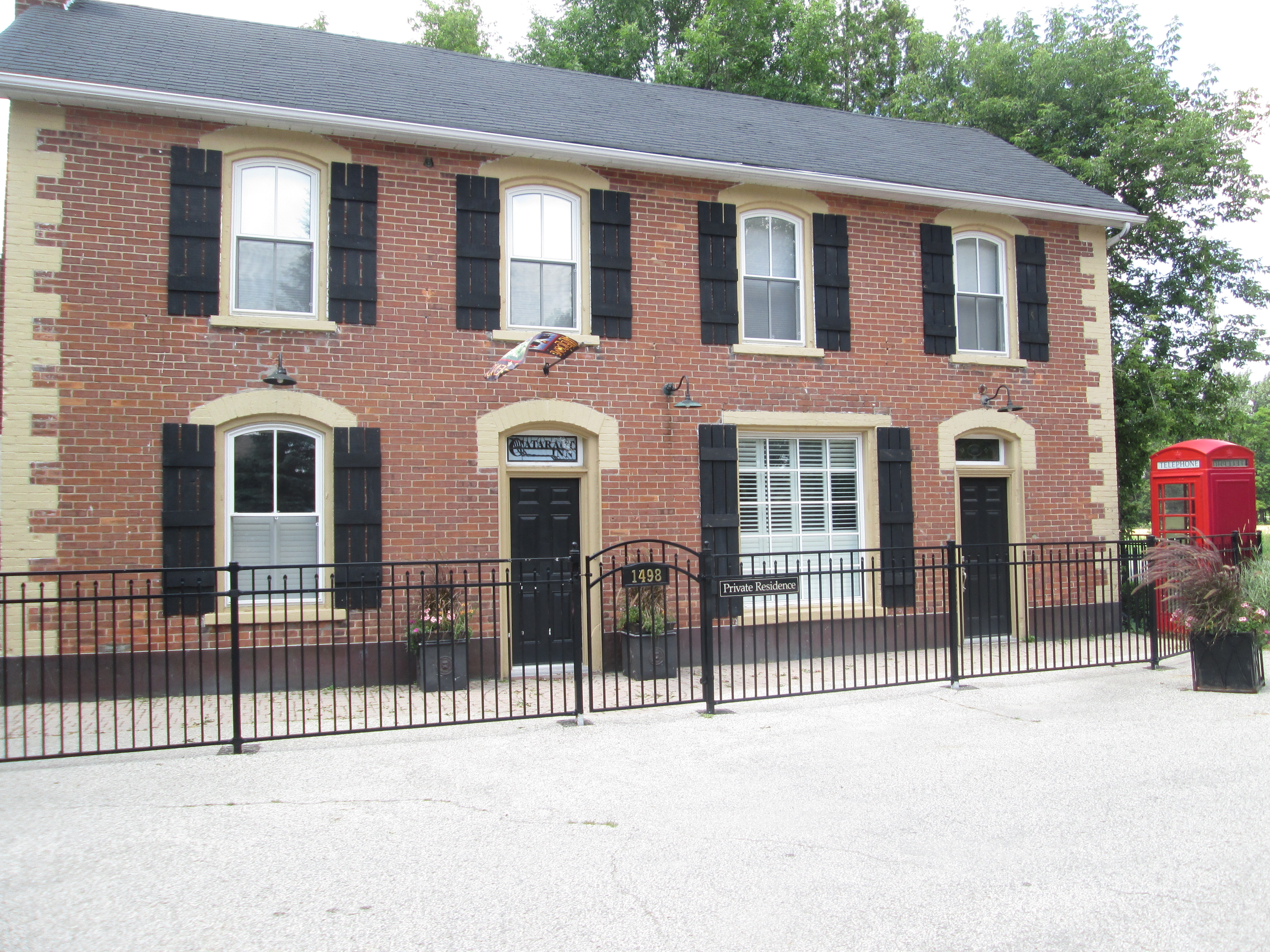
We took the trail from the power station directly back into Cataract.  It comes out close to the Cataract Inn.  The window above the door on the left that says Cataract Inn is composed of stained glass.  This was known as the Horseshoe Inn in the late 1800’s.  The window over the door on the right has 1855 written in the glass to denote the date of construction.

IMG_6920

A parting shot of the water dropping off the shelves of shale near the remains of the Cataract Electric Company.

IMG_6875

Also check out the top 15 treks in the first 100 posts here.

Like us at http://www.facebook.com/hikingthegta


Rowntree Mills

Saturday, Nov. 8, 2014

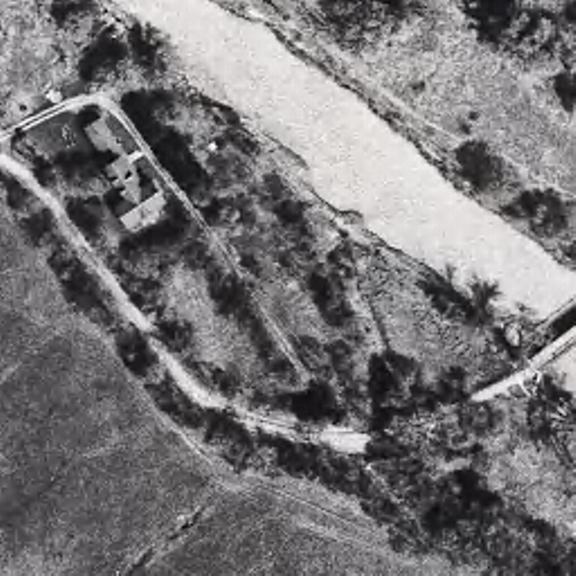
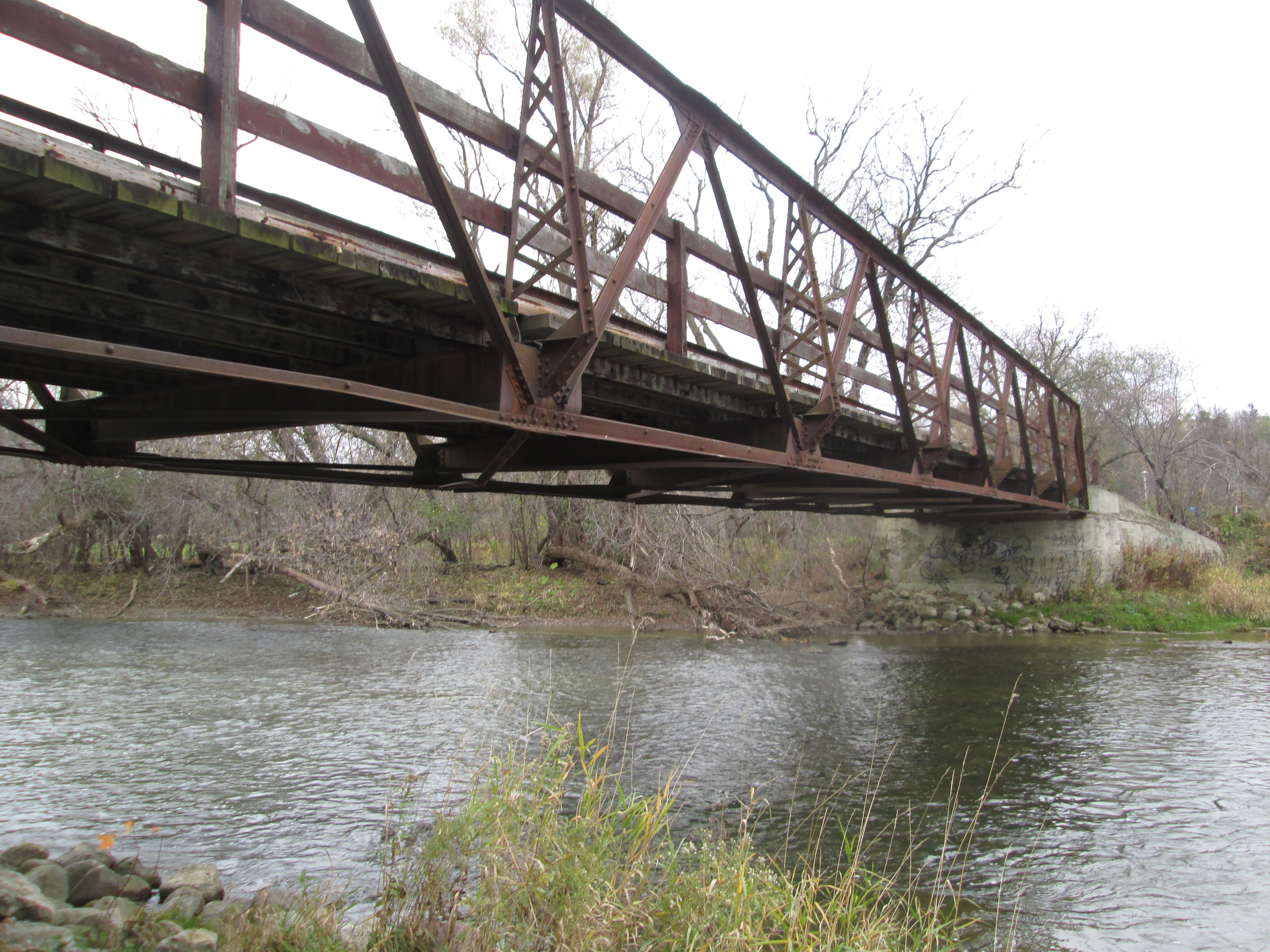
It was overcast and 5 degrees with occasional light drizzle.  Parking is available on Hathor Crescent just before Rowntree Mills Road descends the hill to the river.  The road is closed at the bottom of the hill and from here the bridge across the Humber river can be seen.  The bridge is a steel girder construction and has been fitted with new wood decking to convert it into a safe pedestrian bridge.  It’s construction likely dates to around 1900.  The bridge can be seen crossing the river in the lower corner of the cover photo, which is an aerial shot from 1953. The photo below of the bridge is taken from the west bank of the river.

IMG_0923

Joseph Rowntree arrived in Canada from England in 1830 and set himself up in an area known as Pine Ridge, just outside of Thistletown.  In 1843 he built a saw mill on the east side of the Humber river and in 1848 he built a grist mill on the west side.  A road was built to access the mill which we now call Rowntree Mills road.  A bridge was built across the river and he named it all Greenholme Mills.  In 1870 Joseph added the Humberwood Mills, a mile down river, to the family holdings.  The cover photo shows the grist mill as it appeared in 1953. Rowntree Mills road crosses the bridge and passes to the west of the mill.  A laneway completes the loop on the river side of the mill.  Today the area where the mill stood 60 years ago has become completely overgrown.  All that could be found was this square area of concrete in the woods and many piles of bricks, stone and concrete.

IMG_1017

From the east side of the river the former mill site can be identified by the row of pine trees that ran along side of the lane way that lies between the mill and the river.  They show up as the dark strip to the right of the road, adjacent to the mill, in the cover photo.  I can picture Joseph planting these pines along the ridge in honour of the community of Pine Ridge where he lived. The mill stood about 20 feet above the current water level of the river.  It isn’t immediately obvious how Joseph used the water power from the river to turn the grinding wheels in his grist mill.  It may have initially been an undershot wheel sticking out into the river.

IMG_1024

It was a morning full of various birds.  At one point a migration of cardinals passed through but none sat still long enough to get their picture taken.  There were also flickers, herons, and large birds of prey.  Some of the trees in the area display the straight rows of tiny holes that are typical of a yellow-bellied sap sucker.  These woodpeckers drill little holes from which they feed on the sap that flows out.  The tree in the picture below had these rows of holes extending for as far up the tree as the eye can see.

IMG_0930

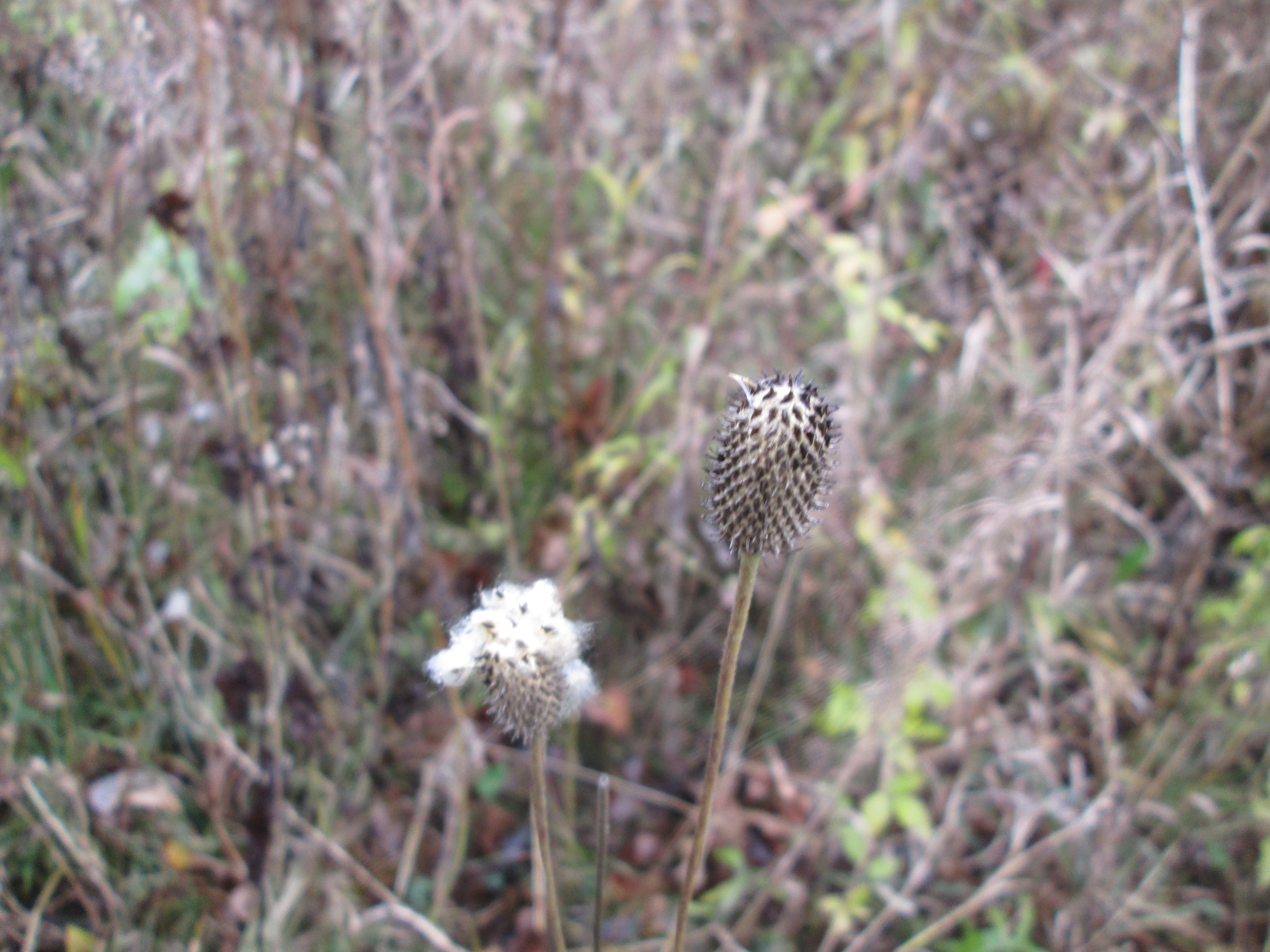
This plant is known as tall thimbleweed.  The single head on a tall stem contains tiny nubs that make it look like a thimble.  When the seed heads burst open they look and feel like cotton. Native peoples used the plants for medicinal purposes but we now know that the leaves are toxic in large doses and so the plant is used mainly for decoration.  The picture below shows both a closed pod and one that has blown open to spread its seeds to the wind.

IMG_0937

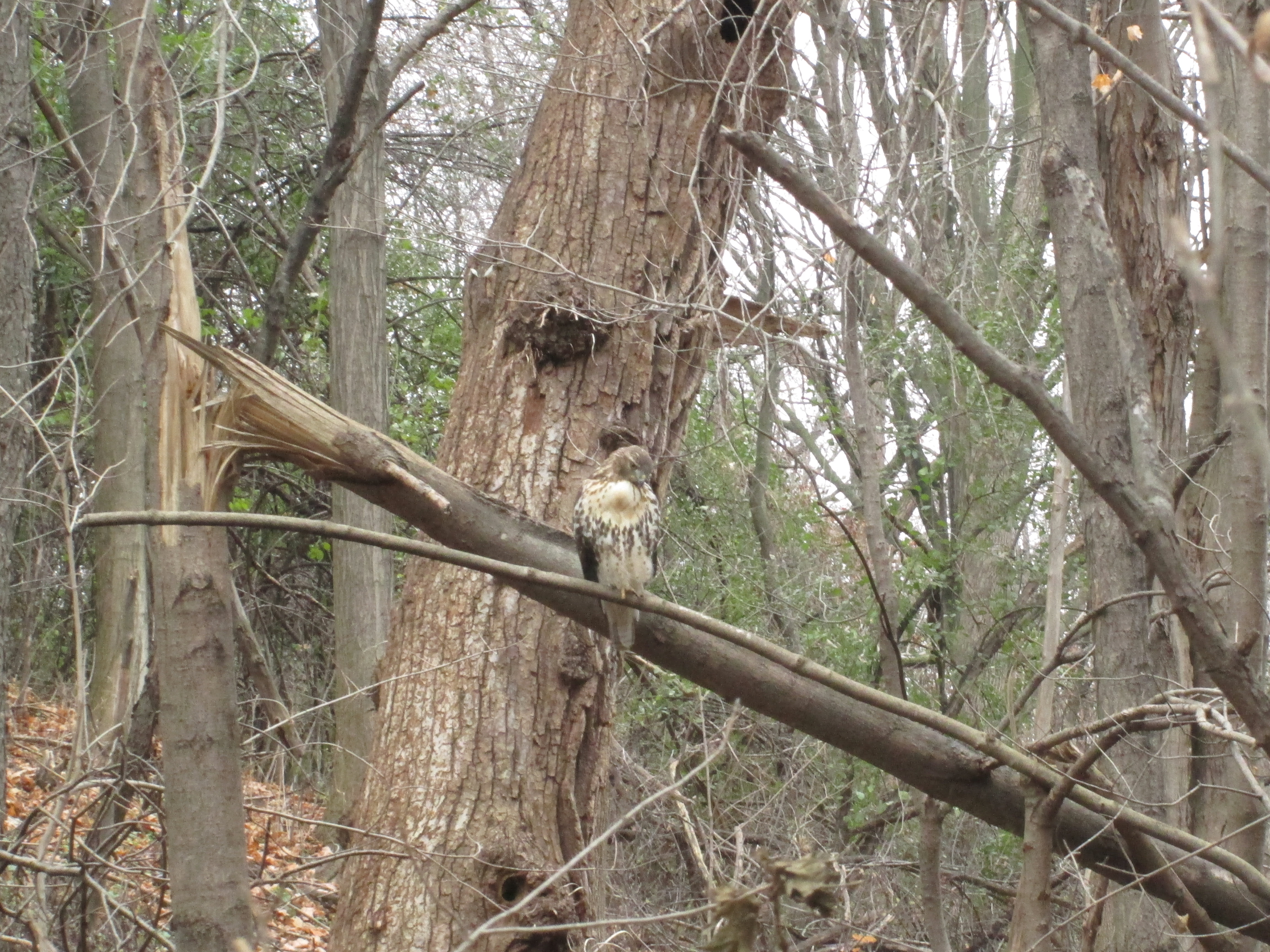
This very large red tailed hawk didn’t seem to mind posing for the camera.

IMG_0993

Rowntree Mills Park and the surrounding ravines have been taken over by white tail deer.  In one spot I was able to see 8 females at one time plus at least one male.  Mating season is known as rutting season for these deer.  Males begin their part of the rut in the fall when the velvet is falling off of their antlers.  In North America this lasts for several weeks with the peak being on average, November 13th.  The male’s part in the reproductive act lasts for exactly one thrust.  Ho-Hum.  Females go into rut for periods of up to 3 days at a time and can do so 7 times over the rutting season, or until they conceive. The picture below has at least 4 deer looking at the camera plus 4 others hiding in the background.

IMG_1005

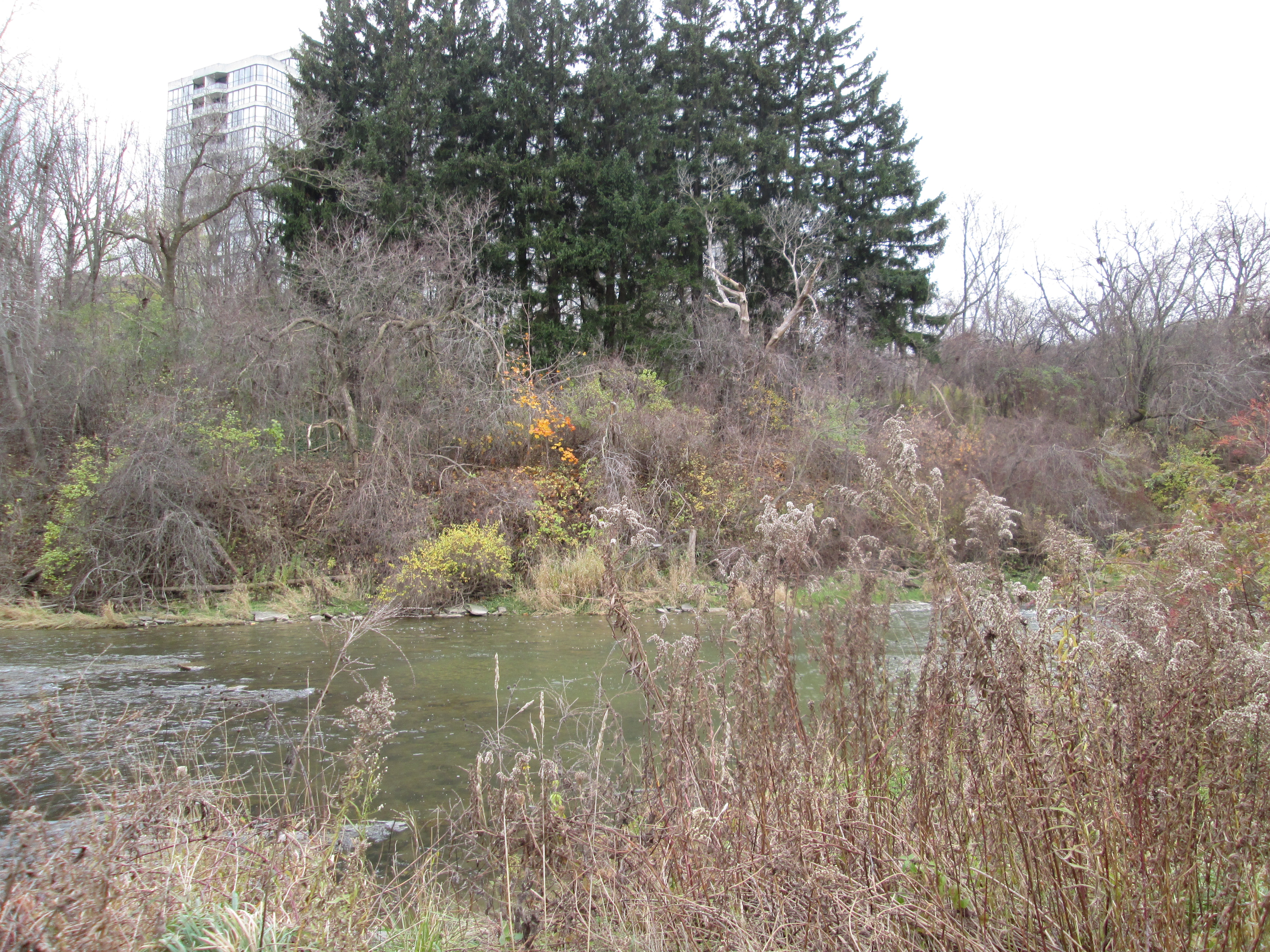
In October 1954 the area on the east bank of the river just north of Rowntree Mills road was home to a small community of houses.  On the morning of October 16, 1954, there were 12 less of them there because Hurricane Hazel had swept them away.  Two people died in this area as well when they were trapped in their car as the river washed it down stream.  Today the area has been cleaned up and there is no trace, other than in old aerial photos, to show where the homes were. Rowntree Mills Park was named after Joseph in 1969 but was closed in 2009 due to wild parties that trashed the park.  Today it is basically abandoned although the grass is cut and the leaves are cleaned up.  The picture below is taken from the front yard of one of these former homes looking along the street where others once stood.

IMG_1023

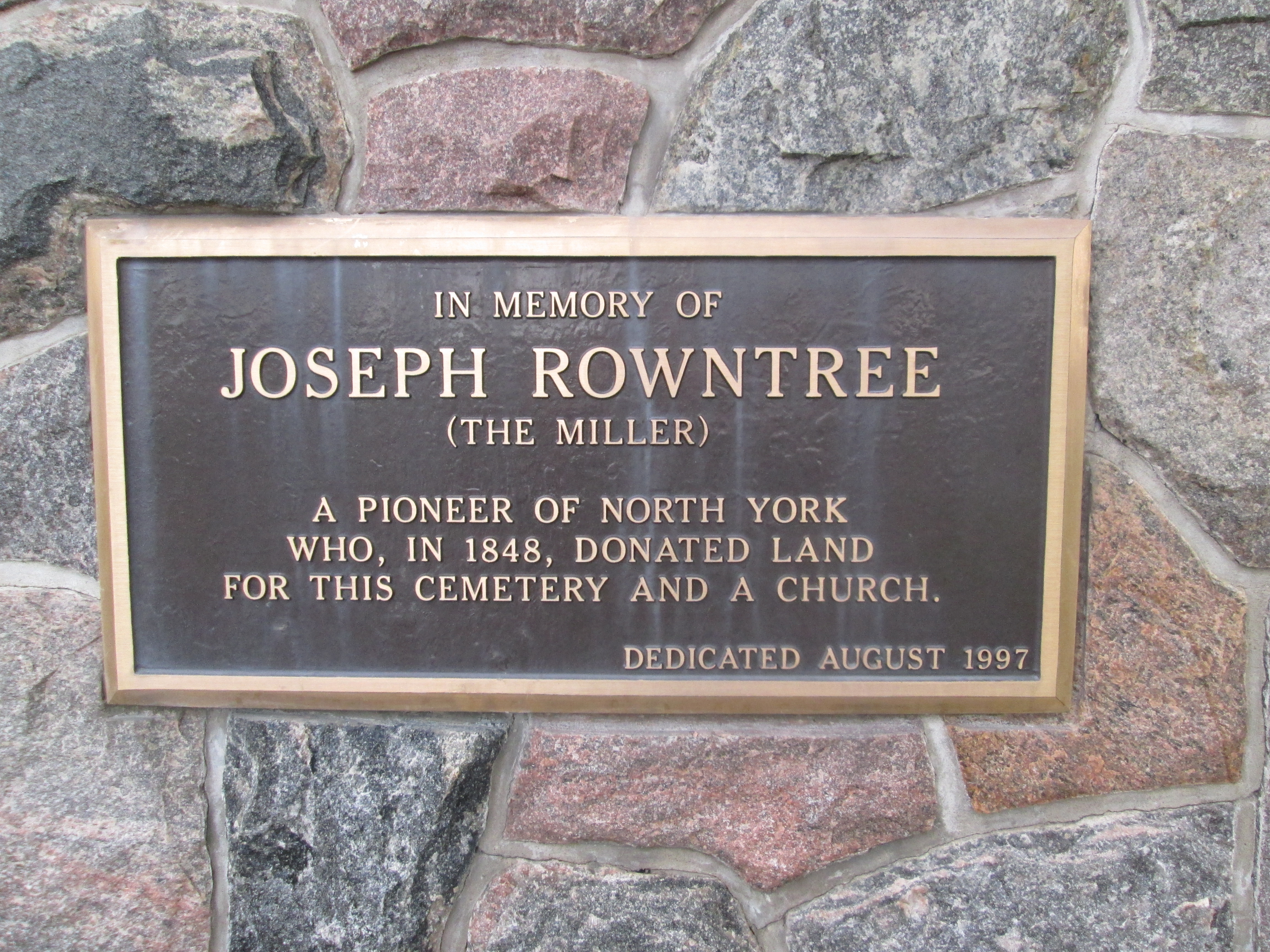
At the corner of Rowntree Mills Road and Islington Avenue is a pioneer cemetery.  This land was donated in 1848 by Joseph Rowntree to be used for Pine Ridge Methodist Church and its cemetery.  There are many grave markers in here that commemorate the lives of various members of the Rowntree family.  Although it seems likely that Joesph was laid to rest here, I was unable to locate his grave marker.

IMG_1026

Google Maps link: Rowntree Mills Park

Like us at http://www.facebook.com/hikingthegta

Follow us at http://www.hikingthegta.com