Tag Archives: Barbertown

Leslie Log House

Sunday, April 30, 2023

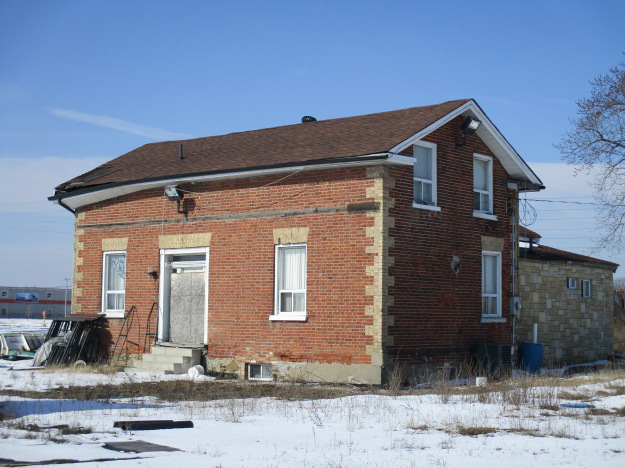
John Leslie and Esther Beaty moved from Sutherlandshire in Scotland in 1824 and leased 200 acres from Kings College. The lot near Meadowvale was formally known as Lot 12 concession 5 in the Township of North Toronto. Here they built a story-and-a-half log cabin in 1826 close to Mullet Creek, which ran through the property. They raised their 7 children in this 26 foot by 36 foot home constructed of white cedar. They bought the property in 1845 and eventually added a full basement below the home, setting it on walls made of field stone. A summer kitchen was later added but has since been removed.
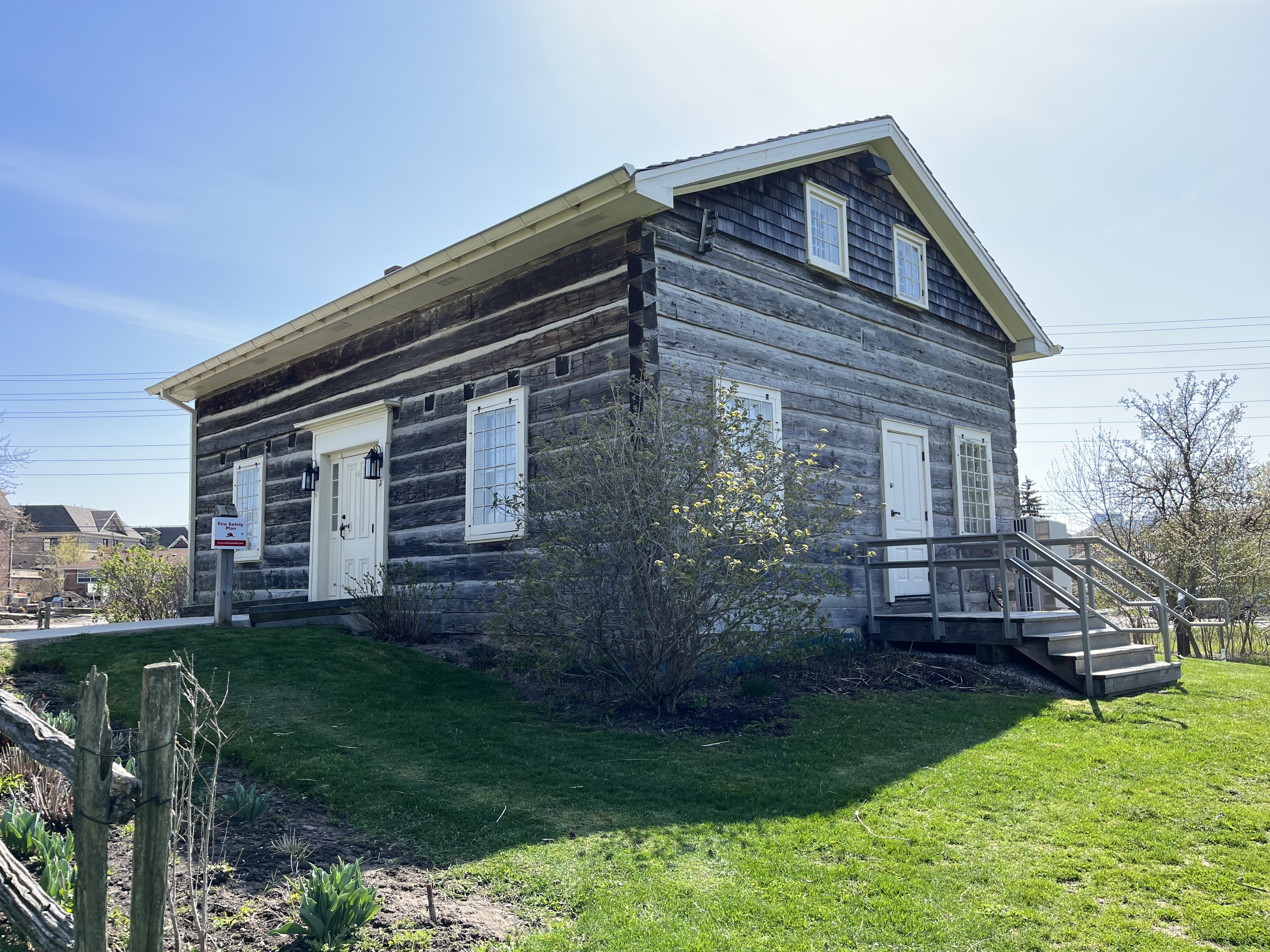
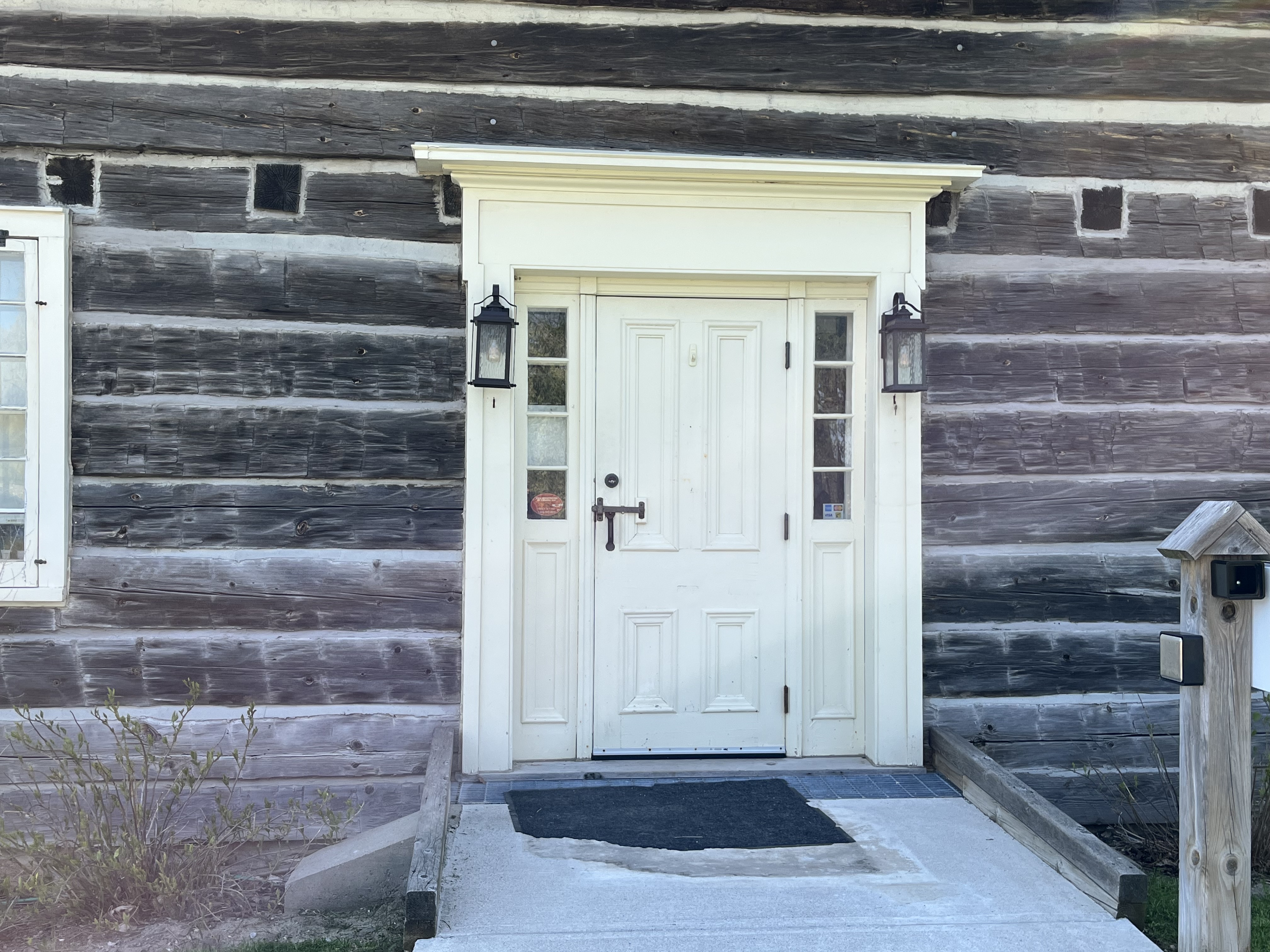
In 1860 the house was upgraded and a larger front door was added to give the home a more classical look. The door has sidelights on either side which provided some natural light into the hallway. One of their sons was named Robert Leslie and he was a builder. He is known for building a home for William Barber in Streetsville and the Benares House in Clarkson. He likely did the modifications to the Leslie home as well.
In 1880 clapboard siding was installed on the house but it was removed around 1960. As a result there are many small holes in the logs from where it was fastened on. The windows were also upgraded as part of the 1860 improvements. These windows could be louvered out in order to let fresh air into the home.

The back of the Leslie home also has a door, one of three. It’s very uncommon for a log house to have more than one door and I think this is the only one that I have visited that has so many of them. Looking at the way the logs are chinked around the door it is obvious that these logs have been cut because they don’t extend the full length of the building. When you look at the image of the house as it was preparing to move you can see that there is no openings on the rear of the house. The small window has also been added.
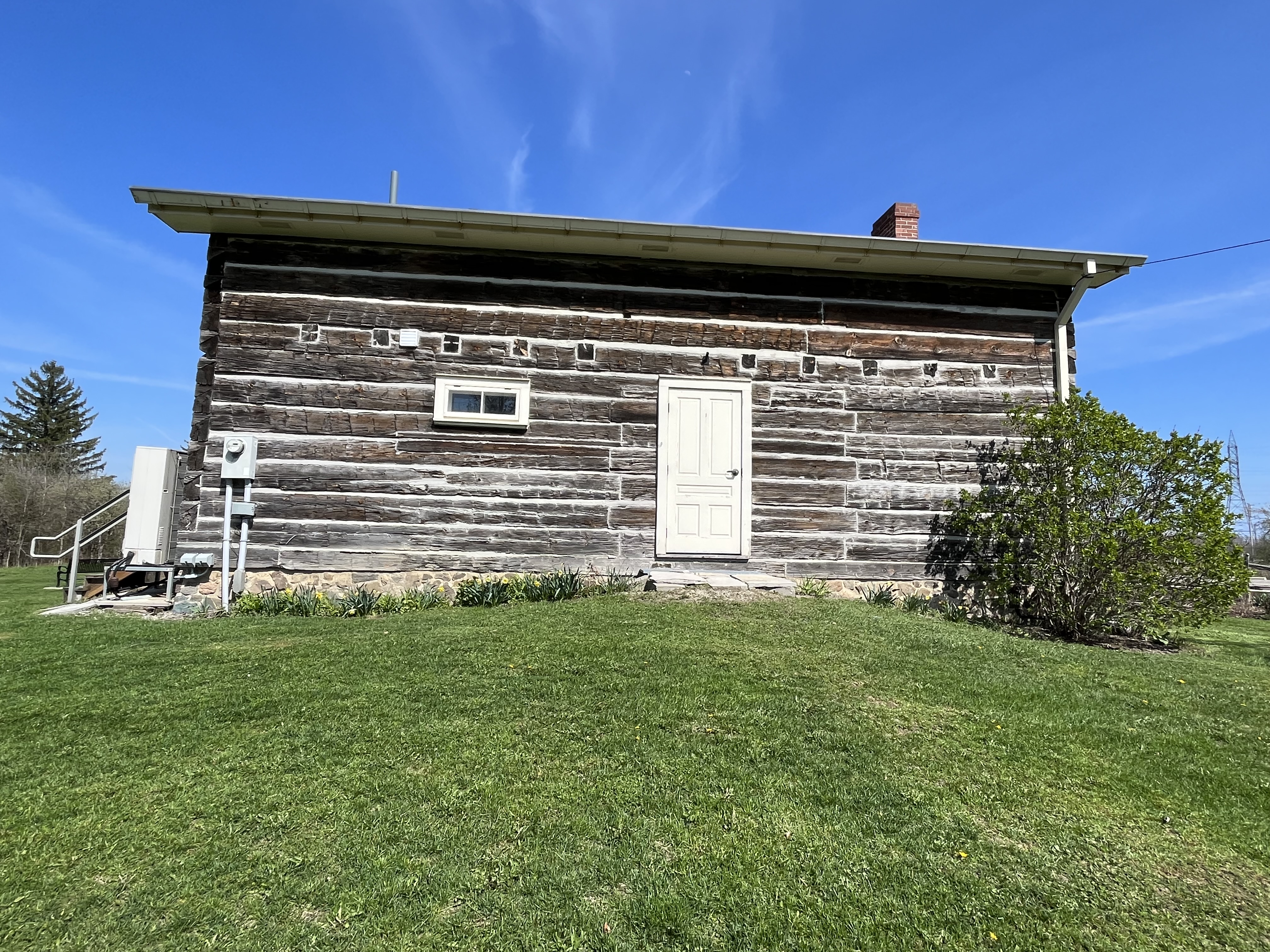
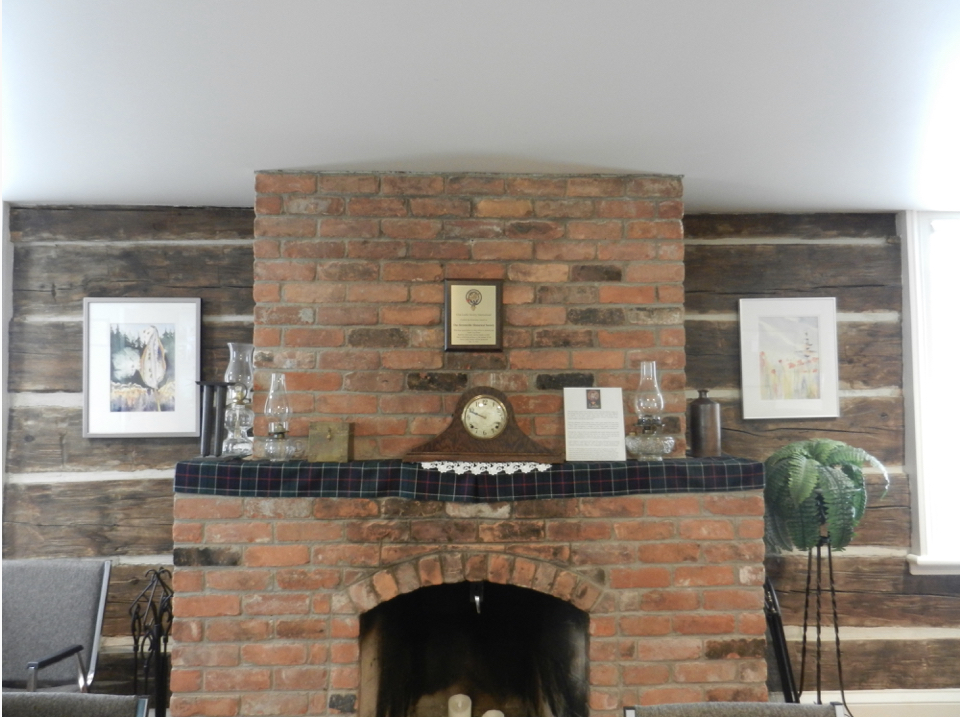
Another of the Leslie sons was named George and he moved to a part of Toronto which would later be known as Leslieville in his honour. There he operated a successful nursery. The only bricks on the outside of the home mark the site of the fireplace.

The home is free to visit but has very limited hours so please check before you plan to go. The image below from the Streetsville Historical Society shows the fireplace.
The house was used by the Leslie family for 100 years but eventually the surrounding farmland was taken over for industrial uses. On May 24, 1994 the house was moved from its original site to the Pinchin farm where it was restored. It now serves as home for the Streetsville Historical Society and houses their archives. The historical image below shows the home as it was being prepared for the move down Mississauga Road.

The property that the log house was moved to has a long history of ownership, beginning in 1832 when 300 acres were given to Thomas Silverthorn for his service in the War of 1812. He sold portions of it off and a 66 acre parcel was bought by Henry Rundle and his father-in-law in 1871. This changed hands several times and the farm was used for dairy farming. An orchard was planted in 1931 and 1934. A strawberry farming operation was conducted while the apple trees matured and eventually a turkey farm and pick-your-own apple orchard were managed on the property. The farm was closed in 2004 but foundations for the barn and some other out buildings remain on the property
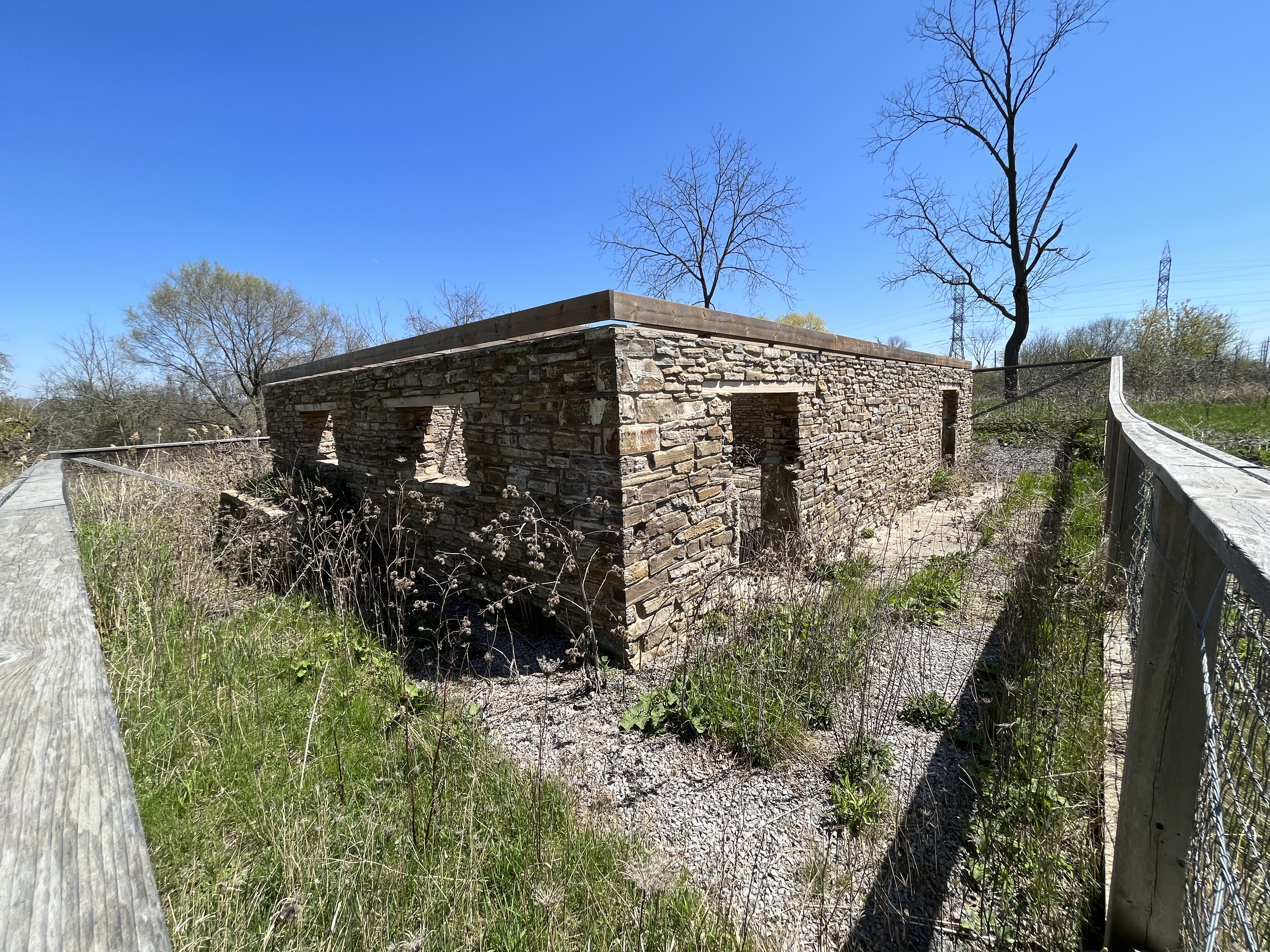
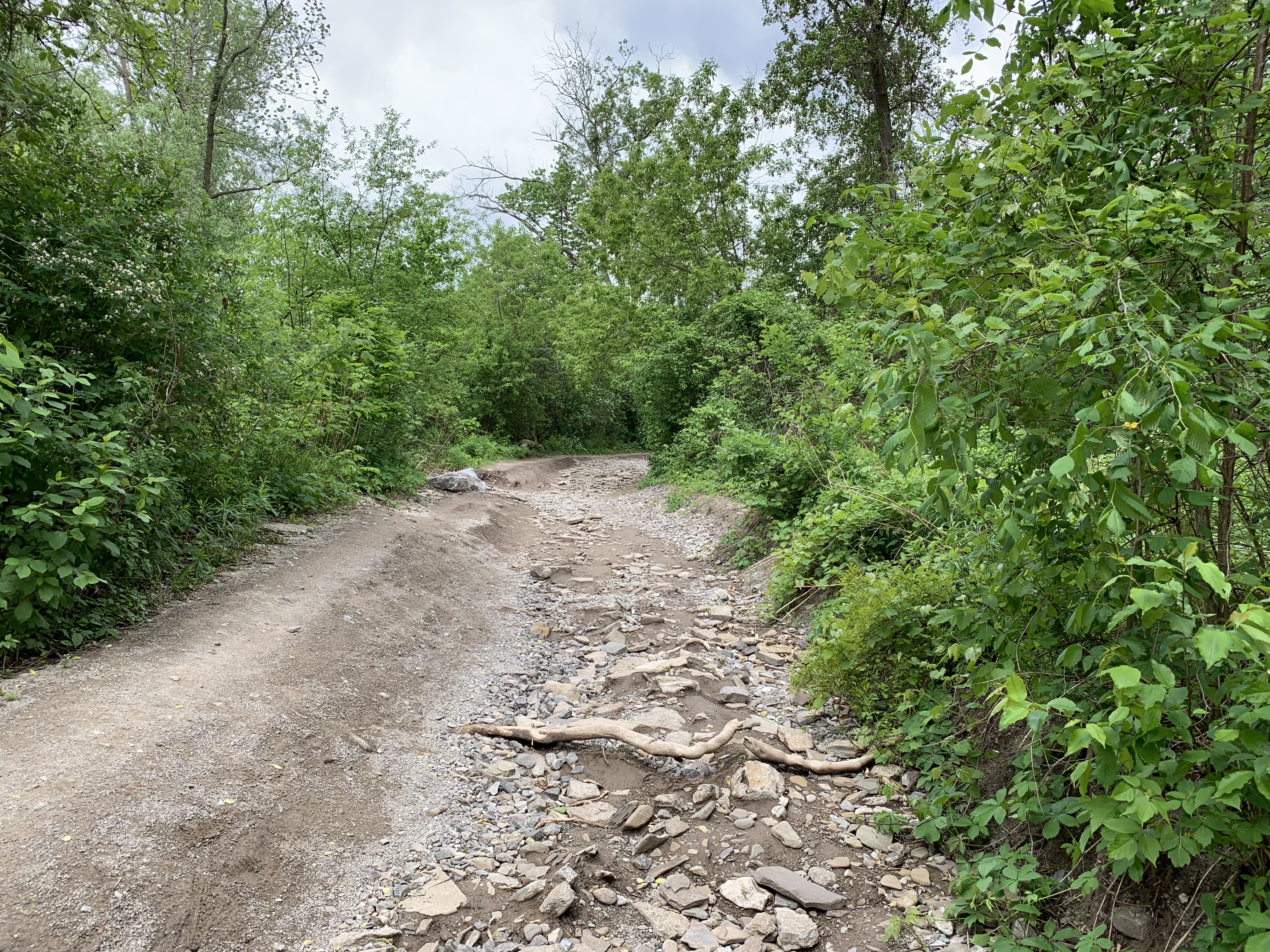
A trail leads from the Leslie Log House through the old Pinchin apple orchards where people could come in the fall to pick their own apples. This trail leads down to the Credit River and makes for a nice walk and also provides a passage for fishermen to reach the river. There were many deer tracks along the path but we weren’t fortunate enough to see one on our visit. In the fall, the deer love to visit the orchard to eat the apples that still grow on some of the trees.

The trees were starting to come into their leaves on this sunny day and the river was running clear. Beware that the grasses around the river are full of ticks and if you bring your dog for a walk you will need to carefully check both the dog and yourself to ensure that no ticks have hitched a ride on either of you.

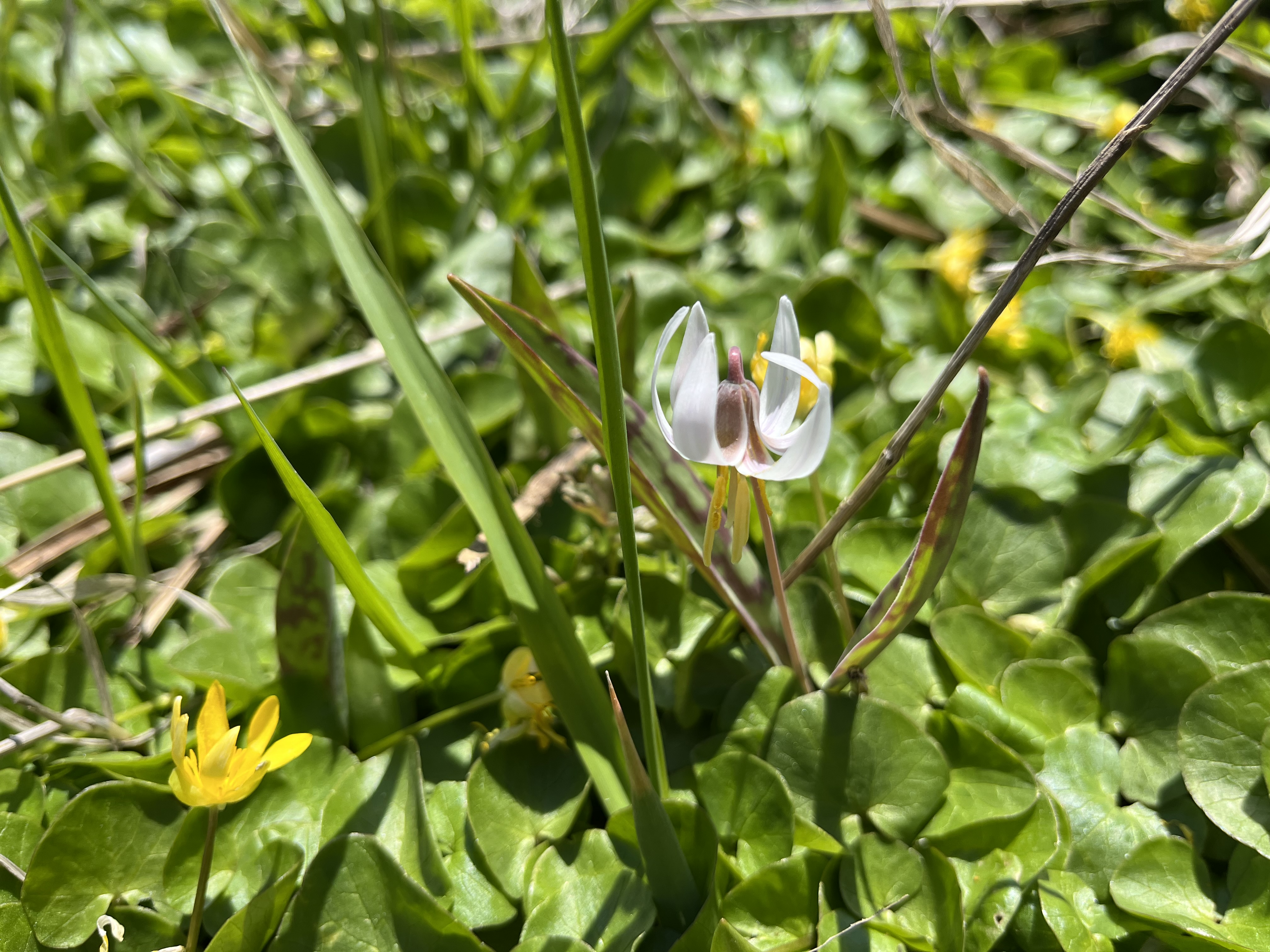
Yellow Trout Lily plants grow in abundance in the GTA but it is much less common to see the white variety. They prefer moist soil and we found this one growing among the marsh marigolds.
At one time log houses dotted the countryside but only a few of them have survived. The Leslie Log House is a great example of one.

Related stories: J. H. Pinchin Apple And Turkey Farm, Barbertown, Benares House

Google Maps link: Leslie Log House

Like us at http://www.facebook.com/hikingthegta

Follow us at http://www.hikingthegta.com

Also, look for us on Instagram
Ghost Towns of Peel Region

Sunday, March 28, 2021

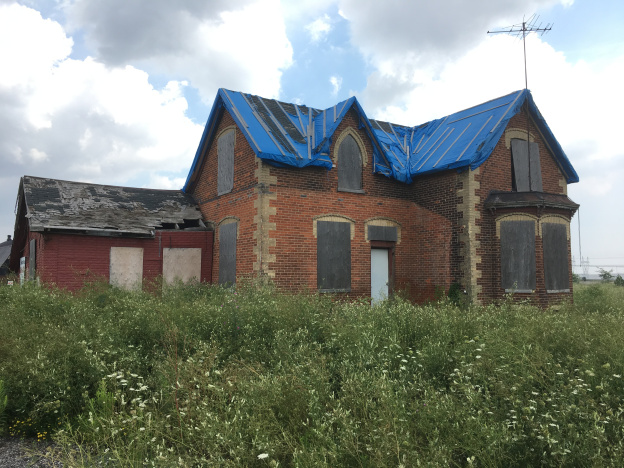
Peel County has changed over the years since it was created, even taking on the name Regional Municipality of Peel. Some communities were founded that flourished and others that have failed. As time goes on and developers do their work some of these former communities are being eliminated, all except for a ghost of the original community. This blog collects 9 of the ones that we have visited and arranges them in alphabetical order. Each has a picture that represents the community as well as a brief description. The link for each will take you to a feature article on the community which has the local history as well as pictures of any surviving architectural features. At the end of each feature article is a google maps link in case you should wish to explore for yourself someday. Future companion blogs in this series will cover the ghost towns of Halton Region, York Region, and the City of Toronto.

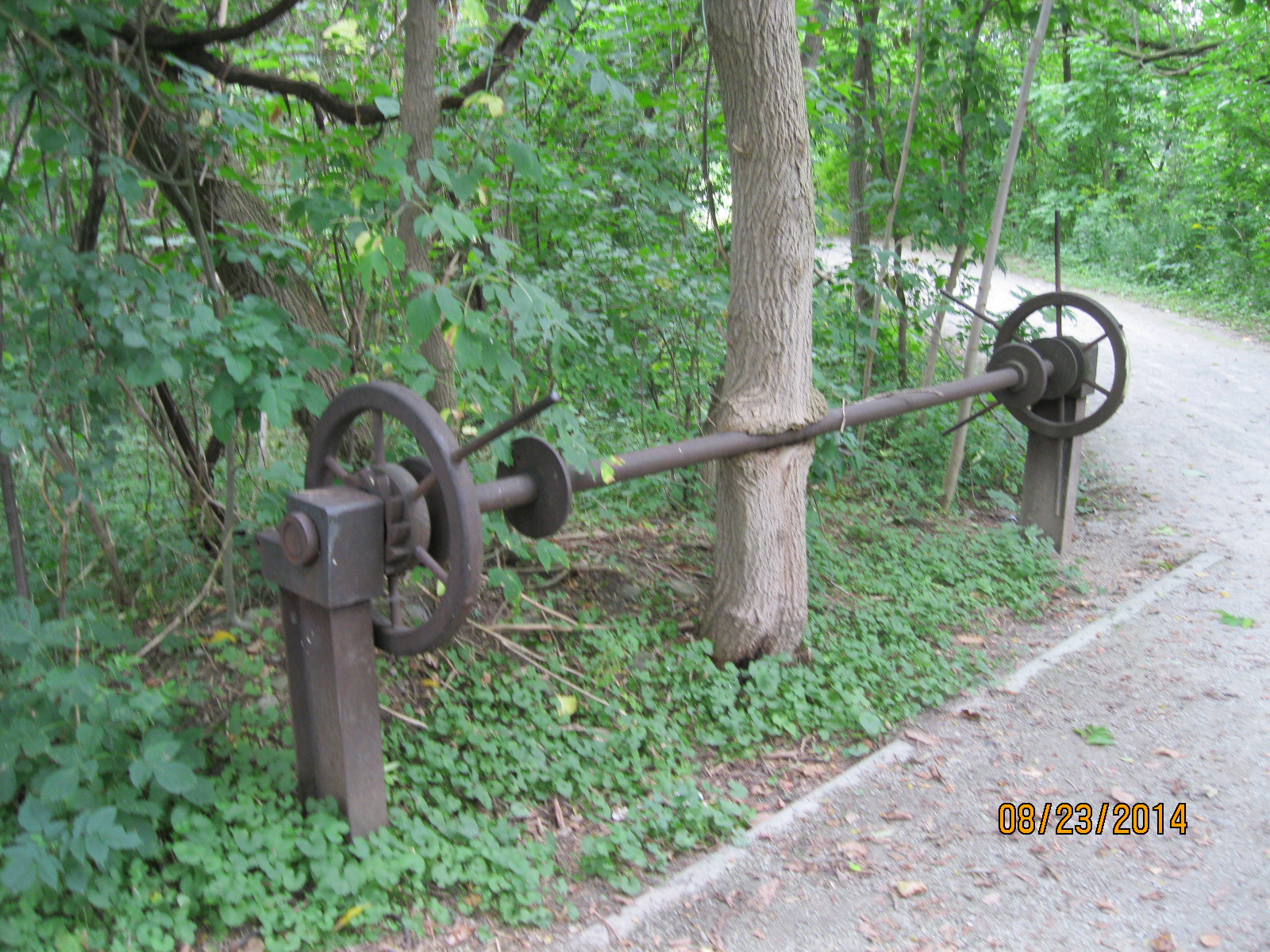
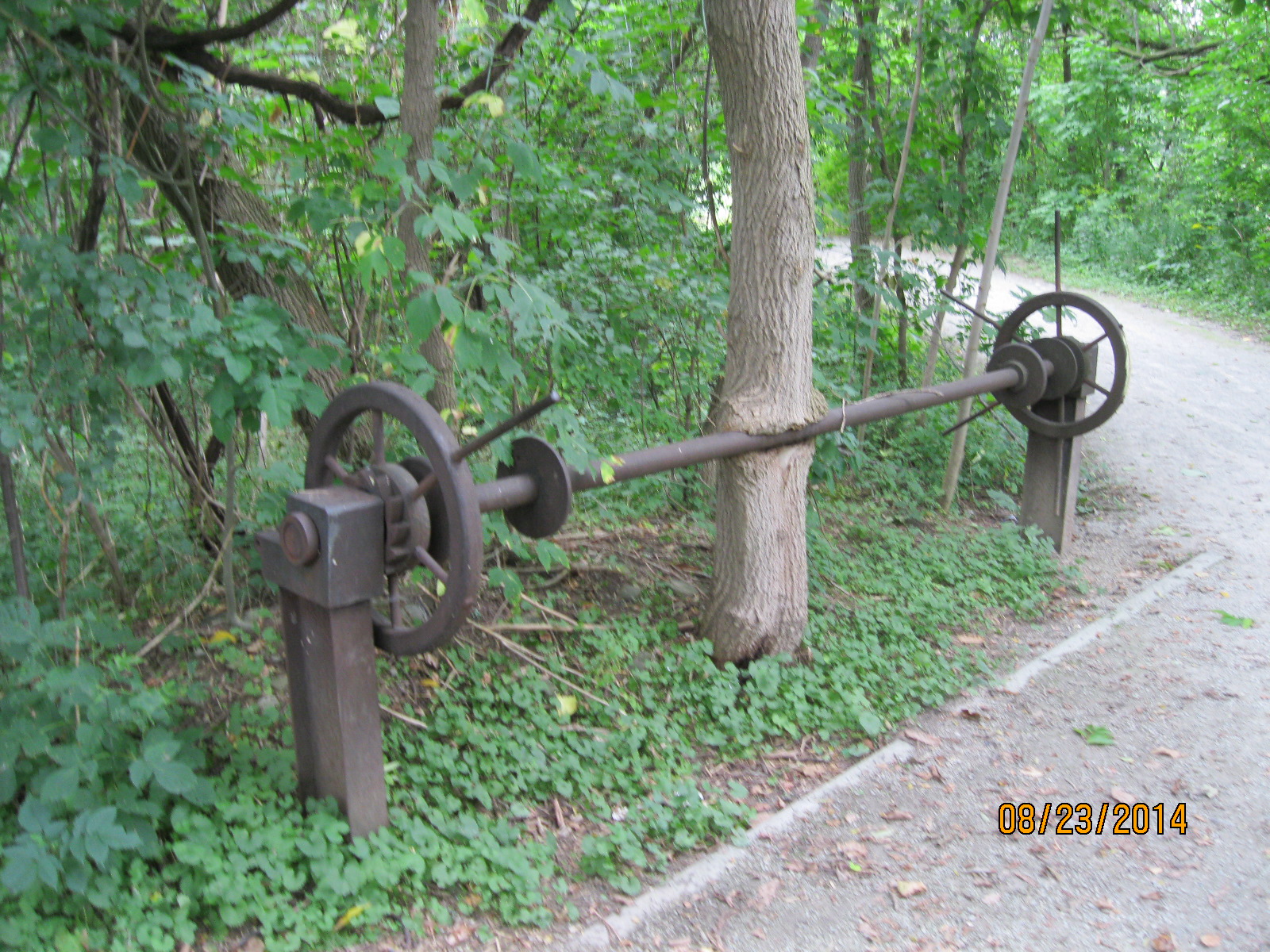
Barbertown is the site of an old mill that is still operating. It has been clad over, hiding its original stone construction. The mill is no longer powered by water and the old sluice gate has been filled in. A tree is growing where the water once ran and it has taken a solid hold on the old crank assembly.

It is common to find an old church standing beside a graveyard. Boston Mills has its old school in its graveyard. That is quite unusual. The railway through town has been closed and turned into a hiking trail and the group of small cottages that once stood on the end of the golf course are falling in on themselves.

Britannia still has several original buildings although like the Gardner home below some no longer stand in their original locations. This 1840’s house has been moved about a kilometer south on Hurontario Street.

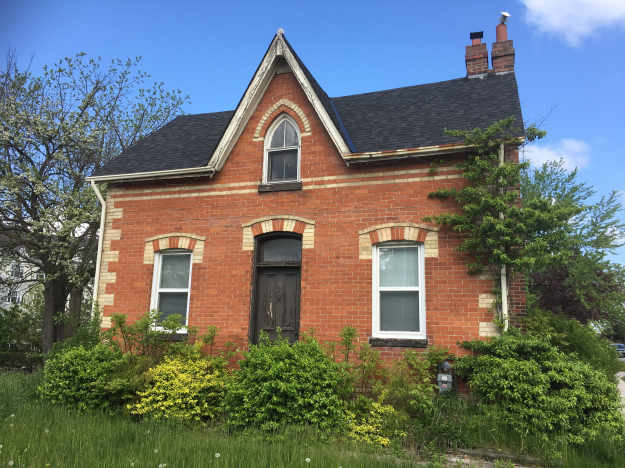
Burnhamthorpe reached a maximum of about 100 people in the 1870’s and then began to decline. Several houses and an old church remain and the one shown below was built in 1882. Between 1897 and 1912 it served as a store and the community post office.

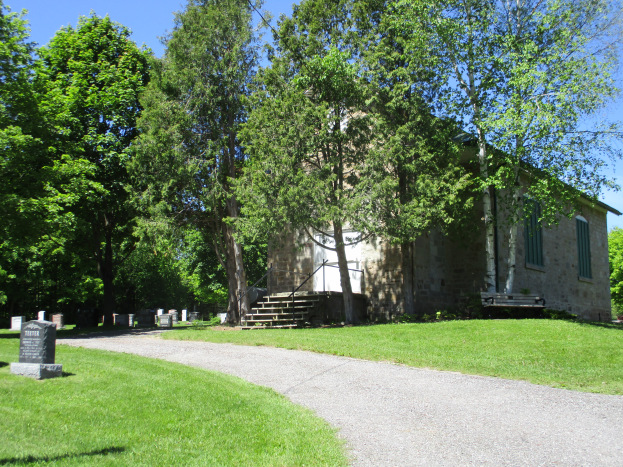
Dixie was a small community where each church denomination was too small to afford their own building. The solution was to get together and build a chapel that they all could share. Later they would each grow large enough to erect their own church building and move out of the Union Chapel.

Humber Grove was built in the scenic hollow around Duffy’s Lane and the Humber River. When Hurricane Hazel flooded the rivers in the GTA the government developed a flood control plan that would have built a dam north of the community. Since the valley would have been flooded the existing houses were bought up and removed. The dam was never built and now Humber Grove is now a community of streets and bridge abutments with no residents.

Malton isn’t a true ghost town because there’s still a thriving town, just not the original town where 500 people lived. After the community declined it was overrun by the airport and its associated sprawl. It still has some vintage homes and interestingly enough the empty ones have the windows boarded up and then painted to look like windows.

Mt. Charles is another community that was over-run by the airport and it’s supporting industries. Until recently there were several other buildings, including the blacksmith shop but these have been demolished. John Dale’s house, below, and a few others still survive, as does the cemetery.

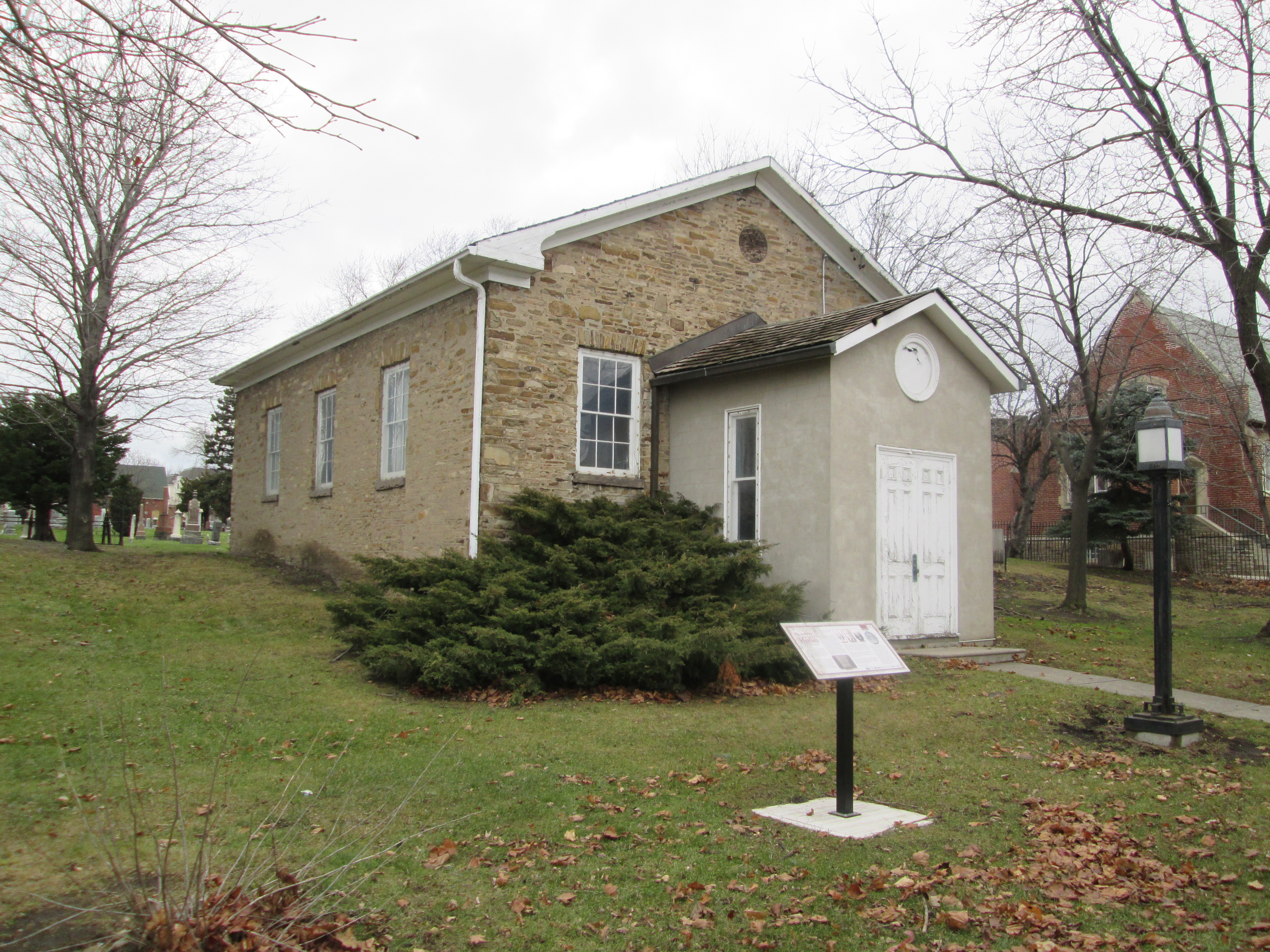
Palestine was founded in 1823 but never grew beyond a church, school and a few houses. At one time the Etobicoke Creek ravine held a wastewater treatment plant that has also been removed.

There are still several ghost towns in Peel that we haven’t photographed yet and we’re looking forward to exploring them one day.

Like us at http://www.facebook.com/hikingthegta

Follow us at http://www.hikingthegta.com

Also look for us on Instagram
Koliba Park

Saturday, May 30, 2020

There is an interesting enclave in Mississauga in the area of Barbertown and Streetsville.  In 1945 three Slovakian farmers were returning to Canada after serving in World War 2 and together they purchased 10 acres of land just north of Eglinton Avenue.  The little park they established was given the nick named “Midgetville”.  There is no parking close by and so we parked some distance down river and made our way north toward the site.  The trail along the river has become quite naturalized through the section known as Hewick’s Meadows.

IMG_3133 (1)

Heavy rains have caused the Credit River to flood its banks and divert a large flow of water onto the walking trail.  This has led to some major erosion of the path.

IMG_3146

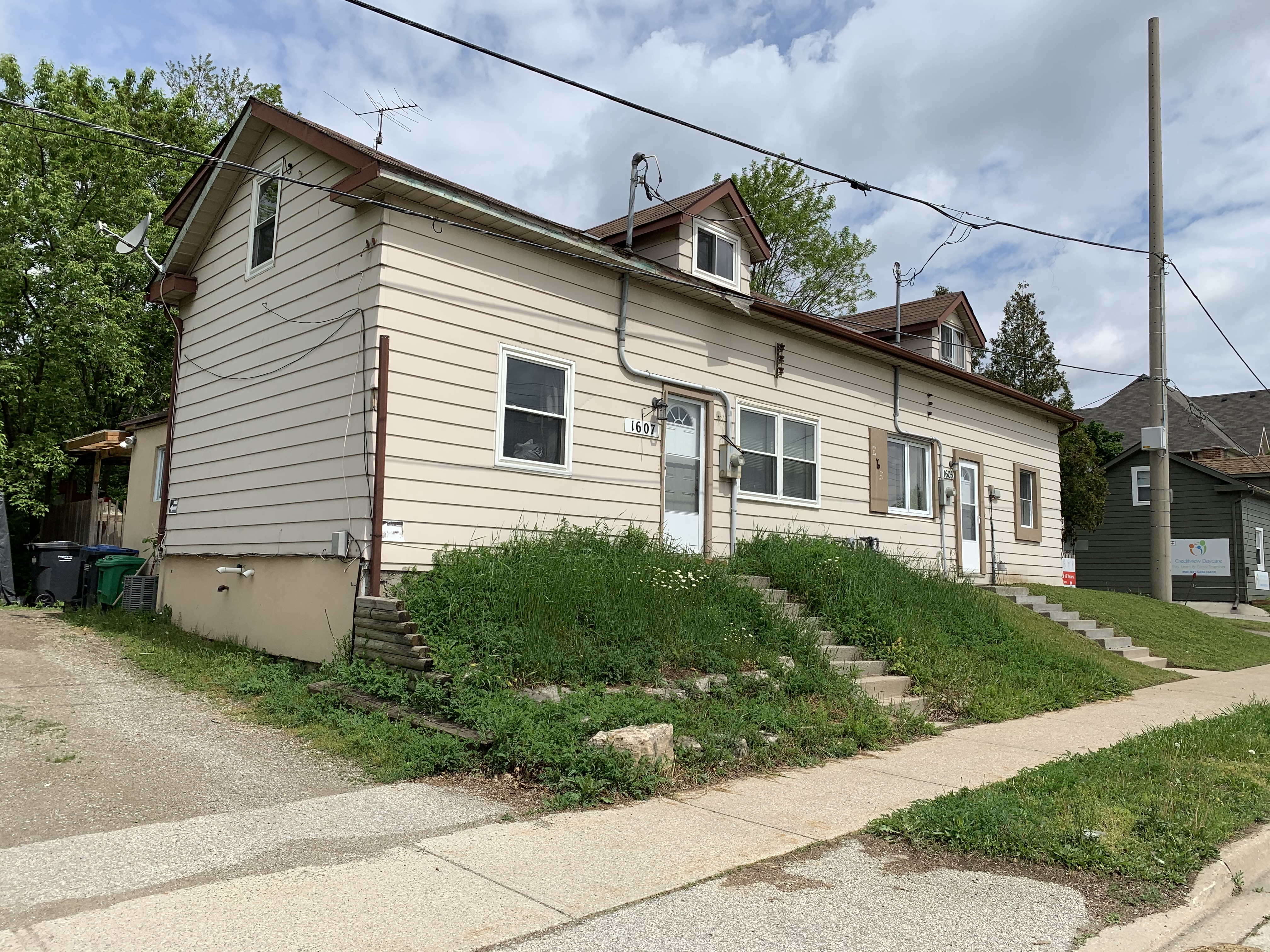
On the north side of Eglinton Avenue you join Barbertown Road to make your way toward Koliba Park.  Barbertown Road used to contain many houses built for the people who worked in the various mills in Barbertown.  Most of these old workers cottages have been replaced with modern homes but there are still a couple remaining from the mid-1800’s.  The picture below shows a typical duplex of the era, although it has been covered up with siding.

IMG_3175

A little farther along Barbertown Road you will find another small abandoned home that housed a single family. Likely a new home will fill this site in the near future.

IMG_3171

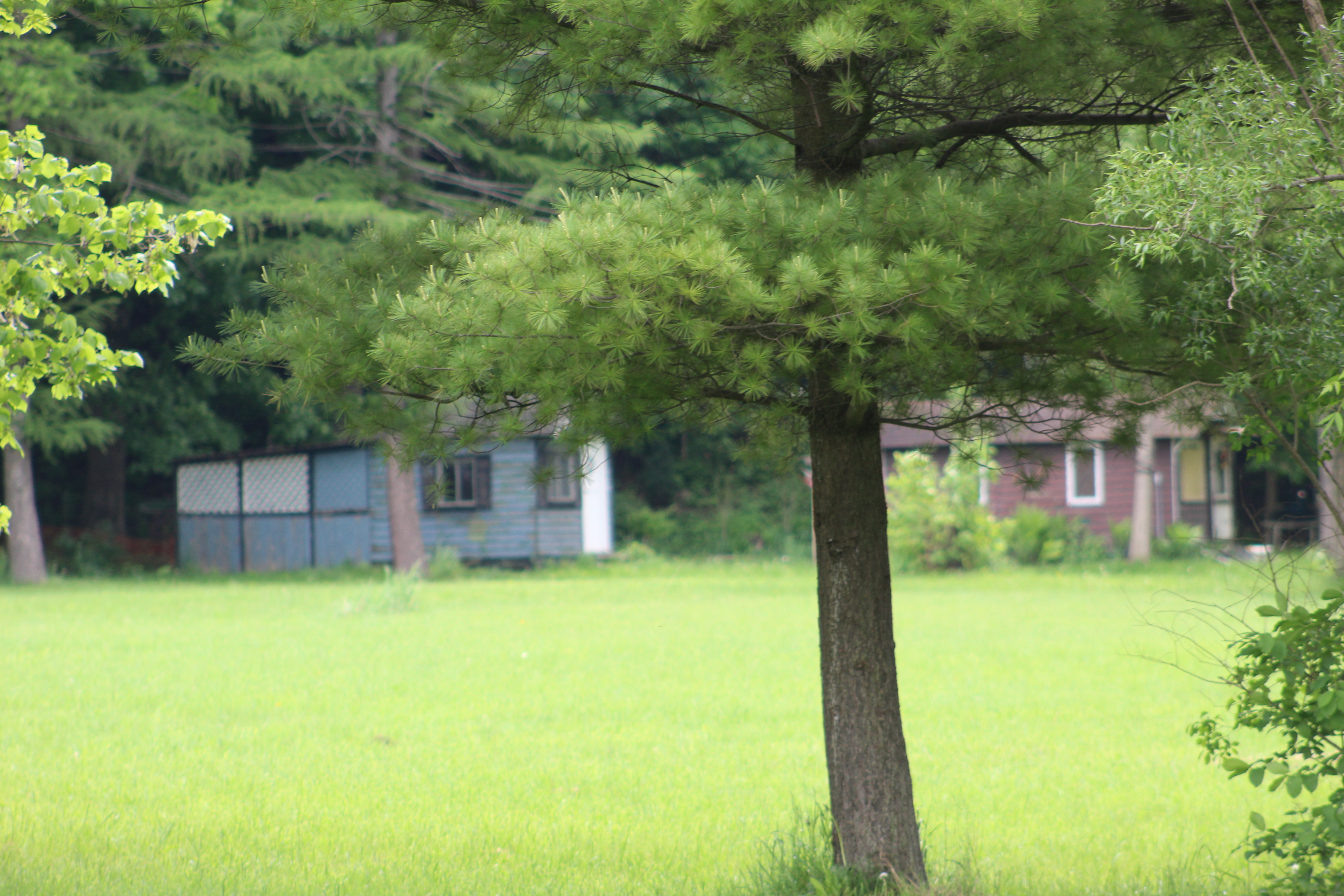
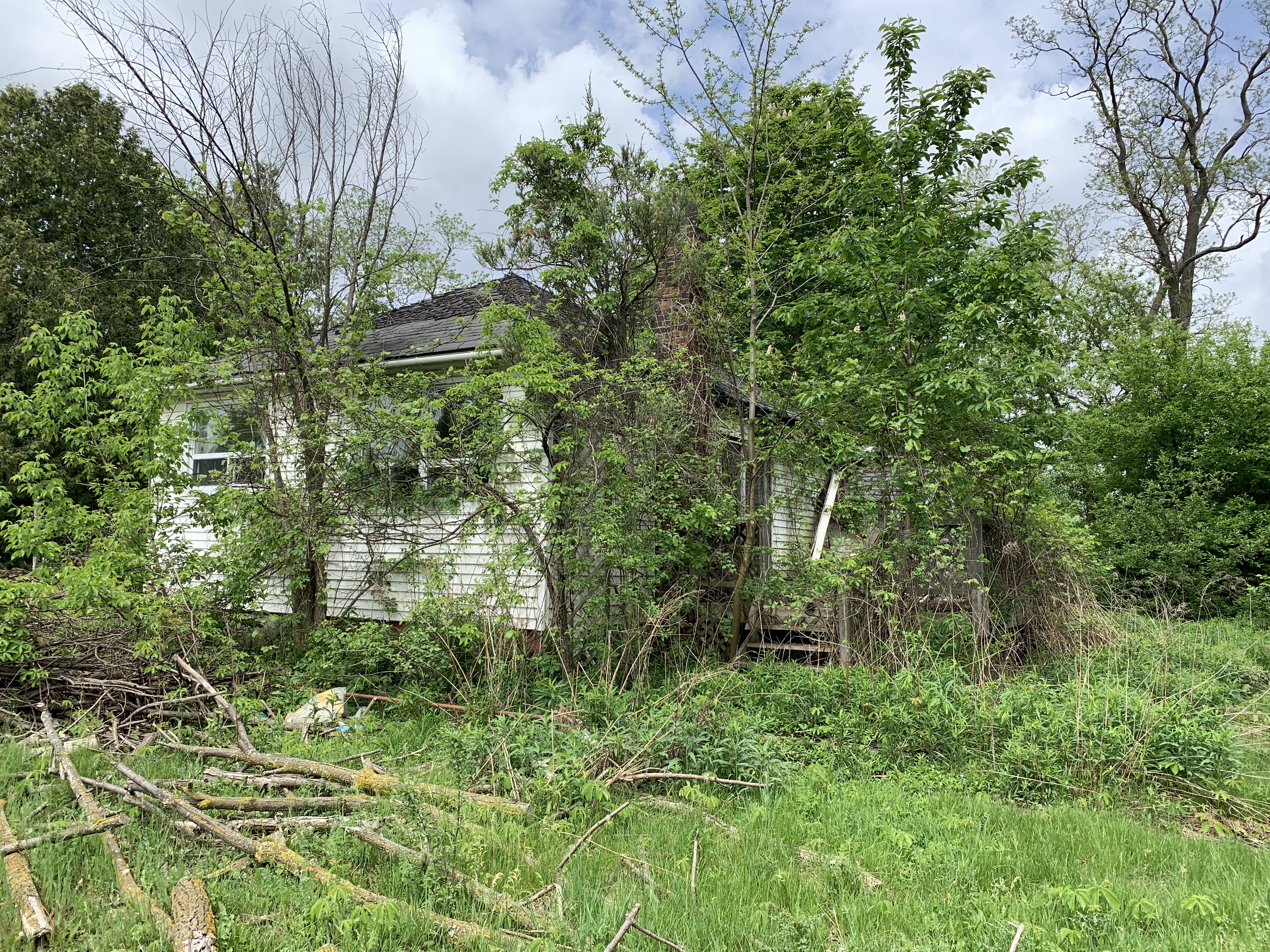
Koliba is a Slovak word that means “Shepherd’s Hut” and it suits the small cottages that were built in the valley at the bottom of Barbertown Road.  Over the years most of the 10 acres of the original property was sold of and has been developed but the small park with its cottages and playgrounds has been retained.  It hosts several Slovak events each year as well as being rented out by Slovakian churches for their services in the summer months.  Due to the fact that the site is isolated there has been a number of cases of vandalism over the years and so the gates are kept locked.  We were forced to take our pictures through the fencing.

IMG_0129

Under normal circumstances the park hosts an opening weekend banquet on the first Saturday in May but that was cancelled this year due to the pandemic.  The Slovak Canada Day picnic that normally happens at the end of June will likely not happen either.  Instead of the park being filled with weekend campers the swing sets sit idle this year.

IMG_0134

The Barbertown bridge was originally built to bring the mill workers from the houses on Barbertown Road to the mills that still line the east side of the river as it flows though Streetsville.  More information on the mills can be found in our post on Barbertown.  We decided to stay on the west side of the Credit River to see if we could make our way upstream to the Streetsville Dam.

IMG_0128

Oyster Mushrooms are one of the most commonly harvested wild mushrooms in Ontario.  During the First World War the Germans began to cultivate Oyster Mushrooms for food and today they are commonly cultivated around the world.

IMG_0096

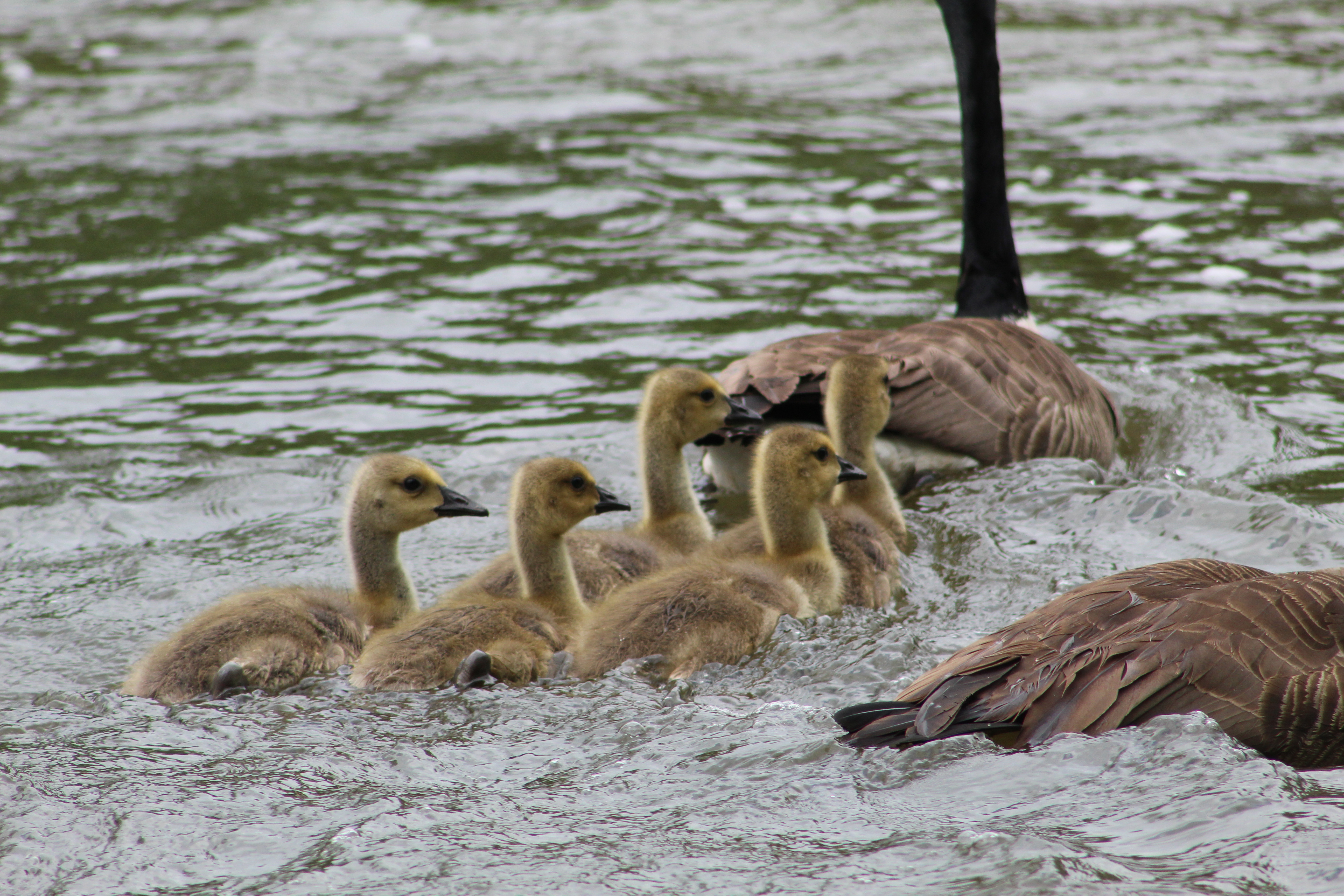
As we made our way along the river bank we disturbed a family of Canada Geese with their five goslings.   The jumped in the water and began to cross the river with the two adults keeping the little ones safe between them.

IMG_0144

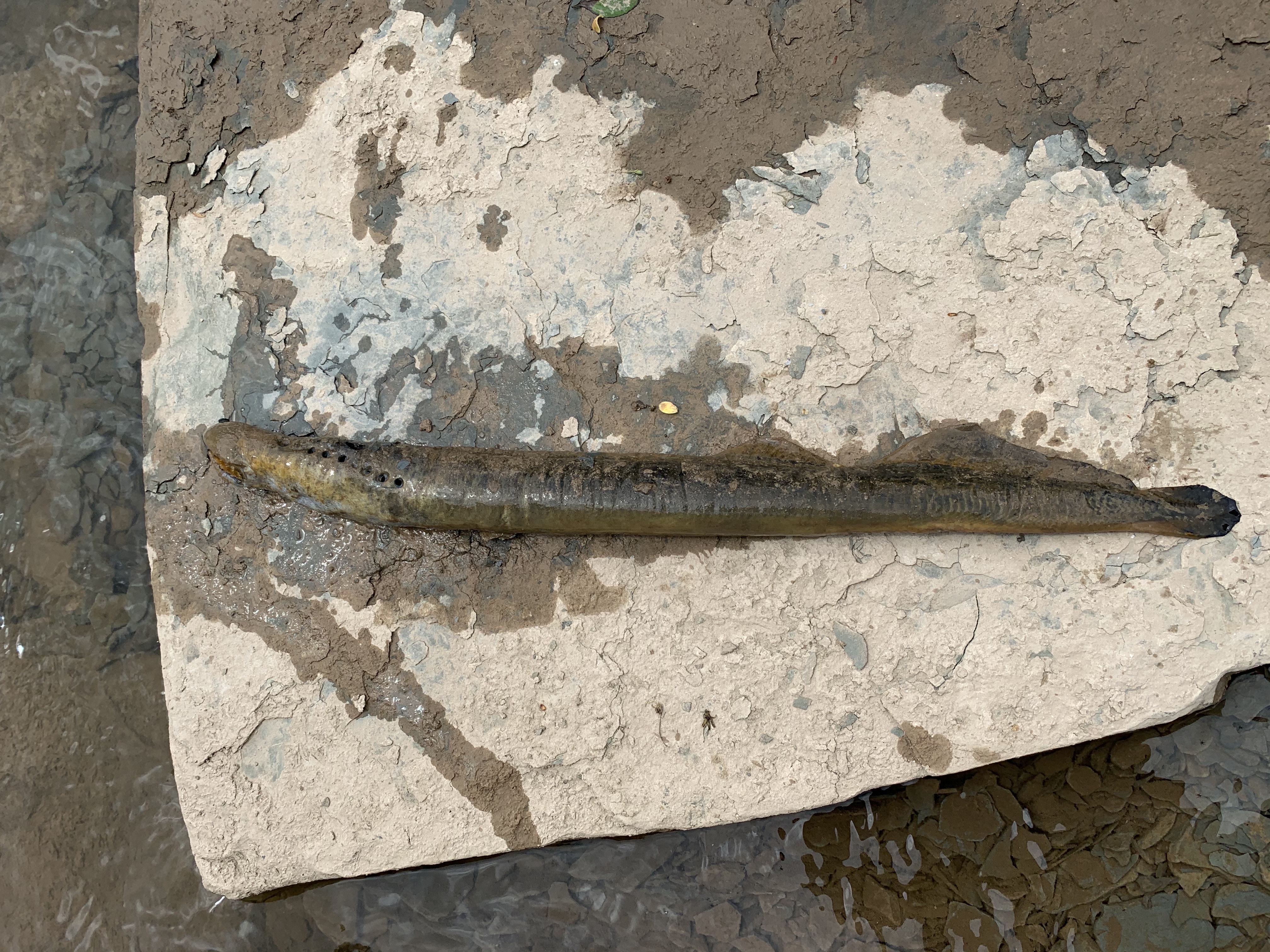
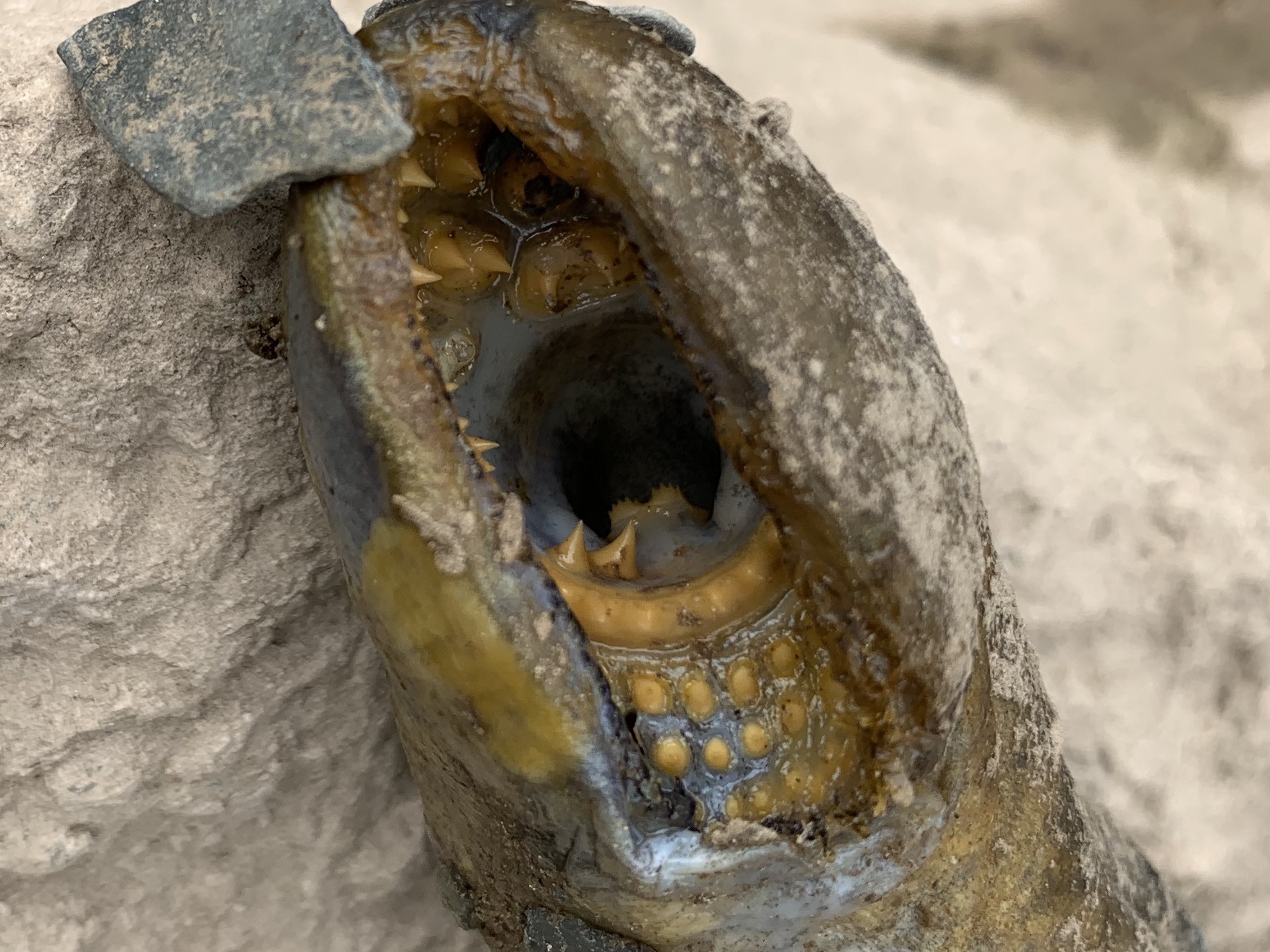
Along the side of the river we found a dead Sea Lamprey.  Their mouth is as large or larger than the head and has no jaw.  The circular rows of teeth and suction cup mouth allow it to attach itself to fish where it slowly kills the fish by draining its blood.  Lampreys spawn in fresh water after which the adults die.  The larvae burrow in the silt at the bottom of the river and live in fresh water for several years.  They then undergo a metamorphosis that allows them to switch to salt water and they migrate to the sea.  A year and a half later they return to the fresh water rivers to span and die.

IMG_3205

The view inside the Lampreys mouth is like something out of an old horror movie.

IMG_3202

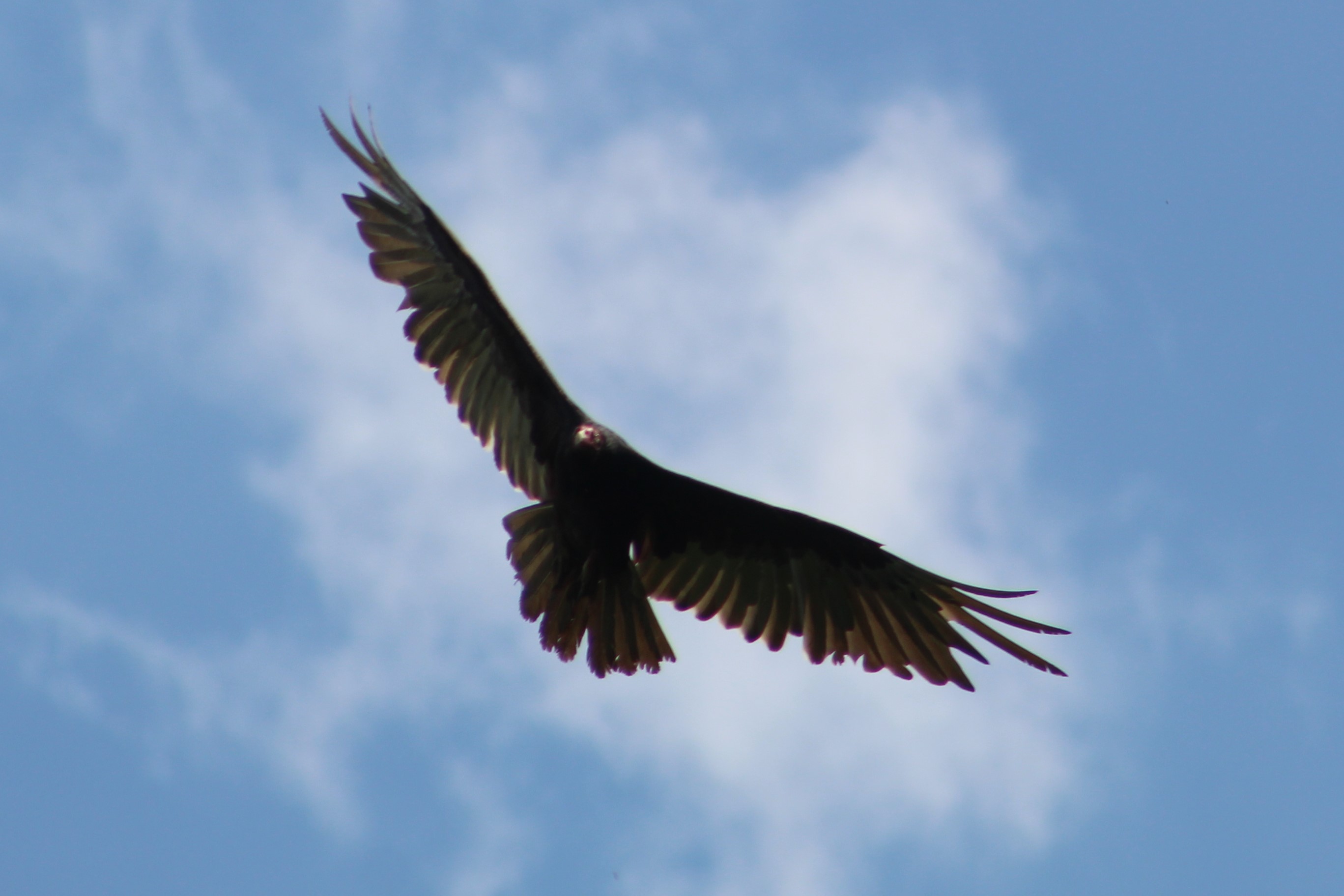
A pair of Turkey Vultures were circling above the river.  Perhaps one of them will eat the remains of the Lamprey.

IMG_0151

We reached a point where the river flows beside a steep embankment where we were forced to turn back.  It might be interesting to return to Koliba Park when they are participating in Doors Open Mississauga so that we can get a look inside the buildings.

Google Maps Link: Koliba Park

Like as at http://www.facebook.com/hikingthegta

Follow us at http://www.hikingthegta.com

Look for us on Instagram
Barbertown – Ghost Towns of the GTA

Saturday August 23, 2014

Overcast and 21 degrees but feeling more like 26 with the humidity.  We parked in the little parking lot on the east side of the Credit River just south of Eglinton Ave.

We encountered a patch of poison ivy that had started to turn red.  Poison Ivy is distinctive with it’s three leaf pattern on each stem.  It likes carbon dioxide and has doubled both it’s habitat and strength since the 1960’s.  Late in August the berries turn white as seen in the photo below.  The berries are eaten by birds and bears and are still viable after passing through them.  Some people can have a severe allergic reaction to poison ivy.

IMG_3016

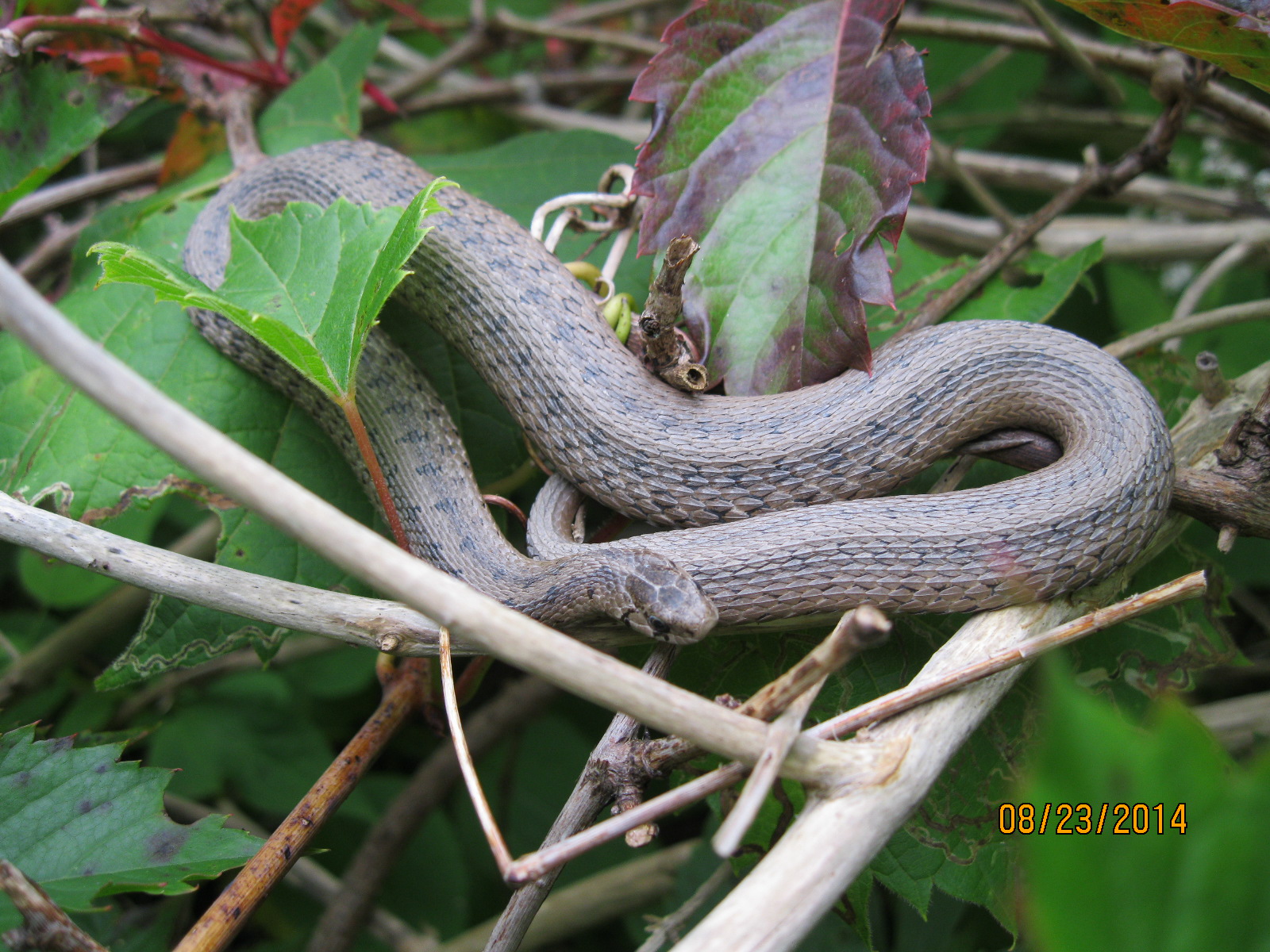
We saw a small Dekay’s Brown snake lying on a branch sunning itself.  They can grow to about 50 cm but the young, which are born in late summer, are 8-11 cm in length.  This snake is not poisonous but can emit a foul smelling musk if it feels threatened.

IMG_3021

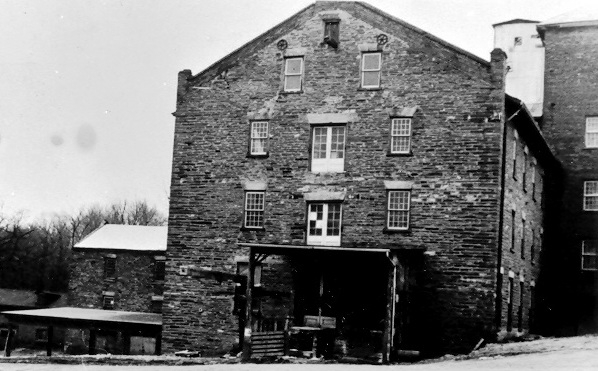
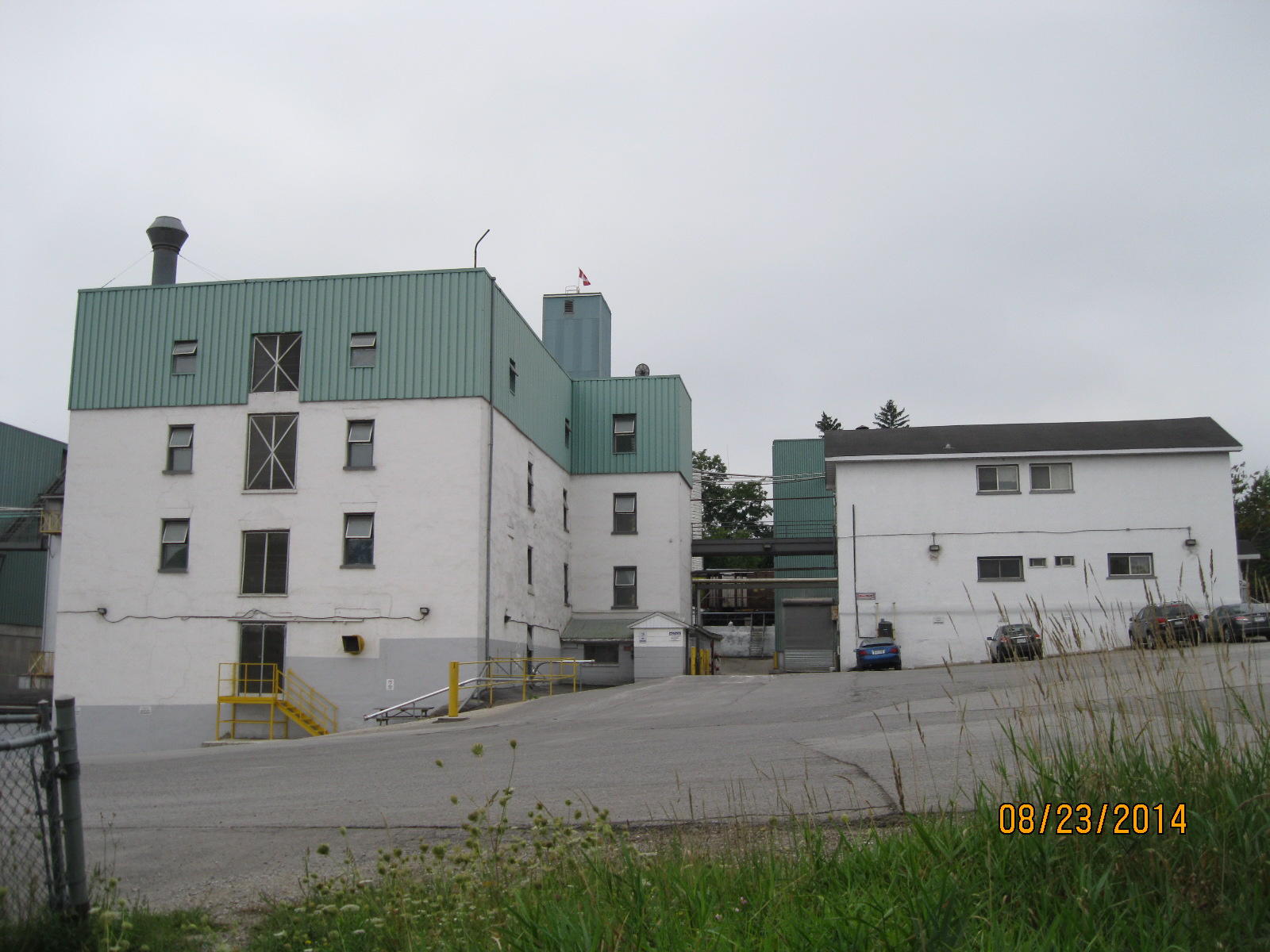
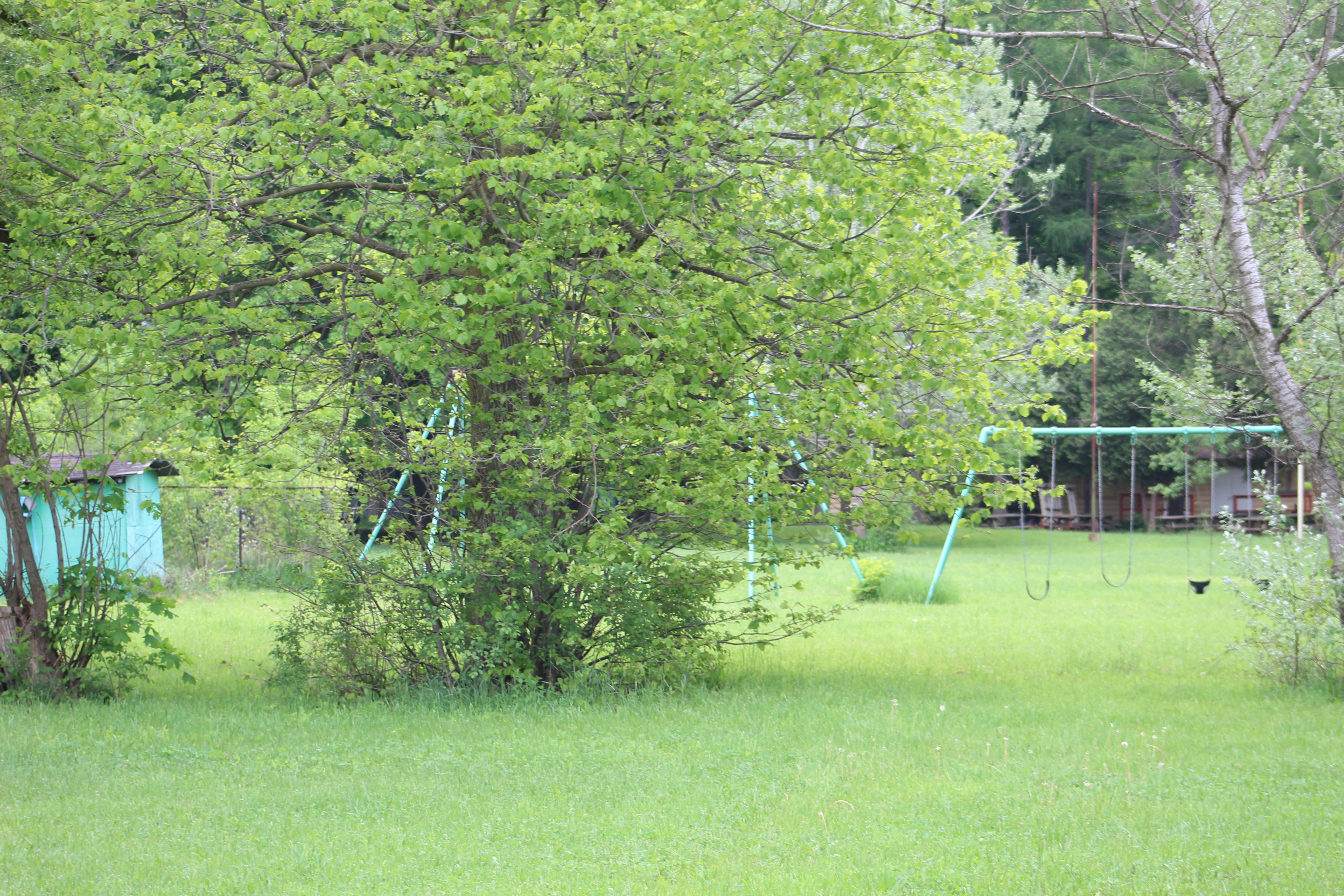
In 1843 the Barber Brothers, William and Robert, decided to expand their Georgetown mill operation by buying William Comfort’s farm and mill site just south of Streetsville.  In 1852 they built a 4 storey wollen mill.  When it burned in 1861 their workers just built a new one and opened again only three months later.  Within 10 years it was the fourth largest textile mill in Ontario.  During the first world war it was converted to a flour mill which it continues as today.  The second mill remains on the left in the photo below but has been covered over with stucco and aluminum siding.  The cover photo shows the mill as it looked in 1950.

IMG_3053

Mills used to be built tall to take advantage of shafts and pulleys that were turned by the water wheel.  In this four story mill the wool was carded on the top floor then moved to the third floor where it was spun into yarn.  On the second floor it would be woven into blankets and assorted textiles.  On the first floor it was was cleaned, checked for quality and prepared for shipping.

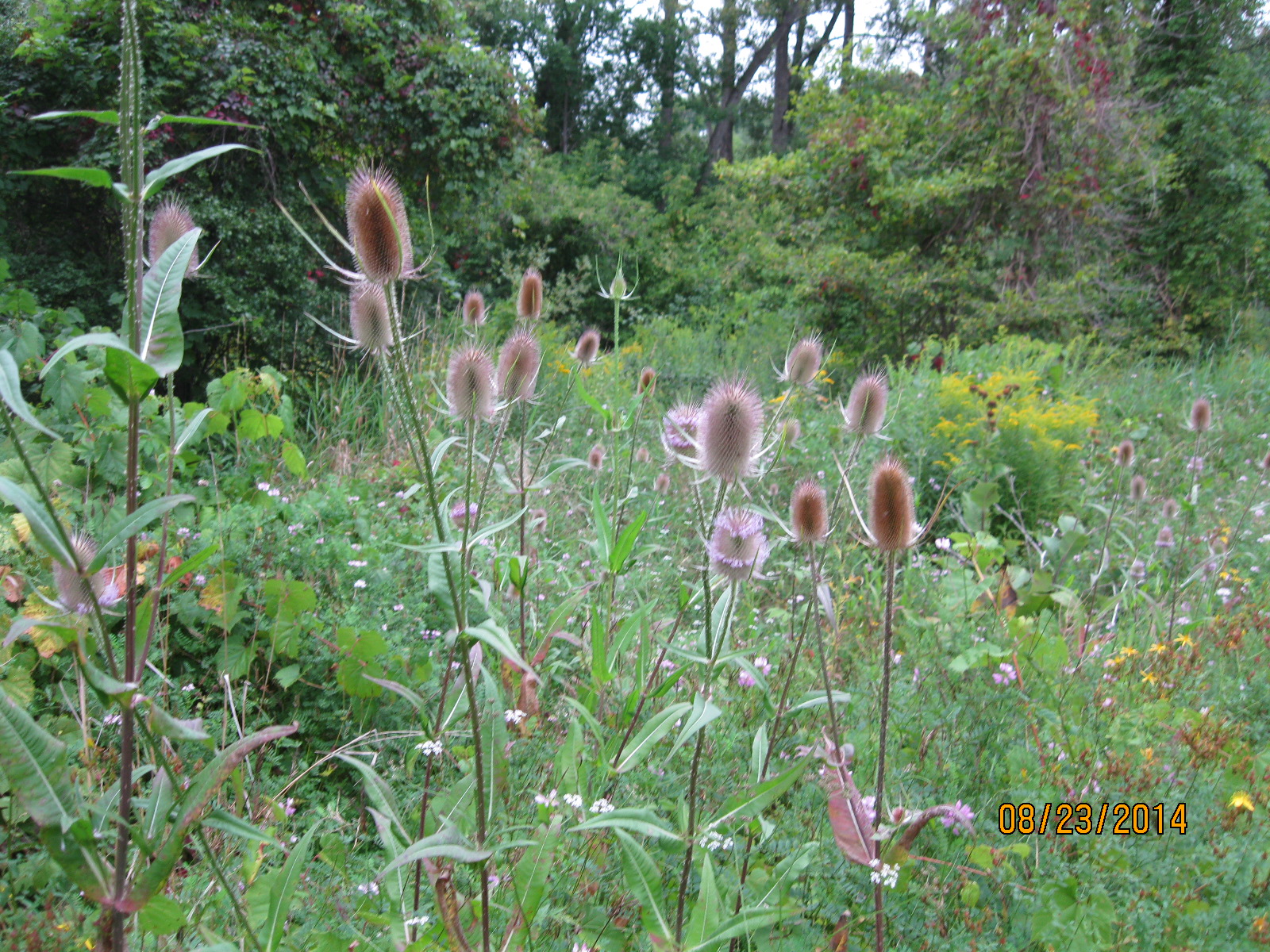
Carding wool is a process which runs the wool through a carding material.  We get the word “carding” from the Latin word “carduus” which means teasel.  When the Barbers ran their mill, their workers would have used the heads of the teasel plant to draw out the fibres of the wool into long strands that could be spun.  Today carding is performed with a set of paddles with many closely spaced pins on them.  Teasel plants still grow around the mill property.  By mid summer the plant can be up to 2 meters tall with large purple heads on them.  The flower forms a purple ring that works its way down the the head as it blooms.  The ones pictured below have finished blooming.

IMG_3017

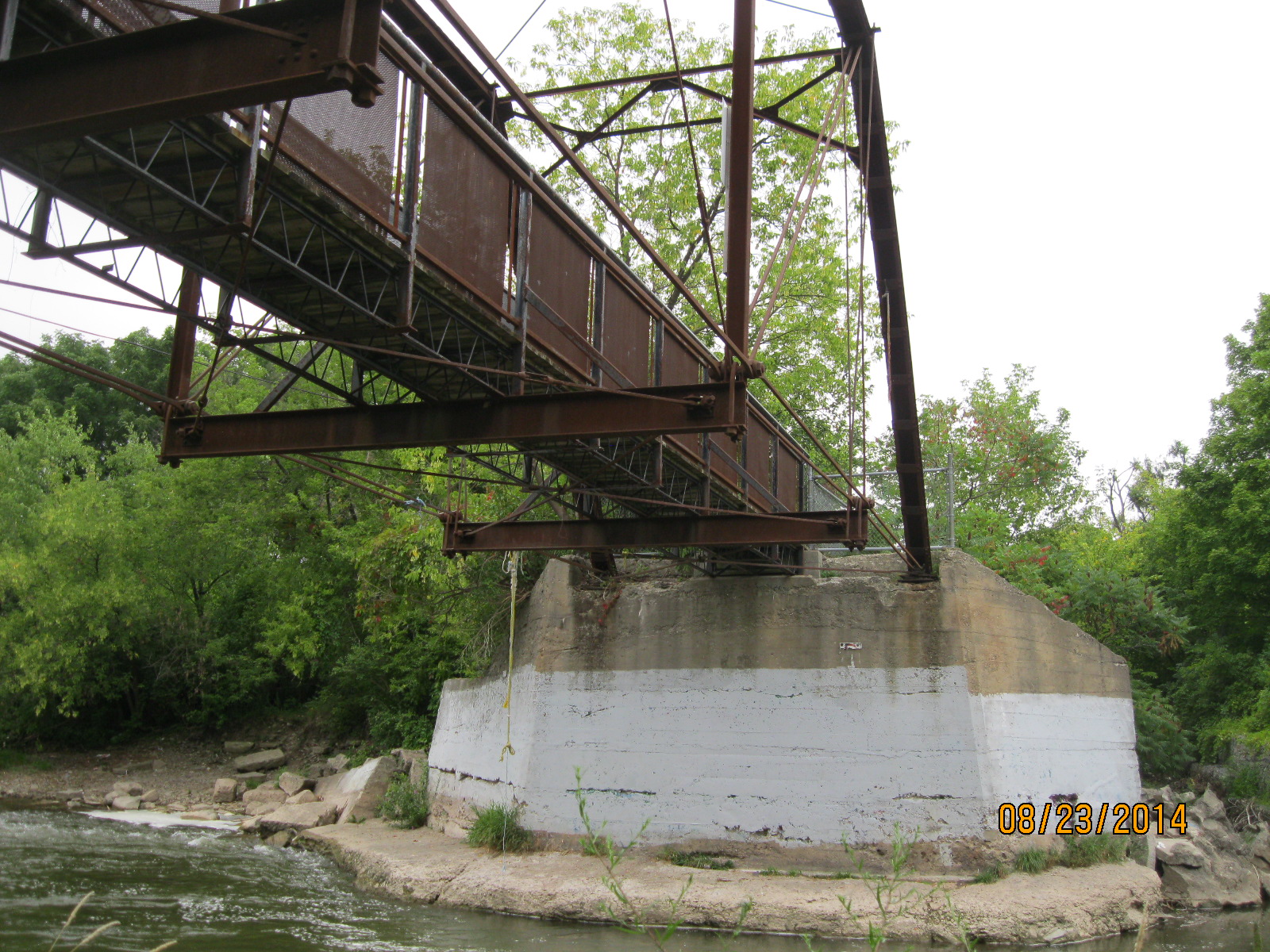
The Barbertown bridge was built in 1898 to carry workers from about 40 cottages that were built along Base Line (now Eglinton Road).  The staff of the mill reached 200 at one point and used this bridge to access the cottages on the other side of the river along Barbertown Road.  The bridge originally carried a roadway as wide as the cross beams on the bottom.  A narrower foot bridge has been installed for modern pedestrian traffic.

IMG_3056

A sluice gate is used to control the flow of water at a mill site.  By raising and lowering the gate a mill could control the speed of the water wheel.  At Barbertown the sluice gate was raised and lowered by a hand crank that would have been operated by two people. When water power was finally abandoned here in 1974 the sluice was filled in. Today a tree grows where a deep ditch full of water once ran.  The tree has grown almost completely around the steel rod as if to still the works of man even further.

IMG_3057

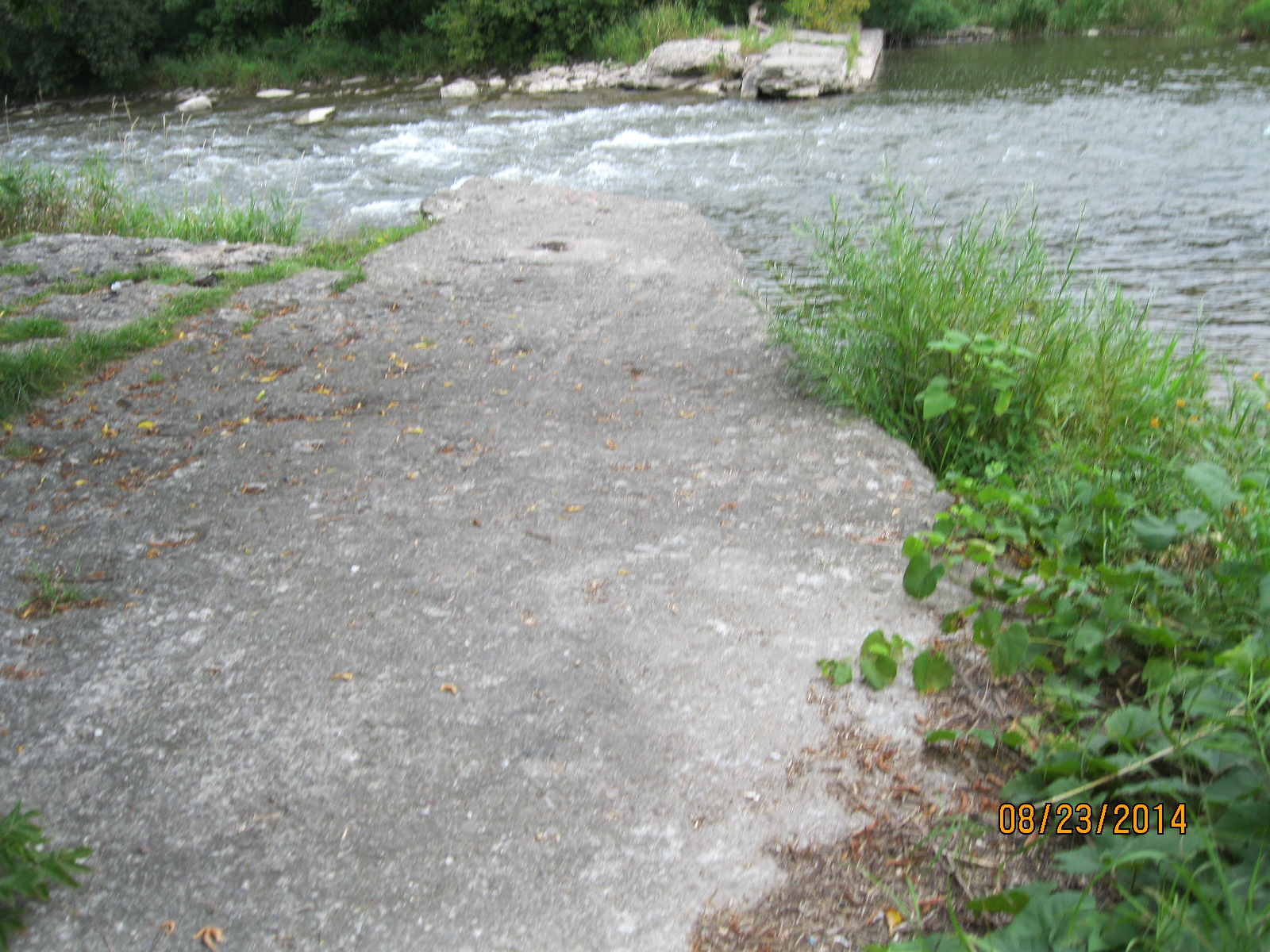
The Barber dam was washed out in 1974 and never replaced.

IMG_3064

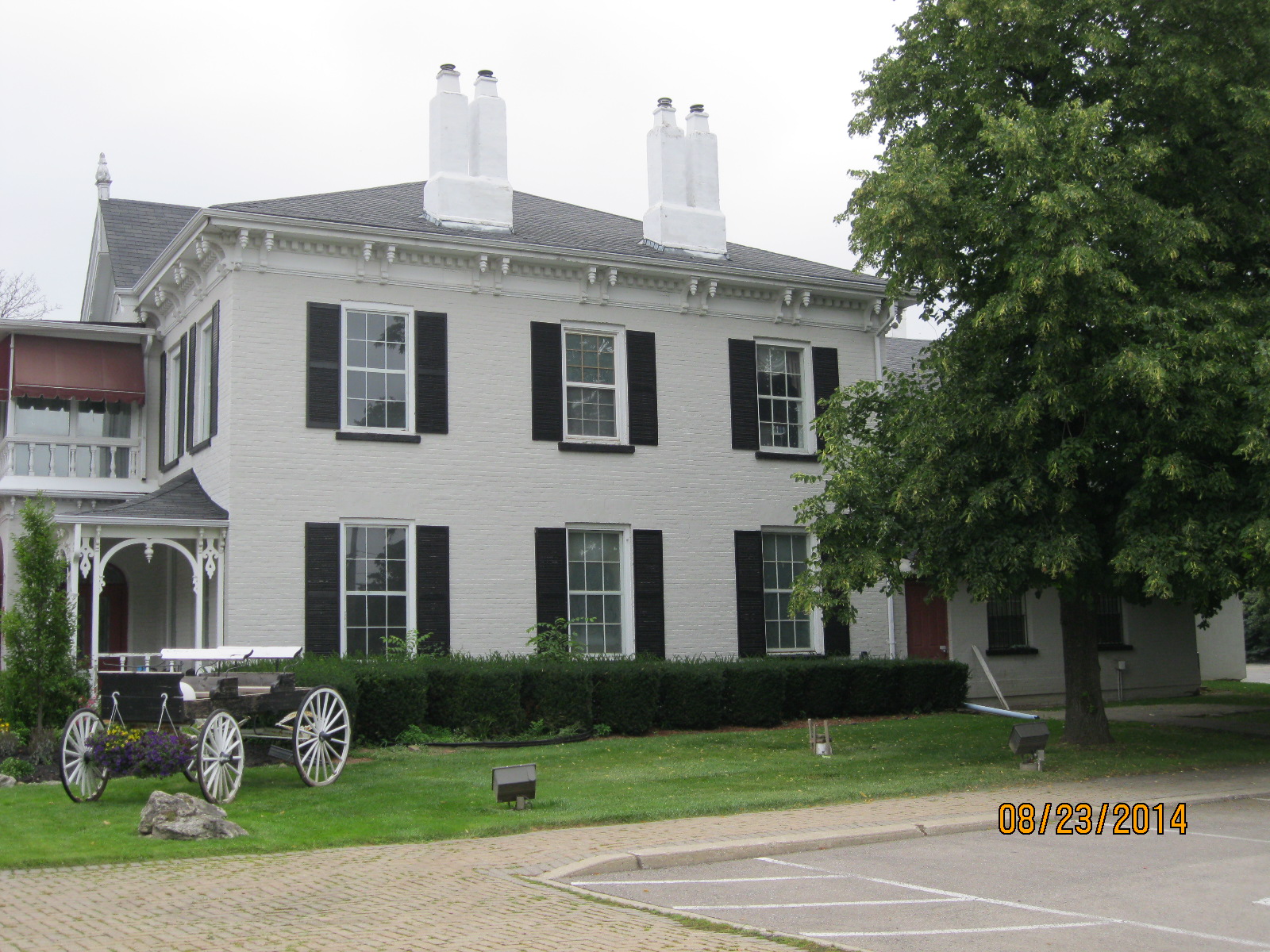
William Barber built himself a two story house in 1862 on the corner of Barbertown Road and Mississauga Road.  It survives today as a restaurant. An 1860’s carriage parked near the front of the house reminds us of how these roads and the Barbertown Bridge were originally used.  I can picture William coming out in the morning and getting onto perhaps this very carriage.  After an inspection of the mill, perhaps a trip down Mississauga Road into Port Credit to arrange the sale or shipment of some of his textiles.

IMG_3106

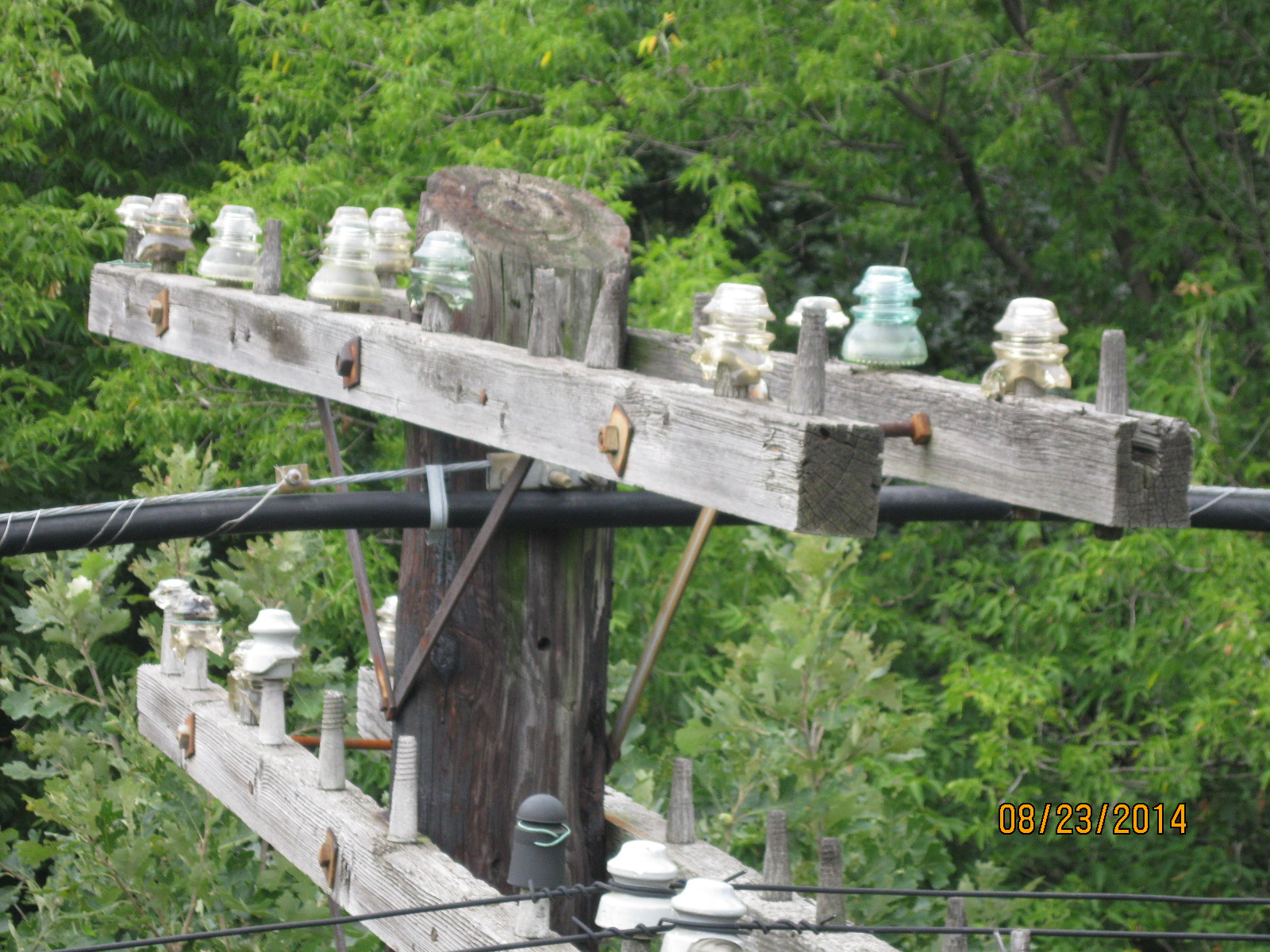
Rail corridors were strung with telegraph wires allowing transmission of information about train positions.  When electrical power was spreading in the early 1900’s the utility poles were converted to carry power as well.  Glass insulators were patented in the 1880’s and were used where each wire was attached to the pole.  In the picture below many of the original ones have been broken off but several good examples remain.  The light blue ones are possibly older than the clear glass style but to know for sure a date is usually embossed on the right side of the molder’s logo.

IMG_3072

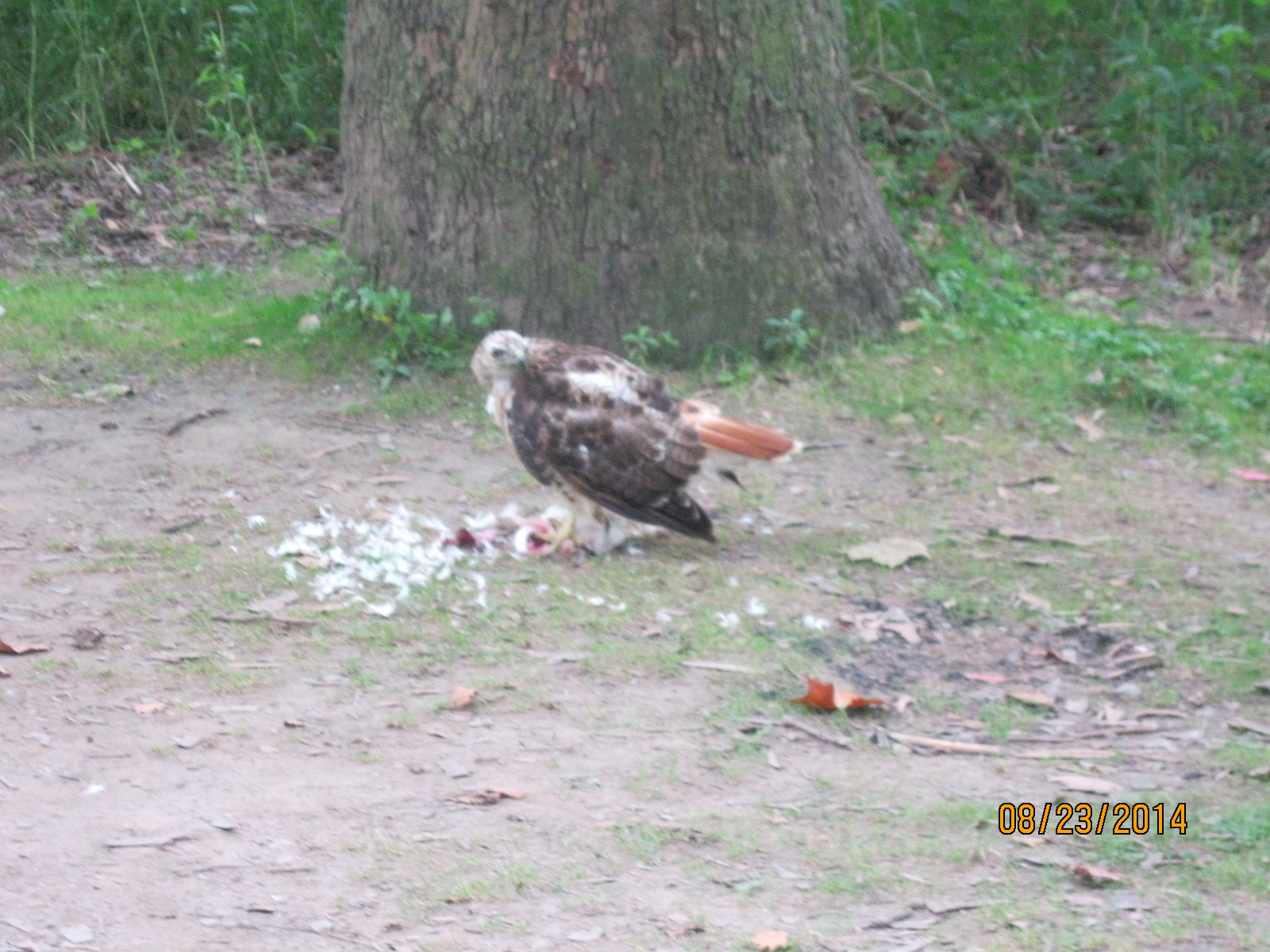
We disturbed a Red-Tailed Hawk who was having a little snack.  Although they eat mainly rodents they are not opposed to a little water fowl once in while as this one was enjoying. Females are up to 25% larger than males and this was therefore likely a female.

IMG_3098

Like us at http://www.facebook.com/hikingthegta

Follow us at http://www.hikingthegta.com