Category Archives: Ghost Town

Eldorado – Ghost Towns Of Ontario

November 29, 2025

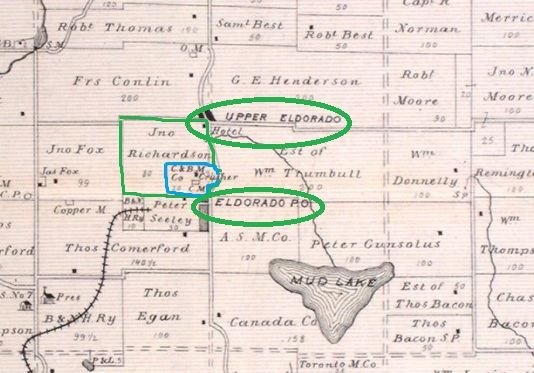
Ontario’s first gold rush happened in 1866 on a farm north of Madoc. August 15 was the fateful day when Marcus Herbert Powell discovered gold while prospecting for copper on the farm of John Richardson. Richardson had given up on farming and was looking for one last opportunity to make money from his property. He had hired Powell because of his skills as a part time prospector. During his regular job Marcus served as a county clerk but suddenly he had new opportunities. He leased 19 acres of the farm for half of the proceeds from any gold that was found. The map below shows Eldorado as it existed in 1877 when the county atlas was drawn. Richardson’s property is outlined in green while the site of the mine is shown in blue. The two sections of Eldorado as it existed at the time are circled in green.
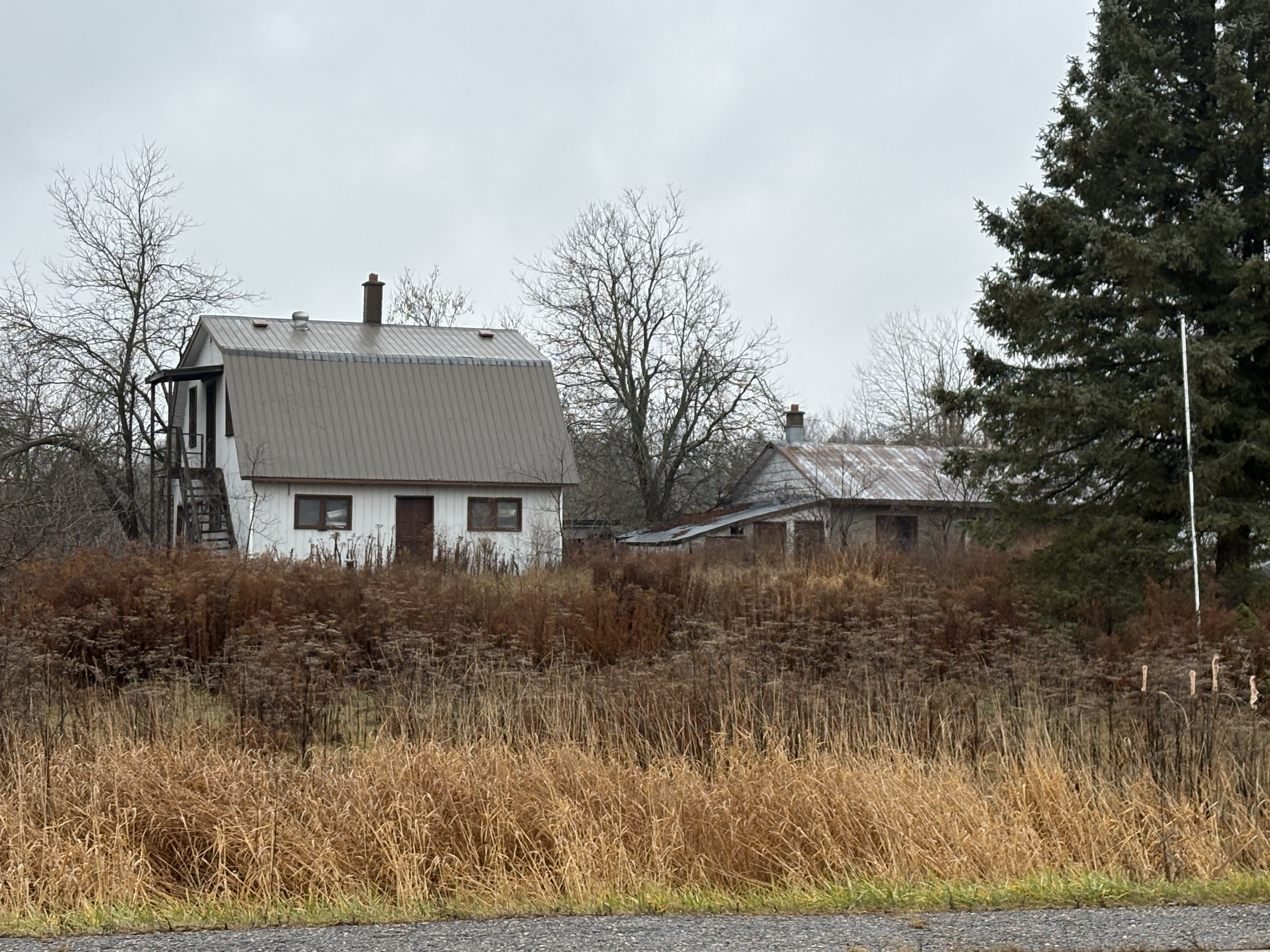
Powell soon sold the farm for $36,000 to two miners from Chicago. John Richardson got $21,000 out of the deal. The town of Eldorado was founded in 1867 and very quickly there were town streets laid out and construction began on 80 homes. Hotels and other support businesses sprang up over night with the expectations of 3,000 to 4,000 prospectors greedy to make their fortune in the gold that was apparently just laying around waiting to be collected. Today there are vacant buildings scattered throughout the area.
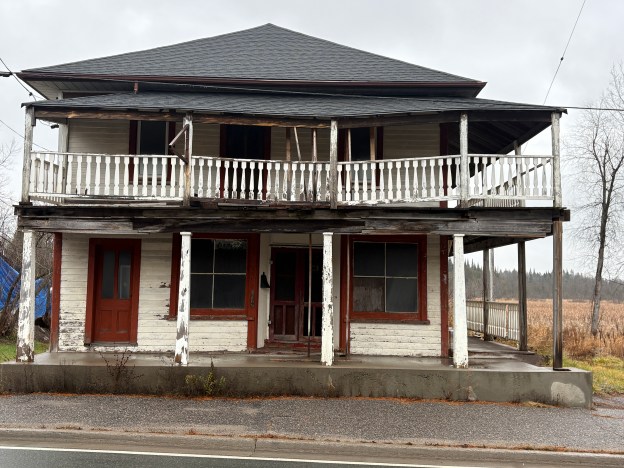
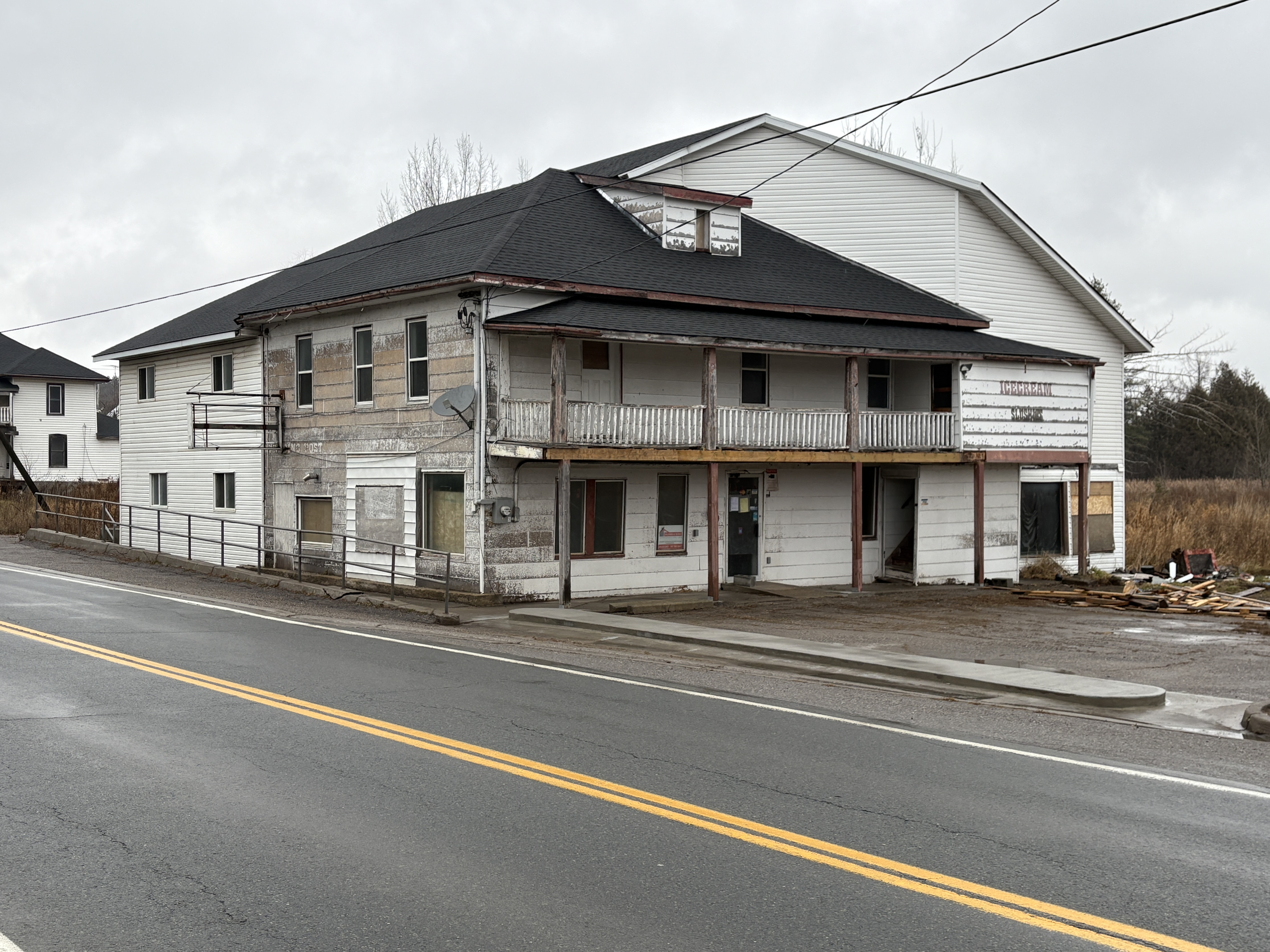
By 1867 the mine was opened and a shaft 15 feet deep was dug that opened into a cave where gold was seen in the form of nuggets and gold leaves. Soon several other mines were opened in the area but each was underproducing. Eventually it was suggested that Powell was lying about discovering the gold and 100 miners burst onto the Richardson mine property demanding to inspect the mine for themselves. With the help of 25 RCMP officers the situation was brought under control. The image below shows the former gas station which has served as a hotel and trading post over the years. The sign on the far end of the building used to say “Canada’s Oldest Gas Station” but much of the lettering has fallen off. That seems to be appropriate considering the pumps have long been removed.
Town lots were laid out on Lot 17 in Concession 5 and soon a boom town was growing. There were muddy streets lined with homes and newly opened businesses. By 1869 there were 4 hotels, a dry goods store, 2 grocery stores a doctor and a lawyer. The hopes for Richardson’s Mine were fading and the expensive crusher that had been built failed to expose very much gold. By 1869 the mine was played out and only 100 ounces of gold were found there. This had a value of about $1,500 at the time, which was much less than the investment the miners had made in purchasing the site. Only Powell and Richardson were able to profit while other investors lost their money. Most of the hotel and store buildings have been lost to fire or neglect and the remainders won’t be too far behind them as they are also falling down.
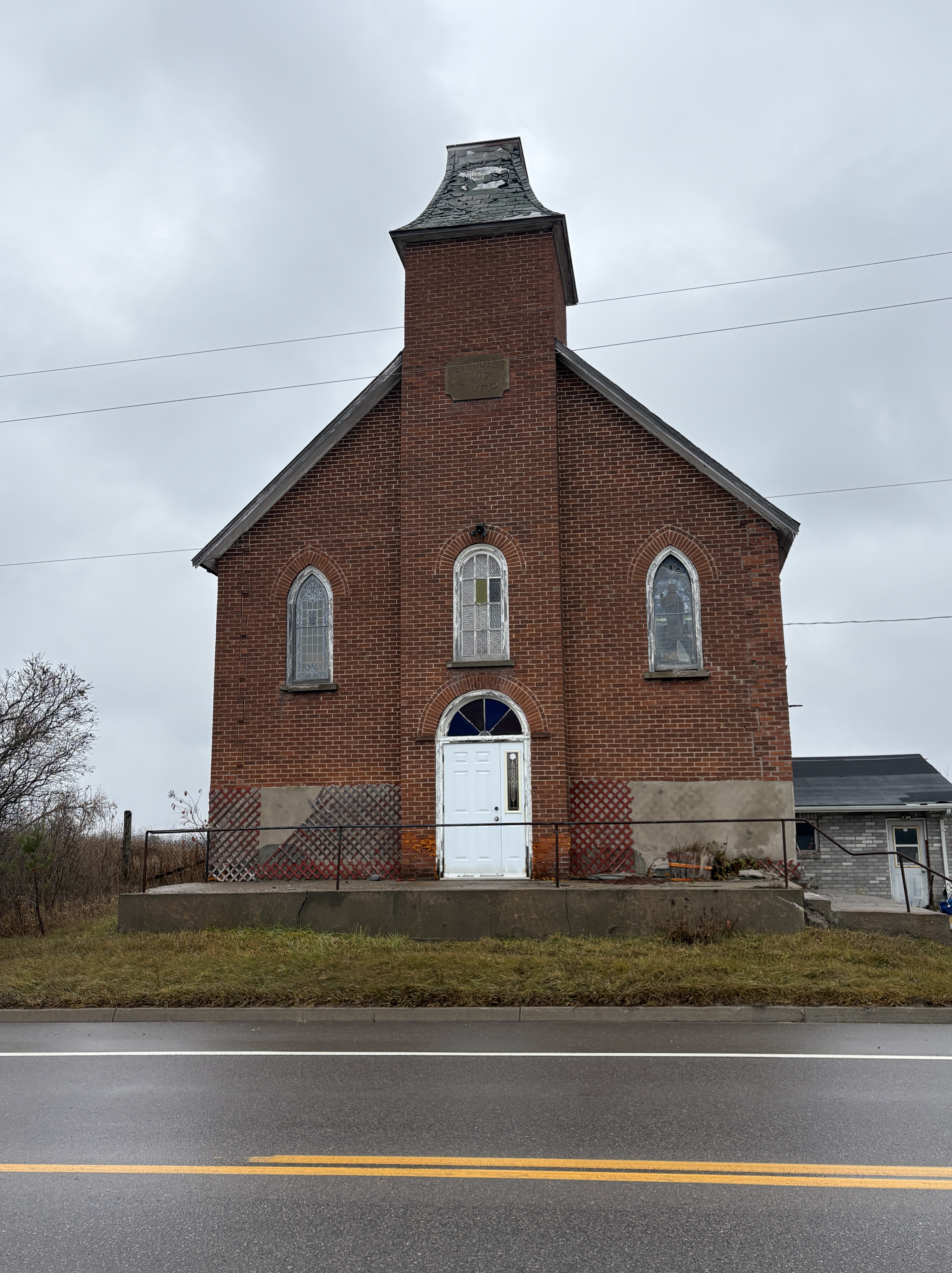
Several other smaller mines operated for a few years without much success. The Phoenix Mine worked until 1871 with a half a dozen men but also closed without making a profit. At that time there were no longer any hotels but there were still two taverns in town. There were three stores supporting the population as it was starting to dwindle. There were three churches at the peak of population including the Methodist Church. Fox Methodist Church was meeting prior to the construction of their new building in 1907. The church has an unusual construction with a small front door with a window above it. The tower is also very short and lacks a bell. The church became a United Church in 1925 and by the 1960s was closed.
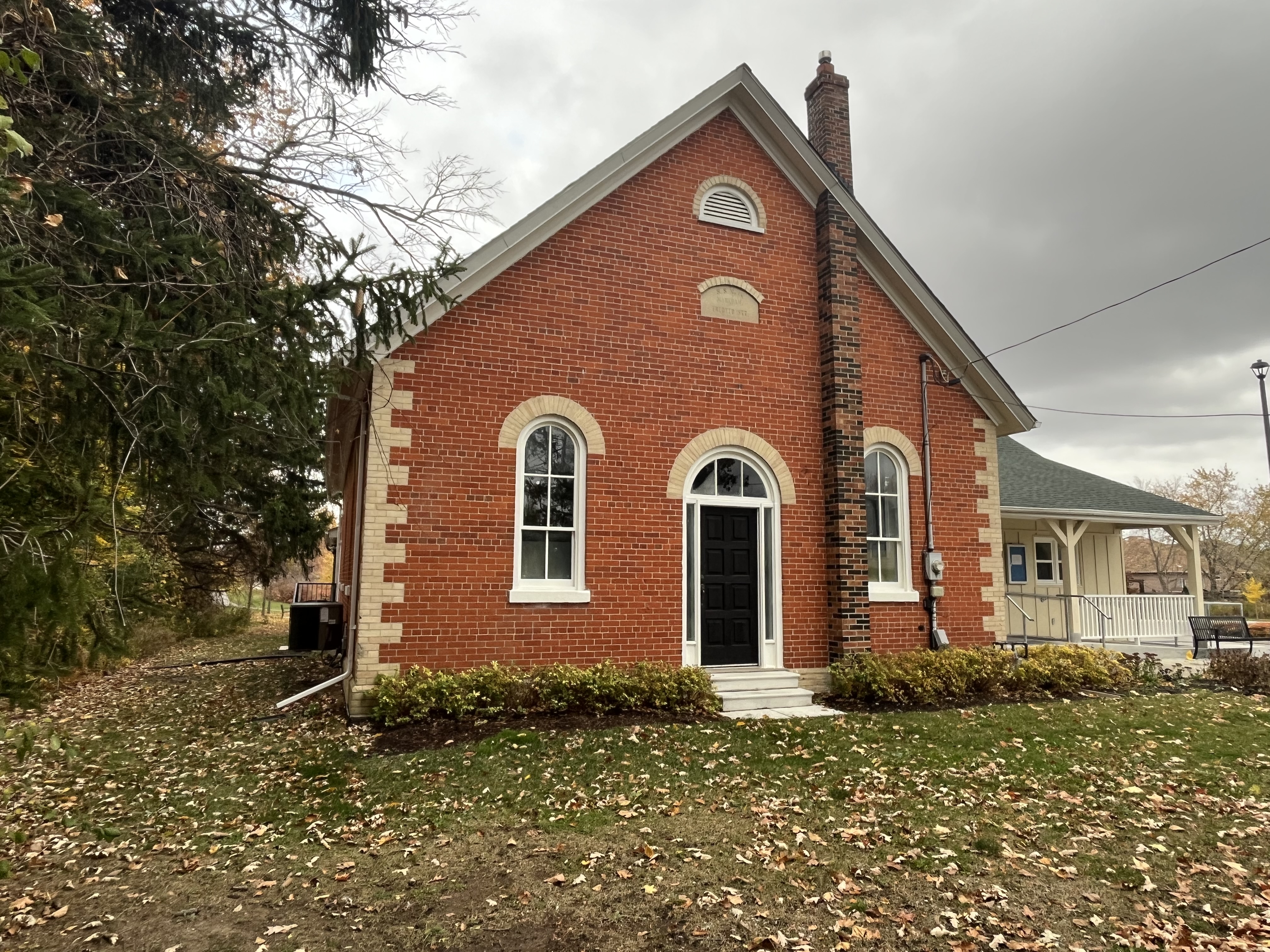
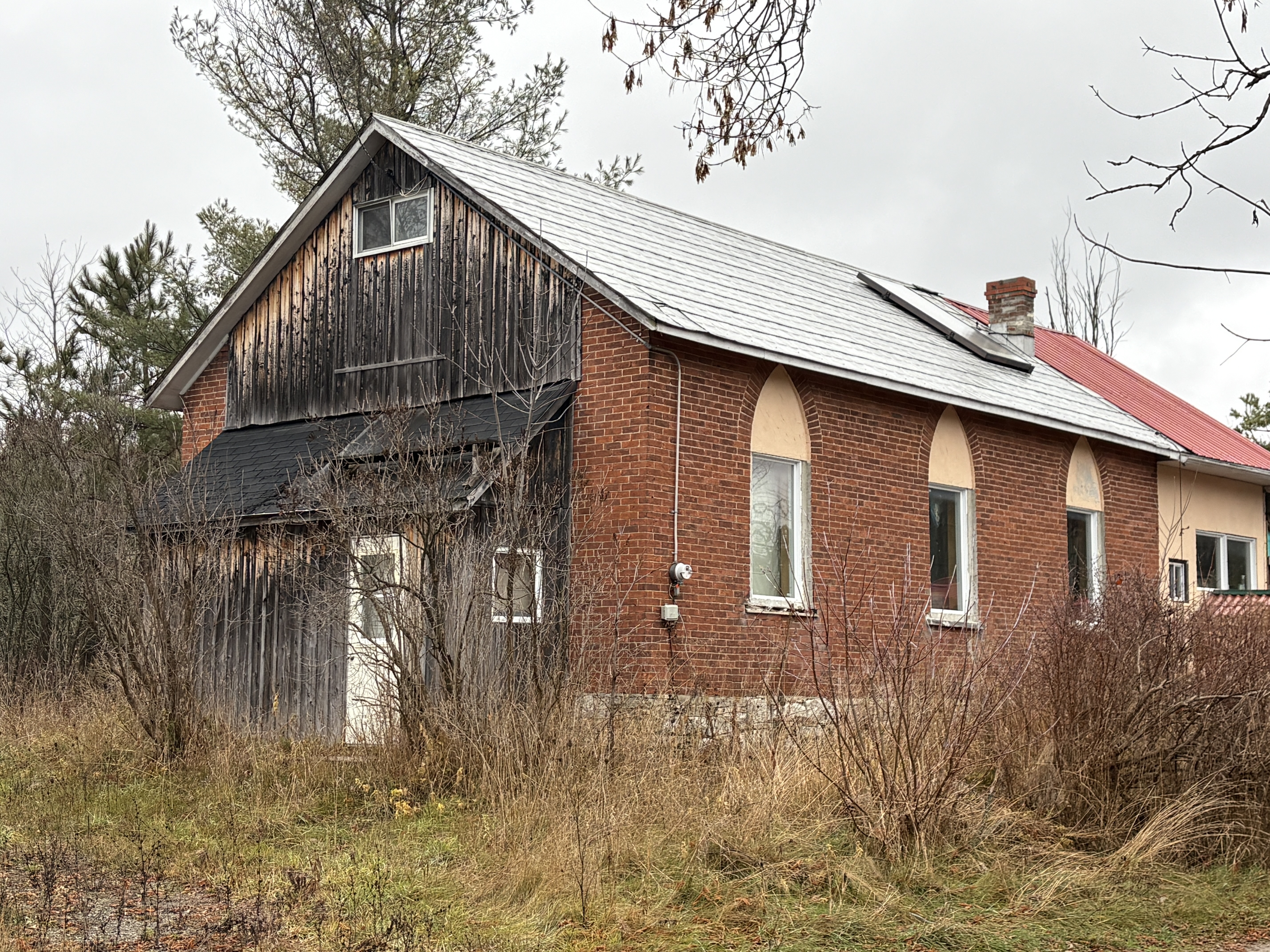
Aside from the three churches there was also a school. This building was likely the school but was altered to be a home at some point in time.
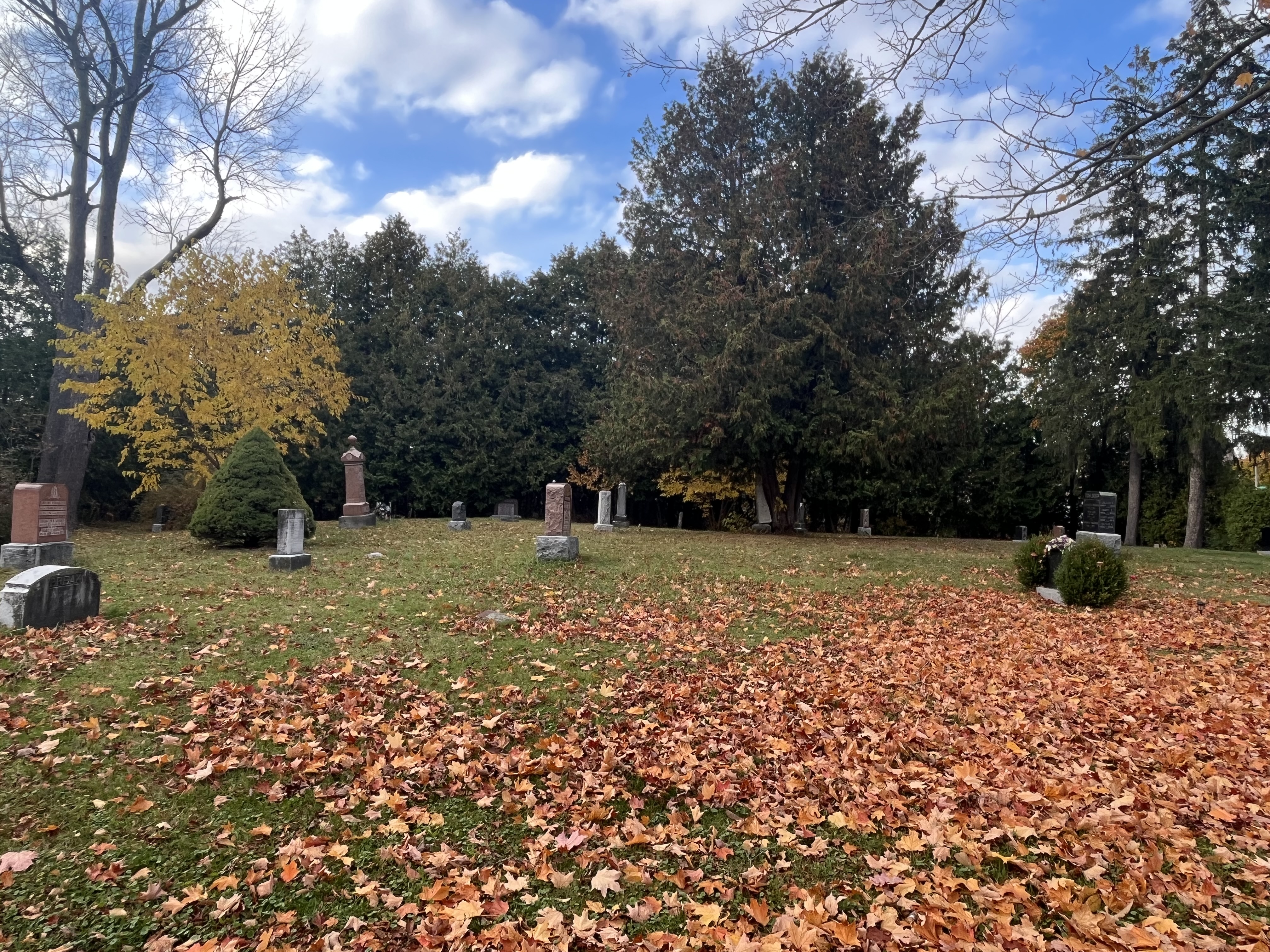
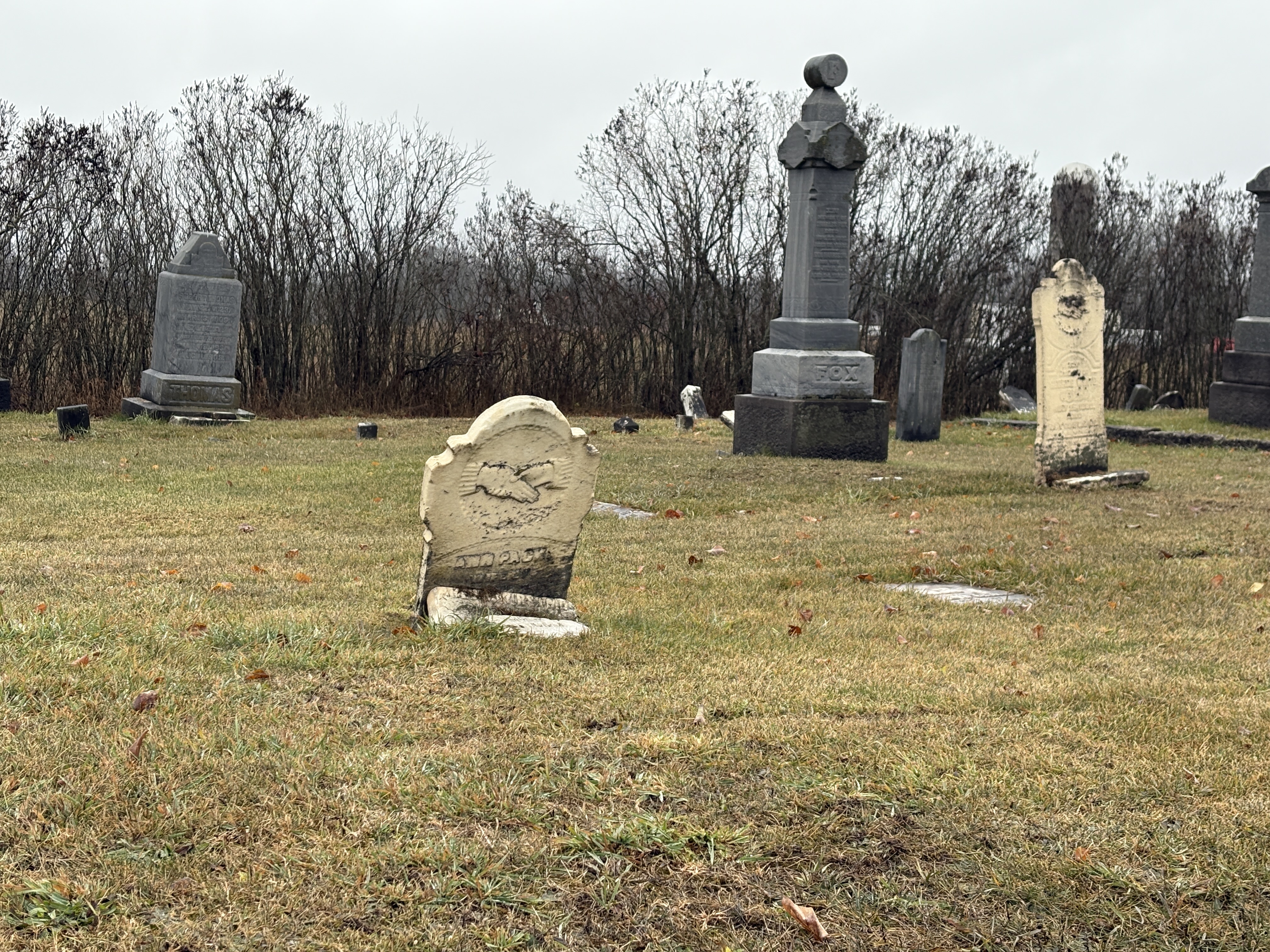
New life was given to the community with the building of the Central Ontario Railway (COR) which built a small wooden station in town. Construction of the railway began in 1882 and was completed the following year. It was connected to the Belleville and North Hastings Railway in 1887 at which time the town boasted a shingle mill and box factory on John Street near the railway station. A blacksmith and wagon maker were also listed in the town directory at this time. The Eldorado cemetery started off as Fox Methodist cemetery and is now in use as a general one for the community.
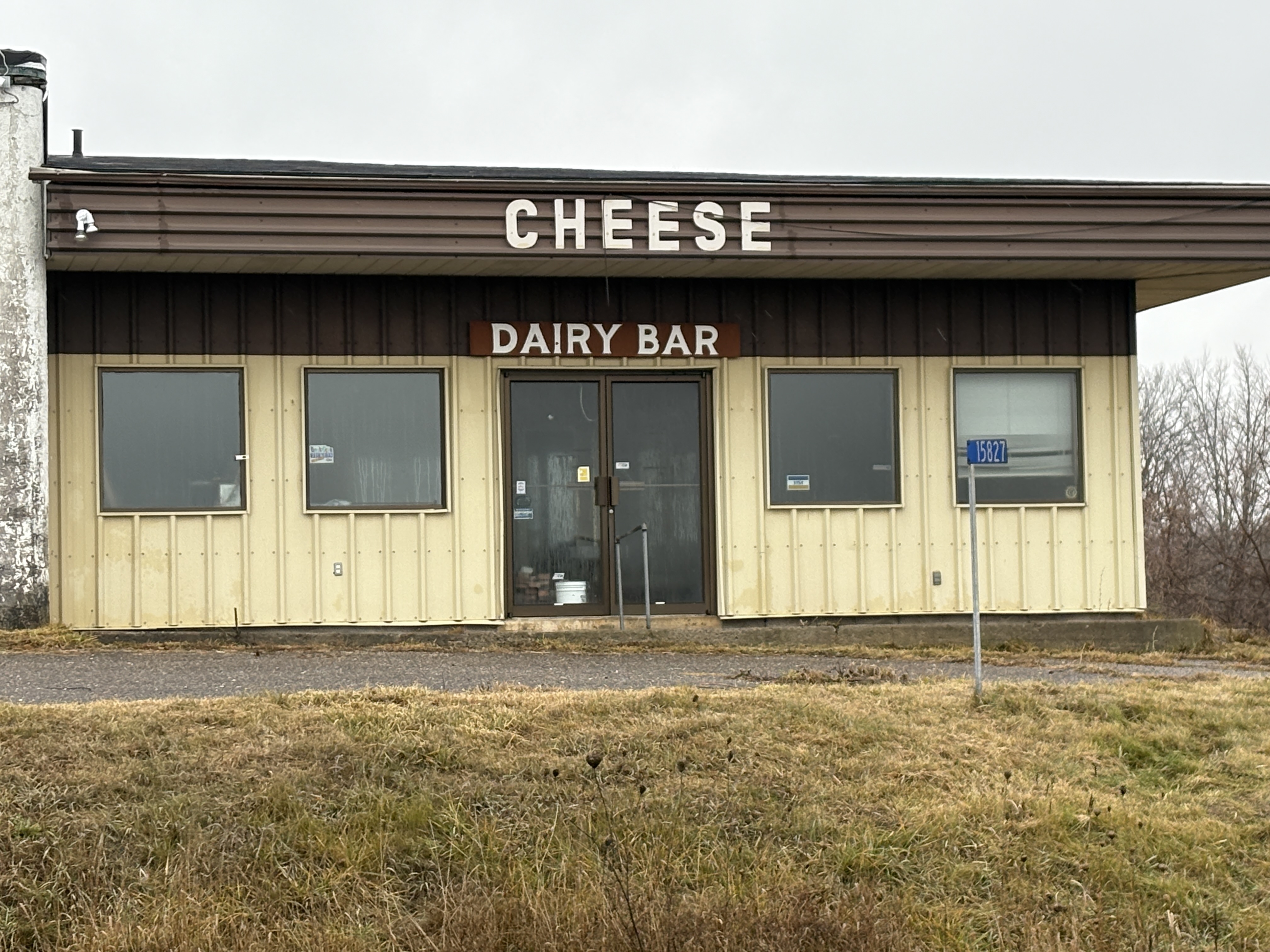
Before the days of refrigeration and large scale trucking it was common for small towns to have a dairy to process the local milk. The making of cheese was a good way to extend the self life of milk. Thompson’s Cheese Factory opened in the 1880s and served the village and local community until 1991 when production was shut down.
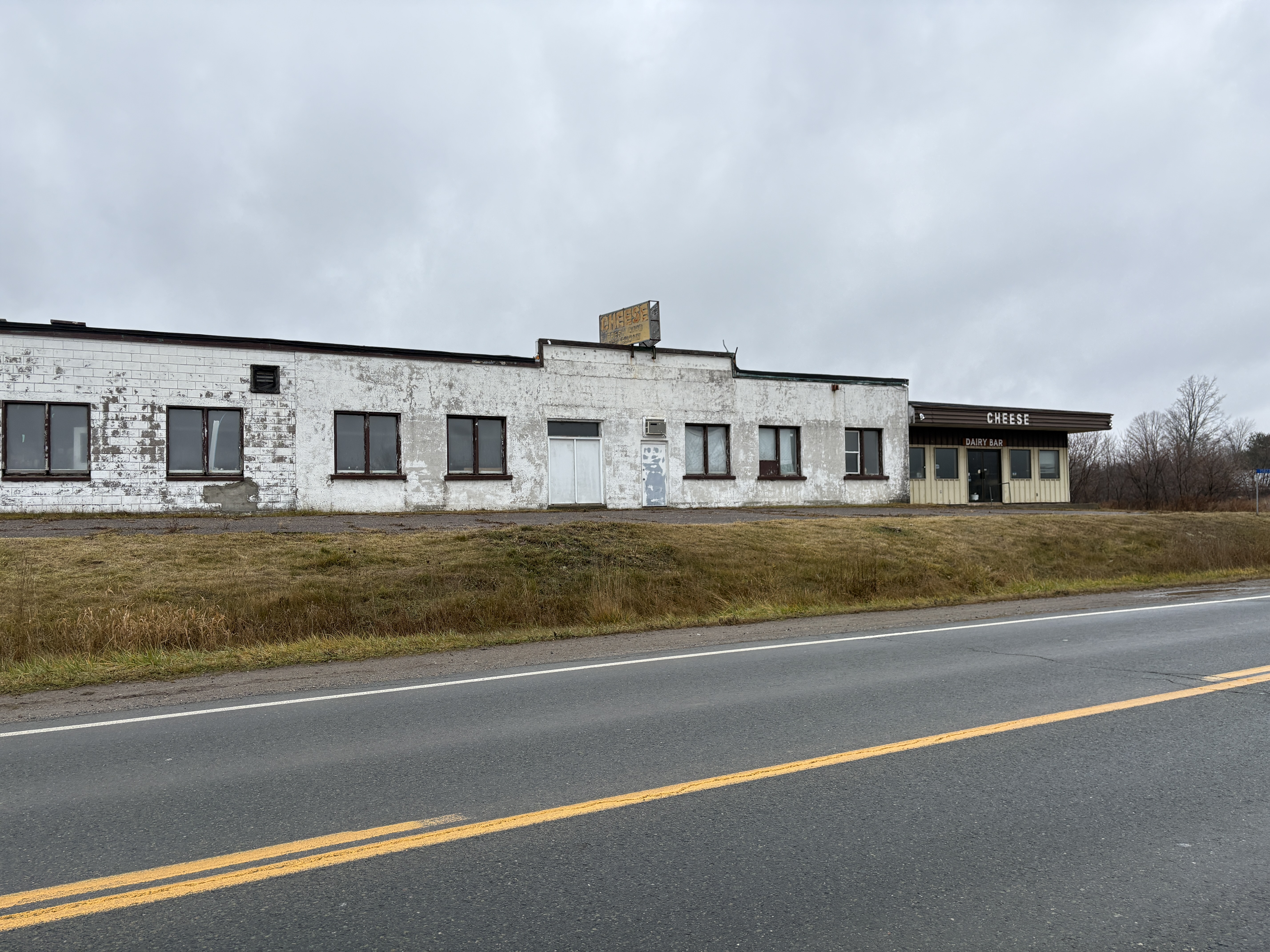
The retail dairy bar was able to carry on for another 20 years and didn’t close until 2011. By 2019 the population was listed at just 50 people, down from a peak of about 3000.
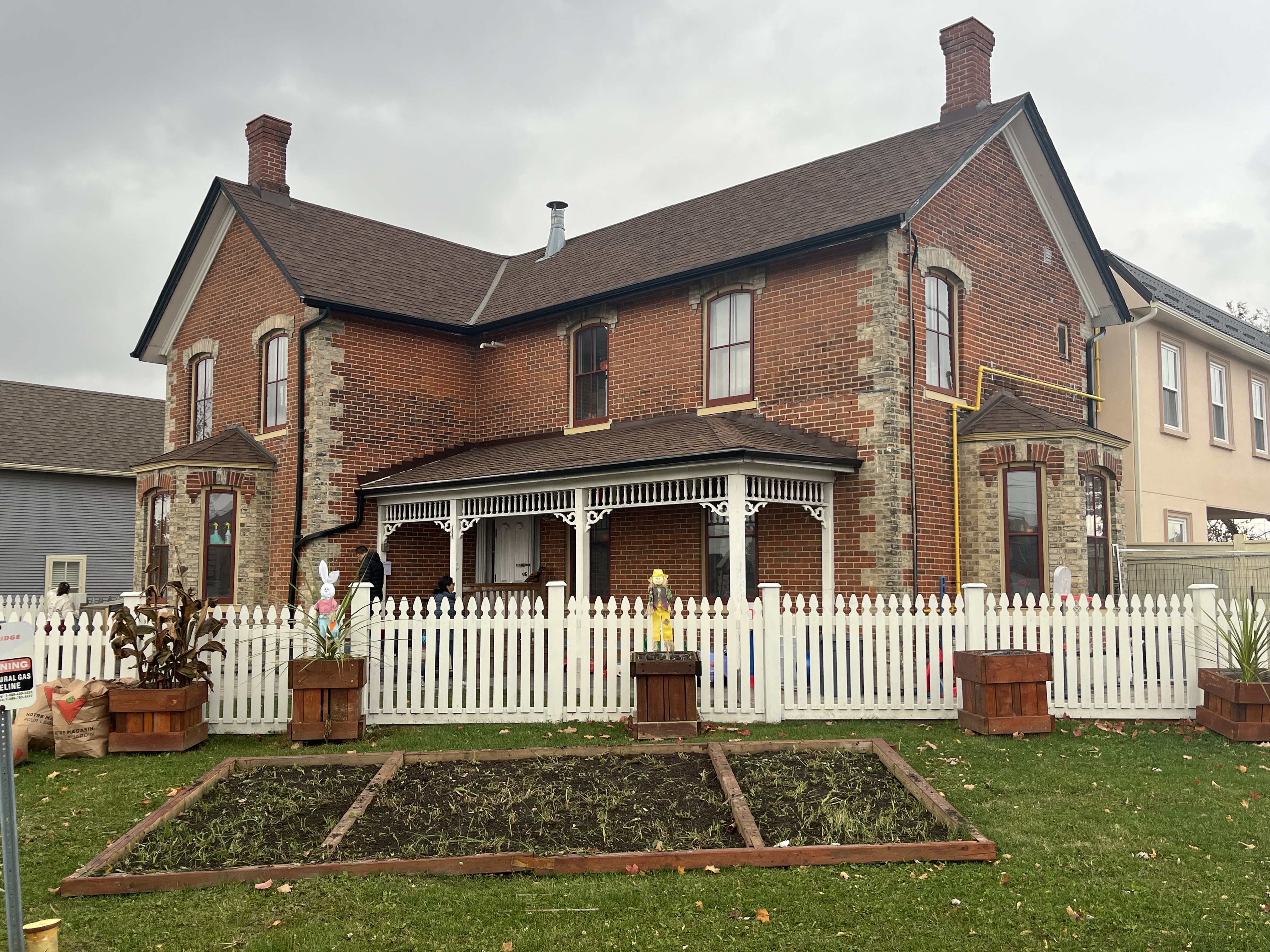
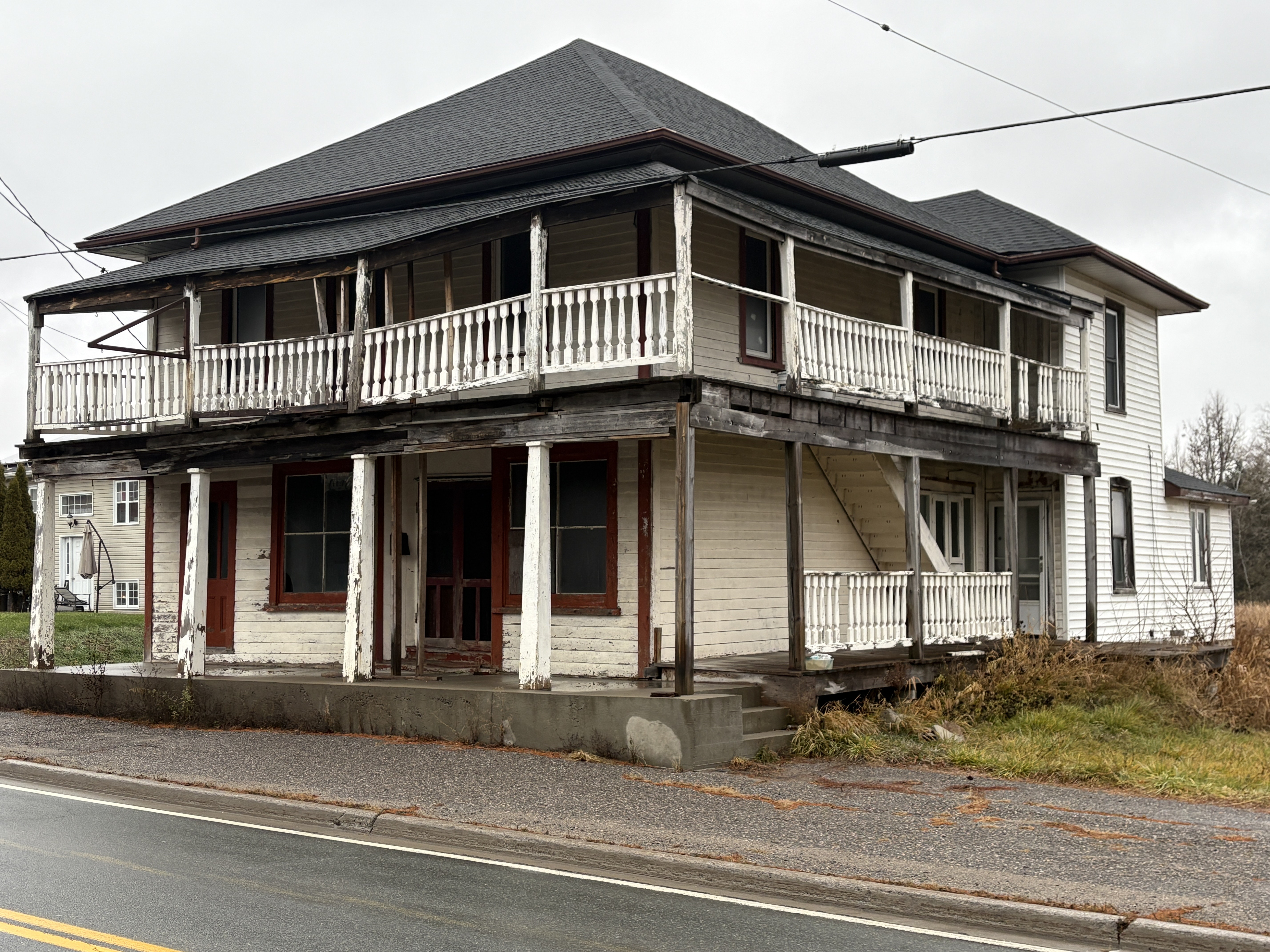
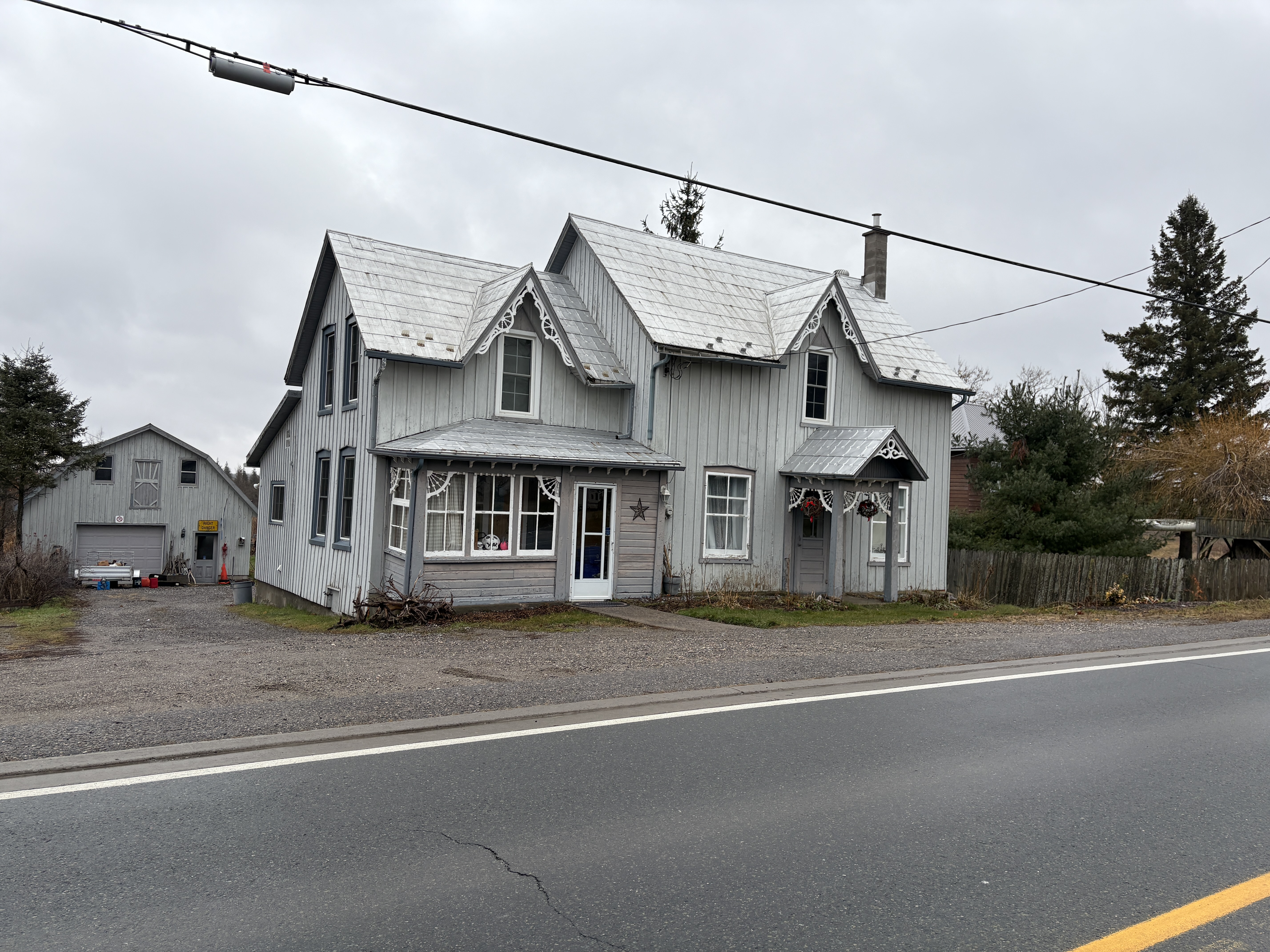
Across the road from the dairy bar is this home which still has a lot of its 1800s charm with the gingerbread and board and batten construction. This is where the post office is shown on the county atlas and the part of the house on the left looks like it was a former retail establishment. The post office was opened in 1867 when the town was in a major growth spurt. At this time there were extra stage coaches providing additional service for the crowds of gold seekers who were flocking into the town. This led to highly inflated prices as merchants from Belleville to Madoc cashed in on the extra traffic.
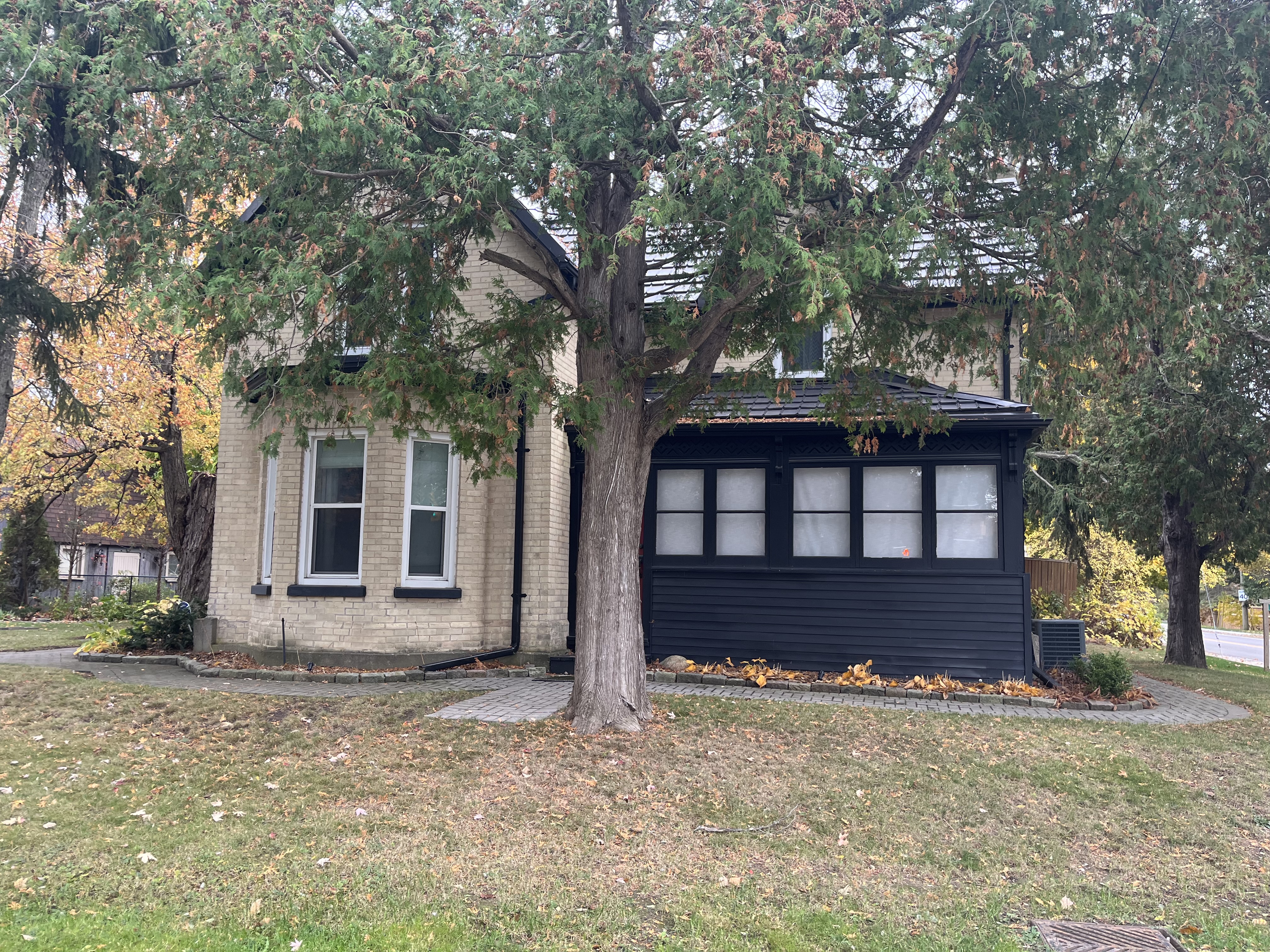
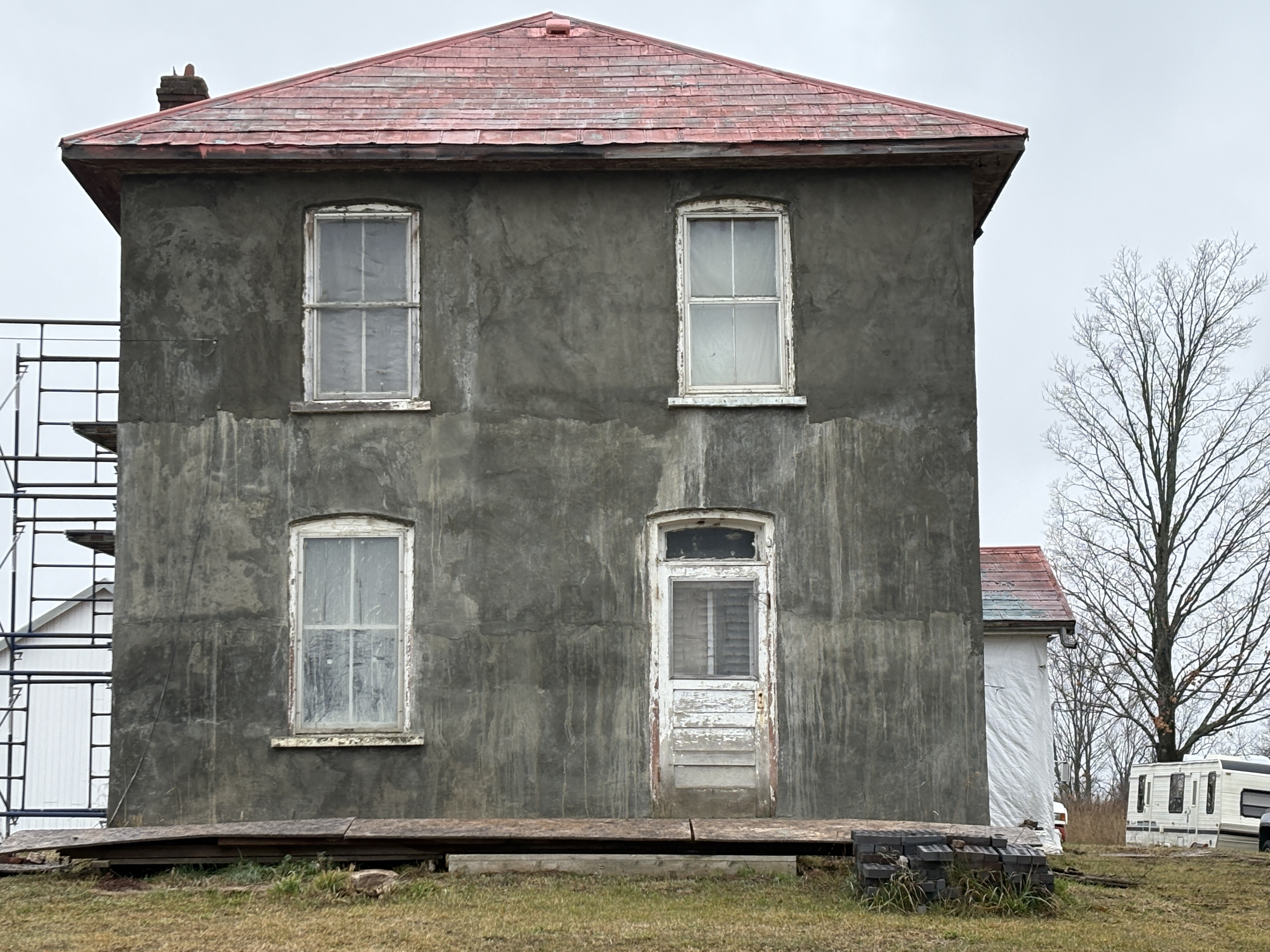
Adjacent to the cheese factory stands this sad looking house. The Edwardian Classic styling was common in the early 1900s and rejected the decoration and styling of the Victorian era. There is a set of scaffolding on the side of the house indicating that someone may be in the process of reviving the home. This is a case where the original plaster should be hidden by some siding or at least a new coat of paint.
Eldorado had its boom years over 150 years ago and has shrunk back to be a local farming community. There’s still plenty of historic charm but some of it is decaying quickly and may soon be lost forever.

Related stories: Coopers Falls

Google Maps link: Eldorado

Like us at http://www.facebook.com/hikingthegta

Follow us at http://www.hikingthegta.com
Vanished Communities of Highway 10

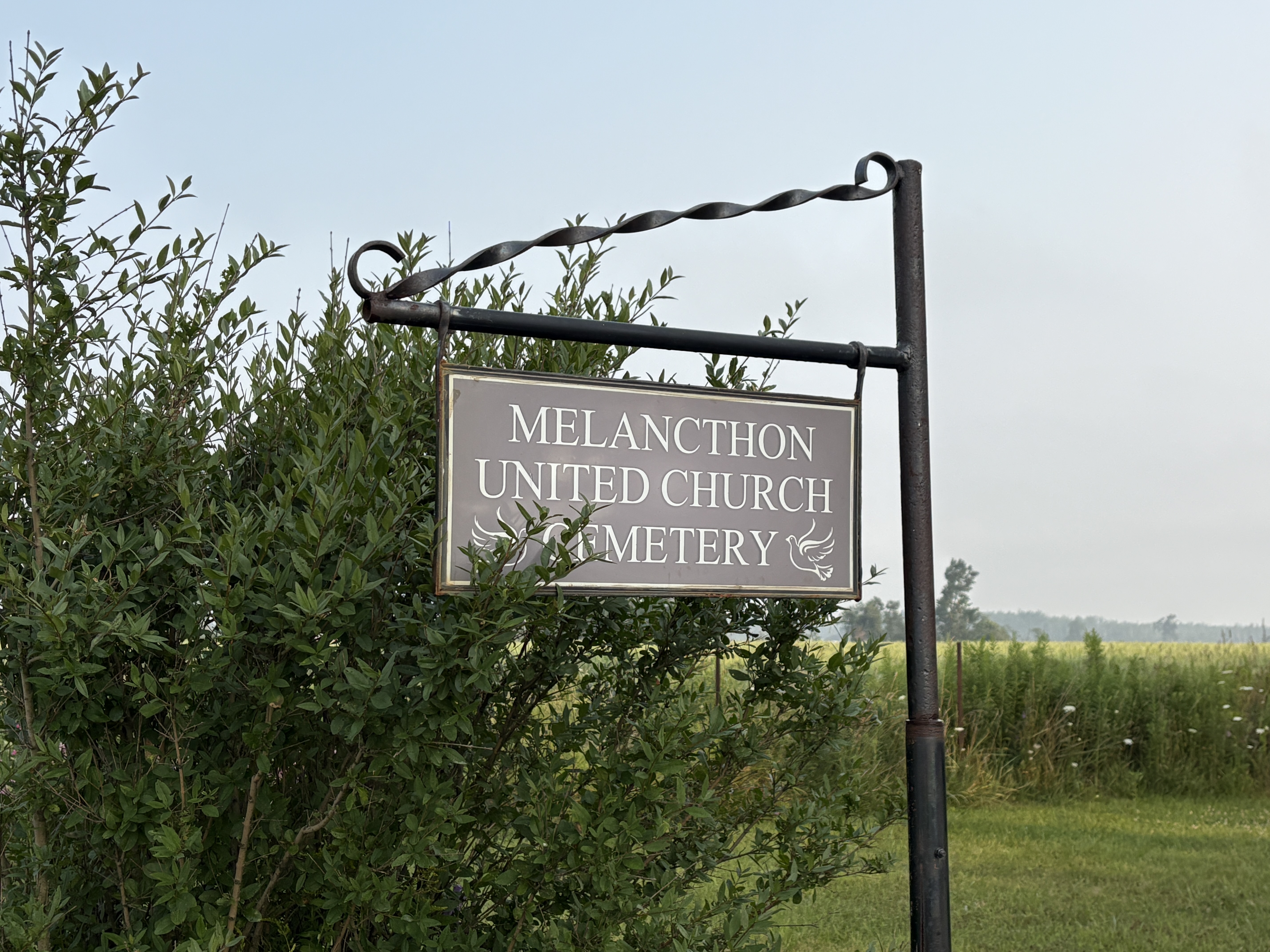
As you drive between Shelburne and Markdale on Highway 10 you may notice several pioneer cemeteries that appear to be in the middle of nowhere. In fact, they were located in small communities with houses, stores, hotels, schools and churches. For different reasons the communities faded from prominence and disappeared. The buildings were lost to fire, neglect and demolition. Some were lost as the highway was widened and realigned. The first of these communities was just north of Shelburne and was known as Melancthon.

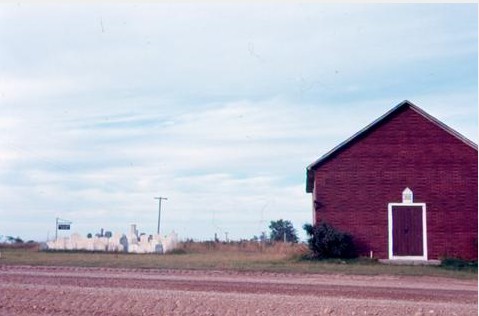
The Melancthon Methodist Episcopal Church was operating as early as 1858 as part of a circuit that included Shleburne, Hornings Mills and Maple Grove. It became part of the Methodist Church of Canada in 1885 and the United Church of Canada in 1925. The church was informally known as the Gravel Road Church and the Gravel Road Cemetery. The archive image below is from 1964 and shows the cemetery when the church building still stood beside it.

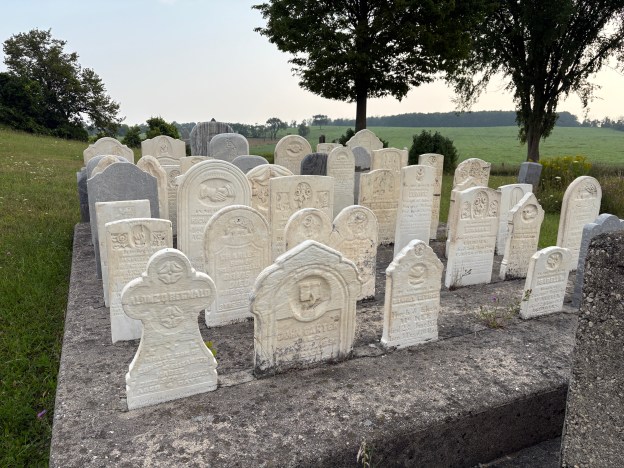
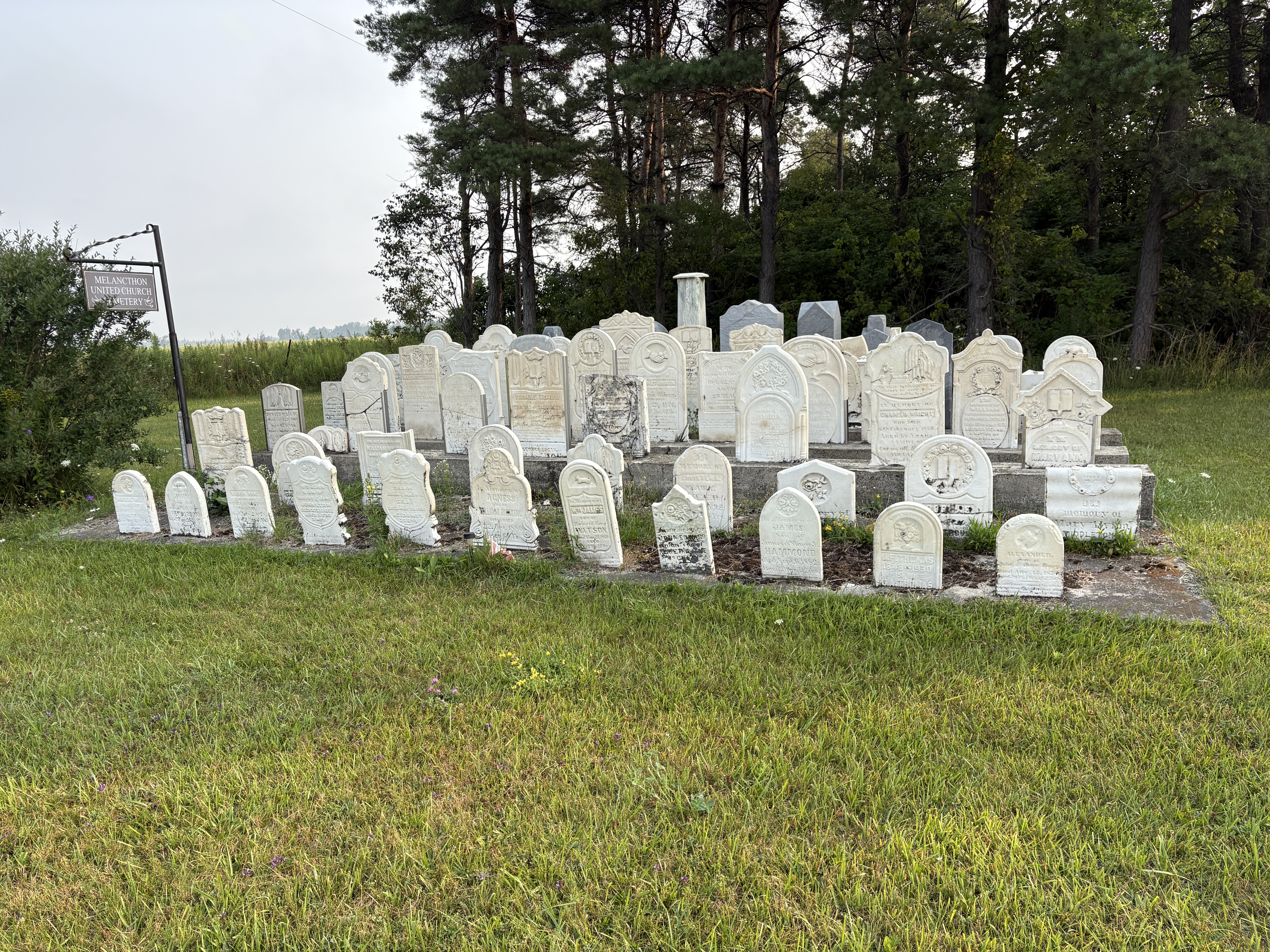
The stones were gathered into a central display when the road was widened and some stories say that the deceased may now be interred under the roadway. This cemetery can be found here.

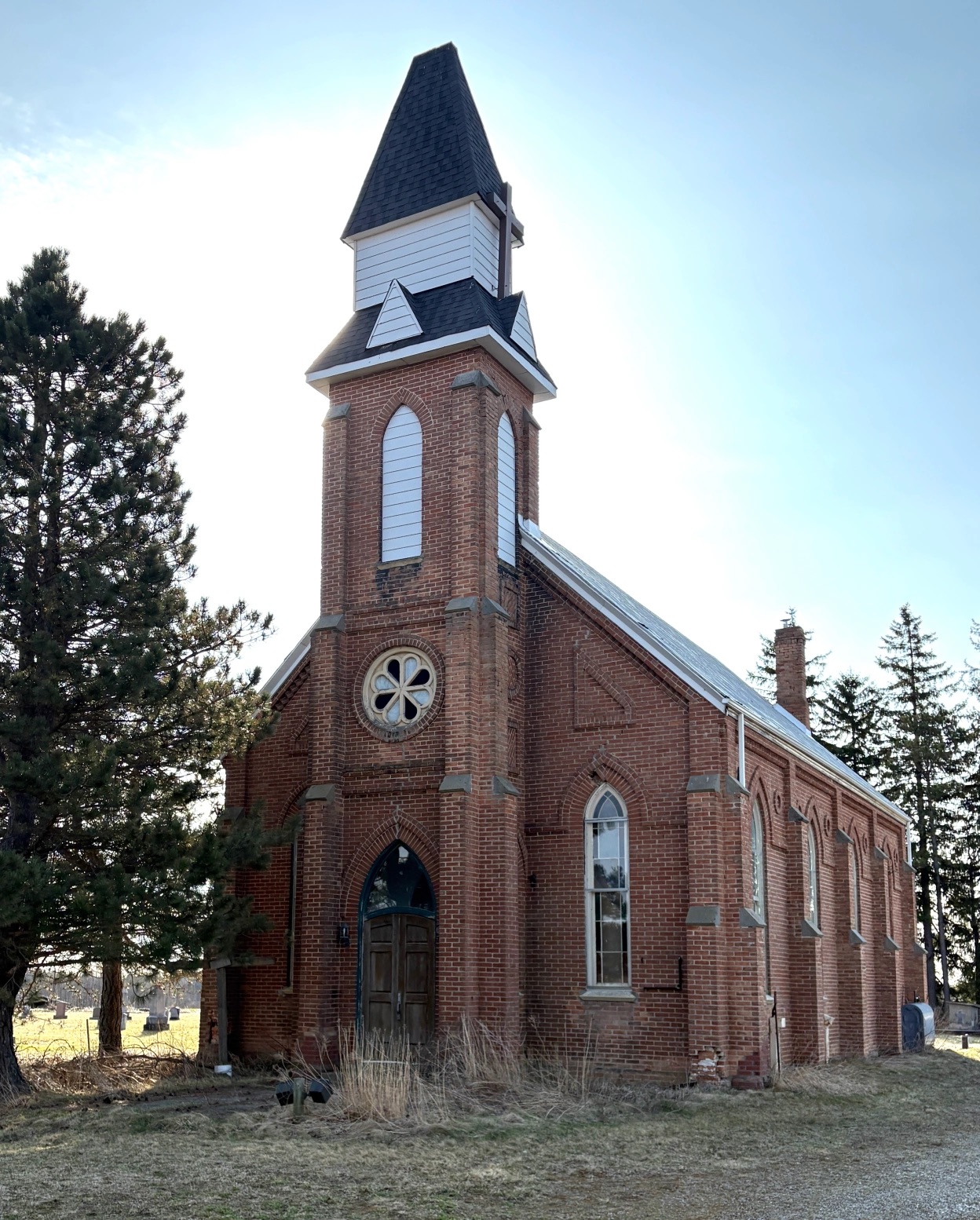
 A hewn-log Catholic church was built in 1858 which also served as a school and was later named St. Patrick’s Catholic Church. This building was used for twenty years before it was decided to replace it with a brick building. As the community of Melancthon slowly disappeared, the attendance in the church dropped off. By 2017 there were only about 40 people left in the congregation and the building was deteriorating badly. It was decided to leave the building and amalgamate with the Trinity United Church in Shelburne. The building has stood empty now for the past 8 years and its fate is in the hands of the Catholic Diocese of Hamilton.

Melancthon soon had 4 hotels, a blacksmith, undertaker and several stores. An Orange Lodge was built in 1858 and a Methodist Church in 1860. A town hall was added in 1874. Things changed rapidly after the First World War as the lumber industry was finished and changes in agriculture styles left the town in a continual downward spiral. Soon, all the commercial buildings and industries were gone and now only the church remains. In the cemetery beside the derelict building are 171 headstones that mark the graves of some of the areas earliest pioneers. This cemetery can be found here.

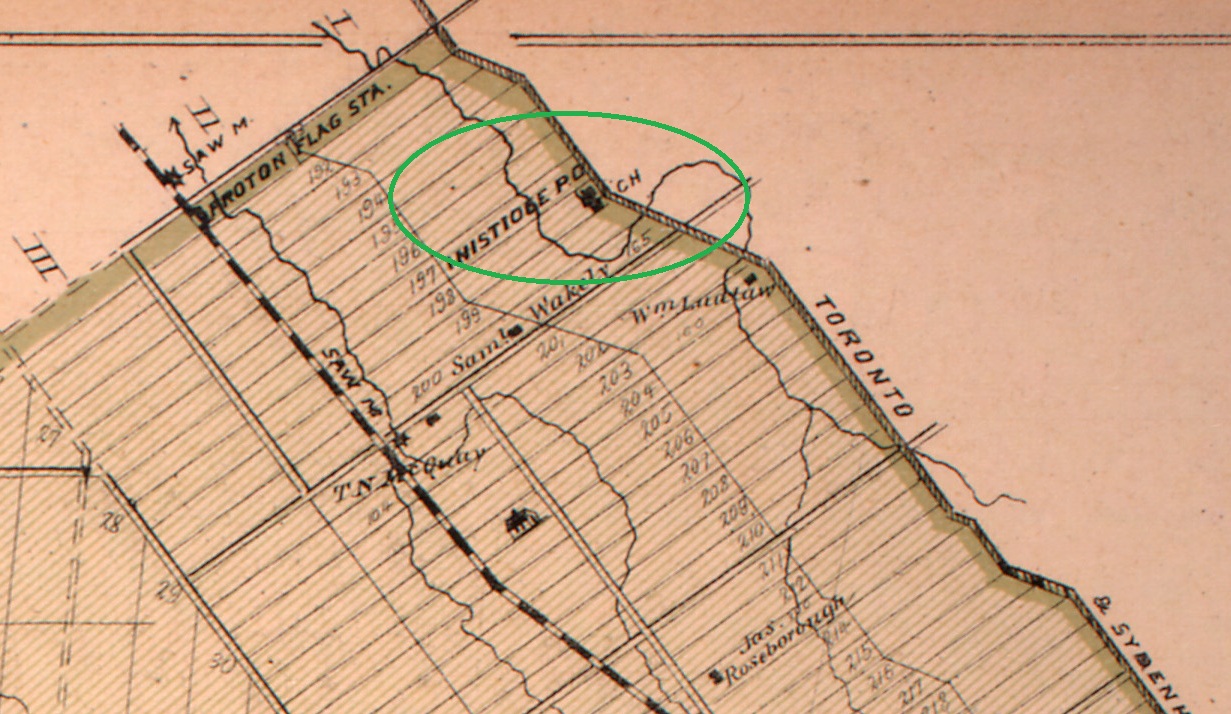
On the 1877 County Atlas the community of Inistioge doesn’t look like much. It was founded around 184 when the Toronto-Sydenham Road (Now Highway 10) was being opened up. George Armstrong and his family arrived from Inistioge, Ireland and started to build a community. Methodist Church services were held in the home of George Snyder until about 1850 when a log church was built on the Armstrong Farm. A cemetery was opened up beside it with the first burial being in 1851. That same year a post office was opened in the Armstrong home under the name of Proton but this name was changed to Inistioge in 1865.

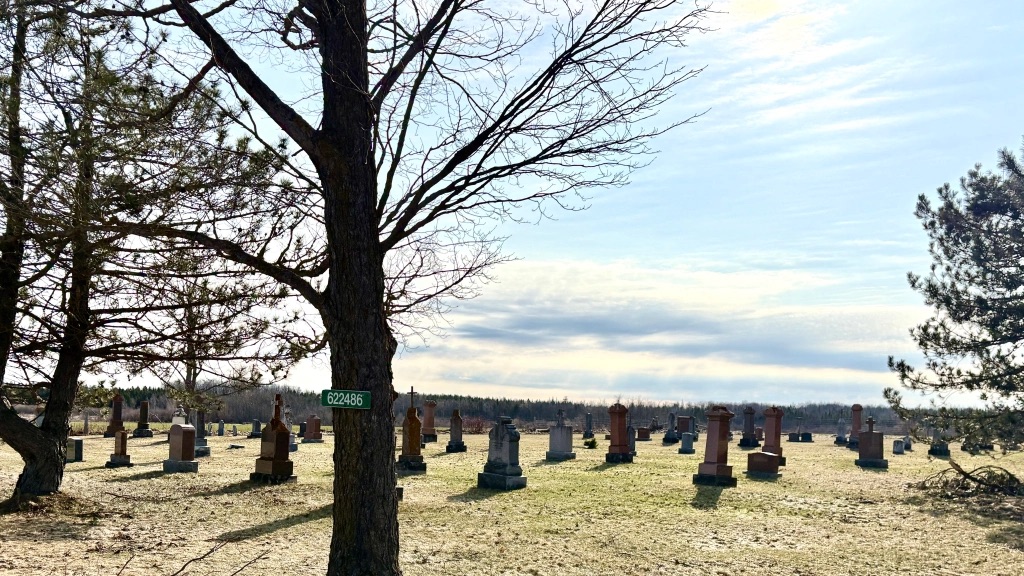
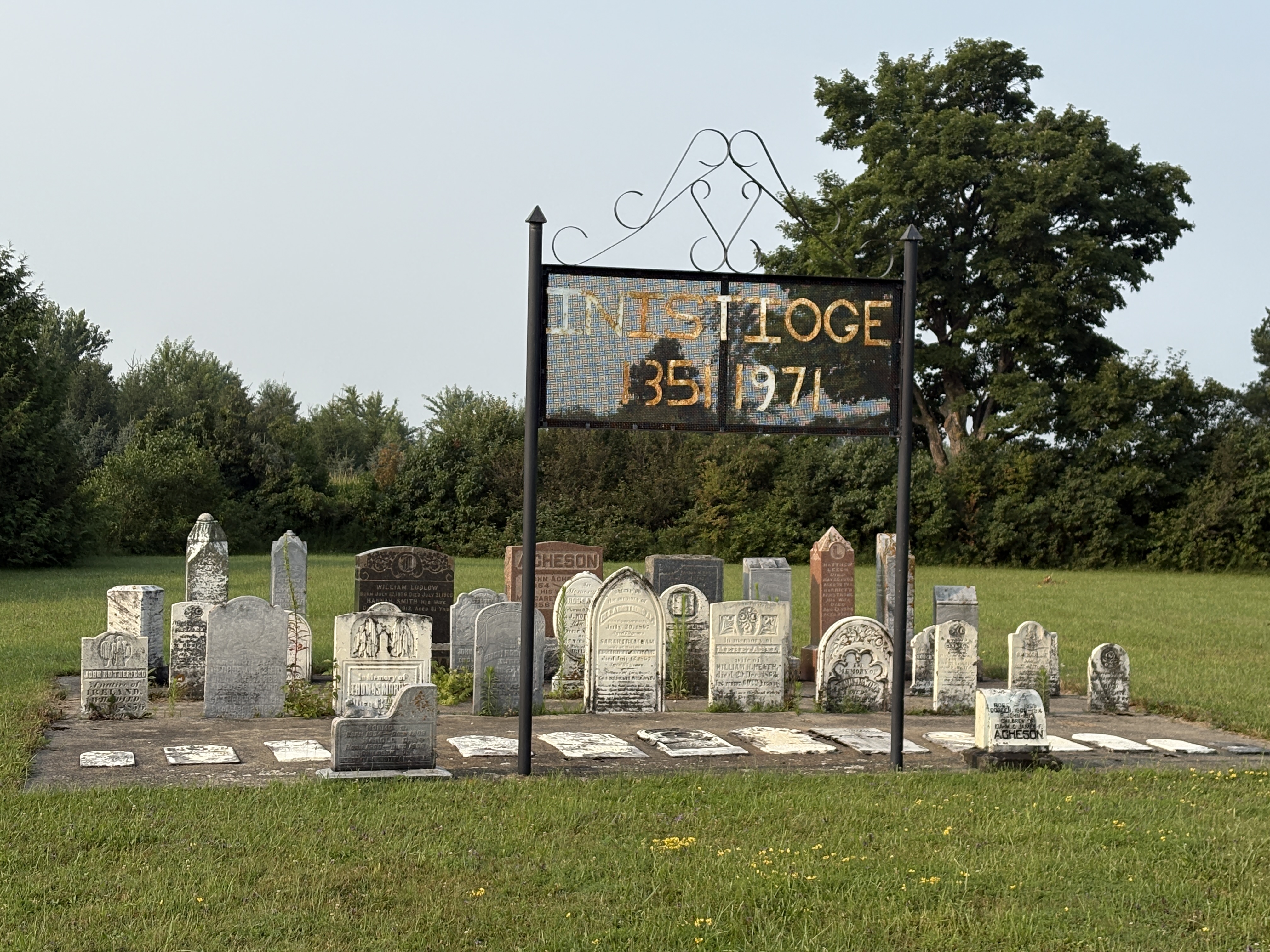
Inistioge attracted a growing number of businesses including a blacksmith, shoe maker, harness maker, hotel, saw mill, general stores and hotels. When the railway passed them by in 1872 and the decline of the community began. The log church lasted for 20 years but was replaced in 1871 with a new, larger building. It was closed in 1961 and later demolished. The school was built in 1865 and replaced with a new building in 1889. This new building remains as a private residence and is about the only surviving remnant of the town with the exception of the forgotten cemetery with its wrought iron sign. This cemetery can be found here.

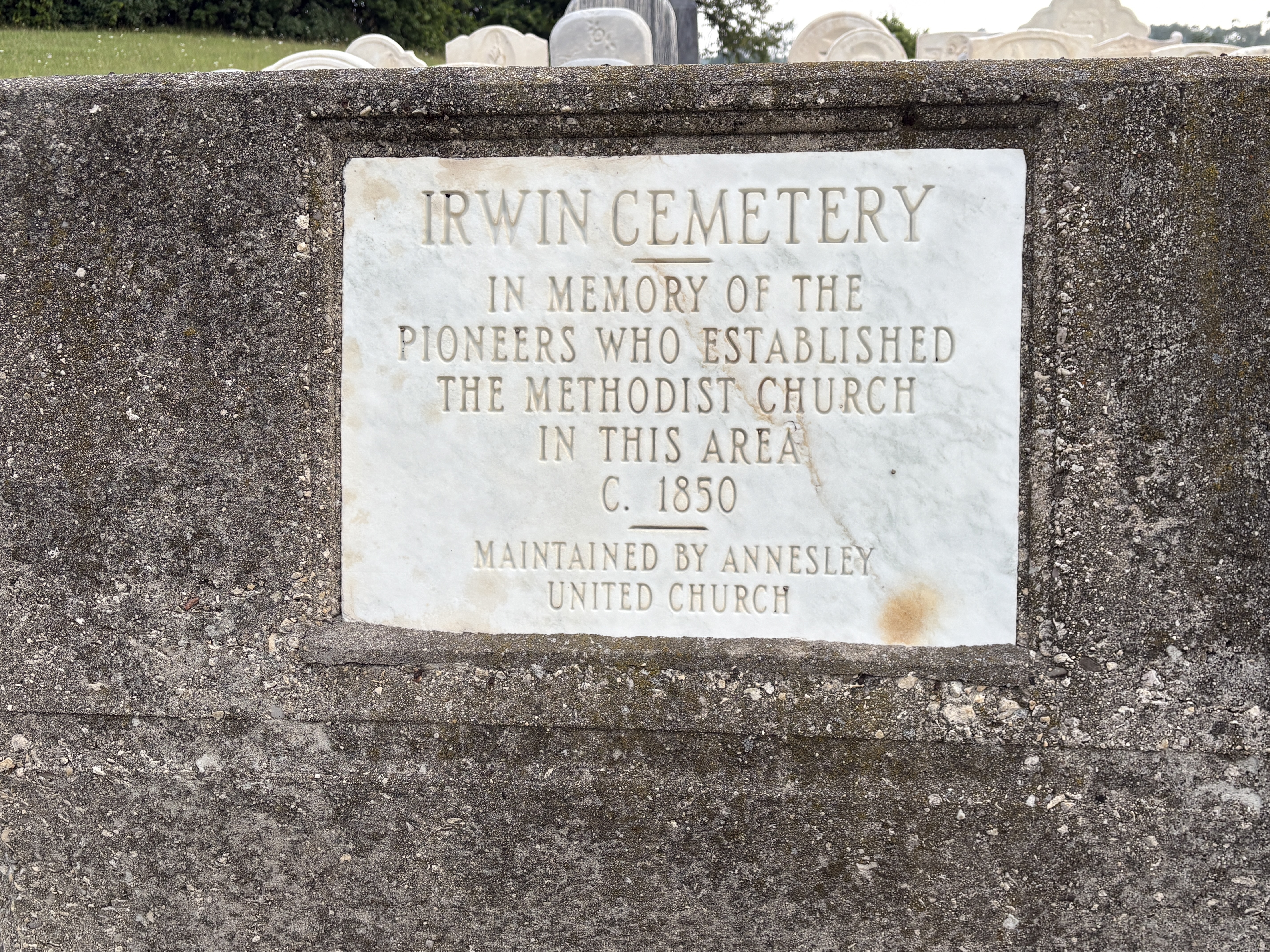
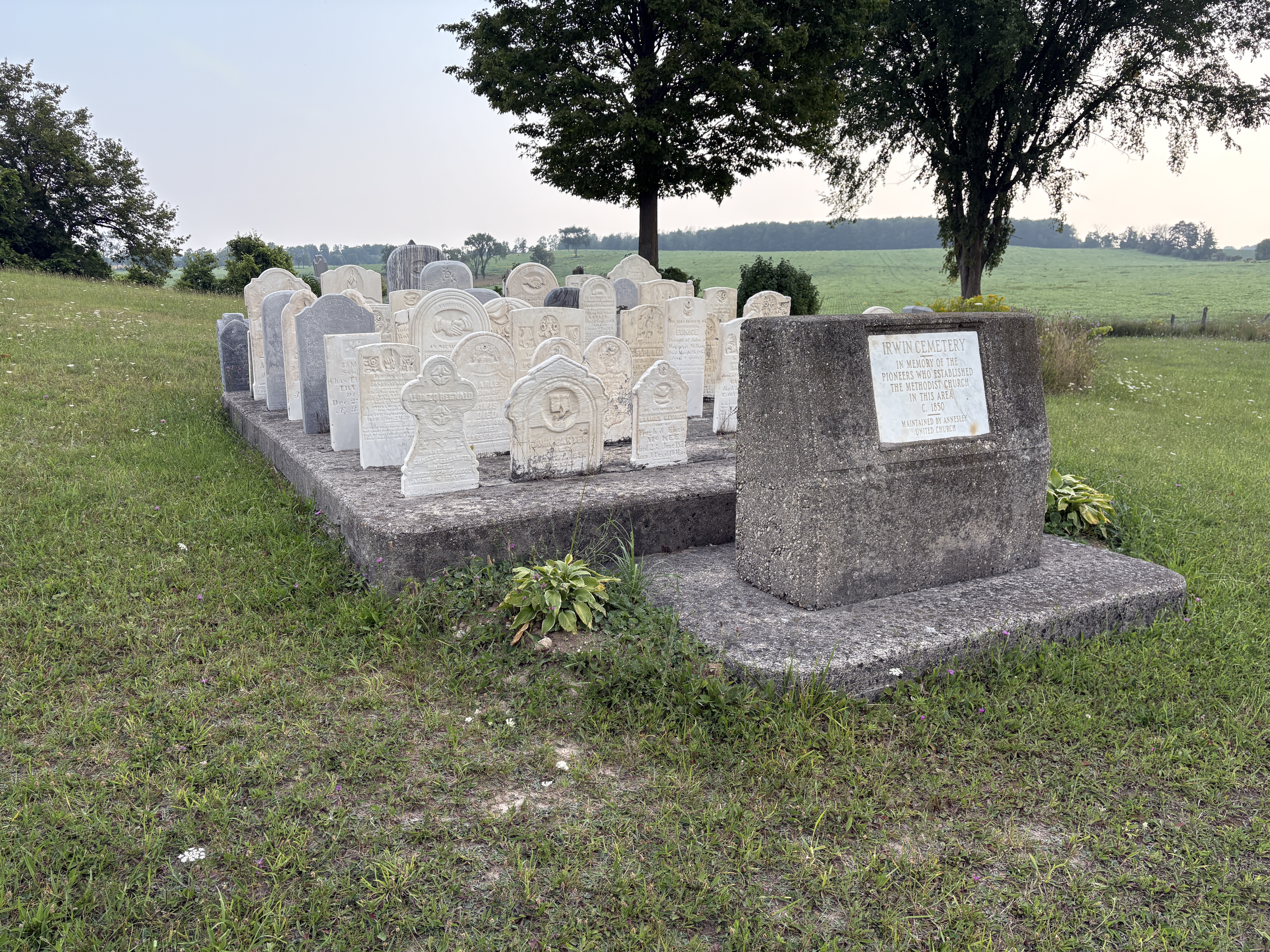
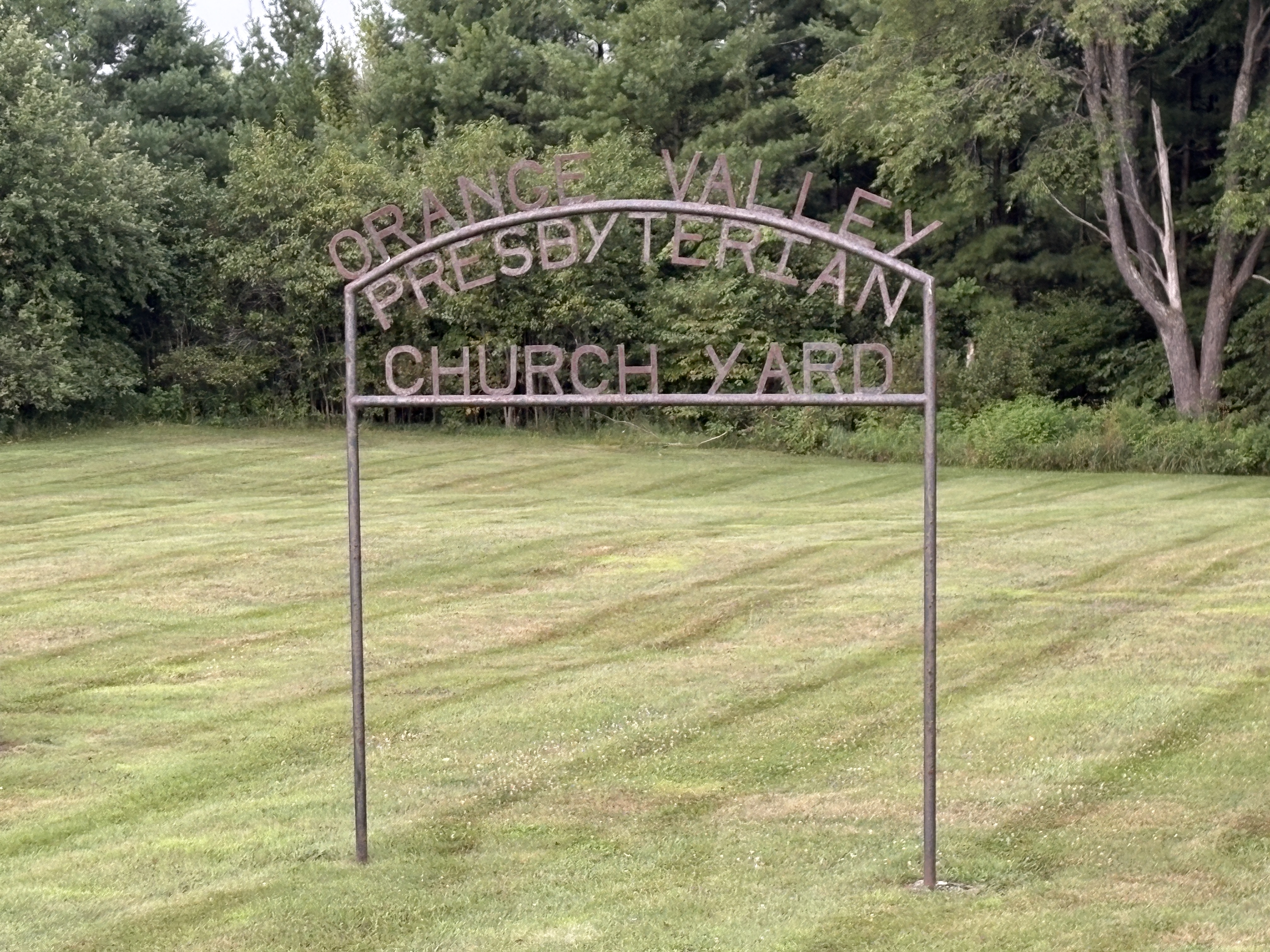
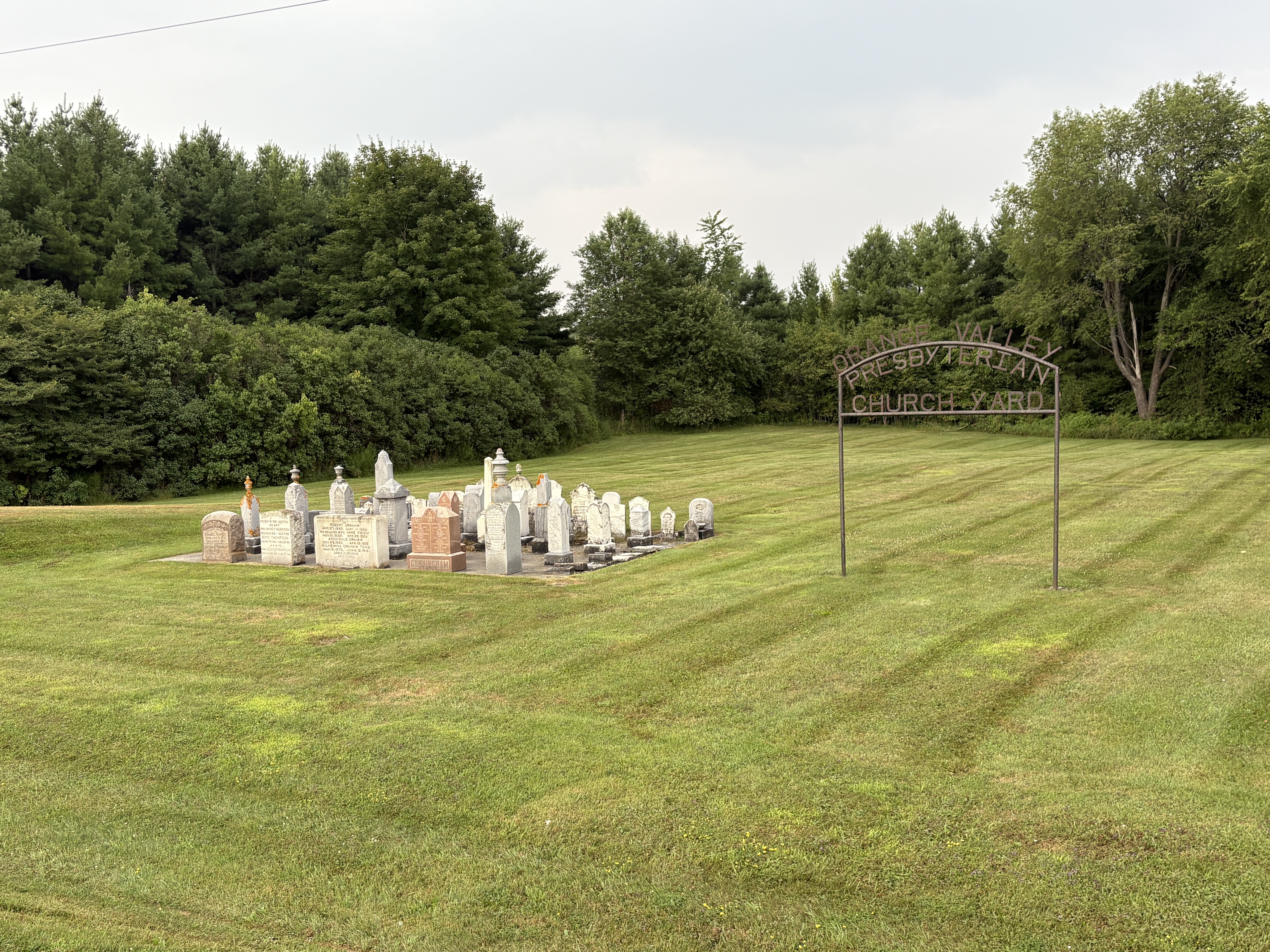
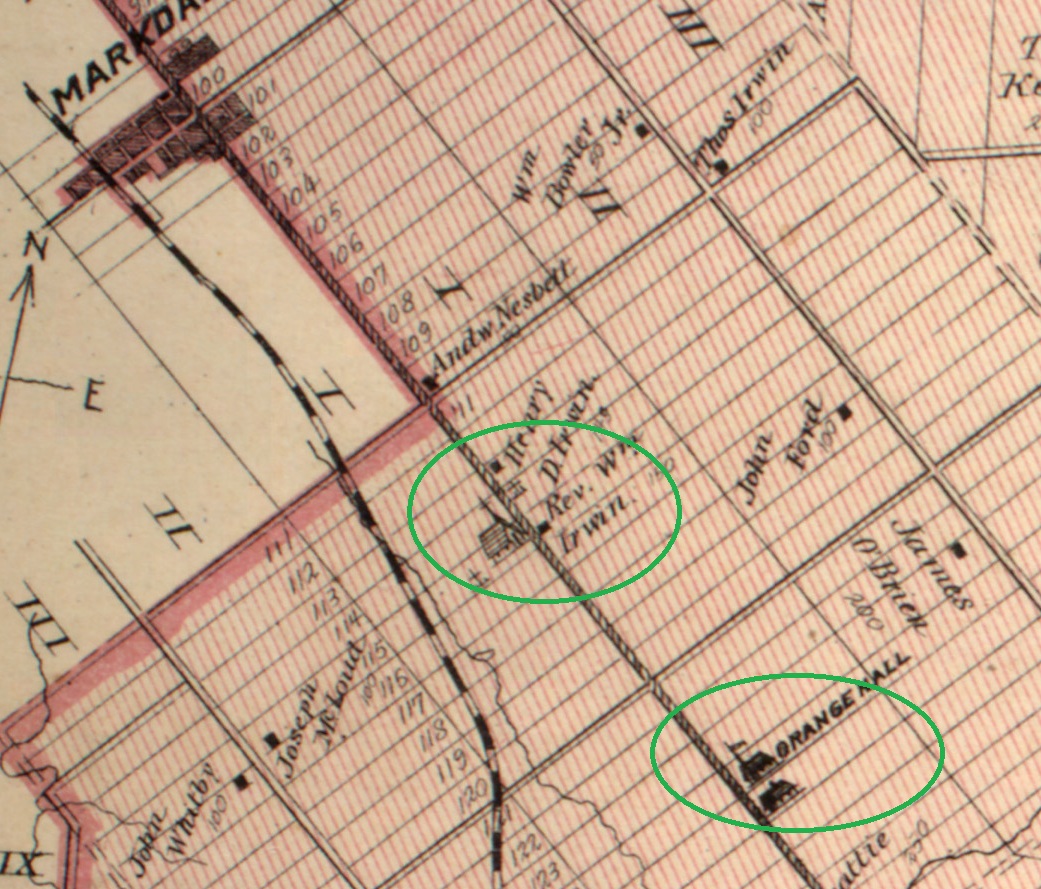
South of Markdale there is an isolated cemetery on opposite sides of the road. The one on the east side of the road is the Irwin Cemetery and on the west side is the Orange Valley Presbyterian Cemetery. These are both found in the upper circle on the 1877 county atlas image below. The orange hall a few lots south was all that existed at this time to show the location of another public building.

Methodism followed the settlers into the area and by December of 1849 worship services were being held in the home of the Miller family. A log church was opened in June of 1856 at the cost of $150. It was on land donated from the Irwin farm and had seating for 150 people. When a new Methodist Church opened in Markdale in 1870 the congregation of the Irwin church went there or to Annesley Methodist.

The church is gone but the cemetery remains. The stones are mostly all of the burials are from the 1870s and earlier. As usual they were gathered together into a cairn. This cemetery can be found here.

Orange Valley Presbyterian seems to be a bit of a mystery with limited information available. Although there is no community marked on the map in the 1870s when many of the burials took place, there are close to three hundred individuals laid to rest in the two cemeteries, mostly in the 19th century. This suggests a sizeable local community or that most congregants were coming down from Markdale as well as from local farms.

The burials are commemorated with 127 memorials beginning in the same time period as those across the street. Most burials here are prior to 1925 when the Presbyterian Church joined with the Methodist Church to form the United Church of Canada. That spelled the end of this small congregation and later burials appear to be spouses who were later laid to rest with their departed loved ones. This cemetery can be found here.

These cemeteries are the last remaining vestiges of small rural communities that thrived and then faded away during the pioneer period in Ontario.

Related Stories: Pioneer Heartbreak, Pioneer Cemetery Cairns

Google Map links in stories.

Like us at http://www.facebook.com/hikingthegta

Follow us at http://www.hikingthegta.com
Waterdown

July 5, 2025

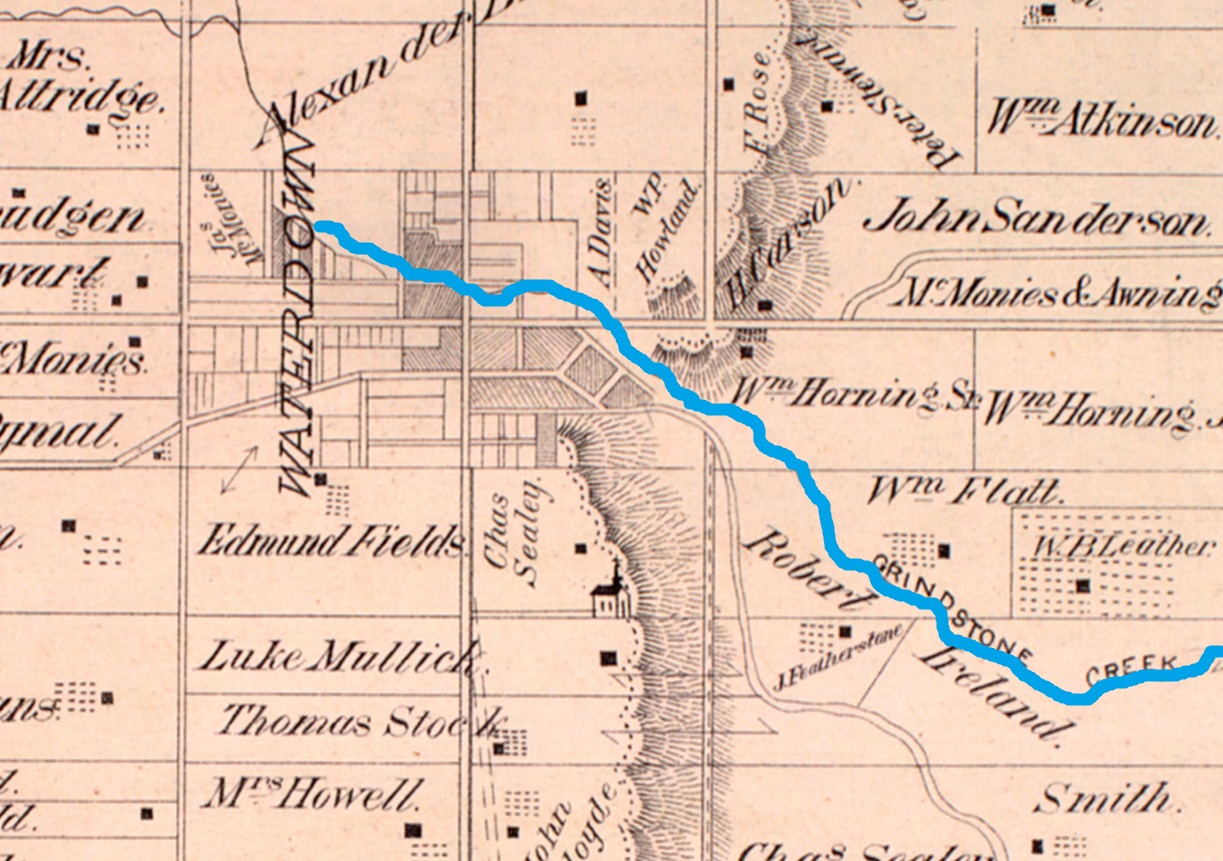
The first Europeans arrived at the future site of Waterdown in 1669. The indigenous people had been living there since at least 7,500 BC. Following Treaty No. 3 the area was laid out for settlement with one of the first settlers being Alexander Brown who bought 800 acres of land and built a log cabin and saw mill above the Great Falls in 1802. Ebenezer Griffin bought much of this land and divided it into town lots in 1830. He was largely responsible for the founding and development of Waterdown. The image below shows the 1877 County Atlas of the town.

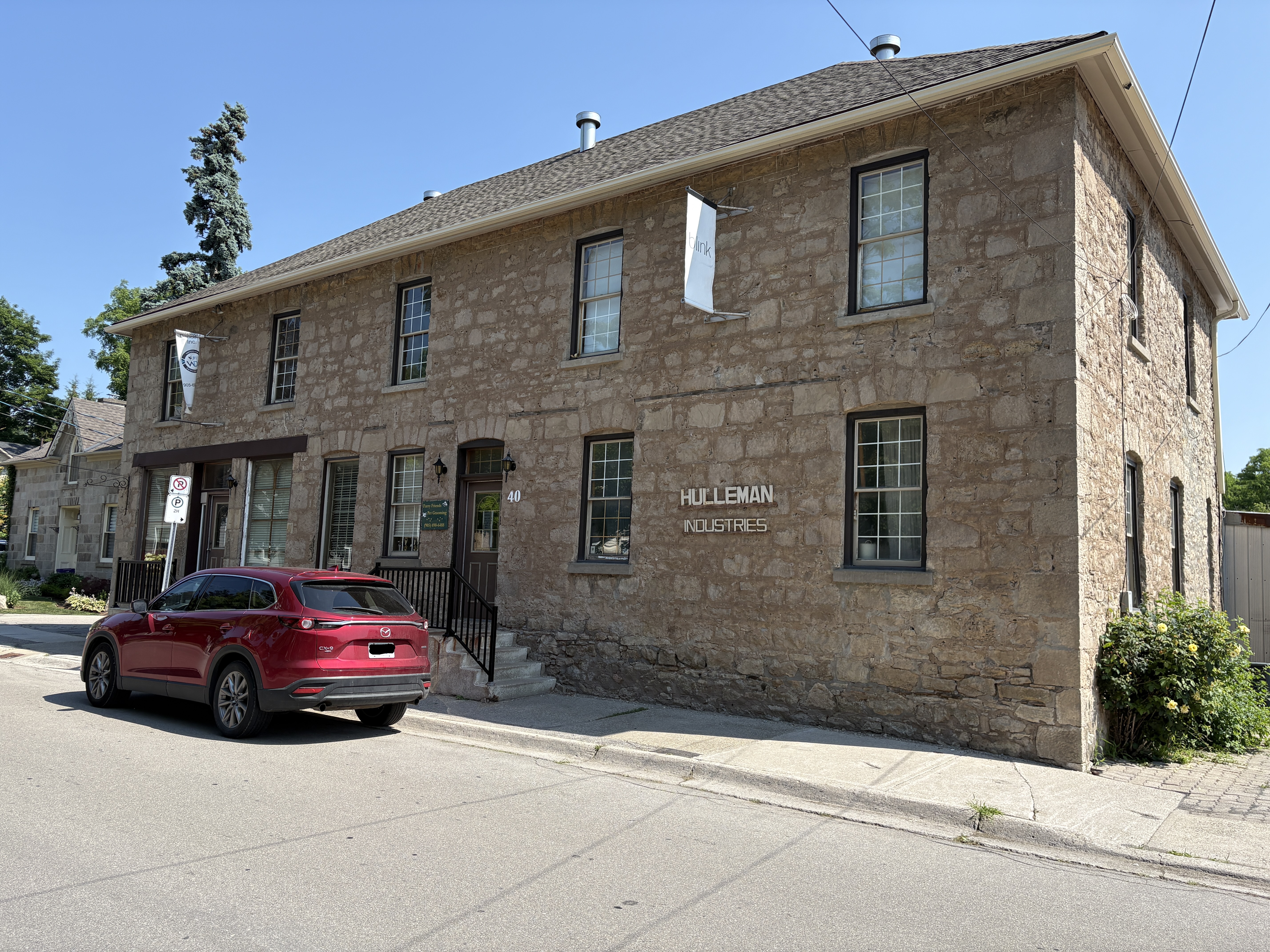
The former factory at 40 Mill Street North has had many functions over the years. It was built prior to 1870 as this is the date of record for its purchase by Charles Sealey. It has served as a flour and feed mill, was home to many stores and a toy factory. In 1925 Harlan Stetler and George Nicholson bought the building and opened their jam factory. It operated into the 1980s before closing. It is currently in use as offices for an engineering firm.

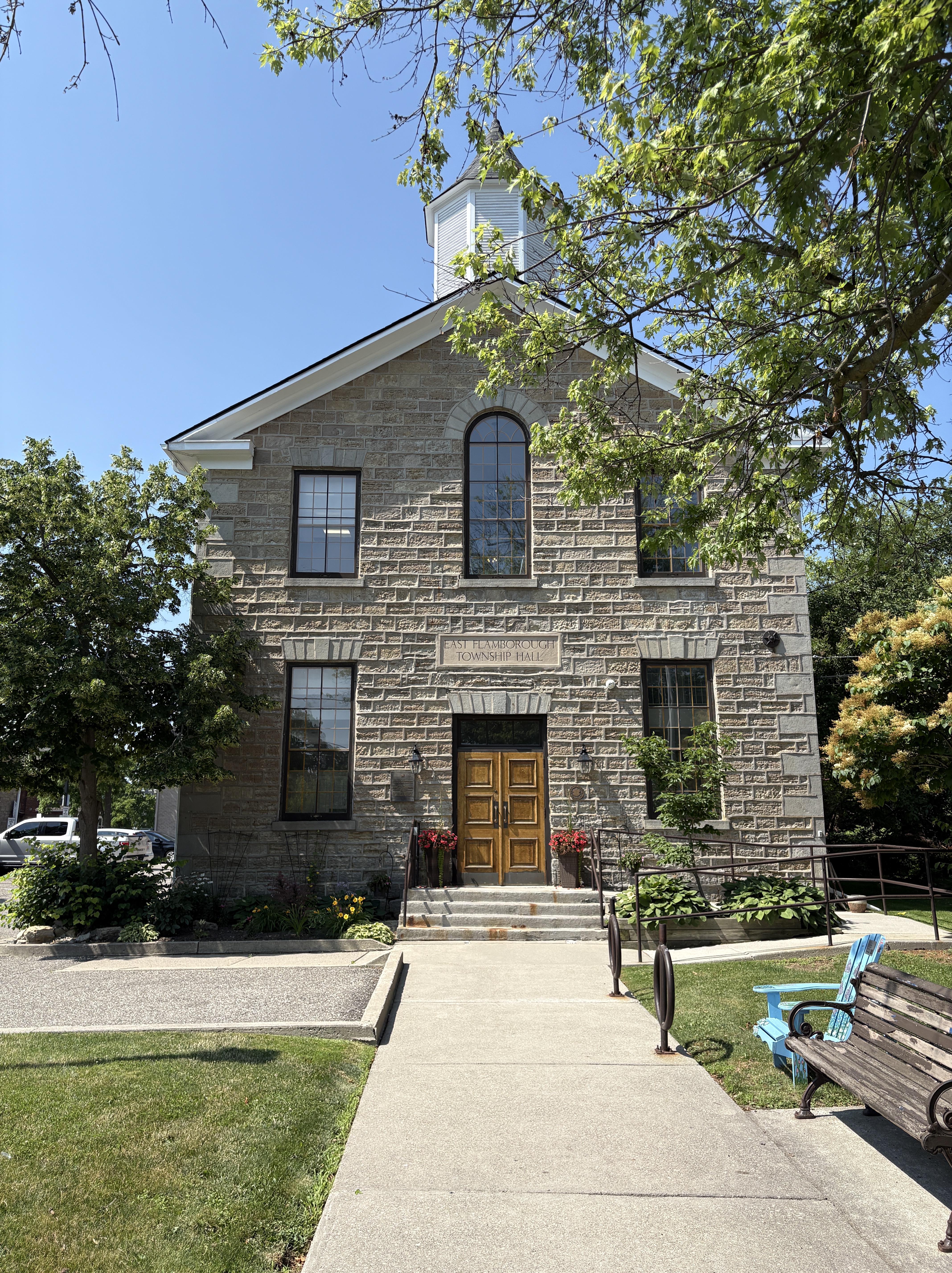
The Town Hall site was purchased in 1856 and was opened two years later. It was constructed from limestone which was quarried locally. The structure was used as the town library from 1979 to 2015. Two grave stones of early Waterdown settlers were located inside the library. The markers for Alexander Brown and Merren Grierson were moved to the new library and the building was renovated to house a law firm.

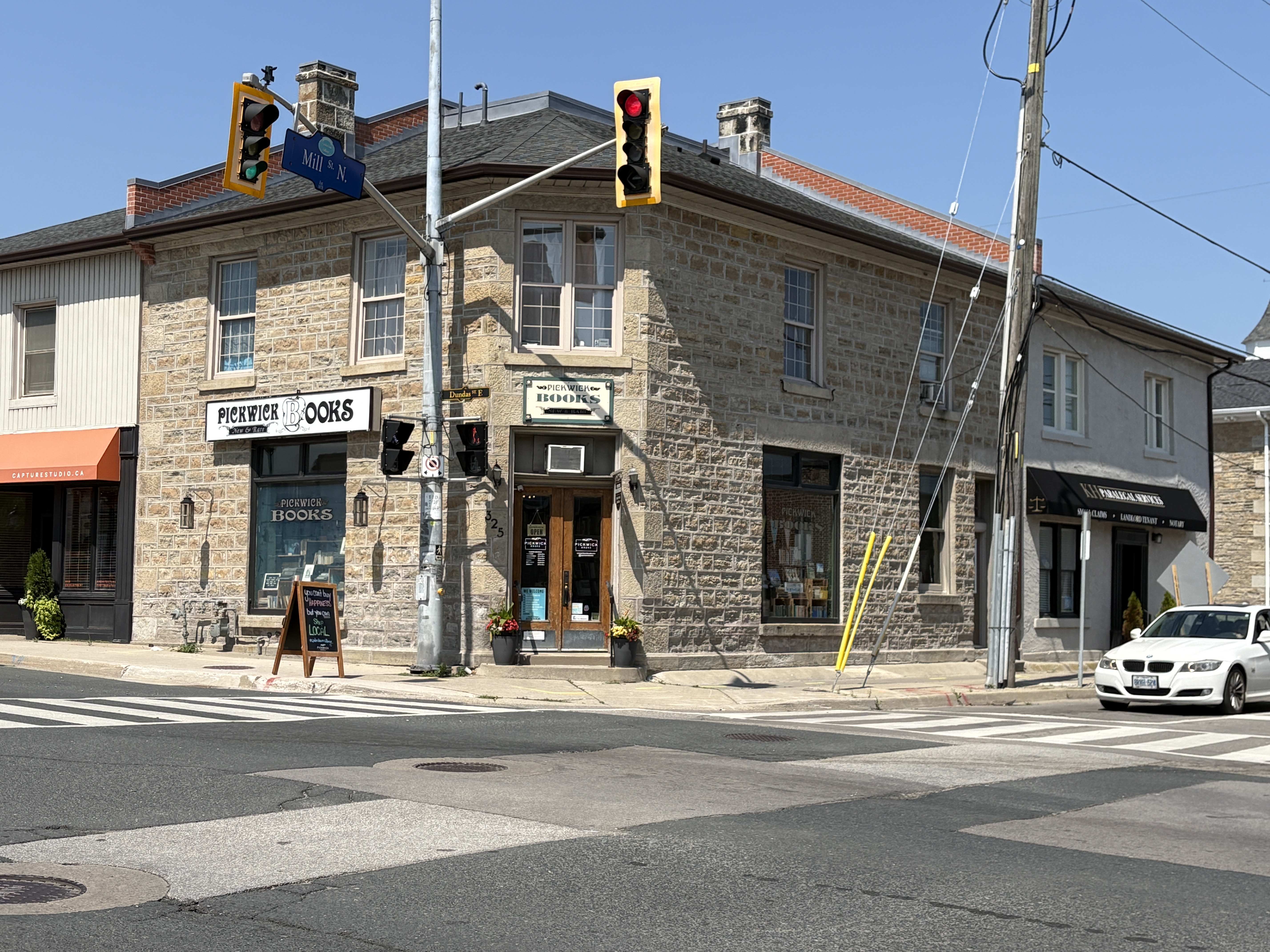
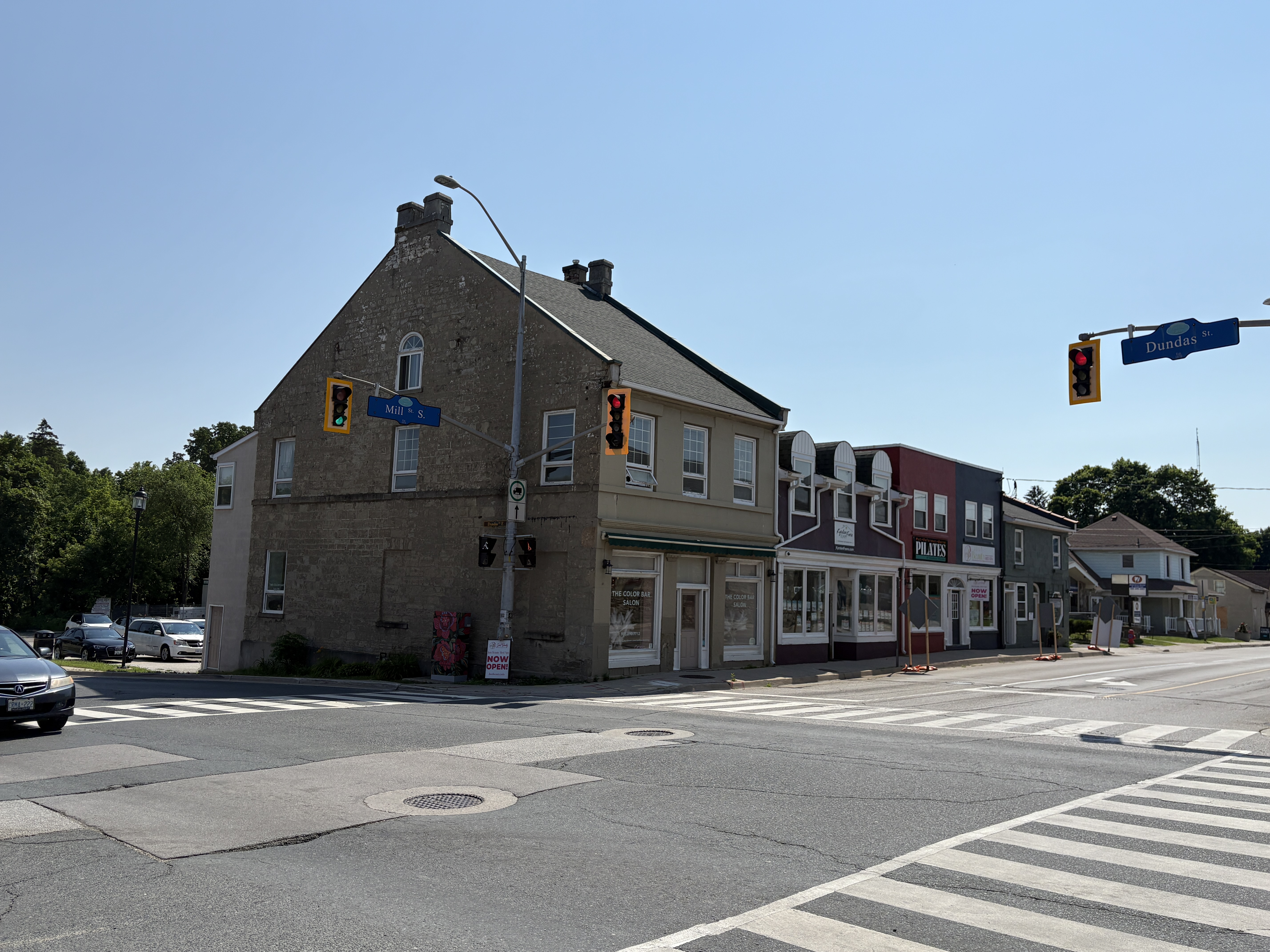
The Traders Bank operated in Waterdown from 1909 to 1921 and was located in the building on the north west corner of Mill Street and Dundas Street. The building has been used for several purposes over the succeeding years and is currently home to Pickwick Books.

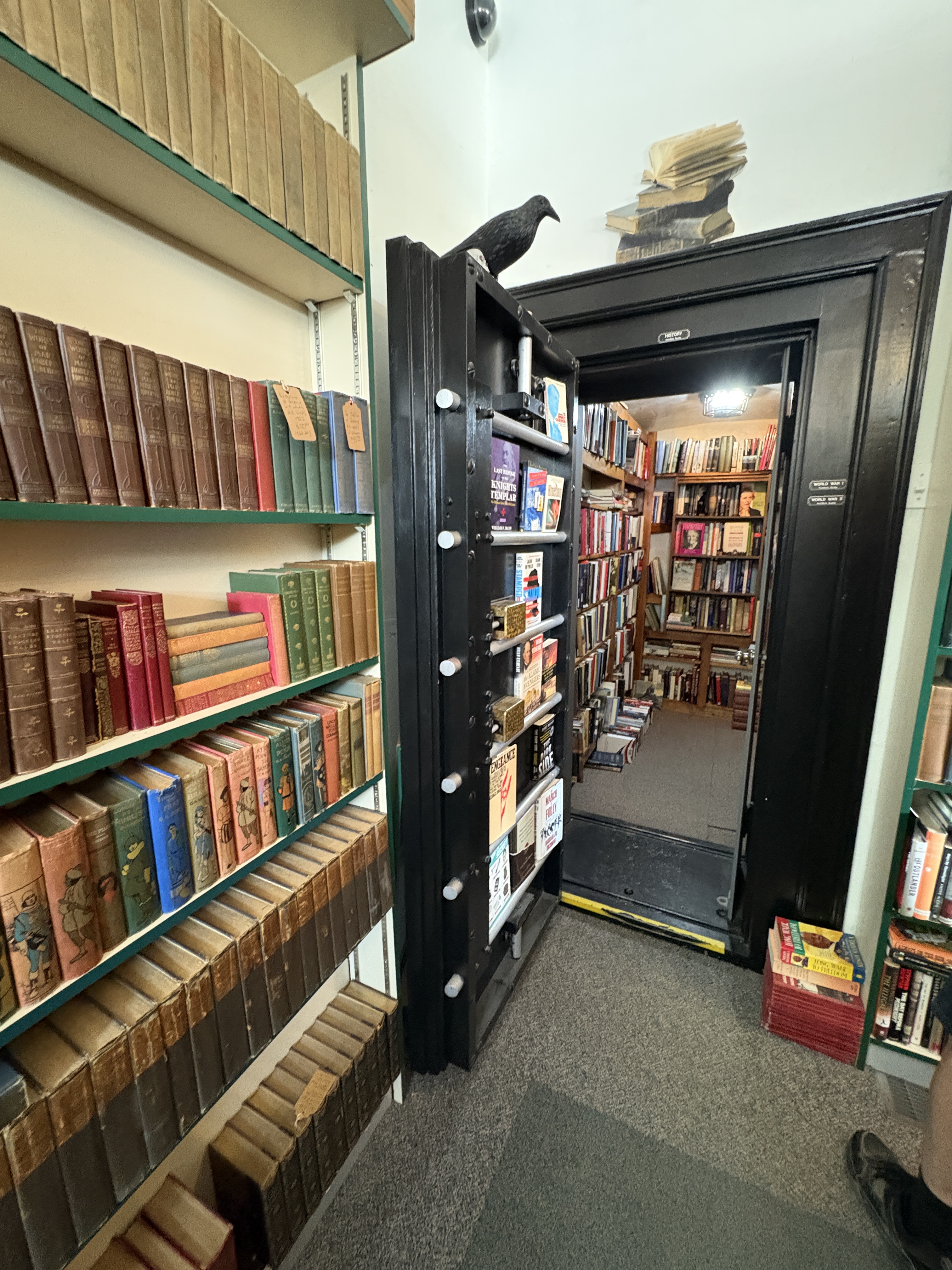
One would think that the most valuable books in the store would be kept in the old bank safe. However, what we found inside was biographies about Canadian Prime Ministers and American Presidents.

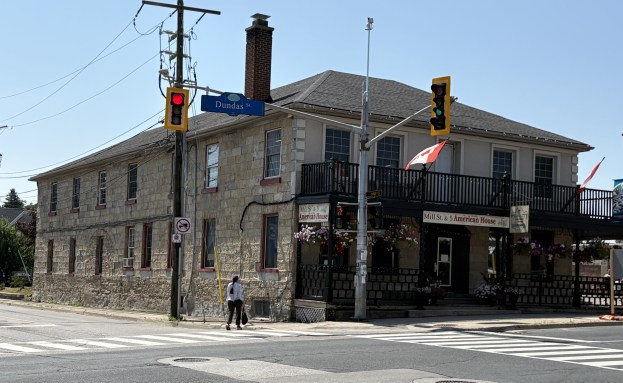
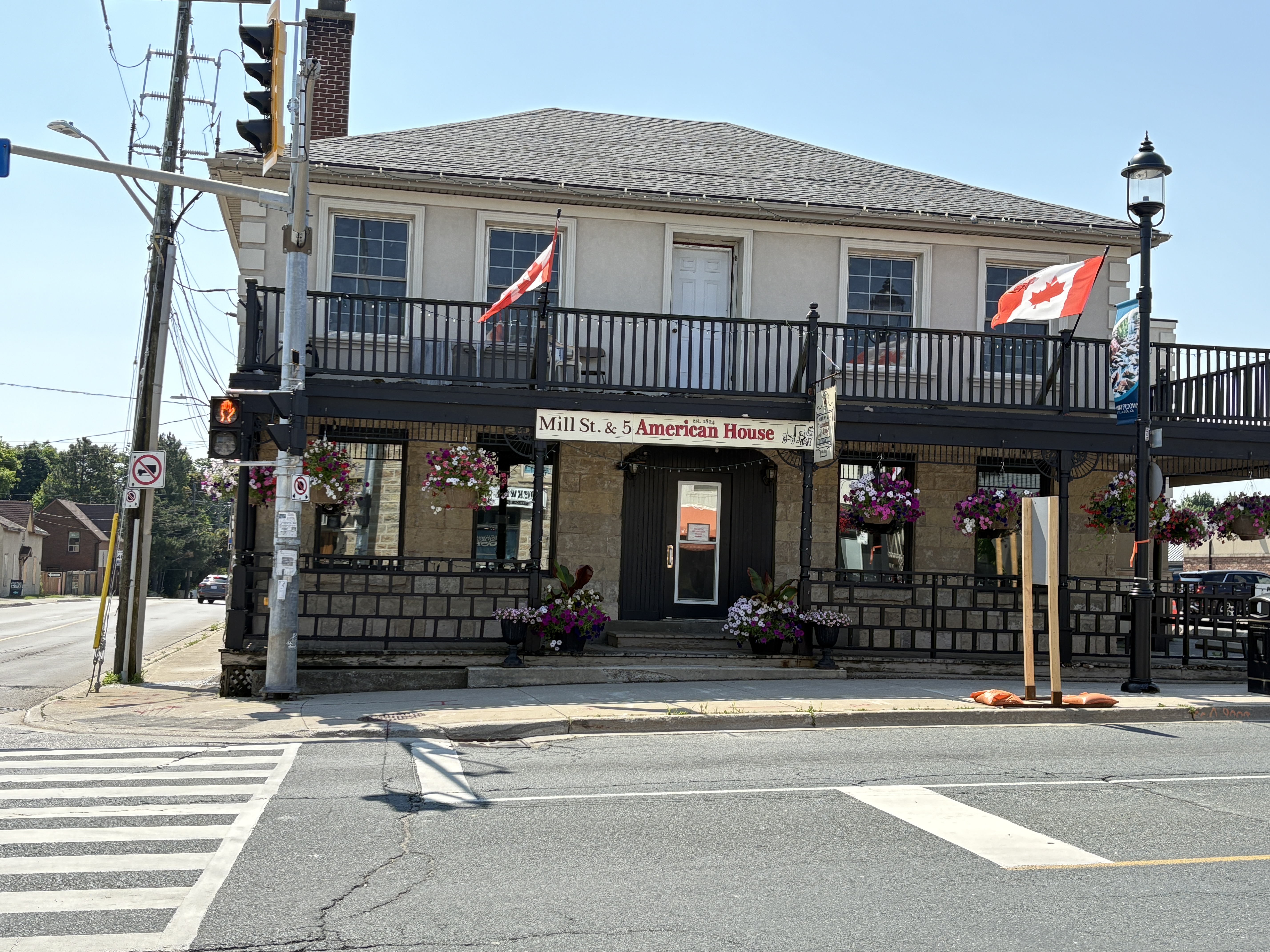
The site on the south west corner of Mill and Dundas streets was originally the location of the first log school building in the area. The American House hotel was built in 1824 and has been a permanent fixture in town ever since. At one time there were seven hotels in operation in town but only this one remains. At least a dozen different owners have operated the hotel over the years and these records appear to be incomplete. The hotel was closed during prohibition but was reopened in 1933. It has been extensively renovated with the original floors, tin ceiling and stand up bar being removed. We had a nice lunch here while visiting the town.

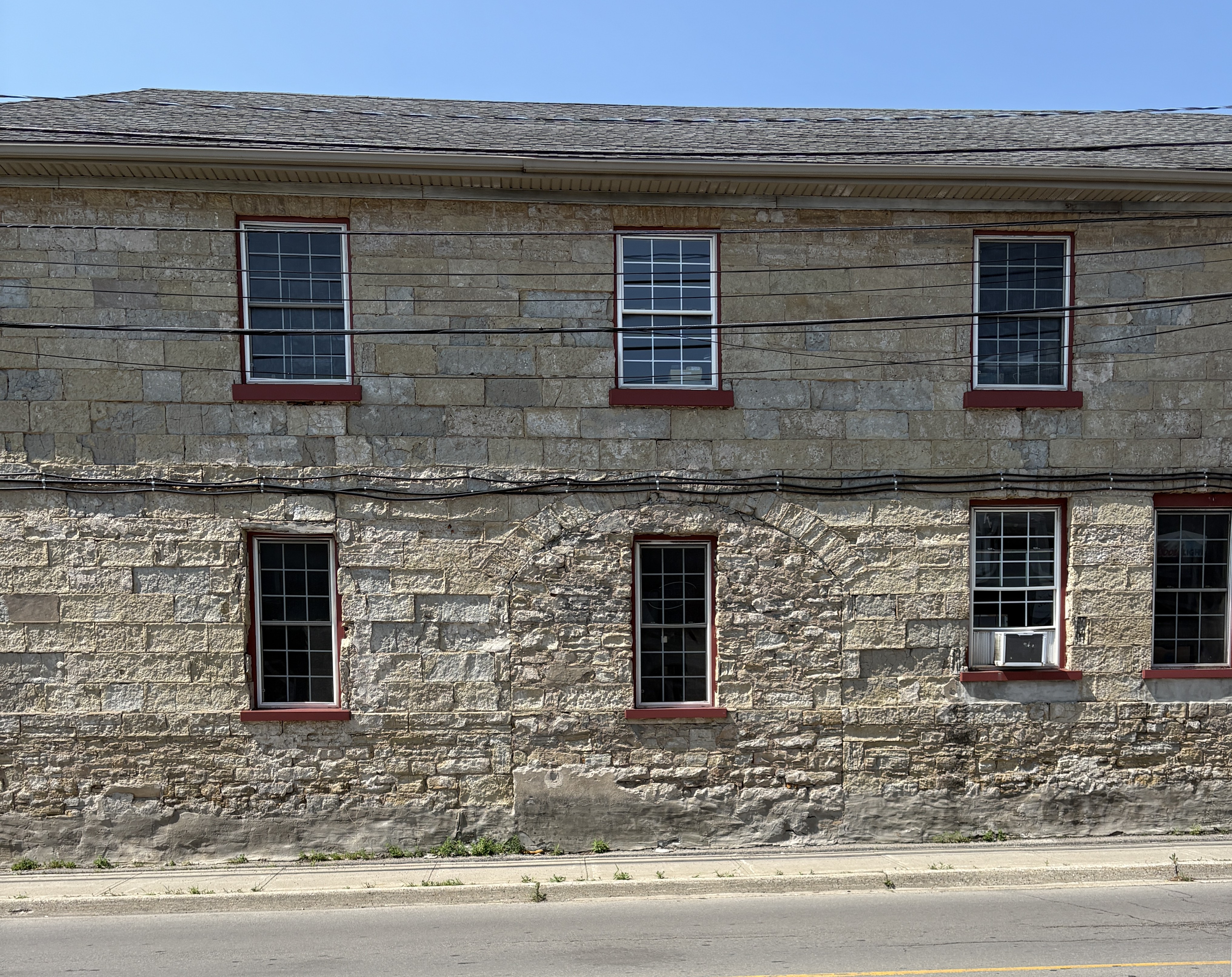
The side of the American Hotel has been modified over the years. There is a round arch that can be seen above the centre window on the ground floor in the image below. It used to allow the carriages to come into the building in bad weather to let guests to disembark with some shelter from the weather.

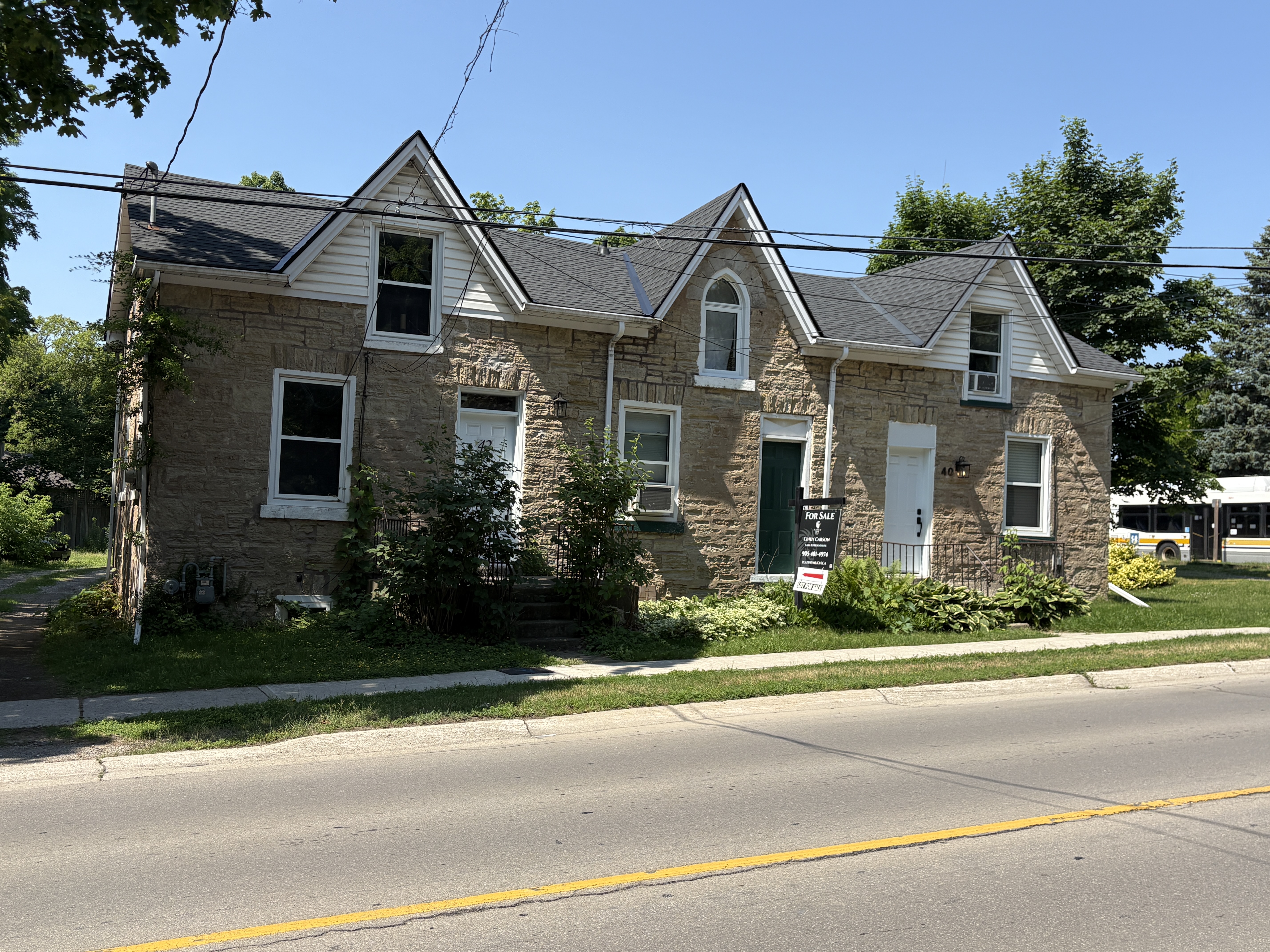
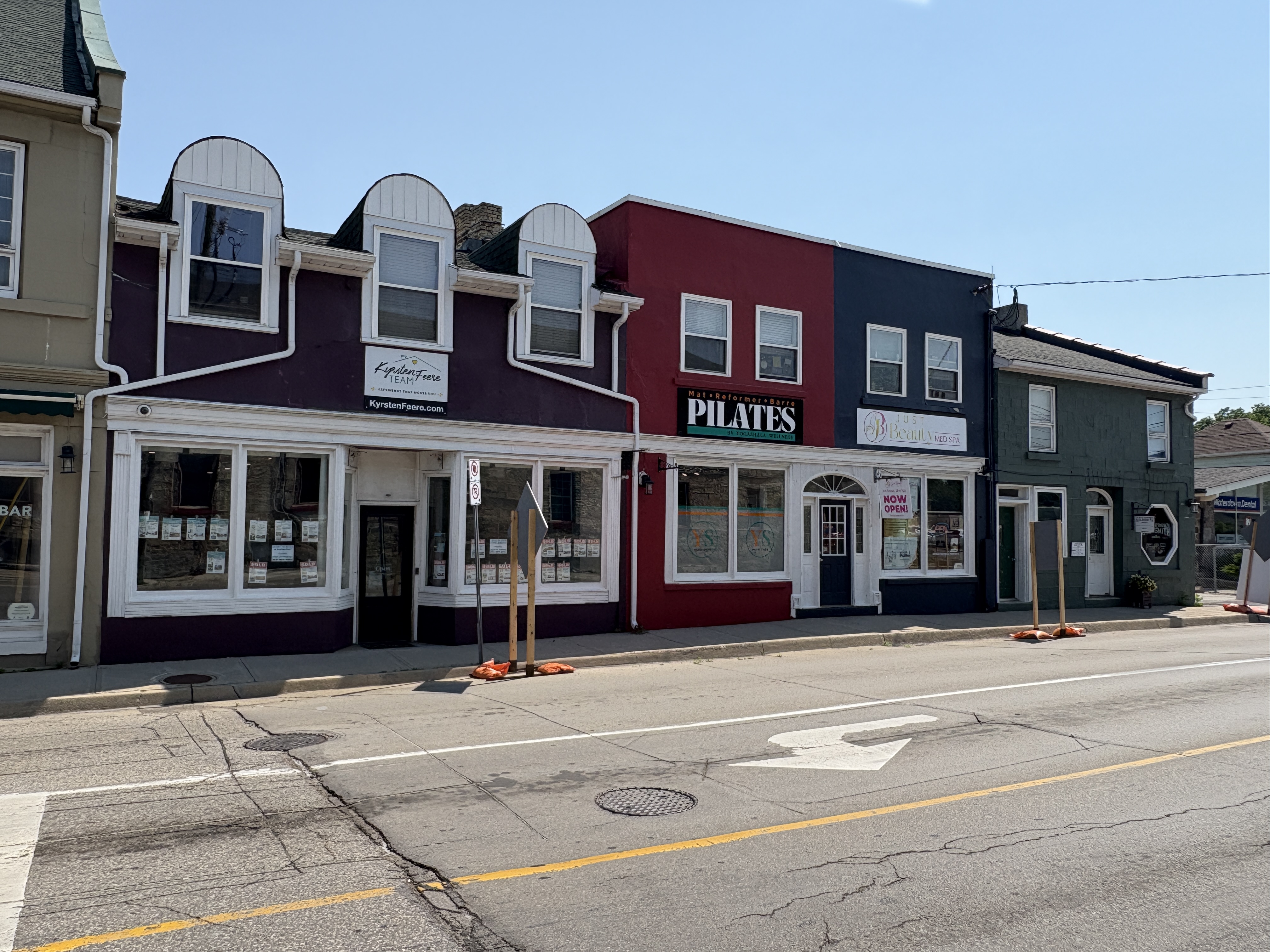
Workers cottages can be found in several places in Waterdown with this three unit example being found on Mill Street South. These ones are for sale along with the property. Let’s hope they don’t get demolished.

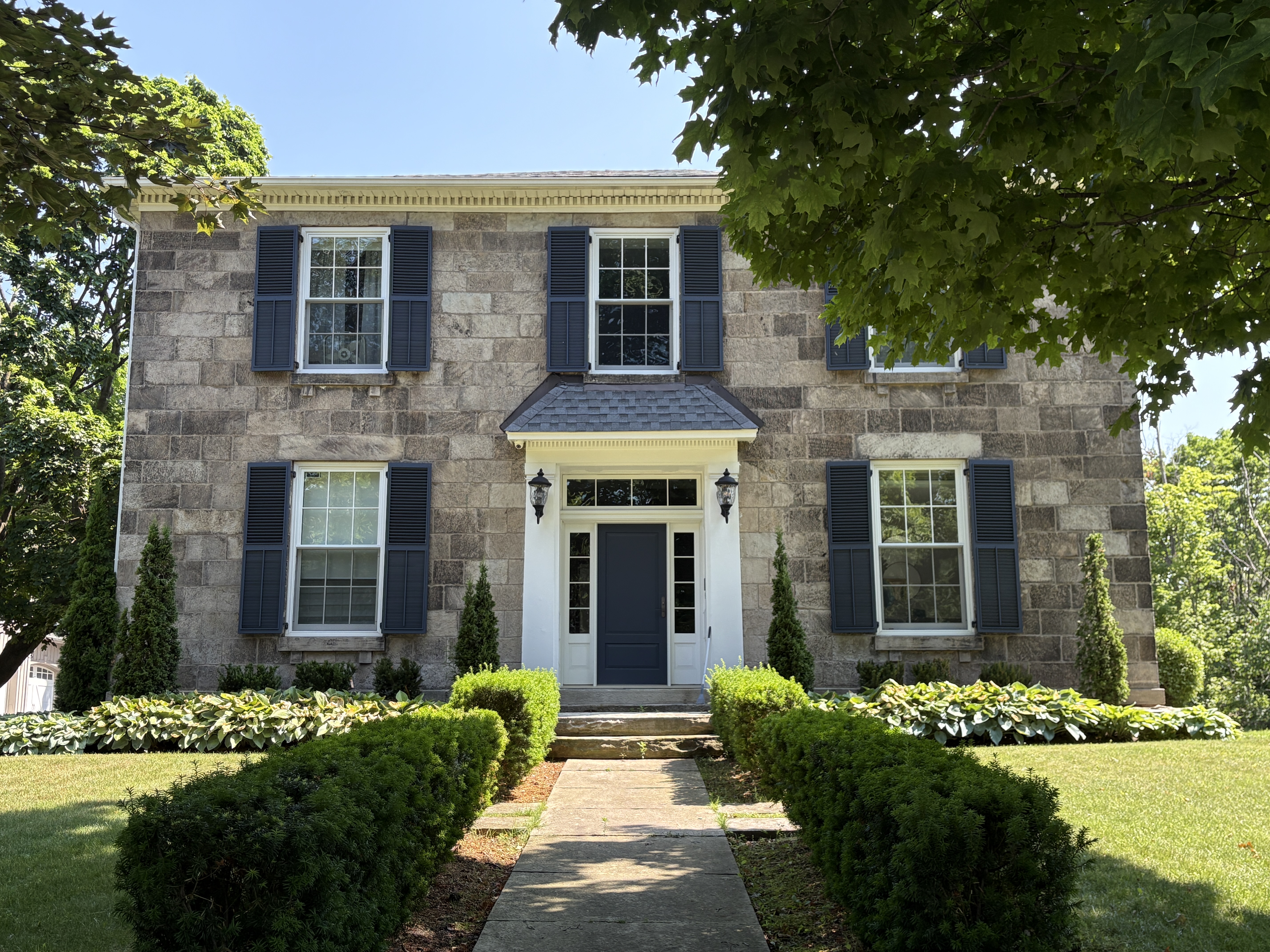
Maplebank was built on town lot 12 and included limited water rights to Grindstone Creek. Henry Ferguson Graham was an entrepreneur and tanner by trade. His water rights allowed him to grind bark for tanning and operate his equipment. The stone house was built in 1847 and replaced an earlier one story frame house.

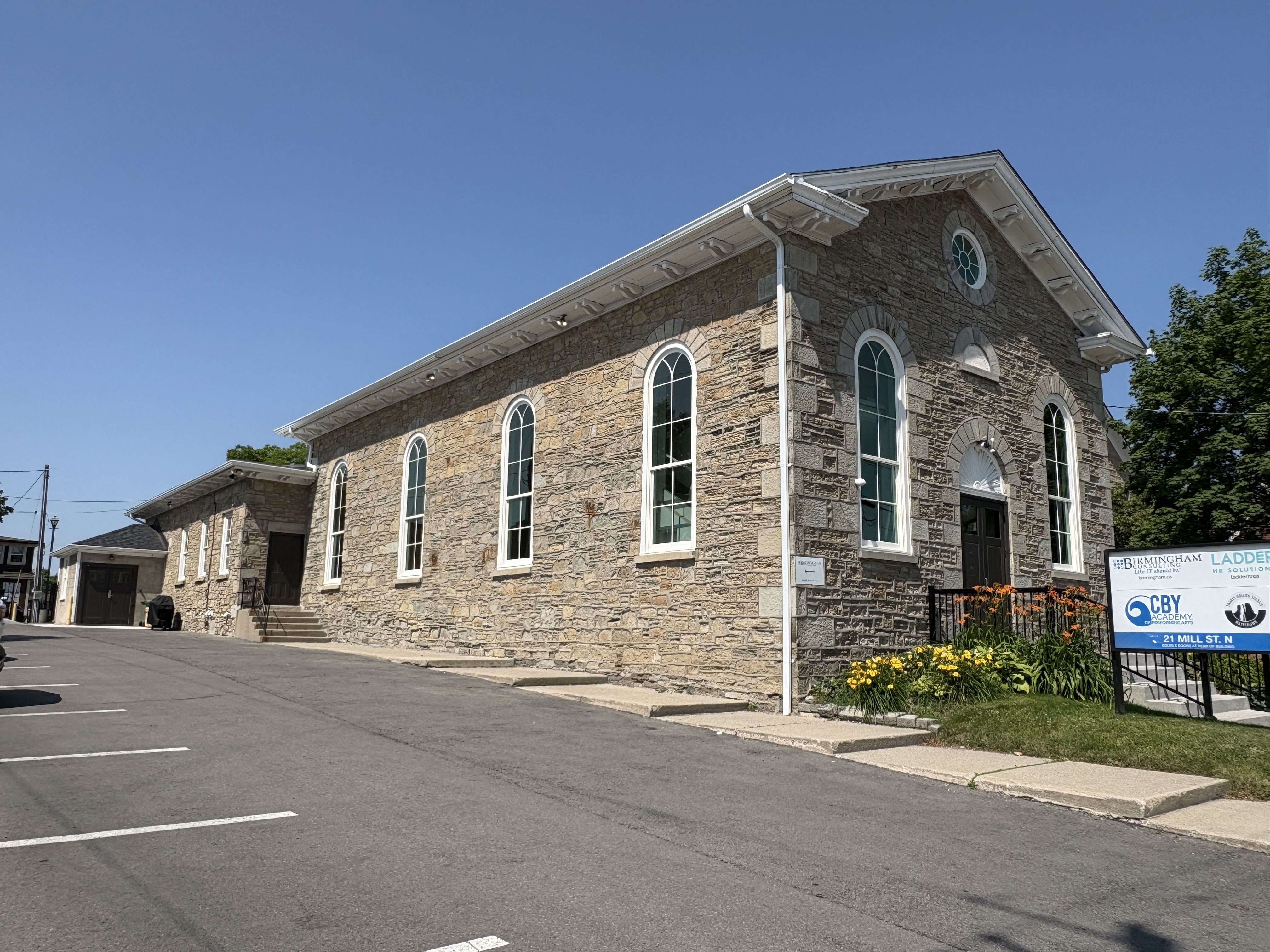
The former Methodist Church stands beside the Town Hall. The date stone above the door says Wesleyan Methodist Church Re-erected 1865. The 1840 frame church had been built for $1400.00. In 1865 the building was covered in stone and a Sunday School was added at the rear in 1880. The building became the United Church in 1925 with the union of Methodists and Presbyterian Churches. In 1957 a new church building was erected and this one is now used by a consulting firm.

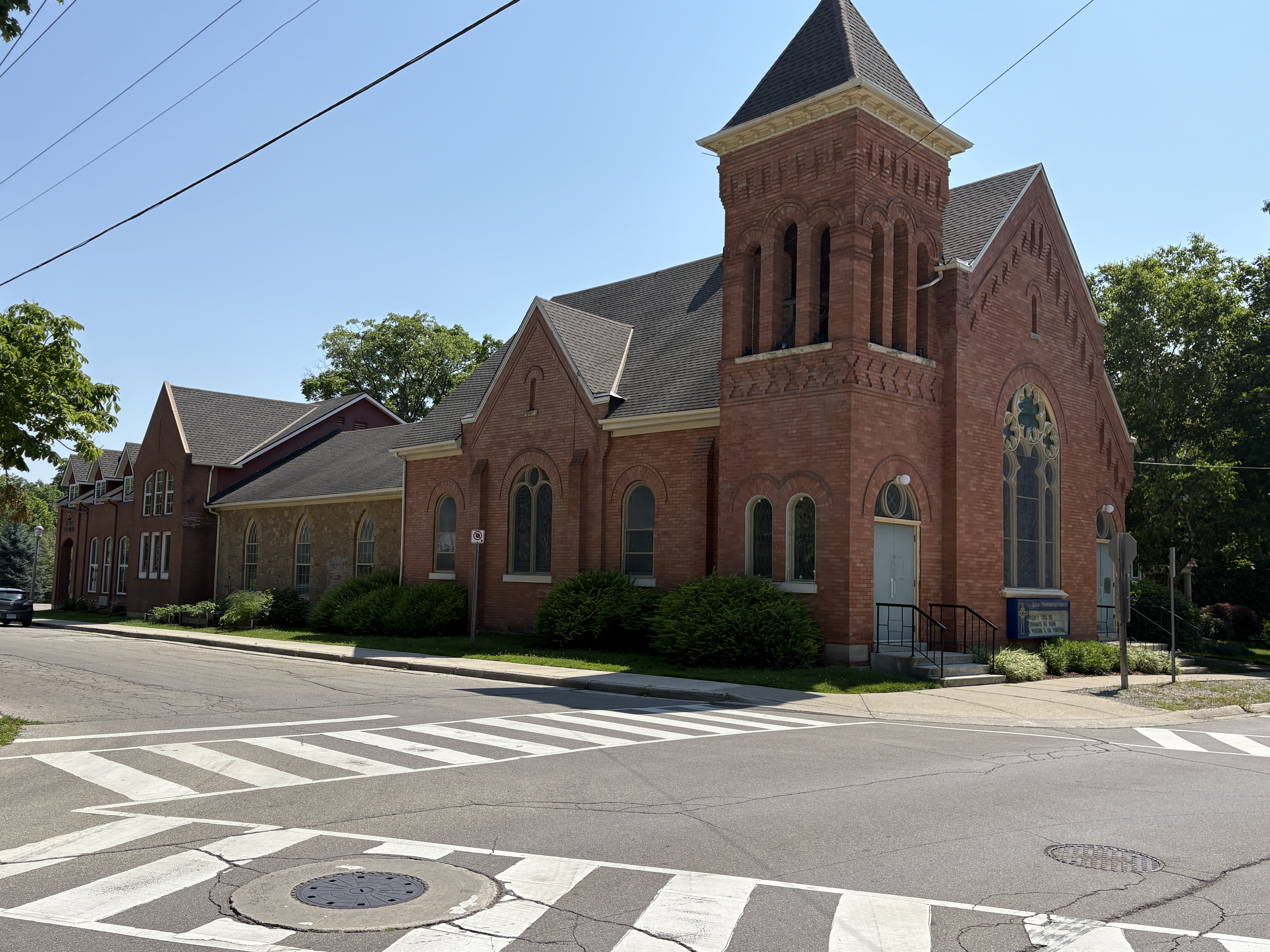
The Presbyterians began meeting in Waterdown in the 1820s, most likely in the schoolhouse in Vinegar Hill. In 1855 a stone church was built which can still be seen behind the brick church on the corner of Mill Street and Church Street. The brick building in the front was erected in 1901 at a cost of $5,000. The section at the rear is where the kitchen and washrooms were built in 1959-1960. They were demolished and replaced with the present extension in 1997.

Across the street from the American House sits the original general store which was built by Ebenezer Griffin around 1824 along with the hotel. These were some of the first permanent buildings erected along The Governor’s Road (now Dundas Street) in Waterdown.

Several other vintage stores line Mill Street

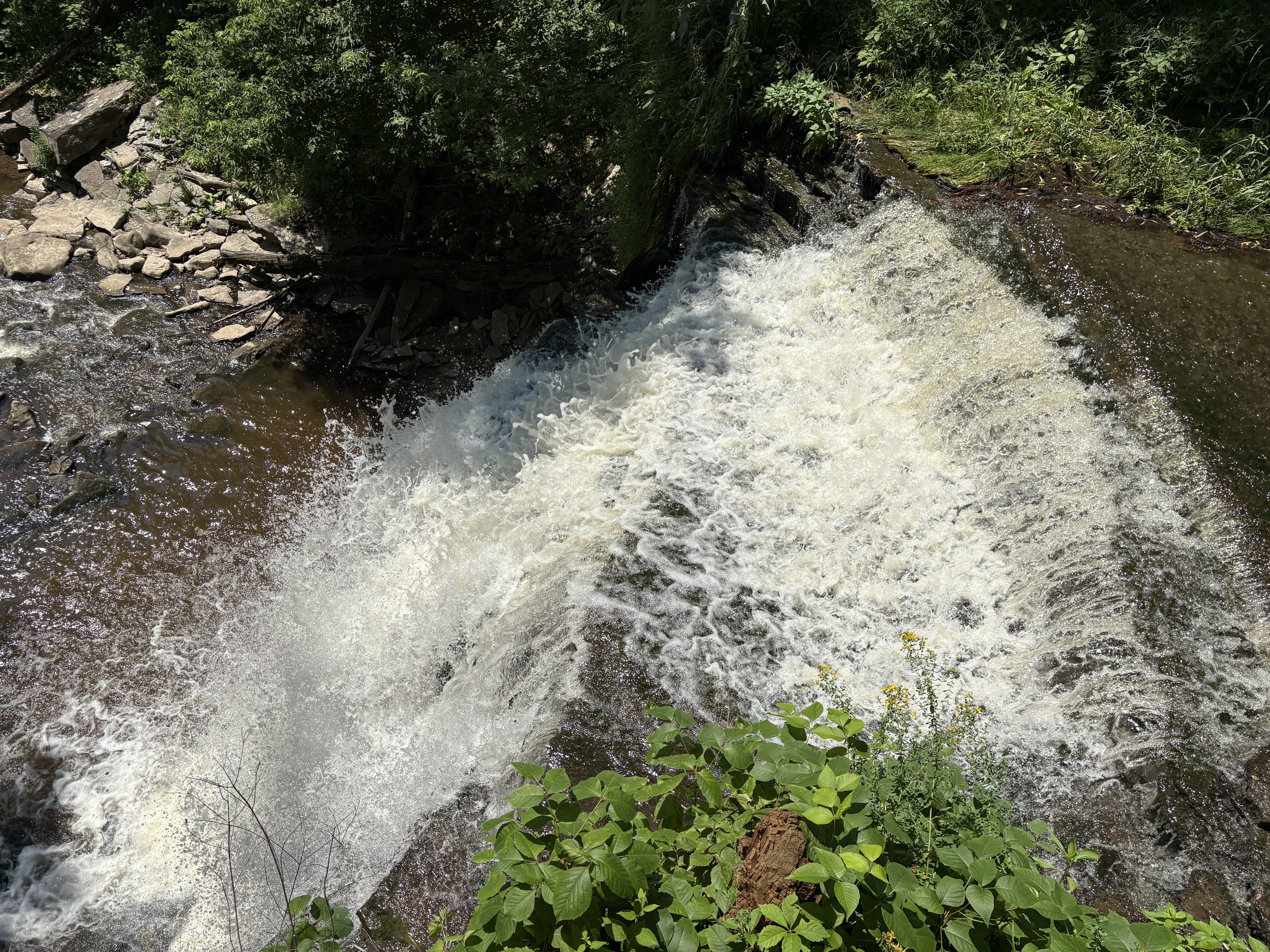
Following Mill Street south will bring you to The Great Falls on Grindstone Creek. The view below is from the viewing platform but we have a series of pictures from below the falls in our Slacking In Smokey Hollow story.

Waterdown was one of the early industrial centres in Upper Canada and has managed to retain much of it’s historic stone architecture. It is certainly worth investigating if you are in the area.

Related stories: Slacking In Smokey Hollow

Google Maps Link: Waterdown

Like us at http://www.facebook.com/hikingthegta

Follow us at http://www.hikingthegta.com
Bethesda – Ghost Towns Of The GTA

May 24, 2025

Whitchurch Township was established in 1792 and European settlers began to arrive in 1794. The area that became known as Bethesda was first settled by Mennonites from Pennsylvania when Christian Steckley arrived in 1795. Christian took up lot 6 in concession 5 and several of his relatives took adjoining lots. Their names still cover that section on the 1877 county atlas seen below. Also circled in green are the school, general store with post office, Primitive Methodist Church and the home of Joseph Shaffer (misspelt as Sheffer on the map).

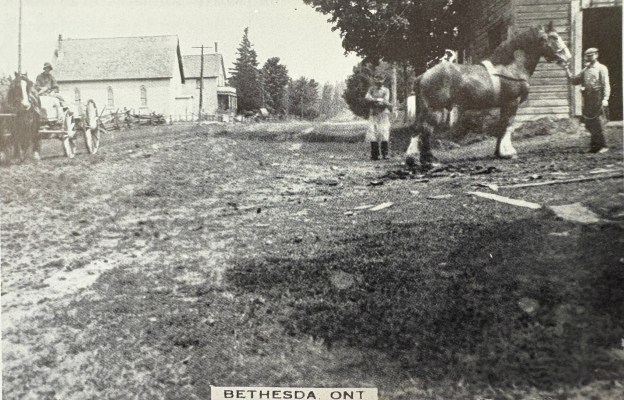
Our cover photo comes from the Whitchurch Township History Book Committee and shows the church and general store as well as the blacksmith shop of William Hunt. The town was at its peak around 1875 and most of the early buildings still remain. The image below shows the church and general store as they appear in 2025.

As early as 1855 a Primitive Methodist Church was built in Bethesda by a local carpenter named John Atkinson. A Sunday school started operations in 1858 and by 1871 the church was in need of updating as the community had grown around it. This included the front porch that used to grace the front of the building.

The church was given a brick veneer and continued to serve the community until it was closed in 1969. The front porch was removed and the building was deconsecrated as a church. It now serves as a private residence. The outline of the front porch can still be seen in the bricks on the front of the building.

The first store in town had been on the south west corner of the intersection. This was replaced in 1874 with a new store on the town lot beside the church. The store also included the post office which opened that year. The post office was closed in 1924 when rural delivery was introduced. The store has since been closed and now is used as a private residence.

Bethesda was home to Whitchurch-Stouffville School Section 12. The original frame structure was built on lot 6 on the north east corner of the intersection. In 1872 a new brick school house was erected on lot 7, just to the north. This school was destroyed by fire in 1892. Isaac Pike was the teacher for 43 years beginning in 1874 and when the school building was lost, he taught class in his barn until the new building was ready to be occupied.

The school was closed in 1965 and consecrated as the Bethesda Emanuel Church which it served as until 1992. It is now in use as a Greek Orthodox Church. The black cat on the front steps of the church was quite welcoming as we stopped for this picture. However, the parsonage shares the driveway with the church and the gentleman in the house was much less happy to see us.

The Joseph Shaffer house has stood on the south east corner since 1884. The county atlas above shows the earlier house located on what is now Shaffer Lane. The original drive sheds still stand on this laneway.

There are still a few of the original homes from the Victorian community. This one on Bethesda Sideroad is typical of the small homes built in Ontario in the 1860s and 1870s. This is known as Ontario vernacular, these are a story and a half and typically have a four room layout on the ground floor with a central hallway. Bedrooms are located on the second floor.

Another early home stands behind the church and may have served as the manse at one time.

Bethesda never had a large number of buildings but many of the early ones have survived, with the exception of the blacksmith shop.

Google Maps Link: Bethesda

Like us at http://www.facebook.com/hikingthegta

Follow us at http://www.hikingthegta.com
Lansing – Ghost Towns Of The GTA

February 1, 2025

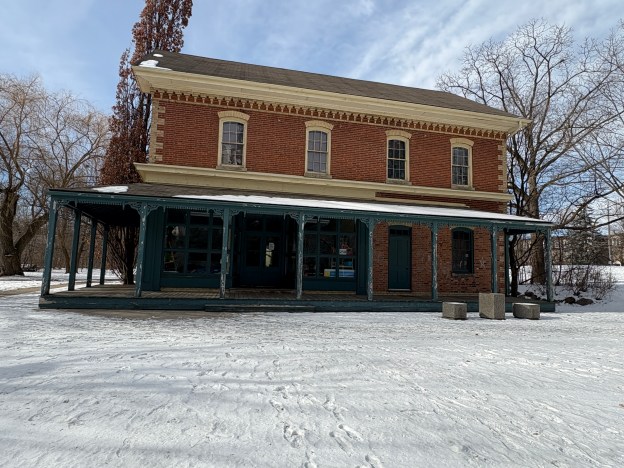
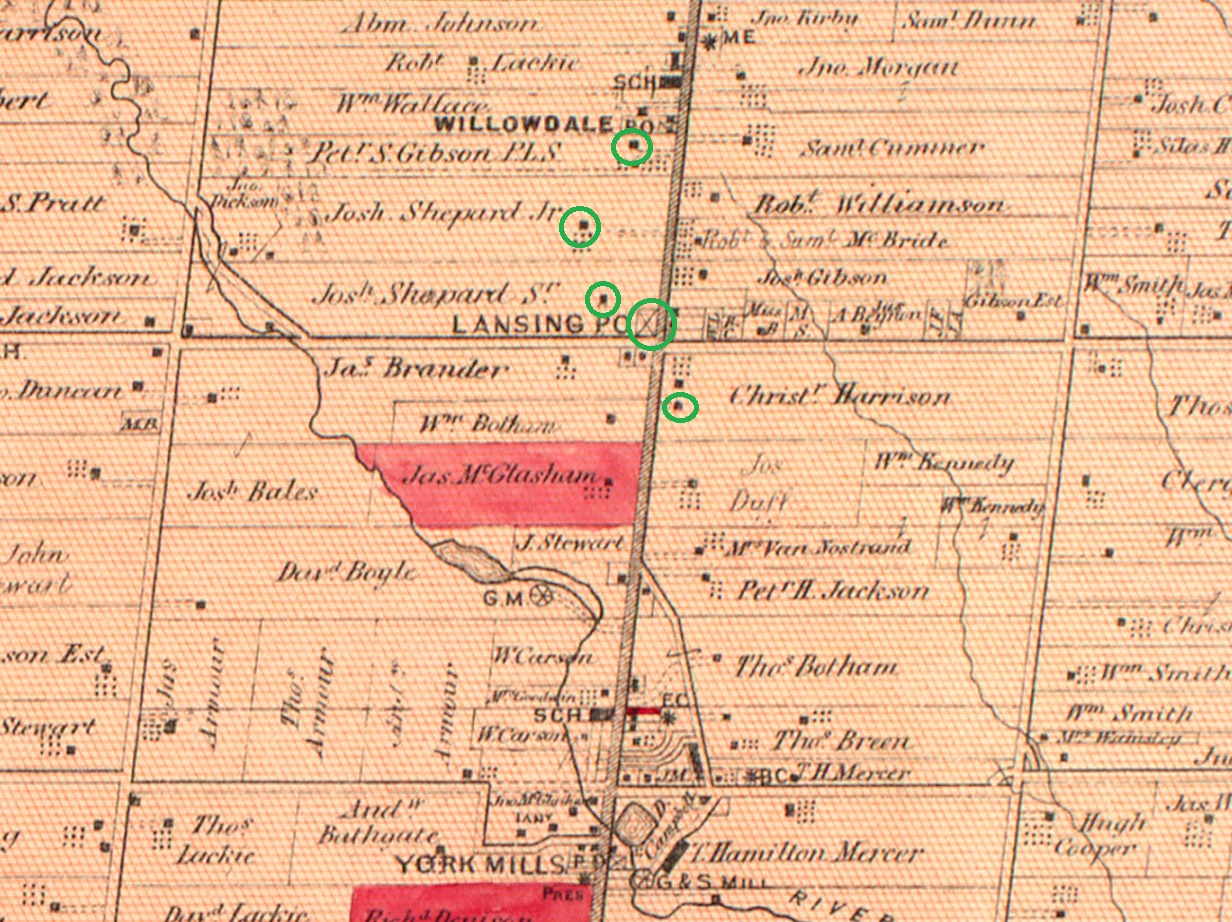
The community of Lansing was located at the intersection of Yonge Street and Sheppard Avenue. Thomas Sheppard (with two Ps), the namesake for the road, built The Golden Lion Hotel which became a favourite meeting place for those plotting the Rebellion of 1837. The hotel was demolished in 1928 but the golden lion statue that used to stand out front was saved and is now on display at the North York Central Library. The community of Lansing included a store that later became a post office and can be seen on the northwest corner on the map. The Shepard family (with one P) owned the store initially and appear on the map below, but it isn’t after them that the road gets its name. The name Lansing was chosen when the post office arrived in 1866. Lansing was never much more than a small cross-roads hamlet on Yonge Street, the first one north of York Mills. The map below is from the 1877 County Atlas and shows York Mills, Lansing and Willowdale stretching north on Yonge Street.

Elihu Pease House was built in 1834 and is the oldest surviving residential building from Lansing and one of the oldest in North York. Pease moved to Upper Canada in 1810 at the age of thirty and married Catherine Cummer, a member of one of the prominent families in the area. Elihu operated a tannery on the southeast corner of Yonge and Sheppard and was also a school inspector, teacher and a pathmaster for Yonge Street. The house was moved in 1921 and again in 2004. It now serves office functions and can be found at 20 Harrison Garden Blvd.

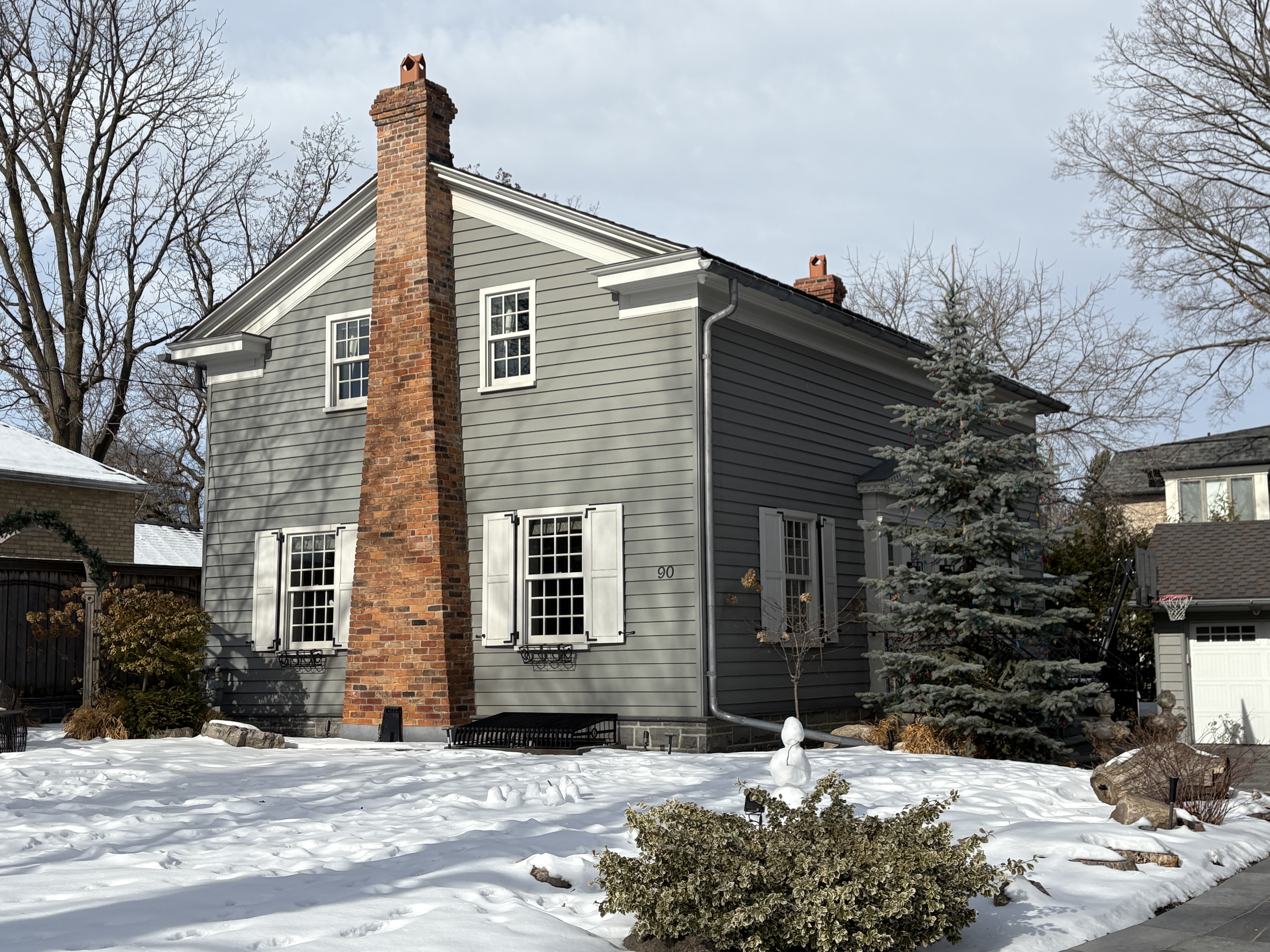
The Joseph Shepard House is a year younger as it was built in 1835. The house is set back from Yonge Street and because the area was subdivided around 1940 it has streets and houses between it and Yonge Street. It is facing Yonge Street while its neighbours face south onto Burndale Avenue where it is now numbered 90. Joseph and his wife Catherine were strong supporters of political reform. Joseph died just before William Lyon Mackenzie led his rebellion but it is certain that he would have participated if he had lived. The house was used to shelter rebels after the failed rebellion and it is said that the rafters have burn marks on them. This hints that there may have been an attempt to burn the house in retaliation. It is one of the few remaining buildings that has a direct link to the Rebellion of 1837.

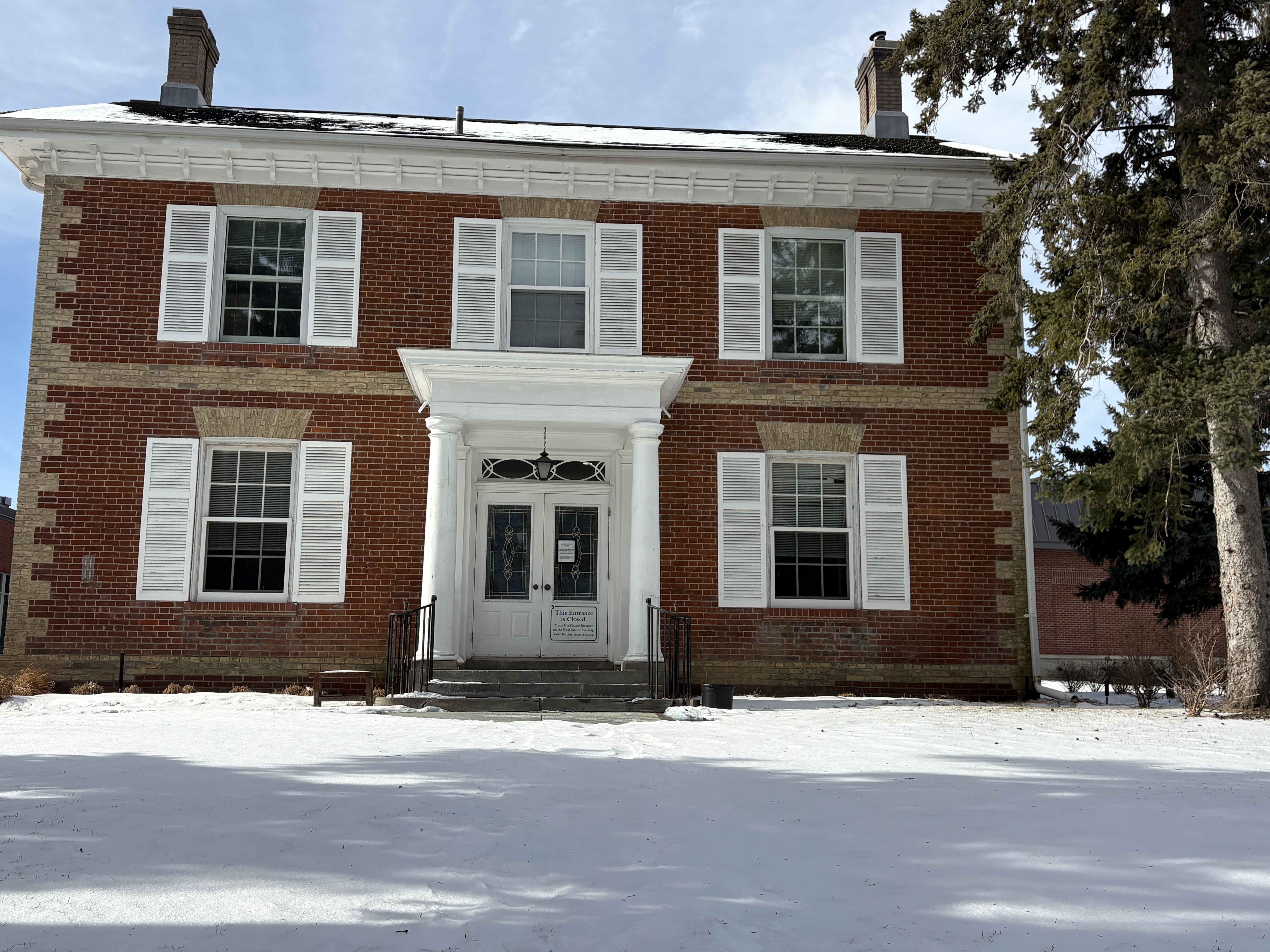
The property of Joseph Shepard was granted to him on May 9, 1805 and stayed in the family until it was sold to the trustees of the Toronto General Burying Grounds in 1916. This organization already operated The Necropolis and Mount Pleasant Cemetery and opened York Cemetery on this site in 1948. The house that now serves as the office was built for Michael Shepard in 1850. Michael had participated in the rebellion and had gone to the US until he was pardoned. It is said that William Lyon Mackenzie hid on this property as part of his get away route.

Gibson House was built in 1851 and has a direct link to the Rebellion but as a replacement house for David Gibson. David had emigrated to upper Canada from Scotland and in 1825 he became a land surveyor. He also supported William Lyon Mackenzie and was one of his chief lieutenants during the rebellion. When the rebellion failed he fled to the United States and his house was burned and land forfeited. After he was pardoned in 1848 he returned to Lansing and had this house built.

One of the last prominent remnants of Lansing on Young Street was the Dempsey Hardware Store that some may remember on the Northwest Corner of Yonge and Sheppard. The building was constructed in 1860 for Joseph Shepard II. Joseph and his family lived on the upper two floors and operated a business on the ground floor. They sold hardware, food and farm implements. The business was sold to Benjamin Brown in 1888 and he ran it until 1921. At that time, George and William Dempsey bought the building and turned it into Dempsey Brothers Hardware store. It closed in 1989 and the building was moved to 250 Beecroft St. in 1996. When the Metropolitan Street Railway (Toronto & York Radial Railway) arrived in 1897, the store became a stop on the route and passengers would wait under the porch for the streetcar. There are five buildings from 1860 or older that remain in Lansing even though there are relatively few buildings shown on the 1877 map.

With all of it’s links to William Lyon Mackenzie, the small community of Lansing seems to have had quite the rebellious nature.

Related Stories: Rebel Rebel – William Lyon Mackenzie, Necropolis, Mount Pleasant Cemetery, Toronto & York Radial Railway

Google Maps Link: Lansing

Like us at http://www.facebook.com/hikingthegta

Follow us at www. hikingthegta.com

Goodwood – Ghost Towns of the GTA

December 28, 2024

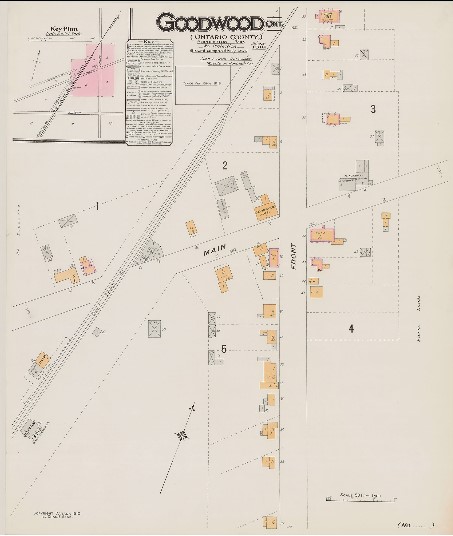
Goodwood is a little town that was largely unknown in recent years. That all changed in 2015 when it became a stand-in for the fictional town of Schitt$ Creek in the popular TV series of the same name. Long before its newfound fame, it had developed as a farming community in the mid-1800s. Goodwood was expanding and by 1862 there were two churches, a store, a hotel and a wagon shop in town. The map below shows Goodwood as it existed in 1910.

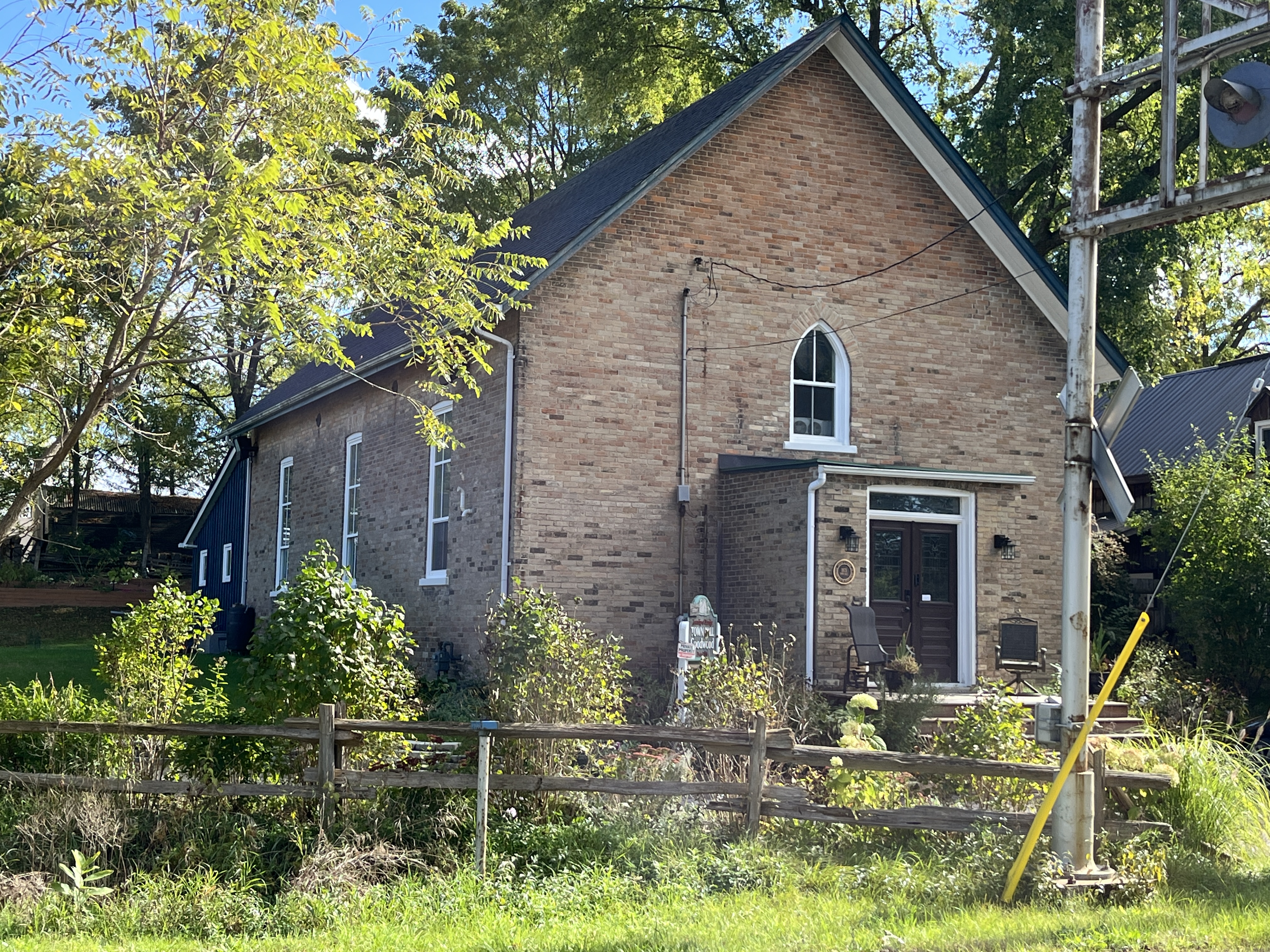
From the 1850s, Uxbridge Township Council met in a variety of places around the township. There was an ongoing issue trying to decide where to put the township hall and in 1862 it was decided to let the people decide. A two day vote was taken and it was decided that Goodwood was central and would make a good location for the township hall. Goodwood Town Hall was built in 1875 but was recently sold off and is now used as a private residence. It served as Schitt$ Creek Town Hall in the TV series.

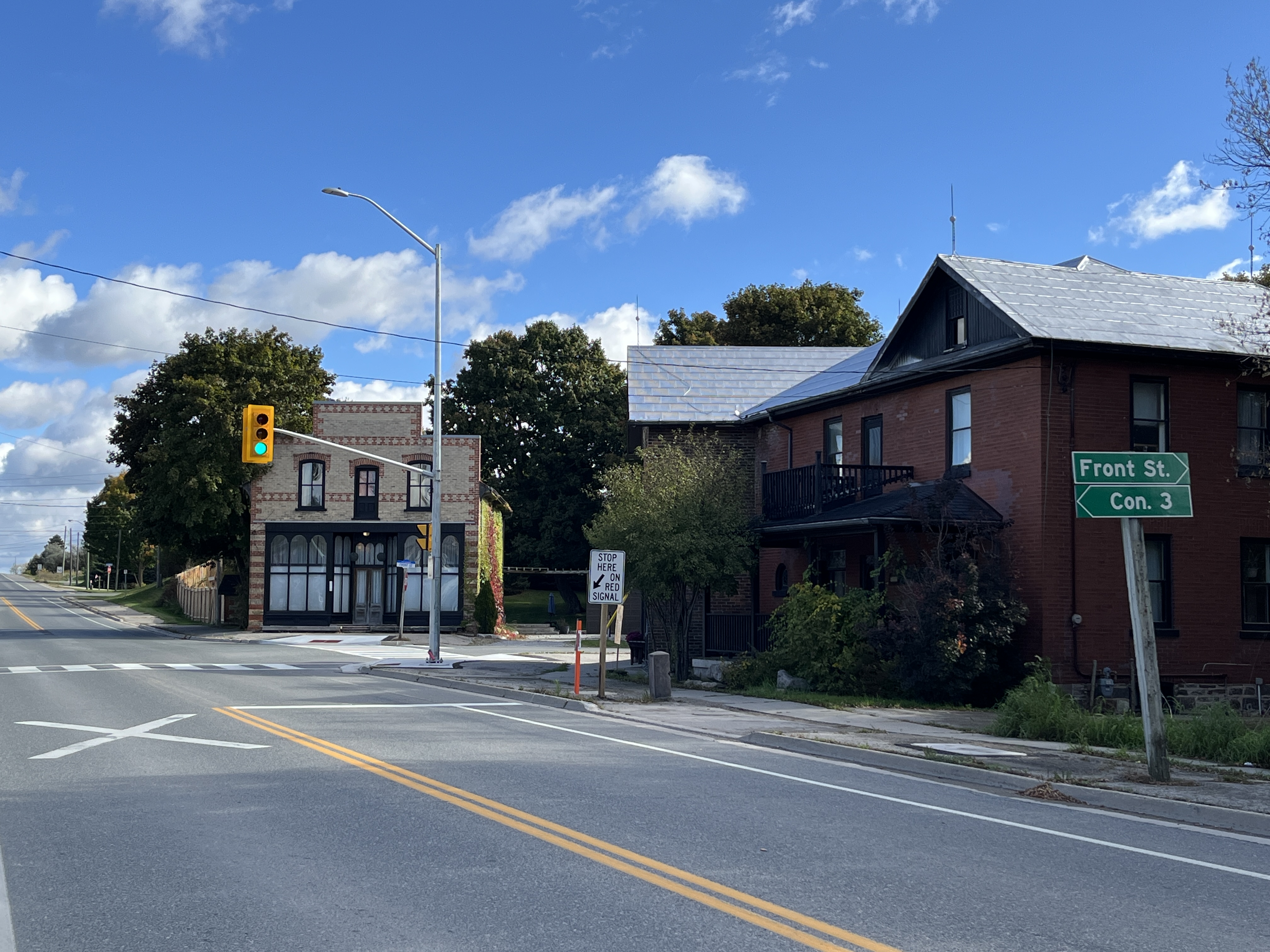
The main intersection of the town looks much as it did a hundred years ago when horse and carriage stopped in town for refreshments for both horse and driver.

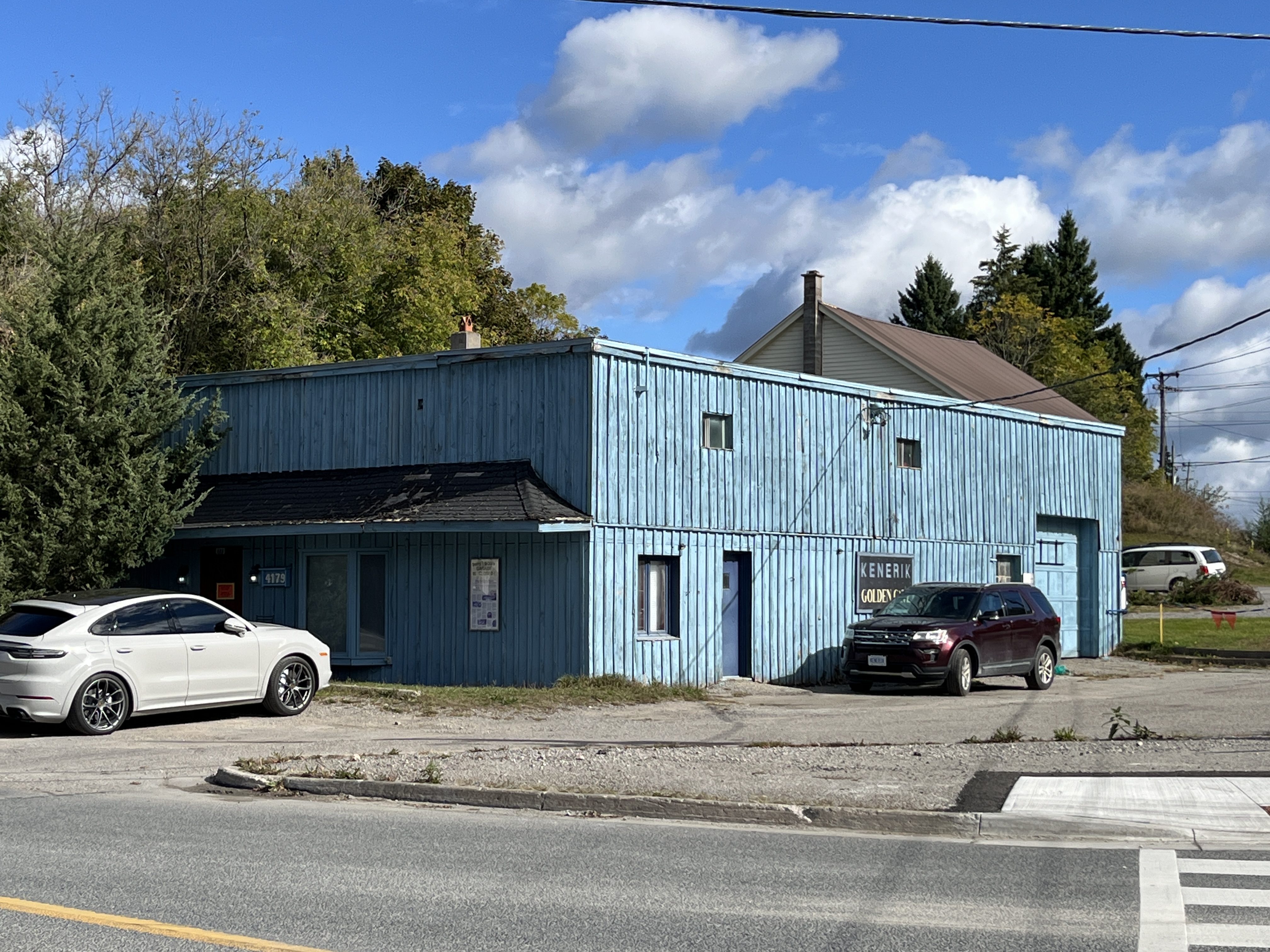
On the north east corner of the main intersection is the building that was used for Bob’s Garage in the show Schitt$ Creek. The building is actually owned by Joe Toby who uses it to make specialty furniture for disabled people.

The former store on the south east corner of the intersection was used as the Cafe Tropical in Schitt$ Creek. According to the TV series, the cafe was opened in 1947 and bought by Twyla Sands in 2018.

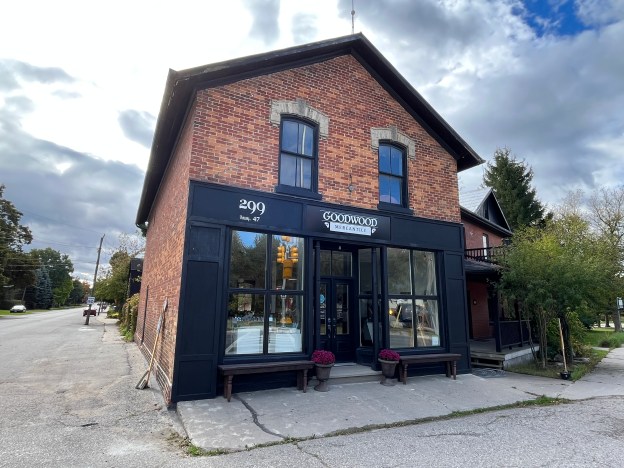
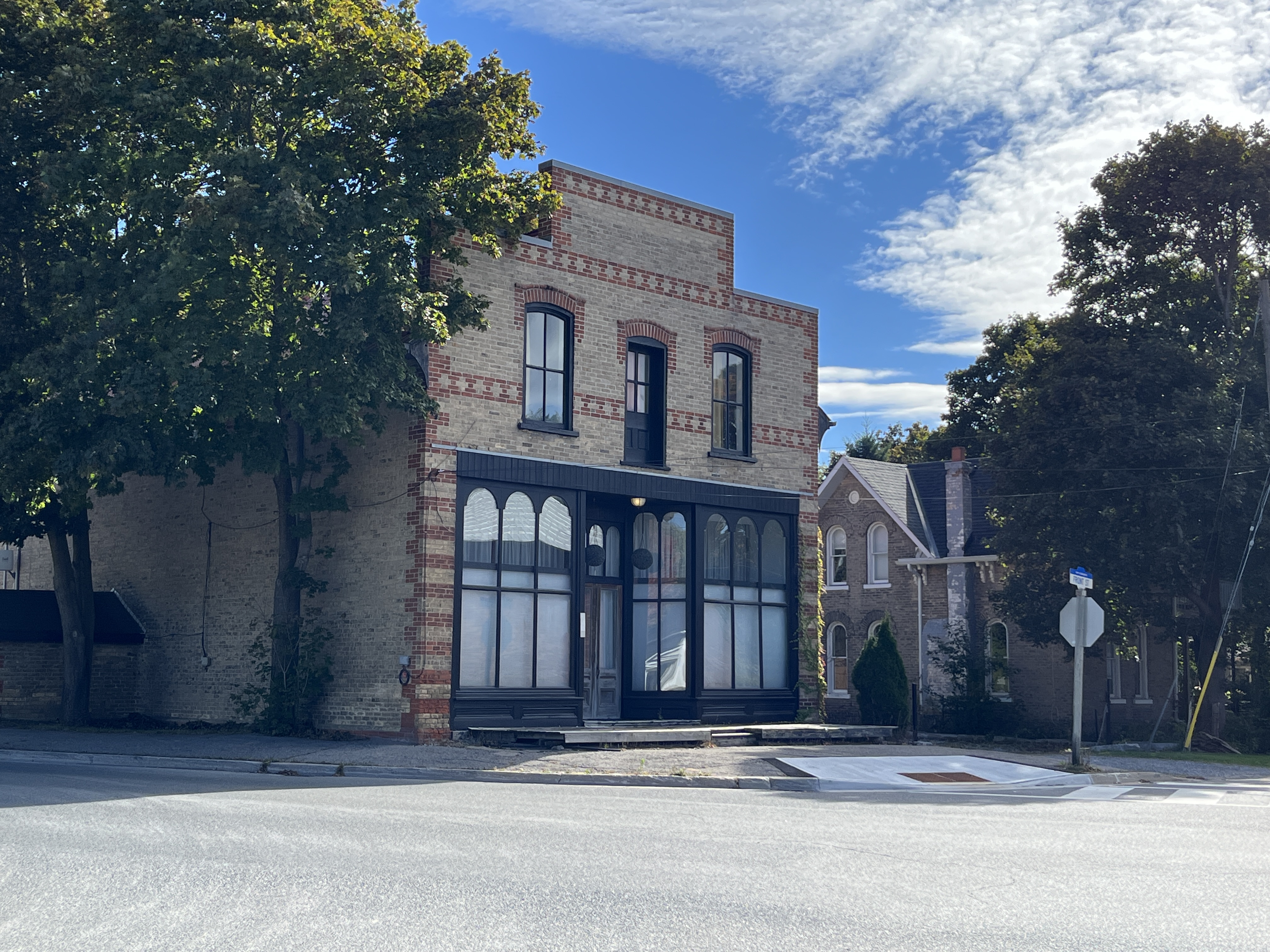
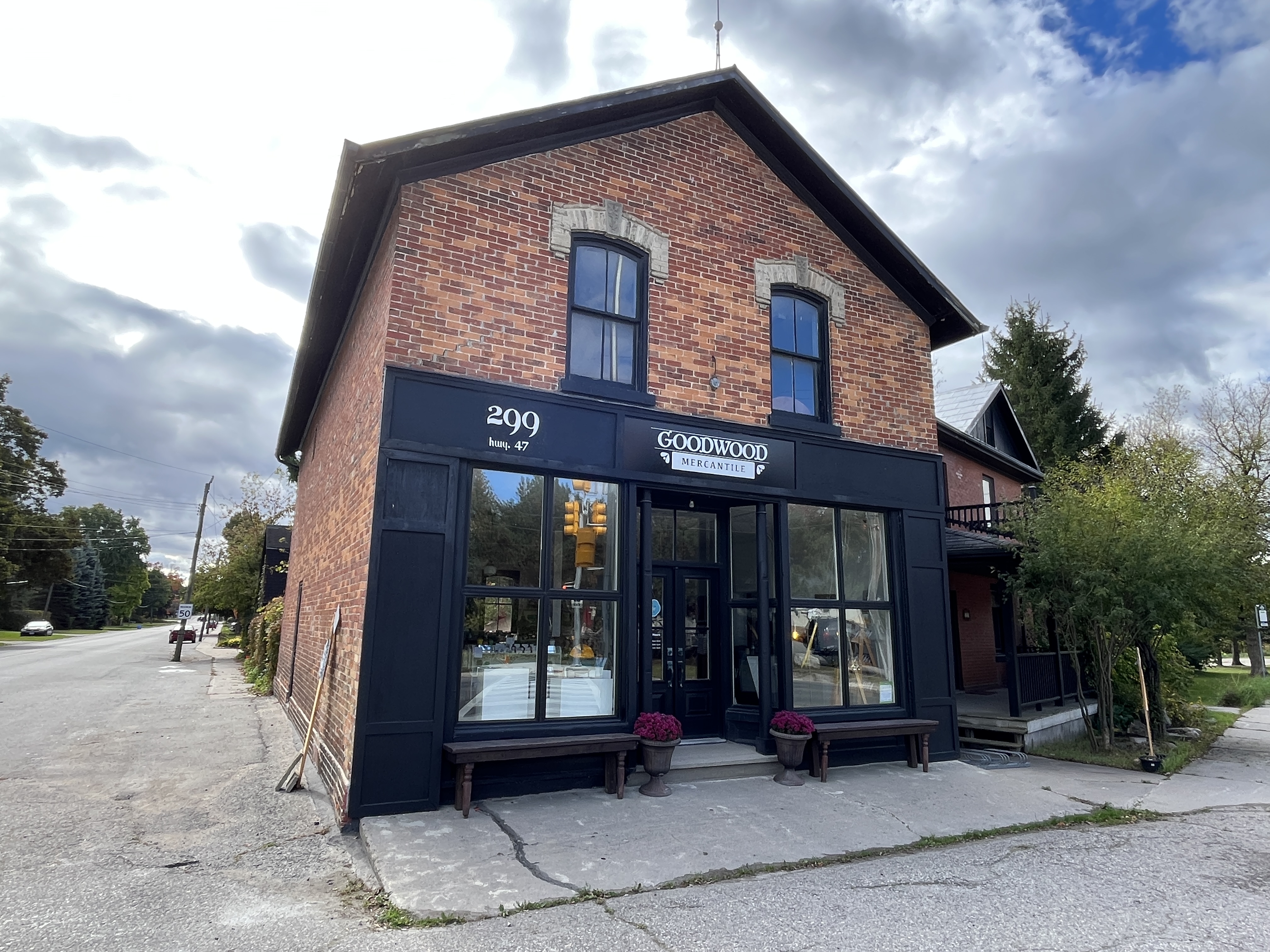
The building that would become famous as Rose Apothecary in Schitt$ Creek was originally built in 1861 as the town post office. Like many small town post offices it has also served as a general store. Later it was an antique store and then a yarn store. The building was recently put on the market for the asking price of $2.35 million and was later sold. It will soon be opened as a new venture called Goodwood Mercantile.

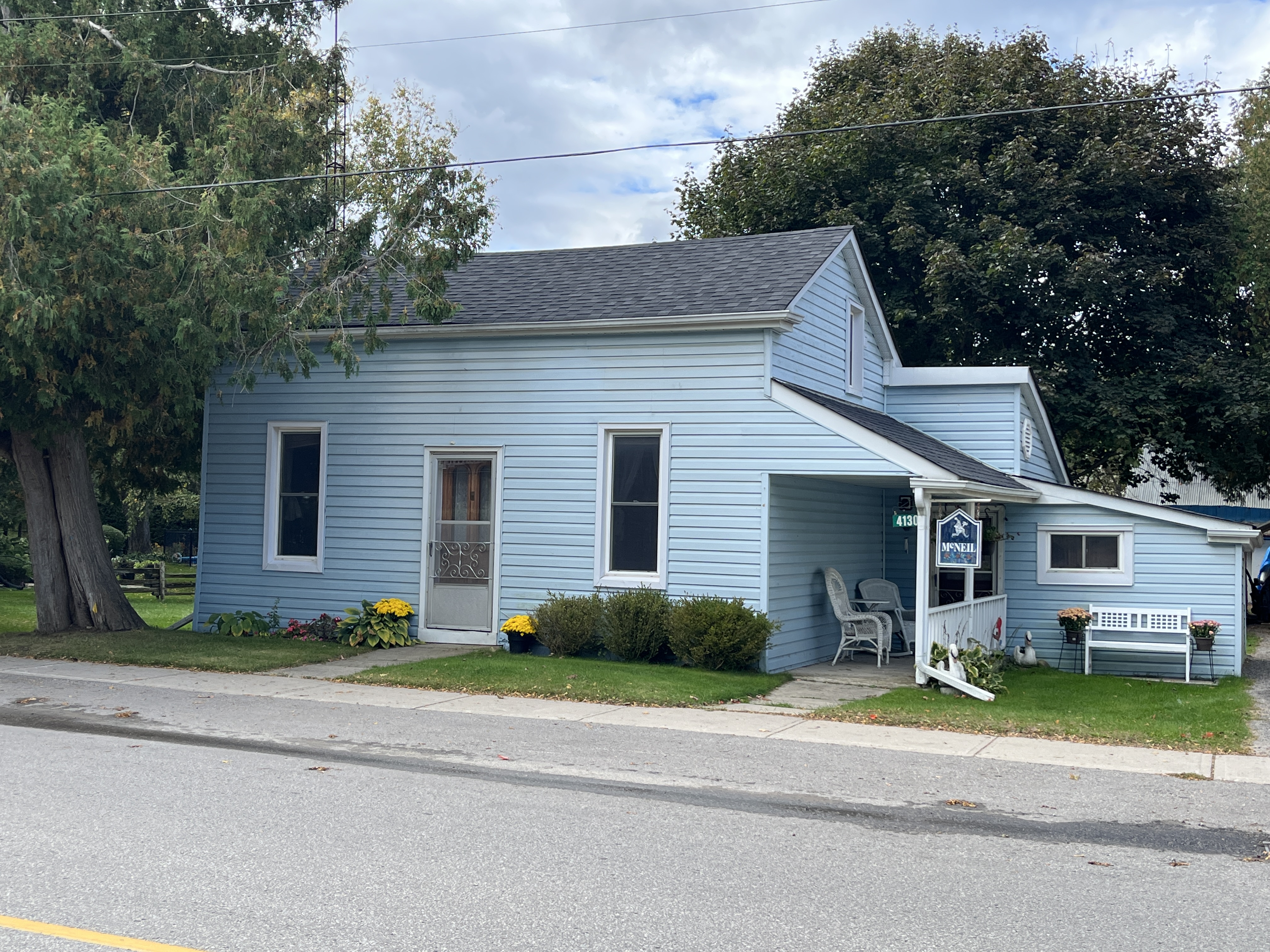
Just south of the intersection is the house that would serve as the Mayor’s residence in the TV show.

The first narrow-gauge railway in North America was the Toronto and Nipissing Railway. When it opened in 1871 it ran from Scarborough to Uxbridge, passing through Goodwood along the way. The railway ran into financial trouble and was never completed to Nipissing . In 1882 it was amalgamated into the Midland Railway and on January 1, 1884 it became part of the Grand Trunk Railway.

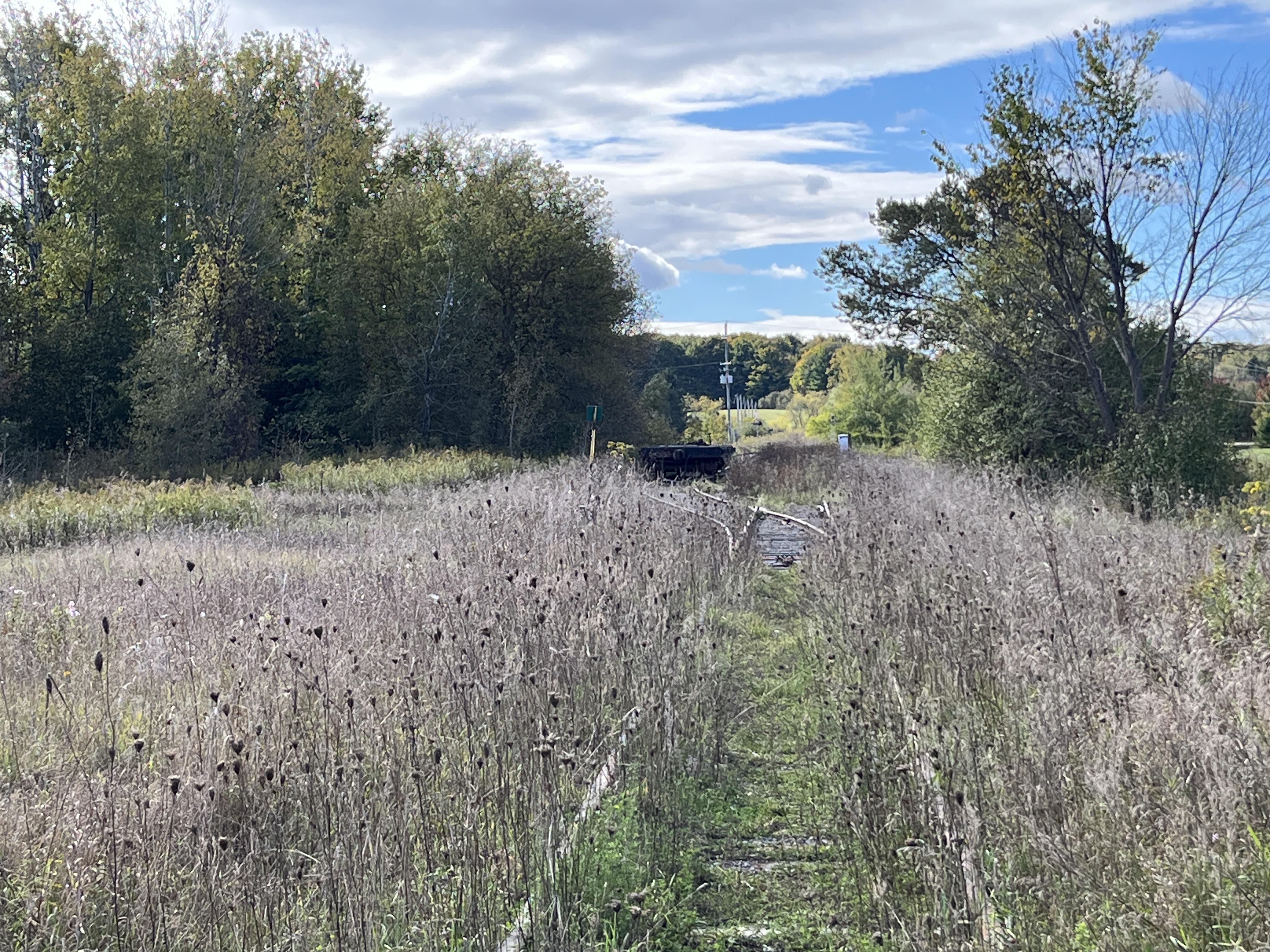
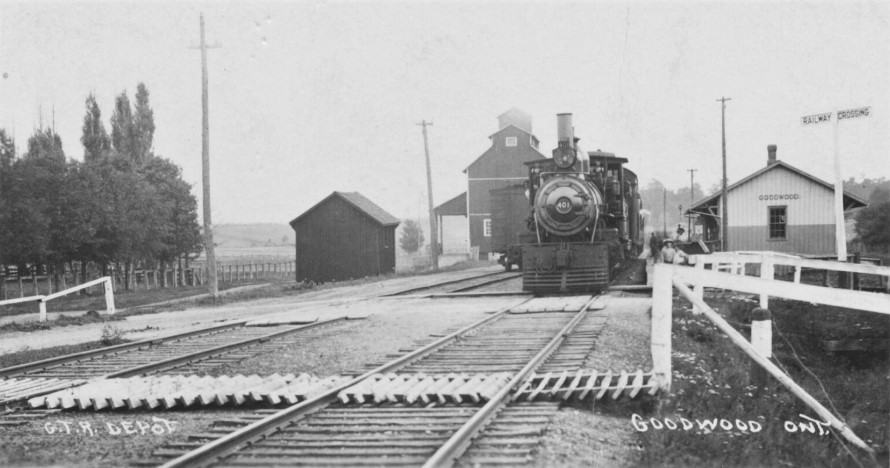
The Goodwood station was demolished in 1960 and only the siding remains. The archive image below shows the station and grain elevator. Engine 401 sits in front of the station waiting to finish loading. The station was replaced with a flag stop shelter but it was removed in the 1980s after passenger service ended in 1978.

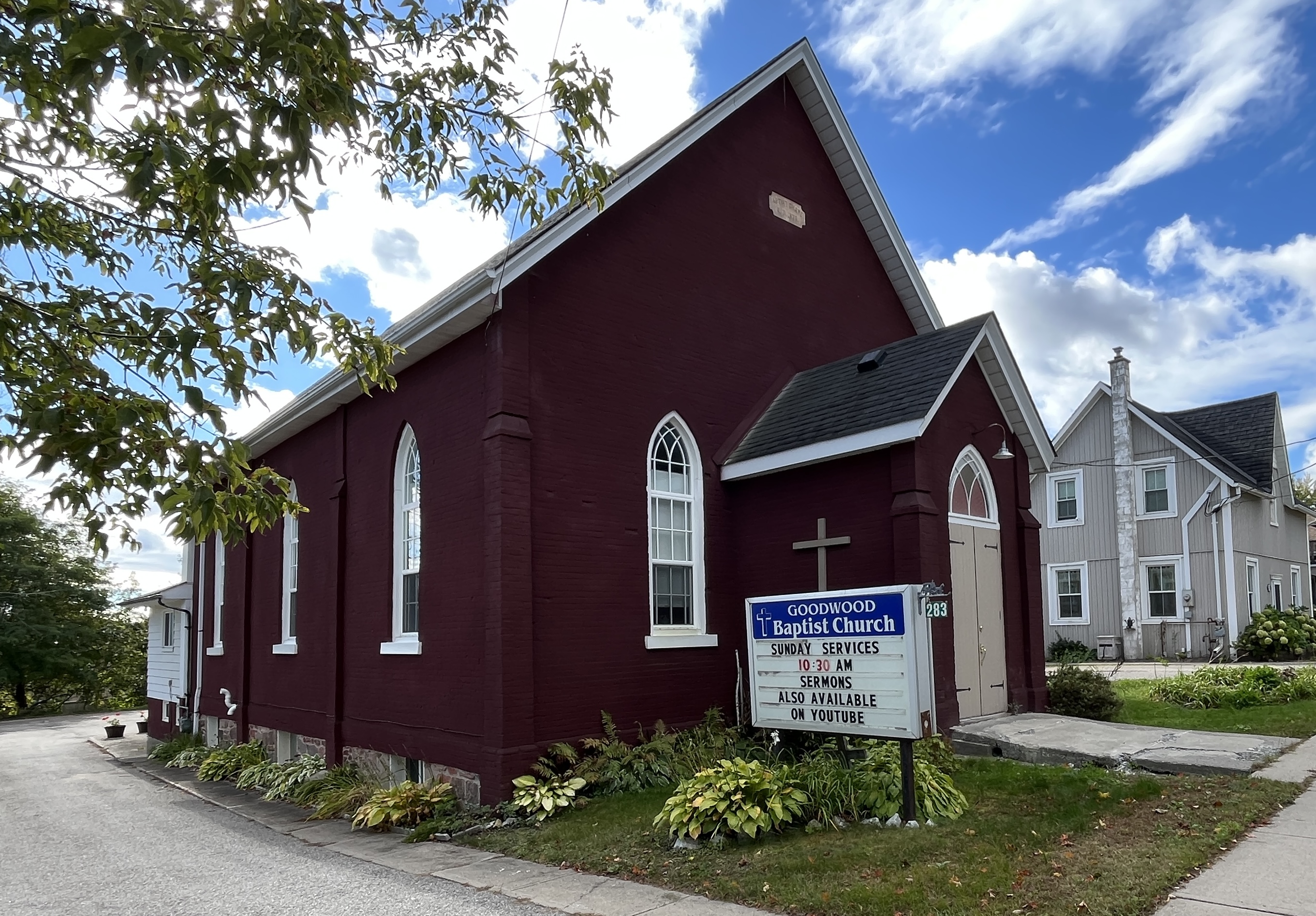
The Goodwood Baptist Church was founded in 1876 by Rev. J. B. Moore who was the pastor in Stouffville Baptist Church. In January of that year he began by holding a service in the little building in the Goodwood Cemetery. Starting the next week they moved into the Goodwood Town Hall. On March 10th the congregation decided to formalize themselves as a separate church and set about finding the right place to erect their church building. The new building cost $1,600 and was dedicated on December 21, 1876.

Several of the buildings on town have Heritage Uxbridge plaques on them. The one pictured below says that it belonged to George and Elizabeth Todd. George owned Todd’s Produce and they lived in the house from 1911-1955. The house was built in 1875.

There are several streets in Goodwood that have most of their historical buildings from the 19th century still intact.

Goodwood is an interesting little town that can be explored on foot for the opportunity to enjoy it’s many surviving historical buildings. Please remember that the buildings are all privately owned and trespassing is not allowed.

Google Maps Link: Goodwood

Like us at http://www.facebook.com/hikingthegta

Follow us at http://www.hikingthegta.com
Erindale – Ghost Towns of the GTA

January 27, 2024

Erindale isn’t a ghost town in the traditional sense because it is now part of the larger city of Mississauga. However the older homes that remain scattered through the area provide a ghost of the town that once was. Over the years we have written eight other blogs which focus on various aspects of the local history of Erindale and links to all of these can be found at the end of this post.

Erindale began in 1825 and was originally known as Toronto. It went through several name changes being known as Credit, then Springfield and finally Springfield-on-the-Credit. In 1900 it took the name of Erindale after a local estate owned by Reverend James Magrath. The town was a major stop on the journey along Dundas Street between Hamilton and York (Toronto). It started to decline after 1855 when the railway bypassed it but saw a revival in 1879 when the Credit Valley Railway built a station nearby. A fire in 1919 destroyed much of the town but several buildings were rebuilt.

The Grange was built sometime around 1828 for Sir John Beverly Robinson who was the first Chief Justice of Upper Canada.  He was also considered to be the leader of the Family Compact which controlled the government leading to The rebellion of 1837.  The regency styled house with it’s ornate windows was indicative of the status of it’s owner.  Robinson only owned the house until 1833 when it began a rapid change of ownership until around 1910 having seen up to ten owners during this time. Then the Adamson family took up residence here and they stayed until 1973. Sometime during the Adamson years the outside of the home was given an exterior layer, or veneer, of brick from the local Cooksville Brickyards.  The building was given to the city of Mississauga by the land developers and used by the Boy Scouts until 2004.  It has now had it’s bricks removed and been fully restored to it’s original splendor.  The Heritage Resource Centre of Heritage Mississauga is now the occupant of this home.

It is generally believed that the house below is the oldest surviving building in the main area of the village. It was likely built between 1835 and 1845 by a local miller named Ira Van Valkenburgh. It may also have been built by the local carpenter named John Blair. Tradition has it that a store was once located in the house.

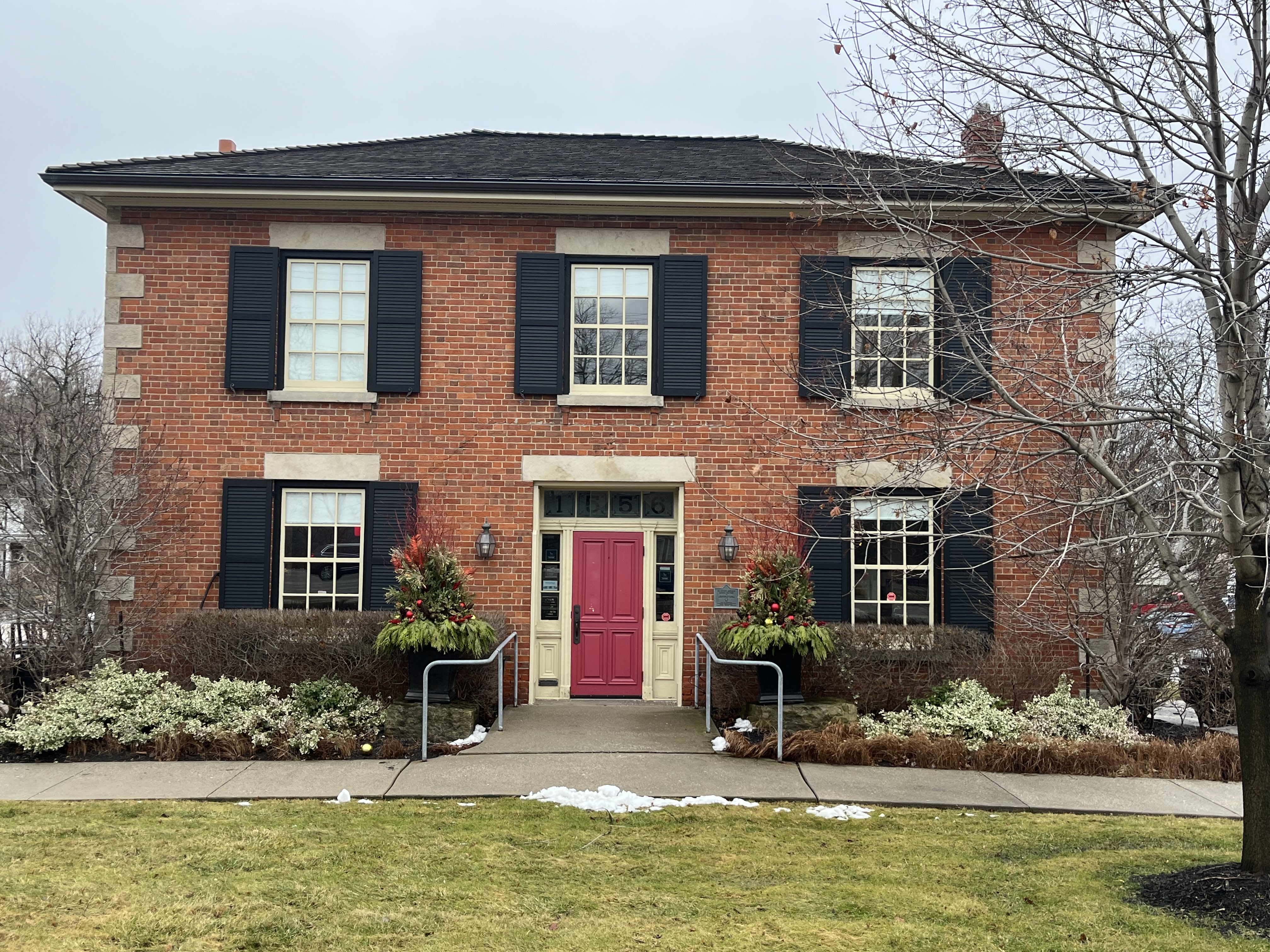
The Anglican Rectory was built in 1861 on the site of a former inn that had burned down. The Georgian Style manse was sold in 1960 and converted to commercial uses.

The Royal Exchange Hotel was built sometime between 1819 and 1822, although some sources say 1828, and was once known as the Halfway House. The hotel may have been 100 years old in May of 1919 when it was destroyed by the village fire and never replaced.

In 1877 the Methodist congregation commissioned a new church building as they had been meeting in the room above the Royal Exchange Hotel. The adherents felt that they should no longer meet above a building where alcohol was being sold. Somewhere around 1921 the church lost its spire and in 1925 it became the United Church. When a new building was consecrated in 1964 the building was sold to a Presbyterian congregation. This is ironic as the Presbyterians had rejected a merger with the Congregationalists and the Methodists that saw the creation of the United Church. Local residents each donated $100 and the spire was replaced in 2010.

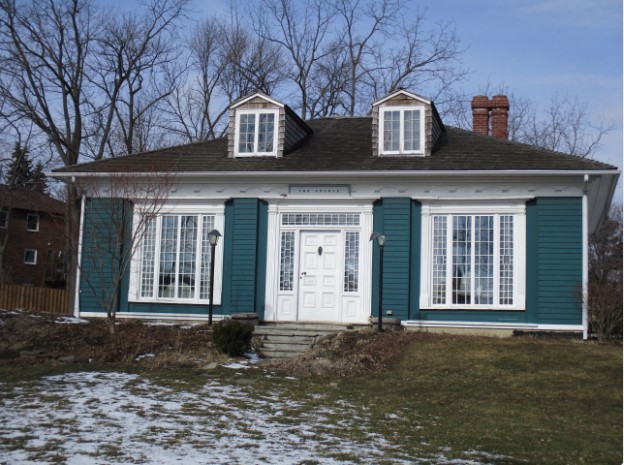
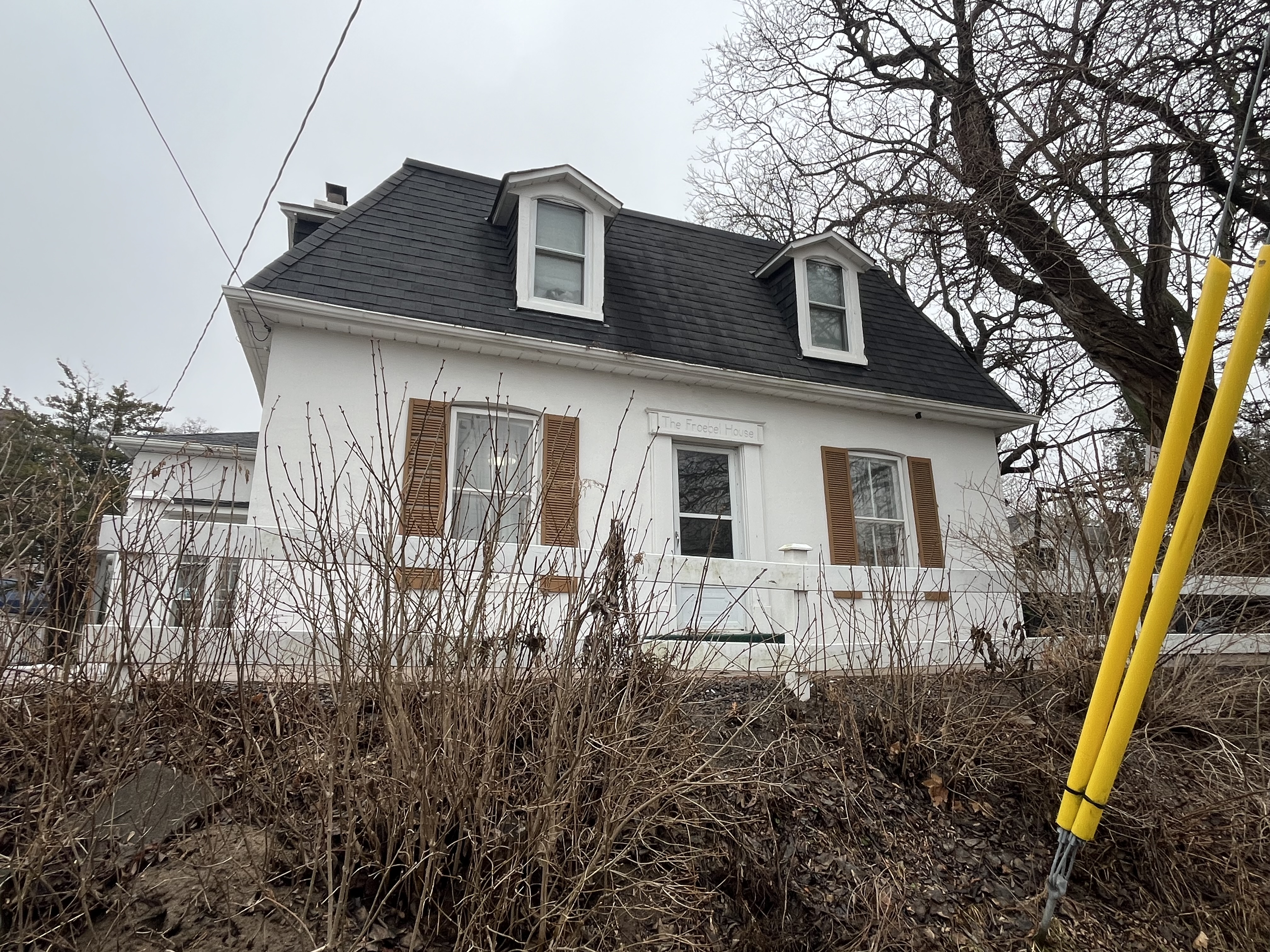
Emmerson Taylor was the owner of the Royal Exchange Hotel and also owned a saw mill, knitting mill and a fanning mill. This last structure produced furniture and grandfather clocks. He donated the land for the Methodist Church and had this house built around 1875 to 1878. The transom over the front door identifies the home as the Froebel House.

St. Peter’s Church history begins as a home church in 1825 in the home of Colonel Peter Adamson. Construction of a white frame church began in 1826 and it was consecrated in 1828. This building lasted until 1887 when it was torn down and replaced with the present stone church. The church tower was added in 1910. A basement was hewn out under the church in 1934 to be used for the church school.

Erindale Park has a long history and at one time was known as Erindale Lake. In 1902 Erindale Light and Power Company was formed to construct an hydro electric generating plant on the Credit River at Erindale.  This large scale engineering project ran into several delays during construction and didn’t begin producing power until 1910.  A dam was constructed across the valley flooding it and creating the 125 acre Lake Erindale.  A power generating plant was built on the south end of town at the bottom of Proudfoot Street.  A tunnel was constructed to connect the two.  The power plant operated from 1910 until 1923 supplying power to Erindale and New Toronto. It was closed when Ontario Hydro began to supply the area with power from Niagara Falls.  In 1941 the lake was drained and the dam was blown up.  Between 1961 and 1965 the former lake bottom was used as a sanitary landfill.  It has since been covered over with clean soil and Erindale Park has been created.

Erindale was served by School Section #4 and has had several buildings over the years. The bell from the 1872 school has been preserved and is now housed in the 1922 replacement building. This beautiful structure was built in the Colonial Revival and Neo-Classical style of architecture. It became the Springbank Community Centre in 1957 and is now part of the University of Toronto Mississauga.

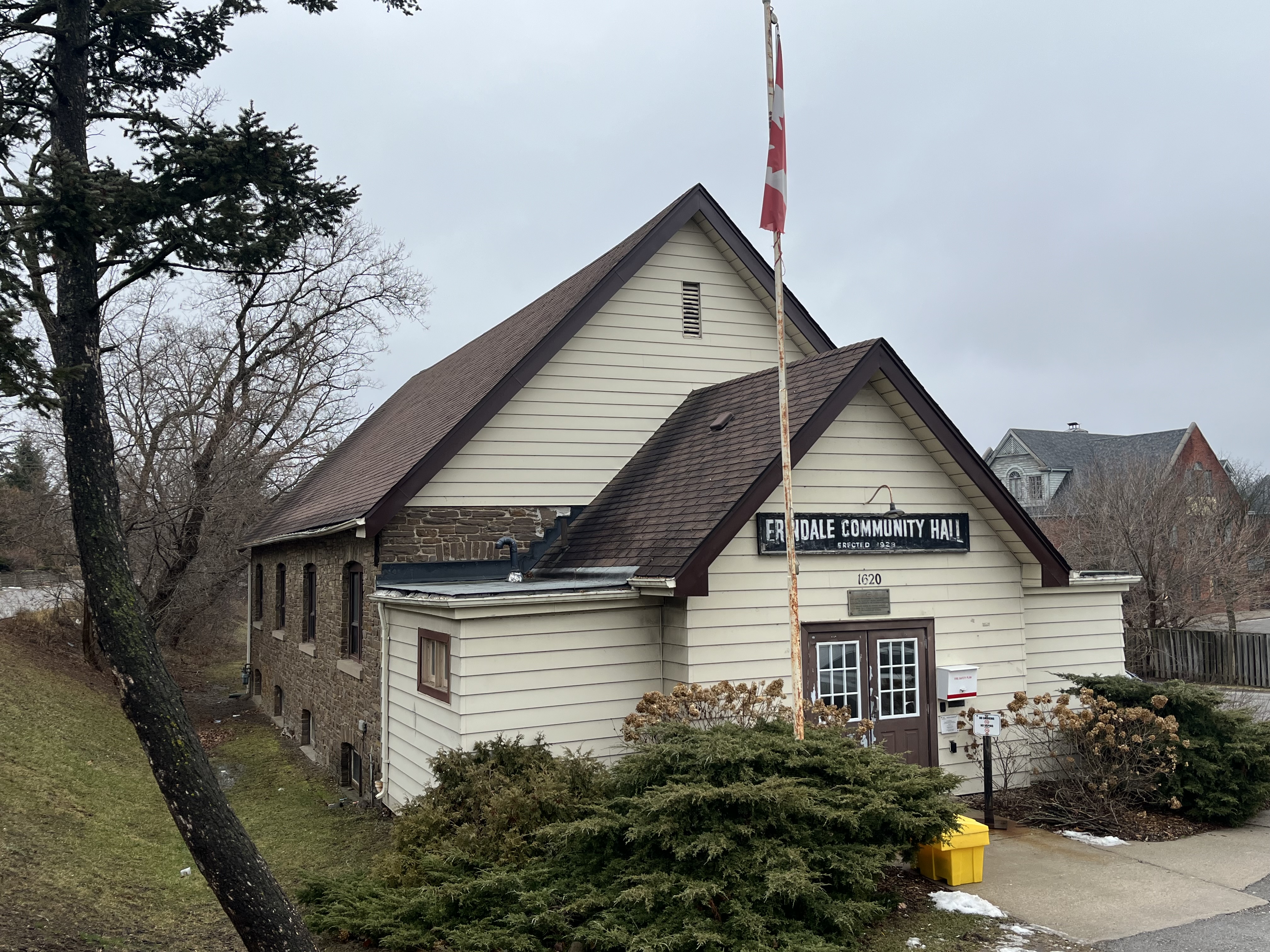
In 1919 a fire destroyed several of the older buildings on the core of the town including the Parish Hall, Post Office and the Royal Exchange Hotel. A new community Hall was constructed and has operated under a board of directors for almost 100 years. It can still be rented for private functions.

The historical community of Erindale can still be experienced via a walking tour. Heritage Mississauga has provided the details for one and a brochure can be accessed at this link: Erindale Tour. There’s a considerable amount of history in this area and you can read more in the various stories listed below.

Related stories: Winding Lane Bird Sanctuary, J. H. Pinchin Apple And Turkey Farms, Erindale Hydro Electric Dam, Erindale Powerhouse,UTM Nature Trail, Ghastly Tales Of Sawmill Valley Creek, Erindale Orchards, Credit River At Erindale

Google Maps Link: Erindale

Like us at http://www.facebook.com/hikingthegta

Follow us at http://www.hikingthegta.com
Also, look for us on Instagram

Lost Villages of the St. Lawrence River

January 6, 2024

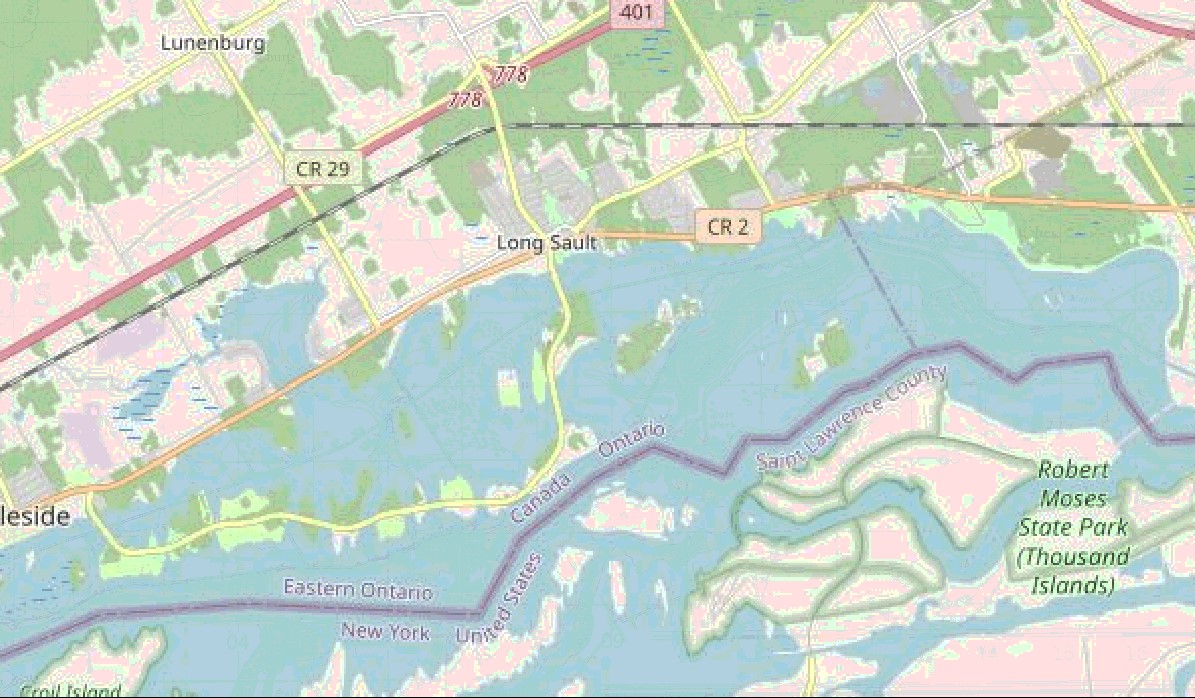
In July of 1958 nine villages and an inhabited island along the Canadian shoreline of the St. Lawrence River were flooded during the construction of the St. Lawrence Seaway and the Moses-Saunders Power Dam. 1,200 acres of reserves belonging to the Mohawks and Akwesane as well as 15,000 acres of traditional hunting grounds were also flooded. The indigenous peoples were not consulted or compensated and only in the last couple of decades has any attempt been made to correct this travesty. 6,500 residents of 6 villages and 3 hamlets were forced off their lands and given market value for their holdings. Unfortunately, the market values were already depressed due to the impending flooding. The lost villages were Aultsville, Dickinson’s Landing, Farran’s Point, Maple Grove, Mille Roches, Moulinette, Santa Cruz, Sheeks Island, Wales and Woodlands. Some of these can be seen in the map below taken from Wikipedia which shows the area prior to the flooding. We have often written about the ghost towns and lost villages of the GTA but this post focusses on some lost villages in Eastern Ontario that I visited on a business trip in September.

58,000 acres were flooded beginning on July 1, 1958 when 27 tonnes of explosives were used to destroy the cofferdam that was used during the construction of the power dam near Cornwall. The image below shows the same area as the one above as it exists following the flooding.

The story of the flooding has its origins as far back as 1871 when the Treaty of Washington made the St. Lawrence River the dividing line between Canada and the USA and allowed for shared use of the river for shipping purposes. In 1895 the Deep Waters Commission was established to explore additional navigation opportunities including the St. Lawrence Seaway. Political issues prevented progress from being made and by 1951 the Canadian Government decided to proceed alone on the construction of the seaway. This got the USA out of their deadlock and in 1952 the Seaway Project was approved by both countries. Construction began on August 19, 1954 resulting in the flooding in 1958. When the lost villages were evacuated the buildings were demolished and some of the bricks and stones were salvaged to be used in the planned memorial. Grave markers were taken up to be relocated in a memorial wall that was built near the site of Upper Canada Village and some of the buildings were moved there.

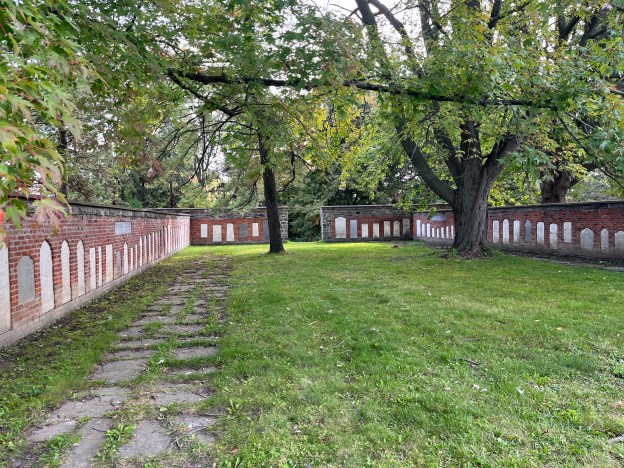
The Pioneer Memorial is laid out by community with a stone marker indicating each of the towns represented. This image shows the wall for Aultsville and Farran Point.

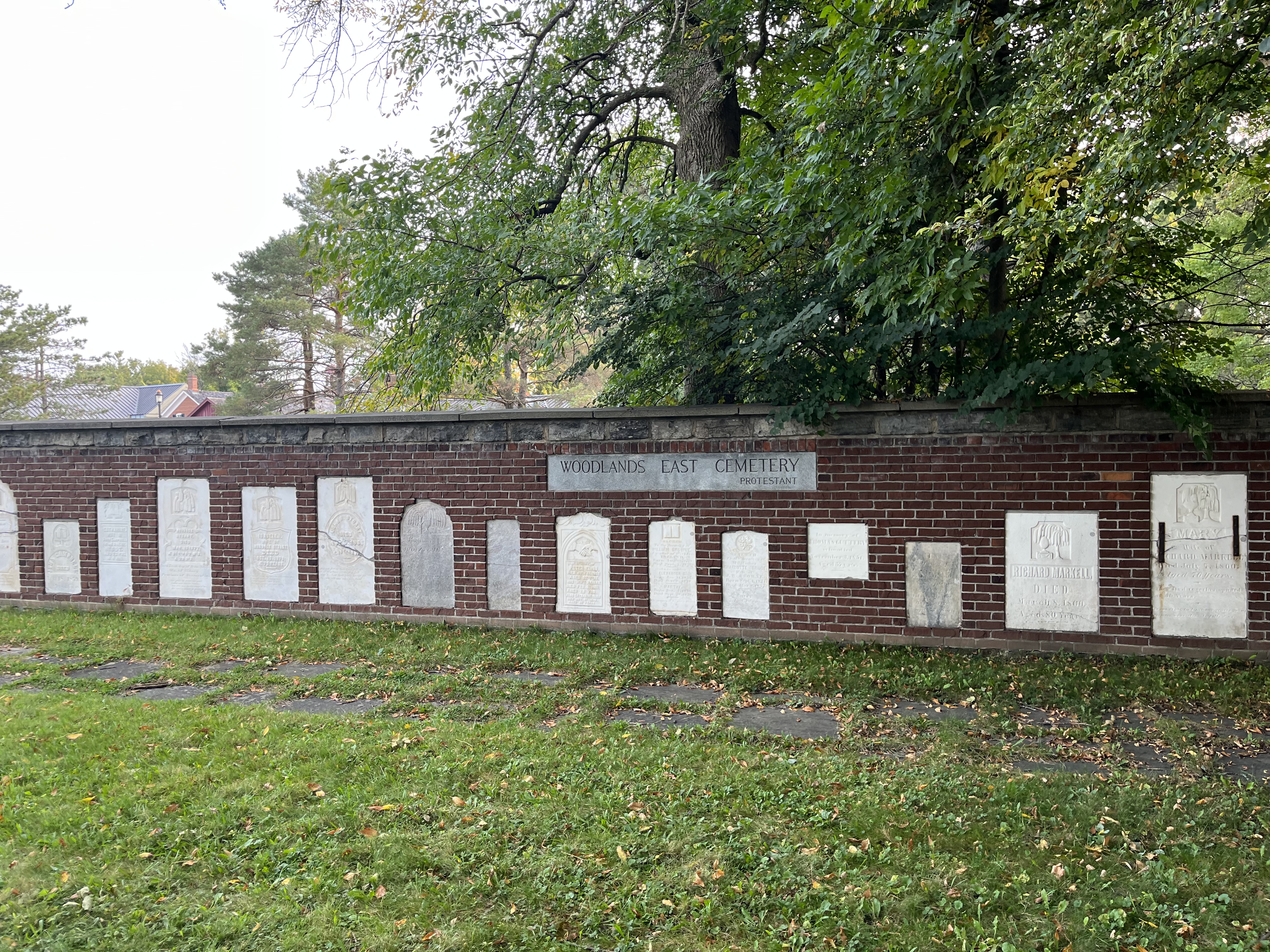
Woodlands East Protestant Cemetery is represented in the wall pictured below.

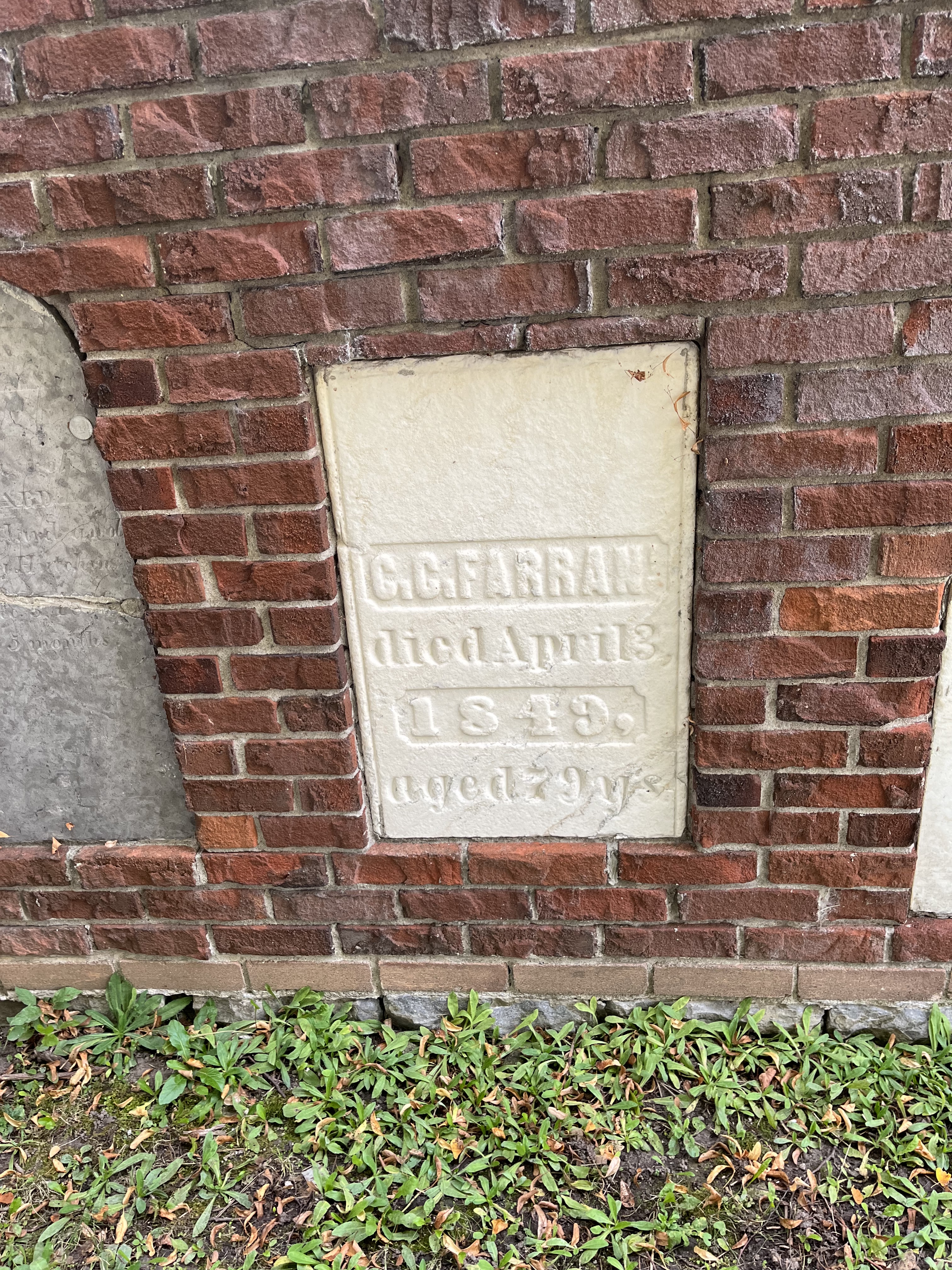
Not all of the people buried in the various flooded cemeteries have been represented in the memorial gardens because some stones graves were marked with wooden memorials or stones that were badly broken or deteriorated. One example of a salvaged memorial is seen in the picture below showing the marker for G. C Farran who died on April 3, 1849. They had been born in 1770. Their remains now lie below the St. Lawrence River in one of the flooded towns.

The plaque below is located near the site of the memorial gardens and tells of the building of the walls and gardens. It mentions eight villages but there are nine villages plus the residents of Sheeks Island that are covered in the online histories of the area.

Crysler’s Farm was the site of a battle in the War of 1812. The battle took place on November 11, 1813 and the American forces were defeated but not without losses on both sides. The actual site of the battlefield is now submerged under the St. Lawrence River but it has been memorialized on a new site near Upper Canada Village. We’ve previously written about this battle in our post The Battle of Crysler’s Farm. The image below was taken from the 1877 County Atlas and shows the original battle ground.

The Long Sault Parkway is a 10.1 kilometre drive that connects several islands that were created during the flooding. Along the route homage is paid to many of these lost villages and the drive is said to be very scenic. It’s on our bucket list for a future visit to the area.

Related Stories: The Battle of Crysler’s Farm

Google Maps link: Pioneer Memorial

Like us at http://www.facebook.com/hikingthegta

Follow us at http://www.hikingthegta.com
Also, look for us on Instagram

Box Grove – Ghost Towns of the GTA

November 4, 2023

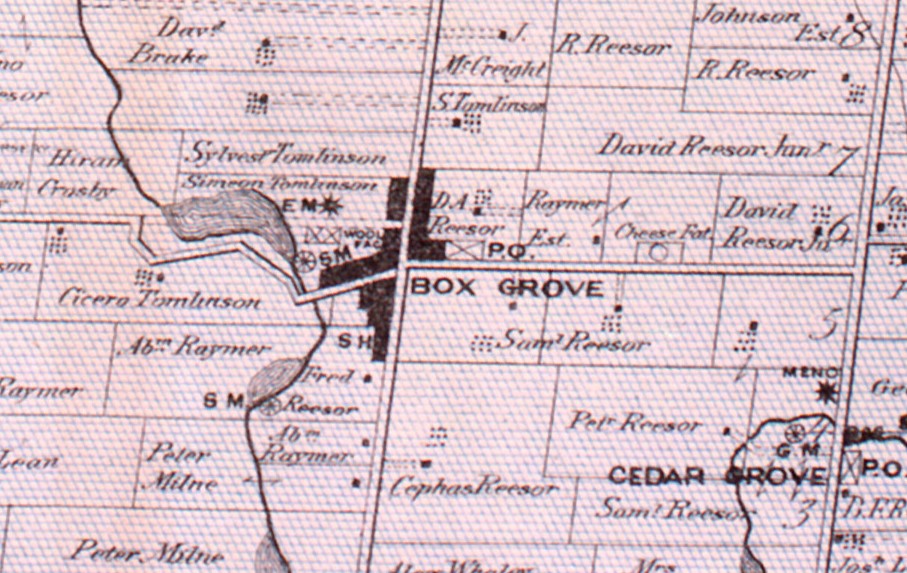
Families started to arrive in the area of present day 14th Avenue and 9th Line near Markham as early as 1815. The Tomlinson and Beebe families were among the first to move there and begin to develop farms and mills. In 1850 they put forth a plan to develop the community by selling lots for residential use. The lots were either 100 or 250 feet wide by 250 feet deep. This was intended to provide housing for the workers in the saw mill, woollen mill and shoddy mills. A shoddy mill reclaimed used fabrics to make paper or mattress stuffing materials. The community was known as Sparta or Sparty Wharf and was the last point on the Little Rouge River that could be easily navigated. The development soon let to the arrival of three hotels and taverns, a cheese factory, a blacksmith and two axe makers. The image below is taken from the 1877 County Atlas and shows the community in relation to nearby Cedar Grove.

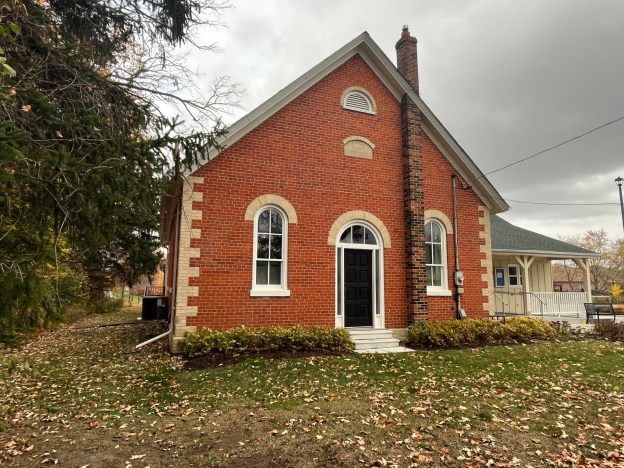
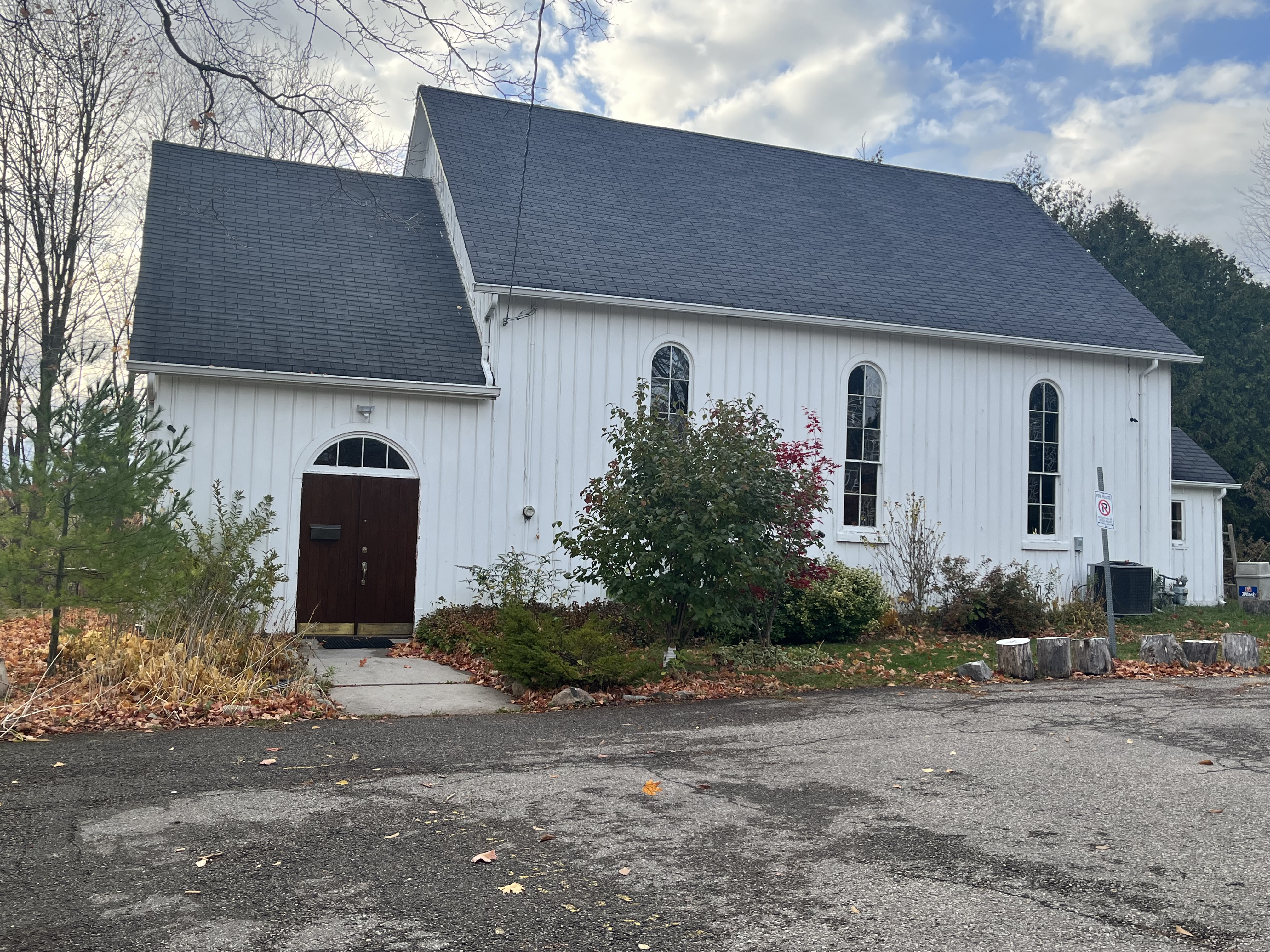
In 1850 The Episcopal Methodists had built a small church in the town and continued to worship there until 1877 when their new building became available. They continued as a Methodist Church until 1925 when they became the Box Grove United Church. In 2004 the church congregation voted to join the Zion United Church in nearby Cedar Grove. The building was vacated and then bought by the Full Gospel Assembly of God in 2006 who continue to meet there on Sundays.

A half acre of land was set aside for the Methodist cemetery in 1850 and many of the town settlers are buried here.

From the County Atlas above you can see that the school is shown across the street from the present structure. This small frame structure had become too small and needed to be updated. School Section #18 was replaced with this red brick structure in 1877, the same year the county atlas was produced. This new schoolhouse was used until the 1960s when new buildings were opened and most of the one room schools in Ontario were closed. Today the old school serves as a community hall and can be rented for various functions such as parties and wedding celebrations.

In 1867, the year of Confederation, they were awarded a post office and the town name was changed to Box Grove. The post office was in the general store which was located in the building seen below.

With three taverns and a population of 150 the town had a bit of a reputation for being rowdy. The Mennonite families on surrounding properties were not pleased and soon opened a Temperance Hall. All of the original industry disappeared and only the homes remained along with the school and church. There are still quite a few mid to late 19th century houses lining the streets around the original intersection. The one pictured below is a typical one and a half story worker cottage.

The house below was originally built in 1880 using a roughcast stucco surface applied to lathing. It has since been covered over with wooden siding. It was built on the Reesor Family farm on the east end of town and may have housed the person who operated their cheese factory. The house was modified at some point adding the western wing and making the home into an L shaped building. When the farms around Box Grove were redeveloped for housing the home was moved to make way for stormwater ponds.

One of the few homes in Box Grove to still display its original brick veneer with buff coloured accents stands on the eastern edge of the original town.

In the past few decades the area has been developed with new housing but the older ones can be picked out as you walk or drive through the neighbourhood.

In 1950 Nelson Morgan Davis, one of the richest men in the country, created a golf course in Box Grove which he called the Box Grove Golf Course. It was private and he was the only member. It was eventually developed into a 27 hole course with 9 holes in the valley and a challenging 18 hole course on the tableland above. It is said that he built the course after being hit in the head by a golf ball while playing at Rosedale Golf Club. Arnold Palmer was invited to play a round of golf with Davis and he later said that the course was one of the hardest he had ever played. Davis sold the golf course to IBM in 1967 netting a cool $2 million for it. IBM kept the course for the entertainment of its employees who could play a round of golf for $5.00. In 1997 IBM sold the golf course to Minto Developments who built a residential subdivision on the upper course while the City of Markham now operates a nine hole course in the river valley called Markham Green.

The Little Rouge River was dammed to create a mill pond to store water to power the mills that provided early industry in the community. The mills were all lost to flooding or to fires but the mill pond remains and is now the centre attraction for the Old Mill Pond Park which is just one of the parks in and around town. The town also features some hiking trails along the river.

Box Grove has been swallowed up by modern developments but there’s still quite a number of early residences hiding along 9th line and along 14th avenue.

Related Stories: Cedar Grove, The Reesor Family

Google Maps Link: Box Grove

Like us at http://www.facebook.com/hikingthegta

Follow us at http://www.hikingthegta.com
Also, look for us on Instagram

Malvern – Ghost Towns of the GTA

July 30, 2023

The former community of Malvern has disappeared under a massive railyard and multiple industrial buildings. There are still a few houses remaining that once stood on the outskirts of the town. Prior to 1850 the hamlet was known as Malcom’s Corners because John and Robert Malcom operated the Speed the Plough Inn and had a harness shop at the intersection of modern Sheppard Avenue and Markham Road. Senator David Reesor thought the community had the potential to become the capital of Scarborough Township and in 1857 he set out a plan to sell 50 foot by 150 foot lots for housing. He chose the name Malvern after a town in England where the water was said to cure the sick. Locals had told Reesor that the waters around Malvern would also cure the sick. He also planned for a grammar school, a fair grounds and a large community hall. The hall was built in 1860 and named Mammoth Hall. When it burned down in 1879 it was soon rebuilt. Unfortunately, an arson burned it down in 1988 and it was lost forever.

The map below is a section of the 1877 County Atlas and shows the location of the various properties that are pictured in this post. Three stone houses belonging to Weir, Stirling and Neilson and the school. Also circled is the Primitive Methodist Church that is pictured as an historical photograph.

For years there were two general stores that were operated by a series of men starting with Duncan Malcom. The village also had a blacksmith, a wagon shop, two hotels and a large woolen mill as well as a saw mill. One hotel was Thompsons Temperance Hotel and General Store and it contained the post office from 1865 until 1929 when the building was lost to a fire. The post office then moved to Cowans General Store in 1930 and remained there until 1956. The other hotel was the Standard Hotel where one could purchase an alcoholic drink that wasn’t available in the Temperance Hotel.

One of the prominent houses was the Neilson House which was built in 1856 and remains on Neilson Road today, serving as a community centre. It was partially destroyed by two fires in the 1970s but was restored and opened as the community centre in 1988. The cover photo shows this beautiful stone house from the front.

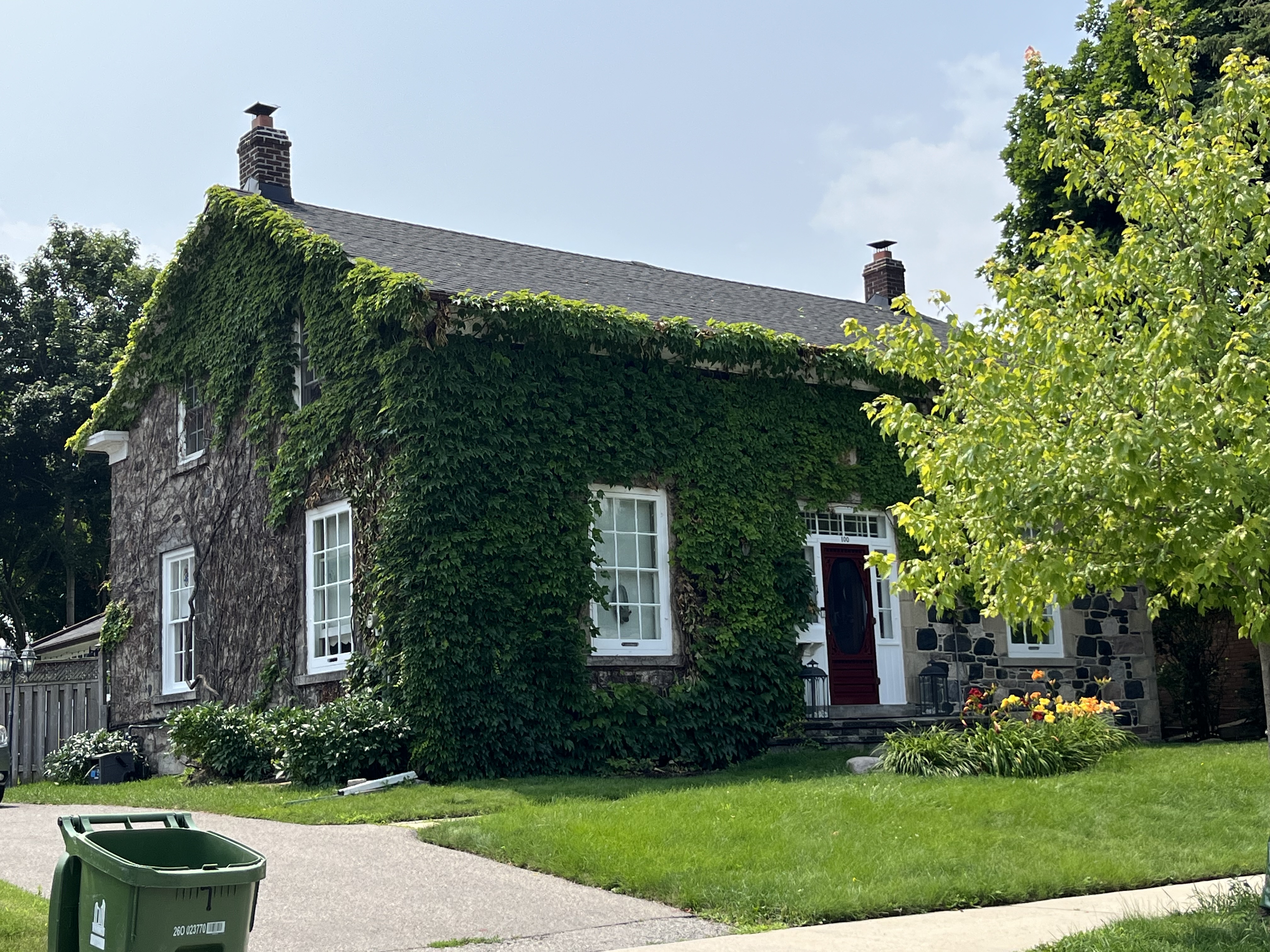
Malvern was a thriving farm community through the 1880s but when the railway bypassed it in favour of Agincourt that community prospered and Malvern went into decline. The Canadian Northern Railway built a station there in 1911 but it went bankrupt in 1917 and was taken over by the Canadian National Railway. Passenger traffic ceased in 1926 and the community stagnated until the 1950s when the Canadian Housing and Mortgage Company expropriated large tracts of land to build a housing development. One of the houses that was spared demolition was the James Stirling house which was built in 1860. This is another of the field stone houses that used to be found in the community.

James Weir came to Scarborough in 1833 from Scotland and worked against the Mackenzie rebels in the 1837 Rebellion. He settled on this lot in 1840 and became a successful farmer, livestock importer and ploughman. Eventually he became one of the wealthiest landowners in Scarborough and erected this home made of fieldstone in 1861. The lintels above the windows and quoins on the corners are made of Kingston Limestone. The house used to stand in the middle of the property but in 1975 it was moved about 400 yards west to its present location.

The door on James Weir’s house is the most decorative part of the structure. It has side lights and windows in the transom above the door. It is also one of only a few historic houses that I have photographed that has a name plate and date stone, in this case just above the door. James Weir, 1861.

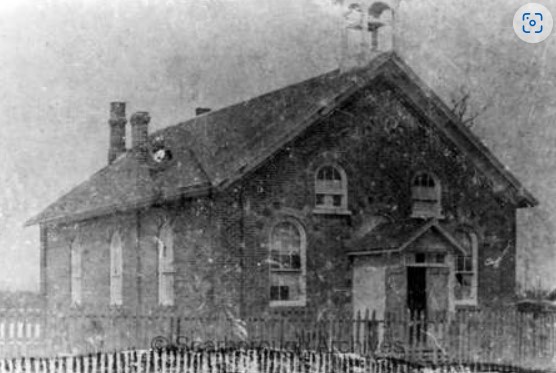
Malvern had a single church which was built in 1864 by the Primitive Methodist congregation. The building was demolished in the 1970s although some pieces of wainscotting and flooring were reused in the Scarborough Historical Museum. A small cemetery was located beside it and this still survives on the east side of Markham Road just north of Sheppard Avenue. The image below is from the Scarborough Historical Society website.

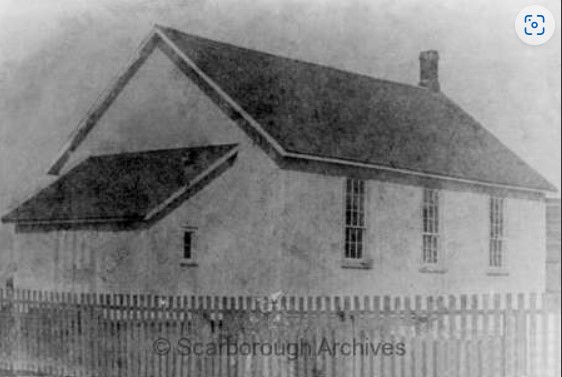
A log school house served the community from 1847 to 1851 when it was replaced with a small frame school which was built on the Stirling Farm. Alexander Muir got his start teaching in the log school house and his story can be found in our post on Burke Brook. The school was replaced again in 1872 by a one room brick school which still stands at the corner of Finch Avenue and Neilson Road.

The image below was taken from the Scarborough Historical Society and shows the school when it was surrounded by open farmland.

Whypers Boot and Harness Shop was relocated to Markham Museum where it is on display along with about 30 other historical buildings. Today the former community of Malvern is a thriving part of the uban sprawl of Scarborough and is commemorated in the names of streets, malls and the public library.

Related Stories: Markham Museum, Burke Brook, Agincourt

Google Maps link: Malvern

Like us at http://www.facebook.com/hikingthegta

Follow us at http://www.hikingthegta.com
Also, look for us on Instagram