The Bruce Trail – Speyside to The Gap

Saturday, September 1, 2018

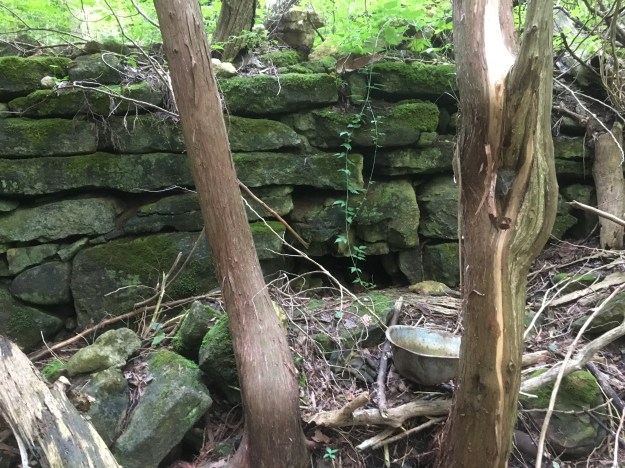
Having previously visited Speyside to see a Royal Oak tree that has a historic designation we had covered a small section of the Bruce Trail in the Speyside Resource Management Area.  We had also been to a large gap that is cut in the escarpment by Dufferin Quarries.  We decided to hike the trail between these two locations.  There is free parking at the resource management area.  Near the start of the trail we found a place where people had been dumping garbage in a hole in the middle of a pile of rocks.  This is a shameful way to use one of two historic kilns on the property.  These were used by Alexander Livingstone to dry the hops he grew when this was his farm.

IMG_6496

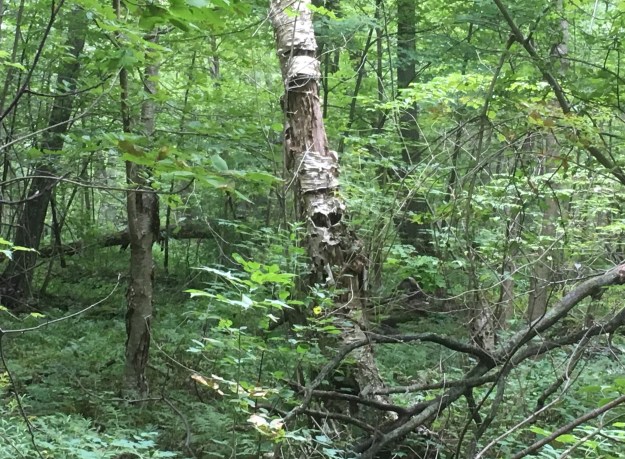
Sometimes you see the least expected things in the woods if you slow down and take notice.  We covered the first kilometre or two of this hike in a record long length of time, but we found some interesting things we may have otherwise missed.  For example, the peeling bark on this dead Paper Birch looks like an alien or a skeleton.  These trees are also known as White Birch or Canoe Birch.  This example could make an interesting picture if photographed just at dusk when it might look even spookier.

IMG_6497

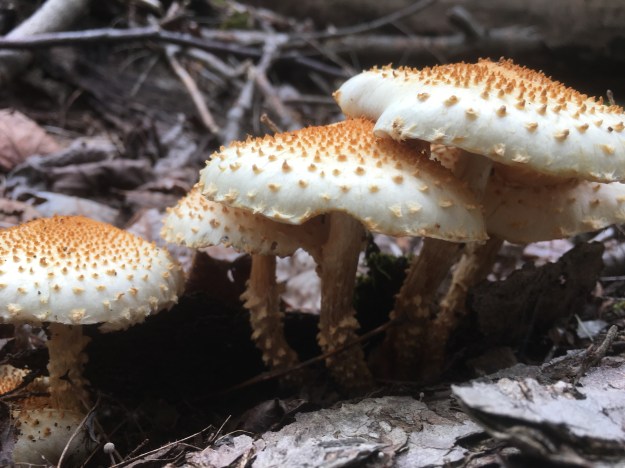
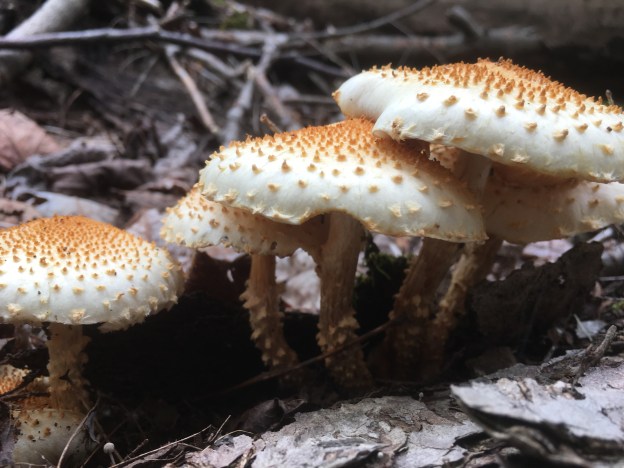
Mushrooms often come in look-a-likes that can be very different in toxicity.  For instance, the mushrooms below could be either Pholiota Squarrosa or Pholiota Squarrosoides.  A minor difference in spelling (“oides” as a suffix means “looks like”) and also a minor one in appearance.  The Shaggy Scalycap Mushroom (P Squarrosa) is dry between the scales on the cap and has a green gill below. It is considered poisonous and appears to be more dangerous when mixed with alcohol. The P Squarrosoides is sticky between the scales, has a whiter flesh with white gills and no smell.   I believe these mushrooms here are the P. Sqarrosaoides but as I didn’t touch the cap or get a shot of the gills I can’t be certain.

IMG_6509

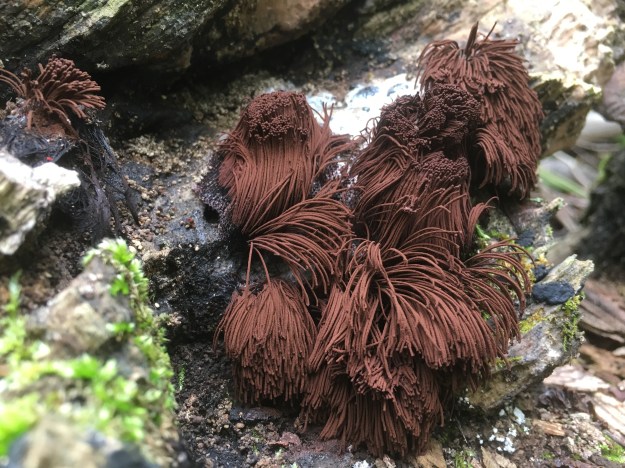
Chocolate Tube Slime is another of those curiosities that can easily be missed.  This is found in my National Audubon Society field guide for mushrooms but it isn’t really a true mushroom.  It forms spore bearing clusters that can produce an incredible number of spores.  Slime molds start off as plasmodia that creep over surfaces and absorb food sources.  It takes less than 24 hours for the slime to transform into the chocolate coloured tubes that will spit out spores and then vanish almost as fast.

IMG_6511

Cup fungi are usually small and grow in clusters.  Some of the bigger ones can be up to 4 inches across and often grow individually.  This common brown cup fungi was a couple of inches across.

IMG_6538

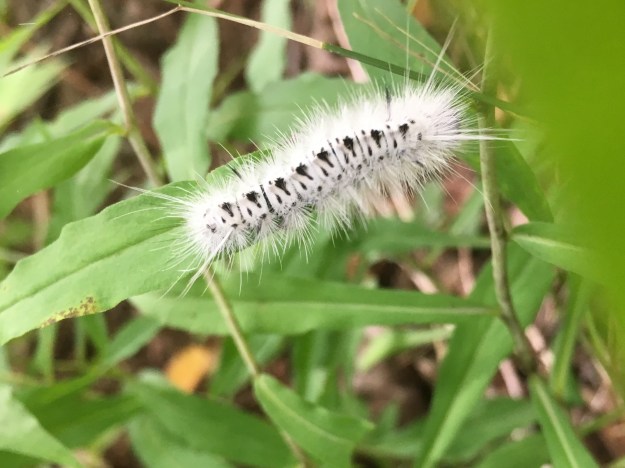
These hairy white caterpillars are the larvae of the Hickory Tussock Moth.  Near the front and rear of the caterpillar are a couple of black tufts of hair.  These are part of a venom delivery system that the insect uses in self defense.  If these are pressed, a poison is injected that will feel much like stinging nettles.  The sensation will last for about 20 minutes for the average person and can range from a burning feeling to severe pain and nausea.

IMG_6527

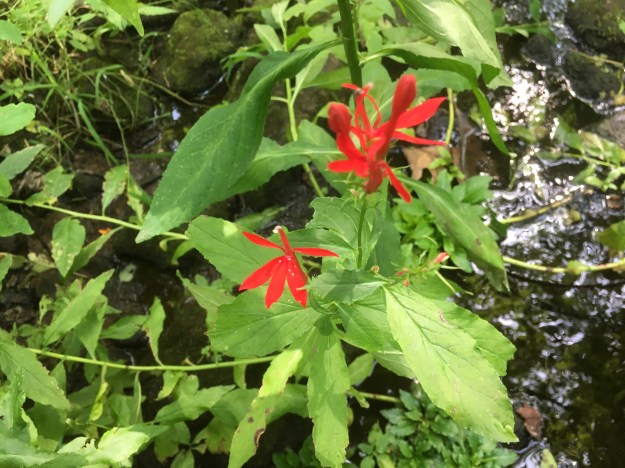
As you cross a little stream on the trail you can see the Cardinal Flowers that are just beginning to bloom.  They live in shallow wetlands and provide a bright splash of red in the late summer and early fall.  Some native tribes used the plant in a plaster to be applied to swelling and to reduce the pain of rheumatism.

IMG_6535

We followed the trail until we came to the place where Dufferin Quarries has cut an opening in the side of the escarpment.  We’ve covered this in more detail in our second most popular post, The Gap.  The picture below shows the workings of the quarry.

IMG_6548

We made our way back from the quarry as the heat of the day climbed and our water disappeared.  When we reached the closed end of St. Helena Road we elected to follow the roads back to the car to take advantage of some even footing and reach our stash of cold water quicker.  It is quite common to see little book exchange boxes in the city but it was unexpected when hiking the Bruce Trail.  This one is near the little parking area along St. Helena Road.

IMG_6549

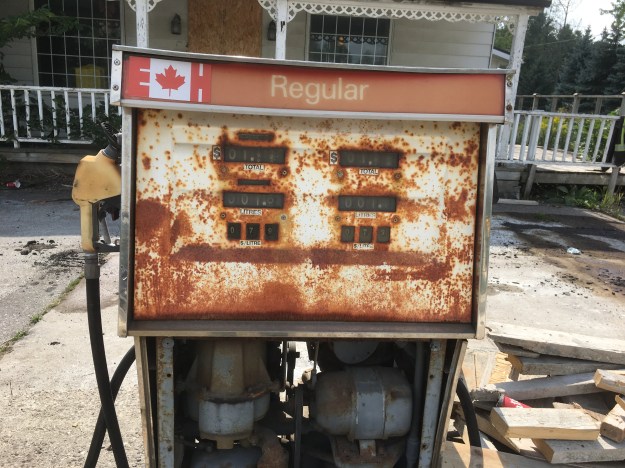
Speyside has been reduced to a ghost town.  The gas station and general store have been closed for years and almost all other early buildings have vanished.  The price of gas was 79 cents per litre when these pumps were last used.  It’s closing in on double that now.

IMG_6550

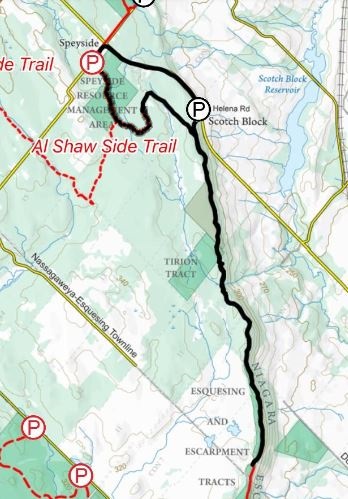
We used the Bruce Trail app to track our hike and had lost the first part of the trek through Speyside Resource Management Area when I closed the app by accident.  I’ve drawn that part back in on the map below.  The tracker shows 12 kilometres and with the additional section, the hike was about 14 kilometres.

Speyside to Gap

Google Maps Link: Speyside

Like us at http://www.facebook.com/hikingthegta

Follow us at http://www.hikingthegta.com

Altona Forest

Saturday, August 25, 2018

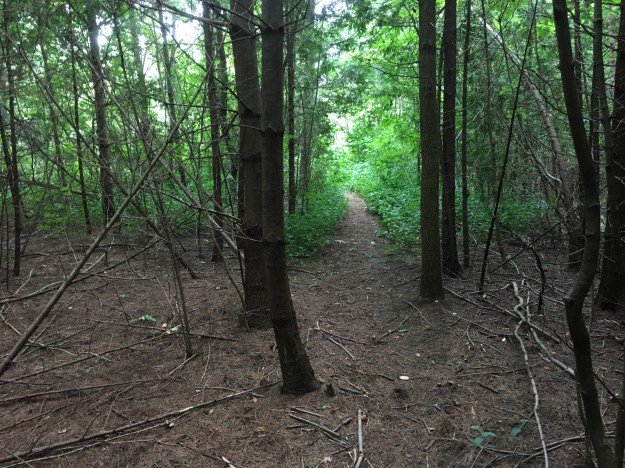
Altona Forest is located in Pickering and at 102 acres is large enough to have one of the few interior forests in the GTA.  Interior forests create habitat for creatures that do not survive on the forest edge or in the small clumps of trees left along waterways.  Interior forests have at least 300 metres of forest between the forest edge and the interior section.  Since 1982 the forest has been designated an environmentally significant area but that didn’t stop developers from buying up the land.  In the 1990’s after much lobbying the park area was set aside as part of the Toronto Region Conservation Authority (TRCA) lands.  The southern portion of the park was most recently owned by Dr. J. Murray Spiers and was donated in 1996 upon the condition that it remain a nature preserve.  This portion of the park is off limits to the public.  We parked on Altona Road in the small Altona Forest parking lot.  The trail immediately gives a feeling of not being used very much.

Petticoat Creek flows through the western edge of the park.  It was named by the French as Petite Cote and was slurred into the current name after the English arrived.  The wind has recently brought down several large trees in the top end of the park.

One of the truly great things about Altona Forest is the downloadable trail guide.  It describes the various features along the trail with reference to the guide posts.  Post 32 is shown below along with a little bench, one of many scattered throughout the trails.  Post 32 is found in a mature white cedar forest.  These trees spread to form a dense canopy that very little direct sunlight gets through.  This, along with a mat of cedar needles on the ground, combine to create a forest with very little under story.

Altona Forest has a series of ever changing habitats moving from different types of forest cover to open meadows and wetlands.  This encourages a wide variety of wildlife, some locally rare examples, to inhabit the park.  We saw coyote paw prints but didn’t see any of them as we made our way through the forest.  They share the forest with white tailed deer, fox and opossum, just to name a few.
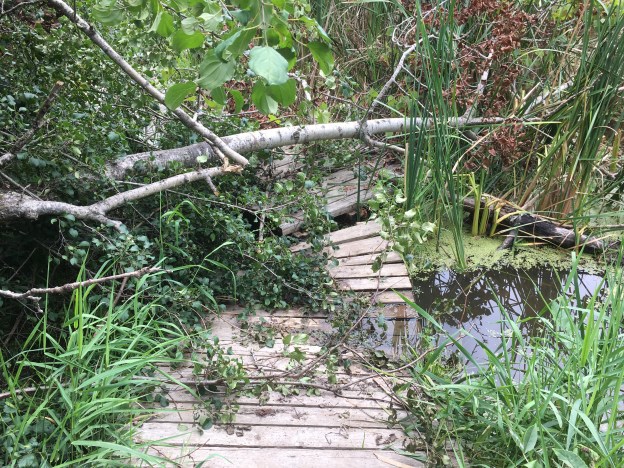
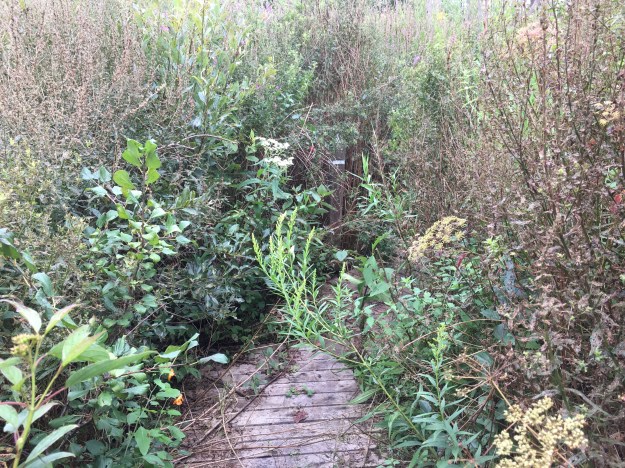
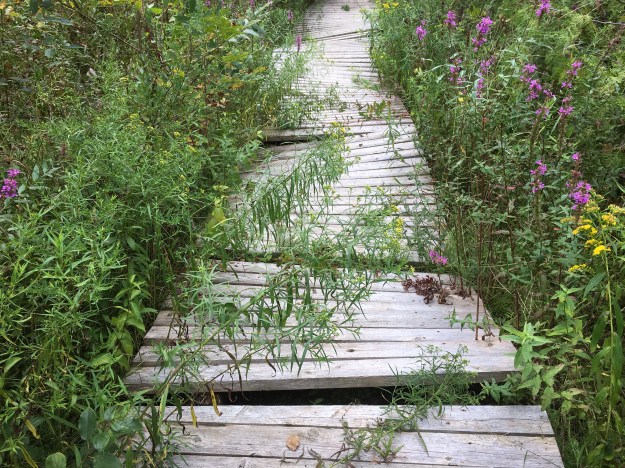
Overgrowth has choked out the boardwalk in several places and the purple loosetrife and goldenrod flowers were buzzing with bees.  The number of honey bees was very encouraging but it could be a little stressful for those with a bee phobia or allergy.  We found that although we brushed through the bees as we passed they ignored us and returned to their bee business.
The wetlands were filled with the sounds of frogs and last years bulrushes hang like shrouds on the old stocks.

Near post 29 a large section of the forest has been given over to a wetland restoration project.  Until the 1940’s these were farmers fields and many of the wetlands had been drained.  Small mounds of dirt along the sides of the Rosebank Creek tributary remind us of the efforts of the farmers to increase drainage and make the most of some poor farmland.  Ghost wetlands are areas that were drained but can be encouraged to return to their former status thus providing much needed wetland habitat.  An observation deck overlooks the wetland restoration.
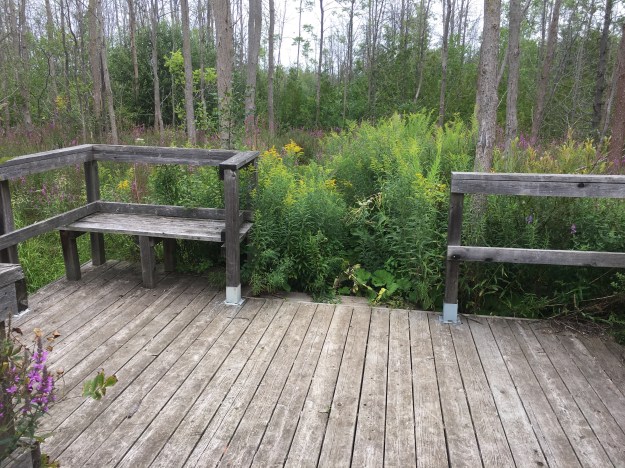
We were quite surprised at the condition of the boardwalk in the northern section of the park.  It soon became clear that the vegetation overgrowth was the result of a general lack of use due to the deterioration of the trails.
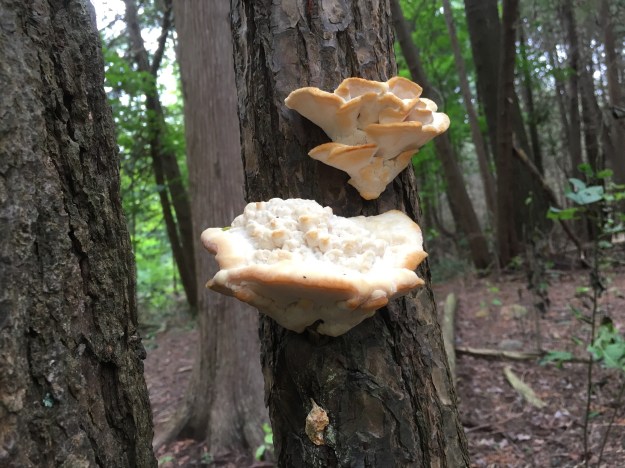
Chicken Mushrooms are one of the fine edible ones, if harvested when they are young.  They tend to become indigestible as they get older.  They start as bright orange, salmon or sulfur yellow and as they weather they turn white.  They are also called Sulfur Shelf and can grow in overlapping clusters of fifty or more with shelves that weigh up to a pound.  Many people claim that they taste like chicken.
img_6348

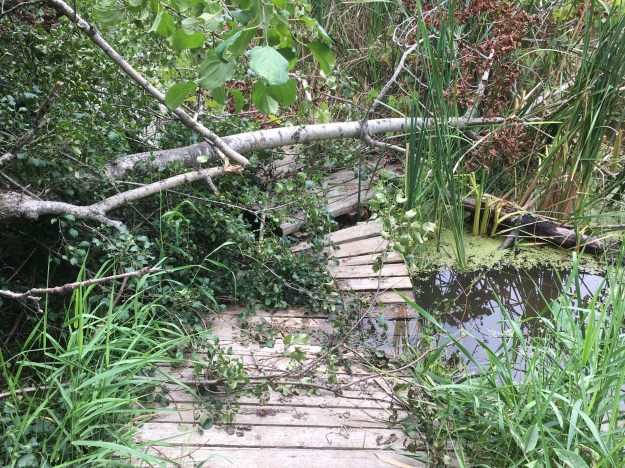
Near post 12 is Lacey’s Pond but it has become inaccessible as has the observation deck located there.  Some of the downed trees are the result of wind storms while the local beaver has also brought down some onto the boardwalk.  This effectively cuts the northern section of the park off from the one to the south.
Having blogged about nearly every destination in the list of TRCA properties several things become obvious.  Firstly, the GTA has an incredible network of ravines and parks that form natural wildlife corridors through the urban area.  Much of this is the legacy of Hurricane Hazel and the movement to secure our flood plains from development.  Secondly, our parks are incredibly free of garbage and generally well maintained.  Altona Forest appeared to be an obvious exception with regards to maintenance.  Hiking the GTA contacted the TRCA to see what was happening with the trails in the forest.  They replied that the boardwalks deteriorated because of the wet conditions and that they are being replaced with materials made of recycled plastics.  Supplies for the restoration, which should last for many many years, have been ordered already.  When they arrive in six to eight weeks the restoration project will begin.  Very soon Altona Forest will boast a new set of boardwalks giving it a new lease on life.

This Hairy Woodpecker is similar to a Downy but larger, with the adults being about 25 centimetres long.  Downy Woodpeckers are only about 15 centimtres long.  Both of these woodpeckers leave small random holes in trees where they dig for insects.  If the holes in a tree are dug in straight lines it is the work of a Yellow Bellied Sapsucker.
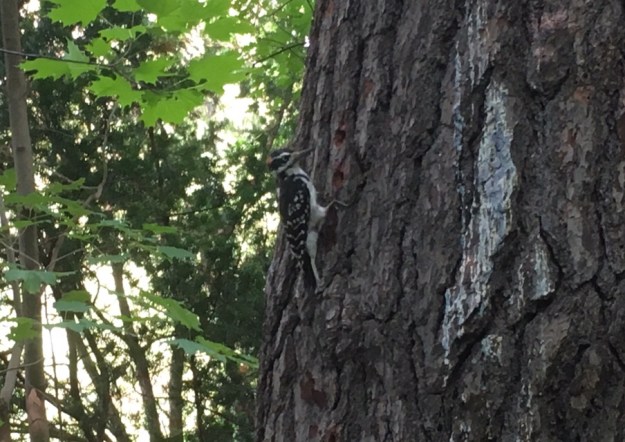
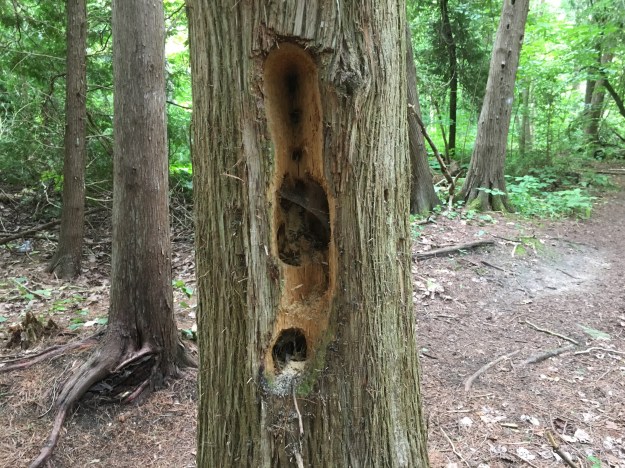
Large holes in trees are the work of pileated woodpeckers.  These are the largest woodpecker that you will see in Ontario with the adults being about 50 centimetres long.  The name comes from the Latin word “pileatus” which means capped, in reference to the prominent red cap that the bird has.
We were only able to explore the northern section of Altona Forest and will need to return to check out the other end of the park. We also look forward to seeing the upgrades and repairs that TRCA will be making this fall.

Google Maps Link: Altona Forest

Like us at http://www.facebook.com/hikingthegta

Follow us at http://www.hikingthegta.com
Frenchman’s Bay

August 18, 2018

The original inhabitants of the Pickering area were the Senecas who had a settlement named Gandatsetiagon.  Frenchman’s Bay in Pickering was so named because of Francois de Salignac de Fenlon who arrived in Montreal in 1667 and came to Gandatsetiagon in 1669 to work as a missionary with the native people.  After 1791 when the British opened Upper Canada for colonization the area soon became home to settlers who started the settlement of Pickering.  We parked on West Shore Boulevard beside the Rotary Frenchman’s Bay West Park for our exploration of that park.   The county atlas picture below shows the area as it appeared in 1877.

Frenchman

Very shortly after we entered the trail we came across a rose bush that is very well covered in rose hips.  These seed pods often require a winter season of freezing, known as stratification, before they can germinate.  Some species require two seasons of freezing.  The rose hips are frequently used in jams and teas because of their relatively high levels of vitamin c.

IMG_6158

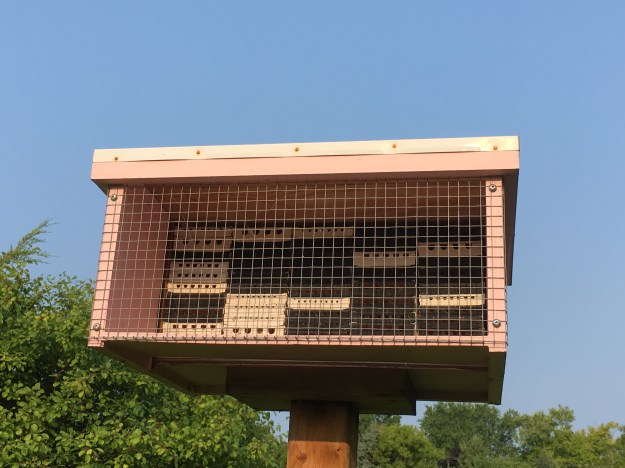
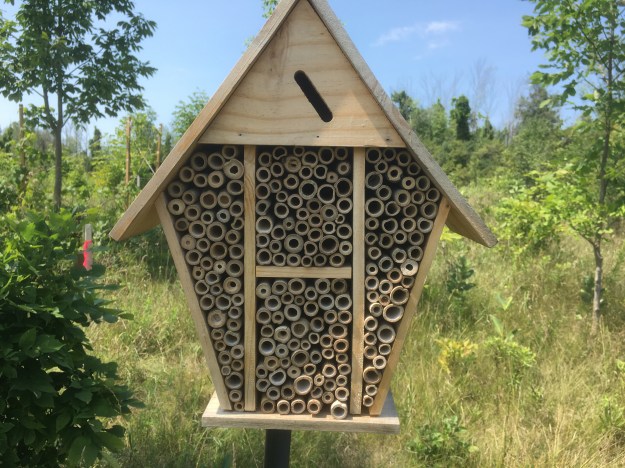
Several types of bee structures have been placed in the park to help encourage the bees that pollinate the wildflowers growing in the park.

IMG_6159

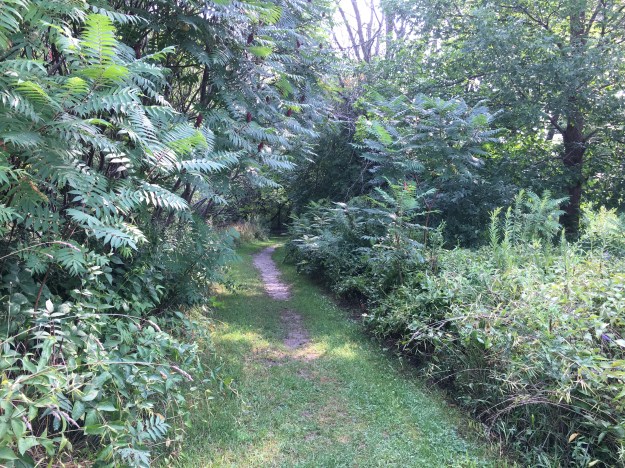
Several trails cut their way through the park leading to the Beachfront Promenade as well as the bay.

IMG_6162

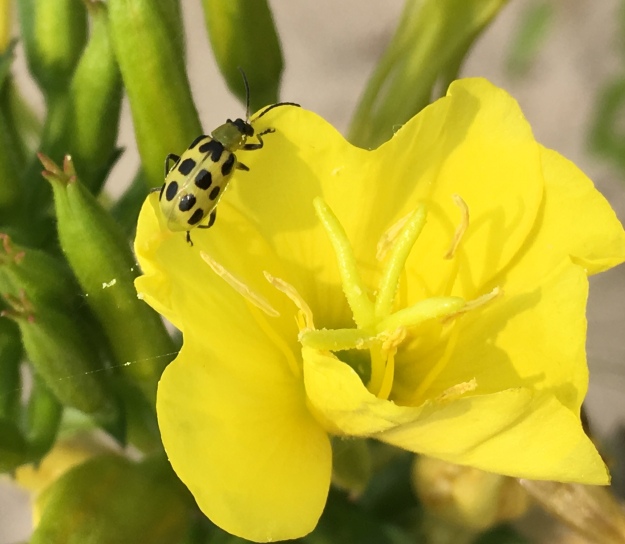
Cucumber beetles come in two groups, striped and spotted.  The striped one has three rows of black stripes on the abdomen while the spotted one, seen below, has 12 black spots.  The striped one feeds exclusively on cucurbits like cucumber, pumpkin or squash while the spotted on is less picky and will feed on other plants too.  Aside from often killing the host plant when the larvae feed on the roots these beetles carry bacterial and fungal diseases from one plant to another.

IMG_6171

This year there appears to be a lot of monarch butterflies.  The section of the Waterfront Trail that surrounds Frenchman’s Bay is known as the Monarch Trail.  This 4.7 kilometre trail section commemorates the monarch butterfly and the annual stop they make at the bay on their return flight from the south.

IMG_6182

We saw the following sign and wondered who defines what constitutes an offence.

IMG_6186

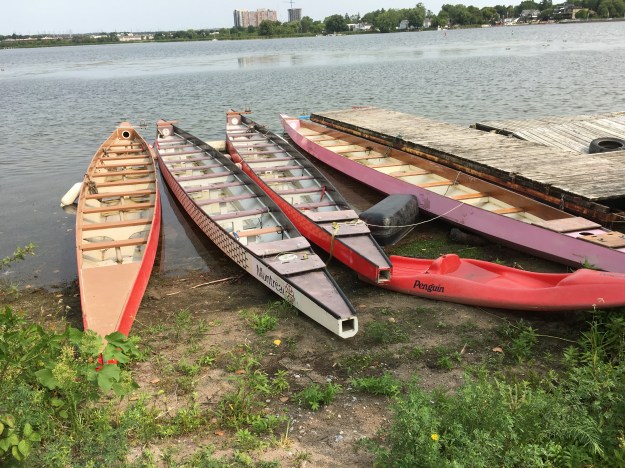
The park is home to the Pickering Rouge Canoe Club.  Canoes, kayaks and dragon boats all belong to the club.  Sculling is also done on the bay with the main difference between sculling and rowing being the use of two oars by a sculler and only one per rower.

IMG_6188

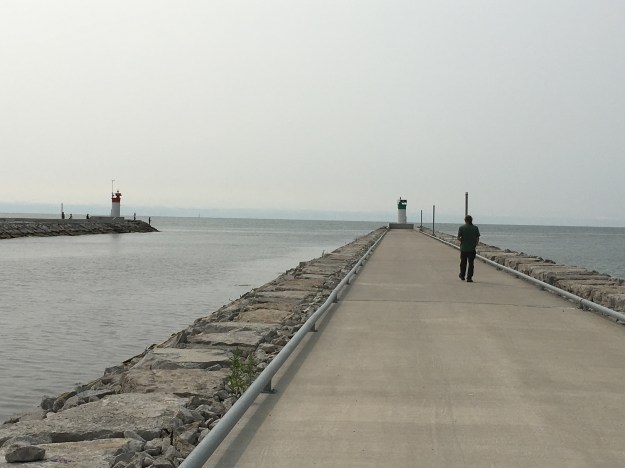
Frenchman’s Bay has a protected harbour with lengthy breakwalls protruding into the lake.  A small green lighthouse guards the west point while a red one is positioned on the east side.  The original channel into the harbour was dredged in 1843 and wooden piers were built to protect the entrance to the bay.  Looking to the east of the harbour you can see the towers of Pickering Nuclear Generating Plant.  The plant was built starting in 1966 and it is one of the oldest nuclear generating stations in the world.  Ontario has committed to continued use of the facility until 2024.

IMG_6193

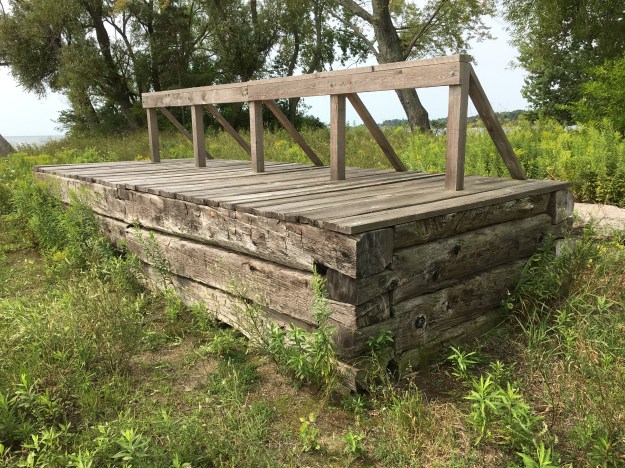
In 1843 a set of piers was constructed at the north end of the bay with a wharf extending into the middle of the bay.  The wharf was built of hand hewn timbers that were dovetailed and connected much the same way as a log cabin.  The sections were built in shallow water and then towed to their individual locations.  Using stone they were sunk to the bottom, which had been leveled already, and then filled with more stone.  The decking was placed on top and a hand rail was attached completing the structure.  The picture below shows a replica built to the dimensions of the original as measured from sections the archaeological society had recovered.

IMG_6199

During the Second World War the production facilities of Cadillac were used for the manufacture of warplanes.  After the war they incorporated the concept of the wings into tail fins.  If I had an option to buy a classic car it would be a late 50’s Cadillac.  As we were returning from our hike we shared the highway with a string of antique cars.  Many of them had the words “RIP Paul Fernley” written in the rear window.  By having the person driving attain a similar speed to these cars I was able to get several great pictures of each car.

IMG_6226

There are three trails that wrap around Frenchman’s Bay and we will need to return to visit the others.  On the east side of the bay is Alex Robertson Park with a unique set of carvings on the trees, including Merlin, that give the park an enchanted feeling.

Google Maps Link: Frenchman’s Bay

Like us at http://www.facebook.com/hikingthegta

Follow us at http://www.hikingthegta.com

Baneberry

Monday, August 27, 2018

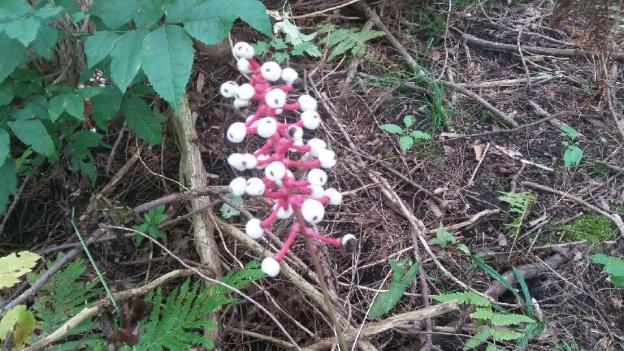
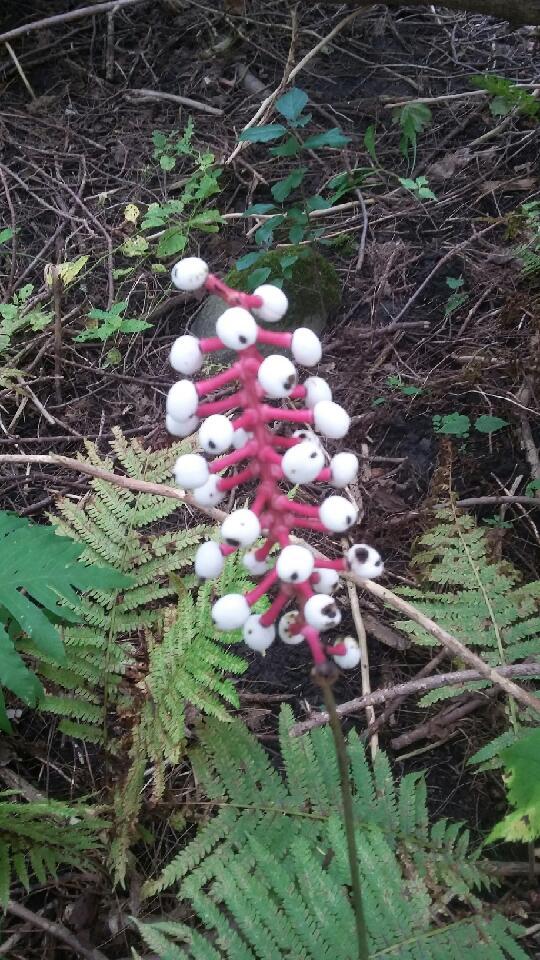
While exploring Altona Forest we found two different types of Baneberry plants growing within a few feet of each other.  The White Baneberry  or White Cohosh is also known as Dolls Eyes because of the black stigma scar on the end of the berry.  The entire plant is considered toxic to humans.  Ingestion of as few as six berries can cause cardiac arrest and death in an adult.  A child may not survive after eating as little as two berries.  Birds can eat the berries and disperse the seeds through their droppings.

3907

The Red Banberry has a much thinner pedicel or stem on which the berries grow.  The berries start off green but turn red when they ripen.  Each berry contains several seeds.  The Red Baneberry plant and berries are poisonous as well.  A member of the Baneberry family that has been used for medicinal purposes for centuries is Black Cohosh which has been used to treat women’s gynecological disorders.

3909

Watch for more on Altona Forest in a future post.

Google Maps Link: Altona Forest

Like us at http://www.facebook.com/hikingthegta

Follow us at http://www.hikingthegta.com


The Bruce Trail – Limehouse

Saturday, August 11, 2018

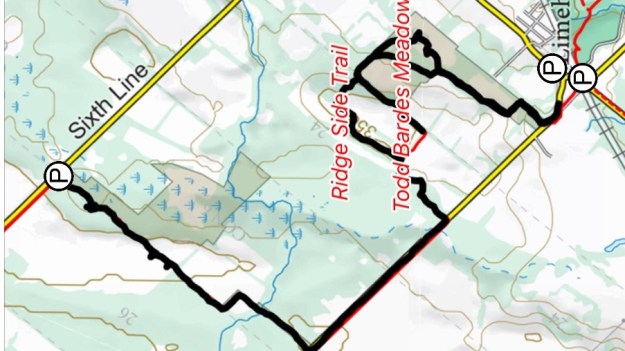
The Bruce Trail has many side trails which form little loops along the way, especially in The Toronto Section where side trails account for 60 kilometres compared to only 50 kilometres of main trail.  This makes for a nice change of scenery if you are doing a one car, return hike.  We set out to hike from the parking place on the Sixth Line, north of 22nd Side Road, into Limehouse and back doing the Ridge Side Trail and Todd Bardes Meadowland Side Trail along the way.  A severe limitation to the Bruce Trail App in combination with my iPhone is the extreme drain on the battery.  I was forced to switch it off after only 8 kilometres because the battery was down to 1%.   I have since learned that using airplane mode and low power can help resolve this if I want to map hikes for the sake of a blog.

Limehouse Trail

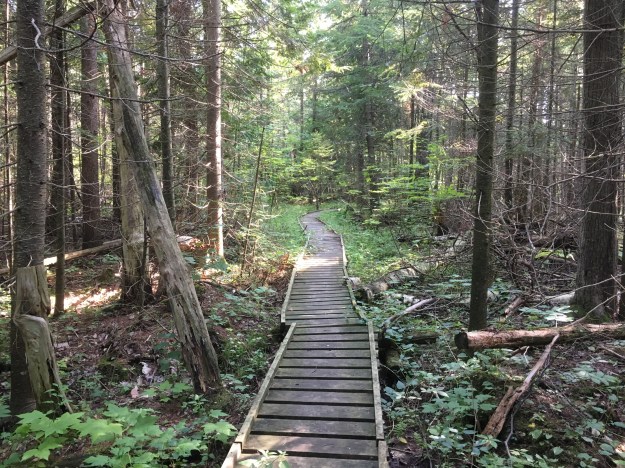
The trail starts off along a beautiful boardwalk through the woods which were surprisingly free of mosquitoes on this morning.  There was also a stillness to the woods as the birds were quiet.  The trail leads almost directly from the sixth line to the fifth where you are forced onto the road for half kilometre or so.

IMG_6027

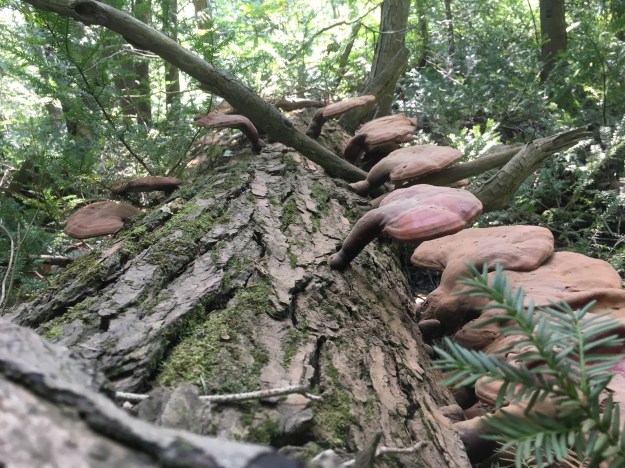
Hemlock Varnish Shelf is growing along this fallen tree.  This fungus starts off as a small red nub on the side of the tree and grows into the familiar conk shape.  When it is young it has a brighter red colour and a varnished look to it.  The outer edges will be yellow or white but as it ages over the summer it changes to a more even rusty colour extending to the edges.  These fungi are known as polypores because they have multiple small tubes or pores on the underside of the fruit body that release the spores.  This group of fungi is key to the breaking down of wood and are key in the nutrient cycle of the forest.  Polypores are often used in traditional medicine and science is studying the Hemlock Varnish Shelf for potential uses in cancer therapy.

IMG_6046

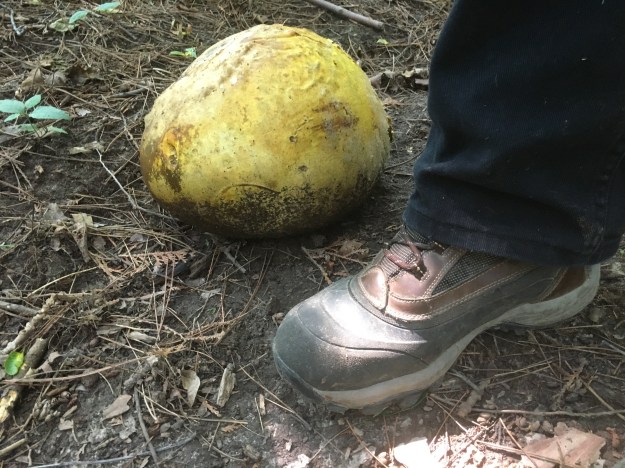
As this hike progressed it became obvious that there was an extremely large variety of mushrooms growing along the trail.  Every time we hike there is always something interesting and unique about the area we’ve selected.  This time it turned out be the fascinating colours and forms of the fungi we encountered.  Giant puffballs grow along the trail in several places and are one of the prized edible mushrooms.  They grow from August to September and can grow to 20 inches or bigger.  They can be pan fried or battered and fried in slices.  The spores form inside the mature ball and are released in a “puff” when the skin cracks at maturity.

IMG_6065

As the puff balls mature they turn yellow and the skin cracks to release the spores.  The inside turns from white to grey or dark yellow of the puffball spores.  It has been estimated that an average size puff ball can contain up to 7 trillion spores.

IMG_6063

Oyster Mushrooms are considered to be one of the choice edible ones.  They need to be collected when they are young before the flesh becomes tough and woody.  Many Asian cultures use them extensively in cooking and they are cultivated in parts of India.

IMG_6042

There were several places where Scarlet Fading Waxy Cap mushrooms were growing.  As this mushroom matures the scarlet fades to orange or yellow.  The cap is deeply convex with an incurved margin.  It is one of the edible mushrooms however it is reported to be flavourless so it may be best used in a soup or chili.

IMG_6043

Several types of artificial bee habitats have been set up in places along the trail.  These ones are known as mason bee tubes.  This type of bee habitat can be a fun home project to make as a way to encourage the survival of the honey bee.

IMG_6066

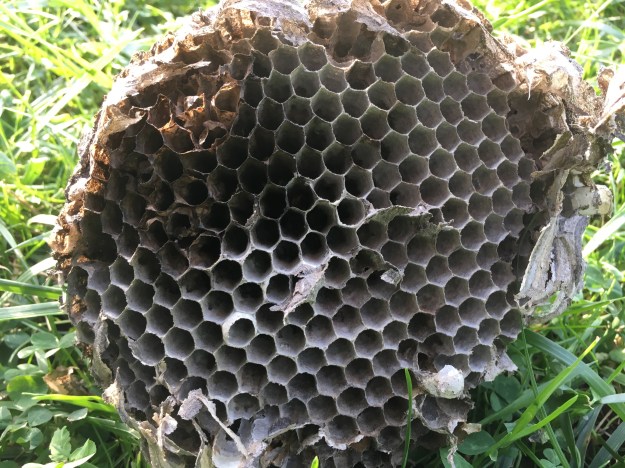
The bees still seem to prefer their own handy work in building their nests but the similarities to the mason tubes is interesting.

IMG_6291

A good example of a mushroom that may be edible or may be a poisonous one is seen below.  If this is a Jack O-Lantern it is poisonous but because it is growing singular instead of in a cluster it is likely a Chanterelle which is edible.  Either way, the gills under the cap make this an interesting looking mushroom.

IMG_6033

The Yellowish-White Melanoleuca is also an edible mushroom but there is a very similar mushroom that is poisonous.  The Entoloma species look almost identical but have very different spores that allow them to be distinguished.  Due to the fact that so many mushrooms have look-a-likes that are poisonous you should either be very sure of your identification or leave the plant alone.

IMG_6035

Having reached Limehouse, where a large collection of 19th century lime kilns are preserved we made our way back to the car.

Google Maps Link: Bruce Trail Limehouse

Like us at http://www.facebook.com/hikingthegta

Follow us at http://www.hikingthegta.com

Ireland Park

Sunday, August 19, 2018

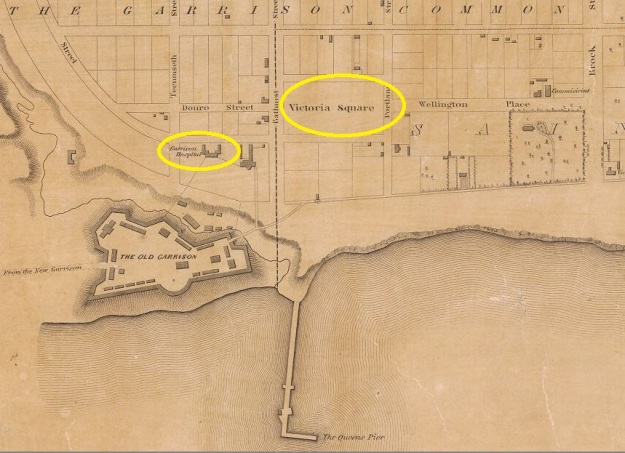
Between 1845 and 1849 the Irish Potato Famine claimed 1,000,000 to 1,500,000 lives and caused a mass emigration from the country.  Many of the refugees came to Montreal and Toronto seeking free land and a chance to provide for their families.  Arriving in Toronto the ships docked at The Queen’s Pier (also known as Queen’s Wharf and today Bathurst Quay).  This was the third wharf in the city built by the military and it stood near the mouth of Garrison Creek at Fort York.  The wharf was buried in 1917 as part of a large in-filling project and is today remembered by Queen’s Wharf Road which runs where it used to extend into the lake.  The 1842 map below shows the wharf at the foot of Bathurst Street with the Garrison Hospital and the military cemetery, Victoria Square both circled.  This is what the city would have looked like when the refugees arrived.

Queen's Pier

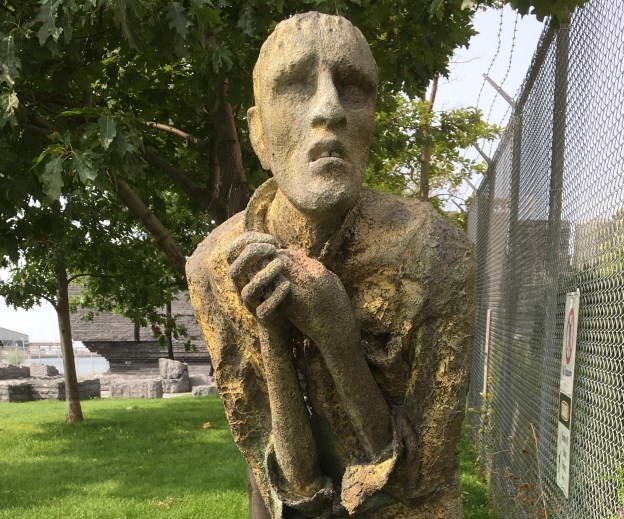
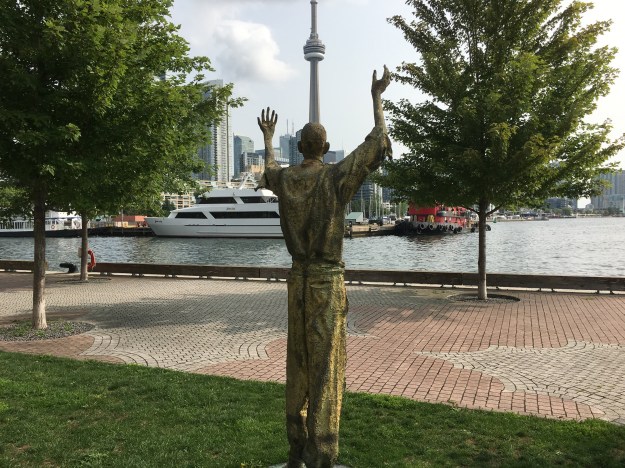
The idea for Ireland Park started when 7 statues were placed near the dockside in Dublin, Ireland in 1997. This was the 150th anniversary of the famine.  The Toronto park opened ten years later on June 21, 2007 with the president of Ireland doing the honours.  The Irish sculpture is known as Departure while the Toronto one is called Arrival.  The seven statues in Ireland have been reduced to five in Toronto signifying the horrible loss of life that occurred.  The first statue is a triumphant man who stands with his arms raised in thankfulness as he surveys the city of Toronto across the water.  In 1847 there were only 20,000 people in Toronto but they will handle 38,560 refugees, many of whom will pass through the hospital to the graveyard.

IMG_6241

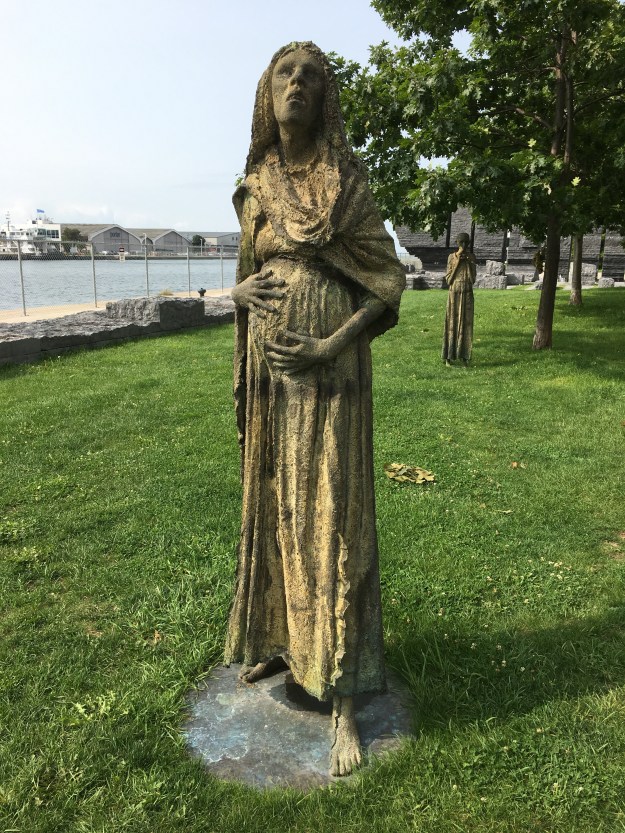
A second statue is of a pregnant lady who stands looking up and clutching her belly.  She faces a new life in a new land with a new life inside her.  Like the others, she looks like she has worn the same clothes for the entire journey and that they may not have been the best to start.

IMG_6242

The little boy that stands to the rear of the woman appears to be unsure of what the future holds as he timidly clutches his hands before himself.  He may represent those children who arrive alone, having lost their family either on the journey or shortly after arriving.

IMG_6247

This individual is known as Pius Mulvey and was inspired by a character in the book Star of the Sea by Joseph O’Connor.

IMG_6243

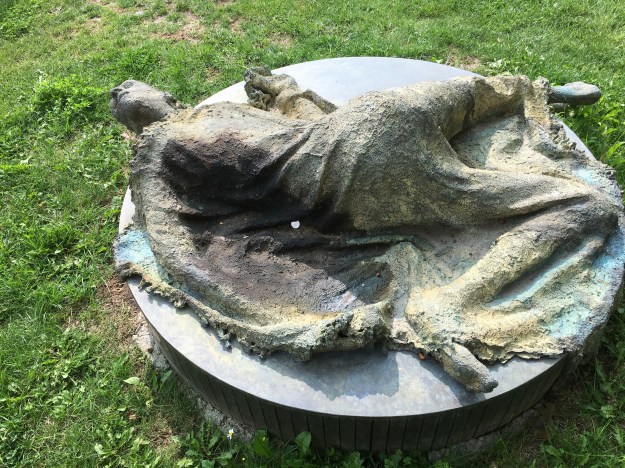
The fifth sculpture depicts a woman lying on the ground.  She is in the last moments of life and represents the hope that was never realized for so many.  Seven departed, five arrived and only four survived to become part of the fabric of the city.

IMG_6245

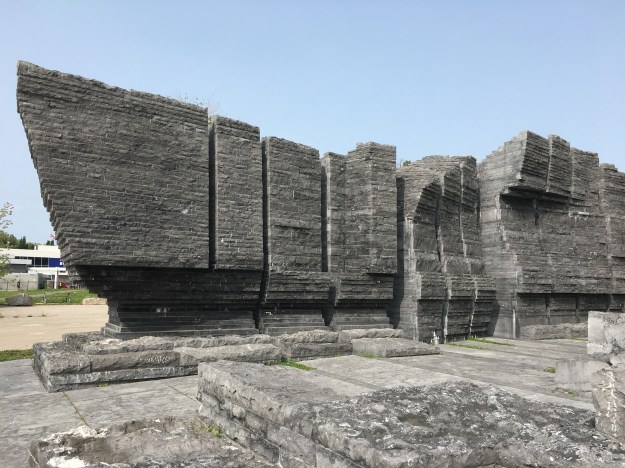
The emigrants that fled from Ireland in 1847 were packed into crowded ships with poor hygiene for weeks during the passage.  The result was an outbreak of typhus on the ships with so many dying on board that they became known as coffin ships.  Upon arrival, the sick were taken to the Garrison Hospital.  When this facility was full they were put into fever sheds.  Within weeks of arriving 1186 of them had died and some were taken to the burial grounds at Victoria Square.  The limestone for the wall pictured below was quarried in Kilkenny, Ireland and stands in the park as a tribute to the people who perished after they arrived in Toronto.

IMG_6255

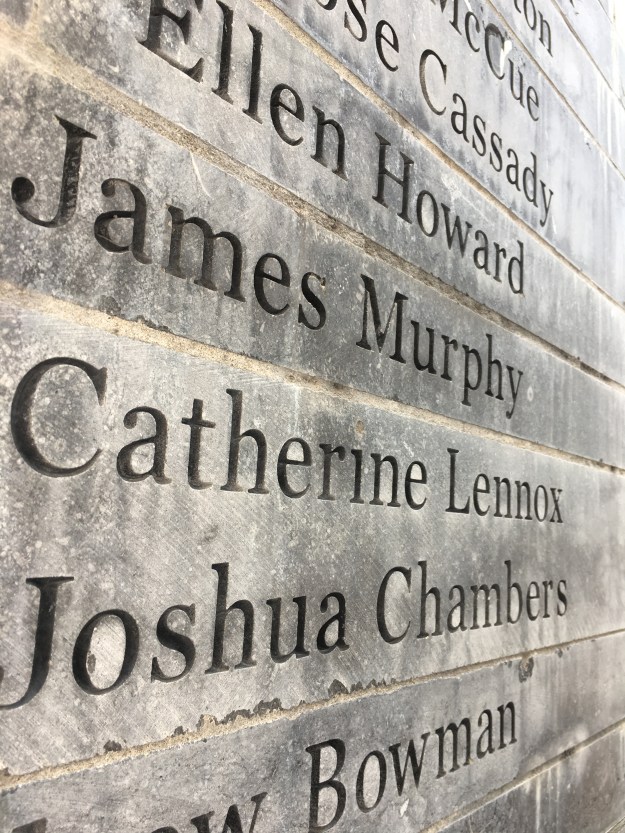
So far, the names of 675 of the people who died upon arrival have been recovered and engraved on the walls.  The names can be found in the narrow slots between the stones.

IMG_6261

The tower of glass bricks represents hope and is lit up at night.  The spaces between the sections of limestone wall where the names are carved are also lit at night to illuminate the names.  After dark, spotlights on the statues cast eerie shadows onto the abandoned silos behind. The silos represent storage facilities for grain during abundant times and stand in contrast to the poverty that the refugees were fleeing from.

IMG_6258

The Canada Malting Company located a set of concrete silos at the foot of Bathurst Street in 1928.  The waterfront had been used for heavy industry for decades and at one time Polson’s Shipbuilding Yards were located here.  Polson’s Pier in The Port Lands is named after this enterprise.  Storage silos had disappeared from the city because they were made of wood and had a lifespan of about ten years due to the fact that they were severe fire hazards.  The Canada Malting Company used concrete silos to store barley in before it was turned into malt.  The original silos near the lake were 120 feet tall and more storage was added in 1944 in the form of 150-foot tall silos.

IMG_6262

The malt was sold for beer and other uses and the operation continued until 1987 when it was closed.  The city has spent the last 25 years looking for a good way to re-purpose the silos as they have a heritage designation being one of the last two remaining on the waterfront.  Some of the silos have been demolished and the remaining ones are crumbling badly but suggestions for their preservation include turning them into a luxury hotel.  It has also been suggested that they may make a good hotel for the dead in a mausoleum with room for 6,500 coffins and niches for an additional 5,000 urns.

IMG_6271

This immigrant statue surveys the skyline of Toronto and raises his arms at the prospects before him.  It would have looked considerably different in 1847 without the towers crowding out the shoreline.

IMG_6246

Ireland Park is a very small location with a very big story to tell and because it is hidden there was no one here during my visit making it perfect for contemplation of this chapter in our history.  It also looks like an interesting place for an evening visit to see the lighting.

Google maps link: Ireland Park

Like us at http://www.facebook.com/hikingthegta

Follow us at http://www.hikingthegta.com
Riverdale Park

Sunday, August 6, 2018

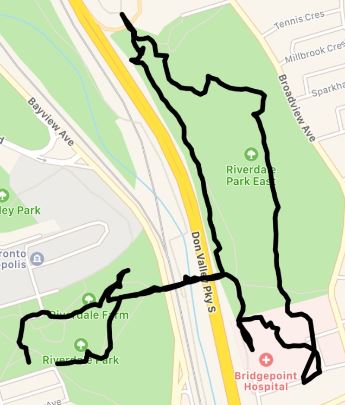
One of the first settlers in York (Toronto) was John Scadding.  He worked as secretary to Upper Canada’s first Lieutenant Governor, John Graves Simcoe.  In 1794 he built a log cabin on his estate as a first home.  In 1856 the city purchased the Scadding homestead for use as a park and to give the city a place to build a new jail.  Thankfully, the early settlers of Toronto preserved some history for us and his home was moved to the CNE in 1879 to make way for the park.  I parked on Carlton Street near Riverdale Farm and went down the stairs into Riverdale Park West.  On my return trip I walked through Riverdale Farm which is also a great place to visit.

Riverdale

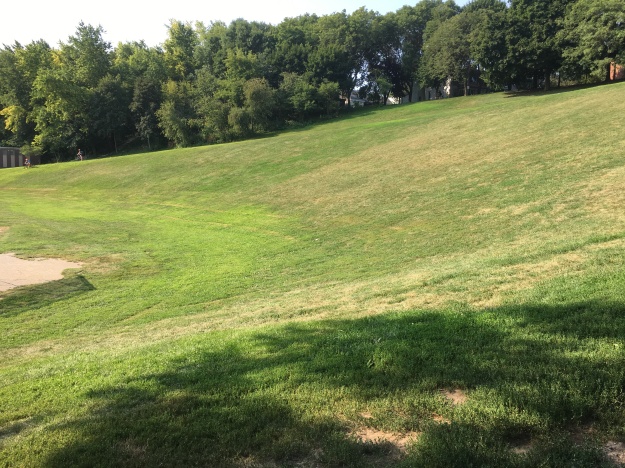
Originally, Riverdale Park was 120 acres but it was later expanded to 162 acres.  When the Don Valley Parkway was built it split the park in two and reduced the size to the current 104 acres.  The two halves of the park are joined by a pedestrian bridge that gives access to the Lower Don Trail which leads north toward The Bloor Viaduct.  The eastern part of the park is smaller and retains the distinct shape of the old riverbed as can be seen in the picture below.

IMG_5859

In the 1880’s the lower portion of The Don River, the Don Narrows, was straightened out and a couple of sections were cut off from the river.  These sections of the former river now form the ponds in Riverdale Farm.

IMG_5927

The east half of Riverale Park was used as a landfill in the 1920’s and exhaust pipes still line the sides of the park where methane gas is allowed to escape from below.  Along with a sports track there is a swimming pool on the east side of the park.  The north end has been naturalized again and there are many mature trees along the various hiking trails.

IMG_5864

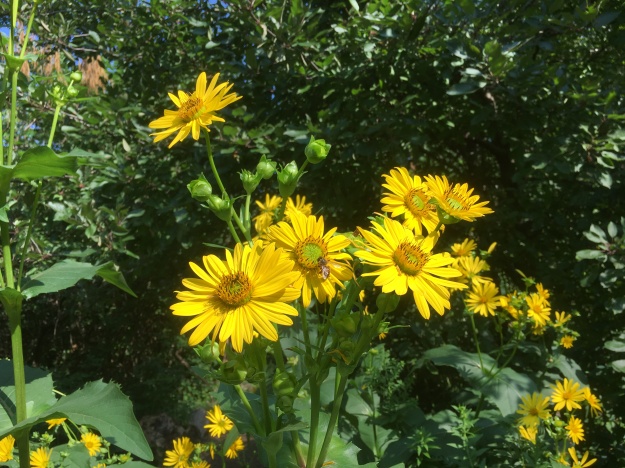
The Task Force To Bring Back The Don has been working on various projects in the park including several tree planting sessions.  The first one on the eastern slopes was actually the first action in the 40 Steps to a New Don River program.  They have also created a small wetland at the base of the ravine where the runoff from the embankment is collected and bulrushes now grow.  Maximilian Sunflowers are growing in a large cluster at an intersection of trails in the woodlot.  They are not native plants and this cluster was likely planted here.  They are often found in the wild as escaped garden plants.

IMG_5875

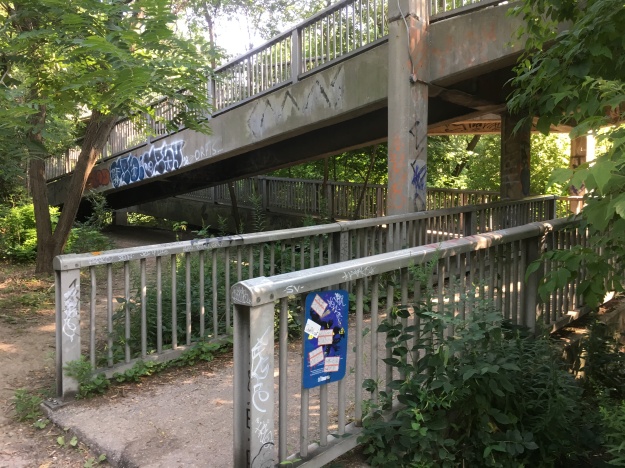
At the north end of the park a set of accessible ramps leads to a bridge that allows you to cross one of the on-ramps for the DVP.  This bridge makes a great place to get a look at the top end of the park.

IMG_5880

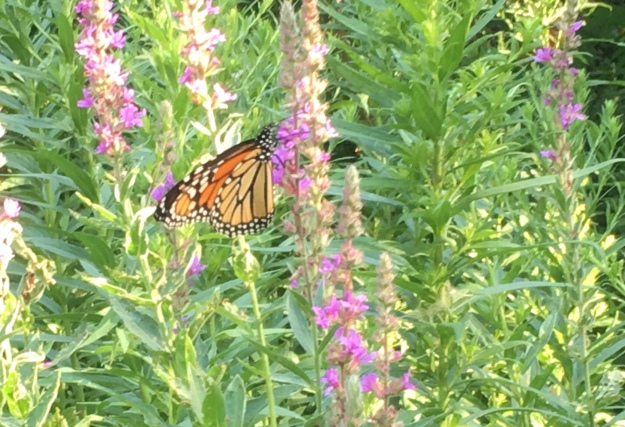
Purple Loosestrife was once considered to be a real threat as an invasive species with fears that it would choke out native wetland plants.  There appears to be a balance now where the plant co-exists with native plants and it may eventually be considered naturalized.  Monarch butterflies were taking advantage of the flowers and the sunshine.

IMG_5873

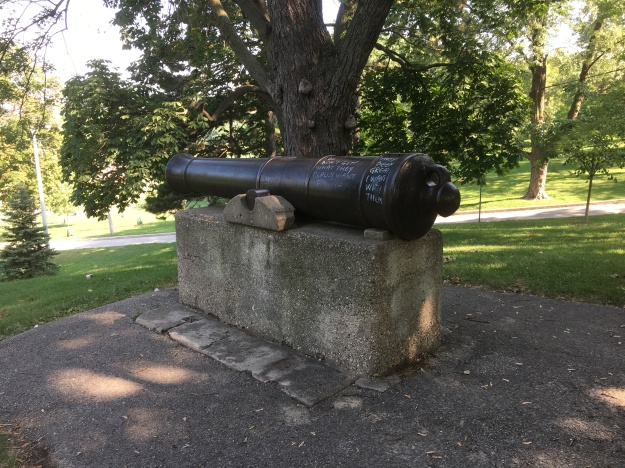
In 1881 five cannons were brought to Riverdale Park for decorations.  The one that stands near the old jail was cast in 1806 and bears the insignia of King George III who ruled from 1760 until 1820 making him the third longest serving monarch in British history.

IMG_5891

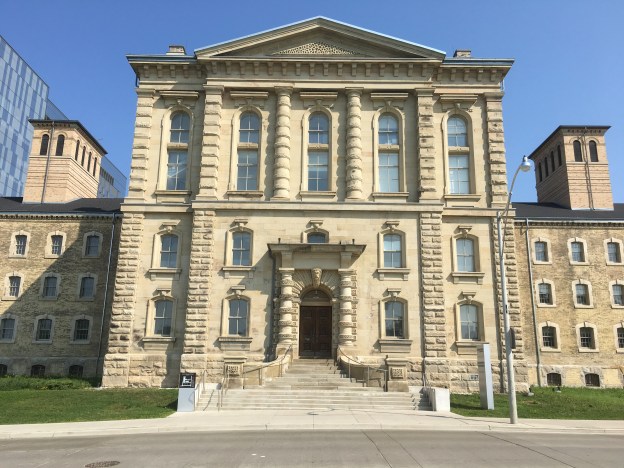
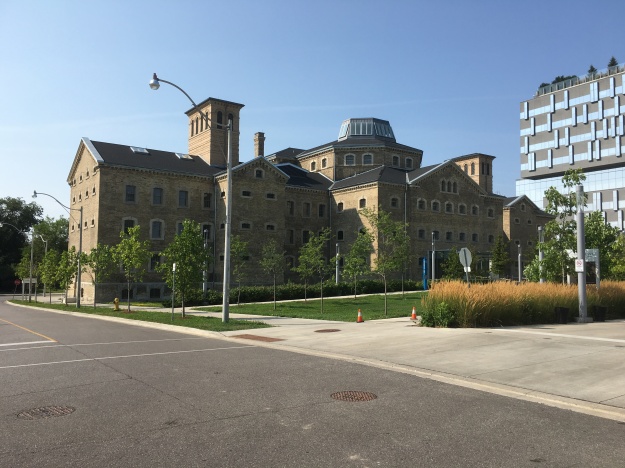
Riverdale Park was once the garden for the Don Jail.  Prisoners were used to tend the gardens as well as look after the buildings and animals at Riverale Zoo.  The Don Jail was built in 1864 as the third jail in the city.  It was considered to be a modern facility at the time with better accommodations than other jails of the era.  It wasn’t too long before overcrowding led to it becoming a dreadful place to spend any time.  There was an addition built in the 1950’s and the original jail was closed in 1977.  The addition has since been closed and demolished.  The remaining jail building is one of the oldest pre-confederation buildings in the city.

IMG_5895

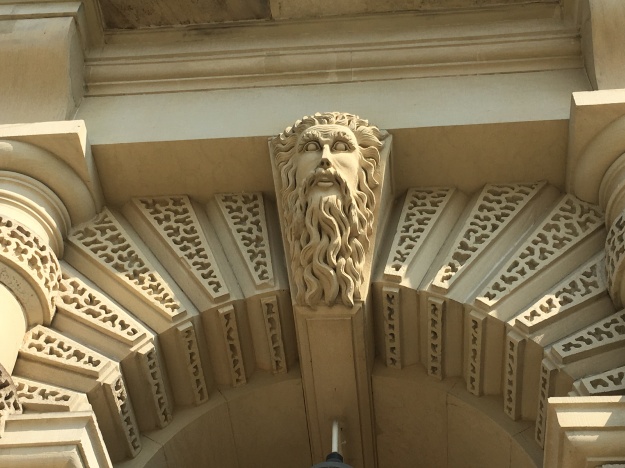
The front entrance to the jail was very ornate with Father Time looking down on all the inmates as they entered the building that would be their new home for the duration of their sentence.  The cover photo shows the front of the building with all of the artwork that decorates it.  The Latin phrase meaning Abandon Hope All Who Enter used to adorn the lintle above the door.  With the old jail now serving as part of a rehab hospital it was considered inappropriate and has been removed.  The inside of the old jail has been renovated but it used to be similar to the Owen Sound Jail we featured earlier this year.  Seventy people were executed at the jail, the last two in 1962.  Unclaimed bodies were buried on the property under what would become a parking lot.  Recent demolition and construction on the site revealed several skeletons.

IMG_5901

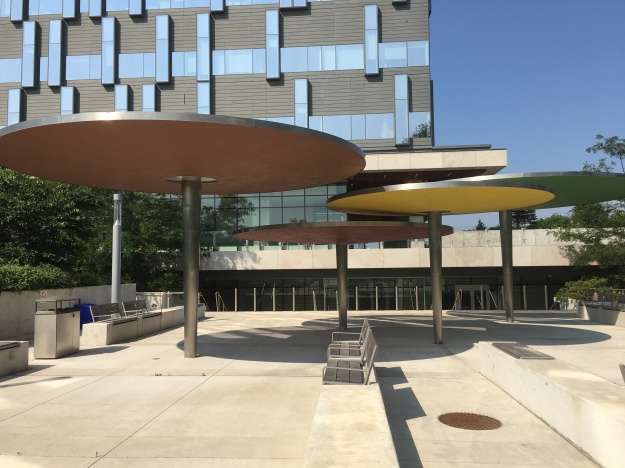
Starting in the 1860’s the south corner of Riverdale Park was used for healthcare facilities, originally known as the House of Refuge.  A small pox epidemic in 1875 saw the facility changed into the Riverdale Isolation Hospital.  Patients with contagious diseases were treated here until the late 1950’s.  By 1957 the threat of contagion was greatly reduced and the facility was given a new mandate.  They began taking care of chronic illnesses and rehabilitation.  In 1959 a new building was designed for the Riverdale Hospital.  Mushroom shaped canopies were designed for the entrance to the new facility.  With the construction of the new 10-story Bridgepoint building the mushroom canopies have been preserved as part of the architectural heritage of the site.

IMG_5912

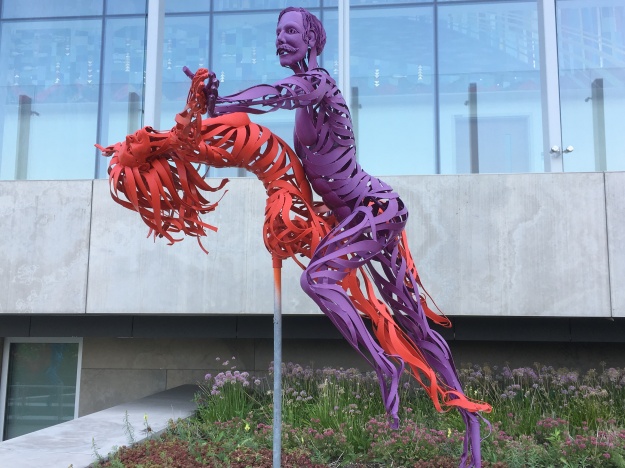
The new healthcare facility also has become a place of public artwork.  The Max Tanenbaum Sculpture Garden contains twenty life-sized sculptures made of metal strips.  They celebrate life through a display of dance and sport themes.

IMG_5920

Riverdale Park has a long history and has seen many changes over the years but remains an interesting place to explore.

Google Maps Link: Riverdale Park

Like us at http://www.facebook.com/hikingthegta

Follow us at http://www.hikingthegta.com

Palestine – Ghost Towns of the GTA

Saturday, August 4, 2018

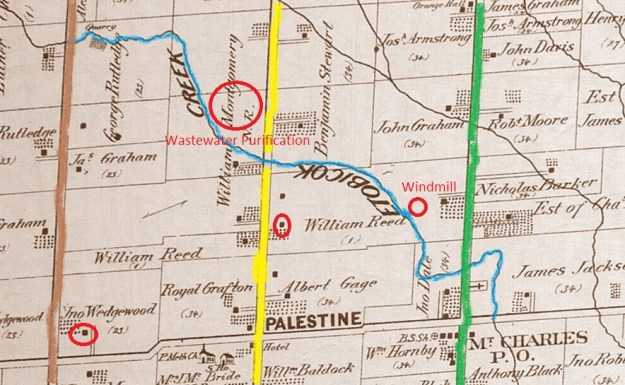
The town of Palestine was founded in 1823 by Thomas Grafton.  He took the name Palestine from the Holy Land but his community never gained influence beyond a few local farms.  The town built a log school house in 1842 and replaced it with a brick structure in 1863.  Until 1870 church services were held in the school but a separate church building was constructed adjacent to it that year.  The church was closed in 1962 and torn down in 1965.  The general store was small and the town never had a post office of their own.  Today the main intersection has been taken over by city sprawl and only a couple of early farm houses remain.  We decided to hike along Etobicoke Creek through the farms that would have been the northern edge of Palestine but today are overrun by two multi-lane highways.  Kennedy Road is brown on the map below while Heart Lake Road is yellow and Dixie Road is green.  The houses featured in the story are circled and the larger circle indicates the site of the former waste water treatment plant.

Palestine Map

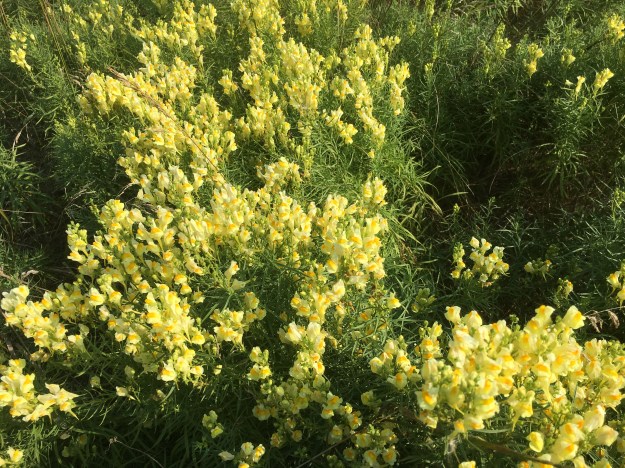
Toadflax, or butter and eggs, is not native to North America but has become naturalized.  Unlike an invasive plant, this one does not take over and crowd out native plants but is found in limited clusters.  Along the trail we found a comparatively large patch growing.  The plant has been used in natural remedies for centuries and is proven to have diuretic properties and is effective in reducing fevers.

IMG_5801

The Etobicoke Creek was full of life with salmon spawning in it every year when the European settlers first arrived.  It wasn’t long before dams prevented fish from getting upstream and mills dumped their waste directly into the creek disturbing the local habitat.  With the growth of Brampton the creek took on a new function with raw sewage being dumped into it.  It became so polluted that something had to be done and so Brampton became home to the first municipal waste water treatment plant in Canada.  Trunk sewer lines were built down the Credit River to the Clarkson Waste Water Treatment Plant and down Etobicoke Creek to the Lakeview Waste Water Treatment Plant making the municipal plant obsolete.  It was decommissioned and removed in the early 2000’s.  Today there is just a series of roads and the outline of the plant to mark the site.

IMG_5814

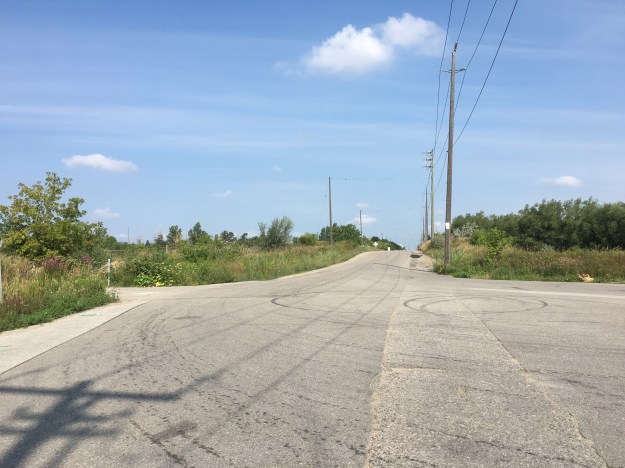
Before the opening of the 410 in 1978, Heart Lake Road was a continuous road that provided access to the water treatment plant through the driveway on the left in the picture below.  Construction of the 407 in 1997 further divided the road and left it with several names.  This section is now known as Westcreek Boulevard.  Current Etobicoke Creek Trail improvements through the valley include the development of parking lot at the end of this piece of road to allow trail users easy access.  Sketches suggest parking for about 40 vehicles.

IMG_5811

The trail passes under the 407 as it follows the creek south.

IMG_5819

The Etobicoke Creek Trail has entered into a Missing Links program which aims to build four sections of trail to link existing sections and complete the trail.  The Sherway, North and Valleywood Links each have their own timelines but the Kennedy Valley Link is currently under construction.

IMG_5820

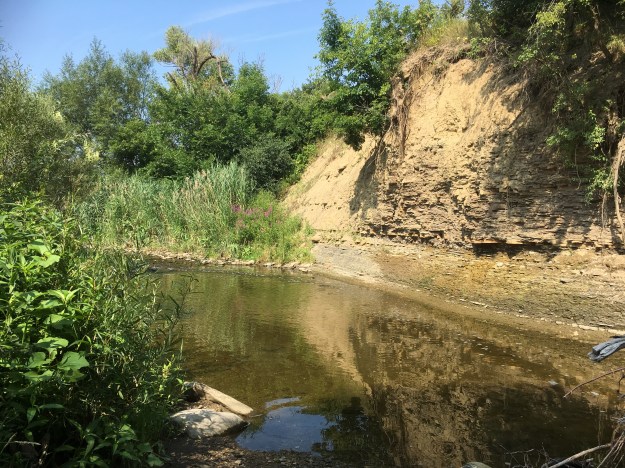
The Etobicoke Creek winds through the area revealing evidence of much greater water flow at times in the past.  The ravine cliffs get taller as the creek approaches the lake with some shale banks of 30 metres being revealed downstream.  This far upstream the embankments are much more modest but they have cut as deep as the shale foundations below the topsoil and sand.

IMG_5831

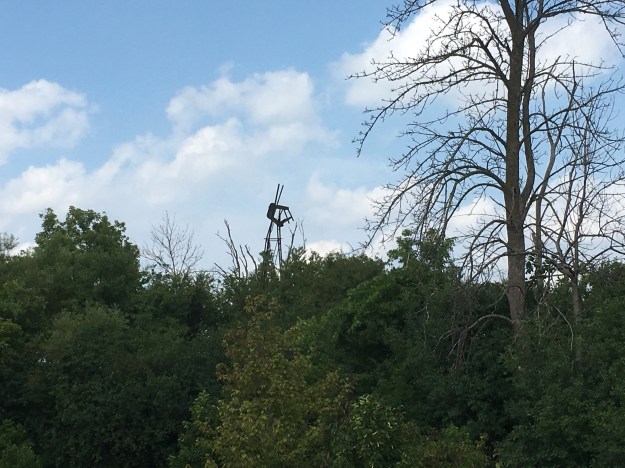
The top of an old windmill stands above the treeline, obscured to those who are following the path to the south by a cluster of trees.  Looking north from the site of the new bridge the crumbling farm relic is easily seen.  Closer investigation reveals an open well with water inside that has no fence around it.  The pump is still down there and the tower is surprisingly solid considering the crumbling condition of the vein on the top.  I wonder how many children in the GTA are learning about alternate energy sources and could benefit from a working example in their local park.  Why not restore it and make it safe rather than demolish it to make it safe?  The story of pioneer windmills is told in greater detail in our post on The Shand Dam.

IMG_5840

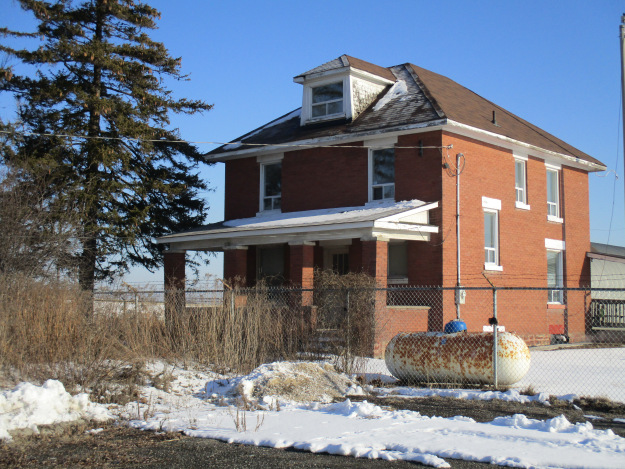
The one house remaining in Palestine is that of William Reed.  His original house was replaced with this Edwardian style house around 1910.   The windmill above is on the back of this property.

Palestine

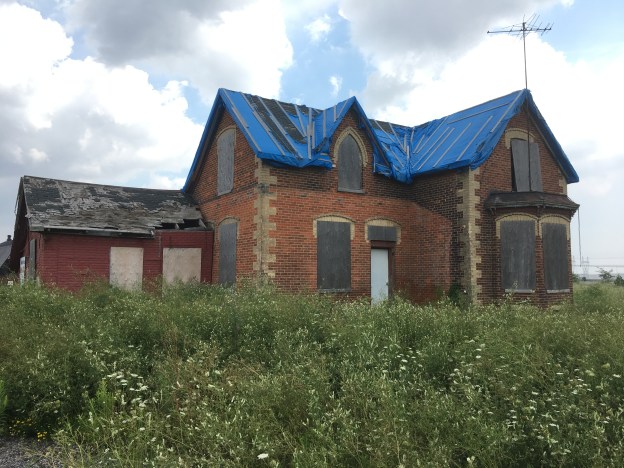
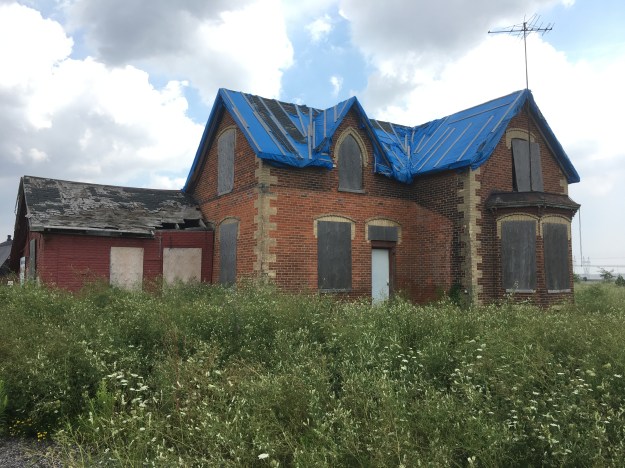
The Royal Grafton property was the original homestead in the community of Palestine.  By 1877 John Wedgewood had bought the west half of the lot and built the house featured below.  John was instrumental in the development of Palestine being involved in the erection of the shcool, temperance hall and church.  Recently the Poweraide Centre has been built on the lot and the future of the house is unknown although attempts to protect the roof are a hopeful sign.

IMG_5853

Japanese Beetles are native to Japan and appear to have found their way to North America in the early 1900’s, likely aboard ships.  They have since spread throughout the eastern parts of The United States and Canada.

IMG_5797 (2)

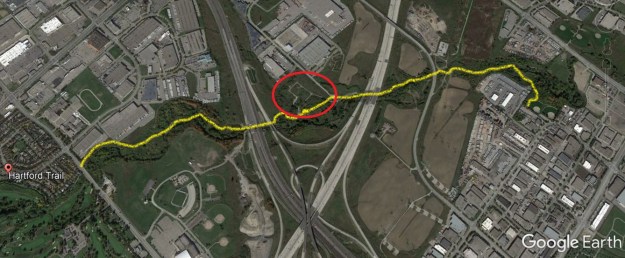
Our hike is outlined in yellow on this Google Earth capture.  The remnants of the wastewater treatment plant are circled in red.

Etobicoke

In the next few years the Etobicoke Creek Trail will be completed and hopefully they will put up interpretive signs for both Palestine and Mt. Charles, two of the ghost towns it will pass along the way.

Google Maps Link: Palestine.

Like us at http://www.facebook.com/hikingthegta

Follow us at http://www.hikingthegta.com
Escarpment Stairs

Saturday, July 28, 2018

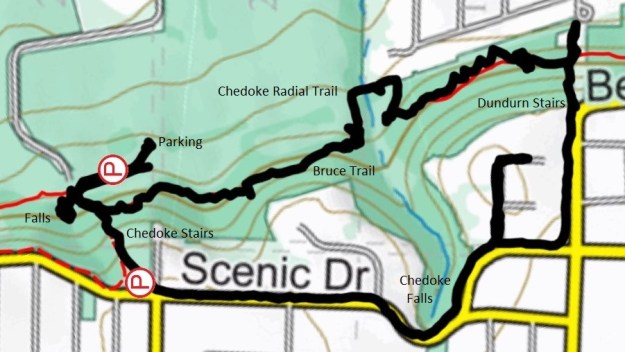
There are currently five  sets of city built stairs climbing the escarpment in Hamilton.  In addition to the stairs in this post, there are also stairs at James, Wentworth and Kenilworth Streets.  The Chedoke Stairs and The Dundurn Stairs are close enough together to form a convenient loop using either The Bruce Trail or The Chedoke Radial Trail.  A short section of road is also needed to complete the walk.

Stairs Trail

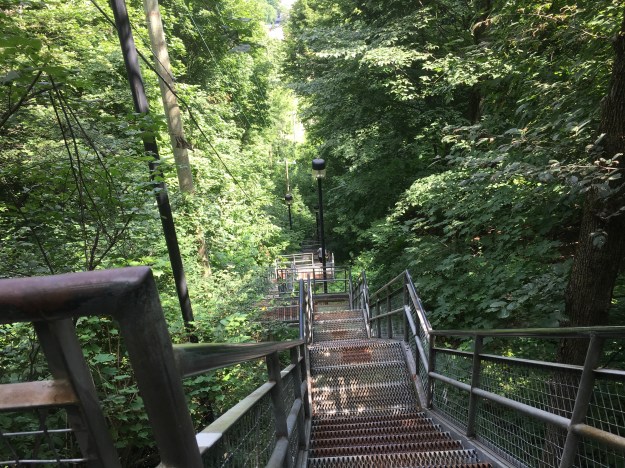
We decided to climb the Chedoke stairs because there is a convenient parking in a lot shared with the Chedoke Golf Club and the trail of the same name.  The stairs consist of 289 steel steps with a bicycle trough on the side to make it easy to bring your bike along.  The stairs are divided with a central handrail.  The first step has been labelled “Welcome to paradise” and every few steps from there to the top has another encouraging quip.  It may be a little tongue-in-cheek as the top of the stairs is in Upper Paradise, you just need to ascend the stairs to get there.  The stairs have been numbered every so often to keep you on track as you climb.

IMG_5636

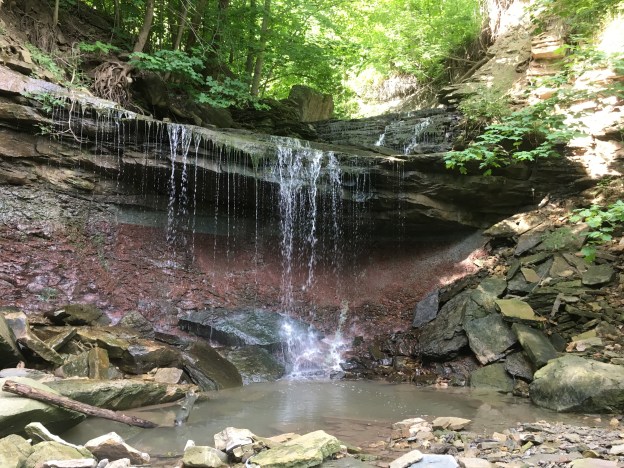
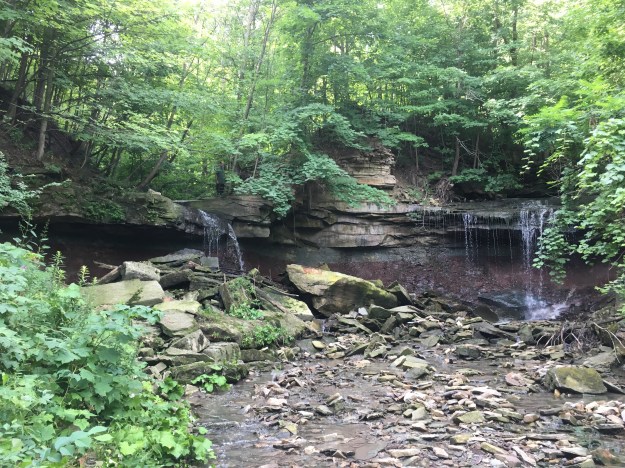
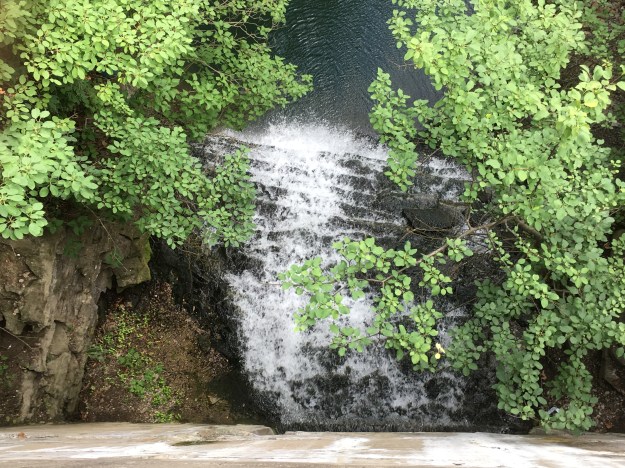
To the right of the stairs are two waterfalls that have not been posted as No Trespassing.  These twin tributaries of Chedoke Creek meet at the point where their respective courses drop over the Whirlpool Formation which is a harder layer of dolomite above the Queenston shale that marks the bottom of the escarpment.  Many of the escarpment waterfalls have an upper and lower falls.  The lower falls usually drop over the same layer of escarpment, a trait they share with The Devil’s Punch Bowl whose lower falls look very similar to these two falls.  Lower Cliffview and Lower Westcliff Falls have an upper falls that we did not explore on this adventure.
IMG_5643

Lower Westcliff Falls is the right hand of the two falls.  It drops 9 metres and has a crest width of 6 metres.  There is a small cascade at the top of the falls that must be quite impressive when the water flow is greater.

IMG_5647

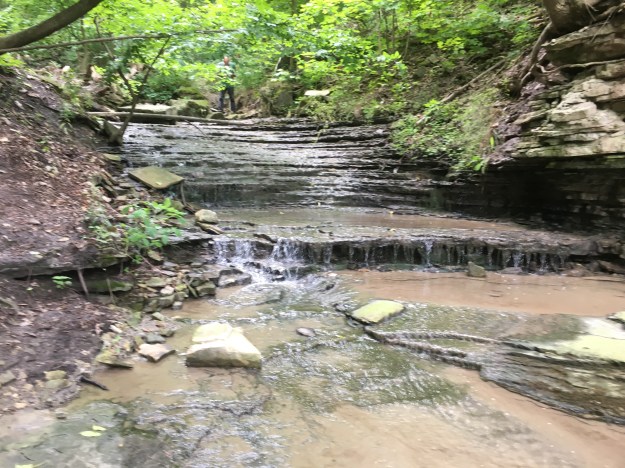
Just to the right is the crest of Lower Cliffview Falls.  It is 4 metres high and 3 metres wide making it a little less impressive than its sister falls.  It also has an impressive shale washboard above the falls which makes another great cascade when there is more water in the creek.

IMG_5661

Returning to the stairs we made our way to the top into Cliffview Park.  From here we followed Scenic Drive to the left and made our way to Chedoke Falls.  The falls emerge just beside the fence and the only upper view is of the water cascading toward the crest.  There are three no trespassing signs including one banning fence climbing.  Apparently these are ineffective at keeping people out of the gorge as there was also a uniformed by-law officer standing beside me as I took the picture below.  Under close scrutiny we left and made our way to the Dundurn Stairs.

IMG_5671 (1)

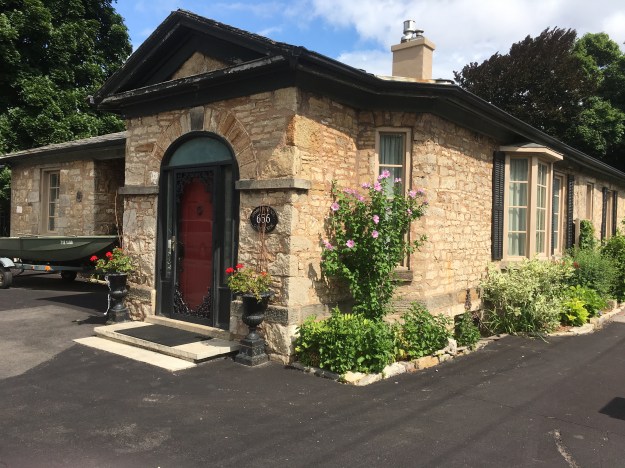
We made a detour onto Balfour Drive thinking there might be access to the park but there isn’t.  We returned to Garth Street to access the Dundurn Stairs.  656 Garth Street is also known as the Stone Cottage and is owned by the Ontario Heritage Foundation and was rented to the city for $1,750 per month on a thirty year lease which began in 1979.  It was built in 1845 and displays quite a different architecture to the other houses that surround it.

IMG_5676

The Dundurn Stairs were originally built from wood but replaced in the 1990’s with 326 steel steps.  These stairs are single lane without a bicycle trough which means that a bike must be carried up or down the stairs on your shoulder.

IMG_5681

We took the stairs to the bottom where they meet the Chedoke Trail back to the car.  Retracing our steps brought us back to the crossing of the Bruce Trail which we used to return to the Chedoke Stairs.

IMG_5686

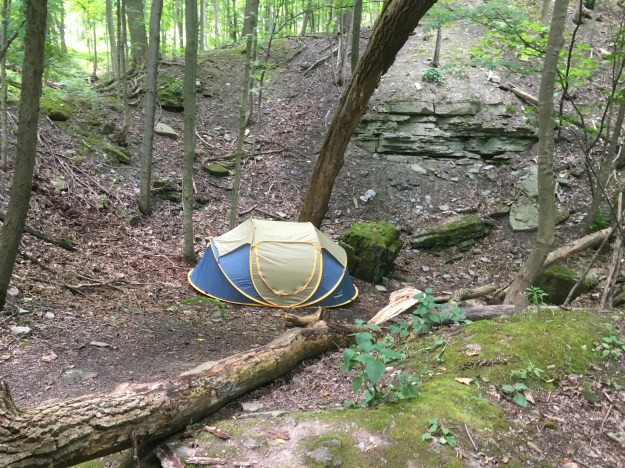
Someone has set up a tent in a hollow along the side of the trail.  While he may be hidden, it could get flooded in a hurry if a rainstorm passes through.

IMG_5695

With at least three unexplored waterfalls, there will likely be another trip to this neighbourhood at some point in time.

Google Maps Link: Chedoke Golf Course Parking.

Like us at http://www.facebook.com/hikingthegta

Follow us at: http://www.hikingthegta.som

Thomson Memorial Park


Saturday, July 21, 2018

Thomson Memorial Park sits on one of the first plots of land to be deeded in Scarborough Township and the first one to be settled.  Arhibald Thomson emigrated from Dumfriesshire in the Scottish Lowlands during the late 18th century when the English were clearing out the poor and disenfranchised that the Uprising of 1743 had left behind.  After spending some time in New York State he moved to Upper Canada when the American Revolution was raging.  Achibald had been displaced by King George III but was still loyal to the crown and so he came to Upper Canada as a United Empire Loyalist.  Even so he wasn’t keen on living too close to the Family Compact that had taken firm control of York following the Battle of York.   In 1795 he managed to convince his two younger brothers, David and Andrew, to join him in Canada they took up two adjacent lots in Scarborough Township.  These are roughly outlined in green on the 1877 county atlas below although some portions have been sold off and others deeded to different family members.  The yellow line is the lane way for St. Andrews Presbyterian Church which was built on land David Thomson gave to the church.  The three red ovals mark the site of a native village of longhouses from the 1200’s.

thompson (1)

The Scottish brought their faith with them and church meetings were a central gathering place for farmers scattered across the side roads.  In 1818 a Presbyterian Congregation was established that met sporadically in peoples homes.  David Thomson donated an acre of property for a church building and a kirkyard to bury their dead on a rise of land overlooking their farm.  The original wooden building was erected in 1819 and replaced with the current brick building in 1849.  The church is celebrating their 200th anniversary this year making them the oldest Presbyterian church in the city of Toronto.  Above the door is a date stone with the words Jehoveh Jireh (The Lord will provide) and the year 1849.  In 1834 the church organized the first library in Scarborough with James Thomson as librarian.  When a new building was erected in 1896 it was placed adjacent to the church.

IMG_5483

The original one acre of land that was given to the church contained a small cemetery and a wood frame building.  When the new church was built the old one was dismantled and the site was taken over as graveyard.  Many Thomsons are buried here with one recent interment taking place in 2013.  David and Mary lie here and have had a new monument erected in their honour.

IMG_5576

A church sexton was the person who was charged with taking care of the church, cemetery grounds and for digging graves.  At St. Andrews the congregation built a home for the sexton in 1883.  This story and a half house stands at the far end of the cemetery from the church.  The simple board and batten construction was typical for worker’s homes in that era.  The house opens into the cemetery as a back yard and there are reports of the cemetery and the house both being haunted.

IMG_5482

William D. Thomson was the eighth child of David and Mary and in 1848 he built a field stone house at the corner of the church lane and Brimley Road. As a result he would gain the nickname “Stonehouse Willie”.  William’s granddaughter Isabella lived in this house from 1942 to 1970 when she passed away at the age of 96.  When she graduated in medicine in 1902 Isabella was the first Scarborough woman to become a doctor.  She then served in India for 40 years before returning home.

IMG_5581

Just past the church is the home built by Andrew Thomson in 1840.  Andrew was a brother of David Thomson.  Across Brimley Road from the old lane way to the church was an additional parcel of land that belonged to David Thomson.  On the table lands above Highland Creek a village of longhouses stood around 1200 A.D.  Excavations revealed 17 longhouses and thousands of fragments of pottery and bone.  Many spear and arrow heads were also recovered.  Eight hundred years ago the scene would have been much different than the picture below with forests surrounding the village and the creek flowing much stronger than today.  The natives lived on simple agriculture, fishing and hunting.  They buried their dead on a hill to the east of the village.  Today we call it Taber Hill and the remains of 472 people were discovered there in two ossuaries.  Three red ovals mark the site of the longhouses on the county atlas above.

IMG_5582

Thomson Memorial Park sits on the homestead of David and Mary.  The park is also home to the Scarborough Historical Society which has gathered a small display of buildings and artifacts.  Both of the historical houses on the property have been reported to be haunted.  One display in the collection is the original tools  from the Hough Carriage Works that operated at Eglinton and Birchmount Road starting in 1856.  They produced carriages, wagons and bicycles for the area until the 1940’s when the buildings were demolished.  The equipment was saved and in 1984 the Scarborough Historical Society built a 1/4 scale shop in which to house them.  One of the tools on display is Hough’s 1871 manual drill press.  It was used to drill holes in wood and thin metal.

IMG_5594

The museum houses a Penny-Farthing bicycle that was made in the carriage works building some time in the 1880’s.  The bicycle adopted the name based on the wheel sizes.  In order to make peddling easy and high speeds achievable, the front wheel was much larger than the rear.  This design allowed the cyclist to travel a large distance relative to a short pedal stroke.  The invention of chain driven gear systems on bikes allowed the wheels to be smaller reducing the risk of falling from a height.  The name reflects the difference in size between a British penny and a farthing.

IMG_5598

This log cabin was built in 1830 and occupied by a lifelong bachelor named William Porteus McCowan.  It was typical of a first home for a new settler and would have been built from the first few trees cleared on the lot.  McCowan was a sheep farmer and shared the cabin with his workers who slept in the attic.  Other members of the McCowan family settled near the Scarborough Bluffs and McCowan Road is named in honour of the family.

IMG_5603

The Cornell house was built in 1858 and would be typical of a second house, built by an established family.  The Cornells were apple farmers and their 8 children supplied much of the labour.  The house was moved to this location in 1962 when the land it was sitting on was expropriated for a new railway bridge.  The house is furnished in the late 19th century style and has many original household items that belonged to the Cornell family.

IMG_5522


Thomson Memorial Park is 103 acres covering half of Scarborough’s first land grant and with all the trails, open space and historical museum it makes a great place to visit.

Google Maps Link: Thomson Memorial Park

Like us at http://www.facebook.com/hikingthegta

Follow us at http://www.hikingthegta.com