Tag Archives: pioneer cemetery

Vanished Communities of Highway 10

As you drive between Shelburne and Markdale on Highway 10 you may notice several pioneer cemeteries that appear to be in the middle of nowhere. In fact, they were located in small communities with houses, stores, hotels, schools and churches. For different reasons the communities faded from prominence and disappeared. The buildings were lost to fire, neglect and demolition. Some were lost as the highway was widened and realigned. The first of these communities was just north of Shelburne and was known as Melancthon.
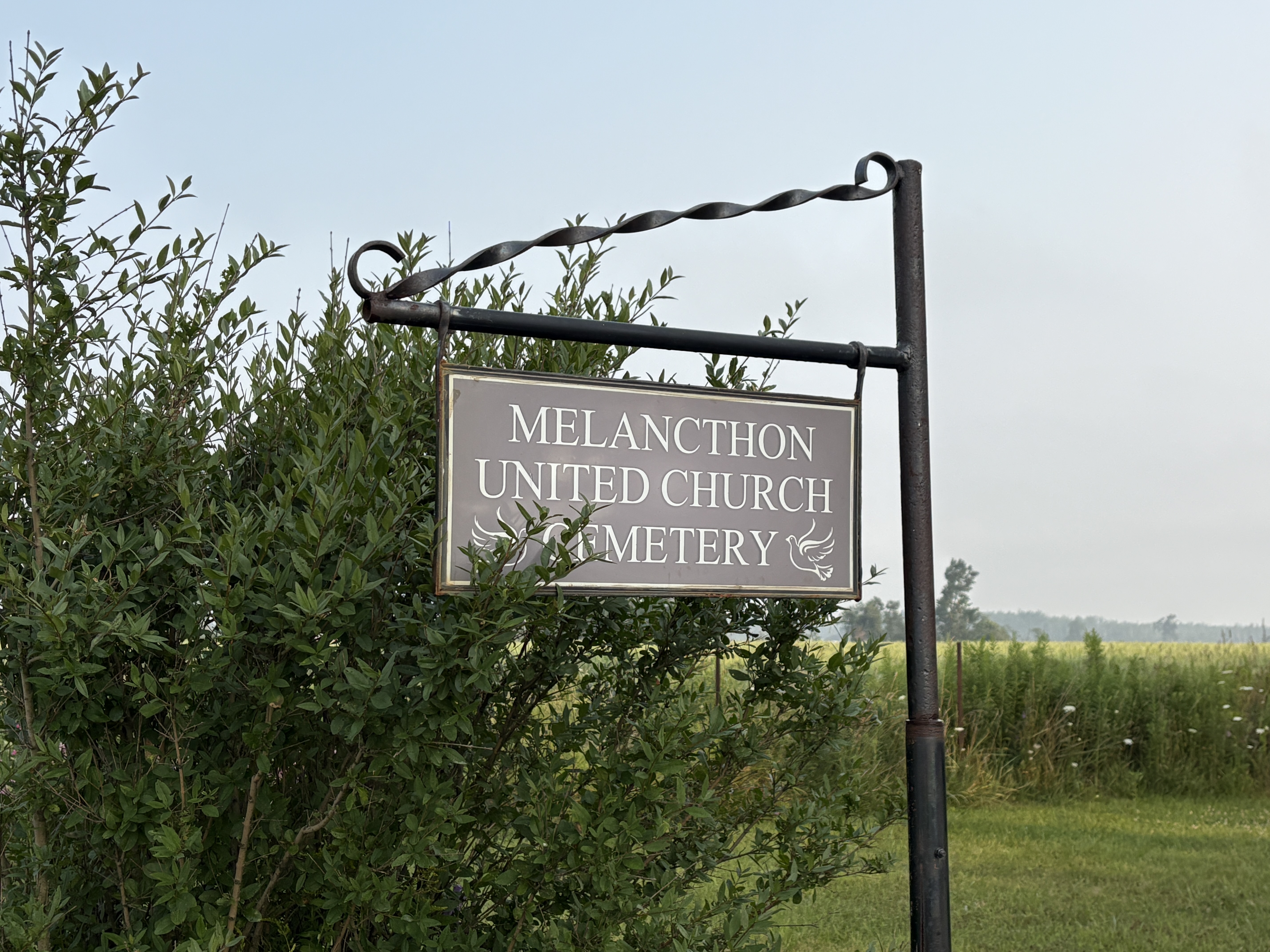
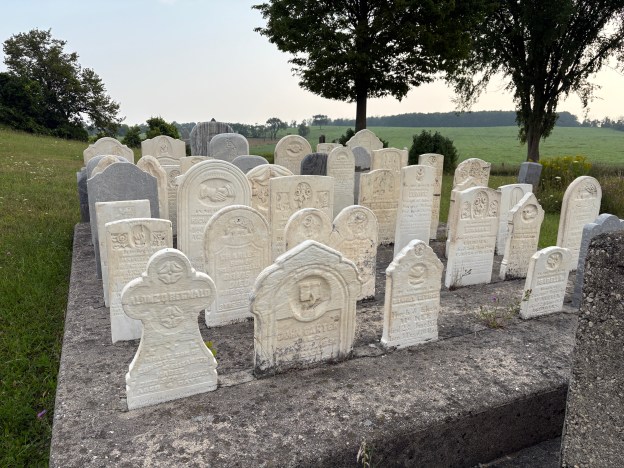
The Melancthon Methodist Episcopal Church was operating as early as 1858 as part of a circuit that included Shleburne, Hornings Mills and Maple Grove. It became part of the Methodist Church of Canada in 1885 and the United Church of Canada in 1925. The church was informally known as the Gravel Road Church and the Gravel Road Cemetery. The archive image below is from 1964 and shows the cemetery when the church building still stood beside it.
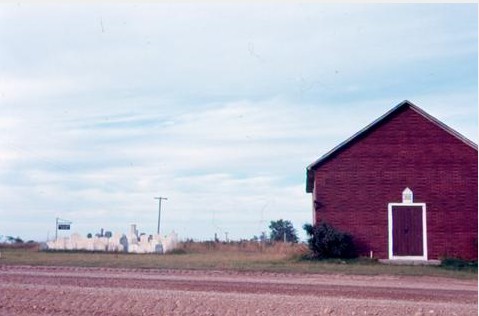
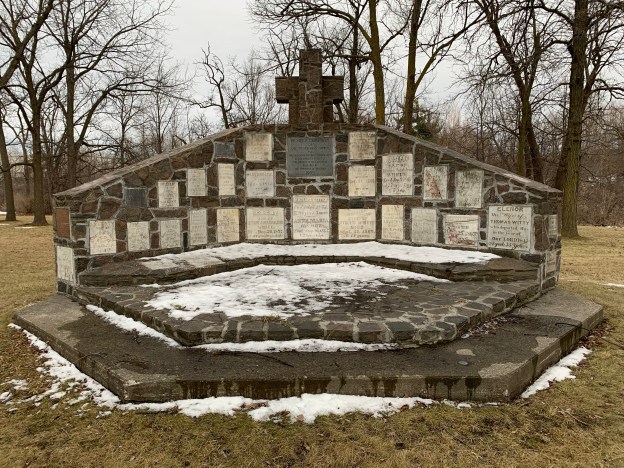
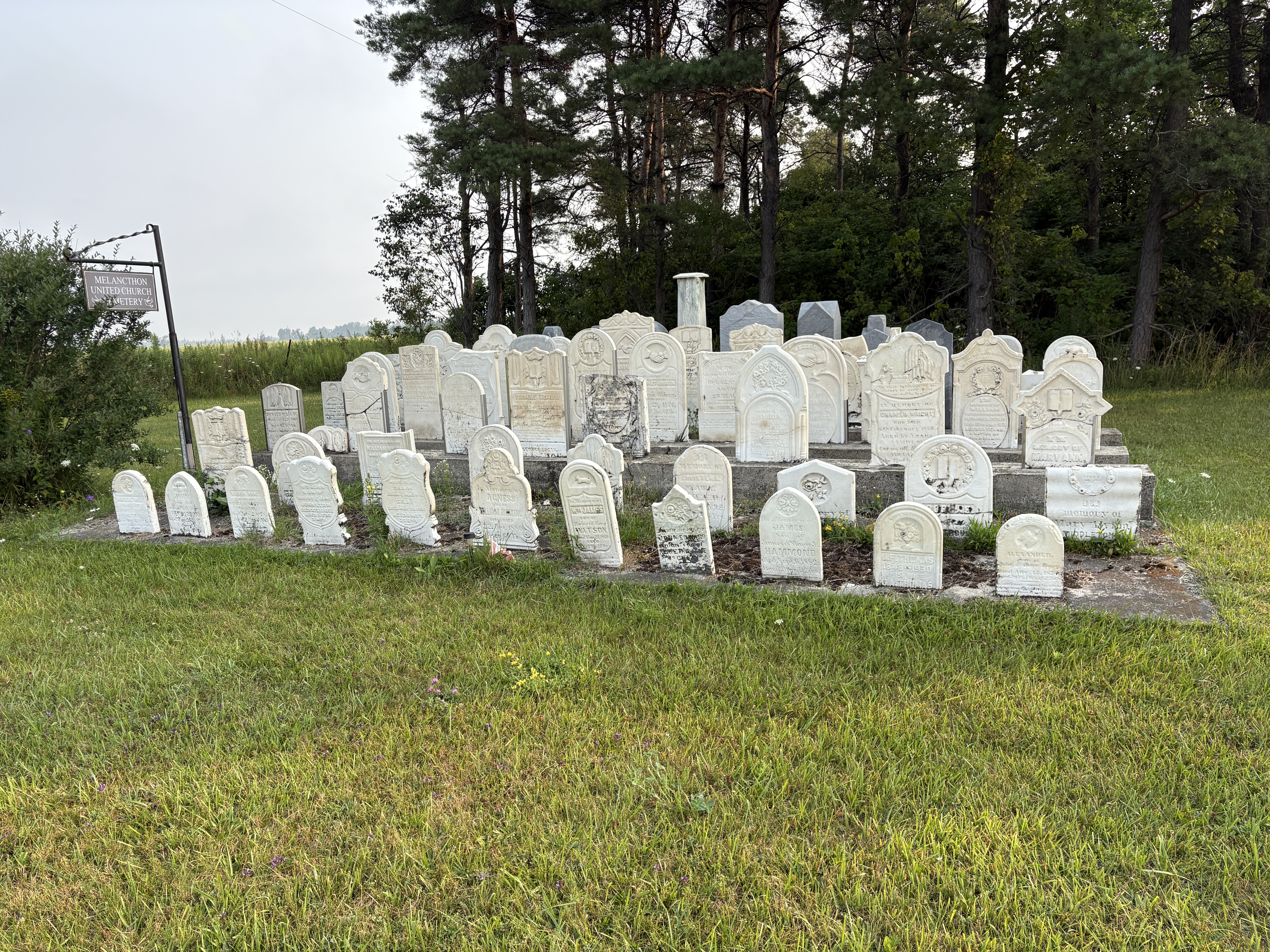
The stones were gathered into a central display when the road was widened and some stories say that the deceased may now be interred under the roadway. This cemetery can be found here.
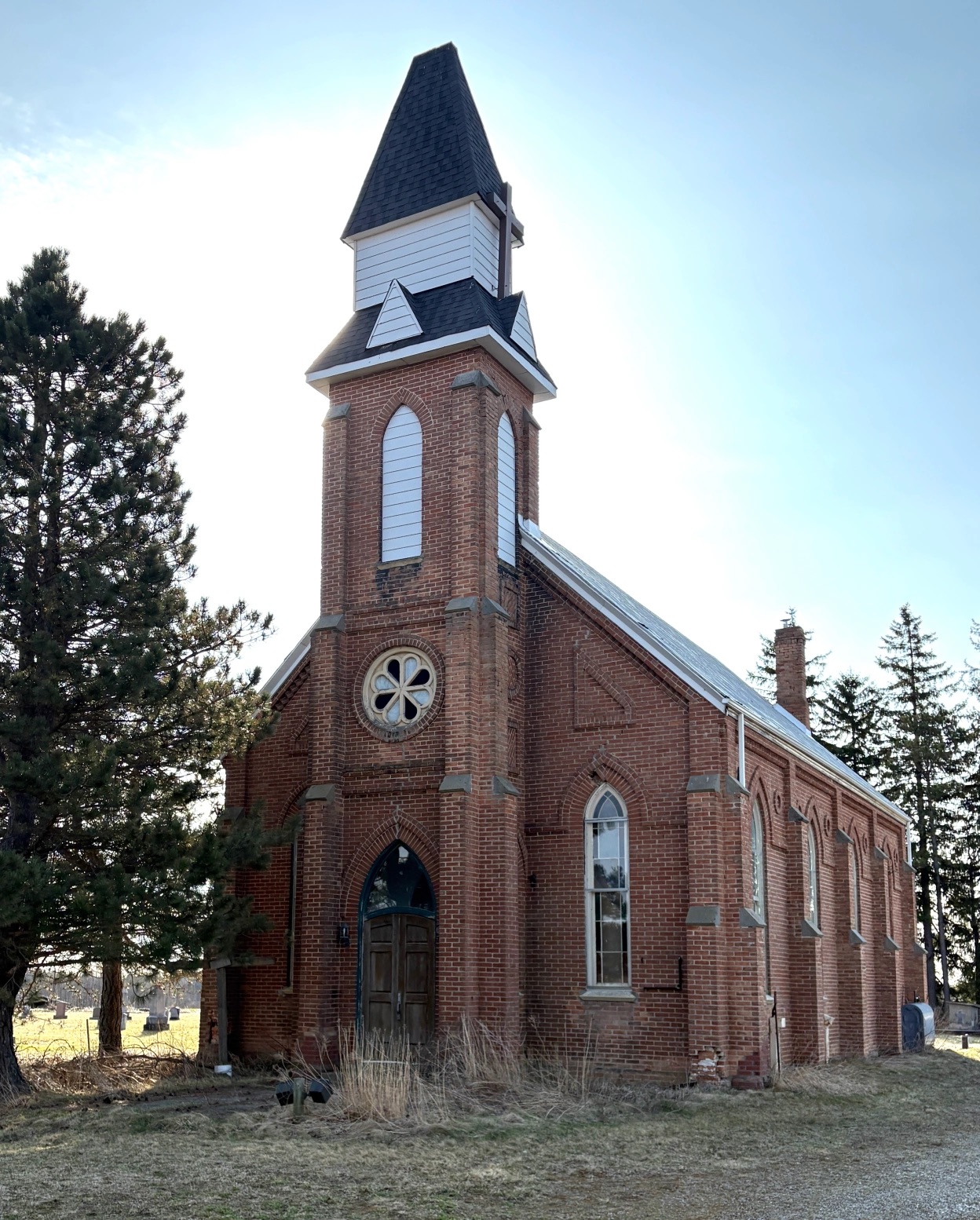
 A hewn-log Catholic church was built in 1858 which also served as a school and was later named St. Patrick’s Catholic Church. This building was used for twenty years before it was decided to replace it with a brick building. As the community of Melancthon slowly disappeared, the attendance in the church dropped off. By 2017 there were only about 40 people left in the congregation and the building was deteriorating badly. It was decided to leave the building and amalgamate with the Trinity United Church in Shelburne. The building has stood empty now for the past 8 years and its fate is in the hands of the Catholic Diocese of Hamilton.
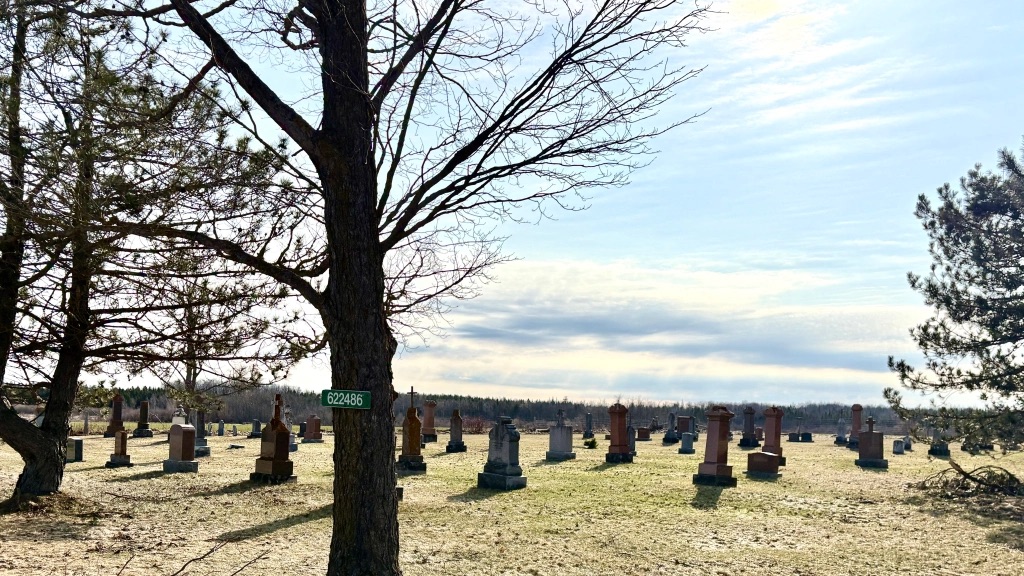
Melancthon soon had 4 hotels, a blacksmith, undertaker and several stores. An Orange Lodge was built in 1858 and a Methodist Church in 1860. A town hall was added in 1874. Things changed rapidly after the First World War as the lumber industry was finished and changes in agriculture styles left the town in a continual downward spiral. Soon, all the commercial buildings and industries were gone and now only the church remains. In the cemetery beside the derelict building are 171 headstones that mark the graves of some of the areas earliest pioneers. This cemetery can be found here.
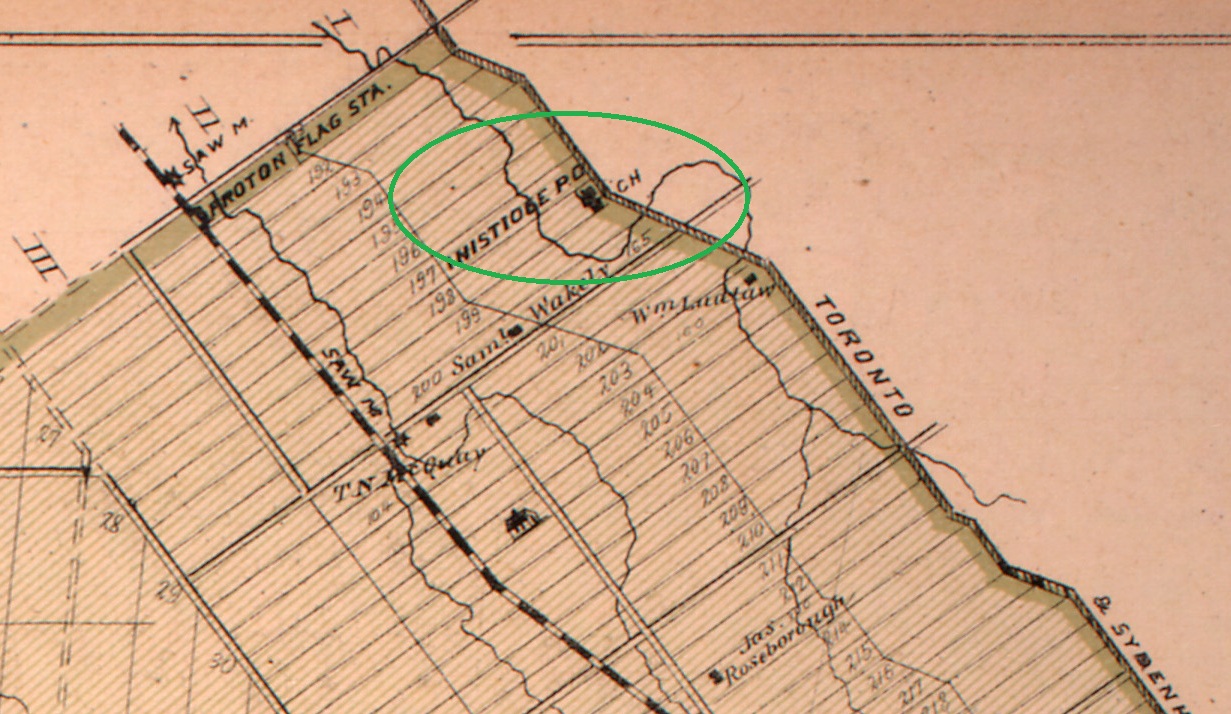
On the 1877 County Atlas the community of Inistioge doesn’t look like much. It was founded around 184 when the Toronto-Sydenham Road (Now Highway 10) was being opened up. George Armstrong and his family arrived from Inistioge, Ireland and started to build a community. Methodist Church services were held in the home of George Snyder until about 1850 when a log church was built on the Armstrong Farm. A cemetery was opened up beside it with the first burial being in 1851. That same year a post office was opened in the Armstrong home under the name of Proton but this name was changed to Inistioge in 1865.
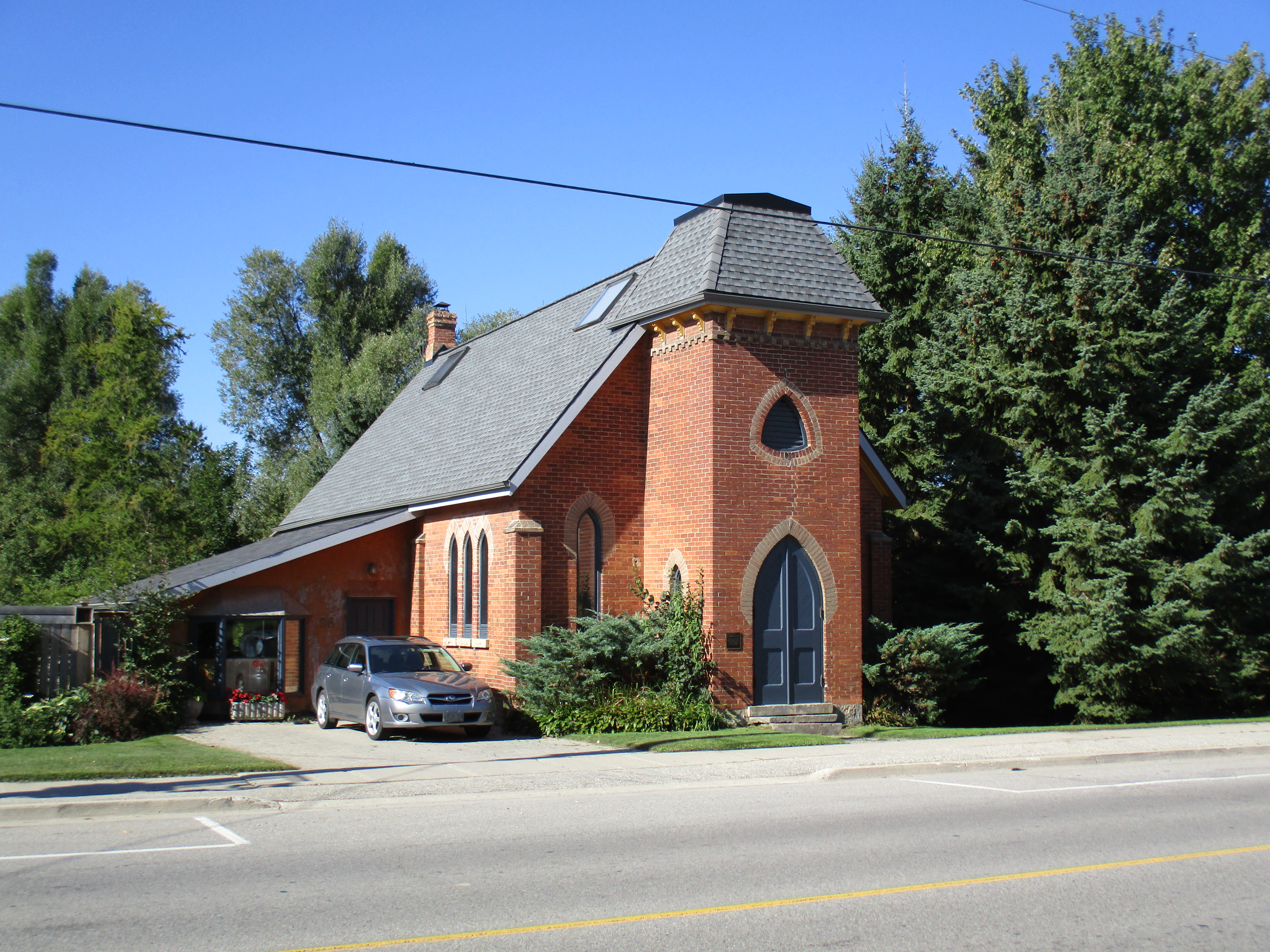
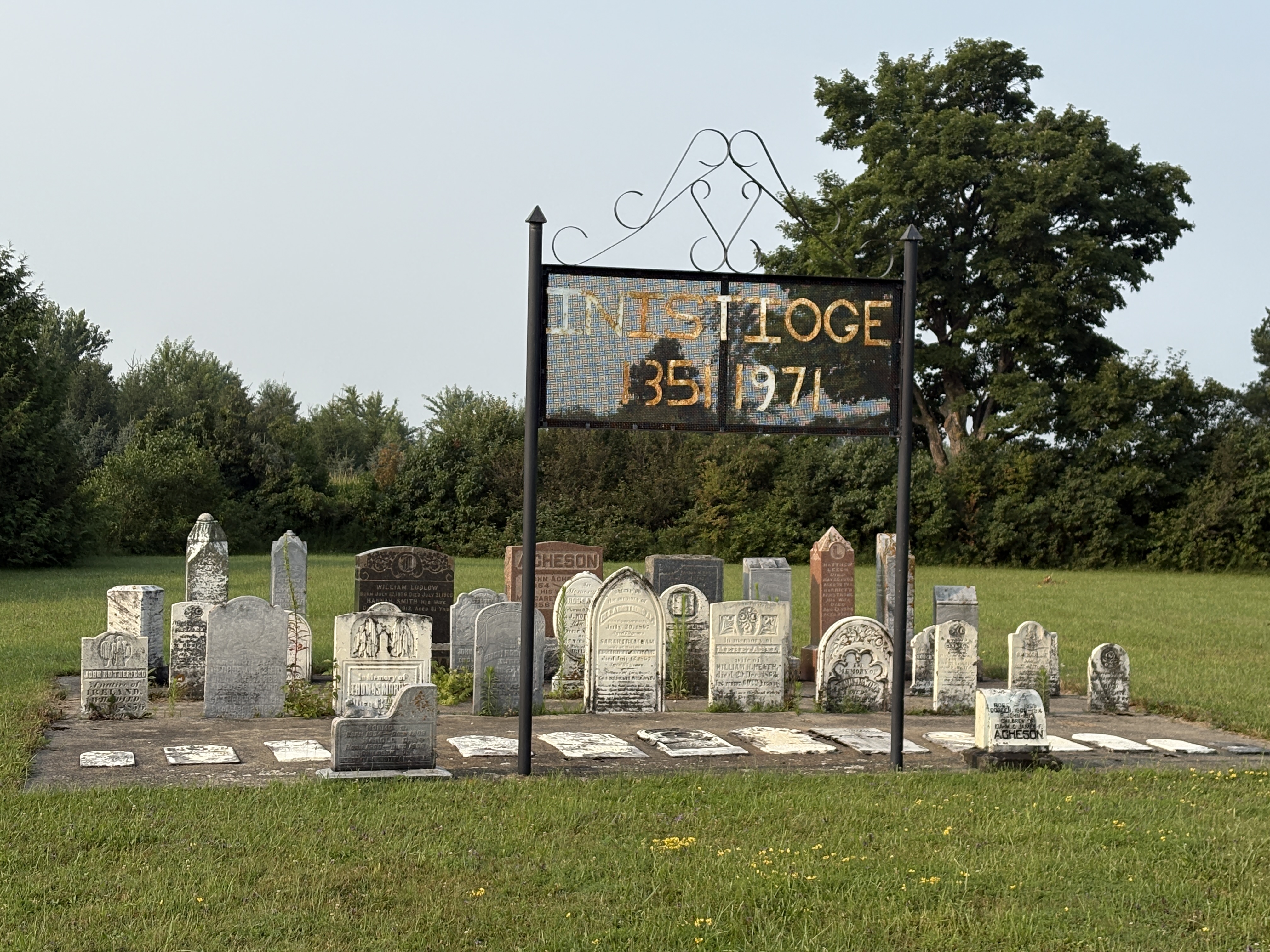
Inistioge attracted a growing number of businesses including a blacksmith, shoe maker, harness maker, hotel, saw mill, general stores and hotels. When the railway passed them by in 1872 and the decline of the community began. The log church lasted for 20 years but was replaced in 1871 with a new, larger building. It was closed in 1961 and later demolished. The school was built in 1865 and replaced with a new building in 1889. This new building remains as a private residence and is about the only surviving remnant of the town with the exception of the forgotten cemetery with its wrought iron sign. This cemetery can be found here.
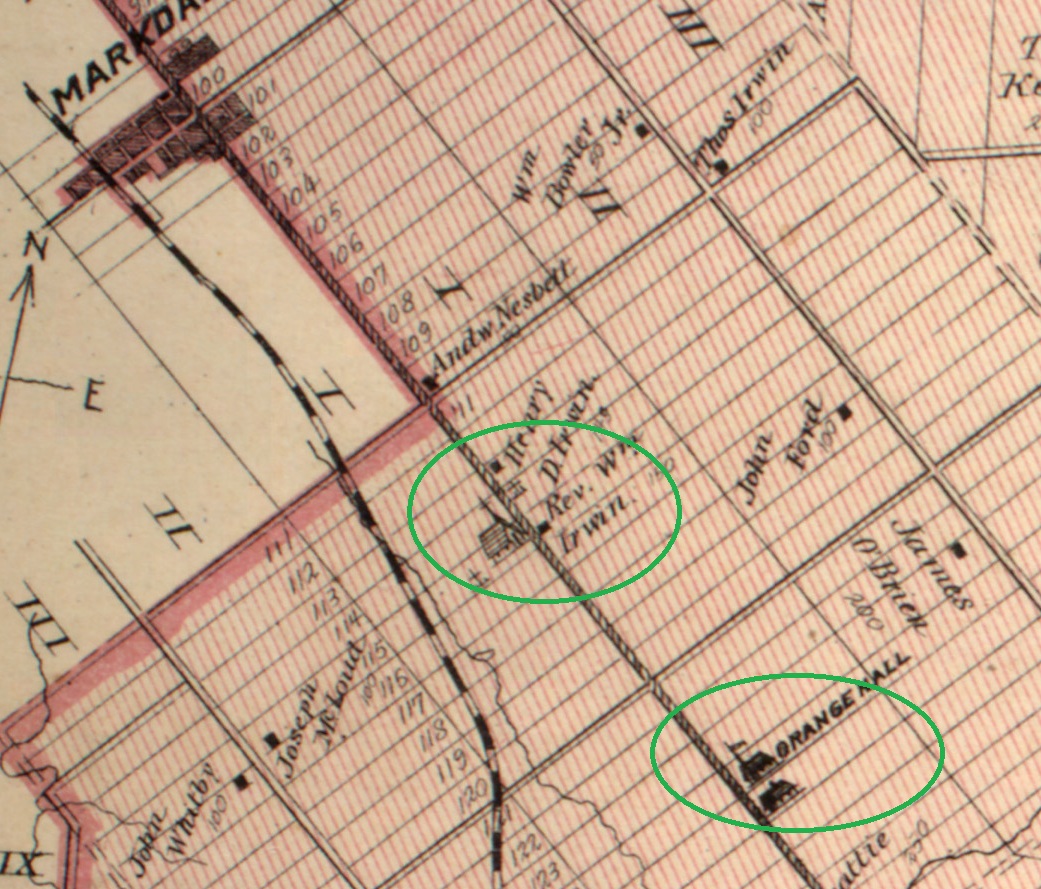
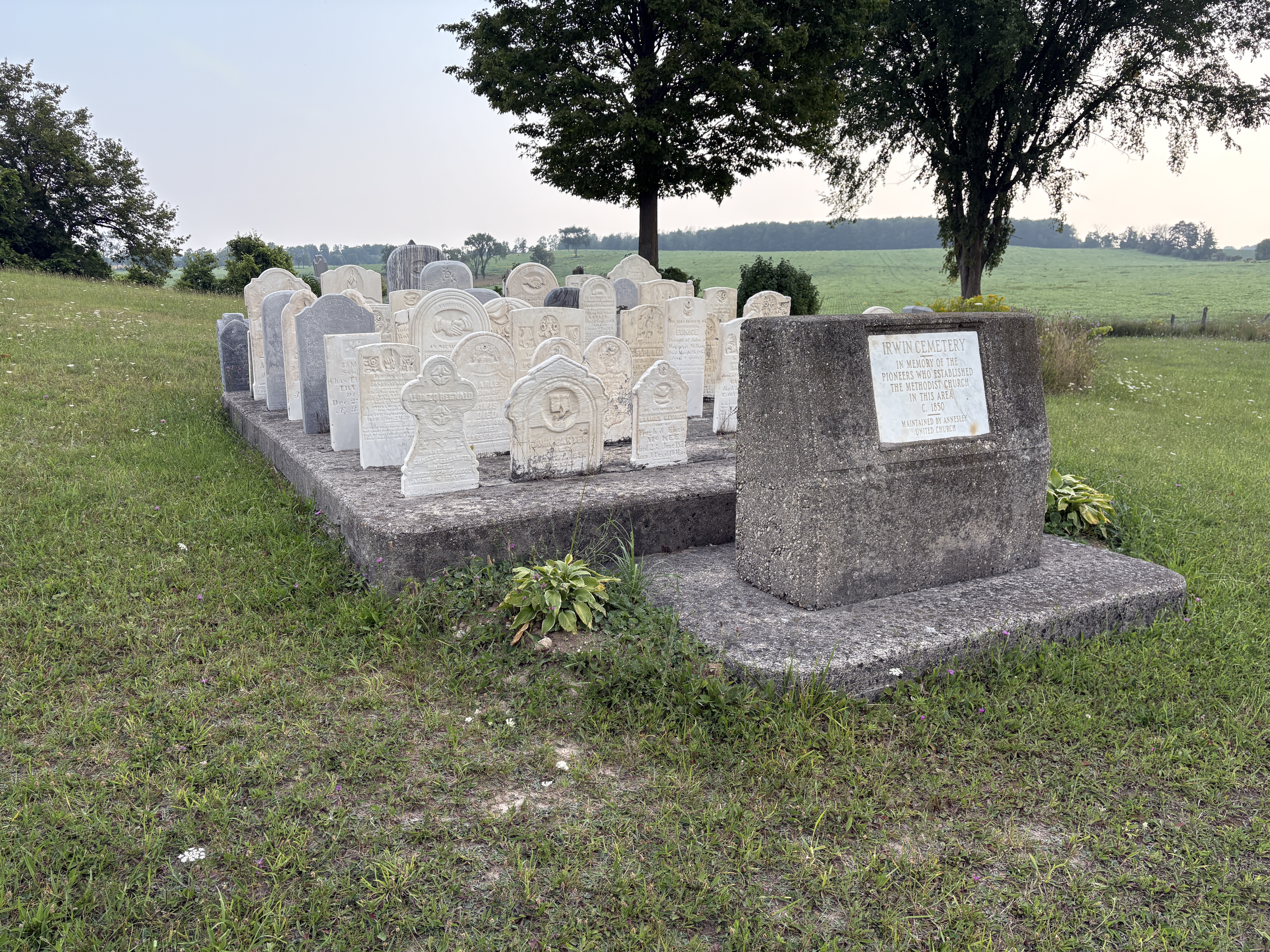
South of Markdale there is an isolated cemetery on opposite sides of the road. The one on the east side of the road is the Irwin Cemetery and on the west side is the Orange Valley Presbyterian Cemetery. These are both found in the upper circle on the 1877 county atlas image below. The orange hall a few lots south was all that existed at this time to show the location of another public building.
Methodism followed the settlers into the area and by December of 1849 worship services were being held in the home of the Miller family. A log church was opened in June of 1856 at the cost of $150. It was on land donated from the Irwin farm and had seating for 150 people. When a new Methodist Church opened in Markdale in 1870 the congregation of the Irwin church went there or to Annesley Methodist.
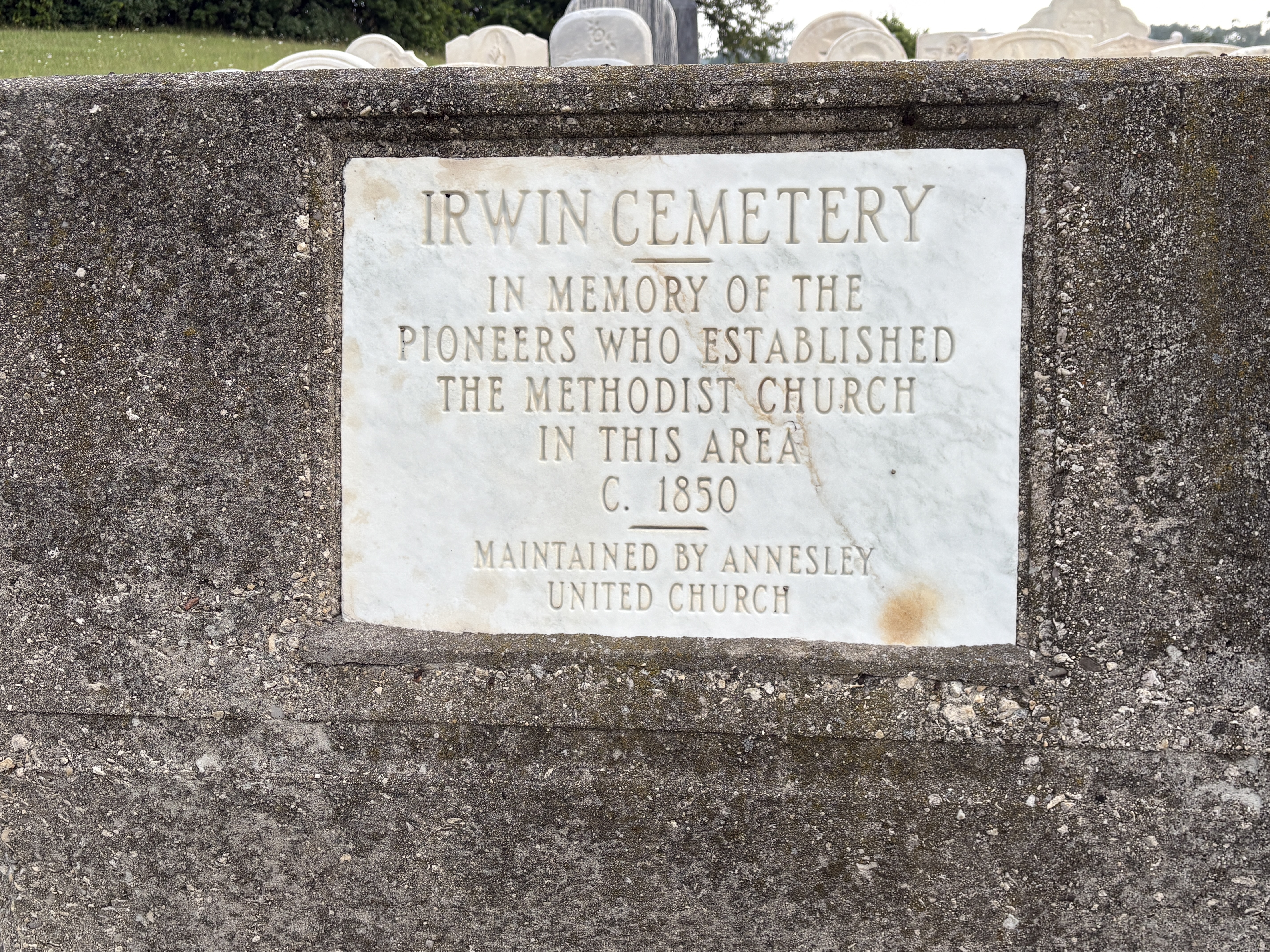
The church is gone but the cemetery remains. The stones are mostly all of the burials are from the 1870s and earlier. As usual they were gathered together into a cairn. This cemetery can be found here.
Orange Valley Presbyterian seems to be a bit of a mystery with limited information available. Although there is no community marked on the map in the 1870s when many of the burials took place, there are close to three hundred individuals laid to rest in the two cemeteries, mostly in the 19th century. This suggests a sizeable local community or that most congregants were coming down from Markdale as well as from local farms.
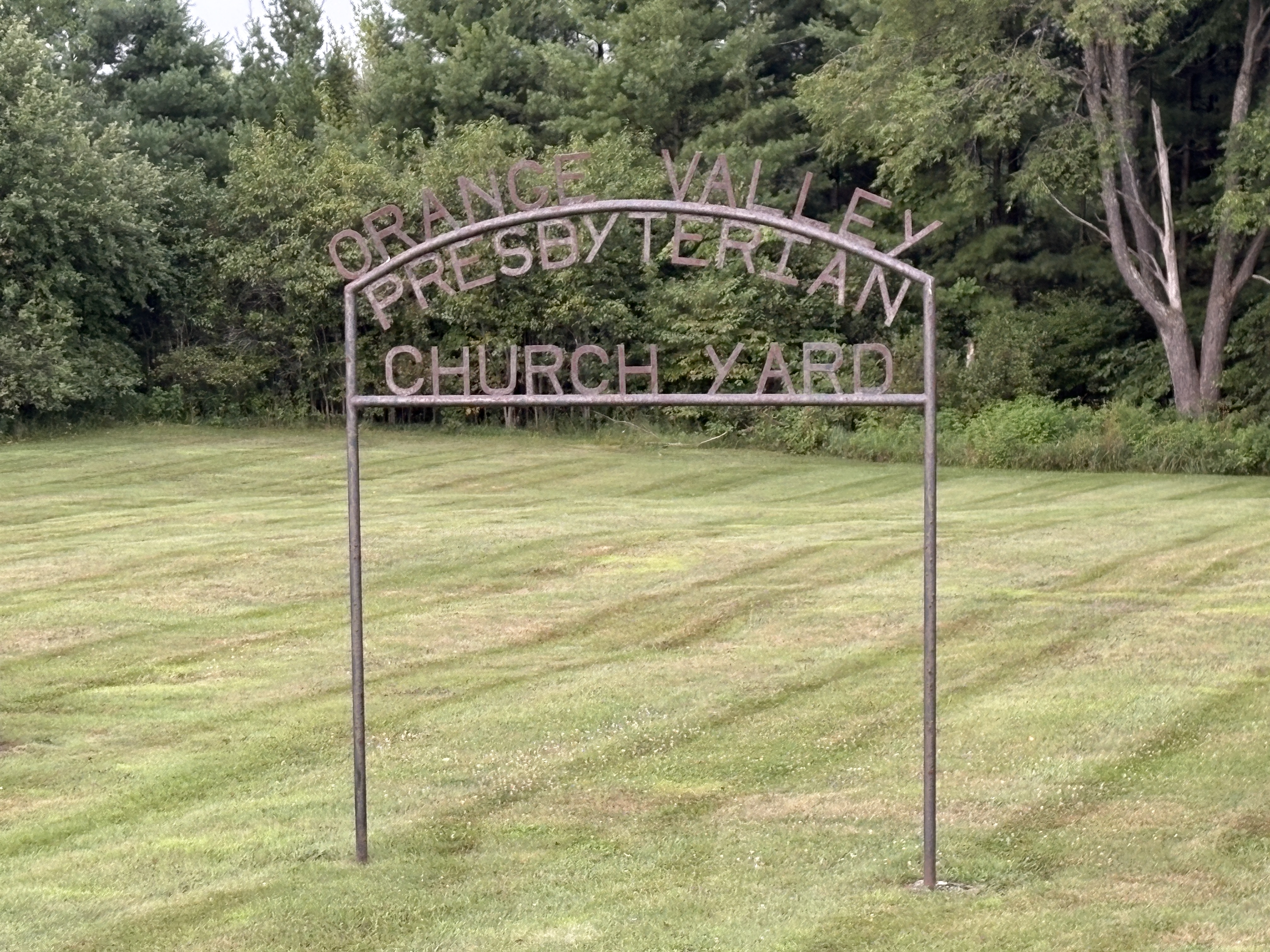
The burials are commemorated with 127 memorials beginning in the same time period as those across the street. Most burials here are prior to 1925 when the Presbyterian Church joined with the Methodist Church to form the United Church of Canada. That spelled the end of this small congregation and later burials appear to be spouses who were later laid to rest with their departed loved ones. This cemetery can be found here.
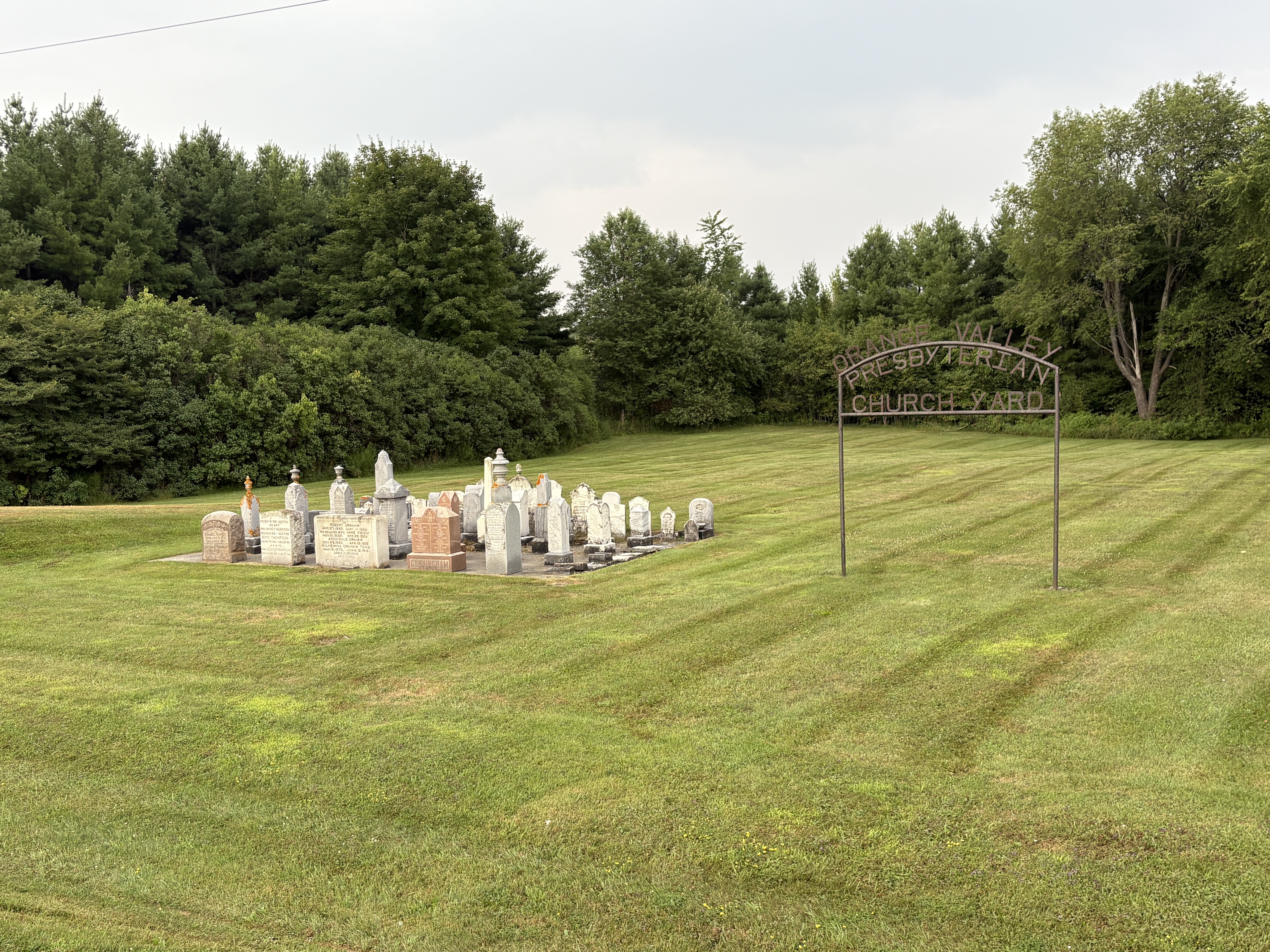
These cemeteries are the last remaining vestiges of small rural communities that thrived and then faded away during the pioneer period in Ontario.

Related Stories: Pioneer Heartbreak, Pioneer Cemetery Cairns

Google Map links in stories.

Like us at http://www.facebook.com/hikingthegta

Follow us at http://www.hikingthegta.com
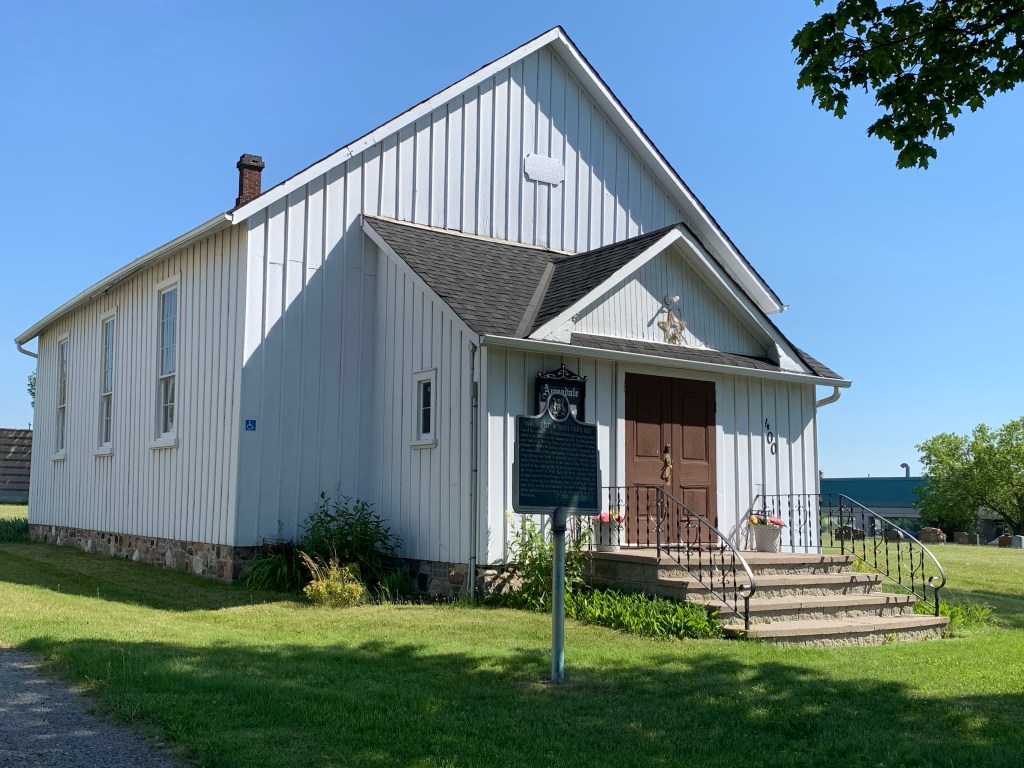
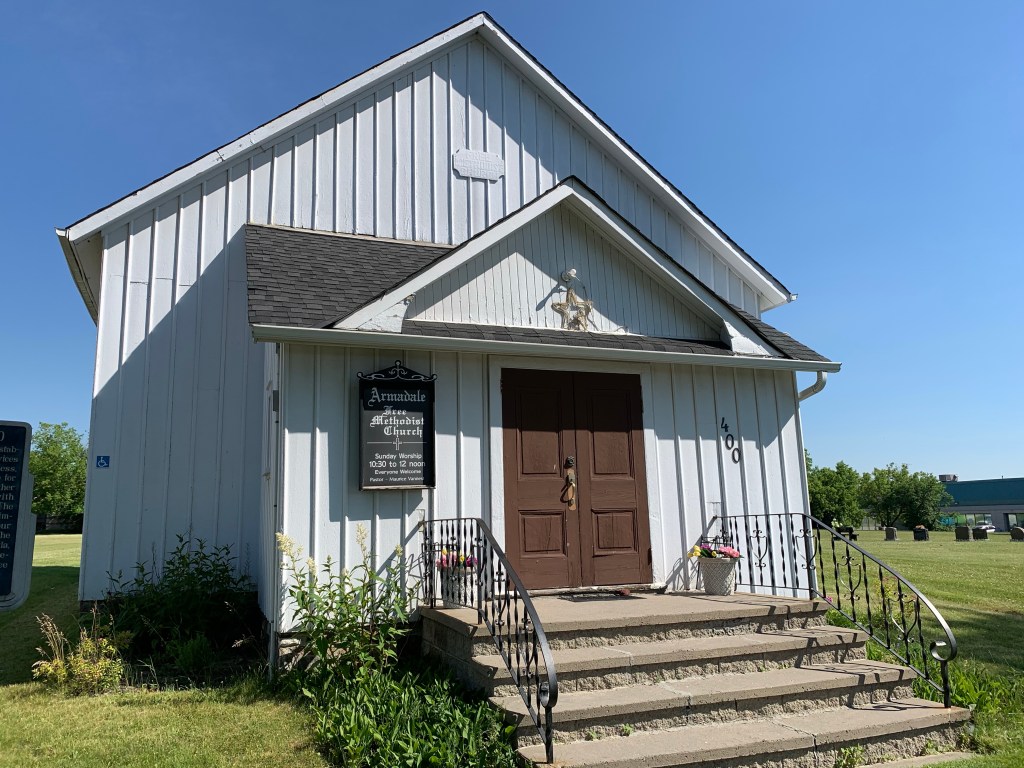
Armadale Free Methodist Church

Sunday, June 21, 2020

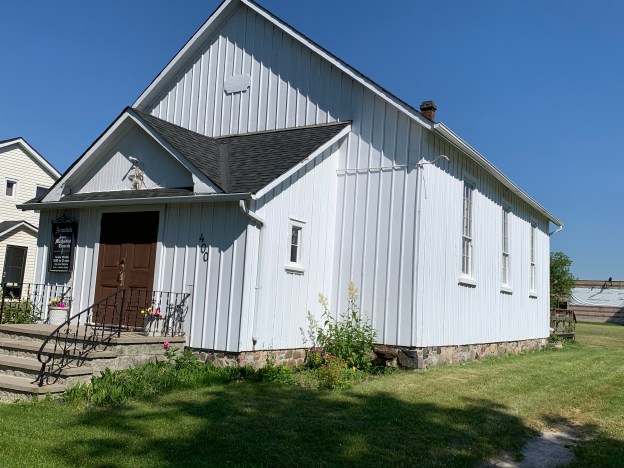
The former community of Armadale has the oldest continuously serving Free Methodist Church in Canada. The local Free Methodist congregation was founded in 1874 in the nearby hamlet of Ellesmere. They originally met in a Meeting House provided by a former Primitive Methodist pastor named Robert Loveless. A second congregation was soon formed at Armadale in the home of Silas Phoenix. The congregation grew until 1880 when they purchased land and built this simple board and batten church. It has since served the combined congregation of Ellesmere-Armadale.

Benjamin Titus Roberts was a minister in the Methodist Episcopal Church and as early as 1852 started to have conflict with his church elders over the system of charging fees for the pews.  This meant that the wealthy could get the best seats and the impoverished might not be able to afford to come at all.  He advocated for a goodwill offering in place of pew fees.  Eventually the church got annoyed and stripped him of his membership.  In 1860 he formed the Free Methodists, a movement that quickly spread.  Roberts was a staunch abolitionist and to him the word free also meant freedom from slavery.  The Free Methodists were very active in the underground railroad and it is possible that this church or its members helped some people to gain their freedom.

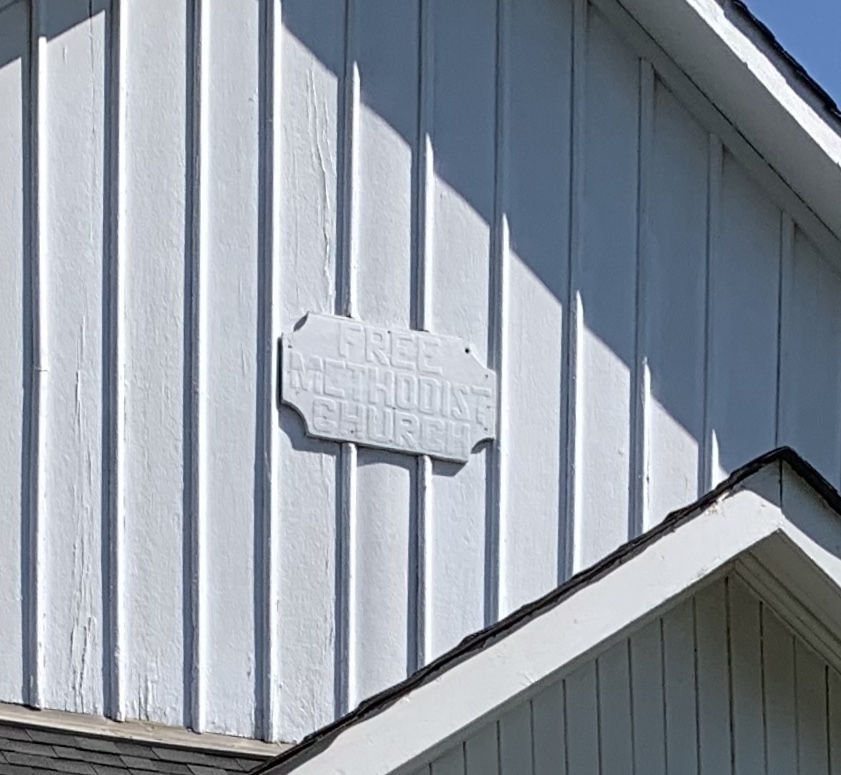
Above the front door is a sign that simply says “Free Methodist Church”. Perhaps the lettering was originally black but at some time the church was given a fresh coat of white paint and the writing was covered over.

On the west side of the church stands a house that appears to be from the same time as the church. Neither the home or the church appear on the county atlas from three years earlier. It’s possible that this house was built as a parsonage for the pastor to live in.

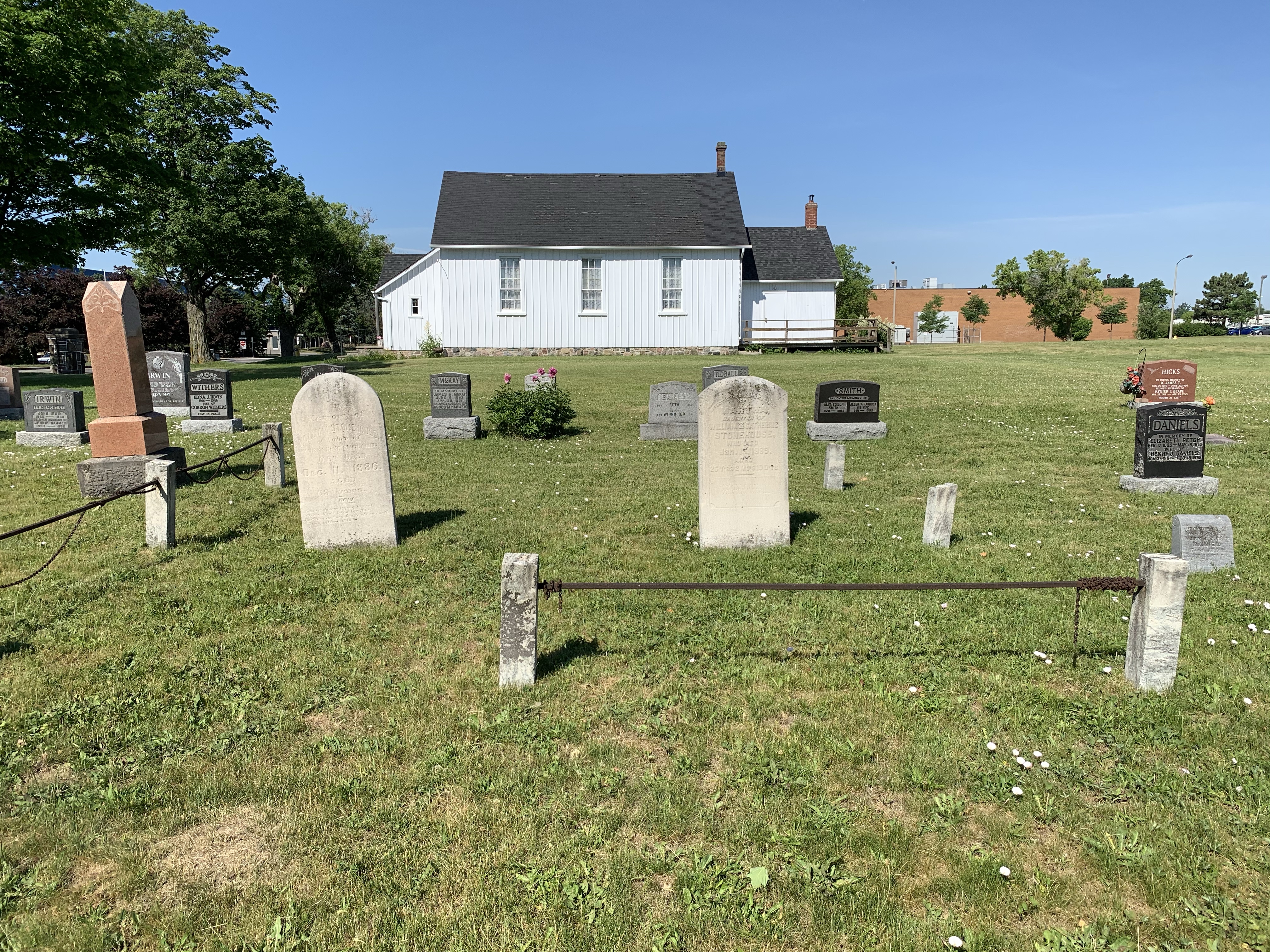
The cemetery stands to the east of the church and contains relatively few of the flat limestone markers because these were largely replaced with granite markers after 1880.  There are two in the cemetery and both belong to the people who owned the next farm to the west.  The two Stonehouse markers are dated 1886 and 1889.

Francis Underhill sold the church a small parcel on the rear of his property with an entrance off Passmore Avenue. Francis himself was buried in the church cemetery along with his wife, several children and even some grandchildren. Many of them are commemorated on a single marker.

I came across the reference to the Free Methodist Church being anti-slavery while doing research for a forthcoming addition to our collection of Ghost Towns of the GTA. Look for “Armadale” coming on June 28th.

Passmore Avenue has been abandoned in several sections near here.  The story can be found at this link:  Abandoned Passmore Avenue

Google Maps Link: Armadale Free Methodist Church

Like us at http://www.facebook.com/hikingthegta

Follow us at http://www.hikingthegta.com
Look for us on Instagram


Pioneer Heartbreak

Tuesday, February 4, 2020

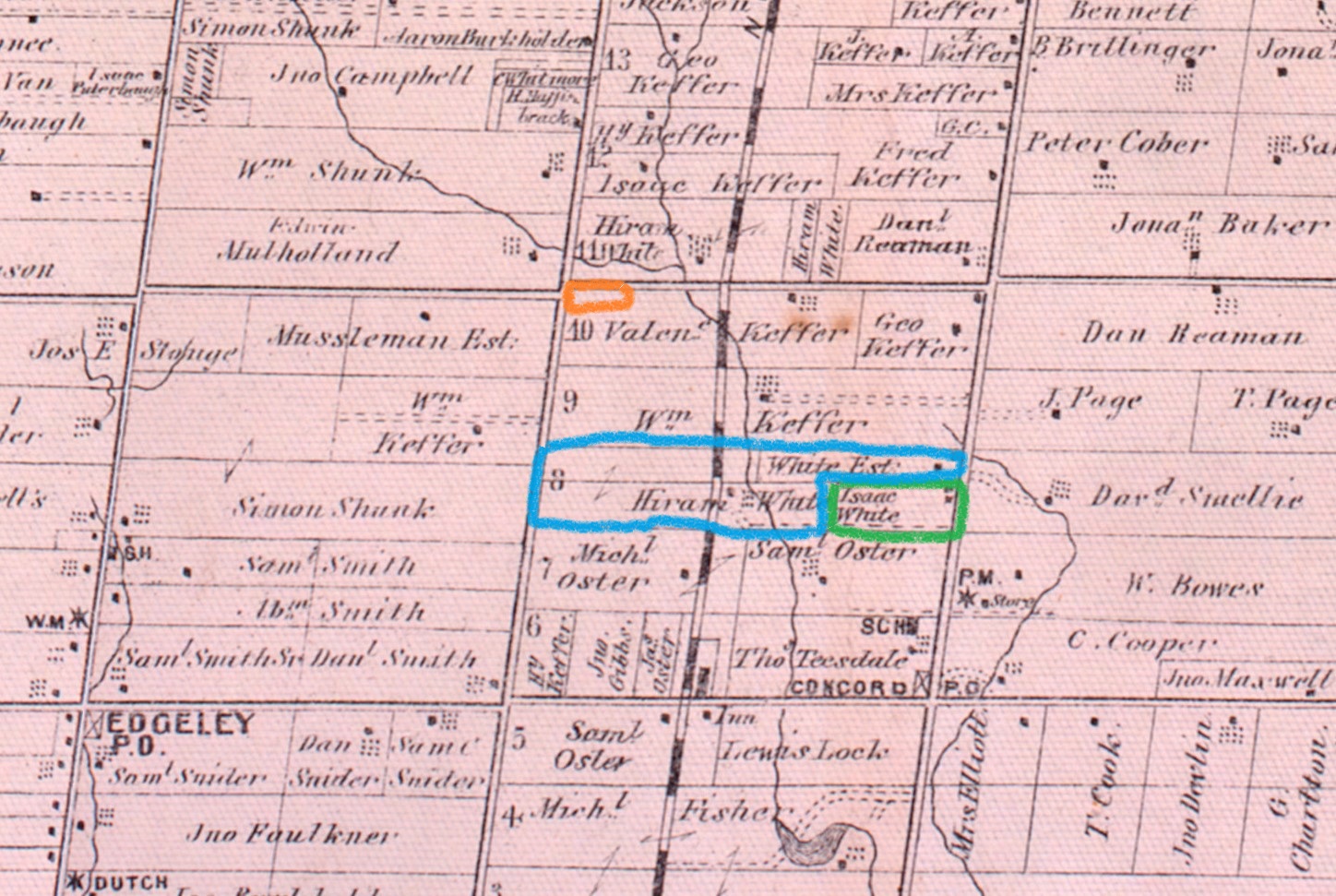
Having recently been exploring in the area of Keele Street near Maple, I had noticed a pioneer cemetery at Langstaff and Keele Street,   I decided to stop after work and have a look at the restored markers in the old St. Stephen’s Anglican Church graveyard.  The graveyard is not marked on the 1877 county atlas and so I’ve added it in, circled in orange.  The two White families that we will focus on had their land just to the south of the grave site.  In 1965 the grave markers were collected up and placed in a central display to prevent further deterioration of the stones.  Many of them were over 100 years old at the time of the restoration.

While looking at the names and dates on the markers I noticed that there were a lot of tombstones marking the graves of people who lived less than a year.  From the days of the first settlers in North America until the mid-1800s about 30% of infants did not survive their first year.

Whites (2)

Pioneer women would have a child an average of every 26 months and 60% of them would have six or more.  The average family would lose at least one child under the age of 1 year old.

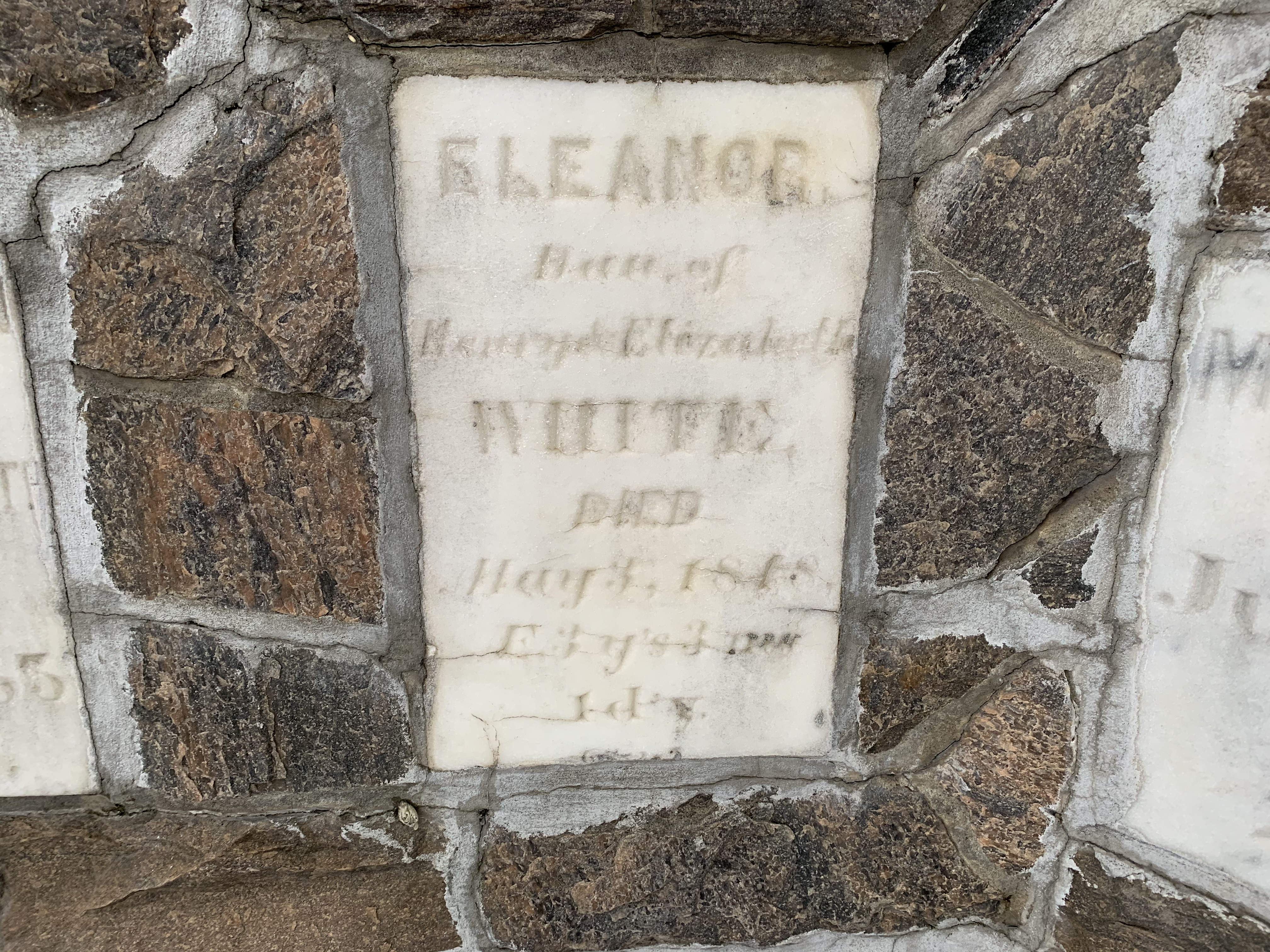
Henry and Elizabeth White may have occupied the land shown as Hiram White in the county atlas.  Eleanor was born to the White family in 1845 but she lived for only 3 years and 3 months before she passed away.  She was buried in the St. Stephen’s Anglican Church cemetery after her passing on May 3, 1848.

IMG_0503

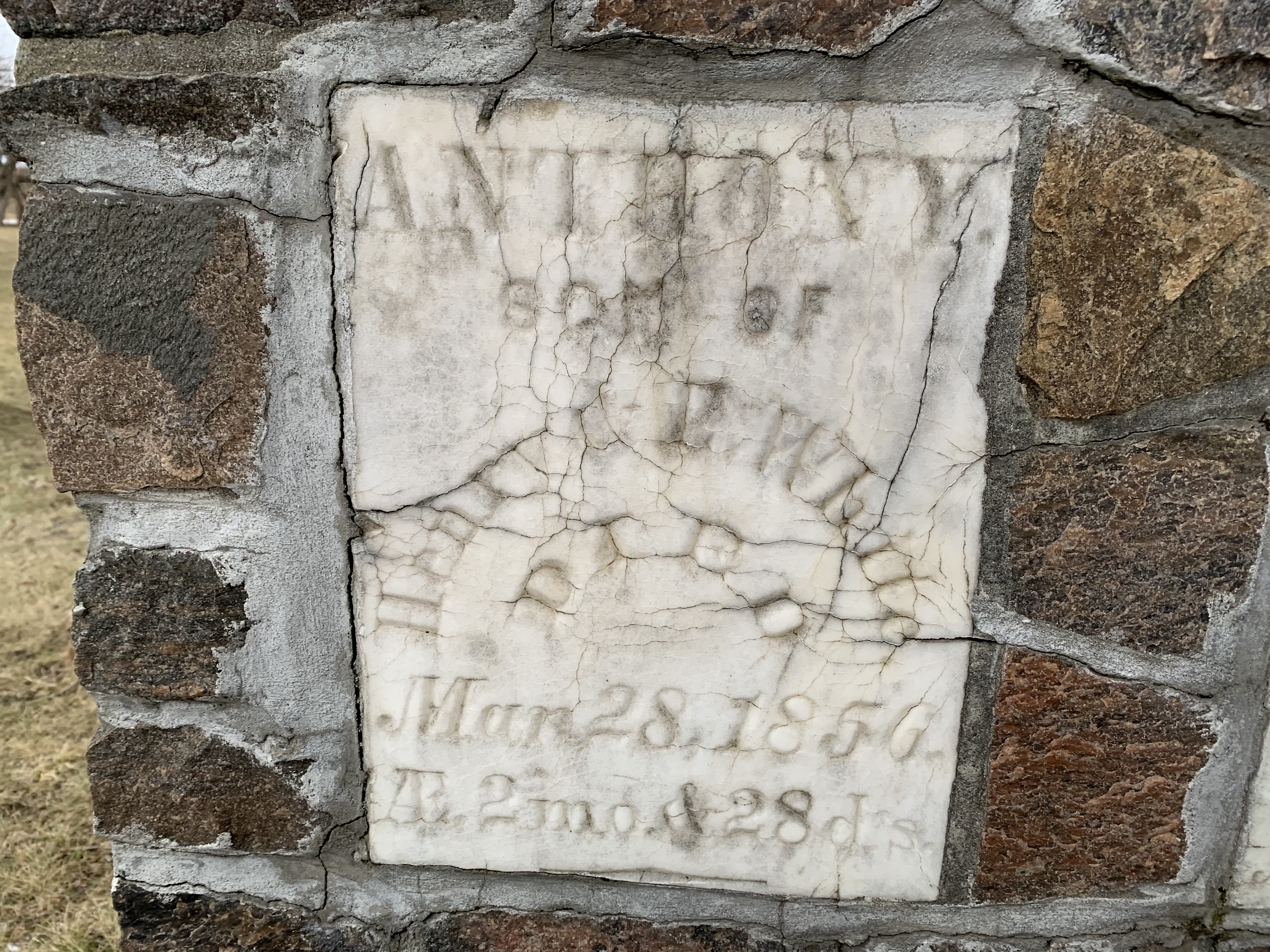
Henry and Elizabeth White went on to have other children, including Anthony who was born in January of 1856.  In pioneer days the common practice was to record the length of time a person lived rather than the birth and death date for them.  Anthony passed away on Mar. 28, 1856 when he was only 2 months and 28 days old.

IMG_0497

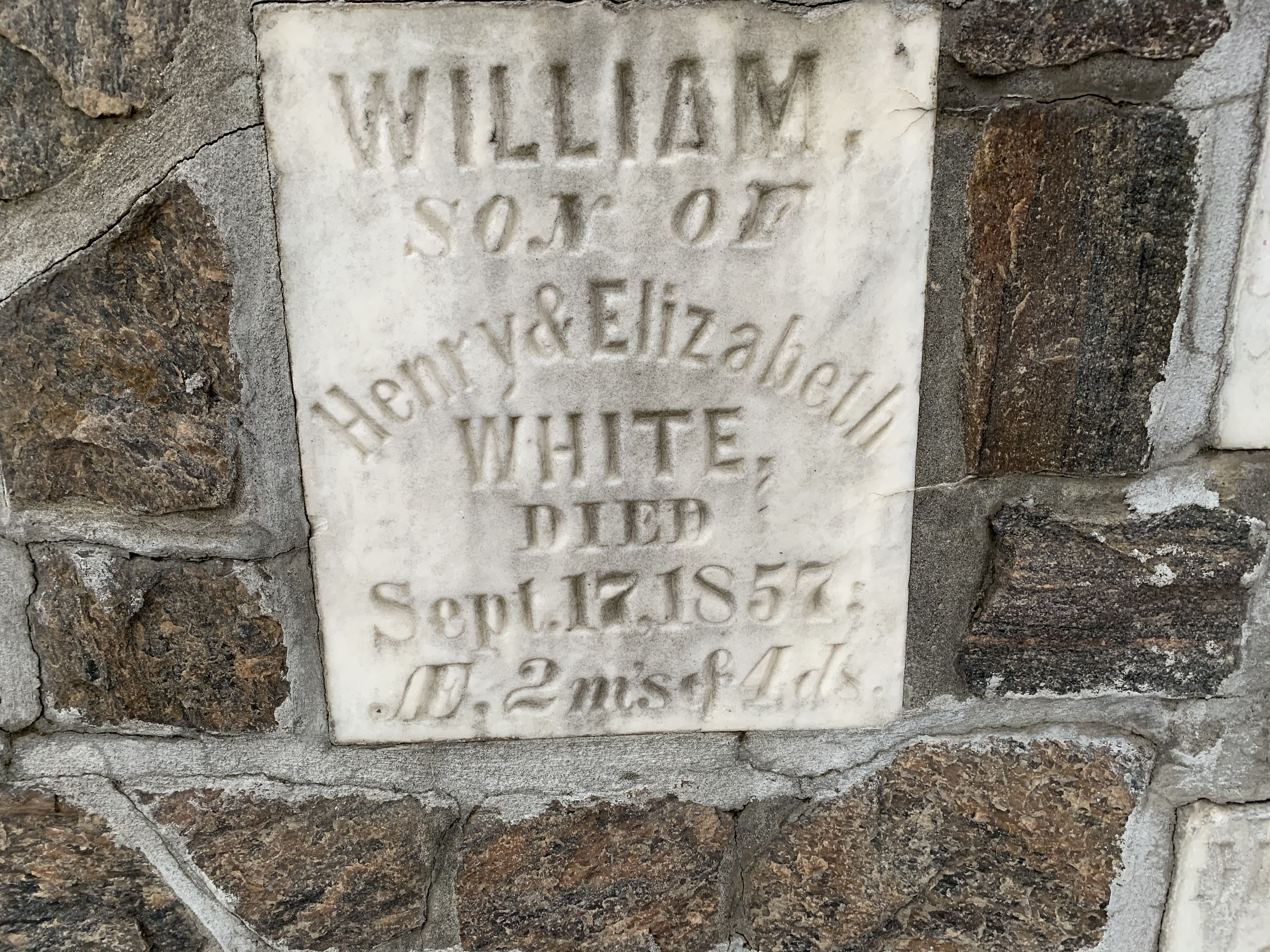
In July of 1857 the White family welcomed little William into the world.  Unfortunately, William only lived for 2 months and 4 days and passed away on September 17, 1857.

IMG_0500

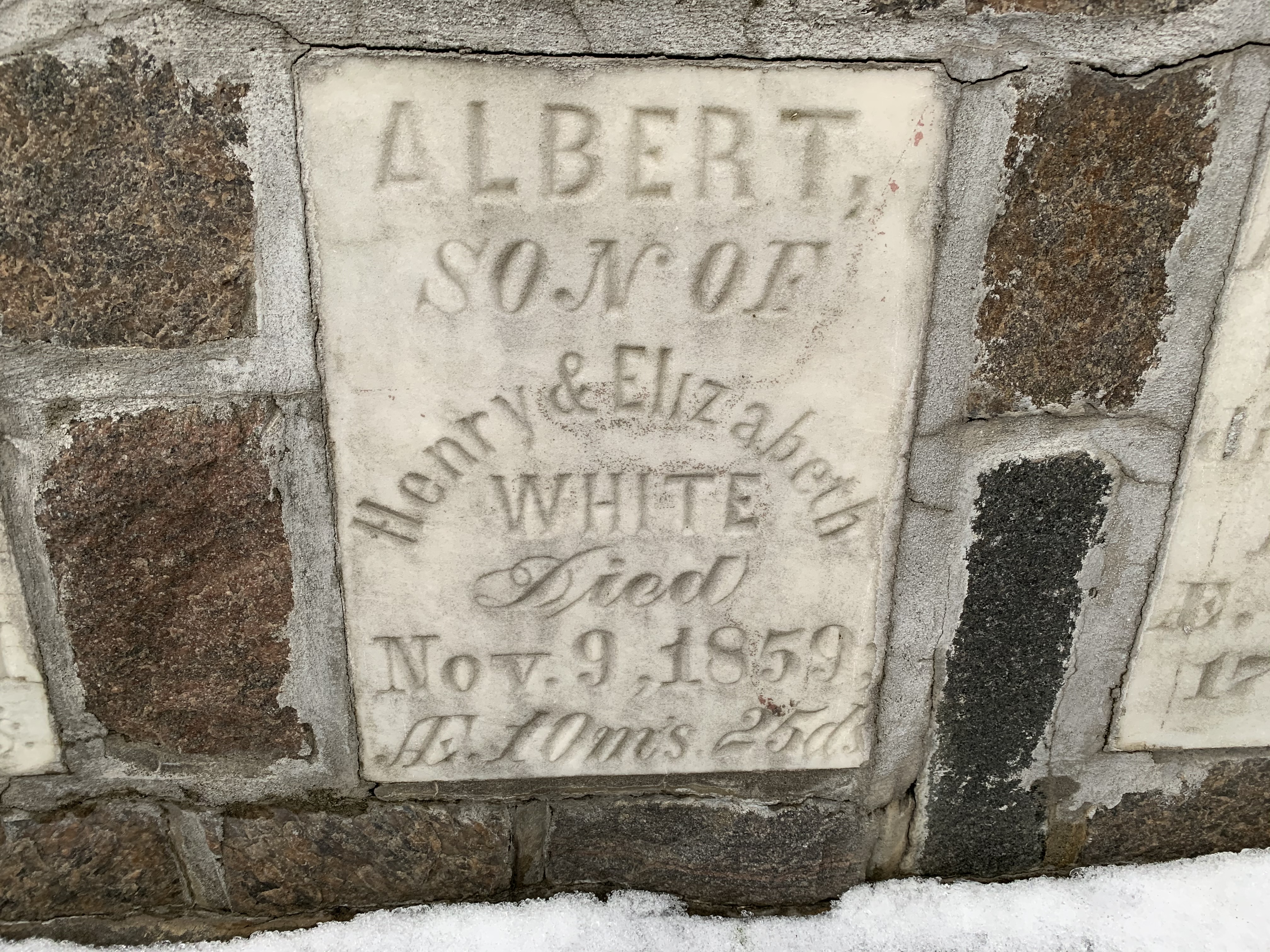
Albert was born in January of 1859 and he lived for 10 months and 25 days before passing away.

IMG_0499

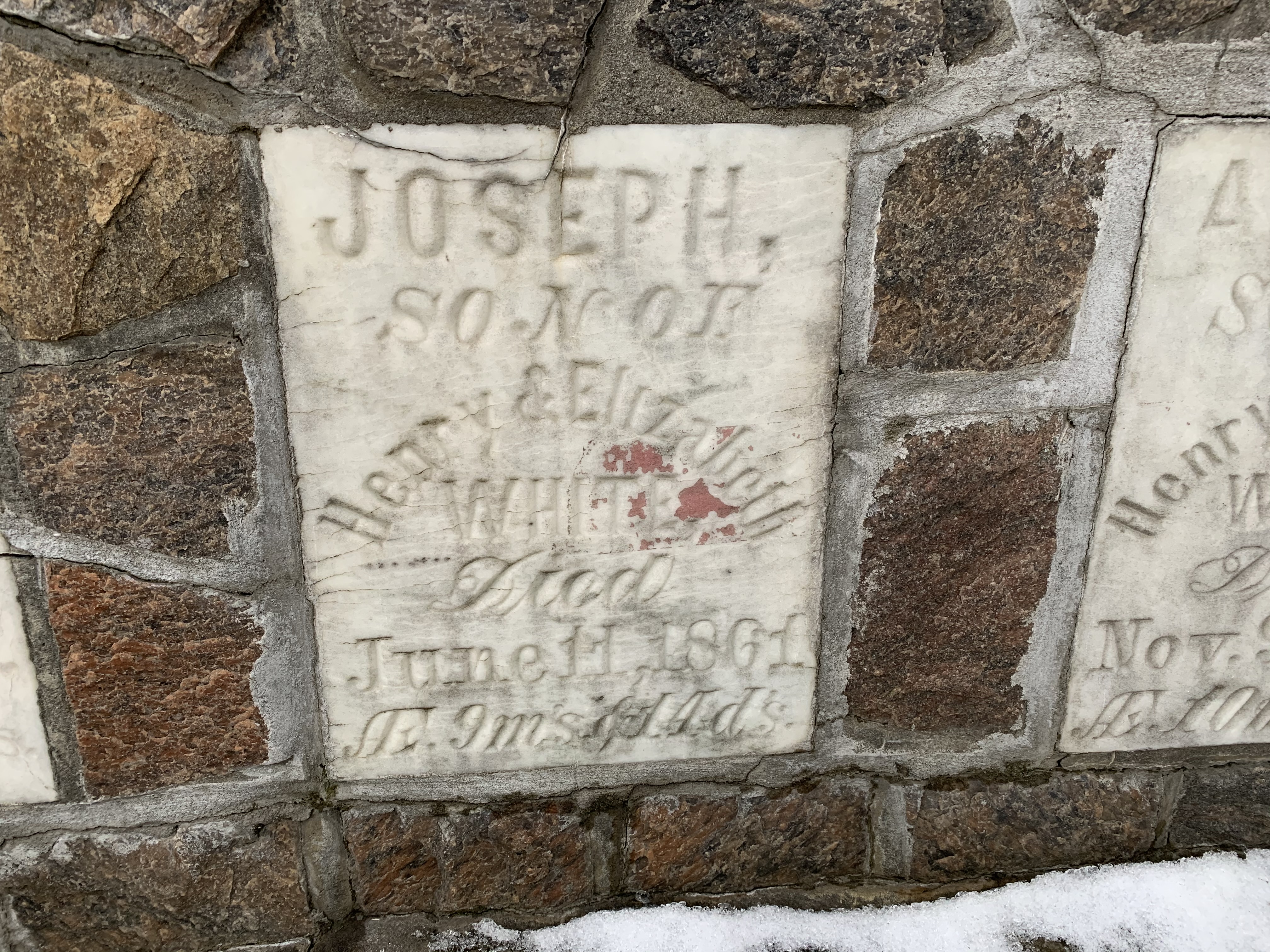
Elizabeth became pregnant again, almost right away and she gave birth to Joseph about 10 months later in September of 1860.  Sadly, Joseph would live for only 9 months before passing away in June of 1861.

IMG_0498

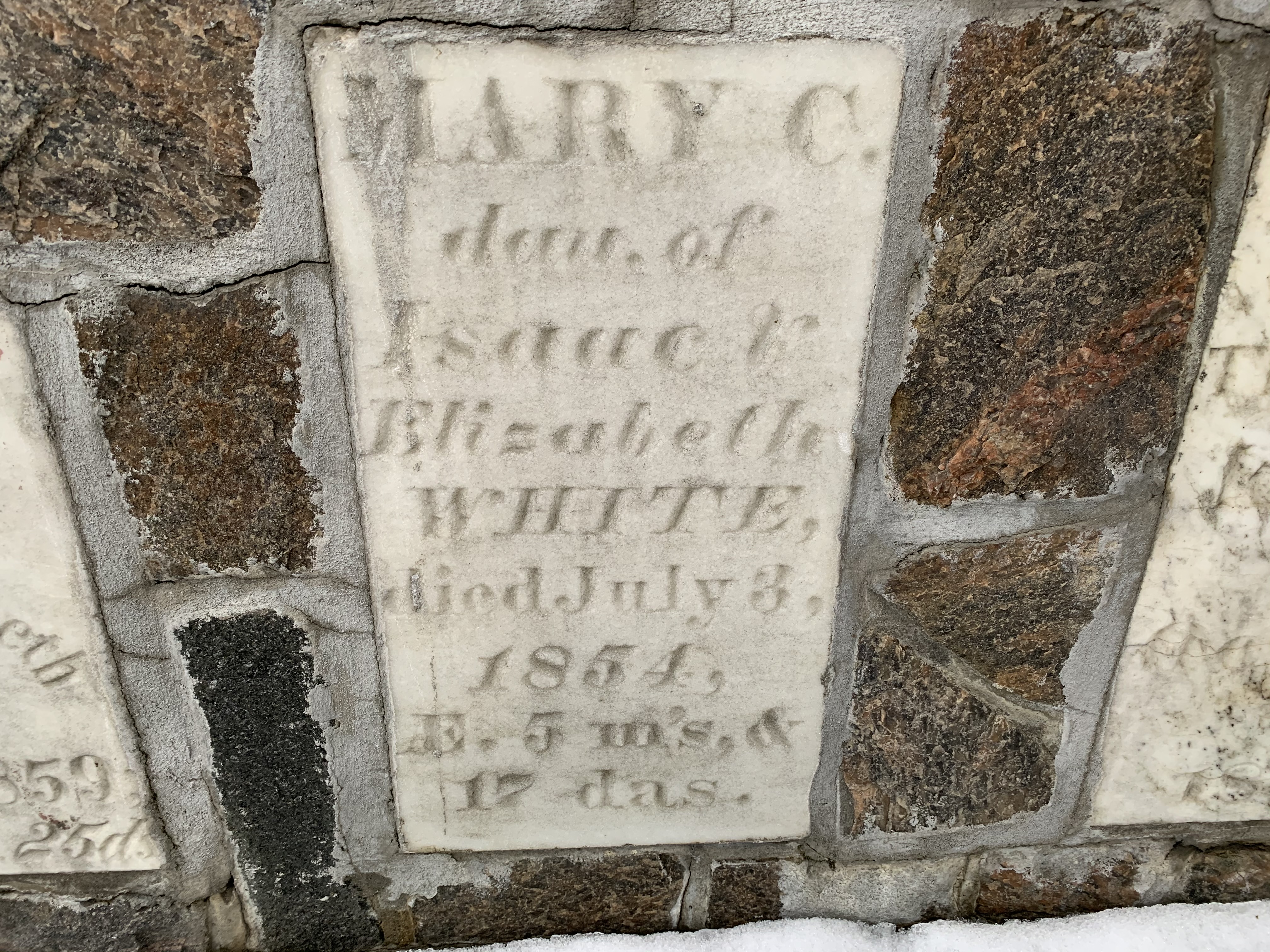
Isaac and Elizabeth White were likely related to Henry and Elizabeth.  They also buried young children in the graveyard at St. Stephen’s church.  Mary C. was born in February of 1854 and passed away on July 3rd, just 5 months later.

IMG_0502

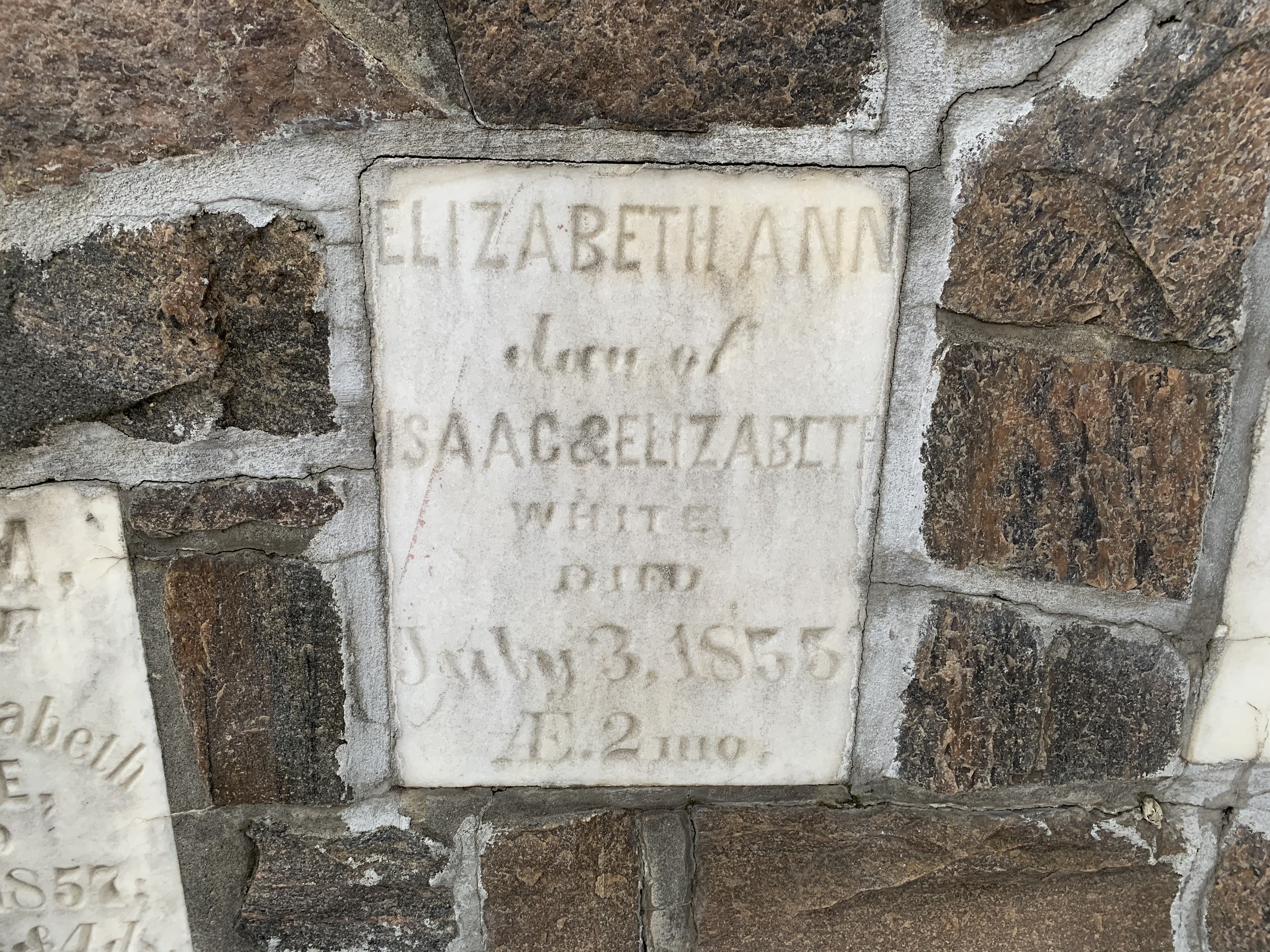
A couple of months after this Elizabeth became pregnant again and Elizabeth Ann was born in May of 1855. Two months later she passed away on the first anniversary of the death of her sister.

IMG_0501

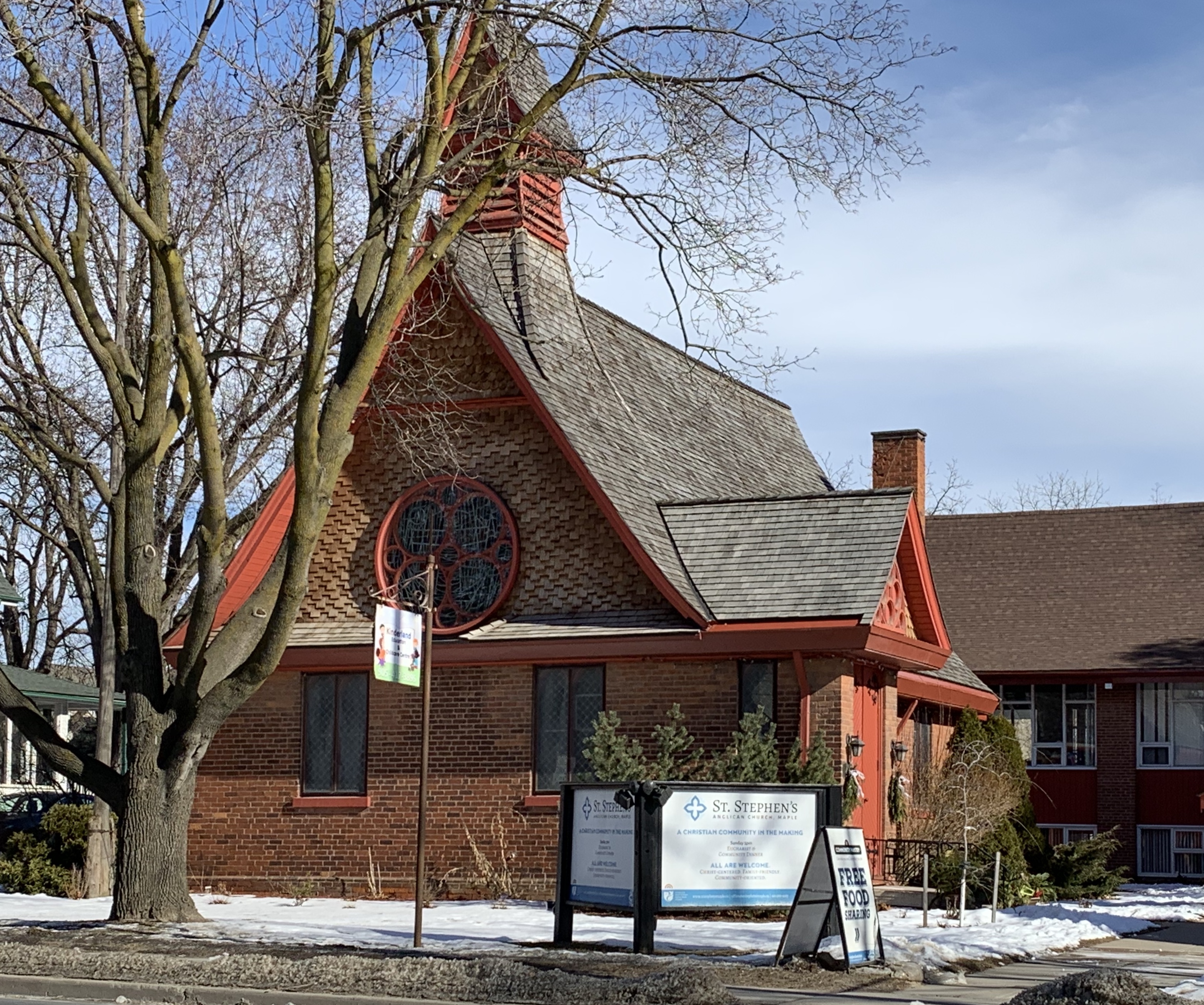
An Anglican Church was built in 1838 on a plot of land donated by one of the Keffer brothers of Sherwood.  The property was owned by a member of the Zion Lutheran Church, honouring a longstanding history of cooperation between the two denominations.  In 1895 they built a new church on Keele Street on the north end of Maple.  The prominent feature, apart from the bell tower, is the large gable on the front with a beautiful glass rosette.  The church continues to serve the needs of the congregation in 2020.

IMG_0540 (1)

Many pioneer cemeteries are filled with the small remains of infants who never had the opportunity to grow up and experience life to the fullest.

Explore the two local ghost towns: Sherwood and Maple

Google Maps Link: Langstaff Pioneer Cemetery

Like us at http://www.facebook.com/hikingthegta

Like us at http://www.hikingthegta.com

Look for us on Instagram

Timothy Street – Pioneers of the GTA

Saturday, December 7, 2019

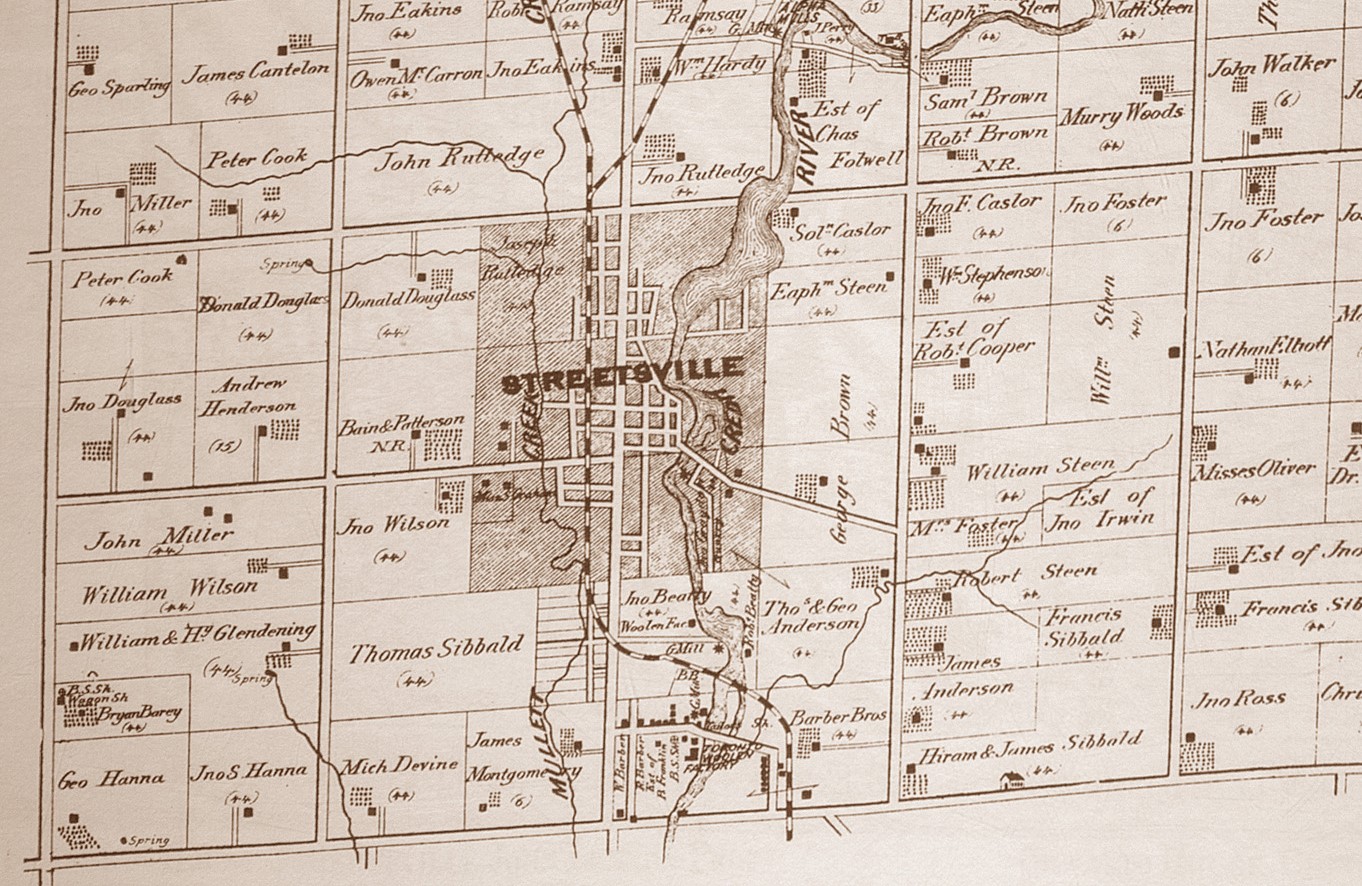
The founder of Streetsville was born in New York in 1777 and emigrated to Upper Canada in 1801 after marrying Abigail Smith.  They lived near Niagara for twenty years and in 1818-1819 Timothy financed the survey of Toronto Township and was compensated with 4500 acres of land that would become the town of Streetville.  We decided to go and explore some of the legacy he left behind.  We parked on Mill Street beside his historic home.  The county atlas below shows how large Streetsville had become by 1877 when it was released.

Streetsville (2)

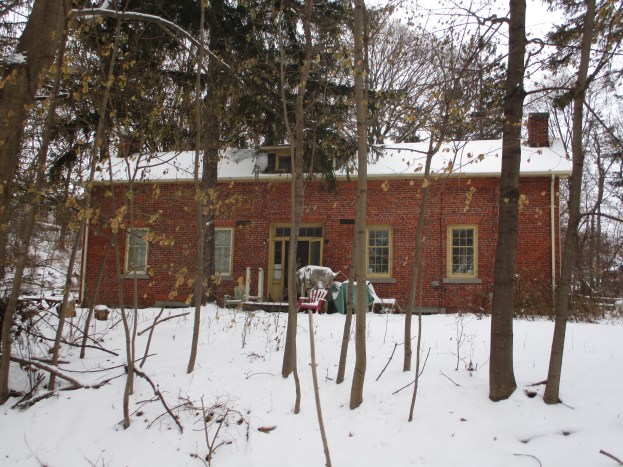
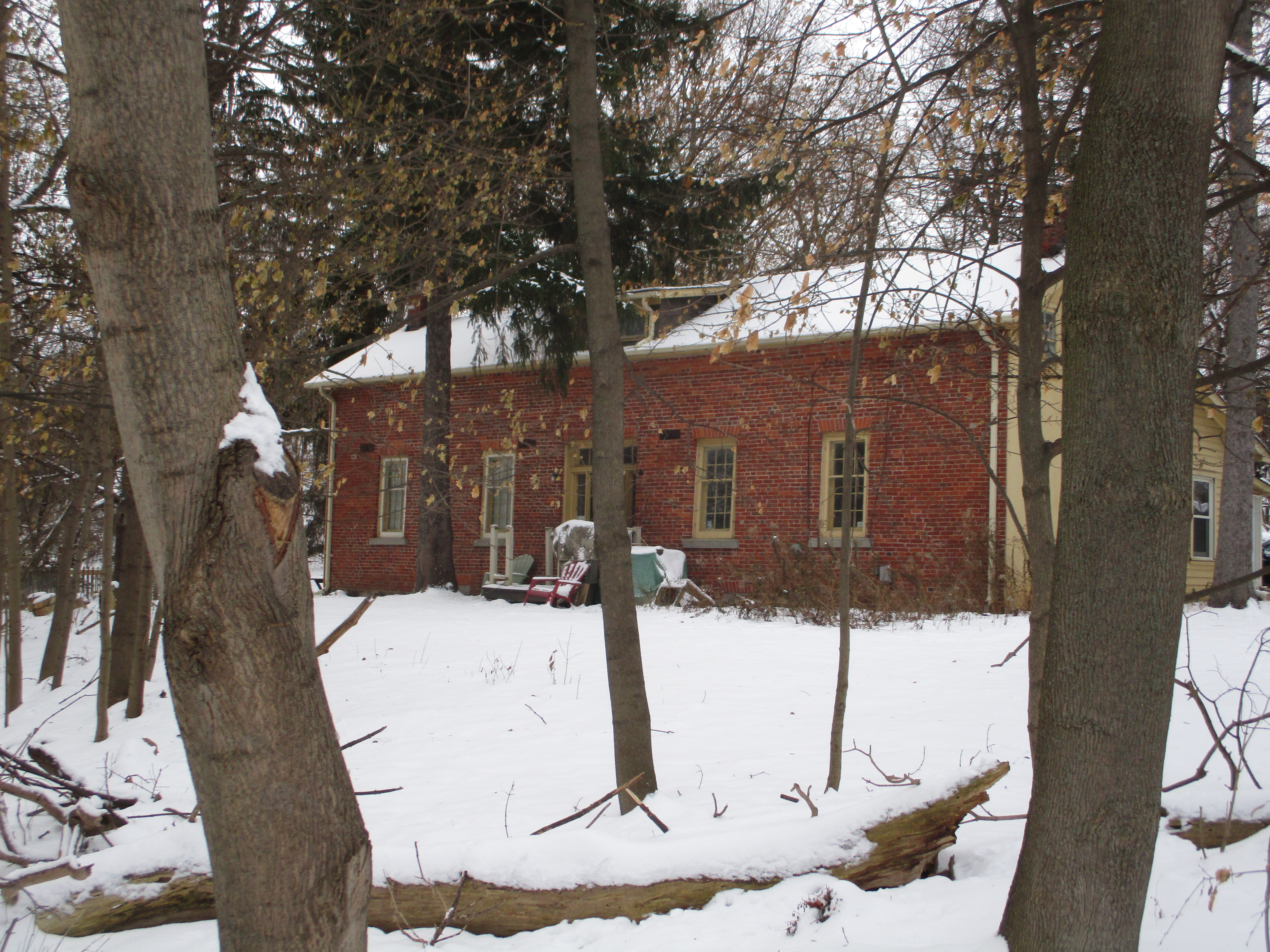
Timothy founded a milling empire and in 1825 built the house that still stands at the end of Mill Street near his mills.  He first built a grist mill around 1822 and soon added a lumber and saw mill.  He continued to expand by adding a tannery, distillery and clothing mill.  The brick house he constructed is considered to be the first brick house to be built in Peel County and remains the oldest one.  It is a story and a half and has been added to at least twice partly to accommodate the 12 children he raised along with Abigail.

IMG_8641

Timothy needed water to power his mills and so he built a dam across the Credit River just north of the mills.  He found a narrow place where an earthen berm could be built to retain the mill pond.  Originally the dam would have consisted of a wooden crib across the river that was filled with stones.  This type of dam required constant repairs, some of which could be quite dangerous.  Many millers lost their lives trying to save their mill dams from being washed away in the raging spring waters.

IMG_8645

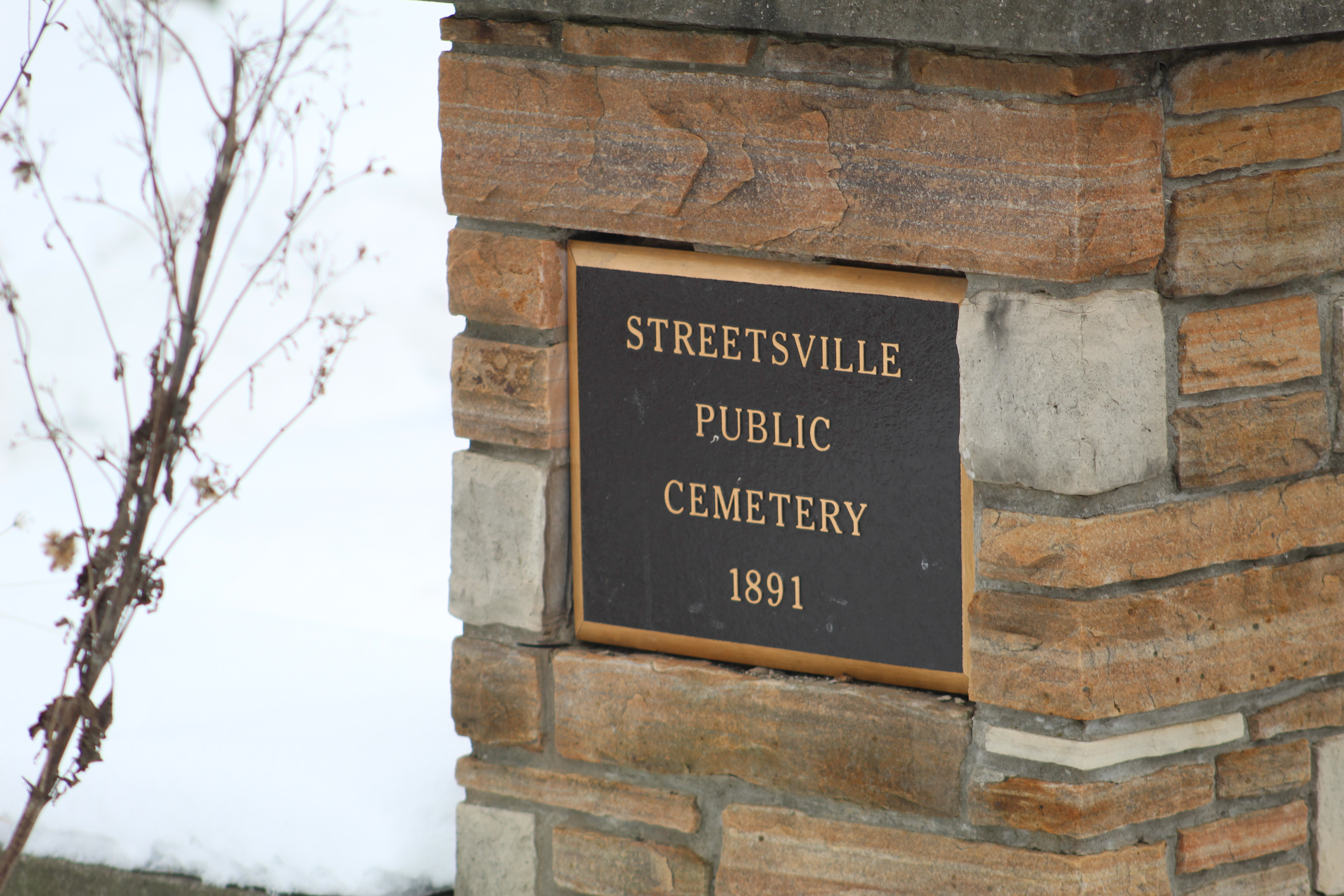
In 1824 Timothy Street deeded an acre of his land to the Presbyterian Church for the purposes of establishing a Protestant cemetery.  Five of his own children would die in their youth and be buried in this cemetery.

IMG_8660

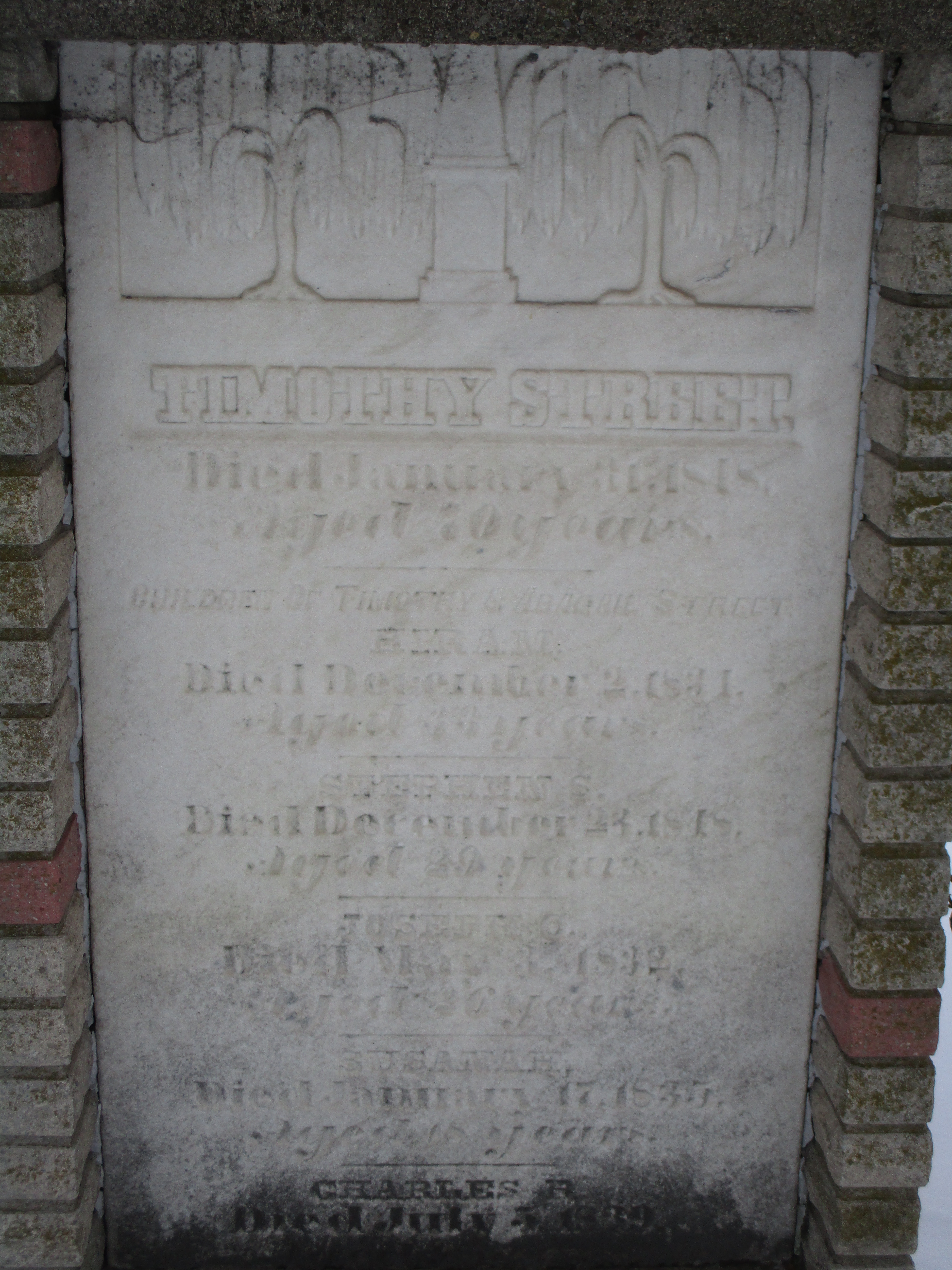
Timothy Street died an January 31, 1848 and was buried in the cemetery where his children were interred.

IMG_8661

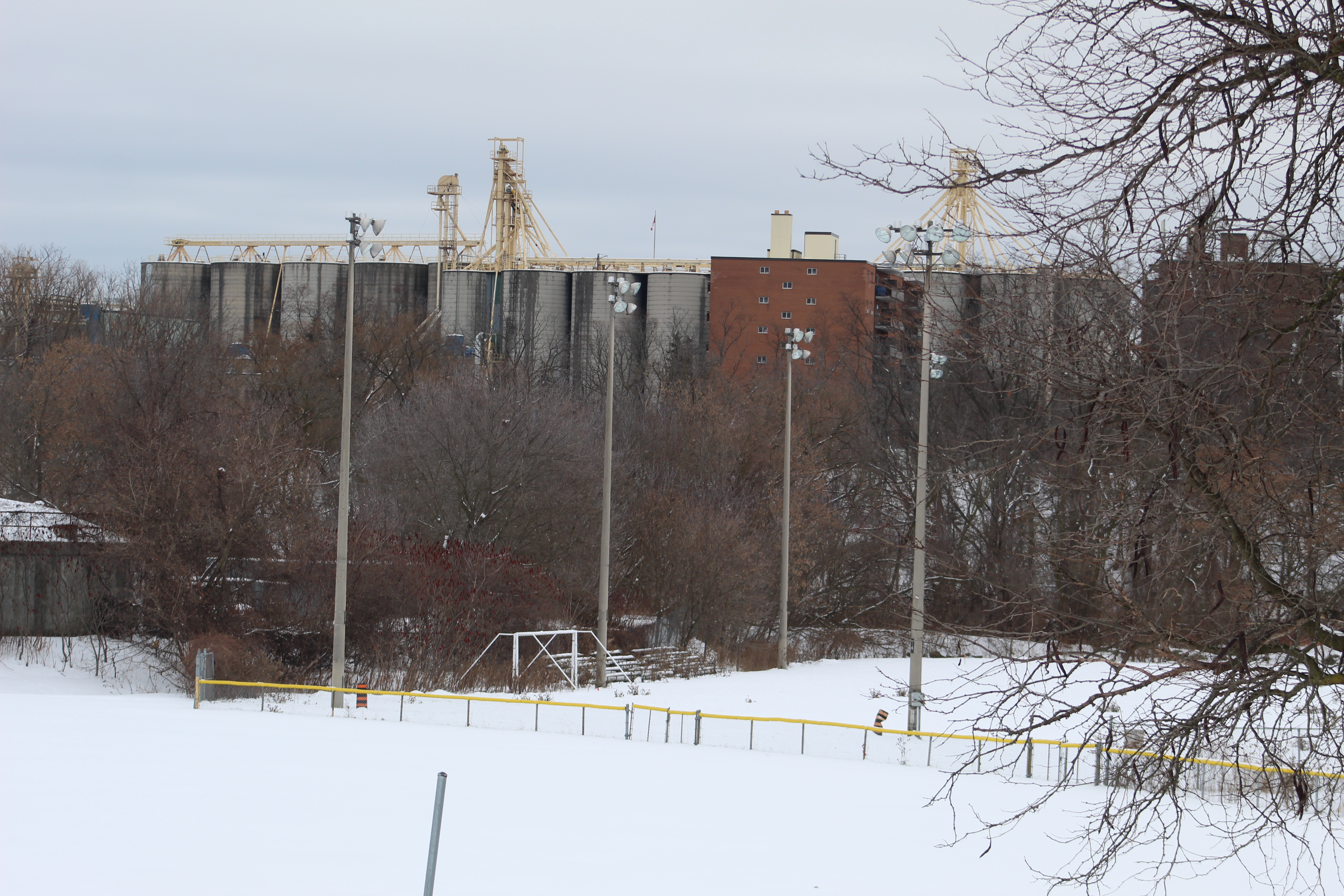
From the pioneer cemetery the silos of the Barbertown mills can be seen.  The milling community of Barbertown was located at the Credit River and Eglinton Avenue.  It included what was the largest woolen mill in Ontario during the middle of the 1800’s.

IMG_8664

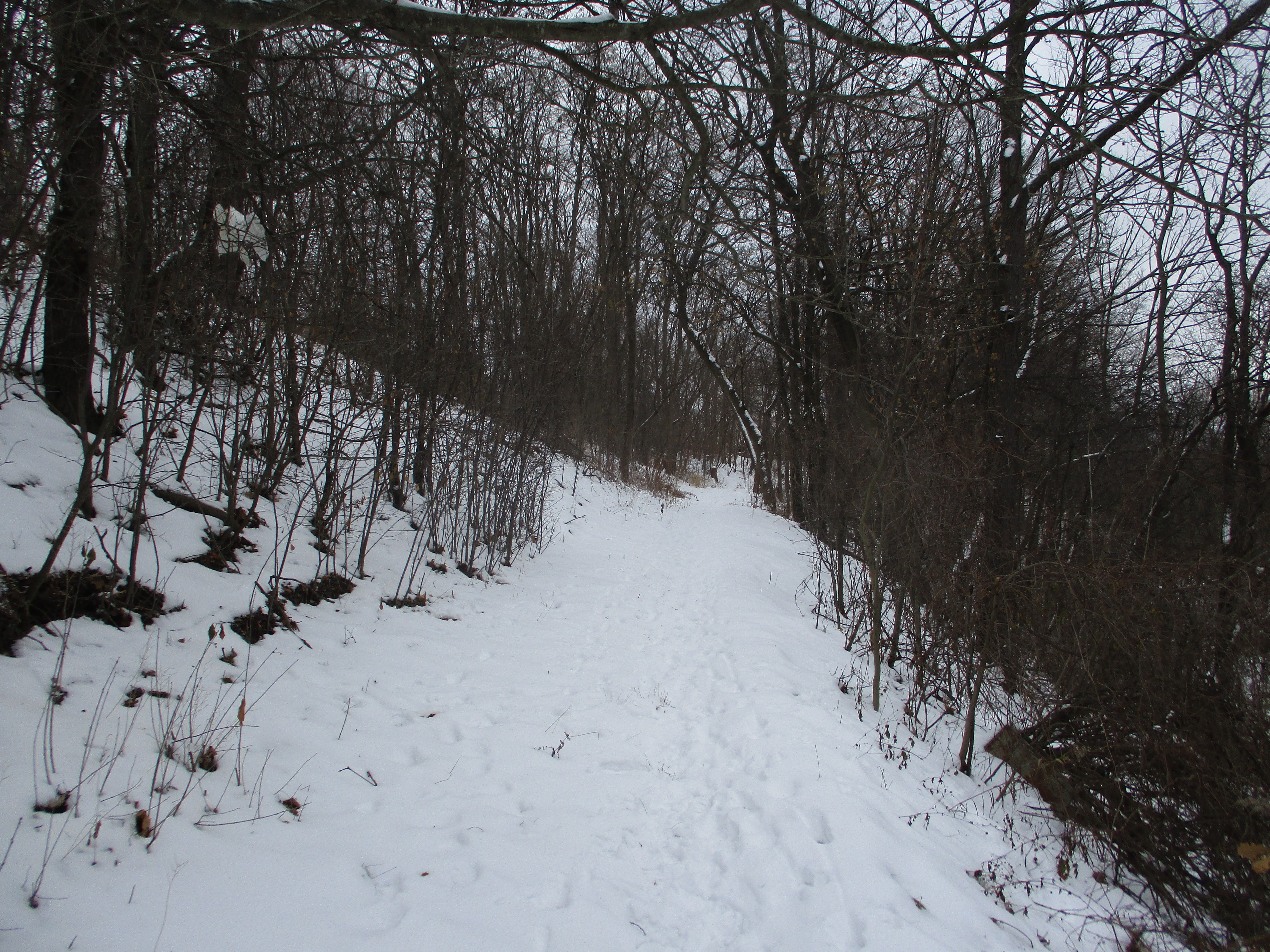
The trails along the sides of the Credit River through Streetsville form part of the Culham Trail and will eventually be part of the Credit Valley Trail.

IMG_8656

By 1890 the pioneer cemetery was reaching capacity and land for a new cemetery was donated to the town by Timothy Street’s daughter.

IMG_8650

A new study has found that squirrels use the local birds to help them determine if it is safe to go outside their nests.  Squirrels will listen to the tweets of birds in the area to help them understand if there could be red-tailed hawks near by.  When the birds are chattering away in normal fashion the squirrels go about their usual business of gathering nuts.  When the birds go silent the squirrels interpret this to mean danger and they take cover.

IMG_8654

The first high school in Peel County was built in Streetsville in 1851.  It was enlarged in 1877 when the two rooms in the front were added along with the Italianate tower.  It served as the school for 115 years before being converted to the town hall in 1966.  By 1974 it had been converted to be the local police station before its present tenant, the Kinsmen Senior Citizens Centre.

IMG_8667

Streetsville is one of the truly unique places where the city has surrounded a small town but failed to absorb it.  As a result Streetsville still has a lot of its small town charm and we have visited several times.

Further reading about Streetsville: Alpha Mills, Streetsville’s Forgotten Foundations, Hyde Mill, Barbertown

Google Maps Link: Mill Street Streetsville

Like us at http://www.facebook.com/hikingthegta

Follow us at http://www.hikingthegta.com
Also look for us on Instagram

Hermit Hollow – Hillsburgh

Tuesday Sept. 15, 2015

After having visited The Ghost Town Of Sixteen Hollow and Trout Hollow I wanted to complete the trilogy and visit the collapsed house in Hermit Hollow.  I parked off of Station Road where the old Credit Valley Railway station once stood.  I walked south on the old rail line then walked the length of the main street.

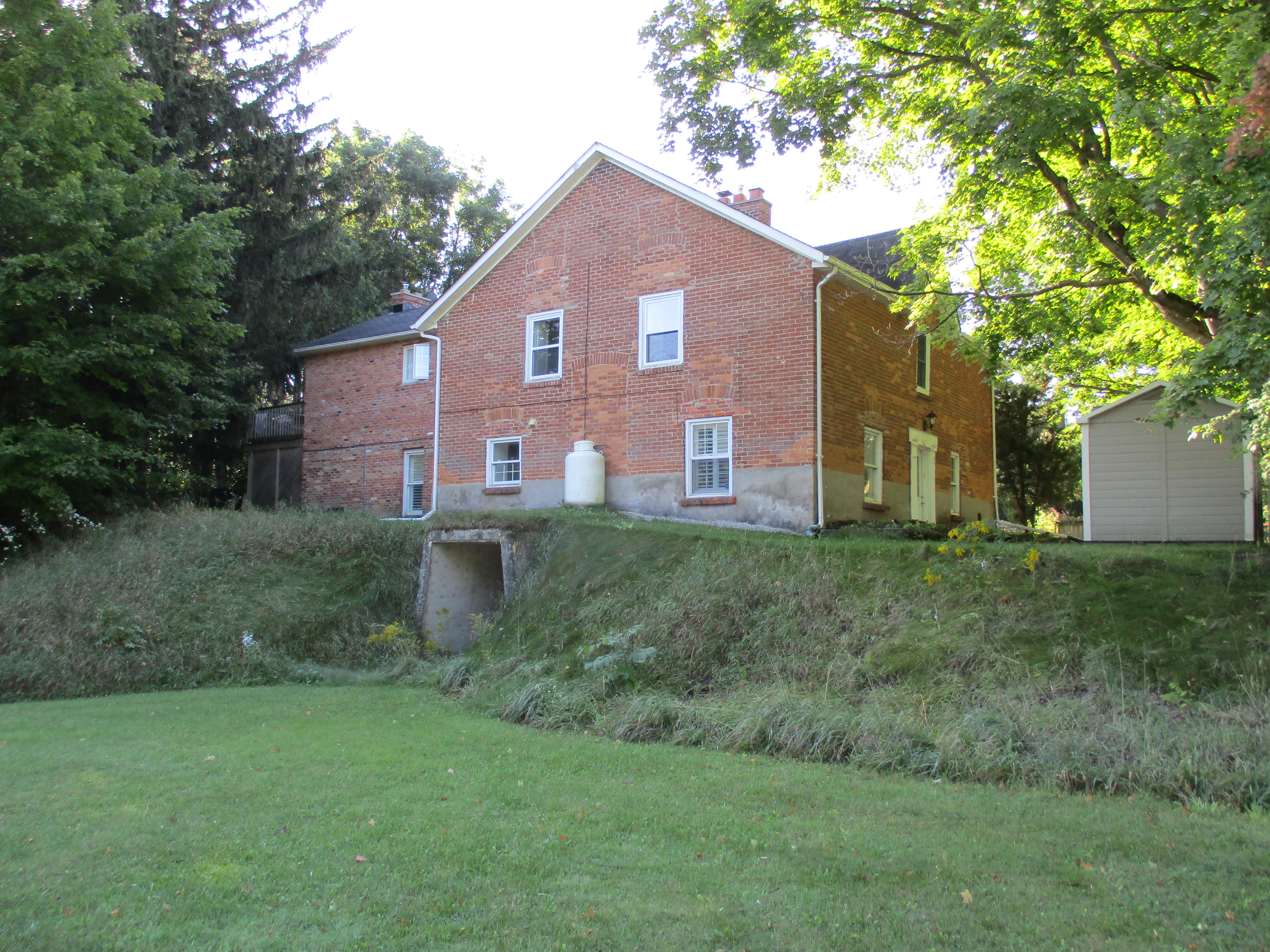
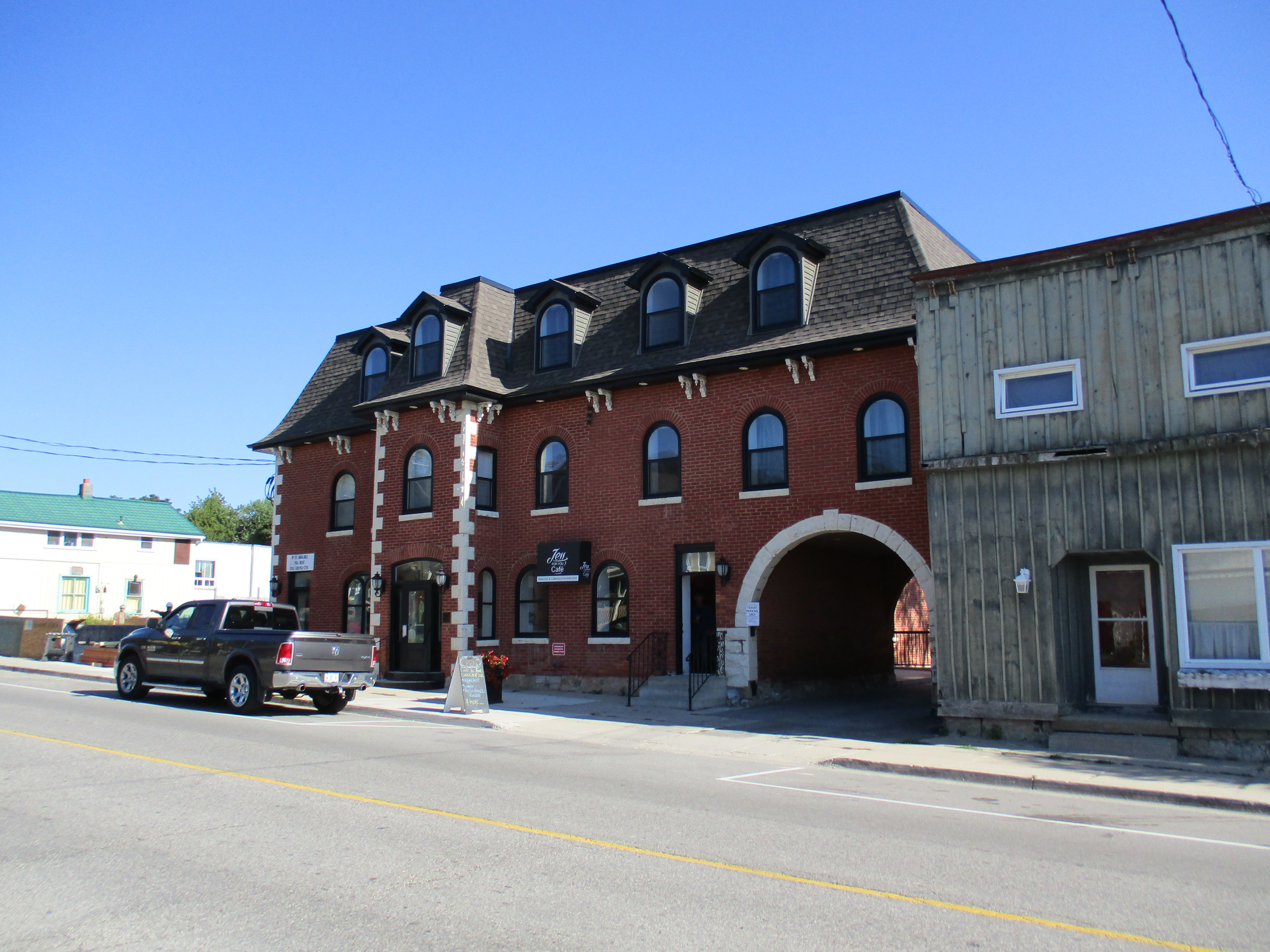
After the coming of the railway potato growing became an important part of the Hillsburgh economy.  In 1881 the first carload of 210 bags of potatoes was shipped from Hillsburgh to Toronto.  Before long up to 3,000 bags a day were being shipped.  For a few years the town even celebrated Potato Fest.  The cover photo shows a plastic button from the 1973 festival. Beside the railway station stood large potato sorting and storage sheds.  An underground potato storage facility near the railway station has been converted into a house.  Note the concrete storage entrance on the side of the house and the extensive berm for storage.  All of the windows have been reduced in height and bricked in and a doorway has been closed off where the propane storage tank stands.
IMG_0008

In 1821 William Howe bought lots 22 and 23 in the seventh concession of Erin township.  He built a general store and trading post on the 7th line.  His second, larger store, blew up due to careless smoking and storage of gunpowder. A third store was then built which operated into the 1970’s.  All of the old tin advertising for Coke, Black Cat Cigarettes and the Orange Crush door handle are all gone from the store front and now it survives as an office building.

IMG_0133

Nazareth Hill arrived a couple of years later and built a hotel on lot 25.  He surveyed his property for town lots and named the community after himself.  As Hillsburgh grew it swallowed Howville.  It was incorporated as a police village in 1899 with a population of 500.

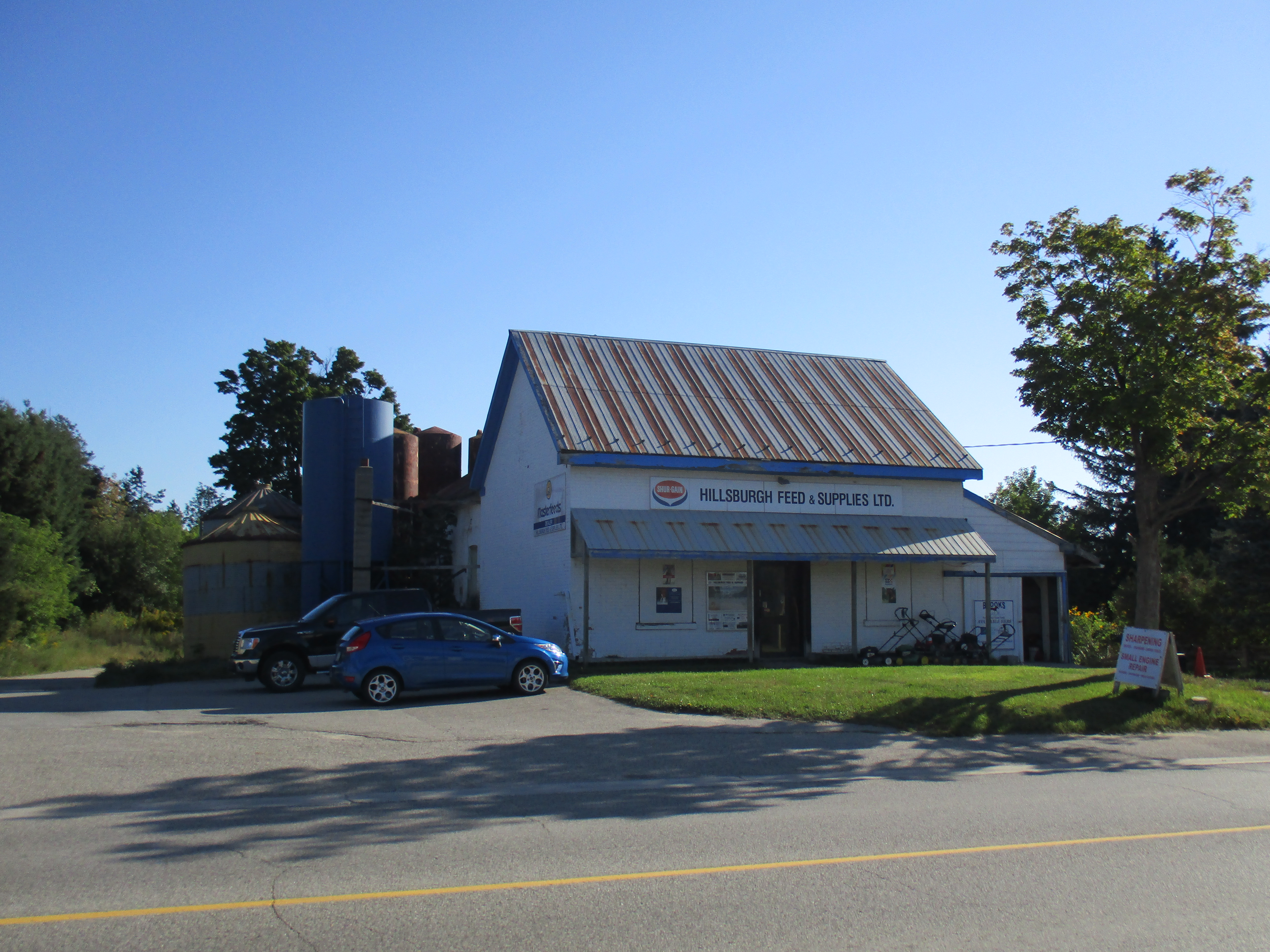
The first school house dates to 1844 and survives today as a private residence.  A one room brick school was completed in 1864 with an addition for the juniors on the front in 1878. In 1960 six acres were purchased from the Nodwell farm and Ross R. McKay school was opened with four class rooms.  The picture below shows the old school which has served local farmers as Hillsburgh Feed since 1963.  The 1864 school room is hiding in the back beside the feed silos.

IMG_0015

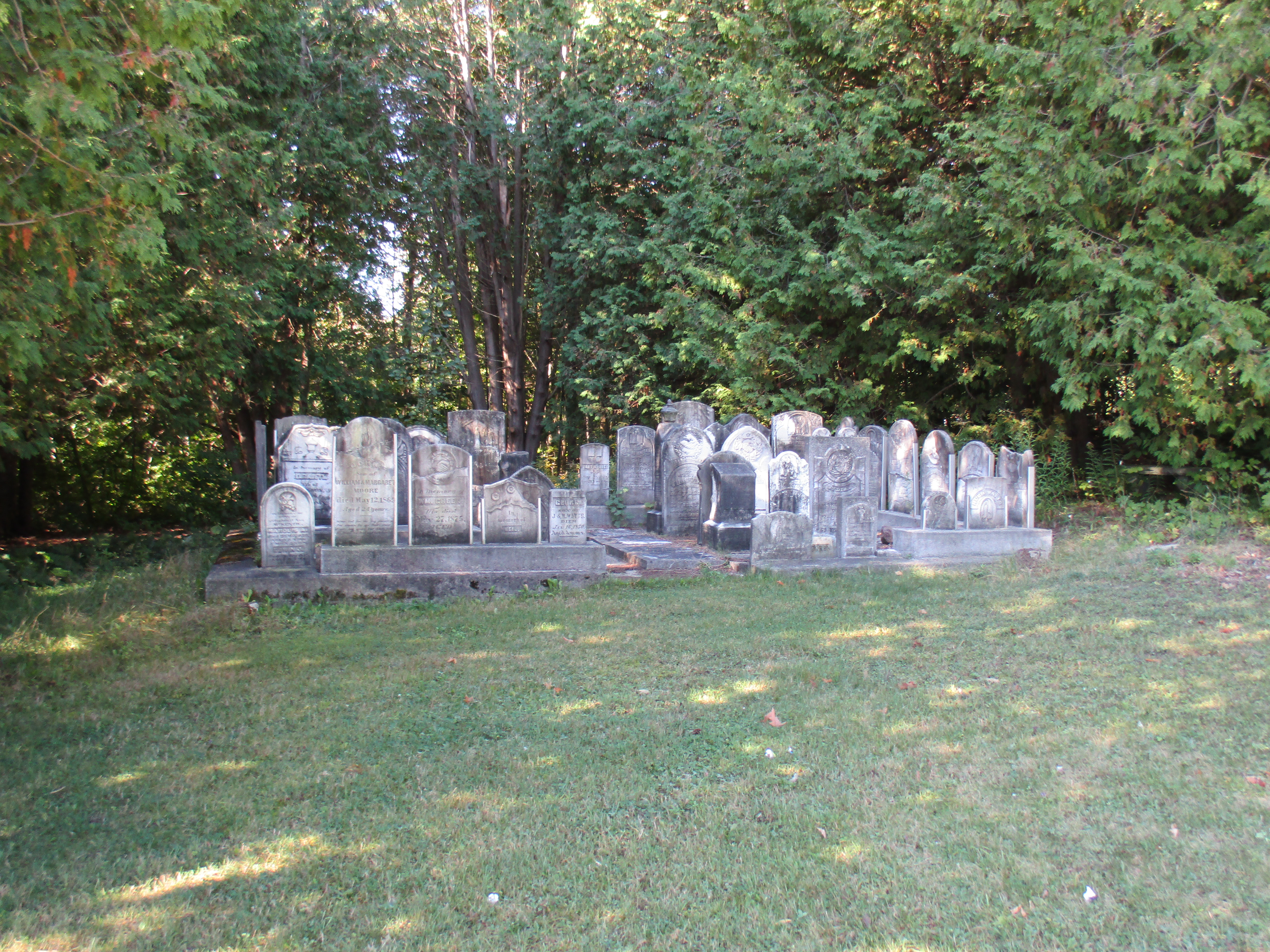
William How is buried in the pioneer cemetery near the middle of town.  After many years of neglect the stones were gathered up and placed in a central location.

IMG_0018

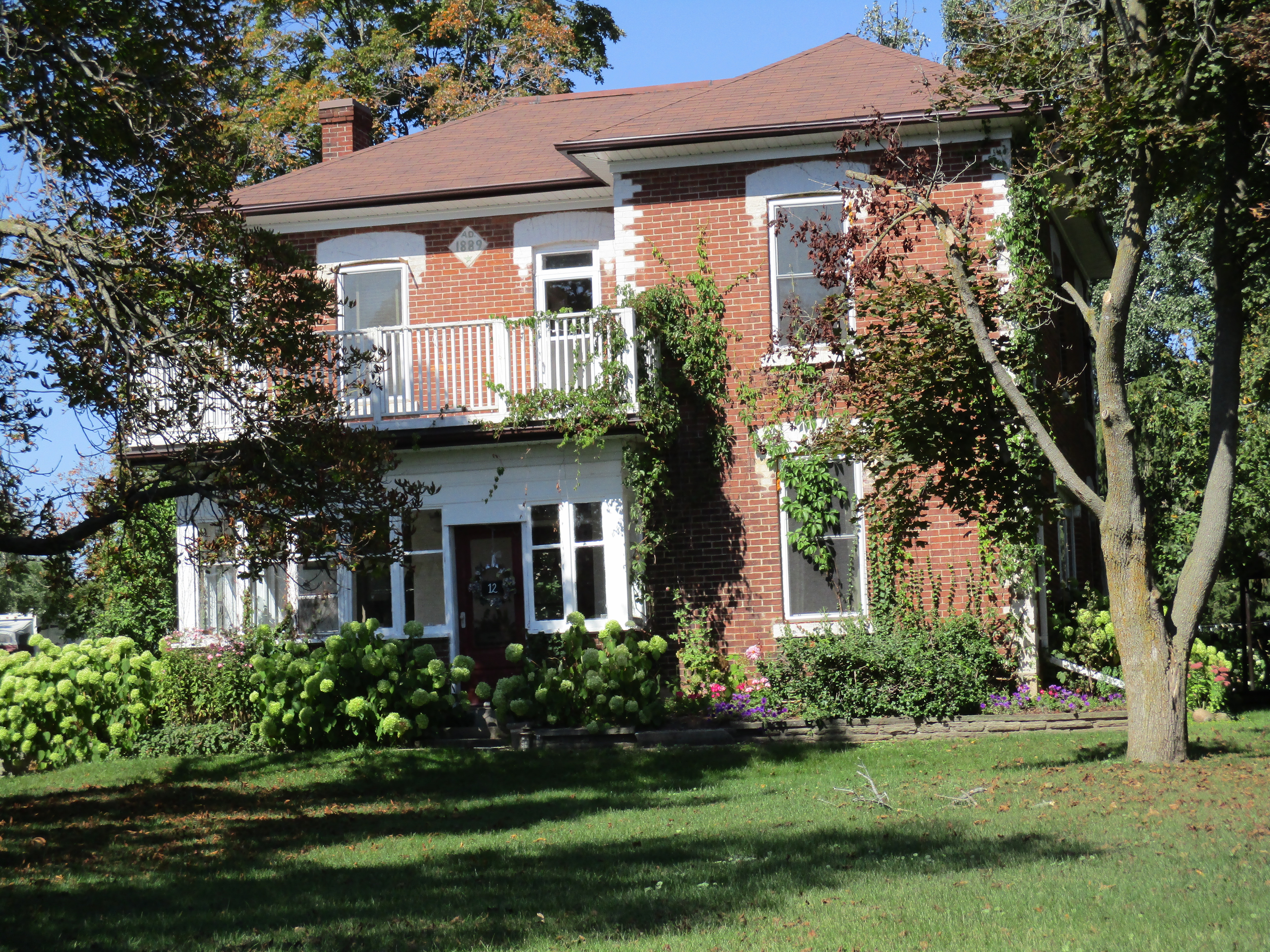
William Nodwell came to Canada from Ireland in 1838 and settled on Lot 24.  His first log home burned down within a year.  Nodwell then sold half of the lot and constructed another log house and barns.  In 1868 the brick house shown below was built.  This view shows the front of the now abandoned house with it’s second story oriel window.  In 1895 the house at the corner of the lane was added for use by family members.  In 1926 Mungo Nodwell took over running the farm which was well known for the  potatoes he grew.  Today there is an open proposal to develop this farm for a subdivision and the electric fence that used to surround the school yard has been replaced with a row of trees.

IMG_0120

A second town hall was built in 1887.  The date stone is interesting because it has no “h” on the end of the town’s name.  Notice the two maple leaves above the date and the beaver below. The Beaver was the name of the town newspaper in 1887 and cost 25 cents per year, paid in advance.

IMG_0049

Six of Hillsburgh’s seven church buildings remain.  The first, and only missing, church was the Union Church and it stood beside the pioneer cemetery.  As each of the denominations grew they left the Union Church and got their own buildings.  From the south end of town is the Baptist Church (1862), Christian Church (1906) and St. Andrew’s Presbyterian (1869) which burned in 1965 and was rebuilt in the original walls.  Beside the river stands the United Church which was reassembled here in 1926 and the Anglican Church seen below.  It was built in the early 1890’s but closed in 1918 and served as a honey extracting plant after that.

IMG_0051

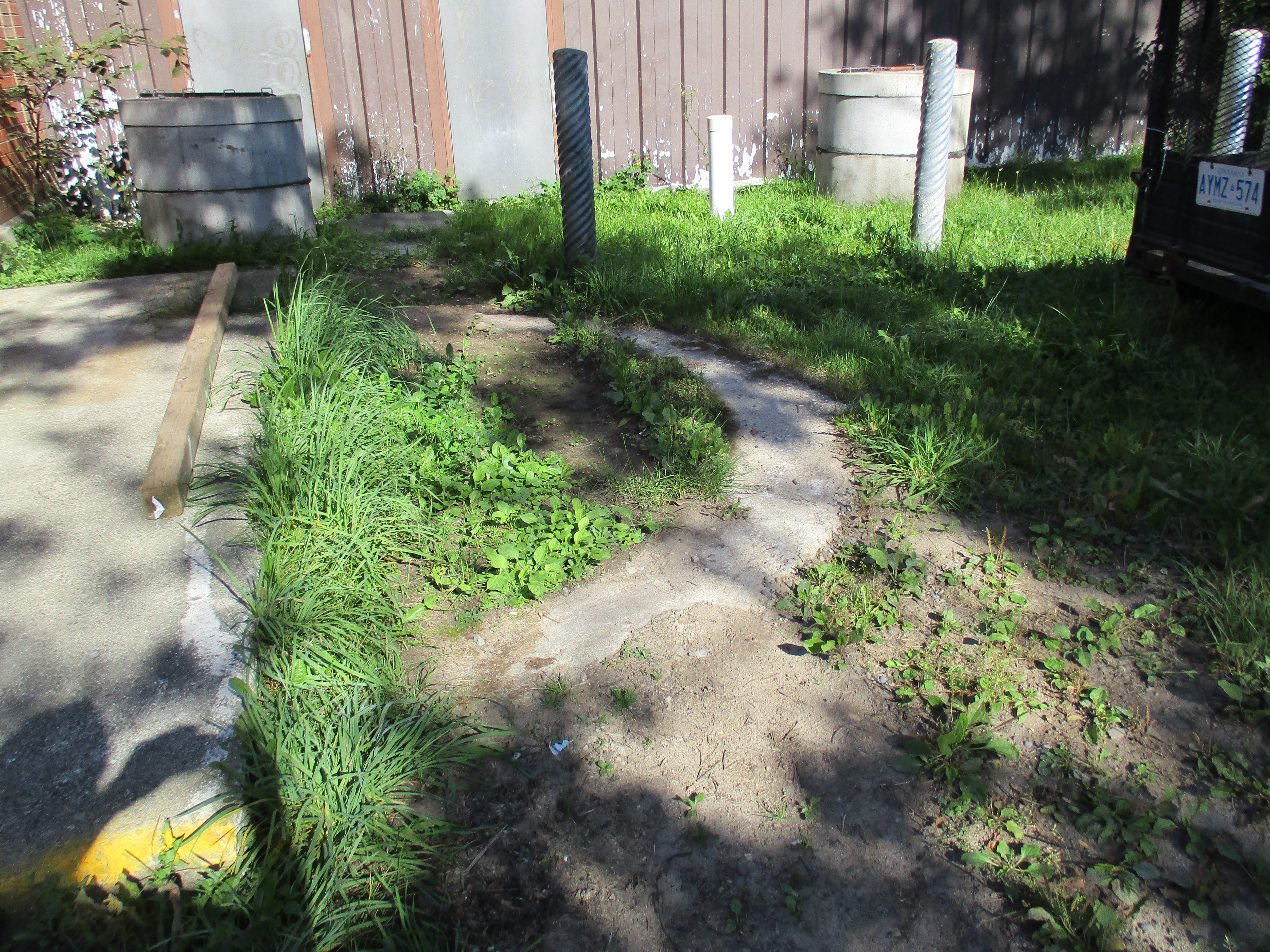
Hillsburgh didn’t have a fire hall until the church fire of 1965.  After that it had a two door building that stood beside the river.  When the arena was replaced it was moved to Station Road.  Today there is a semi-circle of concrete on the ground behind the arena to mark the tower where the fire hoses were hung to dry.

IMG_0056

The Exchange Hotel was built in 1883 and was one of three hotel buildings that remain in town. Until recently It had stables in the back for the traveler’s horses and lettering on the arch which said “Good Stabling”.  It is the only three story building in Hillsburgh.

IMG_0078

Church Street was home to the Methodist Church.  This was also the site of the town’s third cemetery which lies below the lawn.

IMG_0089

The Barbour house, dated 1889, is on Orangeville Street and is one of half a dozen houses in town which are dated in the 1880’s and 90’s on a diamond shape date stone.  These were built by Alexander Hyndman whose own 1879 house stands beside the Christian Church.

IMG_0128

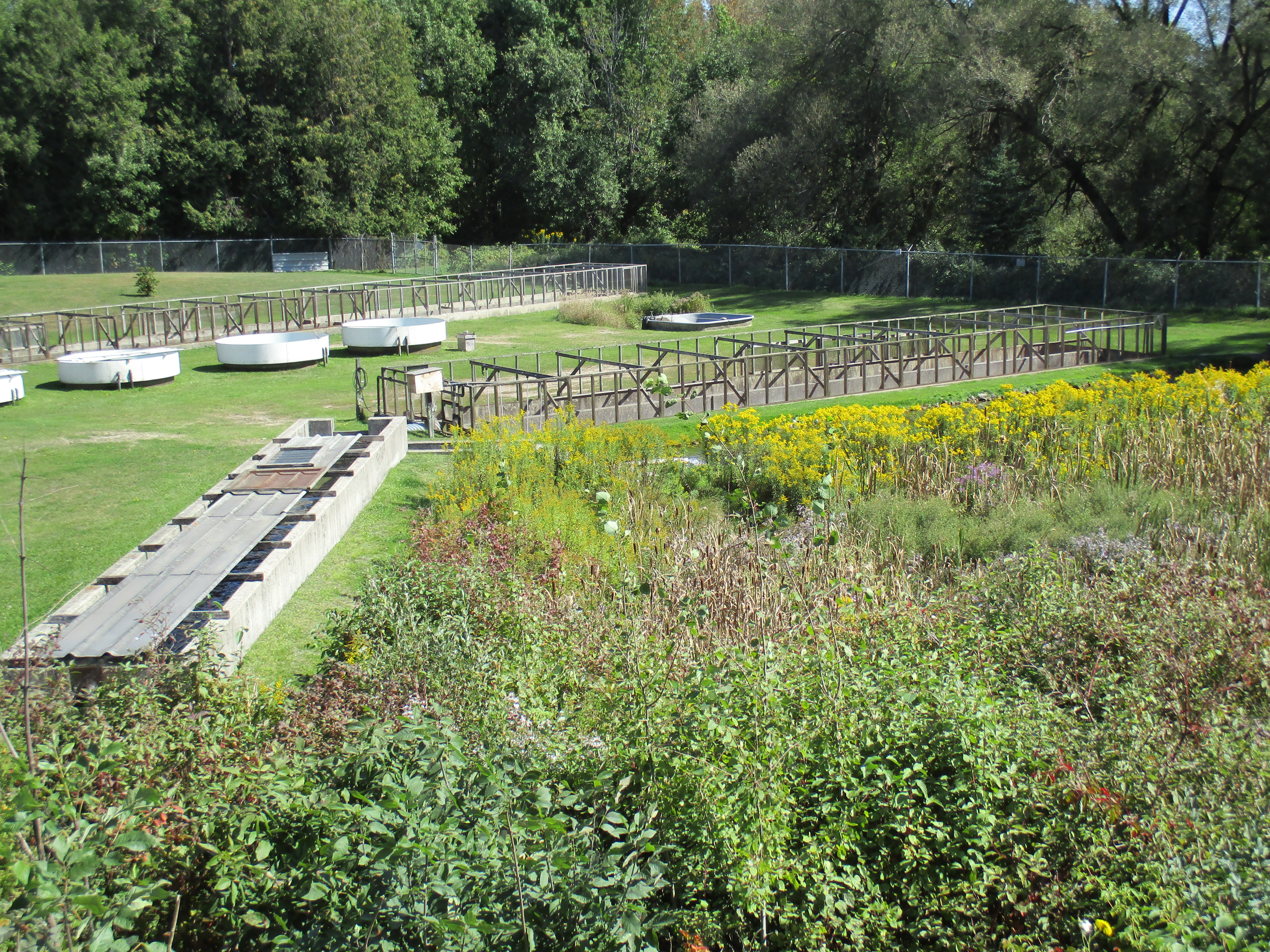
On the south east corner of the 8th line and 27th side road lies one of the headwaters of the Credit River.  In 1906 this property belonged to the Caledon Trout Club and later was a fish hatchery.  From here the water flows through Hillsburgh’s three existing ponds and into the Credit River.  A little boat dropped in this trickle of water could eventually emerge in Lake Ontario at Port Credit beside the much larger ship The Ridgetown.

IMG_0127

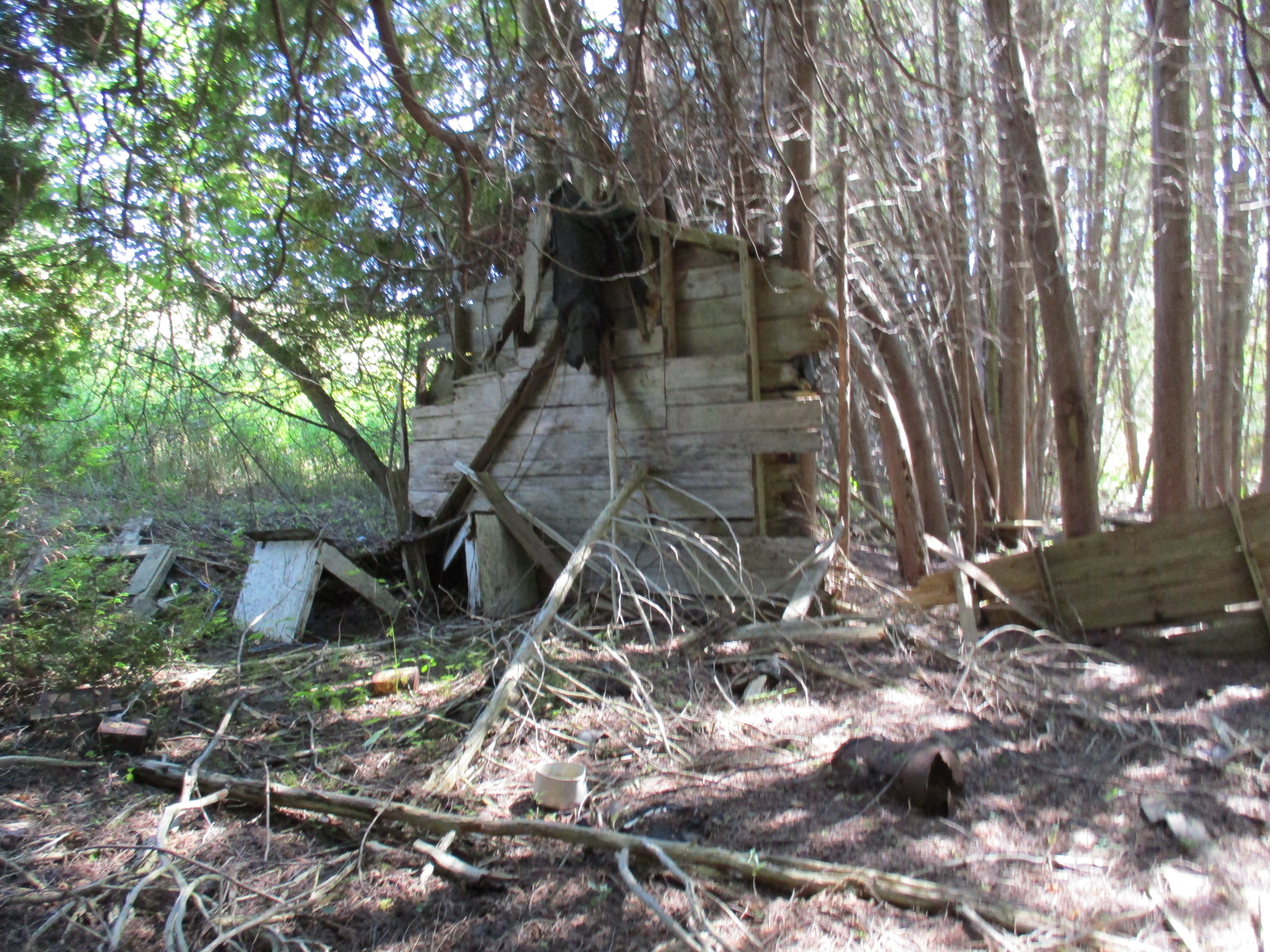
Leaving town on the 7th line there are two large hills.  In the hollow on lot 18 stood an old shack covered with asphalt siding.  During the early 1970’s a hermit lived in this house.  It was already in a state of decay at that time and collapsed by the middle of the decade.  Today one wall remains leaning against a tree and the rest is in advanced decay on the ground.  In good hermit fashion the property is strewn with old tin cans and empty bottles.

IMG_0137

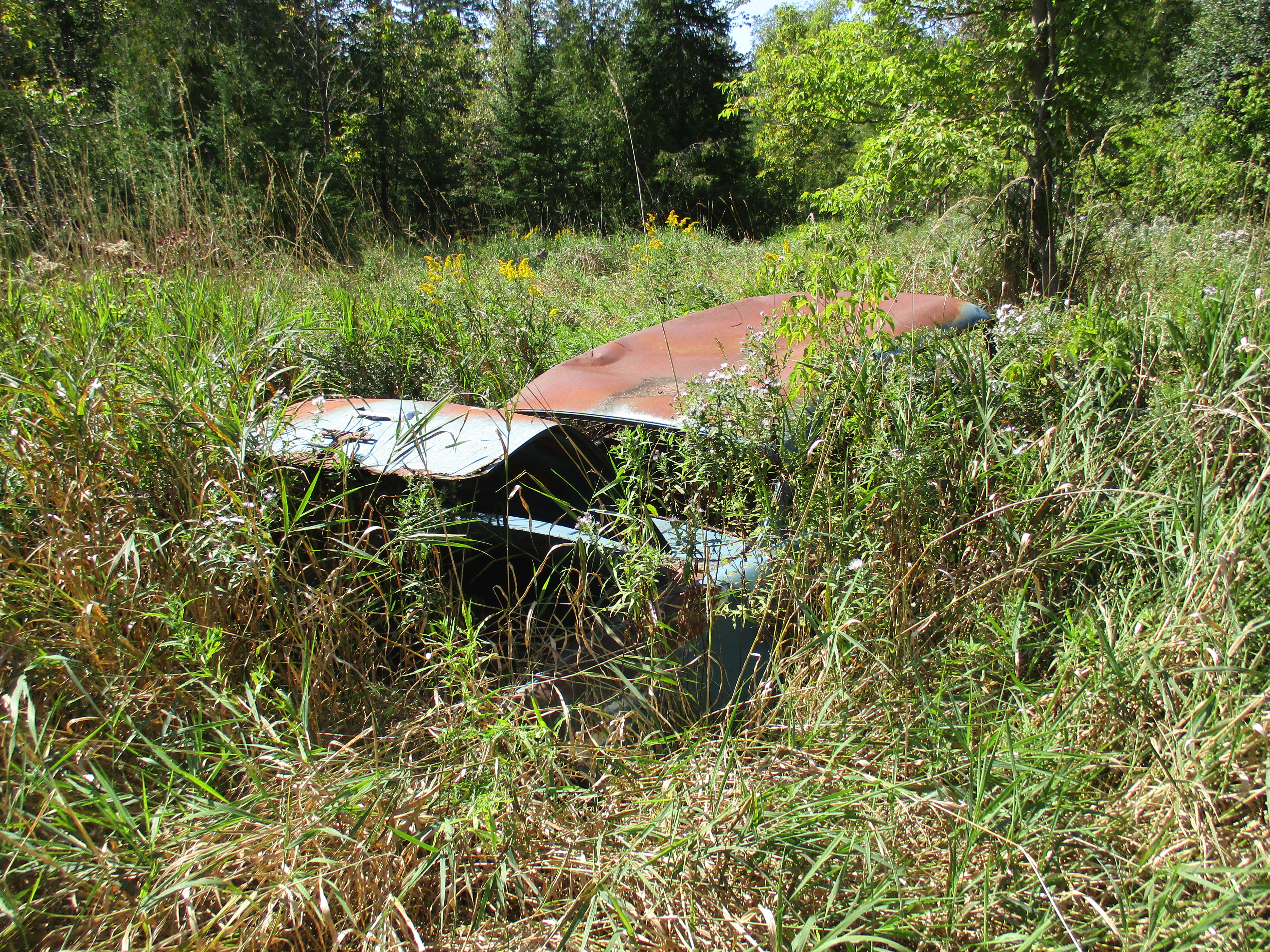
An old car from the 1940’s or early 1950’s lies rusting in the tall grass at the back of Hermit Hollow.

IMG_0150

Hillsburgh retains many historical buildings and is an interesting time capsule of rural Ontario.

Like us at http://www.facebook.com/hikingthegta