Category Archives: Credit River

Erindale Hydro Electric Dam

Sunday Oct. 19, 2014

Sunday morning was cold at only 2 degrees.  To access the parking lot at Erindale park you have to drive through a break in the wall of the old Erindale Dam.

In 1902 Erindale Light and Power Company was formed to construct an hydro electric generating plant on the Credit River at Erindale.  This large scale engineering project ran into several delays during construction and didn’t begin producing power until 1910.  A dam was constructed across the valley flooding it and creating the 125 acre Lake Erindale.  A power generating plant was built on the south end of town at the bottom of Proudfoot Street.  A tunnel was constructed to connect the two.  The power plant operated from 1910 until 1923 supplying power to Erindale and New Toronto. It was closed when Ontario Hydro began to supply the area with power from Niagara Falls.  In 1941 the lake was drained and the dam was blown up.  Between 1961 and 1965 the former lake bottom was used as a sanitary landfill.  It has since been covered over with clean soil and Erindale Park has been created.

From the top of the old dam the view across the old lake bed gives you a good impression of the size of dam and the lake it created.

IMG_0683

Walking north along the east side of the river we came to this shopping cart which has obviously been standing in the river when the water was much higher.  The shiny coffee mug on top belongs to a clever angler who is fishing near by.

IMG_0694

As you head upstream from the old dam there is a foot bridge that will allow you to cross over the river to explore the ruins of the dam on the other side.  This photo shows one of three old water control structures that are in the river above the dam.  There are six fishermen in this picture (how many can you see?) and the shopping cart.

IMG_0698

When settlers first arrived the rivers around Toronto were filled with Atlantic Salmon.  Pollution, deforestation and the construction of dams resulted in their extermination within only a few decades.  In the 1960’s and 1970’s large numbers of Chinook salmon were stocked in the rivers. The eggs hatch in May from the gravel beds where they winter and and the fingerlings make their way out into lake Ontario.  They will die if they stay in the river until the water warms up. They spend four to eight years in the lake attaining a size of up to 40 pounds before they make their only spawning run.  Then they will migrate from the lake into the same river in which they were born.  It is estimated that 20,000 Chinook make the trip up the Credit River each fall.  After spawning they die and their carcasses litter the river providing easy pickings for the local birds. The fish in the picture below was a recent catch from one of the people fishing in the river.  It looked to be about 25 to 30 pounds.

IMG_0699

The expression “busy as a bee” applies to this little creature.  Although the weather was too cold for most bees a few industrious ones were busy collecting pollen from late blooming Canada Thistles. This purple flower is coated with white pollen.  The bee is collecting it and storing it in the hair all over it’s body.  Bumble bees can’t fly unless their wing muscles are at least 30 degrees C.  On cold days such as this they beat their wings at the rate of 130 times a minute to raise their body temperature enough to take off.

IMG_0730

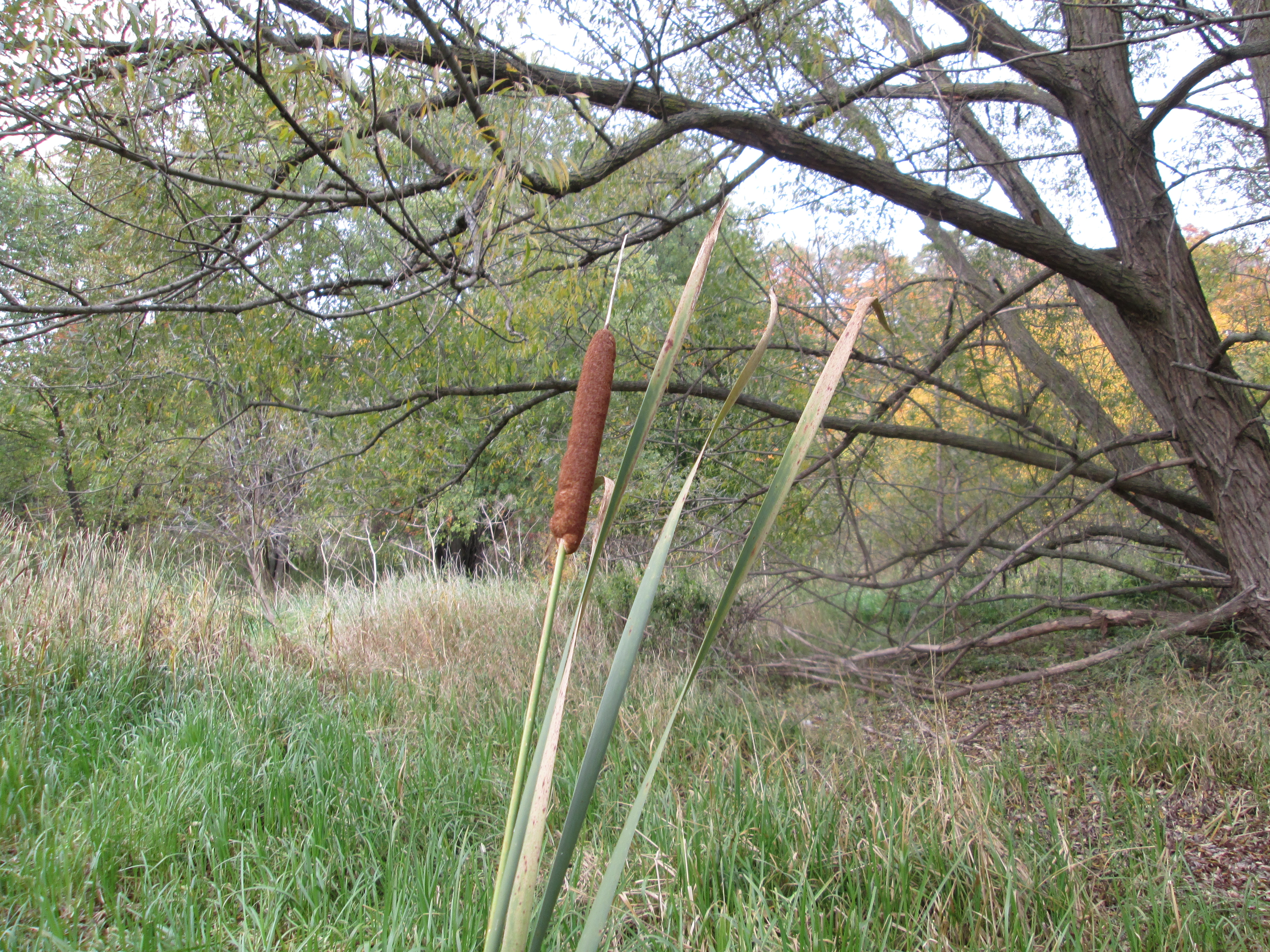
The Bulrush or Cat-o-Nine tails grows in wetland areas.  There is a stand of them growing close to the base of the old dam.  Various parts of the plant can be eaten and were part of the native people’s diet.  This makes them valuable as an emergency source of food in a survival situation. Peeled stems or leaf bases can be eaten raw.  The roots need to be cooked and peeled but they also are edible.  The roots can also be used as a poultice for burns and wounds.  Care must be taken not to eat bulrushes that grow in polluted water as they are a bio-mediator which absorbs pollution.  Signs of contamination include a bitter or spicy taste.
IMG_0702

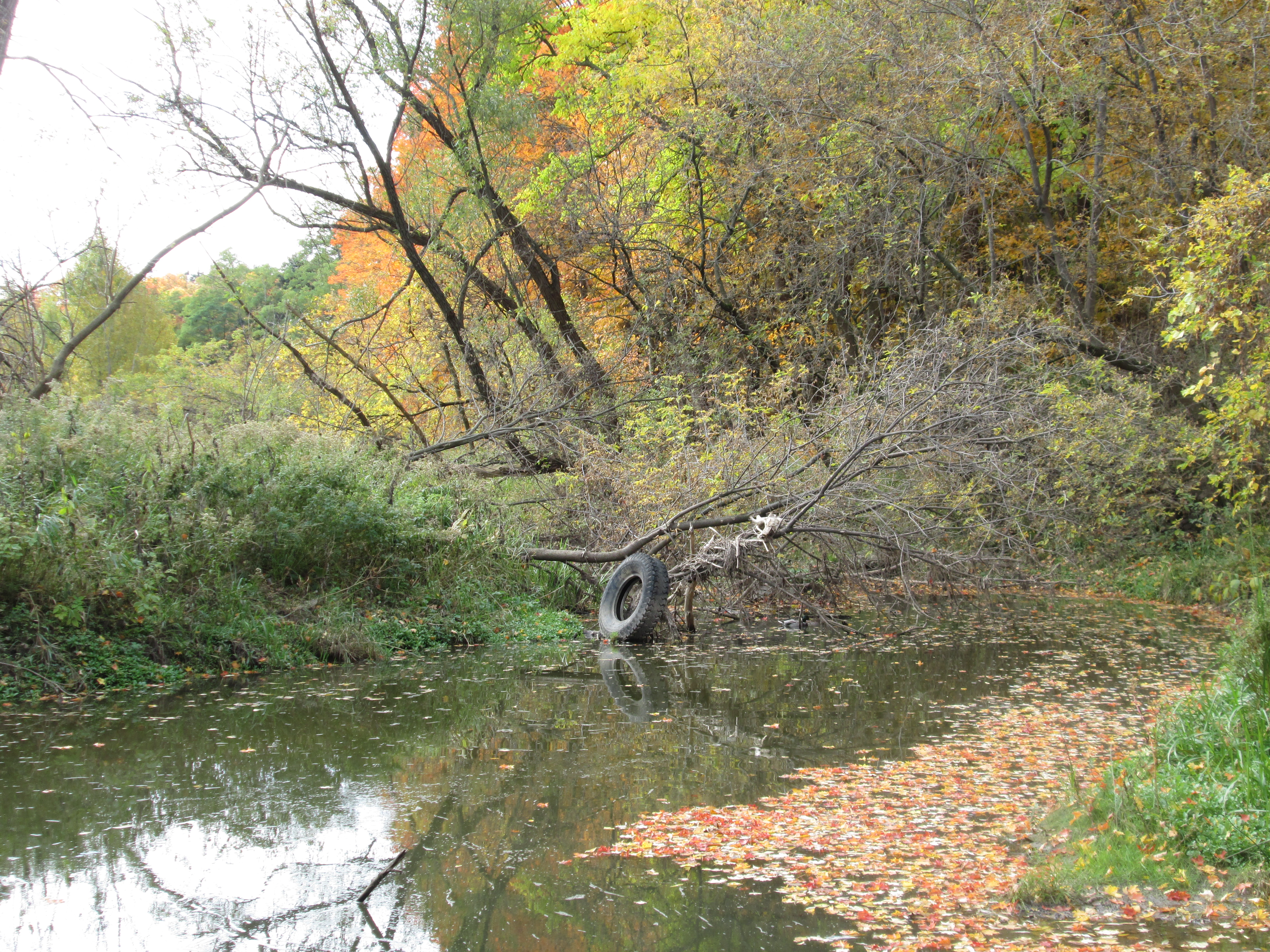
At the foot of the dam on the west side of the river is a small mill race where the water is standing still.  The leaves floating on the water lend a sense of calm to the scene.  In the middle of the picture is a tire that appears to be standing on top of the water.  A close look at an enlarged photo shows the green neck of a male mallard duck which is having a bath just to the right of the tire.
IMG_0742

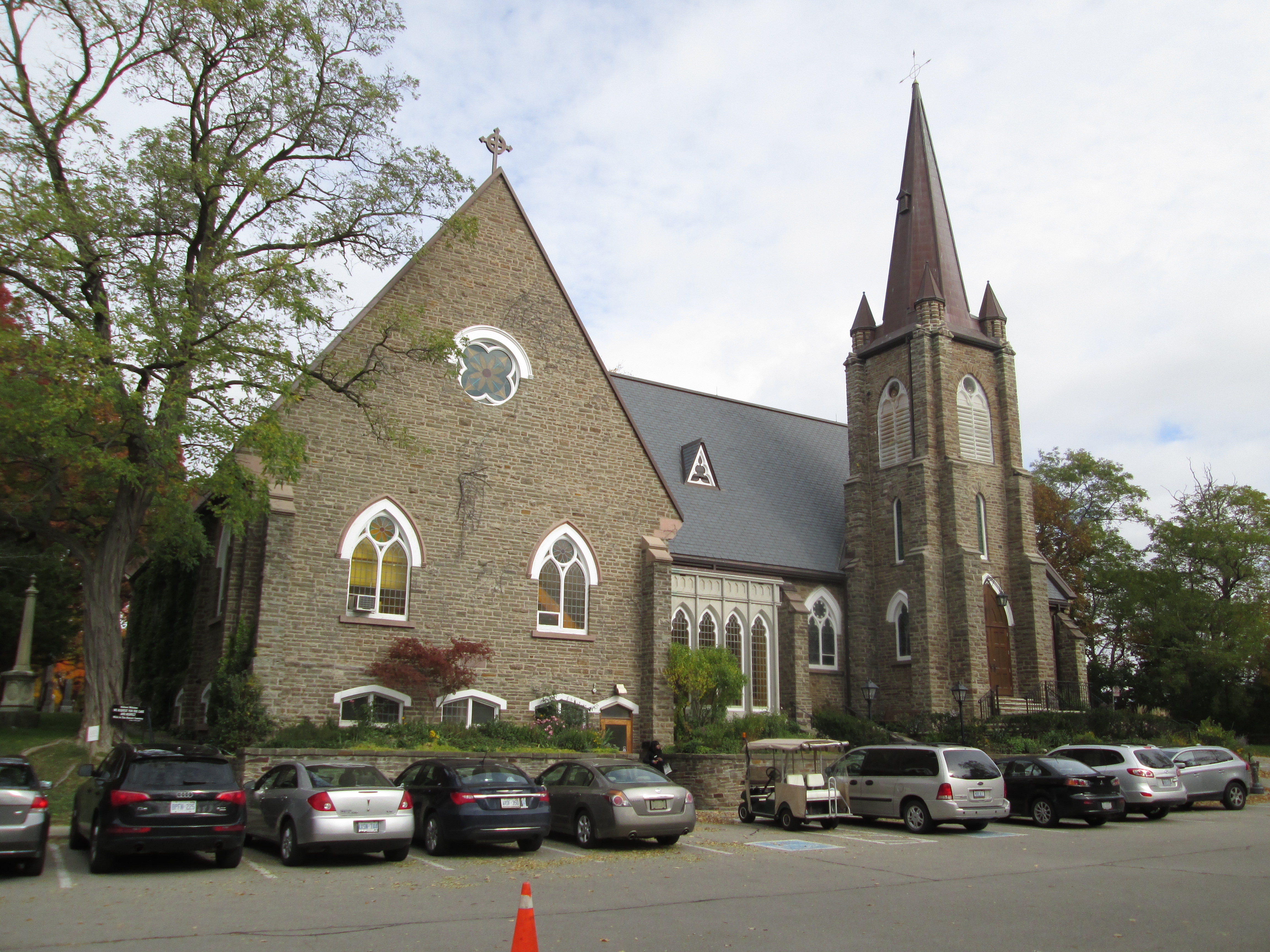
St. Peter’s Anglican church stands on the hill top on the corner of Mississauga Road and Dundas Street.  The first building was opened in 1825.  It was replaced with this stone building in 1887. Roy Ivor, who ran the Winding Lane Bird Sanctuary across the street, is buried here.
IMG_0745

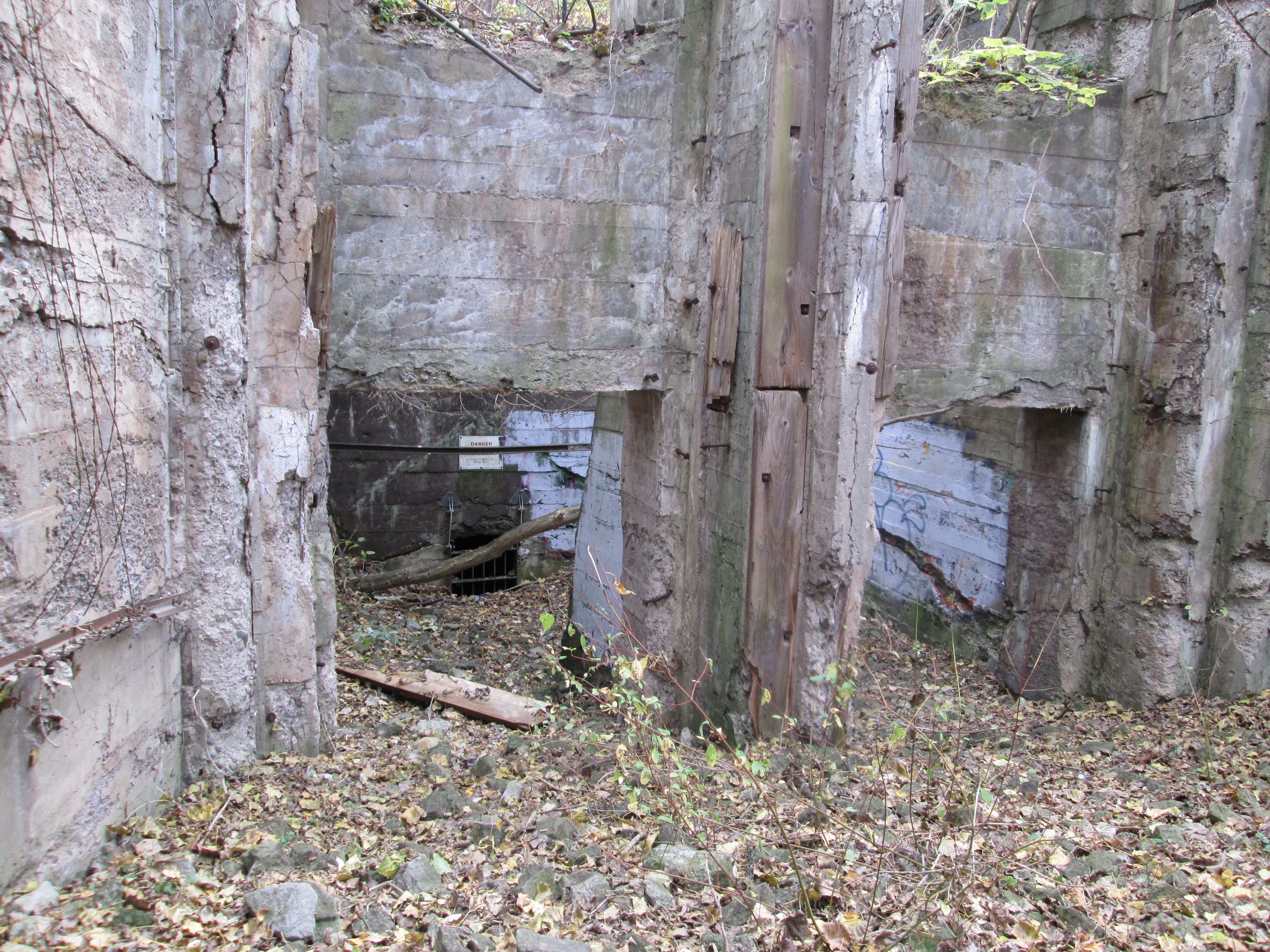
The north entrance to the water tunnel is located in the woods at the end of the last parking lot. This stood at the edge of Lake Erindale and a pair of sluice gates was used to control the water flow into the tunnel at the bottom.  This structure is decayed badlly and has a small forest growing in the open area inside the mouth.
IMG_0752

This photo was taken by holding the camera inside of the tunnel as it heads under Dundas street.  This is in effect the head race for the power mill.

IMG_0756

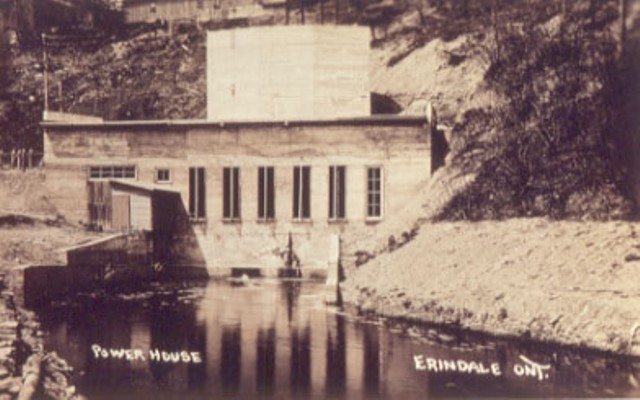
The tunnel passes under Dundas Street just east of Proudfoot Street.  It then emerges just past the end of Proudfoot Street where the river doubles back on the edge of town.  The power generating plant stood here until it was removed in 1977.  The picture below shows the power station and the tail race where the water was returned to the river.
LG_K370


Winding Lane Bird Sanctuary

Saturday Oct. 11, 2014

A chilly start to the day at only 5 degrees.  The sun was out and the sky was bright blue.  To access Sawmill Valley Creek near Dundas and Mississauga road it is easiest to park in Erindale Park and walk across the bridge over the Credit River.

Many of the trees are still green, which is nice.  When the cool evenings of the fall signal the onset of winter, deciduous trees begin the process of collecting and storing the useful resources in the leaves.   The tree stores the green chlorophyll pigment and other photosynthetic parts of the leaf in the roots, trunk and branches of the tree for use again the following spring.  The removal of the green from the leaves produces the bright colours we enjoy.

IMG_0611

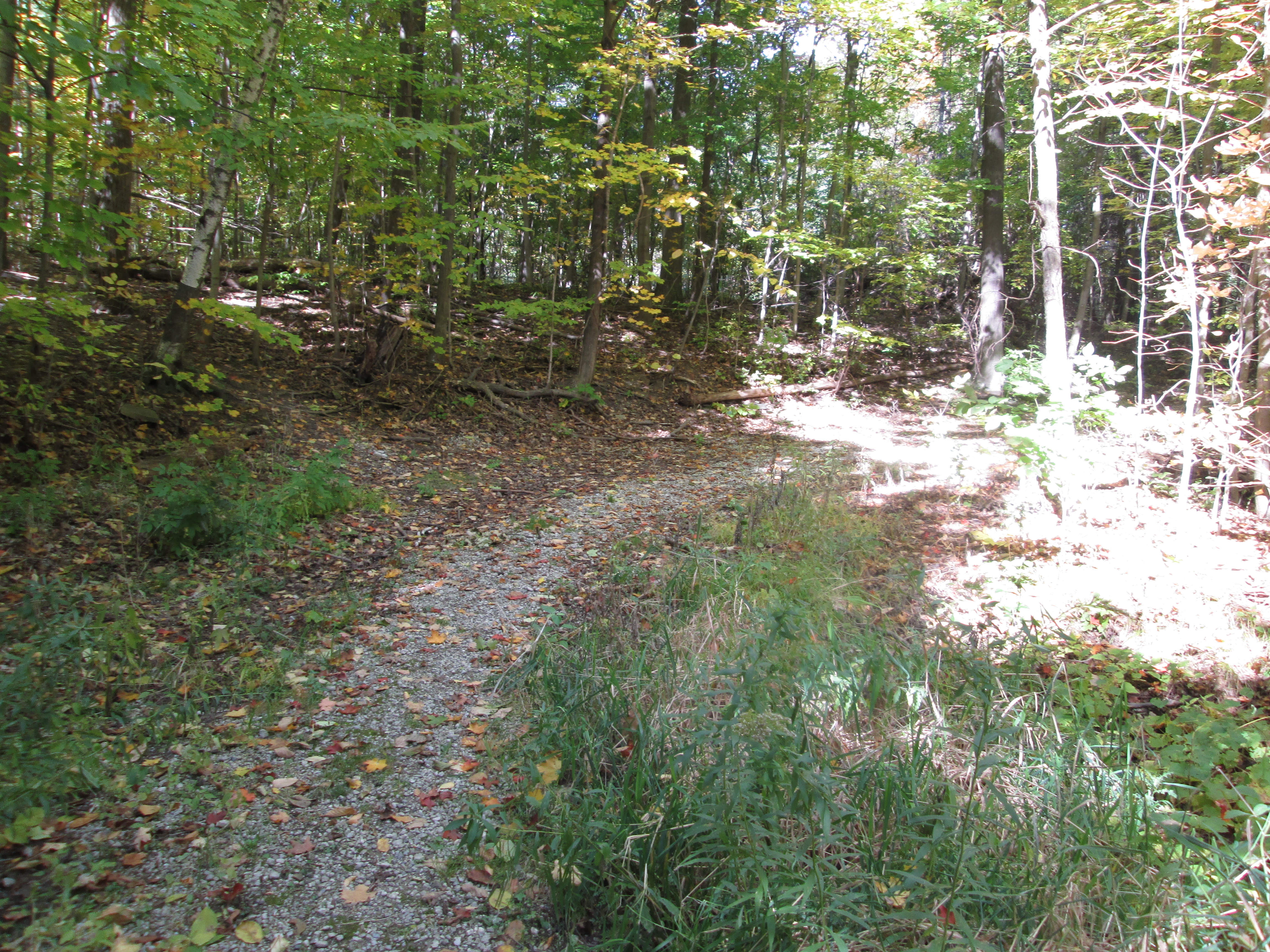
Sawmill Valley trail enters the north west corner of Mississauga Road and Collegeway.  As you follow the trail you will soon come to the start of a fence.  If you follow to the right of the fence you will find yourself on an old winding laneway.

IMG_0577

This is the laneway of Roy Ivor, also known as the birdman of Mississauga.  In 1928 Roy, along with his assistant Bernice Inman-Emery, started the Winding Lane Bird Sanctuary.   During the 50 years he ran the bird sanctuary he cared for thousands of birds.  He was a regular contributor to National Geographic during the 1950’s as well as teaching countless school children about birds.  Ivor died in 1979 shortly before he would have turned 100.  He is buried close to home at St. Peters Anglican Church in Erindale.  Bernice ran the sanctuary from the time of his death until she moved to a retirement home in 2007.  The sanctuary has been closed since then and all of the bird cages have been removed.  Recently the property has been purchased by the city for incorporation into the adjacent parkland.

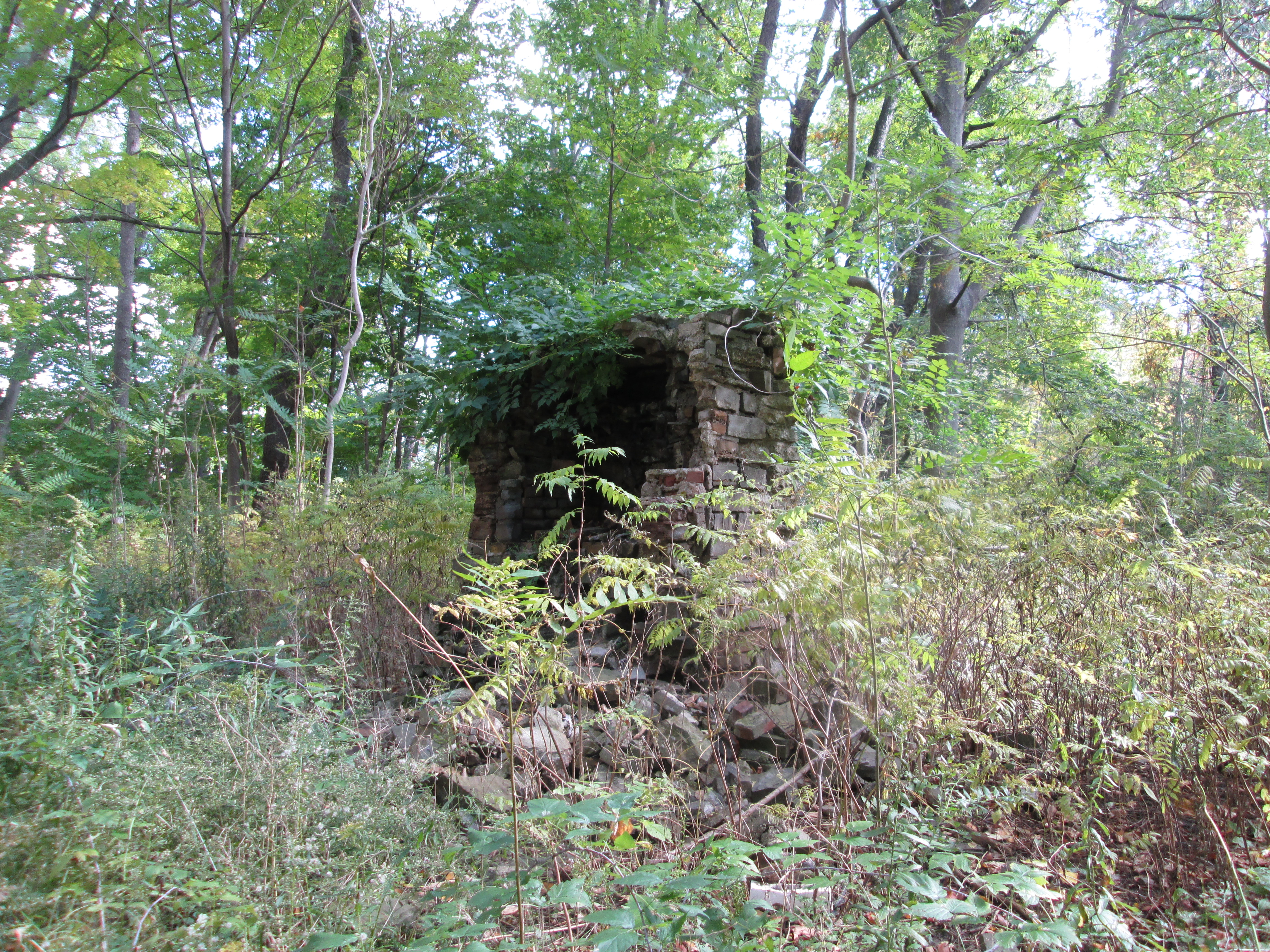
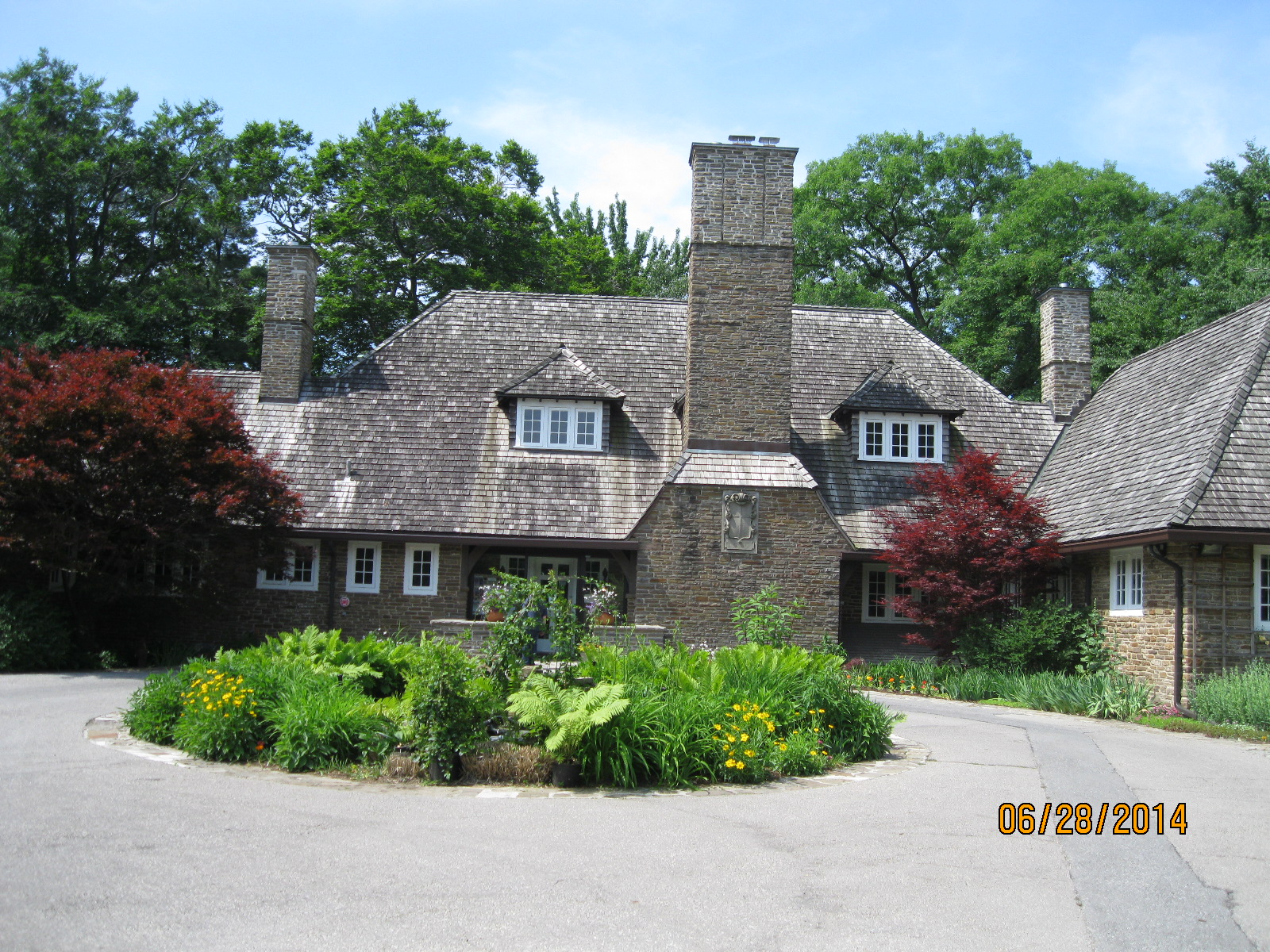
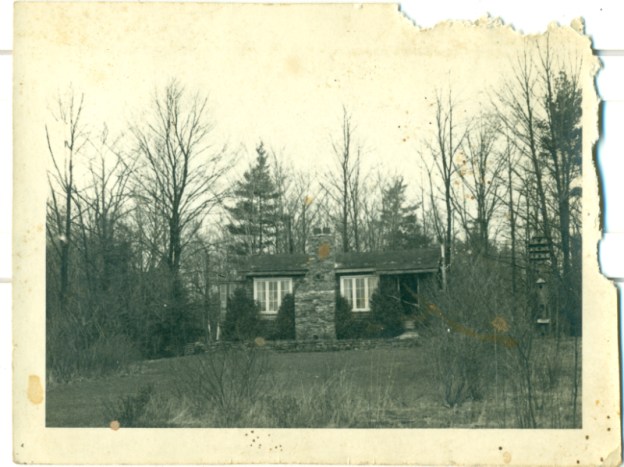
Ivor’s house is featured in the cover photo showing how it looked before it burned down on December 29th 1970.  A portion of the large central chimney remains standing.

IMG_0582

The outline of the east wing of the house is still clearly visible.  When the house burned down a trailer home was brought in and parked over this end of the foundation.  Here life went on pretty much as it had before.

IMG_0585

Each Burdock seed pods contain hundreds of stems that stick to clothing and fur.  Inside the pods are little tiny seeds that get transported around and then discarded to start new plants elsewhere.  In the early 1940’s Swiss inventor George de Mestral was out walking his dog when both of them got covered in burdocks.  Curious about how the burdock attached itself to his clothes he looked at one under a microscope.  He noted the little hook on the end of each one of these little spines.  De Mestral patented Velcro in 1955 based on the hook and loop system used by burdock.  The hooks can clearly be seen on the burdock in the picture below.  Inside the burdock pictured below is a lady beetle.  There are over 5,000 species of lady beetles but all are protected by noxious body fluids based on cyanide.  Their bright colours are used as a warning to birds that might consider eating them.

IMG_0579

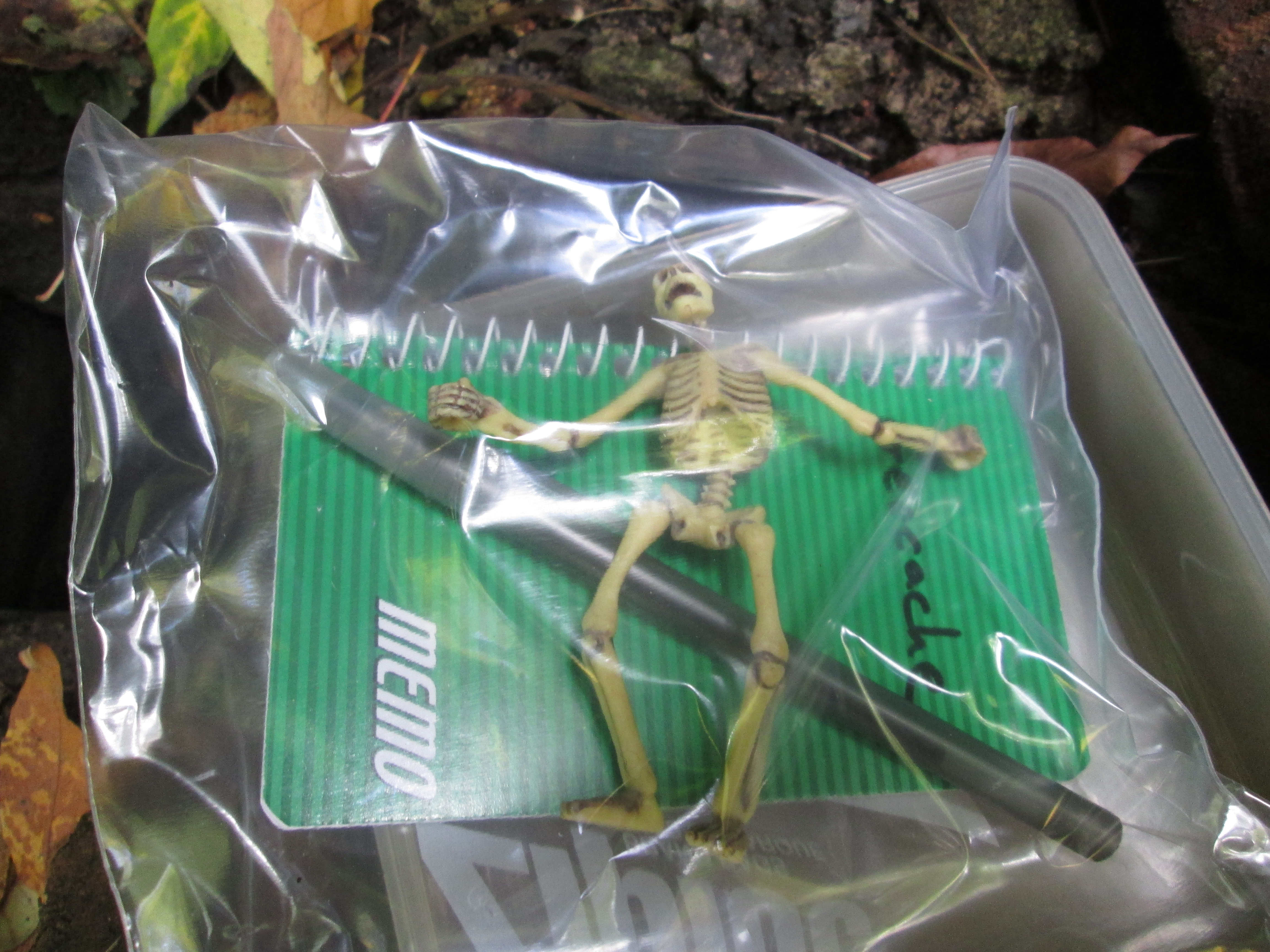
Geo-caching is an activity that rose to world popularity in May 2000.  When GPS restrictions were removed a high-tech game of hide and seek began.  A cache is hidden which includes a log book, pen or pencil and often trinkets.  People hunt for the caches based on a set of co-ordinates using a GPS.  When the log book is found it is signed and carefully re-hidden.  Geo-caching never achieved the prominence that is made possible in the era of cell phones with GPS.  One possible explanation for this is 9/11.  Security scares have become common with police bomb squads having been called in after suspicious activity has been reported.  Several schools and even Disneyland have been locked down.  We found a geocache with a skeleton in it.  Since we were the first to find the cache, and that quite by accident, the skeleton may be symbolic of a dead pass-time.

IMG_0593

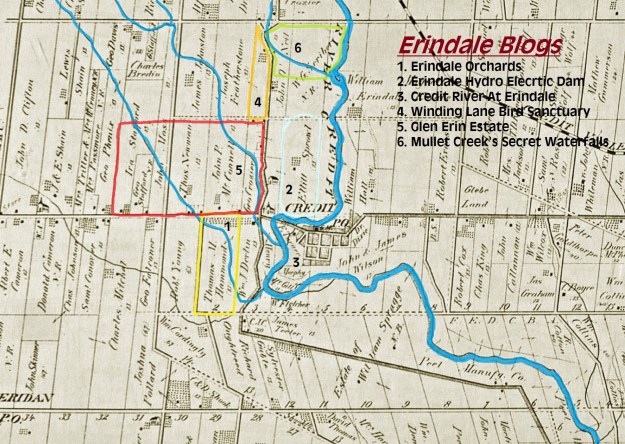
Other Erindale hikes featured on the historical atlas below include:

  1. Erindale Orchards, 2. Erindale Hydro Electric Dam, 3. Credit River at Erindale and 6. Mullet Creek’s Secret Waterfalls.


sawmill valley legend

Like us at http://www.facebook.com/hikingthegta


Streetsville’s Forgotten Foundations

Saturday Oct. 4, 2014

Autumn has certainly set in.  It was cool at 14 degrees and the skies were dark with clouds.  We decided that it wouldn’t dare rain on us so we set out.  Having parked on Mill street in Streetsville we were right in the area where Timothy Street had built the mill in 1819 that got the town started.

In 1818 the final parcel of land along the Credit River was ceded by the natives to the government.  Timothy Street financed the task of surveying the area while Richard Bristol conducted the work.  In exchange for his work Timothy was given 1000 acres of land which is now known as Streetsville as well as 3,500 other acres scattered throughout Halton and Peel counties.   Timothy Street is listed in the town directories as a tanner.

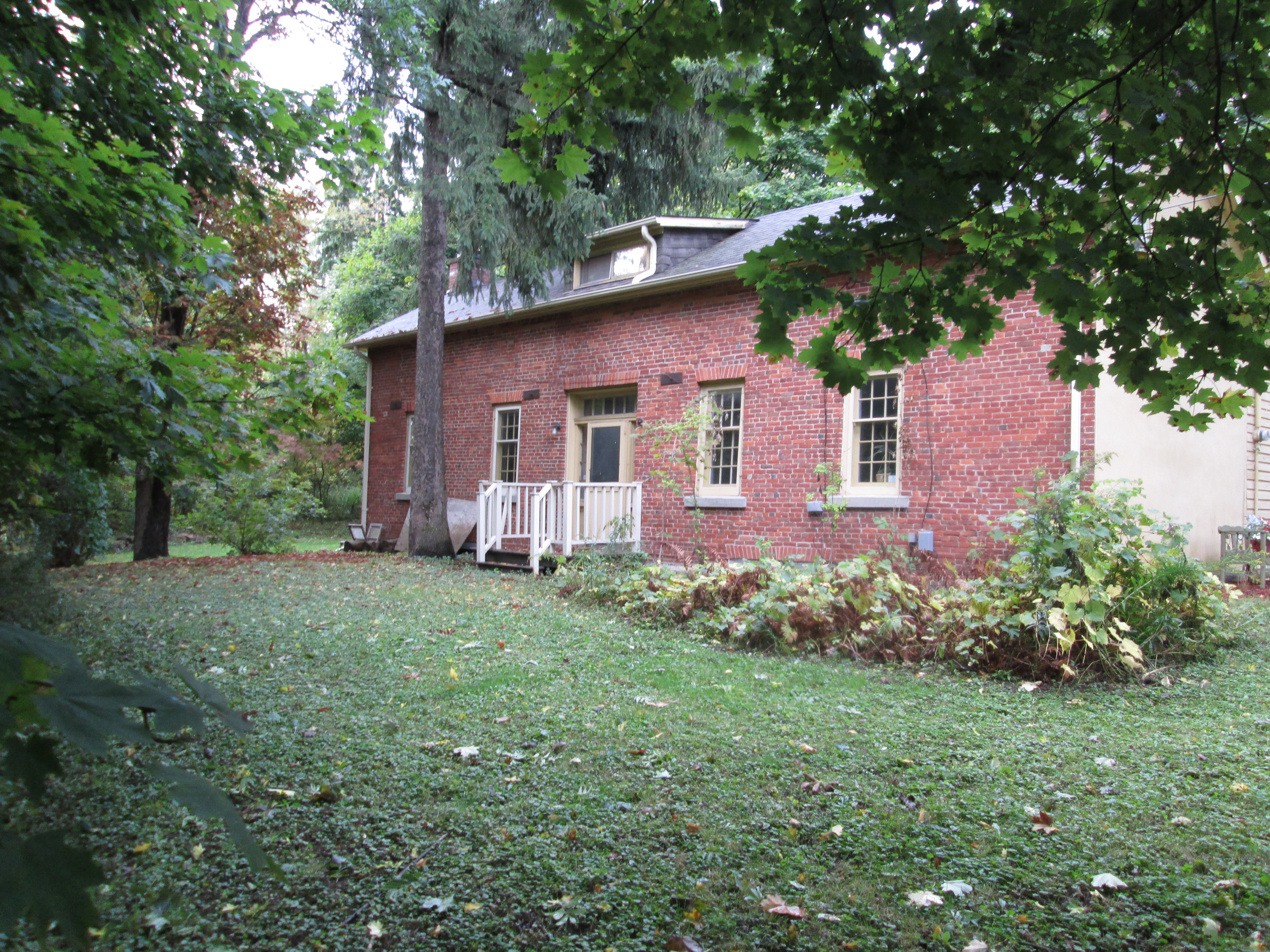
In 1825 he built the house in the picture below which looked out over his business empire.  This house is believed to be the oldest remaining brick house in Peel County.

IMG_0461

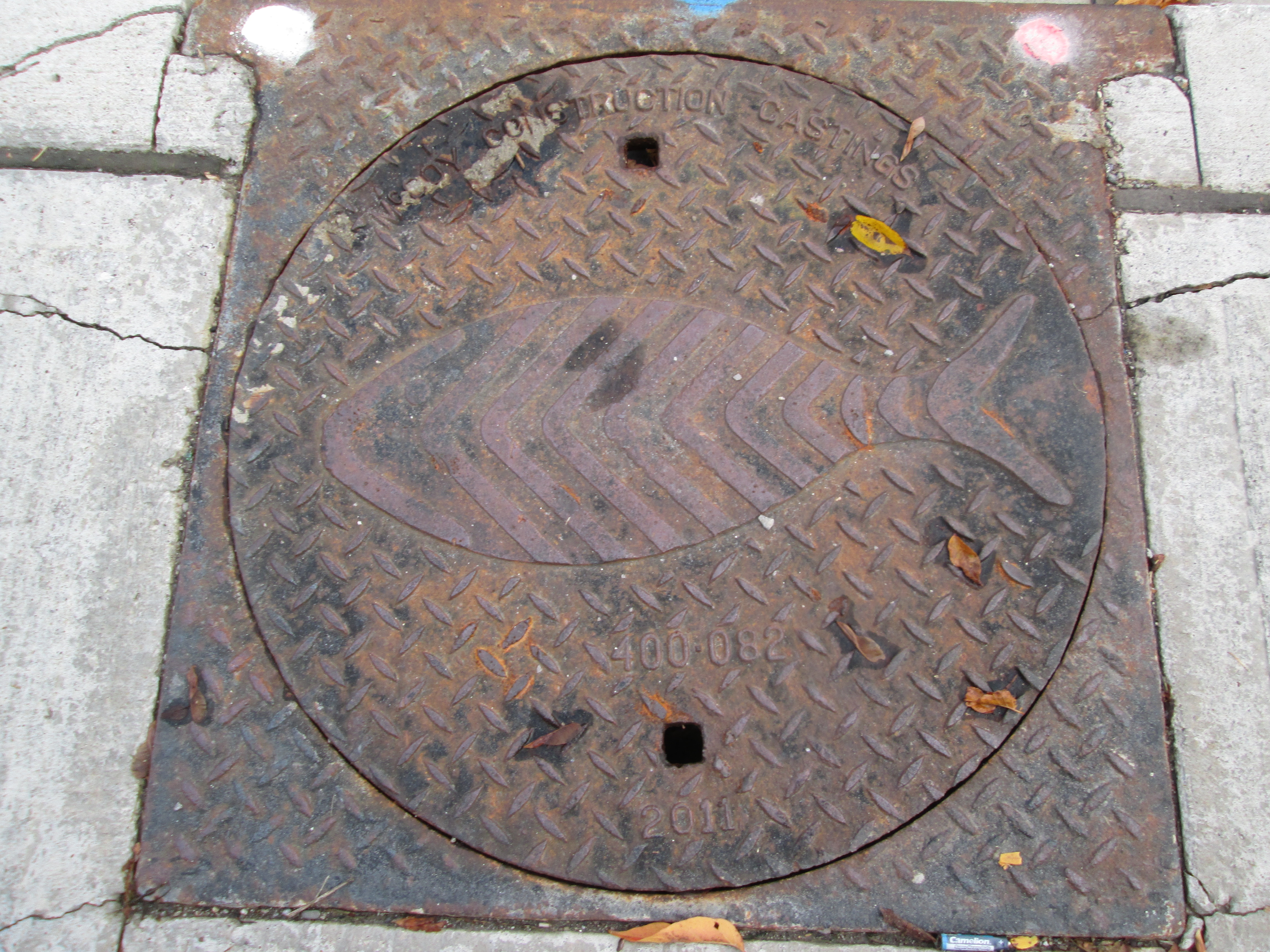
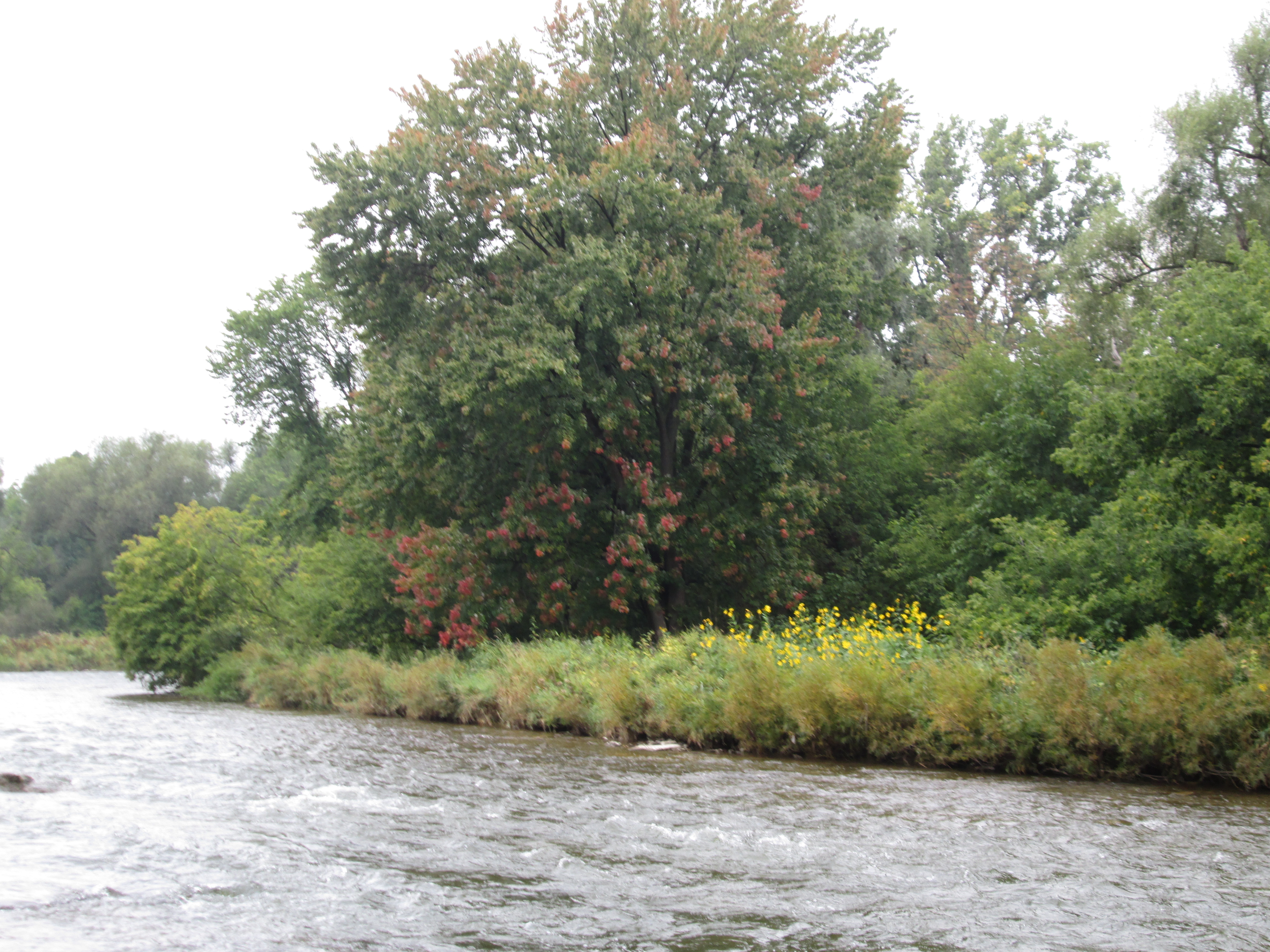
Access covers are one of many items that are usually dated and can therefore tell a little of the tale of a place.  Main street crosses the Credit near Timothy’s house.  At this point the name changes to Bristol Road in honour of Richard Bristol for his work in surveying the area.  Access covers usually indicate the date on which a road or bridge was built or restored.  The cover featured in the photo below is unique in the fact that it has a fish on it.  Dated 2011 it came from St. George which is near Brantford.  It is appropriate because this bridge is a suitable place to stand and watch the fall salmon run in the river.  We didn’t see any this week because the river was too dirty and cloudy.
IMG_0462

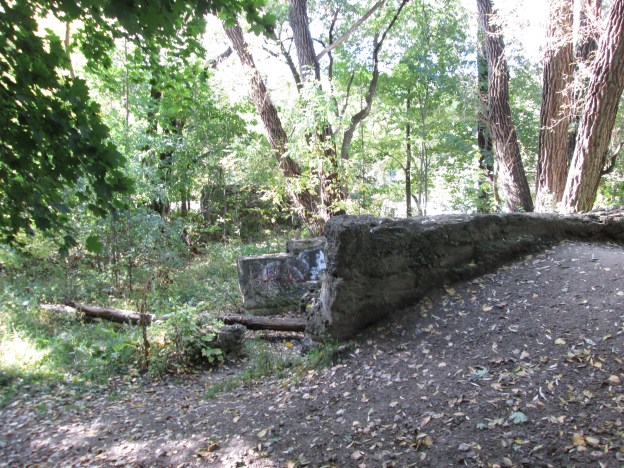
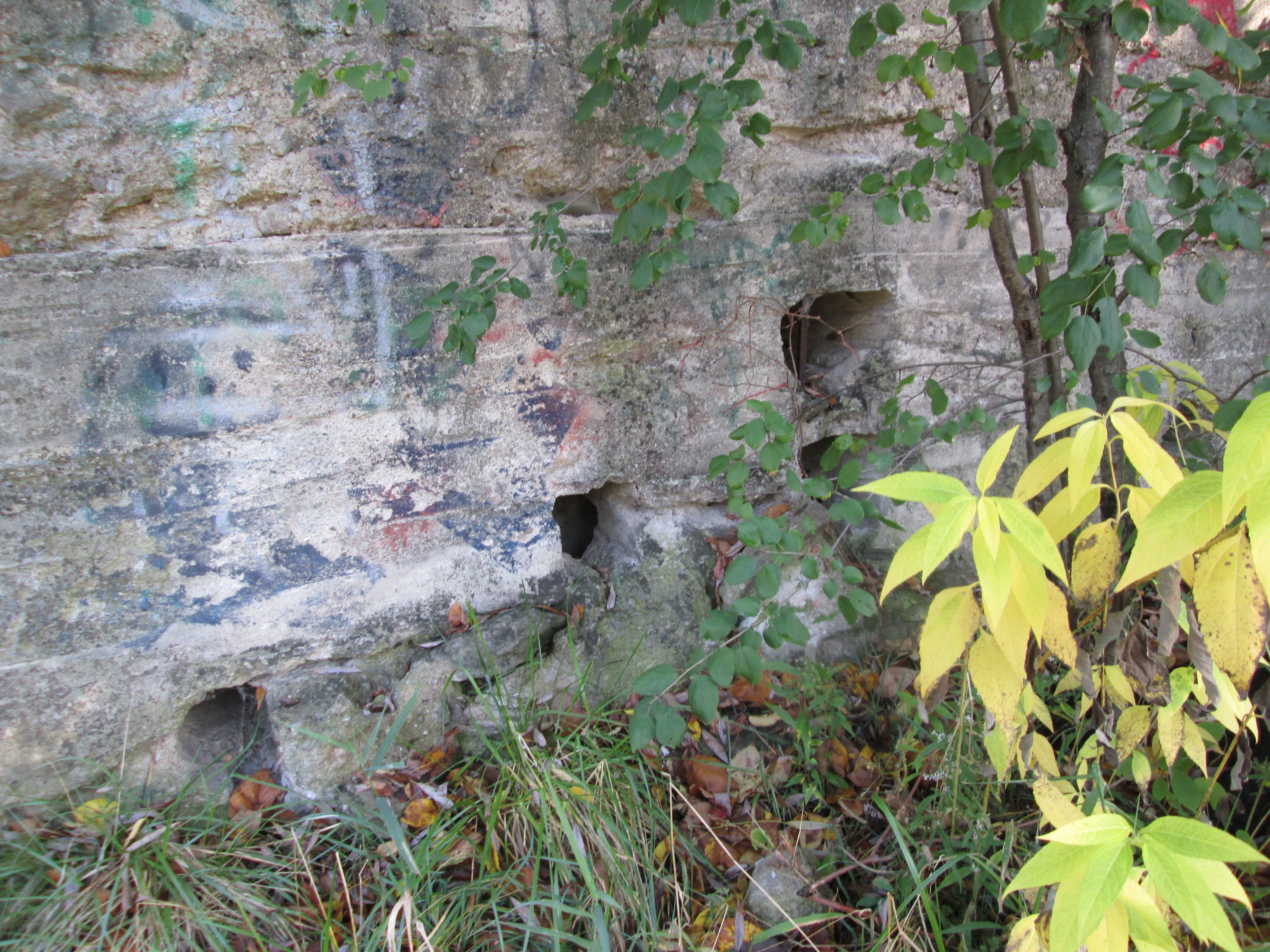
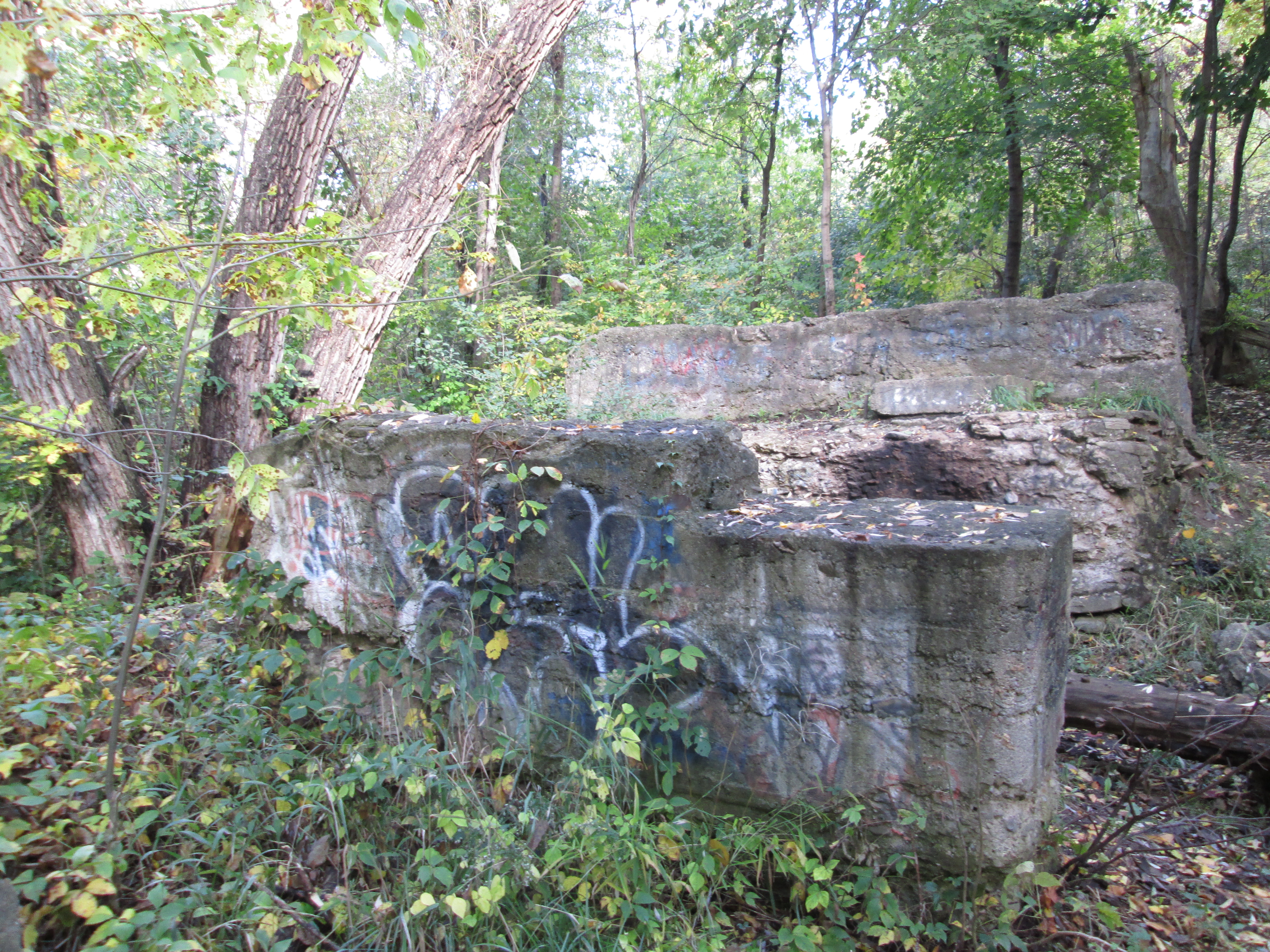
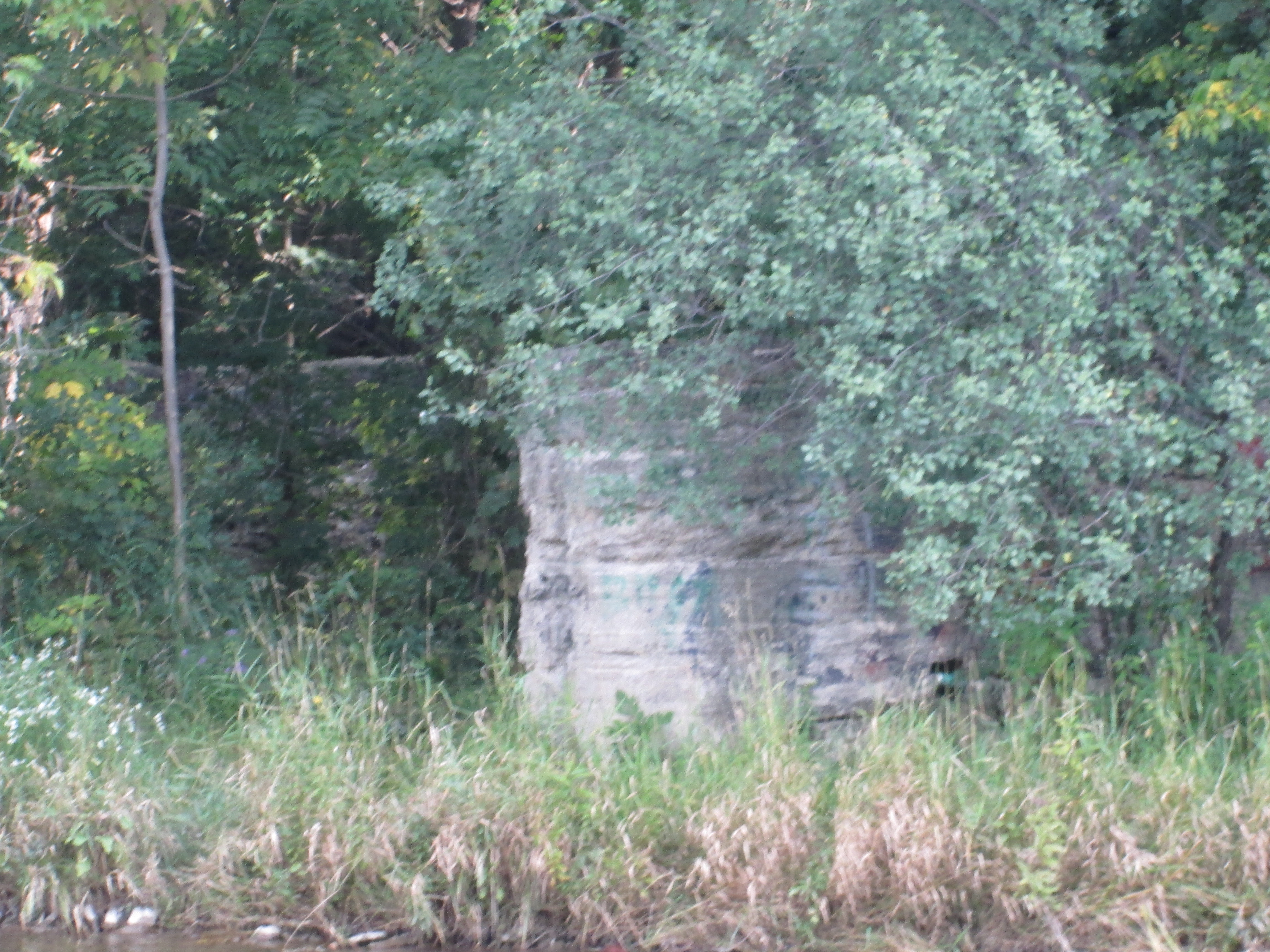
From the west bank of the  Credit River we had seen a set of foundations that we believed were another of the five mills that once lined the Credit River around Streetsville.  We went north in Timothy Street Park along the Culham Trail.  When we finally had a chance to check them out they appear to be a little less obviously mill foundations.  There are four thick concrete pillars which run in a slightly curved line with the first one beside the river, pictured below, having four holes formed in the side.  The fourth one abutting against an earthen mound has a mounting surface on top of it.  The mound behind it runs in a curved line off through the trees.  The cover picture shows the four pillars from the side of the mound looking out toward the river.  Large trees growing in places between them.  Having visited the site it is hard to see this as a mill.  It looks more like an unfinished roadway of some kind.  A member of the Streetsville Historical Society suggested that it may be related to Timothy Street’s mills but the use of concrete suggests a date around 1900 or later.
IMG_0478

The picture below shows the third pillar in the foreground and the fourth behind it.  Notice the step down on the side of number three. The fourth one has a full ledge along the front as if something was mounted there. Forgotten by time and seemingly undocumented on the internet this project could be up to about 125 years old.  Older bridge supports would likely have been made of cut stone and not concrete. If anyone has any information about this artifact please feel free to leave a comment.

IMG_0488

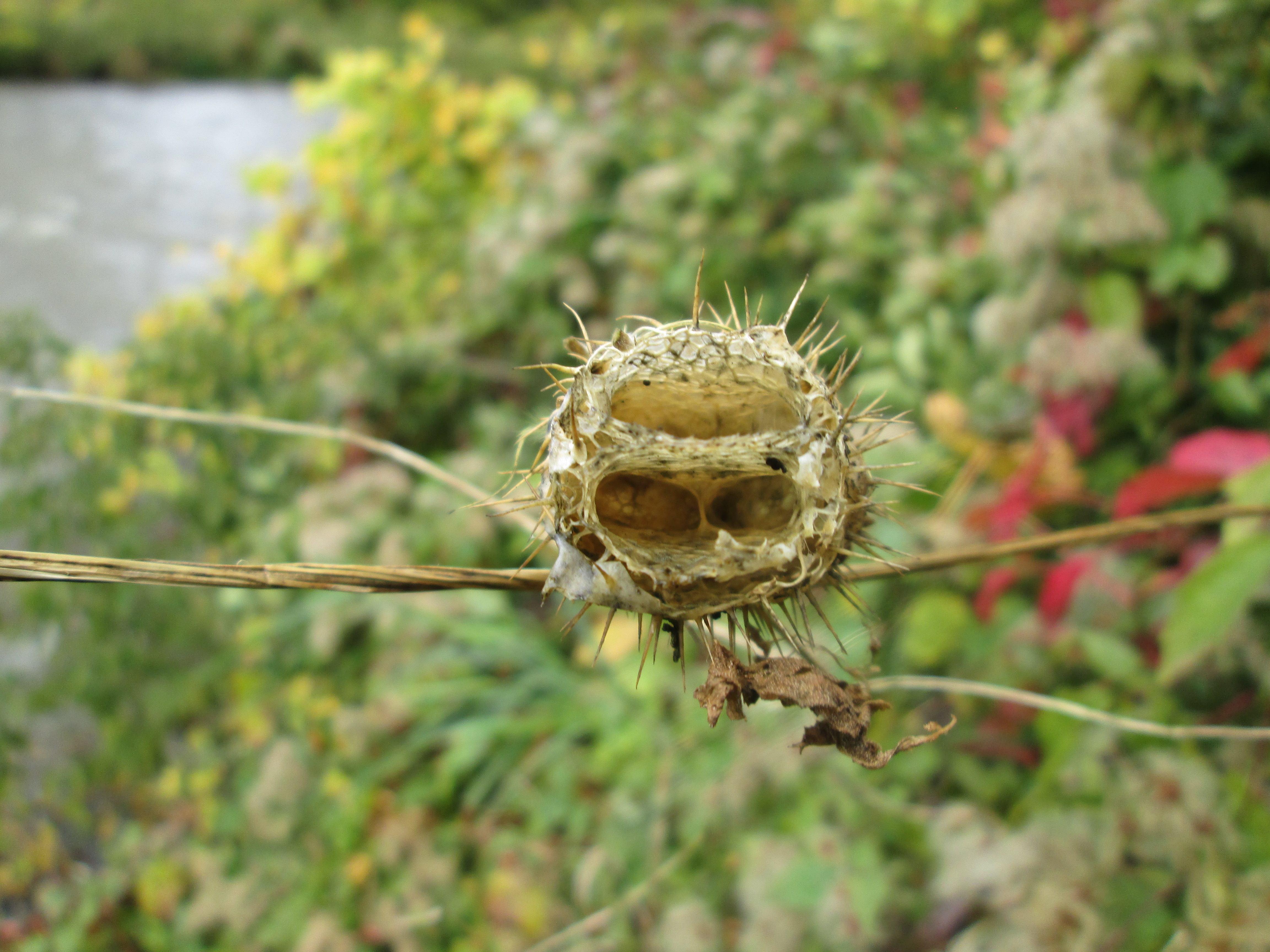
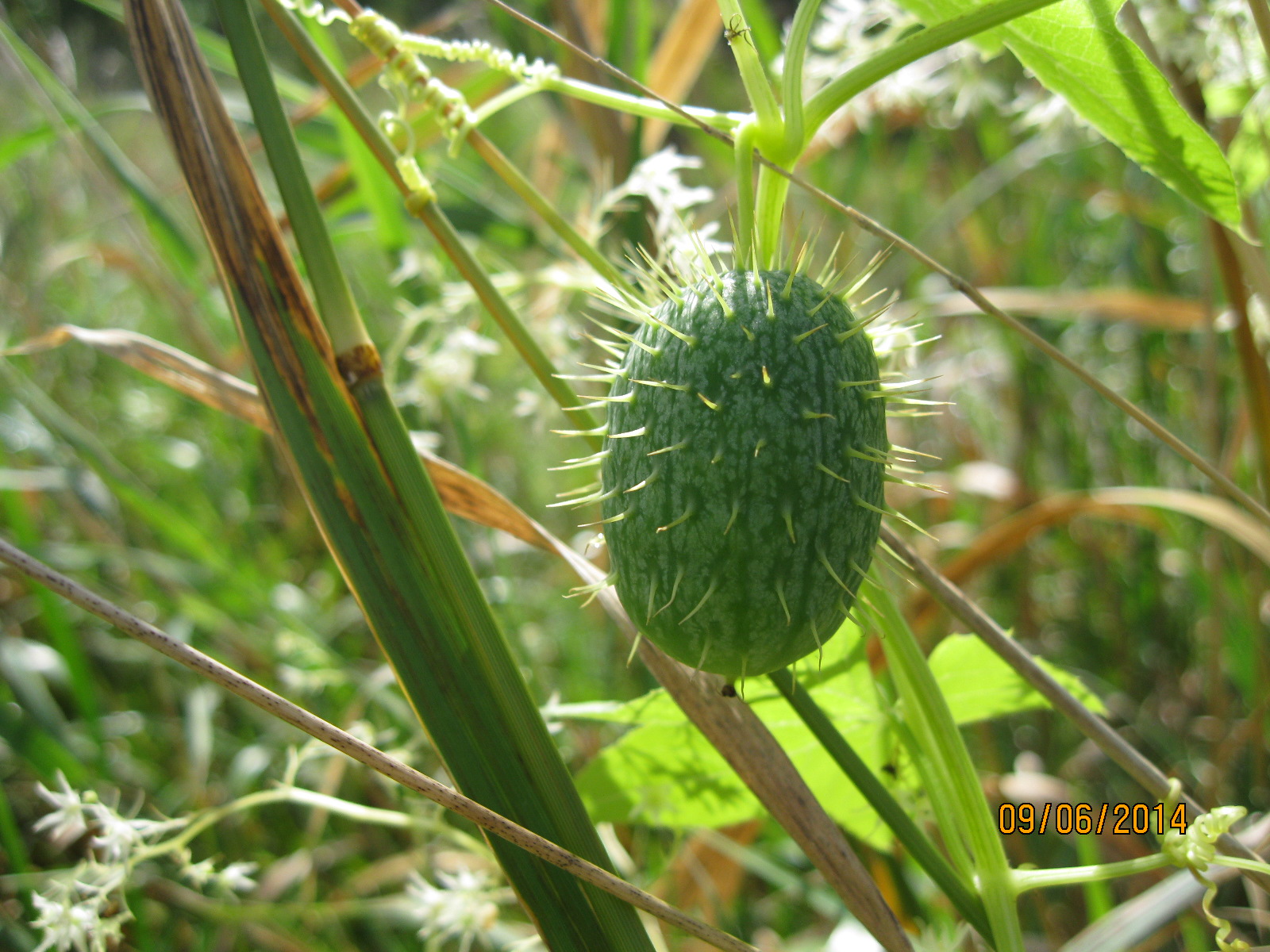
When we visited Riverside Park on Sept. 9th the wild cucumber were in full fruit.  A seed grows in each of four chambers inside the cucumber.  In the fall the bottom of the fruit literally pops open and the seeds are dropped out.  The plant dies off every winter and relies on these seeds to carry on the following season.

IMG_0517

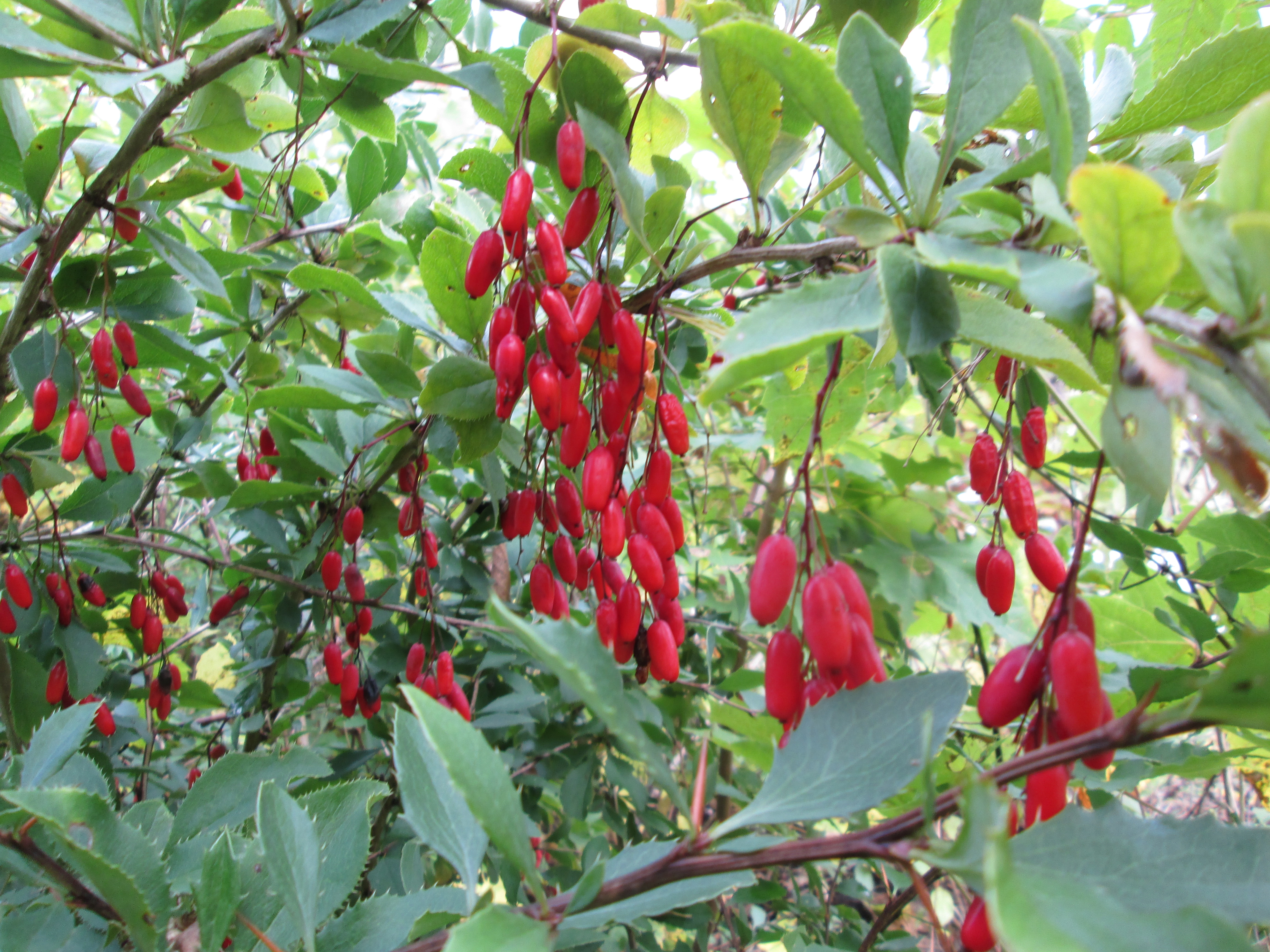
The fall is a time when many berries ripen.  Several types of berries last on the bush and provide food for birds that spend the winter here.  The red berries in this picture hang in clusters on a plant with serrated edged leaves.  After looking through countless sites dedicated to berries in Ontario, I have to conclude that this is not a native plant and that it has escaped from a garden somewhere.  One way plants can escape from gardens is when their berries are eaten and the seeds pass through the bird and remain viable.  A seed that gets dropped in a soil condition in which it can grow may be found miles from the original plant.

IMG_0555

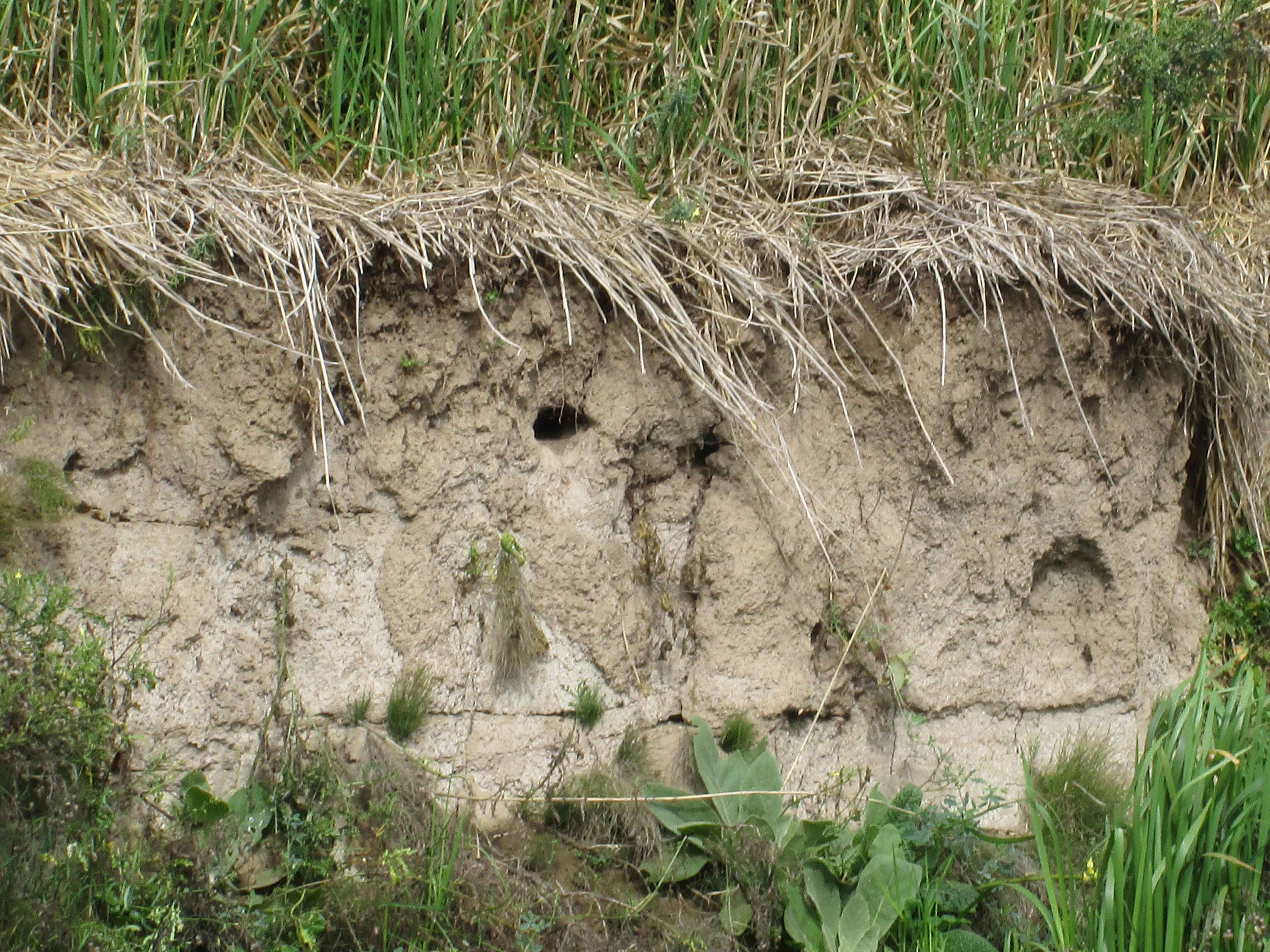
The male Bank Swallow chooses a colony to join.  Colonies are founded in areas of loose soils for easy digging.  The male will then select a site for his burrow which is normally about 2/3 of the way up the embankment to reduce access to ground predators.  The tunnel will extend about 2 feet into the soil where temperatures are more stable and here a larger chamber will be dug for the nest.  When the nests are complete, female Bank Swallows will hover in front of the nests to choose a mate.  The female will then collect the grasses to line the bottom of the nest where she will lay her eggs.  Several holes were seen along the river bank, one of which is shown below.

IMG_0546

Here is another view of Hyde mills which clearly shows the 1840 part of the mill built of stone on the right (closer to the river) and the 1906 portion built of bricks on the left.  Having reached here we came to the most southern point on the Riverview Park hike a couple of weeks ago. This completes a section of the river but the mystery of the four concrete supports and the earthen wall remains, for now…

IMG_0534

Like us at http://www.facebook.com/hikingthegta

Follow us at http://www.hikingthegta.com

Hyde Mill Streetsville

Sat. Sep. 20, 2014

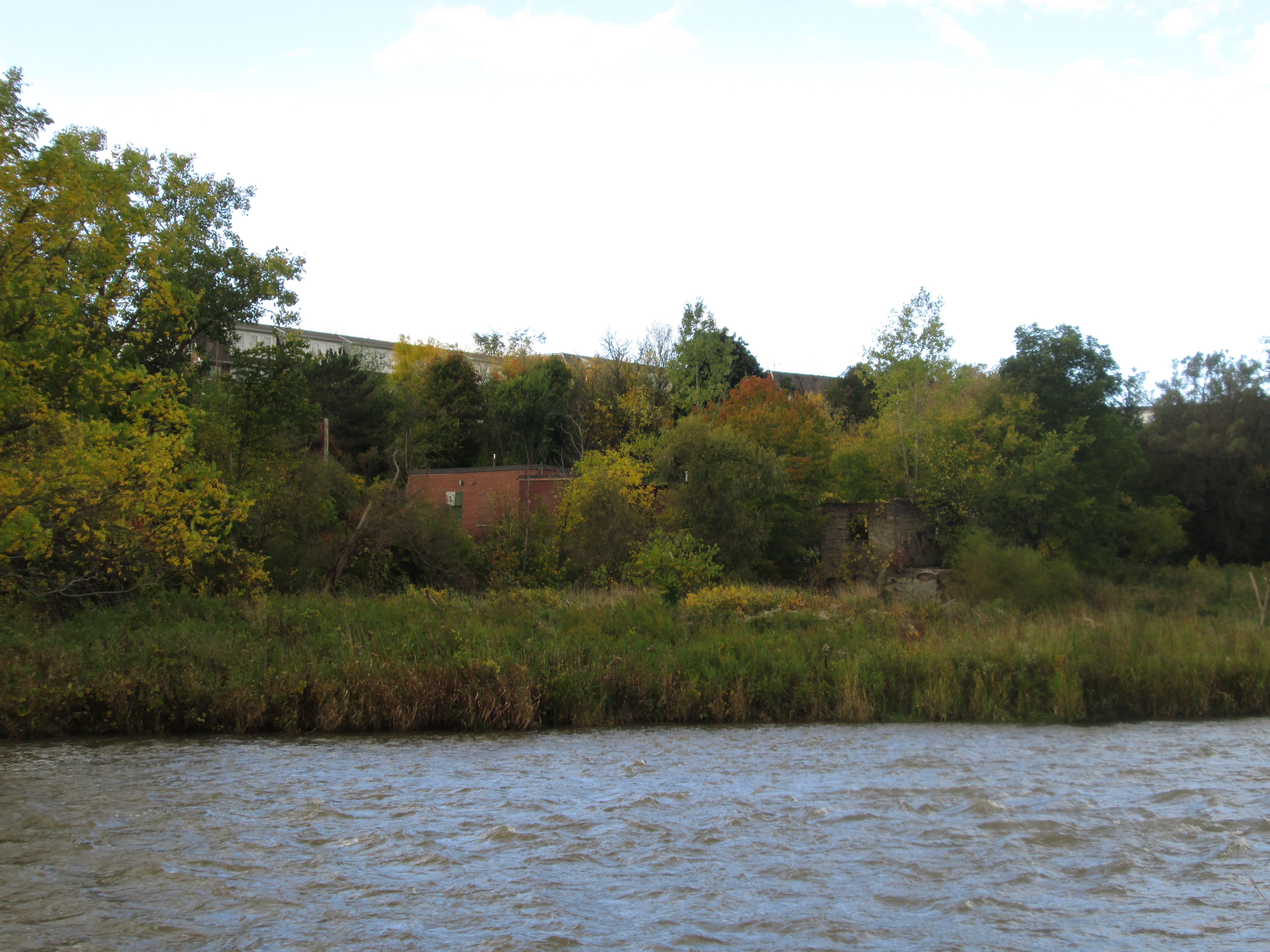
A beautiful morning for the final Saturday of summer.  We parked on Mill street in Streetsville. Taking the little trail that heads north on the west side of the Credit River we passed through and area where the young bushes were cropped off a foot off of the ground.  Deer had grazed as they made their way along the river bank.  We followed them toward the walls of an old mill we had seen when we were in Riverside park a couple weeks ago.

At the mill site water was diverted from the stream or mill pond to the water wheel by a small stream that was usually man made.  Where the water was brought to the wheel was called the head race.  The water wheel, or later a turbine, was used to transfer the energy from the falling water to turn the gears inside the mill.  This would drive the grinding wheels in a grist mill or the saw blades in a saw mill.  The water was then returned to the river by means of the tail race. We found the tail race to the mill and knew that it would lead us there.

IMG_0211

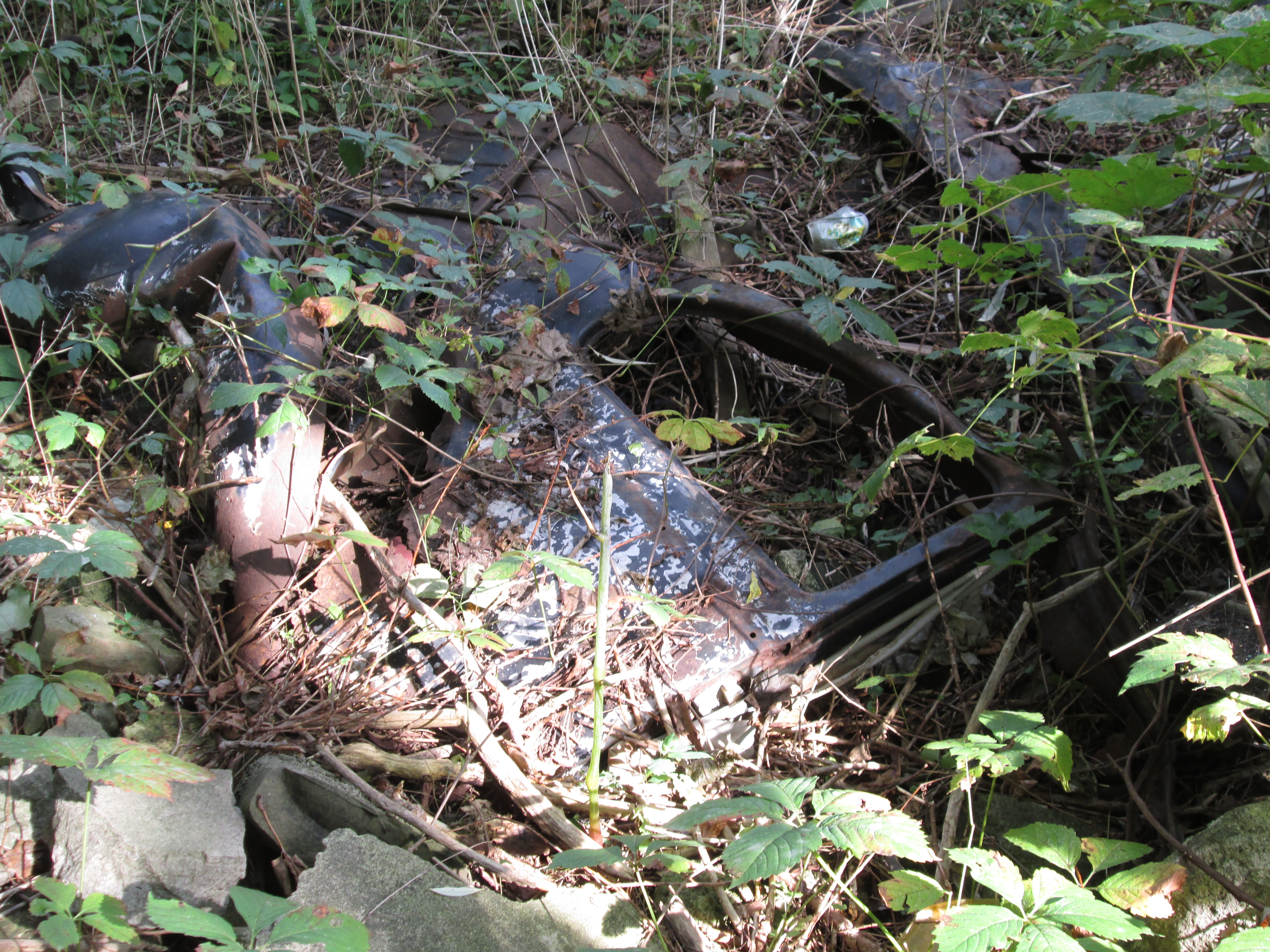
The remains of an old vehicle, likely a late 1940’s or early 1950’s, lay at the bottom of the hill. This car may have been here for quite a long time as it is damaged beyond identification.

IMG_0232

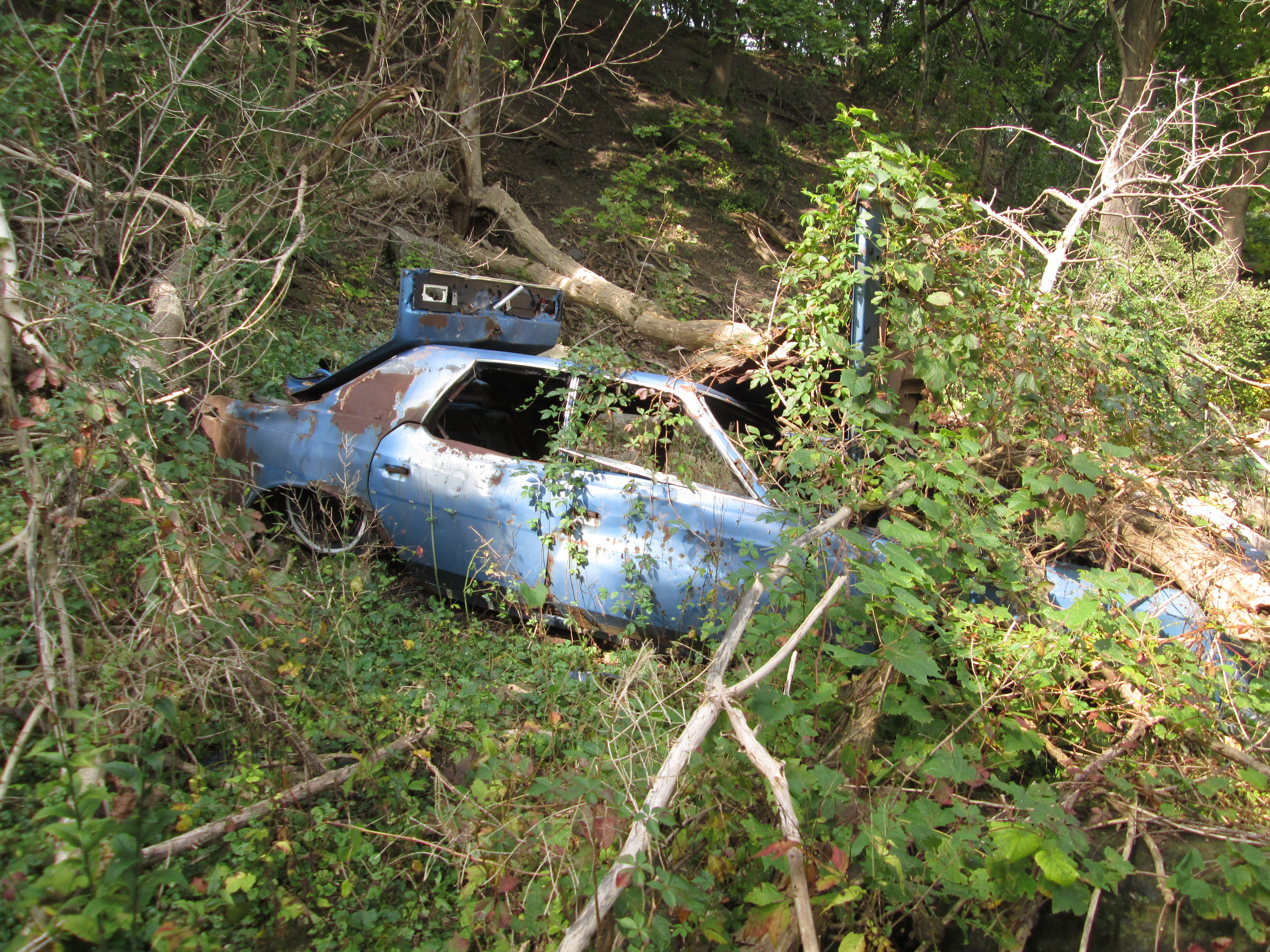
A second car lies decaying in the same area.  This car is in much better shape although it has been stripped clean of every usable part.  The trunk lid still contains an old decal showing how to use the tire jack.  From the part number on the decal we were able to identify this car as a 1977 Ford Galaxy 500.  These two vehicles must have been dumped down here before the trees grew up on the embankment above.  They may have been stolen and dumped down here or just abandoned here by their owners.  Either way, it is hard to see why they were left here and not removed by the city.  There is now a new acronym for those wishing to make fun of Fords. (F)ound (O)n (R)iver (D)rowned.

IMG_0249

The car in the foreground of the picture below shows what the Galaxy 500 would have looked like when it was new.

77FordLTD

Heman and Mary Hyde ran a large inn at Church and Main street for 40 years and this, along with proceeds from their saw mill, placed them among the wealthy in early Streetsville.  Their son, John “Church” Hyde, built his own little merchant-miller empire.  By 1840 he had built a mill on the west side of the river near the end of Church street.  The mill expanded into a saw and grist mill, cooperage and stave factory.  Staves are the thin wood boards which were used by a cooper to make barrels.  He also built quarters for his workers at the mill site.  In 1906 the mill was converted to produce hydro electricity for the town of Streetsville.  It was Ontario’s first municipally owned power plant.  The plant continued to be the source for power for the town until 1943 when Streetsville joined Ontario Hydro.  The plant continued to provide auxiliary power until 1960 when it was shut down.  In the photo below are two tunnels under the building where water was used to turn turbines.

IMG_0262

There are two holes where shafts from the water turbines came up from these water tunnels below.

IMG_0279

A steam pipe like the one below helped us to locate the Millwood Mills during a hike back in June.  This also helps to identify this part of the mill as being of the newer 1906 construction.

IMG_0289

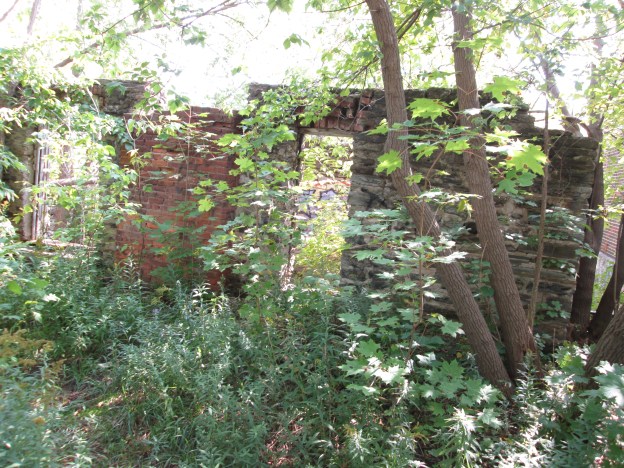
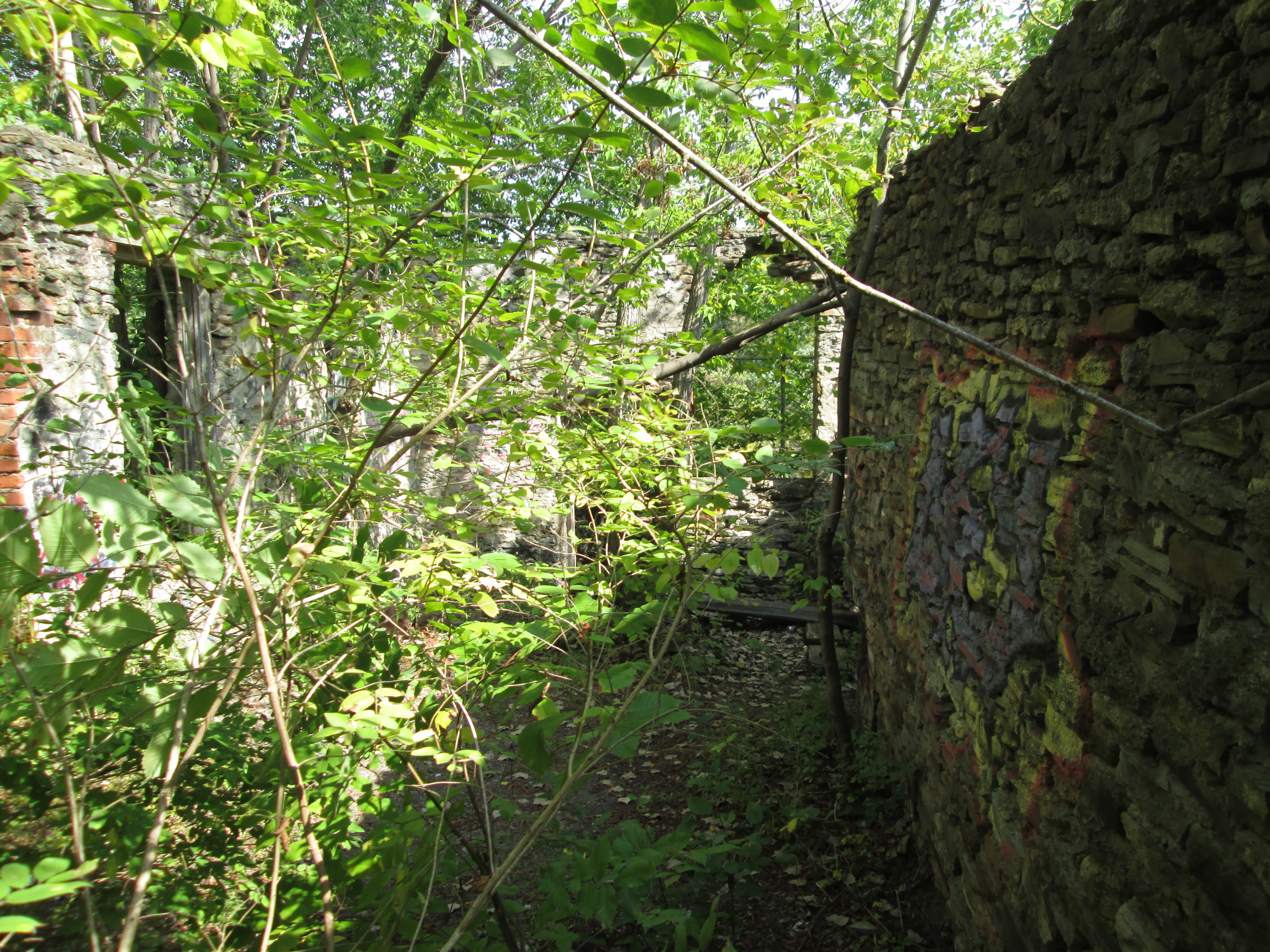
The mill is designated as a heritage site because of the remaining door and window frames which can be seen in the cover photo.  Since it is now intended to be preserved I find it odd that the interior of the mill is allowed to become overgrown with small trees. In a few years these trees will push over the walls and ruin this historical building.

IMG_0291

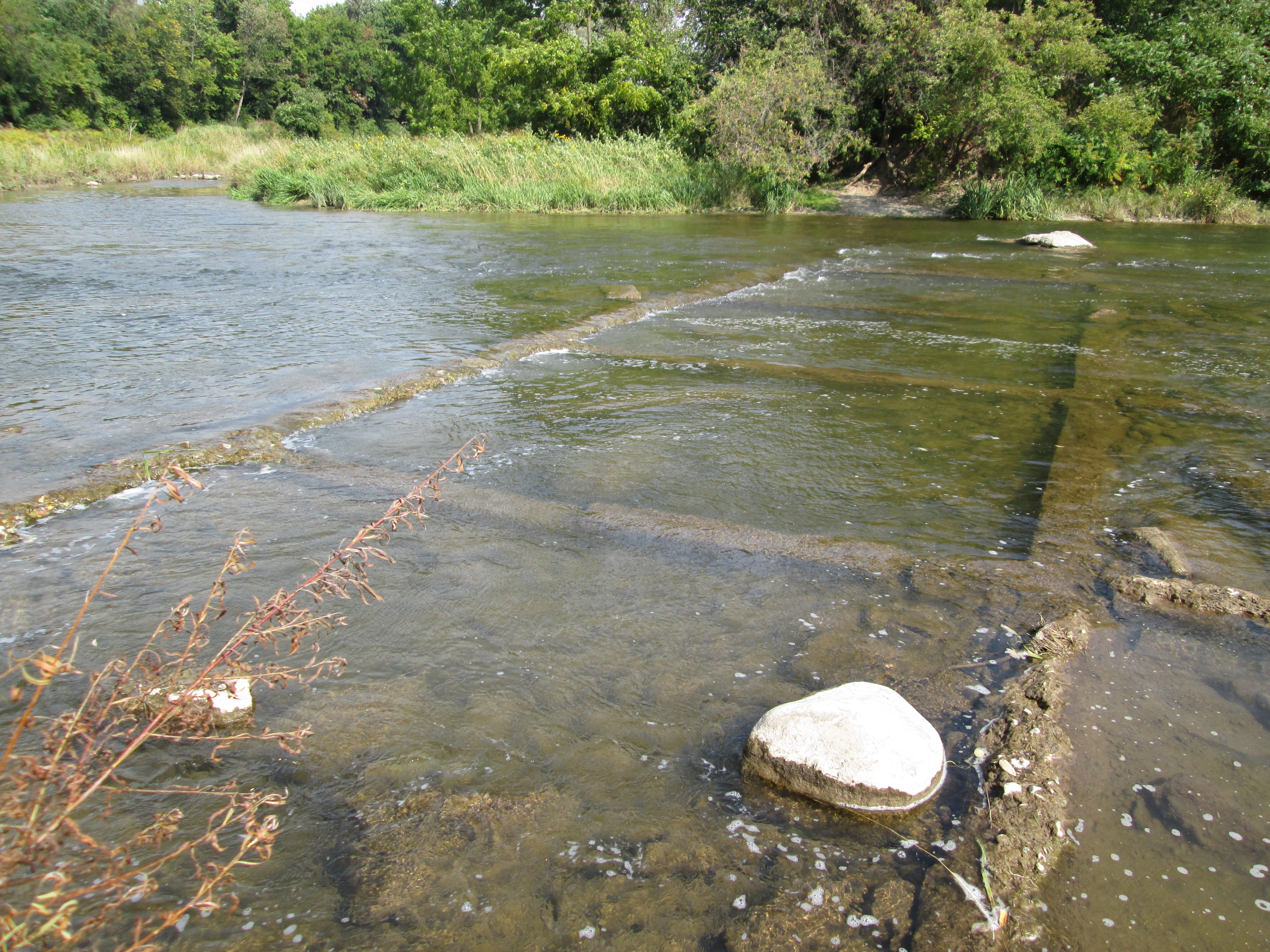
When the mill was restored in 1906 a new dam was built across the Credit River.  The foundations remain in a pattern of squares on the river bed.

IMG_0295

Fall would officially begin a day later, but there was a hint of colour coming in some maple trees already and the sumac trees are bright red.  Fall’s showcase of beauty is about to begin.


IMG_0175

As we had hiked up the west side of the river we had seen the remains of yet another mill, this one on the east bank of the Credit river.  Hmmm….

IMG_0197

Google Maps link: Hyde Mill

Like us at http://www.facebook.com/hikingthegta

Follow us at http://www.hikingthegta.com


Credit Meadows Park

Saturday Sep. 13, 2014

A rainy Saturday morning and only 11 degrees.  We parked in the parking lot on Creditview Road just north of where the Credit River crosses near Britannia Road.  This is the second lot north of Britannia and was home to Ephraim Steen who lived here from 1842 until he died in 1921.  Ephraim also owned land on the other side of Creditview as well as the land where Riverside Park and subdivision now stand in Streetsville.  This lot of land was taken over by the conservation authority in the late 1950’s and named Credit Meadows Park.

We didn’t wander too far from the cars but there is always something to see.  There is frequently one or more great blue herons that like to fish on either side of the bridge. We watched one feed across the river from us.  Herons in this part of the Credit are likely feeding on Blacknose Dace which are one of the most common minnows in the river.
IMG_3252

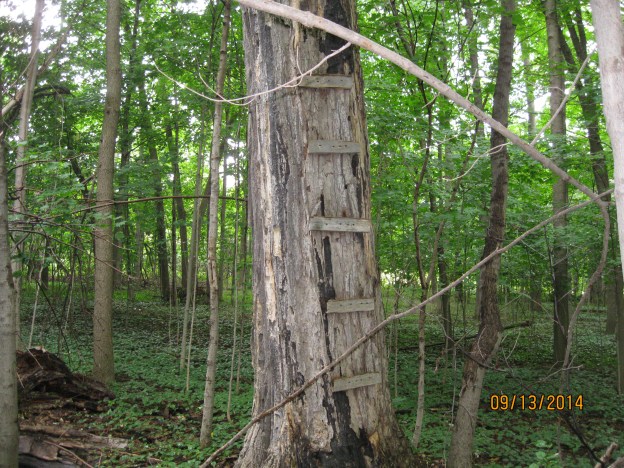
Near the parking lot is a stand of mature trees which includes several old black walnut trees. They can live for 130 years and attain heights of 40 meters.  The tree in the cover photo has had a tree fort built in it many years ago but only the ladder remains today.

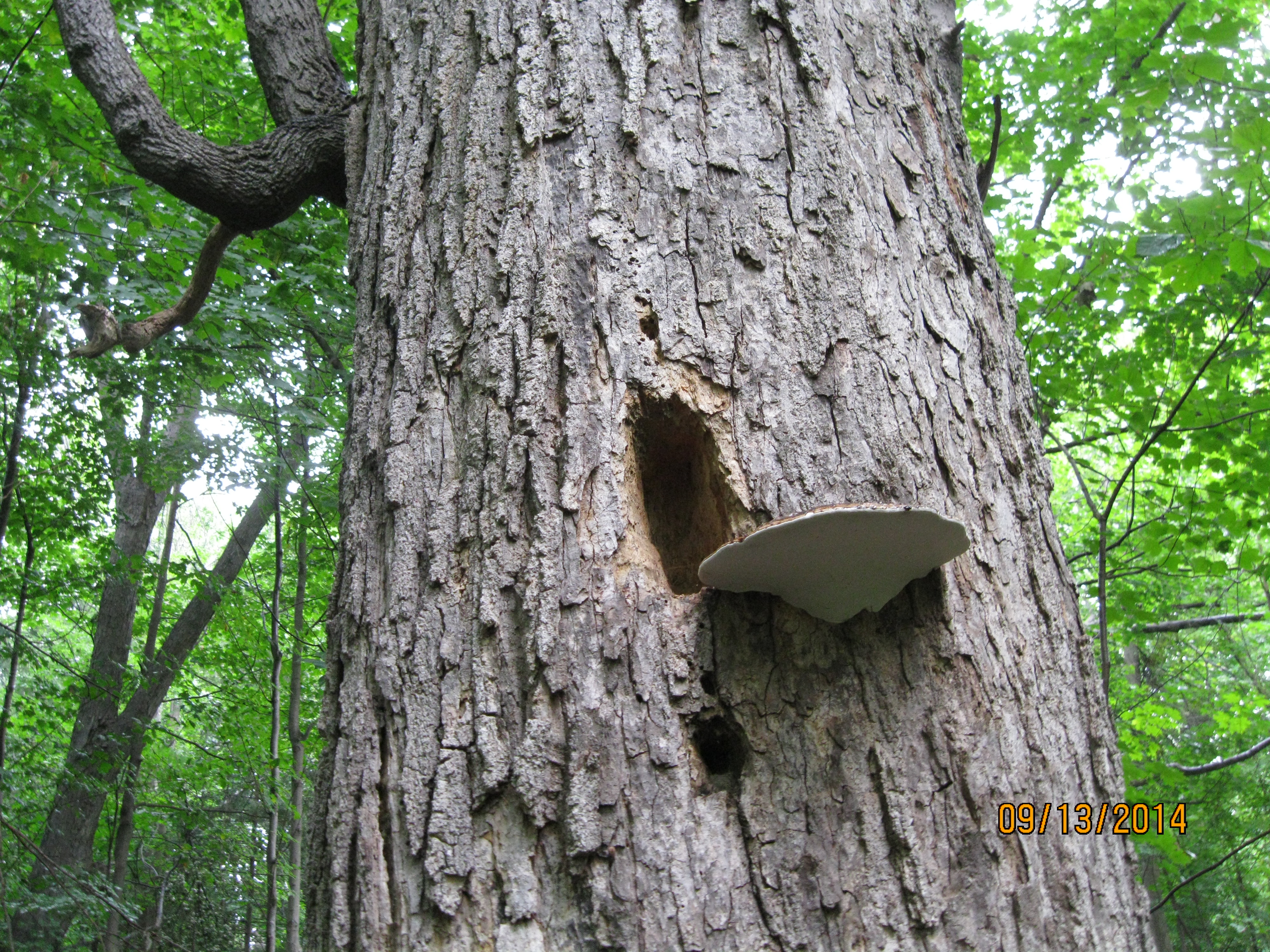
Pileated Woodpeckers feed on beetle larvae and ants that live in trees.  They are known to bore out large, roughly rectangular, holes in trees while searching for food.   The tree in the picture below features a shelf mushroom just below the woodpecker hole.  These mushrooms are also known as The Artist’s Conk.  They have a soft white underside that is perfect for carving in. When they dry they become as hard as a piece of wood and can last for many years.  They usually will stand up on the flat side where they grew on the tree.  They can grow to be 50 cm in length by 30 cm wide.

IMG_3261

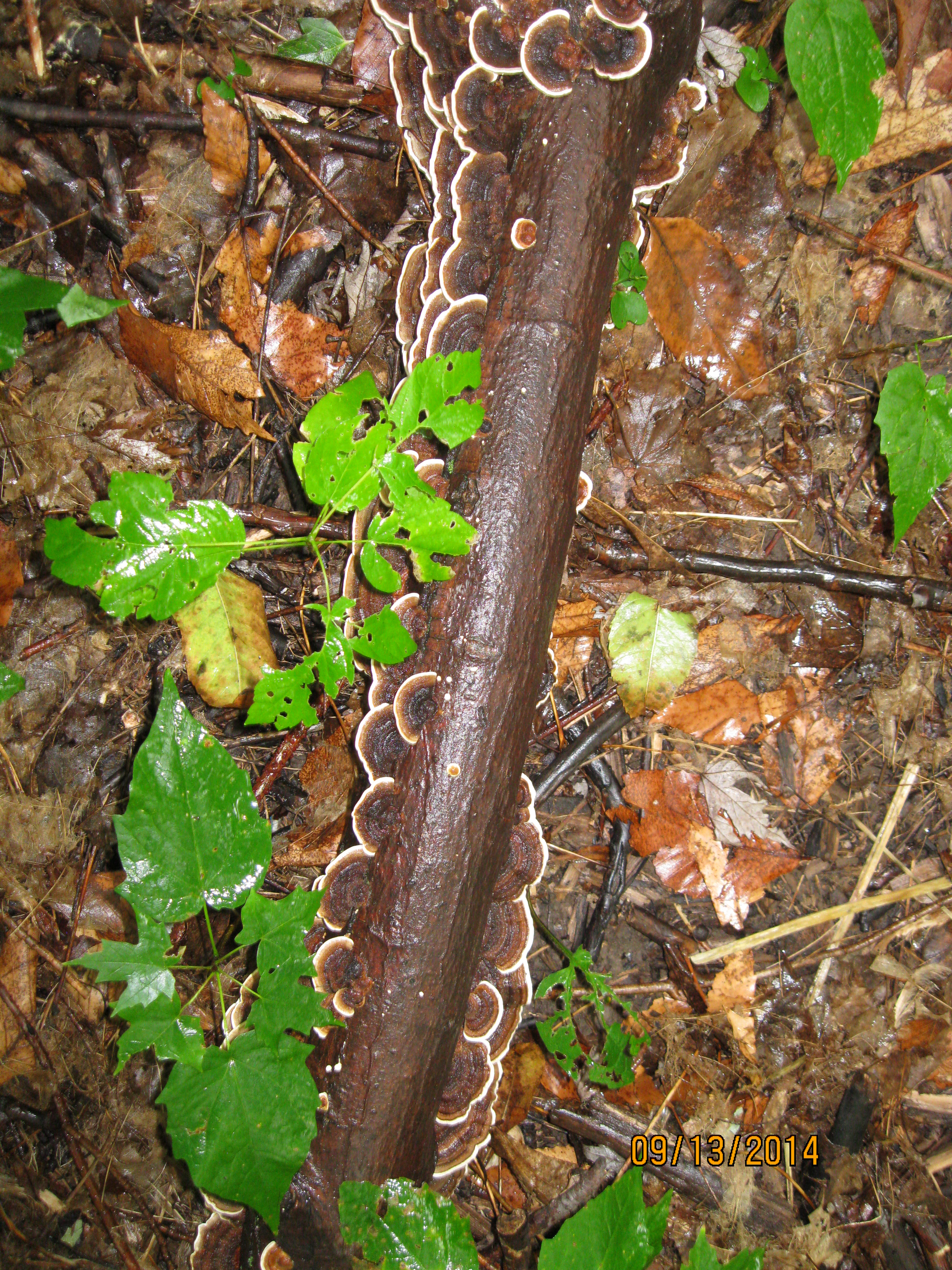
We found a branch growing a fungi called Turkey Tail.  Turkey Tail grows on fallen hardwood. This fungi is known for it’s medicinal properties especially as a supplement for conventional cancer treatment.  It is helpful for overcoming the side effects of chemotherapy.

IMG_3294

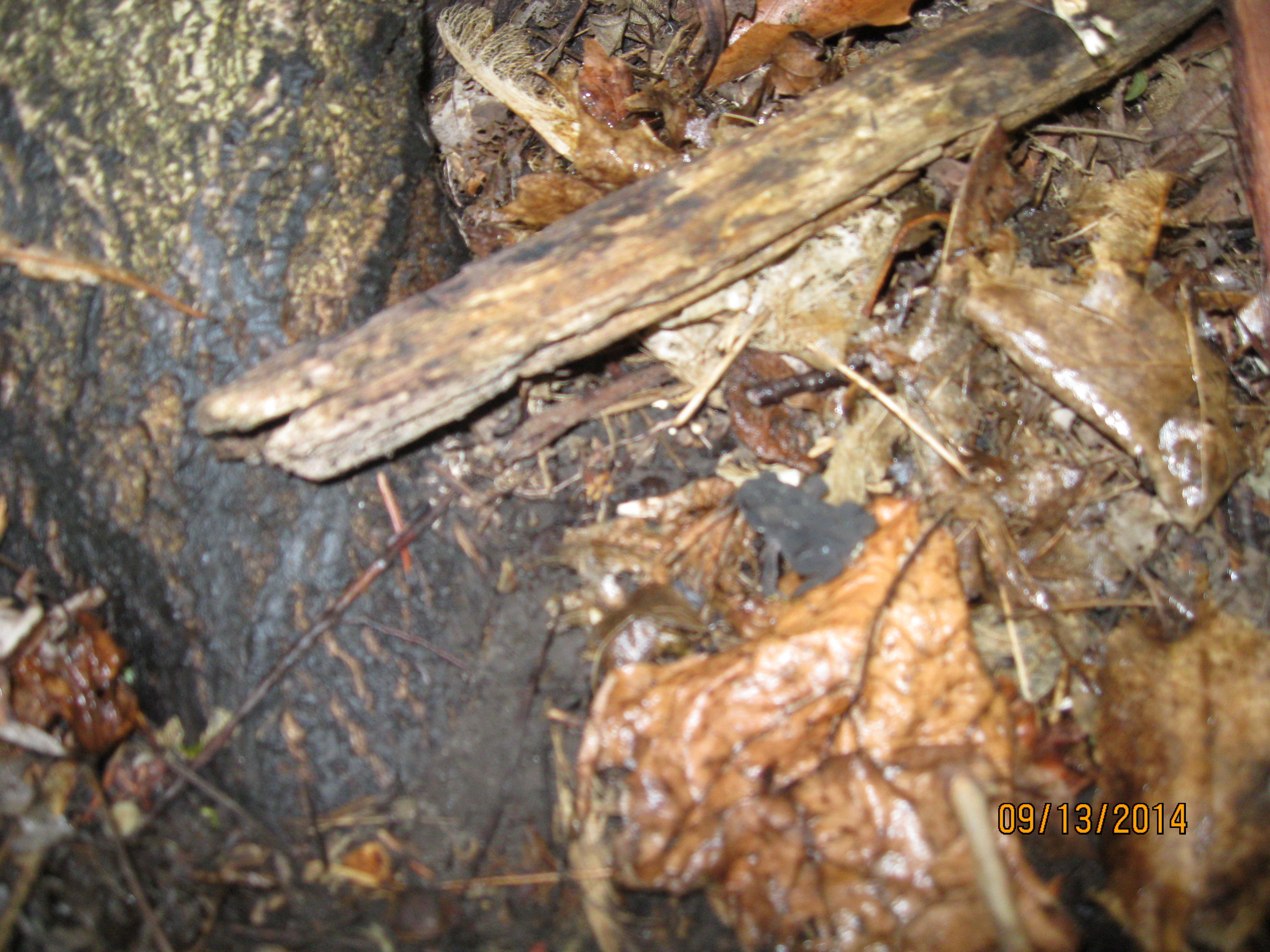
Wood frogs are easy to miss as they blend in well with their surroundings.  The small specimen in the centre of the picture is only a couple of centimeters long.  Wood frogs winter close to the surface and have the ability to withstand being frozen and thawed many times during the winter.  They convert their body fluids to urea and glucose, both of which don’t freeze as easily as water.

IMG_3307]

Wild Grapes, also known as River Bank Grapes have been climbing the larger trees in GTA parks for many years.  They can reach the tops of the largest trees and are capable of smothering the tree and killing it.  The woody vine can be several inches thick where it sprouts from the ground. The vine in the picture below is about four inches thick and easily supports the weight of an adult.  My picture of a Canadian Tarzan, however, will have to remain in my personal collection.

IMG_3314

This mushroom is known as a Dung Loving Bird’s Nest.   When mature they have a cap that has a few spore capsules that look like eggs in a bird’s nest.  It is designed to use the force of falling rain to distribute it’s spores and can throw it’s spore capsule up to two meter’s with the force of a single raindrop.  These mushrooms have already launched their spores.

IMG_3329

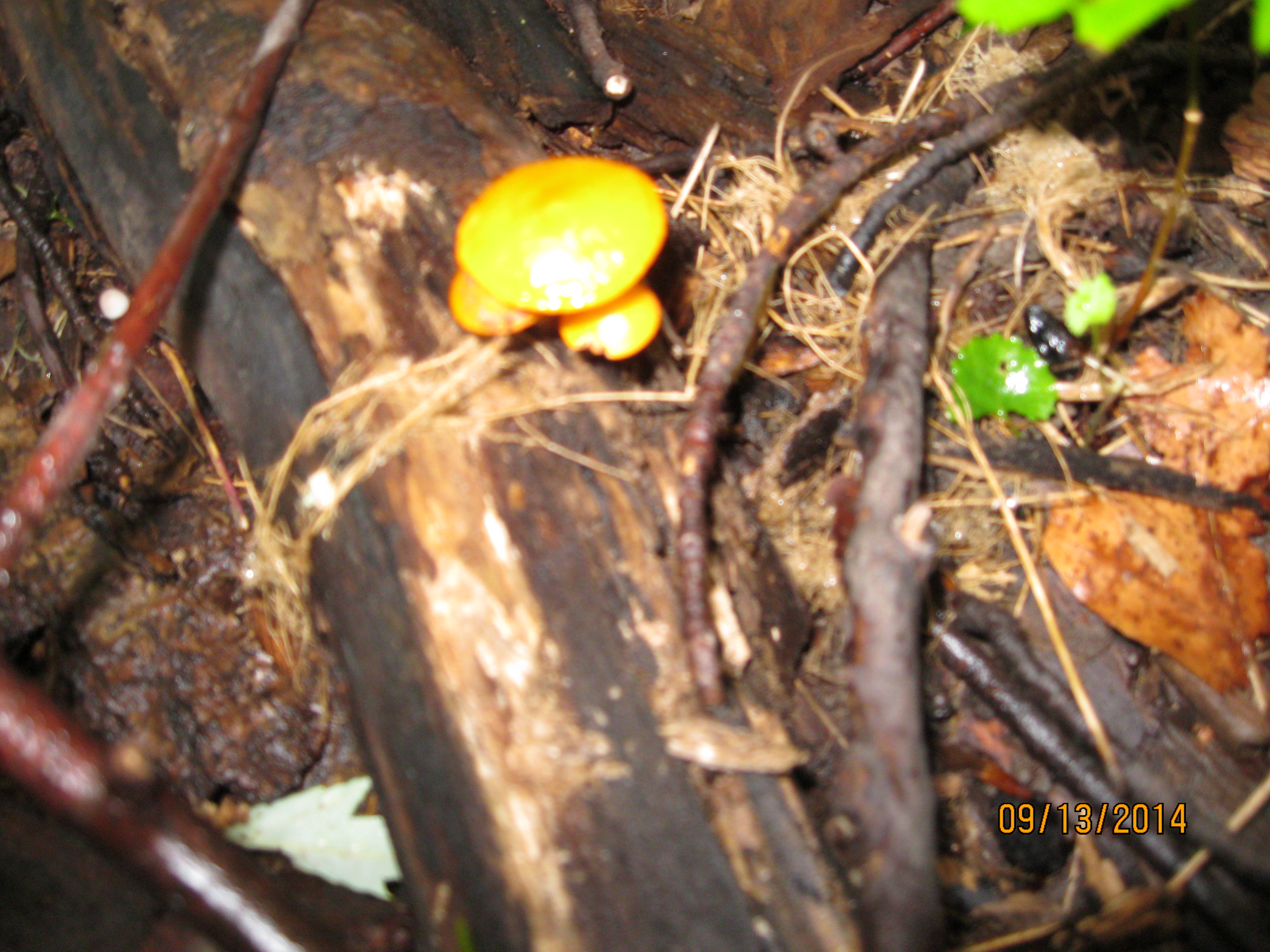
The Yellow Waxcap mushroom is edible but is not recommended as there is a poisonous mushroom that looks very similar.  They appear in late summer and there were many of them scattered throughout the woodlot.

IMG_3331

Riverside Park Streetsville

Saturday Sept. 6, 2014

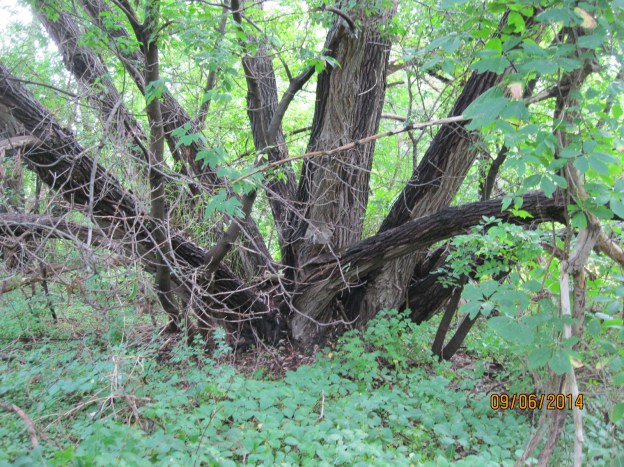
It was a cool morning following a night of rain.  We decided that there was time for a short hike. Parking on Riverside Place we walked the path down to the east bank of the Credit River.  We thought we just might find evidence of Timothy Street’s mill, after which the town of Streetsville was named.  Streetsville has retained it’s small town feel even as it has been surrounded by the city of Mississauga.  In 1953 two of the first suburbs in Canada were built near Streetsville.  The one on the north east was called Riverside and opened in 1955.  The park at the bottom of the hill along the river may have contained the mill pond.  The tree in the cover shot is a massive black willow that stands near the side of an old mill race.  It is likely over 100 years old and witness to many changes in the river valley.
We watched a female downy woodpecker looking for lunch on a dead tree.  The downy is the smallest woodpecker in Ontario.  The males can be distinguished from the females by the red cap on the back of the head.  The downy and the hairy woodpecker look almost identical, yet they come from different genera.  Downy woodpeckers average about 6 inches while the hairy is normally around 15 inches in size.  They have the same markings except the white feathers on the tails.  Being unrelated they cannot inter-breed raising the question as to why they look so much alike.  Scientists use the term “convergent evolution” to describe two apparent random sets of independent mutations that, against all odds, somehow produced the same result.

IMG_3189

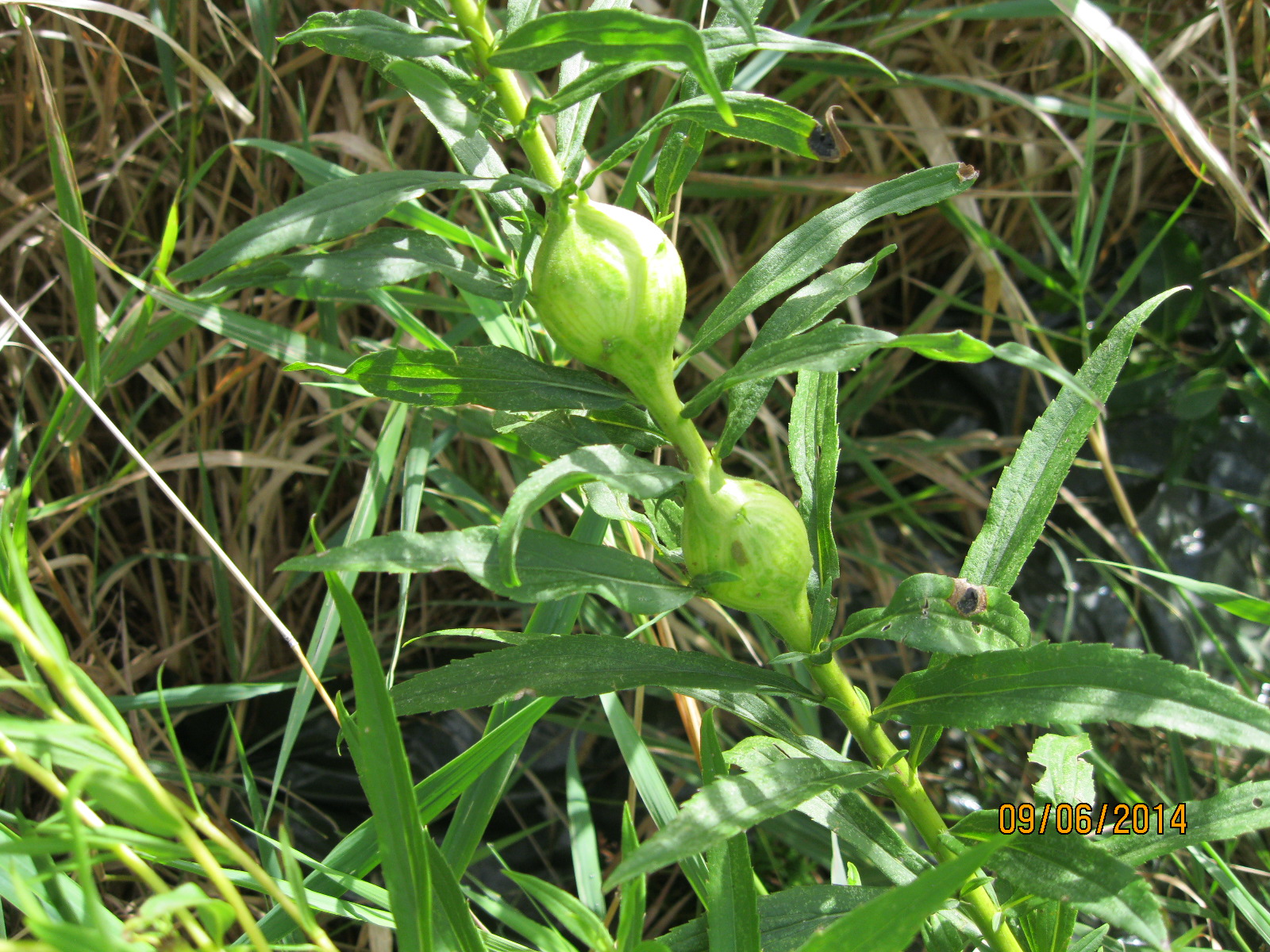
The Goldenrod Gall Fly is a small brownish fly that lives it’s entire life cycle around the plant.  In the spring the male will wait on a plant for the female to arrive so he can dance for her.  After mating she deposits her eggs directly into the stem of the young goldenrod plant.  The eggs hatch in about 10 days, roughly the same time as the adult completes it’s two week life cycle and dies.  The larva live their whole lives inside the plant where they chew a nest.  Their saliva causes the plant to grow a gall around the larva, up to the size of a golf ball.  Just before winter the larva will chew an escape tunnel out almost to the outer skin.  Then it converts most of its body fluid to glycol, a substance like anti-freeze, and sets down for the winter.  In the spring the larva wakes up and molts into the pupa from which the adult fly will hatch.  The adult will escape through the tunnel it dug the fall before.  When it reaches the end of the tunnel it inflates special pouches in it’s head to “blow apart” the skin of the gall.  The male fly then begins its two week life cycle on the outside.  Goldenrod galls are easy to find but it is rare to see two galls on a single plant.

IMG_3196

Wild cucumbers grow along the edges of Toronto’s rivers and streams.  They are related to cucumbers, squash and other gourds but unlike other members of it’s family, are not edible. The fruit will contain 4 seeds which drop out of the bottom after the pod has ripened.  The plant dies each fall and re-grows in the spring from the seeds of the year before.

IMG_3200

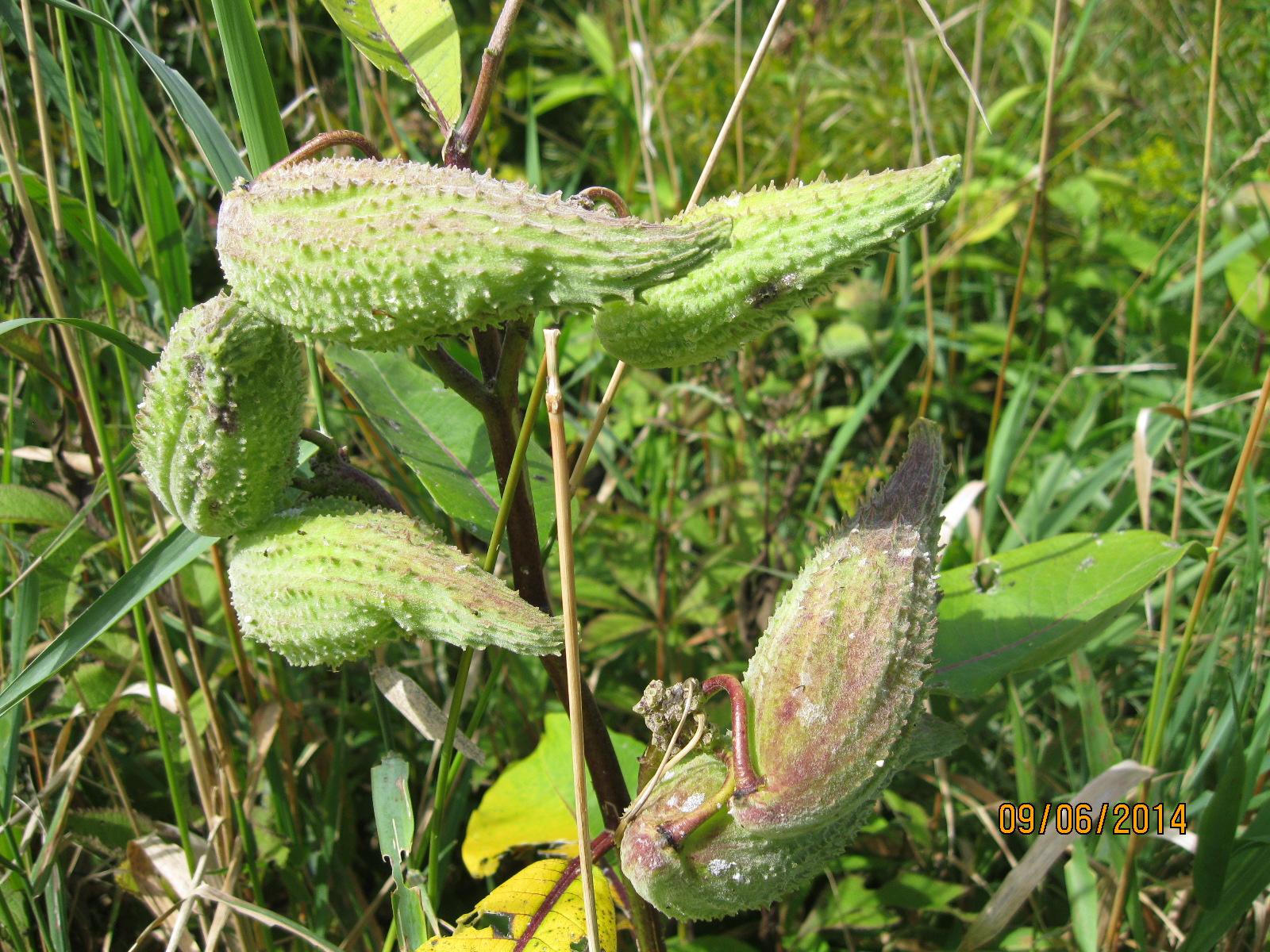
Milkweeds produce a pod which contains hundreds of little seeds.  These little seeds each have a silky tassle which allows them to be blown by the wind to aid distribution.  Milkweed is essential to the life cycle of monarch butterflies.  They lay their eggs on the plant and the emerging caterpillars eat it.  Monarch butterflies travel 4,800 km to Mexico to winter every year. In the winter of 2013-2014 only 44% of the butterflies arrived compared to the year before.  In order to improve the future of these butterflies the David Suzuki Foundation has a program promoting the planting of milkweed in Toronto.

IMG_3203

We found the old Streetsville mill but it was on the other side of the Credit River.  Exploration awaits…

IMG_3219


Barbertown – Ghost Towns of the GTA

Saturday August 23, 2014

Overcast and 21 degrees but feeling more like 26 with the humidity.  We parked in the little parking lot on the east side of the Credit River just south of Eglinton Ave.

We encountered a patch of poison ivy that had started to turn red.  Poison Ivy is distinctive with it’s three leaf pattern on each stem.  It likes carbon dioxide and has doubled both it’s habitat and strength since the 1960’s.  Late in August the berries turn white as seen in the photo below.  The berries are eaten by birds and bears and are still viable after passing through them.  Some people can have a severe allergic reaction to poison ivy.

IMG_3016

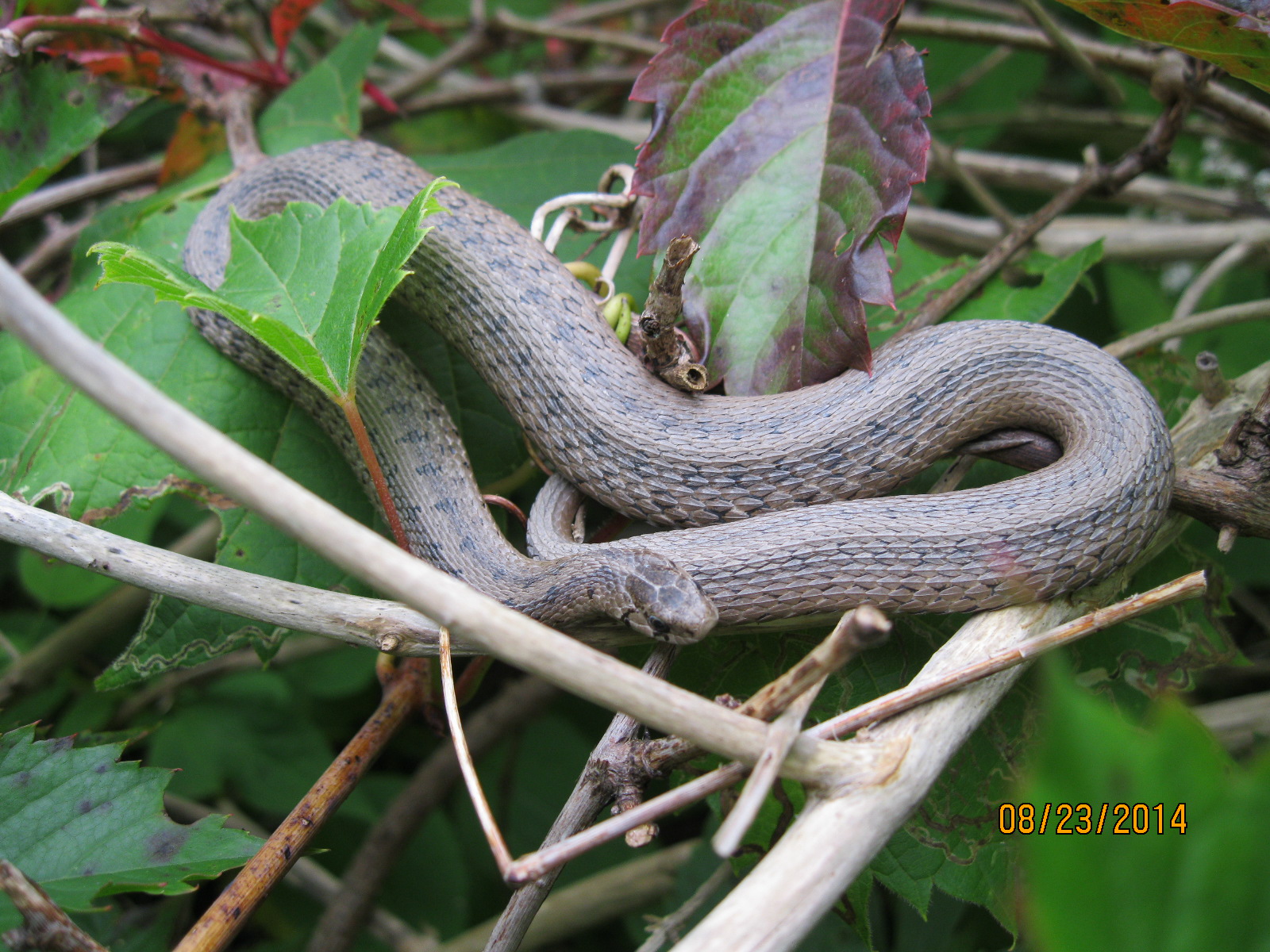
We saw a small Dekay’s Brown snake lying on a branch sunning itself.  They can grow to about 50 cm but the young, which are born in late summer, are 8-11 cm in length.  This snake is not poisonous but can emit a foul smelling musk if it feels threatened.

IMG_3021

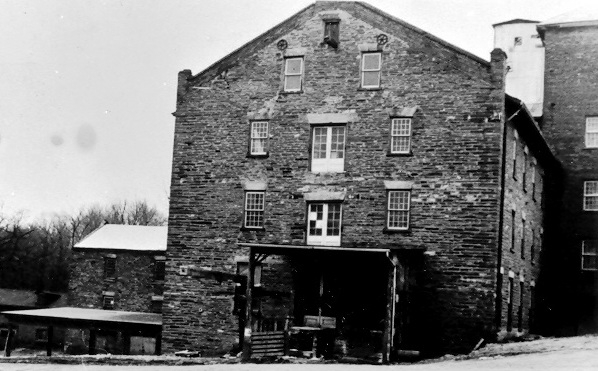
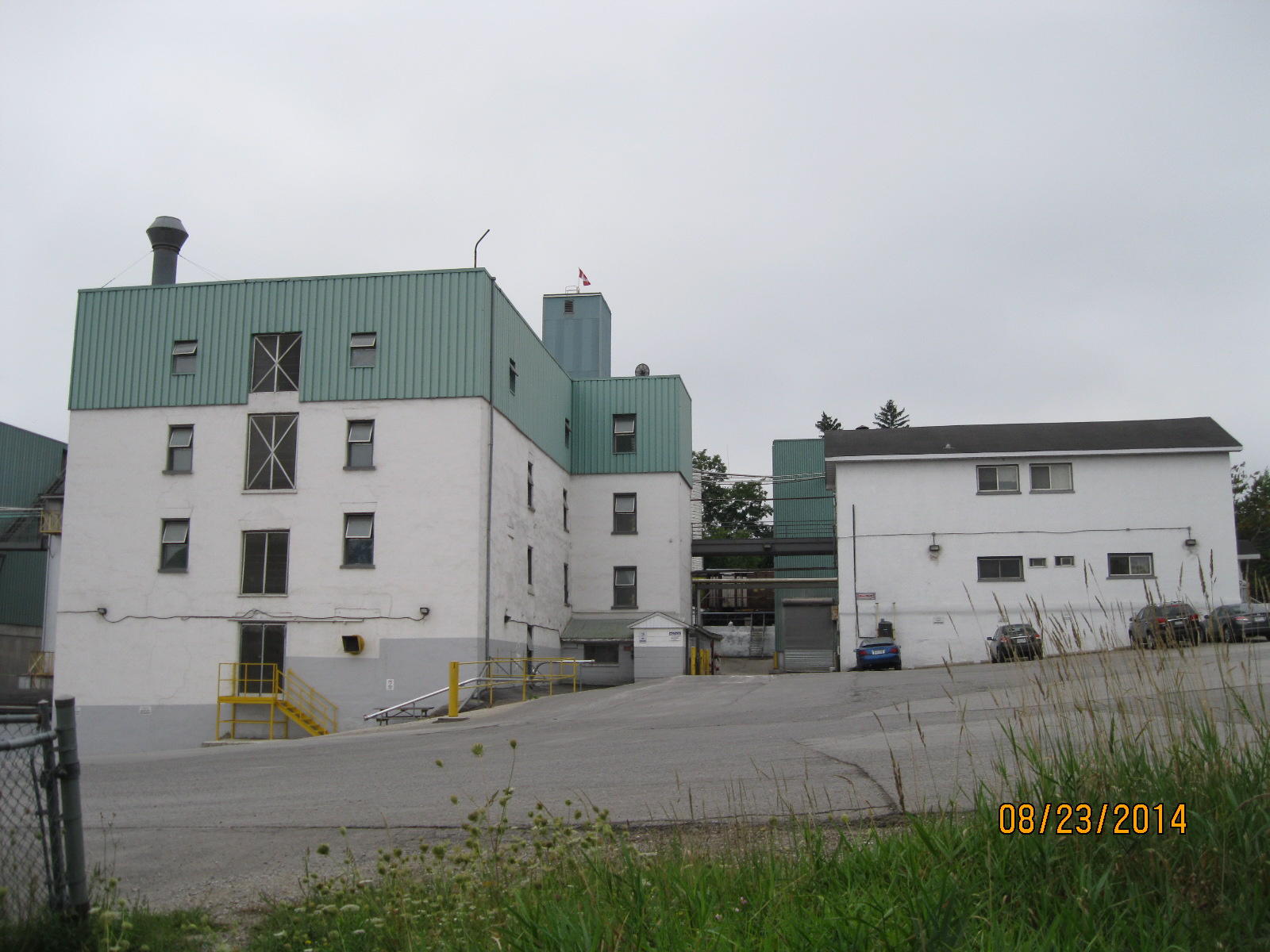
In 1843 the Barber Brothers, William and Robert, decided to expand their Georgetown mill operation by buying William Comfort’s farm and mill site just south of Streetsville.  In 1852 they built a 4 storey wollen mill.  When it burned in 1861 their workers just built a new one and opened again only three months later.  Within 10 years it was the fourth largest textile mill in Ontario.  During the first world war it was converted to a flour mill which it continues as today.  The second mill remains on the left in the photo below but has been covered over with stucco and aluminum siding.  The cover photo shows the mill as it looked in 1950.

IMG_3053

Mills used to be built tall to take advantage of shafts and pulleys that were turned by the water wheel.  In this four story mill the wool was carded on the top floor then moved to the third floor where it was spun into yarn.  On the second floor it would be woven into blankets and assorted textiles.  On the first floor it was was cleaned, checked for quality and prepared for shipping.

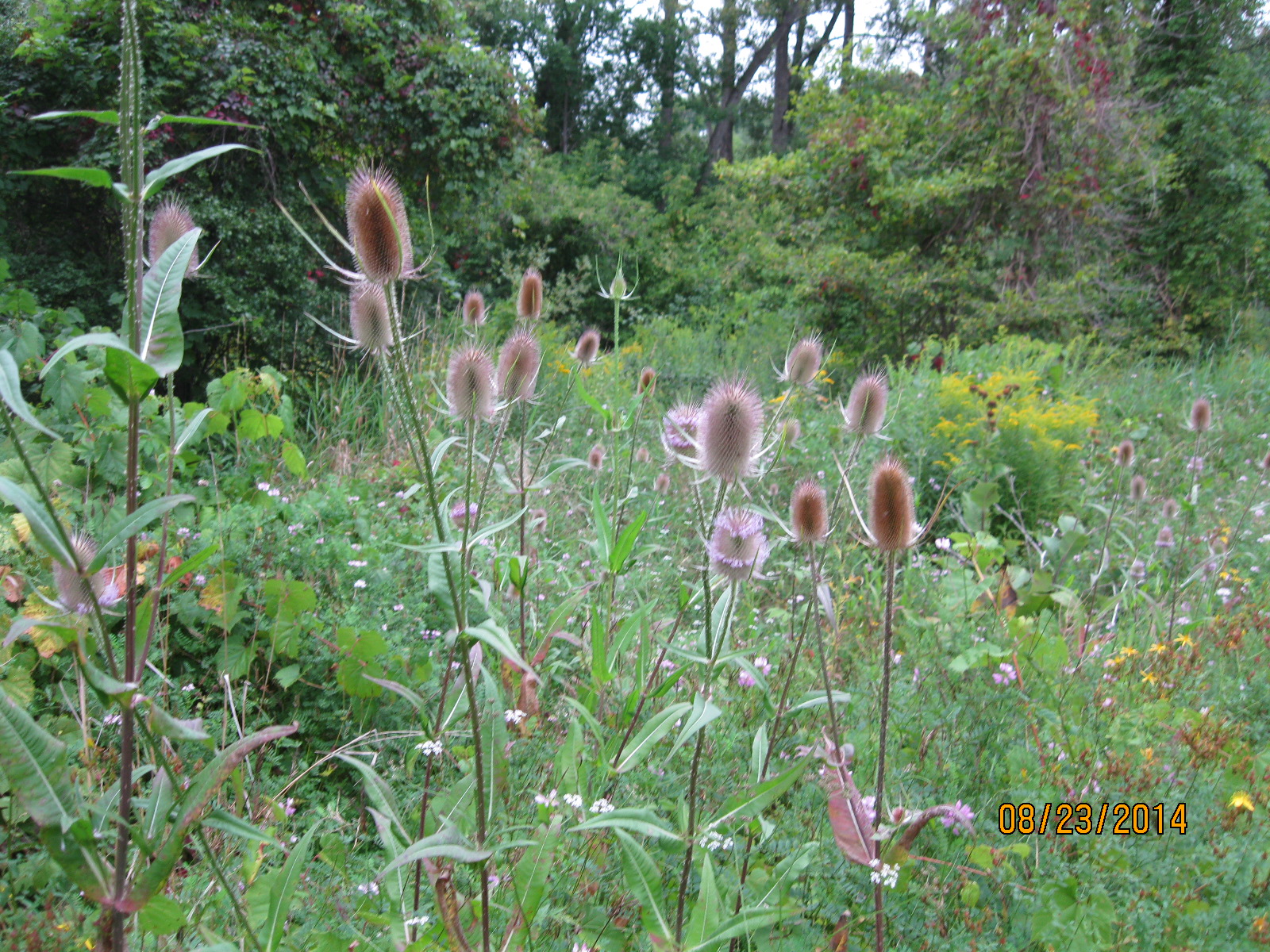
Carding wool is a process which runs the wool through a carding material.  We get the word “carding” from the Latin word “carduus” which means teasel.  When the Barbers ran their mill, their workers would have used the heads of the teasel plant to draw out the fibres of the wool into long strands that could be spun.  Today carding is performed with a set of paddles with many closely spaced pins on them.  Teasel plants still grow around the mill property.  By mid summer the plant can be up to 2 meters tall with large purple heads on them.  The flower forms a purple ring that works its way down the the head as it blooms.  The ones pictured below have finished blooming.

IMG_3017

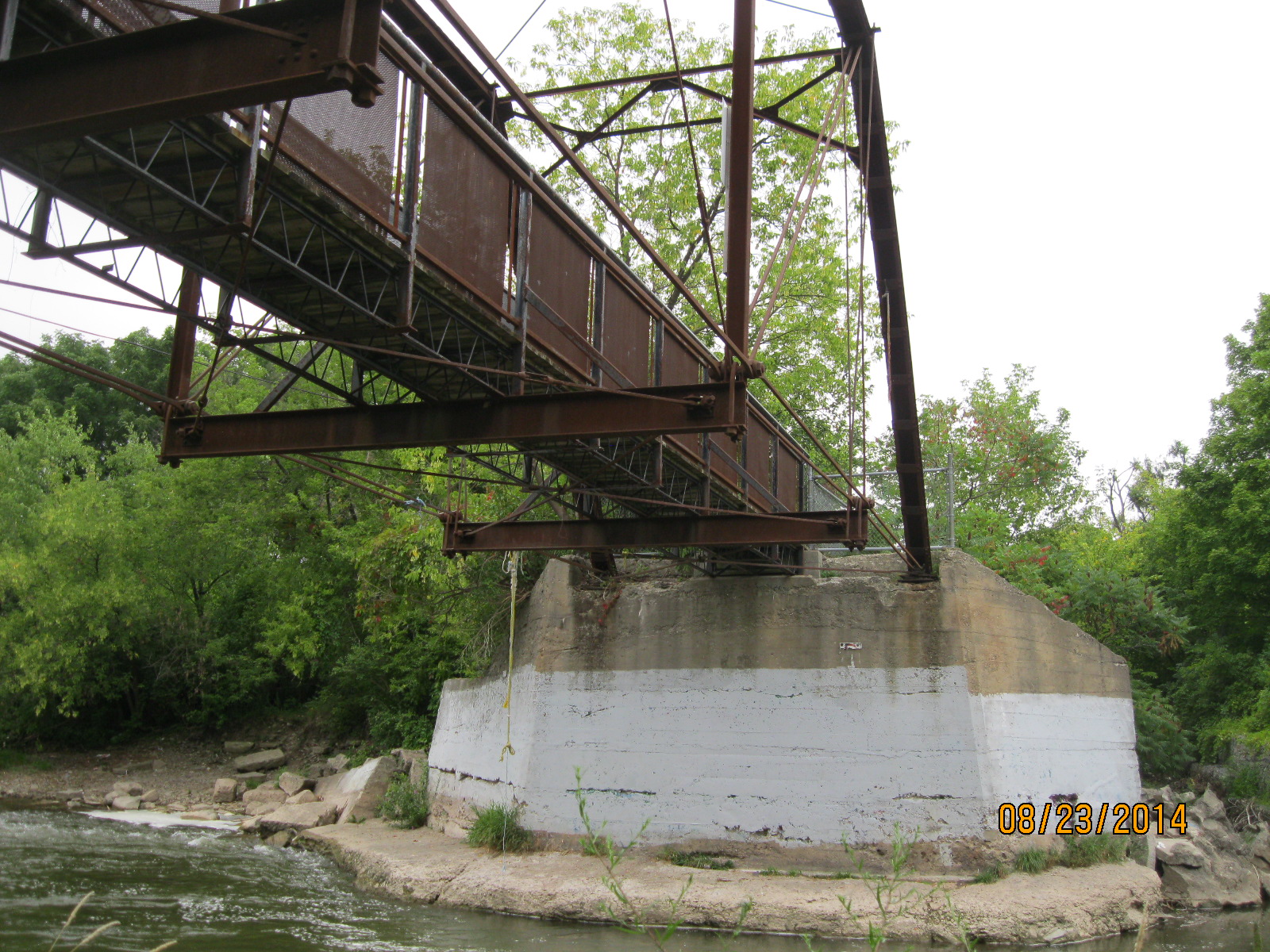
The Barbertown bridge was built in 1898 to carry workers from about 40 cottages that were built along Base Line (now Eglinton Road).  The staff of the mill reached 200 at one point and used this bridge to access the cottages on the other side of the river along Barbertown Road.  The bridge originally carried a roadway as wide as the cross beams on the bottom.  A narrower foot bridge has been installed for modern pedestrian traffic.

IMG_3056

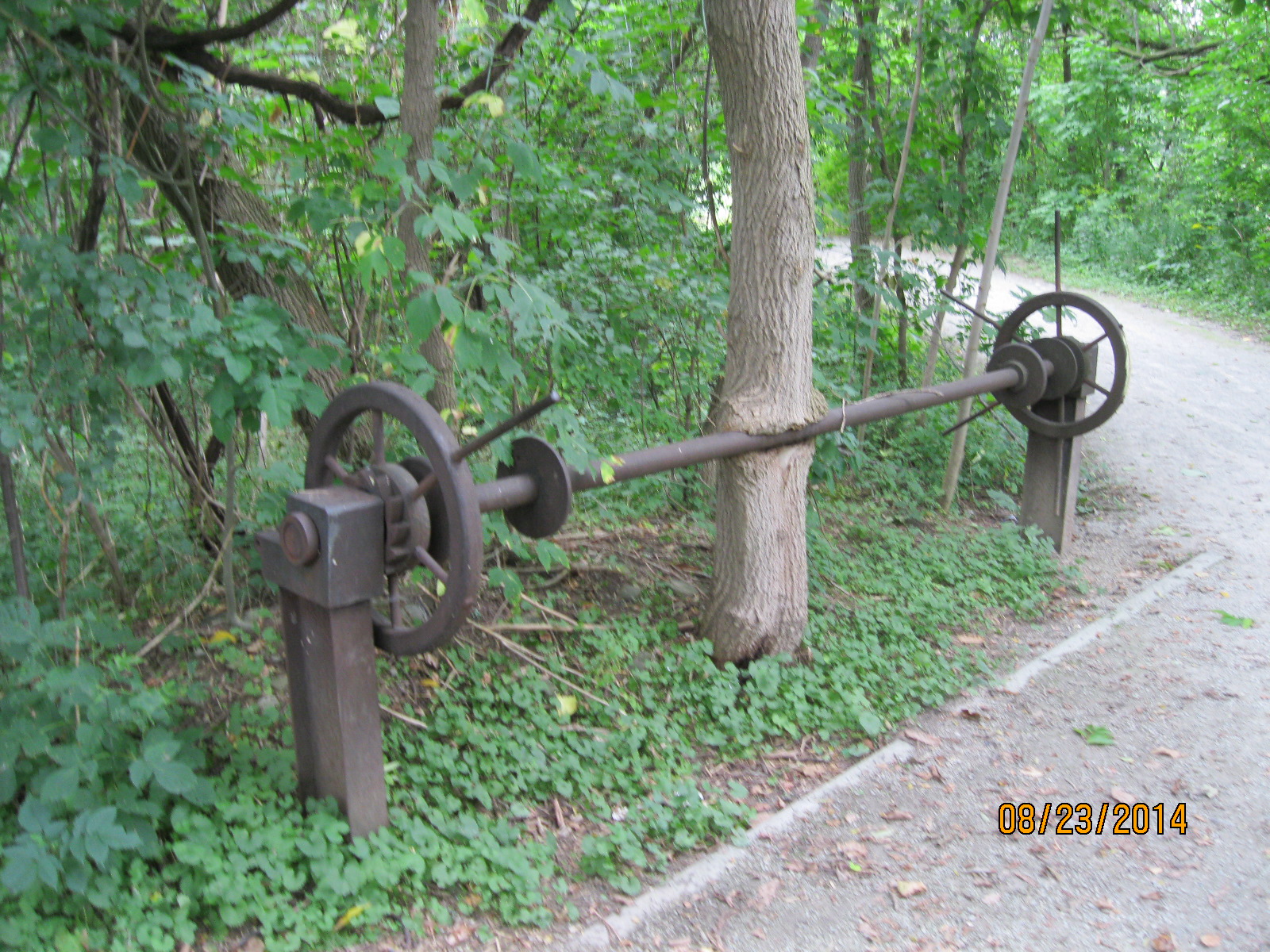
A sluice gate is used to control the flow of water at a mill site.  By raising and lowering the gate a mill could control the speed of the water wheel.  At Barbertown the sluice gate was raised and lowered by a hand crank that would have been operated by two people. When water power was finally abandoned here in 1974 the sluice was filled in. Today a tree grows where a deep ditch full of water once ran.  The tree has grown almost completely around the steel rod as if to still the works of man even further.
IMG_3057

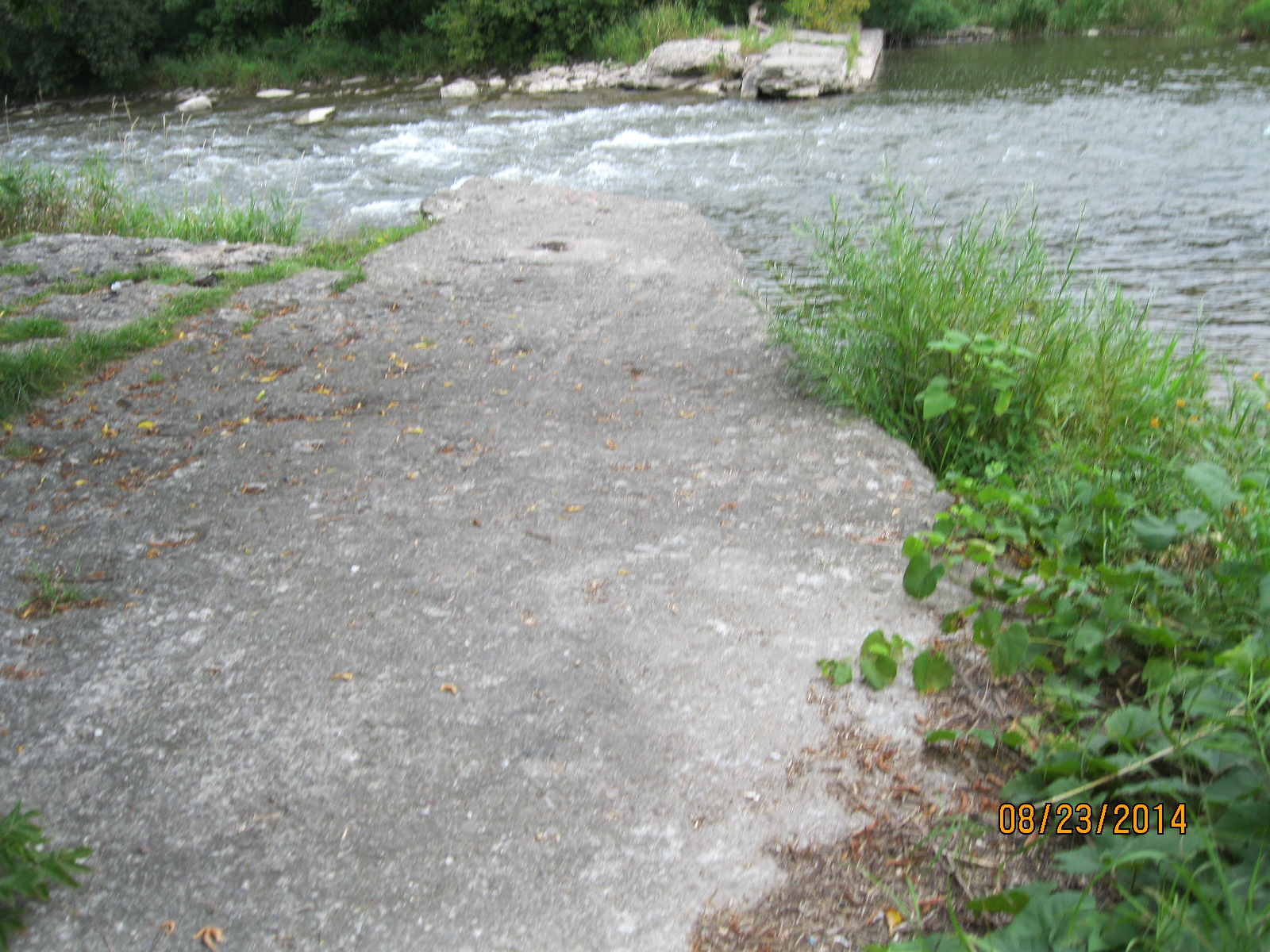
The Barber dam was washed out in 1974 and never replaced.
IMG_3064

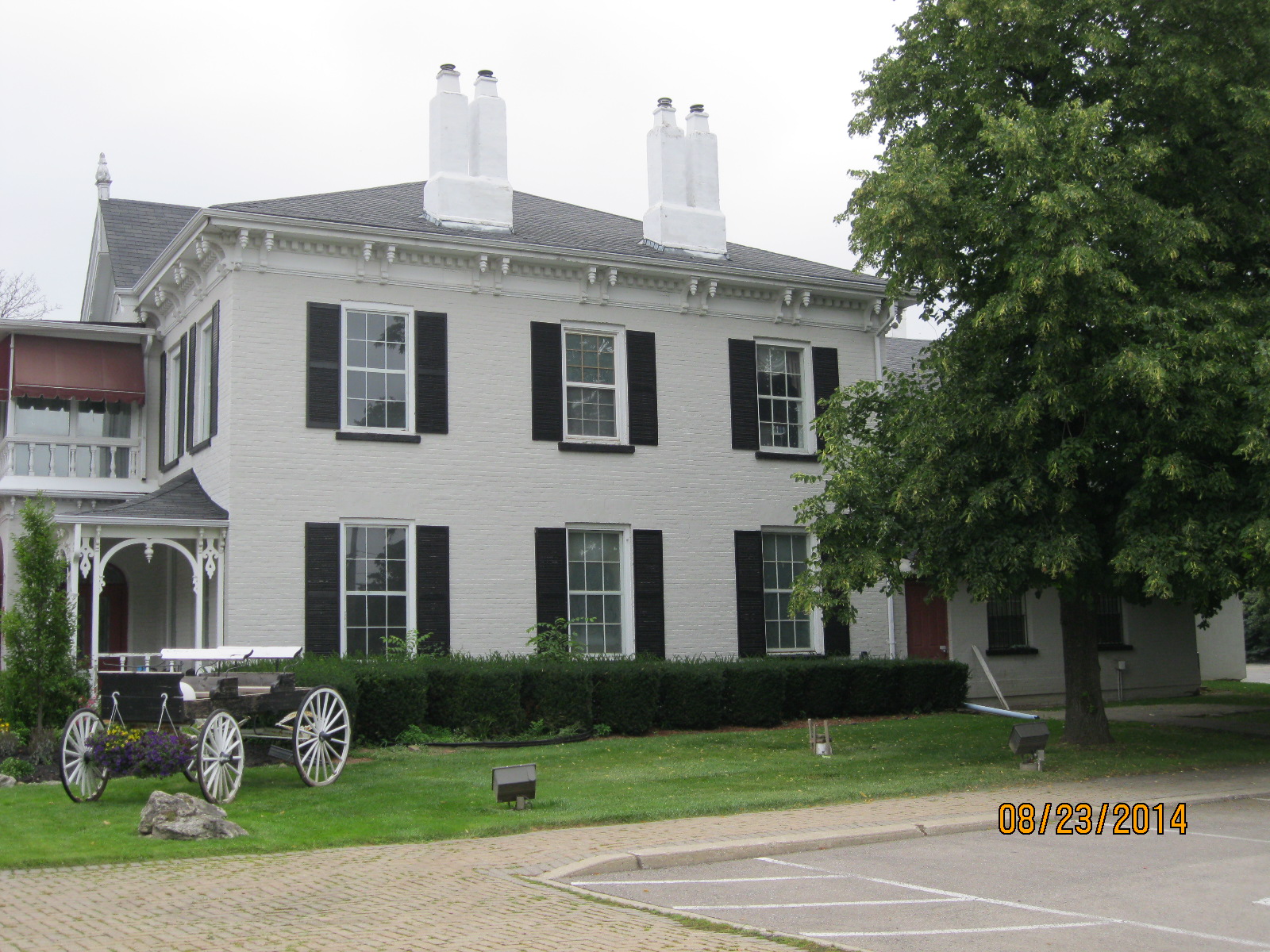
William Barber built himself a two story house in 1862 on the corner of Barbertown Road and Mississauga Road.  It survives today as a restaurant. An 1860’s carriage parked near the front of the house reminds us of how these roads and the Barbertown Bridge were originally used.  I can picture William coming out in the morning and getting onto perhaps this very carriage.  After an inspection of the mill, perhaps a trip down Mississauga Road into Port Credit to arrange the sale or shipment of some of his textiles.

IMG_3106

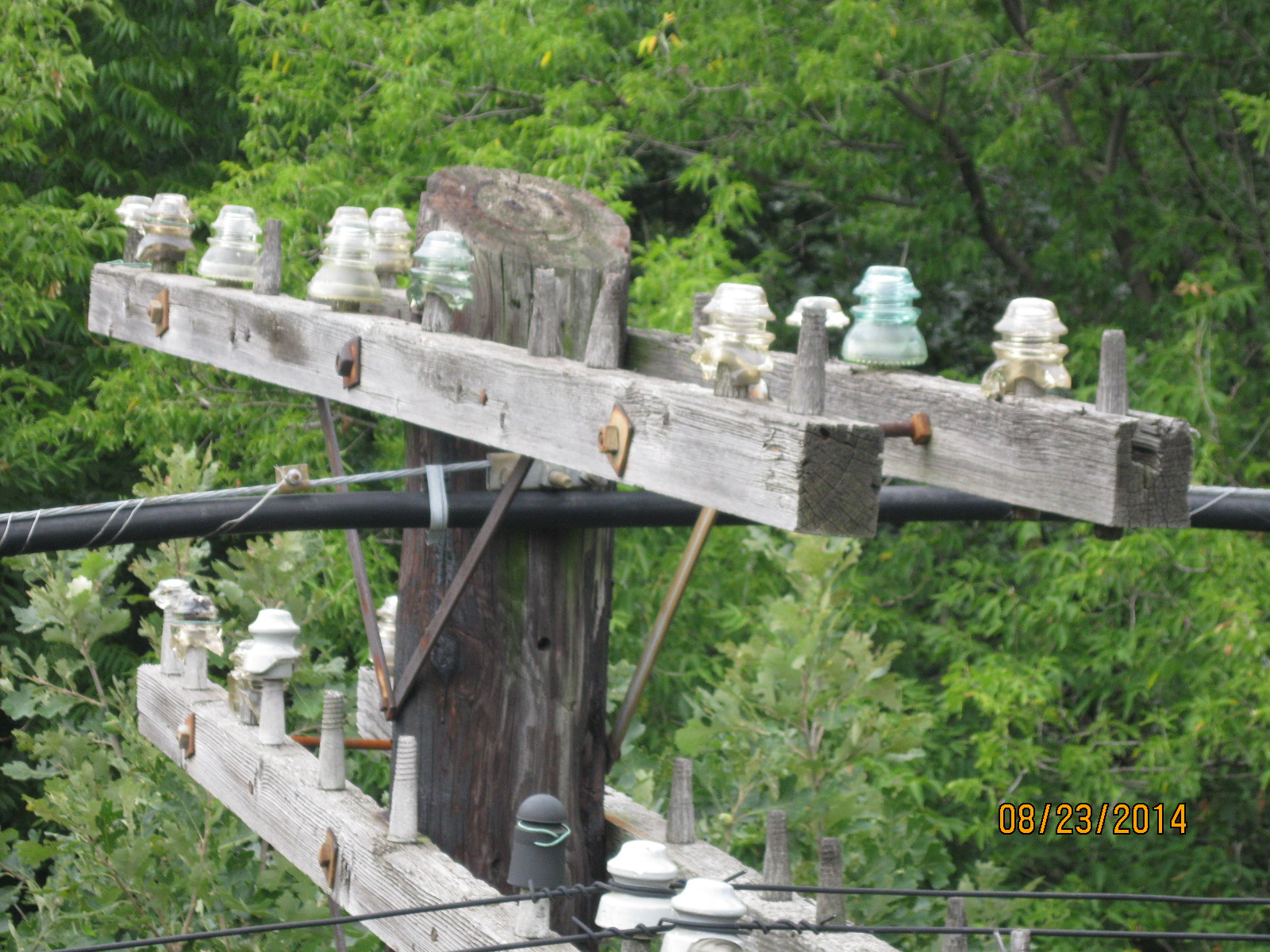
Rail corridors were strung with telegraph wires allowing transmission of information about train positions.  When electrical power was spreading in the early 1900’s the utility poles were converted to carry power as well.  Glass insulators were patented in the 1880’s and were used where each wire was attached to the pole.  In the picture below many of the original ones have been broken off but several good examples remain.  The light blue ones are possibly older than the clear glass style but to know for sure a date is usually embossed on the right side of the molder’s logo.

IMG_3072

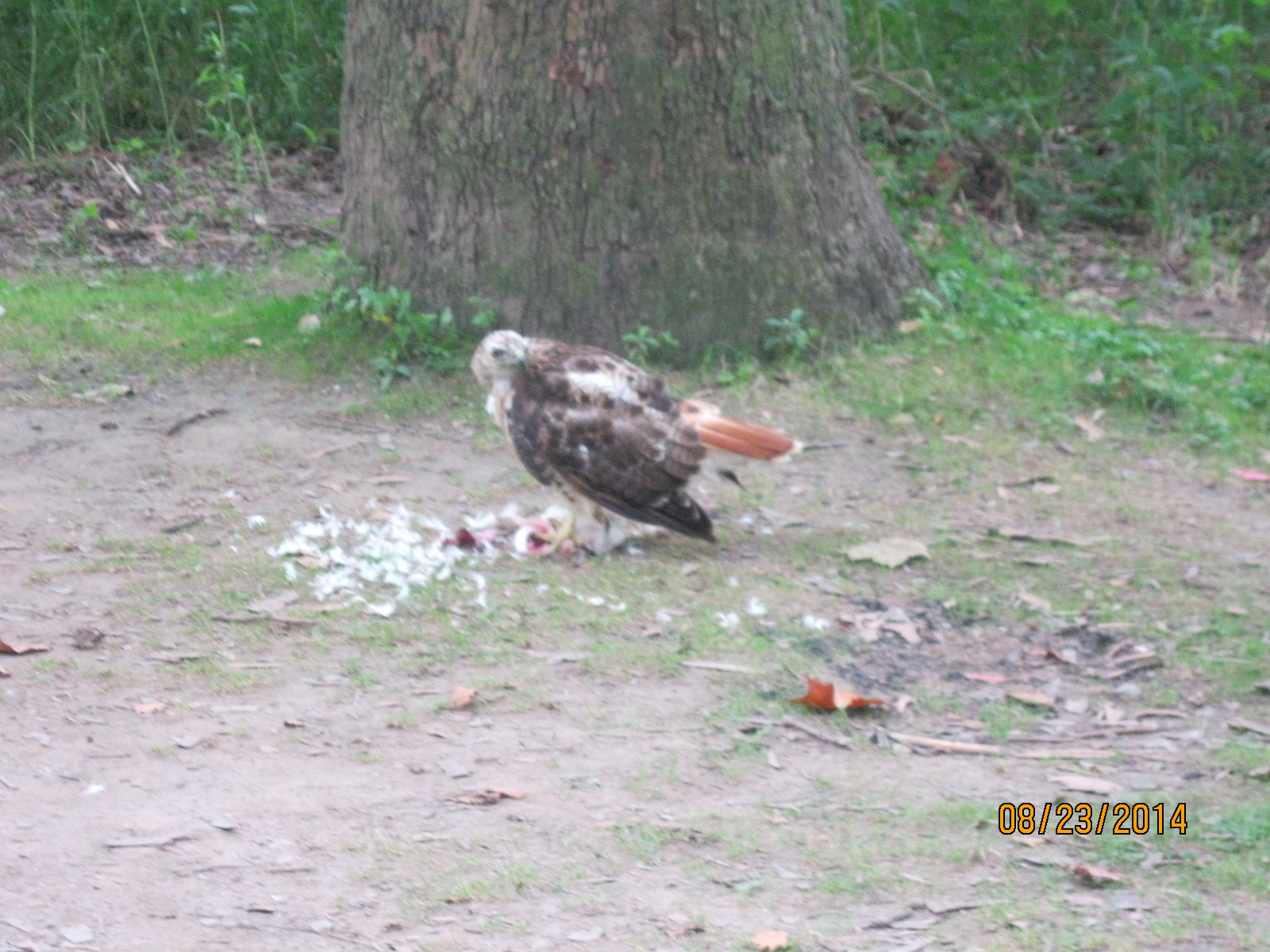
We disturbed a Red-Tailed Hawk who was having a little snack.  Although they eat mainly rodents they are not opposed to a little water fowl once in while as this one was enjoying. Females are up to 25% larger than males and this was therefore likely a female.

IMG_3098

Like us at http://www.facebook.com/hikingthegta

Follow us at http://www.hikingthegta.com


Riverwood Part 3 – Zaichuk Property (Mississauga)

Sat. June 28, 2014

Having made our way through the Bird and Riverwood Estates we followed the trail that led up the hillside and left the main trail near the river to be hiked on our return trip.  The upper trail leads past an old red brick foundation from a house that used to stand on the crest of the hill.  John and Theodosia Zaichuck had purchased the northern lot from Ida Parker in the 1940’s and this would have been one of their buildings.  As you near the crest of the hill you pass a small pond on the side of the hill.  When you cross the open field on the trail you will be following the track of an old horse raceway.

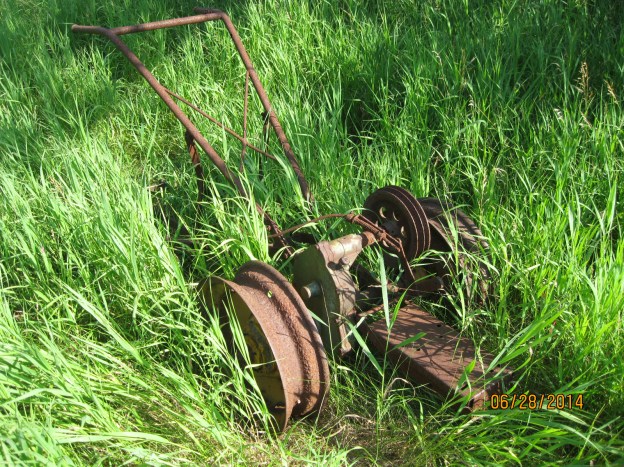
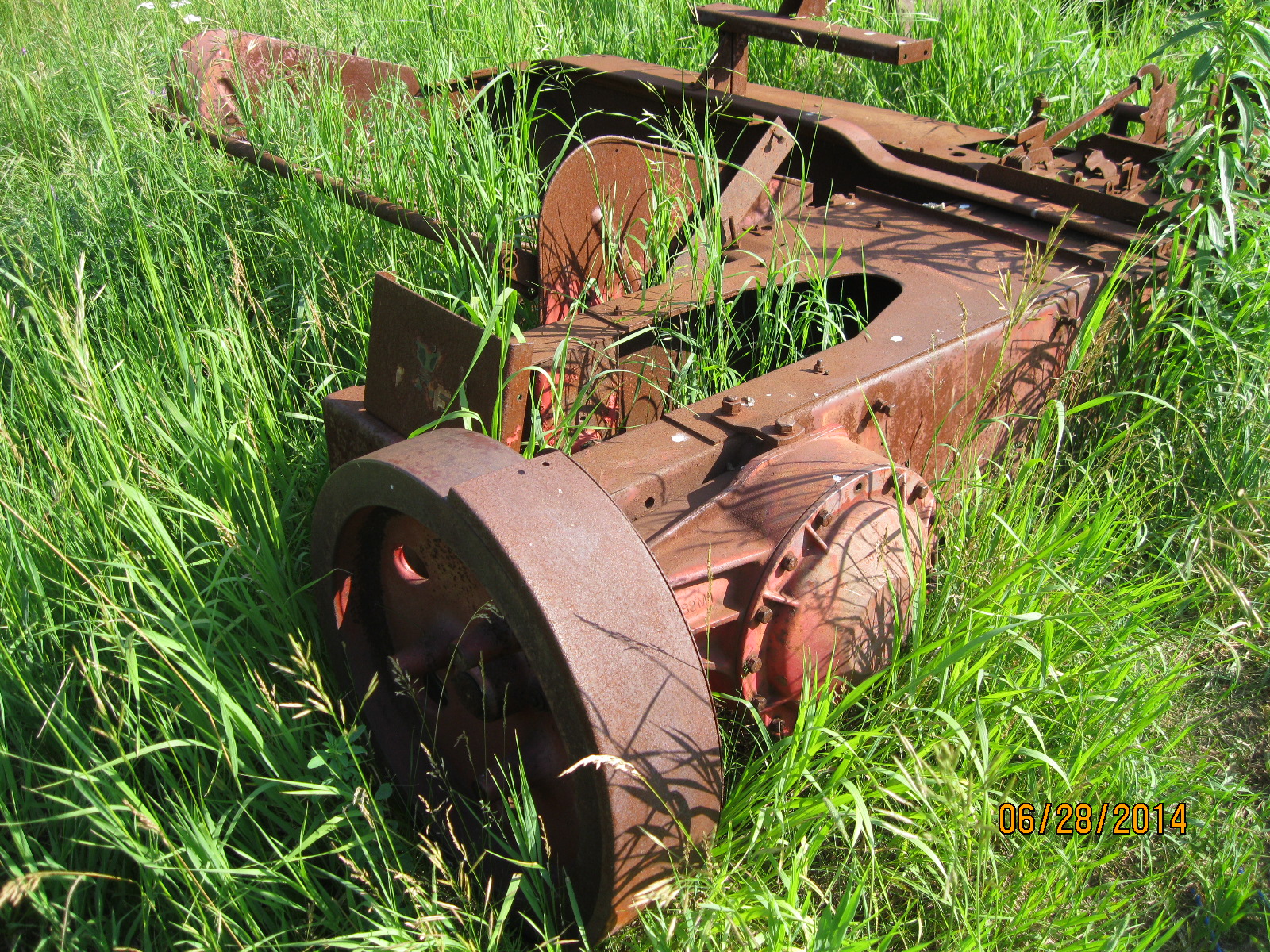
Just around the first curve you come to the remains of an old baling machine.  Around 1940 the first machines were made that tied up a bale of hay.  The machine has a set of rakes that collect the dried hay and packed it into a cube.  The cube is tied with two strings and cut into lengths called bales.  Each bale could weigh 70 – 100 lbs.  These were manually stacked into mountains in barns for use by horses, cows and sheep during winter.

IMG_2413

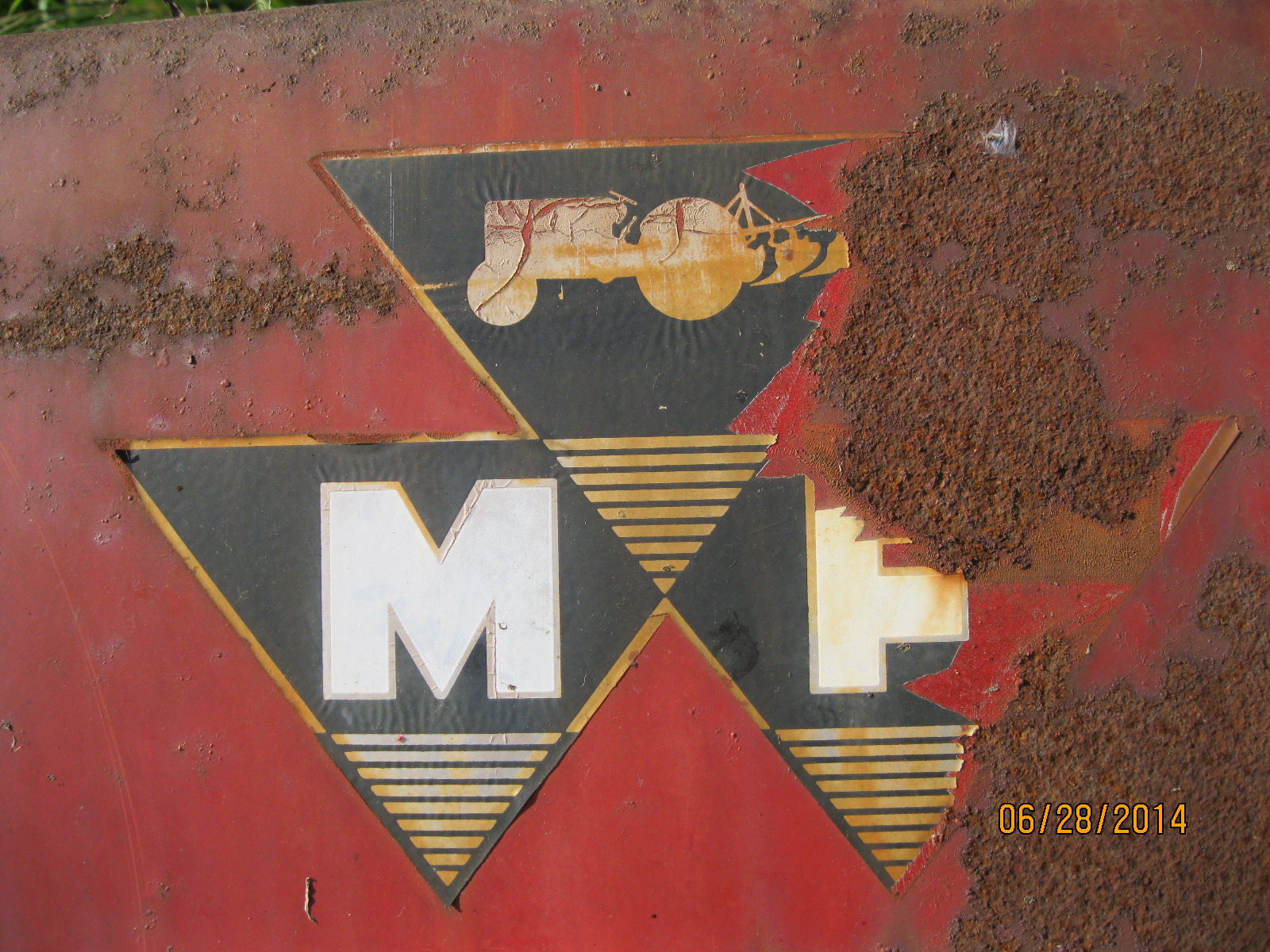
We found a Massey Ferguson Logo and the number 9 on one side of the baler.  Massey Ferguson is an international company today, but it had it’s origin just east of Toronto in Newcastle.  In 1847 Daniel Massey opened a simple shop to make farm equipment.  Hart Massey took over his father Daniel’s business in 1855.  He moved it from Newcastle to Toronto where he competed with Alanson Harris.  He merged with Harris in 1891 creating Massey Harris.  Hart wanted to give back to the city and he did so by creating Hart House for U of T students.  He also purchased a lot at Shuter and Victoria streets to create an auditorium for the citizens of Toronto.  Massey Hall opened on June 14, 1894.

Another merger, this in 1953 with Harry Ferguson of England, created what would become Massey Ferguson in 1958.

IMG_2410

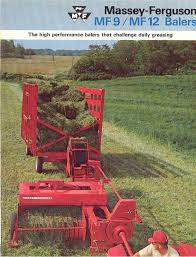
The MF 9 bailer was sold in 1970 and shared an owner’s manual with the MF 12.  In the manual’s cover picture below the hay is being thrown onto a wagon.  The wagon in the cover photo for the previous hike on Riverwood Estate may have been an earlier version of a hay wagon.

MF 9

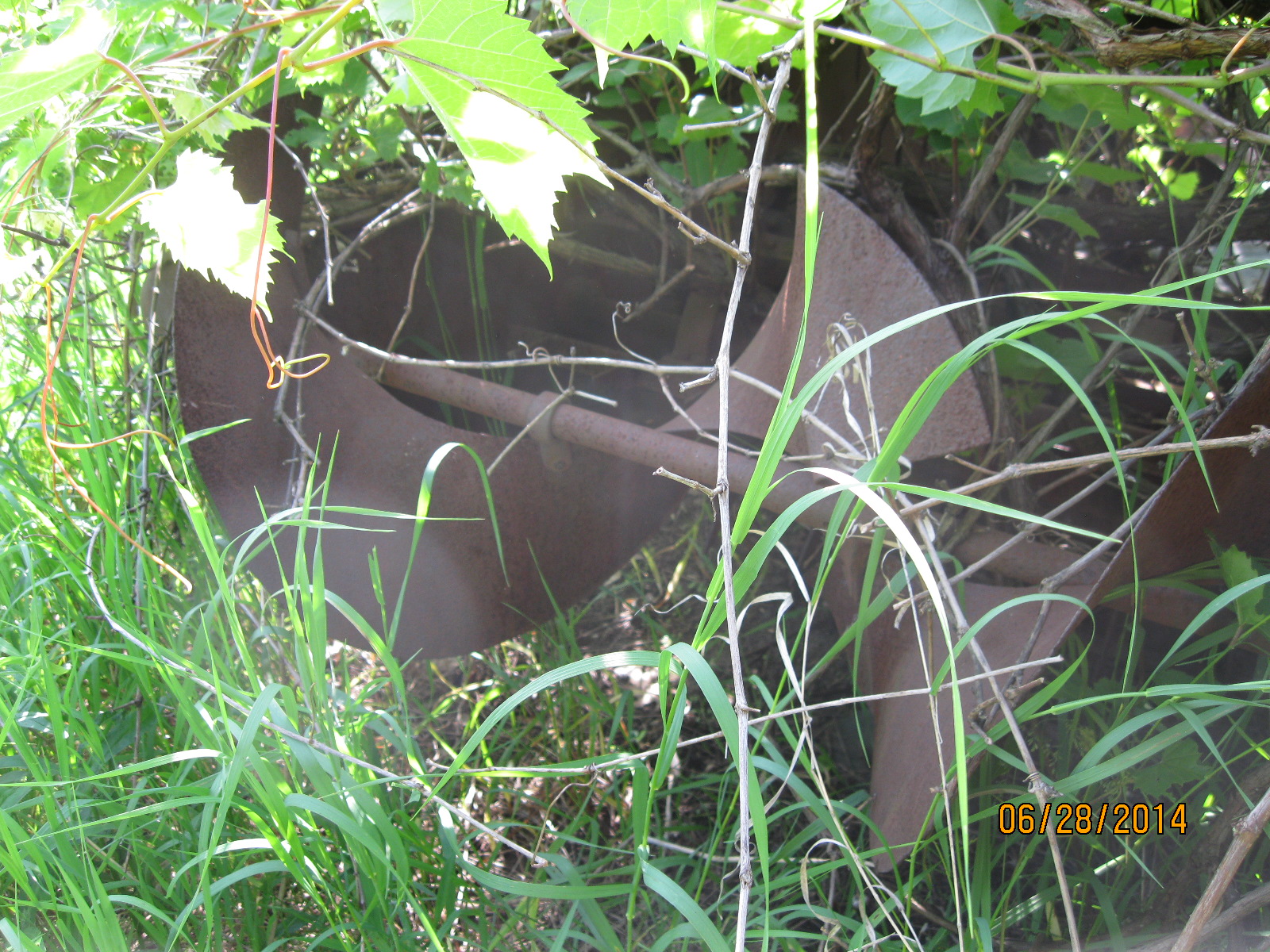
The old orchard that runs down the middle of the field attracts deer in the fall who come to enjoy the fruit.  There are several pieces of farm equipment scattered around the Zaichuk property.  A few in the field and many more in the woods on the south end of the field.  The Tiller featured in the cover photo is near the old orchard.  At the west end of the orchard a tangle of grape vines conceals a manure spreader.  Animal manure was saved up to be spread on the fields every year to replace the nutrients in the soil and improve crops.  The auger took the manure and threw it over quite a wide distance.  I remember driving along country roads as a child and seeing these machines at work.  You didn’t pass a field when the farmer was fertilizing it with the car windows rolled down.

IMG_2418

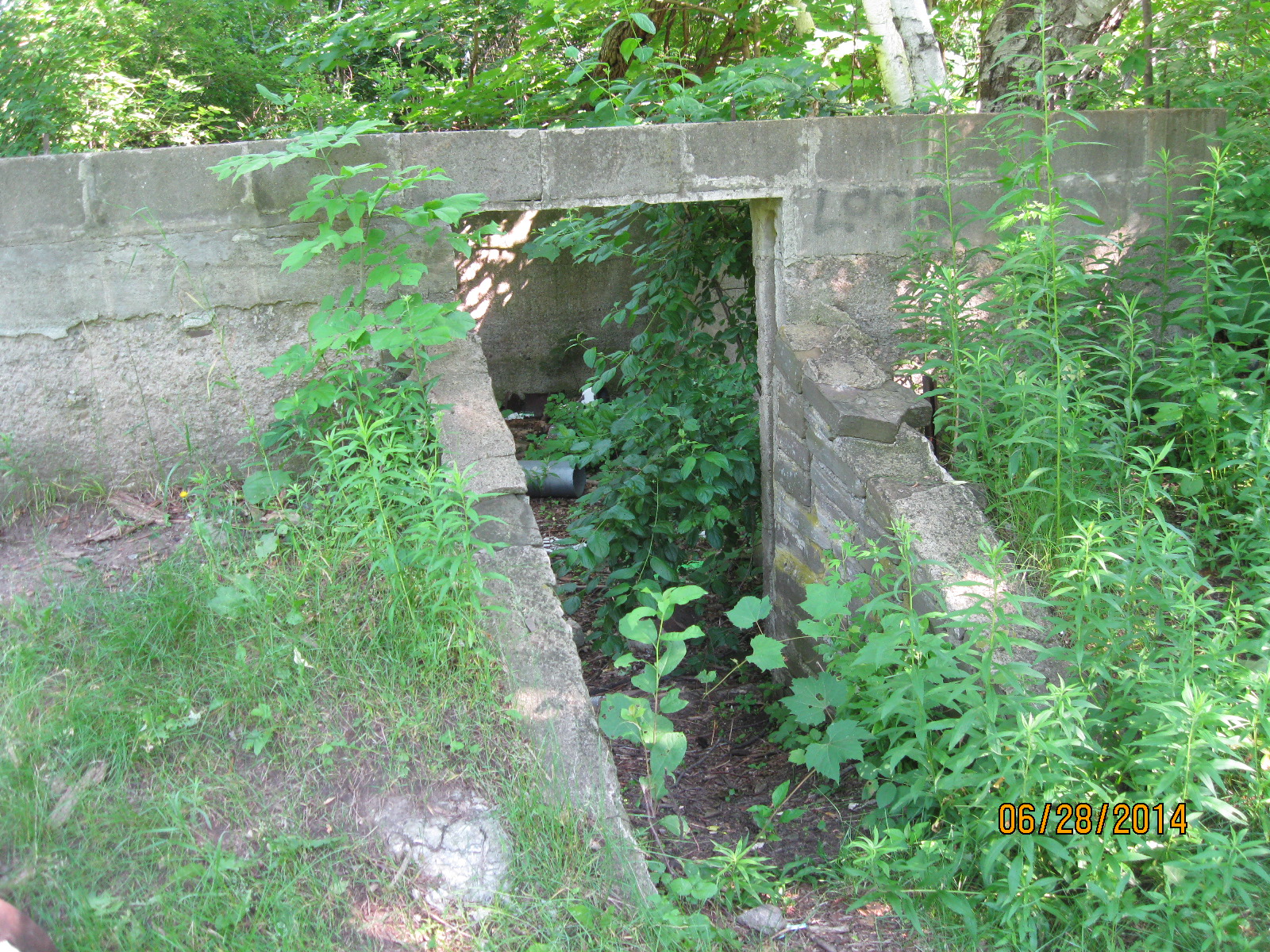
Walk back across the field toward the large willow at the south end.  Behind the willow you will find the basement from an older building  This was a small barn or a perhaps a house.

IMG_2422

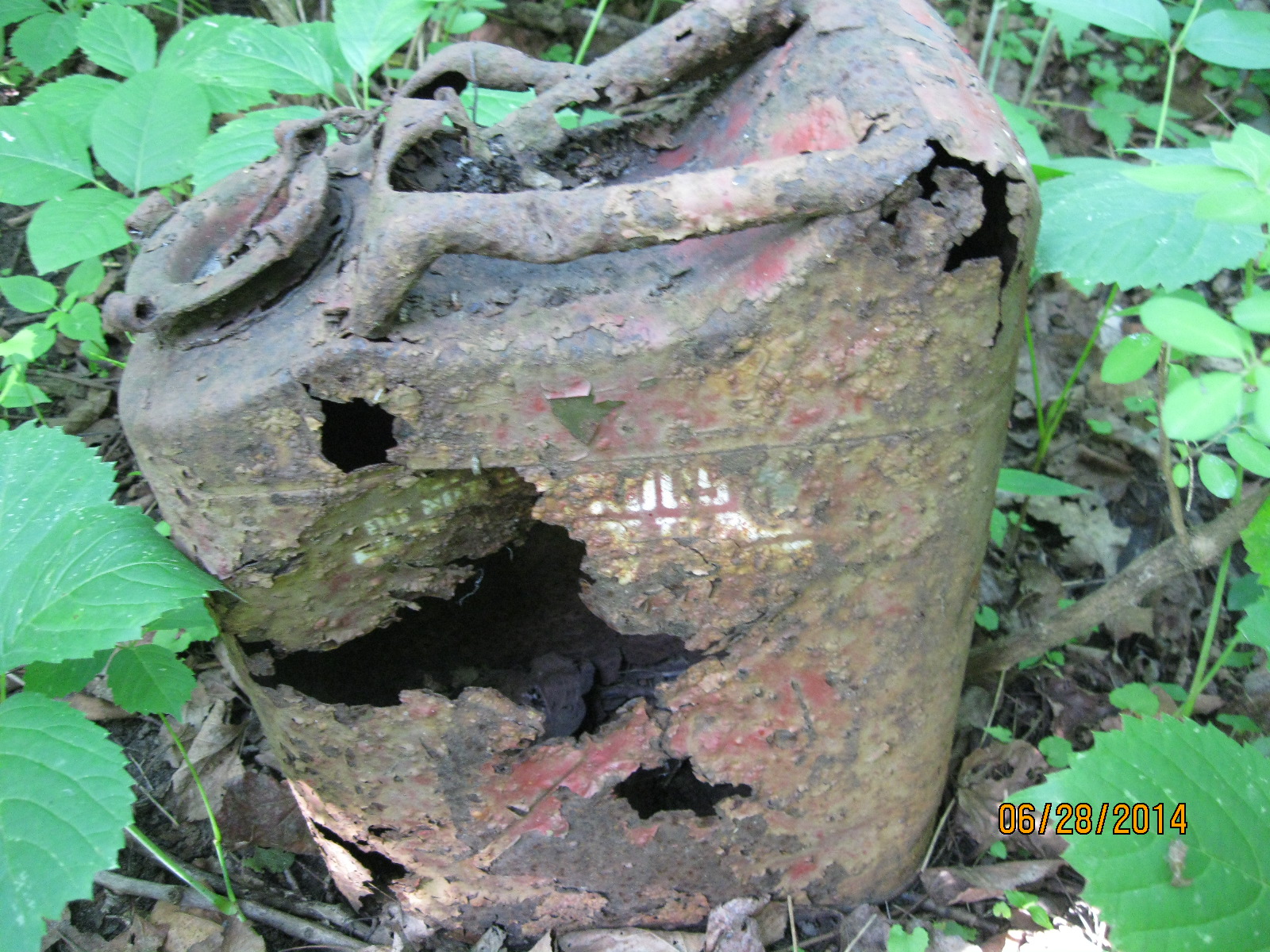
The trees to the east of this foundation contain a large field of garbage.  There are a lot of broken soda bottles here from the 40’s to the 60’s.  A decade ago over 50 intact specimens were rescued from a possible similar fate.  These include a near perfect 1959 Hires Root Beer, a 1954 Wishing Well and a 1959 Canada Dry.  There is also a large amount of household garbage, including the kitchen sink.  This 1960’s gas can looked like it has seen better days.

IMG_2424

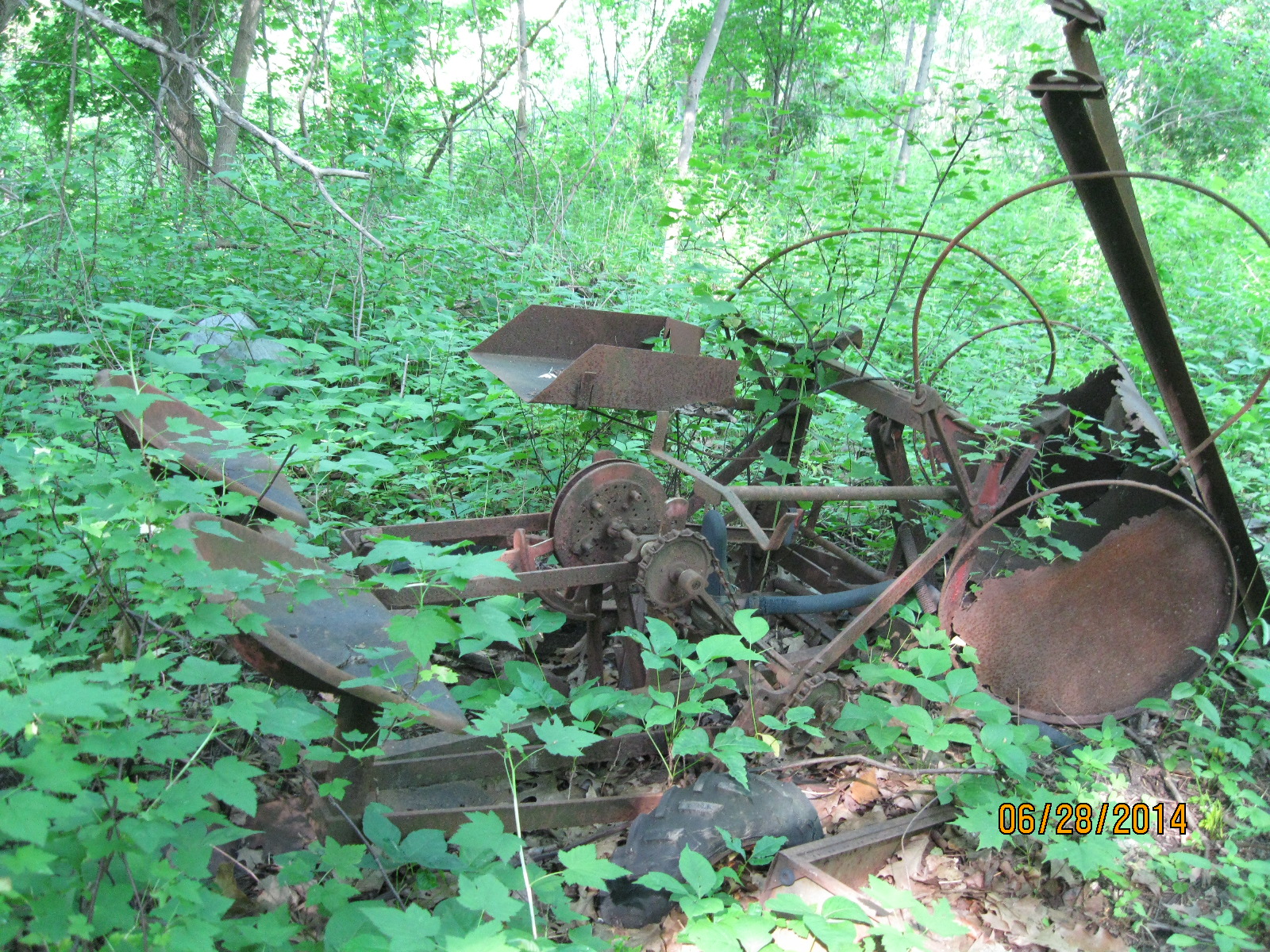
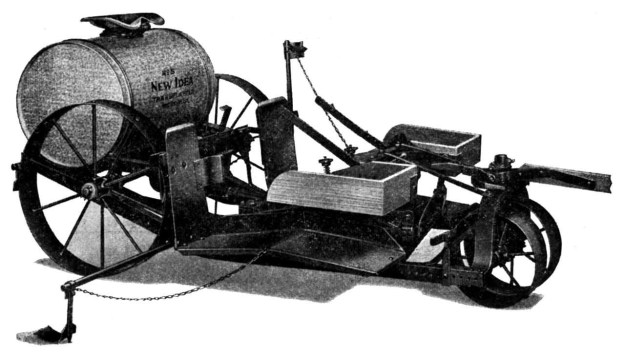
The remains of a transplanter lay in the edge of the woods. The water tank is mostly rusted away but the frame is still intact. Seedlings were fed into the machine from trays in front of the operators.  A couple of decades ago these various pieces of equipment were still mostly intact and could have easily been used for an interpretive display of mid-century farming methods.

IMG_2432

The picture below shows an early transplanter.

AA421222-2EC9-4B4D-8D6D-56FD42148AD0
There are many other things to be seen in the south woods, including parts of an old truck and an old refrigerator.  This area is best explored in late April to mid May before the leaves are out if you are interested in finding some of the many artifacts that are strewn about.

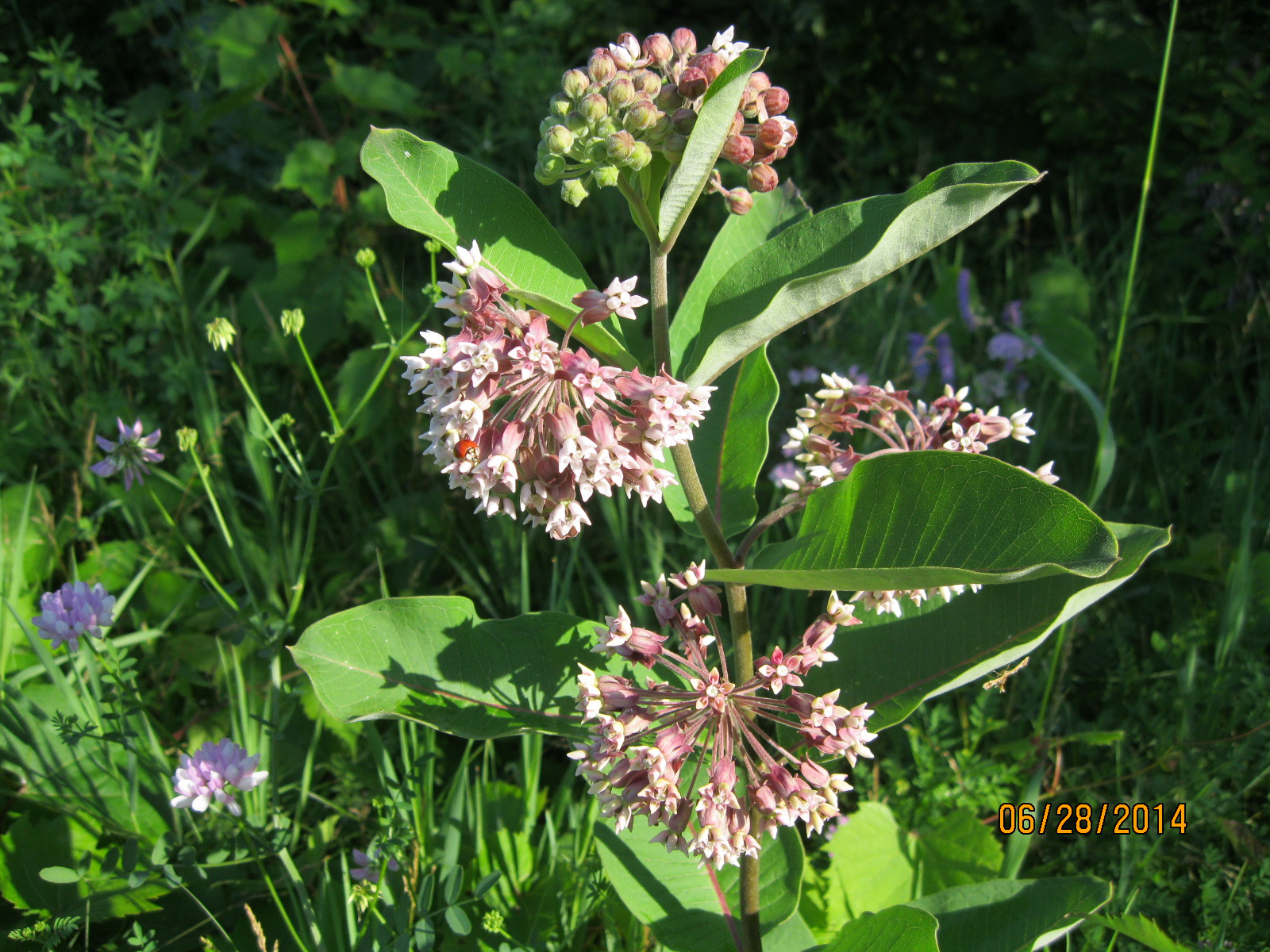
Milkweed grows in patches throughout the Zaichuk property and also on the Bird property.  This weed has been in decline due to the use of herbicides, to which it is particularly sensitive.  Monarch Butterfly larva live on milkweeds and the decline in the plant has been matched with one in the butterfly.

IMG_2409

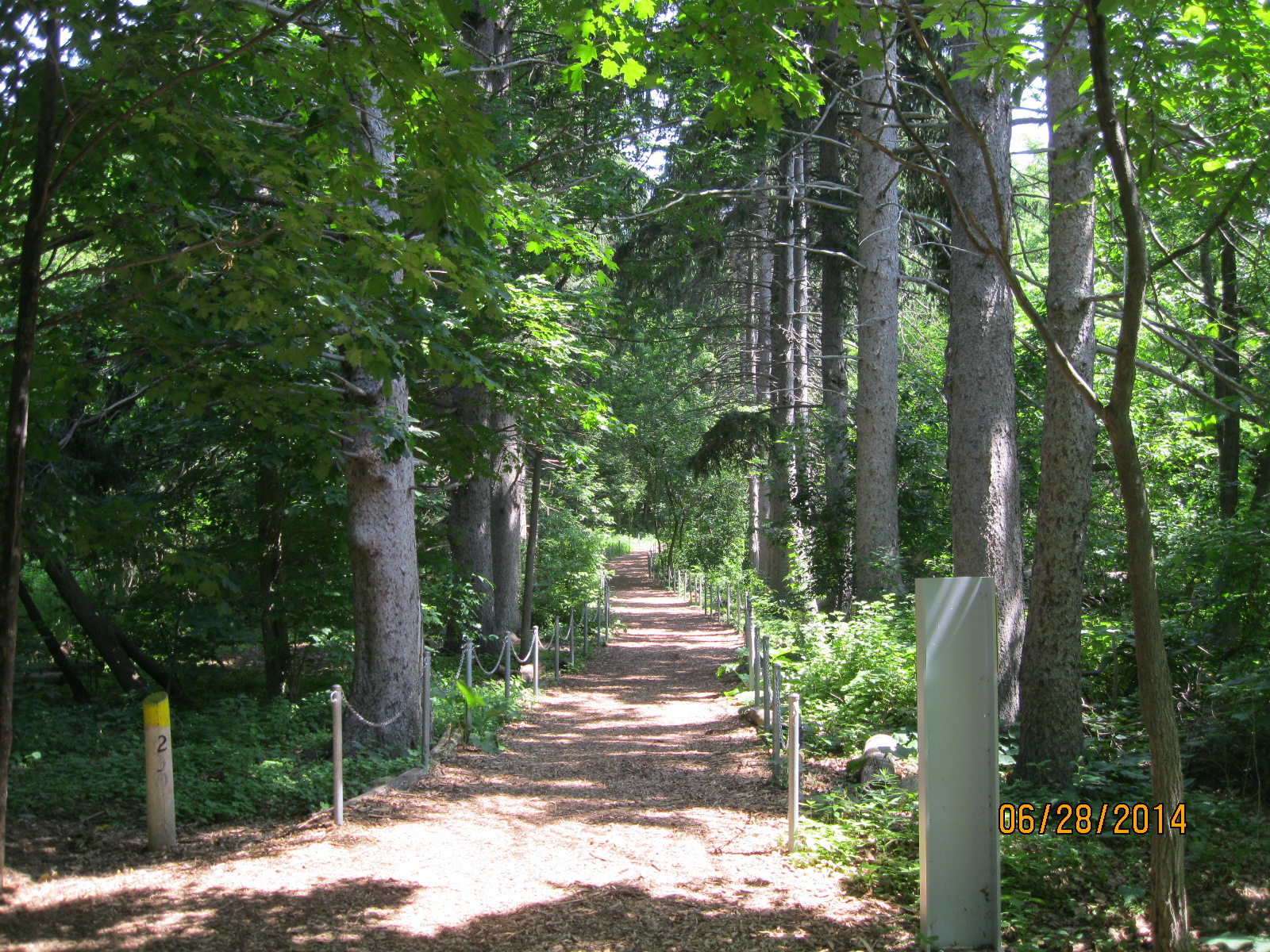
There is a paved pathway that follows the river and will lead back to the parking lot.

Like us at http://www.facebook.com/hikingthegta

Riverwood Part 2 – Riverwood Estate (Mississauga)

Sat. Jun. 28, 2014

Having begun in the lower parking lot off of Burnhamthorpe we had made our way through the Bird property and arrived at the double row of pine trees that mark an old driveway.

In 1833 Peter McDougall acquired 200 acres of land as  a crown grant.  The property changed owners a few times until 150 acres of it was purchased in 1913 by W. R. Percy and Ida Parker. In 1914 they built a stone cottage on the top of the hill and used it in the summer to get away from their home in Toronto.  The lane way leads up the side of the ravine to the cottage.

IMG_2472

Climbing the lane you come to the stone cottage.  It was built on the foundations of a previous building near an existing barn.  In the 1930’s Ida Parker sold the lower parcel of land, including the stone cottage, to her daughter Margaret MacEwan. The cottage was expanded in the 1950’s with the intention of matching the style of the earlier piece.  It was quite well done and the part of the cottage below that looked like the older was in fact the newer part.  I have read in one place that this may be the pickle factory put to a new use.

IMG_2454

The barn dates to 1865 and is a remnant of the early farming on the property.  Although it has been re-clad with new exterior boards, the interior still contains the original timber frame.

IMG_2455

In 1918 Percy commissioned the building of a new home on the property to be called Riverwood.  It was built of stone which was hauled up from the river on the lane way past the stone cottage. The main part of the building, behind the grand fireplace, was a large party room.  Several Canadian Prime Ministers are said to have frequented the home. William Lyon Mackenzie King visited  here often during his 22 years as Prime Minister.  This was also one of the first homes in Toronto Township to have electricity.  Along the front driveway sits an old wagon, featured in the cover shot.

IMG_2462

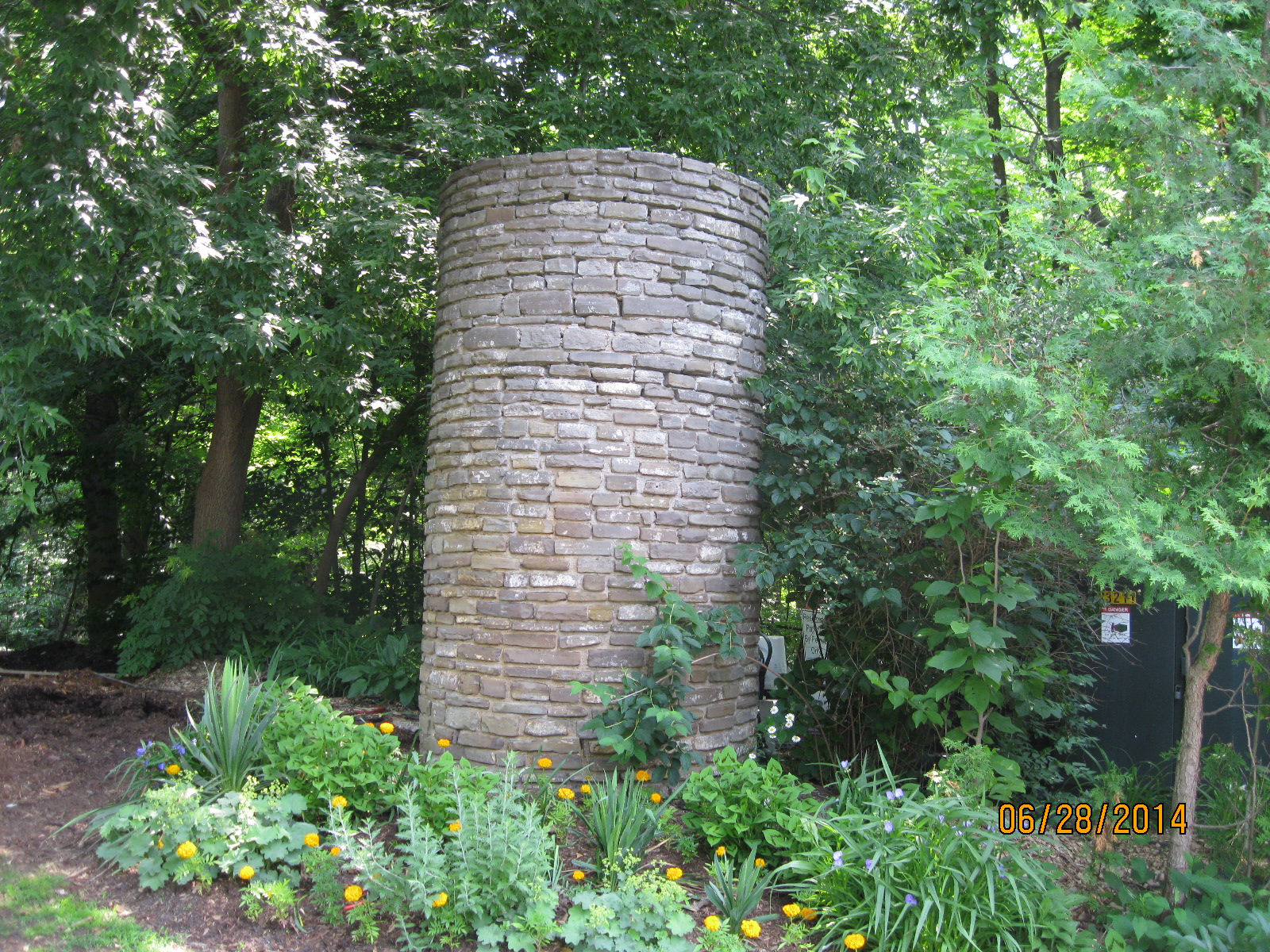
This stone cistern was originally used to hold water that was pumped up from the Credit River.

IMG_2464

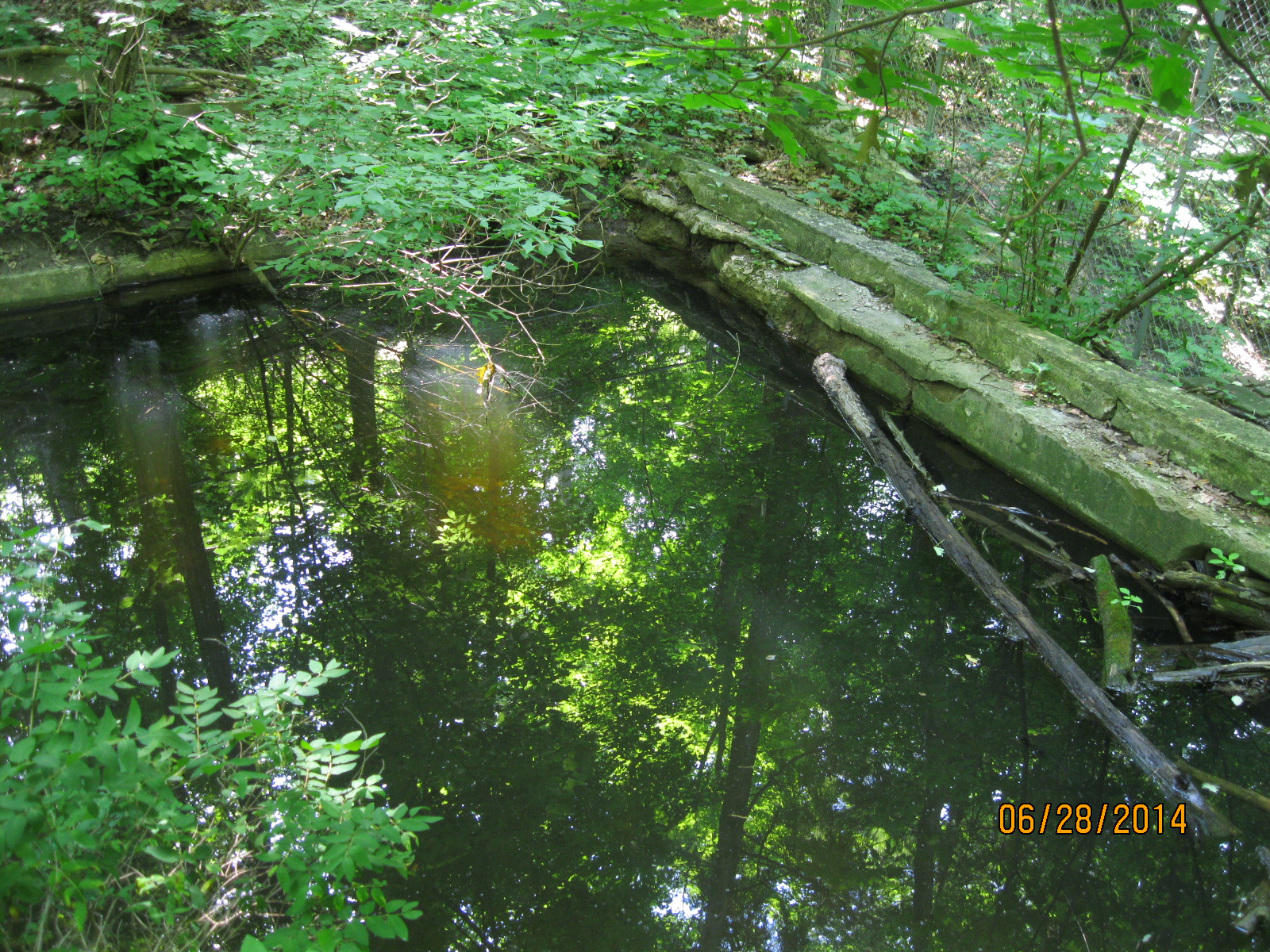
Riverwood sits on a point of land between two small ravines.  Chappell ravine on the north side and on the south, MacEwan ravine.  When the house was built a swimming pool was built on the MacEwan ravine.  The sides and front of the pool are lined with concrete and a set of stairs is built into the south corner.  When it was built it was the first swimming pool in what is now the city of Mississauga.  It was cold and hard to keep clean so it was eventually abandoned and a new pool was built on the front lawn.

IMG_2446

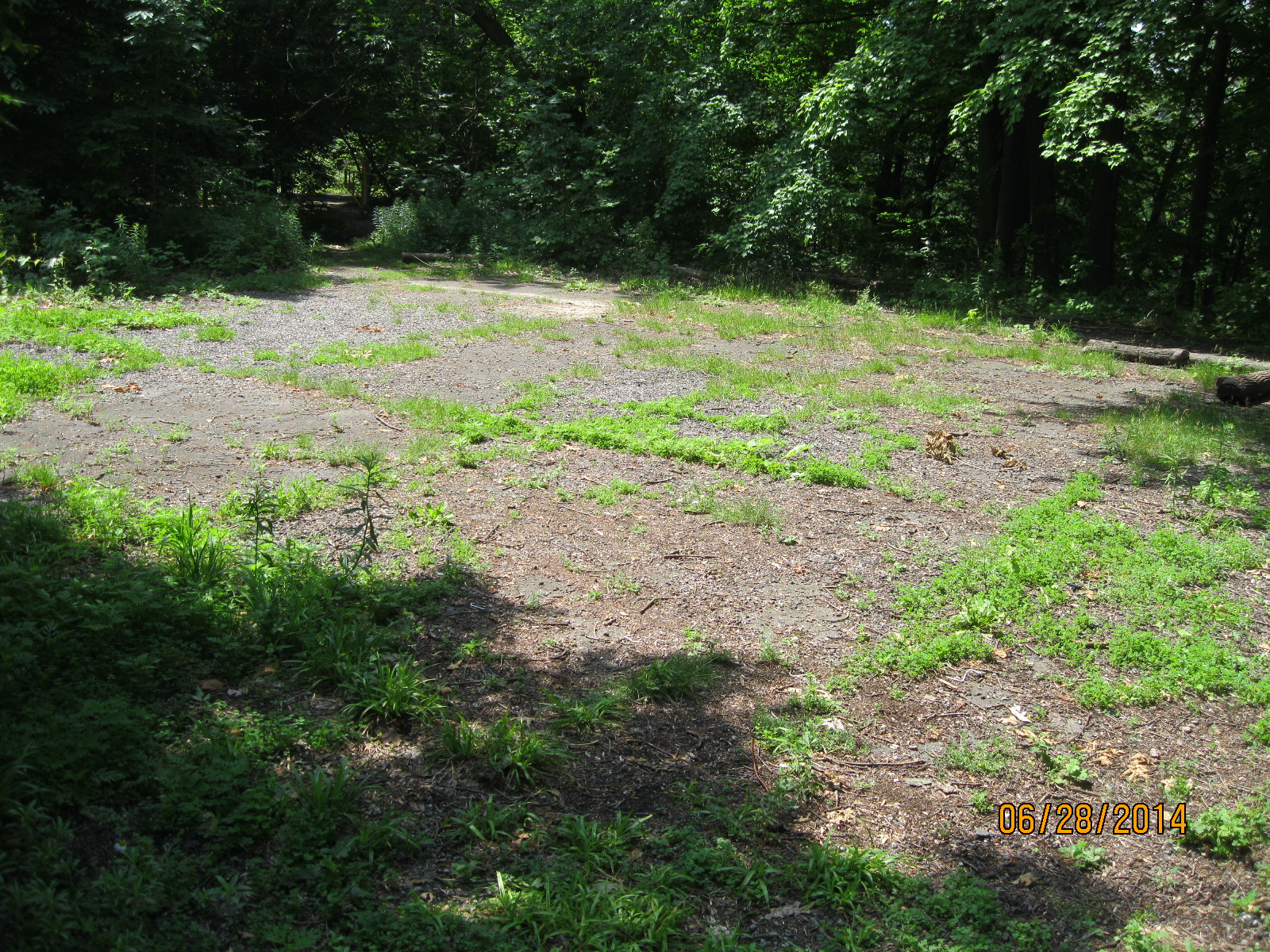
The pool is accessible by a stone walkway from the back yard of the house.  The walkway passes in front of the pool and leads to the tennis court beyond.  In the 1920’s it was very fashionable to have your own tennis court and no estate was complete without one.  It is said that Prime Minister Pierre Elliot Trudeau played tennis here.  Careful examination can still reveal some of the white lines on the court surface.

IMG_2467

If you return to the main trail near the pine trees that mark the old lane way you can make your way further north in the park.  Soon you will come to this old set of stone stairs. Even with some missing, there is still over 100 steps on the hill side.  These will take you back up to the back yard of Riverwood.

IMG_2443

Percy lost his fortune in the stock market crash of 1929 and died in 1931.  Ida Parker struggled after this and sold off the property in three pieces.  She sold the southern portion to her daughter in the late 1930’s.  In the 1940’s she sold the northern farm lot to John and Theodosia Zaichuk.  (We’ll visit that property in Riverwood part 3).  Finally she sold Riverwood itself to Hyliard Chappell in 1954.  Chappell was the federal Liberal MP from 1968 to 1972, serving in Trudeau’s government.  It was likely during this time that Trudeau visited what was then known as Chappell House.

A summary of our 15 top hikes is presented here.

Google Maps link: Riverwood Park

Like us at http://www.facebook.com/hikingthegta

Follow us at http://www.hikingthegta.com

Riverwood Part 1 – The Bird Property (Mississauga)

Saturday June 28, 2014

It was another perfect summer Saturday.  The sun was shining and it was 22 degrees to start the hike.  We parked at the bottom of the hill in the lower parking lot beside Burnhamthorpe on the east side of the  Credit River.  This property was part of Riverwood which is described in detail in a separate post titled “Riverwood Estate”.  Riverwood Estate was split up and sold off in three parts.  When the Credit Valley Conservation Authority bought the separate properties in the 1990’s, the southern portion was owned by the Bird Family.  Riverwood is large enough that it would be too much for a single post.  For that reason I will break it into three posts starting with the Bird Property.

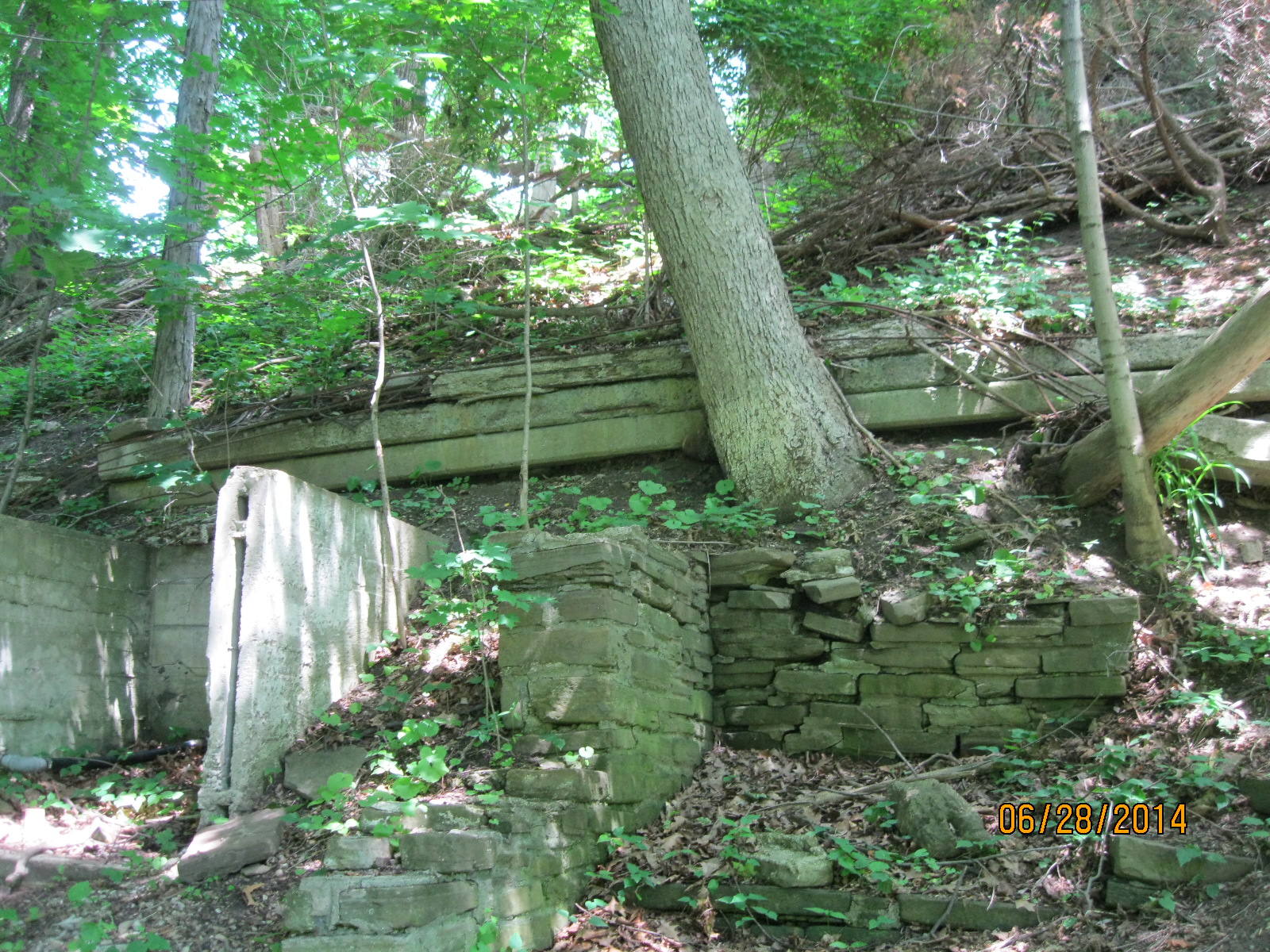
As you hike upstream along the east side of the Credit River you come across the ruins of an old building on the side of the ravine.  This building was a pickle factory in the mid 1800’s.  This suggests that the adjacent fields were likely being used for growing cucumbers.  Notice that the building in the picture below has a combination of stone from the river below and also some later concrete additions.

IMG_2489

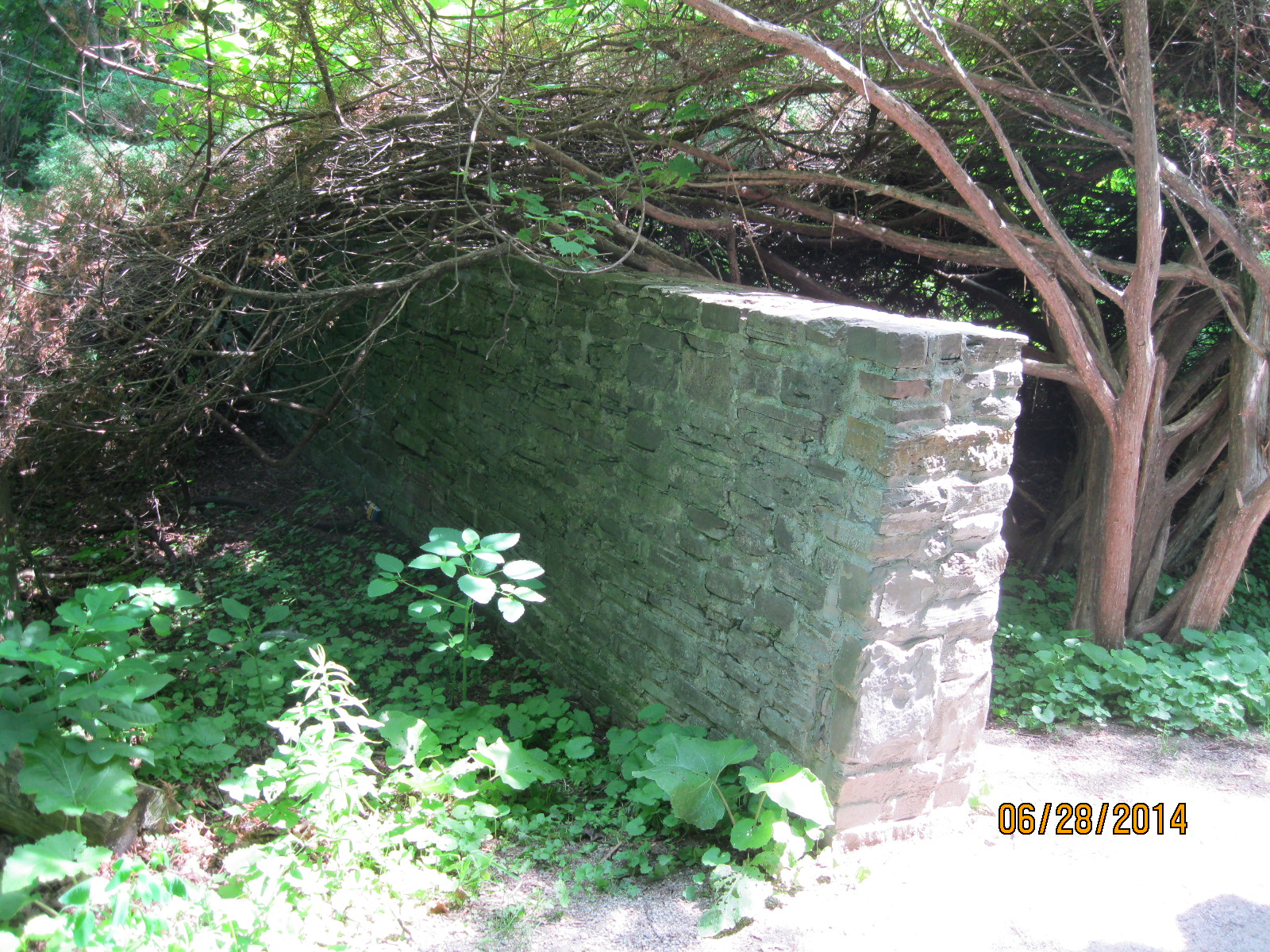
As you follow the trail along the crest of the hill you will come across this old wall that runs for a few yards under this hedge.  It ends as suddenly as it began without clues about its original intent.

IMG_2484

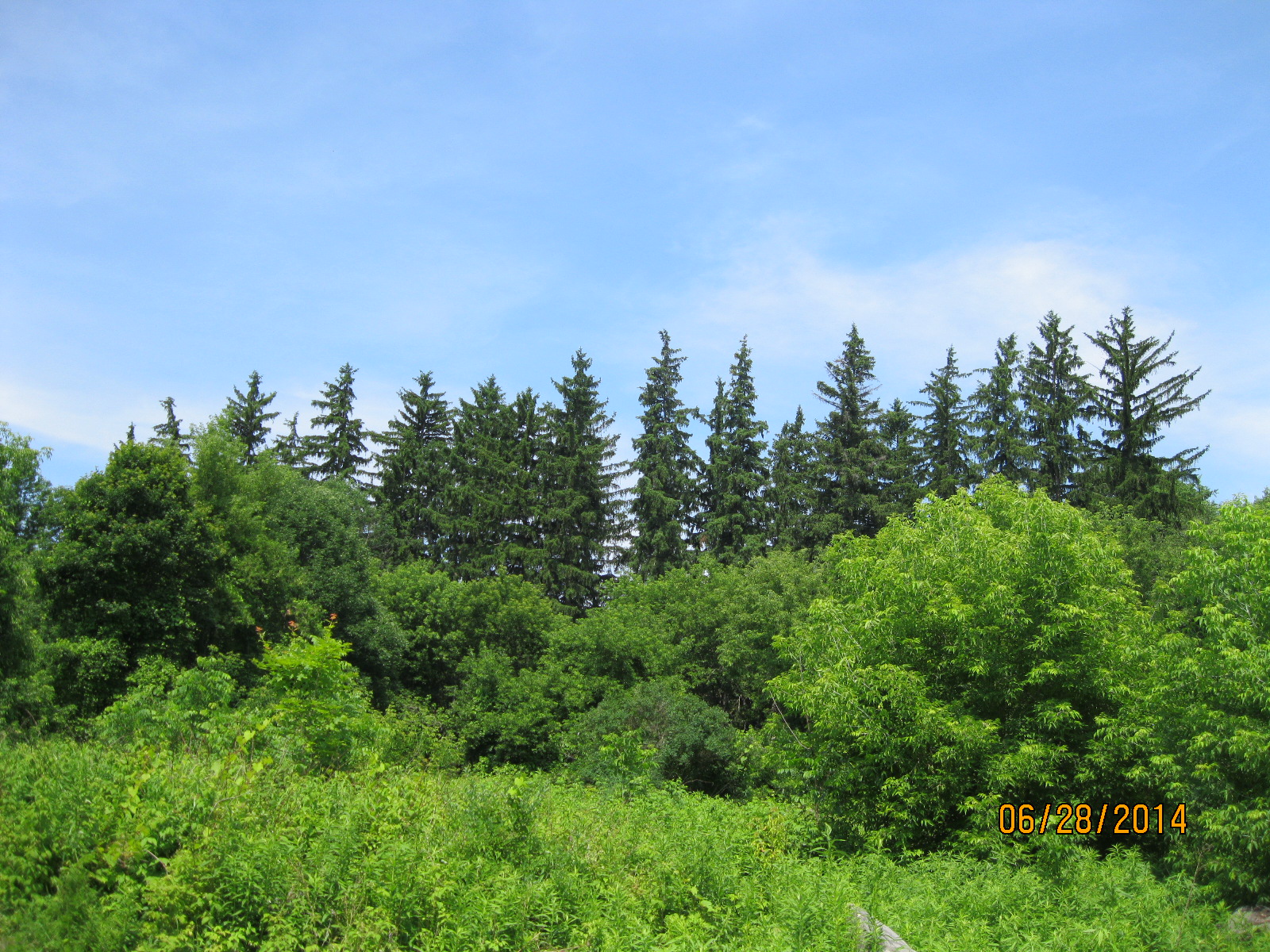
At one point there is a side trail that leads away from the river and into an overgrown field. To the north, a straight line of pine trees in the distance marks the old Riverwood lane way.

IMG_2482

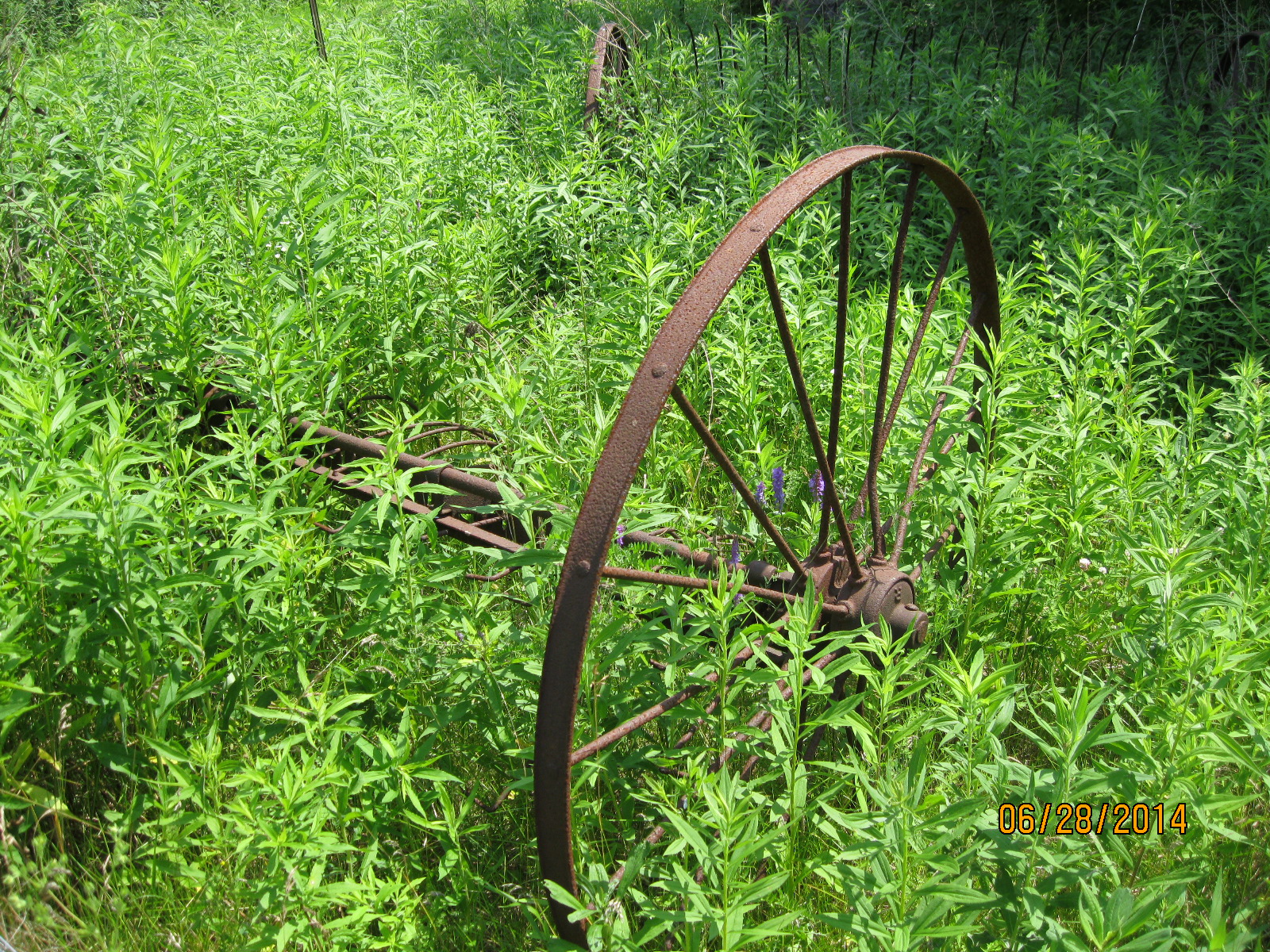
As you enter the field above the river there is a large collection of early 20th century farm equipment.  The piece below, along with 3 others the same, were used to turn the hay over for drying before baling it.

IMG_2473

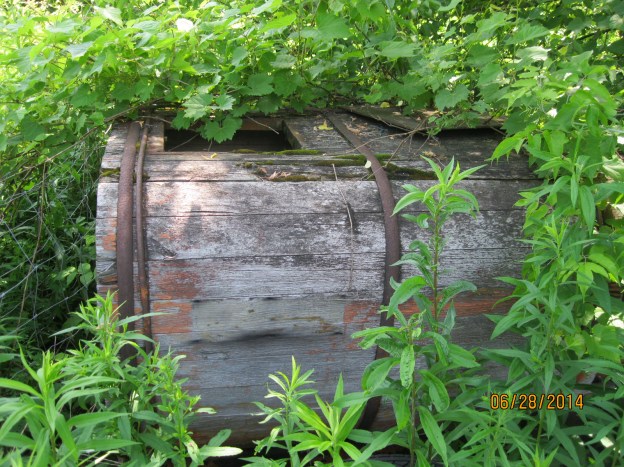
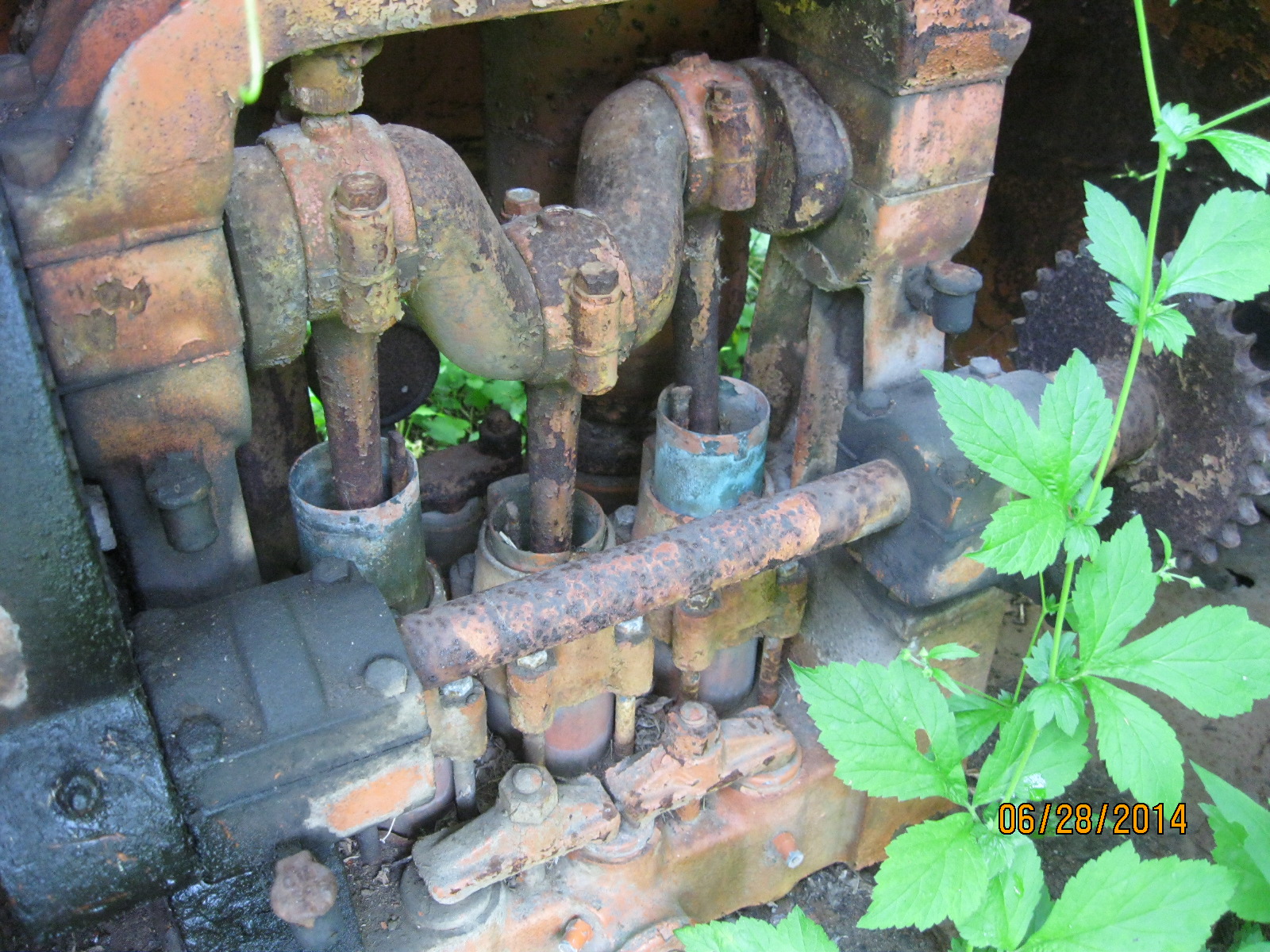
This engine was part of the piece of equipment with the wooden barrel that is featured in the cover photo.

IMG_2481

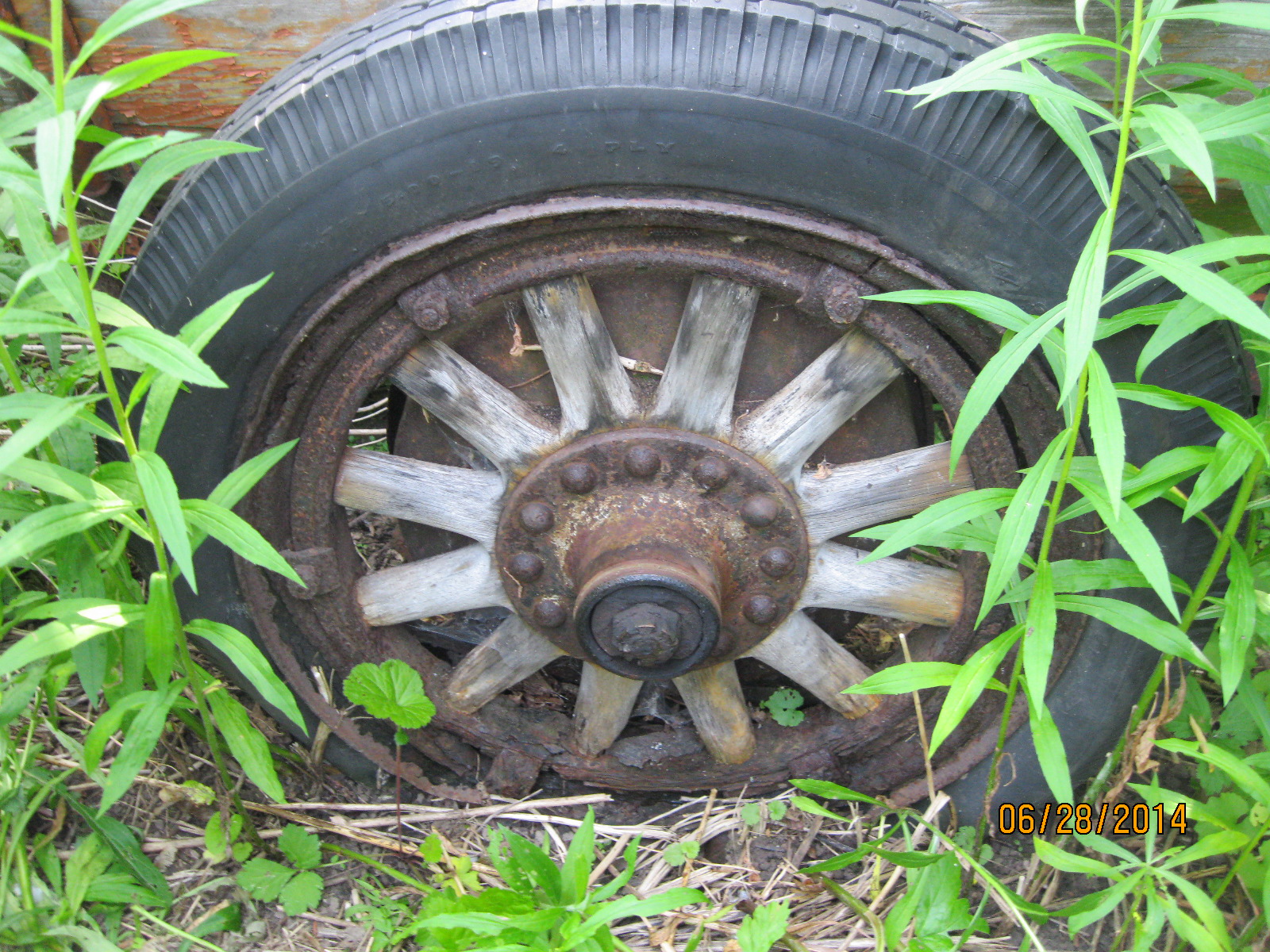
Several of the older pieces of farm equipment had wooden spokes on the wheels.

IMG_2480

The Credit river is a great place to look for fossils.  The one below that looks like a sponge is a coral and the other rock has numerous fossil worms in it.

IMG_2497

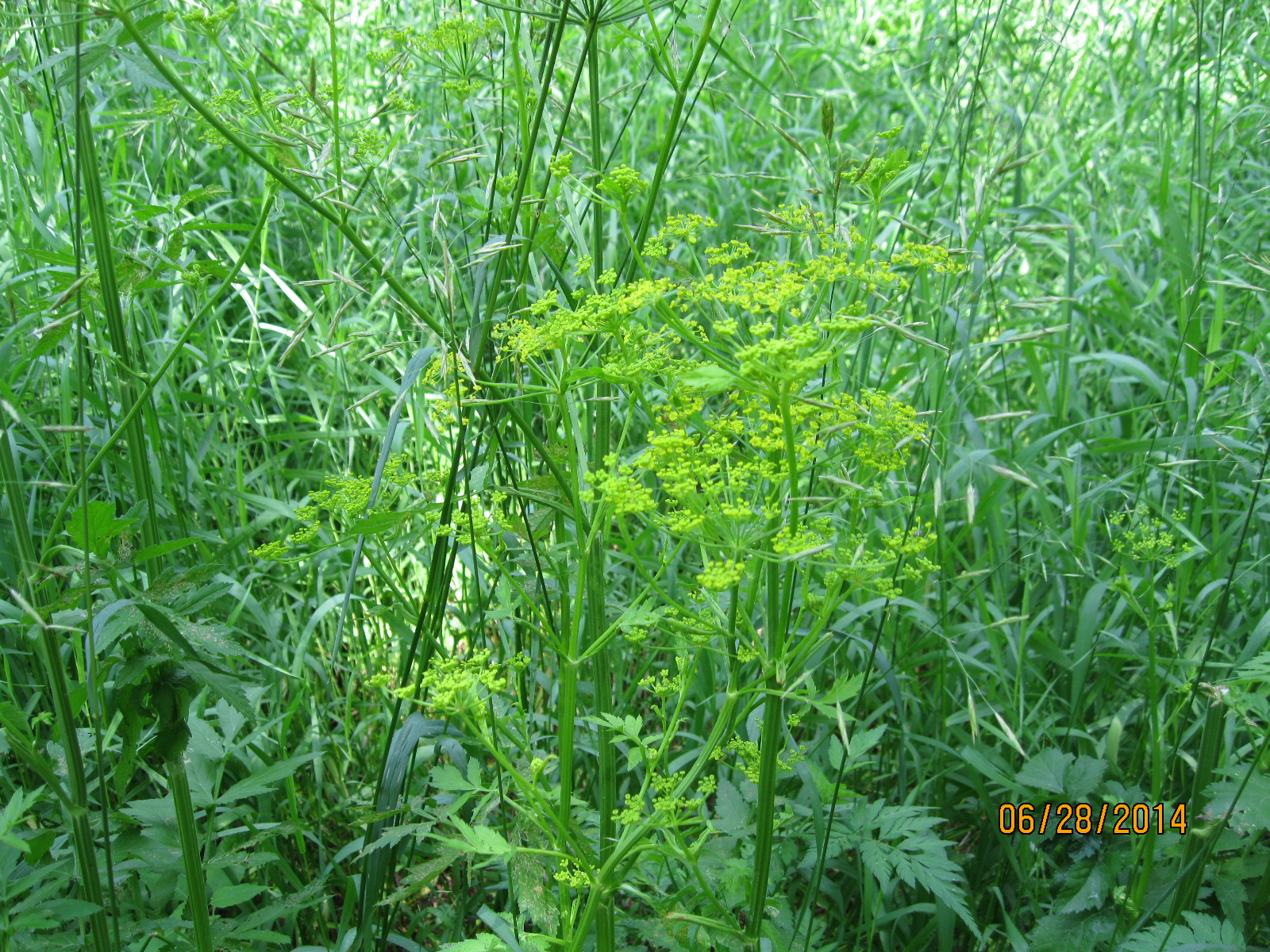
Use caution when hiking in this part of the park if you choose to leave the paved trails. There are at least three plants here that can cause great suffering.  Poison Ivy, Giant Hogweed and Wild Parsnip (the yellow plant below).  They can cause rashes, oozing sores and even blindness.

IMG_2492

As you carry on along the trail you will come to a lane way that leads up the hill side and brings you to the Riverwood Estate.

Google Maps Link: Riverwood

Like us at http://www.facebook.com/hikingthegta

Follow us at http://www.hikingthegta.com