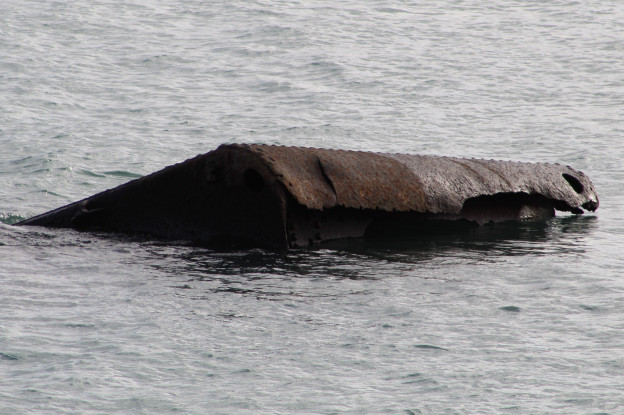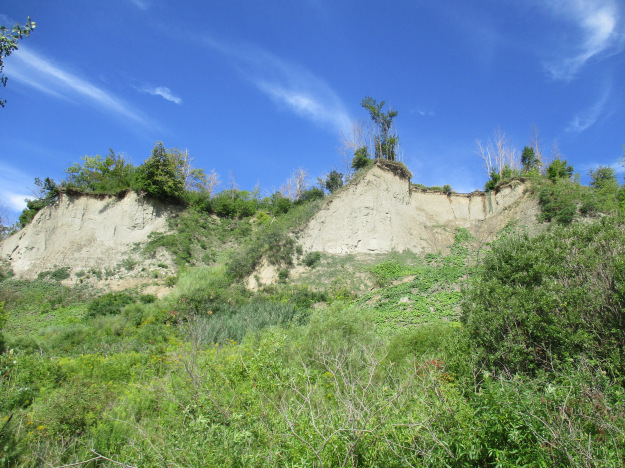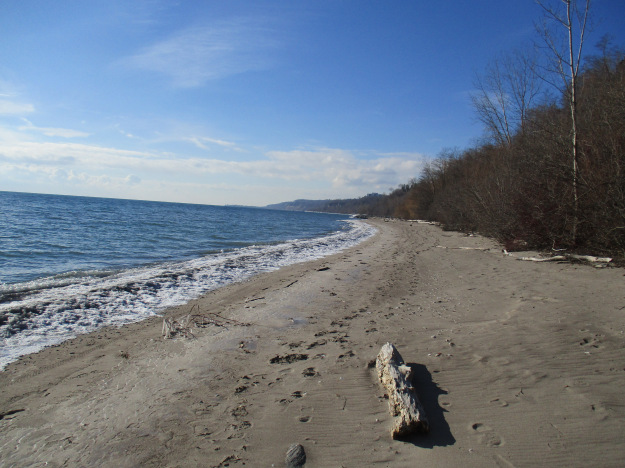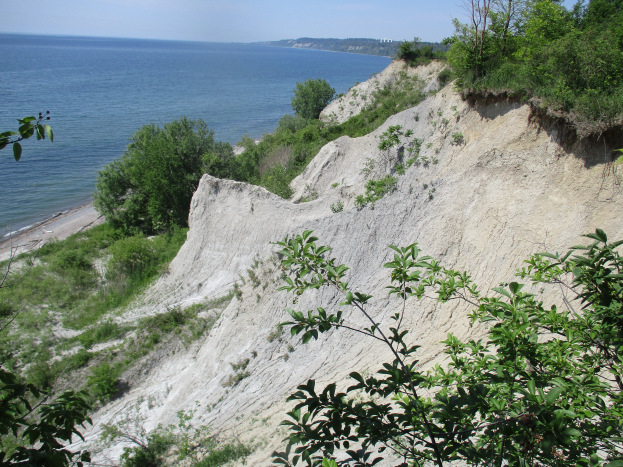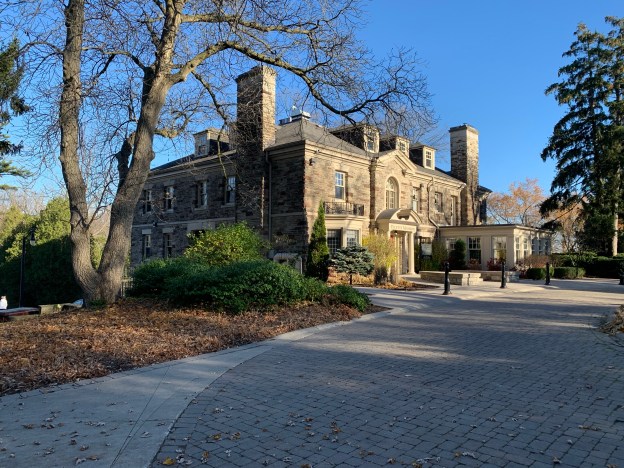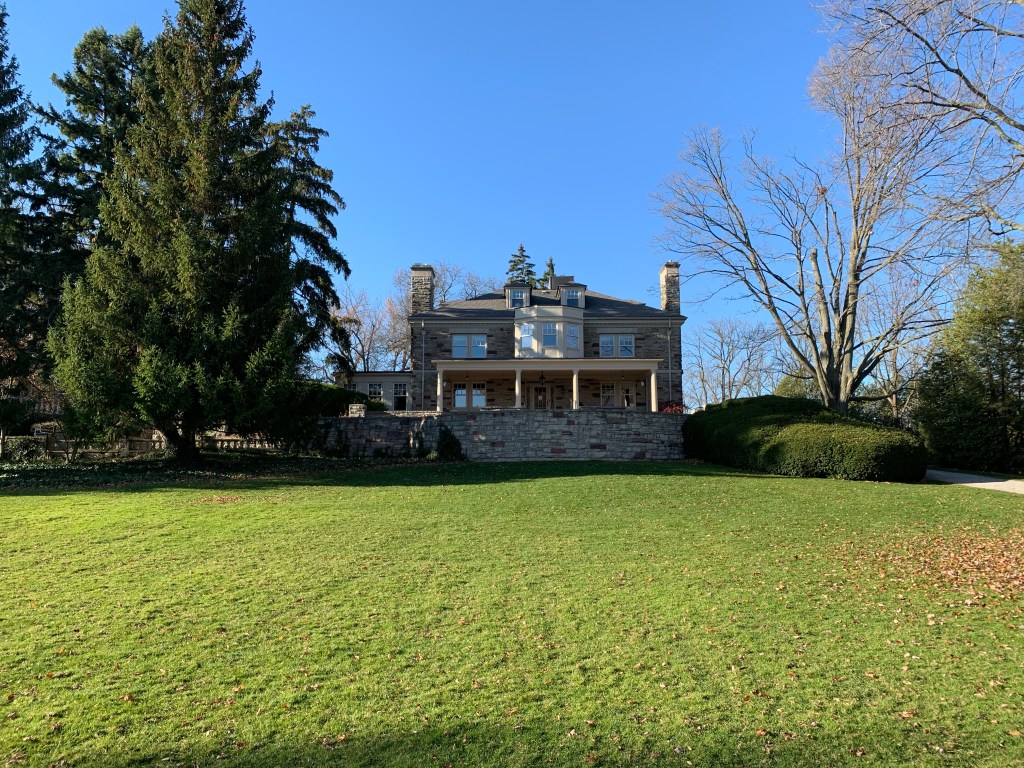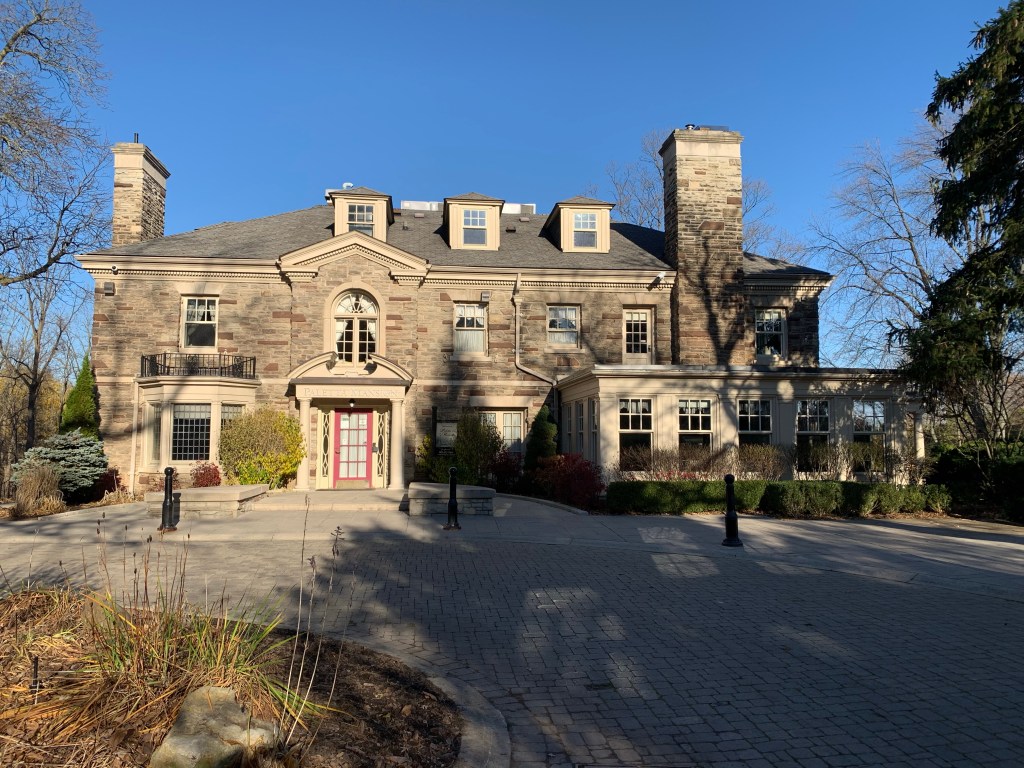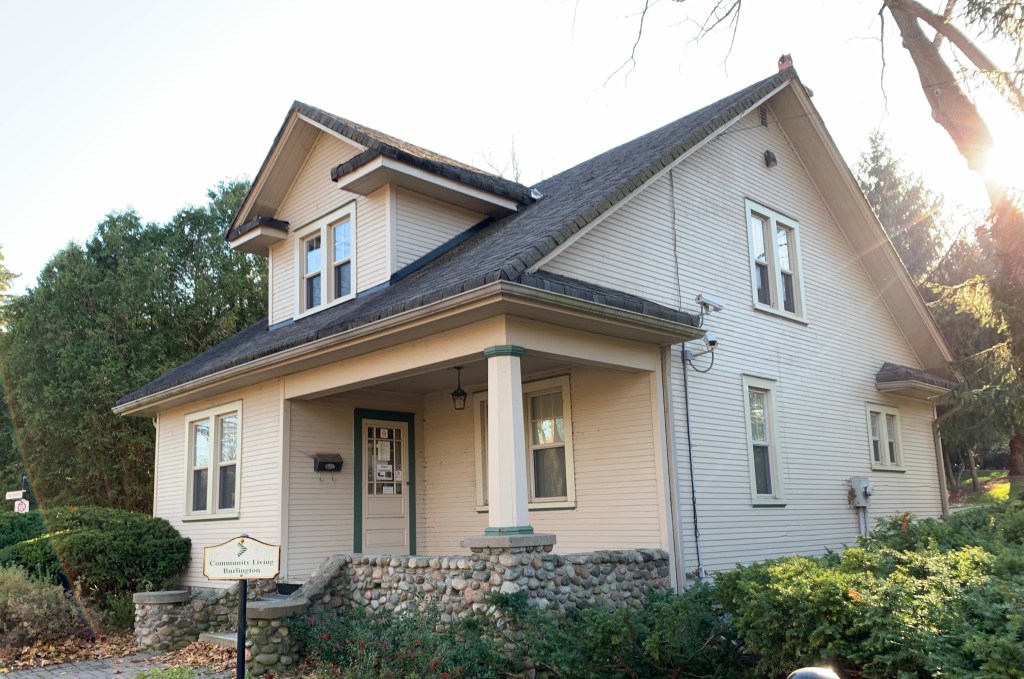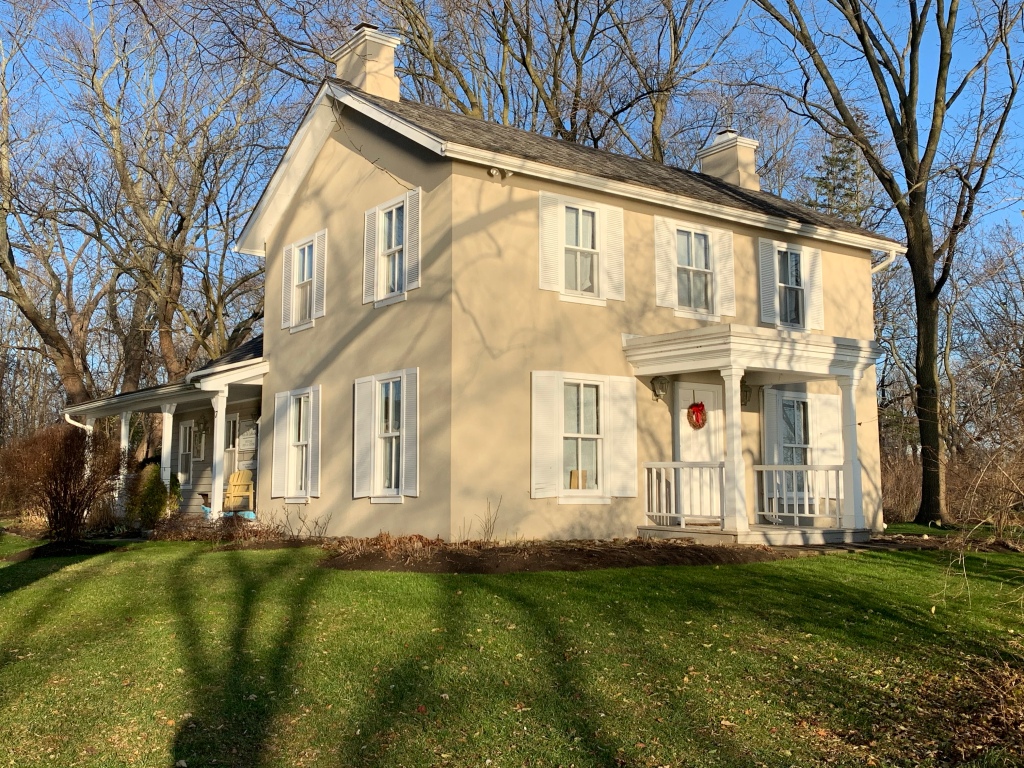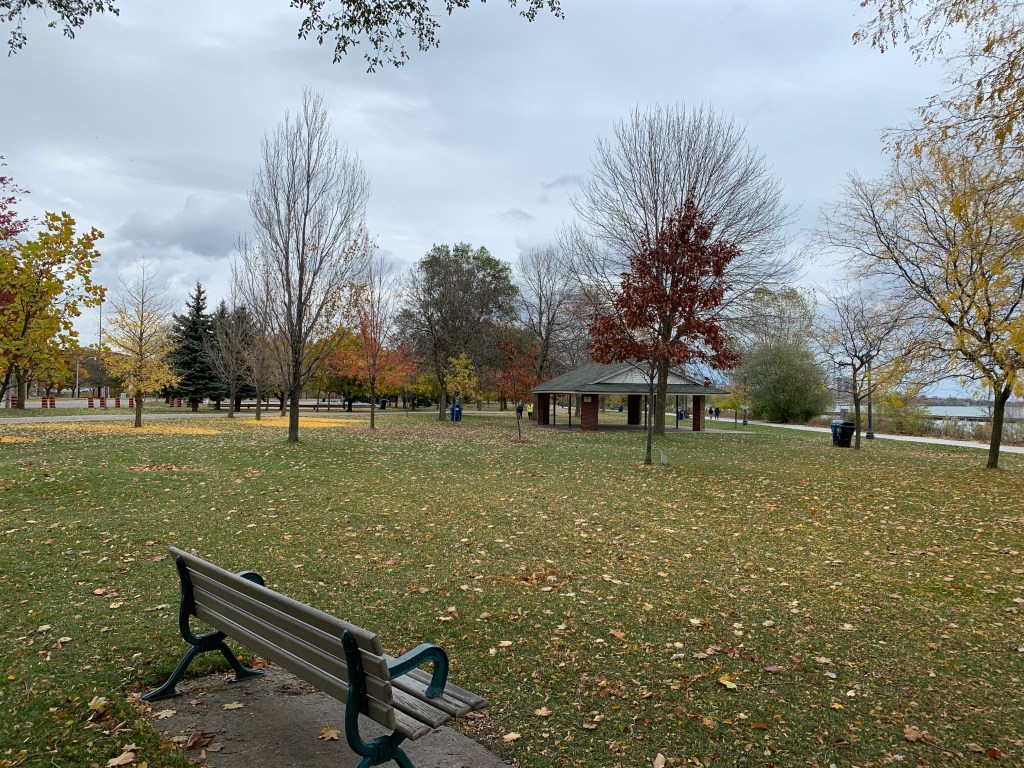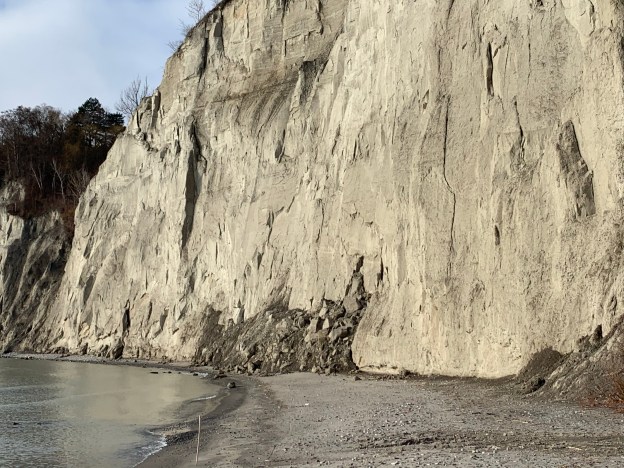
The site of Paletta Lakefront Park covers 14 acres and is considered to be the finest among the waterfront parks in Burlington. The original land grant has a long history of changing hands starting in 1809 when lot 8 in concession 4 was given to Laura Secord. The Secord family didn’t settle on their property in Nelson Township and conveyed the lot to John Beaupre in 1810 before moving to the Niagara region. Laura Secord would go on to play a pivotal role in The Battle of Lundy’s Lane in 1813 during the War of 1812.
After being sold about 15 times the property was bought in 1912 by Cyrus Albert Birge and William Delos Flatt. It was used as a fruit farm and people from around the area would visit for the purpose of fishing, swimming or boating.
Cyrus Albert Birge was an industrialist who started off with the Canada Screw Company and by 1910 he was the VP of the new Steel Company of Canada. He died on December 14, 1929 leaving his wealth to his daughter Edyth Merriam MacKay. She tore down the existing home on the property and set about building an 11,000 square foot mansion. The finest materials were used which she sourced on trips to Europe and the Southern United States. The house included servant quarters, a dumbwaiter and large ballroom.
The mansion sat empty from 1990 until 2000 when restoration began. The work was expensive and $2 million dollars were donated by Pat Paletta whose name has now been given to the estate. The view from the mansion to the lake is quite spectacular and has changed over the years as some of the grounds have been planted with new trees.
Horse riding was a favourite pass time and horses were kept in a stable on the property. These stables are one of last surviving ones in the urban part of Burlington.
A miniature house was built for the children to play in. This was known as the doll house and was constructed in the early 1930’s for Dorthy McKay and her friends so that they would have their own special place. It was complete with running water and electricity.
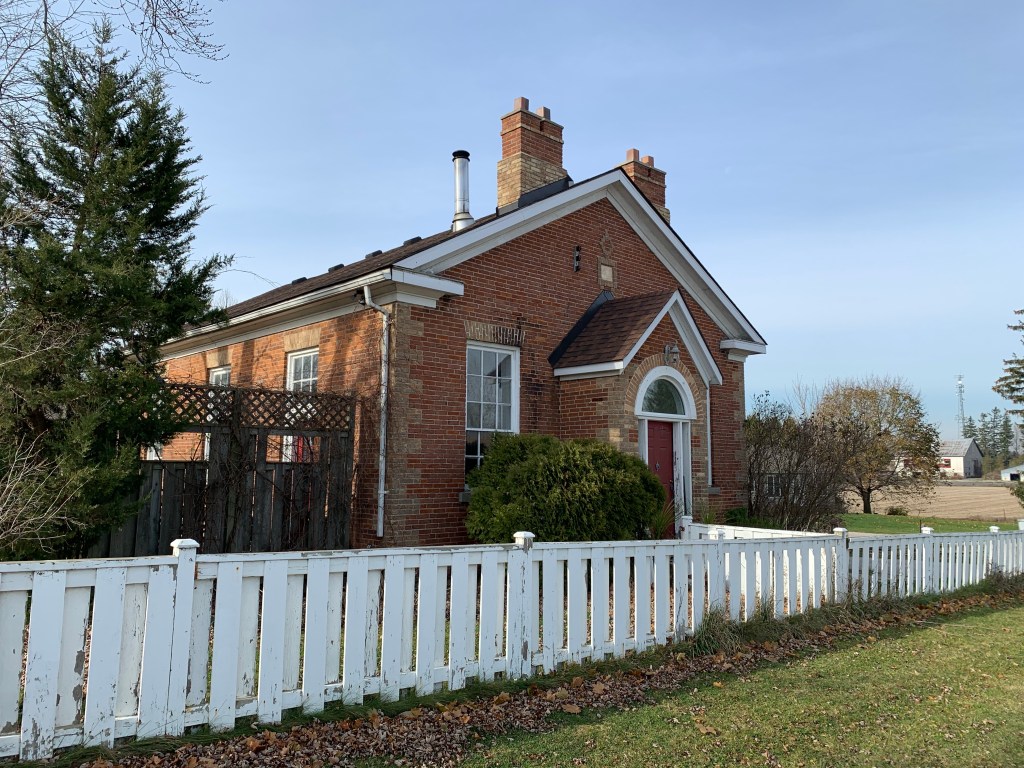
There were three formal gardens, various lawns and fruit trees that all required the help of a full time gardener. The former gardeners house is the fourth historic structure that is being preserved in the park. This building served as a gatehouse from the time of its construction in 1912.
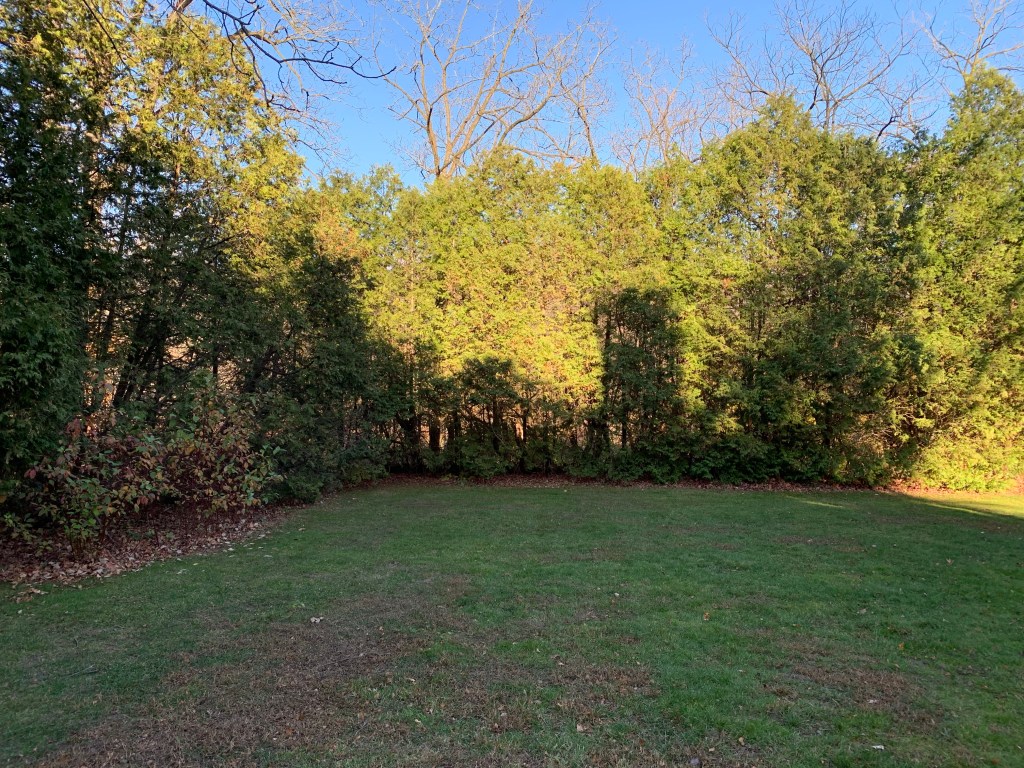
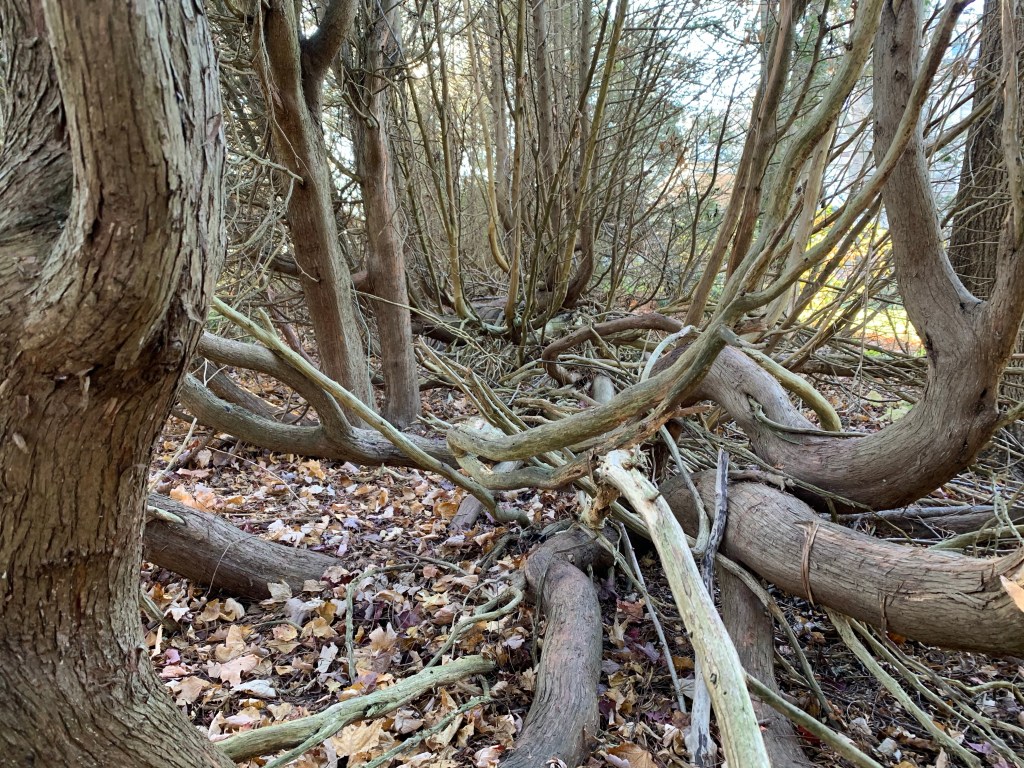
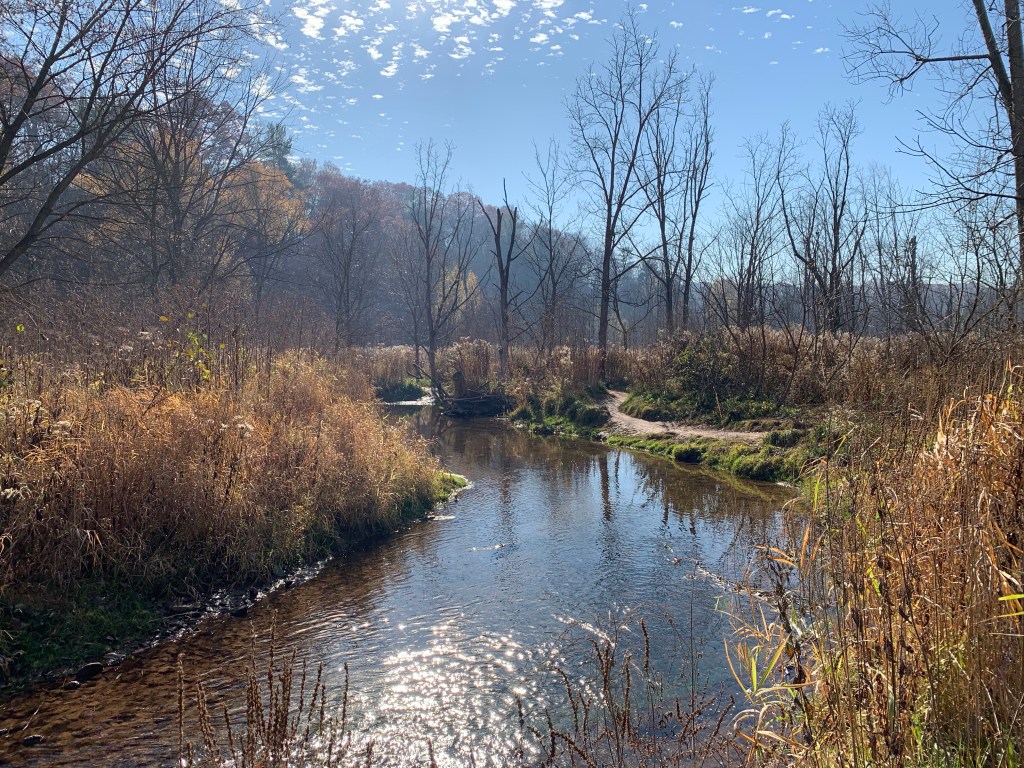
On the east side of the property there are three lawns, each separated by a row of cedar hedges. The cedars have run wild and are thirty feet tall. Beyond the hedges is another section of the park where a small creek flows through a more natural area that is home to a lot of wildlife.
The past 90 years have seen the original hedge rows get a little on the wild side.
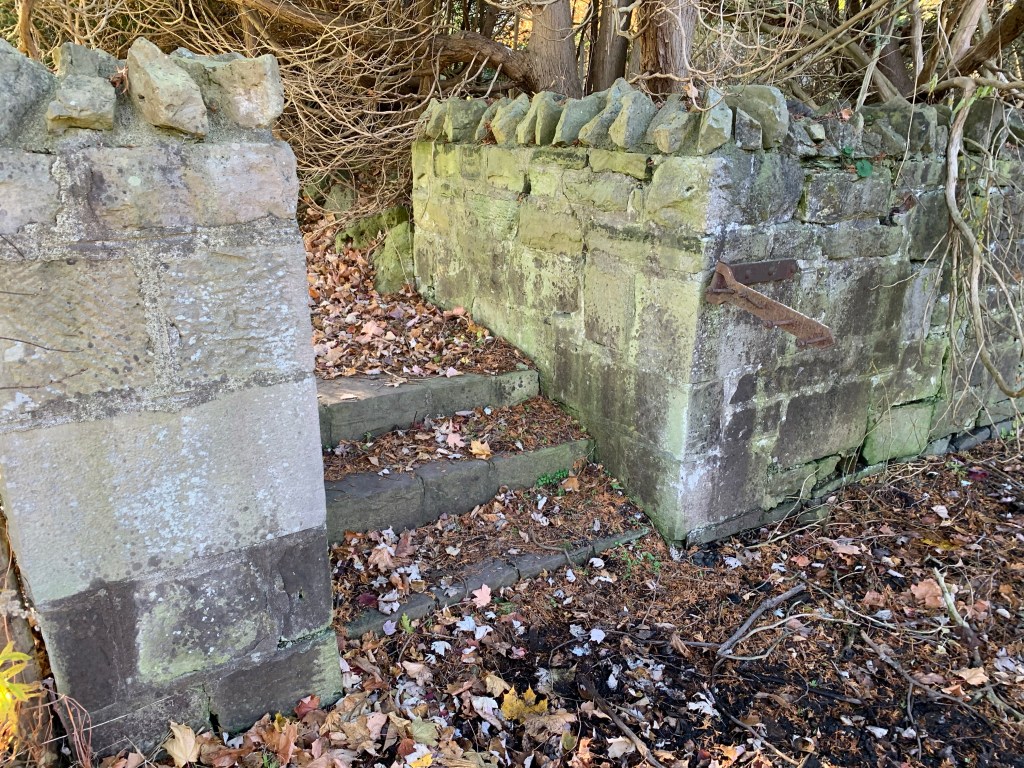
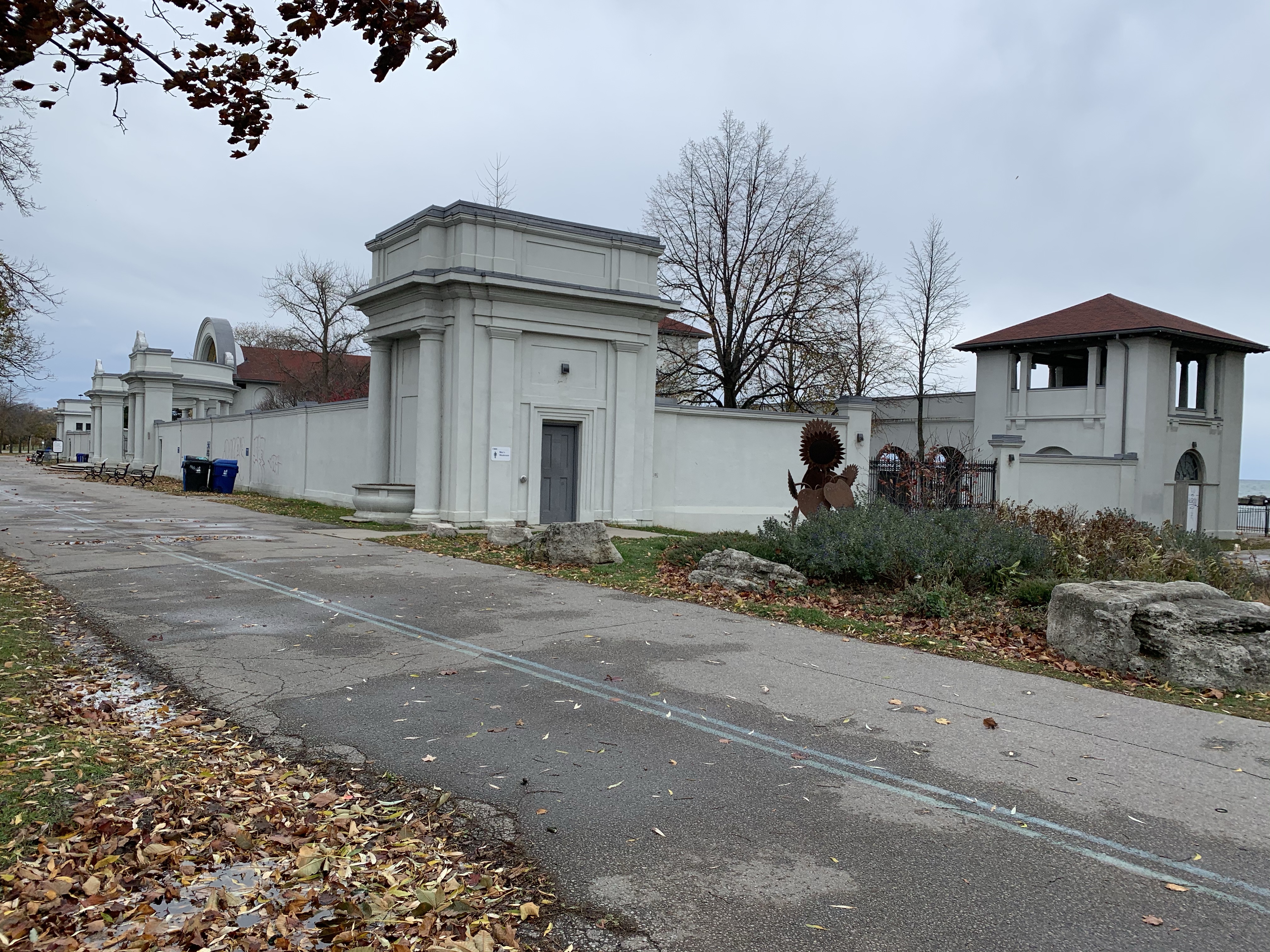
A long stone wall runs along the length of the gardens but the gate has been removed over the years.
The lake provides a perfect backdrop and the park has become a common place for weddings and other types of social events. It’s a lot quieter this year.
This is a beautiful example of a grand estate that was built during the early years of the Great Depression.
Cooper’s Falls has a few newer homes that appear to be occupied, but nearly all of its historical buildings have been left to the elements. It isn’t that far off of highway 11 north and can make an interesting side trip on your way north of Orillia. At Hiking the GTA we typically explore the places in our area since this is where we spend most weekends but not all of them. These pictures were taken on a trip to visit my mother for her birthday back when that was still a good idea.
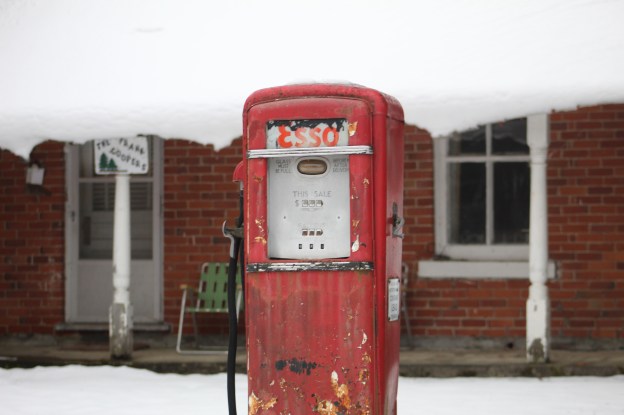
Thomas and Emma Cooper were each 27 in 1864 when they arrived at Washago. From there they made their way through the woods to the location of their land grant. After building a log school house in 1874 and donating land for a church and graveyard Thomas opened a general store in 1876. A post office was added on April 1, 1878 and he was postmaster until March 1905. Two generations later his grandson would close it on April 30, 1968. In the picture below a line in the bricks just below the second story windows shows the position of a former front veranda sheltering the door and the display windows. The general store also sold gasoline with the Esso pump being featured in the cover photo. The family home is attached on the side and back with the front porch being seen behind the gas pump in that shot. In 1968 gasoline went to $0.33 per gallon, or 8 cents per liter, for the first time.
Across the street from the general store is a building which was the town hall and was locally known as the courthouse. A string of coloured lights extends across the road to the old general store and can be seen below. There are fourteen of these lights which are maintained by Frank Cooper who was born on the second floor of the general store. He claims to have strung them up sometime after the Second World War when electricity was being extended across the street. He decided to decorate the wire and as of 2011 had still been lighting it nightly.
The first church in town was St. George’s Anglican Church which was built around 1884 a couple of kilometers outside of town. This building is still maintained and is used for the occasional service and as a funeral chapel.
By 1921 William, son of Thomas, had converted the saw mill to steam power. When he had a fatal accident at the mill in 1925 it closed because the lumber supply was depleted and the family didn’t have the will to continue. The Anglican cemetery is just east of the church and contains many early gave markers including those of the several of the Cooper family including William. Although the town began a rapid decline when the lumber mill closed it is clear that a large number of people have lived here and in the surrounding area over the years. This one of two cemeteries in the community.
A second church was added by the Free Methodists in 1894 when the town was booming. This denomination remained separate from the Methodist Church when it was united in 1884 and then didn’t participate in the formation of the United Church. Cooper’s Falls Free Methodist Church has been closed for years but there is still one in Armadale that is the oldest continually serving one in Canada. You can read about it in our story Armadale Free Methodist Church. The Cooper’s Falls Free Methodist Church stands right beside the Anglican Cemetery with its own cemetery on the other side.
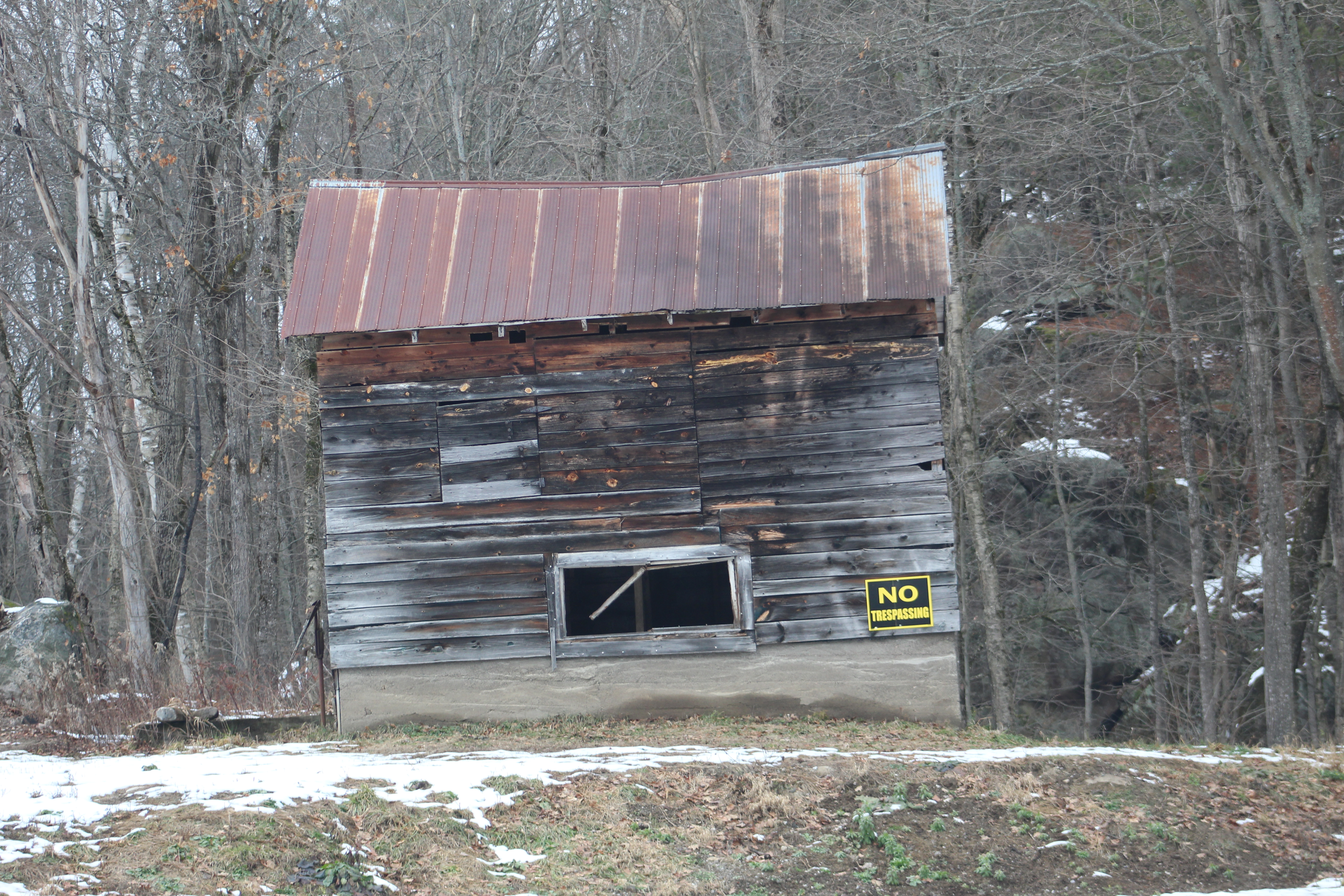
In small communities the blacksmith was an important tradesman because you couldn’t run to Walmart when something broke and these people kept horses, buggies and much more going. As the town declined and Washago and Severn Bridge grew, the need for a blacksmith disappeared. After the mill closed his shop wasn’t far behind. Today it has a distinct lean to it.
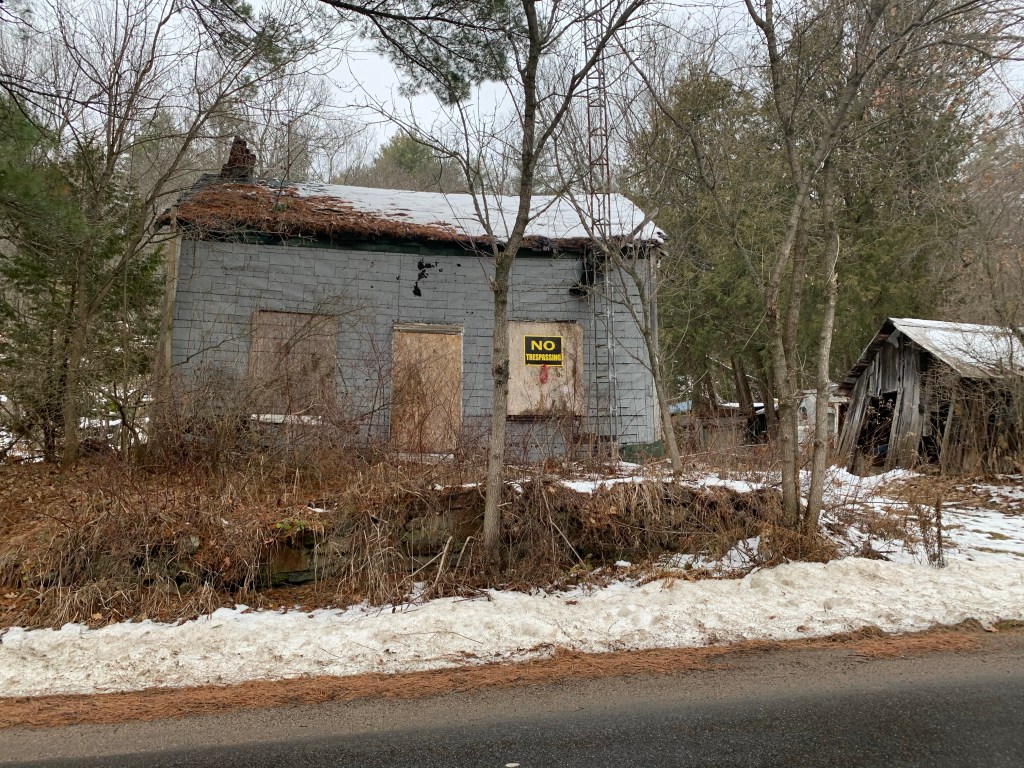
The buildings along Cooper’s Falls Road are in various states of decay and most of them have either the walls or roof opened up. Even if these buildings were not marked as No Trespassing it would be an exceptionally risky thing to get too close, let alone go into them.
Around Ontario we seem to have kept a fair amount of our grist mill heritage compared to our saw mill history. Perhaps this is because the grist mills operated for a few decades after the last of the lumber supplies forced the closure of most of the saw mills in the province. Lumber camps and their supporting towns seemed to have fared poorly and this part of our heritage seems to be vanishing.
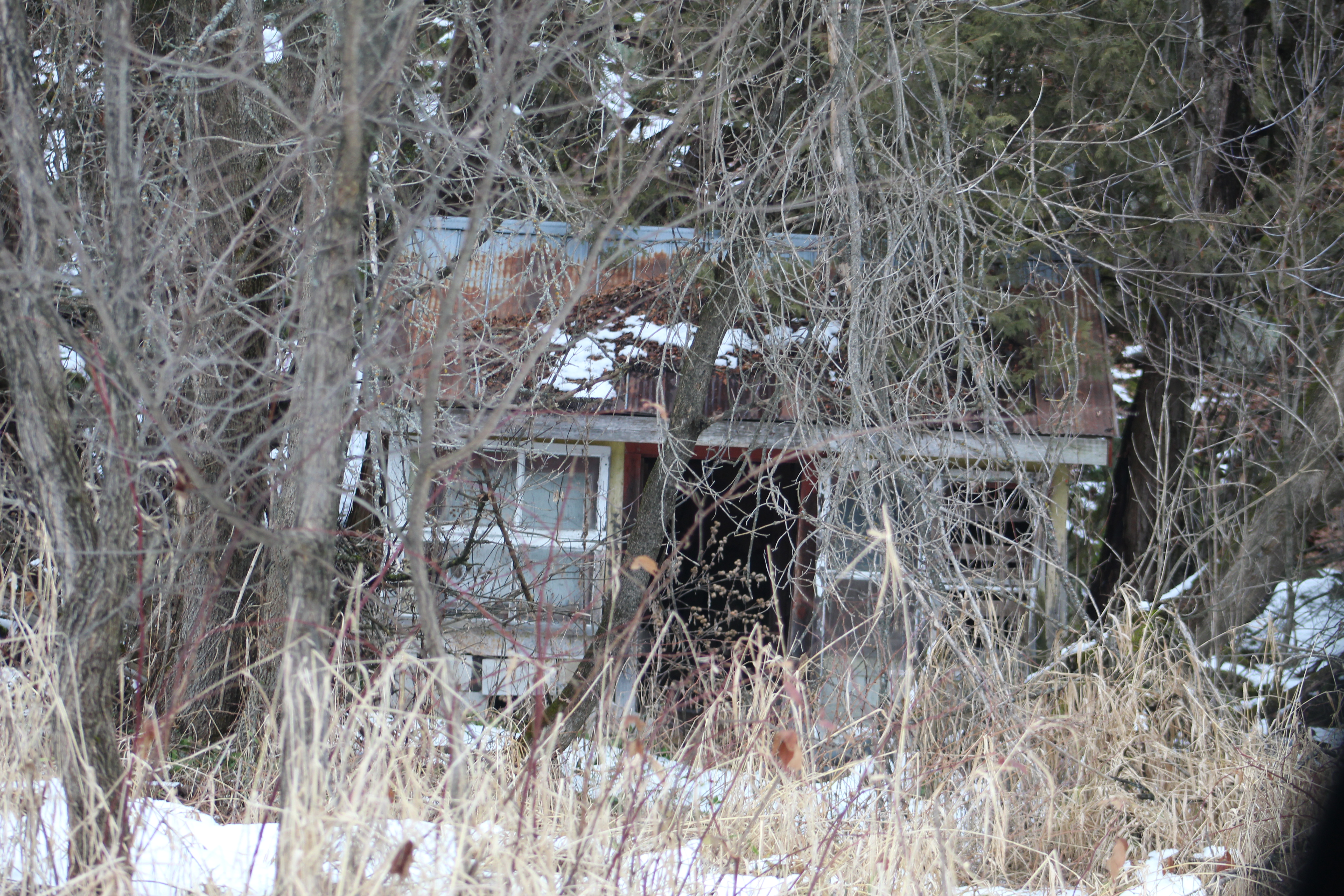
Thomas Cooper served the workers who lived in local lumber camps by providing them with supplies through his general store. He also provided for the people of his community including ensuring they had places to live. The men who worked in Cooper’s Lumber Mill, the blacksmith shop or the cheese factory likely lived in small workers cottages like the one rotting in the trees in the picture below.
There’s no shortage of old homes in the community but unfortunately most don’t have any ongoing maintenance to keep the weather from destroying them. Without the interest and interaction of a local historical society the lumber era portion of Cooper’s Falls is being felled by nature.
The Black River was pretty calm on this particular afternoon when this picture was taken upstream from the falls where Thomas Copper built his sawmill. The waterfall is on private property behind the former general store but can be seen from the road during the winter if you know exactly where to look.
Cooper’s Falls Trail is an 8 kilometer hike which is listed as challenging featuring 100 meters of elevation changes. It includes parts of The Great Trail but the entrance off of Cooper’s Falls Road doesn’t have parking. For that you need to enter off of Housey’s Rapids Road.
Just west of the mouth of Bronte Creek is a geological feature that dates back 13,000 years to the end of the last ice age. At that time, the lake level was about 100 feet higher than today and that version of Lake Ontario is referred to as Glacial Lake Iroquois. It is responsible for various land formations all around the lake including the Scarborough Bluffs and Iroquois Shoreline Woods Park. We decided to go and see this feature and explore the area and we used free parking in one of the lots on West River Street.
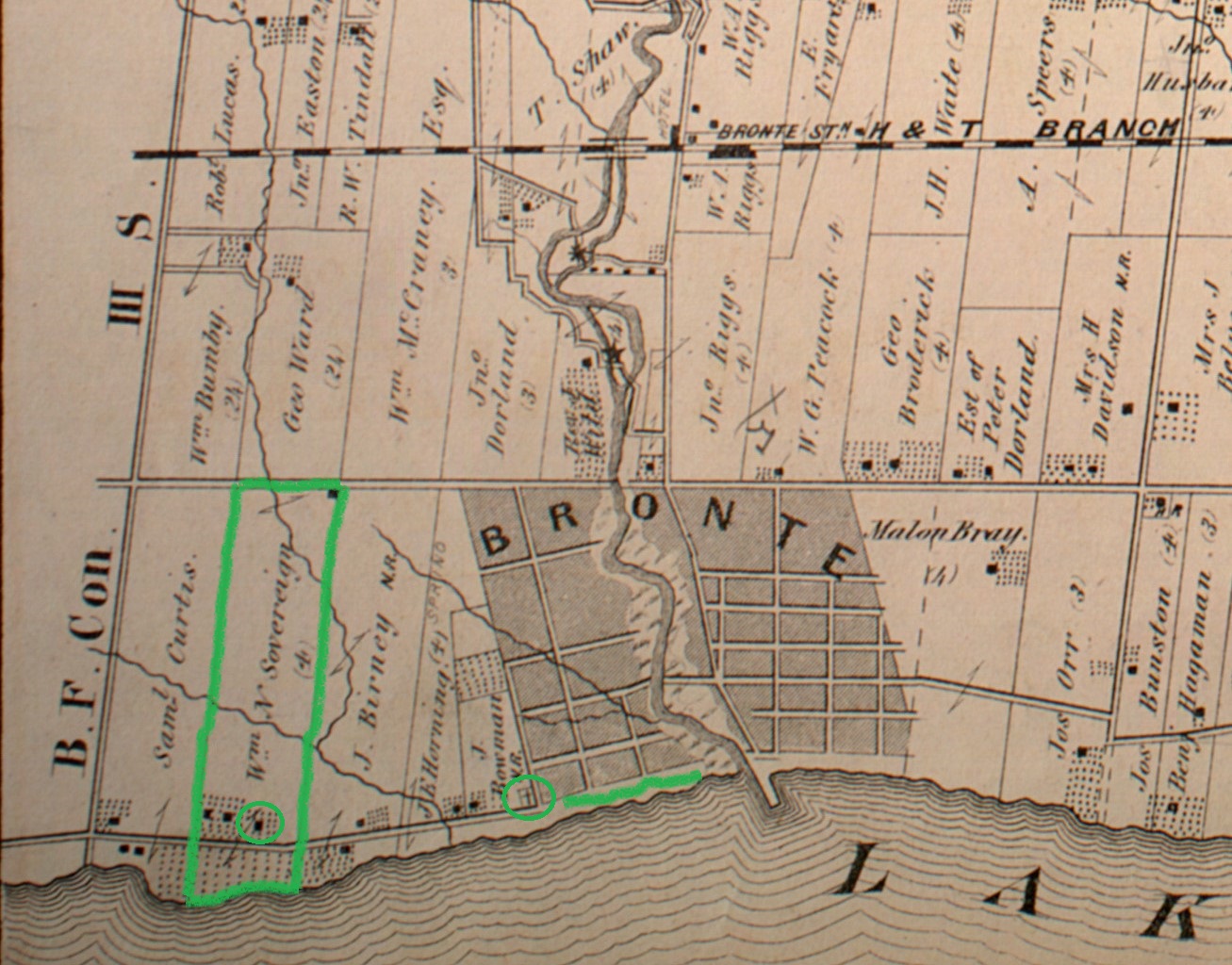
The map below shows the area as it was in 1877 including the Sovereign property which originally stretched all the way to Bronte Creek. The Sovereign House featured below is one of the three at the end of the property by the lake, possibly the one circled. Also circled is the site of the Bronte Cemetery which was on land donated by the family.
Philip Sovereign was one of the first settlers on Twelve Mile Creek, now known as Bronte Creek, when he arrived in 1814. His property on the west side of the creek mouth would be the site of the first school house in the community when he had a small log building erected the following year. His son Charles would be the teacher in the school by the time he was 17. The Sovereign family was instrumental in the early development of Bronte and their house was built in 1825. After Charles passed away in 1885 the house had several tenants the most notable being in the years 1911-1914. During this time Mazo de la Roche lived here. She was the author of the “Jalna” series of books whose 16 novels were among the most popular of the era. The house was moved on Aug. 23, 1988 to Bronte Bluffs Park where it was restored and now houses the Bronte Historical Society. Several trails run east from the house along the bluffs and lead to stairs that provide access to the beach.
Hawks are one of the few animals with colour receptors in their eyes making them incredible hunters even at great distances. Their keen eyesight also allows them to be diurnal, hunting during both the day and night hours. They can take their prey from the air as well as off the ground and can dive at speeds up to 150 miles per hour to capture it. The one sitting in a large tree outside of Sovereign House allowed me to get pretty close before pooping in my general direction and flying off. Such attitude!
There were several swans on the lake and three of them were an obvious family unit. The cygnet, or baby swan, was still grey in colour and slightly smaller than its parents. Swans are not very graceful when they take off as they need about 30 yards just to become airborne and about that much again to achieve a safe height above the land or water. The picture below shows one just as it is landing.
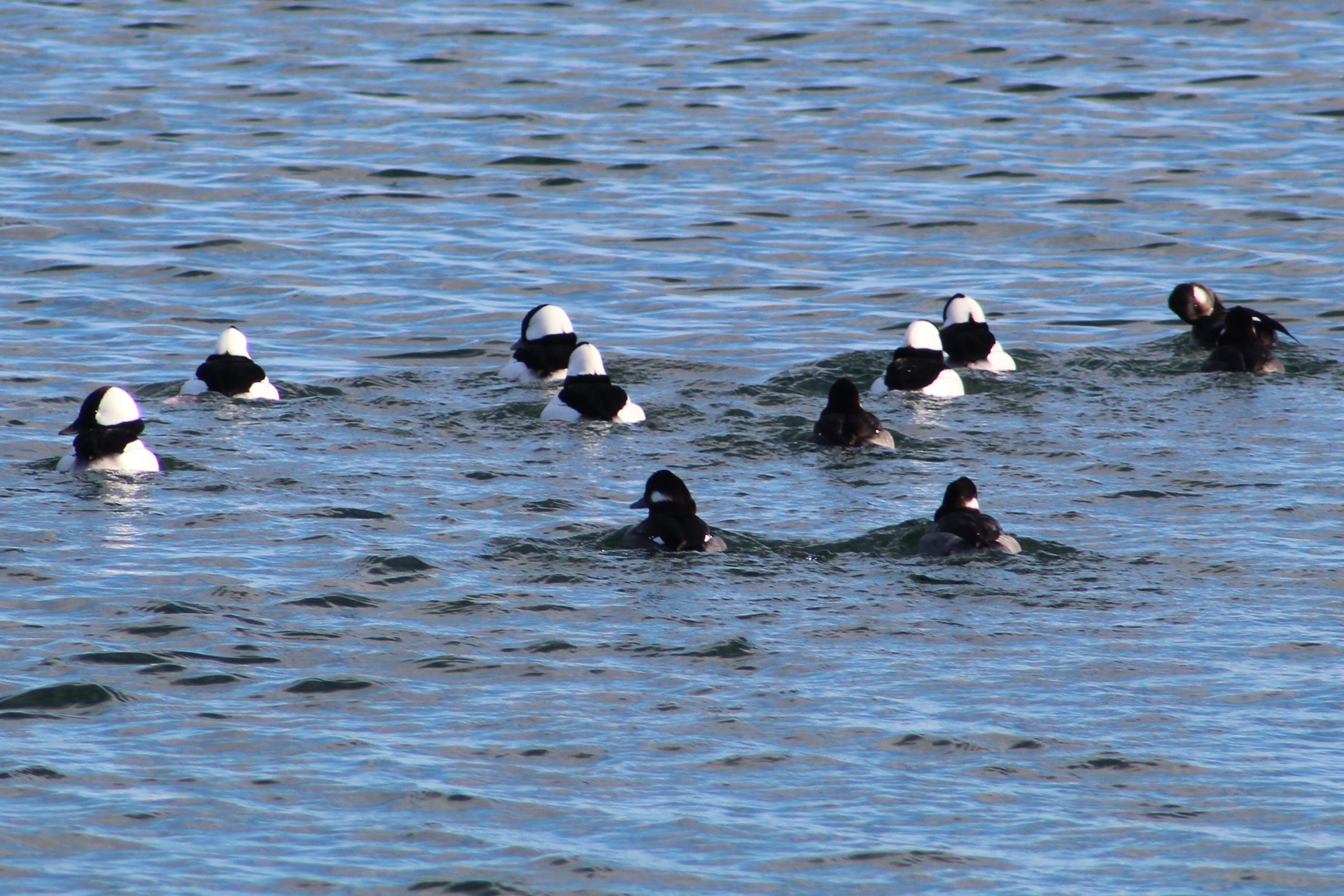
There was a small flock of Bufflehead ducks on the lake. These birds dive for their food and at times the entire group would disappear at the same time. The males have the large white patch that wraps around the back of the head while the females have a smaller white patch on the cheek.
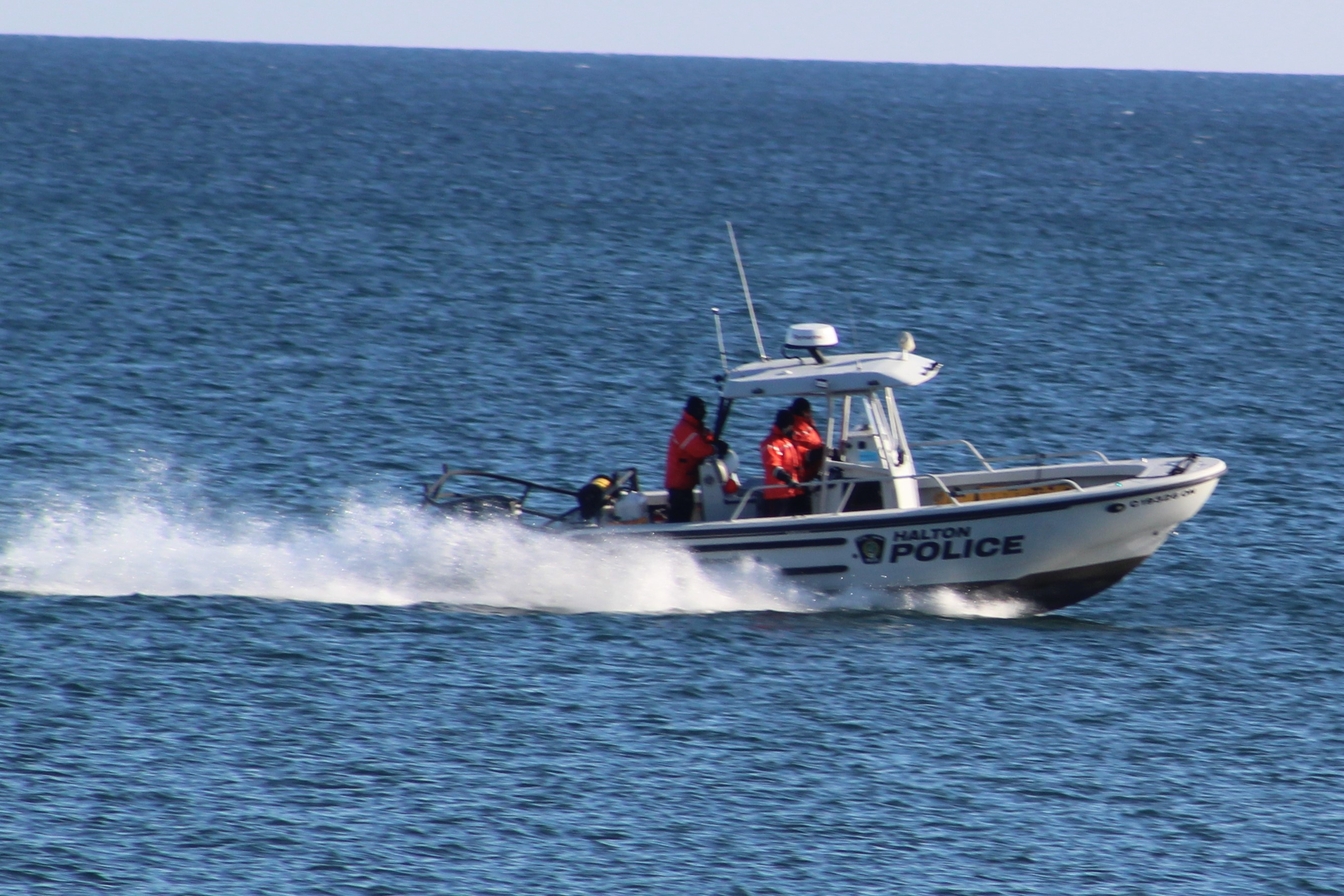
While we were watching from the top of the bluffs a young couple appeared on the beach below. They both dashed into the water but she only went about knee deep. He didn’t hesitate, diving in and getting completely wet. Except for those two people there was no one else enjoying the lake on this sunny day. Even so, the Halton Police were still out on patrol, perhaps looking for those people who froze while swimming.
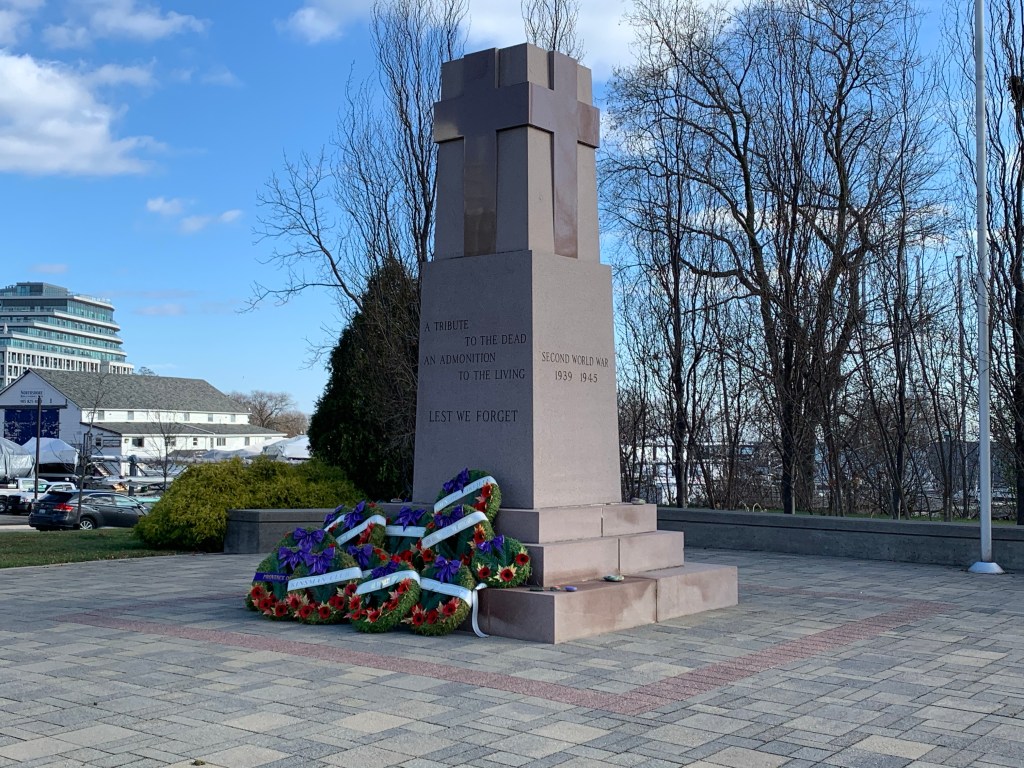
Chris Vokes Memorial Park is named after Major General Christopher Vokes who served Canada during the Second World War. He was from Oakville and passed away there in 1985. The war memorial in the park is dedicated to the soldiers who died in two World Wars plus the Korean War. It is actually the second war memorial to be built in Bronte, the first one being placed in 1956 at 2457 Lakeshore Road West.
Bronte harbour was home to fishermen and stone hookers who provided much of the early industry in the town. Lake Trout, Whitefish and Herring were cleaned at the docks and packed into ice for shipping to the large city markets. Up to 22 fishing boats operated out of the harbour until the 1950’s by which time most of the fish stocks had been depleted. The stone hooking industry ended after 1910 when portland cement replaced stone as a primary building material for foundations. There are several information signs around Bronte describing the local history and there is one dedicated to the fishing industry as well.
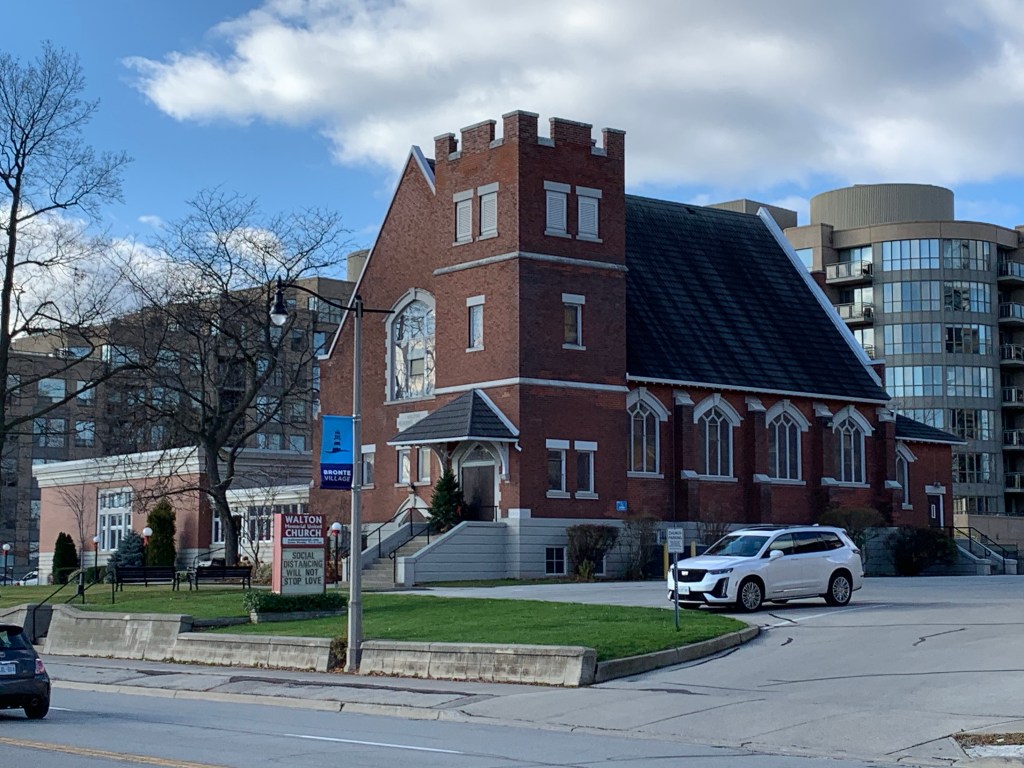
The Methodist Church sent missionaries to Upper Canada as both Primitive Methodists and Episcopal Methodists, often competing to both start a church in a community. The Episcopal church formed in Bronte and built a white structure of wood on the south side of Lakeshore. The two Methodist groups united in 1884 and a period of growth followed. By 1912 the church had outgrown its building and the next year a new brick building was opened across the street. Since this building was a gift from the Walton Family in memory of their father the church became known as Walton Memorial church. It has been part of the United Church since 1925.
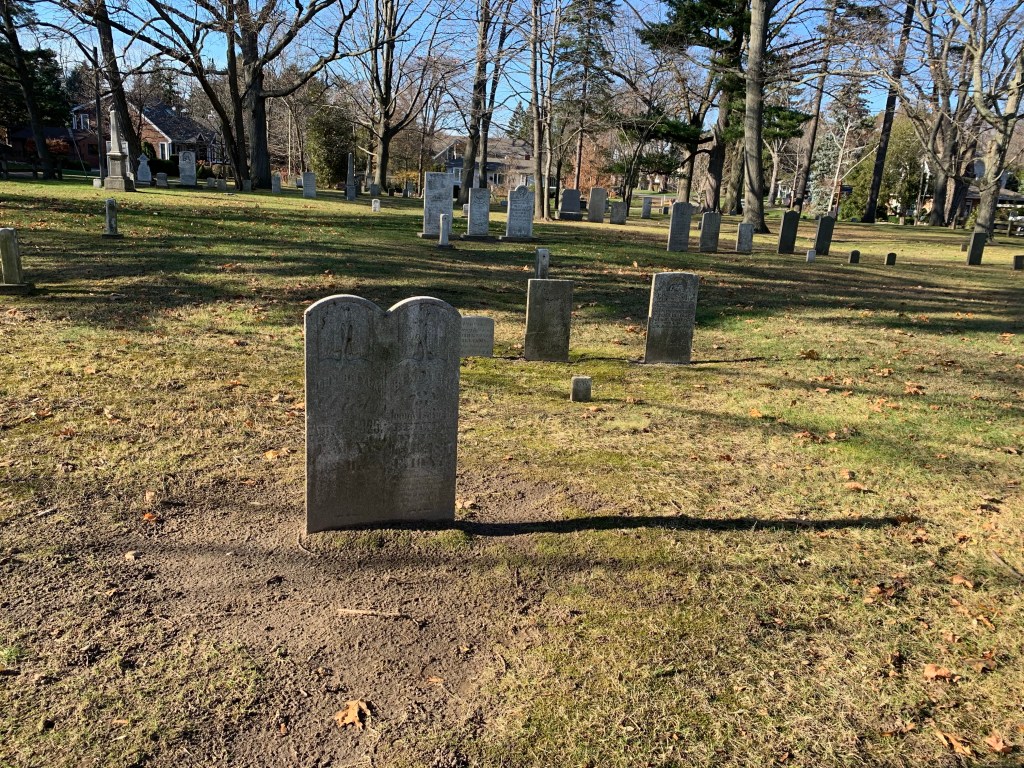
Bronte Cemetery is located on land that was owned by Philip Sovereign and both he and his son Charles are buried here. A large portion of the headstones in Bronte Cemetery commemorate those who drowned working in the fishing and stone hooking industries along the lakeshore. Ironically, some of those who drowned and were later recovered and buried may be among those whose remains have subsequently been lost to the lake. Over the years about 70 feet of the cemetery has been eroded into the lake as it relentlessly beats on the shore
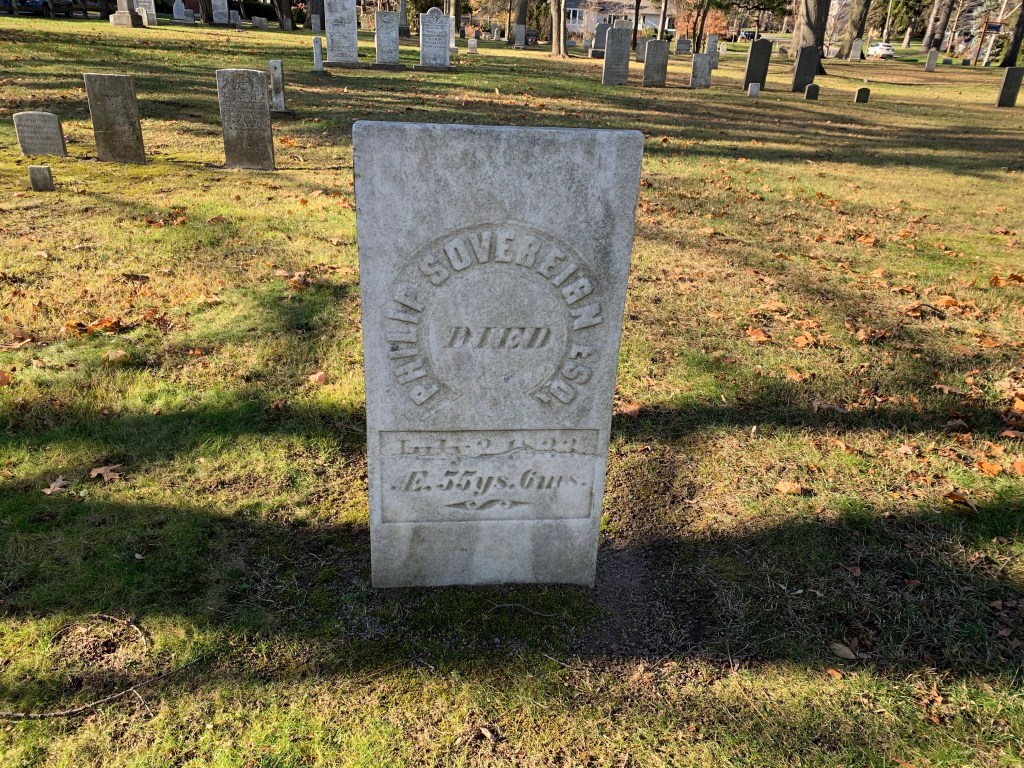
Philip Sovereign died in 1833 and was laid to rest in the cemetery he donated to the community.
Bronte Bluffs Park made for an interesting visit and somehow you get the feeling that you may have just scratched the surface of all that is to be seen. Hmmm…
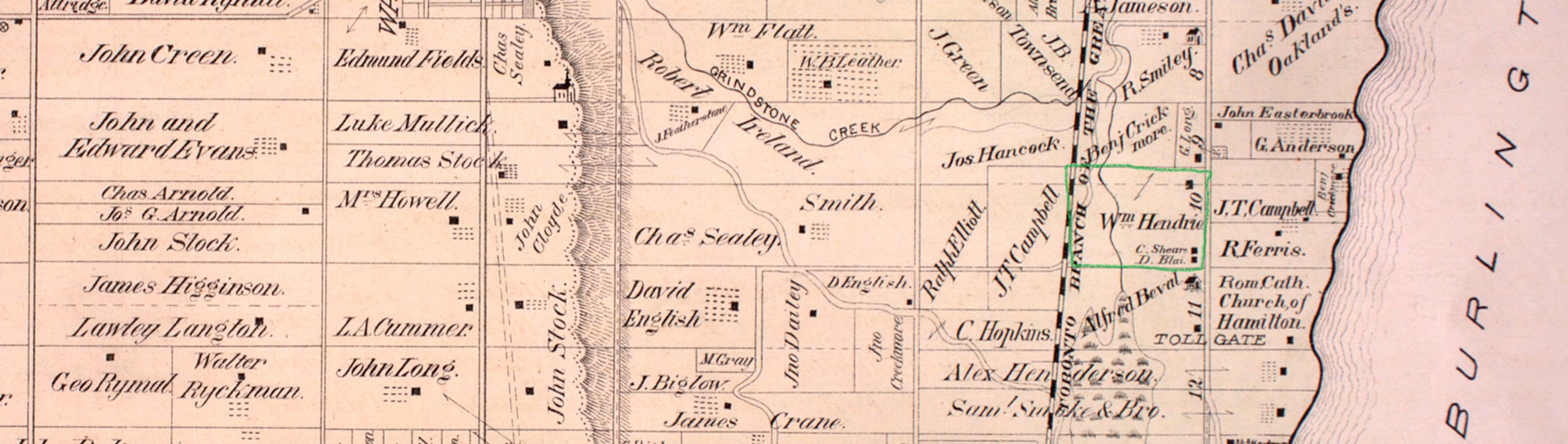
Hendrie Valley is a 100-hectare section of the Grindstone Creek Valley which has been part of the Royal Botanical Gardens since 1941. Sixty percent of the area is a wetland marsh that is considered to be the best marsh on the western end of Lake Ontario. This part of the larger Royal Botanical Gardens, which covers over 900 hectares and is home to over 750 plant species along with 277 species of migratory birds, 37 species of mammals plus amphibians and reptiles. To enjoy Hendrie Valley you can park where I did on Unsworth Avenue where there are several free spots. If these are all taken there are spots on Plains Road but these ones require a parking fee. William Hendrie came to East Flamborough from Scotland in the 1870’s to purchase land for a racehorse farm. The property was donated to Hamilton Parks Board in 1931 by his son George and then turned over to the Royal Botanical Gardens ten years later. His farm was located downstream from Smokey Hollow and can be seen outlined in green on the county atlas excerpt below.
The main trails in the park are well maintained and there are very few side trails. The Royal Botanical Gardens tries to keep large sections of the grounds free of trails and discourages off trail exploration so the local wildlife can enjoy the sanctuary. Bicycles and joggers are not allowed and all pets must be kept on a leash. It is also a rule that no one can feed the wildlife but as I found out, that one is not observed.
Grindstone Creek flows through the valley on its way to the lake and the trail winds its way along side of it.
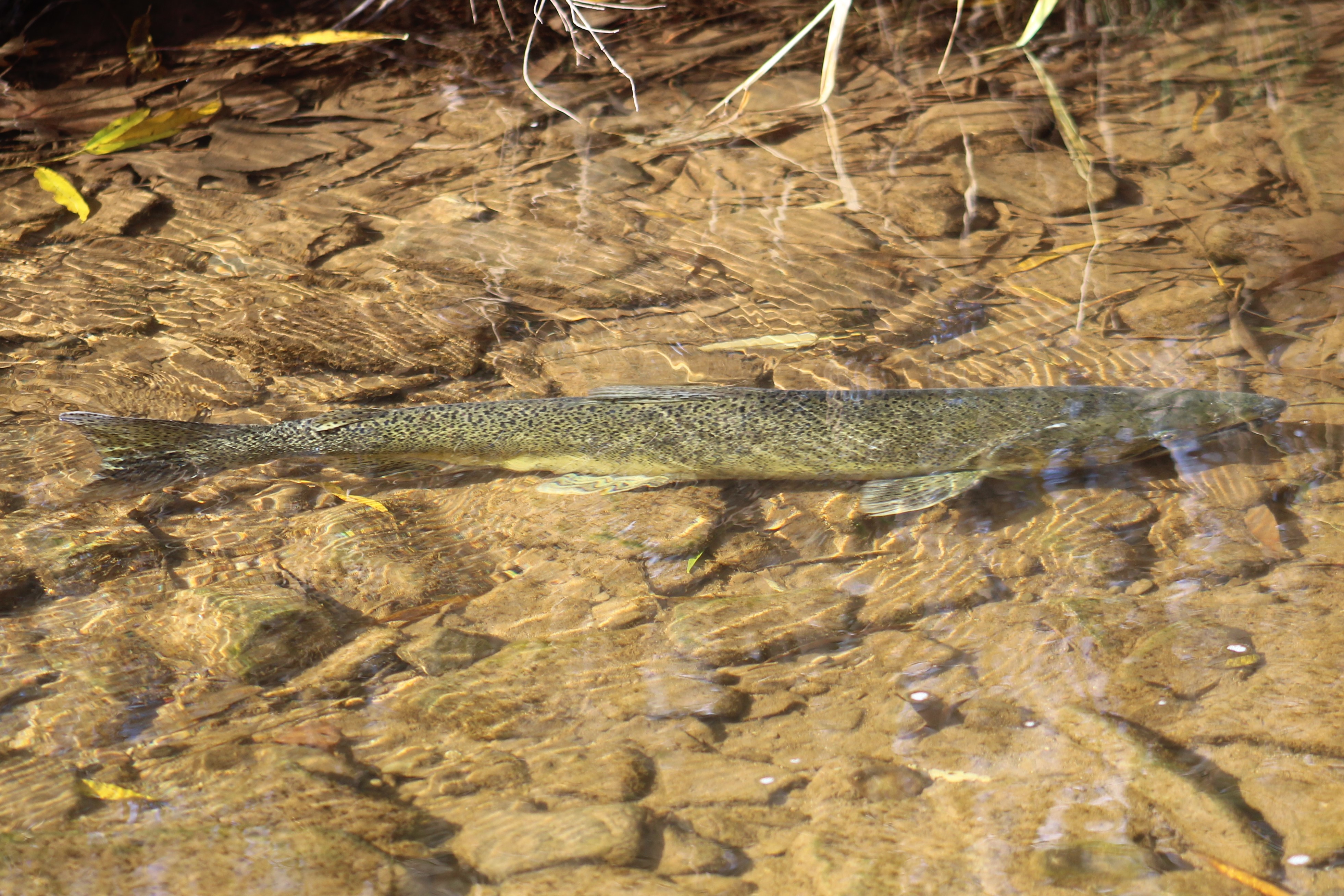
There was still a large number of salmon trying to make their way upstream to spawn even though it was late in the season. In the early 1800’s Atlantic Salmon were so plentiful in the streams around Lake Ontario that they used to fish them using a shovel to throw them onto the shore. However by 1898 the last salmon was caught off the Scarborough Bluffs and no more would be seen until restocking programs brought Chinook and Coho into the lake several decades later. In 2011 Atlantic Salmon were reintroduced to the Humber River with 100,000 fry being released. These will grow up in the lake and then return to the Humber River to spawn when they are of age.
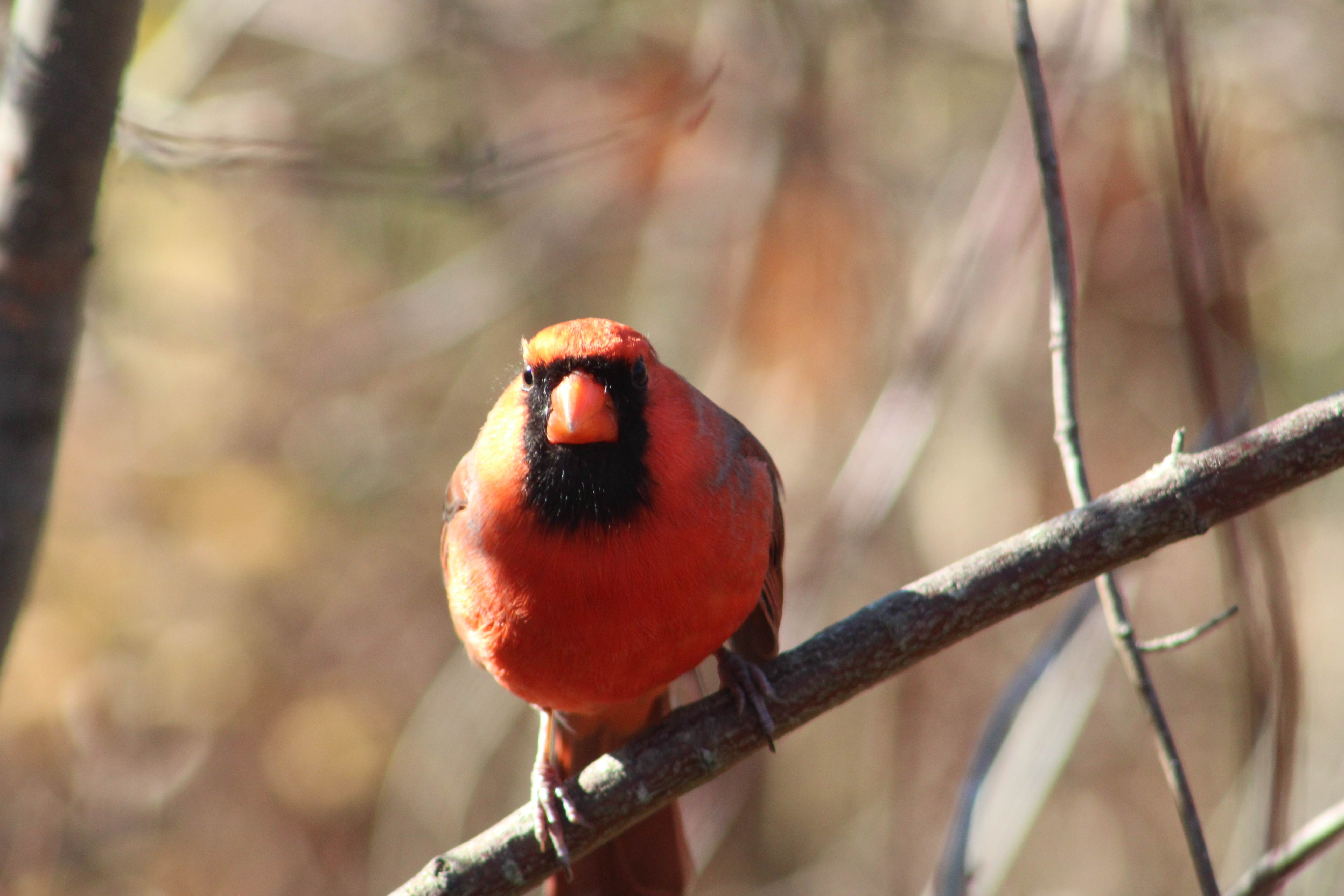
Male Cardinals can be quite bold in the spring when they are trying to steer you away from the female as she sits on her nest but the rest of the year they are a little less likely to get in your face. I had one particularly curious fellow who was perhaps used to taking food from people because he was having a close look at me as I went past.
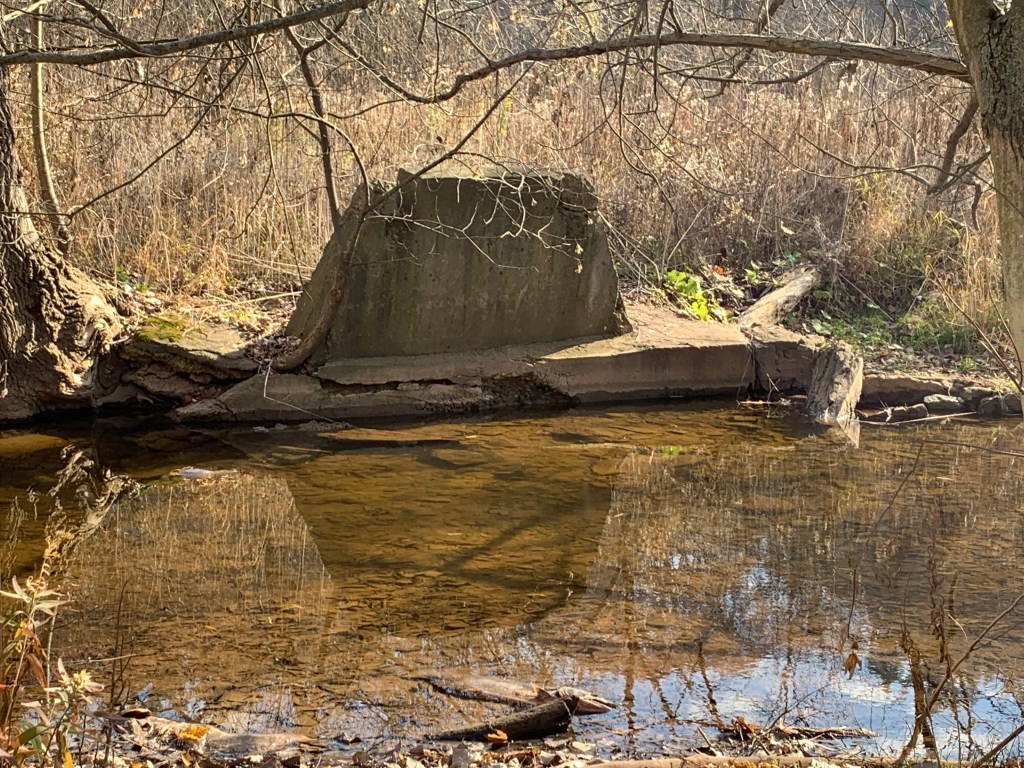
There are several pedestrian bridges that cross Grindstone Creek and evidence that there were previous bridges as well, perhaps dating to the days of private use for horse farming.
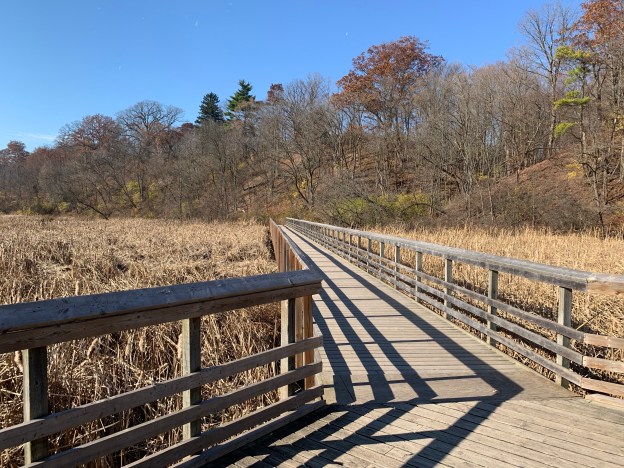
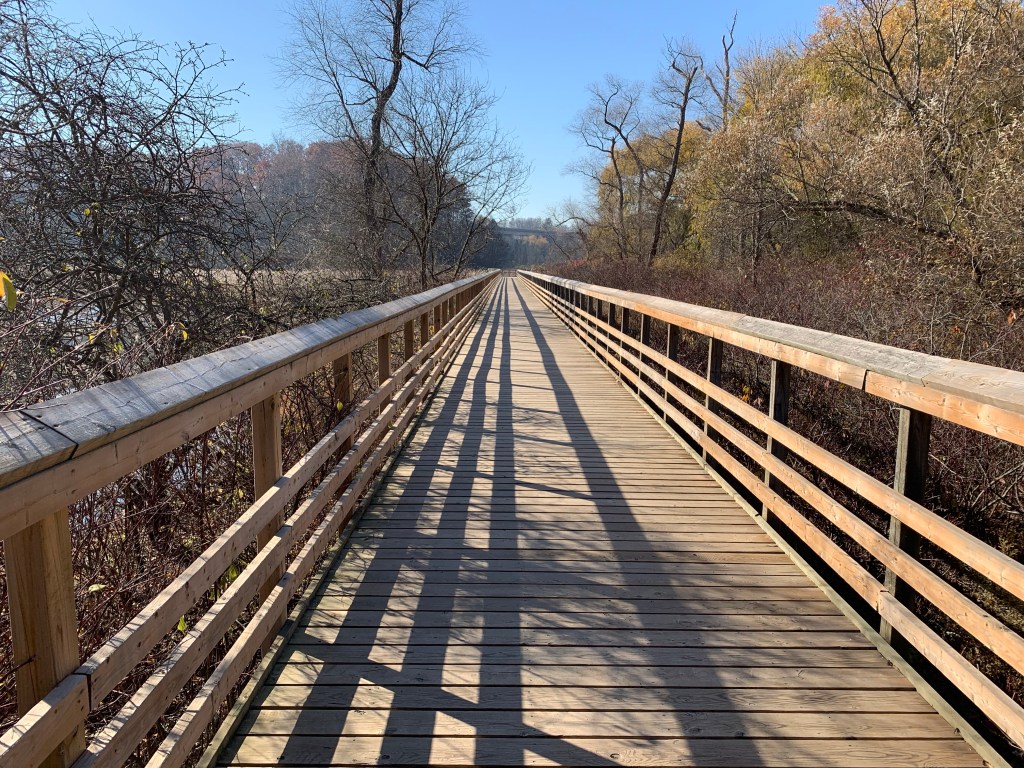
The section of the trail that runs through the mashes and wetlands is supported by a couple of boardwalks, one of which runs for 350 meters.
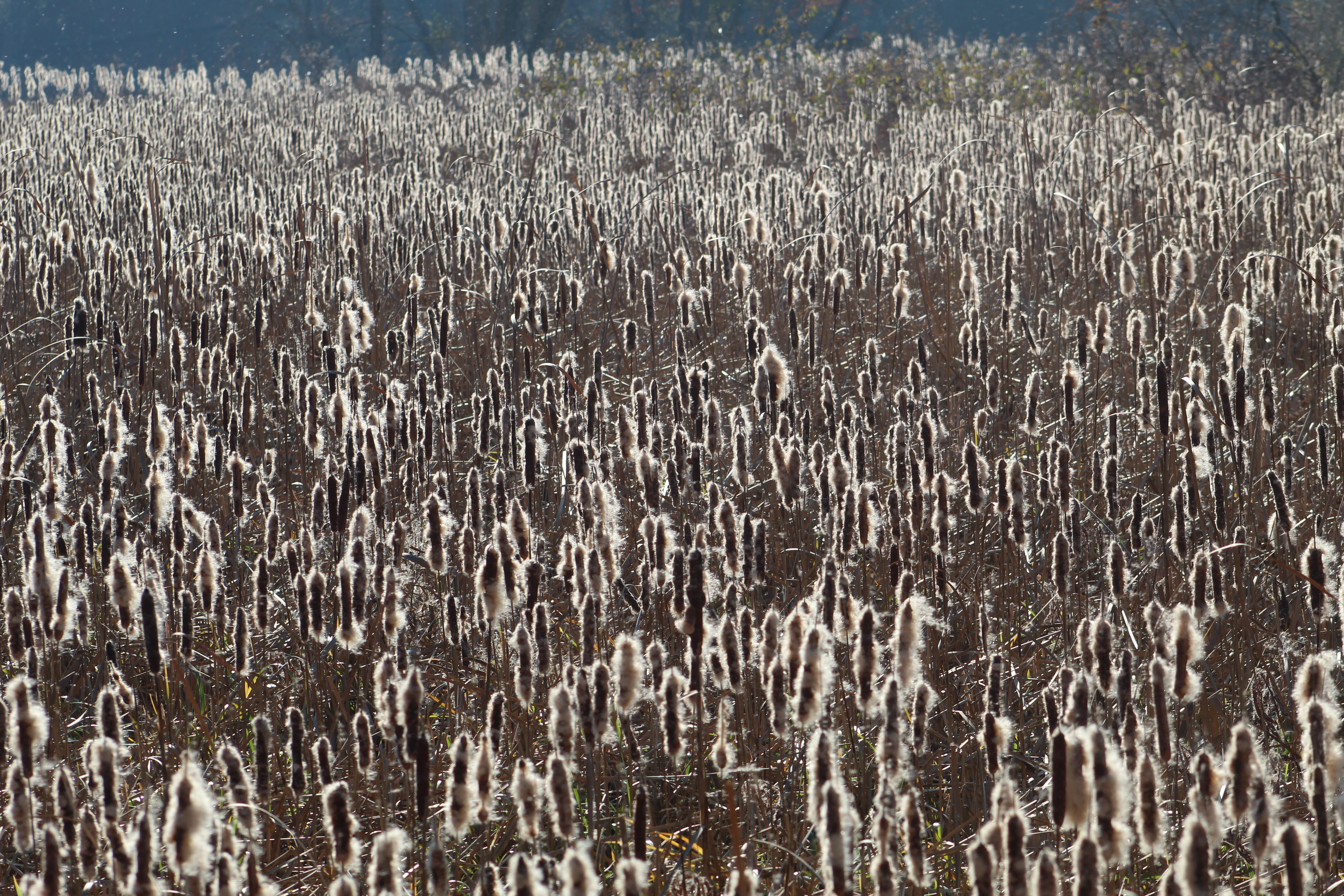
The sunlight was shining on the seeds from the sea of cattails that have populated the marshlands. Considering that each one of these cattails can contain up to 25,000 seeds it is little wonder that they spread very quickly.
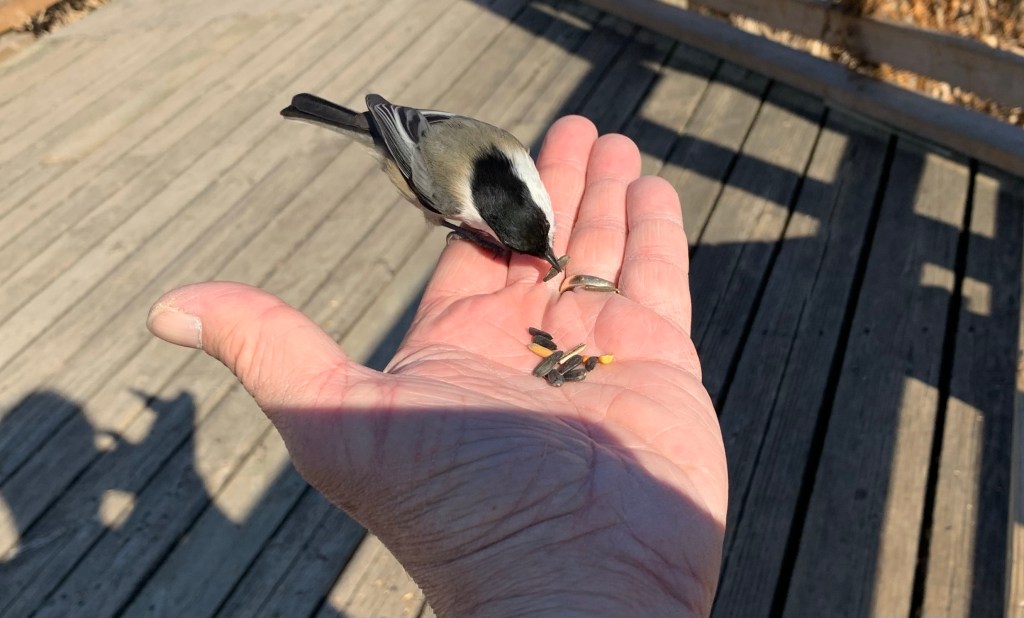
It appears that the visitors to Hendrie Valley routinely leave bird feed along the boardwalk and there was plenty there on this day. This has led to the local birds becoming overly comfortable with people and dependent on them for their primary food source. This isn’t really a good thing but it does lead the Black-capped Chickadees to be quite willing to land on your hand and take a seed. A small Downey Woodpecker came for one as well but didn’t stay to get his picture taken.
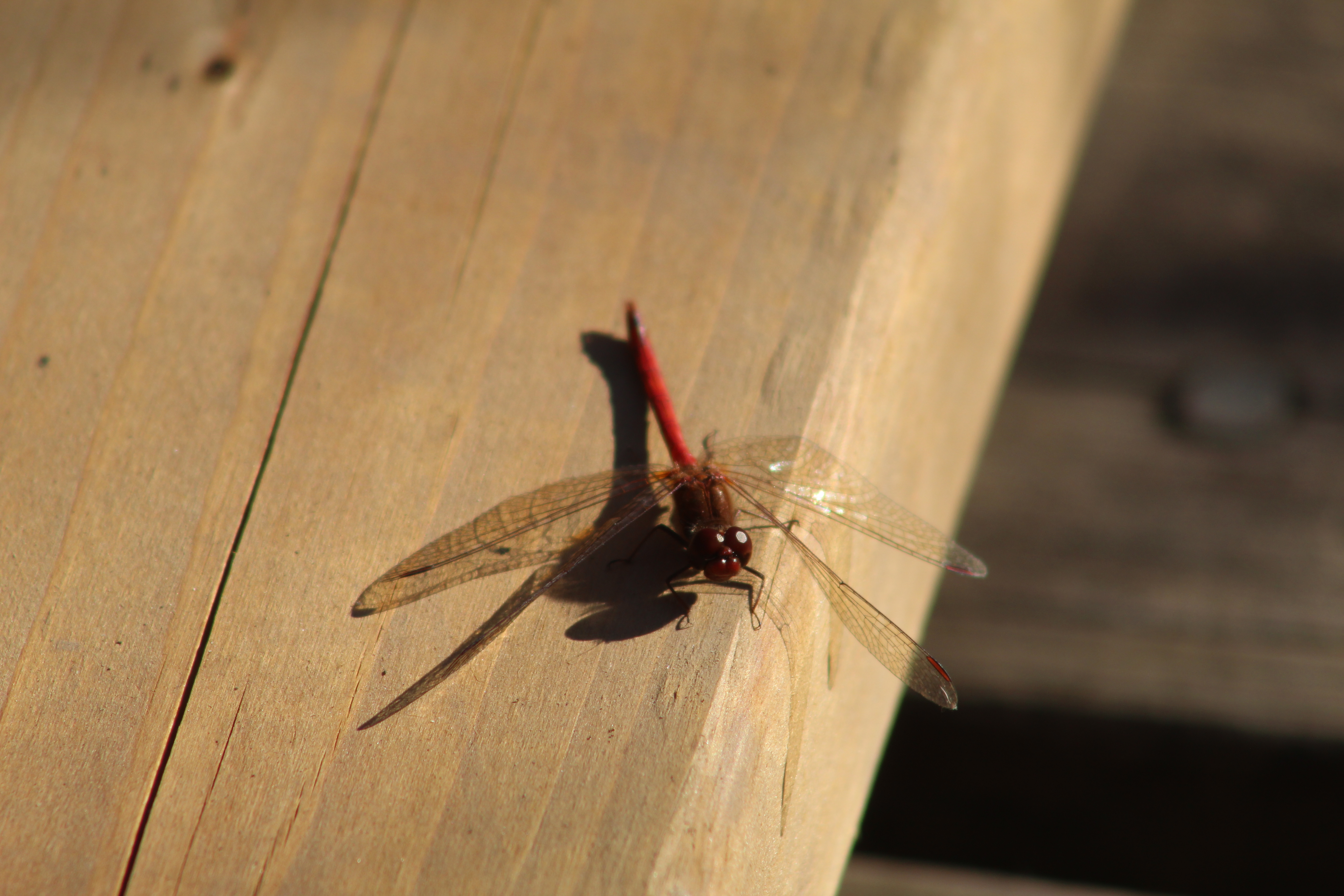
There were several dragonflies taking advantage of the unusually warm day and soaking up the sunshine along the boardwalk. The Half-banded Topper has become scarce as its habitat has been reduced through development. The marshes of Hendrie Valley provide a perfect place for them to breed. When the eggs are ready the mated pair will fly in tandem while she slowly flips her tail through the water to wash the individual eggs off.
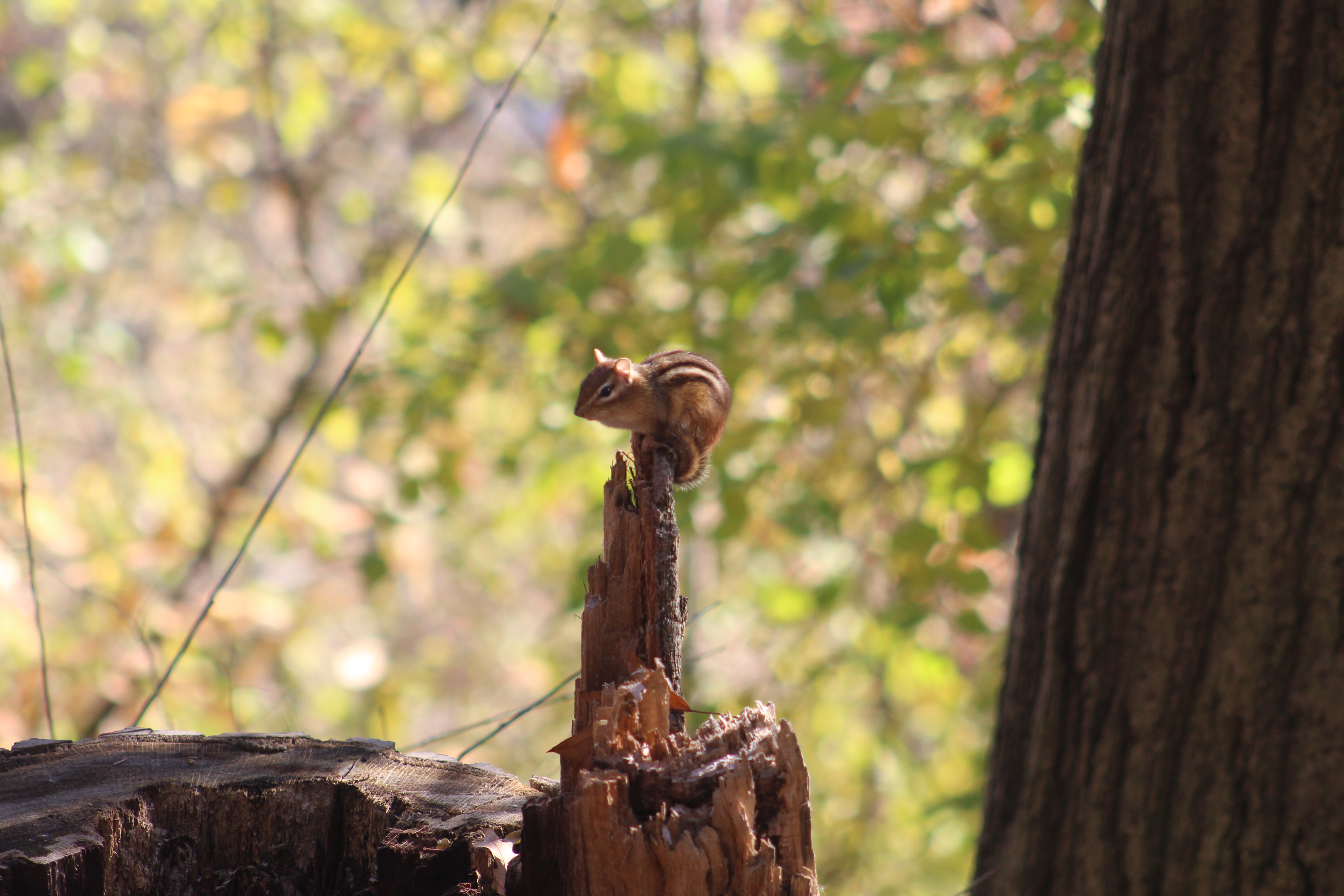
The chipmunks also love the free food that has been left for the birds and so there are a lot more chipmunks here than I am used to seeing in one place. It is also reported that there is an increased number of chipmunks in 2020 because of an unusually large acorn crop last year, which allowed them to do better over the winter. There also seems to be a large crop (or mast) this year based on what we saw during our trip to The Credit River in Georgetown back in September.
You can cross Plains Road and carry on into other parts of the Royal Botanical Gardens or use this as a loop trail and return to the car depending on the length of hike you plan to enjoy.
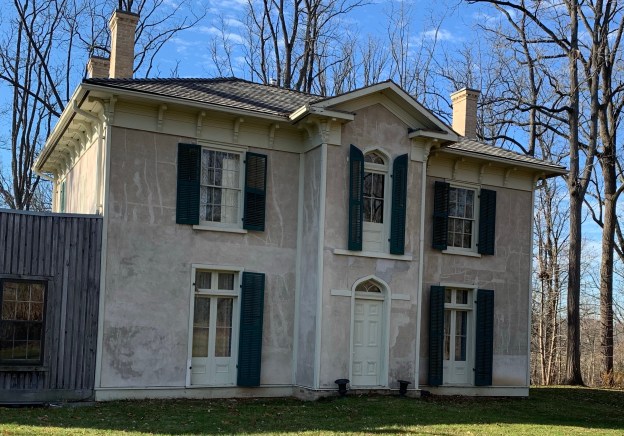
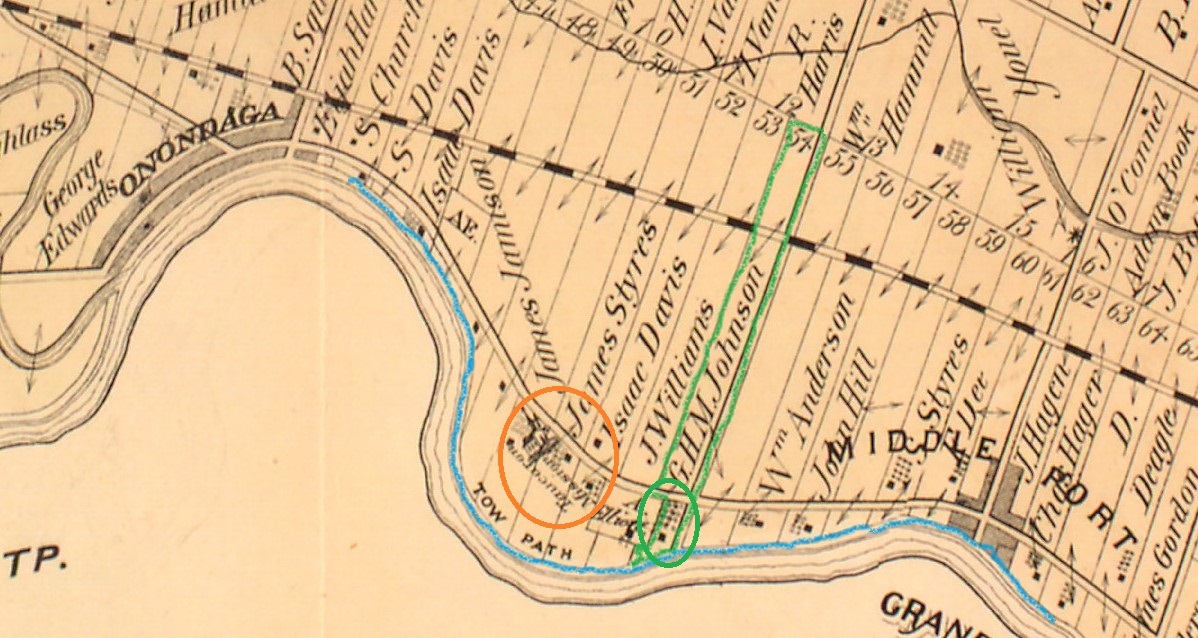
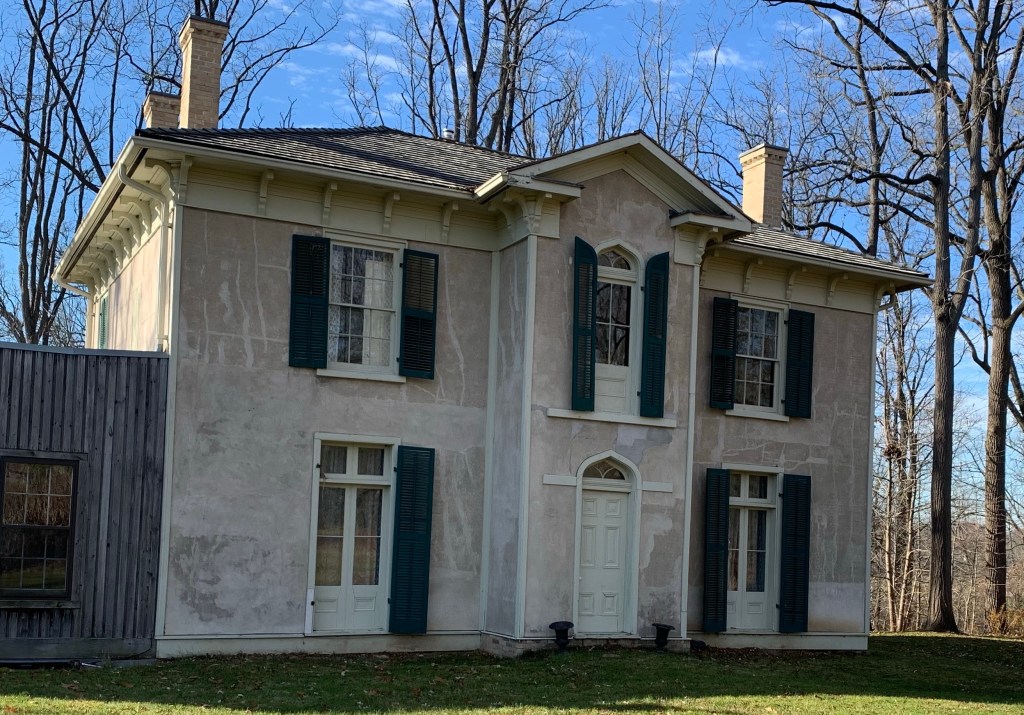
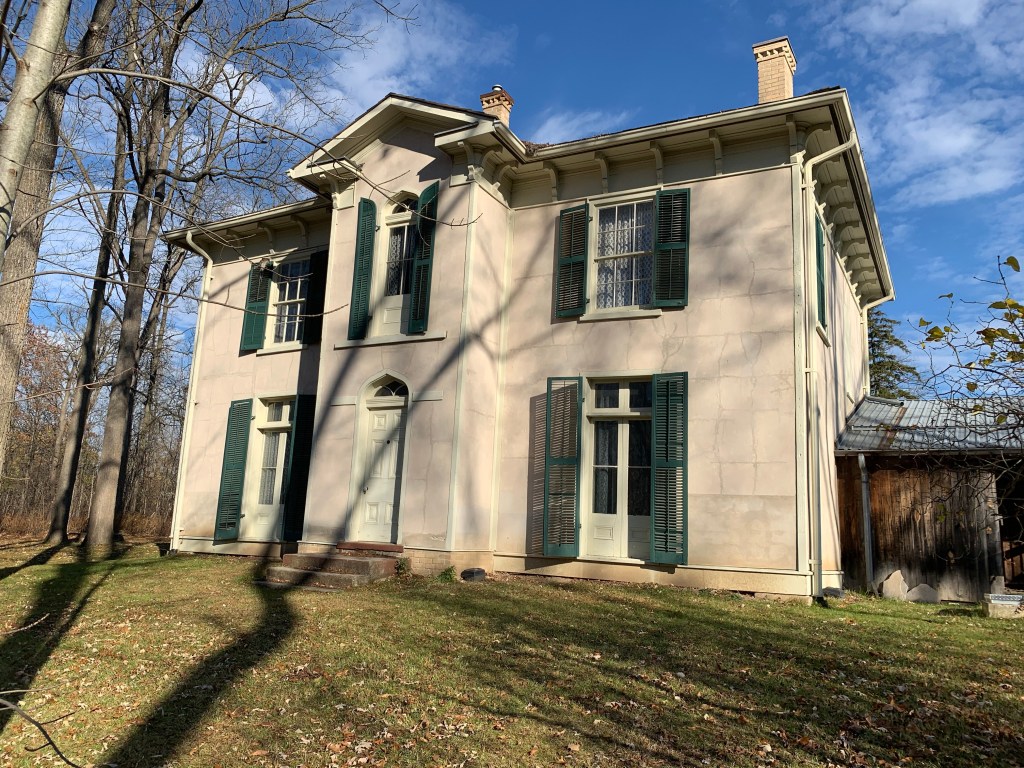
A little west of the GTA, near Brantford, stands a truly unique home. It was built in the 1850’s for a native chief and his English bride and is recognized as Canada’s first truly multicultural home. The county atlas section below shows that area in 1877. The property of George H. M. Johnson is outlined in green and the house is circled in green. The church where our love story starts is circled in orange. The tow path along the Grand River is marked in blue and is a feature from the canal system that once ran along the river.
George Henry Martin Johnson was born in 1816 at Six Nations of the Grand River Territory and grew up to become a chief on the Haudenosaunee Confederacy Council. He also spent time as an interpreter for local preachers and government officials. Meanwhile, Emily Susanna Howells was born in Bristol, England in 1824. Four years later her family moved to the USA where they became active in the underground railroad transporting slaves to Canada. It was when Emily moved to Canada to live with her sister and brother-in-law at Tuscarora Parsonage that she met George Johnson and fell in love with him. After being secretly engaged for 5 years they were married in August of 1853.
George started building the house in 1853 to be given to her as a wedding present. The nature of their multi-cultural marriage caused George to incorporate some unique features into the design, creating a house that would eventually become a Canadian National Historic Site
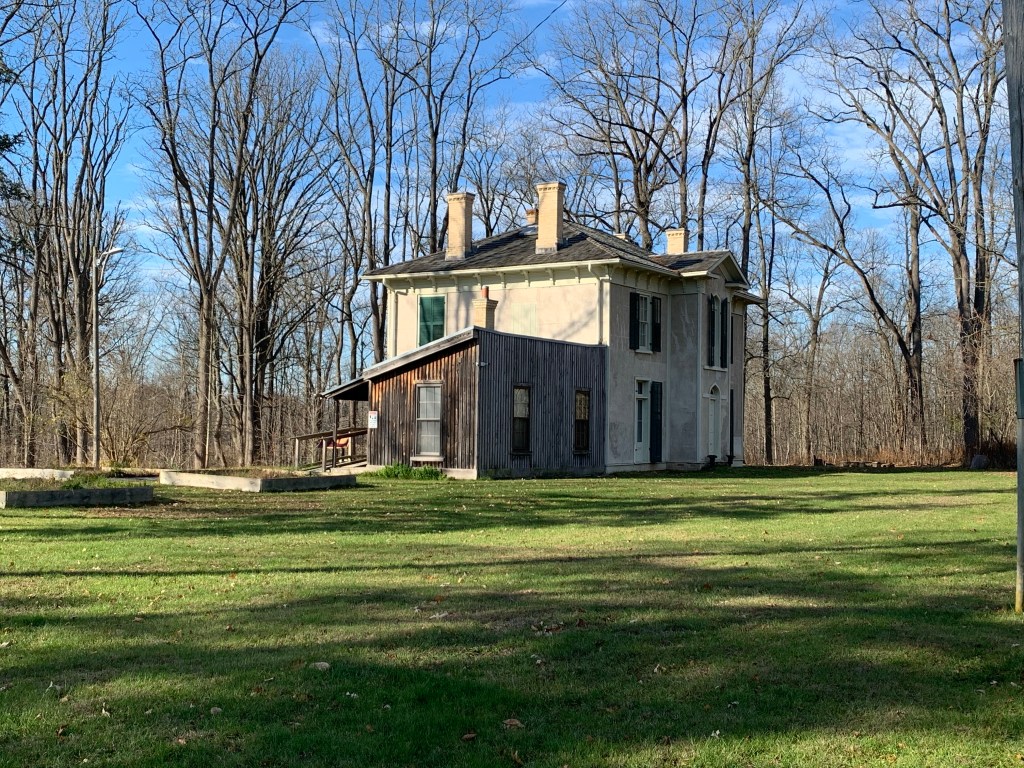
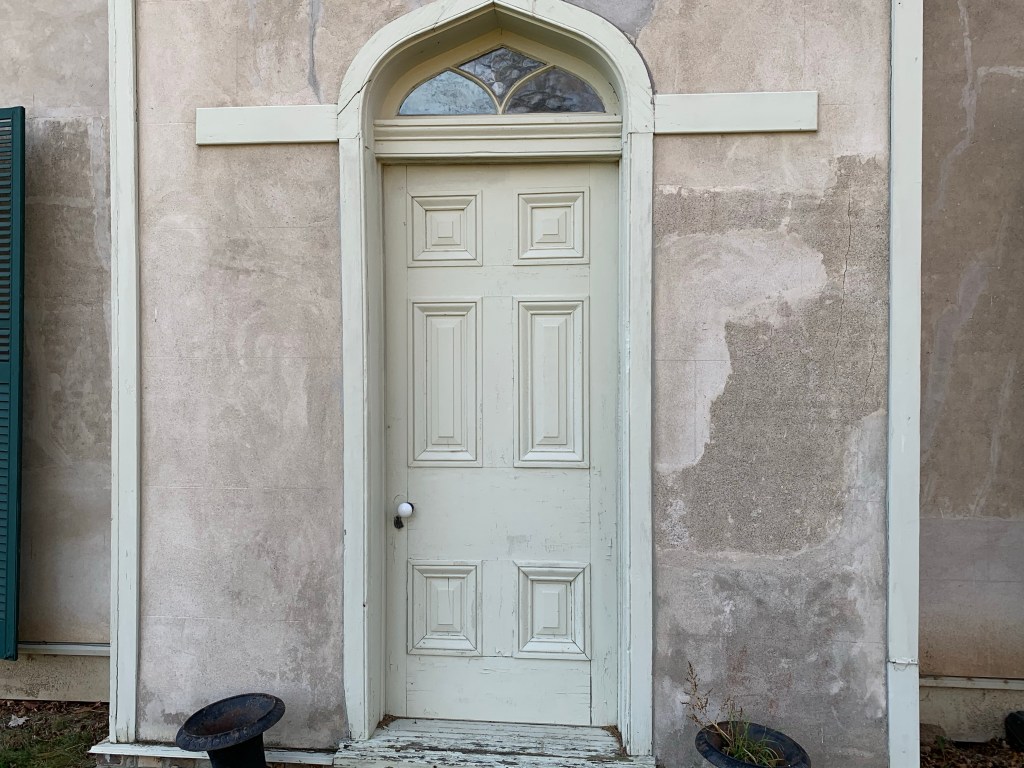
The house has a central hall plan with two rooms on either side and four more upstairs. Four fire places kept the place warm in the winter and eventually a summer kitchen was added to help keep the heat down in the summer. The symmetry on the inside of the home was mirrored on the outside in a unique way. The front and the back of the house are identical. There is no “front” and “rear” entrance because both sides of the home are identical. This is because the multicultural marriage was honoured in the very architecture of the home. Emily’s family and friends would arrive by horse and carriage and would be welcomed on the side of the house facing the road.
George’s family would arrive by canoe along the Grand River and be greeted on that side of the house. Neither side of the family was given any preference, although the side facing the river seems to be in a little better shape today. It took three years to complete the building and the family didn’t move in until 1856. The Johnson Family lived here until 1884 and, after various tenants, it was willed to the Six Nations in 1937.
Emily Pauline Johnson was born at Chiefswood and was raised enjoying some of the benefits from both of her cultural ancestries. She went on to become one of Canada’s premier poets and story tellers whose work often focused on the plight of her native ancestors. At the time she was referred to in some circles as half-breed but her fame rises above all that. On the hundredth anniversary of her birth she was honoured with a postage stamp. She has the distinction of being the first woman, other than the queen, to be featured on a postage stamp. She was also the first author and the first indigenous person on a Canadian stamp. One of her poems was called “Both Sides” and reflects the fact that her family entertained people from both sides of the river.
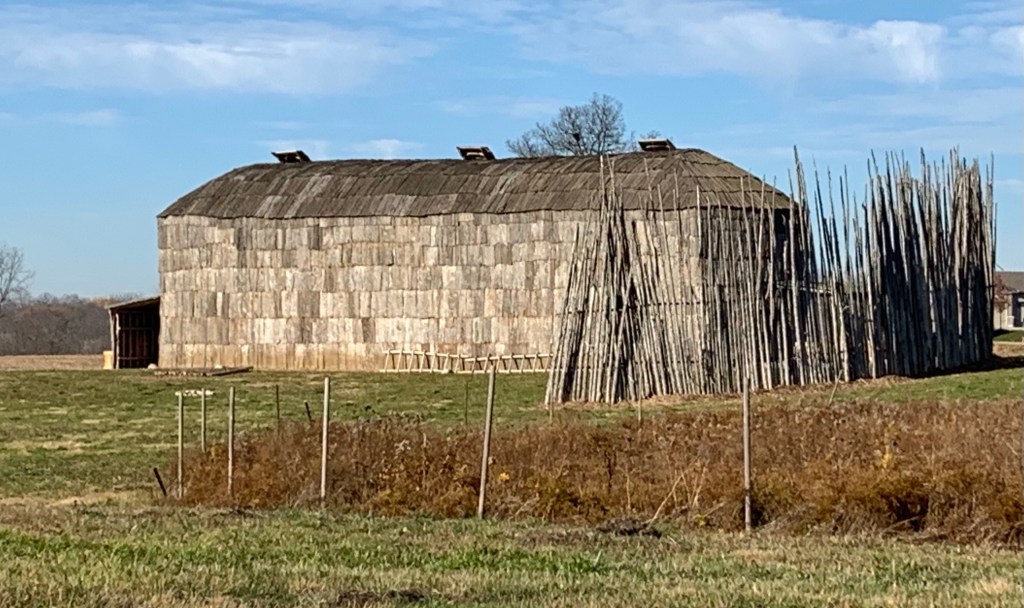
It was recognized as a National historic Site in 1953 and opened as a museum in 1963. Since then it has been renovated a couple of times. Plans are in the works to create a more popular tourist attraction by adding interpretive signage and upscale camping sites. Near Chiefswood, they have already constructed a replica of a longhouse for teaching purposes. This building is very similar to the ones reconstructed at Crawford Lake.
The house is open for tours, and would certainly be interesting to see inside, but that wasn’t an option when I was there so I enjoyed it from the outside.
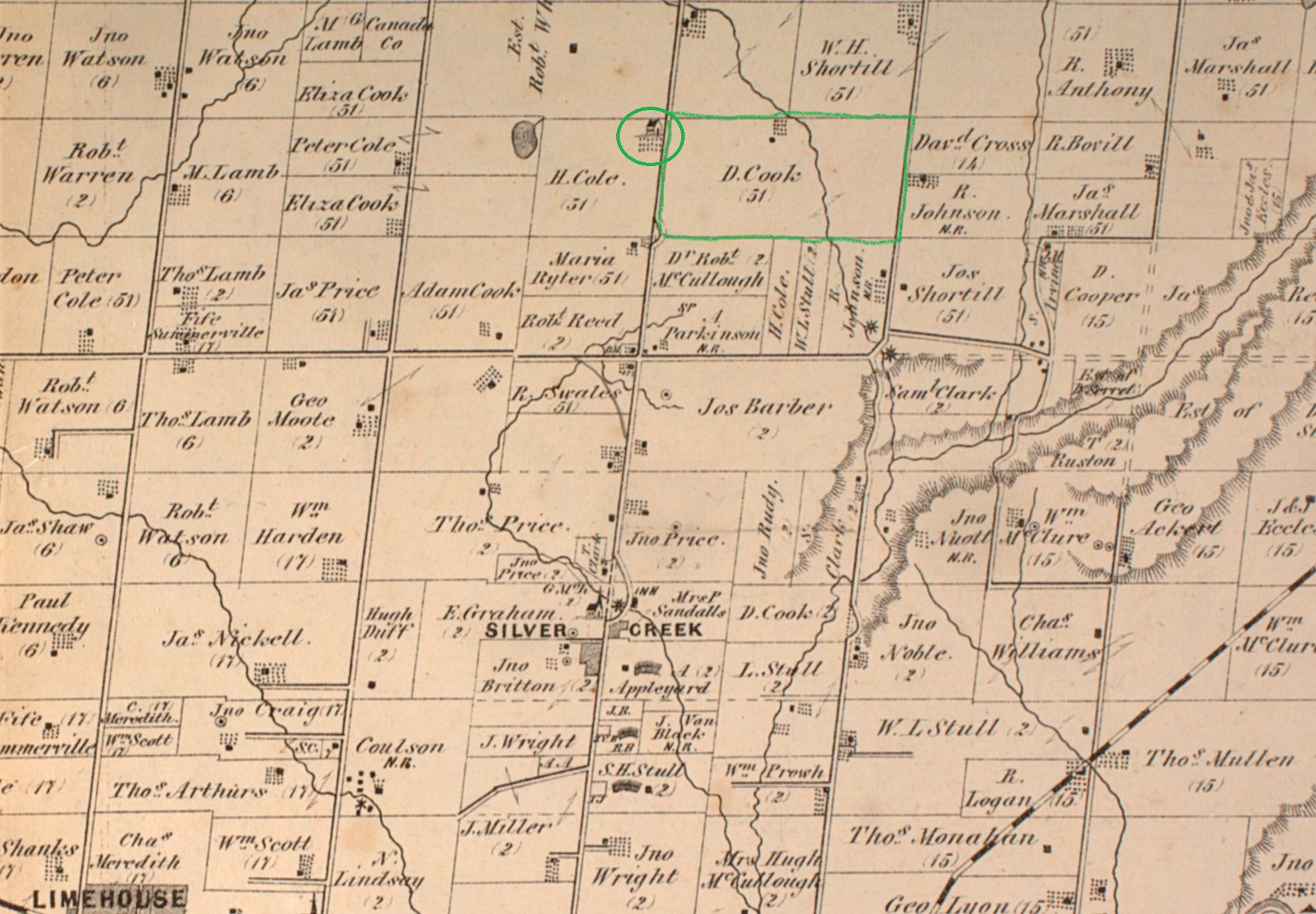
Scotsdale Farm is a 531 acre farm that was given to the Ontario Heritage Trust in 1982. It has several historic buildings and is frequently used as a location for shooting movies. There are several trails that pass through the farm including a side trail from the Bruce Trail. There is limited parking on the site and with frequent movie crews taking up space it is recommended to arrive early. The 1877 county atlas below shows the property outlined in green. The school house near the end of the laneway is still standing and has been circled in green.
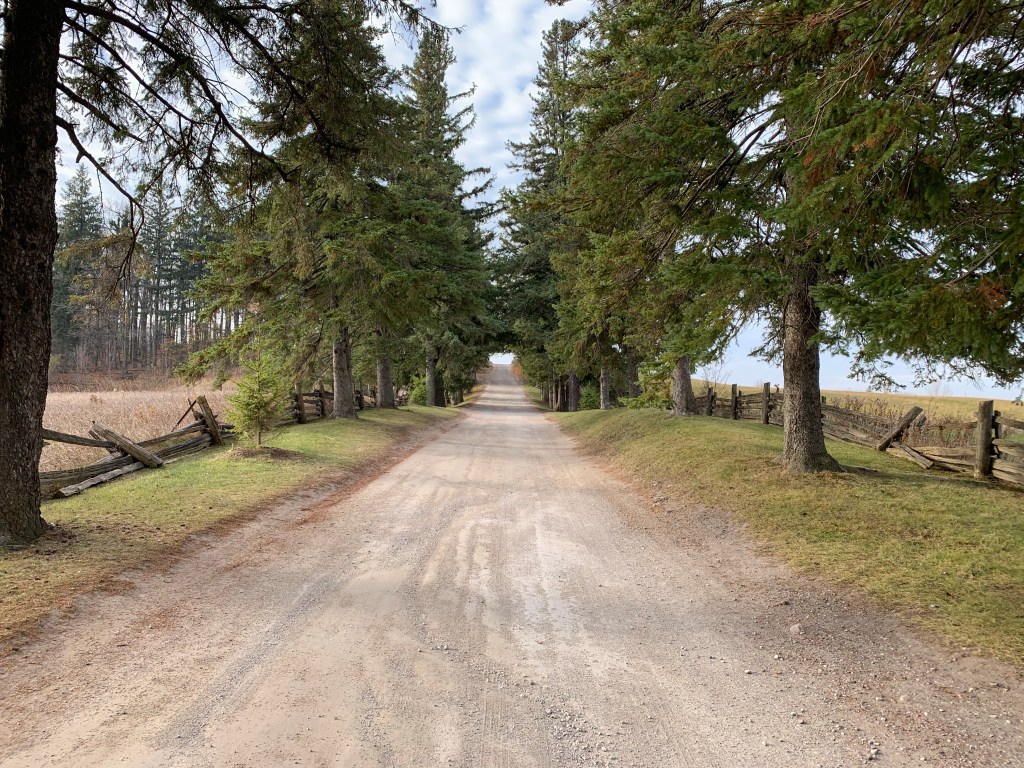
Parking is located near the house but you have to walk back up the tree lined lane to get to the trails that lead to the south. The trails also continue behind the barns and out toward the eight line.
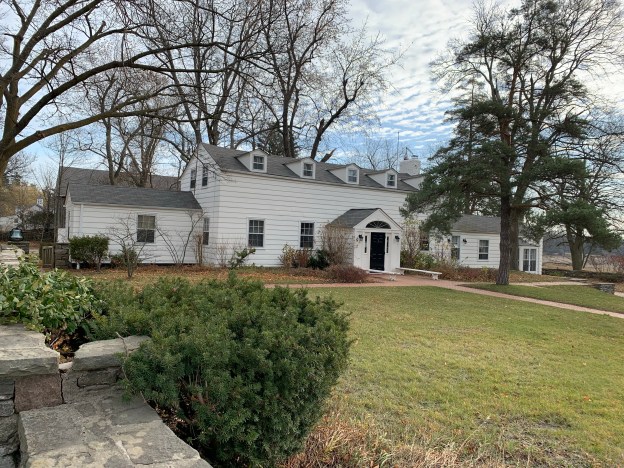
The first house on the property was a small log house which was built in 1836 by Christopher Cook. His son David, along with his wife Almira, expanded the house in the 1860’s. They sold the property to Stuart and Violet Bennet in 1938 and they further expanded the home into the American Colonial style that it bears today.
There’s a guest cottage beside the house where people could have a little privacy while visiting the estate. Underground steam pipes provided heating for the cottage but it was still closed off for the winter each year.
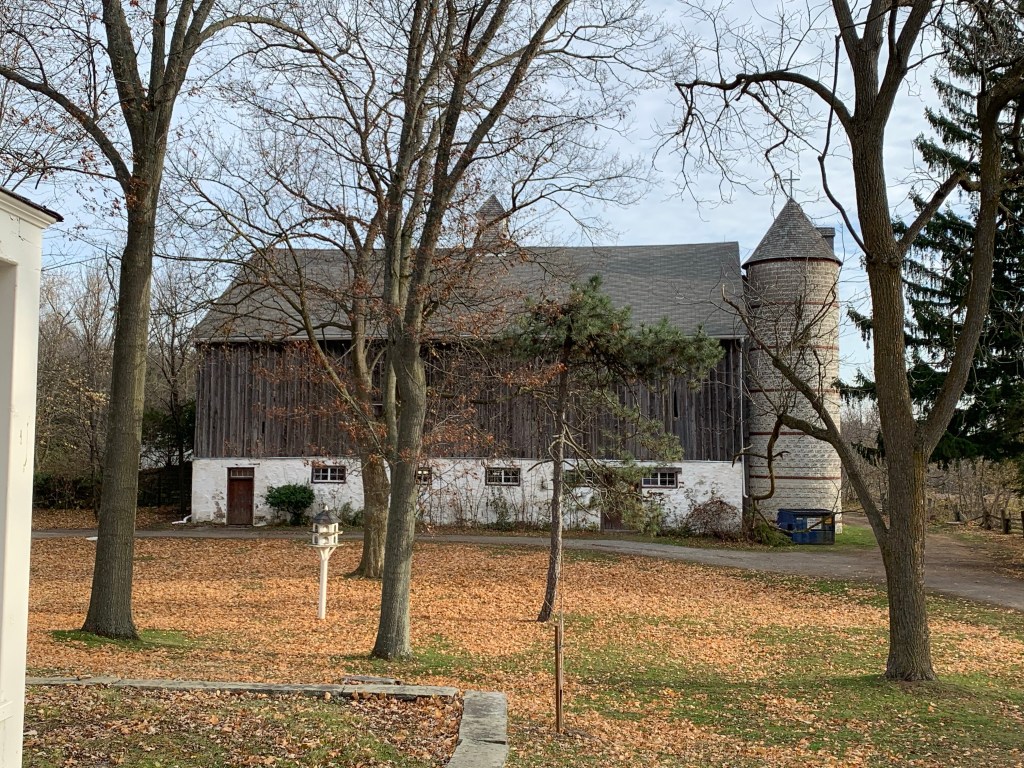
From the back of the house you look out over the two barns and the silo. The precast blocks used to build the silo date it to around 1900. The barn closest to the house was used for horses. The Bennetts kept six or seven Arabian horses that they used for riding.
The barns were built prior to 1880 and there were separate ones for the cattle and horses. This is the cattle barn where the short-horn cattle were kept that were the specialty of the Bennetts.
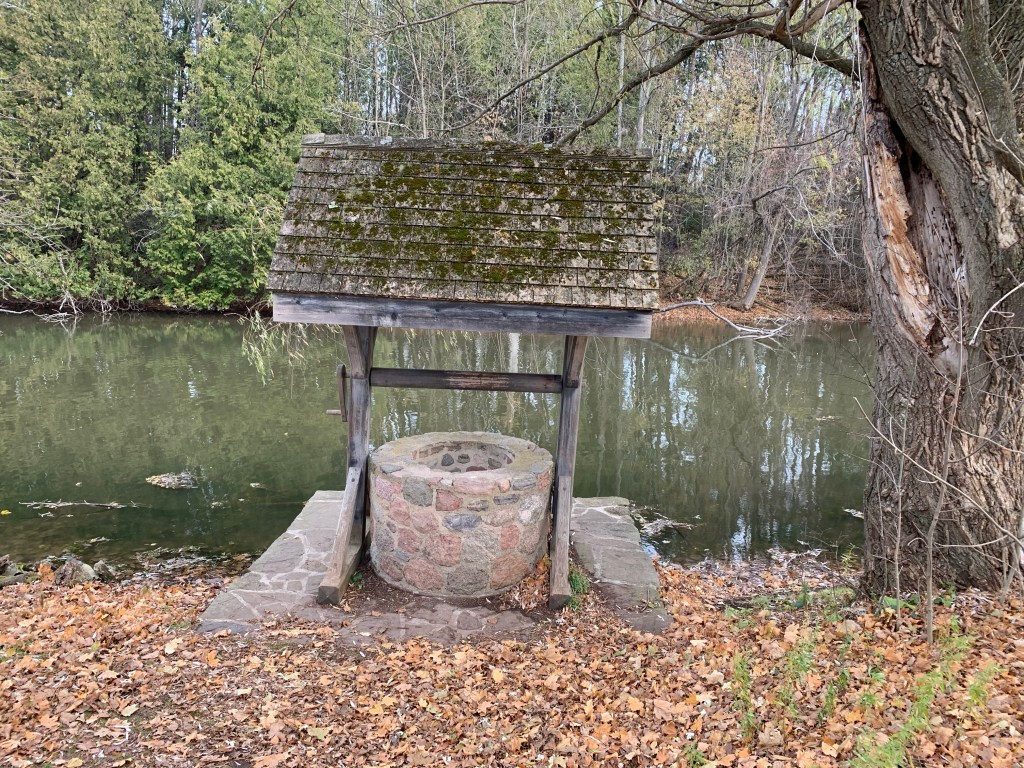
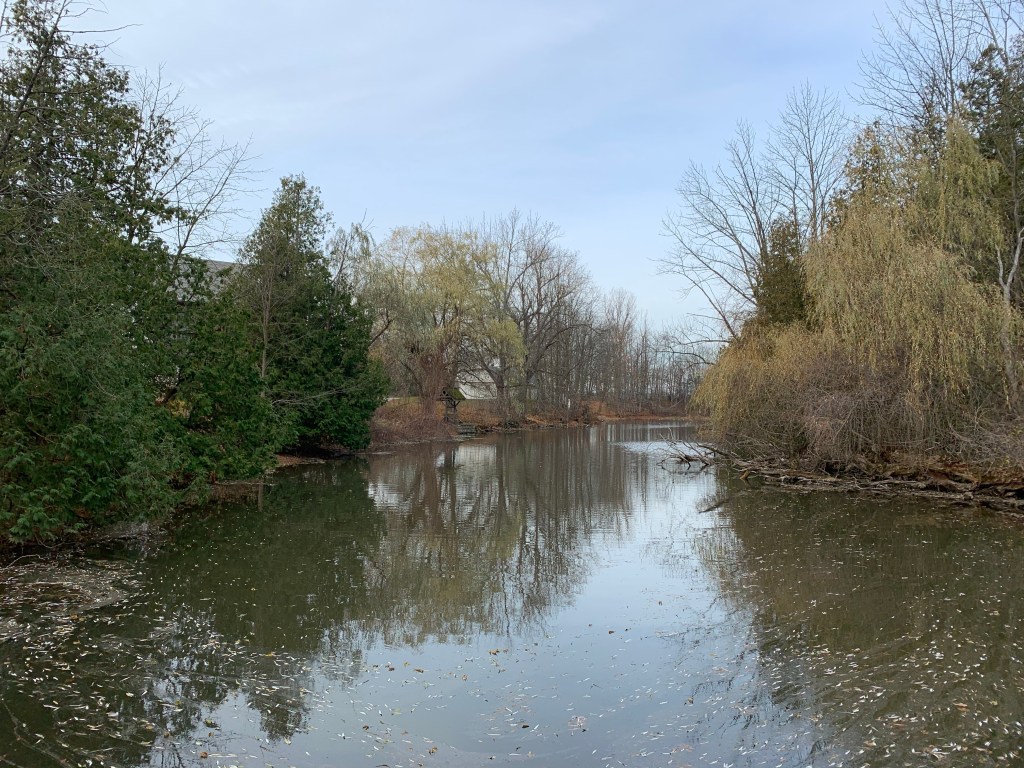
There’s a wishing well by the pond and another one in the back of the house. The cedar and willow trees that line the pond make it an excellent place to take pictures.
You can walk across the concrete dam that is used to contain the pond water used by the farm for their livestock. Snow’s Creek is a tributary to Silver Creek and is one of two creeks that flow through the property. It was quite relaxing looking at the geese on the far end of the pond but they looked to be gathering together for their trip south for the winter.
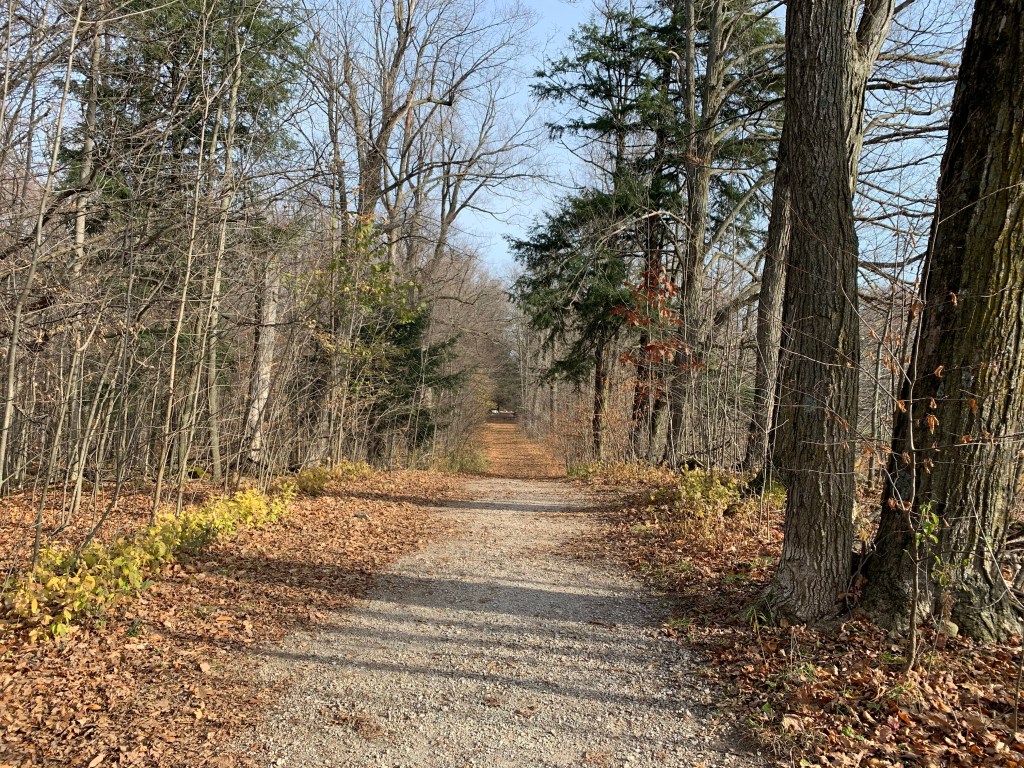
Trails follow the old lane way that was the rear entrance to the property.
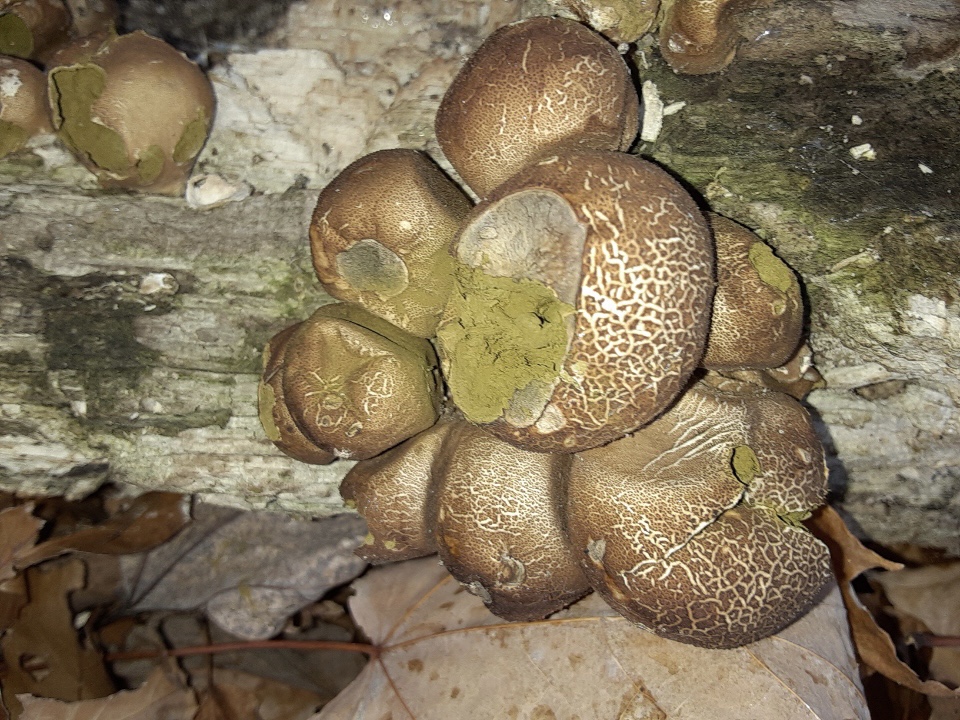
The little pigskin puffballs have gone to spore. When these are broken open they release their green spores. These are cast to the winds by the millions but very few will actually germinate and grow into the next season’s puff balls.
Conks are a type of polypore mushroom that grows on dead or dying trees. They are characterized by the thousands of small pores on their flat undersides through which spores are released. This fallen tree has several that were growing while the tree was standing and many more that grew after the tree fell. That is why some of these conks are growing at 90 degrees to the ground.
Just north of the driveway is school section number 14 which was built in 1871. Like many one room school houses this one was heated by a wood stove. Parents were expected to help with the supply of wood and often children would walk to school carrying a log or two for the stove. Students had to walk up to six miles to school and so the days were long but when the weather was bad or the crops were being harvested is was understood that they wouldn’t attend.
Scotsdale Farm is an interesting place to visit and the trails connect to Irwin Quarry and Fallbrook. Both of these are in the Silver Creek Conservation Area.
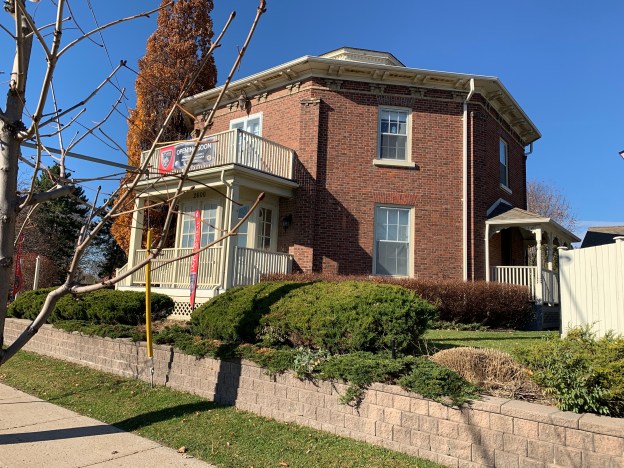
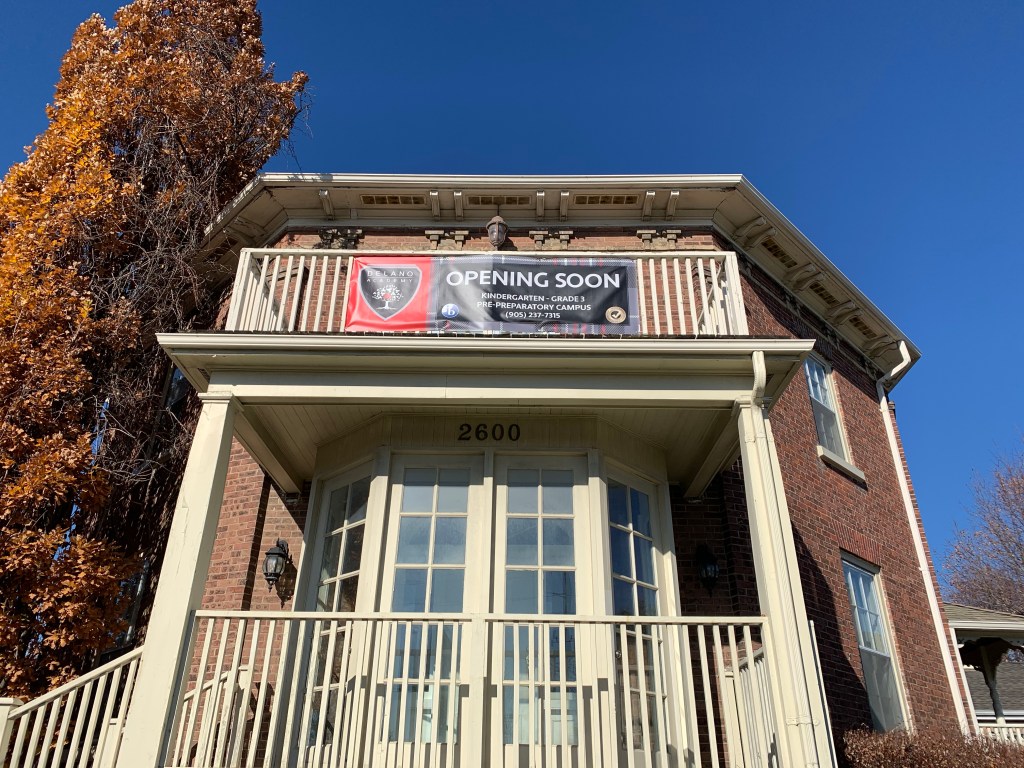
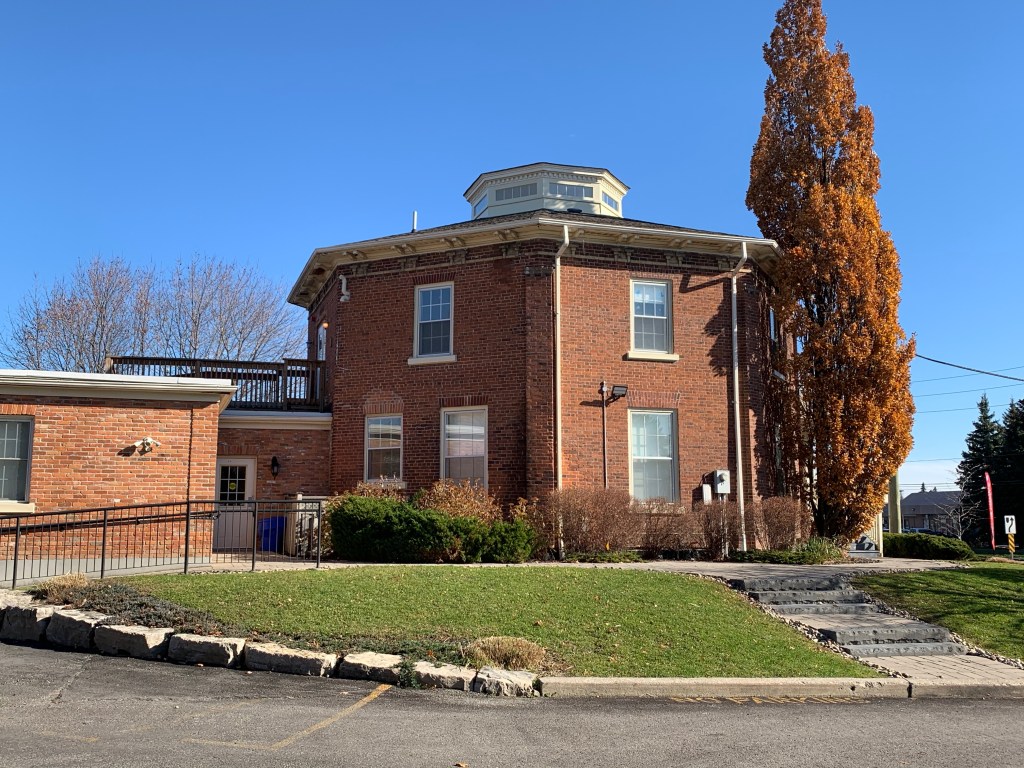
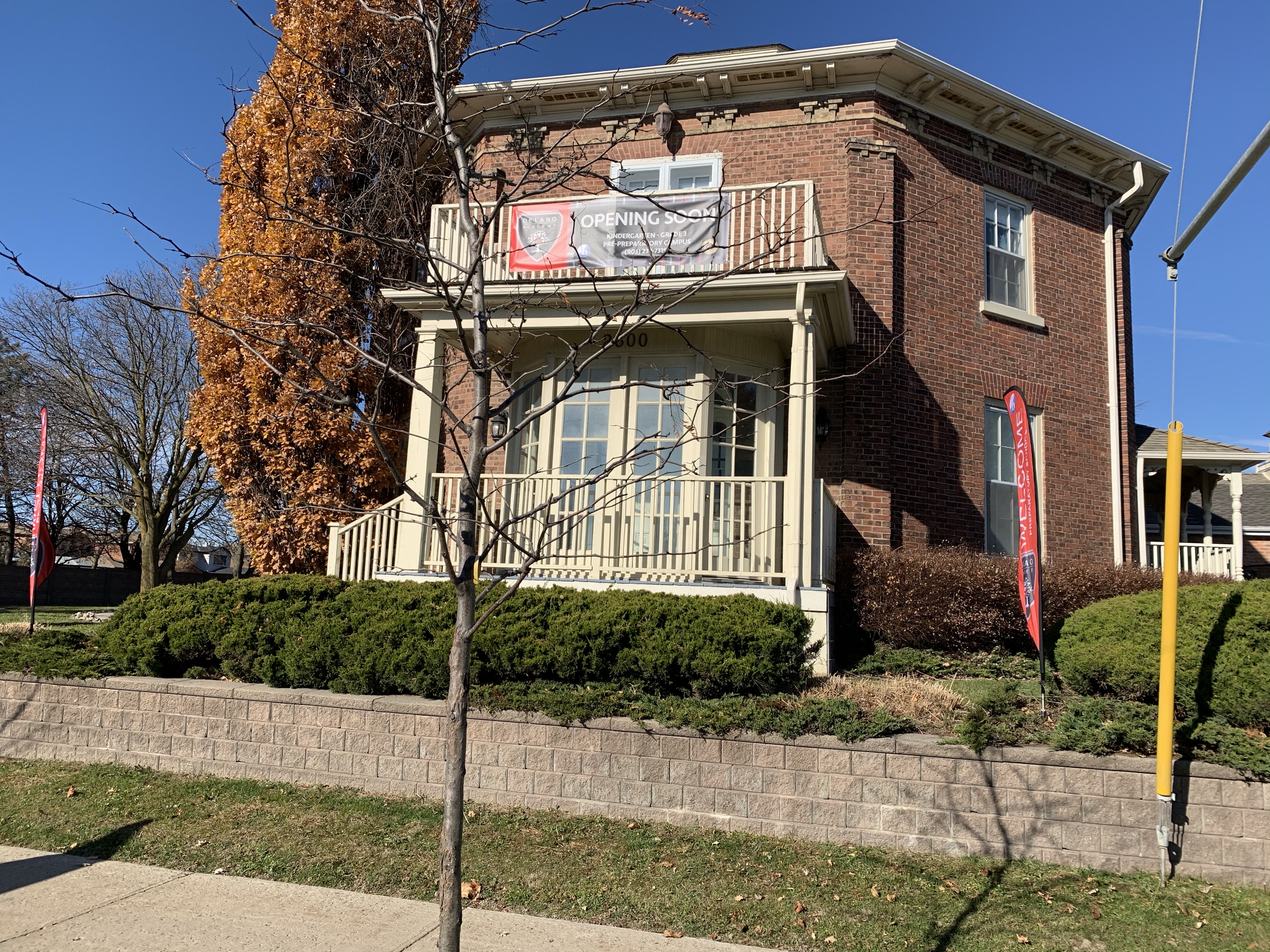
The home of Jacob Rupert is known as the Round House of Maple even thought it is an octagon with eight sides. Built in 1865, this home was truly made of local materials. The wood was cut on the property and the bricks were made from clay dug up on the site. It is believed that the Rupert daughters trimmed the wood for the interior. The front doors are quite grand with side lights and lots of little windows to let the sun in. The style was developed in the 1850’s by a man named Orson Squire Fowler whose book promoted this unique shape of home. It was popular for the next fifty years before more conservative architecture arrived with the Edwardian Period. This home stands on Major MacKenzie Drive just a little west of Keele Street.
Most of these homes were built with a flat roof with a small cupola on top. This one is adorned with patterned brick under the paired roof brackets.
At one time there were more examples of this style of house even though they were not overly popular. Today there are about 2000 remaining with only about 20 of them being in Canada.
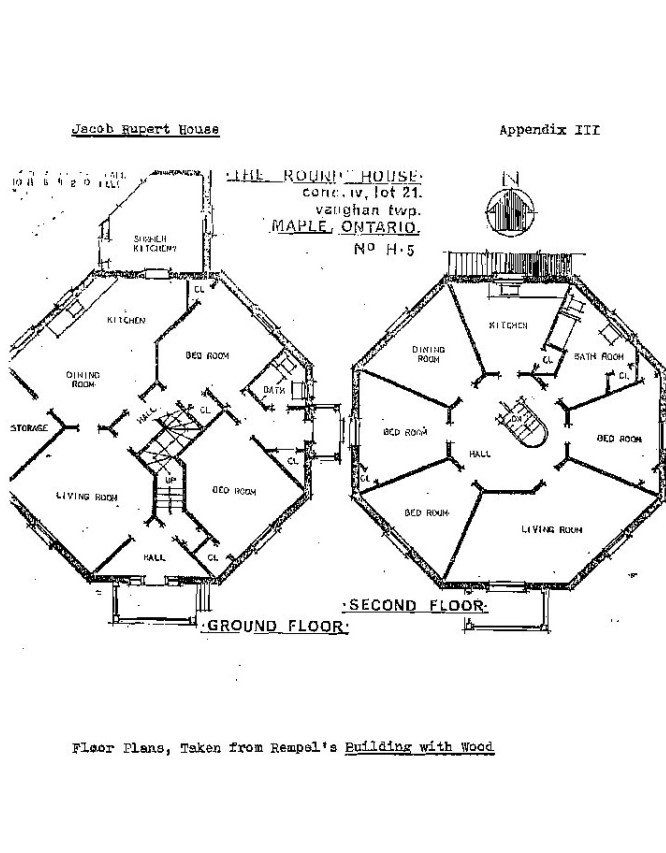
The floor plans show how the space was used inside Jacob’s house. The house design was considered easier to heat and cooler in the summer because of the reduced outer walls. It also claimed to be filled with more natural light. The circle would have been the ideal shape but it was hard to build and difficult to furnish. Since architects were used to working with 135 degree angles they easily adapted the “bay window” into the shape of an eight sided house.
It’s nice to see that the house continues to be in use even though it seems out of context among the cookie cutter homes that surround it today.
Also see our feature on the historic town of Maple, to which this house belongs.
It was cold and windy down by the lake but I had decided to check out Sir Casimir Gzowski Park because of its monument to the man who was instrumental in early transportation in Upper Canada. Gzowski was born in St. Petersburg in 1813 to Polish parents and after being exiled to the USA following the Russian November Uprisings he came to Canada in 1841. His first project was work on the Welland Canal. He also completed part of Yonge Street and was a railway builder as well. His work on both the St. Lawrence and Atlantic Railroad and the Grand Trunk Railway helped link communities across Upper and Lower Canada. His design for the international bridge between Fort Erie and Buffalo was made challenging by the wind and strong currents but he was successful. As the first chairman of the Niagara Parks Commission, Gzowski was responsible for planning the park system along the Canadian side of the Niagara River. This includes the observation areas for Niagara Falls.
There is a monument to Sir Casimir Gzowski in the park which is a concrete tripod with steel beams at the top and railway ties at ground level. It was built in 1968 and in addition to the bust shown in the cover photo has several panels with considerable detail about his life and accomplishments. He died on August 24, 1898 after being ill for several months. The park and monument celebrate his contribution as a member of the Polish community.
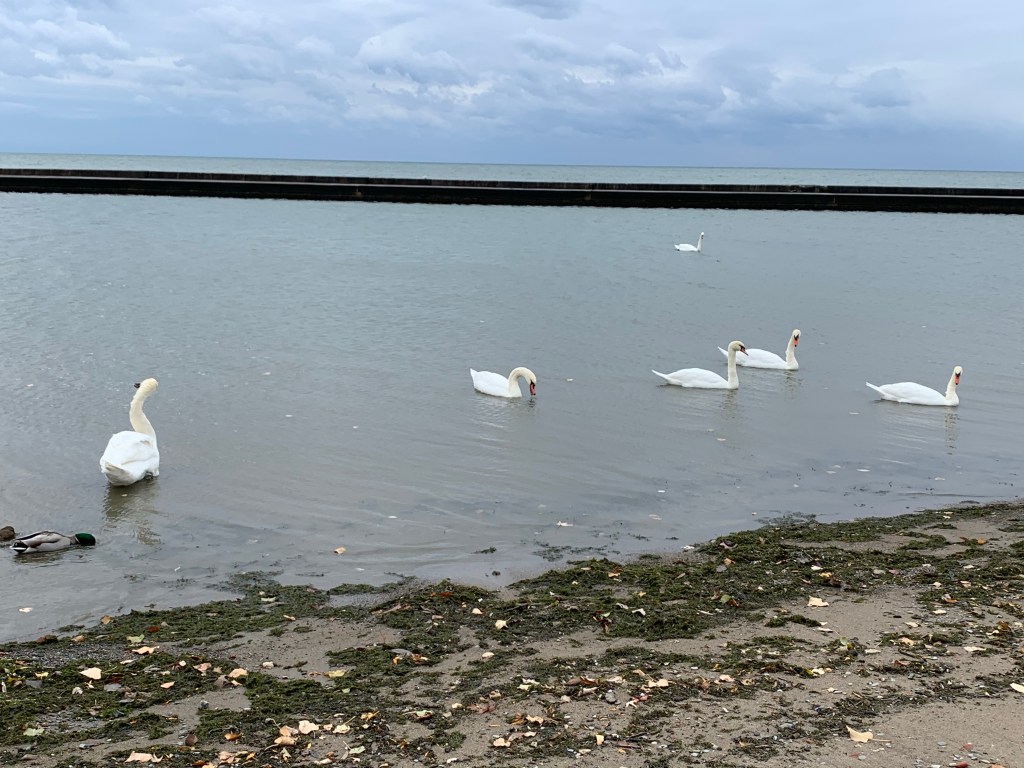
Mute Swans, like the ones pictured here, have mostly orange bills as opposed to the mainly black bills of Trumpeter Swans and Tundra Swans. Mute swans are not native to North America and were introduced in the 1870’s as garden and park ornaments. Today there are over 3,000 of them in Ontario’s Great Lake regions. They can each eat about 4 kilograms of vegetation a day which means that they damage plant systems and destroy the habitat of local creatures.
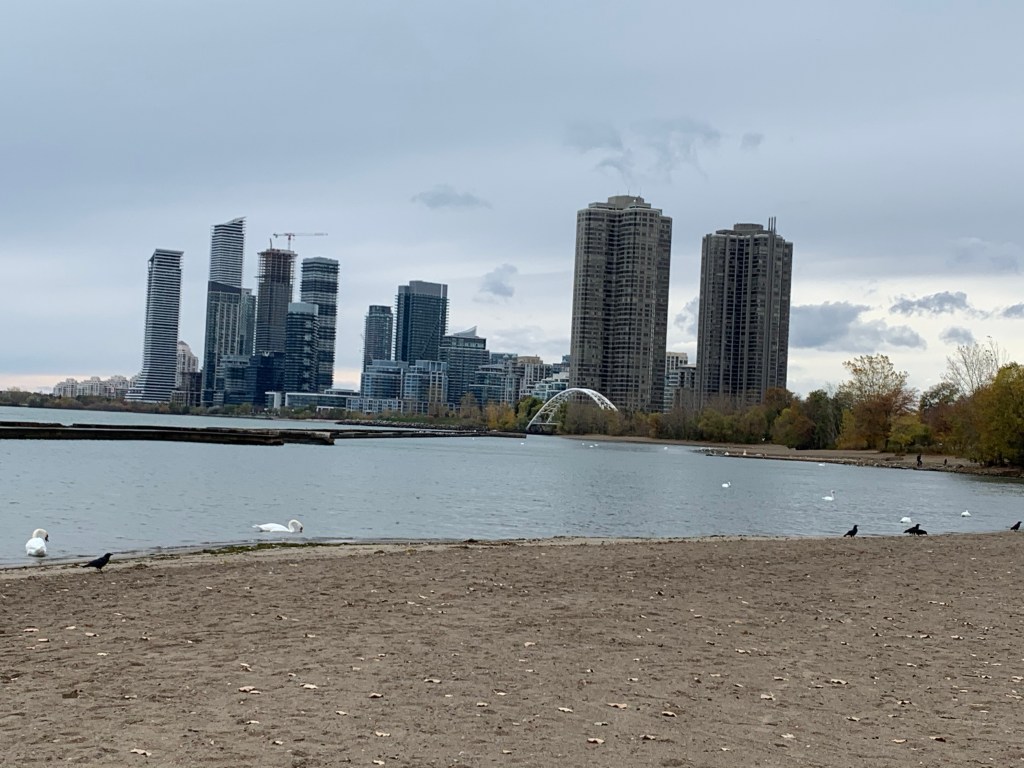
The view toward Mimico seems to change every time I look. it wasn’t so long ago the Palace Pier was a lone condo near the mouth of The Humber River and the mouth of Mimico Creek was home to a variety of aging motels. The last of the motels has now been demolished and the now tallest building outside the downtown core stands at 66 floors looking out over the lake.
The park features a beach as well as 9 pieces of exercise equipment along with an off leash area for dogs and two picnic shelters. A concession stand also operates during peak periods. The weather along with the weekend closure of three local parking lots along Lake Shore Boulevard meant that I had the park almost completely to myself.
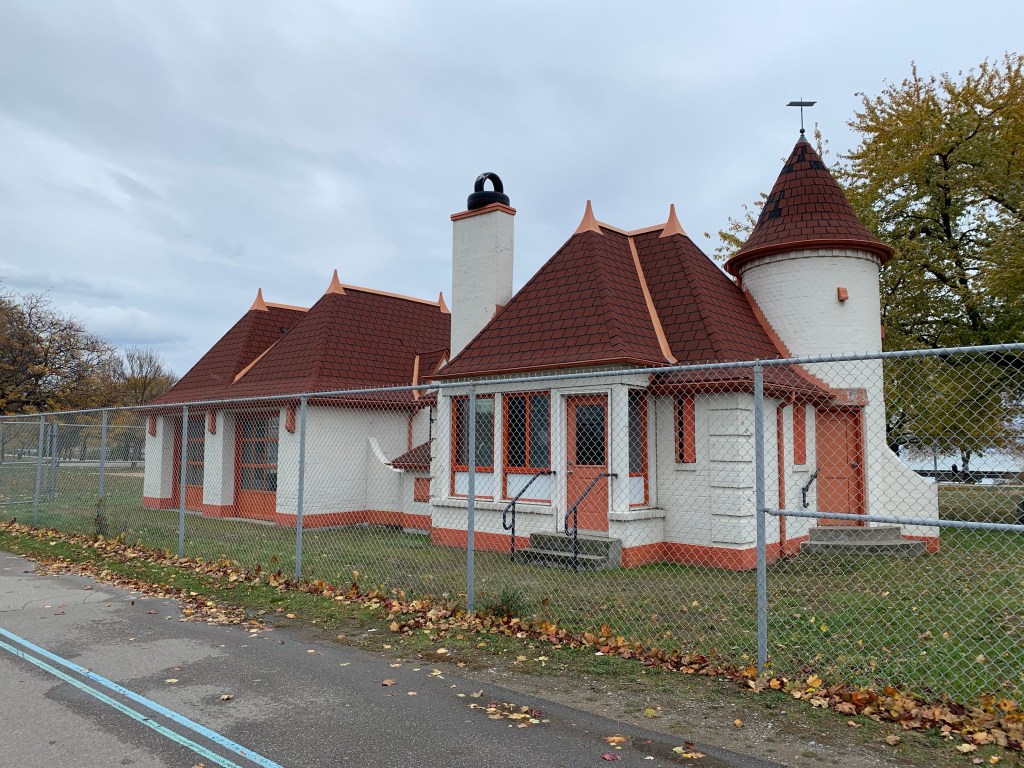
In the 1930’s the era of personal automobiles was really getting underway and Joy Oil Company Limited was one of the late-comers in Toronto. Gas stations today are purely utilitarian in design but it wasn’t this way with the Joy gas stations. They were built with steep pitched roofs, spires and towers in a design known as Chateau Style. A total of sixteen of these stations were built in the GTA with 14 being in Toronto. All but one has been demolished including the one that stood on the other side of High Park at 429 Roncesvalles Avenue. In 1986 bylaw 837-86 designated that station as being of architectural significance. It wasn’t long before it was demolished and replaced with a unimaginative retail store.
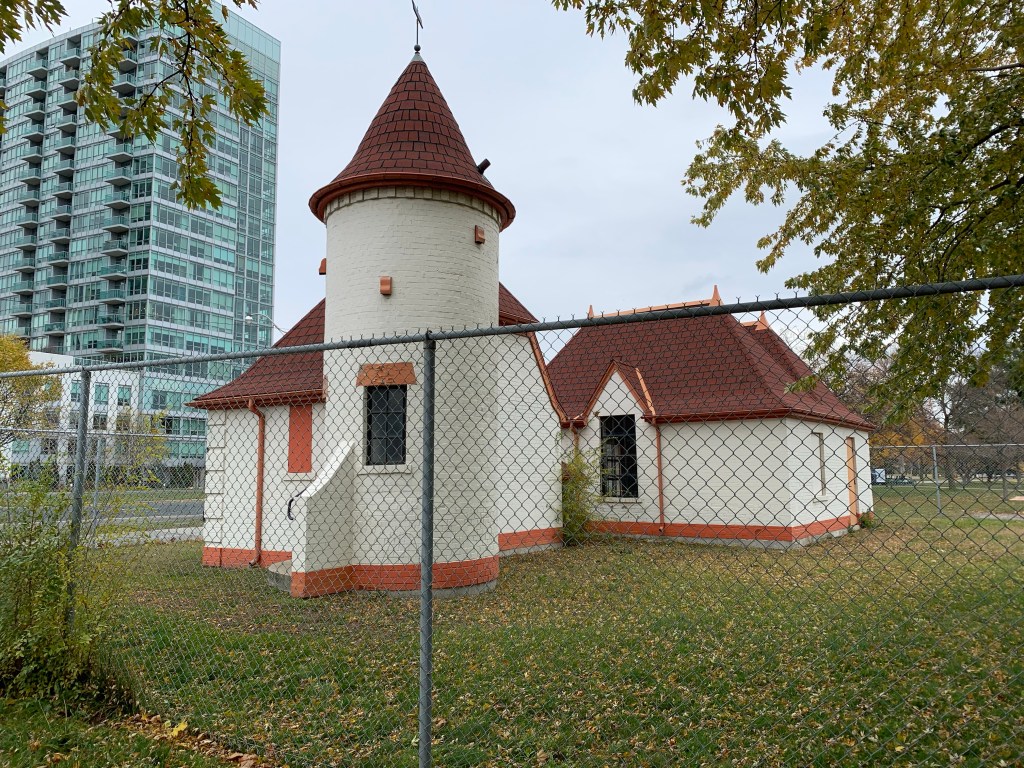
During the 1937 Joy Oil built the station which stood at Windemere Road and Lake Shore Boulevard. It survived the construction of the Queen Elizabeth Way and later the Gardiner Expressway before closing. By 2007 it was badly dilapidated but the city chose to rescue it. They moved it across the road into Sir Casimir Gzowski Park and spent $400,000 to renovate it. Since then it has sat behind a chain link fence waiting for one of the many plans to come to fruition. Meanwhile, the paint is starting to peel again.
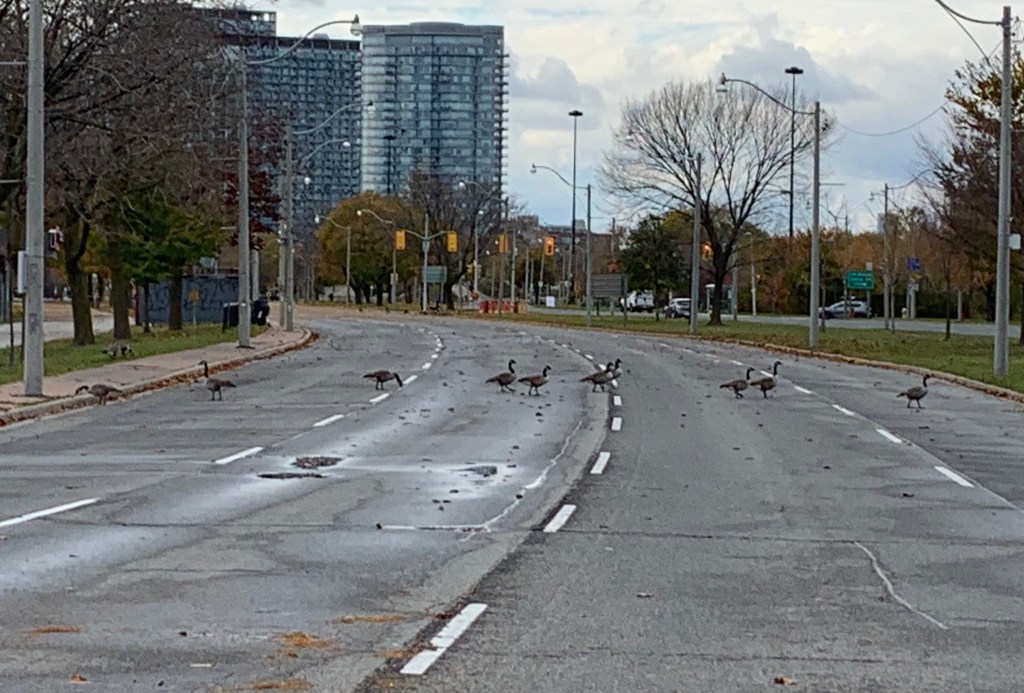
The east bound lanes of the Gardiner Expressway were closed which meant that I couldn’t get really close to park. Most of the time you can park almost right beside the old Joy Station. I had to park on Parkside Drive and walk along the waterfront trail to get to Sir Casimir Gzowski Park. Along the way I noticed the true reason for the closure of the busy expressway. It was to allow a flock of geese to cross the road.
My route took me past Sunnyside Bathing Pavilion, one of the last remnants of the strip of attractions, including an amusement park, that used to line the shore of Lake Ontario. More details about Sunnyside can be found in our feature story Sunnyside Beach.
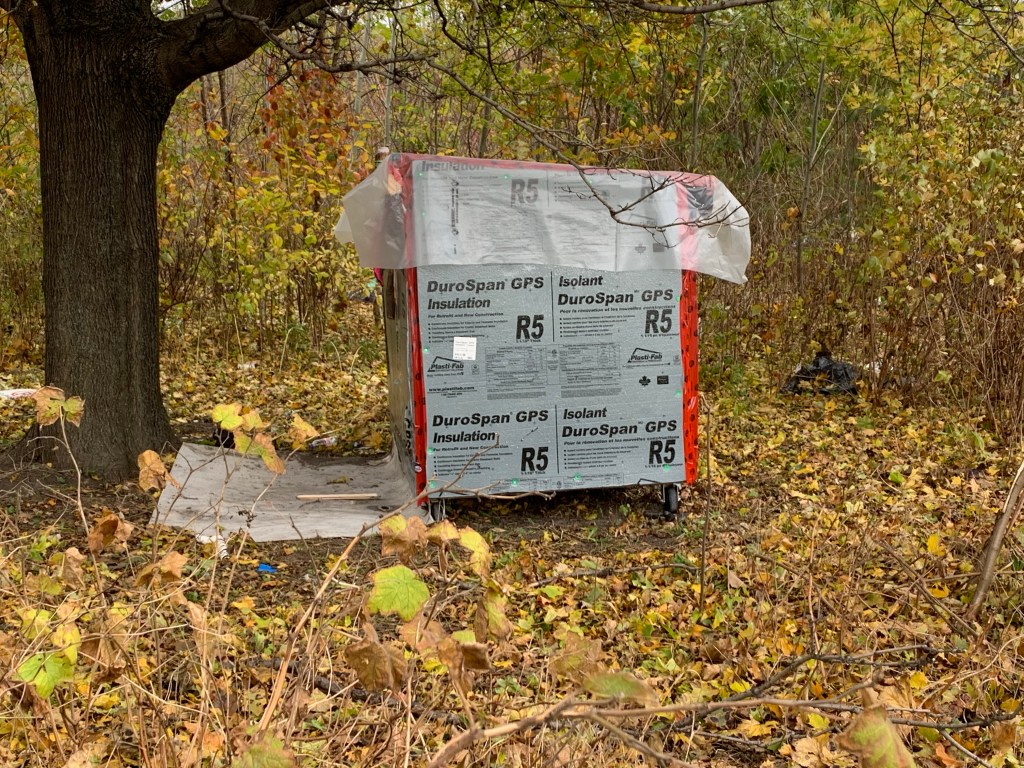
I recently read about a man named Khaleel Sievwright who is building small mobile shelters for the homeless. They are well insulated and reportedly should help people stay warm at -20 with just their own body heat. The city is opposed to the shelters because they say that they could pose a serious fire hazard to the occupants. For now Khaheel continues to make the shelters and give them away, getting the needed money through on-line fundraising platforms. I happened to find one of just two or three that he has distributed so far.
Sir Casimir Gzowski Park is just one of many parks along the 3,600 kilometer Waterfront Trail and is enjoyed by joggers, cyclists and dog walkers as well as the occasional local history buff.
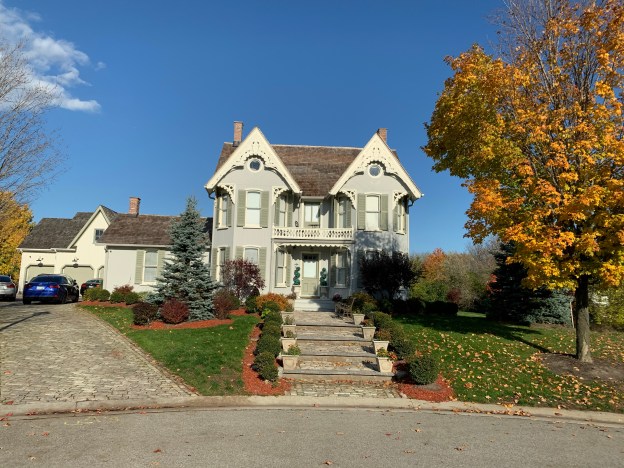
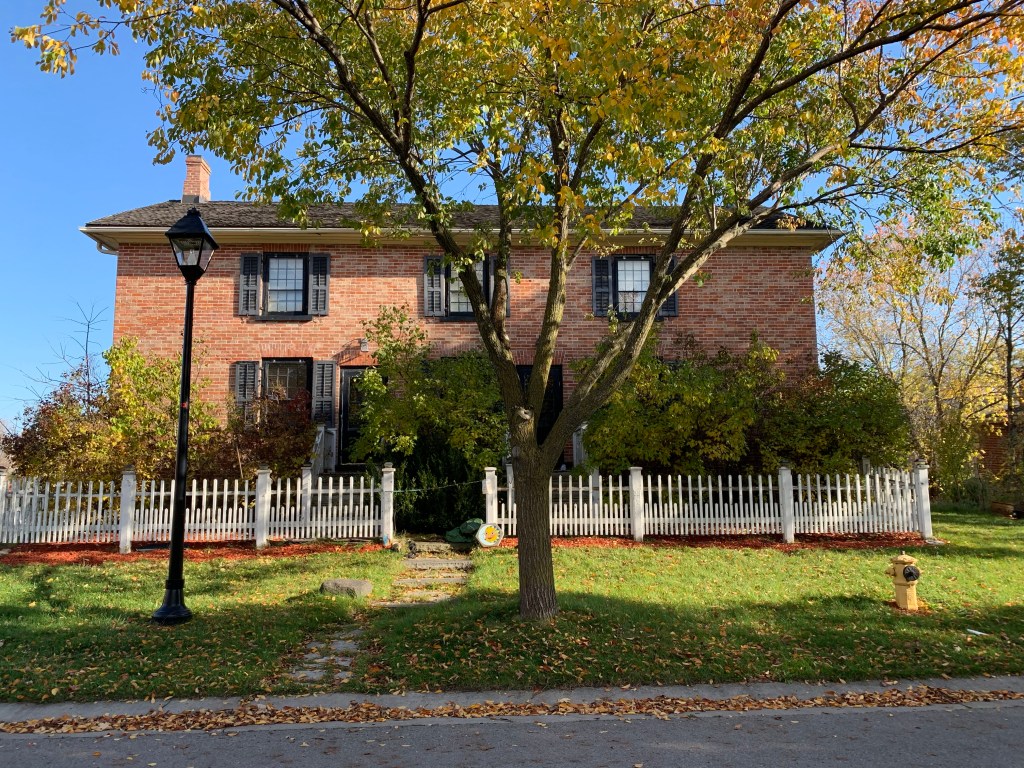
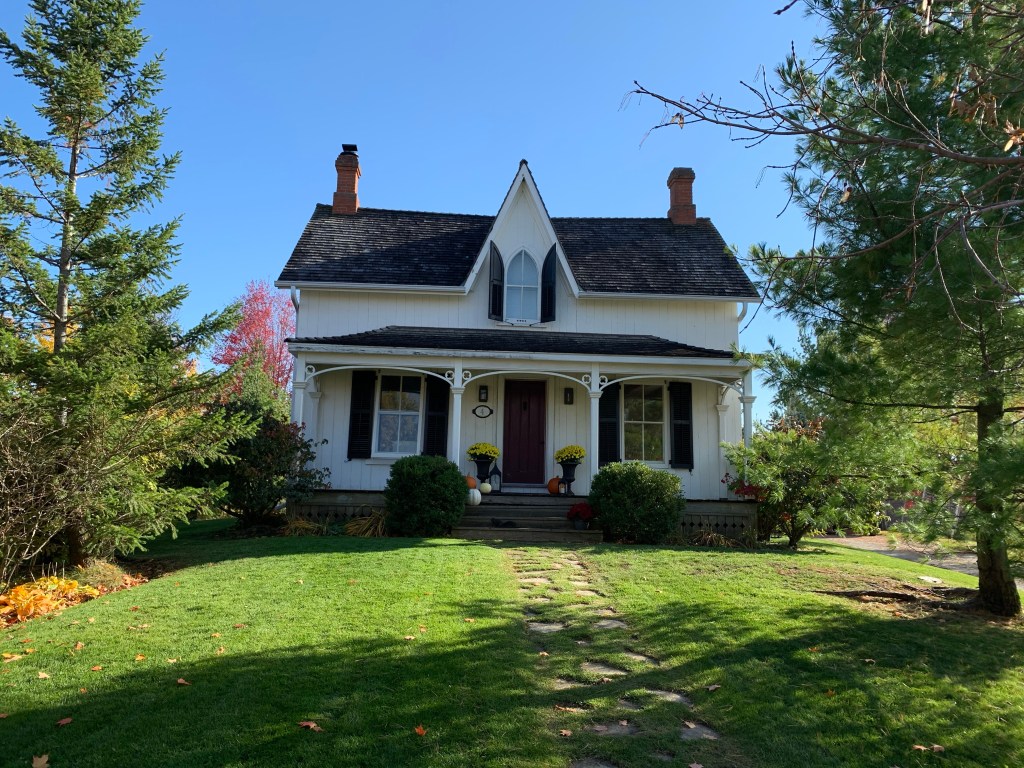
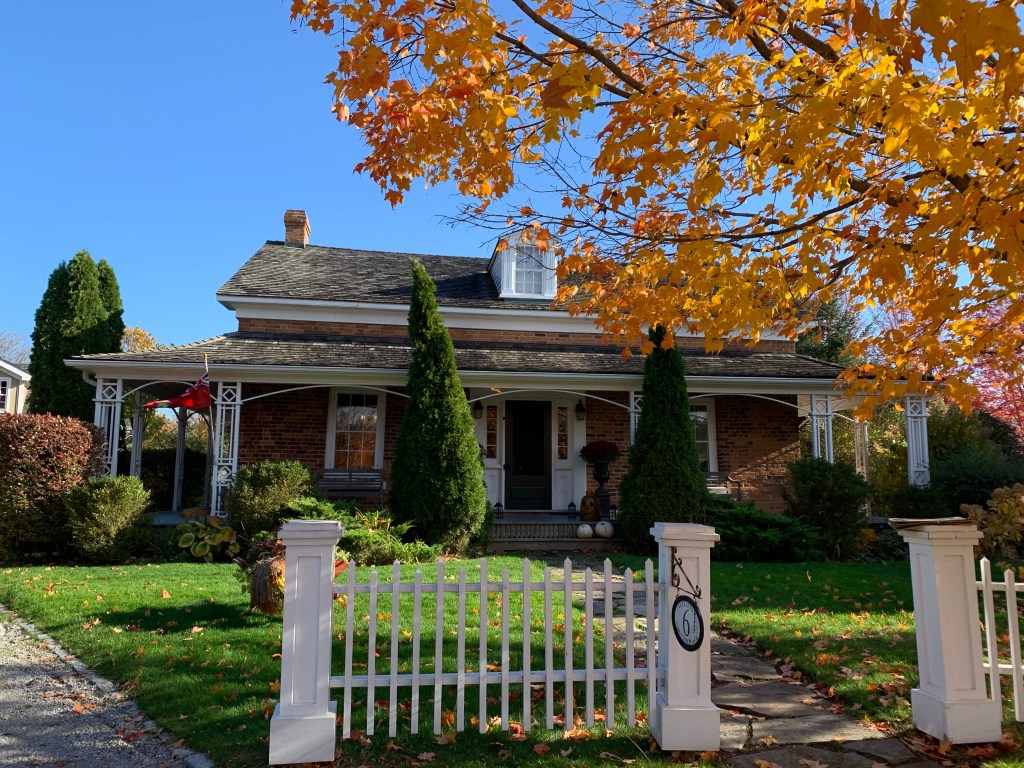
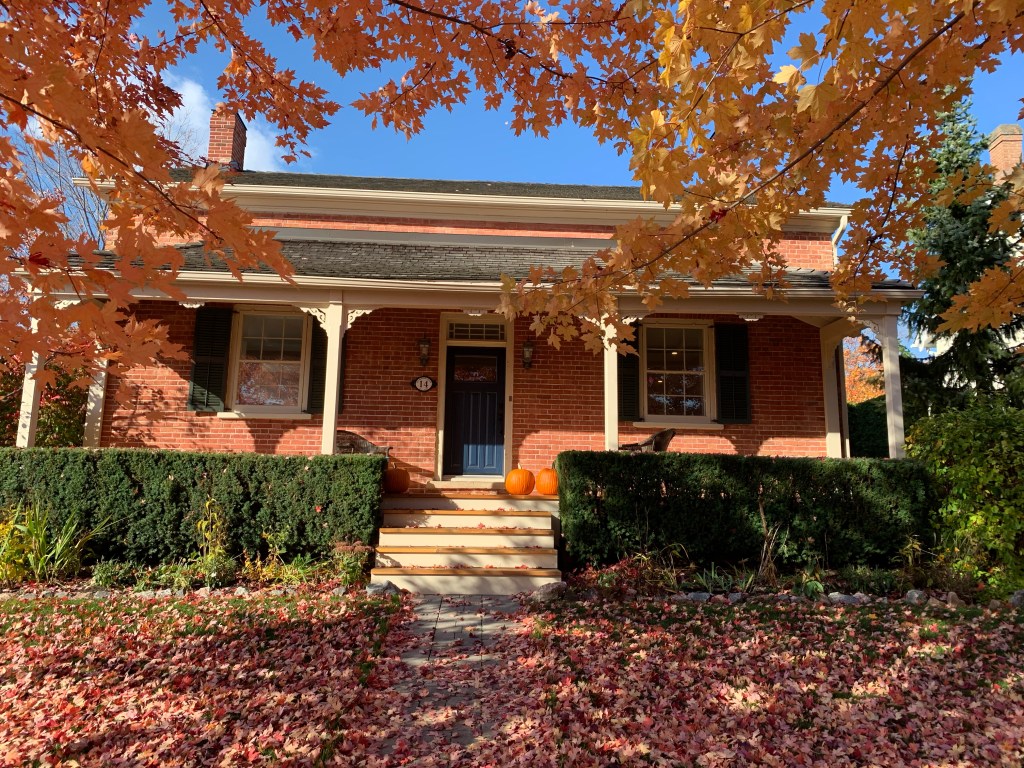
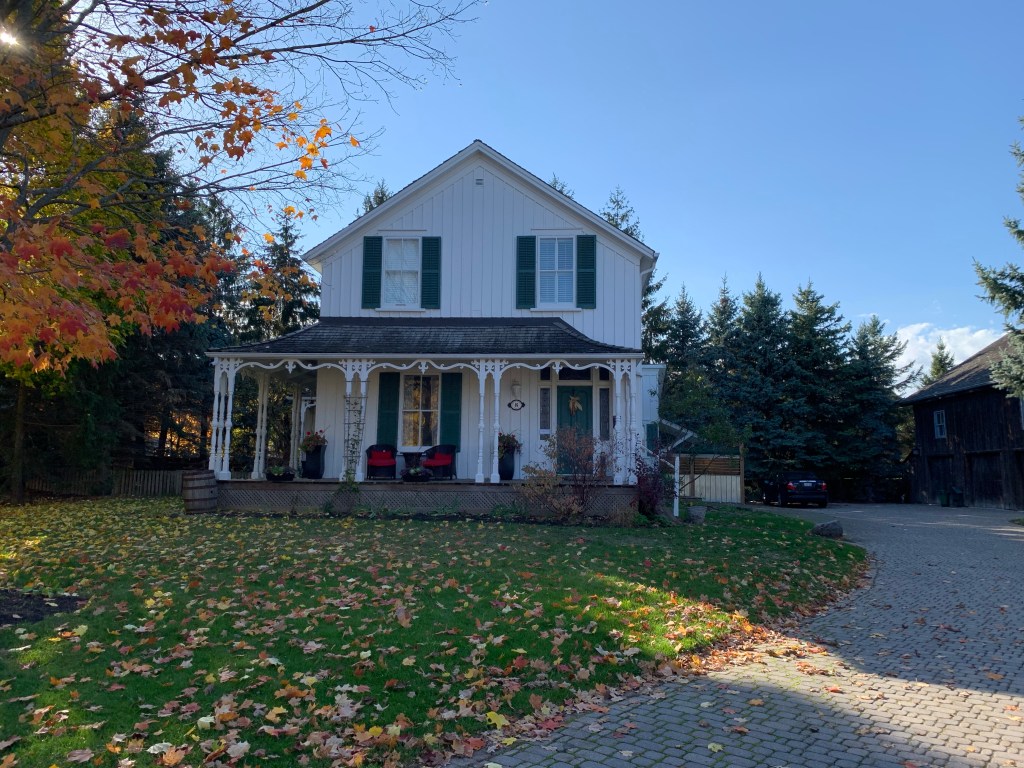
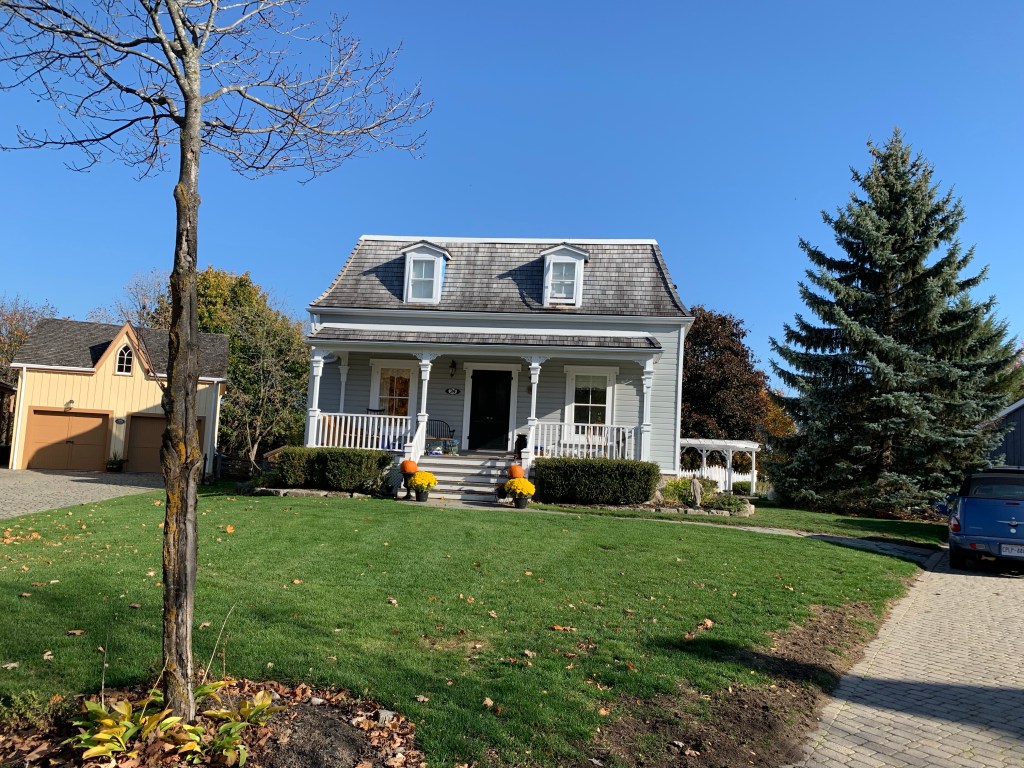
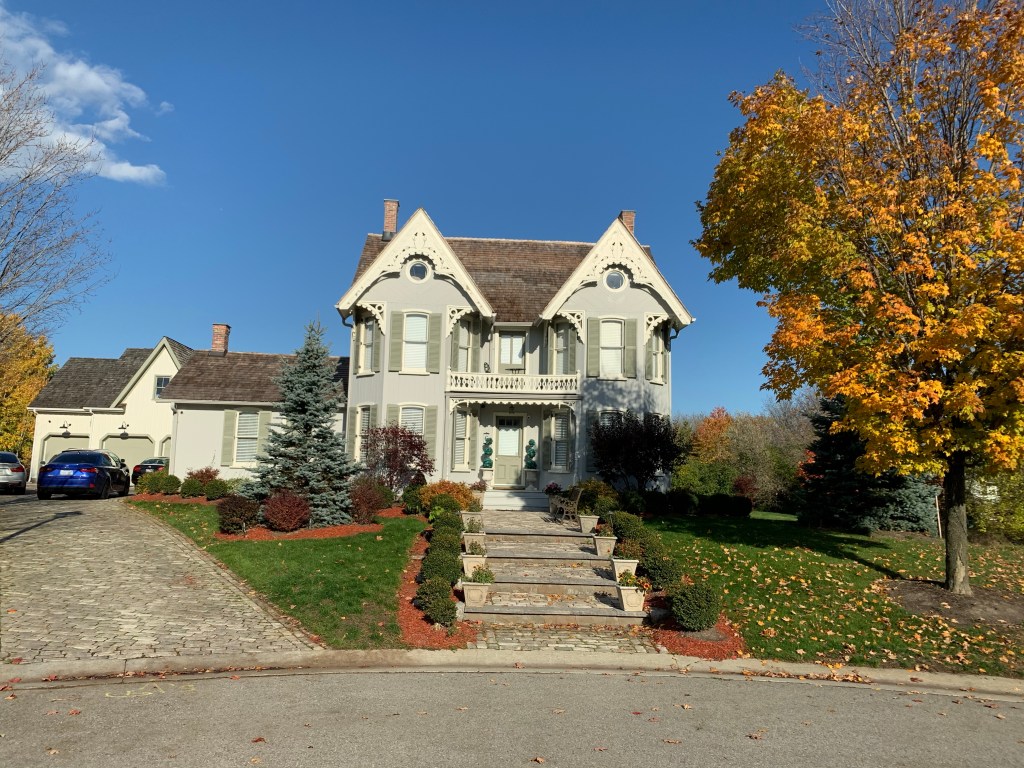
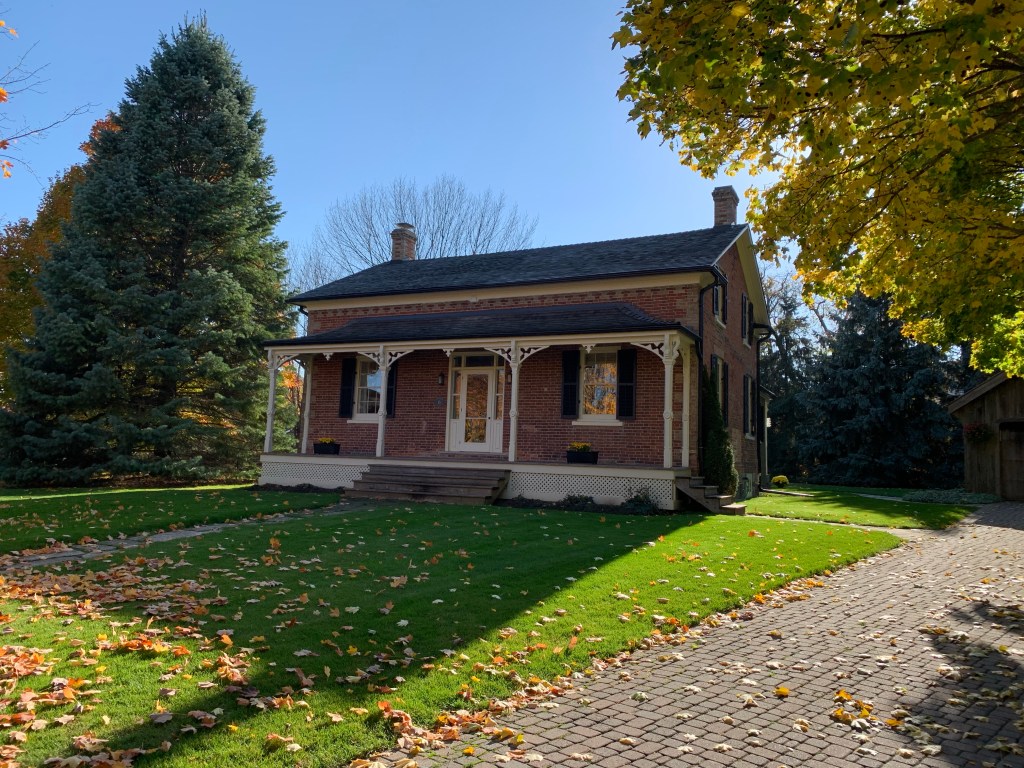
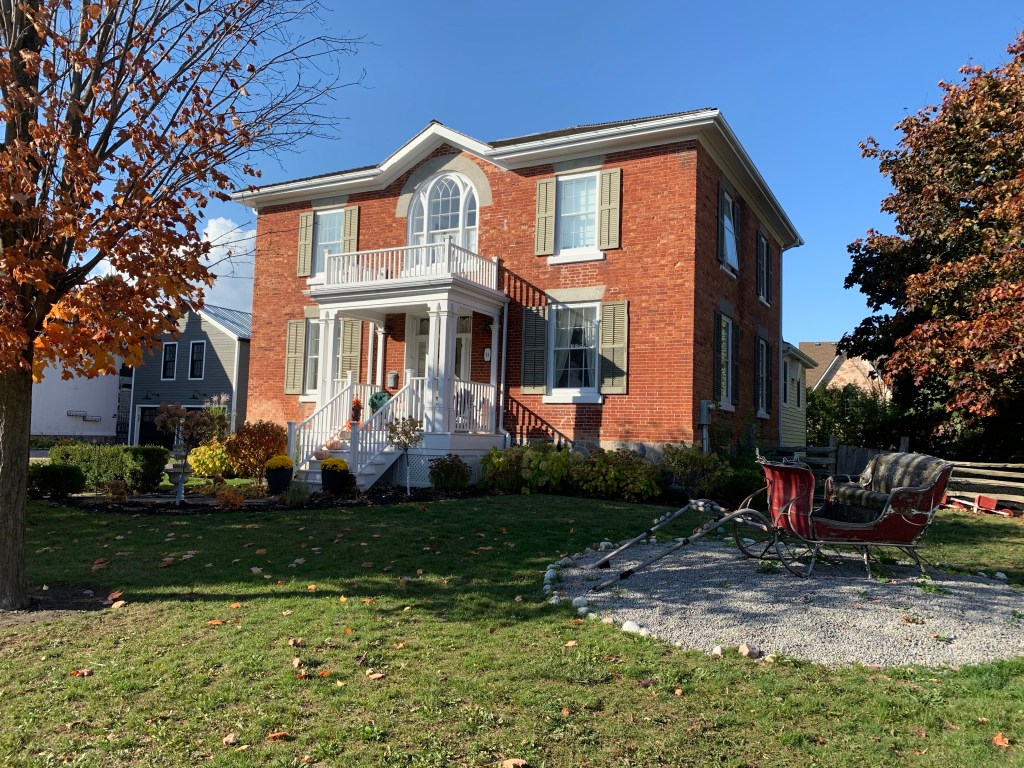
Markham has an old-age home for homes. Between 1981 and 1988 over 40 structures that were listed on the Markham Heritage Inventory were demolished to make way for construction projects. The citizens were upset and the city council decided to do something about it. They created the first heritage subdivision in the country. The Markham Heritage Estates were established in 1988 to provide a place for heritage homes that otherwise faced demolition. The first option is to retain the homes on their original site but this is not always possible. In those cases, the city has set aside 42 lots that it sells below market value to approved heritage homes. The savings in property price is used to encourage the homes to be moved and restored. For anyone with a keen interest in heritage homes a walk around this subdivision can be most enjoyable.
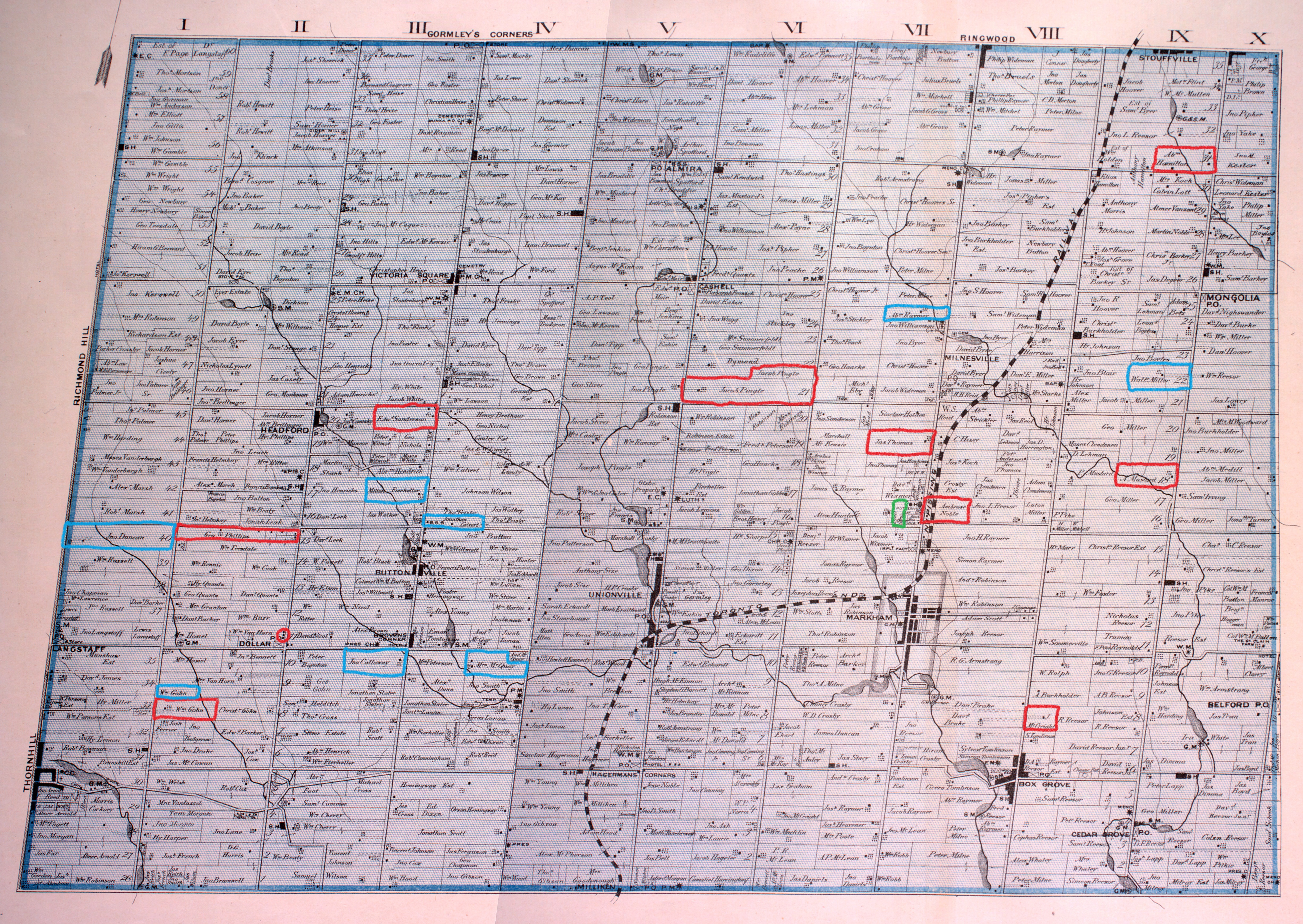
The section of the County Atlas below shows Markham Township in 1877. A small green rectangle marks the site of the Markham Heritage Estates. I looked up many of the homes in the subdivision and have marked them on the map. The lots marked in red contain homes that are featured in the article below. The lots marked in blue have had their home moved into Markham Heritage Estates. Several other homes in the estates have not been identified on the map due to a lack of information being available.
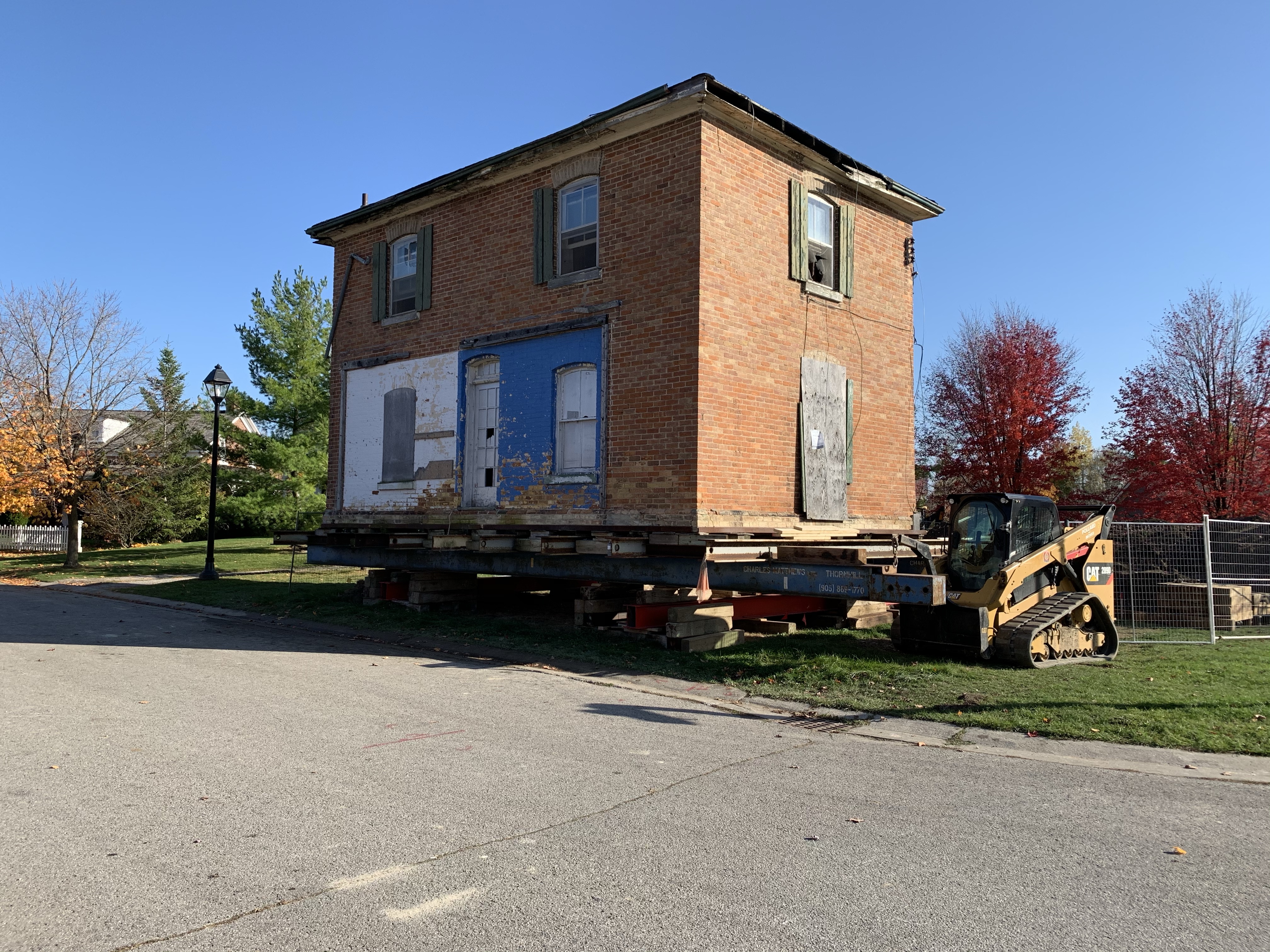
Houses arrive in the subdivision in various states of disrepair. There is one recent arrival that has several broken windows, holes in the roof and is missing the front porch. It will be interesting to see what this place looks like when the restoration team is finished with it.
The houses shown below are just a selection from the subdivision and are presented in order of age. All of them were on their respective lots when the county atlas was drawn in 1877. The Ambrose Nobel house is Georgian in style and was built in 1830 near the corner of Markham Road and 16th Avenue. The house belonged to the local tanner who operated his business on the same property. The most unusual feature of this home is the fact that it has two front doors. It is believed that Nobel used the door on the left as an entrance to his office for the tannery.
Peter Phillips (originally Phillipsen) built this lovely Gothic Revival home in 1835. Prior to this house being moved it was the last home remaining in the former community of Leek’s Corners.
Robert Gundy purchased the lot on which this house was built in 1818. After operating the farm for a few years he built this regency inspired home in 1840. Gundy was a reformer who is listed as having supported William Lyon Mackenzie in the rebellion of 1837. Gundy died in 1867 after which the house was occupied by Edward Sanderson.
Also constructed in 1840 is the house of Peter G. Mustard. It is a simple 3 bay Georgian style home that was moved the the Heritage Estates in 2003 in preparation for a realignment of the 9th line.
Joachim Pingle emigrated from Germany in 1794 and settled in Markham as one of the first Berczy Settlers. Jacob Pingle who was his son built a gothic revival style house in 1840 that had a wrap around veranda on three sides. It is a rare example of a home with the main entrance on the end, shown, rather than on the long side.
David Leek built this house in 1840 in the former community of Dollar. It is unusual in that it is one of very few examples of second empire style in the township of Markham. The mansard roof is the key architectural component of this style of building where the roof forms part of the upper walls. David Leek was a prominent member of the Headford Methodist Church which was known as Leek’s Chapel at one time.
The Udell-Hamilton house was built in 1850 for Mary Udell and her four children. It originally stood on a lot just south of Stouffville that had belonged to her husband Mathew. He was accused of printing counterfeit money for the Markham Gang and had been arrested and jailed in 1845. The house was sold in 1871 to Abraham Hamilton who converted the story and a half home into a full two stories and added the two bays at the front. This is one of my favourite homes in this little enclave.
David Gohn built this regency style one and a half story cottage in 1855 on Leslie Street near Highway 7. Of all the houses in the subdivision it is the one which was relocated here first and perhaps was moved the farthest of all the rescued heritage homes.
James Thomas used elements of the regency cottage and the Georgian style in 1856 when he built this home. It has an interesting window under the front gable. It has the over-all rounded shape of the Italianate style with pointed arches within that are Gothic in design. The combination of four major design styles makes this one of the more unique homes in Markham.
John McCreight built this two story farm house in 1874. This house is unusual in that it has a T section that comes out of the side instead of the back of the house. This puts both the front and back doors on the same side of the house. A nice wrap around veranda connects the two entrances.
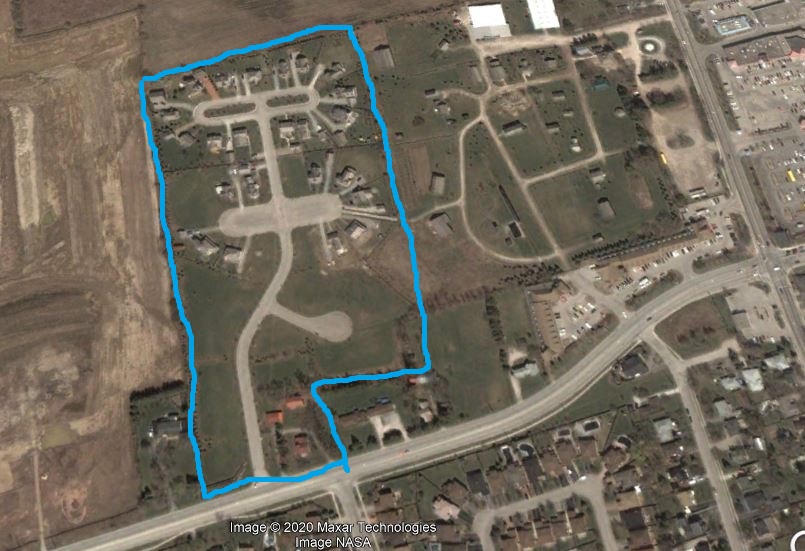
The Google Earth capture from 2002 shows how few homes have been moved in during the first 14 years and how they have been concentrated at the north end of the site. To the east is the Markham Museum and Historic Village where another 30 historic buildings are preserved including homes, barns, a saw mill, train station and church. It is currently closed and will definitely be on the “to-do” list.
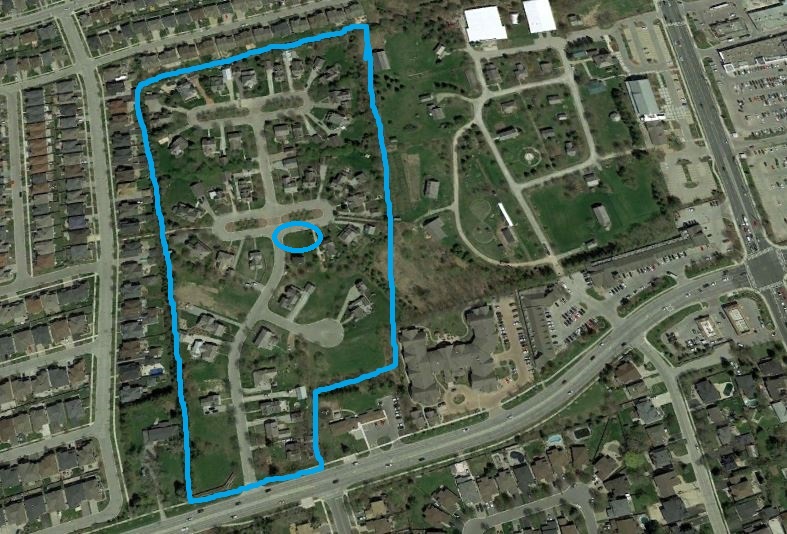
The Google Earth image from 2018 shows how much the subdivision has filled in. The new arrival that is waiting for restoration will fill in the last vacant spot in the middle loop. The loop at the top is known as David Gohn Circle and has an information sign on each of the little islands in the middle. These give the descriptions of the houses on the street as well as a brief history. I hope that will be completed on the second loop when all the lots have been filled. It makes the subdivision all the more interesting.
Markham Heritage Estates can be enjoyed as a walk around but it is most popular during Markham Doors Open events when you can visit the insides of the buildings.
The North Halton Kart Club used to operate on the Fifth Line south of Limehouse but it has been closed for a third of a century. It seemed like a good idea to go and see what remains of a place that so many enjoyed over the years. Before going for your own visit you will need to get permission as it is on private property and the owner doesn’t like trespassing.
To access it we parked in the Limehouse Conservation Area and took the Limehouse Side Trail to the main Bruce Trail. The main trail heads north toward The Hole-In-The-Wall and the Limehouse Kilns but we turned in the opposite direction. We were a little wary of the Bruce Trail because of stories of overcrowding and lack of parking. Arriving early, there were only two other cars in the parking lot. However, a few hours later there were no available parking spaces and cars were lined up along both sides of the laneway.
Along the trail on the way to the kart track we observed a small bird known as a Downey Woodpecker. They primarily eat ants and beetles and can often be seen pecking on trees in search of them. They supplement their diet with seeds and berries and this one was in the grass finding things to eat. In the winter they will also be seen at bird feeders eating suet. The small red dot on the back of the head marks this example as a male.
The North Halton Kart Club was founded in 1959 with only three members but they were off to the races and had 30 members by the following summer. This allowed them to rent a piece of land from a farmer in Limehouse and build their first peanut-shaped track which is marked in yellow on the Google Earth capture below. The track was originally unpaved but that only lasted a few races before the members set about fundraising and donating to have it paved in the summer of 1960. The karts were maintained by their owners and had to meet strict inspection before being allowed onto the track. Their engines ranged from 2.5 – 12 horse power and could reach speeds of up to 60 miles per hour. A second track is outlined in orange while other points of interest are marked in blue on the picture below.
Races were typically run on Sunday afternoons between 2 and 5 and would provide an outing for the whole family. Even the children got to have their turn, some of them beating their elders. Today the track has become overgrown in most places and if you look carefully in the picture below there’s a downed power line crossing the track at about a driver’s neck level.
The scoring booth sat at the corner of the original track and is the best preserved of the remaining buildings on the site. With broken windows and a smashed in door the weather will soon take this structure down.
An expanded second track was built with a loop that extended into the forest and back again. Much of this track has been covered over with new soil, especially at the top end, but the asphalt is just a centimeter or two below the surface.
At the top end of the forest loop is a small berm that was built to help keep the karts from jumping the track. From behind the berm looking back toward the forest loop you can see the berm even more clearly.
Walking into the trees behind the berm proved to be a good idea because we saw a Pileated Woodpecker ripping big chunks out of the sides of several trees as he searched for food. The small red stripe on the cheek near the beak marks this example as a male.
Terry Dalton was an active member of the North Halton Kart Club from 1978 until the end of the 1987 season when the track was closed for good. Terry provided me with some pictures that were taken when the track was in use as well as some valuable insight into what remains today. The picture below was supplied by Terry and shows karts coming back from the loop in the forest.
Scaffolding still stands in the centre of the track area but the power lines are down. Several lamp posts, which were installed in 1961, are on the ground as well. There are still a couple of loud speakers mounted around the area, including one near the old grandstands. The flag pole still stands in the middle of the site but the flag no longer waves. It’s interesting to note that when the park first opened the familiar Maple Leaf Flag wouldn’t be developed for another five years.
The grandstands used to provide seating for family members and guests to watch the races. Sometimes people would sit here and wait for their turn to take a few spins around the track. Today the seating faces the empty track but there is a new growth of trees that obscures the view. The grandstands appear to be one good windstorm away from falling over and perhaps those young trees are all that is holding it up these days.
The snack booth stood just behind the grandstands and it is in bad shape. The front has fallen off as has part of the roof and one side. Looking through the missing wall you can see the hood from the grill where food was prepared for those who were watching the day’s entertainment. There was a red squirrel standing in the window frame chattering at me like a server but the days of hot food, cold drinks and salty snacks are long gone.
The Maintenance Shed needs a little maintaining of its own. The back wall has fallen out of the building exposing a storage shelf of paint cans. The roof is gone and it too looks like it will be laying on the ground before too many more seasons pass by.
Below is another photo of the track when it was in operation which gives the area a bit of context. Once again it was provided by Terry Dalton who is in cart number 68 getting ready to round the turn and head toward the scoring booth.
In 1987 the property owners decided that the liability insurance the club carried was inadequate and attempted to force them to increase it. This was more than the club could afford and so at the end of the season a 27-year race to have fun came to an end. The lights were switched off for the last time and the 33 winters since then have taken their toll on everything.
It is said that the North Halton Kart Club attracted people from all over including many who were not regulars to the club. Paul Tracy and Scott Goodyear are reported to have raced there during their early years behind the wheel. Today, kart racers have to attend other tracks scattered around the province. Ironically, one of these tracks is at Mosport while the old North Halton Kart Klub track is looking more like mossport since nature has been working on reclaiming it.
This site provided one of my personal favourite explorations since the pandemic started and we began to visit forestry tracts and nature reserves instead of the busier trails.