Yearly Archives: 2016

Ken Whillans Resource Management Area

Saturday, Nov. 12, 2016

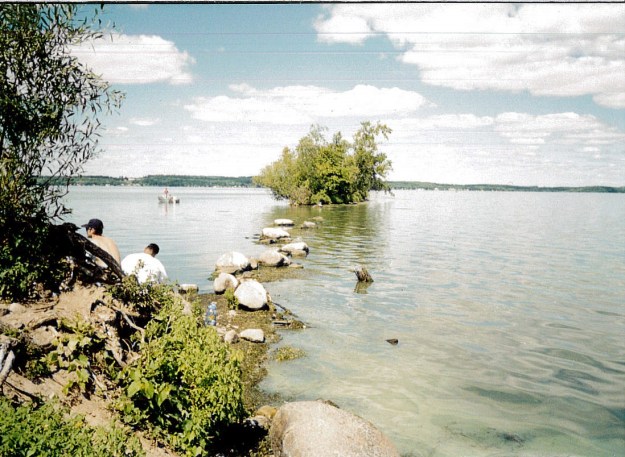
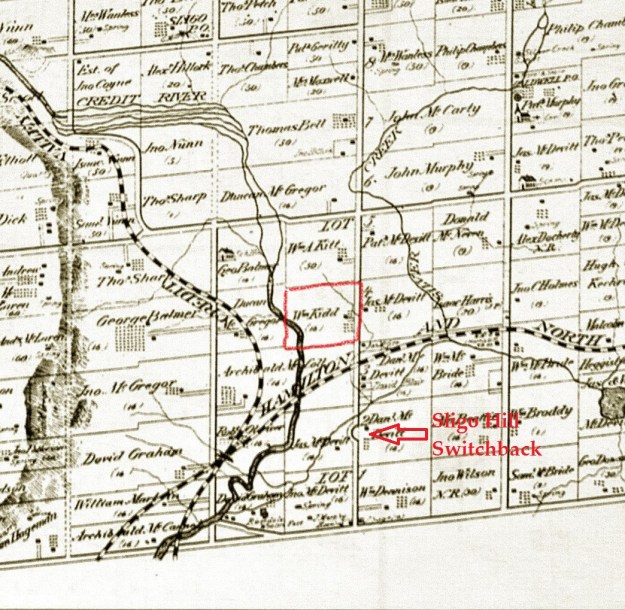
The Ken Whillans Resource Management Area is an unique part of the Credit Valley Conservation network.  This is due to the fact that, along with conservation, they are also providing public access to fishing.  Bass, perch, and trout are all able to be caught during their respective seasons but the CVC recommends a catch-and-release program.  The park is located on the former Kidd property and has been used as a conservation area since 1954.
kidd

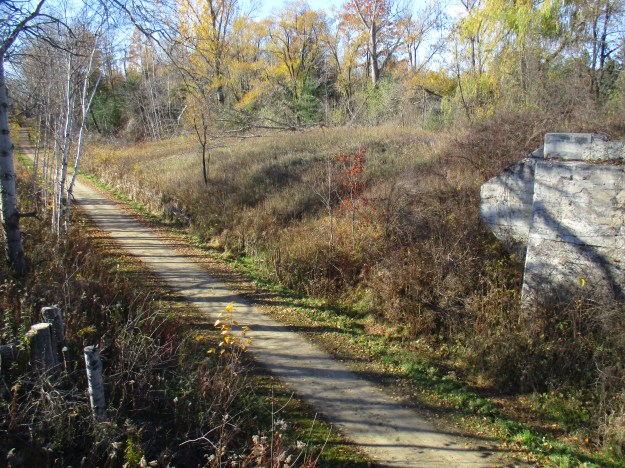
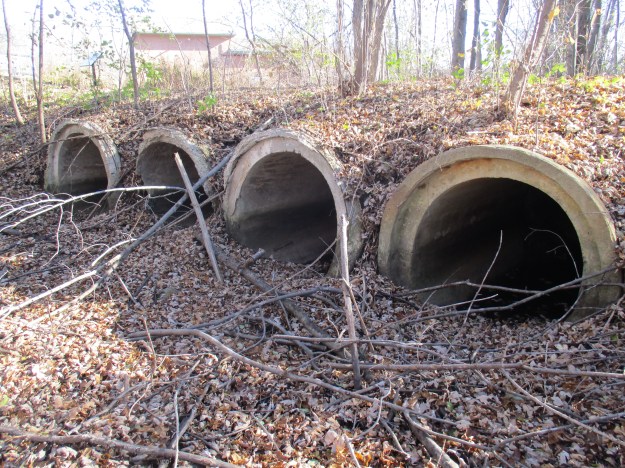
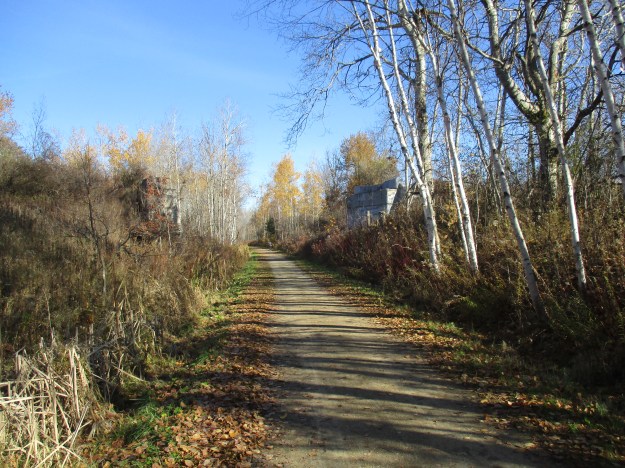
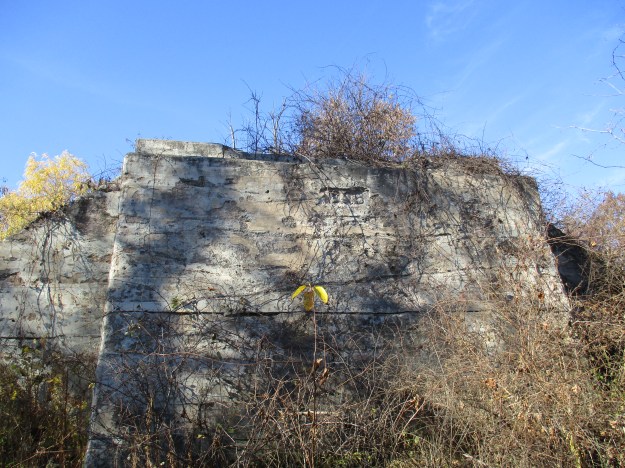
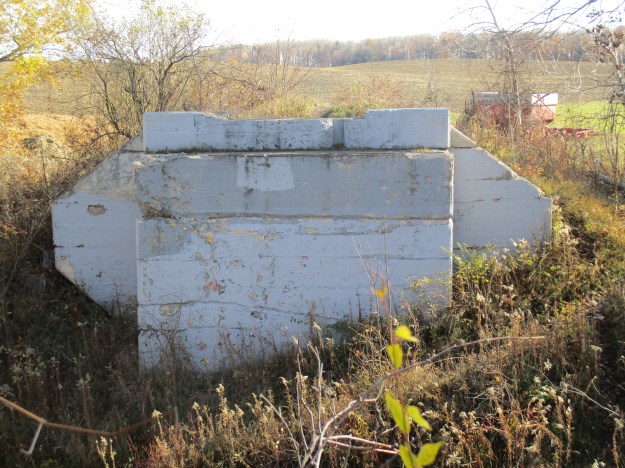
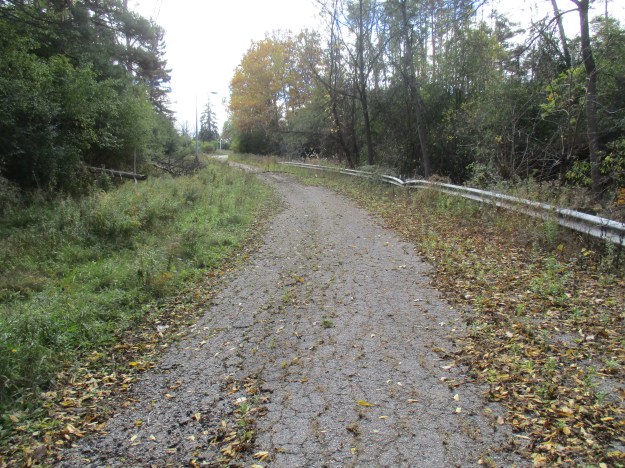
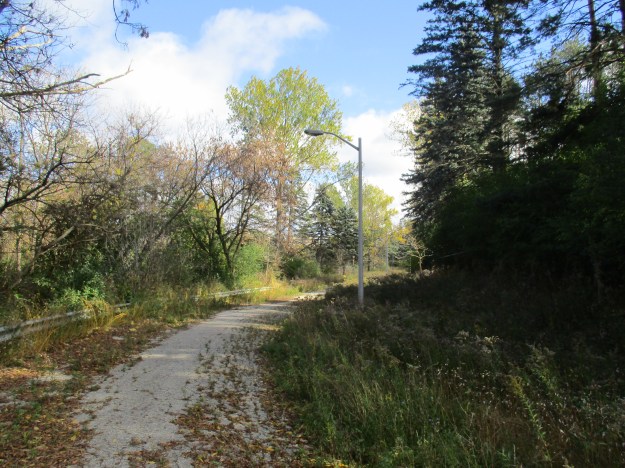
The resource management area is named after Ken Whillans who was the 46th mayor of Brampton.  He ran the city from 1982 until he drowned while on vacation in Prince Edward Island in 1990.  There is a link from the parking lot near the fishing ponds to the Caledon Trailway. The trail follows the old right of way for the Hamilton and North Western Railway.  Near where the trail crosses highway 10 there are four concrete culverts under the rail berm. These are old and starting to crumble but would not be from the original construction of 1877 as concrete was not in use for another 25 years.
img_4508

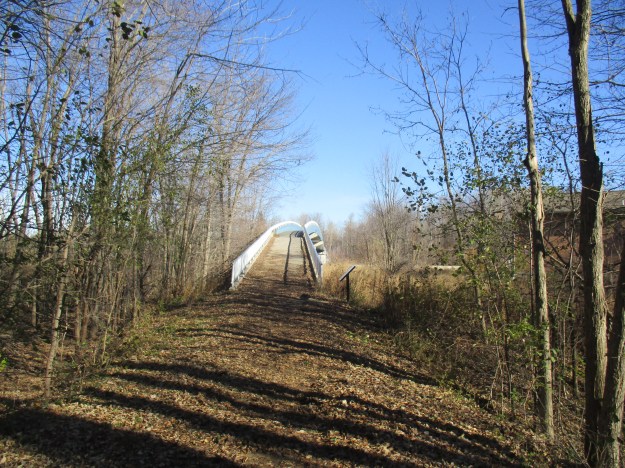
Where the Caledon Trailway intersects with Hurontario Street (Center Road on the county survey) a 175-meter bridge has been constructed.  Just south of here the 1850’s hamlet of Sligo once stood near where the road made a switch back to ease the grade of the hill.  In 1857 about 50 people lived in the community where the road began its climb out of the Credit Valley onto the Peel Plain.  The post office closed in 1883 and the hamlet was lost to history except for the switch back which had taken the name Deadman’s Turn.  When the land was acquired in 1923 for the development of a highway, the switch back was left in place until 1949 when the road was straightened.  From the bridge, the trail continues east as it makes its way toward Cardwell Junction.
img_4501

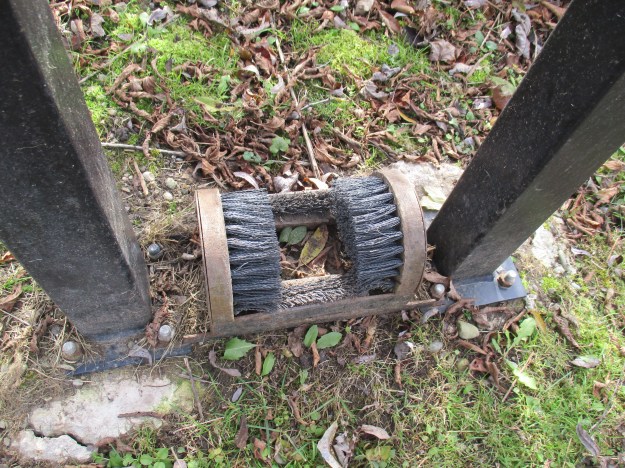
As a resource management area, they encourage visitors but not of the invasive species kind.  A brush is provided for you to clean your footwear to ensure you are not carrying pollen, spores, or seeds into the park.  Two ponds are located on the property.  One is known as Kidd Pond, after the original landowner, and the other is named Orchard Pond after the part of the homestead it covers.  The orchard can be seen as rows of dots on the county atlas near the larger black square that marks the home itself.  The Harvest Trail runs 2.3 kilometres around the two ponds while the Fisherman’s Walk extends for 300 meters between the two ponds.
img_4554

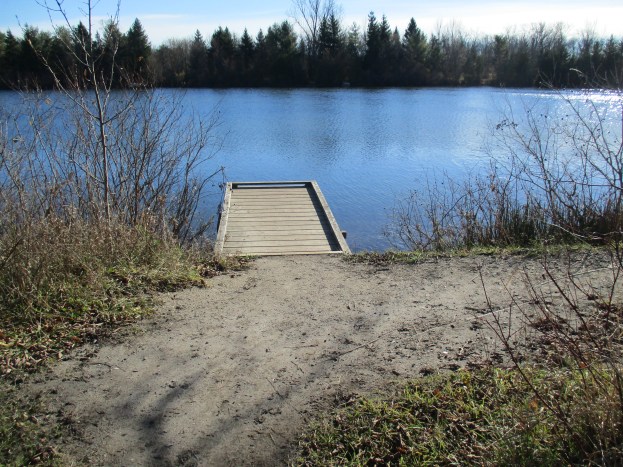
Canoe, kayak and paddleboard rentals are available for $20/hour or $50 per day, once you make the $200 security deposit.  Fishing rods can be rented for $10 a day with a $20 security deposit.  A boat launch is provided near the parking lot.

img_4559

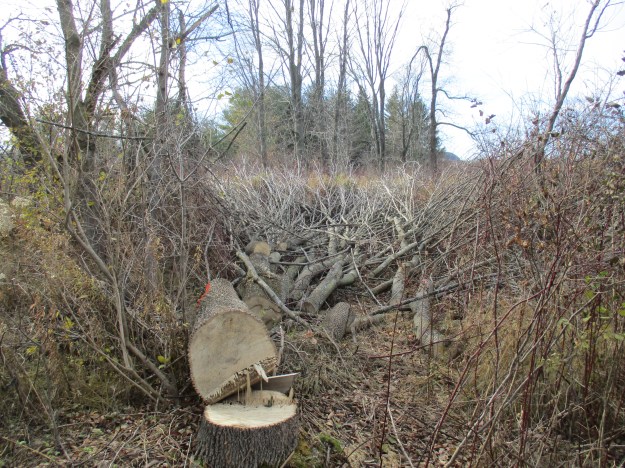
Part of the control of invasive species that has become common throughout conservation lands in the GTA is the removal of ash trees damaged by Emerald Ash Borer insects.  It has left some of our woodlands looking rather thin but the loss of larger trees always means opportunities for smaller growth to succeed.  Planting programs are designed to replace lost trees with native species to help recreate a more natural local habitat.
img_4550

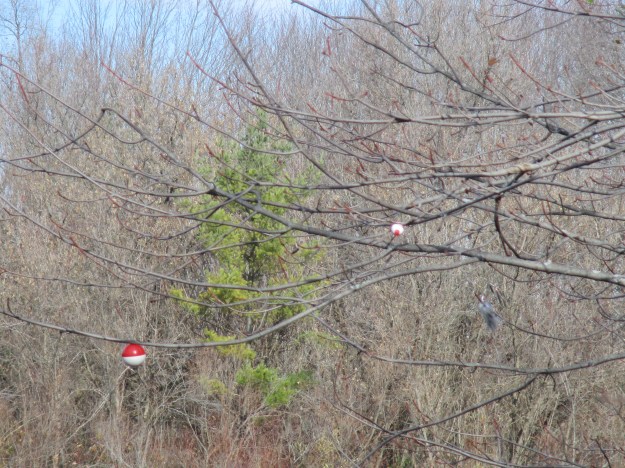
Fishing is encouraged in the ponds at the conservation area.  Only children under 18 and seniors over 65 are allowed to keep trout, in their season.  All other people must practice catch and release or contribute their catch to the possession limit of the child or senior. Trout season runs from the fourth Saturday in April until September 30th.  Bass fishing is allowed during the season which runs from the fourth Saturday in June until November 30th.  All bass fishing is catch and release.  There are nine fishing piers plus the boat launch located around the two ponds.  Scattered in the branches around the fishing piers are the lost bobbers and lures that tell a story of fishing for trees.
img_4545

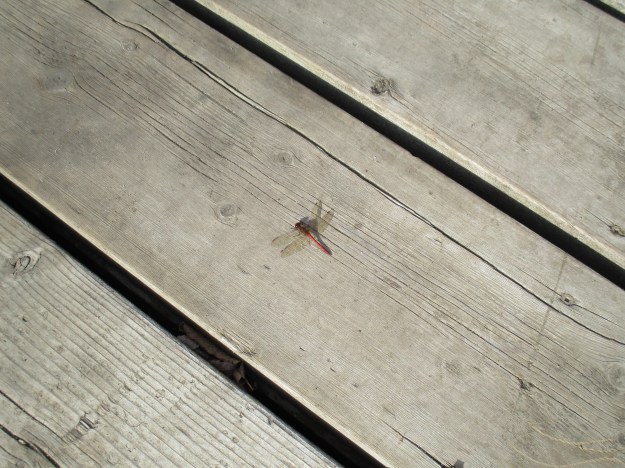
The Autumn Meadowhawk is one of the later flying species of dragonflies.  The were formerly known as Yellow-legged Meadowhawks because they have yellow legs to go along with their red abdomens.  They are found along the edges of ponds in October and November.  This specimen was sunning itself on one of the boardwalks along the Kidd Pond.
img_4552

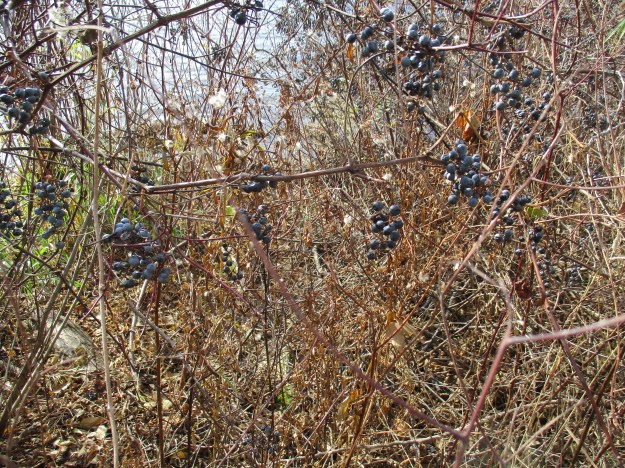
The river grape, or vitis riparia, are growing in great abundance along the trail.  The grapes are particularly hardy and have been known to withstand winter temperatures of -57 Celcius.  They are also resistant to mildew and black rot which makes them of interest to domestic grape producers.  For over 100 years the genes of vitis riparia have been used to breed cold and fungal resistance into cultivated grape species.
img_4547

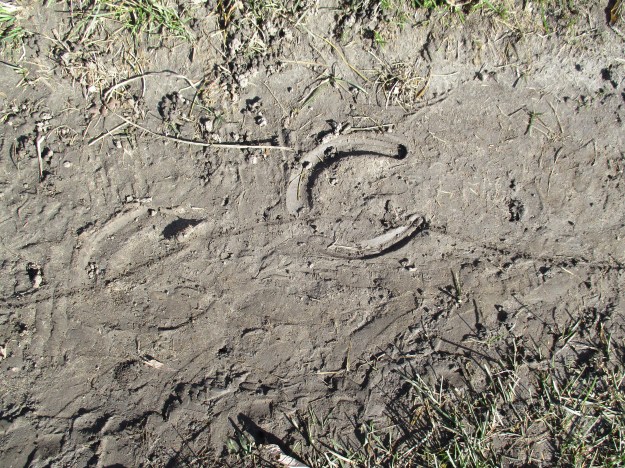
The hoof of a horse is made of a material which is similar to a human toenail.  Although thicker and harder than the human counterpart it is prone to wear and damage in working animals.  Records from ancient Asia suggest that feet were wrapped in rawhide while the Romans had a type of hoof boot that they strapped on.  The idea of nailing a protective shoe to the hoof came around 900 AD.  Within 100 years it was common for a shoe with 6 nail holes to be used.  Iron was still a scarce commodity and so in the 11th to 13th centuries it was possible to pay your taxes with horseshoes.  Someone had been around the trails very recently and there were examples of horseshoe prints where you can see some of the nail holes.
img_4535

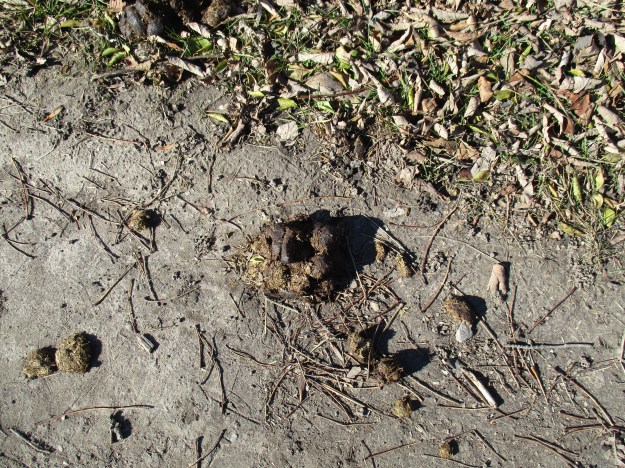
The average dog produces about 340 grams of feces per day.  We have a stoop and scoop program in place for dog owners so our trails don’t become unusable.  A horse, on the other hand, produces over 22 kilograms of feces per day.  Why is this allowed to remain on our trails?  As a side note, horses are not allowed in the conservation area although they are welcome on The Caledon Trailway.
img_4522

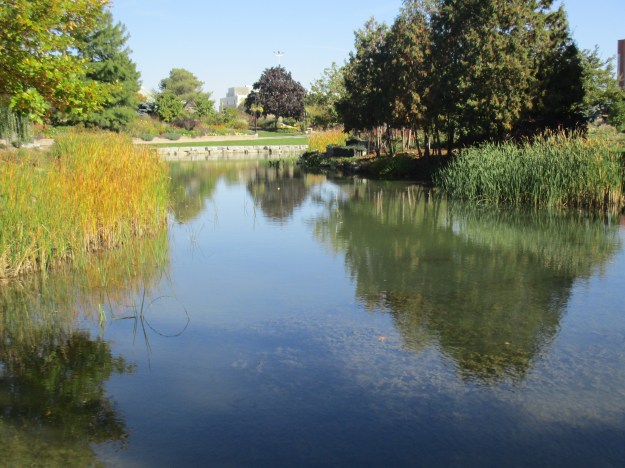
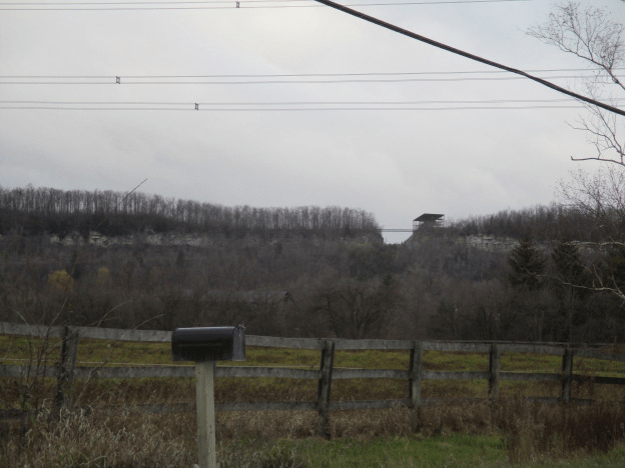
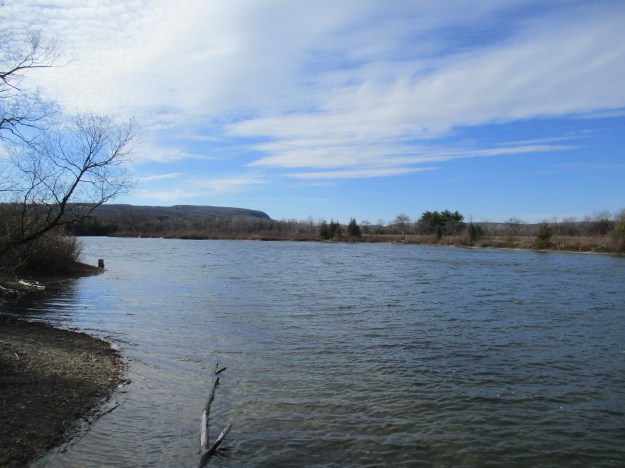
A small stream connects the two ponds on the western end and the trail continues to follow the shore of the Orchard Pond.  When you pass through the remains of the old orchard you’ll know that you are near the end of your trek.  From here the view back across the pond reveals the Niagara Escarpment and The Devil’s Pulpit at The Forks of The Credit.
img_4561

Google Map link: Ken Whillans Resource Management Area

Like us at http://www.facebook.com/hikingthegta

Follow us at http://www.hikingthegta.com
Cardwell Junction

Saturday, November 5, 2016

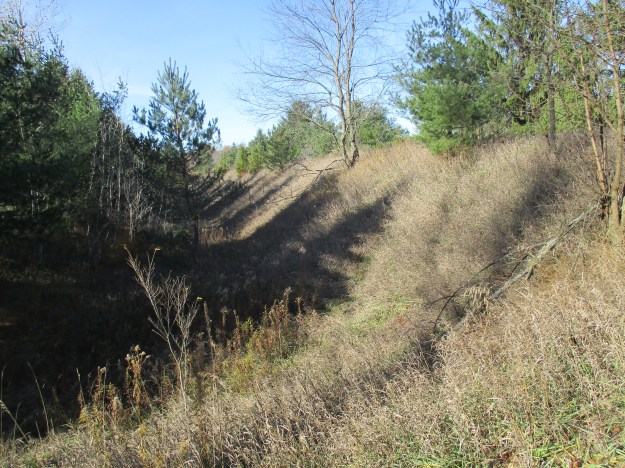
Cardwell Junction came into being in 1877 when the Hamilton and Northwestern Railway (H&NW) made its way toward Barrie and intersected with the Toronto Grey and Bruce Railway (TG&B).  The TG&B was aligned east-west and was set on a berm to control the slope as the railway climbed the Caledon hills.  The picture below shows the berm as it exists today on the north side of the H&NW line.  The name Cardwell comes from the Federal Electoral District of Cardwell that existed from 1867 until 1903 when it was realigned into other ridings.

img_4459

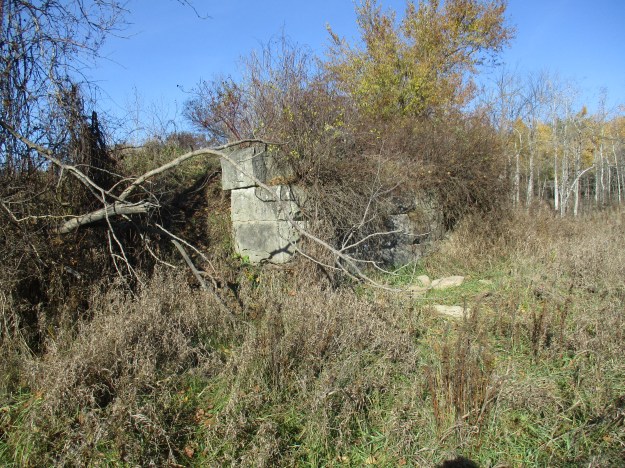
In order to allow the H&NW to pass under the TG&B a wooden trestle was built.  The wooden trestle was anchored on an abutment made of blocks of cut limestone.  Careful examination of the blocks reveals the tiny marine fossils that it is made of.  The earlier abutment is visible on the south side of the tracks where the rail corridor has been reclaimed for farming uses.  A dark stain in the field, perhaps from coal, shows where the line once ran.

img_4446

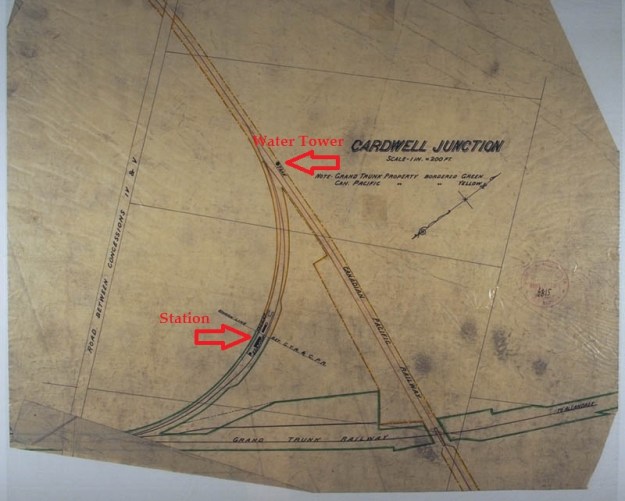
The map below comes from the Digital Archives at McMaster University and dates to 1903. The TG&B had come under the ownership of the Canadian Pacific Railway in 1884 and is shown as yellow on the map.  The H&NW had become part of the Grand Trunk Railway by this time and their property holdings are shown in green.  The two railways had been built using different track gauges and when the narrow gauge TG&B line was standardized in 1882 a connecting curve was built.  This allowed the construction of a shared station where passengers and freight could switch between the lines.  Notice how each company owned their half of the curve.  In 1903 the CPR had a single water tank where their end of the curve connected to the main line.  In 1904 they added a second tank, this octagonal one was a little larger than the first.

cardwell_map

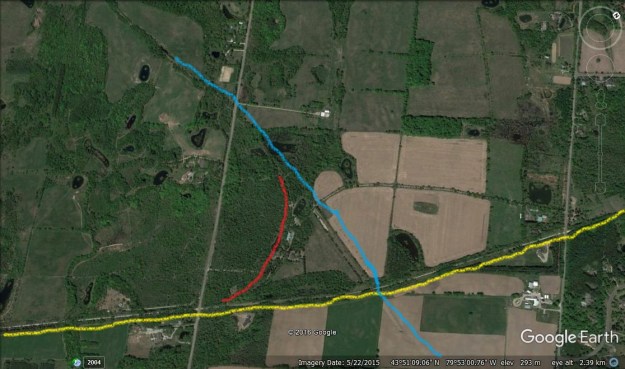
The Google Earth image below has been coloured to show the H&NW which runs just above the yellow line.  The TG&B ran just below the blue line.  They were connected with a curved track that can still be seen just outside the red line.  St. Andrews Road, marked as “road between concession iv & v” on the 1903 map, is crossed by both lines as it heads north.  An abandoned house sits just inside the connecting curve at the lower end.  The shared station must have sat pretty close to where the building with the blue roof stands at the mid-point.

cardwell2

The H&NW was operated by The Grand Trunk Railway before becoming part of the Canadian National Railway network.  The section through Cardwell Junction was abandoned in the 1960’s.  The former H&NW rail bed was purchased by Caledon in 1989 and has been repurposed as a hiking trail.  The Caledon Trailway uses 35 kilometers of the line to create a multi-use path.  The Trans Canada Trail, aka The Great Trail, was started in 1992 as part of Canada’s 125th-anniversary celebrations. When complete it will cover over 24000 km connecting the east, west and arctic coasts. Just over 20,000 kilometers are complete and the goal is to finish in time for next year’s 150th celebrations. My younger brother is commemorated at a pavilion in Calgary. This section shares the trail with The Caledon Trailway at Cardwell Junction. This was the first official section of the trail and Caledon East boasts the first pavilion on the trail.  Walking east from St. Andrews Road the TG&B bridge abutments are the primary reminders of the junction of the two railways.

img_4429

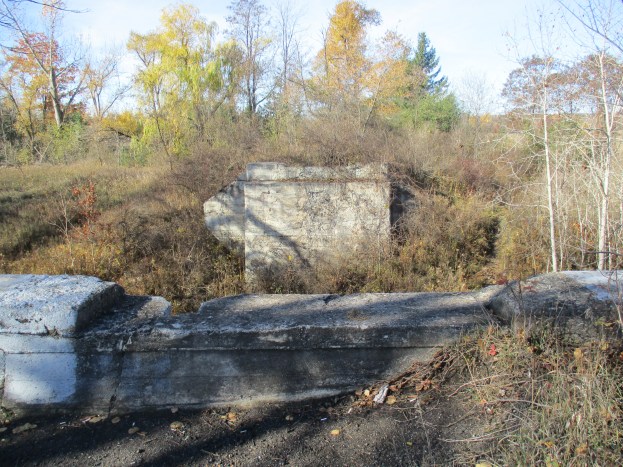
The charter for the Toronto Grey and Bruce Railway was granted in 1868 with construction beginning the following year.  Passenger service to Orangeville was opened in 1871 with the line being extended to Owen Sound by 1873.  After being operated by the Ontario and Quebec Railway it was finally absorbed into the Canadian Pacific Railway in 1884.  The original trestle was replaced in 1925 with a new one set on concrete abutments.  The earlier abutments on the north side are hidden in the berm but they are still visible on the south side.  The north abutment on the TG&B has a date marker but it is badly worn and hidden behind grape vines for most of the summer.The portion of the line through Cardwell Junction was abandoned in 1932.

img_4464

The view from standing atop the rail berm looking south along the TG&B.

img_4453

This view from a similar position looks to the north where the water tanks once stood.  A brickyard was established at the junction in 1914 under the name of Bowlby Sand, Lime and Brick Company.  Located along the curve, they worked a clay deposit on the side of The Little Credit River until it was exhausted in the early 1920’s.

img_4461

The view from atop the south abutment looking west along the H&NW railway.  This was a rare shot without people in it as the trail is well used by dog-walkers, cyclists, and joggers.

img_4438

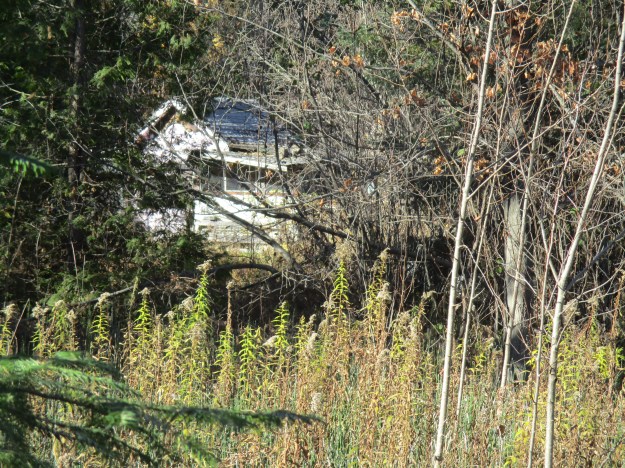
In 1893 Cardwell Junction had a population of 29 and by 1908 it had dropped to just 20. There are still houses visible on the Cardwell Junction curve but they are on private property.  From the hiking trail, one abandoned and slowly decaying house can be seen through the woods.

img_4486

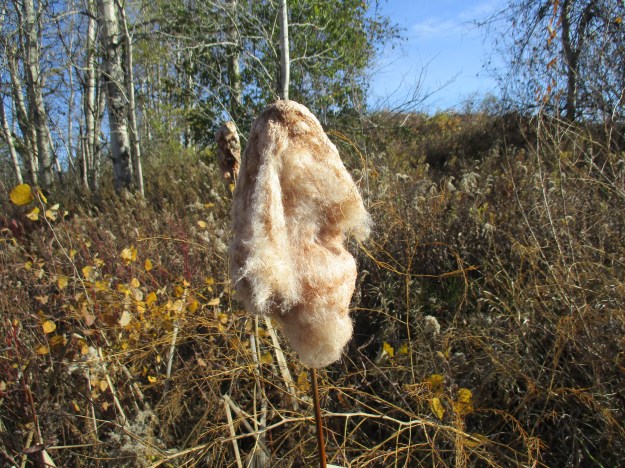
Bulrush, or cattail, seed hairs were used by some native peoples to line their moccasins with.  One Native American group used a word for the hairs that meant “fruit for papoose’s bed”.  It was also used for diapers, baby powder, and cradle boards.  It can be used in emergency situations to get a fire started.

img_4426

On the west side of St. Andrews Road a gate now closes off the right of way from the former TG&B.  The rail allowance on the east side of the road is quickly being overgrown. Continuing west from here the rail line makes its way to the site of the Horseshoe Curve where a deadly accident occurred in 1907.

img_4418

The trail through Cardwell Junction has an occasional railway spike showing through the fine gravel surface to help remind us of a bygone era.

Google Maps link: Caldwell Junction

Like us at http://www.facebook.com/hikingthegta

Follow us at http://www.hikingthegta.com
Enchanted – “Home Place” Pickering

Halloween 2016

Happy Halloween from Hiking the GTA.

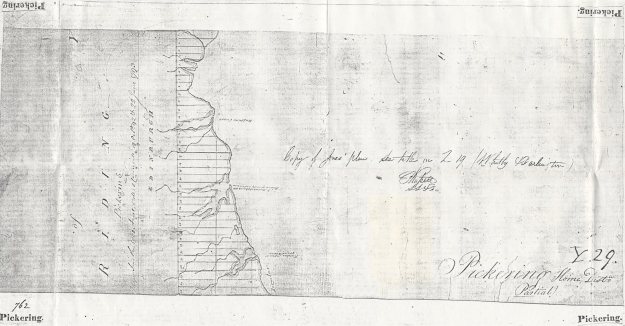
Alex Robertson Park covers 48 acres of the 134-acre Hydro Marsh in Pickering at the mouth of Duffins Creek.  This marsh is an important place because so much of the coastal wetlands along the Great Lakes has been lost due to urbanization.  The marsh is home to many kinds of waterfowl and the park has meadows including a Monarch Butterfly monitoring station.  The park has recently been turned into an outdoor art exhibit called Home Place which officially opened Sept. 22, 2001.  Dorsey James did most of the carving featured below.  Home Place and its enchanted artwork is formed of three parts: The Area of Enchantment, The Portal, and The Kijimba Kind.  The name Home Place was chosen in honour of the original name of Pickering.  The 1791 map below from the Pickering/Ajax Digital Archive shows Pickering Home District as it was originally laid out with lots running along the lake.

pickering

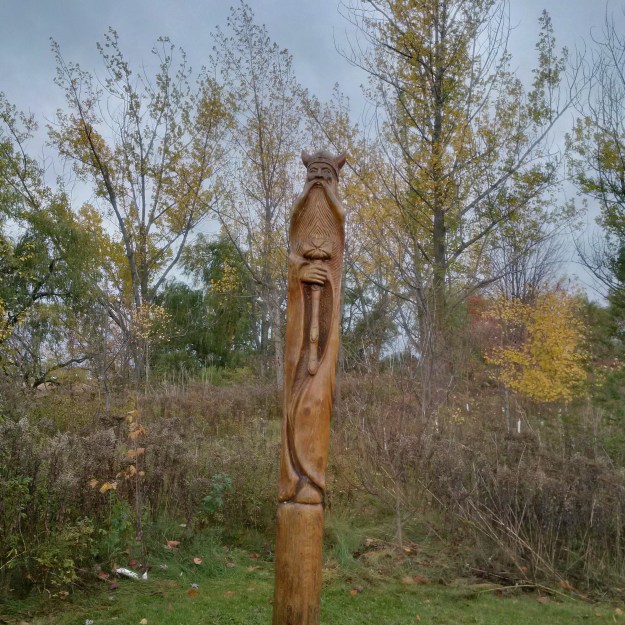
The Kijimba Kind is an area that contains wood carvings on old trees.  The first one you come to is Thor, the Norse god of thunder.  His mother is the earth itself and he is responsible for protecting mankind from chaos, destruction and the forces of evil.

img_20161030_113151_hdr

The Bridge Builder.  Tji-Wara had the power of metamorphosis.  When her people were being pursued she transformed into a tree so they could cross a river to safety.  When there was no food for the people she changed into an antelope so they could eat of her body.

img_20161030_122742_hdr

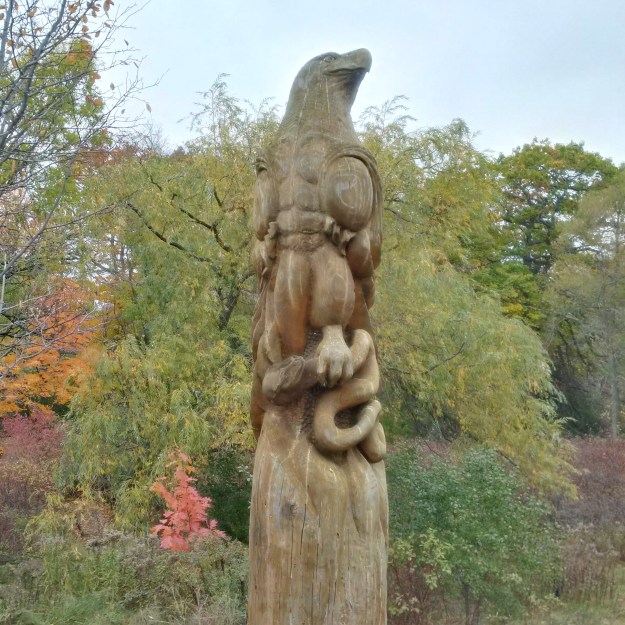
Aquilla, the eagle.  Most cultures see the eagle as representing power or determination. Some others see the eagle as bringing floods or periods of great loss.  The serpent in its talons represents evil to most cultures.  There are those, however, who see it as a symbol of reincarnation because it renews itself by shedding its skin.  The serpent lifted up on a pole is a symbol of the medical community and has likely been adapted from a story about Moses lifting a serpent on a pole to heal the people.

img_20161030_123031_hdr

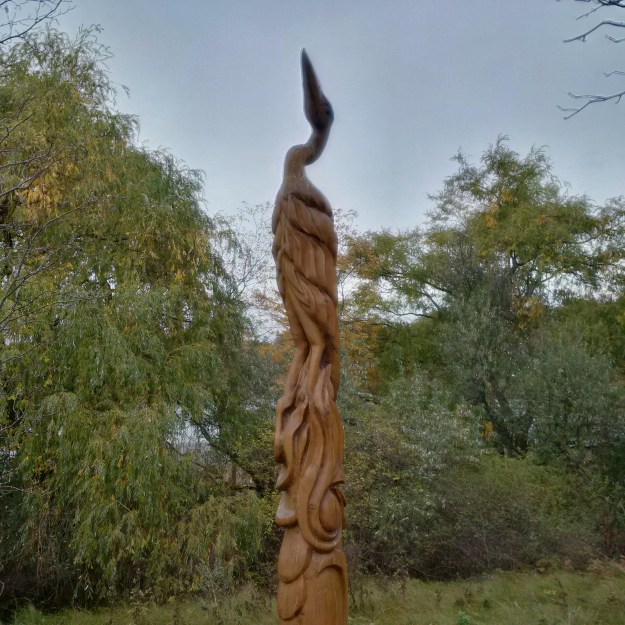
The Sentinel.  Some cultures think that the crane is always alert.  They say it rests with one leg raised and a pebble held in its claw.  If it starts to fall asleep the pebble falls and the crane wakes up.

img_20161030_104824_hdr

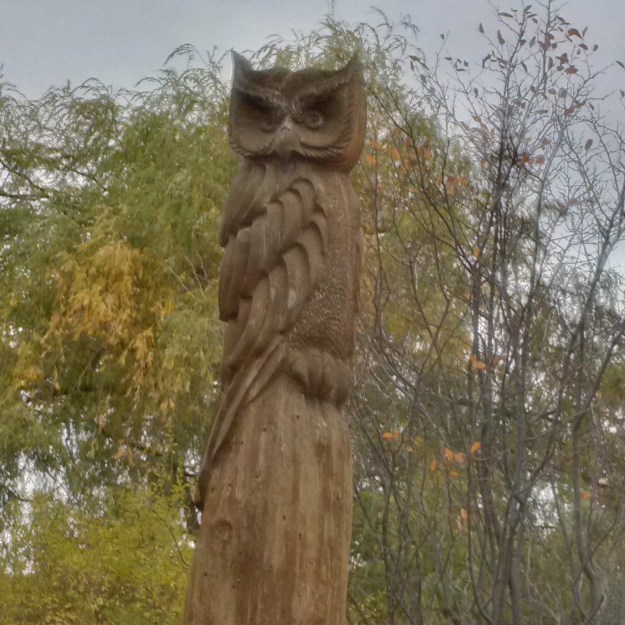
The Hibou, or Owl, is believed by some to be an omen of ill portent.   They symbolize death and mourning to those people.  Others see the owl as a symbol of knowledge and wisdom because of its ability to see at night.

img_20161030_123205_hdr

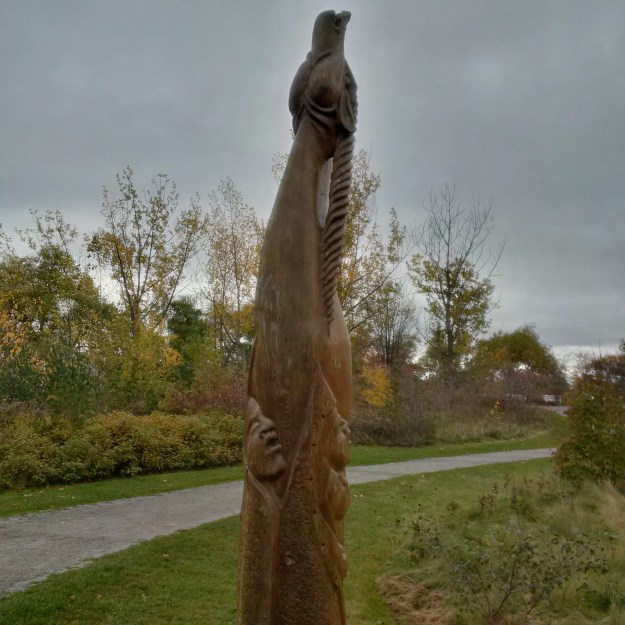
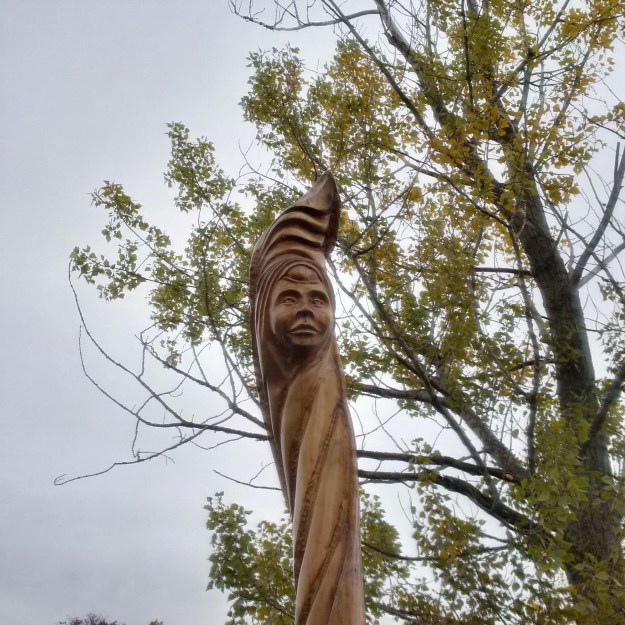
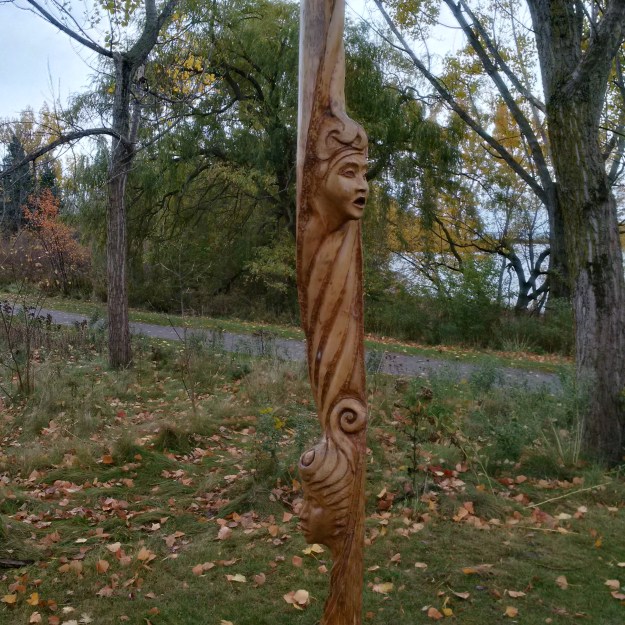
The Moirai are three sisters who represent the past, present, and future of our lives.  At the top of the pole is Clotho who spins the thread at the start of our lives.

img_20161030_105045_hdr

Atropos weaves the thread of life into our actions while at the bottom Lachesis cuts the thread at the end of life.   Together these three are known as The Fates.

img_20161030_105020_hdr

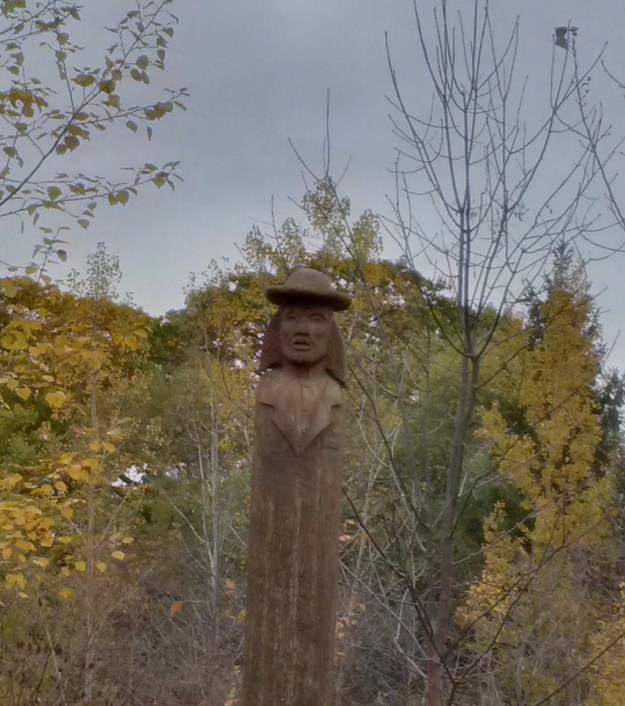
The Parson is a man of God and a man of Peace.  He represents the role that religion played in the lives of the people who settled here.

img_20161030_123523_hdr_edit

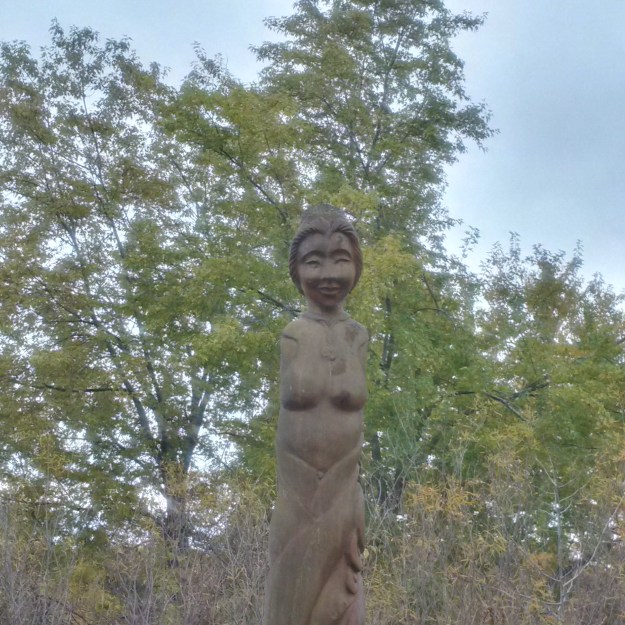
Spring.  When Persephone was abducted by the lord of Hades her mother, who controlled the weather, went searching for her and the result was winter.  Zeus decreed that Persephone could return provided she hadn’t eaten any food of the dead.  Since she had eaten six seeds she was condemned to spend six months per year in the underworld and this is where winter comes from .  When she returns from Hades the spring arrives, or so the ancient Greeks believed.

img_20161030_123757_hdr

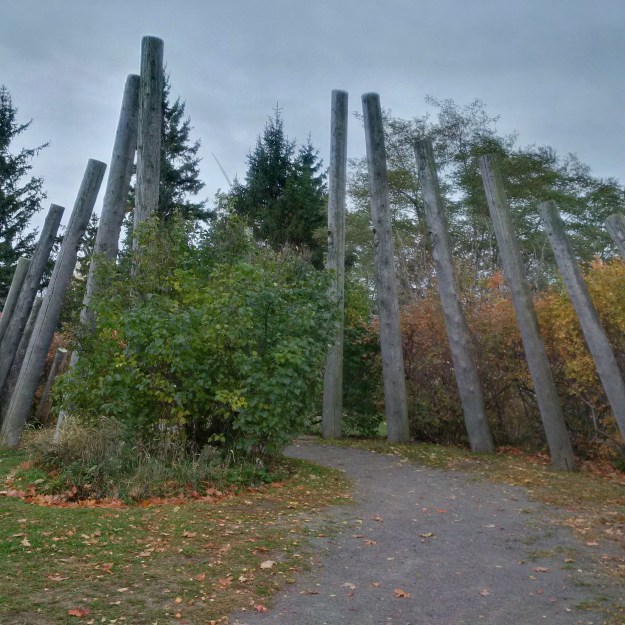
Twenty telephone poles in two intersecting circles form a ring around The Portal.  They grow in height as they reach toward the centre to symbolize how we grow in strength as a community.

img_20161030_114020_hdr

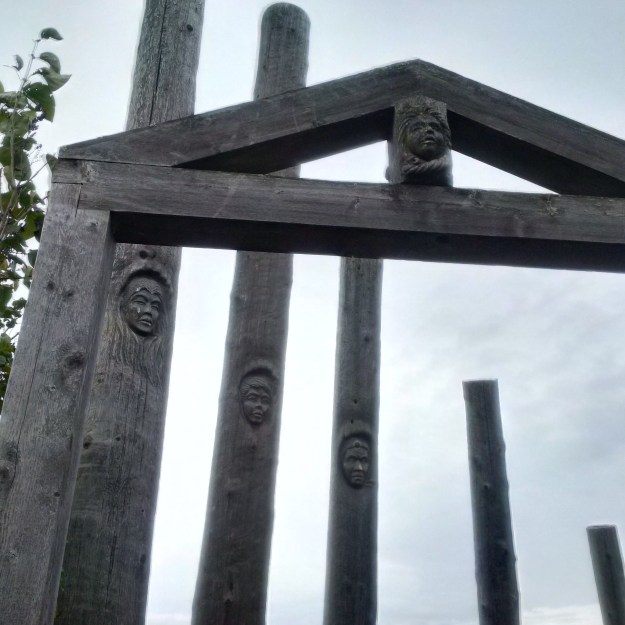
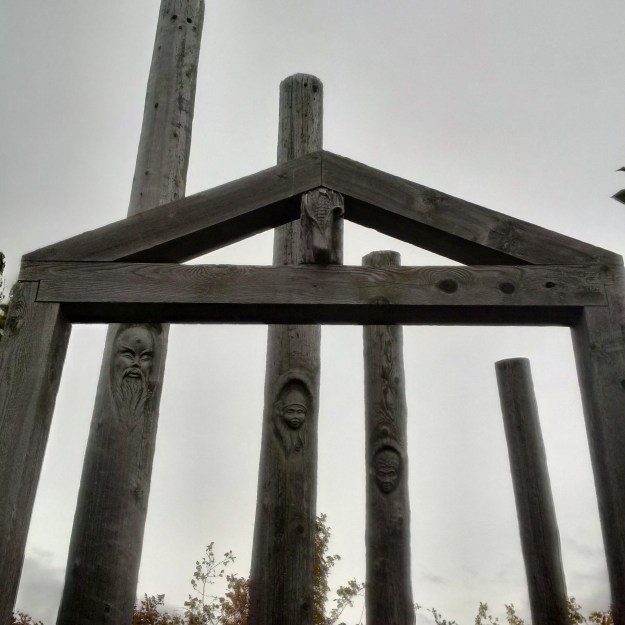
The Portal is at the centre of the design and it is built of post and beam construction similar to the methods used by early settlers.  On the west side of The Portal is the face of a young woman.  She is Vesta the Greek goddess of the hearth and home.  The faces carved into the poles behind represent male and female as well as young and old.

img_20161030_114053_hdr

On the east side of The Portal is a cob of corn symbolizing nurturing.  Every kernel of corn on the cob has been carved with a human face.  The various races that call Pickering home are also revealed in the carvings on the surrounding poles.

img_20161030_114138_hdr

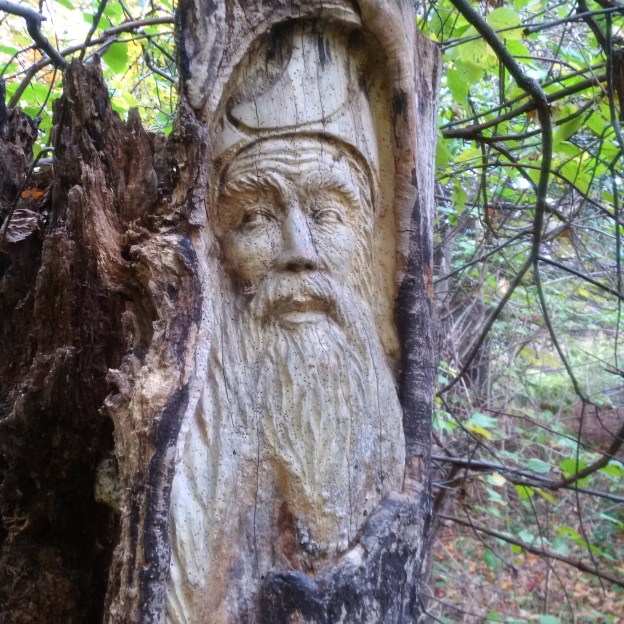
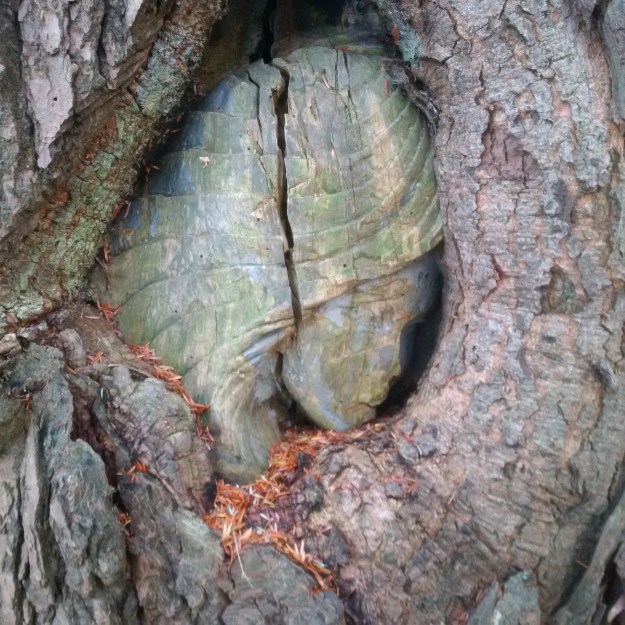
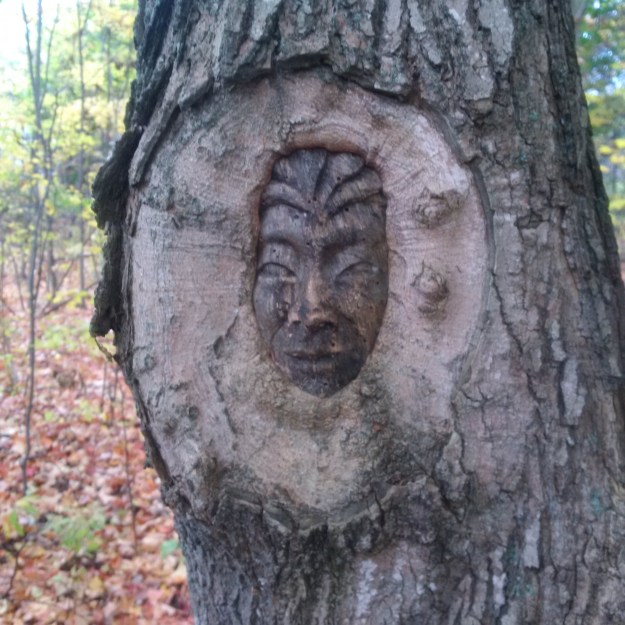
In the Enchanted Area there are several faces carved into the knots on the trees.  As you enter the area you are greeted by Merlin himself.  His face is shown in the cover photo but the carving is starting to be hidden by a new growth of bushes and grape vines.  Elves, fairies, and nymphs are seen in addition to Merlin’s apprentice who is weathering badly. The face of a woman is seen in the tree below.

img_20161030_115400

Here is another face in a smaller knot.

img_20161030_115832

Google Maps link:  Alex Robertson Park

Like us at http://www.facebook.com/hikingthegta

Follow us at http://www.hikingthegta.com
Country Hospital For Sick Children

Saturday, October 22, 2016

This hike was a return to the location of our first blog which was little more than a collection of pictures that didn’t have a story to tell.  What came out of this visit was much different than the original blog which we called Humber River at Finch and Islington.

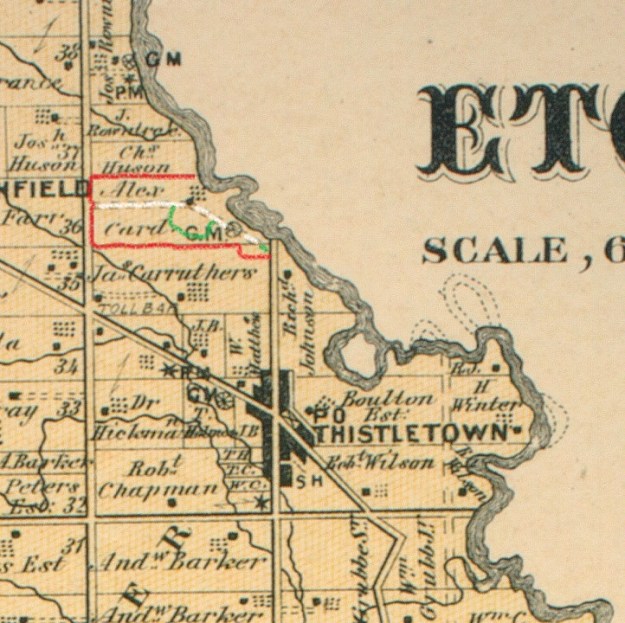
The site is formally known as lot 36 and part of lot 35 and was owned by Alex Card and Jason Carruthers at the time of the 1878 county atlas.  Alex Card’s property was accessed from Kipling and his driveway is shown in white on the map below.  The laneway extended past the house to a grist mill that was operated near the Humber River.  In 1926 The Hospital For Sick Children was looking for a country location to build a satellite facility. They wanted to replace their John Ross Robertson Lakeside Home For Children which was on Hanlan’s Point.  This small facility had been opened on Toronto Islands in 1883 but was only in service four months per year.

thistletown

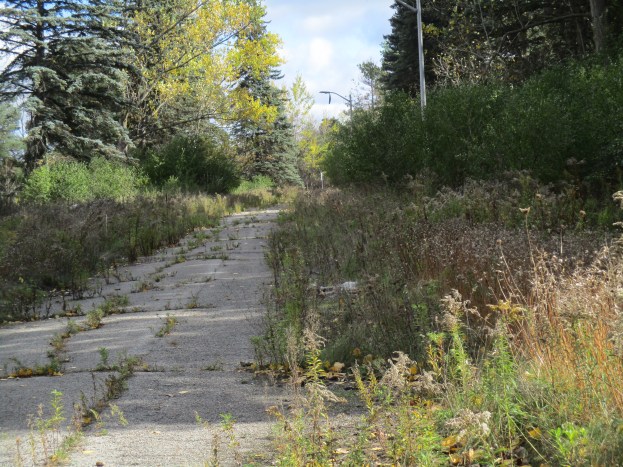
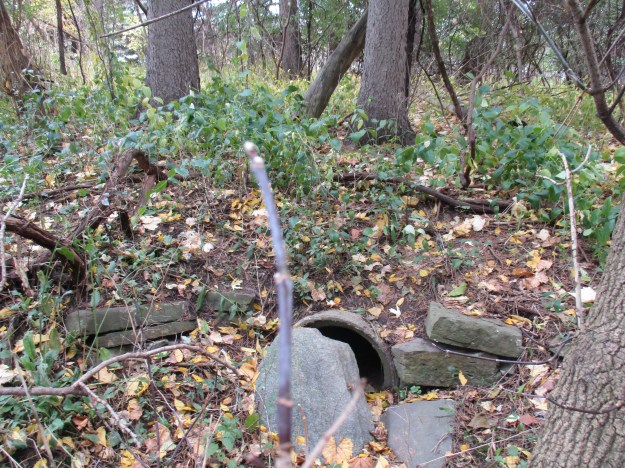
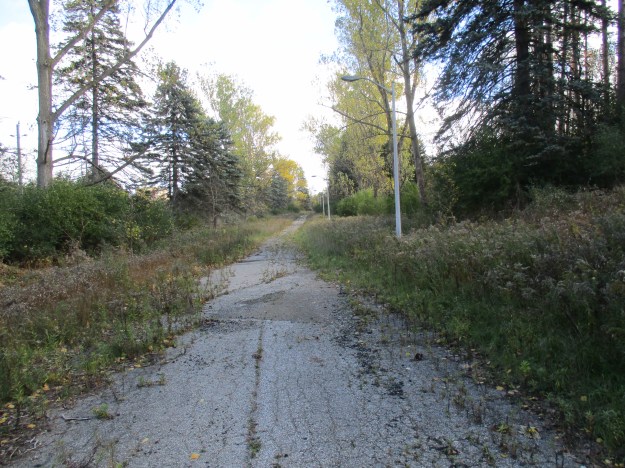
When they settled on lot 36 they used Card’s laneway off of Kipling and decided that an entrance off of Islington would be created with a sweeping laneway, shown in green, that would showcase the hospital.  Ten acres of land were purchased off of Carruthers to allow the laneway to be extended and this short stretch is also marked in green on the map above.  At this time Finch Avenue did not extend across the river and when it was extended in the late 1980’s the 10-acre corner was cut back off of the property.  Due to the fact that these few acres were owned by the hospital, they escaped development when the rest of Carruthers property was sold off.  Today it is known as Finch Islington Park and is a largely unused area which is returning to its forested condition.  The exploration started here before making its way across Finch Avenue.  Among the new growth stand rows of mature trees that once lined this entranceway.  This portion of the old laneway has almost vanished but an old culvert still reveals where the road once crossed a seasonal flow of water.

img_4234

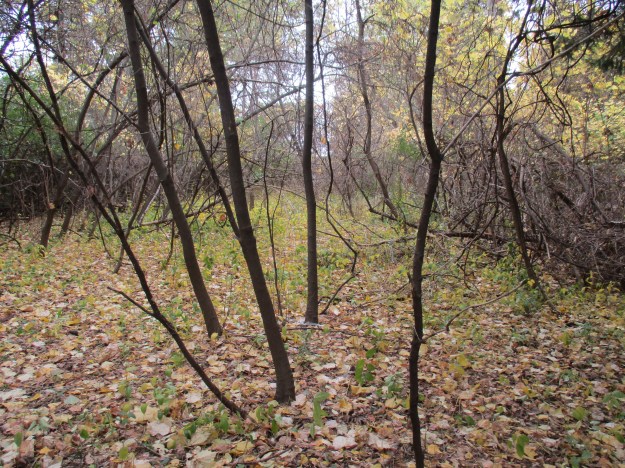
The former road surface on the south side of Finch Avenue has been reclaimed by the forest.  New growth trees stand out in a strip between the mature pine trees on either side of the former roadway.

img_4235

It was decided that the old laneway from the mill was too steep and so only the lower portion was incorporated into the new driveway.  The old laneway is still discernable but unlike the roadbed north of Finch, it isn’t paved.

img_4245

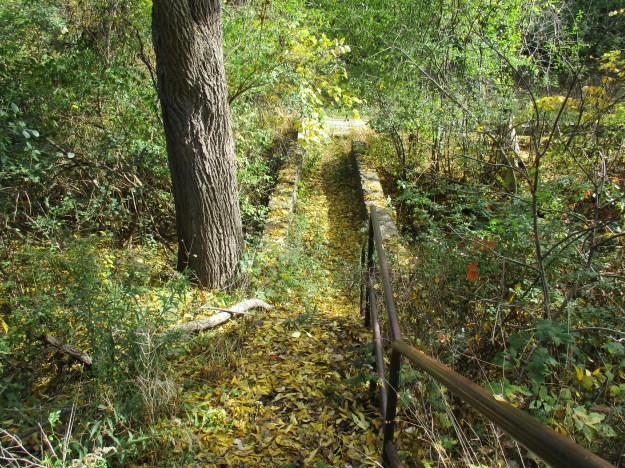
Along this old laneway is a stone bridge across a small tributary to the Humber River.

img_4251

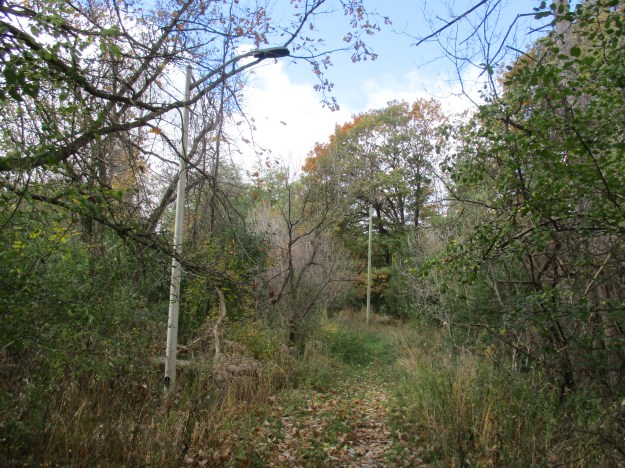
The old laneway will eventually bring you to a portion of the Humber River Recreational Trail but we turned back when we came to the back of the old power plant.  Another row of streetlights led us to this set of stairs.  At one time this led from the back of the hospital to the laneway and then to the gardens beyond.

img_4264

At the bottom of the stairs, a small footbridge crosses the same tributary that we had seen on the older laneway.

img_4267

The little footbridge leads out to where the laneway curves toward the river and Islington Avenue.

img_4271

The road curves where it approaches the Humber River and makes its way south toward Finch Avenue.  Mature pine trees can be seen running parallel to the road which was planted for a hundred feet along either side.  This was done in 1930 to compliment the 50,000 seedlings that had been planted prior to opening.  Stands of pine trees had been planted around the hospital in the belief that their scent helped cure those who suffered from lung ailments like tuberculosis.

img_4273

Running parallel to the river the laneway runs almost to Finch Avenue where it dead-ends just before the fence along the road allowance.  Somewhere along this section of the 19th-century roadway once stood the grist mill.  Today you can clearly see the pattern of alternating pine and deciduous trees that was planted along either side of the road.

img_4276

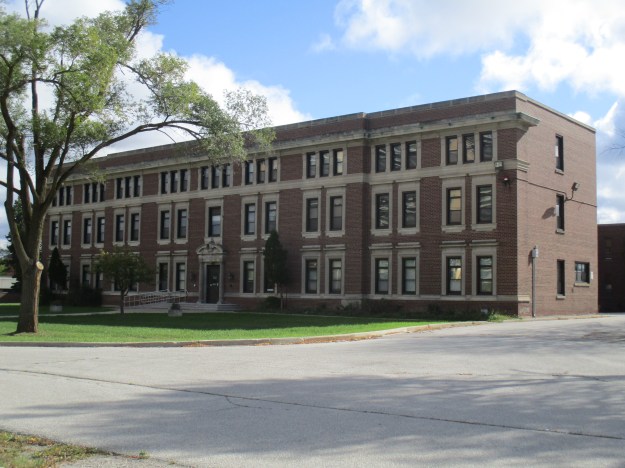
Construction on the country addition to The Hospital For Sick Children was started in May 1927 and it officially opened on October 10, 1928.  It was built to house 112 patients as well as the doctors and caregivers.  The north face of the building is shown in the picture below.  and it housed the staff.  A rear section can just be seen in the picture and it housed the patients.  They were taken outside daily for treatment with “sunshine and fresh air” and the rear dorms had a place to roll beds outside as well.  The hospital was a long distance from the city so it incorporated a power plant, water and sewage treatment and high-pressure firefighting system.

img_4294

By the 1950’s its operation had become outdated with modern treatments in downtown hospitals replacing most of them.  Following power loss due to Hurricane Hazel in 1954 it was soon closed.  In 1957 the hospital was purchased by the Department of Health for use as a mental health hospital for juvenile patients.  In 1960 they added a centre for autistic children and in 1967 the name was changed to Thistletown Regional Centre for Children and Adolescents. These signs are new and appear all over and include a variety that claims that the area is patrolled. For this reason, I am not suggesting that people should visit this location.

img_20161022_135507

Link to original blog for this location: Humber River at Finch and Islington

Google Maps Link: Finch-Islington Park

Like us at http://www.facebook.com/hikingthegta

Follow us at http://www.hikingthegta.com
 

Humber Arboretum

Saturday, October 15, 2016

The Humber Arboretum was started in 1977 by the horticulture students of Humber College.  Today it covers 250 acres behind Humber College’s North Campus.  It covers an area of the West Humber River Valley between highway 27 and the 427 and features botanical gardens, meadows, and natural areas.  It also features a large variety of trees that have been dedicated to the memory of various individuals.  It is a little tricky to find but look for the first left east of highway 27 off of Humber College Boulevard (see the map link at the end).  This is Arboretum Boulevard and is on college property.  There is free parking in lot 1 and a large sign announcing the arboretum.  There are over 6 kilometers of trails in the park which will allow you to walk among the various ponds and gardens where you can watch for a wide variety of wildlife.

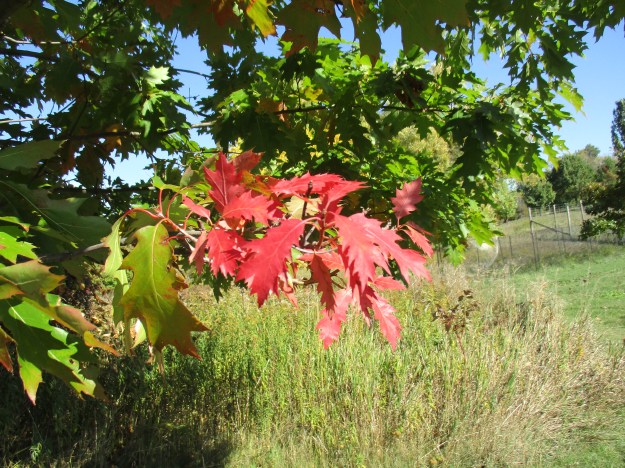
The trees start to prepare for winter by withdrawing useful chlorophyll from the leaves and storing it in the woody parts of the tree for use next year.  This removes the green colour from the leaves and causes them to turn various colours.  Without the chlorophyll to protect the colours of the leaves they are soon broken down by UV light leaving just the brown tannin in the decaying leaf.  This Red Oak is starting to change at the end of this one branch.

img_4149

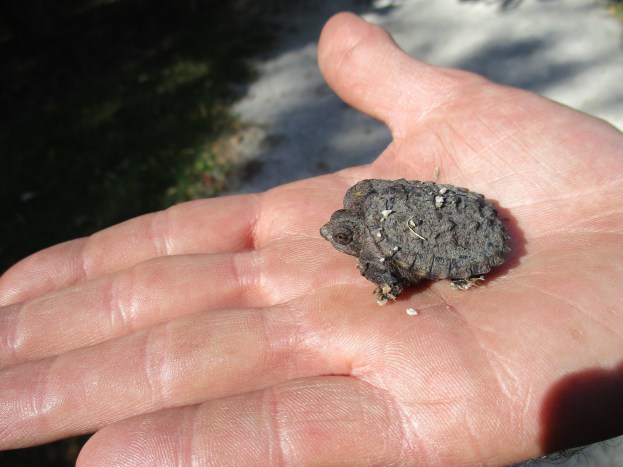
The arboretum claims to have over 1,700 species of plants and animals and serves as a living classroom for students at the North Campus.  The common snapping turtle featured below and in the cover photo is about the size of a toonie.  This is just a little baby of a species that can grow to be 75 lbs and live for 100 years in the wild.  The snapping turtle has distinctive ridges on the carapace as well as a serrated shell, especially along the tail end.  This turtle species has the latin name Chelydra Serpentina because of its snake-like neck that can reach to bite near the rear legs.  This little one may be from this spring’s hatching.  It was making its slow way across the path that was shared with bicycles and joggers.

img_4194

We moved the snapping turtle to the grass near the edge of one of the three little ponds that have been created on the arboretum grounds.  These ponds have been planted to provide habitat for wetland species that are being conserved and presented here.  Students conduct experiments and gain hands-on work experience.

img_4178

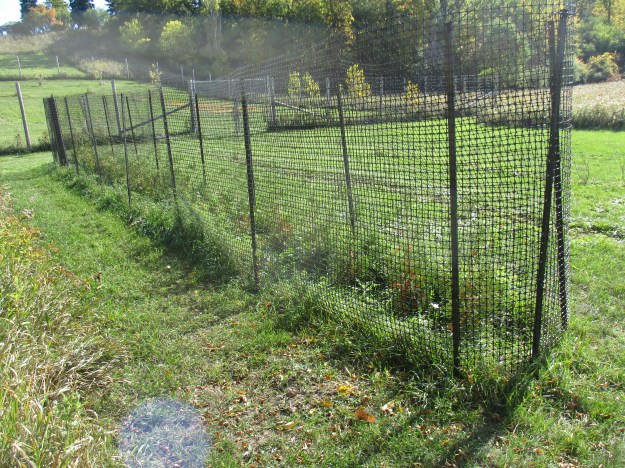
One of the projects is an attempt to help save the endangered butternut tree that was native to this region.  A severe fungal canker threatens the trees but students have teamed up with the Ministry of Natural Resources to plant 5 new samplings in an enclosure in the arboretum.  Plans include planting up to 20 additional trees. Currently, the only method of propagating new trees is to graft a healthy plant onto another plants root stock.  Students are looking for new ways to grow healthy trees.  The enclosure pictured below has some new cedar trees planted by the students.

img_4145


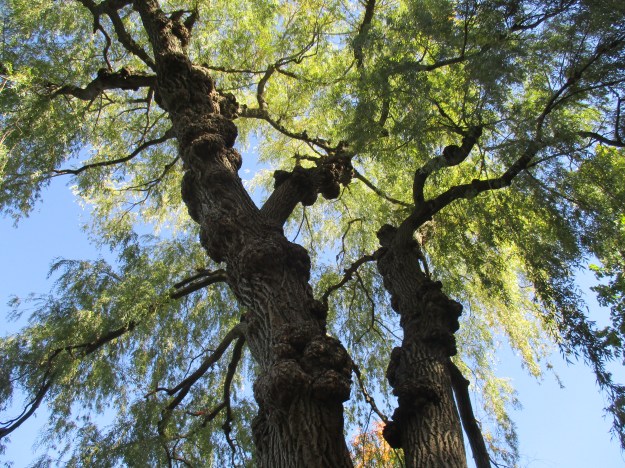
Golden Weeping Willow is a hybrid tree that was first mentioned in 1888.  The latin name Salix Alba records that it is a  hybrid because all hybrids have the letter x in the name.  Primary Willow branches grow upward but all secondary branches grow down giving it the “weeping” aspect which it inherited from the Babylon Willow.  These trees are distinctive and are among the first signs of spring as their branches take on a golden hue before the leaves start to come out on most of the other trees in Toronto’s urban forest.

img_4191

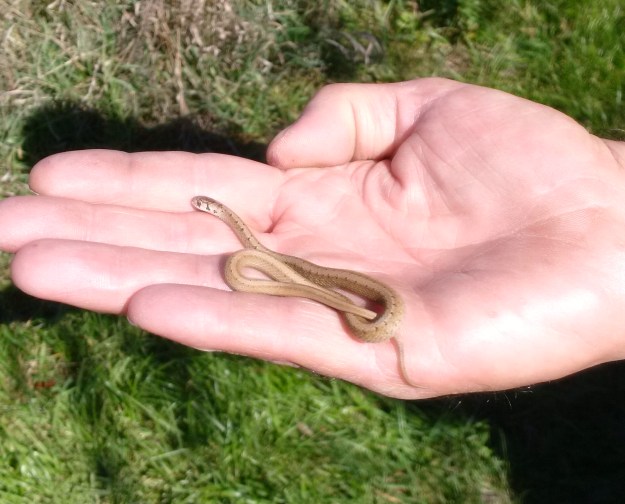
Dekay’s Brown Snakes hibernate communally through the winter and breed upon emerging in the spring.  The female carries the fertilized eggs internally until between 3 and 31 babies emerge in late summer.  They are small, just 8-11 centimeters, and will grow to about 50 centimeters at a maximum.  When they feel threatened they can give off a strong musky odour but this one seemed calm enough.

img_20161015_121100_edit

The Centre For Urban Ecology was completed in the fall of 2007 at the arboretum.  It is used by both students and adults to study and promote ecological stewardship.  The building is LEED Gold Certified and incorporates sustainable design elements.  The roof has vegetation growing on it to help with storm water management.  Rainwater is collected and used for irrigation for the landscaping and sewage and gray water is filtered on-site before being released.  The Humber Arboretum and Centre For Urban Ecology are a joint venture between Humber College, The City of Toronto and Toronto Region Conservation Authority.

img_4181

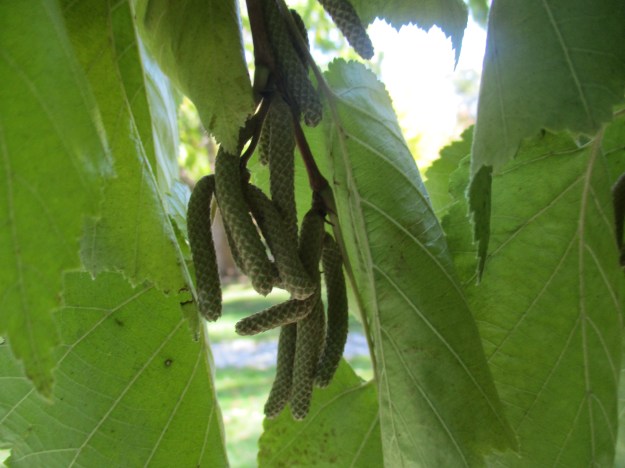
Alder Trees belong to the same family as Birch Trees.  Alders are unique among deciduous trees in that they have cones.  The picture below shows male catkins but the tree will also have female ones that resemble small pine cones.  The inner bark of the alder tree contains salicin which is an important part of aspirin.

img_4193

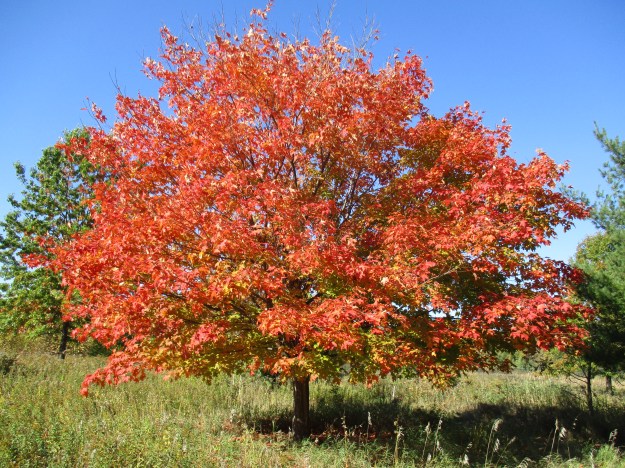
Green Mountain Sugar Maple can grow up to 60 feet tall and 50 feet wide.  They can grow up to one foot per year in good growing conditions.  This tree is a staple in the manufacture of maple syrup, a major industry in Ontario.  It is estimated that in 2011 members of the Ontario Maple Syrup Producers Association grossed $53 Million from 4 million litres of syrup.

img_4144

We were probably about a week too early for the best colours, but the Humber Arboretum is a place that can be enjoyed all year.

A map of the trails at the arboretum can be found here.

Google Maps Link: Humber Arboretum

Like us at http://www.facebook.com/hikingthegta

Follow us at http://www.hikingthegta.com


The Battle Of Queenston Heights

October 13, 2016

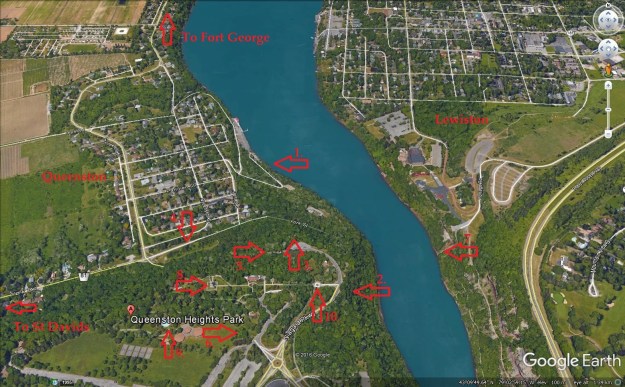
The war of 1812 had been declared on June 18, 1812, partially because the British were stopping American ships and forcing British citizens found on board into military service to feed their war against Napoleon in Europe.  On August 15th General Brock had captured Detroit.  This followed the capture of the American Fort Mackinac in July.  With two early losses the Americans were looking for a victory and taking the town of Queenston would give them a bridgehead into the Niagara Peninsula.  The following map is marked to show the key locations as identified throughout the text.

queenston-heights

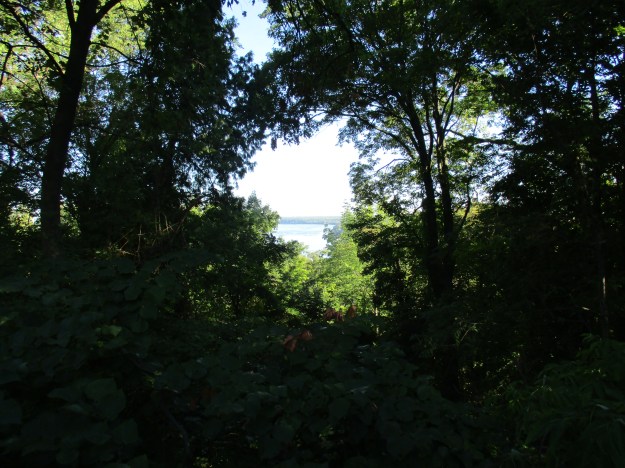
American forces had been gathering at Lewiston and by 3:00 am on October 13th there were 600 men ready to board boats and cross the river to invade Queenston.  300 British forces waited in the graupel and drizzle and successfully pinned the few Americans who landed on the beach.  This picture shows the landing area, however, there are a great deal more trees on the hillside than there were on that morning.  The town of Queenston lays to the left along the river. (1. on the map)

img_3798

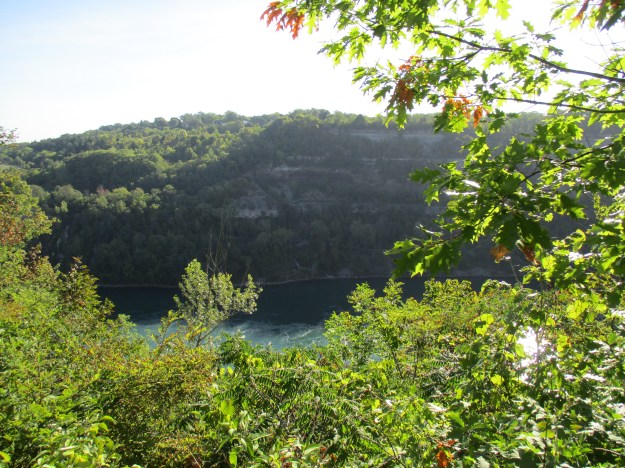
Captain John Ellis Wool knew of a small fishing path that led up the steep cliff face of the Niagara Gorge.  The British had believed the gorge, cut as Niagara Falls was beginning its slow path toward Lake Erie, to be unassailable.  The picture below was taken from the approximate place where the invaders reached the top of the cliff.  Climbing up this side would have been similar to climbing up the American side that can be seen across the river. (2. on the map)

img_3805

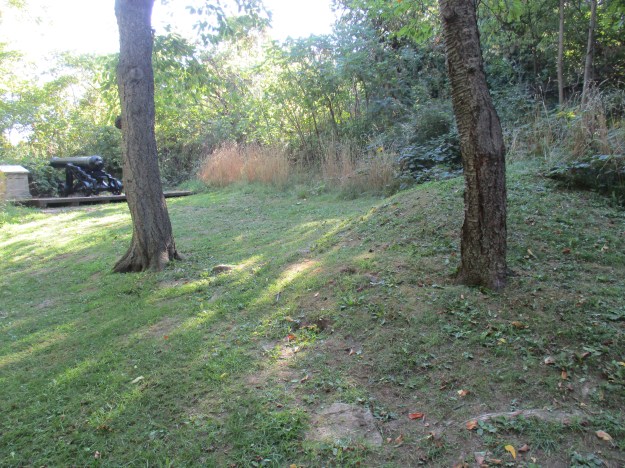
The British had a small number of soldiers manning an 18-pound cannon that was firing on the invading troops, trapping them on the beach and preventing reinforcements from crossing the river.  The cannon stood behind a redan, an earthen mound shaped like a half moon. Captain Wool led his men in a bayonet charge that quickly overtook the position. The curve of the redan can still be seen and an 18-pound cannon stands, looking down on the Queenston Harbour. (3. on the map)

img_3822

General Isaac Brock gathered 200 troops in the town and prepared to launch a counter-attack to reclaim the redan.  As they began the rush up the hill from town General Brock was leading the charge and was shot in the chest and killed.  His aide-de-camp, John Macdonell, led another charge to try to regain the hill top.  He took Brock’s horse, Alfred, but both horse and rider were killed in the charge.  The site of Brock’s death is marked in the town of Queenston with the memorial cairn pictured below. (4. on the map)

img_3939

Defence of the Niagara Peninsula, and Upper Canada, now fell into the hands of Major-General Roger Hale Sheaffe.  He was positioned at Fort George (Niagara-On-The-Lake) with his troops of the 41st Regiment, Royal Artillery and Militia.  Sheaffe had already left Fort George by this time and was marching his troops to Queenston.  Meanwhile, the Americans were prevented from expanding their position on top of Queenston Heights by the efforts of John Norton.  Along with a band of 100 Iroquois, Norton was able to harass the American troops and keep them pinned near the redan.  To honour the part that native peoples played in this battle, and throughout the war, a memorial has been created. (5. on the map)

img_3918

The American troops did not receive any of the support they expected from the militia. Many of the militia saw the bodies floating in the river and quickly decided that they were not required to fight on foreign soil and so refused to cross the river.

Major-General Sheaffe decided not to confront the American troops head on and so he took his troops toward St. Davids.  This allowed him to come up behind the Americans who were defending the redan.  It was around 3:00 pm when Sheaffe’s troops reached the top of the escarpment and rested briefly in a field while another 150 men joined them from Fort Chippewa.  By 4:00 pm they were ready to advance on the Americans and after firing an opening volley of musket balls they led a bayonet charge.  The Americans had their backs to the cliff and were faced with the choice of jumping to their deaths or surrendering.  (6. on the map) The turkey vultures in the picture below are looking out across the river to the two remaining towers from the Queenston-Lewiston Suspension Bridge. (7. on the map)

img_3873

In the final analysis, the battle was another disaster for the American troops.  They failed to take and hold the town of Queenston and in the battle they had over 300 men killed or wounded.  The British took 925 captives following the surrender of the redan.  For the British, the toll was much lighter.  They had only 14 dead, including Brock and Macdonell, and 77 injured.  More importantly, the civilians saw that there was a solid hope of defending Canada against an American invasion.  Many of the citizens had families living in the USA and had not committed to one side or the other but were waiting to see which side to support.  General Brock’s death became the rallying point that united the population to protect their country.

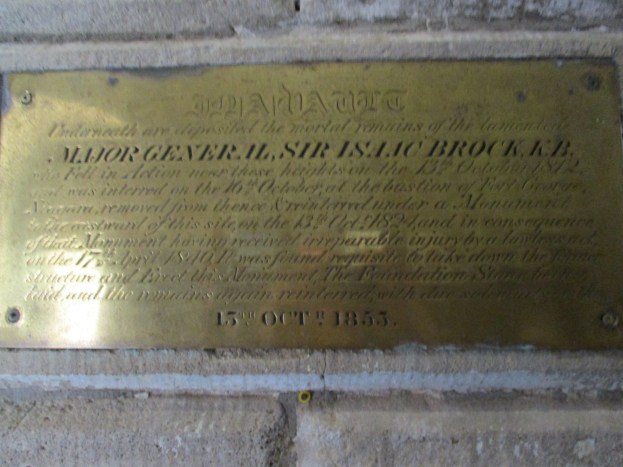
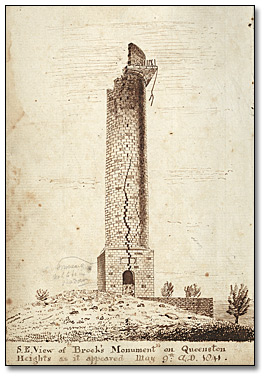
Brock and Macdonell were taken to Fort George where their remains were interred.  In 1823 a 135-foot monument was started that would have a viewing platform at the top.  When it was completed in 1824 it was inaugurated on October 13th, the anniversary of Brock’s death and his and Macdonell’s remains were moved to the monument.  It was first opened to the public on October 13, 1827.  On April 17, 1840, the monument was severely damaged by a bomb in an attack that may have been linked to the Rebellion of 1837.  The damaged monument had to be torn down and Brock and his aid were taken to Queenston for their third burial.  The archive photo below shows the damage to the monument with almost all of the outdoor platform destroyed.

1st_brocks_monument_damaged

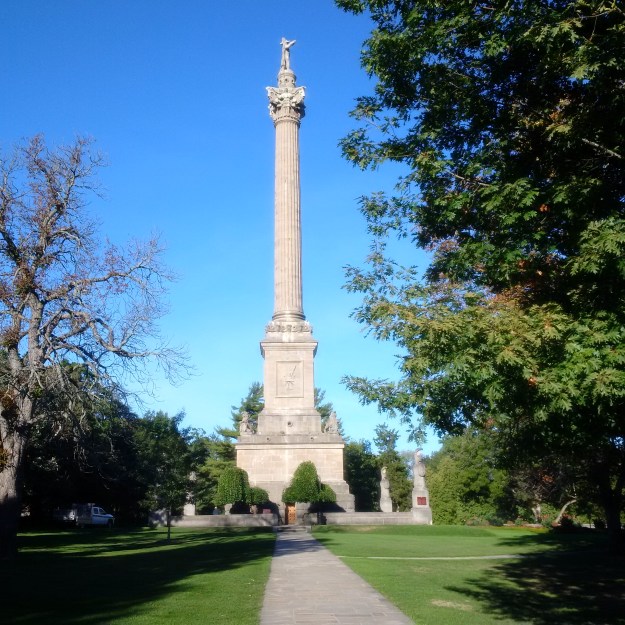
A second monument was designed and construction began on the 185-foot tall structure. Brock and Macdonell were moved here.  On October 13th, 1853, they were interred for the fourth time, now in the base of the new monument.  The monument would be completed and opened to the public on October 13th, 1859. (8. on the map)

img_20160916_085303

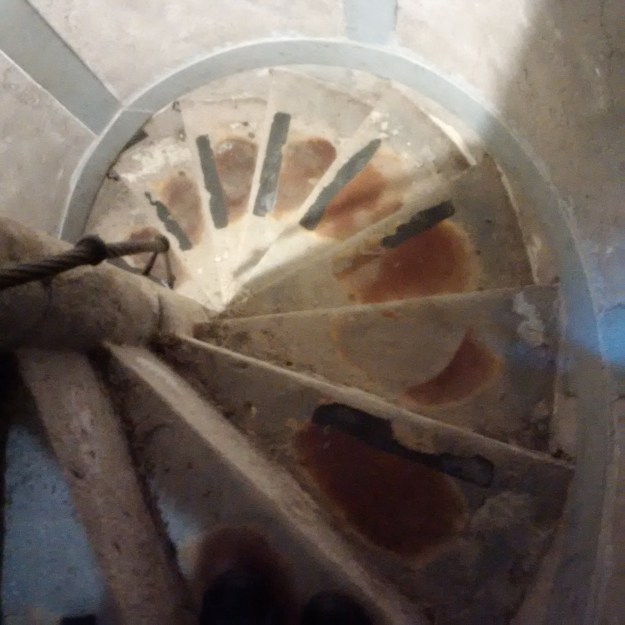
A set of winding stairs leads you to the top of the monument.  There are 235 of them and it took me almost exactly twice as long going up as it did coming back down.

img_20160916_112348

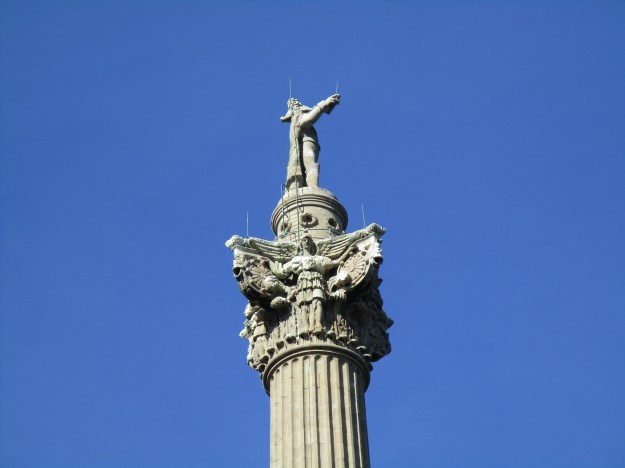
When you reach the top of the stairs there is a small viewing platform that lets you look out from the round windows just below the statue of Major-General Brock.  The statue of Brock on top of the monument is nearly 16 feet tall.  He is positioned in a classic military pose of leadership.

img_3838

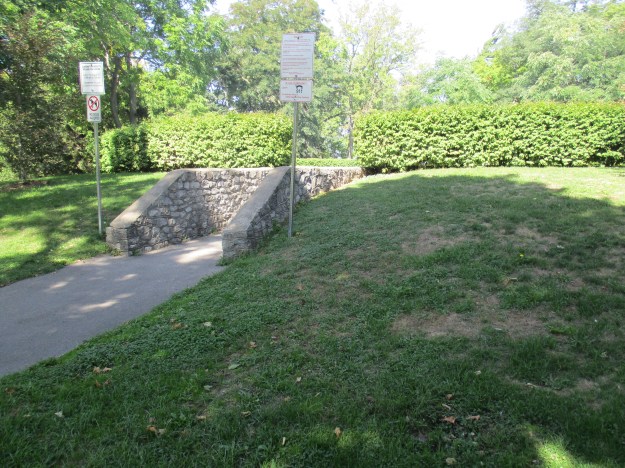
In the spring of 1814, the British built a small redoubt with a blockhouse in the middle to defend the main road.  They named it Fort Drummond and the earthworks remain, not far from Brock’s monument. (9. on the map)

img_3924

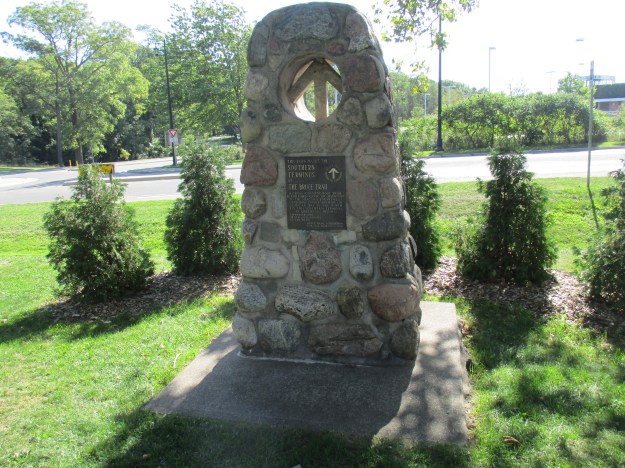
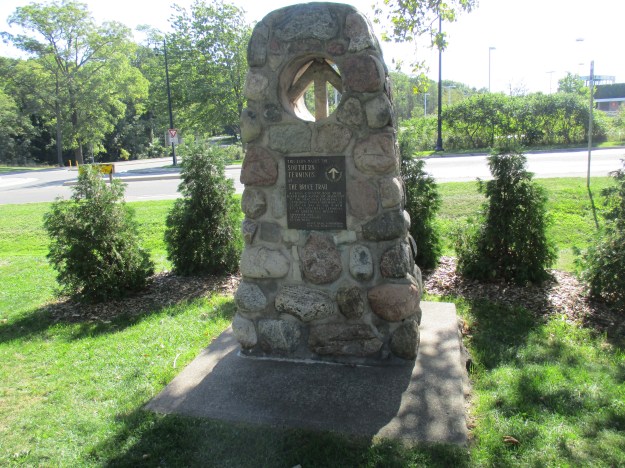
In Queenston Heights park there is a cairn to mark the southern terminus of the Bruce Trail.  Having visited the northern terminus on Monday, a mere 890-kilometer hike away, I was interested in visiting this cairn while I was in the park. (10. on the map)

img_3856

There is a hiking trail that links all the points of interest from the battle but it is poorly marked and may take less than the intended 45 minutes because you will miss some things.

Google Maps link: Brock’s Monument

Like us at http://www.facebook.com/hikingthegta

Follow us at http://www.hikingthegta.com
Allan Gardens

Sunday, October 9, 2016

George William Allan was born in the town of York in 1822 on his father’s Park Lot and would go on to be an important figure in Canadian politics.  Allan served with the Bank Rifle Corps during the 1837 Rebellion and became a Toronto Alderman in 1849.  He was Toronto’s 11th Mayor serving from 1855 to 1858 when he became a member of the Legislative Council.  Following Confederation, in 1867 he became one of the first members of the Senate.  Allan was a member of the Upper House until his death in 1901.

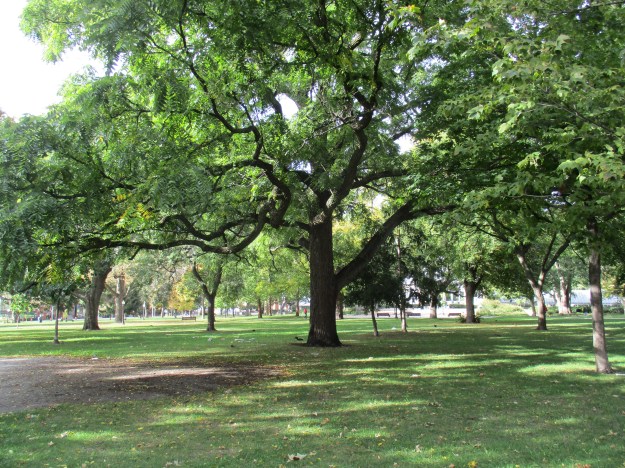
On March 24, 1819, George Allan (sr) purchased Park Lot 5 which was one of the 100 acre lots that ran from Lot (Queen) Street to Bloor Street.  These long narrow lots (660 feet wide by 6,600 feet long) were generally given to men of importance and this lot had originally been granted to Cheif Justice William Osgood who lost the land patent for failing to build a house and live on the land.  Lieutenant Governor John Graves Simcoe had planned the lots as a means of attracting an upper class to help manage the town of York.  Unlike most settlers, these men had only to built a home and live there or rent it out to gain ownership. The grounds around Allan Gardens contain some of the downtown core’s mature trees.

img_4054

The city grew quickly and soon these Park Lots became prime development sites with each property owner able to do pretty much whatever they wanted to.  They could build roads across their lots where they desired and this is the reason that most of the east-west streets in this section of town only run a few blocks and then end.  George Allan built a palatial home on the south end of the lot that became known as Moss Park because of all the moss that grew on it.  The desire for profit led to the quick development of most of the Park Lots with the result that there were very few areas set aside for public parks.  In 1858 George Allan donated 5 acres of land to the Toronto Horticultural Society to create what has become one of Toronto’s oldest parks.  The use of symmetry extends from the greenhouses to the grounds themselves and a pair of walkways enter from opposing corners to meet in front of the greenhouses.

img_4065

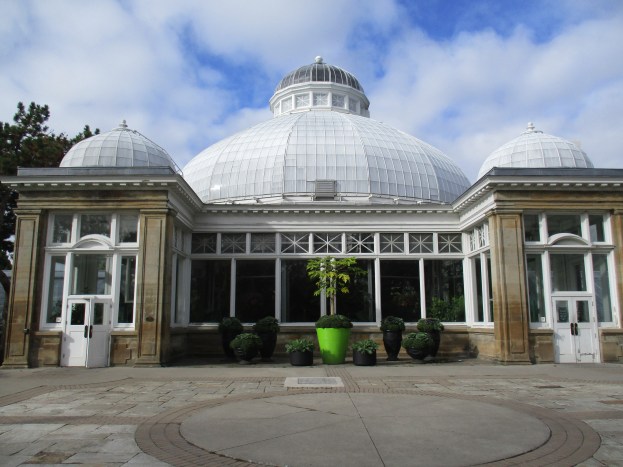
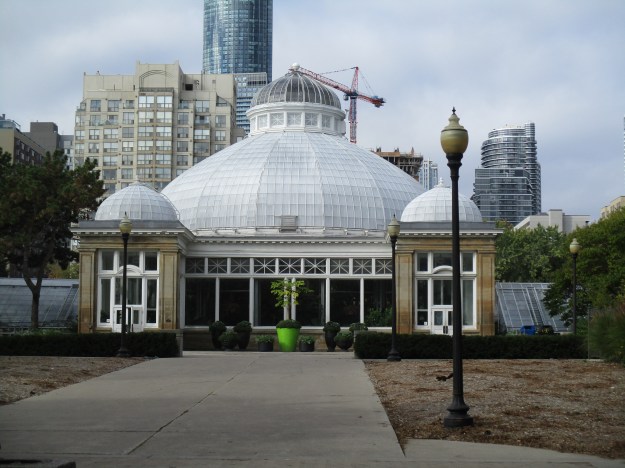
In April 1854 Allan had released his plans for the development of Moss Park with villa style lots.  The area that would become Allan Gardens was laid out with four homes on each side and a large oval park in the middle.  Two years later the Toronto Horticultural Society had been given use of 5 acres to develop as public gardens which they would later expand to 11 acres.  September 11, 1860, marked the official opening of the Horticultural Gardens with the Prince of Wales on hand for the ceremony.  A pavilion had been built that year for the opening ceremonies and a second pavilion was built in 1879 however, it burned down in 1902.  It was replaced in 1910 by the Palm House which is seen in the cover photo.  The picture below shows the inside of the Palm House, looking up.

img_4076

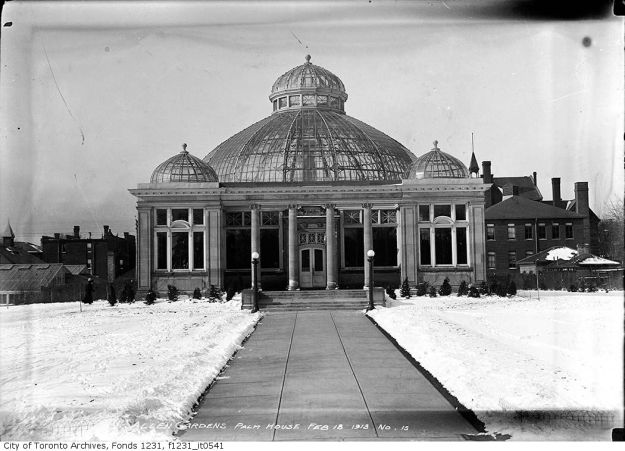
This Toronto Archives picture of the Palm House from 1913 shows the building shortly after construction and without any of the additional greenhouses that now flank it north and south.

f1231_it0541

A photo of the building today shows a much different skyline in the background.  Also of interest is the change in the location of the doors.  Gone is the single central door which has been replaced with two doors located on either portico.  The four corinthian columns across the front have also been removed.

img_4064

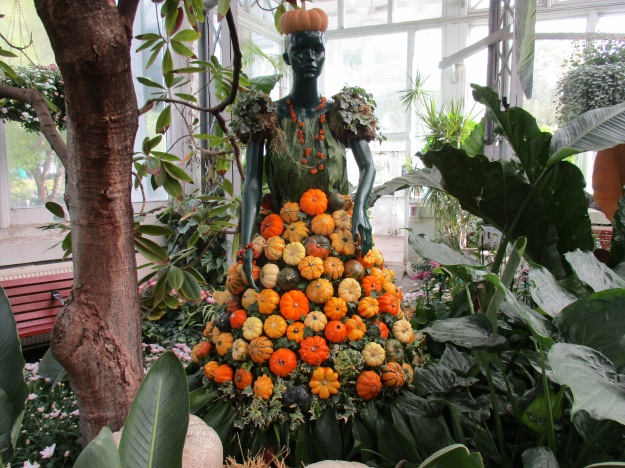
George Allan died on July 24, 1901, after which the park was renamed Allan Gardens in his honour.  Today there are six greenhouses with a combined area of over 16,000 square feet. A seasonal display pays tribute to the harvest with this statue which is out of its gourd for a fancy dress.

img_4078

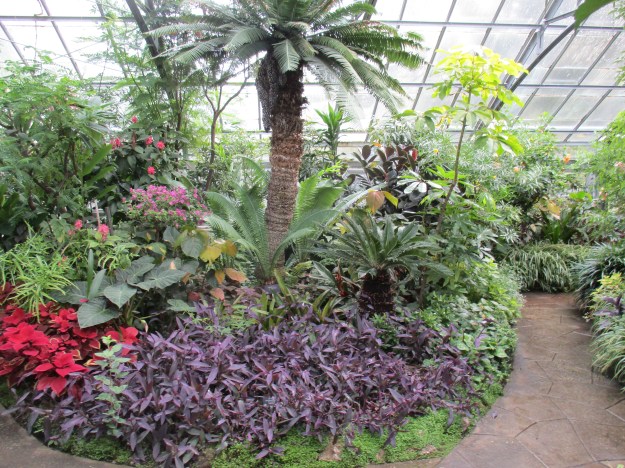
The tropical house was moved from Exhibition Park to this location in the 1950’s and has a chrysanthemum display as a feature this month.  The ‘pumpkin’ below will continue to bloom and will create a colourful display as the month progresses.

img_4081

Additional greenhouses were built in 1924 and 1956 to expand the conservatory’s collection of plants and flowers.

img_4092

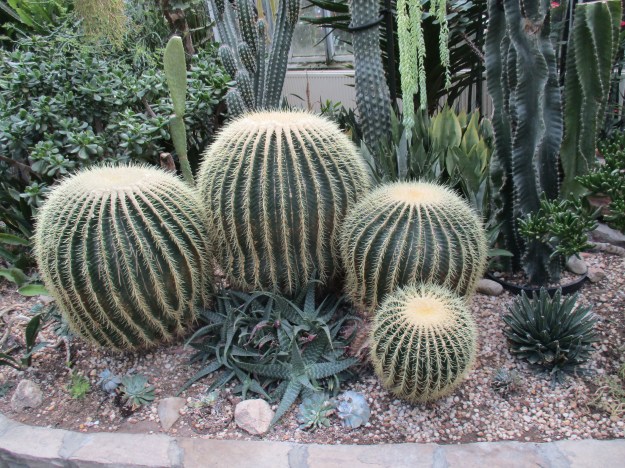
The Arid House (Cactus House) was also moved from Exhibition Park in the 1950’s and contains many different species of cactus.  The Golden Barrel Cactus, also known as Mother-In-Law’s Cushion, is native to Mexico where it is endangered in the wild.  Mature plants can live for 30 years and will only begin to have flowers after about 20 years.  The small yellow flowers that grow near the centre turn into a fruit that contains seeds for the next generation of plant.  These cacti also spread through a root system and corms. Allen Gardens has several of these cacti that are quite large but none that are near the one-meter size that they can attain.

img_4102

Allan was a strong supporter of the arts and was a champion for Paul Kane and James Audubon in the years before they became popular.  It is fitting that the park he created is home to a statue of Robert Burns which was erected in 1902.

img_4053

Allan Gardens originally did not extend to Jarvis Street and that side of the property was built up by the late 1870’s.  Two historic churches remain one on either corner of the grounds, with the Baptist Church being on the corner of Carlton and Jarvis.  This Gothic Revival church was built in 1874 from Queenston Shale and opened in 1875.  This is the third building to be occupied by this congregation which had organized in 1829 on Lombard Street.  The lone remaining house in this block is now used as the Toronto Baptist Seminary and is next door to the church.

img_4110

A couple of other houses and a Collegiate Institute have been removed and now St. Andrew’s Church stands alone on the north corner.  It was built in 1878 of Credit Valley Stone and was used by the Presbyterian Congregation that moved here from their old building at Church and Adelaide.  Estonian and Latvian refugees acquired the church in 1951 after being displaced during World War II.

img_4113

The Allan Gardens greenhouses are open year around from 10 am to 5 pm every day.  They have seasonal features that make repeated visits enjoyable.

Google Maps link: Allan Gardens

Like us at http://www.facebook.com/hikingthegta

Follow us at http://www.hikingthegta.com
The Second Queenston-Lewiston Bridge

September 16, 2016

The first bridge between Queenston on the Canadian side of the Niagara River and Lewiston on the American side was built in 1851.  It was a suspension bridge and was destroyed by in a wind storm and not replaced until 1898.  That was the year that the Second Falls View Suspension Bridge was moved to this location.  In the years in between the towns were served by a ferry that crossed the river.  The first suspension bridge is seen in this photograph from closer to the time of replacement.

first

The original Falls View Suspension Bridge was built just south of the American Falls in 1867 and opened officially on January 2, 1869.   Twenty years later, on January 9th, the bridge was destroyed in a storm.  By commissioning a bridge of the same design a lot of time was saved and construction began on the Second Falls View Bridge on March 22, 1889, and lasted for only 38 days.  Just 117 days after the collapse of the first bridge, on May 7th, the second bridge was opened.  It was also known as the Niagara Clifton Bridge and can be seen in the Currier and Ives painting below.

1024px-new_suspension_bridge_-_niagara_falls

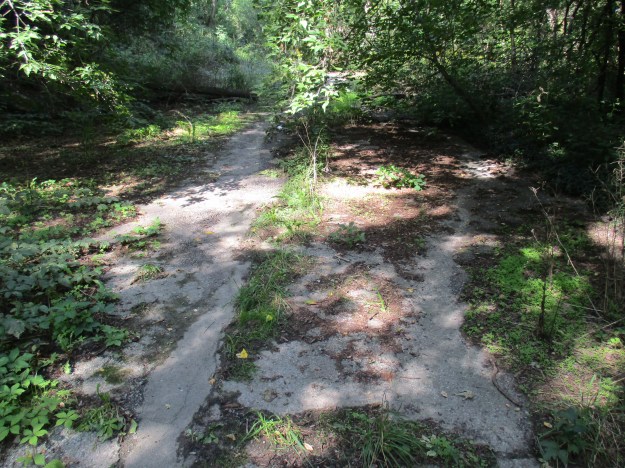
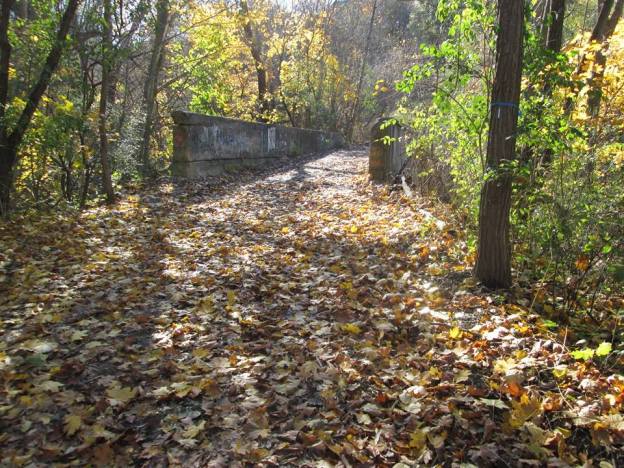
Built in 1897 and opened in 1898 the Upper Steel Arch Bridge, or Honeymoon Bridge, was built 14 feet closer to the American Falls than the Second Falls View Bridge.  After it was opened the suspension bridge was dismantled and moved to serve as a replacement Queenston-Lewiston Bridge.  The Honeymoon Bridge would eventually collapse on January 27, 1938, when ice build-up in the river pushed the abutments over.  An arch bridge known as the Rainbow Bridge was built as a replacement and has been in service since November 1, 1941.  If you follow York Street past the last houses it is blocked to vehicles by large stones but pedestrian traffic is still allowed.  The old road bed can be easily followed because the pavement is visible in many places.

img_20160916_120112

After it’s installation in Queenston the suspension bridge served until November 1, 1962, when the current Queenston-Lewiston Bridge was opened.  The new arch bridge is modeled on the same design as the Peace Bridge making it, in a round-about way, the second time this design has replaced this same suspension bridge.  The trail is marked with blue slashes on the trees, and look, they left the gate open!

img_3950

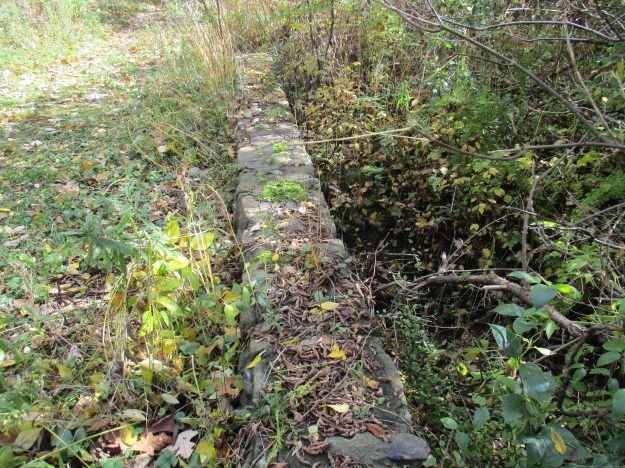
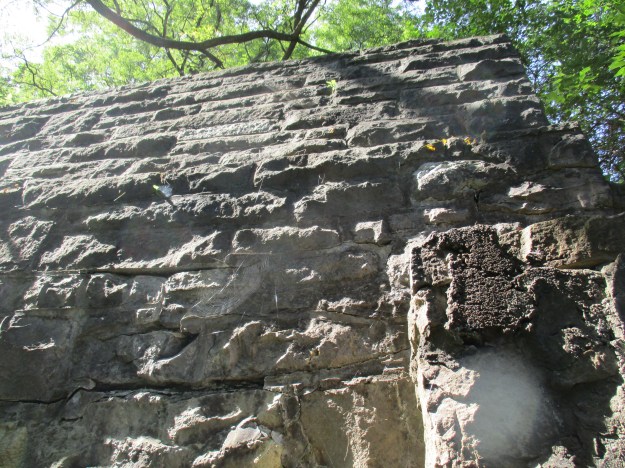
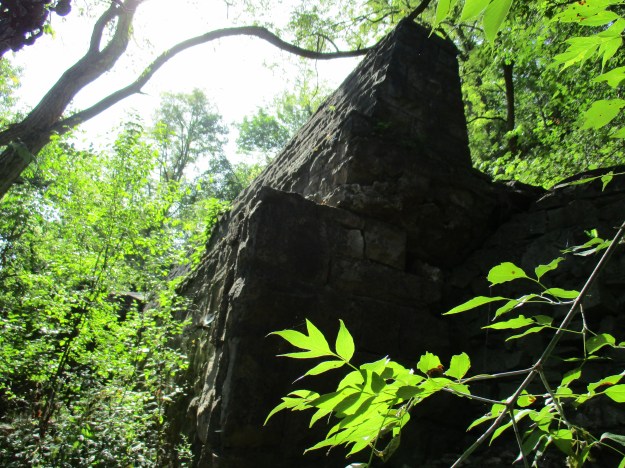
Along the abandoned road there are places where earlier attempts have been made to reinforce the embankment.  In some places, the vines and bushes have almost obscured the old blocks of cut limestone.  In another spot, a large chunk of stone has broken away from the embankment and rolled onto the former roadway.

img_3953

A large steel support for the crane that was used to remove the suspension bridge stands to the side of the abutment.  Nature is turning it into a planter.

img_3956

The towers and abutments were made of cut limestone blocks.

img_3957

From the level of the river, you can get a good view of the two towers that remain on the American side of the river.  A steel sculpture and observation deck were added in 1981 by Owen Morell.

img_3965

The old abutments look pretty impressive from below.

img_3958

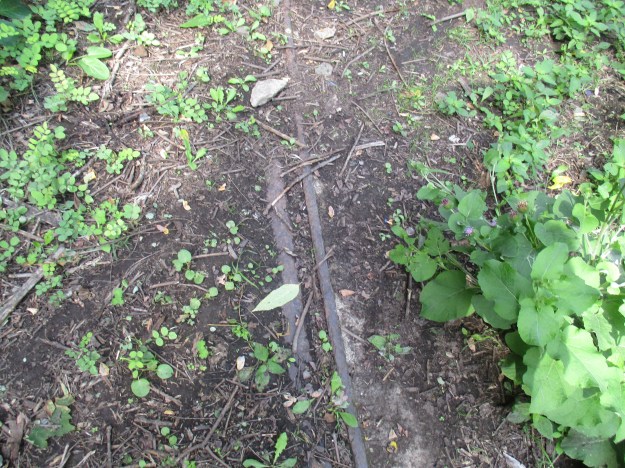
A curved steel rail is embedded in the old roadway near the abutment.

img_3970

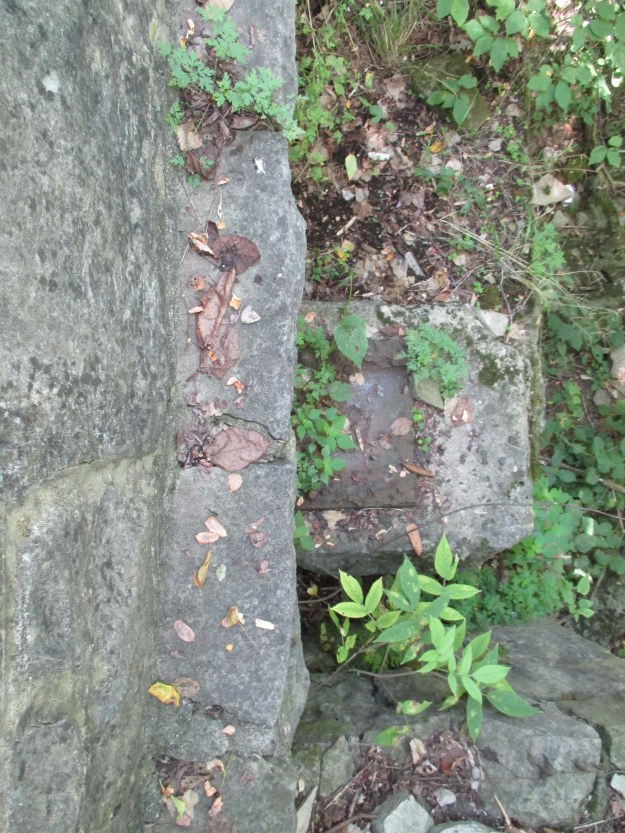
Looking over the side of the abutment you can see one of several places where steel support columns have been cut away.

img_3971

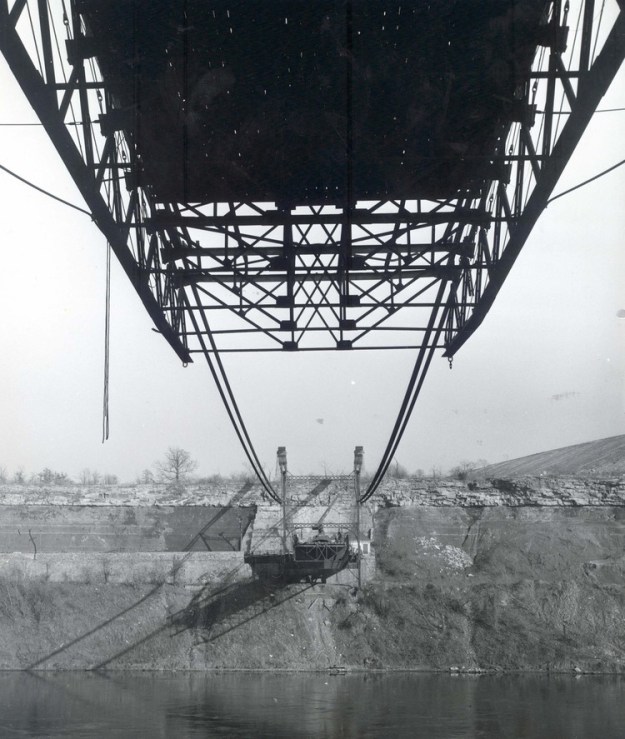
The suspension bridge was dismantled in 1963 and sold to a scrap yard.  The archive photo below shows the bridge with most of the road deck removed.

demo

Google Maps link: York Street Queenston

Like us at http://www.facebook.com/hikingthegta

Follow us at http://www.hikingthegta.com


The Niagara Gorge

September 16, 2016

Niagara Falls may be the fastest moving waterfall in the world having cut The Niagara Gorge from Queenston to Niagara Falls over the past 12,500 years.  The Niagara River runs for about 58 kilometers and is the natural outlet for Lake Erie.  That lake is about 99 meters higher in elevation than Lake Ontario and half of that difference occurs at the Niagara Falls.  Having spent a day of my holidays in the area of Niagara Falls and Queenston the common theme in all my pictures was the Niagara River.

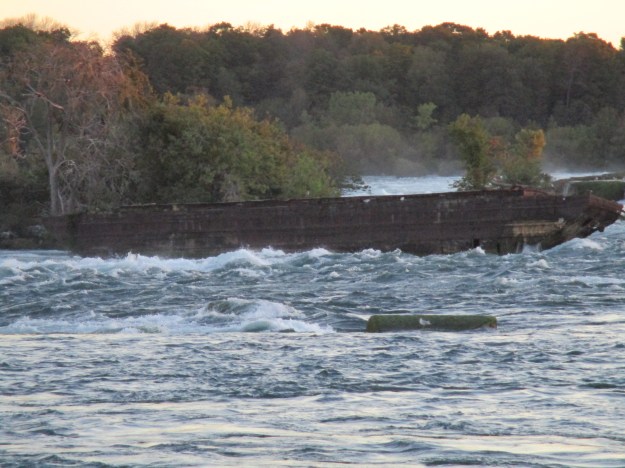
The Niagara River extends for about 35 kilometers from Lake Erie dropping less than three feet in height until it reaches the Upper Niagara Rapids.  It drops another 15 meters through the kilometer rapids as it reaches the brink of the falls.  There are a couple of interesting things along the stretch of rapids above the falls.  It was here in 1786 That John Burch built a saw and grist mill which was the first industry on the Canadian side of the river.  These mills were torched by the American Army when it retreated on July 26, 1814, after the Battle of Lundy’s Lane.  In the middle of the river, near the powerhouse, sit the remains of an old dumping scow.  On August 6, 1918, the scow broke loose from the tug it was tethered to and started drifting toward the falls with two men on board.  They opened the dumping chutes on the bottom and the scow grounded on the shale in the river just before they would have been carried over the falls.  They were rescued the following day on a line shot out from the roof of the powerhouse.

img_3705

In 1906 The Electrical Development Company of Ontario opened a beautiful building as home to their powerhouse.  This building supplied the Toronto market and was in operation until 1974.  In 1950 a treaty was signed by both the Canadian and American Governments limiting the amount of water that can be diverted from the falls and the hours in which it can be done.  During “tourist hours” the flow must not be less than 2832 cubic meters per second and it can be cut to half of that overnight.

img_3722

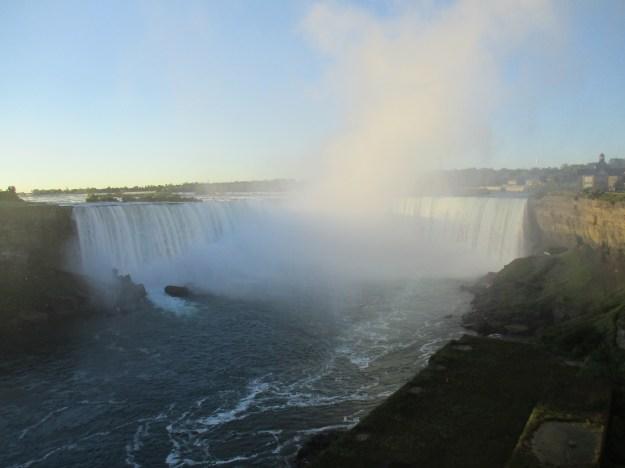
The Canadian Falls drops an average of 57 meters and there is a 52 meter deep plunge pool at the bottom.  Six million cubic feet of water goes over the falls every minute.  The process that erodes the falls and causes it to carve through the solid rock is known as cavitation.  As the water goes over the falls it picks up speed and loses internal pressure.  This allows air to escape as bubbles or cavities.  When the water comes to rest these cavities collapse sending out shock waves that help disintegrate the rock at the base of the falls.  The falls are expected to cut back for another 15,000 years at their current pace before they reach an old riverbed about 6 kilometers upstream.  At that time erosion will increase rapidly and the falls may be replaced with a series of rapids.  It should take about 50,000 years before the remaining 20 miles to Lake Erie is cut through.

img_3765

Looking downstream you see the American Falls on the right.  It ranges between 21 to 34 meters and carries less than 7 percent of the river’s water.  It is less spectacular because of the talus at the bottom caused by collapses and landslides.  It is estimated these falls could dry up in 2,000 years or so.

img_3757

The Bruce Trail runs from Queenston to Tobermory and follows the Niagara Escarpment for an 890-kilometer hiking trail.  Earlier in the week, I had used a day of holidays to visit the northern terminus of the trail and so it was fitting to visit the southern one as well.  The southern one stands in Queenston Heights Park near where the Niagara Gorge begins. This is also near the point where the original Niagara Falls began cutting a path through the escarpment on its slow journey to Lake Erie.

img_3856

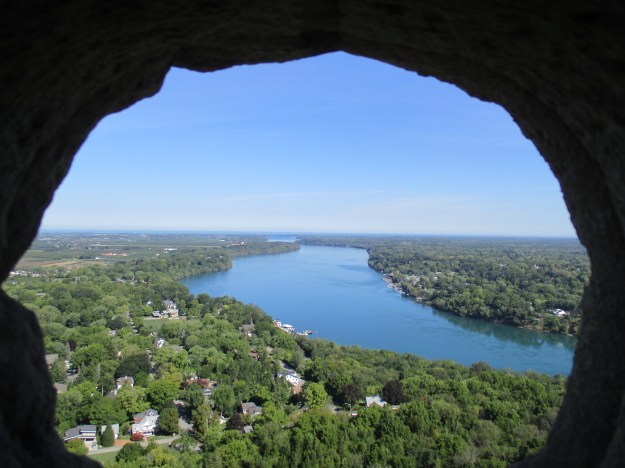
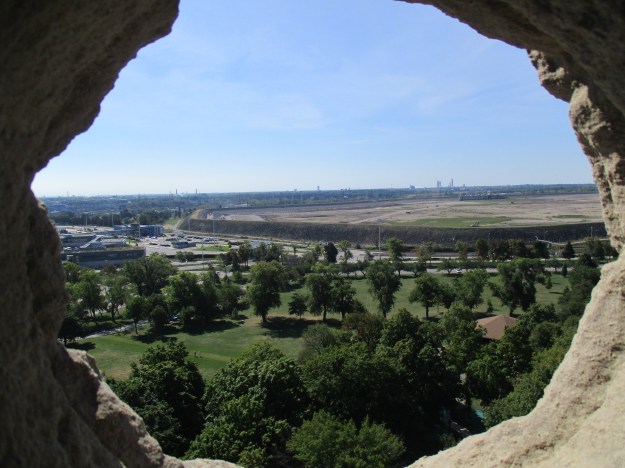
Queenston Heights Park is the site of one of the battles of the War of 1812.  It was during the Battle of Queenston Heights on October 13, 1812, that Isaac Brock was killed.  The current monument to Brock was built to replace an earlier one which was blown up in 1840.  For a small fee, you can climb the 235 spiral stairs inside the monument.  From the small portals at the top you will have a great view over the area.  In the picture below the casino and tall hotels in Niagara Falls Canada can be seen.  This shows you the distance that the falls have cut through the escarpment.

img_3904

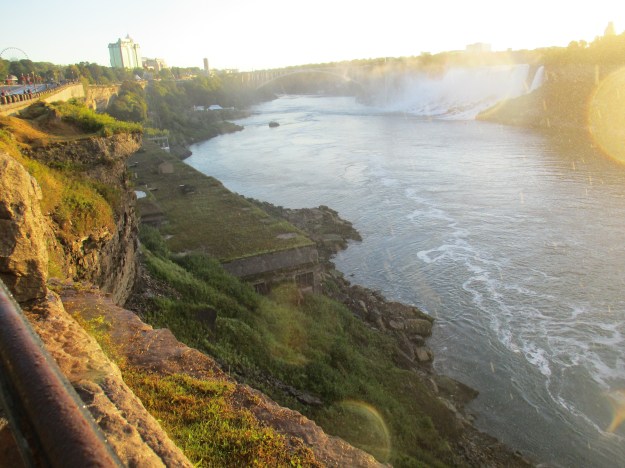
Looking to the east, past Queenston, the Niagara River appears peaceful as it flows to Lake Ontario.  The tableland below the escarpment does not have any gorge because the falls began to the west of here.  The cover photo shows the start of the escarpment on the American side of the river and the site of the original Niagara Falls.

img_3908

The building below is the one that housed The Colonial Advocate, a paper published by William Lyon McKenzie which called for government reform.  The seeds of the rebellion of 1837 were planted from this newspaper.  In front of the house stand two honey locust trees that are part of 5 he planted on April 18, 1824, when he started his paper.  One of them can be seen just behind the chimney in the picture below.

img_3935

A blue marked trail leads away from York Street in Queenston and heads toward the river.  As you follow it you will see old pavement indicating that you are on the road that led to the old Queenston-Lewiston Bridge.

img_3952

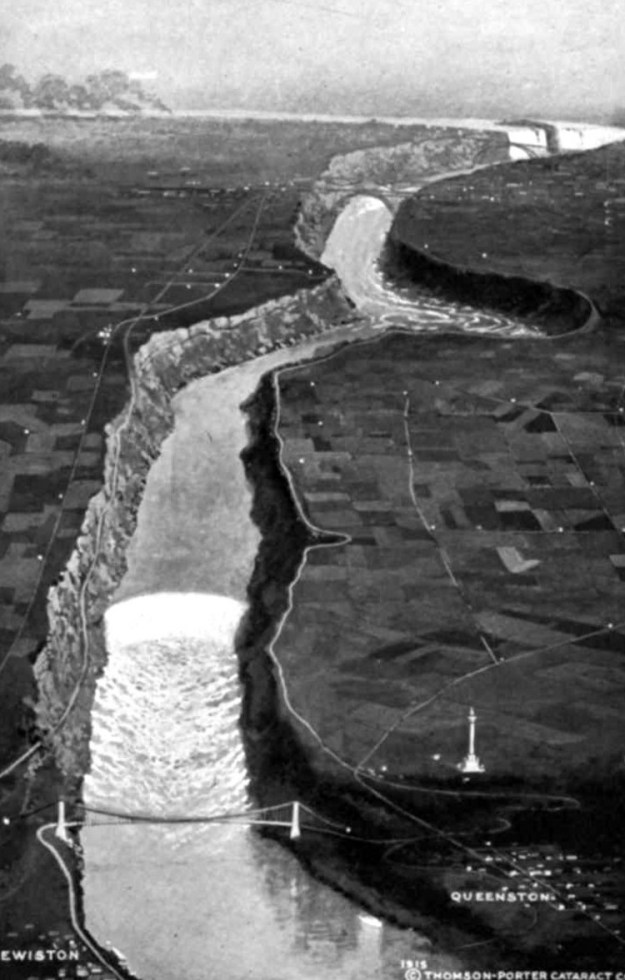
This archive photo from 1915 shows the Queenston-Lewiston suspension bridge.  Notice how exposed Brock’s Monument is compared to the forest it now stands in.  The bridge stands at the foot of the escarpment and the 90-degree turn in the river can be seen upstream.  This is the site of the Whirlpool Rapids.  When the erosion of the gorge reached this point, about 5,500 years ago, it encountered an old riverbed that had been buried in the previous ice age and creating the bend in the river.  The water racing downstream from the falls is forced under the surface here creating the whirlpool effect can be seen on the surface.

queenston-1915

The Quennston-Lewiston Bridge was replaced in 1962 with the current bridge.  The suspension bridge was removed the same year but abutments remain on the Canadian side of the river.

img_3967

An observation deck has been built above the remaining bridge abutments on the American side of the river.

img_3965

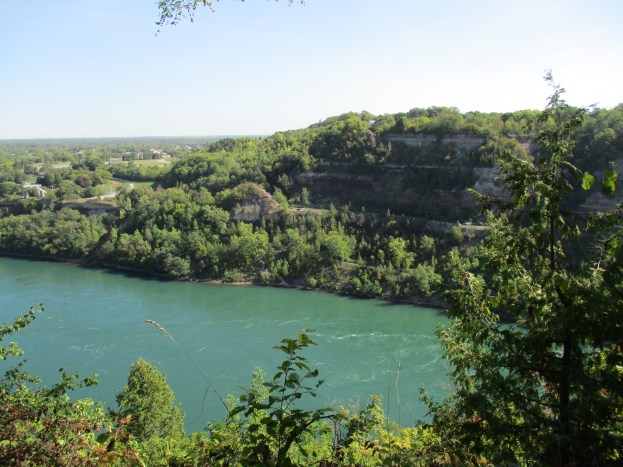
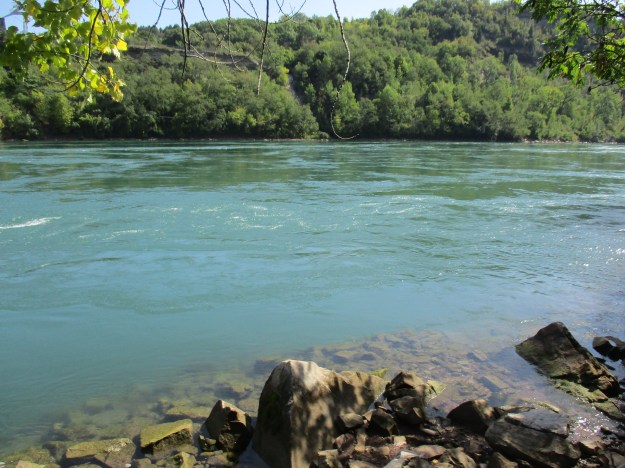
The water in the Niagara River has an interesting shade of green due to dissolved minerals in the water.  Every minute over 60 tonnes of minerals are carried over the falls, mostly limestone but some shale and sandstone as well.

img_3964

This part of the province has some of our earliest history and there is plenty to explore on future trips.

Google Maps Link: Niagara Falls

Like us at http://www.facebook.com/hikingthegta

Follow us at http://www.hikingthegta.com

Hiking the GTA #200 – Greatest Treks 2

Tuesday, September 27, 2016

Hiking the GTA made it’s initial post on April 20, 2014, as a way of organizing and commenting on my photos from that day’s hike.  As the number of stories grew, so did the number of readers.  When we reached 100 posts we paused to look back at the fifteen most popular stories in an article we called “Greatest Treks”.  With its brief summary, picture, and link for each story it proved useful in helping people look for places to explore.  Today, we mark our 200th post with Greatest Treks 2.  Following the same format, here then, are the fifteen most popular stories from our second 100 posts.
15. Gore & Vaughan Plank Road  Jan. 14, 2016

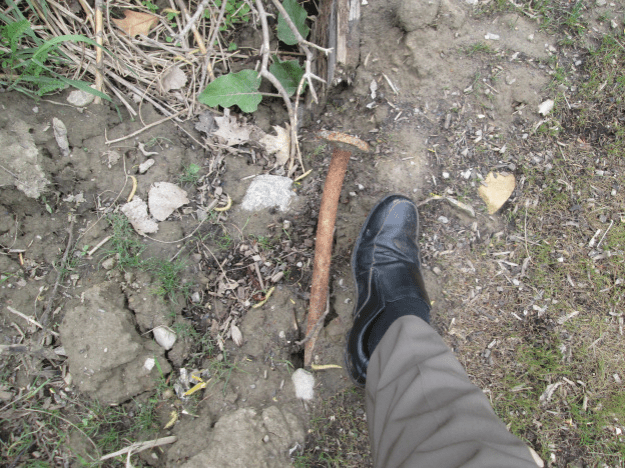
The Gore and Vaughan Plank Road Company was established in 1855 to build a plank road along Dufferin Street.  The planks for the Gore and Vaughan Plank road were sixteen inches wide by 8 inches thick and sixteen feet long.  Planks were held together with four foot long spikes that were driven in, two feet apart, in opposing directions, one of which is shown in relation to my shoe in the picture below.

gore

14. Rice Lake’s Sunken Railway  Jul. 26, 2016

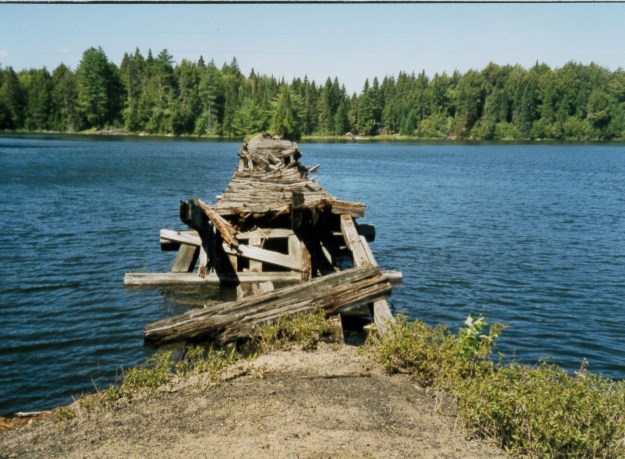
The first train from Cobourg to Peterborough ran the 45.8-kilometer track for free on December 29, 1854, to show off the new railway.  The route crossed Rice Lake and when completed at the end of 1854 the trestle was nearly 5 kilometers long making it the longest railway bridge in North America at the time.  By 1861 the trestle was abandoned but the part below the waterline still remains in Rice Lake.
Harwood 3

13. Cache Lake Trestle  Ju. 17, 2016

In the spring of 1896 work began on driving pilings into Cache Lake for the trestles that would cross two bays.  The first freight train from Parry Sound to Ottawa ran on October 9, 1896.  This trestle was abandoned in 1933
Cache 1

12. Gates Gully Scarborough  May 7, 2016

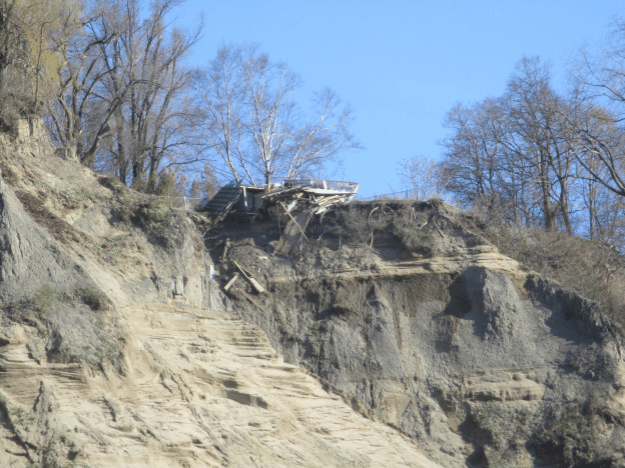
Gates Gully runs from Kingston Road to Lake Ontario and provides one of the few places where there is access down the side of the Scarborough Bluffs.  Over the years it has been home to natives, smugglers, soldiers, and rebels.  The Bellamy Ravine Creek flows through the bottom of the ravine where it makes a 90-meter drop from the tablelands to the lake.  It also features one of the few houses that is currently falling over the bluffs.

gates

11. The Haunted Hermitage  Nov. 15, 2015

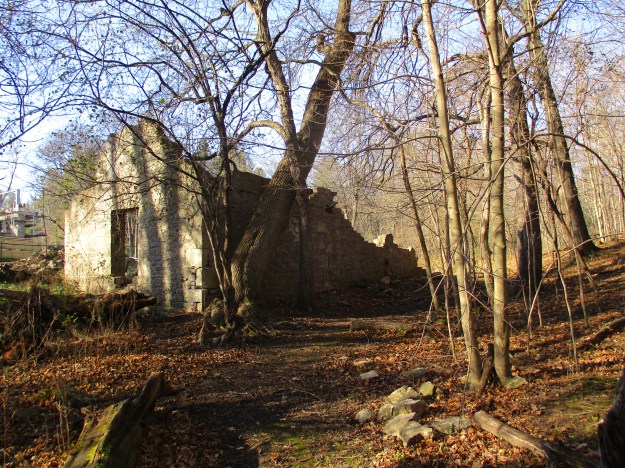
The two-story house that would become known as The Hermitage was built in 1855 using hammered limestone for the front and side walls and field stones for the rest.  It has been in ruins for years but the remaining walls have been recently restored.  Widely sought by paranormal seekers it is said to be haunted by the ghost of William Black.  This picture shows the remains of the building that housed the laundry.

herm

10. The Devil’s Punchbowl  Dec. 26, 2015

The Devil’s Punchbowl, along with the Lower Punchbowl, is one of the few places where you can see all the geological layers of the Niagara Escarpment.

punch

9. La Grande Hermine  Sep. 16, 2016

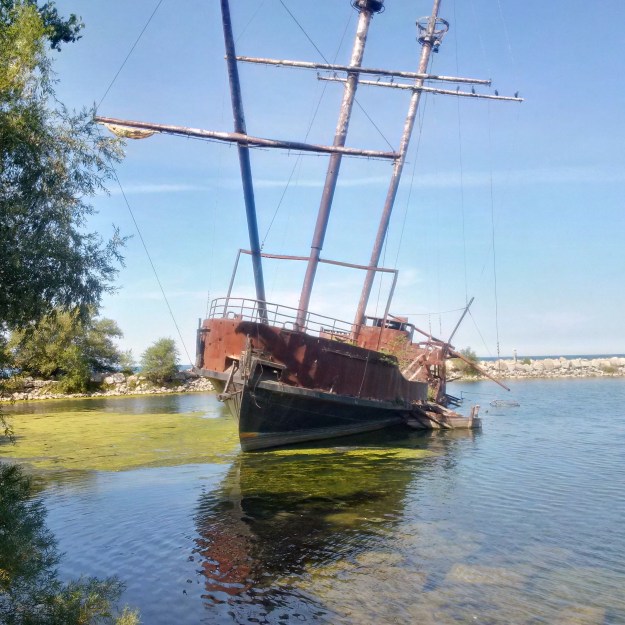
The wrecked ship that sits along the side of the QEW near St. Catherines is featured in this short story.

img_20160916_132430_hdr

8. Camp Calydor Gravenhurst  Aug. 2, 2015

Known as Camp 20, Calydor was a P.O.W. camp in Gravenhurst which housed German officers.  Previously a tourist resort and then a tuberculosis sanitarium, it was used as a resort again before being closed for good.

calydor

7. The Vandalized Memorial  Dec. 13, 2015

Taras Shevchenko was born in Ukraine in 1814 in the feudal system of the era. He was orphaned at the age of 11 and went on to become one of the country’s most prolific writers composing over 1000 works. Some consider him to be the Ukrainian version of Shakespeare. His memorial was opened in Oakville in 1950 but has been vandalized on multiple occasions.

taras

6. The Ghost Town Of Sixteen Hollow  Sep. 12, 2015

The area known as Sixteen Hollow was home to an industrial community that became a ghost town by the 1880’s.  Today there is not much left except the church and a few remnants including the remains of a former bridge across the ravine.

sixteen-jpg

5. Bronte Creek’s Haunted House  Jun. 25, 2016

Bronte Creek Provincial Park covers almost 2000 acres of land or about 10 land grants.  Created in 1975 it sits along Bronte Creek between Burlington and Oakville.  The park includes the homestead of Henry Breckon who, some believe, still haunts the house he built in 1899.

IMG_2297

4. Horseshoe Curve Rail Disaster  Jun. 12, 2016

When the train left Markdale on Sep. 3, 1907 making a special run to the Exhibition in Toronto everyone anticipated a day of fun and not the horror that would leave 7 dead and 114 injured.  This post looks at what remains of the site today including the curve that can still be seen in the field pictured below.

IMG_1966

3. The Longhouse People Of Crawford Lake  Nov. 21, 2015

Crawford Lake is one of a handful of meromictic lakes in Ontario and this fact led to the discovery of a pre-contact native village.  An ungrooved axe or celt had been found here by a previous land owner and it is now part of a 10,000 artifact collection that has been uncovered between 1973 and 1989.  The post holes for the frames of 11 longhouses have been discovered and three of these have been reconstructed.

crawford

2. Lotten – Cawthra Estate Mississauga  Jan. 31, 2016

In 1926 Grace Cawthra-Elliot and her husband Colonel Harry Cawthra Elliot built a new home on the family property near Port Credit using bricks covered with plaster.  The old dirt road that accessed the home has since been named Cawthra Road and widened to 6 lanes in places.  The property has been protected from development because it is also the habitat of Jefferson Salamanders, a species seen to be at risk.  Grace called the property Lotten because it was lot ten.

lotten

1 The Gap  Nov. 14, 2015

In 1962 a quarry blasted a huge gap in the Niagara Escarpment and set off a chain reaction that led to the escarpment being declared a World Biosphere Reserve by UNESCO.  The gap in the escarpment can be seen from the 401 which is 3 km away.  This hike explores the Gap and the history of the quarry behind it.

the-gap

Here’s a link to the post: Greatest Treks which looks back on the 15 most popular stories of our first chapter.  Thanks for taking the time to read some of our stories or enjoy the pictures and perhaps we’ll cross paths on a trail somewhere down the road.

Like us at http://www.facebook.com/hikingthegta

Follow us at http://www.hikingthegta.com