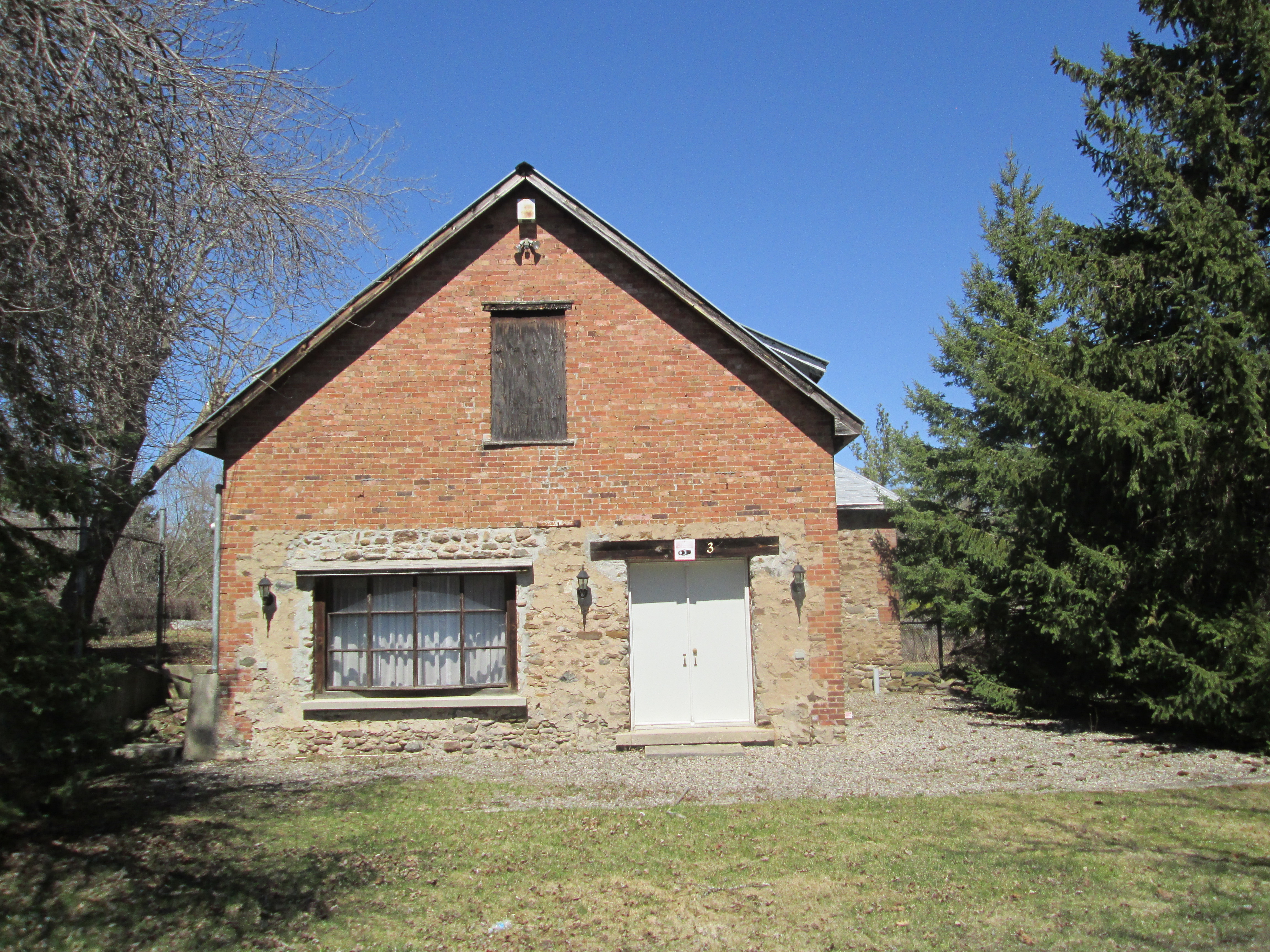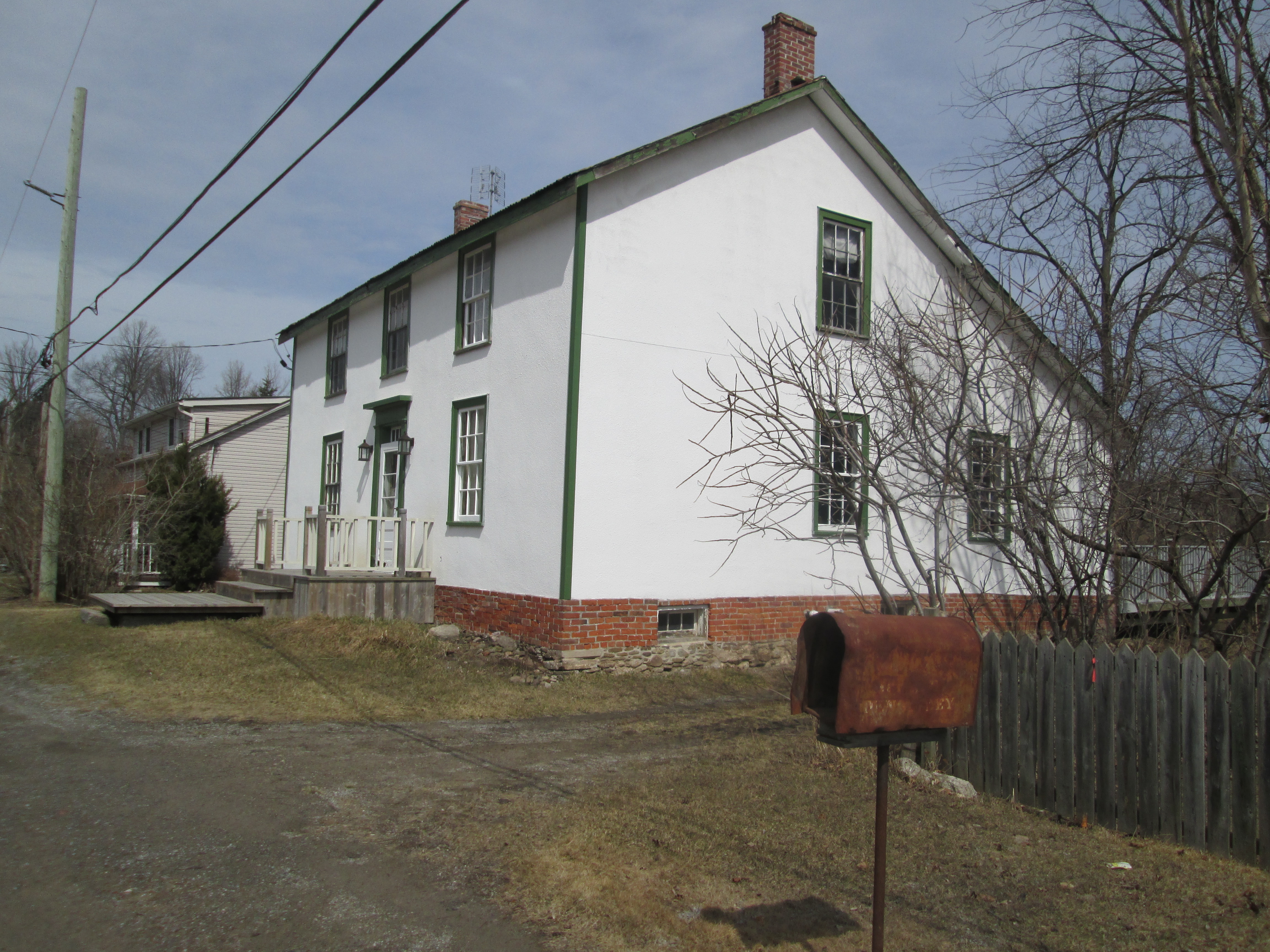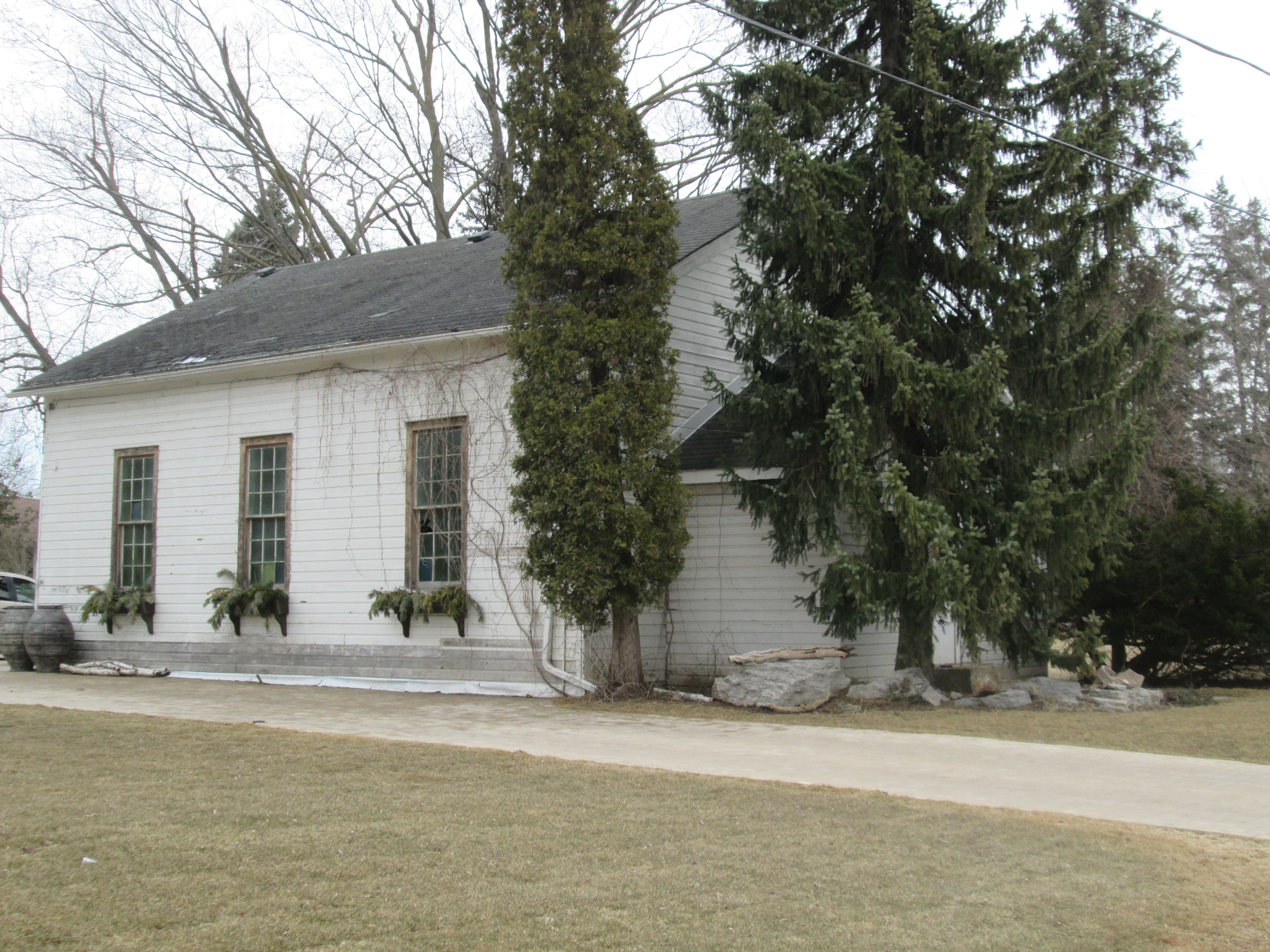
Category Archives: Credit River

Barber Paper Mills – Georgetown

Saturday June 6, 2015

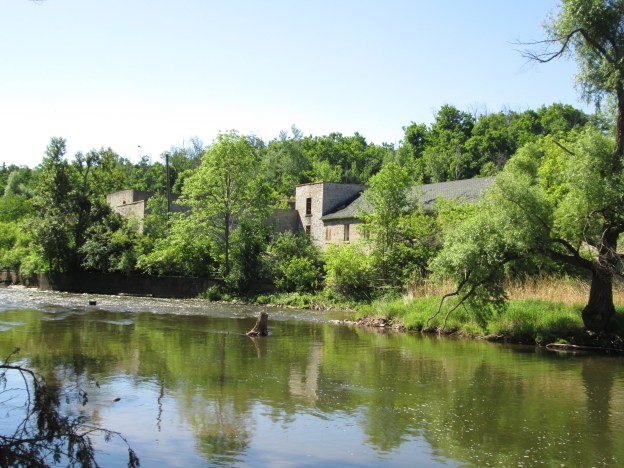
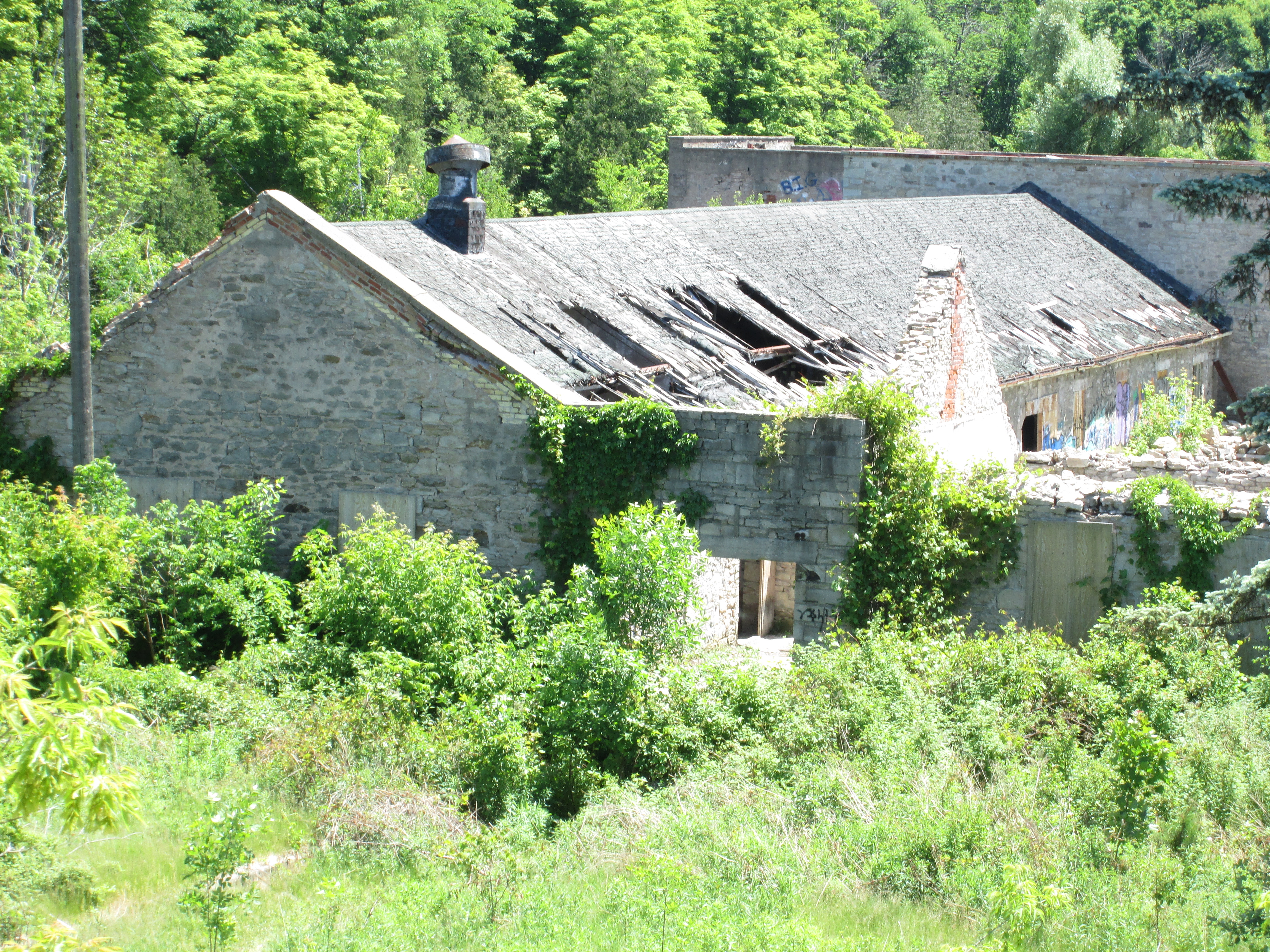
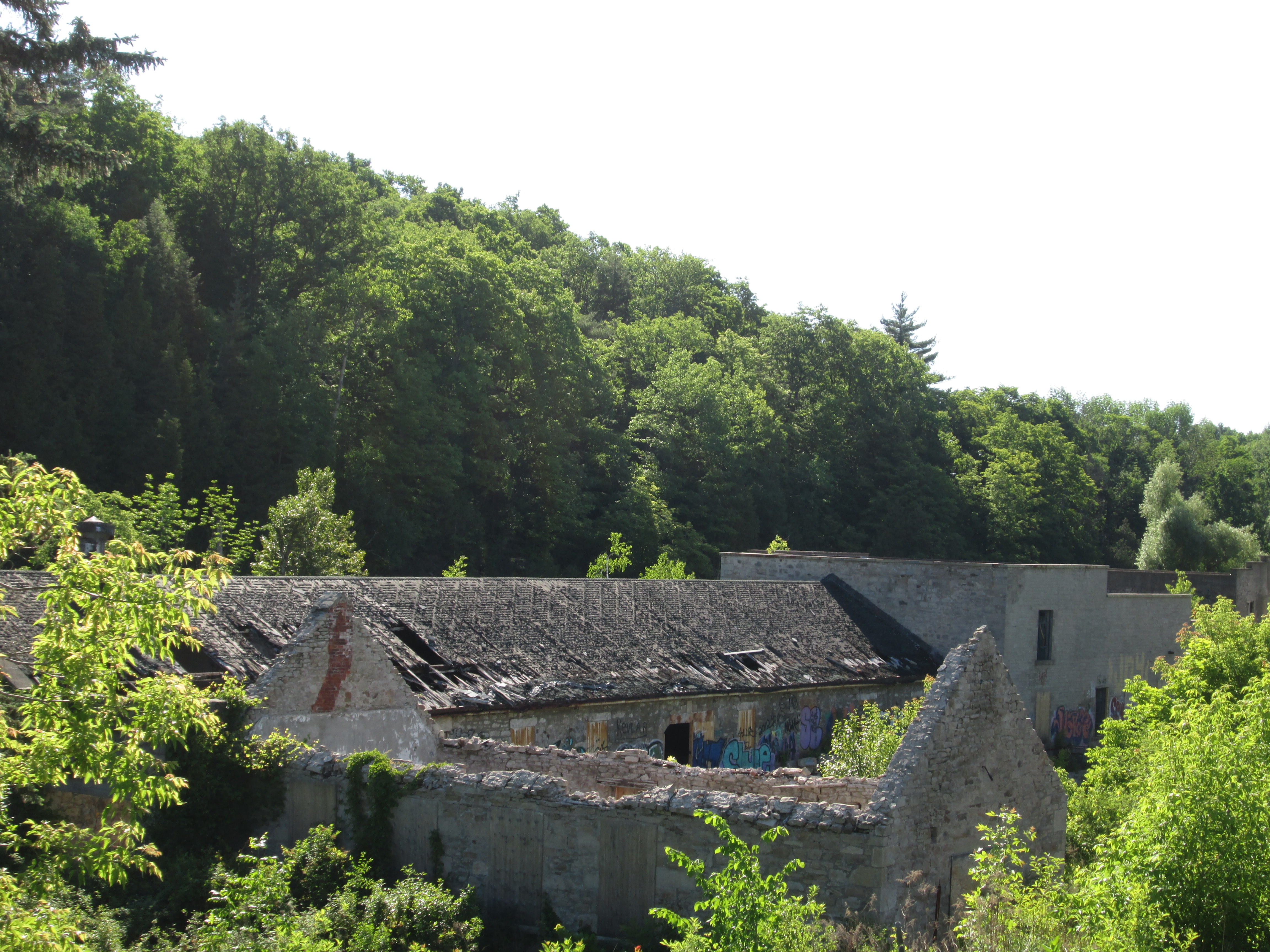
The Barber Paper Mill ruins are comprised of several Victorian era industrial buildings that are slowly decaying in Georgetown.  It was sunny and 11 degrees with enough breeze to blow the bugs away.  The next stop up the Credit River north of Norval is the Barber Dynamo.    We decided to access it from the north side which meant parking on Maple Ave. in Georgetown right beside the ruins of the Barber Paper Mills.  An exploration of the Dynamo pretty much requires a look at the paper mill that led to it’s creation.

The Barber family came to Upper Canada in 1822 and settled in the Niagara Peninsula.  In 1825 they helped James Crooks win a $500 bounty from the government for establishing the first paper mill in the colony.  In 1837 they decided to go into business for themselves and moved to Hungry Hollow (now Georgetown) and bought the woolen mill that belonged to George Kennedy who, in 1820,  was the founding father of Georgetown.  As the business expanded they started a second woolen mill just south of Streetsville in what would be known as Barbertown. By 1852 their woolen industry outgrew both buildings and a new larger one was built in Streetsville.  It was at this time that the new paper rolling building was completed.  This allowed the mill to expand from a 91 cm cylinder to a 122 cm paper rolling machine.  Wallpaper was added to their list of products and by 1862 it is said that they had the largest wallpaper factory in North America.
IMG_5314

Beside the Paper Mill building stood the machine and maintenance shop.  It has lost all of it’s roof and can be seen in the foreground of this picture.
IMG_5135

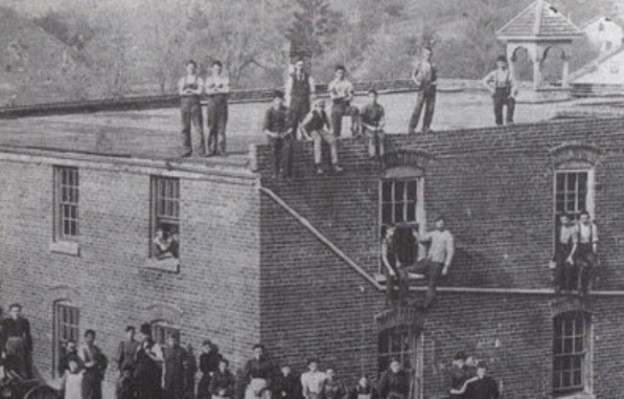
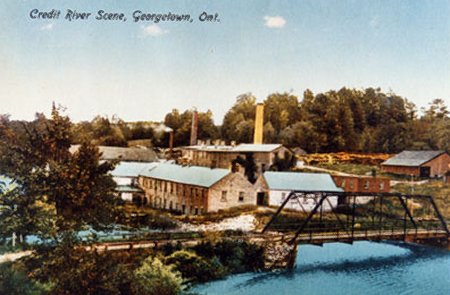
The archive photo below from 1910 shows the paper mills as they looked in their prime.  The paper machine building and maintenance shops can be seen near the bridge.  The little brown building behind the bridge was the offices, now demolished.  A horse barn and wood storage lot stand where Maple Avenue now runs.  The two smoke stacks were on boiler and digester rooms where the paper pulp was made.
Barber paper Mill 1910

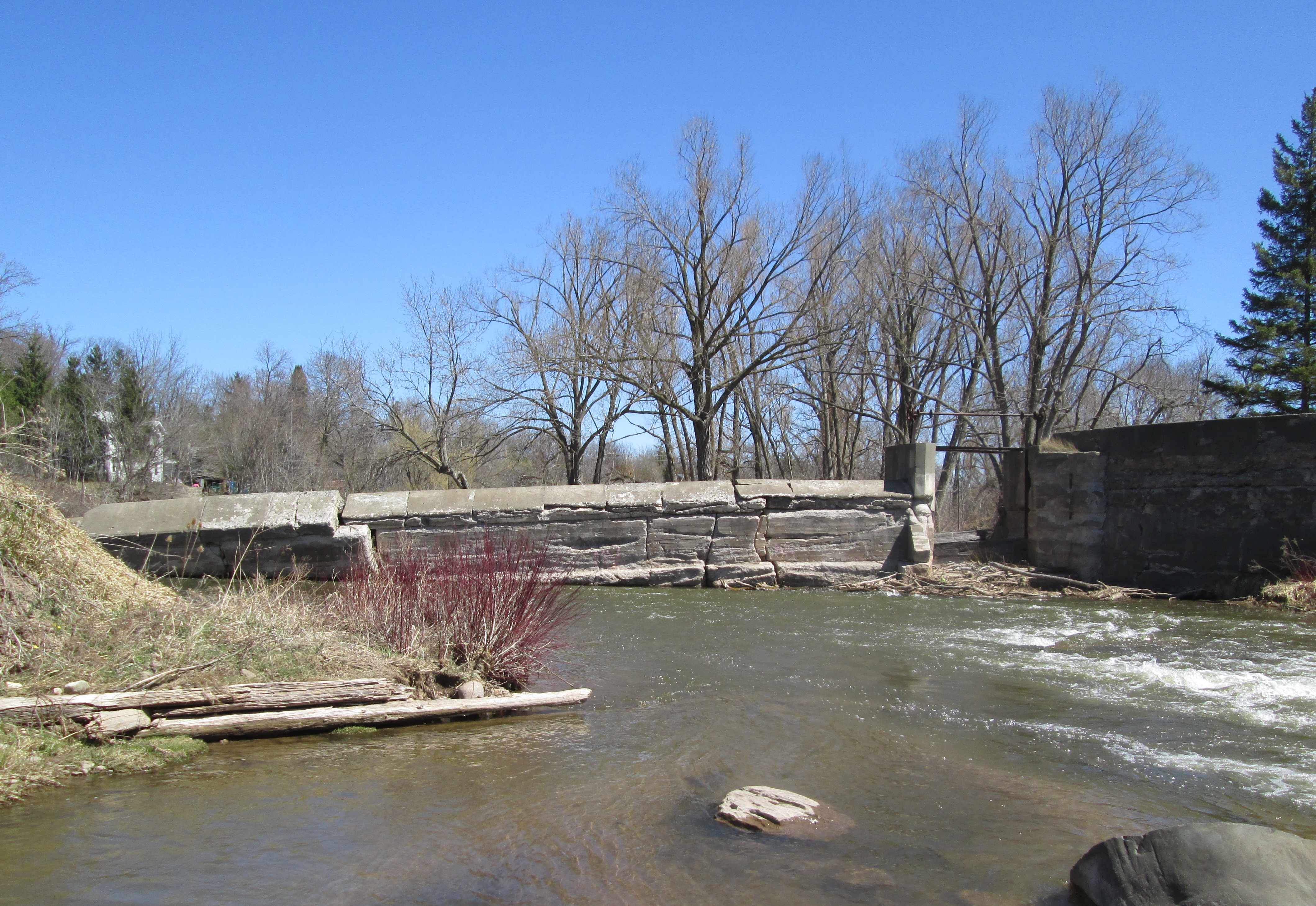
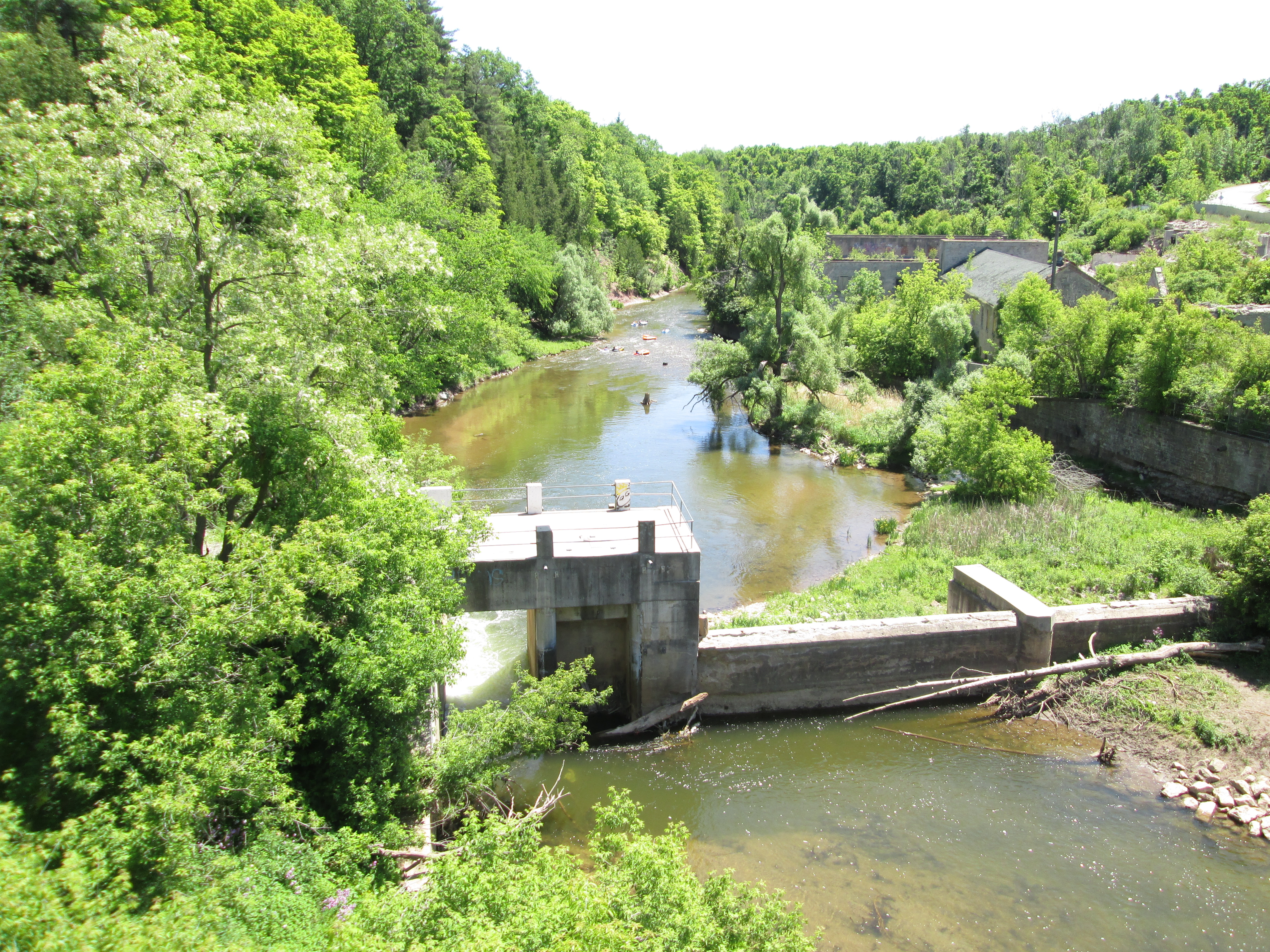
The dam across the Credit River for the paper mill was replaced with the current concrete one some time between the picture above from 1910 and a subsequent one from 1930.  This picture is taken from the modern bridge which was built in 1973.
IMG_5311

In 1869 John Roaf Barber took over the mill operation at the age of 30.  By 1886 the business was growing and the mill ran into an old problem.  Insufficient water power to keep the machines running.  At the mill site the head of water (height which it could be made to drop to do work) was only 4.5 meters.  A spot was found about 3 km downstream where a head of 6.6 meters could be obtained. The solution was to build the Barber dynamo which will be explored in a companion post.  The mill was using two sets of turbines like the one pictured below.  It appears that there may be at least 3 of these sets of turbines in the grass behind the sorting building which means the old ones from the dynamo may have been brought here as well. When the dynamo was brought into service in 1888 it made the paper mill the first industry in North America to generate and transmit electricity to operate it’s machines.
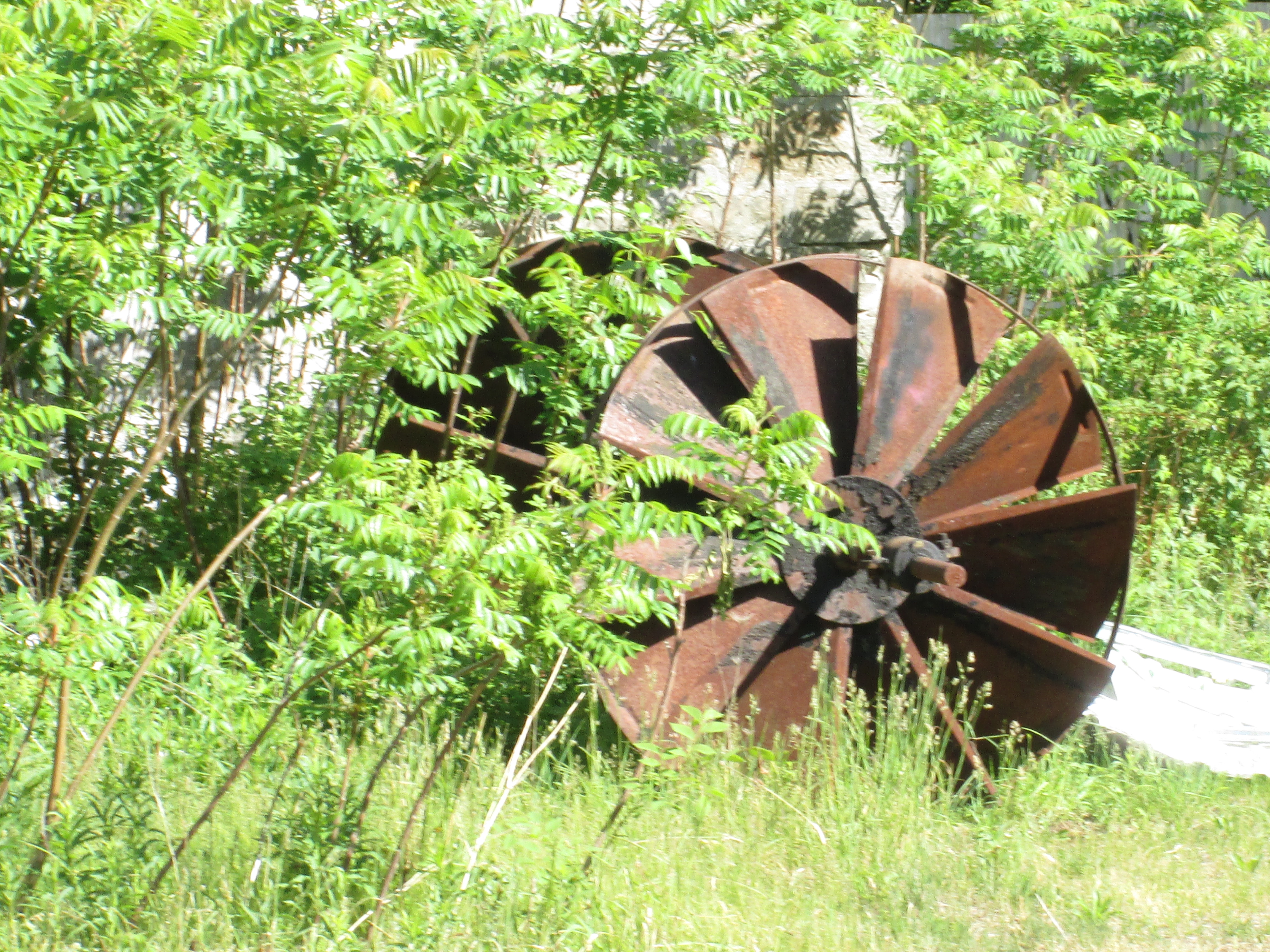
IMG_5351

This is the river view of the paper machine building.  Paper had been made out of cotton and linen rags until 1869 when a pulp mill was added so that paper could be made from oat, wheat and rye straw.  By 1879 wood pulp was replacing straw and John Roaf Barber was on the leading edge of the new process.  The building below produced some of the countries finest wood based papers and ironically today there is a small tree growing on the roof above the first window.
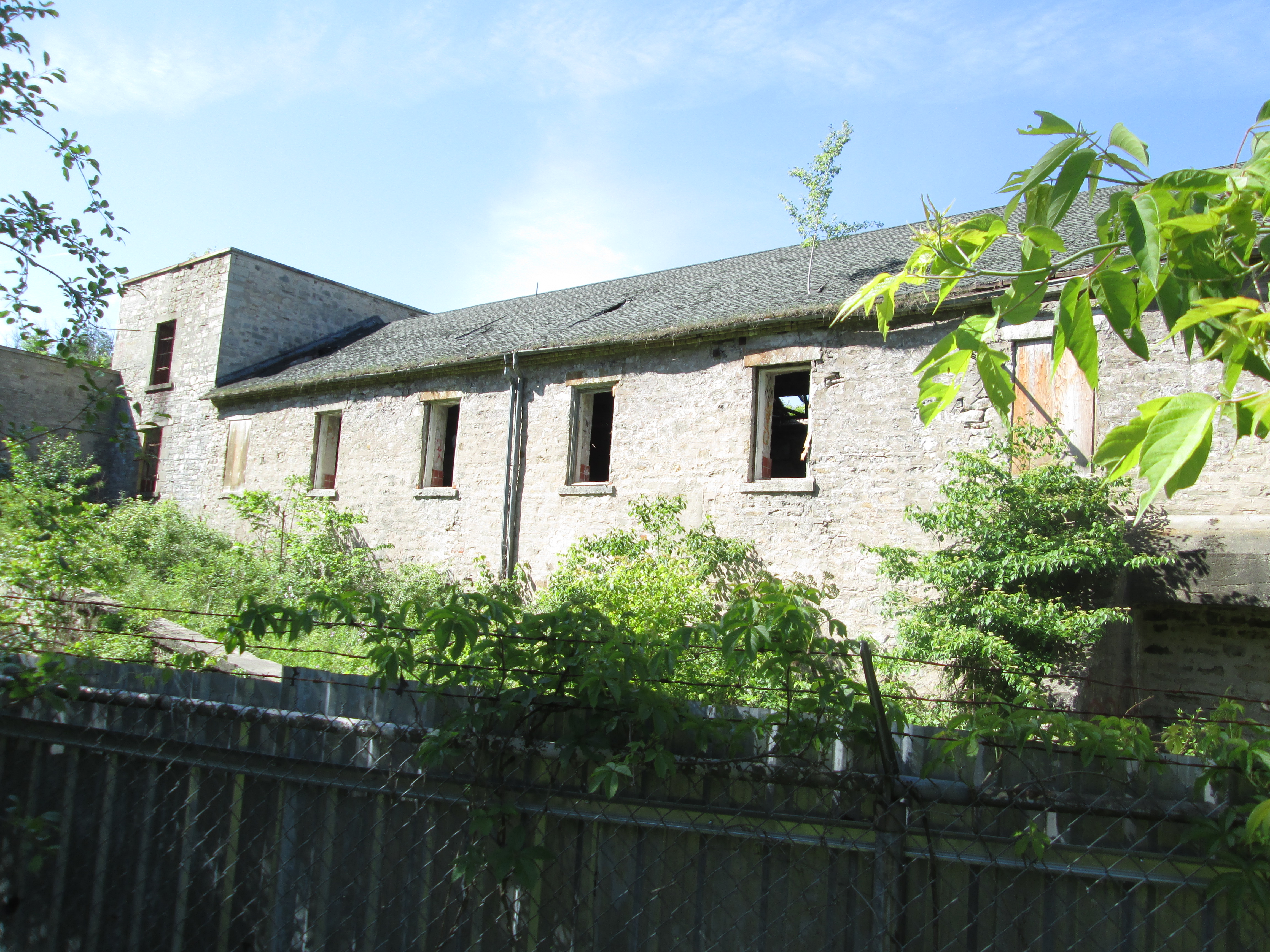
IMG_5334

The power connection station on the river side of the building is a later addition as is testified to by the red bricks inset into the field stone construction of the rest of the building.  There were originally two lines running from the dynamo to the mill.  One was used for lighting and one to power the machines.  After 1913 the mill was converted to Ontario Hydro.
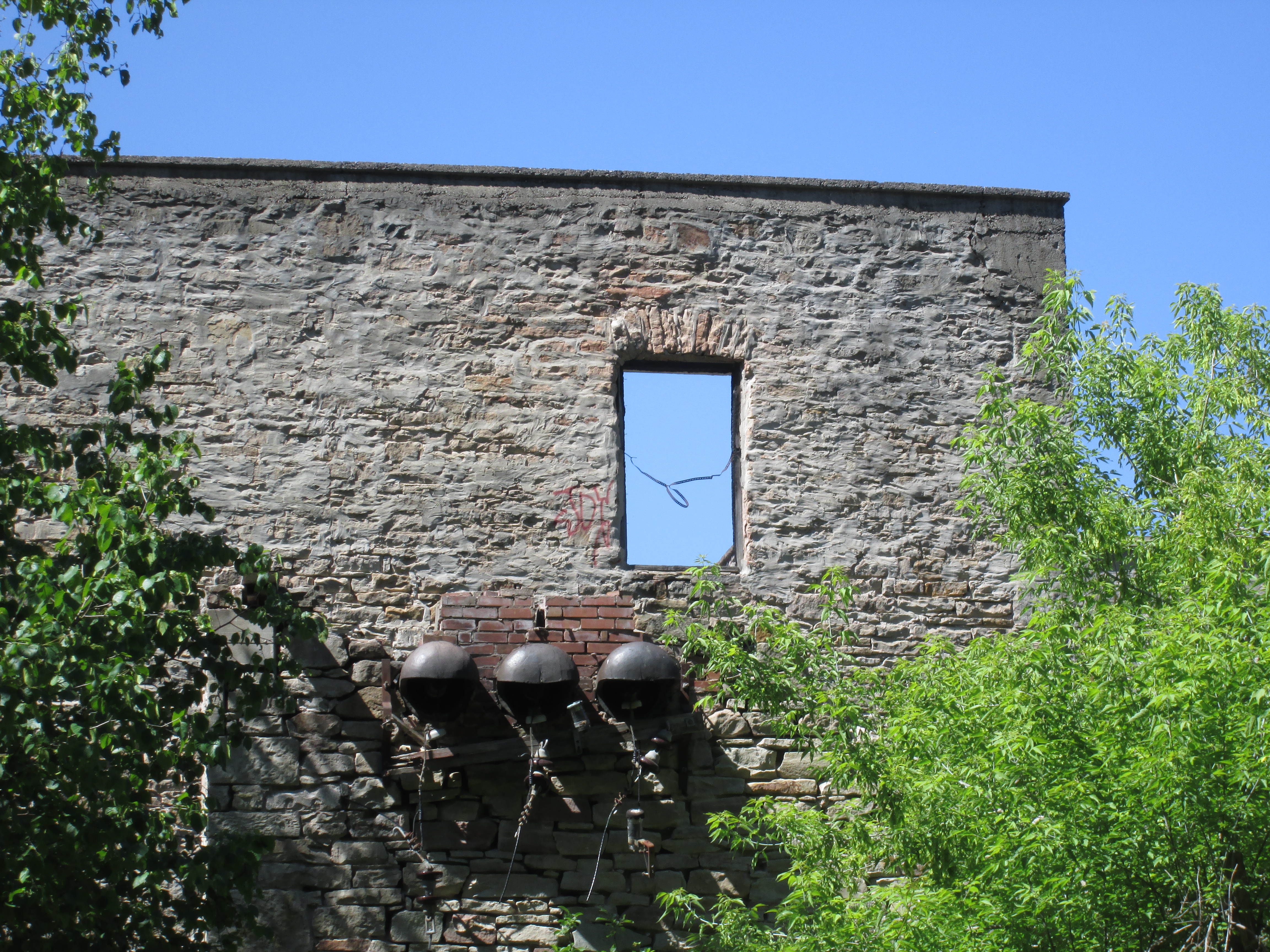
IMG_5200

This shot is taken from Maple Avenue and shows the south end of the property.  The incoming sorting and storage building is in the rear while the foundations for the incinerator building or the shipping building can be seen in the foreground.
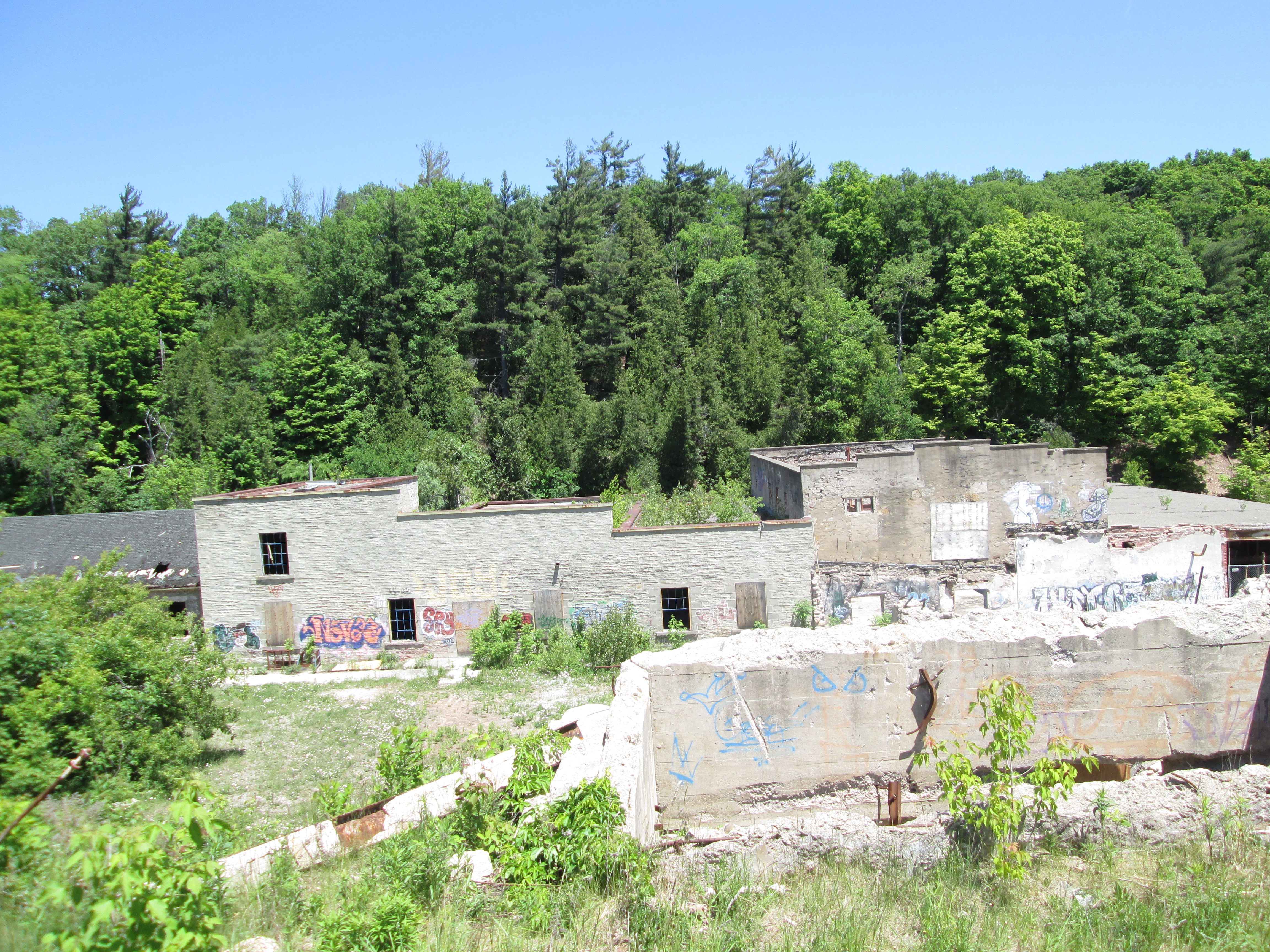
IMG_5319

We crossed the bridge to a blue marked side trail that is part of the Bruce Trail. Forget me nots grow along the north side of the Credit.  Legend has it that when God was naming the plants, this little one called out “forget me not” and God chose that for it’s name.  Prior to joining Canada in 1949 the Dominion of Newfoundland used the forget me not flower for their Remembrance Day flower. The poppy has since been adopted but some still prefer the traditional blue flower instead.

IMG_5189

Normally born between late May and early July white tail deer fawns weight 4 to 8 pounds at birth. Fawns are supposed to hide for the first week while their mother forages. After this they will be with the mother until weaned in the fall. They will lose their white spots within the first year but they help camouflage them when they’re infants.  This little one is barely taller than the log it stands in front of and at first I thought it was a dog.

IMG_5361

The paper mill was sold by the Barbers to Provincial Papers in 1913 who operated it until it closed in Nov. 1948.  Various tenants occupied the buildings until the mid-1970’s when it was closed and left to rot.  As for the fate of paper mill ruins?  That remains undetermined but in 2008 the site was named as a cultural heritage property.  In 2015 it made Heritage Canada’s top 10 list of most endangered heritage sites.  The current owners proposed a 14 story condo with much of the remaining heritage buildings retained.  Problems with clean-up of soil contaminated by years of heavy industry have left the project on hold and the property is on the market again for a cool 5 million dollars.  Leaving it behind we continued along the river toward the site of the Barber Dynamo.

Like us at http://www.facebook.com/hikingthegta

Follow us at http://www.hikingthegta.com
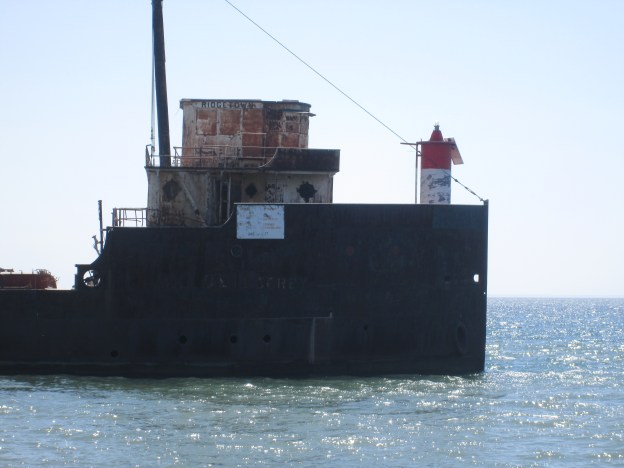
The Ridgetown – Port Credit

Saturday, May 23, 2015

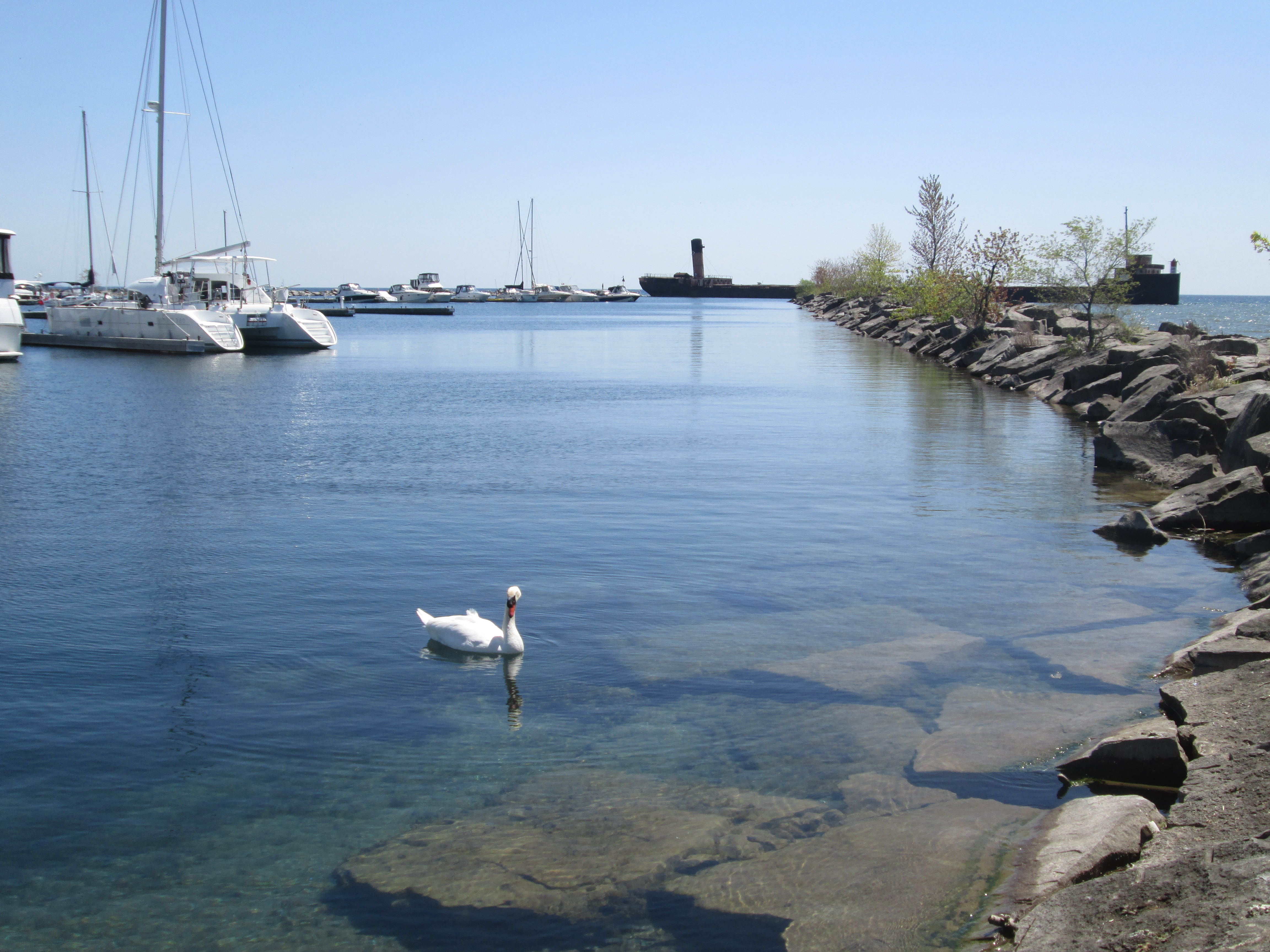
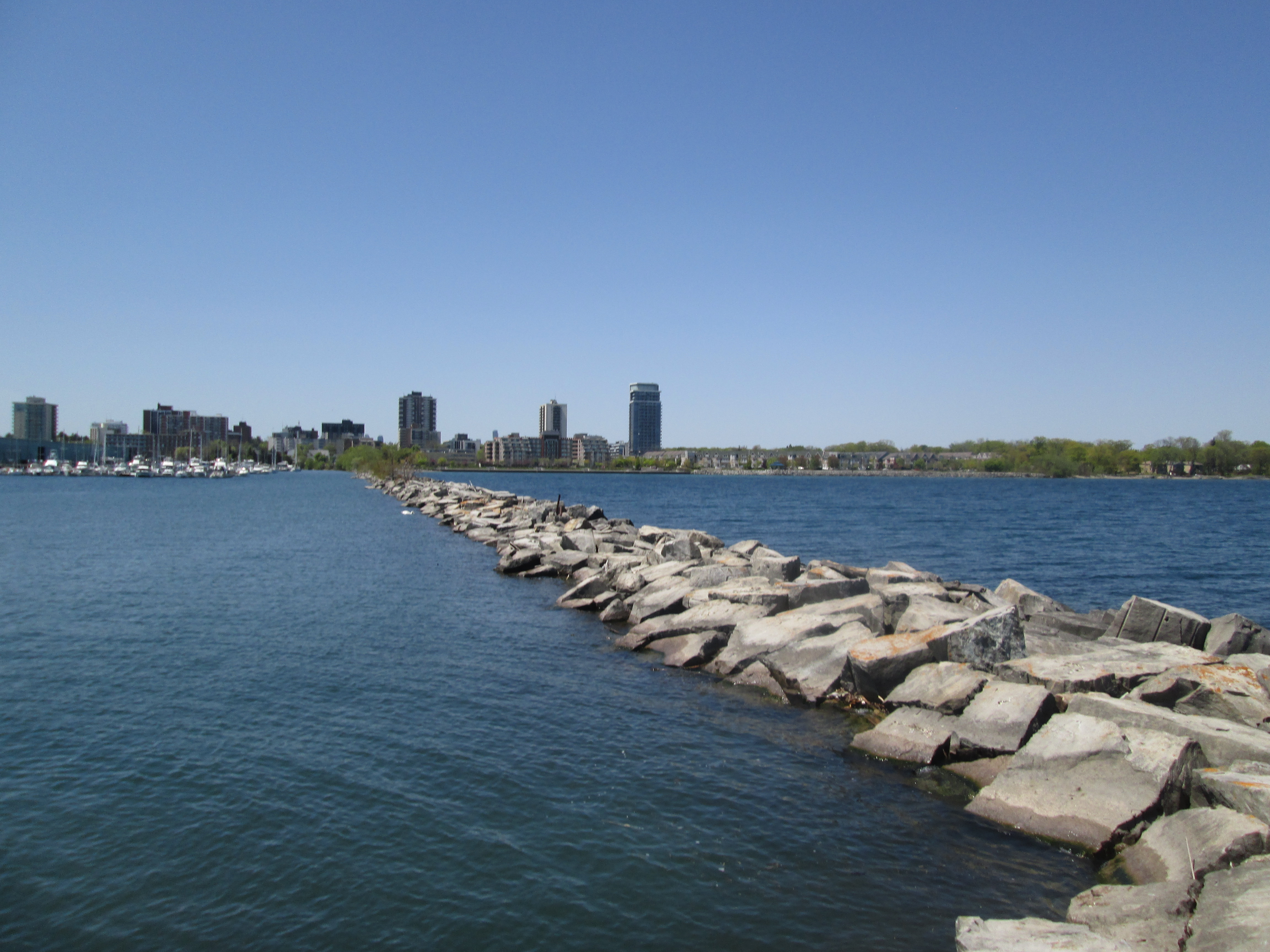
It was one of those spring mornings that start off cool, at only 10 degrees, but quickly warms up.  After several recent visits along the Credit River it seemed like a good time to visit the mouth of the river.  Port Credit is an unusual town in that it didn’t grow up around a mill or a cross-roads.  It was a planned community laid out by the government to support the harbour that was being built as a back-up to the harbour in York (Toronto).  The Port Credit harbour is at the river mouth and is sheltered by a pair of break walls and The Ridgetown, a partially sunken bulk freighter which can be seen in the cover photo.  The Ridgetown was also featured in the Adamson Estate on Cooksville Creek.  There is plenty of free parking in town near the library.  We crossed Lakeshore Road where the post office sits on the corner of Stavebank Road.

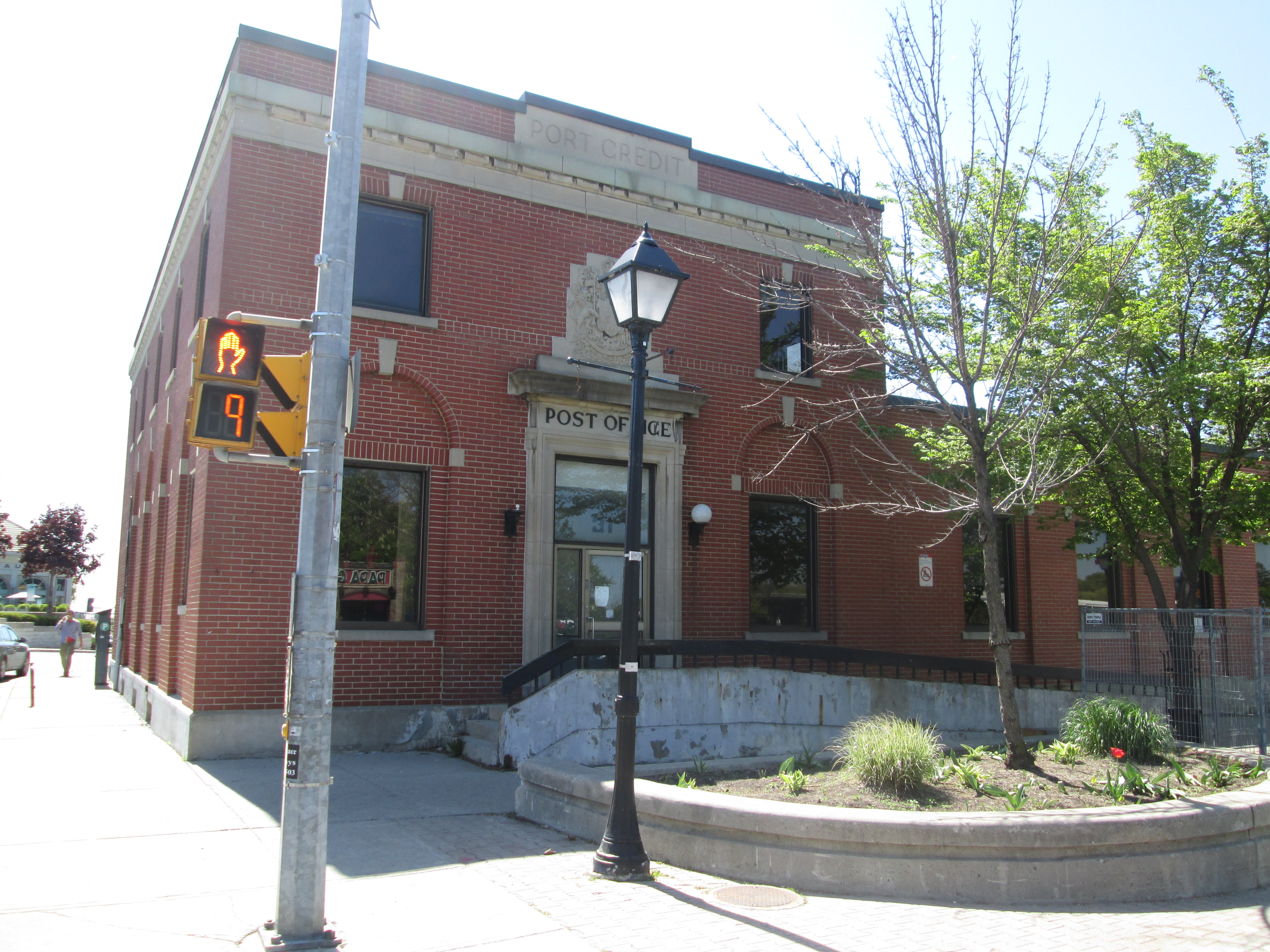
The Port Credit Post Office, Customs House and Armoury was built in 1931 as part of a “make-work” program during the Depression.  The site had been reserved for government use since 1820 and when the decision was made to build a new public building in Port Credit it was ideally suited.  The Department of Public Works had specific criteria which included “good drainage, easily accessible, in a commercial district, visually prominent, and on a corner lot”.  Post Offices were also to be “fairly” close to the harbour or railway station.  31 Lakeshore Road East met all these criteria.  The building is constructed in a style known as Edwardian Classical which was popular during the reign of Edward VII (1901 – 1910).  Public works had suspended it’s building program at the start of WWII and picked it back up in 1927 with its existing building designs. This is how the Post Office building came to be 20 years out of date in its architecture.

IMG_4702

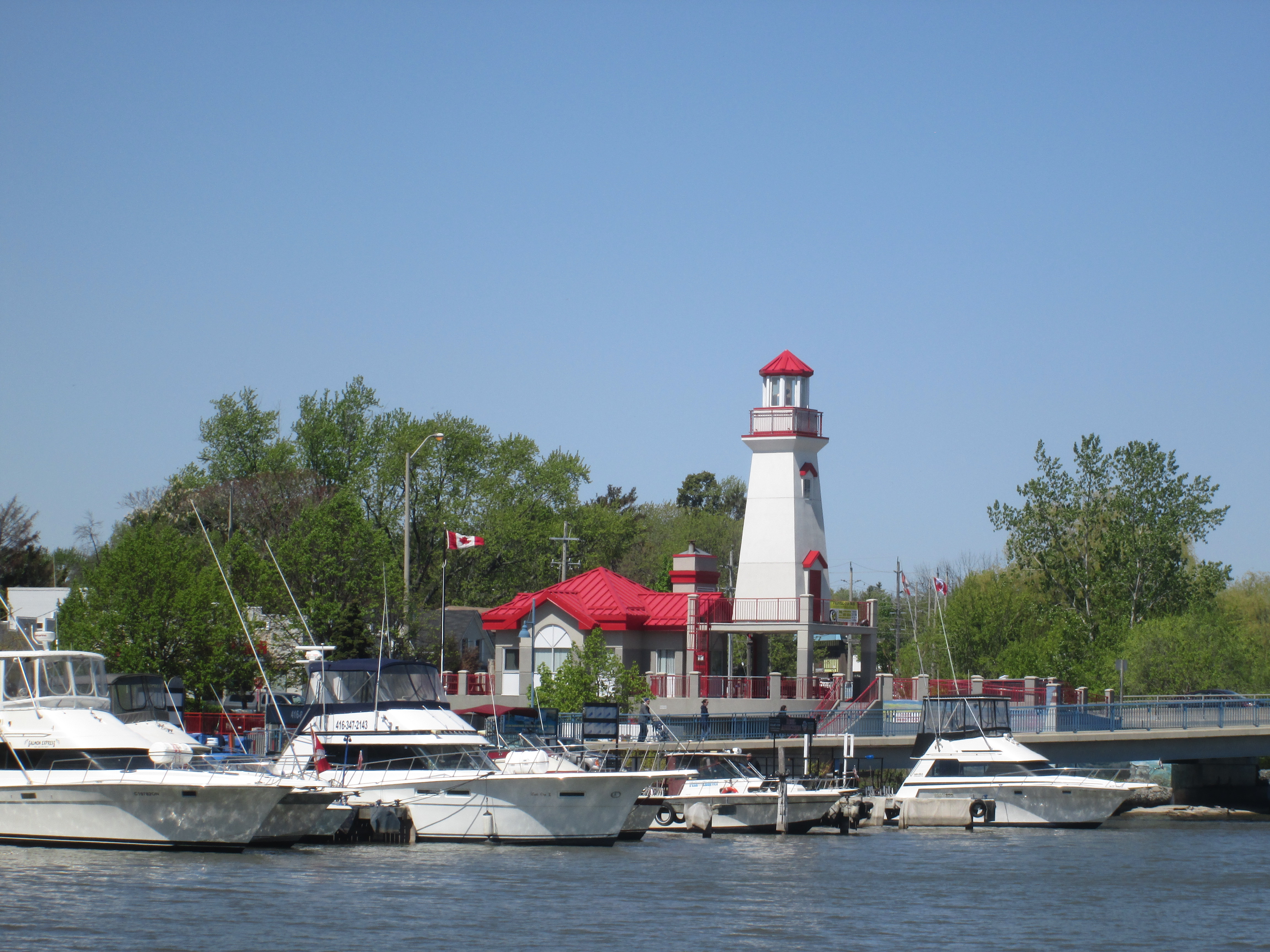
On the west bank of the river stands the lighthouse.  The first lighthouse in Port Credit was built in 1863 but it was separated from the mainland by a flood in 1908.  By 1918 the lighthouse had closed and it stood vacant until it burned down in 1936.  The present lighthouse was built in 1991 and is a replica of the earlier one.

IMG_4707

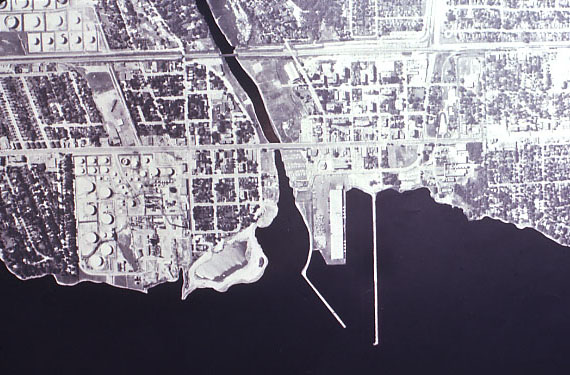
The Port Credit harbour has been active since 1834.  Between 1880 and 1910 the harbour was home to an industry called stone-hooking.   Large flat slabs of shale were raked up off of the bottom of the lake for use in the construction boom in Toronto.  At its peak there were 23 ships registered as stone-hookers in Port Credit.  Today the harbour is protected by two stone breakwalls as can be seen in the 1972 aerial photo below.  The Credit River empties into Lake Ontario where it’s mouth is protected by an angled line of rock.  Running straight out into the lake to the right of this is a second, longer, wall of rock.  We chose to climb out to the end of each of them.  In 1974 the ship The Ridgetown was added at 90 degrees to the end of the straight breakwall to shelter most of the open end of the marina.

Port Credit Harbour

The first breakwall runs out from the eastern bank of the Credit River.  The Ridgetown can be seen in the distance and one of many Mute Swans is watching us in the foreground.

IMG_4717

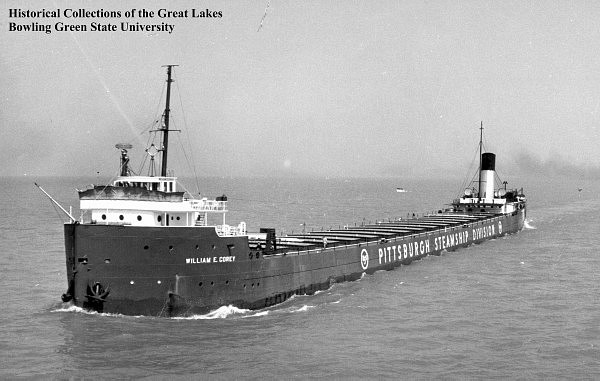
Built for $475,000 in 1905 as a flagship for the Pittsburgh Steamship Company the William E Corey was shipwrecked within 3 months.  After $100,000 in repairs it was ready for service again.  In July 1963 it was placed into British registry and renamed Ridgetown.  Two years later it was sold to Upper Lakes Shipping Limited who operated it until 1969.  Between 1970 and 1973 it served as a temporary breakwall for the construction of the Ontario Hydro Power Plant at Nanticoke.  After this it was brought to Toronto where it spent the winter of 1973.  In June 1974 it was loaded with rocks and sunk to protect the mouth of the Port Credit Marina. The picture below shows the ship when it was the William E Corey.

001461a

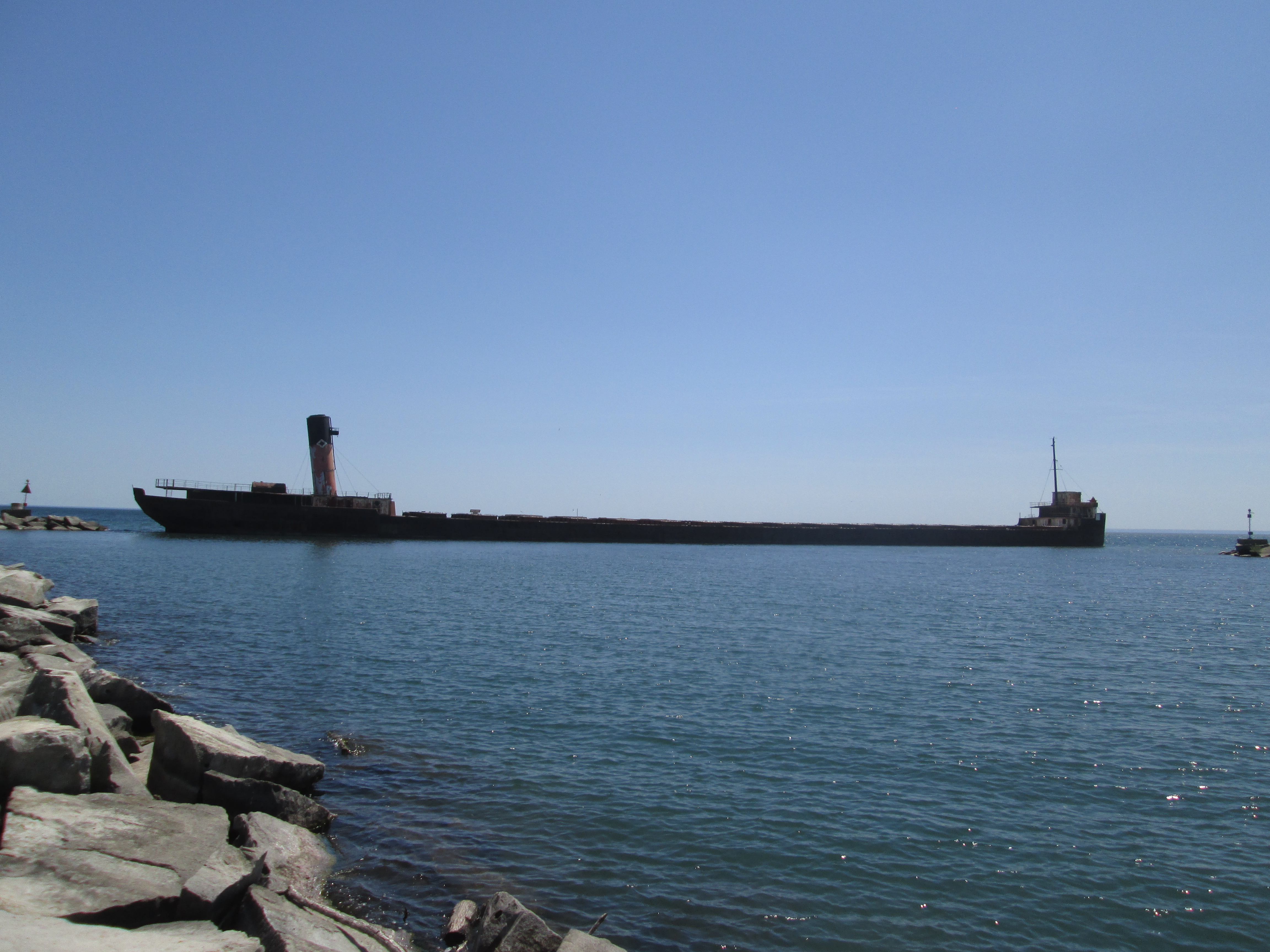
As we made our way out the lengthy breakwater we got some great views of The Ridgetown.

IMG_4801

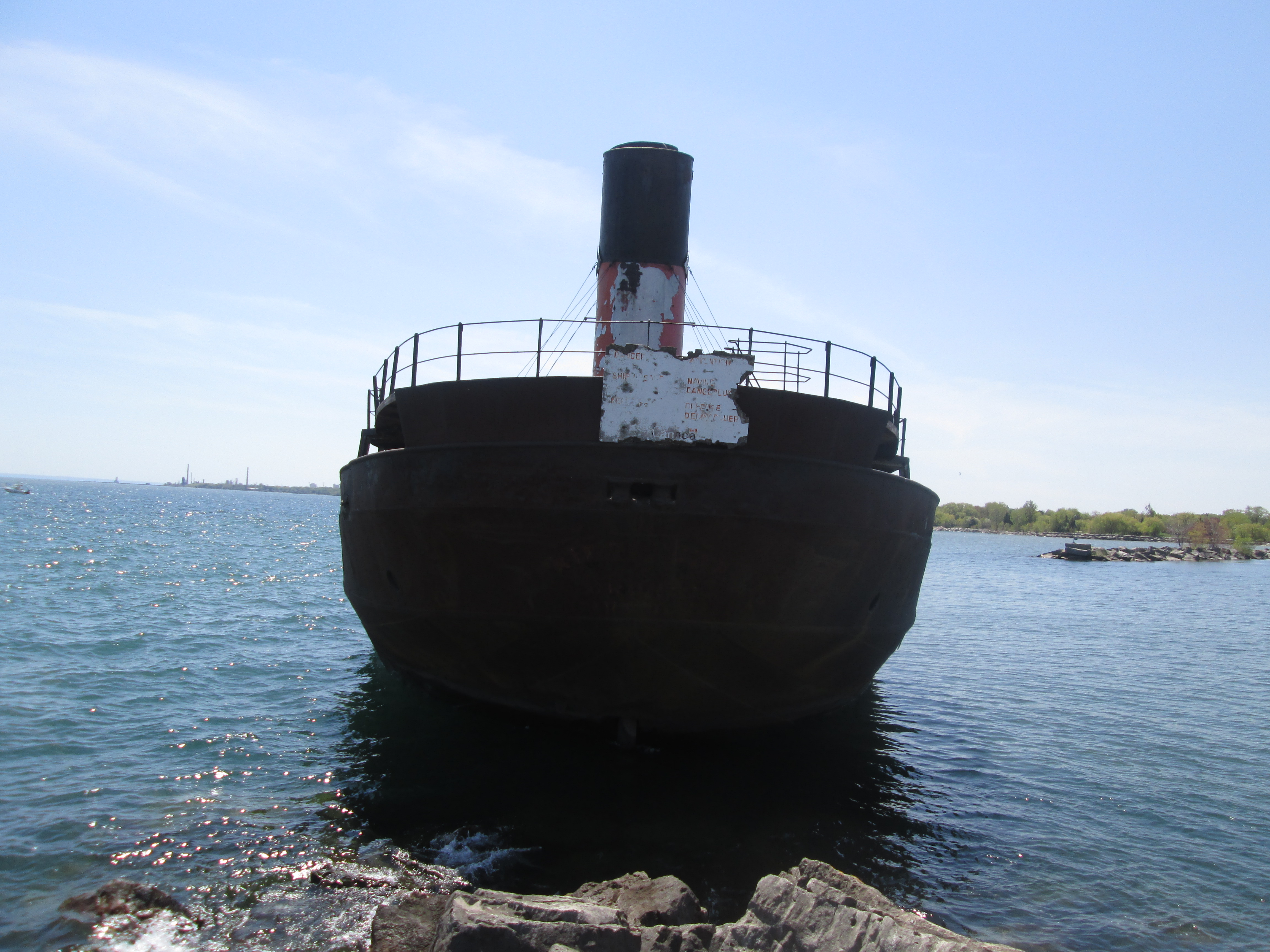
Finally, we reached the end of the breakwater and our goal of The Ridgetown.  On the right of the ship can be seen the end of the first breakwater that we investigated.

IMG_4814

Looking back at the Port Credit shoreline gives you an idea of how long the breakwater is.  The hike along this breakwater is challenging.  The biggest danger comes from dozens of Canada Geese and Mute Swans that have taken to nesting along its length.  They are prepared to defend their nests and several of them got into hissing at us.  On the way back it started to feel like we were running the gauntlet.

IMG_4815

The Trumpeter Swan is the largest living bird that is native to North America.  At 28 pounds the largest of the males are also the largest birds capable of flight.  They can be distinguished from the more common Mute Swan by their black bill and feet.  Of all the swans in the mouth of the river and along the two break walls this is the only one we noticed that was a Trumpeter Swan. It was also the only one which was tagged, in this case with a bright yellow “K94”.  This is part of a project to reintroduce these swans which were near extinction.

IMG_4755

Port Credit has a cultural heritage designation and there is plenty more to be explored in the area.  J. C. Saddington Park and the Imperial Oil Lands were explored on March 4, 2017 and can be found here.

Google Maps Link: Port Credit

Like us at http://www.facebook.com/hikingthegta

Follow us at http://www.hikingthegta.com
Norval on the Credit

Saturday May 16, 2015

Seventeen degrees under mostly cloudy skies but as the cover photo shows, when the sun came out it was a beautiful day.  Earlier in the spring we had made several visits to the Credit River, working our way north.  The next set of mills north on the river were at Norval on the Credit, now known simply as Norval.

In 1818 the natives ceded the last piece of riverfront for use by settlers.  The earliest pioneer in Norval was Alexander McNab, a loyalist who arrived in 1820.  His brother, James, was a veteran of the War of 1812.  James built grist and saw mills on the Credit.  The village was known as McNabville or McNab’s Mills until the post office opened in 1838 when the name was changed to Norval.  The village grew because it was a transportation hub and a main stage coach stop along the route from Toronto to Guelph.  It had several hotels, the usual blacksmith and carriage shops plus less frequent industries like broom makers and an ashery.  The photo below from 1910 shows the flour mill, grist mill and cooperage (where the barrels were made for shipping the flour).  We parked on the side of Adamson Street North looking out over the Credit River and the former mill pond, which can be seen in the cover photo.

p10194f

Where Winston Churchill Blvd runs through Norval it is called Adamson Street after General Peter Adamson who bought the mills in 1838.  In 1845 Gooderham & Worts expanded their interests by purchasing the mills in Norval.  They acquired other mills along the Credit River including both Alpha Mills and Silverthorne Grist Mill in 1860. As you walk along you can see the east end of the Norval dam through the barbed wire fence. The picture below shows the hand wheel and gears that opened and closed the gates to control the water level in the mill pond.

IMG_4394

The current bridge over the Credit on Adamson Street was opened in 1989 and replaced a wrought iron bridge from the 1880’s.  From this bridge we spotted the Red Breasted Grosbeak in the picture below.  Only the male has the bright red splash on the chest.

IMG_4404a

The original McNab house was built on the west side of the river, below the dam.  When Adamson took over the mill he put an addition on the house.  Today you can walk through the spot where the house had been without seeing a trace.  The Norval dam is seen pictured below from the west side of the river.  The cement construction indicates that this replacement dam was built in the 1900’s.  Earlier wooden dams were rebuilt on a regular basis as they didn’t last through severe floods.  The sluice gates stand on the left (east end) of the dam.  A fish ladder runs up the west side of the dam and the area near it is a fish sanctuary.

IMG_4421

The sluice gates as seen from the west side of the river.  The steel wheels and rods that lifted the gates can be seen on the top of each one.  The sluice gates have trapped a significant amount of trees and branches that are building up behind them now that it is no longer kept clear.

IMG_4430

The head race ran across Adamson Street and over to the mills which stood where McNab Park is today.  The flour mill burned down in 1930 and the grist mill was destroyed by Hurricane Hazel in 1954.  With the mills out of use, in 1961 the head and tail race were filled in and two of ten bridges in town were eliminated.  The remains of the mill foundations were removed when highway 7 was expanded in 1972.  From Mcnab Park you can see the foundations for an earlier bridge on the east side of the Credit.  With the arrival of the Guelph Plank Road in 1851, the Grand Trunk Railway in 1856 and the Toronto-Guelph Suburban Railway, Norval and it’s mills prospered.

IMG_4470

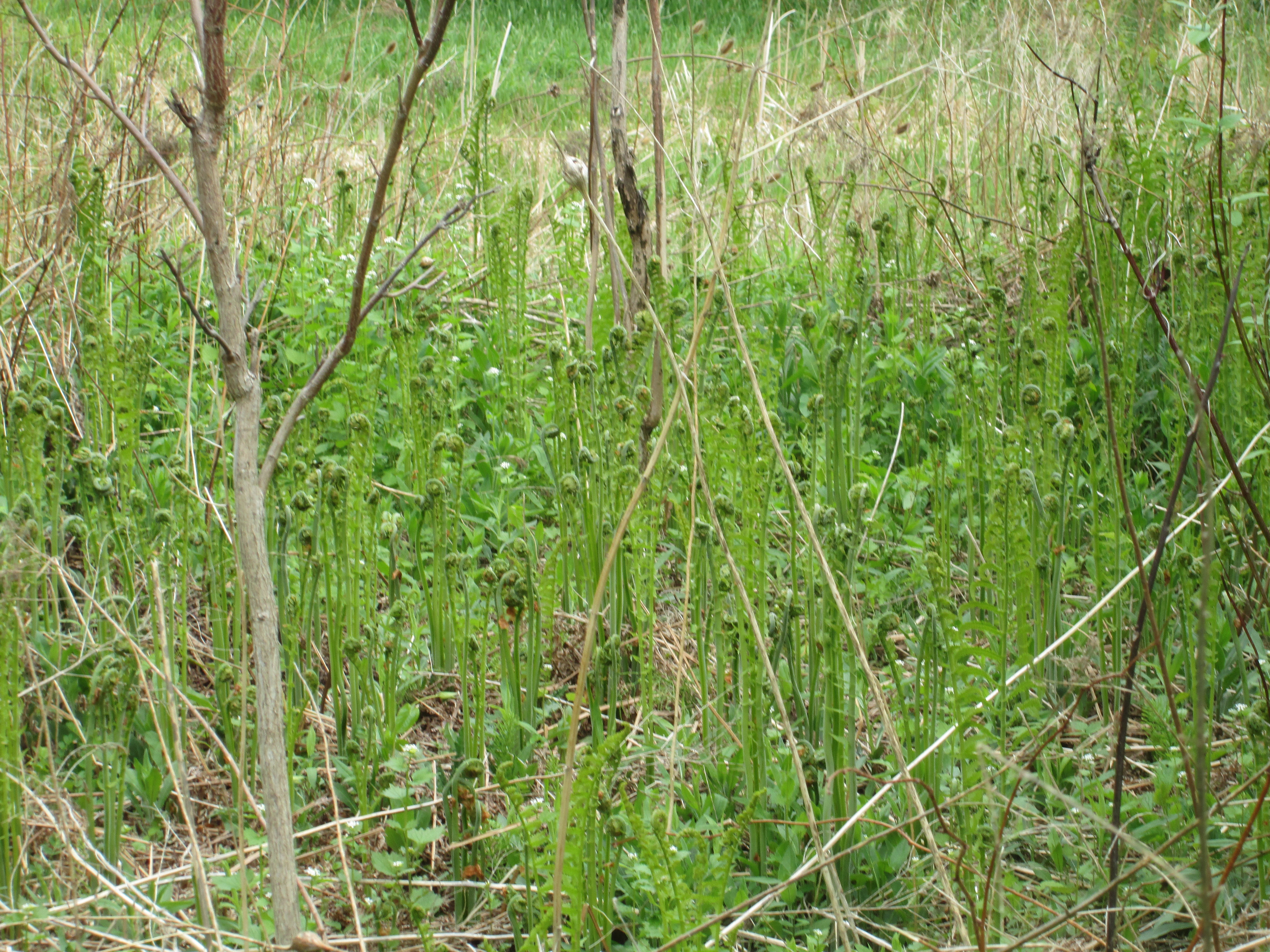
Fiddleheads are very tasty when fried in butter.  They contain antioxidants and are high in omega 3 and 6 fatty acids.  They are harvested when the young fern tips are still tightly curled. Unfortunately, this field has opened up a little too much.  We were probably three days too late to enjoy this year’s crop.

IMG_4445

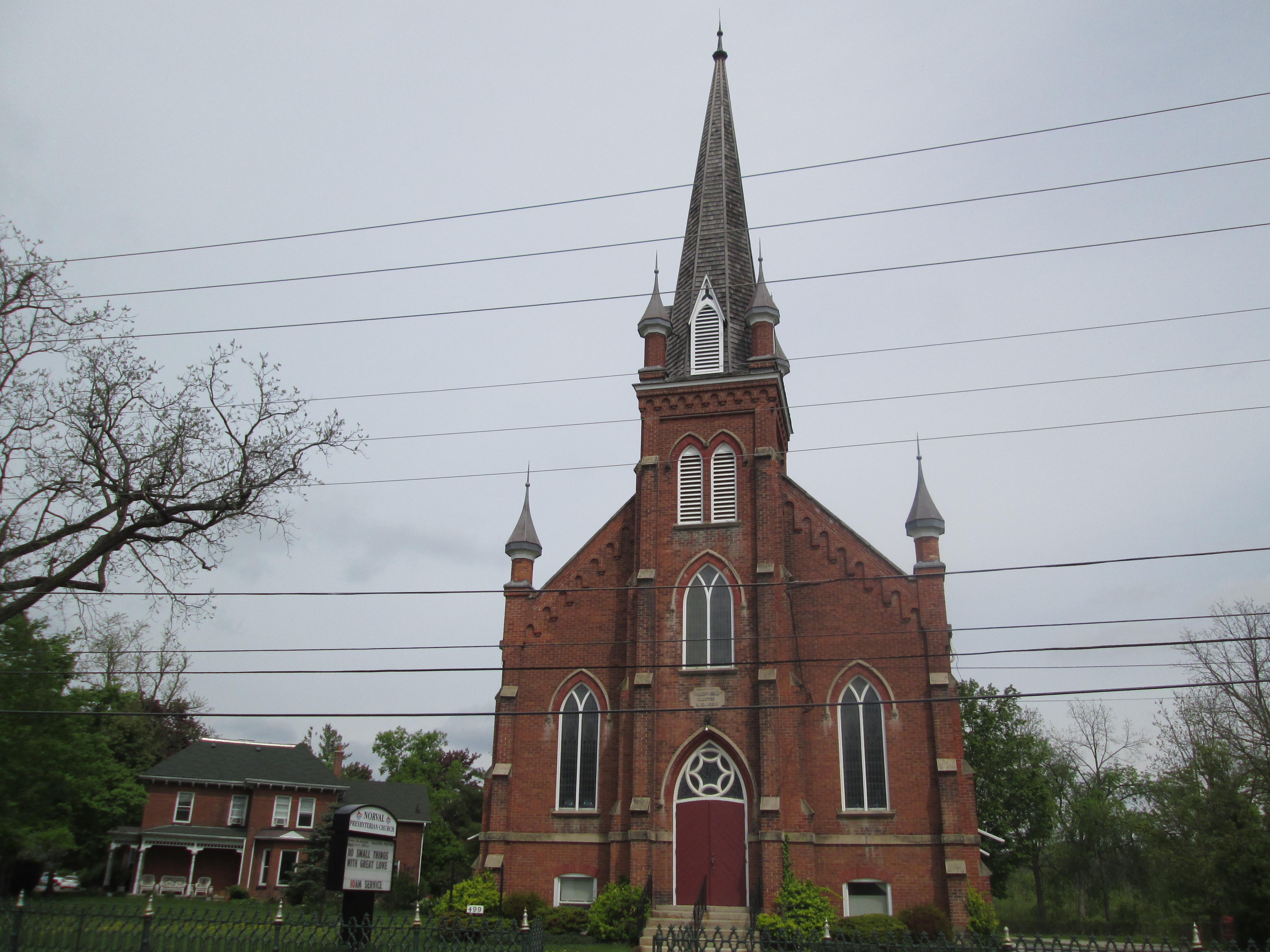
The Presbyterian congregation was the first to erect a frame church in town some time around 1838.  They replaced it with a brick church in 1878 and added the parsonage to the rear of the church in 1888.  In 1925 when many Presbyterian churches joined the newly formed United Church the Norval Presbyterian church elected not to join.  Lucy Maude Montgomery, author of Anne of Green Gables, lived in the parsonage from 1926 until 1935 while her husband was pastor of the church.  During this time she wrote 5 of her 20 novels.  The church is seen in the picture below with the parsonage to the left.

IMG_4512

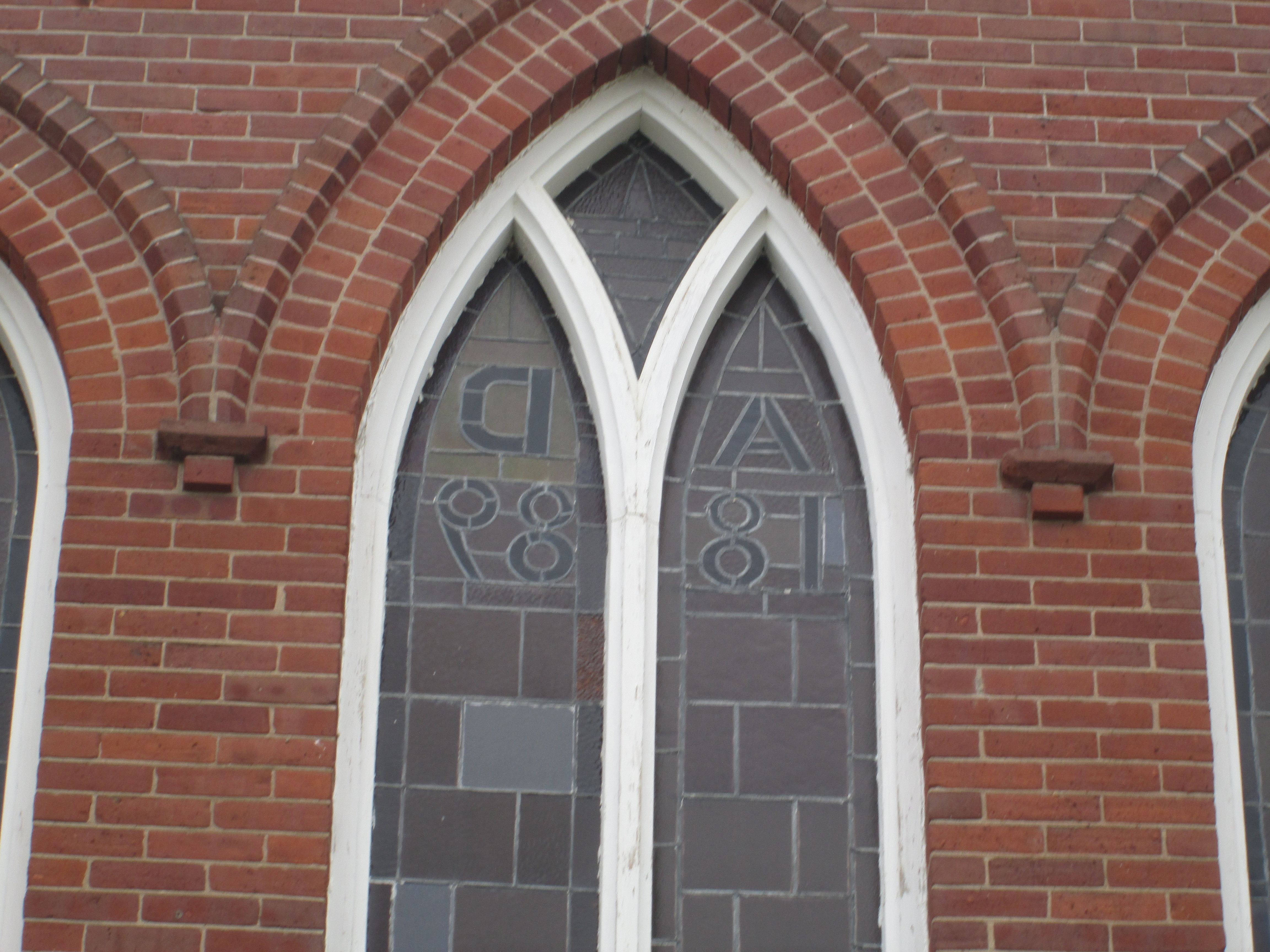
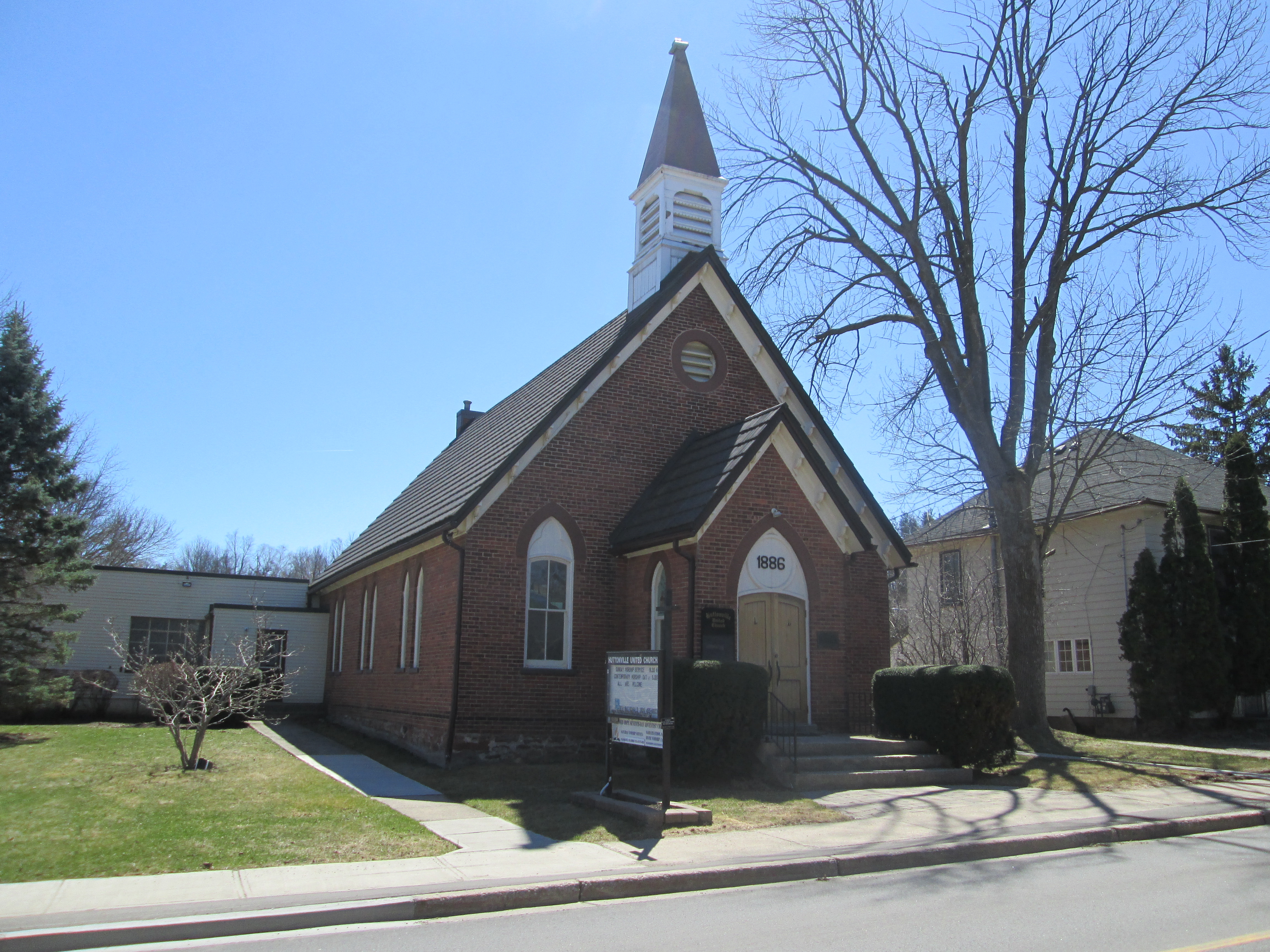
The Weslyan congregation built a frame church in 1850 and replaced it with a new building in 1889.  Rather than the usual date stone the Weslyan congregation chose to date their building in the stained glass so that it can be read from inside the church and is in reverse from the street.  The Weslyans elected to join the United Church and today the Seventh Day Adventist congregation shares the building with the United Church.

IMG_4525

The only congregation remaining in it’s original church building is the Anglican Church.  Their building was erected in 1846.

IMG_4601

IMG_4534

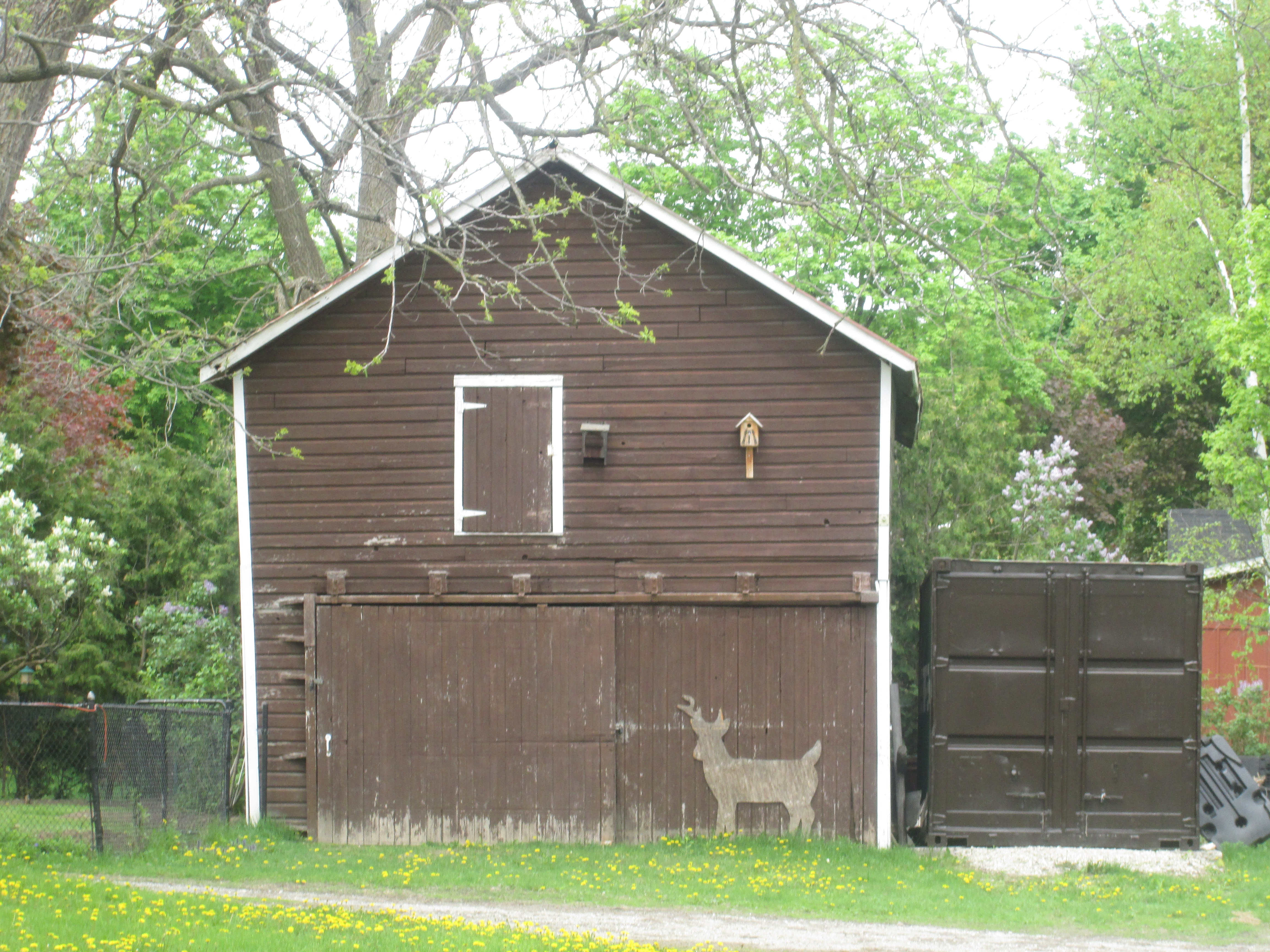
The carriage maker’s shop can usually be identified by the second story door used to dry painted parts.  We saw plenty of deer tracks but had to settle for the deer on the door of this building as our only sighting.

IMG_4593

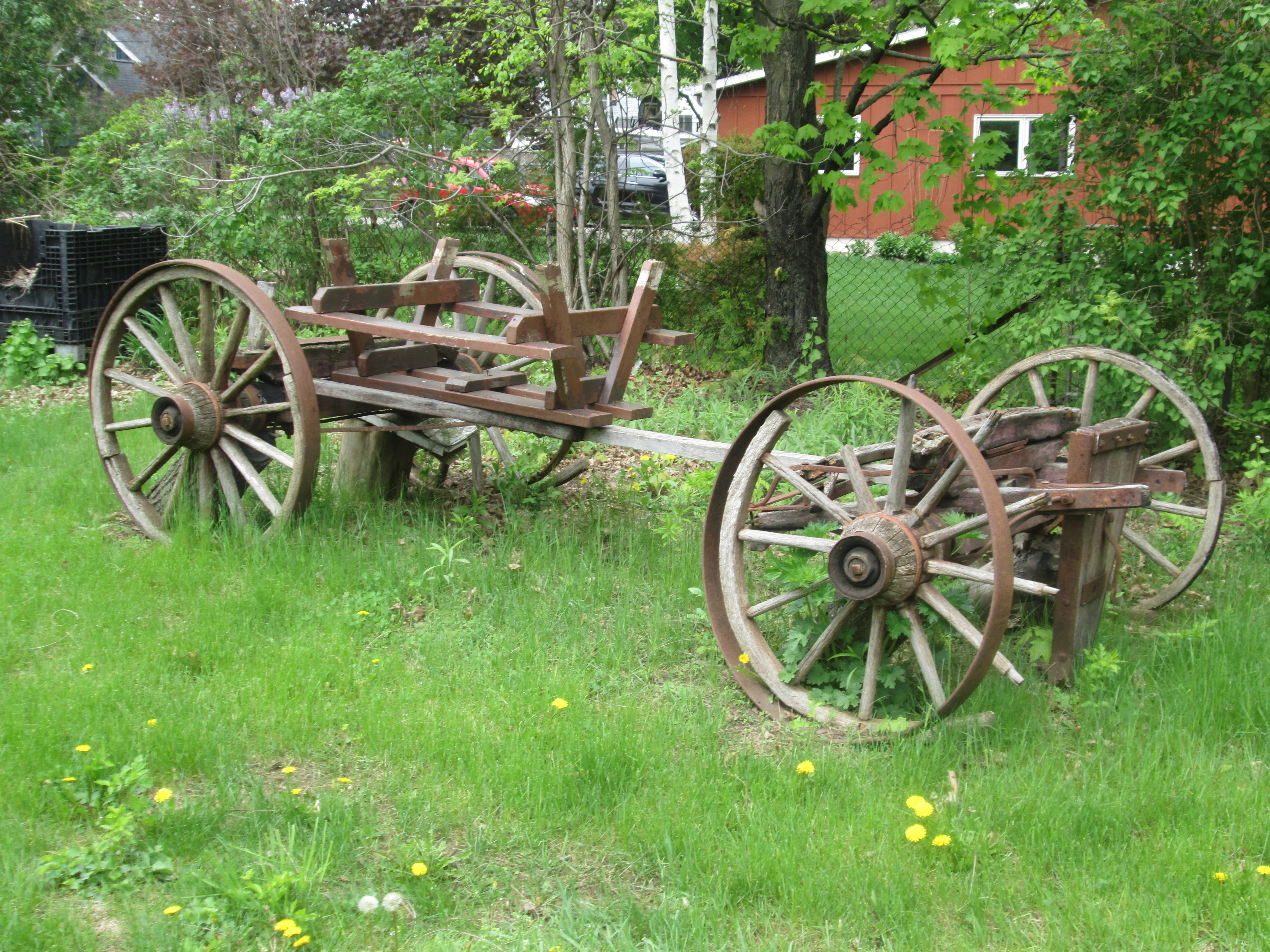
Perhaps this is a locally made carriage.

IMG_4596

Norval is a village that is full of historic buildings and bridge foundations.

Google Maps link: Norval

Like us at http://www.facebook.com/hikingthegta

Follow us at http://www.hikingthegta.co,

Huttonville

Saturday April 18, 2015

It was a beautiful sunny day with the temperature climbing to 20 degrees as we walked.  Hiking north on the Credit River from where we left off last week in Eldorado Park isn’t possible.  The river flows through Lionshead Golf Course which is considered to be Canada’s most difficult course.  The course extends across 520 acres all the way to Mississauga Road.  Huttonville grew around mills that were established on the Credit River at Mississauga Road.  Today the river through town is clearly posted as no trespassing.

When the area was first settled around 1820 it was called Brown’s Mills after the grist mill.  The locals also tended to call it The Wolf’s Den after the creatures who lived in the forests and hunted their livestock.  James Hutton bought the mills in 1855 and renamed them Hutton’s Mills. When he opened the town’s first post office the name Huttonville was adopted.

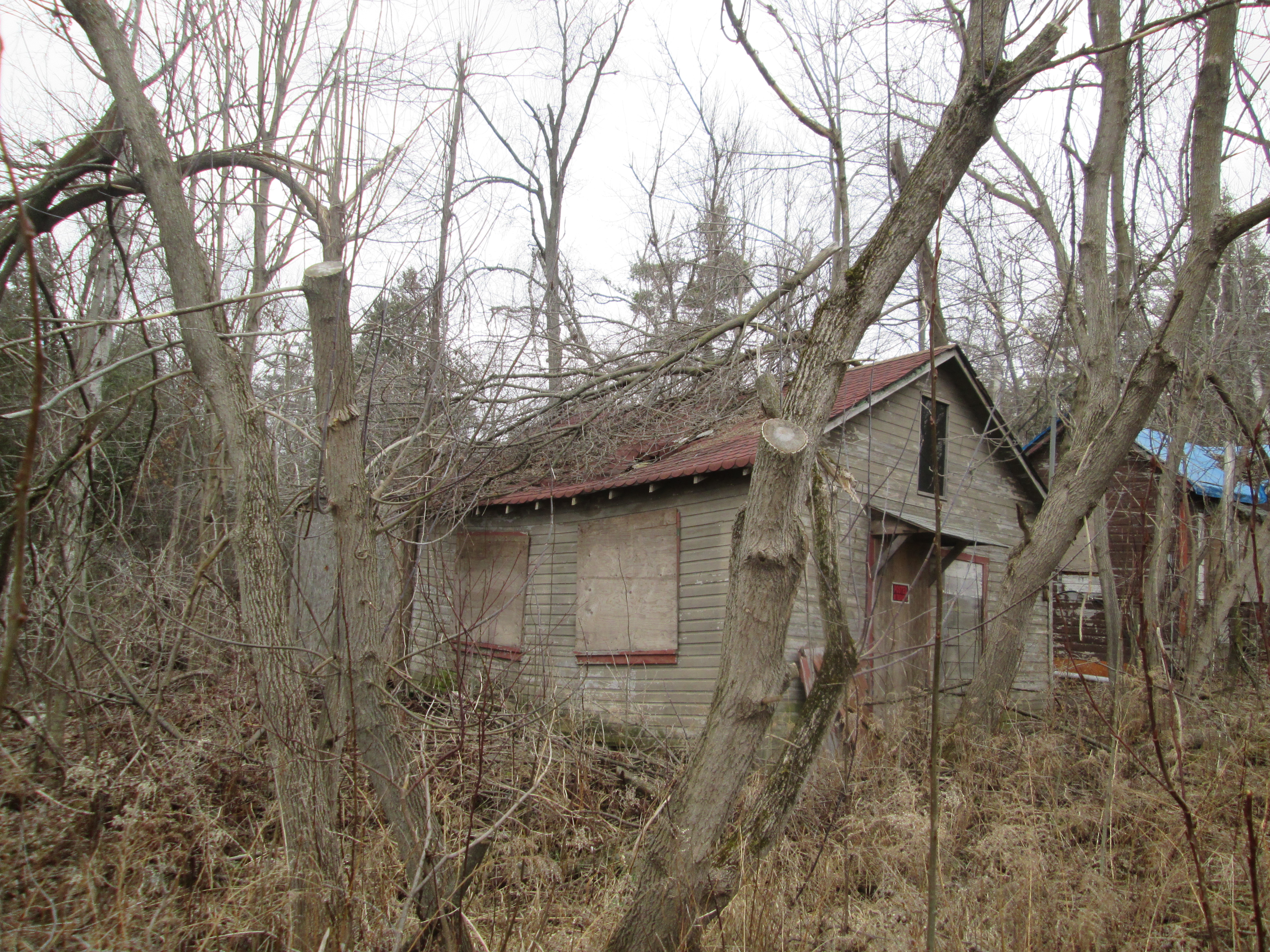
We parked on the small section of old Mississauga Road where Queen Street dead ends just above Huttonville.  There are a couple of abandoned houses rotting in the woods here whose pictures will be presented on our Facebook page.  We went for a walk along River Street where you can see the old mill dam in a few places.  We stopped to talk to the property owners who were tending their gardens.  They told us that Hurricane Hazel (Oct. 15, 1954) had done some serious damage to the dam.  They graciously allowed us access to take a few pictures.  The picture below shows the dam with the sluice gates on the right.  The dam has a distinct lean to it as it reaches out into the river.  It was built in 1923 it was the fourth dam constructed at this site.

???????????????????????????????

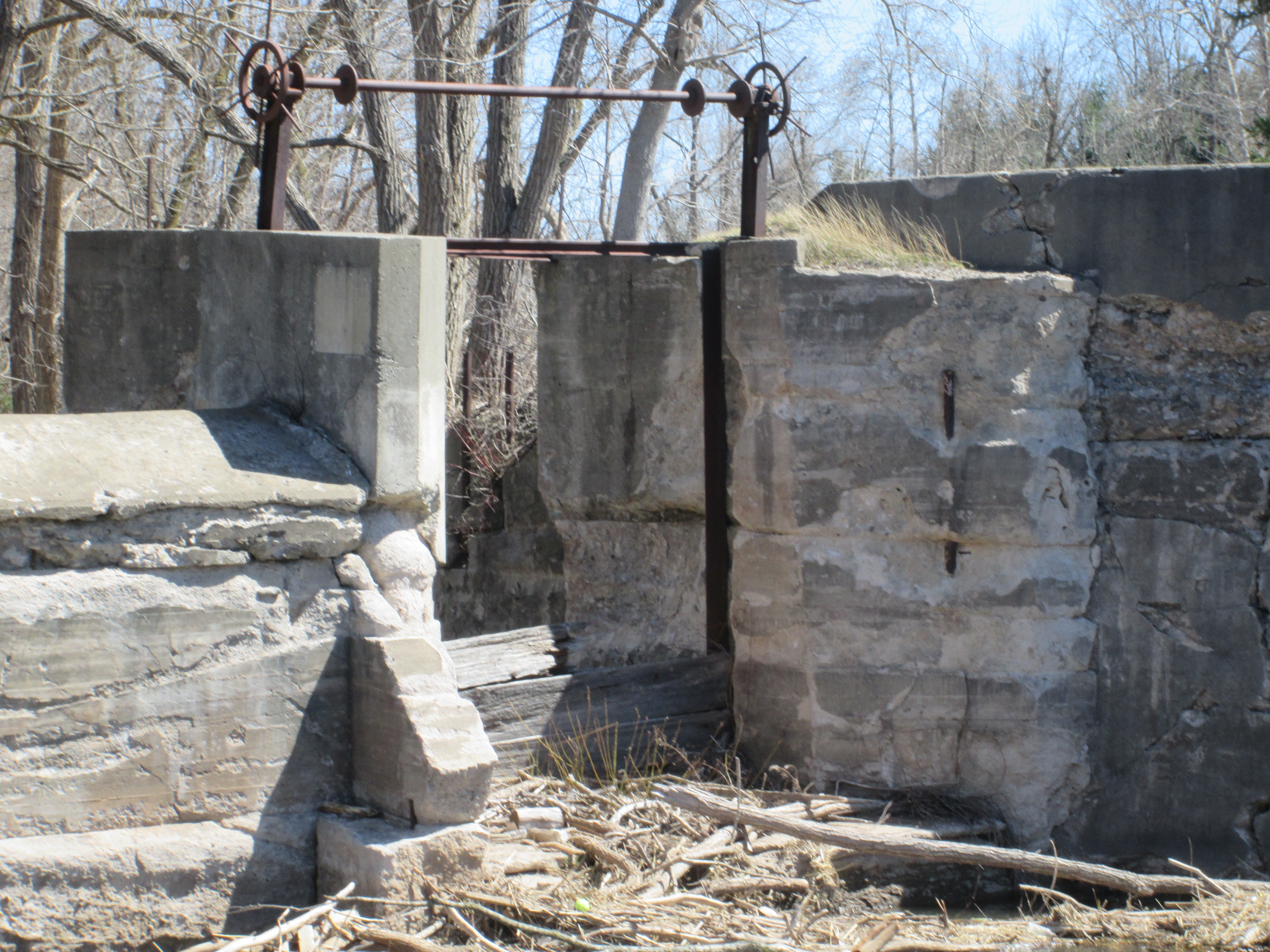
Sluice gates are the part of the dam used to control the flow of water out of the mill pond.  The miller wants to have a consistent flow of water to turn the wheel or turbine at a steady pace in the mill.  By raising or lowering the sluice gates he can continue to operate the mill at times of either high or low water levels in the river.  The sluice at Huttonville is an excellent example of how this worked.  The steel cranking system still stands above the gateway while the remains of some of the boards are in the bottom.  Behind this gateway is the head race that carried the water to the mills on Mill Lane.

IMG_3719

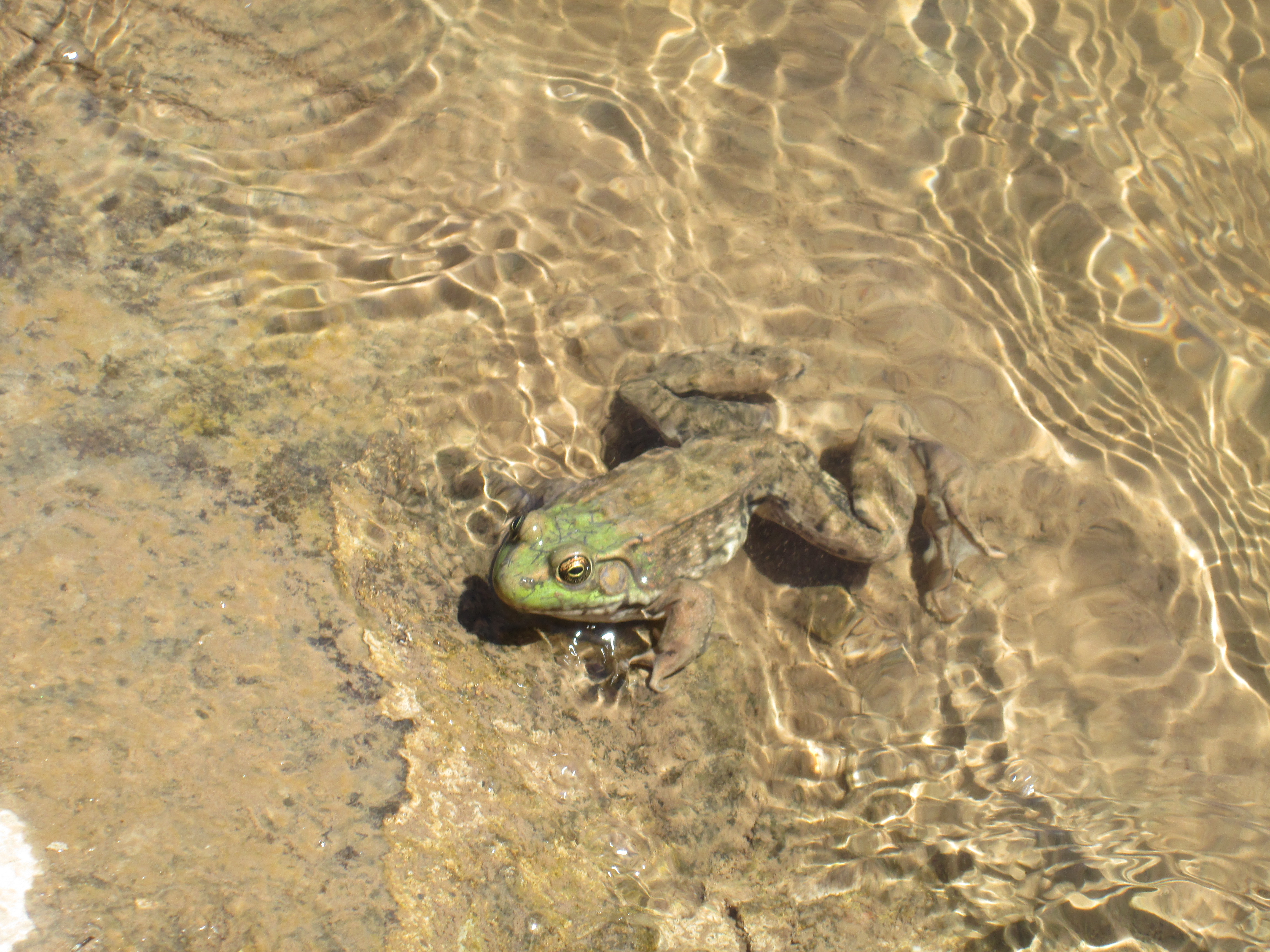
The American Bullfrog lives an average of 8 years in the wild. During the winter they lay on the mud at the bottom of the river.  They can’t dig in the mud like turtles do for the winter because they don’t actually hibernate.  Instead, they turn the body fluids in vital organs into glucose so that it doesn’t freeze.  If it gets too cold they will stop breathing and their hearts will stop beating.  When they warm up above freezing their bodies start to function again. As we were enjoying the old dam we saw many pairs of cormorants flying up the river.  Cormorants usually eat small fish but if one of them spots this frog sunning itself on the concrete of the old dam, this is one frog that won’t make it to 8 years old.

IMG_3715

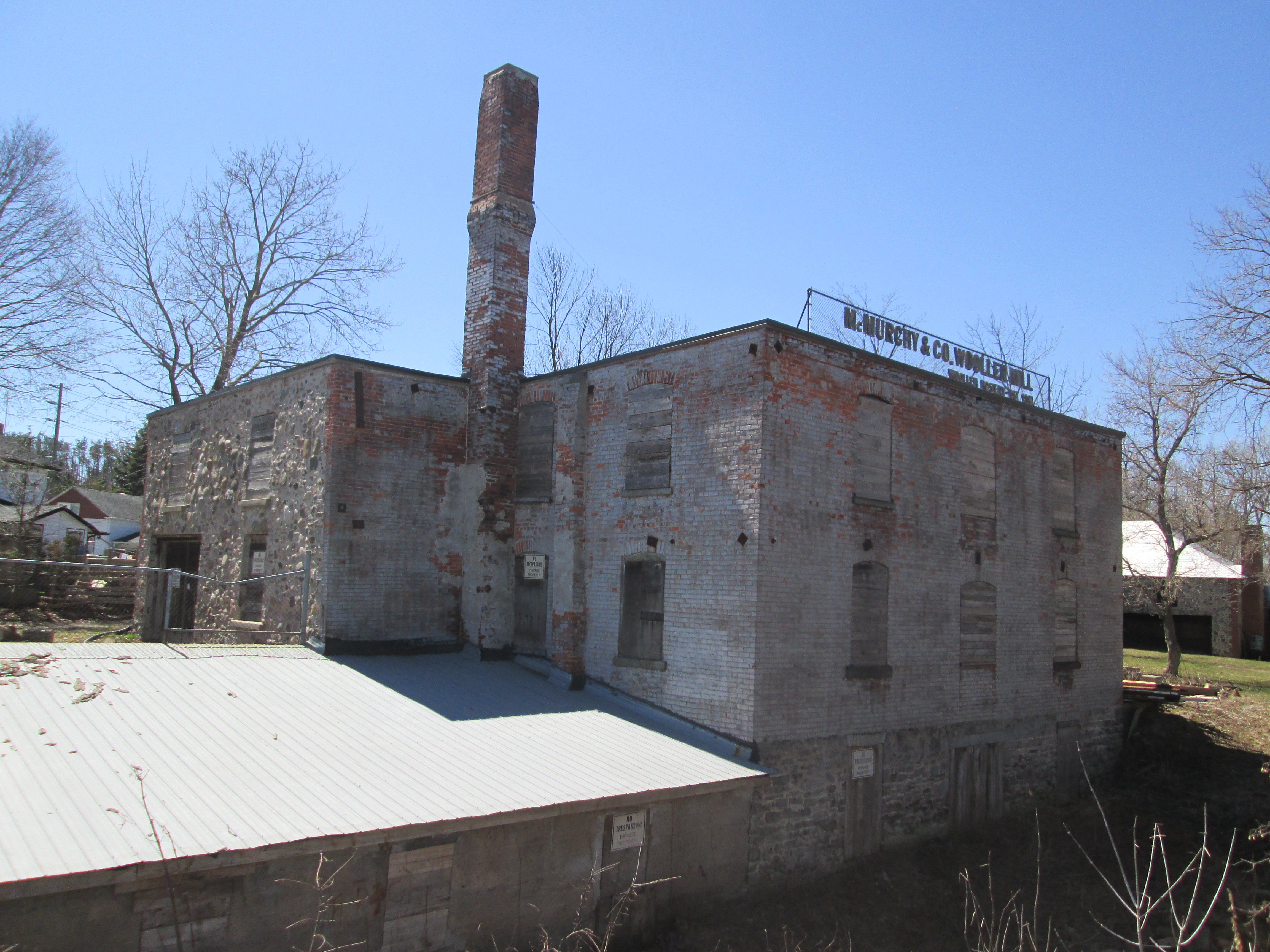
In 1887  John McMurchy built a woolen mill that was powered by its own private powerhouse. Built of red brick it has since been painted over in a drab grey.  With a staff of 30-35 employees, the mill’s main product was socks.  During the first world war, it produced the socks used by the military.  After 65 years of production, the mill was closed in 1953.  The following year Hurricane Hazel would destroy its dam.

IMG_3727

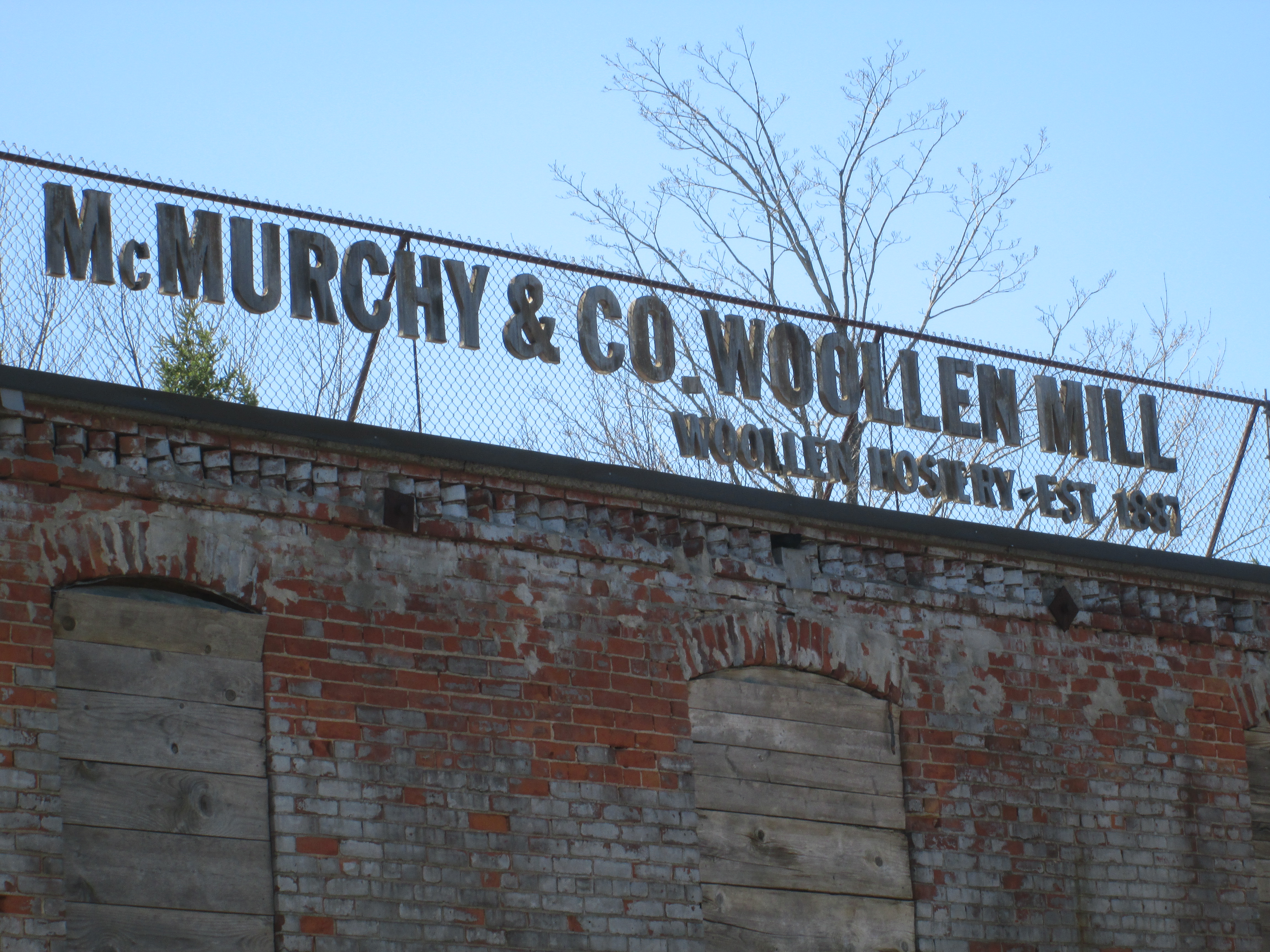
The original signage still stands on the roof of the building facing Mississauga Road.  The cover photo shows the mill during it’s prime.

IMG_3728

A powerhouse was built onto the grist mill in 1885 by Hutton to power his mills.  It generated 100 horsepower of electricity and was considered an engineering marvel at the time.  Along with the mills, it provided power to Huttonville and Brampton.  When John McMurchy bought the plant in 1903 he increased its production to 300 hp.  It provided power to Brampton until 1911 when the town went onto the public grid originating at Niagara Falls.  It continued to be a personal power supply to the mills until 1953 when they closed.

IMG_3743

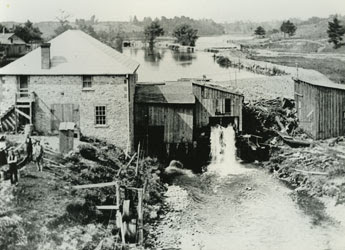
The historical photo below shows water flowing from the Huttonville mill pond through a shed where it is turning a turbine.  The little waterfall drops it into a settling basin before the tail race returns it to the river.

Huttonville ph

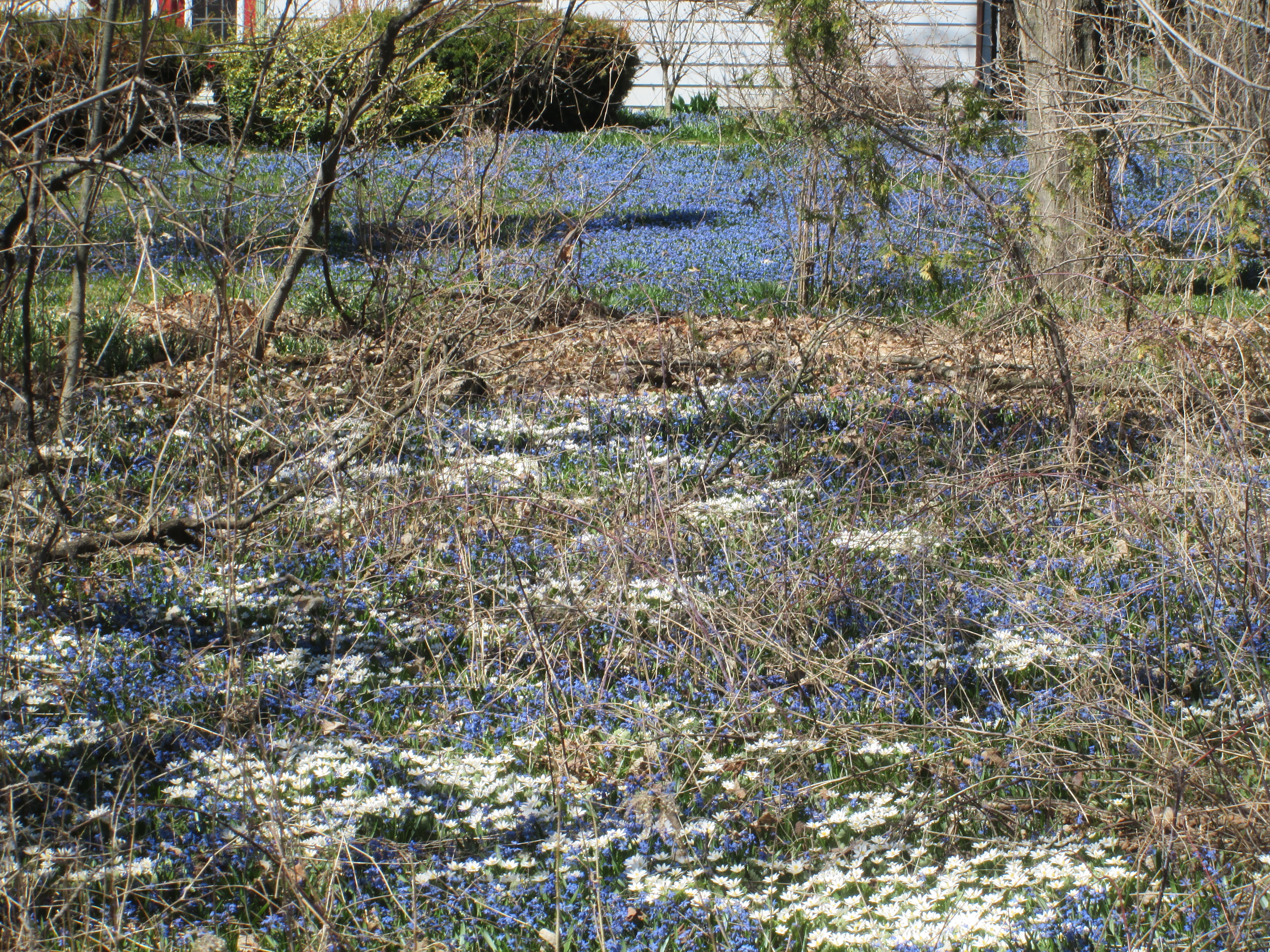
Bloodroot is the white flower in the foreground of the picture below.  It is one of the first flowers in spring but it’s flowers last only a couple of days after being pollinated.  It gets its name from its blood red roots.  Sprinkled in among a sea of bluebells they bring the lawns to life for a short period each spring.

IMG_3747

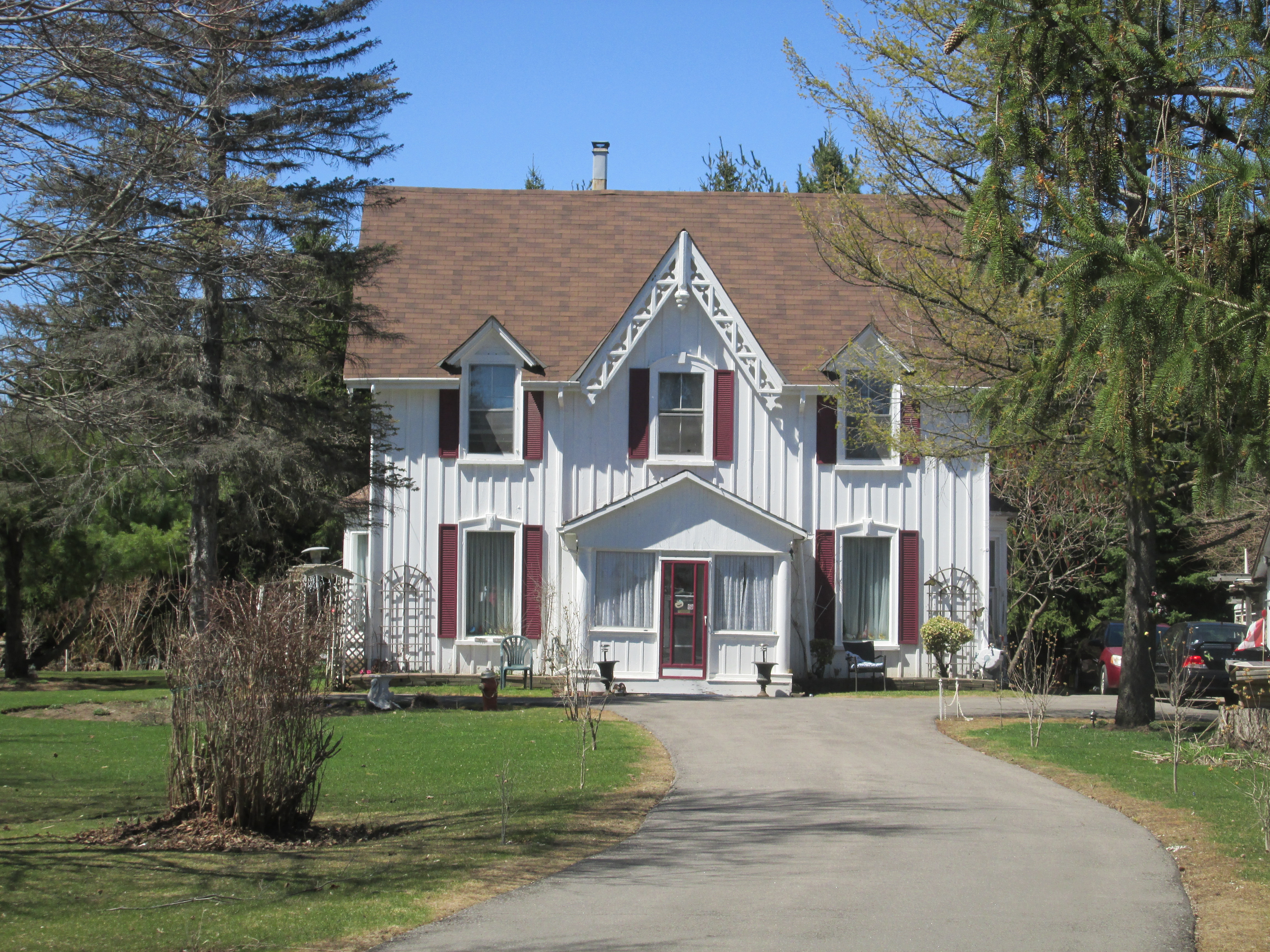
James Hutton’s house still stands at 2072 Emberton Road, a short walk from his milling empire.

IMG_3752

Across the street from Hutton’s house he donated land for the Methodist Church.  In 1885 it was decided to combine the nearby congregations in Page and Springbrook.  The Page church was demolished and the wooden church in Springfield was moved to Huttonville.  It was placed on a stone foundation and extended by 10 feet.  Then a brick veneer was added to the outside. In 1925 it became a United Church when the Methodists joined the new congregation. Today it is rented on Saturdays by the Seventh Day Adventists.

IMG_3744

Beside the church stands this building which was likely the Queens Hotel.

IMG_3753

A truss bridge used to carry Mississauga road across the Credit near the end of Emberton Road. The foundations remain on the east side of the river but have been removed on west side for road widening.

IMG_3754

For more pictures of Huttonville, it’s mills and dam please visit us at:

http://www.facebook.com/hikingthegta


Eldorado Park

Saturday April 11, 2015

Winter has a way of hanging on and at 3 degrees we were being subjected to small pellets of ice as we started out.  Eldorado Park is the next stop northward on the Credit River following the visit to Churchville last week.

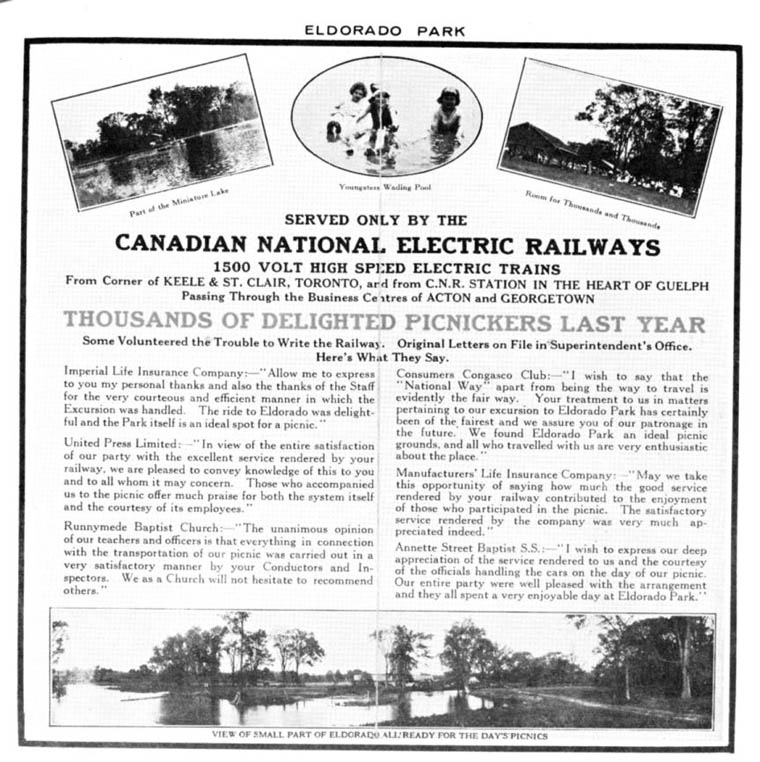
Eldorado park sits on lots 2 and 3 in the 4th concession west in Chingoucousy Township in what is now the city of Brampton.  Lot 2 was settled by Jacob Snure who built a grist mill which he called Eldorado Mills.  For lot 3, Mary Anne Forest is shown as a saw mill owner, likely after the loss of her husband.  The area has had several owners since this time.  In the 1877 historical Atlas the property is shown as belonging to Kenneth Chisholme.  The mills closed and by the early 1900’s the area was converted to a large private park known as Eldorado Park.  In 1925 the Canadian National Railway (CNR) purchased the property to try to breathe some life into the struggling suburban railway it had absorbed in 1918.  They added a Ferris Wheel and Merry-Go-Round attempting to create the ideal day trip.

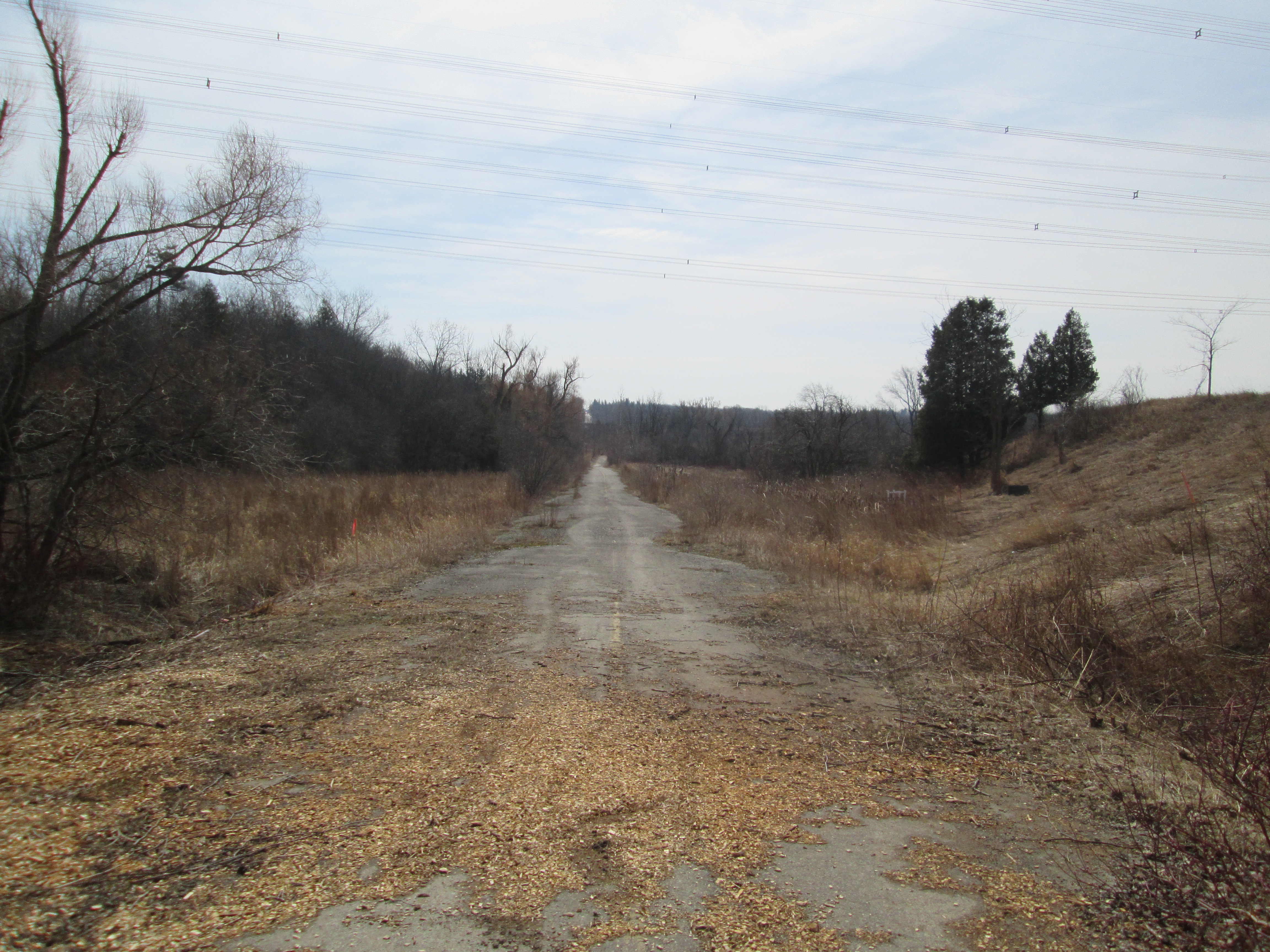
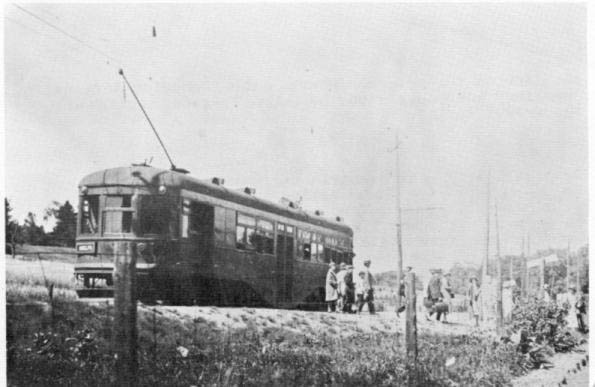
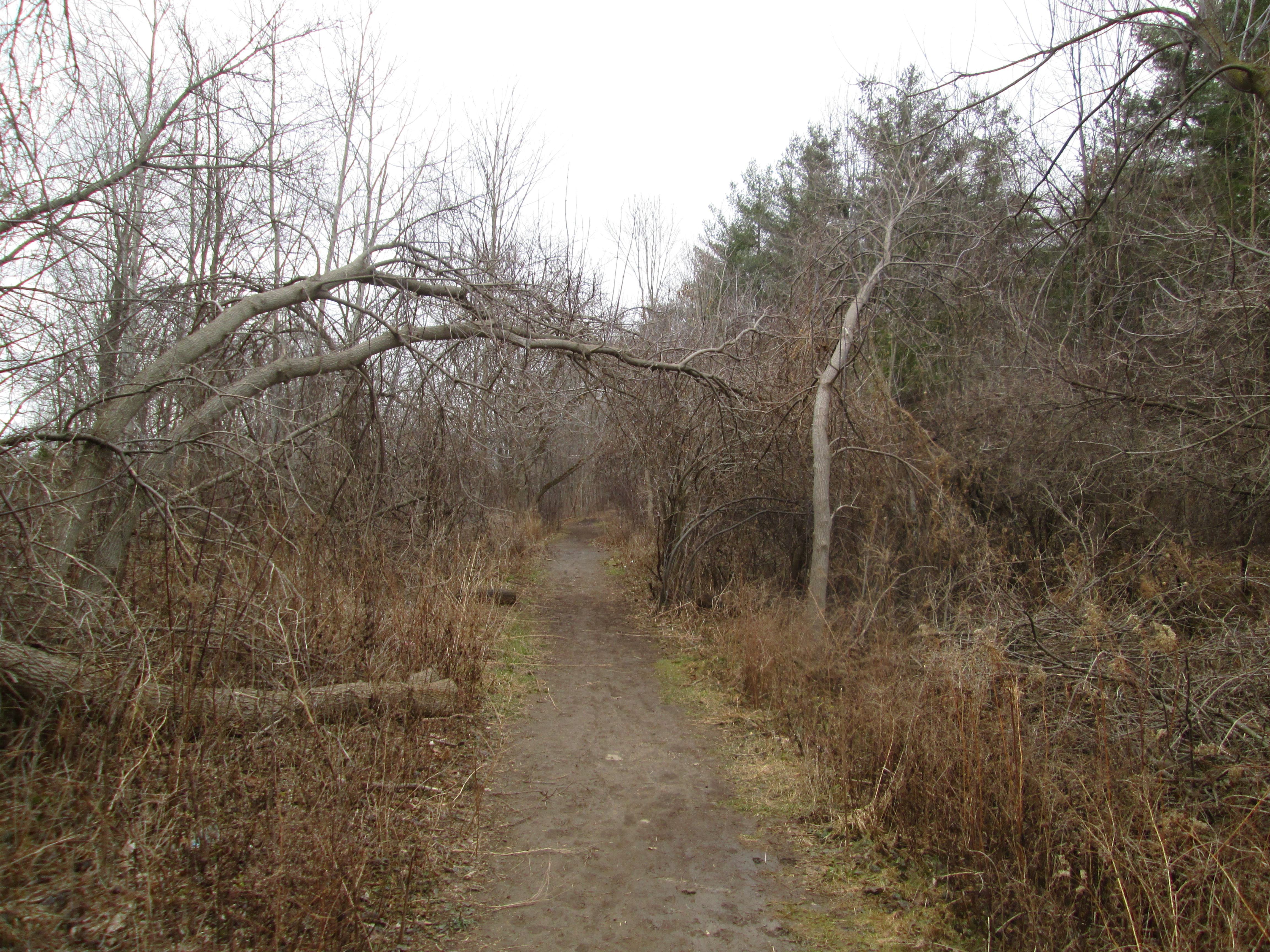
We parked in the Eldorado Park parking lot and crossed the bridge to the west side of the Credit River.  Just downstream from here is Brampton’s only outdoor swimming pool.  When the Toronto Suburban Railway was completed to Guelph in 1917 it passed through Meadowvale and Churchville before reaching Georgetown.  It passed through Eldorado Park which gave the railway the idea of creating it’s own tourist attraction to which it would provide transportation. The old right of way for the train tracks ran just along the edge of the swimming pool (long closed when the pool was built) and can be followed south from there.  The picture below shows the old rail bed which, since the removal of the rails for use in Europe during WWII, looks much like any other hiking trail.  The cover photo shows one of the streetcar-like trains unloading passengers at Eldorado Park.

IMG_3395

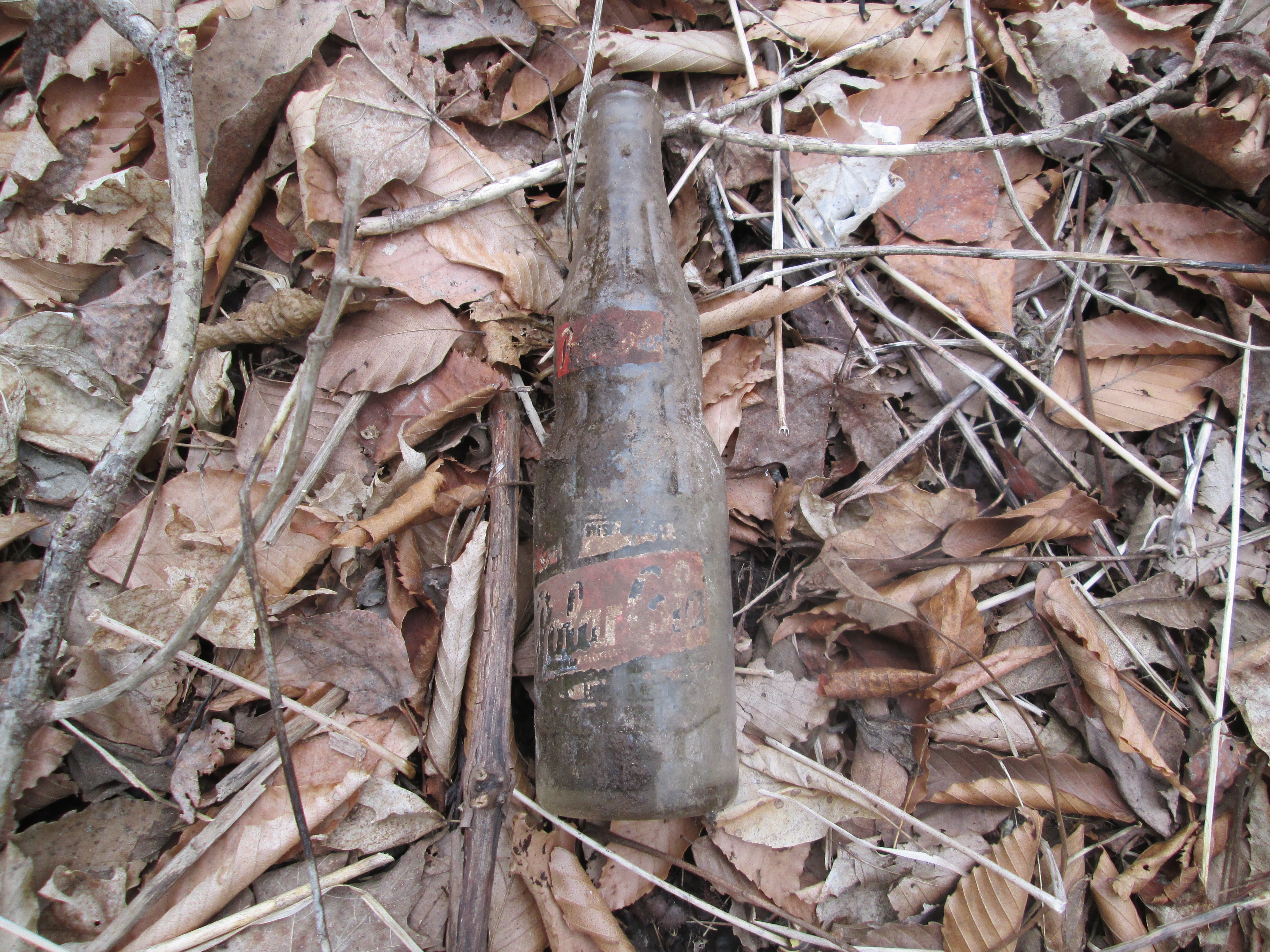
Along the old rail corridor we decided to follow a small ravine to investigate an older building. Before we reached it we came across an old soda bottle.  Polar Beverages was founded in 1882 in Worcester Massachusetts.  Now in it’s fourth generation, this family owned beverage company is the largest independent bottler in the USA.  Polar Beverages got themselves sued in 1994 by showing a polar bear throwing a Coke in a garbage bin marked “Keep the Arctic pure”. The bottle in the picture below is dated 1948 and was made in Salem Mass.

IMG_3404

During the Depression the CPR determined that rail line and ultimately the park were too expensive to maintain, closing them in 1931 and 1936 respectively.  The park area was purchased by a Jewish group for a summer camp called Camp Naivelt (New World).  For the first few years campers used tents but during the 1940’s and 50’s about 90 small cottages were built in what would be known as Hill 1, 2 and 3.  We had wondered into Hill 3 and found The Ritz and a small building holding a water tank.  Beside them stand two abandoned buildings that were the children’s infirmary.  The roofs are caving in and these will likely be pulled down before long.  The no trespassing sign on the building applies to the whole property and the owners ask that you take this article in the spirit of preserving history and that we do our part by not entering the property.

IMG_3410

The cottages along Hill 3 are at the western edge of the property and face the old infirmary.   In the 1960’s attendance at the camp declined and 52 acres were sold off to the township.  These form the public area of today’s Eldorado Park and have helped keep Camp Naivelt from being swallowed by urbanization.  The camp is now proposed for a Cultural Heritage Designation for it’s contributions to local culture.  Folk activist Pete Seeger hung around here regularily giving impromptu concerts.  He is remembered for writing songs such as “Turn, Turn, Turn”, “Where Have All The Flowers Gone” and “If I Had A Hammer”

IMG_3424

Returning to the old electric rail line we followed it along the river until we came to the place where the bridge is out,

IMG_3437

Beyond here the hillside is oozing mud and quickly becomes impassible.  The old rail line ran across the side of this embankment but much of the remains now lie in the bottom of the ravine under the muddy water.  Parts of rail ties may be strewn along the hillside.

IMG_3441

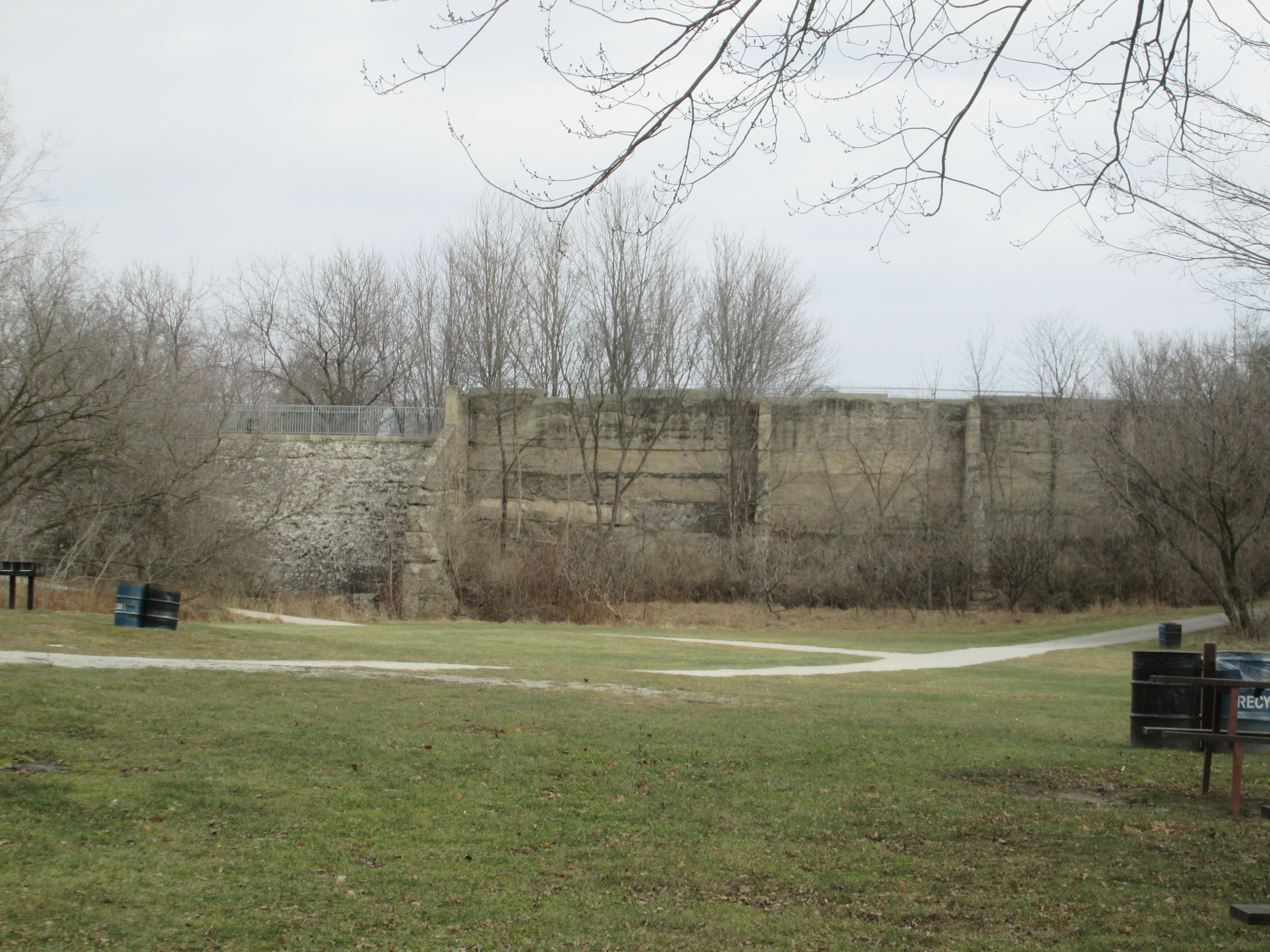
We returned to the bridge and crossed back to the east side of the Credit and started to follow it south.  After awhile we started to find concrete scattered on both sides of the river.  After passing a foundation for some former building we started to follow a concrete wall running somewhat parallel to the river and just inside an older earthen berm.  Broken in several places it no longer holds the mill pond from Eldorado Mills.  The view below is from inside the former pond looking out through the sluice gate.

IMG_3486

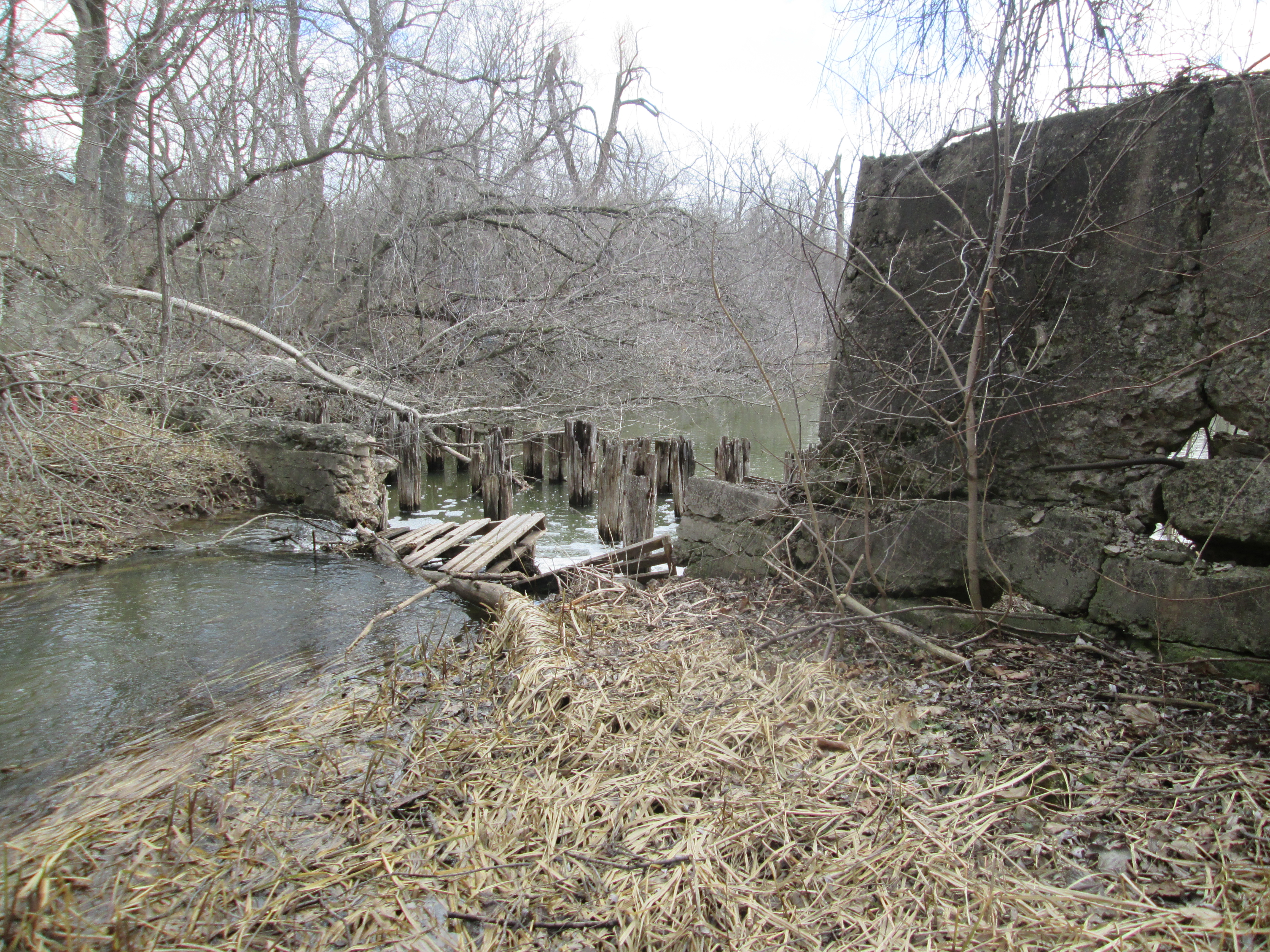
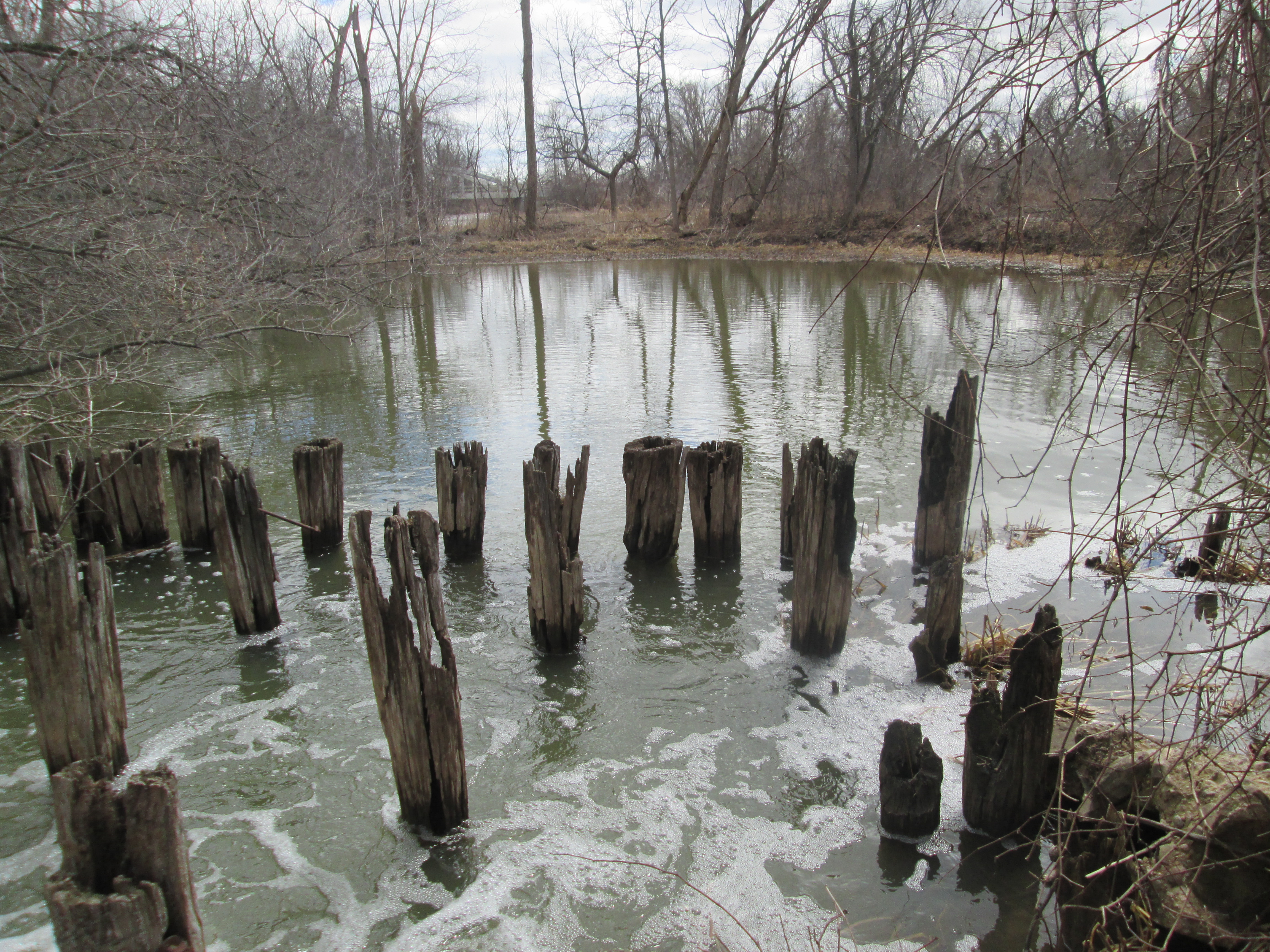
The disipator at the outflow of the sluice is rotting away.  Even so, the effect can be clearly seen in the picture below as it causes the water to lose kinetic energy.  The water is churning white after dropping over a small waterfall.  As it passes each row of posts it becomes noticeably calmer.  By the time it passes the fifth row it is almost totally smooth.

IMG_3492

When we came to cross the tail race on our trip south we found that the only way was use the fallen tree just before the river.  Someone had neglected to nail a hand rail on there for us like had been done at Playter’s Bridge on the Don River.

IMG_3502

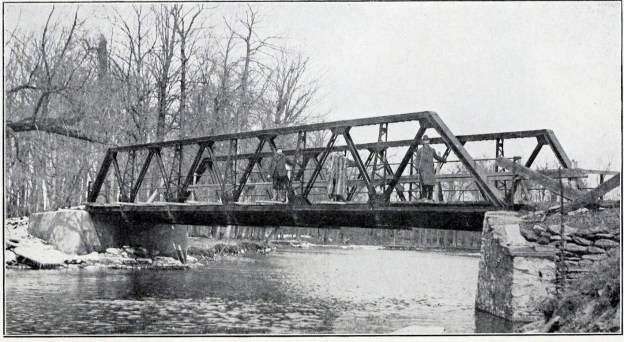
Built in the 1930’s the Creditview Bowstring bridge is one of only two bowstring truss bridges in Brampton and the only one still part of a public roadway.  Along with the bridge in Churchville it is also one of only two one-lane public bridges in Brampton.  It had fallen into disrepair and by 2002 it faced closure.  When it was given an heritage designation in 2003 it got a $700,000 makeover.

IMG_3480

Eldorado Park hosts families on picnics and dogs chasing balls these days but the history of a milling centre and an amusement park remains in the old right of way for the electric railway and the remnants of the mill pond and sluice gates.

eldorado_park_ad

Like us at http://www.facebook.com/hikingthegta

Follow us at http://www.hikingthegta.com
 

Churchville

Friday April 3, 2015.

It was by far the warmest hike of the year so far at 12 degrees feeling like 18.  Before we got back to the cars we were carrying sweaters and coats.  It was Good Friday and perfectly applicable that we should go to church.  So we went to Churchville to explore the historical little village and the conservation area that separates it from Meadowvale.  We parked in the same lot as last week where the Second Line dead ends below the New Derry Road.  Crossing under the bridge we made our way north intending to make it as far as Steeles Avenue.

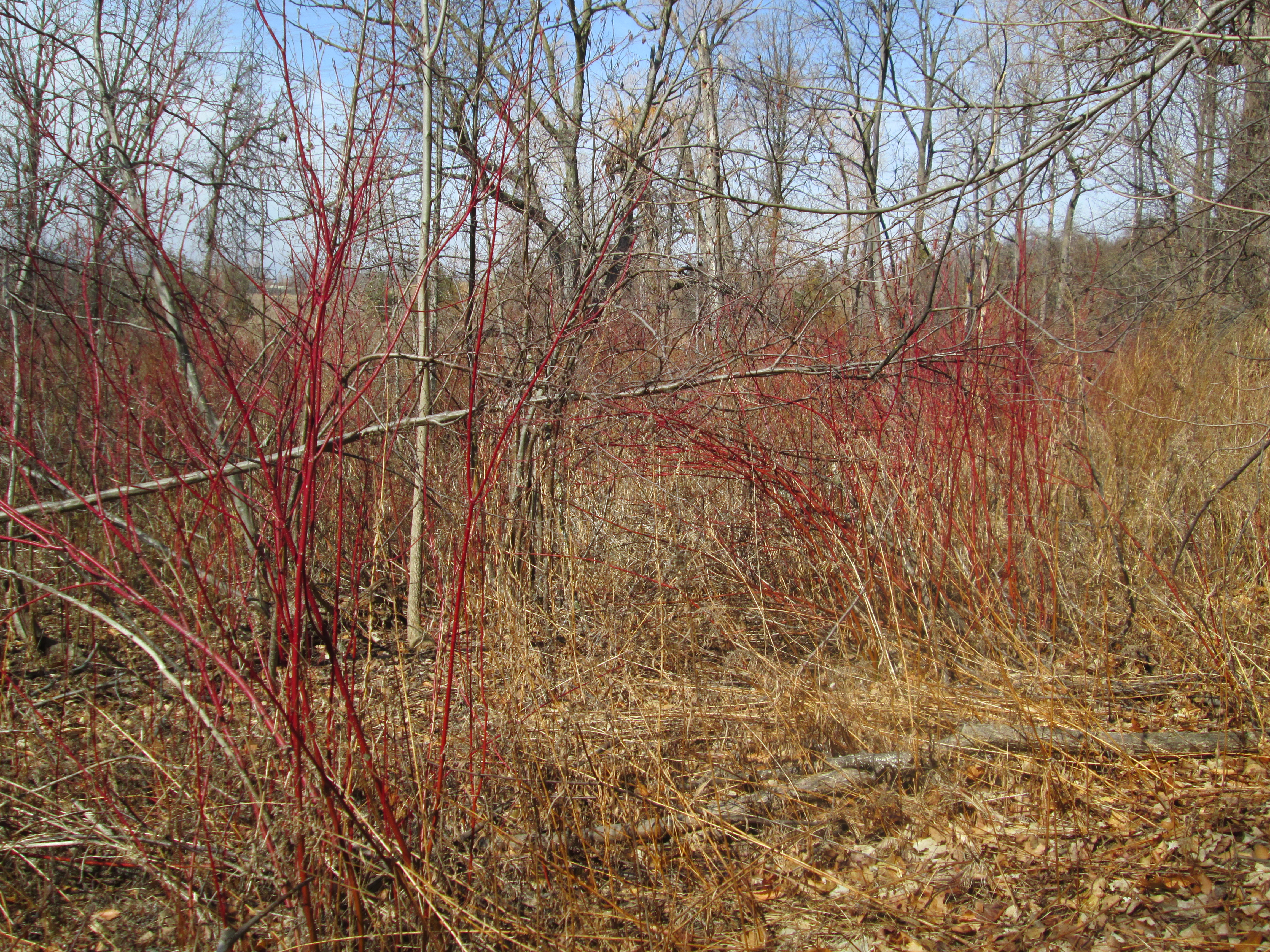
One of the first plants to respond to the warmer days and increased sunshine is the dogwood. Also known as Cornus Sericea they grow wild in wetlands throughout Canada.  Their bark takes on a brighter red colour before the leaves come out.

IMG_3167

When the Derry Road Bypass (now just Derry Road) was built in the mid 1990’s the Second Line was closed where the bypass intersected it.  After investigating a woodlot just north of the bypass we headed west back toward the Credit River.  The picture below shows the closed second line looking south toward Meadowvale.

IMG_3181

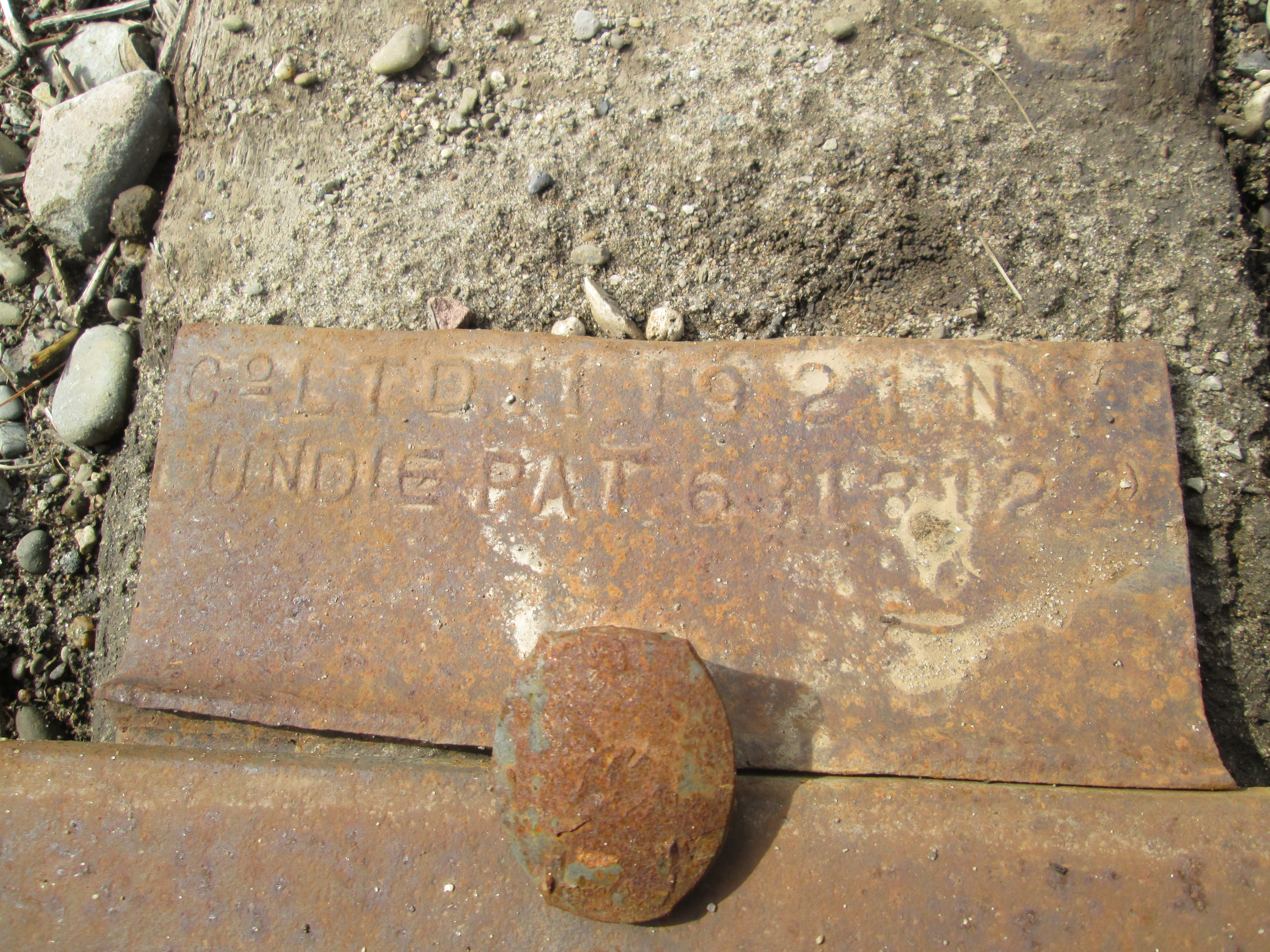
The Credit Valley Railway (CVR) was incorporated in 1871 with a mandate to build a railway from Toronto to Orangeville with various branches westward to Waterloo.  The railway stopped at Meadowvale where the station was at the corner of Old Creditview and Old Derry (now marked by a single old telegraph pole).  It bypassed Churchville on the east and made it’s next stop in Brampton.  By 1881 the CVR was in trouble and was incorporated into the Canadian Pacific Railway.  We crossed the old CVR tracks where some of the tie down plates are dated 1921 as seen below.

IMG_3209

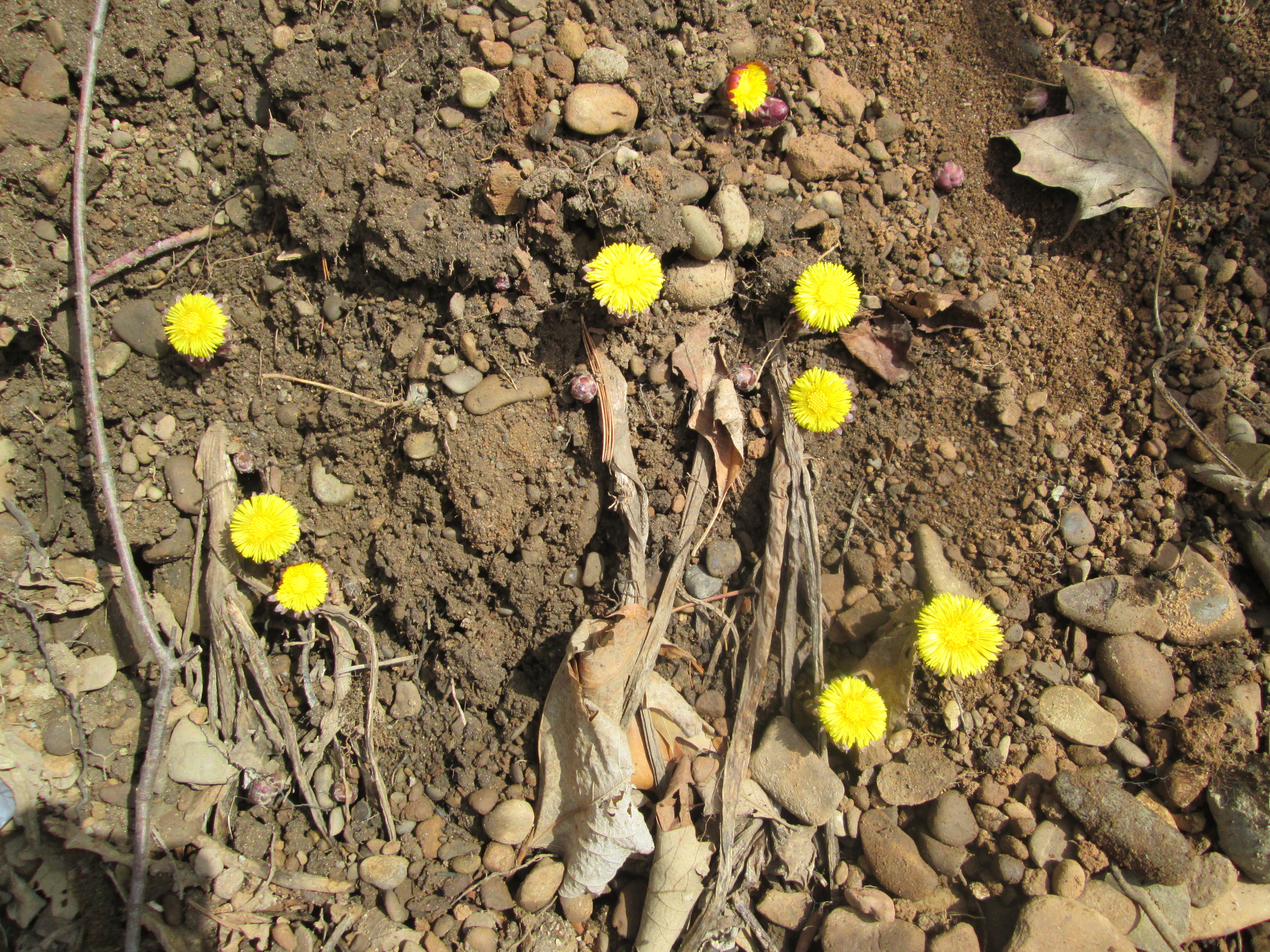
Perhaps the first new growth of the spring are these Coltsfoot flowers that are growing along the banks of the river.  Coltsfoot are unique in that the flowers appear without the previous formation of any leaves.  After the seeds are distributed the flower disappears and the leaves grow, making at appear to be a plant without flowers.  The name comes from two Latin words which mean to act on, or cast out, a cough.  We now know that the plant has certain toxic alkaloids that destroy the liver and some countries have banned it’s medicinal use.  The plant which is the first sign of new life this spring turns out to be toxic to life, if ingested.  In the picture below it looks like a dandelion but is too early and also lacks the green leaves.

IMG_3227

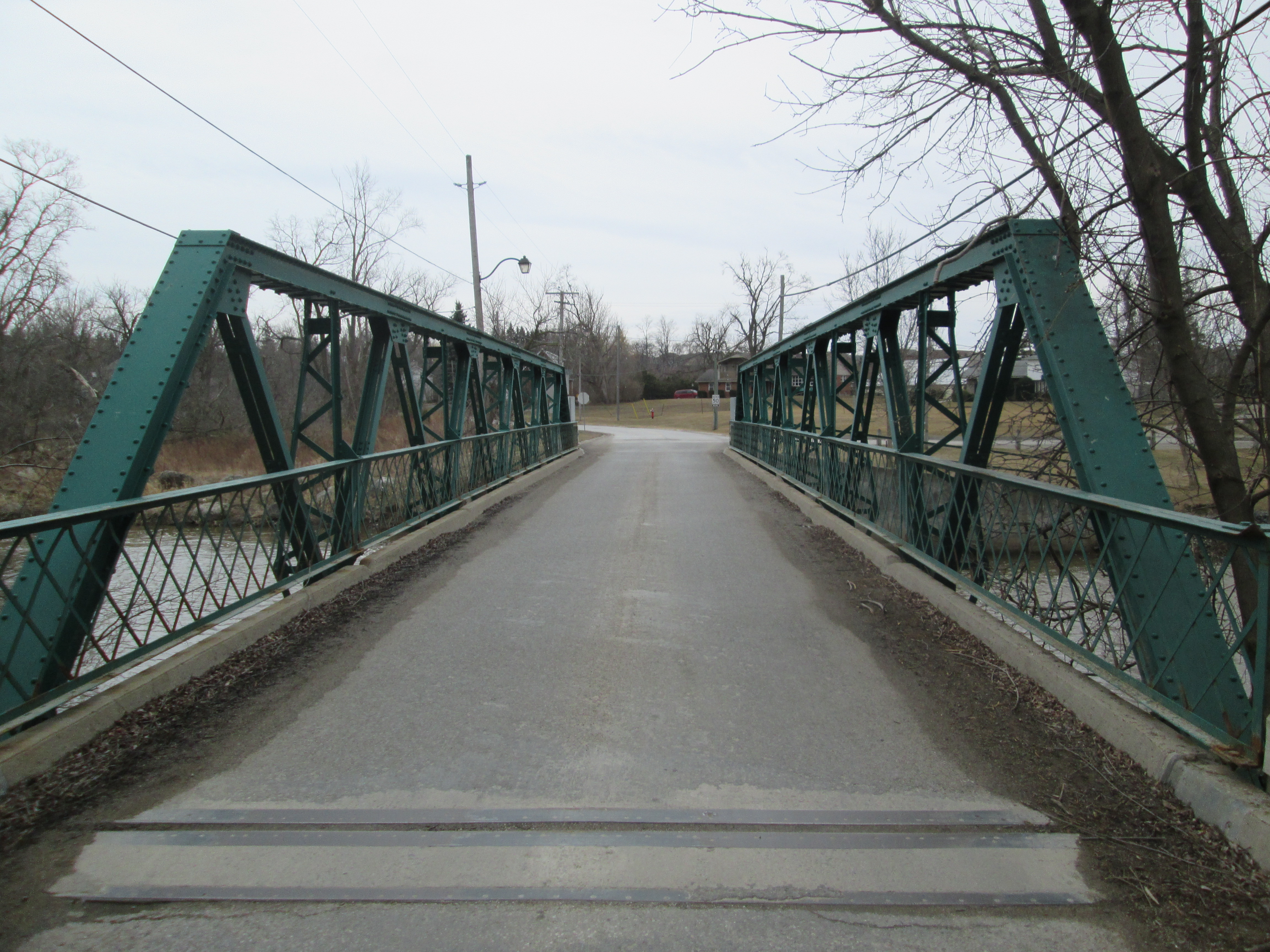
Built in 1907 the current one lane bridge over the Credit River in Churchville replaced several earlier wooden bridges that crossed the river in the centre of town.  The bridge style is known as a steel pony truss bridge.  A truss bridge is one of the earliest designs of bridges and was very common during the 19th and early 20th century.  A truss bridge uses a design of triangles to keep the elements of the bridge stressed either through tension or compression.  Where the sides extend above the roadway but are not connected across the top it is known as a “pony truss”. This bridge is one of only two single lane bridges remaining in Brampton.  A 1911 picture of the bridge is featured in the cover photo.  It was taken at about this time of year and large slabs of ice are melting beside the bridge abutments.  Of note are the three people who are standing on the outside of the bridge railing in the historical photograph.

IMG_3253

Amaziah Church founded the town in 1815 when he built mills on the Credit which were at first known as Church’s Mills.  With a population of 80 it got it’s own post office and the new name of Churchville in 1831.  By the 1850’s it had peaked at over 200 people and was home to 5 mills and over 20 small businesses plus three general stores.  The crash in grain prices following the Crimean War hurt the small milling community and between 1866 and 1877 all of the mills closed.   In 1875 a fire destroyed much of the town, which was never rebuilt.  The failure of the CVR to come into town in 1877 was a final blow to ensure it wouldn’t recover from it’s decline. Of the 98 homes that once stood in the village less than 20 remain.

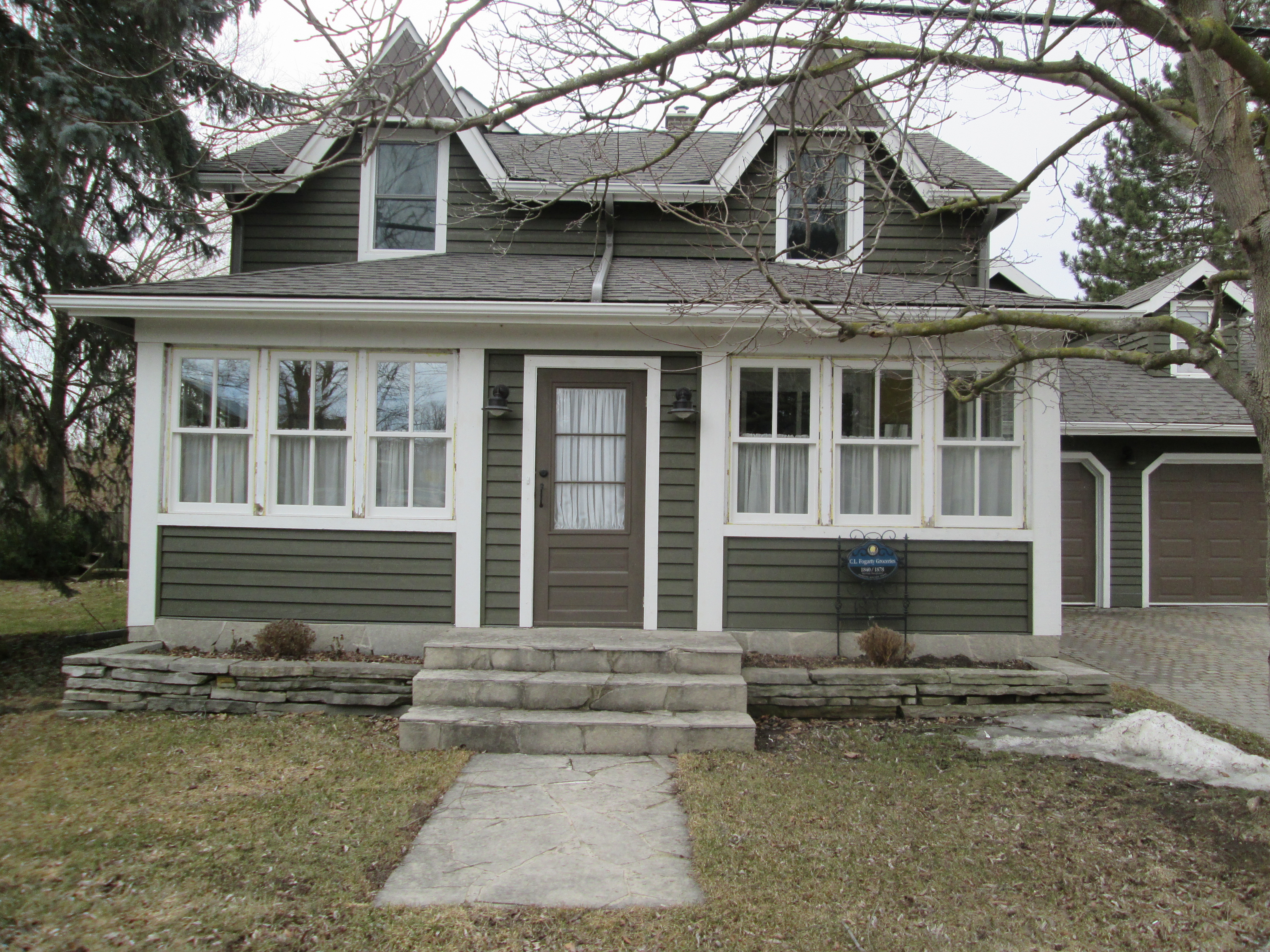
This building dates to 1840 and may have originally been a wagon shop belonging to Thomas Fogerty.  It served as the final general store for the community and lasted until the 1960’s when it was converted into a residence.  The original store windows have been hidden when the front porch was enclosed.

IMG_3251

Formerly known as the May Hotel this 1830’s structure is one of the oldest surviving buildings in Churchville.

IMG_3235

At one time there were three churches in town.  The Anglican and Episcopalian churches have been lost and the only one remaining is the Weslyan Methodist, built in 1856.

IMG_3256

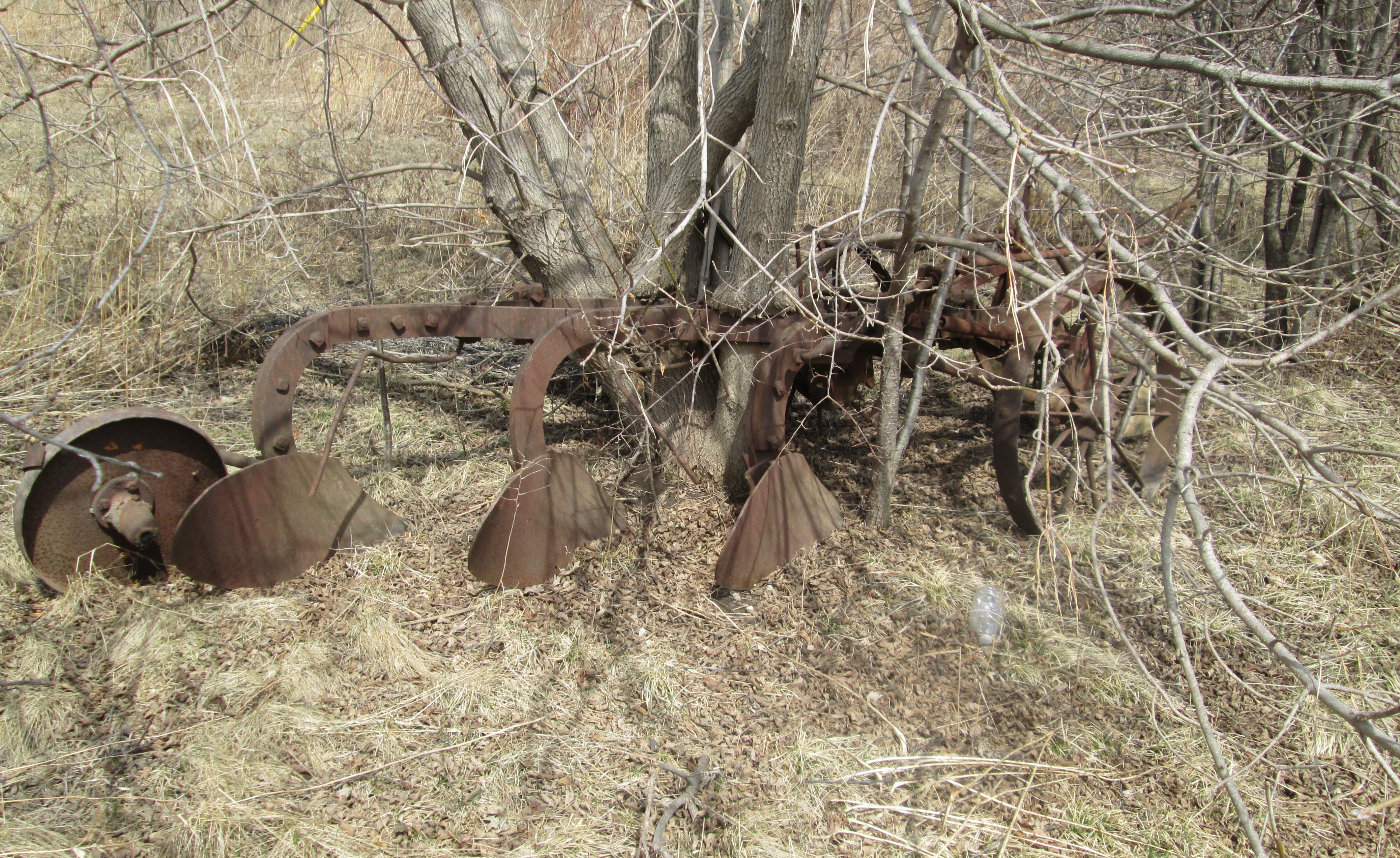
The old plow in the picture below has been sitting in one place for so long that a group of small trees is growing up in the middle of the frame.

???????????????????????????????

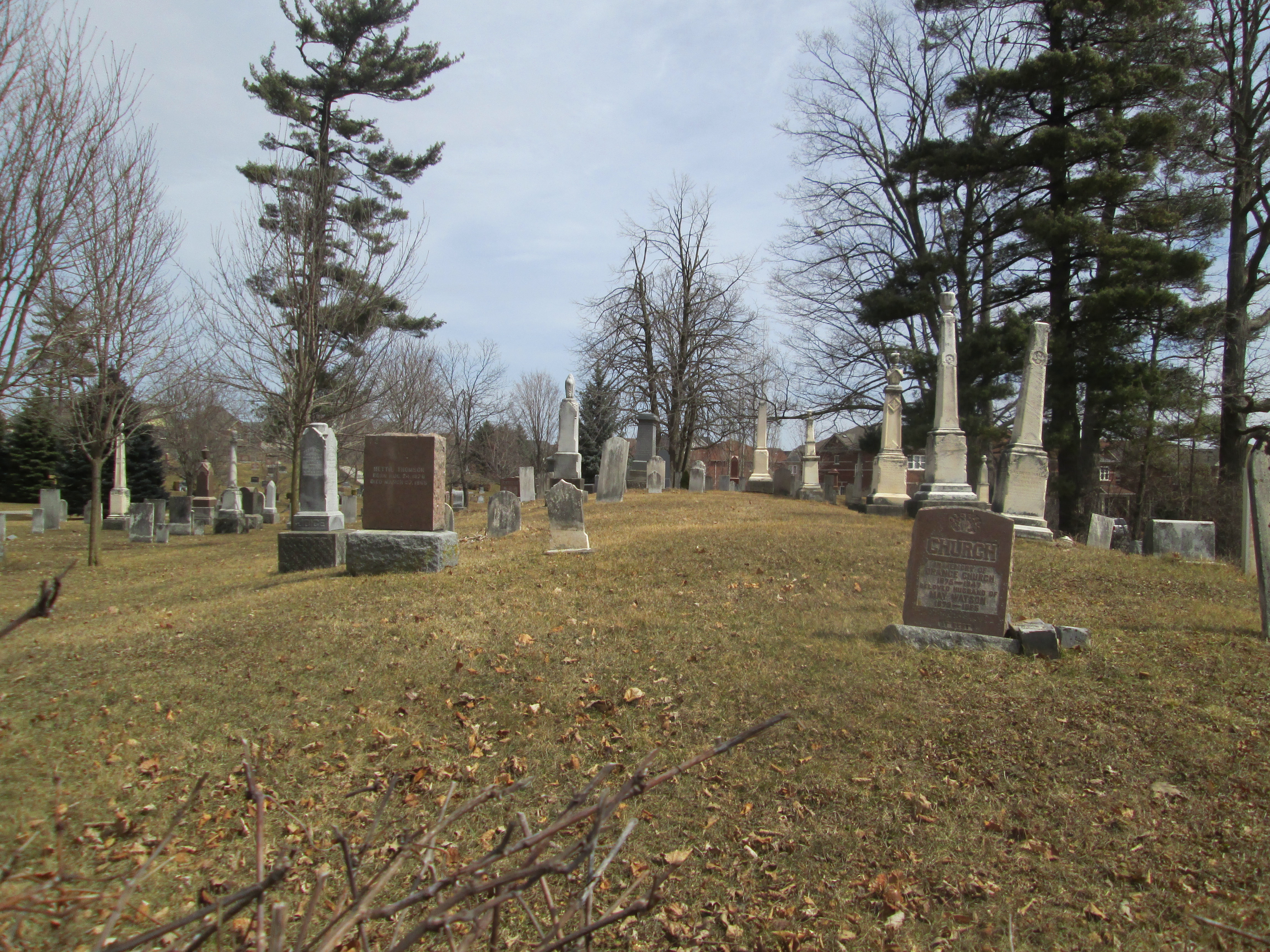
The first burial in the Churchville cemetery was Amaziah Church in 1831.

IMG_3244

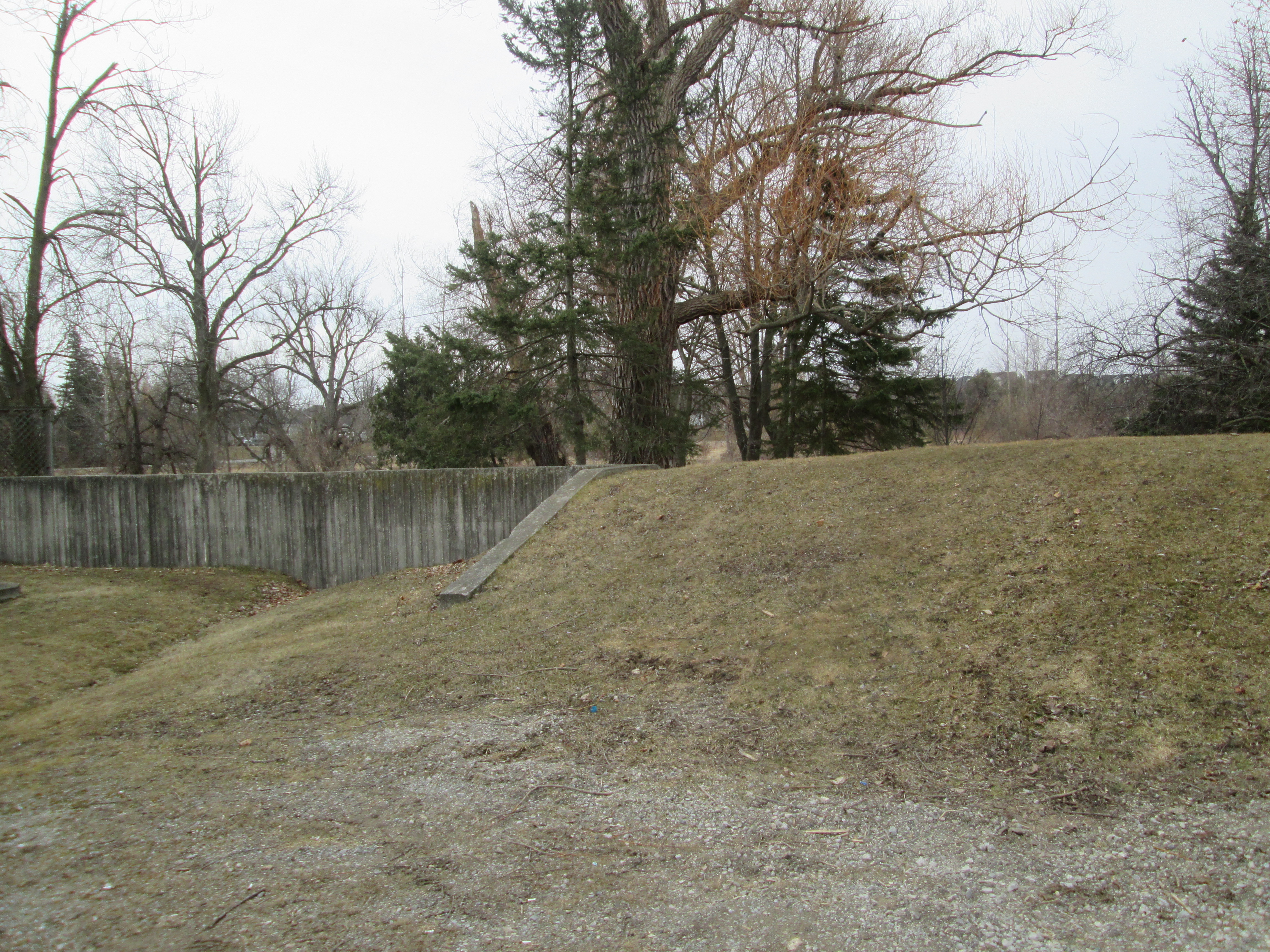
The town of Churchville sits on the floodplain for the Credit River and has experienced repeated flooding over the years.  When the town was recognized as a Cultural Heritage District it was decided to do something to protect the historic homes in town.  In 1989 a protective berm was built between the river and the homes along it’s east side.  Behind houses it has been built with a concrete wall and between houses the gentle slope of the berm can be seen.  The picture below is taken from beside the former volunteer fire department station.

IMG_3249

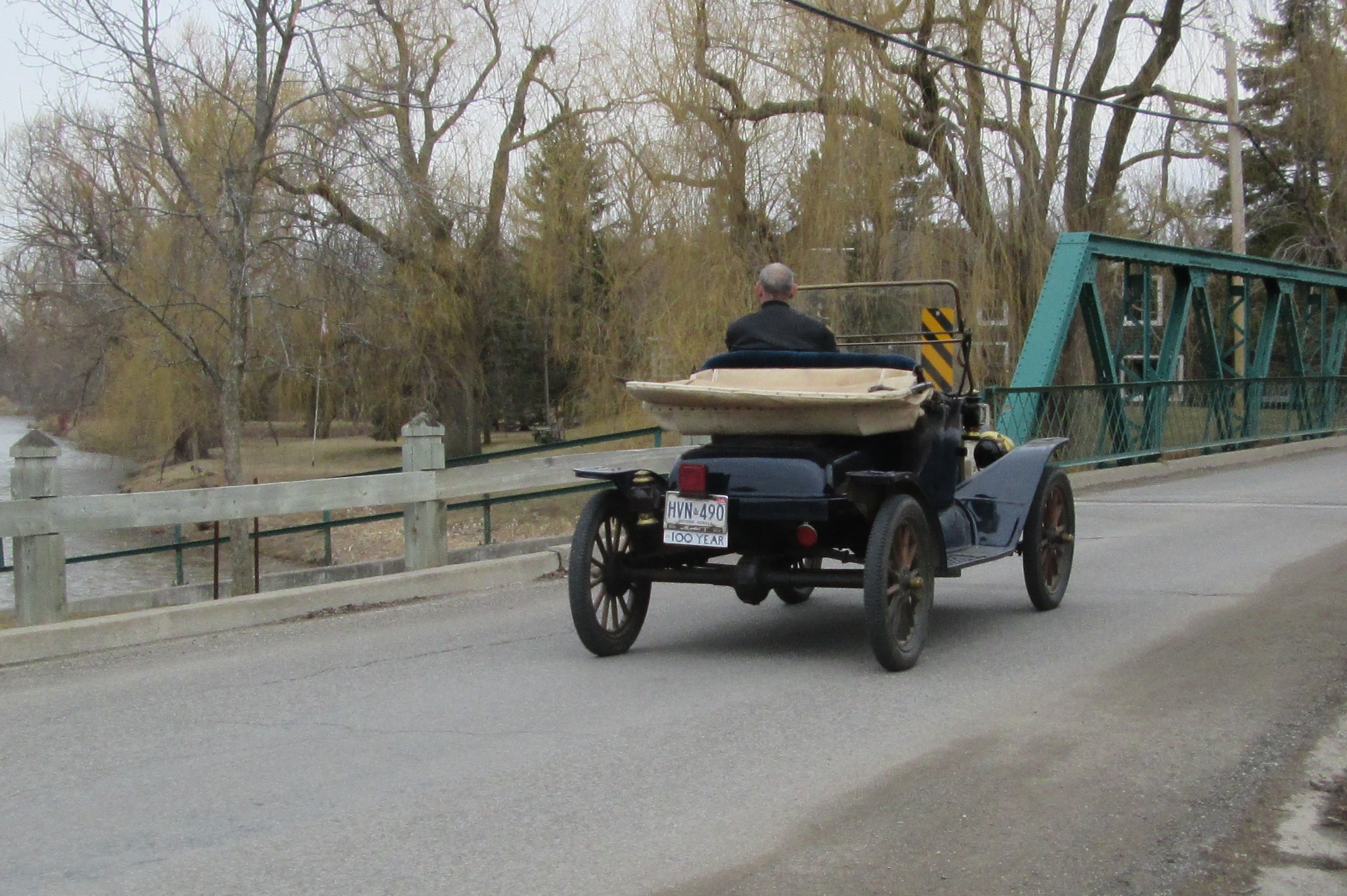
Tagged on the plate as a 100 year vehicle it was appropriate that we saw it entering the 1907 bridge.

???????????????????????????????


Meadowvale Cultural Heritage District

Saturday March 28th, 2015

This is a second part to the post Silverthorne Grist Mill – Meadowvale.

In 1805 the “old survey” was completed in which the native people sold their lands except for 1 mile on either side of the Credit river.  When the “new survey” was completed in 1818 the river was ceded as well and this opened the area up to settlers who wanted access to the river to build saw or grist mills.  John Beatty arrived in 1819 and was the first settler in the area.  Huge pine trees lined the hill sides but a grassy meadow lay around the river.  From this came the name of the town, Meadowvale.  From 1819 until the mid-20th century the town changed very little.  It remained centred around a triangle of streets wedged between Derry Road, Second Line and the Credit River.  As the city of Mississauga started to grow wildly in the 1970’s the people of Meadowvale started to worry that their small town would lose it’s historical charm. They applied to have the town formally recognized as Ontario’s first Cultural Heritage District.

The following is a look at some of the heritage buildings in the village of Meadowvale.  Others have been featured in the post Silverthorne Grist Mill.

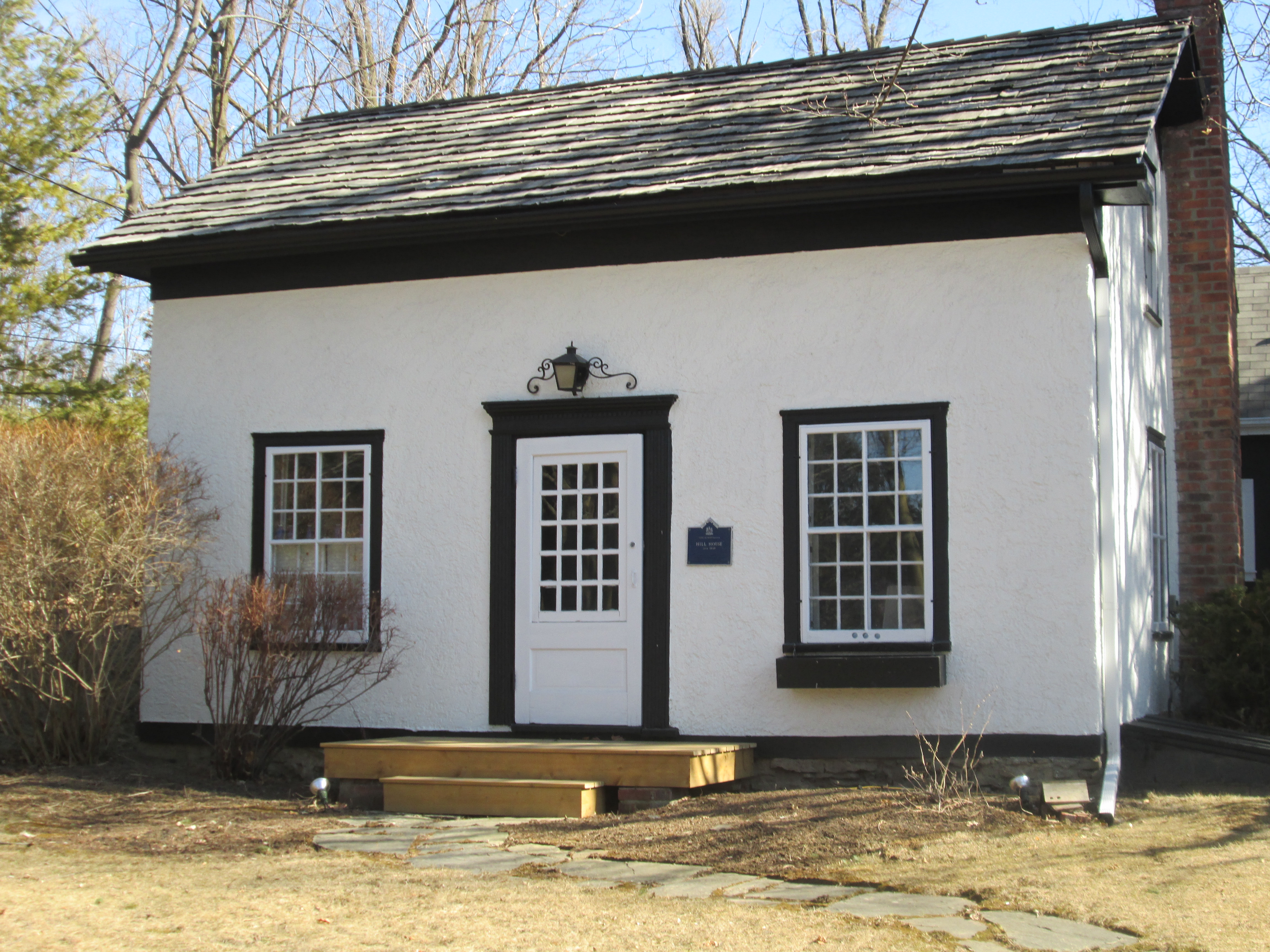
Known as the “Hill House” this little home was built in 1840 and is one of the oldest homes in the village.  It has always remained a private residence belonging to the Hill family after 1896. The early Methodist church meetings were held in this house until the church was built in 1863.

IMG_3115

George Bell (no relation to the famous Blue Jay) was the town blacksmith and in 1844 he purchased land from mill owner John Simpson on which to build the first hotel in Meadowvale.   Bell Hotel was built across the street from the grist mill at 1090 Old Derry Road.  For awhile it was also known as Temperance Hotel.  The building is currently in use as residential apartments.

IMG_2987

In 1852 the Brick Hotel was constructed at 1051 Old Derry Road by Matthew Laidlaw.  The stacked open veranda was on the original building but was removed before 1900.  Guests would sit out here to enjoy the evening and get coated with dust from the street in front of the hotel.  The veranda was replaced in recent years.

IMG_3097

In 1857 Meadowvale got it’s first post master in the person of Luther Cheyne.  The post office was operated out of Silverthorne’s store.  In 1860 Cheyne built a home at 7053 Pond Street that was sold to the Farnells in 1890.  In 1920 it was bought by two ladies who opened the Apple Tree Inn tea room in the house.  When this closed in 1944 the house again became a private residence.

IMG_3118

Weslyan Methodist was the primary denomination in much of early Upper Canada.  The 1863 church on the corner of Derry and Second line has had a front porch, or narthex, added to it over the years.  There is a trim of yellow bricks around the top of the older part of the building that can be glimpsed behind the tree on the right hand side.  In 1925 the Methodist church joined 3 other denominations to form the United Church of Canada.  Today it serves the United Church in town.

IMG_3102

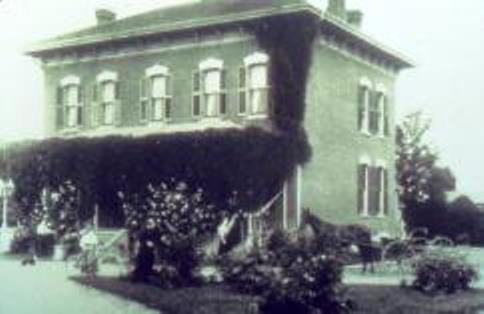
The 1870’s were a period of prosperity for Meadowvale while the mills were under the ownership of Gooderham and Worts.  This photo shows the Gooderham Estate as it looked around 1900.  The current house is featured in the Silverthorne mill post.

Gooderham House c1900_th (1)

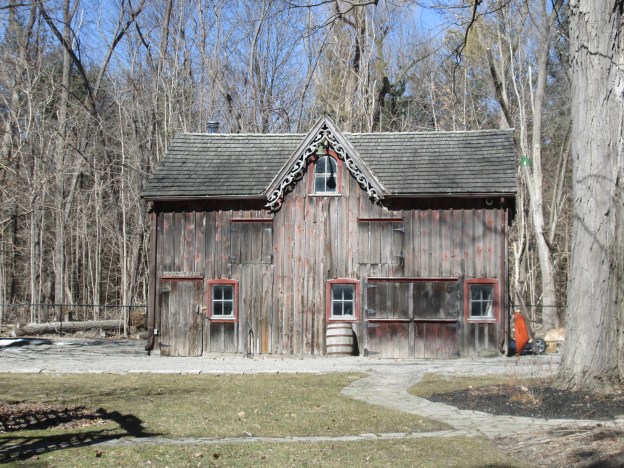
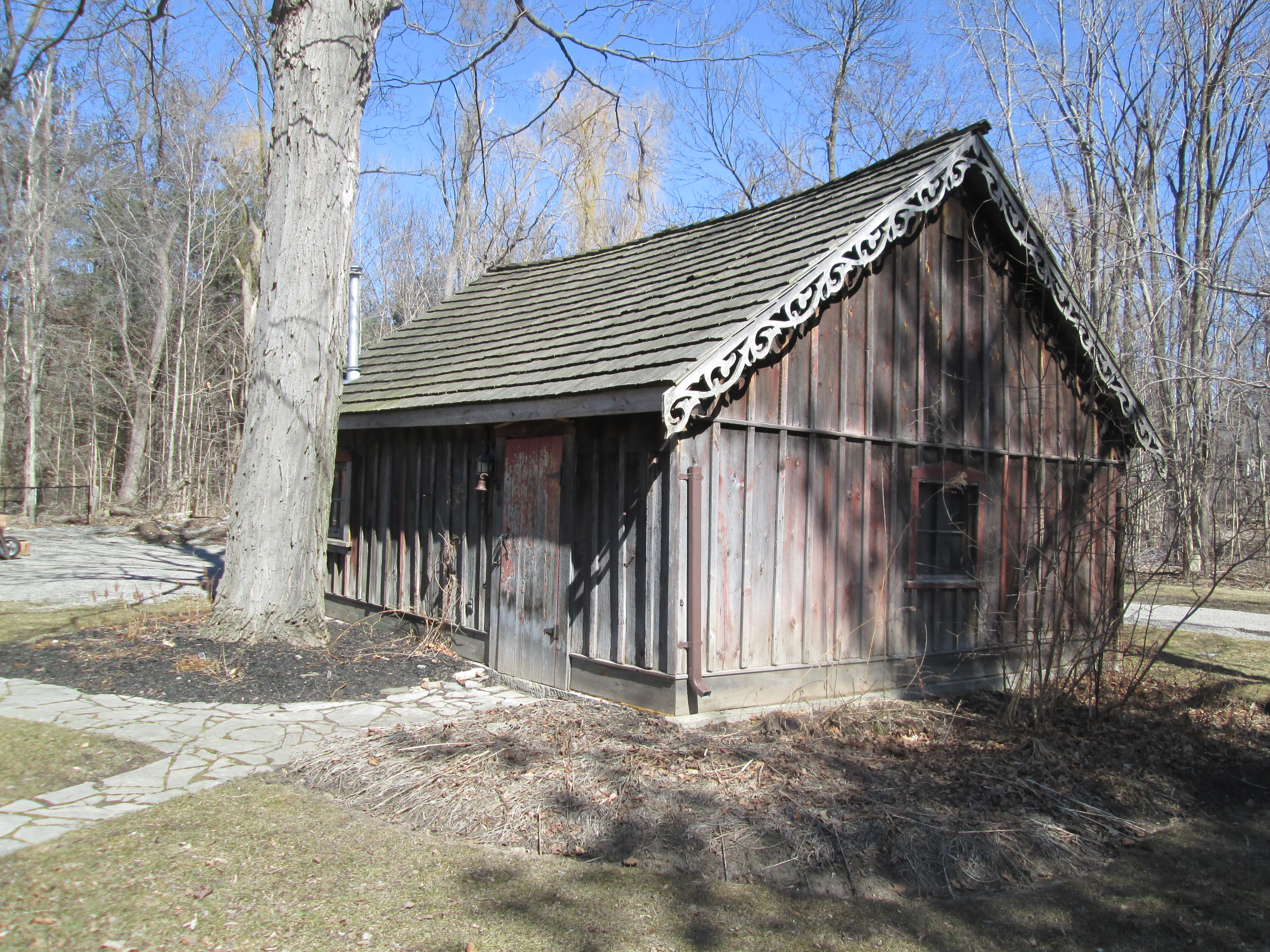
Around 1870 Johnson’s wagon and blacksmith shops were built at 1101 Willow Lane close to the grist mill.  The original 1870 house still stands on the property as well as a grand old fashioned mansion that was built in 1999 in a style that fits the character of the village.  The wagon shop is featured in the cover photo and the blacksmith shop is below.  Notice the two windows in the second floor of the wagon shop.  Painted parts would be left upstairs to dry.

IMG_3054

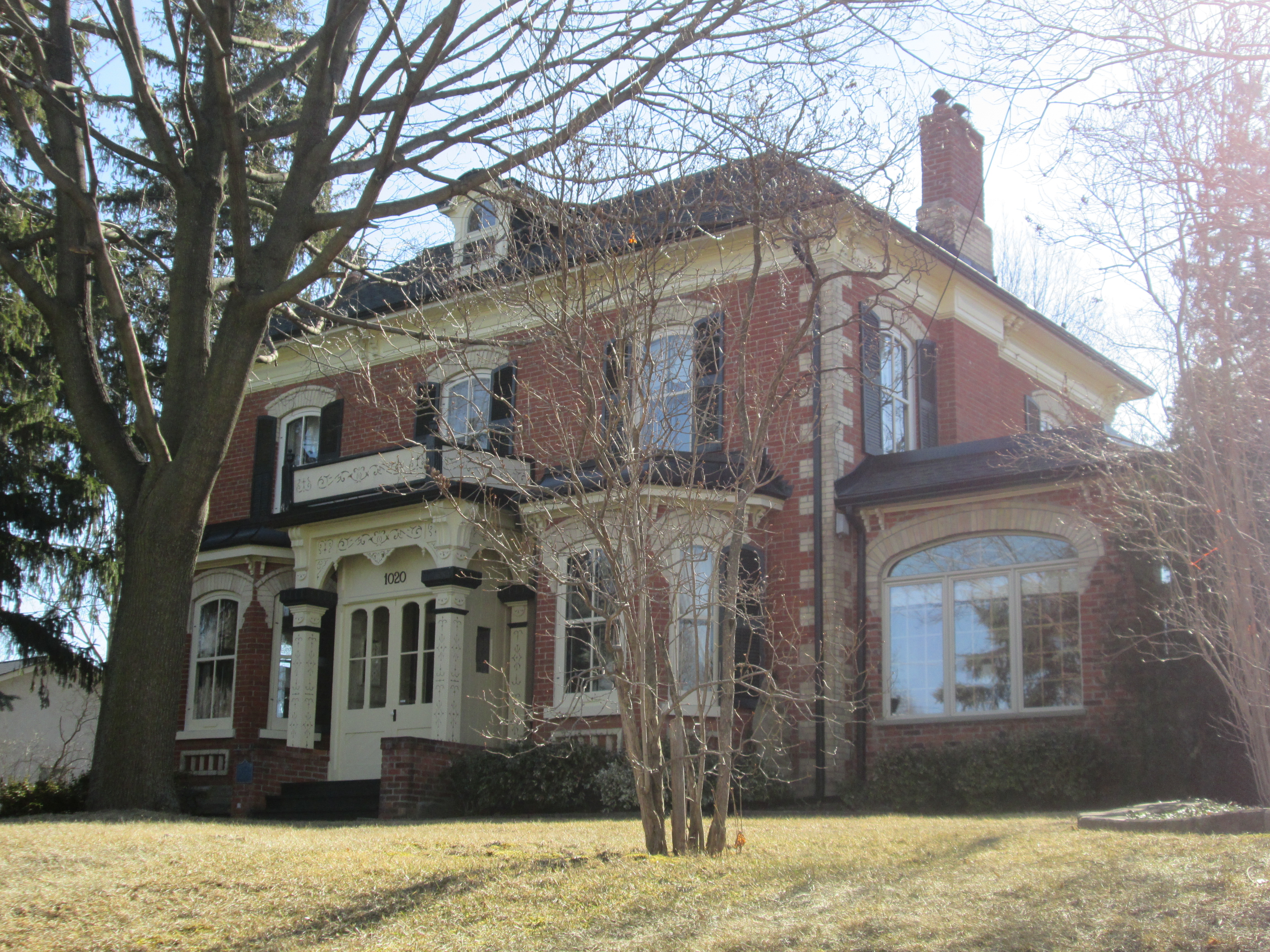
In 1870 the Graham house was built next to the Methodist Church on land donated by John Simpson for a home for his daughter Elizabeth and her husband.  This is one of the more ornate homes in town.

IMG_3098

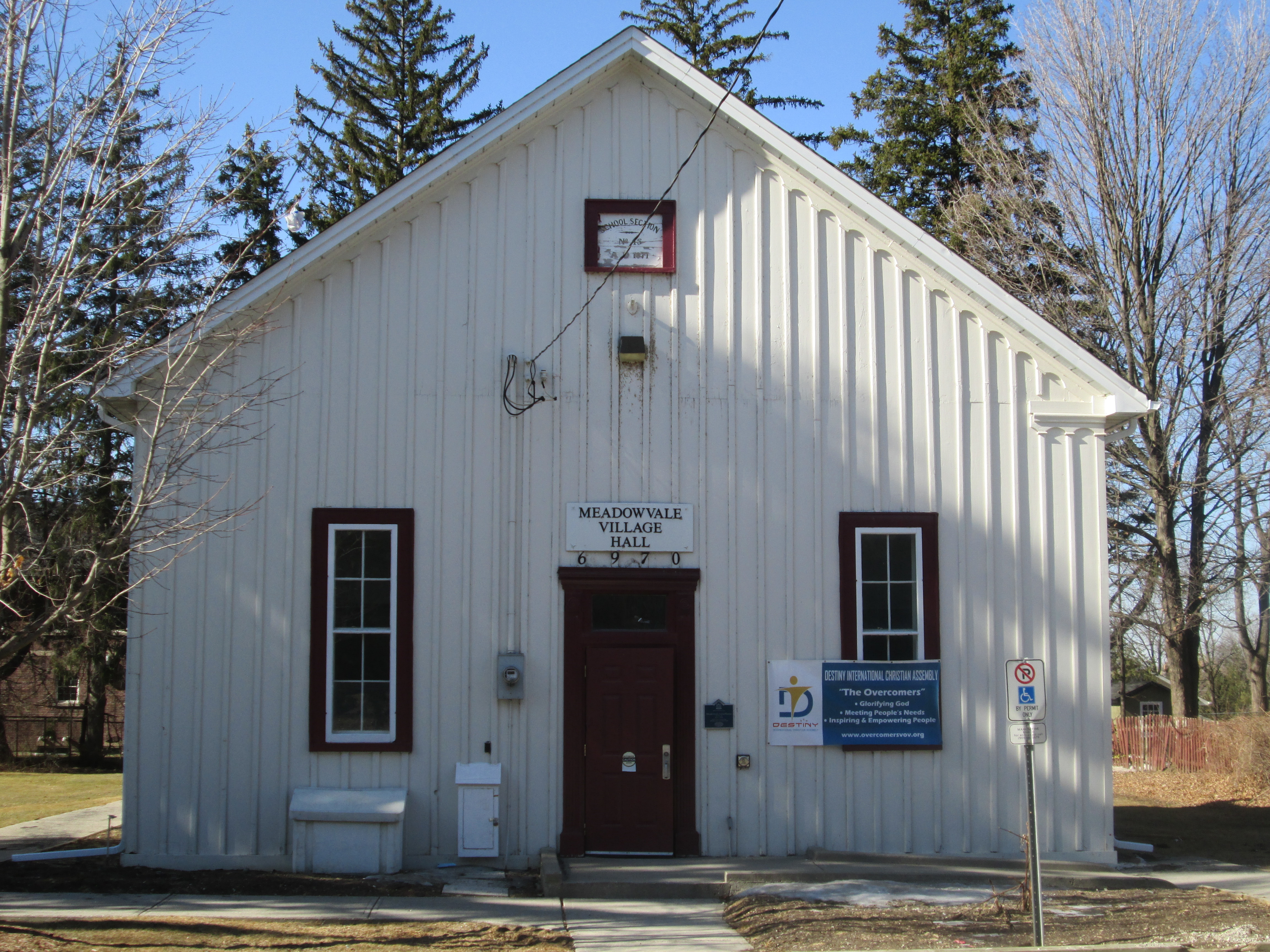
In 1871 a second school was built to replace the old one that stood at the corner of Barberry Lane and Second Line.  The first one had been built in 1851 and was used as a private residence after the new school was built.  Barberry Lane was originally named second street but was renamed after the Barbers who lived in the old school house.  The old school house was lost to a fire in 1974.  The new school was built just behind the Methodist church on land donated by the Simpson Family. It has served as the town hall since 1968.

IMG_3103

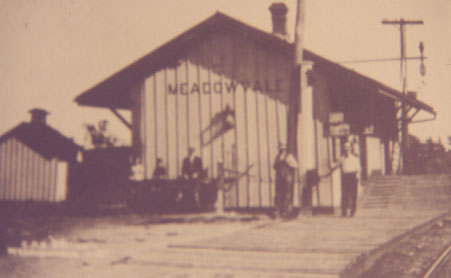
In 1879 the Credit Valley Railroad came to Meadowvale.  The chief financial backer was George Laidlaw who was responsible for much of the rail system in and around Toronto.  The picture below shows the CVR station for Meadowvale around 1905.

LG_M319

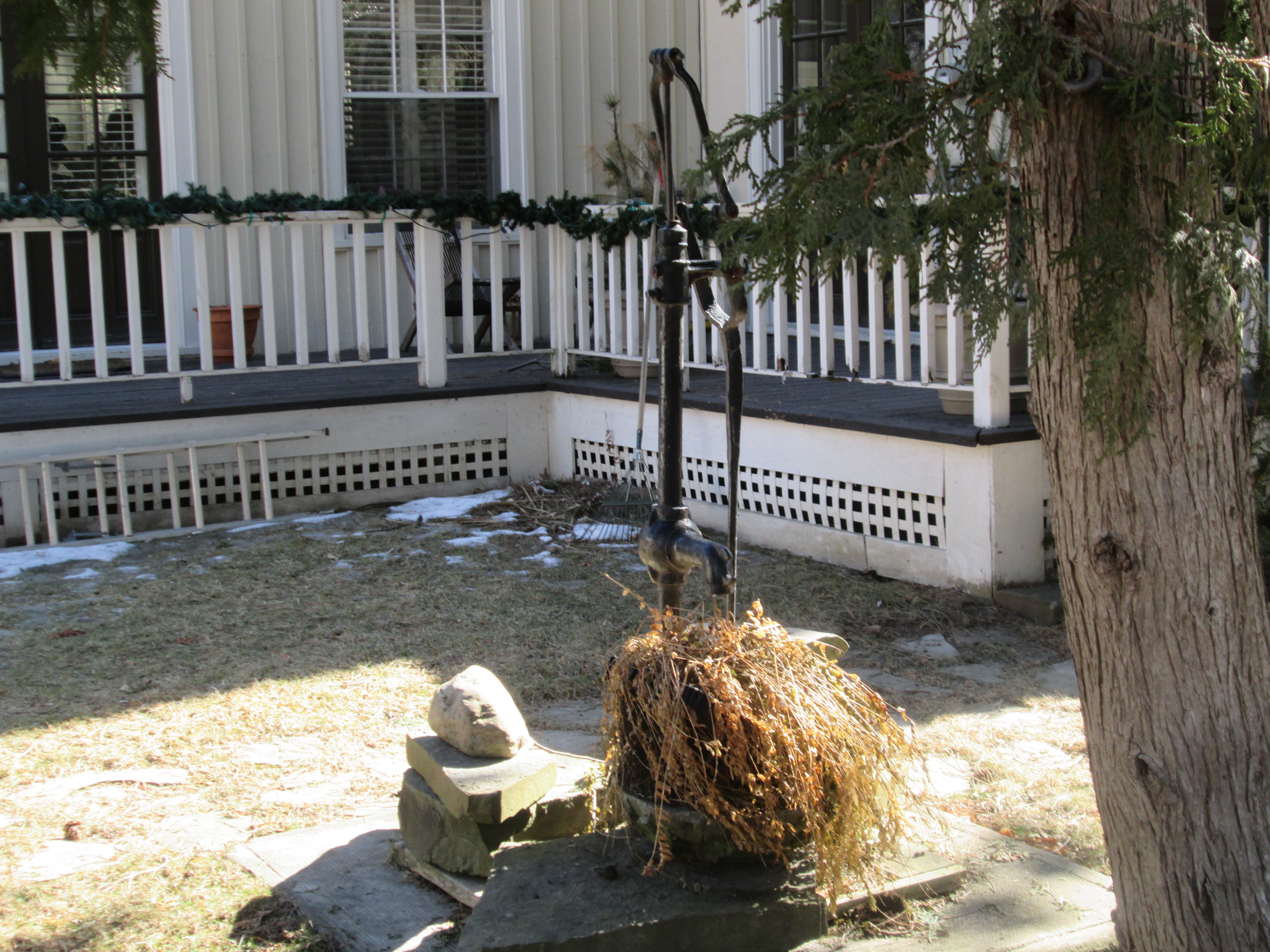
The homes in the village were mostly built prior to the time of running water.  They would have had an outhouse for a washroom and a hand pump for their well.  Many of the homes in town still have their old pumps on the front lawn.  (Fortunately it looks like they all have indoor washrooms now making that cold winter trip a part of history as well.)

IMG_3122

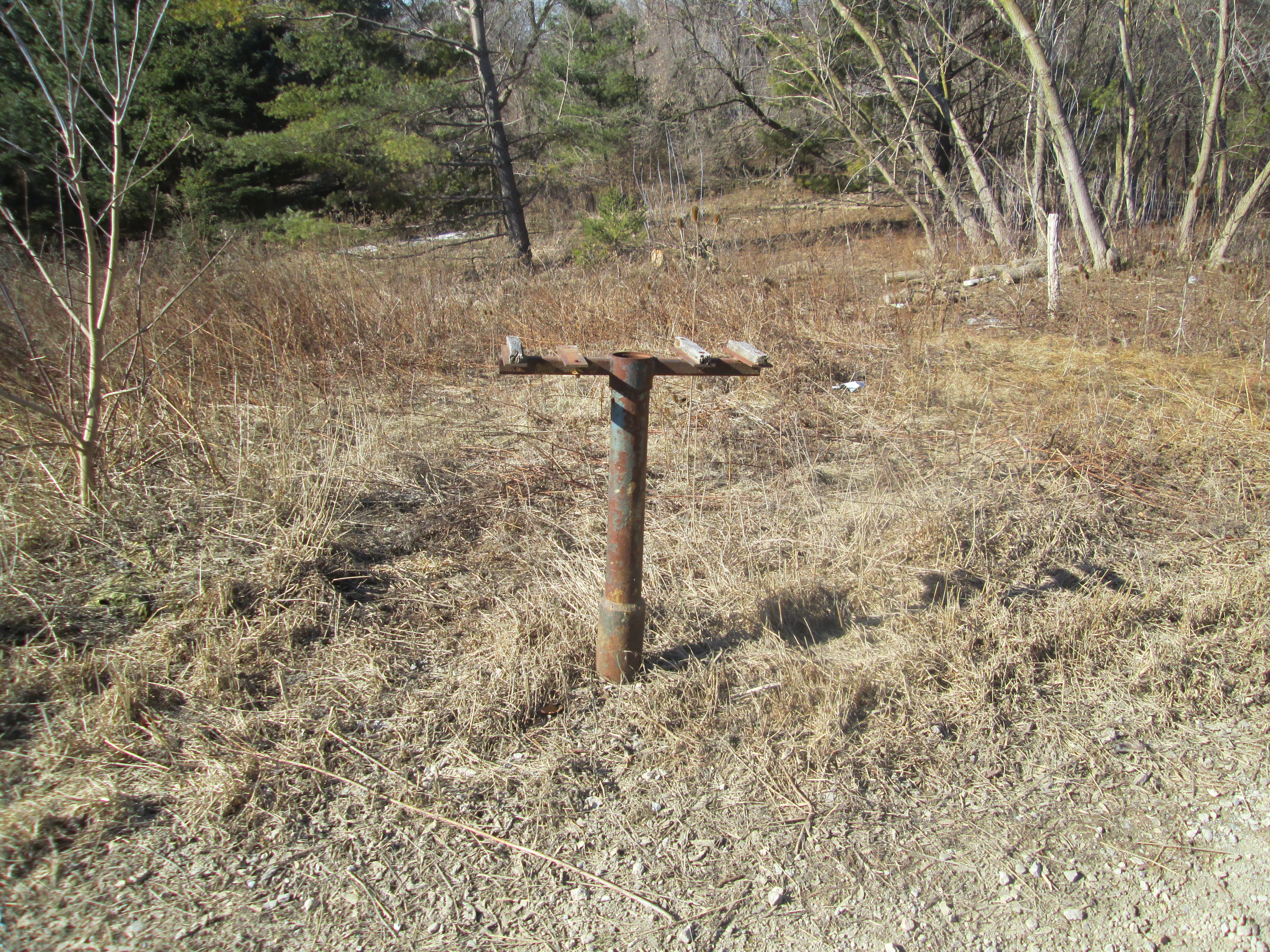
Along Second Line stands this old post.  A reminder of the days when mail service was made to individual post boxes set at the end of a person’s driveway.

IMG_3130

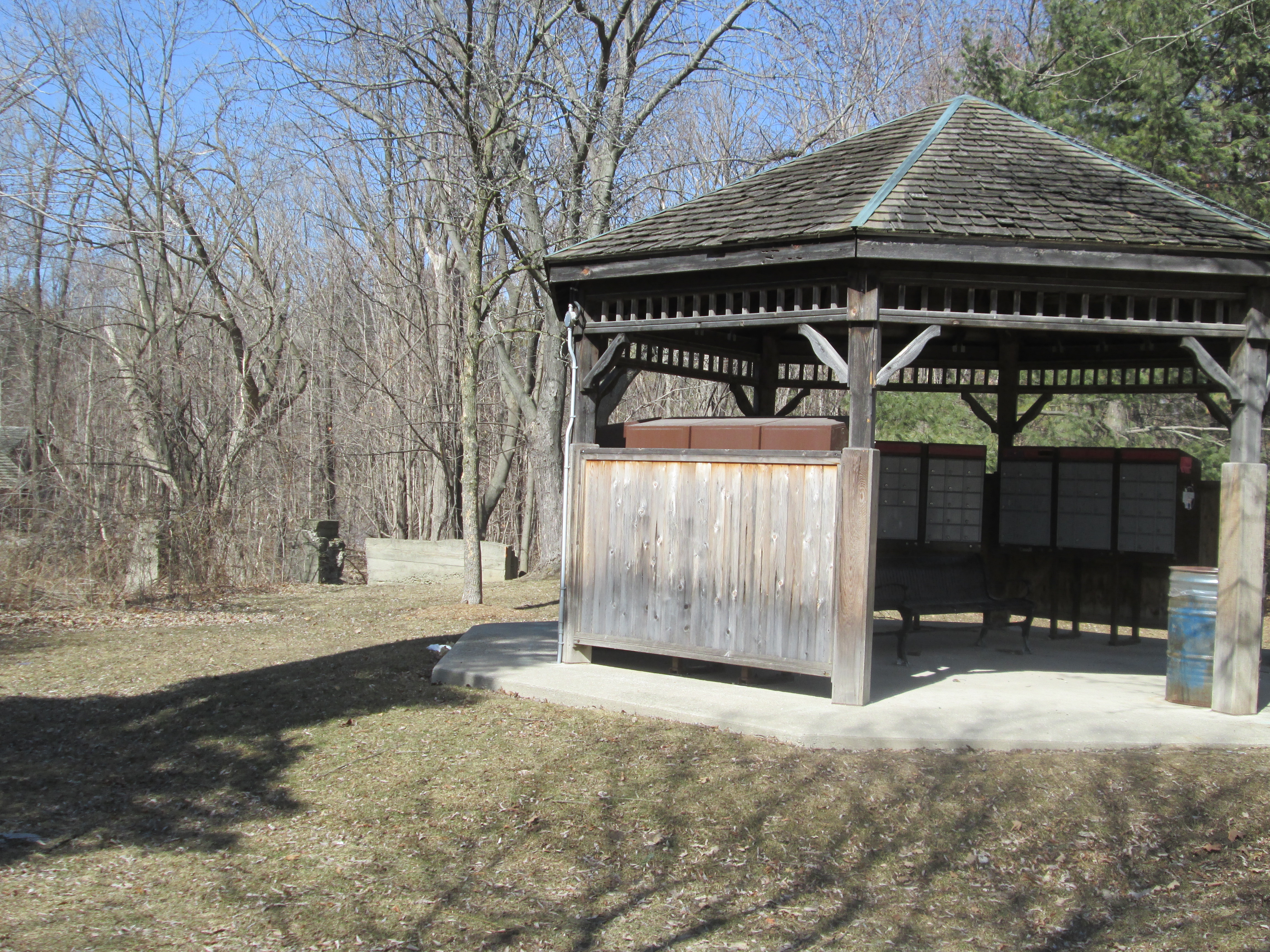
Today people must go the a “super box” gazebo to collect their mail.  The mail gazebo is located on top of the ruins of the old mill. The old mixed with the new.  In the picture below the old mill ruins can be seen in the background behind the gazebo.

IMG_3147

Meadowvale is full of heritage houses only a few of which have been featured here.  It is a quiet community of narrow streets with no curbs or sidewalks.  A time capsule tucked in the heart of the city of Mississauga.

Like us at http://www.facebook.com/hikingthegta


Alpha Mills

Saturday Mar. 21, 2015

Spring officially started last night at 6:45 local time.  This morning was cloudy and dull with a wind that made the two degrees feel more like minus six.  A winter hang-over I guess.  We parked at the end of Alpha Mills Road where a walkway leads to the Credit River off Plainsman Road.

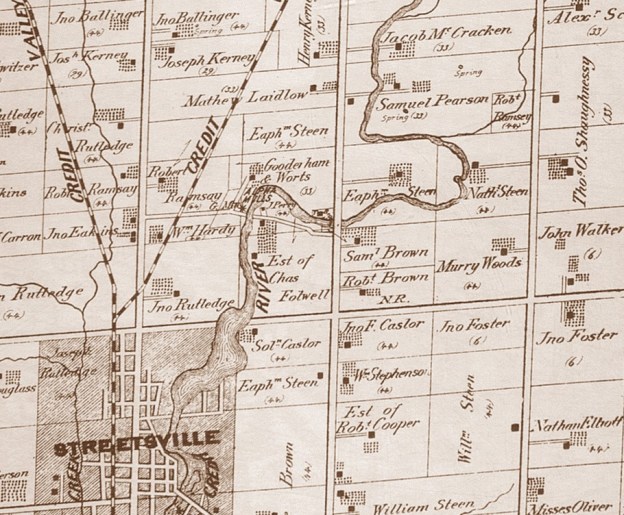
In 1825 Christopher Row(e) built a mill on lot 7 Concession IV where the river curves to the east, just north of Streetsville.   When J. Deady took over running the mill he renamed it Alpha Mills. It can be seen near the centre in the cover picture from the 1877 Peel County Atlas on property shown as belonging to Gooderham and Worts.  By 1877 there were 30 mills on the Credit River with 10 of them being textile related.  This was a localized industry that included the Barbertown Mills.

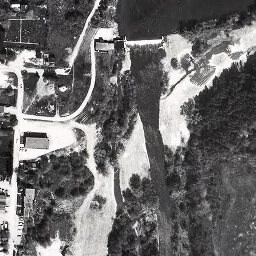
By the mid 1850’s Gooderham and Worts (G&W) had become the largest distillery in Canada and today their downtown manufacturing empire is preserved as 40 heritage buildings.  It is the largest collection of Victorian era industrial architecture in North America.  G&W began adding other mills to their holdings including Norval in 1845 and Hillsburgh in 1850.  In 1860 they acquired Alpha Mills and branded it as Alpha Knitting Mills.  G&W operated the mill until around the turn of the 20th century. William Gooderham’s grandson Albert would go on to purchase and gift a piece of property for Connaught Labs to the University of Toronto in 1917.  The 1971 aerial photo below shows the mill pond as the flat black area in the upper right corner.  The mill dam and water fall stretch across the river with the Alpha Knitting Mill building standing to the left just beside the dam.

Alpha

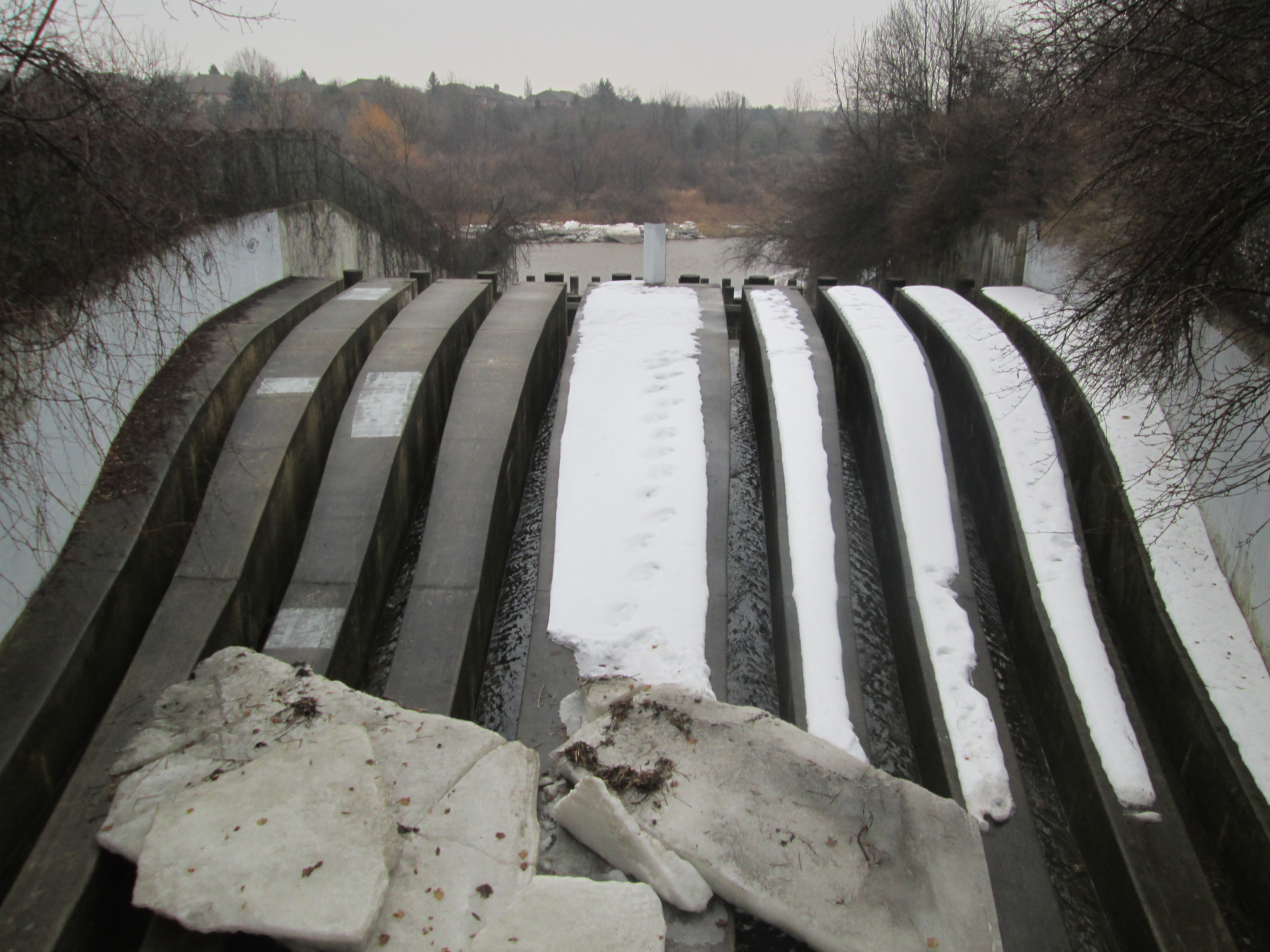
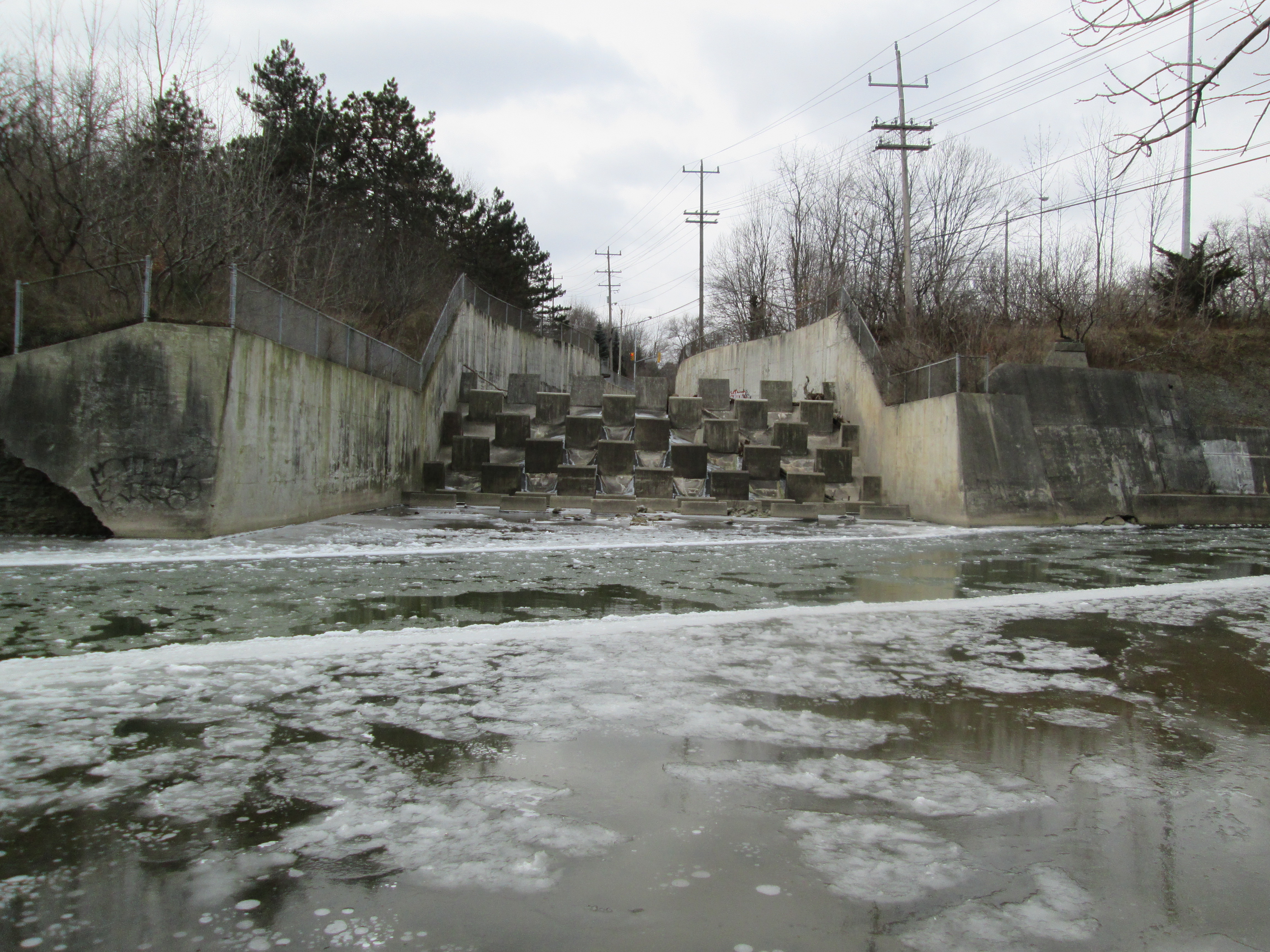
Not long after the photo above was taken the buildings and dam were removed and one of the most detailed diversion weirs I’ve ever seen was built in it’s place.  Storm water flows out of a buried channel and into these eight slots.  The concrete is curved upward to prevent things from washing over the edge and choking the system below, in this case it is this winter’s ice sheets.  The curve of the concrete gives the optical illusion that the water is flowing up hill.

IMG_2861

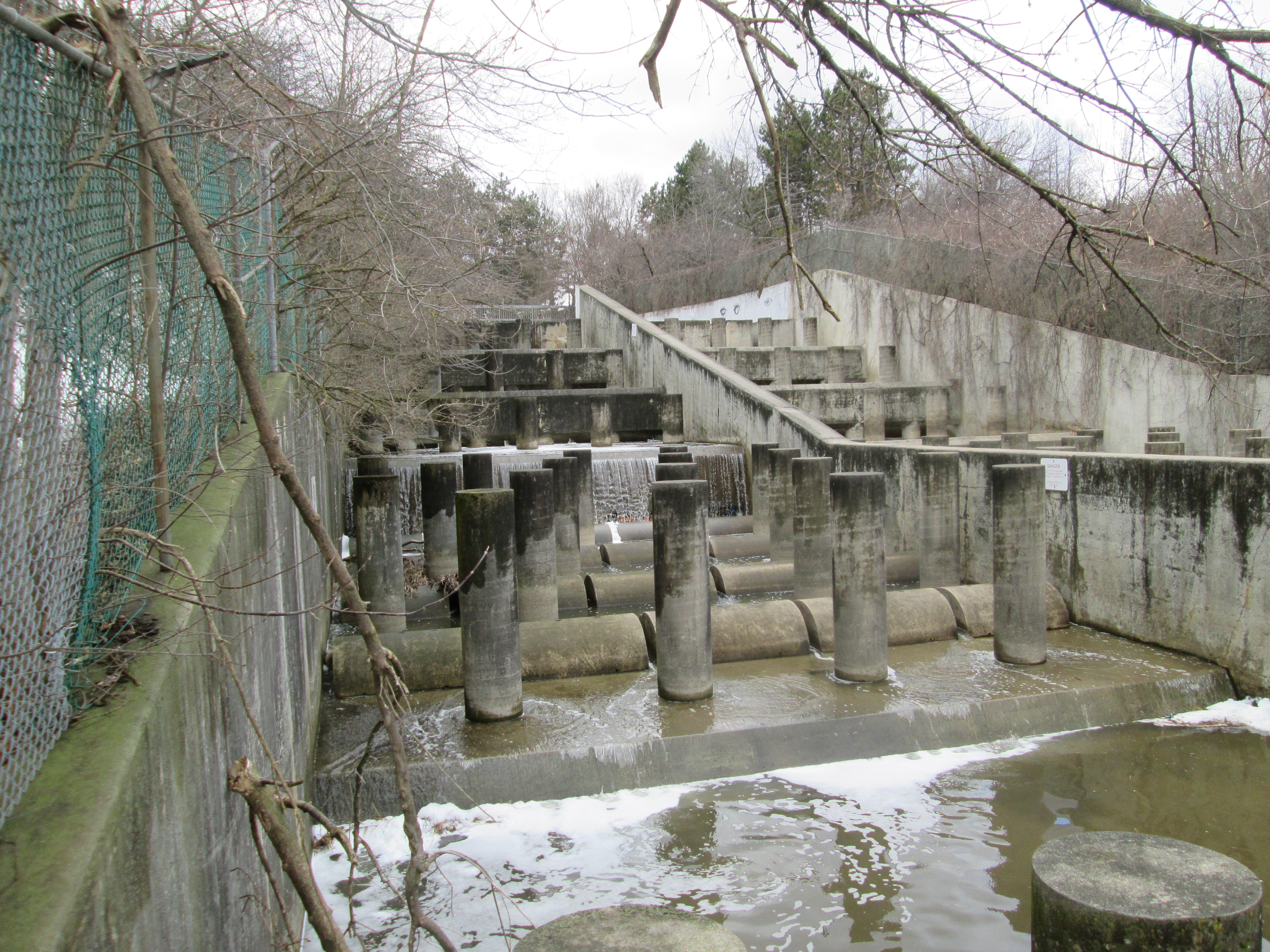
From the bottom of the storm drain looking back up there are 8 rows of concrete pillars with half-round steps in between.  For most of the length they are divided down the middle by a concrete wall.

IMG_2930

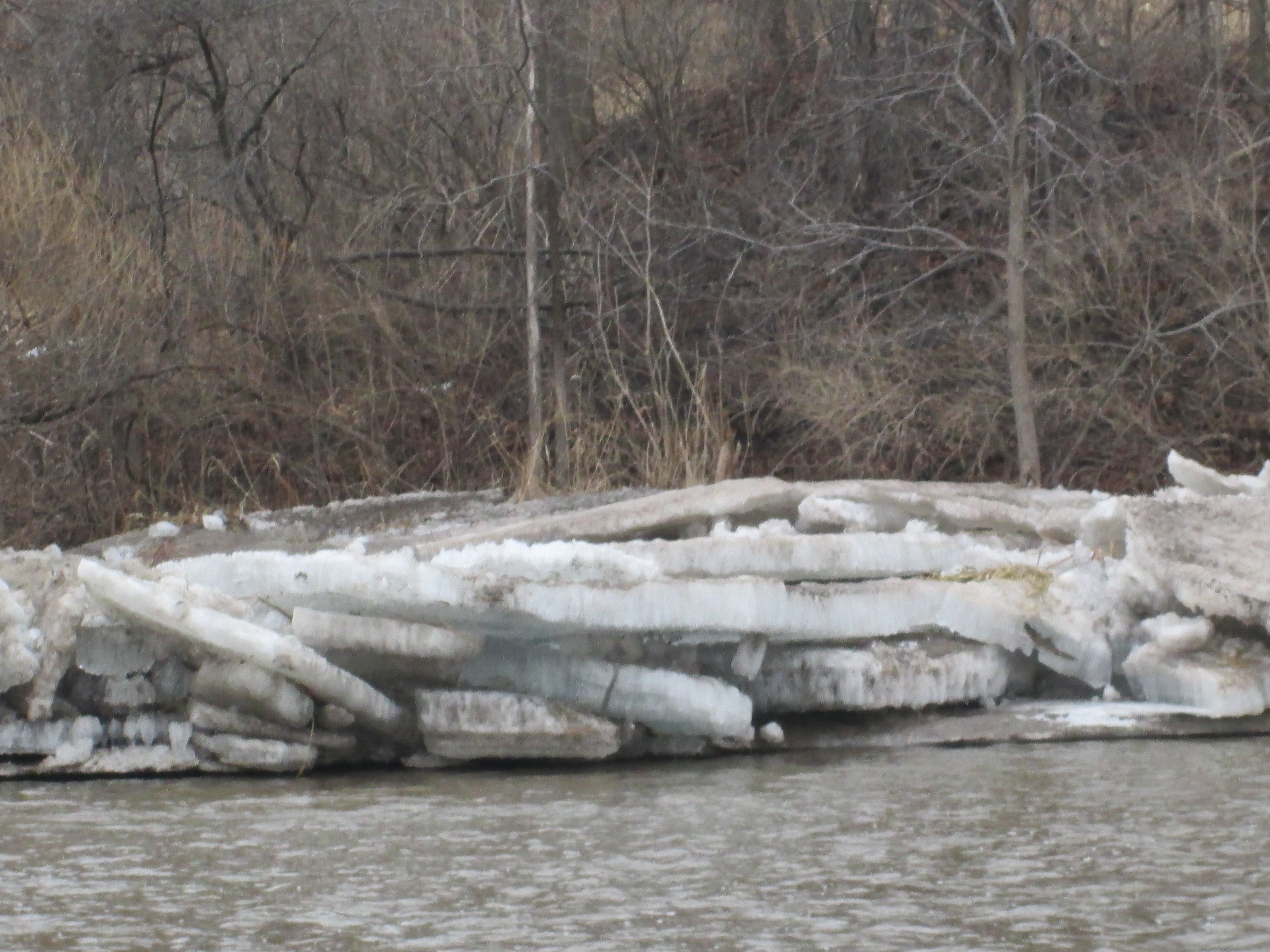
The long cold stretch of below freezing weather throughout February of this year froze the Credit River to a depth of up to two feet,  When the snow finally started to melt, the water level in the river increased under the ice, snapping it into large sheets which then washed up on the shore.  In the picture below they are stacked up four high.

IMG_2902

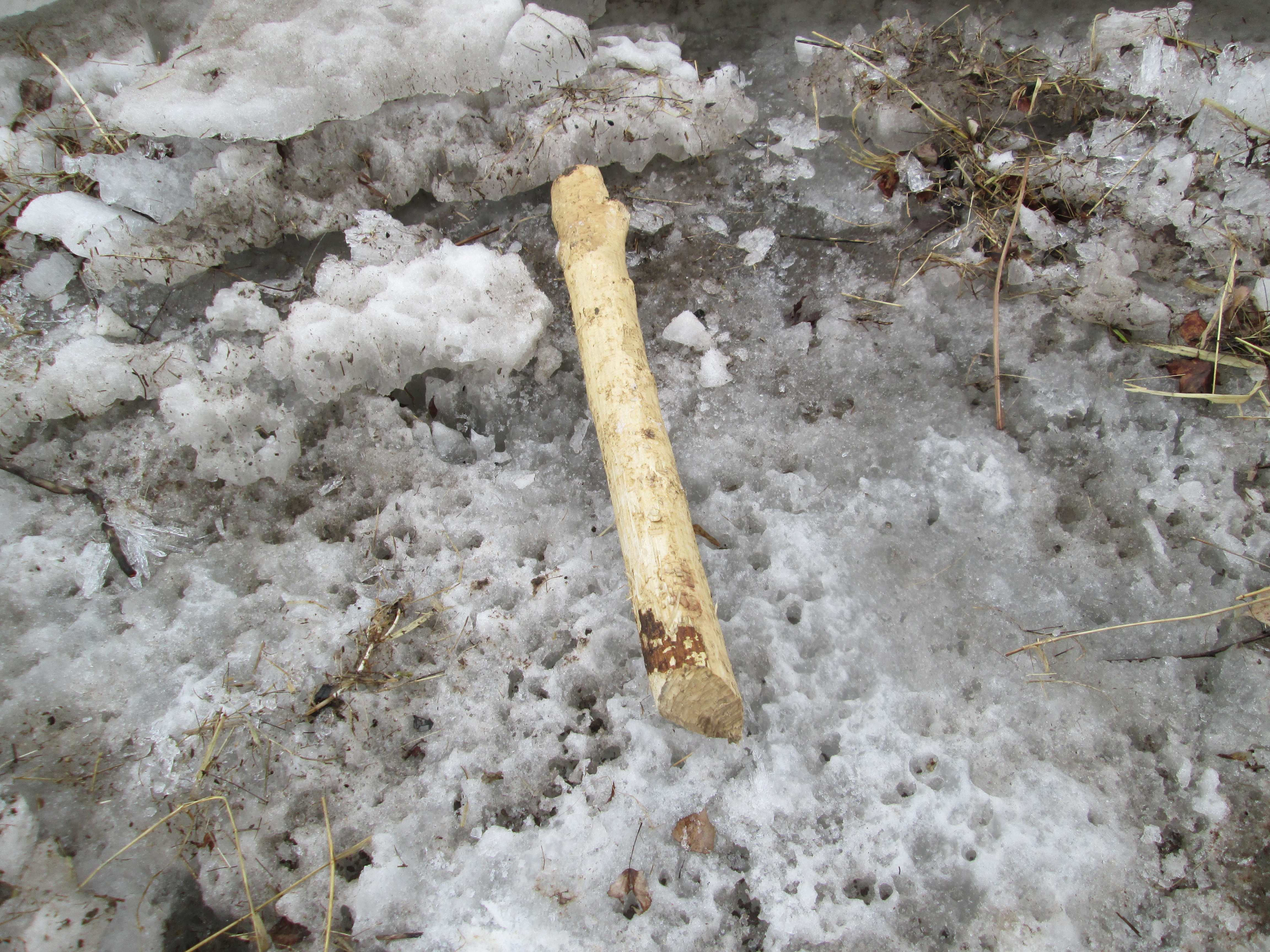
As we walked north up the west side of the river we crossed large chucks of river ice.  The piece of wood in the picture below has been trimmed clean by the local beaver.  It is rounded at both ends and all the bark removed.  Rather than construction material, this has been a food source for an example of Canada’s largest rodent. Once on shore, the river ice tends to melt in one of two ways.  The example in the picture below shows a slab of ice cut through by hundreds of small holes.

IMG_2905

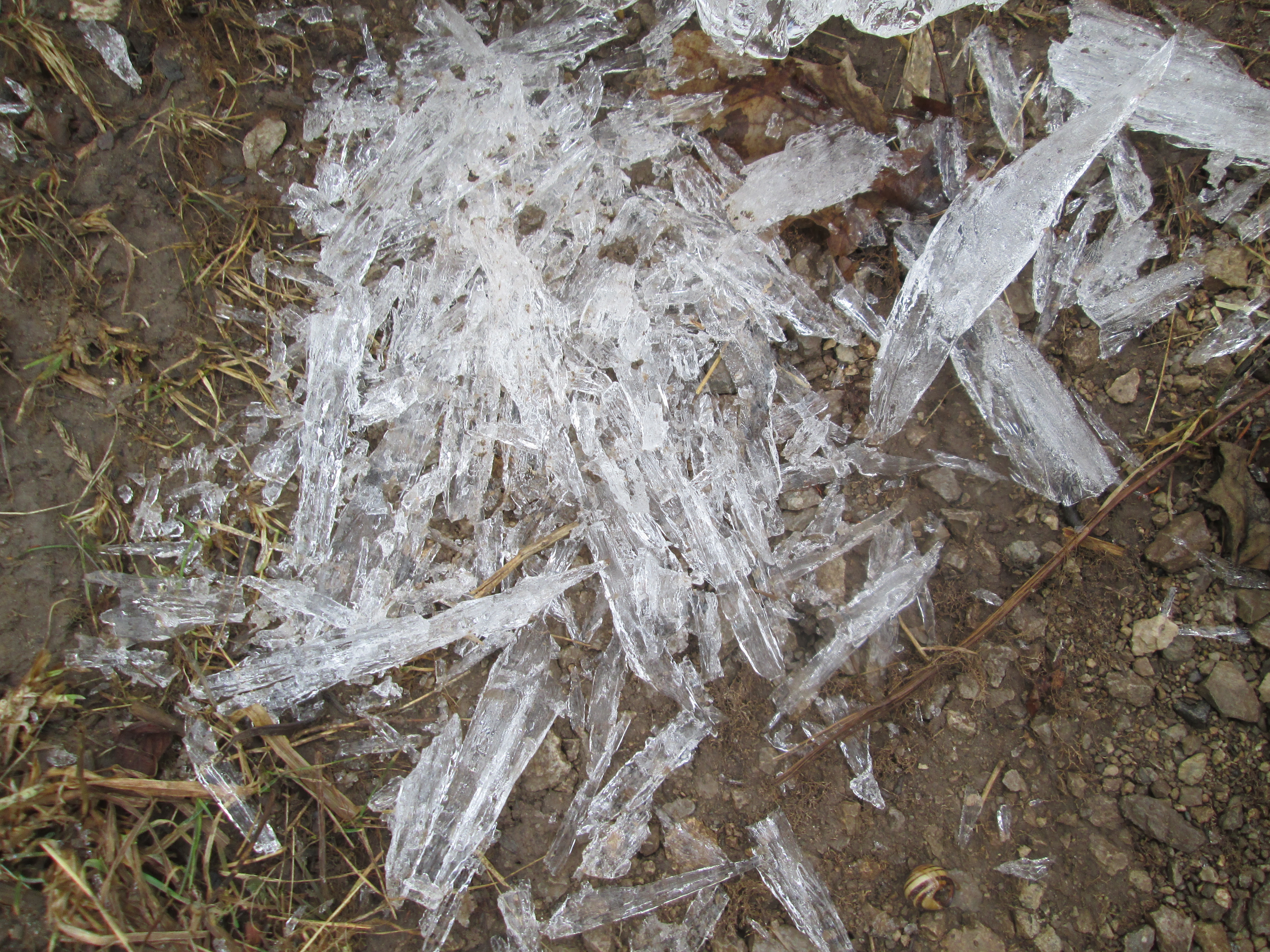
In other places the ice is full of thousands of fine cracks that cause it to shatter into little shards. Either way, the ice is melted much faster than if it just melted along the exposed surfaces.

IMG_2904

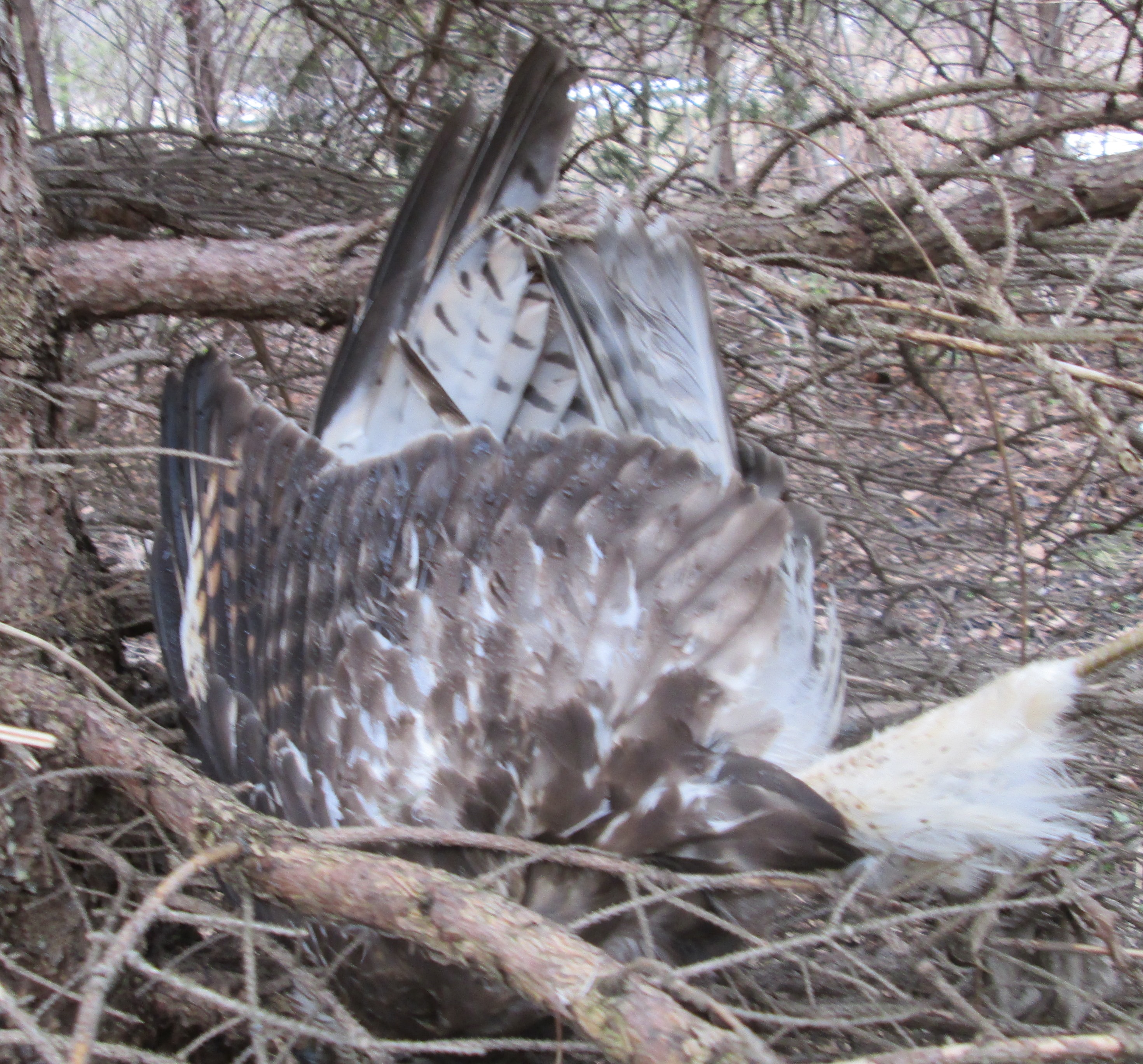
I don’t usually post pictures of dead animals, although we see all kinds of them, but this Kestrel was wedged upside down in a pine tree.  There was no obvious cause of death and it appeared to have happened very recently.  Quite possibly it flew into the tree in the dark and broke it’s neck although this kind of accident must be quite rare.  It is considered rare, but birds do suffer heart disease, making this another possible explanation.  Or this kestrel might simply have been doing it’s impersonation of Kessel.

???????????????????????????????

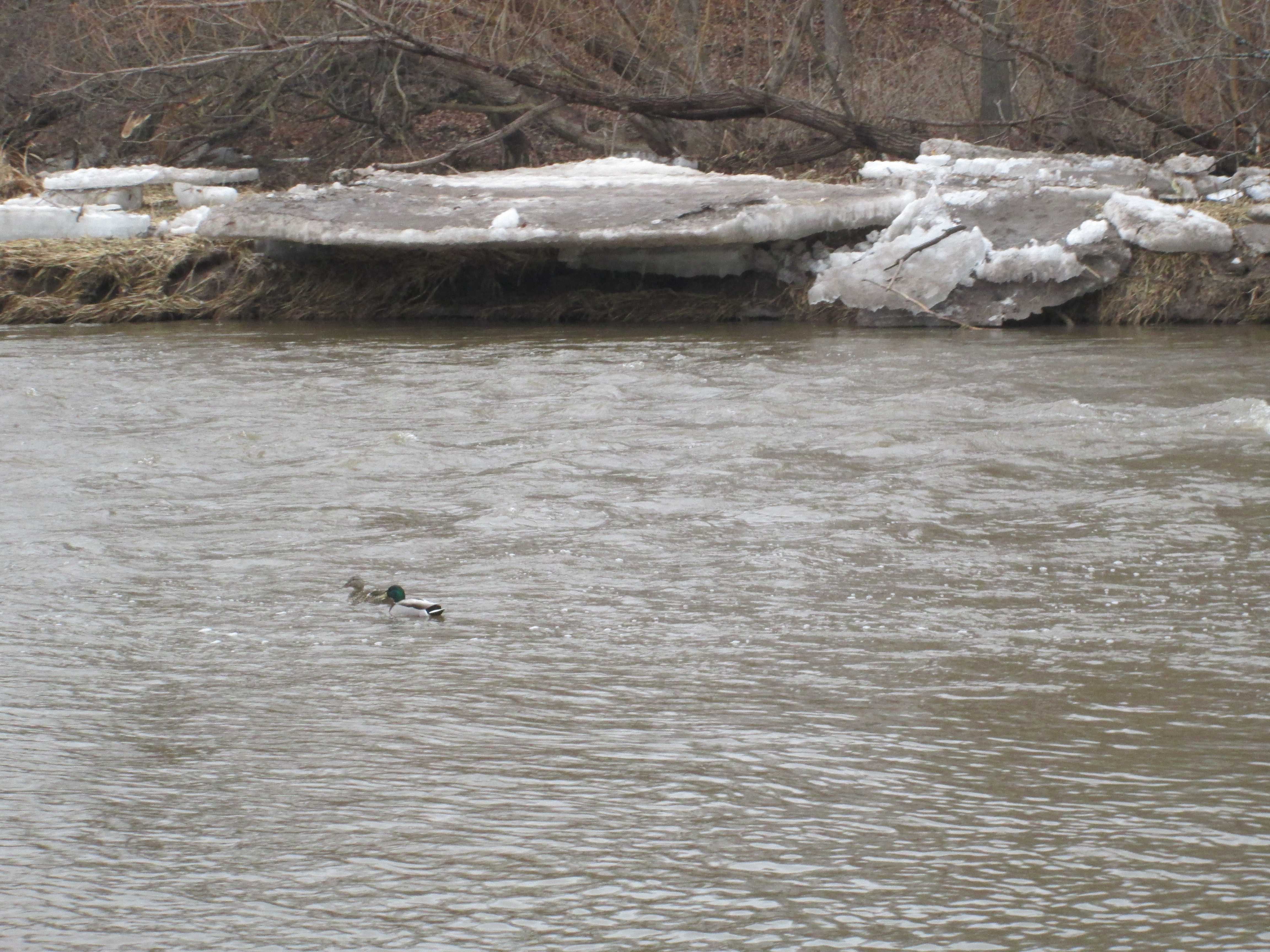
Having made our way to Creditview road we crossed on the bridge and started back up the other side. While walking along the river at this time of year it is important not to walk on any shelf of ice that might be close to the river edge.  I suspect that, had we stepped on this shelf when we passed, we wouldn’t have enjoyed the water quite as much as the two ducks in the picture below.  Like these ducks, it was obvious that the bird kingdom has started to count itself off into breeding pairs.  Cardinals, Buffleheads and Canada Geese were also seen to be paired up.

IMG_2908

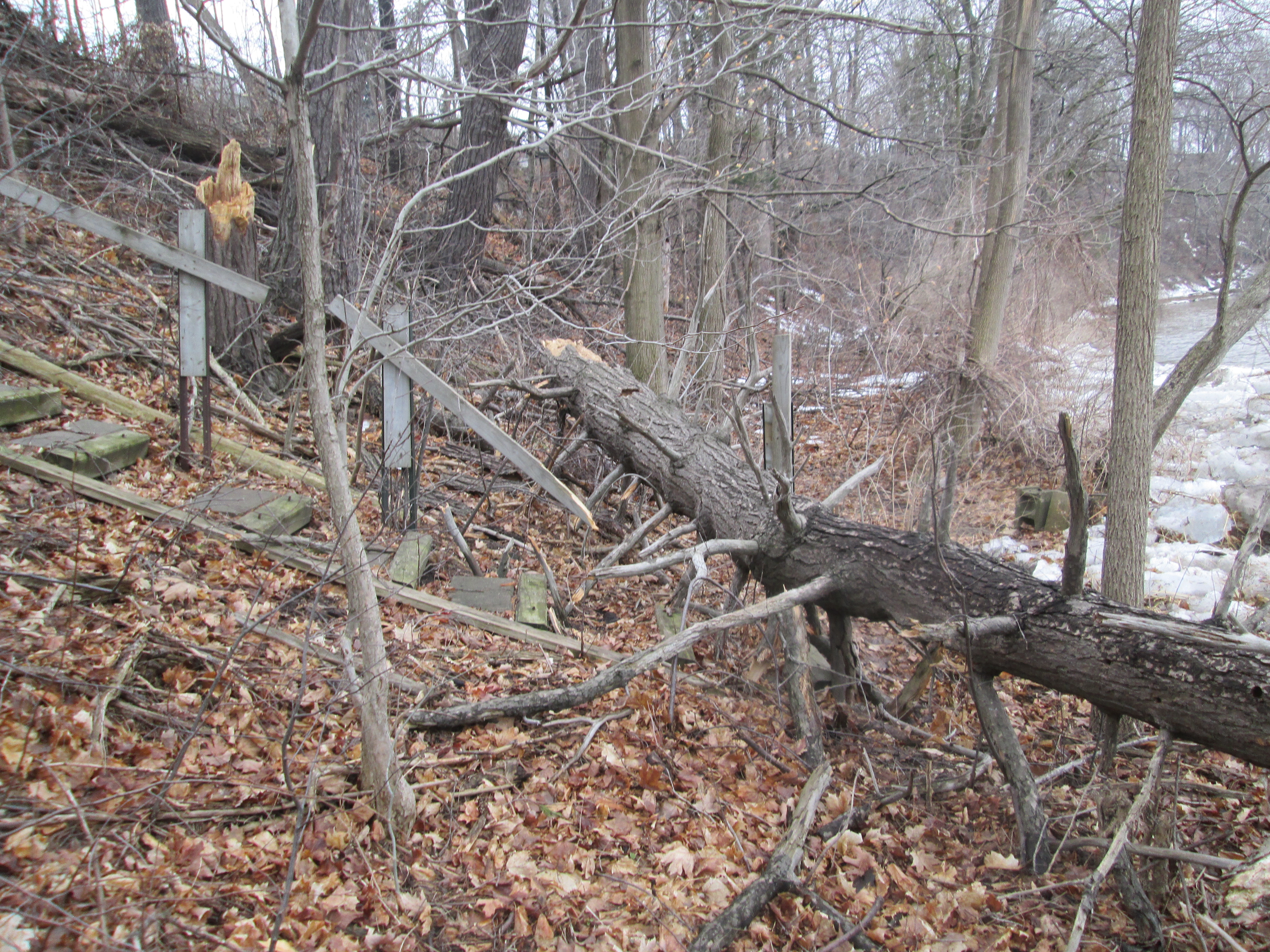
There is only a short stretch of the east river bank that is safely passable at this time of the year. The bank of the river on this side is full of new growth and bramble.  At one time several of the homes on top of the ravine had built wooden or concrete stairs to access the river side.  The tree that has taken out this abandoned set of stairs looked like fair warning and so we returned to Creditview Road.  Sir Monty Drive provides a short cut back to the park without having to walk too far on roads.

IMG_2909

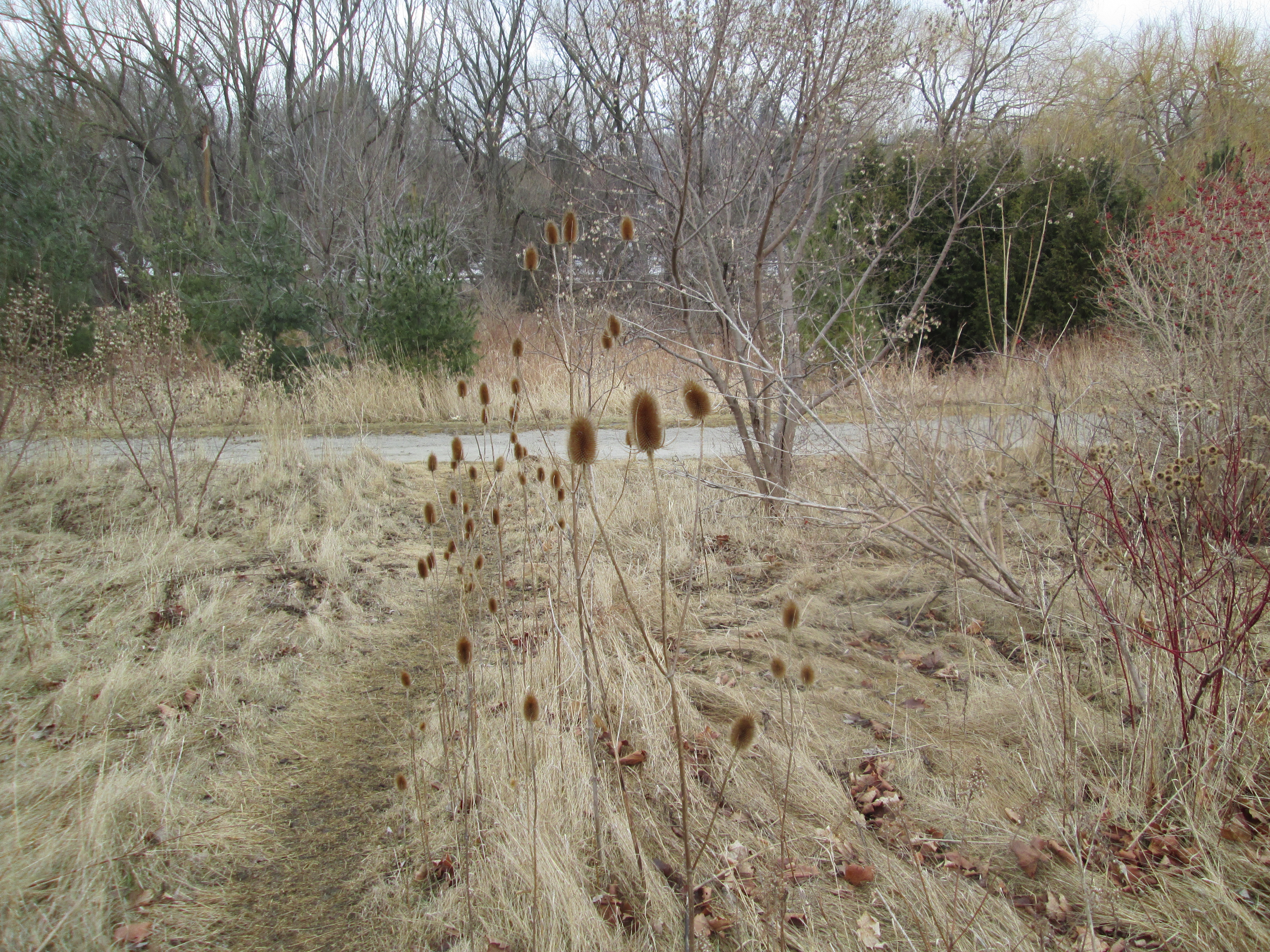
The park on the east side of the river is accessed from Sir Monty Drive and has a maintained trail on it.  This part of the river is known as River Run Park.  Large clusters of teasels grow along the trail.

IMG_2916

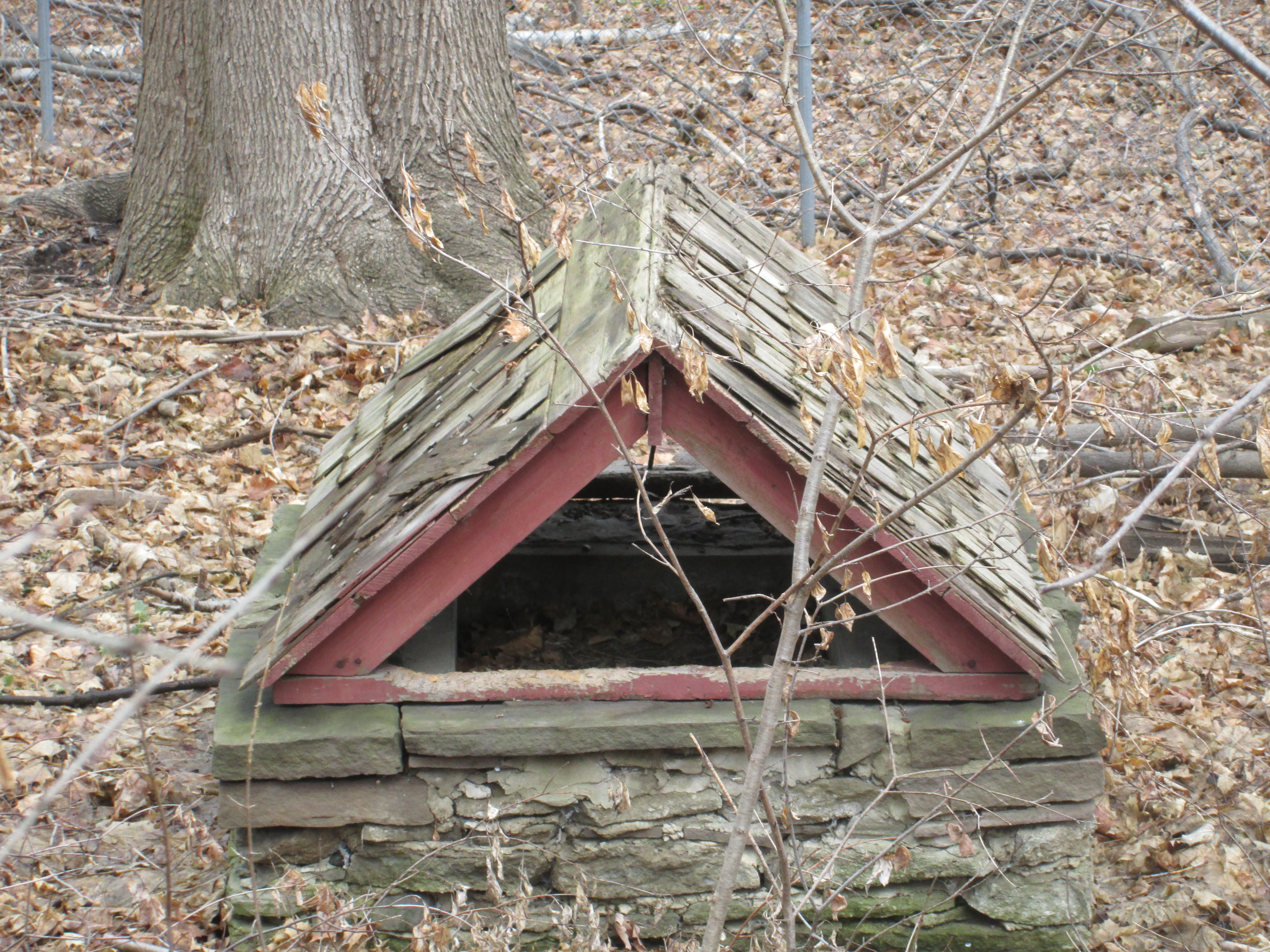
Someone has taken the time to cover this old well with a roof but the current dwelling is at the top of the ravine.  Perhaps an earlier home stood closer to this water source making the task of bringing water to the hill top unnecessary.

IMG_2917

Visit us at http://www.facebook.com/hikingthegta for a gallery of additional photos.


Erindale Orchards

Sat. Jan. 3, 2014

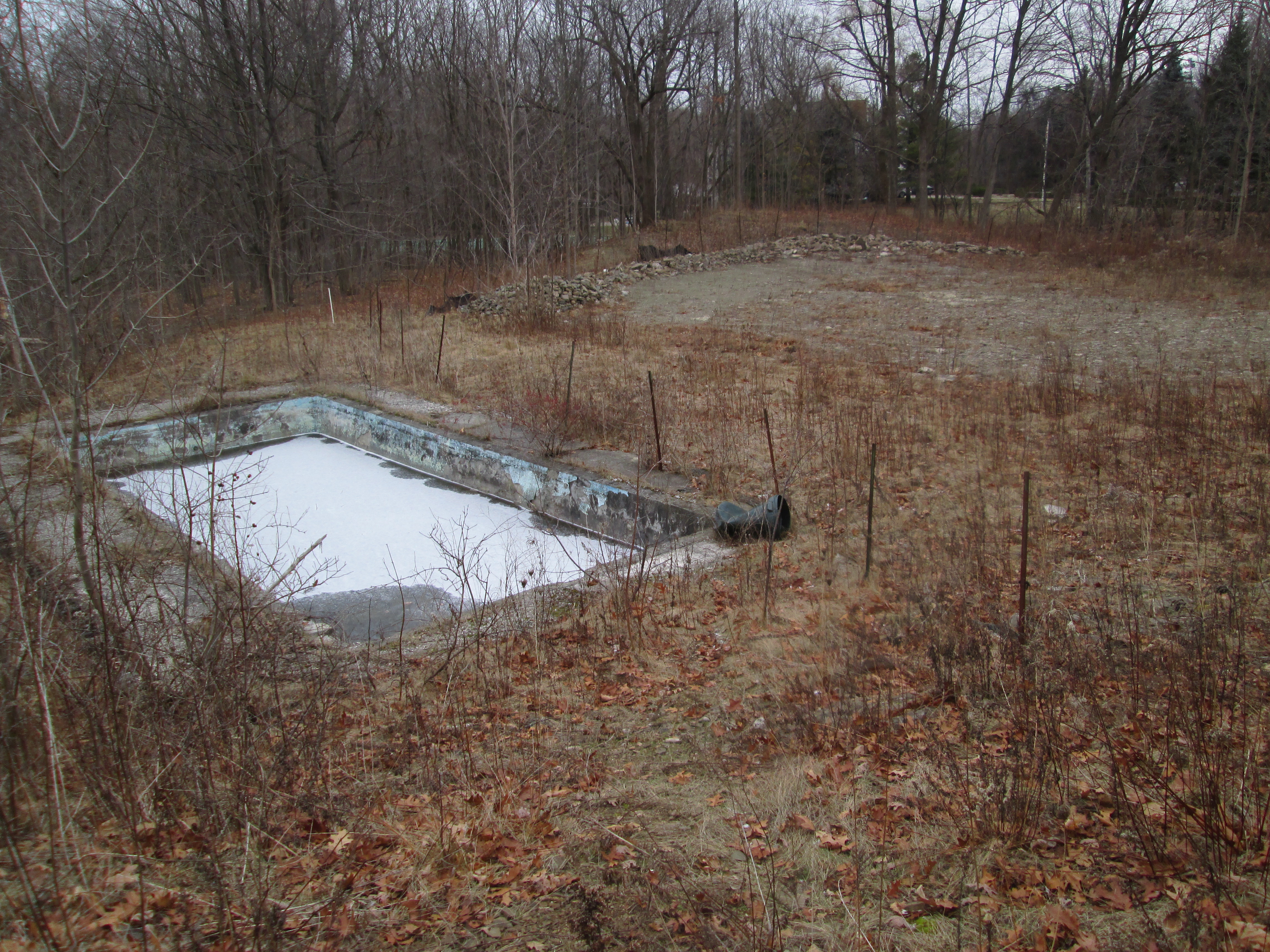
The day started off nice at -2 but was predicted to have a storm starting around noon.  We parked one more time in Erindale Park.  The plan was to enter the west side of the Credit River just south of the Sawmill Valley Creek’s confluence with the Credit.  We wanted to try and get to a point across the river from the Erindale Power Plant that we had been seeking when we hiked the Credit River at Erindale on January first.  We walked down the edge of Sawmill Valley Creek and turned south along the west side of the Credit River.  Almost immediately we came to the foundations of an old building which we identified as a house when we found the swimming pool in the back yard.

IMG_1893

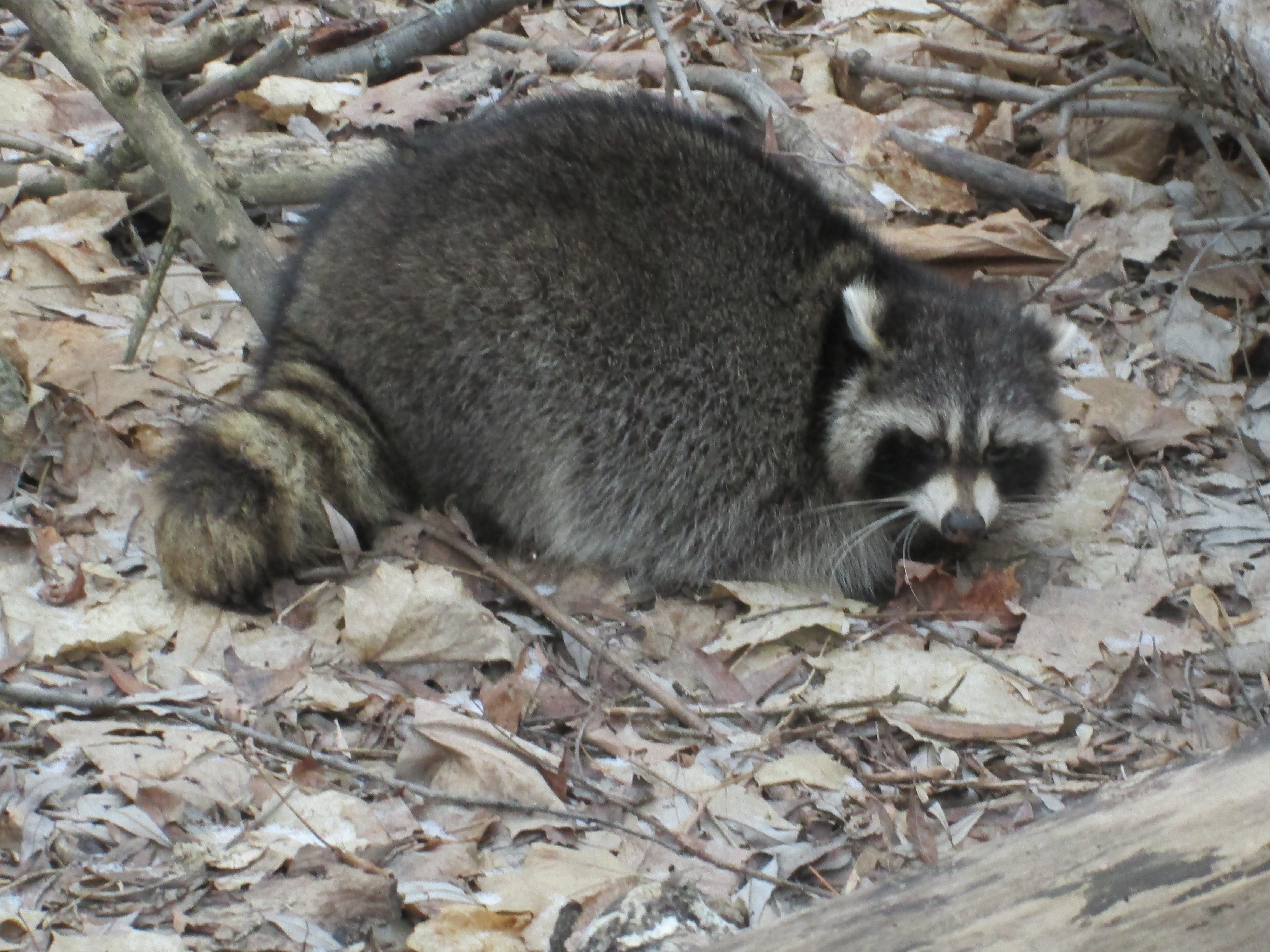
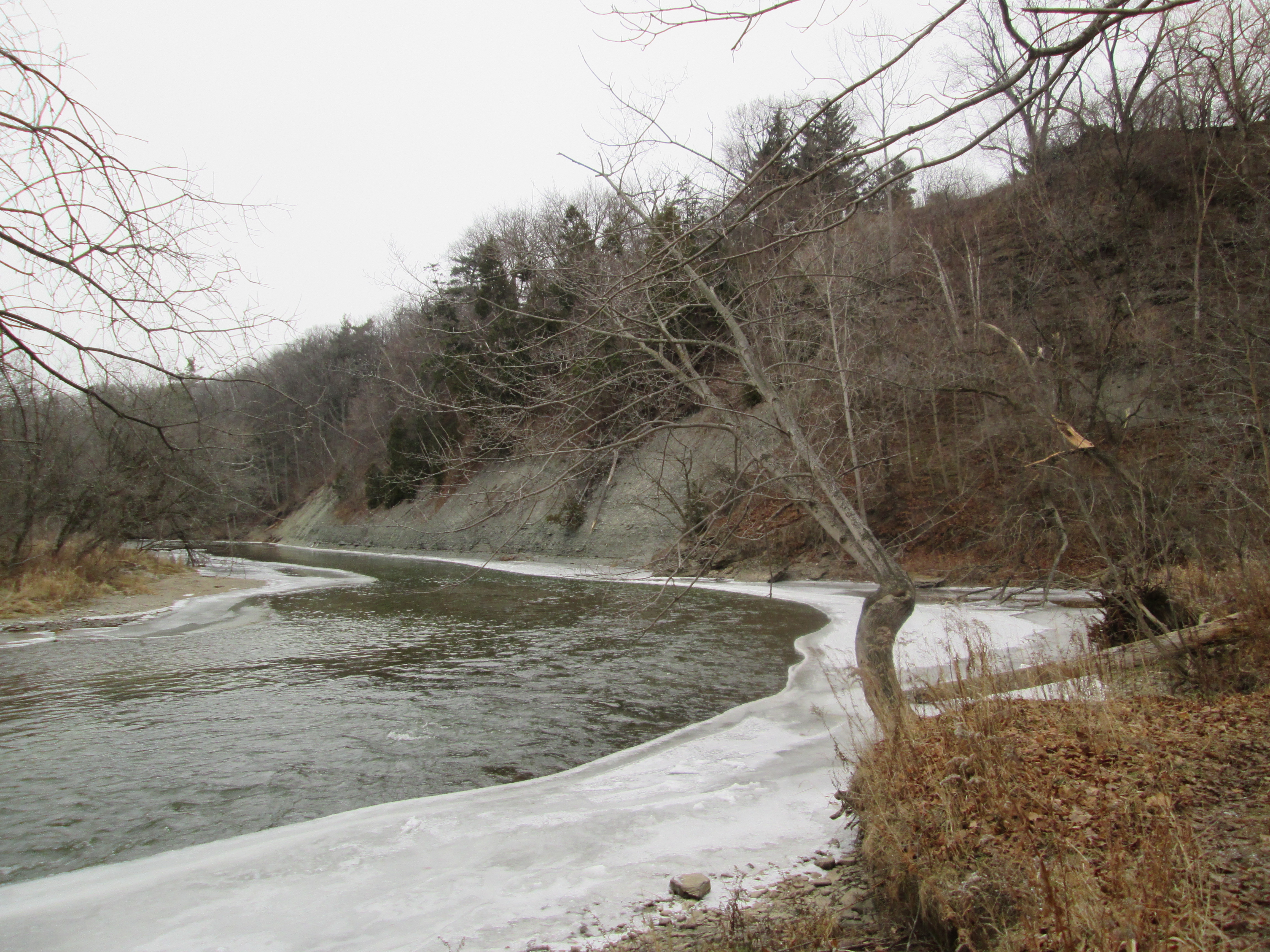
Keeping to the river side of the fence line, we made our way along the river.  Soon we were past the point where we were stopped two days earlier by the shale cliffs on the east bank of the river.  Presently we found a raccoon who, contrary to their normal nocturnal habits, was sitting on the ground in broad daylight.  Suspecting that he was ill we acted with caution but there was no aggression.   In captivity a raccoon can live for up to 20 years but the normal life expectancy of a raccoon in the wild is less than 3 years.  Ones like this that aren’t in peak condition can become dinner to the local coyote helping to keep that number low.

IMG_1904

As we approached the bend in the river we started to see that the shale banks farther along would pose a problem like the one we experienced a couple of days earlier.  At the bend in the river we found the mouth of a small stream and so we followed it west toward Mississauga Road.

IMG_1947

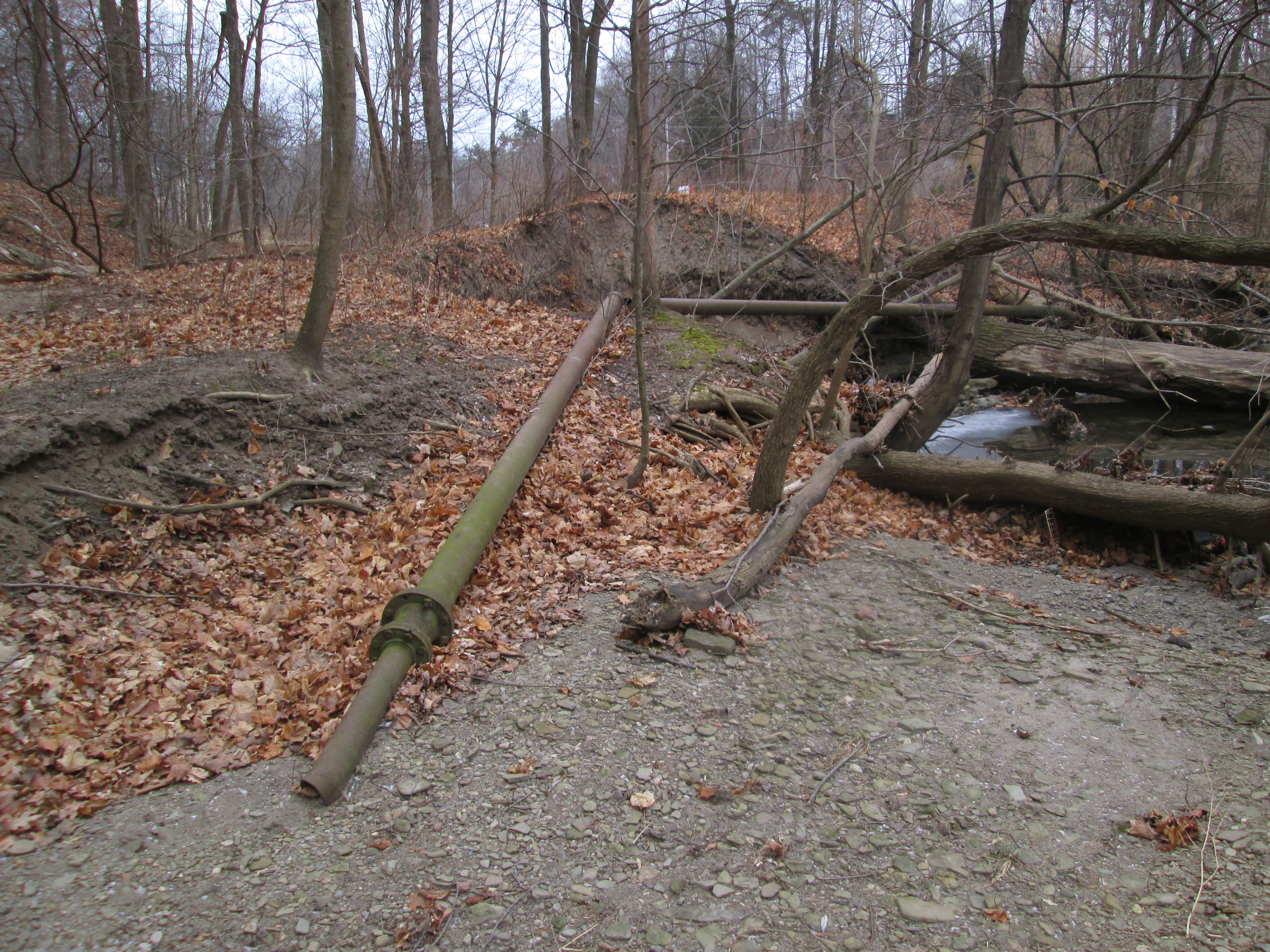
A little way upstream we started to find extensive sections of old pipe along with concrete foundations in the creek.

IMG_1922

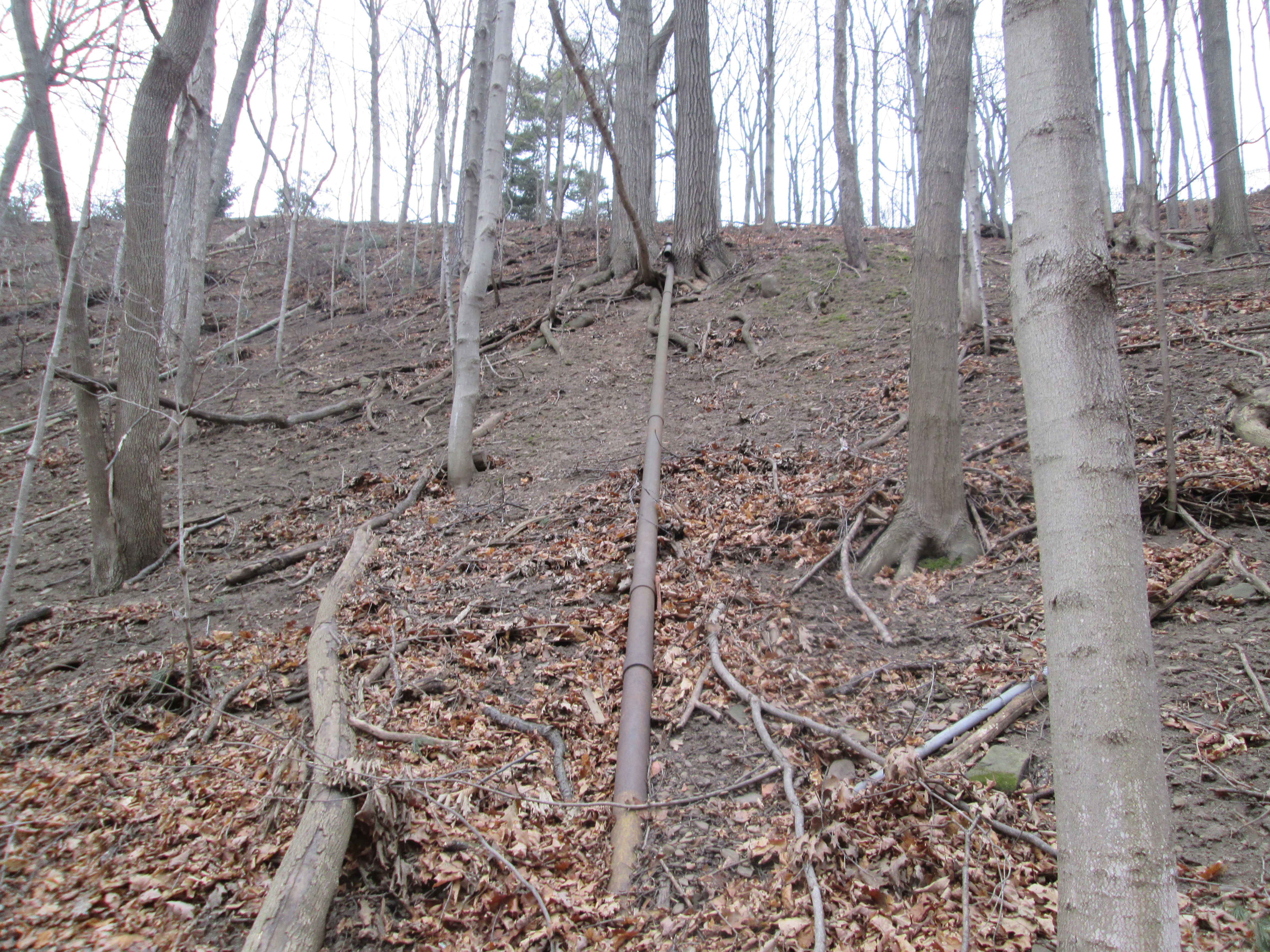
As we contemplated what their original purpose had been we noticed two people working in the woods with a Bobcat cleaning up fallen trees.  The man approached us and we had an opportunity to ask about the pipes.  He shared with us that the area above the ravine had been an extensive orchard and in the 1930’s a pump house had been built to irrigate the orchards. He also told us that the creek was named Loyalist Creek.  Pipes still run up the side of the hill on the south of Loyalist Creek toward orchards that were already gone by the 1960’s.

IMG_1930

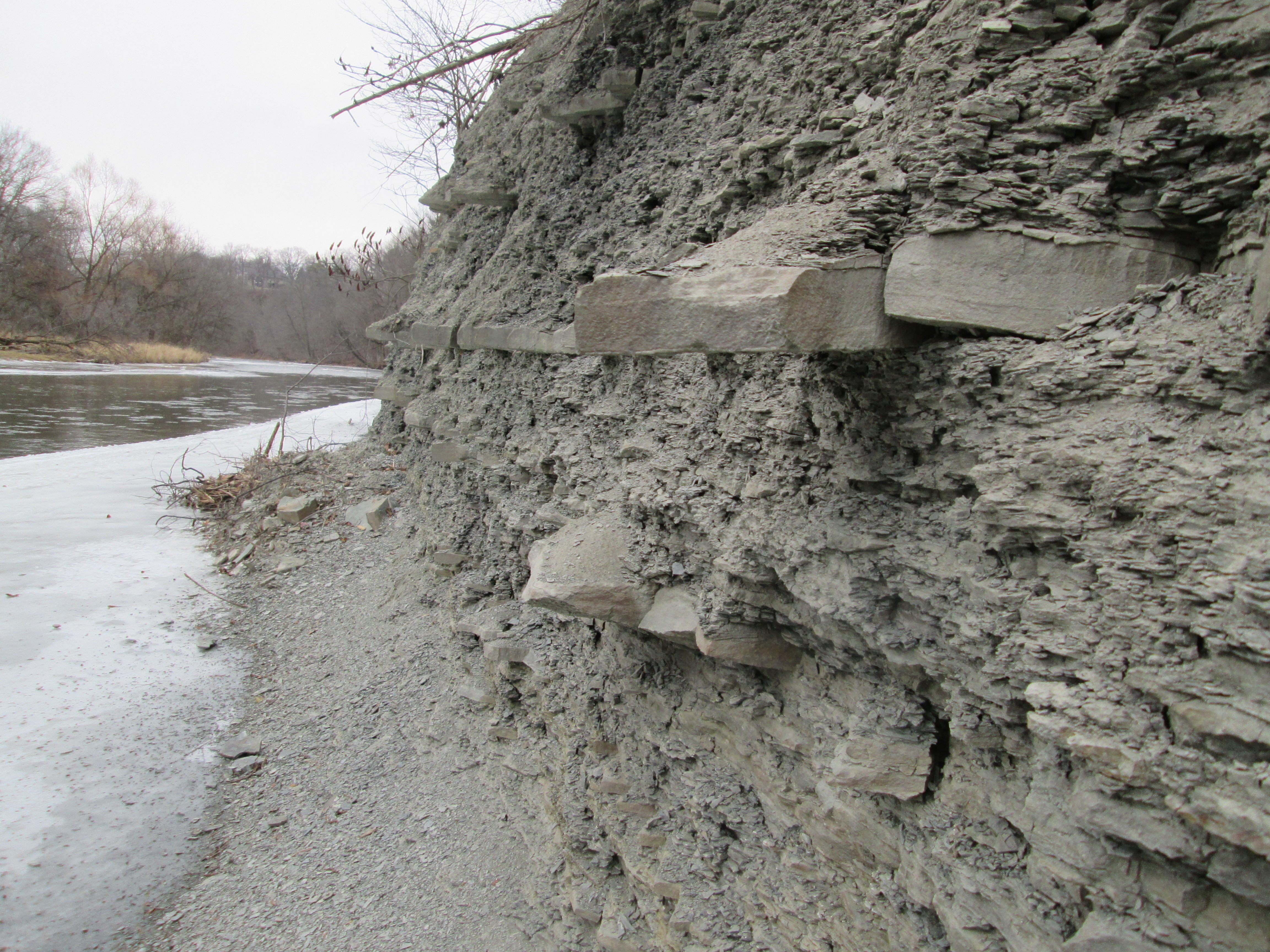
We crossed Loyalist Creek and made our way as far along the shale cliffs as was reasonable and then turned back.  The shale along here has layers of thick harder stone that stick out like rows of broken teeth.

IMG_1935

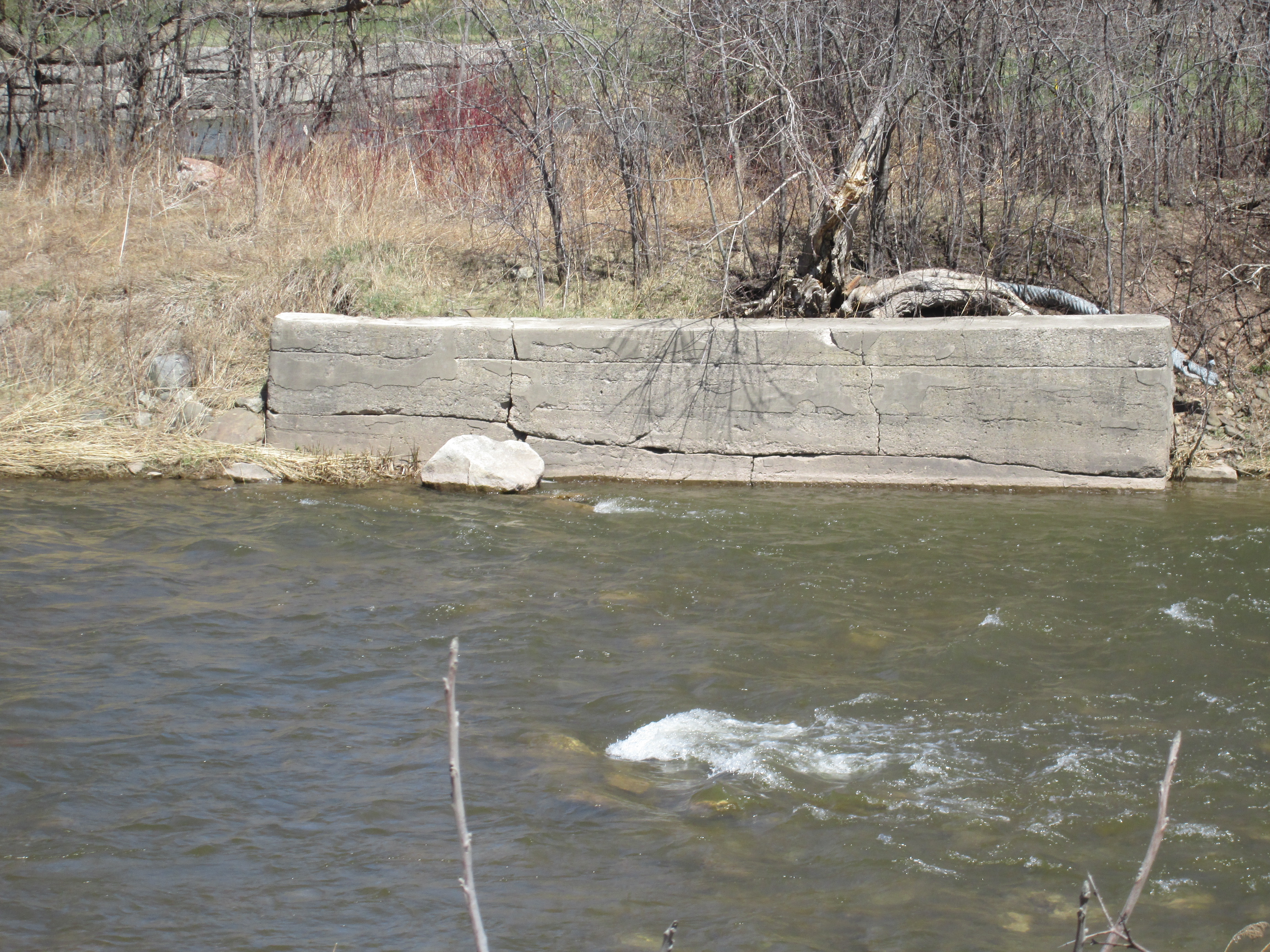
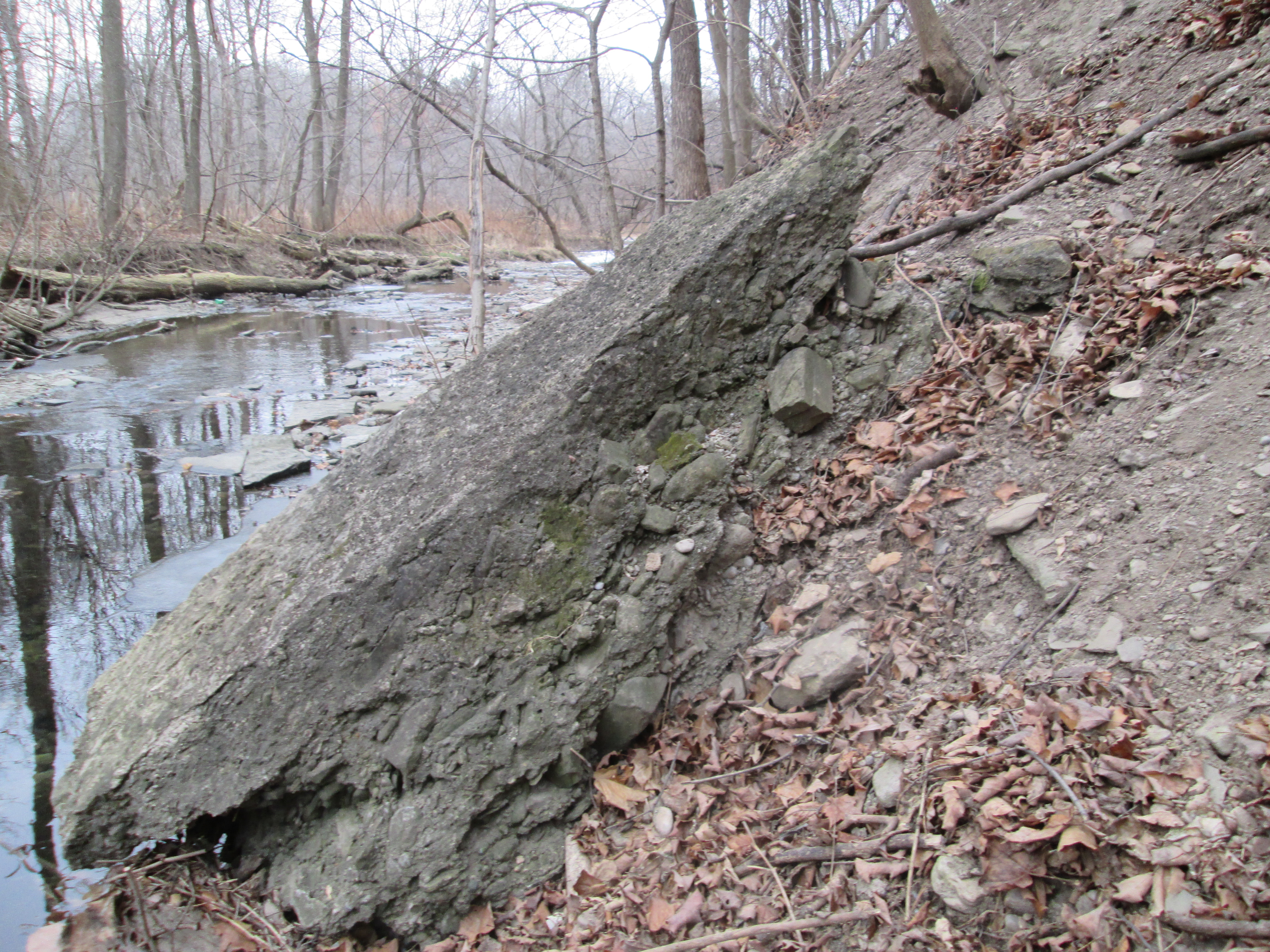
Right at the mouth of  Loyalist Creek are several pieces of old concrete. We met the gentleman a second time and he had actually never noticed them.  It is likely that a dam was placed at the mouth of Loyalist Creek to retain a pond of water for consistent irrigation of the orchards during dry seasons.  As we were leaving we encountered the Bobcat operator who was quick to inform us that we were on private property, a fact that her husband had already failed to mention twice.  When we got to Mississauga Road we discovered that the property was very well marked with No Trespassing signs.  We had missed them by entering along Sawmill Valley Creek.  This is one hike that you can’t try yourself.  The old concrete at the mouth of the Loyalist Creek is shown in the photo below.

IMG_1931

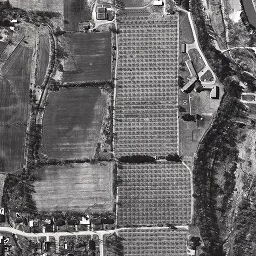
Returning home it was time to do some research to see what could be learned.  I discovered that the 1880 Historical Atlas shows extensive apple farms around Erindale including the farm of Thomas Hammond.  In the 1971 aerial photo below, the Hammond farm has a large orchard that by quick calculation contains over 900 trees.  They appear as the straight rows of little dots. The Hammond farm house appears just to the left of the orchard at the top of the picture.  It was designated as a heritage building in 1991 and so a quick follow-up appeared to be in order. The area was sold for development shortly after this picture and by 1976 houses had replaced the orchards.

Apples 1971

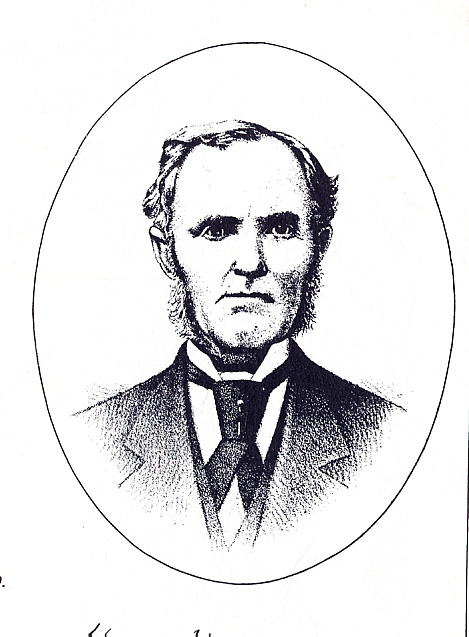
(Sunday, Jan. 4)  We returned and parked near the old Hammond house which was built by Oliver Hammond. Oliver was born in 1812 and is featured in the cover photo.   Oliver built his house in 1866 and it currently sits on a large property tucked in the middle of the subdivision which was his farm’s final crop.  Loyalist Creek flows through the property close to the house.  A developer’s proposal suggests that the open space around the house will soon hold 7 new homes.  Hammond’s house will become just an odd old house, looking out of place, amid the modern homes on a small cul-de-sac.

IMG_1962

All that remains of the orchards is three rows of old trees in the park along the side of Lincoln Green Close.  It seems like these trees might still produce fruit in spite of their age.  Apple trees are not native to North America but were introduced by the French around 1606.  The McIntosh apple is named after John McIntosh who discovered a sapling on his farm in Upper Canada in 1811 and cultivated the tree which produced an exceptional fruit.  By the early 1900’s the McIntosh was the most commonly cultivated apple in North America.  This was due to the fact that it was good for both eating and cooking.   I’m not sure what kind of trees these are but they were planted around the right time to be McIntosh.

IMG_1963

The old Erindale Power Station remains elusive, but there is always future explorations to be made.

Like us at http://www.facebook.com/hikingthegta

Follow us at http://www.hikingthegta.com


Credit River at Erindale

Thursday Jan. 1, 2015

It was minus 6 feeling like minus 14.  Realizing that I hadn’t been hiking all year, I set out to fix that.  When we had investigated the Erindale Hydro Electric Dam in October we hadn’t looked for the power plant on the south end of town.  Parking in the first lot at Erindale Park we set off for the Credit River on the east side.

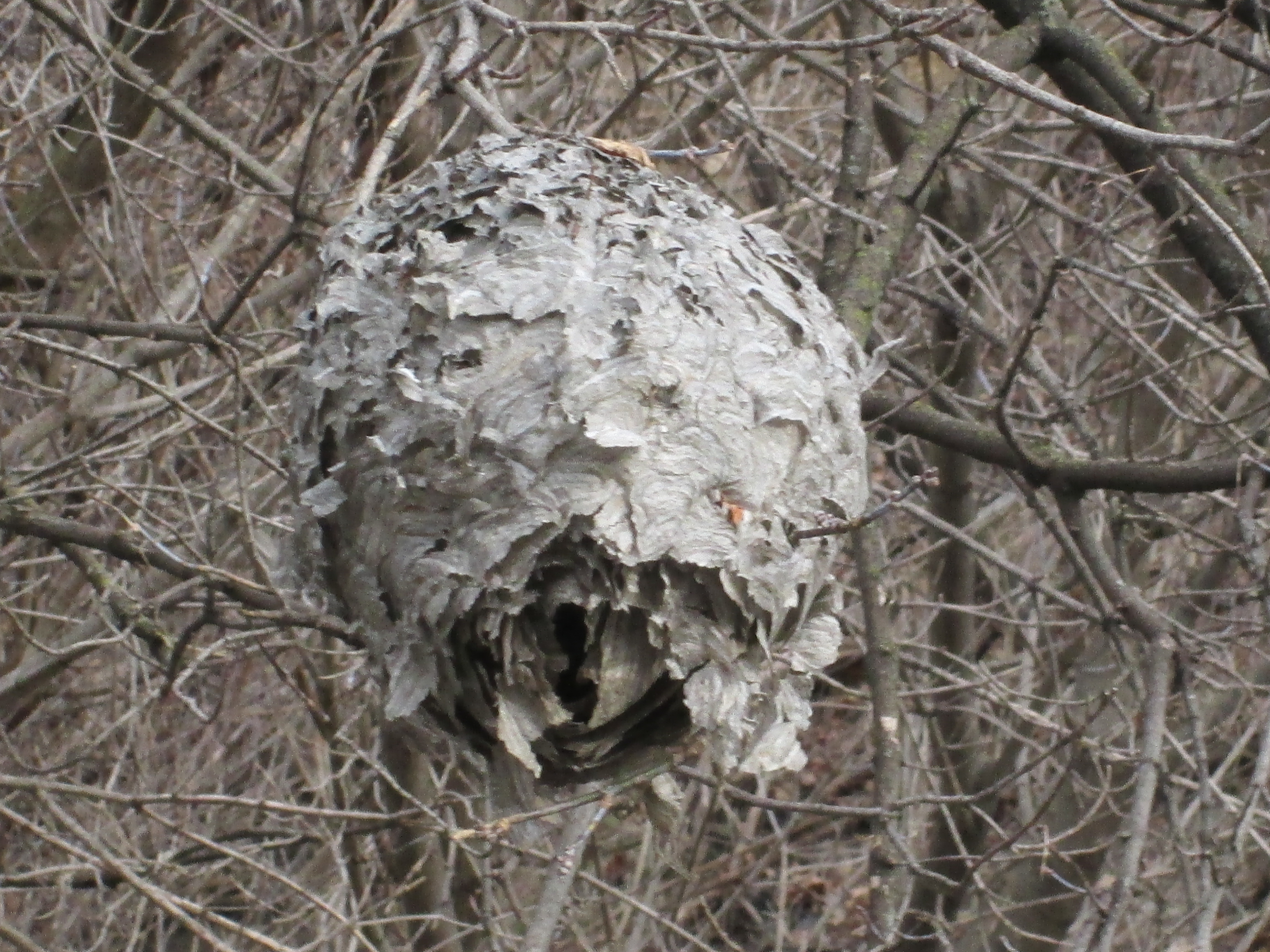
We crossed Dundas Street and entered a pathway down to the river from the east end of the bridge.  There we came across a large paper wasp nest.  Paper wasps build their nests out of chewed up plant fiber that they mix with saliva to make a paper-like substance.  They secrete a chemical onto the anchor stem of the nest so that ants don’t invade.  Gardeners consider paper wasps to be beneficial because they pollinate the plants as well as eat garden pests.
IMG_1773

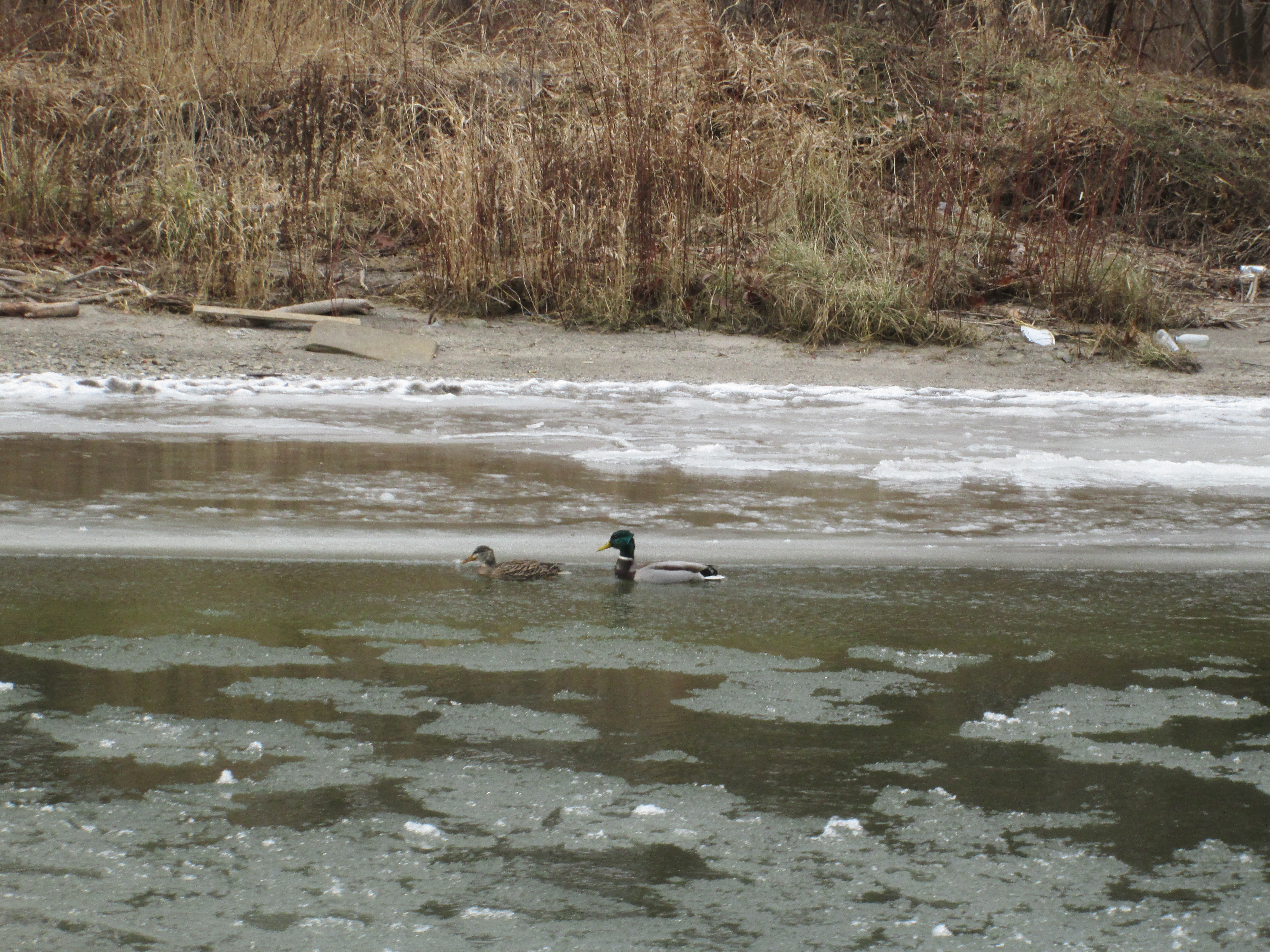
It may have been New Years Day but we didn’t see any people swimming in the river, doing their polar bear thing.  A pair of mallard ducks were swimming in the slushy river, feeding and enjoying the day.  Mallards form breeding pairs in the fall and perform courtship rites all winter. In the spring when the eggs are laid they separate.  The male takes no role in the raising of the ducklings but will hang out with the guys all summer.  In the fall a male duck’s fancies turn lightly to love and he leaves the boys in search of a mate.

IMG_1785

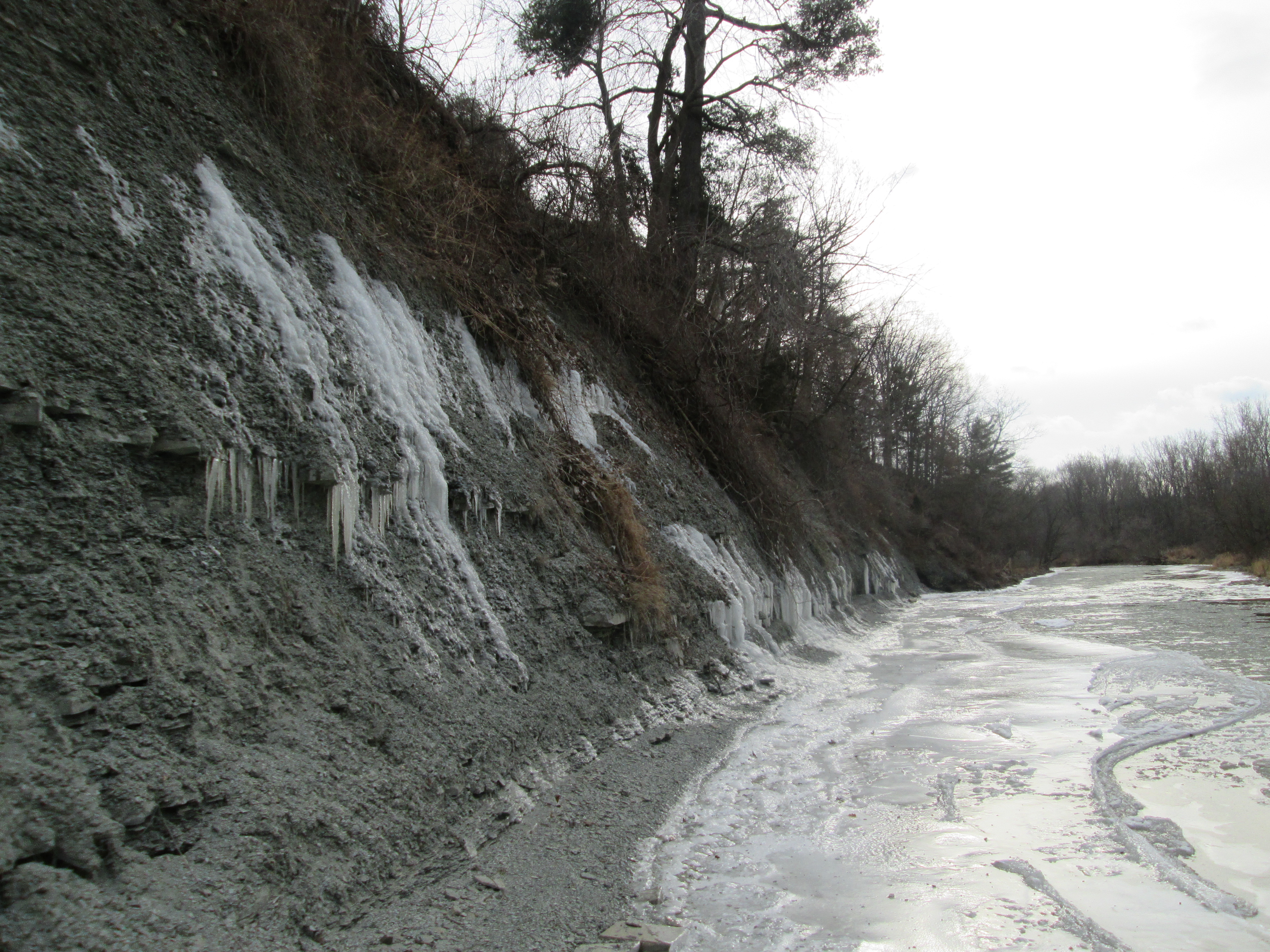
As we made our way along the eastern river bank it started to look like we wouldn’t get around the curve in the river due to the shale banks along the side.  Going up and over wasn’t an option because in places the fence along the top was already falling down the embankment.   Water seeping out between the layers of shale has created icicles that reach down to the river in places.

IMG_1774

We were able to get out to where the ice had formed in the shale layers.  Where it flows out onto the thin river ice is currently impassible.  There is a possibility of making it around here in the summer when the water level is low.

IMG_1780

We decided to try to come at the old power station site from the top of the ravine.  We hoped to find access from one of the original Erindale side streets south of Dundas.  Turning north again we came to where Sawmill Valley Creek enters the Credit River just below Dundas Street.  It has been placed into a concrete channel with a series of concrete squares which help prevent the discharge from getting frozen by accelerating the water.
IMG_1792

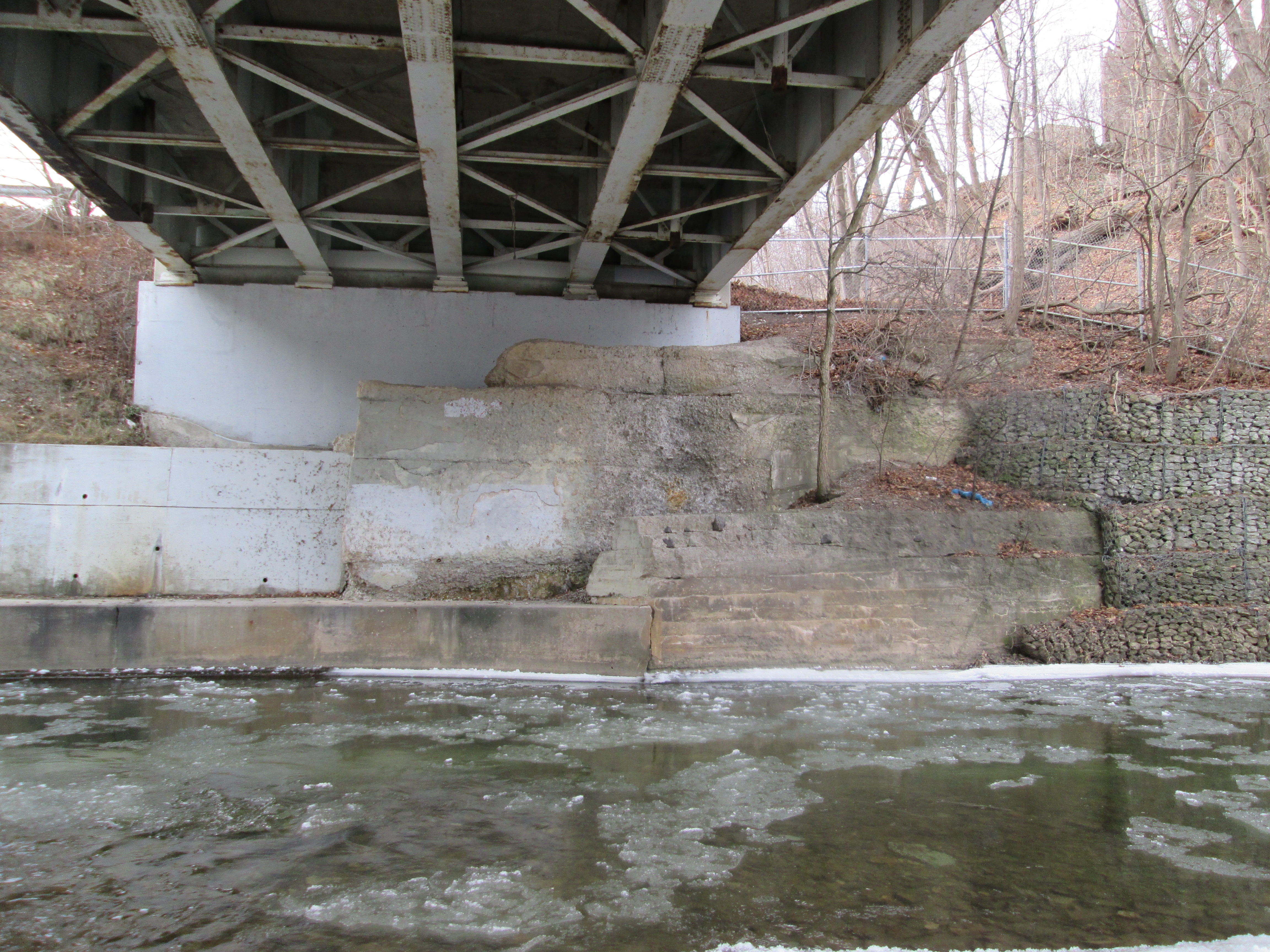
Dundas Street was surveyed in 1796 by Augustus Jones who also surveyed Yonge Street.  These two streets were built by the Queens Rangers under the direction of Lieutenant-Governor General Simcoe.  Roads were required for easy movement of troops should the defence of Fort York become necessary, as it did in 1812.  Dundas Street has had several bridges over the Credit from the earliest wood structures to the current 4 lane version.  The remnants of the foundations for earlier bridges can be seen below the modern one.

IMG_1799

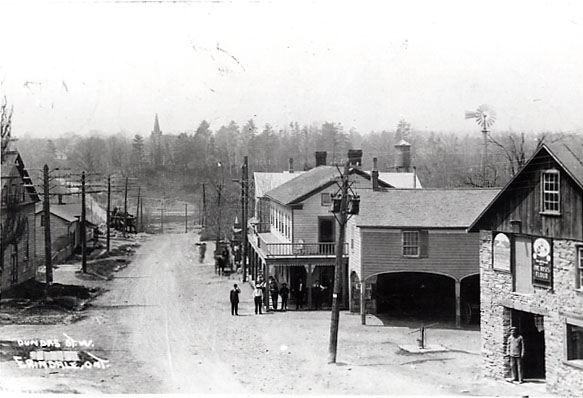
The picture below shows Erindale in 1910 looking west toward the river.  There is a vehicle just entering the bridge where the road hooks to the left.  Also featured in in this image are the stone flower mill, blacksmith shop, Barker’s Hotel with the large veranda and Caven’s store. The community hall is on the left.  All of these buildings were destroyed by fire in May 1919.

ha0045l (1)

Passing under the bridge we made our way back to the old power dam that created Lake Erindale from 1910 until 1940.

IMG_1800

Along the side of Dundas street stands the old head race for the power generating station. Water from Lake Erindale was diverted through a tunnel under Dundas Street to the power plant south of town.  A large intake structure allowed for the controlled flow of water from the lake.

IMG_1811

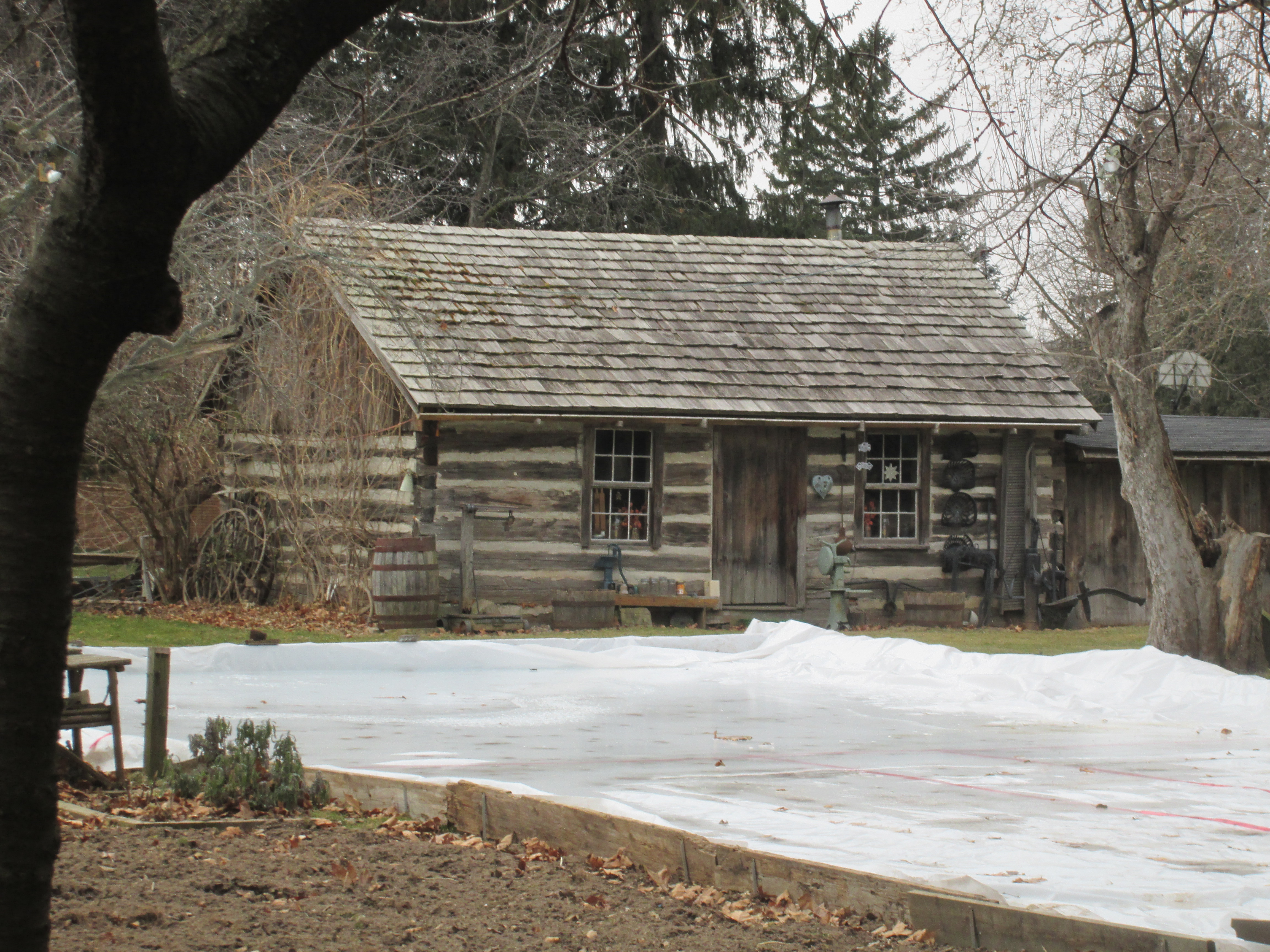
We climbed the hill behind the intake and crossed Dundas Street.  Following Proudfoot Street we looked for a way to get down to the river.  Short of boldly walking across someone’s lawn there is no access anywhere along the ravine.  This older part of town contains many historical homes from the days of settlement in Erindale.  The 1855 log home on Jarvis Street wasn’t one of them though.  It was moved here in the 1970’s but is cool because of it’s collection of antique wheels and pumps that are displayed around the outside of the house.

IMG_1824

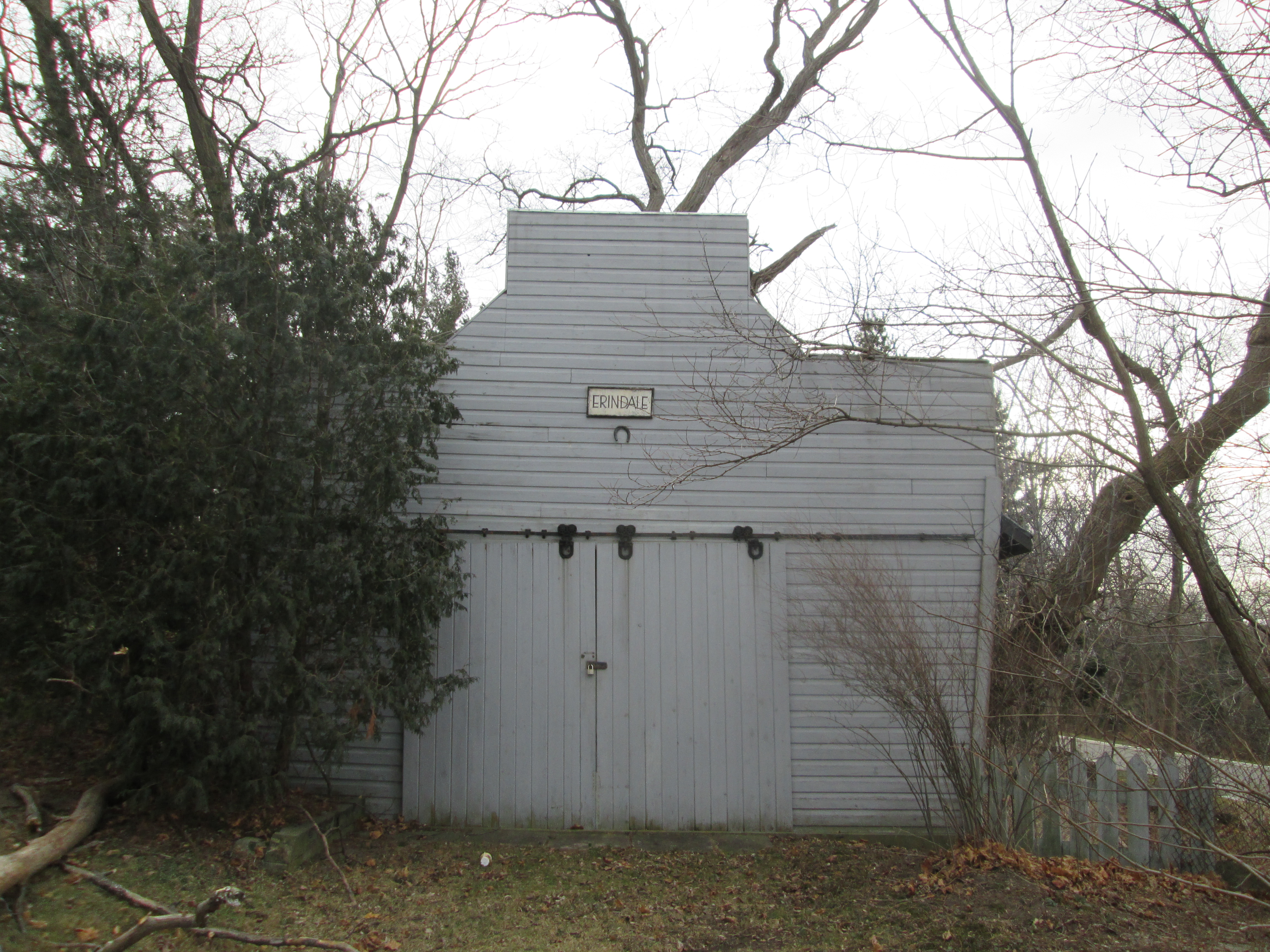
Just east of the 1928 Community Hall is this old driving shed.  The cover photo is of this building with it’s horseshoe hanging upside down.  Horse shoes are considered lucky by some.  By hanging it with the open ends facing down it was supposed to pour the luck out over the doorway preventing evil from entering the building or home.

IMG_1827

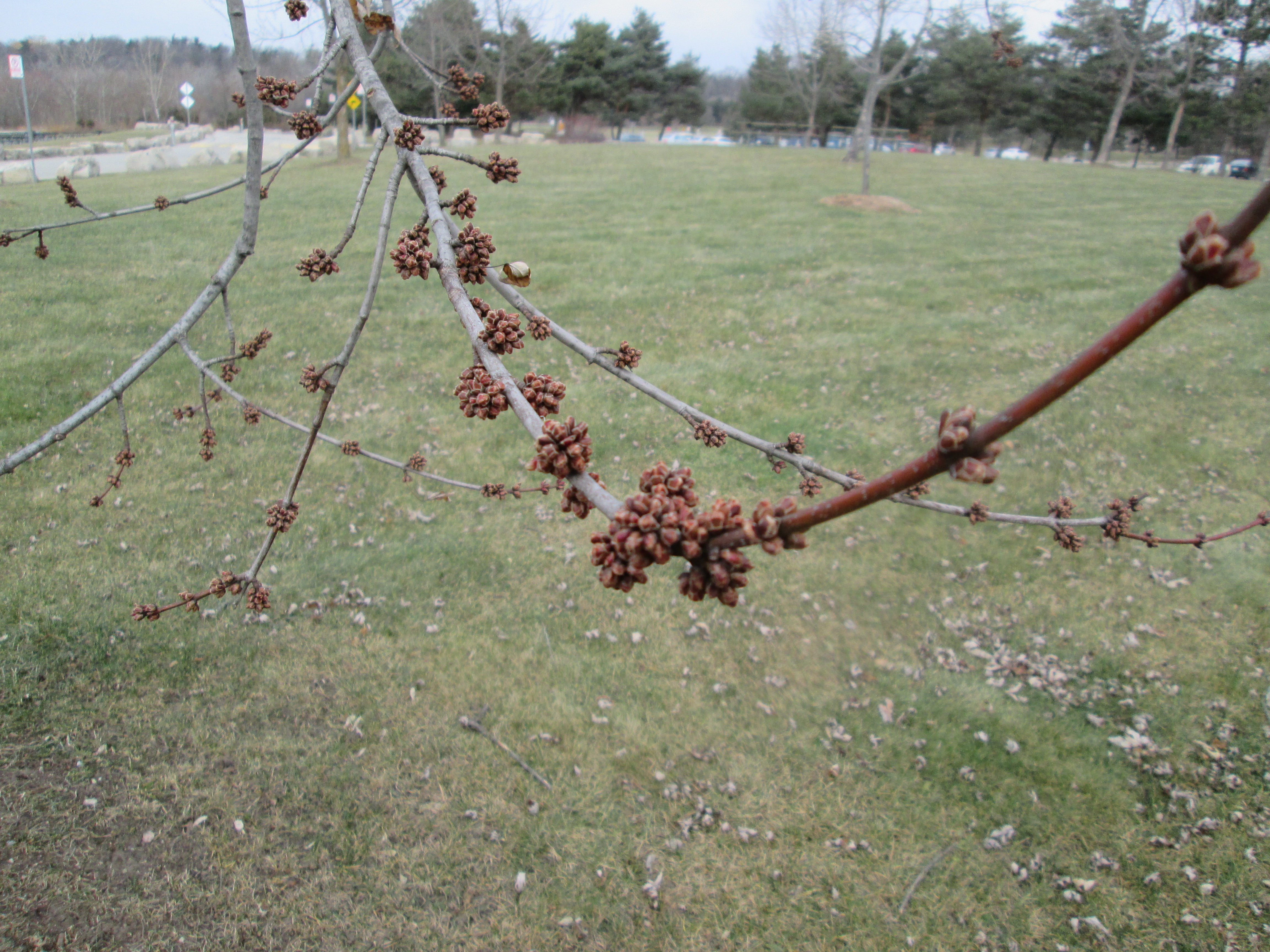
This tree has been confused by the weather and is thinking about blooming.

IMG_1848

So, no luck on finding the tail race and foundations of the power plant today.  That will have to wait perhaps for a time when we can pass below the shale cliff on the side of the river.