Category Archives: Uncategorized

York Lodge

Friday, May 8, 2020

A century ago the property that is home to Sunnybrook Hospital and Sunnybrook Park was a working farm and country estate for one of Toronto’s wealthy elite.  Joseph Kilgour was partners in the Canada Paper Company and made his fortune from flat-bottomed paper bags like the grocery bags some of us remember from our childhood.  With the COVID-19 lockdown still underway I went for another walk through the park with an eye to locating the remnants of his legacy.

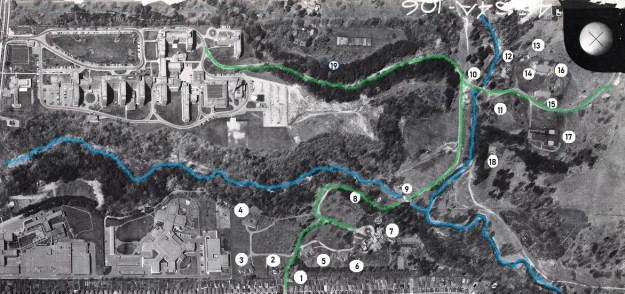
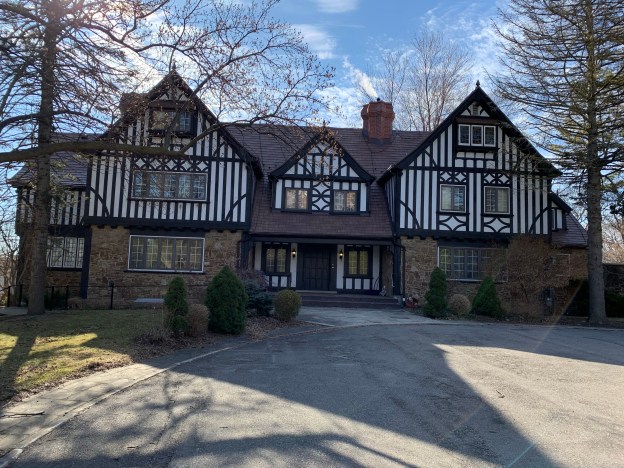
Joseph purchased several parcels of land to comprise the farm and estate he intended to create.  He added to the buildings on the old Burke farm to create Sunnybrook Farm where he raised horses and cattle.  Then he went to the top of the Burke Brook ravine and built a grand country estate that he named York Lodge.  At that time there were less trees and Kilgour had a grand view across the valley and his farm.  The picture below was captured from the City of Toronto archives collection of photos, this one was taken in 1964.  I’ve marked the roadways on the old estate in green and the waterways in blue.  I entered the ravine from Bayview avenue and followed the trail along the top of the ravine on the south side of the brook and made my way toward the original gates to the property.

1964

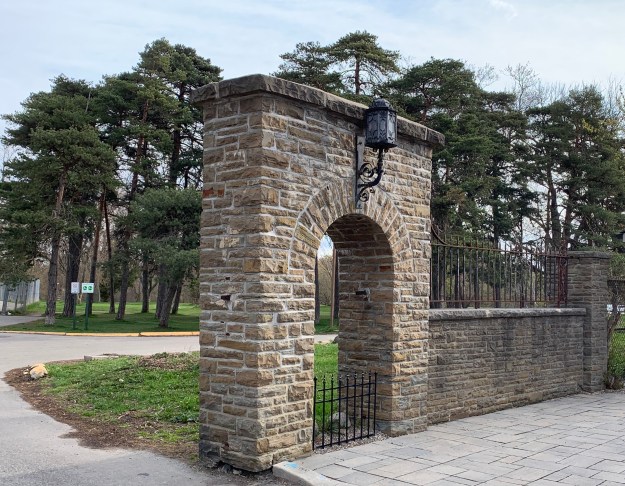
There were originally two sets of gates, one on Bayview directly across from the end of Blythwood Avenue.  This set led directly to Sunnybrook Farm and was removed when the hospital was built in the mid-1940s.  The second set can be found at the end of Sutherland Drive and it led directly to York Lodge.  The pair of stone gates feature ornate wrought iron lamp posts which must have looked quite spectacular to guests arriving for an afternoon fox hunt or social gathering.

IMG_2494

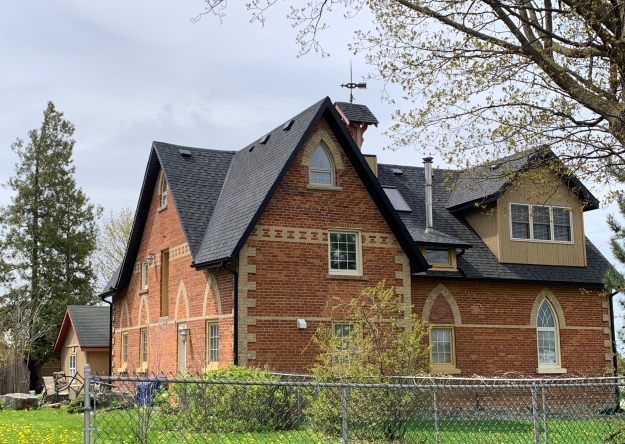
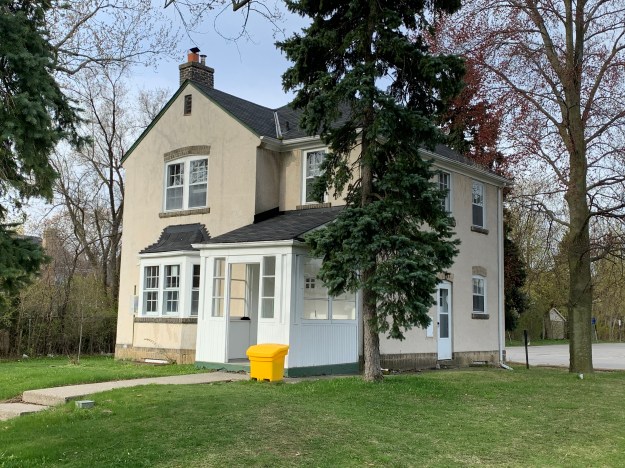
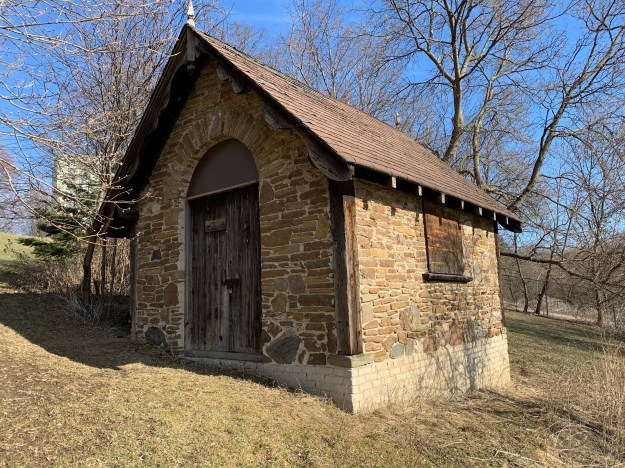
The only remaining building from the York Lodge estate is the gatehouse.  It stands just inside the gates and is identified as number two on the map.  Along with the gates, it was listed on the Toronto Heritage Register in 2005.

IMG_2496

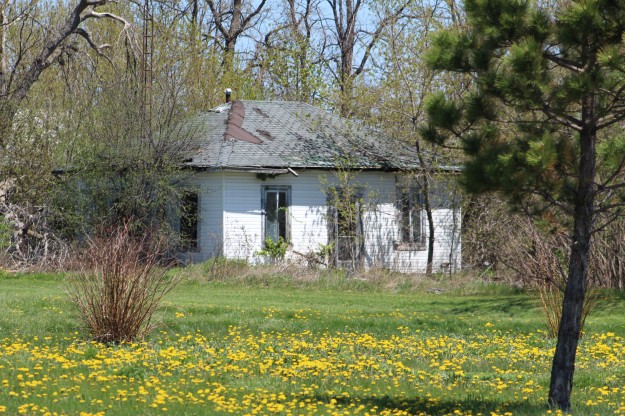
There were four summer cottages on the estate but they have all been demolished.  The picture below is from the Toronto Archives and shows one of them.  They’re marked 3-6 on the map above.

Kilgour cottage

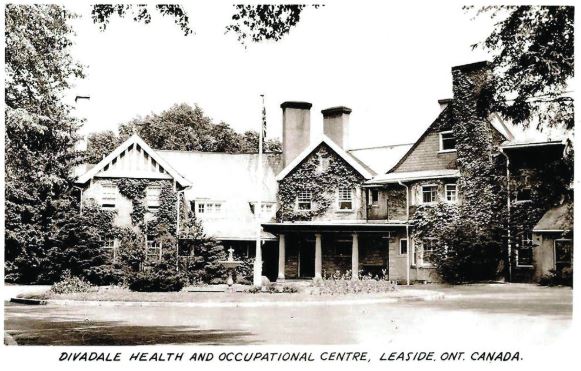
When Alice donated the property to the city she kept ownership of York Lodge and continued to live there until 1930.  She sold it to another prominent Toronto business man named David Dunkelman.  He was the president of Tip Top Taylors.  Dunkelman only kept it for 6 years before selling it to Captain James Flanigan.  In 1943 Flanigan converted it into a military hospital renaming it Divadale after his daughter Diva.  In 1953 it was converted into a convalescent home for veterans but was demolished around 1980.  This archive photo is credited to John Chuckman and gives us a look at the outside of York Lodge after the name was changed.  It is marked as number 7 on our map.

Divadale

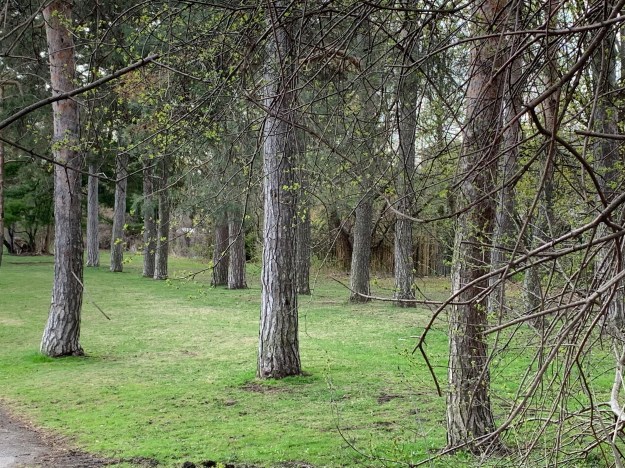
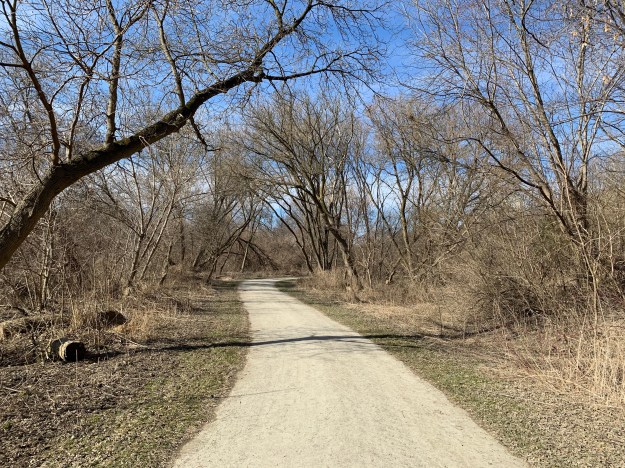
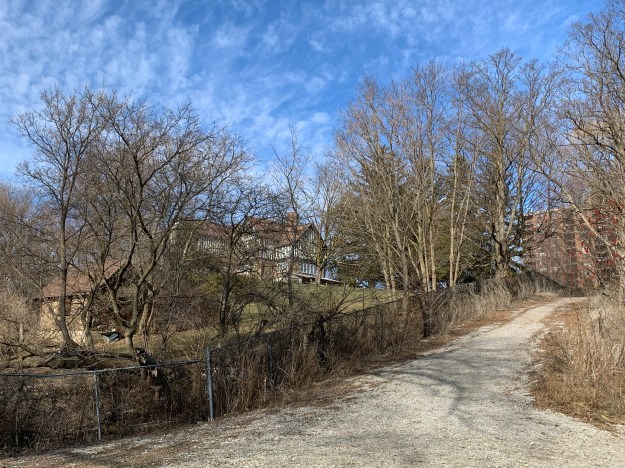
Lydhurst Hospital was constructed on the property in 1978 but some of the roadways and landscaping can still be found as well as rows of mature trees planted in straight lines.

IMG_2499

The lane way is shown as number 8 on the old photo above.  It led down the hill from York Lodge to Sunnybrook Farm and connected with the other lane way off of Bayview Avenue.  At the bottom of the hill the lane crossed Burke Brook at the point just before the brook enters into the Don River.  Burke Brook takes its name from Edward Burke who owned the 200 acre farm in 1860.

IMG_2515 (1)

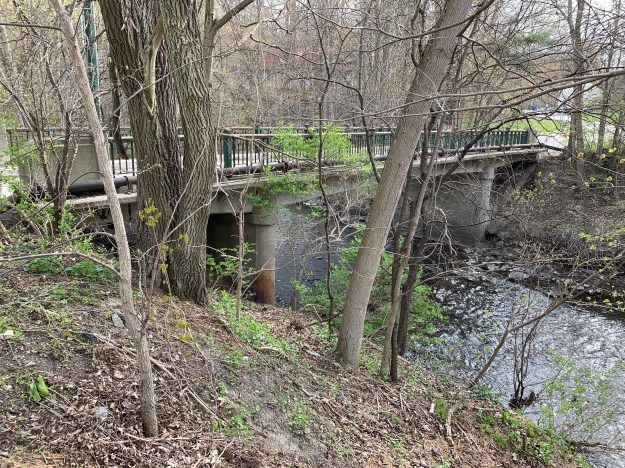
The Burke Brook bridge is architecturally interesting because of the wings on either side of the abutments.  When the water level is just right you can see a small waterfall through the centre of the bridge.  The off-leash dog park can be seen in the background.  It seems strange now that there are no dogs playing and chasing each other in the park.  This bridge is number 9 on the map above.  Near this bridge is a circular well or pumping station that we featured in last weeks companion post Staying Close To Home.

IMG_2509

The bridge over the Don River is more typical of one used by regular traffic.  This bridge was closed to vehicles when the farm was donated to the city as a park and is number 10 on the map.  Alice Kilgour decreed that the park should remain free of charge for the citizens to use and that no road should be allowed to pass from Bayview through to Leslie Street.

IMG_2516

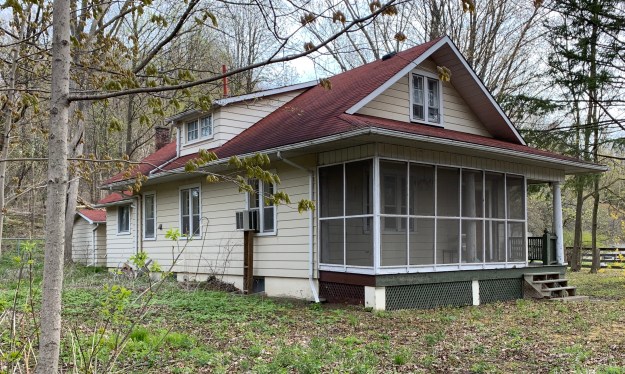
The 1964 photo above shows a building identified as number 11.  This structure no longer exists but number 12 still stands, tucked in overlooking the river and bridge.  These homes were built for the use of various farm and estate workers.

IMG_2518

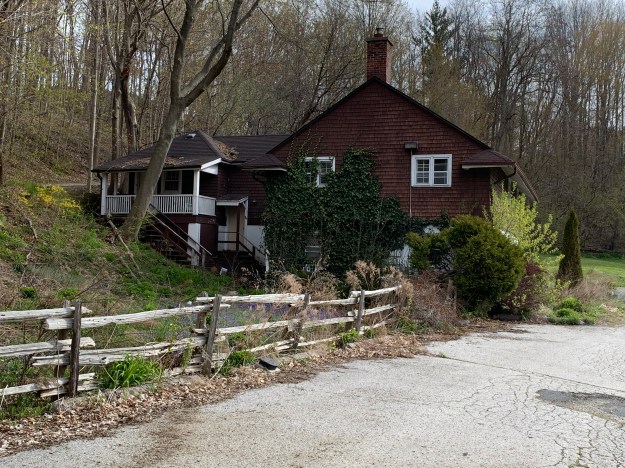
The house identified as 13 on the map was tucked in behind the horse barn and is another of the farm worker homes that were deeded to the city along with the land.

IMG_2520

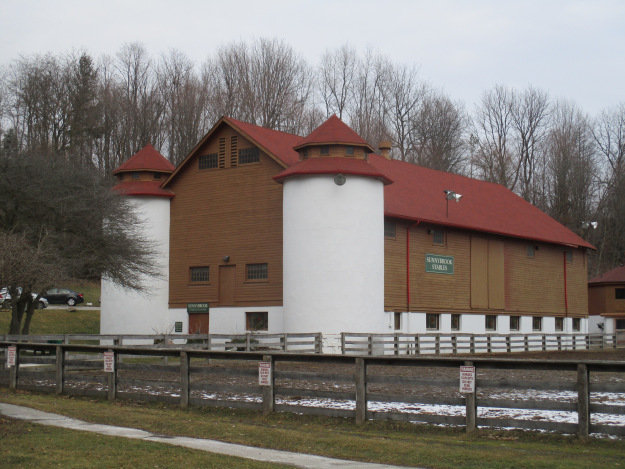
A very ornate barn with two silos is shown as number 14 on the map.  Unfortunately it was destroyed in a fire on May 21, 2018 killing 16 horses that were housed inside.  Another 13 horses were moved to another barn and were saved.  This barn was home to the Toronto Police horses for many years until they were relocated to the CNE grounds.  The picture below was taken from our Sunnybrook Park post.

img_0303 (1)

This picture was taken from the space where the barn formerly stood, now a vacant field with no trace of the barn or silo.  The outer fence for the horse paddock can be seen in the photo above as well as in the distance below.  Across the way is a second barn from Sunnybrook Farms where the cows and other farm animals were kept.  Horses that were rescued from the fire were moved over to this barn, labelled as 15 above.

IMG_2523

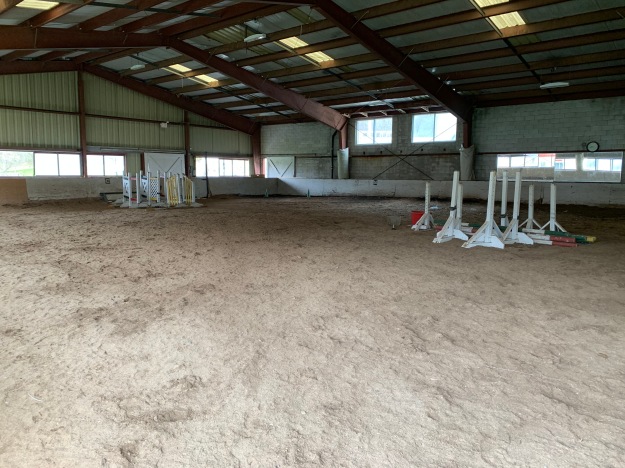
Kilgour erected one of the first indoor riding riding arenas in Canada which is shown as item 16.

IMG_2529

One other building in the compound, number 17, currently houses washrooms and has an equipment shed in the one end.

IMG_2533

Building number 18 caught my attention because it looks like an older style of farm house.  This house is not listed on the heritage register but I wonder if it may have been erected by the Burke family before Joseph Kilgour bought their homestead farm to create his dream estate.  I had planned to walk right up and get a better view but the sign on the tree gave me reason to reevaluate that plan.

IMG_2534

On the valley floor near the Don River is a large patch of Mayapples.  The plants with two leaves are the only ones that will produce buds and that appears to be the case for most of these plants.  The bud pictured below will open into a single flower that will later produce the lone fruit on this plant.

IMG_2546

The lane way back to Bayview is marked as 19 on the map and now leads to the rear of Sunnybrook Hospital.  To the north of the hospital are three other country estates that were built by the wealthy so they could escape the city.  The stories and pictures of these former estates can found in our previous post entitled Bayview Estates.

IMG_2548 (1)

Although it has been nearly a century since the property was given over to the city a surprising number of artifacts remain from the days of Joseph and Alice Kilgour.

Google Maps Link: Sunnybrook Hospital and Park

Like us at http://www.facebook.com/hikingthegta

Follow us at http://www.hikingthegta.com

Also look for us on Instagram

Staying Close To Home

Sunday, May 3, 2020

In keeping with the request to limit travel I decided to take advantage of the nice weather and walk through the Burke Brook ravine to The Don River and back.  Years of exploring different places each weekend has left me with the impression that my local park was boring.  That certainly wasn’t true.  One section of the trail along Burke Brook in Sherwood Park is an off-leash dog area and is currently closed due to COVID-19.  This forced me to walk along Blythwood Avenue until I reached Bayview.  From just south of there I could enter the ravine near the old Bayview Transformer House.   I stopped to see the deterioration that had occurred since my last visit.  With all the windows broken, the weather has been able to get inside and the ceiling is almost gone.

IMG_2399

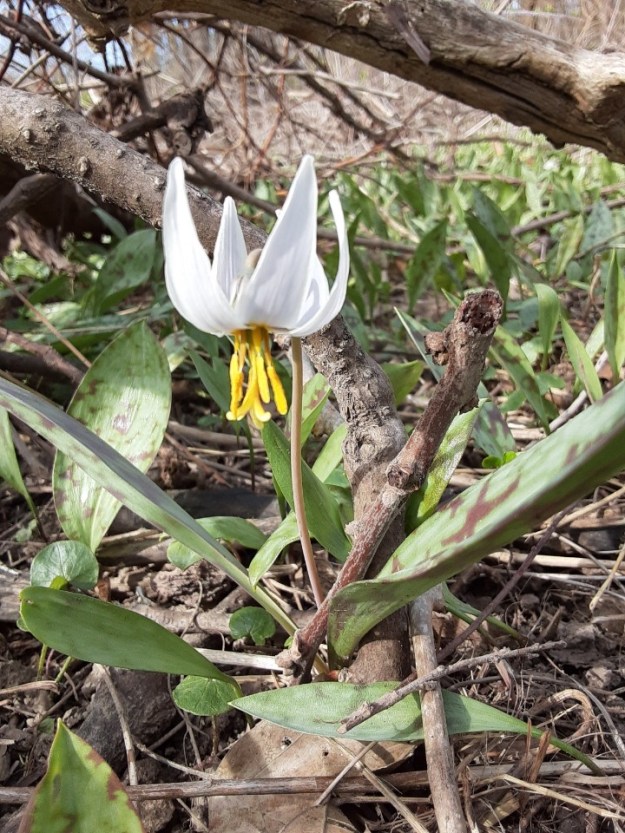
White Fawn Lily are a variation of the yellow Trout Lily.  These plants are also known as Adder’s Tongue and Dog’s-tooth Violet.  Yellow Trout Lily are very common throughout the GTA but the white ones are a rare find.

IMG_2466

Twice I thought I heard something in the leaves but couldn’t identify a source for the sound.  Moments later I crested a small rise to see a Garter Snake crossing the trail.  It stopped to say “Hello” and then was gone under the leaves.

IMG_9823

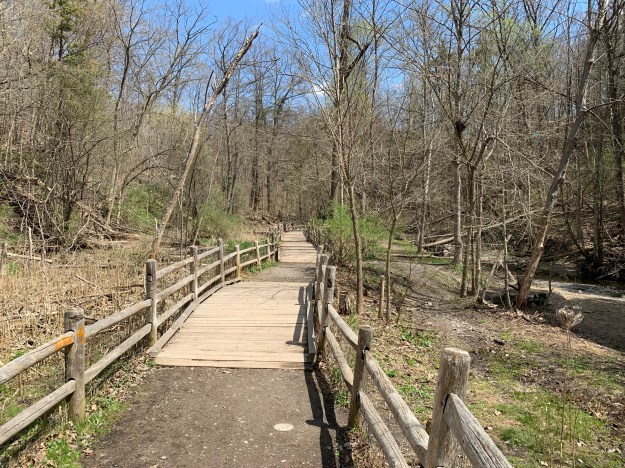
There is a well used trail along the valley floor that follows Burke Brook and the upper trail is used mostly by cyclists.  For this reason you need to be cautious as there are places where allowing a bike to pass is tricky.  There’s also a couple of steep sections that are impassible when muddy.  The section pictured below has a knotted rope to help people get up the slope.

IMG_2417

White Trillium are the Provincial Flower for Ontario.  Along the trail I found a small patch of three.  At this time of year I usually follow the progress of the red ones in G Ross Lord Park.  These are less common than the white ones, but there are between 3 and 5 red flowers in one spot and 2 in another.  On occasion, the white flowers may have a green stripe down the middle of each petal.  This is caused by a virus and the size of the stripe will increase until the plant is no longer able to produce proper flowers and seeds.

IMG_2419

I returned to the trail in the valley which has a boardwalk through sections where water is weeping out of the ground.  There were a few people on the trail but when parks are only used by the locals, it is fairly easy to respect social distancing guidelines.  We’ll see how it goes when they ease the restrictions and everyone rushes out to the trails the first nice weekend.  I hope people won’t be careless and cause the parks to be closed again.

IMG_2421

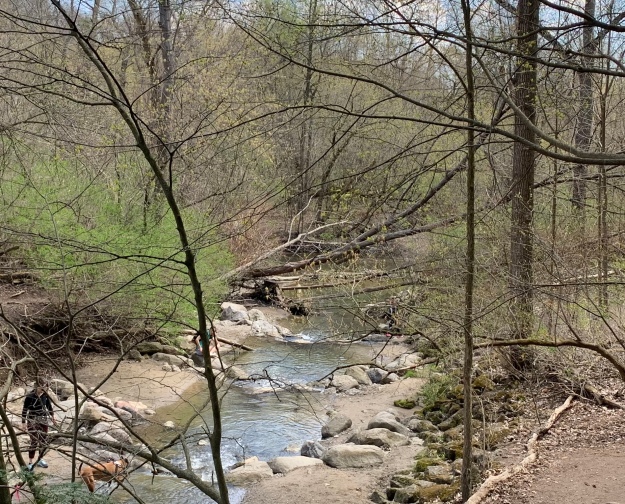
Burke Brook enters the Don River near another off-leash dog park which is currently closed.  It is possible to get to the mouth of the brook but other people were already enjoying it so I chose to go another way.

IMG_2423

Near the mouth of Burke Brook I found the remains of of a concrete circle, possibly a well except that had been lined with wood.  I decided that it had probably been part of the landscaping for the home of Joseph and Alice Kilgour.  The donation of their 200 acre estate had allowed the creation of Sunnybrook Park and provided the land for Sunnybrook Hospital.  Later, as I did a little research, I discovered that there just might be enough interesting stuff around to tell their story.  It looks like another neighbourhood walk is in order.

IMG_2425

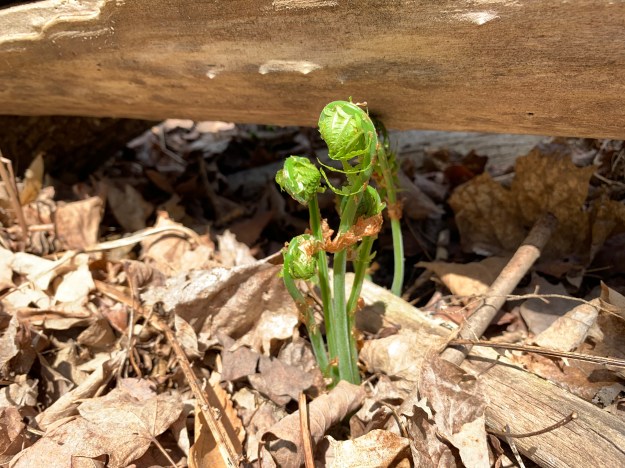
There were many Ostrich Ferns throughout the area, just beginning to open.  At this point of their development people often refer to them as Fiddlehead Ferns because their shape is similar to the end of a fiddle.  Later when they are fully open they resemble Ostrich plumes, from which they take their name.  It is when they are very young that people pick them to enjoy the annual delicacy of fresh fiddleheads.

IMG_2427

Bloodroot is a member of the poppy family and is one of the earlier spring flowers.  There is a single leaf and flower that emerge on separate stems but with the leaf completely wrapping around the flower bud.  The red sap from the roots of the plant was traditionally used as a dye for clothing and baskets.  It was also used by the native peoples as an insect repellent.

IMG_2430

You can follow the Don River northward until you come to Glendon Forest.  This section of the river is usually home to a heron and several families of cardinals.  I didn’t see any and decided not to wander too far into Glendon Forest as that is another entire adventure on its own.

IMG_2432

The original driveway leading to the Kilgour properties still leads back up the hill toward Sunnybrook Health Sciences Centre.  It was here that the first presumptive case of COVID-19 in Ontario was recorded.  I walked by and realized that behind these walls are hundreds of true heroes.  This blog is dedicated to everyone who works in this series of hospital buildings and all other front line workers, everywhere.

IMG_2434

All of this was within walking distance of my home.  What is waiting near you?

Click here for our previous story on Sunnybrook Park.

Google Maps Link: Sunnybrook Park

Like us at http://www.facebook.com/hikingthegta

Follow us at http://www.hikingthegta.com

Look for us on Instagram
Butterflies of the GTA

Sunday, May 3, 2020

There are over 100 species of butterflies that are found in Ontario and as you hike throughout the GTA you have an opportunity to see many of them.  With the COVID-19 lock down still underway we thought for our fifth Corona-blog it might be interesting to take a look some of the butterflies we’ve manged to get pictures of.  We hope you enjoy the pictures while we wait for the parks and trails to open again.

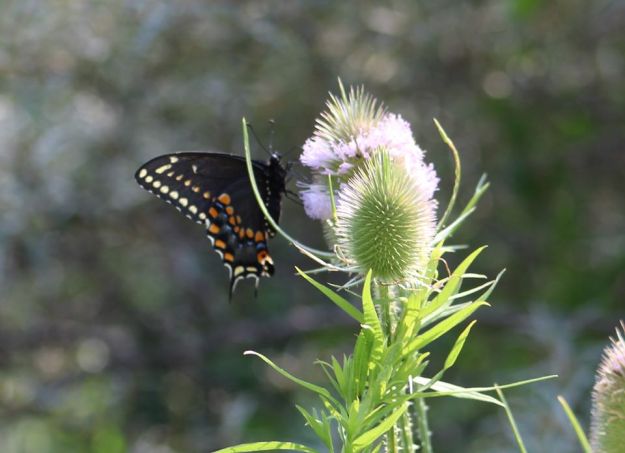
There are over 550 species of Swallowtail butterflies worldwide but we see only a few of them in Ontario.  Black Swallowtail have two broods each year with the first one emerging from their over-wintering in mid-May.  A second brood emerges in mid-July and flies throughout August.

Black Swallowtail

The Spicebush Swallowtail has large blue iridescent spots on the hind wings.  This butterfly is less common in the GTA but can be seen regularly in Point Peele and at The Pinery.

Swallowtail

Eastern Tiger Swallowtail is one of my favourite butterflies and it is fairly common in the GTA.  It also has two distinct broods per year.

EasternTiger Swallowtail

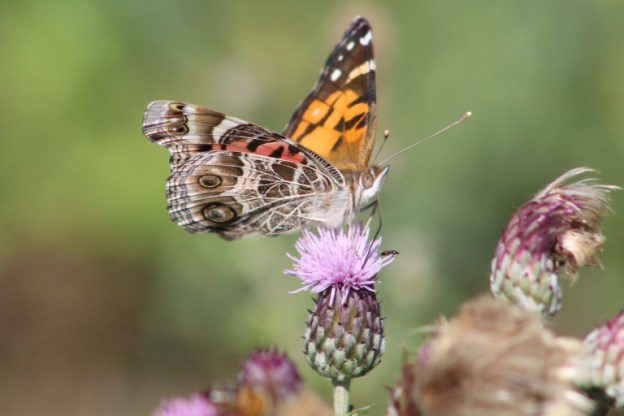
The Painted Lady is also featured on the cover photo of this post and has a complex pattern on the under wing.  It looks similar to the American Lady which is more common in Ontario.

Painted Lady

American Lady butterflies have less colour on the under wing than the Painted Lady featured above.  It has two large eye spots on the bottom of the hind wing.

AmericanLady

Red Admiral are dark in colour with a bright orange band across the wings.  They are one of the more common butterflies in the GTA.

Red Admiral

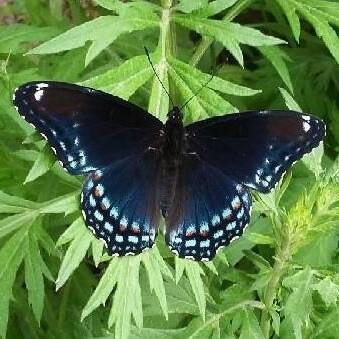
White Admiral are deep blue to purple with a broad white band across the wings.

White Admiral

White Admiral under wings have considerably more red than the upper side of the wing.

White Admiral underwing

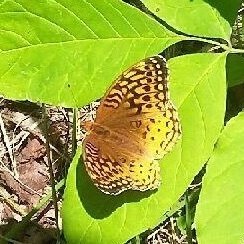
Great Spangled Fritillary is one of the largest fritillary butterflies in Canada. The underside of the wing will have a silver band along the edge of the wing.

Great Spangled Fritillary

Little Wood Satyr have four large eye spots on the wings, two on the front wing and two on the hind wing.

Little Wood Satyr

The Red Spotted Purple is a subspecies of the White Admiral.

Red Spotted Purple

Monarch Caterpillars become the butterflies that are perhaps the most recognizable to a lot of people.  The caterpillar can be found on milkweed which is the primary food.

Monarch caterpillar

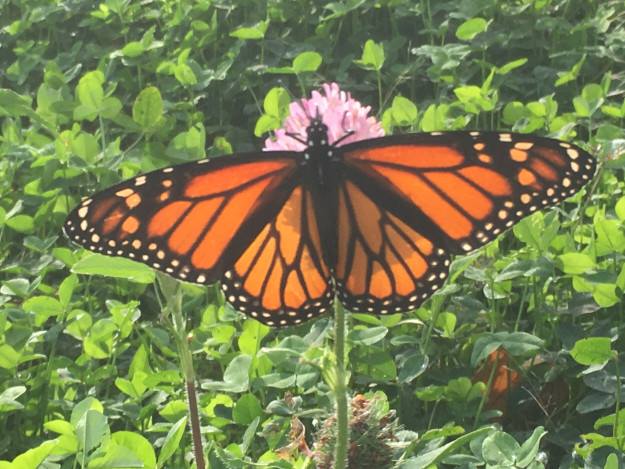
Male Monarch butterflies have two little black dots on the hind wings that contain a scent to attract the females.

Male monarch

Female Monarch butterflies lack the black dots.

Female Monarch

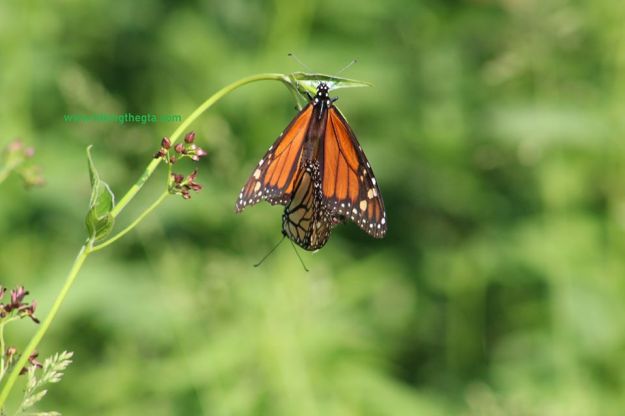
The picture below shows a pair of Monarchs mating.  The mating process can last for up to 16 hours. It usually starts one afternoon and can last until the following morning.

Mating

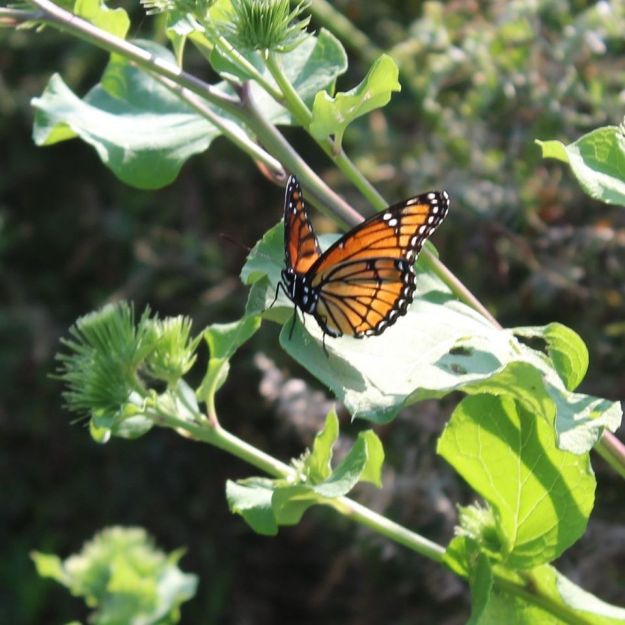
Viceroy  butterflies look very similar to Monarchs except that they have a black band along the edge of the wing.

Viceroy

Mourning Cloak butterflies are one of the first ones to be seen in the spring.  They over winter among the dead leaves on the ground and emerge when the weather warms up.

Mourning Cloak

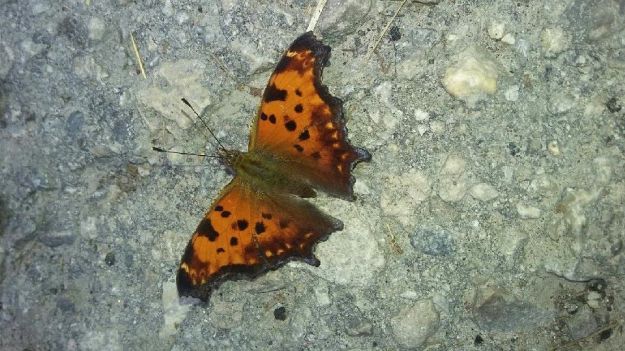
Gray Comma butterflies are interesting because the underside of the wings looks just like a dead leaf.  They can be well disguised when they want to be.

grey coma

The Question Mark  looks similar to the Gray Comma but doesn’t have the deep section between the front and rear wings.

Question Mark

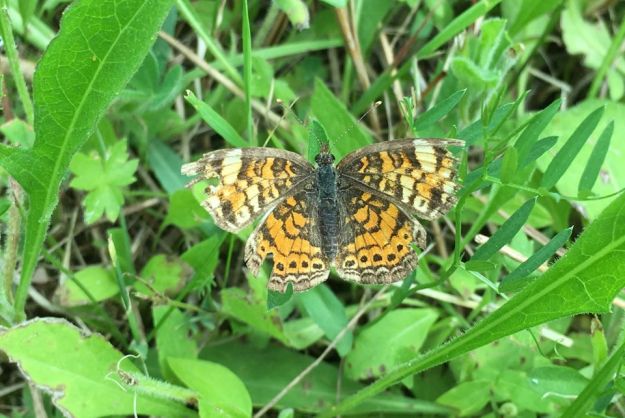
Pearl Crescent butterflies have several similar species but can be distinguished by the fine black lines that cross the orange sections of the wings.  A row of black dots lines the outer edge of the rear wing.

Pearl Crecent

Silver Spotted Skipper are the largest of the native skippers.  The males can be very aggressive in defending their little territory, chasing everything else away.

Silver Spotted Skimmer

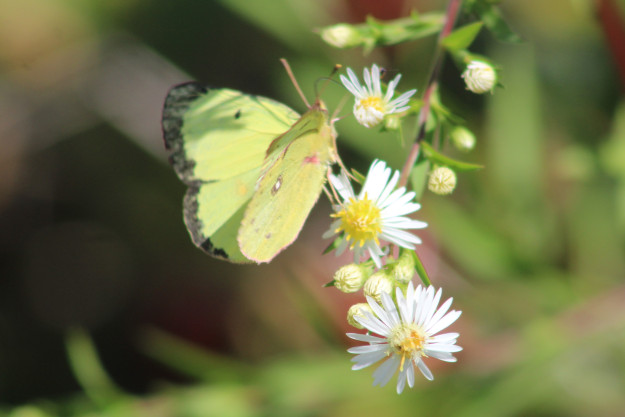
Clouded Sulphur butterflies are one of the most common yellow butterflies in Ontario.  They seldom sit with their wings open so getting a shot of the upper wing requires luck and good timing.

Clouded sulphur

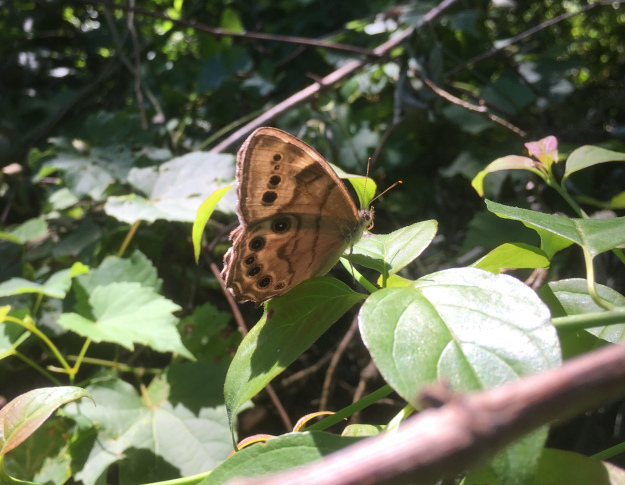
The Appalachian Brown is very similar to the Eyed Brown.  The line on the under wing that separates the darker area from the lighter has gentle curves rather than being zigzagged like on the Eyed Brown

Appalatian BRown

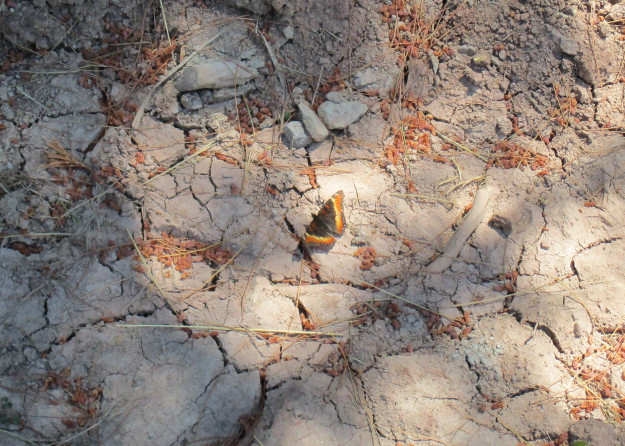
Milbert’s Tortoishell butterflies have three broods per season and are one of the distinct species in our area as there are no similar looking ones.  The bright orange band on the wings is complemented by red spots on the front wings.

Milberts Toitose Shell

Getting pictures of butterflies can be time consuming because they don’t always sit still and wait for you to get a good shot.  Patience is the virtue that will come in most handy.

Google Maps Link: look anywhere

Like us at http://www.facebook.com/hikingthegta

Follow us at http://www.hikingthegta.com

Look for us on Instagram


Mink Kits

Friday, April 24, 2020

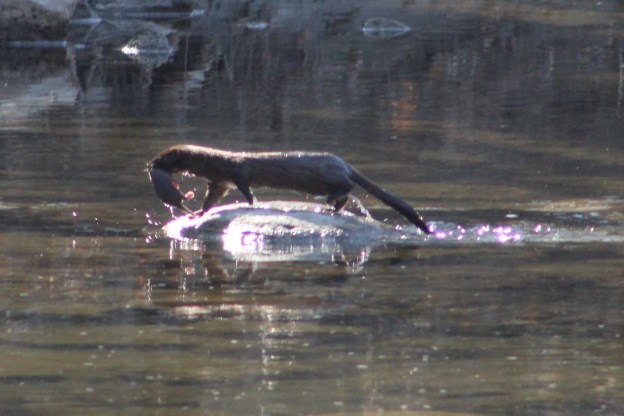
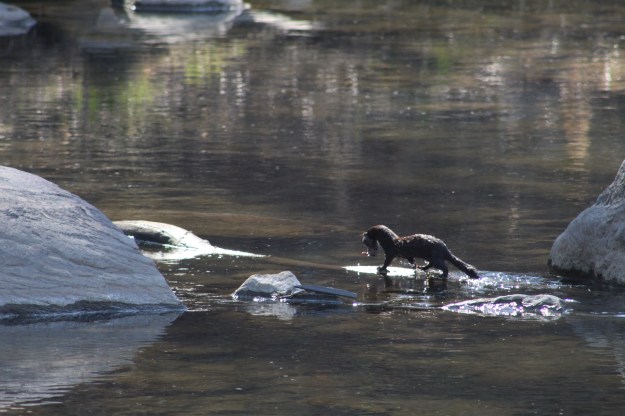
American Mink can be found along the shorelines of lakes, rivers and creeks throughout the GTA.  They generally live alone except for mating season which begins in February.  The kits are born from mid-April to June in litters that average 4.  The American Mink has a short delay between insemination and implantation which means that the female can delay the start of gestation for up to 45 days while she waits for favourable weather conditions.  With a mild winter and early spring it will tend to lead to earlier births than would be the case in years where there had been a severe and late winter.  The picture below shows a mink swimming with a kit in its mouth.

IMG_9666 b

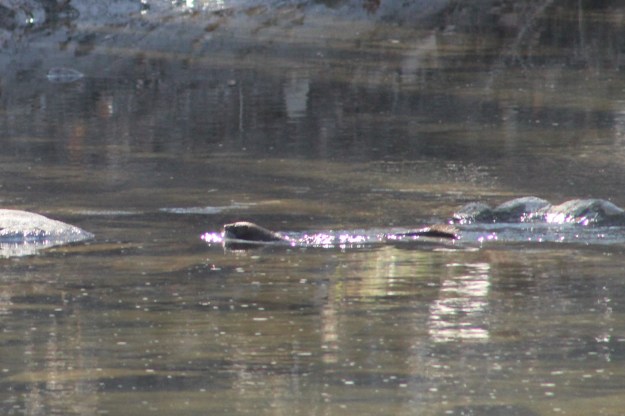
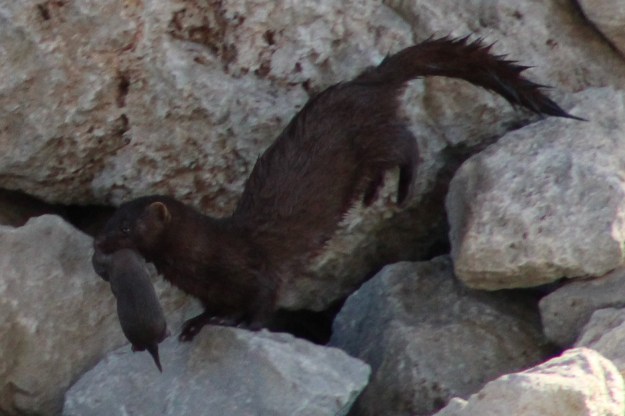
Mink don’t hibernate and so they can be seen all winter and their tracks tend to reveal where their nests are.  One lives in my area, I won’t say exactly where because of the babies, and so I went to see if I could get a picture of it since I am now laid off on Fridays.  I was lucky enough to see it return from a foraging trip and swim back to the nest.  Then it emerged a few minutes later with something in its mouth and swam across the creek.  When it climbed up on a rock in mid-stream I got a picture which showed that it was carrying a baby.

IMG_9724

It took the kit across the creek and into a different den among the rocks on the other side.  Mink are known to keep several dens, each with multiple exits for security.

baby mink 1

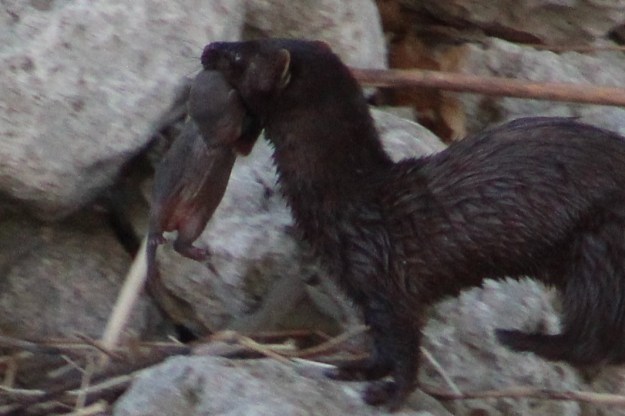
Mink babies are born blind with just a fine layer of soft grey fur.  When the kits are about 25 days old they will open their eyes for the first time. This allows them to start to learn the skills of hunting for food so that mom can wean them at about 35 days.  These little ones still have their eyes closed.

mink 5

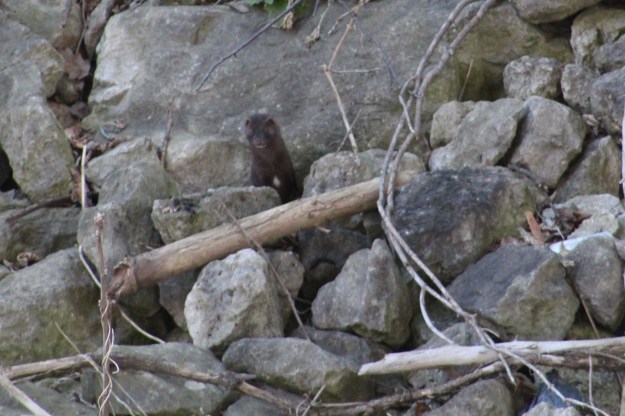
Over the next few minutes she brought four kits to the new den.  After the third one she paused to collect a few more leaves for padding before going after the fourth.  She stopped and took one final photo op before disappearing into her nest to suckle the young ones and warm them up after their dip in the cold water.

mink 4

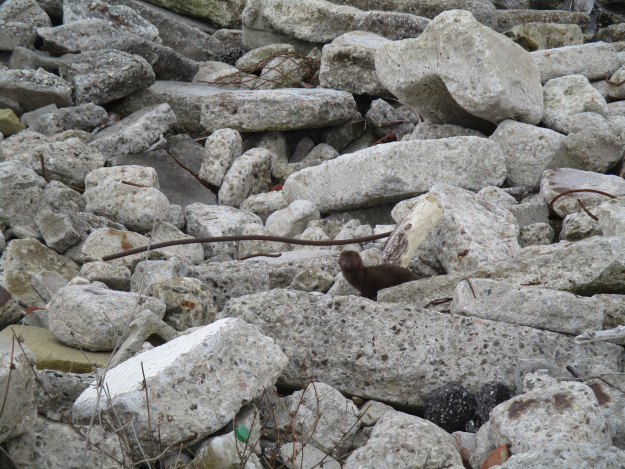
American Mink can often be found along the shore of Lake Ontario where they build their home in among the rip rap that is used for erosion control.  This picture was taken in Colonel Samuel Smith Park in Etobicoke.

img_5781

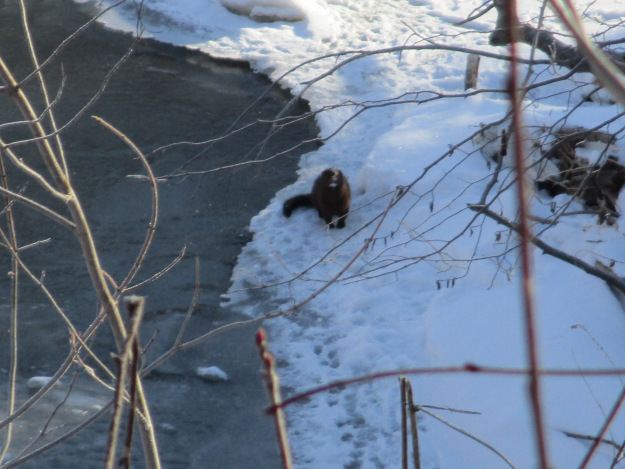
This one was photographed in the winter during our exploration of the Ghost Town of Mount Charles.

img_0237

Seeing a mother mink moving her recently born kits is one of those opportunities that you only get if you happen to be in the right place, at just the right time.  We’re glad we captured this in pictures.

Google Maps link: Do not disturb!

Like us at http://www.facebook.com/hikingthegta

Follow us at http://www.hikingthegta.com

Look for us on Instagram


Birds of the GTA

Sunday, April 26, 2020

After hiking weekly for many years, and blogging about it for the past 6 years we have been shut down for over a month now due to the global pandemic.  With no current hikes to present, we are now looking to find other material for blogs.  For our fourth COVID-Blog we’ve collected some of the bird pictures we’ve taken along the way.  A few have appeared in our previous posts, some have been used on our Facebook page as cover or profile photos and a couple may not have been published before.  Savour a taste of the nature that is waiting for us when we’re able to get out and enjoy it.

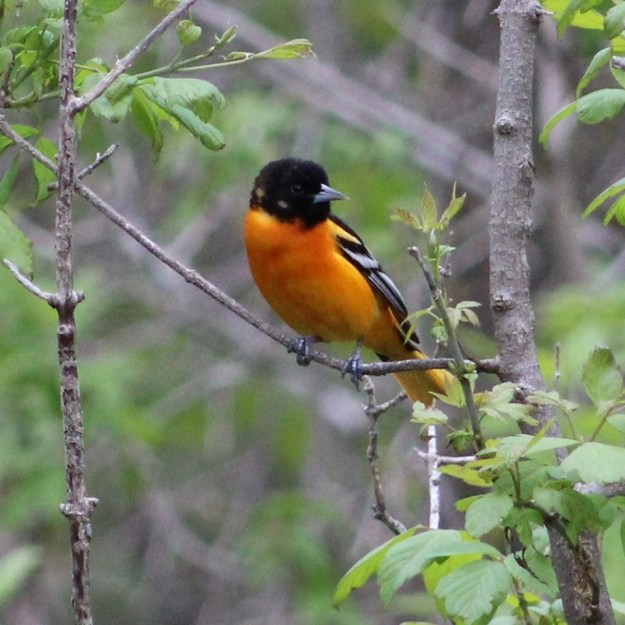
The Baltimore Oriole is the state bird of Maryland and is named after the colours of the coat-of-arms for Lord Baltimore, who was the first proprietor of the Province of Maryland.

Baltimore

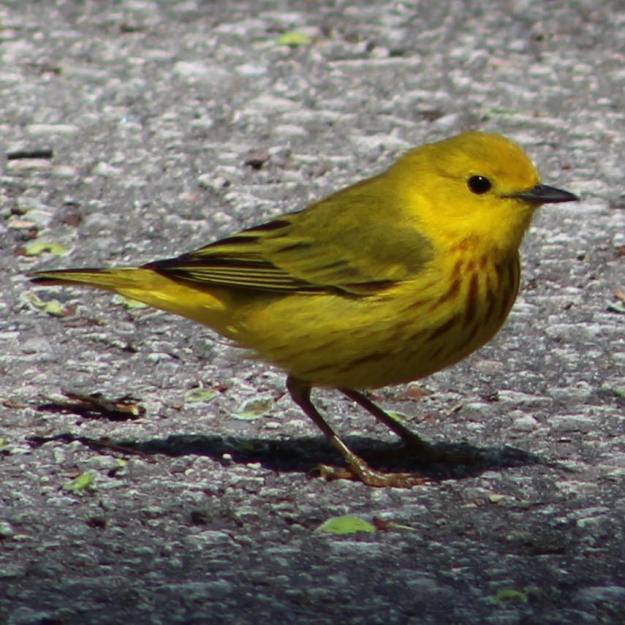
Yellow Warbler males have reddish-brown markings on their breast and can grow to be around 12 centimetres in length.

Yellow Warbler

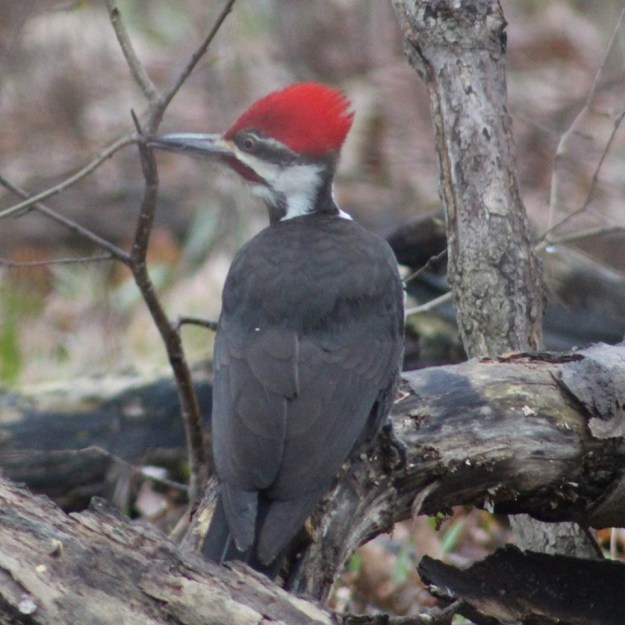
Pileated Woodpeckers are the largest species of woodpecker that is native to Ontario.  Both the male and female have a bright red crest that sweeps off the back of the head.  The male is distinguished by the red stripe on the cheek, as seen on the specimen below.  Their main food is the carpenter ant and they dig large square holes in trees to look for them.  The mated pair stay in their territory all year long and tend to nest in the largest tree in the area.  For this reason they are prone to being killed in lightning strikes.

pileated

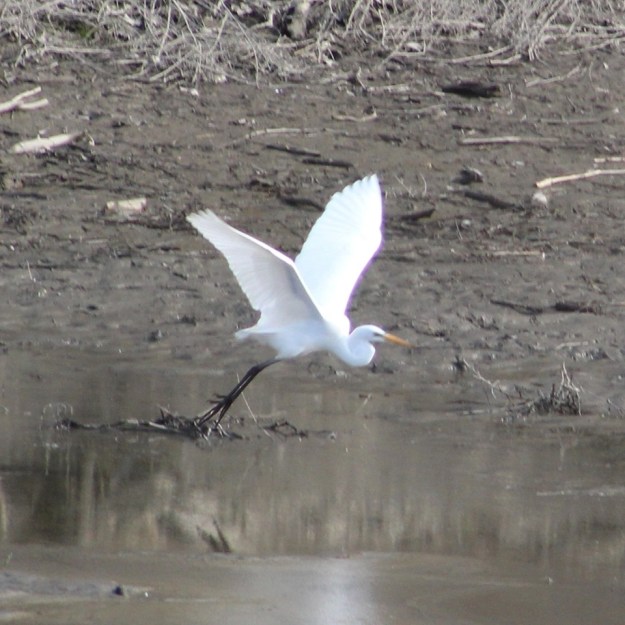
Great Egret are known to breed in colonies with their nests at least 10 feet in the air and as high as 40 feet.  Their main diet is fish and frogs which they spear with their sharp bill.

egret

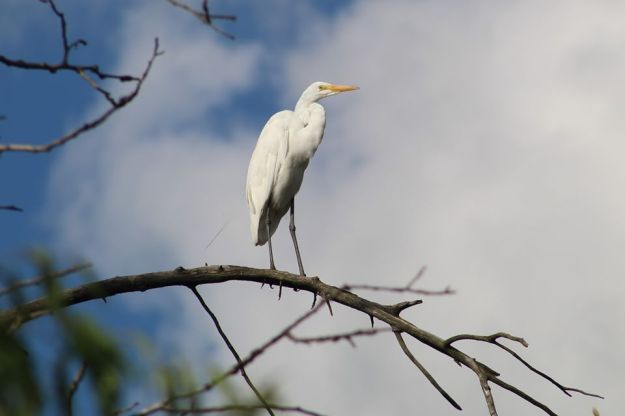
Another shot of an Egret, this one standing on a tree in G. Ross Lord Park looking into the Don River.

egret

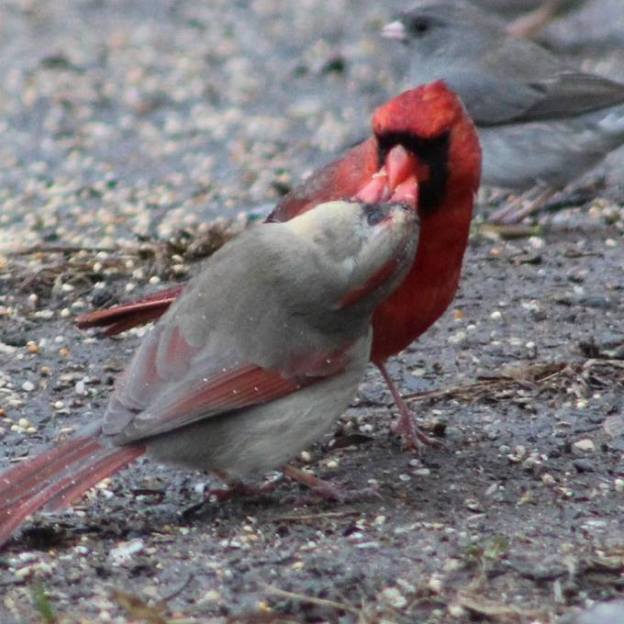
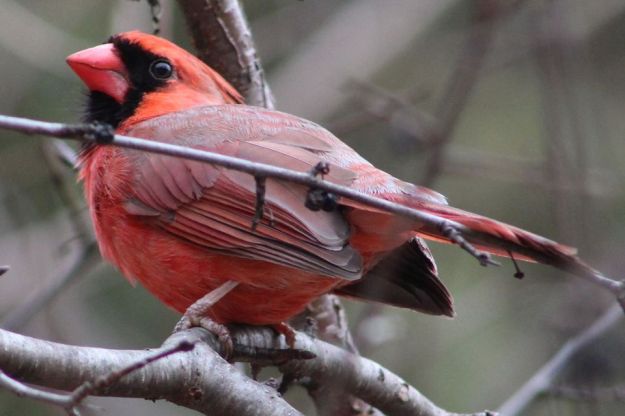
Male Cardinals are at their brightest red in the spring when mating season is underway.  Their courtship includes feeding the female seeds that he collects.  This is captured in the cover photo for this collection.  After the eggs are laid the male will use his bright colours to capture the attention of potential threats.  He will then proceed to lead them away from the nest, at his own expense if need be.

cardinal

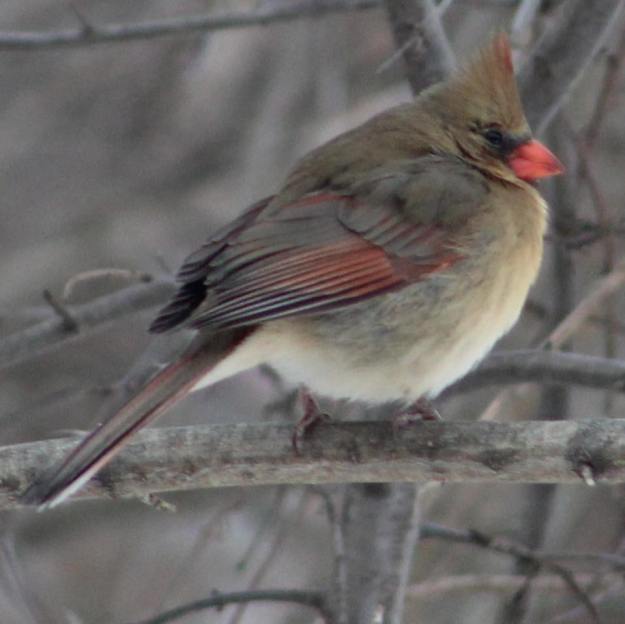
Female Cardinals are paler in colour and therefore can hide themselves easier than the males.  They will sit on the eggs for 11-13 days until they hatch.  During this time the male will bring them their food.  Cardinals remain in pairs year round and the two are seldom far apart.  They have different calls which allows you to hear them as they sing to each other.

female cardinal

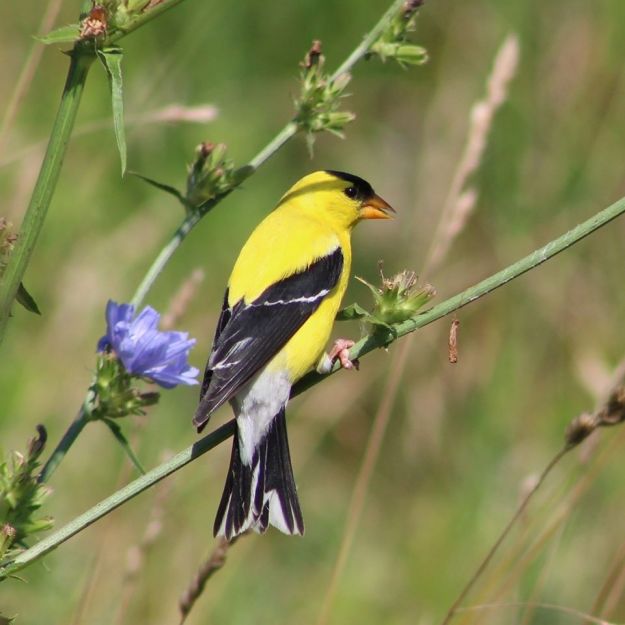
Like the Cardinal, the American Goldfinch is sexually dimorphic, meaning that the male and female look different in more ways than just their reproductive organs.  The male also undergoes a complete molt in which its olive coloured feathers are changed for bright yellow for mating season.

goldfinch


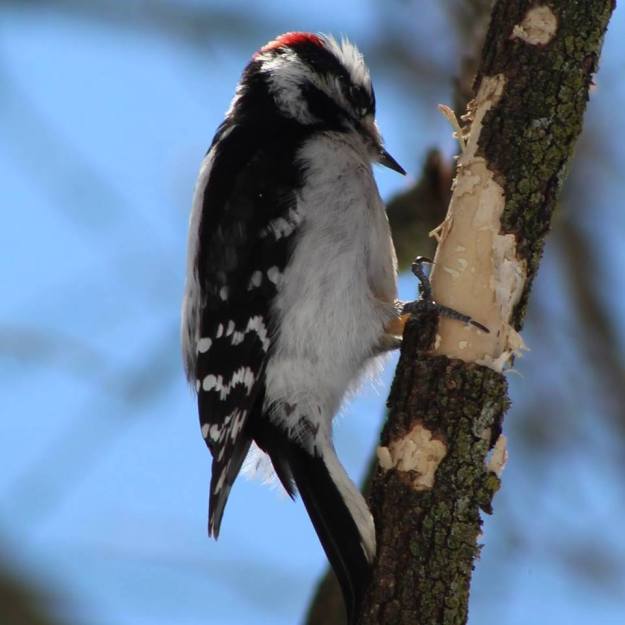
Downey Woodpeckers are the smallest of the common woodpeckers in Ontario.  Except for size, they look almost identical to the larger, and unrelated, Hairy Woodpecker.  The male has a red crest on his head that the female lacks.

Downey

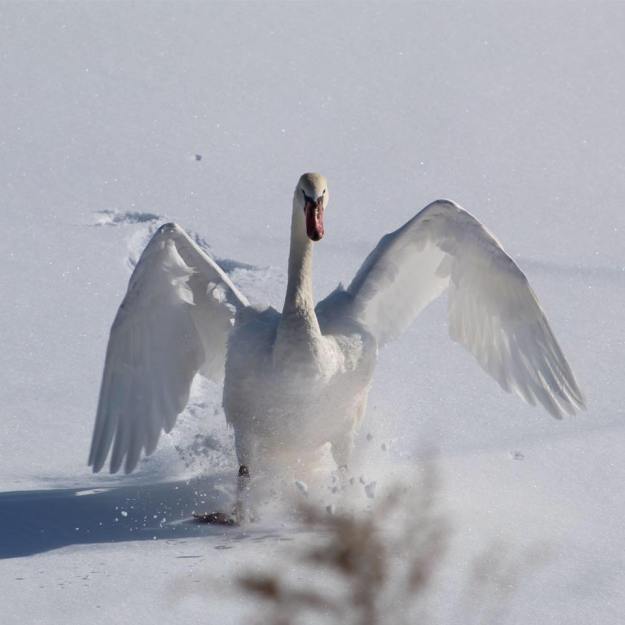
In recent years there have been an increasing number of Swans who choose to spend the winter along the shores of Lake Ontario.  This one was sitting on the fresh snow and was comical as it struggled to take flight.

swan

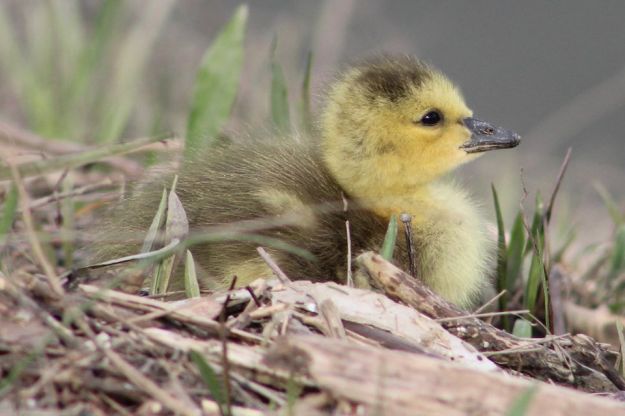
Canada Geese may grace our $100 dollar bill but in general they are pretty dirty birds that some people rather dislike.  However, who could dislike their cute little goslings when they are a few days old.

Goose

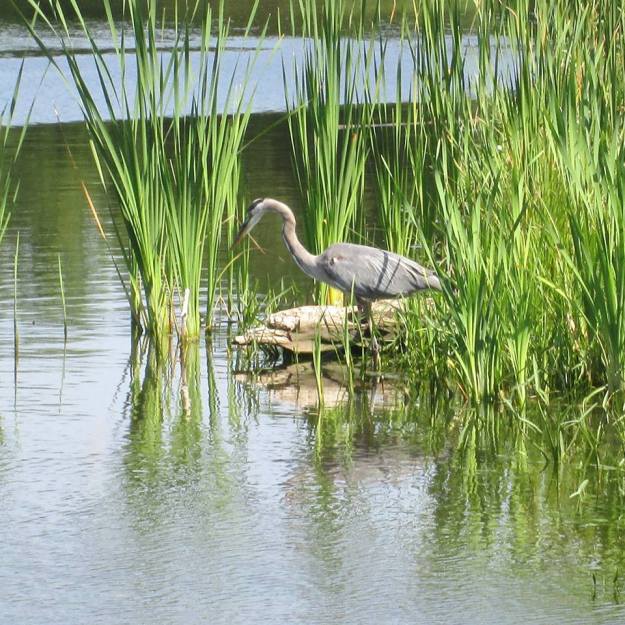
Great Blue Heron are one of the more common of the large fishing birds.  We see them all summer long.  This picture became the background for the Hiking the GTA business card.

Heron 1

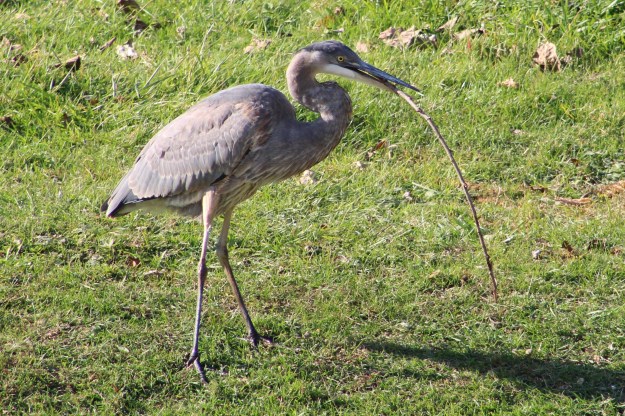
Herons have been known to gather sticks for nesting purposes but this one was just picking them up and throwing them off the grass.

IMG_8040

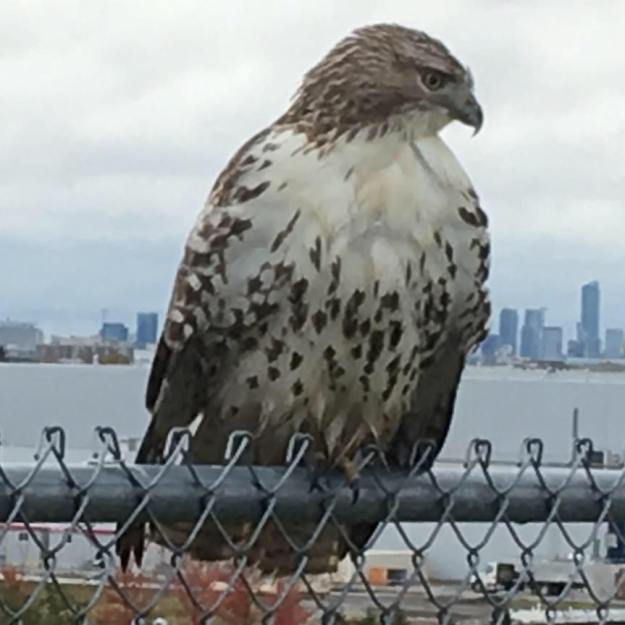
This Red-Tailed Hawk was seen at Downsview Park where it is common to see several hawks in a single visit.  For some reason this one didn’t seem alarmed that I was slowly approaching and taking pictures.  It let me get quite close before taking to flight.

hawk 1

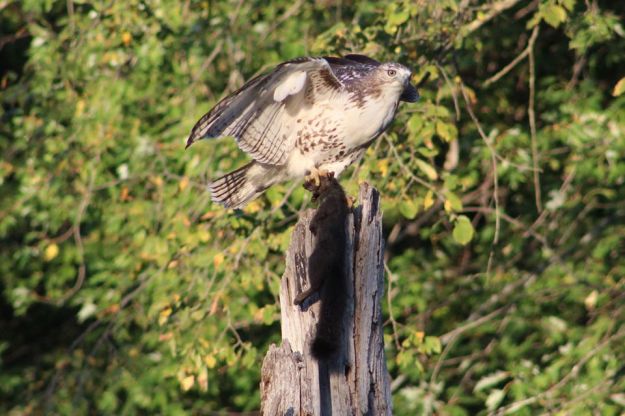
This Red-Tailed Hawk went into the trees near me and snatched a black squirrel off a branch.  It killed the squirrel quickly so that it couldn’t struggle and escape but this was also merciful.  It then spent several minutes making sure it wasn’t going to be challenged for dinner.

hawk and squirrel

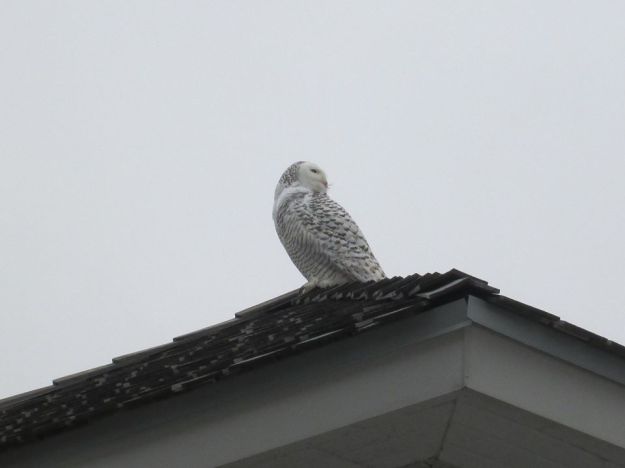
Snowy Owls spend their summers north of the Arctic Circle hunting lemmings.  Each bird can consume up to 1600 lemmings per year.  It is normal for a few Snowy Owls to be seen in Southern Ontario each winter.  This one was seen near the Adamson Estate.

Snowy Owl

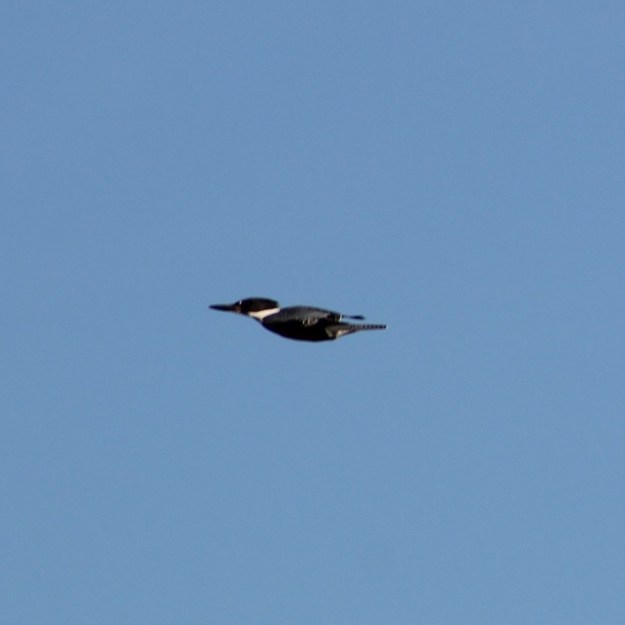
Belted Kingfishers dive at speeds of up to 25 kilometres per hour and can catch fish that are two feet under water.  They can often be heard before they are seen and have a very distinctive chatter.

Kingfisher

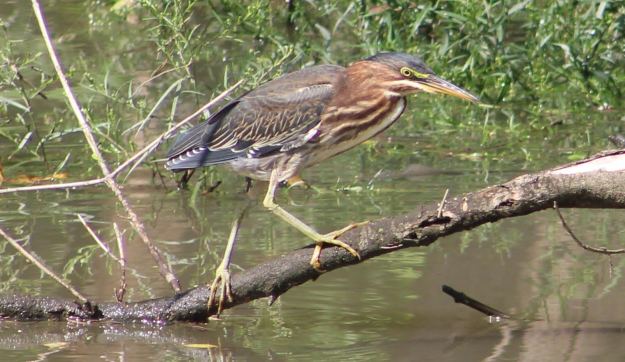
Juvenile Green Heron will usually hunt from shore rather than wading like most members of the heron family.

green

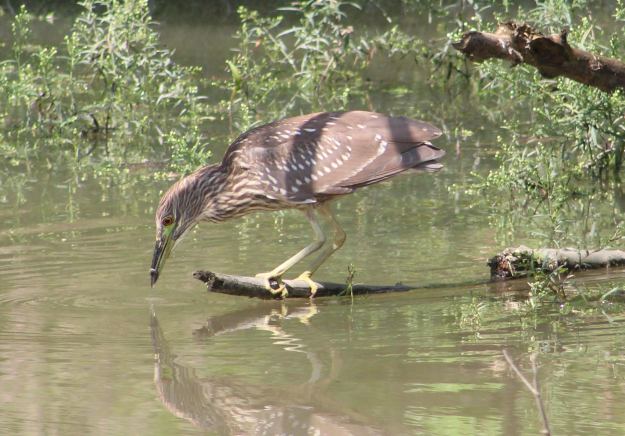
Juvenile Black-Crowned Night Heron are brown in colour with spots on their wings and backs.  They will change colour as they mature to have the distinctive black crown and back with the rest of the body being white.

Black

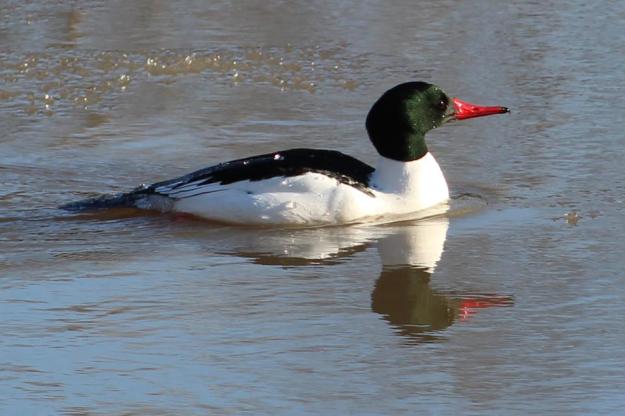
Common Merganser feed on a diet that is primarily made up of fish.  They have serrated edges to their bills which give rise to their other name which is “Sawbills”.

merganser

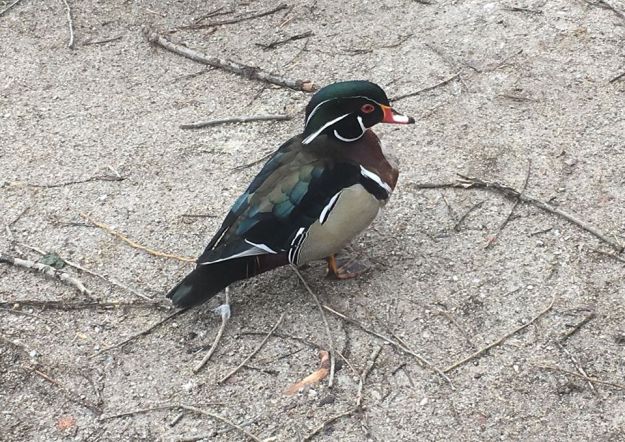
The Wood Duck is one of the most remarkably coloured members of the duck family.  The male has ornate feathers on almost all of their upper body.  Only the chest lacks a pattern.  They are found primarily in wooded ponds where they nest in hollow trees.  Their feet have little claws which makes them the only duck that can cling to bark and branches.

wood duck

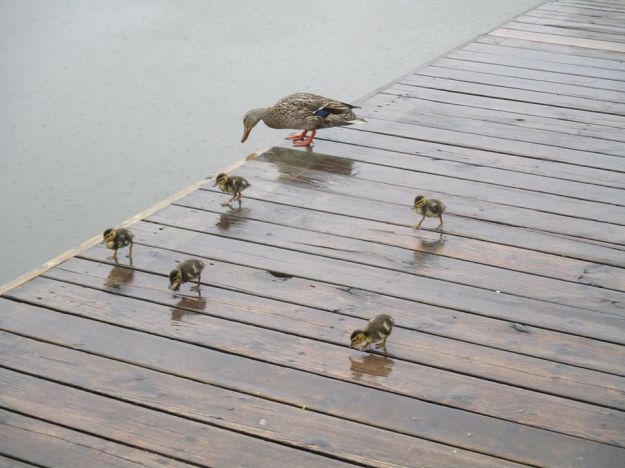
Just like the juvenile Canada Geese we looked at earlier, Mallard Ducklings are also very cute.  Mom jumped of the dock into Lake Aquitaine and one by one the little ones followed her.  While she was quite graceful, they each plopped into the water.

mallard ducklings

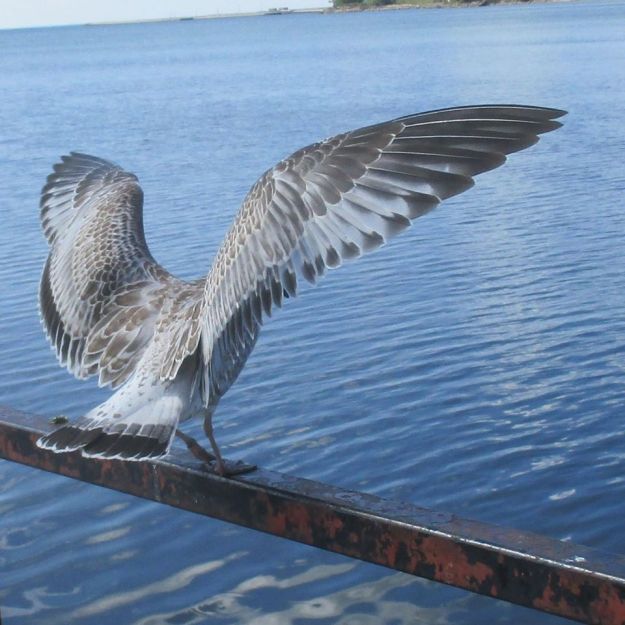
One of the most common waterfront birds is the “seagull” which is a term loosely applied to several different Gull species and often includes Terns as well.  In general these birds are unremarkable, but sometimes you just catch them at the right moment.

gull

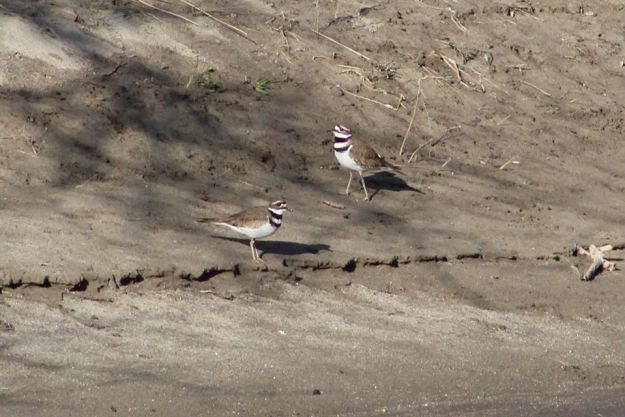
Killdeer have a diet of worms and insects and migrate as far south as Mexico.  They get their name from the sound of their call rather than the number of deer that they kill.  Which is none.

killdeer

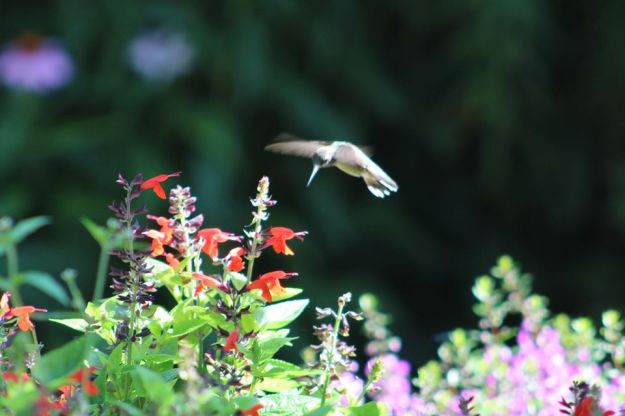
Hummingbirds are the smallest bird that migrates and the only bird that can fly backwards.  Even though they live off of the nectar from flowers they have no sense of smell.  With a weight under two grams they have the ability to dive at speeds approaching 80 km/hr.

hummingbird

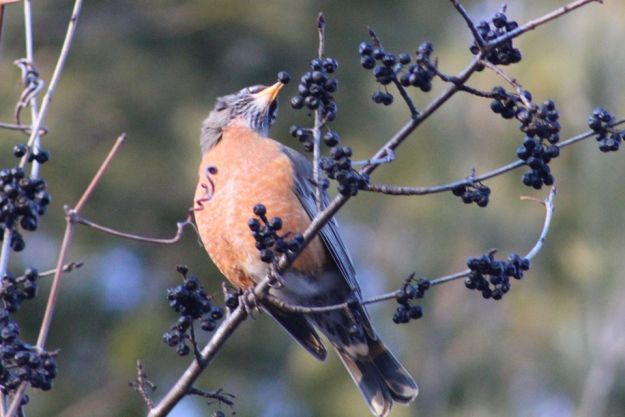
American Robins don’t fly south to escape the cold, they move around to seek food.  Most of them will stay in the area where the temperature is warm enough that they can still get bugs and worms.  The ones who stay behind switch their diet to berries and seeds.  This picture shows a robin with a berry in its mouth.

Robin eating

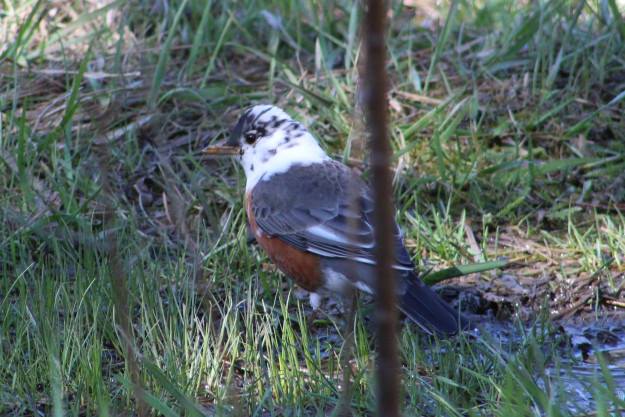
Leucism causes an animal to lose part of its pigmentation.  This Leucistic Robin was seen two years in a row in the same area.

Leucistic

Obviously, the trail and parks are full of birds and avid birdwatchers will collect dozens of species on their “Life-List” of sightings.  We hope to be able to add to ours soon.

Like us at http://www.facebook.com/hikingthegta

Follow us at http://www.hikingthegta.com

Look for us on Instagram
 

Used Cars

Sunday, April 19, 2020

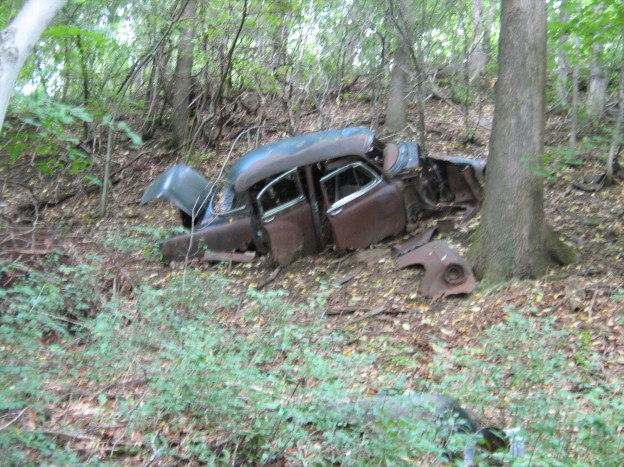
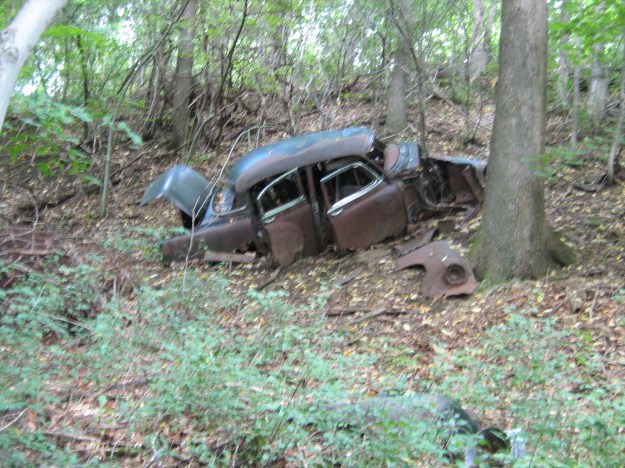
The more trails you hike, the more likely you are to come across the remains of an an old vehicle quietly rusting away.  Often they are in places that you could no longer drive a car to because of new growth.  This post features several old cars that we have covered before in some of our earlier posts.  Each of those has a link to the post where there is more information.  Some of them have not been published before and so no links are available.  They are presented in no particular order.

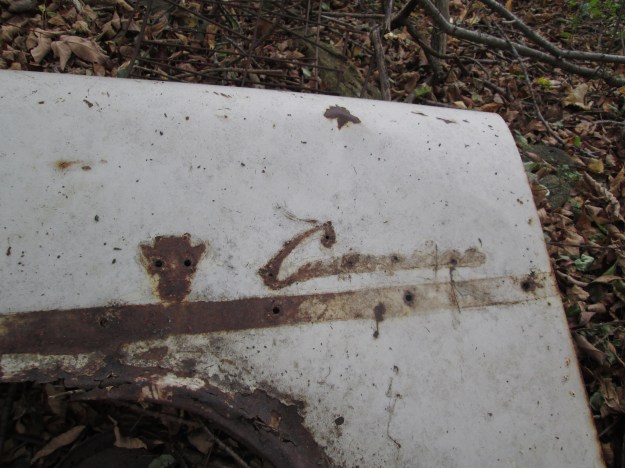
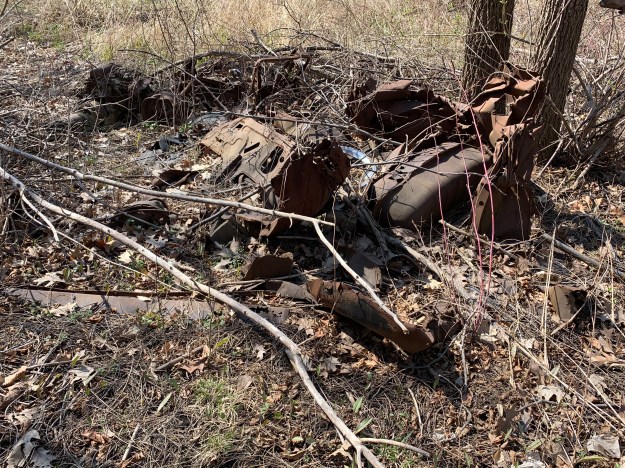
The first ones that we’ll feature are the farthest away, in the Georgian Bay area.  We parked on 13 side road off of the 7th line a little south west of Meaford to go investigate the remains of the Georgian Bay Milling And Power.  The area we accessed as we went down the old road allowance is known as Trout Hollow. As we walked along the road allowance we started to find the remains of old cars.  It’s hard to say how many cars are here because the parts are all mixed up.  There could possibly be five of them, all from the late 1940’s or early 1950’s.  The first pile we found contained the hood of an old Ford truck, a panel with the three trademark vents of a Buick and the side panel of a Cadillac among various other parts.  The Cadillac can be dated to 1947-1952 based on the shape of the logo.

img_0774

Following the yellow side trail where it goes to the right off of the road allowance brings you past one of many 1940’s era cars that have been pushed down the hillside prior to the growth of the current forest cover.  More information on this hike can be found in our post Trout Hollow.

trout-car

Nearly 2 kilometres from Hockley Valley Road on the Bruce Trail are the remains of a 1939 Chevy Sedan that are being slowly disassembled and removed.  The property belonged to Dennis Nevett who owned and farmed it until 1974 when he sold it to the government for the creation of the Hockley Valley Provincial Nature Preserve.  The family used the sedan from about 1951 until 1959 when it died.  Over the next year or two it was towed to the back corner of one of the fields and left to rust away.  The story of this hike can be found at our link Hockley Valley.

img_2103

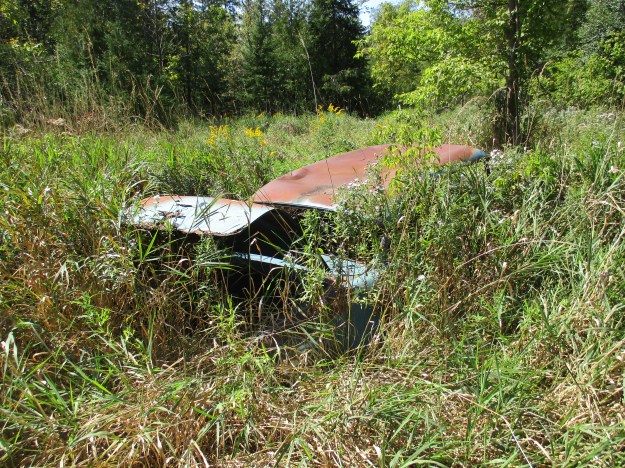
Just south of Hillsburgh in the first hollow lie the remains of a collapsed house and a car from the late 1940’s or early 1950’s.  More pictures of this area can be found in our Hillsburgh post.

img_0150

Two cars can be found in Streetsville as you make your way upstream toward Hyde Mill. This car is in pretty good shape although it has been stripped clean of every usable part. The trunk lid still contains an old decal showing how to use the tire jack.  From the part number on the decal we were able to identify this car as a 1977 Ford Galaxy 500.  More pictures from this hike can be found in our story Hyde Mill.

img_0249

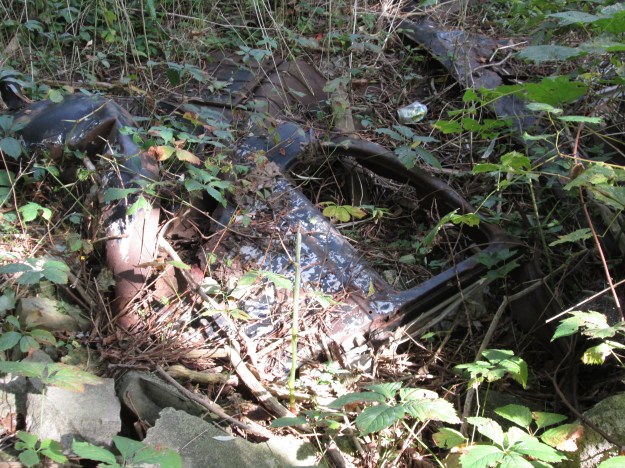
The remains of an old vehicle, likely a late 1940’s or early 1950’s, lay at the bottom of the hill as you approach Hyde Mill from the river level. This car may have been here for quite a long time as it is damaged beyond identification.  These two vehicles must have been dumped down here before the trees grew up on the embankment above.  The story can be found at the link for Hyde Mill.

img_0232

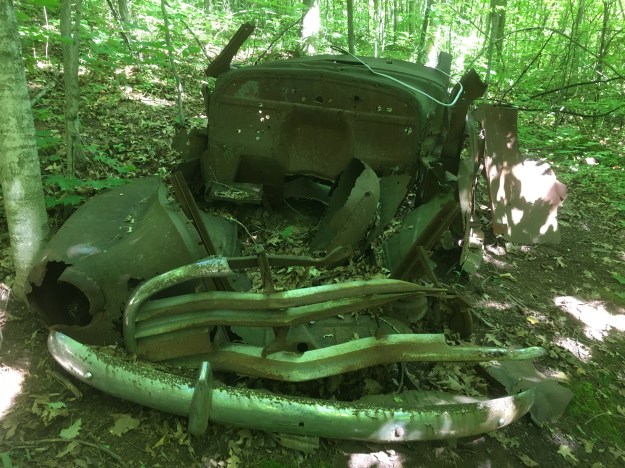
North of Georgetown there is an old wreck near the Bruce Trail.  We entered on the Eight Line Side Trail and made our way to The Great Esker Side Trail.  Along the way we identified the remains of an old car in the woods.  It has clearly been there for decades as it has no motor and is surrounded by mature trees. It is in a very advanced state of decay.  The front bumpers and grill pattern were quite unique in the various car models of the 1940’s.  Having looked through hundreds of online pictures, positive identification wasn’t possible but the closest candidate was a 1946 Chevy Stylemaster.  More pictures and this story can be found in our post about The Great Esker 

IMG_5128

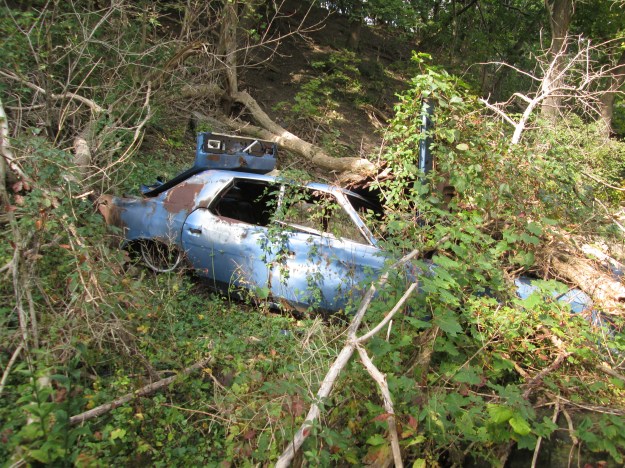
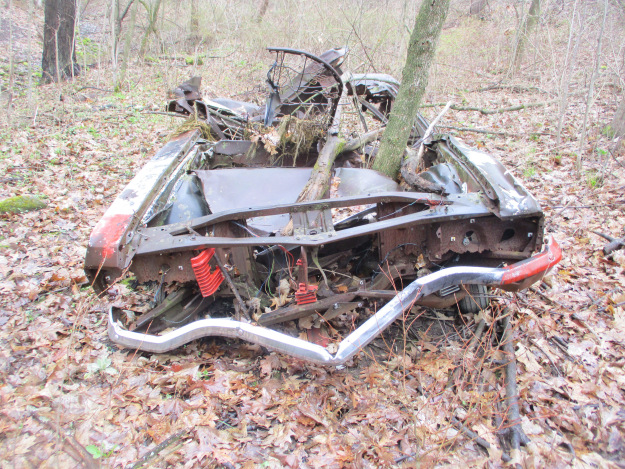
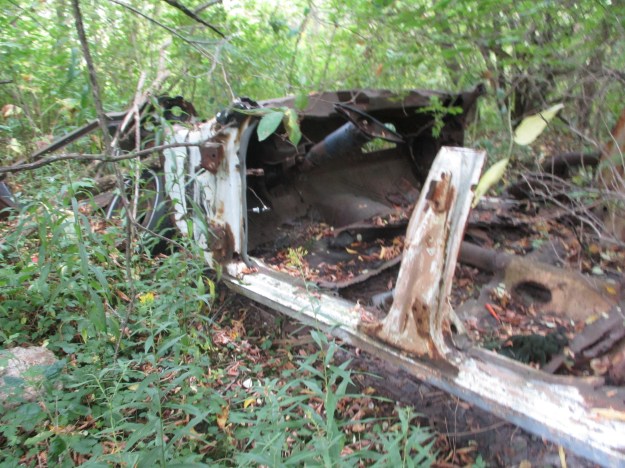
Between Kerns Road and Guelph Line, along the Bruce Trial, lie the remains of a car with a tree growing out of the rear passenger seat.  Positive identification wasn’t possible because no identifying stickers or plastic parts could be found.  We did notice that the front bumper incorporated the side signals in a unique three cut-out pattern.  Identical looking side markers can be found on the 1970 Chevy Impala.  More pictures of this wreck and the rest of the hike can be found in our story starting at Kerns Road.

img_0080

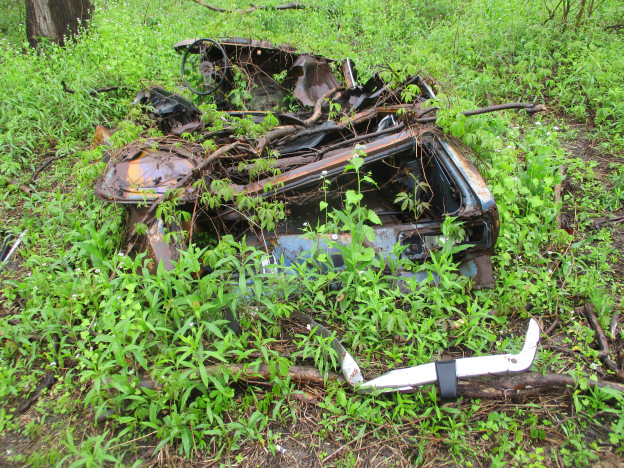
One of the strangest places is the Toronto side of the Etobicoke Creek, south of the 401.  This section of ravine has at least eight different cars all of which are 40 – 50 years old.  How they all came to be within a kilometre stretch along the one side of the creek is an open mystery which we hope to solve one day.  For now, here are some of the autos in this area.The most prominent one is a 1975 Chevy Vega as identified by the tail light configuration and a specific pattern in the quarter panel.  This car was featured in greater detail in our Etobicoke Creek Trail post.

img_2764

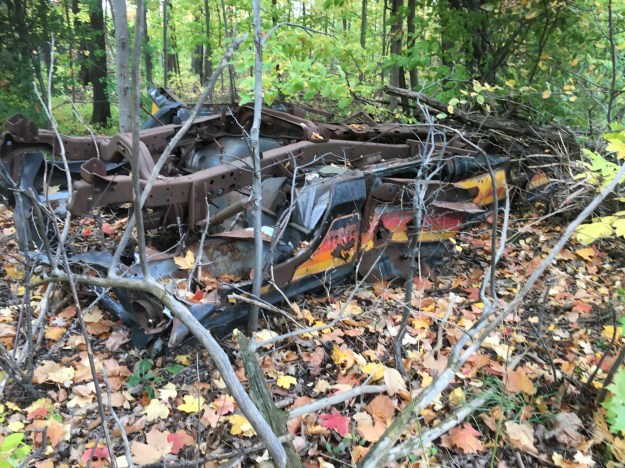
This one appears to have the paint job of a 1979 Ford Bronco.

IMG_2443

There is a small area just south of the 401 where there are three cars in one small area.  When we visited here earlier we wrote about them in a post called The Auto Graveyard.  The car pictured below was identified as a Datsun 1200 coupe by the tail light cluster.

img_3821

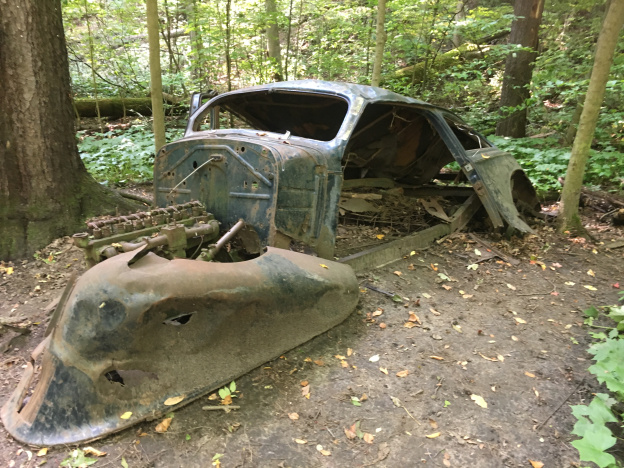
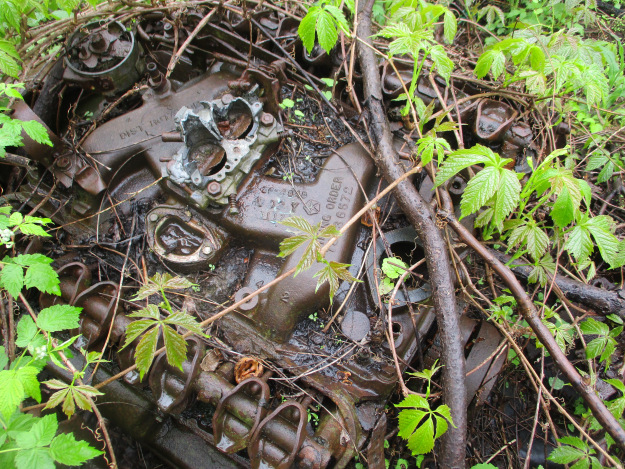
Car number two is a Chrysler and it too has seen some better days.  There’s been a few parts removed from the engine but once you replace them you can set the firing order as per the sequence on the casting.

img_3837

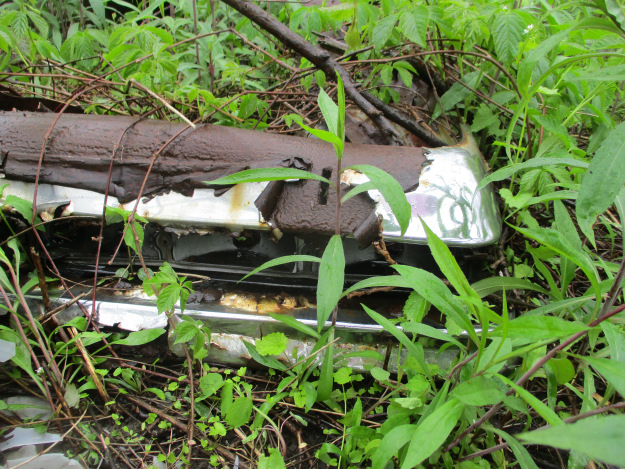
The third car in this location was a GM, based on the engine housing.  We can deduce that the model year was likely 1970 or earlier based on the bumper design.  The 5 MPH crash design was imposed in 1971.  This required that an impact at 5 MPH should not damage the lights and so they were removed from the bumpers and placed on the rear panel of the car.  The bumpers were extended from the frame and much of the fancy tail light/bumper design was lost forever.  This rear bumper appears in two parts likely with an extended cluster of tail lights running between them.

img_3851

There are several other skeletons of cars in this area which haven’t been identified because we lacked a unique identifier like a light housing or a part number.  The one in the picture below is a Ford as stamped on the motor housing.  What kind and how old is unknown.

IMG_2153

This car is interesting because the transmission is laid open with all the gears exposed.

IMG_1952

This last one we throw in as a bonus.  It was taken along the Don River on September 14, 2019 but remains unidentified.

IMG_6861

No doubt there are many more abandoned cars scattered throughout the GTA.  Some of which we’ve visited prior to starting this blog and some we have yet to discover.

Like us at http://www.facebook.com/hikingthegta

Follow us at http://www.hikingthegta.com

Look for us on Instagram
Rivermede – Marian Shrine Of Gratitude

Saturday, March 21, 2020

The world was changing rapidly every day with the ongoing spread of COVID-19. Almost everything was closed to the public except for parks and hiking trails.  We decided to take the hike along the Humber River from Pine Point Park north to an old estate named Rivermede.  Along the way we noticed a few extra people but there wasn’t an unusually large number of park users and we were able to have the trail pretty much to ourselves.

The trail follows the Humber River which it eventually crosses on a pedestrian bridge.  After crossing under Albion Road we saw plenty of deer and coyote tracks but the animals were in hiding.  Presently we came to the plot of land in old Emery Village which we had been seeking.  From the trail we could see the old lane way that once led to the river as well as the pump house and the main cottage on the hill top.

img_1758

Percy Gardiner made his fortune manufacturing brass and later as a principal in the Toronto Stock Exchange.  In 1927 he bought 57 ares of land where he built a summer cottage for himself and his wife Gertrude.  They named their lavish cottage Rivermede and hosted parties for Toronto’s elite.  The house included tennis courts and a $75,000 swimming pool.  One of the first structures you see on the property is the old pump house for the swimming pool.  Even a simple building like this has been created with great attention to detail.

From the side of the hill you can look down into the former swimming pool area.  The pool was filled in but the rectangular outline can still be seen and the pool area has the only grass in the prayer garden.

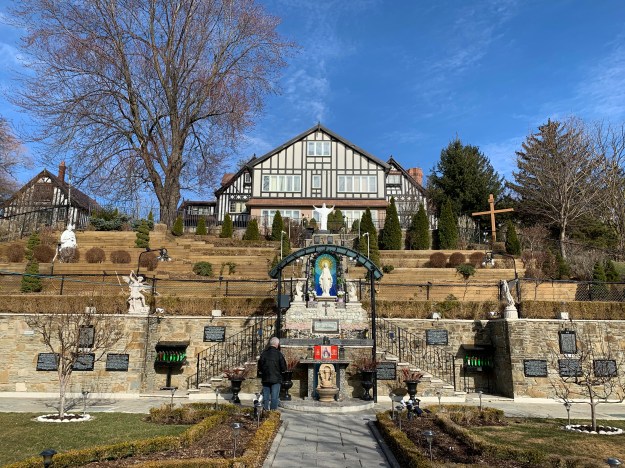
in 1961 the Basillian Fathers bought the property and turned it into the Marian Shrine Of Gratitude.  They converted the property into a monastery and the swimming pool into a prayer garden.  Originally there were several Fathers who lived in the house and maintained the property.  They took turns praying over the faithful who visited the prayer gardens.  Today the house is kept by a single Father who has been practicing social distancing since long before it became mandatory.

img_1740

The cottage had a barn attached to the side which looks like a second cottage.

A stone arch separates the barn from the house and after passing through it you come to a set of stairs which leads down to the prayer gardens.  Crang’s Pond can be seen in the background.  In the 1950’s a large gravel quarry was operated on the property which supplied gravel for construction of the local section of the 401 when it was under construction.  The pit eventually filled with water to create the pond.

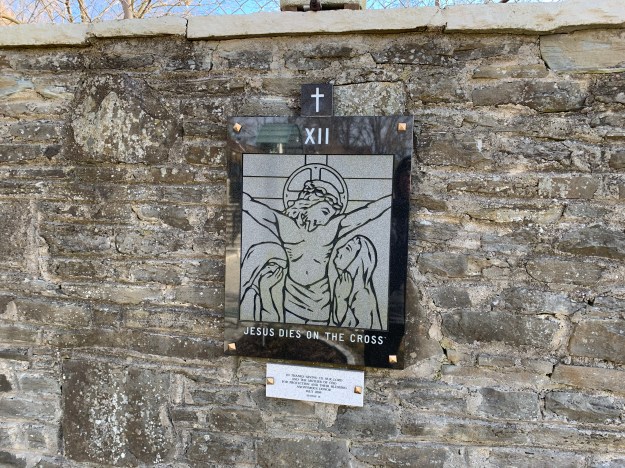
The lower walls of the prayer garden feature a series of carvings that depict the stations of the cross.  Most years at Easter the gardens are full of people but this year they will likely be silent for the first time in decades.

The prayer garden with all of its religious symbols has taken on an air of spirituality that I could feel as I walked slowly around the grounds.

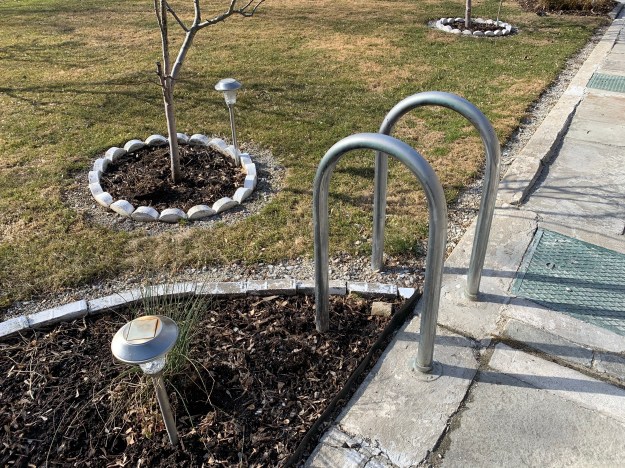
When the swimming pool was in use bathers would have two sets of ladders to enter the water with.  One on the deep and a second set of steps on the shallow end.  Today, the hand rails for the steps stand in memory of swimmers soaking up the sun at a summer cottage party.

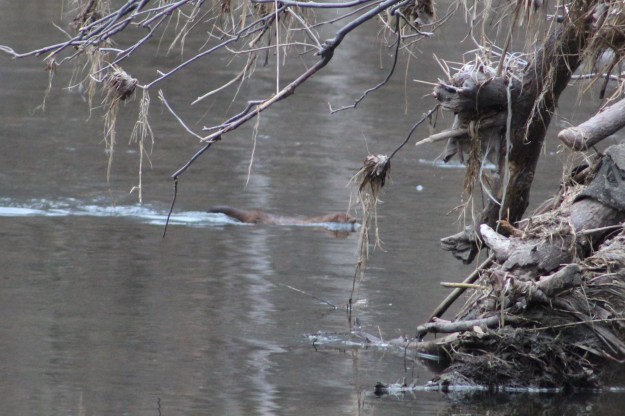
The trail along the river provides opportunities to see the local wildlife.  We were lucky enough to spot an American Mink swimming in the river.  All the mink that we see in the rivers around the GTA are related to a group that was released from captivity by animal rights activists.  Several of whom have been convicted of terrorism.

IMG_9463

As we close this blog we have no idea when the trails will be open to allow new blogs to be photographed.  We have several places that were photographed in the last few months that were not published.  Perhaps there may be a few new blogs with original content yet.  In an era where things change by the day, we’ll see what comes next when we get there.

Google Maps Link: Pine Point Park

Like us at http://www.facebook.com/hikingthegta

Follow us at http://www.hikingthegta.com

Look for us on Instagram.

Emmanuel Harrison – Pioneers of the GTA

Saturday, March 21, 2020

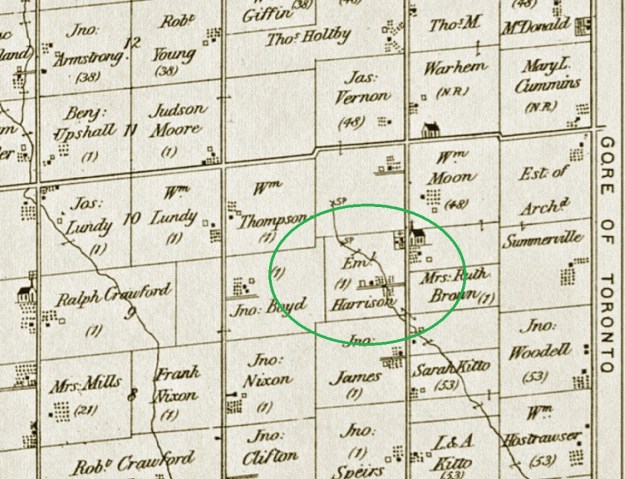
The County of Chinguacousy was surveyed in 1818 and the land grants were quickly given out to Loyalists from the War of 1812-1814 as well as emigrants from the British Isles.  Emmanuel Harrison arrived in December of 1820 and bought part of Lot 9 in the 5th Concession.  Here he built a log cabin and encouraged the local Wesleyan Methodists to meet on his property.

Harrison (2)

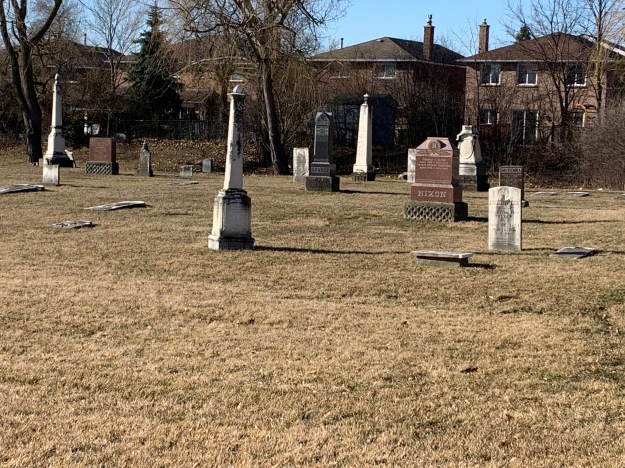
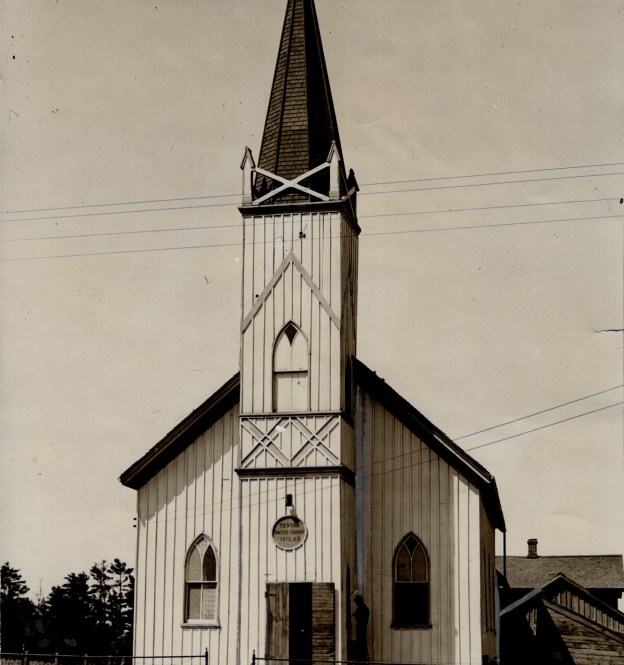
On May 20th, 1840 he ceded an acre of land for the use of the church.  They established a burial ground and built a frame church which was 40 X 60 feet.  During the early years the men sat on one side of the church with the women and children on the other.  Newly married couples were allowed the pleasure of sitting together for the first three weeks.  It was used until 1876 and then converted into a dance hall for the next few years.  It was demolished in 1880.

IMG_1719

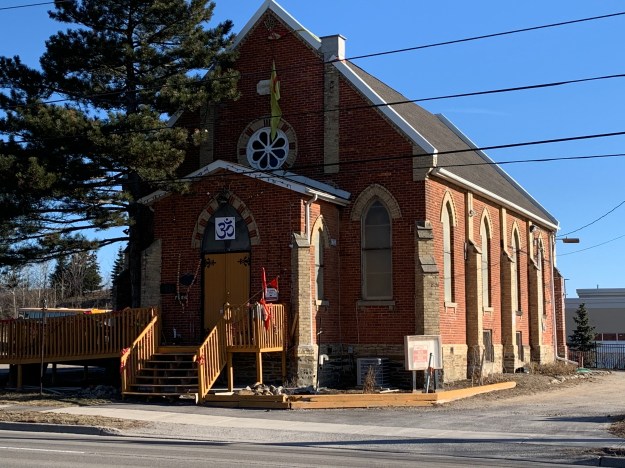
A project was begun in 1875 to build a new church and a site was chosen on the opposite side of the road.  By 1876 the new brick structure was opened with the original vestibule having a flat roof.  The two front corners were adorned with small steeple shaped towers.  In 1925 the Methodist Church joined with some of the Presbyterian Churches to form the United Church of Canada.

IMG_1718

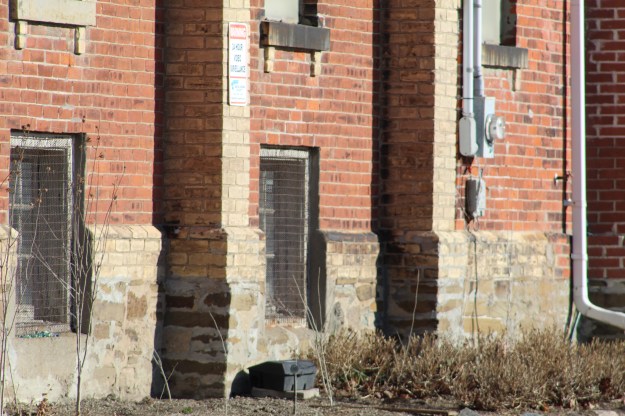
Renovations in 1947 raised the structure by 35 inches and dug the basement down an additional 3 feet.  The walls were originally buttressed with pale coloured bricks.  The dichromatic pattern was continued at ground level with four rows of bricks for trim.  The new foundation can be seen below this row in the form of new flagstones.  The church continued to serve the community until 1983 when it was sold.

IMG_9378

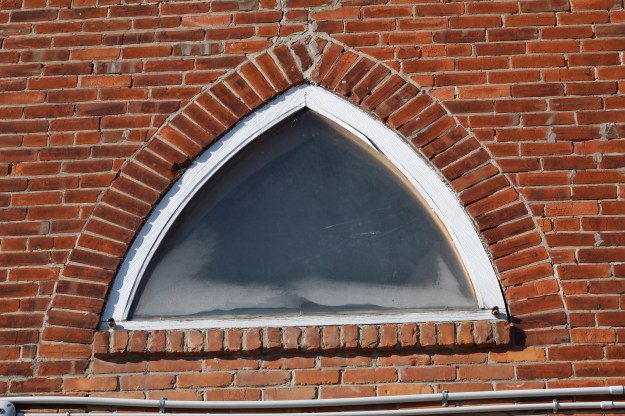
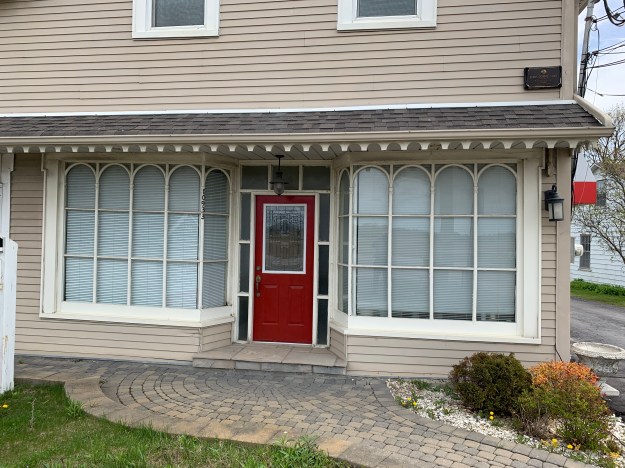
The building was bought by the Jewish Reform congregation Har Tikvah.  They modified it by installing new windows on the east wall and a custom built Ark of the Covenant to house the scrolls of the Torah.  A close up of the east wall wall window reveals a plain plate glass.  The earlier stained glass depicting a Christian motif is long gone.

IMG_9372

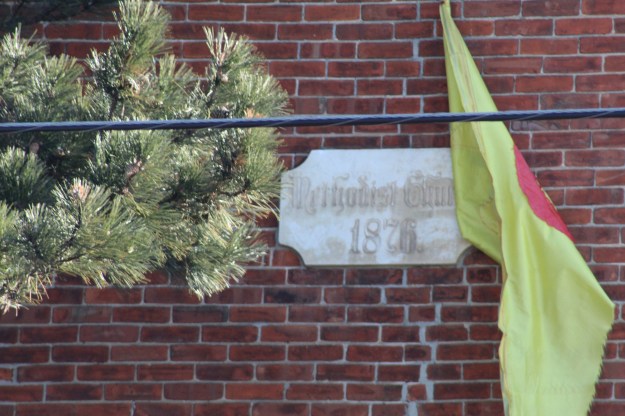
The original date stone is hidden behind a new flag but when the wind moves it the right way you can still read Wesleyan Church and the date 1876.  I fully support the re-purposing of historic buildings.  It is much more desirable than the demolition of them to build expressionless replacements.  This one has the unique privilege of having served three different faiths.  It’s just unfortunate that the full history of the structure isn’t being celebrated as one faith superimposes its symbols over the earlier one.  Perhaps they could have been expressed side-by-side rather than in competition.

IMG_9376

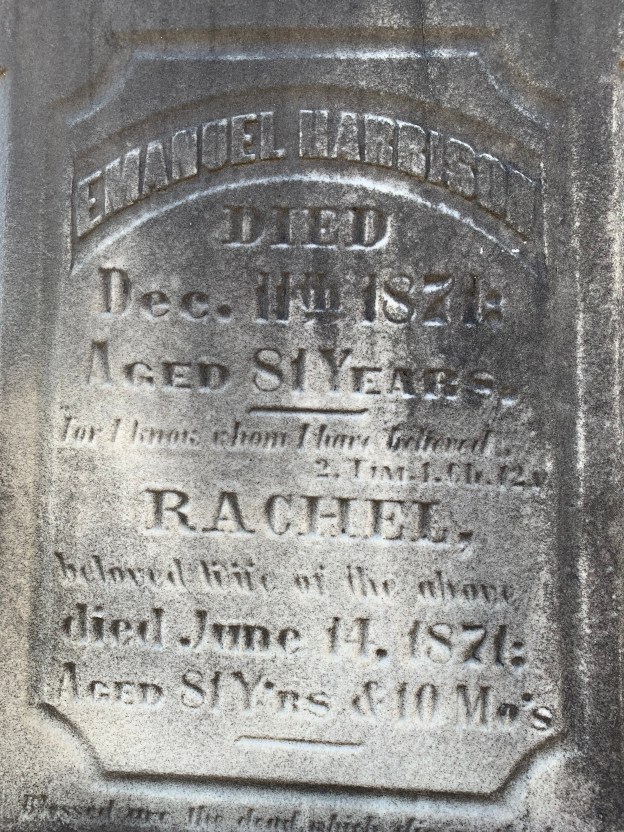
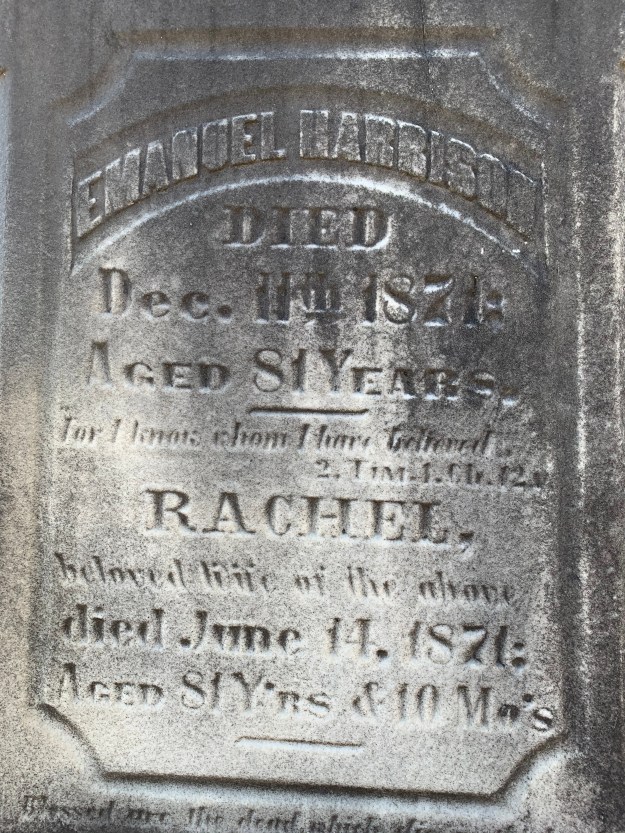
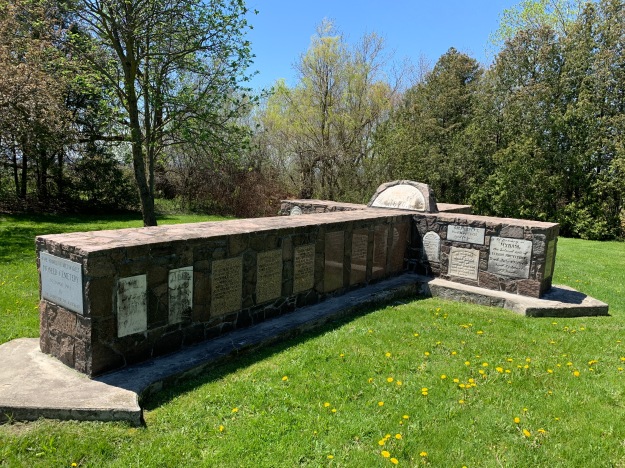
Emmanuel Harrison Sr. was buried along with his wife Rachel in the cemetery that he founded.  Rachel passed away on June 14, 1871 at the age of 81 years and 10 months.  Emmanuel followed her just five months later on December 11, 1871.  He was also 81 years old at the time.

IMG_1716

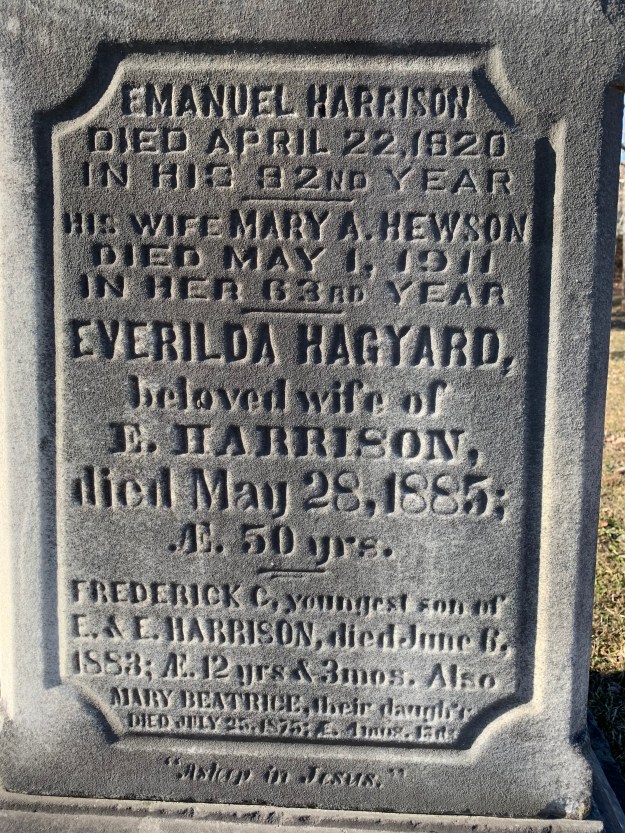
Emmanuel and Rachel had one of their children in 1828 and decided to name him after his father.  Emmanuel Harrison Jr. lived until 1920 and was married twice.  Both of his wives and two of his children are commemorated on his family stone.  His first wife was Everilda Hagyard and she died on May 28, 1885.  The couple had lost a daughter on July 25, 1875 named Mary Beatrice who was only 4 months old.  In 1883 their first son, Frederick C. Harrison died at the age of 12.

IMG_1717 (1)

Emmanuel Harrison is remembered along with his wife, at least one son, two daughter-in-laws and two grandchildren in the cemetery he founded and the church that he started is remembered by a building that was completed five years after his passing.

Google Maps Link: Harrison’s United Wesleyan Methodist Cemetery

Like us at http://www.facebook.com/hikingthegta

Follow us at http://www.hikingthegta.com

Also look for us on Instagram

Milne Dam Bridge

Saturday, March 7, 2020

Following Hurricane Hazel in 1954 a plan was developed that called for several dams to be constructed to provide flood control on the major waterways throughout the GTA.  Only three were actually built, including the one at G. Ross Lord Park on The Don River, the one at Claireville on The Humber River and Milne Dam on The Rouge River.  Until recently there was no access across The Rouge River in Milne Dam Conservation Area but a new set of bridges has changed that.  Our excursion to check out these new bridges began with a visit to Milne Dam Conservation Area.

IMG_1348

Closer to the dam the ice on the lake was much thinner.  Canada Geese are known for the “V” formation in which they fly which demonstrates a high level of social organization by providing support for the weaker birds in the tail of the formation.  The birds had cleared a winding path through the ice that they kept open simply by being organized enough to all use the same route.  It’s always interesting to observe the behaviour of the wildlife around us.

IMG_9273

Male red-winged blackbirds can be easily identified by the red epaulets on their shoulders.  The spring migration of these birds begins in mid-February and continues through to mid-May.  The males and females migrate separately with the males returning first in the spring and leaving last in the fall.

IMG_9275

Before you reach the dam you come to the newly constructed Milne Creek Bridge.  It is 42 metres long and helps connect the Markham Rouge Valley Trail which begins in Unionville at Toogood Pond.  The new bridges in the Milne Dam Conservation Area were officially opened on September 21, 2019.  The first three phases of the 15 kilometre trail are completed with the final phase currently under construction.

IMG_1350

The bridge is a multi span, cable-stayed design with a fanned-cable system.  From the middle of each of the main pylons the cables extend to three anchor points along the bridge decking.  Cable stayed bridges have several advantages over suspension bridges.  The cables allow the horizontal forces to balance which reduces the need for large ground anchorage points.    The cables provide a much stiffer structure to the bridge so that deformations of the deck under live loads are reduced.  The cables also work during construction of the bridge to allow spans to be cantilevered out from the pylon, providing both temporary and permanent support.

IMG_1361

The bridge is 143 metres long with the main section over the river being 45 metres.  It was built in sections off site and brought into the environmentally sensitive area ready to be installed.  The precast concrete decking was detailed to match the curvilinear approach on the west end of the bridge.

IMG_1376

The sunshine was sparkling on the waters of The Rouge River as they flowed over the Milne Dam.  The smaller concrete piers below the dam act to dissipate the energy the water gains as it drops over the falls.

IMG_9291

From below the bridge the view up to the little observation platforms is actually more breathtaking than the view from the platforms themselves.

IMG_1400

From the bridge you get a nice view of the dam in one direction and the Rouge River in the other one.  The bridge passes over the river at a height of 20 metres.

IMG_1390

This bridge provides the link to a much longer hike along the newly connected trail system, and a reason for a potential return visit.

Check out this link for our previous post on Milne Dam Conservation Area.

Google Maps Link: Milne Dam Conservation Area

Like us at http://www.facebook.com/hikingthegta

Follow us at http://www.hikingthegta.com

Look for us on Instagram
Crawford Lake Trails

Saturday, February 29, 2020

February 29th falls on a Saturday once every 28 years with the next one coming in 2048.  To mark this rare occasion we decided to explore the area around Crawford Lake.  We had been here about 5 years ago to explore the longhouses and the meromictic lake that helped modern scholars locate the site.  It isn’t possible to see everything in one trip because the park is 232 acres in size and full of trails.

Having recently heard about stone foundations on the property, we set out to have a look for them.  There is plenty of parking near the re-created Indigenous Village but you have to pay using an envelope and drop-box so no change can be expected.

IMG_1124

Crawford Lake has more than 15 kilometres of trails, including the Bruce Trail.  After parking near the longhouses we followed the Nassagaweya Canyon Trail until we came to The Bruce Trail.  This allowed us to connect with the Escarpment Trail and make our way over to the lookout across the canyon.  From there we used The Woodland Trail to reach The Crawford Lake Trail.  Like most parks, we recommend that you take a picture of the trail map in the parking lot.  This will help you keep track of where you are  in the park and which turns to take at each trail connection.

IMG_1129

After passing several trees with very large woodpecker holes in them it wasn’t surprising to see a Pileated Woodpecker.  We saw one land on a nearby tree while a second one could be heard hammering away on a tree in the distance.  A nesting pair will take turns incubating 3 – 5 eggs until they hatch in about two weeks.  The young may take about a month to fledge after which time they can live for up to 12 years.
IMG_9218

As you follow the trail you will see several large walls of stone that have been put up by the farmers as they cleared the land in an attempt to farm it.

IMG_9231

When the settlers arrived they tried to become self dependent as quickly as possible.  They would raise animals during the summer when feeding them was easy and then slaughter them for food before the winter set in.  The livestock would be kept in a barn to protect it from the worst of the weather.  As we neared the escarpment edge we came to the stone foundations of an old barn.  The barn that was originally built on this property was small with an overhanging porch along the east side.  Wagons didn’t fit in the barn so they were likely stored under the overhang.  A few feet to the east of the barn stands the remains of another one of the stone walls that run across the property.  It provides some shelter to the items stored on this side of the barn.  Close examination reveals a single man-door and a larger animal-door.  These days the barn is used as a shortcut by white tailed deer that shelter among the rows of evergreens near the barn foundations.

IMG_1137

A few metres away from the barn are the foundations of the small house the family lived in.  When settlers cleared the land they used the materials at hand to build their homes and the barns where they kept their livestock.  The house was built on a foundation of field stones collected when the land was cleared.  The trees that were cut down became the logs that were used for the house and barn.  The log house would often have three rooms inside, two of which were bedrooms.  By the middle of the 1800’s the log house would be often be outgrown and the family would build a new home out of bricks.

IMG_1148

Crawford Lake Conservation Area covers several former land grants including that of Mrs. Allan White.  The log house built by her husband can be seen on the county atlas map marked with a green circle.  At the time the county atlas was drawn in 1877 the house was already reaching the end of its normal lifespan.

hal-m-nassagaweyaSmith (2)

Crawford Lake Conservation Area and The Bruce Trail Association are working on removing Ash Trees from the park, especially along the Bruce Trail section in the park.  Emerald Ash Borers have decimated the forests around the GTA with estimates reaching as high as 99% of all ash trees being infected with the beetles.

IMG_1152

Emerald Ash Borers live in the layer between the bark and the core of the tree.  The phloem is the layer directly below the bark and it is responsible for passing nutrients and hormones between the ground and the leaves of the tree.  The larvae of the beetle eats extensive pathways under the bark and leaves the tree without the ability to feed itself.  The places where the bark has fallen off the stumps below reveal the extend of damage on these trees and the reason for their destruction.

IMG_9236

The trail leads to a lookout where there are several information plaques about the history and wildlife of the area.  The canyon below is known as the Nassagaweya Canyon and it separates the Niagara Escarpment from a small section known as the Milton Outlier.  Rattlesnake Point is at the southern end of the outlier and it can be reached by following the Nassagaweya Canyon Trail which is paired with the Bruce Trail through this section.

IMG_1160

Limestone Creek flows through the bottom of Nassagaweya Canyon but it took a much larger force of water to cut the canyon through the limestone and dolomite layers of the escarpment.  Melting ice sheets at the end of the last ice age were able to move large amounts of stone and till.  Much of this material was deposited at the mouth of the canyon and is currently being mined by aggregate companies.  In a couple of months, when they return from warmer climates, Turkey Vultures will fill the skies above the canyon.

IMG_1162

Near Crawford Lake is the Hide and Seek trail which features wood carvings of several of the nearly 200 species that are at risk in Ontario.  The wood carvings were made by Robins Amazing Art.

IMG_1172

Originally the lake was known as Little Lake but when George Crawford bought it in 1883 he started a business called the Crawford Lake Company which ran a mill at the end of the lake.

IMG_1181

A cottage and boathouse were included in the sale of the property to the conservation area in 1969.  The house has since been demolished with only the front porch remaining.

IMG_1183

Crawford Lake is an interesting place to explore and we’ll likely be back.  We have previously posted about the longhouses in the conservation area as well as the Bruce Trail south of the park in the Crawford Forestry Tract.

Google Maps Link: Crawford Lake

Like us at http://www.facebook.com/hikingthegta

Follow us at http://www.hikingthegta.com

Look for us on Instagram