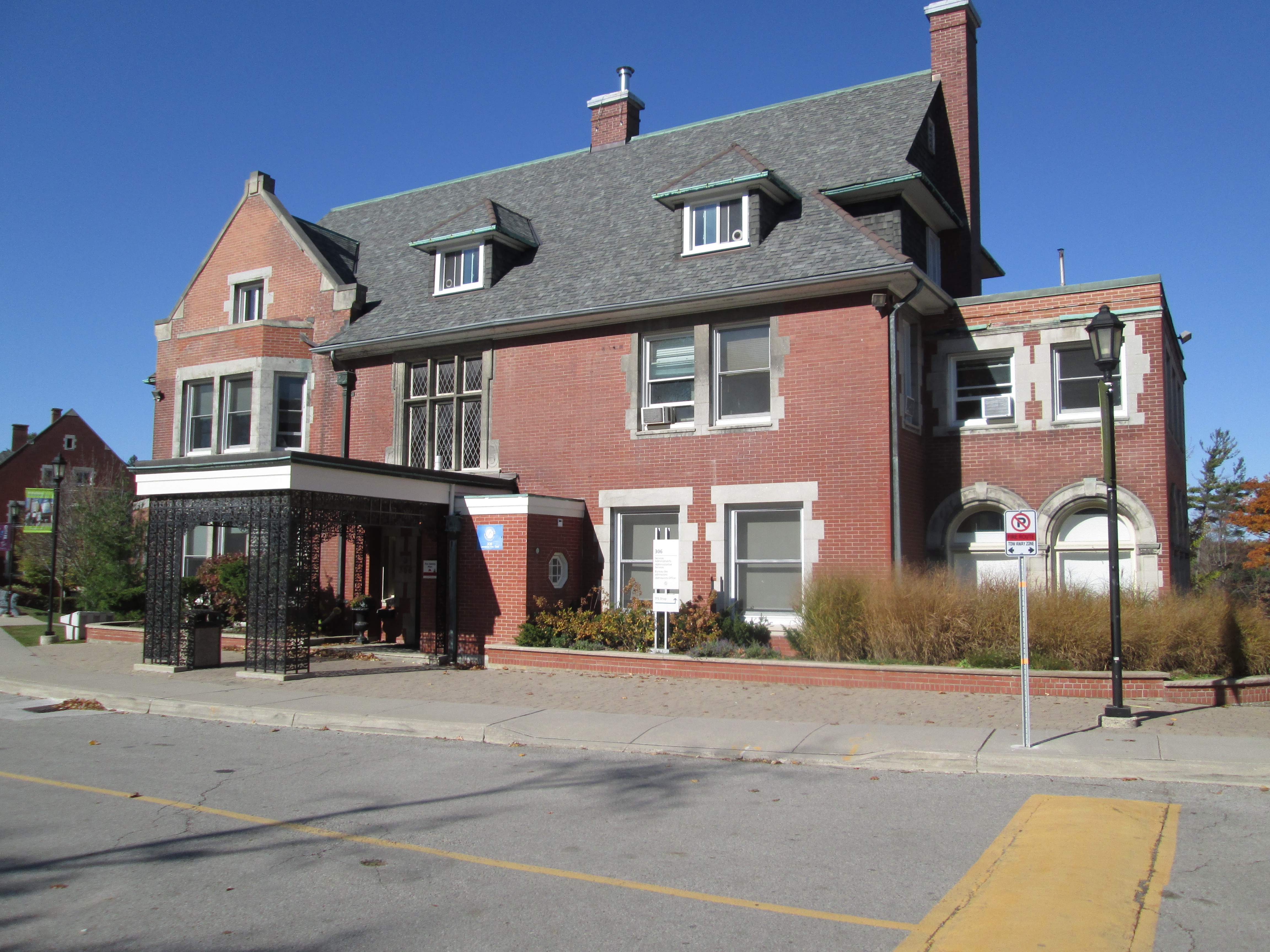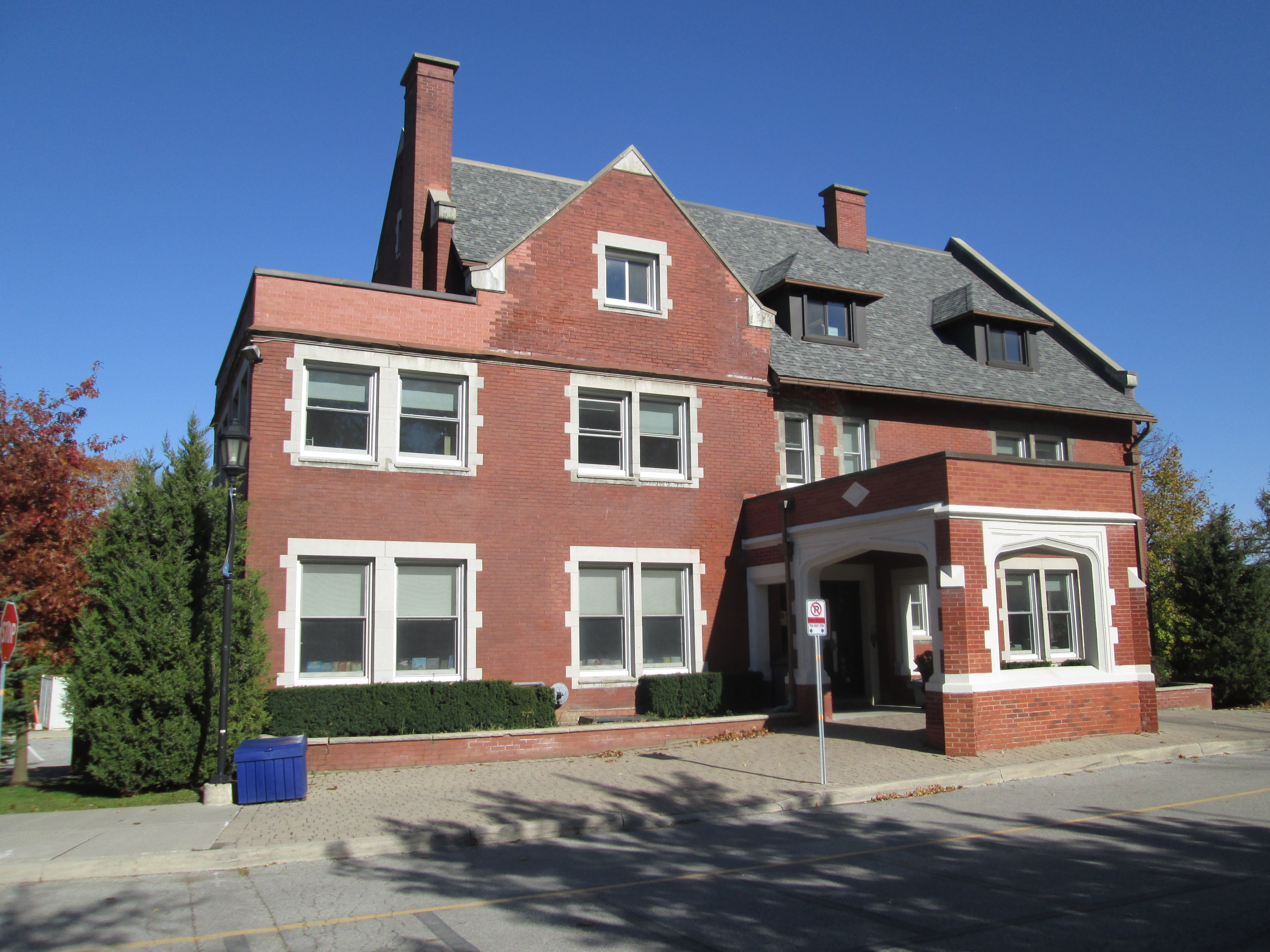
Rowntree Mills

Saturday, Nov. 8, 2014

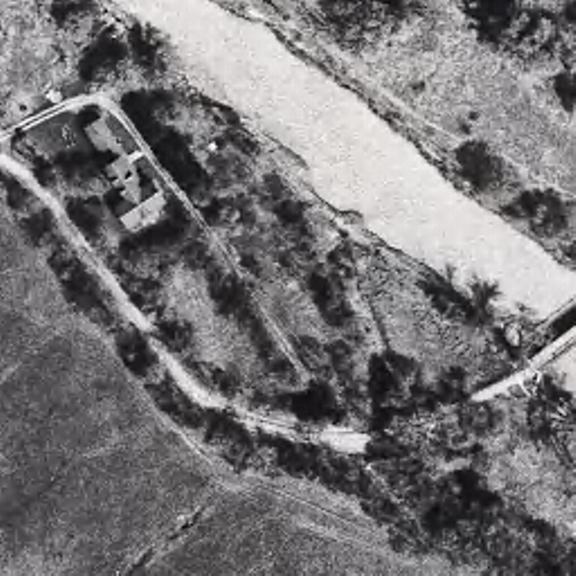
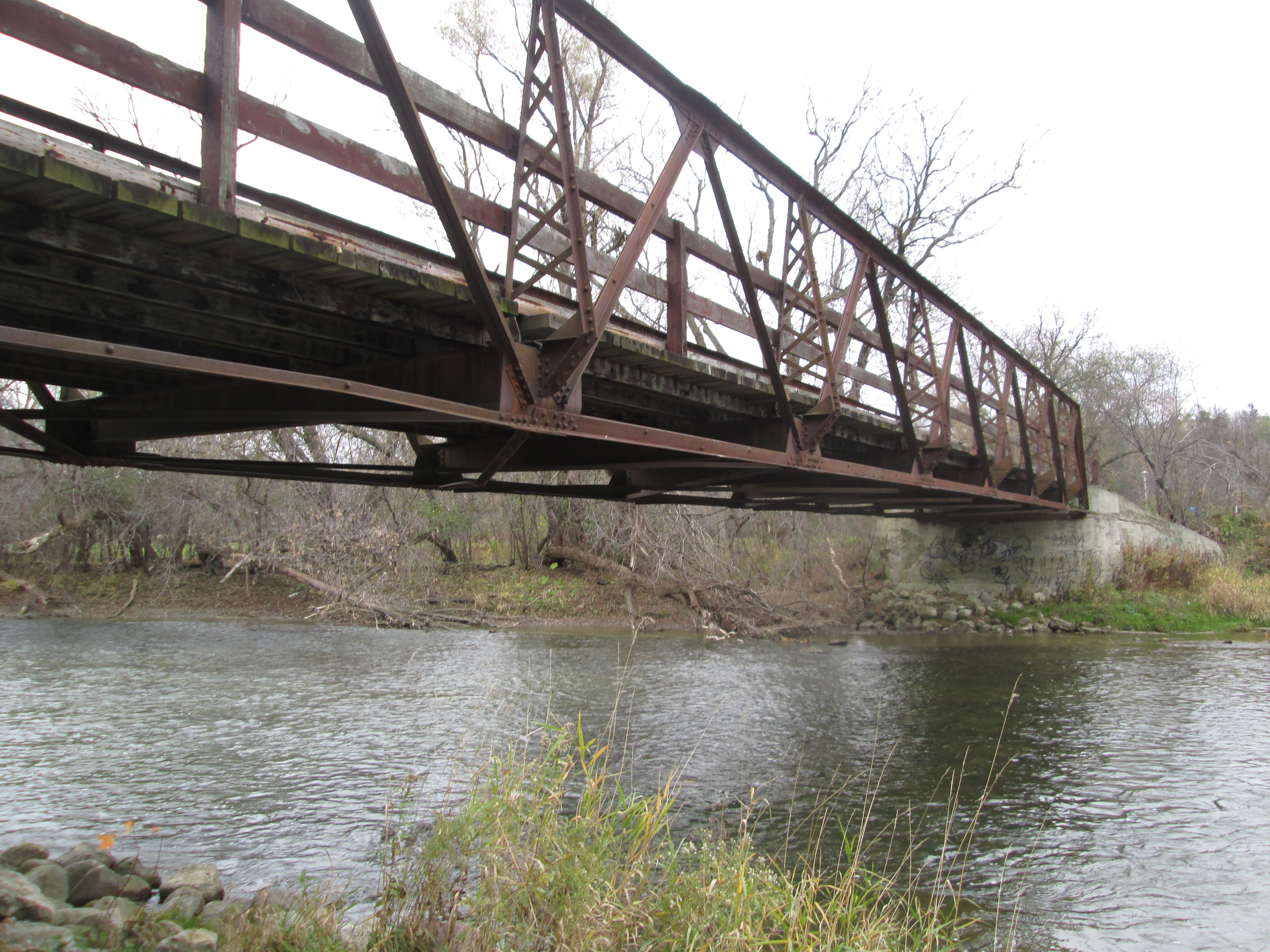
It was overcast and 5 degrees with occasional light drizzle.  Parking is available on Hathor Crescent just before Rowntree Mills Road descends the hill to the river.  The road is closed at the bottom of the hill and from here the bridge across the Humber river can be seen.  The bridge is a steel girder construction and has been fitted with new wood decking to convert it into a safe pedestrian bridge.  It’s construction likely dates to around 1900.  The bridge can be seen crossing the river in the lower corner of the cover photo, which is an aerial shot from 1953. The photo below of the bridge is taken from the west bank of the river.
IMG_0923

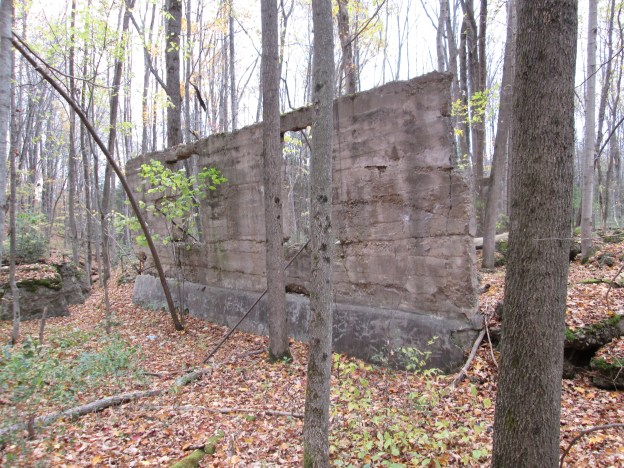
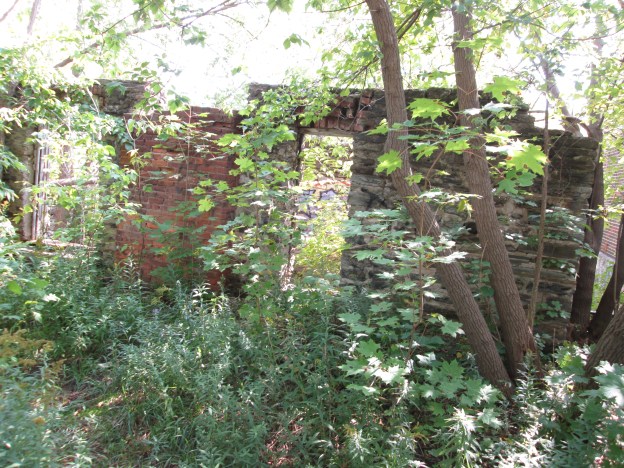
Joseph Rowntree arrived in Canada from England in 1830 and set himself up in an area known as Pine Ridge, just outside of Thistletown.  In 1843 he built a saw mill on the east side of the Humber river and in 1848 he built a grist mill on the west side.  A road was built to access the mill which we now call Rowntree Mills road.  A bridge was built across the river and he named it all Greenholme Mills.  In 1870 Joseph added the Humberwood Mills, a mile down river, to the family holdings.  The cover photo shows the grist mill as it appeared in 1953. Rowntree Mills road crosses the bridge and passes to the west of the mill.  A laneway completes the loop on the river side of the mill.  Today the area where the mill stood 60 years ago has become completely overgrown.  All that could be found was this square area of concrete in the woods and many piles of bricks, stone and concrete.

IMG_1017

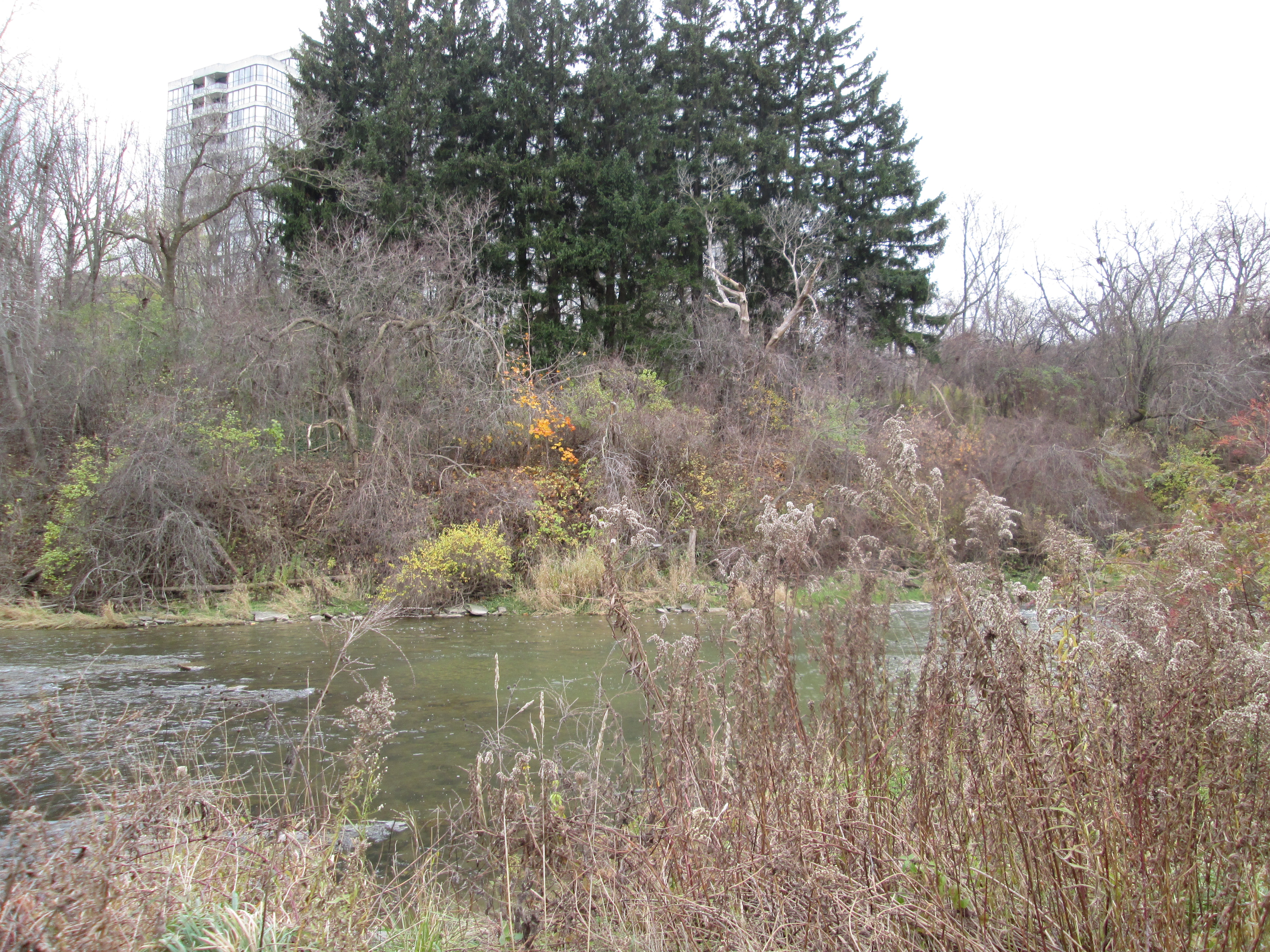
From the east side of the river the former mill site can be identified by the row of pine trees that ran along side of the lane way that lies between the mill and the river.  They show up as the dark strip to the right of the road, adjacent to the mill, in the cover photo.  I can picture Joseph planting these pines along the ridge in honour of the community of Pine Ridge where he lived. The mill stood about 20 feet above the current water level of the river.  It isn’t immediately obvious how Joseph used the water power from the river to turn the grinding wheels in his grist mill.  It may have initially been an undershot wheel sticking out into the river.
IMG_1024

It was a morning full of various birds.  At one point a migration of cardinals passed through but none sat still long enough to get their picture taken.  There were also flickers, herons, and large birds of prey.  Some of the trees in the area display the straight rows of tiny holes that are typical of a yellow-bellied sap sucker.  These woodpeckers drill little holes from which they feed on the sap that flows out.  The tree in the picture below had these rows of holes extending for as far up the tree as the eye can see.

IMG_0930

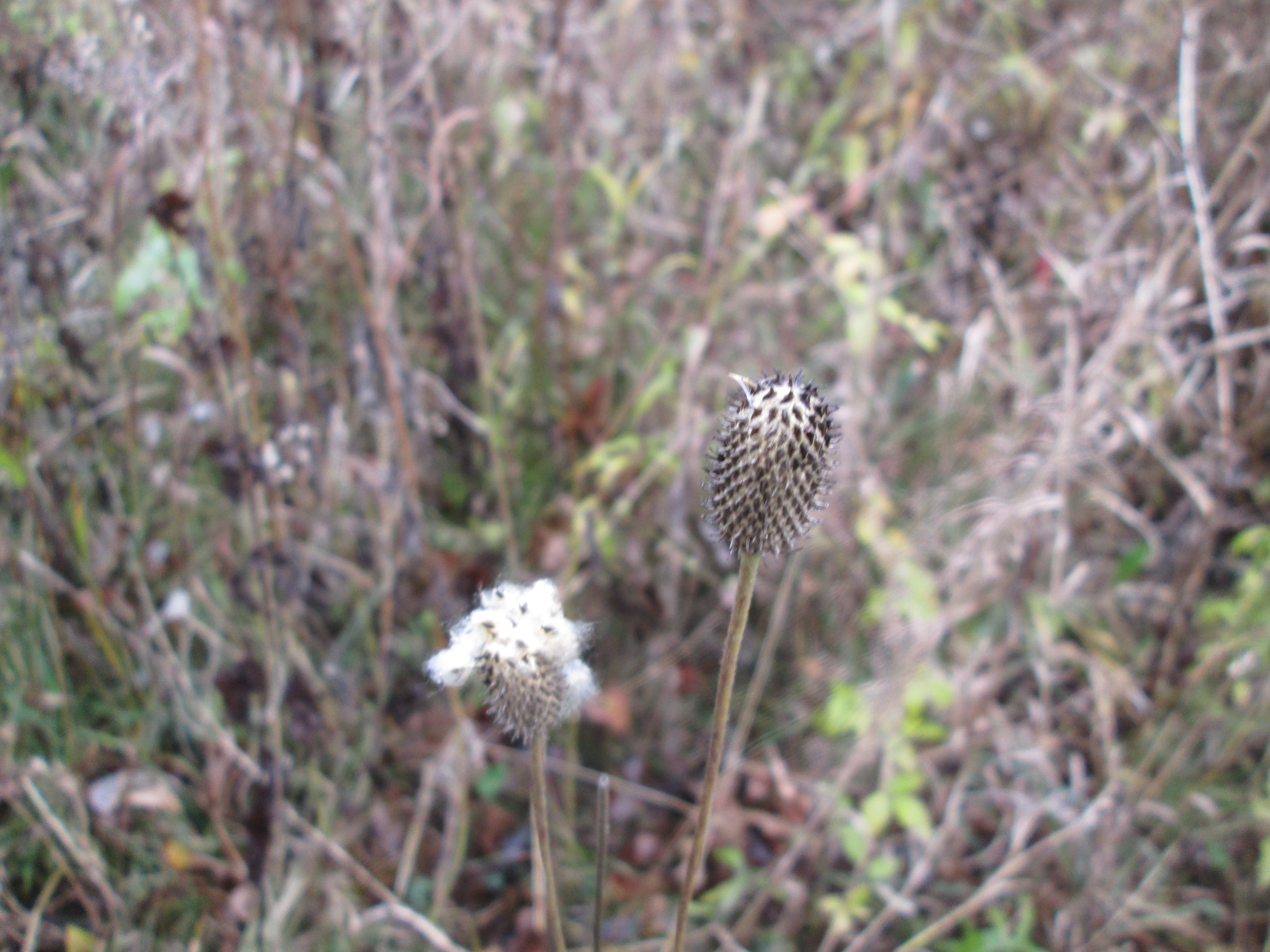
This plant is known as tall thimbleweed.  The single head on a tall stem contains tiny nubs that make it look like a thimble.  When the seed heads burst open they look and feel like cotton. Native peoples used the plants for medicinal purposes but we now know that the leaves are toxic in large doses and so the plant is used mainly for decoration.  The picture below shows both a closed pod and one that has blown open to spread its seeds to the wind.
IMG_0937

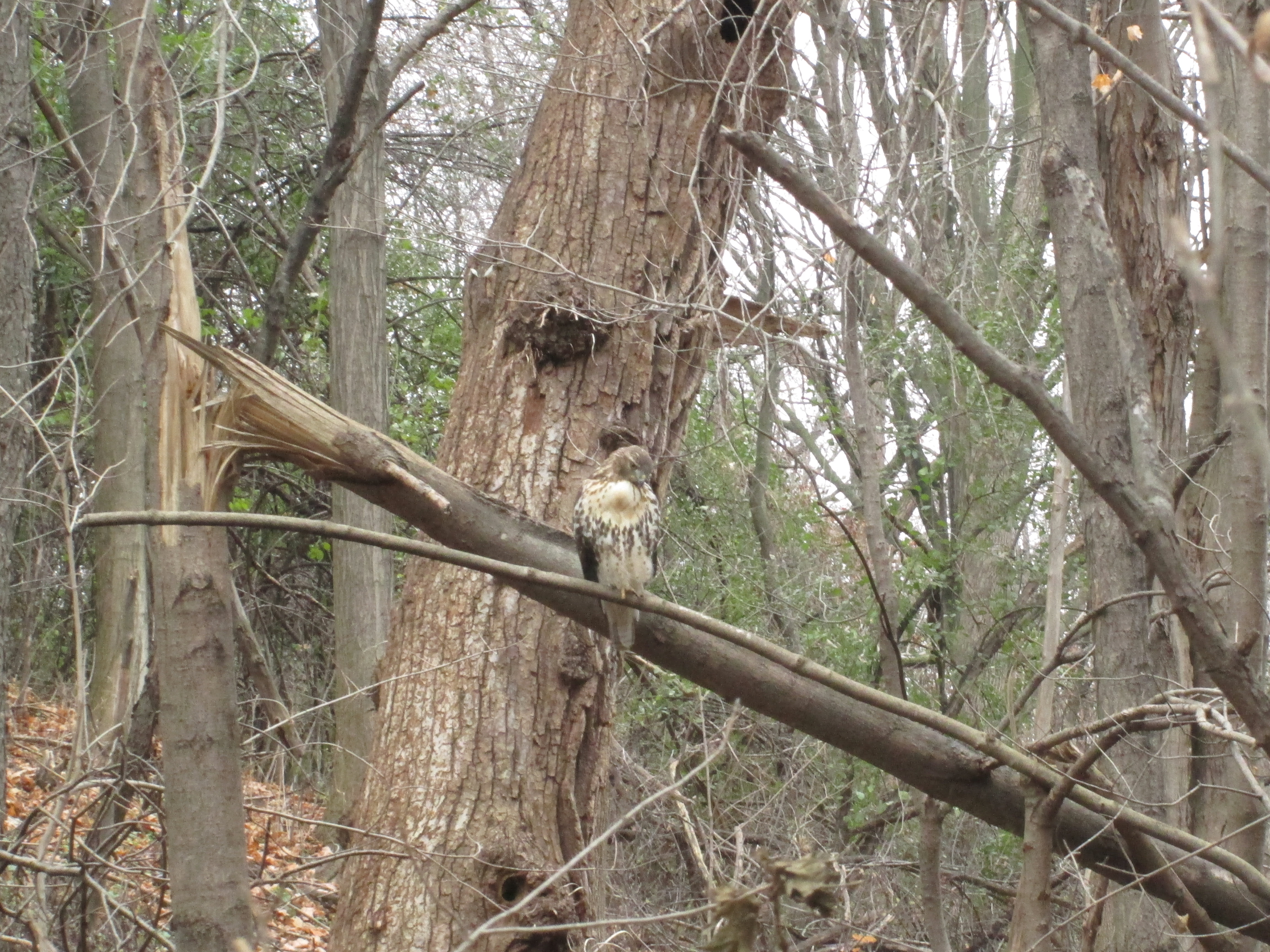
This very large red tailed hawk didn’t seem to mind posing for the camera.
IMG_0993

Rowntree Mills Park and the surrounding ravines have been taken over by white tail deer.  In one spot I was able to see 8 females at one time plus at least one male.  Mating season is known as rutting season for these deer.  Males begin their part of the rut in the fall when the velvet is falling off of their antlers.  In North America this lasts for several weeks with the peak being on average, November 13th.  The male’s part in the reproductive act lasts for exactly one thrust.  Ho-Hum.  Females go into rut for periods of up to 3 days at a time and can do so 7 times over the rutting season, or until they conceive. The picture below has at least 4 deer looking at the camera plus 4 others hiding in the background.

IMG_1005

In October 1954 the area on the east bank of the river just north of Rowntree Mills road was home to a small community of houses.  On the morning of October 16, 1954, there were 12 less of them there because Hurricane Hazel had swept them away.  Two people died in this area as well when they were trapped in their car as the river washed it down stream.  Today the area has been cleaned up and there is no trace, other than in old aerial photos, to show where the homes were. Rowntree Mills Park was named after Joseph in 1969 but was closed in 2009 due to wild parties that trashed the park.  Today it is basically abandoned although the grass is cut and the leaves are cleaned up.  The picture below is taken from the front yard of one of these former homes looking along the street where others once stood.

IMG_1023

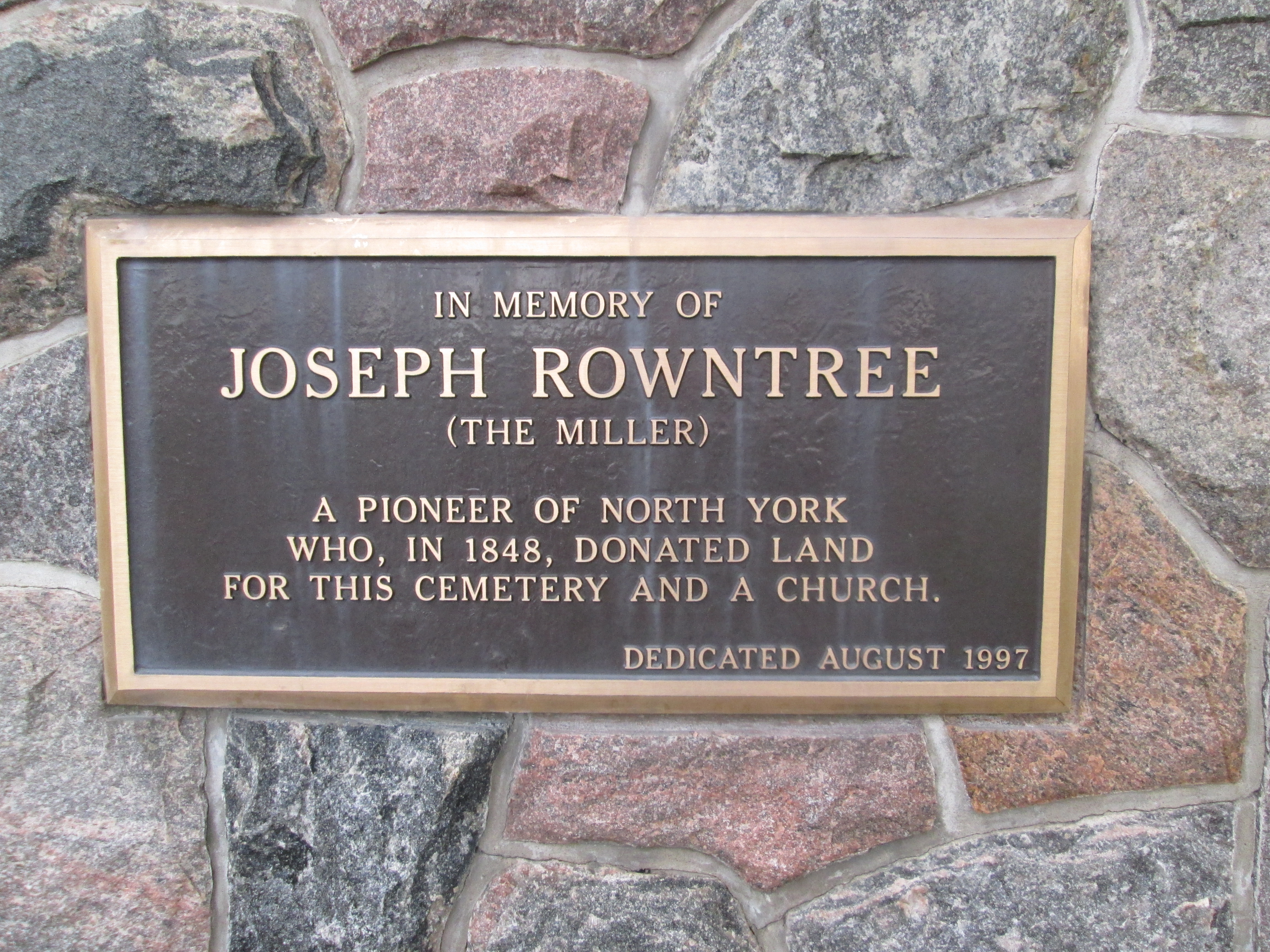
At the corner of Rowntree Mills Road and Islington Avenue is a pioneer cemetery.  This land was donated in 1848 by Joseph Rowntree to be used for Pine Ridge Methodist Church and its cemetery.  There are many grave markers in here that commemorate the lives of various members of the Rowntree family.  Although it seems likely that Joesph was laid to rest here, I was unable to locate his grave marker.
IMG_1026

Google Maps link: Rowntree Mills Park

Like us at http://www.facebook.com/hikingthegta

Follow us at http://www.hikingthegta.com


Bayview Estates

Sunday Nov. 2, 2014

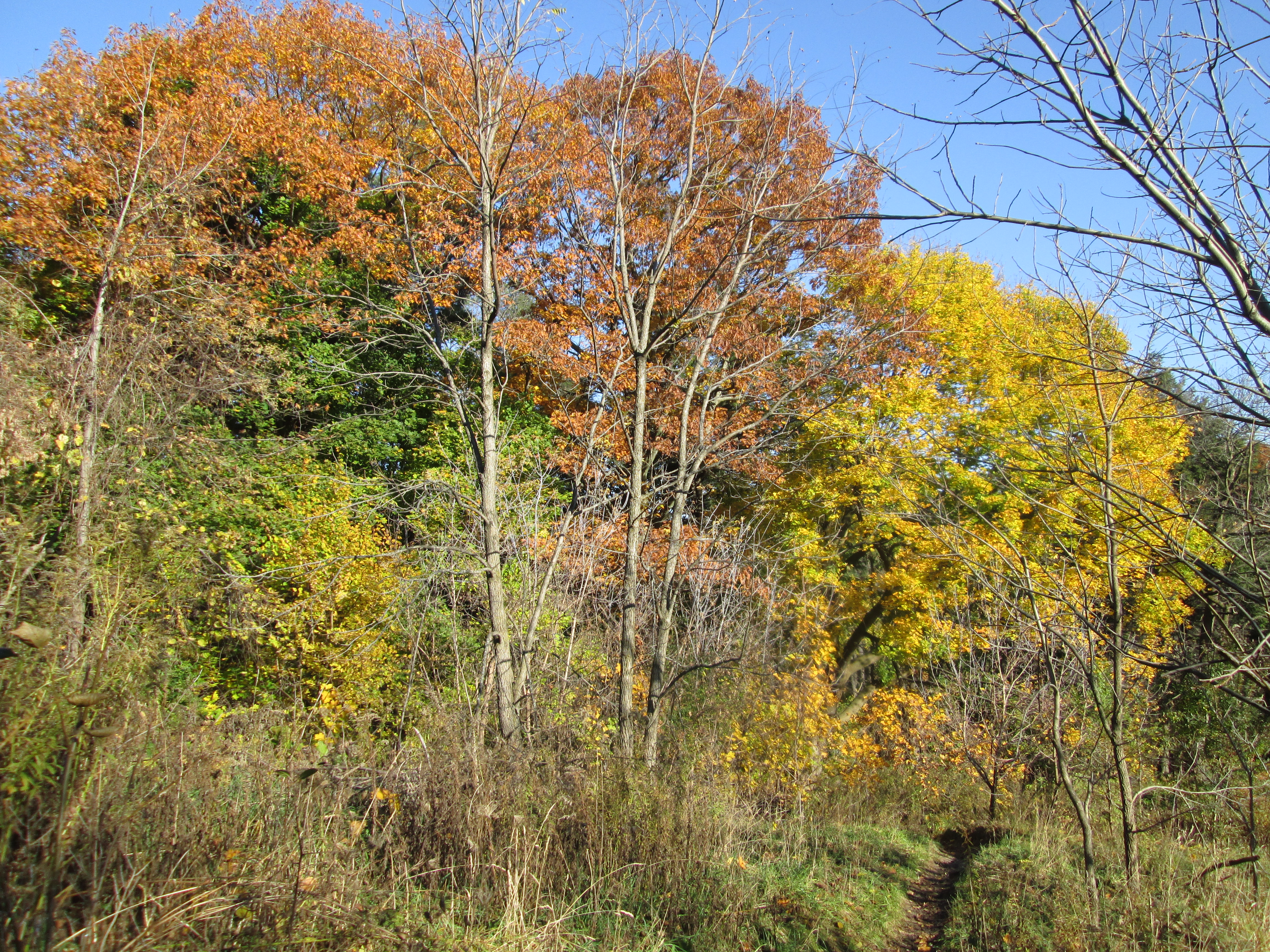
It was bright and sunny but cold, minus 1 on the thermometer with a wind chill of -9.  Warmly dressed I set off from home on foot.  I headed to Sherwood Park to cut out to Blythwood Ave.  A few trees in the park are holding onto their leaves.  These three trees are distinctive in their colouring.  The yellow one on the right is a maple, the rusty one in the middle is an oak and the orange on one the left is an aspen.

IMG_0857

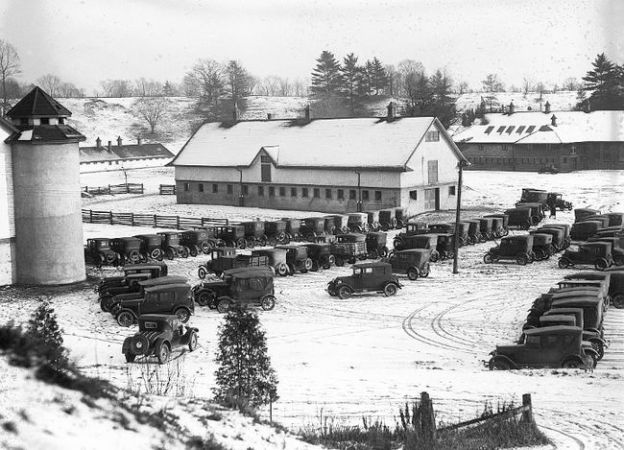
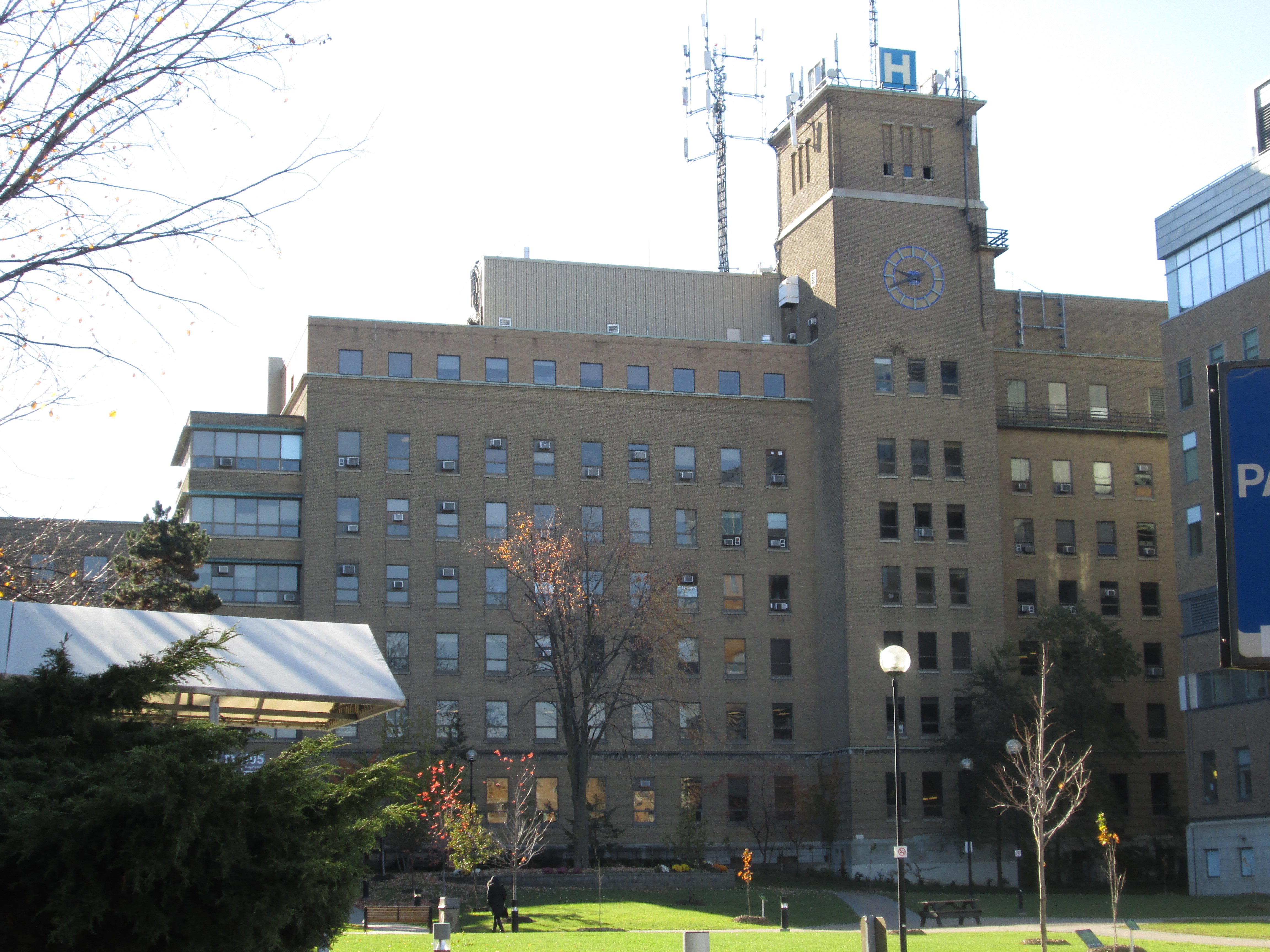
In the early 1920’s it became fashionable for Toronto’s wealthy to want a country estate on the edge of the city.  The area of First Line East (Bayview Avenue) and 5th Side Road (Lawrence Ave) was ideal with Don River Ravine lots.  One of the largest tracts was 175 acres which belonged to Alice and Joseph Kilgour.  It is at the end of Blythwood and stretched from Bayview to Leslie. Many original buildings including the barns and stables remain in use.  The cover picture shows the estate as it looked in the 1920’s.  When she passed away in 1928 Alice gave the property to the city on condition that it never be developed.  The influx of injured soldiers during the second world war created a need for a new hospital which was originally to be called Soldier’s Military Hospital. Today it is known as Sunnybrook Health Sciences Centre. Tucked away in behind the newer hospital is the original building with it’s clock tower.  The date stone shows that it was laid on Nov. 10, 1945.  As we come to Remembrance Day 2014 it is fitting to think of the sacrifices that so many made to secure our freedoms.  Sometimes we remember the dead but forget that so many were injured that we needed a new hospital just to cope with them all.

IMG_0858

In 1928 James McLean, the president of Canada Packers, bought 50 acres of land overlooking the Don river on which to build his estate.  He called the property Bay View, leading to the changing of the name of First Line East to Bayview Avenue.  When McLean and his family moved into the house in 1931 they employed 4 gardeners for the upkeep of the grounds.  Today the home is known as McLean house and it is on the grounds of Sunnybrook Hospital.

IMG_0867

Many of the Bayview Estate owners had horses and McLean was no different so a separate coach or carriage house was built to store the carriage and the tack.

IMG_0865

John James Vaughan was the vice president of T. Eatons Company in 1930 when he had Donningvale built on 31 acres of land on the Don River.  It was grandly appointed with mahogany and large fireplaces.  It too is now located on the property of Sunnybrook Hospital.

IMG_0870

In 1920 Edward Rogers Wood purchased 85 acres of land nestled into a glen on the Don river where he set about creating the aptly named Glendon Hall. Wood had made his fortune as president of the Bank of Commerce and Canada Life starting when he was just 30.  The property had been in use as a farm and the land was fully cleared of trees.  Wood brought in mature trees and built gardens that became internationally known for their beauty and the speed with which they were built.  Wood had spent forty years as a millionaire quietly donating his fortune to hospitals, churches, and universities.  In 1959 when his wife Agnes passed away it became known that they had made their last and greatest gift by leaving their estate to the University of Toronto.  In turn, U of T gave it to York University in 1961.  The property now is in use as York University Glendon Hall.

IMG_0882

Bayview Avenue was originally known as First Line East and then later as East York Line because it divided Toronto from East York.  Until 1929 it was a dirt country road which crossed the West Don River on a single lane bridge.  When Bayview  was widened it was also moved to the west and given a new bridge across the valley.  The first Bayview  Bridge was built in 1891 and has been abandoned for 85 years and the old road allowance is becoming grown over.

IMG_0886

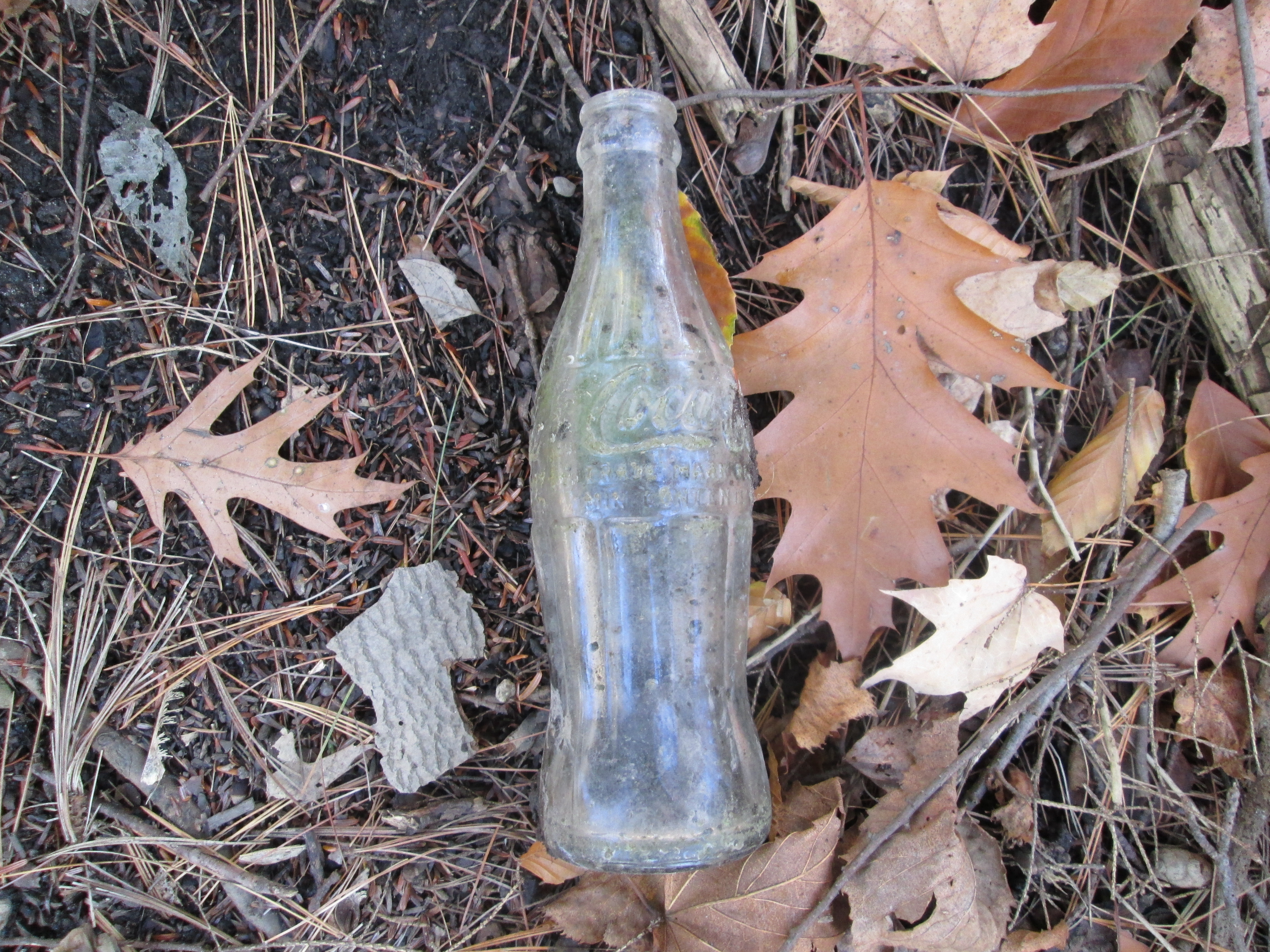
Just past the new Bayview bridge on the west side of the river is the full contents of an old home. A fridge, stove, washing machine, and many other items have been thrown down the embankment.  Lying among the oak leaves I found a 1944 Coke bottle.  This is the oldest soft drink bottle that I have brought home so far this year.

IMG_0894

Clifford Sifton was influential in Canadian politics at the turn of the twentieth century.  He was the minister of immigration and was key in the development of the Crows Nest Pass agreement. American railways were extending their lines into southern B.C. to take advantage of the minerals that had been found there.  At the same time, prairie farmers were complaining about the high rates charged for moving their grain.  This made it political suicide for the government to fund the railway expansion.  Sifton negotiated a deal that funded the Canadian Pacific Railway extension through the pass and secured permanently lower rates for the farmers.  This also served to protect Canadian interests in lower B.C.

In 1923 he built this 22 room mansion on 26 acres of land on the former Lawrence property on the north west corner of Lawrence and Bayview.  Like the other estate owners in the area, Sifton was into his horses and kept riding stables on the property.  The area just north of here is known as The Bridle Path because of it’s horse trails that used to cater to the Bayview Estate owners.  Sifton only got to enjoy his dream of living on a country estate for a few years as he died in 1929.

IMG_0920

This house was built for Clifford’s son, Clifford Sifton Jr.  It was complete with a swimming pool.

IMG_0918

A third house was built on the estate for his other son, H. Arthur Sifton.  These three homes are now part of the Toronto French School.

IMG_0917

For about 30 years from 1925 to 1955 the Bayview and Lawrence area was a pastoral country home to many of Toronto’s most influential people.  Today, their grand homes are almost forgotten in the bustle of mid-town Toronto.  Toronto’s millionaires have located onto The Bridle Path making it the most affluent community in Canada.

According to my pedometer I made it back home after 16173 steps.

Looking for places to explore?  Check out Greatest Treks and Greatest Treks 2 for 30 of the most popular hikes.

Like us at http://www.facebook.com/hikingthegta

Follow us at http://www.hikingthegta.com
 

Georgian Bay Milling and Power Company

Sunday Oct. 26, 2014

One of my brothers celebrated a birthday this week and so I had the opportunity to visit him in Meaford on the weekend.  This week’s hiking the GTA will have to refer to hiking the “Georgian Triangle Area”.  We parked just outside of town on 13th sideroad just east of the 7th line.  The sideroad ends here as it is no longer maintained down the side of the hill.  It was one of those cloudy fall days where the sky looks like it is threatening to snow and the wind makes it feel much colder than the 9 degrees on the thermometer.

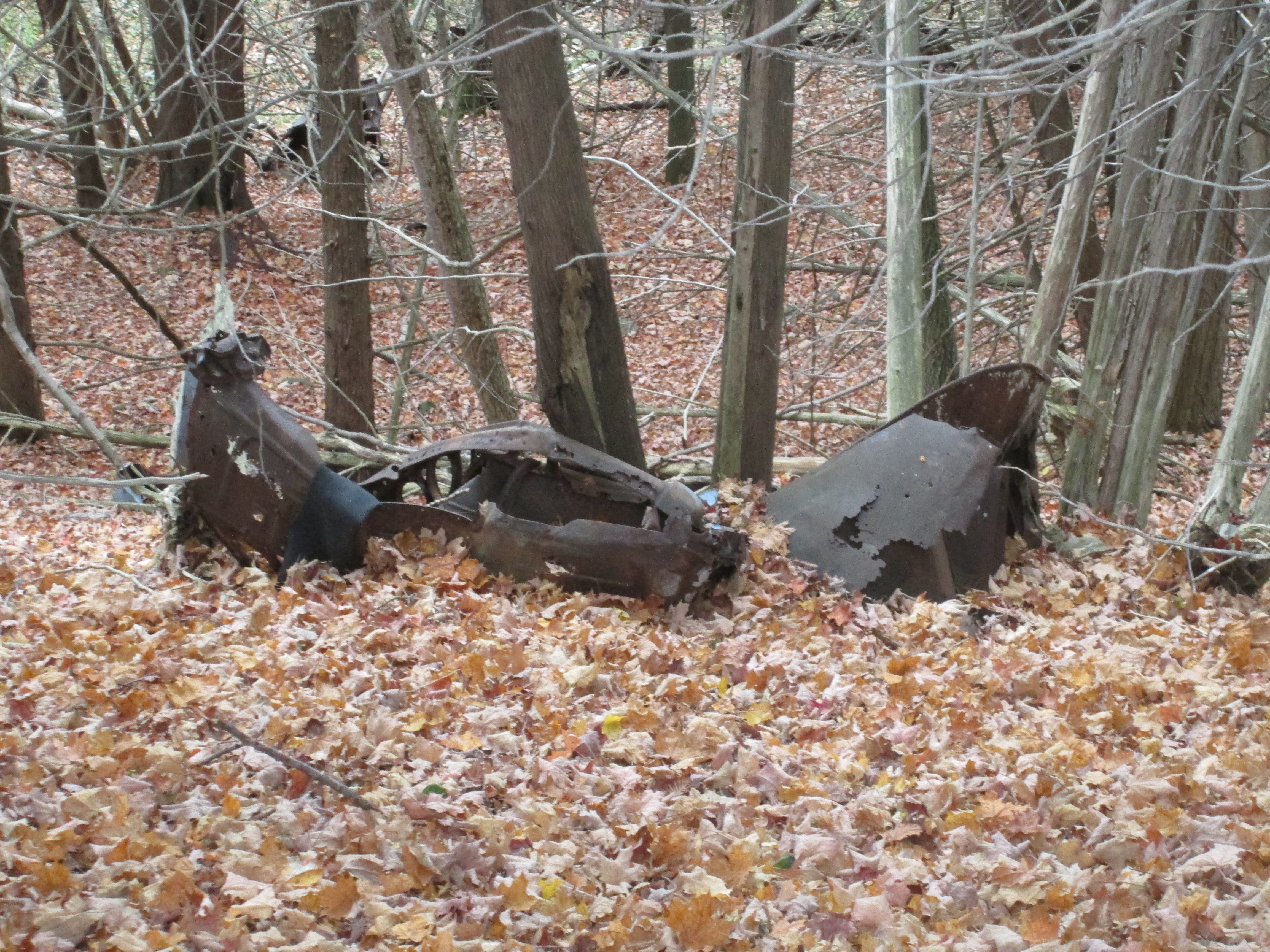
As we walked along the road allowance we started to find the remains of old cars.  It’s hard to say how many cars are here because the parts are all mixed up.  There could possibly be five of them, all from the late 1940’s or early 1950’s.  The first pile we found contained the hood of an old Ford truck, a panel with the three trademark vents of a Buick and the side panel of a Cadillac among various other parts.  The Cadillac can be dated to 1947-1952 based on the shape of the logo.

IMG_0774

Cadillac has changed it’s logo many times over the history of the iconic vehicle.  The logo from this era is the one on the right hand at the top.

cadillac-logos-through-the-years--image-automotive-news_100434414_l (1)

Two or three cars had been pushed down the side of the hill before the trees had grown on the embankment.  This one was about 30 feet down and getting there on the slippery leaves was not an option.

IMG_0783

As we walked a little further along we found a side trail along a high berm of earth.  From up there we could see a straight line running through the trees like an old roadway.  It can be seen as the light coloured line running across the middle of the picture below.

IMG_0786

This line turned out to be a forty foot wall of rocks running toward the berm of earth we were standing on.  Near the point where the two met we found the remains of two concrete sluice gates.  The earthen berm we were standing on was part of an old dam.  The rock wall was actually an aquaduct that carried an open wooden channel on top.  The channel originated in a cut-out on the side of the old earthen dam.  Along the top of the aquaduct there are still a few wooden rails that once formed the channel that carried water from the pond to the powerhouse.  As seen in the picture below, the mill pond behind the sluice gates has become overgrown with trees.

IMG_0789

Returning to the stone aquaduct we followed it back through the woods.  It brought us to the site of the 1902 power generating station for the town of Meaford.

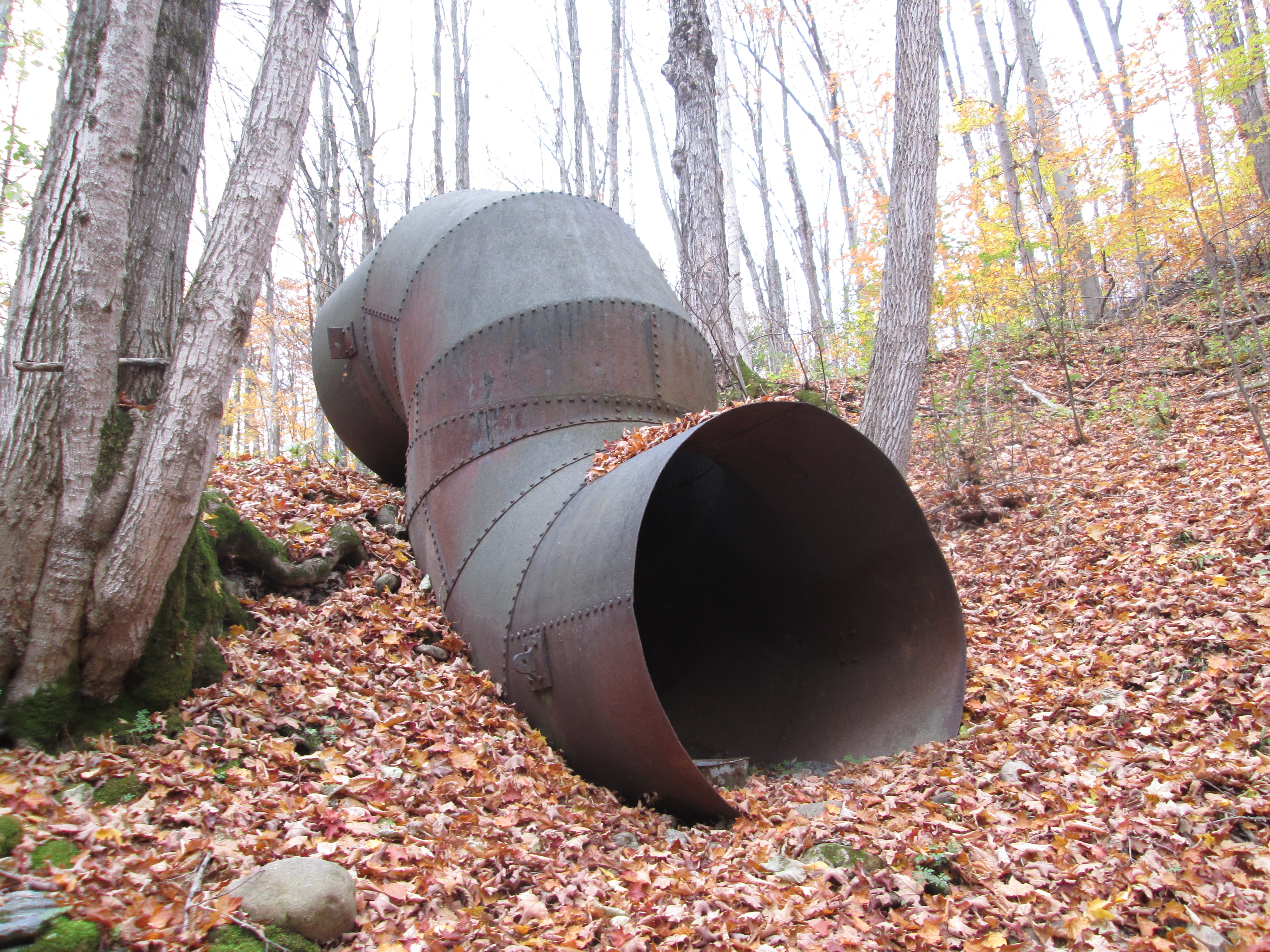
At the turn of the last century electrical power was slowly coming to communities all across Ontario.  The Georgian Bay Milling and Power Company built a generating station in an area known as Trout Hollow.  Trout Hollow was an industrial complex in the 1800’s with several mills and a cabin already in existence.  The power company built the aquaduct to carry water to the power generating station.  Just before the powerhouse a five foot diameter steel down elbow remains on the side of the hill.  From it the water was dropped onto the turbine that generated the electricity.

IMG_0798

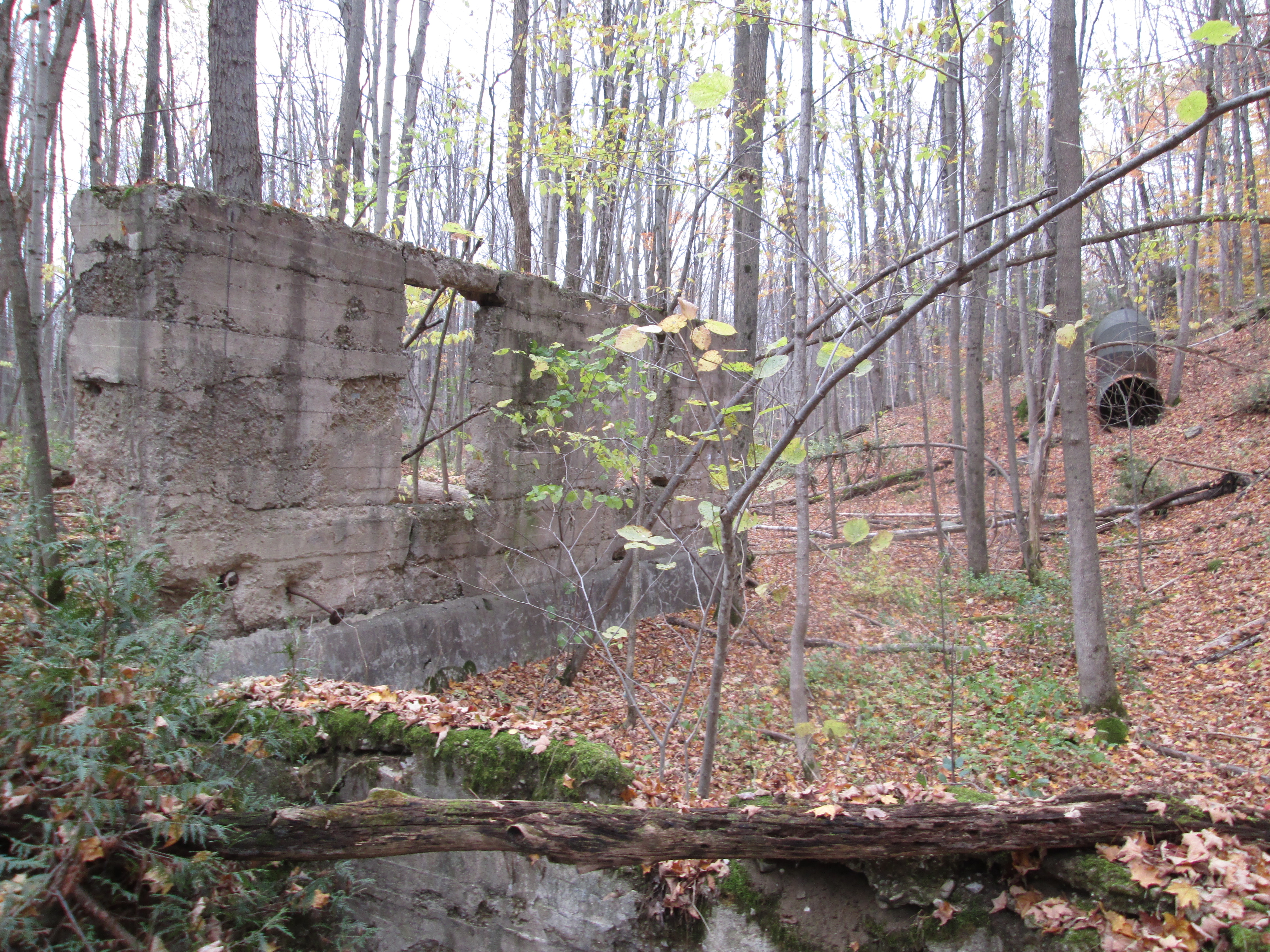
Georgian Bay Milling and Power Company was granted a contract to provide street lighting in Meaford between 1905 and 1913 but no agreement was made for private homes.  An analysis was also made as to the amount of coal each of Meaford’s industries was burning per month in their steam generators.  The power company planned to supply electricity to each of them as well.  In the early 1920’s government grants were made to Ontario Hydro to develop electrification of rural areas.  Unable to compete with the artificially lower rates, most private electricity producers went out of business before the end of the decade.  This facility was closed in 1923.  Today, most of the walls have fallen over with just one remaining upright.  It is leaning a few degrees to the outside and may not stand too much longer itself.  In the picture below the steel elbow can be seen in the background.  At the bottom of the picture, in front of the remaining wall is a settling basin.

IMG_0806

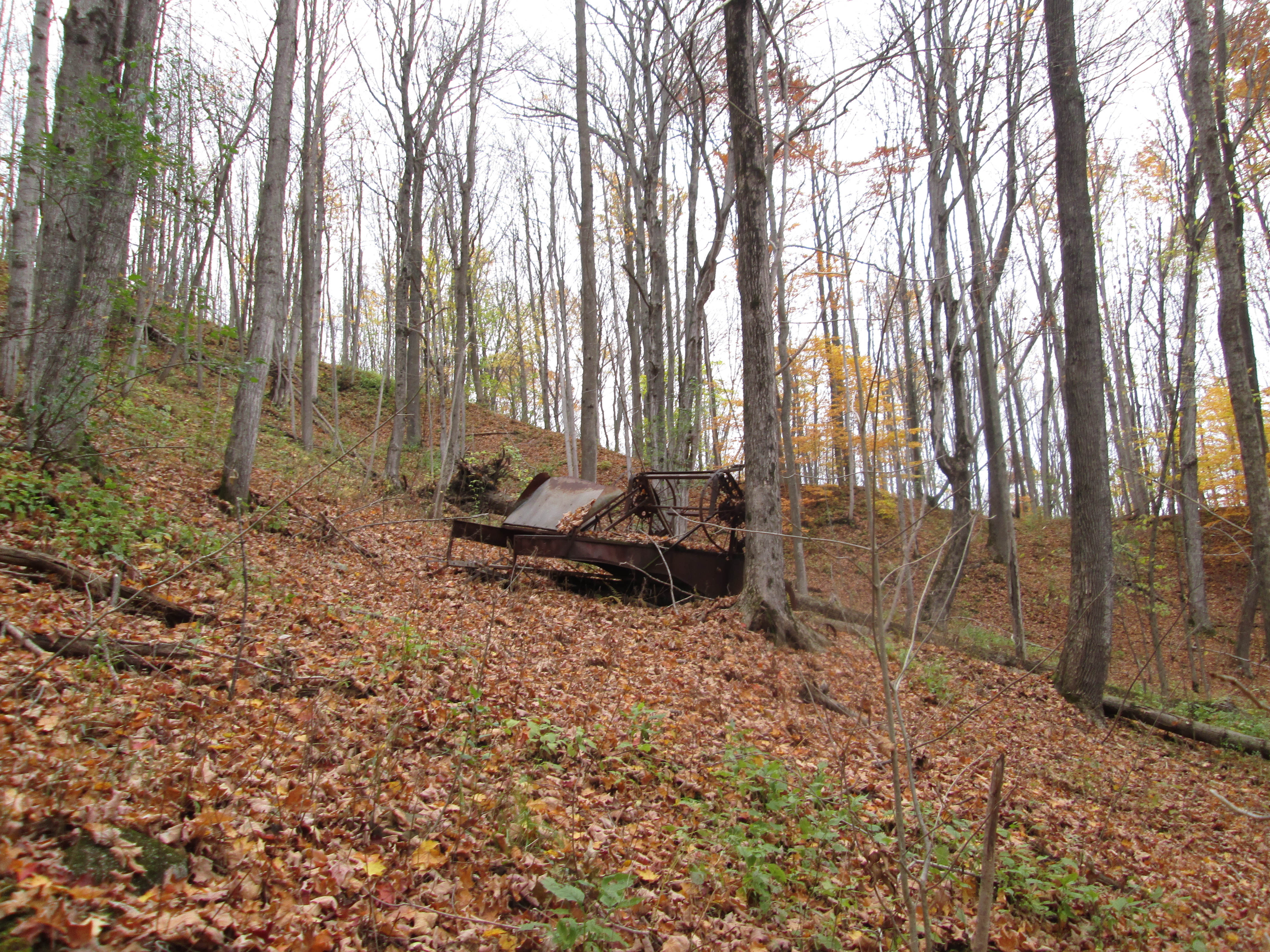
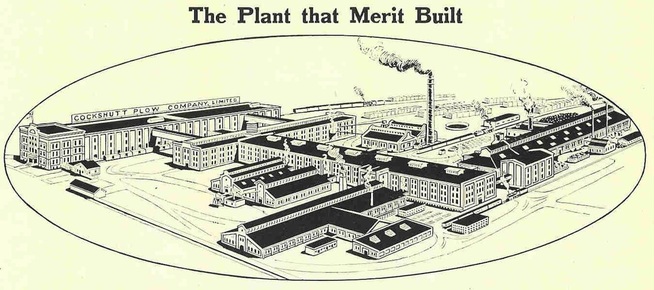
Brantford Plow Works was founded in 1877 by James G. Cockshutt.  In 1882 it became known as the Cockshutt Plow Company and it went on to become one of the largest farm implement manufacturers in Ontario.  After being bought out in 1962 by White Farm Equipment the name Cockshutt was retired.  An old harvester “Cockshutt 3” has been pushed down the hill not too far from the old powerhouse.  It has been here long enough that a tree has grown around some of the metal frame.

IMG_0810

By the early 1900’s the manufacturing plant for Cockshutt had turned into a major industrial complex offering a full line of farm equipment.  In 1941 they invented a lighter version of the swather that allowed the farmer to cut hay on wet fields that heavier equipment would get stuck on.  This gave them a command of the market that led to a further expansion.  A 1910 diagram of the plant illustrates the size of the complex.  Note the smoke stack in the middle which shows that they had their own coal fired steam generator to produce electricity.

1910 Cockshutt Plant

Like us at http://www.facebookcom/hikingthegta

Follow us at http://www.hikingthegta.com
Erindale Hydro Electric Dam

Sunday Oct. 19, 2014

Sunday morning was cold at only 2 degrees.  To access the parking lot at Erindale park you have to drive through a break in the wall of the old Erindale Dam.

In 1902 Erindale Light and Power Company was formed to construct an hydro electric generating plant on the Credit River at Erindale.  This large scale engineering project ran into several delays during construction and didn’t begin producing power until 1910.  A dam was constructed across the valley flooding it and creating the 125 acre Lake Erindale.  A power generating plant was built on the south end of town at the bottom of Proudfoot Street.  A tunnel was constructed to connect the two.  The power plant operated from 1910 until 1923 supplying power to Erindale and New Toronto. It was closed when Ontario Hydro began to supply the area with power from Niagara Falls.  In 1941 the lake was drained and the dam was blown up.  Between 1961 and 1965 the former lake bottom was used as a sanitary landfill.  It has since been covered over with clean soil and Erindale Park has been created.

From the top of the old dam the view across the old lake bed gives you a good impression of the size of dam and the lake it created.

IMG_0683

Walking north along the east side of the river we came to this shopping cart which has obviously been standing in the river when the water was much higher.  The shiny coffee mug on top belongs to a clever angler who is fishing near by.

IMG_0694

As you head upstream from the old dam there is a foot bridge that will allow you to cross over the river to explore the ruins of the dam on the other side.  This photo shows one of three old water control structures that are in the river above the dam.  There are six fishermen in this picture (how many can you see?) and the shopping cart.

IMG_0698

When settlers first arrived the rivers around Toronto were filled with Atlantic Salmon.  Pollution, deforestation and the construction of dams resulted in their extermination within only a few decades.  In the 1960’s and 1970’s large numbers of Chinook salmon were stocked in the rivers. The eggs hatch in May from the gravel beds where they winter and and the fingerlings make their way out into lake Ontario.  They will die if they stay in the river until the water warms up. They spend four to eight years in the lake attaining a size of up to 40 pounds before they make their only spawning run.  Then they will migrate from the lake into the same river in which they were born.  It is estimated that 20,000 Chinook make the trip up the Credit River each fall.  After spawning they die and their carcasses litter the river providing easy pickings for the local birds. The fish in the picture below was a recent catch from one of the people fishing in the river.  It looked to be about 25 to 30 pounds.

IMG_0699

The expression “busy as a bee” applies to this little creature.  Although the weather was too cold for most bees a few industrious ones were busy collecting pollen from late blooming Canada Thistles. This purple flower is coated with white pollen.  The bee is collecting it and storing it in the hair all over it’s body.  Bumble bees can’t fly unless their wing muscles are at least 30 degrees C.  On cold days such as this they beat their wings at the rate of 130 times a minute to raise their body temperature enough to take off.

IMG_0730

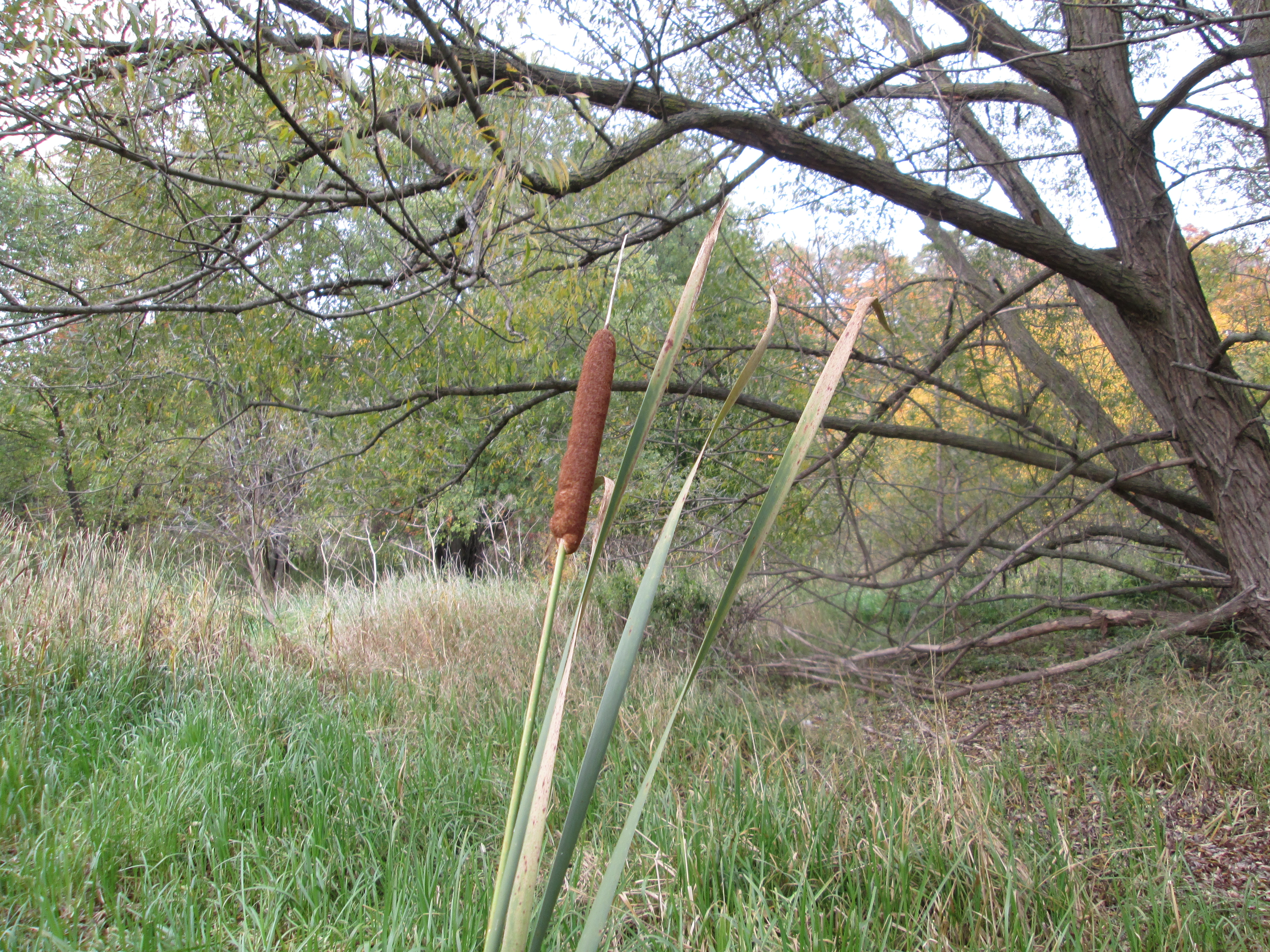
The Bulrush or Cat-o-Nine tails grows in wetland areas.  There is a stand of them growing close to the base of the old dam.  Various parts of the plant can be eaten and were part of the native people’s diet.  This makes them valuable as an emergency source of food in a survival situation. Peeled stems or leaf bases can be eaten raw.  The roots need to be cooked and peeled but they also are edible.  The roots can also be used as a poultice for burns and wounds.  Care must be taken not to eat bulrushes that grow in polluted water as they are a bio-mediator which absorbs pollution.  Signs of contamination include a bitter or spicy taste.

IMG_0702

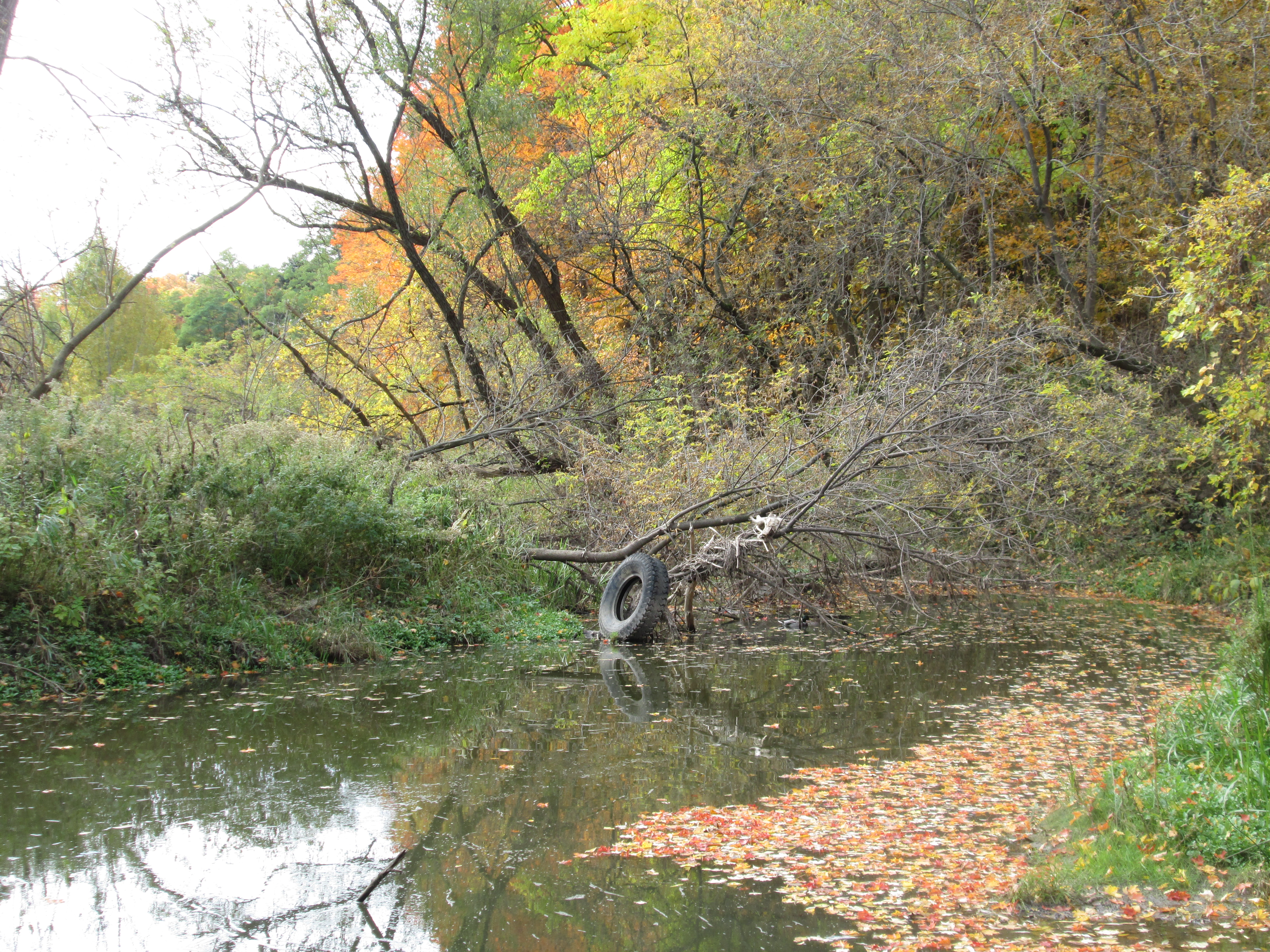
At the foot of the dam on the west side of the river is a small mill race where the water is standing still.  The leaves floating on the water lend a sense of calm to the scene.  In the middle of the picture is a tire that appears to be standing on top of the water.  A close look at an enlarged photo shows the green neck of a male mallard duck which is having a bath just to the right of the tire.

IMG_0742

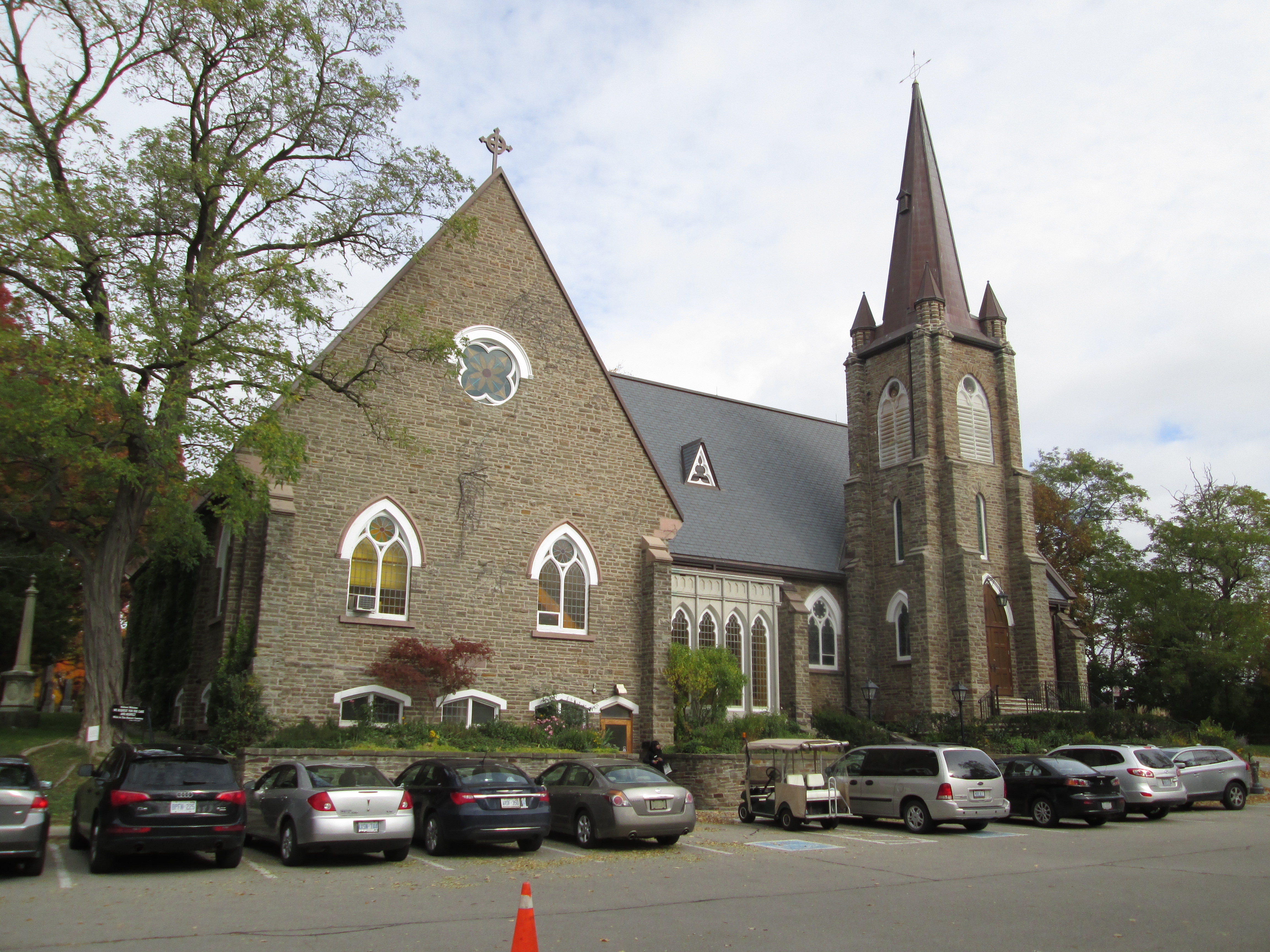
St. Peter’s Anglican church stands on the hill top on the corner of Mississauga Road and Dundas Street.  The first building was opened in 1825.  It was replaced with this stone building in 1887. Roy Ivor, who ran the Winding Lane Bird Sanctuary across the street, is buried here.

IMG_0745

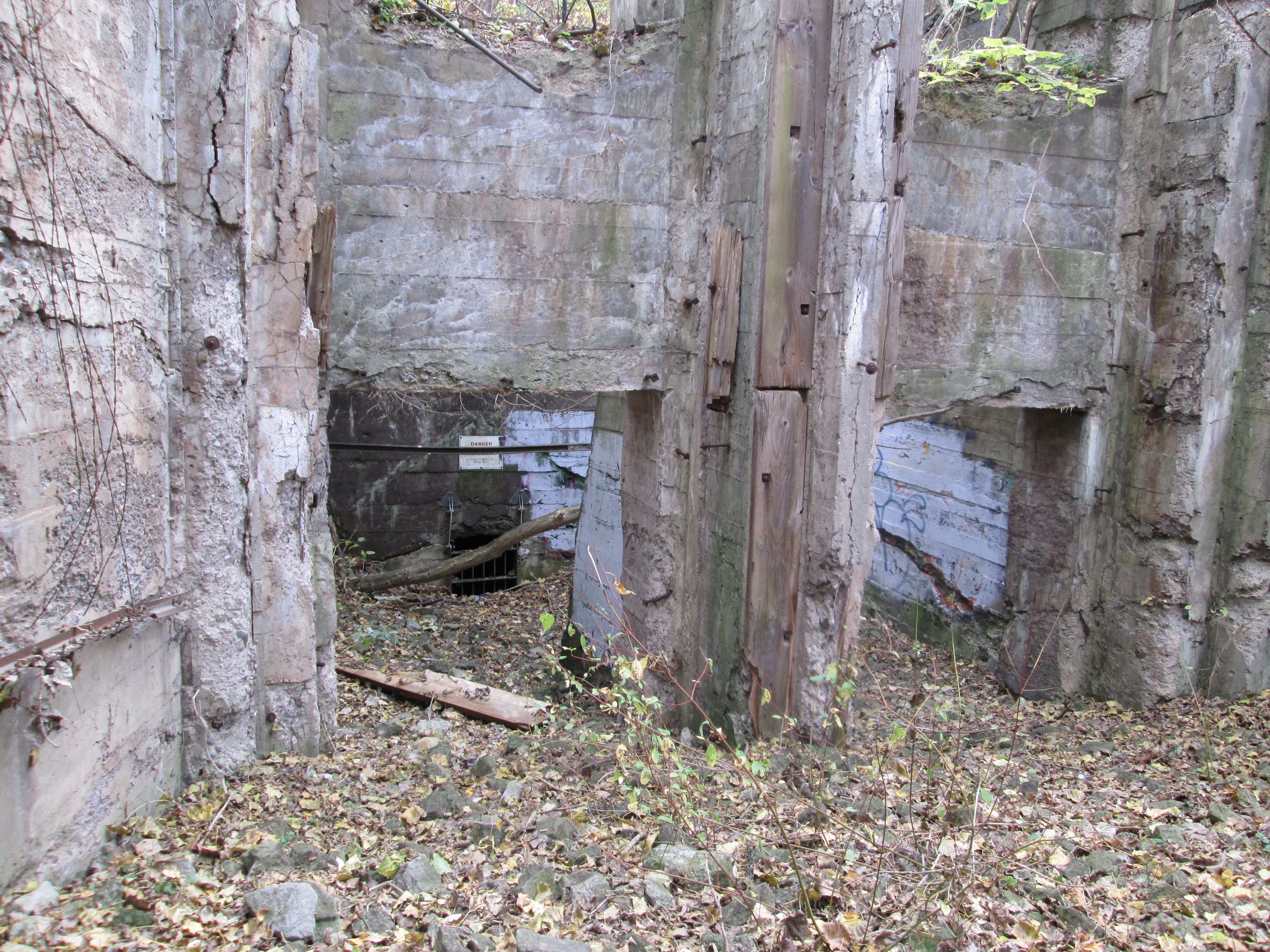
The north entrance to the water tunnel is located in the woods at the end of the last parking lot. This stood at the edge of Lake Erindale and a pair of sluice gates was used to control the water flow into the tunnel at the bottom.  This structure is decayed badlly and has a small forest growing in the open area inside the mouth.

IMG_0752

This photo was taken by holding the camera inside of the tunnel as it heads under Dundas street.  This is in effect the head race for the power mill.

IMG_0756

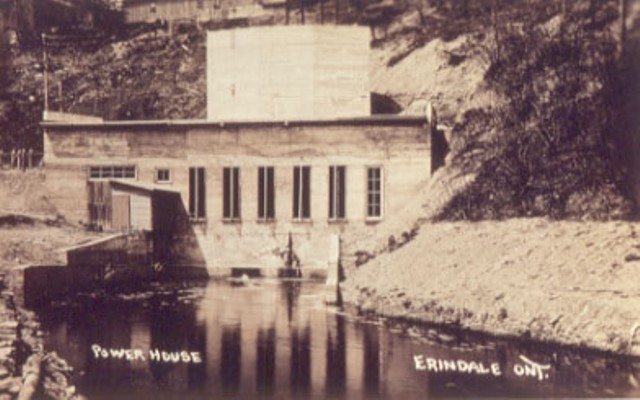
The tunnel passes under Dundas Street just east of Proudfoot Street.  It then emerges just past the end of Proudfoot Street where the river doubles back on the edge of town.  The power generating plant stood here until it was removed in 1977.  The picture below shows the power station and the tail race where the water was returned to the river.

LG_K370


York Mills – Ghost Towns of the GTA

Saturday, Oct 18, 2014

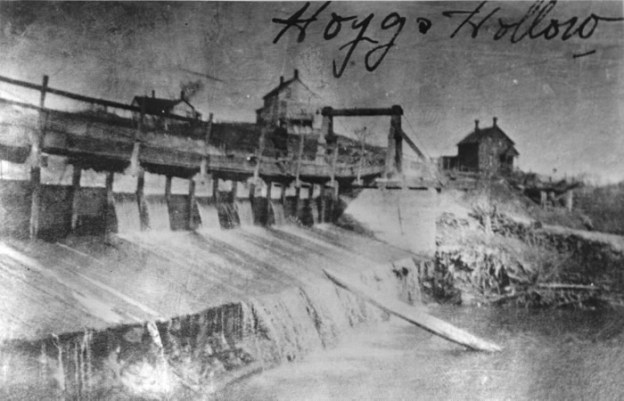
When Yonge Street was cut through the forest by The Queen’s Rangers in 1796 it opened up the area for settlement.  Small towns formed at almost every intersection.  An intersection such as Yonge Street and York Mills Road where a river passed through with good mill sites was assured of attracting industry.  This area is known as York Mills after it’s post office but is also well known as Hoggs Hollow.

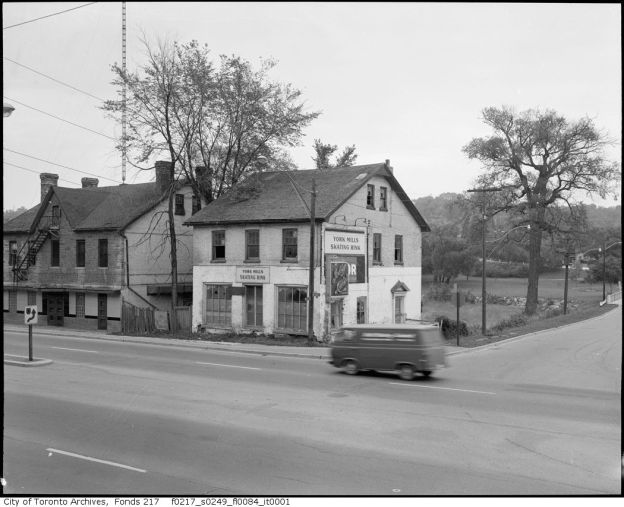
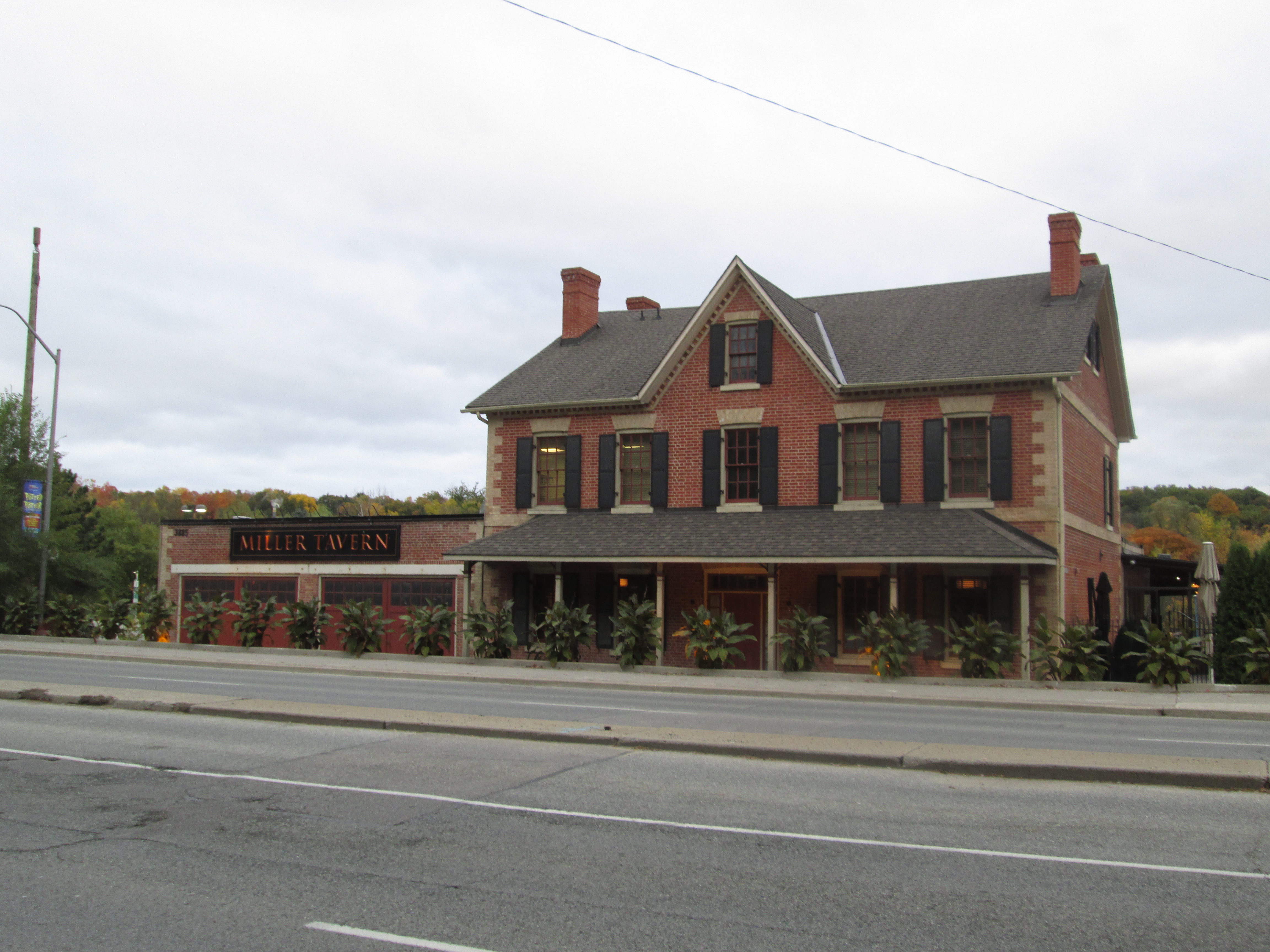
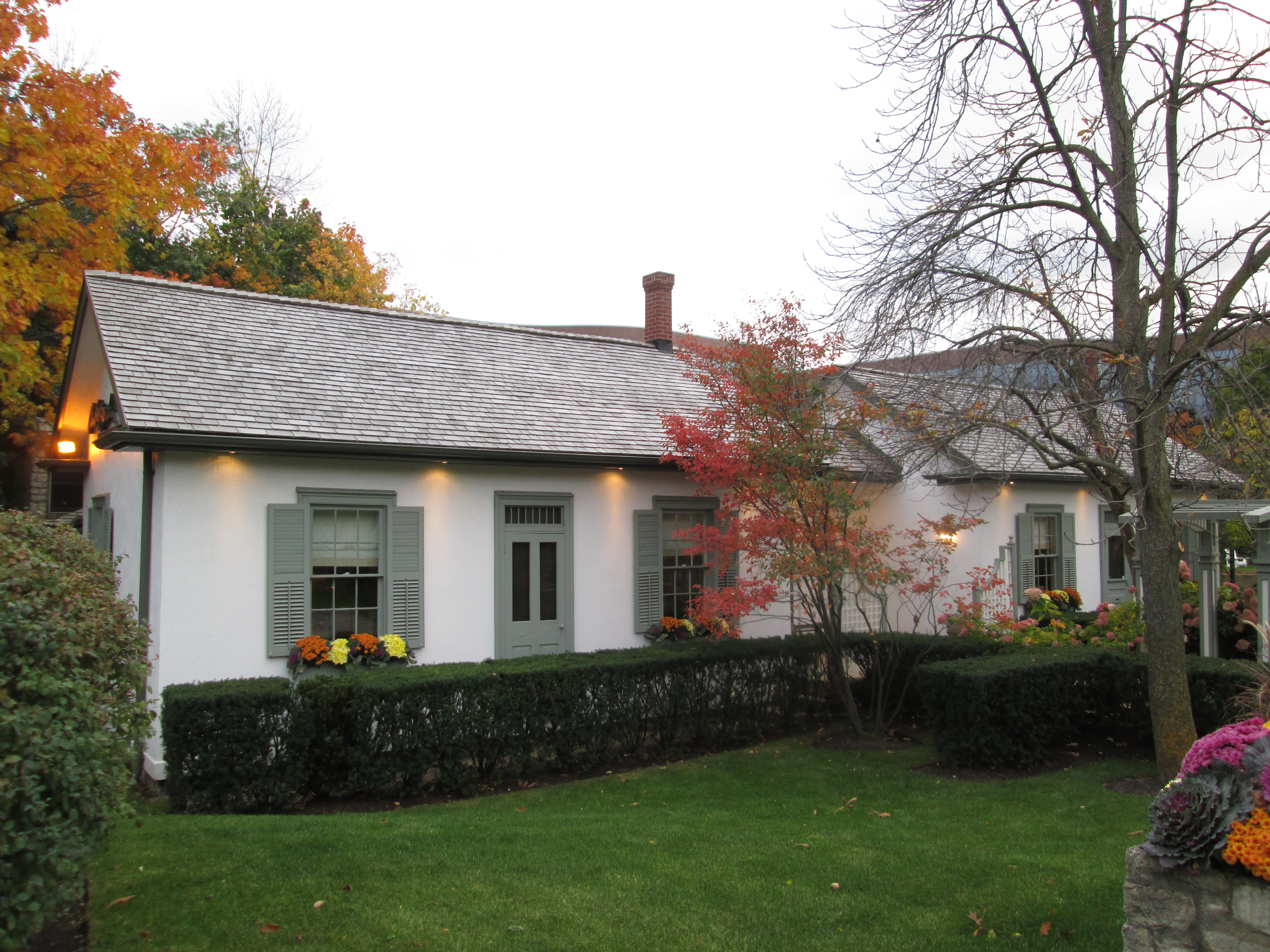
I parked on Mill St. in the parking lot on the east side of the West Don River.   It was overcast and 7 degrees.  The first mill was opened as early as 1804 by Samuel Heron.  Millford Mills was opened in 1817 and supplied the first name to the town.  This mill was bought by James Hogg in 1824.  In 1856 a subdivision plan was developed for Hoggs property by his sons which was to be called Hoggs Hollow.  Only a few houses were built at this time and the lots were not all built upon for over 100 years.  James Hogg built the York Mills Hotel in 1857 and it is one of only half a dozen remaining original buildings in the community.  Having changed hands many times, today it serves as the Miller Tavern.  Hogg added a general store beside it on the south.  He also had a tannery and a distillery.  The general store served for awhile as a change room for skaters using the York Mills Skating Rink which was formed each winter on the site of today’s parking lot.  The cover photo shows the tavern and the general store, turned change room, as it appeared in the 1950’s.  Today the tavern has been restored to it’s original brickwork and the old store is gone, having been destroyed by fire.

IMG_0639

The York Mills Presbyterian church was built on the east side of Yonge Street on land provided by James Hogg.  When the family developed the subdivision plan the church was moved across the street on the hill side, directly opposite of the tavern.   The church was closed and demolished in 1889 and the cemetery was eventually forgotten.  It was rediscovered in 1955 when the area was being developed for residential use.  Twenty five graves were uncovered with two of them belonging to members of the Hogg family.  A historical plaque marks the spot today.  In the 1877 Historical Atlas the church is marked by “Pres” right below the name York Mills.  Their cemetery is marked with an asterisk just above it.  Too bad no one checked the old map before they dug.

York mills

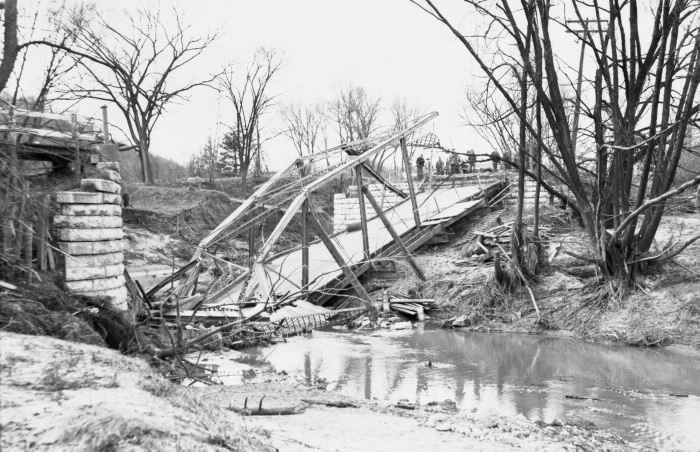
The Yonge Street bridge in Hoggs Hollow was destroyed in 1954 during Hurricane Hazel and was replaced with a wider one a year later.  The archive photo below shows the bridge following the hurricane.

Hoggs Hollw Bridge Hazel Damage

North of York Mills Road are two of only three mill worker cabins that were built in the Hoggs Hollow subdivision.  They have been preserved and moved to their current location on Yonge Street where they guard the entrance to a fancy restaurant.  Ironically, it is a place the original inhabitants of these homes likely couldn’t have afforded to eat at.

IMG_0641

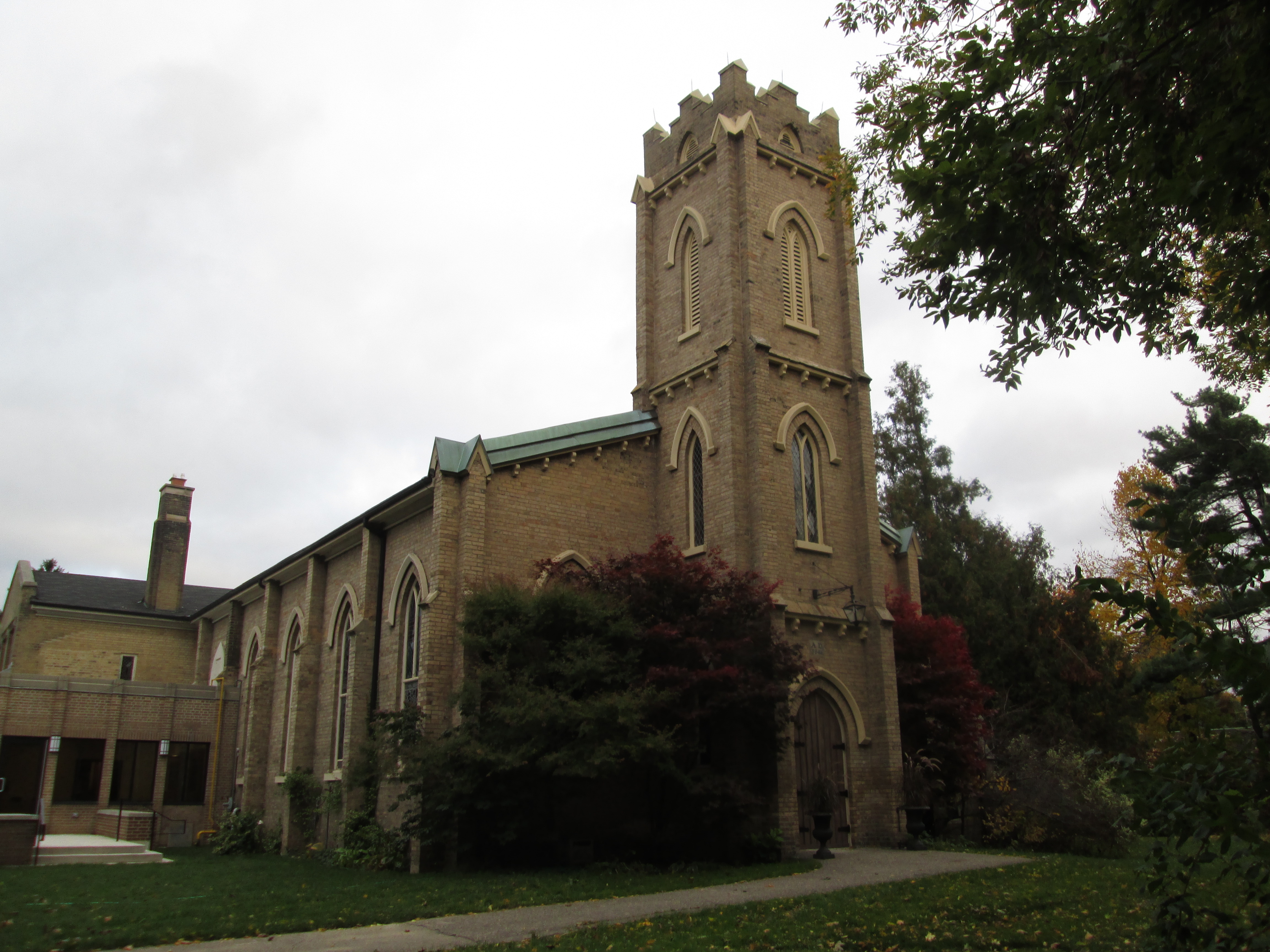
On the east side of Yonge just north of York Mills Road is the old walkway up the side of the hill to St. John’s Anglican Church.  The church was started in 1816 and the present building was erected in 1843.  The church has the only active cemetery in York Mills and there are many prominent early settlers buried there.  I saw one grave marker dated 1820.  This church is marked as EC in the historical atlas for England Church and an asterisk marks the grave yard.

IMG_0644

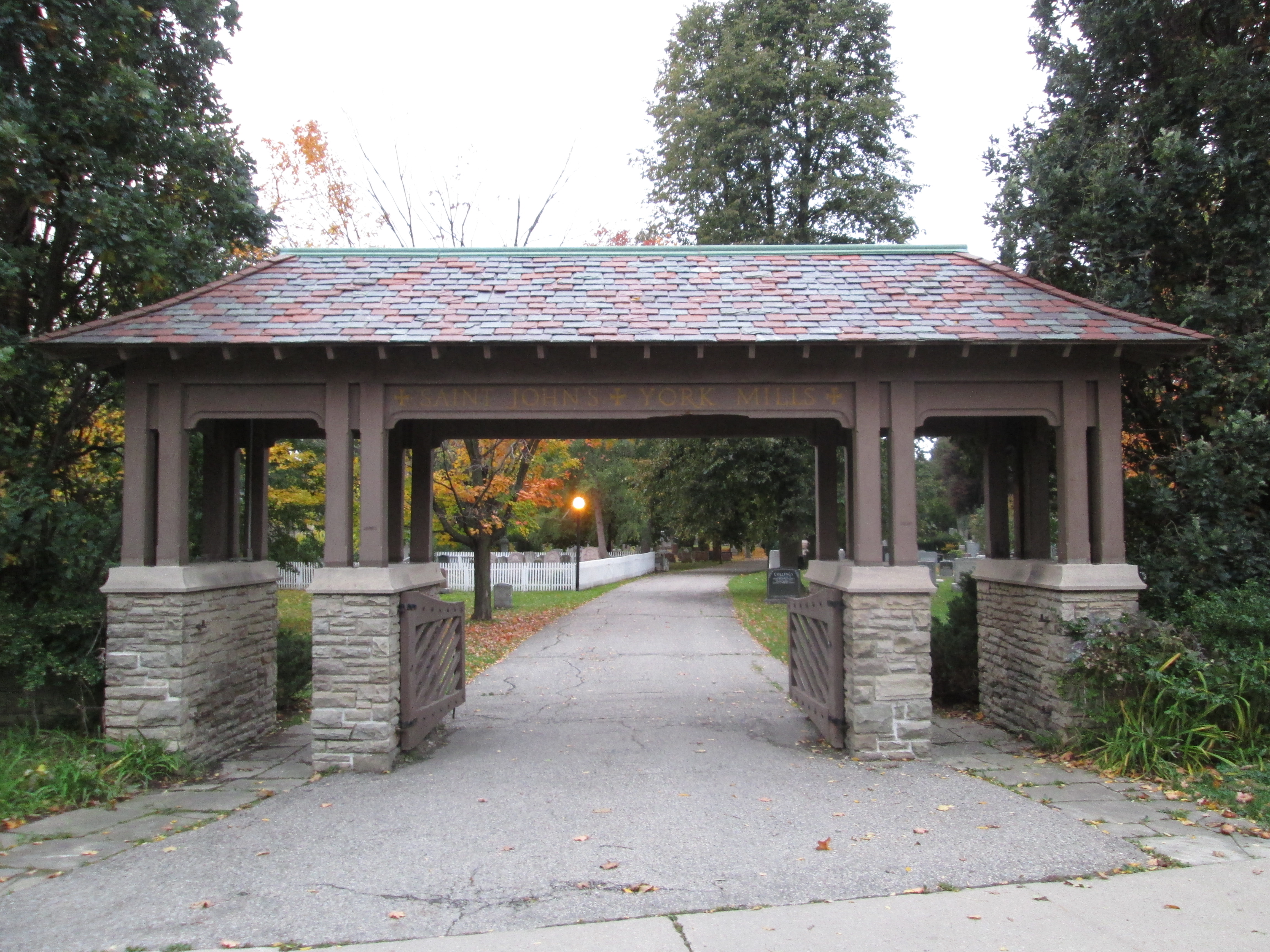
Walking through the cemetery brings you to the Lychgate.  A lychgate is a roofed gate found on traditional English churchyards.  The word lych come from the Saxon word for corpse.  The corpse would rest under this roof while part of the service was read before advancing into the grave yard for burial.

IMG_0652

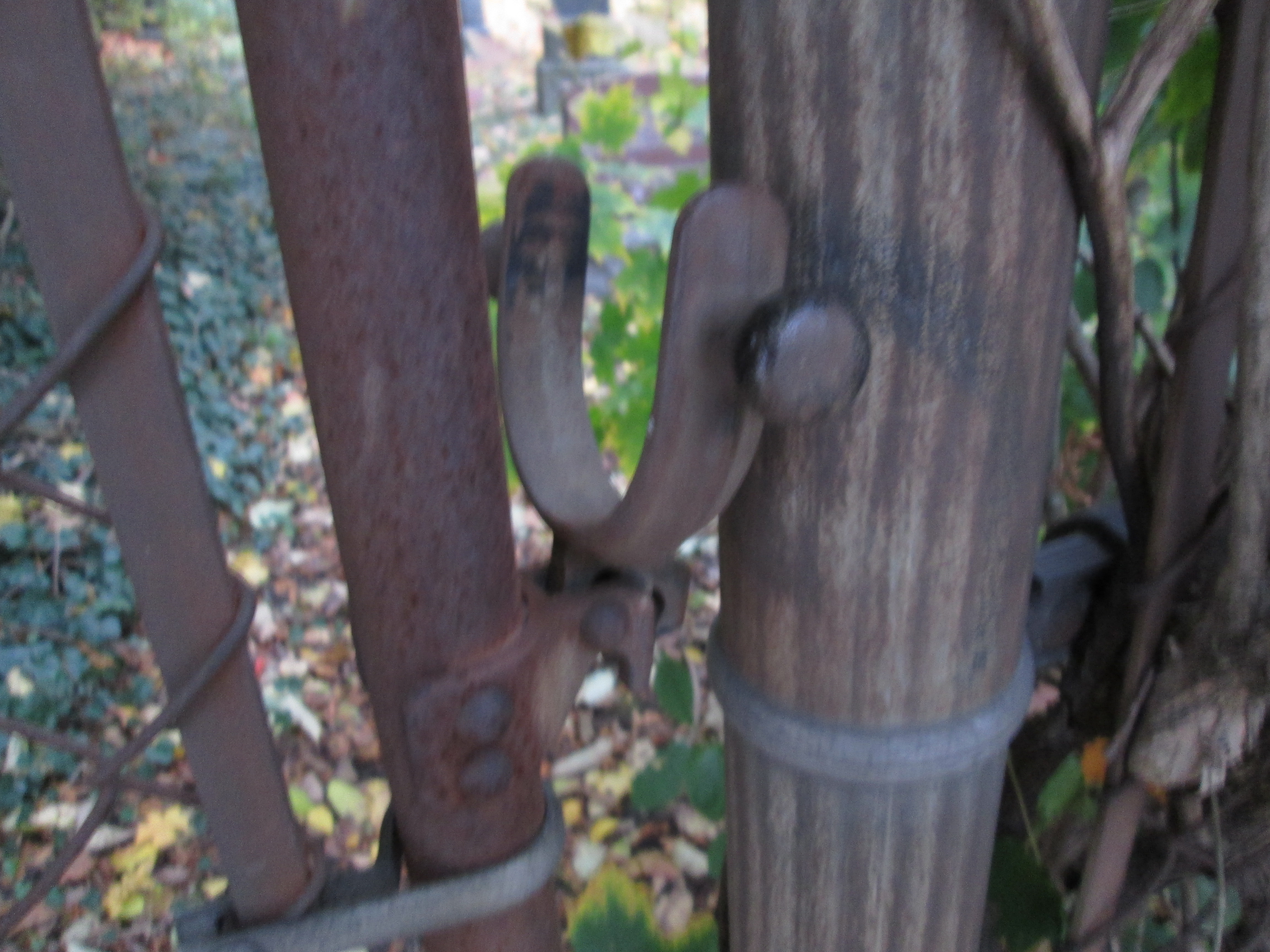
When Yonge street was built in 1796 it was thought that the valley was too steep and so the old road runs across the eastern rim of the valley.  When Yonge Street was straightened a few years later this became known as Old Yonge Street.  Turning to the right will bring you back to York Mills road.  Just to the east is the former site of the York Mills Baptist Church erected in 1833. The church was closed in 1945 and demolished in 1948.  The cemetery was just to the east of the church and it remains today, tucked in a small lot behind a hedge.  The church is marked as BC in the atlas and has the usual asterisk to mark the graveyard.  The gate has a unique old latch that drops over the gate post.

IMG_0658

The church built a manse for their pastor’s family in 1840 on the lot to the east of the cemetery.

IMG_0659

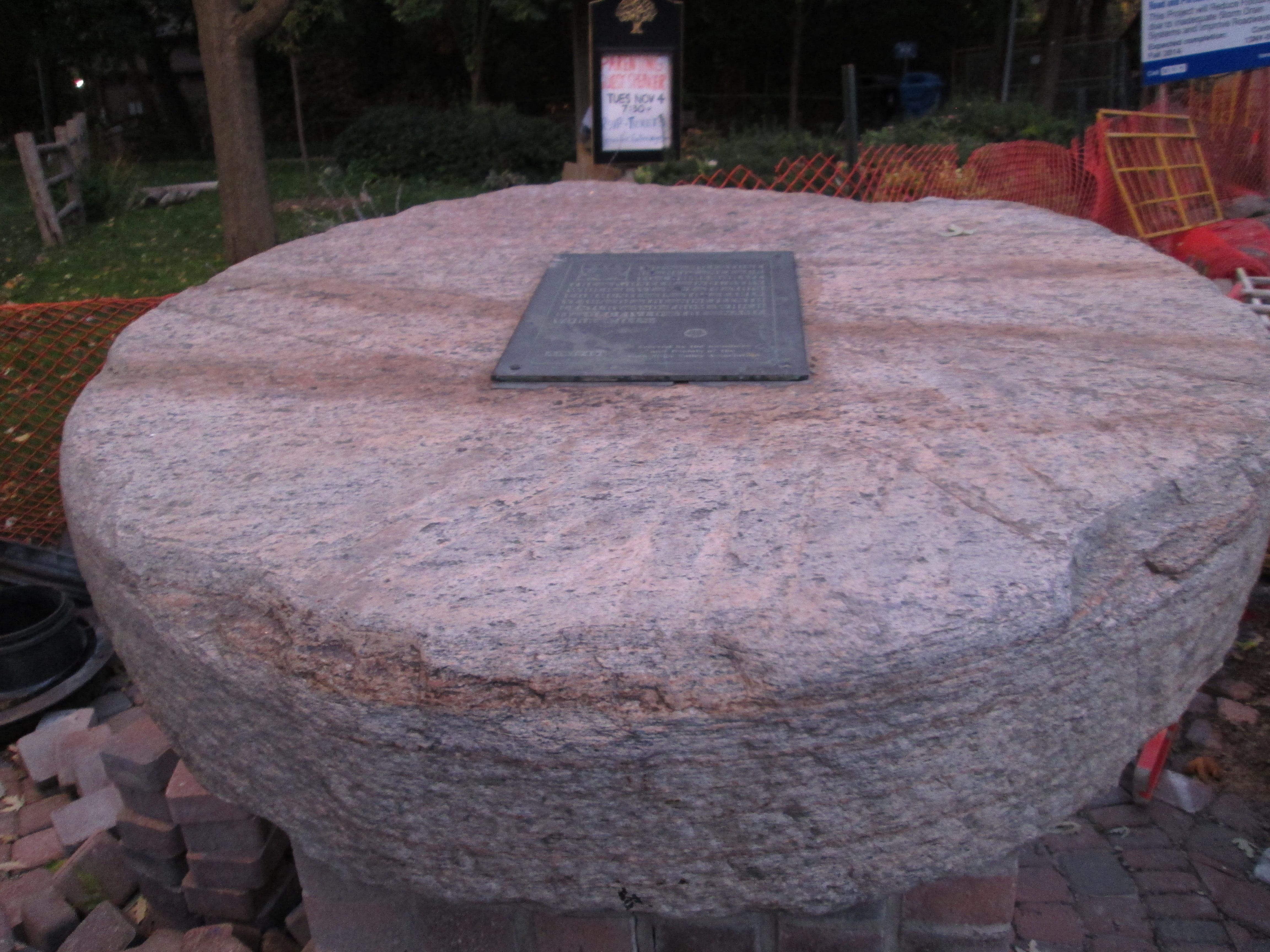
Returning to Old Yonge Street you can follow it back to Mill Street where the name changes to Donino street.  A couple of short blocks later is a memorial to the towns milling past.  The grinding wheel from the last mill to close in the valley (1926) is preserved here.

IMG_0663

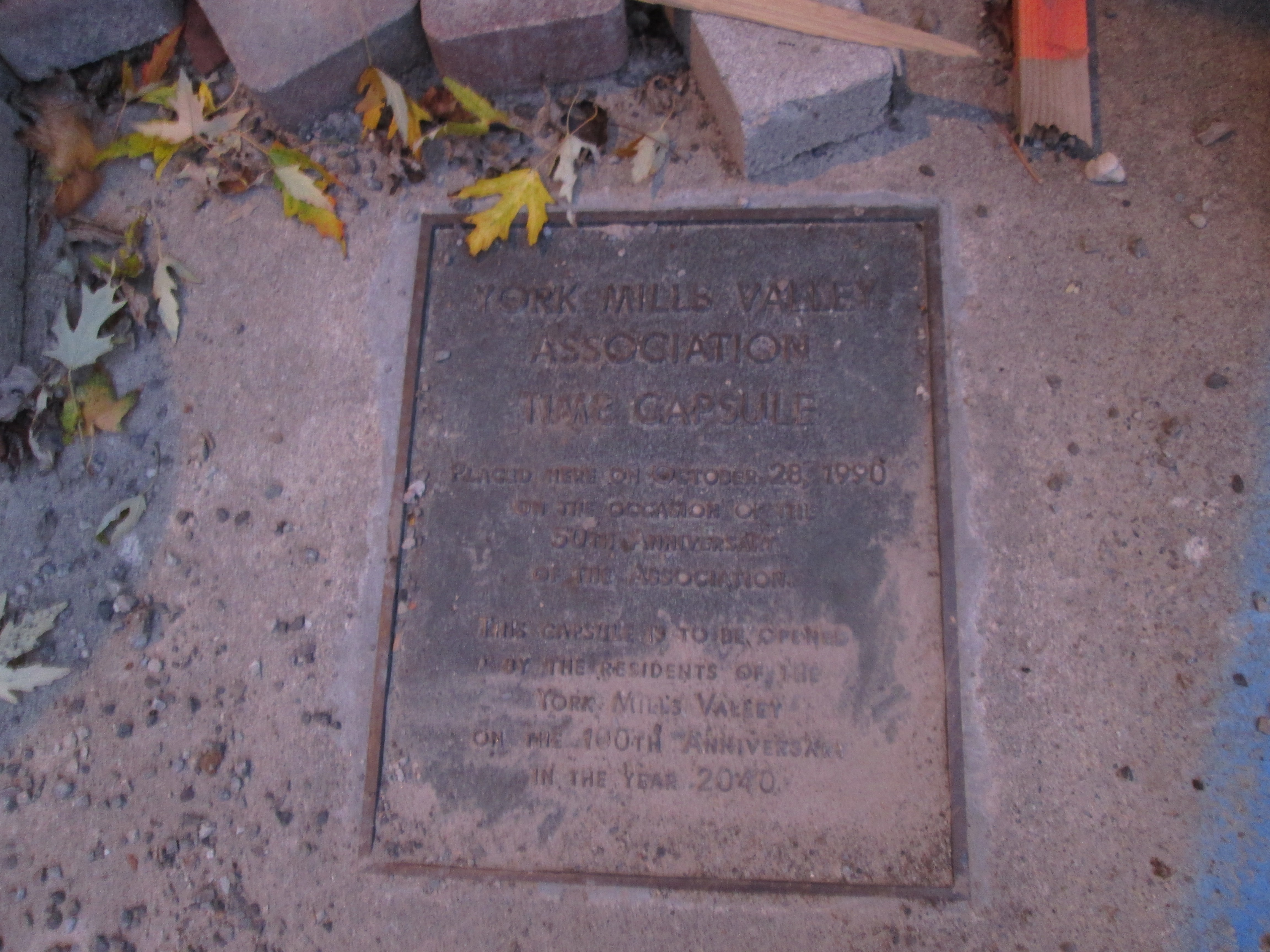
A time capsule has also been buried in the parkette.  It is set to be opened in 2040.

IMG_0664

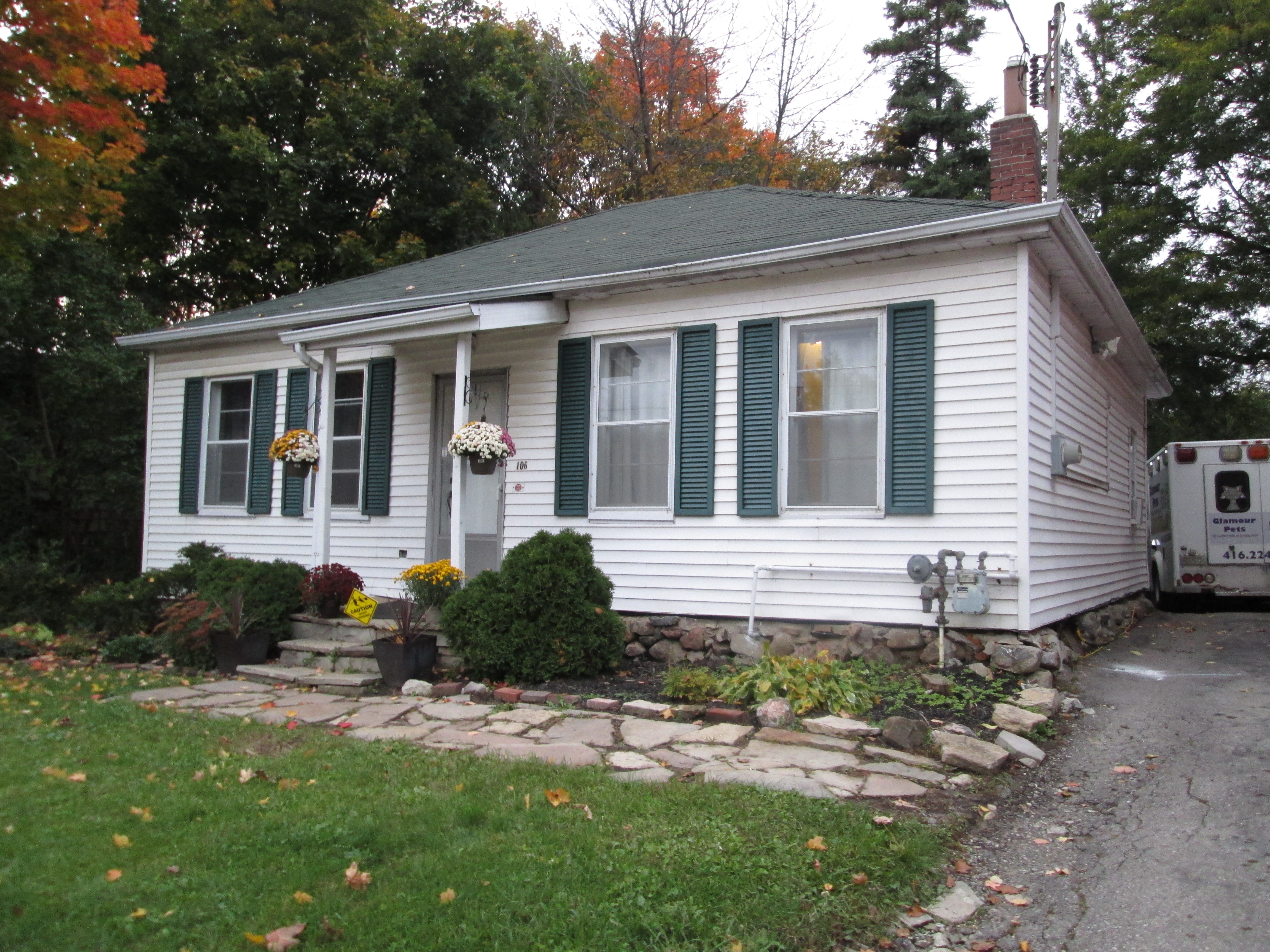
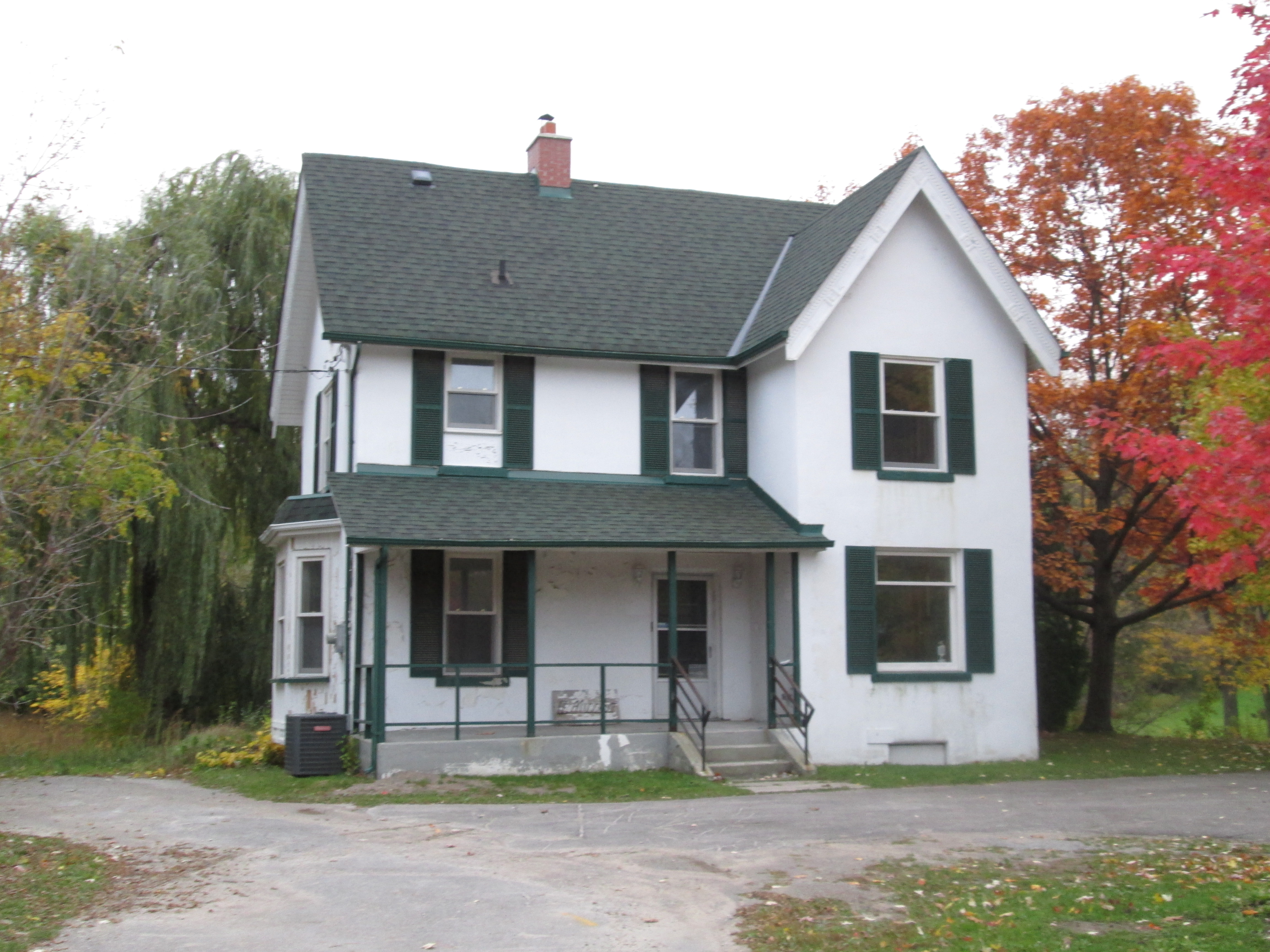
As you return to the car you reach the house of George Pratt.  George ran a mill in the area of York Mills park.  He built this house in 1886.

IMG_0633

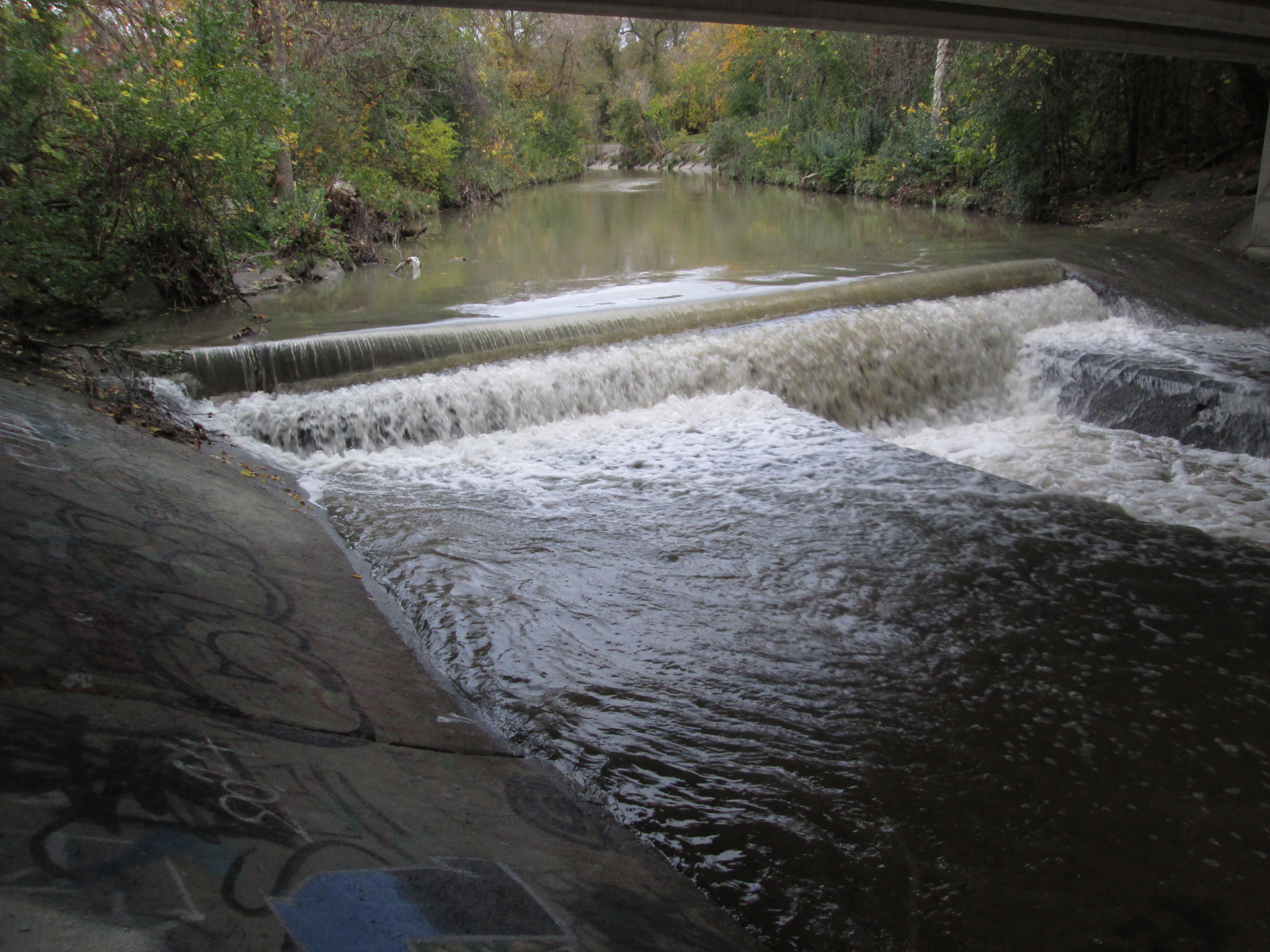
The old mill dam is almost under the Mill Street bridge.

IMG_0634

Old photos show a large wooden dam in Hoggs Hollow.

Hoggs Hollw Dam

Like us at http://www.facebook.com/hikingthegta

Winding Lane Bird Sanctuary

Saturday Oct. 11, 2014

A chilly start to the day at only 5 degrees.  The sun was out and the sky was bright blue.  To access Sawmill Valley Creek near Dundas and Mississauga road it is easiest to park in Erindale Park and walk across the bridge over the Credit River.

Many of the trees are still green, which is nice.  When the cool evenings of the fall signal the onset of winter, deciduous trees begin the process of collecting and storing the useful resources in the leaves.   The tree stores the green chlorophyll pigment and other photosynthetic parts of the leaf in the roots, trunk and branches of the tree for use again the following spring.  The removal of the green from the leaves produces the bright colours we enjoy.

IMG_0611

Sawmill Valley trail enters the north west corner of Mississauga Road and Collegeway.  As you follow the trail you will soon come to the start of a fence.  If you follow to the right of the fence you will find yourself on an old winding laneway.

IMG_0577

This is the laneway of Roy Ivor, also known as the birdman of Mississauga.  In 1928 Roy, along with his assistant Bernice Inman-Emery, started the Winding Lane Bird Sanctuary.   During the 50 years he ran the bird sanctuary he cared for thousands of birds.  He was a regular contributor to National Geographic during the 1950’s as well as teaching countless school children about birds.  Ivor died in 1979 shortly before he would have turned 100.  He is buried close to home at St. Peters Anglican Church in Erindale.  Bernice ran the sanctuary from the time of his death until she moved to a retirement home in 2007.  The sanctuary has been closed since then and all of the bird cages have been removed.  Recently the property has been purchased by the city for incorporation into the adjacent parkland.

Ivor’s house is featured in the cover photo showing how it looked before it burned down on December 29th 1970.  A portion of the large central chimney remains standing.

IMG_0582

The outline of the east wing of the house is still clearly visible.  When the house burned down a trailer home was brought in and parked over this end of the foundation.  Here life went on pretty much as it had before.

IMG_0585

Each Burdock seed pods contain hundreds of stems that stick to clothing and fur.  Inside the pods are little tiny seeds that get transported around and then discarded to start new plants elsewhere.  In the early 1940’s Swiss inventor George de Mestral was out walking his dog when both of them got covered in burdocks.  Curious about how the burdock attached itself to his clothes he looked at one under a microscope.  He noted the little hook on the end of each one of these little spines.  De Mestral patented Velcro in 1955 based on the hook and loop system used by burdock.  The hooks can clearly be seen on the burdock in the picture below.  Inside the burdock pictured below is a lady beetle.  There are over 5,000 species of lady beetles but all are protected by noxious body fluids based on cyanide.  Their bright colours are used as a warning to birds that might consider eating them.

IMG_0579

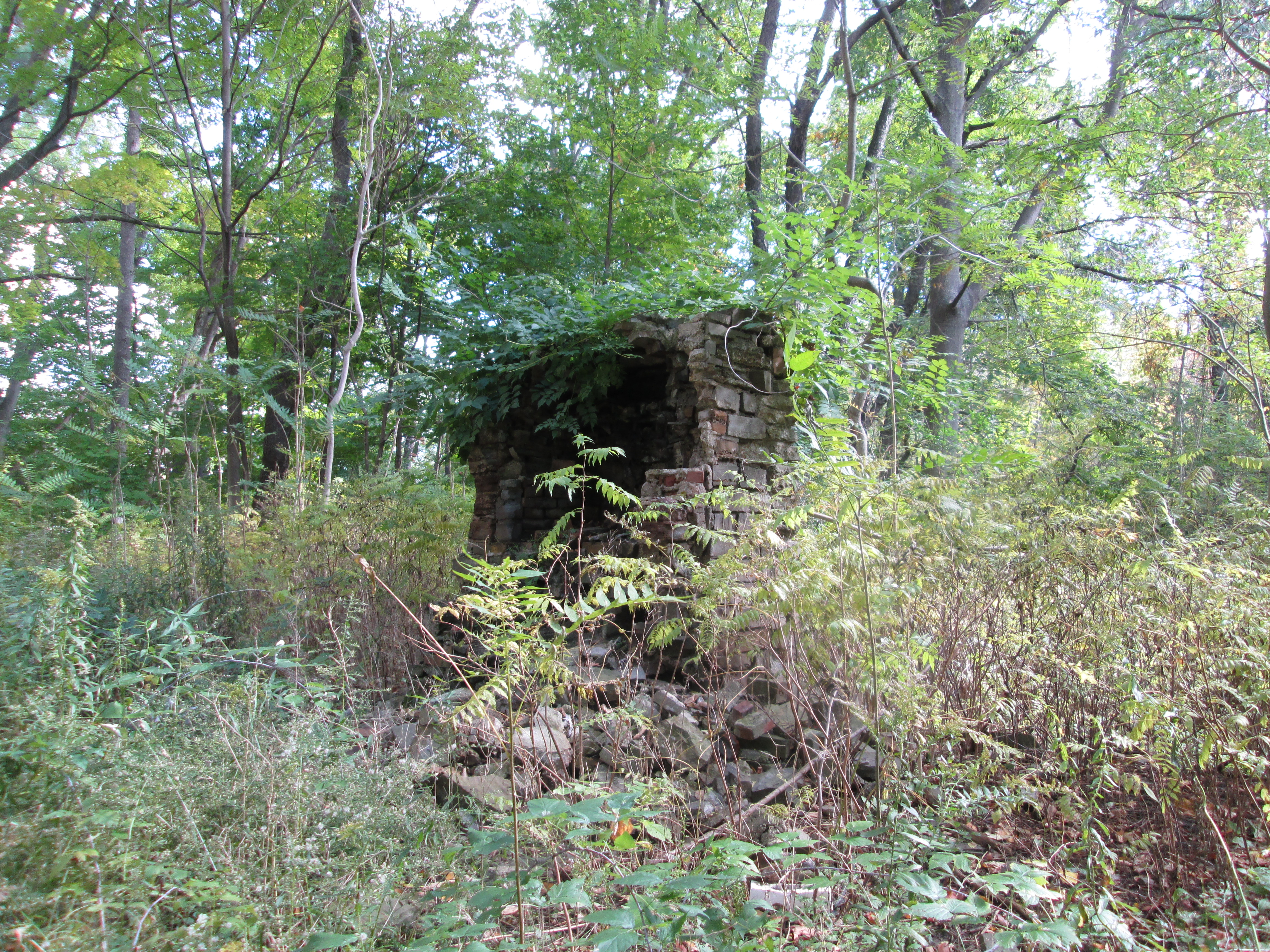
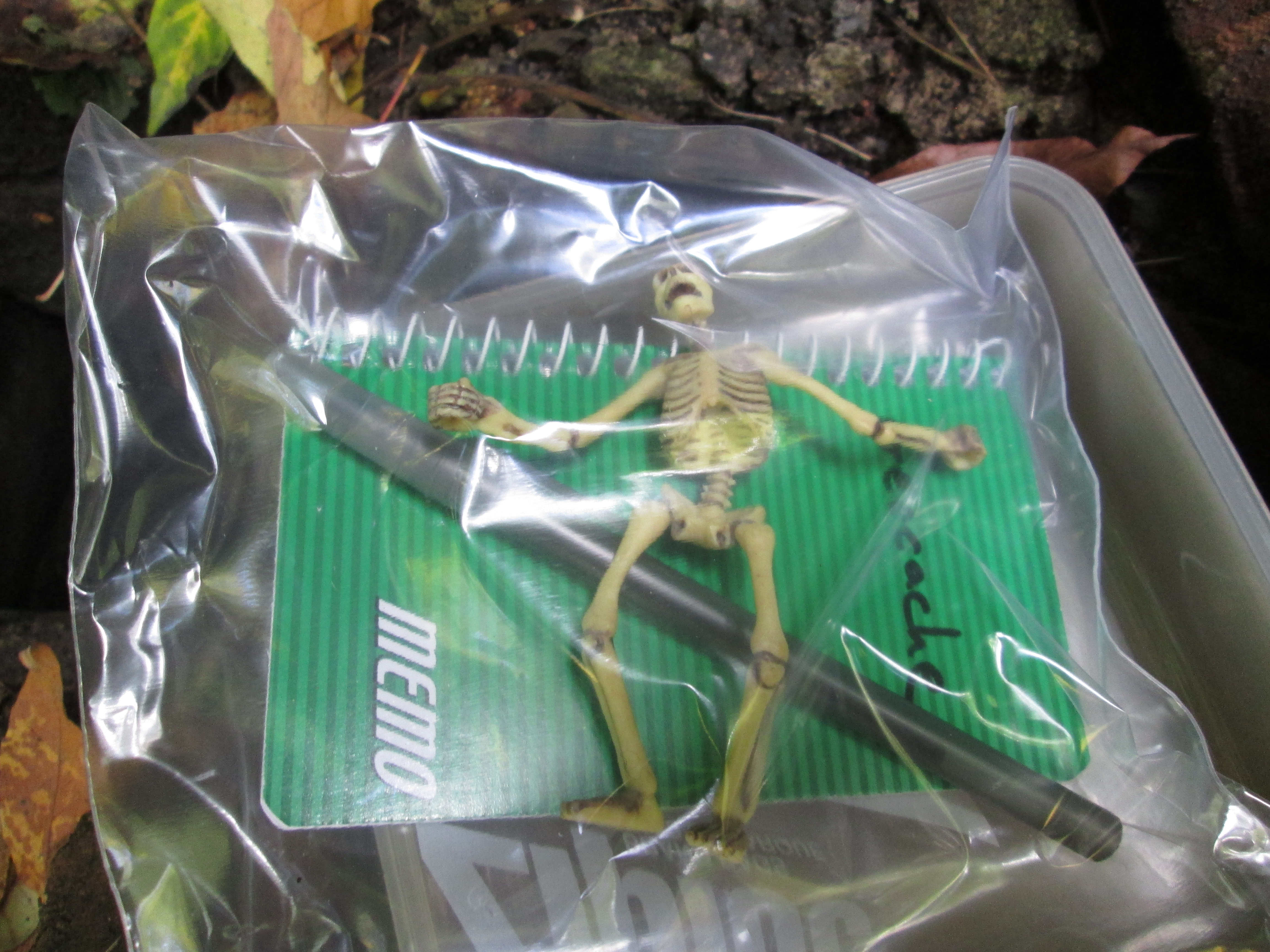
Geo-caching is an activity that rose to world popularity in May 2000.  When GPS restrictions were removed a high-tech game of hide and seek began.  A cache is hidden which includes a log book, pen or pencil and often trinkets.  People hunt for the caches based on a set of co-ordinates using a GPS.  When the log book is found it is signed and carefully re-hidden.  Geo-caching never achieved the prominence that is made possible in the era of cell phones with GPS.  One possible explanation for this is 9/11.  Security scares have become common with police bomb squads having been called in after suspicious activity has been reported.  Several schools and even Disneyland have been locked down.  We found a geocache with a skeleton in it.  Since we were the first to find the cache, and that quite by accident, the skeleton may be symbolic of a dead pass-time.

IMG_0593

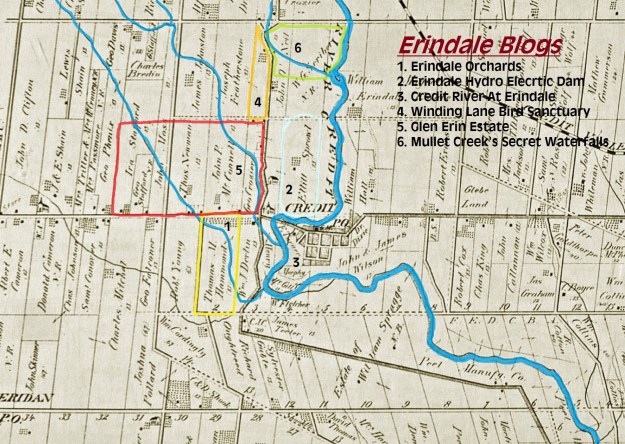
Other Erindale hikes featured on the historical atlas below include:

  1. Erindale Orchards, 2. Erindale Hydro Electric Dam, 3. Credit River at Erindale and 6. Mullet Creek’s Secret Waterfalls.


sawmill valley legend

Like us at http://www.facebook.com/hikingthegta


Streetsville’s Forgotten Foundations

Saturday Oct. 4, 2014

Autumn has certainly set in.  It was cool at 14 degrees and the skies were dark with clouds.  We decided that it wouldn’t dare rain on us so we set out.  Having parked on Mill street in Streetsville we were right in the area where Timothy Street had built the mill in 1819 that got the town started.

In 1818 the final parcel of land along the Credit River was ceded by the natives to the government.  Timothy Street financed the task of surveying the area while Richard Bristol conducted the work.  In exchange for his work Timothy was given 1000 acres of land which is now known as Streetsville as well as 3,500 other acres scattered throughout Halton and Peel counties.   Timothy Street is listed in the town directories as a tanner.

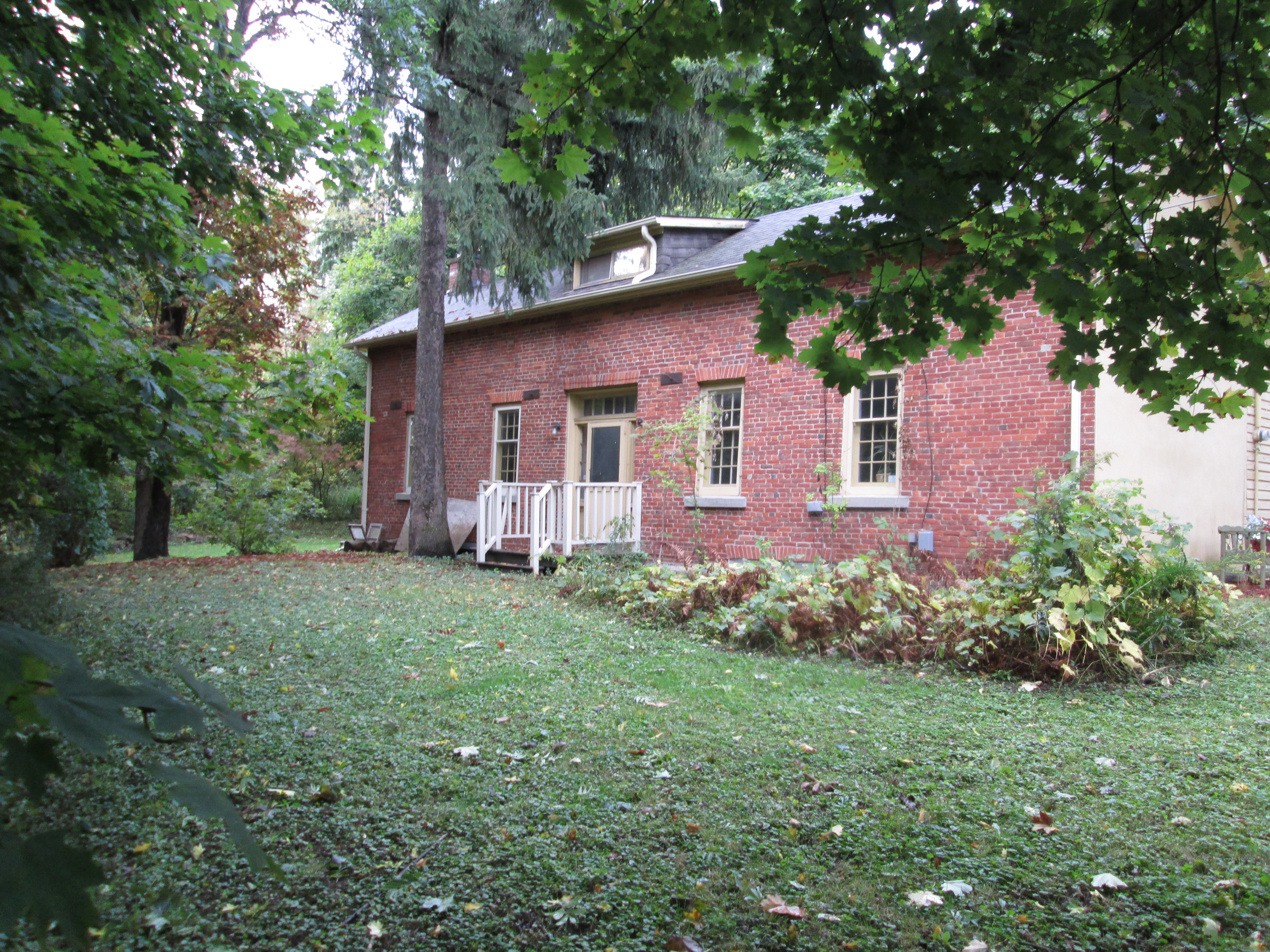
In 1825 he built the house in the picture below which looked out over his business empire.  This house is believed to be the oldest remaining brick house in Peel County.

IMG_0461

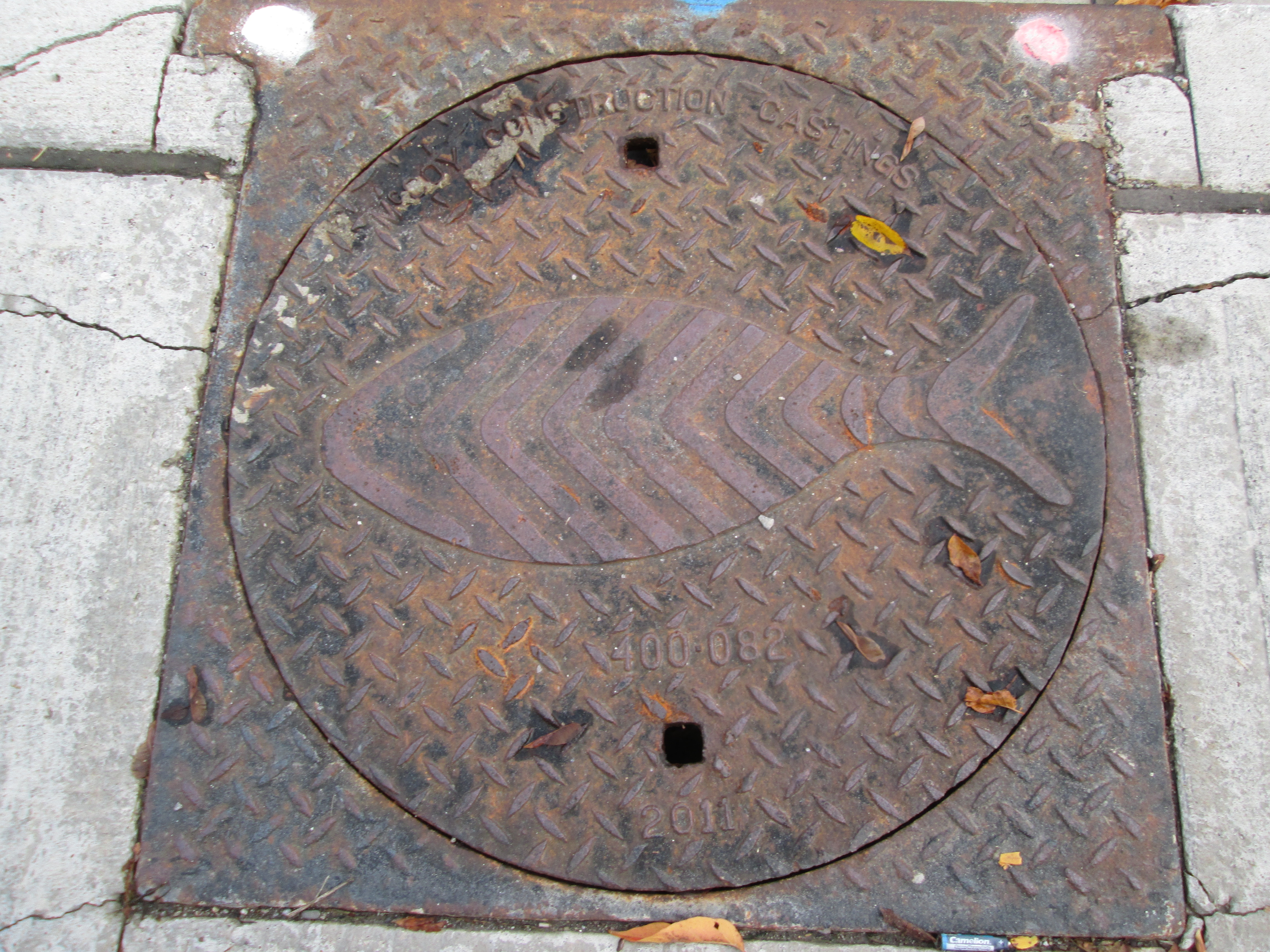
Access covers are one of many items that are usually dated and can therefore tell a little of the tale of a place.  Main street crosses the Credit near Timothy’s house.  At this point the name changes to Bristol Road in honour of Richard Bristol for his work in surveying the area.  Access covers usually indicate the date on which a road or bridge was built or restored.  The cover featured in the photo below is unique in the fact that it has a fish on it.  Dated 2011 it came from St. George which is near Brantford.  It is appropriate because this bridge is a suitable place to stand and watch the fall salmon run in the river.  We didn’t see any this week because the river was too dirty and cloudy.

IMG_0462

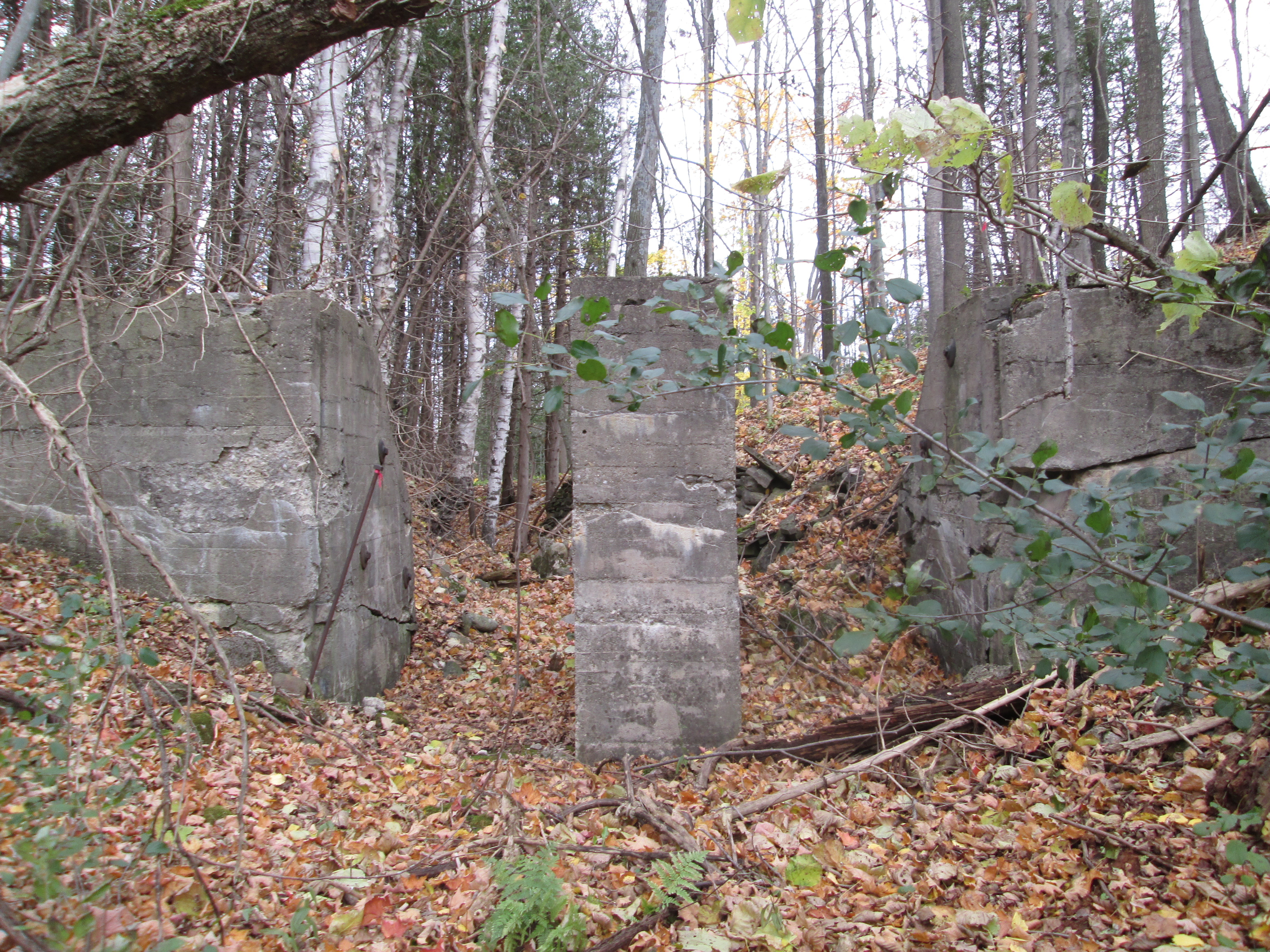
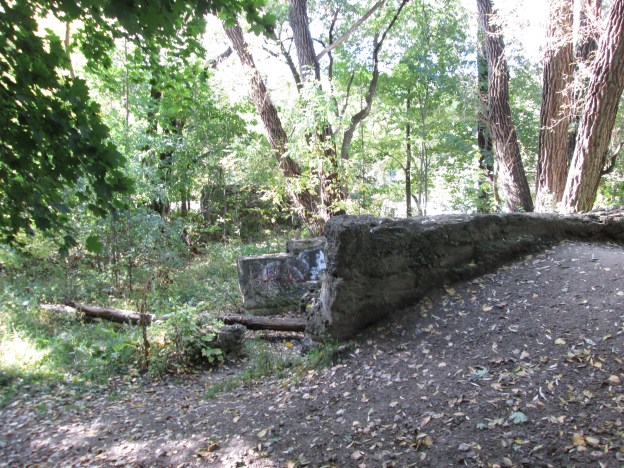
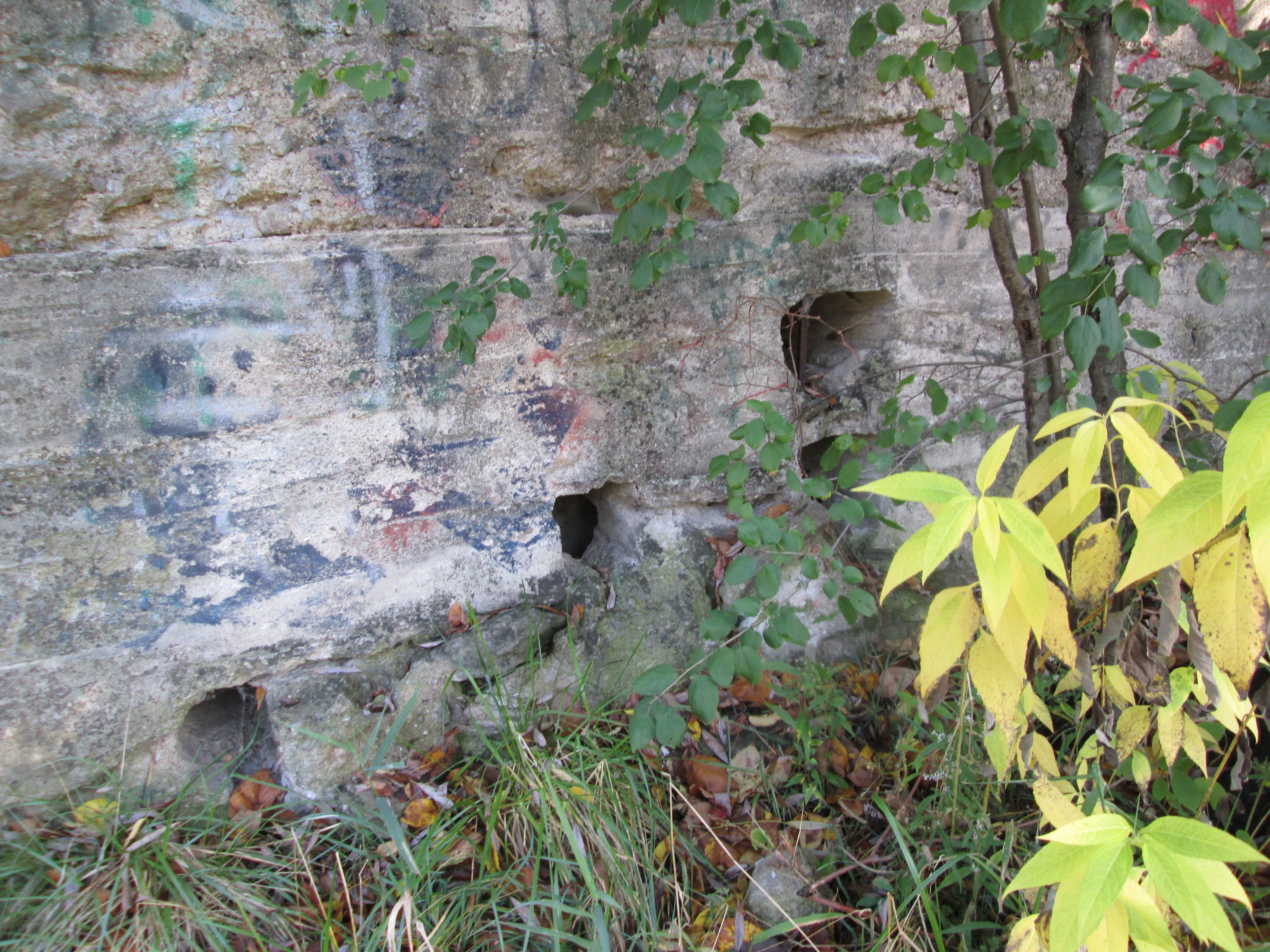
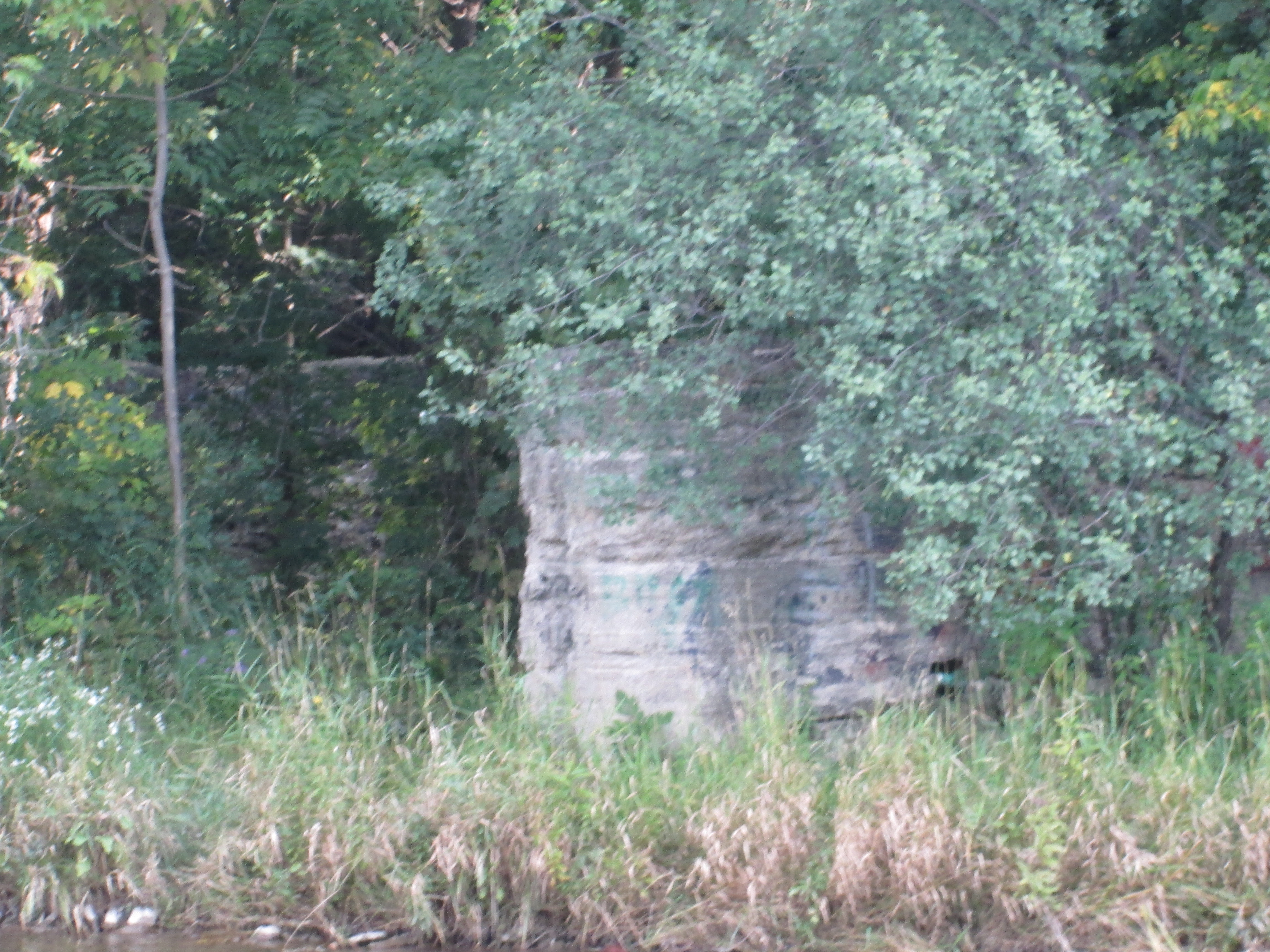
From the west bank of the  Credit River we had seen a set of foundations that we believed were another of the five mills that once lined the Credit River around Streetsville.  We went north in Timothy Street Park along the Culham Trail.  When we finally had a chance to check them out they appear to be a little less obviously mill foundations.  There are four thick concrete pillars which run in a slightly curved line with the first one beside the river, pictured below, having four holes formed in the side.  The fourth one abutting against an earthen mound has a mounting surface on top of it.  The mound behind it runs in a curved line off through the trees.  The cover picture shows the four pillars from the side of the mound looking out toward the river.  Large trees growing in places between them.  Having visited the site it is hard to see this as a mill.  It looks more like an unfinished roadway of some kind.  A member of the Streetsville Historical Society suggested that it may be related to Timothy Street’s mills but the use of concrete suggests a date around 1900 or later.

IMG_0478

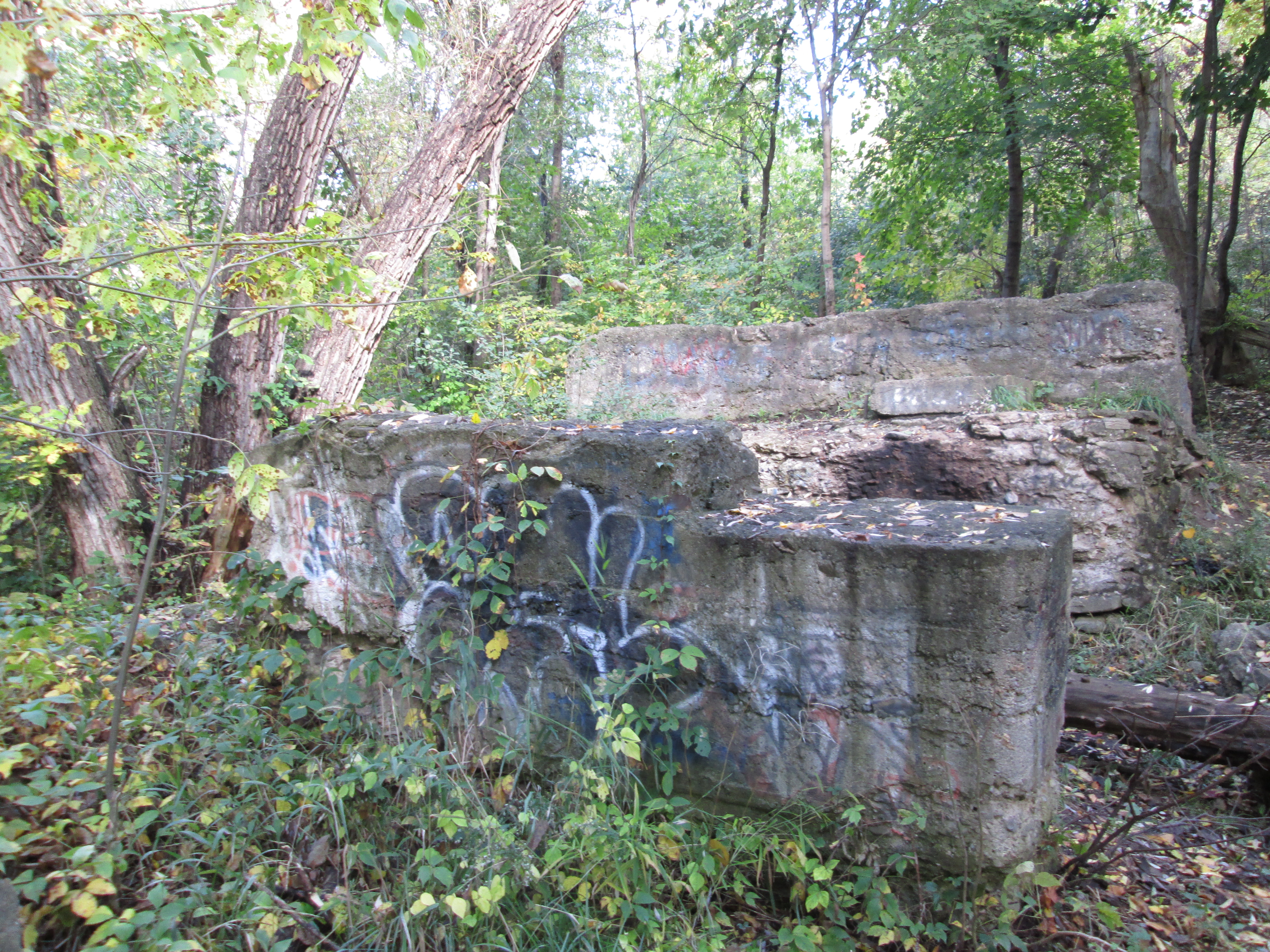
The picture below shows the third pillar in the foreground and the fourth behind it.  Notice the step down on the side of number three. The fourth one has a full ledge along the front as if something was mounted there. Forgotten by time and seemingly undocumented on the internet this project could be up to about 125 years old.  Older bridge supports would likely have been made of cut stone and not concrete. If anyone has any information about this artifact please feel free to leave a comment.

IMG_0488

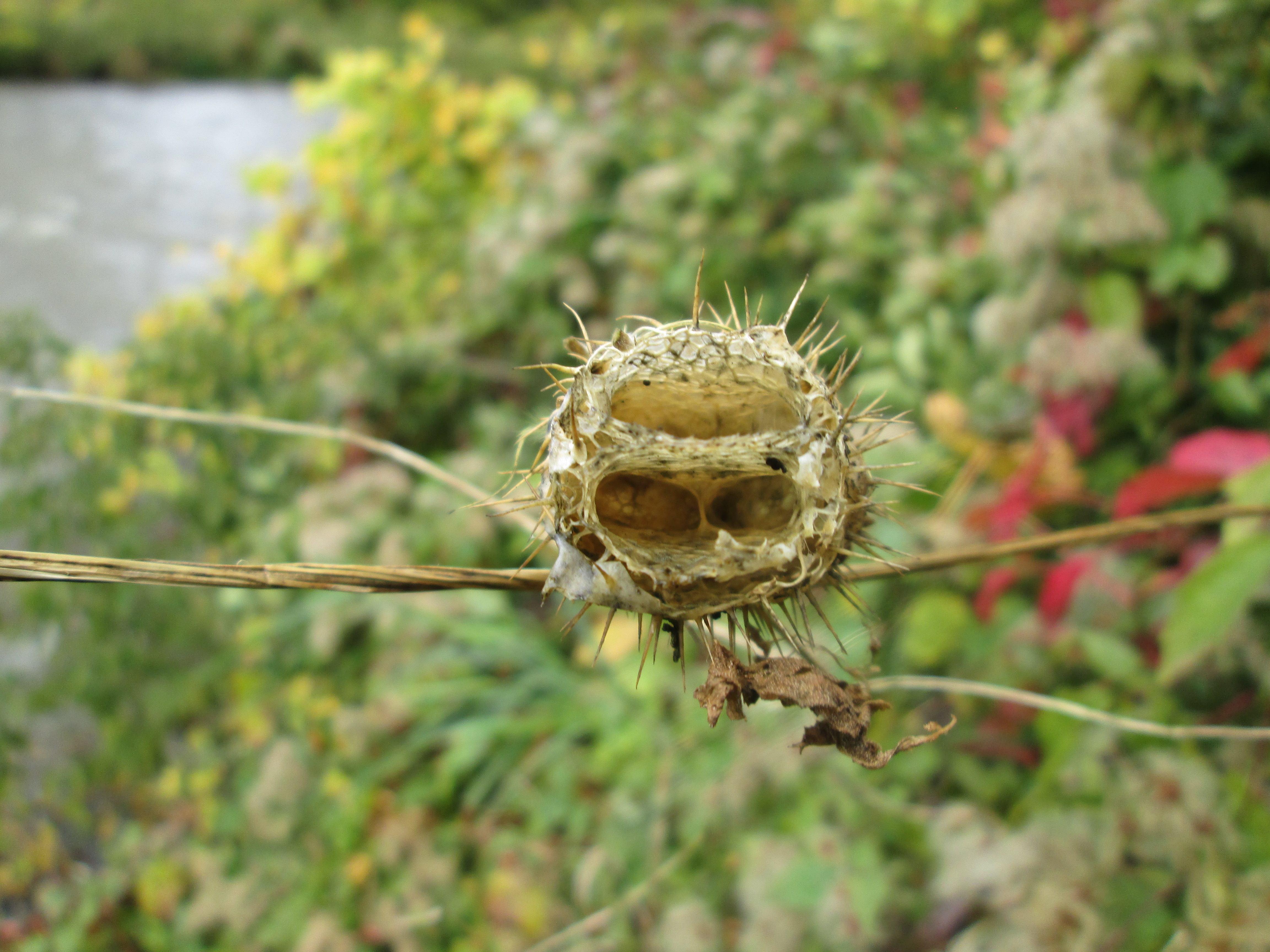
When we visited Riverside Park on Sept. 9th the wild cucumber were in full fruit.  A seed grows in each of four chambers inside the cucumber.  In the fall the bottom of the fruit literally pops open and the seeds are dropped out.  The plant dies off every winter and relies on these seeds to carry on the following season.

IMG_0517

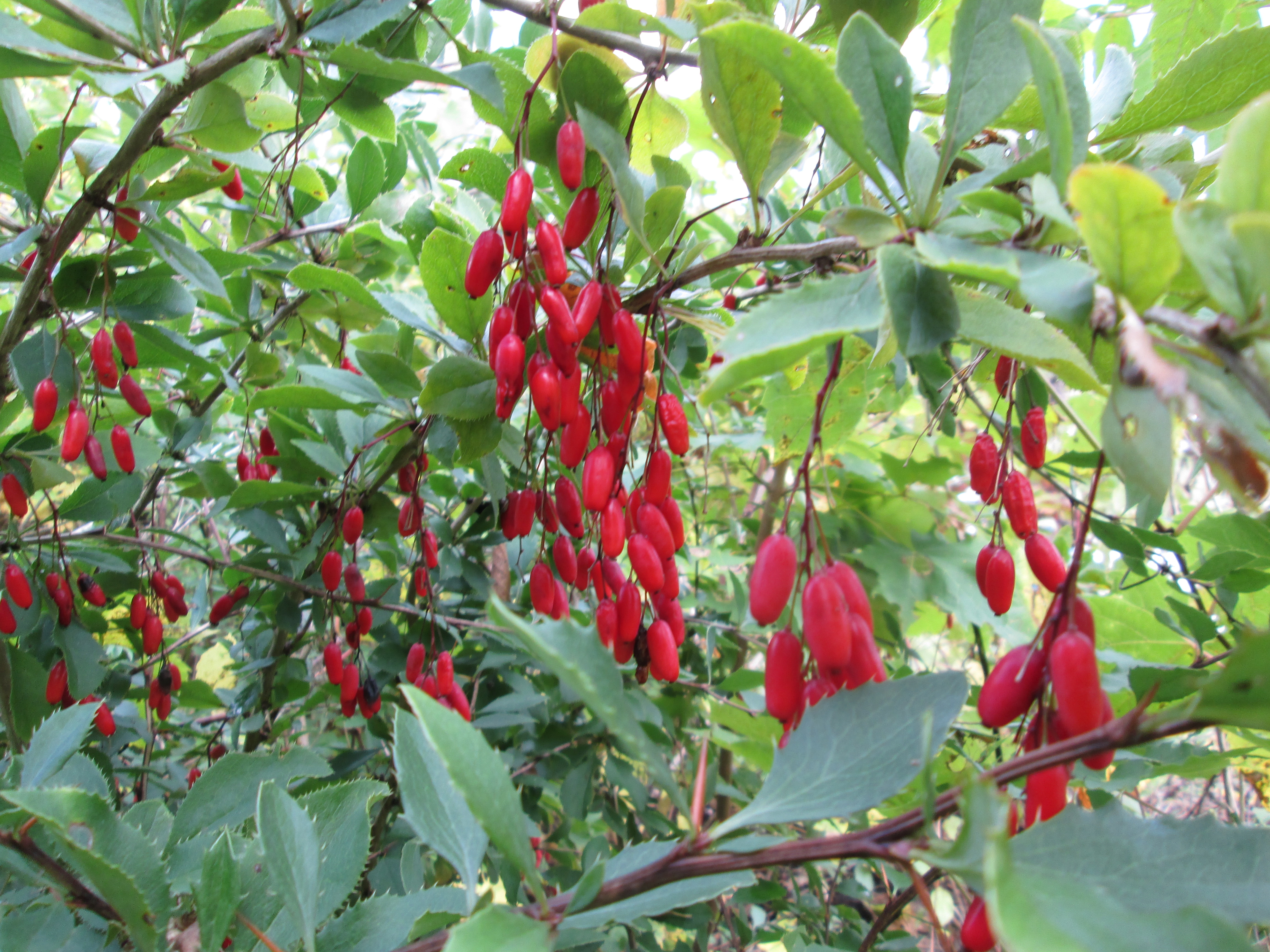
The fall is a time when many berries ripen.  Several types of berries last on the bush and provide food for birds that spend the winter here.  The red berries in this picture hang in clusters on a plant with serrated edged leaves.  After looking through countless sites dedicated to berries in Ontario, I have to conclude that this is not a native plant and that it has escaped from a garden somewhere.  One way plants can escape from gardens is when their berries are eaten and the seeds pass through the bird and remain viable.  A seed that gets dropped in a soil condition in which it can grow may be found miles from the original plant.

IMG_0555

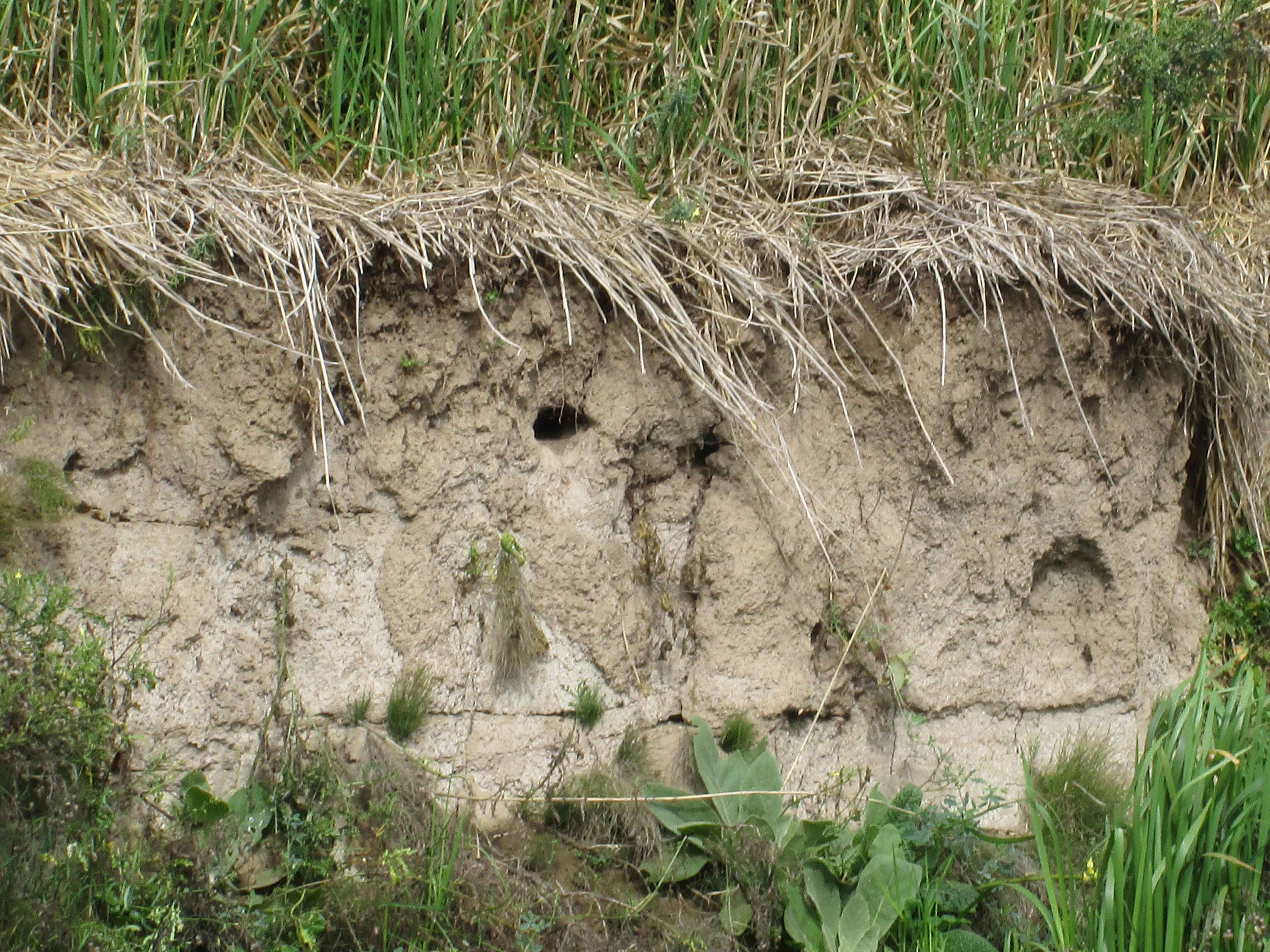
The male Bank Swallow chooses a colony to join.  Colonies are founded in areas of loose soils for easy digging.  The male will then select a site for his burrow which is normally about 2/3 of the way up the embankment to reduce access to ground predators.  The tunnel will extend about 2 feet into the soil where temperatures are more stable and here a larger chamber will be dug for the nest.  When the nests are complete, female Bank Swallows will hover in front of the nests to choose a mate.  The female will then collect the grasses to line the bottom of the nest where she will lay her eggs.  Several holes were seen along the river bank, one of which is shown below.

IMG_0546

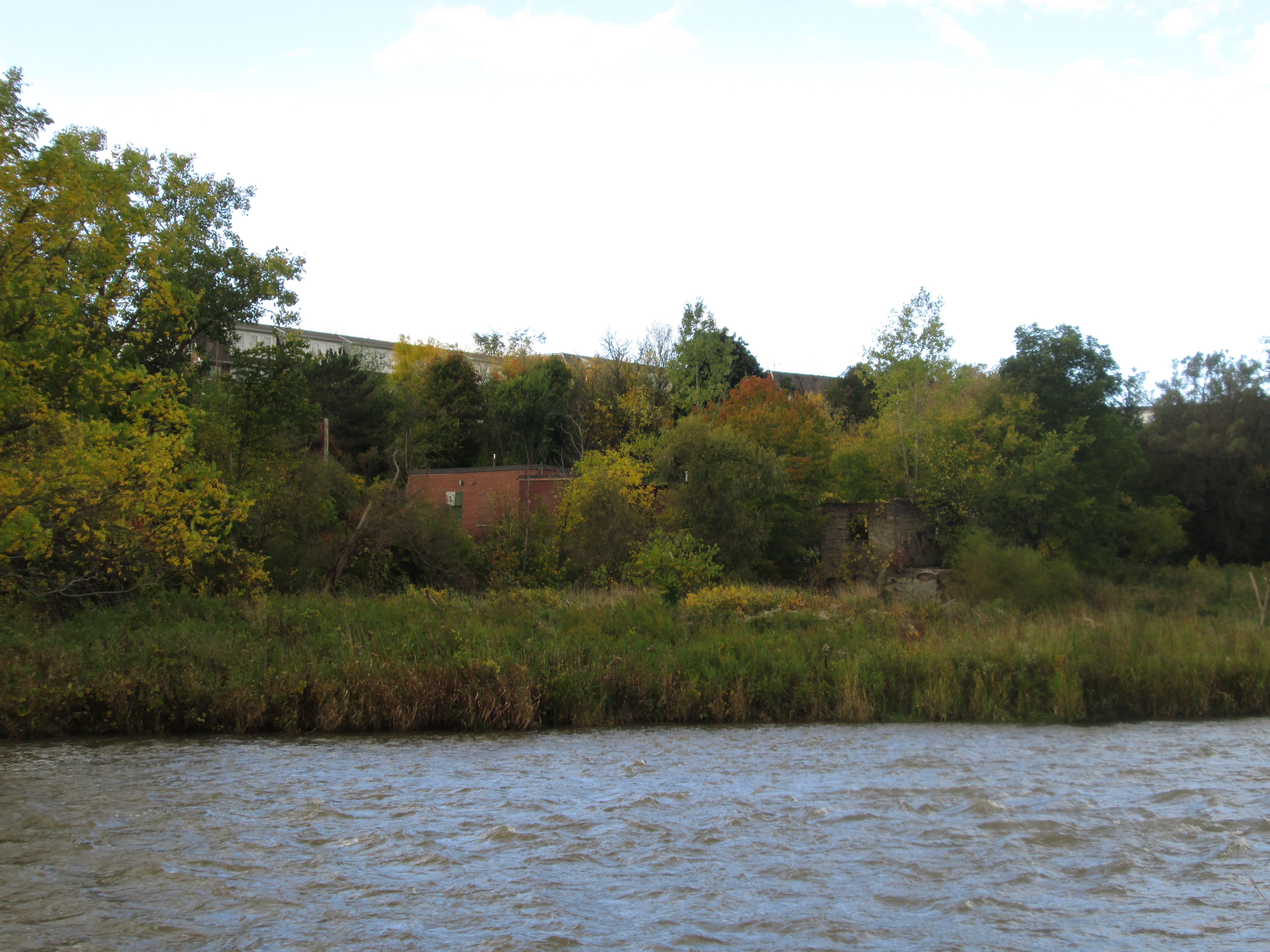
Here is another view of Hyde mills which clearly shows the 1840 part of the mill built of stone on the right (closer to the river) and the 1906 portion built of bricks on the left.  Having reached here we came to the most southern point on the Riverview Park hike a couple of weeks ago. This completes a section of the river but the mystery of the four concrete supports and the earthen wall remains, for now…

IMG_0534

Like us at http://www.facebook.com/hikingthegta

Follow us at http://www.hikingthegta.com
Hyde Mill Streetsville

Sat. Sep. 20, 2014

A beautiful morning for the final Saturday of summer.  We parked on Mill street in Streetsville. Taking the little trail that heads north on the west side of the Credit River we passed through and area where the young bushes were cropped off a foot off of the ground.  Deer had grazed as they made their way along the river bank.  We followed them toward the walls of an old mill we had seen when we were in Riverside park a couple weeks ago.

At the mill site water was diverted from the stream or mill pond to the water wheel by a small stream that was usually man made.  Where the water was brought to the wheel was called the head race.  The water wheel, or later a turbine, was used to transfer the energy from the falling water to turn the gears inside the mill.  This would drive the grinding wheels in a grist mill or the saw blades in a saw mill.  The water was then returned to the river by means of the tail race. We found the tail race to the mill and knew that it would lead us there.

IMG_0211

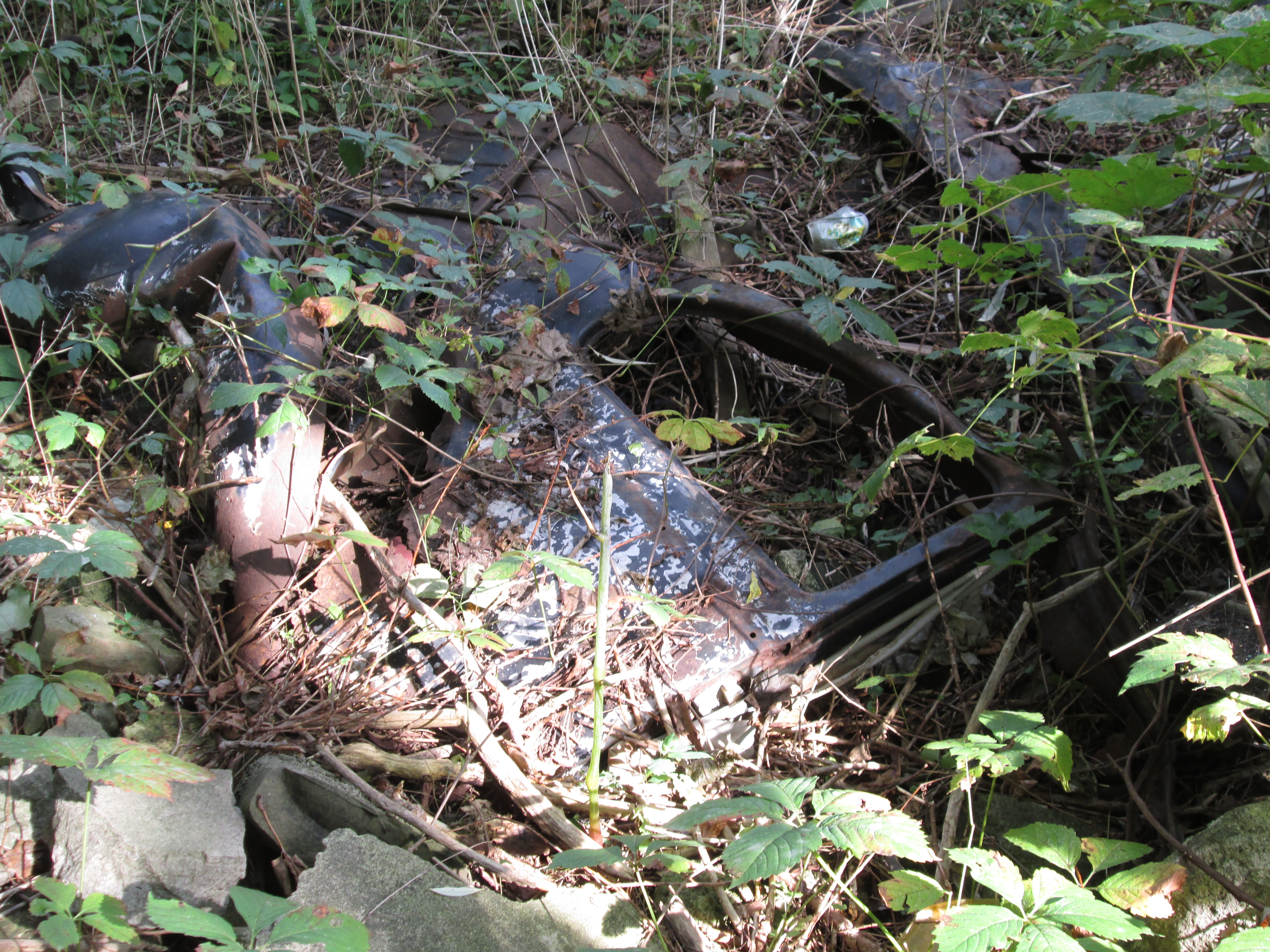
The remains of an old vehicle, likely a late 1940’s or early 1950’s, lay at the bottom of the hill. This car may have been here for quite a long time as it is damaged beyond identification.

IMG_0232

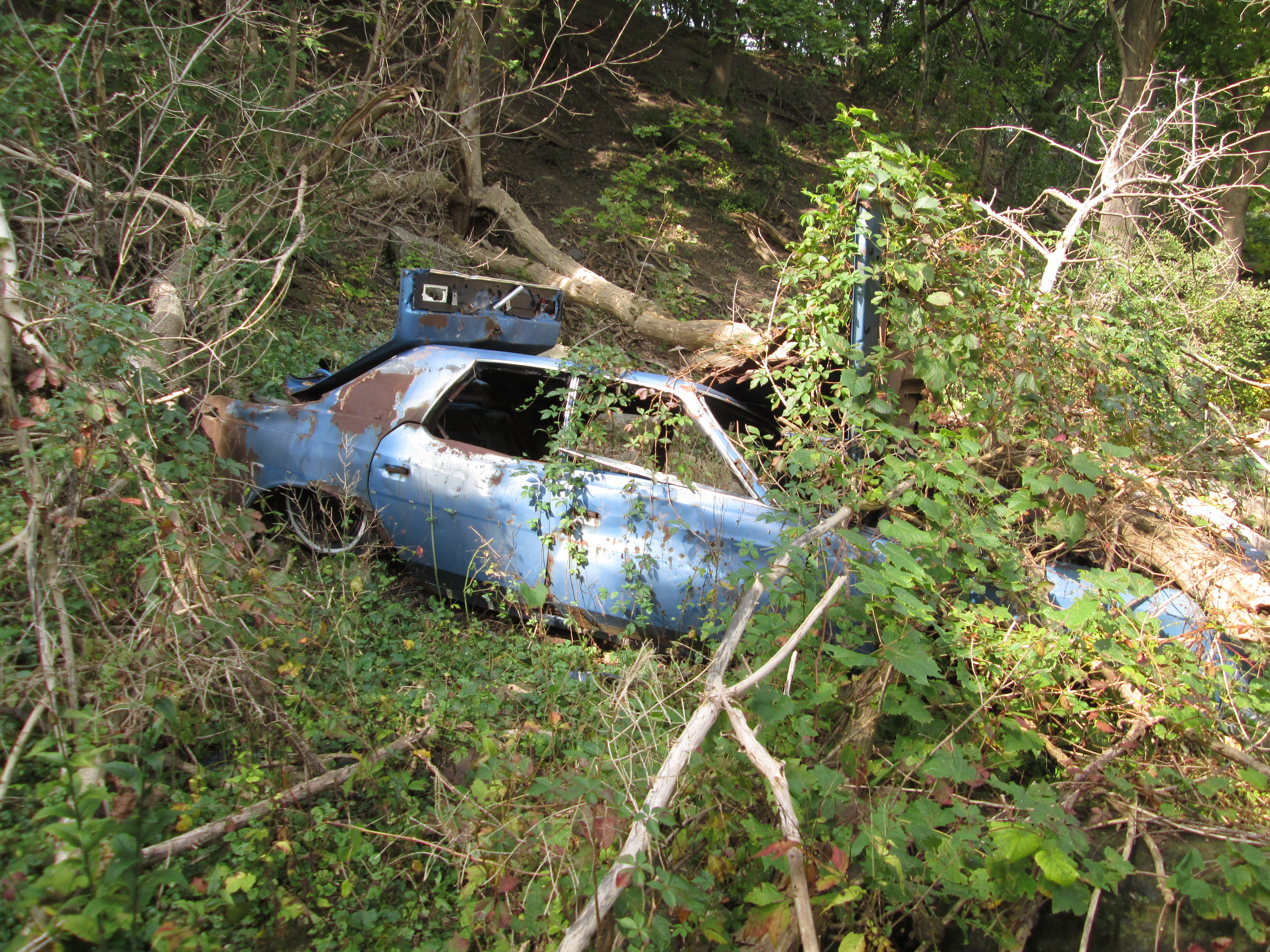
A second car lies decaying in the same area.  This car is in much better shape although it has been stripped clean of every usable part.  The trunk lid still contains an old decal showing how to use the tire jack.  From the part number on the decal we were able to identify this car as a 1977 Ford Galaxy 500.  These two vehicles must have been dumped down here before the trees grew up on the embankment above.  They may have been stolen and dumped down here or just abandoned here by their owners.  Either way, it is hard to see why they were left here and not removed by the city.  There is now a new acronym for those wishing to make fun of Fords. (F)ound (O)n (R)iver (D)rowned.

IMG_0249

The car in the foreground of the picture below shows what the Galaxy 500 would have looked like when it was new.

77FordLTD

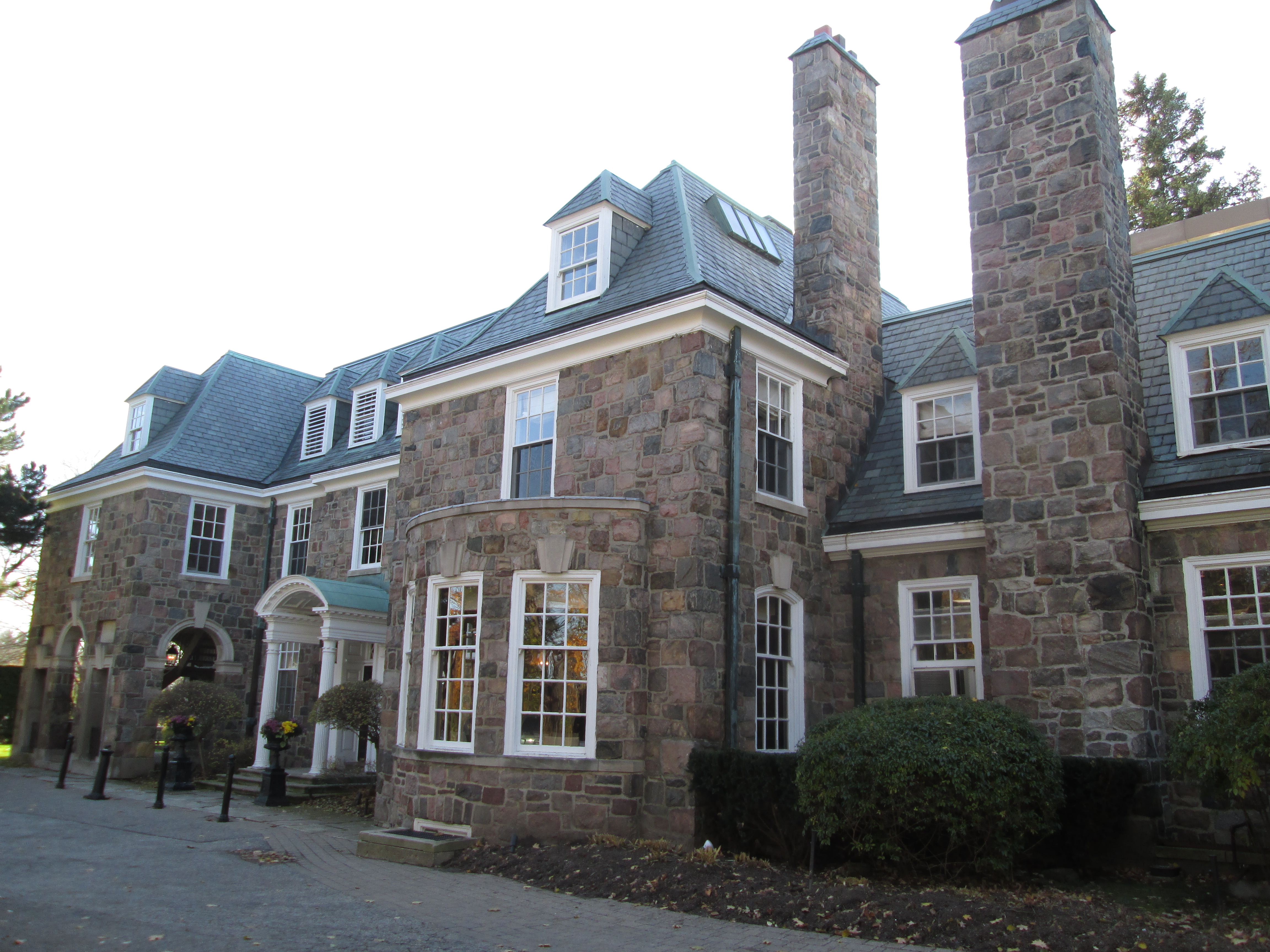
Heman and Mary Hyde ran a large inn at Church and Main street for 40 years and this, along with proceeds from their saw mill, placed them among the wealthy in early Streetsville.  Their son, John “Church” Hyde, built his own little merchant-miller empire.  By 1840 he had built a mill on the west side of the river near the end of Church street.  The mill expanded into a saw and grist mill, cooperage and stave factory.  Staves are the thin wood boards which were used by a cooper to make barrels.  He also built quarters for his workers at the mill site.  In 1906 the mill was converted to produce hydro electricity for the town of Streetsville.  It was Ontario’s first municipally owned power plant.  The plant continued to be the source for power for the town until 1943 when Streetsville joined Ontario Hydro.  The plant continued to provide auxiliary power until 1960 when it was shut down.  In the photo below are two tunnels under the building where water was used to turn turbines.

IMG_0262

There are two holes where shafts from the water turbines came up from these water tunnels below.

IMG_0279

A steam pipe like the one below helped us to locate the Millwood Mills during a hike back in June.  This also helps to identify this part of the mill as being of the newer 1906 construction.

IMG_0289

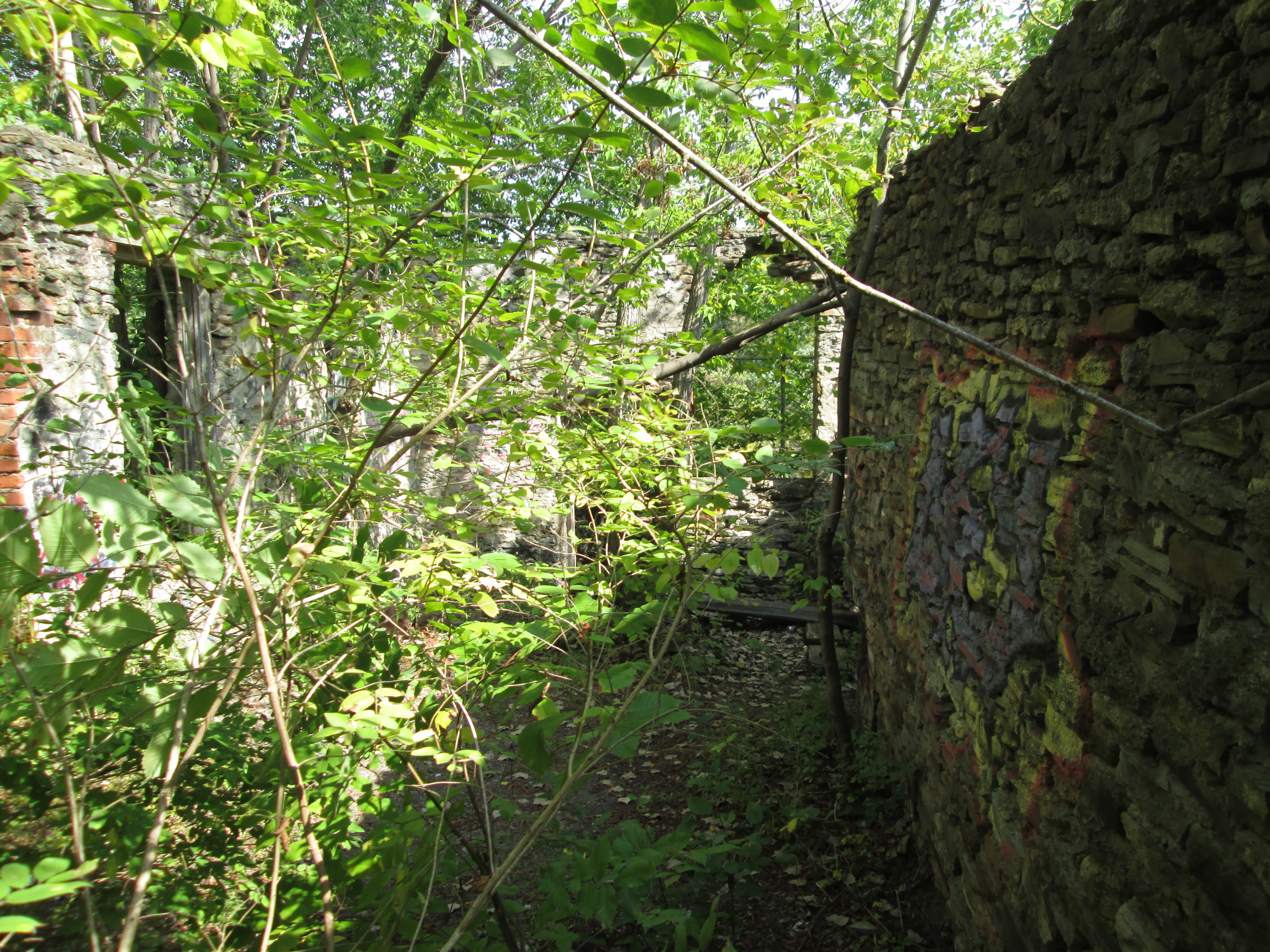
The mill is designated as a heritage site because of the remaining door and window frames which can be seen in the cover photo.  Since it is now intended to be preserved I find it odd that the interior of the mill is allowed to become overgrown with small trees. In a few years these trees will push over the walls and ruin this historical building.

IMG_0291

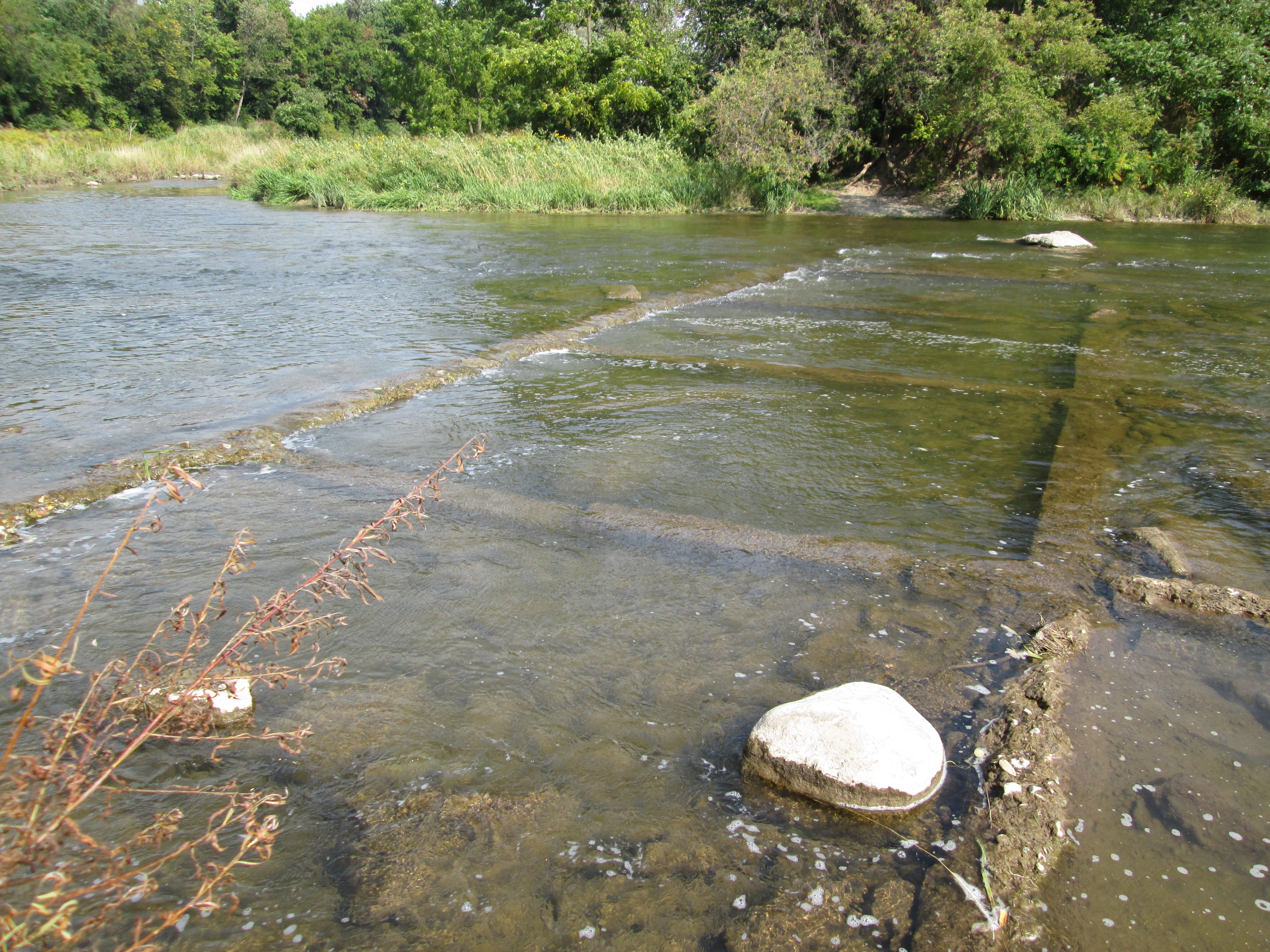
When the mill was restored in 1906 a new dam was built across the Credit River.  The foundations remain in a pattern of squares on the river bed.

IMG_0295

Fall would officially begin a day later, but there was a hint of colour coming in some maple trees already and the sumac trees are bright red.  Fall’s showcase of beauty is about to begin.


IMG_0175

As we had hiked up the west side of the river we had seen the remains of yet another mill, this one on the east bank of the Credit river.  Hmmm….

IMG_0197

Google Maps link: Hyde Mill

Like us at http://www.facebook.com/hikingthegta

Follow us at http://www.hikingthegta.com


Forks Of The Don

Sunday, Sep.. 14, 2014

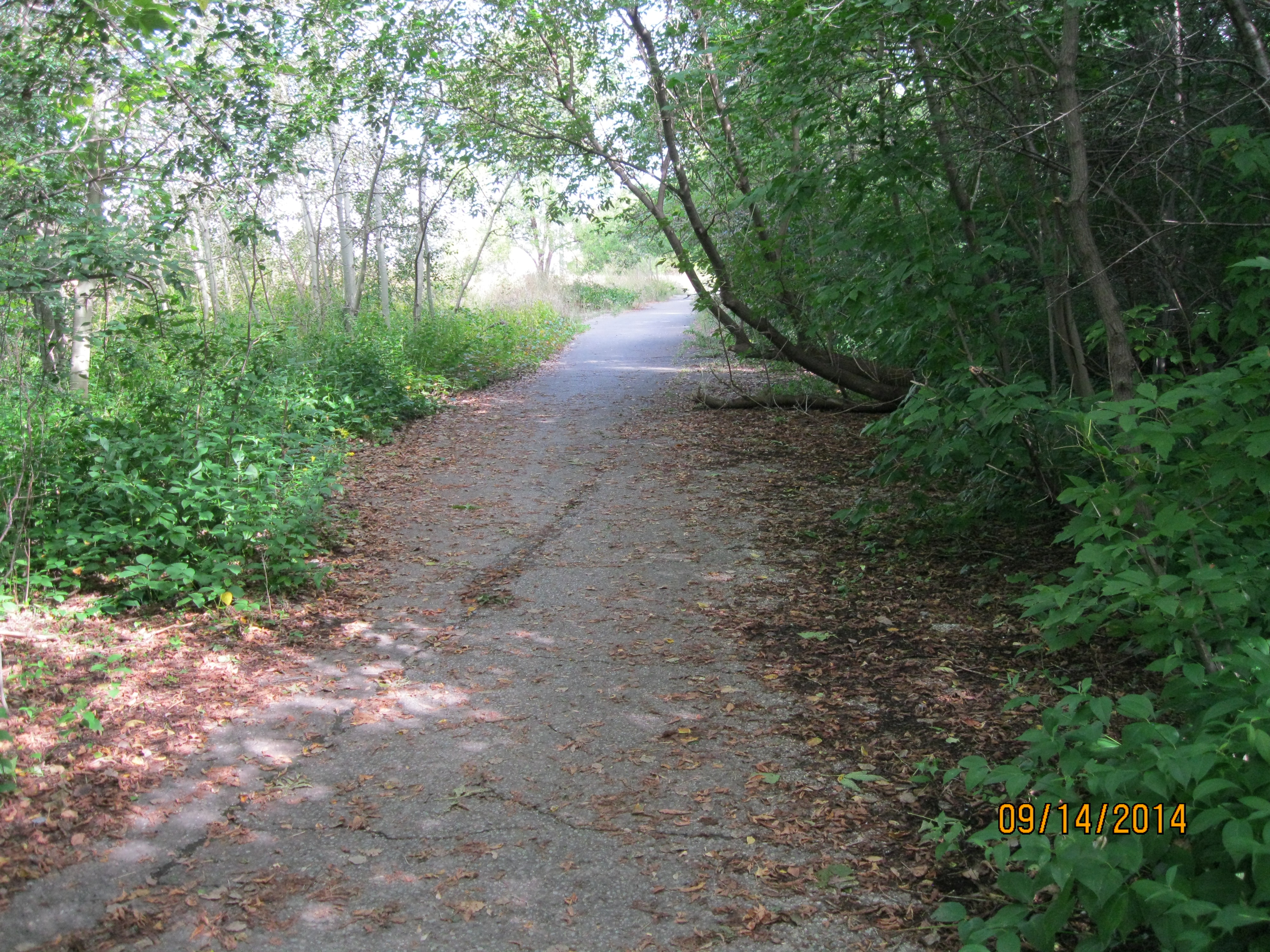
Sunny and warm with a temperature around 16 degrees.  My seventh wedding anniversary and a few minutes for a short walk while my wife gets ready to go out with me for dinner.  I parked in E. T. Seton park off of Thorncliffe Park Drive.  Taking a left when you reach the bottom of the hill will bring you across an old bridge and into a parking lot.  This parking lot is on the site of several former buildings.   The bridge crosses the East Don River and right beside the bridge is a trail that goes down and under the old rail bridge.  Soon you will hear rushing water which tells you  that you have come to a waterfall at an old dam.
In 1846 the Taylor Brothers built a paper mill near this dam to join the saw and grist mill already here.  This became known as the upper mill.  The Taylor’s had two other paper mills.  The middle mill was just above Todmorden and the lower mill was at Todmorden.  Mid-nineteenth century paper was often made out of rags.  Homespun wool and cotton was mixed with straw and jute and cooked with soda and lime.  It was then washed, drained, pressed and dried to be made into various paper products.  All traces of this operation have either been removed or are hidden in the tall weeds.  At least the old mill dam is still easy to find.
IMG_3347

The Don river is divided into the East and West and just south of Overlea Blvd., right where Don Mills Road crosses the river,  is where they meet.  The forks of the Don can be approached from either bank as well as the little point of land that juts out between where the branches meet in the picture below.  The cover photo features the dam from between the East and West Don.

IMG_3348

Don Mills road was named for the saw and grist mills that it provided access to.  Originally it ran from the mills at the forks of the Don down to Parliament street.  It was later extended as far north as York Mills road, passing through various people’s well established land grants.  Since this road was independent of the actual mandated road allowance it was called the Independent Mills Road for a time. More recently it has simply been known as Don Mills Road. When it was widened to four lanes in the 1950’s a section south of Gateway Blvd leading down the hill was abandoned.  It remains today as part of a trail and a parking lot at the bottom of the hill.

IMG_3352

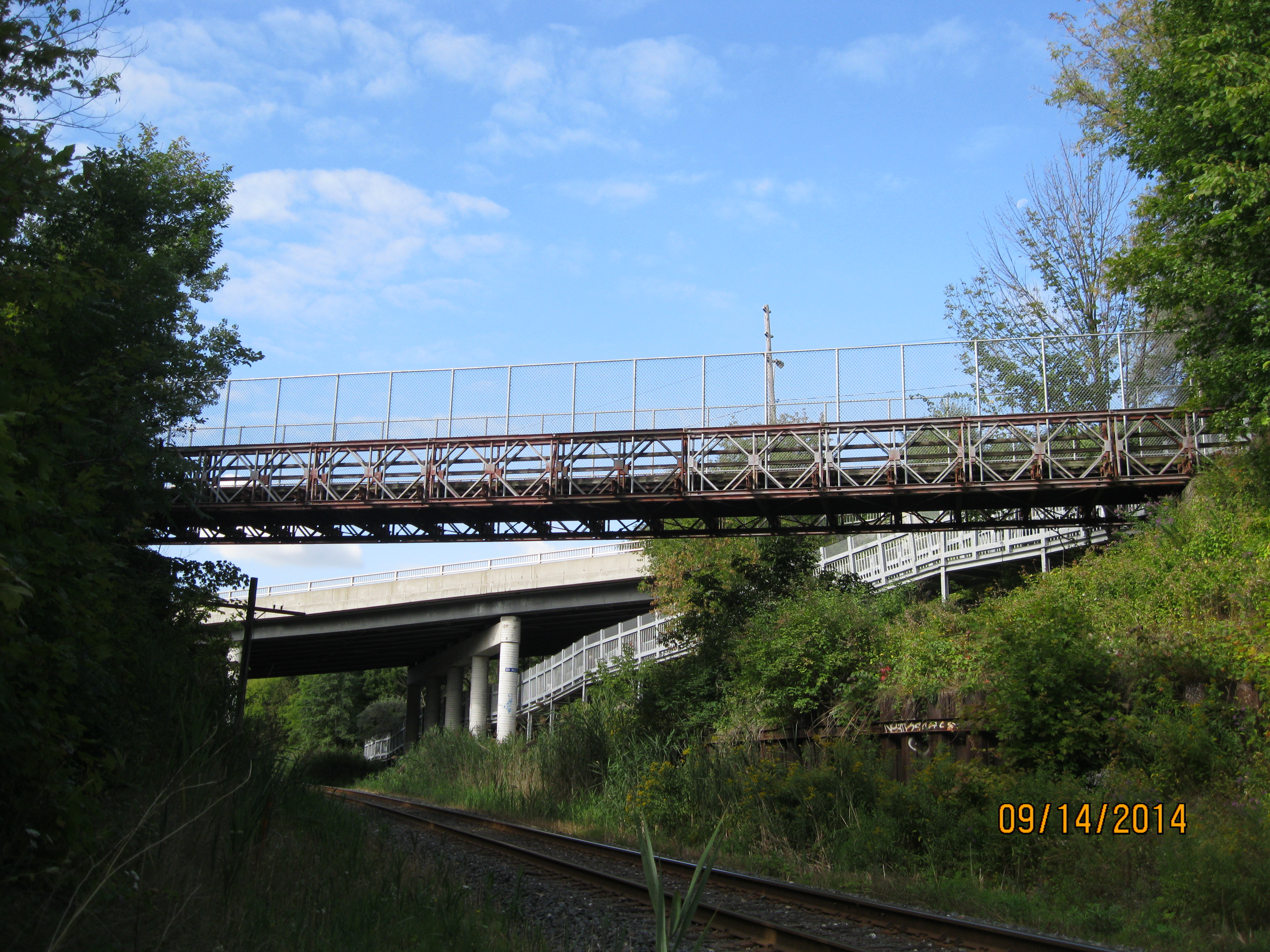
The old Don Mills bridge now carries a trail instead of a road across the railroad tracks. The bridge is constructed of steel beams bolted and pinned together.  I arrived here while the Terry Fox run was going on.  Crossing this bridge I could feel the sway caused by the runners as they pounded their feet.  It must have been interesting when cars and trucks were crossing here. The new Don Mills Road bridge can be seen in the background.

IMG_3353

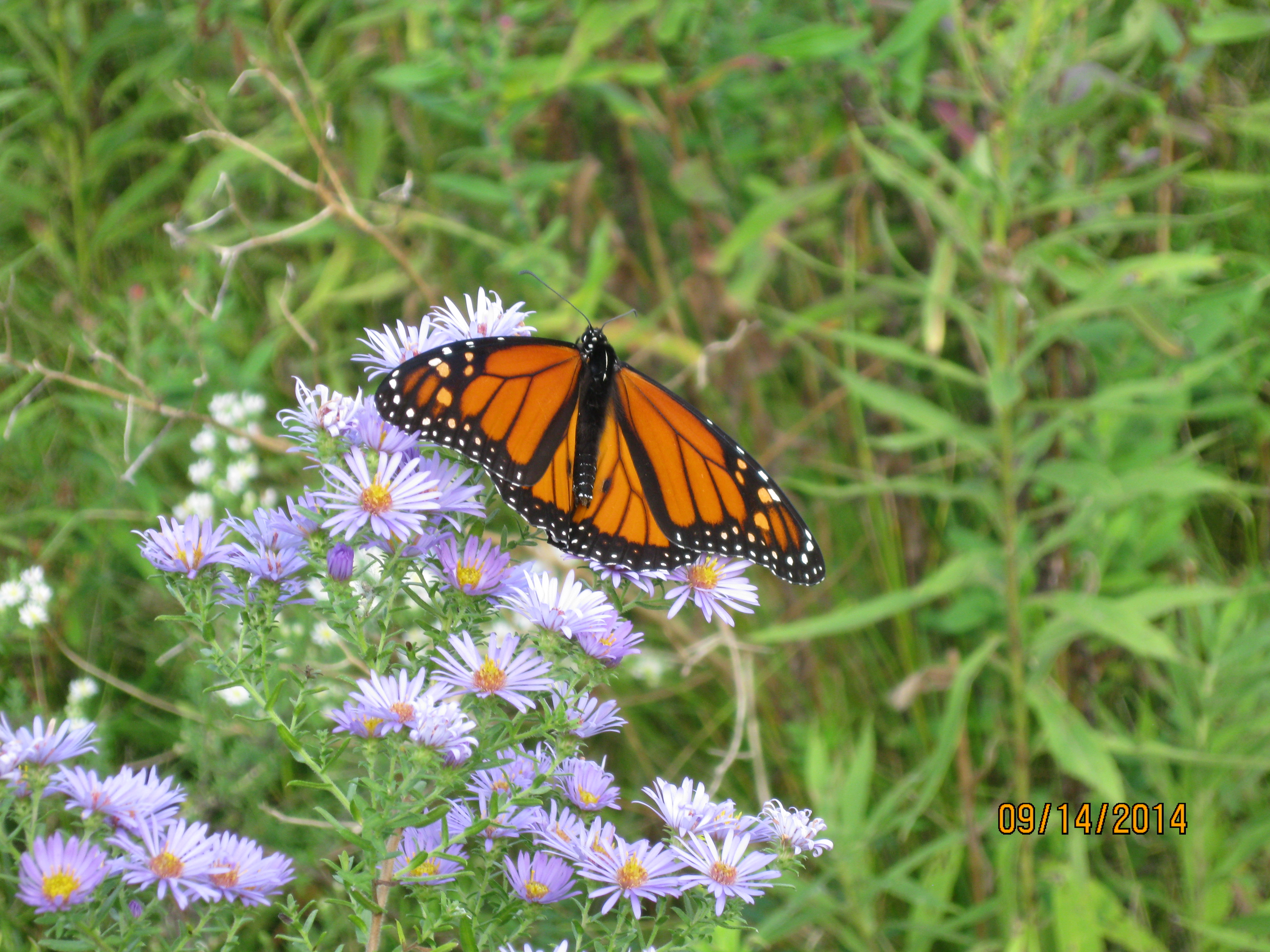
Monarch butterflies are likely the most commonly known species of butterflies in Ontario.  They migrate south each winter to central Mexico.  Point Pelee Park is the most southerly point in Canada and on Sep. 17, 2014 (2 days ago) they reported over 2,000 monarchs spent the night in the park on their way south.  From this they estimate that populations will be up next summer. The butterfly in the picture below is a male.  Male monarchs have two little black spots on their rear wings (seen near the back end of the body) that are used to release a scent to attract the females.  Monarch’s taste bad due to a chemical in the milkweed they eat and that provides them with protection from being eaten by birds.  Another type of butterfly that looks almost identical is the Viceroy.  Viceroy’s are slightly smaller and have a second black ring around the back of their rear wings.

IMG_3361

Visit us at http://www.facebook.com/hikingthegta


Credit Meadows Park

Saturday Sep. 13, 2014

A rainy Saturday morning and only 11 degrees.  We parked in the parking lot on Creditview Road just north of where the Credit River crosses near Britannia Road.  This is the second lot north of Britannia and was home to Ephraim Steen who lived here from 1842 until he died in 1921.  Ephraim also owned land on the other side of Creditview as well as the land where Riverside Park and subdivision now stand in Streetsville.  This lot of land was taken over by the conservation authority in the late 1950’s and named Credit Meadows Park.

We didn’t wander too far from the cars but there is always something to see.  There is frequently one or more great blue herons that like to fish on either side of the bridge. We watched one feed across the river from us.  Herons in this part of the Credit are likely feeding on Blacknose Dace which are one of the most common minnows in the river.

IMG_3252

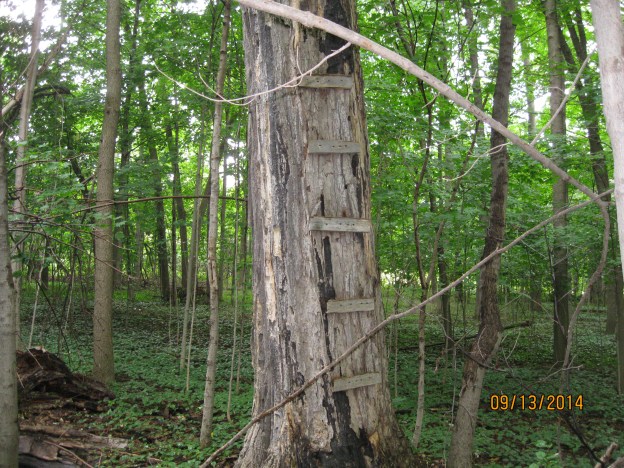
Near the parking lot is a stand of mature trees which includes several old black walnut trees. They can live for 130 years and attain heights of 40 meters.  The tree in the cover photo has had a tree fort built in it many years ago but only the ladder remains today.

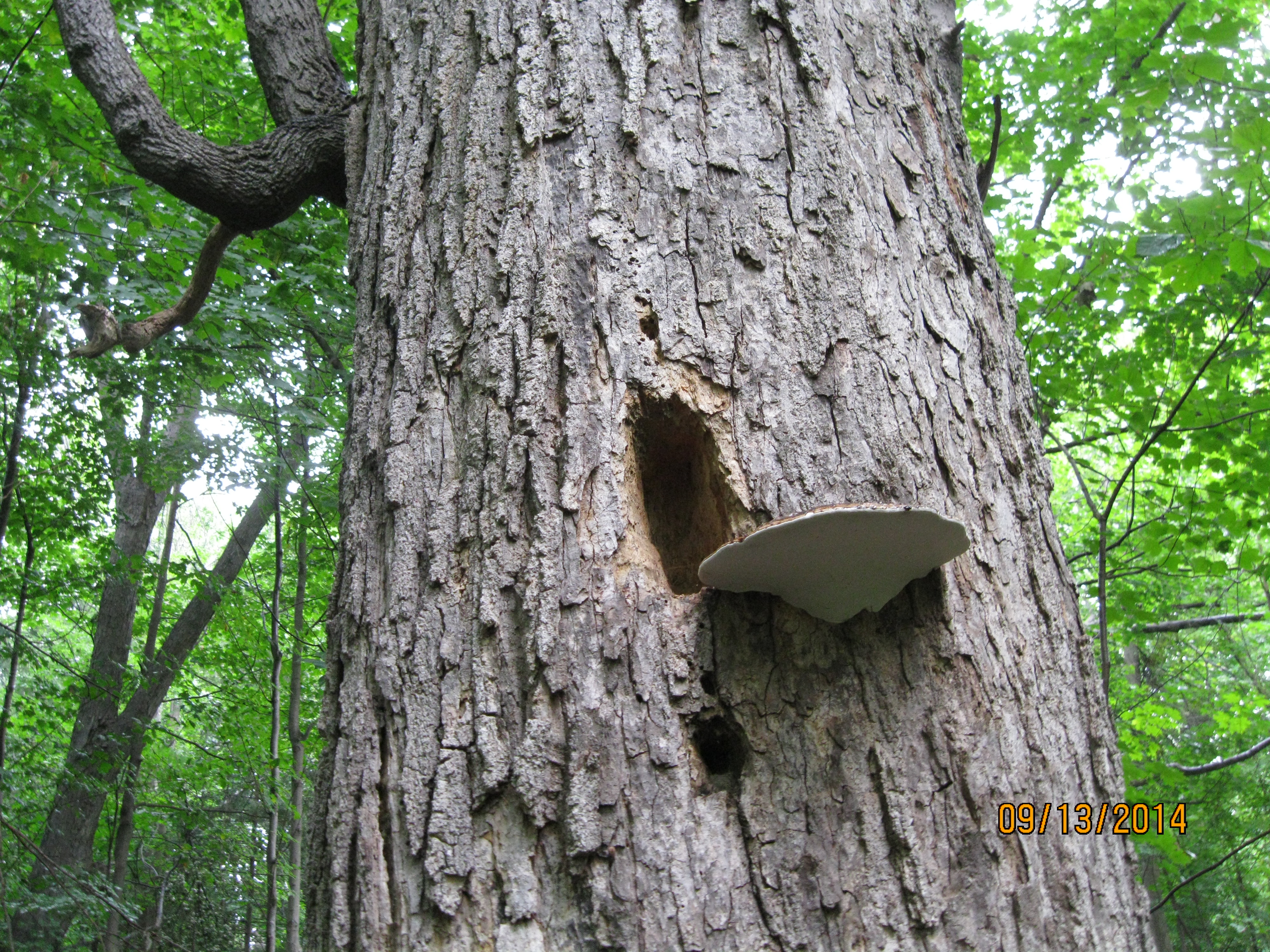
Pileated Woodpeckers feed on beetle larvae and ants that live in trees.  They are known to bore out large, roughly rectangular, holes in trees while searching for food.   The tree in the picture below features a shelf mushroom just below the woodpecker hole.  These mushrooms are also known as The Artist’s Conk.  They have a soft white underside that is perfect for carving in. When they dry they become as hard as a piece of wood and can last for many years.  They usually will stand up on the flat side where they grew on the tree.  They can grow to be 50 cm in length by 30 cm wide.

IMG_3261

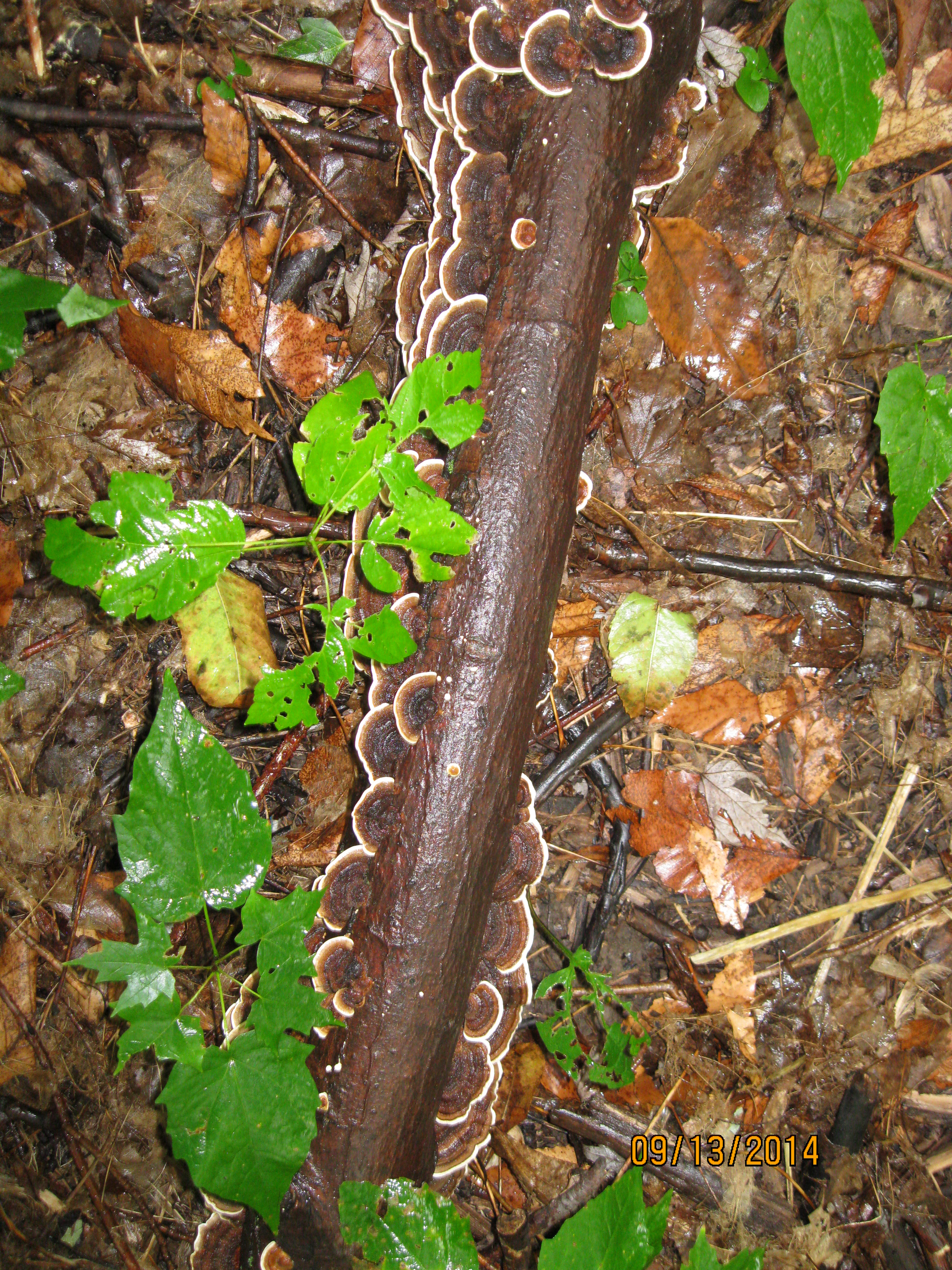
We found a branch growing a fungi called Turkey Tail.  Turkey Tail grows on fallen hardwood. This fungi is known for it’s medicinal properties especially as a supplement for conventional cancer treatment.  It is helpful for overcoming the side effects of chemotherapy.

IMG_3294

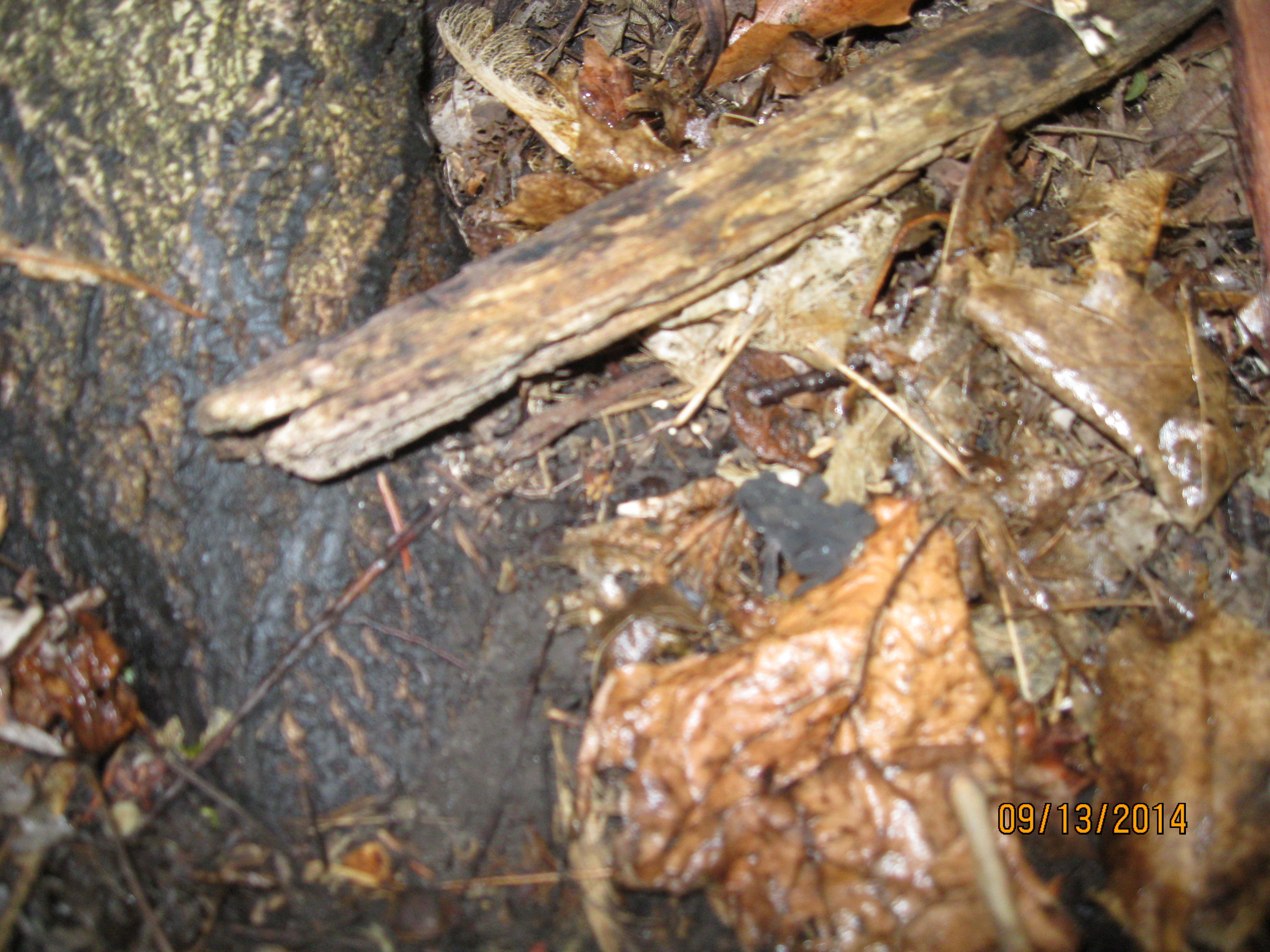
Wood frogs are easy to miss as they blend in well with their surroundings.  The small specimen in the centre of the picture is only a couple of centimeters long.  Wood frogs winter close to the surface and have the ability to withstand being frozen and thawed many times during the winter.  They convert their body fluids to urea and glucose, both of which don’t freeze as easily as water.

IMG_3307]

Wild Grapes, also known as River Bank Grapes have been climbing the larger trees in GTA parks for many years.  They can reach the tops of the largest trees and are capable of smothering the tree and killing it.  The woody vine can be several inches thick where it sprouts from the ground. The vine in the picture below is about four inches thick and easily supports the weight of an adult.  My picture of a Canadian Tarzan, however, will have to remain in my personal collection.

IMG_3314

This mushroom is known as a Dung Loving Bird’s Nest.   When mature they have a cap that has a few spore capsules that look like eggs in a bird’s nest.  It is designed to use the force of falling rain to distribute it’s spores and can throw it’s spore capsule up to two meter’s with the force of a single raindrop.  These mushrooms have already launched their spores.

IMG_3329

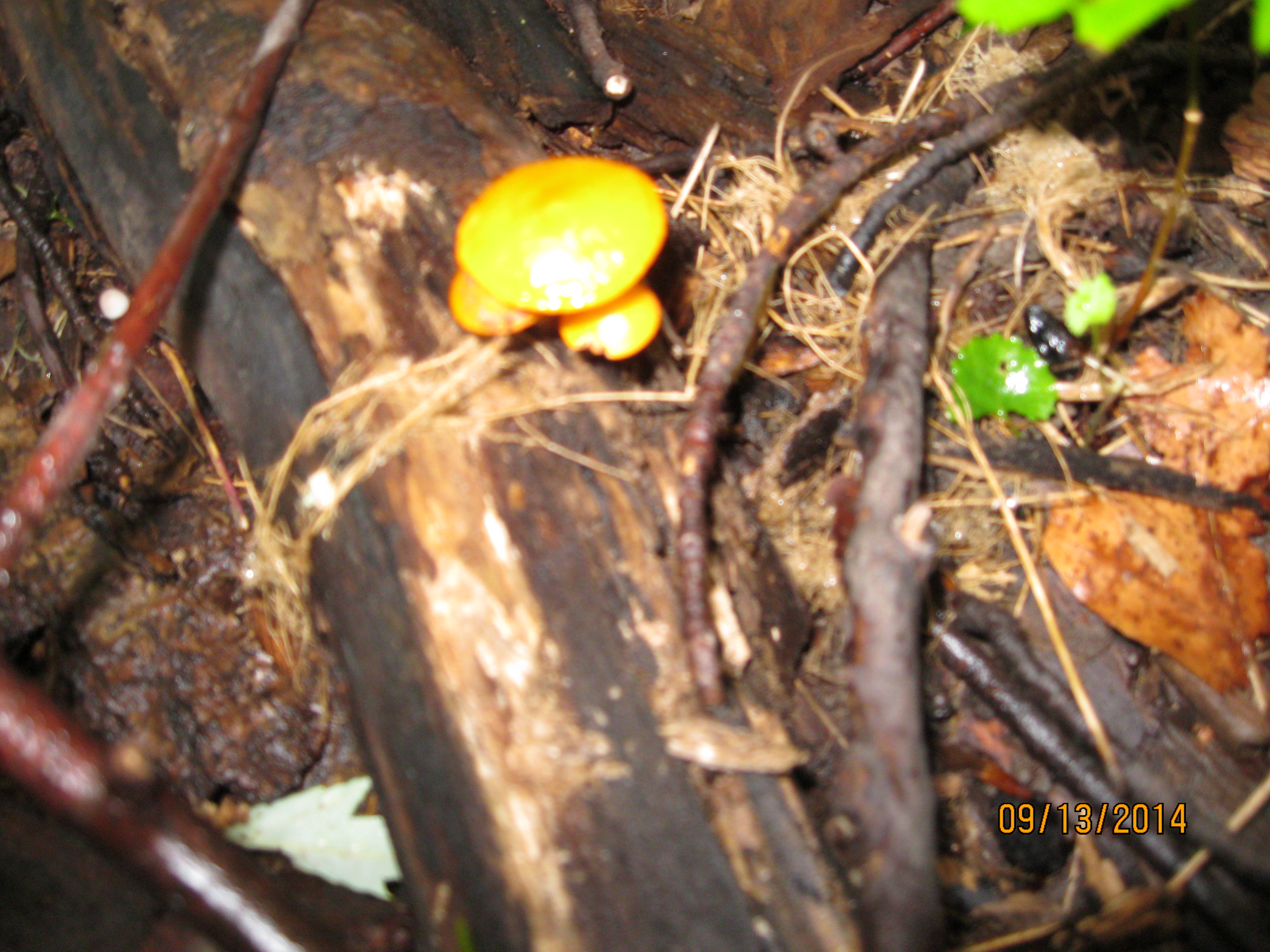
The Yellow Waxcap mushroom is edible but is not recommended as there is a poisonous mushroom that looks very similar.  They appear in late summer and there were many of them scattered throughout the woodlot.

IMG_3331