Tag Archives: Rouge River

Scarborough Railpath Trail

May 11, 2024

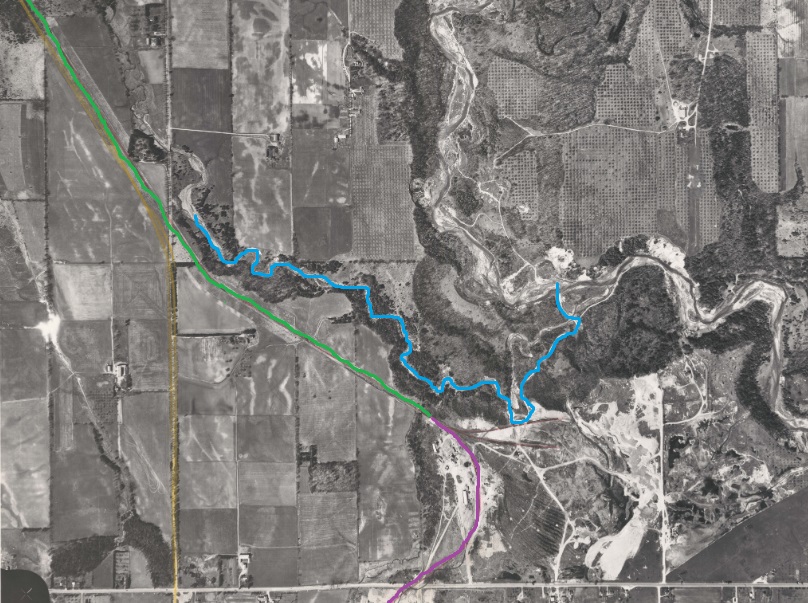
The Scarborough Railpath, also known as the Upper Rouge Trail, is a 2.3 kilometer trail that runs from Upper Rouge Trail to Sewels Road. It follows the right of way for a short rail line that used to run through Scarborough. There is little about this rail line on-line but it is likely a spur line and appears in aerial photography dating back to the 1940s. The image below is from the 1961 aerial photographs on the Toronto’s Archives website and shows the part of the right of way that is in use as a railpath marked in green. The section marked in purple has been lost beneath urban development. Morningside Creek has been marked in blue as it makes its way to the Rouge River.
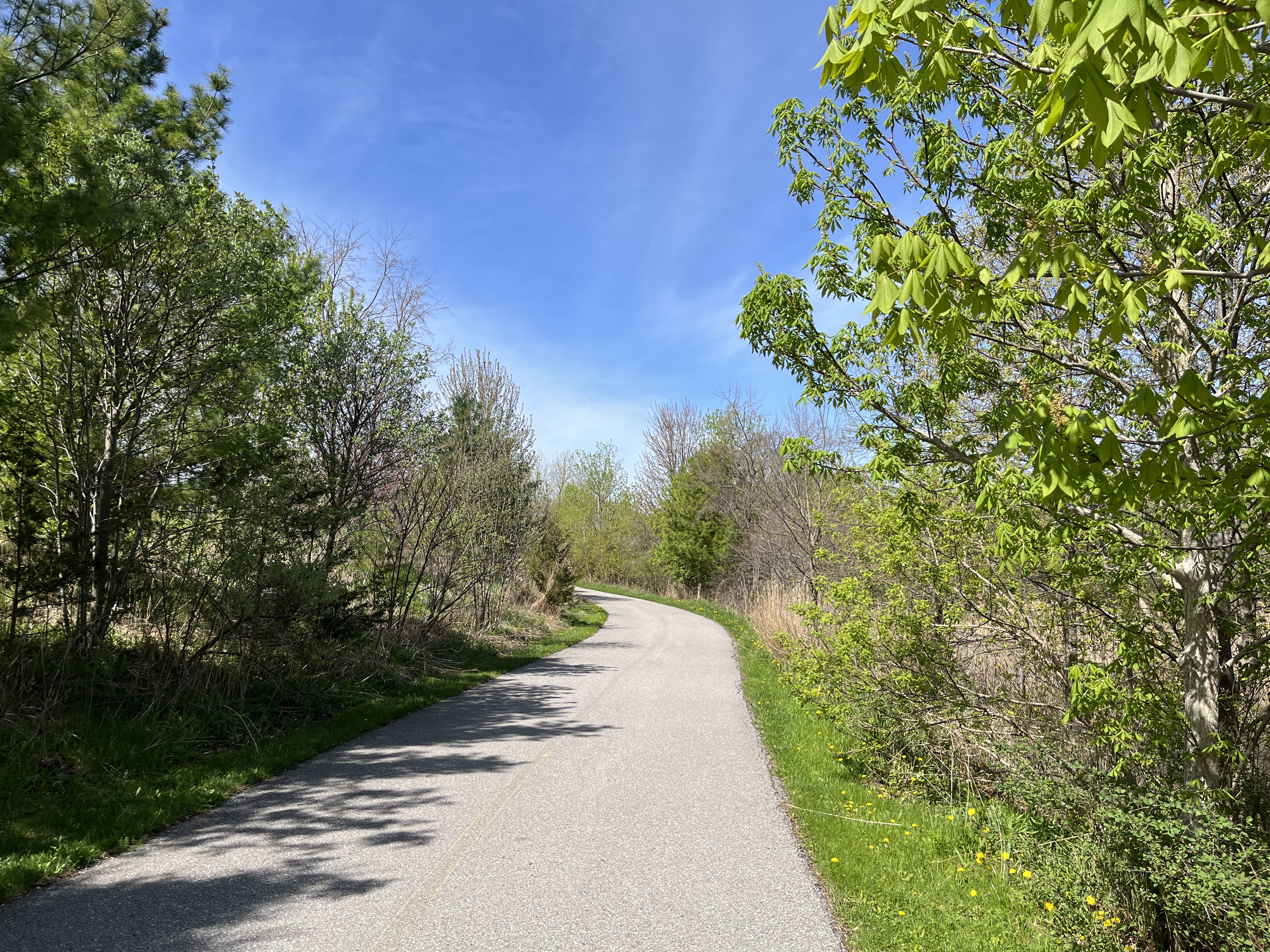
The trail has been paved and, as an old railway, it is relatively flat. It is suitable for use by everyone and is commonly used for cycling, jogging and dog walking. I had the opportunity after visiting a client in the area to take a walk on the trail on a Monday morning.
There were several Six Spotted Green Tiger Beetles that kept flying and landing a few feet in front of me. They love to sit in the sunshine on trails or logs and wait for their prey to come along. They don’t generally bite humans unless they are handled but have a huge appetite for spiders, ants and caterpillars. These beetles have a lifespan of up to three years but when you include the time they spend as larvae they can live for almost 5 years.

There were several species of butterflies to be seen along the walk. I saw a Mourning Cloak, Clouded Sulfur, Cabbage White, Eastern Tailed Blue and several Red Admirals. The Red Admiral, pictured below, is a relatively calm butterfly that is easy to photograph because they will allow you to get pretty close before they fly away.

Animals can generally be split into two groups. Endothermic and Ectothermic. Endothermic animals are the ones we call “warm blooded” and are capable of generating internal body heat. Ectothermic animals are “cold blooded” and must rely on external sources of heat such as basking in the sunshine. Reptiles are ectothermic and can be found sitting in sunny places absorbing the heat. I saw two different species of snakes enjoying the sunny morning but wasn’t fast enough with the camera to get a picture of the Dekays Brown Snake. The Garter Snake got off the pathway pretty quickly but stayed in the grass along the side long enough to pose for a picture.

There was a small patch of Trilliums growing in the woods just beside the berm for the former rail bridge. These plants are often considered to have three leaves and a three petal flower. However, the green parts are actually bracts and are part of the flower.

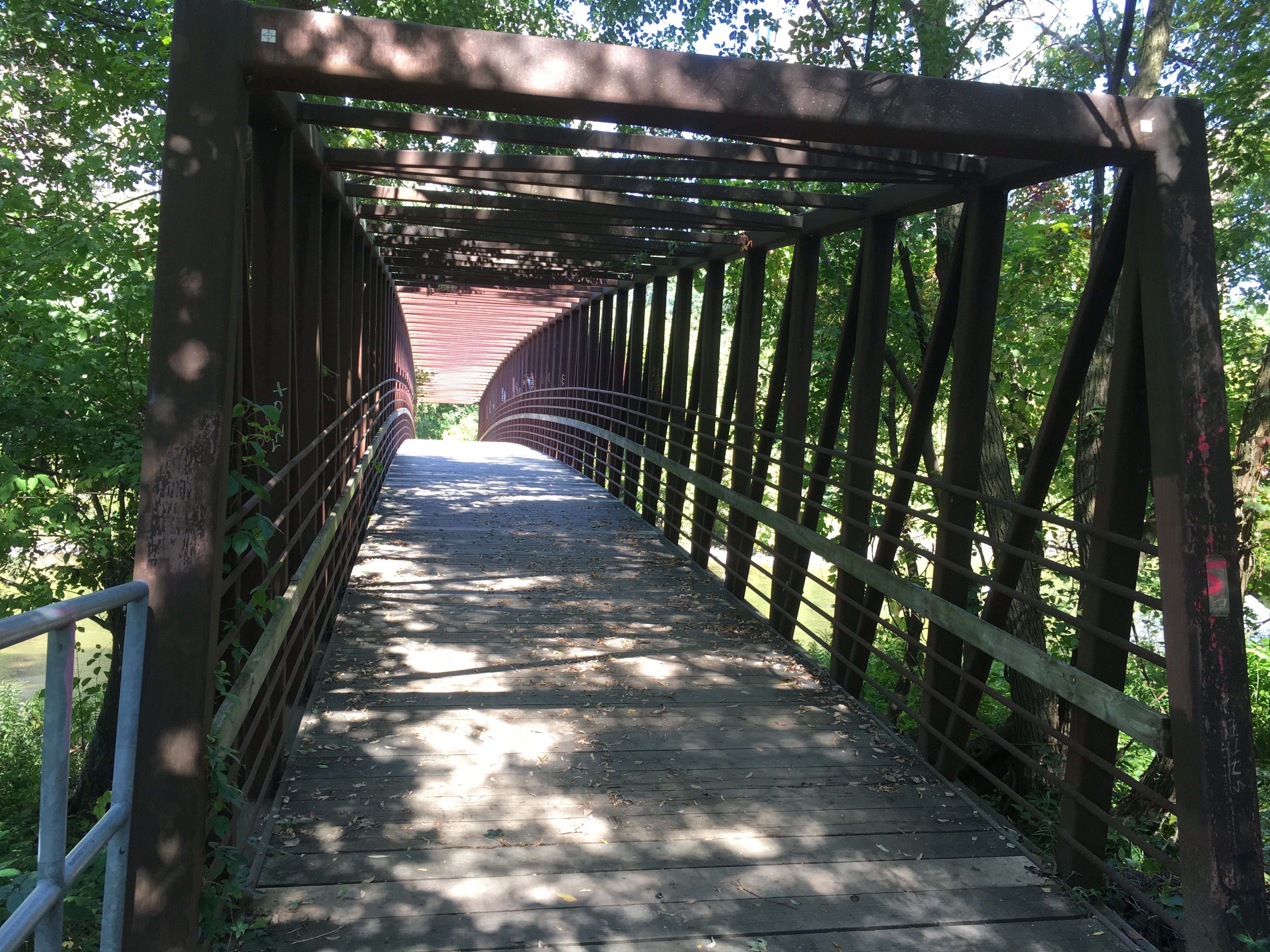
A tall berm covers the culvert that carries a small tributary of Morningside Creek. A small bridge used to carry the railway over the creek but has been replaced with the culvert and filled in with earth. The rail berm at this point is at its tallest along the length of the railpath. The cover photo shows the rail berm that runs along the end of Casebridge Court, which is another entry point to the railpath.

There are three Major League Baseball teams that are named after birds and I saw all of their namesakes on this walk. Cardinals and Blue Jays are a fairly common sight in Southern Ontario but I don’t see Baltimore Orioles nearly as often. Blue Jays and Cardinals overwinter in Ontario while the Baltimore Oriole is migratory. They get their name from their colouring which resembles the Coat of Arms for Lord Baltimore.

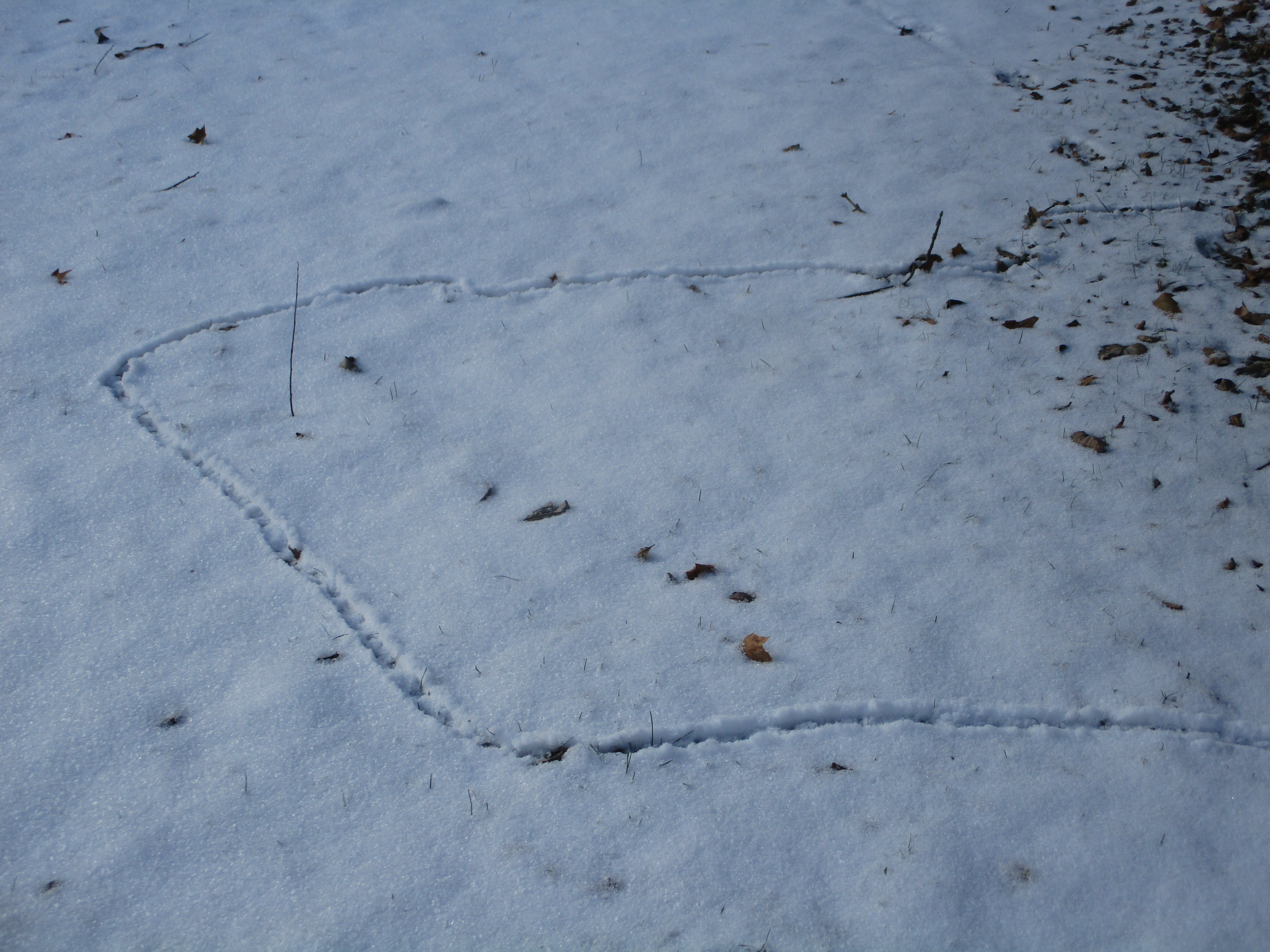
As I was walking along the path near Morningview Trail I noticed a white flash in the trees beside the path. It was a White-tailed Deer. It disappeared into the trees before I had a chance to get a clear picture of it. So, I decided to follow its trail for a few minutes in the hopes of getting a clear shot of it. I wasn’t quick enough and it managed to elude me through the underbrush. I followed its footprints for a ways before finding a small dirt foot trail that runs near Morningside Creek. All I ended up with was a picture of the hoofprints.

Morningside Creek is one of 11 tributaries of the Rouge River. It rises in the area of Dennison Avenue and Markham Road and runs along the west side of the Toronto Zoo. Some sections of the Upper Rouge Trail run along the border of the zoo and are posted as No Trespassing to keep people out of the zoo property.

Mayapples were growing in a large patch along the forest floor but have not gone to flower yet. Mayapples with one leaf will not flower while those with two leaves will develop a single flower between the two leaves.

The trail was lightly used on this sunny Monday morning which probably helped increase the amount of wildlife that was available to be seen.
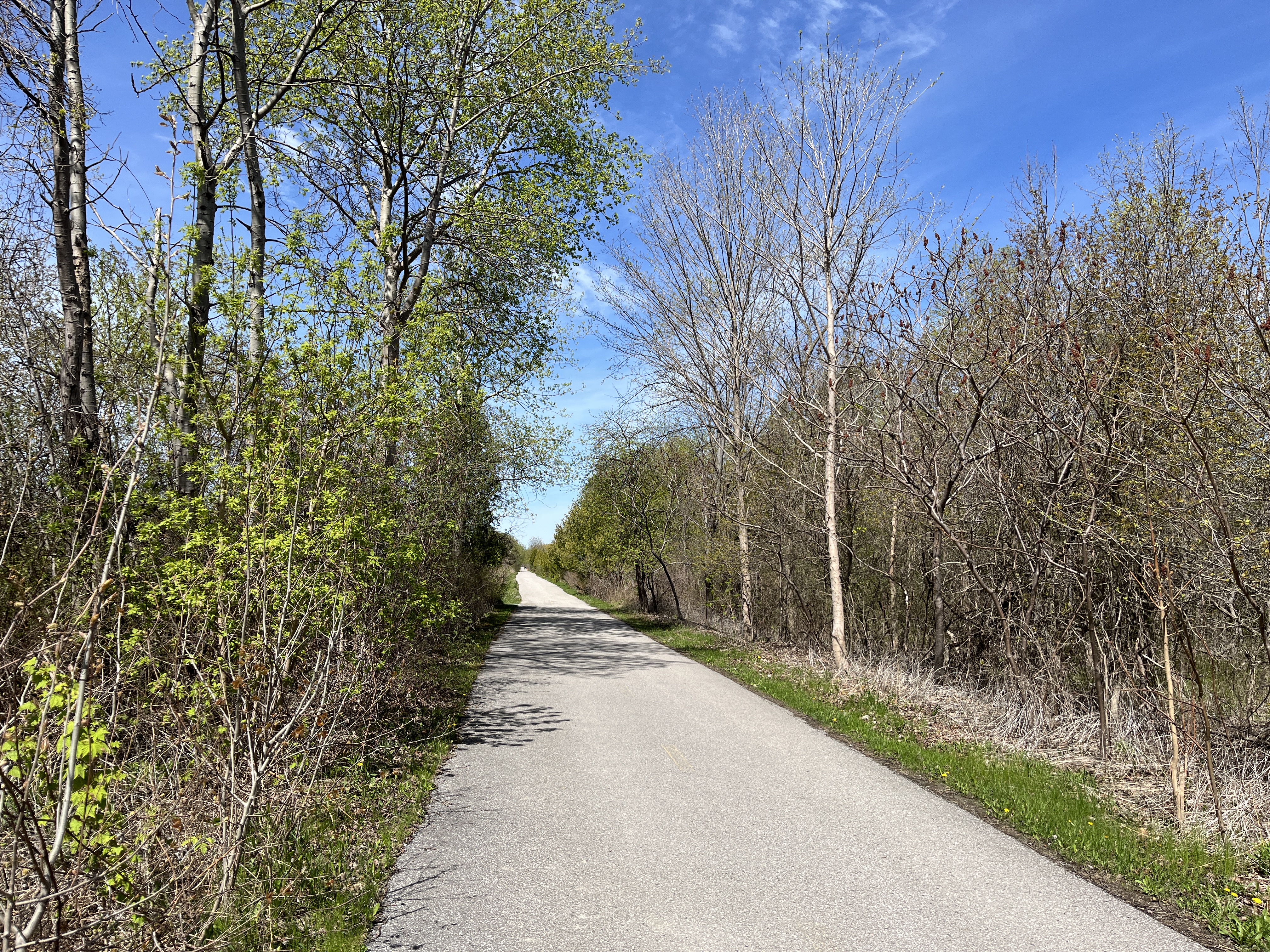
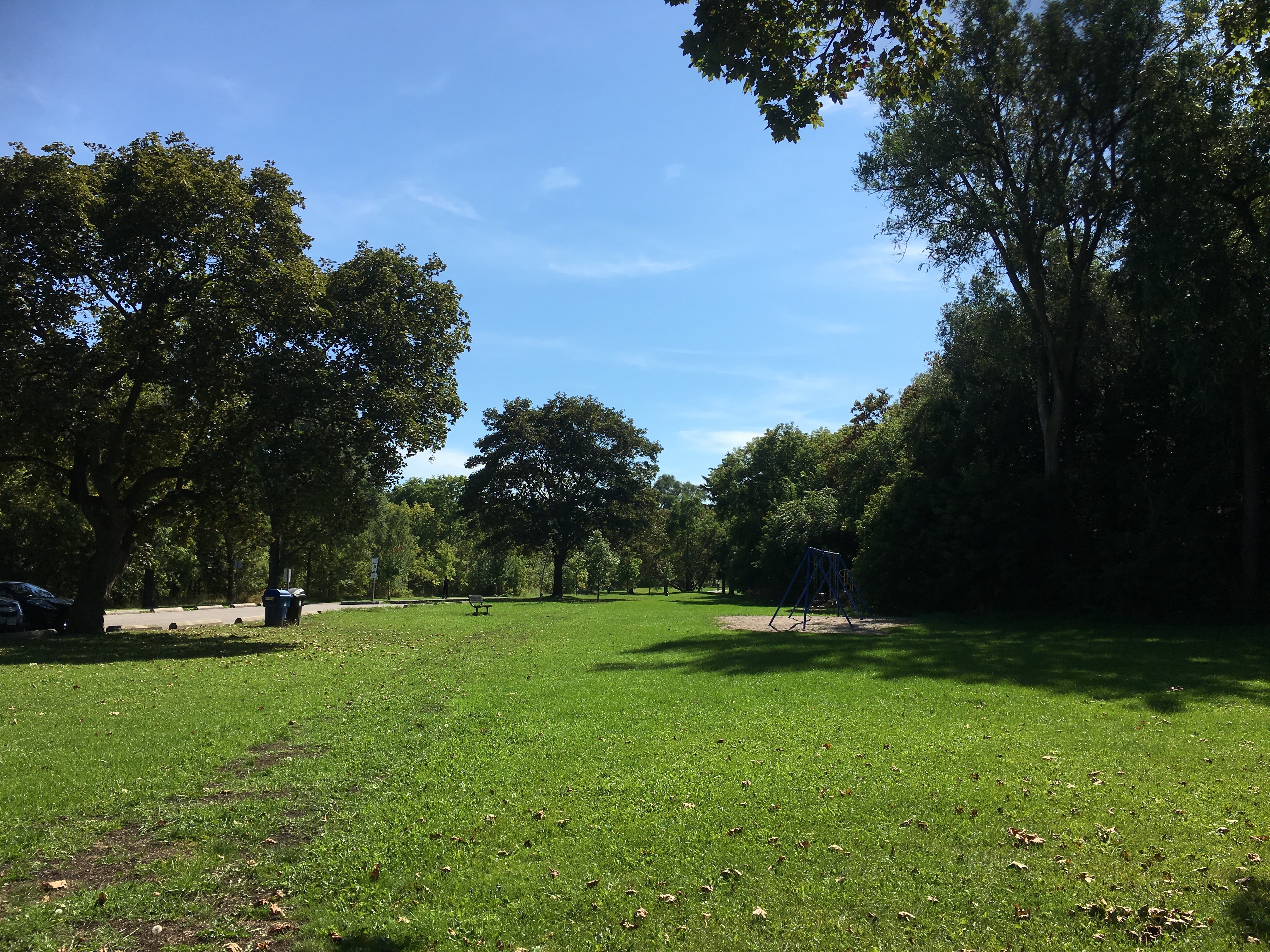
Although this pathway runs along the edge of residential and industrial areas before running parallel to Morningside Drive, it provides a surprising number of opportunities to see wildlife.

Related stories about former Toronto railways that are now hiking trails: West Toronto Railpath, Leaside Spur Trail, Beltline Railway, Moore Park, York Beltline Trail

Google Maps link: Upper Rouge Trail

Like us at http://www.facebook.com/hikingthegta

Follow us at http://www.hikingthegta.com

Also, look for us on Instsagram
Box Grove – Ghost Towns of the GTA

November 4, 2023

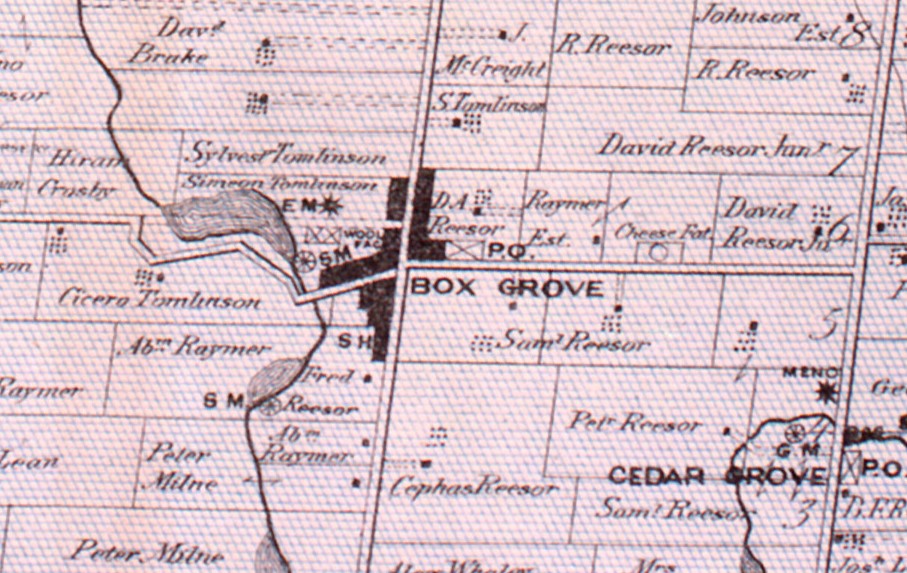
Families started to arrive in the area of present day 14th Avenue and 9th Line near Markham as early as 1815. The Tomlinson and Beebe families were among the first to move there and begin to develop farms and mills. In 1850 they put forth a plan to develop the community by selling lots for residential use. The lots were either 100 or 250 feet wide by 250 feet deep. This was intended to provide housing for the workers in the saw mill, woollen mill and shoddy mills. A shoddy mill reclaimed used fabrics to make paper or mattress stuffing materials. The community was known as Sparta or Sparty Wharf and was the last point on the Little Rouge River that could be easily navigated. The development soon let to the arrival of three hotels and taverns, a cheese factory, a blacksmith and two axe makers. The image below is taken from the 1877 County Atlas and shows the community in relation to nearby Cedar Grove.

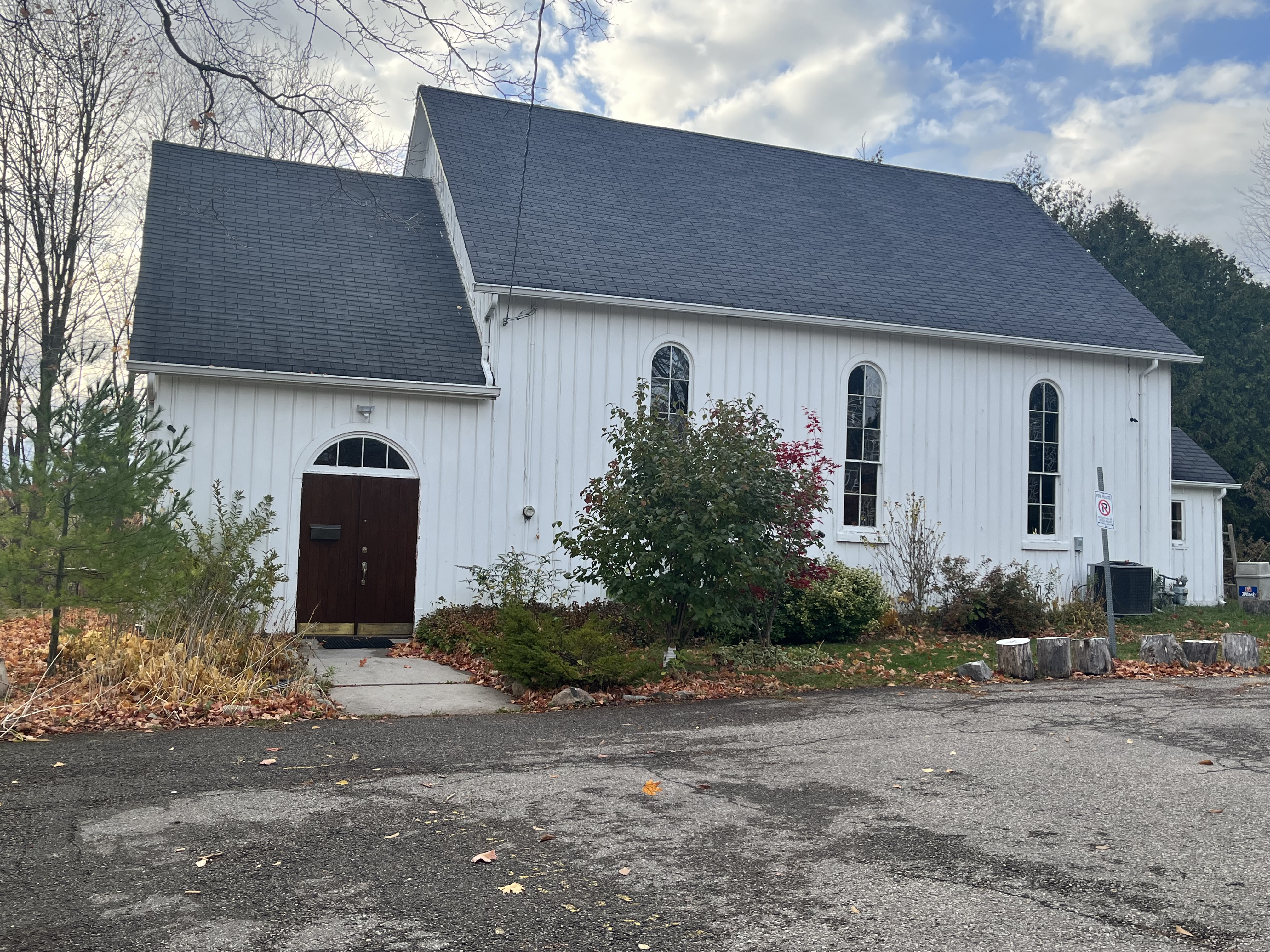
In 1850 The Episcopal Methodists had built a small church in the town and continued to worship there until 1877 when their new building became available. They continued as a Methodist Church until 1925 when they became the Box Grove United Church. In 2004 the church congregation voted to join the Zion United Church in nearby Cedar Grove. The building was vacated and then bought by the Full Gospel Assembly of God in 2006 who continue to meet there on Sundays.

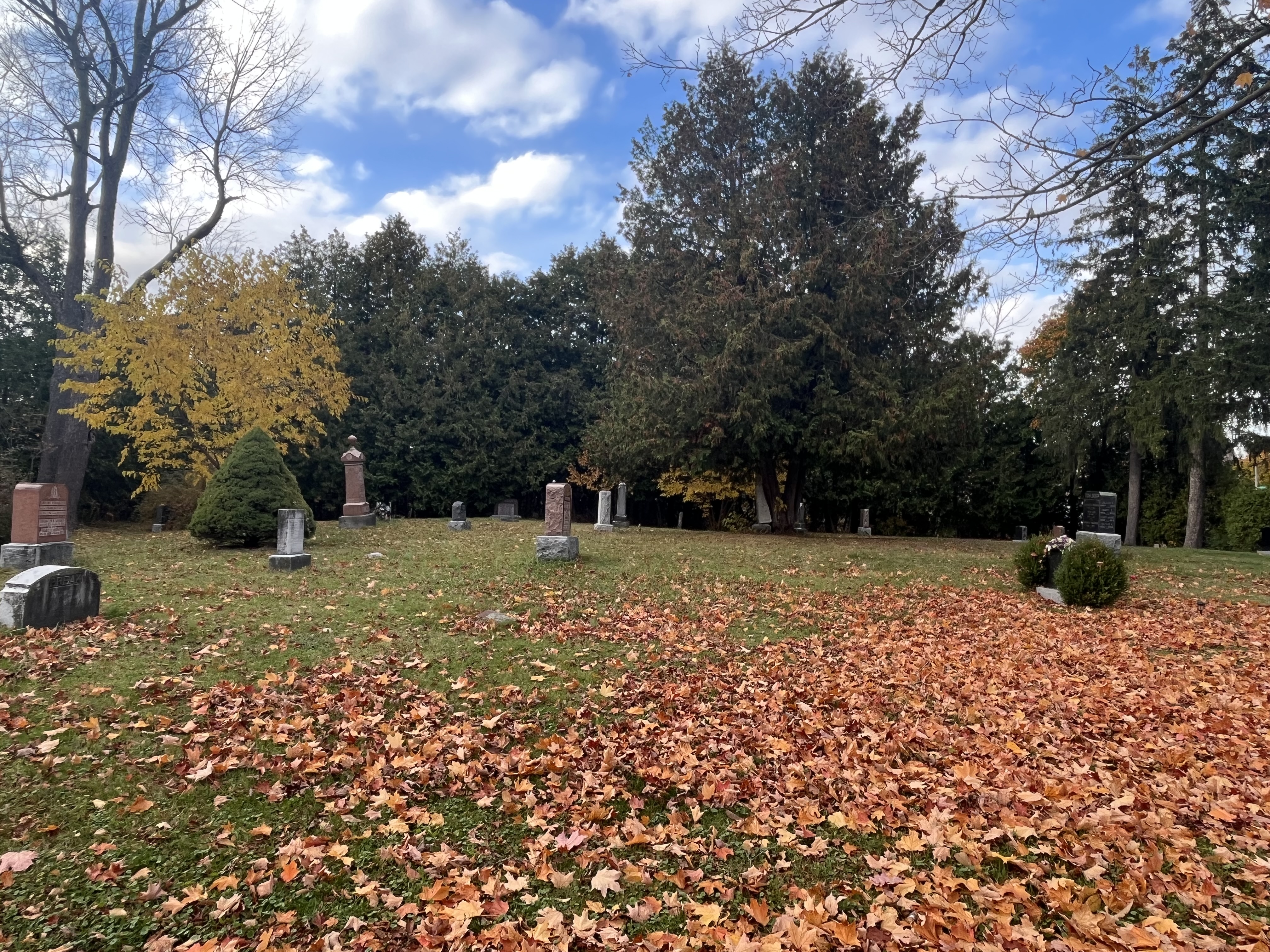
A half acre of land was set aside for the Methodist cemetery in 1850 and many of the town settlers are buried here.

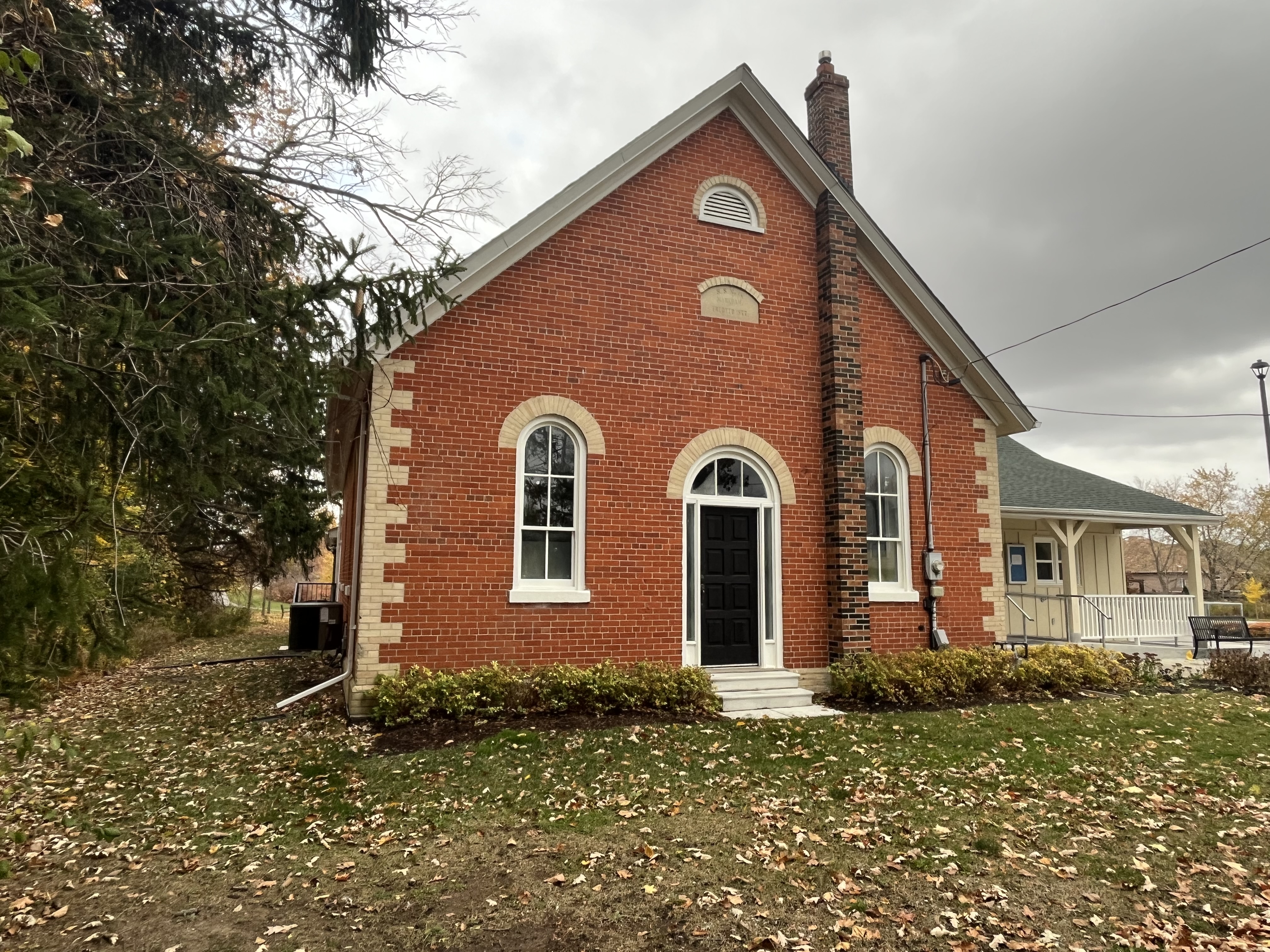
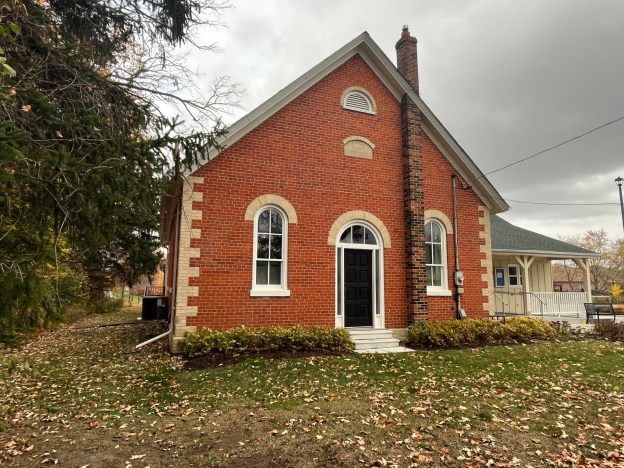
From the County Atlas above you can see that the school is shown across the street from the present structure. This small frame structure had become too small and needed to be updated. School Section #18 was replaced with this red brick structure in 1877, the same year the county atlas was produced. This new schoolhouse was used until the 1960s when new buildings were opened and most of the one room schools in Ontario were closed. Today the old school serves as a community hall and can be rented for various functions such as parties and wedding celebrations.

In 1867, the year of Confederation, they were awarded a post office and the town name was changed to Box Grove. The post office was in the general store which was located in the building seen below.

With three taverns and a population of 150 the town had a bit of a reputation for being rowdy. The Mennonite families on surrounding properties were not pleased and soon opened a Temperance Hall. All of the original industry disappeared and only the homes remained along with the school and church. There are still quite a few mid to late 19th century houses lining the streets around the original intersection. The one pictured below is a typical one and a half story worker cottage.

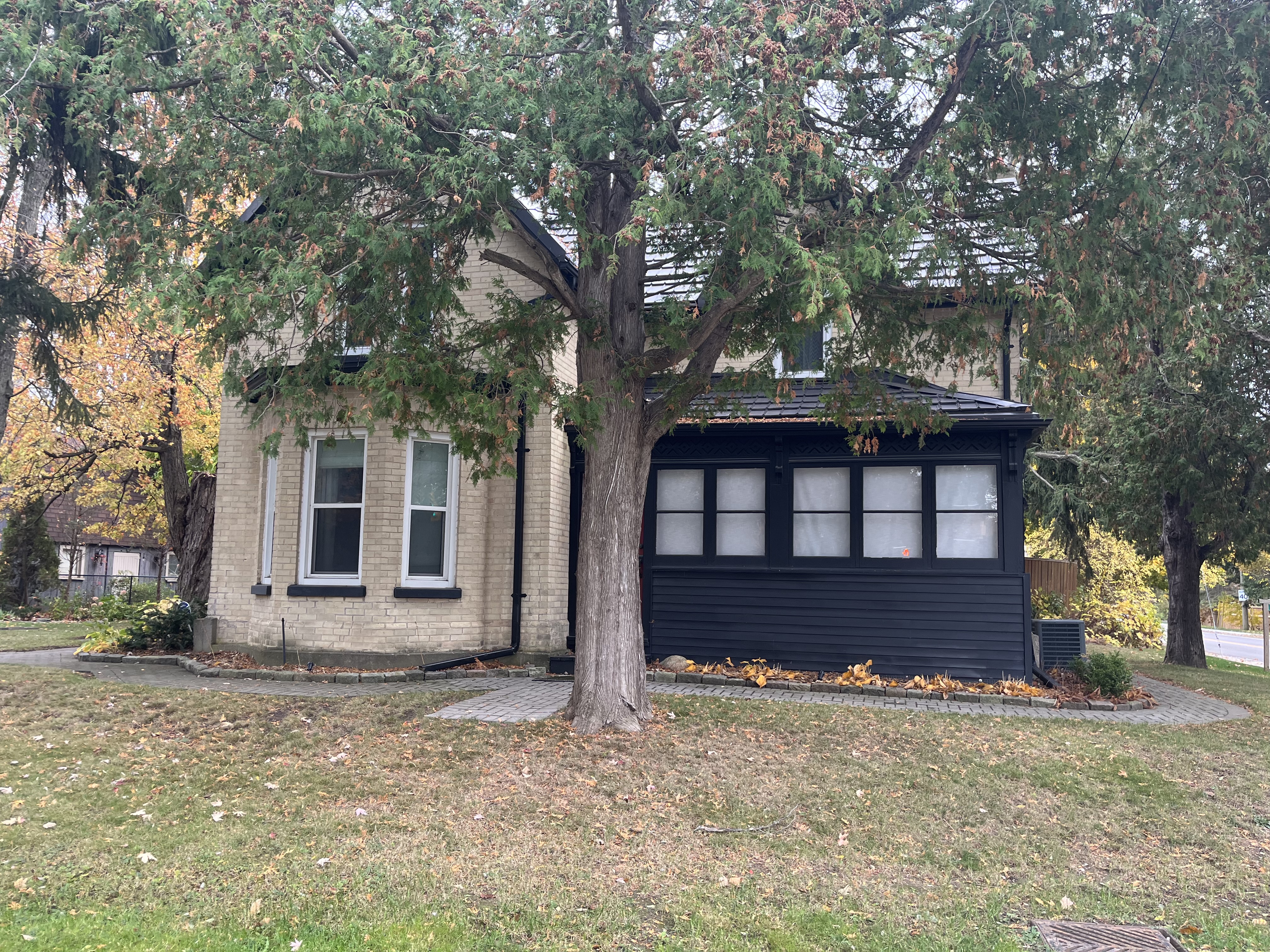
The house below was originally built in 1880 using a roughcast stucco surface applied to lathing. It has since been covered over with wooden siding. It was built on the Reesor Family farm on the east end of town and may have housed the person who operated their cheese factory. The house was modified at some point adding the western wing and making the home into an L shaped building. When the farms around Box Grove were redeveloped for housing the home was moved to make way for stormwater ponds.

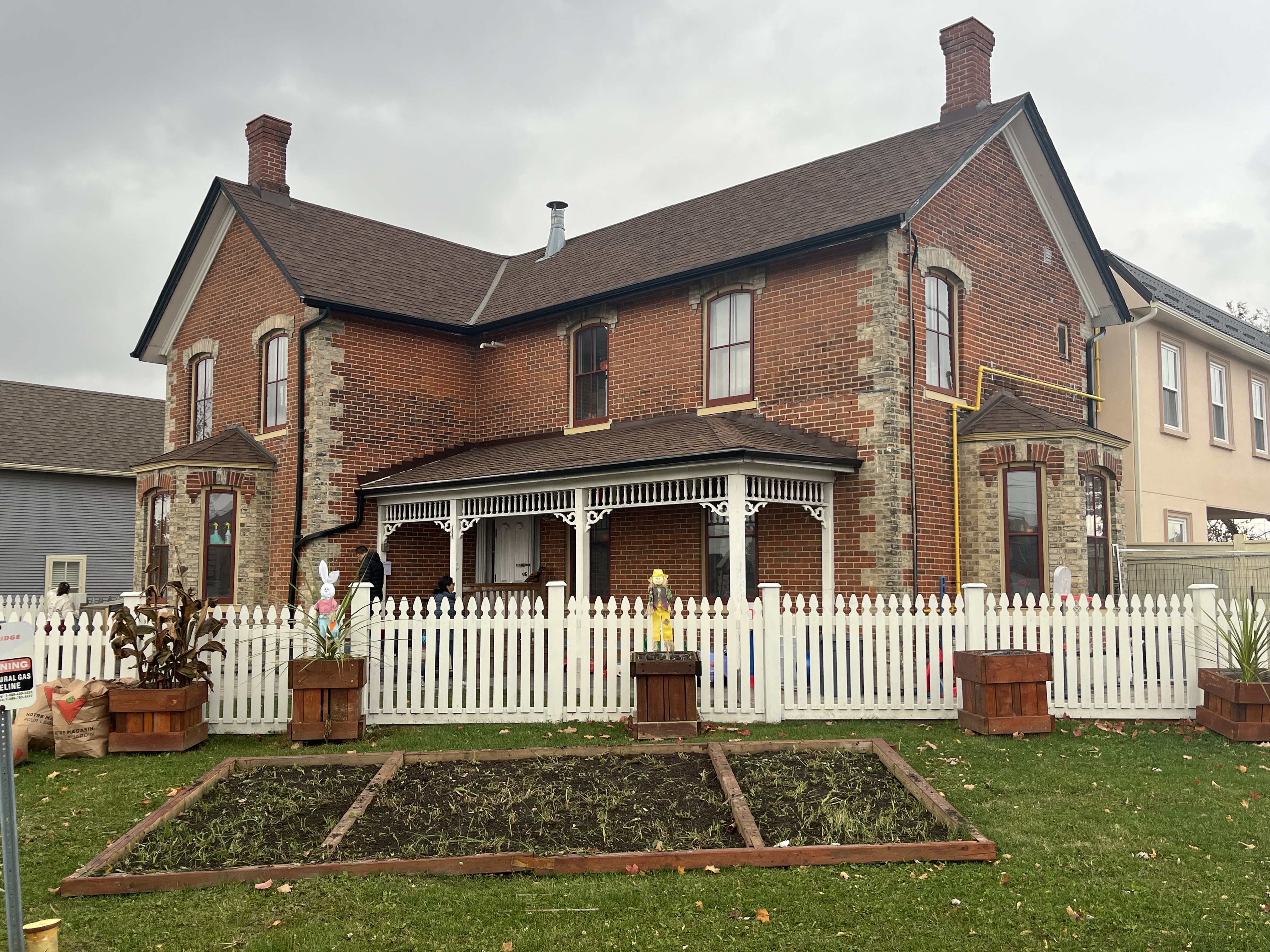
One of the few homes in Box Grove to still display its original brick veneer with buff coloured accents stands on the eastern edge of the original town.

In the past few decades the area has been developed with new housing but the older ones can be picked out as you walk or drive through the neighbourhood.

In 1950 Nelson Morgan Davis, one of the richest men in the country, created a golf course in Box Grove which he called the Box Grove Golf Course. It was private and he was the only member. It was eventually developed into a 27 hole course with 9 holes in the valley and a challenging 18 hole course on the tableland above. It is said that he built the course after being hit in the head by a golf ball while playing at Rosedale Golf Club. Arnold Palmer was invited to play a round of golf with Davis and he later said that the course was one of the hardest he had ever played. Davis sold the golf course to IBM in 1967 netting a cool $2 million for it. IBM kept the course for the entertainment of its employees who could play a round of golf for $5.00. In 1997 IBM sold the golf course to Minto Developments who built a residential subdivision on the upper course while the City of Markham now operates a nine hole course in the river valley called Markham Green.

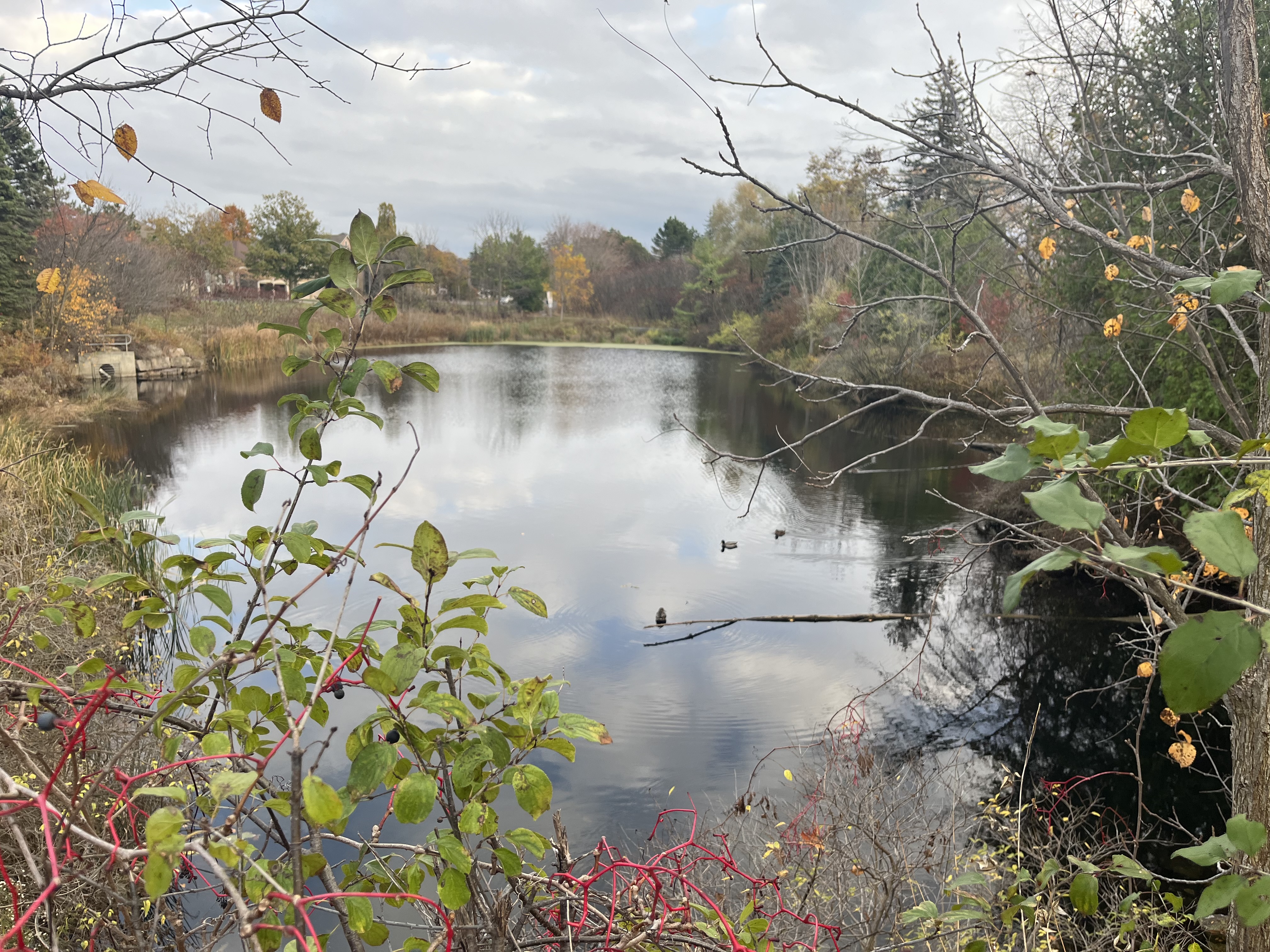
The Little Rouge River was dammed to create a mill pond to store water to power the mills that provided early industry in the community. The mills were all lost to flooding or to fires but the mill pond remains and is now the centre attraction for the Old Mill Pond Park which is just one of the parks in and around town. The town also features some hiking trails along the river.

Box Grove has been swallowed up by modern developments but there’s still quite a number of early residences hiding along 9th line and along 14th avenue.

Related Stories: Cedar Grove, The Reesor Family

Google Maps Link: Box Grove

Like us at http://www.facebook.com/hikingthegta

Follow us at http://www.hikingthegta.com

Also, look for us on Instagram

Glen Rouge Campground

Sunday, April 12, 2020

In the midst of a global pandemic we are looking through thousands of photographs for opportunities to bring you previously unpublished stories.  This feature story presents  a series of pictures we took in Rouge National Urban Park on December 21, 2019.

Starting in 1923 Jack Graham developed Graham Park on the Rouge River near Kingston Road.  There was space for about 10 campers who paid $40 for the entire season.  There was no electricity and so the park was lit at night by Coleman lanterns.  Water was carried from a natural spring nearby.  Campers were allowed to collect wood for their cooking fires and were even permitted to cut down cedar trees for fire wood.  By 1950 a large pool had been added by damming the river.  The children would sit below the dam and allow the water to cascade over them, pretending it was Niagara Falls.

IMG_8700

In 1952 a new office and Graham Park Restaurant was built where a full meal could be had for $2.90.  Following Hurricane Hazel in 1954 the park was bought by the Toronto Region Conservation Authority who continue to operate the campground.  We decided to visit during the off season to check it out.

IMG_8702

The campground has the advantage of being only about 35 kilometres from downtown Toronto and is easily accessed from the 401.  There isn’t a lot of activities for the children but there are plenty of trails to enjoy.

IMG_8706

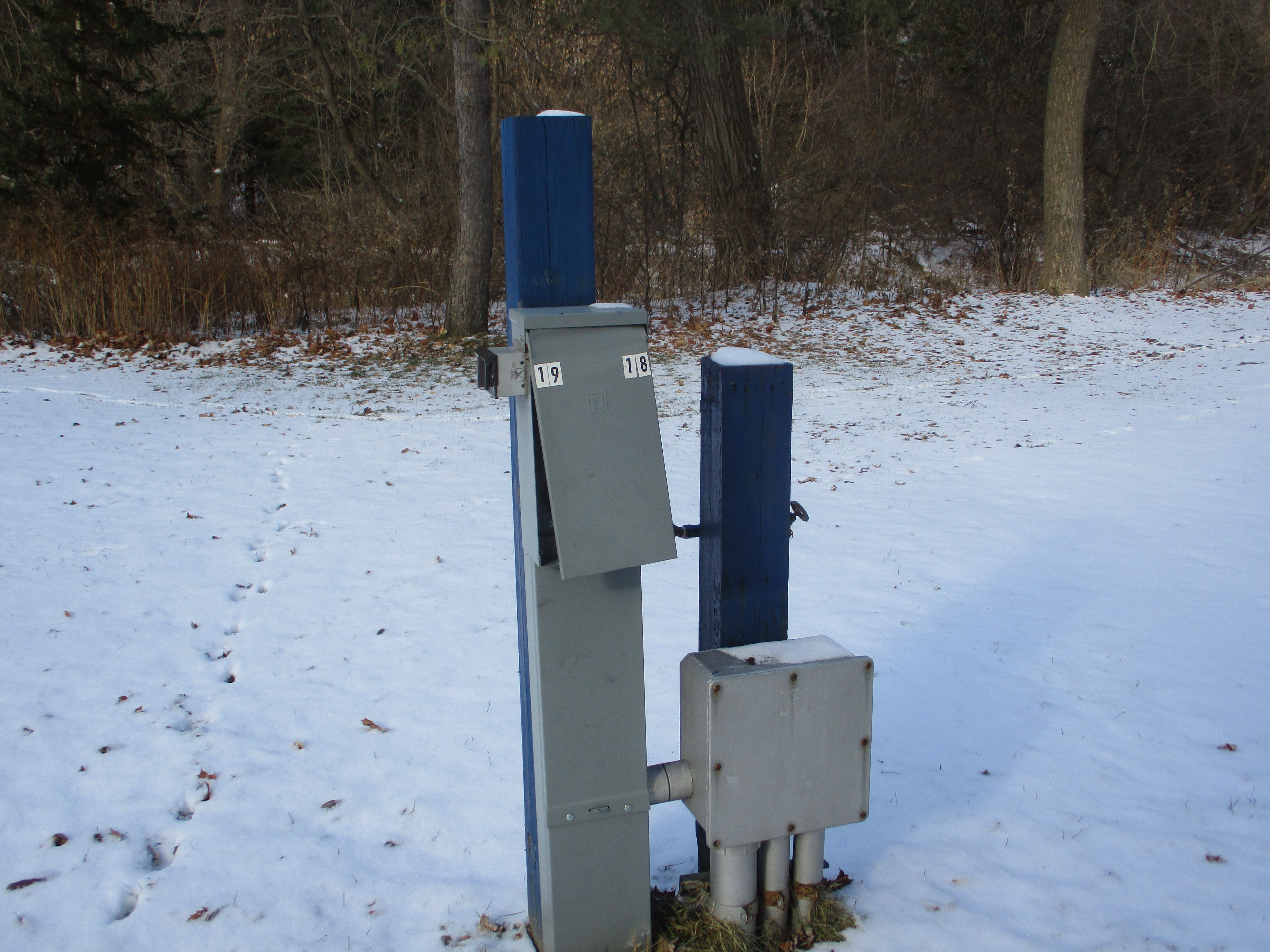
The camp sites at Glen Rouge campground have water and electricity provided.  You don’t have to carry water from the spring any more although lighting the campsite with Coleman lanterns may still be the preferred way to relax in the evening.  There are also some sites that are not serviced for those who want a more traditional camping experience.

IMG_8711

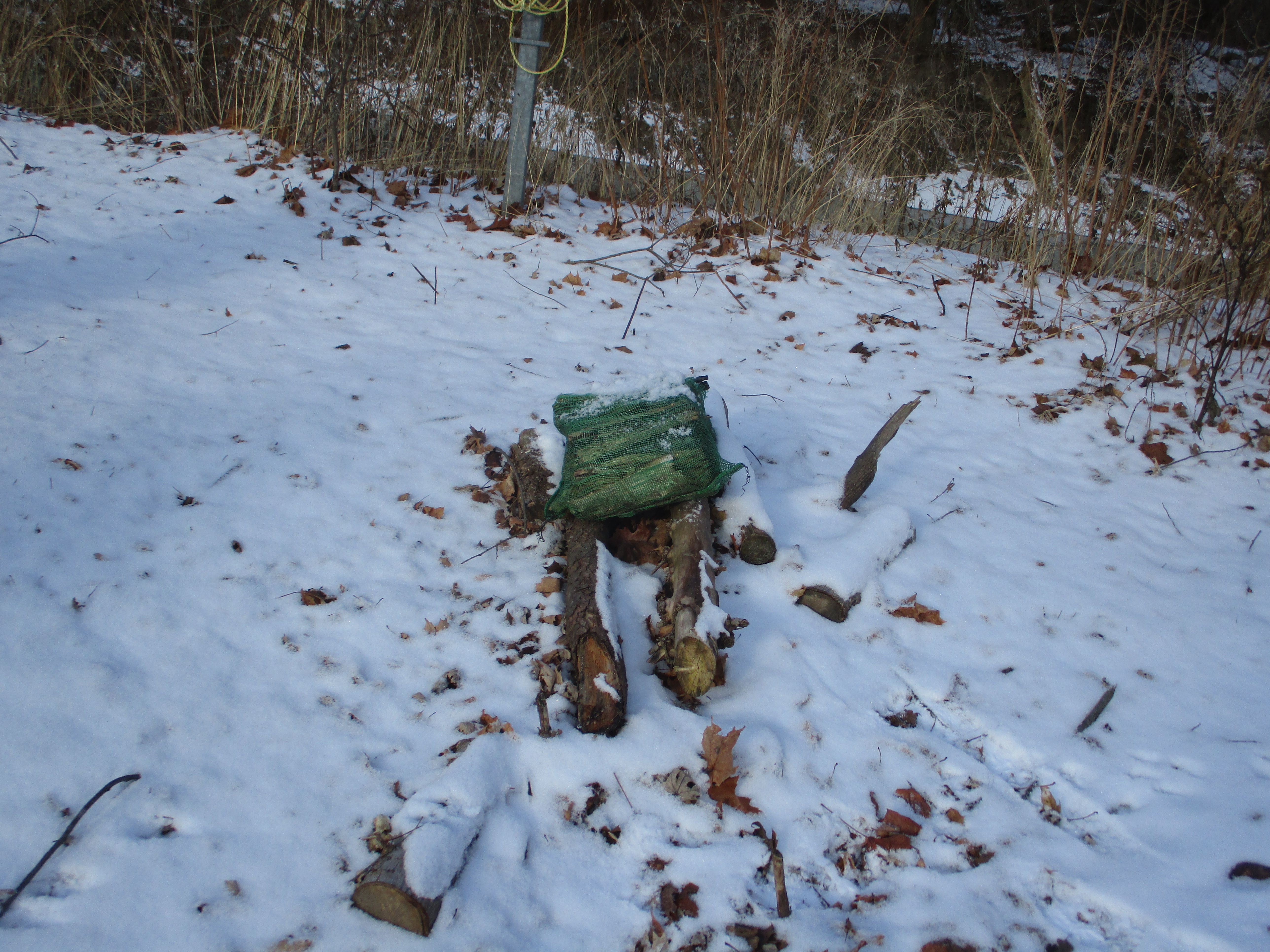
A small bag of fire wood has been left in one of the campsites.  No longer are the guests allowed to collect wood from the park.  Today we recognize that the fallen branches and dead trees provide habitat for many insects and small animals.  It is also possible for the larger crowds who can camp here to strip the woods clean in no time.

IMG_8717

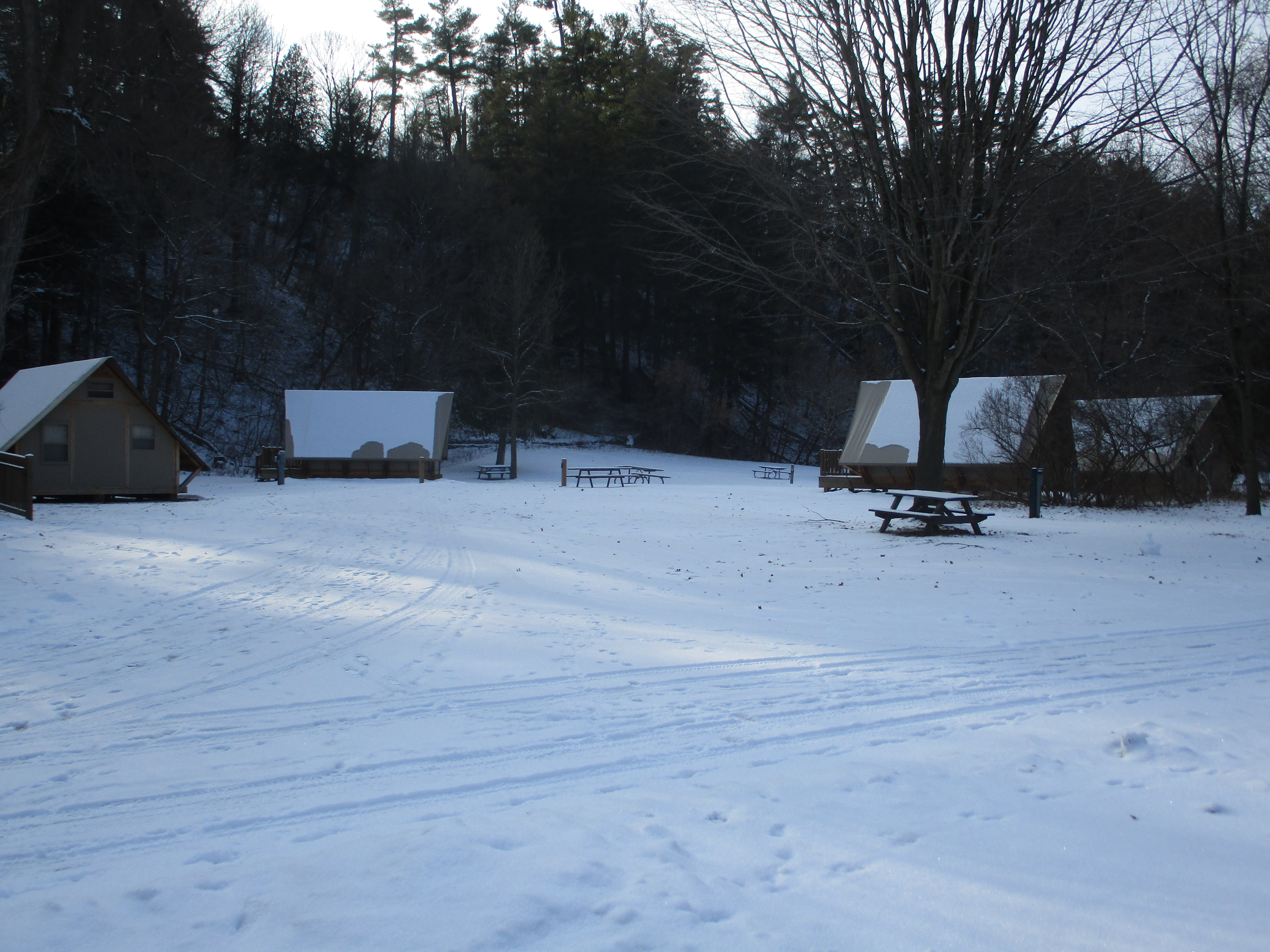
Parks Canada operates a few cabin/tent lodgings called oTENTiks in the park.  These 19 x 24 foot tents provide a comfortable camping experience for families and others who don’t want to rough-it in a traditional tent.

IMG_8723

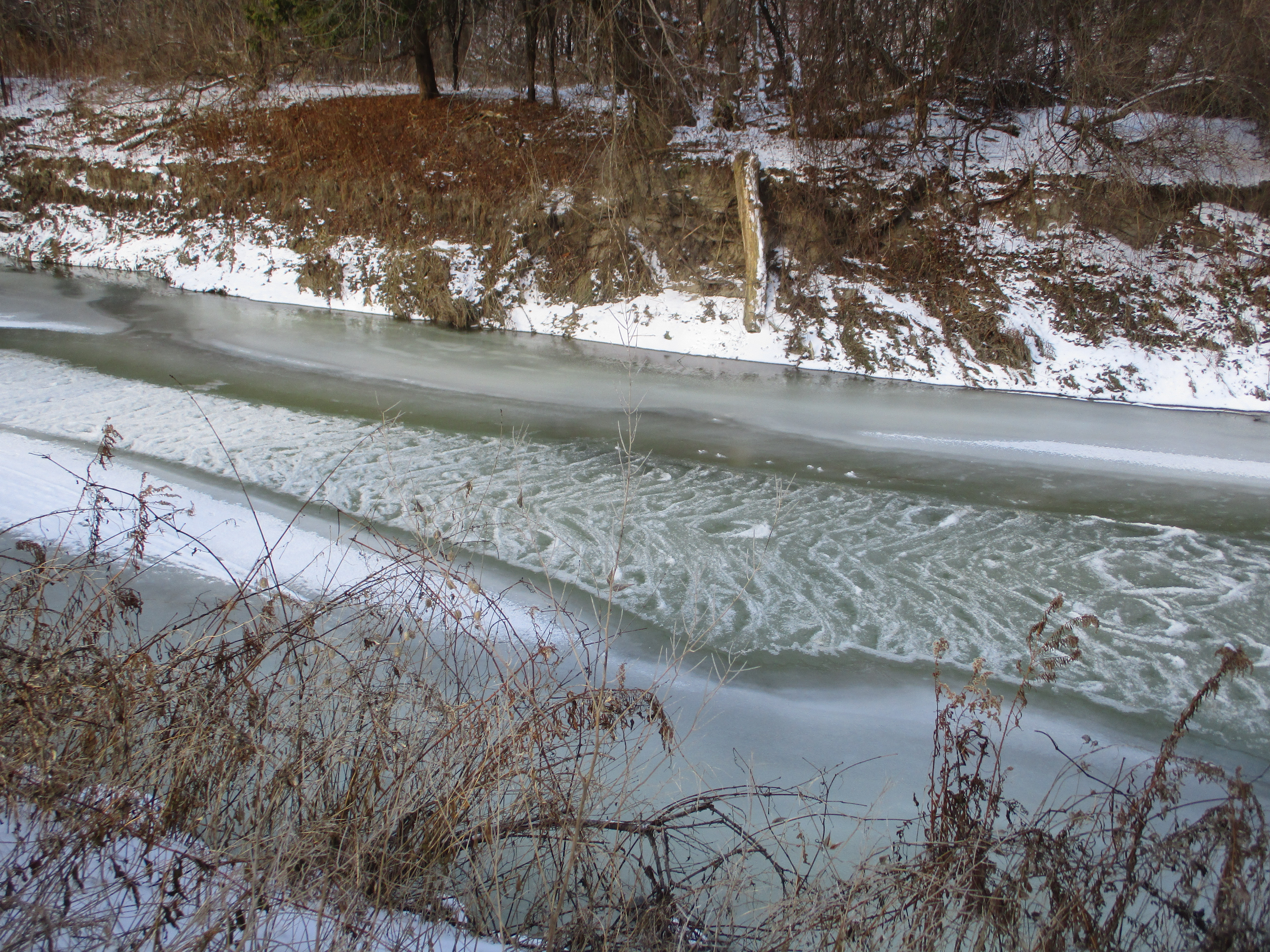
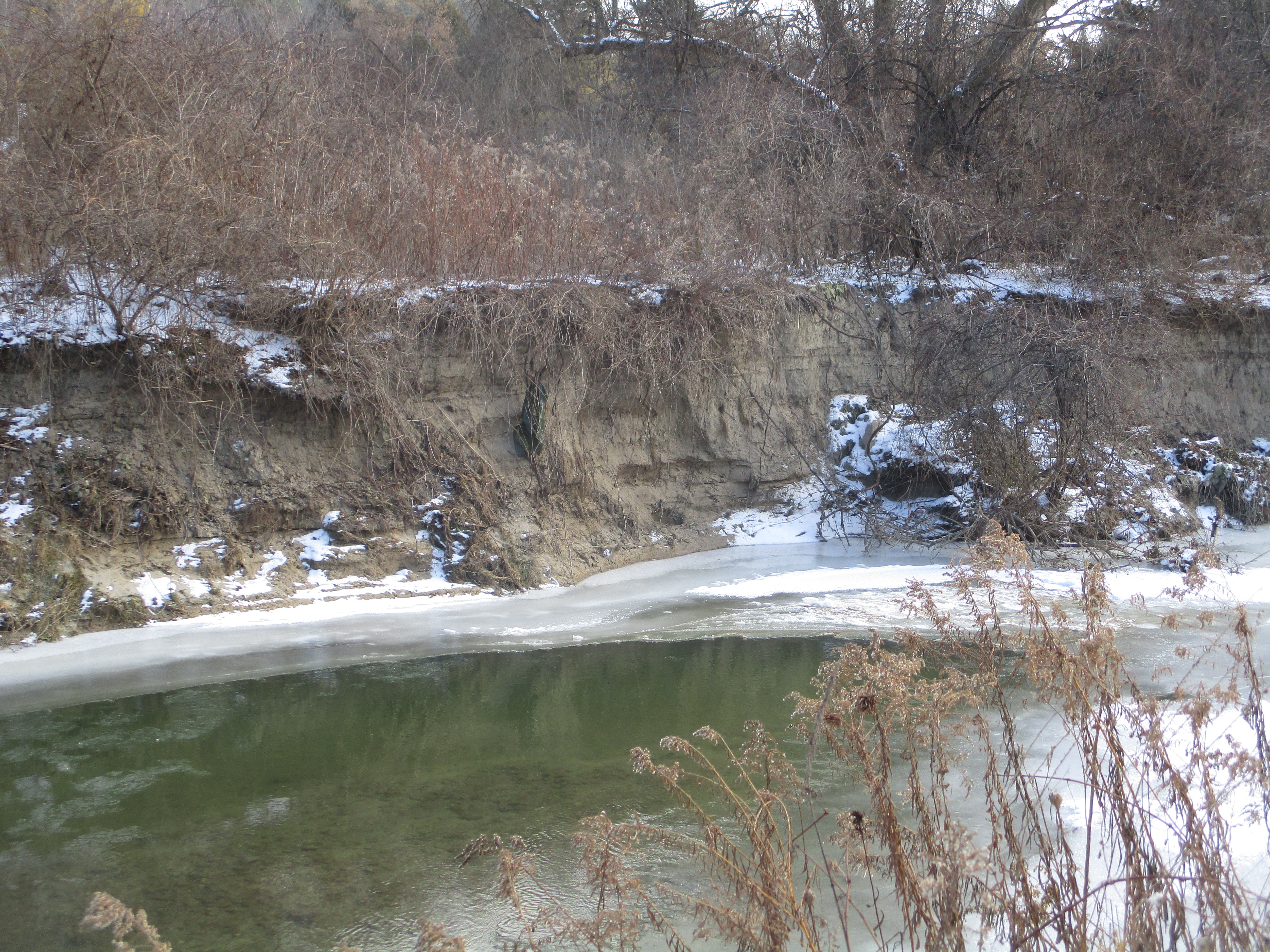
The Rouge River was just starting to freeze over with slush forming and floating downstream.  There is an interesting pattern in the ice in the middle of the river where the slush has piled up.

IMG_8715

With a thin layer of fresh snow it makes it possible to see where the local wild life has been running around.  This set of tracks looks like a small rodent such as a mole or a vole.

IMG_8710

It was four days before Christmas and the park was quiet.  Most of the birds had left for the season and although we saw plenty of deer tracks we didn’t get to watch any of them.

IMG_8707


The campground was scheduled to be closed for the 2020 season to allow underground improvements to water and sewage management.  This is perhaps the first time it has had a period of rest for almost 100 years.  I think the wild life is going to be very happy this spring.

Other hikes in Rouge National Urban Park include:

The Mast Trail

Beare Hill Park

Vista Trail

Maxwell’s Mill

Google Maps Link: Glen Rouge Campground

Like us at http://www.facebook.com/hikingthegta

Follow us at http://www.hikingthegta.com

Also look for us on Instagram


Hurricane Hazel – Raymore Drive

Sunday, April 5, 2020

With restrictions in place that are intended to prevent the spread of COVID-19, Hiking the GTA is looking into our collection of unpublished pictures to see what new stories we can bring you.  We hope to keep ourselves entertained, and perhaps you as well, while we wait for the parks and trails to be opened up for us again. 

These pictures were taken on September 19, 2019 with the idea of a possible post about the destruction caused by Hurricane Hazel in the area of Raymore Drive.  We had previously featured some information in our post Raymore Drive and so we won’t cover all that material again.  As we walked along the Humber River on a beautiful Saturday in September we stopped to watch the ducks and admire one that was a little different.  It may be just a variegated mallard as it doesn’t seem to match any duck in the National Geographic bird book.

img_1894

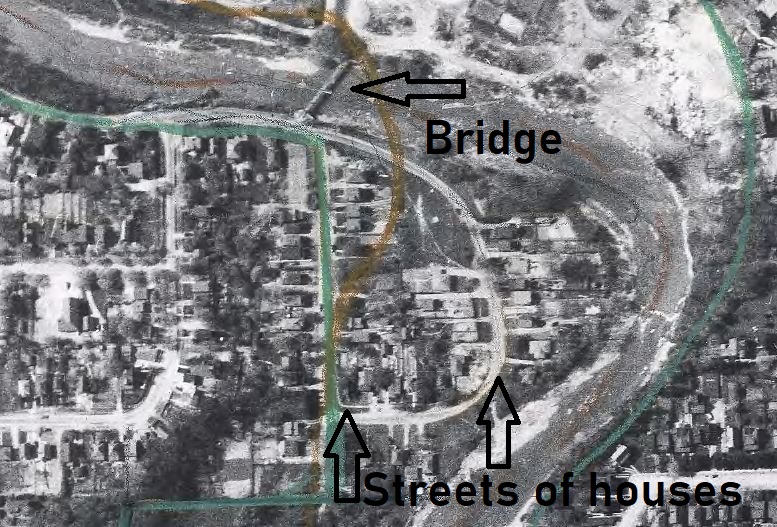
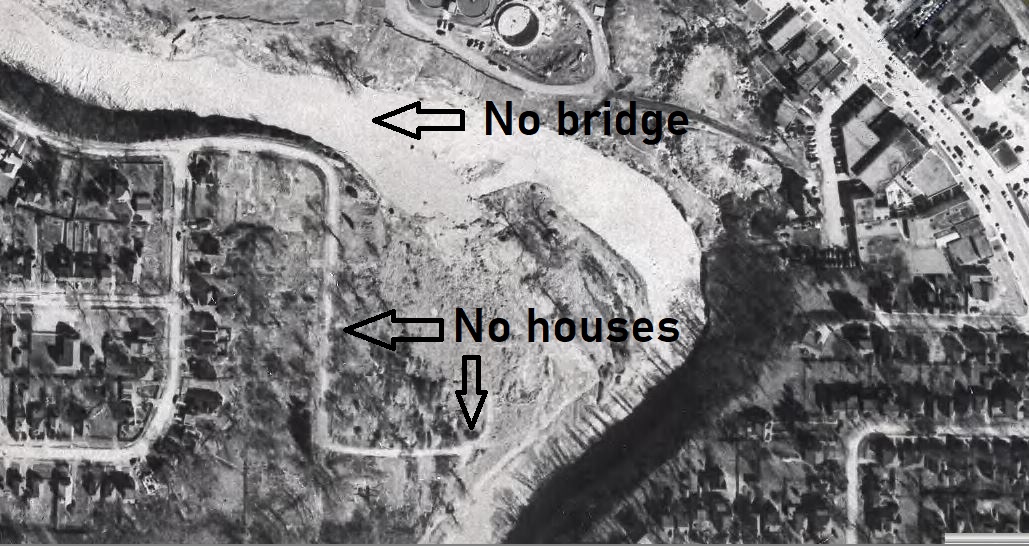
The picture below shows Raymore Drive in Etobicoke in 1953, about a year before Hurricane Hazel struck.  When the hurricane paused over the GTA on October 15, 1954 it dumped so much rain that the rivers all flooded their banks and 81 people were killed.  Notice the pedestrian bridge that crossed the Humber River and the two streets of houses that were tucked into the curve of the river.

Raymore 1953

When the water levels rose on the river the bridge was swept off of the west abutment and began to deflect the flow of the river into the housing development.  With the full flow of the river rising by 20 feet there were 14 homes washed away and 35 people lost their lives in this small enclave.  In the 1956 picture the bridge is gone and so are the houses on the two streets closest to the river.

raymore 1956

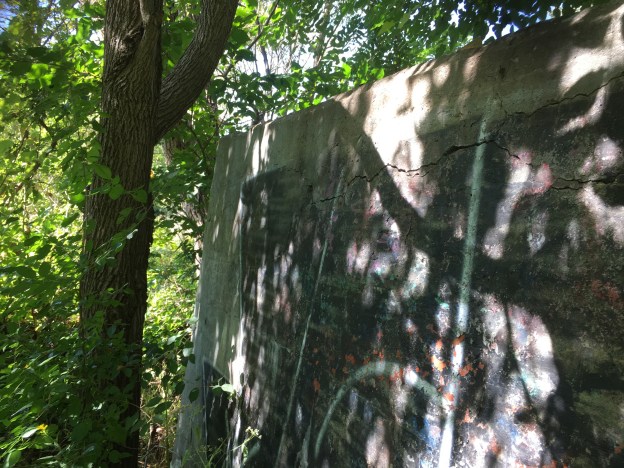
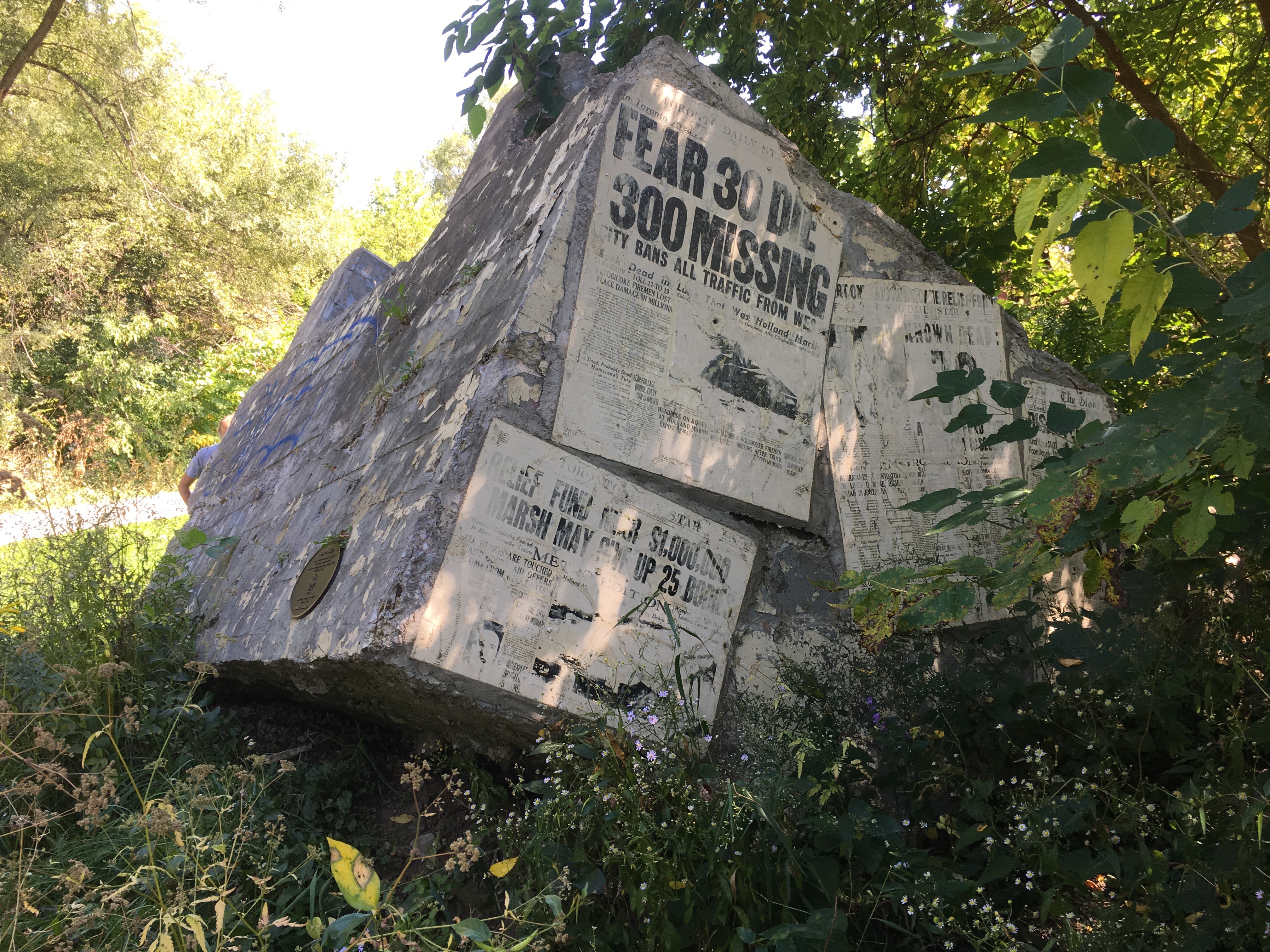
The east bank of the river still has the remains of the bridge abutment and, as a memorial, it has been plastered with replicas of the news papers that came out following the storm.

img_1895

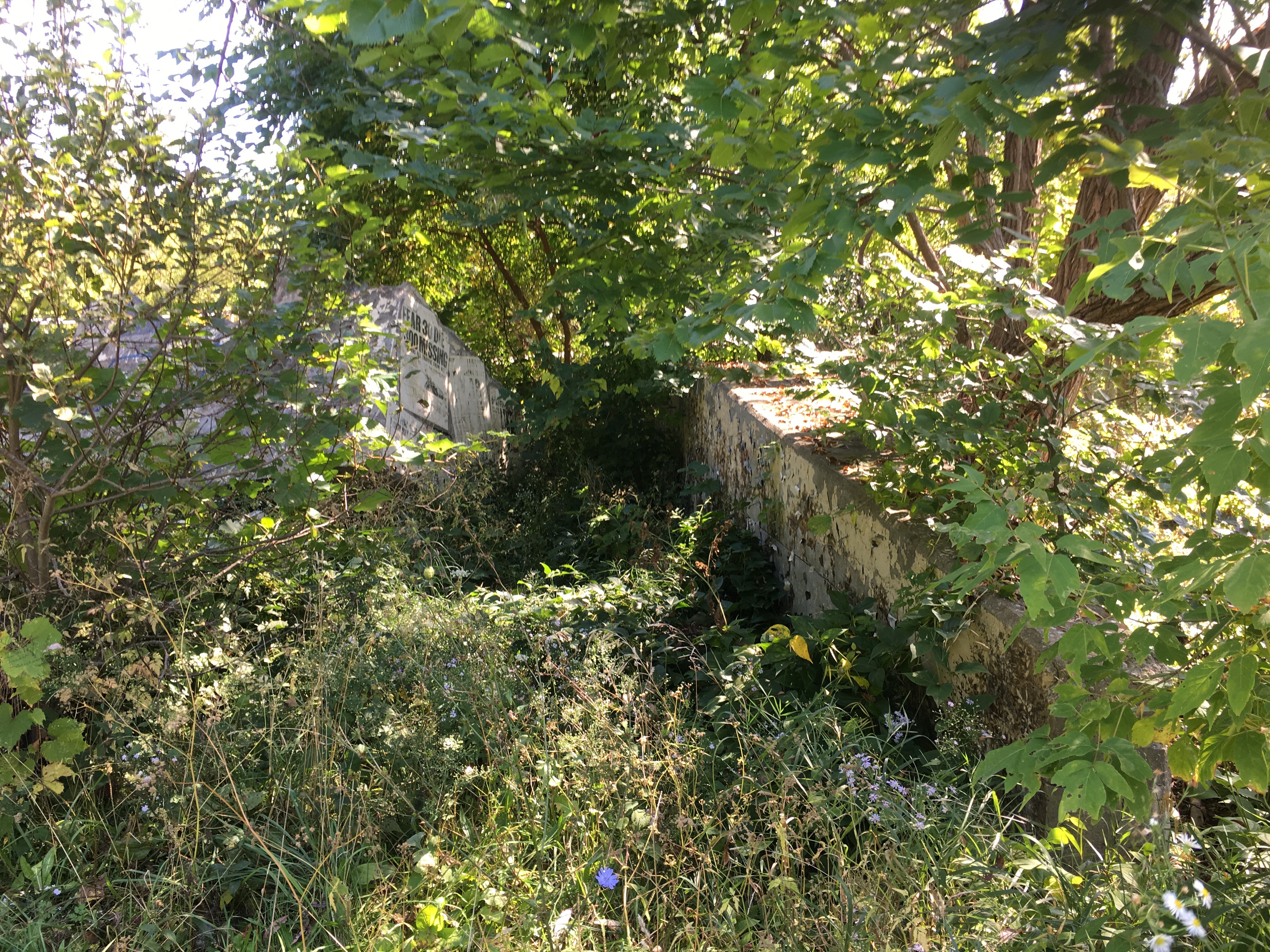
There is a set of concrete walls that surrounded the old bridge abutments.  Just for fun I walked through the grasses and shrubs that surrounded the old structure.  That was a big mistake because I ended up with hundreds of little seed pods stuck to my clothes that had to be picked off one-by-one.

The whole structure has been overgrown during the past 65 years and it is difficult to imagine exactly what it may have looked like when it was in use.

This willow tree will eventually push over this section of the wall as nature slowly reclaims its own space.

img_1899

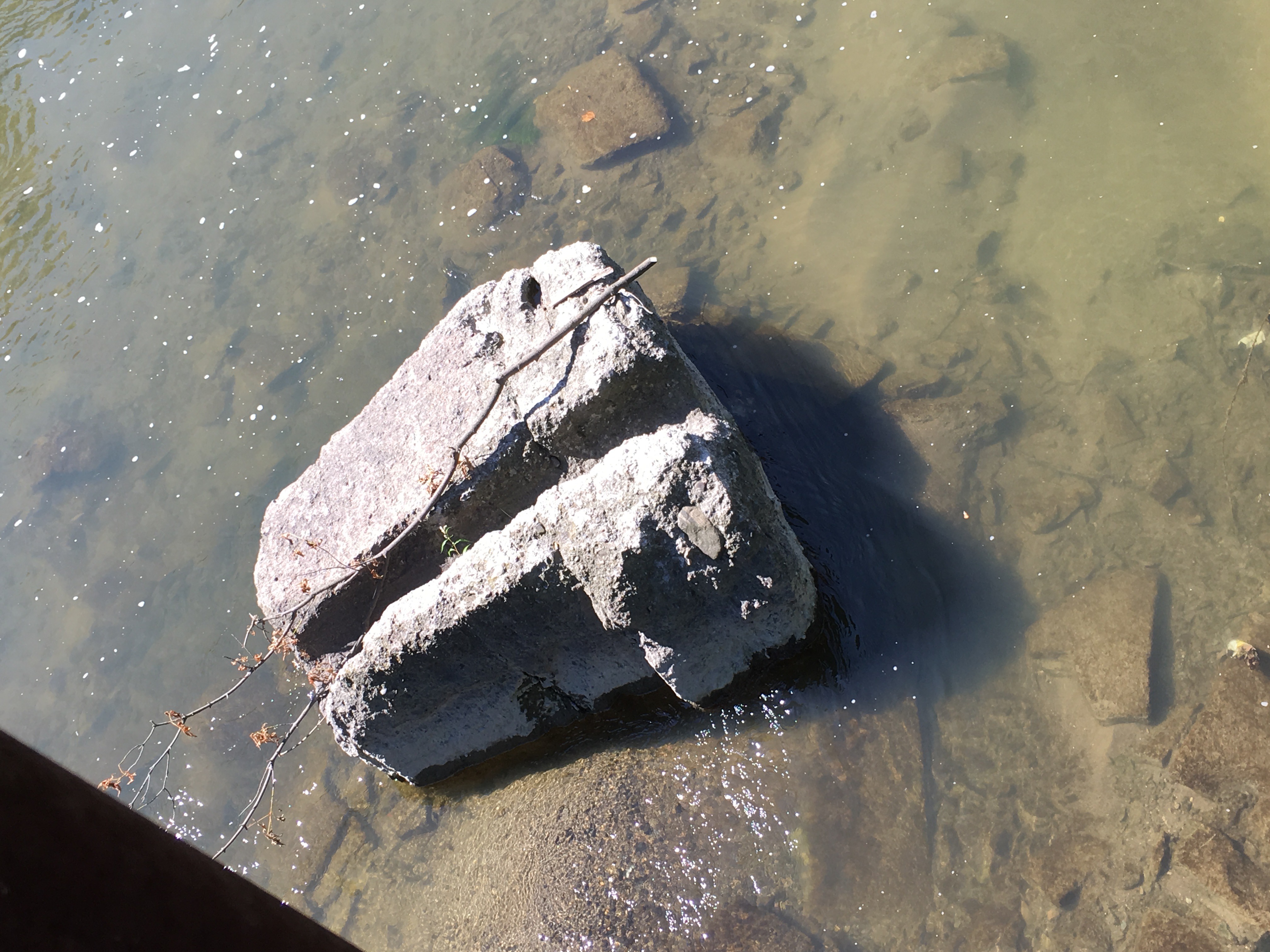
Some parts of the old bridge foundations have been washed into the river where they now provide some shelter and habitat for the blacknose dace that live in the river.

A new pedestrian bridge has been built across the river to link two sections of the Humber River Trail.

A large section of the west abutment can be seen in the river where pieces of wood and tree branches have been washed onto the top by high water and then left stranded there.

The former residential streets have been retained and are now in use as the main hiking trails through Raymore Park.  Many of the homes in the various flood plains around the city were washed away or damaged beyond repair.  In the aftermath of the hurricane it was decided that no homes would be allowed on the flood plains of any watercourse in the GTA.  Homes that survived Hazel were bought up by local conservation authorities and soon demolished.  This led to the creation of many of the ravine trails and parkland that we enjoy in the city today.

The Old Albion Road bridge across the Humber River was destroyed on the night of October 15, 1954 along with another 40 bridges in the GTA.  A short piece of the former road allowance and the old cut stone blocks of the east bank abutment mark one side of the old road alignment.  On the west bank of the river all traces of the former road have been removed.

img_2569

Over on The Rouge River the storm washed the Old Finch Avenue bridge away and shifted the abutment so that the new bridge appears to be on a new alignment.

img_88491

It’s tragic to think of the destruction that nature can cause but there have been several steps take to reduce the risk in the future.  Flood control dams were built on each of the three main rivers.  Milne Dam on the Rouge River, G. Ross Lord Dam on the Don River and Claireville Dam on the Humber River.

Google Maps Link: Raymore Drive

Like us at http://www.facebook.com/hikingthegta

Follow us at http://www.hikingthegta.com

Look for us on Instagram