Category Archives: Uncategorized

Donalda Farm

Sunday, December 8, 2019

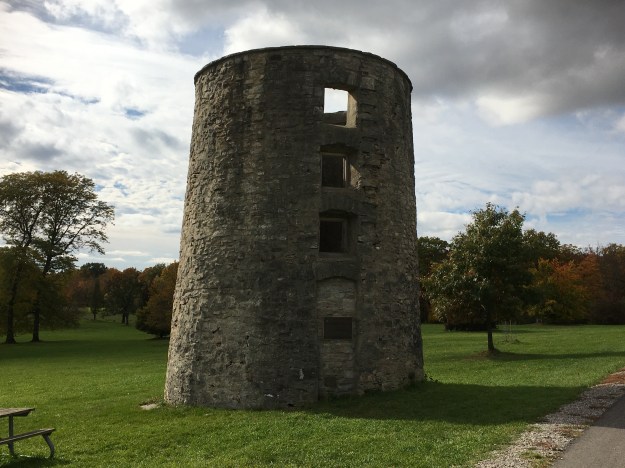
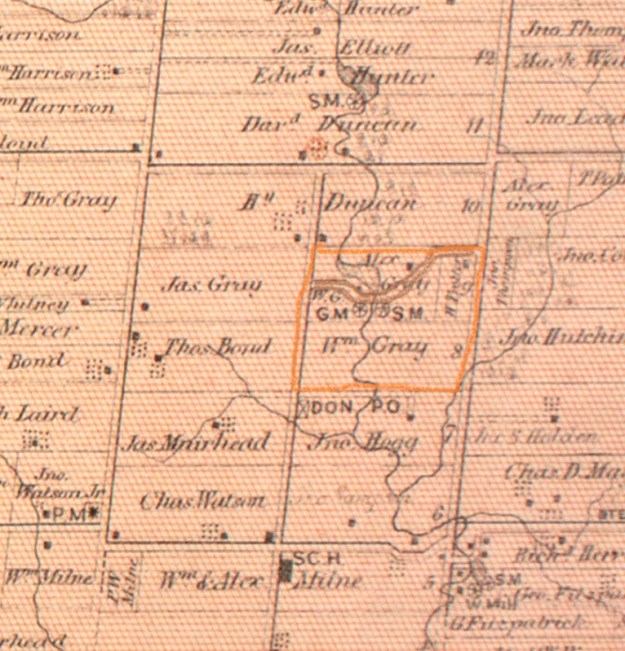
The property of the current Donalda Golf Club contains some of the oldest farm buildings remaining in the city of Toronto as well as one of the earliest surviving grist mills.  The property was deeded to William and Alexander Gray in 1825.  They quickly built a small milling empire along the sides of the Don River.  The County Atlas from 1877 shows the grist mill on one side of the river and the saw mill on the other.  The saw mill vanished when the timber industry ran out of local wood to use.  The grist mill was incorporated into later structures and the old lane way to the grist mill survives today as an access road. Please note that the golf course is private property and is not open to the public, even in the off season.
Donalda

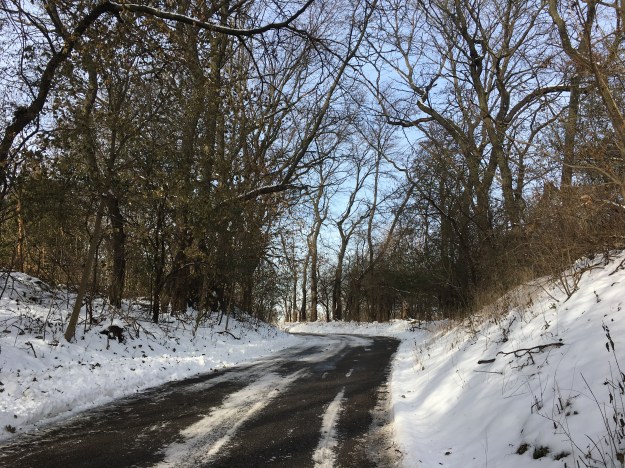
The lane way has been recognized for its historical significance and is now protected under the heritage act.  It served as an access road to allow farmers to bring their grain to the mill to sell it or have it ground for flour.  It served as a given road between the modern day Don Mills Road and Victoria Park Avenue.  The eastern half of this given road has been closed and serves the golf course.
IMG_3110

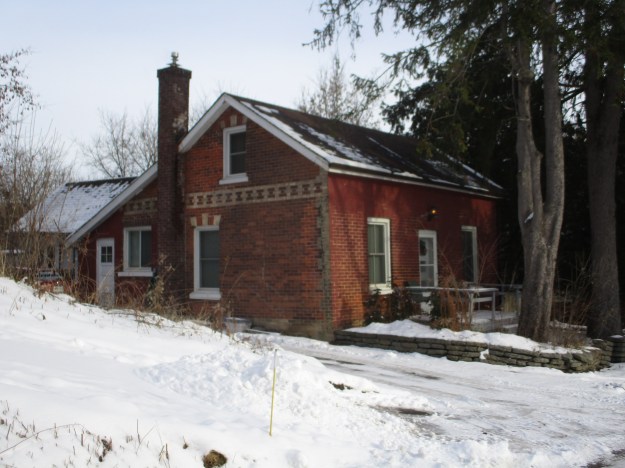
Around 1840 the two brothers built brick homes that stood side by side and just across the lane way from the grist mill.  These two houses still survive on the property and unfortunately it looks like the front of one of them has been painted red.  This hides the patterned brick work that is still evident on the side.  This house has a Georgian Style, a design that was popular between 1790 and 1875.
IMG_8679

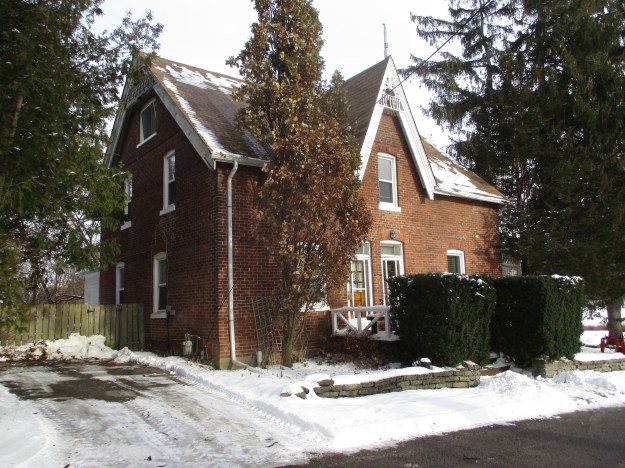
The second house lacks the patterned brick but has a more Gothic design, popular from 1830-1890.  Based on the architectural styles it would appear that this house was constructed some time after the first one.
IMG_8680

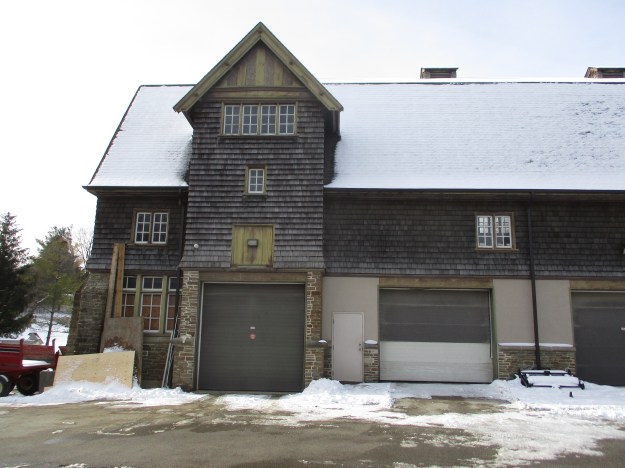
The grist mill was built in the 1830s and operated until the farm was sold in 1916.  The Grays ground their own brand of flour which they called Wee MacGregor.  It is the oldest surviving grist mill in the city that stands on the original site.  The grain elevator shaft can still be found at the rear of the old mill.
IMG_8687

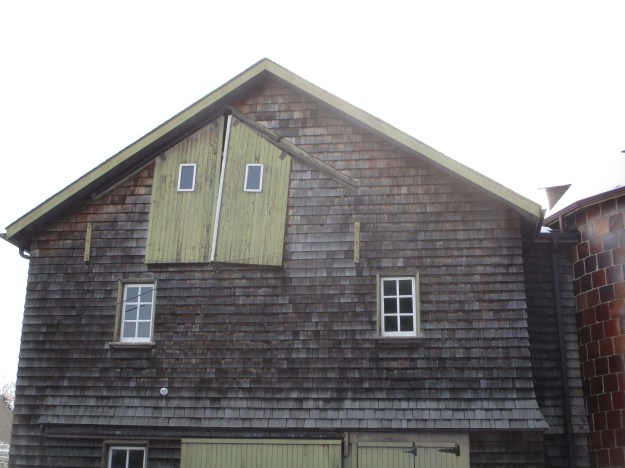
One of the doors on the top floor of the old grist mill appears to have shifted in its track.
IMG_8692

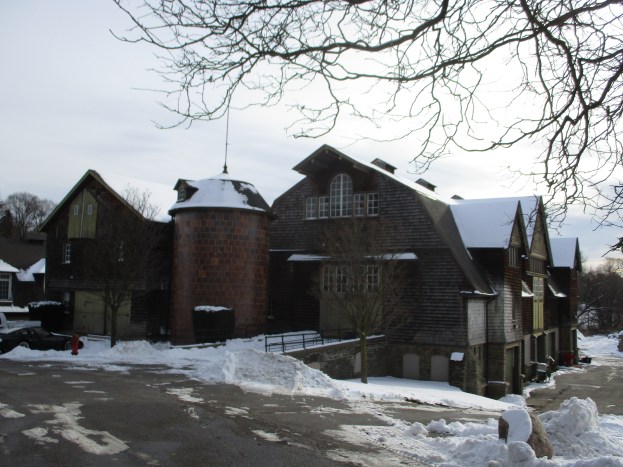
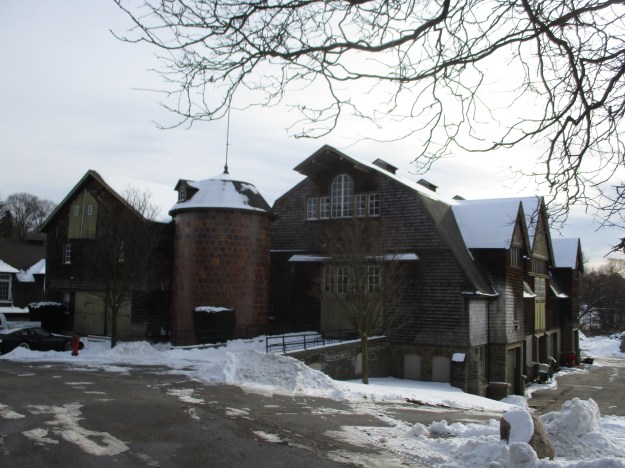
In 1916 David A Dunlap and Jesse Donalda Dunlap bought the farm from the Grays with the intention of building a model farm.  They had some ideas for sanitary husbandry that were ahead of their time and they wanted to showcase them to the world.  They hired the architects Wickson & Gregg to design and build their new barn, incorporating the old barn into the structure.  The cattle enjoyed soft radio music in the barn that featured fresh air ventilation.  In the winter they had steam heating to keep them warm and comfortable.  The pigs were bathed in olive oil and washed with toilet soap.  The front side of the old grist mill can be seen in this picture on the left of the new barn.
IMG_8681

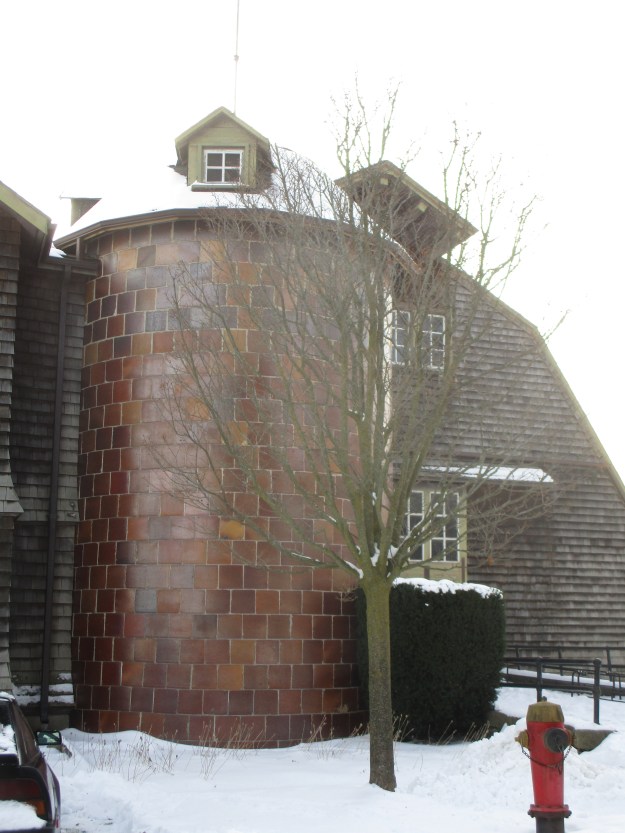
The farm expanded to include 1800 acres of land with over 40 farm buildings and 30 employees .  A lot of attention to detail and fine workmanship went into everything including something as functional as the silo where the animal feed was kept.  No boring old poured concrete for this granary but rather some rather beautiful tiles have been used.
IMG_8693

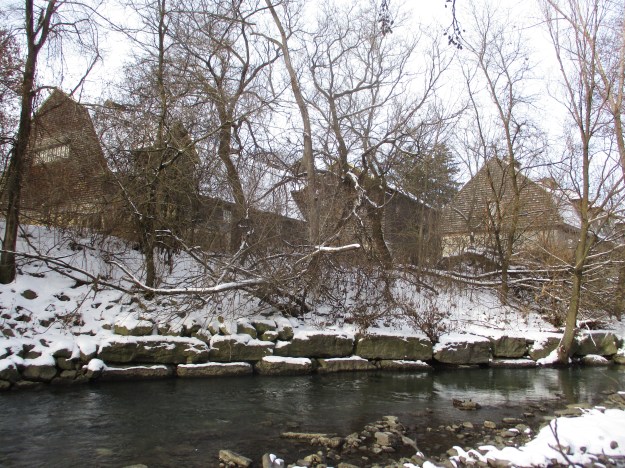
This picture shows the farm buildings and the old grist mill from the side of the river where the saw mill once stood.
IMG_8684

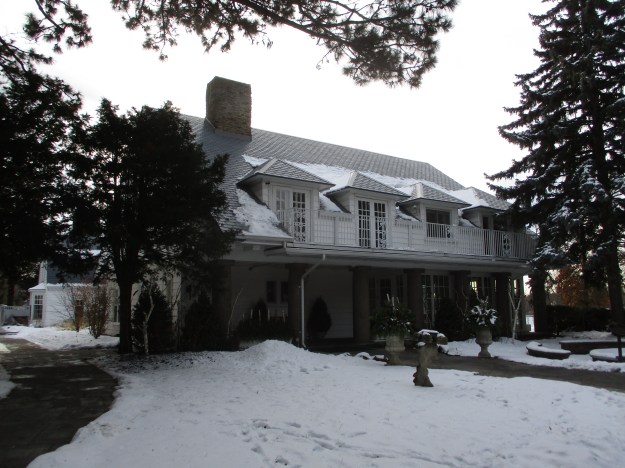
David Dunlap made his fortune by founding the world’s greatest silver mine followed by founding the second greatest gold mine.  Although they never lived there permanently in 1920 the Dunlaps decided to build a new home that would be used as their country retreat.  The house was given doric columns and wrought iron was used to create a classical design.  When David died in 1924 he left a 5 million dollar estate farm that his wife operated with their son until it was sold in 1952.  By 1960 it had become the Donalda Golf Club and the home was renovated to become the club house.
IMG_8678

David Dunlap left a quarter million dollars each to several schools, hospitals and churches.  His donation to Toronto General Hospital funded the Dunlap Radiological Science Department.

Google Maps Link: Donalda Golf Course

Like us at http://www.facebook.com/hikingthegta

Follow us at http://www.hikingthegta.com

Also look for us on Instagram


Chedoke Ski Hill

Saturday, November 30, 2019

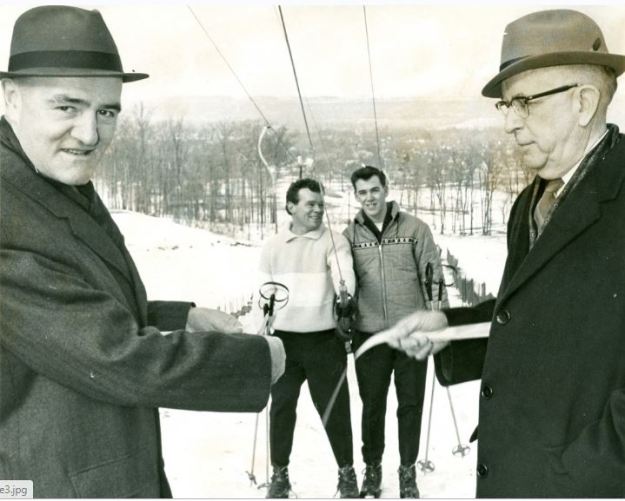
On January 7, 1964 Chedoke Winter Sports Park was officially opened.  Mayor Vic Copps and  head of the parks board Thomas Newlands cut the ribbon that opened the first run with its 900 foot tow rope.  Over time two more tow ropes and a chair lift would be added along with sled runs.  The park operated until 2002 when poor snow conditions caused the city of Hamilton to decide not to open it that year.  The following year it was closed permanently with the city citing an annual loss of $250,000.  The cost of upgrading the snow making equipment to be able to perform in warmer temperatures along with lift upgrades would have cost an additional $3,000,000.  Over the next few years most of the poles and lift equipment was removed guaranteeing that it would never open again.  The picture below was taken from The Hamilton Spectator and shows the ribbon cutting ceremony that opened the park.

Chedoke opening

The winter sports park added additional ski runs over the years as well as more tow lifts.  Eventually, a run would be opened from the top of the escarpment and it would be served by a chair lift.  Sled runs were also added and the park served as a winter destination for the next four decades.  Attendance declined over the years and the cost of operating the hill continued to increase until the city decided to close it permanently.

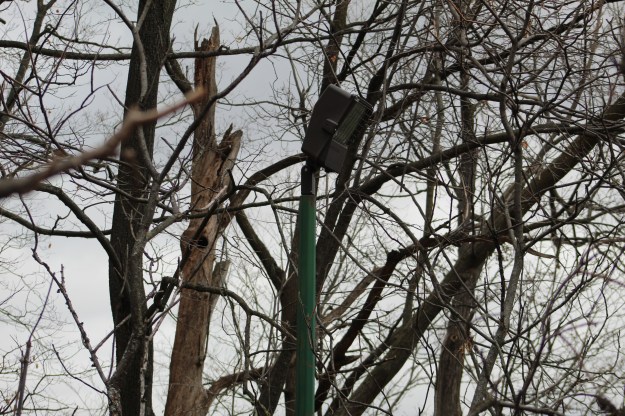
The Chedoke Rail Trail runs along the bottom of the escarpment near the Chedoke Golf Course and it has one unusual tunnel just north of the parking lot.  This tunnel allowed pedestrians to pass under the tow rope that carried skiers back to the top of the hill.  The tunnel is flanked on both sides by abandoned lamps that lit the former ski hill.

IMG_8573

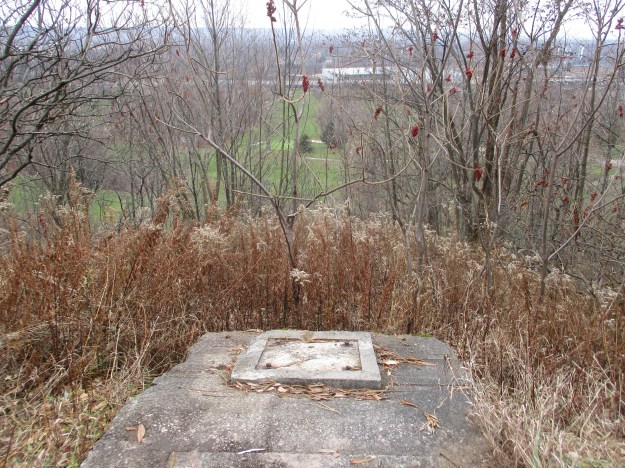
This tow rope supported one of the shorter runs and ended just a few metres above the  Bruce Trail.  The concrete pads where the upper wheel was located have been left behind.  Near this spot is an open pit that contained snow making pipes and equipment so watch where you step if you explore this area.

IMG_8537

Each of the ski runs was lit for night skiing.  Although the lift mechanisms have been removed, the light fixtures were left behind.  They will slowly be overtaken by the new forest growth and will seem somewhat out of place to future explorers after the ski hills have been forgotten.

IMG_8586

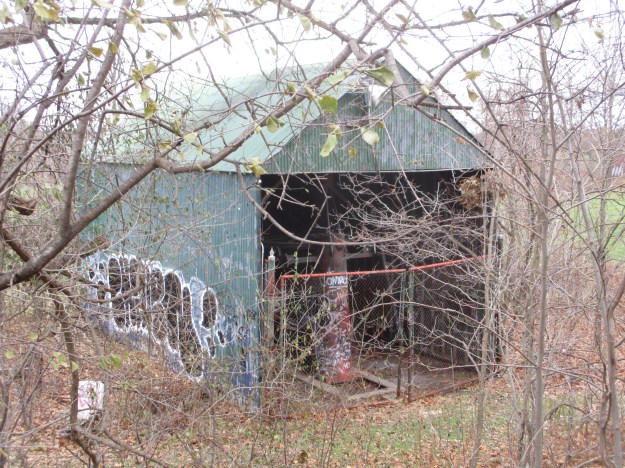
Between 2003 and 2009 most of the lift equipment was removed from the site.  All of the lift poles and tow ropes were disassembled and carted away except for the main drive unit for the chair lift.  It still stands at the bottom of the longest run, hiding in a green shed.

IMG_8567

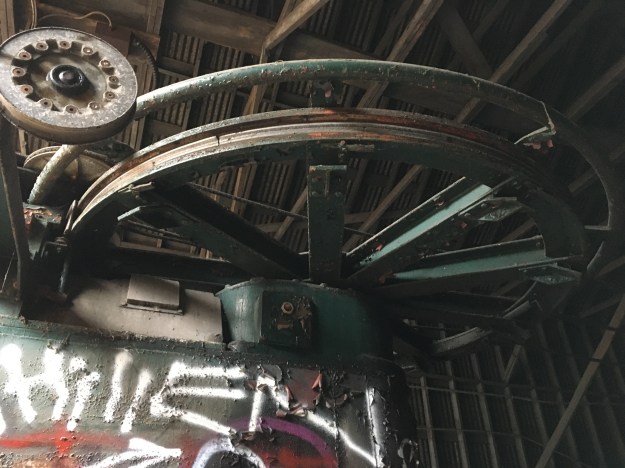
Inside the shed the main wheel and drive assembly still stands although the lift cable has been removed.  The wheel assembly is mounted on a pit in the floor that allowed the mechanism to be pulled backward by means of a hand crank and a series of cables.  This was used to keep the tension on the main lift cable.

IMG_3029

From outside of the lift shed the view up the hill reveals how quickly the trees are creeping back onto the ski slope.  The lift towers and chairs have been removed so we had to climb to the top.  The Bruce Trail crosses the slope about half way up the picture.

IMG_8587

Three rows of PVC pipe run down the length of the longest run.  These were used for the snow making equipment.  Expensive upgrades to this system  to allow snow making in warmer temperatures were cited as part of the reason for closing the site down.  The lift poles were removed that ran along beside these pipes and yet they were left behind.  It wouldn’t have taken much more effort to cut these up and cart them away while they were at it.  Estimates suggest that these pipes will still be laying here in the year 2500 if no one collects them.

IMG_8557

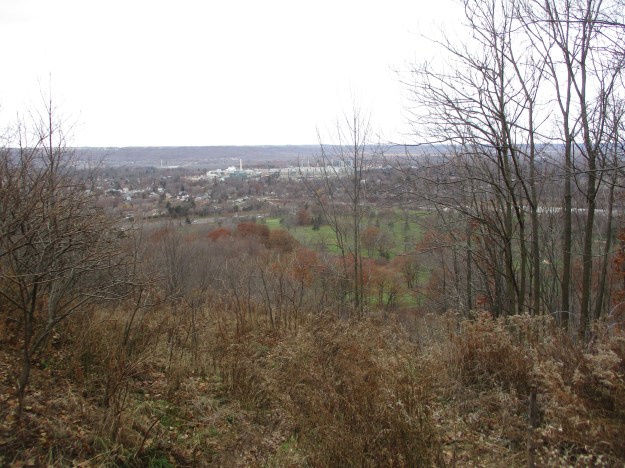
From the top of the escarpment you get a nice view out across Burlington Bay.  The first part of this run is pretty steep and was the adrenaline rush that the more experienced skiers were looking for.

IMG_8593

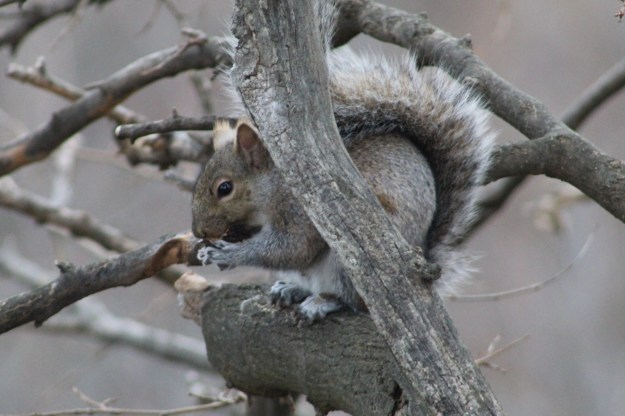
From this location on the top of the hill you are close to the old Mountain Sanatorium where they used to treat people with tuberculosis.  The sanatorium is now abandoned and most of the buildings have been torn down.  The Cross of Lorraine still stands at the top of the escarpment to mark the old hospital and it is visible from the trail below.  The gray squirrel has an average lifespan of 6 years if they make it past their youth.  Records show lives of up to 20 years in captivity.

IMG_8614

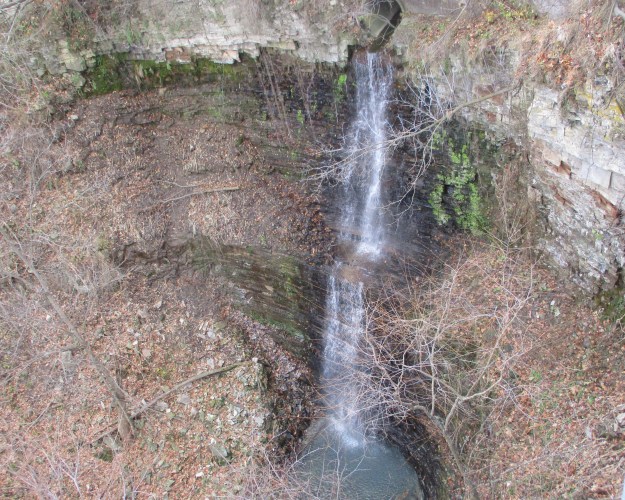
We followed the Robert MacLaren Side Trail along the top of the escarpment with the plan of taking the Chedoke Stairs back down to the Chedoke Rail Trail and from there to investigate a couple of local waterfalls.  From the trail you can see the top of Westcliffe Falls but the actual waterfall is hidden from view.  A little farther along you come to a spectacular view of Cliffview Falls.  The view from the top suggested that it would be worth the effort to follow the creek from the bottom of the escarpment back up to the bottom of the waterfall.

IMG_3040

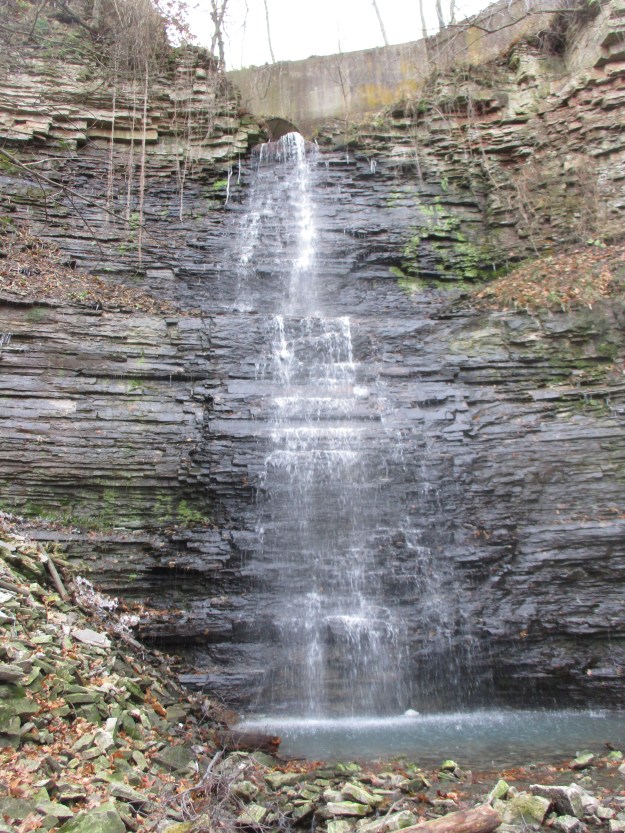
The waterfalls are located at the bottom of the Chedoke Stairs.   There are two waterfalls that meet near the bottom of the ravine and share a lower falls.  The Lower Cliffview Falls are on the left and Lower Westcliffe Falls on the right.

IMG_8534

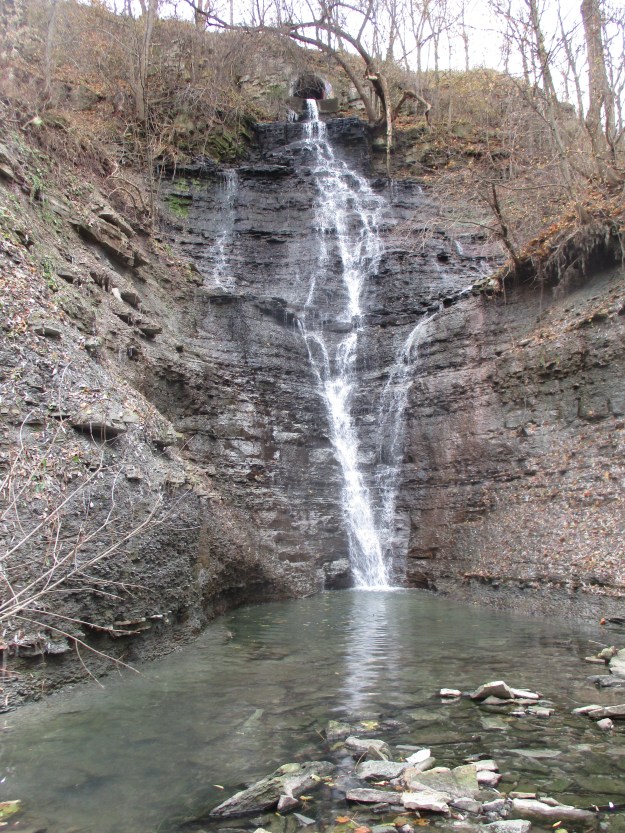
Westcliffe Falls is a 15-metre complex ribbon falls that is mostly hidden from the regular trails in the area.  However, you can climb past the lower falls and from there it is a short, easy climb to the main falls.  It is located in the ravine on the right above the combined lower falls.

IMG_8598

Cliffview Falls is 15 metres tall and is a terraced ribbon falls.  Both of these waterfalls are nice in spite of the low flow of water.  In the spring when the water is at its peak flow they are both likely to be quite spectacular, with Westcliffe being the more interesting of the two.

IMG_8603

Having climbed up the ravine to view the two sets of falls we returned to the car having fully enjoyed the day.

Further reading about local attractions near Chedoke Ski Hill:

Escarpment Stairs, Mountain Sanatorium, Chedoke Rail Trail

Google Maps Link: Chedoke Stairs 

Like us at http://www.facebook.com/hikingthegta

Follow us at http://www.hikingthegta.com

Follow us on Instagram

Wexford – Ghost Towns of the GTA

Sunday, November 24, 2019

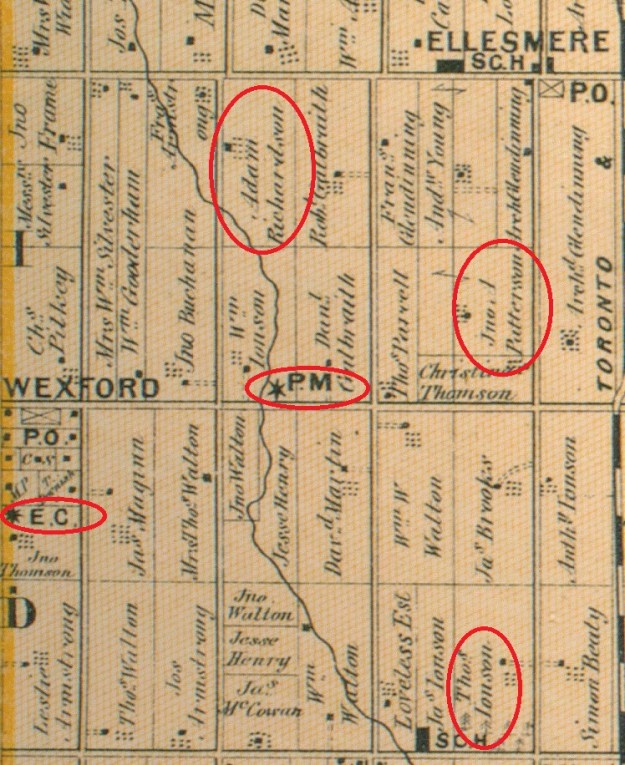
The community of Wexford got its start around 1840 at the intersection of present day Lawrence Avenue and Pharmacy Avenue.  Richard Sylvester had arrived from Wexford County in Ireland and built The Rising Sun Inn on the south west corner of the intersection.  This became the nucleus for a small farming hamlet known as Hough’s Corners.  In 1865 Sylvester added a post office which he named Wexford after his home.  The community served the local farmers for the next 100 years with growth and little change.  After the Second World War, Toronto expanded rapidly and by the 1950’s the farms around Wexford fell to developers.  The little community has been lost with the exception of a couple of churches and a few homes.  These I have marked on the 1877 county atlas shown below.

Wexford map (2)

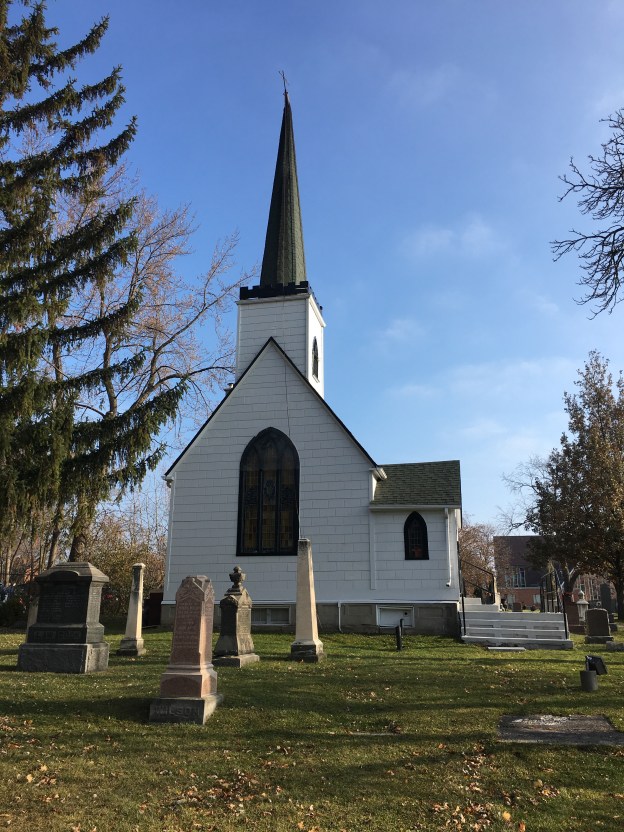
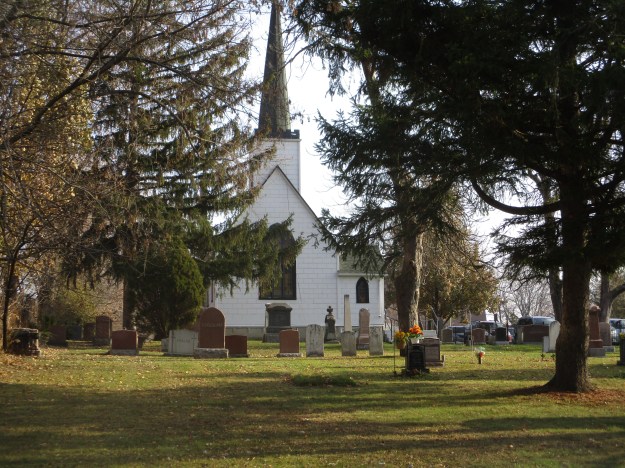
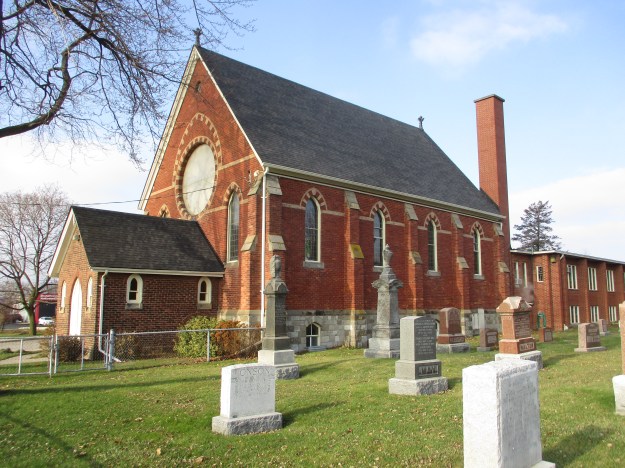
After meeting in homes for several years the Anglicans of Wexford decided to build a permanent church building.  They built St. Jude’s Church in 1848 on a small parcel of land that had been donated for the church.  It already included a family cemetery plot that would become the church plot.  The 20 foot by 20 foot church has seating for 60 and is the smallest purpose built church in the GTA.  The pews are small and it was described as seating for a “tight four” people.  The church originally had no basement and was heated by a pot-bellied stove but a basement was dug for a furnace in 1929.  Like the town, the church remained small and unchanged for a hundred years,  With the sudden growth of the surrounding community the membership jumped from 79 in 1950 to 1,000 families in 1958.  With this growth came a new church building in 1953 on the south east corner of the lot.  The little church has since been used by several small congregations who have contributed to the upkeep and restoration of the building over the years.  Many of the early pioneering families are interred in the cemetery around the church.

IMG_8489

In 1842 a small wood chapel was built by the Primitive Methodist congregation.  They used the church until 1877 when it was replaced with the large brick building that stands beside the pioneer cemetery,

IMG_8498

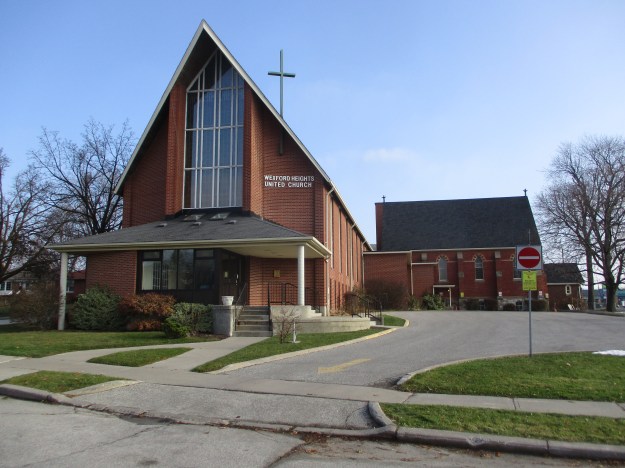
In 1925 they joined with the United Church of Canada but growth still remained slow.  It didn’t take off until the 1950’s when the area was built up.  Then the church decided to add two pieces between 1950 and 1960.  This summer the church closed after years of declining attendance.  Around the area there are several other churches who all seem to be doing okay.

IMG_8494

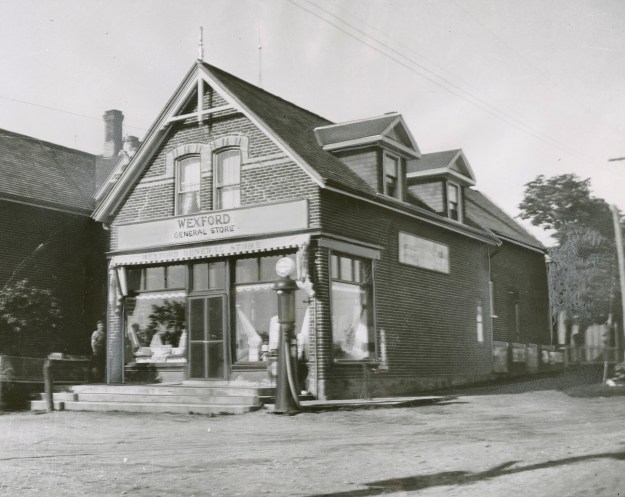
Wexford had all the amenities of a rural farming town including a blacksmith, a hotel and a post office in the general store.  The photo below was taken from the Toronto Public Library collection and is dated 1960.  This was taken just before the 1883 building was demolished to make room to widen Lawrence Avenue.

wexford 1960

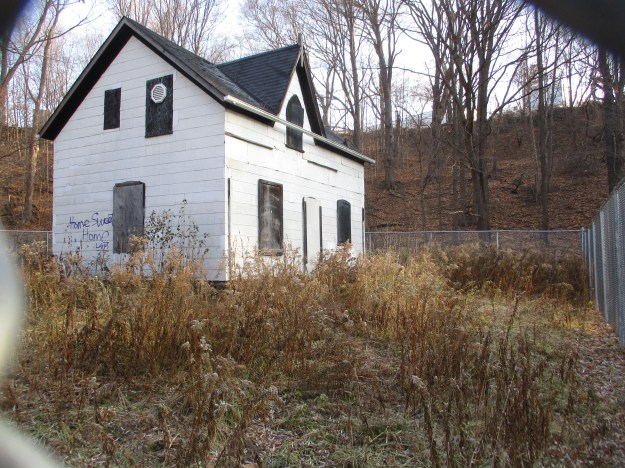
Just to the west along Lawrence Avenue stood a small industrial complex where some of the locals found employment.  Milneford Mills contained a woolen mill, dry goods store and wagon shop.  Milne House was built in 1871 and is one of the oldest examples of gothic frame architecture in the city.  The front porch which used to look out over the mills has been removed.  Now abandoned, it is intended to be restored eventually.

IMG_8475

The house at 37 Kecala Road originally fronted onto Kennedy Road but has been swallowed up by the surrounding subdivision.  This house was built by John Patterson in 1858 and stood on his farm for the next century in isolation.  Today, it is a house in a subdivision that faces sideways to the rest of the homes because it doesn’t align with the new street pattern.

IMG_8518

12 Iondale Place hides another historic house on a quiet street of cookie-cutter homes.  This house and the converted drive shed are also on the county atlas featured above as belonging to John Ionson in 1877.

IMG_2994

1369 Warden Ave is known as the Richardson House and it is another one of the homes seen on the county atlas. It has been given an historic designation as have all of the buildings featured in this post.  It stands among a street full of single story war time housing units.

IMG_8493

There is an abandoned rail spur that runs along the side of the cemetery at the Wexford Zion Church.  I chose to follow it a ways north to see where it went to.  I had previously explored the southern section as it followed the Underwriter’s Reach of Taylor Massey Creek.  This northern section ran for a kilometre north until it was buried beneath the parking lot for Costco.  A high fence kept me from investigation further.

IMG_8505

The spur line has only been abandoned for a short while but nature doesn’t care.  This section of pavement was likely a parking area but the trees have taken over pretty quickly.

IMG_8509

A black squirrel was trying to get away from me and ran up the side of this building.  When he got to the top he discovered that he couldn’t get a grip on the flashing along the top.  After a couple of attempts I chose to wander along so he could come down safely.

IMG_8516

60 Rowena Drive was home to the estate of the O’Connor Family who had invented Laura Secord Chocolates.  There’s a complete story on the candy as well as the home and it can be found here: O’Connor Estate.

IMG_8481

Wexford is only represented by a few scattered historic buildings but they are worth the effort to go investigate.

Google Maps Link: Wexford

Like us at http://www.facebook.com/hikingthegta

Follow us at http://www.hikingthegta.com

Also find us on Instagram

Emery Creek

Saturday, November 16, 2019

Long before the arrival of Europeans, the local peoples used The Carrying Place Trail north along the Humber River.  They crossed a pristine Emery Creek near today’s Finch Avenue and Weston Road intersection.  In the 1950s this area was built into an industrial park and the creek was buried in a concrete pipe.  Unfortunately the creek came to carry industrial contamination which included lead, zinc and copper.  During large rain events sewage was also carried directly into the Humber River.  A recent project to improve the water quality is the result of over twenty years of work by local environmental and residential groups.  We decided to investigate the results and so we took advantage of parking at Habitant Arena from which we set off on the west side of Weston Road.

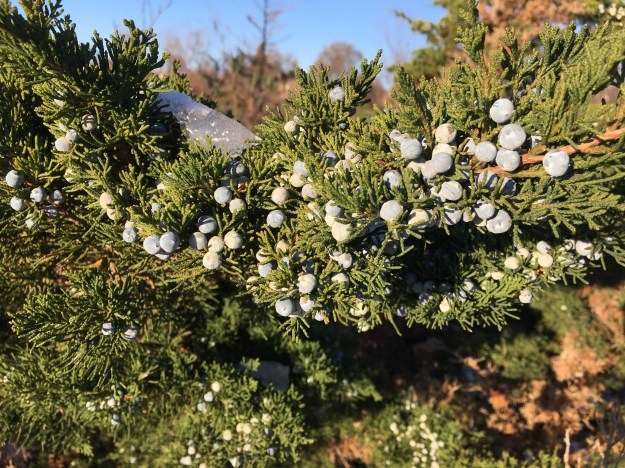
Eastern Red Cedar have a three year cycle.  Their fruit begins as a flower in the first year.  It then turns into a green berry for the second year and ripens into a blue berry in year three.  The berries are harvested and dried after which they turn black.  They are used as a spice and high in vitamin C.  They may also help fight cancer because they are high in antioxidants and flavoniods.


IMG_2932

North of Finch Avenue the headwaters of Emery Creek are buried under the industrial sprawl that became its poisoning.  Once it flows under Finch it passes behind a four tower residential complex before emerging back into daylight.  Emery Creek briefly flows in a naturalized watercourse before it reaches the storm water management ponds.

IMG_8464

Milkweed seeds are blowing in the wind.  The little parachute that carries the actual seed is known as the pappus.  When attempting to grow milkweed on your property as an aid to monarch butterflies it is recommended that this part be removed.  You can then disperse them on some gently disturbed soil without fear of them blowing away on you before they germinate.

IMG_8490

The health of a river begins in the tributaries and so a $14 million dollar project was devised to use natural processes to remove and contain the main pollutants from Emery Creek.  Starting in March 2016 three storm water management ponds were constructed beside Emery Creek.  The plan is to clean the water before it is discharged into the Humber River.  The first pond is designed for sedimentation and the bulk of solid particles are removed here.  The water then flows through a short pipe into a shallow pond where the remaining heavy metals are removed.  The third pond is the biggest one and the fine particles are removed here before water is discharged through a pipe into the Humber River somewhat upstream from the original confluence of the two.  The concrete weir that diverts the waters of Emery Creek into the first pond was cast in place but includes a wooden section that allows for moderation of the water flowing into the ponds.

IMG_8465

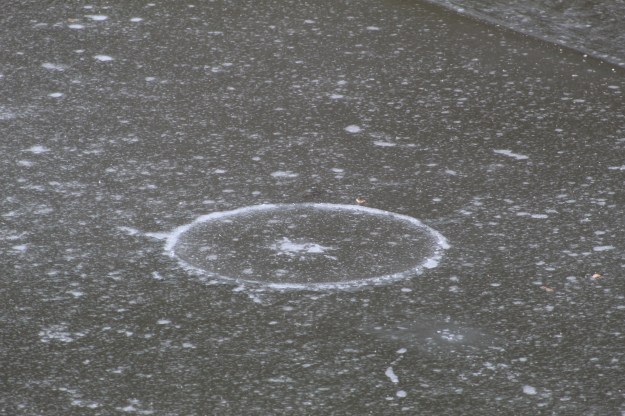
In spite of the fact that it is mid-November the water in the three ponds had frozen over.  There are sometimes interesting patterns in the ice and these can take the shape of a circle.  Ice circles form in slow moving water as it reaches freezing temperature.  They usually occur where there is a bend in the water flow that causes an eddy.  The water on the surface continues to move in the direction of the eddy as it freezes and this causes the ice circle.

IMG_8470

If the rotational shear force is great enough the ice circles can cut away from the surrounding ice and form ice discs.  These discs have been observed as large as 50 feet in diameter.  The new ponds on Emery Creek have set up the slow moving water patterns to allow for sedimentation of solids in the water before it is discharged into the Humber River.  This appears to have also set up the ideal conditions for ice circles to form.  This one below looks like someone was getting ready for a faceoff in a hockey game.

IMG_8468

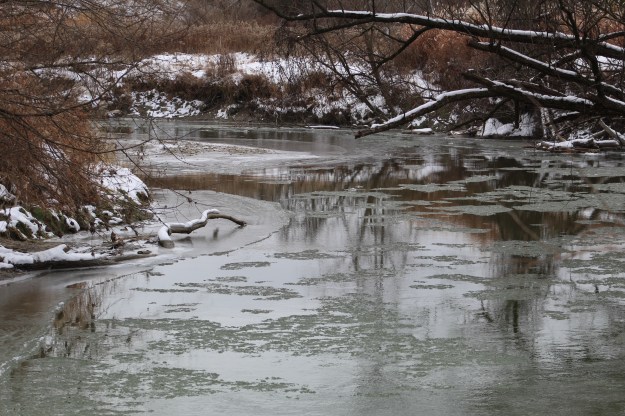
The Humber River was in the process of slushing over with ice forming along the edges where the water is moving slowly or sitting in pools.

IMG_8492

Not everyone is willing to hang around and look for food when they require open water to dig for water plants..  Most of the Canada Geese have formed into skeins and flow for easier foraging grounds.  A group of geese in flight is also known as a team because they place the weakest ones behind the rest to take advantage of the air currents generated by the ones in front.

IMG_8498

The ponds and trails around them were pretty quiet this morning but are perhaps enjoyed a little more in the summer sunshine.

IMG_2933

Someone has thrown the life preserving equipment into the pond where it is now frozen in place.

IMG_8500

Not all robins migrate south for the winter and seeing them in the colder months is becoming more common.  Robins move around in response to food rather than temperature.  Birds that move south follow their ability to collect worms and other insects for food.   In the winter robins switch their diet to fruit and the bulk of them move to places where there are sufficient berries for everyone.  The ones that stay behind move around as the sources diminish in each area.

IMG_8510

This view from Google Earth shows the area as the area looked in 2002.  Emery Creek flows into the Humber River from the right hand side of the image.  In its original creek bed the watercourse followed the southern embankment of a much wider ravine.

Emery Creek 2002

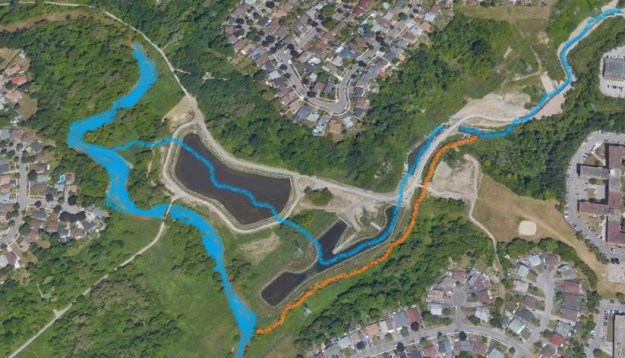
By 2019 Google Earth is showing a greatly altered geography.  The creek has been diverted through the three new ponds and now enters the river farther north.  The old creek still has a minimal flow of water that gets over the diversion dam and keeps it from becoming stagnant.  The abandoned portion of the old creek has been coloured in orange.

Emery 2019

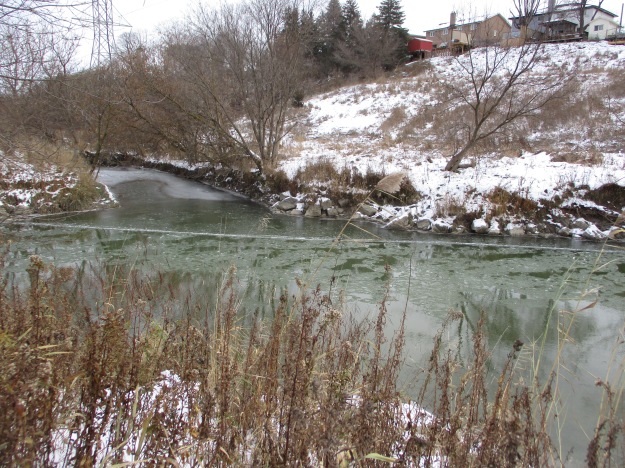
From the opposite side of the Humber River we were able to locate the original mouth of Emery Creek.  The water coming out of here is moving very slowly compared to the main river and you can see a line of ice forming across the mouth of Emery Creek.

IMG_8466

The engineering work has paid off in that the water that enters the Humber River is a lot cleaner than it was before.   Given time, the new ponds will become home to their own ecosystems and the disruptions will be a thing of the past.

Google Maps Link: Emery Creek

Like us at http://www.facebook.com/hikingthegta

Followus at http://www.hikingthegta.com

Also follow us on Instagram

Hornby – Ghost Towns of the GTA

Saturday, November 9, 2019

Beginning in the 1830s the area north of Oakville was opened for settlement and the community of Hornby found itself becoming an important stop on the trip into town.  Hotels were opened and in 1850 Trafalgar Road (7th Line) was planked as far north as Stewarttown with a toll station in Hornby.  However, by 1877 the railway had bypassed the town and Milton had been named as county seat.  Hornby began to decline back to a county village.  Today there isn’t much of the community that was named after Hornby Castle in Yorkshire but we went to see what could be found and photographed before it  disappears forever.

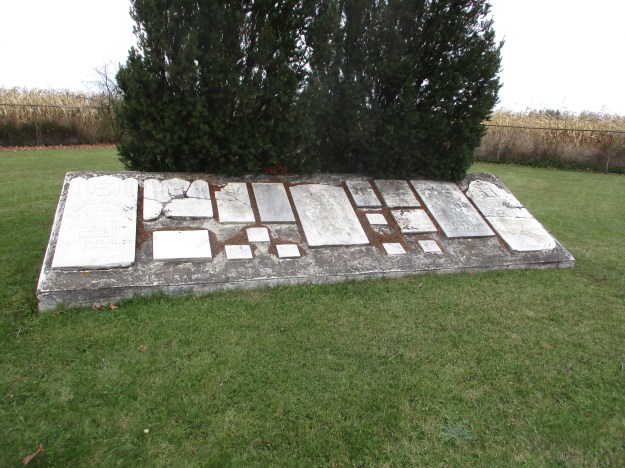
Hornby became stretched out along what is now Steeles Avenue to the point where it was referred to as Hornby and West Hornby.  Two cemeteries mark the eastern site of Hornby.  The Methodist church was originally located on Lot 1 Concession 8 on the corner of the William McKindsey lot.  On April 30, 1832 the land was sold to the Methodist Trustees.  The land actually belonged to Kings College until 1840 and so the indenture wasn’t registered until 1842.  The congregation built a small frame church and began a cemetery beside the church.  They soon outgrew the frame church and moved to a new location leaving the cemetery behind.  It has since been restored with the markers being gathered into a central location for preservation.

IMG_7573

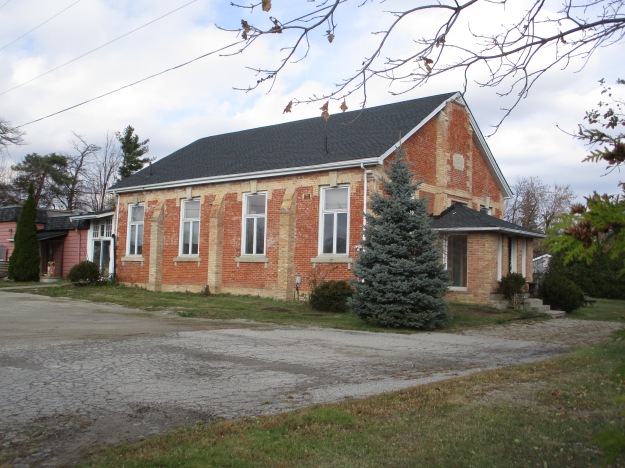
in 1856 the Wesleyan Methodist congregation built a new brick building a little farther west.  This brick building was part of a preaching circuit that included Bowers, Munns, McCurdy’s, Omagh and Bethel.  In 1925 the Methodists and Presbyterians joined to become The United Church of Canada.  This building served the congregation until November 17, 1968 when it was closed and the parishioners joined with the Ashgrove United Church.  Since then the building has been used as the Hornby Townhall.  The spire with finial was built by Gordon Brigden at his machine shop in Hornby.

IMG_7561

The first church built by the Presbyterian Church in Hornby was a frame structure constructed in 1835 across the street from the Wesleyan Methodist Church on Lot 1 Concession 9.  Many of the founding settlers of Hornby are interred here and the cemetery remains active today.  The original frame church was replaced in 1878 with a brick structure.  The congregation did not choose to join the United Church and remained active until 1971 when it was amalgamated with Knox Presbyterian in Milton.  The church building was destroyed by fire in 1978 and arson was suspected but never proven.

IMG_7566

The first school building in Hornby was in a log cabin built in 1826.  It was replaced with a new brick building in 1870.  It operated as a school until 1963 when Pineview school was built on 5th sideroad.

IMG_7565

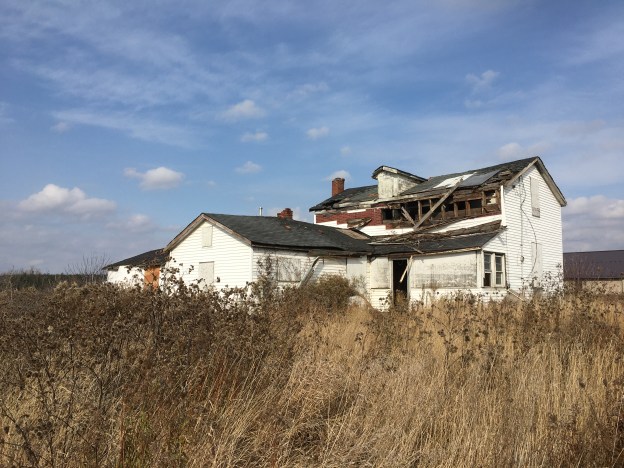
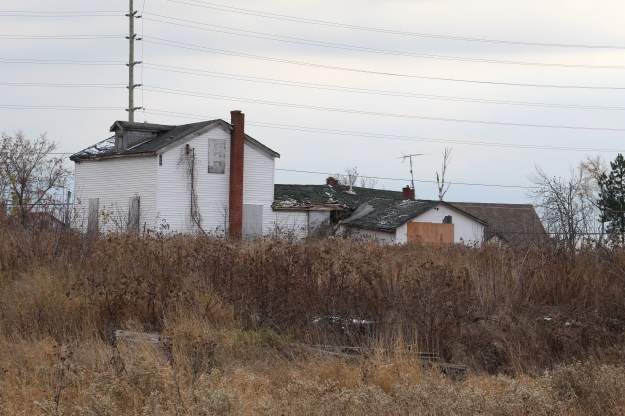
Samuel Brooks owned this one and a half story farm house in 1878.  The property changed hands several times until Frank Chisholm farmed the property through the middle of the twentieth century.  There have been multiple additions to the house over the years.  By the time it was assessed for cultural heritage in 2018 the structure was deteriorating and there was damage to the roof that had been covered over with plastic.

IMG_8401

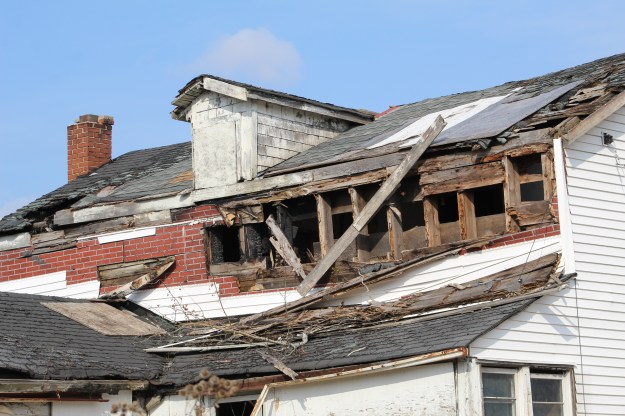
There has been a fire at the home since then and there is little doubt that the structure will be demolished for safety reasons.  As of our visit the back door was open providing access to a very unsafe structure.  It will likely be removed for safety reasons.

IMG_8420

The drive shed on the property is in similar condition and the former farm will likely soon fall prey to the urban expansion that is spreading along Steeles Avenue.

IMG_8435

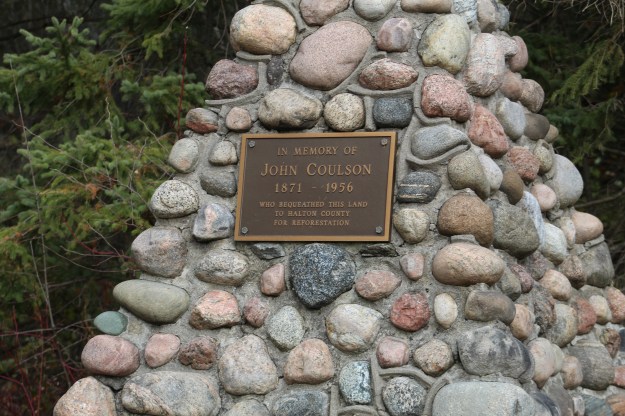
We had parked on Trafalgar Road where there is an entrance to the Halton County Forest.  After making our way through town and back up Hornby Road it was time to cut back through the forest to the car.  There is a cairn commemorating John Coulson who owned the property and bequeathed it to the county for reforestation.  The 89 acre tract was planted with white pine in 1959 and left to regenerate.

IMG_8440

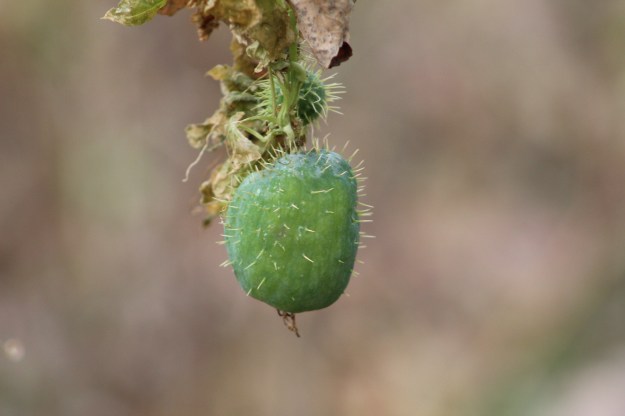
A summers worth of growth goes into producing seed pods to carry on the family line.  The wild cucumbers have produced their edible seed pods, each one containing four seeds.  In the next few weeks the bottom of each seed pod will open up and drop the seeds to the ground below.

IMG_8398

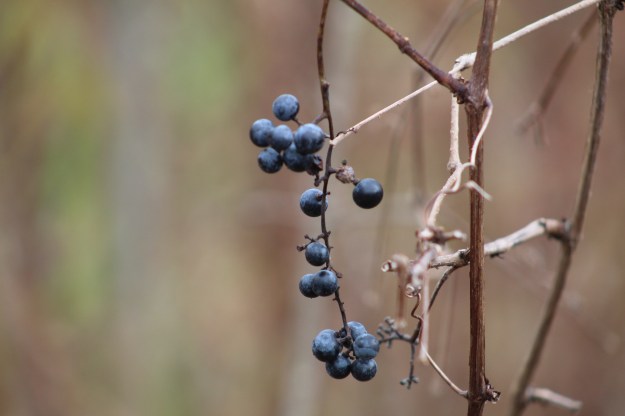
River grapes have also come along nicely this year.  These wild grapes have been bred into our table grapes to help produce a strain that is resistant to our climate.  These grapes can be turned into a tasty grape jelly.

IMG_8394

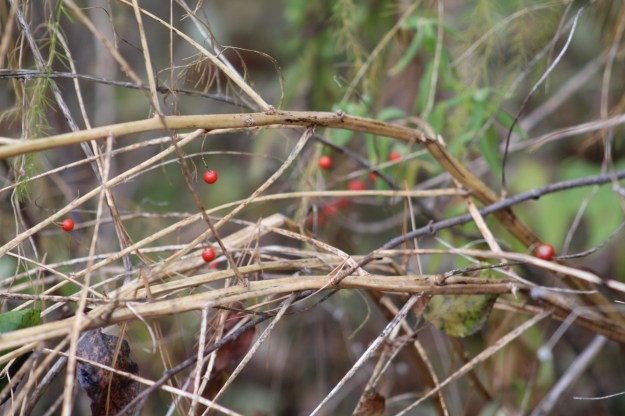
We followed Trafalgar Creek part way through the Coulson Tract and came across a cluster of asparagus that has no leaves but there are still many seeds on it.

IMG_8391

There are still several early twentieth century homes and farms in the Hornby area. but the former community is in danger of being over run by urban sprawl.

Google Maps link: Hornby

Like us at http://www.facebook.com/hikingthegta

Follow us at http://www.hikingthegta.com

Also look for us on Instagram
Anewen Greenbelt

Saturday, November 2, 2019

The East Don River is in the process of having a trail developed along the length of the river.  The East Don Trail is incomplete but has been constructed along some sections of the river.  The formal trail runs south from Lawrence Avenue through the Charles Sauriol Conservation Area.  We parked on Ruscica Drive and entered the greenbelt using the catwalk and stairs located there.

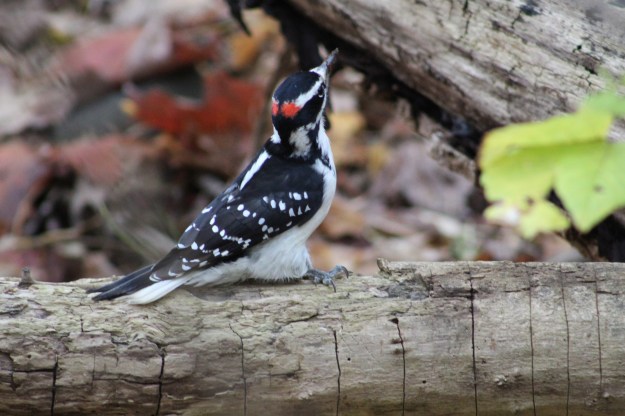
We followed the trail through a short ravine and into an open field where there are several options for trails.  We chose to begin with the trail on the west end of the field.  It wasn’t long before a small Downey Woodpecker arrived and began to put on a show for us.  The male has two small spots of red on the back of the head which the female lacks.

IMG_8299

People who have properties that back onto ravines often create their own private access to the park systems.  This is most often done using wooden stairs but sometimes we see elaborate sets of stone steps laid up the sides of the ravine.

IMG_8272

The north trail leads toward Milne Hollow where the old Milne Homestead stands empty but protected from vandals while it awaits potential restoration.  The old Don Valley Ski Club has become over-run but you can read about that park at Milneford Mills.  As you go north along the river you come to a place where you can see a new bridge through the trees.

IMG_7523

The East Don River winds back and forth through the park and two new bridges are being installed to carry the trail.  Construction of the permanent bridges requires the use of heavy equipment which has been brought to the site using a temporary bailey bridge.

IMG_7538

The East Don Trail is being extended through the park following what appears to be an old access road that was hidden in the new growth forest.  This section of the park used to be limited to a couple of seldom used trails and I frequently saw the resident deer here.  I wonder where they have moved to.

IMG_7545

The width and the depth of the ravine are sometimes much higher than the current size of the river could have cut.  During the melting phase of the most recent ice age 12,000 years ago the river was a raging torrent.  Erosion is ongoing in many places and the trail is often under cut where the sand has fallen away below the roots of the trees that line the crest.  These areas it is important to keep well back from the edge.

IMG_7542

The view up river from the top of the ravine is quite nice and provides an opportunity to envision yourself out in the country rather than just a few kilometres from downtown Toronto.  This little greenbelt is a well kept secret as there is seldom very many people using the park at any point in time.  This will change when the recreational trail is complete and it is easy for people to access the park or to pass through on part of a longer hike or ride.

IMG_7541

Active railway tracks divide the park in two and the picture below shows the rail bridge over the East Don River.

IMG_7548

Purple Bloom Russula was growing in large clusters in the woods.  This mushroom is considered good to eat but like all plants we recommend that you don’t harvest from our parks.

IMG_8335

The trail isn’t complete under Eglinton Avenue and so at the present you have to cross the road at surface level.  Please be careful or walk to the corner and cross at the lights.  At one time there was an extensive network of bike trails through this section of the woods but it has been left to fall into disrepair.  Large sections of it looked quite unsafe for either bike or pedestrian.

IMG_8292

A short walk brings you to the remains of Old Eglinton Avenue which no longer extends to the bottom of the ravine.

Google Maps Link: Anewen Greenbelt

Like us at http://www.facebook.com/hikingthegta

Follow us at http://www.hikingthegta.com

Look for us on Instagram

Bruce Trail – Ray Lowes Side Trail

October 26, 2019

Although it was late in the season we decided to head out to the Royal Botanical Gardens to do some hiking and see if there were still any interesting fall colours.  There are three free parking areas along the route we chose.  We selected the one on Valley Road.  The 1877 county atlas map below has been marked to show roughly the route we walked, including the return up York Road.

Raspberry

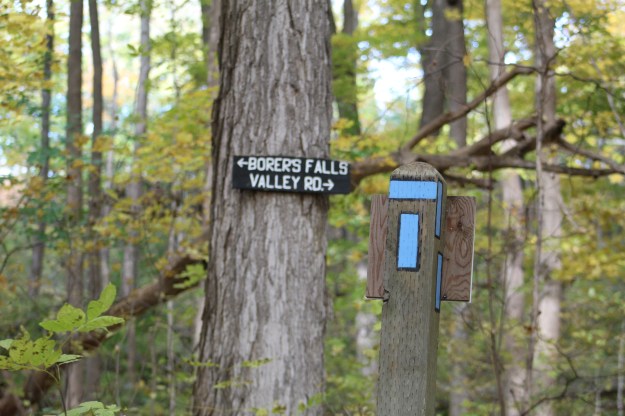
Ray Lowes was born in Saskatchewan in 1911 and moved to Hamilton in 1936.  The escarpment was pretty impressive after the prairies and he soon began to worry about preserving the area from development.  In 1959 he first proposed the theory of a continuous trail along the escarpment from one end to the other.  The 3.5 kilometer side trail that we followed has been named after him.  At the intersection of the main trail you have a choice to carry on toward Borers Falls or choose the Ray Lowes Side Trail.

IMG_8168

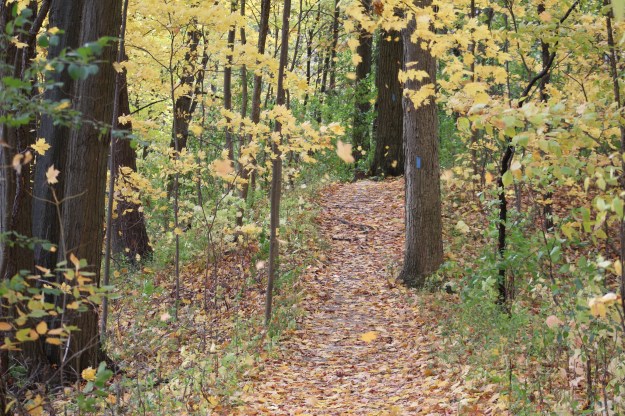
It was a beautiful fall day and the trails were covered in leaves.  This looks nice but unfortunately it means that the wildlife know you are coming with plenty of time to hide.

IMG_8176

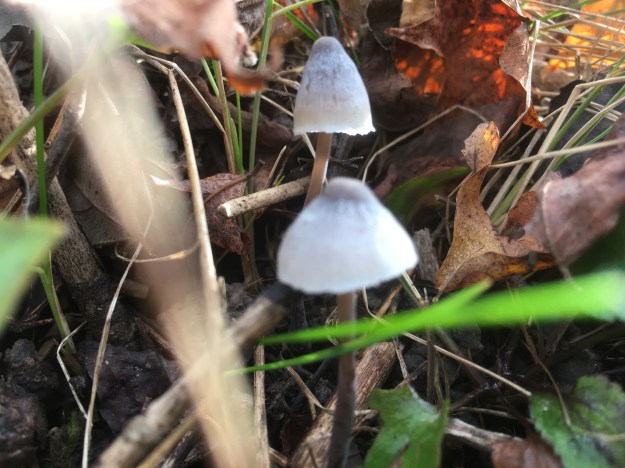
Mushrooms have no opportunity to run and hide so they can still be seen if you keep your eyes open.  We found a couple of Blue Mycena which is a mushroom that has two seasons.  One crop will grow in the spring and a second in the fall.  This mushroom is similar to hallucinogenic mushrooms except that it doesn’t bruise blue as they do.  Since there were only two we didn’t damage them to make a positive identification as we may have done if there were several others.

IMG_2646

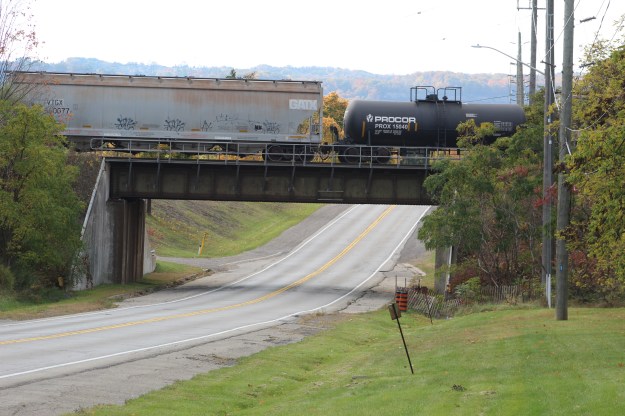
The Great Western Railway was built in 1853-1854 connecting Niagara Falls to Windsor via Hamilton.  It was taken over in 1882 by the Grand Trunk Railway and is now part of the Canadian National Railway network.  The line is double-tracked and the bridge over York Road was busy as we saw three separate trains while we were in the immediate area.  The bridge at this crossing is set on concrete abutments which dates it after 1900, likely replacing an original wooden trestle.

IMG_8179

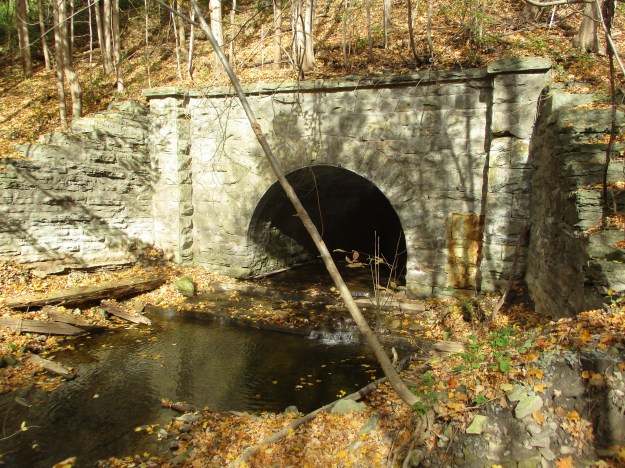
When the railway was built the small creek that flows along side of York Road was of little consequence as it flowed under the wooden trestle.  Rather than maintain wooden trestles they were often filled in by dumping rocks and soil from rail cars above.  Prior to doing that the creek required a culvert and a cut stone one was built just west of York Road.  This was likely done sometime around the time the line was taken over by the Grand Trunk, perhaps with their influx of capital.

IMG_7510

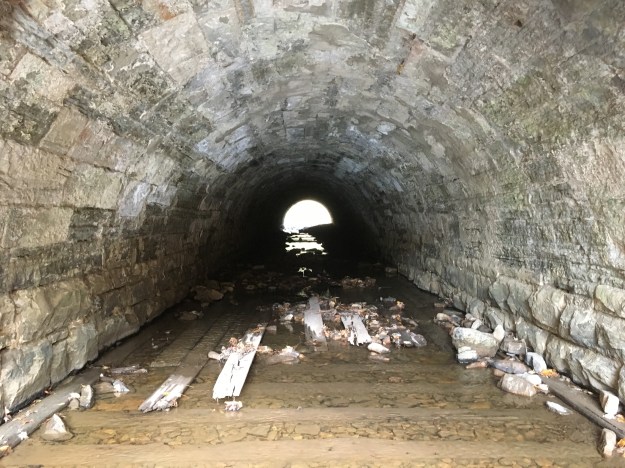
The inside of the culvert has been lined on the bottom with wood which was laid down during the construction of the culvert.  When we investigated the two stone culverts in Caledon we found similar wood flooring in the one on the Humber River.  That culvert has the date 1889 in the keystone at the top of the arch.  That is a similar time frame to the construction of this culvert.  You can follow this link for the story of the Caledon Stone Culverts.

IMG_2653 (1)

The oncoming train in this picture illustrates the height of the berm with the old trestle hidden inside.

IMG_8186

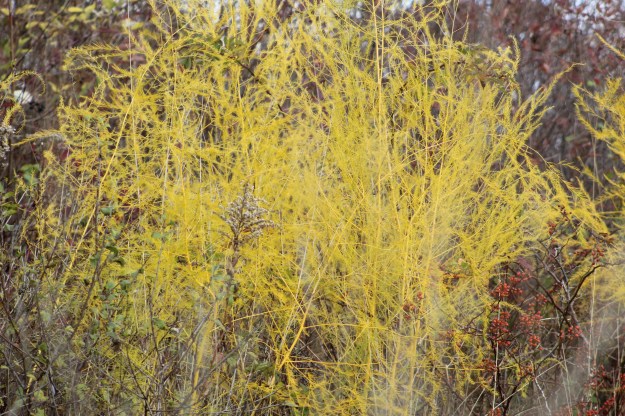
Wild asparagus plants stand out in the fall with their bright yellow colour and distinctive leaf shape.  There were several clusters of asparagus along the trail but very few berries on the plants.  Upon inspection we found two dried up berries on one of the plants while several others had none.

IMG_8195

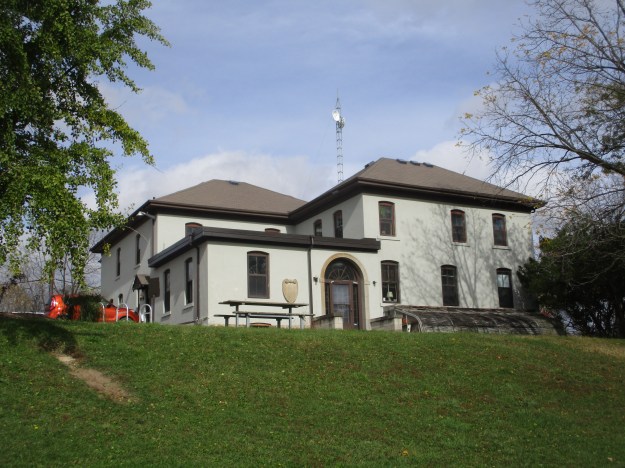
William Rasberry built this house in 1860 and it has been enlarged and altered several times since.  By 1877 when the county atlas above was drawn the farm had passed into the hands of John Rasberry.  McMaster University owned the land in 1950 when the Royal Botanical Gardens acquired it.  It has since been renovated and is used by the RBG and Bruce Trail Association.

IMG_7514

Ontario farms shifted from wheat production to livestock and dairy in the 1870’s.  The 1870’s and 1880’s were a period a barn construction for the animals to shelter in as well as silo construction for storage of feed for the animals.  Early silos were built out of stone collected from the fields.  Later silos were increased in height and replacements were built of concrete after 1900.  In the late 1880’s the Rasberry Family built a barn and a silo near their house.  The barn is long gone and so is the wooden cap to the silo but the stone structure remains.  As can be seen in this picture and the cover photo, the silo has developed a significant lean.

IMG_2668

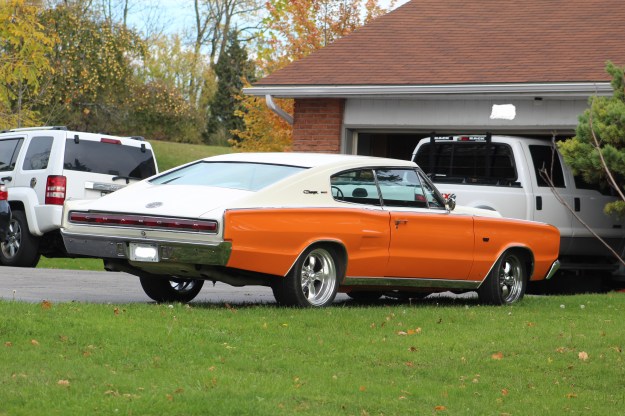
Dodge entered the muscle car market with the Charger in 1966.  The car came with a 426 Hemi engine and fastback styling.  We passed a house with on one the front lawn which appeared to be painted for Halloween but wouldn’t have been my first choice for the rest of the year.

IMG_8229

The Royal Botanical Gardens covers 2,422 acres and was designated as a National Historic Site of Canada on January 1, 1994.  We’ve previously visited The Berry Tract on one of our trips to Borer’s Falls but there’s a lot left to be explored in the RBG.

Google Maps Link: Valley Road

Like us at http://www.facebook.com/hikingthegta

Follow us at http://www.hikingthegta.com

Now you can find us on Instagram too.

Haunted

October 31, 2019

There’s quite a few places that we’ve visited that have a record of being haunted.  It seems that almost every place that has a long history also has some stories of paranormal sightings over the years.  Even though no spirits have chosen to reveal themselves to us when we visited, there are many who claim to have had experiences in these locations.  In the Spirit of Halloween we present links to half a dozen hot spots in the GTA plus a couple more outside of it.  In each case we’ll give a brief description of the location as well as the haunting.  A picture of the place and a link to a more detailed story will be included.  Google Maps links for the actual sites are included in the longer posts.

1) Mimico Branch Asylum.

The remains of over 1500 patients who died at the asylum and were never claimed lie in a small graveyard near Kipling and the Gardiner Expressway.  It is said that some of their spirits haunt the tunnels between the buildings at the old hospital.

img_5582

2) Merritton Blue Ghost Tunnel

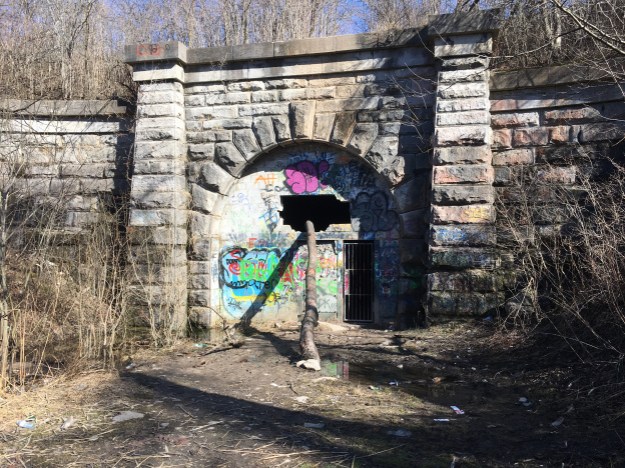
This railway tunnel under the Third Welland Canal is said to be haunted by a blue ghost.  Perhaps a railway fatality or a spirit from the graveyard that was flooded during canal construction.

img_2981

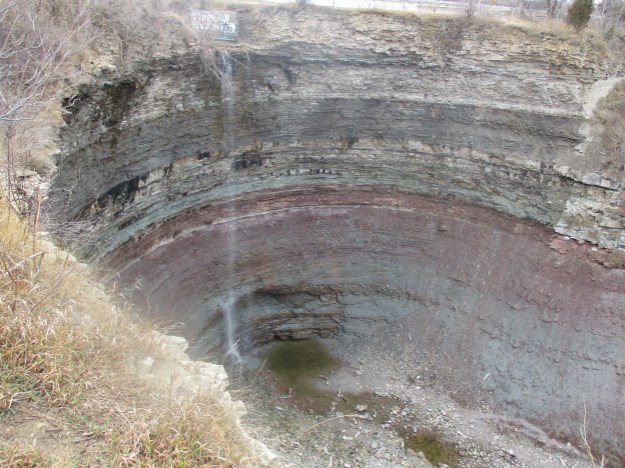
3) The Devil’s Punch Bowl

Over the years there have been several suicides at the Devil’s Punch Bowl and it is said that the spirits of the love lost remain at the waterfall, seeking their lovers.

img_2077

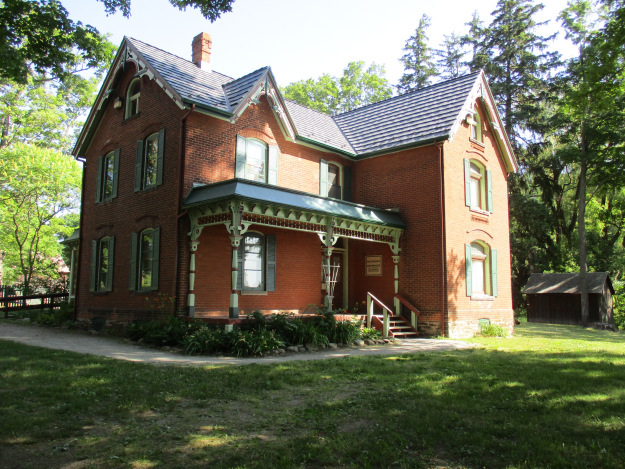
4) Bronte Creek’s Haunted House

Henry Breckon died in 1931 and his body was laid out in the front parlour for days while a wake was held.  Many people claim to have seen his spirit which remains in the house opening and closing doors for fun.

img_2216

5) Old Finch Avenue

The story of a girl who was murdered on her birthday is attached to the Old Finch Avenue bridge and it is said that if you call happy birthday on the bridge that she will respond.

img_88491

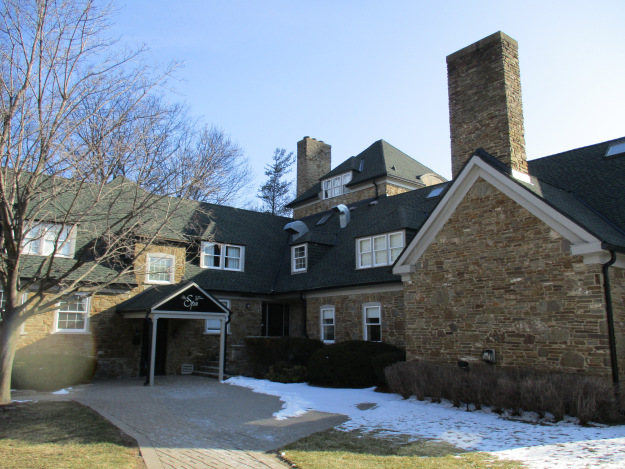
6) Ghastly Tales of Sawmill Valley Creek

With an elephant buried in a community park and a ghost that still tends the fire in Glenerin Inn, this is one of the stranger places in the group presented here.

img_0128

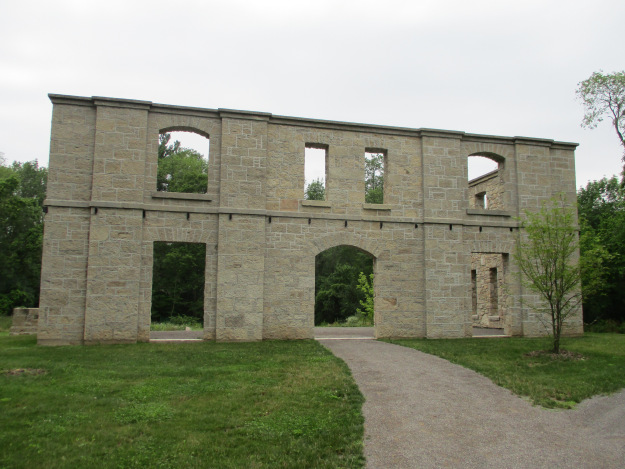
7) The Hermitage

Does the ghost of a jilted lover still haunt the ruins of this estate in Ancaster?  Many claim this to be one of the most significant places for paranormal activity in the area.  After committing suicide, the body of John Black could not be buried in the cemetery and so it was transported to an unmarked grave via a manure cart.

img_0693

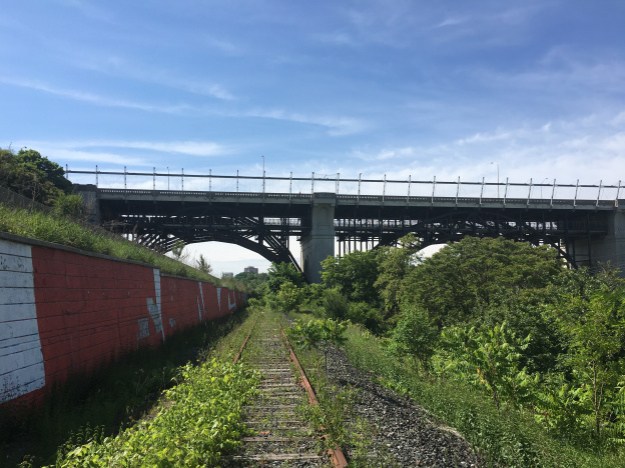
8) The Bloor Viaduct

The Bloor Viaduct has been the site of nearly 500 suicides over the years.  I don’t know of any specific haunting, but this would stand to be a place of potential paranormal activity.  This bridge is near the downtown core of Toronto.

img_4768

Happy Halloween from Hiking the GTA.

Like us at http://www.facebook.com/hikingthegta

Follow us at http://www.hikingthegta.com

Now also look for us on Instagram

Midland Railway

Friday October 4, 2019

While in the area of Port Hope on a vacation day I decided to check out the remains of one of the first railways in Ontario, then known as Upper Canada.  Port Hope had originally intended to build a rail line to Peterborough but was beaten by Cobourg who launched the Cobourg and Peterborough Railway in 1854.  The remains of this rail line can still be found in our post Rice Lake’s Sunken Railway.  The plans were changed and the Port Hope Lindsay and Beaverton Railway was born.  In 1869 the name was changed to the Midland Railway.  Passenger service ended in the 1950’s and most of the line was abandoned by 1970.  The conversion of the line to a hiking trail marks one of the earliest rails to trails projects in Ontario.  Part of the old main line is now used as the Ganaraska Hiking Trail.

My exploration began in the Port Hope Conservation Area.  One of the hiking trails following the north side of the river follows the old right of way for the railway.  As you walk along the trail you will see that you are following a berm that is occasionally replaced by wide embankments where the rail line cut through small hills to create a level roadway.  Material taken from the cuts was used to build the berm through the hollows.  The picture below shows some of the cut embankment on the right of the shot.

IMG_7405

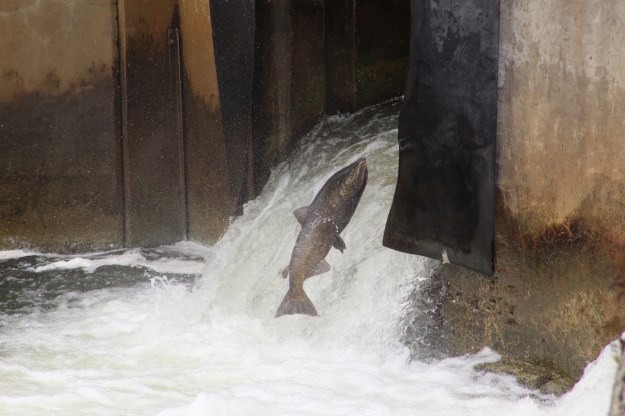
Corbett’s dam stands on the site of an earlier dam that was built in 1889 by Doctor John Corbett.  It was expanded in 1893 to produce electricity which it continued to do until 1912.  A fish ladder was added in 1973 to facilitate to migration of Rainbow Trout in the spring and Salmon in the fall.  On the day that I visited there were countless salmon in the river all trying to make their way up the fish ladder.

IMG_7594

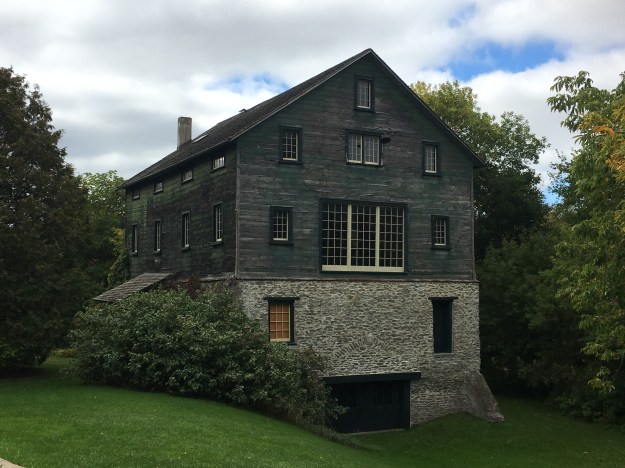
As the railway continued downstream it passed the industrial heart of Port Hope.  Some of the earliest enterprises in many communities were the lumber and grist mills.  The grist mill in Port Hope is one of the few surviving examples of post and beam construction of a mill.  It stands on a foundation of river rock.  In 1851 John Molson wanted to expand his brewing empire into Upper Canada and so applied to Toronto for a permit.  He was rejected due to local competition and so he looked to the second largest port in the province which was Port Hope. He purchased a piece of property on the river about a mile outside of the downtown area.  The purchase included a grist mill, saw mill and a stave factory.  The mill had six runs of stones and was capable of producing 300 barrels of flour per day.  The mill operated until 1924 when it became a studio of Group of Seven artist J. W. Beatty.

IMG_2320

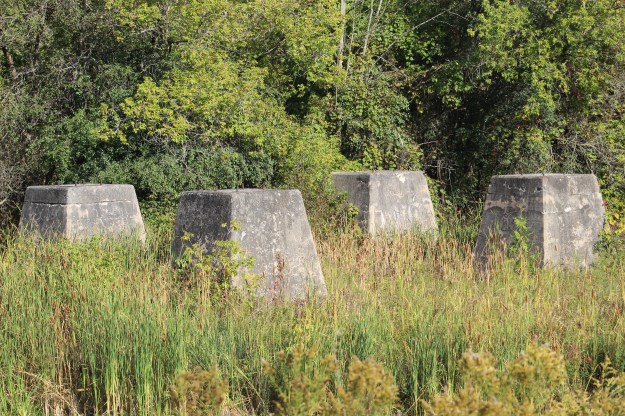
The Canadian Northern Railway also followed the Ganaraska River into Port Hope.  The line opened in 1911 and crossed the river on a series of concrete piers with steel truss bridge spans.  The bridge has been removed but the poured concrete piers still stand on the far side of the river.

IMG_7669

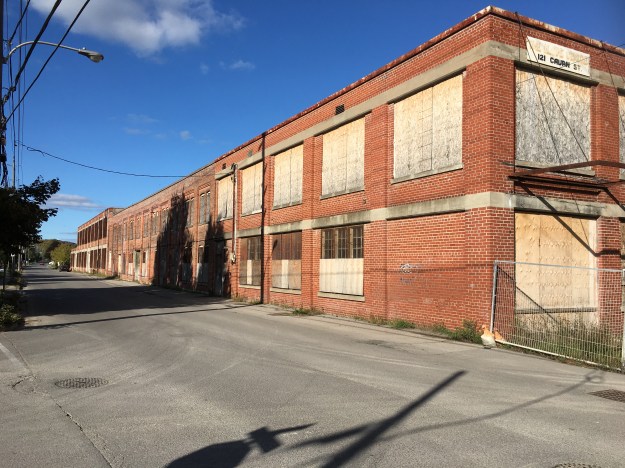
Cavan Street was home to much of the early industry in Port Hope because of the easy access to water power supplied by the Ganaraska River.  The old Globe Factory building at 121 Cavan Street is perhaps the best remaining example of a large scale operation.  Several others exist but have been reduced to single buildings.  The Globe Manufacturing Company started in Port Hope as early as 1830.  The first section of this building was constructed in 1853 and is the middle section.  Later additions were made as the building continued to be a manufacturing site until 1976.  Various tools were produced here including files and related hand tools.

IMG_2346

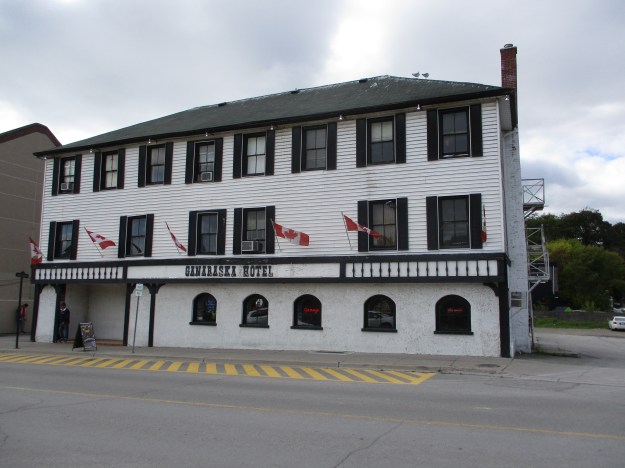
After crossing the Ganaraska River the railway tracks ran up the middle of Ontario Street where they passed the front door of the Ganaraska Hotel.  This was just one of 13 hotels that were in town at the time of the arrival of the railway.  Many of the other ones can be seen in our companion post Port Hope – Historic Hotels.

IMG_7456

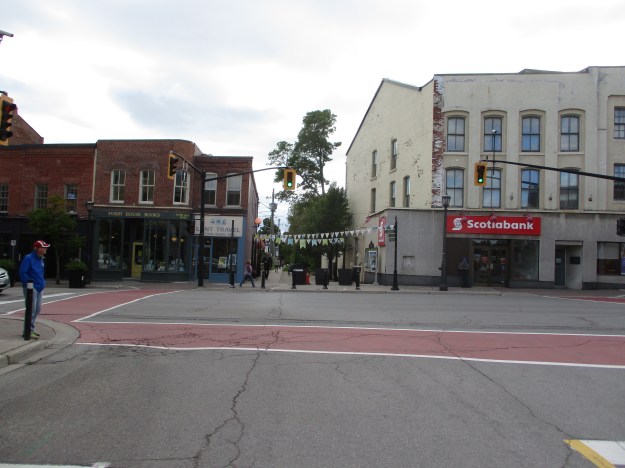
The rail line crossed Walton Street and followed a lane that was granted to the rail line.  The name Lent Street is quite appropriate and remains to this day.  Lent Travel now operates from the small building south of the old rail line while a branch of Scotia Bank leases the historic building that stands to the north.

IMG_7460

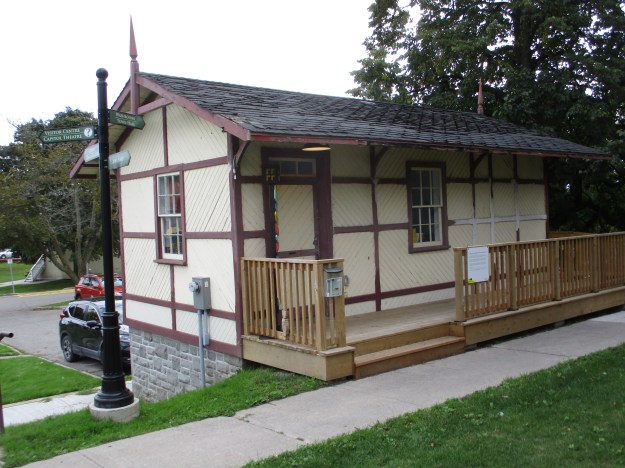
There is a little train station that was built around 1855 and is believed to have been a whistle stop for the Port Hope, Lindsay and Beaverton Railway.  The station was later moved to where it stood beside the Grand Trunk Railway for years.  It was later moved for an employee to use for personal storage.  The building eventually became slated for demolition  but was given to the Architectural Conservancy of Ontario, Port Hope Branch.  They restored the building and moved it to its present location on Lent Street beside the right of way for the Midland Railway.

IMG_7434

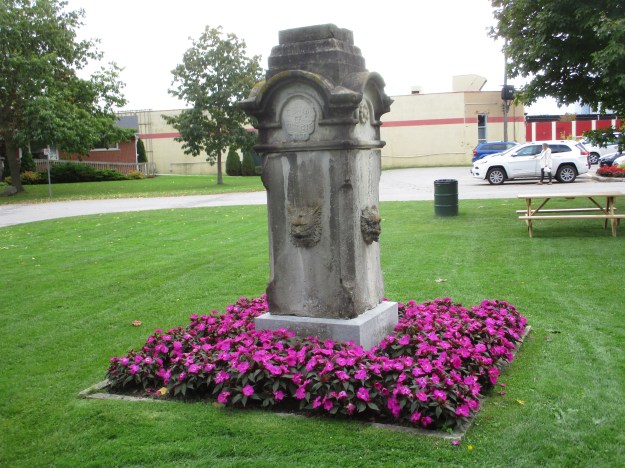
Sitting behind the old town hall is an object that looks like an old tomb stone at first glance.  In 1878 there was no access to drinking water in the town market.  The mayor was William Craig and he paid for the erection of a water fountain on the condition that the Market Committee provide the connection to the water source.  Water flowed from each of the lion heads on the four sides of the fountain for the benefit of the townspeople and their horses.

IMG_7437

The right of way followed Lent Street as it approached the harbour area.  There are still some sleeper ties that are rapidly becoming overgrown along the old rail bed.

IMG_2324

The Midland Railway was crossed by two further rail lines as it neared the harbour.  A single track on concrete piers stand in the front of this picture while the Grand Trunk Viaduct supports a passing train on the old Grand Trunk Line.

IMG_7469

There are so many things to see in Port Hope that it almost begs a return trip to this community on the eastern edge of the GTA.

For additional blogs on the area check out Port Hope – Historic Hotels and Wesleyville Ghost Town

Google Maps Link: Port Hope

Like us at http://www.facebook.com/hikingthegta

Follow us at http://www.hikingthegta.com

Also look for us on Instagram
Culham Trail – Eglinton to Burnhamthorpe

Tuesday, October 15, 2019

The Culham Trail runs along the Credit River through Mississauga.  The trail will become part of the Credit Valley Trail when it is completed.  The Culham Trail runs for 12 kilometres but as I had a day off work it seemed like a god time to explore part of the trail.  I parked near Barbertown in a free parking lot at the foot of the bridge that carries Eglinton Avenue across the Credit River.  Barbertown is the site of a ghost town that once served a milling empire in the south end of Streetsville.
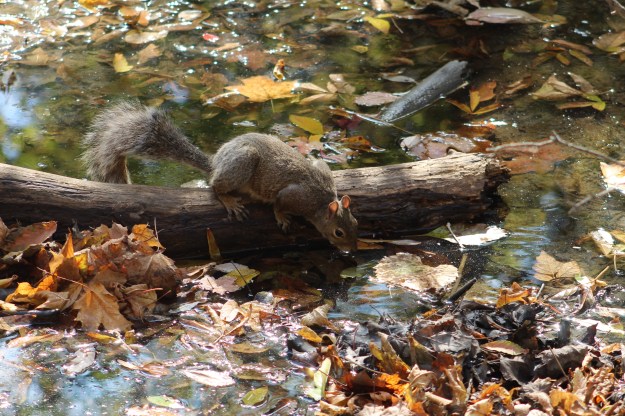
From this parking lot I headed south along the river through Hewicks Meadows.  I was quickly treated to the sight of a grey squirrel drinking from a pool of water beside the trail.
IMG_8003

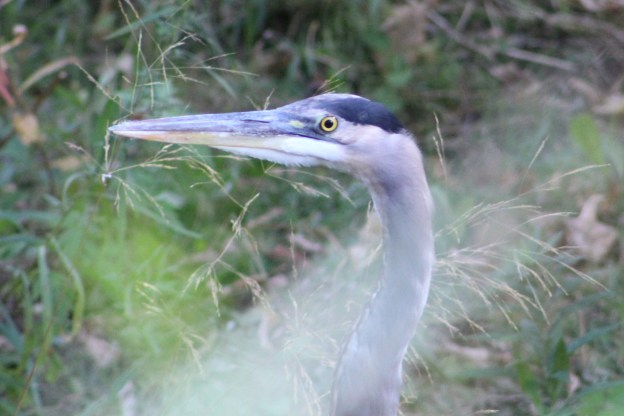
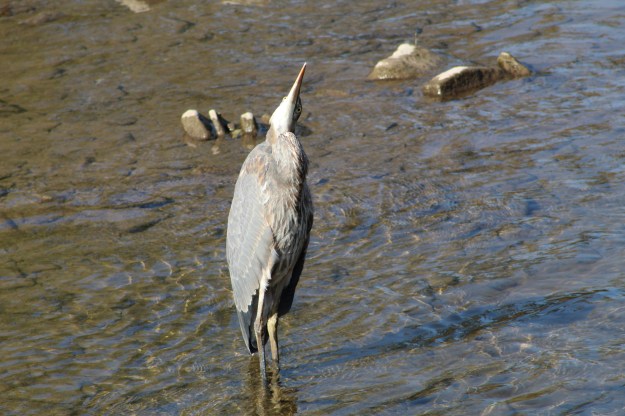
There were several great blue herons on the river and this one was putting on a display for me.  It was pruning its feathers and making funny faces and head motions as if it was trying to make me laugh.  It worked.

IMG_7991

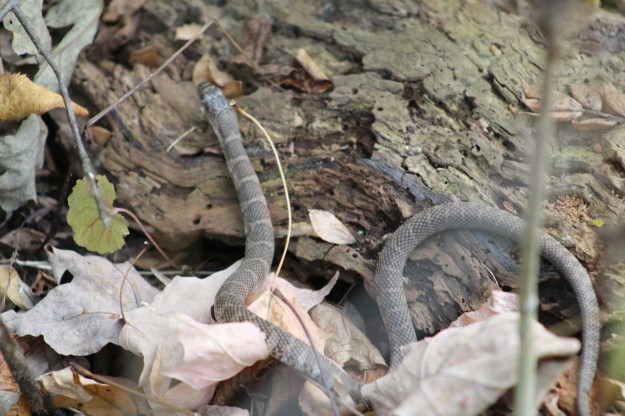
It will soon be time for snakes to prepare to hibernate for the winter.  This common water snake was taking advantage of the nice weather to soak up a little heat and some vitamin D which is used to keep its bones strong.  Snakes will lie in the sun and then move into the shade to regulate their body temperature.  If they get too hot or cold they become sluggish and some body functions, such as digestion, cease to function.

IMG_8012

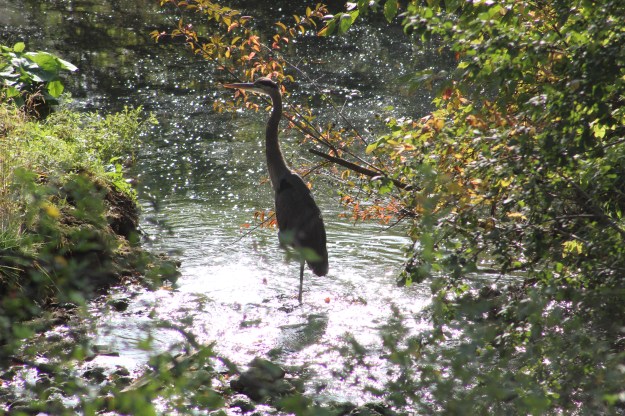
It was a great day to view herons along the river.  There is a small outfall near the power corridor that carries water from the storm drains in the subdivision above.  As I approached, a small black-capped night heron flew out.  A great blue heron remained in the water as he was more concerned with getting lunch then with me and my camera.

IMG_8019

As I made my way along the side of this outfall I saw the reason for the herons to be hanging out here.  The pool at the mouth of the outfall was full of small fish just waiting to become someones dinner.

IMG_8001

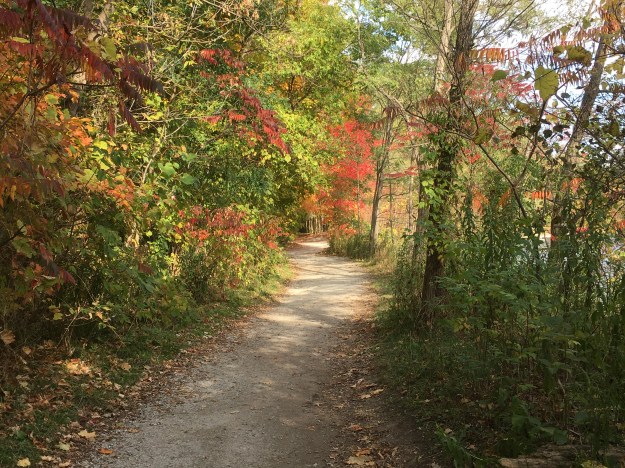
It was a beautiful fall day with the leaves turning colour a little slower this year than normal.  There still seems to be quite a bit of green in the forest.  There is no formal trail through this section of Hewicks Meadow and one can follow the sidewalk through Credit Point subdivision until it enters the park again.  For those who don’t care for sidewalks there is also a path along the side of the river where you can make your way toward the bridge for the 403 and join the formal trail again.

IMG_2525

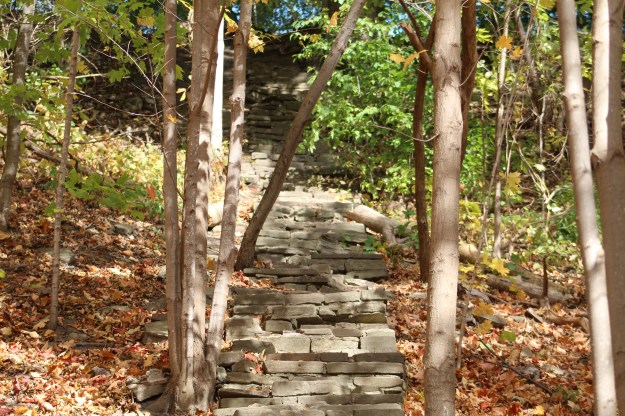
After you pass the 403 you enter Riverwood Park which includes the former Zaichuk Property.  Several old pieces of farm machinery are scattered throughout the fields and trees.  The house known as Riverwood is the centre piece for the park and this former estate included the first swimming pool in the area that would become Mississauga.  The house was built with stone that was carried up from the river below.  There is a set of old stairs that lead up to the back of the house.  They make an interesting climb but you will find a fence at the top.

IMG_8004

Salmon are making their way up the Credit River in their annual spawning run.  The salmon spend at least three years maturing in the cold deep waters of Lake Ontario.  Then in September or October they make their way back into the river or stream in which they were themselves spawned.  They return to the same spawning beds where they hatched and lay their eggs.  The salmon stop eating when they enter the rivers and expend all of their energy getting back upstream.  After they spawn they have no energy for the return trip and so they die.  Seagulls were feasting on the bodies of dead salmon in the river and other scavengers are attracted by the smell of rotting fish.  There were several turkey vultures circling over the river and a few were resting in the trees along either side.

IMG_8036

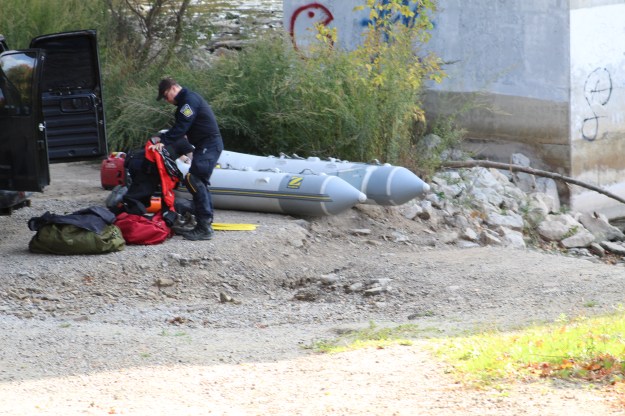
As I was making my way back toward the car I saw a Police vehicle at the base of the Burnhamthorpe Bridge.  Three officers got out of the car and made their way toward the river.  I thought this was a little unusual and wondered if someone had been lost or had fallen from the bridge.  I carried on and was surprised to see another Police vehicle at the 403 bridge.  This car had three more officers who were busy inflating a raft.  As there were no incidents on the Police reports for the day it is likely that this was some kind of a training exercise.

IMG_8015

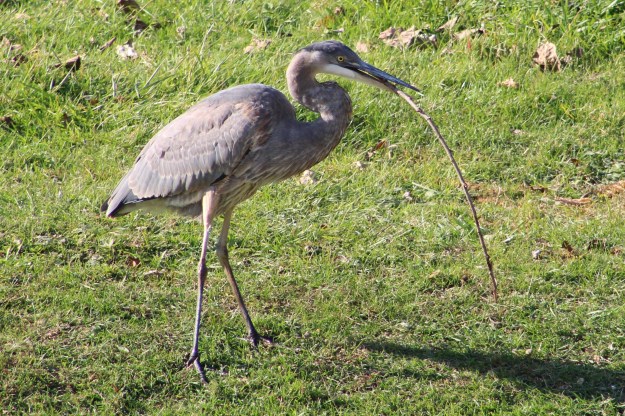
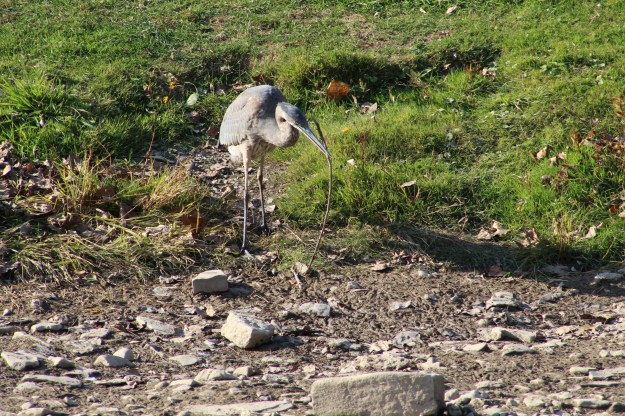
Across the river from the trail is the Croatian Parish Park and there was another great blue heron on the grass.  It was going along and picking up sticks that were in the grass and carrying them over to the river bank where it would drop them on the stones.

IMG_8040

It was nice to see that the local animals help to keep the place tidied up.

IMG_8046

The Culham Trail is an interesting place to explore and it will only become better as the Credit Valley Trail is completed.  An extended look at the trail can be found in our post Culham Trail Mississauga.

Google Maps Link: Hewicks Meadows

Like us at http://www.facebook.com/hikingthegta

Follow us at http://www.hikingthegta.com

Also look for us on Instagram