Category Archives: Uncategorized

Imperial Oil Lands

Saturday, March 4, 2017

J. C. Saddington Park sits between Mississauga Road and the mouth of the Credit River.  To the west of Mississauga Road, south of Lakeshore, lie the 73 acres of brown space known as the Imperial Oil Lands.  There is parking on at the end of Mississauga Road at J. C. Saddington Park, as can be seen on the Google Earth map below.  Key points from today’s exploration are also marked on the map.

oil-lands

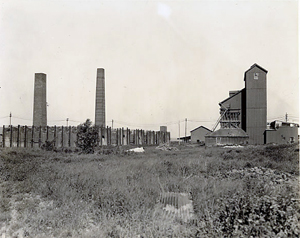
Thomas Nightingale opened a brickyard on the west side of the Credit River in the 1880’s. The addition of a stone crusher increased production to the point that by 1900 there wasn’t enough local labour to run the brickyards.  A series of bunkhouses were constructed and Italian workers were brought in to meet the demand.  The archive photo below shows the Port Credit Brickyards in their prime.
port-credit-bricks

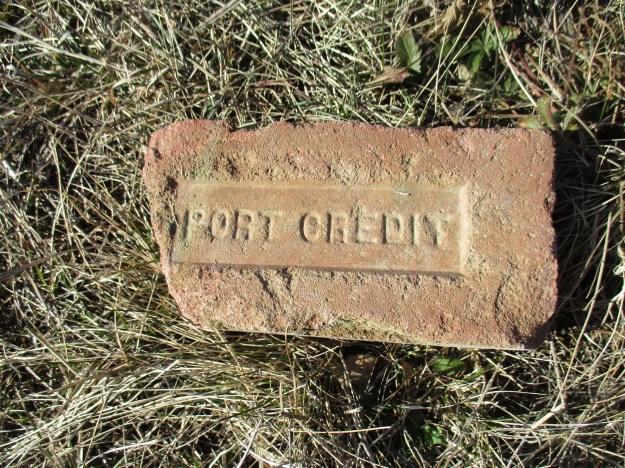
After the First World War, the clay was becoming exhausted and the yards started operating at a loss. By 1929 the brickyards were closed.  This brick was found on the property of the old brickyards where it was made, perhaps over 100 years ago.
img_6658

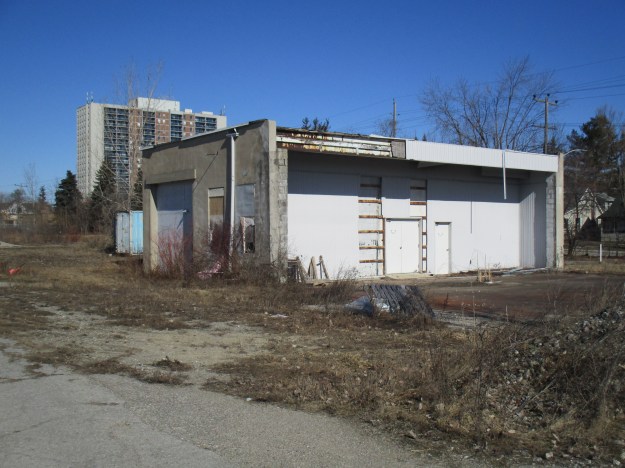
In 1933 the Lloyd Refining Company purchased part of the property to build a modern refinery capable of producing 1,500 barrels a day.  The refinery changed hands a few times including 1937 and 1946.  In 1955 the property was purchased by Texaco and their Canadian subsidiary McColl-Frontenac began operating the refinery.  In 1959 the name was changed to Texaco Canada Ltd.  Petrochemicals were produced here beginning in 1978 but by 1985 it was starting to be decommissioned.  The oil tank farm was removed first and by 1987 it was fully closed.  Only one small building remains on site along with a storage shed.
img_6656

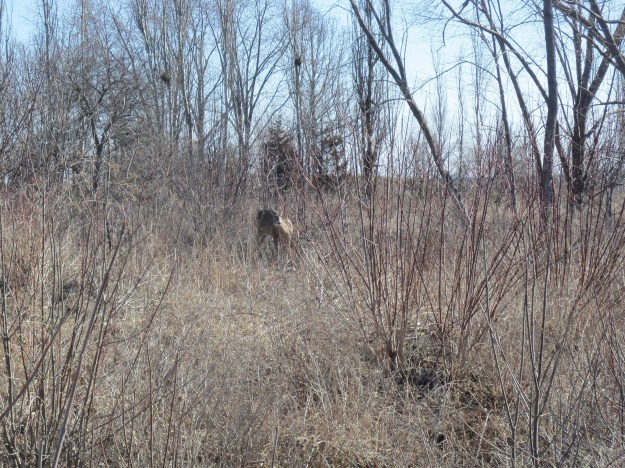
The property has sat vacant for a couple of decades now and is highly contaminated from its years as an oil refinery.  As of March 2017, Imperial Oil is selling the property to a developer who plans to develop a waterfront park, mid-rise condos and affordable housing on the site.  Today the property is home to a large selection of wildlife.  Coyote scat is everywhere and rabbits and squirrels provide food for them as well as the hawks.  A white tailed deer was casually feeding just inside the fence from Mississauga Road.
img_6664

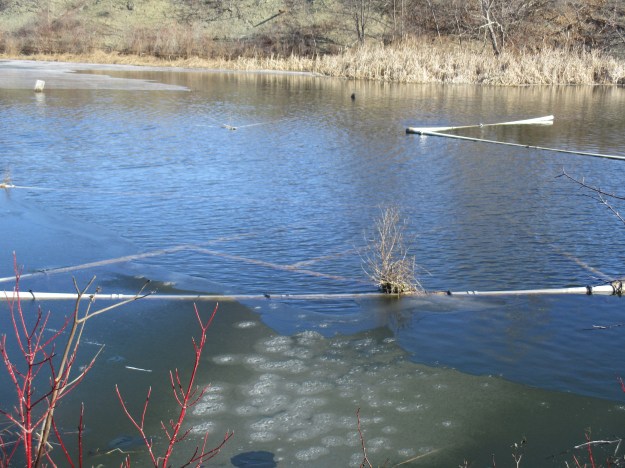
Roadways and concrete pads mark the locations of the former tanks and buildings.  The property is marked as no trespassing because of the numerous hazards that exist throughout.  This story is presented to preserve the site as it exists at this moment in time.  Soon it will change forever and this chapter will be lost.  Choosing to explore here is solely your responsibility.  A large man-made pond covers a section of the property and may feature in redevelopment plans for a central park within the community.  The pond is currently full of pipes that have started to break apart over the years of abandonment.
img_6644

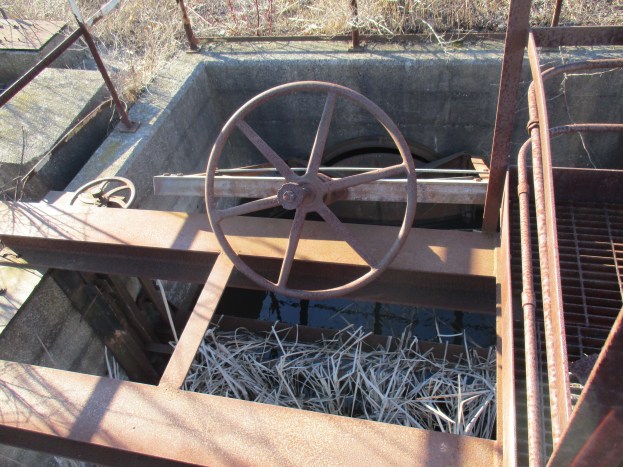
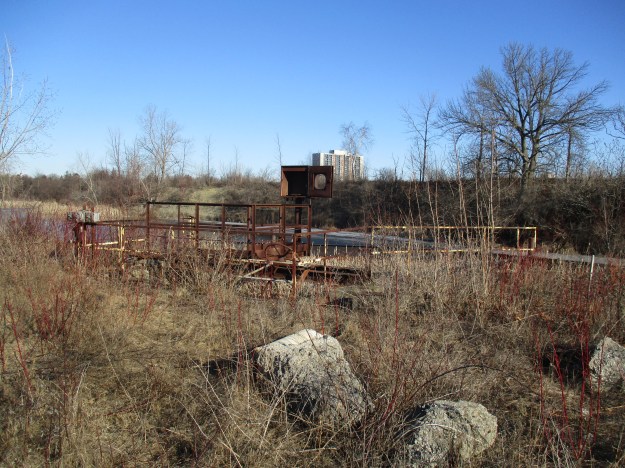
The lower corner of the pond still has the dam and flood control devices intact.  Two sluice gates could be opened by turning handwheels.  The cover photo shows a closer look at the mechanics of the system.
img_6625

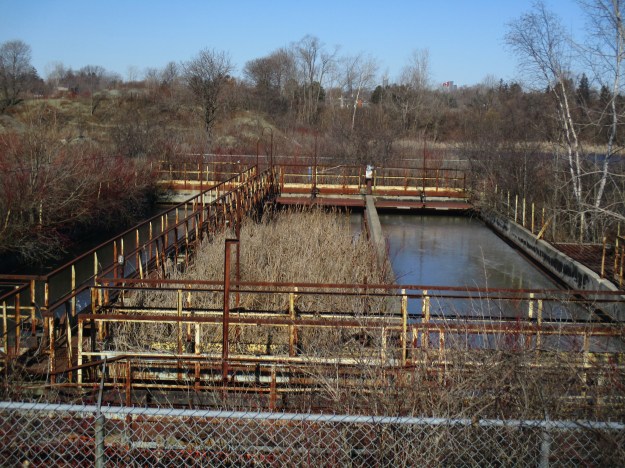
Outflow from the pond was transferred to a series of settling ponds to remove solids from the water.  From here it was carried through a concrete pipe and released into the lake.
img_6643

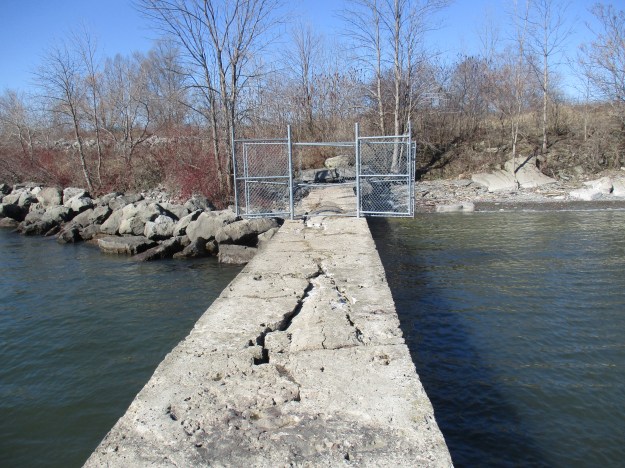
We made our way to the end of the concrete pipe that discharged the water from the pond on the Imperial Oil Lands.  The round concrete pipe has been encased in a concrete shell to protect it from the effects of the lake.
img_6676

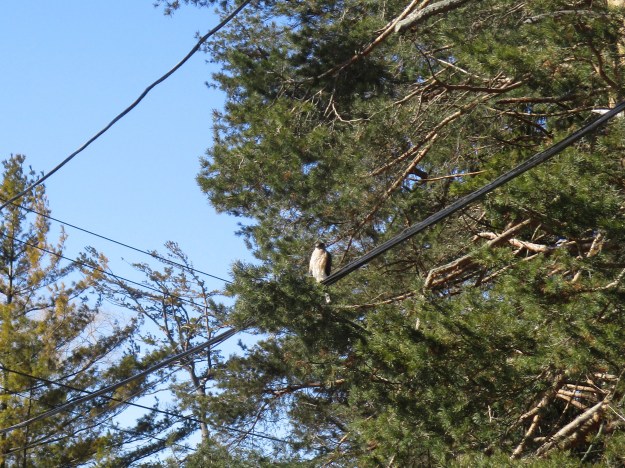
The Waterfront Trail takes the name Imperial Oil Trail as it passes along the lake side of the property.  We followed it west to where you are forced briefly to follow the road.  That wasn’t such a bad thing as we were treated to a broad-winged hawk sitting on a hydro wire.  These birds usually winter in the south and I wonder if this one was noticing the -20-celsius wind and wishing it hadn’t come back yet.
img_6680

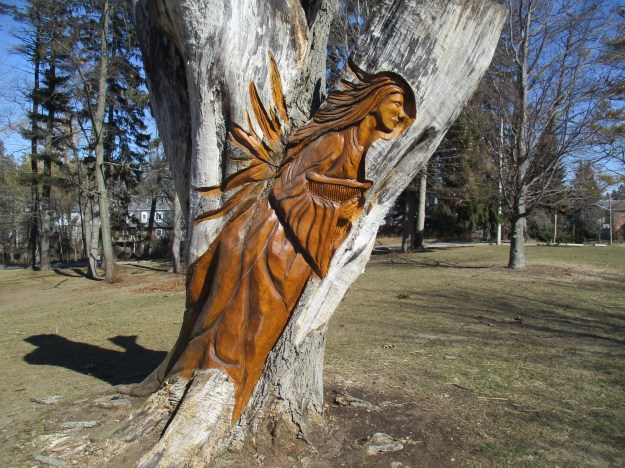
Ben Machree Park has some interesting wood carvings by Jim Menkin.  Jim has converted dead tree stumps into art with his chainsaw in many parts of Ontario including Orangeville and Mississauga.  This park features three wood carvings named “Sirens of Homer’s Odyssey”.
img_6705

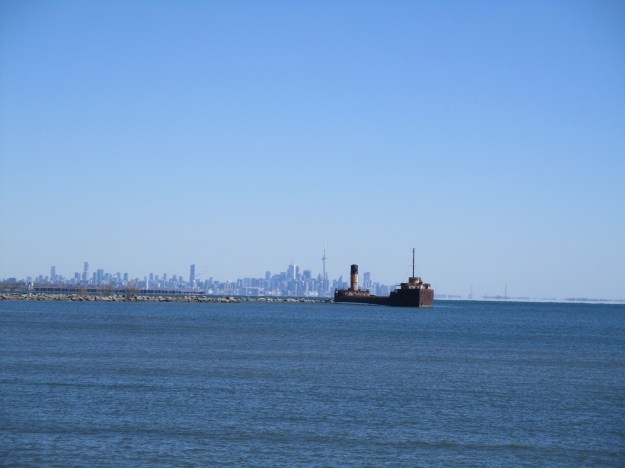
We returned along the Imperial Oil Trail east toward the mouth of the Credit River.  Just east of the concrete drainage pipe from the oil lands is a lengthy finger pier extending out into Lake Ontario.  This pier provides great views to the west looking toward Rattray Marsh.  To the east, you can see the Ridgetown with the city of Toronto in the background. The ship is partially sunk at the mouth of the Credit River to provide shelter for the marina.  Our post on the Ridgetown contains its fascinating history.
img_6713

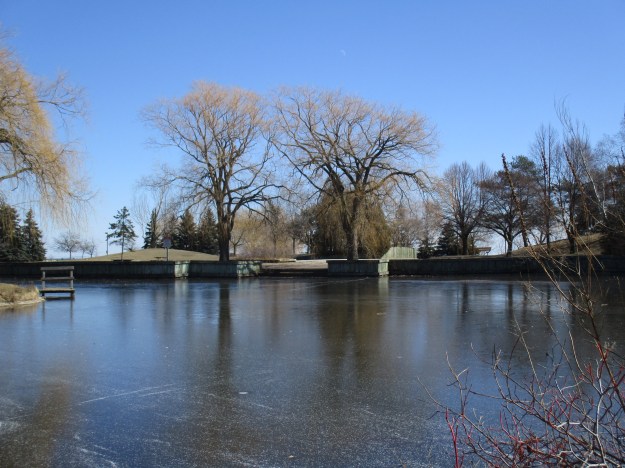
In the 1940’s Port Credit ended at Lake Street, of all places!  Today it extends out into the lake in the form of J. C. Saddington Park.  This park is built on a decommissioned dump that was in use from 1949 to 1970. A pond has been created for recreation and fishing and benches positioned around for relaxation. The pond has a thin layer of ice on it from the past two days of cold weather and a light dusting of snow.  A sliver of the moon can be seen above the trees in the middle of the picture.
img_6746

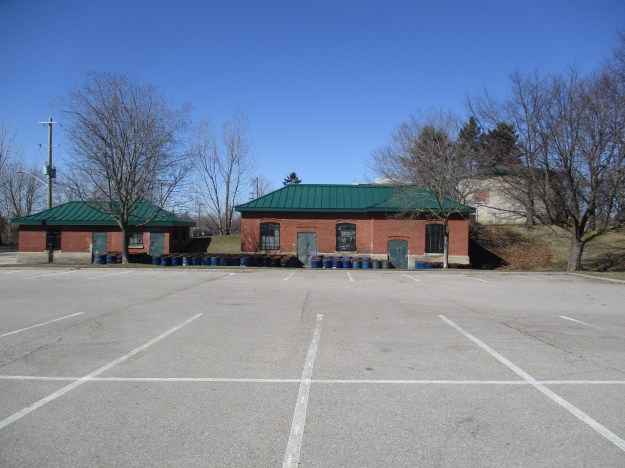
Three historic buildings stand in the corner of the parking lot. Dating from 1922 to 1923 the Port Credit Waterworks pumping station was a major advancement in the infrastructure of Port Credit.
img_6766

Swans, Canada Geese and several species of ducks were all to be seen in the lake today.  Of interest was the fact that they have gone back into pairs after spending the winter in groups.  Spring must be coming soon…

A 1973 Toronto Archive Aerial photo of the oil lands can be accessed here.

Our readers selected the top 15 stories for this special feature.

Google Maps Link: J. C. Saddington Park

Like us at http://www.facebook.com/hikingthegta

Follow us at http://www.hikingthegta.com
 

Devil’s Falls

Saturday, February 25, 2017

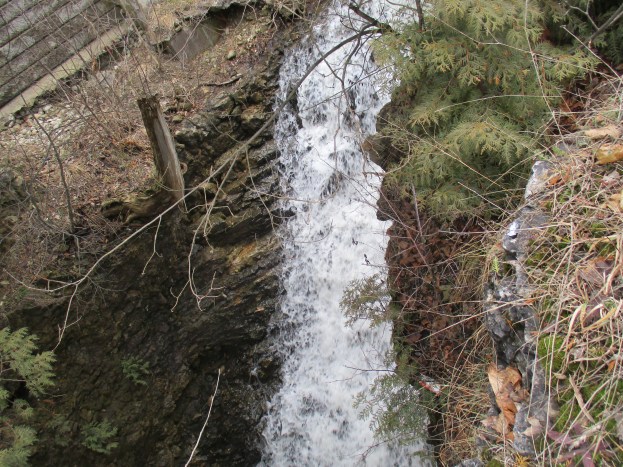
Devil’s Creek plunges 12 metres over the side of the Grand River cliffs and joins the river on its way toward Lake Erie. There are stories of smoke that used to be seen coming from a cave on the cliffs just north of the creek.  Parents told their children that a devil lived in the cave to keep them from exploring the dangerous cliffs.  In no time the little creek near Cambridge had taken on the name Devil’s Creek (Google Maps link).

Devil’s Creek Trail runs for 1.6 kilometres along the lower section of the creek.  Devil’s Creek is only 2.8 kilometres long and starts near Devil’s Creek Pond.  It is fed by springs making it a rare example of a cold water aquatic environment in an urban setting.  There is parking in a small park along Blair Road for those who want only a short walk to the falls. Devil’s Creek Drive has street parking and allows for a visit to Grandview Pond and a longer walk to the falls.  Grandview Pond is spring fed but also accepts a large amount of runoff and storm water.  It fills up quickly but drains into Devil’s Creek to keep it running all year long.  Unlike a deeper lake, sunlight reaches the bottom of the pond.  The vegetation that this supports gives shelter to small mouth bass, painted turtles and leopard frogs.

img_6499

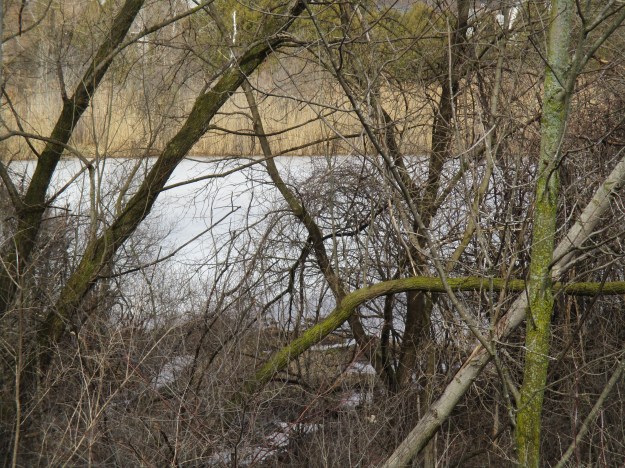
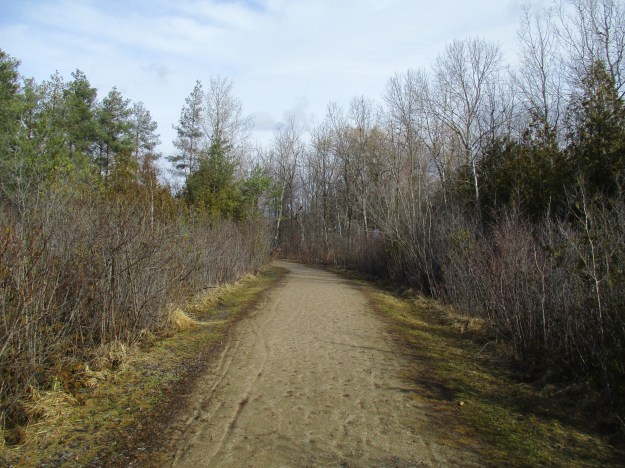
In 1998 The Devil’s Creek Trail was completed north of the CPR tracks.  The trail follows the CPR tracks through extensive wetlands.

img_6506

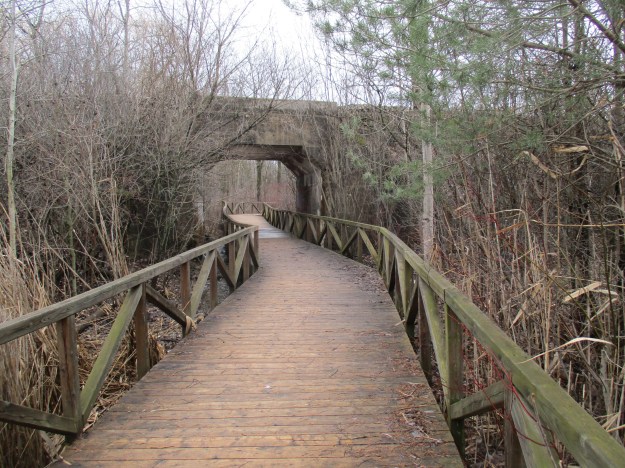
Work was completed on the next section of the trail during the winter of 2001/2002. Winter was chosen so the impact on the local environment would be lessened.  A boardwalk was constructed to carry the trail above the creek as it passes under the railway tracks.  The concrete bridge over Devil’s Creek replaces an earlier wooden trestle, of which the pilings can still be seen between the boardwalk and the concrete as you pass by.

img_6494

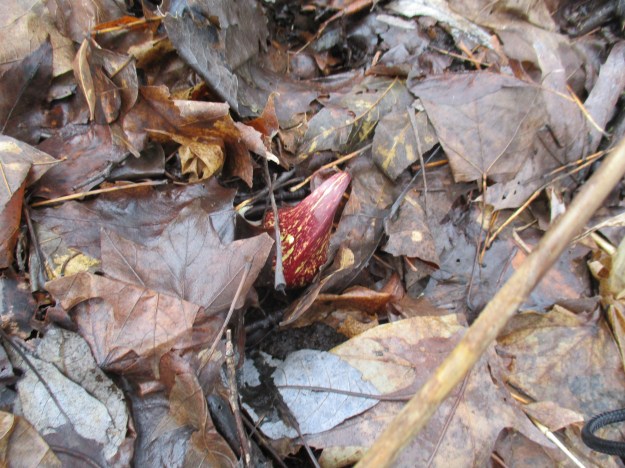
Both sides of the trail are marked as environmentally sensitive and hikers are asked to remain on the main trail.  Thirty rare plant species and the Jefferson Salamander are being protected in these woods.  Eastern Skunk Cabbage grows in wetlands and the woods along the trail support a large colony of plants.  Skunk Cabbage is one of only a few plants known for its thermogenesis properties.  It can produce temperatures from 15 to 35 degrees celsius above the surrounding air.  It literally melts its way through the frozen ground and often blooms through the snow.  The leaves do not surface until later in the spring.

img_6495

In the 1970’s the surrounding area was developed for a subdivision and the section of Devil’s Creek between the CPR tracks and Bismark Street was straightened and widened. This channel ran through a park where manicured lawns extended to the water’s edge. The creek was shallow and without shade, it was too warm to support fish.  By the 1990’s it was deemed that this section was a high priority for naturalization.  Devil’s Creek once again was given a curved path with several deeper pools to provide colder places to shelter brook trout.  Riffles were added to make the water gurgle over small rocks and pick up oxygen from the air in doing so.  A streamside pool was also added as a breeding place for frogs and newts.

img_6526

Riparian zones are patches of plant growth along the edges of a flow of water.  They provide shade and habitat for land and aquatic creatures alike.  The root systems help provide erosion control by stabilizing the stream banks.  Native trees and shrubs were planted through this reach, including Purple Flowering Raspberry, Staghorn Sumac and White Pine.

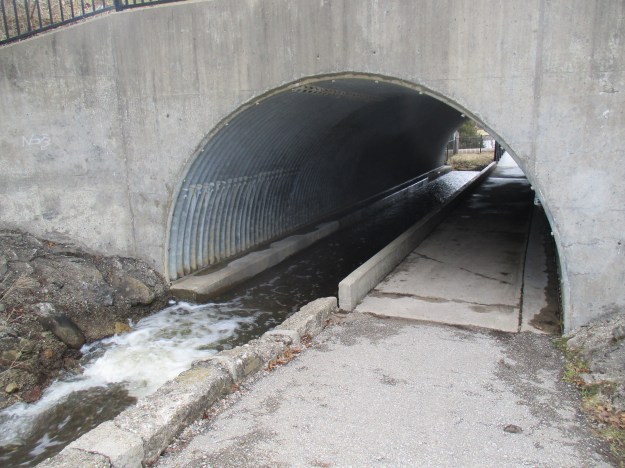
Devil’s Creek begins its decent toward the Grand River just before the bridge on George Street.  The creek flows over this small ledge of dolostone and then is forced into a short concrete channel as it flows under the bridge.  The 12 metre falls is immediately on the other side of the bridge.  This little waterfall was once the site of a footbridge that has since been washed away.  The trail on the right leads to an abandoned set of wooden stairs leading to a fence and a former access to the subdivision beyond.

img_6560

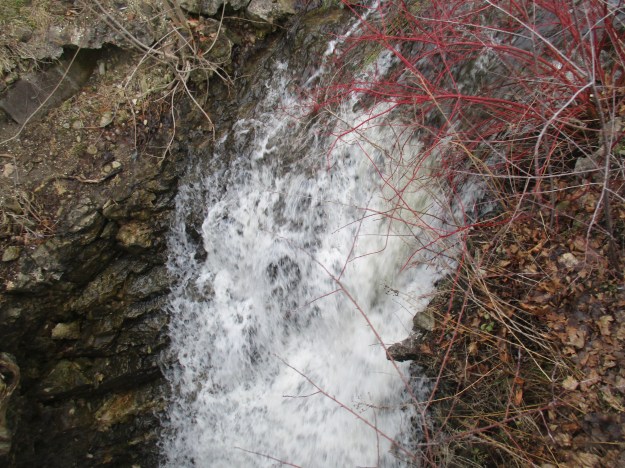
Devil’s Creek, and the Devil’s Creek Trail both pass under George Street before coming to their respective ends just beyond.  Devil’s Creek ends in a 12-metre cascade down to The Grand River below.  Devil’s Creek Trail ends at The Grand Trunk Trail which connects to several other trails in the neighbourhood.

img_6572

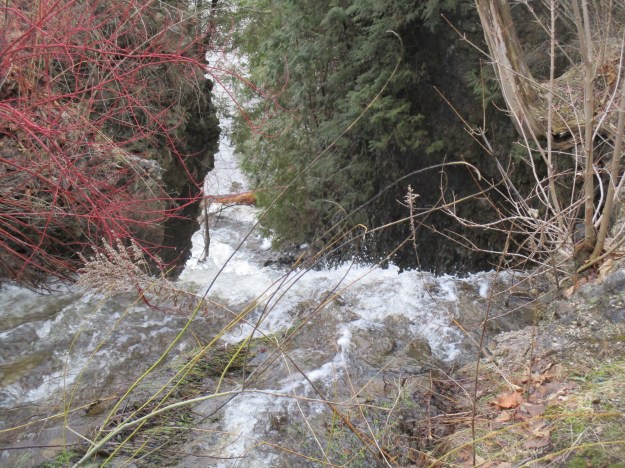
Devil’s Creek has cut a narrow channel through the limestone cliffs over the years.  From the crest of the waterfall, you can see down to the Grand River below.  The cedar trees pictured below are clinging to the side of the cliff above the falls.

img_6576

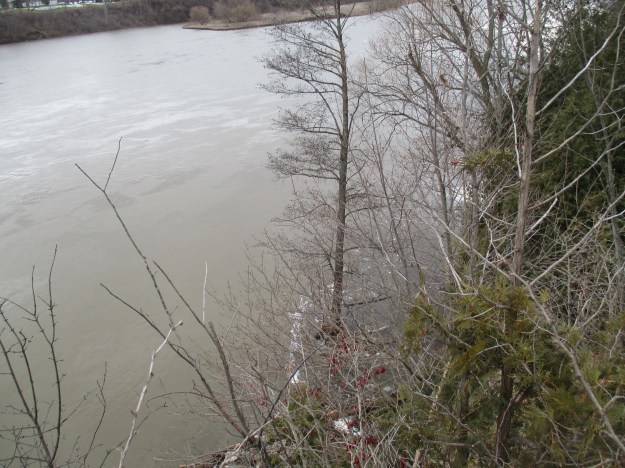
The limestone bluffs along the edge of the Grand River were formed 350 to 500 million years ago when this area was under the warm tropical Michigan Sea.  They run along the west side of the river while the east side has the Galt Country Club which is at river level.

img_6577

The Devil’s Creek waterfall empties almost directly into the river after spilling over the cliffs.  The white water curling away from the edge marks the confluence which is otherwise lost when the river is flooding and dirty.

img_6585

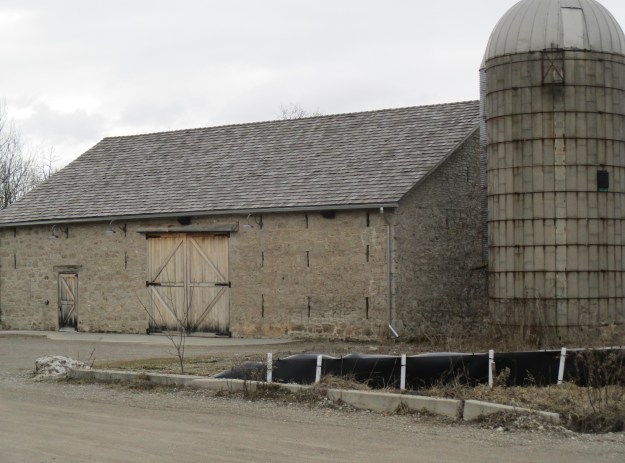
As you drive along Blair Road, returning to the 401, there is an unusual stone barn known as the Slit Barn.  It was built by William Young sometime around 1840.  This three bay barn was built in the traditional Scottish style but from the rear also incorporates elements of the Mennonite bank barns favoured by the German settlers in the area.  The three rows of slits were designed to provide ventilation so that the grain would not rot in storage.  The slits are three times as wide on the inside of the barn as they are on the outer wall.  This increases the amount of light in the barn while keeping the rain to a minimum.  The only other example of a stone barn with ventilation slits that we have featured so far was found at The Hermitage.

img_6614

Other stories in The-Devil-Made-Me-Do-It series: Devil’s Punchbowl,  Devil’s Pulpit, Devil’s Well

Our all-time top posts are featured in this special review.

Google Maps Link: Devil’s Falls

Like us at http://www.facebook.com/hikingthegta

Follow us at http://www.hikingthegta.com
Beltline Railway – Kay Gardner Beltline

Sunday, February 19, 2017

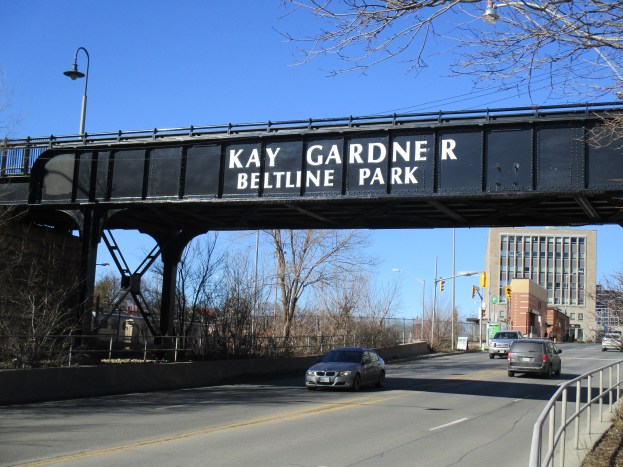
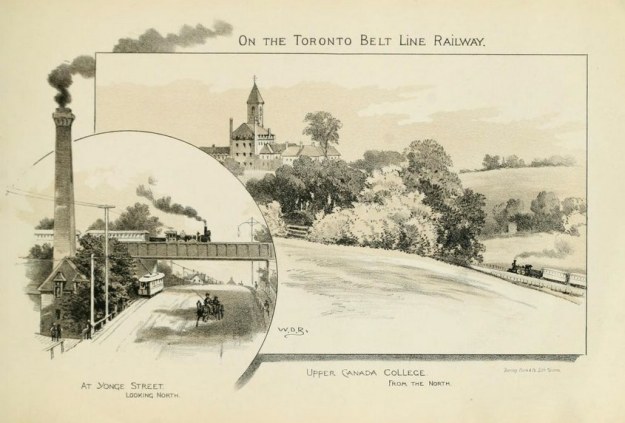
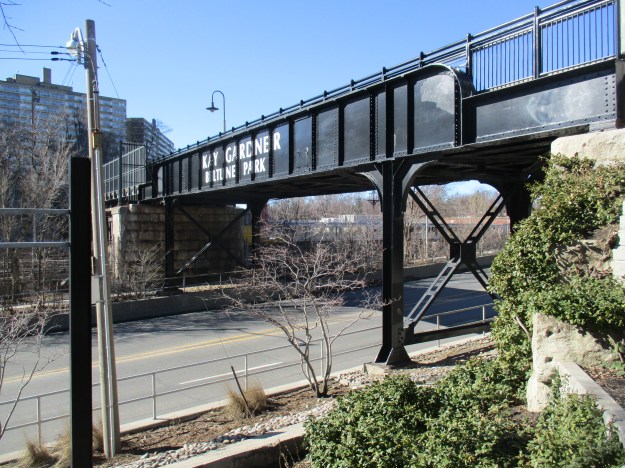
Toronto was experiencing a building boom in the 1880’s and land speculation was rampant.  A plan was put forward to develop a commuter railway to service new communities that would be opened for development.  By 1892 the rail line was up and running with 44 stops and one grand showpiece station.  However, a recession slowed the growth of the city at that time and the riders never arrived.  After only 28 months the passenger service was suspended and the line was used mainly to service industrial establishments for the next century.  The original line has since been cut into three sections, severed by Mount Pleasant Cemetery and Allen Road.  The archive picture below shows one of the period flyers advertising the railway.  The picture includes a sketch of the train crossing the bridge on Yonge Street.  This bridge is one of two originals remaining on the line and is featured as our cover photo.

the-highlands-of-toronto

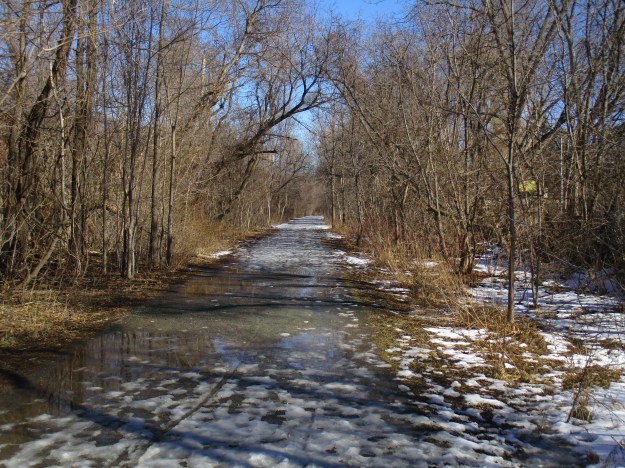
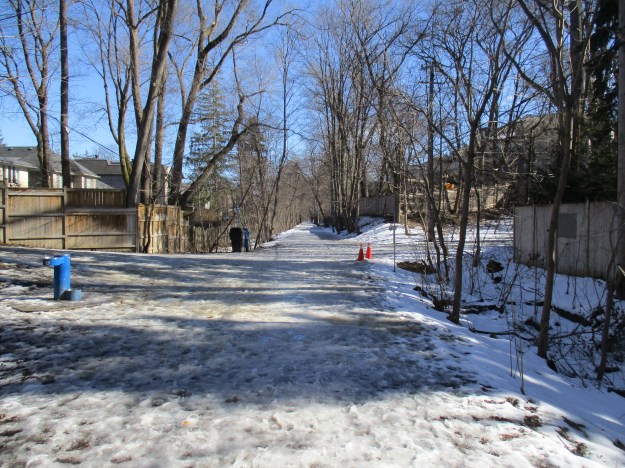
Previously we explored both the northern section and the southern one.  Links to both of these are provided at the end of this story.  Much of the history of the railway is contained in the two previous stories and therefore I won’t cover it again here.  I parked on Newgate Road near Elm Ridge Drive to investigate the middle section with the plan to hike the 4 kilometres from Allen Road to Mount Pleasant Road.  This section of trail passes through Forest Hill which it was designed to serve in the days before personal automobiles. The trail was hard packed with ice and snow and the sunshine and mild temperatures were starting to melt everything.  Footing was slippery today but most of the year there is a hard packed gravel surface.  Although I saw plenty of evidence that the trail is used by dog walkers I didn’t see any other pedestrians until I reached Eglinton Avenue after which it was quite busy.

img_6418

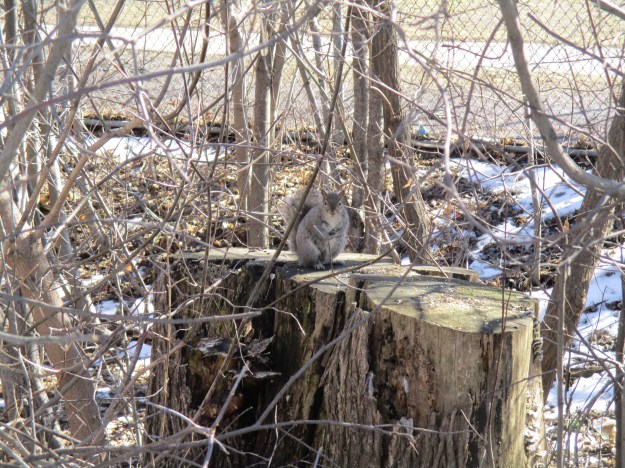
Along the trail are several places where someone has been leaving seed for the birds and squirrels.  As a result, the squirrels have no fear of people and sit up to see what treats you may have.  In the wild a grey squirrel has a very short lifespan living for only 11 or 12 months.  In captivity, they have been noted as living up to 20 years.

img_6427

This is one of my favourite trails in the heat of the summer.  There are many places where the trees stretch over the trail from both sides making the trail well shaded.  It also has a grade of less than 4 percent which is typical for railways. Therefore there are no hills to climb in the heat of the day.  This is a multi-use trail and a speed limit of 15 kilometres per hour has been set so that cyclist won’t impact the enjoyment of dog walkers and people out for a casual stroll.

img_6430

The trail is well used by people walking their dogs but, unfortunately, there are many who do not clean up after their pets.  Both sides of this trail are covered with dog faeces to the point where you can hardly step between the piles in some places.  In colder climates, it can take up to a year for dog faeces to decompose, longer if the animal is eating primarily meat.  From an environmental standpoint, it is better to buy “flushable” poop bags rather than nonbiodegradable ones that sit in a landfill for years.  Either way, please remember this stuff doesn’t melt along with the snow.

img_6435

The Eglinton Avenue bridge over the Beltline railway has been replaced with a modern concrete structure when the road was widened.  This was the site of the Eglinton stop on the railway and the artwork on the underside of the bridge portrays some early railway scenes.

img_6444

Some of the stops on this early commuter service can still be clearly seen along the trail. There are places where there is an open space on either side of the tracks where a walkway or set of stairs provide access to the adjacent community.  Many of the stops on the railway were simply whistle stops and the train only stopped if passengers wanted to get on or off. The first one of these south of Eglinton is the site of today’s Robert Bateman Park. A renowned Canadian Artist, Robert Bateman spent his childhood exploring the beltline before it was reclaimed as parkland.  The picture below shows one of these former stops on the railway.

img_6447

Kay Gardner was a city councillor who in 1990 lobbied the city to buy the abandoned beltline lands for use as a linear park.  In May of 2000, the park was renamed Kay Garner Beltline Park in her honour.  The railway has been stripped of most of the clues to its former use.  A typical railway right of way is 100 feet wide.  This strip of land can be seen running between the two fences that border the trail.  In some places the rail bed can be seen as a raised berm and in others a cut embankment reveals the rail bed.  The picture below displays both.

img_6450

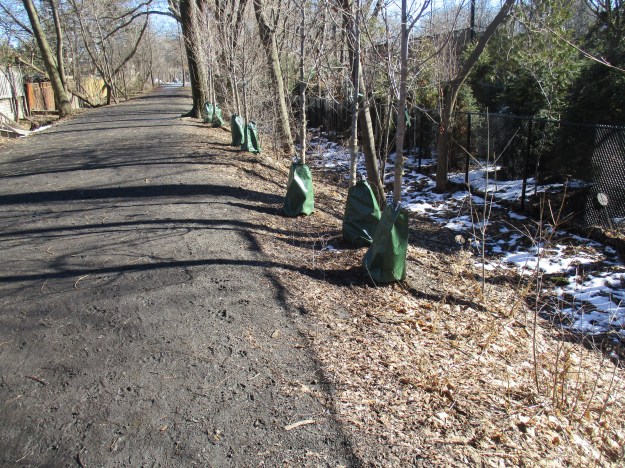
Since opening the trail the city has been busy restoring the strip of land.  Newly planted trees line the rail berm near Avenue Road.  Each new tree has a green treegator bag around the base.  These bags serve as water reservoirs for the transplanted trees.  They help reduce the shock to the tree and each bag holds 15 gallons of water.  They need to be filled about once per week.

img_6458

The trail crosses over the Davisville Subway Yards before it reaches Yonge Street.  When the TTC opened its first subway line in 1954 it ran between Union Station and Eglinton. The Davisville yards were the main carhouse and maintenance shops for the subway cars.  The first two subway cars were delivered to the Hillcrest Complex but after that, new cars were delivered to the Davisville yards via the Beltline Railway.  A temporary interchange was built on the north side of the Yonge Street beltline bridge.  These yards were used to store all TTC subway trains between 1954 and 1966 when the larger Wilson Yards were opened.

img_6464

The rail bridge on Yonge Street is one of two original structures remaining on the line.  The other one is located over Dufferin Street.  From 1970 until the 1990’s this bridge was closed to pedestrian traffic.

img_6467

The trail continues east from here across the top of Mount Pleasant Cemetery.  Turning south the trail reaches Moore Street which was the site of the elegant Moore Park station.

Other Sections of the Belt Line:  Moore Park in the south and York Belt Line Trail in the north.

Google Maps Link: Kay Gardner Beltline Trail

Like us at http://www.facebook.com/hikingthegta

Follow us at http://www.hikingthegta.com
Mountsberg

Saturday, February 18, 2017

Mountsberg Conservation Area covers 472 hectares of which 202 are covered with a water control reservoir.  Since 1994 the park has featured a Raptor Centre which is home to a collection of 15 birds of prey.  Horses and sheep call the farm home along with bison and elk.  There’s also a play barn for the kids to enjoy and a Maple Syrup festival in the spring. Sixteen kilometres of hiking trails criss-cross the park and allow you to experience the abundant wildlife.  There is a $7.50 fee per car and you have to put it into an envelope so be sure to bring correct change or plan to make a donation.

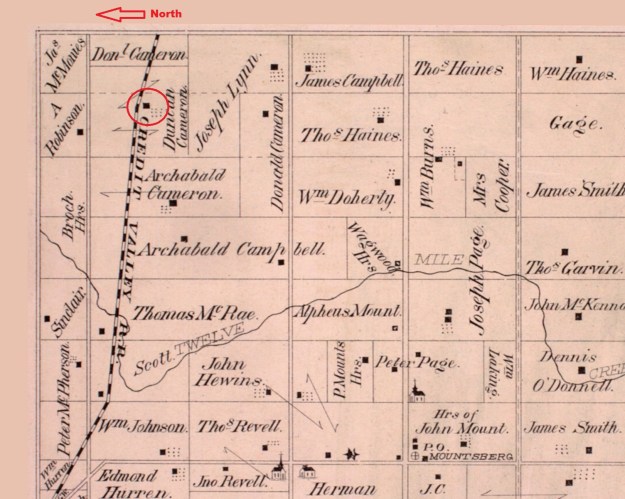
Archibald (Archabald on the County Atlas below) Cameron moved from Perthshire in Scotland in 1833 and settled on 100 acres of land.  His son, Duncan bought the property adjacent to his and Donald purchased two parcels of land next to these.

cameron-farm

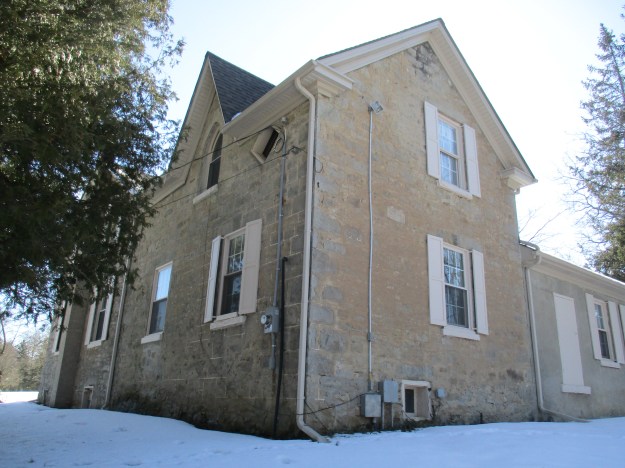
Duncan Cameron purchased the 100 acres to the east of his father’s lot and started his homestead there.  In 1857 he built a stone house and a barn, both of which remain today. The house has an odd window on the second floor which was shaped like a simple diamond.  The county atlas shows how close to the house the Credit Valley Railroad was constructed when the Milton line was extended to Galt in 1879.  The Duncan house remained in the family until James Cameron, Duncan’s son, passed away in 1962.  The farm changed hands a couple of times and was purchased in 1964 by The Halton Region Conservation Authority.  They built the dam in 1966 and the Wildlife Centre in 1974.

img_6381

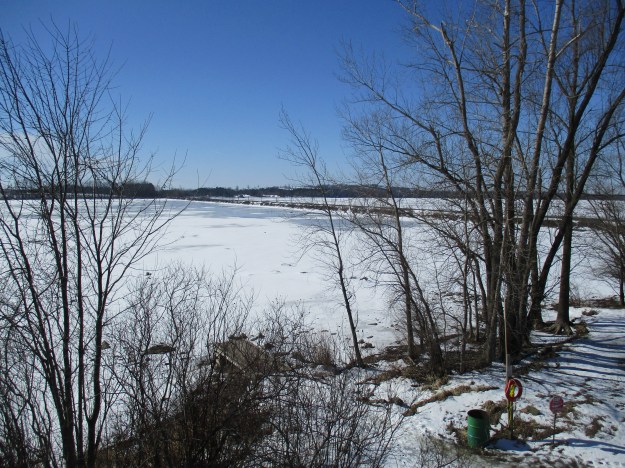
Near the barn is an observation tower which looks out over the Mountsberg Reservoir. Bronte Creek was dammed and the reservoir has since been stocked with fish.  Bass, Pike, Crappies, and Perch can all be caught in the shallow waters.  The former Credit Valley Railway crosses the reservoir on a berm that previously passed through a farm field.  The lower section of the reservoir has been drained for the winter.

img_6408

On the north side of the tracks, just east of the house are the remains of the family lime kiln.  It was built shortly after the house, likely around 1860, for the use of the family. Limestone was common in the area and settlers would load it into a set kiln like this one. Wood was packed around it and burned for several days until the limestone was broken down.  The limestone was broken into lumps around 2 inches in diameter and layered into the kiln along with the fuel.  It would take about a day to load the kiln and then it burned for three days.  After two days of cooling down, it could be unloaded and the lime separated from the waste.  Lime was used in the making of soap as well as construction materials.

img_6362

The first Earth day took place on April 22, 1970.  Since that time it has grown into an international event that takes place in 193 countries around the world.  In 1990 Earth Day 20 was celebrated and in Mountsberg Park the Plant-A-Tree program contributed the small forest on the north side of the train tracks, across from the Cameron House.  These trees are doing quite well a quarter century later.

img_6375

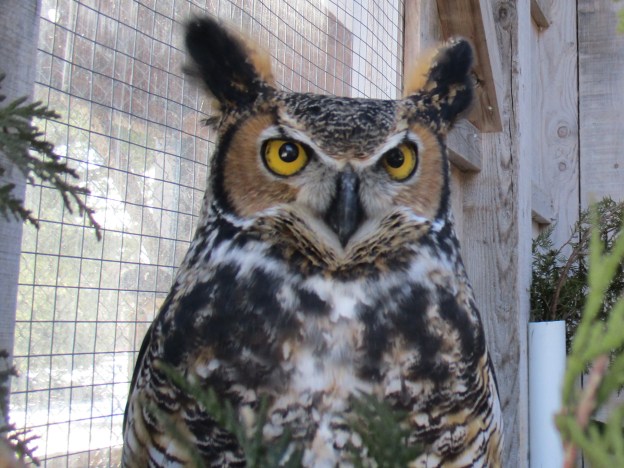
The Raptor Centre at the park is home to many birds that have been rescued locally and are incapable of survival in the wild.  The Great Horned Owl on the cover photo is one of two in the park.  These owls have a grip ten times as tight as that of a human and talons that can hold with as much as 200 pounds per square inch force.  They are known to take prey that is up to three times their weight and this includes skunks, opossums and even other raptors.

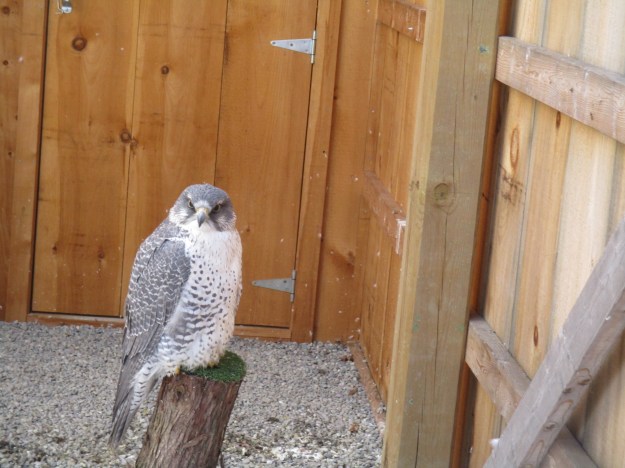
The Gyrfalcon, seen below, lives in arctic and sub-arctic regions and is rarely seen in Southern Ontario.  This is the largest of the falcon species with the females weighing up to two kilograms.  Their diet contains mostly of other birds including ducks, gulls, and geese but they also enjoy lemmings and hare.

img_6305

Rough-legged Hawks are the only hawks in Ontario that have feathers on their legs extending down to their feet.  It weighs about a kilogram, with the female being slightly larger. They are a northern bird and live mainly off of small rodents like voles and lemmings. They can be occasionally be seen in Southern Ontario during the winter.

img_6290

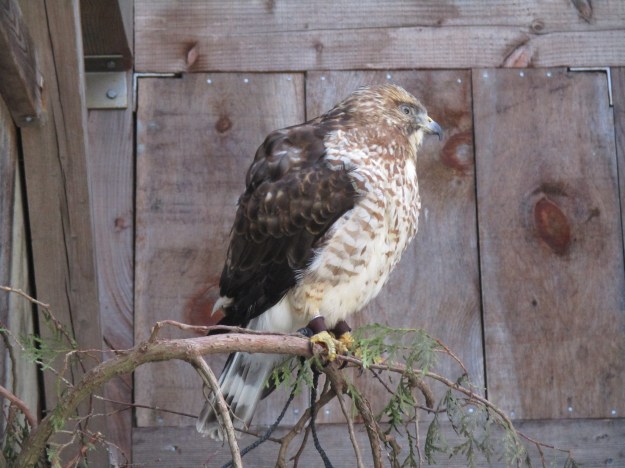
Broad Winged Hawks live in large forests and prefer small rodents for their prey as they only weigh about 500 grams themselves. They are relatively small among the hawk family but congregate in large flocks known as kettles in the fall to migrate south for the winter. A kettle of broad winged hawks can contain up to 1000 birds

img_6284

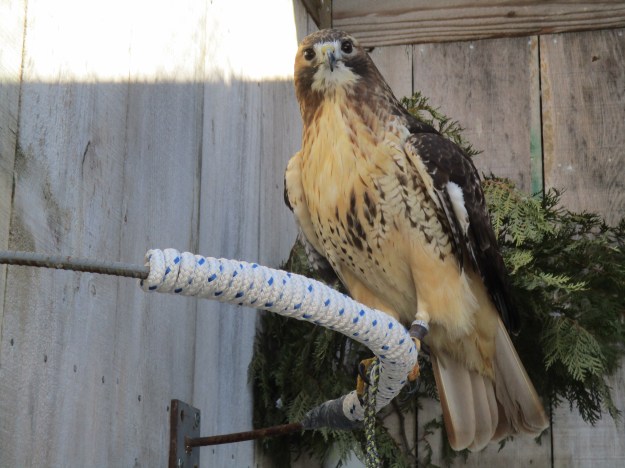
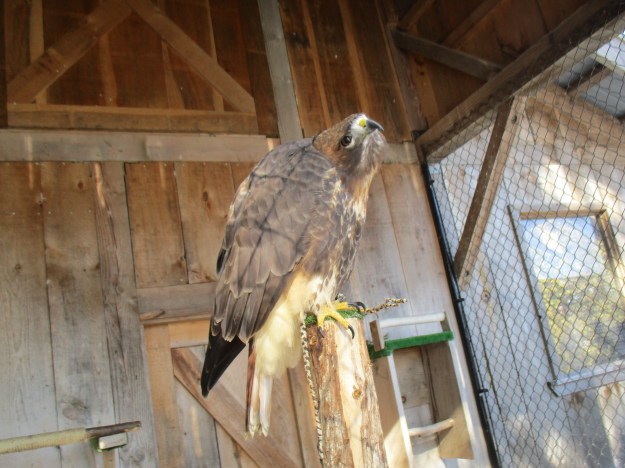
Takenya is one of two red-tailed hawks at the centre but she sits up and pays attention when you call her name.  One of the trainers suggested that the birds don’t actually know their names but as the picture below shows, she would turn her head and stare right at you when you call her.

img_6265

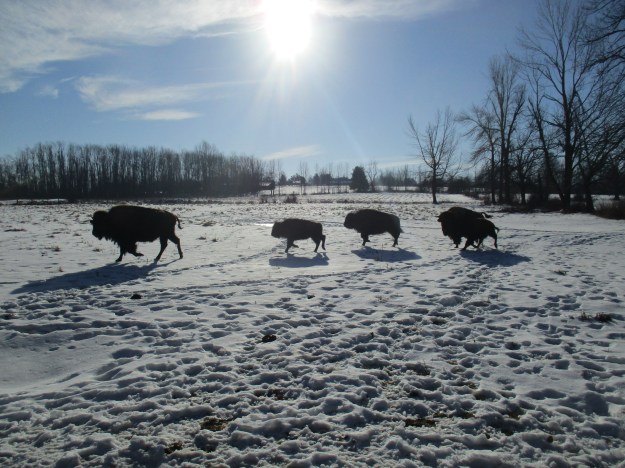
American Bison, often called Buffalo in error, are kept on the farm.  As we approached they moved across the field but soon returned to stand by the fence.  The largest of the five already had a broken horn and was clearly guarding the smaller ones.  It routinely stood between me and the smallest one so getting a picture was quite difficult.  I wasn’t sure if it was my red coat or the imminent arrival of the ladies with the food buckets that had their attention but after feeding they went for a run around the pen.  They can reach speeds up to 60 kilometres per hour.

img_6231

Mountsberg has extensive hiking trails as well as the dam that are yet to be explored.  This is a park that will require more than one visit.

Our top 15 stories are previewed here.

Google Maps Link: Mountsberg

Like us at http://www.facebook.com/hikingthegta

Follow us at http://www.hikingthegta.com


Sherwood Park – In White

Sunday, February 12, 2017

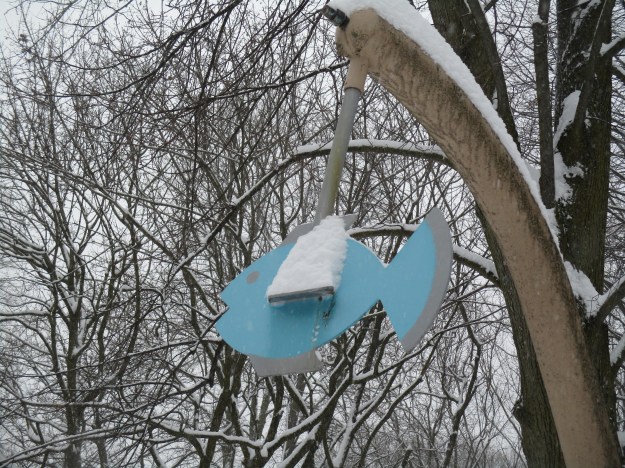
Winter scenes have been largely missing this year and so with light fluffy snow falling and 15 centimetres of fresh snow on the ground, it seemed like a good time to go for a walk in Sherwood Park.  There were children playing on the swings and teeter-totter in spite of the weather.  Isn’t Canada wonderful?  The fish in the children’s splash pad might not agree with those snow drifts piled up on their fins.

img_6194

Sherwood Park was previously covered in the post on Burke Brook so I won’t repeat that story here.  I’ll just provide a link at the end of this pictorial where you can get the history of this location.  For now, grab a seat in the park and have a look around.

img_6193

One of the features of Sherwood Park are the extensive stairs provide access from the ravine floor to the forests above.

img_6202

Burke Brook is beautiful as it babbles through the ravine.

img_6213

To facilitate crossing the steep ravine at Burke Brook the pioneers built Bayview Avenue along the side of the ravine so that it could reach the bottom with a slope other than 75 degrees straight down.  The former road allowance is currently used as the trail from Bayview into Sherwood Park.

img_6209

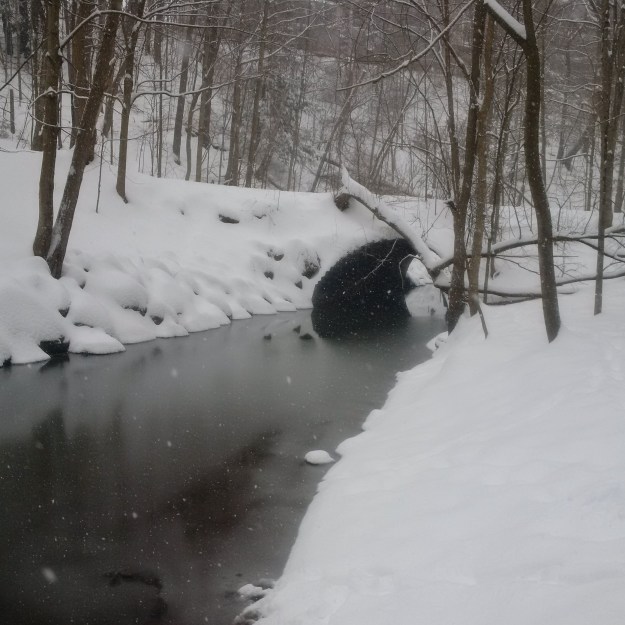
Bayview Avenue crossed Burke Brook near the water level on a wooden bridge prior to the installation of this culvert.  When Sunnybrook Hospital was built during the Second World War, Bayview Avenue was straightened and a large berm built over a much larger culvert. The berm reduces the ravine to a small dip in the road.  The original Bayview Avenue can be seen as it approaches this old bridge.

bayview-over-burke

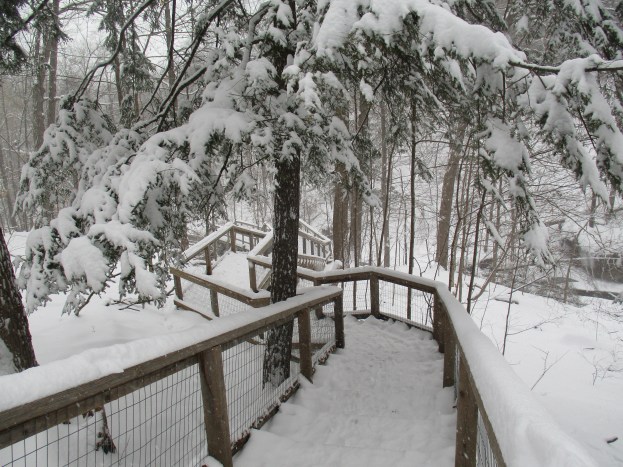
There’s something very calming about a gentle snowfall in a forest when the trees have a fresh coating of undisturbed snow.

img_6218

Link to Burke Brook

A summary of the top 15 all-time posts can be found in this special feature.

Google Maps Link.  Sherwood Park

Like us at http://www.facebook.com/hikingthegta

Follow us at http://www.hikingthegta.com
Leaside Spur Trail

Sunday, January 29, 2017

The Leaside Spur ran from just north of Eglinton to just south of York Mills for a distance of about 3 kilometres.    It once connected the Canadian Pacific (CP) Belleville Subdivision in the south with the Canadian National (CN) Bala Division in the north.  There are a few street parking spots on Overland Drive off of Leslie Street.

leaside-spur-trail

Until the 1950’s the line ran through an area that consisted of about twenty farms contained between the East and West Don Rivers.  All that changed rapidly between 1952 and 1965 when it was developed as an 835-hectare residential community.  It was the first planned community in Ontario.  Residential, commercial, industrial and retail areas were all planned out as well as schools and parks.  Watercourses were left in their natural condition rather than putting them in concrete channels as was done with Taylor-Massey Creek to the east of there.  From where I was parked the trail runs to a dead end to the south and I decided to go that way first.  There is a brief section where the trail passes through a residential community before entering an industrial area.

img_6041

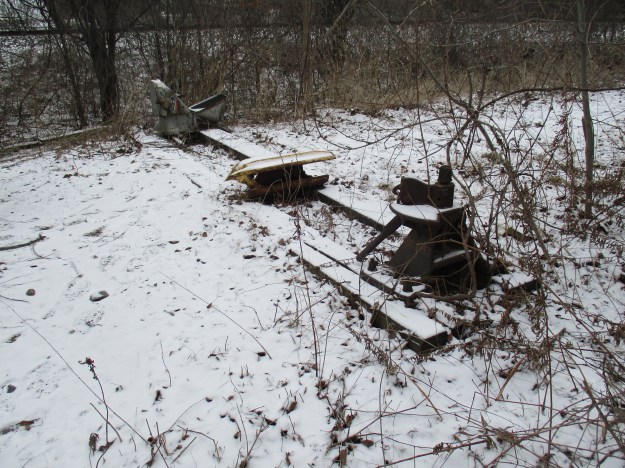
From the old aerial photographs, it appears that there were at least 5 sidings that serviced factories in this section.  The cover photo shows the one remaining section with rails on it. This short siding allowed for two cars to be placed at the rear docks of a building which is currently used by Canadian Tire.  The industrial section is split by a ravine carrying a tributary of Wilket Creek.  The rail line passed over the ravine on a trestle which has since been filled in and the creek fed into a new culvert.  There is a deep plunge pool on the downside of the culvert suggesting that there is a significant flow of water through here at times.

img_6057

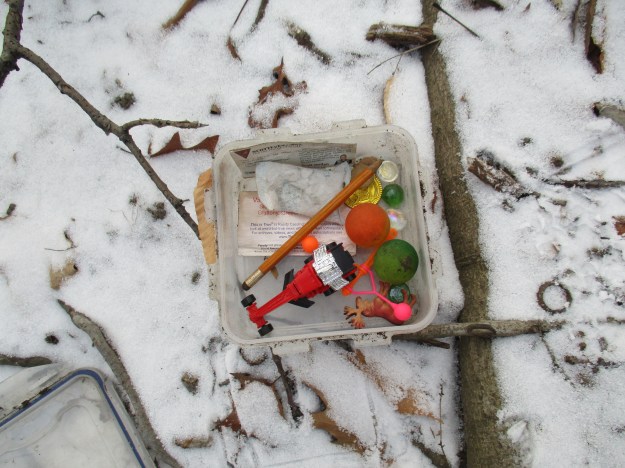
Although I spend many hours outside in prime geocaching locations I have never actually met anyone who is actively looking for a cache.  I tend to stumble across geocaches every few months and this one had tumbled out of it’s hiding spot.  There is a pencil but no log book so I just closed it up and put it back where I thought it had come from.

img_6060

When this area was farmer’s fields the ravine was cleared of trees.  Following the industrial development of the local area, the ravine was left to grow over with new trees.  It is an unusually secluded spot in the city where there were plenty of small animal tracks to which I added the only fresh human ones.

img_6064

Some of the former sidings have been removed while others have been buried under fresh fill.  The last siding on the west side prior to the connection to the CPR tracks is one of the ones that was buried.  The ends of the two rails protrude from the bank of earth that was intended to hide them forever.

img_6081

There are still pieces of switching equipment at the end of the trail where it connects to the CPR tracks.  The switching equipment was installed in 1963 and manufactured by the General Railway Signal Company in Rochester, New York. The connection to the CPR was most likely cut at this time.

img_6086

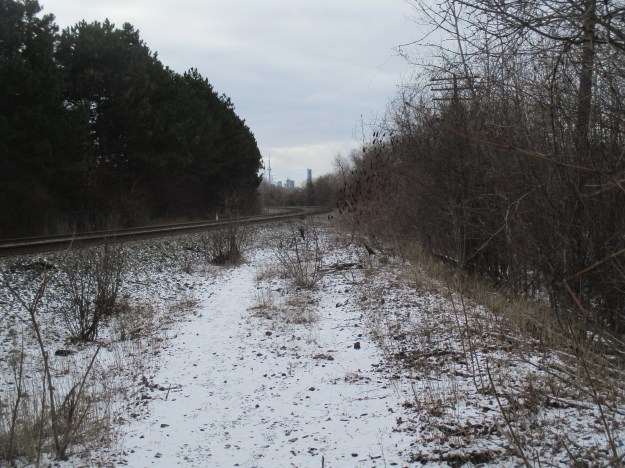
The siding connects to the CPR Bellville subdivision just north of Eglinton Avenue.  The CN Tower and  Aura at College Park can be seen in the distance.

img_6101

Backtracking, you will arrive at Lawrence Avenue where there is a Tim’s, how convenient! The former level crossing at Lawrence Avenue has now been turned into a bicycle and pedestrian crossing with signals.  North of Lawrence the trail passes through residential areas where many residents have made their own access to the trail.

img_6113

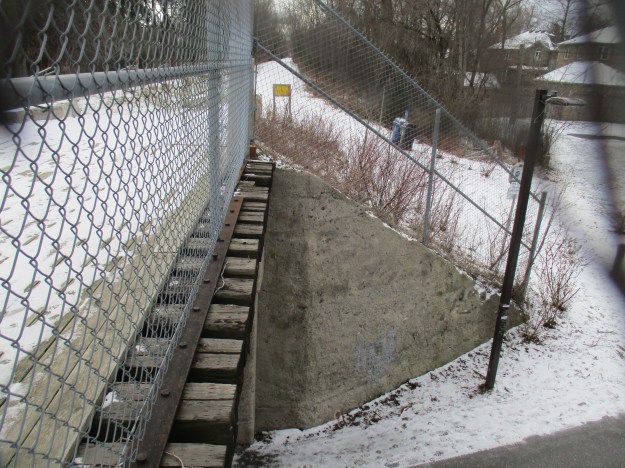
Don Mills was shaped by the railways which surrounded it.  There is currently no heritage designation on any of the railway properties in the area.  The rail bridge over Bond Street was built in 1912 and was in danger of being torn down during the construction of the trail. The north abutment was to be removed to allow the roadway into the park to be straightened and a blind curve to be removed.  The trail would have made a slight deviation to cross Bond Street on a new pedestrian bridge.  The abutment would have been replaced with signage describing the missing heritage bridge.  For now, it looks like the bridge has been saved but it needs the heritage designation to help ensure it’s long-term future.

img_6115

Bond Park, with five ball diamonds and six tennis courts, can be seen from the trail. It is set in a 6.8-hectare triangular piece of land, or gore, between the Leaside Spur and the CN Bala Division and north of Bond Street.  The northern tip of the park is defined by the meeting of the spur line with the main line.  The fence on this end has been recently repaired to keep people from trespassing but the old right of way can be seen as it connects to the CN line.

img_6119

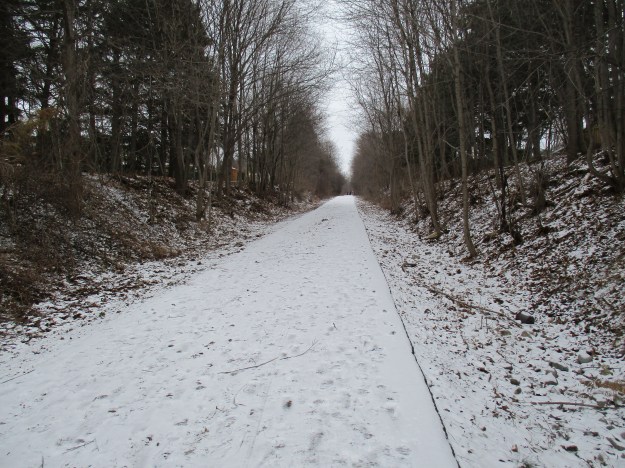
The trail has now been completed from this point to York Mills Road and there are plans to connect it to the East Don Trail in the future.

Our fifteen most popular stories have been collected here for easy reference.

Google Maps Link: Leaside Spur Trail

Like us at http://www.facebook.com/hikingthegta

Follow us at http://www.hikingthegta.com

Hog’s Back Park – Oakville

Saturday, January 28, 2017

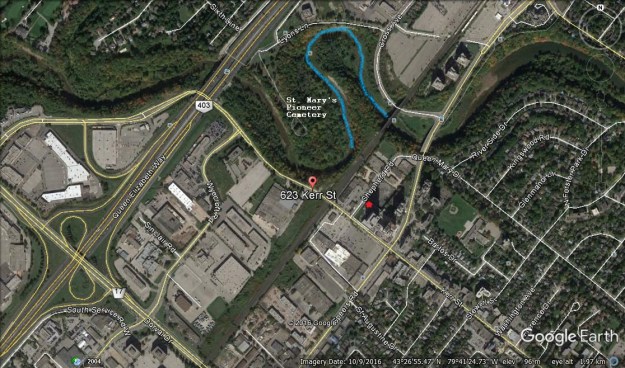
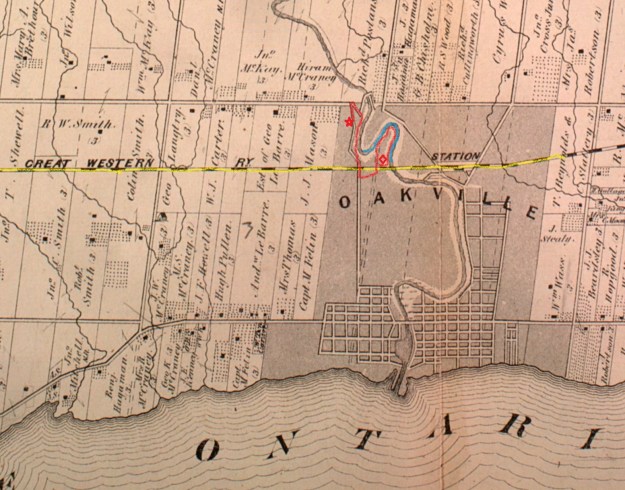
A hog’s back is a narrow ridge of steeply inclined rock strata that is resistant to erosion. In Oakville, the Sixteen Mile Creek forms a hog’s back at St. Mary’s Pioneer Cemetery. The Google Earth picture below shows how the hog’s back is surrounded on three sides by water (blue).  Following a story last year on the east side of Sixteen Mile Creek we received a tip about an artifact on the other side.  The entrance to a tunnel that used to run under the hog’s back aparently still remained on the west side of the creek across from St. Mary’s Cemetery. Initially, it was used to carry a wooden flume which supplied water to power the first mills in Oakville.  There is limited parking in the area and in some places, you risk towing.  We found limited free street parking on Kerr Street south of the 403. Access to the bottom of the ravine can be gained off of Kerr Street adjacent to the highway bridge.

623-kerr

The bridge replaces an earlier crossing at river level.  Today’s Kerr Street used to have a switchback that led down to the ravine floor and this was eliminated when the high-level bridge was installed in the 1930’s.  There is still an obvious roadway that has been cut down the side of the ravine although it is becoming overgrown with hawthorn and other first generation growth.  There were signs that going down this way wasn’t a good idea, due to trees that had fallen across the roadway and so we returned and descended beside the bridge.

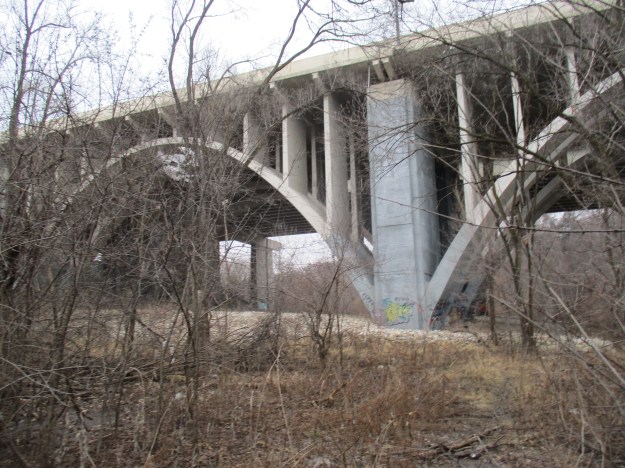
Two types of bridge construction can be seen from the ravine floor.  In the foreground are the graceful arches of the earlier bridge of the Middle Road Highway.  When it opened in 1937 between Toronto and Burlington it was the first inter-city divided highway in North America.  The lamp posts featured “ER” in wrought iron for Elizabeth Regina or Queen Elizabeth, giving the highway the longest stretch of illumination in the world at the time. The second bridge, on straight pillars in the background, was opened in 2011 when the addition of HOV lanes required that a second structure was built to cross the creek. Notice how the new construction was built with room for another expansion in the future.

img_5991

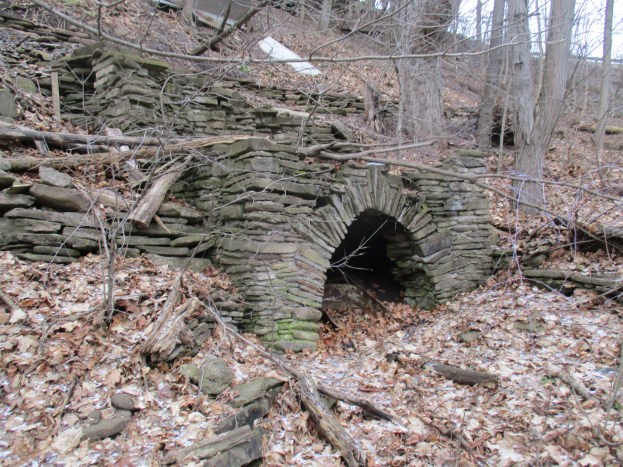
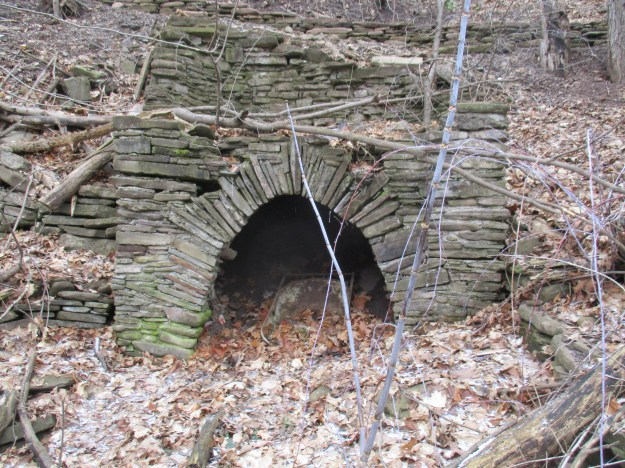
The west creek bank has an open floodplain until you reach the major curve in the river near the railway tracks.  At this point, the creek edges up against the ravine wall.  Before the curve extensive work has been done on the embankment with shale.  We found the opening with its crude arch that can be seen in the photo below.  The embankment is shored up with additional shale to support the entrance to a tunnel which has recently been filled in.  The bottom of a wheelbarrow remains in the opening to attest to the deed and give an indication of scale.

img_6004

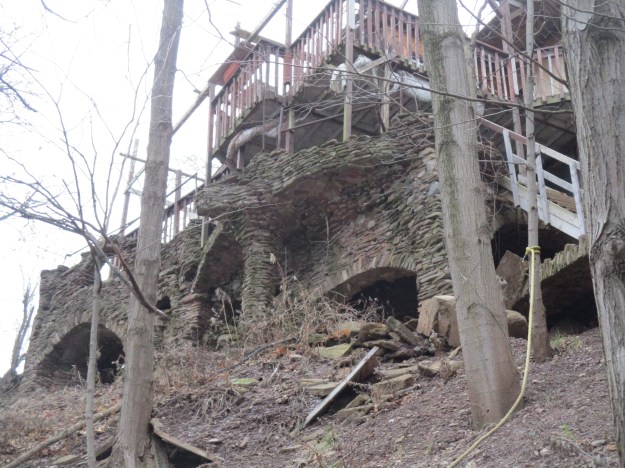
On the top of the ravine above this inlet are the remains of some extensive stonework. Arches and columns support other arches and these, in turn, support the deck of a more modern house.  Following the creek ceases to be an option at this point and you are forced to retreat or climb the side of the ravine.

img_6016

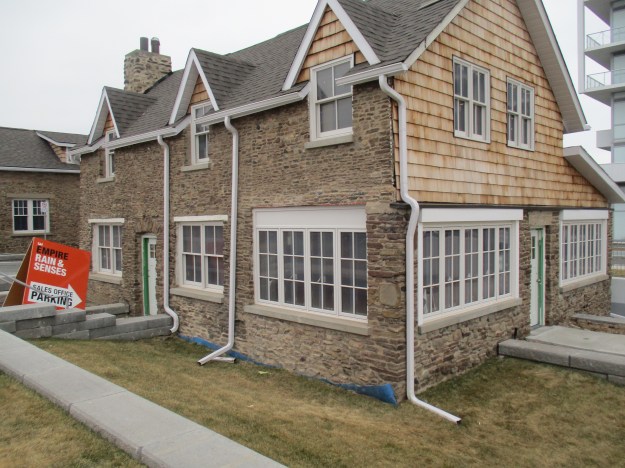
Stonehooking was performed between about 1830 and World War 1.  Shale was collected from the lake bottom and used in construction projects.  Two examples of this kind of construction formerly stood on Kerr Street just south of the railway tracks.  They have since been moved onto Shepherd Road to make space for the highrise building that can be seen in the corner of the picture below.  The two houses were built in 1911 and 1930 respectively.  Three triangular dormers grace the two-story 1911 home which has been restored with new cedar shingles.  The story-and-a-half 1930 home can be seen on the left in this photo.  Their location has been marked with a red asterisk on the Google Earth picture above where they sit in the shadow of the building that they were moved to accommodate.

img_6018

At the end of Shepherd Road is a small park that has a sign welcoming you to West River Community.  Here, contrary to trespass laws, an obvious trail leads across a triple-tracked and very active railway line.  This trail leads out onto the top of the hog’s back.  In an effort to fully explore this section of the creek we had to descend back to creek level.

img_6025

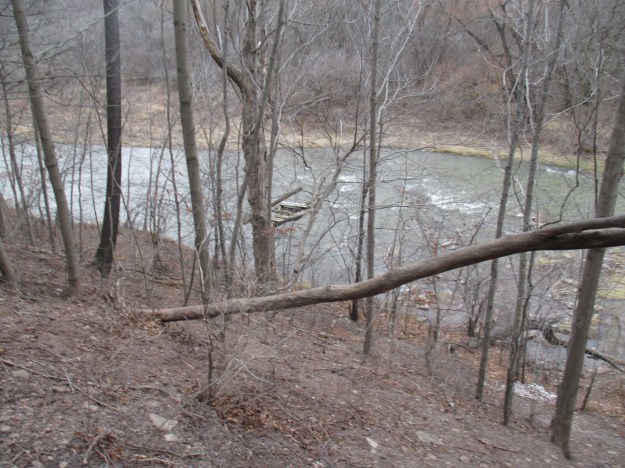
Backtracking upstream, it was confirmed that there is just a short section along the base of the railway line that cannot be traversed safely at water level.  The view south from here reveals the layers of shale that make up the hog’s back.  Extensive talus slopes at water level contain the loose clay, sand and shale that has fallen from the cliff face.  A thin strip of vegetation along the edge of the water gives a faint hope of being able to get past.

img_6027

It turns out that there were sufficient places to step to allow us to slowly work past all the talus. Rapidly changing water levels could make this quite dangerous at times.

img_6029

At the end of the hog’s back we found a camp site.  We are either very early or much too late for breakfast.

img_6030

Once around the tip of the hog’s back, we saw two GO trains pass each other in opposite directions on the rail bridge over Sixteen Mile Creek.  The 1877 county atlas shows the rail line (yellow below) passing through Oakville as the H & T Branch of the Great Western Railway (GWR).  In 1834 the GWR was the first railway in Canada West (Ontario) to receive a charter, as the London and Gore Railway.  It was rechartered in 1845 as the GWR.  When it opened in 1853 it connected Niagara Falls with Windsor.  In 1855 the line was extended with the Hamilton & Toronto (H&T) branch.  The rail bridge over Sixteen Mile Creek was built of cut blocks of limestone.  When it was triple-tracked the new section was made of poured concrete with a pattern that mimics the cut stone blocks beside it.

img_6034

The historical atlas below shows the journey starting at the parking spot which is marked with a star.  The trail is marked in red and the end is marked with a diamond.  Having hiked all the way around the hog’s back at creek level we are forced to conclude that the shale structure featured in the cover photo is the only candidate to be the remains of the mill flume intake tunnel.

oakville-3

Google Maps link: Hog’s Back Park

Like us at http://www.facebook.com/hikingthegta

Follow us at http://www.hikingthegta.com
Sunnyside Beach

Saturday, January 21, 2017

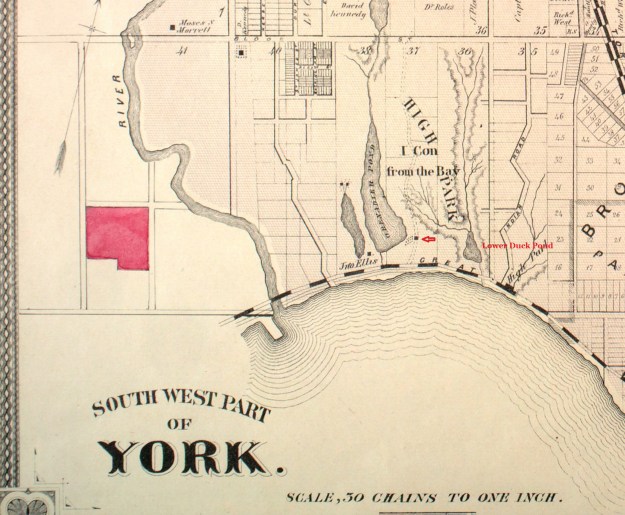
Sunnyside Beach originally was part of High Park when the entire land grant belonged to John George Howard.  The name Sunnyside first referred to a summer villa that John had built on the sunny side of a hill overlooking Lake Ontario.  The 1877 County Atlas pictured below was drawn just 4 years after Howard gave High Park to the city and just a year after it opened to the public.  Previous posts on High Park are linked at the end but today the goal was to explore the area along the lakefront.  In 1854 John sold a strip along the lakefront for the construction of a railway.  It is marked with a white and black dashed line and labelled as Great Western Railway on the map.  In 1891 a second line was added when the Grand Trunk Railway came through.

high-park

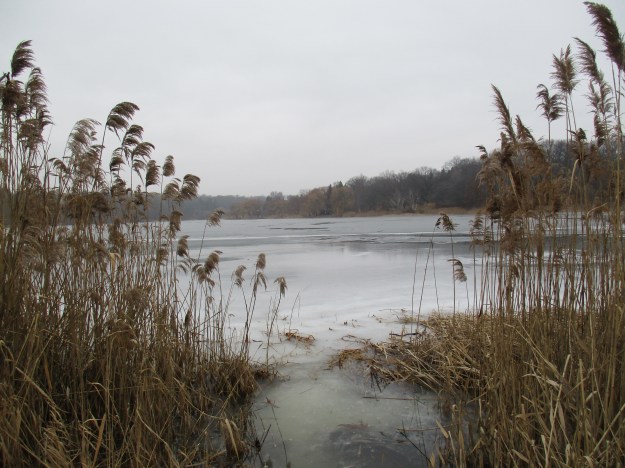
There is a small parking lot beside Colborne Lodge (red arrow).  A trail leads from here to the Lower Duck Pond on the eastern edge of the park.  The outflow from the pond no longer goes directly into the lake  as it was diverted into Grenadier Pond during the waterfront redevelopment.  A trail runs between the two ponds and passes through the corner of the orchard which is marked on the map between the house and Grenadier Pond.


On May 19, 1911, the Toronto Harbour Commission was established and given the mandate to create a plan for the redevelopment of the entire waterfront.  This included the filling in of Ashbridges Bay to create the Port Lands, deepening the harbour to twenty feet and creating over 1400 acres of land through lake fill.  The plan called for a strip of parkland with recreational uses that would stretch from the Humber River almost all the way to Bathurst Street.  The picture below shows the outflow from Grenadier Pond.  A sandbar that separated Grenadier Pond from the lake was shored up to support the trains when the railways were constructed.  The outflow from the pond was also altered at that time and a weir was constructed to help control water levels.  The weir, at the corner of today’s Ellis Avenue, was replaced with a concrete one in 1936.

img_5956

Colborne Drive follows the old driveway to the house that is marked on the atlas above. Following it south you will pass under the old railway line and the more recent concrete Gardiner Expressway bridge.

img_5846

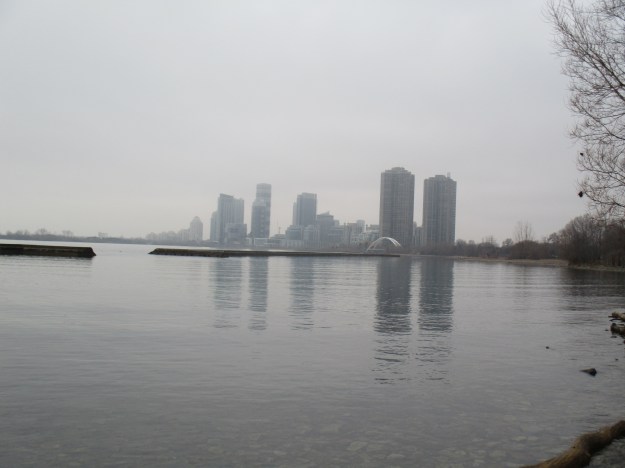
Looking from the east when you reach the beach, the pedestrian arch bridge can be seen over the mouth of the Humber River. Some of the breakwall can be seen in the lake.

img_5851

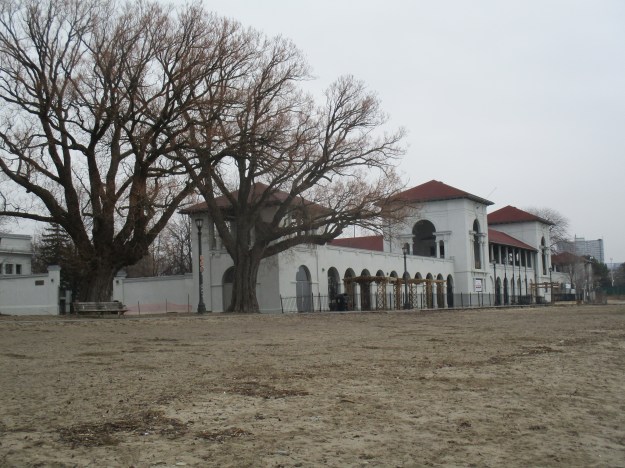
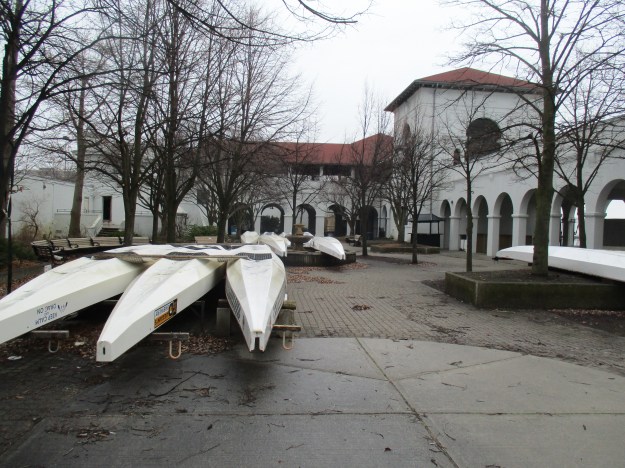
The Sunnyside Bathing Pavilion was built in 1921 on land that was created by pumping muck from the bottom of the lake on the inside of the 17,985 lineal feet of breakwall.  To cover this with soil The Harbour Commission bought a farm in Pickering and moved 40,000 cubic yards of soil to the site.  The picture below shows the bathing pavilion facing the lake, with some of the original, now mature, trees growing beside it.

img_5857

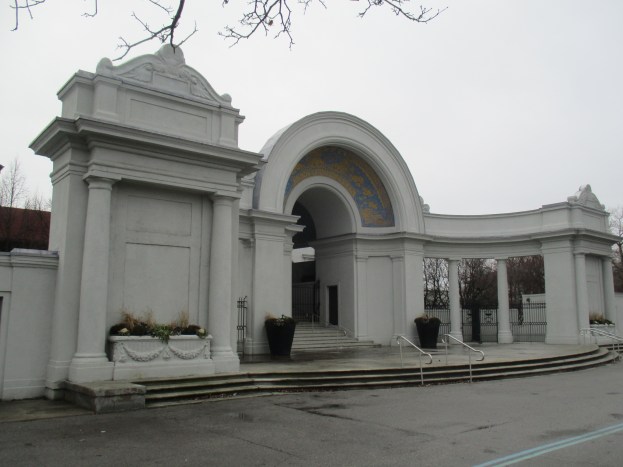
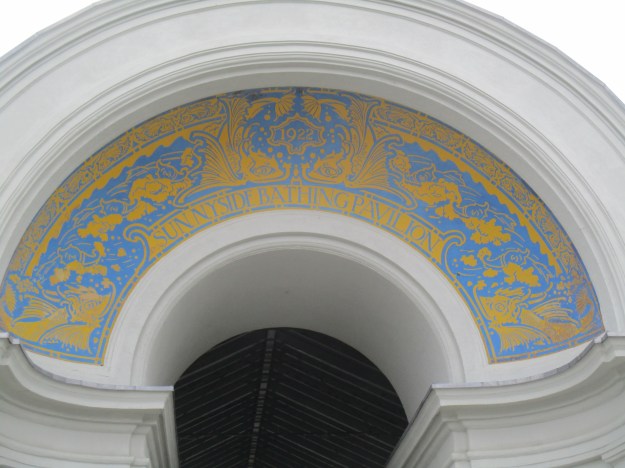
The main entrance to the Sunnyside Bathing Pavilion has this decorative archway.  The date 1922 can be seen at the top and this reflects the June 28, 1922 opening of the pavilion.

img_5916

The picture below shows the interior courtyard of the pavilion.  When it was constructed it cost $300,000 which would be $4.1 million dollars today.  At 400 feet long, and with separate sections for men and women, it could accommodate 7,700 bathers.  It also had lockers for each bather.  Surprising by today’s standards was the ability to rent a bathing suit for 15 cents.

img_5930

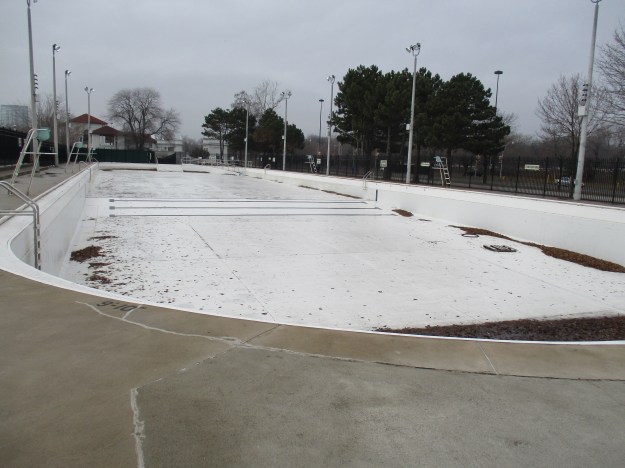
After two very cool summers in which there were few people who braved the cold waters of the lake it was decided to build a swimming tank (not called a pool by the local residents). It cost $75,000 in 1925 but at 300 feet by 75 feet it was once considered the largest outdoor pool in the world.  It was built to accommodate 2,000 swimmers at a time.   Originally the tank cost 35 cents for adults and 10 cents for chidren but today there are no fees (and no water).

img_5887

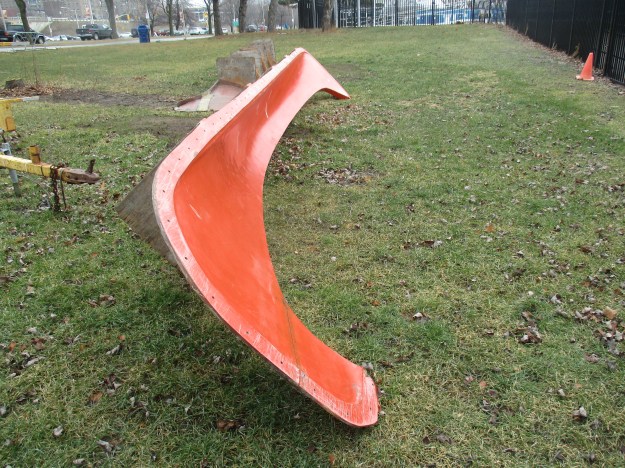
There is a fibreglass mould for making canoes in front of the pavilion.  A local canoe club is storing canoes in the pavilion for the winter.

img_5910

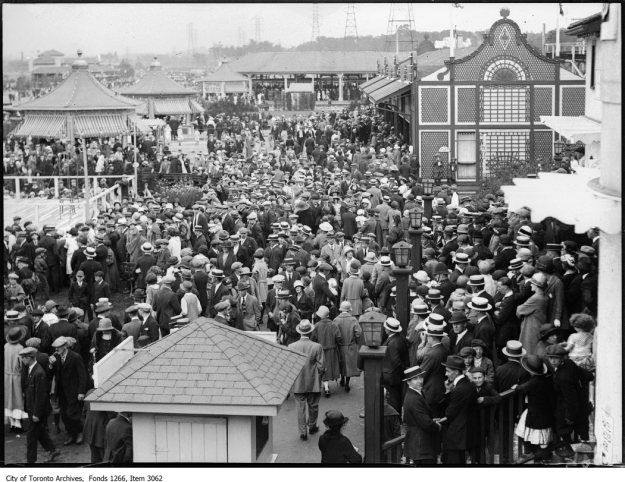
Starting in 1922 Sunnyside Amusement Park became the best-known park of its kind in Canada.  A roller coaster, Ferris wheel and merry-go-round provided exciting rides while the midway offered food, games and entertainment including watching horses jump off high platforms into the lake.  The archive photo below shows a crowd at the park on Canada Day 1924.

Sunnyside, crowd in amusement area, looking west. - July 1, 1924

In November 1955 a small fire destroyed one of the concession stands near the roller coaster.  A second fire just a few days later made the city suspicious of arson.  Then on the 24th a major fire destroyed several buildings and nearly took the lives of some youth that were trapped in one of them.  City council passed a motion on November 26th calling for the removal of the park in preparation for the construction of an expressway.  A contract was awarded on December 5th and within a couple of months, the park was gone.  One of the rides continues to operate because the old carousel was moved to Disneyland in Florida.  Only the bathing pavilion and swimming tank still remain to mark the site of the amusement park.  Memories of the docks and wharves at the beach can be seen in the water off shore.

sunnyside-beach-2

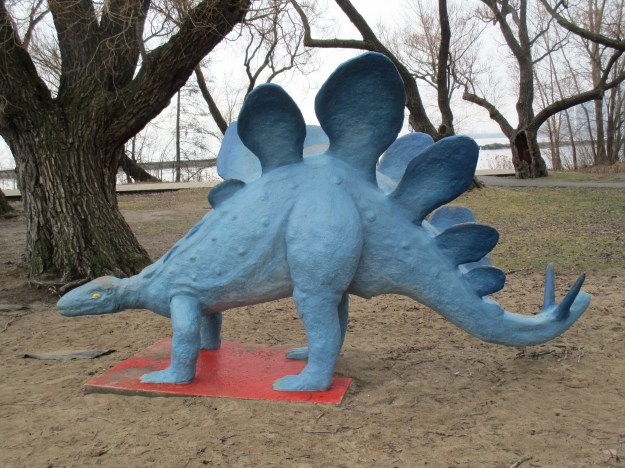
The city built the Gardiner Expressway on the site of the former amusement park but retained a strip of parkland between the road and the lake.  In Budapest Park just east of the pavilion a stegasaurus appears to be wandering along near the boardwalk.

img_5902

The Sunnyside Boardwalk and The Martin Goodman Trail provide a link to The Waterfront Trail and join a hiking system along the Canadian shore of Lake Ontario.

Our other High Park blogs:  Colborne Lodge looks at the origin of the park and the historic home it still contains.  High Park Zoo examines the history of the zoo and features many of the animals it houses today.  The Eastern Ravine reveals a unique geological feature in the park.


Google Maps Link: Sunnyside Beach

Like us at http://www.facebook.com/hikingthegta

Follow us at http://www.hikingthegta.com

Colonel Samuel Smith Park

Sunday, January 15, 2017

Colonel Samuel Smith Park in Etobicoke has a large waterfront, is home to over 100 species of birds and features the restored buildings of the Mimico Branch Asylum.  There is parking in a paid lot in the park as well as limited free street parking off 13th street.

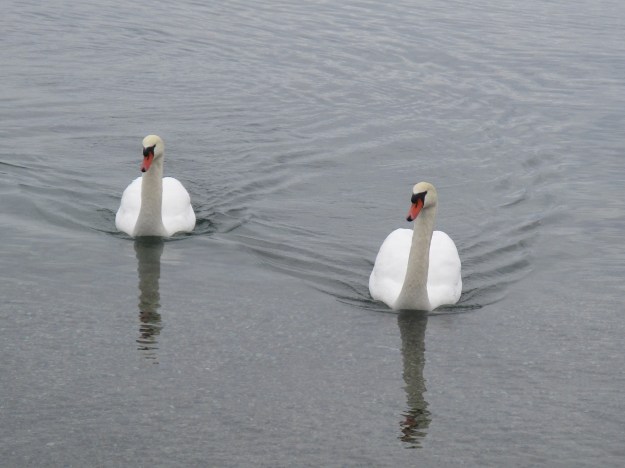
Samuel Smith was born in Hempstead New York on December 27, 1756.  At 21 he joined The Queens Rangers to fight for the British in the American War of Independence.  After the war he moved with other Loyalists to New Brunswick but ended up in England before long.  He earned the title of Captain and was sent to Niagara where his promotions continued and he rose to the rank of Lieutenant-Colonel.  In 1801 he retired and purchased 1000 acres of land in Etobicoke.  Eventually, he owned the land between Bloor Street and the lake in a strip from Kipling to Etobicoke Creek.  He sold John Strachan the land that was used to build Trinity College. After the college was demolished in the 1950’s that section was converted to Trinity Bellwoods Park.  These two swans were quite sure that I might be a source of bread for them and the hundreds of mallard ducks that were there.  In fact, bread is not good for waterfowl as they can’t digest it properly and it sits in their stomach and gets bloated.  It can prevent them from eating sufficient good food to get their nutrition.

img_5743

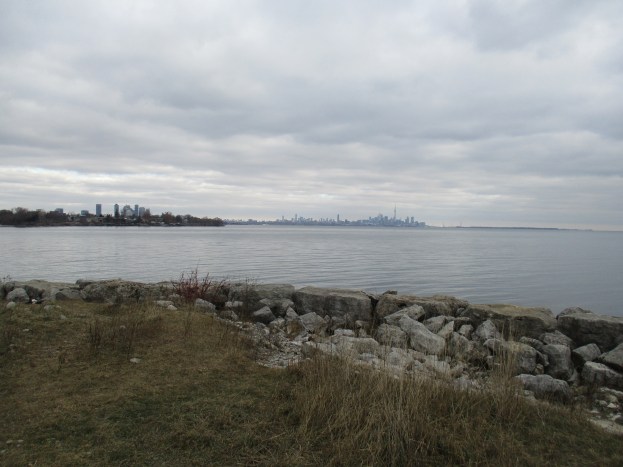
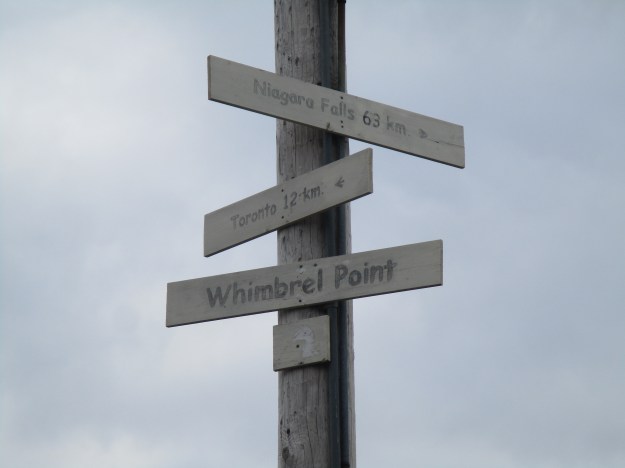
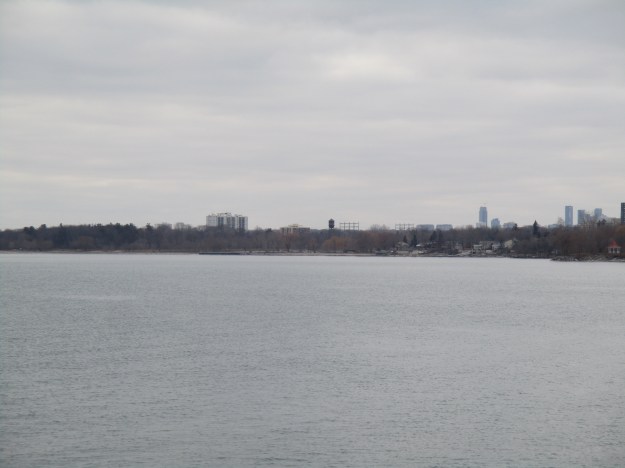
Samuel Smith served as the Administrator of Upper Canada between 1817 and 1818.  His term followed very shortly after the War of 1812-1814 and distrust for the Americans still ran high.  Smith imposed strict rules on American immigrants, requiring them to take an oath of allegiance as well as live on their land for seven years before they were granted the patent to the land.  Samuel Smith Park is a stopping place for Whimbrels in their migration from Virgina each year.  It is hard to believe that 12 kilometres of water separates the point of land known as Whimbrel Point and the Toronto skyline but Google Earth confirms that it is.  The cover photo shows the view back toward Toronto.

img_5770

Smith was on the Executive Council until October 1825 when he retired from politics.  He passed away just a year later on October 20, 1826.  From the end of the break wall, you can see the Long Branch skyline including the old water tower at The Arsenal Lands.

img_5786

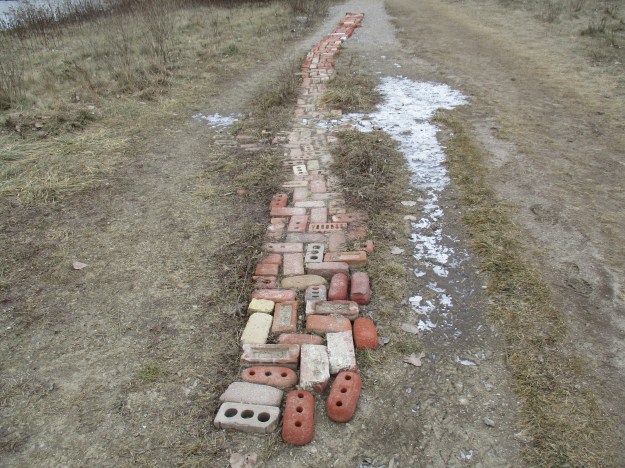
The land for Col. Samuel Smith Park was acquired by the city in the 1970’s but not a lot was done with it for twenty years.  The Lakeshore Psychiatric Hospital occupied part of the grounds until it was closed On September 1, 1979.  The buildings sat empty until they were renovated starting in 1999.  Construction debris was dumped along the lakeshore creating much of the land south of the hospital old sports field.  Thousands of old bricks from brick makers as far away as at least Milton can be seen and someone has taken the time to make a little brick road which displays some of this diversity.

img_5763

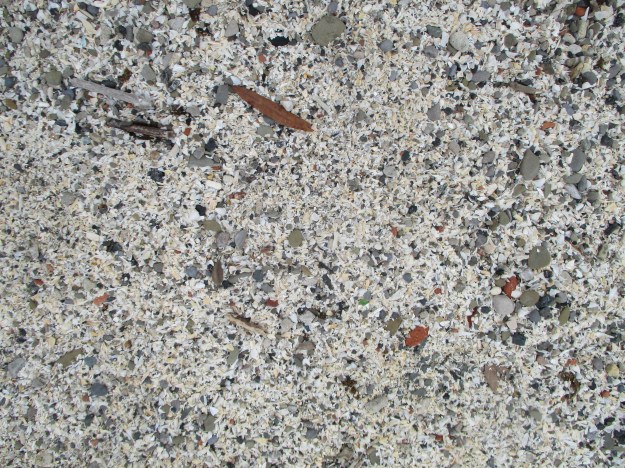
The shape of the spits that have been built into the lake has caused an interesting flow to the water that can be seen in how things are deposited on the beaches.  There are small shingle beaches made up of tiny stones, a small section covered in seaweed and a section of shoreline where the old bricks have been worn to very small pieces.  The picture below shows another section which is covered several inches deep with crushed zebra mussel shells.  Zebra mussels are invasive having only been first recorded in the Great Lakes in 1988.  Since then they have spread into connected waterways.  Colonies can produce between 30,000 and a million eggs per year allowing them to take over large areas.  They attach themselves to almost anything and when they run out of room they pile on top of each other.

img_5718

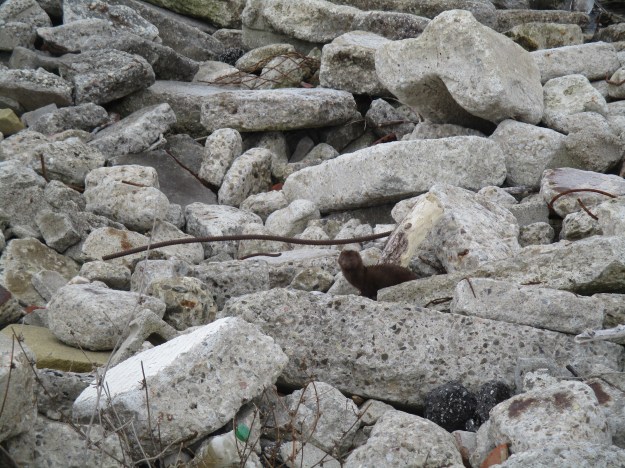
American Mink have made the park home and have many nesting places in the rip rap that forms the shoreline.  They build a fur-lined nest in which they will raise a litter of between three and six kits which will be born blind.  After 25 days they open their eyes but remain dependent on their mother’s milk for five weeks.  The mink is a good swimmer who can dive as deep as sixteen feet in search of food.  Their diet consists of fish, rabbits, squirrels, snakes and frogs.  When distressed it will spray with a foul smelling secretion from glands in the anus that smells worse then that of the skunk.  They say that mink will purr like a kitten when they’re content.  I mink, therefore I am.

img_5781

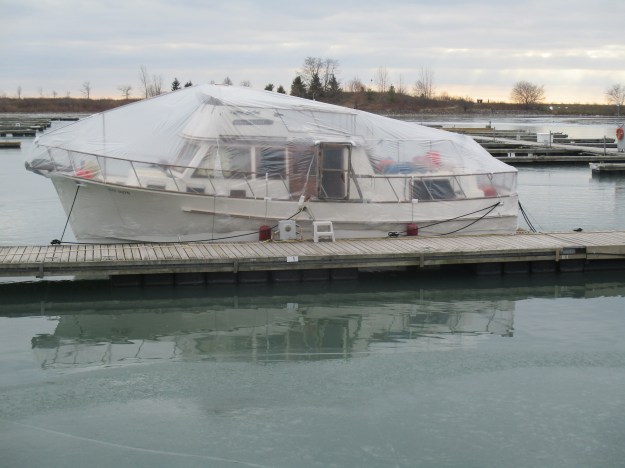
The harbour at the park contains The Lakeshore Yacht club of which there are still three in the water, apparently being lived in.

img_5802

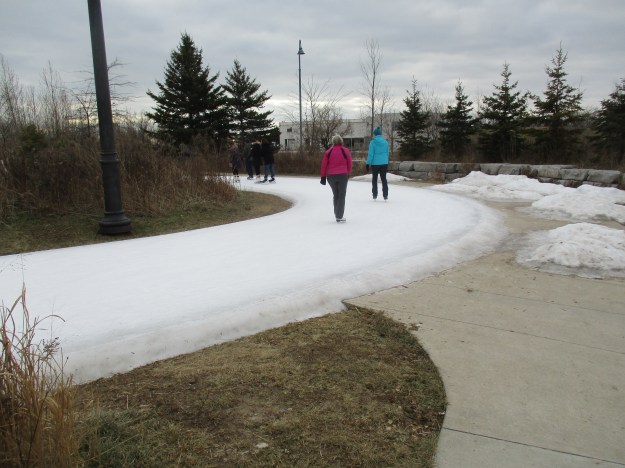
The Colonel Samuel Smith Skating Trail opened on Dec. 8, 2010, giving the city its only skating trail.  The half-kilometer long, figure-eight, trail is kept frozen using two 75 hp compressors and is maintained with a dedicated Zamboni.  The changerooms in the old Generating Building are closed for renovation but washrooms are being provided with porta-potties.  A hand-warming fire near the trail is only lit when a staff member is there full time and therefore ends up being lit only between 6 and 8 pm on Saturdays and Sundays.

img_5808

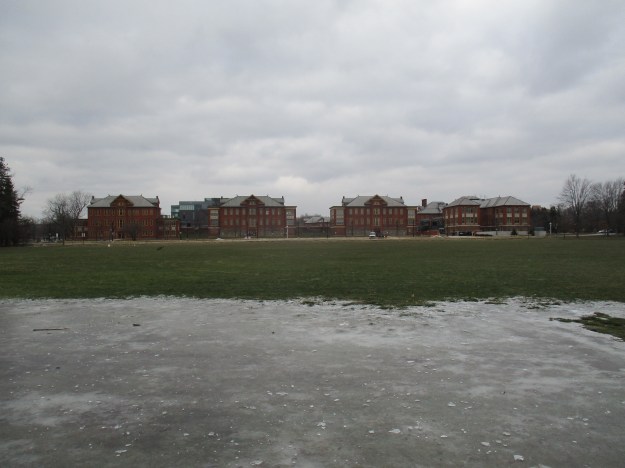
The park is home to the Mimico Branch Asylum with its collection of late 1800’s hospital buildings.  The old asylum is currently under a 99-year lease to Humber College.  It was covered in greater detail in a separate post called Mimico Branch Asylum but the buildings can be seen from many vantage points in the park.

img_5828

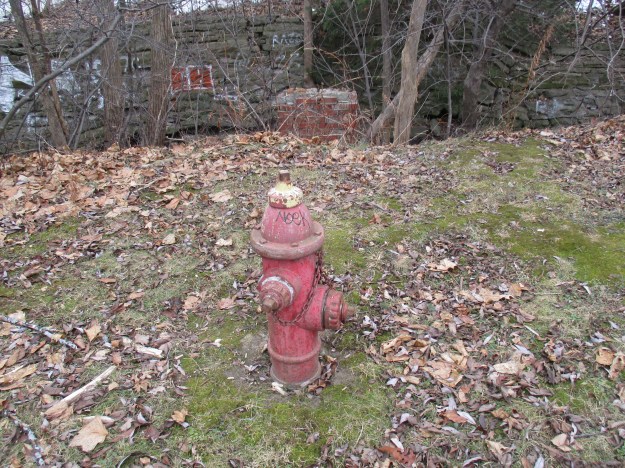
Between the hospital power plant and sports field runs an old swale which can be crossed on a footbridge.  Near the footbridge are the remains of an earlier bridge that can be seen as a red brick pier standing in the swale in the picture below.  The fire hydrant was installed in 1952 and is known as The Kerr.  Bawden Machine Company of Toronto was founded in 1902 and made pumps.  From 1919 until the 1940’s they made the Toronto Water Works fire hydrants.  In 1949 they bought The Kerr company and started making The Kerr fire hydrant.

img_5819

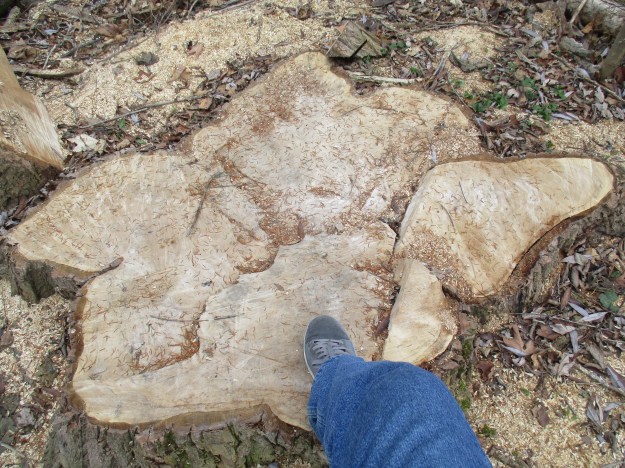
A few trees planted by the patients at the asylum still remain along the back of the property near the old lakeshore.  This willow tree was recently cut down and I was amazed at the six-foot diameter of the tree.

img_5820

Google Maps Link: Samuel Smith Park

Like us at http://www.facebook.com/hikingthegta

Follow us at http://www.hikingthegta.com
Beachcombers – Scarborough Bluffs

Saturday, January 7, 2017

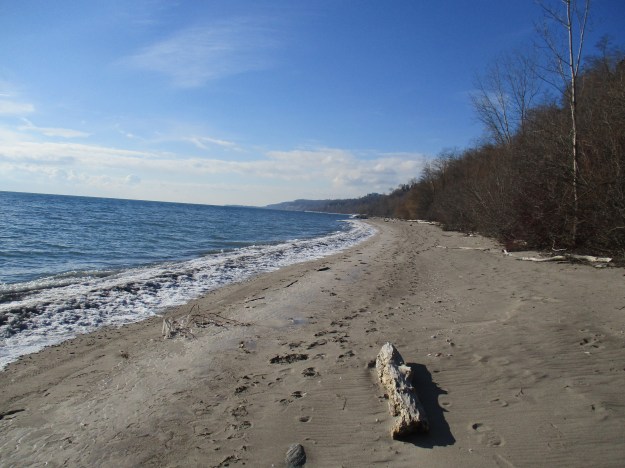
The beach along the Scarborough Bluffs is an ever changing environment.  It is eroded by wind, rain and waves.  Objects are washed ashore, washed down the bluffs or dumped here.  As such it is a great place to look for treasures, each of which has a story to tell or a little bit of history to reveal.

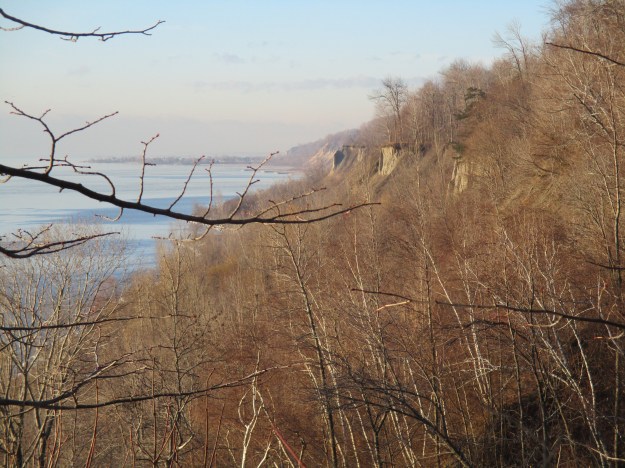
This hike set out to investigate the Scarborough Bluffs, specifically the section from The Guild Inn through to East Point Park. There is a small parking lot for The Guild Inn at the end of Galloway Road and Guildwood Parkway that will provide access to the beach via an old construction road which was used to harden the shore west of here in an attempt to prevent erosion.  The picture below shows the view from the top of The Bluffs looking west.
img_5629

The morning was bright and sunny but the beach was virtually deserted.

img_5671

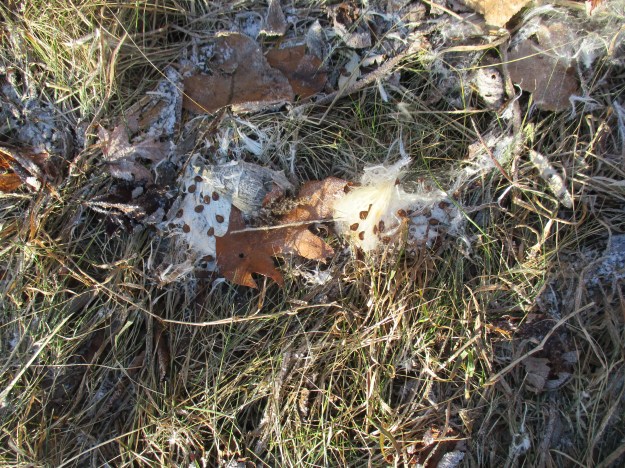
East Point Park is one of the places that is known for its Monarch Butterfly migrations. Milkweed is essential to the lifecycle of this species of butterflies and it is encouraging to see milkweed seeds scattered along the bluffs.  The flat brown oval seeds are attached to the white fluff that helps them to be spread by the wind.

img_5638

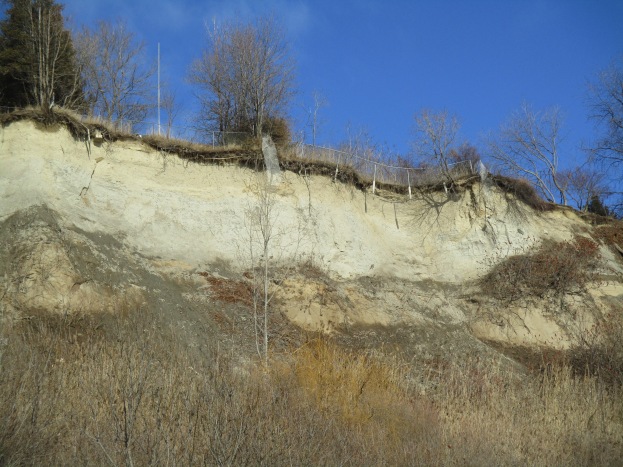
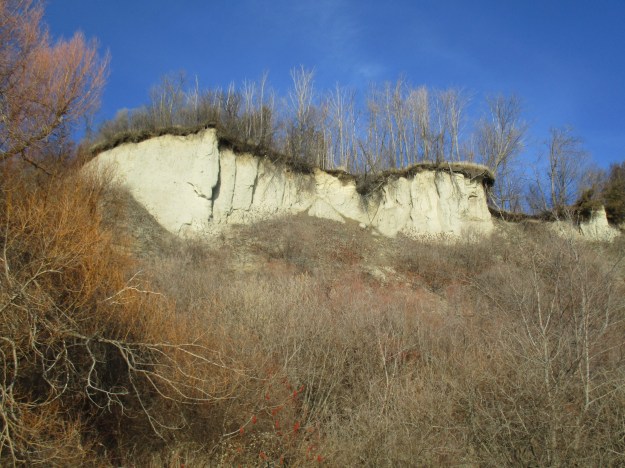
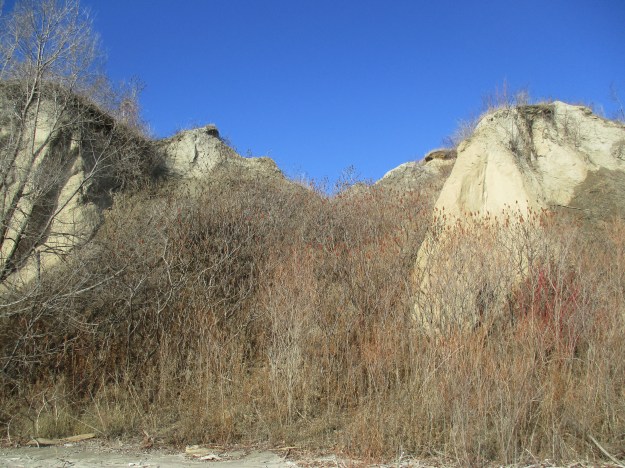
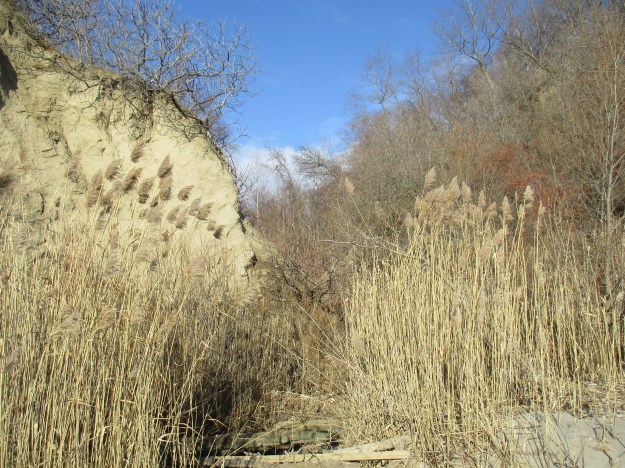
The vegetation on the top of the bluffs slows erosion down but doesn’t stop it.  The roots are holding a thin layer of soil above where the sand has vanished below.  Walking along the top of the bluffs it is, therefore, necessary to stay back from the edge so that you don’t have the ground disappear below your feet.  The cover photo shows a fence that was installed to keep people away from the edge.  The fence is now falling over the edge itself.
img_5645

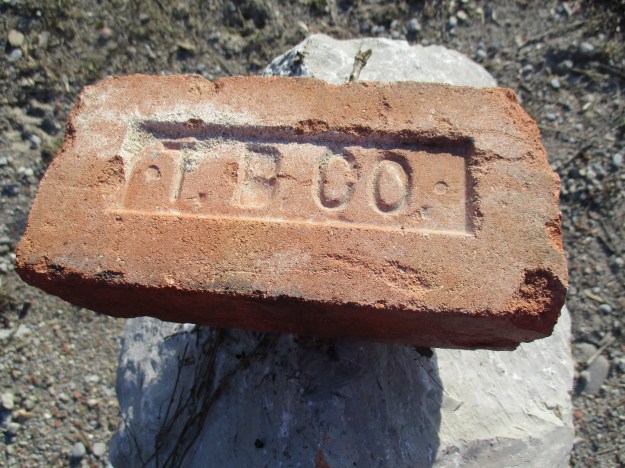
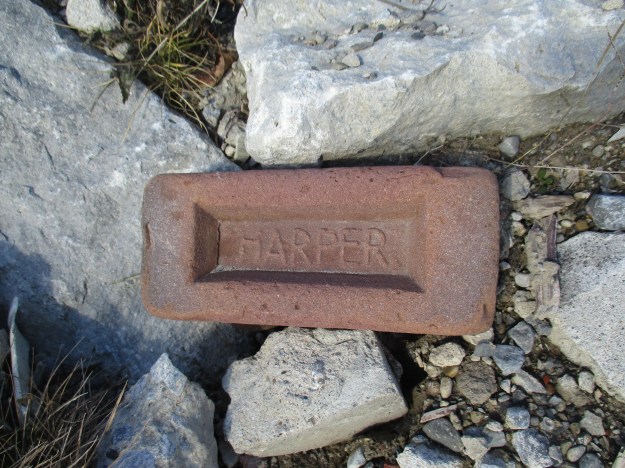
The area of Leslieville was situated on clay deposits that were excellent for brick making. As a result, Greenwood Avenue in 1914 had seven brickyards including that of Albert Wagstaff.  When Wastaff died in 1931 he left the brickyards to his drinking buddy Albert Harper who operated the brickyards while the family contested the will.  When the will was found to be valid he closed the yards down and the pit was turned into the town dump. The name Harper on the brick below was his way of stating his claim to the company while the will was being reviewed.

img_5668

The ravine at Greyabbey Park is one of the places where there is a flow of water from the top of the bluffs to the bottom.  Tall invasive phragmites grow in wetlands all along the sides of the bluffs, sometimes as much as half way up.  These ravines provide homes for the white-tailed deer, coyotes and other animals that call the bluffs home.

img_5679

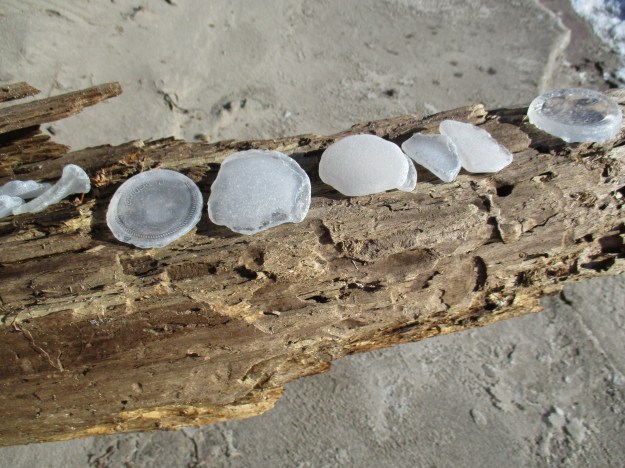
As we walked along the beach we met a local couple who walk there daily.  We noted that they were combing the beach looking for interesting objects, as were we.  They collect antique bottles and glass and display them on an Instagram account.  Their treasures can be seen at this location.  The picture below shows several pieces of glass, including a couple of Coke bottle bottoms, that have been tumbled by the water and sand until they are well rounded.

img_5684

The Toronto Brick Company was stamped onto bricks produced at The Don Valley Brick Works, one of Toronto’s largest manufacturers.  Their bricks may also read TPB Co for Toronto Pressed Brick Company.  Much of the early Toronto skyline was made of buildings constructed using bricks from this brickyard.  Much of the beach along The Bluffs is also made up of bricks from this brickyard now that old construction debris has been used for fill and for hardening the shoreline.

img_5642

Rose hips provide a splash of colour in the winter and can also be eaten if you avoid the seeds.  It is said that they help to reduce inflammation and they contain 50% more vitamin C than oranges do.

img_5699

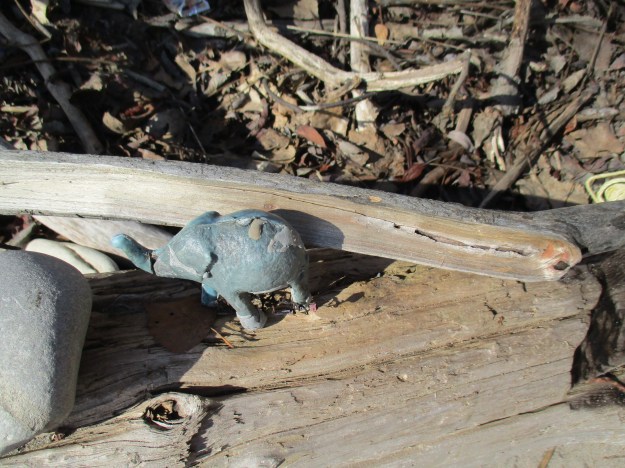
It’s hard to say where this plastic elephant got tossed away at because the lake may have carried it a long distance before depositing it here.  It may also have come from the top of the bluffs.  Unlike some of the glass on the beach, plastic has little chance of being taken home.

img_5688

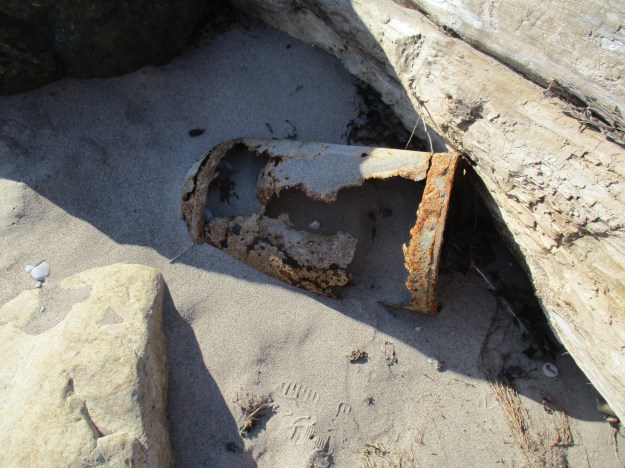
The rusting remains of a milk chum, or milk can, lie behind a log on the beach.  Starting in the 1850’s metal cans were introduced for milk collection so it could be taken to the dairy.  By the 1970’s collection was converted to tanker trucks and the cans became collected for their antique value.

img_5670

There is a movement to pave a trail along this section of the bluffs and add armour stone to the shore to slow down the erosion of the bluffs.  Nature will continue to have its way and the bluffs will continue to recede.  The vegetation that is growing along the shoreline and up the sides of the bluffs will go a long way toward slowing the process down.

img_5690

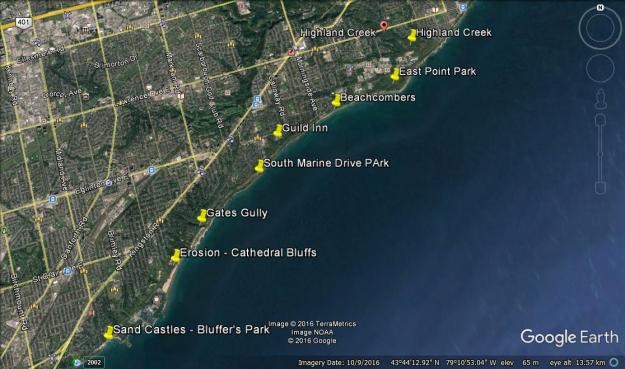
This post brings the total along the Scarborough Bluffs to 8 which cover much of the distance between Bluffer’s Park and Highland Creek.  From the west to the east the adventure began with Sand Castles in Bluffer’s Park.  That story looks at the geology of the bluffs.  Erosion investigates the effect of the lake, the wind and rain on the bluffs.  Gates Gully is the most famous ravine along the bluffs with a sunken ship and stories of buried treasure.  South Marine Park Drive follows the lakeshore between the sunken Alexandria and The Guild Inn.  The Inn is a former artist guild and preserves some of Toronto’s early architecture.  This post fills the gap between the Inn and East Point Park where there is a Monarch Butterfly migration point.  Highland Creek is the eastern most point of The Bluffs.

bluffs

There’s still Greyabbey Park on the top of the Bluffs to be explored at some time in the future.

Google Maps link: The Bluffs

Like us at http://www.facebook.com/hikingthegta

Follow us at http://www.hikingthegta.com