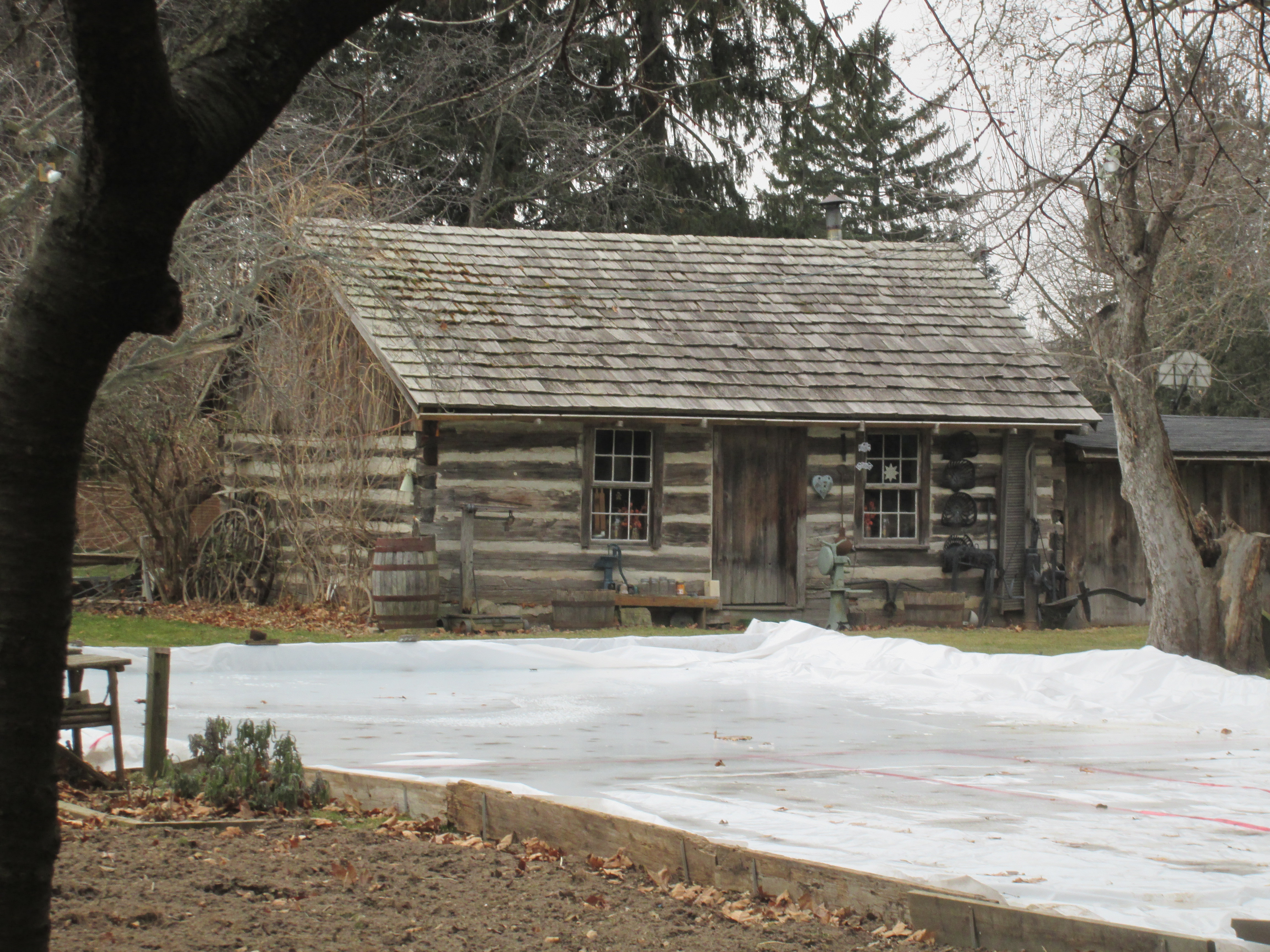
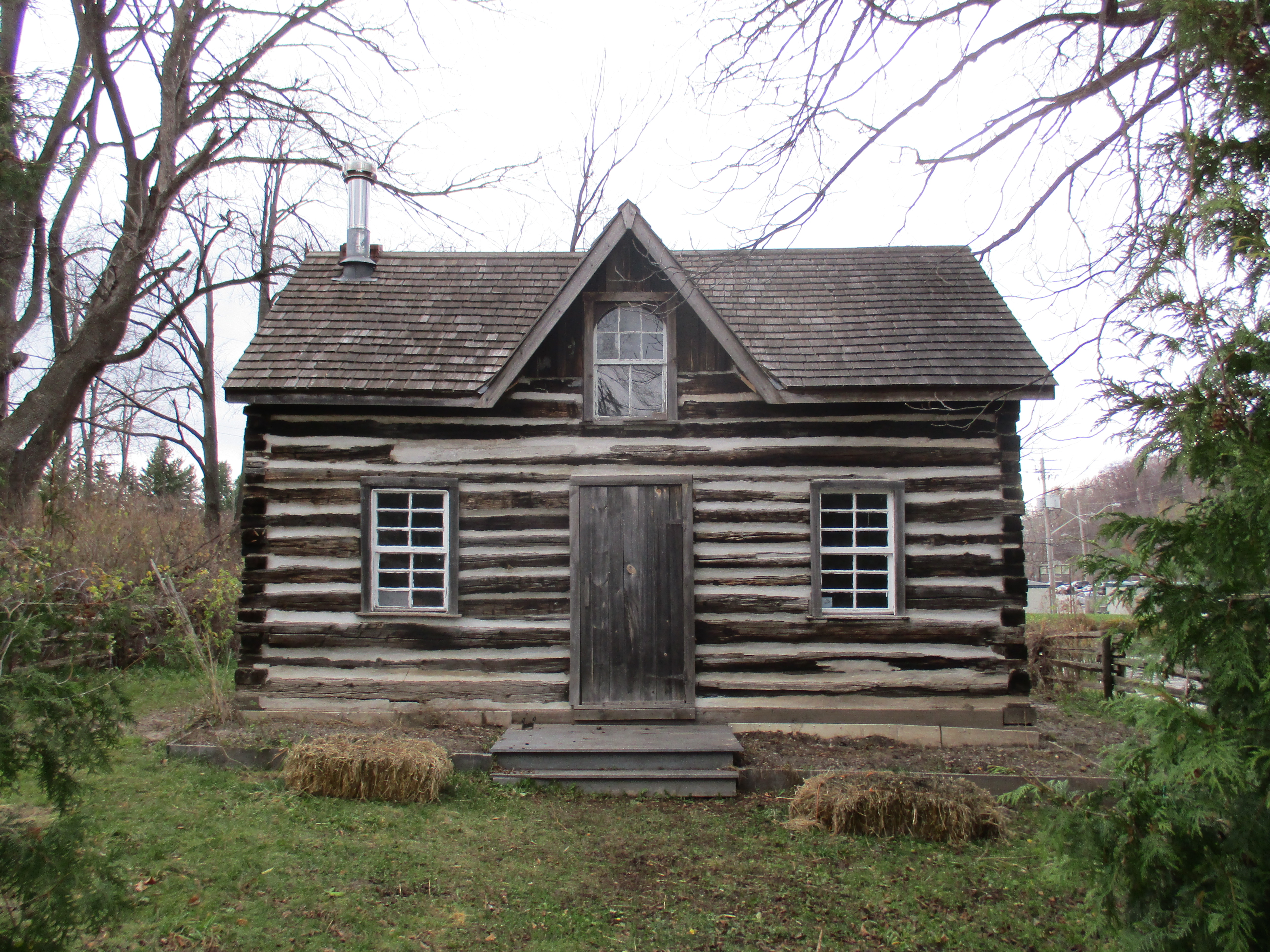
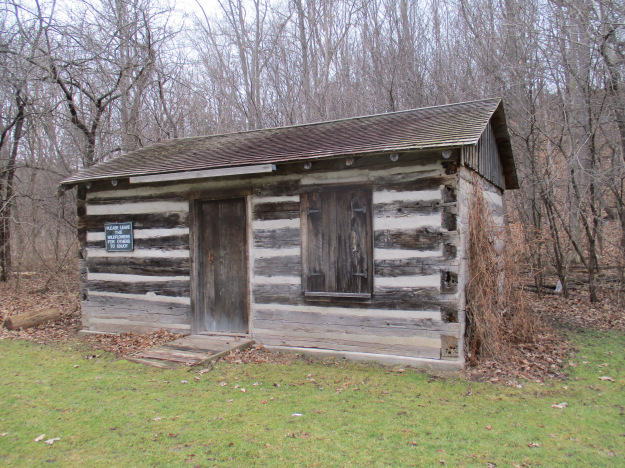
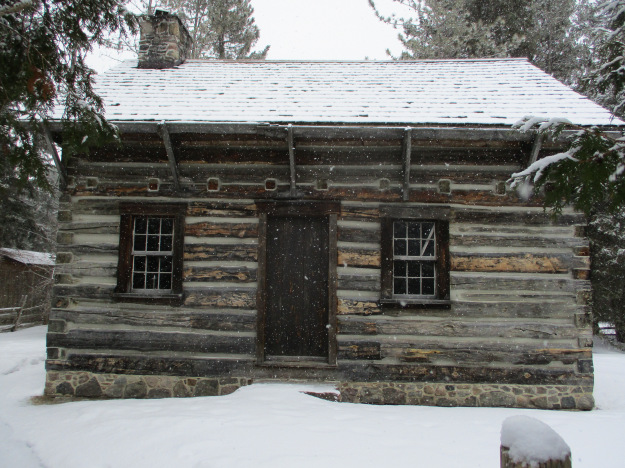
The First Seven Years

April 25, 2021

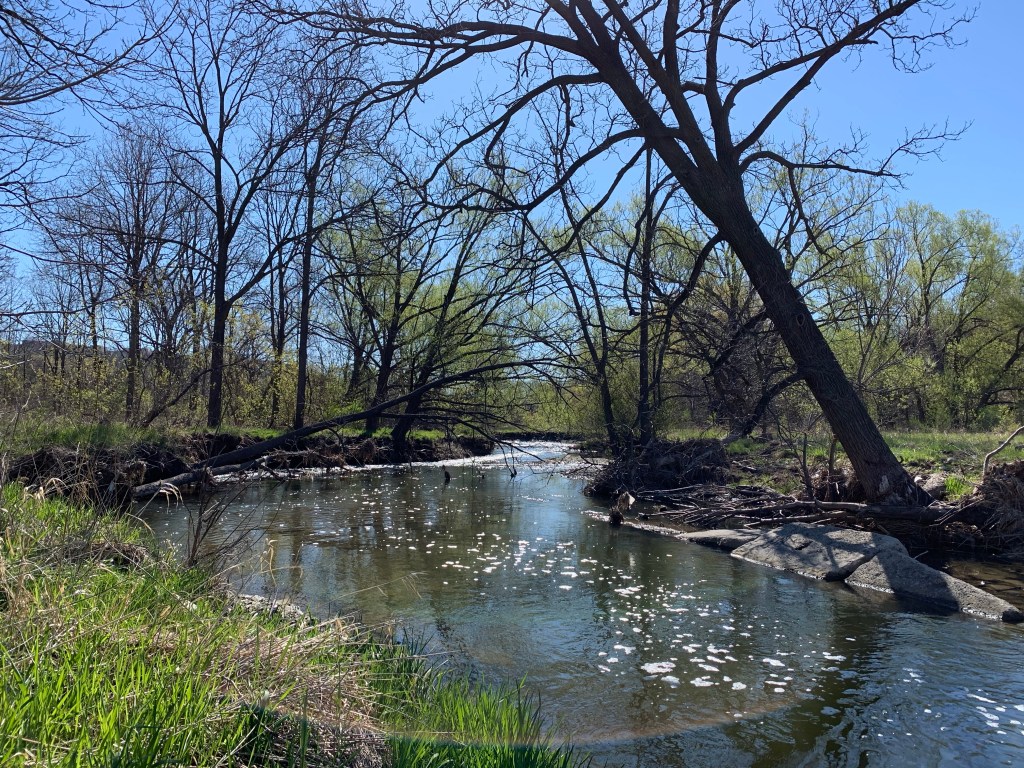
Seven years ago this weekend we published our first story on WordPress using the website http://www.hikingthegta.com. On April 20th we had been exploring the area around Finch and Islington and the following week it was released to universal acclaim. Both readers loved it, lol. It hinted at the combination of nature and history that the blog would evolve into. During that first year we covered most of the Humber River from Lake Ontario north. Click here to see more of that initial story called Humber River at Finch and Islington. Hiking the GTA with the idea of presenting “Places to hike and things to see in and around the Greater Toronto Area” had been born.
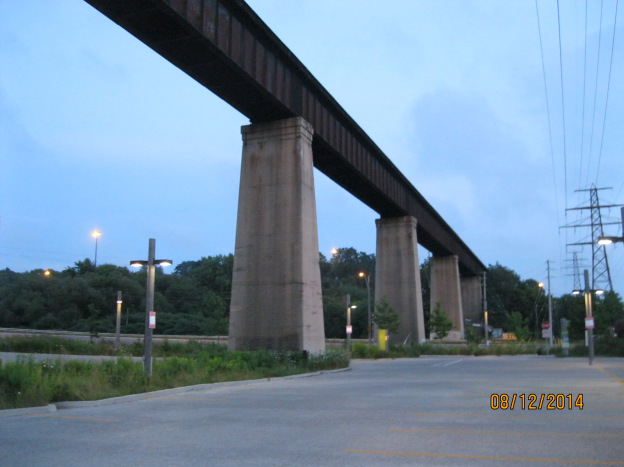
We published 50 stories that first year and added a Facebook Page on November 13th, 2014. The most popular story of the year turned out to be our feature on the long bridge that crosses Bayview Avenue. The bridge is currently out of service and although not quite that long it goes by the name of the Half-Mile Bridge.

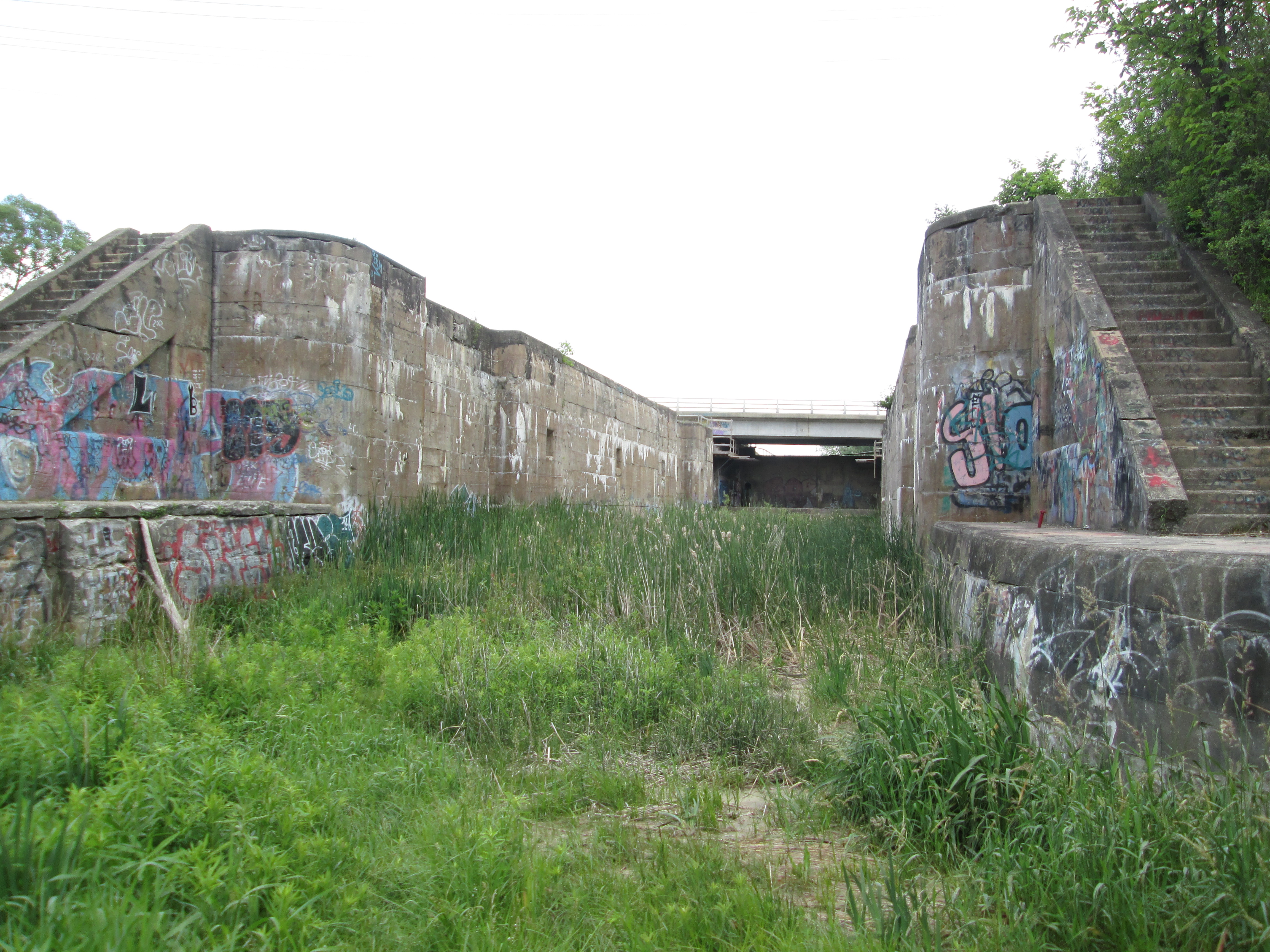
2015 was our first full year and saw the release of a record 85 new stories. We covered The Credit River and large areas of Mississauga and Oakville during the year. That summer we featured the remains of the canal that was being built from Lake Simcoe to Newmarket. The project had been cancelled over a hundred years earlier as it neared completion. The Newmarket Ghost Canal was the most popular story of the year and has gone on to retain the top spot in the all time read count.

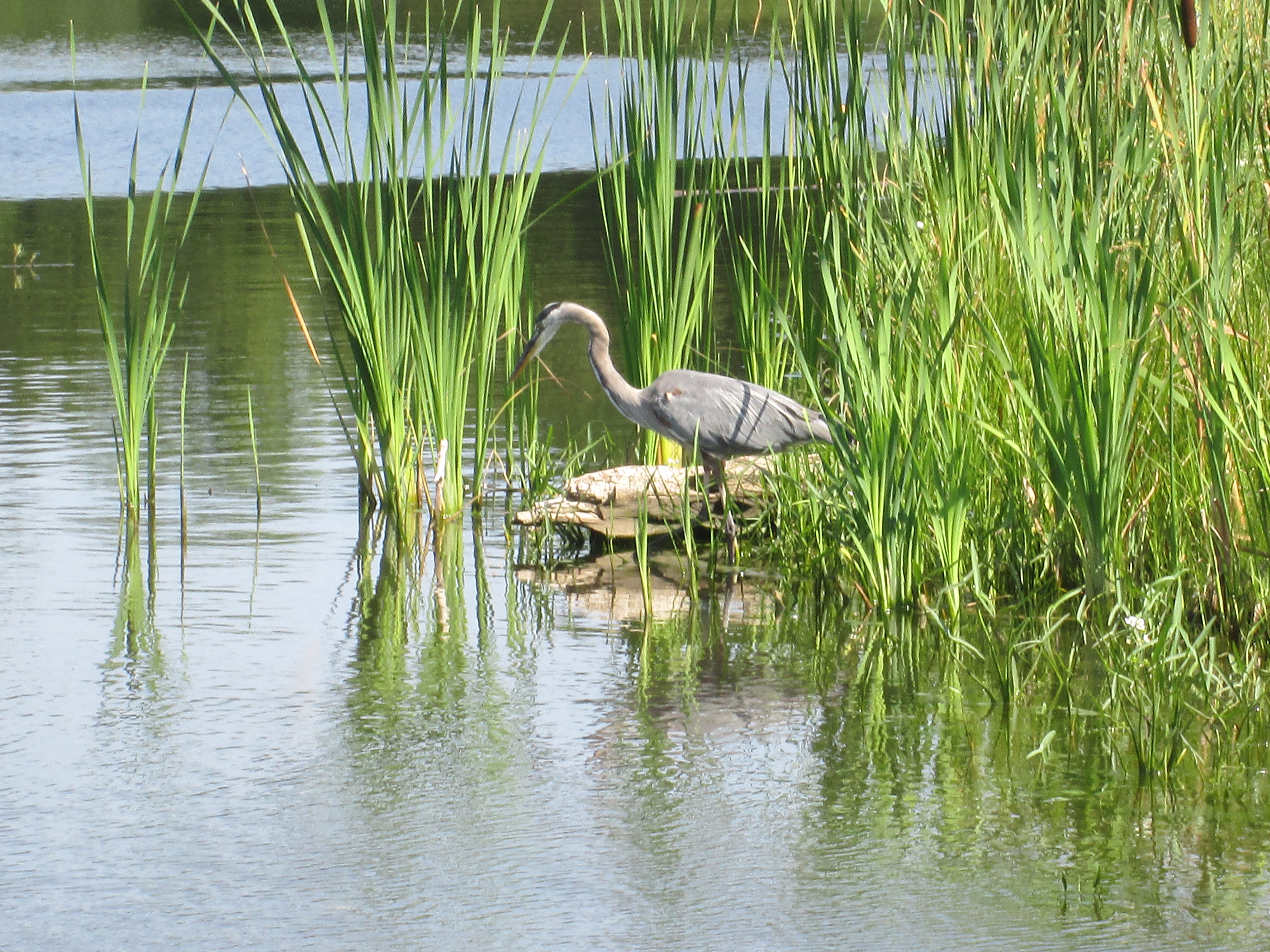
In 2015 we got one of our best Heron photos in Rockwood.

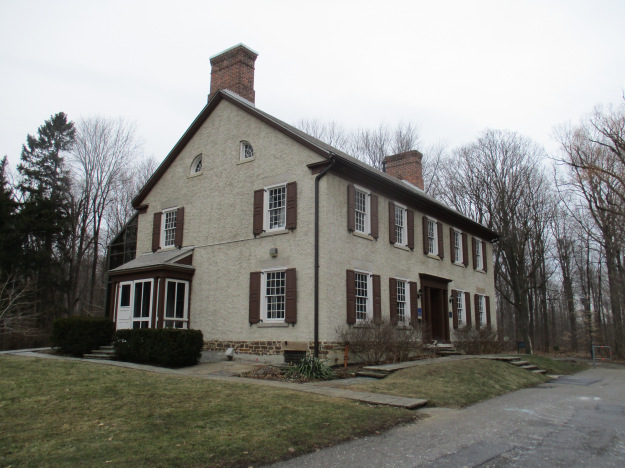
Another 80 stories were published in 2016 and we visited the former estate of Joseph Cawthra in Mississauga. The house survives as an outstanding example of Georgian Revival architecture but the grounds also feature much of the old landscaping including a walled garden and an abandoned pool. The land grant was Lot 10 and so the property became known as Lotten – The Cawthra Estate.

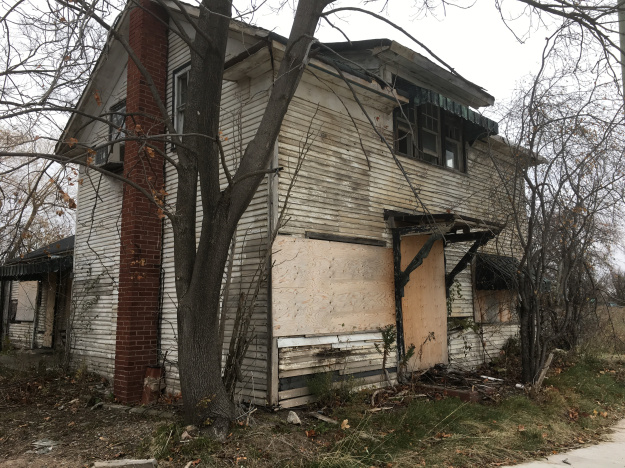
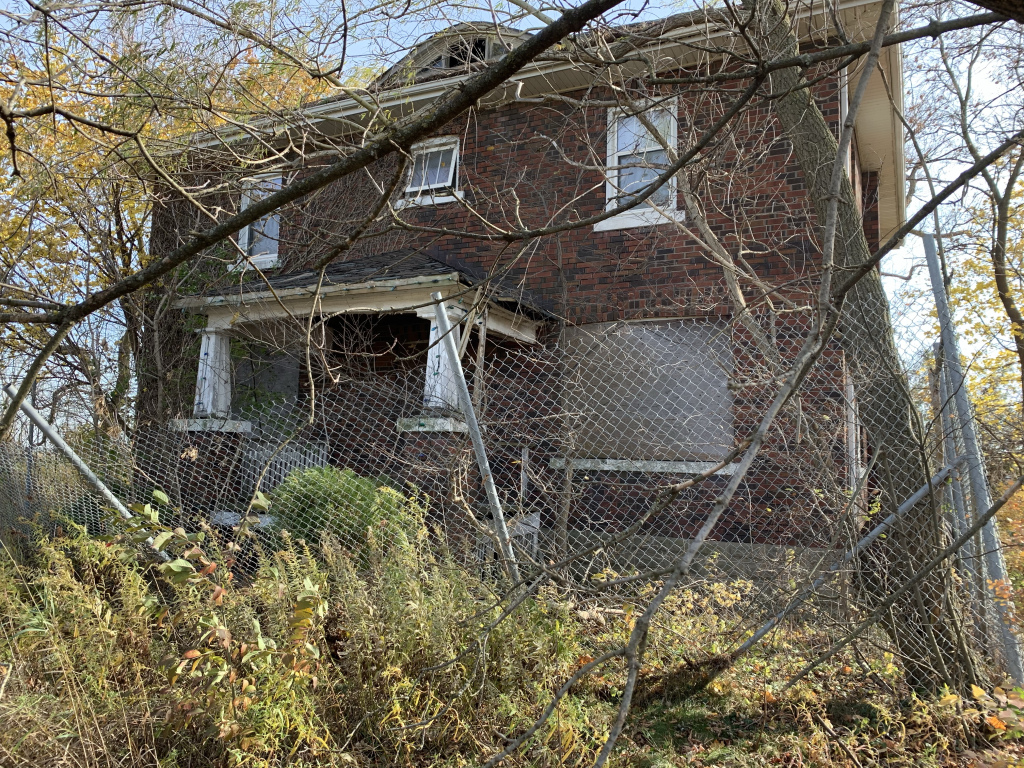
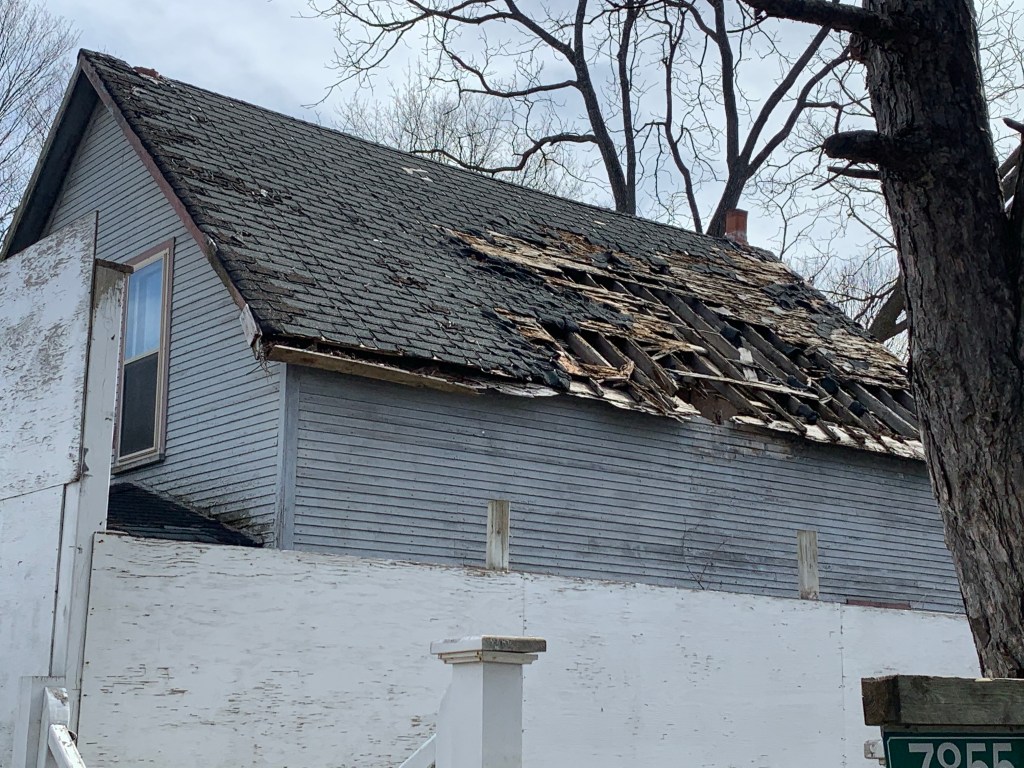
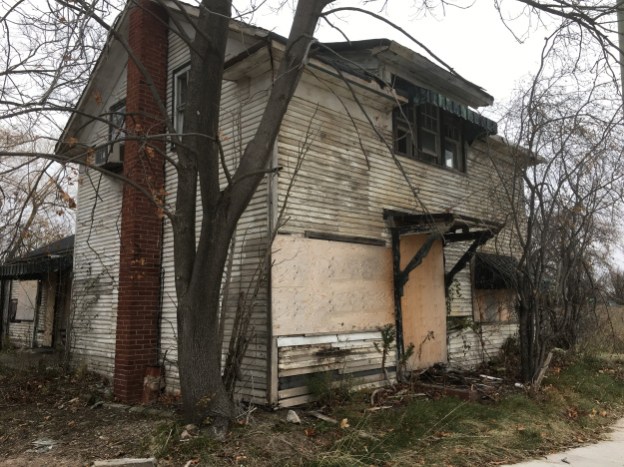
Our love of local history has surfaced in the series of stories called Ghost Towns of the GTA. These feature the remains of historical places and former communities from all over the area. Of the 59 blogs published in 2017 Palermo – Ghost Towns of the GTA was the most popular of all. The final residents of the home below provided a video they took the day they moved out. Quite remarkable.

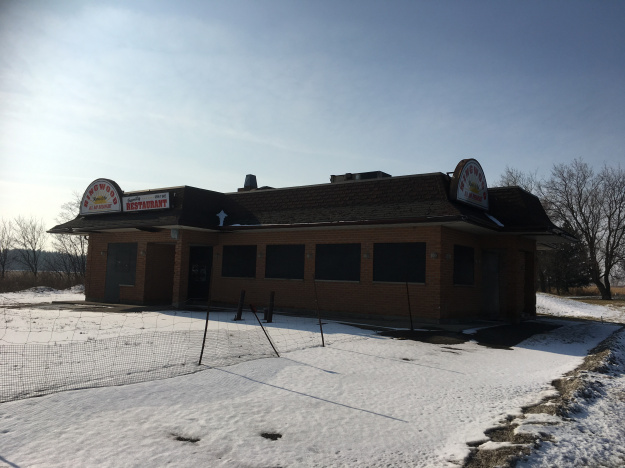
Of the 66 features in 2018 we again had a Ghost Town story finish as the most popular. This time it was from the other end of the GTA in Markham, the former community of Ringwood. Many people remembered passing through there or eating in the diner. Ringwood – Ghost Towns of the GTA features more intact buildings than most of the other former communities we’ve covered.

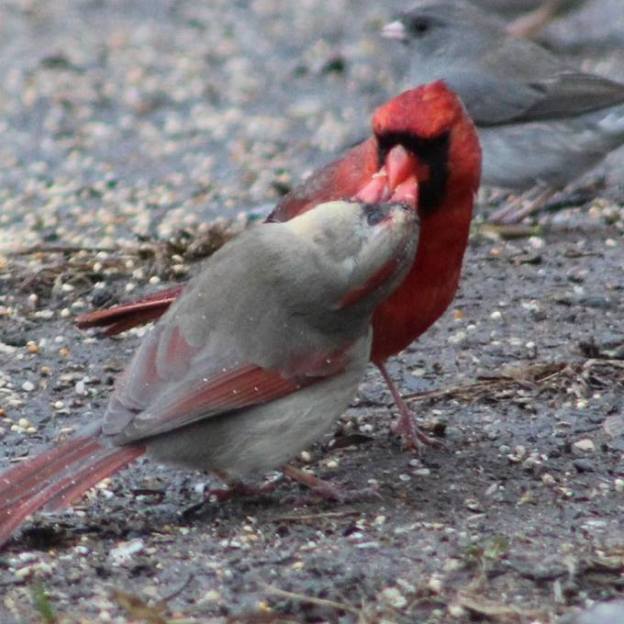
Cardinals have an elaborate mating ritual in which the male feeds the female.

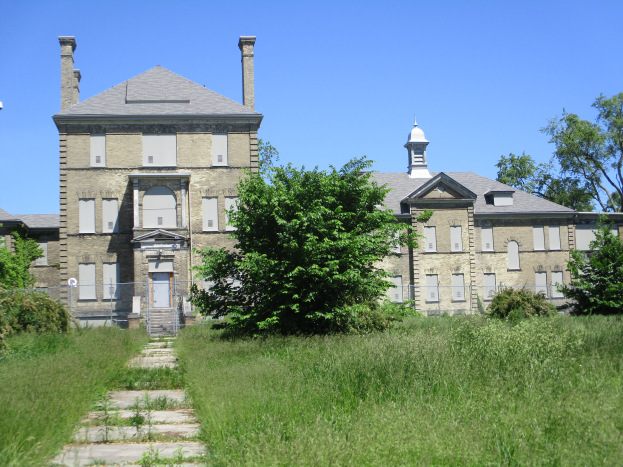
Every year we feature a couple of stories from outside the GTA from as far away as Taiwan. In 2019, for the first time, one of these road trips finished as the most popular post of the year out of the 61 we published. The story of the London Asylum for the Insane features many buildings that won’t likely survive the redevelopment of the property.

In 2019 we had the experience of watching a hawk take a squirrel out of a tree for its dinner.

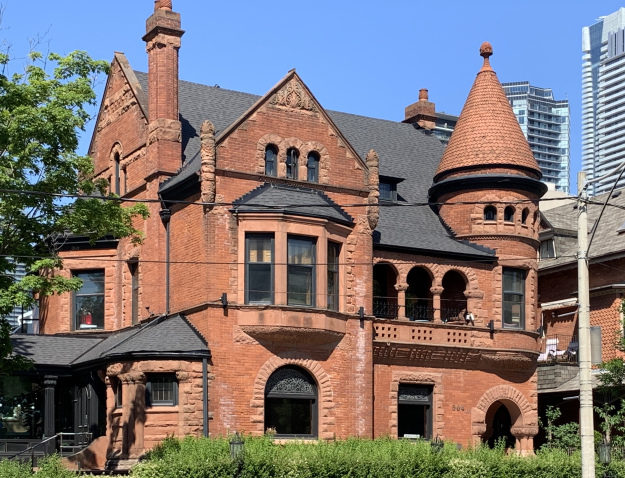
The Covid pandemic has a huge impact on Hiking the GTA during 2020 as we were restricted from travelling for most of the year. We still published 61 stories by looking for creative places to explore near home. A morning walk along Jarvis Street admiring the architecture in the old mansions of one of Toronto’s early wealthy districts produced the most popular story of the year. Gooderham House and The Keg Mansion are both examined in The Mansions of Jarvis Street.

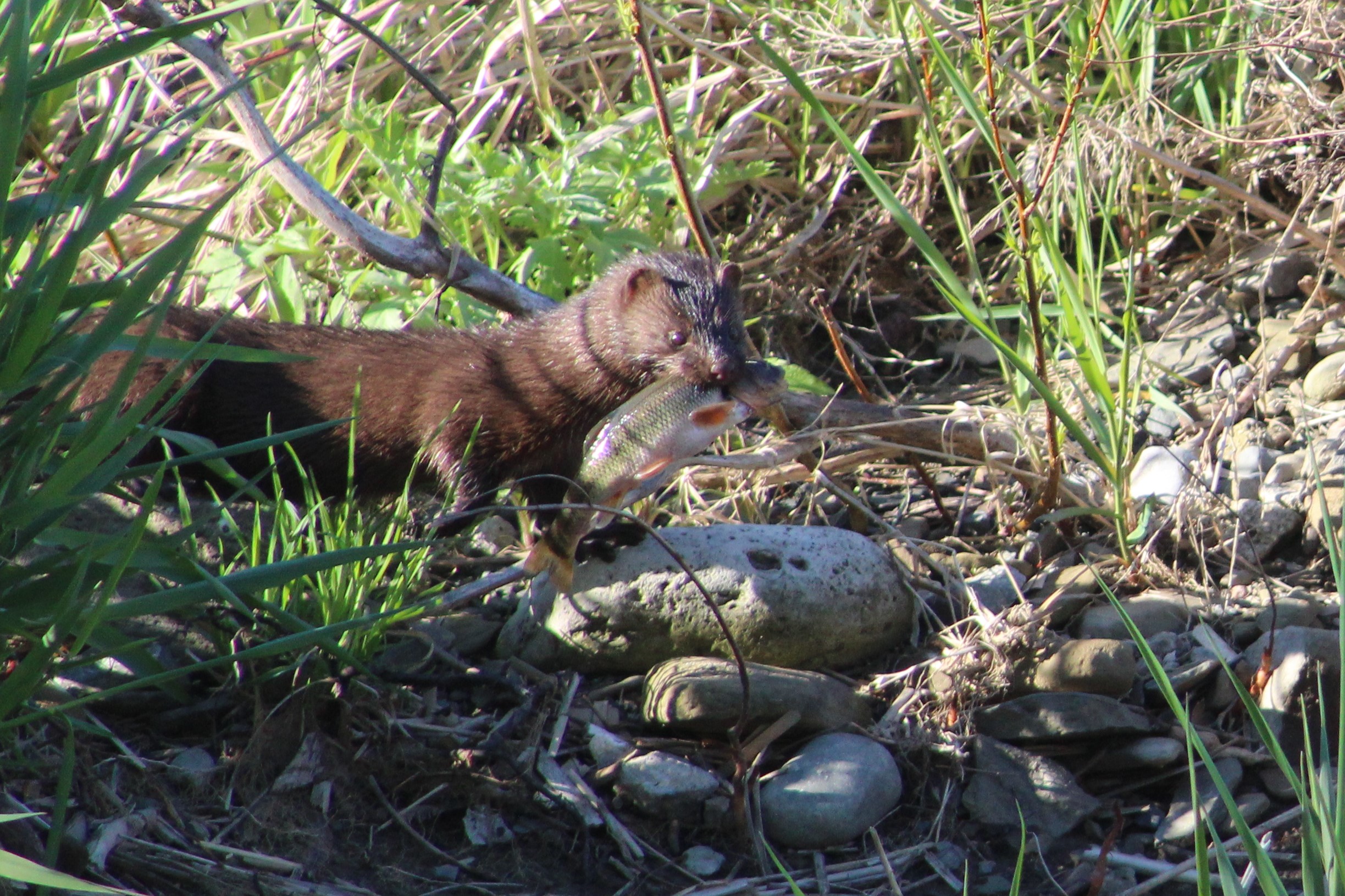
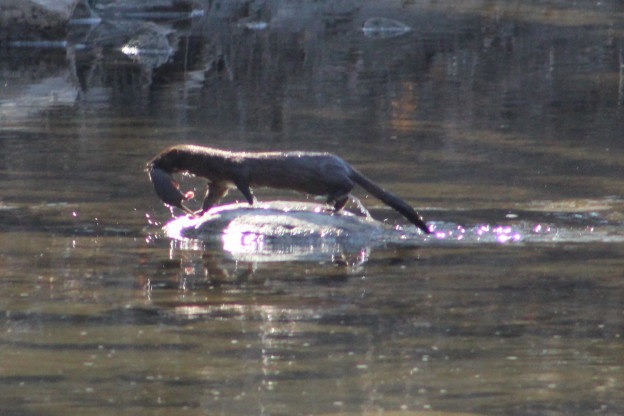
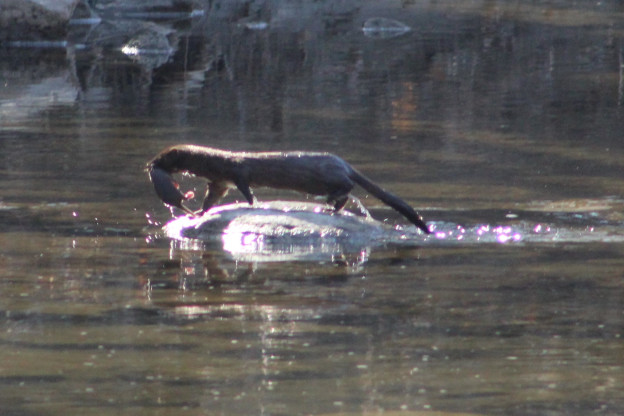
In 2020 while we were visiting some secluded areas we were still able to photograph some interesting wildlife such as this mother mink carrying her kits across Etobicoke Creek.

That brings us to 2021 which is just a third of the way through and has seen 18 new stories published. Covid continues to restrict travel and we’ve been able to publish several stories that were photographed while restrictions were eased last year. The most popular story so far has been about a former community near Milton called Omagh – Ghost Towns of the GTA. Where it stands at the end of the year remains to be seen.

Thanks to everyone who has helped make Hiking the GTA a success over the past seven years and here’s to many future explorations.

Like us at http://www.facebook.com/hikingthegta

Follow us at http://www.hikingthegta.com

Also look for us on Instagram

Log Cabins

April 18, 2021

When a pioneer arrived to start to farm on their new land grant they were faced with a few government requirements. In order to take possession (or hold patent on the land) they had to clear and fence five acres, build a dwelling of at least 16 feet by 20 feet and also open the road allowance that passed along the edge of their property. They had twelve months to complete all this in what was usually 200 acres of solid virgin forest. Fortunately, the means to build the home were gained through the clearing of the land. Therefore most of the first homes were log cabins. Families lived in these homes until they were able to build larger brick homes, sometimes many years and several children later.

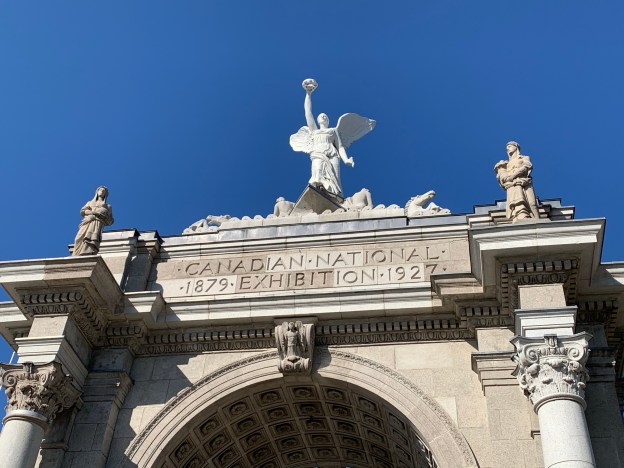
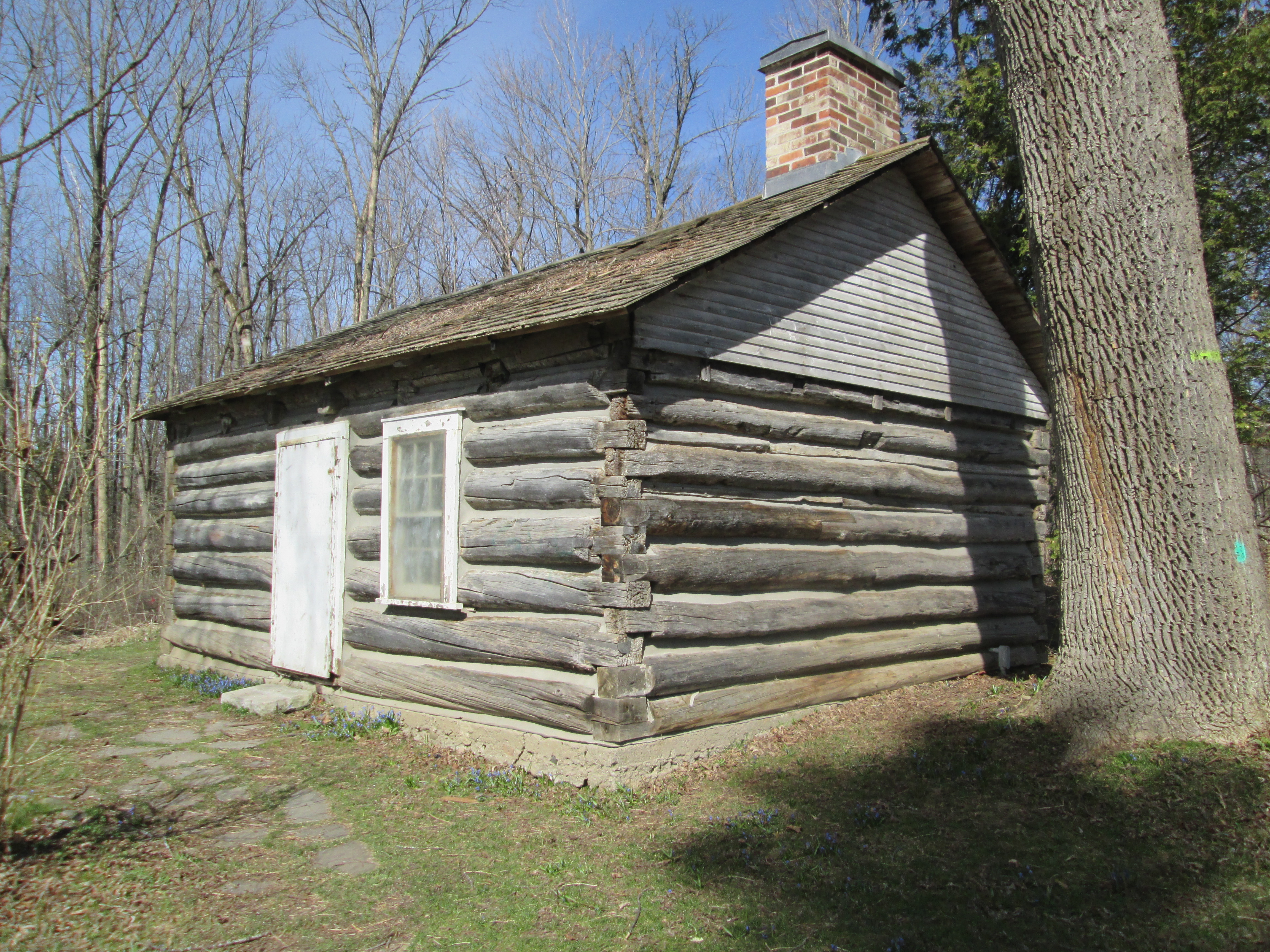
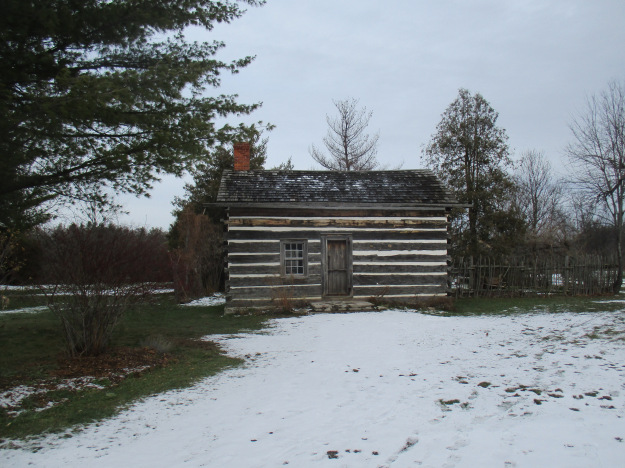
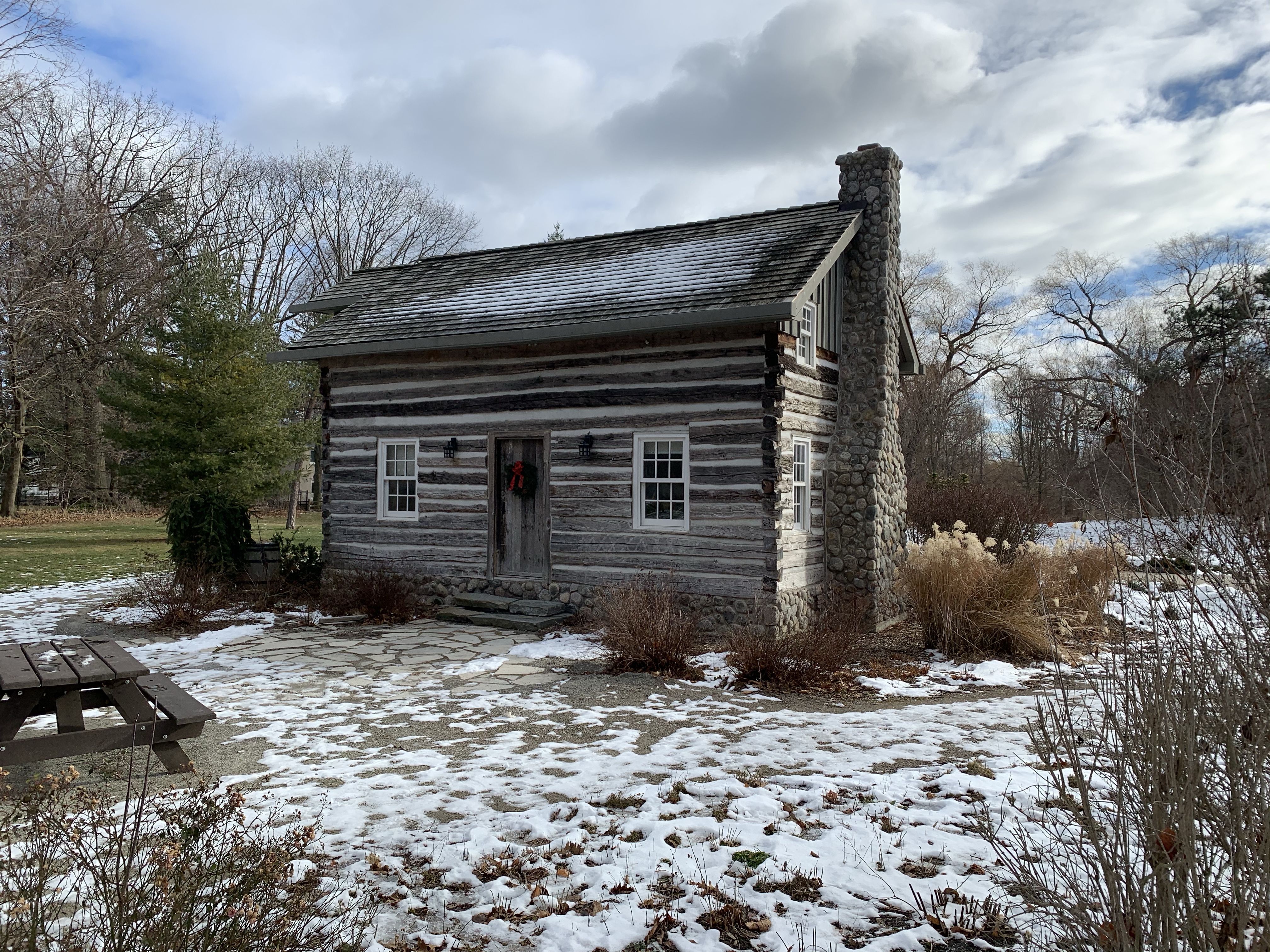
The oldest building in Toronto is one of these original log cabins. It was built in 1794 by John Scadding who owned the land grant on the east side of the Don River between Danforth Road and Lake Ontario. He lived here until 1796 when he returned to England and eventually selling it in 1818. Until 1879 it served as a farm outbuilding and then it was offered to the York Pioneer and Historical Society. They moved the cabin to the site of the first Toronto Industrial Exhibition, now the C.N.E. Scadding Cabin is also featured in the cover photo of this story.

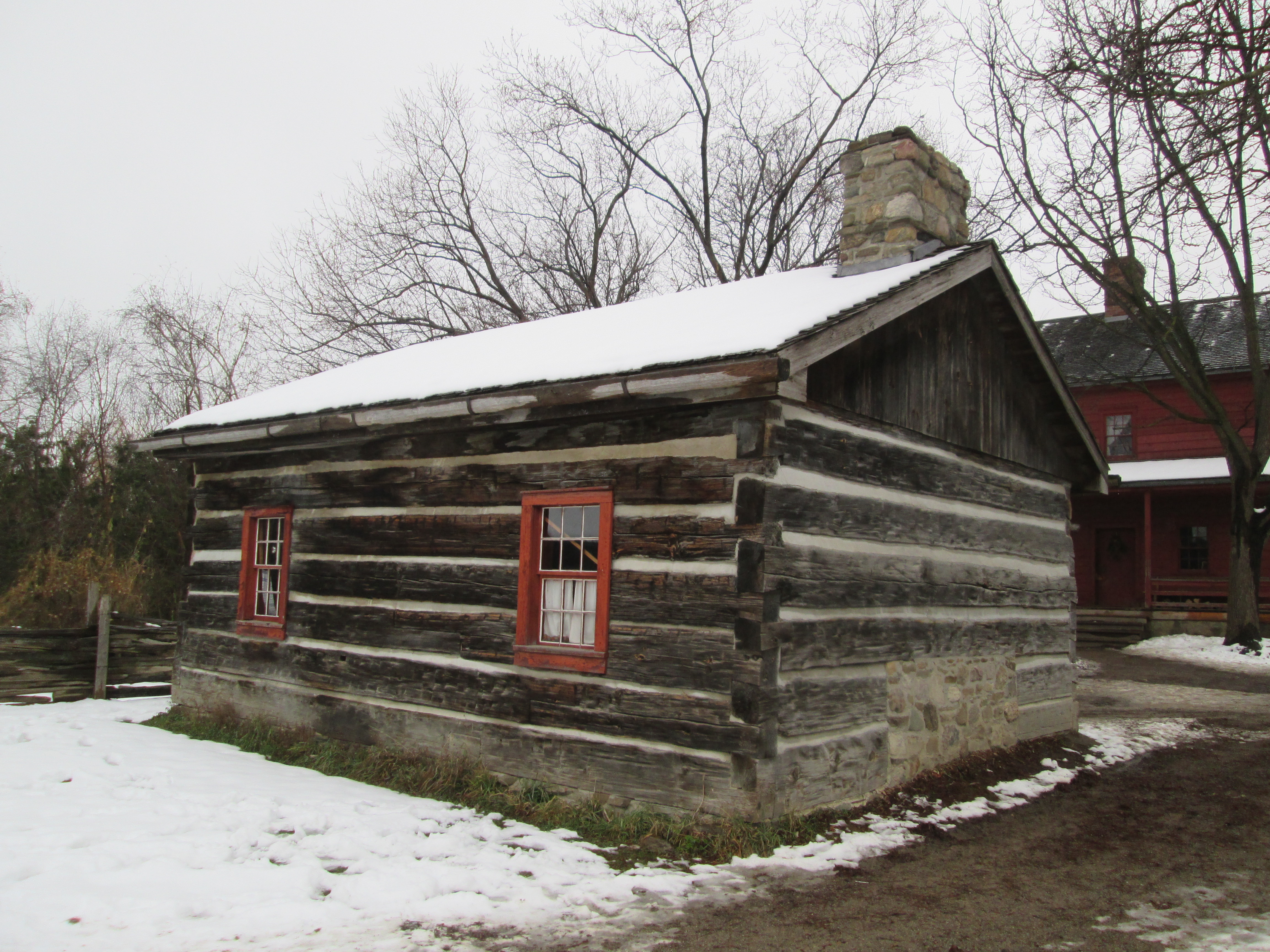
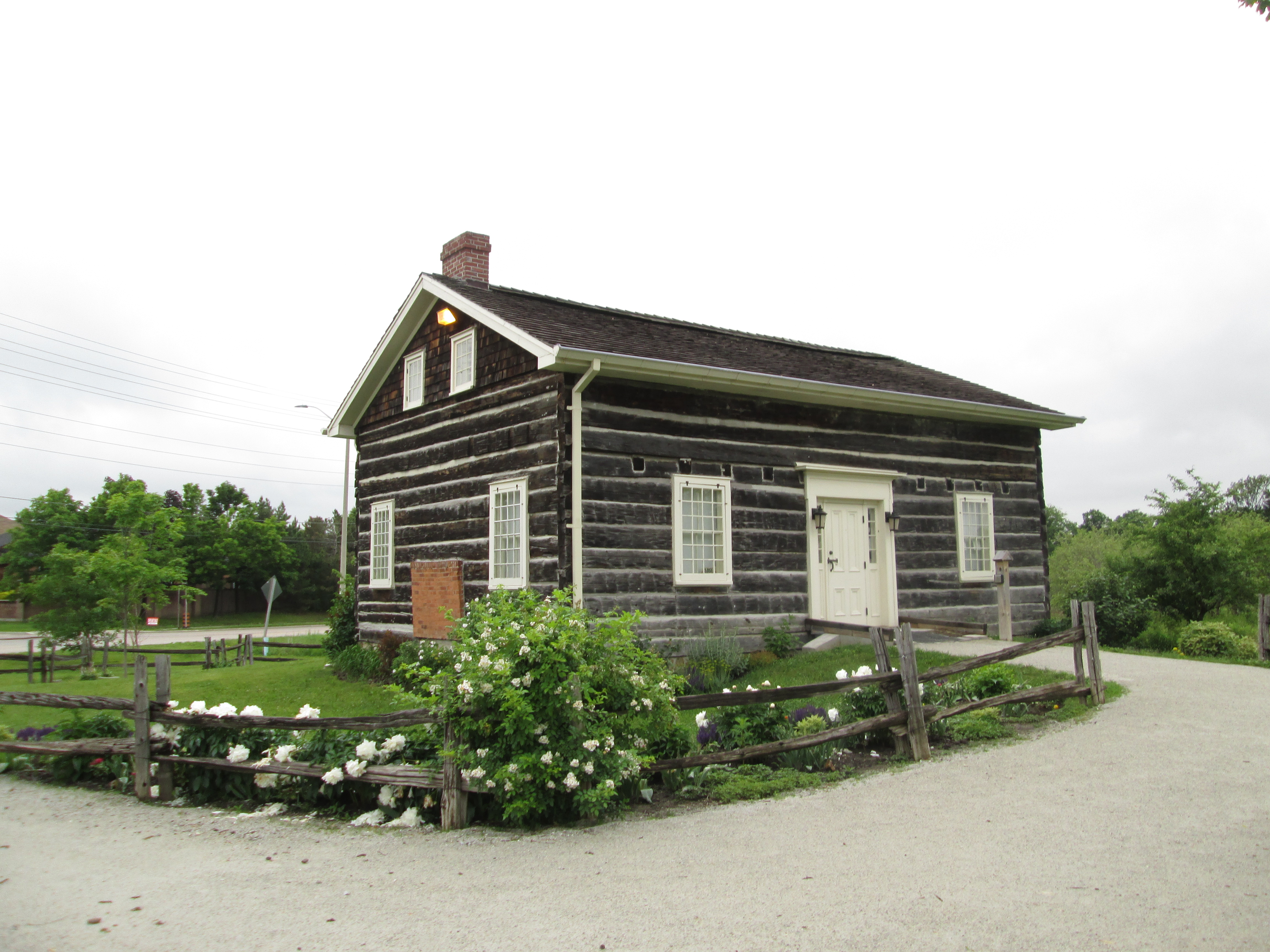
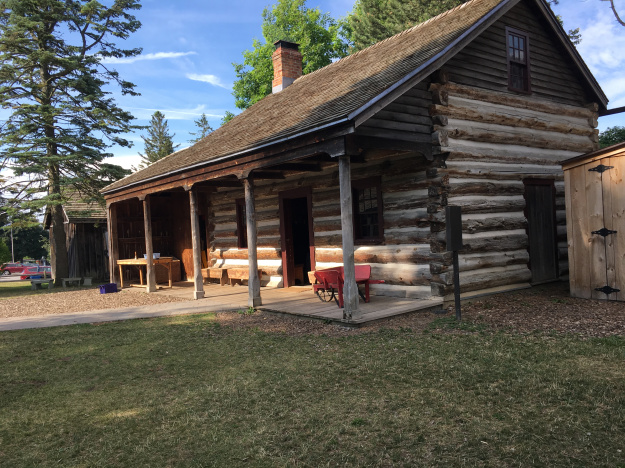
Over the years we’ve presented many other log homes in our stories. Below you’ll find pictures of 16 of them along with a brief description. More details about the homes and their locations can be found in the links presented with each house. The question is, which one is closest to you and when will you check it out?

Augustus Jones originally surveyed Yonge Street and then in 1795 he was commissioned to survey Scarborough township. Augustus Jones House is said to be the oldest house in Scarborough and the second oldest in Toronto dating from 1795.

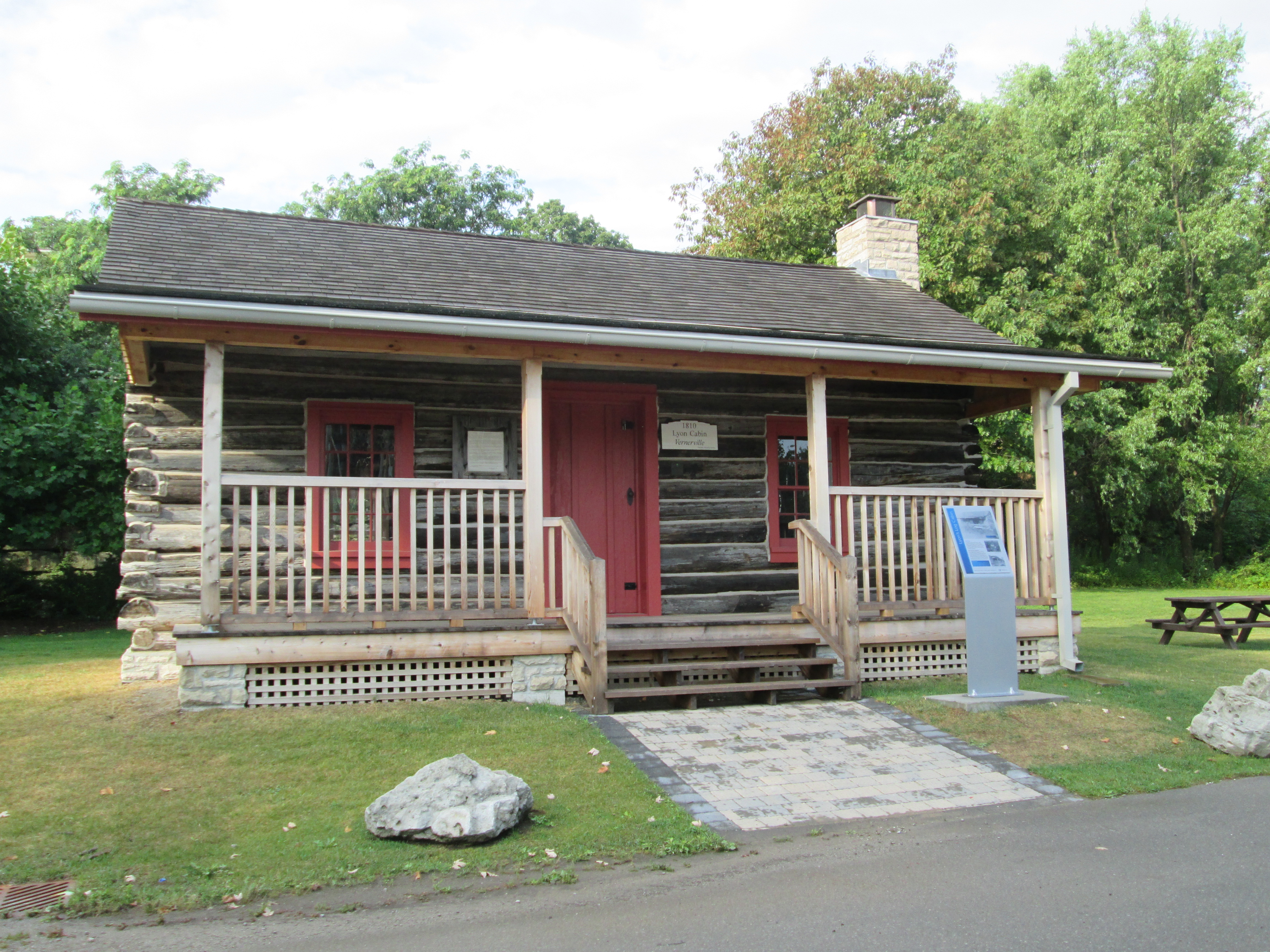
George and Mary Lyon were married in England in 1868 and sailed for Canada that same summer.  They bought 50 acres of land on Trafalgar Road near the Oakville Townhall.  This cabin dates to about 1810 and was already standing on the property when they took possession. The George Lyon home was used to raise a family of 9 children.

Daniel and Elizabeth Stong took possession of their lot in 1816 and built a log cabin where they lived for 16 years and raised 7 children. The Stong Log Cabin stands in its original location where it forms the heart of Black Creek Pioneer Village.

John and Esther Leslie built this log home in 1824 and it was moved to its present location in 1994 to make way for development of the Leslie Farm in Mississauga. The Streetsville Historical Society are the current owners of the Leslie Log Home.

This log cabin was built in 1830 and occupied by a lifelong bachelor named William Porteus McCowan. His family were among the earliest settlers in Scarborough and the McCowan Log Cabin is now part of the collection at Thomson Memorial Park.

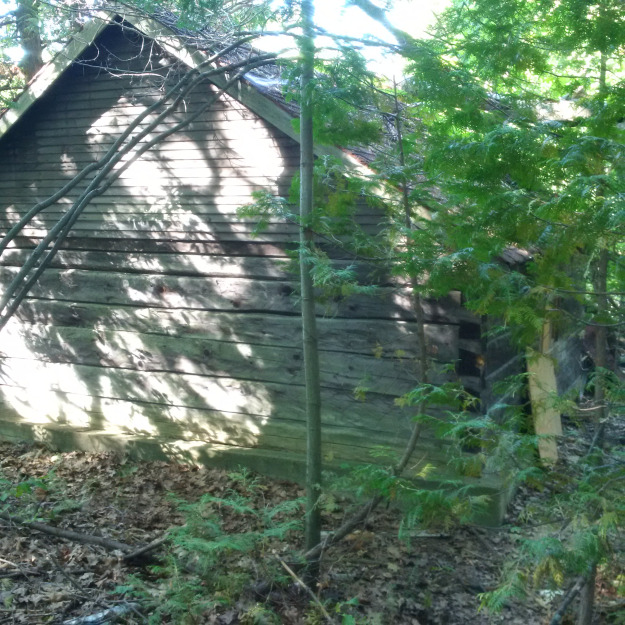
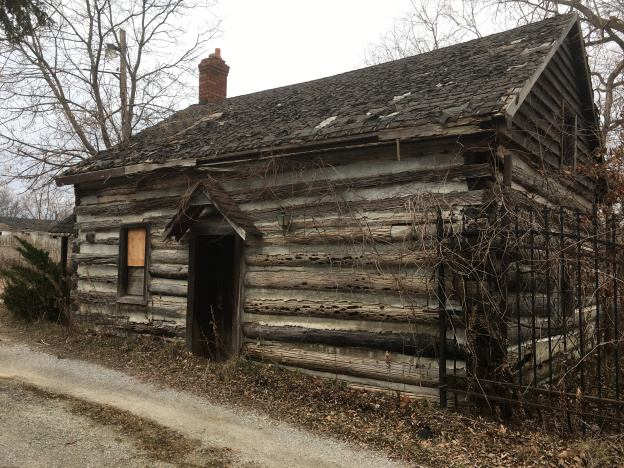
In 1835 George Ludlow and his wife Francis moved to Trafalgar and built this log cabin which stands at the end of Burnhamthorpe Road in Glenorchy. The Ludlow Log Home is certainly in the poorest condition of any in this collection.

The Bradley Museum Log House was built in 1850 near Mono Mills. It was moved to the mouth of The Credit River in 1967 where it again faced demolition. It has been a working building at Bradley House Museum since 2007.

The Erindale Log Home was built in 1855 and moved to its present location on Jarvis Street in the 1970’s where it continues to serve as a private residence.

There’s also a half-dozen log homes that we’ve visited that are not dated and many of them are no longer in their original locations.

The Halton Region Museum has an interesting log home because it has a front gable with a small window. This would have made this home much better lit inside than the average log cabin.

The Rotary Club of Don Mills moved this pioneer home to Sunnybrook Park and dedicated it on July 16, 1975 to the people of Toronto. The dedication plaque quotes John Milton from Paradise Lost “Accuse Not Nature, She Hath Done Her Part, Do Thou But Thine.”

The log cabin at Marylake has had some additions to each end as well as a small entry porch.

The Puterbaugh Log House has been moved from its original location in Maple and now is preserved in the Pickering Museum Village. It originally had a second floor as evidenced in the row of log ends that runs just above the door. These would have supported the floor for the upper level.

The Frank Robson Log House is noted for the large timbers used in construction. It was restored in 1929 when it was still a cabin in the woods outside of the town of Maple.

A house similar to the original Ball Log Cabin home is now being used to display the typical lifestyle of a settler and a spinning wheel can be seen through the window. This one is a little outside the GTA at Ball’s Falls.

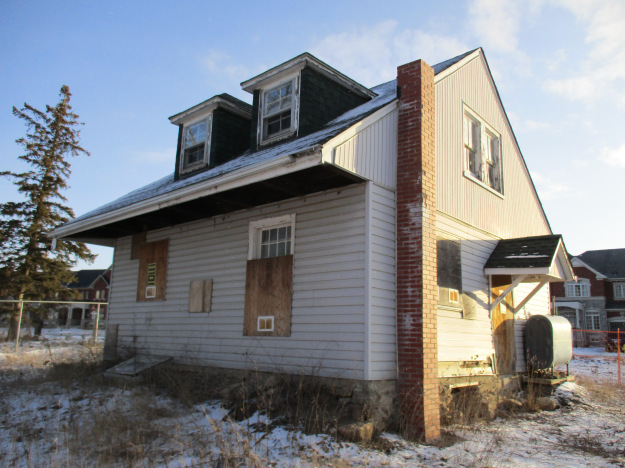
Many log cabins were hidden behind a veneer of bricks, wood siding, shingles and later even insulbrick in an attempt to make them look more modern and help to insulate them against the winter. One feature of these homes which helps to identify them is the window structure. There will never be a window that passes between a main floor and an end gable. This is because the upper logs are required to be intact for building stability. The Philip Echkardt Log house in Unionville has been covered in siding. It is said to have been built around 1800 and is the oldest home in the Markham Heritage Inventory. In the 5 years since the picture below was taken, the siding and two roof dormers have been removed and the house restored.

There’s also a new group of log cabins that have nothing to do with pioneers or land clearing. They stem from a sense of nostalgia, perhaps mistakenly thinking they represent a simpler time . In 1936 Robert Clifford and Edith Gamble built a cottage on Bond Lake which is one of these.

Log cabins let us quickly imagine the lives of the pioneers and the harsh conditions they had to endure. In a society where developers are king and historical designations are almost meaningless we’re fortunate to still have several of these relics scattered throughout the GTA and surrounding areas.

Google Maps link: Scadding Cabin

Like us at http://www.facebook.com/hikingthegta

Follow us at http://www.hiingthegta.com

Also look for us on Instagram

L’Amoreaux – Ghost Towns of the GTA

Sunday, April 11, 2021

The farming community of L’Amoreaux developed along Finch Avenue after it was founded in 1816 by a French Huguenot family of that name. It never gained much in population but it served a large number of farms in the area. There are still a few original houses as well as an early church and the well known Zion Schoolhouse.

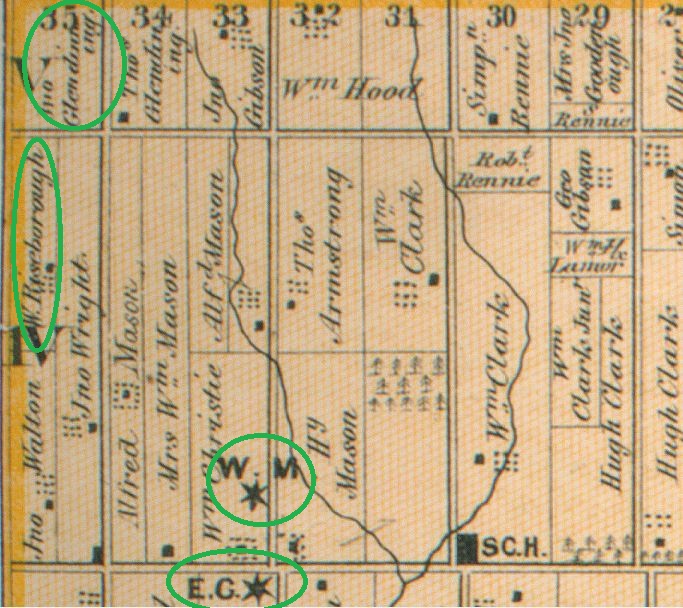
With the ongoing lockdown restricting travel I chose this location to investigate because it could be reached on my lunch from work. I’ve included two County Atlas images which each show the points of interest on their respective sides of Highway 404. The map below shows the Scarborough side of town with two houses marked as well as the cemeteries for the Wesleyan Methodists and the English Church (Anglican).

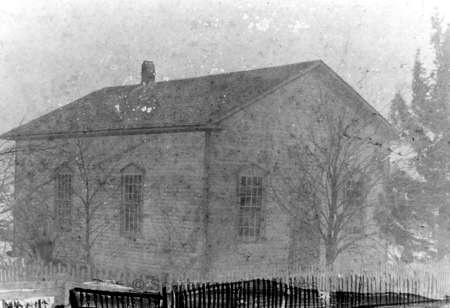
Christie’s Wesleyan Methodist church stood where the parking lot for Bridlewood Mall is today. This historic picture from around 1896 was found on the Scarborough Historical Society web site. The congregation formed in 1846 and lasted until it was absorbed into the United Church of Canada in 1925. The building was moved to Buttonville in 1938 leaving the cemetery beside it stranded in a field.

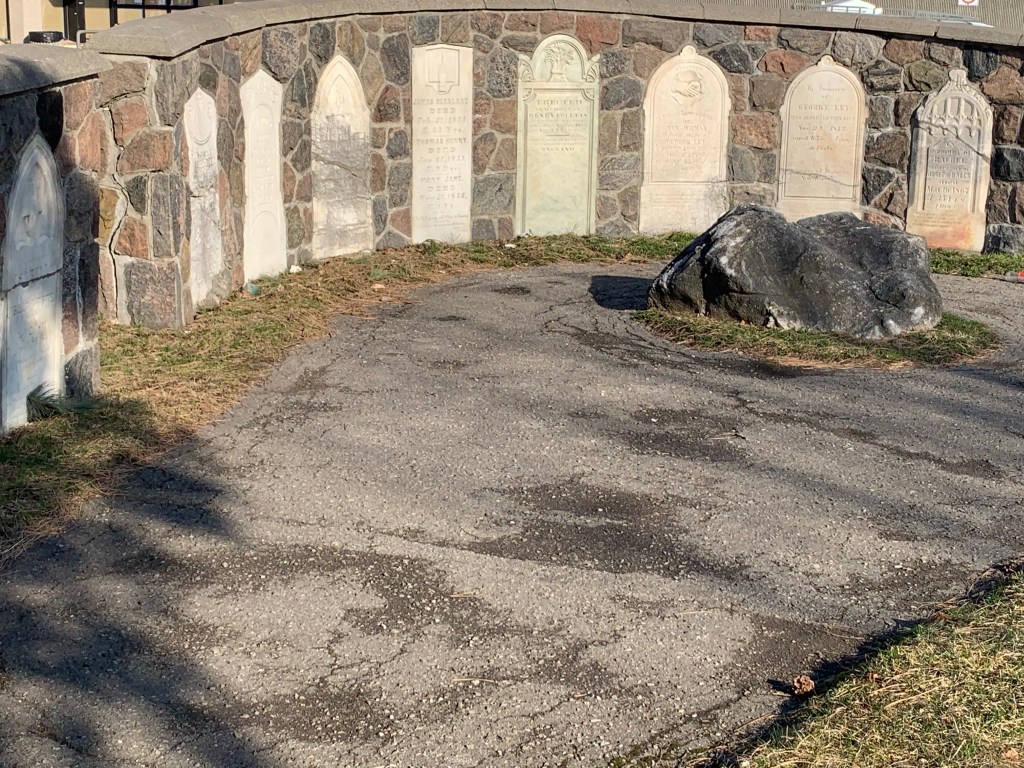
A cemetery was opened on Isaac Christie’s lot beside the church with the first burial coming after Permelia Roy passed away on January 10, 1849. The cemetery was closed in the 1930’s and in 1975 was incorporated into a little memorial garden in the mall parking lot. Unfortunately, I noticed that there has been some recent vandalism and at least one stone has been knocked over. There’s around 100 people interred in what is perhaps one of the least sedate of cemeteries in the city.

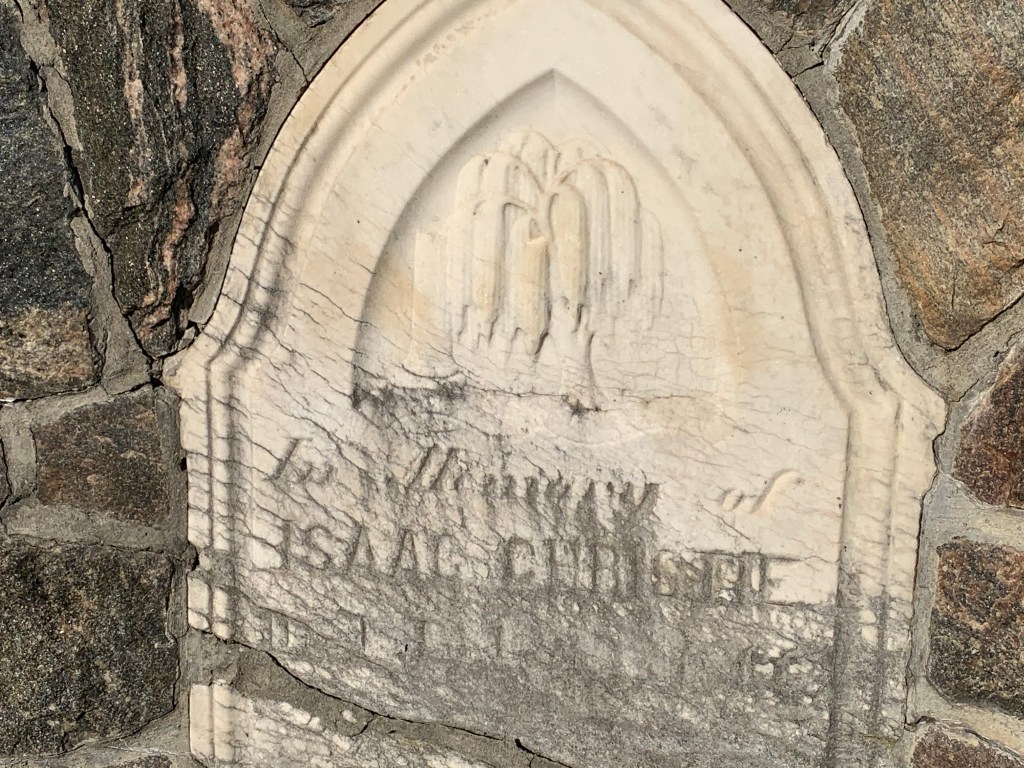
Isaac Christie along with Isabella Graeme bought lot 33 in Concession 4 in 1836 after emigrating from Ireland. Both are buried in the little cemetery on their farm and their grave markers have been incorporated into a wall for preservation. Several later marble stones still stand throughout the little garden.

Anglican church services were held in the L’Amoreaux log school from 1832 until 1840. A small frame church was dedicated in 1841 and served the community until 1935 when it was destroyed by a fire. The congregation temporarily moved into the Christie Methodist Church and in 1937 began work on a new building. When the city expanded to swallow the little community, they found their building was too small. A new church including senior apartments, seen in the background of the picture below, was dedicated in 1978. After that, the 1937 church was demolished.

Glendinning House was built in 1870 and originally faced onto Pharmacy Avenue when it was a working farm house. It mixes several different architectural styles into what is commonly referred to as Upper Canadian Vernacular. It blends Gothic, Georgian and Victorian traditions which likely marks the various additions that the family made to the home as more room was needed. The house was designated as having historical and architectural value and a notice was served to the developers that they had to incorporate it into the subdivision that was planned for the farm.

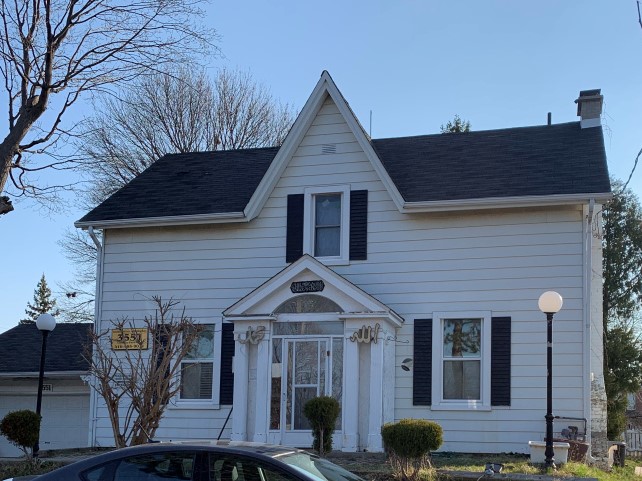
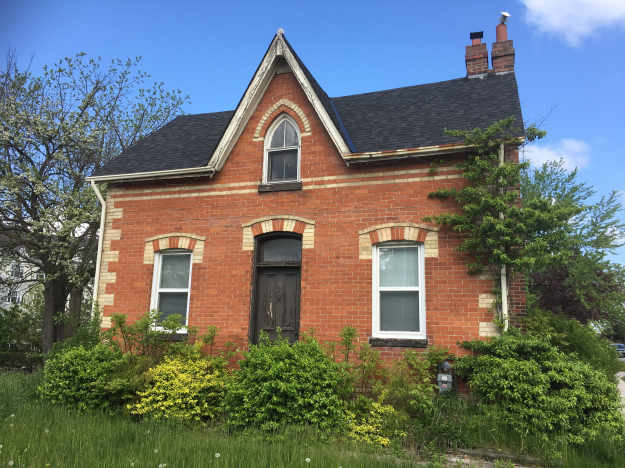
The Risebrough house was built around 1860 in the common one and a half story design with a gable and window over the front door. The original cladding has been covered over with aluminum siding but it is believed that the rear kitchen may be the original home. It is currently being used by an Islamic congregation who might lose the right to use the building for religions ceremonies due to problems with parking.

Half of L’Amoreaux was in Scarborough Township and the other part in North York. The three places of interest from the west end of town are circled in green on the County Atlas below. These are the Primitive Methodist Church, Zion School and the property of Sam Kennedy.

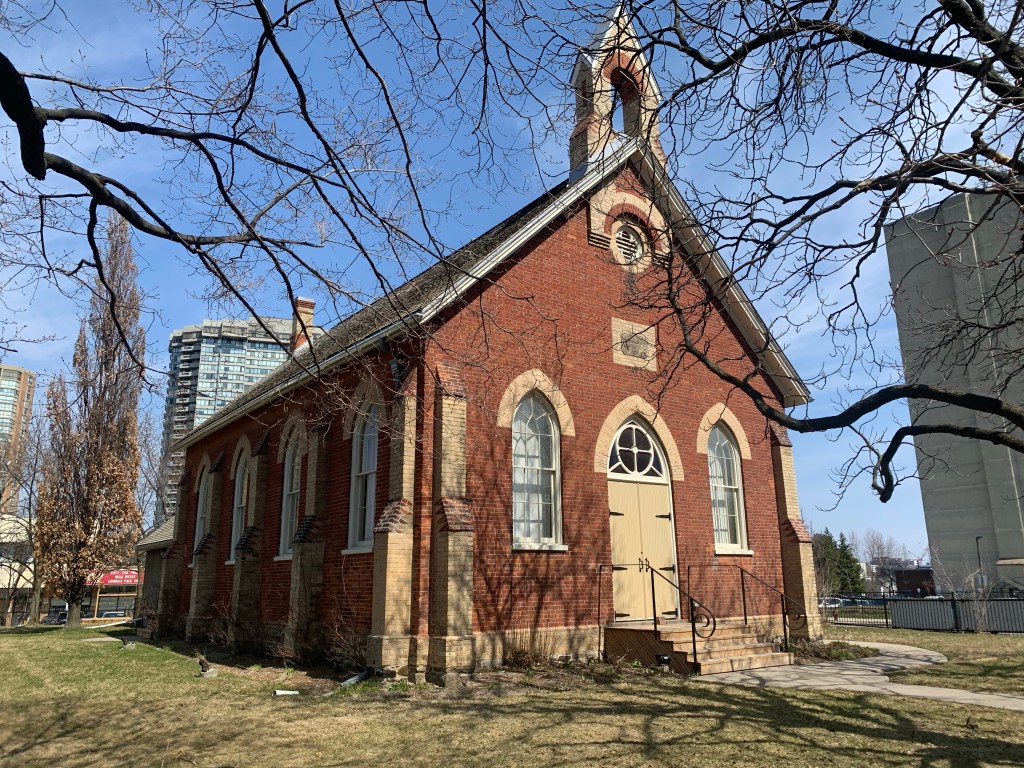
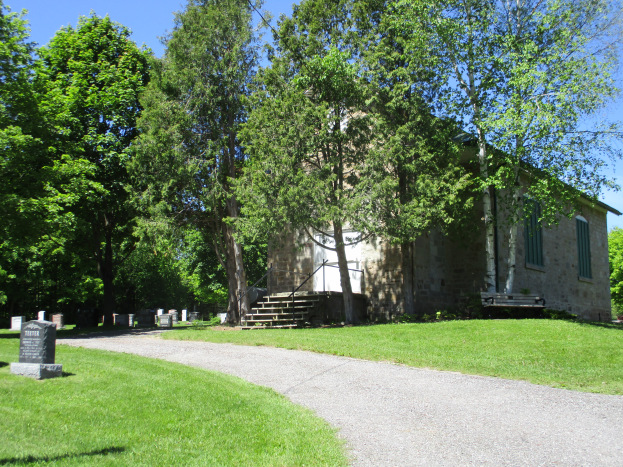
The Primitive Methodists built their church on the west end of town and replaced it in 1873 with this buttressed brick building with simple gothic revival accents around the windows. The church is still known as the Zion Methodist Church although it ceased that function many years ago. The building was empty in 1971 when the city acquired it to be used as a community event space.

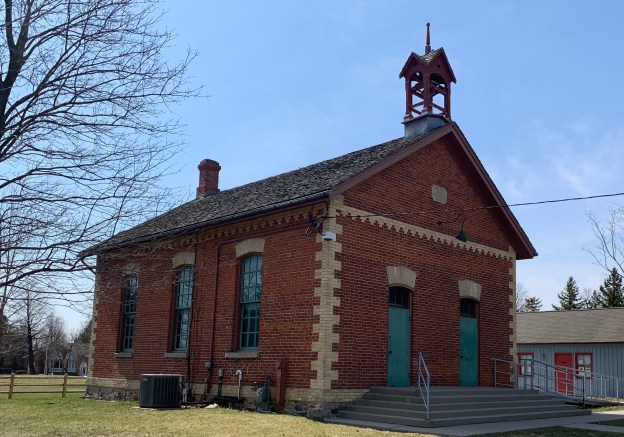
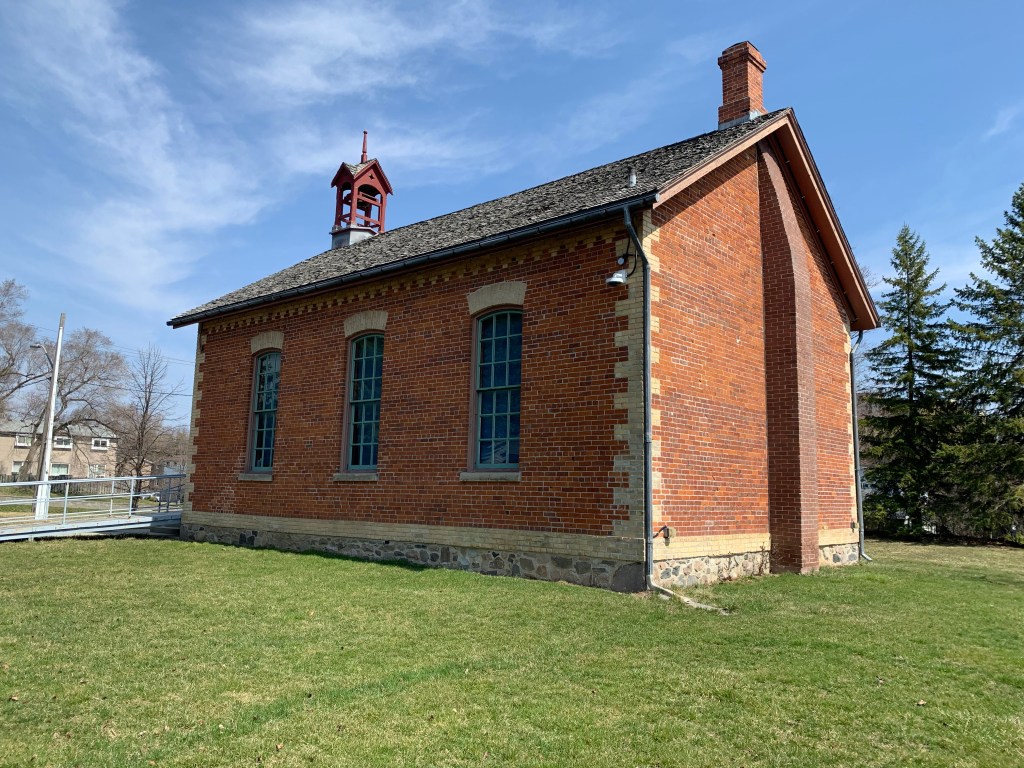
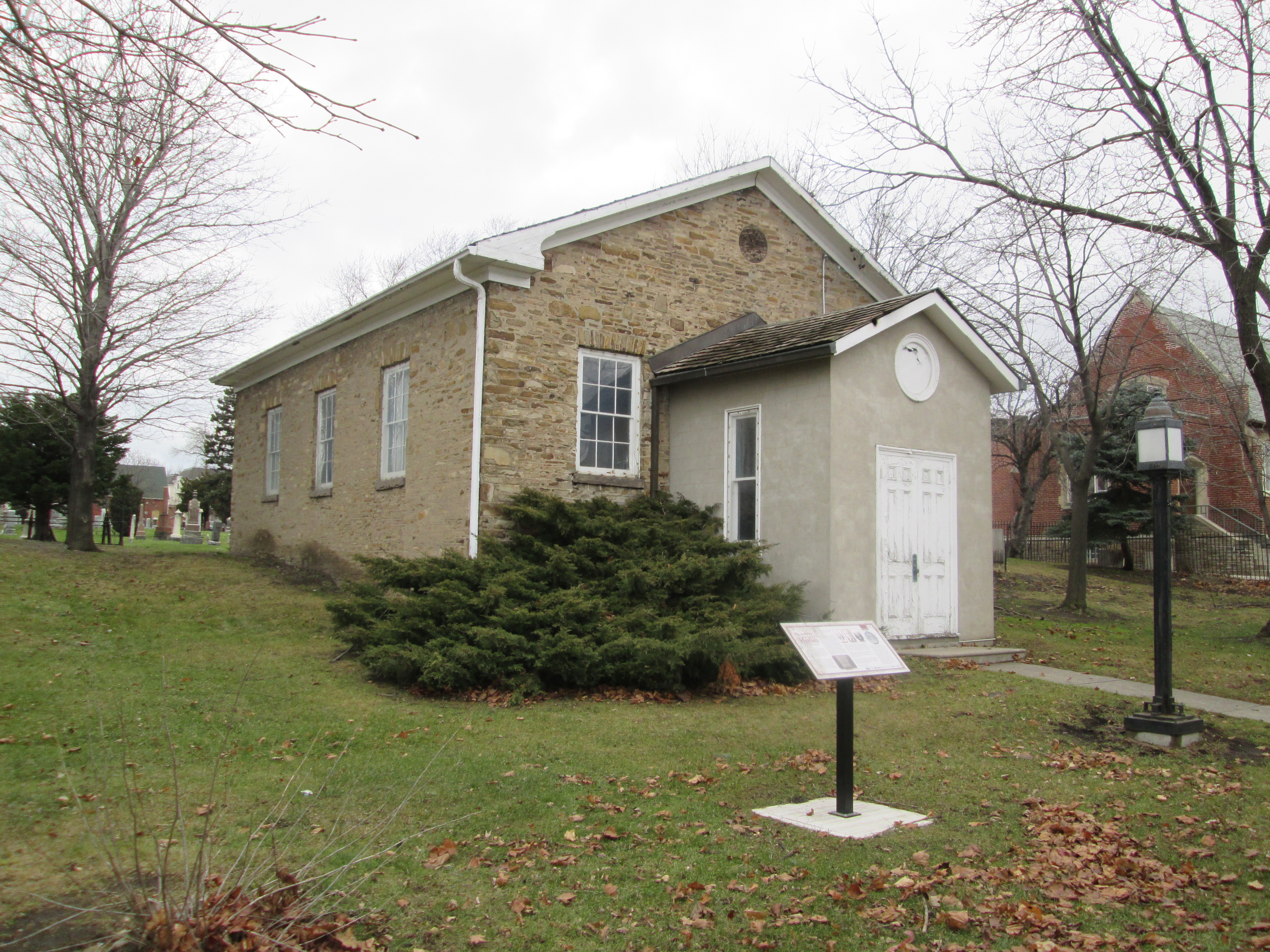
School section #1 was on the east end of L’Amoreaux and was part of the Scarborough School system while School Section # 12 was on the North York end of town. The cover photo shows the front side of this 1869 building which replaced an earlier school from the 1830’s. The school closed in 1955 and was little altered during its years of teaching. One obvious addition is at the back of the school building where a new chimney was added against the wall when the wood stove was replaced with a furnace for heating. The school sat empty for three decades before it was restored in 1986 and opened as a museum showcasing school in 1910. This is the only one room school in North York that is still in its original location and hasn’t been converted to a residence.

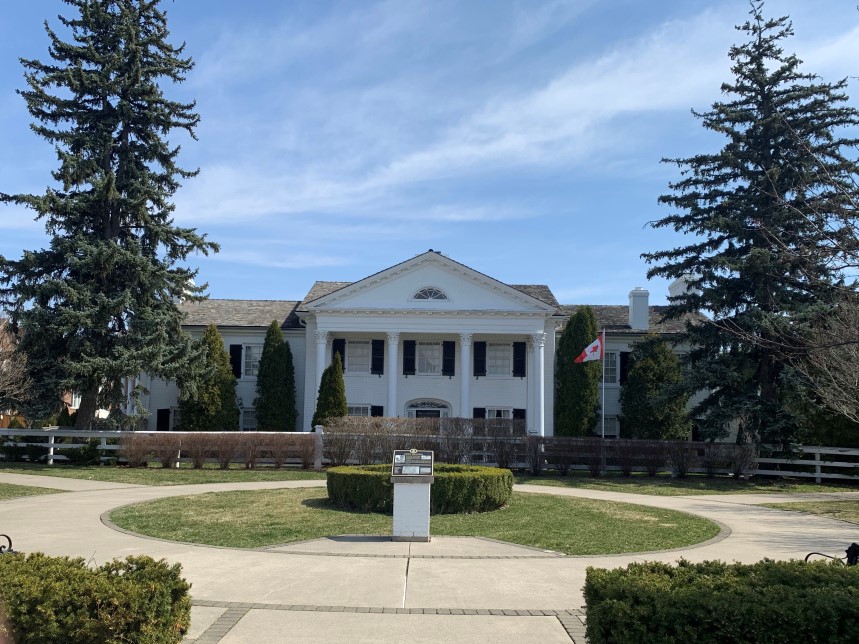
Green Meadows was built as an estate house for John Angus McDougald who made his fortune in the world of high finance. The estate was built in 1950 when the surrounding area was all still in use for farming. Like many of the large estates of the wealthy that were built in the early to mid-20th century this one was set up for horses and various equestrian pursuits such as fox hunting. In spite of its recent construction, the house has been listed for heritage purposes as an example of a country estate.

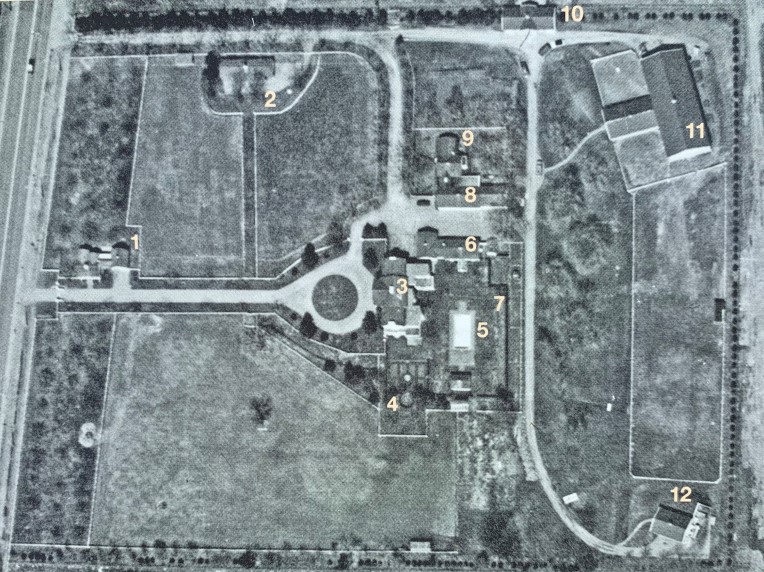
This aerial picture from 1971 shows the outbuildings that survived the onslaught of development on the neighbouring farms and all but 19 acres of Green Meadows. The last 19 acres was sold for development after 1996. All the out buildings were removed and houses built surrounding the mansion.

The former community of L’Amoreaux is remembered in these few buildings and there’s also a park system that looks like it should be explored at some time in the near future.

Google Maps Link: Zion Schoolhouse

Like us at http://www.facebook.com/hikingthegta

Follow us at http://www.hikingthegta.com

Also look for us on Instagram

The Reesors – Pioneers of the GTA

Sunday, April 4, 2021

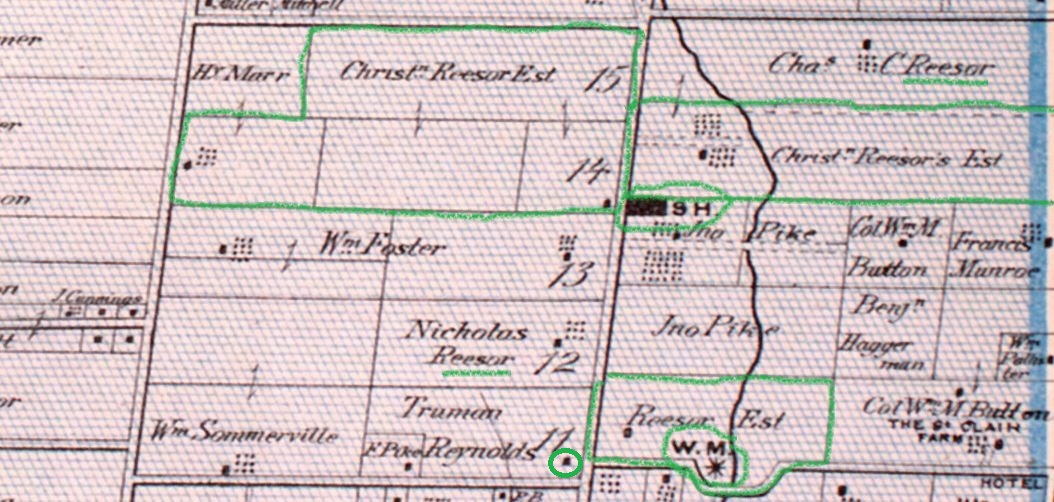
Christian Reesor was born in Pennsylvania in 1747 to Anabaptist Mennonite parents who had landed in the New World in 1739. The family had moved to Pennsylvania for the promise of free land to escape religious persecution. Their pacifist faith didn’t allow them to bear arms and so they were neutral during the American Revolution. A new type of persecution followed and soon Christian planned to move to York County. He sent his son Peter to evaluate the area for suitable farms. Then, he waited until his father had passed away at 91 before finally leaving the USA. In 1804 he settled on Lot 14, Concession 10 in Markham Township and by 1877 the family owned considerable land on the west side of the tenth line. The school, the Reynolds house and the Wesleyan Methodist Church are all circled.

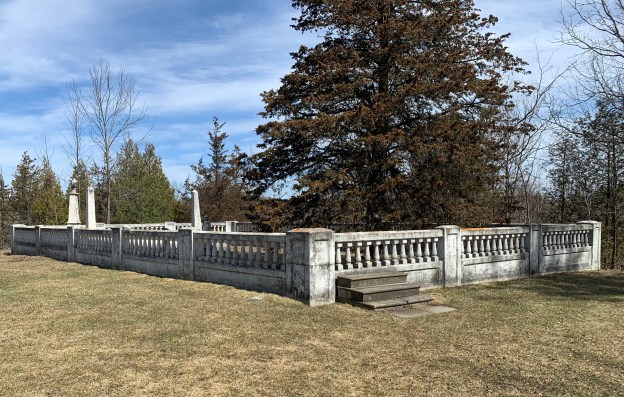
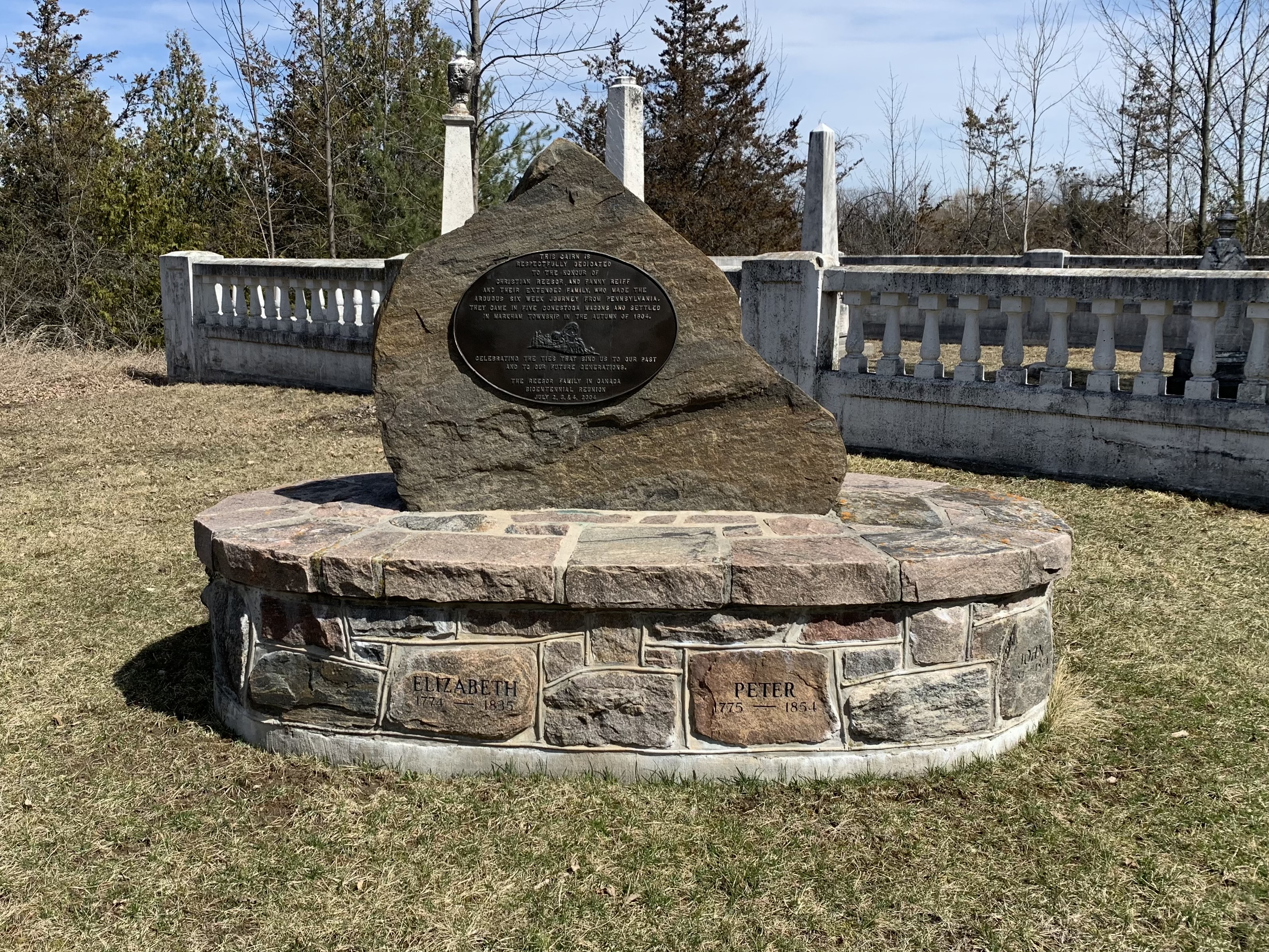
Sadly, Christian was killed on March 26, 1806 when they were still chopping trees to clear the land. A tree fell on him and he died almost instantly. He was laid to rest in small section of the family farm. When his wife Fanny passed away on the 10th of October 1818 she was buried in the same small family plot. Please note that this cemetery is on private land and I approached with the utmost respect for the family and their preserved history. Please respect it as well and enjoy it through the cover photo and this picture and avoid the temptation to visit in person. The small plaque on the stone was placed there during a three day family reunion in 2004 to mark the 200th anniversary of their shared heritage in Canada.

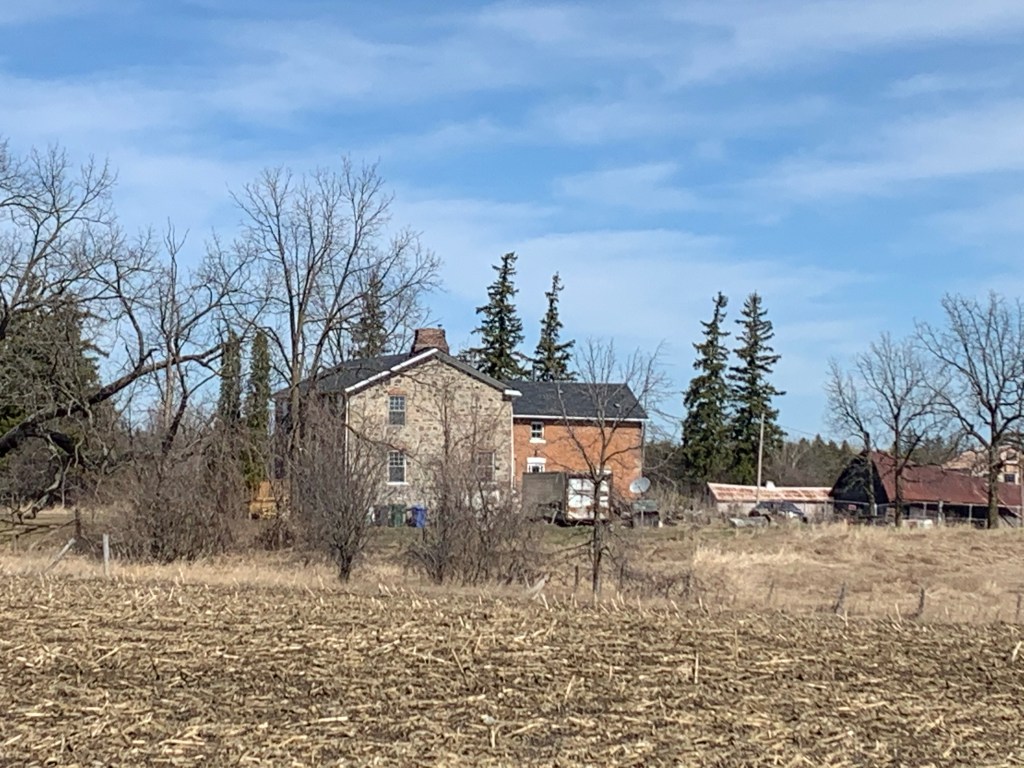
The original crown patent on Lot 10 was granted in 1801 to Isaac Westbrook who sold it to Christian Reesor in 1804. When he passed away in 1806 it went to his eldest son Peter. When he prepared to move to Cedar Grove, Peter transferred the property to his younger brother Christian. This was the Christian Reesor who in 1840 built the stone house that still stands on the property. There are also a number barns and out buildings on the property including a sawmill and a carding mill.

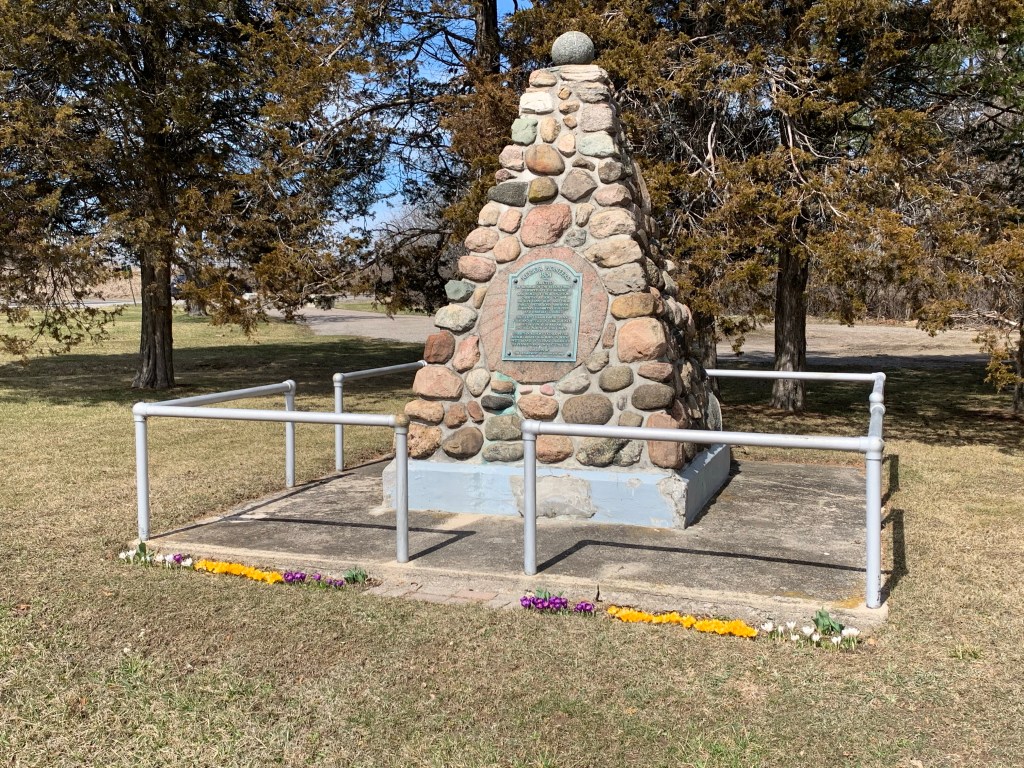
I really admire the Reesor family and their dedication to preserving and enjoying their family history. They have gone to great lengths to trace their family tree and contact as many of them as possible. The bicentennial plaque that we saw near the original family cemetery isn’t the only one that has been placed in the area. At the corner of Highway 7 and Reesor Road is a cairn that was placed there in 1930 to honour Christian and Fanny and their children. This came two years after the first publication of the family genealogy. They have kept the genealogy going and updated it in 1934, 1950, 1980 and 2000 before going digital for the 2004 bicentennial family gathering.

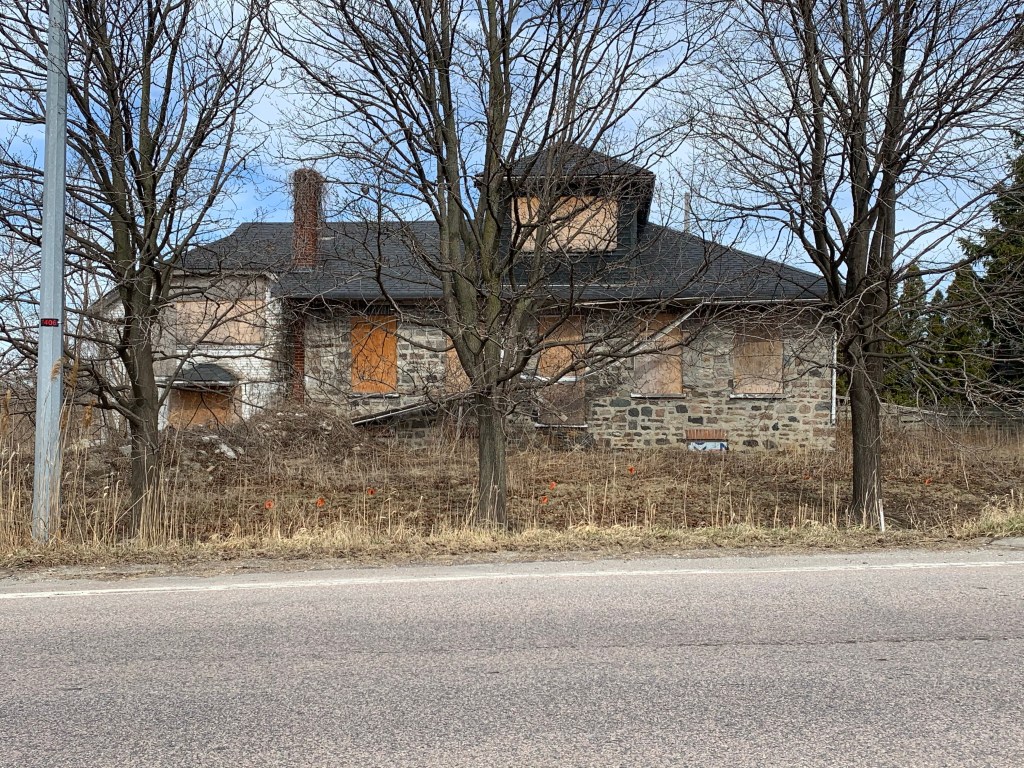
William Reynolds originally owned Lot 10 in concession10 where he started the Methodist Church which was originally known as Reynolds Chapel. In the 1851 census they are recorded as living in the one story stone house on Lot 9. The house was likely built in 1846 by Henry Reynolds. Today it is an heritage property that sits vacant in an area that is entirely surrounded by land that is part of Rouge Park. Like Cedarena just down the road it is hard to envision what the TRCA will do with these properties, if anything, before they become lost to decay or vandalism.

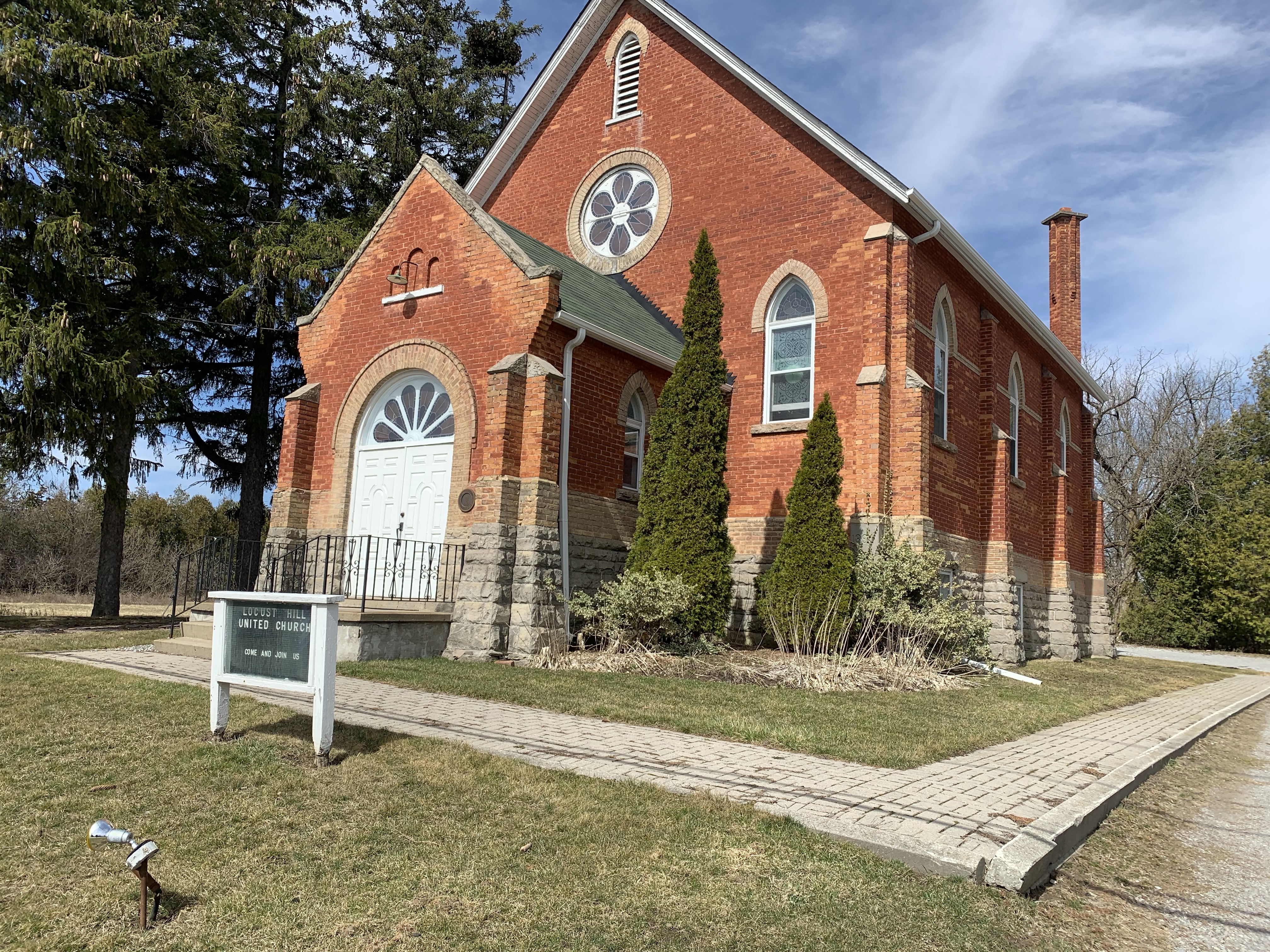
Locust Hill was founded in 1832 and named after the Locust trees that grew on the farm belonging to William and Esther (Reesor) Armstrong. By the time of the County Atlas pictured above The Reesor family also owned the property in Locust Hill where the Methodist Church had been built in 1856. The original church was replaced with the present brick structure in 1890. It joined the United Church in 1925 and now shares the building with the Baptist Church. A large cemetery sits across the road from the church and Reesor is a prominent name on the headstones there.

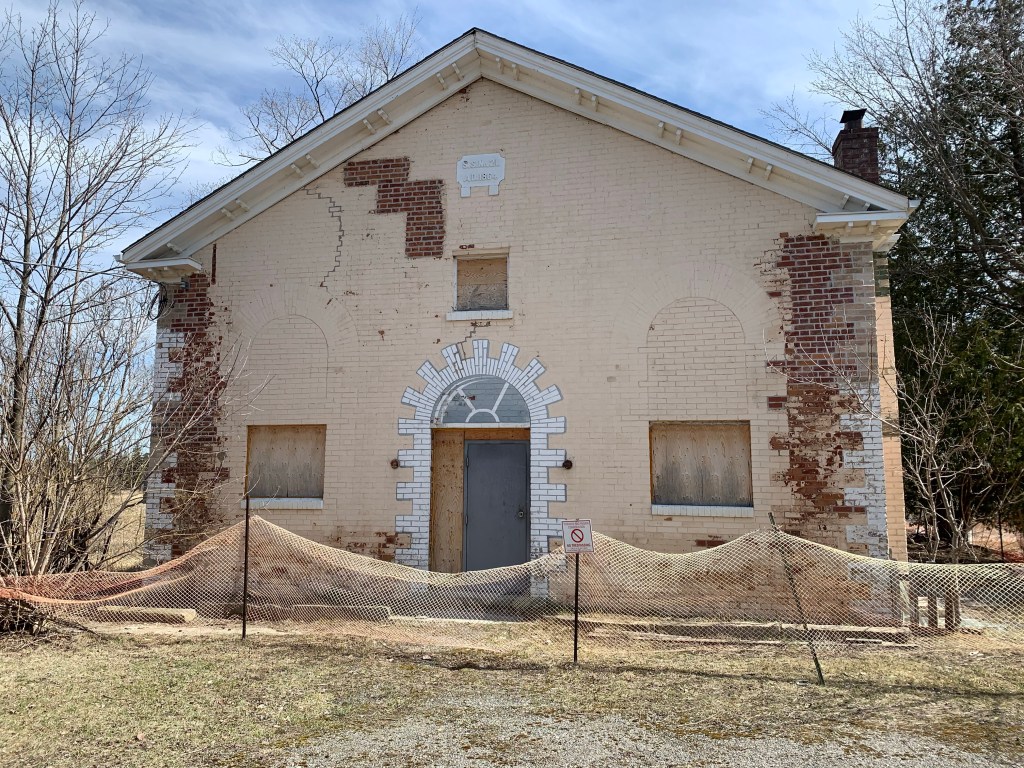
The original school building for this area stood on the west side of Reesor Road on lot 15. In the early 1860s it was decided that a new building was required and William Reesor, William Button and John Pike were appointed as trustees to purchase land for the new school. A 1/2 acre site was found on the northwest corner of lot 13 and the new school was built in 1864,

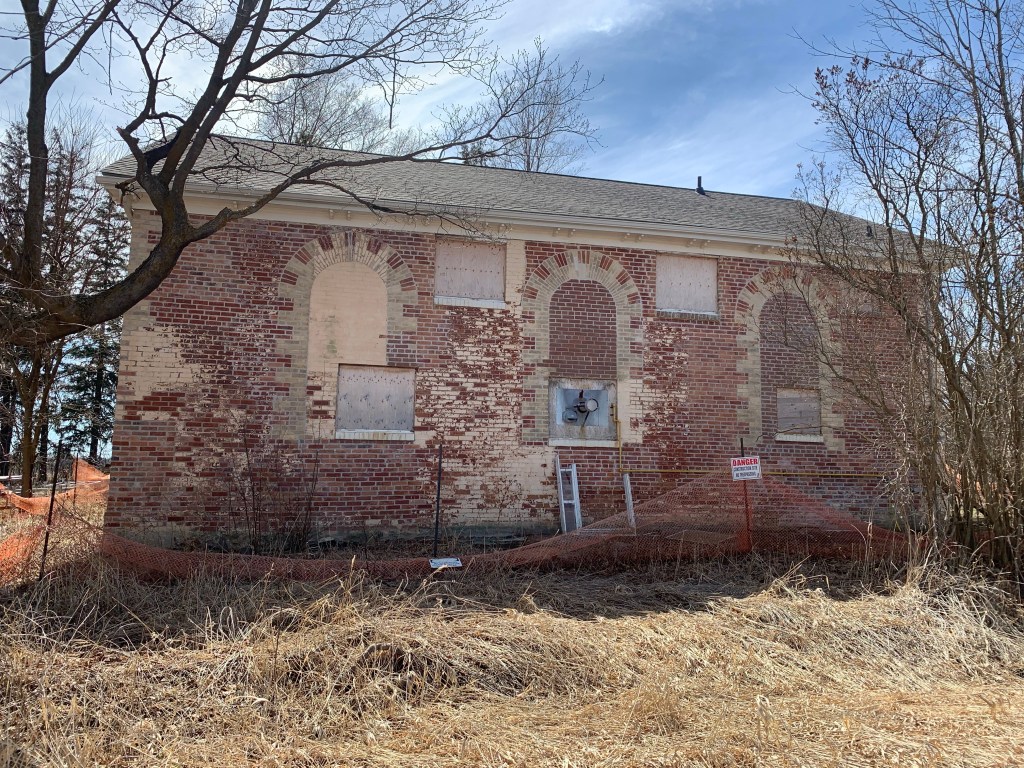
The school was closed in the 1960’s and converted to residential use. A second floor was built inside the structure and the windows were radically altered to accommodate it. Today it belongs to the Toronto Region Conservation Authority who plan to restore it to it’s original beauty. All the two-toned brick work around the windows and on the quoins was painted over making the school quite drab.

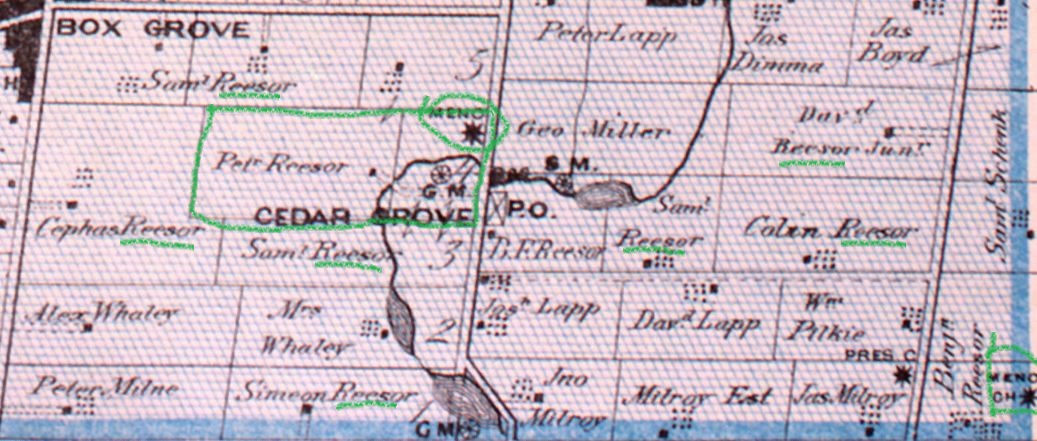
The oldest son Peter Reesor had travelled to the area to look for land in 1796 and returned with his parents as a young married man. Along with his wife Ester, their two daughters, and infant son he took up land on Lot 4 in Concession 9 in what became Cedar Grove. The county Atlas shows extensive Reesor holdings on the west side of Cedar Grove. Peter’s lot is circled in green as are the two Mennonite Churches on Reesor properties.

Locust Hill used to have a string of heritage properties along the south side of the street west of the railway tracks. The 1885 Nighswander Hotel stood into the 2000s before being lost and this 1872 dwelling that was associated with the Nighswander family is all but lost as well.

Today the Reesor family continues the 200 year old operation of a farm just south of Steeles avenue in Toronto which is said to be the only operating farm within the city limits. So, the Reesors were some of the first farmers in the area and continue to be some of the last ones too. Kudos to the family for preserving their pioneer heritage so well.

Links to Cedar Grove and Cedarena

Google Maps link: School Section 21

Like us at http://www.facebook.com/hikingtheta

Follow us at http://www.hikingthegta.com

Also look for us on instagram

Ghost Towns of Peel Region

Sunday, March 28, 2021

Peel County has changed over the years since it was created, even taking on the name Regional Municipality of Peel. Some communities were founded that flourished and others that have failed. As time goes on and developers do their work some of these former communities are being eliminated, all except for a ghost of the original community. This blog collects 9 of the ones that we have visited and arranges them in alphabetical order. Each has a picture that represents the community as well as a brief description. The link for each will take you to a feature article on the community which has the local history as well as pictures of any surviving architectural features. At the end of each feature article is a google maps link in case you should wish to explore for yourself someday. Future companion blogs in this series will cover the ghost towns of Halton Region, York Region, and the City of Toronto.

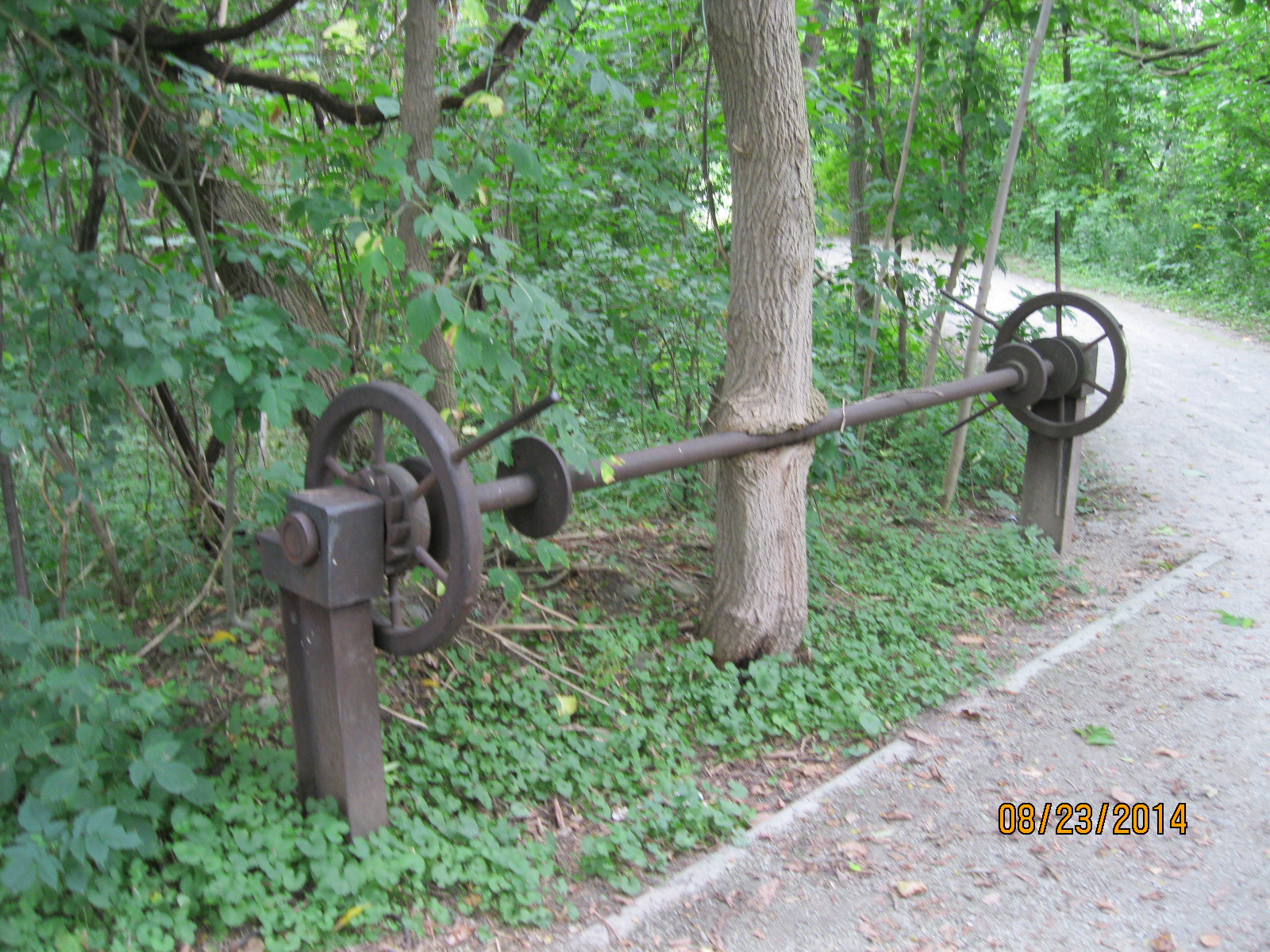
Barbertown is the site of an old mill that is still operating. It has been clad over, hiding its original stone construction. The mill is no longer powered by water and the old sluice gate has been filled in. A tree is growing where the water once ran and it has taken a solid hold on the old crank assembly.

It is common to find an old church standing beside a graveyard. Boston Mills has its old school in its graveyard. That is quite unusual. The railway through town has been closed and turned into a hiking trail and the group of small cottages that once stood on the end of the golf course are falling in on themselves.

Britannia still has several original buildings although like the Gardner home below some no longer stand in their original locations. This 1840’s house has been moved about a kilometer south on Hurontario Street.

Burnhamthorpe reached a maximum of about 100 people in the 1870’s and then began to decline. Several houses and an old church remain and the one shown below was built in 1882. Between 1897 and 1912 it served as a store and the community post office.

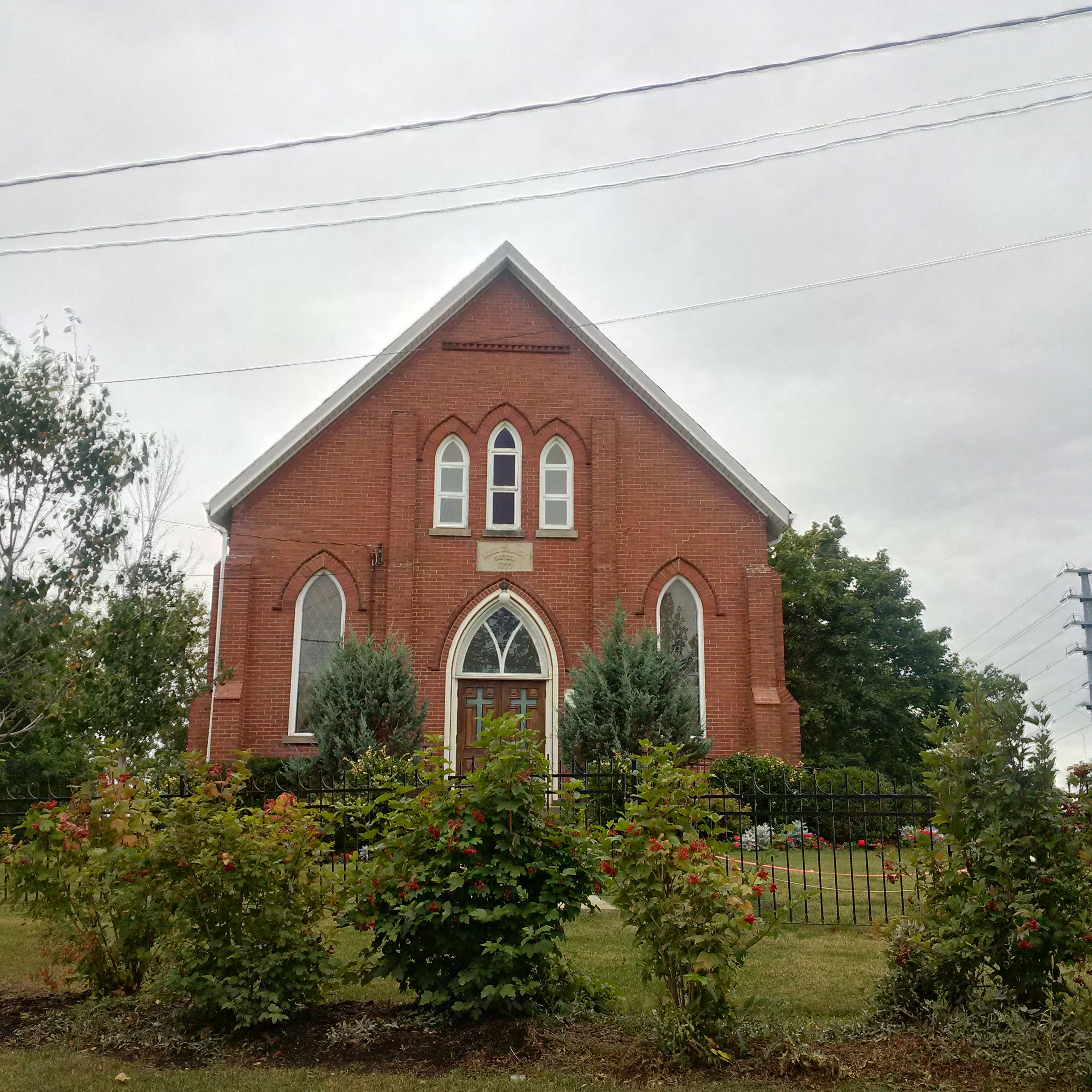
Dixie was a small community where each church denomination was too small to afford their own building. The solution was to get together and build a chapel that they all could share. Later they would each grow large enough to erect their own church building and move out of the Union Chapel.

Humber Grove was built in the scenic hollow around Duffy’s Lane and the Humber River. When Hurricane Hazel flooded the rivers in the GTA the government developed a flood control plan that would have built a dam north of the community. Since the valley would have been flooded the existing houses were bought up and removed. The dam was never built and now Humber Grove is now a community of streets and bridge abutments with no residents.

Malton isn’t a true ghost town because there’s still a thriving town, just not the original town where 500 people lived. After the community declined it was overrun by the airport and its associated sprawl. It still has some vintage homes and interestingly enough the empty ones have the windows boarded up and then painted to look like windows.

Mt. Charles is another community that was over-run by the airport and it’s supporting industries. Until recently there were several other buildings, including the blacksmith shop but these have been demolished. John Dale’s house, below, and a few others still survive, as does the cemetery.

Palestine was founded in 1823 but never grew beyond a church, school and a few houses. At one time the Etobicoke Creek ravine held a wastewater treatment plant that has also been removed.

There are still several ghost towns in Peel that we haven’t photographed yet and we’re looking forward to exploring them one day.

Like us at http://www.facebook.com/hikingthegta

Follow us at http://www.hikingthegta.com

Also look for us on Instagram

The Drug Trading Company

Monday, March 15, 2021

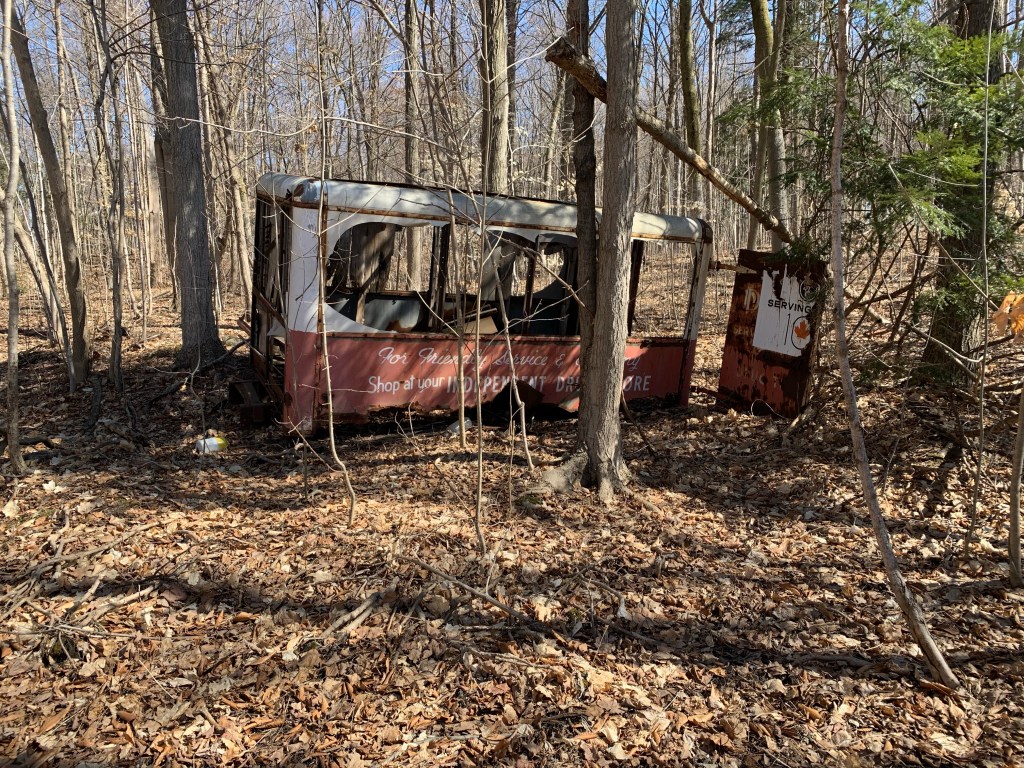
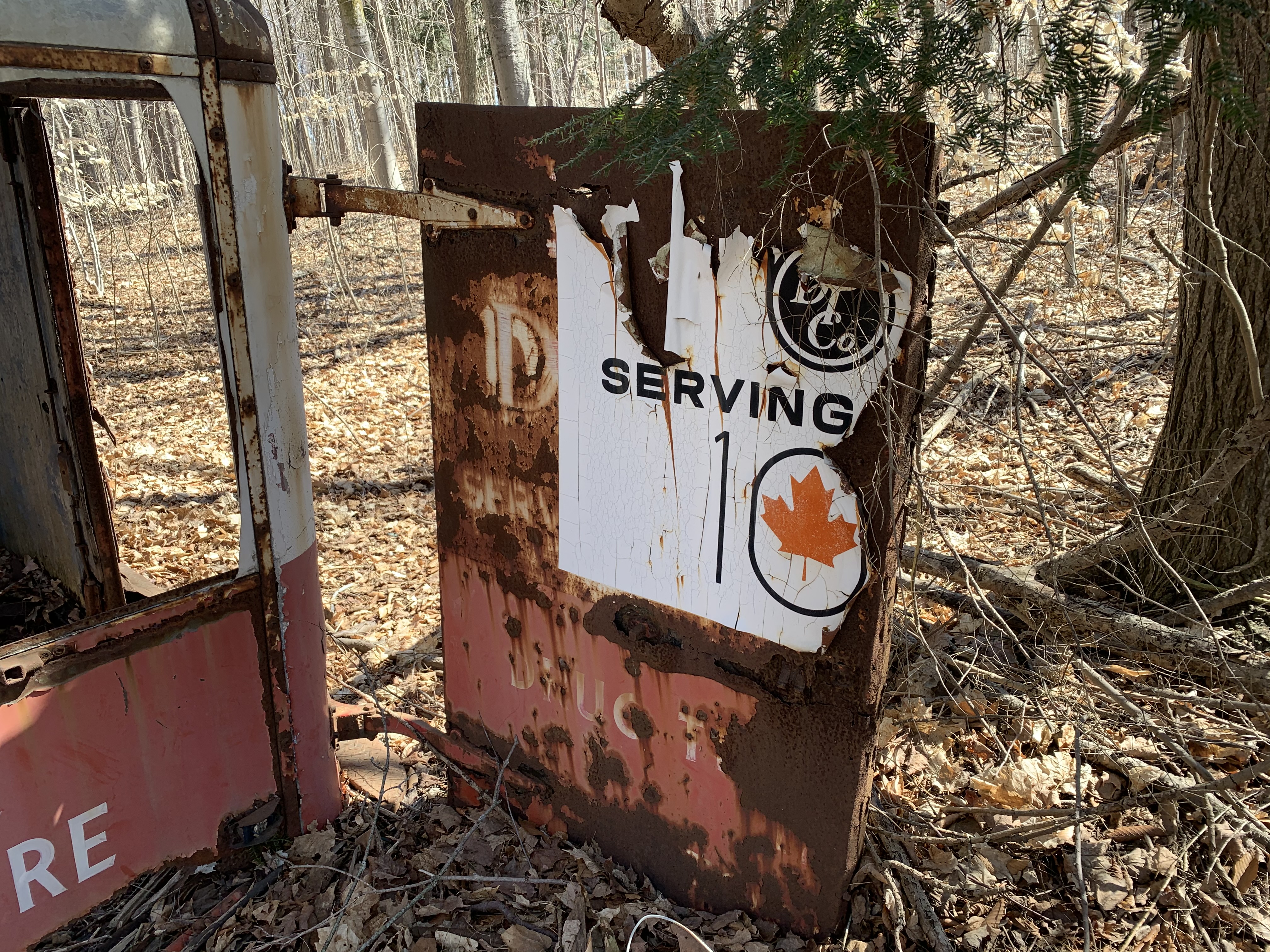
Todays post is evidence that you need to keep your eyes open when you’re driving around. On my lunch I decided to drive through the area of the former community of Purpleville to see if there was a potential pioneer community story. Out of the corner of my eye I saw a vehicle in the woods a short distance from the road. Naturally, I found a place to turn around and went back to see what had caught my attention.

The cab and chassis is missing and all that remains is the enclosed cargo area of the vehicle. The sides and any windows have been broken out but fortunately the printing is still clearly legible. In Canada we have two main independent drug stores. Guardian and IDA are owned and operated by their pharmacists.

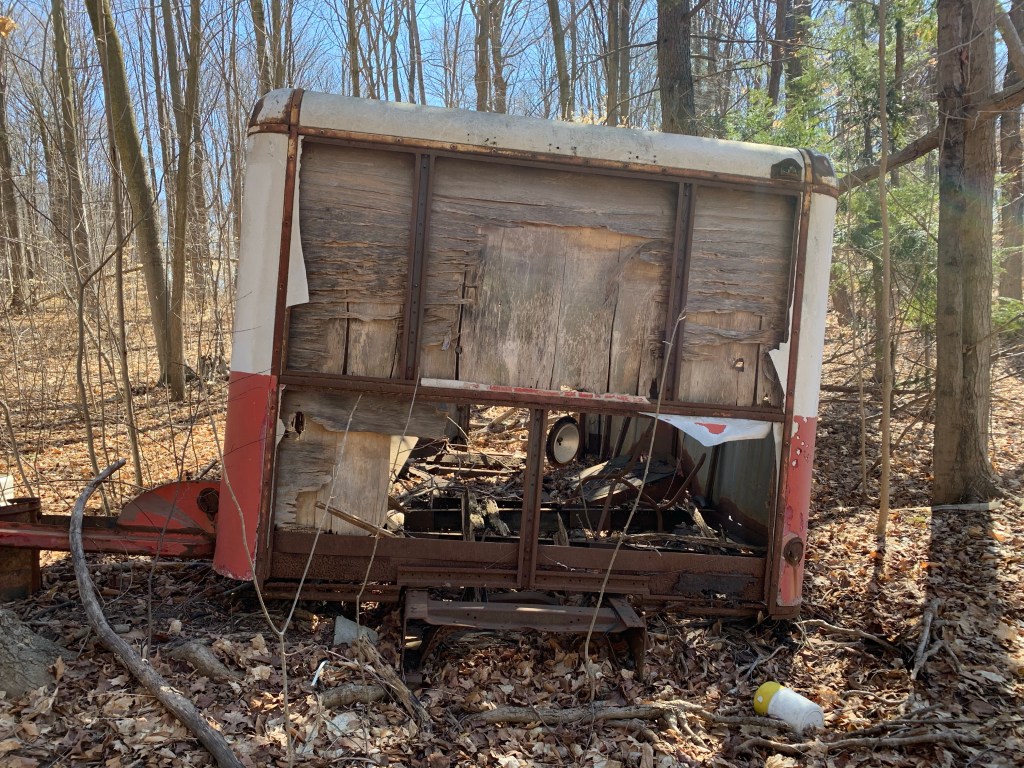
The Drug Trading Company was founded in 1896 to supply independent pharmacies with medications and other products. This was one of their delivery trucks but as the front view reveals, the engine and passenger compartment is no longer here.

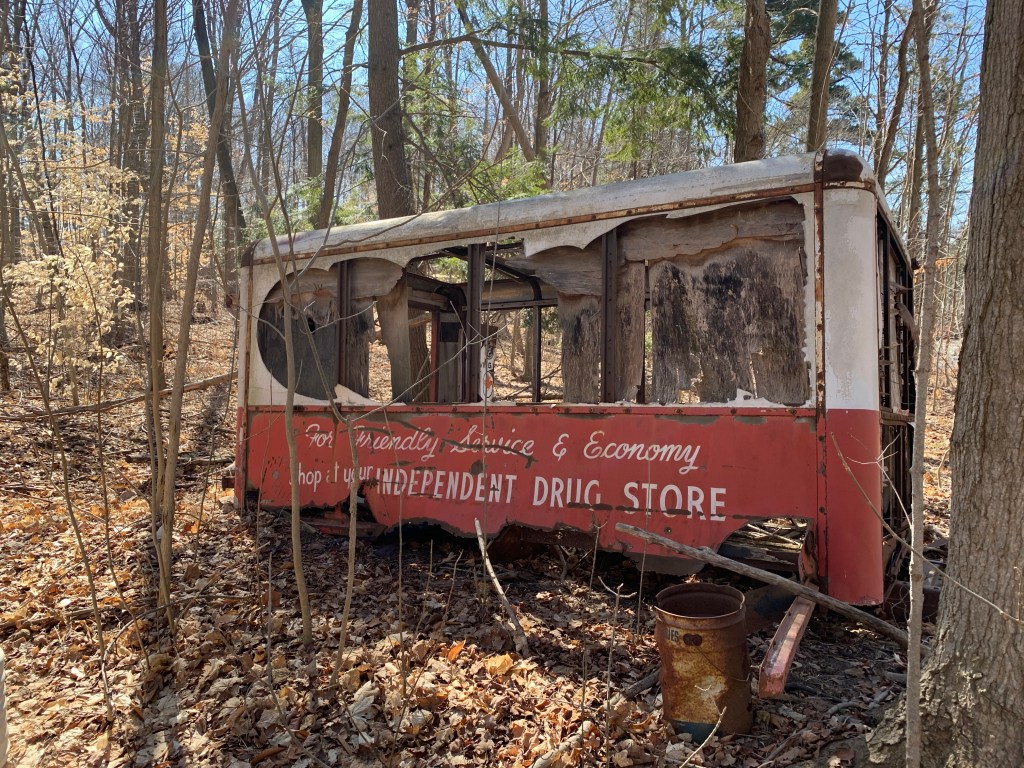
Both sides of the vehicle carried a slogan trying to attract customers into their stores. “For friendly service and economy shop your independent drug store.” In 1962 Shoppers Drug Mart was founded as a national chain and it soon dwarfed the smaller independent pharmacies. While the bigger chains evolved into grocery and cosmetic shops and moved the pharmacy into the rear of the store, the smaller pharmacies kept a more personal touch with their clients.

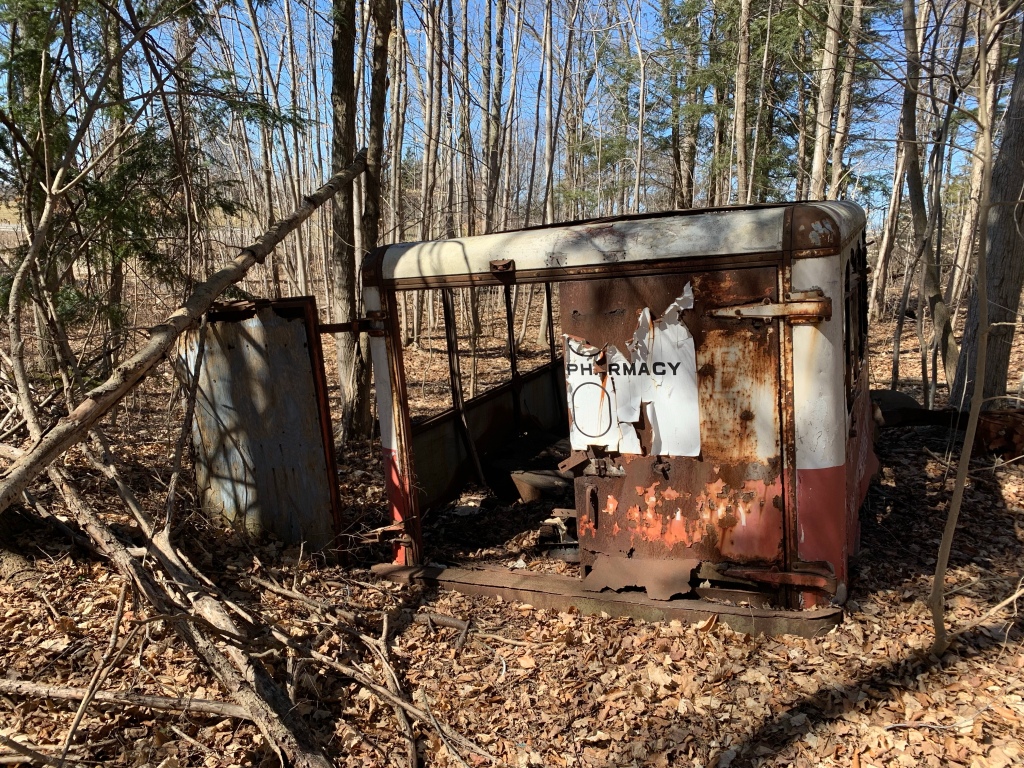
One of the rear doors has been propped open but the other one isn’t opening any time soon without a lot of WD40.

When viewed together the two halves of the door read “DT Co” in the black circle which stands for Drug Trading Company. Then it says “Serving Pharmacy 100” which would suggest a date of 1996. Therefore this vehicle was still in service just 25 years ago. Most of the trees in the woodlot appear to be young and may have grown after the Drug Trading vehicle made its last delivery. Faint lettering can still be seen from the original Drug Trading Company logo on the rear doors.

The inside might have been protected against the elements when it was left here but there’s no longer any roof and both sides are wide open. While this may have once been a relatively unique piece of Canadian history it looks to be suffering an all too common fate. Neglected and soon forgotten. However, its memory will live on in these photos.

This old vehicle is visible from the road and although there isn’t any fence, the property is obviously owned by someone and needs to be respected as such.

Google Maps Link: Respectfully withheld.

Like us at www,facebook.com/hikingthegta

Follow us at http://www.hikingthegta.com

Also look for us on instagram

Fairbank – Ghost Towns of the GTA

Sunday, March 14, 2021

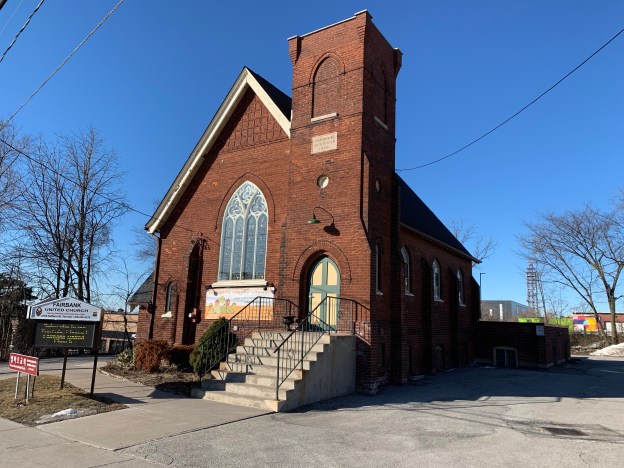
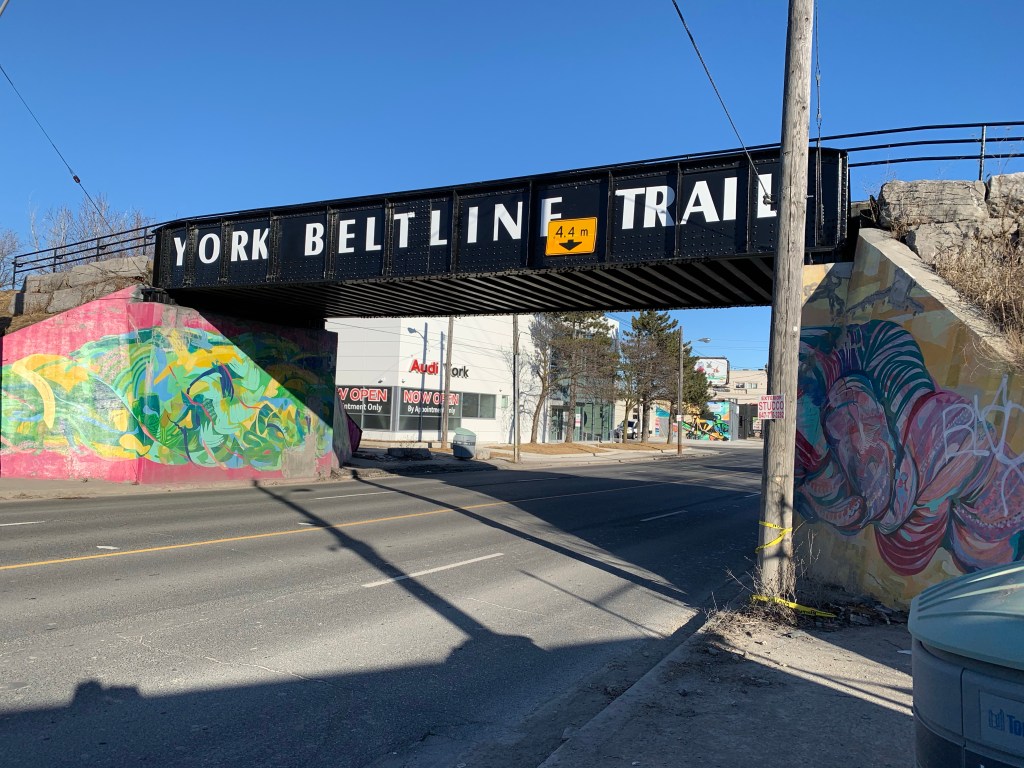
The community of Fairbank was established in 1835 at the intersection of Dufferin Street (brown), Eglinton Avenue (purple) where Vaughan Road (black) intersected from the southwest. Today, the ghost of this little farming community has almost faded with only two buildings remaining from before 1900. There is some parking on Hopewell Avenue across from Walter Saunders Memorial Park. From here you can access the York Beltline Trail and the other places in this story are just a short walk north and then south on Dufferin Street. The map below was taken from the 1877 County Atlas and marks the location of the two remaining buildings with circles.

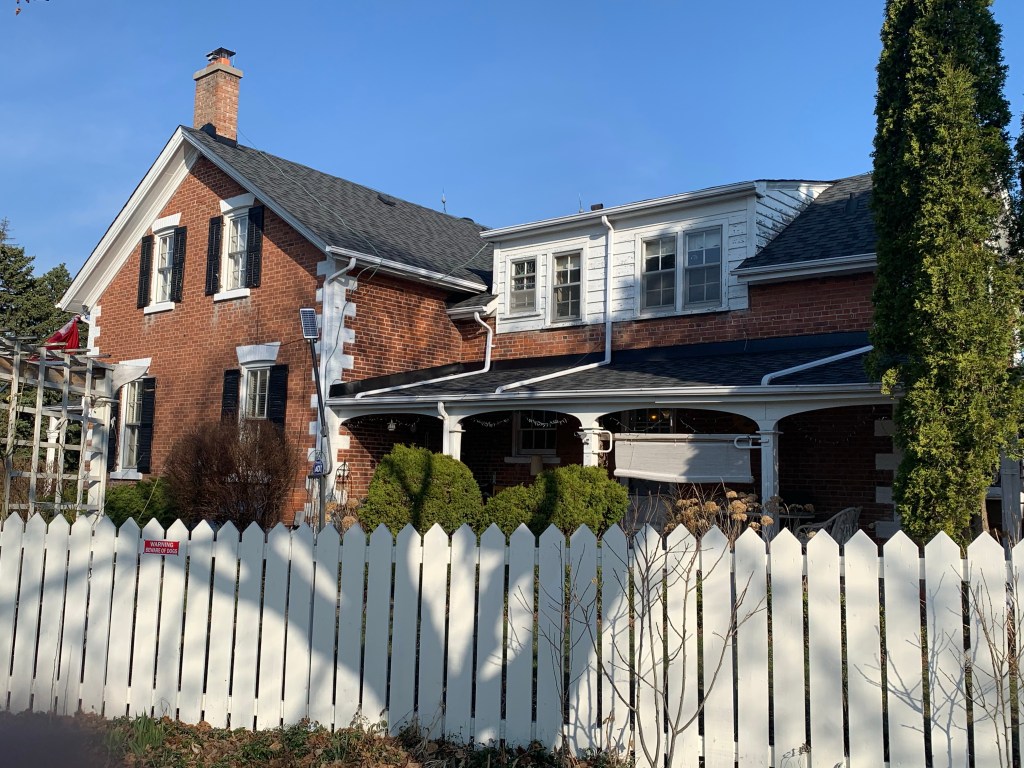
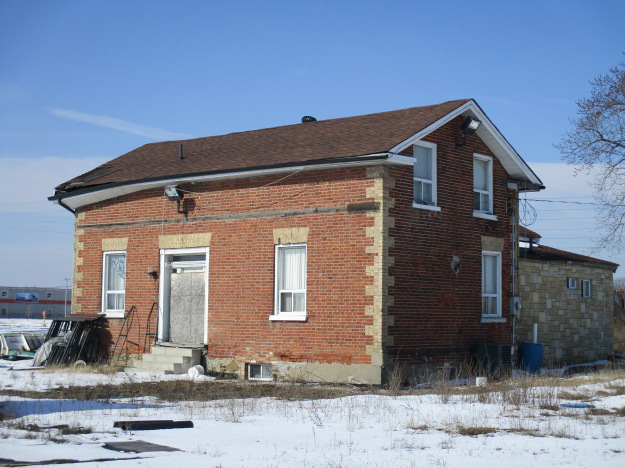
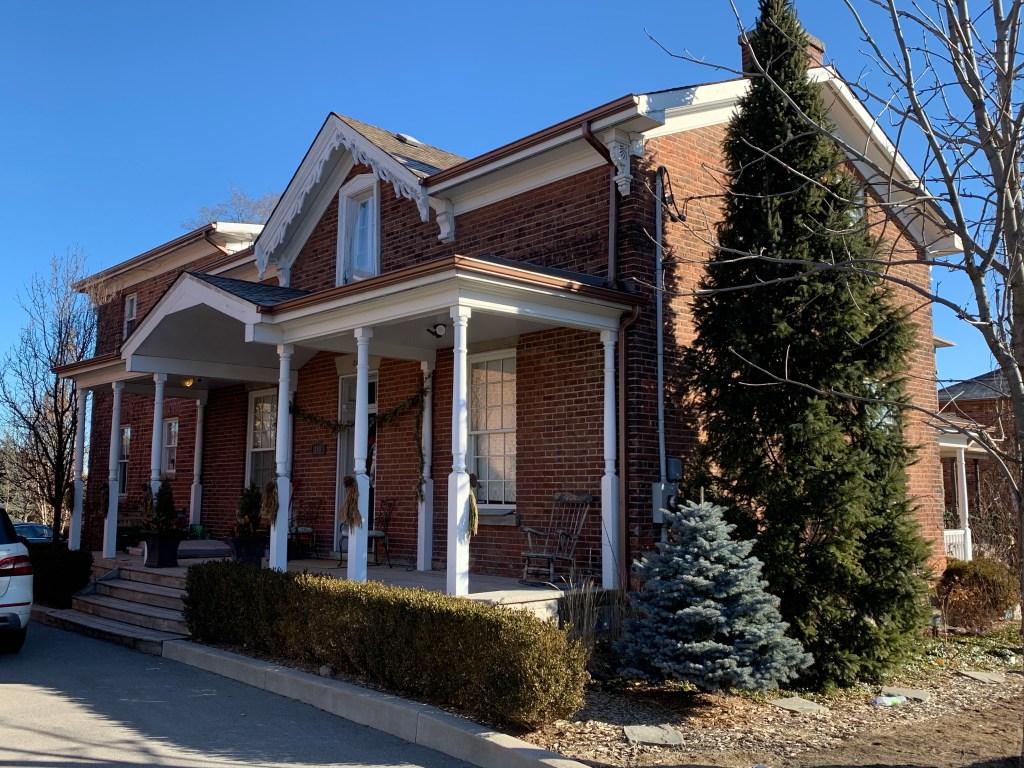
Jacob P. Ross owned the property outlined in blue on the map above. The house was built in 1855 and is the last surviving original house in the former community of Fairbank. The pediments on the west side mark it as neoclassical in style. It is a one and a half story farm house clad in brick, stone and wood. There have been several additions to the house over the years but the original home can be identified by the four quarter-round brackets set in the corners. Standing in a modern subdivision the house appears to be facing the wrong way compared with its neighbours, although it directly faces Dufferin Street

One of the interesting features of this house is the doorcase. Very often in early architecture in Ontario the face of the house was very plain with just the doorcase being more intricately detailed. In this home it is recessed from the front wall leaving no sidelight windows. There’s a plain set of windows in the transom and the date in the lintel above the door.

The Fairbank Village BIA uses the following picture in their promotions of the local business district as they recall the town history. The left side of the picture shows three streets from top to bottom. These are Dufferin Street, Vaughan Road and Eglinton Avenue. On the southeast corner of Eglinton and Dufferin is what appears to be a small Tollkeeper’s Cottage. Dufferin Street was formerly known as the Gore and Vaughan Plank Road and would have had toll gates at major intersections.

Matthew Parsons was just 19 when he arrived and bought York West Concession 3 Lot 3 which he developed into his family farm. He named his property Fairbank Farms (outlined in green above) and from this the community took its name. Then in 1837 he was arrested as a rebel and accused of supporting William Lyon MacKenzie in his rebellion. Parsons was never charged and his good name was restored when he donated land in 1844 to the Methodist Congregation who had been meeting in the local school. They built a frame structure which was replaced in 1889 with the brick building that has continued to serve the United Church since the name change in 1925.

Fairbank Presbyterian Church began in 1889 on Fairbank Avenue but moved to a new larger building at the corner of Eglinton and Dufferin in 1914. The building bears a two date date-stone marking both of these milestones. In 1925 it joined the United Church and in 1931 took the name St. Cuthbert’s United Church to distinguish itself from he Fairbank United Church a little north on Dufferin Street. It closed in 2001 and the building has been occupied ever since by the British Methodist Episcopal Christ Church. This denomination started in Toronto in 1845 as a church founded by freed slaves. There are only 9 churches of this denomination in Ontario and only one other in Toronto. When they lost their building to fire in 2001 they were able to move into the old Fairbank Presbyterian Church which was recently vacated.

Fairbank got a post office in 1874 and quickly developed into a crossroads community with Francis McFarlane running one of the hotels and serving as postmaster. In July of 1890 Fairbank Village Parish was set up to provide Anglican services for the community, meeting in the ballroom of McFarlane’s Hotel. In 1893 they opened their own church on Vaughan Road at the intersection with Dufferin Street. St Hilda’s church is pictured below in a 1934 photo from the Toronto Public Library.

In the early 1970’s the congregation decided to build affordable housing for seniors and three towers and a new church building were constructed.

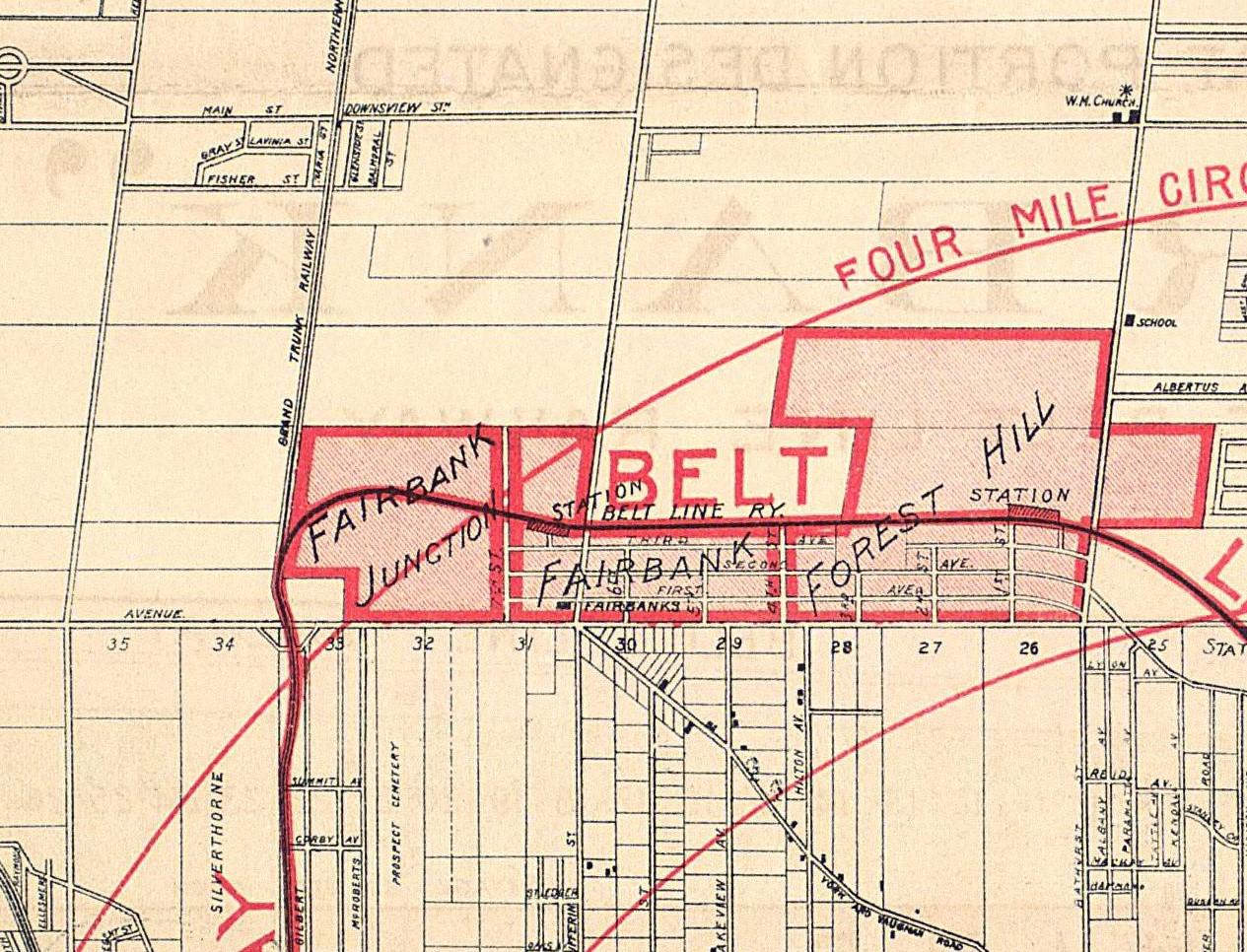
By the late 1880’s the city was booming and land speculation along the edges of Toronto began. One creative scheme involved building a commuter line to join the suburbs with the downtown core. Known as the Belt Line Railway the developers proposed to build houses in the areas of Forest Hill and Fairbank. The line began operations in 1892 with a fare of 5 cents between each of it’s stops. However, the timing was bad as a recession meant that the houses weren’t built and the passengers never showed up. Service only lasted for 28 months before it was closed. Some sections continued to be used for industrial purposes but eventually all the tracks were removed. Today, the old Belt Line has been converted into a ribbon park with a multiuse trail. We’ve reviewed the Beltline in three sections previously telling its history and showing the areas where it ran. From the Fairbank end moving east then south the stories are: York Beltline Trail, Kay Gardiner Beltline Trail and Moore Park Beltline Trail.

The steel bridge over Dufferin Street is the third structure that survives in Fairbank from the 19th century. Only two original bridges survive from the Beltline with the other one being at Yonge Street where the old railway goes by the name of The Kay Gardner Beltline Trail. The trail passes through Fairbank on a raised berm and provides a trail that connects the west end of Fairbank with the Don Valley Brick Works and then on to the Lower Don Trail.

Fairbank was filled in with development between the two world wars erasing much of its original character. The fact that it was developed in the inter war period is perhaps apropos considering that it’s known for Prospect Cemetery where many military veterans are buried.

Google Maps Link: Fairbank

Like us at http://www.facebook.com/hikingthegta

Follow us at http://www.hikingthegta.com

Also look for us on Instagram

Ghost Towns of Halton Region

Someday

Halton County was one of the earliest settled in the region as United Empire Loyalists began arriving in the 1780’s. They started Oakville and Burlington as well as Georgetown and Acton. Along with some of the familiar names are those of small communities that are only a shadow or ghost of what they once were. These small hamlets and towns dotted the crossroads around the county. This blog collects 5 of the ones that we have visited and arranges them in alphabetical order. Each has a picture that represents the community as well as a brief description. The link for each will take you to a feature article on the community which has the local history as well as pictures of any surviving architectural features. At the end of each feature article is a google maps link in case you should wish to explore for yourself someday. Future companion blogs in this series will cover the ghost towns of Peel Region, York Region, and the City of Toronto.

Glenorchy was never large community and it has lost pretty much all of the original buildings that it once had. Of note is the local disaster that happened in 1964 when a truck loaded with potatoes took a detour that carried it over Sixteen Mile Creek near the community. The truck was too heavy and the bridge collapsed under the weight leaving just a bridge abutment as a reminder. This three room home was built in 1835 by George and Francis Ludlow.

Hornby was stretched out along Steeles Avenue to the point where it was considered Hornby and West Hornby. A brick one room school building from 1870 and a church remain as well as a few houses. One of the early farm houses belonged to Samuel Brooks and although it has been assessed for its cultural significance it has also been damaged by fire and neglect.

Omagh still has enough of its rural character that it is being considered for designation as a cultural heritage district. It still has two churches and cemeteries as well as the general store. The school is gone and the old Devlin house is starting to suffer. It’s too bad because it’s got a rare example of an eyebrow window.

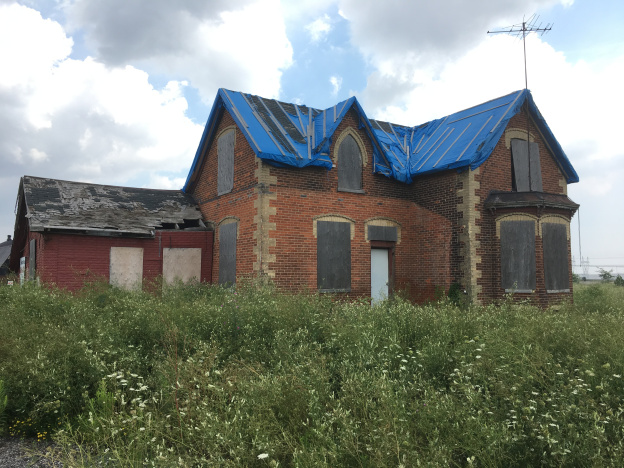
Palermo still has one of the largest collections of historic homes of the former communities in the region. Although many of them are vacant or abandoned it looks as if only two of them have historic designations and it will be up to developers to remove or incorporate the remaining homes. Past history hasn’t been kind to the homes in these situations.

Sixteen Hollow was an industrial hub that developed where Dundas Street crossed Sixteen Mile Creek. It was vacated by the 1880’s very little remains except for the Presbyterian Church which was built in 1844. In 1899 it was expanded and given a veneer of bricks. An older set of bridge abutments crosses the hollow and marks a former course for the creek.

The County of Halton, now known as The Regional Municipality of Halton, had other historic communities that are yet to be explored. It’ll be interesting to see what secrets they still hold and to document before they change too much.

Another selection of Ghost Towns can be found in our companion blog Ghost Towns of Toronto

Like us at http://www.facebook.com/hikingthegta

Follow us at http://www.hikingthegta.com

Also look for us on Instagram

Mount Hope Cemetery

Someday

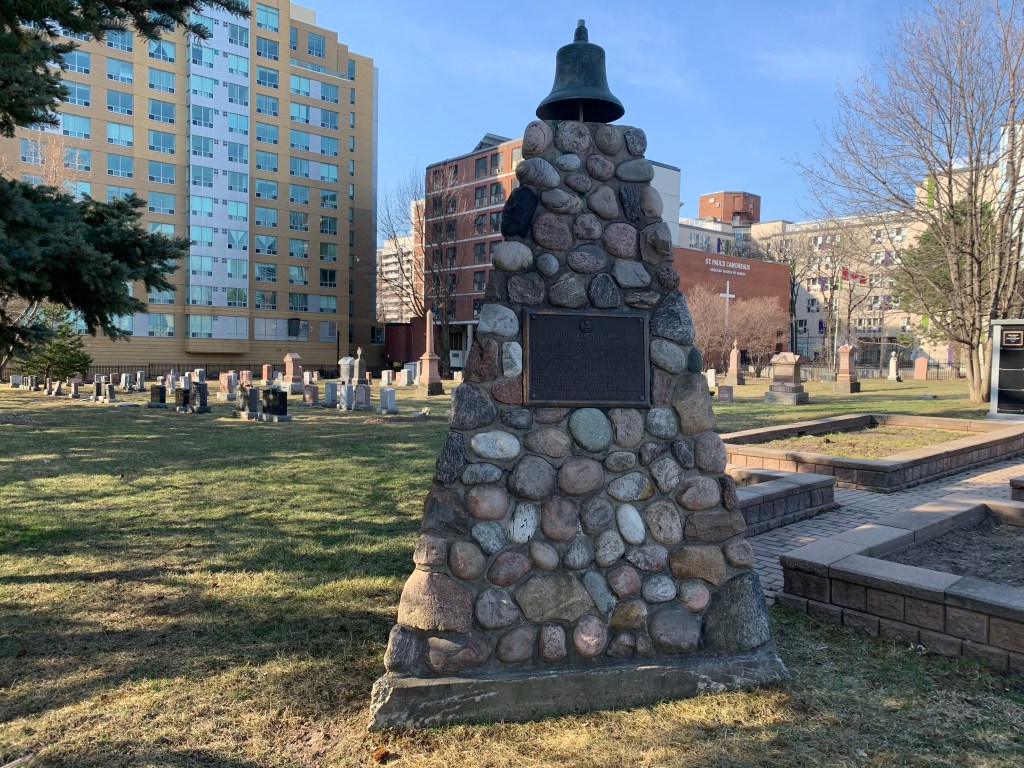
The first Catholics in the city attended St. Paul’s Parish and were buried in the large lot behind the church. In the 1840’s the Irish Potato Famine brought large numbers of Catholic immigrants and before long the parish cemetery was filled. In 1855 St Michael’s Cemetery was opened near Yonge and St Clair but just a few decades later it was also filled. With the cost of land in Deer Park it was decided to look for another place to open a new cemetery. A location was found just north of Yonge and Eglinton and in 1900 Mount Hope Cemetery opened.

In the 1890’s the area around Yonge and Eglinton was quite different than it is today. Mount Pleasant Road had not been built yet and many of the local streets had different names. Victoria Avenue near the top of this old map from the Beltline Railway is now known as Blythwood. The area which is now Mount Hope Cemetery has been outlined in green. Notice that Erskine Avenue and Woodward Avenue (now Keewatin) meet on the east end at Greenwood Avenue which joined the East York Line (now Bayview). When the cemetery was opened the portions of these roads that were within the cemetery vanished except for perhaps the curved connection that may still be in use as part of the cemetery roadways.

The cemetery gates can be found on Erskine Avenue and there is also a pedestrian gate on the east end for access off of Bayview Avenue. Starting with the gates, it soon becomes obvious that crosses are everywhere. Catholic cemeteries require a cross or some other select religious symbol on every marker which sets them apart from nondenominational or even Protestant ones.

Just inside the gates is a small chapel and administrative building which wouldn’t be complete without a cross on top of the bell tower.

There’s a section in the cemetery for the Loretto Sisters, also known as The of The Blessed Virgin Mary. They lie in rows marked by rows of identical iron crosses.

Friars are male members of a religious order and they have their own section in the cemetery. Like the nuns, they are buried in neat rows, each with the same style of headstone.

John B Murphy was born on March 1, 1850 and went to Norwood High School and St. Michael’s College in Toronto. At 26 he graduated in medicine from Queens University after which he ran a family practice in Brockville until 1890. That was the year he took the position of resident physician at Mimico Asylum when it opened. In 1894 when the Brockville Asylum was opened he was promoted to Medical Superintendent. He died at the age of 54 on January 17, 1904 and is buried in one of the few mausoleums in the cemetery. He was also one of the early interments in the cemetery.

George Foy was a liquor and tobacco salesman for over 40 years and when he passed a 12-metre tall cross was erected in his memory. It is said to be the tallest family monument in Ontario and is carved out of a single piece of granite. It was moved from Union Station to the cemetery with a team of 24 horses.

Frank O’Connor, who founded Laura Secord Chocolates, is buried along the south fence. He opened his candy shop in Toronto in 1913 at the same time as the city was commemorating the 100th anniversary of the Battle of York. Building on the hype he decided to use a war hero who was a household name. Laura Secord had walked under cover of darkness to bring a message to The British forces at Beaver Dams that led to a decisive victory for the defenders. You can read more about Frank O’Connor and see his estate by following the link.

There are 147 servicemen from both world wars buried in the cemetery. I notice these two stones which commemorate two Privates who were killed on Dec. 6, 1941. Canadian Expeditionary Forces were active in Hong Kong in December 1941 but the fighting started on December 8th. It is unclear at this time why these two soldiers died on the same day, or if there is any relationship other than coincidence.

We’ve featured several cemeteries over the years but Mount Hope has to be one of the best ones if you are interested in carvings and other religious symbols and artwork. The sadness expressed in this angel pretty much sums up the feelings of anyone who has lost a loved one

There are several other angel statues throughout the cemetery. The figure of Jesus is also frequently featured. There are also saints that may have had a specific meaning to the dearly departed or their families. Marble can be easily carved but is also susceptible to acid rain and weather. Several of the marble monuments in Mount Hope have become unstable and are laid on the ground for safety reasons. Catholic cemeteries no longer allow marble carvings.

The passing of a child is always tragic but losing twins must be even harder to bear. This pair of small angels mark the graves of a pair of girls who were born on August 20, 1927. Rosina passed away less than three weeks after her first birthday and her sister Irene followed a little more than three months later.

In the 1960’s and 1970’s the cemetery was having around 4,000 burials each year but with the rising popularity of cremations that number has dropped to only 1,200. Even so, the cemetery quickly started to be filled. In the early years Burke Brook formed two ponds on the north side of the property. To make more room, the ponds were drained and Burke Brook was placed into a culvert. A row of trees (marked with dark blue arrows on the Google Earth capture below) still marks the former northern limit of the burial grounds. When this was filled they turned to closing some of the roads and turning them into additional space. At least six of these short connector roads have been indicated with light blue arrows below.

Mount Hope is the only functioning Catholic Cemetery within Toronto City limits and it makes a quiet place to walk and reflect on life and the remembrance of it.

Other cemetery stories: Mount Pleasant, The Necropolis, Prospect Cemetery, Pioneer Cemetery Cairns

Google Maps Link: Mount Hope Cemetery

Like us at http://www.facebookcom/hikingthegta

Follow us at http://www.hikingthegta.com

Also look for us on Instagram

Dufferin Grove Park

Friday February 26, 2021

I had a rare Friday off of work and found myself near one of the local parks that I had not explored previously. Dufferin Grove Park is on Dufferin Street just south of Bloor Street and is one of the older parks in the city and contains some carved stones that date back to 1876. Parking is limited on local side streets but I found some without any problem. The archive picture below is from February 1914.

The Cob Courtyard was built as a food preparation area and has a kind of “Flintstones” look to it. It is currently undergoing some restoration work to repair the deterioration that it has suffered over the years.

The local children have one of the best playgrounds in the city. There’s an enclosed playground with all the traditional slides and things to climb on. There’s also a large sandpit for little ones to play in with their toy trucks and diggers.

The park had a few parents with small children but for a Friday morning it was quite empty. I can imagine that Thursdays in the summer when the farmer’s market is on the park is quite busy. The snow that had fallen had been baked into ice which was tricky to walk on. In a few places there were even deep pools that people had walked over and broken through. The city was trying to pump water out of the deep one that had formed in the wading pool near the children’s playground.

There’s a small clubhouse in the north end but its days are numbered. There is a City of Toronto proposal to update the ice rink and clubhouse with a $3.5 Million replacement. It has gone through all the consulting and planning phases over the last three years. Construction should have started in 2020 but has been put on hold by the pandemic.

The park has a surprising number of amenities, some of which you don’t find in most places. The pizza ovens being a prime example. The revised clubhouse is expected to include a kitchen area.

The fifth Customs House in Toronto (or York) was built in 1876 and demolished in 1919, just over 100 years ago. All of them were located at Yonge and Front Streets. The archive picture below shows the building prior to demolition you can see stone faces that were carved into the keystone in the arches over the windows.

When the building was demolished the faces were repurposed into the upper façade of the Colonial Theatre which was later known as the Bay Theatre. It was demolished in 1965 and the faces were preserved with the idea that they would be incorporated into Simpson Tower which was being built on the site. Instead they ended up in High Park where they were setup in a circle near Colborne Lodge. They stayed here until 1991 when the city decided to remove them because they had become a party spot. In 1998 they were incorporated into an artwork in Dufferin Grove Park called Marsh Fountain.

The faces may represent people who were famous in that era. It is said that the faces may be those of John Cabot, Samuel de Champlain, and Mercury the god of commerce.

The park rises to a crest beside Dufferin Street and then is relatively flat stretching out to the soccer fields. There are plenty of mature trees even though there is no woodlot in the park. There’s even a Sakura Cherry Tree to provide some colour in the spring when the blossoms are out.

There is a second group of faces a little farther south along the side of Dufferin Street in the park. They can be found by looking for the fire pit where there is a little remembrance gardens to Garrison Creek and its tributary Dennison Creek which runs under the park. The concrete and bricks for the fire place appear to mostly be pieces of old buildings that have been brought here.

At the pit is a face of a lady with the only original (not vandals) inscription on it. The woman represents the city of Toronto and the old motto of the city of Toronto written below. “Industry, Intelligence, Integrity”.

Dufferin Grove Park is more than the average community park when it comes to amenities and also has some interesting historical artifacts to fire the imagination of the curious.

Google Maps link: Dufferin Grove Park

Like us at http://www.facebook.com/hikingthegta

Follow us at http://www.hikingthegta.com

Also look for us on Instagram